EP3608030A1 - Air-conditioner remote control device and air conditioning system - Google Patents
Air-conditioner remote control device and air conditioning system Download PDFInfo
- Publication number
- EP3608030A1 EP3608030A1 EP17904778.2A EP17904778A EP3608030A1 EP 3608030 A1 EP3608030 A1 EP 3608030A1 EP 17904778 A EP17904778 A EP 17904778A EP 3608030 A1 EP3608030 A1 EP 3608030A1
- Authority
- EP
- European Patent Office
- Prior art keywords
- remote control
- control apparatus
- wireless communication
- control unit
- wireless
- Prior art date
- Legal status (The legal status is an assumption and is not a legal conclusion. Google has not performed a legal analysis and makes no representation as to the accuracy of the status listed.)
- Granted
Links
Images






Classifications
-
- G—PHYSICS
- G08—SIGNALLING
- G08C—TRANSMISSION SYSTEMS FOR MEASURED VALUES, CONTROL OR SIMILAR SIGNALS
- G08C17/00—Arrangements for transmitting signals characterised by the use of a wireless electrical link
- G08C17/02—Arrangements for transmitting signals characterised by the use of a wireless electrical link using a radio link
-
- F—MECHANICAL ENGINEERING; LIGHTING; HEATING; WEAPONS; BLASTING
- F24—HEATING; RANGES; VENTILATING
- F24F—AIR-CONDITIONING; AIR-HUMIDIFICATION; VENTILATION; USE OF AIR CURRENTS FOR SCREENING
- F24F11/00—Control or safety arrangements
- F24F11/50—Control or safety arrangements characterised by user interfaces or communication
- F24F11/56—Remote control
- F24F11/57—Remote control using telephone networks
-
- F—MECHANICAL ENGINEERING; LIGHTING; HEATING; WEAPONS; BLASTING
- F24—HEATING; RANGES; VENTILATING
- F24F—AIR-CONDITIONING; AIR-HUMIDIFICATION; VENTILATION; USE OF AIR CURRENTS FOR SCREENING
- F24F11/00—Control or safety arrangements
- F24F11/50—Control or safety arrangements characterised by user interfaces or communication
- F24F11/54—Control or safety arrangements characterised by user interfaces or communication using one central controller connected to several sub-controllers
-
- F—MECHANICAL ENGINEERING; LIGHTING; HEATING; WEAPONS; BLASTING
- F24—HEATING; RANGES; VENTILATING
- F24F—AIR-CONDITIONING; AIR-HUMIDIFICATION; VENTILATION; USE OF AIR CURRENTS FOR SCREENING
- F24F11/00—Control or safety arrangements
- F24F11/50—Control or safety arrangements characterised by user interfaces or communication
- F24F11/56—Remote control
-
- F—MECHANICAL ENGINEERING; LIGHTING; HEATING; WEAPONS; BLASTING
- F24—HEATING; RANGES; VENTILATING
- F24F—AIR-CONDITIONING; AIR-HUMIDIFICATION; VENTILATION; USE OF AIR CURRENTS FOR SCREENING
- F24F11/00—Control or safety arrangements
- F24F11/50—Control or safety arrangements characterised by user interfaces or communication
- F24F11/56—Remote control
- F24F11/58—Remote control using Internet communication
-
- F—MECHANICAL ENGINEERING; LIGHTING; HEATING; WEAPONS; BLASTING
- F24—HEATING; RANGES; VENTILATING
- F24F—AIR-CONDITIONING; AIR-HUMIDIFICATION; VENTILATION; USE OF AIR CURRENTS FOR SCREENING
- F24F11/00—Control or safety arrangements
- F24F11/62—Control or safety arrangements characterised by the type of control or by internal processing, e.g. using fuzzy logic, adaptive control or estimation of values
- F24F11/63—Electronic processing
-
- F—MECHANICAL ENGINEERING; LIGHTING; HEATING; WEAPONS; BLASTING
- F24—HEATING; RANGES; VENTILATING
- F24F—AIR-CONDITIONING; AIR-HUMIDIFICATION; VENTILATION; USE OF AIR CURRENTS FOR SCREENING
- F24F11/00—Control or safety arrangements
- F24F11/89—Arrangement or mounting of control or safety devices
-
- G—PHYSICS
- G08—SIGNALLING
- G08C—TRANSMISSION SYSTEMS FOR MEASURED VALUES, CONTROL OR SIMILAR SIGNALS
- G08C17/00—Arrangements for transmitting signals characterised by the use of a wireless electrical link
-
- G—PHYSICS
- G08—SIGNALLING
- G08C—TRANSMISSION SYSTEMS FOR MEASURED VALUES, CONTROL OR SIMILAR SIGNALS
- G08C2201/00—Transmission systems of control signals via wireless link
- G08C2201/40—Remote control systems using repeaters, converters, gateways
-
- G—PHYSICS
- G08—SIGNALLING
- G08C—TRANSMISSION SYSTEMS FOR MEASURED VALUES, CONTROL OR SIMILAR SIGNALS
- G08C2201/00—Transmission systems of control signals via wireless link
- G08C2201/90—Additional features
- G08C2201/93—Remote control using other portable devices, e.g. mobile phone, PDA, laptop
Definitions
- the present invention relates to an air conditioning device remote control apparatus and an air conditioning system accepting operation from an external wireless communication device.
- the remote control apparatus described in Patent Literature 1 is provided with an operation unit that sets a setting allowing the air conditioning device to be operated by an external wireless communication device, transmission means that transmits the allowed setting to the external wireless communication device, and a reception unit that receives an operation signal for the air conditioning device transmitted from the external wireless communication device. Subsequently, by transmitting a transmission signal received from the external wireless communication device to the air conditioning device, it is possible to operate the air conditioning device from the external wireless communication device.
- Patent Literature 1 Japanese Unexamined Patent Application Publication No. 2015-224858
- multiple remote control apparatuses associated with each of the air conditioning devices may also be installed.
- multiple remote control apparatuses associated with each of the air conditioning devices may also be installed.
- it is necessary for a user to perform a similar operation on the external wireless communication device repeatedly for each of the multiple air conditioning devices for which the user wants to change the setting there is a problem in that changing the setting is extremely burdensome and time-consuming.
- the present invention has been devised to overcome problems like the above, and an object thereof is to provide an air conditioning device remote control apparatus and an air conditioning system that make it possible to change a setting in multiple air conditioning devices from an external wireless communication device with a single operation.
- An air conditioning device remote control apparatus is provided with a transmission unit that transmits an operation signal to an associated air conditioning device; a wireless communication unit that performs wireless communication with an external wireless communication device or another remote control apparatus; and a main control unit that controls the transmission unit and the wireless communication unit, wherein in a case in which the wireless communication unit receives an operation signal from the external wireless communication device or the another remote control apparatus, the main control unit transmits, via the transmission unit, the operation signal to the associated air conditioning device, and performs, via the wireless communication unit, detection of another remote control apparatus emitting radio waves, and in a case in which the wireless communication unit detects the another remote control apparatus emitting radio waves, the main control unit transmits, via the wireless communication unit, the operation signal to the another remote control apparatus emitting radio waves.
- the air conditioning device remote control apparatus in the case in which an operation signal is received from an external wireless communication device or another remote control apparatus, detection of another remote control apparatus emitting radio waves is performed, and in the case of detecting another remote control apparatus emitting radio waves, the operation signal is transmitted to the another remote control apparatus emitting the radio waves. Therefore, it becomes possible to change a setting in multiple air conditioning devices from the external wireless communication device with a single operation.
- Fig. 1 is a diagram illustrating an overall configuration and function blocks of an air conditioning device remote control apparatus 10 according to Embodiment 1 of the present invention.
- Fig. 1 will be referenced to describe the remote control apparatus 10 plurally installed in correspondence with each air conditioning device in an environment in which multiple air conditioning devices are installed inside a building, such as an office building or a hotel.
- the remote control apparatus 10 is capable of performing wireless communication with not only the associated air conditioning device but also an external wireless communication device 20, such as a smartphone or a tablet, and in addition, is also capable of performing wireless communication with other remote control apparatus 10.
- the remote control apparatus 10 there is set an allow setting that allows changing the operation of the air conditioning device associated with itself from another remote control apparatus 10, or a deny setting that denies changing the operation of the air conditioning device associated with itself. Note that in Embodiment 1, it is assumed that the allow setting is set in all of the remote control apparatus 10.
- the remote control apparatus 10 is provided with a first communication control unit 11, a second communication control unit 12, a wireless route management unit 13, a main control unit 14, a display control unit 15, a display unit 16, and an operation unit (not illustrated). Also, the first communication control unit 11 is provided with a first transmission-reception unit 11A and a first wireless communication unit 11B, while the second communication control unit 12 is provided with a second transmission-reception unit 12A, a wireless device detection unit 12B, and a second wireless communication unit 12C.
- the first communication control unit 11 performs wireless communication with the associated air conditioning device by infrared for example.
- the first transmission-reception unit 11A transmits signals such as operation signal to the associated air conditioning device through the first wireless communication unit 11B, and also receives a signal related to information such as operating information from the associated air conditioning device through the first wireless communication unit 11B.
- the first communication control unit 11 is configured to perform wireless communication with the associated air conditioning device, but is not limited thereto, and may also be configured to perform wired communication. Also, the first transmission-reception unit 11A is configured to receive a signal related to information such as operating information from the associated air conditioning device, but is not limited thereto, and it is sufficient for the first transmission-reception unit 11A to be able to at least transmit an operation signal to the associated air conditioning device.
- the second communication control unit 12 performs wireless communication with the external wireless communication device 20 or another remote control apparatus 10 by technology such as Bluetooth (registered trademark), for example.
- the second transmission-reception unit 12A transmits signals such as an operation signal to another remote control apparatus 10 through the second wireless communication unit 12C.
- the second transmission-reception unit 12A receives an operation signal from the external wireless communication device 20 or another remote control apparatus 10 through the second wireless communication unit 12C, and receives wireless route information 100 from another remote control apparatus 10 through the second wireless communication unit 12C.
- Fig. 2 is the wireless route information 100 according to Embodiment 1 of the present invention.
- the wireless route information 100 refers to information including an ID that identifies the remote control apparatus 10. Also, the wireless route information 100 includes information related to the ID of each remote control apparatus 10 that has received a setting change operation signal. The wireless route information 100 includes the order of the remote control apparatus 10 that have received the setting change operation signal.
- the wireless route information 100 includes ID:0001 of the remote control apparatus 10 that received the setting change operation signal first, ID:0003 of the remote control apparatus 10 that received the setting change operation signal from the remote control apparatus 10 with ID:0001, and ID:0004 of the remote control apparatus 10 that received the setting change operation signal from the remote control apparatus 10 with ID:0003, and these IDs are joined in order.
- the wireless device detection unit 12B uses the second wireless communication unit 12C to detect other remote control apparatus 10. Note that the remote control apparatus 10 emit radio waves, and the wireless device detection unit 12B detects other remote control apparatus 10 by having the second wireless communication unit 12C detect the radio waves.
- first communication control unit 11 corresponds to the "transmission unit” of the present invention
- second communication control unit 12 corresponds to the "wireless communication unit” of the present invention.
- the wireless route management unit 13 saves information such as the IDs of other detected remote control apparatus 10, the radio wave strengths of the another detected remote control apparatus 10, and information regarding its own allow setting/deny setting.
- each remote control apparatus 10 has an ID unique to every single apparatus, and each remote control apparatus 10 is specifiable from the ID.
- the display control unit 15 controls the display unit 16.
- the display unit 16 includes a liquid crystal panel, for example, and displays various information.
- the operation unit (not illustrated) includes buttons, for example, and accepts an operation related to a setting change in the associated air conditioning device performed by the user.
- the main control unit 14 controls the first communication control unit 11, the second communication control unit 12, the wireless route management unit 13, and the display control unit 15.
- the main control unit 14 may be configured by hardware such as a circuit device that realizes the functions of the main control unit 14, and may also be configured by a computational device such as a CPU or a microprocessor and software that stipulates the operations of the computational device.
- the remote control apparatus 10 is provided with a "normal mode” that, in the case in which an operation signal of an air conditioning device setting change is received from the external wireless communication device 20, performs the setting change only in the associated air conditioning device, and a "batch setting mode” that, while performing the setting change in the associated air conditioning device, also transmits an operation signal to other remote control apparatus 10 emitting radio waves of a strength equal to or greater than a reference value, and performs the setting change in each air conditioning device associated with the transmission destination remote control apparatus 10.
- a "normal mode” that, in the case in which an operation signal of an air conditioning device setting change is received from the external wireless communication device 20, performs the setting change only in the associated air conditioning device
- a "batch setting mode” that, while performing the setting change in the associated air conditioning device, also transmits an operation signal to other remote control apparatus 10 emitting radio waves of a strength equal to or greater than a reference value, and performs the setting change in each air conditioning device associated with the transmission destination remote control apparatus 10.
- Fig. 3 is a diagram illustrating a first control flow of a slave remote control apparatus 10 of an air conditioning device according to Embodiment 1 of the present invention
- Fig. 4 is a diagram illustrating a second control flow of a slave remote control apparatus 10 of an air conditioning device according to Embodiment 1 of the present invention
- Fig. 5 is a diagram illustrating a third control flow of a slave remote control apparatus 10 of an air conditioning device according to Embodiment 1 of the present invention
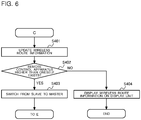
- Fig. 6 is a diagram illustrating a fourth control flow of a slave remote control apparatus 10 of an air conditioning device according to Embodiment 1 of the present invention
- Fig. 7 is a diagram illustrating a control flow of a master remote control apparatus 10 of an air conditioning device according to Embodiment 1 of the present invention.
- Figs. 3 to 7 will be used to describe control flows of the air conditioning device remote control apparatus 10 when changing the settings of air conditioning devices from the external wireless communication device 20 in the "batch setting mode".
- the user From a display unit (not illustrated) of the external wireless communication device 20 for example, the user performs an operation related to a setting change, and selects a desired air conditioning device on which to perform the setting change. Subsequently, the external wireless communication device 20 transmits an operation signal of an air conditioning device setting change to the remote control apparatus 10 associated with the selected air conditioning device.
- the main control unit 14 of the selected remote control apparatus 10 determines, on the basis of a notification from the second communication control unit 12, whether or not the operation signal of an air conditioning device setting change has been received from the external wireless communication device 20 (step S101).
- the main control unit 14 instructs the first communication control unit 11 to transmit a setting change operation signal to the associated air conditioning device, and also notifies the display control unit 15 of the content of the setting change in the associated air conditioning device.
- the second communication control unit 12 transmits the setting change operation signal to the associated air conditioning device, and performs the setting change in the associated air conditioning device (step S201). Also, after receiving the notification from the main control unit 14, the display control unit 15 updates the display content of the display unit 16 to make the display unit 16 reflect the content of the setting change in the associated air conditioning device (step S202).
- step S202 the above selected remote control apparatus 10 switches from serving as slave to serving as master (step S203).
- the above selected remote control apparatus 10 switches from being the receiver to being the transmitter of the operation signal of an air conditioning device setting change.
- the second communication control unit 12 After step S203, the second communication control unit 12, according to an instruction from the main control unit 14, detects radio waves being emitted from other remote control apparatus 10. Subsequently, on the basis of a notification from the second communication control unit 12, the main control unit 14 determines whether or not a remote control apparatus 10 emitting radio waves of a strength equal to or greater than the reference value exists (step S501).
- step S501 In the case of determining that a remote control apparatus 10 emitting radio waves of a strength equal to or greater than the reference value exists (YES in step S501), the main control unit 14 proceeds to step S502. On the other hand, in the case of determining that a remote control apparatus 10 emitting radio waves of a strength equal to or greater than the reference value does not exist (NO in step S501), the main control unit 14 proceeds to step S508. Note that the process in step S508 will be described later.
- step S502 the main control unit 14 saves, via the wireless route management unit 13, the ID of the detected remote control apparatus 10 and the radio wave strength of the detected remote control apparatus 10 (step S502).
- the second communication control unit 12 transmits a request signal for automatic change information and the wireless route information 100 to the remote control apparatus 10 emitting radio waves of a strength equal to or greater than the reference value (step S503).
- the automatic change information includes information related to the allow setting/deny setting.
- the main control unit 14 detects, via the second communication control unit 12, multiple remote control apparatuses 10 emitting radio waves of a strength equal to or greater than the reference value, the main control unit 14 instructs the second communication control unit 12 to transmit the request signal for the automatic change information and the wireless route information 100 sequentially, starting from the remote control apparatus 10 emitting the strongest radio waves among those detected.
- the second communication control unit 12 of the slave remote control apparatus 10 emitting radio waves of a strength equal to or greater than the reference value receives the request signal for the automatic change information and the wireless route information 100 (YES in step S102)
- the second communication control unit 12 notifies the main control unit 14 and, according to an instruction from the main control unit 14, transmits the automatic change information and the wireless route information 100 to the transmission source, namely the master remote control apparatus 10 (step S301).
- the second communication control unit 12 of the master remote control apparatus 10 receives the automatic change information and the wireless route information 100 from the slave remote control apparatus 10 (YES in step S504), the second communication control unit 12 notifies the main control unit 14, and from the received information, the main control unit 14 determines whether or not an operation signal transmission condition is satisfied (step S505).
- the operation signal transmission condition is that the allow setting is set in the remote control apparatus 10 of the transmission destination, and that the ID of the remote control apparatus 10 of the transmission destination is not included in the wireless route information 100.
- the case in which the ID of the remote control apparatus 10 of the transmission destination is included in the received wireless route information 100 means that the remote control apparatus 10 of the transmission destination has already received the operation signal of an air conditioning device setting change from another remote control apparatus 10. Accordingly, in this case, by not transmitting the operation signal of an air conditioning device setting change and the wireless route information 100 to the remote control apparatus 10 of the transmission destination, duplication of the setting change in the air conditioning device can be avoided.
- step S505 in the case in which the main control unit 14 of the master remote control apparatus 10 determines that the operation signal transmission condition is satisfied (YES in step S505), the second communication control unit 12, according to an instruction from the main control unit 14, transmits the operation signal of an air conditioning device setting change and the wireless route information 100 to the slave remote control apparatus 10 (step S506), and proceeds to step S507.
- the main control unit 14 in the case of determining that the operation signal transmission condition is not satisfied (NO in step S505), the main control unit 14 does not execute step S506 and proceeds to step S507.
- step S507 the main control unit 14 of the master remote control apparatus 10 determines whether or not an unprocessed remote control apparatus 10 exists among the detected remote control apparatus 10. In the case of determining that an unprocessed remote control apparatus 10 exists (YES in step S507), the main control unit 14 returns to step S503 and repeats the process of steps S503 to S507. On the other hand, in the case of determining that an unprocessed remote control apparatus 10 does not exist, the main control unit 14 ends the process.
- step S301 on the basis of a notification from the second communication control unit 12, the main control unit 14 of the slave remote control apparatus 10 determines whether or not the operation signal of an air conditioning device setting change and the wireless route information 100 has been received from the master remote control apparatus 10 (step S302).
- the main control unit 14 instructs the first communication control unit 11 to transmit a setting change operation signal to the associated air conditioning device, and also notifies the display control unit 15 of the content of the setting change in the associated air conditioning device.
- the second communication control unit 12 transmits the setting change operation signal to the associated air conditioning device, and performs the setting change in the associated air conditioning device (step S303). Also, after receiving the notification from the main control unit 14, the display control unit 15 updates the display content of the display unit 16 to make the display unit 16 reflect the content of the setting change in the associated air conditioning device (step S304).
- the main control unit 14 saves, via the wireless route management unit 13, the received wireless route information 100. At this time, the main control unit 14 saves its own ID appended to the last ID among the IDs of remote control apparatus 10 included in the received wireless route information 100 (step S305).
- the main control unit 14 saves ID:0004 appended to ID:0003.
- the slave remote control apparatus 10 switches from serving as slave to serving as master (step S306).
- the above selected remote control apparatus 10 switches from being the receiver to being the transmitter of signals such as the operation signal of an air conditioning device setting change.
- the second communication control unit 12 After step S306, the second communication control unit 12, according to an instruction from the main control unit 14, detects radio waves being emitted from other remote control apparatus 10. Subsequently, on the basis of a notification from the second communication control unit 12, the main control unit 14 determines whether or not a remote control apparatus 10 emitting radio waves of a strength equal to or greater than the reference value exists (step S501).
- step S501 the main control unit 14 proceeds to step S502. Note that since the process from step S502 to step S507 is similar to the above, a description is omitted.
- the main control unit 14 determines that a remote control apparatus 10 emitting radio waves of a strength equal to or greater than the reference value does not exist (NO in step S501), the main control unit 14 references, via the wireless route management unit 13, the saved wireless route information 100.
- the second communication control unit 12 transmits an end signal and the wireless route information 100 to the remote control apparatus 10 with the ID higher in rank than its own ID by one ID in the array of IDs of the wireless route information (step S508).
- the second communication control unit 12 transmits the end signal and the wireless route information 100 to the remote control apparatus 10 with ID:0003.
- the wireless route information 100 transmitted together with the end signal includes a list of IDs of the remote control apparatus 10 associated with the air conditioning devices whose settings have been changed, and includes the IDs of the remote control apparatus 10 associated with the air conditioning devices whose settings have been changed starting from the ID of the selected remote control apparatus 10 and proceeding in the order in which the setting change operation signal was received.
- the second communication control unit 12 of the remote control apparatus 10 higher in rank than the transmission source remote control apparatus 10 by one ID in the array of IDs of the wireless route information has received the end signal and the wireless route information 100 (YES in step S103)
- the second communication control unit 12 notifies the main control unit 14, and the main control unit 14 saves, via the wireless route management unit 13, the wireless route information 100 received from the remote control apparatus 10 with the ID lower in rank than its own ID by one ID in the array of IDs of the wireless route information (step S401).
- the main control unit 14 causes information related to the radio wave strength of other remote control apparatus 10 detected by itself saved in the wireless route management unit 13 to be included in the wireless route information 100 to save.
- the wireless route information 100 to save includes all of the IDs of the remote control apparatus 10 that received the setting change operation signal on a single route.
- the main control unit 14 references, via the wireless route management unit 13, the saved wireless route information 100, and determines whether or not a remote control apparatus 10 with an ID higher in rank than its own ID by one ID in the array of IDs of the wireless route information exists (step S402).
- the remote control apparatus 10 switches from serving as slave to serving as master (step S403). In other words, the remote control apparatus 10 switches from being the receiver to the transmitter of signals such as the end signal.
- the second communication control unit 12 transmits the end signal and the wireless route information 100 to the remote control apparatus 10 with the ID higher in rank than its own ID by one ID in the array of IDs of the wireless route information (step S508).
- the main control unit 14 notifies the display control unit 15 that the wireless route information 100 has been received from the remote control apparatus 10 with the ID lower in rank than its own ID by one ID in the array of IDs of the wireless route information.
- the display control unit 15 After receiving the notification from the main control unit 14, the display control unit 15 displays the wireless route information 100 received from the remote control apparatus 10 with the ID lower in rank than its own ID by one ID in the array of IDs of the wireless route information on the display unit 16 (step S404).
- step S404 is not limited to the above, and after receiving the notification from the main control unit 14, the display control unit 15 may also display an indication that the wireless route information 100 received from the remote control apparatus 10 with the ID lower in rank than its own ID by one ID in the array of IDs of the wireless route information is displayable on the display unit 16, and display the wireless route information 100 on the display unit 16 according to a request from the user.
- the remote control apparatus 10 selected by the user is capable of obtaining information related to all routes and the radio wave strength of the air conditioning devices whose settings have been changed, it is possible to form an optimal route and change settings in air conditioning devices on the basis of the optimal route from the next time onward.
- the optimal route refers to a route having the fastest speed of changing settings in the air conditioning devices, and in the case in which multiple transmission routes exist for the remote control apparatus 10 with an ID lower in rank than its own ID by one ID in the array of IDs of the wireless route information, the optimal route is formed by selecting the transmission route with the highest radio wave strength. Since radio wave strength is proportional to the transmission speed, by forming the optimal route, it is possible to transmit the operation signal in the shortest time to the air conditioning devices lower than oneself.
- the air conditioning device remote control apparatus 10 is provided with the first communication control unit 11 that transmits the operation signal to the associated air conditioning device, the second communication control unit 12 that performs wireless communication with the external wireless communication device 20 or another remote control apparatus 10, and the main control unit 14 that controls the first communication control unit 11 and the second communication control unit 12.
- the main control unit 14 transmits, via the first communication control unit 11, the operation signal to the associated air conditioning device, and detects, via the second communication control unit 12, other remote control apparatus 10 emitting radio waves.
- the main control unit 14 transmits, via the second communication control unit 12, the operation signal to the another remote control apparatus 10 emitting radio waves.
- the air conditioning device remote control apparatus 10 in the case in which the operation signal is received from the external wireless communication device 20 or another remote control apparatus 10, detection of another remote control apparatus 10 emitting radio waves is performed, and in the case of detecting another remote control apparatus 10 emitting radio waves, the operation signal is transmitted to the another remote control apparatus 10 emitting the radio waves. Therefore, it becomes possible to change a setting in multiple air conditioning devices from the external wireless communication device 20 with a single operation.
- the air conditioning device remote control apparatus 10 is provided with the wireless route management unit 13 that saves the wireless route information 100 including IDs that identify the remote control apparatus 10.
- the wireless route information 100 includes the IDs of the remote control apparatus 10 that have received the operation signal thus far, in the order that the operation signal was received.
- the main control unit 14 saves, via the wireless route management unit 13, its own ID appended to the last ID among the IDs included in the wireless route information 100.
- the air conditioning device remote control apparatus 10 in the case of receiving the wireless route information 100 from another remote control apparatus 10, since one's own ID is saved appended to the last ID among the IDs included in the wireless route information 100, a route of the remote control apparatus 10 that have received the setting change operation signal can be constructed.
- the main control unit 14 of the air conditioning device remote control apparatus 10 performs, via the second communication control unit 12, detection of another remote control apparatus 10 emitting radio waves, and in the case in which the second communication control unit 12 does not detect another remote control apparatus 10 emitting radio waves, the main control unit 14 references the wireless route information 100 saved in the wireless route management unit 13 and transmits, via the second communication control unit 12, the wireless route information 100 to the remote control apparatus 10 with the ID higher in rank than its own ID by one ID in the array of IDs of the wireless route information.
- the air conditioning device remote control apparatus 10 is provided with the display unit 16 that displays information, and in the case in which the second communication control unit 12 receives the wireless route information 100 from the remote control apparatus 10 with the ID lower in rank than its own ID by one ID in the array of IDs of the wireless route information, the main control unit 14 references the wireless route information 100, and in the case in which an ID higher in rank than its own ID by one ID in the array of IDs of the wireless route information exists, the main control unit 14 transmits, via the second communication control unit 12, the wireless route information 100 received from the remote control apparatus 10 with the ID lower in rank than its own ID by one ID in the array of IDs of the wireless route information to the remote control apparatus 10 with the ID higher in rank than its own ID by one ID in the array of IDs of the wireless route information.
- the main control unit 14 causes the display unit 16 to display the wireless route information 100 received from the remote control apparatus 10 with the ID lower in rank than its own ID by one ID in the array of IDs of the wireless route information.
- the main control unit 14 of the air conditioning device remote control apparatus 10 saves the radio wave strength via the wireless route management unit 13.
- the air conditioning device remote control apparatus 10 since the radio wave strength is saved in the case of detecting another remote control apparatus 10 emitting radio waves, mapping of the radio wave strength centered on the remote control apparatus 10 that transmitted the operation signal from the external wireless communication device 20 becomes possible.
- a remote control apparatus 10 not reached by the radio waves or a remote control apparatus 10 with weak radio waves can be grasped.
- a relay device can be provided between the remote control apparatus 10 of the transmission source and the remote control apparatus 10 of the transmission destination not reached by the radio waves, such that the radio waves reach the destination, or an amplifier can be provided in a remote control apparatus 10 with weak radio waves, such that the radio waves are strengthened.
- the main control unit 14 of the air conditioning device remote control apparatus 10 transmits, via the second communication control unit 12, the operation signal only to the another remote control apparatus 10 emitting radio waves of a strength equal to or greater than the reference value.
- the operation signal is transmitted only to the another remote control apparatus 10 emitting radio waves of a strength equal to or greater than the reference value, when performing a setting change on multiple air conditioning devices with a single operation from the external wireless communication device 20, the setting change operation taking a long time can be avoided.
- the main control unit 14 of the air conditioning device remote control apparatus 10 causes information related to the radio wave strength of the another remote control apparatus 10 detected by itself to be included in the wireless route information 100 received from the remote control apparatus 10 with the ID lower in rank than its own ID by one ID in the array of IDs of the wireless route information.
- the main control unit 14 forms an optimal route on the basis of the wireless route information 100 received from the remote control apparatus 10 with the ID lower in rank than its own ID by one ID in the array of IDs of the wireless route information and the information related to the radio wave strength of other remote control apparatus 10 detected by itself, and in the case in which multiple transmission routes exist for the remote control apparatus 10 with an ID lower in rank than its own ID by one ID in the array of IDs of the wireless route information, the main control unit 14 forms the optimal route by selecting the transmission route having the highest radio wave strength.
- the air conditioning device remote control apparatus 10 by forming an optimal route, it is possible to transmit the operation signal in the shortest time to the air conditioning devices lower than oneself.
- the destination to which to transmit the operation signal is limited to other remote control apparatus 10 emitting radio waves of strength equal to or greater than the reference value, but this is because if the strength of the radio waves is weak, the communication speed will become slower and take a long time. Accordingly, in cases where the time does not have to be considered, the destination to which to transmit the operation signal may be taken to be all other remote control apparatus 10 emitting radio waves.
- the user selects a desired air conditioning device on which to perform the setting change and transmits the operation signal of the air conditioning device setting change to the associated remote control apparatus 10, but the configuration is not limited thereto, and the operation signal of the air conditioning device setting change may also be transmitted to the remote control apparatus 10 emitting the strongest radio waves from among the radio wave strengths detected by the external wireless communication device 20.
- Embodiment 2 of the present invention will be described, but description will be omitted for portions that overlap with Embodiment 1, and portions associated with the same portions in Embodiment 1 will be denoted with the same signs.
- Fig. 8 is a diagram illustrating function blocks of the wireless communication device 20 of an air conditioning system according to Embodiment 2 of the present invention.
- the air conditioning system according to Embodiment 2 includes the air conditioning device remote control apparatus 10 described in Embodiment 1, and a wireless communication device 20 having a relay mode.
- the wireless communication device 20 is provided with a device-side communication control unit 22, a device-side wireless route management unit 23, a device-side main control unit 24, a device-side display control unit 25, a device-side display unit 26, and a device-side operation unit (not illustrated).
- the device-side communication control unit 22 is provided with a transmission-reception unit 22A, a wireless device detection unit 22B, and a wireless communication unit 22C.
- the device-side communication control unit 22 performs wireless communication with the remote control apparatus 10 by technology such as Bluetooth (registered trademark), for example.
- the transmission-reception unit 22A transmits signals such as the operation signal to the remote control apparatus 10 through the wireless communication unit 22C.
- the transmission-reception unit 22A receives an operation signal from the remote control apparatus 10 through the wireless communication unit 22C, and receives the wireless route information 100 from the remote control apparatus 10 through the wireless communication unit 22C.
- the wireless device detection unit 22B uses the wireless communication unit 22C to detect the remote control apparatus 10. Note that the remote control apparatus 10 emit radio waves, and the wireless device detection unit 22B detects the remote control apparatus 10 by having the wireless communication unit 22C detect the radio waves.
- the device-side communication control unit 22 corresponds to the “device-side wireless communication unit" of the present invention.
- the device-side wireless route management unit 23 saves information such as the IDs of other detected remote control apparatus 10, the radio wave strengths of the another detected remote control apparatus 10, and information regarding its own allow setting/deny setting. Also, the device-side wireless route management unit 23 saves a program for executing the relay mode.
- the wireless communication device 20 having the relay mode has an ID unique to every single device, and each wireless communication device 20 is specifiable from the ID.
- the device-side display control unit 25 controls the device-side display unit 26.
- the device-side display unit 26 includes a liquid crystal panel, for example, and displays various information.
- the device-side operation unit (not illustrated) includes buttons, for example, and accepts an operation related to a setting change in the associated air conditioning device performed by the user.
- the device-side main control unit 24 controls the device-side communication control unit 22, the device-side wireless route management unit 23, and the device-side display control unit 25.
- the device-side main control unit 24 may be configured by hardware such as a circuit device that realizes the functions of the device-side main control unit 24, and may also be configured by a computational device such as a CPU or a microprocessor and software that stipulates the operations of the computational device.
- the main control unit 14 of the remote control apparatus 10 performs, via the second communication control unit 12, detection of another remote control apparatus 10 emitting radio waves. Additionally, in the case in which the second communication control unit 12 does not detect another remote control apparatus 10 emitting radio waves, the main control unit 14 performs, via the second communication control unit 12, detection of the wireless communication device 20 in relay mode emitting radio waves. Additionally, in the case in which the second communication control unit 12 detects the wireless communication device 20 in relay mode emitting radio waves, the main control unit 14 transmits, via the second communication control unit 12, the operation signal to the wireless communication device 20 in relay mode emitting radio waves.
- the device-side main control unit 24 of the wireless communication device 20 performs, via the device-side communication control unit 22, detection of the remote control apparatus 10 emitting radio waves. Additionally, in the case in which the device-side communication control unit 22 detects the remote control apparatus 10 emitting radio waves, the device-side main control unit 24 transmits, via the device-side communication control unit 22, the operation signal to the remote control apparatus 10 emitting radio waves.
- the wireless communication device 20 in relay mode serves as a relay device that relays the signals of the remote control apparatus 10
- the air conditioning system according to Embodiment 2 is able to deliver radio waves through the wireless communication device 20 even to areas where direct radio waves from the remote control apparatus 10 do not reach.
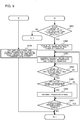
- Fig. 9 is a diagram illustrating a first control flow of a master remote control apparatus 10 of the air conditioning system according to Embodiment 2 of the present invention
- Fig. 10 is a diagram illustrating a second control flow of a master remote control apparatus 10 of the air conditioning system according to Embodiment 2 of the present invention
- Fig. 11 is a diagram illustrating a control flow of the wireless communication device 20 in relay mode of the air conditioning system according to Embodiment 2 of the present invention.
- step S501 on the basis of a notification from the second communication control unit 12, the main control unit 14 determines whether or not a remote control apparatus 10 emitting radio waves of a strength equal to or greater than the reference value exists.
- step S501 In the case of determining that a remote control apparatus 10 emitting radio waves of a strength equal to or greater than the reference value exists (YES in step S501), the main control unit 14 proceeds to step S502. Note that since the process from step S502 to S507 is similar to Embodiment 1, a description is omitted. On the other hand, in the case of determining that a remote control apparatus 10 emitting radio waves of a strength equal to or greater than the reference value does not exist (NO in step S501), the main control unit 14 proceeds to step S601.
- step S601 on the basis of a notification from the second communication control unit 12, the main control unit 14 determines whether or not a wireless communication device 20 in relay mode emitting radio waves exists. In the case of determining that a wireless communication device 20 in relay mode emitting radio waves does not exist (NO in step S601), the main control unit 14 proceeds to step S509.
- step S509 the main control unit 14 references, via the wireless route management unit 13, the saved wireless route information 100. Additionally, the second communication control unit 12, according to an instruction from the main control unit 14, transmits the end signal and the wireless route information 100 to the remote control apparatus 10 with the ID higher in rank than its own ID by one ID in the array of IDs of the wireless route information or the wireless communication device 20 (step S509).
- step S601 in the case of determining that a wireless communication device 20 in relay mode emitting radio waves exists (YES in step S601), the main control unit 14 transmits, via the second communication control unit 12, the operation signal to the wireless communication device 20 in relay mode emitting radio waves (step S602), and ends the process.
- step S701 on the basis of a notification from the device-side communication control unit 22, the device-side main control unit 24 determines whether or not a remote control apparatus 10 emitting radio waves of a strength equal to or greater than the reference value (a remote control apparatus 10 other than the remote control apparatus 10 from which the operation signal was received) exists (step S701).
- step S701 the device-side main control unit 24 proceeds to step S702.
- step S702 the device-side main control unit 24 saves, via the device-side wireless route management unit 23, the ID of the detected remote control apparatus 10 and the radio wave strength of the detected remote control apparatus 10.
- the device-side communication control unit 22 transmits the request signal for automatic change information and the wireless route information 100 to the remote control apparatus 10 emitting radio waves of a strength equal to or greater than the reference value (step S703).
- the automatic change information includes information related to the allow setting/deny setting.
- the device-side main control unit 24 detects, via the device-side communication control unit 22, multiple remote control apparatuses 10 emitting radio waves of a strength equal to or greater than the reference value, the device-side main control unit 24 instructs the device-side communication control unit 22 to transmit the request signal for the automatic change information and the wireless route information 100 sequentially starting from the remote control apparatus 10 emitting the strongest radio waves among those detected.
- the device-side communication control unit 22 In the case in which the device-side communication control unit 22 receives the automatic change information and the wireless route information 100 from the slave remote control apparatus 10 (YES in step S704), the device-side communication control unit 22 notifies the device-side main control unit 24, and from the received information, the device-side main control unit 24 determines whether or not the operation signal transmission condition is satisfied (step S705).
- the operation signal transmission condition is that the allow setting is set in the remote control apparatus 10 of the transmission destination, and that the ID of the remote control apparatus 10 of the transmission destination is not included in the wireless route information 100.
- the case in which the ID of the remote control apparatus 10 of the transmission destination is included in the received wireless route information 100 means that the remote control apparatus 10 of the transmission destination has already received the operation signal of an air conditioning device setting change from another remote control apparatus 10. Accordingly, in this case, by not transmitting the operation signal of an air conditioning device setting change and the wireless route information 100 to the remote control apparatus 10 of the transmission destination, duplication of the setting change in the air conditioning device can be avoided.
- step S705 in the case in which the device-side main control unit 24 determines that the operation signal transmission condition is satisfied (YES in step S705), the device-side communication control unit 22, according to an instruction from the device-side main control unit 24, transmits the operation signal of an air conditioning device setting change and the wireless route information 100 to the slave remote control apparatus 10 (step S706), and proceeds to step S707.
- the device-side main control unit 24 does not execute step S706 and proceeds to step S707.
- step S707 the device-side main control unit 24 determines whether or not an unprocessed remote control apparatus 10 exists among the detected remote control apparatus 10. In the case of determining that an unprocessed remote control apparatus 10 exists (YES in step S707), the device-side main control unit 24 returns to step S703 and repeats the process of steps S703 to S707. On the other hand, in the case of determining that an unprocessed remote control apparatus 10 does not exist, the device-side main control unit 24 ends the process.
- step S701 in the case of determining that a remote control apparatus 10 emitting radio waves of a strength equal to or greater than the reference value does not exist (NO in step S701), the device-side main control unit 24 proceeds to step S708.
- step S708 the device-side communication control unit 22, according to an instruction from the device-side main control unit 24, transmits the end signal and the wireless route information 100 to the remote control apparatus 10 of the relay source (step S708), and ends the process.
- the air conditioning system according to Embodiment 2 is provided with the air conditioning device remote control apparatus 10 and the wireless communication device 20 having the relay mode.
- the wireless communication device 20 is provided with the device-side communication control unit 22 that performs wireless communication with the remote control apparatus 10 and the device-side main control unit 24 that controls the device-side communication control unit 22. While in the relay mode, the device-side main control unit 24 receives the operation signal from the remote control apparatus 10, and transmits the received operation signal to another remote control apparatus 10.
- the main control unit 14 performs, via the second communication control unit 12, detection of another remote control apparatus 10 emitting radio waves, and in the case in which the second communication control unit 12 does not detect another remote control apparatus 10 emitting radio waves, the main control unit 14 performs, via the second communication control unit 12, detection of a wireless communication device 20 in relay mode emitting radio waves. In the case in which the second communication control unit 12 detects a wireless communication device 20 in relay mode emitting radio waves, the main control unit 14 transmits, via the second communication control unit 12, the operation signal to the wireless communication device 20 in relay mode emitting radio waves.
- the device-side main control unit 24 performs, via the device-side communication control unit 22, detection of another remote control apparatus 10 emitting radio waves, and in the case in which the device-side communication control unit 22 detects another remote control apparatus 10 emitting radio waves, the device-side main control unit 24 transmits, via the device-side communication control unit 22, the operation signal to the another remote control apparatus 10 emitting radio waves.
- the wireless communication device 20 in relay mode serves as a relay device that relays the signals of the remote control apparatus 10, it is possible to deliver radio waves through the wireless communication device 20 even to areas where direct radio waves from the remote control apparatus 10 do not reach. For this reason, by having a person carrying the wireless communication device 20, such as a hotel staff member for example, walk around inside the building, the wireless communication device 20 becomes a walking relay device capable of delivering radio waves even to areas not reached in the past, and the operation signal can be transmitted over a wider range.
- remote control apparatus 11 first communication control unit 11A first transmission-reception unit 11B first wireless communication unit 12 second communication control unit 12A second transmission-reception unit 12B wireless device detection unit 12C second wireless communication unit 13 wireless route management unit 14 main control unit 15 display control unit 16 display unit 20 wireless communication device 22 device-side communication control unit 22A transmission-reception unit 22B wireless device detection unit 22C wireless communication unit 23 device-side wireless route management unit 24 device-side main control unit 25 device-side display control unit 26 device-side display unit 100 wireless route information
Landscapes
- Engineering & Computer Science (AREA)
- Mechanical Engineering (AREA)
- General Engineering & Computer Science (AREA)
- Chemical & Material Sciences (AREA)
- Combustion & Propulsion (AREA)
- Physics & Mathematics (AREA)
- Signal Processing (AREA)
- Human Computer Interaction (AREA)
- General Physics & Mathematics (AREA)
- Computer Networks & Wireless Communication (AREA)
- Fuzzy Systems (AREA)
- Mathematical Physics (AREA)
- Selective Calling Equipment (AREA)
- Air Conditioning Control Device (AREA)
Abstract
Description
- The present invention relates to an air conditioning device remote control apparatus and an air conditioning system accepting operation from an external wireless communication device.
- In the related art, a remote control apparatus that controls an air conditioning device has been proposed in which operation from an external wireless device such as a smartphone or a tablet is possible (for example, see Patent Literature 1).
- The remote control apparatus described in Patent Literature 1 is provided with an operation unit that sets a setting allowing the air conditioning device to be operated by an external wireless communication device, transmission means that transmits the allowed setting to the external wireless communication device, and a reception unit that receives an operation signal for the air conditioning device transmitted from the external wireless communication device. Subsequently, by transmitting a transmission signal received from the external wireless communication device to the air conditioning device, it is possible to operate the air conditioning device from the external wireless communication device.
- Patent Literature 1: Japanese Unexamined Patent Application Publication No.
2015-224858 - In environments where multiple air conditioning devices are installed inside a building, such as an office building or a hotel, multiple remote control apparatuses associated with each of the air conditioning devices may also be installed. In such environments, in the case of wanting to change a setting in multiple air conditioning devices from an external wireless communication device, in the past it has been necessary to transmit an operation signal from the external wireless communication device to each remote control apparatus. In other words, because it is necessary for a user to perform a similar operation on the external wireless communication device repeatedly for each of the multiple air conditioning devices for which the user wants to change the setting, there is a problem in that changing the setting is extremely burdensome and time-consuming.
- The present invention has been devised to overcome problems like the above, and an object thereof is to provide an air conditioning device remote control apparatus and an air conditioning system that make it possible to change a setting in multiple air conditioning devices from an external wireless communication device with a single operation.
- An air conditioning device remote control apparatus according to an embodiment of the present invention is provided with a transmission unit that transmits an operation signal to an associated air conditioning device; a wireless communication unit that performs wireless communication with an external wireless communication device or another remote control apparatus; and a main control unit that controls the transmission unit and the wireless communication unit, wherein in a case in which the wireless communication unit receives an operation signal from the external wireless communication device or the another remote control apparatus, the main control unit transmits, via the transmission unit, the operation signal to the associated air conditioning device, and performs, via the wireless communication unit, detection of another remote control apparatus emitting radio waves, and in a case in which the wireless communication unit detects the another remote control apparatus emitting radio waves, the main control unit transmits, via the wireless communication unit, the operation signal to the another remote control apparatus emitting radio waves.
- According to the air conditioning device remote control apparatus according to an embodiment of the present invention, in the case in which an operation signal is received from an external wireless communication device or another remote control apparatus, detection of another remote control apparatus emitting radio waves is performed, and in the case of detecting another remote control apparatus emitting radio waves, the operation signal is transmitted to the another remote control apparatus emitting the radio waves. Therefore, it becomes possible to change a setting in multiple air conditioning devices from the external wireless communication device with a single operation.
-
- [
Fig. 1] Fig. 1 is a diagram illustrating an overall configuration and function blocks of an air conditioning device remote control apparatus according to Embodiment 1 of the present invention. - [
Fig. 2] Fig. 2 is wireless route information according to Embodiment 1 of the present invention. - [
Fig. 3] Fig. 3 is a diagram illustrating a first control flow of a slave remote control apparatus of an air conditioning device according to Embodiment 1 of the present invention. - [
Fig. 4] Fig. 4 is a diagram illustrating a second control flow of a slave remote control apparatus of an air conditioning device according to Embodiment 1 of the present invention. - [
Fig. 5] Fig. 5 is a diagram illustrating a third control flow of a slave remote control apparatus of an air conditioning device according to Embodiment 1 of the present invention. - [
Fig. 6] Fig. 6 is a diagram illustrating a fourth control flow of a slave remote control apparatus of an air conditioning device according to Embodiment 1 of the present invention. - [
Fig. 7] Fig. 7 is a diagram illustrating a control flow of a master remote control apparatus of an air conditioning device according to Embodiment 1 of the present invention. - [
Fig. 8] Fig. 8 is a diagram illustrating function blocks of a wireless communication device of an air conditioning system according to Embodiment 2 of the present invention. - [
Fig. 9] Fig. 9 is a diagram illustrating a first control flow of a master remote control apparatus of the air conditioning system according to Embodiment 2 of the present invention. - [
Fig. 10] Fig. 10 is a diagram illustrating a second control flow of a master remote control apparatus of the air conditioning system according to Embodiment 2 of the present invention. - [
Fig. 11] Fig. 11 is a diagram illustrating a control flow of a wireless communication device in a relay mode of the air conditioning system according to Embodiment 2 of the present invention. - Hereinafter, embodiments of the present invention will be described on the basis of the drawings. Note that the present invention is not limited by the embodiments described hereinafter. Also, in the drawings hereinafter, the relative sizes of respective structural members may differ from actual sizes in some cases.
-
Fig. 1 is a diagram illustrating an overall configuration and function blocks of an air conditioning deviceremote control apparatus 10 according to Embodiment 1 of the present invention. - Hereinafter,
Fig. 1 will be referenced to describe theremote control apparatus 10 plurally installed in correspondence with each air conditioning device in an environment in which multiple air conditioning devices are installed inside a building, such as an office building or a hotel. - The
remote control apparatus 10 according to Embodiment 1 is capable of performing wireless communication with not only the associated air conditioning device but also an externalwireless communication device 20, such as a smartphone or a tablet, and in addition, is also capable of performing wireless communication with otherremote control apparatus 10. - In the
remote control apparatus 10, there is set an allow setting that allows changing the operation of the air conditioning device associated with itself from anotherremote control apparatus 10, or a deny setting that denies changing the operation of the air conditioning device associated with itself. Note that in Embodiment 1, it is assumed that the allow setting is set in all of theremote control apparatus 10. - The
remote control apparatus 10 is provided with a first communication control unit 11, a secondcommunication control unit 12, a wirelessroute management unit 13, amain control unit 14, adisplay control unit 15, adisplay unit 16, and an operation unit (not illustrated). Also, the first communication control unit 11 is provided with a first transmission-reception unit 11A and a firstwireless communication unit 11B, while the secondcommunication control unit 12 is provided with a second transmission-reception unit 12A, a wirelessdevice detection unit 12B, and a second wireless communication unit 12C. - The first communication control unit 11 performs wireless communication with the associated air conditioning device by infrared for example. The first transmission-
reception unit 11A transmits signals such as operation signal to the associated air conditioning device through the firstwireless communication unit 11B, and also receives a signal related to information such as operating information from the associated air conditioning device through the firstwireless communication unit 11B. - Note that in Embodiment 1, the first communication control unit 11 is configured to perform wireless communication with the associated air conditioning device, but is not limited thereto, and may also be configured to perform wired communication. Also, the first transmission-
reception unit 11A is configured to receive a signal related to information such as operating information from the associated air conditioning device, but is not limited thereto, and it is sufficient for the first transmission-reception unit 11A to be able to at least transmit an operation signal to the associated air conditioning device. - The second
communication control unit 12 performs wireless communication with the externalwireless communication device 20 or anotherremote control apparatus 10 by technology such as Bluetooth (registered trademark), for example. The second transmission-reception unit 12A transmits signals such as an operation signal to anotherremote control apparatus 10 through the second wireless communication unit 12C. - Also, the second transmission-
reception unit 12A receives an operation signal from the externalwireless communication device 20 or anotherremote control apparatus 10 through the second wireless communication unit 12C, and receiveswireless route information 100 from anotherremote control apparatus 10 through the second wireless communication unit 12C. -
Fig. 2 is thewireless route information 100 according to Embodiment 1 of the present invention. - Herein, as illustrated in
Fig. 2 , thewireless route information 100 refers to information including an ID that identifies theremote control apparatus 10. Also, thewireless route information 100 includes information related to the ID of eachremote control apparatus 10 that has received a setting change operation signal. Thewireless route information 100 includes the order of theremote control apparatus 10 that have received the setting change operation signal. - For example, as illustrated in
Fig. 2 , thewireless route information 100 includes ID:0001 of theremote control apparatus 10 that received the setting change operation signal first, ID:0003 of theremote control apparatus 10 that received the setting change operation signal from theremote control apparatus 10 with ID:0001, and ID:0004 of theremote control apparatus 10 that received the setting change operation signal from theremote control apparatus 10 with ID:0003, and these IDs are joined in order. - The wireless
device detection unit 12B uses the second wireless communication unit 12C to detect otherremote control apparatus 10. Note that theremote control apparatus 10 emit radio waves, and the wirelessdevice detection unit 12B detects otherremote control apparatus 10 by having the second wireless communication unit 12C detect the radio waves. - Note that the first communication control unit 11 corresponds to the "transmission unit" of the present invention, and the second
communication control unit 12 corresponds to the "wireless communication unit" of the present invention. - The wireless
route management unit 13 saves information such as the IDs of other detectedremote control apparatus 10, the radio wave strengths of the another detectedremote control apparatus 10, and information regarding its own allow setting/deny setting. - Herein, each
remote control apparatus 10 has an ID unique to every single apparatus, and eachremote control apparatus 10 is specifiable from the ID. - The
display control unit 15 controls thedisplay unit 16. Thedisplay unit 16 includes a liquid crystal panel, for example, and displays various information. Also, the operation unit (not illustrated) includes buttons, for example, and accepts an operation related to a setting change in the associated air conditioning device performed by the user. - The
main control unit 14 controls the first communication control unit 11, the secondcommunication control unit 12, the wirelessroute management unit 13, and thedisplay control unit 15. Note that themain control unit 14 may be configured by hardware such as a circuit device that realizes the functions of themain control unit 14, and may also be configured by a computational device such as a CPU or a microprocessor and software that stipulates the operations of the computational device. - The
remote control apparatus 10 according to Embodiment 1 is provided with a "normal mode" that, in the case in which an operation signal of an air conditioning device setting change is received from the externalwireless communication device 20, performs the setting change only in the associated air conditioning device, and a "batch setting mode" that, while performing the setting change in the associated air conditioning device, also transmits an operation signal to otherremote control apparatus 10 emitting radio waves of a strength equal to or greater than a reference value, and performs the setting change in each air conditioning device associated with the transmission destinationremote control apparatus 10. -
Fig. 3 is a diagram illustrating a first control flow of a slaveremote control apparatus 10 of an air conditioning device according to Embodiment 1 of the present invention,Fig. 4 is a diagram illustrating a second control flow of a slaveremote control apparatus 10 of an air conditioning device according to Embodiment 1 of the present invention,Fig. 5 is a diagram illustrating a third control flow of a slaveremote control apparatus 10 of an air conditioning device according to Embodiment 1 of the present invention,Fig. 6 is a diagram illustrating a fourth control flow of a slaveremote control apparatus 10 of an air conditioning device according to Embodiment 1 of the present invention, andFig. 7 is a diagram illustrating a control flow of a masterremote control apparatus 10 of an air conditioning device according to Embodiment 1 of the present invention. - Hereinafter,
Figs. 3 to 7 will be used to describe control flows of the air conditioning deviceremote control apparatus 10 when changing the settings of air conditioning devices from the externalwireless communication device 20 in the "batch setting mode". - From a display unit (not illustrated) of the external
wireless communication device 20 for example, the user performs an operation related to a setting change, and selects a desired air conditioning device on which to perform the setting change. Subsequently, the externalwireless communication device 20 transmits an operation signal of an air conditioning device setting change to theremote control apparatus 10 associated with the selected air conditioning device. - The
main control unit 14 of the selectedremote control apparatus 10 determines, on the basis of a notification from the secondcommunication control unit 12, whether or not the operation signal of an air conditioning device setting change has been received from the external wireless communication device 20 (step S101). - In the case of determining that the operation signal of an air conditioning device setting change has been received from the external wireless communication device 20 (YES in step S101), the
main control unit 14 instructs the first communication control unit 11 to transmit a setting change operation signal to the associated air conditioning device, and also notifies thedisplay control unit 15 of the content of the setting change in the associated air conditioning device. - The second
communication control unit 12, according to an instruction from themain control unit 14, transmits the setting change operation signal to the associated air conditioning device, and performs the setting change in the associated air conditioning device (step S201). Also, after receiving the notification from themain control unit 14, thedisplay control unit 15 updates the display content of thedisplay unit 16 to make thedisplay unit 16 reflect the content of the setting change in the associated air conditioning device (step S202). - After step S202, the above selected
remote control apparatus 10 switches from serving as slave to serving as master (step S203). In other words, the above selectedremote control apparatus 10 switches from being the receiver to being the transmitter of the operation signal of an air conditioning device setting change. - After step S203, the second
communication control unit 12, according to an instruction from themain control unit 14, detects radio waves being emitted from otherremote control apparatus 10. Subsequently, on the basis of a notification from the secondcommunication control unit 12, themain control unit 14 determines whether or not aremote control apparatus 10 emitting radio waves of a strength equal to or greater than the reference value exists (step S501). - In the case of determining that a
remote control apparatus 10 emitting radio waves of a strength equal to or greater than the reference value exists (YES in step S501), themain control unit 14 proceeds to step S502. On the other hand, in the case of determining that aremote control apparatus 10 emitting radio waves of a strength equal to or greater than the reference value does not exist (NO in step S501), themain control unit 14 proceeds to step S508. Note that the process in step S508 will be described later. - In step S502, the
main control unit 14 saves, via the wirelessroute management unit 13, the ID of the detectedremote control apparatus 10 and the radio wave strength of the detected remote control apparatus 10 (step S502). - Also, the second
communication control unit 12, according to an instruction from themain control unit 14, transmits a request signal for automatic change information and thewireless route information 100 to theremote control apparatus 10 emitting radio waves of a strength equal to or greater than the reference value (step S503). Note that the automatic change information includes information related to the allow setting/deny setting. - At this point, in the case in which the
main control unit 14 detects, via the secondcommunication control unit 12, multipleremote control apparatuses 10 emitting radio waves of a strength equal to or greater than the reference value, themain control unit 14 instructs the secondcommunication control unit 12 to transmit the request signal for the automatic change information and thewireless route information 100 sequentially, starting from theremote control apparatus 10 emitting the strongest radio waves among those detected. - In the case in which the second
communication control unit 12 of the slaveremote control apparatus 10 emitting radio waves of a strength equal to or greater than the reference value receives the request signal for the automatic change information and the wireless route information 100 (YES in step S102), the secondcommunication control unit 12 notifies themain control unit 14 and, according to an instruction from themain control unit 14, transmits the automatic change information and thewireless route information 100 to the transmission source, namely the master remote control apparatus 10 (step S301). - In the case in which the second
communication control unit 12 of the masterremote control apparatus 10 receives the automatic change information and thewireless route information 100 from the slave remote control apparatus 10 (YES in step S504), the secondcommunication control unit 12 notifies themain control unit 14, and from the received information, themain control unit 14 determines whether or not an operation signal transmission condition is satisfied (step S505). - At this point, the operation signal transmission condition is that the allow setting is set in the
remote control apparatus 10 of the transmission destination, and that the ID of theremote control apparatus 10 of the transmission destination is not included in thewireless route information 100. - Note that the case in which the ID of the
remote control apparatus 10 of the transmission destination is included in the receivedwireless route information 100 means that theremote control apparatus 10 of the transmission destination has already received the operation signal of an air conditioning device setting change from anotherremote control apparatus 10. Accordingly, in this case, by not transmitting the operation signal of an air conditioning device setting change and thewireless route information 100 to theremote control apparatus 10 of the transmission destination, duplication of the setting change in the air conditioning device can be avoided. - In step S505, in the case in which the
main control unit 14 of the masterremote control apparatus 10 determines that the operation signal transmission condition is satisfied (YES in step S505), the secondcommunication control unit 12, according to an instruction from themain control unit 14, transmits the operation signal of an air conditioning device setting change and thewireless route information 100 to the slave remote control apparatus 10 (step S506), and proceeds to step S507. On the other hand, in the case of determining that the operation signal transmission condition is not satisfied (NO in step S505), themain control unit 14 does not execute step S506 and proceeds to step S507. - In step S507, the
main control unit 14 of the masterremote control apparatus 10 determines whether or not an unprocessedremote control apparatus 10 exists among the detectedremote control apparatus 10. In the case of determining that an unprocessedremote control apparatus 10 exists (YES in step S507), themain control unit 14 returns to step S503 and repeats the process of steps S503 to S507. On the other hand, in the case of determining that an unprocessedremote control apparatus 10 does not exist, themain control unit 14 ends the process. - Also, after step S301, on the basis of a notification from the second
communication control unit 12, themain control unit 14 of the slaveremote control apparatus 10 determines whether or not the operation signal of an air conditioning device setting change and thewireless route information 100 has been received from the master remote control apparatus 10 (step S302). - In the case of determining that the operation signal of an air conditioning device setting change and the
wireless route information 100 has been received from the master remote control apparatus 10 (YES in step S302), themain control unit 14 instructs the first communication control unit 11 to transmit a setting change operation signal to the associated air conditioning device, and also notifies thedisplay control unit 15 of the content of the setting change in the associated air conditioning device. - The second
communication control unit 12, according to an instruction from themain control unit 14, transmits the setting change operation signal to the associated air conditioning device, and performs the setting change in the associated air conditioning device (step S303). Also, after receiving the notification from themain control unit 14, thedisplay control unit 15 updates the display content of thedisplay unit 16 to make thedisplay unit 16 reflect the content of the setting change in the associated air conditioning device (step S304). - In addition, the
main control unit 14 saves, via the wirelessroute management unit 13, the receivedwireless route information 100. At this time, themain control unit 14 saves its own ID appended to the last ID among the IDs ofremote control apparatus 10 included in the received wireless route information 100 (step S305). - For example, in the case of receiving the
wireless route information 100 illustrated inFig. 2 , since the last ID is 0003 and one's own ID is 0004, themain control unit 14 saves ID:0004 appended to ID:0003. - After step S305, the slave
remote control apparatus 10 switches from serving as slave to serving as master (step S306). In other words, the above selectedremote control apparatus 10 switches from being the receiver to being the transmitter of signals such as the operation signal of an air conditioning device setting change. - After step S306, the second
communication control unit 12, according to an instruction from themain control unit 14, detects radio waves being emitted from otherremote control apparatus 10. Subsequently, on the basis of a notification from the secondcommunication control unit 12, themain control unit 14 determines whether or not aremote control apparatus 10 emitting radio waves of a strength equal to or greater than the reference value exists (step S501). - In the case of determining that a
remote control apparatus 10 emitting radio waves of a strength equal to or greater than the reference value exists (YES in step S501), themain control unit 14 proceeds to step S502. Note that since the process from step S502 to step S507 is similar to the above, a description is omitted. - On the other hand, in the case in which the
main control unit 14 determines that aremote control apparatus 10 emitting radio waves of a strength equal to or greater than the reference value does not exist (NO in step S501), themain control unit 14 references, via the wirelessroute management unit 13, the savedwireless route information 100. - Additionally, the second
communication control unit 12, according to an instruction from themain control unit 14, transmits an end signal and thewireless route information 100 to theremote control apparatus 10 with the ID higher in rank than its own ID by one ID in the array of IDs of the wireless route information (step S508). - For example, in the case of referencing the
wireless route information 100 illustrated inFig. 2 , since one's own ID is 0004 and the ID that is higher in rank than itself by one ID in the array of IDs of the wireless route information is 0003, the secondcommunication control unit 12 transmits the end signal and thewireless route information 100 to theremote control apparatus 10 with ID:0003. - At this point, the
wireless route information 100 transmitted together with the end signal includes a list of IDs of theremote control apparatus 10 associated with the air conditioning devices whose settings have been changed, and includes the IDs of theremote control apparatus 10 associated with the air conditioning devices whose settings have been changed starting from the ID of the selectedremote control apparatus 10 and proceeding in the order in which the setting change operation signal was received. - In the case in which the second
communication control unit 12 of theremote control apparatus 10 higher in rank than the transmission sourceremote control apparatus 10 by one ID in the array of IDs of the wireless route information has received the end signal and the wireless route information 100 (YES in step S103), the secondcommunication control unit 12 notifies themain control unit 14, and themain control unit 14 saves, via the wirelessroute management unit 13, thewireless route information 100 received from theremote control apparatus 10 with the ID lower in rank than its own ID by one ID in the array of IDs of the wireless route information (step S401). At this time, themain control unit 14 causes information related to the radio wave strength of otherremote control apparatus 10 detected by itself saved in the wirelessroute management unit 13 to be included in thewireless route information 100 to save. Note that thewireless route information 100 to save includes all of the IDs of theremote control apparatus 10 that received the setting change operation signal on a single route. - After step S401, the
main control unit 14 references, via the wirelessroute management unit 13, the savedwireless route information 100, and determines whether or not aremote control apparatus 10 with an ID higher in rank than its own ID by one ID in the array of IDs of the wireless route information exists (step S402). - In the case in which the
main control unit 14 determines that aremote control apparatus 10 with an ID higher in rank than its own ID by one ID in the array of IDs of the wireless route information exists (YES in step S402), theremote control apparatus 10 switches from serving as slave to serving as master (step S403). In other words, theremote control apparatus 10 switches from being the receiver to the transmitter of signals such as the end signal. - After step S403, the second
communication control unit 12, according to an instruction from themain control unit 14, transmits the end signal and thewireless route information 100 to theremote control apparatus 10 with the ID higher in rank than its own ID by one ID in the array of IDs of the wireless route information (step S508). - On the other hand, in the case of determining that a
remote control apparatus 10 with an ID higher in rank than its own ID by one ID in the array of IDs of the wireless route information does not exist (NO in step S402), themain control unit 14 notifies thedisplay control unit 15 that thewireless route information 100 has been received from theremote control apparatus 10 with the ID lower in rank than its own ID by one ID in the array of IDs of the wireless route information. - After receiving the notification from the
main control unit 14, thedisplay control unit 15 displays thewireless route information 100 received from theremote control apparatus 10 with the ID lower in rank than its own ID by one ID in the array of IDs of the wireless route information on the display unit 16 (step S404). - Note that step S404 is not limited to the above, and after receiving the notification from the
main control unit 14, thedisplay control unit 15 may also display an indication that thewireless route information 100 received from theremote control apparatus 10 with the ID lower in rank than its own ID by one ID in the array of IDs of the wireless route information is displayable on thedisplay unit 16, and display thewireless route information 100 on thedisplay unit 16 according to a request from the user. - With this arrangement, all air conditioning devices whose settings have been changed on a single route are displayed on the
display unit 16. Additionally, by performing this process on all routes, all air conditioning devices whose settings have been changed on all routes are displayed on thedisplay unit 16. For this reason, the user is able to know all of the air conditioning devices whose settings have been changed from the selectedremote control apparatus 10. - Also, because the
remote control apparatus 10 selected by the user is capable of obtaining information related to all routes and the radio wave strength of the air conditioning devices whose settings have been changed, it is possible to form an optimal route and change settings in air conditioning devices on the basis of the optimal route from the next time onward. At this point, the optimal route refers to a route having the fastest speed of changing settings in the air conditioning devices, and in the case in which multiple transmission routes exist for theremote control apparatus 10 with an ID lower in rank than its own ID by one ID in the array of IDs of the wireless route information, the optimal route is formed by selecting the transmission route with the highest radio wave strength. Since radio wave strength is proportional to the transmission speed, by forming the optimal route, it is possible to transmit the operation signal in the shortest time to the air conditioning devices lower than oneself. - As above, the air conditioning device
remote control apparatus 10 according to Embodiment 1 is provided with the first communication control unit 11 that transmits the operation signal to the associated air conditioning device, the secondcommunication control unit 12 that performs wireless communication with the externalwireless communication device 20 or anotherremote control apparatus 10, and themain control unit 14 that controls the first communication control unit 11 and the secondcommunication control unit 12. In the case in which the secondcommunication control unit 12 receives the operation signal from the externalwireless communication device 20 or anotherremote control apparatus 10, themain control unit 14 transmits, via the first communication control unit 11, the operation signal to the associated air conditioning device, and detects, via the secondcommunication control unit 12, otherremote control apparatus 10 emitting radio waves. In the case in which the secondcommunication control unit 12 detects anotherremote control apparatus 10 emitting radio waves, themain control unit 14 transmits, via the secondcommunication control unit 12, the operation signal to the anotherremote control apparatus 10 emitting radio waves. - According to the air conditioning device
remote control apparatus 10 according to Embodiment 1, in the case in which the operation signal is received from the externalwireless communication device 20 or anotherremote control apparatus 10, detection of anotherremote control apparatus 10 emitting radio waves is performed, and in the case of detecting anotherremote control apparatus 10 emitting radio waves, the operation signal is transmitted to the anotherremote control apparatus 10 emitting the radio waves. Therefore, it becomes possible to change a setting in multiple air conditioning devices from the externalwireless communication device 20 with a single operation. - Also, the air conditioning device
remote control apparatus 10 according to Embodiment 1 is provided with the wirelessroute management unit 13 that saves thewireless route information 100 including IDs that identify theremote control apparatus 10. Thewireless route information 100 includes the IDs of theremote control apparatus 10 that have received the operation signal thus far, in the order that the operation signal was received. In the case in which the secondcommunication control unit 12 receives thewireless route information 100 from anotherremote control apparatus 10, themain control unit 14 saves, via the wirelessroute management unit 13, its own ID appended to the last ID among the IDs included in thewireless route information 100. - According to the air conditioning device
remote control apparatus 10 according to Embodiment 1, in the case of receiving thewireless route information 100 from anotherremote control apparatus 10, since one's own ID is saved appended to the last ID among the IDs included in thewireless route information 100, a route of theremote control apparatus 10 that have received the setting change operation signal can be constructed. - Also, the
main control unit 14 of the air conditioning deviceremote control apparatus 10 according to Embodiment 1 performs, via the secondcommunication control unit 12, detection of anotherremote control apparatus 10 emitting radio waves, and in the case in which the secondcommunication control unit 12 does not detect anotherremote control apparatus 10 emitting radio waves, themain control unit 14 references thewireless route information 100 saved in the wirelessroute management unit 13 and transmits, via the secondcommunication control unit 12, thewireless route information 100 to theremote control apparatus 10 with the ID higher in rank than its own ID by one ID in the array of IDs of the wireless route information. - Also, the air conditioning device
remote control apparatus 10 according to Embodiment 1 is provided with thedisplay unit 16 that displays information, and in the case in which the secondcommunication control unit 12 receives thewireless route information 100 from theremote control apparatus 10 with the ID lower in rank than its own ID by one ID in the array of IDs of the wireless route information, themain control unit 14 references thewireless route information 100, and in the case in which an ID higher in rank than its own ID by one ID in the array of IDs of the wireless route information exists, themain control unit 14 transmits, via the secondcommunication control unit 12, thewireless route information 100 received from theremote control apparatus 10 with the ID lower in rank than its own ID by one ID in the array of IDs of the wireless route information to theremote control apparatus 10 with the ID higher in rank than its own ID by one ID in the array of IDs of the wireless route information. In the case in which an ID higher in rank than its own ID by one ID in the array of IDs of the wireless route information does not exist, themain control unit 14 causes thedisplay unit 16 to display thewireless route information 100 received from theremote control apparatus 10 with the ID lower in rank than its own ID by one ID in the array of IDs of the wireless route information. - According to the air conditioning device
remote control apparatus 10 according to Embodiment 1, all air conditioning devices whose settings have been changed on all routes are displayed on thedisplay unit 16 of theremote control apparatus 10 selected by the user. For this reason, the user is able to know all of the air conditioning devices whose settings have been changed from the selectedremote control apparatus 10. - Also, in the case in which the second
communication control unit 12 detects anotherremote control apparatus 10 emitting radio waves, themain control unit 14 of the air conditioning deviceremote control apparatus 10 according to Embodiment 1 saves the radio wave strength via the wirelessroute management unit 13. - According to the air conditioning device
remote control apparatus 10 according to Embodiment 1, since the radio wave strength is saved in the case of detecting anotherremote control apparatus 10 emitting radio waves, mapping of the radio wave strength centered on theremote control apparatus 10 that transmitted the operation signal from the externalwireless communication device 20 becomes possible. - By using this mapping, a
remote control apparatus 10 not reached by the radio waves or aremote control apparatus 10 with weak radio waves can be grasped. For this reason, for example, a relay device can be provided between theremote control apparatus 10 of the transmission source and theremote control apparatus 10 of the transmission destination not reached by the radio waves, such that the radio waves reach the destination, or an amplifier can be provided in aremote control apparatus 10 with weak radio waves, such that the radio waves are strengthened. - Also, in the case in which the second
communication control unit 12 detects otherremote control apparatus 10 emitting radio waves, themain control unit 14 of the air conditioning deviceremote control apparatus 10 according to Embodiment 1 transmits, via the secondcommunication control unit 12, the operation signal only to the anotherremote control apparatus 10 emitting radio waves of a strength equal to or greater than the reference value. - According to the air conditioning device
remote control apparatus 10 according to Embodiment 1, since the operation signal is transmitted only to the anotherremote control apparatus 10 emitting radio waves of a strength equal to or greater than the reference value, when performing a setting change on multiple air conditioning devices with a single operation from the externalwireless communication device 20, the setting change operation taking a long time can be avoided. - Also, the
main control unit 14 of the air conditioning deviceremote control apparatus 10 according to Embodiment 1 causes information related to the radio wave strength of the anotherremote control apparatus 10 detected by itself to be included in thewireless route information 100 received from theremote control apparatus 10 with the ID lower in rank than its own ID by one ID in the array of IDs of the wireless route information. Also, themain control unit 14 forms an optimal route on the basis of thewireless route information 100 received from theremote control apparatus 10 with the ID lower in rank than its own ID by one ID in the array of IDs of the wireless route information and the information related to the radio wave strength of otherremote control apparatus 10 detected by itself, and in the case in which multiple transmission routes exist for theremote control apparatus 10 with an ID lower in rank than its own ID by one ID in the array of IDs of the wireless route information, themain control unit 14 forms the optimal route by selecting the transmission route having the highest radio wave strength. - According to the air conditioning device
remote control apparatus 10 according to Embodiment 1, by forming an optimal route, it is possible to transmit the operation signal in the shortest time to the air conditioning devices lower than oneself. - Note that in Embodiment 1, the destination to which to transmit the operation signal is limited to other
remote control apparatus 10 emitting radio waves of strength equal to or greater than the reference value, but this is because if the strength of the radio waves is weak, the communication speed will become slower and take a long time. Accordingly, in cases where the time does not have to be considered, the destination to which to transmit the operation signal may be taken to be all otherremote control apparatus 10 emitting radio waves. - Also, in Embodiment 1, the user selects a desired air conditioning device on which to perform the setting change and transmits the operation signal of the air conditioning device setting change to the associated
remote control apparatus 10, but the configuration is not limited thereto, and the operation signal of the air conditioning device setting change may also be transmitted to theremote control apparatus 10 emitting the strongest radio waves from among the radio wave strengths detected by the externalwireless communication device 20. - Hereinafter, Embodiment 2 of the present invention will be described, but description will be omitted for portions that overlap with Embodiment 1, and portions associated with the same portions in Embodiment 1 will be denoted with the same signs.
-
Fig. 8 is a diagram illustrating function blocks of thewireless communication device 20 of an air conditioning system according to Embodiment 2 of the present invention. - The air conditioning system according to Embodiment 2 includes the air conditioning device
remote control apparatus 10 described in Embodiment 1, and awireless communication device 20 having a relay mode. As illustrated inFig. 8 , thewireless communication device 20 is provided with a device-sidecommunication control unit 22, a device-side wirelessroute management unit 23, a device-sidemain control unit 24, a device-sidedisplay control unit 25, a device-side display unit 26, and a device-side operation unit (not illustrated). Also, the device-sidecommunication control unit 22 is provided with a transmission-reception unit 22A, a wirelessdevice detection unit 22B, and a wireless communication unit 22C. - The device-side
communication control unit 22 performs wireless communication with theremote control apparatus 10 by technology such as Bluetooth (registered trademark), for example. The transmission-reception unit 22A transmits signals such as the operation signal to theremote control apparatus 10 through the wireless communication unit 22C. - Also, the transmission-
reception unit 22A receives an operation signal from theremote control apparatus 10 through the wireless communication unit 22C, and receives thewireless route information 100 from theremote control apparatus 10 through the wireless communication unit 22C. - The wireless
device detection unit 22B uses the wireless communication unit 22C to detect theremote control apparatus 10. Note that theremote control apparatus 10 emit radio waves, and the wirelessdevice detection unit 22B detects theremote control apparatus 10 by having the wireless communication unit 22C detect the radio waves. - Note that the device-side
communication control unit 22 corresponds to the "device-side wireless communication unit" of the present invention. - The device-side wireless
route management unit 23 saves information such as the IDs of other detectedremote control apparatus 10, the radio wave strengths of the another detectedremote control apparatus 10, and information regarding its own allow setting/deny setting. Also, the device-side wirelessroute management unit 23 saves a program for executing the relay mode. - Herein, the
wireless communication device 20 having the relay mode has an ID unique to every single device, and eachwireless communication device 20 is specifiable from the ID. - The device-side
display control unit 25 controls the device-side display unit 26. The device-side display unit 26 includes a liquid crystal panel, for example, and displays various information. Also, the device-side operation unit (not illustrated) includes buttons, for example, and accepts an operation related to a setting change in the associated air conditioning device performed by the user. - The device-side
main control unit 24 controls the device-sidecommunication control unit 22, the device-side wirelessroute management unit 23, and the device-sidedisplay control unit 25. Note that the device-sidemain control unit 24 may be configured by hardware such as a circuit device that realizes the functions of the device-sidemain control unit 24, and may also be configured by a computational device such as a CPU or a microprocessor and software that stipulates the operations of the computational device. - Note that since the function blocks of the
remote control apparatus 10 are the same as those illustrated inFig. 1 , a description is omitted. - In Embodiment 2, the
main control unit 14 of theremote control apparatus 10 performs, via the secondcommunication control unit 12, detection of anotherremote control apparatus 10 emitting radio waves. Additionally, in the case in which the secondcommunication control unit 12 does not detect anotherremote control apparatus 10 emitting radio waves, themain control unit 14 performs, via the secondcommunication control unit 12, detection of thewireless communication device 20 in relay mode emitting radio waves. Additionally, in the case in which the secondcommunication control unit 12 detects thewireless communication device 20 in relay mode emitting radio waves, themain control unit 14 transmits, via the secondcommunication control unit 12, the operation signal to thewireless communication device 20 in relay mode emitting radio waves. - On the other hand, in the case in which the device-side
communication control unit 22 receives the operation signal from theremote control apparatus 10 while in relay mode, the device-sidemain control unit 24 of thewireless communication device 20 performs, via the device-sidecommunication control unit 22, detection of theremote control apparatus 10 emitting radio waves. Additionally, in the case in which the device-sidecommunication control unit 22 detects theremote control apparatus 10 emitting radio waves, the device-sidemain control unit 24 transmits, via the device-sidecommunication control unit 22, the operation signal to theremote control apparatus 10 emitting radio waves. - As above, because the
wireless communication device 20 in relay mode serves as a relay device that relays the signals of theremote control apparatus 10, the air conditioning system according to Embodiment 2 is able to deliver radio waves through thewireless communication device 20 even to areas where direct radio waves from theremote control apparatus 10 do not reach. -
Fig. 9 is a diagram illustrating a first control flow of a masterremote control apparatus 10 of the air conditioning system according to Embodiment 2 of the present invention,Fig. 10 is a diagram illustrating a second control flow of a masterremote control apparatus 10 of the air conditioning system according to Embodiment 2 of the present invention, andFig. 11 is a diagram illustrating a control flow of thewireless communication device 20 in relay mode of the air conditioning system according to Embodiment 2 of the present invention. - The following uses
Figs. 3 to 6 andFigs. 9 to 11 to describe mainly the portions that differ from Embodiment 1 regarding the control flows of theremote control apparatus 10 and thewireless communication device 20 of the air conditioning system when changing the settings of air conditioning devices from thewireless communication device 20 in the "batch setting mode". - Note that since the steps described in
Figs. 3 to 6 are similar to Embodiment 1, a description is omitted. Also, in Embodiment 2, assume that "other remote control apparatus" stated in steps S102 and S103 ofFig. 3 instead reads "other remote control apparatus or wireless communication device", that "master remote control apparatus" stated in step S302 ofFig. 5 instead reads "master remote control apparatus or wireless communication device", and that "remote control apparatus higher than oneself" stated in step S402 ofFig. 6 instead reads "remote control apparatus higher than oneself or wireless communication device". - First, the master
remote control apparatus 10 will be described. In step S501, on the basis of a notification from the secondcommunication control unit 12, themain control unit 14 determines whether or not aremote control apparatus 10 emitting radio waves of a strength equal to or greater than the reference value exists. - In the case of determining that a
remote control apparatus 10 emitting radio waves of a strength equal to or greater than the reference value exists (YES in step S501), themain control unit 14 proceeds to step S502. Note that since the process from step S502 to S507 is similar to Embodiment 1, a description is omitted. On the other hand, in the case of determining that aremote control apparatus 10 emitting radio waves of a strength equal to or greater than the reference value does not exist (NO in step S501), themain control unit 14 proceeds to step S601. - In step S601, on the basis of a notification from the second
communication control unit 12, themain control unit 14 determines whether or not awireless communication device 20 in relay mode emitting radio waves exists. In the case of determining that awireless communication device 20 in relay mode emitting radio waves does not exist (NO in step S601), themain control unit 14 proceeds to step S509. - In step S509, the
main control unit 14 references, via the wirelessroute management unit 13, the savedwireless route information 100. Additionally, the secondcommunication control unit 12, according to an instruction from themain control unit 14, transmits the end signal and thewireless route information 100 to theremote control apparatus 10 with the ID higher in rank than its own ID by one ID in the array of IDs of the wireless route information or the wireless communication device 20 (step S509). - On the other hand, in step S601, in the case of determining that a
wireless communication device 20 in relay mode emitting radio waves exists (YES in step S601), themain control unit 14 transmits, via the secondcommunication control unit 12, the operation signal to thewireless communication device 20 in relay mode emitting radio waves (step S602), and ends the process. - Next, the
wireless communication device 20 in relay mode will be described. In step S701, on the basis of a notification from the device-sidecommunication control unit 22, the device-sidemain control unit 24 determines whether or not aremote control apparatus 10 emitting radio waves of a strength equal to or greater than the reference value (aremote control apparatus 10 other than theremote control apparatus 10 from which the operation signal was received) exists (step S701). - In the case of determining that a
remote control apparatus 10 emitting radio waves of a strength equal to or greater than the reference value exists (YES in step S701), the device-sidemain control unit 24 proceeds to step S702. - In step S702, the device-side
main control unit 24 saves, via the device-side wirelessroute management unit 23, the ID of the detectedremote control apparatus 10 and the radio wave strength of the detectedremote control apparatus 10. - Also, the device-side
communication control unit 22, according to an instruction from the device-sidemain control unit 24, transmits the request signal for automatic change information and thewireless route information 100 to theremote control apparatus 10 emitting radio waves of a strength equal to or greater than the reference value (step S703). Note that the automatic change information includes information related to the allow setting/deny setting. - At this point, in the case in which the device-side
main control unit 24 detects, via the device-sidecommunication control unit 22, multipleremote control apparatuses 10 emitting radio waves of a strength equal to or greater than the reference value, the device-sidemain control unit 24 instructs the device-sidecommunication control unit 22 to transmit the request signal for the automatic change information and thewireless route information 100 sequentially starting from theremote control apparatus 10 emitting the strongest radio waves among those detected. - In the case in which the device-side
communication control unit 22 receives the automatic change information and thewireless route information 100 from the slave remote control apparatus 10 (YES in step S704), the device-sidecommunication control unit 22 notifies the device-sidemain control unit 24, and from the received information, the device-sidemain control unit 24 determines whether or not the operation signal transmission condition is satisfied (step S705). - At this point, the operation signal transmission condition is that the allow setting is set in the
remote control apparatus 10 of the transmission destination, and that the ID of theremote control apparatus 10 of the transmission destination is not included in thewireless route information 100. - Note that the case in which the ID of the
remote control apparatus 10 of the transmission destination is included in the receivedwireless route information 100 means that theremote control apparatus 10 of the transmission destination has already received the operation signal of an air conditioning device setting change from anotherremote control apparatus 10. Accordingly, in this case, by not transmitting the operation signal of an air conditioning device setting change and thewireless route information 100 to theremote control apparatus 10 of the transmission destination, duplication of the setting change in the air conditioning device can be avoided. - In step S705, in the case in which the device-side
main control unit 24 determines that the operation signal transmission condition is satisfied (YES in step S705), the device-sidecommunication control unit 22, according to an instruction from the device-sidemain control unit 24, transmits the operation signal of an air conditioning device setting change and thewireless route information 100 to the slave remote control apparatus 10 (step S706), and proceeds to step S707. On the other hand, in the case of determining that the operation signal transmission condition is not satisfied (NO in step S705), the device-sidemain control unit 24 does not execute step S706 and proceeds to step S707. - In step S707, the device-side
main control unit 24 determines whether or not an unprocessedremote control apparatus 10 exists among the detectedremote control apparatus 10. In the case of determining that an unprocessedremote control apparatus 10 exists (YES in step S707), the device-sidemain control unit 24 returns to step S703 and repeats the process of steps S703 to S707. On the other hand, in the case of determining that an unprocessedremote control apparatus 10 does not exist, the device-sidemain control unit 24 ends the process. - On the other hand, in step S701, in the case of determining that a
remote control apparatus 10 emitting radio waves of a strength equal to or greater than the reference value does not exist (NO in step S701), the device-sidemain control unit 24 proceeds to step S708. - In step S708, the device-side
communication control unit 22, according to an instruction from the device-sidemain control unit 24, transmits the end signal and thewireless route information 100 to theremote control apparatus 10 of the relay source (step S708), and ends the process. - As above, the air conditioning system according to Embodiment 2 is provided with the air conditioning device
remote control apparatus 10 and thewireless communication device 20 having the relay mode. Thewireless communication device 20 is provided with the device-sidecommunication control unit 22 that performs wireless communication with theremote control apparatus 10 and the device-sidemain control unit 24 that controls the device-sidecommunication control unit 22. While in the relay mode, the device-sidemain control unit 24 receives the operation signal from theremote control apparatus 10, and transmits the received operation signal to anotherremote control apparatus 10. - Also, the
main control unit 14 performs, via the secondcommunication control unit 12, detection of anotherremote control apparatus 10 emitting radio waves, and in the case in which the secondcommunication control unit 12 does not detect anotherremote control apparatus 10 emitting radio waves, themain control unit 14 performs, via the secondcommunication control unit 12, detection of awireless communication device 20 in relay mode emitting radio waves. In the case in which the secondcommunication control unit 12 detects awireless communication device 20 in relay mode emitting radio waves, themain control unit 14 transmits, via the secondcommunication control unit 12, the operation signal to thewireless communication device 20 in relay mode emitting radio waves. - Also, in the case in which the device-side
communication control unit 22 receives the operation signal from theremote control apparatus 10 while in relay mode, the device-sidemain control unit 24 performs, via the device-sidecommunication control unit 22, detection of anotherremote control apparatus 10 emitting radio waves, and in the case in which the device-sidecommunication control unit 22 detects anotherremote control apparatus 10 emitting radio waves, the device-sidemain control unit 24 transmits, via the device-sidecommunication control unit 22, the operation signal to the anotherremote control apparatus 10 emitting radio waves. - According to the air conditioning system according to Embodiment 2, because the
wireless communication device 20 in relay mode serves as a relay device that relays the signals of theremote control apparatus 10, it is possible to deliver radio waves through thewireless communication device 20 even to areas where direct radio waves from theremote control apparatus 10 do not reach. For this reason, by having a person carrying thewireless communication device 20, such as a hotel staff member for example, walk around inside the building, thewireless communication device 20 becomes a walking relay device capable of delivering radio waves even to areas not reached in the past, and the operation signal can be transmitted over a wider range. - 10 remote control apparatus 11 first
communication control unit 11A first transmission-reception unit 11B firstwireless communication unit 12 secondcommunication control unit 12A second transmission-reception unit 12B wireless device detection unit 12C secondwireless communication unit 13 wirelessroute management unit 14main control unit 15display control unit 16display unit 20wireless communication device 22 device-sidecommunication control unit 22A transmission-reception unit 22B wireless device detection unit 22Cwireless communication unit 23 device-side wirelessroute management unit 24 device-sidemain control unit 25 device-sidedisplay control unit 26 device-side display unit 100 wireless route information
Claims (11)
- An air conditioning device remote control apparatus comprising:a transmission unit that transmits an operation signal to an associated air conditioning device;a wireless communication unit that performs wireless communication with an external wireless communication device or another remote control apparatus; anda main control unit that controls the transmission unit and the wireless communication unit, whereinin a case in which the wireless communication unit receives an operation signal from the external wireless communication device or the another remote control apparatus,the main control unittransmits, via the transmission unit, the operation signal to the associated air conditioning device, andperforms, via the wireless communication unit, detection of another remote control apparatus emitting radio waves, andin a case in which the wireless communication unit detects the another remote control apparatus emitting radio waves,the main control unit transmits, via the wireless communication unit, the operation signal to the another remote control apparatus emitting radio waves.
- The air conditioning device remote control apparatus of claim 1, further comprising:a wireless route management unit that saves wireless route information including an ID that identifies a remote control apparatus, whereinthe wireless route information includes the IDs of the remote control apparatus that have received the operation signal thus far, in an order in which the operation signal was received, andin a case in which the wireless communication unit receives the wireless route information from the another remote control apparatus,the main control unit saves, via the wireless route management unit, its own ID appended to a last ID among the IDs included in the wireless route information.
- The air conditioning device remote control apparatus of claim 2, wherein
the main control unit performs, via the wireless communication unit, the detection of another remote control apparatus emitting radio waves, and
in a case in which the wireless communication unit does not detect another remote control apparatus emitting radio waves,
the main control unit references the wireless route information saved in the wireless route management unit and transmits, via the wireless communication unit, the wireless route information to the remote control apparatus with the ID higher in rank than its own ID by one ID in the array of IDs of the wireless route information. - The air conditioning device remote control apparatus of claim 3, further comprising a display unit that displays information, wherein
in a case in which the wireless communication unit receives the wireless route information from the remote control apparatus with the ID lower in rank than its own ID by one ID in the array of IDs of the wireless route information, the main control unit references the wireless route information, and in a case in which an ID higher in rank than its own ID by one ID in the array of IDs of the wireless route information exists, the main control unit transmits, via the wireless communication unit, the wireless route information received from the remote control apparatus with the ID lower in rank than its own ID by one ID in the array of IDs of the wireless route information to the remote control apparatus with the ID higher in rank than its own ID by one ID in the array of IDs of the wireless route information, whereas in a case in which an ID higher in rank than its own ID by one ID in the array of IDs of the wireless route information does not exist, the main control unit causes the display unit to display the wireless route information received from the remote control apparatus with the ID lower in rank than its own ID by one ID in the array of IDs of the wireless route information. - The air conditioning device remote control apparatus of any one of claims 2 to 4, wherein
in a case in which the wireless communication unit detects the another remote control apparatus emitting radio waves,
the main control unit saves a radio wave strength via the wireless route management unit. - The air conditioning device remote control apparatus of any one of claims 1 to 5, wherein
in a case in which the wireless communication unit detects another remote control apparatus emitting radio waves,
the main control unit transmits, via the wireless communication unit, the operation signal only to the another remote control apparatus emitting radio waves of a strength equal to or greater than a reference value. - The air conditioning device remote control apparatus of claim 5 as dependent on claim 4, wherein
the main control unit causes information related to the radio wave strength of the another remote control apparatus detected by itself to be included in the wireless route information received from the remote control apparatus with the ID lower in rank than its own ID by one ID in the array of IDs of the wireless route information. - The air conditioning device remote control apparatus of claim 7, wherein
the main control unit forms an optimal route on a basis of the wireless route information received from the remote control apparatus with the ID lower in rank than its own ID by one ID in the array of IDs of the wireless route information and the information related to the radio wave strength of the another remote control apparatus detected by itself, and
in a case in which a plurality of transmission routes exists for the remote control apparatus with the ID lower in rank than its own ID by one ID in the array of IDs of the wireless route information, the main control unit forms the optimal route by selecting the transmission route with the highest radio wave strength. - An air conditioning system comprising:the air conditioning device remote control apparatus of claim 1; andthe wireless communication device having a relay mode, whereinthe wireless communication device includesa device-side wireless communication unit that performs wireless communication with the remote control apparatus, anda device-side main control unit that controls the device-side wireless communication unit, andwhile in the relay mode, the device-side main control unit receives the operation signal from the remote control apparatus and transmits the received operation signal to another remote control apparatus.
- The air conditioning system of claim 9, wherein
the main control unit performs, via the wireless communication unit, the detection of another remote control apparatus emitting radio waves, and
in a case in which the wireless communication unit does not detect another remote control apparatus emitting radio waves,
the main control unit performs, via the wireless communication unit, detection of the wireless communication device in the relay mode emitting radio waves, and
in a case in which the wireless communication unit detects the wireless communication device in the relay mode emitting radio waves,
the main control unit transmits, via the wireless communication unit, the operation signal to the wireless communication device in the relay mode emitting radio waves. - The air conditioning system of claim 9 or 10, wherein
in a case in which the device-side wireless communication unit receives the operation signal from the remote control apparatus while in the relay mode,
the device-side main control unit performs, via the wireless communication unit, detection of another remote control apparatus emitting radio waves, and
in a case in which the device-side wireless communication unit detects the another remote control apparatus emitting radio waves,
the device-side main control unit transmits, via the device-side wireless communication unit, the operation signal to the another remote control apparatus emitting radio waves.
Applications Claiming Priority (1)
| Application Number | Priority Date | Filing Date | Title |
|---|---|---|---|
| PCT/JP2017/014382 WO2018185913A1 (en) | 2017-04-06 | 2017-04-06 | Air-conditioner remote control device and air conditioning system |
Publications (3)
| Publication Number | Publication Date |
|---|---|
| EP3608030A1 true EP3608030A1 (en) | 2020-02-12 |
| EP3608030A4 EP3608030A4 (en) | 2020-03-11 |
| EP3608030B1 EP3608030B1 (en) | 2021-09-08 |
Family
ID=63712934
Family Applications (1)
| Application Number | Title | Priority Date | Filing Date |
|---|---|---|---|
| EP17904778.2A Active EP3608030B1 (en) | 2017-04-06 | 2017-04-06 | Air-conditioner remote control device and air conditioning system |
Country Status (4)
| Country | Link |
|---|---|
| US (1) | US11187428B2 (en) |
| EP (1) | EP3608030B1 (en) |
| JP (1) | JP6772368B2 (en) |
| WO (1) | WO2018185913A1 (en) |
Families Citing this family (4)
| Publication number | Priority date | Publication date | Assignee | Title |
|---|---|---|---|---|
| JP6925492B2 (en) * | 2017-04-06 | 2021-08-25 | 三菱電機株式会社 | Air conditioning system |
| WO2020202549A1 (en) * | 2019-04-05 | 2020-10-08 | 三菱電機株式会社 | Remote controller and air-conditioning system |
| JP7112167B2 (en) * | 2019-06-03 | 2022-08-03 | 三菱電機株式会社 | Remote controller and air conditioning system |
| JP7275388B2 (en) * | 2020-05-18 | 2023-05-17 | 三菱電機株式会社 | REMOTE CONTROL DEVICE FOR AIR CONDITIONER AND AIR CONDITIONER WITH THE SAME |
Family Cites Families (17)
| Publication number | Priority date | Publication date | Assignee | Title |
|---|---|---|---|---|
| JP4013579B2 (en) * | 2002-02-15 | 2007-11-28 | 松下電工株式会社 | Lighting system |
| JP4003474B2 (en) * | 2002-02-15 | 2007-11-07 | 松下電工株式会社 | Lighting device |
| JP4841326B2 (en) * | 2006-06-20 | 2011-12-21 | 三菱電機株式会社 | Home network system |
| FR2903213B1 (en) * | 2006-07-03 | 2008-10-03 | Somfy Sas | METHOD FOR RADIO FREQUENCY COMMUNICATION IN A DOMOTIC FACILITY |
| JP2010109410A (en) * | 2008-10-28 | 2010-05-13 | Panasonic Corp | Home control system, and control method and program therefor |
| US8477019B2 (en) * | 2009-02-12 | 2013-07-02 | Qualcomm Incorporated | Methods and apparatus for a universal device controller using peer to peer communication |
| JP2011190963A (en) * | 2010-03-12 | 2011-09-29 | Mitsubishi Electric Corp | Air conditioning system, control method and program |
| WO2012096505A2 (en) * | 2011-01-11 | 2012-07-19 | 엘지전자 주식회사 | Control apparatus, control target apparatus, and method for operating the control apparatus and the control target apparatus in multiple networks |
| BR112013021000A2 (en) * | 2011-02-16 | 2016-10-11 | Kortek Ind Pty Ltd | automation control, wireless power and light |
| US9494952B2 (en) * | 2011-03-31 | 2016-11-15 | Trane International Inc. | Systems and methods for controlling multiple HVAC systems |
| JP6251532B2 (en) | 2013-09-26 | 2017-12-20 | 東芝キヤリア株式会社 | Air conditioning management device |
| JP6052126B2 (en) * | 2013-09-26 | 2016-12-27 | 株式会社デンソーウェーブ | Method and control system for initializing multiple remote controllers |
| JP6244948B2 (en) * | 2014-01-31 | 2017-12-13 | 株式会社デンソーウェーブ | Air conditioning control system |
| JP6470918B2 (en) | 2014-05-30 | 2019-02-13 | 日立ジョンソンコントロールズ空調株式会社 | Air conditioning system |
| EP3149991B1 (en) * | 2014-05-30 | 2020-10-14 | Assia Spe, Llc | Method and apparatus for generating policies for improving network system performance |
| US10082309B2 (en) | 2015-01-19 | 2018-09-25 | Lennox Industries Inc. | Server integration with a heating, ventilation, and air conditioning system |
| US10791259B2 (en) * | 2015-08-04 | 2020-09-29 | Google Llc | Devices and methods for repurposing IR transmitters |
-
2017
- 2017-04-06 EP EP17904778.2A patent/EP3608030B1/en active Active
- 2017-04-06 WO PCT/JP2017/014382 patent/WO2018185913A1/en not_active Ceased
- 2017-04-06 US US16/493,903 patent/US11187428B2/en active Active
- 2017-04-06 JP JP2019511023A patent/JP6772368B2/en active Active
Also Published As
| Publication number | Publication date |
|---|---|
| JPWO2018185913A1 (en) | 2019-11-07 |
| EP3608030B1 (en) | 2021-09-08 |
| US11187428B2 (en) | 2021-11-30 |
| EP3608030A4 (en) | 2020-03-11 |
| JP6772368B2 (en) | 2020-10-21 |
| WO2018185913A1 (en) | 2018-10-11 |
| US20200025404A1 (en) | 2020-01-23 |
Similar Documents
| Publication | Publication Date | Title |
|---|---|---|
| US12262067B2 (en) | Set-top box, system and method for providing awareness in a hospitality environment | |
| EP3608030B1 (en) | Air-conditioner remote control device and air conditioning system | |
| JP6284396B2 (en) | Electronic system and electronic apparatus, and status notification method and program thereof | |
| CN102594789B (en) | Plant control unit and the register method of plant control unit | |
| EP3822554A1 (en) | Controller and air-conditioning system | |
| US10470224B2 (en) | Wireless communication system, repeater, wireless terminal, and wireless communication method | |
| JP7166140B2 (en) | wireless terminal | |
| JP6607823B2 (en) | Control device, communication device, and air conditioning control system | |
| JP6925492B2 (en) | Air conditioning system | |
| EP3226127A1 (en) | Information communication terminal, method for coordinating peripheral apparatus, and program | |
| JP2017135677A5 (en) | ||
| JP7112167B2 (en) | Remote controller and air conditioning system | |
| CN110971328B (en) | Clock and information transmission system | |
| JP6621938B2 (en) | Operation terminal and equipment system | |
| JP2020005209A (en) | Wireless system, wireless control system, setting device, program and setting method | |
| WO2020202549A1 (en) | Remote controller and air-conditioning system | |
| US12477509B2 (en) | Wireless communication system, repeater, and wireless communication method | |
| JP6468730B2 (en) | Wireless communication system | |
| JP2023051581A (en) | Wireless tag and position management system | |
| US20160183078A1 (en) | Wireless communication device and wireless communication control method | |
| JP2015191300A (en) | Mobile information terminal, computer program, and operation control system |
Legal Events
| Date | Code | Title | Description |
|---|---|---|---|
| STAA | Information on the status of an ep patent application or granted ep patent |
Free format text: STATUS: THE INTERNATIONAL PUBLICATION HAS BEEN MADE |
|
| PUAI | Public reference made under article 153(3) epc to a published international application that has entered the european phase |
Free format text: ORIGINAL CODE: 0009012 |
|
| STAA | Information on the status of an ep patent application or granted ep patent |
Free format text: STATUS: REQUEST FOR EXAMINATION WAS MADE |
|
| 17P | Request for examination filed |
Effective date: 20190930 |
|
| AK | Designated contracting states |
Kind code of ref document: A1 Designated state(s): AL AT BE BG CH CY CZ DE DK EE ES FI FR GB GR HR HU IE IS IT LI LT LU LV MC MK MT NL NO PL PT RO RS SE SI SK SM TR |
|
| AX | Request for extension of the european patent |
Extension state: BA ME |
|
| A4 | Supplementary search report drawn up and despatched |
Effective date: 20200206 |
|
| RIC1 | Information provided on ipc code assigned before grant |
Ipc: B08B 15/00 20060101AFI20200131BHEP |
|
| DAV | Request for validation of the european patent (deleted) | ||
| DAX | Request for extension of the european patent (deleted) | ||
| REG | Reference to a national code |
Ref country code: DE Ref legal event code: R079 Ref document number: 602017045891 Country of ref document: DE Free format text: PREVIOUS MAIN CLASS: B08B0015000000 Ipc: G08C0017020000 |
|
| RIC1 | Information provided on ipc code assigned before grant |
Ipc: G08C 17/02 20060101AFI20210210BHEP |
|
| GRAP | Despatch of communication of intention to grant a patent |
Free format text: ORIGINAL CODE: EPIDOSNIGR1 |
|
| STAA | Information on the status of an ep patent application or granted ep patent |
Free format text: STATUS: GRANT OF PATENT IS INTENDED |
|
| INTG | Intention to grant announced |
Effective date: 20210324 |
|
| GRAS | Grant fee paid |
Free format text: ORIGINAL CODE: EPIDOSNIGR3 |
|
| GRAA | (expected) grant |
Free format text: ORIGINAL CODE: 0009210 |
|
| STAA | Information on the status of an ep patent application or granted ep patent |
Free format text: STATUS: THE PATENT HAS BEEN GRANTED |
|
| AK | Designated contracting states |
Kind code of ref document: B1 Designated state(s): AL AT BE BG CH CY CZ DE DK EE ES FI FR GB GR HR HU IE IS IT LI LT LU LV MC MK MT NL NO PL PT RO RS SE SI SK SM TR |
|
| REG | Reference to a national code |
Ref country code: GB Ref legal event code: FG4D |
|
| REG | Reference to a national code |
Ref country code: AT Ref legal event code: REF Ref document number: 1429291 Country of ref document: AT Kind code of ref document: T Effective date: 20210915 Ref country code: CH Ref legal event code: EP |
|
| REG | Reference to a national code |
Ref country code: IE Ref legal event code: FG4D |
|
| REG | Reference to a national code |
Ref country code: DE Ref legal event code: R096 Ref document number: 602017045891 Country of ref document: DE |
|
| REG | Reference to a national code |
Ref country code: LT Ref legal event code: MG9D |
|
| REG | Reference to a national code |
Ref country code: NL Ref legal event code: MP Effective date: 20210908 |
|
| PG25 | Lapsed in a contracting state [announced via postgrant information from national office to epo] |
Ref country code: NO Free format text: LAPSE BECAUSE OF FAILURE TO SUBMIT A TRANSLATION OF THE DESCRIPTION OR TO PAY THE FEE WITHIN THE PRESCRIBED TIME-LIMIT Effective date: 20211208 Ref country code: BG Free format text: LAPSE BECAUSE OF FAILURE TO SUBMIT A TRANSLATION OF THE DESCRIPTION OR TO PAY THE FEE WITHIN THE PRESCRIBED TIME-LIMIT Effective date: 20211208 Ref country code: LT Free format text: LAPSE BECAUSE OF FAILURE TO SUBMIT A TRANSLATION OF THE DESCRIPTION OR TO PAY THE FEE WITHIN THE PRESCRIBED TIME-LIMIT Effective date: 20210908 Ref country code: SE Free format text: LAPSE BECAUSE OF FAILURE TO SUBMIT A TRANSLATION OF THE DESCRIPTION OR TO PAY THE FEE WITHIN THE PRESCRIBED TIME-LIMIT Effective date: 20210908 Ref country code: RS Free format text: LAPSE BECAUSE OF FAILURE TO SUBMIT A TRANSLATION OF THE DESCRIPTION OR TO PAY THE FEE WITHIN THE PRESCRIBED TIME-LIMIT Effective date: 20210908 Ref country code: HR Free format text: LAPSE BECAUSE OF FAILURE TO SUBMIT A TRANSLATION OF THE DESCRIPTION OR TO PAY THE FEE WITHIN THE PRESCRIBED TIME-LIMIT Effective date: 20210908 Ref country code: ES Free format text: LAPSE BECAUSE OF FAILURE TO SUBMIT A TRANSLATION OF THE DESCRIPTION OR TO PAY THE FEE WITHIN THE PRESCRIBED TIME-LIMIT Effective date: 20210908 Ref country code: FI Free format text: LAPSE BECAUSE OF FAILURE TO SUBMIT A TRANSLATION OF THE DESCRIPTION OR TO PAY THE FEE WITHIN THE PRESCRIBED TIME-LIMIT Effective date: 20210908 |
|
| REG | Reference to a national code |
Ref country code: AT Ref legal event code: MK05 Ref document number: 1429291 Country of ref document: AT Kind code of ref document: T Effective date: 20210908 |
|
| PG25 | Lapsed in a contracting state [announced via postgrant information from national office to epo] |
Ref country code: LV Free format text: LAPSE BECAUSE OF FAILURE TO SUBMIT A TRANSLATION OF THE DESCRIPTION OR TO PAY THE FEE WITHIN THE PRESCRIBED TIME-LIMIT Effective date: 20210908 Ref country code: GR Free format text: LAPSE BECAUSE OF FAILURE TO SUBMIT A TRANSLATION OF THE DESCRIPTION OR TO PAY THE FEE WITHIN THE PRESCRIBED TIME-LIMIT Effective date: 20211209 |
|
| PG25 | Lapsed in a contracting state [announced via postgrant information from national office to epo] |
Ref country code: AT Free format text: LAPSE BECAUSE OF FAILURE TO SUBMIT A TRANSLATION OF THE DESCRIPTION OR TO PAY THE FEE WITHIN THE PRESCRIBED TIME-LIMIT Effective date: 20210908 |
|
| PG25 | Lapsed in a contracting state [announced via postgrant information from national office to epo] |
Ref country code: IS Free format text: LAPSE BECAUSE OF FAILURE TO SUBMIT A TRANSLATION OF THE DESCRIPTION OR TO PAY THE FEE WITHIN THE PRESCRIBED TIME-LIMIT Effective date: 20220108 Ref country code: SM Free format text: LAPSE BECAUSE OF FAILURE TO SUBMIT A TRANSLATION OF THE DESCRIPTION OR TO PAY THE FEE WITHIN THE PRESCRIBED TIME-LIMIT Effective date: 20210908 Ref country code: SK Free format text: LAPSE BECAUSE OF FAILURE TO SUBMIT A TRANSLATION OF THE DESCRIPTION OR TO PAY THE FEE WITHIN THE PRESCRIBED TIME-LIMIT Effective date: 20210908 Ref country code: RO Free format text: LAPSE BECAUSE OF FAILURE TO SUBMIT A TRANSLATION OF THE DESCRIPTION OR TO PAY THE FEE WITHIN THE PRESCRIBED TIME-LIMIT Effective date: 20210908 Ref country code: PT Free format text: LAPSE BECAUSE OF FAILURE TO SUBMIT A TRANSLATION OF THE DESCRIPTION OR TO PAY THE FEE WITHIN THE PRESCRIBED TIME-LIMIT Effective date: 20220110 Ref country code: PL Free format text: LAPSE BECAUSE OF FAILURE TO SUBMIT A TRANSLATION OF THE DESCRIPTION OR TO PAY THE FEE WITHIN THE PRESCRIBED TIME-LIMIT Effective date: 20210908 Ref country code: NL Free format text: LAPSE BECAUSE OF FAILURE TO SUBMIT A TRANSLATION OF THE DESCRIPTION OR TO PAY THE FEE WITHIN THE PRESCRIBED TIME-LIMIT Effective date: 20210908 Ref country code: EE Free format text: LAPSE BECAUSE OF FAILURE TO SUBMIT A TRANSLATION OF THE DESCRIPTION OR TO PAY THE FEE WITHIN THE PRESCRIBED TIME-LIMIT Effective date: 20210908 Ref country code: CZ Free format text: LAPSE BECAUSE OF FAILURE TO SUBMIT A TRANSLATION OF THE DESCRIPTION OR TO PAY THE FEE WITHIN THE PRESCRIBED TIME-LIMIT Effective date: 20210908 Ref country code: AL Free format text: LAPSE BECAUSE OF FAILURE TO SUBMIT A TRANSLATION OF THE DESCRIPTION OR TO PAY THE FEE WITHIN THE PRESCRIBED TIME-LIMIT Effective date: 20210908 |
|
| REG | Reference to a national code |
Ref country code: DE Ref legal event code: R097 Ref document number: 602017045891 Country of ref document: DE |
|
| PLBE | No opposition filed within time limit |
Free format text: ORIGINAL CODE: 0009261 |
|
| STAA | Information on the status of an ep patent application or granted ep patent |
Free format text: STATUS: NO OPPOSITION FILED WITHIN TIME LIMIT |
|
| PG25 | Lapsed in a contracting state [announced via postgrant information from national office to epo] |
Ref country code: DK Free format text: LAPSE BECAUSE OF FAILURE TO SUBMIT A TRANSLATION OF THE DESCRIPTION OR TO PAY THE FEE WITHIN THE PRESCRIBED TIME-LIMIT Effective date: 20210908 |
|
| 26N | No opposition filed |
Effective date: 20220609 |
|
| PG25 | Lapsed in a contracting state [announced via postgrant information from national office to epo] |
Ref country code: SI Free format text: LAPSE BECAUSE OF FAILURE TO SUBMIT A TRANSLATION OF THE DESCRIPTION OR TO PAY THE FEE WITHIN THE PRESCRIBED TIME-LIMIT Effective date: 20210908 |
|
| REG | Reference to a national code |
Ref country code: CH Ref legal event code: PL |
|
| REG | Reference to a national code |
Ref country code: BE Ref legal event code: MM Effective date: 20220430 |
|
| PG25 | Lapsed in a contracting state [announced via postgrant information from national office to epo] |
Ref country code: MC Free format text: LAPSE BECAUSE OF FAILURE TO SUBMIT A TRANSLATION OF THE DESCRIPTION OR TO PAY THE FEE WITHIN THE PRESCRIBED TIME-LIMIT Effective date: 20210908 Ref country code: LU Free format text: LAPSE BECAUSE OF NON-PAYMENT OF DUE FEES Effective date: 20220406 Ref country code: LI Free format text: LAPSE BECAUSE OF NON-PAYMENT OF DUE FEES Effective date: 20220430 Ref country code: IT Free format text: LAPSE BECAUSE OF FAILURE TO SUBMIT A TRANSLATION OF THE DESCRIPTION OR TO PAY THE FEE WITHIN THE PRESCRIBED TIME-LIMIT Effective date: 20210908 Ref country code: FR Free format text: LAPSE BECAUSE OF NON-PAYMENT OF DUE FEES Effective date: 20220430 Ref country code: CH Free format text: LAPSE BECAUSE OF NON-PAYMENT OF DUE FEES Effective date: 20220430 |
|
| PG25 | Lapsed in a contracting state [announced via postgrant information from national office to epo] |
Ref country code: BE Free format text: LAPSE BECAUSE OF NON-PAYMENT OF DUE FEES Effective date: 20220430 |
|
| PG25 | Lapsed in a contracting state [announced via postgrant information from national office to epo] |
Ref country code: IE Free format text: LAPSE BECAUSE OF NON-PAYMENT OF DUE FEES Effective date: 20220406 |
|
| P01 | Opt-out of the competence of the unified patent court (upc) registered |
Effective date: 20230512 |
|
| REG | Reference to a national code |
Ref country code: DE Ref legal event code: R084 Ref document number: 602017045891 Country of ref document: DE |
|
| PG25 | Lapsed in a contracting state [announced via postgrant information from national office to epo] |
Ref country code: MK Free format text: LAPSE BECAUSE OF FAILURE TO SUBMIT A TRANSLATION OF THE DESCRIPTION OR TO PAY THE FEE WITHIN THE PRESCRIBED TIME-LIMIT Effective date: 20210908 Ref country code: CY Free format text: LAPSE BECAUSE OF FAILURE TO SUBMIT A TRANSLATION OF THE DESCRIPTION OR TO PAY THE FEE WITHIN THE PRESCRIBED TIME-LIMIT Effective date: 20210908 |
|
| PG25 | Lapsed in a contracting state [announced via postgrant information from national office to epo] |
Ref country code: HU Free format text: LAPSE BECAUSE OF FAILURE TO SUBMIT A TRANSLATION OF THE DESCRIPTION OR TO PAY THE FEE WITHIN THE PRESCRIBED TIME-LIMIT; INVALID AB INITIO Effective date: 20170406 |
|
| PG25 | Lapsed in a contracting state [announced via postgrant information from national office to epo] |
Ref country code: MT Free format text: LAPSE BECAUSE OF FAILURE TO SUBMIT A TRANSLATION OF THE DESCRIPTION OR TO PAY THE FEE WITHIN THE PRESCRIBED TIME-LIMIT Effective date: 20210908 |
|
| PGFP | Annual fee paid to national office [announced via postgrant information from national office to epo] |
Ref country code: DE Payment date: 20250305 Year of fee payment: 9 |
|
| PG25 | Lapsed in a contracting state [announced via postgrant information from national office to epo] |
Ref country code: TR Free format text: LAPSE BECAUSE OF FAILURE TO SUBMIT A TRANSLATION OF THE DESCRIPTION OR TO PAY THE FEE WITHIN THE PRESCRIBED TIME-LIMIT Effective date: 20210908 |
|
| PGFP | Annual fee paid to national office [announced via postgrant information from national office to epo] |
Ref country code: GB Payment date: 20260313 Year of fee payment: 10 |