EP3607981B1 - Kit for treating or relieving pain at incision site following surgical procedure - Google Patents
Kit for treating or relieving pain at incision site following surgical procedure Download PDFInfo
- Publication number
- EP3607981B1 EP3607981B1 EP18781032.0A EP18781032A EP3607981B1 EP 3607981 B1 EP3607981 B1 EP 3607981B1 EP 18781032 A EP18781032 A EP 18781032A EP 3607981 B1 EP3607981 B1 EP 3607981B1
- Authority
- EP
- European Patent Office
- Prior art keywords
- drug
- solution
- temperature
- syringe
- pain relief
- Prior art date
- Legal status (The legal status is an assumption and is not a legal conclusion. Google has not performed a legal analysis and makes no representation as to the accuracy of the status listed.)
- Active
Links
Images


Classifications
-
- A—HUMAN NECESSITIES
- A61—MEDICAL OR VETERINARY SCIENCE; HYGIENE
- A61F—FILTERS IMPLANTABLE INTO BLOOD VESSELS; PROSTHESES; DEVICES PROVIDING PATENCY TO, OR PREVENTING COLLAPSING OF, TUBULAR STRUCTURES OF THE BODY, e.g. STENTS; ORTHOPAEDIC, NURSING OR CONTRACEPTIVE DEVICES; FOMENTATION; TREATMENT OR PROTECTION OF EYES OR EARS; BANDAGES, DRESSINGS OR ABSORBENT PADS; FIRST-AID KITS
- A61F13/00—Bandages or dressings; Absorbent pads
- A61F13/05—Bandages or dressings; Absorbent pads specially adapted for use with sub-pressure or over-pressure therapy, wound drainage or wound irrigation, e.g. for use with negative-pressure wound therapy [NPWT]
-
- A—HUMAN NECESSITIES
- A61—MEDICAL OR VETERINARY SCIENCE; HYGIENE
- A61J—CONTAINERS SPECIALLY ADAPTED FOR MEDICAL OR PHARMACEUTICAL PURPOSES; DEVICES OR METHODS SPECIALLY ADAPTED FOR BRINGING PHARMACEUTICAL PRODUCTS INTO PARTICULAR PHYSICAL OR ADMINISTERING FORMS; DEVICES FOR ADMINISTERING FOOD OR MEDICINES ORALLY; BABY COMFORTERS; DEVICES FOR RECEIVING SPITTLE
- A61J1/00—Containers specially adapted for medical or pharmaceutical purposes
- A61J1/14—Details; Accessories therefor
- A61J1/20—Arrangements for transferring or mixing fluids, e.g. from vial to syringe
- A61J1/2089—Containers or vials which are to be joined to each other in order to mix their contents
-
- A—HUMAN NECESSITIES
- A61—MEDICAL OR VETERINARY SCIENCE; HYGIENE
- A61K—PREPARATIONS FOR MEDICAL, DENTAL OR TOILETRY PURPOSES
- A61K47/00—Medicinal preparations characterised by the non-active ingredients used, e.g. carriers or inert additives; Targeting or modifying agents chemically bound to the active ingredient
- A61K47/02—Inorganic compounds
-
- A—HUMAN NECESSITIES
- A61—MEDICAL OR VETERINARY SCIENCE; HYGIENE
- A61K—PREPARATIONS FOR MEDICAL, DENTAL OR TOILETRY PURPOSES
- A61K47/00—Medicinal preparations characterised by the non-active ingredients used, e.g. carriers or inert additives; Targeting or modifying agents chemically bound to the active ingredient
- A61K47/30—Macromolecular organic or inorganic compounds, e.g. inorganic polyphosphates
- A61K47/32—Macromolecular compounds obtained by reactions only involving carbon-to-carbon unsaturated bonds, e.g. carbomers, poly(meth)acrylates, or polyvinyl pyrrolidone
-
- A—HUMAN NECESSITIES
- A61—MEDICAL OR VETERINARY SCIENCE; HYGIENE
- A61K—PREPARATIONS FOR MEDICAL, DENTAL OR TOILETRY PURPOSES
- A61K47/00—Medicinal preparations characterised by the non-active ingredients used, e.g. carriers or inert additives; Targeting or modifying agents chemically bound to the active ingredient
- A61K47/30—Macromolecular organic or inorganic compounds, e.g. inorganic polyphosphates
- A61K47/34—Macromolecular compounds obtained otherwise than by reactions only involving carbon-to-carbon unsaturated bonds, e.g. polyesters, polyamino acids, polysiloxanes, polyphosphazines, copolymers of polyalkylene glycol or poloxamers
-
- A—HUMAN NECESSITIES
- A61—MEDICAL OR VETERINARY SCIENCE; HYGIENE
- A61K—PREPARATIONS FOR MEDICAL, DENTAL OR TOILETRY PURPOSES
- A61K47/00—Medicinal preparations characterised by the non-active ingredients used, e.g. carriers or inert additives; Targeting or modifying agents chemically bound to the active ingredient
- A61K47/30—Macromolecular organic or inorganic compounds, e.g. inorganic polyphosphates
- A61K47/36—Polysaccharides; Derivatives thereof, e.g. gums, starch, alginate, dextrin, hyaluronic acid, chitosan, inulin, agar or pectin
-
- A—HUMAN NECESSITIES
- A61—MEDICAL OR VETERINARY SCIENCE; HYGIENE
- A61K—PREPARATIONS FOR MEDICAL, DENTAL OR TOILETRY PURPOSES
- A61K9/00—Medicinal preparations characterised by special physical form
- A61K9/0012—Galenical forms characterised by the site of application
- A61K9/0019—Injectable compositions; Intramuscular, intravenous, arterial, subcutaneous administration; Compositions to be administered through the skin in an invasive manner
- A61K9/0024—Solid, semi-solid or solidifying implants, which are implanted or injected in body tissue
-
- A—HUMAN NECESSITIES
- A61—MEDICAL OR VETERINARY SCIENCE; HYGIENE
- A61L—METHODS OR APPARATUS FOR STERILISING MATERIALS OR OBJECTS IN GENERAL; DISINFECTION, STERILISATION OR DEODORISATION OF AIR; CHEMICAL ASPECTS OF BANDAGES, DRESSINGS, ABSORBENT PADS OR SURGICAL ARTICLES; MATERIALS FOR BANDAGES, DRESSINGS, ABSORBENT PADS OR SURGICAL ARTICLES
- A61L26/00—Chemical aspects of, or use of materials for, wound dressings or bandages in liquid, gel or powder form
- A61L26/0009—Chemical aspects of, or use of materials for, wound dressings or bandages in liquid, gel or powder form containing macromolecular materials
- A61L26/0052—Mixtures of macromolecular compounds
-
- A—HUMAN NECESSITIES
- A61—MEDICAL OR VETERINARY SCIENCE; HYGIENE
- A61L—METHODS OR APPARATUS FOR STERILISING MATERIALS OR OBJECTS IN GENERAL; DISINFECTION, STERILISATION OR DEODORISATION OF AIR; CHEMICAL ASPECTS OF BANDAGES, DRESSINGS, ABSORBENT PADS OR SURGICAL ARTICLES; MATERIALS FOR BANDAGES, DRESSINGS, ABSORBENT PADS OR SURGICAL ARTICLES
- A61L26/00—Chemical aspects of, or use of materials for, wound dressings or bandages in liquid, gel or powder form
- A61L26/0095—Composite materials, i.e. containing one material dispersed in a matrix of the same or different material
-
- A—HUMAN NECESSITIES
- A61—MEDICAL OR VETERINARY SCIENCE; HYGIENE
- A61M—DEVICES FOR INTRODUCING MEDIA INTO, OR ONTO, THE BODY; DEVICES FOR TRANSDUCING BODY MEDIA OR FOR TAKING MEDIA FROM THE BODY; DEVICES FOR PRODUCING OR ENDING SLEEP OR STUPOR
- A61M1/00—Suction or pumping devices for medical purposes; Devices for carrying-off, for treatment of, or for carrying-over, body-liquids; Drainage systems
- A61M1/71—Suction drainage systems
- A61M1/77—Suction-irrigation systems
-
- A—HUMAN NECESSITIES
- A61—MEDICAL OR VETERINARY SCIENCE; HYGIENE
- A61M—DEVICES FOR INTRODUCING MEDIA INTO, OR ONTO, THE BODY; DEVICES FOR TRANSDUCING BODY MEDIA OR FOR TAKING MEDIA FROM THE BODY; DEVICES FOR PRODUCING OR ENDING SLEEP OR STUPOR
- A61M5/00—Devices for bringing media into the body in a subcutaneous, intra-vascular or intramuscular way; Accessories therefor, e.g. filling or cleaning devices, arm-rests
- A61M5/14—Infusion devices, e.g. infusing by gravity; Blood infusion; Accessories therefor
- A61M5/1407—Infusion of two or more substances
-
- A—HUMAN NECESSITIES
- A61—MEDICAL OR VETERINARY SCIENCE; HYGIENE
- A61M—DEVICES FOR INTRODUCING MEDIA INTO, OR ONTO, THE BODY; DEVICES FOR TRANSDUCING BODY MEDIA OR FOR TAKING MEDIA FROM THE BODY; DEVICES FOR PRODUCING OR ENDING SLEEP OR STUPOR
- A61M5/00—Devices for bringing media into the body in a subcutaneous, intra-vascular or intramuscular way; Accessories therefor, e.g. filling or cleaning devices, arm-rests
- A61M5/178—Syringes
- A61M5/19—Syringes having more than one chamber, e.g. including a manifold coupling two parallelly aligned syringes through separate channels to a common discharge assembly
-
- A—HUMAN NECESSITIES
- A61—MEDICAL OR VETERINARY SCIENCE; HYGIENE
- A61M—DEVICES FOR INTRODUCING MEDIA INTO, OR ONTO, THE BODY; DEVICES FOR TRANSDUCING BODY MEDIA OR FOR TAKING MEDIA FROM THE BODY; DEVICES FOR PRODUCING OR ENDING SLEEP OR STUPOR
- A61M5/00—Devices for bringing media into the body in a subcutaneous, intra-vascular or intramuscular way; Accessories therefor, e.g. filling or cleaning devices, arm-rests
- A61M5/178—Syringes
- A61M5/24—Ampoule syringes, i.e. syringes with needle for use in combination with replaceable ampoules or carpules, e.g. automatic
- A61M5/2448—Ampoule syringes, i.e. syringes with needle for use in combination with replaceable ampoules or carpules, e.g. automatic comprising means for injection of two or more media, e.g. by mixing
-
- A—HUMAN NECESSITIES
- A61—MEDICAL OR VETERINARY SCIENCE; HYGIENE
- A61M—DEVICES FOR INTRODUCING MEDIA INTO, OR ONTO, THE BODY; DEVICES FOR TRANSDUCING BODY MEDIA OR FOR TAKING MEDIA FROM THE BODY; DEVICES FOR PRODUCING OR ENDING SLEEP OR STUPOR
- A61M5/00—Devices for bringing media into the body in a subcutaneous, intra-vascular or intramuscular way; Accessories therefor, e.g. filling or cleaning devices, arm-rests
- A61M5/178—Syringes
- A61M5/28—Syringe ampoules or carpules, i.e. ampoules or carpules provided with a needle
- A61M5/284—Syringe ampoules or carpules, i.e. ampoules or carpules provided with a needle comprising means for injection of two or more media, e.g. by mixing
-
- A—HUMAN NECESSITIES
- A61—MEDICAL OR VETERINARY SCIENCE; HYGIENE
- A61M—DEVICES FOR INTRODUCING MEDIA INTO, OR ONTO, THE BODY; DEVICES FOR TRANSDUCING BODY MEDIA OR FOR TAKING MEDIA FROM THE BODY; DEVICES FOR PRODUCING OR ENDING SLEEP OR STUPOR
- A61M5/00—Devices for bringing media into the body in a subcutaneous, intra-vascular or intramuscular way; Accessories therefor, e.g. filling or cleaning devices, arm-rests
- A61M5/178—Syringes
- A61M5/31—Details
- A61M5/3129—Syringe barrels
- A61M5/3134—Syringe barrels characterised by constructional features of the distal end, i.e. end closest to the tip of the needle cannula
-
- A—HUMAN NECESSITIES
- A61—MEDICAL OR VETERINARY SCIENCE; HYGIENE
- A61M—DEVICES FOR INTRODUCING MEDIA INTO, OR ONTO, THE BODY; DEVICES FOR TRANSDUCING BODY MEDIA OR FOR TAKING MEDIA FROM THE BODY; DEVICES FOR PRODUCING OR ENDING SLEEP OR STUPOR
- A61M5/00—Devices for bringing media into the body in a subcutaneous, intra-vascular or intramuscular way; Accessories therefor, e.g. filling or cleaning devices, arm-rests
- A61M5/178—Syringes
- A61M5/31—Details
- A61M5/315—Pistons; Piston-rods; Guiding, blocking or restricting the movement of the rod or piston; Appliances on the rod for facilitating dosing ; Dosing mechanisms
- A61M5/31596—Pistons; Piston-rods; Guiding, blocking or restricting the movement of the rod or piston; Appliances on the rod for facilitating dosing ; Dosing mechanisms comprising means for injection of two or more media, e.g. by mixing
-
- A—HUMAN NECESSITIES
- A61—MEDICAL OR VETERINARY SCIENCE; HYGIENE
- A61M—DEVICES FOR INTRODUCING MEDIA INTO, OR ONTO, THE BODY; DEVICES FOR TRANSDUCING BODY MEDIA OR FOR TAKING MEDIA FROM THE BODY; DEVICES FOR PRODUCING OR ENDING SLEEP OR STUPOR
- A61M5/00—Devices for bringing media into the body in a subcutaneous, intra-vascular or intramuscular way; Accessories therefor, e.g. filling or cleaning devices, arm-rests
- A61M5/178—Syringes
- A61M5/31—Details
- A61M5/32—Needles; Details of needles pertaining to their connection with syringe or hub; Accessories for bringing the needle into, or holding the needle on, the body; Devices for protection of needles
- A61M5/3294—Needles; Details of needles pertaining to their connection with syringe or hub; Accessories for bringing the needle into, or holding the needle on, the body; Devices for protection of needles comprising means for injection of two or more media, e.g. by mixing
-
- A—HUMAN NECESSITIES
- A61—MEDICAL OR VETERINARY SCIENCE; HYGIENE
- A61P—SPECIFIC THERAPEUTIC ACTIVITY OF CHEMICAL COMPOUNDS OR MEDICINAL PREPARATIONS
- A61P23/00—Anaesthetics
- A61P23/02—Local anaesthetics
-
- A—HUMAN NECESSITIES
- A61—MEDICAL OR VETERINARY SCIENCE; HYGIENE
- A61B—DIAGNOSIS; SURGERY; IDENTIFICATION
- A61B17/00—Surgical instruments, devices or methods
- A61B2017/00681—Aspects not otherwise provided for
- A61B2017/0073—Aspects not otherwise provided for with means for minimising or preventing pain during treatment
-
- A—HUMAN NECESSITIES
- A61—MEDICAL OR VETERINARY SCIENCE; HYGIENE
- A61M—DEVICES FOR INTRODUCING MEDIA INTO, OR ONTO, THE BODY; DEVICES FOR TRANSDUCING BODY MEDIA OR FOR TAKING MEDIA FROM THE BODY; DEVICES FOR PRODUCING OR ENDING SLEEP OR STUPOR
- A61M5/00—Devices for bringing media into the body in a subcutaneous, intra-vascular or intramuscular way; Accessories therefor, e.g. filling or cleaning devices, arm-rests
- A61M5/178—Syringes
- A61M5/31—Details
- A61M5/3129—Syringe barrels
- A61M2005/3131—Syringe barrels specially adapted for improving sealing or sliding
Definitions
- the present invention relates to a kit for relieving or treating postoperative incision site pain, and more particularly to a kit for relieving or treating incision site pain, which makes effective treatment possible by injecting a pain relief drug or a treatment drug into a surgical site in situ after incisional surgery during an incisional surgical procedure, and stably and slowly releasing the drug.
- an incision site is injected with a pain relief drug such as a local anesthetic for the purpose of relieving postoperative pain and is injected with drugs such as antibiotics and anti-inflammatory drugs for therapeutic purposes.
- a pain relief drug such as a local anesthetic for the purpose of relieving postoperative pain
- drugs such as antibiotics and anti-inflammatory drugs for therapeutic purposes.
- WO 2009/073658 A1 discloses a composition for the treatment of surgical incisions comprising: a drug, 15-20 wt% of poloxamer 407, the composition has a viscosity at room temperature of from 100,000 to 1,000,000 mPa.s. The composition is applied through a syringe with a needle.
- various pain relief drugs or treatment drugs may be required depending on the size or condition of an incision site or on the progress of surgery, and if necessary, a mixture of two or more thereof needs to be used.
- a wound dressing obtained by mixing all kinds of drugs together at various mixing ratios in view of this fact cannot be prepared in advance, and even if this wound dressing is prepared in advance, purchasing each of various kinds of drugs is economically undesirable in terms of purchase costs, storage costs, etc.
- kits for treating or relieving postoperative incision site pain which may overcome conventional problems occurring when injecting drugs for treating or relieving surgical incision site pain and may quickly and effectively produce the intended drug effect by accurately and stably injecting a drug into a target incision site.
- the present invention provides a surgical kit as defined in claim 1.
- a first syringe 200 configured to be filled with the pain relief or treatment drug immediately before use so as to prepare the mixture solution; and a syringe connector 400 configured to mix the substances filled in the first syringe and the prefilled syringe, respectively.
- the surgical kit may further include a syringe needle 201 for the first syringe.
- the surgical kit may further include a syringe needle 202 for the prefilled syringe.
- the temperature-responsive viscous solution may be a non-pyrogenic viscous solution including the polyethylene-polypropylene-polyethylene polymer, alginic acid sodium alginate, calcium chloride, and water for injection.
- non-pyrogenic viscous solution means that there is no heat generation during temperature-dependent so-gel phase transition.
- the term means that the temperature change during the phase transition is 5°C or less, 3°C or less, or 1°C or less.
- the first syringe may be preassembled with a syringe needle or connected with the syringe needle immediately before use, and the syringe needle may be separated from the first syringe after being filled with the pain relief drug.
- the mixture solution injection guide tube may be connected to the prefilled syringe such that the mixture solution in the prefilled syringe may be injected into the incision site.
- the syringe connector may have an inner diameter of 10 mm or less, through which the drug passes.
- the surgical kit may further include an absorption means for absorbing and removing water remaining around the incision site.
- the surgical kit according to the present invention can be used in a method including the steps of: connecting a syringe needle to a first syringe, inserting the syringe needle into the pain relief or treatment drug to be used during surgery, filling the drug into the first syringe up to a marked line, and then separating the connected syringe needle; removing a stopper from the prefilled syringe prefilled with the temperature-responsive viscous solution and equipped with a piston; connecting the prefilled syringe, from which the stopper was removed, to one side of a syringe connector; connecting the first syringe, which contains the drug filled therein and from which the syringe needle was separated, to the other side of the syringe connector; mixing the drug with the temperature-responsive viscous solution in the prefilled syringe by using the piston of each of the first syringe and the prefilled syringe, which communicate with each other by the sy
- the method may further include, before injecting the mixture solution into the surgical incision site, a step of sucking and removing a washing solution used during the surgery by a suction means.
- the surgical kit for use in treating or relieving incision site pain may also include a first syringe 200 configured to be filled with the pain relief or treatment drug immediately before use so as to prepare the mixture solution; and a syringe connector 400 configured to mix the substances filled in the first syringe and the prefilled syringe, respectively, wherein the temperature-responsive viscous solution additionally includes 0.005 to 0.1 wt% of Cacl 2 as a crosslinking agent.
- the alginate may be a metal alginate, preferably an alkali metal alginate or an alkaline earth metal alginate, most preferably an alkali metal alginate.
- the present invention configured as described above may provide a kit for treating and reducing (relieving/killing) postoperative incision site pain, which makes it possible to mix a necessary pain relief drug or treatment drug with a temperature-responsive viscous solution by a simple procedure in situ after incisional surgery during an incisional surgical procedure, and makes effective treatment possible by injecting the drug-c containing mixture into a surgical site and stably and slowly releasing the drug.
- the present invention provides a surgical kit for treating or relieving incision site pain as defined in claim 1.
- the kit for relieving incision site pain may also comprise: a first syringe configured to be filled with a pain relief drug immediately before use so as to prepare the pain relief drug-containing mixture solution; and a syringe connector configured to mix the substances filled in the first syringe and the prefilled syringe, respectively, the syringe connector having an opening/closing means.
- kit 10 for alleviating incision site pain will be described in detail with reference to the accompanying drawings.
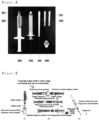
- FIG. 1 illustrates a kit 10 for relieving incision site pain according to the present invention (hereinafter referred to as the surgical kit of the present invention").
- the surgical kit 10 of the present invention includes a mixture solution injection guide tube 100, a first syringe 200, a prefilled syringe 300, a syringe connector 400, and syringe needles 201 and 202.
- all the components included in the surgical kit 10 of the present invention may access incision sites during various surgical procedures, and thus are configured such that they may be applied to incision sites in situ after surgical operations.
- the mixture solution injection guide tube 100 serves to inject a pain relief drug-containing mixture solution in close proximity to an exposed incision site during a surgical operation. It may be composed of a both-end-open type tube made of a flexible material such as Teflon. For example, it may be composed of a Teflon capillary tube.
- the mixture solution injection guide tube 100 may be configured such that one end thereof may be inserted into the inlet of the prefilled syringe and the mixture solution may be discharged or injected through the other end.
- the mixture solution injection guide tube 100 has, for example, a total length of 60 to 70 mm, preferably 70 ⁇ 3.5 mm, an outer diameter of 1.6 to 1.8 mm, preferably 1.7 ⁇ 0.085 mm, and an inner diameter of 1.1 to 1.4 mm, preferably 1.26 ⁇ 0.085 mm. Within these ranges, the mixture solution injection guide tube is easy to handle and convenient to use, and the effect of appropriately distributing the drug in the surgical site is great.
- the first syringe 200 is configured to be filled with a pain relief drug (not shown) immediately before use so as to prepare the pain relief drug-containing mixture solution.
- the first syringe 200 may be preassembled with a syringe needle 201 before use, or may be connected with the syringe needle 201 immediately before use. After the first syringe 200 is filled with a pain relief drug (not shown), the syringe needle 201 is separated therefrom.
- any commercially available product equipped with a piston is preferably used as the first syringe 200.
- a local anesthetic an opiate analgesic, a nonsteroidal drug are used for the purpose of controlling postoperative acute pain.
- ropivacaine hydrochloride, ibuprofen or the like may be used which is relatively safe.
- the pain relief drug selected from a local anesthetic, an opiate analgesic, a nonsteroidal drug is not particularly limited as long as it dissolves in water, is stable in an aqueous solution, and may be used as an injection.
- it may be ibuprofen.
- the drug when the drug is intended for both pain relief and treatment, it may be classified as either a pain relief drug or a treatment drug.
- the prefilled syringe 300 preferably has a structure which is opened and closed by a stopper 301, instead of a syringe needle which is generally connected.
- the prefilled syringe 300 is filled with a temperature-responsive viscous solution 302 acting as a matrix for the pain relief drug-containing mixture solution, has a structure which is opened and closed by a stopper, and is stable to autoclaving.
- the reason why the temperature-responsive viscous solution is pre-filled is to prevent the user's mistakes from occurring during the filling process, provide convenience during use in an operating room, and shorten the product production time.
- the temperature-responsive viscous solution 302 is a matrix which is changed to a gel state by the body temperature after application to a surgical incision site and plays an important role in providing stability and sustained-release properties.
- the temperature-responsive viscous solution is composed of an ionically crosslinked alginate and a temperature-responsive poly(ethylene oxide)/poly(propylene oxide)/poly(ethylene oxide) triblock copolymer. It is preferably composed of a mixture further comprising a trace amount of CaCl 2 , and water for injection.
- the term "ionically crosslinked alginate” may refer to an alginic acid or alginate crosslinked by, for example, a crosslinking agent such as CaCl 2 .
- viscosity is measured with a Brookfield viscometer under conditions of #4 spindle at 5°C and #7 spindle at 37°C in accordance with method 2 (rotational viscometer method) described in the Korean Pharmacopoeia.
- the temperature-responsive viscous solution 302 has a viscosity of 50 to 5,000 cps (1 cps corresponds to 1 mPA ⁇ s), 100 to 5,000 cps, or 500 to 3,000 cps, preferably 500 to 1,000 cps, and is easily mixed with a pain relief agent such as a local anesthetic for controlling postoperative acute pain.
- the temperature-responsive viscous solution is gelled in vivo, and allows the pain relief drug to be stably and slowly released to a target site.
- the temperature-responsive viscous solution 302 has a viscosity of 50 to 3,000 cps, or 100 to 2,000 cps, preferably 100 to 1,000 cps, and is easily mixed with a pain relief agent such as a local anesthetic for controlling postoperative acute pain.
- the temperature-responsive viscous solution contains an ionically crosslinked alginate in an amount of 0.05 to 3 wt%, or 0.1 to 3 wt%, preferably 0.1 to 2 wt%, based on 100 wt% of the solution. Within this range, the effect of improving the stability of the temperature-responsive viscous solution may be provided.
- a crosslinking agent for the ionically crosslinked alginate may be, for example, one or more selected from among a halide having one or more cations selected from among Li + , Na + , K + , Rb + , Cs + , Fr + , Be 2+ , Ra 2+ , B 3- , Al 3+ , Ga 2+ , Mg 2+ , Ca 2+ , Sr 2+ and Ba 2+ , preferably one or more cations selected from among Mg 2+ , Ca 2+ , Sr 2+ and Ba 2+ , or chitosan, glutaraldehyde, formalin, and poly-L-lysine, but is not limited.
- the temperature-responsive viscous solution 302 contains the temperature-responsive poly (ethylene oxide)/poly(propylene oxide)/poly(ethylene oxide) triblock copolymer in an amount of 30 to 40 wt%. Within this range, the effect of stably maintaining the pain relief drug in vivo may be provided.
- the poly(ethylene oxide)/poly(propylene oxide)/poly(ethylene oxide) triblock copolymer includes a poly(ethylene oxide) block and a poly(propylene oxide) block at a ratio of 90 : 105 to 50 : 70. Within this range, the effect of stably maintaining the pain relief drug in vivo may be provided.
- poly(ethylene oxide)/poly(propylene oxide)/poly(ethylene oxide) triblock copolymer are not particularly limited as long as they correspond to the properties of poly(ethylene oxide)/poly(propylene oxide)/poly(ethylene oxide) triblock copolymers which may generally be used in the technical field related to temperature-responsive viscous solutions.
- the temperature-responsive viscous solution 302 may contain CaCl 2 in an amount of 0.005 to 0.1 wt% or 0.007 to 0.1 wt%, preferably 0.01 to 0.1 wt%, based on 100 wt% of the solution. Within this range, the effect of uniformly mixing the crosslinked alginate with the poly(ethylene oxide)/poly(propylene oxide)/poly(ethylene oxide) triblock copolymer may be provided.
- the temperature-responsive viscous solution 302 may contain CaCl 2 in an amount of 0.005 to 0.3 wt% or 0.01 to 0.3 wt%, preferably 0.01 to 0.20 wt%, based on 100 wt% of the solution. Within this range, the effect of uniformly mixing the crosslinked alginate with the poly(ethylene oxide)/poly(propylene oxide)/poly(ethylene oxide) triblock copolymer may be provided.
- the temperature-responsive viscous solution 302 has a stickiness of 0.8 N or higher, or 0.8 N to 5 N. Within this range, the effect of stably maintaining the pain relief drug in vivo may be provided.
- the stickiness (N) is measured using a rotational rheometer at 5°C.
- the temperature-responsive viscous solution 302 is biocompatible to avoid problems such as a slow recovery rate of a surgical incision site or a decrease in the adhesive strength of a suture suturing the incision site, and preferably has the property of allowing the surgical incision site to be normally healed.
- the syringe connector 400 serves to discharge and mix the respective substances filled in the first and prefilled syringes, and preferably has an inner diameter of 12 mm or less, 10 mm or less, 1 to 10 mm, or 1.9 to 4.1 mm, so as to enable the viscous solution to smoothly move therein.
- the mixing ratio between the pain relief substance (drug) or the treatment substance (drug) and the temperature-responsive viscous solution, which are mixed and introduced into the prefilled syringe through the syringe connector may be a volume ratio of 1:0.5 to 5 (aqueous drug solution : temperature-responsive viscous solution) or 1:0.5 to 2.
- the effect of stably maintaining the pain relief drug or the treatment drug in vivo may be provided.
- the pH of the drug aqueous solution is 4 or more or 4 to 8
- the volume ratio between the temperature-responsive viscous solution and the drug is 1:0.5 to 5 (aqueous drug solution : temperature-responsive viscous solution), and when the pH is pH is less than 4 or 1 to 4, the volume ratio is 1:4 to 40 (aqueous drug solution : temperature-responsive viscous solution).
- the pain relief drug or the treatment drug is not released quickly in vivo, is stably maintained in vivo, and is slowly released.
- the concentration of a final drug mixture containing the aqueous drug solution and the temperature-responsive viscous solution is 0.1 to 0.5 wt%, or 0.2 to 0.4 wt%.
- the syringe connector 400 is separated. Then, to the part connected with the stopper 301 for the pain relief drug-containing mixture solution (not shown) in the prefilled syringe 300, the above-described mixture solution injection guide tube 100 or second syringe needle 202 is connected instead of the stopper, whereby the pain relief drug-containing mixture solution can be stably injected into a target surgical incision site.
- the pain relief drug-containing mixture solution is changed to a gel state by the temperature-responsive viscous solution 302 contained therein and slowly releases the pain relief drug. For example, the gel state stably maintains its shape after about 5 minutes.
- FIG. 2 is a schematic view showing an embodiment in which the surgical kit of the present invention is assembled and used, in a time-dependent manner.
- step S1 in a sterilized place, the package of the surgical kit 10 is removed, and the syringe needle 201 is connected to the first syringe 200 equipped with a piston. Then, the needle 201 is inserted into the pain relief drug such as a local anesthetic to be used during surgery, and the pain relief drug is filled into the first syringe 200 up to the marked line.
- the pain relief drug such as a local anesthetic to be used during surgery
- Step S2 consists of a total of three steps: step S2-1, step S2-2, and step S2-3.
- step S2-1 the syringe needle 201 connected to the first syringe 200 filled with the pain relief drug is separated (see the left side), followed by removal of the stopper 301 from the prefilled syringe 300 prefilled with the temperature-responsive viscous solution (the product DDK gel (Korea Food and Drug Administration Approval No. 09-826) marketed by the applicant of the present invention) and equipped with a piston (see the right side).
- the product DDK gel Kel Food and Drug Administration Approval No. 09-826
- step S2-2 the syringe connector 400 is connected to the prefilled syringe 300 from which the stopper 301 was removed, and the first syringe 200 filled with the pain relief drug is connected to the prefilled syringe. At this time, care must be taken not to allow the pain relief drug to flow down.
- step S2-3 the pain relief drug is uniformly mixed with the temperature-responsive viscous solution in the prefilled syringe 300 while the pistons of the first syringe 200 and the prefilled syringe 300 connected to each other by the syringe connector 400 are pushed from side to side.
- step S3 the syringe connector 400 is separated, and then the mixture solution injection guide tube 100 or the second syringe needle 202 is connected to the prefilled syringe 300, and the pain relief drug-containing mixture solution is sufficiently injected into a surgical incision site and applied.
- the method may include, before step S1, a step of sucking and removing the washing solution used in surgery by a suction means (not shown) and confirming that sufficient hemostasis of the wound surface was made during the surgery.
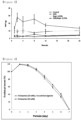
- FIGS. 3 and 4 show the results of a stability test for the temperature-responsive viscous solution and a release test for the pain relief drug of the mixture of the temperature-responsive viscous solution and the pain relief drug.
- test results are summarized as follows. As shown in FIG. 3 showing the results of an in vitro stability test for the temperature-responsive viscous solution, it was confirmed that when the temperature-responsive viscous solution was used, the stability thereof was maintained up to 7 days, unlike a temperature-responsive polymer. As shown in FIG. 4 showing the results of a release test for the pain relief drug-containing mixture, it was confirmed that the pain relief drug was released slowly up to 3 days (72 hours).
- FIG. 5 shows the pain-reducing/pain-relieving effects on rat paw pain-induced models, obtained when the pain relief drug and the temperature-responsive viscous solution were not used, when the pain relief drug was used alone, when the temperature-responsive viscous solution was used alone, and when the pain relief drug-containing mixture solution was used.
- the non-use of the pain relief drug and the temperature-responsive viscous solution is marked as control; the use of the temperature-responsive viscous solution alone is marked as DDK; the use of the pain relief drug alone is marked as Ropi. (which is the abbreviation of the substance used) with concentration % (wt% concentration in aqueous solution); and the use of the pain relief drug-containing mixture solution is marked as DDK/Ropi. with concentration %.
- the concentration % means the weight % concentration unless otherwise stated.
- Ropi. 0.25% means a composition containing the temperature-responsive viscous solution (viscous aqueous solution) and the pain relief drug (ropivacaine hydrochloride injection; aqueous drug solution), mixed with each other at a volume ratio of 2:1, and means that the final drug concentration is 0.25 wt%.
- the pain relief drug-containing mixture solution injected by the surgical kit of the present invention is very effective in providing stable and slow release of the drug in the surgical incision site.
- the pain relief drug-containing drug mixture solution can be stably prepared by a simple procedure whenever needed, and thus the surgical kit is preferable from an economic point of view.
- FIG. 6 shows the results of a stability test performed depending on whether the temperature-responsive viscous solution (containing 30 wt% of a temperature-responsive polymer) contained in the pain relief drug- or treatment drug-containing mixture solution was crosslinked. From the test results, it was confirmed that when the content of the temperature-responsive polymer was 25 wt% or less (not shown), the stability of the crosslinked temperature-responsive viscous solution was considerably higher than that of the non-crosslinked temperature-responsive viscous solution, but when the content of the temperature-responsive polymer was 30 wt% or more (see FIG. 6 ), the stabilities of the crosslinked temperature-responsive viscous solution and the non-crosslinked temperature-responsive viscous solution were all maintained up to 7 days, and thus did not substantially differ from each other.
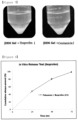
- FIG. 7 shows the results for a precipitation test for a pain relief drug-containing mixture solution (left) and a treatment drug-containing mixture solution (right), which contain a crosslinked temperature-responsive viscous solution.
- DDK Gel means a gel composed of poloxamer and crosslinked alginate.
- FIG. 8 shows the results of a slow-release test for the pain relief drug (ibuprofen) of the pain relief drug-containing mixture solution.
- an aqueous ibuprofen solution was mixed with a 30 wt% solution of poloxamer, containing no crosslinked alginate, at a volume ratio of 2:1. From the test results, it was confirmed that, in the case of the pain relief drug-containing mixture solution, the drug was released slowly up to 3 days (72 hours).
- FIGS. 9 and 10 show the results of a slow-release test performed while changing the kinds of drug (ropivacaine vs. bupivacaine) and viscous solution (crosslinked vs. non-crosslinked) in the pain relief drug-containing mixture solution.
- the slow-release test a 0.75 wt% aqueous solution of the drug was mixed with the temperature-responsive viscous solution (crosslinked alginate, 30 wt% poloxamer-containing DDK gel vs. 30 wt% poloxamer solution) at a volume ratio of 2:1. From the test results, it was confirmed that the pain relief drug-containing mixture solution was not significantly influenced by the kind of drug or whether or not the temperature-responsive viscous solution was crosslinked, and all the drugs were released slowly up to 3 days (72 hours).
- crosslinked means that a crosslinking agent or crosslinked alginate is contained, and the term “non-crosslinked” means that a crosslinking agent or crosslinked alginate is not contained.
- 10 surgical kit
- 100 mixture solution injection guide tube
- 200 first syringe
- 201 first syringe needle
- 202 second syringe needle
- 300 prefilled syringe
- 301 stopper
- 302 temperature-responsive viscous solution
- 400 syringe connector having an opening/closing means.
Landscapes
- Health & Medical Sciences (AREA)
- Life Sciences & Earth Sciences (AREA)
- Animal Behavior & Ethology (AREA)
- Veterinary Medicine (AREA)
- Public Health (AREA)
- General Health & Medical Sciences (AREA)
- Chemical & Material Sciences (AREA)
- Engineering & Computer Science (AREA)
- Biomedical Technology (AREA)
- Heart & Thoracic Surgery (AREA)
- Anesthesiology (AREA)
- Vascular Medicine (AREA)
- Hematology (AREA)
- Pharmacology & Pharmacy (AREA)
- Epidemiology (AREA)
- Medicinal Chemistry (AREA)
- Inorganic Chemistry (AREA)
- Materials Engineering (AREA)
- Dermatology (AREA)
- Neurosurgery (AREA)
- Pulmonology (AREA)
- Proteomics, Peptides & Aminoacids (AREA)
- Chemical Kinetics & Catalysis (AREA)
- General Chemical & Material Sciences (AREA)
- Nuclear Medicine, Radiotherapy & Molecular Imaging (AREA)
- Organic Chemistry (AREA)
- Composite Materials (AREA)
- Medicinal Preparation (AREA)
- Pharmaceuticals Containing Other Organic And Inorganic Compounds (AREA)
- Medicines That Contain Protein Lipid Enzymes And Other Medicines (AREA)
- Infusion, Injection, And Reservoir Apparatuses (AREA)
Description
- The present invention relates to a kit for relieving or treating postoperative incision site pain, and more particularly to a kit for relieving or treating incision site pain, which makes effective treatment possible by injecting a pain relief drug or a treatment drug into a surgical site in situ after incisional surgery during an incisional surgical procedure, and stably and slowly releasing the drug.
- During a surgical procedure, an incision site is injected with a pain relief drug such as a local anesthetic for the purpose of relieving postoperative pain and is injected with drugs such as antibiotics and anti-inflammatory drugs for therapeutic purposes.
- However, since most pain-relieving drugs are non-viscous solutions and a washing solution is usually used during incisional surgery, it is difficult to quickly and effectively produce the intended drug effect quickly and effectively by accurately and stably injecting the pain relief drug into a target incision site. In addition, the antibiotics and anti-inflammatory drugs are not effective due to their short half-life.
- Accordingly, various wound dressings based on body temperature-responsive polymers have been developed, and the applicant of the present invention also has filed a patent application related to a drug-containing wound dressing (
Korean Patent No. 10-1125934 -
WO 2009/073658 A1 discloses a composition for the treatment of surgical incisions comprising: a drug, 15-20 wt% of poloxamer 407, the composition has a viscosity at room temperature of from 100,000 to 1,000,000 mPa.s. The composition is applied through a syringe with a needle. - However, various pain relief drugs or treatment drugs may be required depending on the size or condition of an incision site or on the progress of surgery, and if necessary, a mixture of two or more thereof needs to be used. However, a wound dressing obtained by mixing all kinds of drugs together at various mixing ratios in view of this fact cannot be prepared in advance, and even if this wound dressing is prepared in advance, purchasing each of various kinds of drugs is economically undesirable in terms of purchase costs, storage costs, etc.
- Therefore, it is an object of the present invention to provide a kit for treating or relieving postoperative incision site pain, which may overcome conventional problems occurring when injecting drugs for treating or relieving surgical incision site pain and may quickly and effectively produce the intended drug effect by accurately and stably injecting a drug into a target incision site.
- The above and other objects of the present invention can all be achieved by the present invention described below.
- To achieve the above object, the present invention provides a surgical kit as defined in
claim 1. afirst syringe 200 configured to be filled with the pain relief or treatment drug immediately before use so as to prepare the mixture solution; and asyringe connector 400 configured to mix the substances filled in the first syringe and the prefilled syringe, respectively. - In one embodiment, the surgical kit may further include a
syringe needle 201 for the first syringe. - In one embodiment, the surgical kit may further include a
syringe needle 202 for the prefilled syringe. - In one embodiment, the temperature-responsive viscous solution may be a non-pyrogenic viscous solution including the polyethylene-polypropylene-polyethylene polymer, alginic acid sodium alginate, calcium chloride, and water for injection.
- In the present description, the term "non-pyrogenic viscous solution" means that there is no heat generation during temperature-dependent so-gel phase transition. As a specific example, the term means that the temperature change during the phase transition is 5°C or less, 3°C or less, or 1°C or less.
- In one embodiment, the first syringe may be preassembled with a syringe needle or connected with the syringe needle immediately before use, and the syringe needle may be separated from the first syringe after being filled with the pain relief drug.
- In one embodiment, the mixture solution injection guide tube may be connected to the prefilled syringe such that the mixture solution in the prefilled syringe may be injected into the incision site.
- In one embodiment, the syringe connector may have an inner diameter of 10 mm or less, through which the drug passes.
- In one embodiment, the surgical kit may further include an absorption means for absorbing and removing water remaining around the incision site.
- The surgical kit according to the present invention can be used in a method including the steps of: connecting a syringe needle to a first syringe, inserting the syringe needle into the pain relief or treatment drug to be used during surgery, filling the drug into the first syringe up to a marked line, and then separating the connected syringe needle; removing a stopper from the prefilled syringe prefilled with the temperature-responsive viscous solution and equipped with a piston; connecting the prefilled syringe, from which the stopper was removed, to one side of a syringe connector; connecting the first syringe, which contains the drug filled therein and from which the syringe needle was separated, to the other side of the syringe connector; mixing the drug with the temperature-responsive viscous solution in the prefilled syringe by using the piston of each of the first syringe and the prefilled syringe, which communicate with each other by the syringe connector; and after the mixing, separating the prefilled syringe, filled with the mixture solution, from the syringe connector, inserting the mixture solution injection guide tube or a syringe needle into the prefilled syringe, and applying the mixture solution to the surgical incision site by injecting the mixture solution into the surgical incision site.
- The method may further include, before injecting the mixture solution into the surgical incision site, a step of sucking and removing a washing solution used during the surgery by a suction means.
- The surgical kit for use in treating or relieving incision site pain, may also include a
first syringe 200 configured to be filled with the pain relief or treatment drug immediately before use so as to prepare the mixture solution; and asyringe connector 400 configured to mix the substances filled in the first syringe and the prefilled syringe, respectively, wherein the temperature-responsive viscous solution additionally includes 0.005 to 0.1 wt% of Cacl2 as a crosslinking agent. - The alginate may be a metal alginate, preferably an alkali metal alginate or an alkaline earth metal alginate, most preferably an alkali metal alginate.
- The present invention configured as described above may provide a kit for treating and reducing (relieving/killing) postoperative incision site pain, which makes it possible to mix a necessary pain relief drug or treatment drug with a temperature-responsive viscous solution by a simple procedure in situ after incisional surgery during an incisional surgical procedure, and makes effective treatment possible by injecting the drug-c containing mixture into a surgical site and stably and slowly releasing the drug.
-
-
FIG. 1 is a photograph showing the overall configuration of a kit for treating or relieving incision site pain according to the present invention. -
FIG. 2 is a schematic view showing an embodiment in which a surgical kit of the present invention is assembled and used, with the passage of time. -
FIG. 3 is a graph showing the results of a stability test (A) for a temperature-responsive viscous solution, contained in a pain relief drug-containing mixture solution as a function of time. -
FIG. 4 is a graph showing the results of a slow-release test for a pain relief drug of a pain relief drug-containing mixture solution as a function of time. -
FIG. 5 shows the pain-reducing/pain-relieving effects of a surgical kit on rat paw pain-induced models, obtained when a pain relief drug and a temperature-responsive viscous solution were not used, when the pain relief drug was used alone, when the temperature-responsive viscous solution was used alone, and when a pain relief drug-containing mixture solution was used, as a function of time. -
FIG. 6 shows the results of a stability test performed depending on whether the temperature-responsive viscous solution (containing 30 wt% of a temperature-responsive polymer) contained in a pain relief drug-containing mixture solution was crosslinked, as a function of time. -
FIG. 7 shows the results for a precipitation test for a pain relief drug-containing mixture solution (left) and a treatment drug-containing mixture solution (right), as a function of time. -
FIG. 8 shows the results of a slow-release test for a pain relief drug (ibuprofen) of a pain relief drug-containing mixture solution, as a function of time. -
FIGS. 9 and 10 show the results of a slow-release test performed while changing the kinds of drug (ropivacaine vs. bupivacaine) and viscous solution (crosslinked vs. non-crosslinked) in a pain relief drug-containing mixture solution, as a function of time. - The present invention provides a surgical kit for treating or relieving incision site pain as defined in
claim 1. - The kit for relieving incision site pain may also comprise: a first syringe configured to be filled with a pain relief drug immediately before use so as to prepare the pain relief drug-containing mixture solution; and a syringe connector configured to mix the substances filled in the first syringe and the prefilled syringe, respectively, the syringe connector having an opening/closing means.
- Hereinafter, preferred embodiments of a
kit 10 for alleviating incision site pain according to the present invention will be described in detail with reference to the accompanying drawings. -
FIG. 1 illustrates akit 10 for relieving incision site pain according to the present invention (hereinafter referred to as the surgical kit of the present invention"). - As illustrated in
FIG. 1 , thesurgical kit 10 of the present invention includes a mixture solutioninjection guide tube 100, afirst syringe 200, aprefilled syringe 300, asyringe connector 400, andsyringe needles - Here, all the components included in the
surgical kit 10 of the present invention may access incision sites during various surgical procedures, and thus are configured such that they may be applied to incision sites in situ after surgical operations. - The mixture solution
injection guide tube 100 serves to inject a pain relief drug-containing mixture solution in close proximity to an exposed incision site during a surgical operation. It may be composed of a both-end-open type tube made of a flexible material such as Teflon. For example, it may be composed of a Teflon capillary tube. - The mixture solution
injection guide tube 100 may be configured such that one end thereof may be inserted into the inlet of the prefilled syringe and the mixture solution may be discharged or injected through the other end. - The mixture solution
injection guide tube 100 has, for example, a total length of 60 to 70 mm, preferably 70 ± 3.5 mm, an outer diameter of 1.6 to 1.8 mm, preferably 1.7 ± 0.085 mm, and an inner diameter of 1.1 to 1.4 mm, preferably 1.26 ± 0.085 mm. Within these ranges, the mixture solution injection guide tube is easy to handle and convenient to use, and the effect of appropriately distributing the drug in the surgical site is great. - The
first syringe 200 is configured to be filled with a pain relief drug (not shown) immediately before use so as to prepare the pain relief drug-containing mixture solution. Thefirst syringe 200 may be preassembled with asyringe needle 201 before use, or may be connected with thesyringe needle 201 immediately before use. After thefirst syringe 200 is filled with a pain relief drug (not shown), thesyringe needle 201 is separated therefrom. As thefirst syringe 200, any commercially available product equipped with a piston is preferably used. - As the pain relief drug, a local anesthetic, an opiate analgesic, a nonsteroidal drug are used for the purpose of controlling postoperative acute pain. For example, ropivacaine hydrochloride, ibuprofen or the like may be used which is relatively safe.
- The pain relief drug selected from a local anesthetic, an opiate analgesic, a nonsteroidal drug, is not particularly limited as long as it dissolves in water, is stable in an aqueous solution, and may be used as an injection. For example, it may be ibuprofen.
- In the present description, when the drug is intended for both pain relief and treatment, it may be classified as either a pain relief drug or a treatment drug.
- The prefilled
syringe 300 preferably has a structure which is opened and closed by astopper 301, instead of a syringe needle which is generally connected. - As a specific example, the
prefilled syringe 300 is filled with a temperature-responsiveviscous solution 302 acting as a matrix for the pain relief drug-containing mixture solution, has a structure which is opened and closed by a stopper, and is stable to autoclaving. - Here, the reason why the temperature-responsive viscous solution is pre-filled is to prevent the user's mistakes from occurring during the filling process, provide convenience during use in an operating room, and shorten the product production time.
- In this regard, the temperature-responsive
viscous solution 302 is a matrix which is changed to a gel state by the body temperature after application to a surgical incision site and plays an important role in providing stability and sustained-release properties. The temperature-responsive viscous solution is composed of an ionically crosslinked alginate and a temperature-responsive poly(ethylene oxide)/poly(propylene oxide)/poly(ethylene oxide) triblock copolymer. It is preferably composed of a mixture further comprising a trace amount of CaCl2, and water for injection. - In the present description, the term "ionically crosslinked alginate" may refer to an alginic acid or alginate crosslinked by, for example, a crosslinking agent such as CaCl2.
- In the present description, viscosity (cps) is measured with a Brookfield viscometer under conditions of #4 spindle at 5°C and #7 spindle at 37°C in accordance with method 2 (rotational viscometer method) described in the Korean Pharmacopoeia.
- At 5°C, the temperature-responsive
viscous solution 302 has a viscosity of 50 to 5,000 cps (1 cps corresponds to 1 mPA·s), 100 to 5,000 cps, or 500 to 3,000 cps, preferably 500 to 1,000 cps, and is easily mixed with a pain relief agent such as a local anesthetic for controlling postoperative acute pain. The temperature-responsive viscous solution is gelled in vivo, and allows the pain relief drug to be stably and slowly released to a target site. - As another example, at 5°C, the temperature-responsive
viscous solution 302 has a viscosity of 50 to 3,000 cps, or 100 to 2,000 cps, preferably 100 to 1,000 cps, and is easily mixed with a pain relief agent such as a local anesthetic for controlling postoperative acute pain. - The temperature-responsive viscous solution contains an ionically crosslinked alginate in an amount of 0.05 to 3 wt%, or 0.1 to 3 wt%, preferably 0.1 to 2 wt%, based on 100 wt% of the solution. Within this range, the effect of improving the stability of the temperature-responsive viscous solution may be provided.
- A crosslinking agent for the ionically crosslinked alginate may be, for example, one or more selected from among a halide having one or more cations selected from among Li+, Na+, K+, Rb+, Cs+, Fr+, Be2+, Ra2+, B3-, Al3+, Ga2+, Mg2+, Ca2+, Sr2+ and Ba2+, preferably one or more cations selected from among Mg2+, Ca2+, Sr2+ and Ba2+, or chitosan, glutaraldehyde, formalin, and poly-L-lysine, but is not limited.
- The temperature-responsive
viscous solution 302 contains the temperature-responsive poly (ethylene oxide)/poly(propylene oxide)/poly(ethylene oxide) triblock copolymer in an amount of 30 to 40 wt%. Within this range, the effect of stably maintaining the pain relief drug in vivo may be provided. - The poly(ethylene oxide)/poly(propylene oxide)/poly(ethylene oxide) triblock copolymer includes a poly(ethylene oxide) block and a poly(propylene oxide) block at a ratio of 90 : 105 to 50 : 70. Within this range, the effect of stably maintaining the pain relief drug in vivo may be provided.
- Other properties of the poly(ethylene oxide)/poly(propylene oxide)/poly(ethylene oxide) triblock copolymer, such as weight-average molecular weight, are not particularly limited as long as they correspond to the properties of poly(ethylene oxide)/poly(propylene oxide)/poly(ethylene oxide) triblock copolymers which may generally be used in the technical field related to temperature-responsive viscous solutions.
- The temperature-responsive
viscous solution 302 may contain CaCl2 in an amount of 0.005 to 0.1 wt% or 0.007 to 0.1 wt%, preferably 0.01 to 0.1 wt%, based on 100 wt% of the solution. Within this range, the effect of uniformly mixing the crosslinked alginate with the poly(ethylene oxide)/poly(propylene oxide)/poly(ethylene oxide) triblock copolymer may be provided. - As another example, the temperature-responsive
viscous solution 302 may contain CaCl2 in an amount of 0.005 to 0.3 wt% or 0.01 to 0.3 wt%, preferably 0.01 to 0.20 wt%, based on 100 wt% of the solution. Within this range, the effect of uniformly mixing the crosslinked alginate with the poly(ethylene oxide)/poly(propylene oxide)/poly(ethylene oxide) triblock copolymer may be provided. - The temperature-responsive
viscous solution 302 has a stickiness of 0.8 N or higher, or 0.8 N to 5 N. Within this range, the effect of stably maintaining the pain relief drug in vivo may be provided. The stickiness (N) is measured using a rotational rheometer at 5°C. - The temperature-responsive
viscous solution 302 is biocompatible to avoid problems such as a slow recovery rate of a surgical incision site or a decrease in the adhesive strength of a suture suturing the incision site, and preferably has the property of allowing the surgical incision site to be normally healed. - The
syringe connector 400 serves to discharge and mix the respective substances filled in the first and prefilled syringes, and preferably has an inner diameter of 12 mm or less, 10 mm or less, 1 to 10 mm, or 1.9 to 4.1 mm, so as to enable the viscous solution to smoothly move therein. The mixing ratio between the pain relief substance (drug) or the treatment substance (drug) and the temperature-responsive viscous solution, which are mixed and introduced into the prefilled syringe through the syringe connector, may be a volume ratio of 1:0.5 to 5 (aqueous drug solution : temperature-responsive viscous solution) or 1:0.5 to 2. Within this range, the effect of stably maintaining the pain relief drug or the treatment drug in vivo may be provided. When the pH of the drug aqueous solution is 4 or more or 4 to 8, the volume ratio between the temperature-responsive viscous solution and the drug is 1:0.5 to 5 (aqueous drug solution : temperature-responsive viscous solution), and when the pH is pH is less than 4 or 1 to 4, the volume ratio is 1:4 to 40 (aqueous drug solution : temperature-responsive viscous solution). Within this range, the pain relief drug or the treatment drug is not released quickly in vivo, is stably maintained in vivo, and is slowly released. - In the embodiments according to the invention the concentration of a final drug mixture containing the aqueous drug solution and the temperature-responsive viscous solution is 0.1 to 0.5 wt%, or 0.2 to 0.4 wt%.
- From the
prefilled syringe 300 filled with the mixture through thesyringe connector 400, thesyringe connector 400 is separated. Then, to the part connected with thestopper 301 for the pain relief drug-containing mixture solution (not shown) in theprefilled syringe 300, the above-described mixture solutioninjection guide tube 100 orsecond syringe needle 202 is connected instead of the stopper, whereby the pain relief drug-containing mixture solution can be stably injected into a target surgical incision site. Through this accurate and stable injection of the mixture solution into the target incision site, the pain relief drug-containing mixture solution is changed to a gel state by the temperature-responsiveviscous solution 302 contained therein and slowly releases the pain relief drug. For example, the gel state stably maintains its shape after about 5 minutes. - In addition, if necessary, it is also possible to absorb and remove water remaining around the incision site by using a separate absorbing means (not shown), for example, cotton swabs or gauze.
- A method of using the
surgical kit 10 of the present invention for a surgical incision site will now be described with reference to the accompanying drawings. -
FIG. 2 is a schematic view showing an embodiment in which the surgical kit of the present invention is assembled and used, in a time-dependent manner. - Referring to
FIG. 2 , in step S1, in a sterilized place, the package of thesurgical kit 10 is removed, and thesyringe needle 201 is connected to thefirst syringe 200 equipped with a piston. Then, theneedle 201 is inserted into the pain relief drug such as a local anesthetic to be used during surgery, and the pain relief drug is filled into thefirst syringe 200 up to the marked line. - Step S2 consists of a total of three steps: step S2-1, step S2-2, and step S2-3. First, in step S2-1, the
syringe needle 201 connected to thefirst syringe 200 filled with the pain relief drug is separated (see the left side), followed by removal of thestopper 301 from theprefilled syringe 300 prefilled with the temperature-responsive viscous solution (the product DDK gel (Korea Food and Drug Administration Approval No. 09-826) marketed by the applicant of the present invention) and equipped with a piston (see the right side). - In step S2-2, the
syringe connector 400 is connected to theprefilled syringe 300 from which thestopper 301 was removed, and thefirst syringe 200 filled with the pain relief drug is connected to the prefilled syringe. At this time, care must be taken not to allow the pain relief drug to flow down. - In step S2-3, the pain relief drug is uniformly mixed with the temperature-responsive viscous solution in the
prefilled syringe 300 while the pistons of thefirst syringe 200 and theprefilled syringe 300 connected to each other by thesyringe connector 400 are pushed from side to side. - Next, in step S3, the
syringe connector 400 is separated, and then the mixture solutioninjection guide tube 100 or thesecond syringe needle 202 is connected to theprefilled syringe 300, and the pain relief drug-containing mixture solution is sufficiently injected into a surgical incision site and applied. - If necessary, the method may include, before step S1, a step of sucking and removing the washing solution used in surgery by a suction means (not shown) and confirming that sufficient hemostasis of the wound surface was made during the surgery.
- In the following, only examples in which compositions obtained by mixing components as defined in
claim 1 are according to the claims. -
FIGS. 3 and 4 show the results of a stability test for the temperature-responsive viscous solution and a release test for the pain relief drug of the mixture of the temperature-responsive viscous solution and the pain relief drug. - The test results are summarized as follows. As shown in
FIG. 3 showing the results of an in vitro stability test for the temperature-responsive viscous solution, it was confirmed that when the temperature-responsive viscous solution was used, the stability thereof was maintained up to 7 days, unlike a temperature-responsive polymer. As shown inFIG. 4 showing the results of a release test for the pain relief drug-containing mixture, it was confirmed that the pain relief drug was released slowly up to 3 days (72 hours). -
FIG. 5 shows the pain-reducing/pain-relieving effects on rat paw pain-induced models, obtained when the pain relief drug and the temperature-responsive viscous solution were not used, when the pain relief drug was used alone, when the temperature-responsive viscous solution was used alone, and when the pain relief drug-containing mixture solution was used. - In the figure, the non-use of the pain relief drug and the temperature-responsive viscous solution is marked as control; the use of the temperature-responsive viscous solution alone is marked as DDK; the use of the pain relief drug alone is marked as Ropi. (which is the abbreviation of the substance used) with concentration % (wt% concentration in aqueous solution); and the use of the pain relief drug-containing mixture solution is marked as DDK/Ropi. with concentration %.
- In the present description, the concentration % means the weight % concentration unless otherwise stated.
- For reference, Ropi. 0.25% means a composition containing the temperature-responsive viscous solution (viscous aqueous solution) and the pain relief drug (ropivacaine hydrochloride injection; aqueous drug solution), mixed with each other at a volume ratio of 2:1, and means that the final drug concentration is 0.25 wt%.
- Summarizing the test results, it was confirmed that the pain of the test group treated with the pain relief drug-containing mixture solution was effectively reduced compared to that of the test group treated with the pain relief drug alone.
- Therefore, according to the above-described evaluation results, it can be seen that the pain relief drug-containing mixture solution injected by the surgical kit of the present invention is very effective in providing stable and slow release of the drug in the surgical incision site. In particular, it can be confirmed that the pain relief drug-containing drug mixture solution can be stably prepared by a simple procedure whenever needed, and thus the surgical kit is preferable from an economic point of view.
-
FIG. 6 shows the results of a stability test performed depending on whether the temperature-responsive viscous solution (containing 30 wt% of a temperature-responsive polymer) contained in the pain relief drug- or treatment drug-containing mixture solution was crosslinked. From the test results, it was confirmed that when the content of the temperature-responsive polymer was 25 wt% or less (not shown), the stability of the crosslinked temperature-responsive viscous solution was considerably higher than that of the non-crosslinked temperature-responsive viscous solution, but when the content of the temperature-responsive polymer was 30 wt% or more (seeFIG. 6 ), the stabilities of the crosslinked temperature-responsive viscous solution and the non-crosslinked temperature-responsive viscous solution were all maintained up to 7 days, and thus did not substantially differ from each other. -
FIG. 7 shows the results for a precipitation test for a pain relief drug-containing mixture solution (left) and a treatment drug-containing mixture solution (right), which contain a crosslinked temperature-responsive viscous solution. InFIG. 7 , DDK Gel means a gel composed of poloxamer and crosslinked alginate. From the test results, it was confirmed that in the case of the pain relief drug-containing mixture solution, ibupropene used as the pain relief drug formed a precipitate by reaction with the crosslinking agent CaCl2, and in the case of the treatment drug-containing mixture solution, the pH of the solution was lowered by gentamicin used as the treatment drug, and thus sodium alginate was precipitated. Namely, when the pain relief drug- or treatment drug-containing mixture solution did not contain the crosslinking CaCl2 or alginate, no precipitate occurred. -
FIG. 8 shows the results of a slow-release test for the pain relief drug (ibuprofen) of the pain relief drug-containing mixture solution. In the slow-release test, an aqueous ibuprofen solution was mixed with a 30 wt% solution of poloxamer, containing no crosslinked alginate, at a volume ratio of 2:1. From the test results, it was confirmed that, in the case of the pain relief drug-containing mixture solution, the drug was released slowly up to 3 days (72 hours). -
FIGS. 9 and 10 show the results of a slow-release test performed while changing the kinds of drug (ropivacaine vs. bupivacaine) and viscous solution (crosslinked vs. non-crosslinked) in the pain relief drug-containing mixture solution. the slow-release test, a 0.75 wt% aqueous solution of the drug was mixed with the temperature-responsive viscous solution (crosslinked alginate, 30 wt% poloxamer-containing DDK gel vs. 30 wt% poloxamer solution) at a volume ratio of 2:1. From the test results, it was confirmed that the pain relief drug-containing mixture solution was not significantly influenced by the kind of drug or whether or not the temperature-responsive viscous solution was crosslinked, and all the drugs were released slowly up to 3 days (72 hours). - In the present disclosure, the term "crosslinked" means that a crosslinking agent or crosslinked alginate is contained, and the term "non-crosslinked" means that a crosslinking agent or crosslinked alginate is not contained.
- 10: surgical kit; 100: mixture solution injection guide tube; 200: first syringe; 201: first syringe needle; 202: second syringe needle; 300: prefilled syringe; 301: stopper; 302: temperature-responsive viscous solution; 400: syringe connector having an opening/closing means.
Claims (5)
- A surgical kit for use in treating or relieving pain at an exposed incision site, comprising:
a prefilled syringe 300 filled with a temperature-responsive viscous solution acting as a stabilization matrix for a pain relief or treatment drug, the prefilled syringe having a structure which is opened and closed by a stopper; and a mixture solution injection guide tube 100 configured to inject a mixture solution containing the pain relief or treatment drug and the temperature-responsive viscous solution in close proximity to the exposed incision site,wherein the temperature-responsive viscous solution comprises 30 to 40 wt% of a poly(ethylene oxide)/poly(propylene oxide)/poly(ethylene oxide) triblock copolymer containing a poly(ethylene oxide) block and the poly(propylene oxide) block at a ratio of 90:105 to 50:70, and the balance of water for injection, and has a viscosity of 50 to 5,000 cps at 5°C, a viscosity of 1,000,000 to 4,000,000 cps (1 cps corresponds to 1 mPA·s) at 37 °C, and a stickiness of 0.8 N or higher measured using a rotational rheometer at 5°C, wherein the pain relief or treatment drug is used as an aqueous drug solution, andwherein:when the pH of the aqueous drug solution is 4-8, the volume ratio between aqueous drug solution and temperature-sensitive viscous solution is 1:0.5 to 5 (aqueous drug solution: temperature-responsive viscous solution), andwhen the pH of the aqueous drug solution is 1 to less than 4, the volume ratio between the aqueous drug solution and temperature sensitive viscous solution is 1:4 to 40 (aqueous drug solution: temperature-responsive viscous solution), andwherein the temperature-responsive viscous solution contains an ionically crosslinked alginate in an amount of 0.05 to 3 wt% of the temperature-responsive viscous solution, andwherein the drug is a pain relief drug selected from a local anesthetic, an opiate analgesic, a nonsteroidal drug, andwherein the aqueous drug solution and the temperature-responsive viscous solution are combined to give a final drug mixture with a concentration in the range of 0.1 to 0.5 wt%; and wherein viscosity is measured with a Brookfield viscometer under conditions of #4 spindle at 5°C and #7 spindle at 37°C in accordance with method 2 (rotational viscometer method) described in the Korean Pharmacopoeia. - A surgical kit as claimed in claim 1, wherein the surgical kit further comprises a syringe needle 201 for a first syringe 200, and wherein the first syringe 200 is preassembled with a syringe needle 201 or connected with the syringe needle 201 immediately before use, and the syringe needle 201 is separated from the first syringe 200 after being filled with the pain relief or treatment drug aqueous solution.
- A surgical kit as claimed in claim 1, wherein the temperature-responsive viscous solution comprises 30 to 40 wt% of a poly(ethylene oxide)/poly(propylene oxide)/poly(ethylene oxide) triblock copolymer , 0.005 to 0.1 wt% of a crosslinker, 0.05 to 3 wt% of alginic acid or alginate and the remainder of water.
- A surgical kit as claimed in claim 1, further comprising a syringe connector 400 having an inner diameter of 10 mm or less.
- A surgical kit as claimed in claim 1, further comprising an absorption means for absorbing and removing water remaining around the incision site.
Applications Claiming Priority (2)
| Application Number | Priority Date | Filing Date | Title |
|---|---|---|---|
| KR1020170043850A KR101852718B1 (en) | 2017-04-04 | 2017-04-04 | Kit for pain reduction of incision site after surgical operation |
| PCT/KR2018/003921 WO2018186658A1 (en) | 2017-04-04 | 2018-04-03 | Kit for treating or relieving pain at incision site following surgical procedure |
Publications (4)
| Publication Number | Publication Date |
|---|---|
| EP3607981A1 EP3607981A1 (en) | 2020-02-12 |
| EP3607981A4 EP3607981A4 (en) | 2020-05-06 |
| EP3607981B1 true EP3607981B1 (en) | 2024-10-23 |
| EP3607981C0 EP3607981C0 (en) | 2024-10-23 |
Family
ID=62453647
Family Applications (1)
| Application Number | Title | Priority Date | Filing Date |
|---|---|---|---|
| EP18781032.0A Active EP3607981B1 (en) | 2017-04-04 | 2018-04-03 | Kit for treating or relieving pain at incision site following surgical procedure |
Country Status (9)
| Country | Link |
|---|---|
| US (1) | US20200086049A1 (en) |
| EP (1) | EP3607981B1 (en) |
| JP (1) | JP6953551B2 (en) |
| KR (1) | KR101852718B1 (en) |
| CN (1) | CN110494178B (en) |
| BR (1) | BR112019020632A2 (en) |
| MX (1) | MX392869B (en) |
| SA (1) | SA519410215B1 (en) |
| WO (1) | WO2018186658A1 (en) |
Families Citing this family (21)
| Publication number | Priority date | Publication date | Assignee | Title |
|---|---|---|---|---|
| GB0808376D0 (en) | 2008-05-08 | 2008-06-18 | Bristol Myers Squibb Co | Wound dressing |
| GB0817796D0 (en) | 2008-09-29 | 2008-11-05 | Convatec Inc | wound dressing |
| GB201020236D0 (en) | 2010-11-30 | 2011-01-12 | Convatec Technologies Inc | A composition for detecting biofilms on viable tissues |
| WO2012078724A1 (en) | 2010-12-08 | 2012-06-14 | Convatec Technologies Inc. | Apparatus and method for applying pressure to a wound site |
| US9526816B2 (en) | 2010-12-08 | 2016-12-27 | Convatec Technologies Inc. | Wound exudate monitor accessory |
| CA2819475C (en) | 2010-12-08 | 2019-02-12 | Convatec Technologies Inc. | Integrated system for assessing wound exudates |
| GB201115182D0 (en) | 2011-09-02 | 2011-10-19 | Trio Healthcare Ltd | Skin contact material |
| GB2497406A (en) | 2011-11-29 | 2013-06-12 | Webtec Converting Llc | Dressing with a perforated binder layer |
| EP2935688A2 (en) | 2012-12-20 | 2015-10-28 | ConvaTec Technologies Inc. | Processing of chemically modified cellulosic fibres |
| GB2543544A (en) | 2015-10-21 | 2017-04-26 | Brightwake Ltd | Wound dressing |
| CN109310528B (en) | 2016-03-30 | 2021-07-20 | 康沃特克科技公司 | Detection of microbial infections in wounds |
| AU2017243601A1 (en) | 2016-03-30 | 2018-11-22 | Acib Gmbh | Detecting microbial infection in wounds |
| GB201608099D0 (en) | 2016-05-09 | 2016-06-22 | Convatec Technologies Inc | Negative pressure wound dressing |
| MX2019000234A (en) | 2016-07-08 | 2019-09-06 | Convatec Technologies Inc | Fluid collection apparatus. |
| TW201805034A (en) | 2016-07-08 | 2018-02-16 | 美商康瓦鐵克科技股份有限公司 | Flexible negative pressure system |
| EP3481360B1 (en) | 2016-07-08 | 2022-03-09 | ConvaTec Technologies Inc. | Fluid flow sensing |
| KR101852718B1 (en) * | 2017-04-04 | 2018-05-18 | 주식회사 제네웰 | Kit for pain reduction of incision site after surgical operation |
| US12161792B2 (en) | 2017-11-16 | 2024-12-10 | Convatec Limited | Fluid collection apparatus |
| SG11202112292QA (en) | 2019-06-03 | 2021-12-30 | Convatec Ltd | Methods and devices to disrupt and contain pathogens |
| US11331221B2 (en) | 2019-12-27 | 2022-05-17 | Convatec Limited | Negative pressure wound dressing |
| US11771819B2 (en) | 2019-12-27 | 2023-10-03 | Convatec Limited | Low profile filter devices suitable for use in negative pressure wound therapy systems |
Family Cites Families (32)
| Publication number | Priority date | Publication date | Assignee | Title |
|---|---|---|---|---|
| EP0386960A3 (en) * | 1989-03-07 | 1991-10-23 | American Cyanamid Company | Pharmaceutical compositions useful as drug delivery vehicles and/or as wound dressings |
| CA2044878C (en) * | 1990-08-07 | 2000-12-26 | Tacey X. Viegas | Thermally reversible and irreversible gels |
| JPH0775672A (en) * | 1993-06-16 | 1995-03-20 | Kyowa Shinku Gijutsu Kk | Syringe barrel body for drug container and syringe |
| US5939485A (en) * | 1995-06-19 | 1999-08-17 | Medlogic Global Corporation | Responsive polymer networks and methods of their use |
| CN1165036A (en) * | 1996-05-15 | 1997-11-19 | 沈阳市兴齐制药厂 | Application of poloxamer in preparing medicament for eyes |
| WO1997049391A1 (en) * | 1996-06-24 | 1997-12-31 | Euro-Celtique, S.A. | Methods for providing safe local anesthesia |
| AU2003900887A0 (en) * | 2003-02-27 | 2003-03-13 | Novasel Australia Pty Ltd | Poloxamer emulsion preparations |
| KR100565881B1 (en) | 2003-07-24 | 2006-03-29 | 이진호 | Anti-tissue adhesion agent using biocompatible copolymer |
| CN1901885A (en) * | 2003-11-13 | 2007-01-24 | 阿尔扎公司 | Melt blend dispersions comprising a low water solubility drug and an ethylene oxide-propylene oxide block copolymer |
| RU2369408C2 (en) * | 2004-07-09 | 2009-10-10 | Ферросан А/С | Hemostatic composition comprising hyaluronic acid |
| WO2006039659A1 (en) * | 2004-10-02 | 2006-04-13 | Sri International | Bioadhesive delivery system for transmucosal delivery of beneficial agents |
| JP2008517927A (en) * | 2004-10-21 | 2008-05-29 | ユニバーシティー オブ アイオワ リサーチ ファンデーション | In situ controlled release drug delivery system |
| US20060168916A1 (en) * | 2004-11-05 | 2006-08-03 | Griebel Robert A E | Method and apparatus to insert stoppers into prefilled syringes |
| KR20080055782A (en) * | 2005-07-25 | 2008-06-19 | 오소콘 인코퍼레이티드 | Compositions and methods for pain relief after surgery |
| CN100418528C (en) * | 2006-02-28 | 2008-09-17 | 上海华拓医药科技发展有限公司 | Heat-sensitive gel containing matrine alkaloid and its preparing method |
| CN1861041B (en) * | 2006-03-29 | 2010-11-10 | 沈阳药科大学 | Temp-sensitive, slow-releasing gel used for local injection, and its preparation method |
| JP4867775B2 (en) * | 2007-04-26 | 2012-02-01 | 株式会社ジェイ・エム・エス | Syringe holder and syringe device |
| EP2219608B1 (en) * | 2007-12-03 | 2014-03-19 | Trilogic Pharma Llc | Self solidifying bioerodible barrier implant |
| US20090264489A1 (en) * | 2008-04-18 | 2009-10-22 | Warsaw Orthopedic, Inc. | Method for Treating Acute Pain with a Formulated Drug Depot in Combination with a Liquid Formulation |
| JP5607628B2 (en) * | 2008-08-22 | 2014-10-15 | サークル バイオロジクス,インコーポレイテッド | Fluid management apparatus and fluid management method |
| CN101353475B (en) * | 2008-09-09 | 2011-03-16 | 北京科技大学 | Preparation of aquagel material having thermal sensitivity and reactivity |
| KR101125934B1 (en) * | 2008-11-19 | 2012-03-21 | 한남대학교 산학협력단 | Temperature Sensitive Tissue Adhesion Prevention Composition And Method For Preparing Thereof |
| TW201043221A (en) * | 2009-05-06 | 2010-12-16 | Ferring Int Ct Sa | Kit and method for preparation of a Degarelix solution |
| WO2011049958A2 (en) * | 2009-10-21 | 2011-04-28 | Otonomy, Inc. | Modulation of gel temperature of poloxamer-containing formulations |
| EP2552515A4 (en) * | 2010-03-31 | 2014-08-20 | Evonik Corp | System and method for delivery of suspensions and other microparticle compositions |
| CN102198126B (en) * | 2011-05-04 | 2012-11-28 | 刘布鸣 | Liniment for treating mouth and tooth diseases and applicator |
| US20130017227A1 (en) * | 2011-07-15 | 2013-01-17 | Lambert Jr Cary Jake | Wound healing compositions and associated methods |
| US20140224376A1 (en) * | 2013-02-14 | 2014-08-14 | Onpharma, Inc. | Methods and systems for buffering solutions with controlled tonicity |
| KR101503663B1 (en) * | 2013-05-31 | 2015-03-19 | 주식회사 위노바 | Composition for filling in a disc, their use and a preparing method thereof |
| HUE056760T2 (en) * | 2013-07-11 | 2022-03-28 | Modernatx Inc | Compositions comprising synthetic polynucleotides encoding crispr related proteins and synthetic sgrnas and methods of use |
| WO2017006965A1 (en) * | 2015-07-06 | 2017-01-12 | 富士フイルム株式会社 | Blood analysis method and blood testing kit |
| KR101852718B1 (en) * | 2017-04-04 | 2018-05-18 | 주식회사 제네웰 | Kit for pain reduction of incision site after surgical operation |
-
2017
- 2017-04-04 KR KR1020170043850A patent/KR101852718B1/en active Active
-
2018
- 2018-04-03 MX MX2019011886A patent/MX392869B/en unknown
- 2018-04-03 BR BR112019020632A patent/BR112019020632A2/en not_active Application Discontinuation
- 2018-04-03 EP EP18781032.0A patent/EP3607981B1/en active Active
- 2018-04-03 WO PCT/KR2018/003921 patent/WO2018186658A1/en not_active Ceased
- 2018-04-03 US US16/500,388 patent/US20200086049A1/en not_active Abandoned
- 2018-04-03 JP JP2019553121A patent/JP6953551B2/en active Active
- 2018-04-03 CN CN201880023861.8A patent/CN110494178B/en active Active
-
2019
- 2019-09-30 SA SA519410215A patent/SA519410215B1/en unknown
Also Published As
| Publication number | Publication date |
|---|---|
| JP6953551B2 (en) | 2021-10-27 |
| SA519410215B1 (en) | 2023-01-24 |
| JP2020512107A (en) | 2020-04-23 |
| WO2018186658A1 (en) | 2018-10-11 |
| CN110494178A (en) | 2019-11-22 |
| EP3607981A1 (en) | 2020-02-12 |
| CN110494178B (en) | 2022-12-02 |
| US20200086049A1 (en) | 2020-03-19 |
| EP3607981A4 (en) | 2020-05-06 |
| KR101852718B1 (en) | 2018-05-18 |
| MX2019011886A (en) | 2022-06-02 |
| EP3607981C0 (en) | 2024-10-23 |
| BR112019020632A2 (en) | 2020-04-22 |
| MX392869B (en) | 2025-03-24 |
Similar Documents
| Publication | Publication Date | Title |
|---|---|---|
| EP3607981A1 (en) | Kit for treating or relieving pain at incision site following surgical procedure | |
| US12427105B2 (en) | Hydrogel-based biological delivery vehicle | |
| CA2215356C (en) | Novel embolizing compositions | |
| AU2012318258B2 (en) | Hemostatic compositions | |
| CN103239265B (en) | Anastomat for gastrointestinal tract anastomosis surgery and production method thereof | |
| Tan et al. | Enlisting a Traditional Chinese Medicine to tune the gelation kinetics of a bioactive tissue adhesive for fast hemostasis or minimally invasive therapy | |
| US20020193448A1 (en) | Fragmented polymeric compositions and methods for their use | |
| JP2021500193A (en) | Reagents used for repair or hemostasis of biological tissue damage and their applications | |
| US20130204192A1 (en) | Fragmented polymeric compositions and methods for their use | |
| CN105521521B (en) | A kind of medical gel for lung sealing and its preparation method and application | |
| JP2012520297A (en) | Products and methods for the treatment of vascular diseases | |
| JP2010520799A (en) | Systems, methods, and compositions for preventing tissue adhesions | |
| AU2018201556B2 (en) | Adhesion preventing material | |
| CN107899064A (en) | A kind of medicine-carried and the preparation method and its usage for having the liquid embolizing agent of developability concurrently | |
| BR112014010192B1 (en) | Biocompatible Composition, Use of a Biocompatible Composition, and Method of Manufacturing a Biocompatible Composition | |
| WO2023205051A1 (en) | Single solution hydrogels with covalent bonding formed in situ, composition design and medical procedures using the hydrogels | |
| CN103432632A (en) | Temperature-sensitive gel composition and preparation method thereof | |
| KR101902956B1 (en) | Kit for pain reduction of incision site after surgical operation | |
| ES2817935T3 (en) | Combined cellulosic material and method of producing and using it | |
| KR102065016B1 (en) | Kit for pain reduction or healing of incision site after surgical operation | |
| CN107875436A (en) | A kind of composition of liquid embolizing agent for loading sodium bicarbonate powder and application thereof | |
| WO2018119320A1 (en) | Hemostatic compositions with antifibrinolytic agents | |
| US10293079B2 (en) | Biological adhesives and sealants and methods of using the same | |
| KR102063210B1 (en) | Method for manufacturing device of temporary vascular closure | |
| HK40115702A (en) | Single solution hydrogels with covalent bonding formed in situ, composition design and medical procedures using the hydrogels |
Legal Events
| Date | Code | Title | Description |
|---|---|---|---|
| STAA | Information on the status of an ep patent application or granted ep patent |
Free format text: STATUS: THE INTERNATIONAL PUBLICATION HAS BEEN MADE |
|
| PUAI | Public reference made under article 153(3) epc to a published international application that has entered the european phase |
Free format text: ORIGINAL CODE: 0009012 |
|
| STAA | Information on the status of an ep patent application or granted ep patent |
Free format text: STATUS: REQUEST FOR EXAMINATION WAS MADE |
|
| 17P | Request for examination filed |
Effective date: 20191004 |
|
| AK | Designated contracting states |
Kind code of ref document: A1 Designated state(s): AL AT BE BG CH CY CZ DE DK EE ES FI FR GB GR HR HU IE IS IT LI LT LU LV MC MK MT NL NO PL PT RO RS SE SI SK SM TR |
|
| AX | Request for extension of the european patent |
Extension state: BA ME |
|
| A4 | Supplementary search report drawn up and despatched |
Effective date: 20200406 |
|
| RIC1 | Information provided on ipc code assigned before grant |
Ipc: A61K 47/36 20060101ALI20200331BHEP Ipc: A61J 1/20 20060101ALI20200331BHEP Ipc: A61P 23/02 20060101ALI20200331BHEP Ipc: A61L 26/00 20060101ALI20200331BHEP Ipc: A61M 1/00 20060101ALI20200331BHEP Ipc: A61M 5/19 20060101AFI20200331BHEP Ipc: A61M 5/24 20060101ALI20200331BHEP Ipc: A61F 13/00 20060101ALI20200331BHEP Ipc: A61K 9/00 20060101ALI20200331BHEP Ipc: A61M 5/28 20060101ALI20200331BHEP Ipc: A61M 5/14 20060101ALI20200331BHEP Ipc: A61M 35/00 20060101ALI20200331BHEP Ipc: A61K 47/02 20060101ALI20200331BHEP Ipc: A61K 47/34 20170101ALI20200331BHEP |
|
| DAV | Request for validation of the european patent (deleted) | ||
| DAX | Request for extension of the european patent (deleted) | ||
| STAA | Information on the status of an ep patent application or granted ep patent |
Free format text: STATUS: EXAMINATION IS IN PROGRESS |
|
| 17Q | First examination report despatched |
Effective date: 20210125 |
|
| GRAP | Despatch of communication of intention to grant a patent |
Free format text: ORIGINAL CODE: EPIDOSNIGR1 |
|
| STAA | Information on the status of an ep patent application or granted ep patent |
Free format text: STATUS: GRANT OF PATENT IS INTENDED |
|
| INTG | Intention to grant announced |
Effective date: 20240618 |
|
| GRAS | Grant fee paid |
Free format text: ORIGINAL CODE: EPIDOSNIGR3 |
|
| GRAA | (expected) grant |
Free format text: ORIGINAL CODE: 0009210 |
|
| STAA | Information on the status of an ep patent application or granted ep patent |
Free format text: STATUS: THE PATENT HAS BEEN GRANTED |
|
| AK | Designated contracting states |
Kind code of ref document: B1 Designated state(s): AL AT BE BG CH CY CZ DE DK EE ES FI FR GB GR HR HU IE IS IT LI LT LU LV MC MK MT NL NO PL PT RO RS SE SI SK SM TR |
|
| REG | Reference to a national code |
Ref country code: GB Ref legal event code: FG4D |
|
| REG | Reference to a national code |
Ref country code: CH Ref legal event code: EP |
|
| REG | Reference to a national code |
Ref country code: DE Ref legal event code: R096 Ref document number: 602018075761 Country of ref document: DE |
|
| REG | Reference to a national code |
Ref country code: IE Ref legal event code: FG4D |
|
| U01 | Request for unitary effect filed |
Effective date: 20241104 |
|
| U07 | Unitary effect registered |
Designated state(s): AT BE BG DE DK EE FI FR IT LT LU LV MT NL PT RO SE SI Effective date: 20241114 |
|
| PG25 | Lapsed in a contracting state [announced via postgrant information from national office to epo] |
Ref country code: IS Free format text: LAPSE BECAUSE OF FAILURE TO SUBMIT A TRANSLATION OF THE DESCRIPTION OR TO PAY THE FEE WITHIN THE PRESCRIBED TIME-LIMIT Effective date: 20250223 Ref country code: HR Free format text: LAPSE BECAUSE OF FAILURE TO SUBMIT A TRANSLATION OF THE DESCRIPTION OR TO PAY THE FEE WITHIN THE PRESCRIBED TIME-LIMIT Effective date: 20241023 |
|
| PG25 | Lapsed in a contracting state [announced via postgrant information from national office to epo] |
Ref country code: ES Free format text: LAPSE BECAUSE OF FAILURE TO SUBMIT A TRANSLATION OF THE DESCRIPTION OR TO PAY THE FEE WITHIN THE PRESCRIBED TIME-LIMIT Effective date: 20241023 |
|
| PG25 | Lapsed in a contracting state [announced via postgrant information from national office to epo] |
Ref country code: NO Free format text: LAPSE BECAUSE OF FAILURE TO SUBMIT A TRANSLATION OF THE DESCRIPTION OR TO PAY THE FEE WITHIN THE PRESCRIBED TIME-LIMIT Effective date: 20250123 |
|
| PG25 | Lapsed in a contracting state [announced via postgrant information from national office to epo] |
Ref country code: GR Free format text: LAPSE BECAUSE OF FAILURE TO SUBMIT A TRANSLATION OF THE DESCRIPTION OR TO PAY THE FEE WITHIN THE PRESCRIBED TIME-LIMIT Effective date: 20250124 |
|
| PG25 | Lapsed in a contracting state [announced via postgrant information from national office to epo] |
Ref country code: PL Free format text: LAPSE BECAUSE OF FAILURE TO SUBMIT A TRANSLATION OF THE DESCRIPTION OR TO PAY THE FEE WITHIN THE PRESCRIBED TIME-LIMIT Effective date: 20241023 |
|
| PG25 | Lapsed in a contracting state [announced via postgrant information from national office to epo] |
Ref country code: RS Free format text: LAPSE BECAUSE OF FAILURE TO SUBMIT A TRANSLATION OF THE DESCRIPTION OR TO PAY THE FEE WITHIN THE PRESCRIBED TIME-LIMIT Effective date: 20250123 |
|
| U20 | Renewal fee for the european patent with unitary effect paid |
Year of fee payment: 8 Effective date: 20250415 |
|
| PG25 | Lapsed in a contracting state [announced via postgrant information from national office to epo] |
Ref country code: SM Free format text: LAPSE BECAUSE OF FAILURE TO SUBMIT A TRANSLATION OF THE DESCRIPTION OR TO PAY THE FEE WITHIN THE PRESCRIBED TIME-LIMIT Effective date: 20241023 |
|
| PG25 | Lapsed in a contracting state [announced via postgrant information from national office to epo] |
Ref country code: SK Free format text: LAPSE BECAUSE OF FAILURE TO SUBMIT A TRANSLATION OF THE DESCRIPTION OR TO PAY THE FEE WITHIN THE PRESCRIBED TIME-LIMIT Effective date: 20241023 |
|
| PG25 | Lapsed in a contracting state [announced via postgrant information from national office to epo] |
Ref country code: CZ Free format text: LAPSE BECAUSE OF FAILURE TO SUBMIT A TRANSLATION OF THE DESCRIPTION OR TO PAY THE FEE WITHIN THE PRESCRIBED TIME-LIMIT Effective date: 20241023 |
|
| PLBE | No opposition filed within time limit |
Free format text: ORIGINAL CODE: 0009261 |
|
| STAA | Information on the status of an ep patent application or granted ep patent |
Free format text: STATUS: NO OPPOSITION FILED WITHIN TIME LIMIT |
|
| 26N | No opposition filed |
Effective date: 20250724 |
|
| REG | Reference to a national code |
Ref country code: CH Ref legal event code: H13 Free format text: ST27 STATUS EVENT CODE: U-0-0-H10-H13 (AS PROVIDED BY THE NATIONAL OFFICE) Effective date: 20251125 |
|
| PG25 | Lapsed in a contracting state [announced via postgrant information from national office to epo] |
Ref country code: MC Free format text: LAPSE BECAUSE OF FAILURE TO SUBMIT A TRANSLATION OF THE DESCRIPTION OR TO PAY THE FEE WITHIN THE PRESCRIBED TIME-LIMIT Effective date: 20241023 |
|
| GBPC | Gb: european patent ceased through non-payment of renewal fee |
Effective date: 20250403 |
|
| PG25 | Lapsed in a contracting state [announced via postgrant information from national office to epo] |
Ref country code: GB Free format text: LAPSE BECAUSE OF NON-PAYMENT OF DUE FEES Effective date: 20250403 |
|
| PG25 | Lapsed in a contracting state [announced via postgrant information from national office to epo] |
Ref country code: CH Free format text: LAPSE BECAUSE OF NON-PAYMENT OF DUE FEES Effective date: 20250430 |
|
| PG25 | Lapsed in a contracting state [announced via postgrant information from national office to epo] |
Ref country code: IE Free format text: LAPSE BECAUSE OF NON-PAYMENT OF DUE FEES Effective date: 20250403 |