EP3606909B1 - Ein natriumsalz von n-((1,2,3,5,6,7-hexahydro-s-indacen-4 -yl)carbamoyl)-1-isopropyl-1h-pyrazole-3-sulfonamide - Google Patents
Ein natriumsalz von n-((1,2,3,5,6,7-hexahydro-s-indacen-4 -yl)carbamoyl)-1-isopropyl-1h-pyrazole-3-sulfonamide Download PDFInfo
- Publication number
- EP3606909B1 EP3606909B1 EP19721230.1A EP19721230A EP3606909B1 EP 3606909 B1 EP3606909 B1 EP 3606909B1 EP 19721230 A EP19721230 A EP 19721230A EP 3606909 B1 EP3606909 B1 EP 3606909B1
- Authority
- EP
- European Patent Office
- Prior art keywords
- salt
- disease
- isopropyl
- indacen
- hexahydro
- Prior art date
- Legal status (The legal status is an assumption and is not a legal conclusion. Google has not performed a legal analysis and makes no representation as to the accuracy of the status listed.)
- Active
Links
Images


Classifications
-
- C—CHEMISTRY; METALLURGY
- C07—ORGANIC CHEMISTRY
- C07D—HETEROCYCLIC COMPOUNDS
- C07D231/00—Heterocyclic compounds containing 1,2-diazole or hydrogenated 1,2-diazole rings
- C07D231/02—Heterocyclic compounds containing 1,2-diazole or hydrogenated 1,2-diazole rings not condensed with other rings
- C07D231/10—Heterocyclic compounds containing 1,2-diazole or hydrogenated 1,2-diazole rings not condensed with other rings having two or three double bonds between ring members or between ring members and non-ring members
- C07D231/14—Heterocyclic compounds containing 1,2-diazole or hydrogenated 1,2-diazole rings not condensed with other rings having two or three double bonds between ring members or between ring members and non-ring members with hetero atoms or with carbon atoms having three bonds to hetero atoms with at the most one bond to halogen, e.g. ester or nitrile radicals, directly attached to ring carbon atoms
- C07D231/18—One oxygen or sulfur atom
-
- A—HUMAN NECESSITIES
- A61—MEDICAL OR VETERINARY SCIENCE; HYGIENE
- A61K—PREPARATIONS FOR MEDICAL, DENTAL OR TOILETRY PURPOSES
- A61K31/00—Medicinal preparations containing organic active ingredients
- A61K31/33—Heterocyclic compounds
- A61K31/395—Heterocyclic compounds having nitrogen as a ring hetero atom, e.g. guanethidine or rifamycins
- A61K31/41—Heterocyclic compounds having nitrogen as a ring hetero atom, e.g. guanethidine or rifamycins having five-membered rings with two or more ring hetero atoms, at least one of which being nitrogen, e.g. tetrazole
- A61K31/415—1,2-Diazoles
-
- A—HUMAN NECESSITIES
- A61—MEDICAL OR VETERINARY SCIENCE; HYGIENE
- A61P—SPECIFIC THERAPEUTIC ACTIVITY OF CHEMICAL COMPOUNDS OR MEDICINAL PREPARATIONS
- A61P29/00—Non-central analgesic, antipyretic or antiinflammatory agents, e.g. antirheumatic agents; Non-steroidal antiinflammatory drugs [NSAID]
-
- C—CHEMISTRY; METALLURGY
- C07—ORGANIC CHEMISTRY
- C07B—GENERAL METHODS OF ORGANIC CHEMISTRY; APPARATUS THEREFOR
- C07B2200/00—Indexing scheme relating to specific properties of organic compounds
- C07B2200/13—Crystalline forms, e.g. polymorphs
Definitions
- the present invention relates to a sodium salt of N -((1,2,3,5,6,7-hexahydro-s-indacen-4-yl)carbamoyl)-1-isopropyl- 1H -pyrazole-3-sulfonamide and to hydrates, solvates and polymorphic forms thereof.
- the present invention further relates to pharmaceutical compositions comprising this compound and the use of this compound in the treatment and prevention of medical disorders and diseases, most especially by NLRP3 inhibition.
- NLR NOD-like receptor
- NLRP3 pyrin domain-containing protein 3
- NLRP3 is an intracellular signalling molecule that senses many pathogen-derived, environmental and host-derived factors. Upon activation, NLRP3 binds to apoptosis-associated speck-like protein containing a caspase activation and recruitment domain (ASC). ASC then polymerises to form a large aggregate known as an ASC speck. Polymerised ASC in turn interacts with the cysteine protease caspase-1 to form a complex termed the inflammasome. This results in the activation of caspase-1, which cleaves the precursor forms of the proinflammatory cytokines IL-1 ⁇ and IL-18 (termed pro-IL-1 ⁇ and pro-IL-18 respectively) to thereby activate these cytokines.
- ASC caspase activation and recruitment domain
- Caspase-1 also mediates a type of inflammatory cell death known as pyroptosis.
- the ASC speck can also recruit and activate caspase-8, which can process pro-IL-1 ⁇ and pro-IL-18 and trigger apoptotic cell death.
- Caspase-1 cleaves pro-IL-1 ⁇ and pro-IL-18 to their active forms, which are secreted from the cell. Active caspase-1 also cleaves gasdermin-D to trigger pyroptosis. Through its control of the pyroptotic cell death pathway, caspase-1 also mediates the release of alarmin molecules such as IL-33 and high mobility group box 1 protein (HMGB1). Caspase-1 also cleaves intracellular IL-1R2 resulting in its degradation and allowing the release of IL-1 ⁇ . In human cells caspase-1 may also control the processing and secretion of IL-37. A number of other caspase-1 substrates such as components of the cytoskeleton and glycolysis pathway may contribute to caspase-i-dependent inflammation.
- NLRP3-dependent ASC specks are released into the extracellular environment where they can activate caspase-1, induce processing of caspase-1 substrates and propagate inflammation.
- cytokines derived from NLRP3 inflammasome activation are important drivers of inflammation and interact with other cytokine pathways to shape the immune response to infection and injury.
- IL-1 ⁇ signalling induces the secretion of the pro-inflammatory cytokines IL-6 and TNF.
- IL-1 ⁇ and IL-18 synergise with IL-23 to induce IL-17 production by memory CD4 Th17 cells and by ⁇ T cells in the absence of T cell receptor engagement.
- IL-18 and IL-12 also synergise to induce IFN- ⁇ production from memory T cells and NK cells driving a Thi response.
- NLRP3 The inherited CAPS diseases Muckle-Wells syndrome (MWS), familial cold autoinflammatory syndrome (FCAS) and neonatal-onset multisystem inflammatory disease (NOMID) are caused by gain-of-function mutations in NLRP3, thus defining NLRP3 as a critical component of the inflammatory process.
- NLRP3 has also been implicated in the pathogenesis of a number of complex diseases, notably including metabolic disorders such as type 2 diabetes, atherosclerosis, obesity and gout.
- NLRP3 A role for NLRP3 in diseases of the central nervous system is emerging, and lung diseases have also been shown to be influenced by NLRP3. Furthermore, NLRP3 has a role in the development of liver disease, kidney disease and aging. Many of these associations were defined using Nlrp3 - / - mice, but there have also been insights into the specific activation of NLRP3 in these diseases. In type 2 diabetes mellitus (T2D), the deposition of islet amyloid polypeptide in the pancreas activates NLRP3 and IL-1 ⁇ signaling, resulting in cell death and inflammation.
- T2D type 2 diabetes mellitus
- Glyburide inhibits IL-1 ⁇ production at micromolar concentrations in response to the activation of NLRP3 but not NLRC4 or NLRP1.
- Other previously characterised weak NLRP3 inhibitors include parthenolide, 3,4-methylenedioxy- ⁇ -nitrostyrene and dimethyl sulfoxide (DMSO), although these agents have limited potency and are nonspecific.
- NLRP3-related diseases include biologic agents that target IL-1. These are the recombinant IL-1 receptor antagonist anakinra, the neutralizing IL-1 ⁇ antibody canakinumab and the soluble decoy IL-1 receptor rilonacept. These approaches have proven successful in the treatment of CAPS, and these biologic agents have been used in clinical trials for other IL-1 ⁇ -associated diseases.
- cytokine release inhibitory drugs CRIDs
- CRIDs are a class of diarylsulfonylurea-containing compounds that inhibit the post-translational processing of IL-1 ⁇ . Post-translational processing of IL-1 ⁇ is accompanied by activation of caspase-1 and cell death. CRIDs arrest activated monocytes so that caspase-1 remains inactive and plasma membrane latency is preserved.
- Certain sulfonylurea-containing compounds are also disclosed as inhibitors of NLRP3 (see for example, Baldwin et al., J. Med. Chem., 59(5), 1691-1710, 2016 ; and WO 2016/131098 A1 , WO 2017/129897 A1 , WO 2017/140778 A1 , WO 2017/184604 A1 , WO 2017/184623 A1 , WO 2017/184624 A1 and WO 2018/015445 A1 ).
- WO 2016/131098 A1 discloses N -((1,2,3,5,6,7-hexahydro-s-indacen-4-yl)carbamoyl)-1-isopropyl- 1H- pyrazole-3-sulfonamide.
- a first aspect of the present invention provides a sodium salt of N -((1,2,3,5,6,7-hexahydro-s-indacen-4-yl)carbamoyl)-1-isopropyl- 1H -pyrazole-3-sulfonamide, or a hydrate or solvate thereof.
- a second aspect of the present invention provides a polymorphic form of a sodium salt of N -((1,2,3,5,6,7-hexahydro-s-indacen-4-yl)carbamoyl)-1-isopropyl- 1H -pyrazole-3-sulfonamide, or a hydrate or solvate thereof.
- the polymorphic form of the second aspect is a polymorph of N -((1,2,3,5,6,7-hexahydro-s-indacen-4-yl)carbamoyl)-1-isopropyl- 1H -pyrazole-3-sulfonamide monosodium salt monohydrate.
- Examples of such polymorphs include the polymorph referred to herein as Form 1.
- the polymorphic form of the second aspect is a polymorph of N -((1,2,3,5,6,7-hexahydro-s-indacen-4-yl)carbamoyl)-1-isopropyl- 1H -pyrazole-3-sulfonamide monosodium salt anhydrate.
- polymorphs include the polymorph referred to herein as Form 2.
- a third aspect of the present invention provides a process for preparing a sodium salt of N -((1,2,3,5,6,7-hexahydro-s-indacen-4-yl)carbamoyl)-1-isopropyl- 1H -pyrazole-3-sulfonamide, comprising:
- a fourth aspect of the present invention provides a pharmaceutical composition comprising a salt, hydrate or solvate of the first aspect of the invention or a polymorphic form of the second aspect of the invention, and a pharmaceutically acceptable excipient.
- Further aspects of the present invention provide medical uses and methods of treatment or prevention of a disease, disorder or condition, most especially by NLRP3 inhibition.
- the salts of the present invention provide forms of N -((1,2,3,5,6,7-hexahydro-s-indacen-4-yl)carbamoyl)-1-isopropyl- 1H -pyrazole-3-sulfonamide, and in particular sodium salts, which have certain advantages over other salts and over the free acid itself.
- a first aspect of the present invention provides a sodium salt of N -((1,2,3,5,6,7-hexahydro-s-indacen-4-yl)carbamoyl)-1-isopropyl- 1H -pyrazole-3-sulfonamide, or a hydrate or solvate thereof.
- N -((1,2,3,5,6,7-Hexahydro-s-indacen-4-yl)carbamoyl)-1-isopropyl- 1H -pyrazole-3-sulfonamide (also referred to as the free acid) has the formula:
- the salts of the first aspect of the present invention encompass salts having any ratio of the conjugate base of the free acid to sodium ion, for example monosodium salts, disodium salts and hemisodium salts.
- the sodium salt of N-((1,2,3,5,6,7-hexahydro-s-indacen-4-yl)carbamoyl)-1-isopropyl- 1H -pyrazole-3-sulfonamide is a monosodium salt.
- the salts of the first aspect of the present invention may be anhydrous or in the form of a hydrate (e.g. a hemihydrate, monohydrate, dihydrate or trihydrate) or other solvate.
- solvates may be formed with common organic solvents, including but not limited to, alcoholic solvents e.g. methanol, ethanol or isopropanol.
- the sodium salt of N -((1,2,3,5,6,7-hexahydro-s-indacen-4-yl)carbamoyl)-1-isopropyl- 1H- pyrazole-3-sulfonamide is a monohydrate or anhydrate.
- the sodium salt of N -((1,2,3,5,6,7-hexahydro-s-indacen-4-yl)carbamoyl)-1-isopropyl- 1H- pyrazole-3-sulfonamide is a monohydrate.
- the salts, hydrates and solvates of the first aspect of the invention may be in any crystalline or amorphous form or may exist as any mixture of crystalline and amorphous forms.
- the salt, hydrate and/or solvate may have a degree of crystallinity.
- the degree of crystallinity is the weight percentage of the salt, hydrate and/or solvate of the first aspect of the invention which is in one or more crystalline forms, expressed as a percentage of the total weight of the salt, hydrate and/or solvate.
- the salts, hydrates and solvates of the first aspect of the invention preferably have a degree of crystallinity of 50% or more (e.g. 60% or more, 70% or more, 80% or more, 90% or more, 95% or more, or 99% or more). More preferably, the salts, hydrates and solvates of the first aspect of the invention are crystalline. As used herein a salt, hydrate and/or solvate of the first aspect of the invention is typically referred to as crystalline, if it has a degree of crystallinity 90% or more (e.g. 95% or more, or 99% or more).
- the sodium salt of N -((1,2,3,5,6,7-hexahydro-s-indacen-4-yl)carbamoyl)-1-isopropyl- 1H -pyrazole-3-sulfonamide is crystalline.
- the sodium salt of N -((1,2,3,5,6,7-hexahydro-s-indacen-4-yl)carbamoyl)-1-isopropyl- 1H -pyrazole-3-sulfonamide is a crystalline monosodium salt of N-((1,2,3,5,6,7-hexahydro-s-indacen-4-yl)carbamoyl)-1-isopropyl- 1H -pyrazole-3-sulfonamide monohydrate.
- a crystalline salt, hydrate and/or solvate of the first aspect of the invention may exist in one or more polymorphic forms.
- Polymorphism refers to the ability of a solid substance to exist in one or more distinct crystal structures (i.e. with one or more distinct arrangements of molecules relative to each other in the crystal lattice).
- Different polymorphs of a substance may have different physical properties such as solubility, intrinsic dissolution rate and calorimetric behaviour (e.g. melting point).
- Different polymorphs may also exhibit differences in stability (e.g. differences in stability with respect to conversion to other crystalline or amorphous forms).
- the physical properties of an active pharmaceutical ingredient may affect the drug product safety performance and efficacy. It is therefore advantageous to identify polymorphic forms of a drug substance which have pharmaceutically acceptable properties.
- a second aspect of the present invention provides a polymorphic form of a sodium salt of N -((1,2,3,5,6,7-hexahydro-s-indacen-4-yl)carbamoyl)-1-isopropyl- 1H- pyrazole-3-sulfonamide, or a hydrate or solvate thereof.
- the salts, hydrates and solvates of the first aspect of the invention and the polymorphic forms of the second aspect of the invention may contain any stable isotope including, but not limited to 12 C, 13 C, 1 H, 2 H (D), 14 N, 15 N, 16 O, 17 O, 18 O, 19 F and 127 I, and any radioisotope including, but not limited to 11 C, 14 C, 3 H (T), 13 N, 15 O, 18 F, 123 I, 124 I, 125 I and 131 I.
- the polymorphic form of the second aspect is a polymorph of N -((1,2,3,5,6,7-hexahydro-s-indacen-4-yl)carbamoyl)-1-isopropyl- 1H -pyrazole-3-sulfonamide monosodium salt monohydrate.
- Examples of such polymorphs include the polymorph referred to herein as Form 1.
- the Form 1 polymorph can be characterised by techniques including X-Ray Powder Diffraction (XRPD), Differential Scanning Calorimetry (DSC) and/or Thermogravimetric Analysis (TGA).
- XRPD X-Ray Powder Diffraction
- DSC Differential Scanning Calorimetry
- TGA Thermogravimetric Analysis
- XRPD data are typically those which can be obtained using CuK ⁇ radiation at 20°C.
- the term “approximate” or “approximately” when used in connection with the position of an XRPD peak typically refers to the stated position ⁇ 0.2 °2 ⁇ .
- the Form 1 polymorph typically has an XRPD spectrum comprising peaks at approximately: 4.3 °2 ⁇ , 8.7 °2 ⁇ , and 20.6 °2 ⁇ . More typically, the Form 1 polymorph has an XRPD spectrum comprising peaks at approximately: 4.3 °2 ⁇ , 7.3 °2 ⁇ , 8.7 °2 ⁇ , 16.5°2 ⁇ , and 20.6 °2 ⁇ . Still more typically, the Form 1 polymorph has an XRPD spectrum comprising peaks at approximately: 4.3 °2 ⁇ , 6.7°2 ⁇ , 7.3°2 ⁇ , 8.7°2 ⁇ , 15.8 °2 ⁇ , 16.5 °2 ⁇ , and 20.6 °2 ⁇ .
- the Form 1 polymorph has an XRPD spectrum comprising peaks at approximately: 4.3 °2 ⁇ , 6.7°2 ⁇ , 7.3°2 ⁇ , 8.7°2 ⁇ , 9.0°2 ⁇ , 15.8°2 ⁇ , 16.5 °2 ⁇ , 18.0 °2 ⁇ , and 20.6 °2 ⁇ .
- the Form 1 polymorph typically has an XRPD spectrum in which the 10 most intense peaks include 5 or more (e.g. 6 or more, 7 or more, 8 or more, 9 or more, or 10) peaks which have an approximate 2 ⁇ value selected from: 4.3°2 ⁇ , 6.2°2 ⁇ , 6.7°2 ⁇ , 7.3°2 ⁇ , 8.7°2 ⁇ , 9.0°2 ⁇ , 12.1°2 ⁇ , 15.8°2 ⁇ , 16.5 °2 ⁇ , 18.0°2 ⁇ , 18.1°2 ⁇ , 20.6 °2 ⁇ , 21.6°2 ⁇ , and 24.5°2 ⁇ . More typically, the Form 1 polymorph has an XRPD spectrum in which the 10 most intense peaks include 5 or more (e.g.
- the Form 1 polymorph has an XRPD spectrum in which the 10 most intense peaks include 5 or more (e.g.
- the Form 1 polymorph may have an XRPD spectrum approximately as set out in Table 1 below: Table 1 Form 1 Angle/° 2 ⁇ Intensity % 4.3 100.0 6.2 25.4 6.7 38.7 7.3 42.0 8.0 16.0 8.7 51.1 9.0 29.8 9.4 13.2 10.0 9.2 10.3 15.3 10.6 6.5 10.9 15.4 12.1 22.5 12.3 18.8 12.7 8.6 13.0 10.6 13.4 6.3 14.0 8.3 14.9 16.9 15.2 16.3 15.8 36.5 16.5 41.8 17.1 11.8 17.6 12.1 18.0 26.4 18.1 21.8 18.7 19.9 19.2 19.1 19.7 16.0 19.9 20.8 20.6 42.2 21.1 13.8 21.6 23.4 22.0 11.7 22.3 12.8 22.8 8.9 23.2 10.4 23.6 16.3 24.0 21.3 24.5 21.6 25.1 10.3 25.4 12.7 26.0 12.7 26.9 10.4 27.3 9.8
- the Form 1 polymorph typically has a TGA profile comprising weight loss of about 4.6% to about 5.0% (e.g. weight loss of about 4.7% to about 4.9%, or weight loss of about 4.8%) between 20°C and 100°C.
- the Form 1 polymorph typically has a DSC profile comprising a first endotherm and a second endotherm.
- the first endotherm of the Form 1 polymorph typically has an onset at a temperature in a range from about 41°C to about 45°C (e.g. a temperature in a range from about 42°C to about 44°C, or at a temperature of about 43°C).
- the first endotherm of the Form 1 polymorph typically has a peak at a temperature in a range from about 72°C to about 76°C (e.g. a temperature in a range from about 73°C to about 75°C, or at a temperature of about 74°C).
- the first endotherm of the Form 1 polymorph typically has an enthalpy change of about 69 J/g to about 73 J/g (e.g. about 70 J/g to about 72 J/g, or about 71 J/g).
- the second endotherm of the Form 1 polymorph typically has an onset at a temperature in a range from about 177°C to about 181°C (e.g. a temperature in a range from about 178°C to about 180°C, or at a temperature of about 179°C).
- the second endotherm of the Form 1 polymorph typically has a peak at a temperature in a range from about 188°C to about 192°C (e.g.
- the second endotherm of the Form 1 polymorph typically has an enthalpy change of about 13 J/g to about 17 J/g (e.g. about 14 J/g to about 16 J/g, or about 15 J/g).
- the Form 1 polymorph can be obtained by a process comprising:
- the solvent mixture used in step (a) comprises water and a polar aprotic organic solvent.
- the polar aprotic organic solvent is acetone.
- the volume ratio of water to polar aprotic organic solvent is typically from 1:35 to 1:1 (e.g. from 1:20 to 1:1, or from 1:15 to 1:4, or from 1:13 to 1:6, or from 1:11 to 1:8, or about 1:9).
- N -((1,2,3,5,6,7-hexahydro-s-indacen-4-yl)carbamoyl)-1-isopropyl- 1H -pyrazole-3-sulfonamide free acid is treated with a solvent mixture of water and a polar aprotic organic solvent, followed by addition of a source of sodium ions to form a solution.
- the crystalline monosodium salt of N-((1,2,3,5,6,7-hexahydro-s-indacen-4-yl)carbamoyl)-1-isopropyl- 1H -pyrazole-3-sulfonamide monohydrate Form 1 polymorph may be obtained from the solution by addition of a suitable antisolvent, or by a combination of addition of a suitable antisolvent and addition of seed crystals.
- a suitable antisolvents are diethyl ether, diisopropyl ether and tert-butyl methyl ether. Particularly preferred is tert-butyl methyl ether.
- the polymorphic form of the second aspect is a polymorph of N -((1,2,3,5,6,7-hexahydro-s-indacen-4-yl)carbamoyl)-1-isopropyl- 1H -pyrazole-3-sulfonamide monosodium salt anhydrate.
- polymorphs include the polymorph referred to herein as Form 2.
- the Form 2 polymorph typically has an XRPD spectrum comprising peaks at approximately: 5.1°2 ⁇ , 21.7°2 ⁇ , and 22.7°2 ⁇ . More typically, the Form 2 polymorph has an XRPD spectrum comprising peaks at approximately: 5.1°2 ⁇ , 17.9°2 ⁇ , 18.7°2 ⁇ , 21.7°2 ⁇ , and 22.7°2 ⁇ . Still more typically, the Form 2 polymorph has an XRPD spectrum comprising peaks at approximately: 5.1°2 ⁇ , 17.1 °2 ⁇ , 17.9 °2 ⁇ , 18.7 °2 ⁇ , 20.1 °2 ⁇ , 21.7°2 ⁇ , and 22.7°2 ⁇ .
- the Form 2 polymorph has an XRPD spectrum comprising peaks at approximately: 5.1°2 ⁇ , 8.9 °2 ⁇ , 17.1 °2 ⁇ , 17.9 °2 ⁇ , 18.7 °2 ⁇ , 20.1 °2 ⁇ , 20.6°2 ⁇ , 21.7 °2 ⁇ , and 22.7°2 ⁇ .
- the Form 2 polymorph typically has an XRPD spectrum in which the 10 most intense peaks include 5 or more (e.g. 6 or more, 7 or more, 8 or more, 9 or more, or 10) peaks which have an approximate 2 ⁇ value selected from: 5.1°2 ⁇ , 6.6 °2 ⁇ , 7.7°2 ⁇ , 8.9 °2 ⁇ , 9.3°2 ⁇ , 10.3 °2 ⁇ , 16.2 °2 ⁇ , 17.1 °2 ⁇ , 17.9°2 ⁇ , 18.7 °2 ⁇ , 20.1 °2 ⁇ , 20.6°2 ⁇ , 21.7 °2 ⁇ , and 22.7°2 ⁇ . More typically, the Form 2 polymorph has an XRPD spectrum in which the 10 most intense peaks include 5 or more (e.g.
- the Form 2 polymorph has an XRPD spectrum in which the 10 most intense peaks include 5 or more (e.g.
- the Form 2 polymorph may have an XRPD spectrum approximately as set out in Table 2 below: Table 2 Form 2 Angle/° 2 ⁇ Intensity % 5.1 100.0 6.6 15.3 7.7 15.0 8.9 19.1 9.3 15.0 10.3 15.1 11.0 10.3 11.9 10.5 13.2 10.1 13.9 11.5 14.7 11.4 16.2 15.7 17.1 20.6 17.9 22.5 18.7 21.8 20.1 21.1 20.6 20.4 21.7 22.6 22.7 23.3
- the Form 2 polymorph typically has a TGA profile comprising weight loss of about 8.5% to about 8.9% (e.g. weight loss of about 8.6% to about 8.8%, or weight loss of about 8.7%) between 20°C and 160°C.
- the Form 2 polymorph typically has a DSC profile comprising a first endotherm, a second endotherm and a third endotherm.
- the first endotherm of the Form 2 polymorph typically has an onset at a temperature in a range from about 61°C to about 65°C (e.g. a temperature in a range from about 62°C to about 64°C, or at a temperature of about 63°C).
- the first endotherm of the Form 2 polymorph typically has a peak at a temperature in a range from about 73°C to about 77°C (e.g. a temperature in a range from about 74°C to about 76°C, or at a temperature of about 75°C).
- the first endotherm of the Form 2 polymorph typically has an enthalpy change of about 1 J/g to about 5 J/g (e.g. about 2 J/g to about 4 J/g, or about 3 J/g).
- the second endotherm of the Form 2 polymorph typically has an onset at a temperature in a range from about 93°C to about 97°C (e.g. a temperature in a range from about 94°C to about 96°C, or at a temperature of about 95°C).
- the second endotherm of the Form 2 polymorph typically has a peak at a temperature in a range from about 99°C to about 103°C (e.g.
- the second endotherm of the Form 2 polymorph typically has an enthalpy change of about 0.5 J/g to about 4 J/g (e.g. about 1 J/g to about 3 J/g, or about 2 J/g).
- the third endotherm of the Form 2 polymorph typically has an onset at a temperature in a range from about 180°C to about 184°C (e.g. a temperature in a range from about 181°C to about 183°C, or at a temperature of about 182°C).
- the third endotherm of the Form 2 polymorph typically has a peak at a temperature in a range from about 196°C to about 200°C (e.g. a temperature in a range from about 197°C to about 199°C, or at a temperature of about 198°C).
- the third endotherm of the Form 2 polymorph typically has an enthalpy change of about 25 J/g to about 29 J/g (e.g. about 26 J/g to about 28 J/g, or about 27 J/g).
- the Form 2 polymorph can be obtained by a process comprising:
- N -((1,2,3,5,6,7-hexahydro-s-indacen-4-yl)carbamoyl)-1-isopropyl- 1H -pyrazole-3-sulfonamide monosodium salt is dissolved in a solvent mixture comprising water and a polar protic organic solvent to form a solution.
- the polar protic organic solvent used in step (a) is isopropyl alcohol.
- the volume ratio of water to polar protic organic solvent is typically from 1:35 to 1:1 (e.g. from 1:20 to 1:1, or from 1:15 to 1:4, or from 1:13 to 1:6, or from 1:11 to 1:8, or about 1:10).
- a third aspect of the present invention provides a process for preparing a salt, hydrate or solvate of the first aspect of the invention or a polymorphic form of the second aspect of the invention, the process comprising:
- the one or more polar solvents used in step (a) are a mixture of polar solvents, e.g. a mixture of water and a polar organic solvent.
- the volume ratio of water to polar organic solvent is typically from 1:35 to 1:1 (e.g. from 1:20 to 1:1, or from 1:15 to 1:4, or from 1:13 to 1:6, or from 1:11 to 1:8, or about 1:10, or about 1:9).
- the mixture of polar solvents may be, for example, a mixture of water and a polar protic organic solvent, or a mixture of water and a polar aprotic organic solvent.
- Suitable polar protic organic solvents include acids such as formic acid and acetic acid, and alcohols such as methanol, ethanol, isopropyl alcohol and n-butanol.
- a preferred polar protic organic solvent is isopropyl alcohol.
- Suitable polar aprotic organic solvents include N -methylpyrrolidone, tetrahydrofuran, 2-methyltetrahydrofuran, ethyl acetate, methyl acetate, acetone, dimethylformamide, acetonitrile, dimethyl sulfoxide and propylene carbonate.
- a preferred polar aprotic organic solvent is acetone.
- the mixture of polar solvents may be a mixture of water and isopropyl alcohol. In some embodiments, the mixture of polar solvents may be a mixture of water and acetone.
- the source of sodium ions is typically a sodium salt.
- the sodium salt is a solid sodium salt.
- the sodium salt is a solution of a sodium-ion containing compound.
- Suitable solid sodium salts include NaCl, NaOH, Na 2 CO 3 and NaHCO 3 .
- Suitable solutions of sodium-ion containing compounds include sodium methoxide (NaOMe), sodium ethoxide (NaOEt) and sodium tert-butoxide (NaO t Bu) all in ethanol, tetrahydrofuran, or acetone or a mixture of any of these solvents with water.
- Other suitable solutions of sodium-ion containing compounds include NaCl, NaOH, Na 2 CO 3 and NaHCO 3 in water.
- a preferred source of sodium ions is sodium ethoxide (NaOEt) in ethanol or NaOH in water.
- a more preferred source of sodium ions is sodium ethoxide (NaOEt) in ethanol.
- step (a) the reaction mixture formed is a solution.
- step (a) N -((1,2,3,5,6,7-hexahydro-s-indacen-4-yl)carbamoyl)-1-isopropyl- 1H -pyrazole-3-sulfonamide free acid is treated with a polar solvent or a mixture of polar solvents, followed by addition of a source of sodium ions to form a solution.
- step (a) is carried out at a temperature in the range of 5°C to 100°C, or a range of 10°C to 60°C, or a range of 15°C to 30°C.
- the solid sodium salt of N -((1,2,3,5,6,7-hexahydro-s-indacen-4-yl)carbamoyl)-1-isopropyl- 1H -pyrazole-3-sulfonamide may be obtained from the reaction mixture by evaporation of the solvent or mixture of solvents.
- the solid sodium salt of N -((1,2,3,5,6,7-hexahydro-s-indacen-4-yl)carbamoyl)-1-isopropyl- 1H -pyrazole-3-sulfonamide may be obtained from the reaction mixture by addition of a suitable antisolvent.
- the volume ratio of solvent or mixture of solvents to antisolvent is typically from 1:1 to 1:10 (e.g. from 1:1.5 to 1:8, or from 1:2 to 1:6, or about 1:3, or about 1:5).
- the solid sodium salt of N -((1,2,3,5,6,7-hexahydro-s-indacen-4-yl)carbamoyl)-1-isopropyl- 1H -pyrazole-3-sulfonamide may be obtained from the reaction mixture by addition of seed crystals.
- the solid sodium salt of N -((1,2,3,5,6,7-hexahydro-s-indacen-4-yl)carbamoyl)-1-isopropyl- 1H -pyrazole-3-sulfonamide may be obtained from the reaction mixture by a combination of addition of a suitable antisolvent and addition of seed crystals.
- Suitable antisolvents include non-polar solvents such as hexane, heptane, cyclohexane, toluene, benzene, 1,4-dioxane, chloroform, dichloromethane, diethyl ether, diisopropyl ether and tert-butyl methyl ether. Diethyl ether, diisopropyl ether and tert-butyl methyl ether are preferred. Particularly preferred is tert-butyl methyl ether.
- step (b) is carried out at a temperature in the range of 5°C to 100°C, or a range of 10°C to 60°C, or a range of 15°C to 30°C.
- a fourth aspect of the present invention provides a pharmaceutical composition comprising a salt, hydrate or solvate of the first aspect of the invention or a polymorphic form of the second aspect of the invention, and a pharmaceutically acceptable excipient.
- compositions of the invention are those conventionally employed in the field of pharmaceutical formulation, and include, but are not limited to, sugars, sugar alcohols, starches, ion exchangers, alumina, aluminium stearate, lecithin, serum proteins such as human serum albumin, buffer substances such as phosphates, glycerine, sorbic acid, potassium sorbate, partial glyceride mixtures of saturated vegetable fatty acids, water, salts or electrolytes such as protamine sulfate, disodium hydrogen phosphate, potassium hydrogen phosphate, sodium chloride, zinc salts, colloidal silica, magnesium trisilicate, polyvinylpyrrolidone, cellulose-based substances, polyethylene glycol, sodium carboxymethylcellulose, polyacrylates, waxes, polyethylene-polyoxypropylene-block polymers, polyethylene glycol and wool fat.
- the pharmaceutical composition of the fourth aspect of the invention additionally comprises one or more further active agents.
- the pharmaceutical composition of the fourth aspect of the invention may be provided as a part of a kit of parts, wherein the kit of parts comprises the pharmaceutical composition of the fourth aspect of the invention and one or more further pharmaceutical compositions, wherein the one or more further pharmaceutical compositions each comprise a pharmaceutically acceptable excipient and one or more further active agents.
- a fifth aspect of the invention provides a salt, hydrate or solvate of the first aspect of the invention, a polymorphic form of the second aspect of the invention, or a pharmaceutical composition of the fourth aspect of the invention, for use in medicine, and/or for use in the treatment or prevention of a disease, disorder or condition.
- the use comprises the administration of the salt, hydrate, solvate, polymorphic form or pharmaceutical composition to a subject.
- the use comprises the co-administration of one or more further active agents.
- treatment refers equally to curative therapy, and ameliorating or palliative therapy.
- the term includes obtaining beneficial or desired physiological results, which may or may not be established clinically.
- beneficial or desired clinical results include, but are not limited to, the alleviation of symptoms, the prevention of symptoms, the diminishment of extent of disease, the stabilisation (i.e., not worsening) of a condition, the delay or slowing of progression/worsening of a condition/symptoms, the amelioration or palliation of the condition/symptoms, and remission (whether partial or total), whether detectable or undetectable.
- prevention means that the extent and/or undesirable manifestations of a physiological condition or symptom are lessened and/or time course of the progression is slowed or lengthened, as compared to not administering a salt, hydrate, solvate, polymorphic form or pharmaceutical composition of the present invention.
- prevention as used herein in relation to a disease, disorder or condition, relates to prophylactic or preventative therapy, as well as therapy to reduce the risk of developing the disease, disorder or condition.
- prevention includes both the avoidance of occurrence of the disease, disorder or condition, and the delay in onset of the disease, disorder or condition.
- Any statistically significant (p ⁇ 0.05) avoidance of occurrence, delay in onset or reduction in risk as measured by a controlled clinical trial may be deemed a prevention of the disease, disorder or condition.
- Subjects amenable to prevention include those at heightened risk of a disease, disorder or condition as identified by genetic or biochemical markers.
- the genetic or biochemical markers are appropriate to the disease, disorder or condition under consideration and may include for example, inflammatory biomarkers such as C-reactive protein (CRP) and monocyte chemoattractant protein 1 (MCP-1) in the case of inflammation; total cholesterol, triglycerides, insulin resistance and C-peptide in the case of NAFLD and NASH; and more generally IL1 ⁇ and IL18 in the case of a disease, disorder or condition responsive to NLRP3 inhibition.
- CRP C-reactive protein
- MCP-1 monocyte chemoattractant protein 1
- a sixth aspect of the invention provides the use of a salt, hydrate or solvate of the first aspect of the invention or a polymorphic form of the second aspect of the invention, in the manufacture of a medicament for the treatment or prevention of a disease, disorder or condition.
- the treatment or prevention comprises the administration of the salt, hydrate, solvate, polymorphic form or medicament to a subject.
- the treatment or prevention comprises the co-administration of one or more further active agents.
- a seventh aspect of the invention provides a method of treatment or prevention of a disease, disorder or condition, the method comprising the step of administering an effective amount of a salt, hydrate or solvate of the first aspect of the invention, a polymorphic form of the second aspect of the invention, or a pharmaceutical composition of the fourth aspect, to thereby treat or prevent the disease, disorder or condition.
- the method further comprises the step of co-administering an effective amount of one or more further active agents.
- the administration is to a subject in need thereof.
- An eighth aspect of the invention provides a salt, hydrate or solvate of the first aspect of the invention, a polymorphic form of the second aspect of the invention, or a pharmaceutical composition of the fourth aspect of the invention, for use in the treatment or prevention of a disease, disorder or condition in an individual, wherein the individual has a germline or somatic non-silent mutation in NLRP3.
- the mutation may be, for example, a gain-of-function or other mutation resulting in increased NLRP3 activity.
- the use comprises the administration of the salt, hydrate, solvate, polymorphic form or pharmaceutical composition to the individual.
- the use comprises the co-administration of one or more further active agents.
- the use may also comprise the diagnosis of an individual having a germline or somatic non-silent mutation in NLRP3, wherein the salt, hydrate, solvate, polymorphic form or pharmaceutical composition is administered to an individual on the basis of a positive diagnosis for the mutation.
- identification of the mutation in NLRP3 in the individual may be by any suitable genetic or biochemical means.
- a ninth aspect of the invention provides the use of a salt, hydrate or solvate of the first aspect of the invention or a polymorphic form of the second aspect of the invention, in the manufacture of a medicament for the treatment or prevention of a disease, disorder or condition in an individual, wherein the individual has a germline or somatic non-silent mutation in NLRP3.
- the mutation may be, for example, a gain-of-function or other mutation resulting in increased NLRP3 activity.
- the treatment or prevention comprises the administration of the salt, hydrate, solvate, polymorphic form or medicament to the individual.
- the treatment or prevention comprises the co-administration of one or more further active agents.
- the treatment or prevention may also comprise the diagnosis of an individual having a germline or somatic non-silent mutation in NLRP3, wherein the salt, hydrate, solvate, polymorphic form or medicament is administered to an individual on the basis of a positive diagnosis for the mutation.
- identification of the mutation in NLRP3 in the individual may be by any suitable genetic or biochemical means.
- a tenth aspect of the invention provides a method of treatment or prevention of a disease, disorder or condition, the method comprising the steps of diagnosing of an individual having a germline or somatic non-silent mutation in NLRP3, and administering an effective amount of a salt, hydrate or solvate of the first aspect of the invention, a polymorphic form of the second aspect of the invention, or a pharmaceutical composition of the fourth aspect of the invention, to the positively diagnosed individual, to thereby treat or prevent the disease, disorder or condition.
- the method further comprises the step of co-administering an effective amount of one or more further active agents.
- the administration is to a subject in need thereof.
- the disease, disorder or condition may be a disease, disorder or condition of the immune system, the cardiovascular system, the endocrine system, the gastrointestinal tract, the renal system, the hepatic system, the metabolic system, the respiratory system, the central nervous system, may be a cancer or other malignancy, and/or may be caused by or associated with a pathogen.
- any particular disease, disorder or condition may be categorized according to more than one of the above general embodiments.
- a non-limiting example is type I diabetes which is an autoimmune disease and a disease of the endocrine system.
- the disease, disorder or condition is responsive to NLRP3 inhibition.
- NLRP3 inhibition refers to the complete or partial reduction in the level of activity of NLRP3 and includes, for example, the inhibition of active NLRP3 and/or the inhibition of activation of NLRP3.
- NLRP3 has been implicated in a number of autoinflammatory diseases, including Familial Mediterranean fever (FMF), TNF receptor associated periodic syndrome (TRAPS), hyperimmunoglobulinemia D and periodic fever syndrome (HIDS), pyogenic arthritis, pyoderma gangrenosum and acne (PAPA), Sweet's syndrome, chronic nonbacterial osteomyelitis (CNO), and acne vulgaris ( Cook et al., Eur. J. Immunol., 40: 595-653, 2010 ).
- FMF Familial Mediterranean fever
- TRAPS TNF receptor associated periodic syndrome
- HIDS hyperimmunoglobulinemia D and periodic fever syndrome
- PAPA pyogenic arthritis
- PAPA pyoderma gangrenosum and acne
- CNO chronic nonbacterial osteomyelitis
- acne vulgaris Cook et al., Eur. J. Immunol., 40: 595-653, 2010 .
- CAPS Ozaki et al., J.
- CAPS are heritable diseases characterized by recurrent fever and inflammation and are comprised of three autoinflammatory disorders that form a clinical continuum. These diseases, in order of increasing severity, are familial cold autoinflammatory syndrome (FCAS), Muckle-Wells syndrome (MWS), and chronic infantile cutaneous neurological articular syndrome (CINCA; also called neonatal-onset multisystem inflammatory disease, NOMID), and all have been shown to result from gain-of-function mutations in the NLRP3 gene, which leads to increased secretion of IL-1 ⁇ .
- FCAS familial cold autoinflammatory syndrome
- MWS Muckle-Wells syndrome
- CINCA chronic infantile cutaneous neurological articular syndrome
- NOMID neonatal-onset multisystem inflammatory disease
- autoimmune diseases have been shown to involve NLRP3 including, in particular, multiple sclerosis, type-1 diabetes (T1D), psoriasis, rheumatoid arthritis (RA), Behcet's disease, Schnitzler syndrome, macrophage activation syndrome ( Masters Clin. Immunol. 2013 ; Braddock et al. Nat. Rev. Drug Disc. 2004 3: 1-10 ; Inoue et al., Immunology 139: 11-18 , Coll et al. Nat. Med. 2015 21(3):248-55 ; and Scott et al. Clin. Exp. Rheumatol 2016 34(1): 88-93 ), systemic lupus erythematosus ( Lu et al.
- NLRP3 has also been shown to play a role in a number of lung diseases including chronic obstructive pulmonary disorder (COPD), asthma (including steroid-resistant asthma), asbestosis, and silicosis ( De Nardo et al., Am. J. Pathol., 184: 42-54, 2014 and Kim et al. Am J Respir Crit Care Med. 2017 196(3): 283-97 ).
- COPD chronic obstructive pulmonary disorder
- asthma including steroid-resistant asthma
- asbestosis asbestosis
- silicosis De Nardo et al., Am. J. Pathol., 184: 42-54, 2014 and Kim et al. Am J Respir Crit Care Med. 2017 196(3): 283-97 ).
- NLRP3 has also been suggested to have a role in a number of central nervous system conditions, including Parkinson's disease (PD), Alzheimer's disease (AD), dementia, Huntington's disease, cerebral malaria, brain injury from pneumococcal meningitis ( Walsh et al., Nature Reviews, 15: 84-97, 2014 , and Dempsey et al. Brain. Behav. Immun. 2017 61: 306-316 ), intracranial aneurysms ( Zhang et al. J. Stroke & Cerebrovascular Dis. 2015 24; 5: 972-979 ), and traumatic brain injury ( Ismael et al. J Neurotrauma. 2018 Jan 2 ).
- Parkinson's disease PD
- AD Alzheimer's disease
- dementia Huntington's disease
- cerebral malaria brain injury from pneumococcal meningitis
- pneumococcal meningitis Walsh et al., Nature Reviews, 15: 84-97, 2014 , and Demps
- NRLP3 activity has also been shown to be involved in various metabolic diseases including type 2 diabetes (T2D), atherosclerosis, obesity, gout, pseudo-gout, metabolic syndrome ( Wen etal., Nature Immunology, 13: 352-357, 2012 ; Duewell et al., Nature, 464: 1357-1361, 2010 ; Strowig et al., Nature, 481: 278-286, 2012 ), and non-alcoholic steatohepatitis ( Mridha et al. J Hepatol. 2017 66(5): 1037-46 ).
- T2D type 2 diabetes
- atherosclerosis gout
- pseudo-gout metabolic syndrome
- metabolic syndrome Wen etal., Nature Immunology, 13: 352-357, 2012 ; Duewell et al., Nature, 464: 1357-1361, 2010 ; Strowig et al., Nature, 481: 278-286, 2012
- non-alcoholic steatohepatitis Mridha
- Drug Disc., 3: 1-10, 2004 amyotrophic lateral sclerosis ( Gugliandolo et al. Inflammation 2018 41(1): 93-103 ); cystic fibrosis ( Iannitti et al. Nat. Commun. 2016 7: 10791 ); stroke ( Walsh et al., Nature Reviews, 15: 84-97, 2014 ); chronic kidney disease ( Granata et al. PLoS One 2015 10(3): e0122272 ); and inflammatory bowel diseases including ulcerative colitis and Crohn's disease ( Braddock et al., Nat. Rev. Drug Disc., 3: 1-10, 2004 , Neudecker et al. J Exp. Med.
- NLRP3 inflammasome has been found to be activated in response to oxidative stress, and UVB irradiation ( Schroder et al., Science, 327: 296-300, 2010 ). NLRP3 has also been shown to be involved in inflammatory hyperalgesia ( Dolunay et al., Inflammation, 40: 366-386, 2017 ).
- the inflammasome, and NLRP3 specifically, has also been proposed as a target for modulation by various pathogens including viruses such as DNA viruses ( Amsler et al., Future Virol. (2013) 8(4), 357-370 ).
- NLRP3 has also been implicated in the pathogenesis of many cancers ( Menu et al., Clinical and Experimental Immunology 166: 1-15, 2011 ; and Masters Clin. Immunol. 2013 ).
- IL-1 ⁇ has been implicated in the pathogenesis of many cancers ( Menu et al., Clinical and Experimental Immunology 166: 1-15, 2011 ; and Masters Clin. Immunol. 2013 ).
- several previous studies have suggested a role for IL-1 ⁇ in cancer invasiveness, growth and metastasis, and inhibition of IL-1 ⁇ with canakinumab has been shown to reduce the incidence of lung cancer and total cancer mortality in a randomised, double-blind, placebo-controlled trial ( Ridker et al. Lancet, S0140-6736(17)32247-X, 2017 ).
- NLRP3 inflammasome or IL-1 ⁇ has also been shown to inhibit the proliferation and migration of lung cancer cells in vitro ( Wang et al. Oncol Rep. 2016; 35(4): 2053-64 ).
- a role for the NLRP3 inflammasome has been suggested in myelodysplastic syndromes ( Basiorka et al. Blood. 2016 Dec 22;128(25):2960-2975 ) and also in the carcinogenesis of various other cancers including glioma ( Li et al. Am J Cancer Res. 2015; 5(1): 442-449 ), inflammation-induced tumours ( Allen et al. J Exp Med. 2010; 207(5): 1045-56 and Hu et al. PNAS.
- NLRP3 has also been shown to be required for the efficient control of viral, bacterial, fungal, and helminth pathogen infections ( Strowig et al., Nature, 481:278-286, 2012 ). Accordingly, examples of diseases, disorders or conditions which may be responsive to NLRP3 inhibition and which may be treated or prevented in accordance with the fifth, sixth, seventh, eighth, ninth or tenth aspect of the present invention include:
- the disease, disorder or condition is selected from:
- the disease, disorder or condition is selected from:
- the disease, disorder or condition is selected from:
- the disease, disorder or condition is inflammation.
- inflammation examples of inflammation that may be treated or prevented in accordance with the fifth, sixth, seventh, eighth, ninth or tenth aspect of the present invention include inflammatory responses occurring in connection with, or as a result of:
- the disease, disorder or condition is an autoinflammatory disease such as cryopyrin-associated periodic syndromes (CAPS), Muckle-Wells syndrome (MWS), familial cold autoinflammatory syndrome (FCAS), familial Mediterranean fever (FMF), neonatal onset multisystem inflammatory disease (NOMID), Tumour Necrosis Factor (TNF) Receptor-Associated Periodic Syndrome (TRAPS), hyperimmunoglobulinemia D and periodic fever syndrome (HIDS), deficiency of interleukin 1 receptor antagonist (DIRA), Majeed syndrome, pyogenic arthritis, pyoderma gangrenosum and acne syndrome (PAPA), adult-onset Still's disease (AOSD), haploinsufficiency of A20 (HA20), pediatric granulomatous arthritis (PGA), PLCG2-associated antibody deficiency and immune dysregulation (PLAID), PLCG2-associated autoinflammatory, antibody deficiency and immune dysregulation (APLAID), or side
- CAPS cryopyrin-associated periodic syndromes
- MFS familial cold autoinflammatory syndrome
- diseases, disorders or conditions which may be responsive to NLRP3 inhibition and which may be treated or prevented in accordance with the fifth, sixth, seventh, eighth, ninth or tenth aspect of the present invention are listed above. Some of these diseases, disorders or conditions are substantially or entirely mediated by NLRP3 inflammasome activity, and NLRP3-induced IL-1 ⁇ and/or IL-18. As a result, such diseases, disorders or conditions may be particularly responsive to NLRP3 inhibition and may be particularly suitable for treatment or prevention in accordance with the fifth, sixth, seventh, eighth, ninth or tenth aspect of the present invention.
- cryopyrin-associated periodic syndromes CPS
- Muckle-Wells syndrome MFS
- familial cold autoinflammatory syndrome FCAS
- NOMID neonatal onset multisystem inflammatory disease
- FMF familial Mediterranean fever
- PAPA hyperimmunoglobulinemia D and periodic fever syndrome
- HIDS hyperimmunoglobulinemia D and periodic fever syndrome
- TNF Tumour Necrosis Factor
- TRAPS Tumour Necrosis Factor
- AOSD relapsing polychondritis
- Schnitzler's syndrome Sweet's syndrome
- Behcet's disease anti-synthetase syndrome
- deficiency of interleukin 1 receptor antagonist DIRA
- haploinsufficiency of A20 HA20
- diseases, disorders or conditions mentioned above arise due to mutations in NLRP3, in particular, resulting in increased NLRP3 activity.
- diseases, disorders or conditions may be particularly responsive to NLRP3 inhibition and may be particularly suitable for treatment or prevention in accordance with the fifth, sixth, seventh, eighth, ninth or tenth aspect of the present invention.
- diseases, disorders or conditions include cryopyrin-associated periodic syndromes (CAPS), Muckle-Wells syndrome (MWS), familial cold autoinflammatory syndrome (FCAS), and neonatal onset multisystem inflammatory disease (NOMID).
- An eleventh aspect of the invention provides a method of inhibiting NLRP3, the method comprising the use of a salt, hydrate or solvate of the first aspect of the invention, a polymorphic form of the second aspect of the invention, or a pharmaceutical composition of the fourth aspect of the invention, to inhibit NLRP3.
- the method comprises the use of a salt, hydrate or solvate of the first aspect of the invention, a polymorphic form of the second aspect of the invention, or a pharmaceutical composition of the fourth aspect of the invention, in combination with one or more further active agents.
- the method is performed ex vivo or in vitro, for example in order to analyse the effect on cells of NLRP3 inhibition.
- the method is performed in vivo.
- the method may comprise the step of administering an effective amount of a salt, hydrate or solvate of the first aspect of the invention, a polymorphic form of the second aspect of the invention, or a pharmaceutical composition of the fourth aspect of the invention, to thereby inhibit NLRP3.
- the method further comprises the step of co-administering an effective amount of one or more further active agents.
- the administration is to a subject in need thereof.
- the method of the eleventh aspect of the invention may be a method of inhibiting NLRP3 in a non-human animal subject, the method comprising the steps of administering the salt, hydrate, solvate, polymorphic form or pharmaceutical composition to the non-human animal subject and optionally subsequently mutilating or sacrificing the non-human animal subject.
- a method further comprises the step of analysing one or more tissue or fluid samples from the optionally mutilated or sacrificed non-human animal subject.
- the method further comprises the step of co-administering an effective amount of one or more further active agents.
- a twelfth aspect of the invention provides a salt, hydrate or solvate of the first aspect of the invention, a polymorphic form of the second aspect of the invention, or a pharmaceutical composition of the fourth aspect of the invention, for use in the inhibition of NLRP3.
- the use comprises the administration of the salt, hydrate, solvate, polymorphic form or pharmaceutical composition to a subject.
- the salt, hydrate, solvate, polymorphic form or pharmaceutical composition is co-administered with one or more further active agents.
- a thirteenth aspect of the invention provides the use of a salt, hydrate or solvate of the first aspect of the invention or a polymorphic form of the second aspect of the invention, in the manufacture of a medicament for the inhibition of NLRP3.
- the inhibition comprises the administration of the salt, hydrate, solvate, polymorphic form or medicament to a subject.
- the salt, hydrate, solvate, polymorphic form or medicament is co-administered with one or more further active agents.
- the one or more further active agents may comprise for example one, two or three different further active agents.
- the one or more further active agents may be used or administered prior to, simultaneously with, sequentially with or subsequent to each other and/or to the salt, hydrate or solvate of the first aspect of the invention, the polymorphic form of the second aspect of the invention, or the pharmaceutical composition of the fourth aspect of the invention.
- a pharmaceutical composition of the fourth aspect of the invention may be administered wherein the pharmaceutical composition additionally comprises the one or more further active agents.
- the one or more further active agents are selected from:
- any particular active agent may be categorized according to more than one of the above general embodiments.
- a non-limiting example is urelumab which is an antibody that is an immunomodulatory agent for the treatment of cancer.
- the one or more chemotherapeutic agents are selected from abiraterone acetate, altretamine, amsacrine, anhydrovinblastine, auristatin, azathioprine, adriamycin, bexarotene, bicalutamide, BMS 184476, bleomycin, N,N-dimethyl-L-valyl-L-valyl-N-methyl-L-valyl-L-prolyl-L-proline-t-butylamide, cisplatin, carboplatin, carboplatin cyclophosphamide, chlorambucil, cachectin, cemadotin, cyclophosphamide, carmustine, cryptophycin, cytarabine, docetaxel, doxetaxel, doxorubicin, dacarbazine (DTIC), dactinomycin, daunorubicin, decitabine, dolast
- the one or more chemotherapeutic agents may be selected from CD59 complement fragment, fibronectin fragment, gro-beta (CXCL2), heparinases, heparin hexasaccharide fragment, human chorionic gonadotropin (hCG), interferon alpha, interferon beta, interferon gamma, interferon inducible protein (IP-10), interleukin-12, kringle 5 (plasminogen fragment), metalloproteinase inhibitors (TIMPs), 2-methoxyestradiol, placental ribonuclease inhibitor, plasminogen activator inhibitor, platelet factor-4 (PF4), prolactin 16 kD fragment, proliferin-related protein (PRP), various retinoids, tetrahydrocortisol-S, thrombospondin-1 (TSP-1), transforming growth factor-beta (TGF- ⁇ ), vasculostatin, vasostatin (IL-59 complement fragment
- the one or more antibodies may comprise one or more monoclonal antibodies.
- the one or more antibodies are selected from abciximab, adalimumab, alemtuzumab, atlizumab, basiliximab, belimumab, bevacizumab, bretuximab vedotin, canakinumab, cetuximab, ceertolizumab pegol, daclizumab, denosumab, eculizumab, efalizumab, gemtuzumab, golimumab, ibritumomab tiuxetan, infliximab, ipilimumab, muromonab-CD3, natalizumab, ofatumumab, omalizumab, palivizumab, panitumuab, ranibizumab, rituximab, tocilizumab
- the one or more alkylating agents may comprise an agent capable of alkylating nucleophilic functional groups under conditions present in cells, including, for example, cancer cells.
- the one or more alkylating agents are selected from cisplatin, carboplatin, mechlorethamine, cyclophosphamide, chlorambucil, ifosfamide and/or oxaliplatin.
- the alkylating agent may function by impairing cell function by forming covalent bonds with amino, carboxyl, sulfhydryl, and/or phosphate groups in biologically important molecules.
- the alkylating agent may function by modifying a cell's DNA.
- the one or more anti-metabolites may comprise an agent capable of affecting or preventing RNA or DNA synthesis. In some embodiments, the one or more anti-metabolites are selected from azathioprine and/or mercaptopurine.
- the one or more anti-angiogenic agents are selected from endostatin, angiogenin inhibitors, angiostatin, angioarrestin, angiostatin (plasminogen fragment), basement-membrane collagen-derived anti-angiogenic factors (tumstatin, canstatin, or arrestin), anti-angiogenic antithrombin III, and/or cartilage-derived inhibitor (CDI).
- the one or more plant alkaloids and/or terpenoids may prevent microtubule function.
- the one or more plant alkaloids and/or terpenoids are selected from a vinca alkaloid, a podophyllotoxin and/or a taxane.
- the one or more vinca alkaloids may be derived from the Madagascar periwinkle, Catharanthus roseus (formerly known as Vinca rosea), and may be selected from vincristine, vinblastine, vinorelbine and/or vindesine.
- the one or more taxanes are selected from taxol, paclitaxel, docetaxel and/or ortataxel.
- the one or more podophyllotoxins are selected from an etoposide and/or teniposide.
- the one or more topoisomerase inhibitors are selected from a type I topoisomerase inhibitor and/or a type II topoisomerase inhibitor, and may interfere with transcription and/or replication of DNA by interfering with DNA supercoiling.
- the one or more type I topoisomerase inhibitors may comprise a camptothecin, which may be selected from exatecan, irinotecan, lurtotecan, topotecan, BNP 1350, CKD 602, DB 67 (AR67) and/or ST 1481.
- the one or more type II topoisomerase inhibitors may comprise an epipodophyllotoxin, which may be selected from an amsacrine, etoposid, etoposide phosphate and/or teniposide.
- the one or more mTOR (mammalian target of rapamycin, also known as the mechanistic target of rapamycin) inhibitors are selected from rapamycin, everolimus, temsirolimus and/or deforolimus.
- the one or more stilbenoids are selected from resveratrol, piceatannol, pinosylvin, pterostilbene, alpha-viniferin, ampelopsin A, ampelopsin E, diptoindonesin C, diptoindonesin F, epsilon-vinferin, flexuosol A, gnetin H, hemsleyanol D, hopeaphenol, trans-diptoindonesin B, astringin, piceid and/or diptoindonesin A.
- the one or more STING (Stimulator of interferon genes, also known as transmembrane protein (TMEM) 173) agonists may comprise cyclic di-nucleotides, such as cAMP, cGMP, and cGAMP, and/or modified cyclic di-nucleotides that may include one or more of the following modification features: 2'-O/3'-O linkage, phosphorothioate linkage, adenine and/or guanine analogue, and/or 2'-OH modification (e.g. protection of the 2'-OH with a methyl group or replacement of the 2'-OH by -F or -N 3 ).
- TMEM transmembrane protein
- the one or more cancer vaccines are selected from an HPV vaccine, a hepatitis B vaccine, Oncophage, and/or Provenge.
- the one or more immunomodulatory agents may comprise an immune checkpoint inhibitor.
- the immune checkpoint inhibitor may target an immune checkpoint receptor, or combination of receptors comprising, for example, CTLA-4, PD-1, PD-L1, PD-L2, T cell immunoglobulin and mucin 3 (TIM3 or HAVCR2), galectin 9, phosphatidylserine, lymphocyte activation gene 3 protein (LAG3), MHC class I, MHC class II, 4-1BB, 4-1BBL, OX40, OX40L, GITR, GITRL, CD27, CD70, TNFRSF25, TL1A, CD40, CD40L, HVEM, LIGHT, BTLA, CD160, CD80, CD244, CD48, ICOS, ICOSL, B7-H3, B7-H4, VISTA, TMIGD2, HHLA2, TMIGD2, a butyrophilin (including BTNL2), a Siglec family member, TIGIT, PVR,
- the immune checkpoint inhibitor is selected from urelumab, PF-05082566, MEDI6469, TRX518, varlilumab, CP-870893, pembrolizumab (PD1), nivolumab (PD1), atezolizumab (formerly MPDL3280A) (PD-Li), MEDI4736 (PD-Li), avelumab (PD-Li), PDR001 (PD1), BMS-986016, MGA271, lirilumab, IPH2201, emactuzumab, INCB024360, galunisertib, ulocuplumab, BKT140, bavituximab, CC-90002, bevacizumab, and/or MNRP1685A.
- the one or more antibiotics are selected from amikacin, gentamicin, kanamycin, neomycin, netilmicin, tobramycin, paromomycin, streptomycin, spectinomycin, geldanamycin, herbimycin, rifaximin, loracarbef, ertapenem, doripenem, imipenem, cilastatin, meropenem, cefadroxil, cefazolin, cefalotin, cefalothin, cefalexin, cefaclor, cefamandole, cefoxitin, cefprozil, cefuroxime, cefixime, cefdinir, cefditoren, cefoperazone, cefotaxime, cefpodoxime, ceftazidime, ceftibuten, ceftizoxime, ceftriaxone, cefepime, ceftaroline fosamil, ceftobi
- the one or more antibiotics may comprise one or more cytotoxic antibiotics.
- the one or more cytotoxic antibiotics are selected from an actinomycin, an anthracenedione, an anthracycline, thalidomide, dichloroacetic acid, nicotinic acid, 2-deoxyglucose, and/or chlofazimine.
- the one or more actinomycins are selected from actinomycin D, bacitracin, colistin (polymyxin E) and/or polymyxin B.
- the one or more antracenediones are selected from mitoxantrone and/or pixantrone.
- the one or more anthracyclines are selected from bleomycin, doxorubicin (Adriamycin), daunorubicin (daunomycin), epirubicin, idarubicin, mitomycin, plicamycin and/or valrubicin.
- the one or more anti-fungal agents are selected from bifonazole, butoconazole, clotrimazole, econazole, ketoconazole, luliconazole, miconazole, omoconazole, oxiconazole, sertaconazole, sulconazole, tioconazole, albaconazole, efinaconazole, epoziconazole, fluconazole, isavuconazole, itraconazole, posaconazole, propiconazole, ravusconazole, terconazole, voriconazole, abafungin, amorolfin, butenafine, naftifine, terbinafine, anidulafungin, caspofungin, micafungin, benzoic acid, ciclopirox, flucytosine, 5-fluorocytosine, griseofulvin, haloprogin, tolnaflat
- the one or more anti-helminthic agents are selected from benzimidazoles (including albendazole, mebendazole, thiabendazole, fenbendazole, triclabendazole, and flubendazole), abamectin, diethylcarbamazine, ivermectin, suramin, pyrantel pamoate, levamisole, salicylanilides (including niclosamide and oxyclozanide), and/or nitazoxanide.
- benzimidazoles including albendazole, mebendazole, thiabendazole, fenbendazole, triclabendazole, and flubendazole
- abamectin including albendazole, mebendazole, thiabendazole, fenbendazole, triclabendazole, and flubendazole
- abamectin including albendazole, mebendazole, thiabendazole, f
- other active agents are selected from growth inhibitory agents, anti-inflammatory agents (including nonsteroidal anti-inflammatory agents), anti-psoriatic agents (including anthralin and its derivatives), vitamins and vitamin-derivatives (including retinoinds, and VDR receptor ligands), corticosteroids, ion channel blockers (including potassium channel blockers), immune system regulators (including cyclosporin, FK 506, and glucocorticoids), lutenizing hormone releasing hormone agonists (such as leuprolidine, goserelin, triptorelin, histrelin, bicalutamide, flutamide and/or nilutamide), and/or hormones (including estrogen).
- anti-inflammatory agents including nonsteroidal anti-inflammatory agents
- anti-psoriatic agents including anthralin and its derivatives
- vitamins and vitamin-derivatives including retinoinds, and VDR receptor ligands
- corticosteroids including ion channel blockers (including potassium channel blockers), immune
- the subject may be any human or other animal.
- the subject is a mammal, more typically a human or a domesticated mammal such as a cow, pig, lamb, sheep, goat, horse, cat, dog, rabbit, mouse etc. Most typically, the subject is a human.
- any of the medicaments employed in the present invention can be administered by oral, parenteral (including intravenous, subcutaneous, intramuscular, intradermal, intratracheal, intraperitoneal, intraarticular, intracranial and epidural), airway (aerosol), rectal, vaginal, ocular or topical (including transdermal, buccal, mucosal, sublingual and topical ocular) administration.
- the mode of administration selected is that most appropriate to the disorder, disease or condition to be treated or prevented.
- the mode of administration may be the same as or different to the mode of administration of the salt, hydrate, solvate, polymorphic form or pharmaceutical composition of the invention.
- the salt, hydrate, solvate, polymorphic form or pharmaceutical composition of the present invention will generally be provided in the form of tablets, capsules, hard or soft gelatine capsules, caplets, troches or lozenges, as a powder or granules, or as an aqueous solution, suspension or dispersion.
- Tablets for oral use may include the active ingredient mixed with pharmaceutically acceptable excipients such as inert diluents, disintegrating agents, binding agents, lubricating agents, sweetening agents, flavouring agents, colouring agents and preservatives.
- Suitable inert diluents include sodium and calcium carbonate, sodium and calcium phosphate, and lactose.
- Corn starch and alginic acid are suitable disintegrating agents.
- Binding agents may include starch and gelatine.
- the lubricating agent if present, may be magnesium stearate, stearic acid or talc.
- the tablets may be coated with a material, such as glyceryl monostearate or glyceryl distearate, to delay absorption in the gastrointestinal tract. Tablets may also be effervescent and/or dissolving tablets.
- Capsules for oral use include hard gelatine capsules in which the active ingredient is mixed with a solid diluent, and soft gelatine capsules wherein the active ingredient is mixed with water or an oil such as peanut oil, liquid paraffin or olive oil.
- Powders or granules for oral use may be provided in sachets or tubs.
- Aqueous solutions, suspensions or dispersions may be prepared by the addition of water to powders, granules or tablets.
- Any form suitable for oral administration may optionally include sweetening agents such as sugar, flavouring agents, colouring agents and/or preservatives.
- Formulations for rectal administration may be presented as a suppository with a suitable base comprising, for example, cocoa butter or a salicylate.
- Formulations suitable for vaginal administration may be presented as pessaries, tampons, creams, gels, pastes, foams or spray formulations containing in addition to the active ingredient such carriers as are known in the art to be appropriate.
- the salt, hydrate, solvate or polymorphic form of the present invention will generally be provided in a sterile aqueous solution or suspension, buffered to an appropriate pH and isotonicity.
- Suitable aqueous vehicles include Ringer's solution and isotonic sodium chloride or glucose.
- Aqueous suspensions according to the invention may include suspending agents such as cellulose derivatives, sodium alginate, polyvinylpyrrolidone and gum tragacanth, and a wetting agent such as lecithin.
- Suitable preservatives for aqueous suspensions include ethyl and n-propyl p-hydroxybenzoate.
- the salt, hydrate, solvate, polymorphic form or pharmaceutical composition of the invention may also be presented as a liposome formulation.
- the salt, hydrate, solvate or polymorphic form of the invention will generally be provided in a form suitable for topical administration, e.g. as eye drops.
- suitable forms may include ophthalmic solutions, gel-forming solutions, sterile powders for reconstitution, ophthalmic suspensions, ophthalmic ointments, ophthalmic emulsions, ophthalmic gels and ocular inserts.
- the salt, hydrate, solvate or polymorphic form of the invention may be provided in a form suitable for other types of ocular administration, for example as intraocular preparations (including as irrigating solutions, as intraocular, intravitreal or juxtascleral injection formulations, or as intravitreal implants), as packs or corneal shields, as intracameral, subconjunctival or retrobulbar injection formulations, or as iontophoresis formulations.
- intraocular preparations including as irrigating solutions, as intraocular, intravitreal or juxtascleral injection formulations, or as intravitreal implants
- packs or corneal shields as intracameral, subconjunctival or retrobulbar injection formulations, or as iontophoresis formulations.
- the salt, hydrate, solvate, polymorphic form or pharmaceutical composition of the invention will generally be provided in the form of ointments, cataplasms (poultices), pastes, powders, dressings, creams, plasters or patches.
- Suitable suspensions and solutions can be used in inhalers for airway (aerosol) administration.
- the dose of the salt, hydrate, solvate or polymorphic form of the present invention will, of course, vary with the disease, disorder or condition to be treated or prevented.
- a suitable dose will be in the range of 0.01 to 500 mg per kilogram body weight of the recipient per day.
- the desired dose may be presented at an appropriate interval such as once every other day, once a day, twice a day, three times a day or four times a day.
- the desired dose may be administered in unit dosage form, for example, containing 1 mg to 50 g of active ingredient per unit dosage form.
- any embodiment of a given aspect of the present invention may occur in combination with any other embodiment of the same aspect of the present invention.
- any preferred, typical or optional embodiment of any aspect of the present invention should also be considered as a preferred, typical or optional embodiment of any other aspect of the present invention.
- XRPD X-Ray Powder Diffraction
- IC Ion Chromatography
- KF Karl Fischer titration
- TGA Thermogravimetric Analysis
- DSC Differential Scanning Calorimetry
- HPLC high performance liquid chromatography
- the diffracted beam passed through an 8.0 mm receiving slit with 2.5° Soller slits followed by the Lynxeye Detector.
- the software used for data collection and analysis was Diffrac Plus XRD Commander and Diffrac Plus EVA respectively. Samples were run under ambient conditions as flat plate specimens using powder as received. The sample was prepared on a polished, zero-background (510) silicon wafer by gently pressing onto the flat surface or packed into a cut cavity. The sample was rotated in its own plane. The details of the s data collection method used are:
- IC data were collected on a Metrohm 930 Compact IC Flex with 858 Professional autosampler and 800 Dosino dosage unit monitor, using IC MagicNet software. Accurately weighed samples were prepared as stock solutions in a suitable solvent. Quantification was achieved by comparison with standard solutions of known concentration of the ion being analysed. Analyses were performed in duplicate and an average of the values is given unless otherwise stated.
- KF analysis was carried out on a Metrohm 874 Oven Sample Processor at 150 °C with 851 Titrano Coulometer using Hydranal Coulomat AG oven reagent and nitrogen purge. Weighed solid samples were introduced into a sealed sample vial. Approximately 10 mg of sample was used per titration and duplicate determinations were made. An average of these results is presented unless otherwise stated. Data collection and analysis were performed using Tiamo software.
- TGA data were collected on a TA Instruments Discovery TGA, equipped with a 25 position auto-sampler. Typically, 5-10 mg of each sample was loaded onto a pre-tared aluminium DSC pan and heated at 10 °C/min from ambient temperature to 350 °C. A nitrogen purge at 25 ml/min was maintained over the sample.
- the instrument control software was TRIOS and the data were analysed using TRIOS or Universal Analysis.
- DSC data were collected on a TA Instruments Q2000 equipped with a 50 position auto-sampler. Typically, 0.5-3 mg of each sample, in a pin-holed aluminium pan, was heated at 10 °C/min from 25 °C to 300 °C. A purge of dry nitrogen at 50 ml/min was maintained over the sample. Modulated temperature DSC was carried out using an underlying heating rate of 2 °C/min and temperature modulation parameters of ⁇ 0.636 °C (amplitude) every 60 seconds (period). The instrument control software was Advantage for Q Series and Thermal Advantage and the data were analysed using Universal Analysis or TRIOS.
- N -((1,2,3,5,6,7-hexahydro-s-indacen-4-yl)carbamoyl)-1-isopropyl- 1H -pyrazole-3-sulfonamide free acid 50 mg was treated with a 9:1 (v:v) solvent mixture of acetone and water (0.5 ml). The resulting suspension was stirred at 25 °C before NaOEt (1.1 eq, 1M EtOH solution) was added. Further NaOEt solution was added until complete dissolution (total 1.3 eq NaOEt).
- t -Butyl methyl ether antisolvent (0.25 ml) was added to each sample prior to seeds of N -((1,2,3,5,6,7-hexahydro-s-indacen-4-yl)carbamoyl)-1-isopropyl- 1H -pyrazole-3-sulfonamide monosodium monohydrate Form 1 polymorph ( ⁇ 2-4%). Further t -butyl methyl ether antisolvent was added to give a final solvent: antisolvent ratio of 1:3 (example 2A) and 1:5 (example 2B). The samples were then stirred at 25 °C for 2 hours prior to isolation of the solids through a PE frit.
- IC and KF analysis confirmed formation of the monosodium salt, monohydrate.
- XRPD analysis confirmed formation of the Form 1 polymorph.
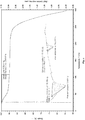
- XRPD spectra are shown in Figure 1 .
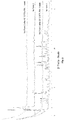
- TGA and DSC spectra are shown in Figure 2 .
- the XRPD spectra shown in Figure 1 were obtained directly after preparation of the product, after storage for 1 week and for 5 weeks at 40°C and 75% relative humidity, and after storage for 1 week and for 5 weeks at 25°C and 97% relative humidity.
- the XRPD spectra shown in Figure 1 indicate that the product obtained in Example 2 shows stability with respect to conversion into other polymorphic forms after storage at elevated temperature and humidity.
- N -((1,2,3,5,6,7-hexahydro-s-indacen-4-yl)carbamoyl)-1-isopropyl- 1H -pyrazole-3-sulfonamide monosodium salt 500 mg was treated with a 10:1 (v:v) solvent mixture of isopropyl alcohol and H 2 O (30 ml), and the reaction mixture was left stirring at 25 °C for 30 minutes. The resulting clear solution was then evaporated to produce a crystalline solid, which was analysed by XRPD, 1 H-NMR, HPLC, IC, KF, TGA and DSC.
- the XRPD spectra shown in Figure 3 were obtained directly after preparation of the product, after storage for 1 week at 40°C and 75% relative humidity, and after storage for 1 week at 25°C and 97% relative humidity.
- Figure 3 also shows the XRPD spectrum for Form 1 polymorph for reference.
- the XRPD spectra shown in Figure 3 indicate that the monosodium anhydrate (Form 2) obtained in Example 3 is stable at elevated temperature (40°C), and converts to the monosodium monohydrate (Form 1) at elevated humidity (97% RH).
- Example 2 The sodium salt of Example 2 and the free acid of Comparative Example 1 were evaluated for solubility in water, stability in aqueous media and intrinsic dissolution rate. The results are set out in Table 5.
- Table 5 Analysis Example 2 Comparative Example 1 Aqueous Solubility 81 mg/ml ⁇ 0.5 mg/ml Stability in aqueous media (24hrs at room temperature) No significant degradation 37% degradation Stability in aqueous media (24hrs at 50°C) 2.7% degradation 94% degradation Intrinsic dissolution rate (at pH 2) 10 ⁇ g/min ⁇ mm 2 4 ⁇ g/min ⁇ mm 2
- thermodynamic aqueous solubility was measured in water.
- the sodium salt was found to be soluble in water (81 mg/ml) with a resulting pH of 9.7.
- the free acid was found to be very poorly soluble in water ( ⁇ 0.5 mg/ml).
- the sodium salt was dissolved in water at a concentration of 0.2 mg/ml. Due to the very poor aqueous solubility of the free acid, the free acid was dissolved in a 1:1 mixture of water and acetonitrile at the same concentration of 0.2 mg/ml. Samples were kept at 50°C in an amber vial and at room temperature in an amber vial as well as a clear vial. The sodium salt was found to be stable in aqueous media, whereas the free acid was found to be unstable.
- the intrinsic dissolution rate was measured by the procedure set out in the US Pharmacopoeia, chapter 1087.
- the intrinsic dissolution rate of the sodium salt was found to be at least twice as high as that of the free acid.
- the sodium salts of Examples 1, 2 and 3 have improved properties as compared to the free acid and potassium salt of Comparative Examples 1 and 2. These improved properties include crystallinity, aqueous solubility, intrinsic dissolution rate, stability under storage at elevated temperature and/or relative humidity, and stability in aqueous media.
Landscapes
- Health & Medical Sciences (AREA)
- Chemical & Material Sciences (AREA)
- Organic Chemistry (AREA)
- Animal Behavior & Ethology (AREA)
- Veterinary Medicine (AREA)
- Public Health (AREA)
- Medicinal Chemistry (AREA)
- General Health & Medical Sciences (AREA)
- Pharmacology & Pharmacy (AREA)
- Life Sciences & Earth Sciences (AREA)
- Epidemiology (AREA)
- Rheumatology (AREA)
- Nuclear Medicine, Radiotherapy & Molecular Imaging (AREA)
- General Chemical & Material Sciences (AREA)
- Chemical Kinetics & Catalysis (AREA)
- Pain & Pain Management (AREA)
- Pharmaceuticals Containing Other Organic And Inorganic Compounds (AREA)
- Plural Heterocyclic Compounds (AREA)
Claims (17)
- Natriumsalz von N-((1,2,3,5,6,7-Hexahydro-s-indacen-4-yl)carbamoyl)-1-isopropyl-1H-pyrazol-3-sulfonamid oder ein Hydrat oder Solvat davon.
- Salz nach Anspruch 1, wobei das Salz ein Mononatriumsalz ist.
- Salz nach Anspruch 1 oder 2, wobei das Salz ein Monohydrat ist.
- Salz nach einem der Ansprüche 1 bis 3, wobei das Salz kristallin ist.
- Salz nach einem der Ansprüche 1 bis 4, wobei das Salz ein kristallines Mononatriumsalz von N-((1,2,3,5,6,7-Hexahydro-s-indacen-4-yl)carbamoyl)-1-isopropyl-1H-pyrazol-3-sulfonamidmonohydrat ist.
- Polymorphe Form des Salzes nach Anspruch 5, die ein XRPD-Spektrum aufweist, das folgende Peaks umfasst: 4,3° 2θ, 8,7° 2θ und 20,6° 2θ, alle ± 0,2° 2θ.
- Polymorphe Form des Salzes nach Anspruch 5 oder 6, die ein XRPD-Spektrum aufweist, in dem die 10 intensivsten Peaks 5 oder mehr Peaks beinhalten, die einen 2θ-Wert aufweisen, der aus Folgenden ausgewählt ist: 4,3° 2θ, 6,2° 2θ, 6,7° 2θ, 7,3° 2θ, 8,7° 2θ, 9,0° 2θ, 12,1° 2θ, 15,8° 2θ, 16,5° 2θ, 18,0° 2θ, 18,1° 2θ, 20,6° 2θ, 21,6° 2θ und 24,5° 2θ, alle ± 0,2° 2θ.
- Verfahren zum Herstellen eines Natriumsalzes von N-((1,2,3,5,6,7-Hexahydro-s-indacen-4-yl)carbamoyl)-1-isopropyl-1H-pyrazol-3-sulfonamid, umfassend:(a) Inkontaktbringen von N-((1,2,3,5,6,7-Hexahydro-s-indacen-4-yl)carbamoyl)-1-isopropyl-1H-pyrazol-3-sulfonamid als freie Säure und eine Quelle von Natriumionen in Gegenwart eines oder mehrerer polarer Lösungsmittel, um ein Gemisch zu bilden; und(b) Erhalten eines festen Natriumsalzes von N-((1,2,3,5,6,7-Hexahydro-s-indacen-4-yl)carbamoyl)-1-isopropyl-1H-pyrazol-3-sulfonamid aus dem Gemisch.
- Verfahren nach Anspruch 8, wobei das eine oder die mehreren in Schritt (a) verwendeten polaren Lösungsmittel Wasser und ein polares aprotisches organisches Lösungsmittel umfassen.
- Verfahren zum Herstellen eines kristallinen Mononatriumsalzes von N-((1,2,3,5,6,7-Hexahydro-s-indacen-4-yl)carbamoyl)-1-isopropyl-1H-pyrazol-3-sulfonamidmonohydrat in der polymorphen Form nach Anspruch 6 oder 7, umfassend:(a) Inkontaktbringen von N-((1,2,3,5,6,7-Hexahydro-s-indacen-4-yl)carbamoyl)-1-isopropyl-1H-pyrazol-3-sulfonamid als freie Säure und eine Quelle von Natriumionen in Gegenwart von Wasser und wahlweise einem polaren aprotischen organischen Lösungsmittel, um eine Lösung zu bilden; oder Lösen von N-((1,2,3,5,6,7-Hexahydro-s-indacen-4-yl)carbamoyl)-1-isopropyl-1H-pyrazol-3-sulfonamidmononatriumsalz in einem Lösungsmittelgemisch, das Wasser und wahlweise ein polares aprotisches organisches Lösungsmittel umfasst, um eine Lösung zu bilden; und(b) Erhalten eines kristallinen Mononatriumsalzes von N-((1,2,3,5,6,7-Hexahydro-s-indacen-4-yl)carbamoyl)-1-isopropyl-1H-pyrazol-3-sulfonamidmonohydrat in der polymorphen Form nach Anspruch 6 oder 7 aus der Lösung.
- Verfahren nach Anspruch 9 oder 10, wobei das in Schritt (a) verwendete polare aprotische organische Lösungsmittel Aceton ist.
- Verfahren nach einem der Ansprüche 8 bis 11, wobei das Natriumsalz von N-((1,2,3,5,6,7-Hexahydro-s-indacen-4-yl)carbamoyl)-1-isopropyl-1H-pyrazol-3-sulfonamid in Schritt (b) durch Zugabe eines Antilösungsmittels erhalten wird.
- Verfahren nach Anspruch 12, wobei das Antilösungsmittel tert-Butylmethylether ist.
- Pharmazeutische Zusammensetzung, umfassend ein Salz nach einem der Ansprüche 1 bis 5 oder eine polymorphe Form nach Anspruch 6 oder 7 und einen pharmazeutisch verträglichen Exzipienten.
- Salz nach einem der Ansprüche 1 bis 5 oder polymorphe Form nach Anspruch 6 oder 7 oder pharmazeutische Zusammensetzung nach Anspruch 14 zur Verwendung in der Medizin.
- Salz nach einem der Ansprüche 1 bis 5 oder polymorphe Form nach Anspruch 6 oder 7 oder pharmazeutische Zusammensetzung nach Anspruch 14 zur Verwendung bei der Behandlung oder Vorbeugung einer Krankheit, Störung oder eines Zustands, wobei die Krankheit, Störung oder der Zustand aus Folgendem ausgewählt ist:(i) Entzündung;(ii) einer Autoimmunkrankheit;(iii) Krebs;(iv) einer Infektion;(v) einer Krankheit des Zentralnervensystems;(vi) einer Stoffwechselkrankheit;(vii) einer Herz-Kreislauf-Krankheit;(viii) einer Atemwegskrankheit;(ix) einer Leberkrankheit;(x) einer Nierenkrankheit;(xi) einer Augenkrankheit;(xii) einer Hautkrankheit;(xiii) einem lymphatischen Zustand;(xiv) einer psychischen Störung;(xv) Transplantat-gegen-Wirt-Krankheit;(xvi) Allodynie; und(xvii) einer beliebigen Krankheit, bei der festgestellt wurde, dass eine Person eine Keimbahn oder eine somatische nicht stille Mutation in NLRP3 trägt.
- Salz nach einem der Ansprüche 1 bis 5 oder polymorphe Form nach Anspruch 6 oder 7 oder pharmazeutische Zusammensetzung nach Anspruch 14 zur Verwendung bei der Behandlung oder Vorbeugung einer Krankheit, Störung oder eines Zustands, wobei die Krankheit, Störung oder der Zustand aus Folgendem ausgewählt ist:(i) Cryopyrin-assoziierten periodischen Syndromen (CAPS);(ii) Muckle-Wells-Syndrom (MWS);(iii) familiärem kältinduziertem autoinflammatorischem Syndrom (FCAS);(iv) neonatal einsetzender multisystemischer autoentzündlicher Krankheit (NOMID);(v) familiärem Mittelmeerfieber (FMF);(vi) pyogener Arthritis, Pyoderma gangrenosum und Akne-Syndrom (PAPA);(vii) Hyperimmunoglobulinämie D und periodischem Fiebersyndrom (HIDS);(viii) Tumor-Nekrose-Faktor(TNF)-Rezeptor-assoziiertem periodischem Syndrom (TRAPS);(ix) systemischer juveniler idiopathischer Arthritis;(x) Morbus Still des Erwachsenen (AOSD);(xi) rezidivierender Polychondritis;(xii) Schnitzler-Syndrom;(xiii) Sweet-Syndrom;(xiv) Behçet-Krankheit;(xv) Antisynthetase-Syndrom;(xvi) Interleukin-1-Rezeptorantagonist-Mangel (DIRA); und(xvii) Haploinsuffizienz A20 (HA20).
Priority Applications (7)
| Application Number | Priority Date | Filing Date | Title |
|---|---|---|---|
| SI201930005T SI3606909T1 (sl) | 2018-04-23 | 2019-04-23 | Natrijeva sol N-((1,2,3,5,6,7-heksahidro-s-indacen-4-il)karbamoil)-1- izopropil-1H-pirazol-3-sulfonamid |
| HRP20201263TT HRP20201263T1 (hr) | 2018-04-23 | 2019-04-23 | Natrijeva sol od n-((1,2,3,5,6,7-heksahidro-s-indacen-4-il)karbamoil)-1-izopropil-1h-pirazol-3-sulfonamida |
| SM20200448T SMT202000448T1 (it) | 2018-04-23 | 2019-04-23 | Sale di sodio di n-((1,2,3,5,6,7-esaidro-s-indacen-4-il) carbamoil)-1-isopropil-1 h-pirazolo-3-solfonammide |
| EP20176198.8A EP3722281A1 (de) | 2018-04-23 | 2019-04-23 | Ein natriumsalz von n-((1,2,3,5,6,7-hexahydro-s-indacen-4-yl)carbamoyl)-1-isopropyl-1h-pyrazole-3-sulfonamide |
| PL19721230T PL3606909T3 (pl) | 2018-04-23 | 2019-04-23 | Sól sodowa N-((1,2,3,5,6,7-heksahydro-s-indacen-4-ylo)karbamoilo)-1-izopropylo-1H-pirazolo-3-sulfonamidu |
| MEP-2020-173A ME03822B (de) | 2018-04-23 | 2019-04-23 | Natriumsalz eines n-(1,2,3,5,6,7-hexahydro-s-indacen-4-yl)carbamoyl)-1-isopropyl-1-h-pyrazol-3-sulfonamids |
| RS20200936A RS60646B1 (sr) | 2018-04-23 | 2019-04-23 | Natrijumova so n-((1,2,3,5,6,7-heksahidro-s-indacen-4-il)karbamoil)-1-izopropil-1h-pirazol-3-sulfonamida |
Applications Claiming Priority (2)
| Application Number | Priority Date | Filing Date | Title |
|---|---|---|---|
| GBGB1806578.9A GB201806578D0 (en) | 2018-04-23 | 2018-04-23 | Novel compound |
| PCT/EP2019/060311 WO2019206871A1 (en) | 2018-04-23 | 2019-04-23 | A sodium salt of n-((1,2,3,5,6,7-hexahydro-s-indacen-4-yl)carbamoyl)-1 -isopropyl-1 h-pyrazole-3-sulfonamide |
Related Child Applications (1)
| Application Number | Title | Priority Date | Filing Date |
|---|---|---|---|
| EP20176198.8A Division EP3722281A1 (de) | 2018-04-23 | 2019-04-23 | Ein natriumsalz von n-((1,2,3,5,6,7-hexahydro-s-indacen-4-yl)carbamoyl)-1-isopropyl-1h-pyrazole-3-sulfonamide |
Publications (2)
| Publication Number | Publication Date |
|---|---|
| EP3606909A1 EP3606909A1 (de) | 2020-02-12 |
| EP3606909B1 true EP3606909B1 (de) | 2020-05-27 |
Family
ID=62236309
Family Applications (2)
| Application Number | Title | Priority Date | Filing Date |
|---|---|---|---|
| EP20176198.8A Withdrawn EP3722281A1 (de) | 2018-04-23 | 2019-04-23 | Ein natriumsalz von n-((1,2,3,5,6,7-hexahydro-s-indacen-4-yl)carbamoyl)-1-isopropyl-1h-pyrazole-3-sulfonamide |
| EP19721230.1A Active EP3606909B1 (de) | 2018-04-23 | 2019-04-23 | Ein natriumsalz von n-((1,2,3,5,6,7-hexahydro-s-indacen-4 -yl)carbamoyl)-1-isopropyl-1h-pyrazole-3-sulfonamide |
Family Applications Before (1)
| Application Number | Title | Priority Date | Filing Date |
|---|---|---|---|
| EP20176198.8A Withdrawn EP3722281A1 (de) | 2018-04-23 | 2019-04-23 | Ein natriumsalz von n-((1,2,3,5,6,7-hexahydro-s-indacen-4-yl)carbamoyl)-1-isopropyl-1h-pyrazole-3-sulfonamide |
Country Status (28)
| Country | Link |
|---|---|
| US (2) | US10973803B2 (de) |
| EP (2) | EP3722281A1 (de) |
| JP (1) | JP7382958B2 (de) |
| KR (1) | KR20210005589A (de) |
| CN (1) | CN112020495B (de) |
| AR (1) | AR114827A1 (de) |
| AU (1) | AU2019257973A1 (de) |
| BR (1) | BR112020021650A2 (de) |
| CA (1) | CA3097832A1 (de) |
| CY (1) | CY1123260T1 (de) |
| DK (1) | DK3606909T3 (de) |
| ES (1) | ES2811228T3 (de) |
| GB (1) | GB201806578D0 (de) |
| HR (1) | HRP20201263T1 (de) |
| HU (1) | HUE050369T2 (de) |
| LT (1) | LT3606909T (de) |
| MA (2) | MA51082A (de) |
| MD (1) | MD3606909T2 (de) |
| ME (1) | ME03822B (de) |
| MX (1) | MX2020011196A (de) |
| PL (1) | PL3606909T3 (de) |
| PT (1) | PT3606909T (de) |
| RS (1) | RS60646B1 (de) |
| SI (1) | SI3606909T1 (de) |
| SM (1) | SMT202000448T1 (de) |
| TW (1) | TW201943704A (de) |
| UY (1) | UY38186A (de) |
| WO (1) | WO2019206871A1 (de) |
Cited By (1)
| Publication number | Priority date | Publication date | Assignee | Title |
|---|---|---|---|---|
| US11724988B2 (en) | 2018-10-19 | 2023-08-15 | Inflazome Limited | Processes |
Families Citing this family (28)
| Publication number | Priority date | Publication date | Assignee | Title |
|---|---|---|---|---|
| CA3047336A1 (en) | 2017-01-23 | 2018-07-26 | Jecure Therapeutics, Inc. | Chemical compounds as inhibitors of interleukin-1 activity |
| US11840543B2 (en) | 2017-05-24 | 2023-12-12 | The University Of Queensland | Compounds and uses |
| EP3649112A1 (de) | 2017-07-07 | 2020-05-13 | Inflazome Limited | Sulfonylharnstoffe und sulfonylthioharnstoffe als nlrp3-inhibitoren |
| EP3668840A1 (de) | 2017-08-15 | 2020-06-24 | Inflazome Limited | Neuartige sulfonamid-carboxamid-verbindungen |
| TW201910317A (zh) | 2017-08-15 | 2019-03-16 | 愛爾蘭商英弗雷佐姆有限公司 | 新穎化合物 |
| US11773058B2 (en) | 2017-08-15 | 2023-10-03 | Inflazome Limited | Sulfonamide carboxamide compounds |
| EP3668843A1 (de) | 2017-08-15 | 2020-06-24 | Inflazome Limited | Sulfonylharnstoffe und sulfonylthioharnstoffe als nlrp3-inhibitoren |
| TW201910316A (zh) | 2017-08-15 | 2019-03-16 | 愛爾蘭商英弗雷佐姆有限公司 | 新穎化合物 |
| EP3707137A1 (de) | 2017-11-09 | 2020-09-16 | Inflazome Limited | Neuartige sulfonamid-carboxamid-verbindungen |
| PE20210050A1 (es) | 2017-11-09 | 2021-01-08 | Inflazome Ltd | Nuevos compuestos de sulfonamida carboxamida |
| US11884645B2 (en) | 2018-03-02 | 2024-01-30 | Inflazome Limited | Sulfonyl acetamides as NLRP3 inhibitors |
| EP3759073A1 (de) | 2018-03-02 | 2021-01-06 | Inflazome Limited | Sulfonamidderivate als nlrp3-inhibitoren |
| US12030879B2 (en) | 2018-03-02 | 2024-07-09 | Inflazome Limited | Sulfonyl acetamides as NLRP3 inhibitors |
| WO2019166619A1 (en) | 2018-03-02 | 2019-09-06 | Inflazome Limited | Novel compounds |
| WO2019166627A1 (en) | 2018-03-02 | 2019-09-06 | Inflazome Limited | Novel compounds |
| US11530200B2 (en) | 2018-03-02 | 2022-12-20 | Inflazome Limited | Compounds |
| GB201806578D0 (en) | 2018-04-23 | 2018-06-06 | Inflazome Ltd | Novel compound |
| BR112021001044A2 (pt) | 2018-07-20 | 2021-04-13 | F. Hoffmann-La Roche Ag | Compostos de sulfonimidamida como inibidores da atividade de interleucina-1 |
| CA3104199A1 (en) | 2018-07-20 | 2020-01-23 | F. Hoffmann-La Roche Ag | Sulfonylurea compounds as inhibitors of interleukin-1 activity |
| EP4054564A1 (de) * | 2019-11-07 | 2022-09-14 | Inflazome Limited | Behandlung von autoimmunerkrankungen |
| EP4076441A2 (de) * | 2019-11-07 | 2022-10-26 | Inflazome Limited | Behandlung und vorbeugung einer neurodegenerativen störung |
| WO2021089781A1 (en) * | 2019-11-07 | 2021-05-14 | Inflazome Limited | Treatment or prevention of psychiatric brain disorders using the nlrp3 inhibitor n-((1,2,3,5,6,7-hexahydro-s-indacen-4-yl)carbamoyl)-1 -isopropyl-1 h-pyrazole-3-sulfonamide |
| GB201916237D0 (en) * | 2019-11-07 | 2019-12-25 | Inflazome Ltd | Novel treatment |
| CN114630664A (zh) * | 2019-11-07 | 2022-06-14 | 英夫拉索姆有限公司 | 神经炎症或炎性脑部病症的治疗和预防 |
| WO2021089776A1 (en) * | 2019-11-07 | 2021-05-14 | Inflazome Limited | Treatment and prevention of a traumatic brain disorder |
| JP7843705B2 (ja) | 2020-01-22 | 2026-04-10 | エフ・ホフマン-ラ・ロシュ・アクチェンゲゼルシャフト | Nlrp3モジュレーターとしてのスルホンイミドアミド化合物 |
| WO2022023907A1 (en) | 2020-07-31 | 2022-02-03 | Novartis Ag | Methods of selecting and treating patients at elevated risk of major adverse cardiac events |
| WO2025153532A1 (en) | 2024-01-16 | 2025-07-24 | NodThera Limited | Nlrp3 inhibitors and glp-1 agonists combination therapies |
Family Cites Families (11)
| Publication number | Priority date | Publication date | Assignee | Title |
|---|---|---|---|---|
| US4802908A (en) * | 1987-01-22 | 1989-02-07 | E. I. Du Pont De Nemours And Company | Herbicidal 2-(1H)-pyrazinones |
| EP1214087A1 (de) * | 1999-09-14 | 2002-06-19 | Pfizer Products Inc. | Behandlung mit kombinationen aus il1-ra und diarylsulfonylureaverbindungen |
| EP2781216A4 (de) * | 2011-09-02 | 2015-05-27 | Kyowa Hakko Kirin Co Ltd | Chemokinrezeptoraktivitätsregler |
| HUE055755T2 (hu) * | 2015-02-16 | 2021-12-28 | Univ Queensland | Szulfonolkarmabidok és rokon vegyületeik valamint felhasználásuk |
| FR3046933B1 (fr) | 2016-01-25 | 2018-03-02 | Galderma Research & Development | Inhibiteurs nlrp3 pour le traitement des pathologies cutanees inflammatoires |
| HK1257569A1 (zh) | 2016-02-16 | 2019-10-25 | The University Of Queensland | 磺醯脲和相关化合物及其用途 |
| US11339136B2 (en) | 2016-04-18 | 2022-05-24 | Novartis Ag | Compounds and compositions for treating conditions associated with NLRP activity |
| WO2017184604A1 (en) | 2016-04-18 | 2017-10-26 | Ifm Therapeutics, Inc | Compounds and compositions for treating conditions associated with nlrp activity |
| EP3272739A1 (de) | 2016-07-20 | 2018-01-24 | NodThera Limited | Sulfonylharnstoff-derivate und ihre verwendung in der kontrole der interleukin-1-aktivität |
| GB201806578D0 (en) | 2018-04-23 | 2018-06-06 | Inflazome Ltd | Novel compound |
| GB201817038D0 (en) | 2018-10-19 | 2018-12-05 | Inflazome Ltd | Novel processes |
-
2018
- 2018-04-23 GB GBGB1806578.9A patent/GB201806578D0/en not_active Ceased
-
2019
- 2019-04-23 MX MX2020011196A patent/MX2020011196A/es unknown
- 2019-04-23 PT PT197212301T patent/PT3606909T/pt unknown
- 2019-04-23 AR ARP190101056A patent/AR114827A1/es not_active Application Discontinuation
- 2019-04-23 ME MEP-2020-173A patent/ME03822B/de unknown
- 2019-04-23 KR KR1020207030023A patent/KR20210005589A/ko not_active Ceased
- 2019-04-23 HU HUE19721230A patent/HUE050369T2/hu unknown
- 2019-04-23 MD MDE20200181T patent/MD3606909T2/ro not_active IP Right Cessation
- 2019-04-23 JP JP2020557902A patent/JP7382958B2/ja active Active
- 2019-04-23 UY UY0001038186A patent/UY38186A/es not_active Application Discontinuation
- 2019-04-23 ES ES19721230T patent/ES2811228T3/es active Active
- 2019-04-23 EP EP20176198.8A patent/EP3722281A1/de not_active Withdrawn
- 2019-04-23 CA CA3097832A patent/CA3097832A1/en active Pending
- 2019-04-23 PL PL19721230T patent/PL3606909T3/pl unknown
- 2019-04-23 SM SM20200448T patent/SMT202000448T1/it unknown
- 2019-04-23 AU AU2019257973A patent/AU2019257973A1/en not_active Abandoned
- 2019-04-23 MA MA051082A patent/MA51082A/fr unknown
- 2019-04-23 TW TW108114167A patent/TW201943704A/zh unknown
- 2019-04-23 MA MA48051A patent/MA48051B1/fr unknown
- 2019-04-23 RS RS20200936A patent/RS60646B1/sr unknown
- 2019-04-23 LT LTEP19721230.1T patent/LT3606909T/lt unknown
- 2019-04-23 BR BR112020021650-0A patent/BR112020021650A2/pt not_active Application Discontinuation
- 2019-04-23 CN CN201980026640.0A patent/CN112020495B/zh active Active
- 2019-04-23 WO PCT/EP2019/060311 patent/WO2019206871A1/en not_active Ceased
- 2019-04-23 EP EP19721230.1A patent/EP3606909B1/de active Active
- 2019-04-23 SI SI201930005T patent/SI3606909T1/sl unknown
- 2019-04-23 DK DK19721230.1T patent/DK3606909T3/da active
- 2019-04-23 HR HRP20201263TT patent/HRP20201263T1/hr unknown
-
2020
- 2020-04-16 US US16/850,978 patent/US10973803B2/en active Active
- 2020-08-12 CY CY20201100756T patent/CY1123260T1/el unknown
-
2021
- 2021-03-09 US US17/196,956 patent/US20210315862A1/en not_active Abandoned
Non-Patent Citations (1)
| Title |
|---|
| None * |
Cited By (1)
| Publication number | Priority date | Publication date | Assignee | Title |
|---|---|---|---|---|
| US11724988B2 (en) | 2018-10-19 | 2023-08-15 | Inflazome Limited | Processes |
Also Published As
Similar Documents
| Publication | Publication Date | Title |
|---|---|---|
| US10973803B2 (en) | Sodium salt of N-((1,2,3,5,6,7-hexahydro-s-indacen-4-yl)carbamoyl)-1-isopropyl-1H-pyrazole-3-sulfonamide | |
| US12221434B2 (en) | Sulfonamide carboxamide compounds | |
| US11905252B2 (en) | Compounds | |
| US11518739B2 (en) | Sulfonamide carboxamide compounds | |
| US11926600B2 (en) | Sulfonylureas and sulfonylthioureas as NLRP3 inhibitors | |
| US11623922B2 (en) | Compounds | |
| US11530200B2 (en) | Compounds | |
| US11834433B2 (en) | Compounds | |
| US11884645B2 (en) | Sulfonyl acetamides as NLRP3 inhibitors | |
| US12168653B2 (en) | Sulfonamide derivates as NLRP3 inhibitors | |
| US20220289692A1 (en) | Nlrp3 inhibitors | |
| US20220163539A1 (en) | Nlrp3 inflammasome inhibition | |
| US20220106288A1 (en) | Novel sulfoneurea compounds | |
| US20220289766A1 (en) | Macrocyclic sulfonylurea derivatives useful as nlrp3 inhibitors | |
| US20210163412A1 (en) | Novel sulfoneurea compounds | |
| US20200399242A1 (en) | Novel compounds | |
| KR102815870B1 (ko) | 암의 치료에 사용하기 위한 헤테로시클릭 nlrp3 조정제 | |
| HK40016590A (en) | A sodium salt of n-((1,2,3,5,6,7-hexahydro-s-indacen-4-yl)carbamoyl)-1-isopropyl-1h-pyrazole-3-sulfonamide | |
| HK40016590B (en) | A sodium salt of n-((1,2,3,5,6,7-hexahydro-s-indacen-4-yl)carbamoyl)-1-isopropyl-1h-pyrazole-3-sulfonamide | |
| HK40064383A (en) | Nlrp3 inhibitors |
Legal Events
| Date | Code | Title | Description |
|---|---|---|---|
| STAA | Information on the status of an ep patent application or granted ep patent |
Free format text: STATUS: UNKNOWN |
|
| STAA | Information on the status of an ep patent application or granted ep patent |
Free format text: STATUS: THE INTERNATIONAL PUBLICATION HAS BEEN MADE |
|
| PUAI | Public reference made under article 153(3) epc to a published international application that has entered the european phase |
Free format text: ORIGINAL CODE: 0009012 |
|
| STAA | Information on the status of an ep patent application or granted ep patent |
Free format text: STATUS: REQUEST FOR EXAMINATION WAS MADE |
|
| 17P | Request for examination filed |
Effective date: 20191104 |
|
| AK | Designated contracting states |
Kind code of ref document: A1 Designated state(s): AL AT BE BG CH CY CZ DE DK EE ES FI FR GB GR HR HU IE IS IT LI LT LU LV MC MK MT NL NO PL PT RO RS SE SI SK SM TR |
|
| AX | Request for extension of the european patent |
Extension state: BA ME |
|
| GRAP | Despatch of communication of intention to grant a patent |
Free format text: ORIGINAL CODE: EPIDOSNIGR1 |
|
| STAA | Information on the status of an ep patent application or granted ep patent |
Free format text: STATUS: GRANT OF PATENT IS INTENDED |
|
| GRAS | Grant fee paid |
Free format text: ORIGINAL CODE: EPIDOSNIGR3 |
|
| GRAA | (expected) grant |
Free format text: ORIGINAL CODE: 0009210 |
|
| STAA | Information on the status of an ep patent application or granted ep patent |
Free format text: STATUS: THE PATENT HAS BEEN GRANTED |
|
| INTG | Intention to grant announced |
Effective date: 20200401 |
|
| AK | Designated contracting states |
Kind code of ref document: B1 Designated state(s): AL AT BE BG CH CY CZ DE DK EE ES FI FR GB GR HR HU IE IS IT LI LT LU LV MC MK MT NL NO PL PT RO RS SE SI SK SM TR |
|
| AX | Request for extension of the european patent |
Extension state: BA ME |
|
| REG | Reference to a national code |
Ref country code: TN Ref legal event code: VAGR Ref document number: TN/P/2020/000170 Country of ref document: TN Ref country code: GB Ref legal event code: FG4D |
|
| REG | Reference to a national code |
Ref country code: CH Ref legal event code: EP |
|
| 111Z | Information provided on other rights and legal means of execution |
Free format text: AL AT BE BG CH CY CZ DE DK EE ES FI FR GB GR HR HU IE IS IT LT LU LV MC MK MT NL NO PL PT RO RS SE SI SK SM TR Effective date: 20200316 |
|
| REG | Reference to a national code |
Ref country code: DE Ref legal event code: R096 Ref document number: 602019000152 Country of ref document: DE |
|
| REG | Reference to a national code |
Ref country code: AT Ref legal event code: REF Ref document number: 1274414 Country of ref document: AT Kind code of ref document: T Effective date: 20200615 |
|
| REG | Reference to a national code |
Ref country code: PT Ref legal event code: SC4A Ref document number: 3606909 Country of ref document: PT Date of ref document: 20200709 Kind code of ref document: T Free format text: AVAILABILITY OF NATIONAL TRANSLATION Effective date: 20200702 |
|
| REG | Reference to a national code |
Ref country code: HR Ref legal event code: TUEP Ref document number: P20201263T Country of ref document: HR |
|
| REG | Reference to a national code |
Ref country code: NL Ref legal event code: FP |
|
| REG | Reference to a national code |
Ref country code: DK Ref legal event code: T3 Effective date: 20200820 |
|
| REG | Reference to a national code |
Ref country code: FI Ref legal event code: FGE |
|
| REG | Reference to a national code |
Ref country code: CH Ref legal event code: NV Representative=s name: STOLMAR AND PARTNER INTELLECTUAL PROPERTY S.A., CH Ref country code: MD Ref legal event code: VAGR Ref document number: 3606909 Country of ref document: MD Date of ref document: 20200831 Kind code of ref document: T2 Ref country code: MA Ref legal event code: VAGR Ref document number: 48051 Country of ref document: MA Kind code of ref document: B1 |
|
| REG | Reference to a national code |
Ref country code: HK Ref legal event code: DE Ref document number: 40016590 Country of ref document: HK |
|
| REG | Reference to a national code |
Ref country code: SE Ref legal event code: TRGR Ref country code: EE Ref legal event code: FG4A Ref document number: E019447 Country of ref document: EE Effective date: 20200713 |
|
| REG | Reference to a national code |
Ref country code: NO Ref legal event code: T2 Effective date: 20200527 |
|
| REG | Reference to a national code |
Ref country code: DE Ref legal event code: R082 Ref document number: 602019000152 Country of ref document: DE Representative=s name: VENNER SHIPLEY GERMANY LLP, DE Ref country code: GR Ref legal event code: EP Ref document number: 20200402261 Country of ref document: GR Effective date: 20201014 Ref country code: DE Ref legal event code: R082 Ref document number: 602019000152 Country of ref document: DE Representative=s name: VENNER SHIPLEY LLP, DE |
|
| REG | Reference to a national code |
Ref country code: SK Ref legal event code: T3 Ref document number: E 35030 Country of ref document: SK |
|
| REG | Reference to a national code |
Ref country code: HU Ref legal event code: AG4A Ref document number: E050369 Country of ref document: HU |
|
| REG | Reference to a national code |
Ref country code: HR Ref legal event code: T1PR Ref document number: P20201263 Country of ref document: HR |
|
| REG | Reference to a national code |
Ref country code: DE Ref legal event code: R097 Ref document number: 602019000152 Country of ref document: DE |
|
| REG | Reference to a national code |
Ref country code: ES Ref legal event code: FG2A Ref document number: 2811228 Country of ref document: ES Kind code of ref document: T3 Effective date: 20210311 |
|
| PLBE | No opposition filed within time limit |
Free format text: ORIGINAL CODE: 0009261 |
|
| STAA | Information on the status of an ep patent application or granted ep patent |
Free format text: STATUS: NO OPPOSITION FILED WITHIN TIME LIMIT |
|
| REG | Reference to a national code |
Ref country code: HR Ref legal event code: ODRP Ref document number: P20201263 Country of ref document: HR Payment date: 20210419 Year of fee payment: 3 |
|
| 26N | No opposition filed |
Effective date: 20210302 |
|
| VSFP | Annual fee paid to validation state [announced via postgrant information from national office to epo] |
Ref country code: MD Payment date: 20210413 Year of fee payment: 3 |
|
| REG | Reference to a national code |
Ref country code: AT Ref legal event code: UEP Ref document number: 1274414 Country of ref document: AT Kind code of ref document: T Effective date: 20200527 |
|
| VSFP | Annual fee paid to validation state [announced via postgrant information from national office to epo] |
Ref country code: MD Payment date: 20220321 Year of fee payment: 4 |
|
| REG | Reference to a national code |
Ref country code: HR Ref legal event code: ODRP Ref document number: P20201263 Country of ref document: HR Payment date: 20220412 Year of fee payment: 4 |
|
| VSFP | Annual fee paid to validation state [announced via postgrant information from national office to epo] |
Ref country code: TN Payment date: 20210430 Year of fee payment: 3 |
|
| REG | Reference to a national code |
Ref country code: HU Ref legal event code: HC9C Owner name: INFLAZOME LIMITED, IE |
|
| PGFP | Annual fee paid to national office [announced via postgrant information from national office to epo] |
Ref country code: SM Payment date: 20230327 Year of fee payment: 5 Ref country code: NO Payment date: 20230327 Year of fee payment: 5 Ref country code: MC Payment date: 20230328 Year of fee payment: 5 Ref country code: IE Payment date: 20230327 Year of fee payment: 5 Ref country code: FI Payment date: 20230328 Year of fee payment: 5 Ref country code: DK Payment date: 20230328 Year of fee payment: 5 Ref country code: CZ Payment date: 20230321 Year of fee payment: 5 |
|
| REG | Reference to a national code |
Ref country code: HR Ref legal event code: ODRP Ref document number: P20201263 Country of ref document: HR Payment date: 20230331 Year of fee payment: 5 |
|
| PGFP | Annual fee paid to national office [announced via postgrant information from national office to epo] |
Ref country code: SK Payment date: 20230331 Year of fee payment: 5 Ref country code: SE Payment date: 20230315 Year of fee payment: 5 Ref country code: RS Payment date: 20230323 Year of fee payment: 5 Ref country code: PT Payment date: 20230327 Year of fee payment: 5 Ref country code: LV Payment date: 20230320 Year of fee payment: 5 Ref country code: IS Payment date: 20230321 Year of fee payment: 5 Ref country code: HR Payment date: 20230331 Year of fee payment: 5 Ref country code: GR Payment date: 20230327 Year of fee payment: 5 Ref country code: EE Payment date: 20230321 Year of fee payment: 5 Ref country code: BE Payment date: 20230322 Year of fee payment: 5 |
|
| VSFP | Annual fee paid to validation state [announced via postgrant information from national office to epo] |
Ref country code: MD Payment date: 20230331 Year of fee payment: 5 |
|
| P01 | Opt-out of the competence of the unified patent court (upc) registered |
Effective date: 20230519 |
|
| PGFP | Annual fee paid to national office [announced via postgrant information from national office to epo] |
Ref country code: NL Payment date: 20230323 Year of fee payment: 5 Ref country code: MT Payment date: 20230323 Year of fee payment: 5 Ref country code: LU Payment date: 20230420 Year of fee payment: 5 |
|
| PGFP | Annual fee paid to national office [announced via postgrant information from national office to epo] |
Ref country code: RO Payment date: 20230403 Year of fee payment: 5 Ref country code: LT Payment date: 20230406 Year of fee payment: 5 Ref country code: IT Payment date: 20230424 Year of fee payment: 5 Ref country code: ES Payment date: 20230509 Year of fee payment: 5 Ref country code: CY Payment date: 20230322 Year of fee payment: 5 Ref country code: BG Payment date: 20230331 Year of fee payment: 5 |
|
| PGFP | Annual fee paid to national office [announced via postgrant information from national office to epo] |
Ref country code: TR Payment date: 20230419 Year of fee payment: 5 Ref country code: SI Payment date: 20230331 Year of fee payment: 5 Ref country code: PL Payment date: 20230403 Year of fee payment: 5 Ref country code: HU Payment date: 20230327 Year of fee payment: 5 |
|
| VSFP | Annual fee paid to validation state [announced via postgrant information from national office to epo] |
Ref country code: TN Payment date: 20220430 Year of fee payment: 4 |
|
| PGFP | Annual fee paid to national office [announced via postgrant information from national office to epo] |
Ref country code: AL Payment date: 20230414 Year of fee payment: 5 |
|
| PGFP | Annual fee paid to national office [announced via postgrant information from national office to epo] |
Ref country code: MK Payment date: 20230322 Year of fee payment: 5 |
|
| REG | Reference to a national code |
Ref country code: HR Ref legal event code: PBON Ref document number: P20201263 Country of ref document: HR Effective date: 20240423 |
|
| REG | Reference to a national code |
Ref country code: LT Ref legal event code: MM4D Effective date: 20240423 |
|
| REG | Reference to a national code |
Ref country code: EE Ref legal event code: MM4A Ref document number: E019447 Country of ref document: EE Effective date: 20240430 |
|
| PG25 | Lapsed in a contracting state [announced via postgrant information from national office to epo] |
Ref country code: MC Free format text: LAPSE BECAUSE OF NON-PAYMENT OF DUE FEES Effective date: 20240430 |
|
| REG | Reference to a national code |
Ref country code: DK Ref legal event code: EBP Effective date: 20240430 |
|
| PG25 | Lapsed in a contracting state [announced via postgrant information from national office to epo] |
Ref country code: MC Free format text: LAPSE BECAUSE OF NON-PAYMENT OF DUE FEES Effective date: 20240430 |
|
| REG | Reference to a national code |
Ref country code: SE Ref legal event code: EUG |
|
| REG | Reference to a national code |
Ref country code: NL Ref legal event code: MM Effective date: 20240501 Ref country code: SK Ref legal event code: MM4A Ref document number: E 35030 Country of ref document: SK Effective date: 20240423 |
|
| PG25 | Lapsed in a contracting state [announced via postgrant information from national office to epo] |
Ref country code: PT Free format text: LAPSE BECAUSE OF NON-PAYMENT OF DUE FEES Effective date: 20241023 |
|
| PG25 | Lapsed in a contracting state [announced via postgrant information from national office to epo] |
Ref country code: LU Free format text: LAPSE BECAUSE OF NON-PAYMENT OF DUE FEES Effective date: 20240423 |
|
| REG | Reference to a national code |
Ref country code: BE Ref legal event code: MM Effective date: 20240430 |
|
| PG25 | Lapsed in a contracting state [announced via postgrant information from national office to epo] |
Ref country code: PT Free format text: LAPSE BECAUSE OF NON-PAYMENT OF DUE FEES Effective date: 20241023 Ref country code: LU Free format text: LAPSE BECAUSE OF NON-PAYMENT OF DUE FEES Effective date: 20240423 |
|
| PG25 | Lapsed in a contracting state [announced via postgrant information from national office to epo] |
Ref country code: LT Free format text: LAPSE BECAUSE OF NON-PAYMENT OF DUE FEES Effective date: 20240423 |
|
| PG25 | Lapsed in a contracting state [announced via postgrant information from national office to epo] |
Ref country code: NO Free format text: LAPSE BECAUSE OF NON-PAYMENT OF DUE FEES Effective date: 20240430 |
|
| PG25 | Lapsed in a contracting state [announced via postgrant information from national office to epo] |
Ref country code: NL Free format text: LAPSE BECAUSE OF NON-PAYMENT OF DUE FEES Effective date: 20240501 Ref country code: BE Free format text: LAPSE BECAUSE OF NON-PAYMENT OF DUE FEES Effective date: 20240430 Ref country code: GR Free format text: LAPSE BECAUSE OF NON-PAYMENT OF DUE FEES Effective date: 20241104 Ref country code: FI Free format text: LAPSE BECAUSE OF NON-PAYMENT OF DUE FEES Effective date: 20240423 |
|
| PG25 | Lapsed in a contracting state [announced via postgrant information from national office to epo] |
Ref country code: BG Free format text: LAPSE BECAUSE OF NON-PAYMENT OF DUE FEES Effective date: 20240423 |
|
| PG25 | Lapsed in a contracting state [announced via postgrant information from national office to epo] |
Ref country code: LV Free format text: LAPSE BECAUSE OF NON-PAYMENT OF DUE FEES Effective date: 20240423 Ref country code: EE Free format text: LAPSE BECAUSE OF NON-PAYMENT OF DUE FEES Effective date: 20240430 |
|
| PG25 | Lapsed in a contracting state [announced via postgrant information from national office to epo] |
Ref country code: CZ Free format text: LAPSE BECAUSE OF NON-PAYMENT OF DUE FEES Effective date: 20240423 Ref country code: HR Free format text: LAPSE BECAUSE OF NON-PAYMENT OF DUE FEES Effective date: 20240423 |
|
| PG25 | Lapsed in a contracting state [announced via postgrant information from national office to epo] |
Ref country code: RO Free format text: LAPSE BECAUSE OF NON-PAYMENT OF DUE FEES Effective date: 20240423 Ref country code: SK Free format text: LAPSE BECAUSE OF NON-PAYMENT OF DUE FEES Effective date: 20240423 |
|
| PG25 | Lapsed in a contracting state [announced via postgrant information from national office to epo] |
Ref country code: SM Free format text: LAPSE BECAUSE OF NON-PAYMENT OF DUE FEES Effective date: 20241106 Ref country code: RS Free format text: LAPSE BECAUSE OF NON-PAYMENT OF DUE FEES Effective date: 20240423 |
|
| PG25 | Lapsed in a contracting state [announced via postgrant information from national office to epo] |
Ref country code: CY Free format text: LAPSE BECAUSE OF NON-PAYMENT OF DUE FEES Effective date: 20240423 |
|
| PG25 | Lapsed in a contracting state [announced via postgrant information from national office to epo] |
Ref country code: SM Free format text: LAPSE BECAUSE OF NON-PAYMENT OF DUE FEES Effective date: 20241106 Ref country code: RS Free format text: LAPSE BECAUSE OF NON-PAYMENT OF DUE FEES Effective date: 20240423 Ref country code: RO Free format text: LAPSE BECAUSE OF NON-PAYMENT OF DUE FEES Effective date: 20240423 Ref country code: NO Free format text: LAPSE BECAUSE OF NON-PAYMENT OF DUE FEES Effective date: 20240430 Ref country code: NL Free format text: LAPSE BECAUSE OF NON-PAYMENT OF DUE FEES Effective date: 20240501 Ref country code: LV Free format text: LAPSE BECAUSE OF NON-PAYMENT OF DUE FEES Effective date: 20240423 Ref country code: LT Free format text: LAPSE BECAUSE OF NON-PAYMENT OF DUE FEES Effective date: 20240423 Ref country code: HR Free format text: LAPSE BECAUSE OF NON-PAYMENT OF DUE FEES Effective date: 20240423 Ref country code: GR Free format text: LAPSE BECAUSE OF NON-PAYMENT OF DUE FEES Effective date: 20241104 Ref country code: FI Free format text: LAPSE BECAUSE OF NON-PAYMENT OF DUE FEES Effective date: 20240423 Ref country code: EE Free format text: LAPSE BECAUSE OF NON-PAYMENT OF DUE FEES Effective date: 20240430 Ref country code: CZ Free format text: LAPSE BECAUSE OF NON-PAYMENT OF DUE FEES Effective date: 20240423 Ref country code: CY Free format text: LAPSE BECAUSE OF NON-PAYMENT OF DUE FEES Effective date: 20240423 Ref country code: BG Free format text: LAPSE BECAUSE OF NON-PAYMENT OF DUE FEES Effective date: 20240423 Ref country code: BE Free format text: LAPSE BECAUSE OF NON-PAYMENT OF DUE FEES Effective date: 20240430 Ref country code: SK Free format text: LAPSE BECAUSE OF NON-PAYMENT OF DUE FEES Effective date: 20240423 |
|
| PG25 | Lapsed in a contracting state [announced via postgrant information from national office to epo] |
Ref country code: HU Free format text: LAPSE BECAUSE OF NON-PAYMENT OF DUE FEES Effective date: 20240424 |
|
| REG | Reference to a national code |
Ref country code: MD Ref legal event code: KA4A Ref document number: 3606909 Country of ref document: MD Kind code of ref document: T2 |
|
| PG25 | Lapsed in a contracting state [announced via postgrant information from national office to epo] |
Ref country code: DK Free format text: LAPSE BECAUSE OF NON-PAYMENT OF DUE FEES Effective date: 20240430 |
|
| PG25 | Lapsed in a contracting state [announced via postgrant information from national office to epo] |
Ref country code: IE Free format text: LAPSE BECAUSE OF NON-PAYMENT OF DUE FEES Effective date: 20240423 |
|
| PGFP | Annual fee paid to national office [announced via postgrant information from national office to epo] |
Ref country code: FR Payment date: 20250319 Year of fee payment: 7 |
|
| PG25 | Lapsed in a contracting state [announced via postgrant information from national office to epo] |
Ref country code: IT Free format text: LAPSE BECAUSE OF NON-PAYMENT OF DUE FEES Effective date: 20240423 |
|
| PGFP | Annual fee paid to national office [announced via postgrant information from national office to epo] |
Ref country code: GB Payment date: 20250319 Year of fee payment: 7 |
|
| REG | Reference to a national code |
Ref country code: ES Ref legal event code: FD2A Effective date: 20250528 |
|
| REG | Reference to a national code |
Ref country code: AT Ref legal event code: MM01 Ref document number: 1274414 Country of ref document: AT Kind code of ref document: T Effective date: 20240423 |
|
| VS25 | Lapsed in a validation state [announced via postgrant information from nat. office to epo] |
Ref country code: MD Free format text: LAPSE BECAUSE OF NON-PAYMENT OF DUE FEES Effective date: 20240423 |
|
| PGFP | Annual fee paid to national office [announced via postgrant information from national office to epo] |
Ref country code: DE Payment date: 20250319 Year of fee payment: 7 |
|
| PG25 | Lapsed in a contracting state [announced via postgrant information from national office to epo] |
Ref country code: ES Free format text: LAPSE BECAUSE OF NON-PAYMENT OF DUE FEES Effective date: 20240424 |
|
| PGFP | Annual fee paid to national office [announced via postgrant information from national office to epo] |
Ref country code: CH Payment date: 20250501 Year of fee payment: 7 |
|
| PG25 | Lapsed in a contracting state [announced via postgrant information from national office to epo] |
Ref country code: AT Free format text: LAPSE BECAUSE OF NON-PAYMENT OF DUE FEES Effective date: 20240423 |
|
| REG | Reference to a national code |
Ref country code: SI Ref legal event code: KO00 Effective date: 20240424 |
|
| PG25 | Lapsed in a contracting state [announced via postgrant information from national office to epo] |
Ref country code: SE Free format text: LAPSE BECAUSE OF NON-PAYMENT OF DUE FEES Effective date: 20240424 |
|
| VS25 | Lapsed in a validation state [announced via postgrant information from nat. office to epo] |
Ref country code: MA Free format text: LAPSE BECAUSE OF NON-PAYMENT OF DUE FEES Effective date: 20240424 |
|
| VSFP | Annual fee paid to validation state [announced via postgrant information from national office to epo] |
Ref country code: MA Payment date: 20230407 Year of fee payment: 5 |
|
| VSFP | Annual fee paid to validation state [announced via postgrant information from national office to epo] |
Ref country code: MA Payment date: 20220411 Year of fee payment: 4 Ref country code: MA Payment date: 20210421 Year of fee payment: 3 |
|
| PG25 | Lapsed in a contracting state [announced via postgrant information from national office to epo] |
Ref country code: PL Free format text: LAPSE BECAUSE OF NON-PAYMENT OF DUE FEES Effective date: 20240423 |
|
| PGFP | Annual fee paid to national office [announced via postgrant information from national office to epo] |
Ref country code: AT Payment date: 20260410 Year of fee payment: 5 |