EP3606534B1 - Phospholipid derivatives and their use as medicaments - Google Patents
Phospholipid derivatives and their use as medicaments Download PDFInfo
- Publication number
- EP3606534B1 EP3606534B1 EP18719029.3A EP18719029A EP3606534B1 EP 3606534 B1 EP3606534 B1 EP 3606534B1 EP 18719029 A EP18719029 A EP 18719029A EP 3606534 B1 EP3606534 B1 EP 3606534B1
- Authority
- EP
- European Patent Office
- Prior art keywords
- acyl
- dapl
- mixture
- use according
- lysophosphatidyl
- Prior art date
- Legal status (The legal status is an assumption and is not a legal conclusion. Google has not performed a legal analysis and makes no representation as to the accuracy of the status listed.)
- Active
Links
Classifications
-
- A—HUMAN NECESSITIES
- A61—MEDICAL OR VETERINARY SCIENCE; HYGIENE
- A61K—PREPARATIONS FOR MEDICAL, DENTAL OR TOILETRY PURPOSES
- A61K31/00—Medicinal preparations containing organic active ingredients
- A61K31/66—Phosphorus compounds
- A61K31/683—Diesters of a phosphorus acid with two hydroxy compounds, e.g. phosphatidylinositols
- A61K31/685—Diesters of a phosphorus acid with two hydroxy compounds, e.g. phosphatidylinositols one of the hydroxy compounds having nitrogen atoms, e.g. phosphatidylserine, lecithin
-
- A—HUMAN NECESSITIES
- A61—MEDICAL OR VETERINARY SCIENCE; HYGIENE
- A61K—PREPARATIONS FOR MEDICAL, DENTAL OR TOILETRY PURPOSES
- A61K9/00—Medicinal preparations characterised by special physical form
- A61K9/0012—Galenical forms characterised by the site of application
- A61K9/0019—Injectable compositions; Intramuscular, intravenous, arterial, subcutaneous administration; Compositions to be administered through the skin in an invasive manner
-
- A—HUMAN NECESSITIES
- A61—MEDICAL OR VETERINARY SCIENCE; HYGIENE
- A61K—PREPARATIONS FOR MEDICAL, DENTAL OR TOILETRY PURPOSES
- A61K9/00—Medicinal preparations characterised by special physical form
- A61K9/0012—Galenical forms characterised by the site of application
- A61K9/0053—Mouth and digestive tract, i.e. intraoral and peroral administration
-
- A—HUMAN NECESSITIES
- A61—MEDICAL OR VETERINARY SCIENCE; HYGIENE
- A61P—SPECIFIC THERAPEUTIC ACTIVITY OF CHEMICAL COMPOUNDS OR MEDICINAL PREPARATIONS
- A61P29/00—Non-central analgesic, antipyretic or antiinflammatory agents, e.g. antirheumatic agents; Non-steroidal antiinflammatory drugs [NSAID]
-
- A—HUMAN NECESSITIES
- A61—MEDICAL OR VETERINARY SCIENCE; HYGIENE
- A61P—SPECIFIC THERAPEUTIC ACTIVITY OF CHEMICAL COMPOUNDS OR MEDICINAL PREPARATIONS
- A61P35/00—Antineoplastic agents
-
- C—CHEMISTRY; METALLURGY
- C07—ORGANIC CHEMISTRY
- C07F—ACYCLIC, CARBOCYCLIC OR HETEROCYCLIC COMPOUNDS CONTAINING ELEMENTS OTHER THAN CARBON, HYDROGEN, HALOGEN, OXYGEN, NITROGEN, SULFUR, SELENIUM OR TELLURIUM
- C07F9/00—Compounds containing elements of Groups 5 or 15 of the Periodic Table
- C07F9/02—Phosphorus compounds
- C07F9/06—Phosphorus compounds without P—C bonds
- C07F9/08—Esters of oxyacids of phosphorus
- C07F9/09—Esters of phosphoric acids
- C07F9/10—Phosphatides, e.g. lecithin
-
- C—CHEMISTRY; METALLURGY
- C07—ORGANIC CHEMISTRY
- C07F—ACYCLIC, CARBOCYCLIC OR HETEROCYCLIC COMPOUNDS CONTAINING ELEMENTS OTHER THAN CARBON, HYDROGEN, HALOGEN, OXYGEN, NITROGEN, SULFUR, SELENIUM OR TELLURIUM
- C07F9/00—Compounds containing elements of Groups 5 or 15 of the Periodic Table
- C07F9/02—Phosphorus compounds
- C07F9/06—Phosphorus compounds without P—C bonds
- C07F9/08—Esters of oxyacids of phosphorus
- C07F9/09—Esters of phosphoric acids
- C07F9/113—Esters of phosphoric acids with unsaturated acyclic alcohols
-
- C—CHEMISTRY; METALLURGY
- C07—ORGANIC CHEMISTRY
- C07F—ACYCLIC, CARBOCYCLIC OR HETEROCYCLIC COMPOUNDS CONTAINING ELEMENTS OTHER THAN CARBON, HYDROGEN, HALOGEN, OXYGEN, NITROGEN, SULFUR, SELENIUM OR TELLURIUM
- C07F9/00—Compounds containing elements of Groups 5 or 15 of the Periodic Table
- C07F9/02—Phosphorus compounds
- C07F9/06—Phosphorus compounds without P—C bonds
- C07F9/08—Esters of oxyacids of phosphorus
- C07F9/09—Esters of phosphoric acids
- C07F9/117—Esters of phosphoric acids with cycloaliphatic alcohols
-
- A—HUMAN NECESSITIES
- A61—MEDICAL OR VETERINARY SCIENCE; HYGIENE
- A61K—PREPARATIONS FOR MEDICAL, DENTAL OR TOILETRY PURPOSES
- A61K2121/00—Preparations for use in therapy
-
- A—HUMAN NECESSITIES
- A61—MEDICAL OR VETERINARY SCIENCE; HYGIENE
- A61K—PREPARATIONS FOR MEDICAL, DENTAL OR TOILETRY PURPOSES
- A61K31/00—Medicinal preparations containing organic active ingredients
- A61K31/70—Carbohydrates; Sugars; Derivatives thereof
- A61K31/7028—Compounds having saccharide radicals attached to non-saccharide compounds by glycosidic linkages
- A61K31/7034—Compounds having saccharide radicals attached to non-saccharide compounds by glycosidic linkages attached to a carbocyclic compound, e.g. phloridzin
- A61K31/704—Compounds having saccharide radicals attached to non-saccharide compounds by glycosidic linkages attached to a carbocyclic compound, e.g. phloridzin attached to a condensed carbocyclic ring system, e.g. sennosides, thiocolchicosides, escin, daunorubicin
Definitions
- the present invention relates to lysophospholipid-based compounds, and to their use as medicaments.
- Phospholipids are a key component of all biological membranes - they form the basis of the membrane bilayer together with proteins, glycolipids and cholesterol derivatives. They confer on the membranes their specific semi-permeable properties. Lipids from hen egg yolks contain a significant amount (20 %) of phospholipids. Dominant phospholipids of the egg yolk are phosphatidylcholine (75 %) and phosphatidylethanolamine (20 % of all egg yolk phospholipids). Furthermore, the yolks contain small amounts of phosphatidylserine, phosphatidylinositol, phosphatidic acid, sphingomyelin and others in trace amounts.
- the lipids Upon eating food, the lipids are emulsified in the intestine with bile salts, absorbed and processed by intestinal lining cells, enterocytes.
- the first step in the digestion of phospholipids is their cleavage with phospholipase A2, which is secreted by small intestine enterocytes, to form lysophospholipids and free fatty acids.
- phospholipase A2 which is secreted by small intestine enterocytes, to form lysophospholipids and free fatty acids.
- enterocytes metabolized and incorporated into lipoprotein particles (e.g., chylomicrons) which serve as vehicles for transporting these substances through the lymphatic system and bloodstream to the cells of other tissues.
- lipoprotein particles e.g., chylomicrons
- Glycerol-based lysophospholipids occur in organisms not only as intermediates in the synthesis of various phospholipids, but, as has been shown recently, also have their own significant regulatory functions. There is hardly any information about the biological activity of 1-acyl lysophosphatidylcholine or of a mixture of 1-acyl lysophospholipids prepared from a natural mixture of phospholipids using phospholipase A2 and about their possible therapeutic use. It appears that 1-acyl lysoPC is indirectly involved in organ regeneration and wound healing (1, 2) and may possibly be used to treat autoimmune and degenerative diseases (3-7), and perhaps could be useful in the treatment of diabetes (8, 9).
- lysophosphatidylcholine In blood serum, lysophosphatidylcholine is the most abundant lysophospholipid. It is a substrate for the enzyme autotaxin. In body fluids, autotaxin, which is a phospholipase D, cleaves choline group from lysophosphatidylcholine to form lysophosphatidic acid (LPA).
- LPA is a relatively well-studied substance due to its significant biological effects. LPA activates cell proliferation and angiogenesis and has pro-inflammatory and pro-tumor effects. Signaling pathways controlled by this acid through LPA receptors play a major role in carcinogenesis, tumor cell invasiveness and metastatic potential. The LPA signaling appears to be involved in the resistance of some types of cancer towards therapy (10-12).
- 1-acyl lysophosphatidylcholine due to its conversion to a pro-tumor LPA, will exhibit pro-tumor effects in vivo
- the present invention relates to 1-acyl-lysophosphatidyl derivatives of general formula I, wherein
- R is selected from the group consisting of C5 to C10 linear, branched or cyclic or cycle-containing alkyl or alkenyl, such as pentyl or 3,5,5-trimethylpentyl, cyclopentylethyl; or C13 to C30, preferably C13 to C20 linear or branched alkyl or alkenyl, in particular C15, C16, C17, C18 or C19 linear alkyl or alkenyl.
- Alkenyls contain one or more double bonds.
- R2 is selected from the group consisting of C10-C30, preferably C10-C20 acyls contaning linear saturated or unsaturated chains, such as decanoyl, palmitoyl, stearoyl, oleoyl, linoleoyl, elaidoyl.
- Suitable counterions include alkali metal cations, halogen anions, or anions derived from inorganic or organic acids.
- the charge can be compensated for by formation of an internal salt - betaine.
- the nitrogen atom carries a positive charge when R3 is present.
- At least one of R1, R2, R3 is methyl. In one particular embodiment, R1, R2 and R3 are methyls.
- R1 and R2 are H, and R3 is not present.
- R1 is H and R2 is C10-C20 acyl containing linear saturated or unsaturated chains, and R3 is not present.
- the compounds of the present invention show cytotoxic effects on tumor cells, thus suppressing the growth of tumor cells.
- the object of the present invention is therefore the compounds of general formula (I) for use in the treatment of cancer selected from melanoma and hepatocarcinoma. It has been shown within the framework of the present invention that the compounds of the general formula (I) are potent inhibitors of the growth of various tumor cells in tissue culture as well as inhibitors of the growth of experimental tumors in animal models.
- the compounds of formula (I) may be prepared by selective deacylation of the respective phospholipids, optionally modified phospholipids.
- Starting phospholipids may include phosphatidylcholines, phosphatidylethanolamines, their derivatives by substitution on a nitrogen atom, or natural mixtures of phospholipids, optionally modified by substitution on a nitrogen atom.
- Natural mixtures of phospholipids may include, for example, egg yolk phospholipids.
- Selective deacylation can be accomplished by synthetic procedures known to those skilled in the art or enzymatically.
- a subsequent acylation can also be performed to provide a compound carrying the desired acyl radical R.
- the acylation carried out after deacylation must be selective - this can be achieved, for example, by protecting the -OH group by protecting groups well known to those skilled in the art.
- the compound of formula I can be isolated after deacylation from the reaction mixture either alone or in admixture with the free fatty acid.
- the presence of fatty acid does not influence the cytotoxic effects of the compounds of formula I.
- the object of the present invention is furthermore a pharmaceutical composition
- a pharmaceutical composition comprising at least one compound of general formula (I) and at least one carrier, diluent or filler.
- the pharmaceutical composition may further contain other suitable auxiliaries such as lubricants, tabletting-facilitating agents, emulsifiers, coatings, etc.
- the pharmaceutical composition may be in the form, for example, of capsules, tablets, ointments, creams, suspensions, emulsions, solutions. It may be preferably in a form destined for oral or intravenous administration.
- a further object of the present invention is at least one 1-acyl-lysophosphatidyl derivative of general formula (I) for use in a method of treatment of cancer selected from a hepatocarcinoma and a melanoma, wherein further an anticancer drug is administered.
- the cancer is a solid tumor, selected from a hepatocarcinoma, or a melanoma.
- the anticancer drug is doxorubicin.
- the co-administration of the 1-acyl-lysophosphatidyl derivative of formula (I) with an anticancer drug leads to dose reduction of the anticancer drug and thereby to increasing efficacy while decreasing the toxicity of the drug and the unwanted side effects of the anticancer drugs.
- the co-administration of the 1-acyl-lysophosphatidyl derivative of formula (I) with an anticancer drug is preferably performed in the ratio of at least 20:1, preferably at least 50:1, more preferably at least 100:1, even more preferably at least 180:1 or at least 200:1.
- the substances can be administered together or within 12 hours of each other, preferably within 6 hours of each other, more preferably 2 hours of each other.
- Example 1 Isolation of naturally occurring mixture of phospholipids from egg yolks
- the precipitate was washed three times with n-hexane:acetone (1:2) and dried in a desiccator under reduced pressure.
- the thus purified phospholipids were used either to isolate phosphatidylcholine and phosphatidylethanolamine or to prepare a mixture of lysophospholipids.
- the phospholipid content was determined by measuring the amount of phosphorus.
- Example 2 Isolation of phosphatidylcholine (PC) and phosphatidylethanolamine (PE)
- the combined fractions containing either PE or PC were evaporated and used to prepare 1-acyl-lysophosphatidylethanolamine (1-acyl-lysoPE), 1-acyl lysophosphatidylcholine (1-acyl- lysoPC) and N-acyl-lysophosphatidylethanolamines.
- 1-acyl-lysophosphatidylethanolamine (1-acyl-lysoPE)
- 1-acyl lysophosphatidylcholine (1-acyl- lysoPC)
- N-acyl-lysophosphatidylethanolamines 1-acyl-lysophosphatidylethanolamine
- Small aliquots of the combined PE and PC fractions were analyzed using MALDI-TOF, NMR and TLC along with the standards. These methods verified that the fractions contain practically only PE or PC.
- R' acyl mixture, major component is palmitoyl PE purified by flash chromatography or PE purchased from Sigma Aldrich at 10% (w/v) concentration were repeatedly vortexed and sonicated at 43 °C in 50 mM Tris-HCl (pH 8.0, 50 mM KCl, 8 mM CaCl 2 ) until the phospholipids were completely dispersed. The phospholipids were then digested with phospholipase A2 (EC 3.1.1.4) at a ratio of 2 units of enzyme/mg phospholipid at 43 °C and the reaction was monitored by silica gel thin layer chromatography (TLC), eluted with chloroform:methanol:water 20:10:1.
- TLC silica gel thin layer chromatography
- R' acyl mixture, major component is palmitoyl PC purified by flash chromatography at 10% (w/v) concentration was repeatedly vortexed and sonicated at 43 °C in 50 mM Tris-HCl (pH 8.0, 50 mM KCl, 8 mM CaCl 2 ) until the phospholipids were completely dispergated. PC was then digested with phospholipase A2 at a ratio of 2 units of enzyme/mg phospholipid at 43 °C and the reaction was monitored by silica gel thin layer chromatography (TLC), eluted with chloroform:methanol: water 20:10:1.
- TLC silica gel thin layer chromatography
- Method A Total purified phospholipids of Example 1 at 10% (w/v) concentration were repeatedly vortexed and sonicated at 43 ° C in 50 mM Tris.HCl, pH 8.0, 50 mM KCl, 8 mM CaCl 2 until the phospholipids were perfectly dispergated. The phospholipids were then digested with phospholipase A2 at a ratio of 2 units of enzyme/mg phospholipid at 43 °C and the reaction was monitored by TLC, eluted with 20:10:1 chloroform:methanol:water mixture. After complete cleavage, the reaction was stopped by the addition of EDTA to a concentration of 10 mM and stored for a short time at 0-4 ° C.
- Method B Dried total purified phospholipids of Example 1 were repeatedly vortexed and sonicated at 43 °C in 83 mM sodium deoxycholate in 50 mM Tris.Cl, pH 8.0, 50 mM KCl, 8 mM CaCl 2 . The final concentration of phospholipids was also 83 mM (relative to PC). Phospholipids were then digested with phospholipase A2 at a rate of 0.2 units of enzyme/mg phospholipids at 43 °C, and the reaction was monitored by TLC eluted with 20:10:1 chloroform:methanol:water mixture.
- the mixture E-DAPL+FA contains in particular 1-acyl-lysoPC and 1-acyl-lysoPE, which can be characterized by the formulas shown below, wherein R is mostly palmitic acid.
- the mixture also contains the fatty acid released from the enzymatic cleavage, mostly oleic acid.
- R" acyl mixture, major component is oleoyl
- major component is oleoyl
- the PC in 10% (w/v) concentration was repeatedly vortexed and sonicated at 43 °C in 50 mM Tris.HCl, pH 8.0, 50 mM KCl, 8 mM CaCl 2 until it was completely dispergated.
- the PC was then digested with phospholipase A1 in a ratio of 2 enzyme units/mg of phospholipids at 37 °C, and the reaction was monitored by TLC, eluted with 20:10:1 chloroform:methanol:water mixture.
- Example 6 From the phosphatidylcholine isolated according to Example 2, the sn-1 fatty acid residue of Example 6 was enzymatically removed, which was replaced by the acyl radical R' (see table below) with an organic esterification reaction.
- the starting 2-acyl-lysophosphatidylcholine from Example 6 (1 eq) was dissolved in dry dichloromethane (0.06 M), the solution was cooled to 4 °C, and the appropriate fatty acid (hexanoic, stearic, trimethylhexanoic, cyclopentanepropionic) chloride (3 eq).
- the reaction mixture was further heated to 10 °C and then pyridine (5 eq) and a catalytic amount of DMAP (0.05 eq) were slowly added dropwise. The mixture was stirred overnight at room temperature. The course of the reaction was monitored by TLC (CHCl 3 /MeOH/H 2 O in a ratio of 75/22.5/2.5). The reaction was quenched by extracting the reaction mixture in 50% aqueous NaCl and dichloromethane. The final product was obtained by column chromatography on silica gel (20% (MeOH + 10% H 2 O) in chloroform, + 1% per minute). The resulting product is contaminated with the acylation product of 1-acyl-lysophosphatidylcholine (15-20%) resulting from the transacylation mechanism as a by-product of Example 6.
- R" acyl mixture, major component is oleoyl 1-stearoyl-phosphatidylcholine was prepared by the procedure described in Example 7, in the yield of 54 %.
- R" acyl mixture, major component is oleoyl 1-trimethylhexanoyl-phosphatidylcholine was prepared by the procedure described in Example 7, in the yield of 82 %.
- R" acyl mixture, major component is oleoyl 1-cyclopentanepropionyl-phosphatidylcholine was prepared by the procedure described in Example 7, in the yield of 71 %.
- R" acyl mixture, major component is oleoyl 1-palmitoyl-phosphatidylcholine was prepared by the procedure described in Example 7, in the yield of 15%.
- 1-acyl-specific 1,2-diacylphospholipids shown in examples 8-12 were digested by phospholipase A2 and purified as described in Example 4. This process yielded the following products which were designated as shown in the following table: R' Designation hexanoyl sn-1 hexanoyl PC/E-DAPL+FA stearoyl sn-1 stearoyl PC/E-DAPL+FA trimethylhexanoyl sn-1 trimethylhexanoyl PC/E-DAPL+FA cyclopentanepropionyl sn-1 cyclopentanepropionyl PC/E-DAPL+FA palmitoyl sn-1 palmitoyl PC/E-DAPL+FA
- phosphatidylethanolamine isolated according to Example 2 the amino group hydrogen was replaced by the acyl radical R2 (see table below) using an esterification reaction.
- Phosphatidylethanolamine isolated from the natural source according to Example 2 carries in the sn-1 position a mixture of fatty acid residues, about 80 % being palmitic acid residues, the rest being residues of stearic acid, oleic acid, and a small amount of other fatty acid residues.
- Purified phosphatidylethanolamine was dissolved in anhydrous benzene and mixed with two equivalents of anhydride (palmitic, decanoic, oleic, linoleic or elaidic, respectively) in the presence of DMAP.
- the anhydrides were prepared by condensation of the relevant acids in the presence of DCC.
- the N-acylation was carried out for 30 minutes at room temperature.
- the reaction mixture was dried, dissolved in hexane, the insoluble fraction was removed by centrifugation, and the N-acyl phosphatidylethanolamines were isolated by precipitation by 2 volume equivalents of acetone at 4 °C overnight.
- the precipitate was washed 3 times with ice cold hexane:acetone 1:2 at 0 °C.
- R' acyl mixture
- major component is palmitoyl
- R" acyl mixture
- major component is oleoyl N-decanoyl-phosphatidylethanolamine was prepared by the procedure described in Example 13.
- R' acyl mixture
- major component is palmitoyl
- R" acyl mixture
- major component is oleoyl N-oleoyl-phosphatidylethanolamine was prepared by the procedure described in Example 13.
- R' acyl mixture
- major component is palmitoyl
- R" acyl mixture
- major component is oleoyl N-linoleoyl-phosphatidylethanolamine was prepared by the procedure described in Example 13.
- R' acyl mixture
- major component is palmitoyl
- R" acyl mixture
- major component is oleoyl N-elaidoyl-phosphatidylethanolamine was prepared by the procedure described in Example 13.
- Example 19 Preparation of 1-acyl-lysophospholipids derived from N-palmitoyl PE, N-decanoyl PE, N-oleoyl PE, N-linoleoyl PE and N-elaidoyl PE, in a mixture with free (cleaved) fatty acid
- N-acyl phospholipid at 10% (w/v) concentration was repeatedly vortexed and sonicated at 43 °C in 50 mM Tris-HCl (pH 8.0, 50 mM KCl, 8 mM CaCl 2 ) until the phospholipid was completely dispergated, and then it was processed as described in Example 4 - digested by phospholipase A2 at a ratio of 2 units of enzyme/mg phospholipid at 43 °C and the reaction was monitored by silica gel thin layer chromatography (TLC), eluted with chloroform:methanol: water 20:10:1.
- TLC silica gel thin layer chromatography
- the 1-acyl-lysophospholipid products prepared according to the present examples by enzymatic deacylation at sn-2 position to form a mixture with fatty acids i.e., PE/E-DAPL+FA, PC/E-DAPL+FA and E-DAPL+FA, sn-1 hexanoyl PC/E-DAPL+FA, sn-1 stearoyl PC/E-DAPL+FA, sn-1 trimethylhexanoyl PC/E-DAPL+FA, sn-1 cyclopentanepropionyl PC/E-DAPL+FA, N-palmitoyl PE/E-DAPL+FA, N-decanoyl PE/E-DAPL+FA, N-oleoyl PE/E-DAPL+FA, N-linoleoyl PE/E-DAPL+FA, N-elaidoyl PE/E-DAPL+FA) were dissolved in ethanol, and then water and chloroform were gradually added to
- the dried formulations were practically free of fatty acids and were designated PE/E-DAPL, PC/E-DAPL, E-DAPL, sn-1 hexanoyl PC/E-DAPL, sn-1 stearoyl PC/E-DAPL, sn-1 trimethylhexanoyl PC/E-DAPL, sn-1 cyclopentanepropionyl PC/E-DAPL, N-palmitoyl PE/E-DAPL, N-decanoyl PE/E-DAPL, N-oleoyl PE/E-DAPL, N-linoleoyl PE/E-DAPL and N-elaidoyl PE/E-DAPL.
- the starting phospholipids were used at the same concentrations and conditions.
- the starting phospholipids were PE, PC, sn-1 stearoyl PC, N-palmitoyl PE or the initial mixture of phospholipids, respectively.
- the cytotoxic activity of the products was tested in tumor cell cultures C32 (human melanoma), TIB-75 (inducing murine hepatocarcinoma), LMH (chicken hepatocarcinoma).
- the presence of free fatty acids did not have any significant effect on the toxicity of the products to the tested tumor cells.
- the controls - PE, PC, sn-1 stearoyl PC, N-palmitoyl PE or the initial mixture of phospholipids - at exactly the same concentrations did not affect the phenotype or reduce the rate of cell growth.
- 2-acyl-lysophospholipids prepared from PC, PE and total phospholipids were tested - these products were slightly cytotoxic, they needed about 4-5 times higher concentration to achieve the same level of toxicity as PE/E-DAPL, PC/E-DAPL, E-DAPL and sn-1 stearoyl PC/E-DAPL.
- the cytotoxicity of the products was quantified by determining the ATP content in the cells and using neutral red intake, and the IC50 ATP and IC50 NR [ ⁇ M] were determined. Both methods provided virtually the same values.
- the table shows IC50 ATP values.
- E-DAPL+FA 1-acyl-lysophosphatidyl derivatives
- E-DAPL+FA were administered perorally to chickens 5 times a week at 40 mg/20 g of chicken weight.
- Hepatocarcinomas were induced in the chickens in the embryonic stage by injection of LMH hepatocarcinoma cells. The experiment was evaluated on the 25th day from hatching of the chickens.
- Chickens Number of chickens in the beginning of the experiment Number of chickens surviving on the 25th day infected, non-treated 8 1 (multiple large hepatic carcinomas) infected, treated by E-DAPL+FA 8 4 (3 chickens were free of carcinomas, 1 chicken had 2 small hepatic carcinomas)
- Subcutaneous tumors were induced in 16 BALB/c mice (8-10 weeks old) by injection of syngeneic TIB-75 cells.
- 8 mg of E-DAPL in 0.1 ml saline were administered once a week to a group of 8 mice, and 8 mg of control phospholipids (PLs) were administered once a week to a group of 8 mice, the administered products were applied to the developing tumor area.
- the tumors were dissected, their diameter was measured in three perpendicular directions, and the spherical volumes were calculated from the mean values.
- the mean volume of such approximated tumors in mice treated with E-DAPL was 30 % of the volume of tumors in mice treated with control PLs.
- Intraperitoneal tumors were induced in 20 BALB /c mice (8-10 weeks old) by injection of syngeneic TIB-75 cells.
- a control group of 10 mice was fed for eight weeks low-fat experimental food (Altromin) and a second group was fed the same diet containing 8 mg of E-DAPL per 5 g food.
- the mice received the experimental food 4 days a week; in the remaining 3 days they received standard food.
- 2 control mice died of TIB-75 tumors.
- 2 equal groups of control and treated mice were dissected.
- the average tumor weight in the treated mice group was 75% of the weight of control tumors. After 2 more weeks the remaining mice were analyzed.
- the average tumor weight in the treated mice group was now 40% of the tumor weight in the control group.
- the experiment shows that E-DAPL administered in the diet (perorally) also slows down the growth of experimental intraperitoneal tumors.
- E-DAPL was added to the mouse feed mixture - 65 mg of E-DAPL/ 5g of the low-fat diet. This amount was approximately consumed by every mouse every day.
- mice were fed this modified feed mixture 3 days a week from 16 weeks of age (when they had many dozen polyps in the small intestine) until 28 weeks of age (when only the growing adenomas were present in the small intestine).
- the small intestine was isolated from the 28-week-old mice treated by E-DAPL and from the control mice fed unmodified low-fat diet 3 days a week, and processed to histological preparations.
- mice Tumor growth in experimental BALB/C mice was induced by subcutaneous injection of syngeneic tumor cells CT26.CL25. Half of the mice were treated with E-DAPL. Two hundred microlitres of 0.3% E-DAPL (in saline containing 20% phosphate-buffered saline) were administered intravenously to every mouse 3 times per week. Control animals were similarly administered saline/20% phosphate-buffered saline. After three weeks, the tumors were harvested and weighed. The weight of the tumors from the treated animals was 42% of the weight of control tumors. The tumors in mice treated with E-DAPL were also of a limited type, even microscopically, in contrast to control tumors, which were markedly unbounded. This further confirms the beneficial effect of E-DAPL on reducing the growth of malignant tumors. Conclusion: Intravenous administration of E-DAPL in saline is well tolerated and significantly inhibits the development of experimental tumors.
- the potentiation of cytotoxic effect of E-DAPL/Dox combination was evaluated.
- the dose-effect relationship of individual drugs and E-DAPL/Dox mixture (ratio 202:1 was tested) was determined on mammary gland 4T1 cancer cell line by means of crystal violet assay (three measurements).
- the linearized Median-Effect Plot of dose response line provided both parameters (IC 50 ; trend line m value) of Median-Effect Equation for individual and combination treatment [ref: Theoretical basis, experimental design, and computerized simulation of synergism and antagonism in drug combination studies; Ting-Chao Chou: Pharmacol Rev. 58(3),2006, 621-81 ; Erratum in Pharmacol Rev.
Landscapes
- Health & Medical Sciences (AREA)
- Chemical & Material Sciences (AREA)
- Life Sciences & Earth Sciences (AREA)
- General Health & Medical Sciences (AREA)
- Organic Chemistry (AREA)
- Medicinal Chemistry (AREA)
- Veterinary Medicine (AREA)
- Public Health (AREA)
- Pharmacology & Pharmacy (AREA)
- Animal Behavior & Ethology (AREA)
- Epidemiology (AREA)
- Molecular Biology (AREA)
- Biochemistry (AREA)
- Nuclear Medicine, Radiotherapy & Molecular Imaging (AREA)
- General Chemical & Material Sciences (AREA)
- Chemical Kinetics & Catalysis (AREA)
- Dermatology (AREA)
- Nutrition Science (AREA)
- Physiology (AREA)
- Pain & Pain Management (AREA)
- Rheumatology (AREA)
- Pharmaceuticals Containing Other Organic And Inorganic Compounds (AREA)
Description
- The present invention relates to lysophospholipid-based compounds, and to their use as medicaments.
- Phospholipids are a key component of all biological membranes - they form the basis of the membrane bilayer together with proteins, glycolipids and cholesterol derivatives. They confer on the membranes their specific semi-permeable properties. Lipids from hen egg yolks contain a significant amount (20 %) of phospholipids. Dominant phospholipids of the egg yolk are phosphatidylcholine (75 %) and phosphatidylethanolamine (20 % of all egg yolk phospholipids). Furthermore, the yolks contain small amounts of phosphatidylserine, phosphatidylinositol, phosphatidic acid, sphingomyelin and others in trace amounts.
- Upon eating food, the lipids are emulsified in the intestine with bile salts, absorbed and processed by intestinal lining cells, enterocytes. The first step in the digestion of phospholipids is their cleavage with phospholipase A2, which is secreted by small intestine enterocytes, to form lysophospholipids and free fatty acids. These substances are then absorbed by enterocytes, metabolized and incorporated into lipoprotein particles (e.g., chylomicrons) which serve as vehicles for transporting these substances through the lymphatic system and bloodstream to the cells of other tissues.
- Glycerol-based lysophospholipids occur in organisms not only as intermediates in the synthesis of various phospholipids, but, as has been shown recently, also have their own significant regulatory functions. There is hardly any information about the biological activity of 1-acyl lysophosphatidylcholine or of a mixture of 1-acyl lysophospholipids prepared from a natural mixture of phospholipids using phospholipase A2 and about their possible therapeutic use. It appears that 1-acyl lysoPC is indirectly involved in organ regeneration and wound healing (1, 2) and may possibly be used to treat autoimmune and degenerative diseases (3-7), and perhaps could be useful in the treatment of diabetes (8, 9). In blood serum, lysophosphatidylcholine is the most abundant lysophospholipid. It is a substrate for the enzyme autotaxin. In body fluids, autotaxin, which is a phospholipase D, cleaves choline group from lysophosphatidylcholine to form lysophosphatidic acid (LPA). LPA is a relatively well-studied substance due to its significant biological effects. LPA activates cell proliferation and angiogenesis and has pro-inflammatory and pro-tumor effects. Signaling pathways controlled by this acid through LPA receptors play a major role in carcinogenesis, tumor cell invasiveness and metastatic potential. The LPA signaling appears to be involved in the resistance of some types of cancer towards therapy (10-12).
- Although it can be expected that 1-acyl lysophosphatidylcholine, due to its conversion to a pro-tumor LPA, will exhibit pro-tumor effects in vivo, we have found in the framework of the present invention that it inhibits the development of experimental liver tumors in chickens and subcutaneous and intraperitoneal tumors induced by syngeneic tumor cells in mice as well as the growth of spontaneous gastrointestinal tumors in APC/Min mice.
- This surprising observation is the basis of the present invention.
-
- 1. Gendaszewska-Darmach E.: Acta Biochim. Pol.55, 227 (2008).
- 2. Benesch M.G., Ko Y.M., McMullen T.P.,Brindley D.N.: FEBS Lett. (2014)
- 3. Abramowski P., Otto B., Martin R.: PLoS One 9, e91970 (2014).
- 4. Mamatha B.S., Baskaran. V.: Nutrition 27, 960 (2011)
- 5. Riederer M., Ojala P.J., Hrzenjak A., Graier W.F., Malli R., Tritscher M., Hermansson M. et al.: J. Lipid Res. 51, 2957 (2010).
- 6. Grimm M.O., Grosgen S., Reimenschneider M.,Tanila H., Grimm H.S., Hartmann T.: J. Chromatogr A 1218, 7713 (2011).
- 7. Jin M.C., Hung N.D., Yoo J.M., Kim M.R., Sok D.: J. Lipid. Sci. Technol. 114, 114 (2012).
- 8. Yea K., Kim J., Yoon J.H., Kwon T., Kim J.H., Lee H.J, Kim J.I. et al.: J. Biol. Chem. 284, 33833 (2009).
- 9. Overton H.A., Fyfe M.C.T., Reynet C.: Br. J. Pharmacol. 153, 76 (2008).).
- 10. Mills GB, Moolenaar WH. The emerging role of lysophosphatidic acid in cancer. Nat Rev Cancer. 2003;3(8):582-91.
- 11. Mari Gotoh a ost. Controlling cancer through the autotaxin-lysophosphatidic acid receptor axis. Biochem Soc Trans. 2012 February ; 40(1): 31-36. doi: 10.1042/BST20110608.
- 12. Houben AJ, Moolenaar WH. Autotaxin and LPA receptor signaling in cancer. Cancer Metastasis Rev. 2011;30(3-4):557-65.).
- The present invention relates to 1-acyl-lysophosphatidyl derivatives of general formula I,

- R is C4 to C30 alifatic hydrocarbyl chain,
- R1 is selected from H or C1 to C10 alkyl, preferably C1 to C6 alkyl,
- R2 is selected from H, C10 to C30 acyl or C1 to C10 alkyl (preferably C1 to C6 alkyl),
- R3 is selected from H or C1 to C10 alkyl, preferably C1 to C6 alkyl, or R3 is not present.
- Preferably R is selected from the group consisting of C5 to C10 linear, branched or cyclic or cycle-containing alkyl or alkenyl, such as pentyl or 3,5,5-trimethylpentyl, cyclopentylethyl; or C13 to C30, preferably C13 to C20 linear or branched alkyl or alkenyl, in particular C15, C16, C17, C18 or C19 linear alkyl or alkenyl. Alkenyls contain one or more double bonds.
- Preferably, R2 is selected from the group consisting of C10-C30, preferably C10-C20 acyls contaning linear saturated or unsaturated chains, such as decanoyl, palmitoyl, stearoyl, oleoyl, linoleoyl, elaidoyl.
- When a molecule or a part therof carries an electric charge, the charge is compensated for by a counterion. Suitable counterions include alkali metal cations, halogen anions, or anions derived from inorganic or organic acids. Alternatively the charge can be compensated for by formation of an internal salt - betaine.
- The nitrogen atom carries a positive charge when R3 is present.
- In one preferred embodiment, at least one of R1, R2, R3 is methyl. In one particular embodiment, R1, R2 and R3 are methyls.
- In one particular embodiment, R1 and R2 are H, and R3 is not present.
- In one particular embodiment, R1 is H and R2 is C10-C20 acyl containing linear saturated or unsaturated chains, and R3 is not present.
- The compounds of the present invention show cytotoxic effects on tumor cells, thus suppressing the growth of tumor cells. The object of the present invention is therefore the compounds of general formula (I) for use in the treatment of cancer selected from melanoma and hepatocarcinoma. It has been shown within the framework of the present invention that the compounds of the general formula (I) are potent inhibitors of the growth of various tumor cells in tissue culture as well as inhibitors of the growth of experimental tumors in animal models.
- The compounds of formula (I) may be prepared by selective deacylation of the respective phospholipids, optionally modified phospholipids. Starting phospholipids may include phosphatidylcholines, phosphatidylethanolamines, their derivatives by substitution on a nitrogen atom, or natural mixtures of phospholipids, optionally modified by substitution on a nitrogen atom. Natural mixtures of phospholipids may include, for example, egg yolk phospholipids. Selective deacylation can be accomplished by synthetic procedures known to those skilled in the art or enzymatically.
- After selective deacylation, a subsequent acylation can also be performed to provide a compound carrying the desired acyl radical R. The acylation carried out after deacylation must be selective - this can be achieved, for example, by protecting the -OH group by protecting groups well known to those skilled in the art.
- The compound of formula I can be isolated after deacylation from the reaction mixture either alone or in admixture with the free fatty acid. The presence of fatty acid does not influence the cytotoxic effects of the compounds of formula I.
- The object of the present invention is furthermore a pharmaceutical composition comprising at least one compound of general formula (I) and at least one carrier, diluent or filler. The pharmaceutical composition may further contain other suitable auxiliaries such as lubricants, tabletting-facilitating agents, emulsifiers, coatings, etc. The pharmaceutical composition may be in the form, for example, of capsules, tablets, ointments, creams, suspensions, emulsions, solutions. It may be preferably in a form destined for oral or intravenous administration.
- A further object of the present invention is at least one 1-acyl-lysophosphatidyl derivative of general formula (I) for use in a method of treatment of cancer selected from a hepatocarcinoma and a melanoma, wherein further an anticancer drug is administered. According to the invention, the cancer is a solid tumor, selected from a hepatocarcinoma, or a melanoma. Preferably, the anticancer drug is doxorubicin. Within the framework of the present invention, it was found that 1-acyl-lysophosphatidyl derivatives show an effect of synergistically potentiating the effects of the established anticancer drugs. The co-administration of the 1-acyl-lysophosphatidyl derivative of formula (I) with an anticancer drug leads to dose reduction of the anticancer drug and thereby to increasing efficacy while decreasing the toxicity of the drug and the unwanted side effects of the anticancer drugs. The co-administration of the 1-acyl-lysophosphatidyl derivative of formula (I) with an anticancer drug is preferably performed in the ratio of at least 20:1, preferably at least 50:1, more preferably at least 100:1, even more preferably at least 180:1 or at least 200:1. The substances can be administered together or within 12 hours of each other, preferably within 6 hours of each other, more preferably 2 hours of each other.
-
- PC - phosphatidylcholine
- PE - phosphatidylethanolamine
- E-DAPL - mixture of 1-acyl-lysophospholipids from egg yolk, obtained using phospholipase A2 TLC - thin-layer chromatography
- FA - fatty acids
- DMAP - dimethylaminopyridine
- DCC - N,N'-dicyclohexylcarbodiimide
- 20 egg yolks were mixed for 10 minutes at 30 °C with 1200 ml of 96% ethanol containing 0.01 mM 2,6-bis(1,1-dimethylethyl)-4-methylphenol. The mixture was filtered through a Whatman 1 filter paper and the filtrate was evaporated on a rotary vacuum evaporator. The residue was dissolved in 200 ml of n-hexane (25 °C) and the insoluble fraction was removed by centrifugation for 10 minutes at 3000 xg, 25 °C. The clear supernatant was cooled to 4 °C, mixed with 2 volumes of acetone (4 °C) and left overnight at 4 °C. The precipitate was washed three times with n-hexane:acetone (1:2) and dried in a desiccator under reduced pressure. The thus purified phospholipids were used either to isolate phosphatidylcholine and phosphatidylethanolamine or to prepare a mixture of lysophospholipids. The phospholipid content was determined by measuring the amount of phosphorus.
- Purified total phospholipids (1.2 g) were dissolved in a small volume of chloroform:methanol:water (66:33:2) mixture and loaded onto a 100 ml silica gel column equilibrated in the same solvent mixture. The column was eluted with the same solvent mixture. A sample from each fraction was analyzed by TLC.
- The combined fractions containing either PE or PC were evaporated and used to prepare 1-acyl-lysophosphatidylethanolamine (1-acyl-lysoPE), 1-acyl lysophosphatidylcholine (1-acyl- lysoPC) and N-acyl-lysophosphatidylethanolamines. Small aliquots of the combined PE and PC fractions were analyzed using MALDI-TOF, NMR and TLC along with the standards. These methods verified that the fractions contain practically only PE or PC.
- Structural analysis of phosphatidylcholine (PC) indicated palmitic and oleic acid diesters as the major component and minor esters with a set of naturally occurring fatty acids.
MS calculated: 760.5851; found: 760.5853 (M+)
IR: 3384 (m), 3007(m), 2853(m), 1738 (s), 1602(s), 1467(m), 1419(m), 1378(m), 1346(m), 1249(s), 1174(m), 1092(s), 1064(s), 969(s), 925(s), 874(s), 821(m), 761(m), 721(s), 579(m), 506(m), 461(m)cm-1
1H NMR (500 MHz, Methanol-d4) δ 5.35 (t, J = 5.2 Hz, 4H), 5.25 (d, J = 3.8 Hz, 1H), 4.44 (dd, J = 12.0, 3.1 Hz, 1H), 4.32 - 4.23 (m, 2H), 4.17 (dd, J = 12.0, 6.9 Hz, 1H), 4.00 (t, J = 6.1 Hz, 2H), 3.68 - 3.60 (m, 2H), 3.23 (s, 9H), 2.33 (dt, J = 14.3, 7.4 Hz, 4H), 2.11 - 1.94 (m, 4H), 1.67 - 1.50 (m, 4H), 1.46 - 1.23 (m, 44H), 0.99 - 0.82 (m, 6H).
13C NMR (126 MHz, Methanol-d4) δ 173.49, 173.15, 129.44 (d, J = 20.1 Hz), 127.69 (d, J = 14.5 Hz), 70.40 (d, J = 7.9 Hz), 66.08 (dd, J = 7.2, 3.4 Hz), 63.47 (d, J = 5.1 Hz), 62.30, 59.07 (d, J = 4.9 Hz), 53.33, 53.30, 53.27, 33.70, 33.55, 31.69, 29.47, 29.42, 29.28, 29.24, 29.08, 28.99, 28.88, 28.85, 28.80, 26.79, 24.63, 22.36, 13.09.
Minori signals:
1H NMR (500 MHz, Methanol-d4) δ 3.61 (d, J = 6.9 Hz), 3.35 (s), 2.89 - 2.72 (m), 2.40 (d, J = 3.2 Hz), 2.14 (d, J = 6.7 Hz), 1.74 - 1.65 (m), 1.18 (t, J = 7.0 Hz), 0.98 (t, J = 7.5 Hz).
13C NMR (126 MHz, Methanol-d4) δ 172.97, 172.49, 129.82, 129.56, 129.43, 128.93, 128.58, 128.09, 127.82, 127.43 (d, J = 16.2 Hz), 70.51, 48.45, 33.09, 31.29, 26.15, 25.20 (d, J = 3.0 Hz), 24.54, 22.26. - Structural analysis of phosphatidylethanolamine (PE) indicated palmitic and oleic acid diesters as the major component and minor esters with a set of naturally occurring fatty acids.
IR: 3374(m), 2956(m), 2925(s), 2854(m), 1741(s), 1653(m), 1490(m), 1467(m),1457(m), 1378(m), 1227(s), 1051(m), 722(m) cm-1
1H NMR (500 MHz, Methanol-d 4) δ 5.43 - 5.31 (m, 5H), 5.23 (d, J = 3.4 Hz, 1H), 4.58 (s, 1H, NH2), 4.44 (dd, J = 12.0, 3.2 Hz, 1H), 4.24 - 4.14 (m, 1H), 4.04 (dd, J = 5.2, 2.7 Hz, 2H), 4.02 - 3.97 (m, 2H), 3.16 (t, J = 4.9 Hz, 2H), 2.92 - 2.78 (m, 4H), 2.33 (dt, J = 12.9, 8.5 Hz, 4H), 2.11 - 2.00 (m, 4H), 1.65 - 1.57 (m, 4H), 1.38 - 1.24 (m, 38H), 0.95 - 0.86 (m, 6H).
Minor signals:
1H NMR (500 MHz, Methanol-d 4) δ 5.18 - 5.14 (m), 3.67 - 3.58 (m), 3.50 - 3.43 (m), 3.35 (s), 3.23 (s), 2.78 (t, J = 6.7 Hz), 2.40 (d, J = 3.9 Hz), 2.17 - 2.11 (m), 1.69 (td, J = 7.3, 4.4 Hz), 0.98 (t, J = 7.6 Hz).
Discrimination between signals for the major component (PE) and other components of the mixture was not possible. All signals are listed.
13C NMR (126 MHz, Methanol-d 4) δ 174.94, 174.59, 174.39, 131.22, 130.96, 130.84 (d, J = 19.8 Hz), 130.84, 130.34, 130.03 - 129.94 (m), 129.48, 129.27, 129.22, 129.17, 129.15, 129.10, 129.06 - 129.03 (m), 128.93, 128.84 (d, J = 16.2 Hz), 72.03 - 72.00 (m), 71.95 - 71.91 (m), 71.89 - 71.84 (m), 71.79, 65.03 - 64.76 (m), 63.82 - 63.52 (m), 63.21 - 62.76 (m), 41.69 (d, J = 6.3 Hz), 35.10, 34.93, 34.49, 33.09, 32.69, 30.86, 30.80, 30.64, 30.49, 30.47, 30.38, 30.26, 30.23, 30.20, 28.23, 28.17, 27.55, 26.61, 26.03, 25.93, 23.75, 14.46. -

PE purified by flash chromatography or PE purchased from Sigma Aldrich at 10% (w/v) concentration were repeatedly vortexed and sonicated at 43 °C in 50 mM Tris-HCl (pH 8.0, 50 mM KCl, 8 mM CaCl2) until the phospholipids were completely dispersed. The phospholipids were then digested with phospholipase A2 (EC 3.1.1.4) at a ratio of 2 units of enzyme/mg phospholipid at 43 °C and the reaction was monitored by silica gel thin layer chromatography (TLC), eluted with chloroform:methanol:water 20:10:1. After complete cleavage, the reaction was stopped by the addition of EDTA to a concentration of 10 mM and stored at 0-4 °C. The resulting product was labeled PE/E-DAPL+FA (enzyme-digested 1-acyl-lysophosphatidylethanolamine in a mixture with fatty acids). Natural phosphatidylethanolamine typically carries the residue of palmitic acid, oleic acid or stearic acid as an acyl. -

PC purified by flash chromatography at 10% (w/v) concentration was repeatedly vortexed and sonicated at 43 °C in 50 mM Tris-HCl (pH 8.0, 50 mM KCl, 8 mM CaCl2) until the phospholipids were completely dispergated. PC was then digested with phospholipase A2 at a ratio of 2 units of enzyme/mg phospholipid at 43 °C and the reaction was monitored by silica gel thin layer chromatography (TLC), eluted with chloroform:methanol: water 20:10:1. After complete cleavage, the reaction was stopped by the addition of EDTA to a concentration of 10 mM and stored at 0-4 °C. The resulting product was labeled PC/E-DAPL+FA (enzyme-digested 1-acyl-lysophosphatidylcholine in a mixture with fatty acids). Natural phosphatidylcholine typically carries the residue of palmitic acid, oleic acid or stearic acid as an acyl. - Method A: Total purified phospholipids of Example 1 at 10% (w/v) concentration were repeatedly vortexed and sonicated at 43 ° C in 50 mM Tris.HCl, pH 8.0, 50 mM KCl, 8 mM CaCl2 until the phospholipids were perfectly dispergated. The phospholipids were then digested with phospholipase A2 at a ratio of 2 units of enzyme/mg phospholipid at 43 °C and the reaction was monitored by TLC, eluted with 20:10:1 chloroform:methanol:water mixture. After complete cleavage, the reaction was stopped by the addition of EDTA to a concentration of 10 mM and stored for a short time at 0-4 ° C. Method B: Dried total purified phospholipids of Example 1 were repeatedly vortexed and sonicated at 43 °C in 83 mM sodium deoxycholate in 50 mM Tris.Cl, pH 8.0, 50 mM KCl, 8 mM CaCl2. The final concentration of phospholipids was also 83 mM (relative to PC). Phospholipids were then digested with phospholipase A2 at a rate of 0.2 units of enzyme/mg phospholipids at 43 °C, and the reaction was monitored by TLC eluted with 20:10:1 chloroform:methanol:water mixture. After 120 minutes, the reaction was stopped by the addition of EDTA to a concentration of 10 mM, the pH of the mixture was adjusted to pH = 3 with 1M HCl, the precipitated deoxycholic acid was removed by centrifugation and the supernatant was neutralized with 5M NaOH to pH = 7. The reaction mixture was stored for a short time at 0-4 °C. Products obtained by methods A and B were designated E-DAPL+FA.
- The mixture E-DAPL+FA contains in particular 1-acyl-lysoPC and 1-acyl-lysoPE, which can be characterized by the formulas shown below, wherein R is mostly palmitic acid. The mixture also contains the fatty acid released from the enzymatic cleavage, mostly oleic acid.

- The spectrum of the purified 1-acyl-lysophosphatidylcholine:
1H NMR (600 MHz, Methanol-d 4) δ 5.44 - 5.32 (m, 2H), 4.40 - 4.26 (m, 2H), 4.23 - 4.11 (m, 2H), 4.03 - 3.96 (m, 1H), 3.98 - 3.87 (m, 2H), 3.69 - 3.65 (m, 2H), 3.25 (s, 9H), 2.44 - 2.33 (m, 2H), 2.15 - 2.00 (m, 2H), 1.70 - 1.59 (m, 2H), 1.45 - 1.27 (m, 20H), 0.98 - 0.89 (m, 3H).
13C NMR (151 MHz, Methanol-d 4) δ 175.71 - 175.03 (m), 130.83 (d, J = 15.5 Hz), 129.07 (d, J = 9.9 Hz), 69.84 (d, J = 7.6 Hz), 67.85, 67.81, 67.49 (dd, J = 6.9, 3.4 Hz), 66.24 , 60.43 (d, J = 5.1 Hz), 54.69 (d, J = 7.6 Hz), 34.90, 33.05, 30.83, 30.81, 30.60, 30.43, 30.33, 30.31, 30.21, 30.20, 28.14 (d, J = 5.2 Hz), 26.00 (d, J = 5.3 Hz), 23.73, 14.45 . - 1H NMR (600 MHz, Methanol-d 4) δ 5.05 - 4.98 (m), 4.07 - 4.02 (m), 3.80 (dd, J = 5.7, 4.5 Hz), 3.75 - 3.70 (m), 3.65 - 3.56 (m), 3.37 (d, J = 1.5 Hz), 3.13 (s), 2.91 - 2.83 (m), 2.82 - 2.78 (m), 2.44 (dd, J = 5.6, 3.9 Hz), 2.34 (t, J = 7.4 Hz), 2.20 - 2.14 (m), 2.13 - 2.08 (m), 1.75 - 1.68 (m), 1.00 (t, J = 7.6 Hz).
13C NMR (151 MHz, Methanol-d 4) δ 175.14, 175.09, 174.94, 131.19, 130.93, 130.85, 130.27, 130.01, 129.90, 129.45, 129.16 (d, J = 1.5 Hz), 128.89, 128.76, 79.20 (d, J = 6.1 Hz), 75.77 (d, J = 5.8 Hz), 74.69 (d, J = 8.1 Hz), 72.48 (d, J = 7.5 Hz), 66.34, 64.73 (d, J = 5.4 Hz), 64.55 (d, J = 5.0 Hz), 63.78, 63.46 (d, J = 4.5 Hz), 63.02 (d, J = 4.2 Hz), 35.10, 34.81, 34.31, 32.66, 30.75, 30.71, 30.47, 30.17, 30.13, 27.55, 26.59 - 26.50 (m), 26.02, 25.89, 23.62 -

From the phosphatidylcholine isolated by the procedure of Example 2, the residue of the fatty acid in the sn-1 position was enzymatically removed. The PC in 10% (w/v) concentration was repeatedly vortexed and sonicated at 43 °C in 50 mM Tris.HCl, pH 8.0, 50 mM KCl, 8 mM CaCl2 until it was completely dispergated. The PC was then digested with phospholipase A1 in a ratio of 2 enzyme units/mg of phospholipids at 37 °C, and the reaction was monitored by TLC, eluted with 20:10:1 chloroform:methanol:water mixture. After the complete cleavage, EDTA was added to a concentration of 10 mM and the mixture was stored for a short time at 0-4 °C. 1H NMR analysis of the product indicated 15-20% migration of acyl from sn-1 to give 1-acyl-lysophosphatidylcholine as a minor byproduct (see Example 5).
The spectrum of 2-acyl-lysophosphatidylcholine:
1H NMR (500 MHz, Methanol-d4) δ 5.42 - 5.27 (m, 2H), 5.05 - 4.97 (m, 1H), 4.35 - 4.22 (m, 2H), 4.01 (p, 2H), 3.75 - 3.68 (m, 2H), 3.66 (dd, J = 5.5, 3.4 Hz, 2H), 3.24 (s, 9H), 2.83 (m, 1H), 2.37 (t, J = 8.6, 6.5 Hz, 2H), 2.10 - 1.99 (m, 2H), 1.63 (t, J = 7.2 Hz, 2H), 1.41 - 1.24 (m, 18H), 0.92 (t, J = 6.9, 3.5 Hz, 2H).
13C NMR (126 MHz, Methanol-d4) δ 174.95, 130.83 (d, J = 12.1 Hz), 74.68 (d, J = 8.5 Hz), 64.73 (d, J = 5.5 Hz), 61.24, 60.42 (d, J = 5.3 Hz), 54.72, 54.69, 54.66, 35.09, 30.83, 30.60, 30.44, 30.33, 30.21, 28.13, 25.97, 23.73, 14.46 . - 1H NMR (500 MHz, Methanol-d4) δ 7.91 (s), 4.58 (s), 4.22 - 4.08 (m), 3.91 (q, J = 6.3, 5.6 Hz), 3.77 (d, J = 14.4 Hz), 3.36 (s), 3.09 (s), 2.94 - 2.73 (m), 2.24 - 2.09 (m), 1.71 (s), 1.19 (t, J = 7.0 Hz), 0.99 (t, J = 7.6 Hz).13C NMR (126 MHz, Methanol-d4) δ 175.33, 131.20, 130.93, 130.25 (d, J = 4.6 Hz), 129.96 (d, J = 18.2 Hz), 129.46, 129.17, 128.83 (d, J = 16.1 Hz), 73.34 (d, J = 84.0 Hz), 70.87 , 69.82 (d, J = 7.7 Hz), 67.82 (d, J = 5.7 Hz), 67.48 (dt, J = 6.8, 3.2 Hz), 66.23, 64.73 (d, J = 5.5 Hz), 64.14, 61.53, 34.90, 33.06, 30.83, 30.78, 30.47, 30.44, 26.55.
- From the phosphatidylcholine isolated according to Example 2, the sn-1 fatty acid residue of Example 6 was enzymatically removed, which was replaced by the acyl radical R' (see table below) with an organic esterification reaction.
The starting 2-acyl-lysophosphatidylcholine from Example 6 (1 eq) was dissolved in dry dichloromethane (0.06 M), the solution was cooled to 4 °C, and the appropriate fatty acid (hexanoic, stearic, trimethylhexanoic, cyclopentanepropionic) chloride (3 eq). The reaction mixture was further heated to 10 °C and then pyridine (5 eq) and a catalytic amount of DMAP (0.05 eq) were slowly added dropwise. The mixture was stirred overnight at room temperature. The course of the reaction was monitored by TLC (CHCl3/MeOH/H2O in a ratio of 75/22.5/2.5). The reaction was quenched by extracting the reaction mixture in 50% aqueous NaCl and dichloromethane. The final product was obtained by column chromatography on silica gel (20% (MeOH + 10% H2O) in chloroform, + 1% per minute). The resulting product is contaminated with the acylation product of 1-acyl-lysophosphatidylcholine (15-20%) resulting from the transacylation mechanism as a by-product of Example 6. -

1-hexanoyl-phosphatidylcholine was prepared by the procedure described in Example 7, in the yield of 43 %.
MS: calculated: 619.4213; found: 619.4215
IR: 3373(m), 3004(w), 2925(s), 2855(m), 1737(s), 1490(sh), 1467(m), 1380(m), 1246(s), 1051(m), 928(m), 726(w) cm-1
1H NMR (600 MHz, Methanol-d4) δ 5.44 - 5.32 (m, 2H), 5.32 - 5.24 (m, 1H), 4.46 (dd, J = 12.1, 3.1 Hz, 1H), 4.36 (dd, J = 6.5, 3.4 Hz, 2H), 4.21 (dd, J = 12.1, 7.0 Hz, 1H), 4.06 (t, J = 6.0 Hz, 2H), 3.82 - 3.68 (m, 2H), 3.30 (s, 9H), 2.36 (dt, J = 15.1, 7.4 Hz, 4H), 2.16 - 1.97 (m, 4H), 1.64 (t, J = 7.4 Hz, 4H), 1.42 - 1.26 (m, 22H), 0.98 - 0.88 (m, 6H).
13C NMR (151 MHz, Methanol-d4) δ 174.93, 174.62, 130.81 (d, J = 27.4 Hz), 129.07 (d, J = 18.3 Hz), 71.81 (d), 67.55 - 67.22 (m), 65.03 (d, J = 4.5 Hz), 63.70, 60.70 (d, J = 4.9 Hz), 54.79, 54.76, 54.74, 34.96 (d, J = 33.0 Hz), 33.03, 32.39, 30.81, 30.72, 30.57, 30.45, 30.42, 30.33, 30.31, 30.29, 30.22, 30.21, 30.18, 30.16, 30.14, 28.12, 26.57, 26.54, 25.83 (d, J = 52.5 Hz), 23.55 (d, J = 47.9 Hz), 14.37 (d, J = 23.1 Hz). - 1H NMR (600 MHz, Methanol-d4) δ 5.16 (d, J = 3.7 Hz), 4.63 - 4.57 (m), 4.52 (d, J = 7.8 Hz), 4.32 - 4.28 (m), 3.88 (dd, J = 11.9, 1.6 Hz), 3.83 - 3.79 (m), 3.71 (s), 2.92 - 2.83 (m), 2.80 (t, J = 6.7 Hz), 2.16 (t, J = 6.4 Hz), 1.76 - 1.70 (m), 1.48 - 1.44 (m), 1.11 - 0.98 (m).
13C NMR (151 MHz, Methanol-d4) δ 131.20, 130.93, 130.80, 130.37, 129.95 (d, J = 14.7 Hz), 129.47, 129.21, 128.80 (d, J = 18.3 Hz), 98.15, 93.89, 77.99, 76.25, 74.83, 73.75, 72.97, 64.07, 62.73 (d, J = 17.4 Hz), 60.99, 35.04, 34.88, 34.48, 32.65, 32.36, 30.81, 30.72, 30.57, 30.45, 30.42, 30.33, 30.31, 30.29, 30.22, 30.21, 30.18, 30.16, 30.14, 28.15, 27.50, 25.96, 25.69, 23.61, 14.37 (d, J = 23.1 Hz). -

1-stearoyl-phosphatidylcholine was prepared by the procedure described in Example 7, in the yield of 54 %.
MS: calculated: 810.5983; found: 810,5989 (M+Na+)
IR: 3408(m), 30012(w),2957(m), 2925(s), 2852(m), 1737(s), 1490(m), 1488(sh), 1467(m), 1378(m), 1251(s), 1063(m), 926(m), 721(m) cm-1
1H NMR (600 MHz, Methanol-d 4) δ 5.43 - 5.31 (m, 2H), 5.27 - 5.23 (m, 1H), 4.44 (dd, J = 12.1, 3.0 Hz, 1H), 4.29 (t, J = 4.6 Hz, 2H), 4.18 (dd, J = 12.0, 7.0 Hz, 1H), 4.01 (t, J = 6.0 Hz, 2H), 3.72 - 3.63 (m, 2H), 3.24 (s, 9H), 2.33 (dt, J = 16.4, 7.4 Hz, 4H), 2.11 - 1.96 (m, 4H), 1.65 - 1.55 (m, 4H), 1.42 - 1.17 (m, 24H), 0.97 - 0.81 (m, 6H).
13C NMR (151 MHz, Methanol-d 4) δ 175.01, 174.66, 130.84 (d, J = 25.4 Hz), 129.08 (d, J = 18.5 Hz), 71.83 (d, J = 8.1 Hz), 67.46 (dt, J = 7.1, 3.1 Hz), 64.90 (d, J = 5.2 Hz), 63.73, 60.53 (d, J = 5.0 Hz), 54.79, 54.76, 54.74, 35.04 (d, J = 23.6 Hz), 33.06, 30.85, 30.83, 30.74, 30.64, 30.61, 30.46, 30.37, 30.35, 30.25, 30.21, 30.18, 28.50 - 27.96 (m), 26.03 (d, J = 3.3 Hz), 23.73, 14.46. - 1H NMR (600 MHz, Methanol-d 4) δ 4.56 (s), 3.79 (s), 3.35 (s), 2.95 - 2.72 (m), 2.45 - 2.39 (m), 2.16 (s), 2.13 (t, J = 6.9 Hz), 1.76 - 1.67 (m), 1.06 - 0.95 (m).
13C NMR (151 MHz, Methanol-d 4) δ 174.97, 174.70, 136.28 (d, J = 3.0 Hz), 134.77 (d, J = 10.0 Hz), 131.53 (d, J = 12.6 Hz), 131.22, 129.97 (d, J = 5.1 Hz), 129.48, 129.31, 129.22, 128.88, 128.75, 108.23, 72.47, 64.12 (d, J = 5.0 Hz), 34.51, 32.67, 30.45, 27.53, 26.59 (d, J = 4.4 Hz), 25.93, 23.63, 14.48. -

1-trimethylhexanoyl-phosphatidylcholine was prepared by the procedure described in Example 7, in the yield of 82 %.
MS: calculated: 662.4755; found: 662.4758 (M+)
IR: 3404(m), 3009(w), 2957(m), 2927(s), 2855(m), 1739(s), 1478(s), 1467(m), 1394(m), 1365(m), 1247(s), 1054(m), 925(m), 723(m) cm-1
1H NMR (600 MHz, Methanol-d4) δ 5.46 - 5.32 (m, 2H), 5.31 - 5.20 (m, 2H), 4.58 (s, 1H), 4.46 (ddd, J = 22.6, 12.1, 3.2 Hz, 1H), 4.29 (tp, J = 5.5, 2.7 Hz, 2H), 4.19 (ddd, J = 21.8, 12.1, 6.9 Hz, 1H), 4.08 - 3.95 (m, 2H), 3.73 - 3.61 (m, 2H), 3.25 (s, 9H), 2.41 - 2.31 (m, 4H), 2.13 - 1.98 (m, 4H), 1.64 (dq, J = 12.3, 7.4 Hz, 2H), 1.49 - 1.29 (m, 20H), 1.27 (d, J = 4.2 Hz, 2H), 1.15 (ddd, J = 14.0, 6.2, 1.9 Hz, 1H), 1.00 (d, J = 6.6 Hz, 3H), 0.97 - 0.85 (m, 12H).
13C NMR (151 MHz, Methanol-d4) δ 174.58, 174.21, 130.84 (d, J = 23.7 Hz), 129.18 (d, J = 11.0 Hz), 71.84 (d, J = 8.0 Hz), 67.48 (dt, J = 6.8, 3.1 Hz), 65.14 - 64.30 (m), 63.70 (d, J = 2.3 Hz), 60.47 (d, J = 5.0 Hz), 55.06 - 54.34 (m), 51.64 (d, J = 3.0 Hz), 49.85, 44.63 (d, J = 1.5 Hz), 35.10, 33.06, 31.88, 30.83, 30.60, 30.45, 30.43, 30.34, 30.33, 30.22, 30.17, 28.16, 28.15, 26.56, 26.00 (d, J = 1.3 Hz), 23.74, 23.15, 23.12, 14.47.
Minor signals:
1H NMR (600 MHz, Methanol-d4) δ 5.47 - 5.36 (m), 2.93 - 2.82 (m), 2.80 (t, J = 6.7 Hz), 2.22 - 2.11 (m), 1.72 (td, J = 7.3, 3.8 Hz), 1.16 (dd, J = 6.2, 1.9 Hz).
13C NMR (151 MHz, Methanol-d4) δ 131.22, 130.96, 130.84, 130.36, 129.99, 129.95, 129.93, 129.48, 129.14, 128.89, 128.77, 126.31, 34.51, 32.67, 30.73, 30.47, 30.24, 28.14, 26.60 (t, J = 0.9 Hz), 25.92, 23.72, 23.63, 21.49. -

1-cyclopentanepropionyl-phosphatidylcholine was prepared by the procedure described in Example 7, in the yield of 71 %.
MS: calculated: 668.4262; found: 668.4267 (M+Na+)
IR: 3363(m), 3008(w), 2950(sh), 2927(s), 2856(m), 1734(s), 1487(m), 1465(m), 1553(m), 1377(m), 1245(s), 1068 (m), 926(m) cm-1
1H NMR (500 MHz, Methanol-d4) δ 5.47 - 5.32 (m, 2H), 5.32 - 5.23 (m, 1H), 4.70 - 4.62 (m, 1H), 4.46 (dd, J = 12.0, 3.2 Hz, 1H), 4.31 (tq, J = 7.3, 2.6 Hz, 2H), 4.03 (t, J = 5.9 Hz, 2H), 3.72 - 3.64 (m, 2H), 3.26 (s, 9H), 2.36 (td, J = 7.6, 4.4 Hz, 4H), 2.18 - 2.04 (m, 4H), 1.81 (pd, J = 6.7, 4.5, 3.8 Hz, 1H), 1.64 (q, J = 5.8, 4.1 Hz, 4H), 1.56 (dp, J = 7.1, 3.2 Hz, 4H), 1.45 - 1.28 (m, 20H), 1.22 - 1.07 (m, 4H), 0.93 (td, J = 6.9, 3.4 Hz, 3H).
13C NMR (126 MHz, Methanol-d4) δ 130.82 (d, J = 20.1 Hz), 129.35 (d, J = 7.6 Hz), 77.92, 76.62, 75.61, 74.56, 74.38, 71.76, 69.56, 64.89 (d, J = 5.2 Hz), 63.71, 61.86 - 60.10 (m), 57.72 - 53.49 (m), 35.08, 34.26, 33.43, 33.05, 32.24, 30.83, 30.59, 30.44, 30.34, 30.22, 30.16, 28.17, 26.10, 26.02, 23.73, 14.48. - 1H NMR (500 MHz, Methanol-d4) δ 4.94 (dd, J = 6.2, 2.8 Hz, 1H), 4.79 (d, J = 11.4 Hz, 1H), 4.60 - 4.52 (m, 4H), 4.26 - 4.15 (m, 3H), 3.87 - 3.80 (m, 2H), 3.75 (dd, J = 10.8, 2.9 Hz, 1H), 2.93 - 2.74 (m, 3H).
13C NMR (126 MHz, Methanol-d4) δ 139.75, 139.66, 139.39, 128.97 (d, J = 3.6 Hz), 128.86 - 128.58 (m), 101.07, 40.87, 34.48, 32.66, 30.73, 30.46, 26.58, 23.62. -
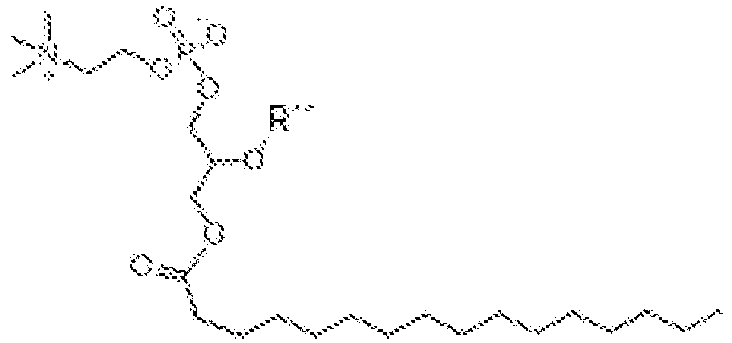
1-palmitoyl-phosphatidylcholine was prepared by the procedure described in Example 7, in the yield of 15%.
MS: calculated: 760.5851; found: 760.5855 (M+)
IR: 3403(m), 3007(w), 2956(m), 2923(s), 2853(m), 1738(s), 1478(sh), 1467(m), 1379(m), 1251(s), 1068(m), 926(m), 721(m) cm-1
1H NMR (600 MHz, Methanol-d4) δ 5.38 (td, J = 4.9, 4.1, 1.2 Hz, 2H), 5.28 (dtd, J = 6.9, 5.4, 3.1 Hz, 1H), 4.47 (dd, J = 12.0, 3.2 Hz, 1H), 4.35 - 4.27 (m, 2H), 4.21 (dd, J = 12.0, 6.9 Hz, 1H), 4.03 (ddd, J = 6.7, 5.3, 1.3 Hz, 2H), 3.75 - 3.58 (m, 2H), 3.26 (s, 9H), 2.36 (dt, J = 16.0, 7.4 Hz, 4H), 2.15 - 2.00 (m, 4H), 1.64 (pd, J = 9.1, 8.0, 4.1 Hz, 4H), 1.46 - 1.24 (m, 44H), 0.93 (td, J = 7.1, 1.4 Hz, 6H).
13C NMR (151 MHz, Methanol-d4) δ 174.90, 174.56, 130.84 (d, J = 24.7 Hz), 71.81 (d, J = 8.1 Hz), 67.49 (t, J = 6.7 Hz), 64.90, 64.87, 63.69, 60.47 (d, J = 5.0 Hz), 55.70 - 53.83 (m), 30.87, 30.82, 30.79, 30.67, 30.47, 30.38 (d, J = 1.4 Hz), 30.27, 30.24, 30.20, 28.18, 26.05, 26.03, 23.75, 14.46.
1-acyl-specific 1,2-diacylphospholipids shown in examples 8-12 were digested by phospholipase A2 and purified as described in Example 4. This process yielded the following products which were designated as shown in the following table:R' Designation hexanoyl sn-1 hexanoyl PC/E-DAPL+FA stearoyl sn-1 stearoyl PC/E-DAPL+FA trimethylhexanoyl sn-1 trimethylhexanoyl PC/E-DAPL+FA cyclopentanepropionyl sn-1 cyclopentanepropionyl PC/E-DAPL+FA palmitoyl sn-1 palmitoyl PC/E-DAPL+FA - The products contained free (released) fatty acids (+FA) and major components were lysophospholipids having the following structures:


sn-1 hexanoyl PC/E-DAPL sn-1 cyclopentanepropionyl PC/E-DAPL sn-1 trimethylhexanoyl PC/E-DAPL 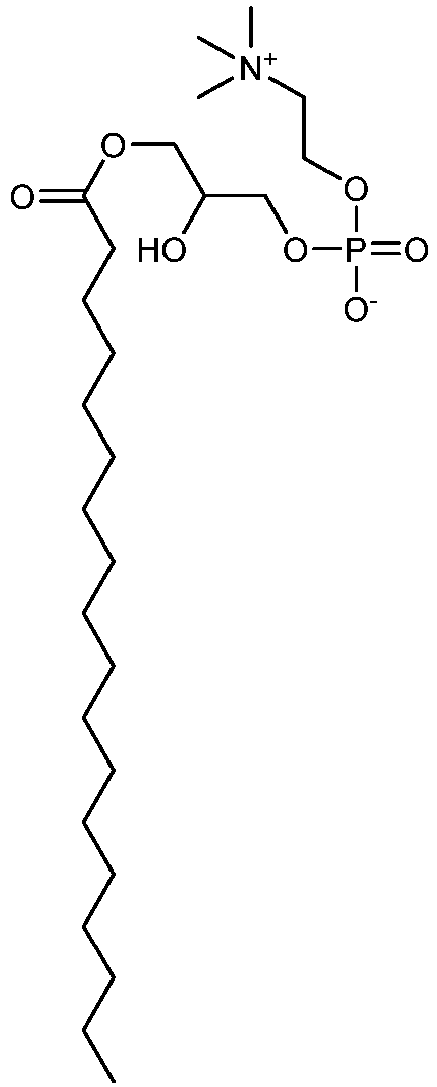

sn-1 stearoyl PC/E-DAPL sn-1 palmitoyl PC/E-DAPL - In the phosphatidylethanolamine isolated according to Example 2, the amino group hydrogen was replaced by the acyl radical R2 (see table below) using an esterification reaction. Phosphatidylethanolamine isolated from the natural source according to Example 2 carries in the sn-1 position a mixture of fatty acid residues, about 80 % being palmitic acid residues, the rest being residues of stearic acid, oleic acid, and a small amount of other fatty acid residues.
Purified phosphatidylethanolamine was dissolved in anhydrous benzene and mixed with two equivalents of anhydride (palmitic, decanoic, oleic, linoleic or elaidic, respectively) in the presence of DMAP. The anhydrides were prepared by condensation of the relevant acids in the presence of DCC. The N-acylation was carried out for 30 minutes at room temperature. The reaction mixture was dried, dissolved in hexane, the insoluble fraction was removed by centrifugation, and the N-acyl phosphatidylethanolamines were isolated by precipitation by 2 volume equivalents of acetone at 4 °C overnight. The precipitate was washed 3 times with ice cold hexane:acetone 1:2 at 0 °C.R2 Designation of the product palmitoyl N-palmitoyl PE decanoyl N-decanoyl PE oleoyl N-oleoyl PE linoleoyl N-linoleoyl PE elaidoyl N-elaidoyl PE -

R" = acyl mixture, major component is oleoyl
N-palmitoyl-phosphatidylethanolamine was prepared by the procedure described in Example 13.
1H NMR (600 MHz, Methanol-d4) δ 5.50 - 5.32 (m, 2H), 5.27 (quintet, J = 5.5 Hz, 1H), 4.46 (dd, J = 12.0, 3.1 Hz, 1H), 4.20 (dd, J = 12.1, 6.9 Hz, 1H), 4.12 (ddd, J = 9.5, 6.2, 3.5 Hz, 2H), 4.08 - 4.01 (m, 2H), 3.26 - 3.21 (m, 2H), 2.40 - 2.37 (t, J = 7.7 Hz, 2H), 2.34 (t, J = 7.7 Hz, 2H), 2.28 (t, J = 7.5 Hz, 2H), 2.13 - 2.00 (m, 4H), 1.62 (m, 6H), 1.31 (m, 82H), 0.92 (t, J = 6.9 Hz, 9H).
Signals of the minor fatty acid derivatives: 5.50 - 5.32 (m, 2H), 2.90 - 2.77 (m, 3H) 13C NMR (151 MHz, Methanol-d4) δ 173.48 , 173.14 , 172.95, 129.51, 129,31, 70.36, 63.51, 61,51, 60.86, 40.24, 33.53, 31.67, 29.5-28.8 (multiple signals), 24.85, 24.63, 22.33, 13.03. -

R" = acyl mixture, major component is oleoyl
N-decanoyl-phosphatidylethanolamine was prepared by the procedure described in Example 13. -

R" = acyl mixture, major component is oleoyl
N-oleoyl-phosphatidylethanolamine was prepared by the procedure described in Example 13. -

R" = acyl mixture, major component is oleoyl
N-linoleoyl-phosphatidylethanolamine was prepared by the procedure described in Example 13. -

R" = acyl mixture, major component is oleoyl
N-elaidoyl-phosphatidylethanolamine was prepared by the procedure described in Example 13. - N-acyl phospholipid at 10% (w/v) concentration was repeatedly vortexed and sonicated at 43 °C in 50 mM Tris-HCl (pH 8.0, 50 mM KCl, 8 mM CaCl2) until the phospholipid was completely dispergated, and then it was processed as described in Example 4 - digested by phospholipase A2 at a ratio of 2 units of enzyme/mg phospholipid at 43 °C and the reaction was monitored by silica gel thin layer chromatography (TLC), eluted with chloroform:methanol: water 20:10:1. After complete cleavage, the reaction was stopped by the addition of EDTA to a concentration of 10 mM and stored at 0-4 °C.
The resulting products were labeled as shown in the following table:R2 Designation of the product palmitoyl N-palmitoyl PE/E-DAPL+FA decanoyl N-decanoyl PE/E-DAPL+FA oleoyl N-oleoyl PE/E-DAPL+FA linoleoyl N-linoleoyl PE/E-DAPL+FA elaidoyl N-elaidoyl PE/E-DAPL+FA - The 1-acyl-lysophospholipid products prepared according to the present examples by enzymatic deacylation at sn-2 position to form a mixture with fatty acids (i.e., PE/E-DAPL+FA, PC/E-DAPL+FA and E-DAPL+FA, sn-1 hexanoyl PC/E-DAPL+FA, sn-1 stearoyl PC/E-DAPL+FA, sn-1 trimethylhexanoyl PC/E-DAPL+FA, sn-1 cyclopentanepropionyl PC/E-DAPL+FA, N-palmitoyl PE/E-DAPL+FA, N-decanoyl PE/E-DAPL+FA, N-oleoyl PE/E-DAPL+FA, N-linoleoyl PE/E-DAPL+FA, N-elaidoyl PE/E-DAPL+FA) were dissolved in ethanol, and then water and chloroform were gradually added to give an ethanol:water:chloroform ratio of 3:2:4. The mixture was shaken vigorously for 10 min, centrifuged for 5 min at 3000 x g at room temperature, and the chloroform phase was isolated and evaporated. The residue was washed with n-hexane at 0-4 °C. Insoluble lysophospholipids were obtained by centrifugation and the sediment was washed 3 times with n-hexane:acetone 1:2 (4 °C) and dried. The dried formulations were practically free of fatty acids and were designated PE/E-DAPL, PC/E-DAPL, E-DAPL, sn-1 hexanoyl PC/E-DAPL, sn-1 stearoyl PC/E-DAPL, sn-1 trimethylhexanoyl PC/E-DAPL, sn-1 cyclopentanepropionyl PC/E-DAPL, N-palmitoyl PE/E-DAPL, N-decanoyl PE/E-DAPL, N-oleoyl PE/E-DAPL, N-linoleoyl PE/E-DAPL and N-elaidoyl PE/E-DAPL.

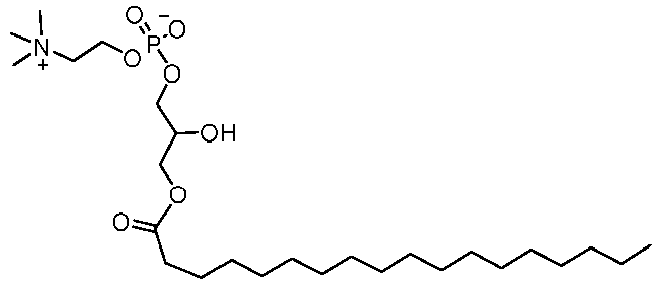


-

1H NMR (600 MHz, Methanol-d4) δ 4.19 (dd, J = 11.4, 4.3 Hz, 1H), 4.13 (dd, J = 11.3, 6.2 Hz, 1H), 4.08 (ddd, J = 9.5, 6.2, 3.5 Hz, 2H), 4.02 - 3.97 (m, 1H), 3.95 - 3.88 (m, 2H), 3.19 - 3.15 (m, 2H), 2.37 (t, J = 7.5 Hz, 4H), 2.37- 2.15 (m, 2H), 1.63 (q, J = 7.3 Hz, 4H), 1.31 (s, 52H), 0.92 (t, J = 7.0 Hz, 2H).
13C NMR (151 MHz, Methanol-d4) δ 174.13, 173.95 , 2 x 130.05, 68.39, 66.41, 64.87, 61.62, 40.28, 33.50, 31.66, 29.62-28.69 (multiple signals), 24.60, 22.32, 12.96 - This example demonstrates the effect of the prepared compounds and mixtures, i.e. PE/E-DAPL+FA, PC/E-DAPL+FA and E-DAPL+FA, sn-1 hexanoyl PC/E-DAPL+FA, sn-1 stearoyl PC/E-DAPL+FA, sn-1 trimethylhexanoyl PC/E-DAPL+FA, sn-1 cyclopentanepropionyl PC/E-DAPL+FA, N-palmitoyl PE/E-DAPL+FA, N-decanoyl PE/E-DAPL+FA, N-oleoyl PE/E-DAPL+FA, N-linoleoyl PE/E-DAPL+FA, N-elaidoyl PE/E-DAPL+FA and PE/E-DAPL, PC/E-DAPL, E-DAPL, sn-1 hexanoyl PC/E-DAPL, sn-1 stearoyl PC/E-DAPL, sn-1 trimethylhexanoyl PC/E-DAPL, sn-1 cyclopentanepropionyl PC/E-DAPL, N-palmitoyl PE/E-DAPL, N-decanoyl PE/E-DAPL, N-oleoyl PE/E-DAPL, N-linoleoyl PE/E-DAPL and N-elaidoyl PE/E-DAPL, on tumor cell growth in tissue culture. As a control, the starting phospholipids were used at the same concentrations and conditions. The starting phospholipids were PE, PC, sn-1 stearoyl PC, N-palmitoyl PE or the initial mixture of phospholipids, respectively.
The cytotoxic activity of the products was tested in tumor cell cultures C32 (human melanoma), TIB-75 (inducing murine hepatocarcinoma), LMH (chicken hepatocarcinoma). - A) C32 cells were cultured in D-MEM medium containing 10% fetal serum and penicillin+streptomycin at 37 °C in air/5% CO2 atmosphere saturated with water vapor. Each well contained 5x10⁴ cells and 0.5 ml medium. The tested products were added to the cells at concentrations of 0, 2.5, 5, 10, 20, 40, 80, 160 and 240 µM. After 16 hours of culture, cell state was recorded.
- B) LMH cells were cultured in D-MEM medium containing 10% fetal serum and penicillin+streptomycin at 37 °C in air/5% CO2 atmosphere saturated with water vapor. Each well contained 5x10⁴ cells and 0.5 ml medium. The tested phospholipids were added to the cells at concentrations of 0, 2.5, 5, 10, 20, 40, 80, 160 and 240 µM. After 16 hours of culture, cell state was recorded.
- C) TIB-75 cells were cultured in D-MEM medium containing 10% fetal serum and penicillin+streptomycin at 37 °C in air/5% CO2 atmosphere saturated with water vapor. Each well contained 5x10⁴ cells and 0.5 ml medium. The tested phospholipids were added to the cells at concentrations of 0, 2.5, 5, 10, 20, 40, 80, 160 and 240 µM. After 16 hours of culture, cell state was recorded.
- The presence of free fatty acids did not have any significant effect on the toxicity of the products to the tested tumor cells.
The controls - PE, PC, sn-1 stearoyl PC, N-palmitoyl PE or the initial mixture of phospholipids - at exactly the same concentrations did not affect the phenotype or reduce the rate of cell growth. For comparison, 2-acyl-lysophospholipids prepared from PC, PE and total phospholipids were tested - these products were slightly cytotoxic, they needed about 4-5 times higher concentration to achieve the same level of toxicity as PE/E-DAPL, PC/E-DAPL, E-DAPL and sn-1 stearoyl PC/E-DAPL. - The cytotoxicity of the products was quantified by determining the ATP content in the cells and using neutral red intake, and the IC50ATP and IC50NR [µM] were determined. Both methods provided virtually the same values. The table shows IC50ATP values.
C32 LMH TIB-75 IC50ATP [µM] IC50ATP [µM] IC50ATP [µM] sn-1 stearoyl PC/E-DAPL 45 40 45 sn-1 hexanoyl PC/E-DAPL 130 135 135 sn-1 cyclopentanepropionyl PC/E-DAPL 150 130 sn-1 trimethylhexanoyl PC/E-DAPL 130 140 PC/E-DAPL 50 35 45 PE/E- DAPL 35 30 35 N-palmitoyl PE/E-DAPL 150 140 140 N-decanoyl PE/E-DAPL 180 N-oleoyl PE/E-DAPL 180 N-linoleoyl PE/E-DAPL 180 2-acyl PC (15-20% 1-acyl PC) 200 210 2-acyl PE(15-20% 1-acyl PE) 200 200 - 1-acyl-lysophosphatidyl derivatives E-DAPL+FA were administered perorally to chickens 5 times a week at 40 mg/20 g of chicken weight. Hepatocarcinomas were induced in the chickens in the embryonic stage by injection of LMH hepatocarcinoma cells. The experiment was evaluated on the 25th day from hatching of the chickens.
Chickens Number of chickens in the beginning of the experiment Number of chickens surviving on the 25th day infected, non-treated 8 1 (multiple large hepatic carcinomas) infected, treated by E-DAPL+FA 8 4 (3 chickens were free of carcinomas, 1 chicken had 2 small hepatic carcinomas) - Subcutaneous tumors were induced in 16 BALB/c mice (8-10 weeks old) by injection of syngeneic TIB-75 cells. 8 mg of E-DAPL in 0.1 ml saline were administered once a week to a group of 8 mice, and 8 mg of control phospholipids (PLs) were administered once a week to a group of 8 mice, the administered products were applied to the developing tumor area. After 7 weeks, the tumors were dissected, their diameter was measured in three perpendicular directions, and the spherical volumes were calculated from the mean values. The mean volume of such approximated tumors in mice treated with E-DAPL was 30 % of the volume of tumors in mice treated with control PLs.
- Intraperitoneal tumors were induced in 20 BALB /c mice (8-10 weeks old) by injection of syngeneic TIB-75 cells. A control group of 10 mice was fed for eight weeks low-fat experimental food (Altromin) and a second group was fed the same diet containing 8 mg of E-DAPL per 5 g food. The mice received the experimental food 4 days a week; in the remaining 3 days they received standard food. Within 6 weeks of the start of the experiment, 2 control mice died of TIB-75 tumors. Then 2 equal groups of control and treated mice were dissected. The average tumor weight in the treated mice group was 75% of the weight of control tumors. After 2 more weeks the remaining mice were analyzed. The average tumor weight in the treated mice group was now 40% of the tumor weight in the control group. The experiment shows that E-DAPL administered in the diet (perorally) also slows down the growth of experimental intraperitoneal tumors.
- An experimental mouse model of familial adenomatous polyposis APC/Min was used to spontaneously produce premalignant polyps and eventually tumors in the small intestine of mice (LK Su, KW Kinzler, B. Vogelstein, AC Preisinger, AR Moser, C. Luongo, KA Gould, WF Dove: Multiple intestinal neoplasia caused by mutation in the murine homologue of the APC gene, Science 256 (1992), pp. 668-670)
E-DAPL was added to the mouse feed mixture - 65 mg of E-DAPL/ 5g of the low-fat diet. This amount was approximately consumed by every mouse every day. The mice were fed this modified feed mixture 3 days a week from 16 weeks of age (when they had many dozen polyps in the small intestine) until 28 weeks of age (when only the growing adenomas were present in the small intestine). The small intestine was isolated from the 28-week-old mice treated by E-DAPL and from the control mice fed unmodified low-fat diet 3 days a week, and processed to histological preparations. Evaluation of the preparations gave the following results (area rounded to 3 decimal places):E-DAPL control statistical significance / p-value average number of adenomas/mouse 24.5 34.4 0.049062 total area of adenomas [mm2] 2.975 11.741 0.026129 average adenoma area [mm2] 0.121 0.337 0.005119 - Conclusion: Long-term E-DAPL exposure does not adversely affect the physiology of experimental animals, and the administration of E-DAPL significantly inhibits the number and growth of adenomas (representative of GIT tumors) in the small intestine of APC/Min mice.
- Tumor growth in experimental BALB/C mice was induced by subcutaneous injection of syngeneic tumor cells CT26.CL25. Half of the mice were treated with E-DAPL. Two hundred microlitres of 0.3% E-DAPL (in saline containing 20% phosphate-buffered saline) were administered intravenously to every mouse 3 times per week. Control animals were similarly administered saline/20% phosphate-buffered saline. After three weeks, the tumors were harvested and weighed. The weight of the tumors from the treated animals was 42% of the weight of control tumors. The tumors in mice treated with E-DAPL were also of a limited type, even microscopically, in contrast to control tumors, which were markedly unbounded. This further confirms the beneficial effect of E-DAPL on reducing the growth of malignant tumors.
Conclusion: Intravenous administration of E-DAPL in saline is well tolerated and significantly inhibits the development of experimental tumors. - Conlusions drawn from in vivo experiments: Results of experiments given in examples 22-26 as well as additional in vivo experiments performed by the inventors revealed that peroral administration of an E-DAPL daily dose ranging from 400 to 3200 mg/kg of the animal's live weight had no observable adverse effect on experimental animals but inhibited growth of various experimental tumors. As a rule, higher doses were progressively more efficient. Intravenous administration of 0.3% E-DAPL solution was well tolerated by mice and proved to be an efficient way of inhibition of tumors, in particular tumors with well developed vascular supply.
- The potentiation of cytotoxic effect of E-DAPL/Dox combination was evaluated. The dose-effect relationship of individual drugs and E-DAPL/Dox mixture (ratio 202:1 was tested) was determined on mammary gland 4T1 cancer cell line by means of crystal violet assay (three measurements). The linearized Median-Effect Plot of dose response line provided both parameters (IC50; trend line m value) of Median-Effect Equation for individual and combination treatment [ref: Theoretical basis, experimental design, and computerized simulation of synergism and antagonism in drug combination studies; Ting-Chao Chou: Pharmacol Rev. 58(3),2006, 621-81; Erratum in Pharmacol Rev. 2007;59(1),124] :


Calculated parameters of the dose-effect relationship Calculated from the Median-Effect Plot Dose-effect curve IC50 [µM] m value [trend line] E-DAPL 160.37 1.8886 sigmoidal Dox 0.93 0.7877 flat sigmoidal E-DAPL/Dox (202:1) 46.45 0.8904 ∼ flat sigmoidal - Potentiation of combination effect of E-DAPL/Dox/202:1 was expressed for the concentrations IC1 to IC60 by calculation of Combination index (CI) applying Combination Index Theorem for mutually nonexclusive drugs that obey higher order conditions [ref: Quantitative analysis of dose-effect relationships: the combined effects of multiple drugs or enzyme inhibitors; Ting-Chao Chou, Paul Talalay: Advances in Enzyme Regulation, Volume 22, 1984, Pages 27-55]:


Combination index for IC1 to IC60 concentration range IC1-20 CI IC21-40 CI IC41-60 CI IC1 0.510 IC21 0.469 IC41 0.552 IC2 0.476 IC22 0.472 IC42 0.557 IC3 0.461 IC23 0.475 IC43 0.563 IC4 0.452 IC24 0.479 IC44 0.568 IC5 0.448 IC25 0.482 IC45 0.574 IC6 0.445 IC26 0.486 IC46 0.580 IC7 0.443 IC27 0.490 IC47 0.586 IC8 0.443 IC28 0.493 IC48 0.592 IC9 0.443 IC29 0.497 IC49 0.598 IC10 0.444 IC30 0.501 IC50 0.605 IC11 0.445 IC31 0.505 IC51 0.612 IC12 0.447 IC32 0.509 IC52 0.619 IC13 0.448 IC33 0.514 IC53 0.626 IC14 0.450 IC34 0.518 IC54 0.633 IC15 0.453 IC35 0.523 IC55 0.641 IC16 0.455 IC36 0.527 IC56 0.649 IC17 0.457 IC37 0.532 IC57 0.657 IC18 0.460 IC38 0.537 IC58 0.665 IC19 0.463 IC39 0.542 IC59 0.674 IC20 0.466 IC40 0.547 IC60 0.683 - Data shown in the table above indicate synergy of E-DAPL and Dox. Synergy of both drugs is more pronounced at lower concentrations. The abovementioned data indicate significant potentiation of effect of an established anticancer agent Dox when combined with E-DAPL. For example, concentration of Dox at IC25Dox and IC25E-DAPL/Dox/202:1 for 4T1 cell line is 0.2306 µM and 0.066 µM respectively. This allows for 71% dose reduction of cardio toxic Dox without diminishing the IC25 cytotoxic effect. For IC50 level is the relative dose reduction 0.9303 µM vs 0.2287 µM (75%). Calculation of Combination index by less accurate method for mutually exclusive drugs afforded even more favorable values of CI [ref: Quantitative analysis of dose-effect relationships: the combined effects of multiple drugs or enzyme inhibitors; Ting-Chao Chou, Paul Talalay: Advances in Enzyme Regulation, Volume 22, 1984, Pages 27-55].
Claims (12)

Priority Applications (1)
| Application Number | Priority Date | Filing Date | Title |
|---|---|---|---|
| PL18719029T PL3606534T3 (en) | 2017-04-03 | 2018-03-29 | Phospholipid derivatives and their use as medicaments |
Applications Claiming Priority (2)
| Application Number | Priority Date | Filing Date | Title |
|---|---|---|---|
| CZ2017-190A CZ308596B6 (en) | 2017-04-03 | 2017-04-03 | Phospholipid derivatives and their use as drugs |
| PCT/CZ2018/050015 WO2018184604A1 (en) | 2017-04-03 | 2018-03-29 | Phospholipid derivatives and their use as medicaments |
Publications (2)
| Publication Number | Publication Date |
|---|---|
| EP3606534A1 EP3606534A1 (en) | 2020-02-12 |
| EP3606534B1 true EP3606534B1 (en) | 2021-05-12 |
Family
ID=73838693
Family Applications (1)
| Application Number | Title | Priority Date | Filing Date |
|---|---|---|---|
| EP18719029.3A Active EP3606534B1 (en) | 2017-04-03 | 2018-03-29 | Phospholipid derivatives and their use as medicaments |
Country Status (11)
| Country | Link |
|---|---|
| US (1) | US11414443B2 (en) |
| EP (1) | EP3606534B1 (en) |
| CN (1) | CN110494143B (en) |
| CA (1) | CA3058792C (en) |
| CZ (1) | CZ308596B6 (en) |
| DK (1) | DK3606534T3 (en) |
| ES (1) | ES2877647T3 (en) |
| HU (1) | HUE055171T2 (en) |
| PL (1) | PL3606534T3 (en) |
| PT (1) | PT3606534T (en) |
| WO (1) | WO2018184604A1 (en) |
Family Cites Families (15)
| Publication number | Priority date | Publication date | Assignee | Title |
|---|---|---|---|---|
| US3577446A (en) * | 1968-09-09 | 1971-05-04 | American Home Prod | Phosphatidylalkanolamine derivatives |
| DE2642661C2 (en) * | 1976-09-22 | 1984-06-28 | A. Nattermann & Cie GmbH, 5000 Köln | Acetoin-dialkyl-phosphoric acid ester, process for their preparation and their use |
| GB2046092B (en) * | 1979-03-05 | 1983-11-02 | Toyama Chemical Co Ltd | Pharmaceutical composition containing a lysophospholid and a phospholipid |
| AT383130B (en) * | 1984-05-15 | 1987-05-25 | Chemie Linz Ag | METHOD FOR THE PRODUCTION OF PHOSPHATIDYLCHOLINES AND PHOSPHATIDYLETHANOLAMINES SUBSTITUTED DIFFERENTLY AT C1 AND C2 OVER THE NEW COMPOUNDS 1-0-TRITYLGLYCEROPHOSPHOCHOLIN OR RELATED (1-0, N-DITYHOHOLINE) |
| IL84387A0 (en) * | 1987-11-06 | 1990-02-09 | Rapaport Erich | Pharmaceutical compositions containing a substituted phosphatide |
| WO1990009385A1 (en) * | 1989-02-17 | 1990-08-23 | The Liposome Company, Inc. | Lipid excipient for nasal delivery and topical application |
| US5149527A (en) * | 1990-09-18 | 1992-09-22 | Oncotech, Inc. | Immunopotentiating protocol for chemotherapy-responsive tumors |
| CZ282139B6 (en) * | 1995-04-03 | 1997-05-14 | Jindřich Rndr. Drsc. Kára | Process for preparing a preparation based on egg 1-o-alkyl-2-acyl-n-phosphatidyl-2-aminoethanols exhibiting dietic-preventive and threapeutical activity |
| ES2230268T3 (en) * | 2000-02-10 | 2005-05-01 | Liplasome Pharma A/S | LIBERATION SYSTEM OF LIPID BASED PHARMACOS. |
| IL142952A (en) * | 2001-05-03 | 2005-12-18 | Enzmotec Ltd | Process for enzyme-catalyzed production of 1,2 diacylated phospholipids |
| DE10142014B4 (en) * | 2001-08-28 | 2004-11-11 | Degussa Bioactives Deutschland Gmbh & Co. Kg | Process for the preparation of phosphatidylserine |
| CN100351259C (en) * | 2002-06-20 | 2007-11-28 | Icvec有限公司 | Sulfur-containing phospholipid derivatives |
| WO2007056264A2 (en) * | 2005-11-08 | 2007-05-18 | Transave, Inc. | Methods of treating cancer with high potency lipid-based platinum compound formulations administered intraperitoneally |
| GB201509934D0 (en) * | 2015-06-08 | 2015-07-22 | King S College London | Nanoparticles |
| CN105878260A (en) * | 2016-04-29 | 2016-08-24 | 陈西敬 | Composition liposome of ascorbyl palmitate and adriamycin |
-
2017
- 2017-04-03 CZ CZ2017-190A patent/CZ308596B6/en unknown
-
2018
- 2018-03-29 EP EP18719029.3A patent/EP3606534B1/en active Active
- 2018-03-29 PT PT187190293T patent/PT3606534T/en unknown
- 2018-03-29 CN CN201880021144.1A patent/CN110494143B/en not_active Expired - Fee Related
- 2018-03-29 WO PCT/CZ2018/050015 patent/WO2018184604A1/en not_active Ceased
- 2018-03-29 PL PL18719029T patent/PL3606534T3/en unknown
- 2018-03-29 CA CA3058792A patent/CA3058792C/en active Active
- 2018-03-29 DK DK18719029.3T patent/DK3606534T3/en active
- 2018-03-29 HU HUE18719029A patent/HUE055171T2/en unknown
- 2018-03-29 US US16/500,552 patent/US11414443B2/en active Active
- 2018-03-29 ES ES18719029T patent/ES2877647T3/en active Active
Non-Patent Citations (1)
| Title |
|---|
| None * |
Also Published As
| Publication number | Publication date |
|---|---|
| CA3058792A1 (en) | 2018-10-11 |
| PL3606534T3 (en) | 2021-12-13 |
| CN110494143A (en) | 2019-11-22 |
| EP3606534A1 (en) | 2020-02-12 |
| CA3058792C (en) | 2022-08-16 |
| CZ308596B6 (en) | 2020-12-23 |
| WO2018184604A1 (en) | 2018-10-11 |
| CN110494143B (en) | 2022-12-20 |
| DK3606534T3 (en) | 2021-07-12 |
| HUE055171T2 (en) | 2021-11-29 |
| US20200102333A1 (en) | 2020-04-02 |
| US11414443B2 (en) | 2022-08-16 |
| ES2877647T3 (en) | 2021-11-17 |
| CZ2017190A3 (en) | 2018-10-10 |
| PT3606534T (en) | 2021-07-16 |
Similar Documents
| Publication | Publication Date | Title |
|---|---|---|
| Sahara et al. | In vivo anti-tumour effect of 3'-sulphonoquinovosyl 1'-monoacylglyceride isolated from sea urchin (Strongylocentrotus intermedius) intestine | |
| AU2007266983B2 (en) | Use of phytate as agent inhibiting dissolution of crystals of calcium salts for the prevention of osteoporosis | |
| JPH06293785A (en) | Phospholipid containing unsaturated fatty acid | |
| US20120116104A1 (en) | Mixtures of and methods of use for polyunsaturated fatty acid-containing phospholipids and alkyl ether phospholipids species | |
| Munder et al. | Alkyllysophospholipid in cancer therapy | |
| Berkovic | Cytotoxic etherphospholipid analogues | |
| EP3102585A1 (en) | Boronic acid esters and pharmaceutical formulations thereof | |
| WO2012177100A2 (en) | Composition comprising phosphatidylcholine as an active ingredient for attenuating toxicity of anticancer agent | |
| EP1402894A1 (en) | Cancerous metastasis inhibitors containing carbacyclic phosphatidic acid derivatives | |
| Zaremberg et al. | Lipids and membrane microdomains: the glycerolipid and alkylphosphocholine class of cancer chemotherapeutic drugs | |
| CN103906519B (en) | Joint disease therapeutic agent | |
| US11414443B2 (en) | Phospholipid derivatives and their use as medicaments | |
| JPH1067656A (en) | Cell adhesion inhibitor | |
| US9670238B1 (en) | 5′-dibenzyl phosphates of 5-azacytidine or 2′-deoxy-5-azacytidine | |
| JPH02502096A (en) | Antiviral compounds, compositions containing such compounds and methods of treatment | |
| EP1909800B1 (en) | Acylglycerophospholipids for treating symptoms concomitant with cancer | |
| Brachwitz et al. | Cytostatic activity of synthetic O-alkylglycerolipids | |
| EP2114414B1 (en) | Synthetic lipophilic inositol glycans for treatment of cancer and glucose-metabolism disorders | |
| Moiseeva et al. | Liposome formulations of combretastatin A4 and its 4-arylcoumarin analogue prodrugs: The antitumor effect in the mouse model of breast cancer | |
| EP4635966A1 (en) | Synthetic variants of the ganglioside ngcgm3 and use thereof in cancer treatment | |
| CN101967168A (en) | Triterpenoid saponin derivative and preparation method and application thereof | |
| Feng | Probing phosphoinositide and isoprenoid binding proteins by photoaffinity labeling | |
| CZ282139B6 (en) | Process for preparing a preparation based on egg 1-o-alkyl-2-acyl-n-phosphatidyl-2-aminoethanols exhibiting dietic-preventive and threapeutical activity | |
| JP2006206607A (en) | Intra-cancer-cell nuclease activator |
Legal Events
| Date | Code | Title | Description |
|---|---|---|---|
| STAA | Information on the status of an ep patent application or granted ep patent |
Free format text: STATUS: UNKNOWN |
|
| STAA | Information on the status of an ep patent application or granted ep patent |
Free format text: STATUS: THE INTERNATIONAL PUBLICATION HAS BEEN MADE |
|
| PUAI | Public reference made under article 153(3) epc to a published international application that has entered the european phase |
Free format text: ORIGINAL CODE: 0009012 |
|
| STAA | Information on the status of an ep patent application or granted ep patent |
Free format text: STATUS: REQUEST FOR EXAMINATION WAS MADE |
|
| 17P | Request for examination filed |
Effective date: 20191001 |
|
| AK | Designated contracting states |
Kind code of ref document: A1 Designated state(s): AL AT BE BG CH CY CZ DE DK EE ES FI FR GB GR HR HU IE IS IT LI LT LU LV MC MK MT NL NO PL PT RO RS SE SI SK SM TR |
|
| AX | Request for extension of the european patent |
Extension state: BA ME |
|
| DAV | Request for validation of the european patent (deleted) | ||
| DAX | Request for extension of the european patent (deleted) | ||
| GRAP | Despatch of communication of intention to grant a patent |
Free format text: ORIGINAL CODE: EPIDOSNIGR1 |
|
| STAA | Information on the status of an ep patent application or granted ep patent |
Free format text: STATUS: GRANT OF PATENT IS INTENDED |
|
| RIC1 | Information provided on ipc code assigned before grant |
Ipc: A61K 45/06 20060101ALI20201123BHEP Ipc: A61P 35/00 20060101ALI20201123BHEP Ipc: A61K 31/685 20060101AFI20201123BHEP Ipc: A61K 31/704 20060101ALI20201123BHEP |
|
| INTG | Intention to grant announced |
Effective date: 20201217 |
|
| RAP1 | Party data changed (applicant data changed or rights of an application transferred) |
Owner name: SMART BRAIN S.R.O. Owner name: USTAV MOLEKULARNI GENETIKY AV CR, V.V.I. |
|
| GRAS | Grant fee paid |
Free format text: ORIGINAL CODE: EPIDOSNIGR3 |
|
| GRAA | (expected) grant |
Free format text: ORIGINAL CODE: 0009210 |
|
| STAA | Information on the status of an ep patent application or granted ep patent |
Free format text: STATUS: THE PATENT HAS BEEN GRANTED |
|
| AK | Designated contracting states |
Kind code of ref document: B1 Designated state(s): AL AT BE BG CH CY CZ DE DK EE ES FI FR GB GR HR HU IE IS IT LI LT LU LV MC MK MT NL NO PL PT RO RS SE SI SK SM TR |
|
| REG | Reference to a national code |
Ref country code: GB Ref legal event code: FG4D |
|
| REG | Reference to a national code |
Ref country code: CH Ref legal event code: EP |
|
| REG | Reference to a national code |
Ref country code: DE Ref legal event code: R096 Ref document number: 602018017047 Country of ref document: DE |
|
| REG | Reference to a national code |
Ref country code: IE Ref legal event code: FG4D |
|
| REG | Reference to a national code |
Ref country code: AT Ref legal event code: REF Ref document number: 1391720 Country of ref document: AT Kind code of ref document: T Effective date: 20210615 |
|
| REG | Reference to a national code |
Ref country code: DK Ref legal event code: T3 Effective date: 20210708 |
|
| REG | Reference to a national code |
Ref country code: PT Ref legal event code: SC4A Ref document number: 3606534 Country of ref document: PT Date of ref document: 20210716 Kind code of ref document: T Free format text: AVAILABILITY OF NATIONAL TRANSLATION Effective date: 20210713 |
|
| REG | Reference to a national code |
Ref country code: SE Ref legal event code: TRGR |
|
| REG | Reference to a national code |
Ref country code: LT Ref legal event code: MG9D |
|
| REG | Reference to a national code |
Ref country code: AT Ref legal event code: UEP Ref document number: 1391720 Country of ref document: AT Kind code of ref document: T Effective date: 20210512 |
|
| REG | Reference to a national code |
Ref country code: SK Ref legal event code: T3 Ref document number: E 37635 Country of ref document: SK |
|
| REG | Reference to a national code |
Ref country code: GR Ref legal event code: EP Ref document number: 20210401987 Country of ref document: GR Effective date: 20210915 |
|
| REG | Reference to a national code |
Ref country code: NL Ref legal event code: MP Effective date: 20210512 |
|
| PG25 | Lapsed in a contracting state [announced via postgrant information from national office to epo] |
Ref country code: FI Free format text: LAPSE BECAUSE OF FAILURE TO SUBMIT A TRANSLATION OF THE DESCRIPTION OR TO PAY THE FEE WITHIN THE PRESCRIBED TIME-LIMIT Effective date: 20210512 Ref country code: LT Free format text: LAPSE BECAUSE OF FAILURE TO SUBMIT A TRANSLATION OF THE DESCRIPTION OR TO PAY THE FEE WITHIN THE PRESCRIBED TIME-LIMIT Effective date: 20210512 Ref country code: HR Free format text: LAPSE BECAUSE OF FAILURE TO SUBMIT A TRANSLATION OF THE DESCRIPTION OR TO PAY THE FEE WITHIN THE PRESCRIBED TIME-LIMIT Effective date: 20210512 Ref country code: BG Free format text: LAPSE BECAUSE OF FAILURE TO SUBMIT A TRANSLATION OF THE DESCRIPTION OR TO PAY THE FEE WITHIN THE PRESCRIBED TIME-LIMIT Effective date: 20210812 |
|
| REG | Reference to a national code |
Ref country code: ES Ref legal event code: FG2A Ref document number: 2877647 Country of ref document: ES Kind code of ref document: T3 Effective date: 20211117 |
|
| REG | Reference to a national code |
Ref country code: HU Ref legal event code: AG4A Ref document number: E055171 Country of ref document: HU |
|
| PG25 | Lapsed in a contracting state [announced via postgrant information from national office to epo] |
Ref country code: RS Free format text: LAPSE BECAUSE OF FAILURE TO SUBMIT A TRANSLATION OF THE DESCRIPTION OR TO PAY THE FEE WITHIN THE PRESCRIBED TIME-LIMIT Effective date: 20210512 Ref country code: LV Free format text: LAPSE BECAUSE OF FAILURE TO SUBMIT A TRANSLATION OF THE DESCRIPTION OR TO PAY THE FEE WITHIN THE PRESCRIBED TIME-LIMIT Effective date: 20210512 Ref country code: NO Free format text: LAPSE BECAUSE OF FAILURE TO SUBMIT A TRANSLATION OF THE DESCRIPTION OR TO PAY THE FEE WITHIN THE PRESCRIBED TIME-LIMIT Effective date: 20210812 Ref country code: IS Free format text: LAPSE BECAUSE OF FAILURE TO SUBMIT A TRANSLATION OF THE DESCRIPTION OR TO PAY THE FEE WITHIN THE PRESCRIBED TIME-LIMIT Effective date: 20210912 |
|
| PG25 | Lapsed in a contracting state [announced via postgrant information from national office to epo] |
Ref country code: NL Free format text: LAPSE BECAUSE OF FAILURE TO SUBMIT A TRANSLATION OF THE DESCRIPTION OR TO PAY THE FEE WITHIN THE PRESCRIBED TIME-LIMIT Effective date: 20210512 |
|
| PG25 | Lapsed in a contracting state [announced via postgrant information from national office to epo] |
Ref country code: CZ Free format text: LAPSE BECAUSE OF FAILURE TO SUBMIT A TRANSLATION OF THE DESCRIPTION OR TO PAY THE FEE WITHIN THE PRESCRIBED TIME-LIMIT Effective date: 20210512 Ref country code: RO Free format text: LAPSE BECAUSE OF FAILURE TO SUBMIT A TRANSLATION OF THE DESCRIPTION OR TO PAY THE FEE WITHIN THE PRESCRIBED TIME-LIMIT Effective date: 20210512 Ref country code: EE Free format text: LAPSE BECAUSE OF FAILURE TO SUBMIT A TRANSLATION OF THE DESCRIPTION OR TO PAY THE FEE WITHIN THE PRESCRIBED TIME-LIMIT Effective date: 20210512 Ref country code: SM Free format text: LAPSE BECAUSE OF FAILURE TO SUBMIT A TRANSLATION OF THE DESCRIPTION OR TO PAY THE FEE WITHIN THE PRESCRIBED TIME-LIMIT Effective date: 20210512 |
|
| REG | Reference to a national code |
Ref country code: DE Ref legal event code: R097 Ref document number: 602018017047 Country of ref document: DE |
|
| PLBE | No opposition filed within time limit |
Free format text: ORIGINAL CODE: 0009261 |
|
| STAA | Information on the status of an ep patent application or granted ep patent |
Free format text: STATUS: NO OPPOSITION FILED WITHIN TIME LIMIT |
|
| 26N | No opposition filed |
Effective date: 20220215 |
|
| PG25 | Lapsed in a contracting state [announced via postgrant information from national office to epo] |
Ref country code: IS Free format text: LAPSE BECAUSE OF FAILURE TO SUBMIT A TRANSLATION OF THE DESCRIPTION OR TO PAY THE FEE WITHIN THE PRESCRIBED TIME-LIMIT Effective date: 20210912 Ref country code: AL Free format text: LAPSE BECAUSE OF FAILURE TO SUBMIT A TRANSLATION OF THE DESCRIPTION OR TO PAY THE FEE WITHIN THE PRESCRIBED TIME-LIMIT Effective date: 20210512 |
|
| PG25 | Lapsed in a contracting state [announced via postgrant information from national office to epo] |
Ref country code: MC Free format text: LAPSE BECAUSE OF FAILURE TO SUBMIT A TRANSLATION OF THE DESCRIPTION OR TO PAY THE FEE WITHIN THE PRESCRIBED TIME-LIMIT Effective date: 20210512 |
|
| REG | Reference to a national code |
Ref country code: CH Ref legal event code: PL |
|
| REG | Reference to a national code |
Ref country code: BE Ref legal event code: MM Effective date: 20220331 |
|
| PG25 | Lapsed in a contracting state [announced via postgrant information from national office to epo] |
Ref country code: LU Free format text: LAPSE BECAUSE OF NON-PAYMENT OF DUE FEES Effective date: 20220329 Ref country code: LI Free format text: LAPSE BECAUSE OF NON-PAYMENT OF DUE FEES Effective date: 20220331 Ref country code: IE Free format text: LAPSE BECAUSE OF NON-PAYMENT OF DUE FEES Effective date: 20220329 Ref country code: CH Free format text: LAPSE BECAUSE OF NON-PAYMENT OF DUE FEES Effective date: 20220331 |
|
| PG25 | Lapsed in a contracting state [announced via postgrant information from national office to epo] |
Ref country code: BE Free format text: LAPSE BECAUSE OF NON-PAYMENT OF DUE FEES Effective date: 20220331 |
|
| PGFP | Annual fee paid to national office [announced via postgrant information from national office to epo] |
Ref country code: DK Payment date: 20230316 Year of fee payment: 6 |
|
| PGFP | Annual fee paid to national office [announced via postgrant information from national office to epo] |
Ref country code: SE Payment date: 20230314 Year of fee payment: 6 Ref country code: PT Payment date: 20230301 Year of fee payment: 6 Ref country code: HU Payment date: 20230310 Year of fee payment: 6 Ref country code: GR Payment date: 20230317 Year of fee payment: 6 |
|
| PG25 | Lapsed in a contracting state [announced via postgrant information from national office to epo] |
Ref country code: MK Free format text: LAPSE BECAUSE OF FAILURE TO SUBMIT A TRANSLATION OF THE DESCRIPTION OR TO PAY THE FEE WITHIN THE PRESCRIBED TIME-LIMIT Effective date: 20210512 Ref country code: CY Free format text: LAPSE BECAUSE OF FAILURE TO SUBMIT A TRANSLATION OF THE DESCRIPTION OR TO PAY THE FEE WITHIN THE PRESCRIBED TIME-LIMIT Effective date: 20210512 |
|
| PG25 | Lapsed in a contracting state [announced via postgrant information from national office to epo] |
Ref country code: TR Free format text: LAPSE BECAUSE OF FAILURE TO SUBMIT A TRANSLATION OF THE DESCRIPTION OR TO PAY THE FEE WITHIN THE PRESCRIBED TIME-LIMIT Effective date: 20210512 |
|
| PG25 | Lapsed in a contracting state [announced via postgrant information from national office to epo] |
Ref country code: MT Free format text: LAPSE BECAUSE OF FAILURE TO SUBMIT A TRANSLATION OF THE DESCRIPTION OR TO PAY THE FEE WITHIN THE PRESCRIBED TIME-LIMIT Effective date: 20210512 |
|
| REG | Reference to a national code |
Ref country code: DK Ref legal event code: EBP Effective date: 20240331 |
|
| REG | Reference to a national code |
Ref country code: SE Ref legal event code: EUG |
|
| PG25 | Lapsed in a contracting state [announced via postgrant information from national office to epo] |
Ref country code: HU Free format text: LAPSE BECAUSE OF NON-PAYMENT OF DUE FEES Effective date: 20240330 |
|
| PG25 | Lapsed in a contracting state [announced via postgrant information from national office to epo] |
Ref country code: HU Free format text: LAPSE BECAUSE OF NON-PAYMENT OF DUE FEES Effective date: 20240330 |
|
| PG25 | Lapsed in a contracting state [announced via postgrant information from national office to epo] |
Ref country code: GR Free format text: LAPSE BECAUSE OF NON-PAYMENT OF DUE FEES Effective date: 20241004 |
|
| PG25 | Lapsed in a contracting state [announced via postgrant information from national office to epo] |
Ref country code: GR Free format text: LAPSE BECAUSE OF NON-PAYMENT OF DUE FEES Effective date: 20241004 |
|
| PGFP | Annual fee paid to national office [announced via postgrant information from national office to epo] |
Ref country code: DE Payment date: 20250318 Year of fee payment: 8 |
|
| PG25 | Lapsed in a contracting state [announced via postgrant information from national office to epo] |
Ref country code: DK Free format text: LAPSE BECAUSE OF NON-PAYMENT OF DUE FEES Effective date: 20240331 |
|
| PGFP | Annual fee paid to national office [announced via postgrant information from national office to epo] |
Ref country code: AT Payment date: 20250318 Year of fee payment: 8 |
|
| PGFP | Annual fee paid to national office [announced via postgrant information from national office to epo] |
Ref country code: FR Payment date: 20250318 Year of fee payment: 8 Ref country code: PL Payment date: 20250310 Year of fee payment: 8 |
|
| PGFP | Annual fee paid to national office [announced via postgrant information from national office to epo] |
Ref country code: SK Payment date: 20250213 Year of fee payment: 8 Ref country code: IT Payment date: 20250318 Year of fee payment: 8 Ref country code: GB Payment date: 20250318 Year of fee payment: 8 |
|
| PGFP | Annual fee paid to national office [announced via postgrant information from national office to epo] |
Ref country code: ES Payment date: 20250404 Year of fee payment: 8 |
|
| PG25 | Lapsed in a contracting state [announced via postgrant information from national office to epo] |
Ref country code: PT Free format text: LAPSE BECAUSE OF NON-PAYMENT OF DUE FEES Effective date: 20240329 |
|
| PG25 | Lapsed in a contracting state [announced via postgrant information from national office to epo] |
Ref country code: SE Free format text: LAPSE BECAUSE OF NON-PAYMENT OF DUE FEES Effective date: 20240330 |