EP3606171B1 - Dienstqualitätverarbeitungsverfahren und -vorrichtung - Google Patents
Dienstqualitätverarbeitungsverfahren und -vorrichtung Download PDFInfo
- Publication number
- EP3606171B1 EP3606171B1 EP18771369.8A EP18771369A EP3606171B1 EP 3606171 B1 EP3606171 B1 EP 3606171B1 EP 18771369 A EP18771369 A EP 18771369A EP 3606171 B1 EP3606171 B1 EP 3606171B1
- Authority
- EP
- European Patent Office
- Prior art keywords
- base station
- target base
- message
- qos
- information
- Prior art date
- Legal status (The legal status is an assumption and is not a legal conclusion. Google has not performed a legal analysis and makes no representation as to the accuracy of the status listed.)
- Active
Links
Images







Classifications
-
- H—ELECTRICITY
- H04—ELECTRIC COMMUNICATION TECHNIQUE
- H04W—WIRELESS COMMUNICATION NETWORKS
- H04W28/00—Network traffic management; Network resource management
- H04W28/16—Central resource management; Negotiation of resources or communication parameters, e.g. negotiating bandwidth or QoS [Quality of Service]
- H04W28/18—Negotiating wireless communication parameters
- H04W28/22—Negotiating communication rate
-
- H—ELECTRICITY
- H04—ELECTRIC COMMUNICATION TECHNIQUE
- H04W—WIRELESS COMMUNICATION NETWORKS
- H04W36/00—Hand-off or reselection arrangements
- H04W36/0005—Control or signalling for completing the hand-off
- H04W36/0011—Control or signalling for completing the hand-off for data sessions of end-to-end connection
- H04W36/0033—Control or signalling for completing the hand-off for data sessions of end-to-end connection with transfer of context information
- H04W36/0044—Control or signalling for completing the hand-off for data sessions of end-to-end connection with transfer of context information of quality context information
-
- H—ELECTRICITY
- H04—ELECTRIC COMMUNICATION TECHNIQUE
- H04W—WIRELESS COMMUNICATION NETWORKS
- H04W36/00—Hand-off or reselection arrangements
- H04W36/24—Reselection being triggered by specific parameters
- H04W36/26—Reselection being triggered by specific parameters by agreed or negotiated communication parameters
-
- H—ELECTRICITY
- H04—ELECTRIC COMMUNICATION TECHNIQUE
- H04W—WIRELESS COMMUNICATION NETWORKS
- H04W28/00—Network traffic management; Network resource management
- H04W28/16—Central resource management; Negotiation of resources or communication parameters, e.g. negotiating bandwidth or QoS [Quality of Service]
- H04W28/24—Negotiating SLA [Service Level Agreement]; Negotiating QoS [Quality of Service]
Definitions
- the present disclosure relates to the field of communication technology, in particular to a Quality of Service (QoS) processing method.
- QoS Quality of Service
- a target base station determines whether the target base station is capable of accepting all bearers of a User Equipment (UE) in accordance with its load and a radio situation. When it is incapable of accepting all the bearers of the UE, the target base station notifies a source base station of the bearers that are incapable of being accepted through a handover response message, and the source base station needs to deactivate these bearers, so some services are incapable of being supported.
- UE User Equipment
- a further document US2007/0291699A1 relates to transmit QoS information to a target base station for admitted service flows during the handover operation.
- the present invention relates to Quality of Service, QoS, processing methods as defined in the annexed claims, so as to prevent one or more flows from being directly deactivated when a target base station is incapable of meeting a QoS parameter of the one or more flows of a UE.
- a processing procedure may be provided when the target base station is incapable of meeting the QoS requirement.
- the QoS parameter capable of being accepted by the target base station and recommended with respect to the one or more flows may be carried in the first message, so that the target base station may notify the source base station of the QoS parameter capable of being accepted by the target base station when notifying the source base station that the target base station is incapable of meeting the QoS requirement on the one or more flows of the UE.
- it is able to prevent the source base station from directly deactivating the bearers incapable of being accepted by the target base station as compared with the related art, thereby to enable the target base station to support a corresponding service.
- Fig.1 shows a bearer model in a LTE system in related art.
- a core network takes charge of generating a QoS parameter of an Evolved Radio Access Bearer (E-RAB).
- E-RAB Evolved Radio Access Bearer
- RBs air-interface Radio Bearers
- the scheme in the embodiments of the present disclosure may be applied to different network deployment structures.
- two possible network deployment structures for a future mobile communication system will be described hereinafter.
- Deployment structure 1 base station+UE
- Fig.2 shows typical LTE architecture.
- a plurality of cells is located within the coverage of an evolved Node B (eNB), and each UE in a connected state receives data from or transmits data to a cell via an air interface.
- eNB evolved Node B
- Network side nodes include a Central Unit (CUs) and Distributed Units (DUs), and a UE side node includes a UE.
- CUs Central Unit
- DUs Distributed Units
- Fig.3 shows a possible architecture for a future 5G mobile communication system.
- the network side nodes include a CU and DUs, and a plurality of DUs deployed in a certain region is controlled by one CU.
- the air-interface transmission is performed between the DUs and the UE via Transmission Reception Points (TRPs).
- TRPs Transmission Reception Points
- Each UE may be served by one or more TRPs, so as to perform the data transmission.
- the scheme in the embodiments of the present disclosure may be applied to the above two types of RAN architecture.
- Fig.4 shows 5G network architecture.
- the network architecture includes three logic entities, i.e., a CN-C (core network control plane functional entity) at the core network, a CN-U (core network user plane functional entity), and a gNB (a next-generation node B) and an evolved LTE (eLTE) eNB at an access network.
- An NG-C interface is established between the CN-C and the gNB for the transmission of control plane signaling
- an NG-U interface is established between the CN-U and the gNB for the transmission of user plane data.
- An Xn interface is established between the gNBs, and the Xn interface may support a control plane function (e.g., Xn-C) and a user plane function (e.g., Xn-C) simultaneously.
- a control plane function e.g., Xn-C
- a user plane function e.g., Xn-C
- a control plane connection with UE as granularity may be established on the NG-C (a control plane connection corresponding to each UE may be identified with an NG-AP Identity (ID)), and a user plane connection (or user plane tunnel) with PDU session as granularity may be established on the NG-U.
- Each UE may merely maintain the NG-C connection with the CN-C, but a plurality of user plane connections (user plane tunnels) with PDU session as granularity to the CN-U via the NG-U interface may be established simultaneously.
- each UE may be served by one or more gNBs in the RAN simultaneously.
- the QoS parameter issued by the CN-C to the gNB may be configured with flow as granularity.
- the gNB may perform QoS management with RB as granularity, so it is necessary for the RAN to generate a RB-level QoS parameter for the interaction between the gNB and the UE and the interaction between the gNB and the other radio access entity.
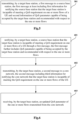
- the present disclosure provides in some non-claimed embodiments a QoS processing method which, as shown in Fig.5 , includes Step 501 of transmitting, by a target base station, a first message to a source base station.
- the first message may at least include first information for notifying the source base station that the target base station is incapable of meeting a QoS requirement on one or more flows of a UE and second information of QoS parameter capable of being accepted by the target base station and recommended with respect to the one or more flows.
- the target base station may notify, through a handover response message, the source base station of a flow list including the flows on which the QoS requirement is incapable of being met by the target base station, and the QoS parameter recommended with respect to these flows may also be carried in the handover response message.
- the source base station may determine a target base station that meets the QoS requirement in accordance with the QoS parameter recommended with respect to these flows.
- the QoS parameter capable of being accepted by the target base station and recommended with respect to the one or more flows may be carried in the first message, so that the target base station may notify the source base station of the QoS parameter capable of being accepted by the target base station when the target base station notifies the source base station that the target base station is incapable of meeting the QoS requirement on the one or more flows of the UE.
- the target base station may notify the source base station of the QoS parameter capable of being accepted by the target base station when the target base station notifies the source base station that the target base station is incapable of meeting the QoS requirement on the one or more flows of the UE.
- the present disclosure further provides in some non-claimed embodiments a QoS processing method which, as shown in Fig.6 , includes the following steps.
- Step 601 transmitting, by a target base station, a first message to a source base station, wherein the first message may at least include first information for notifying the source base station that the target base station is incapable of meeting a QoS requirement on one or more flows of a UE and second information of QoS parameter capable of being accepted by the target base station and recommended with respect to the one or more flows.
- the target base station may notify, through a handover response message, the source base station of a flow list including the flows on which the QoS requirement is incapable of being met, and the QoS parameter recommended with respect to these flows may also be carried in the handover response message.
- Step 602 transmitting, by the target base station, a second message to a core network.
- the second message may include third information for notifying the core network that the target base station is incapable of meeting the QoS requirement on the one or more flows of the UE.
- the target base station may notify the core network that an RAN is incapable of meeting the QoS requirement on a certain flow or flows.
- the second message may further include fourth information of the QoS parameter capable of being accepted by the target base station and recommended with respect to the one or more flows.
- the QoS processing method may further include Step 603 of receiving, by the target base station, an updated QoS parameter of the one or more flows transmitted from the core network.
- the core network is capable of updating the QoS parameter of the one or more flows in accordance with the QoS parameter in the second message capable of being accepted by the target base station and recommended with respect to the one or more flows.
- the present disclosure further provides in some non-claimed embodiments a QoS processing method which, as shown in Fig.7 , includes the following steps.
- Step 701 receiving, by a source base station, a first message transmitted from a target base station, and acquiring, by the source base station, first information for indicating that the target base station is incapable of meeting a QoS requirement on one or more flows of a UE from the first message.
- the first message may further include second information of QoS parameter capable of being accepted by the target base station and recommended with respect to the one or more flows.
- the target base station may notify, through a handover response message, the source base station of a flow list including the flows on which the QoS requirement is incapable of being met by the target base station, and the QoS parameter recommended with respect to these flows may also be carried in the handover response message.
- Step 702 transmitting, by the source base station, a third message to a core network.
- the third message may include fifth information for notifying the core network that the target base station is incapable of meeting the QoS requirement on the one or more flows of the UE.
- the third message may further include sixth information of the QoS parameter capable of being accepted by the target base station and recommended with respect to the one or more flows.
- a processing procedure may be provided when the target base station is incapable of meeting the QoS requirement.
- the QoS parameter capable of being accepted by the target base station and recommended with respect to the one or more flows may be carried in the first message, so that the target base station may notify the source base station of the QoS parameter capable of being accepted by the target base station when notifying the source base station that the target base station is incapable of meeting the QoS requirement on the one or more flows of the UE.
- the present disclosure further provides in some non-claimed embodiments a QoS processing method which, as shown in Fig.8 , includes the following steps.
- Step 801 receiving, by a source base station, a first message, and acquiring, by the source base station, first information for notifying the source base station that the target base station is incapable of meeting a QoS requirement on one or more flows of a UE from the first message.
- the first message may further include a second information of QoS parameter capable of being accepted by the target base station and recommended with respect to the one or more flows.
- the target base station may notify, through a handover response message, the source base station of a flow list including the flows on which the QoS requirement is incapable of being met by the target base station, and the QoS parameter recommended with respect to these flows may also be carried in the handover response message.
- Step 802 transmitting, by the source base station, a third message to a core network.
- the third message may include fifth information for notifying the core network that the target base station is incapable of meeting the QoS requirement on the one or more flows of the UE.
- the third message may further include sixth information of the QoS parameter capable of being accepted by the target base station and recommended with respect to the one or more flows.
- Step 803 receiving, by the source base station, an updated QoS parameter of the one or more flows transmitted from the core network.
- Step 804 selecting, by the source base station, a proper target base station in accordance with the updated QoS parameter of the one or more flows to reinitiate a handover process.
- the source base station may further select a proper target base station in accordance with the updated QoS parameter of the one or more flows to reinitiate a handover process, so as to improve the entire handover procedure, thereby to enable the QoS requirement on the one or more flows of the UE to be accepted by the target base station.
- the present disclosure further provides in some non-claimed embodiments a QoS processing method which, as shown in Fig.9 , includes Step 901 of transmitting, by a target base station, a fourth message to a core network.
- the fourth message may include seventh information for notifying the core network that the target base station is incapable of meeting a QoS requirement on one or more flows of a UE.
- the fourth message may further include eighth information of QoS parameter capable of being accepted by the target base station and recommended with respect to the one or more flows.
- the QoS processing method may further include receiving, by the target base station, an updated QoS parameter of the one or more flows transmitted from the core network.
- the target base station may transmit a handover response message to the core network.
- the core network may transmit a handover response message carrying the updated QoS parameter to the source base station.
- the source base station may transmit a handover command to the UE, and then the UE may access to a target cell.
- the QoS processes shown in Fig.9 may be applied to a handover scenario or a PDU session establishment scenario.
- the target base station may also be called as a serving base station for the UE.
- the serving base station for the UE is incapable of meeting the QoS requirement on the one or more flows for a PDU session, the serving base station may also notify, via a message, the core network that it is incapable of meeting the QoS requirement on the one or more flows of the UE.
- the present disclosure further provides in some non-claimed embodiments a QoS processing method which, as shown in Fig.10 , includes the following steps.
- Step 1001 receiving, by a target base station, a handover request message transmitted from the source base station via a core network.
- Step 1002 transmitting, by the target base station, a fourth message to the core network.
- the fourth message may include seventh information for notifying the core network that the target base station is incapable of meeting a QoS requirement on one or more flows of a UE.
- the fourth message may further include eighth information of QoS parameter capable of being accepted by the target base station and recommended with respect to the one or more flows.
- Step 1003 receiving, by the target base station, an updated QoS parameter of the one or more flows transmitted from the core network.
- a processing procedure may be provided when the target base station is incapable of meeting the QoS requirement.
- the QoS parameter capable of being accepted by the target base station and recommended with respect to the one or more flows may be carried in the fourth message, so that the target base station may notify the core network of the QoS parameter capable of being accepted by the target base station and the target base station is capable of accepting the updated QoS parameter of the one or more flows transmitted by the core network when the target base station is incapable of meeting the QoS requirement on the one or more flows of the UE.
- the source base station may further select a proper target base station in accordance with the updated QoS parameter of the one or more flows to reinitiate a handover process, so as to improve the entire handover procedure, thereby to enable the QoS requirement on the one or more flows of the UE to be accepted by the target base station.
- the present disclosure further provides in some non-claimed embodiments a QoS processing method which, as shown in Fig.11 , include Step 1101 of receiving, by a core network, a fourth message transmitted from a target base station, and acquiring, by the core network, the seventh message from the fourth message, wherein the seventh information is configured for notifying the core network that the target base station is incapable of meeting a QoS requirement on one or more flows of a UE.
- the fourth message may further include eighth information of a QoS parameter capable of being accepted by the target base station and recommended with respect to the one or more flows.
- a processing procedure may be provided when the target base station is incapable of meeting the QoS requirement.
- the QoS parameter capable of being accepted by the target base station and recommended with respect to the one or more flows may be carried in the fourth message, so that the target base station may notify the core network of the QoS parameter capable of being accepted by the target base station when the target base station is incapable of meeting the QoS requirement on the one or more flows of the UE.
- the present disclosure further provides in some non-claimed embodiments a QoS processing method which, as shown in Fig.12 , includes the following steps.
- Step 1201 receiving, by a core network, a fourth message transmitted from a target base station, and acquiring, by the core network, seventh information from the fourth message, wherein the seventh information is configured for notifying the core network that the target base station is incapable of meeting a QoS requirement on one or more flows of a UE.
- the fourth message may further include eighth information of QoS parameter capable of being accepted by the target base station and recommended with respect to the one or more flows.
- Step 1202 transmitting, by the core network, an updated QoS parameter of the one or more flows to the target base station.
- Step 1203 receiving, by the core network, a handover response message transmitted from the target base station.
- Step 1204 transmitting, by the core network, a fifth message to a source base station.
- the fifth message may carry the updated QoS parameter of the one or more flows.
- the source base station may transmit a handover command, and then the UE may access to a target cell.
- the procedures in Figs.11 and 12 may be adapted to an NG handover process.
- the target base station may notify the core network that the QoS requirement on the QoS parameter of the one or more flows is incapable of being met.
- the target base station may also provide the recommended QoS parameter.
- a processing procedure may be provided when the target base station is incapable of meeting the QoS requirement.
- the QoS parameter capable of being accepted by the target base station and recommended with respect to the one or more flows may be carried in the fourth message, so that the target base station may notify the core network of the QoS parameter capable of being accepted by the target base station when the target base station is incapable of meeting the QoS requirement on the one or more flows of the UE.
- the target base station may transmit an instruction to the source base station. Meanwhile, the target base station may also carries the recommended QoS parameter of the flow.
- the source base station may determine a final target cell in accordance with the above-mentioned information.
- the target base station may notify the core network that the QoS requirement on the flows of the UE is incapable of being met.
- the target base station may also carries the QoS parameter of the flows. Then, the core network may update the QoS parameter of the flow in accordance with the above-mentioned information, and issue the QoS parameter to the target base station.
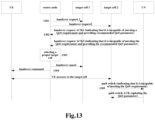
- Fig. 13 shows the Xn handover process in which it, after the handover, notifies the core network (RAN) that it is incapable of meeting the QoS requirement on some flows.
- RAN core network
- Step 1301 the source base station (source node) transmits a handover request message to a plurality of target base stations (target cell 1 and target cell 2).
- Step 1302 the target base station performs acceptance control in accordance with the QoS parameter of the flow, and returns information of the flow that has been accepted successfully, information of the flow that is incapable of meeting the QoS requirement (merely the flow for notification control), and information of the flow that has been accepted unsuccessfully through handover request messages (handover request Acknowledgement (ACK) 1 and handover request ACK 2).
- handover request Acknowledgement (ACK) 1 and handover request ACK 2 handover request Acknowledgement
- a corresponding instruction and the recommended QoS parameter capable of being accepted by the current base station may be carried in the response message.
- Step 1303 the source base station selects a final target cell (select the proper target cell) in accordance with the received response message, and transmits a handover cancel message to the other target cell.
- Step 1304 the source base station transmits a handover command to the UE, and the UE accesses to the target cell.
- Step 1305 the target base station indicates, in a path switching message to the core network, the core network that the target base station is incapable of meeting the QoS requirement on some flows, and the core network updates the QoS parameter and notifies the target base station of the updated QoS parameter through a path switching ACK message.
- the target base station may transmit an instruction to the source base station. Meanwhile, the target base station may also carry the QoS parameter of the flow capable of being accepted by the target base station.
- the source base station may notify the core network, and then the core network transmits the updated QoS parameter of the flow to the source base station.
- the source base station may select the target cell in accordance with the information from the target base station, so as to reinitiate the handover process for the target base station.
- Fig.14 shows the Xn handover procedure in which it, before the handover, notifies the core network (the RAN) that it is incapable of meeting the QoS requirement on some flows.
- Step 1401 the source base station (source node) transmits a handover request message to a plurality of target base stations (target cell 1 and target cell 2).
- Step 1402 the target base station performs acceptance control in accordance with the QoS parameter of the flow, and returns information of the flow that have been accepted successfully, information of the flow that is incapable of meeting the QoS requirement (merely the flow for notification control), and information of the flow that has been accepted unsuccessfully through a handover request response message (handover request ACK).
- handover request ACK a handover request response message
- Step 1403 the source base station transmits an instruction indicating that the RAN is incapable of meeting the QoS requirement to the core network.
- Step 1404 the core network updates the QoS parameter for the UE and transmits the updated QoS parameter to the base station.
- Step 1405 the source base station selects a proper target cell so as to initiate the handover process, and the updated QoS parameter is carried in the handover request message.
- Step 1406 the source base station transmits a handover command to the UE, and the UE may access to the target cell.
- Step 1407 the target base station may initiate a path switching process to the core network.
- the target base station when the target base station determines, upon the receipt of the handover request from the core network, that it is incapable of meeting the QoS requirement on some flows of the UE in accordance with its own condition, e.g., load, the target base station may transmit an instruction to the core network. Meanwhile, the target base station may also carries the QoS parameter of the flow recommended by the target base station. The core network may adjust the QoS parameter of the flow and transmit the updated QoS parameter to the source base station and the target base station. The source base station may transmit a handover command carrying the updated QoS parameter to the UE, as shown in Fig.15 .
- Step 1501 the source base station may transit a handover request message to the target base station via the core network (CN).
- CN core network
- Step 1502 the target base station may notify the CN that the RAN is incapable of meeting the QoS requirement on some flows.
- Step 1503 the core network may transmit updated QoS parameter to the target base station.
- Step 1504 the target base station may transmit a handover request ACK message to the core network.
- Step 1505 the core network may transmit a handover response message carrying the updated QoS parameter to the source base station.
- Step 1506 the source base station may transmit a handover command to the UE, and the UE may access to a target cell.
- the present disclosure further provides in some embodiments a QoS processing device.
- a principle of the QoS processing device for solving the problem is similar to that mentioned in the QoS processing method in Figs.5 and 6 , so the implementation of the QoS processing device may refer to that of the QoS processing method, which will not be particularly defined herein.
- the present disclosure further provides in some non-claimed embodiments a QoS processing device 1600 for a target base station.
- the QoS processing device 1600 includes a first notification module 1601 configured to notify, through a first message, a source base station that the target base station is incapable of meeting a QoS requirement on one or more flows of a UE, and the first message further includes that a QoS parameter capable of being accepted by the target base station and recommended with respect to the one or more flows.
- the QoS processing device 1600 may further include a second notification module 1602 configured to notify, through a second message, the core network that the target base station is incapable of meeting the QoS requirement on the one or more flows of the UE.
- the second message may further include the QoS parameter capable of being accepted by the target base station and recommended with respect to the one or more flows.
- the QoS processing device 1600 may further include a first reception module 1603 configured to receive an updated QoS parameter of the one or more flows transmitted from the core network.
- the present disclosure further provides in some embodiments a QoS processing device.
- a principle of the QoS processing device for solving the problem is similar to that mentioned in the QoS processing method in Figs.7 and 8 , so the implementation of the QoS processing device may refer to that of the QoS processing method, which will not be particularly defined herein.
- the present disclosure further provides in some non-claimed embodiments a QoS processing device for a source base station.
- the QoS processing device 1700 includes: a second reception module 1701 configured to determine, through a first message, that a target base station is incapable of meeting a QoS requirement on one or more flows of a UE; and a third notification module 1702 configured to notify, through a third message, a core network that the target base station is incapable of meeting the QoS requirement on the one or more flows of the UE.
- the first message may further include QoS parameter capable of being accepted by the target base station and recommended with respect to the one or more flows.
- the third message may further the QoS parameter capable of being accepted by the target base station and recommended with respect to the one or more flows.
- the QoS processing device 1700 may further includes: a third reception module 1703 configured to receive an updated QoS parameter of the one or more flows transmitted from the core network; and a handover module 1704 configured to select a proper target base station in accordance with the updated QoS parameter of the one or more flows to reinitiate a handover process.
- the present disclosure further provides in some embodiments a QoS processing device.
- a principle of the QoS processing device for solving the problem is similar to that mentioned in the QoS processing method in Figs.9 and 10 , so the implementation of the QoS processing device may refer to that of the QoS processing method, which will not be particularly defined herein.
- the present disclosure further provides in some non-claimed embodiments a QoS processing device 1800 for a target base station.
- the QoS processing device 1800 includes a fourth notification module 1801 configured to notify, through a fourth message, a core network that the target base station is incapable of meeting a QoS requirement on one or more flows of a UE.
- the fourth message may further include QoS parameter capable of being accepted by the target base station and recommended with respect to the one or more flows.
- the QoS processing device 1800 may further include a fourth reception module 1802 configured to receive an updated QoS parameter of the one or more flows transmitted from the core network.
- the QoS processing device 1800 may further include a fifth reception module 1803 configured to receive a handover request message transmitted from a source base station via the core network.
- the present disclosure further provides in some embodiments a QoS processing device.
- a principle of the QoS processing device for solving the problem is similar to that mentioned in the QoS processing method in Figs.11 and 12 , so the implementation of the QoS processing device may refer to that of the QoS processing method, which will not be particularly defined herein.
- the present disclosure further provides in some non-claimed embodiments a QoS processing device 1900 for a core network.
- the QoS processing device 1900 includes a sixth reception module 1901 configured to receive a fourth message transmitted from a target base station, so as to determine, through the fourth message, that the target base station is incapable of meeting a QoS requirement on one or more flows of a UE.
- the fourth message may further include a QoS parameter capable of being accepted by the target base station and recommended with respect to the one or more flows.
- the QoS processing device may further include: a first transmission module 1902 configured to transmit an updated QoS parameter of the one or more flows to the target base station; and a seventh reception module 1903 configured to receive a handover response message transmitted from the target base station.
- the QoS processing device may further include a second transmission module 1904 configured to transmit a fifth message to a source base station, the fifth message carries the update QoS parameter of the one or more flows.
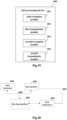
- the present disclosure further provides in some non-claimed embodiments a target base station which, as shown in Fig.20 , includes a first processor 2004, a first transceiver 2001 and a first memory 2005.
- the first processor 2004 is configured to read a program stored in the first memory 2005, so as to transmit a first message to a source base station.
- the first message may at least include first information for notifying the source base station that the target base station is incapable of meeting a QoS requirement on one or more flows of a UE and second information of QoS parameter capable of being accepted by the target base station and recommended with respect to the one or more flows.
- the first transceiver 2001 is configured to receive and transmit data under the control of the first processor 2004.
- the bus architecture (represented by a first bus 2000) may include a number of buses and bridges connected to each other, the first bus 2000 connects various circuits for one or more processors such as the first processor 2004 and one or more memories such as the first memory 2005.
- the first bus 2000 may also be used to connect various other circuits, such as a circuit for a peripheral device, a circuit for a voltage stabilizer and a power management circuit.
- a first bus interface 2003 may be provided between the first bus 2000 and the first transceiver 2001, and the first transceiver 2001 may consist of one element, or more than one element, e.g., a transmitter and a receiver for communication with various other devices over a transmission medium.
- Data processed by the first processor 2004 may be transmitted on a wireless medium via the first transceiver 2001 and a first antenna 2002. Further, the first antenna 2002 may further receive data and transmit the data to the first processor 2004 via the first transceiver 2001.
- the first processor 2004 may take charge of managing the first bus 2000 as well as general processings, and may further provide various functions such as timing, peripheral interfacing, voltage adjustment, power source management and other control functions.
- the first memory 2005 may store therein data for the operation of the first processor 2004.
- the first processor 2104 may be a Central Processing Unit (CPU), an Application Specific Integrated Circuit (ASIC), a Field-Programmable Gate Array (FPGA) or a Complex Programmable Logic Device (CPLD).
- CPU Central Processing Unit
- ASIC Application Specific Integrated Circuit
- FPGA Field-Programmable Gate Array
- CPLD Complex Programmable Logic Device
- the first processor is further configured to transmit a second message to a core network, and the second message may include third information for notifying the core network that the target base station is incapable of meeting the QoS requirement on the one or more flows of the UE.
- the second message may further include fourth information of the QoS parameter capable of being accepted by the target base station and recommended with respect to the one or more flows.
- the first processor 2004 is further configured to receive an updated QoS parameter of the one or more flows transmitted from the core network.
- the present disclosure further provides in some non-claimed embodiments a source base station which, as shown in Fig.21 , includes a second processor 2104, a second transceiver 2101 and a second memory 2105.
- the second processor 2104 is configured to read a program stored in the second memory 2105, so as to: receive a first message transmitted from a target base station, and acquire first information for notifying the source base station that the target base station is incapable of meeting a QoS requirement on one or more flows of a UE from the first message; and transmit a third message to a core network.
- the third message may include fifth information for notifying the core network that the target base station is incapable of meeting the QoS requirement on the one or more flows of the UE.
- the first message may further include second information of the QoS parameter capable of being accepted by the target base station and recommended with respect to the one or more flows.
- the second transceiver 2101 is configured to receive and transmit data under the control of the second processor 2104.
- bus architecture (represented by a second bus 2100) may include a number of buses and bridges connected to each other, the second bus 2100 connects various circuits for one or more processors such as the second processor 2104 and one or more memories such as the second memory 2105.
- the second bus 2100 may also be used to connect various other circuits, such as a circuit for a peripheral device, a circuit for a voltage stabilizer and a power management circuit.
- a second bus interface 2103 may be provided between the second bus 2100 and the second transceiver 2101, and the second transceiver 2101 may consist of one element, or more than one element, e.g., a transmitter and a receiver for communication with various other devices over a transmission medium.
- Data processed by the second processor 2104 may be transmitted on a wireless medium via the second transceiver 2101 and a second antenna 2102. Further, the second antenna 2102 may further receive data and transmit the data to the second processor 2104 via the second transceiver 2101.
- the second processor 2104 may take charge of managing the second bus 2100 as well as general processings, and may further provide various functions such as timing, peripheral interfacing, voltage adjustment, power source management and other control functions.
- the second memory 2105 may store therein data for the operation of the second processor 2104.
- the second processor 2104 may be a CPU, an ASIC, an FPGA or a CPLD.
- the third message may further include sixth information of the QoS parameter capable of being accepted by the target base station and recommended with respect to the one or more flows.
- the second processor 2104 is further configured to: receive an updated QoS parameter of the one or more flows transmitted from the core network; and select a proper target base station in accordance with the updated QoS parameter of the one or more flows to reinitiate a handover process.
- the present disclosure further provides in some non-claimed embodiments a target base station which, as shown in Fig.22 , includes a third processor 2204, a third transceiver 2201 and a third memory 2205.
- the third processor 2204 is configured to read a program stored in the third memory 2205, so as to transmit a fourth message to a core network.
- the fourth message may include seventh information for notifying the core network that the target base station is incapable of meeting a QoS requirement on one or more flows of a UE.
- the third transceiver 2201 is configured to receive and transmit data under the control of the third processor 2204.
- bus architecture (represented by a third bus 2200) may include a number of buses and bridges connected to each other, the third bus 2200 connects various circuits for one or more processors such as the third processor 2204 and one or more memories such as the third memory 2205.
- the third bus 2200 may also be used to connect various other circuits, such as a circuit for a peripheral device, a circuit for a voltage stabilizer and a power management circuit.
- a third bus interface 2203 may be provided between the third bus 2200 and the third transceiver 2201, and the third transceiver 2201 may consist of one element, or more than one element, e.g., a transmitter and a receiver for communication with various other devices over a transmission medium.
- Data processed by the third processor 2204 may be transmitted on a wireless medium via the third transceiver 2201 and a third antenna 2202. Further, the third antenna 2202 may further receive data and transmit the data to the third processor 2204 via the third transceiver 2201.
- the third processor 2204 may take charge of managing the third bus 2200 as well as general processings, and may further provide various functions such as timing, peripheral interfacing, voltage adjustment, power source management and any other control functions.
- the third memory 2205 may store therein data for the operation of the third processor 2204.
- the third processor 2204 may be a CPU, an ASIC, an FPGA or a CPLD.
- the fourth message may further include eighth information of QoS parameter capable of being accepted by the target base station and recommended with respect to the one or more flows.
- the third processor 2204 is further configured to receive an updated QoS parameter of the one or more flows transmitted from the core network.
- the third processor 2204 is further configured to receive a handover request message transmitted from a source base station via the core network.
- the present disclosure further provides in some non-claimed embodiments a core network side device which, as shown in Fig.23 , includes a fourth processor, a fourth transceiver 2301 and a fourth memory 2305.
- the fourth processor 2304 is configured to read a program stored in the fourth memory 2305, so as to receive a fourth message transmitted from a target base station.
- the fourth message may include seventh information for notifying a device at the core network side that the target base station is incapable of meeting a QoS requirement on one or more flows of a UE.
- bus architecture (represented by a fourth bus 2300) may include a number of buses and bridges connected to each other, the fourth bus 2300 connects various circuits for one or more processors such as the fourth processor 2304 and one or more memories such as the fourth memory 2305.
- the fourth bus 2300 may also be used to connect various other circuits, such as a circuit for a peripheral device, a circuit for a voltage stabilizer and a power management circuit.
- a fourth bus interface 2303 may be provided between the fourth bus 2300 and the fourth transceiver 2301, and the fourth transceiver 2301 may consist of one element, or more than one element, e.g., a transmitter and a receiver for communication with various other devices over a transmission medium.
- Data processed by the fourth processor 2304 may be transmitted on a wireless medium via the fourth transceiver 2301 and a fourth antenna 2302. Further, the fourth antenna 2302 may further receive data and transmit the data to the fourth processor 2304 via the fourth transceiver 2301.
- the fourth processor 2304 may take charge of managing the fourth bus 2300 as well as general processings, and may further provide various functions such as timing, peripheral interfacing, voltage adjustment, power source management and various other control functions.
- the fourth memory 2305 may store therein data for the operation of the fourth processor 2304.
- the fourth processor 2304 may be a CPU, an ASIC, an FPGA or a CPLD.
- the fourth message may further include eighth information of QoS parameter capable of being accepted by the target base station and recommended with respect to the one or more flows.
- the fourth processor 2304 is further configured to: transmit updated QoS parameter of the one or more flows to the target base station; and receive a handover response message transmitted from the target base station.
- the fourth processor 2304 is further configured to transmit a fifth message to a source base station.
- the fifth message may include ninth information indicating the update QoS parameter of the one or more flows.
- the present disclosure further provides in some embodiments a computer-readable storage medium storing therein a computer program (instruction).
- the computer program (instruction) is executed by a processor so as to implement the above-mentioned QoS processing methods in Figs.5 to 12 .
- serial numbers of the steps shall not be used to define the order of the steps, and instead, the order of the steps shall be determined in accordance with their functions and internal logics.
- system and "network” may be replaced with each other.
- B corresponding to A means that B is associated with A and may be determined in accordance with A. However, when B is determined in accordance with A, it means that B may be determined in accordance with A and/or any other information.
- the device and method may be implemented in any other ways.
- the embodiments for the apparatus are merely for illustrative purposes, and the units are provided merely on the basis of their logic functions.
- the units may be provided in other manners; for example, some units and elements may be combined together or integrated into another system. Alternatively, some features may be omitted or not executed.
- the coupling connection, direct coupling connection or communication connection between the units or elements discussed herein may be implemented via interfaces, and the indirect coupling connection or communication connection between the devices or units may be implemented in an electrical or mechanical form or in any other form.
- the functional units in the embodiments of the present disclosure may be integrated into a processing unit, or the functional units may exist independently, or two or more functional units may be combined together. These units may be implemented in the form of hardware, or hardware plus software.
- the units implemented in a software form may be stored in a computer-readable medium. These software functional units may be stored in a storage medium and include several instructions so as to enable a computer device (a personal computer, a server or network device) to execute parts of the steps of the transmitting and receiving methods according to the embodiments of the present disclosure.
- the storage medium includes any medium capable of storing therein program codes, e.g., a universal serial bus (USB) flash disk, a mobile hard disk (HD), a read-only memory (ROM), a random access memory (RAM), a magnetic disk or an optical disk.
Landscapes
- Engineering & Computer Science (AREA)
- Computer Networks & Wireless Communication (AREA)
- Signal Processing (AREA)
- Quality & Reliability (AREA)
- Mobile Radio Communication Systems (AREA)
Claims (3)
- Dienstgüteverarbeitungsverfahren, QoS-Verarbeitungsverfahren, umfassend:Empfangen (1301), durch eine Zielbasisstation, einer Handoveranforderungsnachricht von einer Quellbasisstation, wobei die Zielbasisstation und die Quellbasisstation mit einem Kernnetz kommunikativ verbunden sind;Durchführen (1302), durch die Zielbasisstation, einer Akzeptanzkontrolle gemäß einem ersten QoS-Parameter eines oder mehrerer Flüsse einer Benutzereinrichtung, UE;Übertragen, durch die Zielbasisstation, einer ersten Nachricht an die Quellbasisstation;wobei die erste Nachricht eine Handoveranforderungsbestätigungsnachricht ist und mindestens erste Informationen und zweite Informationen umfasst;die ersten Informationen umfassen: Informationen über einen Fluss, der erfolgreich akzeptiert wurde, Informationen über einen Fluss, der nicht in der Lage ist, die QoS-Anforderung zu erfüllen, und Informationen über einen Fluss, der durch die Handoveranforderungsnachricht erfolglos akzeptiert wurde; unddie zweiten Informationen Informationen über einen zweiten QoS-Parameter sind, der in der Lage ist, durch die Zielbasisstation akzeptiert und hinsichtlich des einen oder der mehreren Flüsse empfohlen zu werden,Empfangen (1304), durch die Zielbasisstation, einer Zugriffsnachricht von der UE;wobei das QoS-Verarbeitungsverfahren ferner umfasst:Übertragen (1305), durch die Zielbasisstation, einer zweiten Nachricht an das Kernnetz,wobei die zweite Nachricht eine Pfadumschaltnachricht ist und dritte Informationen umfasst; unddie dritten Informationen zum Benachrichtigen des Kernnetzes konfiguriert sind, dass die Zielbasisstation nicht in der Lage ist, die QoS-Anforderung für den einen oder die mehreren Flüsse der UE zu erfüllen;dadurch gekennzeichnet, dass das QoS-Verarbeitungsverfahren ferner umfasst:
als Reaktion auf die Übertragung der zweiten Nachricht durch die Zielbasisstation, Empfangen, durch die Zielbasisstation, eines aktualisierten zweiten QoS-Parameters des einen oder der mehreren Flüsse, die von dem Kernnetz über eine Pfadumschaltbestätigungsnachricht übertragen werden. - QoS-Verarbeitungsverfahren, umfassend:Übertragen (1401), durch eine Quellbasisstation, einer Handoveranforderungsnachricht an eine Vielzahl von Zielbasisstationen, wobei die Zielbasisstationen und die Quellbasisstation mit einem Kernnetz kommunikativ verbunden sind; Empfangen (1402), durch die Quellbasisstation, einer ersten Nachricht, die von einer Zielbasisstation übertragen wird, und Erfassen, durch die Quellbasisstation, erster Informationen aus der ersten Nachricht, wobei die erste Nachricht eine Handoveranforderungsbestätigungsnachricht ist; undÜbertragen (1403), durch die Quellbasisstation, einer dritten Nachricht an das Kernnetz;wobei die ersten Informationen umfassen: Informationen über einen Fluss, der erfolgreich akzeptiert wurde, Informationen über einen Fluss, der nicht in der Lage ist, die QoS-Anforderung zu erfüllen, und Informationen über einen Fluss, der erfolglos akzeptiert wurde;die dritte Nachricht fünfte Informationen umfasst;die fünften Informationen zum Benachrichtigen des Kernnetzes konfiguriert sind, dass die Zielbasisstation nicht in der Lage ist, die QoS-Anforderung für den einen oder die mehreren Flüsse der UE zu erfüllen;die erste Nachricht ferner zweite Informationen umfasst;die zweiten Informationen Informationen über einen zweiten QoS-Parameter sind, der in der Lage ist, durch die Zielbasisstation akzeptiert und hinsichtlich des einen oder der mehreren Flüsse empfohlen zu werden;dadurch gekennzeichnet, dass das QoS-Verarbeitungsverfahren ferner umfasst:Empfangen (1404), durch die Quellbasisstation, eines aktualisierten zweiten QoS-Parameters des einen oder der mehreren Flüsse, die von dem Kernnetz übertragen werden; undAuswählen (1405), durch die Quellbasisstation, einer geeigneten Zielbasisstation, Übertragen, durch die Quellbasisstation, einer Handoveranforderungsnachricht einschließlich des aktualisierten ersten QoS-Parameters an die ausgewählte Zielbasisstation und Empfangen, durch die Quellbasisstation, einer Handoveranforderungsbestätigungsnachricht von der ausgewählten Zielbasisstation;Übertragen (1406), durch die Quellbasisstation, eines Handoverbefehls, der den aktualisierten ersten QoS-Parameter einschließt, an eine UE.
- QoS-Verarbeitungsverfahren, umfassend:Empfangen (1305), durch ein Kernnetz, einer vierten Nachricht, die von einer Zielbasisstation übertragen wird, wobei die Zielbasisstation und eine Quellbasisstation für das Handover mit dem Kernnetz kommunikativ verbunden sind,wobei die vierte Nachricht eine Pfadumschaltnachricht ist und siebte Informationen umfasst; unddie siebten Informationen zum Benachrichtigen des Kernnetzes konfiguriert sind, dass die Zielbasisstation nicht in der Lage ist, eine QoS-Anforderung für einen oder mehrere Flüsse einer UE zu erfüllen;dadurch gekennzeichnet, dass das QoS-Verarbeitungsverfahren ferner umfasst:Übertragen, durch das Kernnetz, einer Pfadumschaltbestätigungsnachricht an die Zielbasisstation,wobei die Pfadumschaltbestätigungsnachricht Informationen umfasst, die die Aktualisierung des zweiten QoS-Parameters des einen oder der mehreren Flüsse angeben.
Applications Claiming Priority (2)
| Application Number | Priority Date | Filing Date | Title |
|---|---|---|---|
| CN201710182683.0A CN108632909B (zh) | 2017-03-24 | 2017-03-24 | 一种QoS处理方法和装置 |
| PCT/CN2018/077260 WO2018171386A1 (zh) | 2017-03-24 | 2018-02-26 | 一种QoS处理方法和装置 |
Publications (4)
| Publication Number | Publication Date |
|---|---|
| EP3606171A1 EP3606171A1 (de) | 2020-02-05 |
| EP3606171A4 EP3606171A4 (de) | 2020-02-05 |
| EP3606171C0 EP3606171C0 (de) | 2025-04-09 |
| EP3606171B1 true EP3606171B1 (de) | 2025-04-09 |
Family
ID=63584992
Family Applications (1)
| Application Number | Title | Priority Date | Filing Date |
|---|---|---|---|
| EP18771369.8A Active EP3606171B1 (de) | 2017-03-24 | 2018-02-26 | Dienstqualitätverarbeitungsverfahren und -vorrichtung |
Country Status (4)
| Country | Link |
|---|---|
| US (1) | US11190984B2 (de) |
| EP (1) | EP3606171B1 (de) |
| CN (1) | CN108632909B (de) |
| WO (1) | WO2018171386A1 (de) |
Families Citing this family (3)
| Publication number | Priority date | Publication date | Assignee | Title |
|---|---|---|---|---|
| WO2020045896A1 (en) * | 2018-08-27 | 2020-03-05 | Lg Electronics Inc. | Method and apparatus for enhancing handover procedure for supporting conditional handover in wireless communication system |
| EP3973721B1 (de) * | 2019-06-17 | 2023-12-20 | Huawei Technologies Co., Ltd. | Verfahren zur benachrichtigung über potenzielle qos-änderungen und knoten zur anwendungsanpassungsunterstützung |
| US12513665B2 (en) * | 2022-11-28 | 2025-12-30 | Rakuten Mobile, Inc. | System, method, and computer program for managing uplink path |
Family Cites Families (48)
| Publication number | Priority date | Publication date | Assignee | Title |
|---|---|---|---|---|
| RU2338323C2 (ru) * | 2003-09-04 | 2008-11-10 | Самсунг Электроникс Ко., Лтд. | Система и способ выбора обслуживающей базовой станции согласно разрыву соединения мобильной абонентской станции в системе связи с широкополосным беспроводным доступом |
| KR101084113B1 (ko) * | 2004-03-05 | 2011-11-17 | 엘지전자 주식회사 | 이동통신의 핸드오버에 적용되는 서비스 정보 전달 방법 |
| CN1951035B (zh) * | 2004-05-07 | 2010-10-13 | 三星电子株式会社 | 在宽带无线接入通信系统中执行快速移交的系统和方法 |
| US7233583B2 (en) * | 2004-06-28 | 2007-06-19 | Nokia Corporation | Method and apparatus providing context transfer for inter-BS and inter-PCF handoffs in a wireless communication system |
| ATE480971T1 (de) * | 2004-07-02 | 2010-09-15 | Alcatel Lucent | Mechanismus für das weiterreichen für mobile ip- protokolle |
| US7369856B2 (en) * | 2004-11-24 | 2008-05-06 | Intel Corporation | Method and system to support fast hand-over of mobile subscriber stations in broadband wireless networks |
| US8090369B2 (en) * | 2007-05-01 | 2012-01-03 | Qualcomm Incorporated | User equipment capability handling in long-term evolution systems |
| KR20090023050A (ko) * | 2007-08-29 | 2009-03-04 | 삼성전자주식회사 | 광대역 통신시스템에서 부하균등을 위한 방법 및 장치 |
| KR101422007B1 (ko) * | 2007-09-18 | 2014-07-23 | 엘지전자 주식회사 | 광대역 무선 접속 시스템에서 대역 핸드오버를 수행하는방법 및 이를 지원하는 이동 단말 |
| GB2454204A (en) * | 2007-10-31 | 2009-05-06 | Nec Corp | Core network selecting security algorithms for use between a base station and a user device |
| CN101472304B (zh) * | 2007-12-24 | 2010-05-12 | 华为技术有限公司 | 一种ms的切换方法、系统和装置 |
| KR101572882B1 (ko) * | 2008-01-25 | 2015-11-30 | 엘지전자 주식회사 | 핸드오버 지연시간 감소 기법 |
| EP2274931B1 (de) * | 2008-04-04 | 2012-08-01 | Nokia Siemens Networks OY | Aktionszeiten für die übergabe von mobilstationen |
| US20100041405A1 (en) * | 2008-08-15 | 2010-02-18 | Gallagher Michael D | Method and apparatus for inter home node b handover in a home node b group |
| WO2010031441A1 (en) * | 2008-09-19 | 2010-03-25 | Nokia Siemens Networks Oy | Network apparatus and method for transmitting a message to a target network apparatus in the wimax system |
| US20100091739A1 (en) * | 2008-10-14 | 2010-04-15 | Qualcomm Incorporated | Methods and systems for pre-allocating a cqi channel during handoff |
| CN101827451B (zh) * | 2009-03-03 | 2012-12-12 | 华为技术有限公司 | 中继节点的入网方法及装置 |
| CN101873620B (zh) * | 2009-04-22 | 2015-01-28 | 中兴通讯股份有限公司 | 小区间的重选参数和切换参数匹配的判断方法及装置 |
| CN101990221A (zh) * | 2009-08-07 | 2011-03-23 | 中兴通讯股份有限公司 | 一种传输小区切换信息的方法及基站 |
| CN106028405A (zh) * | 2010-01-13 | 2016-10-12 | 中兴通讯股份有限公司 | 一种实现小区重选参数协商的方法及基站 |
| CN101778431B (zh) * | 2010-02-02 | 2015-08-12 | 中兴通讯股份有限公司 | 一种基站系统中用户接入的接纳控制方法和装置 |
| CN102111805B (zh) * | 2010-06-18 | 2016-12-28 | 电信科学技术研究院 | 多载波系统的测量配置和上报方法及设备 |
| US9451510B2 (en) * | 2010-12-28 | 2016-09-20 | Nokia Solutions And Networks Oy | Relay node configuration in preparation for handover |
| CN103718604A (zh) * | 2011-06-21 | 2014-04-09 | 诺基亚公司 | 提供优化的切换预备和执行操作的方法、装置和计算机程序产品 |
| CN103379660B (zh) * | 2012-04-28 | 2017-04-26 | 华为技术有限公司 | 自组织网络功能选择的方法、装置和系统 |
| CN109905904B (zh) * | 2012-06-29 | 2022-05-03 | 北京三星通信技术研究有限公司 | 一种接入控制方法 |
| CN102833802B (zh) * | 2012-08-15 | 2015-09-23 | 电信科学技术研究院 | 一种数据转发方法及设备 |
| GB2506913B (en) * | 2012-10-12 | 2015-06-17 | Broadcom Corp | Apparatus and method for use in a communication network |
| CN103916917B (zh) * | 2013-01-06 | 2018-08-07 | 电信科学技术研究院 | 一种承载分离场景下进行切换的方法、设备及系统 |
| CN104303530B (zh) * | 2013-04-03 | 2019-03-08 | 华为技术有限公司 | 获取ue能力的方法、终端及基站 |
| US10085188B2 (en) * | 2013-04-05 | 2018-09-25 | Telefonaktiebolaget Lm Ericsson (Publ) | Handover request indicating split of a radio bearer between cells |
| US9578647B2 (en) * | 2013-08-29 | 2017-02-21 | Telefonaktiebolaget Lm Ericsson (Publ) | 3GPP bearer-based QoS model support on WiFi |
| KR20150048611A (ko) * | 2013-10-28 | 2015-05-07 | 삼성전자주식회사 | 이동성에 강인한 그룹 통신을 위한 방법 및 장치 |
| CN105472659B (zh) * | 2014-08-07 | 2019-02-22 | 中国电信股份有限公司 | 节点间无线资源分配方法和系统 |
| CN104486793A (zh) * | 2014-08-26 | 2015-04-01 | 上海华为技术有限公司 | 一种数据传输方法及基站 |
| CN113411850B (zh) * | 2015-01-16 | 2023-08-01 | 北京三星通信技术研究有限公司 | 切换方法和设备 |
| US11026133B2 (en) * | 2015-04-24 | 2021-06-01 | Nokia Solutions And Networks Oy | Flexible quality of service for inter-base station handovers within wireless network |
| CN107734562B (zh) * | 2016-08-11 | 2020-04-03 | 华为技术有限公司 | 一种业务传输控制方法、相关设备及通信系统 |
| CN107734563B (zh) * | 2016-08-12 | 2020-02-07 | 电信科学技术研究院 | 切换场景下的QoS参数处理的方法及设备 |
| CN111417137B (zh) * | 2016-08-15 | 2021-05-04 | 华为技术有限公司 | 一种网络切片配置方法及装置 |
| CN108024294B (zh) * | 2016-11-02 | 2020-08-07 | 中兴通讯股份有限公司 | 切换方法及装置 |
| US20190350027A1 (en) * | 2017-01-11 | 2019-11-14 | Telefonaktiebolaget Lm Ericsson (Publ) | A Radio Access Node, a Core Network Node, an Information Database and Methods of Operating the Same |
| CN109474967B (zh) * | 2017-01-25 | 2019-11-19 | 华为技术有限公司 | 通信方法和通信装置 |
| CN108366391B (zh) * | 2017-01-26 | 2023-08-25 | 中兴通讯股份有限公司 | 一种通信方法、网络设备及系统 |
| CN109005127B (zh) * | 2017-02-03 | 2020-03-10 | 华为技术有限公司 | 一种QoS流处理方法、设备和通信系统 |
| US10986516B2 (en) * | 2017-03-10 | 2021-04-20 | Huawei Technologies Co., Ltd. | System and method of network policy optimization |
| US10568007B2 (en) * | 2017-03-22 | 2020-02-18 | Comcast Cable Communications, Llc | Handover random access |
| US11218933B2 (en) * | 2018-09-14 | 2022-01-04 | Qualcomm Incorporated | Systems and methods for deferred 5G location of a mobile device using a combined AMF and LMF based location solution |
-
2017
- 2017-03-24 CN CN201710182683.0A patent/CN108632909B/zh active Active
-
2018
- 2018-02-26 WO PCT/CN2018/077260 patent/WO2018171386A1/zh not_active Ceased
- 2018-02-26 US US16/496,944 patent/US11190984B2/en active Active
- 2018-02-26 EP EP18771369.8A patent/EP3606171B1/de active Active
Also Published As
| Publication number | Publication date |
|---|---|
| US11190984B2 (en) | 2021-11-30 |
| WO2018171386A1 (zh) | 2018-09-27 |
| US20200107229A1 (en) | 2020-04-02 |
| EP3606171A1 (de) | 2020-02-05 |
| CN108632909A (zh) | 2018-10-09 |
| CN108632909B (zh) | 2019-08-23 |
| EP3606171C0 (de) | 2025-04-09 |
| EP3606171A4 (de) | 2020-02-05 |
Similar Documents
| Publication | Publication Date | Title |
|---|---|---|
| US10959133B2 (en) | Method and device for processing quality of service parameter in handover scenario | |
| US11019540B2 (en) | User equipment path transfer method, user equipment state conversion control method, user equipment, and base station | |
| EP3641478B1 (de) | Verfahren und vorrichtungen zur benachrichtigung über und senden von systemmeldungen | |
| EP3606162B1 (de) | Verfahren und vorrichtung der dienstqualitätverarbeitung | |
| WO2021109416A1 (en) | Ensuring service continuity in wireless communications | |
| EP4016897B1 (de) | Informationsverarbeitungsverfahren und -gerät, vorrichtung und computerlesbares speichermedium | |
| US11589331B2 (en) | Interface establishing method and apparatus | |
| US12150000B2 (en) | Method, network device, and apparatus communication system handover, and medium | |
| JP2024503709A (ja) | データ伝送方法及び装置 | |
| EP3512223B1 (de) | Sitzungsverwaltungsverfahren und netzwerkelement | |
| US11190984B2 (en) | Quality of service processing method and device | |
| EP4278849A1 (de) | Systeme und verfahren für benutzergerätekontextabruf und datenweiterleitung zur unterstützung kleiner datenübertragung | |
| EP3876599B1 (de) | Verfahren und vorrichtung zur datenweiterleitung sowie master-basisstation und slave-basisstation | |
| WO2020098614A1 (zh) | 一种数据传输的方法和设备 | |
| JP7578143B2 (ja) | セカンダリ基地局及びその方法 | |
| WO2024140691A1 (zh) | 信息传输方法及通信装置 | |
| GB2511540A (en) | Wireless communication system and method | |
| CN119997080A (zh) | 通信方法及装置、计算机可读存储介质 | |
| WO2022152458A1 (en) | Data forwarding complete indication for lossless data delivery | |
| CN120980504A (zh) | 用于多卫星场景的数据业务处理方法与网络设备 |
Legal Events
| Date | Code | Title | Description |
|---|---|---|---|
| STAA | Information on the status of an ep patent application or granted ep patent |
Free format text: STATUS: THE INTERNATIONAL PUBLICATION HAS BEEN MADE |
|
| PUAI | Public reference made under article 153(3) epc to a published international application that has entered the european phase |
Free format text: ORIGINAL CODE: 0009012 |
|
| STAA | Information on the status of an ep patent application or granted ep patent |
Free format text: STATUS: REQUEST FOR EXAMINATION WAS MADE |
|
| 17P | Request for examination filed |
Effective date: 20190923 |
|
| A4 | Supplementary search report drawn up and despatched |
Effective date: 20191212 |
|
| AK | Designated contracting states |
Kind code of ref document: A1 Designated state(s): AL AT BE BG CH CY CZ DE DK EE ES FI FR GB GR HR HU IE IS IT LI LT LU LV MC MK MT NL NO PL PT RO RS SE SI SK SM TR |
|
| AX | Request for extension of the european patent |
Extension state: BA ME |
|
| DAV | Request for validation of the european patent (deleted) | ||
| DAX | Request for extension of the european patent (deleted) | ||
| STAA | Information on the status of an ep patent application or granted ep patent |
Free format text: STATUS: EXAMINATION IS IN PROGRESS |
|
| 17Q | First examination report despatched |
Effective date: 20210325 |
|
| RAP1 | Party data changed (applicant data changed or rights of an application transferred) |
Owner name: DATANG MOBILE COMMUNICATIONS EQUIPMENT CO., LTD. |
|
| REG | Reference to a national code |
Ref legal event code: R079 Ipc: H04W0036260000 Ref country code: DE Ref legal event code: R079 Ref document number: 602018080964 Country of ref document: DE Free format text: PREVIOUS MAIN CLASS: H04W0036280000 Ipc: H04W0036260000 |
|
| GRAP | Despatch of communication of intention to grant a patent |
Free format text: ORIGINAL CODE: EPIDOSNIGR1 |
|
| STAA | Information on the status of an ep patent application or granted ep patent |
Free format text: STATUS: GRANT OF PATENT IS INTENDED |
|
| INTG | Intention to grant announced |
Effective date: 20241105 |
|
| RIC1 | Information provided on ipc code assigned before grant |
Ipc: H04W 28/24 20090101ALI20241028BHEP Ipc: H04W 36/26 20090101AFI20241028BHEP |
|
| GRAS | Grant fee paid |
Free format text: ORIGINAL CODE: EPIDOSNIGR3 |
|
| GRAA | (expected) grant |
Free format text: ORIGINAL CODE: 0009210 |
|
| STAA | Information on the status of an ep patent application or granted ep patent |
Free format text: STATUS: THE PATENT HAS BEEN GRANTED |
|
| AK | Designated contracting states |
Kind code of ref document: B1 Designated state(s): AL AT BE BG CH CY CZ DE DK EE ES FI FR GB GR HR HU IE IS IT LI LT LU LV MC MK MT NL NO PL PT RO RS SE SI SK SM TR |
|
| REG | Reference to a national code |
Ref country code: GB Ref legal event code: FG4D |
|
| REG | Reference to a national code |
Ref country code: CH Ref legal event code: EP |
|
| REG | Reference to a national code |
Ref country code: DE Ref legal event code: R096 Ref document number: 602018080964 Country of ref document: DE |
|
| REG | Reference to a national code |
Ref country code: IE Ref legal event code: FG4D |
|
| U01 | Request for unitary effect filed |
Effective date: 20250430 |
|
| U07 | Unitary effect registered |
Designated state(s): AT BE BG DE DK EE FI FR IT LT LU LV MT NL PT RO SE SI Effective date: 20250508 |
|
| PG25 | Lapsed in a contracting state [announced via postgrant information from national office to epo] |
Ref country code: ES Free format text: LAPSE BECAUSE OF FAILURE TO SUBMIT A TRANSLATION OF THE DESCRIPTION OR TO PAY THE FEE WITHIN THE PRESCRIBED TIME-LIMIT Effective date: 20250409 |
|
| PG25 | Lapsed in a contracting state [announced via postgrant information from national office to epo] |
Ref country code: GR Free format text: LAPSE BECAUSE OF FAILURE TO SUBMIT A TRANSLATION OF THE DESCRIPTION OR TO PAY THE FEE WITHIN THE PRESCRIBED TIME-LIMIT Effective date: 20250710 Ref country code: NO Free format text: LAPSE BECAUSE OF FAILURE TO SUBMIT A TRANSLATION OF THE DESCRIPTION OR TO PAY THE FEE WITHIN THE PRESCRIBED TIME-LIMIT Effective date: 20250709 |
|
| PG25 | Lapsed in a contracting state [announced via postgrant information from national office to epo] |
Ref country code: PL Free format text: LAPSE BECAUSE OF FAILURE TO SUBMIT A TRANSLATION OF THE DESCRIPTION OR TO PAY THE FEE WITHIN THE PRESCRIBED TIME-LIMIT Effective date: 20250409 |
|
| PG25 | Lapsed in a contracting state [announced via postgrant information from national office to epo] |
Ref country code: HR Free format text: LAPSE BECAUSE OF FAILURE TO SUBMIT A TRANSLATION OF THE DESCRIPTION OR TO PAY THE FEE WITHIN THE PRESCRIBED TIME-LIMIT Effective date: 20250409 |
|
| PG25 | Lapsed in a contracting state [announced via postgrant information from national office to epo] |
Ref country code: RS Free format text: LAPSE BECAUSE OF FAILURE TO SUBMIT A TRANSLATION OF THE DESCRIPTION OR TO PAY THE FEE WITHIN THE PRESCRIBED TIME-LIMIT Effective date: 20250709 |
|
| PG25 | Lapsed in a contracting state [announced via postgrant information from national office to epo] |
Ref country code: IS Free format text: LAPSE BECAUSE OF FAILURE TO SUBMIT A TRANSLATION OF THE DESCRIPTION OR TO PAY THE FEE WITHIN THE PRESCRIBED TIME-LIMIT Effective date: 20250809 |
|
| PG25 | Lapsed in a contracting state [announced via postgrant information from national office to epo] |
Ref country code: SM Free format text: LAPSE BECAUSE OF FAILURE TO SUBMIT A TRANSLATION OF THE DESCRIPTION OR TO PAY THE FEE WITHIN THE PRESCRIBED TIME-LIMIT Effective date: 20250409 |
|
| PG25 | Lapsed in a contracting state [announced via postgrant information from national office to epo] |
Ref country code: CZ Free format text: LAPSE BECAUSE OF FAILURE TO SUBMIT A TRANSLATION OF THE DESCRIPTION OR TO PAY THE FEE WITHIN THE PRESCRIBED TIME-LIMIT Effective date: 20250409 |
|
| PG25 | Lapsed in a contracting state [announced via postgrant information from national office to epo] |
Ref country code: SK Free format text: LAPSE BECAUSE OF FAILURE TO SUBMIT A TRANSLATION OF THE DESCRIPTION OR TO PAY THE FEE WITHIN THE PRESCRIBED TIME-LIMIT Effective date: 20250409 |
|
| PLBE | No opposition filed within time limit |
Free format text: ORIGINAL CODE: 0009261 |
|
| STAA | Information on the status of an ep patent application or granted ep patent |
Free format text: STATUS: NO OPPOSITION FILED WITHIN TIME LIMIT |
|
| REG | Reference to a national code |
Ref country code: CH Ref legal event code: L10 Free format text: ST27 STATUS EVENT CODE: U-0-0-L10-L00 (AS PROVIDED BY THE NATIONAL OFFICE) Effective date: 20260218 |
|
| 26N | No opposition filed |
Effective date: 20260112 |
|
| U20 | Renewal fee for the european patent with unitary effect paid |
Year of fee payment: 9 Effective date: 20260225 |
|
| PGFP | Annual fee paid to national office [announced via postgrant information from national office to epo] |
Ref country code: GB Payment date: 20260219 Year of fee payment: 9 |