EP3605331B1 - Procédé d'attribution de mémoire et serveur - Google Patents
Procédé d'attribution de mémoire et serveur Download PDFInfo
- Publication number
- EP3605331B1 EP3605331B1 EP18844447.5A EP18844447A EP3605331B1 EP 3605331 B1 EP3605331 B1 EP 3605331B1 EP 18844447 A EP18844447 A EP 18844447A EP 3605331 B1 EP3605331 B1 EP 3605331B1
- Authority
- EP
- European Patent Office
- Prior art keywords
- numa
- priority
- memory
- node
- server
- Prior art date
- Legal status (The legal status is an assumption and is not a legal conclusion. Google has not performed a legal analysis and makes no representation as to the accuracy of the status listed.)
- Active
Links
Images



Classifications
-
- G—PHYSICS
- G06—COMPUTING OR CALCULATING; COUNTING
- G06F—ELECTRIC DIGITAL DATA PROCESSING
- G06F9/00—Arrangements for program control, e.g. control units
- G06F9/06—Arrangements for program control, e.g. control units using stored programs, i.e. using an internal store of processing equipment to receive or retain programs
- G06F9/46—Multiprogramming arrangements
- G06F9/50—Allocation of resources, e.g. of the central processing unit [CPU]
- G06F9/5005—Allocation of resources, e.g. of the central processing unit [CPU] to service a request
- G06F9/5011—Allocation of resources, e.g. of the central processing unit [CPU] to service a request the resources being hardware resources other than CPUs, Servers and Terminals
- G06F9/5016—Allocation of resources, e.g. of the central processing unit [CPU] to service a request the resources being hardware resources other than CPUs, Servers and Terminals the resource being the memory
-
- G—PHYSICS
- G06—COMPUTING OR CALCULATING; COUNTING
- G06F—ELECTRIC DIGITAL DATA PROCESSING
- G06F12/00—Accessing, addressing or allocating within memory systems or architectures
- G06F12/02—Addressing or allocation; Relocation
- G06F12/0223—User address space allocation, e.g. contiguous or non contiguous base addressing
- G06F12/0284—Multiple user address space allocation, e.g. using different base addresses
-
- G—PHYSICS
- G06—COMPUTING OR CALCULATING; COUNTING
- G06F—ELECTRIC DIGITAL DATA PROCESSING
- G06F12/00—Accessing, addressing or allocating within memory systems or architectures
- G06F12/02—Addressing or allocation; Relocation
- G06F12/06—Addressing a physical block of locations, e.g. base addressing, module addressing, memory dedication
- G06F12/0607—Interleaved addressing
-
- G—PHYSICS
- G06—COMPUTING OR CALCULATING; COUNTING
- G06F—ELECTRIC DIGITAL DATA PROCESSING
- G06F12/00—Accessing, addressing or allocating within memory systems or architectures
- G06F12/02—Addressing or allocation; Relocation
- G06F12/06—Addressing a physical block of locations, e.g. base addressing, module addressing, memory dedication
- G06F12/0646—Configuration or reconfiguration
-
- G—PHYSICS
- G06—COMPUTING OR CALCULATING; COUNTING
- G06F—ELECTRIC DIGITAL DATA PROCESSING
- G06F12/00—Accessing, addressing or allocating within memory systems or architectures
- G06F12/02—Addressing or allocation; Relocation
- G06F12/08—Addressing or allocation; Relocation in hierarchically structured memory systems, e.g. virtual memory systems
-
- G—PHYSICS
- G06—COMPUTING OR CALCULATING; COUNTING
- G06F—ELECTRIC DIGITAL DATA PROCESSING
- G06F13/00—Interconnection of, or transfer of information or other signals between, memories, input/output devices or central processing units
- G06F13/14—Handling requests for interconnection or transfer
- G06F13/16—Handling requests for interconnection or transfer for access to memory bus
- G06F13/1668—Details of memory controller
-
- G—PHYSICS
- G06—COMPUTING OR CALCULATING; COUNTING
- G06F—ELECTRIC DIGITAL DATA PROCESSING
- G06F13/00—Interconnection of, or transfer of information or other signals between, memories, input/output devices or central processing units
- G06F13/38—Information transfer, e.g. on bus
- G06F13/40—Bus structure
- G06F13/4004—Coupling between buses
- G06F13/4027—Coupling between buses using bus bridges
-
- G—PHYSICS
- G06—COMPUTING OR CALCULATING; COUNTING
- G06F—ELECTRIC DIGITAL DATA PROCESSING
- G06F13/00—Interconnection of, or transfer of information or other signals between, memories, input/output devices or central processing units
- G06F13/38—Information transfer, e.g. on bus
- G06F13/42—Bus transfer protocol, e.g. handshake; Synchronisation
- G06F13/4282—Bus transfer protocol, e.g. handshake; Synchronisation on a serial bus, e.g. I2C bus, SPI bus
-
- G—PHYSICS
- G06—COMPUTING OR CALCULATING; COUNTING
- G06F—ELECTRIC DIGITAL DATA PROCESSING
- G06F12/00—Accessing, addressing or allocating within memory systems or architectures
- G06F12/02—Addressing or allocation; Relocation
- G06F12/0223—User address space allocation, e.g. contiguous or non contiguous base addressing
- G06F12/023—Free address space management
-
- G—PHYSICS
- G06—COMPUTING OR CALCULATING; COUNTING
- G06F—ELECTRIC DIGITAL DATA PROCESSING
- G06F2209/00—Indexing scheme relating to G06F9/00
- G06F2209/50—Indexing scheme relating to G06F9/50
- G06F2209/5013—Request control
-
- G—PHYSICS
- G06—COMPUTING OR CALCULATING; COUNTING
- G06F—ELECTRIC DIGITAL DATA PROCESSING
- G06F2212/00—Indexing scheme relating to accessing, addressing or allocation within memory systems or architectures
- G06F2212/10—Providing a specific technical effect
- G06F2212/1016—Performance improvement
- G06F2212/1024—Latency reduction
-
- G—PHYSICS
- G06—COMPUTING OR CALCULATING; COUNTING
- G06F—ELECTRIC DIGITAL DATA PROCESSING
- G06F2212/00—Indexing scheme relating to accessing, addressing or allocation within memory systems or architectures
- G06F2212/15—Use in a specific computing environment
- G06F2212/154—Networked environment
-
- G—PHYSICS
- G06—COMPUTING OR CALCULATING; COUNTING
- G06F—ELECTRIC DIGITAL DATA PROCESSING
- G06F2212/00—Indexing scheme relating to accessing, addressing or allocation within memory systems or architectures
- G06F2212/25—Using a specific main memory architecture
- G06F2212/254—Distributed memory
- G06F2212/2542—Non-uniform memory access [NUMA] architecture
-
- G—PHYSICS
- G06—COMPUTING OR CALCULATING; COUNTING
- G06F—ELECTRIC DIGITAL DATA PROCESSING
- G06F2212/00—Indexing scheme relating to accessing, addressing or allocation within memory systems or architectures
- G06F2212/50—Control mechanisms for virtual memory, cache or TLB
- G06F2212/502—Control mechanisms for virtual memory, cache or TLB using adaptive policy
Definitions
- This application relates to the communications field, and in particular, to a memory allocation method and a server.
- a calculation capability of a single processor tends to be saturated due to a limitation of a hardware chip technology. Therefore, to obtain higher calculation performance, calculation performance of the server tends to be improved by increasing a quantity of processors in the server.
- a non-uniform memory architecture (Non-Uniform Memory Architecture, NUMA) is usually used.
- NUMA Non-Uniform Memory Architecture
- a plurality of nodes are connected by using a high-speed interconnection network, and each node includes one group of a CPU and local memory.
- a fetch latency is relatively low and performance is relatively high.
- a fetch latency is relatively high, causing performance degradation. Therefore, to improve system performance, during memory allocation a current memory allocator needs to preferentially allocate the local memory, and then allocate the remote memory.
- a memory allocation method provided for a conventional NUMA in a current kernel is as follows:
- NUMA distance 0.
- a NUMA distance is 20.
- a NUMA distance between the node A and the node C is equal to a minimum quantity of hops (Hop) between the node A and the node C multiplied by 20.
- Memory is allocated based on a node topology, including the following three allocation policies:
- Embodiments of this application provide a memory allocation method and a server, to reduce a performance loss caused by an NC latency and improve performance of the server during memory allocation.
- a first aspect of the embodiments of this application provides a memory allocation method, including: identifying, by a server, a node topology table, where the node topology table includes a connection relationship between non-uniform memory architecture NUMA nodes, a connection relationship between a NUMA node and a node controller NC, and a connection relationship between NCs in the server; generating, by the server, fetch hop tables of the NUMA nodes based on the node topology table obtained through identification, and setting any one of the NUMA nodes as a first NUMA node, where a fetch hop table of the first NUMA node includes an NC hop count and a quick path interconnect QPI hop count of a shortest path through which the first NUMA node is connected to each of the other NUMA nodes, the NC hop count is a quantity of NCs through which the shortest path passes, and the QPI hop count is a quantity of NUMA nodes through which the shortest path passes; calculating, by the server, fetch priority tables of the NUMA nodes based
- the method further includes: if there are a plurality of NUMA nodes with a same priority in the first fetch priority table, allocating, by the server, memory from these NUMA nodes with the same priority according to an interleaved policy.
- the generating, by the server, fetch hop tables of the NUMA nodes based on the node topology table specifically includes: reading, by the server, the stored node topology table; calculating a shortest path from each NUMA node to each of the other NUMA nodes based on the node topology table, where the shortest path is a path with a smallest NC hop count in a preselected shortest path, and the preselected shortest path is a path with a smallest QPI hop count in a path from one NUMA node to another NUMA node; calculating, by the server, an NC hop count and a QPI hop count of each shortest path based on the shortest path from each NUMA node to each of the other NUMA nodes; and forming, by the server, the fetch hop tables of the NUMA nodes by using the NC hop count and the QPI hop count of the shortest path from each NUMA node to each of the other NUMA nodes.
- the calculating, by the server, fetch priority tables of the NUMA nodes based on the fetch hop tables of the NUMA nodes specifically includes: sorting, by the server, the NUMA nodes in the fetch hop tables in ascending order of NC hop counts in the fetch hop tables of the NUMA nodes, to obtain a first NUMA node sequence; for NUMA nodes with a same NC hop count in the first NUMA node sequence, sorting, by the server, the NUMA nodes in ascending order of QPI hop counts in the fetch hop tables, to obtain a second NUMA node sequence; and sequentially assigning, by the server, priorities to the NUMA nodes in the second NUMA node sequence in descending order of priorities, where priorities of NUMA nodes with a same NC hop count and a same QPI hop count are the same.
- the allocating, by the server, memory based on the first fetch priority table specifically includes: if a current to-be-allocated memory size is a first capacity, a current query priority is a first priority, and the first priority is a priority in the first fetch priority table, allocating, by the server, memory in descending order of priorities in the first fetch priority table according to the following procedure: querying, by the server, whether a NUMA node with the current query priority has free memory; if the NUMA node with the current query priority does not have free memory, updating, by the server, the first priority to a priority following the current query priority, and triggering the step of allocating memory according to the following procedure; if there is only one second NUMA node having free memory whose size is a second capacity in the NUMA node with the current query priority, determining, by the server, whether the second capacity is not less than the current to-be-allocated memory size; if the second
- the method further includes: if there is more than one third NUMA node having free memory in the NUMA node with the current query priority, allocating, by the server, memory from the third NUMA nodes according to the interleaved policy, where a size of the allocated memory is a third capacity; if the third capacity is equal to the current to-be-allocated memory size, ending the memory allocation procedure; and if the third capacity is less than the current to-be-allocated memory size, updating, by the server, the first capacity to the current to-be-allocated memory size minus the third capacity, updating the first priority to the priority following the current query priority, and triggering the step of allocating memory according to the following procedure.
- the method further includes: if learning through querying that no NUMA node has free memory, determining, by the server, whether a memory release operation is performed, where the memory release operation indicates that temporarily unused memory is swapped to a hard disk buffer; and if the memory release operation is not performed, performing the memory release operation, initializing the current to-be-allocated memory size and the current query priority, and triggering the step of allocating, by the server, memory in descending order of priorities in the first fetch priority table according to the following procedure.
- the method before the step of allocating, by the server, memory from the third NUMA nodes according to the interleaved policy, the method further includes: determining, by the server, whether the current to-be-allocated memory size is greater than one memory page; if the current to-be-allocated memory size is greater than one memory page, triggering the step of allocating, by the server, memory from the third NUMA nodes according to the interleaved policy; and if the current to-be-allocated size is not greater than one memory page, randomly selecting, by the server, one third NUMA node from the third NUMA nodes to allocate memory, and ending the memory allocation procedure.
- the node topology table is an (N + M) ⁇ (N + M) matrix S
- N is a quantity of NUMA nodes in the server
- M is a quantity of NCs in the server
- the first N columns and N rows of the matrix S indicate the NUMA nodes
- the last M columns and M rows of the matrix S indicate the NCs
- a value in a p th row and a q th column of the matrix S indicates a connection relationship between a node p and a node q
- N, M, p, and q are all positive integers.
- a second aspect of the embodiments of this application provides a server, including: an identification module, configured to identify a node topology table, where the node topology table includes a connection relationship between NUMA nodes, a connection relationship between a NUMA node and an NC, and a connection relationship between NCs in the server; a generation module, configured to generate fetch hop tables of the NUMA nodes based on the node topology table obtained by the identification module through identification, where a fetch hop table of a first NUMA node includes an NC hop count and a quick path interconnect QPI hop count of a shortest path through which the first NUMA node is connected to each of the other NUMA nodes, the NC hop count is a quantity of NCs through which the shortest path passes, and the QPI hop count is a quantity of NUMA nodes through which the shortest path passes; a calculation module, configured to calculate fetch priority tables of the NUMA nodes based on the fetch hop tables of the NUMA nodes generated by the generation module, where a first fetch priority table of the
- the allocation module is further configured to: when there are a plurality of NUMA nodes with a same priority in the first fetch priority table, allocate memory from these NUMA nodes with the same priority according to an interleaved policy.
- the generation module specifically includes: a read unit, configured to read the stored node topology table obtained by the identification module through identification; a first calculation unit, configured to calculate a shortest path from each NUMA node to each of the other NUMA nodes based on the node topology table read by the read unit, where the shortest path is a path with a smallest NC hop count in a preselected shortest path, and the preselected shortest path is a path with a smallest QPI hop count in a path from one NUMA node to another NUMA node; a second calculation unit, configured to calculate an NC hop count and a QPI hop count of each shortest path based on the shortest path from each NUMA node to each of the other NUMA nodes obtained by the first calculation unit through calculation; and a forming unit, configured to form the fetch hop tables of the NUMA nodes by using the NC hop count and the QPI hop count of the shortest path from each NUMA node to each of the other NUMA nodes obtained by the second calculation unit through calculation
- the calculation module specifically includes: a first sorting unit, configured to sort the NUMA nodes in the fetch hop tables in ascending order of NC hop counts in the fetch hop tables of the NUMA nodes, to obtain a first NUMA node sequence; a second sorting unit, configured to: for NUMA nodes with a same NC hop count in the first NUMA node sequence, sort the NUMA nodes in ascending order of QPI hop counts in the fetch hop tables, to obtain a second NUMA node sequence; and an assignment unit, configured to sequentially assign priorities to the NUMA nodes in the second NUMA node sequence in descending order of priorities, where priorities of NUMA nodes with a same NC hop count and a same QPI hop count are the same.
- the allocation module specifically includes: a start unit, configured to: if a current to-be-allocated memory size is a first capacity, a current query priority is a first priority, and the first priority is a priority in the first fetch priority table, trigger a query unit in descending order of priorities in the first fetch priority table; the query unit, configured to query whether a NUMA node with the current query priority has free memory; a first update unit, configured to: when the NUMA node with the current query priority does not have free memory, update the first priority to a priority following the current query priority, and trigger the start unit; a first determining unit, configured to: when there is only one second NUMA node having free memory whose size is a second capacity in the NUMA node with the current query priority, determine whether the second capacity is not less than the current to-be-allocated memory size; a first allocation unit, configured to: when the second capacity is not less than the current to-be-allocated memory size; a first allocation unit, configured to: when the second capacity is
- the allocation module further includes: a second allocation unit, configured to: when the query unit determines that there is more than one third NUMA node having free memory in the NUMA node with the current query priority, allocate memory from the third NUMA nodes according to the interleaved policy, where a size of the allocated memory is a third capacity; a first triggering unit, configured to: when the third capacity is equal to the current to-be-allocated memory size, trigger the end unit; and a second triggering unit, configured to: when the third capacity is less than the current to-be-allocated memory size, update the first capacity to the current to-be-allocated memory size minus the third capacity, update the first priority to the priority following the current query priority, and trigger the start unit.
- a second allocation unit configured to: when the query unit determines that there is more than one third NUMA node having free memory in the NUMA node with the current query priority, allocate memory from the third NUMA nodes according to the interleaved policy, where a size of the allocated memory
- the allocation module further includes: a second determining unit, configured to: when the query unit learns through querying that no NUMA node has free memory, determine whether a memory release operation is performed, where the memory release operation indicates that temporarily unused memory is swapped to a hard disk buffer; and a release execution unit, configured to: when the second determining unit determines that the memory release operation is not performed, perform the memory release operation, initialize the current to-be-allocated memory size and the current query priority, and trigger the start unit.
- a second determining unit configured to: when the query unit learns through querying that no NUMA node has free memory, determine whether a memory release operation is performed, where the memory release operation indicates that temporarily unused memory is swapped to a hard disk buffer
- a release execution unit configured to: when the second determining unit determines that the memory release operation is not performed, perform the memory release operation, initialize the current to-be-allocated memory size and the current query priority, and trigger the start unit.
- the second allocation unit specifically includes: a determining subunit, configured to: when the query unit determines that there is more than one third NUMA node having free memory in the NUMA node with the current query priority, determine whether the current to-be-allocated memory size is greater than one memory page; a first allocation subunit, configured to: when the current to-be-allocated memory size is greater than one memory page, allocate memory from the third NUMA nodes according to the interleaved policy; and a second allocation subunit, configured to: when the current to-be-allocated size is not greater than one memory page, randomly select one third NUMA node from the third NUMA nodes to allocate memory, and trigger the end unit.
- a third aspect of the embodiments of this application provides a computer-readable storage medium, including an instruction, where when the instruction is run on a computer, the computer is enabled to perform the steps of the method according to the foregoing aspects.
- a fourth aspect of the embodiments of this application provides a computer program product including an instruction, where when the instruction is run on a computer, the computer is enabled to perform the method according to the foregoing aspects.
- the server identifies the node topology table.
- the node topology table not only includes the connection relationship between NUMA nodes, but also includes the connection relationship between a NUMA node and an NC and the connection relationship between NCs.
- the server generates the fetch hop tables of the NUMA nodes based on the node topology table.
- a hop table of each NUMA node includes both a QPI hop count and an NC hop count of a shortest path through which the NUMA node is connected to each of the other NUMA nodes.
- the server calculates the fetch priorities of the NUMA nodes based on the fetch hop tables of the NUMA nodes, and uses an NC hop count as an important parameter for fetch priority calculation, where a smaller NC hop count indicates a higher fetch priority.
- the server allocates memory based on the fetch priority table, and for a higher priority, more preferentially allocates memory from a NUMA node corresponding to the priority. Therefore, because the NC hop count is used as the important parameter for fetch priority calculation, an opportunity of allocating memory across NCs is reduced during memory allocation, thereby reducing a fetch latency caused by an NC and improving performance of the server.
- first and second may be used in the embodiments of this application to describe NUMA nodes or priorities, the NUMA nodes or priorities are not limited by these terms. These terms are merely used to differentiate the NUMA nodes or priorities.
- a first NUMA node may also be referred to as a second NUMA node, and similarly, a second NUMA node may also be referred to as a first NUMA node.
- a second priority may also be referred to as a third priority or the like. This is not limited in the embodiments of this application.
- FIG. 1 is a schematic diagram of an application scenario of the memory allocation method.
- a server includes NUMA nodes 1 to 5 that are connected by using a high-speed interconnection network, and each NUMA node includes one group of a CPU and local memory.
- the NUMA nodes may be directly connected by using QPI, for example, a connection between a NUMA node 1 and a NUMA node 2, a connection between the NUMA node 1 and a NUMA node 3, and a connection between the NUMA node 3 and a NUMA node 4; or may be connected by using an NC, for example, a connection between the NUMA node 2 and a NUMA node 5, and a connection between the NUMA node 3 and the NUMA node 5.
- QPI for example, a connection between a NUMA node 1 and a NUMA node 2, a connection between the NUMA node 1 and a NUMA node 3, and a connection between the NUMA node 3 and a NUMA node 4; or may be connected by using an NC, for example, a connection between the NUMA node 2 and a NUMA node 5, and a connection between the NUMA node 3 and the NUMA node 5.
- QPI for example, a connection between a NUMA node 1 and
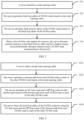
- a server identifies a node topology table.
- the server identifies the node topology table, where the node topology table includes a connection relationship between NUMA nodes, a connection relationship between a NUMA node and a node controller NC, and a connection relationship between NCs in the server.
- node topology table may have a plurality of representation forms and storage forms. This is not limited herein.
- the node topology table may be an (N + M) x (N + M) matrix S, N is a quantity of NUMA nodes in the server, M is a quantity of NCs in the server, the first N columns and N rows of the matrix S indicate the NUMA nodes, the last M columns and M rows of the matrix S indicate the NCs, a value in a p th row and a q th column of the matrix S indicates a connection relationship between a node p and a node q, and N, M, p, and q are all positive integers.
- the node topology table is stored in the manner shown in Table 1, for any node p, a total of N + M bits are required for storing interconnection relationships between the node p and the other nodes. If a bit corresponding to a q th node is 1, it indicates that the node p is directly connected to the node q; or if a bit corresponding to a q th node is not 1, the node p is not connected to the node q. Therefore, if there are N + M nodes in the system, only (N + M) x (N + M)/8 bytes are needed to store a topology structure of the NUMA nodes and the NCs in the entire server.
- the server generates fetch hop tables of NUMA nodes based on the node topology table.
- the server generates the fetch hop tables of the NUMA nodes based on the node topology
- a fetch hop table of a first NUMA node includes an NC hop count and a quick path interconnect QPI hop count of a shortest path through which the first NUMA node is connected to each of the other NUMA nodes, the NC hop count is a quantity of NCs through which the shortest path passes, and the QPI hop count is a quantity of NUMA nodes through which the shortest path passes.
- N fetch hop tables respectively corresponding to the NUMA nodes may be generated, and the first NUMA node may be any one of the NUMA nodes. This is not limited herein.
- the server reads the stored node topology table.
- the server calculates a shortest path from each NUMA node to each of the other NUMA nodes based on the node topology table.
- the shortest path is a path with a smallest NC hop count in a preselected shortest path
- the preselected shortest path is a path with a smallest QPI hop count in a path from one NUMA node to another NUMA node.
- the shortest path from each NUMA node to each of the other NUMA nodes may be calculated.
- the server calculates an NC hop count and a QPI hop count of each shortest path based on the shortest path from each NUMA node to each of the other NUMA nodes.
- the NC hop count and the QPI hop count of each shortest path may be calculated based on the shortest path from each NUMA node to each of the other NUMA nodes.
- the following uses one calculation manner as an example for description.
- the calculation method is based on the node topology table shown in Table 1 in step 101.
- H nc indicates an NC hop count
- H qpi indicates a QPI hop count
- i is used to index L pq
- L pq indicates a shortest path from p to q.
- L p ⁇ q ⁇ p,n 0 ,... n i , ..., n I ,q ⁇ .
- N indicates N NUMA nodes in the server and L pq [ i ] indicates a node number of an i th node on the shortest path L pq . It can be learned from the node topology diagram shown in Table 1 that nodes numbered 0 to N - 1 are NUMA nodes. Therefore:
- L pq [++ i ] it is determined whether L pq [++ i ] is equal to q. If L pq [++ i ] is equal to q, it indicates that the node q is reached, and step 10238 is performed; or if L pq [++ i ] is not equal to q, it indicates that the node q is not reached, and step 10234 is performed.
- the server forms the fetch hop tables of the NUMA nodes by using the NC hop count and the QPI hop count of the shortest path from each NUMA node to each of the other NUMA nodes.
- a fetch hop table of the node p may be formed.
- a representation manner may be shown in Table 2: Table 2 NUMA node QPI hop count NC hop count 0 H qpi 0 H nc 0 1 H qpi 1 H nc 1 ... ... ... q H qpi q H nc q ... ... ... N-1 H qpi N ⁇ 1 H nc N ⁇ 1
- a fetch hop table of each of the other NUMA nodes may be formed by using the same method.
- the server calculates fetch priority tables of the NUMA nodes based on the fetch hop tables of the NUMA nodes.
- a first fetch priority table of the first NUMA node includes a priority of accessing each of the other NUMA nodes by the first NUMA node, a smaller NC hop count indicates a higher priority of accessing the NUMA node, and for a same NC hop count, a smaller QPI hop count indicates a higher priority of accessing the NUMA node.
- the server sorts the NUMA nodes in the fetch hop tables in ascending order of NC hop counts in the fetch hop tables of the NUMA nodes, to obtain a first NUMA node sequence.
- the server sorts the NUMA nodes in ascending order of QPI hop counts in the fetch hop tables, to obtain a second NUMA node sequence.
- the server sequentially assigns priorities to the NUMA nodes in the second NUMA node sequence in descending order of priorities.
- Priorities of NUMA nodes with a same NC hop count and a same QPI hop count are the same.
- i is used as an index of a NUMA node in S[N]
- P indicates a priority
- P[N] is used to record a priority of each NUMA node.
- step 10338 is performed to end the process; or if i ⁇ N, step 10333 is performed.
- S[i].Hnc indicates a quantity of NC hops from a NUMA node numbered S[i] to a NUMA node numbered p.
- step 10335 is performed. Because the quantity of NC hops from S[i] to p is increased, a value of P is increased, a value of a fetch priority corresponding to S[i] is also increased, and step 10335 is performed. Because the quantity of NC hops from S[i] to p is the same, but a QPI hop count is increased, a value of P is increased, a value of a fetch priority corresponding to S[i] is also increased, and step 10335 is performed.
- step 10335 Set i to i + 1, and perform step 10332 to calculate a fetch priority of a next NUMA.
- a fetch priority of accessing each of the other NUMA nodes by the NUMA node numbered p can be obtained through calculation by using the foregoing algorithm.
- a priority of accessing the NUMA node numbered q by the NUMA node numbered p is recorded as P[q], and a fetch priority table of the NUMA node p may be obtained.
- a representation manner may be shown in Table 3: Table 3 NUMA node QPI hop count NC hop count Fetch priority 0 H qpi 0 H nc 0 P[0] 1 H qpi 1 H nc 1 P[1] ... ... ... ... q H qpi q H nc q P[q] ... ... ... N-1 H qpi N ⁇ 1 H nc N ⁇ 1 P[N - 1]
- a fetch priority table of each of the other NUMA nodes may be obtained by using the same method.
- the server allocates memory based on a first fetch priority table, and for a higher priority, more preferentially allocates memory from a NUMA node corresponding to the priority.
- the server allocates memory from these NUMA nodes with the same priority according to an interleaved policy.
- a server allocates memory to an application by using a local policy or an interleaved policy.
- the local policy can reduce latency overheads caused by remote fetch, excessive local fetch reduces fetch parallelism, and may cause fetch congestion, and latency overheads caused by the local fetch may be greater than the latency overheads caused by the remote fetch.
- fetch parallelism may be maximized, an amount of remote fetch is greatly increased, and as a result, local fetch occupies only 1/N of an amount of fetch, where N is a quantity of NUMA nodes. Consequently, a problem of a remote fetch latency is highlighted.
- fetch parallelism is considered when local fetch is preferentially performed, so that an amount of remote fetch is reduced, fetch parallelism is increased, occurrence of fetch congestion is reduced, and system performance is improved.
- the server may determine whether the current to-be-allocated memory size is greater than one memory page.
- the step of allocating, by the server, memory from the third NUMA nodes according to the interleaved policy is triggered.
- the server randomly selects one third NUMA node from the third NUMA nodes to allocate memory, and ends the memory allocation procedure.
- the server updates the first capacity to the current to-be-allocated memory size minus the third capacity, updates the first priority to the priority following the current query priority, and triggers step 1.
- P 0 indicates that memory is allocated from local memory.
- step 10404 is performed.
- step 10409 is performed.
- step 10406 If P > MAX_P, it indicates that all NUMA nodes have been queried and step 10406 is performed.
- step 10404 is performed.
- the swap operation means that temporarily unused memory is swapped to a hard disk buffer. If the swap operation is performed, it indicates that no memory is available in the system, and step 10407 is performed.
- step 10408 is performed.
- step 10402 is performed.
- X indicates that there are X memory nodes with the priority P in total.
- X is equal to 1, it indicates that only one memory node with the priority P is available for memory allocation, y is used to indicate an index of the set S, and step 10411 is performed.
- step 10415 is performed.
- y is used to indicate the index of the set S.
- step 10424 is performed.
- step 10413 is performed.
- step 10404 a memory node with a lower priority needs to be queried.
- step 10412 is performed.
- X is greater than 1, it indicates that a plurality of memory nodes with the priority P are available for allocation.
- memory is allocated from each memory node with the priority P through polling in an interleaved manner, and a unit for each allocation is one memory page, that is, 4 KB; y is set to -1 and Flag is set to 0, where y is the index of S, and Flag indicates whether a page is allocated in a current polling process. If a page is allocated in the entire polling process, Flag is set to 1. If no page is allocated in the entire polling process, Flag is 0, it indicates that no page is allocated in the entire polling process, and therefore, it indicates that the memory node with the priority P does not have memory that meets a requirement, and step 10416 is performed.
- step 10417 is performed.
- step 10423 is performed.
- step 10419 is performed.
- step 10422 is performed.
- step 10420 is performed.
- step 10417 is performed.
- step 10421 is performed.
- step 10415 is performed to start next polling.
- step 10404 is performed.
- MR is less than or equal to 4 Kbytes
- sufficient memory can be allocated by selecting one node from the set S of memory nodes with the priority of P.
- y is set to rand()%X, and it indicates that a memory node is randomly selected from S, to allocate memory.
- z is set to y, and then step 10412 is performed.
- the server identifies the node topology table.
- the node topology table not only includes the connection relationship between NUMA nodes, but also includes the connection relationship between a NUMA node and an NC and the connection relationship between NCs.
- the server generates the fetch hop tables of the NUMA nodes based on the node topology table.
- a hop table of each NUMA node includes both a QPI hop count and an NC hop count of a shortest path through which the NUMA node is connected to each of the other NUMA nodes.
- the server then calculates the fetch priorities of the NUMA nodes based on the fetch hop tables of the NUMA nodes, and uses an NC hop count as an important parameter for fetch priority calculation, where a smaller NC hop count indicates a higher fetch priority.
- the server allocates memory based on the fetch priority table, and for a higher priority, more preferentially allocates memory from a NUMA node corresponding to the priority. Therefore, because the NC hop count is used as the important parameter for fetch priority calculation, an opportunity of allocating memory across NCs is reduced during memory allocation, thereby reducing a fetch latency caused by an NC and improving performance of the server.
- an embodiment of the server in the embodiments of this application includes:
- the identification module 801 identifies the node topology table.
- the node topology table not only includes the connection relationship between NUMA nodes, but also includes the connection relationship between a NUMA node and an NC and the connection relationship between NCs.
- the generation module 802 generates the fetch hop tables of the NUMA nodes based on the node topology table.
- a hop table of each NUMA node includes both a QPI hop count and an NC hop count of a shortest path through which the NUMA node is connected to each of the other NUMA nodes.
- the calculation module 803 then calculates the fetch priorities of the NUMA nodes based on the fetch hop tables of the NUMA nodes, and uses an NC hop count as an important parameter for fetch priority calculation, where a smaller NC hop count indicates a higher fetch priority.
- the allocation module 804 allocates memory based on the fetch priority table, and for a higher priority, more preferentially allocates memory from a NUMA node corresponding to the priority. Therefore, because the NC hop count is used as the important parameter for fetch priority calculation, an opportunity of allocating memory across NCs is reduced during memory allocation, thereby reducing a fetch latency caused by an NC and improving performance of the server.
- the allocation module 804 may be further configured to: when there are a plurality of NUMA nodes with a same priority in the first fetch priority table, allocate memory from these NUMA nodes with the same priority according to an interleaved policy.
- the allocation module 804 allocates memory based on priorities in a fetch priority table, and for a same priority, uses the interleaved policy for allocation. Therefore, fetch parallelism is considered when local fetch is preferentially performed, so that an amount of remote fetch is reduced, fetch parallelism is increased, occurrence of fetch congestion is reduced, and system performance is improved.
- the generation module 802 specifically includes:
- the first calculation unit 902 obtains the shortest path through calculation
- the second calculation unit 903 obtains the NC hop count and the QPI hop count of each shortest path through calculation
- the forming unit 904 forms the fetch hop tables of the NUMA nodes by using the NC hop count and the QPI hop count of each shortest path, to generate the fetch hop tables of the NUMA nodes.
- the calculation module 803 may specifically include:
- the first sorting unit 1001 and the second sorting unit 1002 first sort the NUMA nodes in the fetch hop tables, and then the assignment unit 1003 sequentially assigns the priorities, to improve priority assignment efficiency.
- the allocation module 804 may specifically include:
- the allocation module 804 may further include:
- the allocation module 804 may further include:
- the second allocation unit 1108 may specifically include:
- the allocation module 804 allocates memory based on a fetch priority table, and for a same priority, allocates memory according to the interleaved policy, so that fetch parallelism is considered when a fetch latency caused by an NC is reduced and performance of the server is improved. Therefore, an amount of remote fetch is reduced, fetch parallelism is improved, occurrence of fetch congestion is reduced, and system performance is improved.
- FIG. 12 another embodiment of a server 1200 in the embodiments of this application includes: an input apparatus 1201, an output apparatus 1202, a processor 1203, and a memory 1204 (the server 1200 may include one or more processors 1203, and one processor 1203 is used as an example in FIG. 12 ).
- the input apparatus 1201, the output apparatus 1202, the processor 1203, and the memory 1204 may be connected by using a bus or in another manner. A connection using a bus is used as an example in FIG. 12 .
- CPUs in all NUMA nodes in the server are integrated to form the processor 1203 in this embodiment of this application, and local memory of all the NUMA nodes is integrated to form the memory 1204 in this embodiment of this application.
- the processor 1203 is configured to perform the following steps by invoking an operation instruction stored in the memory 1204:
- the processor 1203 is further configured to perform the following step: when there are a plurality of NUMA nodes with a same priority in the first fetch priority table, allocating memory from these NUMA nodes with the same priority according to an interleaved policy.
- the processor 1203 When performing the step of generating fetch hop tables of the NUMA nodes based on the node topology table, the processor 1203 specifically performs the following steps:
- the processor 1203 when performing the step of calculating fetch priority tables of the NUMA nodes based on the fetch hop tables of the NUMA nodes, the processor 1203 specifically performs the following steps:
- the processor 1203 when performing the step of allocating memory based on the first fetch priority table, specifically performs the following steps: if a current to-be-allocated memory size is a first capacity, a current query priority is a first priority, and the first priority is a priority in the first fetch priority table, allocating memory in descending order of priorities in the first fetch priority table according to the following procedure:
- the processor 1203 after performing the step of querying whether a NUMA node with the current query priority has free memory, the processor 1203 further performs the following steps:
- the processor 1203 after the processor 1203 performs the step of querying whether a NUMA node with the current query priority has free memory, the processor 1203 further performs the following steps:
- the processor 1203 before the processor 1203 performs the step of allocating memory from the third NUMA nodes according to the interleaved policy, the processor 1203 further performs the following steps:
- the node topology table is an (N + M) x (N + M) matrix S
- N is a quantity of NUMA nodes in the server
- M is a quantity of NCs in the server
- the first N columns and N rows of the matrix S indicate the NUMA nodes
- the last M columns and M rows of the matrix S indicate the NCs
- a value in a p th row and a q th column of the matrix S indicates a connection relationship between a node p and a node q
- N, M, p, and q are all positive integers.
- the disclosed system, apparatus, and method may be implemented in other manners.
- the described apparatus embodiment is merely an example.
- the unit division is merely logical function division and may be other division in actual implementation.
- a plurality of units or components may be combined or integrated into another system, or some features may be ignored or not performed.
- the displayed or discussed mutual couplings or direct couplings or communication connections may be implemented by using some interfaces.
- the indirect couplings or communication connections between the apparatuses or units may be implemented in electronic, mechanical, or other forms.
- the units described as separate parts may or may not be physically separate, and parts displayed as units may or may not be physical units, may be located in one position, or may be distributed on a plurality of network units. Some or all of the units may be selected based on actual requirements to achieve the objectives of the solutions of the embodiments.
- functional units in the embodiments of this application may be integrated into one processing unit, or each of the units may exist alone physically, or two or more units are integrated into one unit.
- the integrated unit may be implemented in a form of hardware, or may be implemented in a form of a software functional unit.
- the integrated unit When the integrated unit is implemented in the form of a software functional unit and sold or used as an independent product, the integrated unit may be stored in a non-transitory computer-readable storage medium. Based on such an understanding, the technical solutions of this application essentially, or the part contributing to the prior art, or all or some of the technical solutions may be implemented in the form of a software product.
- the computer software product is stored in a storage medium and includes several instructions for instructing a computer device (which may be a personal computer, a server, a network device, or the like) to perform all or some of the steps of the methods described in the embodiments of this application.
- the foregoing storage medium includes: any medium that can store program code, for example, a USB flash drive, a removable hard disk, a read-only memory (Read-Only Memory, ROM), a random access memory (Random Access Memory, RAM), a magnetic disk, or an optical disc.
- a USB flash drive for example, a USB flash drive, a removable hard disk, a read-only memory (Read-Only Memory, ROM), a random access memory (Random Access Memory, RAM), a magnetic disk, or an optical disc.
Landscapes
- Engineering & Computer Science (AREA)
- Theoretical Computer Science (AREA)
- General Engineering & Computer Science (AREA)
- Physics & Mathematics (AREA)
- General Physics & Mathematics (AREA)
- Software Systems (AREA)
- Computer Hardware Design (AREA)
- Data Exchanges In Wide-Area Networks (AREA)
Claims (13)
- Procédé d'attribution de mémoire, comprenant :l'identification (101), par un serveur, d'une table de topologie de noeud, dans lequel la table de topologie de noeud comprend une relation de connexion entre des noeuds d'architecture de mémoire non uniforme, NUMA, une relation de connexion entre un noeud NUMA et un dispositif de commande de noeud, NC, et une relation de connexion entre des NC dans le serveur ;la génération (102), par le serveur, de tables de saut d'extraction pour les noeuds NUMA sur la base de la table de topologie de noeud, dans lequel une table de saut d'extraction d'un premier noeud NUMA comprend un nombre de sauts NC et un nombre de sauts d'interconnexion de chemin rapide, QPI, d'un chemin le plus court à travers lequel le premier noeud NUMA est connecté à chacun des autres noeuds NUMA, le nombre de sauts NC est une quantité de NC à travers lesquels passe le chemin le plus court, le nombre de sauts QPI est une quantité de noeuds NUMA à travers lesquels passe le chemin le plus court, et le premier noeud NUMA est l'un des noeuds NUMA ;le calcul (103), par le serveur, de tables de priorité d'extraction des noeuds NUMA sur la base des tables de saut d'extraction des noeuds NUMA, dans lequel une première table de priorité d'extraction du premier noeud NUMA comprend une priorité d'accès à chacun des autres noeuds NUMA par le premier noeud NUMA, un nombre de sauts NC inférieur indique une priorité supérieure d'accès au noeud NUMA, et pour un même nombre de sauts NC, un nombre de sauts QPI inférieur indique une priorité supérieure d'accès au noeud NUMA ;lorsque le premier noeud NUMA demande de la mémoire, l'attribution (104), par le serveur, de mémoire sur la base de la première table de priorité d'extraction, et pour une priorité supérieure, l'attribution plus préférentiellement de mémoire à partir d'un noeud NUMA correspondant à la priorité ; etdans lequel la génération, par le serveur, de tables de saut d'extraction des noeuds NUMA sur la base de la table de topologie de noeud comprend en outre :la lecture, par le serveur, de la table de topologie de noeud stockée ;le calcul, par le serveur, d'un chemin le plus court de chaque noeud NUMA à chacun des autres noeuds NUMA sur la base de la table de topologie de noeud, dans lequel le chemin le plus court est un chemin avec un plus petit nombre de sauts NC dans un chemin le plus court présélectionné, et le chemin le plus court présélectionné est un chemin avec un plus petit nombre de sauts QPI dans un chemin d'un noeud NUMA à un autre noeud NUMA ;le calcul, par le serveur, d'un nombre de sauts NC et d'un nombre de sauts QPI de chaque chemin le plus court sur la base du chemin le plus court de chaque noeud NUMA à chacun des autres noeuds NUMA ; etla formation, par le serveur, des tables de saut d'extraction des noeuds NUMA à l'aide du nombre de sauts NC et du nombre de sauts QPI du chemin le plus court de chaque noeud NUMA à chacun des autres noeuds NUMA.
- Procédé selon la revendication 1, dans lequel le procédé comprend en outre :
s'il y a une pluralité de noeuds NUMA avec une même priorité dans la première table de priorité d'extraction, l'attribution, par le serveur, de la mémoire à partir de la pluralité de noeuds NUMA avec la même priorité selon une politique entrelacée. - Procédé selon la revendication 1, dans lequel le calcul, par le serveur, de tables de priorité d'extraction des noeuds NUMA sur la base des tables de saut d'extraction des noeuds NUMA comprend :le tri, par le serveur, des noeuds NUMA dans les tables de saut d'extraction dans l'ordre croissant des nombres de sauts NC dans les tables de saut d'extraction des noeuds NUMA, pour obtenir une première séquence de noeuds NUMA ;pour des noeuds NUMA avec un même nombre de sauts NC dans la première séquence de noeuds NUMA, le tri, par le serveur, des noeuds NUMA dans l'ordre croissant des nombres de sauts QPI dans les tables de saut d'extraction, pour obtenir une seconde séquence de noeuds NUMA ; etl'affectation séquentielle, par le serveur, de priorités aux noeuds NUMA dans la seconde séquence de noeuds NUMA dans l'ordre décroissant des priorités, dans lequel des priorités de noeuds NUMA avec un même nombre de sauts NC et un même nombre de sauts QPI sont les mêmes.
- Procédé selon la revendication 2, dans lequel l'attribution, par le serveur, de mémoire sur la base de la première table de priorité d'extraction comprend :
si une taille de mémoire actuelle à attribuer est une première capacité, une priorité d'interrogation actuelle est une première priorité, et la première priorité est une priorité dans la première table de priorité d'extraction, l'attribution, par le serveur, de mémoire dans l'ordre décroissant des priorités dans la première table de priorité d'extraction selon la procédure suivante :l'interrogation, par le serveur, pour savoir si un noeud NUMA avec la priorité d'interrogation actuelle a une mémoire libre ;si le noeud NUMA avec la priorité d'interrogation actuelle n'a pas de mémoire libre, la mise à jour, par le serveur, de la première priorité vers une priorité suivant la priorité d'interrogation actuelle, et le déclenchement de l'étape d'attribution de mémoire selon la procédure suivante ;s'il n'y a qu'un seul deuxième noeud NUMA ayant une mémoire libre dont la taille est une deuxième capacité dans le noeud NUMA avec la priorité d'interrogation actuelle, le fait de déterminer, par le serveur, si la deuxième capacité n'est pas inférieure à la taille de mémoire à attribuer actuelle ;si la deuxième capacité n'est pas inférieure à la taille de mémoire à attribuer actuelle, l'attribution, par le serveur, de mémoire dont la taille est la taille de mémoire à attribuer actuelle au premier noeud NUMA à partir du deuxième noeud NUMA, et la fin de la procédure d'attribution de mémoire ; etsi la deuxième capacité est inférieure à la taille de mémoire à attribuer actuelle, l'attribution, par le serveur, de la mémoire dont la taille est la deuxième capacité au premier noeud NUMA à partir du deuxième noeud NUMA, la mise à jour de la première capacité vers la taille de mémoire à attribuer actuelle moins la deuxième capacité, la mise à jour de la première priorité vers la priorité suivant la priorité d'interrogation actuelle, et le déclenchement de l'étape d'attribution de mémoire selon la procédure suivante. - Procédé selon la revendication 4, dans lequel après l'étape d'interrogation, par le serveur, pour savoir si un noeud NUMA avec la priorité d'interrogation actuelle a une mémoire libre, le procédé comprend en outre :s'il y a plus d'un troisième noeud NUMA ayant une mémoire libre dans le noeud NUMA avec la priorité d'interrogation actuelle, l'attribution, par le serveur, de mémoire à partir des troisièmes noeuds NUMA selon la politique entrelacée, dans lequel une taille de la mémoire attribuée est une troisième capacité ;si la troisième capacité est égale à la taille de mémoire à attribuer actuelle, la fin de la procédure d'attribution de mémoire ; etsi la troisième capacité est inférieure à la taille de mémoire à attribuer actuelle, la mise à jour, par le serveur, de la première capacité vers la taille de mémoire à attribuer actuelle moins la troisième capacité, la mise à jour de la première priorité vers la priorité suivant la priorité d'interrogation actuelle, et le déclenchement de l'étape d'attribution de mémoire selon la procédure suivante.
- Procédé selon la revendication 4, dans lequel après l'étape d'interrogation, par le serveur, pour savoir si un noeud NUMA avec la priorité d'interrogation actuelle a une mémoire libre, le procédé comprend en outre :si on apprend par interrogation qu'aucun noeud NUMA n'a de mémoire libre, le fait de déterminer, par le serveur, si une opération de libération de mémoire est exécutée, dans lequel l'opération de libération de mémoire indique que de la mémoire temporairement inutilisée est permutée vers un tampon de disque dur ; etsi l'opération de libération de mémoire n'est pas exécutée, l'exécution de l'opération de libération de mémoire, l'initialisation de la taille de mémoire à attribuer actuelle et de la priorité d'interrogation actuelle, et le déclenchement de l'étape d'attribution, par le serveur, de mémoire dans l'ordre décroissant des priorités dans la première table de priorité d'extraction selon la procédure suivante.
- Procédé selon la revendication 5, dans lequel avant l'étape d'attribution, par le serveur, de mémoire à partir des troisièmes noeuds NUMA selon la politique entrelacée, le procédé comprend en outre :le fait de déterminer, par le serveur, si la taille de mémoire à attribuer actuelle est supérieure à une page mémoire ;si la taille de mémoire à attribuer actuelle est supérieure à une page mémoire, le déclenchement de l'étape d'attribution, par le serveur, de mémoire à partir des troisièmes noeuds NUMA selon la politique entrelacée ; etsi la taille à attribuer actuelle n'est pas supérieure à une page mémoire, la sélection aléatoire, par le serveur, d'un troisième noeud NUMA à partir des troisièmes noeuds NUMA pour attribuer de la mémoire, et la fin de la procédure d'attribution de mémoire.
- Procédé selon la revendication 1 ou 2, dans lequel la table de topologie de noeud est une matrice S (N + M) x (N + M), N est une quantité de noeuds NUMA dans le serveur, M est une quantité de NC dans le serveur, les N premières colonnes et N premières lignes de la matrice S indiquent les noeuds NUMA, les M dernières colonnes et M dernières lignes de la matrice S indiquent les NC, une valeur dans une pième ligne et une qième colonne de la matrice S indique une relation de connexion entre un noeud p et un noeud q, et N, M, p, et q sont tous des entiers positifs.
- Serveur, comprenant :un module d'identification (801), configuré pour identifier une table de topologie de noeud, dans lequel la table de topologie de noeud comprend une relation de connexion entre des noeuds d'architecture de mémoire non uniforme, NUMA, une relation de connexion entre un noeud NUMA et un dispositif de commande de noeud, NC, et une relation de connexion entre des NC dans le serveur ;un module de génération (802), configuré pour générer des tables de saut d'extraction des noeuds NUMA sur la base de la table de topologie de noeud obtenue par le module d'identification par identification, dans lequel une table de saut d'extraction d'un premier noeud NUMA comprend un nombre de sauts NC et un nombre de sauts d'interconnexion de chemin rapide, QPI, d'un chemin le plus court à travers lequel le premier noeud NUMA est connecté à chacun des autres noeuds NUMA, le nombre de sauts NC est une quantité de NC à travers lesquels passe le chemin le plus court, le nombre de sauts QPI est une quantité de noeuds NUMA à travers lesquels passe le chemin le plus court, et le premier noeud NUMA est l'un des noeuds NUMA, dans lequel le module de génération (802) comprend en outre :une unité de lecture (901), configurée pour lire la table de topologie de noeud stockée obtenue par le module d'identification par identification ;une première unité de calcul (902), configurée pour calculer un chemin le plus court de chaque noeud NUMA à chacun des autres noeuds NUMA sur la base de la lecture de table de topologie de noeud par l'unité de lecture, dans lequel le chemin le plus court est un chemin avec un plus petit nombre de sauts NC dans un chemin le plus court présélectionné, et le chemin le plus court présélectionné est un chemin avec un plus petit nombre de sauts QPI dans un chemin d'un noeud NUMA à un autre noeud NUMA ;une seconde unité de calcul (903), configurée pour calculer un nombre de sauts NC et un nombre de sauts QPI de chaque chemin le plus court sur la base du chemin le plus court de chaque noeud NUMA à chacun des autres noeuds NUMA obtenu par la première unité de calcul par calcul ; etune unité de formation (904), configurée pour former les tables de saut d'extraction des noeuds NUMA à l'aide du nombre de sauts NC et du nombre de sauts QPI du chemin le plus court de chaque noeud NUMA à chacun des autres noeuds NUMA obtenus par la seconde unité de calcul par calcul ;un module de calcul (803), configuré pour calculer des tables de priorité d'extraction des noeuds NUMA sur la base des tables de saut d'extraction des noeuds NUMA générées par le module de génération, dans lequel une première table de priorité d'extraction du premier noeud NUMA comprend une priorité d'accès à chacun des autres noeuds NUMA par le premier noeud NUMA, un nombre de sauts NC inférieur indique une priorité supérieure d'accès au noeud NUMA, et pour un même nombre de sauts NC, un nombre de sauts QPI inférieur indique une priorité supérieure d'accès au noeud NUMA ; etun module d'attribution (804), configuré pour : lorsque le premier noeud NUMA demande de la mémoire, attribuer de la mémoire sur la base de la première table de priorité d'extraction obtenue par le module de calcul par calcul, et pour une priorité supérieure, attribuer plus préférentiellement de la mémoire à partir d'un noeud NUMA correspondant à la priorité.
- Serveur selon la revendication 9, dans lequel le module d'attribution est en outre configuré pour :
s'il y a une pluralité de noeuds NUMA avec une même priorité dans la première table de priorité d'extraction, attribuer de la mémoire à partir de la pluralité de noeuds NUMA avec la même priorité selon une politique entrelacée. - Serveur selon la revendication 9, dans lequel le module de calcul (803) comprend :une première unité de tri (1001), configurée pour trier les noeuds NUMA dans les tables de saut d'extraction dans l'ordre croissant des nombres de sauts NC dans les tables de saut d'extraction des noeuds NUMA, pour obtenir une première séquence de noeuds NUMA ;une seconde unité de tri (1002), configurée pour : pour des noeuds NUMA avec un même nombre de sauts NC dans la première séquence de noeuds NUMA, trier les noeuds NUMA dans l'ordre croissant des nombres de sauts QPI dans les tables de saut d'extraction, pour obtenir une seconde séquence de noeuds NUMA ; etune unité d'affectation (1003), configurée pour affecter séquentiellement des priorités aux noeuds NUMA dans la seconde séquence de noeuds NUMA dans l'ordre décroissant des priorités, dans lequel des priorités de noeuds NUMA avec un même nombre de sauts NC et un même nombre de sauts QPI sont les mêmes.
- Serveur selon la revendication 10, dans lequel le module d'attribution (804) comprend :une unité de démarrage (1101), configurée pour : si une taille de mémoire à attribuer actuelle est une première capacité, une priorité d'interrogation actuelle est une première priorité, et la première priorité est une priorité dans la première table de priorité d'extraction, déclencher une unité d'interrogation (1102) dans l'ordre décroissant des priorités dans la première table de priorité d'extraction ;l'unité d'interrogation (1102), configurée pour interroger si un noeud NUMA avec la priorité d'interrogation actuelle a une mémoire libre ;une première unité de mise à jour (1103), configurée pour : lorsque le noeud NUMA avec la priorité d'interrogation actuelle n'a pas de mémoire libre, mettre à jour la première priorité vers une priorité suivant la priorité d'interrogation actuelle, et déclencher l'unité de démarrage (1101) ;une première unité de détermination (1104), configurée pour : lorsqu'il n'y a qu'un seul deuxième noeud NUMA ayant une mémoire libre dont la taille est une deuxième capacité dans le noeud NUMA avec la priorité d'interrogation actuelle, déterminer si la deuxième capacité n'est pas inférieure à la taille de mémoire à attribuer actuelle ;une première unité d'attribution (1105), configurée pour : lorsque la deuxième capacité n'est pas inférieure à la taille de mémoire à attribuer actuelle, attribuer de la mémoire dont la taille est la taille de mémoire à attribuer actuelle au premier noeud NUMA à partir du deuxième noeud NUMA, et déclencher une unité de fin (1107);une seconde unité de mise à jour (1106), configurée pour : lorsque la deuxième capacité est inférieure à la taille de mémoire à attribuer actuelle, attribuer la mémoire dont la taille est la deuxième capacité au premier noeud NUMA à partir du deuxième noeud NUMA, mettre à jour la première capacité vers la taille de mémoire à attribuer actuelle moins la deuxième capacité, mettre à jour la première priorité vers la priorité suivant la priorité d'interrogation actuelle, et déclencher l'unité de démarrage (1101); etl'unité de fin (1107), configurée pour mettre fin à la procédure d'attribution de mémoire.
- Serveur selon la revendication 12, dans lequel le module d'attribution (804) comprend en outre :une seconde unité d'attribution (1108), configurée pour : lorsque l'unité d'interrogation (1102) détermine qu'il y a plus d'un troisième noeud NUMA ayant une mémoire libre dans le noeud NUMA avec la priorité d'interrogation actuelle, attribuer de la mémoire à partir des troisièmes noeuds NUMA selon la politique entrelacée, dans lequel une taille de la mémoire attribuée est une troisième capacité ;une première unité de déclenchement (1109), configurée pour : lorsque la troisième capacité est égale à la taille de mémoire à attribuer actuelle, déclencher l'unité de fin (1107) ; etune seconde unité de déclenchement (1110), configurée pour : lorsque la troisième capacité est inférieure à la taille de mémoire à attribuer actuelle, mettre à jour la première capacité vers la taille de mémoire à attribuer actuelle moins la troisième capacité, mettre à jour la première priorité vers la priorité suivant la priorité d'interrogation actuelle, et déclencher l'unité de démarrage (1101).
Applications Claiming Priority (2)
| Application Number | Priority Date | Filing Date | Title |
|---|---|---|---|
| CN201710669106.4A CN109388490B (zh) | 2017-08-07 | 2017-08-07 | 一种内存分配方法和服务器 |
| PCT/CN2018/088924 WO2019029236A1 (fr) | 2017-08-07 | 2018-05-30 | Procédé d'attribution de mémoire et serveur |
Publications (3)
| Publication Number | Publication Date |
|---|---|
| EP3605331A1 EP3605331A1 (fr) | 2020-02-05 |
| EP3605331A4 EP3605331A4 (fr) | 2020-04-22 |
| EP3605331B1 true EP3605331B1 (fr) | 2024-08-28 |
Family
ID=65270873
Family Applications (1)
| Application Number | Title | Priority Date | Filing Date |
|---|---|---|---|
| EP18844447.5A Active EP3605331B1 (fr) | 2017-08-07 | 2018-05-30 | Procédé d'attribution de mémoire et serveur |
Country Status (4)
| Country | Link |
|---|---|
| US (1) | US11042412B2 (fr) |
| EP (1) | EP3605331B1 (fr) |
| CN (1) | CN109388490B (fr) |
| WO (1) | WO2019029236A1 (fr) |
Families Citing this family (12)
| Publication number | Priority date | Publication date | Assignee | Title |
|---|---|---|---|---|
| CN113138851B (zh) | 2020-01-16 | 2023-07-14 | 华为技术有限公司 | 一种数据管理方法、相关装置及系统 |
| CN111756802B (zh) * | 2020-05-26 | 2021-09-03 | 深圳大学 | 一种数据流任务在numa平台上的调度方法及系统 |
| CN112084028B (zh) * | 2020-09-07 | 2022-02-25 | 北京字节跳动网络技术有限公司 | 一种内存检测方法及装置 |
| CN114281516B (zh) * | 2020-09-27 | 2025-09-16 | 华为云计算技术有限公司 | 一种基于numa属性的资源分配方法及装置 |
| US20210075633A1 (en) * | 2020-11-18 | 2021-03-11 | Intel Corporation | Packet multi-cast for memory pool replication |
| EP4033366A1 (fr) * | 2021-01-22 | 2022-07-27 | Nyriad Inc. | Optimisation de chemin d'accès de données |
| CN112860530B (zh) * | 2021-01-27 | 2022-09-27 | 中山大学 | 一种利用非统一存储器访问架构特点提升并行化NumPy计算性能的方法 |
| US12314761B2 (en) * | 2021-02-12 | 2025-05-27 | University Of Massachusetts | System and method for memory allocation and management in non-uniform memory access architecture computing environments |
| CN113468080B (zh) * | 2021-06-10 | 2024-02-09 | 山东英信计算机技术有限公司 | 一种全闪元数据的缓存方法、系统及相关装置 |
| CN113918328B (zh) * | 2021-09-30 | 2025-05-30 | 天津南大通用数据技术股份有限公司 | 一种基于lru的数据缓冲区内存释放调度系统及方法 |
| CN114780325B (zh) * | 2022-06-21 | 2022-09-30 | 新华三信息技术有限公司 | 一种PCIe设备检测方法及装置 |
| US12287734B2 (en) * | 2022-07-27 | 2025-04-29 | Hewlett Packard Enterprise Development Lp | Client allocation of memory across memory servers |
Family Cites Families (19)
| Publication number | Priority date | Publication date | Assignee | Title |
|---|---|---|---|---|
| US6115804A (en) * | 1999-02-10 | 2000-09-05 | International Business Machines Corporation | Non-uniform memory access (NUMA) data processing system that permits multiple caches to concurrently hold data in a recent state from which data can be sourced by shared intervention |
| US8374175B2 (en) * | 2004-04-27 | 2013-02-12 | Hewlett-Packard Development Company, L.P. | System and method for remote direct memory access over a network switch fabric |
| US7577813B2 (en) * | 2005-10-11 | 2009-08-18 | Dell Products L.P. | System and method for enumerating multi-level processor-memory affinities for non-uniform memory access systems |
| US7698523B2 (en) * | 2006-09-29 | 2010-04-13 | Broadcom Corporation | Hardware memory locks |
| US20090006804A1 (en) * | 2007-06-29 | 2009-01-01 | Seagate Technology Llc | Bi-level map structure for sparse allocation of virtual storage |
| US8245008B2 (en) | 2009-02-18 | 2012-08-14 | Advanced Micro Devices, Inc. | System and method for NUMA-aware heap memory management |
| CN102413509A (zh) * | 2011-11-09 | 2012-04-11 | 中国科学院上海微系统与信息技术研究所 | 一种wsn中的时延受限能耗均衡数据采集树构建方法 |
| CN103428088B (zh) * | 2012-05-14 | 2018-11-06 | 中兴通讯股份有限公司 | 一种树根分配、报文处理的方法及路由网桥 |
| CN103136110B (zh) | 2013-02-18 | 2016-03-30 | 华为技术有限公司 | 内存管理方法、内存管理装置及numa系统 |
| US10048871B2 (en) | 2013-02-20 | 2018-08-14 | Red Hat, Inc. | Assigning pre-existing processes to select sets of non-uniform memory access (NUMA) aligned resources |
| CN104166596B (zh) * | 2013-05-17 | 2018-06-26 | 华为技术有限公司 | 一种内存分配方法及节点 |
| CN104166597B (zh) * | 2013-05-17 | 2018-07-03 | 华为技术有限公司 | 一种分配远程内存的方法及装置 |
| US9684682B2 (en) * | 2013-09-21 | 2017-06-20 | Oracle International Corporation | Sharding of in-memory objects across NUMA nodes |
| US9817607B1 (en) * | 2014-06-20 | 2017-11-14 | EMC IP Holding Company LLC | Optimizations to avoid intersocket links |
| CN105677373B (zh) * | 2014-11-17 | 2019-04-19 | 杭州华为数字技术有限公司 | 一种节点热插拔的方法和numa节点装置 |
| CN105988876B (zh) * | 2015-03-27 | 2019-09-17 | 杭州迪普科技股份有限公司 | 内存分配方法及装置 |
| US20170017419A1 (en) * | 2015-07-15 | 2017-01-19 | Innovium, Inc. | System And Method For Enabling High Read Rates To Data Element Lists |
| US9697048B2 (en) | 2015-08-20 | 2017-07-04 | Sap Se | Non-uniform memory access (NUMA) database management system |
| CN105389211B (zh) | 2015-10-22 | 2018-10-30 | 北京航空航天大学 | 适用于numa架构的内存分配方法及延时感知-内存分配装置 |
-
2017
- 2017-08-07 CN CN201710669106.4A patent/CN109388490B/zh active Active
-
2018
- 2018-05-30 EP EP18844447.5A patent/EP3605331B1/fr active Active
- 2018-05-30 WO PCT/CN2018/088924 patent/WO2019029236A1/fr not_active Ceased
-
2019
- 2019-10-08 US US16/595,920 patent/US11042412B2/en active Active
Also Published As
| Publication number | Publication date |
|---|---|
| US11042412B2 (en) | 2021-06-22 |
| CN109388490A (zh) | 2019-02-26 |
| EP3605331A4 (fr) | 2020-04-22 |
| US20200042358A1 (en) | 2020-02-06 |
| EP3605331A1 (fr) | 2020-02-05 |
| CN109388490B (zh) | 2020-11-17 |
| WO2019029236A1 (fr) | 2019-02-14 |
Similar Documents
| Publication | Publication Date | Title |
|---|---|---|
| EP3605331B1 (fr) | Procédé d'attribution de mémoire et serveur | |
| EP3493084B1 (fr) | Procédé de traitement de données dans un filtre de bloom et filtre de bloom | |
| US10152501B2 (en) | Rollover strategies in a n-bit dictionary compressed column store | |
| US20210075745A1 (en) | Methods and apparatus for improved polling efficiency in network interface fabrics | |
| WO2021008197A1 (fr) | Procédé d'attribution de ressources, dispositif de stockage et système de stockage | |
| CN115039091B (zh) | 多键值命令的处理方法、装置、电子设备及存储介质 | |
| US20130061009A1 (en) | High Performance Free Buffer Allocation and Deallocation | |
| CN108399102A (zh) | 一种资源分配方法和装置 | |
| US10108351B2 (en) | Reallocate memory pending queue based on stall | |
| CN112463356A (zh) | Gpu堆管理器内存地址分配方法、系统、终端及存储介质 | |
| JP6882398B2 (ja) | メモリプロセッサを用いた多重処理システム及びその動作方法 | |
| CN118264255A (zh) | 数据压缩方法、装置、计算机设备及可读存储介质 | |
| CN118210629B (zh) | 内存分配方法及电子设备 | |
| CN108139969B (zh) | 一种内存配置方法、装置及系统 | |
| US8533377B2 (en) | System and method for allocating transaction ID in a system with a plurality of processing modules | |
| CN115905042A (zh) | 一种数据处理方法及相关设备 | |
| WO2020024207A1 (fr) | Procédé de traitement de requêtes de services, dispositif et système de stockage | |
| EP3709164A1 (fr) | Hachage assisté par logiciel pour améliorer la distribution d'un dispositif d'équilibrage de charge | |
| CN115208769A (zh) | 适用于Dragonfly拓扑的环形通信方法 | |
| CN112799978B (zh) | 缓存设计管理方法、装置、设备和计算机可读存储介质 | |
| CN113448958B (zh) | 数据处理方法和装置、电子设备、存储介质 | |
| US10817413B2 (en) | Hardware-based memory management for system-on-chip (SoC) integrated circuits that identify blocks of continuous available tokens needed to store data | |
| JP4038222B2 (ja) | 統計カウンタ装置 | |
| JP6682848B2 (ja) | 情報処理装置、情報処理方法、及び、プログラム | |
| US11429437B2 (en) | System for arbitrating between multiple flows |
Legal Events
| Date | Code | Title | Description |
|---|---|---|---|
| STAA | Information on the status of an ep patent application or granted ep patent |
Free format text: STATUS: THE INTERNATIONAL PUBLICATION HAS BEEN MADE |
|
| PUAI | Public reference made under article 153(3) epc to a published international application that has entered the european phase |
Free format text: ORIGINAL CODE: 0009012 |
|
| STAA | Information on the status of an ep patent application or granted ep patent |
Free format text: STATUS: REQUEST FOR EXAMINATION WAS MADE |
|
| 17P | Request for examination filed |
Effective date: 20191021 |
|
| AK | Designated contracting states |
Kind code of ref document: A1 Designated state(s): AL AT BE BG CH CY CZ DE DK EE ES FI FR GB GR HR HU IE IS IT LI LT LU LV MC MK MT NL NO PL PT RO RS SE SI SK SM TR |
|
| AX | Request for extension of the european patent |
Extension state: BA ME |
|
| A4 | Supplementary search report drawn up and despatched |
Effective date: 20200319 |
|
| RIC1 | Information provided on ipc code assigned before grant |
Ipc: G06F 12/02 20060101ALI20200313BHEP Ipc: G06F 12/06 20060101ALI20200313BHEP Ipc: G06F 9/50 20060101AFI20200313BHEP Ipc: G06F 12/08 20160101ALI20200313BHEP |
|
| DAV | Request for validation of the european patent (deleted) | ||
| DAX | Request for extension of the european patent (deleted) | ||
| STAA | Information on the status of an ep patent application or granted ep patent |
Free format text: STATUS: EXAMINATION IS IN PROGRESS |
|
| 17Q | First examination report despatched |
Effective date: 20211021 |
|
| RAP1 | Party data changed (applicant data changed or rights of an application transferred) |
Owner name: XFUSION DIGITAL TECHNOLOGIES CO., LTD. |
|
| P01 | Opt-out of the competence of the unified patent court (upc) registered |
Effective date: 20230313 |
|
| GRAP | Despatch of communication of intention to grant a patent |
Free format text: ORIGINAL CODE: EPIDOSNIGR1 |
|
| STAA | Information on the status of an ep patent application or granted ep patent |
Free format text: STATUS: GRANT OF PATENT IS INTENDED |
|
| INTG | Intention to grant announced |
Effective date: 20240411 |
|
| GRAS | Grant fee paid |
Free format text: ORIGINAL CODE: EPIDOSNIGR3 |
|
| GRAA | (expected) grant |
Free format text: ORIGINAL CODE: 0009210 |
|
| STAA | Information on the status of an ep patent application or granted ep patent |
Free format text: STATUS: THE PATENT HAS BEEN GRANTED |
|
| AK | Designated contracting states |
Kind code of ref document: B1 Designated state(s): AL AT BE BG CH CY CZ DE DK EE ES FI FR GB GR HR HU IE IS IT LI LT LU LV MC MK MT NL NO PL PT RO RS SE SI SK SM TR |
|
| REG | Reference to a national code |
Ref country code: GB Ref legal event code: FG4D |
|
| REG | Reference to a national code |
Ref country code: CH Ref legal event code: EP |
|
| REG | Reference to a national code |
Ref country code: DE Ref legal event code: R096 Ref document number: 602018073746 Country of ref document: DE |
|
| REG | Reference to a national code |
Ref country code: IE Ref legal event code: FG4D |
|
| REG | Reference to a national code |
Ref country code: LT Ref legal event code: MG9D |
|
| PG25 | Lapsed in a contracting state [announced via postgrant information from national office to epo] |
Ref country code: NO Free format text: LAPSE BECAUSE OF FAILURE TO SUBMIT A TRANSLATION OF THE DESCRIPTION OR TO PAY THE FEE WITHIN THE PRESCRIBED TIME-LIMIT Effective date: 20241128 |
|
| REG | Reference to a national code |
Ref country code: AT Ref legal event code: MK05 Ref document number: 1718711 Country of ref document: AT Kind code of ref document: T Effective date: 20240828 |
|
| PG25 | Lapsed in a contracting state [announced via postgrant information from national office to epo] |
Ref country code: NL Free format text: LAPSE BECAUSE OF FAILURE TO SUBMIT A TRANSLATION OF THE DESCRIPTION OR TO PAY THE FEE WITHIN THE PRESCRIBED TIME-LIMIT Effective date: 20240828 Ref country code: PL Free format text: LAPSE BECAUSE OF FAILURE TO SUBMIT A TRANSLATION OF THE DESCRIPTION OR TO PAY THE FEE WITHIN THE PRESCRIBED TIME-LIMIT Effective date: 20240828 Ref country code: GR Free format text: LAPSE BECAUSE OF FAILURE TO SUBMIT A TRANSLATION OF THE DESCRIPTION OR TO PAY THE FEE WITHIN THE PRESCRIBED TIME-LIMIT Effective date: 20241129 Ref country code: PT Free format text: LAPSE BECAUSE OF FAILURE TO SUBMIT A TRANSLATION OF THE DESCRIPTION OR TO PAY THE FEE WITHIN THE PRESCRIBED TIME-LIMIT Effective date: 20241230 Ref country code: FI Free format text: LAPSE BECAUSE OF FAILURE TO SUBMIT A TRANSLATION OF THE DESCRIPTION OR TO PAY THE FEE WITHIN THE PRESCRIBED TIME-LIMIT Effective date: 20240828 |
|
| PG25 | Lapsed in a contracting state [announced via postgrant information from national office to epo] |
Ref country code: BG Free format text: LAPSE BECAUSE OF FAILURE TO SUBMIT A TRANSLATION OF THE DESCRIPTION OR TO PAY THE FEE WITHIN THE PRESCRIBED TIME-LIMIT Effective date: 20240828 |
|
| PG25 | Lapsed in a contracting state [announced via postgrant information from national office to epo] |
Ref country code: LV Free format text: LAPSE BECAUSE OF FAILURE TO SUBMIT A TRANSLATION OF THE DESCRIPTION OR TO PAY THE FEE WITHIN THE PRESCRIBED TIME-LIMIT Effective date: 20240828 |
|
| REG | Reference to a national code |
Ref country code: NL Ref legal event code: MP Effective date: 20240828 |
|
| PG25 | Lapsed in a contracting state [announced via postgrant information from national office to epo] |
Ref country code: AT Free format text: LAPSE BECAUSE OF FAILURE TO SUBMIT A TRANSLATION OF THE DESCRIPTION OR TO PAY THE FEE WITHIN THE PRESCRIBED TIME-LIMIT Effective date: 20240828 Ref country code: IS Free format text: LAPSE BECAUSE OF FAILURE TO SUBMIT A TRANSLATION OF THE DESCRIPTION OR TO PAY THE FEE WITHIN THE PRESCRIBED TIME-LIMIT Effective date: 20241228 |
|
| PG25 | Lapsed in a contracting state [announced via postgrant information from national office to epo] |
Ref country code: HR Free format text: LAPSE BECAUSE OF FAILURE TO SUBMIT A TRANSLATION OF THE DESCRIPTION OR TO PAY THE FEE WITHIN THE PRESCRIBED TIME-LIMIT Effective date: 20240828 |
|
| PG25 | Lapsed in a contracting state [announced via postgrant information from national office to epo] |
Ref country code: RS Free format text: LAPSE BECAUSE OF FAILURE TO SUBMIT A TRANSLATION OF THE DESCRIPTION OR TO PAY THE FEE WITHIN THE PRESCRIBED TIME-LIMIT Effective date: 20241128 Ref country code: ES Free format text: LAPSE BECAUSE OF FAILURE TO SUBMIT A TRANSLATION OF THE DESCRIPTION OR TO PAY THE FEE WITHIN THE PRESCRIBED TIME-LIMIT Effective date: 20240828 |
|
| PG25 | Lapsed in a contracting state [announced via postgrant information from national office to epo] |
Ref country code: RS Free format text: LAPSE BECAUSE OF FAILURE TO SUBMIT A TRANSLATION OF THE DESCRIPTION OR TO PAY THE FEE WITHIN THE PRESCRIBED TIME-LIMIT Effective date: 20241128 Ref country code: PT Free format text: LAPSE BECAUSE OF FAILURE TO SUBMIT A TRANSLATION OF THE DESCRIPTION OR TO PAY THE FEE WITHIN THE PRESCRIBED TIME-LIMIT Effective date: 20241230 Ref country code: PL Free format text: LAPSE BECAUSE OF FAILURE TO SUBMIT A TRANSLATION OF THE DESCRIPTION OR TO PAY THE FEE WITHIN THE PRESCRIBED TIME-LIMIT Effective date: 20240828 Ref country code: NO Free format text: LAPSE BECAUSE OF FAILURE TO SUBMIT A TRANSLATION OF THE DESCRIPTION OR TO PAY THE FEE WITHIN THE PRESCRIBED TIME-LIMIT Effective date: 20241128 Ref country code: NL Free format text: LAPSE BECAUSE OF FAILURE TO SUBMIT A TRANSLATION OF THE DESCRIPTION OR TO PAY THE FEE WITHIN THE PRESCRIBED TIME-LIMIT Effective date: 20240828 Ref country code: LV Free format text: LAPSE BECAUSE OF FAILURE TO SUBMIT A TRANSLATION OF THE DESCRIPTION OR TO PAY THE FEE WITHIN THE PRESCRIBED TIME-LIMIT Effective date: 20240828 Ref country code: IS Free format text: LAPSE BECAUSE OF FAILURE TO SUBMIT A TRANSLATION OF THE DESCRIPTION OR TO PAY THE FEE WITHIN THE PRESCRIBED TIME-LIMIT Effective date: 20241228 Ref country code: HR Free format text: LAPSE BECAUSE OF FAILURE TO SUBMIT A TRANSLATION OF THE DESCRIPTION OR TO PAY THE FEE WITHIN THE PRESCRIBED TIME-LIMIT Effective date: 20240828 Ref country code: GR Free format text: LAPSE BECAUSE OF FAILURE TO SUBMIT A TRANSLATION OF THE DESCRIPTION OR TO PAY THE FEE WITHIN THE PRESCRIBED TIME-LIMIT Effective date: 20241129 Ref country code: FI Free format text: LAPSE BECAUSE OF FAILURE TO SUBMIT A TRANSLATION OF THE DESCRIPTION OR TO PAY THE FEE WITHIN THE PRESCRIBED TIME-LIMIT Effective date: 20240828 Ref country code: ES Free format text: LAPSE BECAUSE OF FAILURE TO SUBMIT A TRANSLATION OF THE DESCRIPTION OR TO PAY THE FEE WITHIN THE PRESCRIBED TIME-LIMIT Effective date: 20240828 Ref country code: BG Free format text: LAPSE BECAUSE OF FAILURE TO SUBMIT A TRANSLATION OF THE DESCRIPTION OR TO PAY THE FEE WITHIN THE PRESCRIBED TIME-LIMIT Effective date: 20240828 Ref country code: AT Free format text: LAPSE BECAUSE OF FAILURE TO SUBMIT A TRANSLATION OF THE DESCRIPTION OR TO PAY THE FEE WITHIN THE PRESCRIBED TIME-LIMIT Effective date: 20240828 |
|
| PG25 | Lapsed in a contracting state [announced via postgrant information from national office to epo] |
Ref country code: SM Free format text: LAPSE BECAUSE OF FAILURE TO SUBMIT A TRANSLATION OF THE DESCRIPTION OR TO PAY THE FEE WITHIN THE PRESCRIBED TIME-LIMIT Effective date: 20240828 Ref country code: RO Free format text: LAPSE BECAUSE OF FAILURE TO SUBMIT A TRANSLATION OF THE DESCRIPTION OR TO PAY THE FEE WITHIN THE PRESCRIBED TIME-LIMIT Effective date: 20240828 Ref country code: DK Free format text: LAPSE BECAUSE OF FAILURE TO SUBMIT A TRANSLATION OF THE DESCRIPTION OR TO PAY THE FEE WITHIN THE PRESCRIBED TIME-LIMIT Effective date: 20240828 |
|
| PG25 | Lapsed in a contracting state [announced via postgrant information from national office to epo] |
Ref country code: EE Free format text: LAPSE BECAUSE OF FAILURE TO SUBMIT A TRANSLATION OF THE DESCRIPTION OR TO PAY THE FEE WITHIN THE PRESCRIBED TIME-LIMIT Effective date: 20240828 |
|
| PG25 | Lapsed in a contracting state [announced via postgrant information from national office to epo] |
Ref country code: CZ Free format text: LAPSE BECAUSE OF FAILURE TO SUBMIT A TRANSLATION OF THE DESCRIPTION OR TO PAY THE FEE WITHIN THE PRESCRIBED TIME-LIMIT Effective date: 20240828 |
|
| PG25 | Lapsed in a contracting state [announced via postgrant information from national office to epo] |
Ref country code: SK Free format text: LAPSE BECAUSE OF FAILURE TO SUBMIT A TRANSLATION OF THE DESCRIPTION OR TO PAY THE FEE WITHIN THE PRESCRIBED TIME-LIMIT Effective date: 20240828 Ref country code: IT Free format text: LAPSE BECAUSE OF FAILURE TO SUBMIT A TRANSLATION OF THE DESCRIPTION OR TO PAY THE FEE WITHIN THE PRESCRIBED TIME-LIMIT Effective date: 20240828 |
|
| REG | Reference to a national code |
Ref country code: DE Ref legal event code: R097 Ref document number: 602018073746 Country of ref document: DE |
|
| PLBE | No opposition filed within time limit |
Free format text: ORIGINAL CODE: 0009261 |
|
| STAA | Information on the status of an ep patent application or granted ep patent |
Free format text: STATUS: NO OPPOSITION FILED WITHIN TIME LIMIT |
|
| PGFP | Annual fee paid to national office [announced via postgrant information from national office to epo] |
Ref country code: DE Payment date: 20250402 Year of fee payment: 8 |
|
| PGFP | Annual fee paid to national office [announced via postgrant information from national office to epo] |
Ref country code: FR Payment date: 20250401 Year of fee payment: 8 |
|
| 26N | No opposition filed |
Effective date: 20250530 |
|
| PG25 | Lapsed in a contracting state [announced via postgrant information from national office to epo] |
Ref country code: SE Free format text: LAPSE BECAUSE OF FAILURE TO SUBMIT A TRANSLATION OF THE DESCRIPTION OR TO PAY THE FEE WITHIN THE PRESCRIBED TIME-LIMIT Effective date: 20240828 |
|
| REG | Reference to a national code |
Ref country code: CH Ref legal event code: H13 Free format text: ST27 STATUS EVENT CODE: U-0-0-H10-H13 (AS PROVIDED BY THE NATIONAL OFFICE) Effective date: 20251223 |
|
| PG25 | Lapsed in a contracting state [announced via postgrant information from national office to epo] |
Ref country code: LU Free format text: LAPSE BECAUSE OF NON-PAYMENT OF DUE FEES Effective date: 20250530 |
|
| PG25 | Lapsed in a contracting state [announced via postgrant information from national office to epo] |
Ref country code: CH Free format text: LAPSE BECAUSE OF NON-PAYMENT OF DUE FEES Effective date: 20250531 |
|
| GBPC | Gb: european patent ceased through non-payment of renewal fee |
Effective date: 20250530 |
|
| REG | Reference to a national code |
Ref country code: BE Ref legal event code: MM Effective date: 20250531 |
|
| PG25 | Lapsed in a contracting state [announced via postgrant information from national office to epo] |
Ref country code: MC Free format text: LAPSE BECAUSE OF FAILURE TO SUBMIT A TRANSLATION OF THE DESCRIPTION OR TO PAY THE FEE WITHIN THE PRESCRIBED TIME-LIMIT Effective date: 20240828 |