EP3604440A1 - Polycarbonate resin composition and optical lens using same - Google Patents
Polycarbonate resin composition and optical lens using same Download PDFInfo
- Publication number
- EP3604440A1 EP3604440A1 EP18775094.8A EP18775094A EP3604440A1 EP 3604440 A1 EP3604440 A1 EP 3604440A1 EP 18775094 A EP18775094 A EP 18775094A EP 3604440 A1 EP3604440 A1 EP 3604440A1
- Authority
- EP
- European Patent Office
- Prior art keywords
- polycarbonate resin
- sub
- resin composition
- general formula
- ppm
- Prior art date
- Legal status (The legal status is an assumption and is not a legal conclusion. Google has not performed a legal analysis and makes no representation as to the accuracy of the status listed.)
- Granted
Links
- 0 C*OCC(CC1C2)C2C2C1C1C(*)(COC(C)=O)CC2C1 Chemical compound C*OCC(CC1C2)C2C2C1C1C(*)(COC(C)=O)CC2C1 0.000 description 3
Images
Classifications
-
- G—PHYSICS
- G02—OPTICS
- G02B—OPTICAL ELEMENTS, SYSTEMS OR APPARATUS
- G02B1/00—Optical elements characterised by the material of which they are made; Optical coatings for optical elements
- G02B1/04—Optical elements characterised by the material of which they are made; Optical coatings for optical elements made of organic materials, e.g. plastics
- G02B1/041—Lenses
-
- C—CHEMISTRY; METALLURGY
- C08—ORGANIC MACROMOLECULAR COMPOUNDS; THEIR PREPARATION OR CHEMICAL WORKING-UP; COMPOSITIONS BASED THEREON
- C08G—MACROMOLECULAR COMPOUNDS OBTAINED OTHERWISE THAN BY REACTIONS ONLY INVOLVING UNSATURATED CARBON-TO-CARBON BONDS
- C08G64/00—Macromolecular compounds obtained by reactions forming a carbonic ester link in the main chain of the macromolecule
- C08G64/02—Aliphatic polycarbonates
-
- C—CHEMISTRY; METALLURGY
- C08—ORGANIC MACROMOLECULAR COMPOUNDS; THEIR PREPARATION OR CHEMICAL WORKING-UP; COMPOSITIONS BASED THEREON
- C08G—MACROMOLECULAR COMPOUNDS OBTAINED OTHERWISE THAN BY REACTIONS ONLY INVOLVING UNSATURATED CARBON-TO-CARBON BONDS
- C08G64/00—Macromolecular compounds obtained by reactions forming a carbonic ester link in the main chain of the macromolecule
- C08G64/02—Aliphatic polycarbonates
- C08G64/0208—Aliphatic polycarbonates saturated
-
- C—CHEMISTRY; METALLURGY
- C08—ORGANIC MACROMOLECULAR COMPOUNDS; THEIR PREPARATION OR CHEMICAL WORKING-UP; COMPOSITIONS BASED THEREON
- C08G—MACROMOLECULAR COMPOUNDS OBTAINED OTHERWISE THAN BY REACTIONS ONLY INVOLVING UNSATURATED CARBON-TO-CARBON BONDS
- C08G64/00—Macromolecular compounds obtained by reactions forming a carbonic ester link in the main chain of the macromolecule
- C08G64/04—Aromatic polycarbonates
-
- C—CHEMISTRY; METALLURGY
- C08—ORGANIC MACROMOLECULAR COMPOUNDS; THEIR PREPARATION OR CHEMICAL WORKING-UP; COMPOSITIONS BASED THEREON
- C08G—MACROMOLECULAR COMPOUNDS OBTAINED OTHERWISE THAN BY REACTIONS ONLY INVOLVING UNSATURATED CARBON-TO-CARBON BONDS
- C08G64/00—Macromolecular compounds obtained by reactions forming a carbonic ester link in the main chain of the macromolecule
- C08G64/16—Aliphatic-aromatic or araliphatic polycarbonates
- C08G64/1691—Aliphatic-aromatic or araliphatic polycarbonates unsaturated
-
- C—CHEMISTRY; METALLURGY
- C08—ORGANIC MACROMOLECULAR COMPOUNDS; THEIR PREPARATION OR CHEMICAL WORKING-UP; COMPOSITIONS BASED THEREON
- C08L—COMPOSITIONS OF MACROMOLECULAR COMPOUNDS
- C08L69/00—Compositions of polycarbonates; Compositions of derivatives of polycarbonates
-
- C—CHEMISTRY; METALLURGY
- C08—ORGANIC MACROMOLECULAR COMPOUNDS; THEIR PREPARATION OR CHEMICAL WORKING-UP; COMPOSITIONS BASED THEREON
- C08L—COMPOSITIONS OF MACROMOLECULAR COMPOUNDS
- C08L2205/00—Polymer mixtures characterised by other features
- C08L2205/02—Polymer mixtures characterised by other features containing two or more polymers of the same C08L -group
-
- C—CHEMISTRY; METALLURGY
- C08—ORGANIC MACROMOLECULAR COMPOUNDS; THEIR PREPARATION OR CHEMICAL WORKING-UP; COMPOSITIONS BASED THEREON
- C08L—COMPOSITIONS OF MACROMOLECULAR COMPOUNDS
- C08L2205/00—Polymer mixtures characterised by other features
- C08L2205/02—Polymer mixtures characterised by other features containing two or more polymers of the same C08L -group
- C08L2205/025—Polymer mixtures characterised by other features containing two or more polymers of the same C08L -group containing two or more polymers of the same hierarchy C08L, and differing only in parameters such as density, comonomer content, molecular weight, structure
Definitions
- the present invention relates to a novel polycarbonate resin composition, and an optical lens made of the same.
- optical glass As an optical element material used in optical systems of various cameras such as cameras, film-integrated cameras and video cameras, optical glass or an optically-applicable transparent resin has been used.
- optical glass is excellent in heat resistance, transparency, dimensional stability, chemical resistance and the like and is available in various types as materials with various refractive indices (nD) and Abbe numbers (vD), it has problems of high material cost, poor formability and low productivity.
- processing optical glass into an aspheric lens used for aberration correction requires highly advanced technique and high cost, which have been obstacles for practical use.
- optically-applicable transparent resins can be used for mass-producing optical lenses by injection molding and are further advantageous in that they can easily be produced into aspheric lenses, and thus they are currently used for application to camera lenses.
- thermoplastic transparent resins include polycarbonate made from bisphenol A, polystyrene, poly-4-methylpentene, polymethyl methacrylate and amorphous polyolefin.
- an optically-applicable transparent resin is used for an optical lens which requires transparency, heat resistance and low birefringence property in addition to suitable refractive index and Abbe number, it may be disadvantageous in that its usage may be limited depending on the characteristic balance of the resin.
- polystyrene has low heat resistance and large birefringence
- poly-4-methylpentene has low heat resistance
- polymethyl methacrylate has low glass transition temperature, low heat resistance and small refractive index and thus their usage ranges are limited.
- polycarbonate made from bisphenol A has disadvantages such as large birefringence, its usage range is limited.
- a method for correcting chromatic aberration by use of a combination of multiple lenses having different Abbe numbers is known.
- a lens made of a cycloolefin resin having a relatively high Abbe number may be combined with a lens made of a polycarbonate resin made from bisphenol A with a low Abbe number so as to correct chromatic aberration.
- the cycloolefin resin and the polycarbonate resin have different coefficients of hygroscopic expansion. Therefore, when both lenses are combined to form a lens unit, the sizes of the lenses will differ upon water absorption under a usage environment of a smartphone or the like. This difference in the coefficients of expansion will impair the performance of the lenses.
- Patent documents 1-3 describe polycarbonate copolymers comprising a perhydroxy dimethanonaphthalene skeleton. Since, however, the dihydroxymethyl groups are positioned at 2,3-positions in each case, they are poor in strength and thus are not suitable for optical lens application
- Patent document 4 discloses a polycarbonate resin that uses decahydro-1,4:5,8-dimethanonaphthalene diol (D-NDM) as a raw material, for the purpose of providing a resin having a high Abbe number and a small difference in the coefficient of hygroscopic expansion from a polycarbonate resin having a high refractive index and a low Abbe number.
- D-NDM decahydro-1,4:5,8-dimethanonaphthalene diol
- the resin of Patent document 4 requires improvement in hue (YI) and haze (Hz).
- the problem to be solved by the present invention is to provide a polycarbonate resin composition having a low birefringence index, a moderate refractive index and a moderate Abbe number without deteriorating hue (YI) and haze (Hz), and to provide an optical lens formed from said resin composition.
- haze will also be referred to as Hz.
- the present invention can provide a polycarbonate resin composition having a low birefringence index, a moderate refractive index and a moderate Abbe number without deteriorating hue (YI) and haze (Hz), and an optical lens using the same.
- a polycarbonate resin (A) according to the present invention has a structural unit represented by General formula (1) below.
- R represents a hydrogen atom or a C 1 -C 4 alkyl group, preferably a hydrogen atom, a methyl group or an ethyl group, and particularly preferably a hydrogen atom.
- structural unit (K) examples include structural units derived from a dihydroxy compound represented by General formula (L) below.
- L a structural unit derived from decahydro-1,4:5,8-dimethanonaphthalene diol (hereinafter, sometimes referred to as "D-NDM”).
- D-NDM decahydro-1,4:5,8-dimethanonaphthalene diol
- R represents a hydrogen atom or a C 1 -C 4 alkyl group).
- the structural unit (K) is preferably a mixture of an isomer having a -CH 2 O- group at position 6 as represented by General formula (M) below (2,6-isomer) and an isomer having a -CH 2 O- group at position 7 as represented by General formula (N) below (2,7-isomer).
- a 2,3-isomer is preferably not included.
- R is preferably identical in all of them, and R preferably represents a hydrogen atom in terms of availability.
- polycarbonate resin (A) of the present invention has the structural unit represented by General formula (1) above, it may contain other structural unit as long as the effect of the present invention is not impaired.
- the proportion of the structural unit (K) in the polycarbonate resin (A) of the present invention is preferably 70 mass% or more and more preferably 100 mass%.
- Other structural unit that may be contained in the polycarbonate resin (A) of the present invention refers to a structural unit obtained by reacting a diol compound other than that represented by General formula (1) with a carbonate diester, where examples of the diol compound other than that represented by General formula (1) include bisphenol A, bisphenol AP, bisphenol AF, bisphenol B, bisphenol BP, bisphenol C, bisphenol E, bisphenol F, bisphenol G, bisphenol M, bisphenol S, bisphenol P, bisphenol PH, bisphenol TMC and bisphenol Z.
- the polycarbonate resin (B) of the present invention has a structural unit represented by General formula (2) below.
- R 1 and R 2 each independently represent a hydrogen atom, a C 1 -C 20 alkyl group, a C 1 -C 20 alkoxyl group, a C 5 -C 20 cycloalkyl group, a C 5 -C 20 cycloalkoxyl group, a C 6 -C 20 aryl group or a C 6 -C 20 aryloxy group, preferably a hydrogen atom, a methyl group or a phenyl group, and more preferably a hydrogen atom or a phenyl group.
- Y represents a C 1 -C 4 alkylene group, preferably an ethylene group or a propylene group, and more preferably an ethylene group.
- fluorene-based diol compound represented by General formula (Q) include 9,9-bis(4-hydroxyphenyl)fluorene, 9,9-bis(4-hydroxy-3-methylphenyl)fluorene, 9,9-bis(4-hydroxy-3-tert-butylphenyl)fluorene, 9,9-bis(4-hydroxy-3-isopropylphenyl)fluorene, 9,9-bis(4-hydroxy-3-cyclohexylphenyl)fluorene, 9,9-bis(4-hydroxy-3-phenylphenyl)fluorene, 9,9-bis(4-(2-hydroxyethoxy)phenyl)fluorene, 9,9-bis(4-(2-hydroxyethoxy)-3-methylphenyl)fluorene, 9,9-bis(4-(2-hydroxyethoxy)-3-tert-butylphenyl)fluorene, 9,9-bis(4-(2-hydroxyethoxy)-3-isoprop
- 9,9-bis(4-(2-hydroxyethoxy)phenyl)fluorene (BPEF), 9,9-bis(4-(2-hydroxyethoxy)-3-phenylphenyl)fluorene (BPPEF) and 9,9-bis(4-(2-hydroxyethoxy)-3-methylphenyl)fluorene (BPMEF) are favorable, and 9,9-bis(4-(2-hydroxyethoxy)phenyl)fluorene (BPEF) and 9,9-bis(4-(2-hydroxyethoxy)-3-phenylphenyl)fluorene (BPPEF) are more favorable.
- polycarbonate resin (B) of the present invention has the structural unit represented by General formula (2) above, it may contain other structural unit as long as the effect of the present invention is not impaired.
- the proportion of the structural unit represented by General formula (2) above in the polycarbonate resin (B) of the present invention is preferably 70 mass% or more and more preferably 100 mass%.
- Other structural unit that may be contained in the polycarbonate resin (B) of the present invention refers to a structural unit obtained by reacting a diol compound other than that represented by General formula (2) with a carbonate diester, where examples of the diol compound other than that represented by General formula (2) include bisphenol A, bisphenol AP, bisphenol AF, bisphenol B, bisphenol BP, bisphenol C, bisphenol E, bisphenol F, bisphenol G, bisphenol M, bisphenol S, bisphenol P, bisphenol PH, bisphenol TMC and bisphenol Z.
- the polycarbonate resin composition of the present invention comprises the polycarbonate resin (A) having the structural unit represented by General formula (1) above and the polycarbonate resin (B) having the structural unit represented by General formula (2) above.
- the polycarbonate resin composition of the present invention may comprise other resin as long as the effect of the present invention is not impaired.
- the total proportion of the polycarbonate resin (A) and the polycarbonate resin (B) in the polycarbonate resin composition of the present invention is preferably 70 mass% or more, and more preferably 100 mass%.
- the mixed ratio of the polycarbonate resin (A) and the polycarbonate resin (B) in the polycarbonate resin composition of the present invention is preferably 90:10 to 10:90, more preferably 90:10-50:50, still more preferably 90:10-60:40 and particularly preferably 80:20-60:40 in a mass ratio.
- the polycarbonate resin of the present invention is preferably added with an antioxidant, a mold release agent, a processing stabilizer, an ultraviolent absorber, a fluidity improving agent, a crystal nucleating agent, a reinforcing agent, a dye, an antistatic agent, an antibacterial agent or the like
- antioxidants examples include triethylene glycol-bis[3-(3-tert-butyl-5-methyl-4-hydroxyphenyl)propionate], 1,6-hexanediol-bis[3-(3,5-di-tert-butyl-4-hydroxyphenyl)propionate], pentaerythritol-tetrakis[3-(3,5-di-tert-butyl-4-hydroxyphenyl)propionate], octadecyl-3-(3,5-di-tert-butyl-4-hydroxyphenyl)propionate, 1,3,5-trimethyl-2,4,6-tris(3,5-di-tert-butyl-4-hydroxybenzyl)benzene, N,N'-Hexamethylene-bis(3,5-di-tert-butyl)-4-hydroxy hydrocinnamamide), 3,5-di-tert-butyl-4-hydroxy-benzyl phosphonate-diethyl ester,
- pentaerythritol-tetrakis[3-(3,5-di-tert-butyl-4-hydroxyphenyl)propionate] is more favorable.
- the content of the antioxidant in the polycarbonate resin composition is 0.001-0.3 parts by weight with respect to a total of 100 parts by weight of the polycarbonate resins (A) and (B).
- the mold release agent contains 90 wt% or more of an ester resulting from an alcohol and a fatty acid.
- the ester resulting from an alcohol and a fatty acid include an ester resulting from a monohydric alcohol and a fatty acid, and a partial ester or a full ester resulting from a polyhydric alcohol and a fatty acid.
- the above-described ester resulting from a monohydric alcohol and a fatty acid is preferably an ester resulting from a monohydric alcohol having 1-20 carbon atoms and a saturated fatty acid having 10-30 carbon atoms.
- the partial ester or the full ester resulting from a polyhydric alcohol and a fatty acid is preferably a partial ester or a full ester resulting from a polyhydric alcohol having 1-25 carbon atoms and a saturated fatty acid having 10-30 carbon atoms.
- examples of the ester resulting from a monohydric alcohol and a saturated fatty acid include stearyl stearate, palmityl palmitate, butyl stearate, methyl laurate and isopropyl palmitate.
- examples of the partial ester or the full ester resulting from a polyhydric alcohol and a saturated fatty acid include a full ester or a partial ester of monoglyceride stearate, diglyceride stearate, triglyceride stearate, monosorbitate stearate, monoglyceride behenate, monoglyceride caprate, monoglyceride laurate, pentaerythritol monostearate, pentaerythritol tetrastearate, pentaerythritol tetrapelargonate, propylene glycol monostearate, biphenyl biphenate, sorbitan monostearate, 2-ethylhexyl stearate
- monoglyceride stearate and monoglyceride laurate are particularly favorable.
- the content of such a mold release agent is preferably in a range of 0.005-2.0 parts by weight, more preferably in a range of 0.01-0.6 parts by weight and still more preferably in a range of 0.02-0.5 parts by weight with respect to a total of 100 parts by weight of the polycarbonate resins (A) and (B).
- processing stabilizer examples include a phosphorus-based heat processing stabilizer and a sulfur-based heat processing stabilizer.
- phosphorus-based heat processing stabilizer examples include phosphorous acid, phosphoric acid, phosphonous acid, phosphonic acid and esters thereof.
- triphenyl phosphite tris(nonylphenyl)phosphite, tris(2,4-di-tert-butylphenyl)phosphite, tris(2,6-di-tert-butylphenyl)phosphite, tridecyl phosphite, trioctyl phosphite, trioctadecyl phosphite, didecylmonophenyl phosphite, dioctylmonophenyl phosphite, diisopropylmonophenyl phosphite, monobutyldiphenyl phosphite, monodecyldiphenyl phosphite, monooctyldiphenyl phosphite, bis(2,6-di-tert-butyl-4-methylphenyl)pentaerythritol diphosphit
- the content of the phosphorus-based heat processing stabilizer in the polycarbonate resin composition is preferably 0.001-0.2 parts by weight with respect to a total of 100 parts by weight of the polycarbonate resins (A) and (B).
- sulfur-based heat processing stabilizer examples include pentaerythritol-tetrakis(3-lauryl thiopropionate), pentaerythritol-tetrakis(3-myristyl thiopropionate), pentaerythritol-tetrakis(3-stearyl thiopropionate), dilauryl-3,3'-thiodipropionate, dimyristyl-3,3'-thiodipropionate and distearyl -3,3'-thiodipropionate.
- the content of the sulfur-based heat processing stabilizer in the polycarbonate resin composition is preferably 0.001-0.2 parts by weight with respect to a total of 100 parts by weight of the polycarbonate resins (A) and (B).
- the ultraviolent absorber is preferably at least one ultraviolent absorber selected from the group consisting of a benzotriazole-based ultraviolent absorber, a benzophenone-based ultraviolent absorber, a triazine-based ultraviolent absorber, a cyclic iminoester-based ultraviolent absorber and a cyanoacrylate-based ultraviolent absorber.
- a benzotriazole-based ultraviolent absorber preferably at least one ultraviolent absorber selected from the group consisting of a benzotriazole-based ultraviolent absorber, a benzophenone-based ultraviolent absorber, a triazine-based ultraviolent absorber, a cyclic iminoester-based ultraviolent absorber and a cyanoacrylate-based ultraviolent absorber.
- the following ultraviolent absorbers may be used alone or two or more of them may be used in combination.
- benzotriazole-based ultraviolent absorber examples include 2-(2-hydroxy-5-methylphenyl)benzotriazole, 2-(2-hydroxy-5-tert-octylphenyl)benzotriazole, 2-(2-hydroxy-3,5-dicumyl phenyl)phenylbenzotriazole, 2-(2-hydroxy-3-tert-butyl-5-methylphenyl)-5-chlorobenzotriazole, 2,2'-methylenebis[4-(1,1,3,3-tetramethylbutyl)-6-(2N-benzotriazole-2-yl)phenol], 2-(2-hydroxy-3,5-di-tert-butylphenyl)benzotriazole, 2-(2-hydroxy-3,5-di-tert-butylphenyl)-5-chlorobenzotriazole, 2-(2-hydroxy-3,5-di-tert-amylphenyl)benzotriazole, 2-(2-hydroxy-5-tert-octyl
- benzophenone-based ultraviolent absorber examples include 2,4-dihydroxy benzophenone, 2-hydroxy-4-methoxybenzophenone, 2-hydroxy-4-octoxybenzophenone, 2-hydroxy-4-benzyloxybenzophenone, 2-hydroxy-4-methoxy-5-sulfoxy benzophenone, 2-hydroxy-4-methoxy-5-sulfoxy trihydrideratebenzophenone, 2,2'-dihydroxy -4-methoxybenzophenone, 2,2',4,4'-tetrahydroxybenzophenone, 2,2'-dihydroxy -4,4'-dimethoxybenzophenone, 2,2'-dihydroxy -4,4'-dimethoxy-5-sodium sulfoxy benzophenone, bis(5-benzoyl-4-hydroxy-2-methoxyphenyl)methane, 2-hydroxy-4-n-dodecyloxybenzophenone and 2-hydroxy-4-methoxy-2'-carboxy benzophenone.
- triazine-based ultraviolent absorber examples include 2-(4,6-diphenyl-1,3,5-triazine-2-yl)-5-[(hexyl)oxy]-phenol and 2-(4,6-bis(2,4-dimethylphenyl)-1,3,5-triazine-2-yl)-5-[(octyl)oxy]-phenol.
- cyclic iminoester-based ultraviolent absorber examples include 2,2'-bis(3,1-benzoxazine-4-one), 2,2'-p-phenylenebis(3,1-benzoxazine-4-one), 2,2'-m-phenylenebis(3,1-benzoxazine-4-one), 2,2'-(4,4'-diphenylene)bis(3,1-benzoxazine-4-one), 2,2'-(2,6-naphthalene)bis(3,1-benzoxazine-4-one), 2,2'-(1,5-naphthalene)bis(3,1-benzoxazine-4-one), 2,2'-(2-methyl-p-phenylene)bis(3,1-benzoxazine-4-one), 2,2'-(2-nitro-p-phenylene)bis(3,1-benzoxazine-4-one) and 2,2'-(2-chloro-p-phenylene)bis(3,1-benzo
- cyanoacrylate-based ultraviolent absorber examples include 1,3-bis-[(2'-cyano-3',3'-diphenylacryloyl)oxy]-2,2-bis[(2-cyano-3,3-diphenylacryloyl)oxy]methyl)propane and 1,3-bis-[(2-cyano-3,3-diphenylacryloyl)oxy]benzene.
- the content of the ultraviolent absorber is preferably 0.01-3.0 parts by weight, more preferably 0.02-1.0 parts by weight and still more preferably 0.05-0.8 parts by weight with respect to a total of 100 parts by weight of the polycarbonate resins (A) and (B). As long as the blended amount is within the above-mentioned range, sufficient weather resistance can be imparted to the polycarbonate resin composition according to usage.
- Phenol generated upon production and unreacted residual carbonate diester exist as impurities in the polycarbonate resin compound.
- the content of phenol in the polycarbonate resin composition is preferably 0.1-3000 ppm, more preferably 0.1-2000 ppm, and still more preferably 1-1000 ppm, 1-800 ppm, 1-500 ppm or 1-300 ppm.
- the content of the carbonate diester in the polycarbonate resin composition is preferably 0.1-1000 ppm, more preferably 0.1-500 ppm, and particularly preferably 1-100 ppm.
- the amounts of phenol and the carbonate diester contained in the polycarbonate resin composition can be adjusted to obtain a resin having physical properties of interest.
- the contents of phenol and the carbonate diester can suitably be adjusted by altering the polycondensation conditions or apparatus. They can also be adjusted by altering the conditions for the extruding step following the polycondensation.
- the method for producing the polycarbonate resin composition of the present invention is not particularly limited, and the composition may be produced, for example, by any of the following methods: (1) a method in which polycarbonate resins (A) and (B) in solid states are mixed and kneaded with a kneading machine; (2) a method in which a polycarbonate resin (A) in a molten state is added and kneaded with a polycarbonate resin (B) in a solid state; (3) a method in which a polycarbonate resin (B) in a molten state is added and kneaded with a polycarbonate resin (A) in a solid state; and (4) a method in which a polycarbonate resin (A) in a molten state and a polycarbonate resin (B) in a molten state are mixed and kneaded.
- Kneading may be carried out in either a continuous or batch mode.
- the kneading machine is preferably an extruder in a case of a continuous mode, and Labo Plastomill or a kneader in a case of a batch mode.
- the polycarbonate resin (A) of the present invention can be produced using a dihydroxy compound represented by General formula (L) and a carbonate diester as raw materials in a melt polycondensation process.
- a dihydroxy compound represented by General formula (L) a mixture of isomers having hydroxymethyl groups at 2,6- and 2,7-positions is present.
- a 2,3-isomer is preferably not contained.
- other diol compound may be used in combination. Production can take place in the presence of a basic compound catalyst, a transesterification catalyst or a mixed catalyst containing both of them as a polycondensation catalyst for this reaction.
- the polycarbonate resin (B) of the present invention can be produced using a dihydroxy compound represented by General formula (Q) and a carbonate diester as raw materials in a melt polycondensation process.
- Examples of the carbonate diester include diphenyl carbonate, ditolyl carbonate, bis(chlorophenyl)carbonate, m-cresyl carbonate, dimethyl carbonate, diethyl carbonate, dibutyl carbonate and dicyclohexyl carbonate. Among them, diphenyl carbonate is particularly preferable in terms of reactivity and purity.
- the carbonate diester is preferably used at a molar ratio of 0.97-1.20 and more preferably at a molar ratio of 0.98-1.10 per mole of the diol component. This molar ratio can be adjusted to control the molecular weight of the polycarbonate resin.
- Examples of the basic compound catalyst include alkali metal compounds, alkaline earth metal compounds and nitrogen-containing compounds.
- alkali metal compound examples include organic acid salts, inorganic salts, oxides, hydroxides, hydrides and alkoxides of alkali metals.
- alkaline earth metal compound examples include organic acid salts, inorganic salts, oxides, hydroxides, hydrides or alkoxides of alkaline earth metal compounds.
- nitrogen-containing compound examples include quaternary ammonium hydroxides and salts and amines thereof.
- quaternary ammonium hydroxides having an alkyl group, an aryl group or the like such as tetramethylammonium hydroxide, tetraethylammonium hydroxide, tetrapropylammonium hydroxide, tetrabutylammonium hydroxide and trimethylbenzylammonium hydroxide; tertiary amines such as triethylamine, dimethylbenzylamine and triphenylamine; secondary amines such as diethylamine and dibutylamine; primary amines such as propylamine and butylamine; imidazoles such as 2-methylimidazole, 2-phenylimidazole and benzimidazole; bases or basic salts such as ammonia, tetramethylammonium borohydride, tetrabutylammonium borohydr
- a salt of zinc, tin, zirconium, lead or the like can preferably be used, where they may be used alone or in combination. It may also be used in combination with the above-mentioned alkali metal compound or alkaline earth metal compound.
- zinc acetate, zinc benzoate, zinc 2-ethylhexanoate, tin (II) chloride, tin (IV) chloride, tin (II) acetate, tin (IV) acetate, dibutyltin dilaurate, dibutyltin oxide, dibutyltin dimethoxide, zirconium acetylacetonate, zirconium oxyacetate, zirconium tetrabutoxide, lead (II) acetate, lead (IV) acetate, or the like can be used as the transesterification catalyst.
- These catalysts are preferably used at a molar ratio of 1 x 10 -9 to 1 x 10 -3 , and more preferably at a molar ratio of 1 x 10 -7 to 1 x 10 -4 per mole of the total dihydroxy compounds.
- melt polycondensation is carried out by heating the above-described raw materials and catalyst under ambient or reduced pressure while removing side products through transesterification reaction.
- the reaction takes place through a multistage process that includes two or more stages.
- the first stage reaction is carried out at a temperature of 120-260°C, preferably 180-240°C, for 0.1-5 hours, preferably 0.5-3 hours. Then, the reaction temperature is increased while increasing the degree of pressure reduction of the reaction system so as to allow reaction between the diol compound and the carbonate diester, and eventually allowing polycondensation reaction under a reduced pressure of 1 mmHg or lower at a temperature of 200-350°C for 0.05-2 hours.
- Such reaction can be carried out in either a continuous or batch mode.
- the reactor used for the reaction may be a vertical type reactor equipped with anchor-shaped stirring blades, Maxblend stirring blades, helical ribbon-shaped stirring blades or the like, a horizontal type reactor equipped with paddle blades, lattice blades, spectacle-shaped blades or the like, or an extruder type reactor equipped with a screw.
- these reactors are preferably used in a suitable combination according to the viscosity of the polymer.
- the catalyst may be removed or deactivated after the polymerization reaction in order to retain heat stability and hydrolysis stability.
- the catalyst is preferably deactivated by a process of adding a known acidic substance.
- an ester such as butyl benzoate; an aromatic sulfonic acid such as p-toluenesulfonic acid; an aromatic sulfonate ester such as butyl p-toluenesulfonic acid or hexyl p-toluenesulfonic acid; a phosphoric acid such as phosphorous acid, phosphoric acid or phosphonic acid; a phosphite ester such as triphenyl phosphite, monophenyl phosphite, diphenyl phosphite, diethyl phosphite, di-n-propyl phosphite, di-n-butyl phosphite, di-n-hexyl phosphite, dioctyl phosphite or monooctyl phosphite; a phosphate ester such as triphenyl phosphite, monophen
- butyl p-toluenesulfonic acid In terms of deactivation effect, hue and stability of the resin, it is preferable to use butyl p-toluenesulfonic acid. Furthermore, these deactivating agents are used in an amount of preferably 0.01-50 times mol and more preferably 0.3-20 times mol with respect to the amount of the catalyst. If the amount is less than 0.01 times mol the amount of the catalyst, the deactivation effect will be inadequate, which is unfavorable. On the other hand, if the amount is more than 50 times mol the amount of the catalyst, the heat resistance will be poor and the molded body will likely be susceptible to coloring, which are unfavorable.
- a step of devolatilizing and removing the low-boiling-point compound in the polymer under a pressure of 0.1-1 mmHg at a temperature of 200-350°C may be provided.
- a horizontal-type device equipped with stirring blades that have excellent surface renewal capacity such as paddle blades, lattice blades, spectacle-shaped blades or the like, or a thin-film evaporator can favorably be used.
- the content of the foreign matters in the polycarbonate resin composition of the present invention is as small as possible, and for which filtration of the molten raw materials, filtration of the catalyst solution or the like can favorably be performed.
- the mesh of the filter is preferably 5 ⁇ m or less and more preferably 1 ⁇ m or less.
- the generated resin can favorably be filtrated with a polymer filter.
- the mesh of the polymer filter is preferably 100 ⁇ m or less and more preferably 30 ⁇ m or less.
- the step of collecting the resin pellets should be carried out in a low dust environment, which is preferably Class 1000 or lower and more preferably Class 100 or lower.
- the glass transition temperature (Tg) of the polycarbonate resin composition of the present invention is preferably 95-180°C, more preferably 100-160°C and particularly preferably 105-155°C.
- the glass transition temperature (Tg) is preferably 110°C and 120°C at minimum and preferably 150°C at maximum. Tg lower than 95°C is unfavorable since the usage temperature range of a lens or a camera will be narrowed. On the other hand, Tg exceeding 180°C is unfavorable since the molding conditions employed for injection molding become strict.
- the refractive index of the polycarbonate resin composition of the present invention as measured according to the method of JIS-K-7142 after molding is preferably 1.50-1.61 and more preferably 1.53-1.60.
- the Abbe number of the polycarbonate resin composition of the present invention as measured according to the method of JIS-K-7142 after molding is preferably 28.0 or higher, more preferably 30.0 or higher and particularly preferably 32.0 or higher.
- the Abbe number is preferably 60 and more preferably 50 at maximum.
- the total light transmittance of the polycarbonate resin composition of the present invention as measured by integrating-sphere photoelectric photometry after molding into a molded body with a thickness of 3 mm is preferably 85.0% or more and more preferably 87.0% or more.
- the total light transmittance is about 99% at maximum.
- the water absorption of the polycarbonate resin composition of the present invention as measured according to the method of JIS-K-7209 is preferably 0.2-2.0% and more preferably 0.3-1.5%.
- the coefficient of hygroscopic expansion of the polycarbonate resin composition of the present invention is preferably 0.01-0.5% and more preferably 0.03-0.4%.
- the coefficient of hygroscopic expansion is measured with a micrometer (accuracy: 1/1000 mm).
- the coefficient of hygroscopic expansion refers to the change (%) in the diameter of a disk that is used for the water absorption measurement before and after water absorption.
- the weight-average molecular weight (Mw) of the polycarbonate resin composition of the present invention in terms of polystyrene is preferably 20,000-70,000.
- the weight-average molecular weight (Mw) in terms of polystyrene is more preferably 25,000-65,000 and particularly preferably 30,000-60,000.
- Mw less than 20,000 is unfavorable since the optical lens will be brittle.
- Mw greater than 70,000 is unfavorable since the melt viscosity will be increased and thus removal of the resin at the end of production becomes difficult, and further fluidity will be deteriorated which renders injection molding in a molten state difficult.
- the melt flow rate (MVR) of the polycarbonate resin composition of the present invention is preferably 10 to 80 and more preferably 20-60.
- the reduced viscosity ( ⁇ sp/C) of the polycarbonate resin composition of the present invention is preferably 0.20 dl/g or more and more preferably 0.23-0.84 dl/g.
- the hue (YI) of the polycarbonate resin composition of the present invention is preferably 5.0 or less, more preferably 3.5 or less, still more preferably 3.0 or less and particularly preferably 2.5 or less.
- the hue (YI) is 0.2 or more at minimum.
- the haze (Hz) of the polycarbonate resin composition of the present invention when measured with a thickness of 3 mm is preferably 0.4% or less, more preferably 0.3% or less, still more preferably 0.2% or less and particularly preferably 0.1% or less.
- the haze (Hz) is 0.01% or more at minimum.
- D-NDM decahydro-1,4:5,8-dimethanonaphthalene diol contained in the final pellets (polycarbonate resin composition containing additives) is preferably 30 ppm or less and more preferably 20 ppm or less.
- An optical lens of the present invention can be obtained by making the above-described polycarbonate resin composition of the present invention into a lens shape by injection molding with an injection molding machine or an injection compression molding machine. While molding conditions for injection molding are not particularly limited, molding temperature is preferably 180-280°C. Moreover, injection pressure is preferably 50-1700 kg/cm 2 .
- the molding environment should certainly be a low dust environment, which is preferably Class 1000 or lower and more preferably Class 100 or lower.
- the optical lens of the present invention is preferably used in a form of an aspheric lens according to usage. Since an aspherical lens is capable of correcting spherical aberration to be substantially zero with a single lens, there is no need of cancelling the spherical aberration with a combinational use of a plurality of spherical lenses, thereby realizing reduction in weight and production cost. Accordingly, an aspherical lens among various optical lenses is particularly useful as a camera lens. Astigmatism of the aspheric lens is preferably 0-15 m ⁇ and more preferably 0-10 m ⁇ .
- the thickness of the optical lens of the present invention can be determined within a wide range according to usage and is not particularly limited, it is preferably 0.01-30 mm and more preferably 0.1-15 mm.
- the surface of the optical lens of the present invention may be provided with a coat layer such as an antireflection layer or a hard coat layer.
- the antireflection layer may be either a monolayer or a multilayer and either organic or inorganic, preferably inorganic.
- examples include oxides or fluorides such as silicon oxide, aluminum oxide, zirconium oxide, titanium oxide, cerium oxide, magnesium oxide and magnesium fluoride. Among them, silicon oxide and zirconium oxide are favorable, and a combination of silicon oxide and zirconium oxide is more favorable.
- the antireflection layer is not particularly limited as to the monolayer or the combination of multilayer, or the combination of their components, thickness and else, it preferably has a double- or triple-layer structure, particularly preferably a triple-layer structure.
- the thickness of the antireflection layer as a whole is preferably 0.00017-3.3% of the thickness of the optical lens, which is specifically 0.05-3 ⁇ m and particularly preferably 1-2 ⁇ m.
- a differential scanning calorimeter (DSC) was used for the measurement.
- the polycarbonate resin composition was press molded into a 40 ⁇ disk with a thickness of 3 mm (molding conditions: 200°C, 100 kgf/cm 2 , 2 minutes) and cut out at right angle, which was subjected to measurement using KPR-200 from Kalnew.
- Injection molding was carried out with an injection molding machine SH50 from Sumitomo Heavy Industries at a cylinder temperature of 260°C and at a mold temperature that was lower than the glass transition temperature of the resin by 30°C, thereby obtaining a 3 mm-thick disk. This disk was used to measure total light transmittance, hue (YI) and haze (Hz).
- Hue (YI) was measured using SE2000 from Nippon Denshoku Industries while total light transmittance and haze (Hz) were measured using NDH2000 from Nippon Denshoku Industries.
- a sample 0.5 g was dissolved in 50 ml of tetrahydrofuran (THF) to give a sample solution.
- a calibration curve was generated from a pure product of each compound as a standard product, and 2 ⁇ L of the sample solution was quantified by LC-MS under the following measurement conditions. The detection limit under these measurement conditions were 0.01 ppm.
- LC-MS measurement conditions Measurement apparatus (LC part): Agilent Infinity 1260 LC System Columns: ZORBAX Eclipse XDB-18 and guard cartridge Mobile phases:
- the temperature was heated to 215°C. 120 minutes after the initiation of the reaction, the temperature was increased to 230°C and the pressure was reduced to 150 Torr. 180 minutes after the initiation of the reaction, the temperature was increased to 240°C and the pressure was reduced to 1 Torr, which was then retained for 20 minutes, thereby obtaining a polycarbonate resin.
- the resulting polycarbonate resin had Mw of 30,000 and a glass transition temperature Tg of 133°C.
- This polycarbonate resin had a refractive index of 1.533, an Abbe number of 56.2, total light transmittance of 89%, hue (YI) of 2.5, and haze (Hz) of 0.3%.
- the polycarbonate resin had a D-NDM content of 10 ppm, a phenol content of 210 ppm, and a DPC content of 35 ppm.
- the results are summarized in Table 3 below.
- the resulting polycarbonate resin had Mw of 27,000 and a glass transition temperature Tg of 143°C.
- This polycarbonate resin had a refractive index of 1.639, an Abbe number of 23.5, total light transmittance of 89%, hue (YI) of 3.0, and haze (Hz) of 0.3%.
- the polycarbonate resin had a phenol content of 210 ppm, a DPC content of 250 ppm, and a BPEF content of 30 ppm.
- the results are summarized in Table 3 below.
- the resulting polycarbonate resin had Mw of 40,000 and a glass transition temperature Tg of 155°C.
- This polycarbonate resin had a refractive index of 1.657, an Abbe number of 21.2, total light transmittance of 88%, hue (YI) of 3.0, and haze (Hz) of 0.3%.
- the polycarbonate resin had a phenol content of 270 ppm, and a DPC content of 100 ppm.
- the results are summarized in Table 3 below.
- PCPMD penta-cyclopentadecane dimethanol
- a polycarbonate resin was obtained by carrying out a reaction in the same manner as Synthesis example 1 except that the monomer as the raw material was changed to 15.0 kg (57.2 mol) of penta-cyclopentadecane dimethanol represented by the following structural formula.
- the resulting polycarbonate resin had Mw of 32,000 and a glass transition temperature Tg of 137°C.
- This polycarbonate resin had a refractive index of 1.537, an Abbe number of 56.6, total light transmittance of 89%, hue (YI) of 3.1, and haze (Hz) of 0.3%.
- the polycarbonate resin had a phenol content of 250 ppm, and a DPC content of 80 ppm.
- the results are summarized in Table 3 below.
- the resulting polycarbonate resin had Mw of 33,000 and a glass transition temperature Tg of 145°C.
- This polycarbonate resin had a refractive index of 1.582, an Abbe number of 30, total light transmittance of 89%, hue (YI) of 2.3, and haze (Hz) of 0.3%.
- the polycarbonate resin had a phenol content of 300 ppm, and a DPC content of 100 ppm.
- the results are summarized in Table 3 below.
- a polycarbonate resin was obtained by carrying out a reaction in the same manner as Synthesis example 1 except that the amount of sodium hydrogen carbonate was changed to 0.01 g (1.2 x 10 -4 mol).
- the resulting polycarbonate resin had Mw of 30,000 and a glass transition temperature Tg of 133°C.
- This polycarbonate resin had a refractive index of 1.533, an Abbe number of 56.2, total light transmittance of 89%, hue (YI) of 2.5, and haze (Hz) of 0.3%.
- the polycarbonate resin had a D-NDM content of 15 ppm, a phenol content of 220 ppm, and a DPC content of 40 ppm.
- the results are summarized in Table 3 below.
- the pellets of the resulting polycarbonate resin composition were colorless and transparent, and their physical properties were measured to be Mw of 28,000, Tg of 137°C, a refractive index (nd) of 1.567, an Abbe number (vd) of 38, total light transmittance of 89%, hue (YI) of 2.5, and haze (Hz) of 0.2%.
- the polycarbonate composition had a D-NDM content of 15 ppm, a phenol content of 130 ppm, a DPC content of 170 ppm and a BPEF content of 20 ppm.
- the results are summarized in Table 4.
- Y in General formula (2) of the present invention is a C 2 alkylene group
- a preferable amount of the fluorene-based terminal vinyl groups is preferably such that "(Peak integral value at 4.60-3.50 ppm)/(Peak integral value at 4.75-4.66 ppm) x 100" is preferably 0.001-1.0, more preferably 0.010-0.5 and particularly preferably 0.010-0.1.
- a polycarbonate resin composition was obtained in the same manner as Example 1 except that 5.0 kg of the polycarbonate resin obtained in Synthesis example 1 using D-NDM as a raw material, and 0.9 kg of the polycarbonate resin obtained in Synthesis example 2 using BPEF as a raw material were used.
- the pellets of the resulting polycarbonate resin composition were colorless and transparent, and their physical properties were measured to be Mw of 25,000, Tg of 136°C, a refractive index (nd) of 1.547, an Abbe number (vd) of 45, total light transmittance of 89%, hue (YI) of 2.3, and haze (Hz) of 0.3%.
- the polycarbonate composition had a D-NDM content of 15 ppm, a phenol content of 250 ppm, a DPC content of 180 ppm, and a BPEF content of 20 ppm.
- the results are summarized in Table 4.
- a polycarbonate resin composition was obtained in the same manner as Example 1 except that 3.0 kg of the polycarbonate resin obtained in Synthesis example 1 using D-NDM as a raw material, and 3.0 kg of the polycarbonate resin obtained in Synthesis example 2 using BPEF as a raw material were used.
- the pellets of the resulting polycarbonate resin composition were colorless and transparent, and their physical properties were measured to be Mw of 29,000, Tg of 140°C, a refractive index (nd) of 1.583, an Abbe number (vd) of 33, total light transmittance of 89%, hue (YI) of 2.9, and haze (Hz) of 0.3%.
- the polycarbonate composition had a D-NDM content of 15 ppm, a phenol content of 250 ppm, a DPC content of 180 ppm, and a BPEF content of 20 ppm.
- the results are summarized in Table 4.
- a polycarbonate resin composition was obtained in the same manner as Example 1 except that 3.2 kg of the polycarbonate resin obtained in Synthesis example 1 using D-NDM as a raw material, and 6.8 kg of the polycarbonate resin obtained in Synthesis example 2 using BPEF as a raw material were used.
- the pellets of the resulting polycarbonate resin composition were colorless and transparent, and their physical properties were measured to be Mw of 28,000, Tg of 141°C, a refractive index (nd) of 1.603, an Abbe number (vd) of 29, total light transmittance of 89%, hue (YI) of 3.2, and haze (Hz) of 0.3%.
- the polycarbonate composition had a D-NDM content of 15 ppm, a phenol content of 280 ppm, a DPC content of 200 ppm, and a BPEF content of 20 ppm.
- the results are summarized in Table 4.
- a polycarbonate resin composition was obtained in the same manner as Example 1 except that 10.0 kg of the polycarbonate resin obtained in Synthesis example 1 using D-NDM as a raw material, and 4.8 kg of the polycarbonate resin obtained in Synthesis example 3 using BPPEF as a raw material were used.
- the pellets of the resulting polycarbonate resin composition were colorless and transparent, and their physical properties were measured to be Mw of 29,000, Tg of 141°C, a refractive index (nd) of 1.570, an Abbe number (vd) of 36, total light transmittance of 88%, hue (YI) of 5.6, and haze (Hz) of 0.3%.
- the polycarbonate composition had a D-NDM content of 15 ppm, a phenol content of 290 ppm, and a DPC content of 190 ppm.
- the results are summarized in Table 4.
- Kneading and pelletization were performed in the same manner as Example 1 except that the polycarbonate resin obtained in Synthesis example 6 using D-NDM as a raw material was used instead of the polycarbonate resin obtained in Synthesis example 1.
- the pellets of the resulting polycarbonate resin composition were colorless and transparent, and their physical properties were measured to be Mw of 28,000, Tg of 137°C, a refractive index (nd) of 1.567, an Abbe number (vd) of 38, total light transmittance of 89%, hue (YI) of 2.6, and haze (Hz) of 0.4%.
- the polycarbonate composition had a D-NDM content of 15 ppm, a phenol content of 135 ppm, a DPC content of 175 ppm, and a BPEF content of 20 ppm.
- the results are summarized in Table 4.
- the physical properties of the resulting polycarbonate resin composition were measured to be Mw of 27,000, Tg of 137°C, a refractive index (nd) of 1.566, an Abbe number (vd) of 38, total light transmittance of 87%, hue (YI) of 6.0, and haze (Hz) of 0.5%.
- the polycarbonate composition had a D-NDM content of 15 ppm, a phenol content of 320 ppm, a DPC content of 220 ppm, and a BPEF content of 20 ppm.
- the results are summarized in Table 5 below.
- Kneading was performed in the same manner as Example 1 except that 10.0 kg of the polycarbonate resin obtained in Synthesis example 4 using PCPDM as a raw material and 4.8 kg of the polycarbonate resin obtained in Synthesis example 2 using BPEF as a raw material were used, but they were not uniformly compatible.
- Kneading was performed in the same manner as Example 1 except that 10.0 kg of the polycarbonate resin obtained in Synthesis example 1 using D-NDM as a raw material and 4.8 kg of the polycarbonate resin obtained in Synthesis example 5 using BPA as a raw material were used.
- the physical properties of the resulting polycarbonate resin composition were measured to be Mw of 28,000, Tg of 138°C, a refractive index (nd) of 1.547, an Abbe number (vd) of 43, total light transmittance of 87%, hue (YI) of 3.0, and haze (Hz) of 0.7%.
- the results are summarized in Table 6 below.
- the polycarbonate resin composition of the present invention can favorably be used as a camera lens for smartphones, DSC, dashboard cameras and the like. Moreover, the polycarbonate resin composition of the present invention can be used in expectation of reduction in the thickness of lens units used for telescopes and the like.
Landscapes
- Chemical & Material Sciences (AREA)
- Health & Medical Sciences (AREA)
- Chemical Kinetics & Catalysis (AREA)
- Medicinal Chemistry (AREA)
- Polymers & Plastics (AREA)
- Organic Chemistry (AREA)
- Physics & Mathematics (AREA)
- General Physics & Mathematics (AREA)
- Optics & Photonics (AREA)
- Compositions Of Macromolecular Compounds (AREA)
- Polyesters Or Polycarbonates (AREA)
Abstract
Description
- The present invention relates to a novel polycarbonate resin composition, and an optical lens made of the same.
- As an optical element material used in optical systems of various cameras such as cameras, film-integrated cameras and video cameras, optical glass or an optically-applicable transparent resin has been used. Although optical glass is excellent in heat resistance, transparency, dimensional stability, chemical resistance and the like and is available in various types as materials with various refractive indices (nD) and Abbe numbers (vD), it has problems of high material cost, poor formability and low productivity. In particular, processing optical glass into an aspheric lens used for aberration correction requires highly advanced technique and high cost, which have been obstacles for practical use.
- Meanwhile, optically-applicable transparent resins, especially thermoplastic transparent resins, can be used for mass-producing optical lenses by injection molding and are further advantageous in that they can easily be produced into aspheric lenses, and thus they are currently used for application to camera lenses. Examples of such a resin include polycarbonate made from bisphenol A, polystyrene, poly-4-methylpentene, polymethyl methacrylate and amorphous polyolefin.
- If, however, an optically-applicable transparent resin is used for an optical lens which requires transparency, heat resistance and low birefringence property in addition to suitable refractive index and Abbe number, it may be disadvantageous in that its usage may be limited depending on the characteristic balance of the resin. For example, polystyrene has low heat resistance and large birefringence, poly-4-methylpentene has low heat resistance, and polymethyl methacrylate has low glass transition temperature, low heat resistance and small refractive index and thus their usage ranges are limited. Since polycarbonate made from bisphenol A has disadvantages such as large birefringence, its usage range is limited.
- For optically designing an optical unit, a method for correcting chromatic aberration by use of a combination of multiple lenses having different Abbe numbers is known. For example, a lens made of a cycloolefin resin having a relatively high Abbe number may be combined with a lens made of a polycarbonate resin made from bisphenol A with a low Abbe number so as to correct chromatic aberration. The cycloolefin resin and the polycarbonate resin, however, have different coefficients of hygroscopic expansion. Therefore, when both lenses are combined to form a lens unit, the sizes of the lenses will differ upon water absorption under a usage environment of a smartphone or the like. This difference in the coefficients of expansion will impair the performance of the lenses.
- Patent documents 1-3 describe polycarbonate copolymers comprising a perhydroxy dimethanonaphthalene skeleton. Since, however, the dihydroxymethyl groups are positioned at 2,3-positions in each case, they are poor in strength and thus are not suitable for optical lens application
- Patent document 4 discloses a polycarbonate resin that uses decahydro-1,4:5,8-dimethanonaphthalene diol (D-NDM) as a raw material, for the purpose of providing a resin having a high Abbe number and a small difference in the coefficient of hygroscopic expansion from a polycarbonate resin having a high refractive index and a low Abbe number. The resin of Patent document 4, however, requires improvement in hue (YI) and haze (Hz).
-
- Patent document 1: Japanese Unexamined Patent Application Publication No.
Heisei 5-70584 - Patent document 2: Japanese Unexamined Patent Application Publication No.
Heisei 2-69520 - Patent document 3: Japanese Unexamined Patent Application Publication No.
Heisei 5-341124 - Patent document 4: International Patent Application Publication No.
2016/052370A1 - The problem to be solved by the present invention is to provide a polycarbonate resin composition having a low birefringence index, a moderate refractive index and a moderate Abbe number without deteriorating hue (YI) and haze (Hz), and to provide an optical lens formed from said resin composition. Herein, haze will also be referred to as Hz.
- Conventionally, blending a low refractive index material with a high refractive index material had a problem of poor transmittance. The present inventors, however, have gone through extensive investigation to solve the above-described problem and as a result of which found that when a polycarbonate resin (A) with a specific structure is kneaded with a polycarbonate resin (B) with a specific structure, both resins will be compatible with each other and will give a material with a controlled refractive index without deteriorating hue (YI) or haze (Hz), thereby accomplishing the present invention.
- Thus, the above-described problem can be solved with a polycarbonate resin composition characterized below and an optical lens using the same.
- <1> A polycarbonate resin composition comprising a polycarbonate resin (A) having a structural unit represented by General formula (1) below and a polycarbonate resin (B) having a structural unit represented by General formula (2) below:


- <2> The polycarbonate resin composition according to <1> above, wherein R1 and R2 in General formula (2) each independently represent a hydrogen atom or a phenyl group.
- <3> The polycarbonate resin composition according to <1> or <2> above, wherein the polycarbonate resin (A) and the polycarbonate resin (B) are made to be compatible with each other.
- <4> The polycarbonate resin composition according to any one of <1> to <3> above, wherein the haze is 0.4% or less when measured with a thickness of 3 mm.
- <5> The polycarbonate resin composition according to any one of <1> to <4> above, wherein the polycarbonate resin (A) comprises a structural unit derived from a 2,6-isomer represented by a structural formula below and a structural unit derived from a 2,7-isomer represented by a structural formula below

- <6> The polycarbonate resin composition according to <5> above, wherein the polycarbonate resin (A) comprises the structural unit derived from the 2,6-isomer and the structural unit derived from the 2,7-isomer at a mass ratio of 1.0:99.0 to 99.0:1.0.
- <7> The polycarbonate resin composition according to any one of <1> to <6> above, wherein R in General formula (1) represents a hydrogen atom.
- <8> The polycarbonate resin composition according to any one of <1> to <7> above, wherein the mixed ratio of the polycarbonate resin (A) and the polycarbonate resin (B) is 90:10 to 10:90 at a mass ratio.
- <9> An optical lens using the polycarbonate resin composition according to any one of <1> to <8> above.
- The present invention can provide a polycarbonate resin composition having a low birefringence index, a moderate refractive index and a moderate Abbe number without deteriorating hue (YI) and haze (Hz), and an optical lens using the same.
-
- [
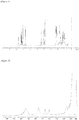
Figure 1 ] A diagram showing the result of 1H-NMR measurement of a polycarbonate resin composition obtained in Example 1. - [
Figure 2 ] An enlarged view ofFigure 1 . - Hereinafter, modes for carrying out the present invention will be described in detail, although the present invention should not be limited thereto and may be modified in various ways without departing from the scope of the present invention.
- A polycarbonate resin (A) according to the present invention has a structural unit represented by General formula (1) below.

- Examples of the structural unit represented by General formula (1) (hereinafter, referred to as "structural unit (K)") include structural units derived from a dihydroxy compound represented by General formula (L) below. For example, it is a structural unit derived from decahydro-1,4:5,8-dimethanonaphthalene diol (hereinafter, sometimes referred to as "D-NDM").

- The structural unit (K) is preferably a mixture of an isomer having a -CH2O- group at
position 6 as represented by General formula (M) below (2,6-isomer) and an isomer having a -CH2O- group at position 7 as represented by General formula (N) below (2,7-isomer). From the viewpoints of the physical properties of the resin such as the strength, tensile elongation, appearance of the molded body and the like, it is preferably 2,6-isomer: 2,7-isomer = 1.0:99.0 to 99.0:1.0, more preferably 2,6-isomer: 2,7-isomer = 20:80 to 80:20, and particularly preferably 2,6-isomer: 2,7-isomer = 50:50 to 80:20 in a mass ratio. According to the present invention, a 2,3-isomer is preferably not included.

- As the structural unit represented by General formula (M) above (hereinafter, referred to as a "structural unit (M)"), a structural unit derived from a dihydroxy compound represented by General formula (O) below may be exemplified. As the structural unit represented by General formula (N) above (hereinafter, referred to as a "structural unit (N)"), a structural unit derived from a dihydroxy compound represented by General formula (P) below may be exemplified.


- In General formulae (K), (L), (M), (N), (O) and (P), R is preferably identical in all of them, and R preferably represents a hydrogen atom in terms of availability.
- While the polycarbonate resin (A) of the present invention has the structural unit represented by General formula (1) above, it may contain other structural unit as long as the effect of the present invention is not impaired. The proportion of the structural unit (K) in the polycarbonate resin (A) of the present invention is preferably 70 mass% or more and more preferably 100 mass%.
- Other structural unit that may be contained in the polycarbonate resin (A) of the present invention refers to a structural unit obtained by reacting a diol compound other than that represented by General formula (1) with a carbonate diester, where examples of the diol compound other than that represented by General formula (1) include bisphenol A, bisphenol AP, bisphenol AF, bisphenol B, bisphenol BP, bisphenol C, bisphenol E, bisphenol F, bisphenol G, bisphenol M, bisphenol S, bisphenol P, bisphenol PH, bisphenol TMC and bisphenol Z.
- The polycarbonate resin (B) of the present invention has a structural unit represented by General formula (2) below.

- In General formula (2), Y represents a C1-C4 alkylene group, preferably an ethylene group or a propylene group, and more preferably an ethylene group.
- As the structural unit represented by General formula (2), a structural unit derived from a dihydroxy compound represented by General formula (Q) below may be exemplified.

- Specific examples of a fluorene-based diol compound represented by General formula (Q) include 9,9-bis(4-hydroxyphenyl)fluorene, 9,9-bis(4-hydroxy-3-methylphenyl)fluorene, 9,9-bis(4-hydroxy-3-tert-butylphenyl)fluorene, 9,9-bis(4-hydroxy-3-isopropylphenyl)fluorene, 9,9-bis(4-hydroxy-3-cyclohexylphenyl)fluorene, 9,9-bis(4-hydroxy-3-phenylphenyl)fluorene, 9,9-bis(4-(2-hydroxyethoxy)phenyl)fluorene, 9,9-bis(4-(2-hydroxyethoxy)-3-methylphenyl)fluorene, 9,9-bis(4-(2-hydroxyethoxy)-3-tert-butylphenyl)fluorene, 9,9-bis(4-(2-hydroxyethoxy)-3-isopropylphenyl)fluorene, 9,9-bis(4-(2-hydroxyethoxy)-3-cyclohexylphenyl)fluorene and 9,9-bis(4-(2-hydroxyethoxy)-3-phenylphenyl)fluorene. Among them, 9,9-bis(4-(2-hydroxyethoxy)phenyl)fluorene (BPEF), 9,9-bis(4-(2-hydroxyethoxy)-3-phenylphenyl)fluorene (BPPEF) and 9,9-bis(4-(2-hydroxyethoxy)-3-methylphenyl)fluorene (BPMEF) are favorable, and 9,9-bis(4-(2-hydroxyethoxy)phenyl)fluorene (BPEF) and 9,9-bis(4-(2-hydroxyethoxy)-3-phenylphenyl)fluorene (BPPEF) are more favorable.
- While the polycarbonate resin (B) of the present invention has the structural unit represented by General formula (2) above, it may contain other structural unit as long as the effect of the present invention is not impaired. The proportion of the structural unit represented by General formula (2) above in the polycarbonate resin (B) of the present invention is preferably 70 mass% or more and more preferably 100 mass%.
- Other structural unit that may be contained in the polycarbonate resin (B) of the present invention refers to a structural unit obtained by reacting a diol compound other than that represented by General formula (2) with a carbonate diester, where examples of the diol compound other than that represented by General formula (2) include bisphenol A, bisphenol AP, bisphenol AF, bisphenol B, bisphenol BP, bisphenol C, bisphenol E, bisphenol F, bisphenol G, bisphenol M, bisphenol S, bisphenol P, bisphenol PH, bisphenol TMC and bisphenol Z.
- The polycarbonate resin composition of the present invention comprises the polycarbonate resin (A) having the structural unit represented by General formula (1) above and the polycarbonate resin (B) having the structural unit represented by General formula (2) above.
- The polycarbonate resin composition of the present invention may comprise other resin as long as the effect of the present invention is not impaired. The total proportion of the polycarbonate resin (A) and the polycarbonate resin (B) in the polycarbonate resin composition of the present invention is preferably 70 mass% or more, and more preferably 100 mass%.
- The mixed ratio of the polycarbonate resin (A) and the polycarbonate resin (B) in the polycarbonate resin composition of the present invention is preferably 90:10 to 10:90, more preferably 90:10-50:50, still more preferably 90:10-60:40 and particularly preferably 80:20-60:40 in a mass ratio.
- Furthermore, the polycarbonate resin of the present invention is preferably added with an antioxidant, a mold release agent, a processing stabilizer, an ultraviolent absorber, a fluidity improving agent, a crystal nucleating agent, a reinforcing agent, a dye, an antistatic agent, an antibacterial agent or the like
- Examples of the antioxidant include triethylene glycol-bis[3-(3-tert-butyl-5-methyl-4-hydroxyphenyl)propionate], 1,6-hexanediol-bis[3-(3,5-di-tert-butyl-4-hydroxyphenyl)propionate], pentaerythritol-tetrakis[3-(3,5-di-tert-butyl-4-hydroxyphenyl)propionate], octadecyl-3-(3,5-di-tert-butyl-4-hydroxyphenyl)propionate, 1,3,5-trimethyl-2,4,6-tris(3,5-di-tert-butyl-4-hydroxybenzyl)benzene, N,N'-Hexamethylene-bis(3,5-di-tert-butyl)-4-hydroxy hydrocinnamamide), 3,5-di-tert-butyl-4-hydroxy-benzyl phosphonate-diethyl ester, tris(3,5-di-tert-butyl-4-hydroxybenzyl)isocyanurate and 3,9-bis{1,1-dimethyl-2-[β-(3-tert-butyl-4-hydroxy-5-methylphenyl)propionyloxy]ethyl}-2,4,8,10-tetraoxaspiro(5,5)undecane. Among them, pentaerythritol-tetrakis[3-(3,5-di-tert-butyl-4-hydroxyphenyl)propionate] is more favorable. The content of the antioxidant in the polycarbonate resin composition is 0.001-0.3 parts by weight with respect to a total of 100 parts by weight of the polycarbonate resins (A) and (B).
- Preferably, the mold release agent contains 90 wt% or more of an ester resulting from an alcohol and a fatty acid. Specifically, examples of the ester resulting from an alcohol and a fatty acid include an ester resulting from a monohydric alcohol and a fatty acid, and a partial ester or a full ester resulting from a polyhydric alcohol and a fatty acid. The above-described ester resulting from a monohydric alcohol and a fatty acid is preferably an ester resulting from a monohydric alcohol having 1-20 carbon atoms and a saturated fatty acid having 10-30 carbon atoms. Moreover, the partial ester or the full ester resulting from a polyhydric alcohol and a fatty acid is preferably a partial ester or a full ester resulting from a polyhydric alcohol having 1-25 carbon atoms and a saturated fatty acid having 10-30 carbon atoms.
- Specifically, examples of the ester resulting from a monohydric alcohol and a saturated fatty acid include stearyl stearate, palmityl palmitate, butyl stearate, methyl laurate and isopropyl palmitate. Examples of the partial ester or the full ester resulting from a polyhydric alcohol and a saturated fatty acid include a full ester or a partial ester of monoglyceride stearate, diglyceride stearate, triglyceride stearate, monosorbitate stearate, monoglyceride behenate, monoglyceride caprate, monoglyceride laurate, pentaerythritol monostearate, pentaerythritol tetrastearate, pentaerythritol tetrapelargonate, propylene glycol monostearate, biphenyl biphenate, sorbitan monostearate, 2-ethylhexyl stearate and dipentaerythritol such as dipentaerythritol hexastearate. Among them, monoglyceride stearate and monoglyceride laurate are particularly favorable. The content of such a mold release agent is preferably in a range of 0.005-2.0 parts by weight, more preferably in a range of 0.01-0.6 parts by weight and still more preferably in a range of 0.02-0.5 parts by weight with respect to a total of 100 parts by weight of the polycarbonate resins (A) and (B).
- Examples of the processing stabilizer include a phosphorus-based heat processing stabilizer and a sulfur-based heat processing stabilizer. Examples of the phosphorus-based heat processing stabilizer include phosphorous acid, phosphoric acid, phosphonous acid, phosphonic acid and esters thereof. Specific examples include triphenyl phosphite, tris(nonylphenyl)phosphite, tris(2,4-di-tert-butylphenyl)phosphite, tris(2,6-di-tert-butylphenyl)phosphite, tridecyl phosphite, trioctyl phosphite, trioctadecyl phosphite, didecylmonophenyl phosphite, dioctylmonophenyl phosphite, diisopropylmonophenyl phosphite, monobutyldiphenyl phosphite, monodecyldiphenyl phosphite, monooctyldiphenyl phosphite, bis(2,6-di-tert-butyl-4-methylphenyl)pentaerythritol diphosphite, 2,2-methylenebis(4,6-di-tert-butylphenyl)octyl phosphite, bis(nonylphenyl)pentaerythritol diphosphite, bis(2,4-dicumyl phenyl)pentaerythritol diphosphite, bis(2,4-di-tert-butylphenyl)pentaerythritol diphosphite, distearyl pentaerythritol diphosphite, tributyl phosphate, triethyl phosphate, trimethyl phosphate, triphenyl phosphate, diphenyl monoorthoxenyl phosphate, dibutyl phosphate, dioctyl phosphate, diisopropyl phosphate, dimethyl benzene phosphonate, diethyl benzene phosphonate, dipropyl benzene phosphonate, tetrakis(2,4-di-t-butylphenyl)-4,4'-biphenylene diphosphonite, tetrakis(2,4-di-t-butylphenyl)-4,3'-biphenylene diphosphonite, tetrakis(2,4-di-t-butylphenyl)-3,3 '-biphenylene diphosphonite, bis(2,4-di-tert-butylphenyl)-4-phenyl-phenyl phosphonite and bis(2,4-di-tert-butylphenyl)-3-phenyl-phenyl phosphonite. Among them, bis(2,6-di-tert-butyl-4-methylphenyl)pentaerythritol diphosphate is more favorable. The content of the phosphorus-based heat processing stabilizer in the polycarbonate resin composition is preferably 0.001-0.2 parts by weight with respect to a total of 100 parts by weight of the polycarbonate resins (A) and (B).
- Examples of the sulfur-based heat processing stabilizer include pentaerythritol-tetrakis(3-lauryl thiopropionate), pentaerythritol-tetrakis(3-myristyl thiopropionate), pentaerythritol-tetrakis(3-stearyl thiopropionate), dilauryl-3,3'-thiodipropionate, dimyristyl-3,3'-thiodipropionate and distearyl -3,3'-thiodipropionate. The content of the sulfur-based heat processing stabilizer in the polycarbonate resin composition is preferably 0.001-0.2 parts by weight with respect to a total of 100 parts by weight of the polycarbonate resins (A) and (B).
- The ultraviolent absorber is preferably at least one ultraviolent absorber selected from the group consisting of a benzotriazole-based ultraviolent absorber, a benzophenone-based ultraviolent absorber, a triazine-based ultraviolent absorber, a cyclic iminoester-based ultraviolent absorber and a cyanoacrylate-based ultraviolent absorber. Specifically, the following ultraviolent absorbers may be used alone or two or more of them may be used in combination.
- Examples of the benzotriazole-based ultraviolent absorber include 2-(2-hydroxy-5-methylphenyl)benzotriazole, 2-(2-hydroxy-5-tert-octylphenyl)benzotriazole, 2-(2-hydroxy-3,5-dicumyl phenyl)phenylbenzotriazole, 2-(2-hydroxy-3-tert-butyl-5-methylphenyl)-5-chlorobenzotriazole, 2,2'-methylenebis[4-(1,1,3,3-tetramethylbutyl)-6-(2N-benzotriazole-2-yl)phenol], 2-(2-hydroxy-3,5-di-tert-butylphenyl)benzotriazole, 2-(2-hydroxy-3,5-di-tert-butylphenyl)-5-chlorobenzotriazole, 2-(2-hydroxy-3,5-di-tert-amylphenyl)benzotriazole, 2-(2-hydroxy-5-tert-octylphenyl)benzotriazole, 2-(2-hydroxy-5-tert-butylphenyl)benzotriazole, 2-(2-hydroxy-4-octoxyphenyl)benzotriazole, 2,2'-methylenebis(4-cumyl-6-benzotriazolephenyl), 2,2'-p-phenylenebis(1,3-benzoxazine-4-one) and 2-[2-hydroxy-3-(3,4,5,6-tetrahydrophthalimide methyl)-5-methylphenyl]benzotriazole.
- Examples of the benzophenone-based ultraviolent absorber include 2,4-dihydroxy benzophenone, 2-hydroxy-4-methoxybenzophenone, 2-hydroxy-4-octoxybenzophenone, 2-hydroxy-4-benzyloxybenzophenone, 2-hydroxy-4-methoxy-5-sulfoxy benzophenone, 2-hydroxy-4-methoxy-5-sulfoxy trihydrideratebenzophenone, 2,2'-dihydroxy -4-methoxybenzophenone, 2,2',4,4'-tetrahydroxybenzophenone, 2,2'-dihydroxy -4,4'-dimethoxybenzophenone, 2,2'-dihydroxy -4,4'-dimethoxy-5-sodium sulfoxy benzophenone, bis(5-benzoyl-4-hydroxy-2-methoxyphenyl)methane, 2-hydroxy-4-n-dodecyloxybenzophenone and 2-hydroxy-4-methoxy-2'-carboxy benzophenone.
- Examples of the triazine-based ultraviolent absorber include 2-(4,6-diphenyl-1,3,5-triazine-2-yl)-5-[(hexyl)oxy]-phenol and 2-(4,6-bis(2,4-dimethylphenyl)-1,3,5-triazine-2-yl)-5-[(octyl)oxy]-phenol.
- Examples of the cyclic iminoester-based ultraviolent absorber include 2,2'-bis(3,1-benzoxazine-4-one), 2,2'-p-phenylenebis(3,1-benzoxazine-4-one), 2,2'-m-phenylenebis(3,1-benzoxazine-4-one), 2,2'-(4,4'-diphenylene)bis(3,1-benzoxazine-4-one), 2,2'-(2,6-naphthalene)bis(3,1-benzoxazine-4-one), 2,2'-(1,5-naphthalene)bis(3,1-benzoxazine-4-one), 2,2'-(2-methyl-p-phenylene)bis(3,1-benzoxazine-4-one), 2,2'-(2-nitro-p-phenylene)bis(3,1-benzoxazine-4-one) and 2,2'-(2-chloro-p-phenylene)bis(3,1-benzoxazine-4-one).
- Examples of the cyanoacrylate-based ultraviolent absorber include 1,3-bis-[(2'-cyano-3',3'-diphenylacryloyl)oxy]-2,2-bis[(2-cyano-3,3-diphenylacryloyl)oxy]methyl)propane and 1,3-bis-[(2-cyano-3,3-diphenylacryloyl)oxy]benzene.
- The content of the ultraviolent absorber is preferably 0.01-3.0 parts by weight, more preferably 0.02-1.0 parts by weight and still more preferably 0.05-0.8 parts by weight with respect to a total of 100 parts by weight of the polycarbonate resins (A) and (B). As long as the blended amount is within the above-mentioned range, sufficient weather resistance can be imparted to the polycarbonate resin composition according to usage.
- Phenol generated upon production and unreacted residual carbonate diester exist as impurities in the polycarbonate resin compound. The content of phenol in the polycarbonate resin composition is preferably 0.1-3000 ppm, more preferably 0.1-2000 ppm, and still more preferably 1-1000 ppm, 1-800 ppm, 1-500 ppm or 1-300 ppm. The content of the carbonate diester in the polycarbonate resin composition is preferably 0.1-1000 ppm, more preferably 0.1-500 ppm, and particularly preferably 1-100 ppm. The amounts of phenol and the carbonate diester contained in the polycarbonate resin composition can be adjusted to obtain a resin having physical properties of interest. The contents of phenol and the carbonate diester can suitably be adjusted by altering the polycondensation conditions or apparatus. They can also be adjusted by altering the conditions for the extruding step following the polycondensation.
- If the content of phenol or the carbonate diester exceeds the above-mentioned range, problems such as deterioration of the strength of the resulting molded resin body or generation of odor may be caused. On the other hand, if the content of phenol or the carbonate diester falls below the above-described range, plasticity of the resin upon melting may possibly be deteriorated.
- The method for producing the polycarbonate resin composition of the present invention is not particularly limited, and the composition may be produced, for example, by any of the following methods: (1) a method in which polycarbonate resins (A) and (B) in solid states are mixed and kneaded with a kneading machine; (2) a method in which a polycarbonate resin (A) in a molten state is added and kneaded with a polycarbonate resin (B) in a solid state; (3) a method in which a polycarbonate resin (B) in a molten state is added and kneaded with a polycarbonate resin (A) in a solid state; and (4) a method in which a polycarbonate resin (A) in a molten state and a polycarbonate resin (B) in a molten state are mixed and kneaded.
- Kneading may be carried out in either a continuous or batch mode. The kneading machine is preferably an extruder in a case of a continuous mode, and Labo Plastomill or a kneader in a case of a batch mode.
- The polycarbonate resin (A) of the present invention can be produced using a dihydroxy compound represented by General formula (L) and a carbonate diester as raw materials in a melt polycondensation process. In the dihydroxy compound represented by General formula (L), a mixture of isomers having hydroxymethyl groups at 2,6- and 2,7-positions is present. The mass ratio of these isomers is 2,6-isomer: 2,7-isomer = 0.1:99.9 to 99.9:0.1. The mass ratio is preferably 2,6-isomer: 2,7-isomer = 1.0:99.0 to 99.0:1.0, more preferably 2,6-isomer: 2,7-isomer = 20:80 to 80:20, and particularly preferably 2,6-isomer: 2,7-isomer = 50:50 to 80:20 in terms of the physical properties of the resin such as resin strength, tensile elongation and appearance of the molded body. According to the present invention , a 2,3-isomer is preferably not contained. Moreover, other diol compound may be used in combination. Production can take place in the presence of a basic compound catalyst, a transesterification catalyst or a mixed catalyst containing both of them as a polycondensation catalyst for this reaction.
- Meanwhile, the polycarbonate resin (B) of the present invention can be produced using a dihydroxy compound represented by General formula (Q) and a carbonate diester as raw materials in a melt polycondensation process.
- Examples of the carbonate diester include diphenyl carbonate, ditolyl carbonate, bis(chlorophenyl)carbonate, m-cresyl carbonate, dimethyl carbonate, diethyl carbonate, dibutyl carbonate and dicyclohexyl carbonate. Among them, diphenyl carbonate is particularly preferable in terms of reactivity and purity. The carbonate diester is preferably used at a molar ratio of 0.97-1.20 and more preferably at a molar ratio of 0.98-1.10 per mole of the diol component. This molar ratio can be adjusted to control the molecular weight of the polycarbonate resin.
- Examples of the basic compound catalyst include alkali metal compounds, alkaline earth metal compounds and nitrogen-containing compounds.
- Examples of the alkali metal compound include organic acid salts, inorganic salts, oxides, hydroxides, hydrides and alkoxides of alkali metals. Specifically, sodium hydroxide, potassium hydroxide, cesium hydroxide, lithium hydroxide, sodium hydrogen carbonate, sodium carbonate, potassium carbonate, cesium carbonate, lithium carbonate, sodium acetate, potassium acetate, cesium acetate, lithium acetate, sodium stearate, potassium stearate, cesium stearate, lithium stearate, sodium borohydride, phenylated boron sodium, sodium benzoate, potassium benzoate, cesium benzoate, lithium benzoate, disodium hydrogen phosphate, dipotassium hydrogen phosphate, dilithium hydrogen phosphate, disodium phenyl phosphate, or a disodium salt, a dipotassium salt, a dicesium salt or a dilithium salt of bisphenol A, a sodium salt, a potassium salt, a cesium salt or a lithium salt of phenol, or the like can be used. Among them, sodium carbonate and sodium hydrogen carbonate are preferable in terms of catalytic effect, price, availability, influence on hue of the resin and the like.
- Examples of the alkaline earth metal compound include organic acid salts, inorganic salts, oxides, hydroxides, hydrides or alkoxides of alkaline earth metal compounds. Specifically, magnesium hydroxide, calcium hydroxide, strontium hydroxide, barium hydroxide, magnesium hydrogen carbonate, calcium hydrogen carbonate, strontium hydrogen carbonate, barium hydrogen carbonate, magnesium carbonate, calcium carbonate, strontium carbonate, barium carbonate, magnesium acetate, calcium acetate, strontium acetate, barium acetate, magnesium stearate, calcium stearate, calcium benzoate, magnesium phenyl phosphate, or the like can be used.
- Examples of the nitrogen-containing compound include quaternary ammonium hydroxides and salts and amines thereof. Specifically, quaternary ammonium hydroxides having an alkyl group, an aryl group or the like, such as tetramethylammonium hydroxide, tetraethylammonium hydroxide, tetrapropylammonium hydroxide, tetrabutylammonium hydroxide and trimethylbenzylammonium hydroxide; tertiary amines such as triethylamine, dimethylbenzylamine and triphenylamine; secondary amines such as diethylamine and dibutylamine; primary amines such as propylamine and butylamine; imidazoles such as 2-methylimidazole, 2-phenylimidazole and benzimidazole; bases or basic salts such as ammonia, tetramethylammonium borohydride, tetrabutylammonium borohydride, tetrabutylammonium tetraphenylborate and tetraphenylammonium tetraphenylborate; or the like can be used.
- As the transesterification catalyst, a salt of zinc, tin, zirconium, lead or the like can preferably be used, where they may be used alone or in combination. It may also be used in combination with the above-mentioned alkali metal compound or alkaline earth metal compound.
- Specifically, zinc acetate, zinc benzoate, zinc 2-ethylhexanoate, tin (II) chloride, tin (IV) chloride, tin (II) acetate, tin (IV) acetate, dibutyltin dilaurate, dibutyltin oxide, dibutyltin dimethoxide, zirconium acetylacetonate, zirconium oxyacetate, zirconium tetrabutoxide, lead (II) acetate, lead (IV) acetate, or the like can be used as the transesterification catalyst.
- These catalysts are preferably used at a molar ratio of 1 x 10⁻⁹ to 1 x 10⁻³, and more preferably at a molar ratio of 1 x 10⁻⁷ to 1 x 10⁻⁴ per mole of the total dihydroxy compounds.
- According to the melt polycondensation process, melt polycondensation is carried out by heating the above-described raw materials and catalyst under ambient or reduced pressure while removing side products through transesterification reaction. Generally, the reaction takes place through a multistage process that includes two or more stages.
- Specifically, the first stage reaction is carried out at a temperature of 120-260°C, preferably 180-240°C, for 0.1-5 hours, preferably 0.5-3 hours. Then, the reaction temperature is increased while increasing the degree of pressure reduction of the reaction system so as to allow reaction between the diol compound and the carbonate diester, and eventually allowing polycondensation reaction under a reduced pressure of 1 mmHg or lower at a temperature of 200-350°C for 0.05-2 hours. Such reaction can be carried out in either a continuous or batch mode. The reactor used for the reaction may be a vertical type reactor equipped with anchor-shaped stirring blades, Maxblend stirring blades, helical ribbon-shaped stirring blades or the like, a horizontal type reactor equipped with paddle blades, lattice blades, spectacle-shaped blades or the like, or an extruder type reactor equipped with a screw. In addition, these reactors are preferably used in a suitable combination according to the viscosity of the polymer.
- According to the method for producing the polycarbonate resin (A) and the polycarbonate resin (B) of the present invention, the catalyst may be removed or deactivated after the polymerization reaction in order to retain heat stability and hydrolysis stability. Generally, the catalyst is preferably deactivated by a process of adding a known acidic substance. Specifically, as such a substance, an ester such as butyl benzoate; an aromatic sulfonic acid such as p-toluenesulfonic acid; an aromatic sulfonate ester such as butyl p-toluenesulfonic acid or hexyl p-toluenesulfonic acid; a phosphoric acid such as phosphorous acid, phosphoric acid or phosphonic acid; a phosphite ester such as triphenyl phosphite, monophenyl phosphite, diphenyl phosphite, diethyl phosphite, di-n-propyl phosphite, di-n-butyl phosphite, di-n-hexyl phosphite, dioctyl phosphite or monooctyl phosphite; a phosphate ester such as triphenyl phosphate, diphenyl phosphate, monophenyl phosphate, dibutyl phosphate, dioctyl phosphate or monooctyl phosphate; a phosphonic acid such as diphenyl phosphonate, dioctyl phosphonate or dibutyl phosphonate; a phosphonate ester such as diethyl phenyl phosphonate; a phosphine such as triphenyl phosphine or bis(diphenylphosphino)ethane; a boric acid such as boric acid or phenylboric acid; an aromatic sulfonic acid salt such as dodecylbenzene sulfonate·tetrabutyl phosphonium salt; an organic halide such as stearic acid chloride, benzoyl chloride or p-toluenesulfonic acid chloride; an alkyl sulfate such as dimethyl sulfate; an organic halide such as benzyl chloride; or the like can favorably be used. In terms of deactivation effect, hue and stability of the resin, it is preferable to use butyl p-toluenesulfonic acid. Furthermore, these deactivating agents are used in an amount of preferably 0.01-50 times mol and more preferably 0.3-20 times mol with respect to the amount of the catalyst. If the amount is less than 0.01 times mol the amount of the catalyst, the deactivation effect will be inadequate, which is unfavorable. On the other hand, if the amount is more than 50 times mol the amount of the catalyst, the heat resistance will be poor and the molded body will likely be susceptible to coloring, which are unfavorable.
- Following deactivation of the catalyst, a step of devolatilizing and removing the low-boiling-point compound in the polymer under a pressure of 0.1-1 mmHg at a temperature of 200-350°C may be provided. For this step, a horizontal-type device equipped with stirring blades that have excellent surface renewal capacity such as paddle blades, lattice blades, spectacle-shaped blades or the like, or a thin-film evaporator can favorably be used.
- It is desirable that the content of the foreign matters in the polycarbonate resin composition of the present invention is as small as possible, and for which filtration of the molten raw materials, filtration of the catalyst solution or the like can favorably be performed. The mesh of the filter is preferably 5 µm or less and more preferably 1 µm or less. Moreover, the generated resin can favorably be filtrated with a polymer filter. The mesh of the polymer filter is preferably 100 µm or less and more preferably 30 µm or less. Needless to say, the step of collecting the resin pellets should be carried out in a low dust environment, which is preferably Class 1000 or lower and more preferably Class 100 or lower.
- The glass transition temperature (Tg) of the polycarbonate resin composition of the present invention is preferably 95-180°C, more preferably 100-160°C and particularly preferably 105-155°C. The glass transition temperature (Tg) is preferably 110°C and 120°C at minimum and preferably 150°C at maximum. Tg lower than 95°C is unfavorable since the usage temperature range of a lens or a camera will be narrowed. On the other hand, Tg exceeding 180°C is unfavorable since the molding conditions employed for injection molding become strict.
- The refractive index of the polycarbonate resin composition of the present invention as measured according to the method of JIS-K-7142 after molding is preferably 1.50-1.61 and more preferably 1.53-1.60.
- The Abbe number of the polycarbonate resin composition of the present invention as measured according to the method of JIS-K-7142 after molding is preferably 28.0 or higher, more preferably 30.0 or higher and particularly preferably 32.0 or higher. The Abbe number is preferably 60 and more preferably 50 at maximum.
- The total light transmittance of the polycarbonate resin composition of the present invention as measured by integrating-sphere photoelectric photometry after molding into a molded body with a thickness of 3 mm is preferably 85.0% or more and more preferably 87.0% or more. The total light transmittance is about 99% at maximum.
- The water absorption of the polycarbonate resin composition of the present invention as measured according to the method of JIS-K-7209 is preferably 0.2-2.0% and more preferably 0.3-1.5%.
- The coefficient of hygroscopic expansion of the polycarbonate resin composition of the present invention is preferably 0.01-0.5% and more preferably 0.03-0.4%. The coefficient of hygroscopic expansion is measured with a micrometer (accuracy: 1/1000 mm). The coefficient of hygroscopic expansion refers to the change (%) in the diameter of a disk that is used for the water absorption measurement before and after water absorption.
- The weight-average molecular weight (Mw) of the polycarbonate resin composition of the present invention in terms of polystyrene is preferably 20,000-70,000. The weight-average molecular weight (Mw) in terms of polystyrene is more preferably 25,000-65,000 and particularly preferably 30,000-60,000. Mw less than 20,000 is unfavorable since the optical lens will be brittle. Mw greater than 70,000 is unfavorable since the melt viscosity will be increased and thus removal of the resin at the end of production becomes difficult, and further fluidity will be deteriorated which renders injection molding in a molten state difficult.
- The melt flow rate (MVR) of the polycarbonate resin composition of the present invention is preferably 10 to 80 and more preferably 20-60.
- The reduced viscosity (ηsp/C) of the polycarbonate resin composition of the present invention is preferably 0.20 dl/g or more and more preferably 0.23-0.84 dl/g.
- The hue (YI) of the polycarbonate resin composition of the present invention is preferably 5.0 or less, more preferably 3.5 or less, still more preferably 3.0 or less and particularly preferably 2.5 or less. The hue (YI) is 0.2 or more at minimum.
- The haze (Hz) of the polycarbonate resin composition of the present invention when measured with a thickness of 3 mm is preferably 0.4% or less, more preferably 0.3% or less, still more preferably 0.2% or less and particularly preferably 0.1% or less. The haze (Hz) is 0.01% or more at minimum.
- In terms of yellowing resistance and stability (heat resistance, weather resistance, etc.), decahydro-1,4:5,8-dimethanonaphthalene diol (D-NDM) contained in the final pellets (polycarbonate resin composition containing additives) is preferably 30 ppm or less and more preferably 20 ppm or less.
- An optical lens of the present invention can be obtained by making the above-described polycarbonate resin composition of the present invention into a lens shape by injection molding with an injection molding machine or an injection compression molding machine. While molding conditions for injection molding are not particularly limited, molding temperature is preferably 180-280°C. Moreover, injection pressure is preferably 50-1700 kg/cm2.
- In order to prevent foreign matters from mixing into an optical lens as much as possible, the molding environment should certainly be a low dust environment, which is preferably Class 1000 or lower and more preferably Class 100 or lower.
- The optical lens of the present invention is preferably used in a form of an aspheric lens according to usage. Since an aspherical lens is capable of correcting spherical aberration to be substantially zero with a single lens, there is no need of cancelling the spherical aberration with a combinational use of a plurality of spherical lenses, thereby realizing reduction in weight and production cost. Accordingly, an aspherical lens among various optical lenses is particularly useful as a camera lens. Astigmatism of the aspheric lens is preferably 0-15 mλ and more preferably 0-10 mλ.
- While the thickness of the optical lens of the present invention can be determined within a wide range according to usage and is not particularly limited, it is preferably 0.01-30 mm and more preferably 0.1-15 mm. If necessary, the surface of the optical lens of the present invention may be provided with a coat layer such as an antireflection layer or a hard coat layer. The antireflection layer may be either a monolayer or a multilayer and either organic or inorganic, preferably inorganic. Specifically, examples include oxides or fluorides such as silicon oxide, aluminum oxide, zirconium oxide, titanium oxide, cerium oxide, magnesium oxide and magnesium fluoride. Among them, silicon oxide and zirconium oxide are favorable, and a combination of silicon oxide and zirconium oxide is more favorable. While the antireflection layer is not particularly limited as to the monolayer or the combination of multilayer, or the combination of their components, thickness and else, it preferably has a double- or triple-layer structure, particularly preferably a triple-layer structure. In addition, the thickness of the antireflection layer as a whole is preferably 0.00017-3.3% of the thickness of the optical lens, which is specifically 0.05-3 µm and particularly preferably 1-2 µm.
- Hereinafter, the present invention will be described by way of examples, although the present invention should not be limited in any way to these examples. Now, values measured in the examples were obtained using following methods or apparatuses.
- GPC was employed to generate a calibration curve, using tetrahydrofuran as a developing solvent and a standard polystyrene having a known molecular weight (molecular weight distribution = 1). Based on this calibration curve, Mw were calculated from retention time of GPC.
- A differential scanning calorimeter (DSC) was used for the measurement.
- The polycarbonate resin composition was press molded into a 40ϕ disk with a thickness of 3 mm (molding conditions: 200°C, 100 kgf/cm2, 2 minutes) and cut out at right angle, which was subjected to measurement using KPR-200 from Kalnew.
- Injection molding was carried out with an injection molding machine SH50 from Sumitomo Heavy Industries at a cylinder temperature of 260°C and at a mold temperature that was lower than the glass transition temperature of the resin by 30°C, thereby obtaining a 3 mm-thick disk. This disk was used to measure total light transmittance, hue (YI) and haze (Hz).
- Hue (YI) was measured using SE2000 from Nippon Denshoku Industries while total light transmittance and haze (Hz) were measured using NDH2000 from Nippon Denshoku Industries.
- 0.5 g of a sample was dissolved in 50 ml of tetrahydrofuran (THF) to give a sample solution. A calibration curve was generated from a pure product of each compound as a standard product, and 2 µL of the sample solution was quantified by LC-MS under the following measurement conditions. The detection limit under these measurement conditions were 0.01 ppm.
- LC-MS measurement conditions:
Measurement apparatus (LC part): Agilent Infinity 1260 LC System
Columns: ZORBAX Eclipse XDB-18 and guard cartridge
Mobile phases: - A: 0.01 mol/L-aqueous ammonium acetate solution
- B: 0.01 mol/L-methanol solution of ammonium acetate
- C: THF
- 23.50 kg (105.7 mol) of D-NDM represented by Formula (1a) below containing 2,6-isomer and 2,7-isomer at a mass ratio of 50:50, 22.98 kg (107.3 mol) of diphenyl carbonate, and 0.13 g (1.5 x 10⁻³ mol) of sodium hydrogen carbonate were placed in a 50L reactor equipped with a stirrer and a distillation device, heated to 205°C by spending an hour under a nitrogen atmosphere of 760 Torr, and stirred. The pressure was adjusted to 205 Torr by spending 30 minutes, and retained at 205 Torr at 205°C for 30 minutes to initiate transesterification reaction. After 30 minutes, the pressure was reduced from 205 Torr to 180 Torr by spending 20 minutes. While reducing the pressure, the temperature was heated to 215°C. 120 minutes after the initiation of the reaction, the temperature was increased to 230°C and the pressure was reduced to 150 Torr. 180 minutes after the initiation of the reaction, the temperature was increased to 240°C and the pressure was reduced to 1 Torr, which was then retained for 20 minutes, thereby obtaining a polycarbonate resin.
- The resulting polycarbonate resin had Mw of 30,000 and a glass transition temperature Tg of 133°C. This polycarbonate resin had a refractive index of 1.533, an Abbe number of 56.2, total light transmittance of 89%, hue (YI) of 2.5, and haze (Hz) of 0.3%.
- In addition, the polycarbonate resin had a D-NDM content of 10 ppm, a phenol content of 210 ppm, and a DPC content of 35 ppm. The results are summarized in Table 3 below.

- 20.0 kg (45.6 mol) of BPEF represented by the following structural formula, 10.16 kg (47.4 mol) of diphenyl carbonate, and 0.03 g (3.6 x 10⁻⁴ mol) of sodium hydrogen carbonate were placed in a 50L reactor equipped with a stirrer and a distillation device, heated to 205°C by spending an hour under a nitrogen atmosphere of 760 Torr, and stirred. The pressure was adjusted to 205 Torr by spending 20 minutes, and retained at 205 Torr at 205°C for 30 minutes to initiate transesterification reaction. After 30 minutes, the pressure was reduced from 205 Torr to 180 Torr by spending 20 minutes. While reducing the pressure, the temperature was heated to 215°C. 120 minutes after the initiation of the reaction, the temperature was increased to 230°C and the pressure was reduced to 150 Torr. 180 minutes after the initiation of the reaction, the temperature was increased to 240°C and the pressure was reduced to 1 Torr, which was then retained for 20 minutes, thereby obtaining a polycarbonate resin.
- The resulting polycarbonate resin had Mw of 27,000 and a glass transition temperature Tg of 143°C. This polycarbonate resin had a refractive index of 1.639, an Abbe number of 23.5, total light transmittance of 89%, hue (YI) of 3.0, and haze (Hz) of 0.3%.
- In addition, the polycarbonate resin had a phenol content of 210 ppm, a DPC content of 250 ppm, and a BPEF content of 30 ppm. The results are summarized in Table 3 below.

- 20.0 kg (33.9 mol) of BPEF represented by the following structural formula, 7.47 kg (34.9 mol) of diphenyl carbonate, and 0.025 g (3.0 x 10⁻⁴ mol) of sodium hydrogen carbonate were placed in a 50L reactor equipped with a stirrer and a distillation device, heated to 205°C by spending an hour under a nitrogen atmosphere of 760 Torr, and stirred. The pressure was adjusted to 205 Torr by spending 20 minutes, and retained at 205 Torr at 205°C for 30 minutes to initiate transesterification reaction. After 30 minutes, the pressure was reduced from 205 Torr to 180 Torr by spending 20 minutes. While reducing the pressure, the temperature was heated to 215°C. 120 minutes after the initiation of the reaction, the temperature was increased to 230°C and the pressure was reduced to 150 Torr. 180 minutes after the initiation of the reaction, the temperature was increased to 240°C and the pressure was reduced to 1 Torr, which was then retained for 20 minutes, thereby obtaining a polycarbonate resin.
- The resulting polycarbonate resin had Mw of 40,000 and a glass transition temperature Tg of 155°C. This polycarbonate resin had a refractive index of 1.657, an Abbe number of 21.2, total light transmittance of 88%, hue (YI) of 3.0, and haze (Hz) of 0.3%.
- In addition, the polycarbonate resin had a phenol content of 270 ppm, and a DPC content of 100 ppm. The results are summarized in Table 3 below.

- A polycarbonate resin was obtained by carrying out a reaction in the same manner as Synthesis example 1 except that the monomer as the raw material was changed to 15.0 kg (57.2 mol) of penta-cyclopentadecane dimethanol represented by the following structural formula.
- The resulting polycarbonate resin had Mw of 32,000 and a glass transition temperature Tg of 137°C. This polycarbonate resin had a refractive index of 1.537, an Abbe number of 56.6, total light transmittance of 89%, hue (YI) of 3.1, and haze (Hz) of 0.3%.
- In addition, the polycarbonate resin had a phenol content of 250 ppm, and a DPC content of 80 ppm. The results are summarized in Table 3 below.

- 20.0 kg (87.6 mol) of BPA, 19.3 kg (90.2 mol) of diphenyl carbonate and 0.03 g (3.6 x 10⁻⁴ mol) of sodium hydrogen carbonate were placed in a 50L reactor equipped with a stirrer and a distillation device, heated to 205°C by spending an hour under a nitrogen atmosphere of 760 Torr, and stirred. The pressure was adjusted to 205 Torr by spending 20 minutes, and retained at 205 Torr at 205°C for 30 minutes to initiate transesterification reaction. After 30 minutes, the pressure was reduced from 205 Torr to 180 Torr by spending 20 minutes. While reducing the pressure, the temperature was heated to 215°C. 120 minutes after the initiation of the reaction, the temperature was increased to 230°C and the pressure was reduced to 150 Torr. 180 minutes after the initiation of the reaction, the temperature was increased to 240°C and the pressure was reduced to 1 Torr, which was then retained for 20 minutes, thereby obtaining a polycarbonate resin.
- The resulting polycarbonate resin had Mw of 33,000 and a glass transition temperature Tg of 145°C. This polycarbonate resin had a refractive index of 1.582, an Abbe number of 30, total light transmittance of 89%, hue (YI) of 2.3, and haze (Hz) of 0.3%.
- In addition, the polycarbonate resin had a phenol content of 300 ppm, and a DPC content of 100 ppm. The results are summarized in Table 3 below.
- A polycarbonate resin was obtained by carrying out a reaction in the same manner as Synthesis example 1 except that the amount of sodium hydrogen carbonate was changed to 0.01 g (1.2 x 10⁻⁴ mol).
- The resulting polycarbonate resin had Mw of 30,000 and a glass transition temperature Tg of 133°C. This polycarbonate resin had a refractive index of 1.533, an Abbe number of 56.2, total light transmittance of 89%, hue (YI) of 2.5, and haze (Hz) of 0.3%.
- In addition, the polycarbonate resin had a D-NDM content of 15 ppm, a phenol content of 220 ppm, and a DPC content of 40 ppm. The results are summarized in Table 3 below.
- Pellets of 10.0 kg of the polycarbonate resin obtained in Synthesis example 1 by using D-NDM as a raw material and 4.8 kg of the polycarbonate resin obtained in Synthesis example 2 by using BPEF as a raw material were mixed, to which 14.8 g of a hindered phenol-based antioxidant (AO-60 from ADEKA), 4.4 g of a phosphite-based antioxidant (trade name: PEP-36) and 14.8 g of glycerol monostearate (S-100A from Riken Vitamin) as a mold release agent were added. The resultant was kneaded with a twin-screw extruder (IPEC-35) for pelletization. The pellets of the resulting polycarbonate resin composition were colorless and transparent, and their physical properties were measured to be Mw of 28,000, Tg of 137°C, a refractive index (nd) of 1.567, an Abbe number (vd) of 38, total light transmittance of 89%, hue (YI) of 2.5, and haze (Hz) of 0.2%.
- In addition, the polycarbonate composition had a D-NDM content of 15 ppm, a phenol content of 130 ppm, a DPC content of 170 ppm and a BPEF content of 20 ppm. The results are summarized in Table 4.
- The results of 1H-NMR measurement of the polycarbonate resin composition obtained in Example 1 are shown in
Figures 1 and 2 . - The following data were read from the acquired 1H-NMR chart.
Chemical shift Integral value Standard (ethylene chain) 4.60-3.50 ppm 100 Vinyl group (from BPEF) 4.75-4.66 ppm 0.052 - The above-mentioned vinyl groups refer to Hf and Ho in the following structural formula.


- If Y in General formula (2) of the present invention is a C2 alkylene group, a preferable amount of the fluorene-based terminal vinyl groups is preferably such that "(Peak integral value at 4.60-3.50 ppm)/(Peak integral value at 4.75-4.66 ppm) x 100" is preferably 0.001-1.0, more preferably 0.010-0.5 and particularly preferably 0.010-0.1.
- A polycarbonate resin composition was obtained in the same manner as Example 1 except that 5.0 kg of the polycarbonate resin obtained in Synthesis example 1 using D-NDM as a raw material, and 0.9 kg of the polycarbonate resin obtained in Synthesis example 2 using BPEF as a raw material were used. The pellets of the resulting polycarbonate resin composition were colorless and transparent, and their physical properties were measured to be Mw of 25,000, Tg of 136°C, a refractive index (nd) of 1.547, an Abbe number (vd) of 45, total light transmittance of 89%, hue (YI) of 2.3, and haze (Hz) of 0.3%.
- In addition, the polycarbonate composition had a D-NDM content of 15 ppm, a phenol content of 250 ppm, a DPC content of 180 ppm, and a BPEF content of 20 ppm. The results are summarized in Table 4.
- A polycarbonate resin composition was obtained in the same manner as Example 1 except that 3.0 kg of the polycarbonate resin obtained in Synthesis example 1 using D-NDM as a raw material, and 3.0 kg of the polycarbonate resin obtained in Synthesis example 2 using BPEF as a raw material were used. The pellets of the resulting polycarbonate resin composition were colorless and transparent, and their physical properties were measured to be Mw of 29,000, Tg of 140°C, a refractive index (nd) of 1.583, an Abbe number (vd) of 33, total light transmittance of 89%, hue (YI) of 2.9, and haze (Hz) of 0.3%.
- In addition, the polycarbonate composition had a D-NDM content of 15 ppm, a phenol content of 250 ppm, a DPC content of 180 ppm, and a BPEF content of 20 ppm. The results are summarized in Table 4.
- A polycarbonate resin composition was obtained in the same manner as Example 1 except that 3.2 kg of the polycarbonate resin obtained in Synthesis example 1 using D-NDM as a raw material, and 6.8 kg of the polycarbonate resin obtained in Synthesis example 2 using BPEF as a raw material were used. The pellets of the resulting polycarbonate resin composition were colorless and transparent, and their physical properties were measured to be Mw of 28,000, Tg of 141°C, a refractive index (nd) of 1.603, an Abbe number (vd) of 29, total light transmittance of 89%, hue (YI) of 3.2, and haze (Hz) of 0.3%.
- In addition, the polycarbonate composition had a D-NDM content of 15 ppm, a phenol content of 280 ppm, a DPC content of 200 ppm, and a BPEF content of 20 ppm. The results are summarized in Table 4.
- A polycarbonate resin composition was obtained in the same manner as Example 1 except that 10.0 kg of the polycarbonate resin obtained in Synthesis example 1 using D-NDM as a raw material, and 4.8 kg of the polycarbonate resin obtained in Synthesis example 3 using BPPEF as a raw material were used. The pellets of the resulting polycarbonate resin composition were colorless and transparent, and their physical properties were measured to be Mw of 29,000, Tg of 141°C, a refractive index (nd) of 1.570, an Abbe number (vd) of 36, total light transmittance of 88%, hue (YI) of 5.6, and haze (Hz) of 0.3%.
- In addition, the polycarbonate composition had a D-NDM content of 15 ppm, a phenol content of 290 ppm, and a DPC content of 190 ppm. The results are summarized in Table 4.
- Kneading and pelletization were performed in the same manner as Example 1 except that the polycarbonate resin obtained in Synthesis example 6 using D-NDM as a raw material was used instead of the polycarbonate resin obtained in Synthesis example 1. The pellets of the resulting polycarbonate resin composition were colorless and transparent, and their physical properties were measured to be Mw of 28,000, Tg of 137°C, a refractive index (nd) of 1.567, an Abbe number (vd) of 38, total light transmittance of 89%, hue (YI) of 2.6, and haze (Hz) of 0.4%.
- In addition, the polycarbonate composition had a D-NDM content of 15 ppm, a phenol content of 135 ppm, a DPC content of 175 ppm, and a BPEF content of 20 ppm. The results are summarized in Table 4.
- 10 kg (45.0 mol) of D-NDM, 4.8 kg (10.9 mol) of BPEF, 12.4 kg (57.9 mol) of diphenyl carbonate and 0.05 g (6.7 x 10⁻⁴ mol) of sodium hydrogen carbonate were placed in a 50L reactor equipped with a stirrer and a distillation device, heated to 205°C by spending an hour under a nitrogen atmosphere of 760 Torr, and stirred. The pressure was adjusted to 205 Torr by spending 20 minutes, and retained at 205 Torr at 205°C for 30 minutes to initiate transesterification reaction. After 30 minutes, the pressure was reduced from 205 Torr to 180 Torr by spending 20 minutes. While reducing the pressure, the temperature was heated to 215°C. 120 minutes after the initiation of the reaction, the temperature was increased to 230°C and the pressure was reduced to 150 Torr. 180 minutes after the initiation of the reaction, the temperature was increased to 240°C and the pressure was reduced to 1 Torr, which was then retained for 20 minutes, thereby obtaining a polycarbonate copolymer.
- To the resulting polycarbonate copolymer, 14.8 g of a hindered phenol-based antioxidant (AO-60 from ADEKA), 4.4 g of a phosphite-based antioxidant (trade name: PEP-36) and 14.8 g of glycerol monostearate (S-100A from Riken Vitamin) as a mold release agent were added. The resultant was kneaded with a twin-screw extruder (IPEC-35) for pelletization. The physical properties of the resulting polycarbonate resin composition were measured to be Mw of 27,000, Tg of 137°C, a refractive index (nd) of 1.566, an Abbe number (vd) of 38, total light transmittance of 87%, hue (YI) of 6.0, and haze (Hz) of 0.5%.
- In addition, the polycarbonate composition had a D-NDM content of 15 ppm, a phenol content of 320 ppm, a DPC content of 220 ppm, and a BPEF content of 20 ppm. The results are summarized in Table 5 below.
- Kneading was performed in the same manner as Example 1 except that 10.0 kg of the polycarbonate resin obtained in Synthesis example 4 using PCPDM as a raw material and 4.8 kg of the polycarbonate resin obtained in Synthesis example 2 using BPEF as a raw material were used, but they were not uniformly compatible.
- Kneading was performed in the same manner as Example 1 except that 10.0 kg of the polycarbonate resin obtained in Synthesis example 1 using D-NDM as a raw material and 4.8 kg of the polycarbonate resin obtained in Synthesis example 5 using BPA as a raw material were used. The physical properties of the resulting polycarbonate resin composition were measured to be Mw of 28,000, Tg of 138°C, a refractive index (nd) of 1.547, an Abbe number (vd) of 43, total light transmittance of 87%, hue (YI) of 3.0, and haze (Hz) of 0.7%. The results are summarized in Table 6 below.
[Table 3] Synthesis example 1 Synthesis example 2 Synthesis example 3 Synthesis example 4 Synthesis example 5 Synthesis example 6 D-NDM-PC (mass%) 100 - - - - 100 BPEF-PC (mass%) - 100 - - - - BPPEF-PC (mass%) - 100 PCPDM-PC (mass%) - - - 100 - - BPA-PC (mass%) - - - - 100 - Mw 30000 27000 40000 32000 33000 30000 Tg(°C) 133 143 155 137 145 133 Refractive index nD 1.533 1.639 1.657 1.537 1.582 1.533 Abbe number νD 56.2 23.5 21.2 56.6 30 56.2 Total light transmittance (%) 89 89 88 89 89 89 YI 2.5 3.0 3.0 3.1 2.3 2.5 Hz (%) 0.3 0.3 0.3 0.3 0.3 0.3 D-NDM (ppm) 10 - - - - 15 Phenol (ppm) 210 210 270 250 300 220 DPC (pppm) 35 250 100 80 100 40 BPEF (ppm) - 30 - - - - D-NDM: Decahydro-1,4:5,8-dimethanonaphthalene dimethanol
BPEF: 9,9-Bis(4-(2-hydroxyethoxy)phenyl)fluorene
BPPEF: 9,9-Bis(4-(2-hydroxyethoxy)-3-phenylphenyl)fluorene
PCPDM: Penta-cyclopentadecane dimethanol
BPA: Bisphenol A[Table 4] Example 1 Example 2 Example 3 Example 4 Example 5 Example 6 Mixed Mixed Mixed Mixed Mixed Mixed D-NDM-PC (kg) 10.0 5.0 3.0 3.2 10.0 10.0 BPEF-PC (kg) 4.8 0.9 3.0 6.8 - 4.8 BPPEF-PC (kg) - - - - 4.8 - D-NDM-PC (mass%) 68 85 50 32 68 68 BPEF-PC (mass%) 32 15 50 68 - 32 BPPEF-PC (mass%) - - - - 32 - Mw 28000 25000 29000 28000 29000 28000 Tg(°C) 137 136 140 141 141 137 Refractive index nD 1.567 1.547 1.583 1.603 1.570 1.567 Abbe number νD 38 45 33 29 36 38 Total light transmittance (%) 89 89 89 89 88 89 YI 2.5 2.3 2.9 3.2 5.6 2.6 Hz (%) 0.2 0.3 0.3 0.3 0.3 0.4 D-NDM (ppm) 15 15 15 15 15 15 Phenol (ppm) 130 250 250 280 290 135 DPC (pppm) 170 180 180 200 190 175 BPEF (ppm) 20 20 20 20 0 20 [Table 5] Comparative example 1 Copolymerization D-NDM (kg) 10.0 BPEF (kg) 4.8 D-NDM (mass%) 68 BPEF (mass%) 32 Mw 27000 Tg (°C) 137 Refractive index nD 1.566 Abbe number νD 38 Total light transmittance (%) 87 YI 6.0 Hz (%) 0.5 D-NDM (ppm) 15 Phenol (ppm) 320 DPC (pppm) 220 BPEF (ppm) 20 [Table 6] Comparative example 2 Comparative example 3 Mixed Mixed D-NDM-PC (kg) - 10.0 PCPDM-PC (kg) 10.0 - BPEF-PC (kg) 4.8 BPA-PC (kg) - 4.8 D-NDM-PC (mass%) - 68 PCPDM-PC (mass%) 68 BPEF-PC (mass%) 32 - BPA-PC (mass%) - 32 Mw Unmeasurable due to incompatibility 28000 Tg (°C) 138 Refractive index nD 1.547 Abbe number Nd 43 Total light transmittance(%) 87 YI 3.0 Hz (%) 0.7 - The polycarbonate resin composition of the present invention can favorably be used as a camera lens for smartphones, DSC, dashboard cameras and the like. Moreover, the polycarbonate resin composition of the present invention can be used in expectation of reduction in the thickness of lens units used for telescopes and the like.
Gradient program of mobile phases:
| Time (min) | Mobile phase composition (%) | ||
| A | B | C | |
| 0 | 10 | 75 | 15 |
| 10 | 9 | 67.5 | 23.5 |
| 10.1 | 0 | 25 | 75 |
| 30 | 0 | 25 | 75 |
Flow rate: 0.3 ml/min
Column temperature: 45°C
Detector: UV (225 nm)
Measurement apparatus (MS part): Agilent 6120 single quad LCMS System
Ionization source: ESI
Polarity: Positive and Negative
Fragmentor voltages: 100V (BPEF), 70V (phenol, DPC), 75V (D-NDM)
Dry gas: 10 L/min, 350°C
Nebulizer: 50 psi
Capillary voltages: 3000V (Positive), 2500V (Negative)
Measured ions:
| Monomer | Ion species | m/z |
| D-NDM | [M+NH4]+ | 240.2 |
| BPEF | [M+NH4]+ | 456.2 |
| Phenol | [M-H]- | 93.1 |
| DPC | [M-H]- | 213.2 |
Claims (9)
- A polycarbonate resin composition comprising a polycarbonate resin (A) having a structural unit represented by General formula (1) below and a polycarbonate resin (B) having a structural unit represented by General formula (2) below:


- The polycarbonate resin composition according to Claim 1, wherein R1 and R2 in General formula (2) each independently represent a hydrogen atom or a phenyl group.
- The polycarbonate resin composition according to Claim 1 or 2, wherein the polycarbonate resin (A) and the polycarbonate resin (B) are made to be compatible with each other.
- The polycarbonate resin composition according to any one of Claims 1 to 3, wherein a haze is 0.4% or less when measured with a thickness of 3 mm.
- The polycarbonate resin composition according to any one of Claims 1 to 4, wherein the polycarbonate resin (A) comprises a structural unit derived from a 2,6-isomer represented by a structural formula below and a structural unit derived from a 2,7-isomer represented by a structural formula below

- The polycarbonate resin composition according to Claim 5, wherein the polycarbonate resin (A) comprises the structural unit derived from the 2,6-isomer and the structural unit derived from the 2,7-isomer at a mass ratio of 1.0:99.0 to 99.0:1.0.
- The polycarbonate resin composition according to any one of Claims 1 to 6, wherein R in General formula (1) represents a hydrogen atom.
- The polycarbonate resin composition according to any one of Claims 1 to 7, wherein the mixed ratio of the polycarbonate resin (A) and the polycarbonate resin (B) is 90:10 to 10:90 at a mass ratio.
- An optical lens using the polycarbonate resin composition according to any one of Claims 1 to 8.
Applications Claiming Priority (2)
| Application Number | Priority Date | Filing Date | Title |
|---|---|---|---|
| JP2017071415 | 2017-03-31 | ||
| PCT/JP2018/012100 WO2018181157A1 (en) | 2017-03-31 | 2018-03-26 | Polycarbonate resin composition and optical lens using same |
Publications (3)
| Publication Number | Publication Date |
|---|---|
| EP3604440A1 true EP3604440A1 (en) | 2020-02-05 |
| EP3604440A4 EP3604440A4 (en) | 2020-04-15 |
| EP3604440B1 EP3604440B1 (en) | 2022-10-26 |
Family
ID=63676005
Family Applications (1)
| Application Number | Title | Priority Date | Filing Date |
|---|---|---|---|
| EP18775094.8A Active EP3604440B1 (en) | 2017-03-31 | 2018-03-26 | Polycarbonate resin composition and optical lens using same |
Country Status (7)
| Country | Link |
|---|---|
| US (1) | US10913848B2 (en) |
| EP (1) | EP3604440B1 (en) |
| JP (1) | JP7040518B2 (en) |
| KR (1) | KR102478201B1 (en) |
| CN (1) | CN110461942B (en) |
| TW (1) | TWI761484B (en) |
| WO (1) | WO2018181157A1 (en) |
Cited By (2)
| Publication number | Priority date | Publication date | Assignee | Title |
|---|---|---|---|---|
| EP3964890A1 (en) * | 2020-09-07 | 2022-03-09 | Hyundai Motor Company | Puddle lamp device for displaying image |
| US12037451B2 (en) | 2019-04-18 | 2024-07-16 | Mitsubishi Gas Chemical Company, Inc. | Thermoplastic resin, molded object, and monomer for thermoplastic resin |
Families Citing this family (11)
| Publication number | Priority date | Publication date | Assignee | Title |
|---|---|---|---|---|
| TWI819114B (en) * | 2018-10-16 | 2023-10-21 | 日商三菱瓦斯化學股份有限公司 | Thermoplastic resin composition and optical lens or film using the same |
| JP7342878B2 (en) * | 2018-10-16 | 2023-09-12 | 三菱瓦斯化学株式会社 | Polyester carbonate resin and optical lenses |
| WO2020138013A1 (en) * | 2018-12-28 | 2020-07-02 | 三菱瓦斯化学株式会社 | Optical lens and method for manufacturing same |
| JP7661968B2 (en) * | 2020-03-31 | 2025-04-15 | 三菱瓦斯化学株式会社 | Resin composition, and optical lens and optical film containing same |
| WO2021261392A1 (en) * | 2020-06-26 | 2021-12-30 | 三菱瓦斯化学株式会社 | Resin composition |
| KR102971928B1 (en) * | 2020-07-17 | 2026-06-01 | 미츠비시 가스 가가쿠 가부시키가이샤 | optical film |
| CN112250852B (en) * | 2020-09-14 | 2023-01-13 | 万华化学集团股份有限公司 | Polycarbonate resin, preparation method and formed optical component |
| JP7506173B2 (en) | 2020-10-27 | 2024-06-25 | 帝人株式会社 | Thermoplastic resin and optical member containing same |
| JPWO2023100777A1 (en) | 2021-11-30 | 2023-06-08 | ||
| WO2024225099A1 (en) * | 2023-04-25 | 2024-10-31 | 帝人株式会社 | Polycarbonate resin and optical member using said resin |
| WO2026053813A1 (en) * | 2024-09-03 | 2026-03-12 | 三菱瓦斯化学株式会社 | Thermoplastic resin and optical lens comprising same |
Family Cites Families (15)
| Publication number | Priority date | Publication date | Assignee | Title |
|---|---|---|---|---|
| JPH0269520A (en) | 1988-09-02 | 1990-03-08 | Kuraray Co Ltd | Alicyclic polycarbonate and production thereof |
| JPH0570584A (en) | 1991-09-11 | 1993-03-23 | Kuraray Co Ltd | Alicyclic polycarbonate and its production |
| JP2882716B2 (en) | 1992-06-11 | 1999-04-12 | 株式会社クラレ | Polarizer |
| JP2004315747A (en) | 2003-04-18 | 2004-11-11 | Mitsubishi Gas Chem Co Inc | Aromatic-aliphatic copolymer polycarbonate resin |
| JP4281998B2 (en) * | 2003-06-06 | 2009-06-17 | 三菱瓦斯化学株式会社 | Polycarbonate resin composition |
| US7273917B2 (en) * | 2005-05-20 | 2007-09-25 | General Electric Company | Transparent compositions, methods for the preparation thereof, and articles derived therefrom |
| JP2007070392A (en) | 2005-09-05 | 2007-03-22 | Mitsubishi Gas Chem Co Inc | Aromatic-aliphatic polycarbonate resin copolymer |
| WO2007142149A1 (en) * | 2006-06-05 | 2007-12-13 | Mitsubishi Gas Chemical Company, Inc. | Optical lens |
| JP5301811B2 (en) * | 2007-11-14 | 2013-09-25 | 帝人株式会社 | Polycarbonate resin composition |
| KR101600119B1 (en) | 2008-07-25 | 2016-03-04 | 미츠비시 가스 가가쿠 가부시키가이샤 | Polycarbonate resin composition and optical material using the same |
| CN104769007B (en) * | 2012-11-07 | 2018-04-06 | 三菱瓦斯化学株式会社 | Polycarbonate resin, method for producing same, and optical molded article |
| JP6336261B2 (en) | 2013-10-29 | 2018-06-06 | 帝人株式会社 | Thermoplastic resin and optical member comprising the same |
| JP6516165B2 (en) * | 2014-04-24 | 2019-05-22 | 三菱瓦斯化学株式会社 | Polyester resin, optical lens and optical lens system |
| KR102289075B1 (en) | 2014-05-07 | 2021-08-11 | 미츠비시 가스 가가쿠 가부시키가이샤 | Resin produced by polycondensation, and resin composition |
| KR102355574B1 (en) | 2014-09-30 | 2022-01-25 | 미츠비시 가스 가가쿠 가부시키가이샤 | Polycarbonate resin and optical lens |
-
2018
- 2018-03-26 CN CN201880020999.2A patent/CN110461942B/en active Active
- 2018-03-26 KR KR1020197020104A patent/KR102478201B1/en active Active
- 2018-03-26 WO PCT/JP2018/012100 patent/WO2018181157A1/en not_active Ceased
- 2018-03-26 JP JP2019509788A patent/JP7040518B2/en active Active
- 2018-03-26 US US16/488,765 patent/US10913848B2/en active Active
- 2018-03-26 EP EP18775094.8A patent/EP3604440B1/en active Active
- 2018-03-29 TW TW107110972A patent/TWI761484B/en active
Cited By (3)
| Publication number | Priority date | Publication date | Assignee | Title |
|---|---|---|---|---|
| US12037451B2 (en) | 2019-04-18 | 2024-07-16 | Mitsubishi Gas Chemical Company, Inc. | Thermoplastic resin, molded object, and monomer for thermoplastic resin |
| EP3964890A1 (en) * | 2020-09-07 | 2022-03-09 | Hyundai Motor Company | Puddle lamp device for displaying image |
| US11285868B1 (en) | 2020-09-07 | 2022-03-29 | Hyundai Motor Company | Puddle lamp device for displaying image |
Also Published As
| Publication number | Publication date |
|---|---|
| EP3604440A4 (en) | 2020-04-15 |
| JPWO2018181157A1 (en) | 2020-02-06 |
| TWI761484B (en) | 2022-04-21 |
| KR20190127664A (en) | 2019-11-13 |
| TW201842059A (en) | 2018-12-01 |
| JP7040518B2 (en) | 2022-03-23 |
| US20200224025A1 (en) | 2020-07-16 |
| WO2018181157A1 (en) | 2018-10-04 |
| US10913848B2 (en) | 2021-02-09 |
| EP3604440B1 (en) | 2022-10-26 |
| CN110461942A (en) | 2019-11-15 |
| CN110461942B (en) | 2021-05-11 |
| KR102478201B1 (en) | 2022-12-15 |
Similar Documents
| Publication | Publication Date | Title |
|---|---|---|
| EP3604440B1 (en) | Polycarbonate resin composition and optical lens using same | |
| JP7298669B2 (en) | POLYCARBONATE RESIN, MANUFACTURING METHOD THEREOF, AND OPTICAL LENS | |
| EP3138876B1 (en) | Polycarbonate resin composition, and optical material and optical lens each manufactured using same | |
| US11440991B2 (en) | Polycarbonate resin composition, production method therefor, and optical lens | |
| JP6908026B2 (en) | A polycarbonate copolymer, an optical lens and a film using the same, and a method for producing the copolymer. | |
| WO2014073496A1 (en) | Polycarbonate resin, production method therefor, and optical molded body | |
| US20250059324A1 (en) | Polycarbonate resin composition and optical lens using same | |
| HK40000377A (en) | Polycarbonate copolymer, optical lens and film in which said polycarbonate copolymer is used, and method for producing said copolymer | |
| HK40000377B (en) | Polycarbonate copolymer, optical lens and film in which said polycarbonate copolymer is used, and method for producing said copolymer | |
| HK1234085B (en) | Polycarbonate resin composition, and optical material and optical lens each manufactured using same | |
| HK1234085A1 (en) | Polycarbonate resin composition, and optical material and optical lens each manufactured using same |
Legal Events
| Date | Code | Title | Description |
|---|---|---|---|
| STAA | Information on the status of an ep patent application or granted ep patent |
Free format text: STATUS: THE INTERNATIONAL PUBLICATION HAS BEEN MADE |
|
| PUAI | Public reference made under article 153(3) epc to a published international application that has entered the european phase |
Free format text: ORIGINAL CODE: 0009012 |
|
| STAA | Information on the status of an ep patent application or granted ep patent |
Free format text: STATUS: REQUEST FOR EXAMINATION WAS MADE |
|
| 17P | Request for examination filed |
Effective date: 20190607 |
|
| AK | Designated contracting states |
Kind code of ref document: A1 Designated state(s): AL AT BE BG CH CY CZ DE DK EE ES FI FR GB GR HR HU IE IS IT LI LT LU LV MC MK MT NL NO PL PT RO RS SE SI SK SM TR |
|
| AX | Request for extension of the european patent |
Extension state: BA ME |
|
| A4 | Supplementary search report drawn up and despatched |
Effective date: 20200316 |
|
| RIC1 | Information provided on ipc code assigned before grant |
Ipc: C08G 64/02 20060101ALI20200310BHEP Ipc: G02B 1/04 20060101ALI20200310BHEP Ipc: C08L 69/00 20060101AFI20200310BHEP |
|
| DAV | Request for validation of the european patent (deleted) | ||
| DAX | Request for extension of the european patent (deleted) | ||
| REG | Reference to a national code |
Ref country code: DE Ref legal event code: R079 Ref document number: 602018042297 Country of ref document: DE Free format text: PREVIOUS MAIN CLASS: C08L0069000000 Ipc: G02B0001040000 |
|
| RIC1 | Information provided on ipc code assigned before grant |
Ipc: G02B 1/04 20060101AFI20220325BHEP |
|
| GRAP | Despatch of communication of intention to grant a patent |
Free format text: ORIGINAL CODE: EPIDOSNIGR1 |
|
| STAA | Information on the status of an ep patent application or granted ep patent |
Free format text: STATUS: GRANT OF PATENT IS INTENDED |
|
| INTG | Intention to grant announced |
Effective date: 20220524 |
|
| GRAS | Grant fee paid |
Free format text: ORIGINAL CODE: EPIDOSNIGR3 |
|
| GRAA | (expected) grant |
Free format text: ORIGINAL CODE: 0009210 |
|
| STAA | Information on the status of an ep patent application or granted ep patent |
Free format text: STATUS: THE PATENT HAS BEEN GRANTED |
|
| RIN1 | Information on inventor provided before grant (corrected) |
Inventor name: KATO, NORIYUKI Inventor name: NAKANISHI, YUTA Inventor name: HIRAKAWA, MANABU |
|
| AK | Designated contracting states |
Kind code of ref document: B1 Designated state(s): AL AT BE BG CH CY CZ DE DK EE ES FI FR GB GR HR HU IE IS IT LI LT LU LV MC MK MT NL NO PL PT RO RS SE SI SK SM TR |
|
| REG | Reference to a national code |
Ref country code: GB Ref legal event code: FG4D |
|
| REG | Reference to a national code |
Ref country code: CH Ref legal event code: EP |
|
| REG | Reference to a national code |
Ref country code: AT Ref legal event code: REF Ref document number: 1527422 Country of ref document: AT Kind code of ref document: T Effective date: 20221115 |
|
| REG | Reference to a national code |
Ref country code: DE Ref legal event code: R096 Ref document number: 602018042297 Country of ref document: DE |
|
| REG | Reference to a national code |
Ref country code: IE Ref legal event code: FG4D |
|
| REG | Reference to a national code |
Ref country code: NL Ref legal event code: FP |
|
| REG | Reference to a national code |
Ref country code: LT Ref legal event code: MG9D |
|
| REG | Reference to a national code |
Ref country code: AT Ref legal event code: MK05 Ref document number: 1527422 Country of ref document: AT Kind code of ref document: T Effective date: 20221026 |
|
| PG25 | Lapsed in a contracting state [announced via postgrant information from national office to epo] |
Ref country code: SE Free format text: LAPSE BECAUSE OF FAILURE TO SUBMIT A TRANSLATION OF THE DESCRIPTION OR TO PAY THE FEE WITHIN THE PRESCRIBED TIME-LIMIT Effective date: 20221026 Ref country code: PT Free format text: LAPSE BECAUSE OF FAILURE TO SUBMIT A TRANSLATION OF THE DESCRIPTION OR TO PAY THE FEE WITHIN THE PRESCRIBED TIME-LIMIT Effective date: 20230227 Ref country code: NO Free format text: LAPSE BECAUSE OF FAILURE TO SUBMIT A TRANSLATION OF THE DESCRIPTION OR TO PAY THE FEE WITHIN THE PRESCRIBED TIME-LIMIT Effective date: 20230126 Ref country code: LT Free format text: LAPSE BECAUSE OF FAILURE TO SUBMIT A TRANSLATION OF THE DESCRIPTION OR TO PAY THE FEE WITHIN THE PRESCRIBED TIME-LIMIT Effective date: 20221026 Ref country code: FI Free format text: LAPSE BECAUSE OF FAILURE TO SUBMIT A TRANSLATION OF THE DESCRIPTION OR TO PAY THE FEE WITHIN THE PRESCRIBED TIME-LIMIT Effective date: 20221026 Ref country code: ES Free format text: LAPSE BECAUSE OF FAILURE TO SUBMIT A TRANSLATION OF THE DESCRIPTION OR TO PAY THE FEE WITHIN THE PRESCRIBED TIME-LIMIT Effective date: 20221026 Ref country code: AT Free format text: LAPSE BECAUSE OF FAILURE TO SUBMIT A TRANSLATION OF THE DESCRIPTION OR TO PAY THE FEE WITHIN THE PRESCRIBED TIME-LIMIT Effective date: 20221026 |
|
| PG25 | Lapsed in a contracting state [announced via postgrant information from national office to epo] |
Ref country code: RS Free format text: LAPSE BECAUSE OF FAILURE TO SUBMIT A TRANSLATION OF THE DESCRIPTION OR TO PAY THE FEE WITHIN THE PRESCRIBED TIME-LIMIT Effective date: 20221026 Ref country code: PL Free format text: LAPSE BECAUSE OF FAILURE TO SUBMIT A TRANSLATION OF THE DESCRIPTION OR TO PAY THE FEE WITHIN THE PRESCRIBED TIME-LIMIT Effective date: 20221026 Ref country code: LV Free format text: LAPSE BECAUSE OF FAILURE TO SUBMIT A TRANSLATION OF THE DESCRIPTION OR TO PAY THE FEE WITHIN THE PRESCRIBED TIME-LIMIT Effective date: 20221026 Ref country code: IS Free format text: LAPSE BECAUSE OF FAILURE TO SUBMIT A TRANSLATION OF THE DESCRIPTION OR TO PAY THE FEE WITHIN THE PRESCRIBED TIME-LIMIT Effective date: 20230226 Ref country code: HR Free format text: LAPSE BECAUSE OF FAILURE TO SUBMIT A TRANSLATION OF THE DESCRIPTION OR TO PAY THE FEE WITHIN THE PRESCRIBED TIME-LIMIT Effective date: 20221026 Ref country code: GR Free format text: LAPSE BECAUSE OF FAILURE TO SUBMIT A TRANSLATION OF THE DESCRIPTION OR TO PAY THE FEE WITHIN THE PRESCRIBED TIME-LIMIT Effective date: 20230127 |
|
| P01 | Opt-out of the competence of the unified patent court (upc) registered |
Effective date: 20230515 |
|
| REG | Reference to a national code |
Ref country code: DE Ref legal event code: R097 Ref document number: 602018042297 Country of ref document: DE |
|
| PG25 | Lapsed in a contracting state [announced via postgrant information from national office to epo] |
Ref country code: SM Free format text: LAPSE BECAUSE OF FAILURE TO SUBMIT A TRANSLATION OF THE DESCRIPTION OR TO PAY THE FEE WITHIN THE PRESCRIBED TIME-LIMIT Effective date: 20221026 Ref country code: RO Free format text: LAPSE BECAUSE OF FAILURE TO SUBMIT A TRANSLATION OF THE DESCRIPTION OR TO PAY THE FEE WITHIN THE PRESCRIBED TIME-LIMIT Effective date: 20221026 Ref country code: EE Free format text: LAPSE BECAUSE OF FAILURE TO SUBMIT A TRANSLATION OF THE DESCRIPTION OR TO PAY THE FEE WITHIN THE PRESCRIBED TIME-LIMIT Effective date: 20221026 Ref country code: DK Free format text: LAPSE BECAUSE OF FAILURE TO SUBMIT A TRANSLATION OF THE DESCRIPTION OR TO PAY THE FEE WITHIN THE PRESCRIBED TIME-LIMIT Effective date: 20221026 Ref country code: CZ Free format text: LAPSE BECAUSE OF FAILURE TO SUBMIT A TRANSLATION OF THE DESCRIPTION OR TO PAY THE FEE WITHIN THE PRESCRIBED TIME-LIMIT Effective date: 20221026 |
|
| PG25 | Lapsed in a contracting state [announced via postgrant information from national office to epo] |
Ref country code: SK Free format text: LAPSE BECAUSE OF FAILURE TO SUBMIT A TRANSLATION OF THE DESCRIPTION OR TO PAY THE FEE WITHIN THE PRESCRIBED TIME-LIMIT Effective date: 20221026 Ref country code: AL Free format text: LAPSE BECAUSE OF FAILURE TO SUBMIT A TRANSLATION OF THE DESCRIPTION OR TO PAY THE FEE WITHIN THE PRESCRIBED TIME-LIMIT Effective date: 20221026 |
|
| PLBE | No opposition filed within time limit |
Free format text: ORIGINAL CODE: 0009261 |
|
| STAA | Information on the status of an ep patent application or granted ep patent |
Free format text: STATUS: NO OPPOSITION FILED WITHIN TIME LIMIT |
|
| 26N | No opposition filed |
Effective date: 20230727 |
|
| PG25 | Lapsed in a contracting state [announced via postgrant information from national office to epo] |
Ref country code: MC Free format text: LAPSE BECAUSE OF FAILURE TO SUBMIT A TRANSLATION OF THE DESCRIPTION OR TO PAY THE FEE WITHIN THE PRESCRIBED TIME-LIMIT Effective date: 20221026 |
|
| REG | Reference to a national code |
Ref country code: CH Ref legal event code: PL |
|
| PG25 | Lapsed in a contracting state [announced via postgrant information from national office to epo] |
Ref country code: SI Free format text: LAPSE BECAUSE OF FAILURE TO SUBMIT A TRANSLATION OF THE DESCRIPTION OR TO PAY THE FEE WITHIN THE PRESCRIBED TIME-LIMIT Effective date: 20221026 |
|
| PG25 | Lapsed in a contracting state [announced via postgrant information from national office to epo] |
Ref country code: LU Free format text: LAPSE BECAUSE OF NON-PAYMENT OF DUE FEES Effective date: 20230326 |
|
| REG | Reference to a national code |
Ref country code: IE Ref legal event code: MM4A |
|
| PG25 | Lapsed in a contracting state [announced via postgrant information from national office to epo] |
Ref country code: LI Free format text: LAPSE BECAUSE OF NON-PAYMENT OF DUE FEES Effective date: 20230331 Ref country code: IE Free format text: LAPSE BECAUSE OF NON-PAYMENT OF DUE FEES Effective date: 20230326 Ref country code: CH Free format text: LAPSE BECAUSE OF NON-PAYMENT OF DUE FEES Effective date: 20230331 |
|
| PG25 | Lapsed in a contracting state [announced via postgrant information from national office to epo] |
Ref country code: BG Free format text: LAPSE BECAUSE OF FAILURE TO SUBMIT A TRANSLATION OF THE DESCRIPTION OR TO PAY THE FEE WITHIN THE PRESCRIBED TIME-LIMIT Effective date: 20221026 |
|
| PG25 | Lapsed in a contracting state [announced via postgrant information from national office to epo] |
Ref country code: BG Free format text: LAPSE BECAUSE OF FAILURE TO SUBMIT A TRANSLATION OF THE DESCRIPTION OR TO PAY THE FEE WITHIN THE PRESCRIBED TIME-LIMIT Effective date: 20221026 |
|
| PG25 | Lapsed in a contracting state [announced via postgrant information from national office to epo] |
Ref country code: CY Free format text: LAPSE BECAUSE OF FAILURE TO SUBMIT A TRANSLATION OF THE DESCRIPTION OR TO PAY THE FEE WITHIN THE PRESCRIBED TIME-LIMIT; INVALID AB INITIO Effective date: 20180326 |
|
| PG25 | Lapsed in a contracting state [announced via postgrant information from national office to epo] |
Ref country code: HU Free format text: LAPSE BECAUSE OF FAILURE TO SUBMIT A TRANSLATION OF THE DESCRIPTION OR TO PAY THE FEE WITHIN THE PRESCRIBED TIME-LIMIT; INVALID AB INITIO Effective date: 20180326 |
|
| PG25 | Lapsed in a contracting state [announced via postgrant information from national office to epo] |
Ref country code: TR Free format text: LAPSE BECAUSE OF FAILURE TO SUBMIT A TRANSLATION OF THE DESCRIPTION OR TO PAY THE FEE WITHIN THE PRESCRIBED TIME-LIMIT Effective date: 20221026 |
|
| PGFP | Annual fee paid to national office [announced via postgrant information from national office to epo] |
Ref country code: NL Payment date: 20260213 Year of fee payment: 9 |
|
| PGFP | Annual fee paid to national office [announced via postgrant information from national office to epo] |
Ref country code: GB Payment date: 20260209 Year of fee payment: 9 |
|
| PGFP | Annual fee paid to national office [announced via postgrant information from national office to epo] |
Ref country code: DE Payment date: 20260128 Year of fee payment: 9 |
|
| PGFP | Annual fee paid to national office [announced via postgrant information from national office to epo] |
Ref country code: BE Payment date: 20260217 Year of fee payment: 9 Ref country code: IT Payment date: 20260220 Year of fee payment: 9 |
|
| PGFP | Annual fee paid to national office [announced via postgrant information from national office to epo] |
Ref country code: FR Payment date: 20260209 Year of fee payment: 9 |