EP3604220A1 - Method for preparing hydrophobic porous silica - Google Patents
Method for preparing hydrophobic porous silica Download PDFInfo
- Publication number
- EP3604220A1 EP3604220A1 EP17903060.6A EP17903060A EP3604220A1 EP 3604220 A1 EP3604220 A1 EP 3604220A1 EP 17903060 A EP17903060 A EP 17903060A EP 3604220 A1 EP3604220 A1 EP 3604220A1
- Authority
- EP
- European Patent Office
- Prior art keywords
- porous silica
- group
- present disclosure
- hydrophobic
- organosilane compound
- Prior art date
- Legal status (The legal status is an assumption and is not a legal conclusion. Google has not performed a legal analysis and makes no representation as to the accuracy of the status listed.)
- Withdrawn
Links
Images


Classifications
-
- A—HUMAN NECESSITIES
- A61—MEDICAL OR VETERINARY SCIENCE; HYGIENE
- A61K—PREPARATIONS FOR MEDICAL, DENTAL OR TOILETRY PURPOSES
- A61K8/00—Cosmetics or similar toiletry preparations
- A61K8/02—Cosmetics or similar toiletry preparations characterised by special physical form
- A61K8/0241—Containing particulates characterized by their shape and/or structure
- A61K8/0279—Porous; Hollow
-
- A—HUMAN NECESSITIES
- A61—MEDICAL OR VETERINARY SCIENCE; HYGIENE
- A61K—PREPARATIONS FOR MEDICAL, DENTAL OR TOILETRY PURPOSES
- A61K8/00—Cosmetics or similar toiletry preparations
- A61K8/18—Cosmetics or similar toiletry preparations characterised by the composition
- A61K8/19—Cosmetics or similar toiletry preparations characterised by the composition containing inorganic ingredients
- A61K8/25—Silicon; Compounds thereof
-
- A—HUMAN NECESSITIES
- A61—MEDICAL OR VETERINARY SCIENCE; HYGIENE
- A61K—PREPARATIONS FOR MEDICAL, DENTAL OR TOILETRY PURPOSES
- A61K8/00—Cosmetics or similar toiletry preparations
- A61K8/18—Cosmetics or similar toiletry preparations characterised by the composition
- A61K8/30—Cosmetics or similar toiletry preparations characterised by the composition containing organic compounds
- A61K8/58—Cosmetics or similar toiletry preparations characterised by the composition containing organic compounds containing atoms other than carbon, hydrogen, halogen, oxygen, nitrogen, sulfur or phosphorus
- A61K8/585—Organosilicon compounds
-
- A—HUMAN NECESSITIES
- A61—MEDICAL OR VETERINARY SCIENCE; HYGIENE
- A61Q—SPECIFIC USE OF COSMETICS OR SIMILAR TOILETRY PREPARATIONS
- A61Q19/00—Preparations for care of the skin
-
- A—HUMAN NECESSITIES
- A61—MEDICAL OR VETERINARY SCIENCE; HYGIENE
- A61Q—SPECIFIC USE OF COSMETICS OR SIMILAR TOILETRY PREPARATIONS
- A61Q19/00—Preparations for care of the skin
- A61Q19/10—Washing or bathing preparations
-
- C—CHEMISTRY; METALLURGY
- C01—INORGANIC CHEMISTRY
- C01B—NON-METALLIC ELEMENTS; COMPOUNDS THEREOF; METALLOIDS OR COMPOUNDS THEREOF NOT COVERED BY SUBCLASS C01C
- C01B33/00—Silicon; Compounds thereof
- C01B33/113—Silicon oxides; Hydrates thereof
- C01B33/12—Silica; Hydrates thereof, e.g. lepidoic silicic acid
- C01B33/18—Preparation of finely divided silica neither in sol nor in gel form; After-treatment thereof
-
- A—HUMAN NECESSITIES
- A61—MEDICAL OR VETERINARY SCIENCE; HYGIENE
- A61K—PREPARATIONS FOR MEDICAL, DENTAL OR TOILETRY PURPOSES
- A61K2800/00—Properties of cosmetic compositions or active ingredients thereof or formulation aids used therein and process related aspects
- A61K2800/20—Chemical, physico-chemical or functional or structural properties of the composition as a whole
- A61K2800/28—Rubbing or scrubbing compositions; Peeling or abrasive compositions; Containing exfoliants
Definitions
- the present disclosure relates to a method of preparing a porous silica particle having a hydrophobically modified surface and to a hydrophobic porous silica particle thus prepared in which at least 90% of the surface area has been modified hydrophobically.
- the skin In general, the skin consists of three layers of epidermis, dermis and subcutaneous fat tissue in order from the outside.
- the skin is a very important tissue that not only protects the human body in direct contact with the external environment but also has biochemical and physical functions.
- the skin is covered with sebum, sweat, dust, old dead skin cell, and the like, and thus, may cause acne and seborrheic dermatitis.
- cosmetics for removing sebum, sweat, dust, old dead skin cell, and the like are needed.
- the cosmetics for removing dead skin cells are applied to the skin for use.
- the cosmetics have a face-washing effect for effectively removing skin metabolism harmful substances, secretions, contaminants adhered from the outside, bacteria, make-up residue materials and the like; a massage effect for stimulating the nerves and blood vessels distributed in the dermis and subcutaneous tissues of the skin to function to promote blood flow, thereby preventing fine lines; and a peeling effect for preventing the thickening of the stratum corneum by making it possible to easily remove the keratinized keratin so as to keep the skin always healthy and fresh.
- the porous particles used in the exfoliation cosmetics need to have hydrophobicity so that they can quickly absorb only the oil without absorbing the moisture.
- the particles mainly used in conventional exfoliating cosmetics are made of plastic microbeads, and these microbeads have a problem that they are not decomposed because they have persistence. Therefore, the microbeads used for exfoliating cosmetics are introduced into seawater, accumulated in the marine organism, and returned to humans through the food chain. Further, the microbeads flow in the ocean and absorb various substances, resulting in a sharp increase in toxicity.
- porous silica particles have been in the spotlight as an alternative to the microbeads.
- the surfaces of general porous silica particles mainly consist of Si-OH bonds, they have hydrophilic properties.
- porous silica particles In order for the porous silica particles to absorb the oil and have hydrophobicity at the same time, it is necessary to develop a technique of coating the surfaces of the outer wall of the pores uniformly and thinly to be hydrophobic without blocking the pores of the particles.
- An object of the present disclosure is to provide a method for producing porous silica particles whose surface has been modified to be hydrophobic.
- Another object of the present disclosure is to provide a hydrophobic porous silica particle prepared by the above-mentioned production method.
- the first aspect of the present disclosure provides a method of preparing hydrophobic porous silica, in which the method includes: reacting a porous silica particle containing a hydrophilic group in a solvent with an organosilane compound under a basic catalyst; and drying the porous silica particle in a vacuum; and the surface of the porous silica particles is modified to be hydrophobic by a condensation reaction of the hydrophilic group of the porous silica particles with the organosilane compound.
- the organosilane compound may be hydrolyzed in the solvent, but not limited thereto.
- the organosilane compound may, but be not limited to, include a compound represented by the following Chemical Formula 1: [Chemical Formula 1] R 1 -Si-(OR 2 ) 3
- R 1 may be an alkyl group having C1 to C12, an alkenyl group having C2 to C10, a cycloalkyl group having C3 to C12 or an aryl group having C6 to C12
- R 2 may be an alkyl group having C1 to C6.
- the method may further include, after the step of reacting the porous silica particle containing a hydrophilic group with an organosilane compound under the basic catalyst, adding an acidic solution to adjust the pH of the solution, but not limited thereto.
- the step of drying the porous silica particle in a vacuum may be carried out at 70°C to 150°C, but not limited thereto.
- the solvent may be one selected from the group consisting of distilled water, ethanol, methanol, isopropyl alcohol, n-propyl alcohol, butanol, and combinations thereof, but not limited thereto.
- the basic catalyst may be ammonia water (NH 4 OH), but not limited thereto.
- the pH of the mixed solution may be adjusted to pH 10 to pH 14 by the basic catalyst, but not limited thereto.
- the acidic solution may be one selected from the group consisting of HCl, H 2 SO 4 , HNO 3 and combinations thereof, but not limited thereto.
- the step of adding the acidic solution to adjust the pH of the solvent is such that the pH of the solvent may be adjusted to a pH 5 to pH 8, but not limited thereto.
- the second aspect of the present disclosure provides a hydrophobic porous silica particle, in which at least 90% of the surface area of the porous silica particle is hydrophobically modified.
- the present disclosure may provide a method of preparing hydrophobic porous silica, which is capable of modifying the surface of the porous silica to have a hydrophobic property, and hydrophobic porous silica produced thereby.
- the surface of the silica particles is modified from Si-OH to Si-O-R by polymerizing the OH group of the hydrolyzed organosilane compound with the surface of the porous silica particles containing a hydrophilic group, thereby preparing hydrophobic porous silica in which 90% or more of the surface is modified to be hydrophobic.
- the hydrophobic porous silica according to the present disclosure has 90% or more of the porous surface having hydrophobicity, thereby increasing the water repellency and oil absorption so that the hydrophobic porous silica can be usefully applied to exfoliation cosmetics.
- connection or coupling that is used to designate a connection or coupling of one element to another element includes both a case that an element is “directly connected or coupled to” another element and a case that an element is “electronically connected or coupled to” another element via still another element.
- the term “on”, “above”, “upper”, “under”, “below”, “bottom” that is used to designate a position of one element with respect to another element includes both a case that the one element is adjacent to another element and a case that any other element exists between these two elements.
- the term representing the degree such as “about” and “substantially” means that any value is identical or close to a suggested numeral when an inherent fabrication error is proposed, and this is used for preventing any unscrupulous infringer from unfairly using the disclosure containing an exact or absolute numeral, which is mentioned for better understanding of the present disclosure. Further, in the entire specification of the present disclosure, a “step ... " or a “step of ... “ does not mean a "step for ... ".
- porous silica particles having a hydrophobically modified surface and hydrophobic porous silica particles produced by the method according to the present disclosure are described in detail with reference to embodiments, examples, and drawings. However, the present disclosure is not limited to these embodiments, examples and drawings.
- the first aspect of the present disclosure relates to a method of preparing hydrophobic porous silica, in which the method includes: reacting a porous silica particle containing a hydrophilic group in a solvent with an organosilane compound under a basic catalyst; and drying the porous silica particle in a vacuum; and the surface of the porous silica particles is modified to be hydrophobic by a condensation reaction of the hydrophilic group of the porous silica particles with the organosilane compound.
- the method of preparing hydrophobic porous silica according to the present disclosure allows to polymerize the surface of the porous silica particle containing a hydrophilic group with the OH group of the hydrolyzed organosilane compound using a basic catalyst, thereby modifying the surface of the silica particles from a Si-OH to the Si-O-R (here, R represents a hydrophobic group contained in the organosilane compound).
- R represents a hydrophobic group contained in the organosilane compound.
- the hydrophobic porous silica has improved water repellency and oil absorption, and thus can be usefully used in exfoliation cosmetics.
- the porous silica particle is dried in a vacuum so that 90% or more of the surface area including the pores of the porous silica particle can be uniformly coated with a hydrophobic molecule.
- the solvent may be one selected from the group consisting of distilled water, ethanol, methanol, isopropyl alcohol, n-propyl alcohol, butanol, and combinations thereof, and more preferably, it may be a mixture of distilled water and ethanol, but is not limited thereto.
- the organosilane compound may be hydrolyzed in the solvent, but is not limited thereto.
- the organosilane compound may, but be not limited to, include the compound represented by the following chemical formula 1: [Chemical Formula 1] R 1 -Si-(OR 2 ) 3
- R 1 may be an alkyl group having C1 to C12, an alkenyl group having C2 to C10, a cycloalkyl group having C3 to C12 or an aryl group having C6 to C12
- R 2 may be an alkyl group having C1 to C6.
- the alkyl group, alkenyl group, aryl group and acyl group may all be substituted.
- the carbon number of the alkyl group, alkenyl group, aryl group and acyl group does not include the number of carbon atoms contained in the substituent group.
- alkyl group and the substituent thereof may include a methyl group, an ethyl group, an n-propyl group, an isopropyl group, an n-butyl group, a t-butyl group, a n-hexyl group, a n-decyl group, a trifluoromethyl group, 3,3,3-trifluoropropyl group, 3-glycidoxypropyl group, 2-(3,4-epoxycyclohexyl) ethyl group, [(3-ethyl-3-oxetanyl) methoxy] propyl group, 3-aminopropyl group, 3-mercaptopropyl group, 3-isocyanate propyl group and the like.
- alkenyl group and substituent thereof may include a vinyl group and the like.
- aryl group and substituent thereof may include a phenyl group, a tolyl group, a p-hydroxyphenyl group, a condensed polycyclic aromatic hydrocarbon group such as a naphthyl group, a phenanthrenyl group, a fluorenyl group, a pyrenyl group, an indenyl group, an acenaphthenyl group and the like.
- Specific examples of the acyl group and the substituent thereof may include an acetyl group and the like.
- the organosilane compound represented by Chemical Formula 1 as described above may be one selected from the group consisting of silanes with quaternary functional group such as methyltrimethoxysilane, ethyl trimethoxysilane, methyltriethoxysilane, phenyl trimethoxysilane, n-propyl trimethoxysilane, n-butyl trimethoxysilane, isobutyl trimethoxysilane and vinyl trimethoxysilane, but is not limited thereto.
- the methoxy of R 2 in Chemical Formula 1 may be substituted with a hydroxy group by hydrolysis in a solvent.
- the hydrolysis reaction can be described explicitly as follows.
- the solvent for example, when a mixed solvent of distilled water and ethanol are used, ethanol being unstable by water molecules reacts with oxygen of organosilane. As a result, the ethanol is stabilized again, and the silicon atom of the unstable organosilane and the OH - derived from the water molecule are bound to each other, so that the methoxy group of R 2 in Chemical Formula 1 is released and replaced with a hydroxyl group. Accordingly, the hydroxy group can be removed through the subsequent condensation reaction.
- the porous silica particles containing a hydrophilic group and the organosilane compound in which R 2 is substituted with hydrogen are reacted in the presence of a basic catalyst, resulting in the rapid condensation reaction.
- the hydrogen of R 2 of the organosilane compound is reacted with the hydrophilic group on the surface of the porous silica particles to generate H 2 O.
- the organosilane compound is attached to the surface of the silica particles, and the attached organosilane compound is connected to each other, thereby coating the surface of the silica particles.
- condensation between the starting materials can be promoted by proceeding hydrolysis in a liquid phase catalyst so that the condensation and the molecular weight can be increased.
- the basic catalysts known in the art may be used as a basic catalyst without limitation for the hydrolysis-condensation reaction.
- the basic catalyst may be ammonia water (NH 4 OH), but is not limited thereto.
- the basic catalyst may adjust the pH of the mixed solvent to be pH 10 to pH 14, preferably pH 11, but is not limited thereto.
- the pH range from pH 10 to pH 14 is a pH range within a basic range in which condensation reaction can occur. It can be the optimal range that maximally suppresses the homogeneous nucleation of the coating molecules and causes only heterogeneous nucleation at the surface of conventional porous silicon particles. Accordingly, the pH of the mixed solvent is adjusted to the above range so as to inhibit the self-formation of particles of the organosilane compound used for the hydrophobic-coating on the surface of the porous silica particles in the present disclosure.
- the step of adding an acidic solution to adjust the pH of the solution may be further included, but is not limited thereto.
- an acidic catalyst which is known in the art for the hydrolysis-condensation reaction may be used as an acidic solution without limitation.
- the acidic solution may be one selected from the group consisting of HCl, H 2 SO 4 , HNO 3 and combinations thereof, but is not limited thereto.
- the solvent can be adjusted to pH 5 to pH 8, preferably to pH 7, but is not limited thereto.
- the solvent when the pH of the solvent is adjusted within the range of pH 5 to pH 8, the solvent can be neutralized to finish the condensation reaction.
- the step of drying the porous silica particle may be performed at 70°C to 150°C, but is not limited thereto.
- the second aspect of the present disclosure relates to a hydrophobic porous silica particle prepared by the above-described method, wherein at least 90% of the surface area of the porous silica particles is modified to be hydrophobic.
- the second aspect of the present disclosure relates to a hydrophobic porous silica particle, in which at least 90% of the surface area is modified to be hydrophobic according to the first aspect of the present disclosure.
- a detailed description of parts overlapping with the first aspect of the present disclosure is excluded. However, although the description is excluded, the description of the first aspect of the present disclosure may be applied equally to the second aspect of the present disclosure.
- porous silica particles In order to modify the surface of the porous silica particles to be hydrophobic, 100 g of porous silica particles and 40 g of organosilane compound, methyltrimethoxysilane (MTMS) or ethyltrimethoxysilane (ETMS) were added to a mixed solution of 300 ml of distilled water and 100 g of ethanol, and the mixtures were stirred for 30 minutes. As a catalyst, ammonia water was added to the stirred solution to adjust its pH to 11.
- organosilane compound methyltrimethoxysilane (MTMS) or ethyltrimethoxysilane (ETMS)
- the solution was further stirred for 6 hours and then adjusted to pH 7 with HCl.
- the solution was filtered to obtain porous silica particles, followed by washing and drying at 100°C under a vacuum for one day to obtain porous silica particles whose surface was modified to have hydrophobicity.
- the hydrophobic properties of the surface-modified hydrophobic porous silica particles by the organosilane compound prepared by the above Example 1 were evaluated.
- PMMA poly (methyl methacrylate)
- PMMA1 SUNPMMA-P20 Lot: 15106001
- PMMA2 SUNPMMA-COCO130 Lot: 15120110
- each 2 g of hydrophobic porous silica particles having surface-modified with MTMS or ETMS molecules and PMMA commonly used in exfoliating cosmetics were added to 100 ml of water, and the mixture was stirred at 600 rpm for 30 seconds. After 10 minutes, the transparency of each solution was compared to confirm the hydrophobicity of each particle.
- the results indicate that all of the hydrophobic surfaces-modified porous silica particles of the present disclosure exhibited water repellency and oil absorption sufficient to replace PMMA. Meanwhile, the hydrophobic surface-modified porous silica particles showed a smaller oil absorption than the non-surface-modified porous silica particles. This is because not only the outer part of the porous silica particles but also the inner pores are coated with the hydrophobic molecules, and the volume occupied by the pores is reduced. Therefore, it has been confirmed that the hydrophobic porous silica particles of the present disclosure can be applied to cosmetics using conventional hydrophobic polymer beads.
- the functional groups of the hydrophobic porous silica particles having surface-modified with the organosilane compound prepared in Example 1 were confirmed by infrared absorption analysis.
- the results indicate that all of the hydrophobic surface-modified porous silica particles using MTMS and the hydrophobic surface-modified porous silica particles using ETMS showed high peaks at the wavelengths of 1200 to 1000, respectively. This peak indicates Si-O-Si. Particularly, a specific peak was identified at a wavelength of 800, indicating Si-C. Thus, it was confirmed that the surface of the porous silica particles of the present disclosure was modified to be hydrophobic.
Landscapes
- Health & Medical Sciences (AREA)
- Life Sciences & Earth Sciences (AREA)
- Public Health (AREA)
- Veterinary Medicine (AREA)
- Animal Behavior & Ethology (AREA)
- General Health & Medical Sciences (AREA)
- Epidemiology (AREA)
- Birds (AREA)
- Chemical & Material Sciences (AREA)
- Organic Chemistry (AREA)
- Inorganic Chemistry (AREA)
- Dermatology (AREA)
- Silicon Compounds (AREA)
Abstract
Description
- The present disclosure relates to a method of preparing a porous silica particle having a hydrophobically modified surface and to a hydrophobic porous silica particle thus prepared in which at least 90% of the surface area has been modified hydrophobically.
- In general, the skin consists of three layers of epidermis, dermis and subcutaneous fat tissue in order from the outside. The skin is a very important tissue that not only protects the human body in direct contact with the external environment but also has biochemical and physical functions.
- The skin is covered with sebum, sweat, dust, old dead skin cell, and the like, and thus, may cause acne and seborrheic dermatitis. Thus, cosmetics for removing sebum, sweat, dust, old dead skin cell, and the like are needed.
- The cosmetics for removing dead skin cells are applied to the skin for use. The cosmetics have a face-washing effect for effectively removing skin metabolism harmful substances, secretions, contaminants adhered from the outside, bacteria, make-up residue materials and the like; a massage effect for stimulating the nerves and blood vessels distributed in the dermis and subcutaneous tissues of the skin to function to promote blood flow, thereby preventing fine lines; and a peeling effect for preventing the thickening of the stratum corneum by making it possible to easily remove the keratinized keratin so as to keep the skin always healthy and fresh.
- Accordingly, many studies have been conducted on the exfoliating cosmetics which do not cause skin damage and which can maintain moisture after exfoliation, and as a result, a lot of exfoliating cosmetics such as Korean Patent No.
10-1350843 10-1416053 - Meanwhile, when the particles used for the exfoliation cosmetics absorb the moisture of the skin quickly, the user feels dry. Therefore, the porous particles used in the exfoliation cosmetics need to have hydrophobicity so that they can quickly absorb only the oil without absorbing the moisture.
- However, the particles mainly used in conventional exfoliating cosmetics are made of plastic microbeads, and these microbeads have a problem that they are not decomposed because they have persistence. Therefore, the microbeads used for exfoliating cosmetics are introduced into seawater, accumulated in the marine organism, and returned to humans through the food chain. Further, the microbeads flow in the ocean and absorb various substances, resulting in a sharp increase in toxicity.
- Therefore, porous silica particles have been in the spotlight as an alternative to the microbeads. However, since the surfaces of general porous silica particles mainly consist of Si-OH bonds, they have hydrophilic properties.
- In order for the porous silica particles to absorb the oil and have hydrophobicity at the same time, it is necessary to develop a technique of coating the surfaces of the outer wall of the pores uniformly and thinly to be hydrophobic without blocking the pores of the particles.
- An object of the present disclosure is to provide a method for producing porous silica particles whose surface has been modified to be hydrophobic.
- Another object of the present disclosure is to provide a hydrophobic porous silica particle prepared by the above-mentioned production method.
- It should be understood, however, that the technical scope of the embodiments of the present disclosure is not limited to the above-described technical issues, but may include other technical issues.
- As a technical means for achieving the above technical object, the first aspect of the present disclosure provides a method of preparing hydrophobic porous silica, in which the method includes: reacting a porous silica particle containing a hydrophilic group in a solvent with an organosilane compound under a basic catalyst; and drying the porous silica particle in a vacuum; and the surface of the porous silica particles is modified to be hydrophobic by a condensation reaction of the hydrophilic group of the porous silica particles with the organosilane compound.
- According to an embodiment of the present disclosure, the organosilane compound may be hydrolyzed in the solvent, but not limited thereto.
- According to an embodiment of the present disclosure, the organosilane compound may, but be not limited to, include a compound represented by the following Chemical Formula 1:
[Chemical Formula 1] R1-Si-(OR2)3
- Here, R1 may be an alkyl group having C1 to C12, an alkenyl group having C2 to C10, a cycloalkyl group having C3 to C12 or an aryl group having C6 to C12, and R2 may be an alkyl group having C1 to C6.
- According to an embodiment of the present disclosure, the method may further include, after the step of reacting the porous silica particle containing a hydrophilic group with an organosilane compound under the basic catalyst, adding an acidic solution to adjust the pH of the solution, but not limited thereto.
- According to an embodiment of the present disclosure, the step of drying the porous silica particle in a vacuum may be carried out at 70°C to 150°C, but not limited thereto.
- According to an embodiment of the present disclosure, the solvent may be one selected from the group consisting of distilled water, ethanol, methanol, isopropyl alcohol, n-propyl alcohol, butanol, and combinations thereof, but not limited thereto.
- According to an embodiment of the present disclosure, the basic catalyst may be ammonia water (NH4OH), but not limited thereto.
- According to an embodiment of the present disclosure, the pH of the mixed solution may be adjusted to pH 10 to pH 14 by the basic catalyst, but not limited thereto.
- According to an embodiment of the present disclosure, the acidic solution may be one selected from the group consisting of HCl, H2SO4, HNO3 and combinations thereof, but not limited thereto.
- According to an embodiment of the present disclosure, the step of adding the acidic solution to adjust the pH of the solvent is such that the pH of the solvent may be adjusted to a pH 5 to pH 8, but not limited thereto.
- As a technical means for achieving the above technical object, the second aspect of the present disclosure provides a hydrophobic porous silica particle, in which at least 90% of the surface area of the porous silica particle is hydrophobically modified.
- The above-described technical solution is merely exemplary and should not be construed as limiting the present disclosure. In addition to the exemplary embodiments described above, there may be additional embodiments in the drawings and the detailed description of the invention.
- According to the solution of the present disclosure as described above, the present disclosure may provide a method of preparing hydrophobic porous silica, which is capable of modifying the surface of the porous silica to have a hydrophobic property, and hydrophobic porous silica produced thereby.
- In the manufacturing method of the present disclosure, using a basic catalyst, the surface of the silica particles is modified from Si-OH to Si-O-R by polymerizing the OH group of the hydrolyzed organosilane compound with the surface of the porous silica particles containing a hydrophilic group, thereby preparing hydrophobic porous silica in which 90% or more of the surface is modified to be hydrophobic.
- The hydrophobic porous silica according to the present disclosure has 90% or more of the porous surface having hydrophobicity, thereby increasing the water repellency and oil absorption so that the hydrophobic porous silica can be usefully applied to exfoliation cosmetics.
-
-
FIG. 1 is a schematic diagram showing that the surface of silica is polymerized with an OH group of the hydrolyzed organosilane compound, thereby modifying Si-OH of the surface to the hydrophobicity of Si-O-R, according to an embodiment of the present disclosure; -
FIG. 2 shows the results of evaluating the hydrophobicity of the hydrophobic porous silica, according to an embodiment of the present disclosure; -
FIG. 3 shows the results of the infrared ray absorption of a surface-modified hydrophobic silica sphere using methyltrimethoxysilane (MTMS), according to an embodiment of the present disclosure; and -
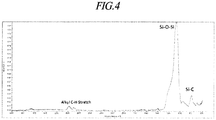
FIG. 4 shows the results of the infrared ray absorption of a surface-modified hydrophobic silica sphere using ethyltrimethoxysilane (ETMS), according to an embodiment of the present disclosure. - Hereinafter, the embodiments of the present disclosure will be described in detail with reference to accompanying drawings so that the embodiments may be easily implemented by those skilled in the art.
- However, the present disclosure may be implemented in various ways without being limited to the embodiments. In addition, in the drawings, well-known elements or components may be omitted to avoid unnecessarily obscuring the presented embodiments, and like reference numerals denote like elements throughout the specification.
- In the entire specification of the present disclosure, the term "connected to" or "coupled to" that is used to designate a connection or coupling of one element to another element includes both a case that an element is "directly connected or coupled to" another element and a case that an element is "electronically connected or coupled to" another element via still another element.
- In the entire specification of the present disclosure, the term "on", "above", "upper", "under", "below", "bottom" that is used to designate a position of one element with respect to another element includes both a case that the one element is adjacent to another element and a case that any other element exists between these two elements.
- In the entire specification of the present disclosure, when any portion "includes" any component, this does not exclude other components but means that any other component can be further included, unless stated otherwise.
- In the entire specification of the present disclosure, the term representing the degree such as "about" and "substantially" means that any value is identical or close to a suggested numeral when an inherent fabrication error is proposed, and this is used for preventing any unscrupulous infringer from unfairly using the disclosure containing an exact or absolute numeral, which is mentioned for better understanding of the present disclosure. Further, in the entire specification of the present disclosure, a "step ... " or a "step of ... " does not mean a "step for ... ".
- In the entire specification of the present disclosure, the term "combination thereof" included in Markush-type expressions refers to a mixture or combination of one or more selected from the group consisting of components described by a Markush-type expression, and one or more selected from the group consisting of the components.
- In the entire specification of the present disclosure, the description of "A and/or B" means "A, B, or A and B."
- Hereinafter, a method of producing porous silica particles having a hydrophobically modified surface and hydrophobic porous silica particles produced by the method according to the present disclosure are described in detail with reference to embodiments, examples, and drawings. However, the present disclosure is not limited to these embodiments, examples and drawings.
- The first aspect of the present disclosure relates to a method of preparing hydrophobic porous silica, in which the method includes: reacting a porous silica particle containing a hydrophilic group in a solvent with an organosilane compound under a basic catalyst; and drying the porous silica particle in a vacuum; and the surface of the porous silica particles is modified to be hydrophobic by a condensation reaction of the hydrophilic group of the porous silica particles with the organosilane compound.
- The method of preparing hydrophobic porous silica according to the present disclosure allows to polymerize the surface of the porous silica particle containing a hydrophilic group with the OH group of the hydrolyzed organosilane compound using a basic catalyst, thereby modifying the surface of the silica particles from a Si-OH to the Si-O-R (here, R represents a hydrophobic group contained in the organosilane compound). This makes it possible to produce hydrophobic porous silica in which 90% or more of the surface including pores is modified to be hydrophobic. The hydrophobic porous silica has improved water repellency and oil absorption, and thus can be usefully used in exfoliation cosmetics.
- Particularly, the porous silica particle is dried in a vacuum so that 90% or more of the surface area including the pores of the porous silica particle can be uniformly coated with a hydrophobic molecule.
- The solvent may be one selected from the group consisting of distilled water, ethanol, methanol, isopropyl alcohol, n-propyl alcohol, butanol, and combinations thereof, and more preferably, it may be a mixture of distilled water and ethanol, but is not limited thereto.
- According to an embodiment of the present disclosure, the organosilane compound may be hydrolyzed in the solvent, but is not limited thereto.
- According to an embodiment of the present disclosure, the organosilane compound may, but be not limited to, include the compound represented by the following chemical formula 1:
[Chemical Formula 1] R1-Si-(OR2)3
- Here, R1 may be an alkyl group having C1 to C12, an alkenyl group having C2 to C10, a cycloalkyl group having C3 to C12 or an aryl group having C6 to C12, and R2 may be an alkyl group having C1 to C6.
- The alkyl group, alkenyl group, aryl group and acyl group may all be substituted. The carbon number of the alkyl group, alkenyl group, aryl group and acyl group does not include the number of carbon atoms contained in the substituent group. Specific examples of the alkyl group and the substituent thereof may include a methyl group, an ethyl group, an n-propyl group, an isopropyl group, an n-butyl group, a t-butyl group, a n-hexyl group, a n-decyl group, a trifluoromethyl group, 3,3,3-trifluoropropyl group, 3-glycidoxypropyl group, 2-(3,4-epoxycyclohexyl) ethyl group, [(3-ethyl-3-oxetanyl) methoxy] propyl group, 3-aminopropyl group, 3-mercaptopropyl group, 3-isocyanate propyl group and the like. Specific examples of the alkenyl group and substituent thereof may include a vinyl group and the like. Specific examples of the aryl group and substituent thereof may include a phenyl group, a tolyl group, a p-hydroxyphenyl group, a condensed polycyclic aromatic hydrocarbon group such as a naphthyl group, a phenanthrenyl group, a fluorenyl group, a pyrenyl group, an indenyl group, an acenaphthenyl group and the like. Specific examples of the acyl group and the substituent thereof may include an acetyl group and the like.
- The organosilane compound represented by
Chemical Formula 1 as described above may be one selected from the group consisting of silanes with quaternary functional group such as methyltrimethoxysilane, ethyl trimethoxysilane, methyltriethoxysilane, phenyl trimethoxysilane, n-propyl trimethoxysilane, n-butyl trimethoxysilane, isobutyl trimethoxysilane and vinyl trimethoxysilane, but is not limited thereto. - Referring to
FIG. 1 of the present disclosure, when methyltrimethoxysilane or ethyltrimethoxysilane is used as the organosilane compound, for example, the methoxy of R2 inChemical Formula 1 may be substituted with a hydroxy group by hydrolysis in a solvent. - The hydrolysis reaction can be described explicitly as follows. As the solvent, for example, when a mixed solvent of distilled water and ethanol are used, ethanol being unstable by water molecules reacts with oxygen of organosilane. As a result, the ethanol is stabilized again, and the silicon atom of the unstable organosilane and the OH- derived from the water molecule are bound to each other, so that the methoxy group of R2 in
Chemical Formula 1 is released and replaced with a hydroxyl group. Accordingly, the hydroxy group can be removed through the subsequent condensation reaction. - Specifically, the porous silica particles containing a hydrophilic group and the organosilane compound in which R2 is substituted with hydrogen are reacted in the presence of a basic catalyst, resulting in the rapid condensation reaction. Thus, the hydrogen of R2 of the organosilane compound is reacted with the hydrophilic group on the surface of the porous silica particles to generate H2O. Then, the organosilane compound is attached to the surface of the silica particles, and the attached organosilane compound is connected to each other, thereby coating the surface of the silica particles.
- Particularly, condensation between the starting materials can be promoted by proceeding hydrolysis in a liquid phase catalyst so that the condensation and the molecular weight can be increased.
- According to one embodiment of the present disclosure, the basic catalysts known in the art may be used as a basic catalyst without limitation for the hydrolysis-condensation reaction. For example, the basic catalyst may be ammonia water (NH4OH), but is not limited thereto.
- According to one embodiment of the present disclosure, the basic catalyst may adjust the pH of the mixed solvent to be pH 10 to pH 14, preferably pH 11, but is not limited thereto.
- The pH range from pH 10 to pH 14 is a pH range within a basic range in which condensation reaction can occur. It can be the optimal range that maximally suppresses the homogeneous nucleation of the coating molecules and causes only heterogeneous nucleation at the surface of conventional porous silicon particles. Accordingly, the pH of the mixed solvent is adjusted to the above range so as to inhibit the self-formation of particles of the organosilane compound used for the hydrophobic-coating on the surface of the porous silica particles in the present disclosure.
- According to one embodiment of the present disclosure, after the step of reacting the porous silica particles containing the hydrophilic group with the organosilane compound under a basic catalyst, the step of adding an acidic solution to adjust the pH of the solution may be further included, but is not limited thereto.
- According to one embodiment of the present disclosure, an acidic catalyst which is known in the art for the hydrolysis-condensation reaction may be used as an acidic solution without limitation. For example, the acidic solution may be one selected from the group consisting of HCl, H2SO4, HNO3 and combinations thereof, but is not limited thereto.
- According to one embodiment of the present disclosure, the solvent can be adjusted to pH 5 to pH 8, preferably to pH 7, but is not limited thereto.
- As described above, when the pH of the solvent is adjusted within the range of pH 5 to pH 8, the solvent can be neutralized to finish the condensation reaction.
- According to one embodiment of the present disclosure, the step of drying the porous silica particle may be performed at 70°C to 150°C, but is not limited thereto.
- The second aspect of the present disclosure relates to a hydrophobic porous silica particle prepared by the above-described method, wherein at least 90% of the surface area of the porous silica particles is modified to be hydrophobic.
- The second aspect of the present disclosure relates to a hydrophobic porous silica particle, in which at least 90% of the surface area is modified to be hydrophobic according to the first aspect of the present disclosure. A detailed description of parts overlapping with the first aspect of the present disclosure is excluded. However, although the description is excluded, the description of the first aspect of the present disclosure may be applied equally to the second aspect of the present disclosure.
- Hereinafter, the present disclosure is described in more detail with reference to the following examples. However, the following examples are for illustrative purposes only and are not intended to limit the scope of the present disclosure.
- In order to modify the surface of the porous silica particles to be hydrophobic, 100 g of porous silica particles and 40 g of organosilane compound, methyltrimethoxysilane (MTMS) or ethyltrimethoxysilane (ETMS) were added to a mixed solution of 300 ml of distilled water and 100 g of ethanol, and the mixtures were stirred for 30 minutes. As a catalyst, ammonia water was added to the stirred solution to adjust its pH to 11.
- The solution was further stirred for 6 hours and then adjusted to pH 7 with HCl.
- The solution was filtered to obtain porous silica particles, followed by washing and drying at 100°C under a vacuum for one day to obtain porous silica particles whose surface was modified to have hydrophobicity.
- The hydrophobic properties of the surface-modified hydrophobic porous silica particles by the organosilane compound prepared by the above Example 1 were evaluated. As a comparative example, poly (methyl methacrylate) (PMMA) was used, which is a microbead commonly used for exfoliating cosmetics. It was purchased from Sunjin beauty science in South Korea (PMMA1 (SUNPMMA-P20 Lot: 15106001) and PMMA2 (SUNPMMA-COCO130 Lot: 15120110)).
- Specifically, each 2 g of hydrophobic porous silica particles having surface-modified with MTMS or ETMS molecules and PMMA commonly used in exfoliating cosmetics were added to 100 ml of water, and the mixture was stirred at 600 rpm for 30 seconds. After 10 minutes, the transparency of each solution was compared to confirm the hydrophobicity of each particle.
- As shown in
FIG. 2 , the results indicate that all of the hydrophobic surfaces-modified porous silica particles of the present disclosure exhibited water repellency and oil absorption sufficient to replace PMMA. Meanwhile, the hydrophobic surface-modified porous silica particles showed a smaller oil absorption than the non-surface-modified porous silica particles. This is because not only the outer part of the porous silica particles but also the inner pores are coated with the hydrophobic molecules, and the volume occupied by the pores is reduced. Therefore, it has been confirmed that the hydrophobic porous silica particles of the present disclosure can be applied to cosmetics using conventional hydrophobic polymer beads. - The functional groups of the hydrophobic porous silica particles having surface-modified with the organosilane compound prepared in Example 1 were confirmed by infrared absorption analysis.
- As shown in
FIGS. 3 and4 , the results indicate that all of the hydrophobic surface-modified porous silica particles using MTMS and the hydrophobic surface-modified porous silica particles using ETMS showed high peaks at the wavelengths of 1200 to 1000, respectively. This peak indicates Si-O-Si. Particularly, a specific peak was identified at a wavelength of 800, indicating Si-C. Thus, it was confirmed that the surface of the porous silica particles of the present disclosure was modified to be hydrophobic. - It will be understood by those of ordinary skill in the art that the foregoing description of the present disclosure is for illustrative purposes and that various specific embodiment may be easily implemented without departing from the technical spirit or essential characteristics of the present disclosure.
- It is, therefore, to be understood that the above-described embodiments are illustrative in all aspects and not restrictive. For example, each component described as a singular form may be distributed and implemented, and components described as being distributed may also be implemented in a combined form. The scope of the present disclosure is defined by the appended claims rather than the detailed description, and all changes or modifications derived from the meaning and scope of the claims and their equivalents should be construed as being included within the scope of the present disclosure.
Claims (11)
- A method of preparing hydrophobic porous silica, the method comprising:reacting a porous silica particle containing a hydrophilic group in a solvent with an organosilane compound under a basic catalyst; anddrying the porous silica particle in a vacuum;wherein the surface of the porous silica particles is modified to be hydrophobic by a condensation reaction of the hydrophilic group of the porous silica particles with the organosilane compound.
- The method according to claim 1, wherein the organosilane compound is hydrolyzed in the solvent.
- The method according to claim 1, wherein the organosilane compound includes a compound represented by the following Chemical Formula 1:
[Chemical Formula 1] R1-Si-(OR2)3
wherein R1 is an alkyl group having C1 to C12, an alkenyl group having C2 to C10, a cycloalkyl group having C3 to C12 or an aryl group having C6 to C12, and R2 is an alkyl group having C1 to C6. - The method according to claim 1, wherein the method further includes, after the step of reacting the porous silica particle containing a hydrophilic group with an organosilane compound under the basic catalyst, adding an acidic solution to adjust the pH of the solution.
- The method according to claim 1, wherein the step of drying the porous silica particle in a vacuum is carried out at 70°C to 150°C.
- The method according to claim 1, wherein the solvent is one selected from the group consisting of distilled water, ethanol, methanol, isopropyl alcohol, n-propyl alcohol, butanol, and combinations thereof.
- The method according to claim 1, wherein the basic catalyst is ammonia water (NH4OH).
- The method according to claim 1, wherein the pH of the solvent is adjusted to be from pH 10 to pH 14 by the basic catalyst.
- The method according to claim 4, wherein the acidic solution is one selected from the group consisting of HCl, H2SO4, HNO3 and combinations thereof.
- The method according to claim 4, wherein the step of adding the acidic solution to adjust the pH of the solution is such that the pH of the solvent is adjusted to be from pH 5 to pH 8.
- A hydrophobic porous silica particle prepared by the method according to any one of claims 1 to 10, wherein at least 90% of the surface area of the porous silica particle is modified to be hydrophobic.
Applications Claiming Priority (2)
| Application Number | Priority Date | Filing Date | Title |
|---|---|---|---|
| KR1020170041572A KR101847624B1 (en) | 2017-03-31 | 2017-03-31 | Preparation method of hydrophobic porous silica |
| PCT/KR2017/008924 WO2018182106A1 (en) | 2017-03-31 | 2017-08-17 | Method for preparing hydrophobic porous silica |
Publications (2)
| Publication Number | Publication Date |
|---|---|
| EP3604220A1 true EP3604220A1 (en) | 2020-02-05 |
| EP3604220A4 EP3604220A4 (en) | 2021-01-13 |
Family
ID=61974985
Family Applications (1)
| Application Number | Title | Priority Date | Filing Date |
|---|---|---|---|
| EP17903060.6A Withdrawn EP3604220A4 (en) | 2017-03-31 | 2017-08-17 | PROCESS FOR THE PREPARATION OF HYDROPHOBIC POROUS SILICA |
Country Status (4)
| Country | Link |
|---|---|
| US (1) | US11034586B2 (en) |
| EP (1) | EP3604220A4 (en) |
| KR (1) | KR101847624B1 (en) |
| WO (1) | WO2018182106A1 (en) |
Families Citing this family (3)
| Publication number | Priority date | Publication date | Assignee | Title |
|---|---|---|---|---|
| CN110589843A (en) * | 2019-10-23 | 2019-12-20 | 浙江新纳材料科技股份有限公司 | Preparation method of hydrophobic white carbon black with controllable particle size and core-shell structure |
| KR102370690B1 (en) | 2020-06-22 | 2022-03-04 | 주식회사 룩손 | Inorganic powder with enhanced hydrophobicity, manufacturing method thereof and cosmetic comprising the same |
| KR102531279B1 (en) * | 2021-01-15 | 2023-05-11 | 한국세라믹기술원 | hydrophobic mesoporous silicas by treatment of non-fluorinated alkylsilane surface, and method for manufacturing the same |
Family Cites Families (12)
| Publication number | Priority date | Publication date | Assignee | Title |
|---|---|---|---|---|
| US3024126A (en) * | 1960-06-15 | 1962-03-06 | Dow Corning | Method of treating reinforcing silica |
| US3635743A (en) * | 1969-01-06 | 1972-01-18 | Gen Electric | Reinforcing silica filler |
| JPH08119619A (en) * | 1994-10-26 | 1996-05-14 | Tokuyama Corp | Surface treatment method for silica particles |
| US5708069A (en) * | 1997-02-24 | 1998-01-13 | Dow Corning Corporation | Method for making hydrophobic silica gels under neutral conditions |
| JP5232445B2 (en) * | 2007-11-12 | 2013-07-10 | 株式会社日本触媒 | Particle and method for producing particle |
| JP5489505B2 (en) * | 2009-03-27 | 2014-05-14 | 株式会社日本触媒 | Method for producing hydrophobic silica particles |
| JP2011088832A (en) * | 2009-10-20 | 2011-05-06 | Shin-Etsu Chemical Co Ltd | Cosmetic |
| KR101187568B1 (en) * | 2010-09-29 | 2012-10-04 | 한국에너지기술연구원 | Preparation method of silica aerogel granules |
| CN103328382A (en) * | 2011-01-21 | 2013-09-25 | Dic株式会社 | Method for producing porous silica particles, resin composition for antireflection film, article with antireflection film, and antireflection film |
| KR20120105872A (en) * | 2011-03-16 | 2012-09-26 | 주식회사 미지에너텍 | Manufacturing method for hydrophobic mesoporous silica and multiporous adsorbent using thereof, purification system of biogas using the mulitporous adsorbent |
| KR101350843B1 (en) | 2011-09-05 | 2014-01-14 | 주식회사 제닉 | Cosmetic Composition for Scrubbing |
| KR101416053B1 (en) | 2012-01-12 | 2014-07-07 | 한국콜마주식회사 | A pressed cosmetic powder composition comprising starch and kaolin |
-
2017
- 2017-03-31 KR KR1020170041572A patent/KR101847624B1/en active Active
- 2017-08-17 WO PCT/KR2017/008924 patent/WO2018182106A1/en not_active Ceased
- 2017-08-17 EP EP17903060.6A patent/EP3604220A4/en not_active Withdrawn
-
2019
- 2019-08-28 US US16/553,482 patent/US11034586B2/en active Active
Also Published As
| Publication number | Publication date |
|---|---|
| US20190389732A1 (en) | 2019-12-26 |
| KR101847624B1 (en) | 2018-04-10 |
| US11034586B2 (en) | 2021-06-15 |
| WO2018182106A1 (en) | 2018-10-04 |
| EP3604220A4 (en) | 2021-01-13 |
Similar Documents
| Publication | Publication Date | Title |
|---|---|---|
| US10932999B2 (en) | Hydrophobic porous silica and method of preparing hydrophobic porous silica | |
| US11034586B2 (en) | Method of preparing hydrophobic porous silica and hydrophobic porous silica | |
| Li et al. | Encapsulating TiO2 in lignin-based colloidal spheres for high sunscreen performance and weak photocatalytic activity | |
| KR102720667B1 (en) | Thermally conductive silicone polymer composition | |
| CN101909598B (en) | Personal care composition comprising the reaction product of an epoxy compound and an aminosilane | |
| KR20200135450A (en) | Silicone polymer and composition comprising the same | |
| KR20140106746A (en) | Method of producing a low odor glycerin derivative-modified silicone or a composition comprising the same | |
| CN104000742A (en) | Sunscreen lotion and revitalizing CC sunscreen cream | |
| EP1976912B1 (en) | Composite silicone rubber powder, method of its manufacture, and use thereof | |
| EP2654713A1 (en) | Polysiloxane-hydrocarbylene aminohydrocarbylene multiblock copolymer and method for producing the same | |
| KR20020069115A (en) | A porous titanium oxide·organopolysiloxane hybrid powder and titanium oxide·silica complex and a cosmetic composition therewith | |
| KR20120007922A (en) | Ultraviolet Absorbing Polyorganic Oxide Silicon Particles with Improved Ultraviolet Stability and Its Manufacturing Method | |
| EP2655480B1 (en) | Polysiloxane-n, n-dihydrocarbylene sugar-modified multiblock copolymer and method for producing the same | |
| Civioc et al. | Silica–Resorcinol–Melamine–Formaldehyde composite aerogels as high-performance thermal insulators | |
| KR100378521B1 (en) | The method for preparation of sun protecting complex powder | |
| KR102246324B1 (en) | Silicon oxide-coated zinc oxide, method for producing same, and composition and cosmetic including silicon oxide-coated zinc oxide | |
| CN113631138A (en) | COMPOSITIONS AND METHODS FOR APPLICATION ON THE SKIN | |
| JP2005336056A (en) | Pollen adsorption-preventing agent | |
| US20210188883A1 (en) | Hydrophilic silanes | |
| JP2012197380A (en) | Method for producing inorganic particle-involving type polyorganosilsesquioxane particle and cosmetic blended with the particle | |
| JPWO2020075582A1 (en) | Cosmetic additives and their manufacturing methods | |
| JP2006008661A (en) | Water-dispersible powder for cosmetic | |
| EP3294266B1 (en) | Alkoxy-silanes compounds and related condensation products as cosmetic raw materials and for coating cosmetic powders | |
| JP3434964B2 (en) | Composite powder and method for producing the same | |
| JPH0725727A (en) | Composite spherical powder and cosmetics containing the same |
Legal Events
| Date | Code | Title | Description |
|---|---|---|---|
| STAA | Information on the status of an ep patent application or granted ep patent |
Free format text: STATUS: THE INTERNATIONAL PUBLICATION HAS BEEN MADE |
|
| PUAI | Public reference made under article 153(3) epc to a published international application that has entered the european phase |
Free format text: ORIGINAL CODE: 0009012 |
|
| STAA | Information on the status of an ep patent application or granted ep patent |
Free format text: STATUS: REQUEST FOR EXAMINATION WAS MADE |
|
| 17P | Request for examination filed |
Effective date: 20190913 |
|
| AK | Designated contracting states |
Kind code of ref document: A1 Designated state(s): AL AT BE BG CH CY CZ DE DK EE ES FI FR GB GR HR HU IE IS IT LI LT LU LV MC MK MT NL NO PL PT RO RS SE SI SK SM TR |
|
| AX | Request for extension of the european patent |
Extension state: BA ME |
|
| DAV | Request for validation of the european patent (deleted) | ||
| DAX | Request for extension of the european patent (deleted) | ||
| A4 | Supplementary search report drawn up and despatched |
Effective date: 20201214 |
|
| RIC1 | Information provided on ipc code assigned before grant |
Ipc: A61K 8/25 20060101ALI20201207BHEP Ipc: A61K 8/02 20060101ALI20201207BHEP Ipc: A61K 8/58 20060101ALI20201207BHEP Ipc: A61Q 19/00 20060101ALI20201207BHEP Ipc: C01B 33/18 20060101AFI20201207BHEP |
|
| STAA | Information on the status of an ep patent application or granted ep patent |
Free format text: STATUS: THE APPLICATION IS DEEMED TO BE WITHDRAWN |
|
| 18D | Application deemed to be withdrawn |
Effective date: 20210730 |