EP3604048A1 - Steering locked device - Google Patents
Steering locked device Download PDFInfo
- Publication number
- EP3604048A1 EP3604048A1 EP18776960.9A EP18776960A EP3604048A1 EP 3604048 A1 EP3604048 A1 EP 3604048A1 EP 18776960 A EP18776960 A EP 18776960A EP 3604048 A1 EP3604048 A1 EP 3604048A1
- Authority
- EP
- European Patent Office
- Prior art keywords
- lock
- compression spring
- lock portion
- steering
- receiving seat
- Prior art date
- Legal status (The legal status is an assumption and is not a legal conclusion. Google has not performed a legal analysis and makes no representation as to the accuracy of the status listed.)
- Granted
Links
Images



Classifications
-
- B—PERFORMING OPERATIONS; TRANSPORTING
- B60—VEHICLES IN GENERAL
- B60R—VEHICLES, VEHICLE FITTINGS, OR VEHICLE PARTS, NOT OTHERWISE PROVIDED FOR
- B60R25/00—Fittings or systems for preventing or indicating unauthorised use or theft of vehicles
- B60R25/01—Fittings or systems for preventing or indicating unauthorised use or theft of vehicles operating on vehicle systems or fittings, e.g. on doors, seats or windscreens
- B60R25/02—Fittings or systems for preventing or indicating unauthorised use or theft of vehicles operating on vehicle systems or fittings, e.g. on doors, seats or windscreens operating on the steering mechanism
- B60R25/021—Fittings or systems for preventing or indicating unauthorised use or theft of vehicles operating on vehicle systems or fittings, e.g. on doors, seats or windscreens operating on the steering mechanism restraining movement of the steering column or steering wheel hub, e.g. restraining means controlled by ignition switch
- B60R25/0211—Fittings or systems for preventing or indicating unauthorised use or theft of vehicles operating on vehicle systems or fittings, e.g. on doors, seats or windscreens operating on the steering mechanism restraining movement of the steering column or steering wheel hub, e.g. restraining means controlled by ignition switch comprising a locking member radially and linearly moved towards the steering column
- B60R25/02115—Fittings or systems for preventing or indicating unauthorised use or theft of vehicles operating on vehicle systems or fittings, e.g. on doors, seats or windscreens operating on the steering mechanism restraining movement of the steering column or steering wheel hub, e.g. restraining means controlled by ignition switch comprising a locking member radially and linearly moved towards the steering column key actuated
- B60R25/02126—Fittings or systems for preventing or indicating unauthorised use or theft of vehicles operating on vehicle systems or fittings, e.g. on doors, seats or windscreens operating on the steering mechanism restraining movement of the steering column or steering wheel hub, e.g. restraining means controlled by ignition switch comprising a locking member radially and linearly moved towards the steering column key actuated with linear bolt motion perpendicular to the lock axis
-
- B—PERFORMING OPERATIONS; TRANSPORTING
- B60—VEHICLES IN GENERAL
- B60R—VEHICLES, VEHICLE FITTINGS, OR VEHICLE PARTS, NOT OTHERWISE PROVIDED FOR
- B60R25/00—Fittings or systems for preventing or indicating unauthorised use or theft of vehicles
- B60R25/01—Fittings or systems for preventing or indicating unauthorised use or theft of vehicles operating on vehicle systems or fittings, e.g. on doors, seats or windscreens
- B60R25/02—Fittings or systems for preventing or indicating unauthorised use or theft of vehicles operating on vehicle systems or fittings, e.g. on doors, seats or windscreens operating on the steering mechanism
- B60R25/021—Fittings or systems for preventing or indicating unauthorised use or theft of vehicles operating on vehicle systems or fittings, e.g. on doors, seats or windscreens operating on the steering mechanism restraining movement of the steering column or steering wheel hub, e.g. restraining means controlled by ignition switch
-
- E—FIXED CONSTRUCTIONS
- E05—LOCKS; KEYS; WINDOW OR DOOR FITTINGS; SAFES
- E05B—LOCKS; ACCESSORIES THEREFOR; HANDCUFFS
- E05B83/00—Vehicle locks specially adapted for particular types of wing or vehicle
-
- E—FIXED CONSTRUCTIONS
- E05—LOCKS; KEYS; WINDOW OR DOOR FITTINGS; SAFES
- E05B—LOCKS; ACCESSORIES THEREFOR; HANDCUFFS
- E05B77/00—Vehicle locks characterised by special functions or purposes
- E05B77/44—Burglar prevention, e.g. protecting against opening by unauthorised tools
Definitions
- the present invention relates to a steering lock device.
- Patent Literature 1 discloses a steering lock device for locking steering of a vehicle.
- a drive slider and a tongue piece (lock body) which is connected to the drive slider and can freely advance to or retract from a steering column are mounted in an antitheft device body (steering frame).
- the lock body is biased toward a lock position projecting into the steering column by elastic return means (compression spring) accommodated in the steering frame.
- a steering lock device having high resistance to an improper external damaging operation and high manufacturing efficiency.
- a steering lock device including:
- the lock portion 5 of the steering lock device is accommodated in the lock portion accommodation recess 2 formed in the frame 1, is movable between the lock position where the lock portion projects into a steering column so as to be locked to a steering shaft and the unlock position where locking with the steering shaft is released, and is biased toward the lock position by the compression spring 4.
- the compression spring 4 Since parts such as the plug 6 are accommodated in the frame 1, an access route to the compression spring 4 is limited, and usually, the compression spring 4 is pulled out by inserting a wire or the like from a hole opened by breaking a ceiling surface of the lock portion accommodation recess 2 supporting one end of the compression spring 4 with a tool such as a driver.
- the spring receiving seat 3 for supporting one end of the compression spring 4 is formed to project from the ceiling surface of the lock portion accommodation recess 2, as shown in Fig. 7(b) , even if a hole 12 is opened in a part of the ceiling surface, the spring receiving seat 3, that is, one end of the compression spring 4 is further located inside the lock portion accommodation recess 2, so that it is difficult to access to compression spring 4, and thus it is difficult to pull out the compression spring 4.
- the lock portion 5 may be provided with a shielding portion 7 which is configured to cover an abutting side end of the compression spring 4 which is abutted on the lock portion 5, and is a fitted to a periphery of the spring receiving seat 3 in the unlock position.
- the shielding portion 7 projecting from the lock portion 5 is disposed on a side of the compression spring 4, as shown in Fig. 7(c) , and an access path to an upper end portion of the compression spring 4 can be narrowed while closing an access path to a lower end portion of the compression spring 4.
- Fig. 7(d) since a part of or all the projecting portion of the shielding portion 7 can be absorbed by a recess 13 formed by the protrusion of the spring receiving seat 3, there is no need to increase a height dimension of the device in the moving direction of the lock portion 5.
- the shielding portion 7 may be formed in a cylindrical shape which surrounds the compression spring 4 around an entire length thereof when the lock portion 5 is at the lock position.
- a projecting height of the spring receiving seat 3 and a projecting height of the shielding portion 7 are substantially the same as a stroke length of the lock portion 5, and a tip end of the shielding portion 7 corresponds to a height of a tip end of the spring receiving seat 3 when the lock portion 5 is at the lock position.
- the spring receiving seat 3 may be formed in a plate shape with an elongated rectangular cross section having a plate thickness narrower than an outer diameter of the compression spring 4, and a slit 8 which allows advancing and retracting of the spring receiving seat 3 may be formed on the shielding portion 7.
- the spring receiving seat 3 In order to prevent the spring receiving seat 3 from being fitted into an inner diameter portion of the compression spring 4, the spring receiving seat 3 needs to be sufficiently larger than the inner diameter of the compression spring 4 and is formed as a columnar body with a center of the compression spring 4 as a centroid, the shielding portion 7 surrounding the spring receiving seat 3 is large, and a posture holding function of the compression spring 4 is degraded.
- the spring receiving seat 3 is formed in a plate shape, and the slit 8 into which the spring receiving seat 3 can be inserted is formed in the shielding portion 7, so that a substantially large support surface of the compression spring 4 can be ensured, and the shielding portion 7 can be formed into a cylindrical shape close to an outer diameter of the compression spring 4 to effectively prevent the compression spring 4 from tilting or the like.
- the plate thickness sufficiently narrow, the width of the slit 8 is also reduced, and an access to the compression spring 4 through the slit 8 can be completely prevented.
- the lock portion 5 may be driven by a cam member 9 connected to the plug 6, and the compression spring 4 may be disposed at symmetrical positions sandwiching the cam member 9.
- a plurality of compression spring 4 are used, and improper damaging operation is difficult since it takes time to withdraw the compression springs 4, and the compression springs 4 are disposed at positions so as to sandwich the cam member 9 for driving the lock portion 5, that is, at positions not interfering with the cam member 9.
- the compression springs 4 are disposed at positions so as to sandwich the cam member 9 for driving the lock portion 5, that is, at positions not interfering with the cam member 9.
- side areas of the cam member 9 can be used as arrangement areas of the compression springs 4, the space can be effectively used.
- a lock portion 5 side support end of the compression springs 4 can be disposed at a position away from the ceiling surface of the lock portion accommodation recess 2 because it is not necessary to consider the interference with the cam member 9.
- a spring constant can be stabilized by securing a free length of the compression spring 4 sufficiently, and a moving space of the lock portion 5 side support end of the compression spring 4 in a direction to the ceiling surface of the lock portion accommodation recess 2 can be sufficiently secured, so that a height of the steering lock device can be reduced.
- the lock portion 5 includes a hanger member 10 which is driven by the plug 6, and a lock body 11 which is connected to the hanger member 10 and is configured to be advanced to and retracted from the steering column, and the compression springs 4 may be disposed at point-symmetrical positions with respect to a center of a cross section of the lock body 11, and the cross section is orthogonal to a moving direction of the lock body.
- a steering lock device includes a frame 1 formed by zinc die casting or the like, and an ignition switch 14 is fixed to a rear end of the frame 1.
- a left side in Fig. 1(b) is referred to as “front side”
- a side in front of the drawing is referred to as "upper”.
- a column attachment portion 15 is formed on the frame 1, and mounting on a steering column is performed by holding the steering column by the column attachment portion 15 and a column coupler not shown.
- a lateral hole 1a is formed in the frame 1 so as to penetrate in the front and rear, a cylinder housing 16, a plug 6 rotatably inserted into the cylinder housing 16, and a cam member 9 which is connected to a rear end of the plug 6 and is rotated along with the plug 6 are disposed in the lateral hole 1a, and a rear end of the cam member 9 is connected to the ignition switch 14.
- a position cap portion 16a is formed at a front end portion of the cylinder housing 16, a position indication (not shown) for informing a rotational position of the plug 6 is engraved on a surface of the position cap portion 16a.
- the plug 6 can be rotated with respect to the cylinder housing 16 by inserting a correct unlocking key (not shown), a rotational operation force to the plug 6 is transmitted to the ignition switch 14 via the cam member 9, and switching operation of the engine start circuit or the like of the vehicle can be performed.
- a lock portion accommodation recess 2 is formed whose center line is orthogonal to a rotation center (C6) of the plug 6 and whose upper end surface is closed.
- the lock portion accommodation recess 2 is opened at a center of the column attachment portion 15 and is closed by a bottom wall member 17 after a lock portion 5 and a compression spring 4 are installed.
- the lock portion 5 is formed by connecting a hanger member 10 to an upper end of the rod-shaped lock body 11.
- the lock body 11 has a substantially rectangular cross-sectional shape, and is inserted into a rectangular opening 17a opened in the bottom wall member 17.
- the hanger member 10 is formed by bridging two block portions 10a by a bridging portion 10b, and a cam projection portion 18 having a bottom surface as a cam surface 18a is provided to project forward from one block portion 10a.
- a shielding portion 7 is provided to project laterally on both block portions 10a of the hanger member 10.
- a part of a side wall of the block portion 10a is used as a part of an inner wall of the shielding portion 7, the shielding portion 7 has a bottomed cylindrical shape having a bottom surface positioned further downward than a bottom surface of the block portion 10a, and as to be described later, the bottom surface of the shielding portion 7 serves as a stopper surface 7a which determines a downward stroke position of the hanger member 10.
- the shielding portions 7 are disposed at point-symmetrical positions with respect to a center of the lock body 11, and the compression springs 4 are accommodated in the respective shielding portions 7.
- An inner diameter of the shielding portion 7 is formed to be slightly larger than an outer diameter of the compression spring 4, and inclination of the compression spring 4 in the shielding portion 7 is regulated.
- the compression springs 4 are disposed at point-symmetrical positions with respect to the center of the lock body 11, and thus biasing forces of the compression springs 4 are loaded at symmetrical positions, so that smooth movement is ensured.
- the shielding portion 7 is provided with a slit 8 which is opened over an entire length in an upper-lower direction except the bottom wall.
- the slits 8 are formed to open left and right wall surfaces of the cylinders formed by the shielding portions 7, and a width dimension is set such that it is difficult to pull out the compression spring 4 covered by the shielding portion 7 laterally.
- the hanger member 10 formed as described above is vertically and slidably inserted into the lock portion accommodation recess 2 having a cross-sectional shape substantially matching a shape of the hanger member 10 in a plan view, and in the inserted state, an upper end of the compression spring 4 is abutted on a spring receiving seat 3 protruding from a ceiling portion of the lock portion accommodation recess 2.
- the spring receiving seat 3 is formed in a plate shape connecting both a side wall surface of the lock portion accommodation recess 2 and a ceiling wall, and as shown in Figs. 3 and 5 , the spring receiving seat 3 is disposed at a position overlapping with the slit 8 of the shielding portion 7 in a plan view.
- the spring receiving seat 3 has a thickness dimension that can be fitted to the slit 8, and further, a projecting dimension from the inner wall surface of the lock portion accommodation recess 2 is set to be able to bridge the upper end of the compression spring 4 along the diameter direction thereof, so that dropout of the compression spring 4 from the spring receiving seat 3 is completely prevented.
- the cam member 9 is an axial member provided with a connecting portion 9a to the plug 6 at a front end and a connecting portion 9b to the ignition switch 14 at a rear end, and the hanger member 10 is disposed such that the bridging portion 10b is positioned on a small diameter portion 9c formed at a middle portion of the cam member 9, and the small diameter portion 9c is straddled by the two block portions 10a.
- a cam portion 19 whose outer peripheral surface is a cam surface bulges slightly forward of the small diameter portion 9c, and as shown in Fig. 6(b) , the cam portion 19 of the cam member 9 corresponds to the cam projection portion 18 of the hanger member 10 in a state where the hanger member 10 is disposed.
- the cam surface 18a of the hanger member 10 faces a standby plane 19b formed on the cam portion 19 of the cam member 9 in a noncontact state, and the hanger member 10 is held at a lower stroke end position with the stopper surface 7a being abutted on the bottom wall member 17.
- a free length of the compression spring 4 is set such that the upper end thereof slightly projects from an upper end surface of the shielding portion 7 in a state of being accommodated in the shielding portion 7.
- the lock body 11 connected to the hanger member 10 projects from the rectangular opening 17a to the outside of the frame 1 and is locked to a steering shaft in a mounted state to the steering column to regulate the operation to the steering.
- the upper end of the compression spring 4 is substantially and entirely closed by the spring receiving seat 3, and the side wall is entirely covered by the shielding portion 7 except the opening of the slit 8, and further, the slit 8 faces the inner wall surface of the lock portion accommodation recess 2 in addition to that an opening width of the slit 8 is narrow, so that all external access paths to the compression spring 4 are virtually blocked, and thus improper pulling of the compression spring 4 out of the housing is completely prevented.
- a hanging dimension of the spring receiving seat 3 substantially corresponds to a vertical stroke length of the hanger member 10
- a ceiling surface of the hanger member 10 and a lower end of the spring receiving seat 3 are set to be substantially flush with each other in the lock position
Landscapes
- Engineering & Computer Science (AREA)
- Mechanical Engineering (AREA)
- Lock And Its Accessories (AREA)
Abstract
Description
- The present invention relates to a steering lock device.
-
Patent Literature 1 discloses a steering lock device for locking steering of a vehicle. In the steering lock device, a drive slider and a tongue piece (lock body) which is connected to the drive slider and can freely advance to or retract from a steering column are mounted in an antitheft device body (steering frame). - The lock body is biased toward a lock position projecting into the steering column by elastic return means (compression spring) accommodated in the steering frame.
- Since the lock body cannot be maintained in the lock position and can be unlocked incorrectly when a support portion for supporting the compression spring in the steering frame is destroyed by external attack and the compression spring is removed improperly, a reinforcing plate which cannot be easily broken is fixed to a wall surface supporting the compression spring in the steering frame.
- [Patent Literature 1]
JP-T-2015-506864 - However, it takes time and effort to fix the reinforcing plate in the example of the related art, which reduces the manufacturing efficiency of the device.
- According to an embodiment of the present invention, there is provided a steering lock device having high resistance to an improper external damaging operation and high manufacturing efficiency.
- According to the embodiment of the present invention, there is provided a steering lock device including:
- a
lock portion 5 which is held in a lockportion accommodation recess 2 formed in aframe 1 and is freely movable between a lock position and an unlock position, one end of the lock portion being biased toward the lock position by acompression spring 4 which is supported by aspring receiving seat 3 formed at a ceiling portion of the lock portion accommodation recess 2, and - a plug 6 which is rotatably operated from an outside of the
frame 1 and is configured to move thelock portion 5 to the unlock position against a reaction force of thecompression spring 4, and - the
spring receiving seat 3 is formed to project from a ceiling surface of the lock portion accommodation recess 2 toward an opposite surface. - The
lock portion 5 of the steering lock device is accommodated in the lockportion accommodation recess 2 formed in theframe 1, is movable between the lock position where the lock portion projects into a steering column so as to be locked to a steering shaft and the unlock position where locking with the steering shaft is released, and is biased toward the lock position by thecompression spring 4. - When the
compression spring 4 is improperly removed in this state, thelock portion 5 cannot be held at the lock position by a mounting posture, and improper unlocking is possible. - Since parts such as the plug 6 are accommodated in the
frame 1, an access route to thecompression spring 4 is limited, and usually, thecompression spring 4 is pulled out by inserting a wire or the like from a hole opened by breaking a ceiling surface of the lock portion accommodation recess 2 supporting one end of thecompression spring 4 with a tool such as a driver. - In the present invention, the
spring receiving seat 3 for supporting one end of thecompression spring 4 is formed to project from the ceiling surface of the lock portion accommodation recess 2, as shown inFig. 7(b) , even if ahole 12 is opened in a part of the ceiling surface, thespring receiving seat 3, that is, one end of thecompression spring 4 is further located inside the lock portion accommodation recess 2, so that it is difficult to access tocompression spring 4, and thus it is difficult to pull out thecompression spring 4. - In particular, a large effect is exerted on the operation of moving a wire or the like along the ceiling surface of the lock portion accommodation recess 2 to lock the
compression spring 4 so as to pulling the lock thecompression spring 4 out of theframe 1, as shown inFig. 7(a) . - According to the embodiment of the present invention,
thelock portion 5 may be provided with ashielding portion 7 which is configured to cover an abutting side end of thecompression spring 4 which is abutted on thelock portion 5, and is a fitted to a periphery of thespring receiving seat 3 in the unlock position. - In the present invention, the
shielding portion 7 projecting from thelock portion 5 is disposed on a side of thecompression spring 4, as shown inFig. 7(c) , and an access path to an upper end portion of thecompression spring 4 can be narrowed while closing an access path to a lower end portion of thecompression spring 4. As shown inFig. 7(d) , since a part of or all the projecting portion of theshielding portion 7 can be absorbed by arecess 13 formed by the protrusion of thespring receiving seat 3, there is no need to increase a height dimension of the device in the moving direction of thelock portion 5. - According to the embodiment of the present invention,
theshielding portion 7 may be formed in a cylindrical shape which surrounds thecompression spring 4 around an entire length thereof when thelock portion 5 is at the lock position. - As shown in
Fig. 7(e) , in the present invention, a projecting height of thespring receiving seat 3 and a projecting height of theshielding portion 7 are substantially the same as a stroke length of thelock portion 5, and a tip end of theshielding portion 7 corresponds to a height of a tip end of thespring receiving seat 3 when thelock portion 5 is at the lock position. As a result, when thelock portion 5 is at the lock position, thecompression spring 4 is completely covered by theshielding portion 7 over the entire length thereof, so that the access path to thecompression spring 4 can be completely closed. - According to the embodiment of the present invention,
thespring receiving seat 3 may be formed in a plate shape with an elongated rectangular cross section having a plate thickness narrower than an outer diameter of thecompression spring 4, and
aslit 8 which allows advancing and retracting of thespring receiving seat 3 may be formed on theshielding portion 7. - In order to prevent the
spring receiving seat 3 from being fitted into an inner diameter portion of thecompression spring 4, thespring receiving seat 3 needs to be sufficiently larger than the inner diameter of thecompression spring 4 and is formed as a columnar body with a center of thecompression spring 4 as a centroid, theshielding portion 7 surrounding thespring receiving seat 3 is large, and a posture holding function of thecompression spring 4 is degraded. - In contrast, as shown in
Fig. 7(g) , thespring receiving seat 3 is formed in a plate shape, and theslit 8 into which thespring receiving seat 3 can be inserted is formed in theshielding portion 7, so that a substantially large support surface of thecompression spring 4 can be ensured, and theshielding portion 7 can be formed into a cylindrical shape close to an outer diameter of thecompression spring 4 to effectively prevent thecompression spring 4 from tilting or the like. In addition, by making the plate thickness sufficiently narrow, the width of theslit 8 is also reduced, and an access to thecompression spring 4 through theslit 8 can be completely prevented. - According to the embodiment of the present invention,
thelock portion 5 may be driven by acam member 9 connected to the plug 6, and
thecompression spring 4 may be disposed at symmetrical positions sandwiching thecam member 9. - In the present invention, a plurality of
compression spring 4 are used, and improper damaging operation is difficult since it takes time to withdraw thecompression springs 4, and thecompression springs 4 are disposed at positions so as to sandwich thecam member 9 for driving thelock portion 5, that is, at positions not interfering with thecam member 9. As a result, since side areas of thecam member 9 can be used as arrangement areas of thecompression springs 4, the space can be effectively used. - A
lock portion 5 side support end of thecompression springs 4 can be disposed at a position away from the ceiling surface of the lock portion accommodation recess 2 because it is not necessary to consider the interference with thecam member 9. As a result, a spring constant can be stabilized by securing a free length of thecompression spring 4 sufficiently, and a moving space of thelock portion 5 side support end of thecompression spring 4 in a direction to the ceiling surface of the lockportion accommodation recess 2 can be sufficiently secured, so that a height of the steering lock device can be reduced. - According to the embodiment of the present invention, the
lock portion 5 includes ahanger member 10 which is driven by the plug 6, and alock body 11 which is connected to thehanger member 10 and is configured to be advanced to and retracted from the steering column, and thecompression springs 4 may be disposed at point-symmetrical positions with respect to a center of a cross section of thelock body 11, and the cross section is orthogonal to a moving direction of the lock body. - The balance of biasing forces of the
compression springs 4 applied to thelock body 11 is improved, and tilting of thelock portion 5 is effectively prevented, so that the operation of thelock portion 5 is improved. - According to the embodiment of the present invention, since it is difficult to access the compression spring from a destructively opened hole in the ceiling of the lock portion accommodation recess, it is possible to increase the resistance to improper external damaging operation.
- Since it is not necessary to mount a reinforcing member for reinforcing the ceiling portion of the lock portion accommodation recess, the manufacturing efficiency can be improved.
-
- [
Fig. 1] Fig. 1 is a view showing a steering lock device of the present invention.Fig. 1(a) is a perspective view, andFig. 1(b) is a top view. - [
Fig. 2] Fig. 2 is a cross-sectional view taken alongline 2A-2A ofFig. 1(b) . - [
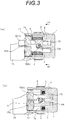
Figs 3] Fig. 3 is a cross-sectional view taken alongline 3A-3A ofFig. 1(b) .Fig. 3(a) shows a locked state, andFig. 3(b) shows an unlocked state. - [
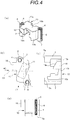
Fig. 4] Fig. 4 is view showing a hanger member.Fig. 4(a) is a perspective view,Fig. 4(b) is a plan view,Fig. 4(c) is viewed from a direction ofarrow 4C inFig. 4(b), and Fig. 4(d) is viewed from a direction ofarrow 4D inFig. 4(b) . - [
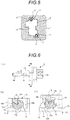
Fig. 5] Fig. 5 is a cross-sectional view taken alongline 5A-5A ofFig. 3(a) . - [
Fig. 6] Fig. 6 is a view showing a cam member.Fig. 6(a) is a plan view,Fig. 6(b) is a cross-sectional view taken alongline 6B-6B ofFig. 6(a), and Fig. 6(c) is a cross-sectional view taken alongline 6B-6B ofFig. 6 (a) and shows a state where a plug is rotated in an unlock direction. - [
Fig. 7] Fig. 7 is a diagram showing the operation of the present invention.Fig. 7(a) is an illustrative diagram showing a problem in the related art,Fig. 7(b) is an illustrative diagram showing an action of a spring receiving seat,Fig. 7 (c) is an illustrative diagram showing that a shielding portion is provided in a projecting manner in a lock portion,Fig. 7(d) is a diagram showing an unlocked state ofFig. 7(c), Fig. 7(e) is an illustrative diagram showing a state where a compression spring is enclosed by the shielding portion,Fig. 7(f) is a diagram showing an unlocked state ofFig. 7(e), Fig. 7(g) is an illustrative diagram showing a state where a plate-shaped spring receiving seat is formed, andFig. 7(h) is a diagram showing an unlocked state ofFig. 7(g) . - As shown in
Fig. 1 and below, a steering lock device includes aframe 1 formed by zinc die casting or the like, and anignition switch 14 is fixed to a rear end of theframe 1. Hereinafter, a left side inFig. 1(b) is referred to as "front side", and a side in front of the drawing is referred to as "upper". - A
column attachment portion 15 is formed on theframe 1, and mounting on a steering column is performed by holding the steering column by thecolumn attachment portion 15 and a column coupler not shown. - As shown in
Fig. 2 , a lateral hole 1a is formed in theframe 1 so as to penetrate in the front and rear, acylinder housing 16, a plug 6 rotatably inserted into thecylinder housing 16, and acam member 9 which is connected to a rear end of the plug 6 and is rotated along with the plug 6 are disposed in the lateral hole 1a, and a rear end of thecam member 9 is connected to theignition switch 14. - A
position cap portion 16a is formed at a front end portion of thecylinder housing 16, a position indication (not shown) for informing a rotational position of the plug 6 is engraved on a surface of theposition cap portion 16a. - The plug 6 can be rotated with respect to the
cylinder housing 16 by inserting a correct unlocking key (not shown), a rotational operation force to the plug 6 is transmitted to theignition switch 14 via thecam member 9, and switching operation of the engine start circuit or the like of the vehicle can be performed. - In the
frame 1, a lockportion accommodation recess 2 is formed whose center line is orthogonal to a rotation center (C6) of the plug 6 and whose upper end surface is closed. The lockportion accommodation recess 2 is opened at a center of thecolumn attachment portion 15 and is closed by abottom wall member 17 after alock portion 5 and acompression spring 4 are installed. - The
lock portion 5 is formed by connecting ahanger member 10 to an upper end of the rod-shapedlock body 11. Thelock body 11 has a substantially rectangular cross-sectional shape, and is inserted into arectangular opening 17a opened in thebottom wall member 17. - As shown in
Fig. 4 , thehanger member 10 is formed by bridging twoblock portions 10a by a bridgingportion 10b, and acam projection portion 18 having a bottom surface as acam surface 18a is provided to project forward from oneblock portion 10a. - Further, a shielding
portion 7 is provided to project laterally on bothblock portions 10a of thehanger member 10. A part of a side wall of theblock portion 10a is used as a part of an inner wall of the shieldingportion 7, the shieldingportion 7 has a bottomed cylindrical shape having a bottom surface positioned further downward than a bottom surface of theblock portion 10a, and as to be described later, the bottom surface of the shieldingportion 7 serves as astopper surface 7a which determines a downward stroke position of thehanger member 10. - As shown in
Fig. 4(b) , the shieldingportions 7 are disposed at point-symmetrical positions with respect to a center of thelock body 11, and the compression springs 4 are accommodated in therespective shielding portions 7. An inner diameter of the shieldingportion 7 is formed to be slightly larger than an outer diameter of thecompression spring 4, and inclination of thecompression spring 4 in the shieldingportion 7 is regulated. The compression springs 4 are disposed at point-symmetrical positions with respect to the center of thelock body 11, and thus biasing forces of the compression springs 4 are loaded at symmetrical positions, so that smooth movement is ensured. - Further, the shielding
portion 7 is provided with aslit 8 which is opened over an entire length in an upper-lower direction except the bottom wall. Theslits 8 are formed to open left and right wall surfaces of the cylinders formed by the shieldingportions 7, and a width dimension is set such that it is difficult to pull out thecompression spring 4 covered by the shieldingportion 7 laterally. - As shown in
Fig. 5 , thehanger member 10 formed as described above is vertically and slidably inserted into the lockportion accommodation recess 2 having a cross-sectional shape substantially matching a shape of thehanger member 10 in a plan view, and in the inserted state, an upper end of thecompression spring 4 is abutted on aspring receiving seat 3 protruding from a ceiling portion of the lockportion accommodation recess 2. - In the present embodiment, the
spring receiving seat 3 is formed in a plate shape connecting both a side wall surface of the lockportion accommodation recess 2 and a ceiling wall, and as shown inFigs. 3 and5 , thespring receiving seat 3 is disposed at a position overlapping with theslit 8 of the shieldingportion 7 in a plan view. Thespring receiving seat 3 has a thickness dimension that can be fitted to theslit 8, and further, a projecting dimension from the inner wall surface of the lockportion accommodation recess 2 is set to be able to bridge the upper end of thecompression spring 4 along the diameter direction thereof, so that dropout of thecompression spring 4 from thespring receiving seat 3 is completely prevented. - Meanwhile, as shown in
Fig. 6 , thecam member 9 is an axial member provided with a connectingportion 9a to the plug 6 at a front end and a connectingportion 9b to theignition switch 14 at a rear end, and thehanger member 10 is disposed such that the bridgingportion 10b is positioned on asmall diameter portion 9c formed at a middle portion of thecam member 9, and thesmall diameter portion 9c is straddled by the twoblock portions 10a. - In the
cam member 9, acam portion 19 whose outer peripheral surface is a cam surface bulges slightly forward of thesmall diameter portion 9c, and as shown inFig. 6(b) , thecam portion 19 of thecam member 9 corresponds to thecam projection portion 18 of thehanger member 10 in a state where thehanger member 10 is disposed. - Therefore, in the present embodiment, when the plug 6 is in the lock rotational position, the
cam surface 18a of thehanger member 10 faces astandby plane 19b formed on thecam portion 19 of thecam member 9 in a noncontact state, and thehanger member 10 is held at a lower stroke end position with thestopper surface 7a being abutted on thebottom wall member 17. - In the present embodiment, a free length of the
compression spring 4 is set such that the upper end thereof slightly projects from an upper end surface of the shieldingportion 7 in a state of being accommodated in the shieldingportion 7. As a result, as shown inFig. 3(a) , at a lock position of thehanger member 10 where the upper end surface of the shieldingportion 7, that is an upper end surface of thehanger member 10 and a lower end surface of thespring receiving seat 3 are at substantially the same height, an appropriate initial deflection is applied to thecompression spring 4, and thestopper surface 7a of thehanger member 10 is brought into pressure contact with thebottom wall member 17 by an appropriate pressure to prevent rattling or the like. - As described above, when the
hanger member 10 is at the lower stroke end position, that is, in the lock position, thelock body 11 connected to thehanger member 10 projects from therectangular opening 17a to the outside of theframe 1 and is locked to a steering shaft in a mounted state to the steering column to regulate the operation to the steering. - Further, when the
hanger member 10 is at the lower stroke end position, as shown inFig. 3(a) andFig. 5 , the upper end of thecompression spring 4 is substantially and entirely closed by thespring receiving seat 3, and the side wall is entirely covered by the shieldingportion 7 except the opening of theslit 8, and further, theslit 8 faces the inner wall surface of the lockportion accommodation recess 2 in addition to that an opening width of theslit 8 is narrow, so that all external access paths to thecompression spring 4 are virtually blocked, and thus improper pulling of thecompression spring 4 out of the housing is completely prevented. - From this state, as shown in
Fig. 6 (c) , when the plug 6 is rotated in an unlock position direction, the upward pushing force of thecam surface 18a of thehanger member 10 is loaded by thecam surface 19a of thecam member 9. Accordingly, thehanger member 10 moves upward as thespring receiving seat 3 is swallowed into the slit 8 (with reference toFig. 3 (b) ). - In the present embodiment in which a hanging dimension of the
spring receiving seat 3 substantially corresponds to a vertical stroke length of thehanger member 10, and a ceiling surface of thehanger member 10 and a lower end of thespring receiving seat 3 are set to be substantially flush with each other in the lock position, since a moving space of thehanger member 10 to the unlock position is secured between thehanger member 10 and the ceiling surface around thespring receiving seat 3 of the lockportion accommodation recess 2, thelock portion 5 can be moved to the unlocked state where thelock portion 5 is unlocked from the steering shaft. - This application is based on the Japanese Patent Application filed on Mar. 30, 2017 (Japanese Patent Application No.
2017-067971 -
- 1
- frame
- 2
- lock portion accommodation recess
- 3
- spring receiving seat
- 4
- compression spring
- 5
- lock portion
- 6
- plug
- 7
- shielding portion
- 8
- slit
- 9
- cam member
- 10
- hanger member
- 11
- lock body
Claims (6)
- A steering lock device comprising:a lock portion which is held in a lock portion accommodation recess formed in a frame and is freely movable between a lock position and an unlock position; anda plug which is rotatably operated from an outside of the frame and is configured to move the lock portion to the unlock position against a reaction force of a compression spring,wherein one end of the lock portion is biased toward the lock position by the compression spring which is supported by a spring receiving seat formed at a ceiling portion of the lock portion accommodation recess, andwherein the spring receiving seat is formed to project from a ceiling surface of the lock portion accommodation recess toward an opposite surface.
- The steering lock device according to claim 1,
wherein the lock portion is configured to cover an abutting side end of the compression spring which is abutted on the lock portion, and is provided with a shielding portion fitted to a periphery of the spring receiving seat in the unlock position. - The steering lock device according to claim 2,
wherein the shielding portion has a cylindrical shape which surrounds the compression spring around an entire length thereof when the lock portion is at the lock position. - The steering lock device according to claim 3,
wherein the spring receiving seat has a plate shape with an elongated rectangular cross section having a plate thickness narrower than an outer diameter of the compression spring, and
wherein the shielding portion includes a slit which allows advancing and retracting of the spring receiving seat. - The steering lock device according to any one of claims 1 to 4,
wherein the lock portion is driven by a cam member connected to the plug, and wherein the compression springs are disposed at positions so as to sandwich the cam member. - The steering lock device according to claim 5,
wherein the lock portion includes a hanger member driven by the plug and a lock body which is connected to the hanger member, and is configured to be advanced to and retracted from a steering column, and
wherein the compression springs are disposed at point-symmetrical positions with respect to a center of a cross section of the lock body, the cross section being orthogonal to a moving direction of the lock body.
Applications Claiming Priority (2)
| Application Number | Priority Date | Filing Date | Title |
|---|---|---|---|
| JP2017067971A JP6831736B2 (en) | 2017-03-30 | 2017-03-30 | Steering lock device |
| PCT/JP2018/013998 WO2018182024A1 (en) | 2017-03-30 | 2018-03-30 | Steering locked device |
Publications (3)
| Publication Number | Publication Date |
|---|---|
| EP3604048A1 true EP3604048A1 (en) | 2020-02-05 |
| EP3604048A4 EP3604048A4 (en) | 2020-12-23 |
| EP3604048B1 EP3604048B1 (en) | 2022-05-04 |
Family
ID=63677643
Family Applications (1)
| Application Number | Title | Priority Date | Filing Date |
|---|---|---|---|
| EP18776960.9A Active EP3604048B1 (en) | 2017-03-30 | 2018-03-30 | Steering lock device |
Country Status (4)
| Country | Link |
|---|---|
| EP (1) | EP3604048B1 (en) |
| JP (1) | JP6831736B2 (en) |
| CN (1) | CN110446633B (en) |
| WO (1) | WO2018182024A1 (en) |
Family Cites Families (15)
| Publication number | Priority date | Publication date | Assignee | Title |
|---|---|---|---|---|
| DE689139C (en) * | 1938-11-10 | 1940-03-12 | Rob Tuemmler Fa | Security device against theft of motor vehicles |
| DE1166642B (en) * | 1960-11-02 | 1964-03-26 | Rudolf Eichenauer | Steering lock for motor vehicles |
| DE1800882A1 (en) * | 1968-10-03 | 1970-07-02 | Voss Kg J | Steering spindle lock equipped with a lock cylinder, especially for motor vehicles |
| DE1962783A1 (en) * | 1969-12-15 | 1971-06-24 | Rudolf Eichenauer | Steering lock for motor vehicles |
| DE2035059A1 (en) * | 1970-07-15 | 1972-01-20 | Hans KoIb KG Schloß und Beschlag fabrik, 8000 München | Steering lock especially for motor vehicles |
| JPH0544209Y2 (en) * | 1986-02-14 | 1993-11-09 | ||
| JP3592883B2 (en) * | 1997-03-24 | 2004-11-24 | 株式会社東海理化電機製作所 | Steering lock device |
| US6467319B1 (en) * | 1999-11-08 | 2002-10-22 | Methode Electronics, Inc. | Remote key interlock system |
| JP2006027515A (en) * | 2004-07-20 | 2006-02-02 | Tokai Rika Co Ltd | Steering locking device |
| JP3754057B1 (en) * | 2004-10-29 | 2006-03-08 | 株式会社アルファ | Electric steering lock device |
| JP5186127B2 (en) * | 2007-03-29 | 2013-04-17 | 株式会社アルファ | Steering lock device |
| CN102226362A (en) * | 2011-05-27 | 2011-10-26 | 伟速达(福州)安全系统有限公司 | Vehicle steering column lock |
| FR2984821B1 (en) | 2011-12-21 | 2014-01-17 | Valeo Securite Habitacle | ANTI-THEFT FOR A MOTOR VEHICLE STEERING COLUMN AND ASSOCIATED ASSEMBLY METHOD |
| US10093276B2 (en) * | 2013-10-03 | 2018-10-09 | Alpha Corporation | Steering lock device |
| JP6537949B2 (en) | 2015-09-30 | 2019-07-03 | 住友理工株式会社 | Cleaning blade |
-
2017
- 2017-03-30 JP JP2017067971A patent/JP6831736B2/en active Active
-
2018
- 2018-03-30 CN CN201880020290.2A patent/CN110446633B/en active Active
- 2018-03-30 EP EP18776960.9A patent/EP3604048B1/en active Active
- 2018-03-30 WO PCT/JP2018/013998 patent/WO2018182024A1/en not_active Ceased
Also Published As
| Publication number | Publication date |
|---|---|
| JP2018167759A (en) | 2018-11-01 |
| EP3604048A4 (en) | 2020-12-23 |
| CN110446633B (en) | 2022-05-24 |
| CN110446633A (en) | 2019-11-12 |
| JP6831736B2 (en) | 2021-02-17 |
| EP3604048B1 (en) | 2022-05-04 |
| WO2018182024A1 (en) | 2018-10-04 |
Similar Documents
| Publication | Publication Date | Title |
|---|---|---|
| US20140026708A1 (en) | Steering lock device | |
| JP3592883B2 (en) | Steering lock device | |
| US11186253B2 (en) | Steering lock device | |
| EP2982548B1 (en) | Steering lock device | |
| EP3604048B1 (en) | Steering lock device | |
| JP3831391B2 (en) | Steering lock device | |
| JP5587748B2 (en) | Steering lock device | |
| CA2968551C (en) | Steering lock device | |
| EP2842817B1 (en) | Steering lock device | |
| EP2842818B1 (en) | Steering lock device | |
| JP7175175B2 (en) | electric steering lock device | |
| JP2009197405A (en) | Handle device for vehicle | |
| JP7175176B2 (en) | electric steering lock device | |
| GB2556426A (en) | Steering lock device | |
| EP3192708A1 (en) | Steering lock device | |
| JP2011213248A (en) | Steering lock device |
Legal Events
| Date | Code | Title | Description |
|---|---|---|---|
| STAA | Information on the status of an ep patent application or granted ep patent |
Free format text: STATUS: THE INTERNATIONAL PUBLICATION HAS BEEN MADE |
|
| PUAI | Public reference made under article 153(3) epc to a published international application that has entered the european phase |
Free format text: ORIGINAL CODE: 0009012 |
|
| STAA | Information on the status of an ep patent application or granted ep patent |
Free format text: STATUS: REQUEST FOR EXAMINATION WAS MADE |
|
| 17P | Request for examination filed |
Effective date: 20191001 |
|
| AK | Designated contracting states |
Kind code of ref document: A1 Designated state(s): AL AT BE BG CH CY CZ DE DK EE ES FI FR GB GR HR HU IE IS IT LI LT LU LV MC MK MT NL NO PL PT RO RS SE SI SK SM TR |
|
| AX | Request for extension of the european patent |
Extension state: BA ME |
|
| DAV | Request for validation of the european patent (deleted) | ||
| DAX | Request for extension of the european patent (deleted) | ||
| A4 | Supplementary search report drawn up and despatched |
Effective date: 20201125 |
|
| RIC1 | Information provided on ipc code assigned before grant |
Ipc: B60R 25/021 20130101ALI20201119BHEP Ipc: E05B 77/44 20140101ALI20201119BHEP Ipc: E05B 83/00 20140101ALI20201119BHEP Ipc: B60R 25/023 20130101AFI20201119BHEP |
|
| STAA | Information on the status of an ep patent application or granted ep patent |
Free format text: STATUS: EXAMINATION IS IN PROGRESS |
|
| 17Q | First examination report despatched |
Effective date: 20210512 |
|
| GRAP | Despatch of communication of intention to grant a patent |
Free format text: ORIGINAL CODE: EPIDOSNIGR1 |
|
| STAA | Information on the status of an ep patent application or granted ep patent |
Free format text: STATUS: GRANT OF PATENT IS INTENDED |
|
| INTG | Intention to grant announced |
Effective date: 20211124 |
|
| GRAS | Grant fee paid |
Free format text: ORIGINAL CODE: EPIDOSNIGR3 |
|
| GRAA | (expected) grant |
Free format text: ORIGINAL CODE: 0009210 |
|
| STAA | Information on the status of an ep patent application or granted ep patent |
Free format text: STATUS: THE PATENT HAS BEEN GRANTED |
|
| AK | Designated contracting states |
Kind code of ref document: B1 Designated state(s): AL AT BE BG CH CY CZ DE DK EE ES FI FR GB GR HR HU IE IS IT LI LT LU LV MC MK MT NL NO PL PT RO RS SE SI SK SM TR |
|
| REG | Reference to a national code |
Ref country code: GB Ref legal event code: FG4D |
|
| REG | Reference to a national code |
Ref country code: CH Ref legal event code: EP |
|
| REG | Reference to a national code |
Ref country code: AT Ref legal event code: REF Ref document number: 1488746 Country of ref document: AT Kind code of ref document: T Effective date: 20220515 |
|
| REG | Reference to a national code |
Ref country code: IE Ref legal event code: FG4D Ref country code: DE Ref legal event code: R096 Ref document number: 602018035030 Country of ref document: DE |
|
| REG | Reference to a national code |
Ref country code: LT Ref legal event code: MG9D |
|
| REG | Reference to a national code |
Ref country code: NL Ref legal event code: MP Effective date: 20220504 |
|
| REG | Reference to a national code |
Ref country code: AT Ref legal event code: MK05 Ref document number: 1488746 Country of ref document: AT Kind code of ref document: T Effective date: 20220504 |
|
| PG25 | Lapsed in a contracting state [announced via postgrant information from national office to epo] |
Ref country code: SE Free format text: LAPSE BECAUSE OF FAILURE TO SUBMIT A TRANSLATION OF THE DESCRIPTION OR TO PAY THE FEE WITHIN THE PRESCRIBED TIME-LIMIT Effective date: 20220504 Ref country code: PT Free format text: LAPSE BECAUSE OF FAILURE TO SUBMIT A TRANSLATION OF THE DESCRIPTION OR TO PAY THE FEE WITHIN THE PRESCRIBED TIME-LIMIT Effective date: 20220905 Ref country code: NO Free format text: LAPSE BECAUSE OF FAILURE TO SUBMIT A TRANSLATION OF THE DESCRIPTION OR TO PAY THE FEE WITHIN THE PRESCRIBED TIME-LIMIT Effective date: 20220804 Ref country code: NL Free format text: LAPSE BECAUSE OF FAILURE TO SUBMIT A TRANSLATION OF THE DESCRIPTION OR TO PAY THE FEE WITHIN THE PRESCRIBED TIME-LIMIT Effective date: 20220504 Ref country code: LT Free format text: LAPSE BECAUSE OF FAILURE TO SUBMIT A TRANSLATION OF THE DESCRIPTION OR TO PAY THE FEE WITHIN THE PRESCRIBED TIME-LIMIT Effective date: 20220504 Ref country code: HR Free format text: LAPSE BECAUSE OF FAILURE TO SUBMIT A TRANSLATION OF THE DESCRIPTION OR TO PAY THE FEE WITHIN THE PRESCRIBED TIME-LIMIT Effective date: 20220504 Ref country code: GR Free format text: LAPSE BECAUSE OF FAILURE TO SUBMIT A TRANSLATION OF THE DESCRIPTION OR TO PAY THE FEE WITHIN THE PRESCRIBED TIME-LIMIT Effective date: 20220805 Ref country code: FI Free format text: LAPSE BECAUSE OF FAILURE TO SUBMIT A TRANSLATION OF THE DESCRIPTION OR TO PAY THE FEE WITHIN THE PRESCRIBED TIME-LIMIT Effective date: 20220504 Ref country code: ES Free format text: LAPSE BECAUSE OF FAILURE TO SUBMIT A TRANSLATION OF THE DESCRIPTION OR TO PAY THE FEE WITHIN THE PRESCRIBED TIME-LIMIT Effective date: 20220504 Ref country code: BG Free format text: LAPSE BECAUSE OF FAILURE TO SUBMIT A TRANSLATION OF THE DESCRIPTION OR TO PAY THE FEE WITHIN THE PRESCRIBED TIME-LIMIT Effective date: 20220804 Ref country code: AT Free format text: LAPSE BECAUSE OF FAILURE TO SUBMIT A TRANSLATION OF THE DESCRIPTION OR TO PAY THE FEE WITHIN THE PRESCRIBED TIME-LIMIT Effective date: 20220504 |
|
| PG25 | Lapsed in a contracting state [announced via postgrant information from national office to epo] |
Ref country code: RS Free format text: LAPSE BECAUSE OF FAILURE TO SUBMIT A TRANSLATION OF THE DESCRIPTION OR TO PAY THE FEE WITHIN THE PRESCRIBED TIME-LIMIT Effective date: 20220504 Ref country code: PL Free format text: LAPSE BECAUSE OF FAILURE TO SUBMIT A TRANSLATION OF THE DESCRIPTION OR TO PAY THE FEE WITHIN THE PRESCRIBED TIME-LIMIT Effective date: 20220504 Ref country code: LV Free format text: LAPSE BECAUSE OF FAILURE TO SUBMIT A TRANSLATION OF THE DESCRIPTION OR TO PAY THE FEE WITHIN THE PRESCRIBED TIME-LIMIT Effective date: 20220504 Ref country code: IS Free format text: LAPSE BECAUSE OF FAILURE TO SUBMIT A TRANSLATION OF THE DESCRIPTION OR TO PAY THE FEE WITHIN THE PRESCRIBED TIME-LIMIT Effective date: 20220904 |
|
| PG25 | Lapsed in a contracting state [announced via postgrant information from national office to epo] |
Ref country code: SM Free format text: LAPSE BECAUSE OF FAILURE TO SUBMIT A TRANSLATION OF THE DESCRIPTION OR TO PAY THE FEE WITHIN THE PRESCRIBED TIME-LIMIT Effective date: 20220504 Ref country code: SK Free format text: LAPSE BECAUSE OF FAILURE TO SUBMIT A TRANSLATION OF THE DESCRIPTION OR TO PAY THE FEE WITHIN THE PRESCRIBED TIME-LIMIT Effective date: 20220504 Ref country code: RO Free format text: LAPSE BECAUSE OF FAILURE TO SUBMIT A TRANSLATION OF THE DESCRIPTION OR TO PAY THE FEE WITHIN THE PRESCRIBED TIME-LIMIT Effective date: 20220504 Ref country code: EE Free format text: LAPSE BECAUSE OF FAILURE TO SUBMIT A TRANSLATION OF THE DESCRIPTION OR TO PAY THE FEE WITHIN THE PRESCRIBED TIME-LIMIT Effective date: 20220504 Ref country code: DK Free format text: LAPSE BECAUSE OF FAILURE TO SUBMIT A TRANSLATION OF THE DESCRIPTION OR TO PAY THE FEE WITHIN THE PRESCRIBED TIME-LIMIT Effective date: 20220504 Ref country code: CZ Free format text: LAPSE BECAUSE OF FAILURE TO SUBMIT A TRANSLATION OF THE DESCRIPTION OR TO PAY THE FEE WITHIN THE PRESCRIBED TIME-LIMIT Effective date: 20220504 |
|
| REG | Reference to a national code |
Ref country code: DE Ref legal event code: R097 Ref document number: 602018035030 Country of ref document: DE |
|
| PLBE | No opposition filed within time limit |
Free format text: ORIGINAL CODE: 0009261 |
|
| STAA | Information on the status of an ep patent application or granted ep patent |
Free format text: STATUS: NO OPPOSITION FILED WITHIN TIME LIMIT |
|
| PG25 | Lapsed in a contracting state [announced via postgrant information from national office to epo] |
Ref country code: AL Free format text: LAPSE BECAUSE OF FAILURE TO SUBMIT A TRANSLATION OF THE DESCRIPTION OR TO PAY THE FEE WITHIN THE PRESCRIBED TIME-LIMIT Effective date: 20220504 |
|
| 26N | No opposition filed |
Effective date: 20230207 |
|
| PG25 | Lapsed in a contracting state [announced via postgrant information from national office to epo] |
Ref country code: SI Free format text: LAPSE BECAUSE OF FAILURE TO SUBMIT A TRANSLATION OF THE DESCRIPTION OR TO PAY THE FEE WITHIN THE PRESCRIBED TIME-LIMIT Effective date: 20220504 |
|
| PG25 | Lapsed in a contracting state [announced via postgrant information from national office to epo] |
Ref country code: MC Free format text: LAPSE BECAUSE OF FAILURE TO SUBMIT A TRANSLATION OF THE DESCRIPTION OR TO PAY THE FEE WITHIN THE PRESCRIBED TIME-LIMIT Effective date: 20220504 |
|
| REG | Reference to a national code |
Ref country code: CH Ref legal event code: PL |
|
| REG | Reference to a national code |
Ref country code: BE Ref legal event code: MM Effective date: 20230331 |
|
| PG25 | Lapsed in a contracting state [announced via postgrant information from national office to epo] |
Ref country code: LU Free format text: LAPSE BECAUSE OF NON-PAYMENT OF DUE FEES Effective date: 20230330 |
|
| REG | Reference to a national code |
Ref country code: IE Ref legal event code: MM4A |
|
| PG25 | Lapsed in a contracting state [announced via postgrant information from national office to epo] |
Ref country code: LI Free format text: LAPSE BECAUSE OF NON-PAYMENT OF DUE FEES Effective date: 20230331 Ref country code: IT Free format text: LAPSE BECAUSE OF FAILURE TO SUBMIT A TRANSLATION OF THE DESCRIPTION OR TO PAY THE FEE WITHIN THE PRESCRIBED TIME-LIMIT Effective date: 20220504 Ref country code: IE Free format text: LAPSE BECAUSE OF NON-PAYMENT OF DUE FEES Effective date: 20230330 Ref country code: CH Free format text: LAPSE BECAUSE OF NON-PAYMENT OF DUE FEES Effective date: 20230331 |
|
| PG25 | Lapsed in a contracting state [announced via postgrant information from national office to epo] |
Ref country code: BE Free format text: LAPSE BECAUSE OF NON-PAYMENT OF DUE FEES Effective date: 20230331 |
|
| PG25 | Lapsed in a contracting state [announced via postgrant information from national office to epo] |
Ref country code: BG Free format text: LAPSE BECAUSE OF FAILURE TO SUBMIT A TRANSLATION OF THE DESCRIPTION OR TO PAY THE FEE WITHIN THE PRESCRIBED TIME-LIMIT Effective date: 20220504 |
|
| PG25 | Lapsed in a contracting state [announced via postgrant information from national office to epo] |
Ref country code: BG Free format text: LAPSE BECAUSE OF FAILURE TO SUBMIT A TRANSLATION OF THE DESCRIPTION OR TO PAY THE FEE WITHIN THE PRESCRIBED TIME-LIMIT Effective date: 20220504 |
|
| PGFP | Annual fee paid to national office [announced via postgrant information from national office to epo] |
Ref country code: DE Payment date: 20250204 Year of fee payment: 8 |
|
| PGFP | Annual fee paid to national office [announced via postgrant information from national office to epo] |
Ref country code: FR Payment date: 20250210 Year of fee payment: 8 |
|
| PGFP | Annual fee paid to national office [announced via postgrant information from national office to epo] |
Ref country code: GB Payment date: 20250206 Year of fee payment: 8 |
|
| PG25 | Lapsed in a contracting state [announced via postgrant information from national office to epo] |
Ref country code: CY Free format text: LAPSE BECAUSE OF FAILURE TO SUBMIT A TRANSLATION OF THE DESCRIPTION OR TO PAY THE FEE WITHIN THE PRESCRIBED TIME-LIMIT; INVALID AB INITIO Effective date: 20180330 |
|
| PG25 | Lapsed in a contracting state [announced via postgrant information from national office to epo] |
Ref country code: HU Free format text: LAPSE BECAUSE OF FAILURE TO SUBMIT A TRANSLATION OF THE DESCRIPTION OR TO PAY THE FEE WITHIN THE PRESCRIBED TIME-LIMIT; INVALID AB INITIO Effective date: 20180330 |
|
| PG25 | Lapsed in a contracting state [announced via postgrant information from national office to epo] |
Ref country code: TR Free format text: LAPSE BECAUSE OF FAILURE TO SUBMIT A TRANSLATION OF THE DESCRIPTION OR TO PAY THE FEE WITHIN THE PRESCRIBED TIME-LIMIT Effective date: 20220504 |