EP3603207B1 - Vorrichtungen und verfahren zur anforderung von on-demand-systeminformationen (si) durch ein direktzugriffsverfahren - Google Patents
Vorrichtungen und verfahren zur anforderung von on-demand-systeminformationen (si) durch ein direktzugriffsverfahren Download PDFInfo
- Publication number
- EP3603207B1 EP3603207B1 EP18771243.5A EP18771243A EP3603207B1 EP 3603207 B1 EP3603207 B1 EP 3603207B1 EP 18771243 A EP18771243 A EP 18771243A EP 3603207 B1 EP3603207 B1 EP 3603207B1
- Authority
- EP
- European Patent Office
- Prior art keywords
- random access
- demand
- service network
- request
- access preamble
- Prior art date
- Legal status (The legal status is an assumption and is not a legal conclusion. Google has not performed a legal analysis and makes no representation as to the accuracy of the status listed.)
- Active
Links
Images



Classifications
-
- H—ELECTRICITY
- H04—ELECTRIC COMMUNICATION TECHNIQUE
- H04L—TRANSMISSION OF DIGITAL INFORMATION, e.g. TELEGRAPHIC COMMUNICATION
- H04L5/00—Arrangements affording multiple use of the transmission path
- H04L5/003—Arrangements for allocating sub-channels of the transmission path
- H04L5/0053—Allocation of signalling, i.e. of overhead other than pilot signals
-
- H—ELECTRICITY
- H04—ELECTRIC COMMUNICATION TECHNIQUE
- H04L—TRANSMISSION OF DIGITAL INFORMATION, e.g. TELEGRAPHIC COMMUNICATION
- H04L5/00—Arrangements affording multiple use of the transmission path
- H04L5/0001—Arrangements for dividing the transmission path
- H04L5/0003—Two-dimensional division
- H04L5/0005—Time-frequency
-
- H—ELECTRICITY
- H04—ELECTRIC COMMUNICATION TECHNIQUE
- H04W—WIRELESS COMMUNICATION NETWORKS
- H04W56/00—Synchronisation arrangements
- H04W56/0005—Synchronisation arrangements synchronizing of arrival of multiple uplinks
-
- H—ELECTRICITY
- H04—ELECTRIC COMMUNICATION TECHNIQUE
- H04W—WIRELESS COMMUNICATION NETWORKS
- H04W56/00—Synchronisation arrangements
- H04W56/004—Synchronisation arrangements compensating for timing error of reception due to propagation delay
- H04W56/0045—Synchronisation arrangements compensating for timing error of reception due to propagation delay compensating for timing error by altering transmission time
-
- H—ELECTRICITY
- H04—ELECTRIC COMMUNICATION TECHNIQUE
- H04W—WIRELESS COMMUNICATION NETWORKS
- H04W72/00—Local resource management
- H04W72/20—Control channels or signalling for resource management
-
- H—ELECTRICITY
- H04—ELECTRIC COMMUNICATION TECHNIQUE
- H04W—WIRELESS COMMUNICATION NETWORKS
- H04W74/00—Wireless channel access
- H04W74/08—Non-scheduled access, e.g. ALOHA
- H04W74/0833—Random access procedures, e.g. with 4-step access
-
- H—ELECTRICITY
- H04—ELECTRIC COMMUNICATION TECHNIQUE
- H04W—WIRELESS COMMUNICATION NETWORKS
- H04W48/00—Access restriction; Network selection; Access point selection
- H04W48/08—Access restriction or access information delivery, e.g. discovery data delivery
- H04W48/10—Access restriction or access information delivery, e.g. discovery data delivery using broadcasted information
-
- H—ELECTRICITY
- H04—ELECTRIC COMMUNICATION TECHNIQUE
- H04W—WIRELESS COMMUNICATION NETWORKS
- H04W74/00—Wireless channel access
- H04W74/002—Transmission of channel access control information
Definitions
- the application generally relates to on-demand System Information (SI) and, in particular, to apparatuses and methods for on-demand SI request through the random access procedure. More particularly, the present invention relates to a user equipment (UE) according to the pre-characterizing part of claim 1 and a method according to the pre-characterizing part of claim 3.
- UE user equipment
- UE user equipment
- Such UE and method are shown in document InterDigital Communications: "Request and Acquisition of Other-SI ".
- a similar UE and method are shown in document EP 3 512 257 A1 , cited under Art. 54(3) EPC and in document 3GPP Draft R2-164811, CATT: "On-demand System Information Delivery Mechanism ".
- GSM Global System for Mobile communications
- GPRS General Packet Radio Service
- EDGE Enhanced Data rates for Global Evolution
- WCDMA Wideband Code Division Multiple Access
- CDMA2000 Code Division Multiple Access 2000
- TD-SCDMA Time Division-Synchronous Code Division Multiple Access
- WiMAX Worldwide Interoperability for Microwave Access
- LTE Long Term Evolution
- TD-LTE Time-Division LTE
- LTE-A LTE-Advanced
- the 5G NR is a set of enhancements to the LTE mobile standard promulgated by the Third Generation Partnership Project (3GPP).
- the System Information (SI) in 5G NR is categorized into minimum SI and other SI.
- the minimum SI may include information for cell selection, camping on a cell, and requesting other SI, and the minimum SI is periodically broadcasted by the network side.
- the other SI may include information of the neighboring cells for cell reselection, and the other SI may be configured to be periodically broadcasted to User Equipment (UE) or provided on demand at the UE's request, and the other SI may also be referred to as on-demand SI when it is configured to be provided on demand at the UE's request.
- UE User Equipment
- a UE may select a random access preamble configured for contention-based random access procedures randomly from a set of random access preambles configured by a service network for contention-based random access procedures.
- the present application proposes to use the random access channel for on-demand SI requests, which is a channel allowing both uplink asynchronous and synchronous transmission, and through which the UE in either the idle state, inactive state, or connected state may perform an on-demand SI request without state transition.
- a User Equipment comprising a wireless transceiver and a controller.
- the wireless transceiver is configured to perform wireless transmission and reception to and from a service network.
- the controller is configured to initiate a random access procedure with the service network by controlling the wireless transceiver to perform wireless transmission using at least one of a random access preamble configured for System Information (SI) request, and a corresponding Physical Random Access Channel (PRACH) time-frequency resource allocated for the random access preamble.
- SI System Information
- PRACH Physical Random Access Channel
- the controller is configured to receive a random access response, which comprises a Random Access Preamble Identifier (RAPID) only and does not comprise a Timing Advance (TA) command, an uplink grant, and a temporary Cell Radio Network Temporary Identifier (C-RNTI), from the service network via the wireless transceiver.
- RAPID Random Access Preamble Identifier
- TA Timing Advance
- C-RNTI Cell Radio Network Temporary Identifier
- a method for on-demand SI request through a random access procedure, executed by a UE connected with a service network comprises the steps of: initiating the random access procedure with the service network, using at least one of: a random access preamble configured for SI request, and a corresponding PRACH time-frequency resource allocated for the random access preamble; and receiving a random access response, which comprises a RAPID only and does not comprise a TA command, an uplink grant, and a temporary C-RNTI, from the service network.
- a service network comprising a cellular station.
- the cellular station is configured to respond to a random access procedure initiated by a UE, using at least one of a random access preamble configured for SI request, and a corresponding PRACH time-frequency resources allocated for the random access preamble,
- the controller is configured to determine an RAPID corresponding to the random access preamble, and transmit a random access response, which comprises the RAPID only and does not comprise a TA command, an uplink grant, and a temporary C-RNTI, to the UE.
- a method for on-demand SI request through a random access procedure, executed by a service network comprises the steps of: responding to a random access procedure initiated by a UE, using at least one of: a random access preamble configured for SI request, and a corresponding PRACH time-frequency resource allocated for the random access preamble; determining an RAPID corresponding to the random access preamble; and transmitting a random access response, which comprises the RAPID only and does not comprise a TA command, an uplink grant, and a temporary C-RNTI, to the UE.
- a User Equipment comprising a wireless transceiver and a controller.
- the wireless transceiver is configured to perform wireless transmission and reception to and from a service network.
- the controller is configured to receive minimum SI from the service network via the wireless transceiver, determine whether there is association information corresponding to one or more types of on-demand SI in the minimum SI, and initiates a random access procedure with the service network for requesting the on-demand SI according to the determination result, wherein the association information comprises at least one of: an association between a type of on-demand SI and a random access preamble, and an association between a type of on-demand SI and a PRACH time-frequency resource.
- a method for on-demand SI request through a random access procedure, executed by a UE connected to a service network comprises the steps of: receiving minimum SI from the service network; determining whether there is association information corresponding to one or more types of on-demand SI in the minimum SI, wherein the association information comprises at least one of: an association between a type of on-demand SI and a random access preamble, and an association between a type of on-demand SI and a PRACH time-frequency resource; and initiating a random access procedure with the service network for requesting the on-demand SI according to the determination result.
- Fig. 1 is a block diagram of a wireless communication environment according to the application.
- the wireless communication environment 100 includes a User Equipment (UE) 110 and a 5G NR network 120, wherein the UE 110 may receive system information, including minimum SI and other SI, from the 5G NR network 120, and may be wirelessly connected to the 5G NR network 120 for obtaining mobile services.
- the other SI is configured to be provided on demand at the UE's request, and the other SI may also be called on-demand SI.
- the UE 110 may be a feature phone, a smartphone, a panel Personal Computer (PC), a laptop computer, or any wireless communication device supporting the cellular technology (i.e., the 5G NR technology) utilized by the 5G NR network 120.
- the wireless communication device employs the beamforming technique for wireless transmission and/or reception.
- the 5G NR network 120 includes a Radio Access Network (RAN) 121 and a Next Generation Core Network (NG-CN) 122.
- RAN Radio Access Network
- NG-CN Next Generation Core Network
- the RAN 121 is responsible for processing radio signals, terminating radio protocols, and connecting the UE 110 with the NG-CN 122. In addition, the RAN 121 is responsible for periodically broadcasting the minimum SI and providing the other SI at the request of the UE 110.
- the RAN 121 may include one or more cellular stations, such as gNBs, which support high frequency bands (e.g., above 24GHz), and each gNB may further include one or more Transmission Reception Points (TRPs), wherein each gNB or TRP may be referred to as a 5G cellular station.
- TRPs Transmission Reception Points
- Some gNB functions may be distributed across different TRPs, while others may be centralized, leaving the flexibility and scope of specific deployments to fulfill the requirements for specific cases.
- the NG-CN 122 generally consists of various network functions, including Access and Mobility Function (AMF), Session Management Function (SMF), Policy Control Function (PCF), Application Function (AF), Authentication Server Function (AUSF), User Plane Function (UPF), and User Data Management (UDM), wherein each network function may be implemented as a network element on a dedicated hardware, or as a software instance running on a dedicated hardware, or as a virtualized function instantiated on an appropriate platform, e.g., a cloud infrastructure.
- AMF Access and Mobility Function
- SMF Session Management Function
- PCF Policy Control Function
- AF Application Function
- AUSF Authentication Server Function
- UPF User Plane Function
- UDM User Data Management
- the AMF provides UE-based authentication, authorization, mobility management, etc.
- the SMF is responsible for session management and allocates Internet Protocol (IP) addresses to UEs. It also selects and controls the UPF for data transfer. If a UE has multiple sessions, different SMFs may be allocated to each session to manage them individually and possibly provide different functions per session.
- the AF provides information on the packet flow to PCF responsible for policy control in order to support Quality of Service (QoS). Based on the information, the PCF determines policies about mobility and session management to make the AMF and the SMF operate properly.
- the AUSF stores data for authentication of UEs, while the UDM stores subscription data of UEs.
- the 5G NR network 120 depicted in Fig. 1 is for illustrative purposes only and is not intended to limit the scope of the application.
- the application could be applied to other cellular technologies, such as a future enhancement of the 5G NR technology.
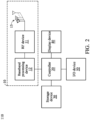
- Fig. 2 is a block diagram illustrating the UE 110 according to an embodiment of the application.
- the UE 110 includes a wireless transceiver 10, a controller 20, a storage device 30, a display device 40, and an Input/Output (I/O) device 50.
- I/O Input/Output
- the wireless transceiver 10 is configured to perform wireless transmission and reception to and from the RAN 121.
- the wireless transceiver 10 includes a Radio Frequency (RF) device 11, a baseband processing device 12, and antenna(s) 13, wherein the antenna(s) 13 may include one or more antennas for beamforming.
- the baseband processing device 12 is configured to perform baseband signal processing and control the communications between subscriber identity card(s) (not shown) and the RF device 11.
- the baseband processing device 12 may contain multiple hardware components to perform the baseband signal processing, including Analog-to-Digital Conversion (ADC)/Digital-to-Analog Conversion (DAC), gain adjusting, modulation/demodulation, encoding/decoding, and so on.
- ADC Analog-to-Digital Conversion
- DAC Digital-to-Analog Conversion
- the RF device 11 may receive RF wireless signals via the antenna(s) 13, convert the received RF wireless signals to baseband signals, which are processed by the baseband processing device 12, or receive baseband signals from the baseband processing device 12 and convert the received baseband signals to RF wireless signals, which are later transmitted via the antenna(s) 13.
- the RF device 11 may also contain multiple hardware devices to perform radio frequency conversion.
- the RF device 11 may comprise a mixer to multiply the baseband signals with a carrier oscillated in the radio frequency of the supported cellular technologies, wherein the radio frequency may be any radio frequency (e.g., 30GHz ⁇ 300GHz for mmWave) utilized in the 5G NR technology, or another radio frequency, depending on the cellular technology in use.
- the controller 20 may be a general-purpose processor, a Micro Control Unit (MCU), an application processor, a Digital Signal Processor (DSP), or the like, which includes various circuits for providing the functions of data processing and computing, controlling the wireless transceiver 10 for wireless communications with the RAN 121, storing and retrieving data (e.g., program code) to and from the storage device 30, sending a series of frame data (e.g. representing text messages, graphics, images, etc.) to the display device 40, and receiving signals from the I/O device 50.
- the controller 20 coordinates the aforementioned operations of the wireless transceiver 10, the storage device 30, the display device 40, and the I/O device 50 for performing the method for on-demand SI request through a random access procedure.
- controller 20 may be incorporated into the baseband processing device 12, to serve as a baseband processor.
- the circuits of the controller 20 will typically include transistors that are configured in such a way as to control the operation of the circuits in accordance with the functions and operations described herein.
- the specific structure or interconnections of the transistors will typically be determined by a compiler, such as a Register Transfer Language (RTL) compiler.
- RTL compilers may be operated by a processor upon scripts that closely resemble assembly language code, to compile the script into a form that is used for the layout or fabrication of the ultimate circuitry. Indeed, RTL is well known for its role and use in the facilitation of the design process of electronic and digital systems.
- the storage device 30 is a non-transitory machine-readable storage medium, including a memory, such as a FLASH memory or a Non-Volatile Random Access Memory (NVRAM), or a magnetic storage device, such as a hard disk or a magnetic tape, or an optical disc, or any combination thereof for storing instructions and/or program code of applications, communication protocols, and/or the method for on-demand SI request through a random access procedure.
- a memory such as a FLASH memory or a Non-Volatile Random Access Memory (NVRAM)
- NVRAM Non-Volatile Random Access Memory
- magnetic storage device such as a hard disk or a magnetic tape, or an optical disc, or any combination thereof for storing instructions and/or program code of applications, communication protocols, and/or the method for on-demand SI request through a random access procedure.
- the display device 40 may be a Liquid-Crystal Display (LCD), a Light-Emitting Diode (LED) display, or an Electronic Paper Display (EPD), etc., for providing a display function.
- the display device 40 may further include one or more touch sensors disposed thereon or thereunder for sensing touches, contacts, or approximations of objects, such as fingers or styluses.
- the I/O device 50 may include one or more buttons, a keyboard, a mouse, a touch pad, a video camera, a microphone, and/or a speaker, etc., to serve as the Man-Machine Interface (MMI) for interaction with users.
- MMI Man-Machine Interface
- the UE 110 may include more components, such as a power supply, or a Global Positioning System (GPS) device, wherein the power supply may be a mobile/replaceable battery providing power to all the other components of the UE 110, and the GPS device may provide the location information of the UE 110 for use of some location-based services or applications.
- a power supply may be a mobile/replaceable battery providing power to all the other components of the UE 110
- GPS device may provide the location information of the UE 110 for use of some location-based services or applications.
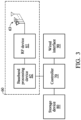
- Fig. 3 is a block diagram illustrating a cellular station according to the application.
- the cellular station may be a 5G cellular station, such as a gNB or TRP.
- the cellular station includes a wireless transceiver 60, a controller 70, a storage device 80, and a wired interface 90.
- the wireless transceiver 60 is configured to perform wireless transmission and reception to and from the UE 110.
- the wireless transceiver 60 includes an RF device 61, a baseband processing device 62, and antenna(s) 63, wherein the antenna(s) 63 may include one or more antennas for beamforming.
- the functions of the RF device 61, the baseband processing device 62, and the antenna(s) 63 are similar to those of the RF device 11, the baseband processing device 12, and the antenna(s) 13 as described in the embodiment of Fig. 2 , and thus, the detailed description is not repeated herein for brevity.
- the controller 70 may be a general-purpose processor, an MCU, an application processor, a DSP, or the like, which includes various circuits for providing the functions of data processing and computing, controlling the wireless transceiver 60 for wireless communications with the UE 110, storing and retrieving data (e.g., program code) to and from the storage device 80, and sending/receiving messages to/from other network entities (e.g., other cellular stations in the RAN 121 or other network entities in the NG-CN 122) through the wired interface 90.
- the controller 70 coordinates the aforementioned operations of the wireless transceiver 60, the storage device 80, and the wired interface 90 to perform the method for on-demand SI request through a random access procedure.
- controller 70 may be incorporated into the baseband processing device 62, to serve as a baseband processor.
- the circuits of the controller 70 will typically include transistors that are configured in such a way as to control the operation of the circuits in accordance with the functions and operations described herein.
- the specific structure or interconnections of the transistors will typically be determined by a compiler, such as an RTL compiler.
- RTL compilers may be operated by a processor upon scripts that closely resemble assembly language code, to compile the script into a form that is used for the layout or fabrication of the ultimate circuitry. Indeed, RTL is well known for its role and use in the facilitation of the design process of electronic and digital systems.
- the storage device 80 may be a memory, such as a FLASH memory or an NVRAM, or a magnetic storage device, such as a hard disk or a magnetic tape, or an optical disc, or any combination thereof for storing instructions and/or program code of applications, communication protocols, and/or the method for on-demand SI request through a random access procedure.
- a memory such as a FLASH memory or an NVRAM
- a magnetic storage device such as a hard disk or a magnetic tape, or an optical disc, or any combination thereof for storing instructions and/or program code of applications, communication protocols, and/or the method for on-demand SI request through a random access procedure.
- the wired interface 90 is responsible for providing wired communications with other network entities, such as other cellular stations in the RAN 121, or other network entities in the NG-CN 122.
- the wired interface 90 may include a cable modem, an Asymmetric Digital Subscriber Line (ADSL) modem, a Fiber-Optic Modem (FOM), and/or an Ethernet network interface.
- ADSL Asymmetric Digital Subscriber Line
- FOM Fiber-Optic Modem
- the cellular station may further include other functional devices, such as a display device (e.g., LCD, LED display, or EPD, etc.), an I/O device (e.g., button, keyboard, mouse, touch pad, video camera, microphone, speaker, etc.), and/or a power supply, etc.
- a display device e.g., LCD, LED display, or EPD, etc.
- I/O device e.g., button, keyboard, mouse, touch pad, video camera, microphone, speaker, etc.
- a power supply e.g., a power supply, etc.
- the system information (SI) in 5G NR includes minimum SI and the other SI.
- Minimum SI is periodically broadcasted.
- the minimum SI comprises basic information required for initial access to a cell and information for acquiring any other SI broadcast periodically or provisioned via an on-demand basis.
- the other SI encompasses everything not included in the minimum SI.
- the other SI may either be broadcasted, or provisioned in a dedicated manner, either triggered by the network or upon request from the UE. Before the UE sends a request for the other SI, it needs to know whether the other SI is available in the cell and whether the other SI is broadcasted or not (e.g. by checking the minimum SI).
- the UE in the RRC_IDLE state or RRC_INACTIVE state should be able to request the other SI without state transition.
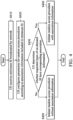
- Fig. 4 is a flow chart illustrating the UE configuration upon reception of the minimum SI according to an embodiment of the application.
- the UE receives the minimum SI broadcasted by the network (step S410).
- the minimum SI may be broadcasted by a cellular station (e.g., a gNB or TRP) of the network.
- the minimum SI may include information for cell selection, camping on a cell, and requesting other SI (i.e., on-demand SI).
- the information included in the minimum SI for requesting on-demand SI includes a set of random access preambles configured for SI request and/or corresponding Physical Random Access Channel (PRACH) time-frequency resource(s).
- PRACH Physical Random Access Channel
- the 64 random access preambles there may be 64 random access preambles in total for the 5G NR technology, and some of the 64 random access preambles may be dedicated and reserved for SI request (e.g., preamble 1 for requesting on-demand SI type-I, preamble 2 for requesting on-demand SI type-2, and so on), while others may be used for regular random access purpose (e.g., preambles 33 ⁇ 64 for regular random access purpose). That is, there may be an association between the on-demand SI types and the random access preambles configured for SI request.
- SI request e.g., preamble 1 for requesting on-demand SI type-I, preamble 2 for requesting on-demand SI type-2, and so on
- regular random access purpose e.g., preambles 33 ⁇ 64 for regular random access purpose
- the regular random access purpose refers to the situation where the random access procedure is triggered for various reasons other than SI request.
- the reasons for triggering a regular random access procedure may include: 1) the UE requires uplink synchronization with the gNB for sending uplink data, 2) the gNB receives downlink data for the UE but the uplink synchronization with the UE is lost, 3) the UE does not have any grant to send uplink data and the uplink resources for scheduled transmission are released or not configured, etc.
- specific PRACH time-frequency resource(s) may be allocated dedicatedly for SI request, and all random access preambles within the allocated PRACH time-frequency resources are dedicated and reserved for SI request (e.g., PRACH time-frequency resource block 1 for requesting on-demand SI type-I, PRACH time-frequency resource block 2 for requesting on-demand SI type-2, and so on), while the random access preambles within other PRACH time-frequency resources are used for regular random access purpose. That is, there may be an association between the on-demand SI types and PRACH time-frequency resources for SI request.
- the UE configures the parameters for random access procedures according to the information for requesting on-demand SI (i.e., association information), which is included in the minimum SI (step S420).
- the information for requesting on-demand SI i.e., association information
- step S430 determines whether the requested types of on-demand SI have corresponding association information (step S430), and if so, initiates a random access procedure with the association information corresponding to the requested types of on-demand SI (step S440).
- the random access procedure in step S440 will be further described in details in Fig. 5 .
- step S450 if there's no corresponding association information for the requested types of on-demand SI, the UE initiates a random access procedure without association information (step S450).
- the random access procedure in step S450 will be further described in details in Fig. 7 .
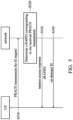
- Fig. 5 is a message sequence chart illustrating the method for on-demand SI request through a random access procedure according to an embodiment of the application. Please note that the embodiment involves the operations of the UE and the network (e.g., a gNB or TRP). In this embodiment, there may be an association between the on-demand SI types and the set of random access preambles configured for SI request, and/or an association between the on-demand SI types and PRACH time-frequency resources for SI request.
- the network e.g., a gNB or TRP
- the UE performs PRACH transmission for SI request (step S510).
- the PRACH transmission may refer to the transmission of a random access preamble configured for SI request according to the association between the on-demand SI types and the set of random access preambles configured for SI request; or the PRACH transmission may refer to the transmission of a random access preamble within the PRACH time-frequency resources dedicated and reserved for SI request according to the association between the on-demand SI types and PRACH time-frequency resources for SI request.
- the association information may be entirely included in the minimum SI; or the association information may be partially included in the minimum SI, while the rest parts of the association information may be predetermined in the 3GPP specifications. In another embodiment, the association information may be entirely predetermined in the 3GPP specifications and the minimum SI does not need to include any association information.
- the network determines a Random Access Preamble Identifier (RAPID) corresponding to the received PRACH transmission (step S520), and then transmits a random access response including only the RAPID to the UE (step S530).
- RAPID Random Access Preamble Identifier
- the random access response in step S530 does not include a Timing Advance (TA) command/information, an uplink grant, and a temporary Cell Radio Network Temporary Identifier (C-RNTI), due to the fact that this is a scenario of on-demand SI request and there will be no following uplink transmission (i.e., the UE does not perform the scheduled transmission in response to receiving the random access response including only the RAPID).
- TA Timing Advance
- C-RNTI Cell Radio Network Temporary Identifier
- the UE may consider this random access procedure to be successfully completed.
- the network After transmitting the random access response, the network transmits the on-demand SI of the requested type(s) to the UE (step S540), and the method ends. Since the SI request is indicated in the first step (e.g., step S510) using the first message (also called Msg1), the above-mentioned random access procedure with the association information (e.g., Fig. 5 ) may be realized as a Msg1-based SI request method.
- Fig. 6 is a schematic diagram illustrating an exemplary allocation of PRACH time-frequency resources for SI request according to the application.
- PRACH-SI the PRACH time-frequency resources for SI request
- PRACH-regular the PRACH time-frequency resources for regular random access purpose
- the bandwidth of the PRACH time-frequency resources for SI request (i.e., the bandwidth used for transmitting a random access preamble for SI request) can be narrower than the bandwidth of the PRACH time-frequency resources for regular random access purpose (i.e., the bandwidth required for transmitting a random access preamble for regular random access purpose), due to the fact that asynchronous transmission is assumed and timing advance estimation is required in the case of regular random access, while no TA estimation is required in the case of on-demand SI request. Consequently, the dedicated and narrow band PRACH for on-demand SI request may reduce Multiple Access Interference (MAI) to normal PRACH (i.e., the PRACH used for regular random access purpose), and may improve radio resource utilization. Moreover, the bandwidth of the time-frequency resources for SI request may be extended whenever a new on-demand SI type is introduced in the future enhancement of the 5G NR technology.
- MAI Multiple Access Interference
- Fig. 7 is a message sequence chart illustrating the method for on-demand SI request through a random access procedure according to another embodiment of the application.
- there is no corresponding association information for the requested types of on-demand SI, or the PRACH preamble and/or PRACH time-frequency resource(s) specific to the SI which the UE needs to acquire is not included in minimum SI.
- the UE transmits a random access preamble configured for contention-based random access procedures (i.e., for regular random access purpose) to the network (e.g., a gNB or TRP) (step S710).
- the random access preamble is randomly selected with equal probability from a set of random access preambles configured for contention-based random access procedures.
- the network when receiving the random access preamble, the network prepares a random access response which includes a TA command, an uplink grant, and a temporary C-RNTI, and then transmits the random access response to the UE (step S720).
- the UE transmits a message for scheduled transmission (also called message-3 in contention-based random access procedures), which includes information requesting one or more types of on-demand SI, to the network (step S730).
- a message for scheduled transmission also called message-3 in contention-based random access procedures
- the network When receiving the message for scheduled transmission, the network transmits a message for contention resolution (also called message-4 in contention-based random access procedures) to the UE to acknowledge the reception of the message for scheduled transmission (step S740).
- This acknowledgement response may be a response including only the RAPID or a normal random access response.
- the UE considers the message-3 is successfully received by the network based on the reception of the message-4 while the temporary C-RNTI received in message-2 is used for the reception of the message-4.
- the network transmits the on-demand SI of the requested types to the UE (step S750), and the method ends. Since the SI request is indicated in the third step (e.g., step S730) using the message-3 (also called Msg3), the above-mentioned random access procedure without the association information (e.g., Fig. 7 ) may be realized as a Msg3-based SI request method.
- the present application realizes on-demand SI request through the random access procedure which utilizes a channel (i.e., PRACH) allowing both uplink asynchronous and synchronous transmission.
- a channel i.e., PRACH
- the UE in either the idle state, inactive state, or connected state may perform on-demand SI request without state transition.
Landscapes
- Engineering & Computer Science (AREA)
- Signal Processing (AREA)
- Computer Networks & Wireless Communication (AREA)
- Mobile Radio Communication Systems (AREA)
Claims (4)
- Benutzergerät (110), UE, umfassend:einen drahtlosen Transceiver (10), der konfiguriert ist, um drahtlose Übertragung und drahtlosen Empfang zu und von einem Dienstnetzwerk (120) durchzuführen; undeine Steuerung (20), die konfiguriert ist, um minimale Systeminformationen, SI, von dem Dienstnetzwerk (120) über den drahtlosen Transceiver (10) zu empfangen, und eine erste Direktzugriffsprozedur mit dem Dienstnetzwerk (120) zum Anfordern von On-Demand-SI einleitet,wobei die erste Direktzugriffsprozedur umfasst:Übertragen einer Direktzugriffspräambel, die für konfliktbasierte Direktzugriffsprozeduren konfiguriert ist, an das Dienstnetzwerk (120) über den drahtlosen Transceiver (10);Empfangen einer Direktzugriffsantwort, die der Direktzugriffspräambel entspricht, die für konfliktbasierte Direktzugriffsprozeduren konfiguriert ist, von dem Dienstnetzwerk (120) über den drahtlosen Transceiver (10); undÜbertragen einer Nachricht für eine geplante Übertragung, die Informationen umfasst, die die On-Demand-SI anfordern, an das Dienstnetzwerk (120) über den drahtlosen Transceiver (10) als Reaktion auf das Empfangen der Direktzugriffsantwort;dadurch gekennzeichnet, dassdie Steuerung (20) ferner konfiguriert ist, um zu bestimmen, ob es Assoziationsinformationen gibt, die einem oder mehreren Typen von On-Demand-SI in den minimalen SI entsprechen, und die erste Direktzugriffsprozedur mit dem Dienstnetzwerk (120) zum Anfordern der On-Demand-SI einleitet, wenn das Bestimmungsergebnis anzeigt, dass es keine Assoziationsinformationen gibt, die den Typen von On-Demand-SI entsprechen;wobei die Assoziationsinformationen mindestens eines von Folgendem umfassen: eine Assoziation zwischen einem Typ der On-Demand-SI und einer Direktzugriffspräambel und eine Assoziation zwischen einem Typ der On-Demand-SI und einer Zeit-Frequenz-Ressource eines physikalischen Direktzugriffskanals, PRACH; undwobei, wenn das Bestimmungsergebnis anzeigt, dass es keine Assoziationsinformationen gibt, die den Typen von On-Demand-SI entsprechen, das UE (110) die Direktzugriffspräambel, die für konfliktbasierte Direktzugriffsprozeduren konfiguriert ist, zufällig aus einem Satz von Direktzugriffspräambeln auswählt, die durch das Dienstnetzwerk (120) für konfliktbasierte Direktzugriffsprozeduren konfiguriert sind.
- UE (110) nach Anspruch 1, wobei, wenn das Bestimmungsergebnis anzeigt, dass es Assoziationsinformationen gibt, die den Typen von On-Demand-SI entsprechen, die Steuerung (20) eine zweite Direktzugriffsprozedur einleitet, umfassend:Steuern des drahtlosen Transceivers (10), um drahtlose Übertragung zu dem Dienstnetzwerk (120) unter Verwendung von mindestens einem von Folgendem durchzuführen: einer Direktzugriffspräambel, die für SI-Anforderung konfiguriert ist, und einer entsprechenden PRACH-Zeit-Frequenz-Ressource, die für die Direktzugriffspräambel zugewiesen ist, die für SI-Anforderung konfiguriert ist; undEmpfangen einer Direktzugriffsantwort, die nur eine Direktzugriffspräambelkennung, RAPID, umfasst und keinen Zeitvorlauf-, TA-, Befehl, eine Uplink-Gewährung und eine temporäre Zellenfunknetzwerkkennung, C-RNTI, umfasst, von dem Dienstnetzwerk (120) über den drahtlosen Transceiver (10).
- Verfahren zur On-Demand-Systeminformations-, SI-, Anforderung durch eine Direktzugriffsprozedur, die von einem Benutzergerät (110), UE, ausgeführt wird, das mit einem Dienstnetzwerk (120) verbunden ist, umfassend:Empfangen (S410) von minimalen SI von dem Dienstnetzwerk (120);
undEinleiten einer ersten Direktzugriffsprozedur mit dem Dienstnetzwerk (120) zum Anfordern der On-Demand-SI;wobei die erste Direktzugriffsprozedur umfasst:Übertragen (S450) einer Direktzugriffspräambel, die für konfliktbasierte Direktzugriffsprozeduren konfiguriert ist, an das Dienstnetzwerk (120);Empfangen (S450) einer Direktzugriffsantwort, die der Direktzugriffspräambel entspricht, die für konfliktbasierte Direktzugriffsprozeduren konfiguriert ist, von dem Dienstnetzwerk (120); undÜbertragen (S450) einer Nachricht für eine geplante Übertragung, die Informationen umfasst, die die On-Demand-SI anfordern, an das Dienstnetzwerk (120) als Reaktion auf das Empfangen der Direktzugriffsantwort;gekennzeichnet durch:Bestimmen (S430), ob es Assoziationsinformationen gibt, die einem oder mehreren Typen von On-Demand-SI in den minimalen SI entsprechen;wobei die Assoziationsinformationen mindestens eines von Folgendem umfassen: eine Assoziation zwischen einem Typ der On-Demand-SI und einer Direktzugriffspräambel und eine Assoziation zwischen einem Typ der On-Demand-SI und einer Zeit-Frequenz-Ressource eines physikalischen Direktzugriffskanals, PRACH;wobei das Einleiten der ersten Direktzugriffsprozedur mit dem Dienstnetzwerk (120) zum Anfordern der On-Demand-SI durchgeführt wird, wenn das Bestimmungsergebnis anzeigt, dass es keine Assoziationsinformationen gibt, die den Typen von On-Demand-SI entsprechen; undwobei, wenn das Bestimmungsergebnis anzeigt, dass es keine Assoziationsinformationen gibt, die den Typen von On-Demand-SI entsprechen, die Direktzugriffspräambel, die für konfliktbasierte Direktzugriffsprozeduren konfiguriert ist, zufällig aus einem Satz von Direktzugriffspräambeln ausgewählt wird, die durch das Dienstnetzwerk (120) für konfliktbasierte Direktzugriffsprozeduren konfiguriert sind. - Verfahren nach Anspruch 3, wobei, wenn das Bestimmungsergebnis anzeigt, dass es Assoziationsinformationen gibt, die den Typen von On-Demand-SI entsprechen, Einleiten einer zweiten Direktzugriffsprozedur, die Folgendes umfasst:Durchführen (S440) von drahtloser Übertragung unter Verwendung von mindestens einem von Folgendem: einer Direktzugriffspräambel, die für SI-Anforderung konfiguriert ist, und einer entsprechenden PRACH-Zeit-Frequenz-Ressource, die für die Direktzugriffspräambel zugewiesen ist, die für SI-Anforderung konfiguriert ist; undEmpfangen (S440) einer Direktzugriffsantwort, die nur eine Direktzugriffspräambelkennung, RAPID, umfasst und keinen Zeitvorlauf-, TA-, Befehl, eine Uplink-Gewährung und eine temporäre Zellenfunknetzwerkkennung, C-RNTI, umfasst, von dem Dienstnetzwerk (120).
Applications Claiming Priority (2)
| Application Number | Priority Date | Filing Date | Title |
|---|---|---|---|
| US201762475970P | 2017-03-24 | 2017-03-24 | |
| PCT/CN2018/080313 WO2018171746A1 (en) | 2017-03-24 | 2018-03-23 | Apparatuses and methods for on-demand system information (si) request through a random access procedure |
Publications (3)
| Publication Number | Publication Date |
|---|---|
| EP3603207A1 EP3603207A1 (de) | 2020-02-05 |
| EP3603207A4 EP3603207A4 (de) | 2020-07-15 |
| EP3603207B1 true EP3603207B1 (de) | 2025-02-19 |
Family
ID=63583815
Family Applications (1)
| Application Number | Title | Priority Date | Filing Date |
|---|---|---|---|
| EP18771243.5A Active EP3603207B1 (de) | 2017-03-24 | 2018-03-23 | Vorrichtungen und verfahren zur anforderung von on-demand-systeminformationen (si) durch ein direktzugriffsverfahren |
Country Status (5)
| Country | Link |
|---|---|
| US (1) | US10470222B2 (de) |
| EP (1) | EP3603207B1 (de) |
| CN (1) | CN110419245B (de) |
| TW (1) | TWI669016B (de) |
| WO (1) | WO2018171746A1 (de) |
Families Citing this family (8)
| Publication number | Priority date | Publication date | Assignee | Title |
|---|---|---|---|---|
| KR102078735B1 (ko) * | 2017-01-26 | 2020-02-19 | 엘지전자 주식회사 | 시스템 정보를 요청하는 방법 및 장치 |
| SG11201908681TA (en) * | 2017-03-29 | 2019-10-30 | Sharp Kk | Random access procedure(s) for radio system |
| CN111277397B (zh) | 2017-05-04 | 2022-07-15 | 维沃移动通信有限公司 | 系统信息传输方法、终端及网络侧设备 |
| US11477824B2 (en) * | 2017-09-07 | 2022-10-18 | Futurewei Technologies, Inc. | System and method for request multiplexing |
| CN112042232B (zh) | 2018-04-04 | 2022-06-10 | 中兴通讯股份有限公司 | 为信息请求分配随机接入信道资源 |
| CN110636578B (zh) * | 2018-06-21 | 2023-10-31 | 中兴通讯股份有限公司 | 一种请求系统消息的方法、装置、存储介质及终端 |
| US11277831B2 (en) * | 2019-02-14 | 2022-03-15 | Qualcomm Incorporated | On demand system information triggering |
| US11140616B2 (en) | 2019-04-03 | 2021-10-05 | Apple Inc. | On demand system information block acquisition |
Citations (2)
| Publication number | Priority date | Publication date | Assignee | Title |
|---|---|---|---|---|
| US20170013643A1 (en) * | 2014-03-21 | 2017-01-12 | Huawei Technologies Co., Ltd. | Random Access Response Method, Base Station and Terminal |
| WO2017031725A1 (en) * | 2015-08-26 | 2017-03-02 | Panasonic Intellectual Property Corporation Of America | Improved random access procedure for unlicensed cells |
Family Cites Families (33)
| Publication number | Priority date | Publication date | Assignee | Title |
|---|---|---|---|---|
| US5136582A (en) | 1990-05-29 | 1992-08-04 | Advanced Micro Devices, Inc. | Memory management system and method for network controller |
| KR101112145B1 (ko) * | 2007-02-09 | 2012-02-22 | 삼성전자주식회사 | 이동통신 시스템의 랜덤 액세스 프로시져에서 경쟁의 감지 방법 및 장치 |
| US7778653B2 (en) | 2007-02-14 | 2010-08-17 | Motorola, Inc. | Method and apparatus for targeted paging in a multi-cell wireless communication system |
| US9380503B2 (en) | 2007-04-30 | 2016-06-28 | Google Technology Holdings LLC | Method and apparatus for handover in a wireless communication system |
| EP2442470B1 (de) * | 2009-06-07 | 2016-10-05 | LG Electronics Inc. | Verfahren für ein benutzerendgerät zum direktzugriff in einem trägeraggregations-kommunikationssystem |
| US8462721B2 (en) | 2010-10-04 | 2013-06-11 | Intel Mobile Communications GmbH | Radio base stations, mobile radio terminals, methods for controlling a radio base station, and methods for controlling a mobile radio terminal |
| EP2700280B1 (de) * | 2011-04-21 | 2019-04-03 | LG Electronics Inc. | Verfahren zur ausführung eines funkzugangs mit verzögerung in einem drahtlosen kommunikationssystem |
| WO2013043008A2 (ko) * | 2011-09-23 | 2013-03-28 | 엘지전자 주식회사 | 무선 통신 시스템에서 랜덤 액세스 방법 및 장치 |
| US9240846B2 (en) * | 2011-11-04 | 2016-01-19 | Blackberry Limited | Random access channel procedures for in-device coexistence interference avoidance |
| CN103220811B (zh) | 2012-01-19 | 2018-04-27 | 中兴通讯股份有限公司 | 信息处理方法、mtc ue随机接入lte系统的方法 |
| US9826553B2 (en) | 2012-08-10 | 2017-11-21 | Telefonaktiebolaget Lm Ericsson (Publ) | Methods and apparatuses for handling connection setups in a telecommunications system |
| EP2887739B1 (de) * | 2012-08-15 | 2021-04-21 | LG Electronics Inc. | Verfahren und vorrichtung zur durchführung einer übergabe in einem drahtlosen kommunikationssystem |
| US9609663B2 (en) | 2012-11-02 | 2017-03-28 | Qualcomm Incorporated | Techniques for decoupling downlink and uplink operations |
| CN103874126A (zh) | 2012-12-17 | 2014-06-18 | 华为技术有限公司 | 一种接入控制方法、用户设备、接入网及通信系统 |
| WO2014129951A1 (en) * | 2013-02-25 | 2014-08-28 | Telefonaktiebolaget L M Ericsson (Publ) | Extended system information distribution mechanisms |
| KR102118693B1 (ko) | 2013-06-24 | 2020-06-03 | 삼성전자주식회사 | 무선 통신 시스템에서 랜덤 액세스를 위한 적응적 송신 빔 패턴 결정 장치 및 방법 |
| CN104918336A (zh) | 2014-03-12 | 2015-09-16 | 中兴通讯股份有限公司 | 一种干扰环境下随机接入信号的检测方法、装置和系统 |
| US9887259B2 (en) | 2014-06-23 | 2018-02-06 | Vishay-Siliconix | Modulated super junction power MOSFET devices |
| US9907093B2 (en) | 2014-12-29 | 2018-02-27 | Electronics And Telecommunications Research Institute | Method and apparatus for random access in communications system |
| CN105828416A (zh) | 2015-01-26 | 2016-08-03 | 华硕电脑股份有限公司 | 无线通信系统中增进波束搜索的方法及装置 |
| CN107534952B (zh) | 2015-01-30 | 2020-09-08 | 华为技术有限公司 | 一种异步上行的方法、终端及基站 |
| US10200920B2 (en) * | 2015-02-10 | 2019-02-05 | Qualcomm Incorporated | On-demand system information |
| WO2016127403A1 (en) | 2015-02-13 | 2016-08-18 | Mediatek Singapore Pte. Ltd. | Handling of intermittent disconnection in a millimeter wave (mmw) system |
| KR102399944B1 (ko) * | 2015-06-11 | 2022-05-18 | 애플 인크. | 무선 통신을 위한 낮은 오버헤드 시스템 정보 취득 |
| US9954633B2 (en) | 2015-06-18 | 2018-04-24 | Nxp Usa, Inc. | Apparatus and method of performing a decimation on a signal for pattern detection |
| WO2017023352A1 (en) | 2015-08-06 | 2017-02-09 | Intel IP Corporation | Performing mission critical communications at a user equipment (ue) |
| US9763158B2 (en) | 2016-01-13 | 2017-09-12 | Qualcomm Incorporated | Base station identity code and system information collection |
| US10334542B2 (en) | 2016-02-03 | 2019-06-25 | Telefonaktiebolaget Lm Ericsson (Publ) | Wireless device, a first access node and methods therein |
| US10278160B2 (en) | 2016-02-26 | 2019-04-30 | Samsung Electronics Co., Ltd. | Apparatus and method for performing random access in beam-formed system |
| CN107889190B (zh) * | 2016-09-30 | 2023-02-03 | 华为技术有限公司 | 一种系统消息的获取、发送方法及相关装置 |
| US9900891B1 (en) | 2016-12-20 | 2018-02-20 | Qualcomm Incorporated | Fallback beam selection procedure during failure of beam change instruction reception |
| CA3043457C (en) * | 2017-02-01 | 2021-09-21 | Lg Electronics Inc. | Method and device for requesting system information |
| US20180220288A1 (en) * | 2017-02-02 | 2018-08-02 | Samsung Electronics Co., Ltd. | Method and apparatus for transmitting and receiving system information |
-
2018
- 2018-03-23 WO PCT/CN2018/080313 patent/WO2018171746A1/en not_active Ceased
- 2018-03-23 US US15/933,473 patent/US10470222B2/en active Active
- 2018-03-23 CN CN201880018457.1A patent/CN110419245B/zh active Active
- 2018-03-23 EP EP18771243.5A patent/EP3603207B1/de active Active
- 2018-03-23 TW TW107110031A patent/TWI669016B/zh active
Patent Citations (2)
| Publication number | Priority date | Publication date | Assignee | Title |
|---|---|---|---|---|
| US20170013643A1 (en) * | 2014-03-21 | 2017-01-12 | Huawei Technologies Co., Ltd. | Random Access Response Method, Base Station and Terminal |
| WO2017031725A1 (en) * | 2015-08-26 | 2017-03-02 | Panasonic Intellectual Property Corporation Of America | Improved random access procedure for unlicensed cells |
Also Published As
| Publication number | Publication date |
|---|---|
| EP3603207A1 (de) | 2020-02-05 |
| WO2018171746A1 (en) | 2018-09-27 |
| CN110419245A (zh) | 2019-11-05 |
| CN110419245B (zh) | 2022-01-04 |
| EP3603207A4 (de) | 2020-07-15 |
| TW201841538A (zh) | 2018-11-16 |
| BR112019019926A2 (pt) | 2020-04-22 |
| US20180279378A1 (en) | 2018-09-27 |
| TWI669016B (zh) | 2019-08-11 |
| US10470222B2 (en) | 2019-11-05 |
Similar Documents
| Publication | Publication Date | Title |
|---|---|---|
| EP3603207B1 (de) | Vorrichtungen und verfahren zur anforderung von on-demand-systeminformationen (si) durch ein direktzugriffsverfahren | |
| US11290894B2 (en) | Apparatuses and methods for beam identification through the physical random access channel (PRACH) and efficient PRACH resource utilization | |
| US11438034B2 (en) | Apparatuses and methods for a physical random access channel (PRACH) retransmission | |
| US10887920B2 (en) | Apparatuses and methods for Bandwidth Part (BWP) selection for a random access procedure | |
| CN113924817B (zh) | 在基于帧的设备(fbe)操作中的上行链路传输的装置和方法 | |
| US11147009B2 (en) | Apparatuses and methods for configuration of initial downlink (DL) bandwidth part (BWP) | |
| US10939362B2 (en) | Apparatuses and methods for system information (SI) request through a contention-based random access procedure | |
| US20180332625A1 (en) | Apparatuses and methods for beam selection during a physical random access channel (prach) transmission or retransmission | |
| BR112019019926B1 (pt) | Equipamento de usuário e método para solicitação de si sob demanda através de um procedimento de acesso aleatório |
Legal Events
| Date | Code | Title | Description |
|---|---|---|---|
| STAA | Information on the status of an ep patent application or granted ep patent |
Free format text: STATUS: THE INTERNATIONAL PUBLICATION HAS BEEN MADE |
|
| PUAI | Public reference made under article 153(3) epc to a published international application that has entered the european phase |
Free format text: ORIGINAL CODE: 0009012 |
|
| STAA | Information on the status of an ep patent application or granted ep patent |
Free format text: STATUS: REQUEST FOR EXAMINATION WAS MADE |
|
| 17P | Request for examination filed |
Effective date: 20191024 |
|
| AK | Designated contracting states |
Kind code of ref document: A1 Designated state(s): AL AT BE BG CH CY CZ DE DK EE ES FI FR GB GR HR HU IE IS IT LI LT LU LV MC MK MT NL NO PL PT RO RS SE SI SK SM TR |
|
| AX | Request for extension of the european patent |
Extension state: BA ME |
|
| RIC1 | Information provided on ipc code assigned before grant |
Ipc: H04W 74/00 20090101ALN20200318BHEP Ipc: H04L 5/00 20060101ALI20200318BHEP Ipc: H04W 48/10 20090101ALN20200318BHEP Ipc: H04W 74/08 20090101AFI20200318BHEP |
|
| REG | Reference to a national code |
Ref country code: DE Ref legal event code: R079 Free format text: PREVIOUS MAIN CLASS: H04W0048140000 Ipc: H04W0074080000 |
|
| DAV | Request for validation of the european patent (deleted) | ||
| DAX | Request for extension of the european patent (deleted) | ||
| A4 | Supplementary search report drawn up and despatched |
Effective date: 20200615 |
|
| RIC1 | Information provided on ipc code assigned before grant |
Ipc: H04W 74/00 20090101ALN20200608BHEP Ipc: H04W 74/08 20090101AFI20200608BHEP Ipc: H04W 56/00 20090101ALI20200608BHEP Ipc: H04W 48/10 20090101ALN20200608BHEP Ipc: H04L 5/00 20060101ALI20200608BHEP |
|
| STAA | Information on the status of an ep patent application or granted ep patent |
Free format text: STATUS: EXAMINATION IS IN PROGRESS |
|
| 17Q | First examination report despatched |
Effective date: 20211110 |
|
| P01 | Opt-out of the competence of the unified patent court (upc) registered |
Effective date: 20230607 |
|
| REG | Reference to a national code |
Ref legal event code: R079 Ref country code: DE Ref legal event code: R079 Ref document number: 602018079324 Country of ref document: DE Free format text: PREVIOUS MAIN CLASS: H04W0074080000 Ipc: H04W0074083300 |
|
| GRAP | Despatch of communication of intention to grant a patent |
Free format text: ORIGINAL CODE: EPIDOSNIGR1 |
|
| STAA | Information on the status of an ep patent application or granted ep patent |
Free format text: STATUS: GRANT OF PATENT IS INTENDED |
|
| RIC1 | Information provided on ipc code assigned before grant |
Ipc: H04W 48/10 20090101ALN20241115BHEP Ipc: H04W 74/00 20090101ALN20241115BHEP Ipc: H04W 56/00 20090101ALI20241115BHEP Ipc: H04L 5/00 20060101ALI20241115BHEP Ipc: H04W 74/0833 20240101AFI20241115BHEP |
|
| INTG | Intention to grant announced |
Effective date: 20241127 |
|
| GRAS | Grant fee paid |
Free format text: ORIGINAL CODE: EPIDOSNIGR3 |
|
| GRAA | (expected) grant |
Free format text: ORIGINAL CODE: 0009210 |
|
| STAA | Information on the status of an ep patent application or granted ep patent |
Free format text: STATUS: THE PATENT HAS BEEN GRANTED |
|
| AK | Designated contracting states |
Kind code of ref document: B1 Designated state(s): AL AT BE BG CH CY CZ DE DK EE ES FI FR GB GR HR HU IE IS IT LI LT LU LV MC MK MT NL NO PL PT RO RS SE SI SK SM TR |
|
| REG | Reference to a national code |
Ref country code: GB Ref legal event code: FG4D |
|
| REG | Reference to a national code |
Ref country code: CH Ref legal event code: EP |
|
| REG | Reference to a national code |
Ref country code: DE Ref legal event code: R096 Ref document number: 602018079324 Country of ref document: DE |
|
| REG | Reference to a national code |
Ref country code: IE Ref legal event code: FG4D |
|
| PGFP | Annual fee paid to national office [announced via postgrant information from national office to epo] |
Ref country code: DE Payment date: 20250327 Year of fee payment: 8 |
|
| PGFP | Annual fee paid to national office [announced via postgrant information from national office to epo] |
Ref country code: GB Payment date: 20250226 Year of fee payment: 8 |
|
| REG | Reference to a national code |
Ref country code: NL Ref legal event code: MP Effective date: 20250219 |
|
| PG25 | Lapsed in a contracting state [announced via postgrant information from national office to epo] |
Ref country code: RS Free format text: LAPSE BECAUSE OF FAILURE TO SUBMIT A TRANSLATION OF THE DESCRIPTION OR TO PAY THE FEE WITHIN THE PRESCRIBED TIME-LIMIT Effective date: 20250519 |
|
| PG25 | Lapsed in a contracting state [announced via postgrant information from national office to epo] |
Ref country code: FI Free format text: LAPSE BECAUSE OF FAILURE TO SUBMIT A TRANSLATION OF THE DESCRIPTION OR TO PAY THE FEE WITHIN THE PRESCRIBED TIME-LIMIT Effective date: 20250219 |
|
| PG25 | Lapsed in a contracting state [announced via postgrant information from national office to epo] |
Ref country code: PL Free format text: LAPSE BECAUSE OF FAILURE TO SUBMIT A TRANSLATION OF THE DESCRIPTION OR TO PAY THE FEE WITHIN THE PRESCRIBED TIME-LIMIT Effective date: 20250219 |
|
| PG25 | Lapsed in a contracting state [announced via postgrant information from national office to epo] |
Ref country code: ES Free format text: LAPSE BECAUSE OF FAILURE TO SUBMIT A TRANSLATION OF THE DESCRIPTION OR TO PAY THE FEE WITHIN THE PRESCRIBED TIME-LIMIT Effective date: 20250219 |
|
| REG | Reference to a national code |
Ref country code: LT Ref legal event code: MG9D |
|
| PG25 | Lapsed in a contracting state [announced via postgrant information from national office to epo] |
Ref country code: IS Free format text: LAPSE BECAUSE OF FAILURE TO SUBMIT A TRANSLATION OF THE DESCRIPTION OR TO PAY THE FEE WITHIN THE PRESCRIBED TIME-LIMIT Effective date: 20250619 Ref country code: NO Free format text: LAPSE BECAUSE OF FAILURE TO SUBMIT A TRANSLATION OF THE DESCRIPTION OR TO PAY THE FEE WITHIN THE PRESCRIBED TIME-LIMIT Effective date: 20250519 |
|
| PG25 | Lapsed in a contracting state [announced via postgrant information from national office to epo] |
Ref country code: NL Free format text: LAPSE BECAUSE OF FAILURE TO SUBMIT A TRANSLATION OF THE DESCRIPTION OR TO PAY THE FEE WITHIN THE PRESCRIBED TIME-LIMIT Effective date: 20250219 |
|
| PG25 | Lapsed in a contracting state [announced via postgrant information from national office to epo] |
Ref country code: HR Free format text: LAPSE BECAUSE OF FAILURE TO SUBMIT A TRANSLATION OF THE DESCRIPTION OR TO PAY THE FEE WITHIN THE PRESCRIBED TIME-LIMIT Effective date: 20250219 |
|
| PG25 | Lapsed in a contracting state [announced via postgrant information from national office to epo] |
Ref country code: LV Free format text: LAPSE BECAUSE OF FAILURE TO SUBMIT A TRANSLATION OF THE DESCRIPTION OR TO PAY THE FEE WITHIN THE PRESCRIBED TIME-LIMIT Effective date: 20250219 Ref country code: PT Free format text: LAPSE BECAUSE OF FAILURE TO SUBMIT A TRANSLATION OF THE DESCRIPTION OR TO PAY THE FEE WITHIN THE PRESCRIBED TIME-LIMIT Effective date: 20250620 |
|
| PG25 | Lapsed in a contracting state [announced via postgrant information from national office to epo] |
Ref country code: GR Free format text: LAPSE BECAUSE OF FAILURE TO SUBMIT A TRANSLATION OF THE DESCRIPTION OR TO PAY THE FEE WITHIN THE PRESCRIBED TIME-LIMIT Effective date: 20250520 Ref country code: BG Free format text: LAPSE BECAUSE OF FAILURE TO SUBMIT A TRANSLATION OF THE DESCRIPTION OR TO PAY THE FEE WITHIN THE PRESCRIBED TIME-LIMIT Effective date: 20250219 |
|
| REG | Reference to a national code |
Ref country code: AT Ref legal event code: MK05 Ref document number: 1769621 Country of ref document: AT Kind code of ref document: T Effective date: 20250219 |
|
| PG25 | Lapsed in a contracting state [announced via postgrant information from national office to epo] |
Ref country code: SE Free format text: LAPSE BECAUSE OF FAILURE TO SUBMIT A TRANSLATION OF THE DESCRIPTION OR TO PAY THE FEE WITHIN THE PRESCRIBED TIME-LIMIT Effective date: 20250219 |
|
| PG25 | Lapsed in a contracting state [announced via postgrant information from national office to epo] |
Ref country code: SM Free format text: LAPSE BECAUSE OF FAILURE TO SUBMIT A TRANSLATION OF THE DESCRIPTION OR TO PAY THE FEE WITHIN THE PRESCRIBED TIME-LIMIT Effective date: 20250219 |
|
| PG25 | Lapsed in a contracting state [announced via postgrant information from national office to epo] |
Ref country code: DK Free format text: LAPSE BECAUSE OF FAILURE TO SUBMIT A TRANSLATION OF THE DESCRIPTION OR TO PAY THE FEE WITHIN THE PRESCRIBED TIME-LIMIT Effective date: 20250219 |
|
| PG25 | Lapsed in a contracting state [announced via postgrant information from national office to epo] |
Ref country code: IT Free format text: LAPSE BECAUSE OF FAILURE TO SUBMIT A TRANSLATION OF THE DESCRIPTION OR TO PAY THE FEE WITHIN THE PRESCRIBED TIME-LIMIT Effective date: 20250219 |
|
| PG25 | Lapsed in a contracting state [announced via postgrant information from national office to epo] |
Ref country code: AT Free format text: LAPSE BECAUSE OF FAILURE TO SUBMIT A TRANSLATION OF THE DESCRIPTION OR TO PAY THE FEE WITHIN THE PRESCRIBED TIME-LIMIT Effective date: 20250219 |
|
| PG25 | Lapsed in a contracting state [announced via postgrant information from national office to epo] |
Ref country code: CZ Free format text: LAPSE BECAUSE OF FAILURE TO SUBMIT A TRANSLATION OF THE DESCRIPTION OR TO PAY THE FEE WITHIN THE PRESCRIBED TIME-LIMIT Effective date: 20250219 Ref country code: EE Free format text: LAPSE BECAUSE OF FAILURE TO SUBMIT A TRANSLATION OF THE DESCRIPTION OR TO PAY THE FEE WITHIN THE PRESCRIBED TIME-LIMIT Effective date: 20250219 |
|
| PG25 | Lapsed in a contracting state [announced via postgrant information from national office to epo] |
Ref country code: RO Free format text: LAPSE BECAUSE OF FAILURE TO SUBMIT A TRANSLATION OF THE DESCRIPTION OR TO PAY THE FEE WITHIN THE PRESCRIBED TIME-LIMIT Effective date: 20250219 |
|
| REG | Reference to a national code |
Ref country code: CH Ref legal event code: H13 Free format text: ST27 STATUS EVENT CODE: U-0-0-H10-H13 (AS PROVIDED BY THE NATIONAL OFFICE) Effective date: 20251024 |
|
| PG25 | Lapsed in a contracting state [announced via postgrant information from national office to epo] |
Ref country code: SK Free format text: LAPSE BECAUSE OF FAILURE TO SUBMIT A TRANSLATION OF THE DESCRIPTION OR TO PAY THE FEE WITHIN THE PRESCRIBED TIME-LIMIT Effective date: 20250219 |
|
| PG25 | Lapsed in a contracting state [announced via postgrant information from national office to epo] |
Ref country code: LU Free format text: LAPSE BECAUSE OF NON-PAYMENT OF DUE FEES Effective date: 20250323 |
|
| REG | Reference to a national code |
Ref country code: DE Ref legal event code: R097 Ref document number: 602018079324 Country of ref document: DE |
|
| REG | Reference to a national code |
Ref country code: BE Ref legal event code: MM Effective date: 20250331 |
|
| PG25 | Lapsed in a contracting state [announced via postgrant information from national office to epo] |
Ref country code: MC Free format text: LAPSE BECAUSE OF FAILURE TO SUBMIT A TRANSLATION OF THE DESCRIPTION OR TO PAY THE FEE WITHIN THE PRESCRIBED TIME-LIMIT Effective date: 20250219 |
|
| PLBE | No opposition filed within time limit |
Free format text: ORIGINAL CODE: 0009261 |
|
| STAA | Information on the status of an ep patent application or granted ep patent |
Free format text: STATUS: NO OPPOSITION FILED WITHIN TIME LIMIT |
|
| PGFP | Annual fee paid to national office [announced via postgrant information from national office to epo] |
Ref country code: FR Payment date: 20251231 Year of fee payment: 9 |
|
| PG25 | Lapsed in a contracting state [announced via postgrant information from national office to epo] |
Ref country code: BE Free format text: LAPSE BECAUSE OF NON-PAYMENT OF DUE FEES Effective date: 20250331 |
|
| PG25 | Lapsed in a contracting state [announced via postgrant information from national office to epo] |
Ref country code: CH Free format text: LAPSE BECAUSE OF NON-PAYMENT OF DUE FEES Effective date: 20250331 |
|
| PG25 | Lapsed in a contracting state [announced via postgrant information from national office to epo] |
Ref country code: IE Free format text: LAPSE BECAUSE OF NON-PAYMENT OF DUE FEES Effective date: 20250323 |
|
| 26N | No opposition filed |
Effective date: 20251120 |