EP3603000B1 - Verfahren zum lernen aus einem kompressions-/ dekompressionskontext und entsprechende vorrichtung, system und computerprogrammprodukt - Google Patents
Verfahren zum lernen aus einem kompressions-/ dekompressionskontext und entsprechende vorrichtung, system und computerprogrammprodukt Download PDFInfo
- Publication number
- EP3603000B1 EP3603000B1 EP18713263.4A EP18713263A EP3603000B1 EP 3603000 B1 EP3603000 B1 EP 3603000B1 EP 18713263 A EP18713263 A EP 18713263A EP 3603000 B1 EP3603000 B1 EP 3603000B1
- Authority
- EP
- European Patent Office
- Prior art keywords
- compression
- decompression
- learning
- rule
- decompressor
- Prior art date
- Legal status (The legal status is an assumption and is not a legal conclusion. Google has not performed a legal analysis and makes no representation as to the accuracy of the status listed.)
- Active
Links
Images
Classifications
-
- G—PHYSICS
- G06—COMPUTING OR CALCULATING; COUNTING
- G06N—COMPUTING ARRANGEMENTS BASED ON SPECIFIC COMPUTATIONAL MODELS
- G06N20/00—Machine learning
-
- H—ELECTRICITY
- H03—ELECTRONIC CIRCUITRY
- H03M—CODING; DECODING; CODE CONVERSION IN GENERAL
- H03M7/00—Conversion of a code where information is represented by a given sequence or number of digits to a code where the same, similar or subset of information is represented by a different sequence or number of digits
- H03M7/30—Compression; Expansion; Suppression of unnecessary data, e.g. redundancy reduction
-
- H—ELECTRICITY
- H04—ELECTRIC COMMUNICATION TECHNIQUE
- H04L—TRANSMISSION OF DIGITAL INFORMATION, e.g. TELEGRAPHIC COMMUNICATION
- H04L12/00—Data switching networks
- H04L12/28—Data switching networks characterised by path configuration, e.g. LAN [Local Area Networks] or WAN [Wide Area Networks]
- H04L12/2854—Wide area networks, e.g. public data networks
-
- H—ELECTRICITY
- H04—ELECTRIC COMMUNICATION TECHNIQUE
- H04L—TRANSMISSION OF DIGITAL INFORMATION, e.g. TELEGRAPHIC COMMUNICATION
- H04L69/00—Network arrangements, protocols or services independent of the application payload and not provided for in the other groups of this subclass
- H04L69/04—Protocols for data compression, e.g. ROHC
-
- H—ELECTRICITY
- H04—ELECTRIC COMMUNICATION TECHNIQUE
- H04L—TRANSMISSION OF DIGITAL INFORMATION, e.g. TELEGRAPHIC COMMUNICATION
- H04L69/00—Network arrangements, protocols or services independent of the application payload and not provided for in the other groups of this subclass
- H04L69/22—Parsing or analysis of headers
-
- H—ELECTRICITY
- H04—ELECTRIC COMMUNICATION TECHNIQUE
- H04W—WIRELESS COMMUNICATION NETWORKS
- H04W84/00—Network topologies
- H04W84/02—Hierarchically pre-organised networks, e.g. paging networks, cellular networks, WLAN [Wireless Local Area Network] or WLL [Wireless Local Loop]
- H04W84/04—Large scale networks; Deep hierarchical networks
- H04W84/042—Public Land Mobile systems, e.g. cellular systems
Definitions
- the present invention relates to the field of data compression and decompression (in particular, but not exclusively header data) exchanged via a communication link.
- the present invention relates to a method allowing a learning of a compression / decompression context (comprising at least one compression / decompression rule) used by two devices, one compressor and the other decompressor, exchanging data. data compressed via such a link, while minimizing degradation of useful throughput on the link in question.
- the invention has many applications, particularly but not exclusively, in the field of the Internet of Things, networks dedicated to data exchanges for such objects often having reduced speeds in order to limit the consumption of these objects in applications. nomads.
- Examples of such networks are networks based on SemTech LoRa, SIGFOX, NB-loT, EC-GSM, Cat-M1, Weightless, Ingenu / RPMA, WI-SUN technology or any other technology which has similar characteristics.
- the invention can also be applied to objects which communicate through shorter range networks, such as Bluetooth, Bluetooth LE, IEEE 802.15.4, ZigBee.
- the invention can be applied to any network which places constraints on the communication speed, or which has to connect objects (even if this network is not limited in speed).
- these connected objects are for the most part nomadic. In particular, they must be able to transmit the data produced, regularly or on demand, to a remote user.
- SCHC Static Context Header Compression
- the SCHC technique proposes to compress / decompress the headers used by such networks via the use of contexts comprising a set of compression / decompression rules known both to the transmitter (or more precisely to the device. compressor) and the receiver (or more precisely the decompressor device). Such rules remain simple to apply in terms of computational load by associating particular values with the header fields in question.
- the sender simultaneously sends the compressed header data as well as the identifier of the rule used to compress the sent data.
- the compression / decompression rules are known to the receiver, this the latter performs decompression of the compressed data received on the basis of the compression / decompression rule identified by the received identifier.
- the rules in question are defined beforehand within each device using them.
- an initialization phase in which the rules in question are transmitted from one of the devices using them to the other is implemented, so that the two devices use the same rules during their data exchanges. compressed via their sending and receiving part.
- Such an initialization phase is however problematic because it reduces by the same amount the speed available on the communication link, in particular when the latter is of the LPWAN type, i.e. at low speed in practice.
- certain applications can lead to dynamic characteristics of the data flow to be exchanged on the communication link between the two devices (for example a label characterizing the flow conveyed, a port number of a source application, etc.).
- a re-parameterization of the compression / decompression rules can prove to be beneficial in order to optimize the compression of the headers of the data frames exchanged on the communication link according to the characteristics of the latter.
- this additional data exchange can be long due to the limited throughput in an LPWAN network, which limits the adaptability of the compression / decompression rules to the actual data flow on the communication link.
- this additional data exchange duration can significantly impact the exchange of useful data in real time between the devices implementing the rules in question.
- the invention proposes a new and inventive solution for the learning (ie the initialization and / or the update) of a compression / decompression context comprising compression / decompression rules implemented by a compressor device. and by a decompressor device (each of the compressor and decompressor devices can be a full-fledged device or else be embedded in other equipment, such as for example a connected object, a user terminal of the smartphone or tablet type, a network gateway or a core network, a server or a computer, etc.).
- the technique described proposes to use a second communication link in order to perform the training of the compression / decompression rules in question prior to their use for the exchange of a first data stream via the first link. Communication.
- the bandwidth on the first communication link remains dedicated to the exchange of useful data.
- the possibility of learning the compression / decompression rules without impacting the bit rate on the first communication link makes it possible to envisage updating the rules in question more frequently. In this way, an adaptation of the rules to the dynamic re-parameterizations of the data exchange on the first communication link becomes possible.
- the learning is carried out selectively on particular compression / decompression rules (selected rules) from among all the basic rules capable of being implemented by the compressor and decompressor devices.
- the attribute (s) of the compression / decompression rule that the compressor device and / or the decompressor device and / or the third-party device is to be learned from are updated in a flexible manner via the information provided on the device. second communication link.
- the attribute (s) of the compression / decompression rule which we want the compressor device and / or the decompressor device and / or the third-party device to learn are for example updated on the basis of values of predefined attributes, selected selectively as a function of the current value (in the second stream) of the adaptation field with which the attributes in question are associated.
- said at least one adaptation field is a header field of a packet of at least one first data stream, the header field conveying dynamic information of a protocol Communication.
- the attributes of the compression / decompression rules associated with the header fields conveying a dynamic parameter, i.e. not known prior to the establishment of the communication on the first communication link, are learned.
- the application of the compression / decompression rule, resulting from the learning, to the effective value of a field of data (eg a field header) in order to deliver a compressed or decompressed data field is conditioned on the comparison between the actual value in question and a target value associated with the data field in question by the compression / decompression rule obtained after learning.
- Such compression or decompression is then carried out via the compression or decompression function associated with the data field in question by the compression / decompression rule obtained after learning.
- the learning step comprises a selection, as a function of the at least one second uncompressed data stream, of said at least one basic compression / decompression rule from among a plurality of compression / decompression rules basic.
- learning is carried out selectively on particular compression / decompression rules among basic rules (eg patterns, or “templates” in English, of rules) previously implemented on the device (s) which implements the learning process.
- basic rules eg patterns, or “templates” in English, of rules
- a compression / decompression rule which we want the compressor device and / or the decompressor device and / or the third-party device to learn is identified in a simple and robust manner through a comparison. performed between the target value and the current value of a data reference field to which the rule must be applied in order to compress or decompress it.
- said at least one reference field is another header field of a packet of at least one first data stream, said other header field conveying static information from the above-mentioned communication.
- the identification of the compression / decompression rule for which we want the compressor device and / or the decompressor device and / or the third-party device to learn is done via the recognition of the value of a field header conveying a static parameter making it possible to identify the final recipient of the compressed data exchanged in the first data stream via the first communication link (eg the decompressor, a device in which the decompressor is embedded, or more particularly a final application for which the data are intended after decompression by the decompressor).
- the decompressor e.g the decompressor, a device in which the decompressor is embedded, or more particularly a final application for which the data are intended after decompression by the decompressor.
- the method described allows the learning of a compression / decompression rule used specifically for the exchange of compressed data with a particular destination device.
- the identification of the rule to be learned is done in a robust manner according to a predefined criterion (i.e. according to a criterion known prior to the establishment of the communication via the first communication link).
- said at least one compression rule, included in said compression / decompression context is in SCHC (for “Static Context Header Compression”) format.
- said at least one first communication link is a link of a long-range and low-consumption wireless network (LPWAN, for “Low-Power Wide-Area Network”).
- LPWAN long-range and low-consumption wireless network
- LoRa® network For example, it is a LoRa® network, SIGFOX®, NB-IoT (for “Narrow Band - Internet of Things” in English), EC-GPRS (for “Extended Coverage - General Packet Radio Service” in English ), LTE (for "Long Term Evolution” in English) cat-M1, Weightless®, Ingenu / RPMA®, WI-SUN, etc.
- said at least one second communication link is a link of a cellular wireless network.
- this is a 2G / 3G / 4G cellular radio link, etc.
- the compressor device and the decompressor device each perform the analysis and learning steps.
- one of the compressor and decompressor devices performs the analysis and learning steps, and the other of the compressor and decompressor devices receives the compression / decompression context resulting from said analysis and d 'learning.
- the third-party device performs the analysis and learning steps, and the compressor device and the decompressor device each receive the compression / decompression context resulting from said analysis and learning steps.
- the invention also relates to a computer program, comprising program code instructions for implementing a method of learning a compression / decompression context, according to any one of its various embodiments. , when said program is executed on a computer.
- Such a device for learning a compression / decompression context is in particular able to implement the method for learning a compression / decompression context according to the technique described (according to any one of the various aforementioned embodiments. ).
- the general principle of the technique described consists of a method of learning a compression / decompression context comprising at least one compression / decompression rule intended to be used by a compressor device and a decompressor device, to respectively compress and decompress a first data stream transmitted via a first communication link.
- at least one device among the compressor device, the decompression device and a third-party device (different from the compressor device and from the decompression device), performs the learning of the compression / decompression rule in question as a function of a second uncompressed data stream, transmitted between the compressor device and the decompressor device via a second communication link.
- the bandwidth on the first communication link remains dedicated to the exchange of useful data.
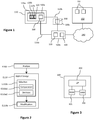
- the compressor device 100a and the decompressor device 100b respectively compress and decompress a first data stream transmitted via a first communication link 110a.
- the first 110a communication link is of the LPWAN type (for example a radio link to the LoRa® standard, SIGFOX®, NB-IoT, EC-GPRS, LTE cat-M1, Weightless®, Ingenu / RPMA®, WI-SUN, etc. .).
- the compressor device 100a is embedded in a connected object 130 (for example of the sensor / actuator type) and the decompressor device 100b is on the data path between a network gateway of the LPWAN network and a core of communication network (for example an “IP” network such as the Internet 140 or an intranet network).
- a network gateway of the LPWAN network for example an “IP” network such as the Internet 140 or an intranet network.
- IP Internet Protocol
- the data decompressed by the decompressor device 100b are thus routed to an application server 150 via the internet network 140.
- the data decompressed by the decompressor device 100b is routed to one or more target applications 151 for which the data in question, initially sent by the connected object 130 in compressed form by the action of the compressor device 100a, is intended. .
- the compressor device 100a and the decompressor device 100b respectively compress and decompress several first data streams transmitted via one or more first communication links 110a.
- each of the compressor 100a and decompressor 100b devices is a device in its own right or else is embedded in other equipment, such as for example a connected object, a user terminal of the smartphone or tablet type, a network gateway or core network, server or computer, Cloud Computing equipment (“cloud computing”), etc.
- the other items of equipment in question each integrate both a compressor device 100a and a decompressor device 100b.
- the first data stream (s) transmitted via the first communication link (s) 100a are bidirectional.
- the second data stream is transmitted between a compressor device 100a and a decompressor device 100b of each of the other items of equipment in question.
- the first communication link 110a is a short radio link scope Wifl kind ®, Bluetooth ®, IEEE 802.15.4, ZigBee, or a cellular connection (eg 2G / 3G / 4G, etc. ), etc.
- data compression / decompression rules (three in number in this example, and referenced 120a, 120b and 120c) are used by the compressor devices. 100a and decompressor 100b. These rules form a compression / decompression context 120.
- the compression / decompression rules used are in SCHC format (context-based compression technique, see definition above).
- Table 1 gives an example of attributes of such a compression / decompression rule in SCHC format (for example that referenced 120a).
- ⁇ b> Table 1 ⁇ /b> Field identifier Target value Comparison operator Compression / decompression function C1 0x00 Ignore Do not send C2 0x1230 MSB (12) LSB (4) C3 0xABC0 MSB (12) LSB (4)
- the compression / decompression rule 120a in question includes a list of three field descriptions. Each field description corresponds to a row of Table 1 above and defines a compression / decompression behavior for a determined field of the first data stream to be compressed / decompressed.
- the application of rule 120a in question to the data packet [0x00,0x1234,0xABCD] supplies the compressed data packet [0x4D] for sending by the connected object 130 to the application server 150 via the first link of communication 110a on which the decompressor device 100b is located.
- the connected object 130 simultaneously sends the identifier of the rule 120a used by the compressor device 100a to perform the compression of the data transmitted.
- each of the compressor 100a and decompressor 100b devices comprises a device 300 for learning a compression / decompression context.
- a device 300 for learning a compression / decompression context comprises a device 300 for learning a compression / decompression context.
- Such a learning device 300 is able to obtain and process data from a second data stream transmitted between the compressor device 100a and the decompressor device 100b via a second communication link 110b.
- the second communication link 100b is a short-range radio communication link of the Wifl ® , Bluetooth ® , IEEE 802.15.4, ZigBee type, or even a cellular link (for example 2G / 3G / 4G, etc.), etc.
- the learning device 300 is able to obtain and process data from several second data streams transmitted between the compressor device 100a and the decompressor device 100b via one or more second communication links 110b.
- the second communication link 110b is a link of the LPWAN type (for example a radio link to the LoRa® standard, SIGFOX®, NB-loT, EC-GPRS, LTE cat-M1, Weightless®, Ingenu / RPMA® , WI-SUN, etc.).
- the LPWAN type for example a radio link to the LoRa® standard, SIGFOX®, NB-loT, EC-GPRS, LTE cat-M1, Weightless®, Ingenu / RPMA® , WI-SUN, etc.
- the first 110a and second 110b communication links are two radio links based on two distinct modes of the same radio communication protocol (for example the IP mode of the NB-loT standard, and the non-IP mode of the same standard (non-IP mode of the NB-loT standard also known under the names DoNAS, for "Data over NAS” in English , or NIDD for “Non-IP Data Delivery” in English)).
- the IP mode of the NB-loT standard for example the IP mode of the NB-loT standard, and the non-IP mode of the same standard (non-IP mode of the NB-loT standard also known under the names DoNAS, for "Data over NAS" in English , or NIDD for “Non-IP Data Delivery” in English)
- the learning device or devices 300 are able to implement the method of learning a compression / decompression context 120 described below in relation to the figure 2 .
- each learning device 300 ie, in the present first implementation, by that included in the compressor device 100a and by that included in the decompressor device 100b).
- the learning device 300 analyzes the second uncompressed data stream, transmitted between the compressor device 100a and the decompressor device 100b via the second communication link 110b.
- Such an analysis allows the learning device 300 to obtain information necessary for the next step E210 for learning the compression / decompression context.
- This context is itself useful for the subsequent compression and decompression of the first data stream to be transmitted via the first communication link 110a.
- the nature of the information in question is described below in relation to the learning step E210 and the corresponding sub-steps.
- the learning step E210 comprises a selection sub-step E210a and a modification sub-step E210b.
- the learning device 300 selects at least one basic rule from among a plurality of basic rules, as a function of the second uncompressed data stream (and more precisely as a function of the information obtained at l 'analysis step E200).
- such basic rules are for example rule patterns (or “templates”) previously implemented on the learning device 300.
- rule patterns or “templates”
- One or more of these rule patterns are thus selected and then modified by the technique described in order to be able to be used for the compression and decompression of the first data stream exchanged over the first communication link 110a.
- such basic rules are current rules, already used for the compression and decompression of the first data stream, but which it is desired to update using the method described.
- the selection of one or more of the basic rules is made on the basis of reference fields defined as such for a given rule 120a, 120b, 120c.
- each reference field description (with the notion of field description as introduced above in relation to Table 1) of a rule in SCHC format defines a compression / decompression behavior and a target value for a reference field.
- each rule which the learning device 300 learns is based on one of the basic rules, which is identified (ie selected) in a simple and robust manner through a comparison made between the target value and the current value d 'a data reference field to which this rule must be applied in order to compress or decompress it.
- a reference field is a header field of a packet of the first data stream, transmitted via the first communication link 110a, and conveying static information.
- such a reference field is a header field conveying static information as defined by a communication protocol used on the first communication link 110a.
- a communication protocol used on the first communication link 110a.
- This may be for example the Internet IP protocol (eg IPv4 or IPv6), the UDP protocol (for “User Datagram Protocol” in English) or TCP (for “Transmission Control Protocol” in English), the CoAP protocol (for “Constrained”).
- Application Protocol e.g., MQTT protocol (for“ MQ Telemetry Transport ”in English) or WMbus (for“ Wireless M-Bus ”in English), ZigBee protocol, etc.
- the identification (ie the selection) of one or more rules among the basic rules is done via the recognition of the value of a header field conveying a static parameter making it possible to identify the final recipient of the compressed data exchanged in the first data stream via the first communication link 110a (in general, any field containing an element making it possible to identify the final recipient in question can be considered to define a reference field).
- This final recipient is for example the decompressor 100b, a device in which the decompressor is embedded, or more particularly a final application 151 for which the data are intended after decompression by the decompressor 100b.
- the method described allows the learning of a compression / decompression rule 120a, 120b, 120c used specifically for the exchange of compressed data with a particular recipient device.
- the identification (ie the selection) of one or more among the basic rules is done in a robust manner according to a predefined criterion (ie according to a criterion known prior to the establishment of the communication via the first communication link) .
- the selected rule (s) are modified during the modification sub-step E210b to obtain the compression / decompression rule (s) 120a, 120b, 120c included in the compression / decompression context 120.
- the modification of a rule selected from among the basic rules is done on the basis of adaptation fields defined as such for a given basic rule.
- each adaptation field description (with the notion of field description as introduced above in relation to table 1) defines a compression / decompression behavior and a target value for an adaptation field.
- the modification comprises, for each selected basic rule and for each adaptation field description, a modification of at least one attribute of the adaptation field description, as a function of the second data stream.
- the attribute or attributes of the rule 120a, 120b, 120c which it is desired to learn are updated in a flexible manner via the information provided in the second stream conveyed by the second communication link 110b.
- the modification of this attribute is performed by directly using a current value of the adaptation field in question in a packet from the second data stream.
- this current value is taken as the target value in the description of the adaptation field in question (see the description of Table 2 below).
- the modification of this attribute is a function of a current value of the adaptation field in question in a packet from the second data stream. For example, if the current value is taken as the target value, then the comparison operator and / or the compression / decompression function automatically change values, i.e. switch to new predetermined values (see below). below the description in table 2). In this case, the new predetermined values of the attributes are predefined in the learning device 300 implementing the modification step E230b.
- an adaptation field is a header field of a packet of the first data stream, transmitted via the first communication link 110a, and conveying dynamic information.
- such an adaptation field is a header field conveying dynamic information as defined by the communication protocol used on the first communication link 110a and described above in relation to the reference fields.
- learning concerns attributes associated with header fields conveying a dynamic parameter (in general, any field conveying such a dynamic parameter can be considered in order to define a field of adaptation), ie not known prior to the establishment of the communication on the first communication link 110a.
- Such learning makes it possible to adapt the compression and decompression rules 120a, 120b, 120c to the dynamic parameter setting changes of the communication between the compressor 100a and decompressor 100b devices.
- the execution of the modification sub-step E210b thus concludes the learning step E210 of the method of learning a compression / decompression context according to the technique described.
- the possibility of learning the rules of the compression / decompression context 120 without impacting the bit rate on the first communication link 110a makes it possible to envisage a more frequent update of the context 120 in question. In this way, an adaptation of the rules to the dynamic re-parameterizations of the data exchange on the first communication link becomes possible.
- the second communication link 110b has a higher bit rate than that of the first communication link 110a, the duration of the learning of the compression context by the compressor 100a and decompressor 100b devices is reduced.
- no selection step E210a is performed.
- the modification step E210b is then implemented by default for all the basic rules implemented in the learning device 300 and having a target value for an adaptation field of which a current value is received as useful data in the data packet received via the second communication link 100b.
- Such embodiments are of interest for example when a single basic rule is implemented in the learning device 300. This can also be the case when the learning device 300 in question is implemented within a piece of equipment. which is connected, via the first communication link 110a, to only one recipient of the compressed data. In this way, the reference fields (identifying this unique recipient) are identical for all the basic rules, thereby making it unnecessary to implement the selection step E210a in its embodiment based on a comparison of reference fields.
- Table 2 gives the field descriptions, with the corresponding attributes, of a basic compression / decompression rule, in SCHC format, before learning by the implementation of the learning method described above.
- the fields C1 to C4 are header fields of the first data stream to which the compression and decompression must be applied, carried out respectively by the compressor device 100a and the decompressor device 100b.
- the compressor 100a and decompressor 100b devices select the basic rule of table 2 (this will then be modified to obtain one of the rules of the context).
- the compressor 100a and decompressor 100b devices modify (update) the attributes of the previously selected basic rule and which are associated with the. adaptation fields of which a current value is received as payload in the data packet received via the second communication link 100b.
- these are the attributes associated with the adaptation fields (also called learning fields) C1 and C4 of the basic rule of table 2 (the learning fields being different from the reference fields in the present case).
- the target values associated with fields C1 and C4 of the basic rule of table 2 are updated to the values “A” and “D” if we refer to the value of the data. useful values of the data packet taken as an example above.
- the value of the comparison operator associated with the field C1 is also updated with a predefined value for a non-zero value of the field C1, ie “Equal” in this case.
- the value of the compression / decompression function is updated with a predefined value "Do not send”.
- the new values of the comparison operator and of the compression / decompression function are provided via the payload data of the data packet conveyed within the second uncompressed data stream (by the second data link. communication 110b).
- the figure 3 finally presents an example of the structure of a learning device 300 allowing the implementation of the method of figure 2 .
- It comprises a random access memory 303 (for example a RAM memory), a processing unit 302, equipped for example with a processor, and controlled by a computer program stored in a read only memory 301 (for example a ROM memory or a Hard disk).
- a random access memory 303 for example a RAM memory
- a processing unit 302 equipped for example with a processor
- a computer program stored in a read only memory 301 for example a ROM memory or a Hard disk.
- the code instructions of the computer program are for example loaded into the random access memory 303 before being executed by the processor of the processing unit 302.
- FIG 3 illustrates only one particular way, among several possible, of carrying out the algorithm detailed above, in relation to the figure 2 .
- the technique described is carried out indifferently on a reprogrammable computing machine (a PC computer, a DSP processor or a microcontroller) executing a program comprising a sequence of instructions, or on a dedicated computing machine (for example a set of logic gates such as an FPGA or ASIC, or any other hardware module).
- a reprogrammable computing machine a PC computer, a DSP processor or a microcontroller
- a program comprising a sequence of instructions
- a dedicated computing machine for example a set of logic gates such as an FPGA or ASIC, or any other hardware module.
- the corresponding program (that is to say the sequence of instructions) can be stored in a removable storage medium (such as for example a floppy disk, CD-ROM or DVD-ROM) or not, this storage medium being partially or totally readable by a computer or a processor.
- a removable storage medium such as for example a floppy disk, CD-ROM or DVD-ROM
- each of the compressor 100a and decompressor 100b devices comprises a device 300 for learning a compression / decompression context (and therefore each performs the process of learning the figure 2 ). In this way, the overall implementation of such learning is simplified.
- only one of the compressor 100a and decompressor 100b devices comprises a learning device 300 (and therefore performs the learning process of the figure 2 ).
- that of the compressor and decompressor devices which does not perform learning receives the compression / decompression context resulting from the learning process performed by the other.
- a third-party device shown in dotted lines and referenced 100c on the figure 1
- a learning device 300 shown in dotted lines on the figure 1
- the compressor device 100a and the decompressor device 100b each receive the compression / decompression context resulting from the learning process performed by the third-party device 100c.
Landscapes
- Engineering & Computer Science (AREA)
- Computer Networks & Wireless Communication (AREA)
- Signal Processing (AREA)
- Theoretical Computer Science (AREA)
- Computer Security & Cryptography (AREA)
- Software Systems (AREA)
- Computer Vision & Pattern Recognition (AREA)
- Medical Informatics (AREA)
- Evolutionary Computation (AREA)
- Physics & Mathematics (AREA)
- Computing Systems (AREA)
- General Engineering & Computer Science (AREA)
- General Physics & Mathematics (AREA)
- Mathematical Physics (AREA)
- Data Mining & Analysis (AREA)
- Artificial Intelligence (AREA)
- Compression, Expansion, Code Conversion, And Decoders (AREA)
- Mobile Radio Communication Systems (AREA)
Claims (13)
- Verfahren zum Lernen eines Kompressions-/Dekompressionskontextes (120), der mindestens eine Kompressions-/Dekompressionsregel (120a, 120b, 120c) zur Nutzung durch eine Kompressionsvorrichtung (100a) und eine Dekompressionsvorrichtung (100b) umfasst, zum jeweiligen Komprimieren und Dekomprimieren mindestens eines ersten Datenstroms, der über mindestens eine erste Kommunikationsverbindung (110a) übertragen wird, dadurch gekennzeichnet, dass mindestens eine Vorrichtung aus der Kompressionsvorrichtung (100a), der Dekompressionsvorrichtung (100b) und einer Drittvorrichtung (100c) die folgenden Schritte durchführt:• Analysieren (E200) mindestens eines zweiten unkomprimierten Datenstroms, der zwischen der Kompressionsvorrichtung und der Dekompressionsvorrichtung über mindestens eine zweite Kommunikationsverbindung (110b) übertragen wird; und• Lernen (E210) der mindestens einen Kompressions-/Dekompressionsregel in Abhängigkeit von der Analyse;dadurch, dass der Lernschritt eine Modifikation (E210b) von mindestens einer Kompressions-/Dekompressionsgrundregel umfasst, um die mindestens eine in dem Kompressions-/Dekompressionskontext umfasste Kompressions-/Dekompressionsregel zu erhalten,
dadurch, dass die mindestens eine Kompressions-/Dekompressionsgrundregel mindestens eine Anpassungsfeldbeschreibung umfasst, die ein Kompressions-/Dekompressionsverhalten für ein Anpassungsfeld des mindestens einen ersten Datenstroms definiert,
und dadurch, dass die Modifikation für jede ausgewählte Kompressions-/Dekompressionsgrundregel Folgendes umfasst:• für jede Anpassungsfeldbeschreibung eine Modifikation von mindestens einem Attribut der Anpassungsfeldbeschreibung in Abhängigkeit von einem aktuellen Wert des Anpassungsfeldes in einem Paket des mindestens einen zweiten Datenstroms. - Verfahren nach Anspruch 1, wobei das mindestens eine Anpassungsfeld ein Header-Feld eines Pakets des mindestens einen ersten Datenstroms ist, wobei das Header-Feld eine dynamische Information eines Kommunikationsprotokolls führt.
- Verfahren nach einem der Ansprüche 1 oder 2, wobei das mindestens eine Attribut der mindestens einen Anpassungsfeldbeschreibung zu der Gruppe gehört, die Folgendes umfasst:• einen Zielwert des Anpassungsfeldes;• einen Vergleichsoperator zwischen dem Zielwert und einem aktuellen Wert des Anpassungsfeldes in einem Paket des mindestens einen ersten Datenstroms, um eine Entscheidung zur Anwendung einer Kompressions- oder Dekompressionsfunktion auf den aktuellen Wert zu liefern; und• die Kompressions- oder Dekompressionsfunktion.
- Verfahren nach einem der Ansprüche 1 bis 3, wobei der Lernschritt Auswählen (E210a), in Abhängigkeit von dem mindestens einen zweiten unkomprimierten Datenstrom, der mindestens einen Kompressions-/Dekompressionsgrundregel aus einer Vielzahl von Kompressions-/Dekompressionsgrundregeln umfasst,
wobei jede der Kompressions-/Dekompressionsgrundregeln mindestens eine Referenzfeldbeschreibung umfasst, die ein Kompressions-/Dekompressionsverhalten und einen Zielwert für ein Referenzfeld des mindestens einen ersten Datenstroms definiert,
und wobei das Auswählen für jede der Kompressions-/Dekompressionsgrundregeln Folgendes umfasst:• Anstellen eines Vergleichs (E210a1), für jede Referenzfeldbeschreibung, die einen gegebenen Zielwert für ein gegebenes Referenzfeld definiert, zwischen einem aktuellen Wert des gegebenen Referenzfeldes in einem Paket des mindestens einen zweiten Datenstroms und dem gegebenen Zielwert; und• Treffen einer Entscheidung (E210a2) über das Auswählen oder Nichtauswählen der Kompressions-/Dekompressionsgrundregel in Abhängigkeit von dem Vergleich für jede Referenzfeldbeschreibung. - Verfahren nach Anspruch 4, wobei das mindestens eine Referenzfeld ein weiteres Header-Feld eines Pakets des mindestens einen ersten Datenstroms ist, wobei das andere Header-Feld eine statische Information eines Kommunikationsprotokolls oder des Kommunikationsprotokolls führt, wenn sich Anspruch 5 auf Anspruch 2 bezieht.
- Verfahren nach einem der Ansprüche 1 bis 5, wobei die mindestens eine in dem Kompressions-/Dekompressionskontext umfasste Kompressionsregel im SCHC-(Static Context Header Compression)-Format vorliegt.
- Verfahren nach einem der Ansprüche 1 bis 6, wobei die mindestens eine erste Kommunikationsverbindung eine Verbindung eines drahtlosen Low-Power Wide-Area Network (LPWAN) ist.
- Verfahren nach einem der Ansprüche 1 bis 7, wobei die mindestens eine zweite Kommunikationsverbindung eine Verbindung eines drahtlosen Mobilfunknetzes ist.
- Verfahren nach einem der Ansprüche 1 bis 8, wobei die Kompressionsvorrichtung und die Dekompressionsvorrichtung jeweils die Analyse- und Lernschritte durchführen.
- Verfahren nach einem der Ansprüche 1 bis 8, wobei eine aus der Kompressions- oder Dekompressionsvorrichtung die Analyse- und Lernschritte durchführt und die andere aus der Kompressions- und der Dekompressionsvorrichtung den aus den Analyse- und Lernschritten resultierenden Kompressions-/Dekompressionskontext empfängt.
- Verfahren nach einem der Ansprüche 1 bis 8, wobei die Drittvorrichtung die Analyse- und Lernschritte durchführt und wobei die Kompressionsvorrichtung und die Dekompressionsvorrichtung jeweils den aus den Analyse- und Lernschritten resultierenden Kompressions-/Dekompressionskontext empfangen.
- Computerprogrammprodukt, das Programmcodebefehle umfasst, zum Durchführen eines Verfahrens nach einem der Ansprüche 1 bis 11, wenn das Programm auf einem Computer durchgeführt wird.
- Lernvorrichtung (300) für einen Kompressions-/Dekompressionskontext (120), der mindestens eine Kompressions-/Dekompressionsregel (120a, 120b, 120c) zur Nutzung durch eine Kompressionsvorrichtung (100a) und eine Dekompressionsvorrichtung (100b) umfasst, zum jeweiligen Komprimieren und Dekomprimieren mindestens eines über mindestens eine erste Kommunikationsverbindung (110a) übertragenen ersten Datenstroms, dadurch gekennzeichnet, dass sie eine umprogrammierbare Rechenmaschine (302) oder eine dedizierte Rechenmaschine umfasst, die in der Lage und konfiguriert ist zum:• Analysieren mindestens eines zweiten unkomprimierten Datenstroms, der zwischen der Kompressionsvorrichtung und der Dekompressionsvorrichtung über mindestens eine zweite Kommunikationsverbindung (110b) übertragen wird; und• Lernen mindestens einer Kompressions-/Dekompressionsregel in Abhängigkeit von der Analyse;wobei das Lernen eine Modifikation (E210b) von mindestens einer Kompressions-/Dekompressionsgrundregel umfasst, um die mindestens eine in dem Kompressions-/Dekompressionskontext umfasste Kompressions-/Dekompressionsregel zu erhalten,
wobei die mindestens eine Kompressions-/Dekompressionsgrundregel mindestens eine Anpassungsfeldbeschreibung umfasst, die ein Kompressions-/Dekompressionsverhalten für ein Anpassungsfeld des mindestens einen ersten Datenstroms definiert,
wobei die Modifikation für jede ausgewählte Kompressions-/Dekompressionsgrundregel Folgendes umfasst:• für jede Anpassungsfeldbeschreibung eine Modifikation von mindestens einem Attribut der Anpassungsfeldbeschreibung in Abhängigkeit von einem aktuellen Wert des Anpassungsfeldes in einem Paket des mindestens einen zweiten Datenstroms.
Applications Claiming Priority (2)
| Application Number | Priority Date | Filing Date | Title |
|---|---|---|---|
| FR1752627A FR3064865B1 (fr) | 2017-03-29 | 2017-03-29 | Procede d'apprentissage d'un contexte de compression/decompression, dispositif, systeme et produit programme d'ordinateur correspondants. |
| PCT/EP2018/058086 WO2018178242A1 (fr) | 2017-03-29 | 2018-03-29 | Procede d'apprentissage d'un contexte de compression/decompression, dispositif, systeme et produit programme d'ordinateur correspondants |
Publications (2)
| Publication Number | Publication Date |
|---|---|
| EP3603000A1 EP3603000A1 (de) | 2020-02-05 |
| EP3603000B1 true EP3603000B1 (de) | 2021-01-06 |
Family
ID=59153057
Family Applications (1)
| Application Number | Title | Priority Date | Filing Date |
|---|---|---|---|
| EP18713263.4A Active EP3603000B1 (de) | 2017-03-29 | 2018-03-29 | Verfahren zum lernen aus einem kompressions-/ dekompressionskontext und entsprechende vorrichtung, system und computerprogrammprodukt |
Country Status (6)
| Country | Link |
|---|---|
| US (1) | US20210110292A1 (de) |
| EP (1) | EP3603000B1 (de) |
| CN (1) | CN110651457B (de) |
| ES (1) | ES2864161T3 (de) |
| FR (1) | FR3064865B1 (de) |
| WO (1) | WO2018178242A1 (de) |
Families Citing this family (7)
| Publication number | Priority date | Publication date | Assignee | Title |
|---|---|---|---|---|
| US11308005B2 (en) * | 2018-06-28 | 2022-04-19 | Intel Corporation | Cache coherent, high-throughput input/output controller |
| US12317375B2 (en) | 2022-06-27 | 2025-05-27 | Cisco Technology, Inc. | Dynamic compression context in a wireless data network based on applying generic network context and device-specific context to a rule template |
| US12425371B2 (en) * | 2022-09-16 | 2025-09-23 | Cisco Technology, Inc. | System and method for providing SCHC-based edge firewalling |
| FR3149743A1 (fr) * | 2023-06-09 | 2024-12-13 | Orange | Procédé de gestion de la compression d’un paquet de données transmis dans un réseau |
| EP4725182A1 (de) * | 2023-06-09 | 2026-04-15 | Orange | Titel verfahren zum erhalten eines satzes von komprimierungsregeln für ein in einem netzwerk übertragenes datenpaket |
| US12627749B2 (en) * | 2023-07-18 | 2026-05-12 | Cisco Technology, Inc. | Systems and methods for static context header compression instantiation |
| FI131975B1 (en) * | 2023-08-07 | 2026-03-19 | Wirepas Oy | Context information learning and transmission method for wireless communication network |
Family Cites Families (8)
| Publication number | Priority date | Publication date | Assignee | Title |
|---|---|---|---|---|
| KR100884956B1 (ko) * | 2002-08-14 | 2009-02-23 | 엘지전자 주식회사 | 비대칭 양방향 패킷데이터 송수신 방법 및 시스템 |
| US7822067B2 (en) * | 2003-08-08 | 2010-10-26 | Qualcomm Incorporated | Header compression enhancement for broadcast/multicast services |
| US8804765B2 (en) * | 2005-06-21 | 2014-08-12 | Optis Wireless Technology, Llc | Dynamic robust header compression |
| US20150295807A1 (en) * | 2012-08-02 | 2015-10-15 | Telefonaktiebolaget L M Ericsson (Publ) | Manipulation of streams of monitoring data |
| JP6256883B2 (ja) * | 2015-03-25 | 2018-01-10 | 国立大学法人 筑波大学 | データ圧縮・解凍システム、データ圧縮方法及びデータ解凍方法、並びにデータ圧縮器及びデータ解凍器 |
| WO2016153326A1 (ko) * | 2015-03-26 | 2016-09-29 | 엘지전자 주식회사 | 방송 신호 송신 장치, 방송 신호 수신 장치, 방송 신호 송신 방법, 및 방송 신호 수신 방법 |
| EP3526675A4 (de) * | 2016-10-12 | 2020-03-04 | Kortek Industries Pty Ltd. | Konfigurierbare drahtlose leistungssteuerung und -verwaltung |
| US11032739B2 (en) * | 2017-03-10 | 2021-06-08 | Convida Wireless, Llc | Dynamic header compression for constrained networks |
-
2017
- 2017-03-29 FR FR1752627A patent/FR3064865B1/fr not_active Expired - Fee Related
-
2018
- 2018-03-29 EP EP18713263.4A patent/EP3603000B1/de active Active
- 2018-03-29 ES ES18713263T patent/ES2864161T3/es active Active
- 2018-03-29 CN CN201880033304.4A patent/CN110651457B/zh active Active
- 2018-03-29 WO PCT/EP2018/058086 patent/WO2018178242A1/fr not_active Ceased
- 2018-03-29 US US16/497,481 patent/US20210110292A1/en not_active Abandoned
Non-Patent Citations (1)
| Title |
|---|
| None * |
Also Published As
| Publication number | Publication date |
|---|---|
| FR3064865A1 (fr) | 2018-10-05 |
| US20210110292A1 (en) | 2021-04-15 |
| CN110651457B (zh) | 2022-05-24 |
| FR3064865B1 (fr) | 2020-10-30 |
| CN110651457A (zh) | 2020-01-03 |
| WO2018178242A1 (fr) | 2018-10-04 |
| EP3603000A1 (de) | 2020-02-05 |
| ES2864161T3 (es) | 2021-10-13 |
Similar Documents
| Publication | Publication Date | Title |
|---|---|---|
| WO2018178242A1 (fr) | Procede d'apprentissage d'un contexte de compression/decompression, dispositif, systeme et produit programme d'ordinateur correspondants | |
| US20220201102A1 (en) | Method and apparatus processing of message data | |
| FR2857538A1 (fr) | Systeme et methode de compression d'en-tete de paquets bases sur la creation dynamique d'un gabarit | |
| US10432755B2 (en) | SDN, SDN configuration method, SDN-based data transmission method, and network controller | |
| Haggag | Implementation and evaluation of IPv6 with compression and fragmentation for throughput improvement of internet of things networks over IEEE 802.15. 4 | |
| EP3771182B1 (de) | Verfahren zum entdecken und identifizieren von über ein modbus-protokoll kommunizierenden geräten, und kommunikations-controller zur umsetzung dieses verfahrens | |
| EP2027700A1 (de) | Übertragung von daten zwischen einem server und einem kommunizierenden objekt | |
| CN112335212A (zh) | 消息数据的处理的方法和装置 | |
| FR2893165A1 (fr) | Identification d'etiquette radiofrequence | |
| US9877357B2 (en) | Changing wireless carriers during a mobile gateway session | |
| EP3675562B1 (de) | Datenverarbeitungsverfahren in einem ad-hoc-funknetz, entsprechende mobile funkstationen und computerprogramme | |
| EP2399406B1 (de) | Verfahren zum switching in einem zugangsknoten | |
| FR2923128A1 (fr) | Procede de determination automatique du profil de personnalisation gprs d'un mobile. | |
| WO2014125227A1 (fr) | Procédé de mise a jour groupée d'associations entre adresses d'un terminal mobile | |
| Gulhane et al. | Research, Invention and Development | |
| EP2469793A1 (de) | Vorrichtung zur Übertragung von Datenpaketen, und entsprechendes Verfahren, Softwareprodukt für Computer und entsprechende Speichermittel | |
| FR3149743A1 (fr) | Procédé de gestion de la compression d’un paquet de données transmis dans un réseau | |
| HK40077935A (en) | Method and apparatus for processing message data | |
| Karhula | Internet of Things: a gateway centric solution for providing IoT connectivity | |
| EP4725182A1 (de) | Titel verfahren zum erhalten eines satzes von komprimierungsregeln für ein in einem netzwerk übertragenes datenpaket | |
| WO2026017824A1 (fr) | Procédé de compression par règles et entite de gestion correspondante | |
| FR3100681A1 (fr) | Procédé et dispositif de communication V2X pour véhicule | |
| HK40014340A (en) | Method and apparatus for processing message data | |
| Abane | A realistic named data networking architecture for the Internet of things | |
| FR3153486A1 (fr) | Procédé de gestion de la compression d’un paquet de données transmis dans un réseau |
Legal Events
| Date | Code | Title | Description |
|---|---|---|---|
| STAA | Information on the status of an ep patent application or granted ep patent |
Free format text: STATUS: UNKNOWN |
|
| STAA | Information on the status of an ep patent application or granted ep patent |
Free format text: STATUS: THE INTERNATIONAL PUBLICATION HAS BEEN MADE |
|
| PUAI | Public reference made under article 153(3) epc to a published international application that has entered the european phase |
Free format text: ORIGINAL CODE: 0009012 |
|
| STAA | Information on the status of an ep patent application or granted ep patent |
Free format text: STATUS: REQUEST FOR EXAMINATION WAS MADE |
|
| 17P | Request for examination filed |
Effective date: 20191015 |
|
| AK | Designated contracting states |
Kind code of ref document: A1 Designated state(s): AL AT BE BG CH CY CZ DE DK EE ES FI FR GB GR HR HU IE IS IT LI LT LU LV MC MK MT NL NO PL PT RO RS SE SI SK SM TR |
|
| AX | Request for extension of the european patent |
Extension state: BA ME |
|
| DAV | Request for validation of the european patent (deleted) | ||
| DAX | Request for extension of the european patent (deleted) | ||
| GRAP | Despatch of communication of intention to grant a patent |
Free format text: ORIGINAL CODE: EPIDOSNIGR1 |
|
| STAA | Information on the status of an ep patent application or granted ep patent |
Free format text: STATUS: GRANT OF PATENT IS INTENDED |
|
| INTG | Intention to grant announced |
Effective date: 20200826 |
|
| REG | Reference to a national code |
Ref country code: HK Ref legal event code: DE Ref document number: 40020682 Country of ref document: HK |
|
| GRAS | Grant fee paid |
Free format text: ORIGINAL CODE: EPIDOSNIGR3 |
|
| GRAA | (expected) grant |
Free format text: ORIGINAL CODE: 0009210 |
|
| STAA | Information on the status of an ep patent application or granted ep patent |
Free format text: STATUS: THE PATENT HAS BEEN GRANTED |
|
| AK | Designated contracting states |
Kind code of ref document: B1 Designated state(s): AL AT BE BG CH CY CZ DE DK EE ES FI FR GB GR HR HU IE IS IT LI LT LU LV MC MK MT NL NO PL PT RO RS SE SI SK SM TR |
|
| REG | Reference to a national code |
Ref country code: GB Ref legal event code: FG4D Free format text: NOT ENGLISH |
|
| REG | Reference to a national code |
Ref country code: AT Ref legal event code: REF Ref document number: 1353585 Country of ref document: AT Kind code of ref document: T Effective date: 20210115 Ref country code: CH Ref legal event code: EP |
|
| REG | Reference to a national code |
Ref country code: DE Ref legal event code: R096 Ref document number: 602018011652 Country of ref document: DE |
|
| REG | Reference to a national code |
Ref country code: IE Ref legal event code: FG4D Free format text: LANGUAGE OF EP DOCUMENT: FRENCH |
|
| REG | Reference to a national code |
Ref country code: CH Ref legal event code: NV Representative=s name: SERVOPATENT GMBH, CH |
|
| REG | Reference to a national code |
Ref country code: FI Ref legal event code: FGE |
|
| REG | Reference to a national code |
Ref country code: NL Ref legal event code: FP |
|
| REG | Reference to a national code |
Ref country code: SE Ref legal event code: TRGR |
|
| REG | Reference to a national code |
Ref country code: NO Ref legal event code: T2 Effective date: 20210106 |
|
| REG | Reference to a national code |
Ref country code: LT Ref legal event code: MG9D |
|
| PG25 | Lapsed in a contracting state [announced via postgrant information from national office to epo] |
Ref country code: HR Free format text: LAPSE BECAUSE OF FAILURE TO SUBMIT A TRANSLATION OF THE DESCRIPTION OR TO PAY THE FEE WITHIN THE PRESCRIBED TIME-LIMIT Effective date: 20210106 Ref country code: GR Free format text: LAPSE BECAUSE OF FAILURE TO SUBMIT A TRANSLATION OF THE DESCRIPTION OR TO PAY THE FEE WITHIN THE PRESCRIBED TIME-LIMIT Effective date: 20210407 Ref country code: BG Free format text: LAPSE BECAUSE OF FAILURE TO SUBMIT A TRANSLATION OF THE DESCRIPTION OR TO PAY THE FEE WITHIN THE PRESCRIBED TIME-LIMIT Effective date: 20210406 Ref country code: PT Free format text: LAPSE BECAUSE OF FAILURE TO SUBMIT A TRANSLATION OF THE DESCRIPTION OR TO PAY THE FEE WITHIN THE PRESCRIBED TIME-LIMIT Effective date: 20210506 Ref country code: LT Free format text: LAPSE BECAUSE OF FAILURE TO SUBMIT A TRANSLATION OF THE DESCRIPTION OR TO PAY THE FEE WITHIN THE PRESCRIBED TIME-LIMIT Effective date: 20210106 |
|
| PG25 | Lapsed in a contracting state [announced via postgrant information from national office to epo] |
Ref country code: LV Free format text: LAPSE BECAUSE OF FAILURE TO SUBMIT A TRANSLATION OF THE DESCRIPTION OR TO PAY THE FEE WITHIN THE PRESCRIBED TIME-LIMIT Effective date: 20210106 Ref country code: PL Free format text: LAPSE BECAUSE OF FAILURE TO SUBMIT A TRANSLATION OF THE DESCRIPTION OR TO PAY THE FEE WITHIN THE PRESCRIBED TIME-LIMIT Effective date: 20210106 Ref country code: RS Free format text: LAPSE BECAUSE OF FAILURE TO SUBMIT A TRANSLATION OF THE DESCRIPTION OR TO PAY THE FEE WITHIN THE PRESCRIBED TIME-LIMIT Effective date: 20210106 |
|
| PG25 | Lapsed in a contracting state [announced via postgrant information from national office to epo] |
Ref country code: IS Free format text: LAPSE BECAUSE OF FAILURE TO SUBMIT A TRANSLATION OF THE DESCRIPTION OR TO PAY THE FEE WITHIN THE PRESCRIBED TIME-LIMIT Effective date: 20210506 |
|
| REG | Reference to a national code |
Ref country code: DE Ref legal event code: R097 Ref document number: 602018011652 Country of ref document: DE |
|
| REG | Reference to a national code |
Ref country code: ES Ref legal event code: FG2A Ref document number: 2864161 Country of ref document: ES Kind code of ref document: T3 Effective date: 20211013 |
|
| PG25 | Lapsed in a contracting state [announced via postgrant information from national office to epo] |
Ref country code: EE Free format text: LAPSE BECAUSE OF FAILURE TO SUBMIT A TRANSLATION OF THE DESCRIPTION OR TO PAY THE FEE WITHIN THE PRESCRIBED TIME-LIMIT Effective date: 20210106 Ref country code: CZ Free format text: LAPSE BECAUSE OF FAILURE TO SUBMIT A TRANSLATION OF THE DESCRIPTION OR TO PAY THE FEE WITHIN THE PRESCRIBED TIME-LIMIT Effective date: 20210106 Ref country code: MC Free format text: LAPSE BECAUSE OF FAILURE TO SUBMIT A TRANSLATION OF THE DESCRIPTION OR TO PAY THE FEE WITHIN THE PRESCRIBED TIME-LIMIT Effective date: 20210106 Ref country code: SM Free format text: LAPSE BECAUSE OF FAILURE TO SUBMIT A TRANSLATION OF THE DESCRIPTION OR TO PAY THE FEE WITHIN THE PRESCRIBED TIME-LIMIT Effective date: 20210106 |
|
| PLBE | No opposition filed within time limit |
Free format text: ORIGINAL CODE: 0009261 |
|
| STAA | Information on the status of an ep patent application or granted ep patent |
Free format text: STATUS: NO OPPOSITION FILED WITHIN TIME LIMIT |
|
| REG | Reference to a national code |
Ref country code: DE Ref legal event code: R079 Ref document number: 602018011652 Country of ref document: DE Free format text: PREVIOUS MAIN CLASS: H04L0029060000 Ipc: H04L0065000000 |
|
| PG25 | Lapsed in a contracting state [announced via postgrant information from national office to epo] |
Ref country code: DK Free format text: LAPSE BECAUSE OF FAILURE TO SUBMIT A TRANSLATION OF THE DESCRIPTION OR TO PAY THE FEE WITHIN THE PRESCRIBED TIME-LIMIT Effective date: 20210106 Ref country code: RO Free format text: LAPSE BECAUSE OF FAILURE TO SUBMIT A TRANSLATION OF THE DESCRIPTION OR TO PAY THE FEE WITHIN THE PRESCRIBED TIME-LIMIT Effective date: 20210106 Ref country code: SK Free format text: LAPSE BECAUSE OF FAILURE TO SUBMIT A TRANSLATION OF THE DESCRIPTION OR TO PAY THE FEE WITHIN THE PRESCRIBED TIME-LIMIT Effective date: 20210106 |
|
| 26N | No opposition filed |
Effective date: 20211007 |
|
| REG | Reference to a national code |
Ref country code: BE Ref legal event code: MM Effective date: 20210331 |
|
| PG25 | Lapsed in a contracting state [announced via postgrant information from national office to epo] |
Ref country code: AL Free format text: LAPSE BECAUSE OF FAILURE TO SUBMIT A TRANSLATION OF THE DESCRIPTION OR TO PAY THE FEE WITHIN THE PRESCRIBED TIME-LIMIT Effective date: 20210106 |
|
| PG25 | Lapsed in a contracting state [announced via postgrant information from national office to epo] |
Ref country code: SI Free format text: LAPSE BECAUSE OF FAILURE TO SUBMIT A TRANSLATION OF THE DESCRIPTION OR TO PAY THE FEE WITHIN THE PRESCRIBED TIME-LIMIT Effective date: 20210106 |
|
| PG25 | Lapsed in a contracting state [announced via postgrant information from national office to epo] |
Ref country code: IT Free format text: LAPSE BECAUSE OF FAILURE TO SUBMIT A TRANSLATION OF THE DESCRIPTION OR TO PAY THE FEE WITHIN THE PRESCRIBED TIME-LIMIT Effective date: 20210106 |
|
| PGFP | Annual fee paid to national office [announced via postgrant information from national office to epo] |
Ref country code: IE Payment date: 20220223 Year of fee payment: 5 Ref country code: FI Payment date: 20220309 Year of fee payment: 5 |
|
| PG25 | Lapsed in a contracting state [announced via postgrant information from national office to epo] |
Ref country code: IS Free format text: LAPSE BECAUSE OF FAILURE TO SUBMIT A TRANSLATION OF THE DESCRIPTION OR TO PAY THE FEE WITHIN THE PRESCRIBED TIME-LIMIT Effective date: 20210506 |
|
| PGFP | Annual fee paid to national office [announced via postgrant information from national office to epo] |
Ref country code: SE Payment date: 20220228 Year of fee payment: 5 Ref country code: NO Payment date: 20220309 Year of fee payment: 5 Ref country code: LU Payment date: 20220314 Year of fee payment: 5 |
|
| PG25 | Lapsed in a contracting state [announced via postgrant information from national office to epo] |
Ref country code: BE Free format text: LAPSE BECAUSE OF NON-PAYMENT OF DUE FEES Effective date: 20210331 |
|
| PG25 | Lapsed in a contracting state [announced via postgrant information from national office to epo] |
Ref country code: CY Free format text: LAPSE BECAUSE OF FAILURE TO SUBMIT A TRANSLATION OF THE DESCRIPTION OR TO PAY THE FEE WITHIN THE PRESCRIBED TIME-LIMIT Effective date: 20210106 |
|
| PG25 | Lapsed in a contracting state [announced via postgrant information from national office to epo] |
Ref country code: HU Free format text: LAPSE BECAUSE OF FAILURE TO SUBMIT A TRANSLATION OF THE DESCRIPTION OR TO PAY THE FEE WITHIN THE PRESCRIBED TIME-LIMIT; INVALID AB INITIO Effective date: 20180329 |
|
| REG | Reference to a national code |
Ref country code: NO Ref legal event code: MMEP |
|
| PG25 | Lapsed in a contracting state [announced via postgrant information from national office to epo] |
Ref country code: FI Free format text: LAPSE BECAUSE OF NON-PAYMENT OF DUE FEES Effective date: 20230329 |
|
| REG | Reference to a national code |
Ref country code: SE Ref legal event code: EUG |
|
| PG25 | Lapsed in a contracting state [announced via postgrant information from national office to epo] |
Ref country code: LU Free format text: LAPSE BECAUSE OF NON-PAYMENT OF DUE FEES Effective date: 20230329 |
|
| REG | Reference to a national code |
Ref country code: IE Ref legal event code: MM4A |
|
| PG25 | Lapsed in a contracting state [announced via postgrant information from national office to epo] |
Ref country code: SE Free format text: LAPSE BECAUSE OF NON-PAYMENT OF DUE FEES Effective date: 20230330 Ref country code: NO Free format text: LAPSE BECAUSE OF NON-PAYMENT OF DUE FEES Effective date: 20230331 Ref country code: IE Free format text: LAPSE BECAUSE OF NON-PAYMENT OF DUE FEES Effective date: 20230329 |
|
| PG25 | Lapsed in a contracting state [announced via postgrant information from national office to epo] |
Ref country code: MK Free format text: LAPSE BECAUSE OF FAILURE TO SUBMIT A TRANSLATION OF THE DESCRIPTION OR TO PAY THE FEE WITHIN THE PRESCRIBED TIME-LIMIT Effective date: 20210106 |
|
| PG25 | Lapsed in a contracting state [announced via postgrant information from national office to epo] |
Ref country code: MT Free format text: LAPSE BECAUSE OF FAILURE TO SUBMIT A TRANSLATION OF THE DESCRIPTION OR TO PAY THE FEE WITHIN THE PRESCRIBED TIME-LIMIT Effective date: 20210106 |
|
| PGFP | Annual fee paid to national office [announced via postgrant information from national office to epo] |
Ref country code: ES Payment date: 20250604 Year of fee payment: 8 |
|
| REG | Reference to a national code |
Ref country code: AT Ref legal event code: UEP Ref document number: 1353585 Country of ref document: AT Kind code of ref document: T Effective date: 20210106 |
|
| PGFP | Annual fee paid to national office [announced via postgrant information from national office to epo] |
Ref country code: CH Payment date: 20250401 Year of fee payment: 8 |
|
| PG25 | Lapsed in a contracting state [announced via postgrant information from national office to epo] |
Ref country code: TR Free format text: LAPSE BECAUSE OF FAILURE TO SUBMIT A TRANSLATION OF THE DESCRIPTION OR TO PAY THE FEE WITHIN THE PRESCRIBED TIME-LIMIT Effective date: 20210106 |
|
| REG | Reference to a national code |
Ref country code: CH Ref legal event code: R14 Free format text: ST27 STATUS EVENT CODE: U-0-0-R10-R14 (AS PROVIDED BY THE NATIONAL OFFICE) Effective date: 20251230 Ref country code: CH Ref legal event code: R17 Free format text: ST27 STATUS EVENT CODE: U-0-0-R10-R17 (AS PROVIDED BY THE NATIONAL OFFICE) Effective date: 20251230 |
|
| REG | Reference to a national code |
Ref country code: GB Ref legal event code: 732E Free format text: REGISTERED BETWEEN 20260108 AND 20260114 |
|
| REG | Reference to a national code |
Ref country code: DE Ref legal event code: R081 Ref document number: 602018011652 Country of ref document: DE Owner name: ACTILITY SA, FR Free format text: FORMER OWNER: ACKLIO, CESSON-SEVIGNE, FR |
|
| REG | Reference to a national code |
Ref country code: CH Ref legal event code: U11 Free format text: ST27 STATUS EVENT CODE: U-0-0-U10-U11 (AS PROVIDED BY THE NATIONAL OFFICE) Effective date: 20260401 |
|
| PGFP | Annual fee paid to national office [announced via postgrant information from national office to epo] |
Ref country code: GB Payment date: 20260310 Year of fee payment: 9 |
|
| PGFP | Annual fee paid to national office [announced via postgrant information from national office to epo] |
Ref country code: DE Payment date: 20260304 Year of fee payment: 9 |
|
| PGFP | Annual fee paid to national office [announced via postgrant information from national office to epo] |
Ref country code: AT Payment date: 20260316 Year of fee payment: 9 |
|
| REG | Reference to a national code |
Ref country code: AT Ref legal event code: PC Ref document number: 1353585 Country of ref document: AT Kind code of ref document: T Owner name: ACTILITY, FR Effective date: 20260216 |
|
| PGFP | Annual fee paid to national office [announced via postgrant information from national office to epo] |
Ref country code: NL Payment date: 20260309 Year of fee payment: 9 |
|
| PGFP | Annual fee paid to national office [announced via postgrant information from national office to epo] |
Ref country code: FR Payment date: 20260312 Year of fee payment: 9 |