EP3602890B1 - Downlink retransmission under unreliable code block group (cbg) level ack/nack feedback - Google Patents
Downlink retransmission under unreliable code block group (cbg) level ack/nack feedback Download PDFInfo
- Publication number
- EP3602890B1 EP3602890B1 EP18710258.7A EP18710258A EP3602890B1 EP 3602890 B1 EP3602890 B1 EP 3602890B1 EP 18710258 A EP18710258 A EP 18710258A EP 3602890 B1 EP3602890 B1 EP 3602890B1
- Authority
- EP
- European Patent Office
- Prior art keywords
- cbgs
- bitmap
- received
- dci
- gnb
- Prior art date
- Legal status (The legal status is an assumption and is not a legal conclusion. Google has not performed a legal analysis and makes no representation as to the accuracy of the status listed.)
- Active
Links
Images








Classifications
-
- H—ELECTRICITY
- H04—ELECTRIC COMMUNICATION TECHNIQUE
- H04L—TRANSMISSION OF DIGITAL INFORMATION, e.g. TELEGRAPHIC COMMUNICATION
- H04L1/00—Arrangements for detecting or preventing errors in the information received
- H04L1/12—Arrangements for detecting or preventing errors in the information received by using return channel
- H04L1/16—Arrangements for detecting or preventing errors in the information received by using return channel in which the return channel carries supervisory signals, e.g. repetition request signals
- H04L1/18—Automatic repetition systems, e.g. Van Duuren systems
- H04L1/1829—Arrangements specially adapted for the receiver end
- H04L1/1861—Physical mapping arrangements
-
- H—ELECTRICITY
- H04—ELECTRIC COMMUNICATION TECHNIQUE
- H04L—TRANSMISSION OF DIGITAL INFORMATION, e.g. TELEGRAPHIC COMMUNICATION
- H04L1/00—Arrangements for detecting or preventing errors in the information received
-
- H—ELECTRICITY
- H04—ELECTRIC COMMUNICATION TECHNIQUE
- H04L—TRANSMISSION OF DIGITAL INFORMATION, e.g. TELEGRAPHIC COMMUNICATION
- H04L1/00—Arrangements for detecting or preventing errors in the information received
- H04L1/004—Arrangements for detecting or preventing errors in the information received by using forward error control
- H04L1/0056—Systems characterized by the type of code used
- H04L1/0061—Error detection codes
-
- H—ELECTRICITY
- H04—ELECTRIC COMMUNICATION TECHNIQUE
- H04L—TRANSMISSION OF DIGITAL INFORMATION, e.g. TELEGRAPHIC COMMUNICATION
- H04L1/00—Arrangements for detecting or preventing errors in the information received
- H04L1/08—Arrangements for detecting or preventing errors in the information received by repeating transmission, e.g. Verdan system
-
- H—ELECTRICITY
- H04—ELECTRIC COMMUNICATION TECHNIQUE
- H04L—TRANSMISSION OF DIGITAL INFORMATION, e.g. TELEGRAPHIC COMMUNICATION
- H04L1/00—Arrangements for detecting or preventing errors in the information received
- H04L1/12—Arrangements for detecting or preventing errors in the information received by using return channel
- H04L1/16—Arrangements for detecting or preventing errors in the information received by using return channel in which the return channel carries supervisory signals, e.g. repetition request signals
- H04L1/1607—Details of the supervisory signal
- H04L1/1614—Details of the supervisory signal using bitmaps
-
- H—ELECTRICITY
- H04—ELECTRIC COMMUNICATION TECHNIQUE
- H04L—TRANSMISSION OF DIGITAL INFORMATION, e.g. TELEGRAPHIC COMMUNICATION
- H04L1/00—Arrangements for detecting or preventing errors in the information received
- H04L1/12—Arrangements for detecting or preventing errors in the information received by using return channel
- H04L1/16—Arrangements for detecting or preventing errors in the information received by using return channel in which the return channel carries supervisory signals, e.g. repetition request signals
- H04L1/1607—Details of the supervisory signal
- H04L1/1671—Details of the supervisory signal the supervisory signal being transmitted together with control information
-
- H—ELECTRICITY
- H04—ELECTRIC COMMUNICATION TECHNIQUE
- H04L—TRANSMISSION OF DIGITAL INFORMATION, e.g. TELEGRAPHIC COMMUNICATION
- H04L1/00—Arrangements for detecting or preventing errors in the information received
- H04L1/12—Arrangements for detecting or preventing errors in the information received by using return channel
- H04L1/16—Arrangements for detecting or preventing errors in the information received by using return channel in which the return channel carries supervisory signals, e.g. repetition request signals
- H04L1/18—Automatic repetition systems, e.g. Van Duuren systems
- H04L1/1829—Arrangements specially adapted for the receiver end
- H04L1/1835—Buffer management
- H04L1/1845—Combining techniques, e.g. code combining
-
- H—ELECTRICITY
- H04—ELECTRIC COMMUNICATION TECHNIQUE
- H04L—TRANSMISSION OF DIGITAL INFORMATION, e.g. TELEGRAPHIC COMMUNICATION
- H04L1/00—Arrangements for detecting or preventing errors in the information received
- H04L1/12—Arrangements for detecting or preventing errors in the information received by using return channel
- H04L1/16—Arrangements for detecting or preventing errors in the information received by using return channel in which the return channel carries supervisory signals, e.g. repetition request signals
- H04L1/18—Automatic repetition systems, e.g. Van Duuren systems
- H04L1/1867—Arrangements specially adapted for the transmitter end
- H04L1/1896—ARQ related signaling
-
- H—ELECTRICITY
- H04—ELECTRIC COMMUNICATION TECHNIQUE
- H04W—WIRELESS COMMUNICATION NETWORKS
- H04W72/00—Local resource management
- H04W72/20—Control channels or signalling for resource management
- H04W72/23—Control channels or signalling for resource management in the downlink direction of a wireless link, i.e. towards a terminal
-
- H—ELECTRICITY
- H04—ELECTRIC COMMUNICATION TECHNIQUE
- H04W—WIRELESS COMMUNICATION NETWORKS
- H04W72/00—Local resource management
- H04W72/20—Control channels or signalling for resource management
- H04W72/23—Control channels or signalling for resource management in the downlink direction of a wireless link, i.e. towards a terminal
- H04W72/232—Control channels or signalling for resource management in the downlink direction of a wireless link, i.e. towards a terminal the control data signalling from the physical layer, e.g. DCI signalling
Definitions
- aspects of the present disclosure relate to wireless communications, and more particularly, to techniques for downlink retransmission of Code Block Groups (CBGs) when CBG level ACK and NACK feedback is unreliable.
- CBGs Code Block Groups
- Wireless communication systems are widely deployed to provide various telecommunication services such as telephony, video, data, messaging, and broadcasts.
- Typical wireless communication systems may employ multiple-access technologies capable of supporting communication with multiple users by sharing available system resources (e.g., bandwidth, transmit power).
- multiple-access technologies include Long Term Evolution (LTE) systems, code division multiple access (CDMA) systems, time division multiple access (TDMA) systems, frequency division multiple access (FDMA) systems, orthogonal frequency division multiple access (OFDMA) systems, single-carrier frequency division multiple access (SC-FDMA) systems, and time division synchronous code division multiple access (TD-SCDMA) systems.
- LTE Long Term Evolution
- CDMA code division multiple access
- TDMA time division multiple access
- FDMA frequency division multiple access
- OFDMA orthogonal frequency division multiple access
- SC-FDMA single-carrier frequency division multiple access
- TD-SCDMA time division synchronous code division multiple access
- a wireless multiple-access communication system may include a number of base stations, each simultaneously supporting communication for multiple communication devices, otherwise known as user equipment (UEs).
- UEs user equipment
- a set of one or more base stations may define an eNodeB (eNB).
- eNB eNodeB
- Certain designs provide long CRC (Cyclic Redundancy Check) protection for Code Block Group (CBG) level Acknowledgement (ACK)/ Negative ACK (NACK) feedback and assume that the CBG ACK/NACK feedback from a UE is reliably received by the gNB. Thus, these designs do not consider error events in receiving the feedback at the gNB.
- CRC Cyclic Redundancy Check
- the gNB may incorrectly decode the feedback from the UE and retransmit a different set B of CBGs to the UE. This may lead the UE to combine Log Likelihood Ratios (LLRs) from CBGs in set B with LLRs from CBGs in set A from a previous transmission of CBGs in set A. This mismatch may result in a failure in decoding one or more set A CBGs.
- LLRs Log Likelihood Ratios
- Certain aspects of the present disclosure discuss techniques for retransmission of CBGs when CBG level ACK/NACK feedback is unreliable. These techniques include the gNB sending an indication to the UE regarding whether a CBG ACK/NACK feedback was correctly received by the gNB. The UE processes a retransmission of one or more CBGs based on the indication received from the gNB.
- the apparatus generally includes means for transmitting to a base station (BS), feedback indicating an Acknowledgement (ACK) or a Negative Acknowledgement (NACK) corresponding to each of received set of code block groups (CBGs) transmitted by the BS, means for receiving an indication including information regarding whether the feedback was correctly received at the BS, and means for processing a retransmission of one or more of the CBGs based on the received indication
- the indication is received in a Downlink Control Information, DCI, as a retransmission grant, and a length of the DCI is maintained regardless of whether or not the DCI includes the indication.
- the apparatus generally includes means for receiving, from a User Equipment (UE), feedback indicating an Acknowledgement (ACK) or a Negative Acknowledgement (NACK) corresponding to each of received set of code block groups (CBGs) transmitted by the BS, means for transmitting an indication including information regarding whether the feedback was correctly received at the BS, and means for retransmitting one or more of the CBGs based on the transmitted indication.
- the indication is transmitted in a Downlink Control Information, DCI, as a retransmission grant, and a length of the DCI is maintained regardless of whether or not the DCI includes the indication.
- the one or more aspects comprise the features hereinafter fully described and particularly pointed out in the claims.
- the following description and the annexed drawings set forth in detail certain illustrative features of the one or more aspects. These features are indicative, however, of but a few of the various ways in which the principles of various aspects may be employed, and this description is intended to include all such aspects.
- NR new radio access technology
- 5G technology new radio
- NR may support various wireless communication services, such as Enhanced mobile broadband (eMBB) targeting wide bandwidth (e.g. 80 MHz beyond), millimeter wave (mmW) targeting high carrier frequency (e.g. 60 GHz), massive MTC (mMTC) targeting non-backward compatible MTC techniques, and/or mission critical targeting ultra reliable low latency communications (URLLC).
- eMBB Enhanced mobile broadband
- mmW millimeter wave
- mMTC massive MTC
- URLLC ultra reliable low latency communications
- These services may include latency and reliability requirements.
- These services may also have different transmission time intervals (TTI) to meet respective quality of service (QoS) requirements.
- TTI transmission time intervals
- QoS quality of service
- these services may co-exist in the same subframe.
- a CDMA network may implement a radio technology such as Universal Terrestrial Radio Access (UTRA), cdma2000, etc.
- UTRA includes Wideband CDMA (WCDMA) and other variants of CDMA.
- cdma2000 covers IS-2000, IS-95 and IS-856 standards.
- a TDMA network may implement a radio technology such as Global System for Mobile Communications (GSM).
- GSM Global System for Mobile Communications
- An OFDMA network may implement a radio technology such as NR (e.g.
- E-UTRA Evolved UTRA
- UMB Ultra Mobile Broadband
- IEEE 802.11 Wi-Fi
- IEEE 802.16 WiMAX
- IEEE 802.20 Flash-OFDMA
- UTRA and E-UTRA are part of Universal Mobile Telecommunication System (UMTS).
- NR is an emerging wireless communications technology under development in conjunction with the 5G Technology Forum (5GTF).
- 3GPP Long Term Evolution (LTE) and LTE-Advanced (LTE-A) are releases of UMTS that use E-UTRA.
- LTE Long Term Evolution
- LTE-A LTE-Advanced
- UTRA, E-UTRA, UMTS, LTE, LTE-A and GSM are described in documents from an organization named "3rd Generation Partnership Project" (3GPP).
- cdma2000 and UMB are described in documents from an organization named "3rd Generation Partnership Project 2" (3GPP2).
- 3GPP2 3rd Generation Partnership Project 2
- the techniques described herein may be used for the wireless networks and radio technologies mentioned above as well as other wireless networks and radio technologies.
- aspects may be described herein using terminology commonly associated with 3G and/or 4G wireless technologies, aspects of the present disclosure can be applied in other generation-based communication systems, such as 5G and later, including NR technologies.
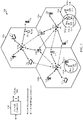
- FIG. 1 illustrates an example wireless network 100 in which aspects of the present disclosure may be performed.
- the wireless network may be a new radio (NR) or 5G network.
- UEs 120 may be configured to perform the operations 800 in FIG. 8 and methods described herein for retransmission of CBGs when CBG level ACK/NACK feedback is unreliable.
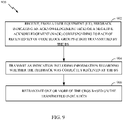
- BS 110 may be configured to perform the operations 900 in FIG. 9 and methods described herein for retransmission of CBGs when CBG level ACK/NACK feedback is unreliable.
- BS 110 may comprise a transmission gNB, reception point (TRP), Node B (NB), 5G NB, access point (AP), new radio (NR) BS, Master BS, primary BS, etc.).
- the NR network 100 may include the central unit.
- a BS may be a station that communicates with UEs. Each BS 110 may provide communication coverage for a particular geographic area.
- the term "cell” can refer to a coverage area of a Node B and/or a Node B subsystem serving this coverage area, depending on the context in which the term is used.
- the term "cell” and gNB, Node B, 5G NB, AP, NR BS, NR BS, or TRP may be interchangeable.
- a cell may not necessarily be stationary, and the geographic area of the cell may move according to the location of a mobile base station.
- the base stations may be interconnected to one another and/or to one or more other base stations or network nodes (not shown) in the wireless network 100 through various types of backhaul interfaces such as a direct physical connection, a virtual network, or the like using any suitable transport network.
- any number of wireless networks may be deployed in a given geographic area.
- Each wireless network may support a particular radio access technology (RAT) and may operate on one or more frequencies.
- a RAT may also be referred to as a radio technology, an air interface, etc.
- a frequency may also be referred to as a carrier, a frequency channel, etc.
- Each frequency may support a single RAT in a given geographic area in order to avoid interference between wireless networks of different RATs.
- NR or 5G RAT networks may be deployed.
- a BS for a macro cell may be referred to as a macro BS.
- a BS for a pico cell may be referred to as a pico BS.
- a BS for a femto cell may be referred to as a femto BS or a home BS.
- the BSs 110a, 110b and 110c may be macro BSs for the macro cells 102a, 102b and 102c, respectively.
- the BS 110x may be a pico BS for a pico cell 102x.
- the BSs 110y and 110z may be femto BS for the femto cells 102y and 102z, respectively.
- a BS may support one or multiple (e.g., three) cells.
- the wireless network 100 may also include relay stations.
- a relay station is a station that receives a transmission of data and/or other information from an upstream station (e.g., a BS or a UE) and sends a transmission of the data and/or other information to a downstream station (e.g., a UE or a BS).
- a relay station may also be a UE that relays transmissions for other UEs.
- a relay station 110r may communicate with the BS 110a and a UE 120r to facilitate communication between the BS 110a and the UE 120r.
- a relay station may also be referred to as a relay BS, a relay, etc.
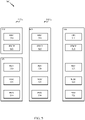
- UL and DL subframes for NR may be as described in more detail below with respect to FIGs. 6 and 7 .
- Beamforming may be supported and beam direction may be dynamically configured.
- MIMO transmissions with precoding may also be supported.
- MIMO configurations in the DL may support up to 8 transmit antennas with multi-layer DL transmissions up to 8 streams and up to 2 streams per UE.
- Multi-layer transmissions with up to 2 streams per UE may be supported.
- Aggregation of multiple cells may be supported with up to 8 serving cells.
- NR may support a different air interface, other than an OFDM-based.
- NR networks may include entities such CUs and/or DUs.
- a scheduling entity e.g., a base station
- the scheduling entity may be responsible for scheduling, assigning, reconfiguring, and releasing resources for one or more subordinate entities. That is, for scheduled communication, subordinate entities utilize resources allocated by the scheduling entity.
- Base stations are not the only entities that may function as a scheduling entity. That is, in some examples, a UE may function as a scheduling entity, scheduling resources for one or more subordinate entities (e.g., one or more other UEs).
- the UE is functioning as a scheduling entity, and other UEs utilize resources scheduled by the UE for wireless communication.
- a UE may function as a scheduling entity in a peer-to-peer (P2P) network, and/or in a mesh network.
- P2P peer-to-peer
- UEs may optionally communicate directly with one another in addition to communicating with the scheduling entity.
- a RAN may include a CU and DUs.
- a NR BS e.g., gNB, 5G Node B, Node B, transmission reception point (TRP), access point (AP)
- NR cells can be configured as access cells (ACells) or data only cells (DCells).
- the RAN e.g., a central unit or distributed unit
- DCells may be cells used for carrier aggregation or dual connectivity, but not used for initial access, cell selection/reselection, or handover. In some cases, DCells may not transmit synchronization signals-in some case cases DCells may transmit SS.
- the architecture may share features and/or components with LTE.
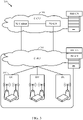
- the next generation AN (NG-AN) 210 may support dual connectivity with NR.
- the NG-AN may share a common fronthaul for LTE and NR
- antennas 452, Tx/Rx 454, processors 466, 458, 464, and/or controller/processor 480 of the UE 120 and/or antennas 434, processors 420, 430, 438, and/or controller/processor 440 of the BS 110 may be used to perform the operations described herein and illustrated with reference to FIGs. 7-13 .
- a transmit processor 464 may receive and process data (e.g., for the Physical Uplink Shared Channel (PUSCH)) from a data source 462 and control information (e.g., for the Physical Uplink Control Channel (PUCCH) from the controller/processor 480.
- the transmit processor 464 may also generate reference symbols for a reference signal.
- the symbols from the transmit processor 464 may be precoded by a TX MIMO processor 466 if applicable, further processed by the demodulators 454a through 454r (e.g., for SC-FDM, etc.), and transmitted to the base station 110.
- the controllers/processors 440 and 480 may direct the operation at the base station 110 and the UE 120, respectively.
- the processor 480 and/or other processors and modules at the UE 120 may perform or direct, e.g., the execution of the functional blocks illustrated in FIG. 8 , and/or other processes for the techniques described herein.
- the processor 440 and/or other processors and modules at the base station 110 may perform or direct, e.g., the execution of the functional blocks illustrated in FIG. 9 , and/or other processes for the techniques described herein.
- the memories 442 and 482 may store data and program codes for the BS 110 and the UE 120, respectively.
- a scheduler 444 may schedule UEs for data transmission on the downlink and/or uplink.
- FIG. 9 illustrates example operations 900, performed by a Base Station, BS (e.g., gNB), for managing retransmission of CBGs when CBG ACK/NACK feedback is unreliable, in accordance with certain aspects of the present disclosure.
- BS Base Station
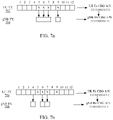
- UE reports to the gNB the CBG ACK/NACK feedback bitmap set A corresponding to a plurality of CBGs received from the gNB.
- the gNB includes the decoded bitmap set B in the next DCI, for example, as part of a DL grant for a retransmission of CBGs, indicating that the PDSCH in the retransmission includes CBGs corresponding to ACK/NACK bitmap set B.
- the UE 1052 transmits one or more ACKs acknowledging the receipt of the bitmap at 1006 and/or the retransmitted CBGs received from the gNB. It may be noted that the indication of ACK and NACK may be reversed. For example, each '0' in the bitmap may indicate and ACK and each '1' in the bitmap may indicate a NACK.
- the UE may perform two blind decodings all the time to decode DCI when information regarding at least one CBG ACK/NACK feedback is transmitted by the UE, as the UE may not know when the CBG based retransmission may be granted.
- the UE may stop decoding the DCI for two different lengths when a new DL grant for the same HARQ process used for CBG ACK/NACK feedback is received.
- the information regarding the result of decoding a CBG ACK/NACK feedback may be transmitted in a companion DCI that is different from a DCI (e.g., default DCI) that includes retransmission grant corresponding to one or more CBGs to be retransmitted.
- the companion DCI may be designed to have the same length as the DCI including the retransmission grant so that the UE may not need to perform multiple blind decodings to decode the DCIs.
- the default DCI may include an indication of the companion DCI (e.g, including information regarding a search position of the companion DCI) for robustness.
- a UE may optionally transmit a hash of the CBG ACK/NACK feedback to reduce resource consumption on the uplink.
- a problem with this approach is that there is a chance of residual error in decoding CBG ACK/NACK feedback at the gNB since all CBG ACK/NACK feedback decoding errors may not be detected at the gNB.
- this problem may arise when two different CBG ACK/NACK patterns (e.g., ACK/NACK bitmap pattern) map to the same hash.
- a length of the hash may be controlled to reduce probability of decoding errors.
- the hash of a CBG ACK/NACK pattern may include a CRC (e.g., shorter than a regular CRC) generated based on the ACK/NACK pattern to be transmitted to the gNB.
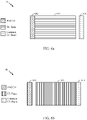
- FIG. 11a illustrates example operations 1100 performed by a UE, for using hash of CBG ACK/NACK to process retransmission of one or more CBGs, in accordance with certain aspects of the present disclosure.
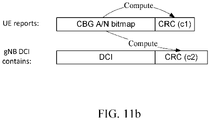
- FIG. 11b pictorially illustrates transmitting a hash of CBG ACK/NACK for use in retransmitting one or more CBGs, in accordance with certain aspects of the present disclosure.
- Operations 1100 begin, at 1102, by transmitting CBG ACK/NACK feedback (e.g., ACK/NACK bitmap) to the gNB corresponding to a set of CBGs received from the gNB.
- CBG ACK/NACK feedback e.g., ACK/NACK bitmap
- the UE sends CBG ACK/NACK feedback (e.g., ACK/NACK bitmap) to gNB.
- the UE optionally transmits a CRC (C1) generated based on the CBG ACK/NACK feedback for reducing decoding errors at the gNB.
- the UE also sends to the gNB, a CRC (C1) generated based on the CBG ACK/NACK feedback to reduce errors in decoding the feedback at the gNB.
- the gNB receives and decodes the CBG ACK/NACK feedback and verifies the decoding based on the CRC, C1.
- C1 may not be too long, and thus, a decoded ACK/NACK feedback may still be wrong in spite of passing the CRC.
- the gNB schedules CBG based retransmission and includes in the DL grant, another CRC (C2) generated based on the decoded CBG ACK/NACK feedback.
- the UE receives DCI including DL grant for CBG based retransmissions and a CRC (C2) generated based on the CBG ACK NACK feedback decoded at the gNB. As shown in FIG. 11b , the UE receives the DL grant including the CRC, C2.
- C1 and C2 may need to be generated using different CRC generated functions, otherwise a CBG ACK/NACK decoding error may not be detected.
- a common CRC generation function of length L1+L2 may be used for generating both C1 and C2, but using the first L1 bits for C1 and the last L2 bits for C2.
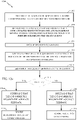
- FIG. 12a illustrates example operations 1200 by a UE, for a first technique of using embedded CBG ACK/NACK pattern in DCI to process retransmitted CBGs, in accordance with certain aspects of the present disclosure.
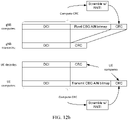
- FIG. 12b pictorially illustrates the first technique for embedding decoded CBG ACK/NACK pattern in DCI CRC by a gNB for use in retransmitting one or more CBGs, in accordance with certain aspects of the present disclosure.
- the UE receives DCI (e.g, scheduling retransmission of CBGs) and a CRC (C1), C1 generated based on a concatenated sequence of the DCI and an ACK/NACK bitmap as decoded by the gNB and further scrambled by UE RNTI.
- DCI scheduling retransmission of CBGs
- C1 C1 generated based on a concatenated sequence of the DCI and an ACK/NACK bitmap as decoded by the gNB and further scrambled by UE RNTI.
- the UE decodes the received DCI and CRC.
- the UE scrambles the locally generated C2 with the UE RNTI.
- the UE compares the locally generated C2 with the received C1. If the CRCs match (e.g., the CRCs are the same), the UE determines that the ACK/NACK feedback was correctly decoded by the gNB at 1214 and proceeds to decode one or more retransmitted CBGs by proper soft combining at 1216. As noted above, the passing of the CRC comparison verifies the CBG ACK/NACK feedback was correctly decoded by the gNB, and that the content of the current retransmission PDSCH is as expected. The UE continues decoding one or more retransmitted CBGs with proper soft combining of LLRs.
- the UE determines that the ACK/NACK feedback was incorrectly decoded by the gNB at 1218 and ignores the results of the DCI decoding at 1220. As noted above, if the CRC comparison fails, the UE may not even see the grant transmitted as part of the DCI.
- FIG. 13a illustrates example operations 1300 by a UE, for a second technique of using embedded CBG ACK/NACK pattern in DCI to process retransmitted CBGs, in accordance with certain aspects of the present disclosure.
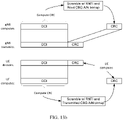
- FIG. 13b pictorially illustrates the second technique for embedding decoded CBG ACK/NACK pattern in DCI CRC by a gNB for use in retransmitting one or more CBGs, in accordance with certain aspects of the present disclosure.
- the UE decodes the received DCI and CRC.
- the UE locally generates another CRC (C2) based on the decoded DCI.
- C2 another CRC
- the UE generates C2 using a method similar to the method used by the gNB to generate C1.
- the UE scrambles the locally generated C2 with the UE RNTI and the ACK/NACK bitmap feedback transmitted to the gNB.
- there are different ways to scramble the CBG ACK/NACK bitmap on the CRC e.g., at the gNB and the UE. If CBG ACK/NACK bitmap is no longer than the CRC length, a straight forward way is direct scramble. On the other hand, if CBG ACK/NACK bitmap is longer, some kind of hashing may need to be performed.
- the UE compares the locally generated C2 with the received C1. If the CRCs match (e.g., the CRCs are the same), the UE determines that the ACK/NACK feedback was correctly decoded by the gNB at 1314 and proceeds to decoded one or more retransmitted CBGs by proper soft combining at 1316. As noted above, the passing of the CRC comparison verifies the CBG ACK/NACK feedback was correctly decoded by the gNB, and that the content of the current retransmission PDSCH is as expected. The UE continues decoding one or more retransmitted CBGs with proper soft combining of LLRs.
- the UE determines that the ACK/NACK feedback was incorrectly decoded by the gNB at 1318 and ignores the results of the DCI decoding at 1320. As noted above, if the CRC comparison fails, the UE may not even see the grant transmitted as part of the DCI.
- the gNB knows the reason for a failure in decoding at the UE of one or more CBGs transmitted to the UE. For example, when eMBB (enhanced Mobile Broadband) and URLL (Ultra-Reliable and Low Latency Communications) coexist, the gNB may puncture some resources assigned for the PDSCH of an eMBB UE to serve a URLLC UE. In such a case, many samples of CBGs are punctured leading to failed reception of the CBGs at the UE. Thus, the LLRs collected for many bits corresponding to the failed CBGs are not valid. Further soft combining with LLRs from a retransmission of the failed CBGs may not be helpful.
- eMBB enhanced Mobile Broadband
- URLL Ultra-Reliable and Low Latency Communications
- the UE may erase (e.g., reset) the wrongly collected LLRs for certain CBGs (e.g, due to the puncturing) and start LLR collection for those CBGs afresh.
- the UE does not know that the LLRs corresponding to certain CBGs received at the UE are bad.
- the gNB may include an indicator to the UE to stop soft combining of LLRs corresponding to one or more CBGs in the retransmission grant.
- the gNB knows beforehand that LLRs corresponding to the one or more CBGs are bad due to puncturing of resources used to transmit the CBGs.
- the DCI may include at least one bit (e.g., LLR reset indicator bit(s)) to indicate to the UE that the LLR combination is to be stopped for one or more CBGs received by the UE and LLR collection for the CBGs is to be reset.
- LLR reset indicator bit(s) e.g., LLR reset indicator bit(s)
- the "NDI" (New Data Indicator) bit may be reinterpreted as an indicator for an LLR reset.
- the UE may abandon the collected LLRs for the one or more CBGs in the retransmission and start LLR collection afresh. This technique may be used when the gNB knows that some or all the CBGs in the retransmission were damaged by puncturing in a previous transmission and invalid LLR values were collected by the UE.
- the NDI bit used in LTE may be used to transmit the LLR reset indicator in NR.
- the NDI bit is not defined and/or used in NR. So, the NDI bit may be used in NR to send the LLR reset indicator. In this way, the DCI length of an initial grant and a retransmission grant may be the same. This technique assumes that the UE is able to recognize a CBG based retransmission. In an aspect, this design works with CBG ACK/NACK embedded in CRC.
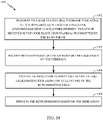
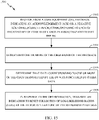
- FIG. 14 illustrates example operations 1400 performed by a UE for resetting LLRs of one or more retransmitted CBGs, in accordance with certain aspects of the present disclosure.
- Operations 1400 begin, at 1402, by transmitting to a base station, feedback indicating an ACK or a NACK corresponding to each of received set of CBGs transmitted by the BS (e.g., gNB) to the UE.
- the feedback includes an ACK/NACK bitmap as described in the above paragraphs.
- the UE receives retransmission of one or more of the CBGs based on the feedback.
- the gNB receives and decodes the ACK/NACK feedback from the UE.
- the gNB retransmits a CBG corresponding to each NACK decoded by the gNB.
- the UE receives an indication to reset collection of LLRs for at least one of the retransmitted CBGs.
- the gNB knows beforehand that LLRs corresponding to one or more CBGs are bad due to puncturing of resources used to transmit the CBGs.
- the gNB may transmit an indicator to the UE to stop soft combining of LLRs corresponding to the one or more CBGs in a retransmission grant.
- the UE processes the retransmission based on the indication.
- the UE based on the indication, may abandon the collected LLRs for the one or more CBGs in the retransmission and start LLR collection afresh.
- FIG. 14A illustrates a communications device 1400A (e.g., UE) that may include various means-plus-function components configured to perform the operations 1400 illustrated in FIG. 14 .
- the communications device 1400A includes means for performing operations illustrated at 1402 in FIG. 14 .
- the communications device 1400A includes means for performing operations illustrated at 1404 in FIG. 14 .
- the communications device 1400A includes means for performing operations illustrated at 1406 in FIG. 14 .
- the communications device 1400A includes means for performing operations illustrated in 1408 in FIG. 14 .
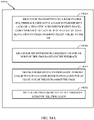
- FIG. 15 illustrates example operations 1500 performed by a base station (e.g., gNB) for resetting LLRs at a UE of one or more CBGs retransmitted by the base station, in accordance with certain aspects of the present disclosure.
- a base station e.g., gNB
- Operations 1500 begin, at 1502, by receiving from the UE, feedback indicating an ACK or a NACK corresponding to each of a received set of CBGs transmitted by the BS.
- the feedback includes an ACK/NACK bitmap as described in the above paragraphs.
- the base station retransmits one or more of the CBGs based on the feedback.
- the gNB receives and decodes the ACK/NACK feedback from the UE.
- the gNB retransmits a CBG corresponding to each NACK decoded by the gNB
- the base station determines that data corresponding to one or more of the CBGs transmitted by the base station was punctured by other data. For example when eMBB and URLL coexist, the gNB may puncture some resources assigned for the PDSCH of an eMBB UE to serve a URLLC UE. In such a case, many samples of CBGs are punctured which may lead to failed reception of the CBGs at the UE.
- the base station transmits an indication to reset collection of LLRs at the UE for at least one of the retransmitted CBGs.
- the gNB may include (e.g., in a DCI) at least one bit (e.g., LLR reset indicator bit(s)) to indicate to the UE that the LLR combination is to be stopped for one or more CBGs received by the UE and LLR collection for the CBGs is to be reset.
- FIG. 15A illustrates a communications device 1500A (e.g., gNB) that may include various means-plus-function components configured to perform the operations 1500 illustrated in FIG. 15 .
- the communications device 1500A includes means for performing operations illustrated at 1502 in FIG. 15 .
- the communications device 1500A includes means for performing operations illustrated at 1504 in FIG. 15 .
- the communications device 1500A includes means for performing operations illustrated at 1506 in FIG. 15 .
- the communications device 1500A includes means for performing operations illustrated in 1508 in FIG. 15 .
- the methods disclosed herein comprise one or more steps or actions for achieving the described method.
- the method steps and/or actions may be interchanged with one another without departing from the scope of the claims.
- the order and/or use of specific steps and/or actions may be modified without departing from the scope of the claims.
- a phrase referring to "at least one of' a list of items refers to any combination of those items, including single members.
- "at least one of: a, b, or c” is intended to cover a, b, c, a-b, a-c, b-c, and a-b-c, as well as any combination with multiples of the same element (e.g., a-a, a-a-a, a-a-b, a-a-c, a-b-b, a-c-c, b-b, b-b-b, b-b-c, c-c, and c-c-c or any other ordering of a, b, and c).
- determining encompasses a wide variety of actions. For example, “determining” may include calculating, computing, processing, deriving, investigating, looking up (e.g., looking up in a table, a database or another data structure), ascertaining and the like. Also, “determining” may include receiving (e.g., receiving information), accessing (e.g., accessing data in a memory) and the like. Also, “determining” may include resolving, selecting, choosing, establishing and the like.
- DSP digital signal processor
- ASIC application specific integrated circuit
- FPGA field programmable gate array
- PLD programmable logic device
- a general-purpose processor may be a microprocessor, but in the alternative, the processor may be any commercially available processor, controller, microcontroller, or state machine.
- a processor may also be implemented as a combination of computing devices, e.g., a combination of a DSP and a microprocessor, a plurality of microprocessors, one or more microprocessors in conjunction with a DSP core, or any other such configuration.
- an example hardware configuration may comprise a processing system in a wireless node.
- the processing system may be implemented with a bus architecture.
- the bus may include any number of interconnecting buses and bridges depending on the specific application of the processing system and the overall design constraints.
- the bus may link together various circuits including a processor, machine-readable media, and a bus interface.
- the bus interface may be used to connect a network adapter, among other things, to the processing system via the bus.
- the network adapter may be used to implement the signal processing functions of the PHY layer.
- a user interface e.g., keypad, display, mouse, joystick, etc.
- the bus may also link various other circuits such as timing sources, peripherals, voltage regulators, power management circuits, and the like, which are well known in the art, and therefore, will not be described any further.
- the processor may be implemented with one or more general-purpose and/or special-purpose processors. Examples include microprocessors, microcontrollers, DSP processors, and other circuitry that can execute software. Those skilled in the art will recognize how best to implement the described functionality for the processing system depending on the particular application and the overall design constraints imposed on the overall system.
- the functions may be stored or transmitted over as one or more instructions or code on a computer readable medium.
- Software shall be construed broadly to mean instructions, data, or any combination thereof, whether referred to as software, firmware, middleware, microcode, hardware description language, or otherwise.
- Computer-readable media include both computer storage media and communication media including any medium that facilitates transfer of a computer program from one place to another.
- the processor may be responsible for managing the bus and general processing, including the execution of software modules stored on the machine-readable storage media.
- a computer-readable storage medium may be coupled to a processor such that the processor can read information from, and write information to, the storage medium. In the alternative, the storage medium may be integral to the processor.
- the machine-readable media may include a transmission line, a carrier wave modulated by data, and/or a computer readable storage medium with instructions stored thereon separate from the wireless node, all of which may be accessed by the processor through the bus interface.
- the machine-readable media, or any portion thereof may be integrated into the processor, such as the case may be with cache and/or general register files.
- machine-readable storage media may include, by way of example, RAM (Random Access Memory), flash memory, ROM (Read Only Memory), PROM (Programmable Read-Only Memory), EPROM (Erasable Programmable Read-Only Memory), EEPROM (Electrically Erasable Programmable Read-Only Memory), registers, magnetic disks, optical disks, hard drives, or any other suitable storage medium, or any combination thereof.
- RAM Random Access Memory
- ROM Read Only Memory
- PROM PROM
- EPROM Erasable Programmable Read-Only Memory
- EEPROM Electrical Erasable Programmable Read-Only Memory
- registers magnetic disks, optical disks, hard drives, or any other suitable storage medium, or any combination thereof.
- the machine-readable media may be embodied in a computer-program product.
- a software module may comprise a single instruction, or many instructions, and may be distributed over several different code segments, among different programs, and across multiple storage media.
- the computer-readable media may comprise a number of software modules.
- the software modules include instructions that, when executed by an apparatus such as a processor, cause the processing system to perform various functions.
- the software modules may include a transmission module and a receiving module. Each software module may reside in a single storage device or be distributed across multiple storage devices.
- a software module may be loaded into RAM from a hard drive when a triggering event occurs.
- the processor may load some of the instructions into cache to increase access speed.
- One or more cache lines may then be loaded into a general register file for execution by the processor.
- any connection is properly termed a computer-readable medium.
- the software is transmitted from a website, server, or other remote source using a coaxial cable, fiber optic cable, twisted pair, digital subscriber line (DSL), or wireless technologies such as infrared (IR), radio, and microwave
- the coaxial cable, fiber optic cable, twisted pair, DSL, or wireless technologies such as infrared, radio, and microwave are included in the definition of medium.
- Disk and disc include compact disc (CD), laser disc, optical disc, digital versatile disc (DVD), floppy disk, and Blu-ray ® disc where disks usually reproduce data magnetically, while discs reproduce data optically with lasers.
- computer-readable media may comprise non-transitory computer-readable media (e.g., tangible media).
- computer-readable media may comprise transitory computer-readable media (e.g., a signal). Combinations of the above should also be included within the scope of computer-readable media.
- certain aspects may comprise a computer program product for performing the operations presented herein.
- a computer program product may comprise a computer-readable medium having instructions stored (and/or encoded) thereon, the instructions being executable by one or more processors to perform the operations described herein.
- instructions for perform the operations described herein and illustrated in FIGs. 8 and 9 may be executable by one or more processors to perform the operations described herein.
- modules and/or other appropriate means for performing the methods and techniques described herein can be downloaded and/or otherwise obtained by a user terminal and/or base station as applicable.
- a user terminal and/or base station can be coupled to a server to facilitate the transfer of means for performing the methods described herein.
- various methods described herein can be provided via storage means (e.g., RAM, ROM, a physical storage medium such as a compact disc (CD) or floppy disk, etc.), such that a user terminal and/or base station can obtain the various methods upon coupling or providing the storage means to the device.
- storage means e.g., RAM, ROM, a physical storage medium such as a compact disc (CD) or floppy disk, etc.
- CD compact disc
- floppy disk etc.
- any other suitable technique for providing the methods and techniques described herein to a device can be utilized.
Landscapes
- Engineering & Computer Science (AREA)
- Computer Networks & Wireless Communication (AREA)
- Signal Processing (AREA)
- Mobile Radio Communication Systems (AREA)
- Detection And Prevention Of Errors In Transmission (AREA)
Applications Claiming Priority (3)
| Application Number | Priority Date | Filing Date | Title |
|---|---|---|---|
| US201762475752P | 2017-03-23 | 2017-03-23 | |
| US15/711,652 US10484146B2 (en) | 2017-03-23 | 2017-09-21 | Downlink retransmission under unreliable code block group (CBG) level ACK/NACK feedback |
| PCT/US2018/019724 WO2018175050A1 (en) | 2017-03-23 | 2018-02-26 | Downlink retransmission under unreliable code block group (cbg) level ack/nack feedback |
Publications (2)
| Publication Number | Publication Date |
|---|---|
| EP3602890A1 EP3602890A1 (en) | 2020-02-05 |
| EP3602890B1 true EP3602890B1 (en) | 2022-10-12 |
Family
ID=63583753
Family Applications (1)
| Application Number | Title | Priority Date | Filing Date |
|---|---|---|---|
| EP18710258.7A Active EP3602890B1 (en) | 2017-03-23 | 2018-02-26 | Downlink retransmission under unreliable code block group (cbg) level ack/nack feedback |
Country Status (9)
| Country | Link |
|---|---|
| US (2) | US10484146B2 (enExample) |
| EP (1) | EP3602890B1 (enExample) |
| JP (2) | JP7297670B2 (enExample) |
| KR (1) | KR20190127882A (enExample) |
| CN (1) | CN110447191B (enExample) |
| BR (1) | BR112019019221A2 (enExample) |
| SG (1) | SG11201907263WA (enExample) |
| TW (2) | TWI830299B (enExample) |
| WO (1) | WO2018175050A1 (enExample) |
Families Citing this family (33)
| Publication number | Priority date | Publication date | Assignee | Title |
|---|---|---|---|---|
| KR101995435B1 (ko) | 2016-04-22 | 2019-07-02 | 엘지전자 주식회사 | 무선통신 시스템에서 harq ack/nack 신호를 전송/수신하는 방법 및 이를 위한 장치 |
| US10484146B2 (en) | 2017-03-23 | 2019-11-19 | Qualcomm Incorporated | Downlink retransmission under unreliable code block group (CBG) level ACK/NACK feedback |
| CN108809508B (zh) * | 2017-05-05 | 2021-09-10 | 大唐移动通信设备有限公司 | 一种确定数据是否受到破坏的方法及装置 |
| US10708899B2 (en) * | 2017-05-12 | 2020-07-07 | Htc Corporation | Device and method for handling a code block group-based transmission |
| US10707995B2 (en) * | 2017-06-29 | 2020-07-07 | Qualcomm Incorporated | Method and apparatus for downlink retransmission under unreliable code block group (CBG) level feedback |
| CN109391381B (zh) * | 2017-08-11 | 2022-06-03 | 中兴通讯股份有限公司 | 数据的确认信息生成和反馈、数据传输方法和装置 |
| US10965360B2 (en) * | 2017-08-23 | 2021-03-30 | Qualcomm Incorporated | Methods and apparatus related to beam refinement |
| EP3695538A1 (en) | 2017-10-11 | 2020-08-19 | Telefonaktiebolaget LM Ericsson (PUBL) | Acknowledgement signaling processes for radio access networks |
| US10972226B2 (en) * | 2018-08-01 | 2021-04-06 | Charter Communications Operating, Llc | Disabling, using an explicit indication, hybrid automatic repeat request (HARQ) acknowledgments for packets for which acknowledgements are supported at a network or higher layer |
| CN113261387B (zh) * | 2019-01-10 | 2025-01-14 | 索尼集团公司 | 信息处理设备、信息处理方法和通信设备 |
| US11563545B2 (en) * | 2019-01-10 | 2023-01-24 | Intel Corporation | HARQ-ACK transmission and retransmission in wireless communication systems |
| US10833811B2 (en) * | 2019-02-11 | 2020-11-10 | Huawei Technologies Co., Ltd. | Systems and methods for user equipment cooperation with sidelink HARQ feedback |
| WO2020194049A1 (en) * | 2019-03-22 | 2020-10-01 | Lenovo (Singapore) Pte. Ltd. | Aggregating harq feedback |
| US11171745B2 (en) | 2019-07-04 | 2021-11-09 | Qualcomm Incorporated | Group-based acknowledgment feedback techniques for wireless communications |
| WO2021029441A1 (en) * | 2019-08-09 | 2021-02-18 | Sharp Kabushiki Kaisha | User equipments, base stations, and methods |
| US11108497B2 (en) * | 2019-10-24 | 2021-08-31 | Samsung Electronics Co., Ltd. | Method and system for hierarchical decoding of data packets in cellular communication system |
| CN115396947B (zh) * | 2020-03-19 | 2024-07-09 | Oppo广东移动通信有限公司 | 侧行数据传输方法、终端设备和网络设备 |
| US11411779B2 (en) | 2020-03-31 | 2022-08-09 | XCOM Labs, Inc. | Reference signal channel estimation |
| CN111431669A (zh) * | 2020-03-31 | 2020-07-17 | 展讯通信(上海)有限公司 | 数据重传方法与装置、电子设备 |
| US11671995B2 (en) | 2020-04-17 | 2023-06-06 | Qualcomm Incorporated | Time domain resource allocation-based HARQ-ACK feedback generation |
| US11626943B2 (en) * | 2020-04-30 | 2023-04-11 | Qualcomm Incorporated | Techniques for on-demand soft ACK/NACK in a wireless communication system |
| US11799594B2 (en) * | 2020-06-22 | 2023-10-24 | Qualcomm Incorporated | Methods and apparatus for transmitting a reset negative acknowledgement |
| CN113923698B (zh) * | 2020-07-10 | 2022-07-05 | 荣耀终端有限公司 | 处理下行信道异常重传的方法、装置及芯片 |
| KR20220008661A (ko) * | 2020-07-14 | 2022-01-21 | 삼성전자주식회사 | 무선 통신 시스템에서 하향링크 피드백 정보 결정 방법 및 장치 |
| US11800532B2 (en) * | 2020-07-20 | 2023-10-24 | Qualcomm Incorporated | Tri-state hybrid automatic repeat request feedback |
| WO2022027205A1 (zh) * | 2020-08-03 | 2022-02-10 | 华为技术有限公司 | 一种短距离通信方法、装置及系统 |
| CA3195885A1 (en) | 2020-10-19 | 2022-04-28 | XCOM Labs, Inc. | Reference signal for wireless communication systems |
| WO2022093988A1 (en) | 2020-10-30 | 2022-05-05 | XCOM Labs, Inc. | Clustering and/or rate selection in multiple-input multiple-output communication systems |
| CN112804706B (zh) * | 2020-12-31 | 2022-07-26 | 联想未来通信科技(重庆)有限公司 | 一种通信链路检测方法及装置 |
| WO2022241436A1 (en) | 2021-05-14 | 2022-11-17 | XCOM Labs, Inc. | Scrambling identifiers for wireless communication systems |
| US12184417B2 (en) * | 2022-08-03 | 2024-12-31 | Google Llc | Early retransmission for hardware reliable transport |
| WO2024248176A1 (ko) * | 2023-05-30 | 2024-12-05 | 엘지전자 주식회사 | 무선 통신 시스템에서 재전송 방법 및 장치 |
| WO2025193863A1 (en) * | 2024-03-12 | 2025-09-18 | Lynk Global, Inc. | Satellite-based harq handling in communication with terrestrial user equipment |
Citations (2)
| Publication number | Priority date | Publication date | Assignee | Title |
|---|---|---|---|---|
| WO2018170001A1 (en) * | 2017-03-16 | 2018-09-20 | Qualcomm Incorporated | Multi-harq methods and apparatus for codeblock group based transmissions |
| WO2018175239A1 (en) * | 2017-03-20 | 2018-09-27 | Qualcomm Incorporated | Techniques for signaling compressed harq or retransmission information between a base station and a user equipment |
Family Cites Families (24)
| Publication number | Priority date | Publication date | Assignee | Title |
|---|---|---|---|---|
| KR100747464B1 (ko) * | 2002-01-05 | 2007-08-09 | 엘지전자 주식회사 | 고속하향링크패킷접속(hsdpa)시스템을 위한타이머를 이용한 교착상황 회피방법 |
| CN101667900B (zh) * | 2008-09-02 | 2014-11-05 | 中兴通讯股份有限公司 | Harq反馈方法 |
| JP2010147755A (ja) * | 2008-12-18 | 2010-07-01 | Sharp Corp | 送信装置、受信装置および通信システム |
| WO2010109521A1 (ja) * | 2009-03-25 | 2010-09-30 | 富士通株式会社 | 無線通信システム、移動局装置、基地局装置、及び無線通信システムにおける無線通信方法 |
| CN102725986B (zh) * | 2010-03-31 | 2015-11-25 | 上海贝尔股份有限公司 | 用于在中继网络中进行解码的方法和设备 |
| US8839079B2 (en) * | 2012-08-20 | 2014-09-16 | Qualcomm Incorporated | Methods and apparatuses for saving power during transport block decoding in UMTS systems |
| CN110266430B (zh) * | 2014-04-30 | 2021-07-30 | 中兴通讯股份有限公司 | 一种反馈信息的处理方法、装置及系统 |
| US10033505B2 (en) * | 2014-07-31 | 2018-07-24 | Qualcomm Incorporated | Transmission of uplink control channels over an unlicensed radio frequency spectrum band |
| WO2016021957A1 (ko) * | 2014-08-06 | 2016-02-11 | 엘지전자 주식회사 | Ack/nack 피드백 방법 및 사용자기기 |
| CN105515733B (zh) * | 2014-09-24 | 2019-03-12 | 中兴通讯股份有限公司 | 一种反馈方法及装置 |
| US9992004B2 (en) | 2015-02-03 | 2018-06-05 | Qualcomm Incorporated | Code block cluster level HARQ |
| US9602677B2 (en) * | 2015-06-16 | 2017-03-21 | Alcatel Lucent | Charging for commercial group based messaging |
| JP6837492B2 (ja) * | 2016-04-20 | 2021-03-03 | コンヴィーダ ワイヤレス, エルエルシー | 新しい無線における物理チャネル |
| US10491447B2 (en) * | 2016-08-22 | 2019-11-26 | Samsung Electronics Co., Ltd. | Method and apparatus for cell initial access and paging in wireless cellular communication system |
| US11252717B2 (en) * | 2016-09-02 | 2022-02-15 | Huawei Technologies Co., Ltd. | Co-existence of latency tolerant and low latency communications |
| US20180123767A1 (en) * | 2016-11-02 | 2018-05-03 | Huawei Technologies Co., Ltd. | System and Method for Reliable Transmission in Communications Systems |
| US10575324B2 (en) * | 2016-11-04 | 2020-02-25 | Qualcomm Incorporated | Efficient blind decoding of a search space |
| US10298362B2 (en) * | 2016-11-24 | 2019-05-21 | Samsung Electronics Co., Ltd | Method and apparatus for partial retransmission in wireless cellular communication system |
| US10492184B2 (en) * | 2016-12-09 | 2019-11-26 | Samsung Electronics Co., Ltd. | Multiplexing control information in a physical uplink data channel |
| US10667173B2 (en) * | 2017-02-13 | 2020-05-26 | Qualcomm Incorporated | Feedback retransmission repetition coding for wireless communications |
| US10511415B2 (en) * | 2017-03-13 | 2019-12-17 | Qualcomm Incorporated | Uplink ACK resource allocation in new radio |
| US10742234B2 (en) * | 2017-03-15 | 2020-08-11 | Qualcomm Incorporated | Code block group definition configuration for wireless communication |
| US10484146B2 (en) | 2017-03-23 | 2019-11-19 | Qualcomm Incorporated | Downlink retransmission under unreliable code block group (CBG) level ACK/NACK feedback |
| KR102384877B1 (ko) * | 2017-09-29 | 2022-04-08 | 삼성전자주식회사 | 무선통신 시스템에서 데이터 정보 송수신 방법 및 장치 |
-
2017
- 2017-09-21 US US15/711,652 patent/US10484146B2/en active Active
-
2018
- 2018-02-26 EP EP18710258.7A patent/EP3602890B1/en active Active
- 2018-02-26 CN CN201880017584.XA patent/CN110447191B/zh active Active
- 2018-02-26 BR BR112019019221-2A patent/BR112019019221A2/pt not_active Application Discontinuation
- 2018-02-26 JP JP2019551458A patent/JP7297670B2/ja active Active
- 2018-02-26 SG SG11201907263W patent/SG11201907263WA/en unknown
- 2018-02-26 WO PCT/US2018/019724 patent/WO2018175050A1/en not_active Ceased
- 2018-02-26 KR KR1020197030805A patent/KR20190127882A/ko not_active Ceased
- 2018-02-27 TW TW111127674A patent/TWI830299B/zh active
- 2018-02-27 TW TW107106573A patent/TWI774731B/zh active
-
2019
- 2019-09-18 US US16/574,311 patent/US10999017B2/en active Active
-
2022
- 2022-06-14 JP JP2022095790A patent/JP7423693B2/ja active Active
Patent Citations (2)
| Publication number | Priority date | Publication date | Assignee | Title |
|---|---|---|---|---|
| WO2018170001A1 (en) * | 2017-03-16 | 2018-09-20 | Qualcomm Incorporated | Multi-harq methods and apparatus for codeblock group based transmissions |
| WO2018175239A1 (en) * | 2017-03-20 | 2018-09-27 | Qualcomm Incorporated | Techniques for signaling compressed harq or retransmission information between a base station and a user equipment |
Also Published As
| Publication number | Publication date |
|---|---|
| EP3602890A1 (en) | 2020-02-05 |
| TWI774731B (zh) | 2022-08-21 |
| WO2018175050A1 (en) | 2018-09-27 |
| US20200014499A1 (en) | 2020-01-09 |
| US20180278379A1 (en) | 2018-09-27 |
| US10484146B2 (en) | 2019-11-19 |
| SG11201907263WA (en) | 2019-10-30 |
| CN110447191B (zh) | 2022-08-12 |
| CN110447191A (zh) | 2019-11-12 |
| TWI830299B (zh) | 2024-01-21 |
| BR112019019221A2 (pt) | 2020-04-14 |
| US10999017B2 (en) | 2021-05-04 |
| TW202247625A (zh) | 2022-12-01 |
| TW201836299A (zh) | 2018-10-01 |
| JP2022113803A (ja) | 2022-08-04 |
| JP7423693B2 (ja) | 2024-01-29 |
| JP7297670B2 (ja) | 2023-06-26 |
| JP2020512750A (ja) | 2020-04-23 |
| KR20190127882A (ko) | 2019-11-13 |
Similar Documents
| Publication | Publication Date | Title |
|---|---|---|
| EP3602890B1 (en) | Downlink retransmission under unreliable code block group (cbg) level ack/nack feedback | |
| EP3744028B1 (en) | Physical downlink control channel (pdcch) repetition and decoding for ultra-reliability low latency communication (urllc) | |
| EP3829247B1 (en) | Physical uplink control channel (pucch) resource allocation | |
| EP3639421B1 (en) | Downlink control information (dci) format for code block group (cbg) based subsequent transmission | |
| EP3721571B1 (en) | Time based redundancy version determination for grant-free signaling | |
| CN111480370A (zh) | 用于上行链路超可靠低时延通信的小区间干扰减轻 | |
| WO2019104552A1 (en) | Example uplink control information (uci) layer mapping | |
| EP4039054A1 (en) | Efficient usage of resources in an uplink split bearer configuration | |
| WO2018059318A1 (en) | Reliable channel state information (csi) reporting | |
| EP3750263B1 (en) | Retransmission of physical uplink control channel (pucch) for ultra reliable low latency communications (urllc) | |
| EP4014388B1 (en) | Non-numeric feedback timing indicators for harq-ack | |
| EP3718232B1 (en) | Uplink sharing in a multiple radio access technology environment | |
| HK40016386A (en) | Downlink retransmission under unreliable code block group (cbg) level ack/nack feedback | |
| HK40016386B (en) | Downlink retransmission under unreliable code block group (cbg) level ack/nack feedback | |
| WO2022007530A1 (en) | Cross layer improvement with radio link control feedback on physical layer |
Legal Events
| Date | Code | Title | Description |
|---|---|---|---|
| STAA | Information on the status of an ep patent application or granted ep patent |
Free format text: STATUS: UNKNOWN |
|
| STAA | Information on the status of an ep patent application or granted ep patent |
Free format text: STATUS: THE INTERNATIONAL PUBLICATION HAS BEEN MADE |
|
| PUAI | Public reference made under article 153(3) epc to a published international application that has entered the european phase |
Free format text: ORIGINAL CODE: 0009012 |
|
| STAA | Information on the status of an ep patent application or granted ep patent |
Free format text: STATUS: REQUEST FOR EXAMINATION WAS MADE |
|
| 17P | Request for examination filed |
Effective date: 20191023 |
|
| AK | Designated contracting states |
Kind code of ref document: A1 Designated state(s): AL AT BE BG CH CY CZ DE DK EE ES FI FR GB GR HR HU IE IS IT LI LT LU LV MC MK MT NL NO PL PT RO RS SE SI SK SM TR |
|
| AX | Request for extension of the european patent |
Extension state: BA ME |
|
| DAV | Request for validation of the european patent (deleted) | ||
| DAX | Request for extension of the european patent (deleted) | ||
| STAA | Information on the status of an ep patent application or granted ep patent |
Free format text: STATUS: EXAMINATION IS IN PROGRESS |
|
| 17Q | First examination report despatched |
Effective date: 20201022 |
|
| GRAP | Despatch of communication of intention to grant a patent |
Free format text: ORIGINAL CODE: EPIDOSNIGR1 |
|
| STAA | Information on the status of an ep patent application or granted ep patent |
Free format text: STATUS: GRANT OF PATENT IS INTENDED |
|
| INTG | Intention to grant announced |
Effective date: 20220525 |
|
| GRAS | Grant fee paid |
Free format text: ORIGINAL CODE: EPIDOSNIGR3 |
|
| GRAA | (expected) grant |
Free format text: ORIGINAL CODE: 0009210 |
|
| STAA | Information on the status of an ep patent application or granted ep patent |
Free format text: STATUS: THE PATENT HAS BEEN GRANTED |
|
| AK | Designated contracting states |
Kind code of ref document: B1 Designated state(s): AL AT BE BG CH CY CZ DE DK EE ES FI FR GB GR HR HU IE IS IT LI LT LU LV MC MK MT NL NO PL PT RO RS SE SI SK SM TR |
|
| REG | Reference to a national code |
Ref country code: GB Ref legal event code: FG4D |
|
| REG | Reference to a national code |
Ref country code: CH Ref legal event code: EP |
|
| REG | Reference to a national code |
Ref country code: DE Ref legal event code: R096 Ref document number: 602018041652 Country of ref document: DE |
|
| REG | Reference to a national code |
Ref country code: IE Ref legal event code: FG4D |
|
| REG | Reference to a national code |
Ref country code: AT Ref legal event code: REF Ref document number: 1524800 Country of ref document: AT Kind code of ref document: T Effective date: 20221115 |
|
| REG | Reference to a national code |
Ref country code: NL Ref legal event code: FP |
|
| REG | Reference to a national code |
Ref country code: LT Ref legal event code: MG9D |
|
| REG | Reference to a national code |
Ref country code: AT Ref legal event code: MK05 Ref document number: 1524800 Country of ref document: AT Kind code of ref document: T Effective date: 20221012 |
|
| PG25 | Lapsed in a contracting state [announced via postgrant information from national office to epo] |
Ref country code: SE Free format text: LAPSE BECAUSE OF FAILURE TO SUBMIT A TRANSLATION OF THE DESCRIPTION OR TO PAY THE FEE WITHIN THE PRESCRIBED TIME-LIMIT Effective date: 20221012 Ref country code: PT Free format text: LAPSE BECAUSE OF FAILURE TO SUBMIT A TRANSLATION OF THE DESCRIPTION OR TO PAY THE FEE WITHIN THE PRESCRIBED TIME-LIMIT Effective date: 20230213 Ref country code: NO Free format text: LAPSE BECAUSE OF FAILURE TO SUBMIT A TRANSLATION OF THE DESCRIPTION OR TO PAY THE FEE WITHIN THE PRESCRIBED TIME-LIMIT Effective date: 20230112 Ref country code: LT Free format text: LAPSE BECAUSE OF FAILURE TO SUBMIT A TRANSLATION OF THE DESCRIPTION OR TO PAY THE FEE WITHIN THE PRESCRIBED TIME-LIMIT Effective date: 20221012 Ref country code: FI Free format text: LAPSE BECAUSE OF FAILURE TO SUBMIT A TRANSLATION OF THE DESCRIPTION OR TO PAY THE FEE WITHIN THE PRESCRIBED TIME-LIMIT Effective date: 20221012 Ref country code: ES Free format text: LAPSE BECAUSE OF FAILURE TO SUBMIT A TRANSLATION OF THE DESCRIPTION OR TO PAY THE FEE WITHIN THE PRESCRIBED TIME-LIMIT Effective date: 20221012 Ref country code: AT Free format text: LAPSE BECAUSE OF FAILURE TO SUBMIT A TRANSLATION OF THE DESCRIPTION OR TO PAY THE FEE WITHIN THE PRESCRIBED TIME-LIMIT Effective date: 20221012 |
|
| PG25 | Lapsed in a contracting state [announced via postgrant information from national office to epo] |
Ref country code: RS Free format text: LAPSE BECAUSE OF FAILURE TO SUBMIT A TRANSLATION OF THE DESCRIPTION OR TO PAY THE FEE WITHIN THE PRESCRIBED TIME-LIMIT Effective date: 20221012 Ref country code: PL Free format text: LAPSE BECAUSE OF FAILURE TO SUBMIT A TRANSLATION OF THE DESCRIPTION OR TO PAY THE FEE WITHIN THE PRESCRIBED TIME-LIMIT Effective date: 20221012 Ref country code: LV Free format text: LAPSE BECAUSE OF FAILURE TO SUBMIT A TRANSLATION OF THE DESCRIPTION OR TO PAY THE FEE WITHIN THE PRESCRIBED TIME-LIMIT Effective date: 20221012 Ref country code: IS Free format text: LAPSE BECAUSE OF FAILURE TO SUBMIT A TRANSLATION OF THE DESCRIPTION OR TO PAY THE FEE WITHIN THE PRESCRIBED TIME-LIMIT Effective date: 20230212 Ref country code: HR Free format text: LAPSE BECAUSE OF FAILURE TO SUBMIT A TRANSLATION OF THE DESCRIPTION OR TO PAY THE FEE WITHIN THE PRESCRIBED TIME-LIMIT Effective date: 20221012 Ref country code: GR Free format text: LAPSE BECAUSE OF FAILURE TO SUBMIT A TRANSLATION OF THE DESCRIPTION OR TO PAY THE FEE WITHIN THE PRESCRIBED TIME-LIMIT Effective date: 20230113 |
|
| REG | Reference to a national code |
Ref country code: DE Ref legal event code: R097 Ref document number: 602018041652 Country of ref document: DE |
|
| PG25 | Lapsed in a contracting state [announced via postgrant information from national office to epo] |
Ref country code: SM Free format text: LAPSE BECAUSE OF FAILURE TO SUBMIT A TRANSLATION OF THE DESCRIPTION OR TO PAY THE FEE WITHIN THE PRESCRIBED TIME-LIMIT Effective date: 20221012 Ref country code: RO Free format text: LAPSE BECAUSE OF FAILURE TO SUBMIT A TRANSLATION OF THE DESCRIPTION OR TO PAY THE FEE WITHIN THE PRESCRIBED TIME-LIMIT Effective date: 20221012 Ref country code: EE Free format text: LAPSE BECAUSE OF FAILURE TO SUBMIT A TRANSLATION OF THE DESCRIPTION OR TO PAY THE FEE WITHIN THE PRESCRIBED TIME-LIMIT Effective date: 20221012 Ref country code: DK Free format text: LAPSE BECAUSE OF FAILURE TO SUBMIT A TRANSLATION OF THE DESCRIPTION OR TO PAY THE FEE WITHIN THE PRESCRIBED TIME-LIMIT Effective date: 20221012 Ref country code: CZ Free format text: LAPSE BECAUSE OF FAILURE TO SUBMIT A TRANSLATION OF THE DESCRIPTION OR TO PAY THE FEE WITHIN THE PRESCRIBED TIME-LIMIT Effective date: 20221012 |
|
| PLBE | No opposition filed within time limit |
Free format text: ORIGINAL CODE: 0009261 |
|
| STAA | Information on the status of an ep patent application or granted ep patent |
Free format text: STATUS: NO OPPOSITION FILED WITHIN TIME LIMIT |
|
| PG25 | Lapsed in a contracting state [announced via postgrant information from national office to epo] |
Ref country code: SK Free format text: LAPSE BECAUSE OF FAILURE TO SUBMIT A TRANSLATION OF THE DESCRIPTION OR TO PAY THE FEE WITHIN THE PRESCRIBED TIME-LIMIT Effective date: 20221012 Ref country code: AL Free format text: LAPSE BECAUSE OF FAILURE TO SUBMIT A TRANSLATION OF THE DESCRIPTION OR TO PAY THE FEE WITHIN THE PRESCRIBED TIME-LIMIT Effective date: 20221012 |
|
| 26N | No opposition filed |
Effective date: 20230713 |
|
| PG25 | Lapsed in a contracting state [announced via postgrant information from national office to epo] |
Ref country code: MC Free format text: LAPSE BECAUSE OF FAILURE TO SUBMIT A TRANSLATION OF THE DESCRIPTION OR TO PAY THE FEE WITHIN THE PRESCRIBED TIME-LIMIT Effective date: 20221012 |
|
| REG | Reference to a national code |
Ref country code: CH Ref legal event code: PL |
|
| REG | Reference to a national code |
Ref country code: BE Ref legal event code: MM Effective date: 20230228 |
|
| PG25 | Lapsed in a contracting state [announced via postgrant information from national office to epo] |
Ref country code: LU Free format text: LAPSE BECAUSE OF NON-PAYMENT OF DUE FEES Effective date: 20230226 Ref country code: LI Free format text: LAPSE BECAUSE OF NON-PAYMENT OF DUE FEES Effective date: 20230228 Ref country code: CH Free format text: LAPSE BECAUSE OF NON-PAYMENT OF DUE FEES Effective date: 20230228 |
|
| PG25 | Lapsed in a contracting state [announced via postgrant information from national office to epo] |
Ref country code: SI Free format text: LAPSE BECAUSE OF FAILURE TO SUBMIT A TRANSLATION OF THE DESCRIPTION OR TO PAY THE FEE WITHIN THE PRESCRIBED TIME-LIMIT Effective date: 20221012 |
|
| REG | Reference to a national code |
Ref country code: IE Ref legal event code: MM4A |
|
| PG25 | Lapsed in a contracting state [announced via postgrant information from national office to epo] |
Ref country code: IE Free format text: LAPSE BECAUSE OF NON-PAYMENT OF DUE FEES Effective date: 20230226 |
|
| PG25 | Lapsed in a contracting state [announced via postgrant information from national office to epo] |
Ref country code: BE Free format text: LAPSE BECAUSE OF NON-PAYMENT OF DUE FEES Effective date: 20230228 |
|
| PG25 | Lapsed in a contracting state [announced via postgrant information from national office to epo] |
Ref country code: IT Free format text: LAPSE BECAUSE OF FAILURE TO SUBMIT A TRANSLATION OF THE DESCRIPTION OR TO PAY THE FEE WITHIN THE PRESCRIBED TIME-LIMIT Effective date: 20221012 |
|
| PG25 | Lapsed in a contracting state [announced via postgrant information from national office to epo] |
Ref country code: BG Free format text: LAPSE BECAUSE OF FAILURE TO SUBMIT A TRANSLATION OF THE DESCRIPTION OR TO PAY THE FEE WITHIN THE PRESCRIBED TIME-LIMIT Effective date: 20221012 |
|
| PG25 | Lapsed in a contracting state [announced via postgrant information from national office to epo] |
Ref country code: BG Free format text: LAPSE BECAUSE OF FAILURE TO SUBMIT A TRANSLATION OF THE DESCRIPTION OR TO PAY THE FEE WITHIN THE PRESCRIBED TIME-LIMIT Effective date: 20221012 |
|
| PGFP | Annual fee paid to national office [announced via postgrant information from national office to epo] |
Ref country code: NL Payment date: 20250114 Year of fee payment: 8 |
|
| PGFP | Annual fee paid to national office [announced via postgrant information from national office to epo] |
Ref country code: DE Payment date: 20250109 Year of fee payment: 8 |
|
| PGFP | Annual fee paid to national office [announced via postgrant information from national office to epo] |
Ref country code: FR Payment date: 20250110 Year of fee payment: 8 |
|
| PGFP | Annual fee paid to national office [announced via postgrant information from national office to epo] |
Ref country code: GB Payment date: 20250109 Year of fee payment: 8 |
|
| PG25 | Lapsed in a contracting state [announced via postgrant information from national office to epo] |
Ref country code: CY Free format text: LAPSE BECAUSE OF FAILURE TO SUBMIT A TRANSLATION OF THE DESCRIPTION OR TO PAY THE FEE WITHIN THE PRESCRIBED TIME-LIMIT; INVALID AB INITIO Effective date: 20180226 |
|
| PG25 | Lapsed in a contracting state [announced via postgrant information from national office to epo] |
Ref country code: HU Free format text: LAPSE BECAUSE OF FAILURE TO SUBMIT A TRANSLATION OF THE DESCRIPTION OR TO PAY THE FEE WITHIN THE PRESCRIBED TIME-LIMIT; INVALID AB INITIO Effective date: 20180226 |
|
| PG25 | Lapsed in a contracting state [announced via postgrant information from national office to epo] |
Ref country code: TR Free format text: LAPSE BECAUSE OF FAILURE TO SUBMIT A TRANSLATION OF THE DESCRIPTION OR TO PAY THE FEE WITHIN THE PRESCRIBED TIME-LIMIT Effective date: 20221012 |