EP3600469B1 - Synthetic prosthesis for use in osteo-odonto-keratoprosthesis (ookp) surgery - Google Patents
Synthetic prosthesis for use in osteo-odonto-keratoprosthesis (ookp) surgery Download PDFInfo
- Publication number
- EP3600469B1 EP3600469B1 EP18775701.8A EP18775701A EP3600469B1 EP 3600469 B1 EP3600469 B1 EP 3600469B1 EP 18775701 A EP18775701 A EP 18775701A EP 3600469 B1 EP3600469 B1 EP 3600469B1
- Authority
- EP
- European Patent Office
- Prior art keywords
- prosthesis
- synthetic prosthesis
- porous part
- solid part
- porous
- Prior art date
- Legal status (The legal status is an assumption and is not a legal conclusion. Google has not performed a legal analysis and makes no representation as to the accuracy of the status listed.)
- Active
Links
Images










Classifications
-
- A—HUMAN NECESSITIES
- A61—MEDICAL OR VETERINARY SCIENCE; HYGIENE
- A61L—METHODS OR APPARATUS FOR STERILISING MATERIALS OR OBJECTS IN GENERAL; DISINFECTION, STERILISATION OR DEODORISATION OF AIR; CHEMICAL ASPECTS OF BANDAGES, DRESSINGS, ABSORBENT PADS OR SURGICAL ARTICLES; MATERIALS FOR BANDAGES, DRESSINGS, ABSORBENT PADS OR SURGICAL ARTICLES
- A61L27/00—Materials for grafts or prostheses or for coating grafts or prostheses
- A61L27/50—Materials characterised by their function or physical properties, e.g. injectable or lubricating compositions, shape-memory materials, surface modified materials
- A61L27/56—Porous materials, e.g. foams or sponges
-
- A—HUMAN NECESSITIES
- A61—MEDICAL OR VETERINARY SCIENCE; HYGIENE
- A61F—FILTERS IMPLANTABLE INTO BLOOD VESSELS; PROSTHESES; DEVICES PROVIDING PATENCY TO, OR PREVENTING COLLAPSING OF, TUBULAR STRUCTURES OF THE BODY, e.g. STENTS; ORTHOPAEDIC, NURSING OR CONTRACEPTIVE DEVICES; FOMENTATION; TREATMENT OR PROTECTION OF EYES OR EARS; BANDAGES, DRESSINGS OR ABSORBENT PADS; FIRST-AID KITS
- A61F2/00—Filters implantable into blood vessels; Prostheses, i.e. artificial substitutes or replacements for parts of the body; Appliances for connecting them with the body; Devices providing patency to, or preventing collapsing of, tubular structures of the body, e.g. stents
- A61F2/02—Prostheses implantable into the body
- A61F2/14—Eye parts, e.g. lenses or corneal implants; Artificial eyes
-
- A—HUMAN NECESSITIES
- A61—MEDICAL OR VETERINARY SCIENCE; HYGIENE
- A61F—FILTERS IMPLANTABLE INTO BLOOD VESSELS; PROSTHESES; DEVICES PROVIDING PATENCY TO, OR PREVENTING COLLAPSING OF, TUBULAR STRUCTURES OF THE BODY, e.g. STENTS; ORTHOPAEDIC, NURSING OR CONTRACEPTIVE DEVICES; FOMENTATION; TREATMENT OR PROTECTION OF EYES OR EARS; BANDAGES, DRESSINGS OR ABSORBENT PADS; FIRST-AID KITS
- A61F9/00—Methods or devices for treatment of the eyes; Devices for putting in contact-lenses; Devices to correct squinting; Apparatus to guide the blind; Protective devices for the eyes, carried on the body or in the hand
- A61F9/007—Methods or devices for eye surgery
-
- A—HUMAN NECESSITIES
- A61—MEDICAL OR VETERINARY SCIENCE; HYGIENE
- A61L—METHODS OR APPARATUS FOR STERILISING MATERIALS OR OBJECTS IN GENERAL; DISINFECTION, STERILISATION OR DEODORISATION OF AIR; CHEMICAL ASPECTS OF BANDAGES, DRESSINGS, ABSORBENT PADS OR SURGICAL ARTICLES; MATERIALS FOR BANDAGES, DRESSINGS, ABSORBENT PADS OR SURGICAL ARTICLES
- A61L27/00—Materials for grafts or prostheses or for coating grafts or prostheses
- A61L27/02—Inorganic materials
- A61L27/04—Metals or alloys
-
- A—HUMAN NECESSITIES
- A61—MEDICAL OR VETERINARY SCIENCE; HYGIENE
- A61L—METHODS OR APPARATUS FOR STERILISING MATERIALS OR OBJECTS IN GENERAL; DISINFECTION, STERILISATION OR DEODORISATION OF AIR; CHEMICAL ASPECTS OF BANDAGES, DRESSINGS, ABSORBENT PADS OR SURGICAL ARTICLES; MATERIALS FOR BANDAGES, DRESSINGS, ABSORBENT PADS OR SURGICAL ARTICLES
- A61L27/00—Materials for grafts or prostheses or for coating grafts or prostheses
- A61L27/02—Inorganic materials
- A61L27/10—Ceramics or glasses
-
- A—HUMAN NECESSITIES
- A61—MEDICAL OR VETERINARY SCIENCE; HYGIENE
- A61L—METHODS OR APPARATUS FOR STERILISING MATERIALS OR OBJECTS IN GENERAL; DISINFECTION, STERILISATION OR DEODORISATION OF AIR; CHEMICAL ASPECTS OF BANDAGES, DRESSINGS, ABSORBENT PADS OR SURGICAL ARTICLES; MATERIALS FOR BANDAGES, DRESSINGS, ABSORBENT PADS OR SURGICAL ARTICLES
- A61L27/00—Materials for grafts or prostheses or for coating grafts or prostheses
- A61L27/02—Inorganic materials
- A61L27/12—Phosphorus-containing materials, e.g. apatite
-
- A—HUMAN NECESSITIES
- A61—MEDICAL OR VETERINARY SCIENCE; HYGIENE
- A61L—METHODS OR APPARATUS FOR STERILISING MATERIALS OR OBJECTS IN GENERAL; DISINFECTION, STERILISATION OR DEODORISATION OF AIR; CHEMICAL ASPECTS OF BANDAGES, DRESSINGS, ABSORBENT PADS OR SURGICAL ARTICLES; MATERIALS FOR BANDAGES, DRESSINGS, ABSORBENT PADS OR SURGICAL ARTICLES
- A61L27/00—Materials for grafts or prostheses or for coating grafts or prostheses
- A61L27/14—Macromolecular materials
- A61L27/18—Macromolecular materials obtained otherwise than by reactions only involving carbon-to-carbon unsaturated bonds
-
- A—HUMAN NECESSITIES
- A61—MEDICAL OR VETERINARY SCIENCE; HYGIENE
- A61L—METHODS OR APPARATUS FOR STERILISING MATERIALS OR OBJECTS IN GENERAL; DISINFECTION, STERILISATION OR DEODORISATION OF AIR; CHEMICAL ASPECTS OF BANDAGES, DRESSINGS, ABSORBENT PADS OR SURGICAL ARTICLES; MATERIALS FOR BANDAGES, DRESSINGS, ABSORBENT PADS OR SURGICAL ARTICLES
- A61L27/00—Materials for grafts or prostheses or for coating grafts or prostheses
- A61L27/40—Composite materials, i.e. containing one material dispersed in a matrix of the same or different material
-
- A—HUMAN NECESSITIES
- A61—MEDICAL OR VETERINARY SCIENCE; HYGIENE
- A61F—FILTERS IMPLANTABLE INTO BLOOD VESSELS; PROSTHESES; DEVICES PROVIDING PATENCY TO, OR PREVENTING COLLAPSING OF, TUBULAR STRUCTURES OF THE BODY, e.g. STENTS; ORTHOPAEDIC, NURSING OR CONTRACEPTIVE DEVICES; FOMENTATION; TREATMENT OR PROTECTION OF EYES OR EARS; BANDAGES, DRESSINGS OR ABSORBENT PADS; FIRST-AID KITS
- A61F2/00—Filters implantable into blood vessels; Prostheses, i.e. artificial substitutes or replacements for parts of the body; Appliances for connecting them with the body; Devices providing patency to, or preventing collapsing of, tubular structures of the body, e.g. stents
- A61F2/02—Prostheses implantable into the body
- A61F2/14—Eye parts, e.g. lenses or corneal implants; Artificial eyes
- A61F2/142—Cornea, e.g. artificial corneae, keratoprostheses or corneal implants for repair of defective corneal tissue
-
- A—HUMAN NECESSITIES
- A61—MEDICAL OR VETERINARY SCIENCE; HYGIENE
- A61F—FILTERS IMPLANTABLE INTO BLOOD VESSELS; PROSTHESES; DEVICES PROVIDING PATENCY TO, OR PREVENTING COLLAPSING OF, TUBULAR STRUCTURES OF THE BODY, e.g. STENTS; ORTHOPAEDIC, NURSING OR CONTRACEPTIVE DEVICES; FOMENTATION; TREATMENT OR PROTECTION OF EYES OR EARS; BANDAGES, DRESSINGS OR ABSORBENT PADS; FIRST-AID KITS
- A61F2/00—Filters implantable into blood vessels; Prostheses, i.e. artificial substitutes or replacements for parts of the body; Appliances for connecting them with the body; Devices providing patency to, or preventing collapsing of, tubular structures of the body, e.g. stents
- A61F2/02—Prostheses implantable into the body
- A61F2/14—Eye parts, e.g. lenses or corneal implants; Artificial eyes
- A61F2/145—Corneal inlays, onlays, or lenses for refractive correction
- A61F2/1451—Inlays or onlays
-
- A—HUMAN NECESSITIES
- A61—MEDICAL OR VETERINARY SCIENCE; HYGIENE
- A61F—FILTERS IMPLANTABLE INTO BLOOD VESSELS; PROSTHESES; DEVICES PROVIDING PATENCY TO, OR PREVENTING COLLAPSING OF, TUBULAR STRUCTURES OF THE BODY, e.g. STENTS; ORTHOPAEDIC, NURSING OR CONTRACEPTIVE DEVICES; FOMENTATION; TREATMENT OR PROTECTION OF EYES OR EARS; BANDAGES, DRESSINGS OR ABSORBENT PADS; FIRST-AID KITS
- A61F2/00—Filters implantable into blood vessels; Prostheses, i.e. artificial substitutes or replacements for parts of the body; Appliances for connecting them with the body; Devices providing patency to, or preventing collapsing of, tubular structures of the body, e.g. stents
- A61F2/02—Prostheses implantable into the body
- A61F2/14—Eye parts, e.g. lenses or corneal implants; Artificial eyes
- A61F2/145—Corneal inlays, onlays, or lenses for refractive correction
- A61F2/1453—Corneal lenses connected to distinct attachment means
-
- A—HUMAN NECESSITIES
- A61—MEDICAL OR VETERINARY SCIENCE; HYGIENE
- A61L—METHODS OR APPARATUS FOR STERILISING MATERIALS OR OBJECTS IN GENERAL; DISINFECTION, STERILISATION OR DEODORISATION OF AIR; CHEMICAL ASPECTS OF BANDAGES, DRESSINGS, ABSORBENT PADS OR SURGICAL ARTICLES; MATERIALS FOR BANDAGES, DRESSINGS, ABSORBENT PADS OR SURGICAL ARTICLES
- A61L2430/00—Materials or treatment for tissue regeneration
- A61L2430/16—Materials or treatment for tissue regeneration for reconstruction of eye parts, e.g. intraocular lens, cornea
Definitions
- the field of the invention relates to materials for use in eye surgery.
- the field of the invention relates to synthetic prosthetic materials that may be used to replace standard prosthetic materials used in performing osteo-odonto-keratoprosthesis (OOKP) surgery.
- OKP osteo-odonto-keratoprosthesis
- Osteo-odonto-keratoprosthesis surgery, otherwise referred to as "tooth in eye” surgery is a technique developed in the early 1960s by Strampelli to replace damaged cornea in blind patients [1]. The technique is used when a cadaveric corneal transplant is likely to fail.
- OOKP a synthetic corneal transplant is created using the root of a tooth, the underlying alveolar bone of the tooth, and a plastic optical cylinder made of poly(methyl methacrylate) (PMMA).
- PMMA poly(methyl methacrylate)
- OOKP surgery is usually carried out in two stages.
- Stage 1 a monoradicular tooth and surrounding jaw bone are collected from the patient to prepare an osteo-odonto-lamina.
- the tooth root and adjacent jaw bone are cut sagittally and then removed by slicing across the bridging bone. Pulp is exposed and removed.
- the crown of the tooth then is cut laterally.
- a hole then is drilled through the dentine of the tooth.
- a PMMA optical cylinder is fitted through the anterior of the hole and is cemented in place to prepare the prosthesis.
- the prosthesis is then implanted into a submuscular pouch often created by making a slit in the lower eye lid of the patient's fellow eye or in the patient's cheekand left over there for a period of 2-4 months in order for the tissue surrounding the prosthesis to become vascularized prior to Stage 2.
- the corneal surface of the eye Prior to Stage 2, the corneal surface of the eye is prepared to receive a buccal mucous membrane graft removed from the patient.
- the buccal mucous membrane graft placed over the corneal surface of the eye becomes vascularized prior to Stage 2 surgery and subsequently will provide the blood supply to the bone part of the prosthesis.
- the prosthesis is removed from the submuscular pouch. All the blood vessels that have grown over the surface of the PMMA optical cylinder are then detached. The buccal mucous membrane graft placed over the corneal surface then is slit and peeled back. A hole is made in the patient's eye and the contents of the eye are removed. The prosthesis then is inserted into the eye and allowed to heal [2].
- the PMMA optical cylinder allows light to enter the patient's eye and provides vision.
- OOKP is a very useful and efficient technique, it is very aggressive.
- An OOKP patient requires at least two surgeries and the patient loses his/her tooth. Therefore, new techniques and keratoprostheses are desirable in order to replace standard techniques and prostheses used in sOOKP.
- the present inventors disclose a synthetic prosthesis for use in OOKP that may replace the standard prosthesis that is prepared from a patient's tooth and jaw bone in OOKP.
- WO 2014/039495 describes a keratoprosthesis comprising a skirt which includes openings which allow for tissue integration and permeation of nutrients, and a solid collar extending from this skirt.
- An opening is present in the middle, i.e. going through the skirt and collar, and comprises an optic member.
- a prosthesis that may be used to replace standard prosthetic material used in osteo-odonto-keratoprosthesis (OOKP) surgery.
- the disclosed prosthesis is not prepared from tissue removed from a patient's tooth and jaw bone, but rather is a synthetic prosthesis.
- the synthetic prosthesis typically includes a solid part for supporting an optical cylinder and a porous part that facilitates bio-integration of the implanted prosthesis into the patient's eye.
- the terms “include” and “including” have the same meaning as the terms “comprise” and “comprising” in that these latter terms are “open” transitional terms that do not limit claims only to the recited elements succeeding these transitional terms.
- the term “consisting of,” while encompassed by the term “comprising,” should be interpreted as a “closed” transitional term that limits claims only to the recited elements succeeding this transitional term.
- the term “consisting essentially of,” while encompassed by the term “comprising,” should be interpreted as a “partially closed” transitional term which permits additional elements succeeding this transitional term, but only if those additional elements do not materially affect the basic and novel characteristics of the claim.
- the disclosed prosthesis may be utilized in keratoprosthesis surgery to replace standard prosthetic material utilized in osteo-odonto-keratoprosthesis (OOKP) surgery such as modified dental material such as a tooth.
- OKP osteo-odonto-keratoprosthesis
- the disclosed prosthesis may be utilized to support and/or hold an optical cylinder used as a cornea replacement.
- the disclosed prosthesis may be used to replace the standard modified dental material commonly used in osteo-odonto-keratoprosthesis (OOKP) surgery to support and/or hold an optical cylinder.
- the disclosed synthetic prosthetic devices may be used as a replacement for dental material in osteo-odonto-keratoprosthesis (OOKP) surgery.
- dental material e.g., a tooth
- OOKP surgery dental material (e.g., a tooth) is configured to support an optical cylinder which is transplanted to a patient's eye to replace a diseased or defective cornea.
- OOKP surgery the patient loses a tooth.
- the disclosed synthetic prosthetic devices may be used as a replacement in OOKP surgery to provide a support for an optical cylinder ( e.g., via a solid part) and to provide material for integrating the prosthetic device into the eye of the patient ( e.g., via a porous part).
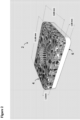
- Exemplary synthetic prosthesis 2 are illustrated in Figures 1 and 2 .
- the synthetic prostheses of Figure 1 and Figure 2 include at least two laminate parts: a porous part 4 and a solid part 6.
- the synthetic prosthesis has a hole 8 in the middle for receiving an optical cylinder.
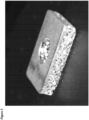
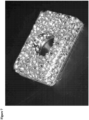
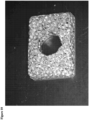
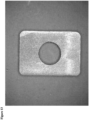
- Photographs of exemplary prototypes of a synthetic prosthetic device as contemplated herein are provided in Figures 3-14 .
- the disclosed synthetic prosthesis may have one or more of the following features:
- the synthetic prosthesis may comprise or consist of at least two parts: a porous part, and a solid part.
- the synthetic prosthesis is formed from a single material (i.e., the synthetic prosthesis is monolithic) and the synthetic prosthesis is manufactured to have a porous part (or portion) and a solid part (or portion), for example in a single-step manufacturing procedure.
- the synthetic prosthesis is formed from two or more materials which may be the same or different materials. The two or more materials form the porous part and the solid part.
- the synthetic prosthesis is formed from a separate porous part and a separate solid part.
- the porous part and solid part of the synthetic prosthesis may be permanently or removably attached.
- the porous part and the solid part are permanently attached ( e.g., via application of an adhesive material and/or via a sintering process).
- the porous part and the solid part may be used together or may be removably attached and used separately.
- the synthetic prosthesis may be formed from a separate laminate porous part and a separate solid laminate part, which separate laminate porous part and a separate solid laminate part may be formed from the same or different material and which separate laminate porous part and a separate solid laminate part may be permanently or removable attached.
- the porous part and solid part may comprise or consist of the same material or different materials.
- the porous part and solid part may be manufactured similarly or differently using the same material or different materials. Whether the same or different materials are used to manufacture the porous part and the solid part, in some embodiments of the disclosed synthetic prosthesis the material(s) of the porous part and/or solid part may be metal, ceramic, polymer, or a composite comprising any combination of metal, ceramic, and polymer.
- the dimensions of the porous part and the solid part are the same in width and depth, and different in height.
- the Width (W) of the porous part and the solid part are the same and ranges from 2 to 20 mm, preferably 6-16 mm, and more preferably 10-12 mm.
- the Depth (D) of the porous part and the solid part are the same and ranges from 1 to 15 mm, preferably 4-12 mm, more preferably 7-9 mm.
- the Height (H) of the porous part ranges from 0.1 to 5 mm, preferably 0.5-2.5 mm, more preferably 1-2 mm, wherein the height of the porous part and the solid part are different.
- the Height (H) of the solid part ranges from 0.1 to 5 mm, preferably 0.25-2 mm, more preferably 0.5-1.5 mm, wherein the height of the porous part and the solid part are different.
- the edges of the porous part of the synthetic prosthesis may be relatively smooth and rounded ( i.e., not a sharp 90 degree angle), whereas the edges of the solid part of the synthesis may be sharper (e.g., approximating a sharp 90 degree angle).
- the porous part may comprise or may be made of metals.
- the porous part may comprise or may be made of titanium or titanium alloys (e.g., Ti-6Al-4V alloy).
- the porous part may comprise or may be made of ceramics.
- the porous part may comprise or made be made of hydroxyapatite, tri-calcium phosphate.
- the porous part may comprise or may be made of a polymeric material.
- the porous part may comprise or may be made of poly(methyl methacrylate) (PMMA) and/or polyethylene material.
- the porous part may comprise or may be made of a composite comprising a combination of any of metal (or metal alloy) material, ceramic material, and/or polymeric material as contemplated herein.
- the porous part may be coated or treated using any of metal (or metal alloy) material, ceramic material, polymeric material, hydrogel materials, and/or a composite comprising a combination of any of metal (or metal alloy) material, ceramic material, hydrogel materials, and/or polymeric material as contemplated herein.
- the porous part comprises pores having an average effective pore size of 10 to 1000 microns, preferably 100 to 800 microns, more preferably 200-600 microns.
- the porous part has a volumetric porosity of 5 to 95%, preferably 10-90%, more preferably 20-80%, even more preferably 45-75% (or a porosity within a range bounded by any of these percentage values, e.g., 20-75%).
- the porous part of the synthetic devices disclosed herein may be prepared by methods including but not limited to replica template/replication, 3D-printing, microsphere sintering, particle sintering, powder sintering, fiber sintering, gas injection into the metal melt, decomposition of foaming agents, plasma spraying, space holder method, combustion synthesis, vapor deposition, and electro discharge compaction.
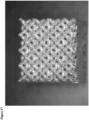
- Figure 15 provides a photograph of a porous part prepared by replica template/replication.
- Figure 16 provides a photograph of a porous part prepared by 3D-printing.
- Figure 17 provides a photograph of a porous part prepared by microsphere sintering.
- Figure 18 provides a photograph of a porous part prepared by particle sintering.
- the porous part facilitates bio-integration of the prosthesis (e.g., into an eye of a patient).
- the solid part may comprise or may be made of metals.
- the solid part may comprise or may be made of titanium or titanium alloys (e.g., Ti-6Al-4V alloy).
- the solid part may comprise or may be made of ceramics.
- the solid part may comprise or made be made of hydroxyapatite, tri-calcium phosphate.
- the solid part may comprise or may be made of a polymeric material.
- the solid part may comprise or may be made of poly(methyl methacrylate) (PMMA) and/or polyethylene material.
- the solid part may comprise or may be made of a composite comprising a combination of any of metal (or metal alloy) material, ceramic material, and/or polymeric material as contemplated herein.
- the solid part may be coated or treated using any of metal (or metal alloy) material, ceramic material, polymeric material, hydrogel materials, and/or a composite comprising a combination of any of metal (or metal alloy) material, ceramic material, hydrogel materials, and/or polymeric material as contemplated herein.
- the disclosed synthetic prosthesis typically includes a hole made through the porous part and the solid part.
- the diameter of the hole might be the same or different through the porous part and the solid part.
- the hole has a diameter from 1 to 8 mm, preferably 2-6 mm, more preferably 3-5 mm.
- the hole is substantially centered in the prosthesis through the porous part and the solid part. In other embodiments of the disclosed synthetic prosthesis, the hole may deviate from the center of the porous part and/or the solid part.
Landscapes
- Health & Medical Sciences (AREA)
- Chemical & Material Sciences (AREA)
- Life Sciences & Earth Sciences (AREA)
- Veterinary Medicine (AREA)
- Public Health (AREA)
- General Health & Medical Sciences (AREA)
- Animal Behavior & Ethology (AREA)
- Transplantation (AREA)
- Oral & Maxillofacial Surgery (AREA)
- Medicinal Chemistry (AREA)
- Dermatology (AREA)
- Epidemiology (AREA)
- Engineering & Computer Science (AREA)
- Inorganic Chemistry (AREA)
- Ophthalmology & Optometry (AREA)
- Dispersion Chemistry (AREA)
- Vascular Medicine (AREA)
- Heart & Thoracic Surgery (AREA)
- Biomedical Technology (AREA)
- Chemical Kinetics & Catalysis (AREA)
- Ceramic Engineering (AREA)
- Materials Engineering (AREA)
- Composite Materials (AREA)
- Cardiology (AREA)
- Nuclear Medicine, Radiotherapy & Molecular Imaging (AREA)
- Surgery (AREA)
- Prostheses (AREA)
Description
- The present application claims the benefit of priority under 35 U.S.C. § 119(e) to
U.S. Provisional Patent Application No. 62/478,755, filed on March 30, 2017 - The field of the invention relates to materials for use in eye surgery. In particular, the field of the invention relates to synthetic prosthetic materials that may be used to replace standard prosthetic materials used in performing osteo-odonto-keratoprosthesis (OOKP) surgery.
- Osteo-odonto-keratoprosthesis (OOKP) surgery, otherwise referred to as "tooth in eye" surgery is a technique developed in the early 1960s by Strampelli to replace damaged cornea in blind patients [1]. The technique is used when a cadaveric corneal transplant is likely to fail. In OOKP, a synthetic corneal transplant is created using the root of a tooth, the underlying alveolar bone of the tooth, and a plastic optical cylinder made of poly(methyl methacrylate) (PMMA). OOKP is now widely recognized by corneal surgeons worldwide as one of the top treatment choices for patients with end stage inflammatory corneal disease. For instance, almost no other device or technique works as satisfactory as OOKP for a dry eye [2].
- OOKP surgery is usually carried out in two stages. In Stage 1, a monoradicular tooth and surrounding jaw bone are collected from the patient to prepare an osteo-odonto-lamina. The tooth root and adjacent jaw bone are cut sagittally and then removed by slicing across the bridging bone. Pulp is exposed and removed. The crown of the tooth then is cut laterally. A hole then is drilled through the dentine of the tooth. A PMMA optical cylinder is fitted through the anterior of the hole and is cemented in place to prepare the prosthesis. The prosthesis is then implanted into a submuscular pouch often created by making a slit in the lower eye lid of the patient's fellow eye or in the patient's cheekand left over there for a period of 2-4 months in order for the tissue surrounding the prosthesis to become vascularized prior to Stage 2.
- Prior to Stage 2, the corneal surface of the eye is prepared to receive a buccal mucous membrane graft removed from the patient. The buccal mucous membrane graft placed over the corneal surface of the eye becomes vascularized prior to Stage 2 surgery and subsequently will provide the blood supply to the bone part of the prosthesis.
- At Stage 2, the prosthesis is removed from the submuscular pouch. All the blood vessels that have grown over the surface of the PMMA optical cylinder are then detached. The buccal mucous membrane graft placed over the corneal surface then is slit and peeled back. A hole is made in the patient's eye and the contents of the eye are removed. The prosthesis then is inserted into the eye and allowed to heal [2]. The PMMA optical cylinder allows light to enter the patient's eye and provides vision.
- Even though the OOKP is a very useful and efficient technique, it is very aggressive. An OOKP patient requires at least two surgeries and the patient loses his/her tooth. Therefore, new techniques and keratoprostheses are desirable in order to replace standard techniques and prostheses used in sOOKP. Here, the present inventors disclose a synthetic prosthesis for use in OOKP that may replace the standard prosthesis that is prepared from a patient's tooth and jaw bone in OOKP.
-
WO 2014/039495 describes a keratoprosthesis comprising a skirt which includes openings which allow for tissue integration and permeation of nutrients, and a solid collar extending from this skirt. An opening is present in the middle, i.e. going through the skirt and collar, and comprises an optic member. - The scope of this invention is defined by the claims. Embodiments in the description relating to methods of treatment are not covered by the claims.
- Disclosed herein is a prosthesis that may be used to replace standard prosthetic material used in osteo-odonto-keratoprosthesis (OOKP) surgery. The disclosed prosthesis is not prepared from tissue removed from a patient's tooth and jaw bone, but rather is a synthetic prosthesis. The synthetic prosthesis typically includes a solid part for supporting an optical cylinder and a porous part that facilitates bio-integration of the implanted prosthesis into the patient's eye.
-
-
Figure 1 . Schematic representation of one embodiment of a synthetic prosthesis as contemplated herein. -
Figure 2 . Schematic representation of one embodiment of a synthetic prosthesis as contemplated herein including exemplary dimension sizes. -
Figure 3 . Photograph of one exemplary prototype of a synthetic prosthesis as contemplated herein illustrating the solid part on the top and the porous part on the bottom. -
Figure 4 . Another photograph of one exemplary prototype of a synthetic prosthesis as contemplated herein illustrating the solid part on the top and the porous part on the bottom. -
Figure 5 . Another photograph of one exemplary prototype of a synthetic prosthesis as contemplated herein illustrating the solid part on the top and the porous part on the bottom. -
Figure 6 . Another photograph of one exemplary prototype of a synthetic prosthesis as contemplated herein illustrating the solid part on the top and the porous part on the bottom. -
Figure 7 . Photograph of one exemplary prototype of a synthetic prosthesis as contemplated herein illustrating the porous part on the top and the solid part on the bottom. -
Figure 8 . Another photograph of one exemplary prototype of a synthetic prosthesis as contemplated herein illustrating the porous part on the top and the solid part on the bottom. -
Figure 9 . Another photograph of one exemplary prototype of a synthetic prosthesis as contemplated herein illustrating the porous part on the top and the solid part on the bottom. -
Figure 10 . Another photograph of one exemplary prototype of a synthetic prosthesis as contemplated herein illustrating the porous part on the top and the solid part on the bottom. -
Figure 11 . Another photograph of one exemplary prototype of a synthetic prosthesis as contemplated herein illustrating the porous part on the top and the solid part on the bottom. -
Figure 12 . Photograph of one exemplary prototype of a synthetic prosthesis as contemplated herein illustrating providing a side view with the solid part on the right and the porous part on the left. -
Figure 13 . Photograph of one exemplary prototype of a synthetic prosthesis as contemplated herein illustrating providing a top view of the solid part. -
Figure 14 . Photograph of one exemplary prototype of a synthetic prosthesis as contemplated herein illustrating providing a top view of the porous part. -
Figure 15 . Photograph of one embodiment of a porous part prepared by replica template/replication. -
Figure 16 . Photograph of one embodiment of a porous part prepared by 3D-printing. -
Figure 17 . Photograph of one embodiment of a porous part prepared by microsphere sintering. -
Figure 18 . Photograph of one embodiment of a porous part prepared by particle sintering. - The disclosed subject matter further may be described utilizing terms as defined below.
- Unless otherwise specified or indicated by context, the terms "a", "an", and "the" mean "one or more." For example, "a prosthesis" should be interpreted to mean "one or more prostheses."
- As used herein, "about", "approximately," "substantially," and "significantly" will be understood by persons of ordinary skill in the art and will vary to some extent on the context in which they are used. If there are uses of the term which are not clear to persons of ordinary skill in the art given the context in which it is used, "about" and "approximately" will mean plus or minus ≤10% of the particular term and "substantially" and "significantly" will mean plus or minus >10% of the particular term.
- As used herein, the terms "include" and "including" have the same meaning as the terms "comprise" and "comprising" in that these latter terms are "open" transitional terms that do not limit claims only to the recited elements succeeding these transitional terms. The term "consisting of," while encompassed by the term "comprising," should be interpreted as a "closed" transitional term that limits claims only to the recited elements succeeding this transitional term. The term "consisting essentially of," while encompassed by the term "comprising," should be interpreted as a "partially closed" transitional term which permits additional elements succeeding this transitional term, but only if those additional elements do not materially affect the basic and novel characteristics of the claim.
- The disclosed prosthesis may be utilized in keratoprosthesis surgery to replace standard prosthetic material utilized in osteo-odonto-keratoprosthesis (OOKP) surgery such as modified dental material such as a tooth. In particular, the disclosed prosthesis may be utilized to support and/or hold an optical cylinder used as a cornea replacement. As such, the disclosed prosthesis may be used to replace the standard modified dental material commonly used in osteo-odonto-keratoprosthesis (OOKP) surgery to support and/or hold an optical cylinder.
- The following examples are illustrative and are not intended to limit the scope of the claimed subject matter.
- The disclosed synthetic prosthetic devices may be used as a replacement for dental material in osteo-odonto-keratoprosthesis (OOKP) surgery. In OOKP surgery, dental material (e.g., a tooth) is configured to support an optical cylinder which is transplanted to a patient's eye to replace a diseased or defective cornea. As such, in OOKP surgery, the patient loses a tooth. The disclosed synthetic prosthetic devices may be used as a replacement in OOKP surgery to provide a support for an optical cylinder (e.g., via a solid part) and to provide material for integrating the prosthetic device into the eye of the patient (e.g., via a porous part).
- Exemplary synthetic prosthesis 2 are illustrated in
Figures 1 and2 . The synthetic prostheses ofFigure 1 andFigure 2 include at least two laminate parts: aporous part 4 and asolid part 6. The synthetic prosthesis has ahole 8 in the middle for receiving an optical cylinder. Photographs of exemplary prototypes of a synthetic prosthetic device as contemplated herein are provided inFigures 3-14 . - As contemplated, the disclosed synthetic prosthesis may have one or more of the following features:
The synthetic prosthesis may comprise or consist of at least two parts: a porous part, and a solid part. - In some embodiments, the synthetic prosthesis is formed from a single material (i.e., the synthetic prosthesis is monolithic) and the synthetic prosthesis is manufactured to have a porous part (or portion) and a solid part (or portion), for example in a single-step manufacturing procedure. In other embodiments, the synthetic prosthesis is formed from two or more materials which may be the same or different materials. The two or more materials form the porous part and the solid part. In some embodiments, the synthetic prosthesis is formed from a separate porous part and a separate solid part.
- In embodiments where the synthetic prosthesis is formed from a separate porous part and a separate solid part, the porous part and solid part of the synthetic prosthesis may be permanently or removably attached. In some embodiments, the porous part and the solid part are permanently attached (e.g., via application of an adhesive material and/or via a sintering process). The porous part and the solid part may be used together or may be removably attached and used separately. In particular, the synthetic prosthesis may be formed from a separate laminate porous part and a separate solid laminate part, which separate laminate porous part and a separate solid laminate part may be formed from the same or different material and which separate laminate porous part and a separate solid laminate part may be permanently or removable attached.
- The porous part and solid part may comprise or consist of the same material or different materials. The porous part and solid part may be manufactured similarly or differently using the same material or different materials. Whether the same or different materials are used to manufacture the porous part and the solid part, in some embodiments of the disclosed synthetic prosthesis the material(s) of the porous part and/or solid part may be metal, ceramic, polymer, or a composite comprising any combination of metal, ceramic, and polymer.
- In some embodiments, the dimensions of the porous part and the solid part are the same in width and depth, and different in height. In some embodiments, the Width (W) of the porous part and the solid part are the same and ranges from 2 to 20 mm, preferably 6-16 mm, and more preferably 10-12 mm. In some embodiments, the Depth (D) of the porous part and the solid part are the same and ranges from 1 to 15 mm, preferably 4-12 mm, more preferably 7-9 mm. In some embodiments, the Height (H) of the porous part ranges from 0.1 to 5 mm, preferably 0.5-2.5 mm, more preferably 1-2 mm, wherein the height of the porous part and the solid part are different. In some embodiments, the Height (H) of the solid part ranges from 0.1 to 5 mm, preferably 0.25-2 mm, more preferably 0.5-1.5 mm, wherein the height of the porous part and the solid part are different.
- In order to facilitate biointegration and or incorporation of the synthetic prosthesis into relevant biological tissues (e.g., during a keratoprosthesis procedure), the edges of the porous part of the synthetic prosthesis may be relatively smooth and rounded (i.e., not a sharp 90 degree angle), whereas the edges of the solid part of the synthesis may be sharper (e.g., approximating a sharp 90 degree angle). (See contrast between the synthetic prosthesis of
Figure 1 with the synthetic prosthesis ofFigure 2 andFigure 12 , alsoFigures 3-11 ). - In some embodiments of the disclosed synthetic prosthesis, the porous part may comprise or may be made of metals. In particular, the porous part may comprise or may be made of titanium or titanium alloys (e.g., Ti-6Al-4V alloy).
- In some embodiments of the disclosed synthetic prosthesis, the porous part may comprise or may be made of ceramics. In particular, the porous part may comprise or made be made of hydroxyapatite, tri-calcium phosphate.
- In some embodiments of the disclosed synthetic prosthesis, the porous part may comprise or may be made of a polymeric material. In particular, the porous part may comprise or may be made of poly(methyl methacrylate) (PMMA) and/or polyethylene material.
- In some embodiments of the disclosed synthetic prosthesis, the porous part may comprise or may be made of a composite comprising a combination of any of metal (or metal alloy) material, ceramic material, and/or polymeric material as contemplated herein.
- In some embodiments of the disclosed synthetic prosthesis, the porous part may be coated or treated using any of metal (or metal alloy) material, ceramic material, polymeric material, hydrogel materials, and/or a composite comprising a combination of any of metal (or metal alloy) material, ceramic material, hydrogel materials, and/or polymeric material as contemplated herein.
- In some embodiments of the disclosed synthetic prosthesis, the porous part comprises pores having an average effective pore size of 10 to 1000 microns, preferably 100 to 800 microns, more preferably 200-600 microns.
- In some embodiments of the disclosed synthetic prosthesis, the porous part has a volumetric porosity of 5 to 95%, preferably 10-90%, more preferably 20-80%, even more preferably 45-75% (or a porosity within a range bounded by any of these percentage values, e.g., 20-75%).
- The porous part of the synthetic devices disclosed herein may be prepared by methods including but not limited to replica template/replication, 3D-printing, microsphere sintering, particle sintering, powder sintering, fiber sintering, gas injection into the metal melt, decomposition of foaming agents, plasma spraying, space holder method, combustion synthesis, vapor deposition, and electro discharge compaction.
Figure 15 provides a photograph of a porous part prepared by replica template/replication.Figure 16 provides a photograph of a porous part prepared by 3D-printing.Figure 17 provides a photograph of a porous part prepared by microsphere sintering.Figure 18 provides a photograph of a porous part prepared by particle sintering. - In some embodiments of the disclosed synthetic prosthesis, the porous part facilitates bio-integration of the prosthesis (e.g., into an eye of a patient).
- In some embodiments of the disclosed synthetic prosthesis, the solid part may comprise or may be made of metals. In particular, the solid part may comprise or may be made of titanium or titanium alloys (e.g., Ti-6Al-4V alloy).
- In some embodiments of the disclosed synthetic prosthesis, the solid part may comprise or may be made of ceramics. In particular, the solid part may comprise or made be made of hydroxyapatite, tri-calcium phosphate.
- In some embodiments of the disclosed synthetic prosthesis, the solid part may comprise or may be made of a polymeric material. In particular, the solid part may comprise or may be made of poly(methyl methacrylate) (PMMA) and/or polyethylene material.
- In some embodiments of the disclosed synthetic prosthesis, the solid part may comprise or may be made of a composite comprising a combination of any of metal (or metal alloy) material, ceramic material, and/or polymeric material as contemplated herein.
- In some embodiments of the disclosed synthetic prosthesis, the solid part may be coated or treated using any of metal (or metal alloy) material, ceramic material, polymeric material, hydrogel materials, and/or a composite comprising a combination of any of metal (or metal alloy) material, ceramic material, hydrogel materials, and/or polymeric material as contemplated herein.
- The disclosed synthetic prosthesis typically includes a hole made through the porous part and the solid part. The diameter of the hole might be the same or different through the porous part and the solid part. In some embodiments of the disclosed synthetic prosthesis, the hole has a diameter from 1 to 8 mm, preferably 2-6 mm, more preferably 3-5 mm.
- In some embodiments of the disclosed synthetic prosthesis, the hole is substantially centered in the prosthesis through the porous part and the solid part. In other embodiments of the disclosed synthetic prosthesis, the hole may deviate from the center of the porous part and/or the solid part.
-
- [1] Strampelli B. Keratoprosthesis with osteodontal tissue. Am J Ophthalmol 1963;89:39.
- [2] Liu C, Paul B, Tandon R, Lee E, Fong K, Mavrikakis I, et al. The osteo-odonto-keratoprosthesis (OOKP). Seminars in ophthalmology: Taylor & Francis; 2005. p. 113-28.
Claims (12)
- A synthetic prosthesis for use in eye surgery, the synthetic prosthesis comprising a porous part and a solid part and a hole through the porous part and the solid part configured for receiving an optical cylinder, wherein the porous part and the solid part form a rectangular cuboid.
- The synthetic prosthesis of claim 1, wherein the synthetic prosthesis is configured for use in keratoprosthesis surgery such as a replacement for standard prosthetic materials such as a modified dental material used in performing osteo-odonto-keratoprosthesis (OOKP) surgery.
- The synthetic prosthesis of claim 1, wherein the porous part and solid part:(a) are laminate parts; and/or(b) are permanently attached.
- The synthetic prosthesis of any one of claims 1 to 3, wherein the porous part and the solid part are formed from the same material.
- The synthetic prosthesis of any one of claims 1 to 4, wherein the dimensions of the porous part and the solid part are the same in width and depth, and different in height.
- The synthetic prosthesis of any one of claims 1 to 5, wherein:(a) the Width (W) of the porous part and the solid part are the same and ranges from 2 to 20 mm, preferably 6-16 mm, and more preferably 10-12 mm;(b) the Depth (D) of the porous part and the solid part are the same and ranges from 1 to 15 mm, preferably 4-12 mm, more preferably 7-9 mm; and(c) the Height (H) of the porous part ranges from 0.1 to 5 mm, preferably 0.5-2.5 mm, more preferably 1-2 mm, wherein the height of the porous part and the solid part are different.
- The synthetic prosthesis of any one of claims 1 to 6, wherein the Height (H) of the solid part ranges from 0.1 to 5 mm, preferably 0.25-2 mm, more preferably 0.5-1.5 mm, wherein the height of the porous part and the solid part are different.
- The synthetic prosthesis of any one of claims 1 to 7, wherein the porous part is made of metal material such as titanium or titanium alloy such as Ti-6Al-4V alloy .
- The synthetic prosthesis of any one of claims 1 to 8, wherein the porous part:(a) comprises pores having an average effective pore size of 10 to 1000 microns, preferably 100 to 800 microns, more preferably 200-600 microns; and/or(b) has a volumetric porosity of 10 to 95%, preferably 20-80%, more preferably 45-75%.
- The synthetic prosthesis of any one of claims 1 to 9, wherein the solid part is made of metal material such as titanium or a titanium alloy such as Ti-6Al-4V alloy
- The synthetic prosthesis of any one of claims 1 to 10, wherein the hole through the prosthesis:(a) has a diameter that is the same through the porous part as through the solid part;(b) has a diameter from 1 to 8 mm, preferably 2-6 mm, more preferably 3-5 mm; and(c) is substantially centered in the prosthesis through the porous part and the solid part.
- The synthetic prosthesis of any one of claims 1 to 11 further comprising an optical cylinder placed in the hole of the synthetic prosthesis, optionally wherein the optical cylinder comprises clear polymeric material with tissue tolerance and optical properties such as poly(methyl methacrylate) (PMMA) and/or polyethylene material.
Applications Claiming Priority (2)
| Application Number | Priority Date | Filing Date | Title |
|---|---|---|---|
| US201762478755P | 2017-03-30 | 2017-03-30 | |
| PCT/US2018/025343 WO2018183801A1 (en) | 2017-03-30 | 2018-03-30 | Synthetic prosthesis for use in osteo-odonto-keratoprosthesis (ookp) surgery |
Publications (3)
| Publication Number | Publication Date |
|---|---|
| EP3600469A1 EP3600469A1 (en) | 2020-02-05 |
| EP3600469A4 EP3600469A4 (en) | 2020-11-25 |
| EP3600469B1 true EP3600469B1 (en) | 2023-06-14 |
Family
ID=63677088
Family Applications (1)
| Application Number | Title | Priority Date | Filing Date |
|---|---|---|---|
| EP18775701.8A Active EP3600469B1 (en) | 2017-03-30 | 2018-03-30 | Synthetic prosthesis for use in osteo-odonto-keratoprosthesis (ookp) surgery |
Country Status (5)
| Country | Link |
|---|---|
| US (1) | US11338067B2 (en) |
| EP (1) | EP3600469B1 (en) |
| ES (1) | ES2955290T3 (en) |
| SG (1) | SG11201908883RA (en) |
| WO (1) | WO2018183801A1 (en) |
Families Citing this family (2)
| Publication number | Priority date | Publication date | Assignee | Title |
|---|---|---|---|---|
| WO2020161239A1 (en) * | 2019-02-07 | 2020-08-13 | Universiteit Maastricht | Porous bioactive metal-calcium phosphate medical implant |
| USD1061892S1 (en) | 2022-08-19 | 2025-02-11 | M3 Health Indústria E Comércio De Produtos Médicos, Odontológicos E Correlatos S.A. | Keratoprosthesis for corneal replacement |
Family Cites Families (11)
| Publication number | Priority date | Publication date | Assignee | Title |
|---|---|---|---|---|
| US5843185A (en) * | 1996-10-23 | 1998-12-01 | Leon Rolden; Carlos R. | Keratoprosthesis and method of corneal replacement |
| RU2139014C1 (en) | 1997-12-10 | 1999-10-10 | Епихин Александр Николаевич | Keratoprosthesis |
| DE19940717A1 (en) * | 1999-08-26 | 2001-03-01 | Gerontocare Gmbh | Resorbable bone replacement and bone augmentation material |
| JPWO2002039930A1 (en) * | 2000-11-17 | 2004-03-18 | 株式会社メニコン | Medical membrane and method for producing the same, and artificial cornea using the same and method for producing the same |
| GB2403908B (en) * | 2003-07-17 | 2007-03-28 | I O Internat Ltd | Artificial cornea |
| RU2367379C1 (en) * | 2008-01-16 | 2009-09-20 | Анжелика Анатольевна Березовская | Keratoprosthesis and leukoma surgery therewith |
| US20160144069A1 (en) | 2008-07-31 | 2016-05-26 | The Board Of Trustees Of The University Of Illinois | Suturable hybrid superporous hydrogel keratoprosthesis for cornea |
| US20100080840A1 (en) | 2008-07-31 | 2010-04-01 | Michael Cho | Hybrid superporous hydrogel scaffold for cornea regeneration |
| US9974646B2 (en) * | 2012-09-05 | 2018-05-22 | University Of Miami | Keratoprosthesis, and system and method of corneal repair using same |
| US20180049878A1 (en) * | 2015-01-07 | 2018-02-22 | Exactech, Inc. | Augments for bone deficiencies |
| WO2017053686A1 (en) * | 2015-09-24 | 2017-03-30 | Massachusetts Eye And Ear Infirmary | Drug delivery system and methods of use |
-
2018
- 2018-03-30 SG SG11201908883R patent/SG11201908883RA/en unknown
- 2018-03-30 WO PCT/US2018/025343 patent/WO2018183801A1/en not_active Ceased
- 2018-03-30 US US16/497,904 patent/US11338067B2/en active Active
- 2018-03-30 ES ES18775701T patent/ES2955290T3/en active Active
- 2018-03-30 EP EP18775701.8A patent/EP3600469B1/en active Active
Also Published As
| Publication number | Publication date |
|---|---|
| SG11201908883RA (en) | 2019-10-30 |
| EP3600469A4 (en) | 2020-11-25 |
| US11338067B2 (en) | 2022-05-24 |
| ES2955290T3 (en) | 2023-11-29 |
| WO2018183801A1 (en) | 2018-10-04 |
| US20200023099A1 (en) | 2020-01-23 |
| EP3600469A1 (en) | 2020-02-05 |
| CA3057984A1 (en) | 2018-10-04 |
Similar Documents
| Publication | Publication Date | Title |
|---|---|---|
| CN111544139B (en) | A personalized bionic implant for simultaneous repair of tooth and surrounding alveolar bone defect and its molding method | |
| US9974646B2 (en) | Keratoprosthesis, and system and method of corneal repair using same | |
| ES2431672T3 (en) | Metal oxide scaffolding | |
| US10045839B2 (en) | Methods for fabricating dental prostheses | |
| JP4504418B2 (en) | Method of manufacturing bioactive prosthetic device for bone tissue regeneration and prosthetic device | |
| JP5089169B2 (en) | Structural / biological implant systems | |
| KR102417488B1 (en) | Reconfigurable Hip Prosthesis, Instructions for Use and Kits | |
| JPH10500343A (en) | Biocompatible materials and bone implants for bone repair and replacement | |
| US20090215007A1 (en) | Dental implant with porous trabecular structure | |
| EP2959862B1 (en) | Perforated membrane for guided bone and tissue regeneration | |
| CA2692498A1 (en) | Surgical implant composed of a porous core and a dense surface layer | |
| US8483863B1 (en) | Surgical bone and cartilage shaping on demand with 3D CAD/CAM | |
| EP3000439A1 (en) | Maxillomandibular prosthesis and production method | |
| EP2750725B1 (en) | Dental implant, vascular implant and tissue implant made of porous three-dimensional structure of polytetrafluoroethylene | |
| JP2016527924A (en) | Porous dental implants | |
| AU2009204638A1 (en) | An augment for use in a knee replacement system and method of performing a knee replacement operation | |
| US11338067B2 (en) | Synthetic prosthesis for use in osteo-odonto-keratoprosthesis (OOKP) surgery | |
| CN111202601A (en) | A direct implanted personalized alveolar bone repair prosthesis and preparation method thereof | |
| ES2581761T3 (en) | Intraosseous dental implant and method to perform it | |
| US20160206432A1 (en) | Implant including cartilage plug and porous metal | |
| EP4241738A1 (en) | Non-polygonal porous structure | |
| CA3057984C (en) | Synthetic prosthesis for use in osteo-odonto-keratoprosthesis (ookp) surgery | |
| WO2008035198A3 (en) | Template, tool and apparatus for fashioning prosthetic implants. | |
| CN107280787B (en) | Dental implant | |
| CN109330747A (en) | A personalized talus resurfacing prosthesis |
Legal Events
| Date | Code | Title | Description |
|---|---|---|---|
| STAA | Information on the status of an ep patent application or granted ep patent |
Free format text: STATUS: THE INTERNATIONAL PUBLICATION HAS BEEN MADE |
|
| PUAI | Public reference made under article 153(3) epc to a published international application that has entered the european phase |
Free format text: ORIGINAL CODE: 0009012 |
|
| STAA | Information on the status of an ep patent application or granted ep patent |
Free format text: STATUS: REQUEST FOR EXAMINATION WAS MADE |
|
| 17P | Request for examination filed |
Effective date: 20190926 |
|
| AK | Designated contracting states |
Kind code of ref document: A1 Designated state(s): AL AT BE BG CH CY CZ DE DK EE ES FI FR GB GR HR HU IE IS IT LI LT LU LV MC MK MT NL NO PL PT RO RS SE SI SK SM TR |
|
| AX | Request for extension of the european patent |
Extension state: BA ME |
|
| RIN1 | Information on inventor provided before grant (corrected) |
Inventor name: RASOULIANBOROUJENI, MORTEZA Inventor name: LIU, CHRISTOPHER SWEE CHAU Inventor name: TAYEBI, LOBAT Inventor name: GHANAVATI, MEHRAN ZAREI |
|
| DAV | Request for validation of the european patent (deleted) | ||
| DAX | Request for extension of the european patent (deleted) | ||
| A4 | Supplementary search report drawn up and despatched |
Effective date: 20201023 |
|
| RIC1 | Information provided on ipc code assigned before grant |
Ipc: A61F 9/007 20060101ALI20201019BHEP Ipc: A61F 2/14 20060101ALI20201019BHEP Ipc: A61L 27/56 20060101AFI20201019BHEP |
|
| GRAP | Despatch of communication of intention to grant a patent |
Free format text: ORIGINAL CODE: EPIDOSNIGR1 |
|
| STAA | Information on the status of an ep patent application or granted ep patent |
Free format text: STATUS: GRANT OF PATENT IS INTENDED |
|
| INTG | Intention to grant announced |
Effective date: 20220801 |
|
| RIN1 | Information on inventor provided before grant (corrected) |
Inventor name: RASOULIANBOROUJENI, MORTEZA Inventor name: TAYEBI, LOBAT Inventor name: GHANAVATI, MEHRAN ZAREI Inventor name: LIU, CHRISTOPHER SWEE CHAU |
|
| GRAJ | Information related to disapproval of communication of intention to grant by the applicant or resumption of examination proceedings by the epo deleted |
Free format text: ORIGINAL CODE: EPIDOSDIGR1 |
|
| STAA | Information on the status of an ep patent application or granted ep patent |
Free format text: STATUS: REQUEST FOR EXAMINATION WAS MADE |
|
| GRAP | Despatch of communication of intention to grant a patent |
Free format text: ORIGINAL CODE: EPIDOSNIGR1 |
|
| STAA | Information on the status of an ep patent application or granted ep patent |
Free format text: STATUS: GRANT OF PATENT IS INTENDED |
|
| INTC | Intention to grant announced (deleted) | ||
| INTG | Intention to grant announced |
Effective date: 20230109 |
|
| GRAS | Grant fee paid |
Free format text: ORIGINAL CODE: EPIDOSNIGR3 |
|
| GRAA | (expected) grant |
Free format text: ORIGINAL CODE: 0009210 |
|
| STAA | Information on the status of an ep patent application or granted ep patent |
Free format text: STATUS: THE PATENT HAS BEEN GRANTED |
|
| AK | Designated contracting states |
Kind code of ref document: B1 Designated state(s): AL AT BE BG CH CY CZ DE DK EE ES FI FR GB GR HR HU IE IS IT LI LT LU LV MC MK MT NL NO PL PT RO RS SE SI SK SM TR |
|
| REG | Reference to a national code |
Ref country code: CH Ref legal event code: EP |
|
| REG | Reference to a national code |
Ref country code: DE Ref legal event code: R096 Ref document number: 602018051875 Country of ref document: DE |
|
| REG | Reference to a national code |
Ref country code: AT Ref legal event code: REF Ref document number: 1578756 Country of ref document: AT Kind code of ref document: T Effective date: 20230715 |
|
| REG | Reference to a national code |
Ref country code: LT Ref legal event code: MG9D |
|
| REG | Reference to a national code |
Ref country code: NL Ref legal event code: MP Effective date: 20230614 |
|
| PG25 | Lapsed in a contracting state [announced via postgrant information from national office to epo] |
Ref country code: SE Free format text: LAPSE BECAUSE OF FAILURE TO SUBMIT A TRANSLATION OF THE DESCRIPTION OR TO PAY THE FEE WITHIN THE PRESCRIBED TIME-LIMIT Effective date: 20230614 Ref country code: NO Free format text: LAPSE BECAUSE OF FAILURE TO SUBMIT A TRANSLATION OF THE DESCRIPTION OR TO PAY THE FEE WITHIN THE PRESCRIBED TIME-LIMIT Effective date: 20230914 |
|
| REG | Reference to a national code |
Ref country code: AT Ref legal event code: MK05 Ref document number: 1578756 Country of ref document: AT Kind code of ref document: T Effective date: 20230614 |
|
| REG | Reference to a national code |
Ref country code: ES Ref legal event code: FG2A Ref document number: 2955290 Country of ref document: ES Kind code of ref document: T3 Effective date: 20231129 |
|
| PG25 | Lapsed in a contracting state [announced via postgrant information from national office to epo] |
Ref country code: RS Free format text: LAPSE BECAUSE OF FAILURE TO SUBMIT A TRANSLATION OF THE DESCRIPTION OR TO PAY THE FEE WITHIN THE PRESCRIBED TIME-LIMIT Effective date: 20230614 Ref country code: NL Free format text: LAPSE BECAUSE OF FAILURE TO SUBMIT A TRANSLATION OF THE DESCRIPTION OR TO PAY THE FEE WITHIN THE PRESCRIBED TIME-LIMIT Effective date: 20230614 Ref country code: LV Free format text: LAPSE BECAUSE OF FAILURE TO SUBMIT A TRANSLATION OF THE DESCRIPTION OR TO PAY THE FEE WITHIN THE PRESCRIBED TIME-LIMIT Effective date: 20230614 Ref country code: LT Free format text: LAPSE BECAUSE OF FAILURE TO SUBMIT A TRANSLATION OF THE DESCRIPTION OR TO PAY THE FEE WITHIN THE PRESCRIBED TIME-LIMIT Effective date: 20230614 Ref country code: HR Free format text: LAPSE BECAUSE OF FAILURE TO SUBMIT A TRANSLATION OF THE DESCRIPTION OR TO PAY THE FEE WITHIN THE PRESCRIBED TIME-LIMIT Effective date: 20230614 Ref country code: GR Free format text: LAPSE BECAUSE OF FAILURE TO SUBMIT A TRANSLATION OF THE DESCRIPTION OR TO PAY THE FEE WITHIN THE PRESCRIBED TIME-LIMIT Effective date: 20230915 |
|
| PG25 | Lapsed in a contracting state [announced via postgrant information from national office to epo] |
Ref country code: FI Free format text: LAPSE BECAUSE OF FAILURE TO SUBMIT A TRANSLATION OF THE DESCRIPTION OR TO PAY THE FEE WITHIN THE PRESCRIBED TIME-LIMIT Effective date: 20230614 |
|
| PG25 | Lapsed in a contracting state [announced via postgrant information from national office to epo] |
Ref country code: SK Free format text: LAPSE BECAUSE OF FAILURE TO SUBMIT A TRANSLATION OF THE DESCRIPTION OR TO PAY THE FEE WITHIN THE PRESCRIBED TIME-LIMIT Effective date: 20230614 |
|
| PG25 | Lapsed in a contracting state [announced via postgrant information from national office to epo] |
Ref country code: IS Free format text: LAPSE BECAUSE OF FAILURE TO SUBMIT A TRANSLATION OF THE DESCRIPTION OR TO PAY THE FEE WITHIN THE PRESCRIBED TIME-LIMIT Effective date: 20231014 |
|
| PG25 | Lapsed in a contracting state [announced via postgrant information from national office to epo] |
Ref country code: SM Free format text: LAPSE BECAUSE OF FAILURE TO SUBMIT A TRANSLATION OF THE DESCRIPTION OR TO PAY THE FEE WITHIN THE PRESCRIBED TIME-LIMIT Effective date: 20230614 Ref country code: SK Free format text: LAPSE BECAUSE OF FAILURE TO SUBMIT A TRANSLATION OF THE DESCRIPTION OR TO PAY THE FEE WITHIN THE PRESCRIBED TIME-LIMIT Effective date: 20230614 Ref country code: RO Free format text: LAPSE BECAUSE OF FAILURE TO SUBMIT A TRANSLATION OF THE DESCRIPTION OR TO PAY THE FEE WITHIN THE PRESCRIBED TIME-LIMIT Effective date: 20230614 Ref country code: PT Free format text: LAPSE BECAUSE OF FAILURE TO SUBMIT A TRANSLATION OF THE DESCRIPTION OR TO PAY THE FEE WITHIN THE PRESCRIBED TIME-LIMIT Effective date: 20231016 Ref country code: IS Free format text: LAPSE BECAUSE OF FAILURE TO SUBMIT A TRANSLATION OF THE DESCRIPTION OR TO PAY THE FEE WITHIN THE PRESCRIBED TIME-LIMIT Effective date: 20231014 Ref country code: EE Free format text: LAPSE BECAUSE OF FAILURE TO SUBMIT A TRANSLATION OF THE DESCRIPTION OR TO PAY THE FEE WITHIN THE PRESCRIBED TIME-LIMIT Effective date: 20230614 Ref country code: CZ Free format text: LAPSE BECAUSE OF FAILURE TO SUBMIT A TRANSLATION OF THE DESCRIPTION OR TO PAY THE FEE WITHIN THE PRESCRIBED TIME-LIMIT Effective date: 20230614 Ref country code: AT Free format text: LAPSE BECAUSE OF FAILURE TO SUBMIT A TRANSLATION OF THE DESCRIPTION OR TO PAY THE FEE WITHIN THE PRESCRIBED TIME-LIMIT Effective date: 20230614 |
|
| PG25 | Lapsed in a contracting state [announced via postgrant information from national office to epo] |
Ref country code: PL Free format text: LAPSE BECAUSE OF FAILURE TO SUBMIT A TRANSLATION OF THE DESCRIPTION OR TO PAY THE FEE WITHIN THE PRESCRIBED TIME-LIMIT Effective date: 20230614 |
|
| REG | Reference to a national code |
Ref country code: DE Ref legal event code: R097 Ref document number: 602018051875 Country of ref document: DE |
|
| PLBE | No opposition filed within time limit |
Free format text: ORIGINAL CODE: 0009261 |
|
| STAA | Information on the status of an ep patent application or granted ep patent |
Free format text: STATUS: NO OPPOSITION FILED WITHIN TIME LIMIT |
|
| PG25 | Lapsed in a contracting state [announced via postgrant information from national office to epo] |
Ref country code: DK Free format text: LAPSE BECAUSE OF FAILURE TO SUBMIT A TRANSLATION OF THE DESCRIPTION OR TO PAY THE FEE WITHIN THE PRESCRIBED TIME-LIMIT Effective date: 20230614 |
|
| PG25 | Lapsed in a contracting state [announced via postgrant information from national office to epo] |
Ref country code: SI Free format text: LAPSE BECAUSE OF FAILURE TO SUBMIT A TRANSLATION OF THE DESCRIPTION OR TO PAY THE FEE WITHIN THE PRESCRIBED TIME-LIMIT Effective date: 20230614 |
|
| 26N | No opposition filed |
Effective date: 20240315 |
|
| PG25 | Lapsed in a contracting state [announced via postgrant information from national office to epo] |
Ref country code: SI Free format text: LAPSE BECAUSE OF FAILURE TO SUBMIT A TRANSLATION OF THE DESCRIPTION OR TO PAY THE FEE WITHIN THE PRESCRIBED TIME-LIMIT Effective date: 20230614 Ref country code: IT Free format text: LAPSE BECAUSE OF FAILURE TO SUBMIT A TRANSLATION OF THE DESCRIPTION OR TO PAY THE FEE WITHIN THE PRESCRIBED TIME-LIMIT Effective date: 20230614 |
|
| P01 | Opt-out of the competence of the unified patent court (upc) registered |
Free format text: CASE NUMBER: APP_37655/2024 Effective date: 20240624 |
|
| REG | Reference to a national code |
Ref country code: CH Ref legal event code: PL |
|
| PG25 | Lapsed in a contracting state [announced via postgrant information from national office to epo] |
Ref country code: BG Free format text: LAPSE BECAUSE OF FAILURE TO SUBMIT A TRANSLATION OF THE DESCRIPTION OR TO PAY THE FEE WITHIN THE PRESCRIBED TIME-LIMIT Effective date: 20230614 |
|
| PG25 | Lapsed in a contracting state [announced via postgrant information from national office to epo] |
Ref country code: LU Free format text: LAPSE BECAUSE OF NON-PAYMENT OF DUE FEES Effective date: 20240330 |
|
| PG25 | Lapsed in a contracting state [announced via postgrant information from national office to epo] |
Ref country code: MC Free format text: LAPSE BECAUSE OF FAILURE TO SUBMIT A TRANSLATION OF THE DESCRIPTION OR TO PAY THE FEE WITHIN THE PRESCRIBED TIME-LIMIT Effective date: 20230614 |
|
| PG25 | Lapsed in a contracting state [announced via postgrant information from national office to epo] |
Ref country code: MC Free format text: LAPSE BECAUSE OF FAILURE TO SUBMIT A TRANSLATION OF THE DESCRIPTION OR TO PAY THE FEE WITHIN THE PRESCRIBED TIME-LIMIT Effective date: 20230614 Ref country code: LU Free format text: LAPSE BECAUSE OF NON-PAYMENT OF DUE FEES Effective date: 20240330 Ref country code: BG Free format text: LAPSE BECAUSE OF FAILURE TO SUBMIT A TRANSLATION OF THE DESCRIPTION OR TO PAY THE FEE WITHIN THE PRESCRIBED TIME-LIMIT Effective date: 20230614 |
|
| PG25 | Lapsed in a contracting state [announced via postgrant information from national office to epo] |
Ref country code: IE Free format text: LAPSE BECAUSE OF NON-PAYMENT OF DUE FEES Effective date: 20240330 |
|
| PG25 | Lapsed in a contracting state [announced via postgrant information from national office to epo] |
Ref country code: IE Free format text: LAPSE BECAUSE OF NON-PAYMENT OF DUE FEES Effective date: 20240330 Ref country code: CH Free format text: LAPSE BECAUSE OF NON-PAYMENT OF DUE FEES Effective date: 20240331 |
|
| PGFP | Annual fee paid to national office [announced via postgrant information from national office to epo] |
Ref country code: ES Payment date: 20250401 Year of fee payment: 8 |
|
| PG25 | Lapsed in a contracting state [announced via postgrant information from national office to epo] |
Ref country code: CY Free format text: LAPSE BECAUSE OF FAILURE TO SUBMIT A TRANSLATION OF THE DESCRIPTION OR TO PAY THE FEE WITHIN THE PRESCRIBED TIME-LIMIT; INVALID AB INITIO Effective date: 20180330 |
|
| PG25 | Lapsed in a contracting state [announced via postgrant information from national office to epo] |
Ref country code: HU Free format text: LAPSE BECAUSE OF FAILURE TO SUBMIT A TRANSLATION OF THE DESCRIPTION OR TO PAY THE FEE WITHIN THE PRESCRIBED TIME-LIMIT; INVALID AB INITIO Effective date: 20180330 |
|
| PG25 | Lapsed in a contracting state [announced via postgrant information from national office to epo] |
Ref country code: TR Free format text: LAPSE BECAUSE OF FAILURE TO SUBMIT A TRANSLATION OF THE DESCRIPTION OR TO PAY THE FEE WITHIN THE PRESCRIBED TIME-LIMIT Effective date: 20230614 |
|
| PGFP | Annual fee paid to national office [announced via postgrant information from national office to epo] |
Ref country code: GB Payment date: 20260327 Year of fee payment: 9 |
|
| PGFP | Annual fee paid to national office [announced via postgrant information from national office to epo] |
Ref country code: DE Payment date: 20260327 Year of fee payment: 9 |
|
| PGFP | Annual fee paid to national office [announced via postgrant information from national office to epo] |
Ref country code: BE Payment date: 20260327 Year of fee payment: 9 |
|
| PGFP | Annual fee paid to national office [announced via postgrant information from national office to epo] |
Ref country code: FR Payment date: 20260325 Year of fee payment: 9 |