EP3599577A1 - Verfahren zur vorhersage der nachfrage nach hardware-komponenten - Google Patents
Verfahren zur vorhersage der nachfrage nach hardware-komponenten Download PDFInfo
- Publication number
- EP3599577A1 EP3599577A1 EP19182232.9A EP19182232A EP3599577A1 EP 3599577 A1 EP3599577 A1 EP 3599577A1 EP 19182232 A EP19182232 A EP 19182232A EP 3599577 A1 EP3599577 A1 EP 3599577A1
- Authority
- EP
- European Patent Office
- Prior art keywords
- components
- component
- probability
- renewal
- estimator
- Prior art date
- Legal status (The legal status is an assumption and is not a legal conclusion. Google has not performed a legal analysis and makes no representation as to the accuracy of the status listed.)
- Pending
Links
Images


Classifications
-
- G—PHYSICS
- G06—COMPUTING OR CALCULATING; COUNTING
- G06Q—INFORMATION AND COMMUNICATION TECHNOLOGY [ICT] SPECIALLY ADAPTED FOR ADMINISTRATIVE, COMMERCIAL, FINANCIAL, MANAGERIAL OR SUPERVISORY PURPOSES; SYSTEMS OR METHODS SPECIALLY ADAPTED FOR ADMINISTRATIVE, COMMERCIAL, FINANCIAL, MANAGERIAL OR SUPERVISORY PURPOSES, NOT OTHERWISE PROVIDED FOR
- G06Q10/00—Administration; Management
- G06Q10/04—Forecasting or optimisation specially adapted for administrative or management purposes, e.g. linear programming or "cutting stock problem"
-
- G—PHYSICS
- G06—COMPUTING OR CALCULATING; COUNTING
- G06Q—INFORMATION AND COMMUNICATION TECHNOLOGY [ICT] SPECIALLY ADAPTED FOR ADMINISTRATIVE, COMMERCIAL, FINANCIAL, MANAGERIAL OR SUPERVISORY PURPOSES; SYSTEMS OR METHODS SPECIALLY ADAPTED FOR ADMINISTRATIVE, COMMERCIAL, FINANCIAL, MANAGERIAL OR SUPERVISORY PURPOSES, NOT OTHERWISE PROVIDED FOR
- G06Q10/00—Administration; Management
- G06Q10/20—Administration of product repair or maintenance
-
- G—PHYSICS
- G06—COMPUTING OR CALCULATING; COUNTING
- G06Q—INFORMATION AND COMMUNICATION TECHNOLOGY [ICT] SPECIALLY ADAPTED FOR ADMINISTRATIVE, COMMERCIAL, FINANCIAL, MANAGERIAL OR SUPERVISORY PURPOSES; SYSTEMS OR METHODS SPECIALLY ADAPTED FOR ADMINISTRATIVE, COMMERCIAL, FINANCIAL, MANAGERIAL OR SUPERVISORY PURPOSES, NOT OTHERWISE PROVIDED FOR
- G06Q30/00—Commerce
- G06Q30/06—Buying, selling or leasing transactions
- G06Q30/0601—Electronic shopping [e-shopping]
- G06Q30/0605—Pooling transaction partners, e.g. group buying or group selling
Definitions
- the invention is related to a method for forecasting the demand for hardware components by use of a computer program.
- a crucial task in hardware component management is the prediction of the need for components of various types for planned systems, and the components in installed systems needed for replacement, either because they reach their end of lifetime or due to a malfunction. This is especially important for systems with a long lifetime e.g. in the range of decades like power plants, factory equipment, or railway interlocking and safety systems.
- a vendor has to guarantee the functioning of the system for a given time period with a certain failure rate or system down-time lower than a specified value.
- a more informed prediction is based on the number of existing components, the expectation values of the component numbers of future components, and the expectation values of replacement component predictions.
- the component estimation is scaled by the order probability and a safety margin is added. This method is simple and usually provides reasonable results. But it cannot provide information about the confidence interval of the prediction.
- this task is performed with the method of claim 1.
- the inventive component prediction method takes into account both component renewal necessities and components for new systems and combines them in a uniform, stochastic framework.
- the result of the method is not only a single number of components (a "guess"), but a random variable with its probability mass function.
- This probability function can be used to output for example the mean value, the median value, the standard deviation (i.e., how reliable is this prediction?), a plot of the probability distribution and further characteristic values of the predicted demand.
- the method represents a clean, comprehensible, easy-to-understand stochastic prediction method, and is easy to implement (usually by numeric sampling and combination of the involved distributions) and runs efficiently also for large problems.
- the proposed prediction model can be seen as a decision support tool for hardware component management.
- the main advantage for users is, that component prediction - mainly in the context of obsolescence management - can be done on a much more formal and reproducible basis. If the input data are correct, the prediction will be very precise with a known confidence interval. Too low and too high predictions will be reduced (too low may cause that components are not available in time; too high will increase the storage effort).
- the prediction of needed components must take into account both, renewal of already installed components in case of non-repairable failures and new components needed for planned systems.
- the used stochastic model combines both cases.
- Total Component Prediction summarizes the steps how to compute such a prediction model.
- the user has to provide a component type, a scope, and a target point in time.
- the component groups from the installed base (existing projects) and the sales database (future projects) are collected.
- a stochastic model that represents needed renewal components is computed based on failure rates/failure distributions of the components and the service time periods of the component groups.
- an estimator is computed for each component group using project order probability, the probability of the number of components in the group, and the renewal model. Finally, all these estimators are summed up to an overall component estimator N ⁇ total as it will be shown in the following.
- a renewal process is a stochastic model for renewal events that occur randomly in time.
- X 1 be the random variable representing the time between 0 and the first necessary renewal of a component.
- the random variables X 2 , X 3 , ... are the subsequent renewals.
- These variables X i are called inter-arrival times. In the present case, their distribution is directly connected to the failure rates or MTBF of the component type. So (X 1 , X 2 , X 3 , ...) is a sequence of independent, identically distributed random variables representing the time periods between renewals.
- X i takes values from [0, ⁇ ), and Pr(X i > 0) > 0.
- f x (t) be the PDF (Probability Density Function)
- F x (t) Pr(X ⁇ t) be the distribution function of the variables X i .
- T n is simply the sum of the inter-arrival variables X i :
- the arrival time process T n and the counting process N t are kind of inverse to each other, where the probability distribution of N t can be derived from the probability distribution of T n .
- T n ⁇ t if and only if N t ⁇ n
- N t n if and only if T n ⁇ t ⁇ T n +1 .
- the n-th arrival time variable T n has a Gamma distribution with shape parameter n and rate parameter ⁇
- the counting variable N t has a Poisson distribution with parameter ⁇ t.
- N ⁇ s Component Group Estimator N ⁇ s .
- M s be a random variable representing the number of components in the component group s ⁇ S.
- q s be the probability that the project containing the components of s are ordered at all.
- R ⁇ s be the renewal estimator as defined above.
- ⁇ k (x) f ( x - k ).
- the probability distribution f N ⁇ total can now be used for calculating its expectation value, its variance or standard deviation, but also the number of needed components with a guaranteed probability that the number will be high enough, i.e., compute the smallest n with Pr( N ⁇ total ⁇ n ) is greater or equal some given probability, like 0.75 or 0.95, depending on the certainty the forecast should provide.
- the order probability q s is simply 1, and the estimator variable M s for the component count is the delta function ⁇ k (n) with k being the actual number of installed components.
- the component group estimator N ⁇ s is simply the shifted renewal estimator R ⁇ s with PDF f R ⁇ s ( n - k ). It should be noted that N ⁇ total not only contains predicted components, but also all already installed components. These could be simply subtracted from N ⁇ total , if only the number of components to be ordered in the future are needed.
- Figure 1 shows an example that demonstrates the combination of statistical methods of the inventive component prediction framework.
- N ⁇ 0.125 (i.e., 0.125 failures per year expected), corresponding to a MTBF of 8 years.
- N ⁇ Poisson distributed: N ⁇ ⁇ Poi ( ⁇ t ).
- the number of components of the existing systems 1 to 3 are 6, 4, and 15, so M s1 ⁇ ⁇ 6 , M s2 ⁇ ⁇ 4 , and M s3 ⁇ ⁇ 15 .
- the number estimators M s4 and M s5 of the two planned systems are:
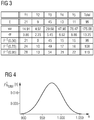
- Fig. 2 The resulting component group estimators and the total component estimator are depicted in Fig. 2 . Some interesting results are shown in the table of Fig. 3 .
- the first row shows the resulting expectation values of the number of components.
- Figure 4 shows the resulting total component estimator of a further example.
- the invention has been applied to predict the number of components for 10 years in an environment with about 40 installed systems with 580 instances of components and 7 expected future systems. Subtracting the already installed 580 assets, an expectation value of 395 additional components has been determined, covering the components for the 7 new systems and component renewals. A prediction with 95% likelihood results in 438 new components.
Landscapes
- Business, Economics & Management (AREA)
- Engineering & Computer Science (AREA)
- Human Resources & Organizations (AREA)
- Economics (AREA)
- Strategic Management (AREA)
- Theoretical Computer Science (AREA)
- Physics & Mathematics (AREA)
- General Physics & Mathematics (AREA)
- Marketing (AREA)
- General Business, Economics & Management (AREA)
- Operations Research (AREA)
- Tourism & Hospitality (AREA)
- Quality & Reliability (AREA)
- Entrepreneurship & Innovation (AREA)
- Development Economics (AREA)
- Accounting & Taxation (AREA)
- Finance (AREA)
- Game Theory and Decision Science (AREA)
- Management, Administration, Business Operations System, And Electronic Commerce (AREA)
- Complex Calculations (AREA)
Applications Claiming Priority (1)
| Application Number | Priority Date | Filing Date | Title |
|---|---|---|---|
| AT506502018 | 2018-07-25 |
Publications (1)
| Publication Number | Publication Date |
|---|---|
| EP3599577A1 true EP3599577A1 (de) | 2020-01-29 |
Family
ID=67070601
Family Applications (1)
| Application Number | Title | Priority Date | Filing Date |
|---|---|---|---|
| EP19182232.9A Pending EP3599577A1 (de) | 2018-07-25 | 2019-06-25 | Verfahren zur vorhersage der nachfrage nach hardware-komponenten |
Country Status (1)
| Country | Link |
|---|---|
| EP (1) | EP3599577A1 (de) |
Cited By (1)
| Publication number | Priority date | Publication date | Assignee | Title |
|---|---|---|---|---|
| CN114693032A (zh) * | 2020-12-29 | 2022-07-01 | 顺丰科技有限公司 | 物料需求预测及管理方法、装置、计算机设备和存储介质 |
Citations (1)
| Publication number | Priority date | Publication date | Assignee | Title |
|---|---|---|---|---|
| US6205431B1 (en) * | 1998-10-29 | 2001-03-20 | Smart Software, Inc. | System and method for forecasting intermittent demand |
-
2019
- 2019-06-25 EP EP19182232.9A patent/EP3599577A1/de active Pending
Patent Citations (1)
| Publication number | Priority date | Publication date | Assignee | Title |
|---|---|---|---|---|
| US6205431B1 (en) * | 1998-10-29 | 2001-03-20 | Smart Software, Inc. | System and method for forecasting intermittent demand |
Non-Patent Citations (1)
| Title |
|---|
| GRIMMETT, G.STIRZAKER, D.: "Probability and random processes", 2001, OXFORD UNIVERSITY PRESS |
Cited By (1)
| Publication number | Priority date | Publication date | Assignee | Title |
|---|---|---|---|---|
| CN114693032A (zh) * | 2020-12-29 | 2022-07-01 | 顺丰科技有限公司 | 物料需求预测及管理方法、装置、计算机设备和存储介质 |
Similar Documents
| Publication | Publication Date | Title |
|---|---|---|
| Duan et al. | Selective maintenance scheduling under stochastic maintenance quality with multiple maintenance actions | |
| AU2020309879B2 (en) | Failure probability assessment system and method therefor | |
| US11055450B2 (en) | Industrial asset health model update | |
| US20090271235A1 (en) | Apparatus and method for generating survival curve used to calculate failure probability | |
| EP3128425A1 (de) | System und verfahren für intelligente alarme | |
| JP2021193563A (ja) | 資産の予測健全性解析を実行するための方法およびコンピューティングシステム | |
| CA3200375A1 (en) | Machine learning forecasting based on residual predictions | |
| AU2024203343A1 (en) | Maintenance plan assistance method and maintenance plan assistance device | |
| US20160350692A1 (en) | Measuring Change in Software Developer Behavior Under Pressure | |
| EP3599577A1 (de) | Verfahren zur vorhersage der nachfrage nach hardware-komponenten | |
| Mohril et al. | Residual life prediction in the presence of human error using machine learning | |
| Jazouli et al. | Using PHM to meet availability-based contracting requirements | |
| US20190266682A1 (en) | Calculating value of inspection information | |
| US20140236667A1 (en) | Estimating, learning, and enhancing project risk | |
| US12406198B2 (en) | Computer-implemented event forecasting and information provision | |
| CN116384876A (zh) | 基于维纳过程的备件动态库存-生产控制方法、系统及介质 | |
| Sarada et al. | On a random lead time and threshold shock model using phase‐type geometric processes | |
| US20240346460A1 (en) | Maintenance response time proposal apparatus, method and program | |
| Poladova et al. | A novel replacement policy for a linear deteriorating system using stochastic process with dependent components | |
| US20200042919A1 (en) | Aircraft component demand forecasting | |
| US20250085704A1 (en) | Failure probability evaluation apparatus | |
| Popova et al. | Adaptive time dynamic model for production volume prediction | |
| Zhang et al. | Whole life cost modelling in infrastructure asset management | |
| Mao et al. | Condition-based maintenance optimization for two-component series systems with interactive degradation | |
| Kogan et al. | Determining critical power equipment inventory using extreme value approach and an auxiliary Poisson model |
Legal Events
| Date | Code | Title | Description |
|---|---|---|---|
| PUAI | Public reference made under article 153(3) epc to a published international application that has entered the european phase |
Free format text: ORIGINAL CODE: 0009012 |
|
| STAA | Information on the status of an ep patent application or granted ep patent |
Free format text: STATUS: THE APPLICATION HAS BEEN PUBLISHED |
|
| AK | Designated contracting states |
Kind code of ref document: A1 Designated state(s): AL AT BE BG CH CY CZ DE DK EE ES FI FR GB GR HR HU IE IS IT LI LT LU LV MC MK MT NL NO PL PT RO RS SE SI SK SM TR |
|
| AX | Request for extension of the european patent |
Extension state: BA ME |
|
| STAA | Information on the status of an ep patent application or granted ep patent |
Free format text: STATUS: REQUEST FOR EXAMINATION WAS MADE |
|
| 17P | Request for examination filed |
Effective date: 20200727 |
|
| RBV | Designated contracting states (corrected) |
Designated state(s): AL AT BE BG CH CY CZ DE DK EE ES FI FR GB GR HR HU IE IS IT LI LT LU LV MC MK MT NL NO PL PT RO RS SE SI SK SM TR |
|
| STAA | Information on the status of an ep patent application or granted ep patent |
Free format text: STATUS: EXAMINATION IS IN PROGRESS |
|
| 17Q | First examination report despatched |
Effective date: 20210712 |
|
| REG | Reference to a national code |
Ref country code: DE Ref legal event code: R079 Free format text: PREVIOUS MAIN CLASS: G06Q0010040000 Ipc: G06Q0010200000 |
|
| GRAP | Despatch of communication of intention to grant a patent |
Free format text: ORIGINAL CODE: EPIDOSNIGR1 |
|
| STAA | Information on the status of an ep patent application or granted ep patent |
Free format text: STATUS: GRANT OF PATENT IS INTENDED |
|
| RIC1 | Information provided on ipc code assigned before grant |
Ipc: G06Q 10/20 20230101AFI20260203BHEP Ipc: G06Q 10/04 20120101ALI20260203BHEP Ipc: G06Q 30/0601 20230101ALI20260203BHEP |
|
| INTG | Intention to grant announced |
Effective date: 20260216 |