EP3595986B1 - Schrumpfbeutel mit reissöffnung - Google Patents
Schrumpfbeutel mit reissöffnung Download PDFInfo
- Publication number
- EP3595986B1 EP3595986B1 EP17901304.0A EP17901304A EP3595986B1 EP 3595986 B1 EP3595986 B1 EP 3595986B1 EP 17901304 A EP17901304 A EP 17901304A EP 3595986 B1 EP3595986 B1 EP 3595986B1
- Authority
- EP
- European Patent Office
- Prior art keywords
- seal
- edge
- bag
- tear
- shrink
- Prior art date
- Legal status (The legal status is an assumption and is not a legal conclusion. Google has not performed a legal analysis and makes no representation as to the accuracy of the status listed.)
- Active
Links
Images





Classifications
-
- B—PERFORMING OPERATIONS; TRANSPORTING
- B65—CONVEYING; PACKING; STORING; HANDLING THIN OR FILAMENTARY MATERIAL
- B65D—CONTAINERS FOR STORAGE OR TRANSPORT OF ARTICLES OR MATERIALS, e.g. BAGS, BARRELS, BOTTLES, BOXES, CANS, CARTONS, CRATES, DRUMS, JARS, TANKS, HOPPERS, FORWARDING CONTAINERS; ACCESSORIES, CLOSURES, OR FITTINGS THEREFOR; PACKAGING ELEMENTS; PACKAGES
- B65D75/00—Packages comprising articles or materials partially or wholly enclosed in strips, sheets, blanks, tubes or webs of flexible sheet material, e.g. in folded wrappers
- B65D75/52—Details
- B65D75/58—Opening or contents-removing devices added or incorporated during package manufacture
- B65D75/5827—Tear-lines provided in a wall portion
-
- B—PERFORMING OPERATIONS; TRANSPORTING
- B65—CONVEYING; PACKING; STORING; HANDLING THIN OR FILAMENTARY MATERIAL
- B65D—CONTAINERS FOR STORAGE OR TRANSPORT OF ARTICLES OR MATERIALS, e.g. BAGS, BARRELS, BOTTLES, BOXES, CANS, CARTONS, CRATES, DRUMS, JARS, TANKS, HOPPERS, FORWARDING CONTAINERS; ACCESSORIES, CLOSURES, OR FITTINGS THEREFOR; PACKAGING ELEMENTS; PACKAGES
- B65D75/00—Packages comprising articles or materials partially or wholly enclosed in strips, sheets, blanks, tubes or webs of flexible sheet material, e.g. in folded wrappers
- B65D75/002—Packages comprising articles or materials partially or wholly enclosed in strips, sheets, blanks, tubes or webs of flexible sheet material, e.g. in folded wrappers in shrink films
-
- B—PERFORMING OPERATIONS; TRANSPORTING
- B65—CONVEYING; PACKING; STORING; HANDLING THIN OR FILAMENTARY MATERIAL
- B65D—CONTAINERS FOR STORAGE OR TRANSPORT OF ARTICLES OR MATERIALS, e.g. BAGS, BARRELS, BOTTLES, BOXES, CANS, CARTONS, CRATES, DRUMS, JARS, TANKS, HOPPERS, FORWARDING CONTAINERS; ACCESSORIES, CLOSURES, OR FITTINGS THEREFOR; PACKAGING ELEMENTS; PACKAGES
- B65D75/00—Packages comprising articles or materials partially or wholly enclosed in strips, sheets, blanks, tubes or webs of flexible sheet material, e.g. in folded wrappers
- B65D75/52—Details
- B65D75/58—Opening or contents-removing devices added or incorporated during package manufacture
Definitions
- the present application is related to the field of heat shrinkable bags and specifically those designed to tear open in a manner that provides for easy access to the contents.
- Shrink bag packaging is commonly used for food, such as meat or cheese, and other items. Bags are typically pre-manufactured with a top seal and header area incorporating various features including handles, tear initiators and tack seals to prevent curling. Depending on the application, the multilayer bags are manufactured using highly engineered polymer formulas and controlled processing conditions to provide specific properties such as oxygen barrier, sealing through contamination, abuse resistance, low temperature shrink, directional tear, etc. For many applications, it is desired to have bags that can be manually torn open for removal of the product.
- a heat shrinkable bag as defined in claim 1 has been developed with superior tear open performance. By modifying the main seal of a heat shrinkable bag with extension areas that are placed both external and internal to the main seal, manual tearing of the bags consistently results in a propagation path straight into the body of the bag.
- the shrink bag has a first wall and a second wall opposing each other.
- the walls may contain multilayer heat shrink films.
- the bag has a first edge, a second edge opposing the first edge, a third edge substantially perpendicular to the first edge and the second edge, and a fourth edge opposing the third edge.
- a first seal connects the first and second walls.
- the first seal has a first part extending from the first edge to the second edge, a second part extending into the header and a third part extending into the product space.
- a header is located between the first part of the first seal and the fourth edge and a product space is located between the first part of the first seal and the third edge.
- a tear initiator starts at a point within the header and extends to a point within the first seal.
- Some embodiments of the shrink bag may include a first assistor and a second assistor in the header.
- the second part of the first seal has a sealed section and a heated section, wherein the first and second walls are not sealed together in the heated section. Additionally, the second part of the first seal may have more than one sealed section.
- One embodiment of the shrink bag has the second part of the first seal, the third part of the first seal and the tear initiator located at an approximate center of the first part of the first seal.
- Embodiments of the shrink bag may have the tear initiator extending from a location on the fourth edge.
- Other embodiments may have the tear initiator extending from a location spaced from the fourth edge to a location within the first seal.
- the tear initiator may extend through the entire thickness of each of the first wall and the second wall.
- Embodiments of the shrink bag may have various shapes.
- the third and fourth edges may be arcuate.
- the first part of the first seal may be arcuate.
- the shrink bag have a first seal connecting a first wall of a multilayer film to a second wall of the multilayer film.
- the first seal has a first part, separating the bag into a header and a product space, a second part extending into the header, and a third part extending into the product space.
- the bag also includes a tear initiator.
- the tear initiator extends from a first point within the header to within the first part of the first seal.
- the tear initiator may extend from a first point within the header to a point within the second part of the first seal.
- the shrink bag includes a first wall and a second wall.
- the bag has a first edge, a second edge opposing the first edge, an arcuate shaped third edge extending relatively perpendicular to the first edge, and an arcuate shaped fourth edge opposing the third edge.
- a first seal connects the first and second walls.
- the first seal has an arcuate shape first part, a second part and a third part, wherein the arcuate shape first part extends from the first edge to the second edge and the second and third parts are located at an approximate center of the arcuate shape first part.
- the shrink bag also has a header located between the arcuate shape first part of the first seal and the fourth edge and the second part of the first seal extends into the header.
- the shrink bag has a product space located between the arcuate shape first part of the first seal and the third edge, and the third part of the first seal extends into the product space.
- the tear initiator may be located at an approximate center of the arcuate shape first part of the first seal, extending from a point between the fourth edge and the second part of the first seal to a point within the second part of the first seal.
- a first assistor and a second assistor, formed as holes through the entire thicknesses of the first and second wall, may be located in the header on either side of the tear initiator.
- a second seal may be adjacent the first assistor and a third seal may be adjacent the second assistor.
- the second part of the first seal and the third part of the first seal are rectangular.
- the tear initiator may be a continuous slit extending through both the first and second walls.
- the shrink bag may have the arcuate shape first part of the first seal, the second part of the first seal, the third part of the first seal and the tear initiator positioned with linear continuity.
- the present application describes a shrink bag having a first seal with a first part, a second part, and a third part.
- the shrink bag of the present application also includes a header with a tear initiator present.
- the tear initiator may extend into the first seal.
- the first seal (with the first part, the second part, and the third part) and the tear initiator combine to provide easy access to the contents of the bag when an end-user opens the bag, as the bag will tear down the center of each wall of the bag. This is in contrast to current shrink bags with tear openings, which often improperly tear along the seal on one or both walls of the bag and, therefore, create difficulties in opening and require additional effort to remove the contents of the bag.
- FIG. 1 is a schematic top view of a first embodiment of a shrink bag according to the present application.
- bag 10 is a sealed bag with an up-turned corner.
- Bag 10 comprises perimeter 15 comprising first edge 16, second edge 18 opposing first edge 16, third edge 20 substantially perpendicular to first edge 16 and second edge 18, and fourth edge 22 opposing third edge 20.
- Bag 10 further includes first wall 12 and second wall 14.
- FIG. 1 depicts first wall 12 facing out.
- first wall 12 and second wall 14 each comprises a multilayer film.
- Bag 10 further includes a first seal 30.
- First seal 30 includes a first part 32 that extends from first edge 16 to second edge 18, a second part 34 that extends into header 40, and a third part 36 that extends into product space 24 (as depicted in FIG. 2 ).
- the various seals and the various part of such seals described in this application may be formed by heat, impulse, ultrasonic, pressure or other seal-forming methods as known in the art.
- FIG. 2 is a schematic cross-sectional view of the bag of FIG. 1 , taken along the line 2-2.
- First seal 30 comprising first part 32, second part 34, and third part 36 seals first wall 12 and second wall 14. If first wall 12 and second wall 14 each comprises a multilayer film, first wall 12 and second wall 14 are sealed at their respective sealant layers (as further described below).
- First part 32 of first seal 30 forms the "boundary line" between product space 24 and header 40.
- Product space 24 is generally unsealed except at third part 36 of first seal 30.
- header 40 is generally unsealed except at the sealed section of second part 34 of first seal 30 (as further described below).
- header 40 is also sealed at second seal 45 and third seal 47.
- Second seal 45 is an "eyebrow” to first assistor 44
- third seal 47 is an “eyebrow” to second assistor 46. (First assistor 44 and second assistor 46 are further described below.) In some embodiments, second seal 45 and third seal 47 prevent curl of header 40.
- Header 40 includes tear initiator 42 overlapping and partially in second part 34 of first seal 30.
- Tear initiator 42 may be a continuous or non-continuous series of holes, slits, slots, perforations, notches, punctures, orifices, openings, gaps, scores, knurls, or otherwise as known in the art.
- tear initiator 42 may be formed by mechanical means (e.g., using a cutting blade), by chemical means (e.g., using solvents), by thermal means (e.g., by optical ablation including but not limited to laser) or by other means known in the art.
- tear initiator 42 has varying depth and, in some embodiments, extends through the entire thicknesses of each of first wall 12 and second wall 14.
- tear initiator 42 has various length. As a non-limiting example, tear initiator 42 may extend from a point of fourth edge 22 through second part 34 to a point at the intersection of second part 34 and first part 32 (but not into first part 32). As a further non-limiting example, tear initiator 42 may extend from a point between fourth edge 22 and second part 34, through second part 34 to a point before the intersection of second part 34 and first part 32 (as depicted in FIG. 1 ). As yet a further non-limiting example, tear initiator 42 may extend from a point within second part 34 to a point before or at the intersection of second part 34 and first part 32 (but not into first part 32).
- tear initiator 42 may extend from a point between fourth edge 22 and second part 34, through second part 34 to a point within first part 32 or even through first part 32 to a point within third part 36.
- tear initiator 42 has an undefined slope (i.e., as a vertical line).
- tear initiator 42 may have a positive slope or a negative slope or a zero slope (i.e., as a horizontal line).
- Header 40 also includes first assistor 44 and second assistor 46.
- First assistor 44 and second assistor 46 are areas of header 40 that an end-user may grip or grasp or otherwise hold to assist in opening bag 10.
- first assistor 44 and second assistor 46 are holes through the entire thicknesses of each of first wall 12 and second wall 14.
- first assistor 44 and second assistor 46 are slits.
- first assistor 44 and second assistor 46 are knurled areas of header 40.
- first assistor 44 and second assistor 46 are unaltered areas of header 40 which an end-user simply holds in opening bag 10.
- first part 32 of seal 30 is straight, traversing from one point of first edge 16 to a similar point of second edge 18, such that first part 32 is parallel to each of third edge 20 and fourth edge 22.
- first part 32 is not limited to such a geometry. In various embodiments, first part 32 may linear or non-linear.
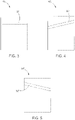
- FIGS 3-5 are exemplary configurations of a first part of a first seal having a linear geometry. (For ease of depiction, FIGS. 3-5 include only the bag and the first part of the first seal, where bag is designated as 10,10', and 10" and first part is designated as 32, 32' and 32".)
- the linear first part of first seal may have a zero slope (i.e., be parallel to each of third edge 20 and fourth edge 22) (as in, for example, FIGS. 1 and 3 ), may have a positive slope (as in, for example, FIG. 4 ), or may have a negative slope (as in, for example, FIG. 5 ).
- the first part of the first seal has a shape or geometry that is not a straight line substantially throughout, such that it has at least two dimensions and is traced by a point traversing in at least two directions
- FIGS. 6-13 are exemplary configurations of a first part of a first seal having a non-linear geometry. (For ease of depiction, FIGS. 6-13 include only the first part of first seal.)
- the non-linear first part of first seal may be arcuate (as in, for example, FIG. 6 ), parabolic (as in, for example, FIG. 7 ), inverse arcuate (as in, for example, FIG. 8 ), or inverse parabolic (as in, for example, FIG.
- An arcuate or inverse arcuate first part of first seal may have any radius practical for opening the bag.
- the non-linear first part of first seal may be v-shaped (as in, for example, FIG. 10 ), inverted v-shaped (as in, for example, FIG. 11 ), w-shaped (as in, for example, FIG. 12 ), or inverted w-shaped (or m-shaped) (as in, for example, FIG. 13 ).
- the various legs of the "v's" or "w's” may be of even length (as depicted in FIGS. 10-13 ) or uneven length and may connect at a discreet point (as depicted in FIGS. 10-13 ) or may connect more fluidly or "wavy.”
- bag 10 is rectangle shape.
- bag 10 is not limited to this shape.
- the bag of the present application may be of various shapes, including rectangle, square, parallelogram, torpedo, etc.
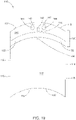
- FIGS. 14 and 15 are exemplary configurations of shapes of bags. (For ease of depiction, FIGS 14 and 15 include only the bag and the first part of the first seal.)
- bag 10 may be rectangle shape (as in, for example, FIGS.
- bag 10′′′ may be parallelogram shape (as in, for example, FIG. 14 ); or if first part 32′′′ of first seal is arcuate (as in, for example, FIG. 6 ), bag 10"" may be torpedo shape (as in, for example, FIG. 15 ), having an arcuate shape third edge and an arcuate shape fourth edge.
- second part 34 may be of any various shape and is not limited to the rectangle shape depicted in FIG. 1 .
- the second part may be in the shape of a rectangle, square, triangle, trapezoid, half-circle, half-oval, parabola, bell curve, or otherwise, including variations (e.g., inversions, flips or other various orientations) or combinations of such shapes.
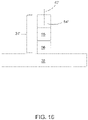
- the second part 34' may be subjected to varying degrees of heat in sealing the first wall and the second wall and includes a heated section 54' separate from a sealed section 56. Such varying degrees of heat may create a temperature gradient.
- FIG. 16 is a schematic top view of this further embodiment of the second part of the first seal.
- First part 32 is a generic depiction of a portion of the first part of the first seal and may be any configuration described above in any bag configuration described above.
- Second part 34' includes heated section 54', tacked section 55, and sealed section 56.
- heated section 54' is subjected to heat but not sufficient heat to tack or to seal the first wall and the second wall.
- second part 34' includes a temperature gradient
- the boundaries between heated section 54', tacked section 55, and sealed section 56 may not be as distinct as depicted in FIG. 16 . Gradual changes may exist between the various sections. Nonetheless, in this embodiment, second part 34' does include three distinguishable sections, even if the boundaries between such sections are not distinct.
- tear initiator 42' is present in heated section 54' but not present in tacked section 55 or sealed section 56.
- the tear initiator may be present in a zone of the second part of the first seal.
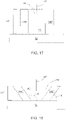
- FIGS. 17 and 18 are schematic top views of this further embodiment of the second part of the first seal.
- first part 32 is a generic depiction of a portion of the first part of the first seal and may be any configuration described above in any bag configuration described above.
- second part 34" comprises first section 34a" and second section 34b".
- Each of first section 34a" and second section 34b" is perpendicular to first part 32 and, thereby, forms zone 60 of second part 34" in the area between first section 34a" and second section 34b".
- Tear initiator 42" is present in zone 60.
- second part 34′′′ comprises first section 34a′′′ and second section 34b′′′, First section 34a′′′ intersects first part 32 at obtuse angle a, and second section 34b′′′ intersects first part 32 at acute angle b.
- First section 34a′′′ and second section 34b′′′ form a "v"-like shape and, thereby, form zone 60' of second part 34′′′ in the area between first section 34a′′′ and second section 34b′′′. Tear initiator 42′′′ is present in zone 60'.
- third part 36 of first seal 30 is square shape.
- third part 36 of first seal 30 is not limited to this shape,
- third part 36 of first seal 30 may be of various shapes, including square, rectangle, triangle, trapezoid, half-circle, half-oval, parabola, bell curve, or otherwise, including variations (e.g., inversions, flips or other various orientations) or combinations of such shapes.
- second part 34 and third part 36 of first seal 30 and tear initiator 42 are depicted in the approximate center of first part 32.
- Second part 34, third part 36 and tear initiator 42 are placed such that there is some continuity (such as a continuous or linear positioning) between tear initiator 42, second part 34, first part 32, and third part 36.
- second part 34, third part 36, and tear initiator 42 are not limited to placement in the approximate center of first part 32. They may be placed in any location along first part 32 that provides continuity between them and also provides areas for the end-user to hold bag 10 to open.
- second part 34, third part 36, and tear initiator 42 may be placed near first edge 16 of bag 10 or near second edge 18 of bag 10.
- each of the tear initiator, the first part of the first seal, the second part of the first seal, and the third part of the first seal are described above.
- the bag of the present application may include any combination of each of these embodiments.
- the bag may be torpedo shape and may have a first seal that has a first part that is arcuate shape, a second part that is trapezoid shape, and a third part that is inverted bell curve shape, where the tear initiator is present in the second part of the first seal.
- the bag may be rectangle shape and may have a first seal that has a first part that is linear zero-slope shape, a second part that is rectangle shape (with a first edge to second edge dimension smaller than a third edge to fourth edge dimension), and a third part that is half-circle shape (with the diameter adjacent the first part), where the heated section of the second part is separate from the sealed section of the second part and the tear initiator is present in the heated section but not the sealed section.
- each of first wall 12 and second wall 14 comprises a heat-shrinkable film.
- a "heat-shrinkable film” is a film having a machine direction shrinkage value of greater than 5 % shrink at 90 °C and a transverse direction shrinkage value of greater than 5 % shrink at 90 °C.
- machine direction or “MD” refers to the direction of film transport during or after extrusion or film conversion. For the bag described in the present application, such direction corresponds to the direction from the third edge of the bag to the fourth edge (as described above).
- machine direction shrinkage refers to shrinkage in a direction from the third edge of the bag to the fourth edge.
- transverse direction or “TD” refers to the direction perpendicular to the machine direction (such as, for the present application, a direction from a first edge of the bag to the second edge).
- shrinkage value refers to values obtained by measuring unrestrained (or free) shrink of a ten-centimeter square sample immersed in water at 90 "C (or the indicated temperature if different) for five seconds. In such method, four test specimens are cut from a given sample of the film to be tested.
- the specimens are cut into squares of ten-centimeter length in the machine direction by ten-centimeter length in the transverse direction. Each specimen is completely immersed for five seconds in a 90 °C (or the indicated temperature if different) water bath. The specimen is then removed from the bath and the distance between the ends of the shrunken specimen is measured for both the machine and transverse directions. The difference in the measured distance for the shrunken specimen and the original ten-centimeter side is multiplied by ten to obtain the percent of shrinkage for the specimen in each direction.
- First wall 12 and second wall 14 may each comprise a monolayer or multilayer heat-shrinkable film and may have the same or different composition, provided the composition of first wall 12 and second wall 14 allow first wall 12 and second wall 14 to seal at the various seals or sealed sections of bag 10.
- the compositions of first wall 12 and second wall 14 may be such that each of first wall 12 and second wall 14 has (1) a machine direction shrinkage value of greater than 5 % shrink at 90 °C or from greater than 5 % to 70 % shrink at 90 °C or at least 10 % shrink at 90 °C or at least 20 % shrink at 90 °C or from 10 % to 50 % shrink at 90 °C.
- a transverse direction shrinkage value of greater than 5 % shrink at 90 °C or from greater than 5 % to 70 % shrink at 90 °C or at least 10 % shrink at 90 °C or at least 20 % shrink at 90 °C or from 10 % to 50 % shrink at 90 °C.
- First wall 12 and second wall 14 may each comprise polypropylene, polyethylene, polyamide, polyester, polystyrene, cyclic olefin copolymer, ethylene vinyl-alcohol copolymer, polyvinylidene chloride, ionomer, or blends of such.
- polypropylene refers to a plastomer, homopolymer or copolymer having at least one propylene monomer linkage within the repeating backbone of the polymer.
- the propylene linkage may be represented by the general formula: [CH 2 -CH(CH 3 )] n .
- Such polypropylene may be a polypropylene impact copolymer, a polypropylene random copolymer, or a polypropylene homopolymer, may be syndiotactic or isotactic, or may or may not be clarified.
- polyethylene refers (unless indicated otherwise) to ethylene homopolymers or copolymers.
- Such copolymers of ethylene include copolymers of ethylene with at least one alpha-olefin and copolymers of ethylene with other units or groups such as vinyl acetate, acid groups, acrylate groups, or otherwise.
- the term "polyethylene” or “PE” is used without regard to the presence or absence of substituent branch groups.
- PE includes, for example, medium density polyethylene, high density polyethylene, low density polyethylene, ethylene alpha-olefin copolymer, ethylene vinyl acetate, ethylene acid copolymers, ethylene acrylate copolymers, or blends of such.
- Various PE's may be recycled as reclaimed PE.
- high density polyethylene or "HDPE” refers to both (a) homopolymers of ethylene which have densities from 0.960 g/cm 3 to 0.970 g/cm 3 and (b) copolymers of ethylene and an alpha-olefin (usually 1-butene or 1-hexene) which have densities from 0.940 g/cm 3 to 0.958 g/cm 3 .
- HOPE includes polymers made with Ziegler or Phillips type catalysts and polymers made with single-site metallocene catalysts.
- HDPE also includes high molecular weight "polyethylenes.”
- LDPE low density polyethylene
- backbone long branches off the main chain (often termed "backbone") with alkyl substituents of two to eight carbon atoms.
- copolymer of ethylene and at least one alpha-olefin or "ethylene alpha-olefin copolymer” refer to a modified or unmodified copolymer produced by the co-polymerization of ethylene and any one or more alpha-olefins.
- Suitable alpha-olefins include, for example, C 3 to C 20 alpha-olefins such as 1-propene, 1-butene, 1-pentene, 1-hexene, 1-octene, 1-decene and blends of such.
- the co-polymerization of ethylene and an alpha-olefin may be produced by heterogeneous catalysis, such as co-polymerization reactions with Ziegler-Natta catalysis systems, including, for example, metal halides activated by an organometallic catalyst (e.g., titanium chloride) and optionally containing magnesium chloride complexed to trialkyl aluminum.
- the co-polymerization of ethylene and an alpha-olefin may be produced by homogeneous catalysis, such as co-polymerization reactions with metallocene catalysis systems which include constrained geometry catalysts, (e.g., monocyclopentadienyl transition-metal complexes).
- Homogeneous catalyzed copolymers of ethylene and alpha-olefin may include modified or unmodified ethylene alpha-olefin copolymers having a long-chain branched (i.e., 8-20 pendant carbons atoms) alpha-olefin co-monomer (commercially available as, for example, Affinity TM from The Dow Chemical Company (Midland, Michigan)), linear copolymers (commercially available as, for example, Tafmer TM from the Mitsui Petrochemical Corporation (Tokyo, Japan)), and modified or unmodified ethylene alpha-olefin copolymers having a short-chain branched (i.e., 3-6 pendant carbons atoms) alpha-olefin co-monomer (commercially available as, for example, Exact TM from ExxonMobil Chemical Company (Houston, Texas)).
- Ethylene alpha-olefin copolymers may include, for example, linear low density polyethylene (LLDPE), metallocene-catalyzed LLDPE (mLLDPE), very low density polyethylene (VLDPE), metallocene-catalyzed VLDPE (mVLDPE), and ultra low density polyethylene (ULDPE),
- LLDPE linear low density polyethylene
- mLLDPE metallocene-catalyzed LLDPE
- VLDPE very low density polyethylene
- mVLDPE metallocene-catalyzed VLDPE
- ULDPE ultra low density polyethylene
- ethylene vinyl acetate or “EVA” refers to copolymers comprised of repeating units of ethylene and vinyl acetate.
- Ethylene vinyl acetate copolymers may be represented by the general formula: [(CH 2 -CH 2 ) n -(CH 2 -CH(COO)(CH 3 )] n .
- the vinyl acetate content may vary from less than 10 % to greater than 95 % by weight (of total EVA composition).
- the vinyl acetate content of EVA for packaging applications may vary from 5 % to 40 % by weight.
- ethylene acid copolymers refers to copolymers comprised of repeating units of ethylene and acid groups.
- the acid group content may vary from 2 % to 25 % by weight.
- Non-limiting examples of ethylene acid copolymers include ethylene methacrylic acid (EMAA) and ethylene acrylic acid (EAA).
- ethylene acrylate copolymers refers to copolymers comprised of repeating units of ethylene and acrylate groups.
- the acrylate group may be butyl-, ethyl-, methyl-, or otherwise.
- Non-limiting examples of ethylene acrylate copolymers include ethylene methyl acrylate (EMA) and ethylene methyl methacrylate (EMMA).
- polyamide or "PA” or “nylon” refers to a homopolymer or copolymer having an amide linkage between monomer units and formed by any method known in the art.
- the amide linkage may be represented by the general formula: [C(O)-R-C(O)-NH-R'-NH] n where R and R' are the same or different alkyl (or aryl) group.
- Nylon polymers may be high-temperature, low-temperature or amorphous, as described in, for example, International Publication Number WO 2006/063283 .
- nylon polymers include but are not limited to nylon 6 (polycaprolactam), nylon 11 (polyundecanolactam), nylon 12 (polyauryllactam), nylon 4,2 (polytetramethylene ethylenediamide), nylon 4,6 (polytetramethylene adipamide), nylon 6,6 (polyhexamethylene adipamide), nylon 6,9 (polyhexamethylene azelamide), nylon 6,10 (polyhexamethylene sebacamide), nylon 6,12 (polyhexamethylene dodecanediamide), nylon 7,7 (polyheptamethylene pimelamide), nylon 8,8 (polyoctamethylene suberamide), nylon 9,9 (polynonamethylene azelamide), nylon 10,9 (polydecamethylene azelamide), and nylon 12,12 (polydodecamethyiene dodecanediamide).
- nylon 6 polycaprolactam
- nylon 11 polyundecanolactam
- nylon 12 polyauryllactam
- nylon 4,2 poly
- nylon copolymers include but are not limited to nylon 6,6/6 copolymer (polyhexamethylene adipamide/caprolactam copolymer), nylon 6,6/9 copolymer (polyhexamethylene adipamide/azelamide copolymer), nylon 6/6,6 copolymer (polycaprolactam/hexamethylene adipamide copolymer), nylon 6,2/6,2 copolymer (polyhexamethylene ethylenediamide/hexamethylene ethylenediamide copolymer), and nylon 6,6/6,9/6 copolymer (polyhexamethylene adipamide/hexamethylene azelamide/caprolactam copolymer).
- aromatic nylon polymers include but are not limited to nylon 4,I, nylon 6,I, nylon 6,6/6l copolymer, nylon 6,6/6T copolymer, nylon MXD6 (poly-m-xylylene adipamide), poly-p-xylylene adipamide, nylon 6I/6T copolymer, nylon 6T/6I copolymer, nylon MXDI, nylon 6/MXDT/I copolymer nylon 6T (polyhexamethylene terephthalamide), nylon 12T (polydodecamethylene terephthalamide), nylon 66T, and nylon 6-3-T (poly(trimethyl hexamethylene terephthalamide).
- polyester refers to a homopolymer or copolymer having an ester linkage between monomer units.
- the ester linkage may be represented by the general formula [O-R-OC(O)-R'-C(O)] n where R and R' are the same or different alkyl (or aryl) group and may generally be formed from the polymerization of dicarboxylic acid and diol monomers.
- the dicarboxylic acid may be linear or aliphatic (e.g., oxalic acid, maleic acid, succinic acid, glutaric acid, adipic acid, pimelic acid, suberic acid, azelaic acid, sebacic acid, and the like) or may be aromatic or alkyl substituted aromatic (e.g., various isomers of phthalic acid, such as paraphthalic acid (or terephthalic acid), isophthalic acid and naphthalic acid).
- linear or aliphatic e.g., oxalic acid, maleic acid, succinic acid, glutaric acid, adipic acid, pimelic acid, suberic acid, azelaic acid, sebacic acid, and the like
- aromatic or alkyl substituted aromatic e.g., various isomers of phthalic acid, such as paraphthalic acid (or terephthalic acid), isophthalic acid and naphthalic acid.
- a useful diol include but are not limited to ethylene glycol, propylene glycol, trimethylene glycol, 1,4-butane diol, neopentyl glycol, cyclohexane diol, 2,2,4,4-tetramethyl-1,3-cyclobutanediol, and the like.
- Polyesters may include a homopolymer or copolymer of alkylaromatic esters, including but not limited to polyethylene terephthalate (PET), oriented polyethylene terephthalate (OPET), amorphous polyethylene terephthalate (APET), glycolmodified polyethylene terephthalate (PETG), and polybutylene terephthalate (P8T); a copolymer of terephthalate and isophthalate including but not limited to polyethylene terephthalate/isophthalate copolymer, such as isophthalic acid (IPA) (modified polyethylene terephthalate (PETI)); a homopolymer or copolymer of aliphatic esters including but not limited to polylactic acid (PLA); polyhydroxyalkonates including but not limited to polyhydroxypropionate, poly(3-hydroxybutyrate) (PH3B), poly(3-hydroxyvalerate) (PH3V), poly(4-hydroxybutyrate) (PH4B), poly(4-
- polystyrene or "PS” or “styrenic polymer” refers to a homopolymer or copolymer having at least one styrene monomer linkage (such as benzene (i.e., C 6 H 6 ) having an ethylene substituent) within the repeating backbone of the polymer.
- the styrene linkage may be represented by the general formula: [CH 2 -CH 2 (C 6 H 6 )] n .
- styrenic polymers include but are not limited to high impact polystyrene (HIPS), general purpose polystyrene (GPPS) and styrene butadiene copolymer (SBC).
- cyclic olefin copolymer or 'COC refers to a class of polymeric materials based on cyclic olefin monomers and ethane, with one or more different cyclic olefin units randomly or alternately attached to an ethylene polymer backbone.
- Ethylene/norbornene copolymers are a non-limiting example of cyclic olefin copolymers.
- ethylene vinyl alcohol copolymer or “EVOH” refers to copolymers comprised of repeating units of ethylene and vinyl alcohol.
- Ethylene vinyl alcohol copolymers may be represented by the general formula: [(CH 2 -CH 2 ) n -(CH 2 -CH(OH))] n .
- Ethylene vinyl alcohol copolymers may include saponified or hydrolyzed ethylene vinyl acetate copolymers.
- EVOH refers to a vinyl alcohol copolymer having an ethylene co-monomer and prepared by, for example, hydrolysis of vinyl acetate copolymers or by chemical reactions with vinyl alcohol.
- Ethylene vinyl alcohol copolymers may comprise from 28 mole percent (or less) to 48 mole percent (or greater) ethylene.
- PVdC polyvinylidene chloride
- the vinylidene chloride linkage may be represented by the general formula [CH 2 -CCl 2 ] n .
- PVdC may have a major amount of vinylidene chloride and a minor amount of one or more monomers such as vinyl chloride or alkyl acrylates (such as methyl acrylates).
- ionomer refers to ionic copolymers formed from an olefin and an ethylenically unsaturated monocarboxylic acid having the carboxylic acid moieties partially or completely neutralized by a metal ion.
- Suitable metal ions may include, but are not limited to, sodium, potassium, lithium cesium, nickel, and zinc.
- Suitable carboxylic acid comonomers may include, but are not limited to, ethylene acid copolymers, such as, ethylene methacrylic acid, methylene succinic acid, maleic anhydride, vinyl acetate methacrylic acid, methyl methacrylate methacrylic acid, styrene methacrylic acid, and blends of such.
- Useful ionomer ethylene/acid copolymer resins may include an olefinic content of at least 50 mole percent based upon the copolymer and a carboxylic acid content of from 5 to 25 mole percent based upon the copolymer.
- copolymer refers to a polymer product obtained by the polymerization reaction or copolymerization of at least two monomer species. Copolymers may also be referred to as bipolymers. The term “copolymer” is also inclusive of the polymerization reaction of three, four or more monomer species having reaction products referred to terpolymers, quaterpolymers, etc.
- modified refers to a chemical derivative, such as one having any form of anhydride functionality (e.g., anhydride of maleic acid, crotonic acid, citraconic acid, itaconic acid, fumaric acid, etc.), whether grafted onto a polymer, copolymerized with a polymer or blended with one or more polymers.
- anhydride functionality e.g., anhydride of maleic acid, crotonic acid, citraconic acid, itaconic acid, fumaric acid, etc.
- the term is also inclusive of derivatives of such functionalities, such as acids, esters and metal salts derived from such.
- first wall 12 and second wall 14 comprises a sealant film or sealant layer.
- the term “sealant film” refers to a film included in a package or film and involved in the sealing of the package or film to itself or to another layer of another film, sheet, etc.
- the term “sealant layer” or “sealant layers” refers to the specific layer or layers of the film or the sealant film involved in the sealing to itself or to another layer.
- a sealant film may be monolayer or multilayer. If the sealant film is monolayer, the term “sealant film” is synonymous with the term “sealant layer.”
- a sealant film may be a blown film sealant, an extrusion coated sealant, or a heat seal lacquer.
- sealant layers included in each of first wall 12 and second wall 14 include but are not limited to layers comprising polyethylene (such as LLDPE, a blend of LLDPE and LDPE, mLLDPE), polypropylene (such as a blend of random copolymer PP and PP plastomer), ionomer, or blends of any of the above.
- each of first wall 12 and second wall 14 comprises a heat-shrinkable film comprising a sealant film (or sealant layer).
- each of first wall and second wall 14 comprises materials providing a ratio of TD tear to MD tear pre shrink of greater than 2.7, a ratio of TD tear to MD tear post shrink of greater than 1.0, a ratio of MD tear post shrink to MD tear pre shrink of less than 36, or a ratio of TD tear post shrink to TD pre shrink of less than 13 (as further described below).
- a specific non-limiting method of making the bag described in the present application includes producing materials for the first wall and the second wall (such as by blown co-extrusion with appropriate draw ratios to produce desired shrink properties and with optional irradiation via electron beam or otherwise) and producing bags with such materials (such as via bag-making equipment known in the art).
- a bag may be formed from a tube of such material by creating first seal 30 and then cutting the tube at third edge 20 and fourth edge 22.
- Third edge 20 remains open until an item to be packaged is inserted in the partially sealed bag. Once the item is inserted, third edge 20 is sealed to fully seal the bag.
- the bags produced may be used in a variety of applications, including packaging food and non-food items.
- Non-limiting examples of food items that may be packaged in the shrink bag described in the present application include meats and cheeses, including but not limited to large cuts of meat and large blocks of cheese.
- a further non-limiting example of a food item is meat (such as ham) that is cooked in the package prior to sale to the end-user.
- TABLE 1 provides information regarding the composition of various films used to make the shrink bags. In each instance, the first wall of the bag had the same composition as the second wall, so a tube was initially produced.
- compositions of Tubes 1-7 were the compositions of Layer 1 (the exterior layer) and the compositions of Layer 7 (the interior layer).
- the compositions of Layers 2-6 were substantively similar and had no impact on the performance of the tube in general or as used in a shrink bag as described in the present application.
- the "interior layer” was the same as the "sealant layer.”
- the term "exterior layer” refers to a layer comprising the outermost surface of a film, sheet, web, package or other article.
- interior layer refers to a layer comprising the innermost surface of a film, sheet, web, package or other article.
- the exterior layer and the interior layer each have an inner surface and an outer surface.
- inner surface refers to a surface touching another layer
- the term “outer surface” refers to a surface not touching another layer.
- Example bags 1-7 and comparative examples bags 1-7 were produced from Tubes 1-7.
- FIG. 19 is schematic top view of an embodiment of shrink bags produced as Examples 1-7.
- Each Example 1-7 was the same bag format (i.e., the same embodiment).
- Bag 110 was torpedo shape and comprised perimeter 115 comprising first edge 116, second edge 118 opposing first edge 116, third edge 120 relatively perpendicular to first edge 116 and second edge 118, and fourth edge 122 opposing third edge 120.
- Bag 110 also included first wall 112 (facing out) and a second wall (not shown).
- Bag 110 further included a first seal 130.
- First seal 130 included an arcuate shape first part 132 that extended from first edge 116 to second edge 118.
- First seal 130 also included a rectangle shape second part 134 (with a first edge to second edge dimension smaller than a third edge to fourth edge dimension) that extended into header 140, and a rectangle shape third part 136 (with a third edge to fourth edge dimension smaller than a first edge to second edge dimension) that extended into the bag product space.
- the various seals and the various parts of such seals were formed by heat and sealed first wall 112 to the second wall.
- Header 140 included second seal 145 as an "eyebrow” to first assistor 144 and third seal 147 as an "eyebrow” to second assistor 146.
- First assistor 144 and second assistor 146 were formed as holes through the entire thicknesses of each of first wall 112 and the second wall and provided areas for the end-user to grip or grasp in opening bag 110.
- Header 140 further included tear initiator 142.
- Tear initiator 142 overlapped and was partially in second part 134 of first seal 130. In other words, tear initiator 142 extended from a point between fourth edge 122 and second part 134 through second part 134 to a point before the intersection of second part 134 and first part 132.
- Second part 134 and third part 136 of first seal 130 and tear initiator 142 were placed in the approximate center of first part 132 and such that there was some continuity (and continuous and linear positioning) between tear initiator 142, second part 134, first part 132, and third part 136.
- Comparative examples bags 1-7 were produced from tubes 1-7 to be similar to Examples 1-7. However, Comparative Examples 1-7 did not include second part 134 or third part 136. In Comparative Examples 1-7, the first seal included only an arcuate shape first part extending from the first edge to the second edge.
- a half-ham or larger was then packaged in various samples of each of Examples 1-7 and Comparative Examples 1-7.
- the respective packages were sealed at the third edge and subjected to heat, such that the bag "shrink around" the ham.
- the packaged hams were then subjected to various tests to determine fitness for use in cook-in applications and ability to tear.
- FIG. 20 shows the bags 110 of Examples 1-7 after being filled with a product 170 (ham in this case), subjected to heat such that the bag 110 is shrunk and in close contact with the product 170, and torn open using the tear initiator.
- FIG. 20 shows a passing tear (i.e. the tear propagates machine direction linearly beyond the tear initiator and into the product space portion of the bag). TABLE 2 reports the results of this assessment.
- Tubes 1-7 (specifically, the films of Tubes 1-7) were also evaluated for Elmendorf Tear pre-shrink and post-shrink (i.e., after being immersed in at least 90 ° water for at least five seconds and cooled).
- Elmendorf Tear refers to the force to propagate tearing through a length of material after the tear has been initiated, using an Elmendorf-type (pendulum) tearing tester. It is an index of a material's tearing resistance.
- Elmendorf Tear was determined in accordance with ASTM D1922-15 ("Standard Test Method for Propagation Tear Resistance of Plastic Film and Thin Sheeting by Pendulum Method").
- Elmendorf Tear values are reported as tearing force, such as, in gram-force.
- a high Elmendorf Tear value generally reflects a material that is more difficult to tear.
- TABLE 4 reports tear properties and ratios of tear properties for Tubes 1-7. (A 200-gram pendulum was used to determine MD tear pre-shrink, an 800-gram pendulum was used to determine TD tear pre-shrink, a 1600-gram pendulum was used to determine MD tear post-shrink, and a 6400-gram pendulum was used to determine TD tear post-shrink.
- Example 3 had 0 % passing in the hot water test (as reported in TABLE 1) not because of the configuration of first seal 130 (with first part 132, second part 134, and third part 136) but because of the composition of Layer 7 (the sealant layer).
- the polypropylene composition of the sealant layer of Example 3 contributed to the tear properties of Tube 3 such that Tube 3 had a ratio of TD tear to MD tear pre shrink of 2.7 or less, a ratio of TD tear to MD tear post shrink of 1.0 or less, a ratio of MD tear post shrink to MD tear pre shrink of 36 or greater, or a ratio of TD tear post shrink to TD pre shrink of 13 or greater. As described above, in some embodiments, such materials are not preferred.
- certain optical properties of the shrink bag described in the present application may be desired.
- Tubes 4-7 were evaluated for clarity, haze, and gloss. TABLE 5 reports these additional properties. (At least five measurements were recorded for each tube at each point and averaged.)
- Clarity refers to the see-through quality of a material. It refers to the specific light transmitting and narrow-angle-light scattering properties of a material and is determined in an angle range less than 2.5 degrees. Clarity may be determined in accordance with ASTM D1003-13 ("Standard Test Method for Haze and Luminous Transmittance of Transparent Plastics"). Clarity values are reported in percent. A high clarity value generally reflects a material that is more transparent and less cloudy.
- haze refers to the scattering of light as it passes through a material. It refers to the specific light-transmitting and wide-angle-light scattering properties of planar sections of a material. Haze may be determined in accordance with ASTM D1003-13 ("Standard Test Method for Haze and Luminous Transmittance of Transparent Plastics"), Haze values are reported in percent. A high haze value generally reflects a material that is more cloudy and less transparent.
- gloss refers to the shiny appearance of a material. It is a measure of the light reflected by the surface of a material and is measured at a specific angle of reflection (20, 45, 60, 75, or 85 degrees) against a specific backing. Gloss may be determined in accordance with ASTM D2457-13 ("Standard Test Method for Specular Gloss of Plastic Films and Solid Plastics"). Gloss values are reported in Gloss Units. A high gloss value generally reflects a material that is more shiny.
- spatially related terms including but not limited to, “lower,” “upper,” “beneath,” “below,” “above,” “bottom” and “top,” if used in the present application, are used for ease of description to describe spatial relationships of an element(s) to another.
- Such spatially related terms encompass different orientations of the device in use or operation, in addition to the particular orientations depicted in the figures and described in the present application. For example, if an object depicted in the drawings is turned over or flipped over, elements previously described as below or beneath other elements would then be above those other elements.
Landscapes
- Engineering & Computer Science (AREA)
- Mechanical Engineering (AREA)
- Bag Frames (AREA)
Claims (9)
- Schrumpfbeutel (10, 110), umfassend:a. eine erste Wand (12, 112) und eine zweite Wand (14), die einander gegenüber liegen;b. einen ersten Rand (16, 116), einen zweiten Rand (18, 118) gegenüber von dem ersten Rand, einen dritten Rand (20, 120) im Wesentlichen senkrecht zu dem ersten Rand und dem zweiten Rand, und einen vierten Rand (22, 122) gegenüber von dem dritten Rand;c. eine erste Versiegelung (30, 130), welche die erste und die zweite Wand (12, 112, 14) verbindet, wobei die erste Versiegelung einen ersten Anteil (32, 132), der sich von dem ersten Rand (16, 116) zu dem zweiten Rand (18, 118) erstreckt, einen zweiten Anteil (34, 134), der sich in einen Kopfraum (40, 140) erstreckt, und einen dritten Anteil (36, 136) umfasst, der sich in einen Produktraum (24) erstreckt; undd. einen Reißinitiator (42, 142), der an einem Punkt innerhalb des Kopfraums (40, 140) beginnt und sich zu einem Punkt innerhalb der ersten Versiegelung (30, 130) erstreckt;wobei der Kopfraum (40, 140) sich zwischen dem ersten Anteil (32, 132) der ersten Versiegelung und dem vierten Rand (22, 122) erstreckt; undwobei der Produktraum (24) sich zwischen dem ersten Anteil (32, 132) der ersten Versiegelung und dem dritten Rand (20, 120) erstreckt.
- Schrumpfbeutel nach Anspruch 1, wobei der Kopfraum (40, 140) des Weiteren eine erste Hilfseinrichtung (44, 144) und eine zweite Hilfseinrichtung (46, 146) umfasst.
- Schrumpfbeutel nach Anspruch 1 oder 2, wobei der zweite Anteil (34) der ersten Versiegelung ein versiegeltes Segment (56) und ein erwärmtes Segment (54) umfasst, wobei die erste und die zweite Wand (12, 14) in dem erwärmten Segment (54) nicht miteinander versiegelt sind.
- Schrumpfbeutel nach einem der Ansprüche 1 bis 3, wobei der zweite Anteil (34, 134) der ersten Versiegelung, der dritte Anteil (36, 136) der ersten Versiegelung und der Reißinitiator (42, 142) sich jeweils in einer ungefähren Mitte des ersten Anteils (32, 132) der ersten Versiegelung befinden.
- Schrumpfbeutel nach einem der Ansprüche 1 bis 4, wobei der Reißinitiator (42, 142) sich von einer Position auf dem vierten Rand (22, 122) erstreckt.
- Schrumpfbeutel nach einem der Ansprüche 1 bis 4, wobei der Reißinitiator (42, 142) sich von einer Position, die von dem vierten Rand (22, 122) beabstandet ist, zu einer Position innerhalb der ersten Versiegelung (30, 130) erstreckt und sich durch die gesamte Dicke von jeder von der ersten Wand (12, 112) und der zweiten Wand (14) erstreckt.
- Schrumpfbeutel nach einem der Ansprüche 1 bis 6, wobei die erste Wand (12, 112) und die zweite Wand (14) jeweils eine mehrschichtige wärmeschrumpfbare Folie umfassen.
- Schrumpfbeutel nach einem der Ansprüche 1 bis 7, wobei der dritte Rand (20, 120) und der vierte Rand (22, 122) jeweils bogenförmig sind.
- Schrumpfbeutel nach einem der Ansprüche 1 bis 8, wobei der erste Anteil (32, 132) der ersten Versiegelung bogenförmig ist.
Applications Claiming Priority (2)
| Application Number | Priority Date | Filing Date | Title |
|---|---|---|---|
| US201762471665P | 2017-03-15 | 2017-03-15 | |
| PCT/US2017/053671 WO2018169564A1 (en) | 2017-03-15 | 2017-09-27 | Shrink bag having tear opening |
Publications (3)
| Publication Number | Publication Date |
|---|---|
| EP3595986A1 EP3595986A1 (de) | 2020-01-22 |
| EP3595986A4 EP3595986A4 (de) | 2020-11-25 |
| EP3595986B1 true EP3595986B1 (de) | 2022-12-07 |
Family
ID=63523232
Family Applications (1)
| Application Number | Title | Priority Date | Filing Date |
|---|---|---|---|
| EP17901304.0A Active EP3595986B1 (de) | 2017-03-15 | 2017-09-27 | Schrumpfbeutel mit reissöffnung |
Country Status (3)
| Country | Link |
|---|---|
| US (1) | US20200031550A1 (de) |
| EP (1) | EP3595986B1 (de) |
| WO (1) | WO2018169564A1 (de) |
Families Citing this family (4)
| Publication number | Priority date | Publication date | Assignee | Title |
|---|---|---|---|---|
| DE102019111460A1 (de) * | 2019-05-03 | 2020-11-05 | Kuhne Anlagenbau Gmbh | Verfahren zur Herstellung einer mehrschichtigen Verbundfolie, mehrschichtige Verbundfolie und deren Verwendung |
| DE102019111458A1 (de) * | 2019-05-03 | 2020-11-05 | Kuhne Anlagenbau Gmbh | Verfahren zur Herstellung einer mehrschichtigen Verbundfolie, mehrschichtige Verbundfolie und deren Verwendung |
| WO2021040715A1 (en) | 2019-08-29 | 2021-03-04 | Bemis Company, Inc. | Bag having integral handle |
| CN117500731A (zh) * | 2021-06-18 | 2024-02-02 | 宝洁公司 | 用于制品的柔性包装件 |
Family Cites Families (6)
| Publication number | Priority date | Publication date | Assignee | Title |
|---|---|---|---|---|
| GB1015383A (en) * | 1963-10-03 | 1965-12-31 | Arenco Ab | Improvements in or relating to easily openable bags |
| DE2408816A1 (de) * | 1974-02-23 | 1975-09-04 | Aluminium Walzwerke Singen | Beutelverschluss, bei welchem zur bildung einer ausgussoeffnung ein teil abtrennbar ist |
| EP2259986A1 (de) * | 2008-03-19 | 2010-12-15 | The Procter & Gamble Company | Perforierter leicht zu öffnender beutel |
| US10427851B2 (en) * | 2010-12-30 | 2019-10-01 | Mark Steele | Package with heat score |
| US20130272630A1 (en) * | 2012-04-16 | 2013-10-17 | Cryovac, Inc. | Packaging Receptacle For Making Packaging Article Exhibiting Combination of Linear Tear and Directional Curl |
| US20140287172A1 (en) * | 2013-03-19 | 2014-09-25 | Cryovac, Inc. | Patch Bag Having Separated Tear Initiators |
-
2017
- 2017-09-27 WO PCT/US2017/053671 patent/WO2018169564A1/en not_active Ceased
- 2017-09-27 EP EP17901304.0A patent/EP3595986B1/de active Active
- 2017-09-27 US US16/484,269 patent/US20200031550A1/en not_active Abandoned
Also Published As
| Publication number | Publication date |
|---|---|
| EP3595986A4 (de) | 2020-11-25 |
| WO2018169564A1 (en) | 2018-09-20 |
| CA3053927A1 (en) | 2018-09-20 |
| US20200031550A1 (en) | 2020-01-30 |
| EP3595986A1 (de) | 2020-01-22 |
Similar Documents
| Publication | Publication Date | Title |
|---|---|---|
| RU2737694C2 (ru) | Многослойная пленка для упаковывания в вакууме в плотно прилегающую пленку, способ упаковывания и изготавливаемые им упаковки | |
| US8449984B2 (en) | Breathable packaging film having enhanced thermoformability | |
| AU2004237834B2 (en) | Frangible heat-sealable films for cook-in applications and packages made thereof | |
| EP3595986B1 (de) | Schrumpfbeutel mit reissöffnung | |
| US11279118B2 (en) | Packaging film for high temperature materials | |
| DK2156949T3 (en) | For vacuum skin packaging applications suitable film and thus produced vacuum skin pack is easy to open | |
| AU2011340644B2 (en) | Multilayer heat-shrinkable film and containers made therefrom | |
| EP3645283A1 (de) | Vakuum-skin-verpackung für weiche produkte und vakuum-skin-verfahren für verpackung | |
| US11718449B2 (en) | Bag having integral handle | |
| CA3053927C (en) | Shrink bag having tear opening | |
| US20170349352A1 (en) | Package film with biaxially oriented film and pattern connection layer | |
| EP4511225A1 (de) | Mehrschichtfolie für vakuumfolienverpackung, verpackungsverfahren und damit hergestellte verpackungen | |
| JP2001334616A (ja) | 複合フイルム |
Legal Events
| Date | Code | Title | Description |
|---|---|---|---|
| STAA | Information on the status of an ep patent application or granted ep patent |
Free format text: STATUS: THE INTERNATIONAL PUBLICATION HAS BEEN MADE |
|
| PUAI | Public reference made under article 153(3) epc to a published international application that has entered the european phase |
Free format text: ORIGINAL CODE: 0009012 |
|
| STAA | Information on the status of an ep patent application or granted ep patent |
Free format text: STATUS: REQUEST FOR EXAMINATION WAS MADE |
|
| 17P | Request for examination filed |
Effective date: 20191006 |
|
| AK | Designated contracting states |
Kind code of ref document: A1 Designated state(s): AL AT BE BG CH CY CZ DE DK EE ES FI FR GB GR HR HU IE IS IT LI LT LU LV MC MK MT NL NO PL PT RO RS SE SI SK SM TR |
|
| AX | Request for extension of the european patent |
Extension state: BA ME |
|
| DAV | Request for validation of the european patent (deleted) | ||
| DAX | Request for extension of the european patent (deleted) | ||
| A4 | Supplementary search report drawn up and despatched |
Effective date: 20201022 |
|
| RIC1 | Information provided on ipc code assigned before grant |
Ipc: B65D 75/62 20060101AFI20201016BHEP |
|
| GRAP | Despatch of communication of intention to grant a patent |
Free format text: ORIGINAL CODE: EPIDOSNIGR1 |
|
| STAA | Information on the status of an ep patent application or granted ep patent |
Free format text: STATUS: GRANT OF PATENT IS INTENDED |
|
| INTG | Intention to grant announced |
Effective date: 20220620 |
|
| GRAS | Grant fee paid |
Free format text: ORIGINAL CODE: EPIDOSNIGR3 |
|
| RAP3 | Party data changed (applicant data changed or rights of an application transferred) |
Owner name: AMCOR FLEXIBLES NORTH AMERICA, INC. |
|
| GRAA | (expected) grant |
Free format text: ORIGINAL CODE: 0009210 |
|
| STAA | Information on the status of an ep patent application or granted ep patent |
Free format text: STATUS: THE PATENT HAS BEEN GRANTED |
|
| AK | Designated contracting states |
Kind code of ref document: B1 Designated state(s): AL AT BE BG CH CY CZ DE DK EE ES FI FR GB GR HR HU IE IS IT LI LT LU LV MC MK MT NL NO PL PT RO RS SE SI SK SM TR |
|
| REG | Reference to a national code |
Ref country code: GB Ref legal event code: FG4D |
|
| REG | Reference to a national code |
Ref country code: CH Ref legal event code: EP Ref country code: AT Ref legal event code: REF Ref document number: 1536186 Country of ref document: AT Kind code of ref document: T Effective date: 20221215 |
|
| REG | Reference to a national code |
Ref country code: DE Ref legal event code: R096 Ref document number: 602017064503 Country of ref document: DE |
|
| REG | Reference to a national code |
Ref country code: IE Ref legal event code: FG4D |
|
| REG | Reference to a national code |
Ref country code: LT Ref legal event code: MG9D |
|
| REG | Reference to a national code |
Ref country code: NL Ref legal event code: MP Effective date: 20221207 |
|
| PG25 | Lapsed in a contracting state [announced via postgrant information from national office to epo] |
Ref country code: SE Free format text: LAPSE BECAUSE OF FAILURE TO SUBMIT A TRANSLATION OF THE DESCRIPTION OR TO PAY THE FEE WITHIN THE PRESCRIBED TIME-LIMIT Effective date: 20221207 Ref country code: NO Free format text: LAPSE BECAUSE OF FAILURE TO SUBMIT A TRANSLATION OF THE DESCRIPTION OR TO PAY THE FEE WITHIN THE PRESCRIBED TIME-LIMIT Effective date: 20230307 Ref country code: LT Free format text: LAPSE BECAUSE OF FAILURE TO SUBMIT A TRANSLATION OF THE DESCRIPTION OR TO PAY THE FEE WITHIN THE PRESCRIBED TIME-LIMIT Effective date: 20221207 Ref country code: FI Free format text: LAPSE BECAUSE OF FAILURE TO SUBMIT A TRANSLATION OF THE DESCRIPTION OR TO PAY THE FEE WITHIN THE PRESCRIBED TIME-LIMIT Effective date: 20221207 Ref country code: ES Free format text: LAPSE BECAUSE OF FAILURE TO SUBMIT A TRANSLATION OF THE DESCRIPTION OR TO PAY THE FEE WITHIN THE PRESCRIBED TIME-LIMIT Effective date: 20221207 |
|
| REG | Reference to a national code |
Ref country code: AT Ref legal event code: MK05 Ref document number: 1536186 Country of ref document: AT Kind code of ref document: T Effective date: 20221207 |
|
| PG25 | Lapsed in a contracting state [announced via postgrant information from national office to epo] |
Ref country code: RS Free format text: LAPSE BECAUSE OF FAILURE TO SUBMIT A TRANSLATION OF THE DESCRIPTION OR TO PAY THE FEE WITHIN THE PRESCRIBED TIME-LIMIT Effective date: 20221207 Ref country code: PL Free format text: LAPSE BECAUSE OF FAILURE TO SUBMIT A TRANSLATION OF THE DESCRIPTION OR TO PAY THE FEE WITHIN THE PRESCRIBED TIME-LIMIT Effective date: 20221207 Ref country code: LV Free format text: LAPSE BECAUSE OF FAILURE TO SUBMIT A TRANSLATION OF THE DESCRIPTION OR TO PAY THE FEE WITHIN THE PRESCRIBED TIME-LIMIT Effective date: 20221207 Ref country code: HR Free format text: LAPSE BECAUSE OF FAILURE TO SUBMIT A TRANSLATION OF THE DESCRIPTION OR TO PAY THE FEE WITHIN THE PRESCRIBED TIME-LIMIT Effective date: 20221207 Ref country code: GR Free format text: LAPSE BECAUSE OF FAILURE TO SUBMIT A TRANSLATION OF THE DESCRIPTION OR TO PAY THE FEE WITHIN THE PRESCRIBED TIME-LIMIT Effective date: 20230308 |
|
| PG25 | Lapsed in a contracting state [announced via postgrant information from national office to epo] |
Ref country code: NL Free format text: LAPSE BECAUSE OF FAILURE TO SUBMIT A TRANSLATION OF THE DESCRIPTION OR TO PAY THE FEE WITHIN THE PRESCRIBED TIME-LIMIT Effective date: 20221207 |
|
| PG25 | Lapsed in a contracting state [announced via postgrant information from national office to epo] |
Ref country code: SM Free format text: LAPSE BECAUSE OF FAILURE TO SUBMIT A TRANSLATION OF THE DESCRIPTION OR TO PAY THE FEE WITHIN THE PRESCRIBED TIME-LIMIT Effective date: 20221207 Ref country code: RO Free format text: LAPSE BECAUSE OF FAILURE TO SUBMIT A TRANSLATION OF THE DESCRIPTION OR TO PAY THE FEE WITHIN THE PRESCRIBED TIME-LIMIT Effective date: 20221207 Ref country code: PT Free format text: LAPSE BECAUSE OF FAILURE TO SUBMIT A TRANSLATION OF THE DESCRIPTION OR TO PAY THE FEE WITHIN THE PRESCRIBED TIME-LIMIT Effective date: 20230410 Ref country code: EE Free format text: LAPSE BECAUSE OF FAILURE TO SUBMIT A TRANSLATION OF THE DESCRIPTION OR TO PAY THE FEE WITHIN THE PRESCRIBED TIME-LIMIT Effective date: 20221207 Ref country code: CZ Free format text: LAPSE BECAUSE OF FAILURE TO SUBMIT A TRANSLATION OF THE DESCRIPTION OR TO PAY THE FEE WITHIN THE PRESCRIBED TIME-LIMIT Effective date: 20221207 Ref country code: AT Free format text: LAPSE BECAUSE OF FAILURE TO SUBMIT A TRANSLATION OF THE DESCRIPTION OR TO PAY THE FEE WITHIN THE PRESCRIBED TIME-LIMIT Effective date: 20221207 |
|
| PG25 | Lapsed in a contracting state [announced via postgrant information from national office to epo] |
Ref country code: SK Free format text: LAPSE BECAUSE OF FAILURE TO SUBMIT A TRANSLATION OF THE DESCRIPTION OR TO PAY THE FEE WITHIN THE PRESCRIBED TIME-LIMIT Effective date: 20221207 Ref country code: IS Free format text: LAPSE BECAUSE OF FAILURE TO SUBMIT A TRANSLATION OF THE DESCRIPTION OR TO PAY THE FEE WITHIN THE PRESCRIBED TIME-LIMIT Effective date: 20230407 Ref country code: AL Free format text: LAPSE BECAUSE OF FAILURE TO SUBMIT A TRANSLATION OF THE DESCRIPTION OR TO PAY THE FEE WITHIN THE PRESCRIBED TIME-LIMIT Effective date: 20221207 |
|
| REG | Reference to a national code |
Ref country code: DE Ref legal event code: R097 Ref document number: 602017064503 Country of ref document: DE |
|
| PLBE | No opposition filed within time limit |
Free format text: ORIGINAL CODE: 0009261 |
|
| STAA | Information on the status of an ep patent application or granted ep patent |
Free format text: STATUS: NO OPPOSITION FILED WITHIN TIME LIMIT |
|
| PG25 | Lapsed in a contracting state [announced via postgrant information from national office to epo] |
Ref country code: DK Free format text: LAPSE BECAUSE OF FAILURE TO SUBMIT A TRANSLATION OF THE DESCRIPTION OR TO PAY THE FEE WITHIN THE PRESCRIBED TIME-LIMIT Effective date: 20221207 |
|
| 26N | No opposition filed |
Effective date: 20230908 |
|
| PG25 | Lapsed in a contracting state [announced via postgrant information from national office to epo] |
Ref country code: SI Free format text: LAPSE BECAUSE OF FAILURE TO SUBMIT A TRANSLATION OF THE DESCRIPTION OR TO PAY THE FEE WITHIN THE PRESCRIBED TIME-LIMIT Effective date: 20221207 |
|
| REG | Reference to a national code |
Ref country code: CH Ref legal event code: PL |
|
| PG25 | Lapsed in a contracting state [announced via postgrant information from national office to epo] |
Ref country code: LU Free format text: LAPSE BECAUSE OF NON-PAYMENT OF DUE FEES Effective date: 20230927 |
|
| REG | Reference to a national code |
Ref country code: BE Ref legal event code: MM Effective date: 20230930 |
|
| PG25 | Lapsed in a contracting state [announced via postgrant information from national office to epo] |
Ref country code: LU Free format text: LAPSE BECAUSE OF NON-PAYMENT OF DUE FEES Effective date: 20230927 Ref country code: IT Free format text: LAPSE BECAUSE OF FAILURE TO SUBMIT A TRANSLATION OF THE DESCRIPTION OR TO PAY THE FEE WITHIN THE PRESCRIBED TIME-LIMIT Effective date: 20221207 Ref country code: MC Free format text: LAPSE BECAUSE OF FAILURE TO SUBMIT A TRANSLATION OF THE DESCRIPTION OR TO PAY THE FEE WITHIN THE PRESCRIBED TIME-LIMIT Effective date: 20221207 |
|
| PG25 | Lapsed in a contracting state [announced via postgrant information from national office to epo] |
Ref country code: CH Free format text: LAPSE BECAUSE OF NON-PAYMENT OF DUE FEES Effective date: 20230930 |
|
| PG25 | Lapsed in a contracting state [announced via postgrant information from national office to epo] |
Ref country code: FR Free format text: LAPSE BECAUSE OF NON-PAYMENT OF DUE FEES Effective date: 20230930 Ref country code: CH Free format text: LAPSE BECAUSE OF NON-PAYMENT OF DUE FEES Effective date: 20230930 |
|
| PG25 | Lapsed in a contracting state [announced via postgrant information from national office to epo] |
Ref country code: BE Free format text: LAPSE BECAUSE OF NON-PAYMENT OF DUE FEES Effective date: 20230930 |
|
| PG25 | Lapsed in a contracting state [announced via postgrant information from national office to epo] |
Ref country code: BG Free format text: LAPSE BECAUSE OF FAILURE TO SUBMIT A TRANSLATION OF THE DESCRIPTION OR TO PAY THE FEE WITHIN THE PRESCRIBED TIME-LIMIT Effective date: 20221207 |
|
| PG25 | Lapsed in a contracting state [announced via postgrant information from national office to epo] |
Ref country code: BG Free format text: LAPSE BECAUSE OF FAILURE TO SUBMIT A TRANSLATION OF THE DESCRIPTION OR TO PAY THE FEE WITHIN THE PRESCRIBED TIME-LIMIT Effective date: 20221207 |
|
| PG25 | Lapsed in a contracting state [announced via postgrant information from national office to epo] |
Ref country code: CY Free format text: LAPSE BECAUSE OF FAILURE TO SUBMIT A TRANSLATION OF THE DESCRIPTION OR TO PAY THE FEE WITHIN THE PRESCRIBED TIME-LIMIT; INVALID AB INITIO Effective date: 20170927 |
|
| PG25 | Lapsed in a contracting state [announced via postgrant information from national office to epo] |
Ref country code: HU Free format text: LAPSE BECAUSE OF FAILURE TO SUBMIT A TRANSLATION OF THE DESCRIPTION OR TO PAY THE FEE WITHIN THE PRESCRIBED TIME-LIMIT; INVALID AB INITIO Effective date: 20170927 |
|
| PGFP | Annual fee paid to national office [announced via postgrant information from national office to epo] |
Ref country code: DE Payment date: 20250929 Year of fee payment: 9 |
|
| PGFP | Annual fee paid to national office [announced via postgrant information from national office to epo] |
Ref country code: GB Payment date: 20250929 Year of fee payment: 9 |
|
| PGFP | Annual fee paid to national office [announced via postgrant information from national office to epo] |
Ref country code: IE Payment date: 20250929 Year of fee payment: 9 |
|
| PG25 | Lapsed in a contracting state [announced via postgrant information from national office to epo] |
Ref country code: TR Free format text: LAPSE BECAUSE OF FAILURE TO SUBMIT A TRANSLATION OF THE DESCRIPTION OR TO PAY THE FEE WITHIN THE PRESCRIBED TIME-LIMIT Effective date: 20221207 |