EP3594891A1 - Verfahren und system zur durchführung von verhandlungsaufgaben unter verwendung von verstärkungslernagenten - Google Patents
Verfahren und system zur durchführung von verhandlungsaufgaben unter verwendung von verstärkungslernagenten Download PDFInfo
- Publication number
- EP3594891A1 EP3594891A1 EP19185537.8A EP19185537A EP3594891A1 EP 3594891 A1 EP3594891 A1 EP 3594891A1 EP 19185537 A EP19185537 A EP 19185537A EP 3594891 A1 EP3594891 A1 EP 3594891A1
- Authority
- EP
- European Patent Office
- Prior art keywords
- agent
- negotiating
- opposition
- negotiation
- contract proposal
- Prior art date
- Legal status (The legal status is an assumption and is not a legal conclusion. Google has not performed a legal analysis and makes no representation as to the accuracy of the status listed.)
- Ceased
Links
Images


Classifications
-
- G—PHYSICS
- G06—COMPUTING OR CALCULATING; COUNTING
- G06N—COMPUTING ARRANGEMENTS BASED ON SPECIFIC COMPUTATIONAL MODELS
- G06N3/00—Computing arrangements based on biological models
- G06N3/02—Neural networks
-
- G—PHYSICS
- G06—COMPUTING OR CALCULATING; COUNTING
- G06N—COMPUTING ARRANGEMENTS BASED ON SPECIFIC COMPUTATIONAL MODELS
- G06N3/00—Computing arrangements based on biological models
- G06N3/004—Artificial life, i.e. computing arrangements simulating life
- G06N3/006—Artificial life, i.e. computing arrangements simulating life based on simulated virtual individual or collective life forms, e.g. social simulations or particle swarm optimisation [PSO]
-
- G—PHYSICS
- G06—COMPUTING OR CALCULATING; COUNTING
- G06N—COMPUTING ARRANGEMENTS BASED ON SPECIFIC COMPUTATIONAL MODELS
- G06N3/00—Computing arrangements based on biological models
- G06N3/02—Neural networks
- G06N3/04—Architecture, e.g. interconnection topology
- G06N3/044—Recurrent networks, e.g. Hopfield networks
-
- G—PHYSICS
- G06—COMPUTING OR CALCULATING; COUNTING
- G06N—COMPUTING ARRANGEMENTS BASED ON SPECIFIC COMPUTATIONAL MODELS
- G06N3/00—Computing arrangements based on biological models
- G06N3/02—Neural networks
- G06N3/04—Architecture, e.g. interconnection topology
- G06N3/044—Recurrent networks, e.g. Hopfield networks
- G06N3/0442—Recurrent networks, e.g. Hopfield networks characterised by memory or gating, e.g. long short-term memory [LSTM] or gated recurrent units [GRU]
-
- G—PHYSICS
- G06—COMPUTING OR CALCULATING; COUNTING
- G06N—COMPUTING ARRANGEMENTS BASED ON SPECIFIC COMPUTATIONAL MODELS
- G06N3/00—Computing arrangements based on biological models
- G06N3/02—Neural networks
- G06N3/04—Architecture, e.g. interconnection topology
- G06N3/045—Combinations of networks
-
- G—PHYSICS
- G06—COMPUTING OR CALCULATING; COUNTING
- G06N—COMPUTING ARRANGEMENTS BASED ON SPECIFIC COMPUTATIONAL MODELS
- G06N3/00—Computing arrangements based on biological models
- G06N3/02—Neural networks
- G06N3/08—Learning methods
-
- G—PHYSICS
- G06—COMPUTING OR CALCULATING; COUNTING
- G06N—COMPUTING ARRANGEMENTS BASED ON SPECIFIC COMPUTATIONAL MODELS
- G06N3/00—Computing arrangements based on biological models
- G06N3/02—Neural networks
- G06N3/08—Learning methods
- G06N3/092—Reinforcement learning
-
- G—PHYSICS
- G06—COMPUTING OR CALCULATING; COUNTING
- G06N—COMPUTING ARRANGEMENTS BASED ON SPECIFIC COMPUTATIONAL MODELS
- G06N5/00—Computing arrangements using knowledge-based models
- G06N5/04—Inference or reasoning models
- G06N5/043—Distributed expert systems; Blackboards
-
- G—PHYSICS
- G06—COMPUTING OR CALCULATING; COUNTING
- G06Q—INFORMATION AND COMMUNICATION TECHNOLOGY [ICT] SPECIALLY ADAPTED FOR ADMINISTRATIVE, COMMERCIAL, FINANCIAL, MANAGERIAL OR SUPERVISORY PURPOSES; SYSTEMS OR METHODS SPECIALLY ADAPTED FOR ADMINISTRATIVE, COMMERCIAL, FINANCIAL, MANAGERIAL OR SUPERVISORY PURPOSES, NOT OTHERWISE PROVIDED FOR
- G06Q30/00—Commerce
- G06Q30/06—Buying, selling or leasing transactions
-
- G—PHYSICS
- G06—COMPUTING OR CALCULATING; COUNTING
- G06Q—INFORMATION AND COMMUNICATION TECHNOLOGY [ICT] SPECIALLY ADAPTED FOR ADMINISTRATIVE, COMMERCIAL, FINANCIAL, MANAGERIAL OR SUPERVISORY PURPOSES; SYSTEMS OR METHODS SPECIALLY ADAPTED FOR ADMINISTRATIVE, COMMERCIAL, FINANCIAL, MANAGERIAL OR SUPERVISORY PURPOSES, NOT OTHERWISE PROVIDED FOR
- G06Q50/00—Information and communication technology [ICT] specially adapted for implementation of business processes of specific business sectors, e.g. utilities or tourism
- G06Q50/10—Services
- G06Q50/18—Legal services
- G06Q50/188—Electronic negotiation
Definitions
- the disclosure herein generally relates for automation of negotiation task, and, more particularly, to a method and system for performing negotiation task using reinforcement learning agents.
- negotiation is a complex decision making process, where agents with different goals attempt to agree on common decision of a contract agreement.
- complex deals frequently involve multiple parties as well as multiple negotiating interactions to reach to a contract agreement.
- Process to arrive at consensus on contents of the contract agreement is often expensive and time consuming task due to the negotiation terms and the negotiation parties involved.
- Traditional negotiation methods involve face to face negotiation requiring manual intervention.
- Such negotiation dialogues contain both cooperative and adversarial elements, where human agents consume time to understand, plan, and generate utterances to achieve their goal. Complete automation in the negotiation process is been a topic of interest.
- agents or machine agents are trained with the reinforcement learning strategy, which makes the best use of the opponent's negotiation history.
- the negotiating agent makes decision of the opponent's offer type, dynamically adjusting the negotiation agent's belief of opponent in time to get more favorable and better negotiation result.
- the existing system limits in training agents with one or more different behavior patterns for contract negotiation thereby reducing time utilized by agents for performing the negotiation task and improving scalability.
- modelling deep agents for negotiation with the availability of data can be trained to imitate humans using reinforcement learning technique.
- These models require training data collected from one or more resource extensive different domains.
- the existing system limits in adopting reinforcement learning agents trained with different behavioral patterns as humans for contract negotiation.
- a system for performing negotiation task using reinforcement learning includes a processor, an Input/output (I/O) interface and a memory coupled to the processor is capable of executing programmed instructions stored in the processor in the memory to receive a request for performing the negotiation task by a negotiating agent implemented by the processor, between the negotiating agent and an opposition agent, to agree on an optimal contract proposal comprising a plurality of clauses from a set of clauses predefined for the negotiation task, wherein each of the negotiating agent and the opposition agent comprises a plurality of behavioral models modeled based on a reward function.
- I/O Input/output
- the negotiating agent with the plurality of behavioral models of the opposition agent negotiate one on one, to agree on a plurality of intermediate contract proposals, wherein the negotiation between each of the negotiating agent and the opposition agent is in accordance with a negotiation training procedure.
- a selector agent selects the optimal contract proposal from the plurality of intermediate contract proposals generated by performing negotiation between the negotiation agent and the opposition agent based on the negotiation training procedure, wherein the selector agent is an ensemble of the plurality of behavioral models of the negotiating agent and the opposition agent.
- a method for performing a negotiation task using reinforcement learning agents includes receiving a request for performing the negotiation task by a negotiating agent implemented by the processor, between the negotiating agent and an opposition agent, to agree on an optimal contract proposal comprising a plurality of clauses from a set of clauses predefined for the negotiation task, wherein each of the negotiating agent and the opposition agent comprises a plurality of behavioral models modeled based on a reward function. Further, the negotiating agent with the plurality of behavioral models of the opposition agent negotiate one on one, to agree on a plurality of intermediate contract proposals, wherein the negotiation between each of the negotiating agent and the opposition agent is in accordance with a negotiation training procedure.
- a selector agent selects the optimal contract proposal from the plurality of intermediate contract proposals generated by performing negotiation between the negotiation agent and the opposition agent based on the negotiation training procedure, wherein the selector agent is an ensemble of the plurality of behavioral models of the negotiating agent and the opposition agent.
- a non-transitory computer readable medium having embodied thereon a computer program for executing a method for receiving a request for performing the negotiation task by a negotiating agent implemented by the processor, between the negotiating agent and an opposition agent, to agree on an optimal contract proposal comprising a plurality of clauses from a set of clauses predefined for the negotiation task, wherein each of the negotiating agent and the opposition agent comprises a plurality of behavioral models modeled based on a reward function. Further, the negotiating agent with the plurality of behavioral models of the opposition agent negotiate one on one, to agree on a plurality of intermediate contract proposals, wherein the negotiation between each of the negotiating agent and the opposition agent is in accordance with a negotiation training procedure.
- a selector agent selects the optimal contract proposal from the plurality of intermediate contract proposals generated by performing negotiation between the negotiation agent and the opposition agent based on the negotiation training procedure, wherein the selector agent is an ensemble of the plurality of behavioral models of the negotiating agent and the opposition agent.
- the embodiments herein provides a method and system for performing a negotiation task using reinforcement learning agents.
- the reinforcement learning agents performing the negotiation task communicate each other for negotiation using a simple communication protocol.
- the negotiation task herein refers to any contract agreement, private document, a license document, a legal document and /or confidential document comprising a plurality of clauses that needs to be negotiated between the two reinforcement learning agents to agree for obtaining an optimal contract proposal.
- the reinforcement learning agents herein includes a negotiating agent and an opposition agent and these reinforcement learning agents resides into the agent's repository of the negotiation system for performing the received negotiation task.
- the negotiation system comprises a negotiation module 212 and an agent's repository 214.
- the negotiation module 212 includes a negotiating agent, an opposition agent and a selector agent.
- the negotiation task may be obtained from one or more user involved in negotiation such that one user may be a seller and the other user may be a buyer.
- the negotiating agent and the opposition agent of the negotiation system initially receives the negotiation task from a user.
- the negotiation task comprises a plurality of clauses from a set of clauses predefined for the negotiation task.
- Each of the negotiating agent and the opposition agent obtains a plurality of behavioral models by playing several rounds of negotiation levels against each other.
- the plurality of behavioral models comprises a Selfish-Selfish (SS) model, a Selfish-Prosocial (SP) model, a Prosocial-Selfish (PS) model and a Prosocial-Prosocial (PP) model reflecting behavioral aspect of the negotiating agent paired with behavioral aspect of the opposition agent during the performance of the negotiation task.
- the negotiating agent with the plurality of behavioral models and the opposition agent with the plurality of behavioral models are stored in the agent's repository.
- the negotiating agent with the plurality of behavioral models negotiates for each clause with the plurality of behavioral models of the opposition agent for the said clause to agree on an optimal contract proposal.
- the negotiating agent and the opposition agent are trained with a negotiation training procedure for generating a plurality of intermediate contract proposals.
- a selector agent associated with the negotiation system selects an intermediate contract proposal from the plurality of intermediate contract proposals based on a reward function obtained by each of the plurality of intermediate contract proposals.
- the selector agent is an ensemble of the plurality of behavioral models of the negotiating agent and the opposition agent.
- FIGS. 1 through 7 where similar reference characters denote corresponding features consistently throughout the figures, there are shown preferred embodiments and these embodiments are described in the context of the following exemplary system and/or method.
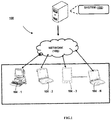
- FIG. 1 illustrates a networking implementation of a negotiation system performing a negotiation task using a reinforcement learning agents in accordance with an embodiment of the present disclosure.
- the system 102 is configured to receive a negotiation task from one or more user.
- the negotiation system 102 may be embodied in a computing device, for instance a computing device 104.
- the negotiation system 102 may also be implemented in a variety of computing systems, such as a laptop computer, a desktop computer, a notebook, a workstation, a cloud-based computing environment and the like.
- the negotiation system 102 may be implemented in a cloud-based environment.
- the negotiation system 102 may be accessed by multiple users through one or more user devices 104-1, 104-2... 104-N, collectively referred to as user devices 104 hereinafter, or applications residing on the user devices 104.
- user devices 104 may include, but are not limited to, a portable computer, a personal digital assistant, a handheld device, a Smartphone, a Tablet Computer, a workstation and the like.
- the user devices 104 are communicatively coupled to the system 102 through a network 106.
- the network 106 may be a wireless or a wired network, or a combination thereof.
- the network 106 can be implemented as a computer network, as one of the different types of networks, such as virtual private network (VPN), intranet, local area network (LAN), wide area network (WAN), the internet, and such.
- the network 106 may be either a dedicated network or a shared network, which represents an association of the different types of networks that use a variety of protocols, for example, Hypertext Transfer Protocol (HTTP), Transmission Control Protocol/Internet Protocol (TCP/IP), and Wireless Application Protocol (WAP), to communicate with each other.
- the network 108 may include a variety of network devices, including routers, bridges, servers, computing devices, storage devices.
- the network devices within the network 106 may interact with the negotiation system 102 through communication links.
- the negotiation system 102 may be implemented in a computing device 104, such as a hand-held device, a laptop or other portable computer, a tablet computer, a mobile phone, a PDA, a smartphone, and a desktop computer.
- the negotiation system 102 may also be implemented in a workstation, a mainframe computer, a server, and a network server. The components and functionalities of the negotiation system 102 are described further in detail with reference to FIG. 2 and FIG. 3 .
- FIG. 2 illustrates an exemplary block diagram of the negotiation system performing the negotiation task using the reinforcement learning agents with another embodiment of the present disclosure.
- the negotiation system 102 may be embodied in, or is in direct communication with the system, for example the negotiation system 102 ( FIG. 1 ).
- the negotiation system 200 includes or is otherwise in communication with one or more hardware processors such as a processor 202, at least one memory such as a memory 204, and an I/O interface 206, a negotiation module 212 and an agent's repository 214.
- the negotiation module 216 can be implemented as a standalone unit in the negotiation system 102.
- negotiation module 212 can be implemented as a module in the memory 204.
- the processor 202, memory 204, and the I/O interface 206, module 208 may be coupled by a system bus such as a system bus 210 or a similar mechanism.
- the I/O interface 206 may include a variety of software and hardware interfaces, for example, a web interface, a graphical user interface, and the like.
- the interfaces 206 may include a variety of software and hardware interfaces, for example, interfaces for peripheral device(s), such as a keyboard, a mouse, an external memory, a camera device, and a printer. Further, the interfaces 206 may enable the system 102 to communicate with other devices, such as web servers and external databases.
- the interfaces 206 can facilitate multiple communications within a wide variety of networks and protocol types, including wired networks, for example, local area network (LAN), cable, etc., and wireless networks, such as Wireless LAN (WLAN), cellular, or satellite.
- the interfaces 206 may include one or more ports for connecting a number of computing systems with one another or to another server computer.
- the I/O interface 206 may include one or more ports for connecting a number of devices to one another or to another server.
- the hardware processor 202 may be implemented as one or more microprocessors, microcomputers, microcontrollers, digital signal processors, central processing units, state machines, logic circuitries, and/or any devices that manipulate signals based on operational instructions.
- the hardware processor 202 is configured to fetch and execute computer-readable instructions stored in the memory 204.
- the memory 204 may include any computer-readable medium known in the art including, for example, volatile memory, such as static random access memory (SRAM) and dynamic random access memory (DRAM), and/or non-volatile memory, such as read only memory (ROM), erasable programmable ROM, flash memories, hard disks, optical disks, and magnetic tapes.
- volatile memory such as static random access memory (SRAM) and dynamic random access memory (DRAM)
- non-volatile memory such as read only memory (ROM), erasable programmable ROM, flash memories, hard disks, optical disks, and magnetic tapes.
- the memory 204 includes a plurality of modules 208, received, and generated by one or more of the modules 208.
- the modules 208 may include routines, programs, objects, components, data structures, and so on, which perform particular tasks or implement particular abstract data types.
- the negotiation module 212 of the system 200 can be configured to receive a contract proposal from one or more user to be negotiated with the trained negotiating agent and the opposition agent.
- FIG. 3 is a flow diagram 300 illustrating steps of a method for performing the negotiation task using the reinforcement learning agents of the negotiation system of FIG. 1 , in accordance with an embodiment of the present disclosure.
- the system 100 comprises one or more data storage devices or the memory 102 operatively coupled to the one or more processors 104 and is configured to store instructions for execution of steps of the method 300 by the one or more processors (alternatively referred as processor(s)) 104 in conjunction with various modules of the modules 108.
- processor(s) alternatively referred as processor(s)
- the negotiation module 212 implemented by the processor 204, is configured to receive a request by a negotiating agent, for performing the negotiation task between the negotiating agent and an opposition agent.
- the negotiation task brings the negotiation agent and the opposition agent to agree on an optimal contract proposal.
- the contract proposal comprises a plurality of clauses from a set of clauses predefined for the negotiation task.
- each of the negotiating agent and the opposition agent comprise a plurality of behavioral models, which are modeled based on a reward function.
- the reinforcement learning agents includes the negotiation agent and the opposition agent associated with the negotiation module 212 of the negotiation system 102. Considering an example where the negotiation system 102 receives the negotiation task from one or more user.
- the received negotiation task is a contract document that needs to be negotiated between two parties wherein one of the user may be a seller and the other user may be a buyer.
- the negotiation task using agents it is important to have a robust communication protocol.
- the negotiating agent and the opposition agent are trained to converse using an interpretable sequence of bits.
- the training is done using reinforcement learning. Initially, the negotiating agent and the opposition agent are modelled as a neural network and then these two such agents are trained concurrently where they play several rounds of negotiation levels against each other and learn to coordinate with each other based on the outcome as reward function.
- the behavior of the negotiating agent and the opposition agent is modeled using the effective technique of varying the reward signal.
- two agents with 4 different behavior model are obtained. The negotiating agent and the opposition agent trained in this manner indeed learn to coordinate their moves and produce context relevant outputs.
- the method 300 includes negotiating one on one, by the negotiating agent with the plurality of behavioral models of the opposition agent to agree on a plurality of intermediate contract proposals, wherein the negotiation between each of the negotiating agent and the opposition agent is in accordance with a negotiation training procedure.
- the negotiating agent obtains at time step't' a plurality of state inputs, wherein the plurality of state inputs includes a utility function, an opponent offer, a previous opponent offer and an agent ID.
- the negotiating agent for the corresponding behavioral model from the plurality of behavioral models generates, a first intermediate contract proposal utilizing the plurality of said state inputs for performing the negotiation task.
- the first intermediate contract proposal predicts the number of bits to be flipped during the performance of the negotiation task.
- the opposition agent obtains at next time step 't+1' for the corresponding behavioral from the plurality of behavioral models, a second intermediate contract proposal based on the first intermediate contract proposal obtained from the negotiating agent.
- the second intermediate contract proposal maximizes the offer in the intermediate contract proposal for performing the negotiation task.
- the reward is assigned for each behavior model of the intermediate contract proposal of the negotiating agent and the opposition agent based on the performed negotiation task.
- the reward is assigned such that a maximum reward is assigned to the negotiating agent and the opposition agent, if the generated intermediate contract proposal is optimal and a minimum reward is assigned to the negotiating agent and the opposition agent, if the generated intermediate contract proposal is not optimal.
- the plurality of behavior models for the negotiating agent and the opposition agent of the negotiation system 102 describes the manner in which the rewards given to the reinforcement learning agents decides its behavior.
- the reinforcement learning agents with selfish behavior model and the agent with prosocial behavior agent represents in the following below mentioned steps,
- Both the reinforcement learning agents such that the negotiating agent and the opposition agent receives a reward of -0.5 if the negotiation ends in a disagreement between both the agents.
- the two agents negotiating agent and the opposition agent learn concurrently to obtain two agents with 4 different behavior model depending on the opponent is trained to behave,
- the method 300 includes selecting, by a selector agent, the optimal contract proposal from the plurality of intermediate contract proposals, wherein the selector agent is an ensemble of the plurality of behavioral models of the negotiating agent and the opposition agent.
- the plurality of contract proposals generated by the negotiating agent and the opposition agent are obtained for each behavior from the plurality of behavioral models and then am intermediate contract proposal is determined utilizing the plurality of contract proposals obtained from the plurality of behavioral models of the negotiating agent and the opposition agent and the maximum reward attained by each of the intermediate contract proposals and the frequency distribution of the negotiating agent selection sequence.
- a selector agent is trained with a dynamic behavior.
- the trained selector agent is an ensemble of the 2 agents with 4 different behaviors modeling for selecting an appropriate behavior based on the negotiation state. Further, the negotiation agents in real world scenarios, performance are evaluated with experiments where the negotiating agent and the opposition agent play against human players. The negotiating agent and the opposition agent provides consistency in behaviors even against human players. The negotiating agent and the opposition agent are deployable in real industrial scenarios for performing negotiating on the negotiation task. The selector agent is modeled with dynamic behavior. The selfish agent outperforms always outscores its opponents. However, using such an agent leads to many disagreements if the opponent is also selfish as described in Table 2 column1. In such observation the fact that the selfish and prosocial behavior are not separable processes in negotiation.
- the humans don't really negotiate using a fixed policy they adopt either the prosocial behavior model or the selfish behavior model. They tend to follow a mixed behavior with some degrees of both depending on the state of the negotiation process.
- the present disclosure models one optimal contract proposal that works well against all agents using a mixture of agents with the plurality of behavioral models. This is obtained by training another reinforcement learning gent known as selector agent to choose which of the 2 agents with 4 different behavior model for selecting the optimal contract proposal for the given state of the negotiation obtained from the negotiation task.
- FIG.4 illustrates an exemplary architecture of the negotiation system where reinforcement learning agents negotiate with each other on a set of clauses associated with the negotiation task negotiation interaction between the reinforcement learning agents, in accordance with an embodiment of the present disclosure.
- the negotiation task may be performed in any document comprising a plurality of clauses to agree on common terms between the negotiating parties.
- the agents perform the task residing in the agents repository of the negotiation module.
- the model is designed such that the user obtains an optimal contract proposal from a plurality of intermediate contract proposals.
- the negotiation system 102 includes a deep neural network (DNN) component and a rule based component.
- DNN deep neural network
- the deep neural network (DNN) Component is utilized to decide the number of bits to be flipped in the opponent's offer, wherein the deep neural network is trained through Reinforcement Learning (RL).
- the rule based component decides the exact bits to be flipped in a deterministic way such that flipping the bits that result in maximum increase in score. For example considering an, if the utility is [2,-6,-2;-4, 7, 3], the opponent's offer is [1, 1, 1, 0, 0, 1] and the number of bits to be flipped is 3 (decided by the neural network) that flips the second, third and fifth bit (rule based).
- FIG.5 is an exemplary architecture of the negotiation system performing the negotiation task using the reinforcement learning agents of FIG.2 , in accordance with an embodiment of the present disclosure.
- two agents negotiating agent and the opposition agent negotiate one-on-one to agree on common terms as to which clauses need to be included or excluded from the contract agreement.
- the value that an agent attaches to the clauses is represented by a utility function which is a vector of 6 integers between -12 and 12 (excluding 0) such that their sum is zero.
- each element in the list represents the importance that the agent attaches to the corresponding clause.
- the distribution so that in every case there is a mixture of the most beneficial clauses (values summing to 12) and the most harmful clauses (values summing to -12).
- Each of the negotiating agent and the opposition agent receives this utility function which is sampled uniformly.
- the negotiating agent and the opposition agent communicate with each other by giving offers, which is a sequence of 6 bits S t ⁇ ⁇ 0,6 ⁇ .
- subscript t refers to the time-step at which the offer was produced.
- FIG.6 illustrates performance evaluation of the reinforcement learning agents corresponding to the plurality of behavioral models based on the frequency distribution for the sequence of actions taken for the performed negotiation task, in accordance with an embodiment of the present disclosure.
- the distribution figure shows in each bar represents the optimal deals.
- the distribution shows that there is a joint preference among agents for certain sequences more than others which is evident by their skewed nature.
- the analysis of the plurality of behavioral models may be tested whether the reinforcement learning agents learn something non-trivial, we compare its performance with two simple baselines:
- Table 1 Coordination between the trained negotiating agent and the opposition agent is depicted as represented in Table 1 as mentioned below. In optimality column, the numbers in bracket are the percentages on the agreed deals. Table 1- an average over a separate test set of 30000 negotiations Agent A Agent B Dialog Length Agreement Rate (%) Optimality Rate (%) Average Score A (0.70) B(0.70) Random 15.90 100 24.55 0.25 0.25 Common 3.77 79.54 70.39 (88.49) 0.50 0.50 PP PP 16.98 96.24 82.33 (85.55) 0.65 0.66 SS SS 17.47 88.31 74.88 (84.79) 0.54 0.69 SP PS 13.87 91.90 86.74 (94.38) 0.73 0.55
- the results obtained for the performed negotiation task by the negotiating agent and the opposition agent is listed as represented in Table 1 that all the three variants of the behavioral combinations do better than the baselines in terms of the optimality and joint reward. This represents that the agents which are trained against each other learns to coordinate with their moves such that apart from maintaining their enforced behavior, maximizing their scores as well as the optimality.
- the joint reward is maximum when the negotiating agent and the opposition agent are prosocial as both agents are not only concerned with maximizing their own reward but also of their opponent's so as to reach optimal deals.
- the negotiation task performed by the negotiating agent and the opposition agent is evaluated based on computing a metrics.
- the metric parameters includes a dialog length, an agreement rate, an optimality rate, and an average score.
- the dialog length for the negotiation evaluation metrics describes the average number of time steps for which the negotiation task lasts.
- the agreement rate of the negotiation evaluation metrics describes the percentage of negotiations that ends in an agreement representing the agreement rate.
- the optimality rate of the negotiation evaluation metrics describes the percentage of negotiations that end in an optimal deal. Further, if the deal is optimal if it is both Pareto Optimal and the negotiating agent and the opposition agent receives a positive score. The solution is pareto optimal if neither agent's score can be improved without lowering the other's score.
- the average score of the negotiation evaluation metrics describes the average number of points earned by each of the negotiating agent and the opposition agent, the maximum joint reward the agents can earn on an average on optimal deals.
- the average of maximum joint reward for the test set is 1:40 (0:70 for each agent).
- the test negotiations are executed between the agents who have never seen each other during training. These negotiations are what we refer to as interplay negotiations as represented in Table 2 as shown in the results of these negotiations. Table 2 - Interplay between agents.
- the test negotiation is executed between each of the negotiation agent and the opposition agent who have never seen each other during training. These negotiations are represented as interplay negotiations as represented in Table 2. These results are an average over the test set of 30000 negotiations. The optimalities of the interplay between the negotiating agent and the opposition agent are not very high which is because these agents have never seen each other during training and thus have not been able to develop their intermediate contract proposal accordingly. Moreover, the agreement rate is highest (97.96%) for negotiation between the prosocial agents (PP vs PS) and the lower (59.00%) for selfish agents. The selfish agents outscore the prosocial agents which confirms their corresponding behaviors.
- the interplay negotiations as represented in Table 2 observes varying degrees of selfish/prosocial behavior in agents with some agents being more selfish than others.
- each entry is the difference in scores when corresponding agents negotiate.
- Table 3 - Difference in scores for all agent combinations.
- the selector agent is an ensemble of the two agent with four different behavioral models.
- the selector agent is utilized to select the output offer of one of the two agents with their plurality of behavioral models given the context U.
- This selector agent is modeled as a neural network that it also takes the output of all the two agents with their associated plurality of behavioral models as part of its state input.
- the selector agent outputs an optimal contract proposal ⁇ s among the plurality of intermediate contract proposals from which an action is sampled. This action is the offer produced as by one of the agent with the plurality of behavioral models.
- r s ( s 1 ....T ) is the reward that selector agent gets at the end of the negotiation which is a function of the sequence of actions s t it takes and r o is the reward of the opponent.
- a joint reward is assigned to the selector agent which is a simple way of ensuring that it is not biased towards one particular agent while selecting.
- FIG.7 illustrates frequency distribution values for selecting an optimal contract proposal using a selector agent for the negotiation task performed by the reinforcement learning agents, in accordance with an embodiment of the present disclosure.
- the analysis as described makes the selector agent negotiate against each with the plurality of behavioral models of the negotiating agent and the opposition agent one by one on the test set and the results are reported in Table 4.
- the selector agent is able to outscore the prosocial agents but not the selfish ones.
- the selector agent does well to coordinate with all agents with is reflected by the optimality. Also, the joint reward for all the cases is greater than 1.20. In spite of that, it is not able to match on results reported in Table 1.
- Agent B Dialog Length Agreement Rate (%) Optimality Rate (%) Agreement Score
- Agent B PP 18.68 94.41 77.15(81.71) 0.64 0.61 PP 19.17 86.25 73.33(85.02) 0.44 0.66 SP 13.10 92.27 76.56 (82.97) 0.71 0.55 PS 20.53 90.22 81.40(90.22) 0.55 0.71
- the selector agent learns a decision tree for the frequency distribution of the agent selection sequence that it follows against all two agents with the plurality of behavioral models as described in the FIG.7 .
- the four distributions in the x axis is the sequence of agent selection. Moreover, every sequence is a subsequence of some larger sequence.
- the selector agent learns to follow a decision tree. The fact that the selector agent learns a decision tree suggests the following:
- the human evaluation may be described as, the fact that negotiating agent and the opposition agent learns to negotiate against each other. But for real life deployment, it is really important to evaluate the performance while performing the negotiating task against human players. For this purpose, an experiment where humans played several rounds of negotiation task with all the five negotiation agents (PP, SS, SP, PS and SELECTOR). A total of 38 human players negotiated for 3 rounds of negotiation against all 5 agents. This means that each agent played a total of 114 negotiation games against humans. Humans were told that their aim was to maximize their scores.
- the prosocial agents (PP and PS) on the other hand, get outscored on more occasions.
- the behavior of human players is between prosocial behavior and selfish behavior model a hybrid behavior which outperforms when a selector agent was obtained. With the selector agent, humans win an almost equal number of times as the selector agent.
- the present disclosure provides emulating the human behavior through the selector agent for selecting an optimal contract proposal performed negotiating one on one by the negotiating agent and the opposition agent.
- the embodiments of present disclosure herein addresses unresolved problem of performing negotiation task with the agents trained with the plurality of behavioral models.
- the proposed system describes a deep learning model and a reinforcement learning procedure for training the agents to negotiate on the negotiation task. Further, modeling the negotiating agent and the opposition agent with the selfish or prosocial behavior model is modelled based on the behavior models adapted by human players. Also, the agents can decide on the behavioral model of the opposition agent based on the behavioral variations observed and these agents gets dynamically trained based on the data obtained during the performance of the negotiation task.
- the hardware device can be any kind of device which can be programmed including e.g. any kind of computer like a server or a personal computer, or the like, or any combination thereof.
- the device may also include means which could be e.g. hardware means like e.g. an application-specific integrated circuit (ASIC), a field-programmable gate array (FPGA), or a combination of hardware and software means, e.g.
- ASIC application-specific integrated circuit
- FPGA field-programmable gate array
- the means can include both hardware means and software means.
- the method embodiments described herein could be implemented in hardware and software.
- the device may also include software means.
- the embodiments may be implemented on different hardware devices, e.g. using a plurality of CPUs.
- the embodiments herein can comprise hardware and software elements.
- the embodiments that are implemented in software include but are not limited to, firmware, resident software, microcode, etc.
- the functions performed by various modules described herein may be implemented in other modules or combinations of other modules.
- a computer-usable or computer readable medium can be any apparatus that can comprise, store, communicate, propagate, or transport the program for use by or in connection with the instruction execution system, apparatus, or device.
- a computer-readable storage medium refers to any type of physical memory on which information or data readable by a processor may be stored.
- a computer-readable storage medium may store instructions for execution by one or more processors, including instructions for causing the processor(s) to perform steps or stages consistent with the embodiments described herein.
- the term "computer-readable medium” should be understood to include tangible items and exclude carrier waves and transient signals, i.e., be non-transitory. Examples include random access memory (RAM), read-only memory (ROM), volatile memory, nonvolatile memory, hard drives, CD ROMs, DVDs, flash drives, disks, and any other known physical storage media.
Landscapes
- Engineering & Computer Science (AREA)
- Theoretical Computer Science (AREA)
- Physics & Mathematics (AREA)
- Business, Economics & Management (AREA)
- General Physics & Mathematics (AREA)
- Health & Medical Sciences (AREA)
- General Health & Medical Sciences (AREA)
- General Engineering & Computer Science (AREA)
- Software Systems (AREA)
- Mathematical Physics (AREA)
- Computing Systems (AREA)
- Evolutionary Computation (AREA)
- Data Mining & Analysis (AREA)
- Computational Linguistics (AREA)
- Artificial Intelligence (AREA)
- Molecular Biology (AREA)
- Biomedical Technology (AREA)
- Biophysics (AREA)
- Life Sciences & Earth Sciences (AREA)
- Tourism & Hospitality (AREA)
- Strategic Management (AREA)
- General Business, Economics & Management (AREA)
- Economics (AREA)
- Marketing (AREA)
- Accounting & Taxation (AREA)
- Finance (AREA)
- Human Resources & Organizations (AREA)
- Technology Law (AREA)
- Primary Health Care (AREA)
- Development Economics (AREA)
- Management, Administration, Business Operations System, And Electronic Commerce (AREA)
- Computer And Data Communications (AREA)
Applications Claiming Priority (1)
| Application Number | Priority Date | Filing Date | Title |
|---|---|---|---|
| IN201821026198 | 2018-07-13 |
Publications (1)
| Publication Number | Publication Date |
|---|---|
| EP3594891A1 true EP3594891A1 (de) | 2020-01-15 |
Family
ID=67437652
Family Applications (1)
| Application Number | Title | Priority Date | Filing Date |
|---|---|---|---|
| EP19185537.8A Ceased EP3594891A1 (de) | 2018-07-13 | 2019-07-10 | Verfahren und system zur durchführung von verhandlungsaufgaben unter verwendung von verstärkungslernagenten |
Country Status (5)
| Country | Link |
|---|---|
| US (1) | US11521281B2 (de) |
| EP (1) | EP3594891A1 (de) |
| JP (1) | JP7412101B2 (de) |
| BR (1) | BR102019014512A2 (de) |
| CA (1) | CA3049235C (de) |
Cited By (2)
| Publication number | Priority date | Publication date | Assignee | Title |
|---|---|---|---|---|
| JP2023543628A (ja) * | 2020-10-07 | 2023-10-17 | 日本電気株式会社 | 適応型自律交渉方法、および使用するシステム |
| WO2023217868A1 (en) * | 2022-05-11 | 2023-11-16 | Deepmind Technologies Limited | Negotiating contracts for agent cooperation in multi-agent systems |
Families Citing this family (13)
| Publication number | Priority date | Publication date | Assignee | Title |
|---|---|---|---|---|
| US11526955B2 (en) * | 2017-05-30 | 2022-12-13 | Entersekt International Limited | Protocol-based system and method for establishing a multi-party contract |
| WO2019146044A1 (ja) * | 2018-01-25 | 2019-08-01 | 日本電気株式会社 | 交渉装置、推定方法、プログラム、推定装置 |
| US11803925B1 (en) * | 2019-04-16 | 2023-10-31 | Danielle Hutchinson | System and method for selecting a dispute resolution process |
| US12567093B2 (en) | 2019-06-12 | 2026-03-03 | Claudio Lanfranchi | Automated negotiation agent with opponent's behavior prediction |
| WO2021024414A1 (ja) * | 2019-08-07 | 2021-02-11 | 日本電気株式会社 | 交渉システム、交渉方法および交渉プログラム |
| US20230289908A1 (en) * | 2020-07-29 | 2023-09-14 | Nec Corporation | Policy generation apparatus, control method, and non-transitory computer-readable storage medium |
| WO2022085171A1 (ja) * | 2020-10-23 | 2022-04-28 | 日本電気株式会社 | 交渉装置、交渉システム、交渉方法、および、交渉プログラム |
| JP7823334B2 (ja) * | 2021-08-31 | 2026-03-04 | 日本電気株式会社 | 学習システム、学習方法およびプログラム |
| US12086895B2 (en) * | 2021-12-21 | 2024-09-10 | Nec Corporation | Automated negotiation agent adaptation |
| US20250190748A1 (en) * | 2022-03-01 | 2025-06-12 | Patrick Joseph Byrne | Evolutionary computational modular neural networks, structures and methods, incorporating evolutionary computational economic data systems, and adaptive, emergent, evolutionary augmented economic data system machine learning |
| WO2023193097A1 (en) * | 2022-04-05 | 2023-10-12 | Royal Bank Of Canada | System and method for multi-objective reinforcement learning |
| JPWO2024079844A1 (de) * | 2022-10-13 | 2024-04-18 | ||
| WO2025004994A1 (ja) * | 2023-06-30 | 2025-01-02 | 日本電気株式会社 | 計画システム、計画方法および記録媒体 |
Citations (2)
| Publication number | Priority date | Publication date | Assignee | Title |
|---|---|---|---|---|
| US20030233305A1 (en) * | 1999-11-01 | 2003-12-18 | Neal Solomon | System, method and apparatus for information collaboration between intelligent agents in a distributed network |
| US7103580B1 (en) * | 2000-03-30 | 2006-09-05 | Voxage, Ltd. | Negotiation using intelligent agents |
Family Cites Families (5)
| Publication number | Priority date | Publication date | Assignee | Title |
|---|---|---|---|---|
| US6192354B1 (en) | 1997-03-21 | 2001-02-20 | International Business Machines Corporation | Apparatus and method for optimizing the performance of computer tasks using multiple intelligent agents having varied degrees of domain knowledge |
| US7373325B1 (en) * | 2000-10-13 | 2008-05-13 | Nortel Networks Limited | Automated trading for e-markets |
| US7171393B2 (en) * | 2003-07-22 | 2007-01-30 | International Business Machines Corporation | Solving constraint satisfaction problems using variable-range hopping |
| TWI337711B (en) | 2004-10-15 | 2011-02-21 | Inst Information Industry | Negotiation support system, method and machine-readable storage medium |
| US20180012227A1 (en) * | 2016-07-05 | 2018-01-11 | NXT-ID, Inc. | Biometric, Behavioral-Metric, Knowledge-Metric, and Electronic-Metric Directed Authentication and Transaction Method and System |
-
2019
- 2019-07-10 EP EP19185537.8A patent/EP3594891A1/de not_active Ceased
- 2019-07-11 JP JP2019129229A patent/JP7412101B2/ja active Active
- 2019-07-12 BR BR102019014512-9A patent/BR102019014512A2/pt not_active Application Discontinuation
- 2019-07-12 CA CA3049235A patent/CA3049235C/en active Active
- 2019-07-12 US US16/510,748 patent/US11521281B2/en active Active
Patent Citations (2)
| Publication number | Priority date | Publication date | Assignee | Title |
|---|---|---|---|---|
| US20030233305A1 (en) * | 1999-11-01 | 2003-12-18 | Neal Solomon | System, method and apparatus for information collaboration between intelligent agents in a distributed network |
| US7103580B1 (en) * | 2000-03-30 | 2006-09-05 | Voxage, Ltd. | Negotiation using intelligent agents |
Cited By (3)
| Publication number | Priority date | Publication date | Assignee | Title |
|---|---|---|---|---|
| JP2023543628A (ja) * | 2020-10-07 | 2023-10-17 | 日本電気株式会社 | 適応型自律交渉方法、および使用するシステム |
| JP7552887B2 (ja) | 2020-10-07 | 2024-09-18 | 日本電気株式会社 | 適応型自律交渉方法、および使用するシステム |
| WO2023217868A1 (en) * | 2022-05-11 | 2023-11-16 | Deepmind Technologies Limited | Negotiating contracts for agent cooperation in multi-agent systems |
Also Published As
| Publication number | Publication date |
|---|---|
| CA3049235C (en) | 2022-12-06 |
| CA3049235A1 (en) | 2019-09-17 |
| BR102019014512A2 (pt) | 2020-03-10 |
| US11521281B2 (en) | 2022-12-06 |
| JP2020013568A (ja) | 2020-01-23 |
| JP7412101B2 (ja) | 2024-01-12 |
| US20200020061A1 (en) | 2020-01-16 |
Similar Documents
| Publication | Publication Date | Title |
|---|---|---|
| US11521281B2 (en) | Method and system for performing negotiation task using reinforcement learning agents | |
| Hazra et al. | Applications of game theory in deep learning: a survey | |
| Schwarzschild et al. | Can you learn an algorithm? generalizing from easy to hard problems with recurrent networks | |
| Liu et al. | Controlllm: Augment language models with tools by searching on graphs | |
| CN118984731A (zh) | 基于人工智能(ai)的技能跟踪和基于非同质化通证(nft)的技能表示 | |
| Fortnow | Fifty years of P vs. NP and the possibility of the impossible | |
| Bighashdel et al. | Policy space response oracles: A survey | |
| EP3309689A1 (de) | Systeme und verfahren zur auswahl optimaler variablen unter verwendung eines suchoptimierungsverfahrens auf basis von modifiziertem lehren-lernen | |
| Zhang et al. | Breakthrough invention and problem complexity: Evidence from aq uasi‐experiment | |
| Chen et al. | A reinforcement learning agent for obstacle-avoiding rectilinear Steiner tree construction | |
| Chen et al. | An adaptive deep rl method for non-stationary environments with piecewise stable context | |
| Sabbaghi et al. | Adversarial reasoning at jailbreaking time | |
| Hua et al. | Assistive large language model agents for socially-aware negotiation dialogues | |
| Petruzzellis et al. | Benchmarking GPT-4 on algorithmic problems: A systematic evaluation of prompting strategies | |
| Lin et al. | Pathseeker: Exploring llm security vulnerabilities with a reinforcement learning-based jailbreak approach | |
| Koh et al. | Quantum volunteer's dilemma | |
| Sunder et al. | Prosocial or selfish? agents with different behaviors for contract negotiation using reinforcement learning | |
| Keshavarzi et al. | Comparative analysis of extensive form zero sum game algorithms for Poker like games | |
| KR102259786B1 (ko) | 게임 데이터 처리 방법 | |
| Zou et al. | Hps: Hard preference sampling for human preference alignment | |
| Khan et al. | Optimizing reinforcement learning agents in games using curriculum learning and reward shaping | |
| Duan et al. | Adaptive context length optimization with low-frequency truncation for multi-agent reinforcement learning | |
| Müller et al. | Needs and Deeds of EU External Action: Adapting to Global Shifts | |
| CN117456081A (zh) | 图像生成网络模型、方法、生成对抗网络模型及相关装置 | |
| Du et al. | A 4× 4 Sudoku Solving Model Based on Multi-layer Perceptron |
Legal Events
| Date | Code | Title | Description |
|---|---|---|---|
| PUAI | Public reference made under article 153(3) epc to a published international application that has entered the european phase |
Free format text: ORIGINAL CODE: 0009012 |
|
| STAA | Information on the status of an ep patent application or granted ep patent |
Free format text: STATUS: THE APPLICATION HAS BEEN PUBLISHED |
|
| AK | Designated contracting states |
Kind code of ref document: A1 Designated state(s): AL AT BE BG CH CY CZ DE DK EE ES FI FR GB GR HR HU IE IS IT LI LT LU LV MC MK MT NL NO PL PT RO RS SE SI SK SM TR |
|
| AX | Request for extension of the european patent |
Extension state: BA ME |
|
| STAA | Information on the status of an ep patent application or granted ep patent |
Free format text: STATUS: REQUEST FOR EXAMINATION WAS MADE |
|
| 17P | Request for examination filed |
Effective date: 20200714 |
|
| RBV | Designated contracting states (corrected) |
Designated state(s): AL AT BE BG CH CY CZ DE DK EE ES FI FR GB GR HR HU IE IS IT LI LT LU LV MC MK MT NL NO PL PT RO RS SE SI SK SM TR |
|
| STAA | Information on the status of an ep patent application or granted ep patent |
Free format text: STATUS: EXAMINATION IS IN PROGRESS |
|
| 17Q | First examination report despatched |
Effective date: 20201216 |
|
| STAA | Information on the status of an ep patent application or granted ep patent |
Free format text: STATUS: THE APPLICATION HAS BEEN REFUSED |
|
| 18R | Application refused |
Effective date: 20220418 |