EP3594875A1 - Systèmes et procédés pour fournir une plateforme de gestion d'accès - Google Patents
Systèmes et procédés pour fournir une plateforme de gestion d'accès Download PDFInfo
- Publication number
- EP3594875A1 EP3594875A1 EP19185895.0A EP19185895A EP3594875A1 EP 3594875 A1 EP3594875 A1 EP 3594875A1 EP 19185895 A EP19185895 A EP 19185895A EP 3594875 A1 EP3594875 A1 EP 3594875A1
- Authority
- EP
- European Patent Office
- Prior art keywords
- site
- management system
- access management
- sites
- data
- Prior art date
- Legal status (The legal status is an assumption and is not a legal conclusion. Google has not performed a legal analysis and makes no representation as to the accuracy of the status listed.)
- Ceased
Links
Images







Classifications
-
- G—PHYSICS
- G06—COMPUTING OR CALCULATING; COUNTING
- G06Q—INFORMATION AND COMMUNICATION TECHNOLOGY [ICT] SPECIALLY ADAPTED FOR ADMINISTRATIVE, COMMERCIAL, FINANCIAL, MANAGERIAL OR SUPERVISORY PURPOSES; SYSTEMS OR METHODS SPECIALLY ADAPTED FOR ADMINISTRATIVE, COMMERCIAL, FINANCIAL, MANAGERIAL OR SUPERVISORY PURPOSES, NOT OTHERWISE PROVIDED FOR
- G06Q10/00—Administration; Management
- G06Q10/08—Logistics, e.g. warehousing, loading or distribution; Inventory or stock management
-
- G—PHYSICS
- G07—CHECKING-DEVICES
- G07C—TIME OR ATTENDANCE REGISTERS; REGISTERING OR INDICATING THE WORKING OF MACHINES; GENERATING RANDOM NUMBERS; VOTING OR LOTTERY APPARATUS; ARRANGEMENTS, SYSTEMS OR APPARATUS FOR CHECKING NOT PROVIDED FOR ELSEWHERE
- G07C9/00—Individual registration on entry or exit
- G07C9/00174—Electronically operated locks; Circuits therefor; Nonmechanical keys therefor, e.g. passive or active electrical keys or other data carriers without mechanical keys
- G07C9/00571—Electronically operated locks; Circuits therefor; Nonmechanical keys therefor, e.g. passive or active electrical keys or other data carriers without mechanical keys operated by interacting with a central unit
-
- G—PHYSICS
- G06—COMPUTING OR CALCULATING; COUNTING
- G06N—COMPUTING ARRANGEMENTS BASED ON SPECIFIC COMPUTATIONAL MODELS
- G06N3/00—Computing arrangements based on biological models
- G06N3/02—Neural networks
- G06N3/08—Learning methods
-
- G—PHYSICS
- G06—COMPUTING OR CALCULATING; COUNTING
- G06N—COMPUTING ARRANGEMENTS BASED ON SPECIFIC COMPUTATIONAL MODELS
- G06N5/00—Computing arrangements using knowledge-based models
- G06N5/02—Knowledge representation; Symbolic representation
-
- G—PHYSICS
- G06—COMPUTING OR CALCULATING; COUNTING
- G06Q—INFORMATION AND COMMUNICATION TECHNOLOGY [ICT] SPECIALLY ADAPTED FOR ADMINISTRATIVE, COMMERCIAL, FINANCIAL, MANAGERIAL OR SUPERVISORY PURPOSES; SYSTEMS OR METHODS SPECIALLY ADAPTED FOR ADMINISTRATIVE, COMMERCIAL, FINANCIAL, MANAGERIAL OR SUPERVISORY PURPOSES, NOT OTHERWISE PROVIDED FOR
- G06Q10/00—Administration; Management
- G06Q10/04—Forecasting or optimisation specially adapted for administrative or management purposes, e.g. linear programming or "cutting stock problem"
-
- G—PHYSICS
- G06—COMPUTING OR CALCULATING; COUNTING
- G06Q—INFORMATION AND COMMUNICATION TECHNOLOGY [ICT] SPECIALLY ADAPTED FOR ADMINISTRATIVE, COMMERCIAL, FINANCIAL, MANAGERIAL OR SUPERVISORY PURPOSES; SYSTEMS OR METHODS SPECIALLY ADAPTED FOR ADMINISTRATIVE, COMMERCIAL, FINANCIAL, MANAGERIAL OR SUPERVISORY PURPOSES, NOT OTHERWISE PROVIDED FOR
- G06Q10/00—Administration; Management
- G06Q10/06—Resources, workflows, human or project management; Enterprise or organisation planning; Enterprise or organisation modelling
-
- G—PHYSICS
- G06—COMPUTING OR CALCULATING; COUNTING
- G06Q—INFORMATION AND COMMUNICATION TECHNOLOGY [ICT] SPECIALLY ADAPTED FOR ADMINISTRATIVE, COMMERCIAL, FINANCIAL, MANAGERIAL OR SUPERVISORY PURPOSES; SYSTEMS OR METHODS SPECIALLY ADAPTED FOR ADMINISTRATIVE, COMMERCIAL, FINANCIAL, MANAGERIAL OR SUPERVISORY PURPOSES, NOT OTHERWISE PROVIDED FOR
- G06Q50/00—Information and communication technology [ICT] specially adapted for implementation of business processes of specific business sectors, e.g. utilities or tourism
- G06Q50/10—Services
- G06Q50/16—Real estate
- G06Q50/163—Real estate management
-
- G—PHYSICS
- G08—SIGNALLING
- G08B—SIGNALLING SYSTEMS, e.g. PERSONAL CALLING SYSTEMS; ORDER TELEGRAPHS; ALARM SYSTEMS
- G08B21/00—Alarms responsive to a single specified undesired or abnormal condition and not otherwise provided for
- G08B21/18—Status alarms
-
- Y—GENERAL TAGGING OF NEW TECHNOLOGICAL DEVELOPMENTS; GENERAL TAGGING OF CROSS-SECTIONAL TECHNOLOGIES SPANNING OVER SEVERAL SECTIONS OF THE IPC; TECHNICAL SUBJECTS COVERED BY FORMER USPC CROSS-REFERENCE ART COLLECTIONS [XRACs] AND DIGESTS
- Y02—TECHNOLOGIES OR APPLICATIONS FOR MITIGATION OR ADAPTATION AGAINST CLIMATE CHANGE
- Y02P—CLIMATE CHANGE MITIGATION TECHNOLOGIES IN THE PRODUCTION OR PROCESSING OF GOODS
- Y02P90/00—Enabling technologies with a potential contribution to greenhouse gas [GHG] emissions mitigation
- Y02P90/80—Management or planning
-
- Y—GENERAL TAGGING OF NEW TECHNOLOGICAL DEVELOPMENTS; GENERAL TAGGING OF CROSS-SECTIONAL TECHNOLOGIES SPANNING OVER SEVERAL SECTIONS OF THE IPC; TECHNICAL SUBJECTS COVERED BY FORMER USPC CROSS-REFERENCE ART COLLECTIONS [XRACs] AND DIGESTS
- Y02—TECHNOLOGIES OR APPLICATIONS FOR MITIGATION OR ADAPTATION AGAINST CLIMATE CHANGE
- Y02P—CLIMATE CHANGE MITIGATION TECHNOLOGIES IN THE PRODUCTION OR PROCESSING OF GOODS
- Y02P90/00—Enabling technologies with a potential contribution to greenhouse gas [GHG] emissions mitigation
- Y02P90/80—Management or planning
- Y02P90/82—Energy audits or management systems therefor
Definitions
- the present disclosure is related to access management systems and, more particularly, to techniques for remotely managing access rights to secured sites and assets protected by electronic key and lock systems, and for preemptively detecting alert conditions associated with the secured sites and assets.
- the key and lock systems may be electronic and/or programmable, and can secure the sites and assets (e.g., generators, electrical sub-stations, phone towers, radio towers, fueling sources/stations, servers, batteries, or various related equipment) located at the sites.
- assets e.g., generators, electrical sub-stations, phone towers, radio towers, fueling sources/stations, servers, batteries, or various related equipment
- the assets located at the sites can fail and/or malfunction for various reasons.
- failures or malfunctions are only detected after they have occurred, thus resulting in downtimes and/or inoperability periods for the assets.
- Even after such failures or malfunctions are detected the downtimes or inoperability periods are prolonged due to the amount of time required to schedule and perform maintenance on the affected assets.
- additional delays can be attributed to the manner in which service providers (e.g., contractors, vendors, maintenance personnel, or other individuals who service the sites) are granted access to the sites and assets located at the sites.
- the access management system can be configured to provide individuals with access to one or more remote sites in various ways.
- the remote sites may represent secured locations such as phone towers, radio towers, fueling sources, refueling stations, warehouses, server farms, fulfillment centers, production facilities, and/or any other facilities or locations that utilize key and lock systems to provide security at the remote sites.
- Each of the remote sites can include one or more assets including, but not limited to, equipment (e.g., generators, electrical sub-stations, servers, and batteries), access control devices (e.g., electronic locks and programmable keys), manufacturing equipment, storage units, and computing devices (e.g., desktop computers, smart phones, and tablets).
- the access management system can also be configured to perform various functions for managing maintenance of the assets at the remote sites.
- the maintenance control operations performed by the access management system include functions for preemptively identifying one or more asset alert conditions at the remote sites.
- the asset alert conditions can include predictions for identifying assets that are likely to fail, malfunction, and/or require maintenance.
- the access management system can then schedule preventive maintenance operations on the assets identified by the asset alert conditions. In this manner, the access management system is able to take anticipatory measures for preventing damage to the site assets and for eliminating potential downtime of the assets and/or sites.
- the access management system aggregates data associated with the remote sites, which is utilized by an analytics component to make accurate predictions corresponding to the asset alert conditions.
- the analytics component may be configured to utilize machine learning algorithms, artificial intelligence (Al) algorithms, and/or trained neural networks to make the predictions corresponding to the asset alert conditions.
- the analytics component can analyze the aggregated data to determine patterns associated with prior incidents (e.g., such as prior product failures, malfunctions and/or related issues). For example, the analytics component can perform a detailed analysis of the aggregated data to identify correlations between prior incidents associated with the assets and one or more causation factors.
- the causation factors may correspond to any factor and/or data point that is associated with an increase in incident occurrences.
- Exemplary causation factors may be based on over-utilization of the assets (e.g., beyond a threshold period of time and/or above a frequency threshold), frequency of routine maintenance operations on the assets, geographic locations of the assets, weather patterns near locations of the assets, and/or other factors.
- the data aggregated by the access management system and utilized to predict the asset alert conditions can include any data associated with the remote sites 160.
- Examples of such data include product information (e.g., which identifies manufacturers, model types, and/or versions of software utilized by the assets), usage information (e.g., which indicates the extent of use and frequency of use of the assets), maintenance information (e.g., which includes data corresponding to previous maintenance requests associated with the assets), access control information (e.g., which provides data related to prior access that was granted to the assets and/or sites), third-party information (e.g., which can include data gathered from third-party products, services, and/or service providers), site information (e.g., which provides specific details for each site relating to its geographic location, function, and features), weather information (e.g., which provides details on previous weather conditions for each of the sites), and service provider information (e.g., which identifies companies and/or individuals who service the sites and the particular requests handled by such companies and/or individuals).
- Other types of data
- the analytics component can be configured to perform various functions in addition to predicting asset alert conditions.
- Other exemplary functions performed by the analytics component may involve analyzing the aggregated data to perform various benchmarking functions.
- the benchmarking functions may be utilized to determine metrics associated with service requests, maintenance requests, and/or other type of requests.
- the benchmarking functions may analyze the aggregated data to determine metrics indicating appropriate amounts of time for responding to the requests, appropriate amounts of time for completing each type of request, appropriate costs associated with fulfilling requests, and/or other metrics associated with the requests.
- the analytics component can also be configured to perform various assessment functions.
- assessment functions may utilize the metrics generated by the benchmarking functions to evaluate performances of specific individuals (e.g., contractors, employees, and/or staff members), companies, and/or service providers associated the remote sites.
- data collected by the access management system can include granular information about every previous or ongoing maintenance request, the analytics component can evaluate the performance of the individuals (e.g., contractors, employees, and/or staff members), companies, and/or service providers.
- the access management system can display interfaces and/or transmit notifications for presenting the information that is generated by the analytics component.
- the interfaces can be presented to administrators at a network operations center (NOC) associated with the access management system, site operators and managers, site employees, contractors, and/or any other individuals associated with the sites.
- NOC network operations center
- any aspect or feature that is described for one embodiment can be incorporated into any other embodiment mentioned in this disclosure.
- any of the embodiments described herein may be hardware-based, software-based, or preferably comprise a mixture of both hardware and software elements.
- the description herein may describe certain embodiments, features, or components as being implemented in software or hardware, it should be recognized that any embodiment, feature, or component that is described in the present application may be implemented in hardware and/or software.
- Embodiments may include a computer program or computer program product accessible from a computer-usable or computer-readable medium providing or comprising program code or instructions for use by or in connection with a computer or any instruction execution system.
- the program code or instructions can cause the computer or instruction execution system to perform or implement the described methods.
- a computer-usable or computer-readable medium may include any apparatus that stores, communicates, propagates, or transports the program for use by or in connection with the instruction execution system, apparatus, or device.
- the medium can be a magnetic, optical, electronic, electromagnetic, infrared, or semiconductor system (or apparatus or device) or a propagation medium.
- the medium may include a computer-readable storage medium, such as a semiconductor or solid-state memory, magnetic tape, a removable computer diskette, a random access memory (RAM), a read-only memory (ROM), a rigid magnetic disk, an optical disk, etc.
- a data processing system suitable for storing and/or executing program code may include at least one processor coupled directly or indirectly to memory elements through a system bus.
- the memory elements can include local memory employed during actual execution of the program code, bulk storage, and cache memories, which provide temporary storage of at least some program code to reduce the number of times code is retrieved from bulk storage during execution.
- I/O devices including, but not limited to, keyboards, displays, pointing devices, etc. may be coupled to the system either directly or through intervening I/O controllers.
- Network adapters may also be coupled to the system to enable the data processing system to become coupled to other data processing systems or remote printers or storage devices through intervening private or public networks.
- Modems, cable modems, and Ethernet cards are just a few of the currently available types of network adapters.
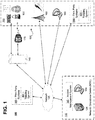
- Figure 1 is a block diagram of an exemplary system 100 in accordance with certain embodiments.
- the system 100 includes an access management system 150 that is configured to perform functions associated with monitoring and controlling access to sites 160, monitoring and managing maintenance operations at the sites 160, and other related functions described herein.
- Figure 2 is a block diagram of an exemplary system 200 for providing an access management system 150 in accordance with certain embodiments.
- the system 100 in Figure 1 comprises, inter alia, at least one network operations center (NOC) 110 that includes one or more servers 120 and/or one or more administrator devices 130, and an access management system 150.
- NOC network operations center
- the one or more servers 120 and/or one or more administrator devices 130 associated with the network operations center 110 are configured to host the access management system 150.
- the access management system 150 can additionally, or alternatively, be hosted by one or more computing devices located remotely from the NOC (e.g., in a cloud-based server environment).
- the system 100 also includes at least one remote site 160 that comprises one or more electronic locks 161, site equipment 162, and one or more remote site devices 140.
- the one or more remote site devices 140 which can be mobile in some cases, may also be located external to the remote sites 160.
- the one or more remote site devices 140 can additionally, or alternatively, be located at the remote sites 160.
- One or more electronic programmable keys 170 can be utilized to access the remote sites 160 or portions of the remote sites 160.
- One or more third-party systems 180 can provide various products and/or services for the remote sites 160.
- the network operations center 110 (including each of the servers 120, administrator devices 130, and access management system 150) is configured to communicate with the remote site devices 140, the remote sites 160 (e.g., servers or computing devices located at the remote site), and the third-party systems 180 over a network 125.
- the network 125 may be any type of network, such as one that includes the Internet, a local area network, a wide area network, an intranet, a virtual private network, a cellular network, a personal area network, and/or other type of network.
- the network operations center 110 may also be configured to communicate with the electronic programmable keys 170, the electronic locks 161, and the site equipment 162 over the network 125.
- the network operations center 110 provides assistance with controlling access to the sites 160, collecting data associated with the sites 160, and utilizing the collected data to provide enhanced support functions for the remote sites 160.
- the access management system 150 includes an electronic platform that assists the network operations center 110 with performing these and other functions for the remote sites 160.
- the access management system 150 can be accessed via a web portal and/or website associated with the NOC 110.
- the remote sites 160 may comprise facilities or locations that include phone towers, radio towers, fueling sources, fueling stations, power utilities, batteries, and/or any other facilities or locations that utilize access control systems or security systems.
- Individuals associated with the network operations center 110 can access the access management system 150 using the administrator devices 130.
- Individuals associated with the remote sites 160 e.g., service providers, vendors, contractors, site employees, tenants, and/or other individuals
- the network operations center 110 and/or access management system 150 may provide individuals with access to the remote sites 160 by activating and/or configuring the electronic programmable keys 170 to access the remote sites.
- Each electronic programmable key 170 may include a storage device (e.g., RAM, ROM, PROM, SRAM, etc.), processor (e.g., central processing unit (CPU)), input device (e.g., electronic keypad or touch screen device), and display screen.
- the electronic programmable keys 170 may also include components or devices that are configured to communicate with the electronic locks 161 using near-field communication (NFC), Bluetooth, Wi-Fi, or other communication protocols.
- NFC near-field communication
- Bluetooth Bluetooth
- Wi-Fi Wireless Fidelity
- the keys 170 may be configured to store data associated with one or more opening codes that will enable the keys to open one or more electronic locks 161, receive opening codes entered via an input device on the keys 170, activate the keys 170 in response to determining that a received opening code is valid, unlock one or more electronic locks 161 when the keys 170 are activated and engaged with the one or more electronic locks 161, download access logs from the one or more electronic locks 161, and perform other related functions.
- the keys 170 may be activated to open one or more of the electronic locks 161 located at the remote sites 160 by programming the key 170 with appropriate access permissions at the NOC 110 and/or by transmitting an opening code to an individual in possession of the key 170 in order to provide the individual with real-time access while operating in the field.
- the keys 170 may also include mobile devices (e.g., smart phones) that have installed applications configured to wirelessly communicate with electronic locks 161 (e.g., using any of the aforementioned protocols) to open or secure the electronic locks 161.
- the electronic locks 161 located at the remote sites 160 can generally represent any lock that includes electrical wiring or electrical components, and/or any lock that is capable of connecting to a network 125.
- the configuration of the electronic locks 161 can vary greatly.
- the electronic locks 161 may include mechatronic cylinder locks and/or padlocks.
- some of the electronic locks 161 may include a storage device, a processor, and one or more components for communicating with electronic keys 170.
- the electronic locks 161 may be unlocked in response to being engaged by an electronic key 170 that has been activated by a valid opening code during a specified timeframe in which access is granted to an individual.
- the electronic locks 161 can be locked/unlocked in other ways as well.
- the electronic locks 161 located at the remote sites 160 may additionally, or alternatively, be opened using a keypad or other input device that is included on, or in communication with, the electronic locks 161 (e.g., by entering an appropriate passcode and/or by providing other inputs).
- the passcode may be a dynamic passcode generated by a Code Generation System (CGS).
- CGS Code Generation System
- a dynamic passcode may represent a unique, single-use, time-limited or one-time passcode that is generated by the network operations center 110 (e.g., by server 120 or administrator device 130) upon request. The passcode may be based in part on the time the passcode was requested.
- the access management system 150 is also configured to remotely lock and/unlock the electronic locks 161 by transmitting commands to the electronic locks 161 over the network 125.
- some of the locks at the remotes sites 160 may include purely mechatronic locks.
- some of the electronic locks 161 may include keyless locks (e.g., keyless padlocks, keyless cylinder locks, etc.).
- the access management system 150 can transmit commands to the keyless electronic locks 161 (e.g., using Bluetooth or other wireless protocols) to lock/unlock the electronic locks 161.
- mobile devices e.g., smart phones
- the storage device associated with the electronic lock 161 may store an access log, which includes information related to entry attempts. For example, each time an electronic lock 161 is engaged by a key 170, the access logs may be updated to include an entry that identifies the lock 161 and key 170 (e.g., using unique identifiers), the time that the entry attempt occurred, one or more individuals associated with key 170, and data that indicates whether or not the entry attempt was successful.
- the electronic lock 161 may also include communication devices for transferring the access logs to electronic keys 170 (e.g., using a direct electrical connection, radio frequency identification (RFID), or NFC protocols) and/or to remote site devices 140.
- RFID radio frequency identification
- the access management system 150 can be configured to perform any and all functions discussed herein with respect to controlling access to the sites 160 (e.g., with respect to controlling access to electronic locks 161 and equipment 162 at the sites 160). For example, in certain embodiments, it may be desired to provide individuals (e.g., staff members and contractors) with access to one or more of the remote sites 160 in order to perform maintenance, check on security issues, and/or for other reasons.
- the access management system 150 is able to provide, revoke, restrict, and/or otherwise control access to the remote sites 160 in a various ways.
- the access management system 150 can facilitate access to the sites 160 using the programmable keys 170. In some cases, this may involve distributing opening codes to the remote site devices 140 (e.g., which may include mobile devices associated with contractors or other individuals operating in the field) that enable the electronic programmable keys 170 to access the remote sites 160 or to access certain areas of the sites 160 in real time. In some cases, this may involve entering the codes into keypads included on the electronic programmable keys 170 in order to activate the electronic programmable keys 170 and to configure the keys 170 with appropriate permissions for unlocking one or more of the electronic locks 161 located at the sites 160.
- the access management system 150 can also transmit commands over the network for remotely unlocking and/or locking the electronic locks 161.
- the access management system 150 can provide access to the sites 160 in other ways as well.
- the access management system 150 can also be configured to perform any and all functions described herein with respect to collecting, aggregating, and/or storing data associated with the sites 160.
- the access management system 150 can be configured to collect, store, and aggregate data associated with site assets 190 including, but not limited to, the electronic locks 161 located at the sites 160, equipment 162 located at the sites 160, remote site devices 140 (e.g., which may be located by the sites 160 and/or external to the sites 160), third-party systems 180 utilized by the sites 160, programmable keys 170 utilized to access the sites 160 or portions of the sites 160, and/or any other assets 190 associated with the sites 160.
- site assets 190 including, but not limited to, the electronic locks 161 located at the sites 160, equipment 162 located at the sites 160, remote site devices 140 (e.g., which may be located by the sites 160 and/or external to the sites 160), third-party systems 180 utilized by the sites 160, programmable keys 170 utilized to access the sites 160 or portions of the sites 160, and/or
- the data aggregated by the access management system 150 can be analyzed to perform a variety of useful functions such as predicting failures (e.g., hardware and/or software failures of the electronic locks 161, equipment 162, and/or remote site devices 140 located at the sites 160), preemptively scheduling maintenance operations, establishing benchmark metrics related to the performance of various activities, assessing productivity and efficiency levels of individuals (e.g., such as contractors and/or employees servicing the sites), and/or other useful functions. Alerts relating to these functions can be presented on interfaces that are accessible via the access management system 150.
- useful functions such as predicting failures (e.g., hardware and/or software failures of the electronic locks 161, equipment 162, and/or remote site devices 140 located at the sites 160), preemptively scheduling maintenance operations, establishing benchmark metrics related to the performance of various activities, assessing productivity and efficiency levels of individuals (e.g., such as contractors and/or employees servicing the sites), and/or other useful functions. Alerts relating to these functions can be presented on interfaces that are accessible via the access management system
- various types of data can be collected and stored by the access management system 150 related to the site assets 190 (e.g., such as the electronic locks 161, equipment 162, third-party systems 180, remote site devices 140, programmable keys 170, and/or any other assets).
- the access management system 150 collects and stores product information 210 for assets 190, which identifies manufacturers, model types, versions of software, and other types of related information for the assets.
- the access management system 150 can also collect and store maintenance information 211 associated with each of the assets 190.
- the maintenance information 211 may generally include any information associated with prior, ongoing, and/or upcoming maintenance requests. Exemplary maintenance information 211 that can be collected may include data indicating and/or identifying: previous errors, problems, and/or issues that have been reported in connection with the assets 190; times and dates of when maintenance was previously performed on the assets 190; the type of maintenance that was performed on the assets 190; specific individuals and/or companies that performed the maintenance on the assets 190; frequency at which routine maintenance is scheduled for the assets 190; any software and/or hardware upgrades applied to the assets 190; and/or other related information.
- the maintenance information 211 can be collected directly by the access management system 150 and/or can be retrieved from one or more third-party systems 180 (e.g., one or more third party ticketing systems 181).
- the access management system 150 can further be configured to collect and store usage information 212 for the assets associated with the sites 160.
- the usage information 212 may generally include any information that indicates the extent to which the assets 190 have been in use and details related to such use.
- Exemplary usage information 212 that can be collected may include data indicating and/or identifying: a duration of use for each of the assets 190 (e.g., indicating how long hardware and/or software associated with each asset has been in use); the extent to which each of the assets 190 has been used (e.g., how frequently the programmable keys 170 were utilized to engage locks, how frequently electronic locks 161 were engaged by keys, and/or how frequently the equipment 162 was accessed and/or activated); how frequently individuals were granted access to the site assets 190; and/or other related information.
- the access management system 150 can also collect and store site information 213 associated with each of the sites 160.
- the site information 213 can generally include any information about the sites 160 themselves.
- Exemplary site information 213 that can be collected may include data indicating and/or identifying: the geographic location of the site; the number of individuals (e.g., employees, contractors and/or staff) located at each site; the altitudes of the sites; third-party systems 180 utilized by the sites; and/or other related information.
- the access management system 150 can also collect and store access control information 214 associated with each of the sites 160.
- the access control information 214 can generally include any data related to controlling access to the sites 160 and/or site assets 190.
- the access control information 214 may be obtained, at least in part, from access logs that are retrieved from the electronic locks 161, programmable keys 170, and/or remote site devices 140 associated with the sites 160.
- Exemplary access control information 214 that can be collected may include data indicating and/or identifying: whether or not the entry attempts were successful; dates and times of entry attempts; identifiers associated with the electronic locks 161; identifiers associated with the electronic programmable keys 170; the electronic locks 161 and programmable keys 170 that are associated with each entry attempt; data that correlates specific individuals with the programmable keys 170 and/or entry attempts; GPS coordinates identifying locations of entry attempts; and/or other related data.
- the access management system 150 can also collect and store information associated with one or more third-party systems 180.
- the third-party systems 180 may be systems developed by or used at the sites 160 (e.g., proprietary software developed for the sites 160) and/or may be systems offered by external third-party entities (e.g., third party service providers). Some of the third-party systems 180 can correspond to products and/or services used by the sites 160 (e.g., which provide ticketing services and/or software).
- the third-party systems 180 can also include entities that accumulate data relevant to the sites (e.g., which maintain databases that include historical information indicating weather conditions near the remote sites, traffic conditions near the remote sites, and other types of historical information).
- the third-party systems 180 can include computing devices (e.g., which are the same as or similar to servers 120, administrator devices 130 and/or remote site devices 140) that are utilized to provide the products and/or services to the sites 160, and/or which store data associated with the products and/or services provided to the sites 160.
- the access management system 150 can include one or more integration modules 220 that are configured to retrieve, collect, and/or store data from the third-party systems 180.
- the integration modules 220 can include application programming interfaces (APIs) that enable data to be retrieved from the third-party systems 180.
- APIs application programming interfaces
- One exemplary third-party system 180 may include a ticketing system 181.
- the ticketing system 181 can provide a platform for managing "ticketing" operations associated with servicing the sites 160, controlling access to the sites 160, performing maintenance at the sites 160, and/or other related functions.
- the ticketing system 181 can store ticketing information 215 or data associated with previous and/or current requests to perform maintenance at the sites 160 (e.g., with respect to maintenance performed on the electronic locks 161, programmable keys 170, and/or remote site devices 140).
- the ticketing information 215 or data may indicate the specific individuals (e.g., contractors) who performed the maintenance, the specific assets that were the subject of the maintenance requests, times/dates associated with the maintenance requests, an amount of time expended to complete the maintenance requests, costs associated with performing the maintenance requests, and/or other related information.
- the access management system 150 can include integration modules 220 that enable the access management system 150 to retrieve, collect, and/or store any ticketing information 215 or data from the ticketing system 181.
- the access management system 150 can include integration modules 220 that are configured to retrieve, collect, and/or store information and data from other types of third-party systems 180.
- third-party systems 180 may include systems that are associated with providing and/or maintaining the electronic locks 161 and programmable keys 170, and which store related data (e.g., access logs, maintenance information, software/hardware upgrades, and/or other data).
- Additional examples of third-party systems 180 may include enterprise resource planning (ERP) systems, material requirements planning (MRP) systems, remote monitoring systems (RMS), weather collection systems, service provide systems (e.g., associated with contractors or companies that provide services for the sites 160), and/or the like.
- the access management system 150 can also include integration modules 220 for collecting data from other types of third-party systems 180 that are not explicitly mentioned in this disclosure.
- the integration modules 220 can permit integration with at least one RMS that allows for monitoring and controlling of site assets 190 (e.g., such as base transceiver stations and/or other assets) located at one or more of the remote sites 160.
- the RMS can collect various types of RMS information 216 and data associated with the assets.
- an RMS may be configured to record power consumption data, detect device failures, measure fuel consumption, regulate device temperatures (e.g., by controlling air conditioning units), and/or perform other related functions.
- all of the RMS information 216 and data collected by the RMS may be transmitted to, and/or retrieved by, the access management system 150 over a network 125 (e.g., over a 3G or 4G connection).
- the access management system 150 can utilize the RMS information 216 or data collected by the RMS to schedule preventive maintenance operations and/or to perform other useful functions.
- the access management system 150 can be configured to collect, store and aggregate various types of data and information including, but not limited to, the product information 210, maintenance information 211, usage information 212, site information 213, access control information 214, ticketing information 215, RMS information 216, and third-party information (e.g., including ERP information, MRP information, ticketing information, and other information obtained from third-party systems) described above. It should be understood that the access management system may be configured to gather other types of information other than the specific types of information mentioned above. In certain embodiments, some or all of this information can be retrieved and/or received by the access management system 150 over the network 125. The information may be input via various interfaces provided by the access management system 150 and/or may be collected from databases associated with the remote sites 160 and assets 190.
- third-party information e.g., including ERP information, MRP information, ticketing information, and other information obtained from third-party systems
- the access management system 150 includes an analytics component 250 that utilizes the aggregated data 230 to perform various functions.
- One particularly useful function performed by the analytics component 250 relates to predicting asset alert conditions 240 associated with the assets 190 at the sites 160.
- the asset alert conditions 240 may relate to occurrences of incidents or problems associated with the assets 190 located at the remote sites 160.
- the asset alert conditions 240 may include situations involving a software and/or hardware failure for an asset, situations in which an asset is malfunctioning, and/or situations in which an asset may require maintenance.
- the analytics component 250 may be configured to predict asset alert conditions 240 for the assets located at the remote sites 160.
- these predictions may be based, at least in part, on an analysis of the aggregated data 230 (or a portion thereof) collected by the access management system 150 that identifies prior occurrences of asset alert conditions 240 (e.g., prior incidents involving malfunctions and/or failures of software and/or hardware).
- the analytics component 250 may be configured to utilize machine learning techniques, artificial intelligence techniques (Al), and/or neural networks to make the predictions corresponding to the asset alert conditions 240.
- the analytics component 250 can be subjected to a training phase during which machine learning techniques, artificial intelligence techniques (Al), and/or neural networks are used to train the analytics component 250 to identify correlations in the aggregated data 230 that are indicative of occurrences of previous asset alert conditions 240 and/or related to increased frequencies of incidents associated with the previous asset alert conditions 240.
- the analytics component 250 can then be configured to predict future occurrences of asset alert conditions 240 for the remote sites 160.
- the analytics component 250 can additionally, or alternatively, utilize a rule-based analysis function to analyze the aggregated data 230 and to predict occurrences of asset alert conditions 240.
- the analytics component 250 may analyze the aggregated data 230 (e.g., including previously collected production information 210, maintenance information 211, usage information 212, site information 213, access control information 214, ticketing information 215, RMS information 216, and/or third-party system information) to identify and categorize previous occurrences of asset alert conditions 240, including previous occurrences of maintenance requests and/or failures for each of the site assets 190 (e.g., including the electronic locks 161, equipment 162, and/or remote site devices 140). The analytics component 250 can then analyze the aggregated data 230 to determine patterns in such occurrences.
- the aggregated data 230 e.g., including previously collected production information 210, maintenance information 211, usage information 212, site information 213, access control information 214, ticketing information 215, RMS information 216, and/or third-party system information
- the analytics component 250 can then analyze the aggregated data 230 to determine patterns in such occurrences.
- the causation factors 260 identified by the analytics component 250 can correspond to any data points (e.g., hours of asset usage, weather conditions during previous occurrences, and/or specific geographic areas) that are correlated to increases in such occurrences. Based on this analysis, the analytics component 250 can then utilize the identified data points associated with the causation factors 260 to identify the site assets 190 that are at risk and/or will be at risk in the near future.
- Example #1 An analysis of the aggregated data 230 by the analytics component 250 may determine that certain assets 190 will fail, or have a higher likelihood of failing, if the assets do not receive routine maintenance at specified time intervals or within a specified time period since a previous maintenance operation.
- This exemplary causation factor 260 may be determined on a separate basis for each particular asset 190 (e.g., for each model type, manufacturer, and/or version). For each asset 190, this exemplary causation factor 260 may be identified based, at least in part, on an analysis of the maintenance information 211, ticketing information 215, product information 210, and/or site information 213 collected by the access management system 150.
- the analytics component 250 can monitor the dates and times that each of the assets were last serviced, and alerts 280 can be sent to preemptively schedule maintenance operations before the specified time periods or intervals have expired or lapsed.
- Example #2 An analysis of the aggregated data 230 by the analytics component 250 may determine that certain assets 190 will fail, or have a higher likelihood of failing, if the assets 190 do not receive maintenance after certain threshold usage levels (e.g., indicating the duration and/or frequency of asset usage).
- This exemplary causation factor 260 may be determined on a separate basis for each particular asset 190 (e.g., for each model type, manufacturer, and/or version). For each asset 190, this exemplary causation factor 260 may be determined based, at least in part, on an analysis of the usage information 212, RMS information 216, site information 213, and/or product information 210 collected by the access management system 150.
- the analytics component 250 can monitor the current or real-time usage of each asset 190, and alerts 280 can be sent to preemptively schedule maintenance operations before the threshold usage levels have been reached.
- Example #3 An analysis of the aggregated data 230 by the analytics component 250 may determine that certain assets 190 will fail, or have a higher likelihood of failing, if the assets 190 are exposed to certain weather conditions. This may indicate that maintenance operations should be performed more frequently when the weather conditions exist (e.g., during certain seasons).
- This exemplary causation factor 260 may be determined on a separate basis for each particular asset 190 (e.g., for each model type, manufacturer, and/or version). For each asset 190, this exemplary causation factor 260 may be determined based, at least in part, on an analysis of the weather information, maintenance information 211, ticketing information 215, product information 210, and/or site information 213 collected by the access management system 150.
- the analytics component 250 can monitor the weather patterns at the sites 160 where the assets 190 are located, as well as the dates and times that each of the assets were last serviced. Alerts 280 can be sent to preemptively schedule maintenance operations in the event that certain weather conditions are detected in locations nears the assets.
- Example #4 An analysis of the aggregated data 230 by the analytics component 250 may determine that certain assets 190 will fail, or have a higher likelihood of failing, if the assets 190 are located in certain geographic locations and maintenance operations are not routinely performed on the assets within certain intervals.
- This exemplary causation factor 260 may be determined on a separate basis for each particular asset 190 (e.g., for each model type, manufacturer, and/or version). For each asset 190, this exemplary causation factor 260 may be determined based, at least in part, on an analysis of the maintenance information 211, ticketing information 215, product information 210, and/or site information 213 (e.g., which may indicate the altitudes and geographic locations where the assets are located) collected by the access management system 150.
- the analytics component 250 can monitor the dates and times that each of the assets 190 were last serviced and the locations of the assets. Alerts 280 can be sent to preemptively schedule maintenance operations if the timeframes or periodic intervals are set to expire in the near future, and maintenance operations have not yet been performed on the assets.
- the analytics component 250 can be configured to identify many other causation factors 260 based on an analysis of the aggregated data 230, and can predict asset alert conditions 240 in many other scenarios.
- the access management system 150 can take actions for preemptively scheduling maintenance operations to prevent failures and/or other problematic issues from occurring. Performing such preventive maintenance is advantageous because doing so can prevent damage to the site components and eliminate potential downtime of the components and/or remote sites 160 that rely on the assets 190.
- the preventive maintenance tasks can be scheduled automatically by the platform 150 (e.g., by automatically requesting and/or assigning contractors to handle the tasks) and/or can be scheduled by individuals using the platform 150.
- the access management system 150 can provide alerts 280 and/or notifications to inform various individuals of the predictions made by the analytics components.
- alerts 280 can be provided to site operators or managers, NOC administrators, maintenance personnel, contractors who service the sites, employees located at the affected sites, and/or other individuals.
- the alerts 280 can include information that identifies the specific site that may be affected, the specific asset 190 that may be affected at the site, the type of problem or failure that is predicted, recommended time frames for remedying the issue, names and contact information of contractors or other individuals who can attend to the issue, and/or other related information.
- the alerts 280 can also include selectable options that enable maintenance operations to be instantly scheduled for the affected site assets.
- alerts 280 may be presented on interfaces provided by the access management system 150.
- an individual e.g., NOC administrator, site operator, service provider, and/or contactor
- the alerts 280 can additionally, or alternatively, be transmitted to one or more predetermined individuals by e-mail, text message, phone call, and/or in other ways.
- the analytics component 250 can be configured to perform benchmarking functions 270.
- the benchmarking functions 270 can be configured to determine metrics associated with maintenance requests, service requests (e.g., such as security requests), and/or other types of requests that are issued in connection with the remote sites 160. For each type of request, the benchmarking functions 270 can analyze the aggregated data 230 to determine a set of metrics to be used as benchmarks for the requests.
- the set of metrics generated for a particular request may include data that indicates an appropriate amount of time for responding to the request (e.g., for confirming the request will be handled and/or arriving at the location of the remote site 160 to handle the request), an appropriate amount of time for completing the request, appropriate costs or expenses associated with fulfilling requests (e.g., to determine whether invoices for such services are appropriate), and/or other metrics associated with requests.
- the metrics may identify specific amounts of time, threshold levels, and/or ranges associated with each of these metrics.
- the metrics can be produced by segregating data corresponding to each request type, and separately analyzing the segregated data to determine appropriate metrics for each request type.
- the analytics component 250 can retrieve data from a ticketing system to obtain data that shows when each request was started and completed (e.g., by analyzing which tickets were open and closed), and can retrieve access logs indicating when service providers arrived at remote sites, and engaged the electronic locks. The retrieved information can then be used to determine average or appropriate time periods for completing certain activities.
- the analytics component 250 can also be configured to utilize the metrics generated by the benchmarking functions 270 to evaluate performances of specific individuals (e.g., contractors, employees, and/or staff members), companies, and/or service providers associated with the remote sites. For example, the analytics component 250 can retrieve data that has been collected in connection with a previous request or ongoing request to determine whether the request (or aspects of the request) is completed in a timely fashion based on the metric benchmarks. The analytics component 250 can also utilize the metric benchmarks to determine whether appropriate invoices were issued by the individuals, companies, and/or service providers who handled the requests.
- the analytics component 250 can utilize the data aggregated by the access management system 150 for purposes other than those specifically mentioned in this disclosure.
- the access management system 150 can be stored on one or more storage devices 201 that are in communication with one or more processors 202.
- the one or more storage devices 201 can include: i) non-volatile memory, such as, for example, read only memory (ROM) or programmable read only memory (PROM); and/or (ii) volatile memory, such as, for example, random access memory (RAM), dynamic RAM (DRAM), static RAM (SRAM), etc.
- RAM random access memory
- DRAM dynamic RAM
- SRAM static RAM
- storage devices 201 can comprise (i) non-transitory memory and/or (ii) transitory memory.
- the one or more processors 202 can include one or more central processing units (CPUs), graphical processing units (GPUs), controllers, microprocessors, digital signal processors, and/or computational circuits.
- the one or more storage devices 201 can store data and instructions associated with the integration modules 220, aggregated data 230, analytics component 250, alerts 280, and/or other components.
- the one or more processors 202 are configured to execute instructions associated with these components. Each of these components is described in further detail below.
- Any data and information (e.g., the aggregated data 230, asset alert conditions 240, causation factors 260, benchmarks established by the benchmarking functions 270, and alerts 280) described in this disclosure may be stored in one or more databases.
- the access management system 150 can be configured to maintain the one or more databases, and/or may be configured to access the one or more databases (e.g., over a network 125).
- Figure 3 is block diagram illustrating an exemplary architecture 300 for an access management system 150 according to certain embodiments.
- the access management system 150 can include, access, and/or utilize an integration layer 310 that enables communication between the access management system 150 and one or more data generating systems 320.
- Exemplary data generating systems 320 can include one or more RMSs 321 (e.g., which are configured to monitor energy meters, fuel meters, battery health, and other asset metrics), one or more security sensor systems 322 (e.g., which may include door sensors, motion sensors, perimeter detection sensors, and/or other sensors that are configured to generate alerts upon detection of individuals and/or moving objects), one or more camera systems 323 (e.g., which may be configured to perform facial recognition/identification functions and to detect individuals and/or objects), one or more access systems 324 (e.g., which may include, and may be configured to gather data from, electronic locks 161, electronic programmable keys 170, card access devices, biometric access devices, and other types of access control devices), and/or one or more workforce management systems 325 (e.g., which may be configured to manage and gather maintenance information 211 and/
- the integration layer 310 can enable the access management system 150 to gather any information generated or collected by these data generating systems 320 and the sub-components (e.g., sensors, cameras, etc.) associated with such systems. In certain embodiments, the integration layer 310 can further enable the access management system 150 to control the functionalities of the data generating systems 320 and their sub-components.
- the integration layer 310 includes a connection layer 311 and a business layer 312.
- the connection layer 311 can enable communication between the access management system 150 and the data generating systems 320 (e.g., RMSs 321, security sensor systems 322, etc.) using various protocols, thus permitting wide-ranging data to be collected by the access management system 150.
- Any protocol can be utilized to facilitate connections with the data generating systems 320 and/or sub-components associated with the data generating systems 320.
- Exemplary protocols can include open protocols, proprietary protocols, Internet-of-Things (loT) protocols, LAN/WAN protocols, cellular protocols, and/or other protocols.
- the business layer 312 may include software, code, and/or logic for managing the integration of the data generating systems 320, and for controlling how the data gathered from the data generating systems 320 is provided to, and processed by, the access management system 150.
- the access management system 150 may store and execute instructions for various modules including, but not limited to, the modules described below.
- the architectural and operational features included in the access management system 150 also comprise functions, data, and settings that define the types of electronic programmable keys 170 and electronic locks 161 that are integrated into the system, as well as the authorization technologies (e.g., CGS technologies) that can be utilized.
- the support features provide functions for communicating with a customer support team.
- each customer that desires to access and/or utilize the access management system 150 can customize features to be included in a license agreement with a provider of the access management system 150.
- a provider of the access management system 150 e.g., via a server-based or cloud-based platform
- devices 140 e.g., servers and/or computing devices located at the sites 160
- a licensing server 330 can be in communication with the access management system 150 to ensure that all options included in the license agreement are provided to the customer.
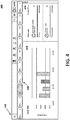
- Figure 4 is an exemplary interface 400 that may be displayed by the access management system 150 according to certain embodiments.
- the interface includes various software features and tools with real-time functionalities.
- a body portion 410 of the interface includes an MIS dashboard that is configured to display various real-time statistics associated with the sites, assets, maintenance operations, and/or service providers (e.g., vendors, contractors, maintenance personnel, etc.).
- the body portion 410 may be updated in response to selections of options included on the interface 400.
- An alert section 420 includes a movable or slidable portion that is updated in real time to display alerts 280 corresponding to asset alert conditions 240, maintenance events, security events, access control events, and other types of related notifications.
- the alert section 420 consolidates all abnormalities, asset alert conditions, incidents, and notifications associated with the sites 160.
- the alert section 420 can enable an administrator or other individual to quickly identify the most critical issues at the sites 160 requiring urgent and immediate action.
- Each of the alerts 280 can be selected in order to view detailed information about a corresponding alert 280 and to execute functions for managing the alert 280.
- a clipboard section 430 enables individuals utilizing the access management system 150 to share various types of data and information. For example, users can utilize the clipboard section 430 to share screenshots, documents being created, and reports. In certain embodiments, any content posted to the clipboard section 430 is automatically deleted after a predetermined period of time (e.g., 7 or 10 days).
- a menu option 440 located on the top left of the interface may be selected to view an expandable menu.
- the expandable menu can include one or more of the following menu options:
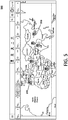
- Figure 5 is an exemplary interface 500 that may be displayed by the access management system 150 according to certain embodiments.
- the body portion 410 includes a GIS dashboard that is configured to display various real-time statistics associated with the sites, assets, maintenance operations, and/or service providers.
- the geographic location of each site 160 is identified by a marker 510. along with real-time site status information.
- the site status information indicates whether there are planned and/or ongoing maintenance operations at the sites 160, and whether there are any detected incidents at the sites 160 (e.g., as indicated by asset alert conditions 240).
- the service provider information and the type of maintenance request may be displayed on the GIS dashboard (e.g., in response to selecting a site 160 or options displayed on the interface).
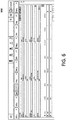
- Figure 6 is an exemplary interface 600 that may be displayed by the access management system 150 according to certain embodiments.
- a list of sites 160 is displayed that the user or operator can browse. The user or operator can remove sites, edit site information, and add additional sites by entering appropriate data in the respective fields.
- Figure 7 is an exemplary interface 700 that may be displayed by the access management system 150 according to certain embodiments. In certain embodiments, this interface may be displayed in the body portion 410 in response to selecting the Sites Option on the expandable menu.
- the interface includes a table that lists each individual site 160 in a separate row.
- the table includes the following columns: a site ID column that lists an identifier (ID) associated with each site; a site name column that lists a name of each site; a country column indicating the country where each site is located; a region column indicating a region where each site is located; a cluster column indicating whether each site is associated with a site cluster (e.g., which may represent a group of sites in a particular geographic region); a tenants column indicating a number of tenants at each site; a site asset column that indicates whether the assets 190 at each site are currently locked (e.g., such as where a checkmark indicates that all assets are secured by a lock, and a plus sign indicates that one or more assets are not secured by locks); and a site access point column indicating whether or not one or more locks at each site are currently unlocked.
- This table provides a user with an overview of each site and whether the assets at each site are secured.
- a user may select (e.g., by clicking, tapping, or hovering over) the information in the tenants column to view the names of the tenants at each site 160.
- a user may select the information in the assets column to view the listing of assets 190 located at each site 160.
- a user may select the information in the site access point column to view the listing of electronic locks 161 located at each site 160, and related information (e.g., lock names, lock IDs, previous access attempts, etc.).
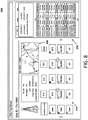
- Figure 8 is an exemplary interface 800 that may be displayed by the access management system 150 according to certain embodiments.
- the interface displays a detailed summary of a particular site 160. In certain embodiments, this interface may be displayed in response to selecting one of the sites listed in the table of Figure 7 .
- the interface 800 includes an asset section 810, a map section 820, and a maintenance section 830.
- the asset section 810 lists the assets 190 located at the site 160.
- the assets listed in the asset section display the status (e.g., functioning, malfunctioning, failed, maintenance needed, etc.) of each asset, and can be selected to view detailed information relating to the assets 190.
- the map section 820 shows the geographic location of the site 160 on a map, and real-time locations of individuals (e.g., service providers and/or contractors) situated near the site 160.
- the maintenance section 830 displays information related to previous, ongoing, and upcoming maintenance operations. Each access attempt at the site is listed in the maintenance section 830. In this section, unauthorized accesses may be highlighted in different colors based on the severity level of the access attempt (e.g., such that different colors may be utilized to indicate theft, denied/unauthorized attempts, or granted access attempts).
- Figure 9 is an exemplary interface 900 that may be displayed by the access management system 150 according to certain embodiments.
- This interface enables a user to manage tenants and access permissions of the tenants at a site 160.
- the interface enables a user to add, edit, remove, and/or assign tenants to a site 160.
- Detailed information e.g., name, description, contact information, picture, access permissions, and associated programmable keys
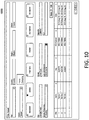
- Figure 10 is an exemplary interface 1000 that may be displayed by the access management system 150 according to certain embodiments.
- the access management system can include an asset management system that is configured to specify, manage, and control each of the assets located at the sites 160.
- the interface 1000 may be displayed in connection with the functions performed by the asset management system.
- the interface 1000 allows assets 190 to be added, edited, or removed from a site 160.
- the assets can be entered into the asset management system by specifying various details related to the assets 190 (e.g., sites where the assets are located, types of assets, geographic locations, IDs associated with the assets, etc.).
- the access management system 150 is able to connect to the asset (e.g., using loT protocols or other protocols), thus synchronizing the asset with the access management system 150 and any integrated data generating systems 320.
- a user is able to view and track all maintenance requests associated with the assets as shown by the table at the bottom of the interface.
- a user can use the interface 1000 to specify a service level agreement (SLA) for an asset, and the access management system 150 will automatically monitor the asset and determine if the SLA has been complied with.
- the asset management system also monitors the duration of each maintenance operation performed on each asset 190, and compiles a report determining the average maintenance time for each of the assets. This can permit the access management system 150 to perform a comparative analysis based on the make and model of each asset. The comparative analysis can be used to derive various determinations (e.g., indicating whether maintenance times and costs are reasonable, whether maintenance operations complied with specified SLAs, etc.).
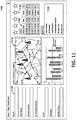
- Figure 11 is an exemplary interface 1100 that may be displayed by the access management system 150 according to certain embodiments.
- This exemplary interface displays usage data associated with an electronic key 170 and the individual in possession of the electronic key 170. Similar interfaces can be displayed for any electronic key 170 that is utilized by the access management system and/or any individual in possession of an electronic key 170. These interfaces assist administrators and/or other platform users with identifying questionable behavior of the service providers or contractors in possession of the electronic keys 170, thereby increasing monitoring and security capabilities.
- a map section 1110 of the interface displays a map identifying the sites where the electronic key 170 was used.
- a log section 1120 of the interface displays information pertaining to each access attempt associated with the electronic key 170. For example, the log section 1120 indicates the date and time of each access attempt, the site where each access attempt occurred, the asset(s) located at each site where the electronic key 170 was used, and the duration of each maintenance operation involving the electronic key 170.
- An information section 1140 of the website provides information about the electronic key 170 (e.g., key ID and access policy associated with the key) and information about the individual in possession of the electronic key 170 (e.g., the name of the individual, the company the individual is associated with, and contact information for the individual).
- a summary section 1130 provides a summary of the statistics associated with the electronic key 170 and/or individual in possession of the electronic key 170.
- the summary section 1130 may indicate the total number sites 160 the electronic key 170 attempted to access, the total number of electronic locks the electronic key 170 attempted to access, the total number of opening codes required by the individual in possession of the electronic key 170, the total number of blocked access attempts involving the electronic key 170, and the total number of times the electronic key 170 was blacklisted.
- a ratings section 1160 of the interface indicates a rating for the individual in possession of the electronic key 170 (e.g., on scale of 1-5 stars).
- the rating may be based, at least in part, on a ratio of successful attempts to requests for opening codes.
- the rating of an individual may be decreased or negatively affected based on unauthorized access attempts or blocked access attempts, and/or as a result of being blacklisted.
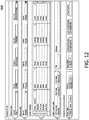
- Figure 12 is an exemplary interface 1200 that may be displayed by the access management system 150 according to certain embodiments.
- This interface can be utilized to provide individuals (e.g., service providers, contractors, tenants, etc.) located remotely from a network operations center 110 with immediate access to sites 160 and/or assets 190.
- this interface can provide these individuals with CGS codes to access the sites 160 and/or assets 190.
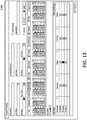
- Figure 13 is an exemplary interface 1300 that may be displayed by the access management system 150 according to certain embodiments.
- This interface may enable administrators and/or other platform users to dynamically and remotely configure the access policies for electronic keys 170.
- the access policies can control whether the electronic keys 170 are able to unlock any of the electronic locks 161 that provide access to the sites 160 and/or assets 190.
- the administrators and/or other platform users can create and assign custom access policies for each of the electronic keys 170 and/or can assign access policy templates to the electronic keys 170.
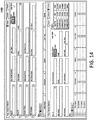
- Figure 14 is an exemplary interface 1400 that may be displayed by the access management system 150 according to certain embodiments.
- the electronic keys 170 can be shared and reused among multiple individuals.
- the interface provides functions for facilitating the return of the electronic keys 170 by an individual and for redistributing the electronic keys 170 to new individuals.
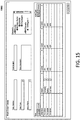
- Figure 15 is an exemplary interface 1500 that may be displayed by the access management system 150 according to certain embodiments.
- the access management system 150 can include a ticketing system 181 that collects maintenance information 211 and/or ticketing information 215, or may communicate with a third-party system 180 that collects this information.
- the interface 1500 can be provided in connection with a ticketing system 181 provided by the access management system 150.
- the interface 1500 enables an administrator and/or other platform user to create the tickets for each maintenance request and to link or associate the maintenance requests with particular electronic keys 170 and/or individuals in possession of the electronic keys 170.
- the interface permits the sites 160 and assets 190 associated with the maintenance requests to be selected.
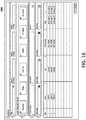
- Figure 16 is an exemplary interface 1600 that may be displayed by the access management system 150 according to certain embodiments.
- This interface permits an administrator and/or other platform user to input incidents and/or asset alert conditions 240 that have occurred at the sites 160. Details can be input related to the causes of the incidents and/or asset alert conditions, and the manner in which the incidents and/or asset alert conditions were resolved. The data collected by this interface can assist the analytics component 250 with predicting future incidents and/or asset alert conditions 240.
- Figure 17 is an exemplary interface 1700 that may be displayed by the access management system 150 according to certain embodiments.
- This interface permits an administrator and/or other platform user to transmit messages to service providers, contractors, and/or other individuals.
- a message can be transmitted to a particular individual or can be broadcast to a plurality of individuals.
- the messages can be transmitted in various ways (e.g., text message, inbox message, e-mail, etc.).
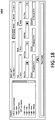
- Figure 18 is an exemplary interface 1800 that may be displayed by the access management system 150 according to certain embodiments.
- the interface 1800 permits a user to generate a variety of customized reports.
- the user can create customized reports to be generated for specific geographic regions, sites 160, and assets 190.
- the user can specific various filtering criteria (e.g., based on location, dates/times, vendors, service providers, tenants, etc.) to customize the reports.
- Reports can be generated on demand and/or a user can schedule the automatic generation of reports for specific dates/times or at periodic intervals.
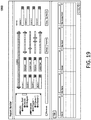
- Figure 19 is an exemplary interface 1900 that may be displayed by the access management system 150 according to certain embodiments.
- This interface enables a user to customize a report generated by the access management system 150 (e.g., by reordering, sorting, deleting, adding, and/or filtering information included in the report). After the user has customized the report, the report can be used as a template to create additional reports in the future.
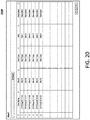
- Figure 20 is an exemplary interface 2000 that may be displayed by the access management system 150 according to certain embodiments.
- This interface 2000 displays a listing of alerts 280.
- the alerts 280 may correspond to asset alert conditions 240, maintenance events, security events, access control events, and other types of issues that arise at the sites 160.
- Each alert 280 may be displayed with a timestamp, site ID, alert type, description, and status.
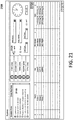
- Figure 21 is an exemplary interface 2100 that may be displayed by the access management system 150 according to certain embodiments.
- the interface enables a user to escalate and de-escalate priorities associated with alerts 280.
- each alert 280 generated by the access platform 150 may be assigned a priority indicating the urgency or importance of the alert 280.
- a user can manually change the priorities associated with the alerts 280. and/or the priorities associated with the alerts 280 can be automatically assigned and/or changed using escalation rules 2110 that can be customized by the user.
- the access management system 150 can assign each alert 280 to one of a plurality of priority levels.
- the exemplary interface 2100 includes a priority menu 2120 that enables each alert 280 to be assigned a priority level ranging from 1 to 5.
- priority level 1 may indicate the highest urgency or importance, with each subsequent priority level decreasing in urgency or importance and ending with priority level 5 (indicating a lowest level of urgency or importance). Any number of priority levels may be provided or utilized.
- a user may utilize the interface 2100 to add, edit, or delete escalation rules 2110 that can be utilized to automatically assign priority levels to alerts 280.
- the escalation rules 2110 capable of being defined can vary greatly.
- the escalation rules 2110 may correspond to any conditions, issues, and/or statuses associated with the sites, assets, and/or personnel (e.g., service providers).
- Exemplary escalation rules 2110 may assign priorities to alerts 280 based on one or more of the following conditions (or any combination thereof) being satisfied: (1) a determination that a gate, an asset 190, an electronic lock 161, or a site 160 is unlocked or unsecured; (2) a determination that a gate, an asset 190, an electronic lock 161, or a site 160 is locked or secured; (3) an alarm is detected (e.g., alarms generated by one or more cameras, camera systems, door sensors, motion sensors, perimeter detection sensors, and/or other sensors); (4) an asset alert condition 240 is detected indicating that one or more assets 190 have failed and/or are malfunctioning; (5) an asset alert condition 240 is detected indicating that one or more assets 190 are predicted to fail and/or malfunction; (6) a determination that an asset 190 and/or site 160 is not being properly maintenanced; (7) a determination that a maintenance deadline is approaching and/or has lapsed; (8) a determination that an asset 190 is being over-utilized; (9) a
- the conditions associated with the escalation rules 2110 can be defined in various ways.
- the user can also select options to specify dates and timeframes that are applicable to assigning priorities to the alerts 280.
- the options may permit a user to specify that the priorities of certain alerts 280 should only be escalated or changed in the event that underlying events (e.g., alarms, unlocked or open gates, etc.) are detected within particular timeframes and/or dates.
- an alert 280 indicating that a site or electronic lock 161 is unlocked may be assigned a lower priority level if the event is detected on a weekday during business hours, but may be assigned a higher priority level if the event is detected at night and/or on the weekend (e.g., which may indicate a possible break-in).
- a user can specify that an alert 280 indicating that an asset 190 is malfunctioning or failed should be assigned a highest priority level. This may involve selecting an escalation rule 2110 corresponding to an asset failure/malfunction condition, and selecting the priority level 1 option in the priority menu 2120. The user can then select other options specifying individuals who are to receive the alert 280, as well as any timeframes/dates that apply to assigning the priority level to the alert 280. When a user is finished, the user can select the "Configure" option to apply the specified settings for assigning priorities to the alert 280.
- a user can specify that an alert 280 indicating that an asset 190 is unlocked within a particular timeframe should be assigned to a particular priority level (e.g., priority level 2). This may involve selecting an escalation rule 2110 corresponding to an unlocked asset 190, selecting an option in the priority level menu 2120, and specifying appropriate timeframes/dates that apply. The user can then select options specifying individuals who are to receive the alert 280, and how the alert 280 is to be transmitted to these individuals (e.g., via text messages, e-mails, inbox messages, and/or other types of notifications). When a user is finished, the user can select the "Configure" option to apply the specified settings for assigning priorities to the alert 280.
- a particular priority level e.g., priority level 2
- multiple escalation rules 2110 can be selected to cause the priority level of an alert to be escalated or changed. For example, if multiple escalation rules 2110 are selected, then the priority level of an alert 280 may only be escalated or changed if all conditions associated with the selected escalation rules 2110 are satisfied. This permits a user to customize the priorities assigned to alerts 280 in a granular manner.
- Figure 22 is an exemplary interface 2200 that may be displayed by the access management system 150 according to certain embodiments.
- This interface permits an administrator and/or other platform user to specify service providers (e.g., vendors, contractors, and engineers) that service the sites and/or assets, and to input details and settings associated with the service providers.
- service providers e.g., vendors, contractors, and engineers
- the interface allows for inputting service types (e.g., fuel, electrical, security, etc.) performed by the service providers, geographic areas where the service providers operate, contact information associated with the service providers, etc.
- service providers e.g., fuel, electrical, security, etc.
- Figure 23 is an exemplary interface 2300 that may be displayed by the access management system 150 according to certain embodiments.
- the access management system 150 may provide various interfaces for adding new assets 190 to the access management system, initializing the assets 190, controlling the assets 190, and monitoring statuses and data associated with the assets 190.
- the interface 2300 is an exemplary interface for adding and initializing electronic locks 161 to the access management system.
- the interface enables electronic locks 161 to be associated with particular sites 160 and/or assets 190.
- Figure 24 is an exemplary interface 2400 that may be displayed by the access management system 150 according to certain embodiments.
- the interface 2400 may be utilized to monitor locations and activities of service providers and/or other individuals associated with the access management system.
- the interface 2400 may also be utilized to assign service providers to maintenance operations at one or more sites 160 (e.g., in the event emergencies, incidents, and/or asset alert conditions are detected).
- Each of the sites 160 is identified by an icon 2410 on a map that identifies the geographic locations of the sites 160.
- the icons 2410 may be selected to view details about the site (e.g., site ID, number of electronic locks 161, number of unlocked electronic locks 161, etc.).
- the icons 2410 may be displayed in different colors to indicate whether or not the corresponding sites require attention or servicing. For example, an icon 2410 for a site 160 may be displayed in red if one or more asset alert conditions 240 are detected at the site and/or if one or more electronic locks 161 are unlocked. On the other hand, an icon 2410 for a site 160 may be displayed in green if no asset alert conditions 240 are detected and/or if all electronic locks 161 are secured.
- Figure 25 illustrates a flow chart for an exemplary method 2500 according to certain embodiments.
- Method 2500 is merely exemplary and is not limited to the embodiments presented herein.
- Method 2500 can be employed in many different embodiments or examples not specifically depicted or described herein.
- the steps of method 2500 can be performed in the order presented.
- the steps of method 2500 can be performed in any suitable order.
- one or more of the steps of method 2500 can be combined or skipped.
- the access management system 150 can be suitable to perform method 2500 and/or one or more of the steps of method 2500.
- one or more of the steps of method 2500 can be implemented as one or more computer instructions configured to run at one or more processing modules (e.g., processor 202) and configured to be stored at one or more memory storage modules which may be one or more non-transitory memory storage modules (e.g., storage device 201).
- processing modules e.g., processor 202
- memory storage modules which may be one or more non-transitory memory storage modules (e.g., storage device 201).
- Such memory storage modules can be part of a computer system such as access management system 150, system 100, and/or system 200.
- an access management system 150 is provided that is configured to perform functions associated with controlling access to at least one site 160 and managing maintenance operations pertaining to one or more physical assets located at the at least one site.
- the sites 160 may correspond to locations operated, maintained, and/or associated with telecommunications service providers, fuel transportation providers, fuel distributors, power utility providers, warehouses, server farms, production facilities, fulfillment centers, and/or other entities.
- the assets may correspond to equipment 162 (e.g., generators, electrical sub-stations, phone towers, radio towers, fueling sources, fueling stations, manufacturing equipment, storage units, batteries, and/or other equipment), access control devices (e.g., electronic locks 161 and programmable keys 170), and computing devices (e.g., servers, remote site devices 140, desktop computers, smart phones, and tablets).
- equipment 162 e.g., generators, electrical sub-stations, phone towers, radio towers, fueling sources, fueling stations, manufacturing equipment, storage units, batteries, and/or other equipment
- access control devices e.g., electronic locks 161 and programmable keys 170
- computing devices e.g., servers, remote site devices 140, desktop computers, smart phones, and tablets.
- the access management system can be configured to provide individuals with access to the sites 160 and to perform various functions associated with managing maintenance of the assets 190 associated with the sites 160.
- aggregated data 230 associated with the at least one site is collected by the access management system 150.
- Exemplary aggregated data 230 may include product information 210, maintenance information 211, usage information 212, site information 213, access control information 214, ticketing information 215, RMS information 216, and third-party information (e.g., including ERP information, MRP information, weather information, and other information obtained from third-party systems).
- the aggregated data 230 may be stored in one or more databases associated with the access management system 150.
- the aggregated data 311 is analyzed to identify one or more causation factors 260 associated with at least one prior occurrence of an asset failing or malfunctioning.
- the step may be performed by the analytics component 250 and/or other feature of the access management system 150.
- the one or more causation factors 260 relate to data points or determinations that indicate or predict the sources or causes of the at least one prior occurrence of an asset failing or malfunctioning.
- the causation factors 260 may indicate that the prior asset alert conditions resulted, at least in part, from: an over-utilization of the assets (e.g., indicating the assets were utilized beyond a recommended threshold period of time and/or above a frequency threshold); a frequency of performing the maintenance operations on the assets (e.g., indicating that certain assets were not serviced within certain time periods); a geographic location of the assets or the at least one site (e.g., indicating that certain environmental conditions or other factors associated with the geographic location result in a higher volume of asset alert conditions); weather conditions (e.g., indicating the prior failure or malfunctioning occurred when certain weather conditions were present in the geographic locations of the sites 160); service providers who serviced the sites 160 and/or assets (e.g., indicating that certain service providers are correlated with increased occurrences of asset failures/malfunctions in comparison to other service providers); and/or other factors.
- an over-utilization of the assets e.g., indicating the assets were utilized beyond a recommended threshold period of time and
- the analytics component 250 can analyze relatively large amounts of data across multiple sites related to prior asset alert incidents to derive causation factors and to establish corresponding thresholds for each causation factor.
- Each threshold may indicate an appropriate value (or range of values) for one or more data points corresponding to the prior site alert conditions.
- the thresholds may indicate acceptable usage levels of equipment, how routinely sites or assets are to be serviced, whether certain assets are likely to fail or malfunction in particular geographic locations or in particular weather conditions, etc.
- one or more asset alert conditions 240 associated with the at least one site are predicted based, at least in part, on the one or more identified causation factors.
- access management system 150 may collect various data indicating the current statuses of the assets 190 (e.g., data indicating real-time or current usage levels of the assets, when the last maintenance of the assets occurred, current weather conditions in geographic locations of the assets, etc.). The data indicating the current statuses of the assets 190 may then be compared to the one or more causation factors to identify the asset alert conditions 240.
- one or more actions are executed to preemptively schedule a maintenance operation related to the one or more predicted asset alert conditions.
- the one or more actions may include transmitting alerts or notifications to one or more individuals (e.g., service providers, vendors, contractors, maintenance personnel, engineers, site employees, property managers, and/or other individuals who service the sites).
- the alerts or notifications may notify the individuals of the predicted asset alert conditions, and may request that the individuals service the assets in order to avoid failures or malfunctioning of the assets 190.
- the access management system 150 may automatically identify one or more individuals who are located closest to the sites 160 where the asset alert conditions are detected to receive the alerts or notifications. This may be performed, at least in part, by monitoring the real-time locations of those individuals or devices (e.g., remote site devices 140, mobile devices, electronic keys 170, etc.) in possession of those individuals.
- Access management systems and platforms have been described that are configured to perform functions associated with controlling access to remote sites and managing maintenance operations at the remote sites.
- the platform can aggregate data associated with the sites and/or assets located at the sites. The aggregated data can be analyzed to predict asset alert conditions indicating a potential failure or malfunctioning of the assets located at the remote sites.
- the platform can preemptively schedule maintenance operations to prevent failure or malfunctioning of the assets, and can provide individuals access to the sites to enable performance of the maintenance operations.
Landscapes
- Engineering & Computer Science (AREA)
- Business, Economics & Management (AREA)
- Physics & Mathematics (AREA)
- Theoretical Computer Science (AREA)
- General Physics & Mathematics (AREA)
- Economics (AREA)
- Human Resources & Organizations (AREA)
- Strategic Management (AREA)
- Tourism & Hospitality (AREA)
- General Business, Economics & Management (AREA)
- Entrepreneurship & Innovation (AREA)
- Marketing (AREA)
- Development Economics (AREA)
- Quality & Reliability (AREA)
- Operations Research (AREA)
- Software Systems (AREA)
- Evolutionary Computation (AREA)
- Mathematical Physics (AREA)
- Artificial Intelligence (AREA)
- General Engineering & Computer Science (AREA)
- Computing Systems (AREA)
- Computational Linguistics (AREA)
- Data Mining & Analysis (AREA)
- Health & Medical Sciences (AREA)
- General Health & Medical Sciences (AREA)
- Game Theory and Decision Science (AREA)
- Molecular Biology (AREA)
- Biophysics (AREA)
- Biomedical Technology (AREA)
- Life Sciences & Earth Sciences (AREA)
- Emergency Management (AREA)
- Primary Health Care (AREA)
- Educational Administration (AREA)
- Management, Administration, Business Operations System, And Electronic Commerce (AREA)
Applications Claiming Priority (2)
| Application Number | Priority Date | Filing Date | Title |
|---|---|---|---|
| US201862696735P | 2018-07-11 | 2018-07-11 | |
| US16/460,567 US20200020186A1 (en) | 2018-07-11 | 2019-07-02 | Systems and methods for providing an access management platform |
Publications (1)
| Publication Number | Publication Date |
|---|---|
| EP3594875A1 true EP3594875A1 (fr) | 2020-01-15 |
Family
ID=67262101
Family Applications (1)
| Application Number | Title | Priority Date | Filing Date |
|---|---|---|---|
| EP19185895.0A Ceased EP3594875A1 (fr) | 2018-07-11 | 2019-07-11 | Systèmes et procédés pour fournir une plateforme de gestion d'accès |
Country Status (4)
| Country | Link |
|---|---|
| US (1) | US20200020186A1 (fr) |
| EP (1) | EP3594875A1 (fr) |
| CN (1) | CN110892374A (fr) |
| WO (1) | WO2020012394A1 (fr) |
Cited By (1)
| Publication number | Priority date | Publication date | Assignee | Title |
|---|---|---|---|---|
| US12517813B2 (en) | 2021-04-09 | 2026-01-06 | Assa Abloy Ab | Finding faults in firmware for a lock device |
Families Citing this family (7)
| Publication number | Priority date | Publication date | Assignee | Title |
|---|---|---|---|---|
| EP3761240B1 (fr) * | 2019-07-01 | 2026-01-07 | Palantir Technologies Inc. | Objets de données prédictifs |
| US20210264301A1 (en) * | 2020-02-21 | 2021-08-26 | OnSolve, LLC | Critical Event Intelligence Platform |
| CN112346893B (zh) * | 2020-11-10 | 2024-09-13 | 深圳市康必达控制技术有限公司 | 故障预测方法、装置、终端及存储介质 |
| CN112988295B (zh) * | 2021-02-04 | 2024-08-02 | 中国农业银行股份有限公司 | 数据获取方法和装置 |
| CN113949533A (zh) * | 2021-09-18 | 2022-01-18 | 江苏大唐国际金坛热电有限责任公司 | 一种调度数据网络离线审计平台 |
| EP4332921A1 (fr) * | 2022-08-31 | 2024-03-06 | dormakaba Schweiz AG | Procédé de gestion d'accès à un actif sur la base de droits d'accès dépendant de l'ordre de travail |
| CN117951721A (zh) * | 2024-02-02 | 2024-04-30 | 北京呈创科技股份有限公司 | 一种访问管理系统及方法 |
Citations (3)
| Publication number | Priority date | Publication date | Assignee | Title |
|---|---|---|---|---|
| US20020099945A1 (en) * | 2000-10-26 | 2002-07-25 | Mclintock Gavin A. | Door access control and key management system and the method thereof |
| US20120173300A1 (en) * | 2010-11-24 | 2012-07-05 | International Business Machines Corporation | Infrastructure asset management |
| WO2014186360A1 (fr) * | 2013-05-13 | 2014-11-20 | Fulcrum Collaborations, Llc | Système et procédé de gestion d'écosystème essentiel à la mission intégré |
Family Cites Families (4)
| Publication number | Priority date | Publication date | Assignee | Title |
|---|---|---|---|---|
| GB0112837D0 (en) * | 2001-05-25 | 2001-07-18 | Ltd Dedicated Engines | Monitoring system |
| CN102054119A (zh) * | 2009-11-05 | 2011-05-11 | 上海久隆信息工程有限公司 | 电力应急指挥系统中的故障辅助分析处理方法及其装置 |
| US10061816B2 (en) * | 2015-05-11 | 2018-08-28 | Informatica Llc | Metric recommendations in an event log analytics environment |
| CN106168799B (zh) * | 2016-06-30 | 2019-05-03 | 常伟 | 一种基于大数据机器学习进行电动汽车电池预测性维护的方法 |
-
2019
- 2019-07-02 US US16/460,567 patent/US20200020186A1/en not_active Abandoned
- 2019-07-11 CN CN201980001835.XA patent/CN110892374A/zh active Pending
- 2019-07-11 WO PCT/IB2019/055899 patent/WO2020012394A1/fr not_active Ceased
- 2019-07-11 EP EP19185895.0A patent/EP3594875A1/fr not_active Ceased
Patent Citations (3)
| Publication number | Priority date | Publication date | Assignee | Title |
|---|---|---|---|---|
| US20020099945A1 (en) * | 2000-10-26 | 2002-07-25 | Mclintock Gavin A. | Door access control and key management system and the method thereof |
| US20120173300A1 (en) * | 2010-11-24 | 2012-07-05 | International Business Machines Corporation | Infrastructure asset management |
| WO2014186360A1 (fr) * | 2013-05-13 | 2014-11-20 | Fulcrum Collaborations, Llc | Système et procédé de gestion d'écosystème essentiel à la mission intégré |
Cited By (1)
| Publication number | Priority date | Publication date | Assignee | Title |
|---|---|---|---|---|
| US12517813B2 (en) | 2021-04-09 | 2026-01-06 | Assa Abloy Ab | Finding faults in firmware for a lock device |
Also Published As
| Publication number | Publication date |
|---|---|
| CN110892374A (zh) | 2020-03-17 |
| US20200020186A1 (en) | 2020-01-16 |
| WO2020012394A1 (fr) | 2020-01-16 |
Similar Documents
| Publication | Publication Date | Title |
|---|---|---|
| US20200020186A1 (en) | Systems and methods for providing an access management platform | |
| US20250200668A1 (en) | Closed-loop system incorporating risk analytic algorithm | |
| KR101789923B1 (ko) | 풍력단지 통합제어 모니터링 방법 | |
| KR101768810B1 (ko) | 풍력단지 통합 제어 모니터링 시스템 | |
| EP3662427B1 (fr) | Système et procédé de gestion d'un système d'équipement industriel | |
| US20180182179A1 (en) | Comprehensive system and method for real-time monitoring and management of security patrolling operations | |
| US20190385113A1 (en) | Task based tracking system using geofences | |
| CN113516337A (zh) | 数据安全运营的监控方法及装置 | |
| US20170034036A1 (en) | Computing environment connectivity system | |
| US10454787B2 (en) | Timeline zoom and service level agreement validation | |
| Kim et al. | Extending data quality management for smart connected product operations | |
| US20220180291A1 (en) | Method and system for workflow assignment | |
| US12348397B2 (en) | Automated identification of anomalous devices | |
| US11070430B2 (en) | Persona/individual based actions based on community specific trigger | |
| US9098818B2 (en) | System and method for managing task performance at a data center | |
| DE202025104712U1 (de) | Gerät zur zeitbasierten Nachverfolgung und Kostenoptimierung in Bauprojekten | |
| US20220251817A1 (en) | Systems and methods for managing stormwater regulations | |
| EP2887703B1 (fr) | Protection d'application dans un dispositif de télécommunication mobile | |
| CN119323418A (zh) | 公租房巡检管理系统 | |
| Keeney et al. | A recommender-system for telecommunications network management actions | |
| US20240193254A1 (en) | Systems, devices, and methods for tracking remote equipment location and utilization of computing devices | |
| HK40026618A (en) | Systems and methods for providing an access management platform | |
| CN114710536B (zh) | 一种基于微服务的火电厂安防控制系统及控制方法 | |
| CN119443716B (zh) | 一种电网数字化网格服务后台管理系统 | |
| CN118469544A (zh) | 一种基于物联网算法模型的电力物联运维管理方法 |
Legal Events
| Date | Code | Title | Description |
|---|---|---|---|
| PUAI | Public reference made under article 153(3) epc to a published international application that has entered the european phase |
Free format text: ORIGINAL CODE: 0009012 |
|
| STAA | Information on the status of an ep patent application or granted ep patent |
Free format text: STATUS: THE APPLICATION HAS BEEN PUBLISHED |
|
| AK | Designated contracting states |
Kind code of ref document: A1 Designated state(s): AL AT BE BG CH CY CZ DE DK EE ES FI FR GB GR HR HU IE IS IT LI LT LU LV MC MK MT NL NO PL PT RO RS SE SI SK SM TR |
|
| AX | Request for extension of the european patent |
Extension state: BA ME |
|
| STAA | Information on the status of an ep patent application or granted ep patent |
Free format text: STATUS: REQUEST FOR EXAMINATION WAS MADE |
|
| 17P | Request for examination filed |
Effective date: 20200715 |
|
| RBV | Designated contracting states (corrected) |
Designated state(s): AL AT BE BG CH CY CZ DE DK EE ES FI FR GB GR HR HU IE IS IT LI LT LU LV MC MK MT NL NO PL PT RO RS SE SI SK SM TR |
|
| STAA | Information on the status of an ep patent application or granted ep patent |
Free format text: STATUS: EXAMINATION IS IN PROGRESS |
|
| RIC1 | Information provided on ipc code assigned before grant |
Ipc: G06Q 10/06 20120101ALI20201102BHEP Ipc: G06Q 10/04 20120101ALI20201102BHEP Ipc: G06Q 50/16 20120101ALI20201102BHEP Ipc: G06Q 10/08 20120101AFI20201102BHEP |
|
| 17Q | First examination report despatched |
Effective date: 20201207 |
|
| STAA | Information on the status of an ep patent application or granted ep patent |
Free format text: STATUS: THE APPLICATION HAS BEEN REFUSED |
|
| 18R | Application refused |
Effective date: 20220417 |