EP3594854A1 - Verfahren und system zum clustern von benutzern mit kognitiver stressmeldung zur klassifizierung von stressniveaus - Google Patents
Verfahren und system zum clustern von benutzern mit kognitiver stressmeldung zur klassifizierung von stressniveaus Download PDFInfo
- Publication number
- EP3594854A1 EP3594854A1 EP19184188.1A EP19184188A EP3594854A1 EP 3594854 A1 EP3594854 A1 EP 3594854A1 EP 19184188 A EP19184188 A EP 19184188A EP 3594854 A1 EP3594854 A1 EP 3594854A1
- Authority
- EP
- European Patent Office
- Prior art keywords
- cognitive stress
- user
- users
- cognitive
- stress
- Prior art date
- Legal status (The legal status is an assumption and is not a legal conclusion. Google has not performed a legal analysis and makes no representation as to the accuracy of the status listed.)
- Granted
Links
Images




Classifications
-
- G—PHYSICS
- G06—COMPUTING OR CALCULATING; COUNTING
- G06F—ELECTRIC DIGITAL DATA PROCESSING
- G06F18/00—Pattern recognition
- G06F18/20—Analysing
- G06F18/21—Design or setup of recognition systems or techniques; Extraction of features in feature space; Blind source separation
- G06F18/211—Selection of the most significant subset of features
- G06F18/2113—Selection of the most significant subset of features by ranking or filtering the set of features, e.g. using a measure of variance or of feature cross-correlation
-
- A—HUMAN NECESSITIES
- A61—MEDICAL OR VETERINARY SCIENCE; HYGIENE
- A61B—DIAGNOSIS; SURGERY; IDENTIFICATION
- A61B5/00—Measuring for diagnostic purposes; Identification of persons
- A61B5/05—Detecting, measuring or recording for diagnosis by means of electric currents or magnetic fields; Measuring using microwaves or radio waves
- A61B5/053—Measuring electrical impedance or conductance of a portion of the body
- A61B5/0531—Measuring skin impedance
- A61B5/0533—Measuring galvanic skin response
-
- A—HUMAN NECESSITIES
- A61—MEDICAL OR VETERINARY SCIENCE; HYGIENE
- A61B—DIAGNOSIS; SURGERY; IDENTIFICATION
- A61B5/00—Measuring for diagnostic purposes; Identification of persons
- A61B5/16—Devices for psychotechnics; Testing reaction times ; Devices for evaluating the psychological state
- A61B5/165—Evaluating the state of mind, e.g. depression, anxiety
-
- A—HUMAN NECESSITIES
- A61—MEDICAL OR VETERINARY SCIENCE; HYGIENE
- A61B—DIAGNOSIS; SURGERY; IDENTIFICATION
- A61B5/00—Measuring for diagnostic purposes; Identification of persons
- A61B5/24—Detecting, measuring or recording bioelectric or biomagnetic signals of the body or parts thereof
-
- A—HUMAN NECESSITIES
- A61—MEDICAL OR VETERINARY SCIENCE; HYGIENE
- A61B—DIAGNOSIS; SURGERY; IDENTIFICATION
- A61B5/00—Measuring for diagnostic purposes; Identification of persons
- A61B5/72—Signal processing specially adapted for physiological signals or for diagnostic purposes
- A61B5/7235—Details of waveform analysis
- A61B5/7264—Classification of physiological signals or data, e.g. using neural networks, statistical classifiers, expert systems or fuzzy systems
- A61B5/7267—Classification of physiological signals or data, e.g. using neural networks, statistical classifiers, expert systems or fuzzy systems involving training the classification device
-
- G—PHYSICS
- G06—COMPUTING OR CALCULATING; COUNTING
- G06F—ELECTRIC DIGITAL DATA PROCESSING
- G06F16/00—Information retrieval; Database structures therefor; File system structures therefor
- G06F16/20—Information retrieval; Database structures therefor; File system structures therefor of structured data, e.g. relational data
- G06F16/28—Databases characterised by their database models, e.g. relational or object models
- G06F16/284—Relational databases
- G06F16/285—Clustering or classification
-
- G—PHYSICS
- G06—COMPUTING OR CALCULATING; COUNTING
- G06F—ELECTRIC DIGITAL DATA PROCESSING
- G06F18/00—Pattern recognition
- G06F18/20—Analysing
- G06F18/23—Clustering techniques
-
- G—PHYSICS
- G06—COMPUTING OR CALCULATING; COUNTING
- G06F—ELECTRIC DIGITAL DATA PROCESSING
- G06F18/00—Pattern recognition
- G06F18/20—Analysing
- G06F18/24—Classification techniques
-
- G—PHYSICS
- G16—INFORMATION AND COMMUNICATION TECHNOLOGY [ICT] SPECIALLY ADAPTED FOR SPECIFIC APPLICATION FIELDS
- G16H—HEALTHCARE INFORMATICS, i.e. INFORMATION AND COMMUNICATION TECHNOLOGY [ICT] SPECIALLY ADAPTED FOR THE HANDLING OR PROCESSING OF MEDICAL OR HEALTHCARE DATA
- G16H15/00—ICT specially adapted for medical reports, e.g. generation or transmission thereof
-
- A—HUMAN NECESSITIES
- A61—MEDICAL OR VETERINARY SCIENCE; HYGIENE
- A61B—DIAGNOSIS; SURGERY; IDENTIFICATION
- A61B5/00—Measuring for diagnostic purposes; Identification of persons
- A61B5/16—Devices for psychotechnics; Testing reaction times ; Devices for evaluating the psychological state
-
- A—HUMAN NECESSITIES
- A61—MEDICAL OR VETERINARY SCIENCE; HYGIENE
- A61B—DIAGNOSIS; SURGERY; IDENTIFICATION
- A61B5/00—Measuring for diagnostic purposes; Identification of persons
- A61B5/24—Detecting, measuring or recording bioelectric or biomagnetic signals of the body or parts thereof
- A61B5/316—Modalities, i.e. specific diagnostic methods
- A61B5/369—Electroencephalography [EEG]
-
- A—HUMAN NECESSITIES
- A61—MEDICAL OR VETERINARY SCIENCE; HYGIENE
- A61B—DIAGNOSIS; SURGERY; IDENTIFICATION
- A61B5/00—Measuring for diagnostic purposes; Identification of persons
- A61B5/40—Detecting, measuring or recording for evaluating the nervous system
- A61B5/4076—Diagnosing or monitoring particular conditions of the nervous system
- A61B5/4088—Diagnosing of monitoring cognitive diseases, e.g. Alzheimer, prion diseases or dementia
-
- G—PHYSICS
- G06—COMPUTING OR CALCULATING; COUNTING
- G06F—ELECTRIC DIGITAL DATA PROCESSING
- G06F18/00—Pattern recognition
- G06F18/20—Analysing
- G06F18/21—Design or setup of recognition systems or techniques; Extraction of features in feature space; Blind source separation
- G06F18/211—Selection of the most significant subset of features
Definitions
- the disclosure herein generally relates to classification of cognitive stress levels, and, more particularly, to a method and system for clustering users using cognitive stress report for classifying stress levels.
- Stress is a complex phenomenon that impacts human body and mind responding to stressful stimulus at various levels. Early detection of stress can assist in maintaining the mental wellbeing of a large section of the vulnerable population. According to World Health Organization, depression and anxiety related disorders can be attributed to prolonged exposure to stressful conditions. Monitoring stress continuously may help the users better understand their stress patterns. These patterns provide physicians more reliable data for timely interventions and prevention of chronic mental disorders. Hence, a methodology for automated detection and analysis of stress is necessitated for providing valuable information about the predictive performance of certain features in stressful contexts.
- analysis, monitoring and classification of the level of stress using physiological signals and/or the self-report provided by the user is a viable choice.
- this system limits in analyzing user evaluated cognitive stress report of each user to cluster users based on the cognitive stress experienced during the performance of the task that improves classification of cognitive stress from the physiological signals of the user.
- a method and system for clustering users using cognitive stress report for classifying stress levels includes receiving, a plurality of cognitive stress reports recorded for a plurality of users while performing a task comprising a plurality of levels, wherein each cognitive stress report among the plurality of cognitive stress reports corresponds to a user among the plurality of users, and each cognitive stress report records user-evaluated estimate of the cognitive stress experienced by each user at each level among the plurality of levels repeated for a plurality of trials performed for the task by the user and a plurality of physiological signals for each user from a plurality of sensors.
- each cognitive stress report comprises a plurality of cognitive stress parameters recorded for the plurality of levels during the performance of the task.
- the method generates, a plurality of normalized cognitive stress report for each user, wherein the normalized cognitive stress comprises an estimate of the cognitive stress experienced by the user at each level of the task for the plurality of trials.
- the plurality of users are clustered based on the plurality of normalized cognitive stress reports using an unsupervised clustering mechanism to generate a primary cluster and a secondary cluster such that users of each cluster have similar distribution of normalized cognitive stress report for the plurality of trials of the task and users of different clusters have dissimilar distribution of normalized cognitive stress reports for the plurality of trials of the task.
- a plurality of feature sets are extracted from the plurality of physiological signals, the plurality of feature sets correlating with the cognitive stress experienced by the plurality of users associated with the primary cluster.
- a subset is selected from the plurality of feature sets, for the plurality of users associated with the primary cluster.
- the selected features sets of the plurality of users associated with the primary cluster are segregated into a train user dataset and a test user dataset, wherein, the test user is randomly selected from the primary cluster and the remaining users associated with the primary cluster are used as train users.
- a classifier model is trained for classifying stressful and stressless trials for the users of primary cluster.
- the trained classifier model is utilized to classify the plurality of trials of the test user dataset as stressful and stressless class.
- a method and system for clustering users using cognitive stress report for classifying stress levels includes a processor, an Input/output
- each cognitive stress report comprises a plurality of cognitive stress parameters recorded for the plurality of levels during the performance of the task.
- the processors are configured by the instructions to generate, a plurality of normalized cognitive stress report for each user, wherein the normalized cognitive stress comprises an estimate of the cognitive stress experienced by the user at each level of the task for the plurality of trials.
- the plurality of users are clustered based on the plurality of normalized cognitive stress reports using an unsupervised clustering mechanism to generate a primary cluster and a secondary cluster such that users of each cluster have similar distribution of normalized cognitive stress reports for the plurality of trials of the task and users of different clusters have dissimilar distribution of normalized cognitive stress reports for the plurality of trials of the task.
- the processors are configured by the instructions to extract a plurality of feature sets from the plurality of physiological signals, the plurality of feature sets correlating with the cognitive stress experienced by the plurality of users associated with the primary cluster. Furthermore, using a feature ranking method, a subset is selected from the plurality of feature sets, for the plurality of users associated with the primary cluster.
- the selected features sets of the plurality of users associated with the primary cluster are segregated into a train user dataset and a test user dataset, wherein, the test user is randomly selected from the primary cluster and the remaining users associated with the primary cluster are used as train users.
- a classifier model is trained for classifying stressful and stressless trials for the users of primary cluster. The trained classifier model is utilized to classify the plurality of trials of the test user dataset as stressful and stressless class.
- a non-transitory computer readable medium having embodied thereon a computer program for executing a method for receiving, a plurality of cognitive stress reports recorded for a plurality of users while performing a task comprising a plurality of levels, wherein each cognitive stress report among the plurality of cognitive stress reports corresponds to a user among the plurality of users, and each cognitive stress report records user-evaluated estimate of the cognitive stress experienced by each user at each level among the plurality of levels repeated for a plurality of trials performed for the task by the user and a plurality of physiological signals for each user from a plurality of sensors.
- each cognitive stress report comprises a plurality of cognitive stress parameters recorded for the plurality of levels during the performance of the task.
- the method generates, a plurality of normalized cognitive stress report for each user, wherein the normalized cognitive stress comprises an estimate of the cognitive stress experienced by the user at each level of the task for the plurality of trials.
- the plurality of users are clustered based on the plurality of normalized cognitive stress reports using an unsupervised clustering mechanism to generate a primary cluster and a secondary cluster such that users of each cluster have similar distribution of normalized cognitive stress reports for the plurality of trials of the task and users of different clusters have dissimilar distribution of normalized cognitive stress reports of the plurality of trials of the task.
- a plurality of feature sets are extracted from the plurality of physiological signals, the plurality of feature sets correlating with the cognitive stress experienced by the plurality of users associated with the primary cluster.
- a subset is selected from the plurality of feature sets, for the plurality of users associated with the primary cluster.
- the selected features sets of the plurality of users associated with the primary cluster are segregated into a train user dataset and a test user dataset, wherein, the test user is randomly selected from the primary cluster and the remaining users associated with the primary cluster are used as train users.
- a classifier model is trained for classifying stressful and stressless trials for the users of primary cluster. The trained classifier model is utilized to classify the plurality of trials of the test user dataset as stressful and stressless class.
- the embodiments herein discloses a method and system for clustering users using cognitive stress report for classifying stress levels.
- the proposed method and system provides clustering a plurality of users for classifying their cognitive stress levels using a low cost simple solution.
- the system 102 may alternatively be referred as cognitive stress classification system.
- the system utilizes the plurality of user evaluated cognitive stress reports and a plurality of physiological signals corresponding to each user among the plurality of users at each level among a plurality of levels for a plurality of trials.
- Each cognitive stress report of the user among the plurality of users comprises an estimate of cognitive stress for a plurality of cognitive stress parameters experienced by each user while performing a task.
- the task includes various levels, wherein each level variates based on the induced stress or difficulties to be experienced by each user during the performance of the task.
- the plurality of physiological signals are captured from a plurality of physiological sensors, wherein the plurality of physiological signals comprises Electroencephalogram (EEG) signal to estimate the neural responses of the user, Photoplethysmogram (PPG) signal to analyze cardiac parameters of the user, and Galvanic Skin Response (GSR) to determine changes due to variations in skin conductance of the user.
- EEG Electroencephalogram
- PPG Photoplethysmogram
- GSR Galvanic Skin Response
- the present disclosure is further capable of clustering users among the plurality of users based on a plurality of normalized cognitive stress reports generated from the plurality of user evaluated cognitive stress reports.
- Each normalized cognitive stress report among the plurality of normalized cognitive stress reports is an estimate of cognitive stress obtained from a plurality of cognitive stress parameters experienced by each user during the performance of the task at each level for the plurality of trails.
- users are clustered as a primary cluster and a secondary cluster to classify each level from the trials as stressful class and stressless class using a trained classifier model.
- This classifier model is trained using features derived from the physiological signals of users belonging to the same cluster.
- FIG. 1 through FIG.9 where similar reference characters denote corresponding features consistently throughout the figures, there are shown preferred embodiments and these embodiments are described in the context of the following exemplary system and/or method.
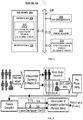
- FIG. 1 illustrates a network 100 implementation of a system 102 for classifying cognitive stress levels from physiological signals using a user evaluated cognitive stress report, in accordance with an embodiment of the present disclosure.
- the system 100 depicts data source 106, that receives the plurality of user evaluated cognitive stress reports recorded for the plurality of trials during the performance of the task and simultaneously captures the signal information from the plurality of physiological signals using the plurality of sensors 116 that includes Electroencephalogram (EEG) signal, Photoplethysmogram (PPG) signal and Galvanic Skin Response (GSR) for a plurality of users during the performance of the task.
- EEG Electroencephalogram
- PPG Photoplethysmogram
- GSR Galvanic Skin Response
- the cognitive stress classification system 102 may be externally coupled (as shown in FIG.1 ) to the computing device 104 or may be internal (not shown) to the computing device 104.
- the plurality of user evaluated cognitive stress reports 114 and the plurality of physiological signals 116 of each user from the plurality of users are acquired through the data acquisition unit 106 and can be stored in the repository 220.
- the repository 220 may be external to the cognitive stress classification system 102 or internal to the cognitive stress classification system 102 (as shown in FIG.2 ).
- the data acquisition unit 106 may be directly connected to the cognitive stress classification system 102.
- a plurality of data acquisition units 106 may be connected to the cognitive stress classification system 102 for clustering users based on their cognitive behavioral patterns at various levels of the task/tasks for each trial during the performance of the task.
- the system 102 may be accessed by multiple users through one or more user devices 104-1, 104-2... 104-N, collectively referred to as user devices 104 hereinafter, or applications residing on the user devices 104.
- the user devices 104 may include, but are not limited to, a portable computer, a personal digital assistant, a handheld device, a Smartphone, a Tablet Computer, a workstation and the like.
- the user devices 104 are communicatively coupled to the system 102 through a network 106.
- the system 102 receives data from the data acquisition unit 106 through a network 108.
- the computing device 104 may be a wireless or a wired network, or a combination thereof.
- the network 108 can be implemented as a computer network, as one of the different types of networks, such as virtual private network (VPN), intranet, local area network (LAN), wide area network (WAN), the internet, and such.
- the network 108 may either be a dedicated network or a shared network, which represents an association of the different types of networks that use a variety of protocols, for example, Hypertext Transfer Protocol (HTTP), Transmission Control Protocol/Internet Protocol (TCP/IP), and Wireless Application Protocol (WAP), to communicate with each other.
- HTTP Hypertext Transfer Protocol
- TCP/IP Transmission Control Protocol/Internet Protocol
- WAP Wireless Application Protocol
- the network 108 may include a variety of network devices, including routers, bridges, servers, computing devices, storage devices.
- the network devices within the network 108 may interact with the cognitive stress classification system 102 through communication links.
- the computing device 104 which implements the cognitive stress classification system 102 can be a workstation, a mainframe computer, a general purpose server, a network server or the like. The components and functionalities of the system 102 are described further in detail with reference to FIG. 2 .
- FIG. 2 illustrates a block diagram of a system 102 for classifying cognitive stress levels of users, in accordance with an embodiment of the present disclosure.
- the cognitive stress classification system 102 includes or is otherwise in communication with one or more hardware processors such as a processor(s) 202, at least one memory such as a memory 204, and an I/O interface 206.
- the processor 202 (hardware processor), the memory 204, and the I/O interface(s) 206 may be coupled by a system bus such as a system bus 210 or a similar mechanism.
- the memory 204 further may include modules 208.
- the modules 208 includes a user clustering and cognitive stress classification module 212 and other modules (not shown) for implementing functions of the cognitive stress classification system 102.
- the modules 208 can be an Integrated Circuit (IC), external to the memory 204 (not shown), implemented using a Field-Programmable Gate Array (FPGA) or an Application-Specific Integrated Circuit (ASIC).
- IC Integrated Circuit
- FPGA Field-Programmable Gate Array
- ASIC Application-Specific Integrated Circuit
- the names of the modules of functional block within the modules 208 referred herein, are used for explanation and are not a limitation.
- the memory 204 can also include the repository 220 (internal to the cognitive stress clustering and classification system 102 as shown in FIG. 2 ).
- the I/O interface 206 may include a variety of software and hardware interfaces, for example, a web interface, a graphical user interface, and the like.
- the I/O interface 206 may include a variety of software and hardware interfaces, for example, interfaces for peripheral device(s), such as a keyboard, a mouse, an external memory, a camera device, and a printer. Further, the I/O interface 206 may enable the system 102 to communicate with other devices, such as web servers and external databases.
- the I/O interface 206 can facilitate multiple communications within a wide variety of networks and protocol types, including wired networks, for example, local area network (LAN), cable, etc., and wireless networks, such as Wireless LAN (WLAN), cellular, or satellite.
- the I/O interface 206 may include one or more ports for connecting a number of computing systems with one another or to another server computer.
- the I/O interface 206 may include one or more ports for connecting a number of devices to one another or to another server.
- the hardware processor 202 may be implemented as one or more microprocessors, microcomputers, microcontrollers, digital signal processors, central processing units, state machines, logic circuitries, and/or any devices that manipulate signals based on operational instructions. Among other capabilities, the hardware processor 202 is configured to fetch and execute computer-readable instructions stored in the memory 204.
- the memory 204 may include any computer-readable medium known in the art including, for example, volatile memory, such as static random access memory (SRAM) and dynamic random access memory (DRAM), and/or non-volatile memory, such as read only memory (ROM), erasable programmable ROM, flash memories, hard disks, optical disks, and magnetic tapes.
- volatile memory such as static random access memory (SRAM) and dynamic random access memory (DRAM)
- non-volatile memory such as read only memory (ROM), erasable programmable ROM, flash memories, hard disks, optical disks, and magnetic tapes.
- the memory 204 includes a plurality of modules 208 that includes routines, programs, objects, components, data structures, and so on, which perform particular tasks or implement particular abstract data types.
- the user clustering and cognitive stress classification module 212 of the system 102 can be configured to receive data from the data acquisition unit 106.
- the repository 220 may include a sensor data employed for physiological sensing of a user and the plurality of user
- the system 102 obtains, the plurality of user evaluated cognitive stress reports recorded for each level among the plurality of levels repeated for the plurality of trials during the performance of the task.
- the level herein referred as stress induced based on difficulties while performing the task.
- the plurality of user evaluated cognitive stress reports comprises an estimate of cognitive stress assessed by each user for the plurality of cognitive stress parameters at each level for the plurality of trials while performing the task.
- the plurality of cognitive stress parameters comprises a valence (V) parameter, an arousal (A) parameter and a dominance (D) parameter.
- V valence
- A arousal
- D dominance
- the system 102 also receives the plurality of physiological signals captured using the plurality of physiological sensors for each user among the plurality of users during the performance of the task.
- the plurality of physiological signals includes, but are not limited to, information gathered from Electroencephalogram (EEG) signal to estimate the neural responses of the user, Photoplethysmogram (PPG) signal to analyze the variations in heart rate and other cardiac parameters of the user and Galvanic skin response (GSR) signal changes of the user, due to variations in skin conductance.
- EEG Electroencephalogram
- PPG Photoplethysmogram
- GSR Galvanic skin response
- the system 102 further computes a mode value and a range value for the plurality of cognitive stress parameters associated with the plurality of user evaluated cognitive stress reports for each user among the plurality of users.
- the mode value and the range value for the plurality of cognitive stress report of the plurality of users are utilized to generate the plurality of normalized cognitive stress reports.
- the normalized cognitive stress report includes an estimate of the cognitive stress experienced by each user at each level of the task during the plurality of trials.
- the plurality of users are clustered into a primary cluster and a secondary cluster based on the plurality of normalized cognitive stress reports using an unsupervised learning technique such that users of each cluster have similar distribution of normalized cognitive stress reports for the plurality of trials of the task and users of different clusters have dissimilar distribution of normalized cognitive stress reports for the plurality of trials of the task.
- the system 102 extracts a plurality of feature sets from the physiological signals of the users associated with the primary cluster. A subset of the features is selected from the plurality of feature sets for the plurality of users associated with the primary cluster using a feature selection technique like Maximum Relevance Minimum Redundancy (mRMR).
- mRMR Maximum Relevance Minimum Redundancy
- the selected feature sets of the plurality of users associated with the primary cluster are segregated into a train user dataset and a test user dataset. Further, a classifier model is trained using the selected feature set for the train users for classifying the cognitive stress levels of test users of primary cluster. The trained classifier model is further utilized by the test user to determine the trials belonging to stressful class and stressless class.
- the components or modules and functionalities of the cognitive stress classification system 102 are described further in detail in conjunction with FIG.3 .
- FIG.3 illustrates an example functional architecture of the system 102 for classifying cognitive stress levels of users from physiological signals by clustering the users using user evaluated cognitive stress report, in accordance with an embodiment of the present disclosure.
- the system 102 includes an unsupervised learning component, a preprocessing component, a feature extraction component and a classifier component.
- the unsupervised learning component is utilized to receive the plurality of users' self evaluated cognitive stress reports to segregate users into the primary cluster and the secondary cluster.
- the unsupervised learning component utilized a plurality of clustering techniques but not limited to k means clustering technique for clustering the plurality of users.
- the clustering component comprises the primary cluster and the secondary cluster.
- the users belonging to each cluster are so determined that users of same cluster have similar distribution of normalized cognitive stress report for the plurality of trials of the task and users of different cluster have dissimilar distribution of normalized cognitive stress report for the plurality of trials of the task.
- the system 102 extracts a plurality of feature sets from the physiological signals for the users associated with the primary cluster.
- the preprocessing component obtains the plurality of physiological signals of the users associated with the primary cluster to remove the noise and artifacts present in the signals.
- the physiological signals obtained from the physiological sensors may be corrupted due to noise and artifacts.
- the system 102 preprocesses the plurality of physiological signals to reduce noise.
- the feature extraction component extracts the plurality of feature sets.
- the classifier component trains the classifier model using the selected feature sets for classifying the cognitive stress of the plurality of users of the primary cluster to determine stressful class and stressless class.
- the classifier component utilizes a random forest classifier model for classifying the users based on the cognitive stress experienced during the performance of the task.
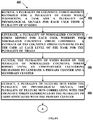
- FIG. 4A-4B illustrates an example flow diagram of a method for classifying cognitive stress levels of users from physiological signals by clustering the users using self evaluated cognitive stress reports, in accordance with an embodiment of the present disclosure
- FIG. 6 illustrates clustering of users based on a plurality of normalized cognitive stress report in conjunction with FIG. 3 , in accordance with an embodiment of the present disclosure.
- the method 400 may be described in the general context of computer executable instructions. Generally, computer executable instructions can include routines, programs, objects, components, data structures, procedures, modules, functions, etc., that perform particular functions or implement particular abstract data types. The method 400 may also be practiced in a distributed computing environment where functions are performed by remote processing devices that are linked through a communication network.
- the method 400 can be implemented in any suitable hardware, software, firmware, or combination thereof.
- the method 400 depicted in the flow chart may be executed by a system 102, for example, the system 102 of FIG.2 .
- the system 102 may be embodied in an exemplary computer system.
- the one or more hardware processors 202 in conjunction with the user clustering and cognitive stress classification module 102 are configured to receive, the plurality of cognitive stress reports recorded for the plurality of users while performing a task and the plurality of physiological signals for each user from the plurality of sensors.
- the one or more hardware processors 202 in conjunction with the user clustering and cognitive stress classification module 102 are configured to generate, the plurality of normalized cognitive stress report for each user, wherein the normalized cognitive stress comprises an estimate of the cognitive stress experienced by the user at each level of the task for the plurality of trials.
- the plurality of normalized cognitive stress reports are generated using the mode and range value as mentioned.
- Mode measure of central tendency
- Range a more interpretable measure of deviation than standard deviation, in case of limited trials) reflects Excitability and Exaggeration.
- the one or more hardware processors 202 in conjunction with the user clustering and cognitive stress classification module 102 are configured to cluster, the plurality of users based on the plurality of normalized cognitive stress report using an unsupervised clustering mechanism to generate a primary cluster and a secondary cluster.
- the primary cluster produced by the proposed scheme E comprises 8 levels totaling 117 instances and centroid at (0, 0, and 0) (levels characterized by moderate valence, arousal and dominance).
- the secondary cluster has centroid at (0,-3, and 0) (set apart by virtue of high arousal). This cluster, comprising 2 levels and 29 instances, is eliminated.
- the one or more hardware processors 202 in conjunction with the user clustering and cognitive stress classification module 102 are configured to extract, a plurality of feature sets from the plurality of physiological signals, the plurality of feature sets correlating with the cognitive stress experienced by the plurality of users associated with the primary cluster.
- the one or more hardware processors 202 in conjunction with the user clustering and cognitive stress classification module 102 are configured to extract, a plurality of feature sets from the plurality of physiological signals, the plurality of feature sets correlating with the cognitive stress experienced by the plurality of users associated with the primary cluster.
- All filters mentioned execute backward and forward filtering. All signals are available at 128Hz sampling frequency. Considering, EEG physiological signal analysis, wherein no information is available about whether the power line interference is at 50Hz or 60Hz. Additionally, the power in the gamma band is concentrated around 45Hz. Thus the signal at each of the 32 channels is passed through a 6 th order elliptical low pass filter having a cut-off frequency of 45Hz. EEG g,i is normalized by subtracting the median of EEG f,i- 1 , then dividing by the interquartile range. EOG and EMG, processed using the same technique, are used to do a regression-based artifact removal from EEG.
- this method can remove up to 80% of artifacts if the baseline consists of distinct eye-blinks and movements. But such a baseline was not incorporated into the experiment design of the AffPac dataset, thus making the artifact removal less effective.
- Spectrogram with 2s windows and 90% overlap, is computed using short-time Fourier transform. Window length is chosen to achieve the desired frequency resolution, while the number of samples per window and overlap were both recommended.
- features are extracted separately from each channel of EEG g,i and re-referenced by considering EEG f,i- 1 as the rest state EEG.
- the galvanic skin response (GSR) signal is down sampled to 64Hz and then low pass filtered at 5Hz using a 32 nd order FIR constrained equi ripple filter. Next, the signal is normalized by subtracting the minimum of GSR f , i- 1 and dividing by the range of the same. Finally, the best fit linear trend is removed from the signal.
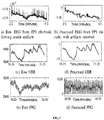
- Samples of raw and processed GSR are illustrated in FIG.7 as described. 18 features are extracted from GSR.
- the methods for Photoplethysmogram (PPG) signal preprocessing and feature extraction exactly follow the methods delineated. 62 features are used. Samples of raw and processed PPG are shown in FIG.7 .
- the one or more hardware processors 202 in conjunction with the user clustering and cognitive stress classification module 102 are configured to select, a subset from the plurality of feature sets, for the plurality of users associated with the primary cluster by a feature ranking method.
- the one or more hardware processors 202 in conjunction with the user clustering and cognitive stress classification module 102 are configured to segregate, the selected feature set of the plurality of users associated with the primary cluster into a train user dataset and a test user dataset, wherein, the test user is randomly selected from the primary cluster and the remaining users associated with the primary cluster are used as train users.
- the one or more hardware processors 202 in conjunction with the user clustering and cognitive stress classification module 102 are configured to train, a classifier model, using the selected feature set for the train users, for classifying the cognitive stress levels of the plurality of test users of primary cluster.
- the one or more hardware processors 202 in conjunction with the user clustering and cognitive stress classification module 102 are configured to classify, using the trained classifier model, the plurality of trials of the test user dataset as stressful and stressless class.
- a random forest classifier is used for training the classifier model for good performance without overfitting.
- Feature importances are estimated using mRMR ranking scheme on balanced data.
- LOSOCV leave one subject out cross validation
- F-score is chosen over accuracy as a more unbiased estimator of classification performance in presence of class imbalance.
- Class F (Frustration/stressful) is being considered the positive class.
- EEG features alone are ranked using the above method.
- FIG. 5 illustrates example gameplays and corresponding timing sequence of physiological signals for a plurality of trials of a task performed by the user, in accordance with an embodiment of the present disclosure.
- the gameplay trials may include difficulty levels.
- the AffPac or Affective Pacman dataset known technique provides data for a total of 10 levels. These datasets were created to intermittently induce stress for each user among the plurality of users. Each user played a modified version of the Pacman game, called Affective Pacman, for approximately 15 consecutive trials. Each trial lasted for 2 minutes, after which the user evaluated their experience of the trial using Self-Assessment Manikin technique.
- the users among the plurality of users were given option to evaluate the gameplay by choosing a rating value on a 9-point Likert scale for each of the plurality of cognitive stress parameters comprising the Valence (V) parameter, the Arousal (A) parameter and the Dominance (D) parameter.
- the next trial started immediately after user provided user evaluated feedback, resulting in f blocks of inconsistent duration.
- the Valence (V) parameter and the Arousal (A) parameter scales were presented as inverted during feedback, such as a high numeric value (e.g. > 5) on the V (or A) scale indicated low Valence (or Arousal) and vice versa and the Dominance (D) parameter scale was not inverted.
- the controls consisted of pressing the left shift and right shift keys to turn the avatar 90°counter-clockwise or clockwise respectively.
- the game progressed as expected in any popular version of Pacman.
- 15% of user keystrokes were ignored and there was a 5% chance of the screen freezing for 2 to 5 frames (screen refresh rate was 25fps).
- Screen refresh rate was 25fps.
- a single trial was randomly selected to be frustrating. So, for 15 trials of a participant, 5 belong to class stressful (F), 10 belong to class stressless (nF). From every subject, physiological signals were recorded for the entire duration spanning all trials.
- the dataset provided EEG, GSR, PPG, EMG and EOG signals.
- the dataset also includes labels for F and nF trials, the plurality of user evaluated cognitive stress reports on V, A and D scales and start and end times of each trial.
- the dataset used provides 2 different sets of labels for each trial, wherein one set of labels consists of inferred labels, determined by the type of stimulus provided, and the other set was provided by the plurality of levels.
- FIG.7 illustrates observed raw and processed samples of physiological signals corresponding to EEG, GSR and PPG signals utilized in classifying cognitive stress levels of users
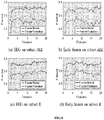
- FIG.8 illustrates performance of the proposed method depicting variation of mean F-scores of stressful class and stressless class, over all LOSOCV folds with number of top features utilized, in accordance with an embodiment of the present disclosure
- the proposed scheme E achieves 0.69 mean F-score.
- Scheme E's performance remains unaffected by early fusion.
- the baseline performances (performance on ALL ) are F-scores of 0.61 and 0.64 respectively for EEG and early fusion.
- Selected feature set is optimized on subset ALL only.
- the subject subset E is formed on the basis of arousal ratings and it is found to reject high arousal levels based on the plurality of normalized cognitive stress reports.
- FIG.9 shows the performance of classifying cognitive stress levels of users in comparison with various conventional methods, in accordance with an embodiment of the present disclosure.
- the system 102 replicates known techniques on the current dataset and on the features extracted by the proposed technique.
- the conventional methods reported performances for the following 4 methods.
- B The baseline performance, using LOSOCV, which is equivalent to our baseline ALL.
- B+CCP In the approach referred to as Changing Class Priors, they tune the misclassification cost of their SVM classifier to the prior probabilities of the test user.
- B+STS In another approach the authors tried Selecting Training Samples.
- the classifier was trained using data only from that cluster into which the test user got classified into.
- B+STS+CCP A combination of the above approaches.
- the SVM classifier was tuned in each case by trying a combination of hyper parameters that maximized a certain performance metric.
- the performance exhibited by ALL in the current work is shown as the baseline.
- E outperforms all the rest of the techniques.
- the features used to cluster the training set users into 2 groups might be found to correlate strongly to the features used to train the classifier. That is, features that dictate whether the test user is more similar to one group of training set users than the other, might correlate to the features from that more similar group which then train the classifier to be tested on the test user.
- the targets are different in the 2 cases. Based on the current data, it is impossible to make a comment regarding how such a choice of features might or might not affect classification performance.
- the embodiments of present disclosure herein addresses unresolved problem of user clustering and cognitive stress classification from physiological signals.
- the disclose system models a robust model thereby generating training data for improving classification model.
- the proposed method eliminates subjective bias present in cognitive stress experienced by, clustering the users and training the classifier model in a cluster-specific manner to improve efficiency of stress detection from the physiological signals.
- the embodiment thus provides homogeneous groups on the basis of self-reported cognitive stress for similar stimuli, and draw training and test levels from the same group to build a model to classify the nature of those stimuli.
- the system extends incorporating to form independent rudimentary cohorts for any physiological signals depending on self-reported cognitive stress reports.
- the disclosed system validates cognitive stress levels for larger number of public datasets.
- the hardware device can be any kind of device which can be programmed including e.g. any kind of computer like a server or a personal computer, or the like, or any combination thereof.
- the device may also include means which could be e.g. hardware means like e.g. an application-specific integrated circuit (ASIC), a field-programmable gate array (FPGA), or a combination of hardware and software means, e.g.
- ASIC application-specific integrated circuit
- FPGA field-programmable gate array
- the means can include both hardware means and software means.
- the method embodiments described herein could be implemented in hardware and software.
- the device may also include software means.
- the embodiments may be implemented on different hardware devices, e.g. using a plurality of CPUs.
- the embodiments herein can comprise hardware and software elements.
- the embodiments that are implemented in software include but are not limited to, firmware, resident software, microcode, etc.
- the functions performed by various modules described herein may be implemented in other modules or combinations of other modules.
- a computer-usable or computer readable medium can be any apparatus that can comprise, store, communicate, propagate, or transport the program for use by or in connection with the instruction execution system, apparatus, or device.
- a computer-readable storage medium refers to any type of physical memory on which information or data readable by a processor may be stored.
- a computer-readable storage medium may store instructions for execution by one or more processors, including instructions for causing the processor(s) to perform steps or stages consistent with the embodiments described herein.
- the term "computer-readable medium” should be understood to include tangible items and exclude carrier waves and transient signals, i.e., be non-transitory. Examples include random access memory (RAM), read-only memory (ROM), volatile memory, nonvolatile memory, hard drives, CD ROMs, DVDs, flash drives, disks, and any other known physical storage media.
Landscapes
- Engineering & Computer Science (AREA)
- Health & Medical Sciences (AREA)
- Life Sciences & Earth Sciences (AREA)
- Theoretical Computer Science (AREA)
- Physics & Mathematics (AREA)
- Data Mining & Analysis (AREA)
- Artificial Intelligence (AREA)
- Medical Informatics (AREA)
- General Engineering & Computer Science (AREA)
- General Physics & Mathematics (AREA)
- Public Health (AREA)
- General Health & Medical Sciences (AREA)
- Evolutionary Computation (AREA)
- Computer Vision & Pattern Recognition (AREA)
- Databases & Information Systems (AREA)
- Evolutionary Biology (AREA)
- Bioinformatics & Cheminformatics (AREA)
- Veterinary Medicine (AREA)
- Animal Behavior & Ethology (AREA)
- Bioinformatics & Computational Biology (AREA)
- Surgery (AREA)
- Molecular Biology (AREA)
- Heart & Thoracic Surgery (AREA)
- Biophysics (AREA)
- Pathology (AREA)
- Biomedical Technology (AREA)
- Psychiatry (AREA)
- Dermatology (AREA)
- Epidemiology (AREA)
- Primary Health Care (AREA)
- Radiology & Medical Imaging (AREA)
- Fuzzy Systems (AREA)
- Mathematical Physics (AREA)
- Physiology (AREA)
- Nuclear Medicine, Radiotherapy & Molecular Imaging (AREA)
- Signal Processing (AREA)
- Child & Adolescent Psychology (AREA)
- Developmental Disabilities (AREA)
- Educational Technology (AREA)
- Hospice & Palliative Care (AREA)
Applications Claiming Priority (1)
| Application Number | Priority Date | Filing Date | Title |
|---|---|---|---|
| IN201821025608 | 2018-07-09 |
Publications (3)
| Publication Number | Publication Date |
|---|---|
| EP3594854A1 true EP3594854A1 (de) | 2020-01-15 |
| EP3594854B1 EP3594854B1 (de) | 2025-12-31 |
| EP3594854C0 EP3594854C0 (de) | 2025-12-31 |
Family
ID=67145736
Family Applications (1)
| Application Number | Title | Priority Date | Filing Date |
|---|---|---|---|
| EP19184188.1A Active EP3594854B1 (de) | 2018-07-09 | 2019-07-03 | Verfahren und system zum clustern von benutzern mit kognitiver stressmeldung zur klassifizierung von stressniveaus |
Country Status (2)
| Country | Link |
|---|---|
| US (1) | US11354339B2 (de) |
| EP (1) | EP3594854B1 (de) |
Families Citing this family (8)
| Publication number | Priority date | Publication date | Assignee | Title |
|---|---|---|---|---|
| US11955209B2 (en) * | 2019-04-29 | 2024-04-09 | International Business Machines Corporation | Cohort selection for agile processes |
| CN111513730B (zh) * | 2020-03-20 | 2023-06-09 | 合肥工业大学 | 基于多通道生理数据的心理压力预测方法和系统 |
| KR102397225B1 (ko) * | 2020-11-19 | 2022-05-12 | 조선대학교산학협력단 | 스트레스 분류 장치 및 방법 |
| WO2022208874A1 (ja) * | 2021-04-02 | 2022-10-06 | 日本電気株式会社 | 学習装置、ストレス推定装置、学習方法、ストレス推定方法及び記憶媒体 |
| US12431235B1 (en) | 2021-12-21 | 2025-09-30 | United Services Automobile Association (Usaa) | Automatic identification of, and responding to, cognition impairment |
| CN114822855B (zh) * | 2022-06-28 | 2022-09-20 | 北京智精灵科技有限公司 | 基于ftrl模型的认知训练任务推送方法、系统及构建方法 |
| CN115120240B (zh) * | 2022-08-30 | 2022-12-02 | 山东心法科技有限公司 | 特殊行业目标感知技能的敏感性评估方法、设备及介质 |
| CN117914984B (zh) * | 2024-03-19 | 2024-06-07 | 深圳百沃彰世科技有限公司 | 一种用于通讯设备终端的多维通讯压力测试方法及系统 |
Citations (1)
| Publication number | Priority date | Publication date | Assignee | Title |
|---|---|---|---|---|
| US20130310660A1 (en) * | 2007-11-14 | 2013-11-21 | Medasense Biometrics Ltd. | System and method for pain monitoring using a multidimensional analysis of physiological signals |
Family Cites Families (7)
| Publication number | Priority date | Publication date | Assignee | Title |
|---|---|---|---|---|
| US8539359B2 (en) | 2009-02-11 | 2013-09-17 | Jeffrey A. Rapaport | Social network driven indexing system for instantly clustering people with concurrent focus on same topic into on-topic chat rooms and/or for generating on-topic search results tailored to user preferences regarding topic |
| WO2013071285A1 (en) * | 2011-11-11 | 2013-05-16 | Rutgers, The State University Of New Jersey | Methods for the diagnosis and treatment of neurological disorders |
| US10423973B2 (en) * | 2013-01-04 | 2019-09-24 | PlaceIQ, Inc. | Analyzing consumer behavior based on location visitation |
| US10417653B2 (en) * | 2013-01-04 | 2019-09-17 | PlaceIQ, Inc. | Inferring consumer affinities based on shopping behaviors with unsupervised machine learning models |
| US10019716B1 (en) * | 2013-11-21 | 2018-07-10 | Google Llc | Method for feedback submission resolution |
| US20150186617A1 (en) * | 2013-12-27 | 2015-07-02 | International Business Machines Corporation | System and method for probabilistic evaluation of contextualized reports and personalized recommendation in travel health personal assistants |
| US10474932B2 (en) * | 2016-09-01 | 2019-11-12 | Uptake Technologies, Inc. | Detection of anomalies in multivariate data |
-
2019
- 2019-07-03 EP EP19184188.1A patent/EP3594854B1/de active Active
- 2019-07-09 US US16/506,505 patent/US11354339B2/en active Active
Patent Citations (1)
| Publication number | Priority date | Publication date | Assignee | Title |
|---|---|---|---|---|
| US20130310660A1 (en) * | 2007-11-14 | 2013-11-21 | Medasense Biometrics Ltd. | System and method for pain monitoring using a multidimensional analysis of physiological signals |
Non-Patent Citations (2)
| Title |
|---|
| DAS DEEPAN ET AL: "Classification and quantitative estimation of cognitive stress from in-game keystroke analysis using EEG and GSR", 2017 IEEE LIFE SCIENCES CONFERENCE (LSC), IEEE, 13 December 2017 (2017-12-13), pages 286 - 291, XP033307076, DOI: 10.1109/LSC.2017.8268199 * |
| KOELSTRA S ET AL: "DEAP: A Database for Emotion Analysis ;Using Physiological Signals", IEEE TRANSACTIONS ON AFFECTIVE COMPUTING, IEEE, USA, vol. 3, no. 1, 1 January 2012 (2012-01-01), pages 18 - 31, XP011460775, ISSN: 1949-3045, DOI: 10.1109/T-AFFC.2011.15 * |
Also Published As
| Publication number | Publication date |
|---|---|
| US20200012665A1 (en) | 2020-01-09 |
| EP3594854B1 (de) | 2025-12-31 |
| US11354339B2 (en) | 2022-06-07 |
| EP3594854C0 (de) | 2025-12-31 |
Similar Documents
| Publication | Publication Date | Title |
|---|---|---|
| US11354339B2 (en) | Method and system for clustering users using cognitive stress report for classifying stress levels | |
| Aljalal et al. | Detection of Parkinson’s disease from EEG signals using discrete wavelet transform, different entropy measures, and machine learning techniques | |
| Brihadiswaran et al. | EEG-based processing and classification methodologies for autism spectrum disorder: A review | |
| Fan et al. | Detecting abnormal pattern of epileptic seizures via temporal synchronization of EEG signals | |
| Jeong et al. | Convolutional neural network for classification of eight types of arrhythmia using 2D time–frequency feature map from standard 12-lead electrocardiogram | |
| Ozdemir et al. | Patient specific seizure prediction system using Hilbert spectrum and Bayesian networks classifiers | |
| Swami et al. | A comparative account of modelling seizure detection system using wavelet techniques | |
| Joy et al. | Multiclass mi-task classification using logistic regression and filter bank common spatial patterns | |
| US11872040B2 (en) | Method and system for assessment of cognitive load from bio-potentials measured using wearable endosomatic device | |
| US20230190204A1 (en) | Statistical dependence-aware biological predictive system | |
| Cîmpanu et al. | A comparative study on classification of working memory tasks using EEG signals | |
| EP3466338B1 (de) | Kognitive belastungsschätzung basierend auf pupillenerweiterung | |
| Balaji et al. | Seizure onset zone (SOZ) identification using effective brain connectivity of epileptogenic networks | |
| CN108960050A (zh) | 归类模型训练方法、心电图数据归类方法、装置及设备 | |
| Medeiros et al. | EEG as a potential ground truth for the assessment of cognitive state in software development activities: A multimodal imaging study | |
| Al Mazroa et al. | EEG-based schizophrenia diagnosis using deep learning with multi-scale and adaptive feature selection | |
| Liyanagedera et al. | Novel machine learning-driven comparative analysis of CSP, STFT, and CSP-STFT fusion for EEG data classification across multiple meditation and non-meditation sessions in BCI pipeline | |
| Rouhani et al. | A comparison of different feature extraction methods for diagnosis of valvular heart diseases using PCG signals | |
| Ghosh et al. | Digital Twin for EEG seizure prediction using time reassigned Multisynchrosqueezing transform-based CNN-BiLSTM-Attention mechanism model | |
| Rudas et al. | On activity identification pipelines for a low-accuracy EEG device | |
| Ju et al. | EEG signal cleaning for brain wave monitoring of construction workers using prediction and clustering models | |
| Wȩsierski et al. | Rating by detection: an artifact detection protocol for rating EEG quality with average event duration | |
| CN116369946B (zh) | 针对孤独症的脑电信号可视化信道选择方法及设备 | |
| Babu et al. | Epilepsy Diagnosis Using Directed Acyclic Graph SVM Technique in EEG Signals. | |
| Peya et al. | Autism spectrum disorder detection using prominent connectivity features from electroencephalography |
Legal Events
| Date | Code | Title | Description |
|---|---|---|---|
| PUAI | Public reference made under article 153(3) epc to a published international application that has entered the european phase |
Free format text: ORIGINAL CODE: 0009012 |
|
| STAA | Information on the status of an ep patent application or granted ep patent |
Free format text: STATUS: THE APPLICATION HAS BEEN PUBLISHED |
|
| AK | Designated contracting states |
Kind code of ref document: A1 Designated state(s): AL AT BE BG CH CY CZ DE DK EE ES FI FR GB GR HR HU IE IS IT LI LT LU LV MC MK MT NL NO PL PT RO RS SE SI SK SM TR |
|
| AX | Request for extension of the european patent |
Extension state: BA ME |
|
| STAA | Information on the status of an ep patent application or granted ep patent |
Free format text: STATUS: REQUEST FOR EXAMINATION WAS MADE |
|
| 17P | Request for examination filed |
Effective date: 20200715 |
|
| RBV | Designated contracting states (corrected) |
Designated state(s): AL AT BE BG CH CY CZ DE DK EE ES FI FR GB GR HR HU IE IS IT LI LT LU LV MC MK MT NL NO PL PT RO RS SE SI SK SM TR |
|
| STAA | Information on the status of an ep patent application or granted ep patent |
Free format text: STATUS: EXAMINATION IS IN PROGRESS |
|
| 17Q | First examination report despatched |
Effective date: 20211122 |
|
| REG | Reference to a national code |
Ref country code: DE Ref legal event code: R079 Free format text: PREVIOUS MAIN CLASS: G06K0009620000 Ipc: G06F0018211300 Ref document number: 602019079745 Country of ref document: DE |
|
| GRAP | Despatch of communication of intention to grant a patent |
Free format text: ORIGINAL CODE: EPIDOSNIGR1 |
|
| STAA | Information on the status of an ep patent application or granted ep patent |
Free format text: STATUS: GRANT OF PATENT IS INTENDED |
|
| RIC1 | Information provided on ipc code assigned before grant |
Ipc: G06F 18/2113 20230101AFI20250929BHEP Ipc: G06F 18/211 20230101ALI20250929BHEP Ipc: A61B 5/24 20210101ALI20250929BHEP Ipc: G06F 18/23 20230101ALI20250929BHEP Ipc: G06F 18/24 20230101ALI20250929BHEP |
|
| INTG | Intention to grant announced |
Effective date: 20251014 |
|
| GRAS | Grant fee paid |
Free format text: ORIGINAL CODE: EPIDOSNIGR3 |
|
| GRAA | (expected) grant |
Free format text: ORIGINAL CODE: 0009210 |
|
| STAA | Information on the status of an ep patent application or granted ep patent |
Free format text: STATUS: THE PATENT HAS BEEN GRANTED |
|
| AK | Designated contracting states |
Kind code of ref document: B1 Designated state(s): AL AT BE BG CH CY CZ DE DK EE ES FI FR GB GR HR HU IE IS IT LI LT LU LV MC MK MT NL NO PL PT RO RS SE SI SK SM TR |
|
| REG | Reference to a national code |
Ref country code: CH Ref legal event code: F10 Free format text: ST27 STATUS EVENT CODE: U-0-0-F10-F00 (AS PROVIDED BY THE NATIONAL OFFICE) Effective date: 20251231 Ref country code: GB Ref legal event code: FG4D |
|
| REG | Reference to a national code |
Ref country code: DE Ref legal event code: R096 Ref document number: 602019079745 Country of ref document: DE |
|
| REG | Reference to a national code |
Ref country code: CH Ref legal event code: R17 Free format text: ST27 STATUS EVENT CODE: U-0-0-R10-R17 (AS PROVIDED BY THE NATIONAL OFFICE) Effective date: 20260116 |
|
| U01 | Request for unitary effect filed |
Effective date: 20251231 |