EP3594820A1 - Dateileseverfahren und anwendungseinheit - Google Patents
Dateileseverfahren und anwendungseinheit Download PDFInfo
- Publication number
- EP3594820A1 EP3594820A1 EP18815932.1A EP18815932A EP3594820A1 EP 3594820 A1 EP3594820 A1 EP 3594820A1 EP 18815932 A EP18815932 A EP 18815932A EP 3594820 A1 EP3594820 A1 EP 3594820A1
- Authority
- EP
- European Patent Office
- Prior art keywords
- file
- application entity
- target file
- file system
- target
- Prior art date
- Legal status (The legal status is an assumption and is not a legal conclusion. Google has not performed a legal analysis and makes no representation as to the accuracy of the status listed.)
- Withdrawn
Links
Images



Classifications
-
- G—PHYSICS
- G06—COMPUTING OR CALCULATING; COUNTING
- G06F—ELECTRIC DIGITAL DATA PROCESSING
- G06F16/00—Information retrieval; Database structures therefor; File system structures therefor
- G06F16/10—File systems; File servers
- G06F16/17—Details of further file system functions
- G06F16/1734—Details of monitoring file system events, e.g. by the use of hooks, filter drivers, logs
-
- G—PHYSICS
- G06—COMPUTING OR CALCULATING; COUNTING
- G06F—ELECTRIC DIGITAL DATA PROCESSING
- G06F11/00—Error detection; Error correction; Monitoring
- G06F11/07—Responding to the occurrence of a fault, e.g. fault tolerance
- G06F11/0703—Error or fault processing not based on redundancy, i.e. by taking additional measures to deal with the error or fault not making use of redundancy in operation, in hardware, or in data representation
- G06F11/0706—Error or fault processing not based on redundancy, i.e. by taking additional measures to deal with the error or fault not making use of redundancy in operation, in hardware, or in data representation the processing taking place on a specific hardware platform or in a specific software environment
- G06F11/0727—Error or fault processing not based on redundancy, i.e. by taking additional measures to deal with the error or fault not making use of redundancy in operation, in hardware, or in data representation the processing taking place on a specific hardware platform or in a specific software environment in a storage system, e.g. in a DASD or network based storage system
-
- G—PHYSICS
- G06—COMPUTING OR CALCULATING; COUNTING
- G06F—ELECTRIC DIGITAL DATA PROCESSING
- G06F11/00—Error detection; Error correction; Monitoring
- G06F11/07—Responding to the occurrence of a fault, e.g. fault tolerance
- G06F11/0703—Error or fault processing not based on redundancy, i.e. by taking additional measures to deal with the error or fault not making use of redundancy in operation, in hardware, or in data representation
- G06F11/0793—Remedial or corrective actions
-
- G—PHYSICS
- G06—COMPUTING OR CALCULATING; COUNTING
- G06F—ELECTRIC DIGITAL DATA PROCESSING
- G06F11/00—Error detection; Error correction; Monitoring
- G06F11/30—Monitoring
- G06F11/34—Recording or statistical evaluation of computer activity, e.g. of down time, of input/output operation ; Recording or statistical evaluation of user activity, e.g. usability assessment
- G06F11/3466—Performance evaluation by tracing or monitoring
- G06F11/3476—Data logging
-
- G—PHYSICS
- G06—COMPUTING OR CALCULATING; COUNTING
- G06F—ELECTRIC DIGITAL DATA PROCESSING
- G06F16/00—Information retrieval; Database structures therefor; File system structures therefor
- G06F16/10—File systems; File servers
- G06F16/11—File system administration, e.g. details of archiving or snapshots
-
- G—PHYSICS
- G06—COMPUTING OR CALCULATING; COUNTING
- G06F—ELECTRIC DIGITAL DATA PROCESSING
- G06F16/00—Information retrieval; Database structures therefor; File system structures therefor
- G06F16/10—File systems; File servers
- G06F16/13—File access structures, e.g. distributed indices
-
- G—PHYSICS
- G06—COMPUTING OR CALCULATING; COUNTING
- G06F—ELECTRIC DIGITAL DATA PROCESSING
- G06F16/00—Information retrieval; Database structures therefor; File system structures therefor
- G06F16/10—File systems; File servers
- G06F16/14—Details of searching files based on file metadata
- G06F16/148—File search processing
-
- G—PHYSICS
- G06—COMPUTING OR CALCULATING; COUNTING
- G06F—ELECTRIC DIGITAL DATA PROCESSING
- G06F11/00—Error detection; Error correction; Monitoring
- G06F11/07—Responding to the occurrence of a fault, e.g. fault tolerance
- G06F11/0703—Error or fault processing not based on redundancy, i.e. by taking additional measures to deal with the error or fault not making use of redundancy in operation, in hardware, or in data representation
- G06F11/0751—Error or fault detection not based on redundancy
- G06F11/0754—Error or fault detection not based on redundancy by exceeding limits
Definitions
- the present disclosure generally relates to the field of data storage technology and, more particularly, relates to a file reading method and an application entity thereof.
- Caching refers to a technology that increases the speed of content access by storing network content that requires frequent access in a disk of a system that is closer to the user and has a faster access speed.
- the present disclosure provides a file reading method and an application entity thereof for improving file reading efficiency.
- the present disclosure provides a file reading method for application in a storage device comprising an application entity and a file system.
- the method includes:
- the file system After the application entity sends a read request to the file system, the file system opens and reads the target file according to the storage path of the target file in the read request. When the file system fails to read the target file, it indicates that the storage space that stores the target file is damaged.
- the file system returns a first error response to the application entity. After receiving the first error response, the application entity obtains the target file from the file source of the target file, and sends the target file and the replacement storage path to the file system.
- the file system re-stores the target file. Since the damaged storage space is already occupied, the file system does not store the re-stored target file in the damaged storage space.
- the file system may open and read the target file from the replacement storage path without repeatedly reading the target file from the damaged storage space, thereby increasing the file reading rate.
- the application entity includes a path set, where the path set includes identifiers of a plurality of stored files and a storage path of each of the plurality of stored files; before sending, by the application entity, the read request to the file system, the method further includes:
- the application entity saves the storage path of each stored file in the path set.
- the storage path corresponding to the file identifier of the target file is determined from the path set.
- the storage path is forwarded to the file system through the read request, so that the file system may open and read the target file according to the storage path.
- the application entity After rewriting the target file, the application entity also saves a correspondence between the file identifier of the target file and the replacement storage path to the path set.
- the re-stored target file may be obtained by reading from the replacement storage path.
- the file system includes a top-level directory and a bad track file directory corresponding to the target file; before sending, by the application entity, the write request to the file system, the method further includes: sending, by the application entity, a migration instruction to the file system, where the migration instruction includes the file identifier of the target file, and an identifier of the top-level directory and an identifier of the bad track file directory that correspond to the target file, and the migration instruction is used to instruct the file system to delete a correspondence between the target file and the top-level directory, and to build a correspondence between the target file and the bad track file directory.
- the file system opens and reads the target file according to the top-level directory directed to by the storage path of the target file. After re-storing the target file, the application entity directs the replacement path of the re-stored target file to the original top-level directory through the migration instruction, and directs the storage path of the damaged original target file to the bad track file directory.
- the file system may not open the target file that is already unreadable.
- the method before saving, by the application entity, the correspondence between the target file and the replacement storage path in the path set, the method further includes: renaming, by the application entity, the file identifier of the target file in the path set.
- the application entity renames the damaged target file in the path set.
- the target file is read next time, since the damaged target file is renamed, what is determined, by the application entity, from the path set based on the file identifier of the target file is the re-stored target file and its corresponding replacement storage path.
- the method further includes: when the application entity receives a second error response returned by the file system, saving, by the application entity, the storage path of the target file into a log file, where the second error response is returned to the application entity when the file system fails to open the target file.
- the file system needs to open the target file before it can read the target file.
- a second error response is returned to the application entity.
- the application entity may confirm that the target file may not be opened. Accordingly, the storage path of the target file is recorded into the log file to allow the operation and maintenance personnel to inspect the problem.
- the present disclosure provides an application entity for application in a storage device comprising the application entity and a file system.
- the application entity comprises:
- the processing unit includes a path set, where the path set includes file identifiers of a plurality of stored files and a storage path of each of the plurality of stored files; the processing unit is further configured to:
- the file system includes a top-level directory and a bad track file directory corresponding to the target file; and the processing unit is further configured to: send a migration instruction to the file system through the transceiving unit, where the migration instruction includes the file identifier of the target file, and an identifier of the top-level directory and an identifier of the bad track file directory that correspond to the target file, and the migration instruction is used to instruct the file system to delete a correspondence between the target file and the top-level directory, and to build a correspondence between the target file and the bad track file directory.
- processing unit is further configured to: rename the file identifier of the target file in the path set.
- the processing unit is further configured to: when the transceiving unit receives a second error response returned by the file system, save the storage path of the target file into a log file, where the second error response is returned to the application entity when the file system fails to open the target file.
- the present disclosure provides a storage device comprising a file system and the application entity according to any one of the second aspect.
- the present disclosure provides a computer readable storage medium for application in a computer comprising an application entity and a file system, where the computer readable storage medium stores computer executable instructions that cause the application entity and the file system of the computer to implement the method according to any one of the first aspect.
- FIG. 1 is a schematic diagram of a logical relationship of an application entity, a file system, and a disk in a storage device. As shown in FIG. 1 , the application entity 1 may interact with the file system 2, and the file system 2 directly manages the disk 3. In general, the application entity 1, also called "application layer,” may provide application services for users.
- the file system 2 is a system in an operating system that is specifically responsible for managing and storing the file information, and generally does not change at will.
- an application entity 1 when an application entity 1 reads a file in the disk 3, it sends a read request to the file system 2. After receiving the read request, the file system 2 opens and reads the file in the disk 3. When the file system 2 cannot open or read a file in the disk 3, the file system will attempt to open or read the file multiple times, which increases the load on the disk 3.
- FIG. 2 is a flowchart of a file reading method according to some embodiments of the present disclosure. As shown in FIG. 2 , the method includes the following steps.
- the application entity sends a read request to the file system, where the read request includes a storage path of a target file, and the read request is used to instruct the file system to open and read the target file according to the storage path of the target file.
- S202 when receiving a first error response returned by the file system, the application entity determines a file source of the target file and obtains the target file from the file source, where the first error response is returned to the application entity when the file system fails to read the target file.
- S203 the application entity sends a write request to the file system, where the write request includes the target file and a replacement storage path of the target file, and the write request is used to instruct the file system to re-store the target file according to the replacement storage path.
- the storage path of the target file is saved by the application entity when storing the target file.
- the application entity includes a path set, where the path set includes file identifiers of a plurality of stored files and a storage path of each of the plurality of stored files.
- the application entity determines the corresponding storage path in the path set according to the file identifier of the target file. After that, the application entity may send the storage path to the file system through the read request, to allow the file system to open and read the target file according to the storage path.
- a read request is generated and sent to the file system.
- a read request includes an open request and an I/O request.
- the application entity first sends an open request to the file system, where the open request includes a storage path of the target file, and is used to instruct the file system to open the target file. After successfully opening the target file, the file system will return a file descriptor of the target file to the application entity.
- the application entity sends an I/O request to the file system again, where the I/O request includes the file descriptor of the target file that instructs the file system to read the target file.
- a first error response which may generally be an EIO (Error I/O) message
- EIO message is an existing message type.
- the file system will return a file error, i.e., an EIO error.
- the operation and maintenance personnel will inspect the files on the disk through some control programs (cp programs).
- cp programs will copy the files on the disk.
- the cp program will receive an EIO message at the file system layer.
- the application entity may also receive a first error response returned by the file system when the file system may not read a target file.
- the application entity may determine that the target file is unreadable at this moment based on the first error response.
- the application entity may determine whether the number of times N of consecutively received first error response for the target file exceeds a preset threshold. If N exceeds the preset threshold, it may be determined that the track that stores the target file is damaged.
- N is greater than or equal to 1.
- the preset threshold may be set to different values based on the actual situations, which the present disclosure is not intended to limit.
- the application entity determines the file source of the target file and obtains the target file from the file source.
- the target file may be sent by another device to the storage device, or may be generated by the storage device itself. If the target file is sent by another device to the storage device, the storage device sends a request message to the file source, so that the file source re-delivers the target file to the storage device. If the target file is generated by the storage device itself, the storage device traces back the system log and re-generates the target file.
- the target file and the replacement storage path of the target file are sent to the file system through the write request.
- the file system may re-store the target file according to the replacement storage path.
- a correspondence between the file identifier of the target file and the replacement storage path is also saved in the path set.
- the application entity After rewriting the target file, the application entity also saves the correspondence between the file identifier of the target file and the replacement storage path to the path set.
- the replacement storage path may be obtained, and thus the re-stored target file is read.
- the file system After the application entity sends a read request to the file system, the file system opens and reads the target file according to the storage path of the target file in the read request. When the file system fails to read the target file, it indicates that the storage space for storing the target file has been damaged.
- the file system returns a first error response to the application entity. After receiving the first error response, the application entity obtains the target file from the file source of the target file, and sends the target file and the replacement storage path to the file system.
- the file system re-stores the target file. Since the damaged storage space has already been occupied, the file system will not store the re-stored target file in the damaged storage space.
- the file system may open and read the target file from the replacement storage path without repeatedly reading the target file from the damaged storage space, thereby increasing the file reading rate.
- the file system includes multiple file directories, and each file storage path has a corresponding top-level directory.
- the file system When the file system opens a target file, the file system first determines the top-level directory corresponding to the target file, and finds, in the top-level directory, a file descriptor corresponding to the target file through multiple sub-levels.
- the file system further includes at least one bad track file directory.
- the application entity sends a migration instruction to the file system, where the migration instruction includes the file identifier of the target file, and an identifier of the top-level directory and an identifier of the bad track file directory that correspond to the target file.
- the file system may delete the correspondence between the target file and the top-level directory, so that the storage path of the target file no longer directs to the top-level directory.
- the file system also builds a correspondence between the target file and the bad track file directory, so that the storage path of the target file directs to the bad track file directory.
- the file system may not find the file descriptor of the target file through the top-level directory, and thus may not open the target file.
- the file descriptor of the re-stored target file may be properly obtained, and thus the re-stored target file is opened.
- the application entity saves the re-stored target file and the replacement storage path to the path set, it may lead the correspondences between the two same file identifier and two different storage paths to be saved in the path set. This will cause inconvenience when the target file is read next time.
- the file identifier of the target file in the path set is renamed first.
- the re-stored target file may continue to use the original file identifier without affecting the subsequent operation process.
- the application entity renames the damaged target file in the path set.
- the file system needs to open a target file before the target file may be read.
- the file system will return a second error response, which may generally be an ENOENT response.
- opening a file requires a search of the index of the file on the disk.
- the index file may be simply considered as the file path. If the information of the index file happens to be located in a bad track, when opening the file, the system will return "the file does not exist," i.e., an ENOENT response.
- an application entity when receiving a second error response, it may determine that the file system did not open the target file, but may not determine whether the problem is due to track damage or file loss.
- the application entity when receiving a second error response returned by the file system, saves the storage path of the target file into a log file.
- the application entity records the storage path of the target file into the log file if the track may not be confirmed to be damaged, so that the operation and maintenance personnel may inspect the problem.
- the unreadable file remains occupying the damaged track and will not be accessed, thereby achieving a goal of isolating the damaged track.
- a single file may reach the GB level.
- the occupied storage space by the unreadable files will become larger and larger.
- the files in the damaged tracks may be periodically cleaned. This will trigger the self-healing mechanism of the disk, to allow the disk to release the spare space to make up for the storage space of the damaged track.
- FIG. 3 is a flowchart of one part of an executable file reading method according to some embodiments of the present disclosure.
- An application entity may determine whether the storage space occupied by a target file is damaged by using the method illustrated in FIG. 3 . As shown in FIG. 3 , the following steps are included.
- S301 the application entity determines a storage path of the target file, file A, in the path set.
- S302 the application entity sends an open request to the file system, where the open request includes the storage path of the file A.
- S303 the file system opens the file A in the disk according to the storage path of the file A. If the file A is successfully opened, proceed to S306; if the file A fails to open, proceed to S304.
- S307 The application entity sends an I/O request to the file system, where the I/O request includes the file descriptor of the file A.
- S308 After receiving the I/O request, the file system reads the file A from the disk according to the file descriptor of the file A. If the reading is successful, proceed to S309; if the reading fails, proceed to S310.
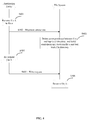
- FIG. 4 is a flowchart of another part of an executable file reading method according to some embodiments of the present disclosure.
- the flowchart shown in FIG. 4 may isolate the damaged storage space and improve file reading efficiency. As shown in FIG. 4 , the following steps are included.
- the application entity sends a migration instruction to the file system, where the migration instruction includes an identifier of the file a, and an identifier of the top-level directory and an identifier of the bad track file directory that correspond to the file a .
- S403 the file system deletes the correspondence between the file a and the top-level directory in the file system according to the migration instruction, and builds a correspondence between the file a and the bad track file directory.
- S405 the application entity sends a write request to the file system, and sends the re-acquired file A and the replacement storage path to the file system.
- the file system opens and reads the target file according to the storage path of the file A in the read request.
- the file system fails to read the target file, it means that the storage space for storing the file A is damaged.
- the file system will return a first error response to the application entity.
- the application entity obtains the file A from the file source of the file A, and sends the file A and the replacement storage path to the file system.
- the file system re-stores the file A. Since the damaged storage space has already been occupied, the file system will not store the re-stored file A in the damaged storage space.
- the application entity sends a read request to the file system to read the file A again, the file system may open and read the target file from the replacement storage path without repeatedly reading the file A in the damaged storage space, thereby improving the file reading rate.
- FIG. 5 is a schematic structural diagram of an application entity according to some embodiments of the present disclosure.
- the application entity 500 includes a transceiving unit 501 and a processing unit 502, where:
- the processing unit 502 includes a path set, where the path set includes file identifiers of a plurality of stored files, and a storage path of each of the plurality of stored files; and the processing unit 502 is further configured to:
- the file system includes a top-level directory and a bad track file directory corresponding to the target file; and the processing unit 502 is further configured to: send a migration instruction to the file system through the transceiving unit 501, where the migration instruction includes the file identifier of the target file, and an identifier of the top-level directory and an identifier of the bad track file directory that correspond to the target file, and the migration instruction is used to instruct the file system to delete a correspondence between the target file and the top-level directory, and to build a correspondence between the target file and the bad track file directory.
- processing unit 502 is further configured to: rename the file identifier of the target file in the path set.
- the processing unit 502 is further configured to: when the transceiving unit 501 receives a second error response returned by the file system, save the storage path of the target file into a log file, where the second error response is returned to the application entity when the file system fails to open the target file.
- each unit is merely a separation of logical functions. In real implementations, these units may be integrated into one physical entity in whole or in part, or may be physically separated.
- the embodiments of the present disclosure provides a storage device comprising a file system and an application entity according to any one of the second aspect.
- the application entity executes the file reading methods provided by any one of the foregoing embodiments when reading a stored file.
- the embodiments of the present disclosure provides a computer readable storage medium for application in a computer comprising an application entity and a file system.
- the computer-readable storage medium stores computer executable instructions and the computer-executable instructions are configured to cause the application entity and the file system in the computer to execute the file reading methods provided by any of the foregoing embodiments.
Landscapes
- Engineering & Computer Science (AREA)
- Theoretical Computer Science (AREA)
- General Engineering & Computer Science (AREA)
- Physics & Mathematics (AREA)
- General Physics & Mathematics (AREA)
- Quality & Reliability (AREA)
- Data Mining & Analysis (AREA)
- Databases & Information Systems (AREA)
- Library & Information Science (AREA)
- Computer Hardware Design (AREA)
- Information Retrieval, Db Structures And Fs Structures Therefor (AREA)
Applications Claiming Priority (2)
| Application Number | Priority Date | Filing Date | Title |
|---|---|---|---|
| CN201810315489.XA CN108733753B (zh) | 2018-04-10 | 2018-04-10 | 一种文件读取方法及应用实体 |
| PCT/CN2018/086179 WO2019196157A1 (zh) | 2018-04-10 | 2018-05-09 | 一种文件读取方法及应用实体 |
Publications (2)
| Publication Number | Publication Date |
|---|---|
| EP3594820A1 true EP3594820A1 (de) | 2020-01-15 |
| EP3594820A4 EP3594820A4 (de) | 2020-08-05 |
Family
ID=63941332
Family Applications (1)
| Application Number | Title | Priority Date | Filing Date |
|---|---|---|---|
| EP18815932.1A Withdrawn EP3594820A4 (de) | 2018-04-10 | 2018-05-09 | Dateileseverfahren und anwendungseinheit |
Country Status (4)
| Country | Link |
|---|---|
| US (1) | US20210224231A1 (de) |
| EP (1) | EP3594820A4 (de) |
| CN (1) | CN108733753B (de) |
| WO (1) | WO2019196157A1 (de) |
Families Citing this family (2)
| Publication number | Priority date | Publication date | Assignee | Title |
|---|---|---|---|---|
| US12001402B2 (en) * | 2021-08-02 | 2024-06-04 | Dell Products L.P. | Dynamically selecting an application to open a file |
| CN116418799A (zh) * | 2021-12-31 | 2023-07-11 | 华为技术有限公司 | 文件传输方法、电子设备及计算机可读存储介质 |
Family Cites Families (16)
| Publication number | Priority date | Publication date | Assignee | Title |
|---|---|---|---|---|
| US7281032B2 (en) * | 2000-06-30 | 2007-10-09 | Hitachi, Ltd. | File sharing system with data mirroring by storage systems |
| US7007047B2 (en) * | 2002-03-29 | 2006-02-28 | Panasas, Inc. | Internally consistent file system image in distributed object-based data storage |
| US7904756B2 (en) * | 2007-10-19 | 2011-03-08 | Oracle International Corporation | Repair planning engine for data corruptions |
| CN100583099C (zh) * | 2008-01-11 | 2010-01-20 | 清华大学 | 文件系统访问记录的动态采集方法 |
| CN101436151B (zh) * | 2008-12-01 | 2012-01-11 | 成都索贝数码科技股份有限公司 | 基于文件系统的数据实时备份方法及其系统 |
| CN102880522B (zh) * | 2012-09-21 | 2014-12-31 | 中国人民解放军国防科学技术大学 | 面向硬件故障的系统关键文件故障纠正方法及装置 |
| CN102902604B (zh) * | 2012-09-28 | 2016-06-29 | 北京奇虎科技有限公司 | 一种用于修复文件的方法和装置 |
| CN104216908A (zh) * | 2013-06-03 | 2014-12-17 | 上海普华诚信信息技术有限公司 | 互联网数据管理系统及其读写方法 |
| JP2015179326A (ja) * | 2014-03-18 | 2015-10-08 | 株式会社東芝 | データ転送装置、データ転送方法およびコンピュータプログラム |
| CN105630900A (zh) * | 2015-12-18 | 2016-06-01 | 浪潮(北京)电子信息产业有限公司 | 一种数据存储方法与系统 |
| CN106919474A (zh) * | 2015-12-28 | 2017-07-04 | 中移(苏州)软件技术有限公司 | 一种缓存数据保护方法和装置 |
| US10684924B2 (en) * | 2016-02-18 | 2020-06-16 | Commvault Systems, Inc. | Data restoration operations based on network path information |
| CN105808161A (zh) * | 2016-02-26 | 2016-07-27 | 四川效率源信息安全技术股份有限公司 | 一种硬盘坏道数据的读取方法 |
| CN105975358B (zh) * | 2016-05-03 | 2019-02-26 | 深圳市杉岩数据技术有限公司 | 一种基于scsi设备的容错方法及系统 |
| CN106874029B (zh) * | 2016-12-30 | 2021-02-02 | 深圳市广和通无线股份有限公司 | 镜像文件加载方法和装置 |
| CN107423425B (zh) * | 2017-08-02 | 2020-08-14 | 德比软件(上海)有限公司 | 一种对k/v格式的数据快速存储和查询方法 |
-
2018
- 2018-04-10 CN CN201810315489.XA patent/CN108733753B/zh active Active
- 2018-05-09 EP EP18815932.1A patent/EP3594820A4/de not_active Withdrawn
- 2018-05-09 WO PCT/CN2018/086179 patent/WO2019196157A1/zh not_active Ceased
- 2018-05-09 US US16/306,934 patent/US20210224231A1/en not_active Abandoned
Also Published As
| Publication number | Publication date |
|---|---|
| WO2019196157A1 (zh) | 2019-10-17 |
| CN108733753A (zh) | 2018-11-02 |
| EP3594820A4 (de) | 2020-08-05 |
| CN108733753B (zh) | 2021-08-03 |
| US20210224231A1 (en) | 2021-07-22 |
Similar Documents
| Publication | Publication Date | Title |
|---|---|---|
| US9235535B1 (en) | Method and apparatus for reducing overheads of primary storage by transferring modified data in an out-of-order manner | |
| US20110022811A1 (en) | Information backup/restoration processing apparatus and information backup/restoration processing system | |
| US9037541B2 (en) | Metadata for data storage array | |
| US10296423B2 (en) | System and method for live virtual incremental restoring of data from cloud storage | |
| US20180046553A1 (en) | Storage control device and storage system | |
| US10176183B1 (en) | Method and apparatus for reducing overheads of primary storage while transferring modified data | |
| US20090070539A1 (en) | Automated File Recovery Based on Subsystem Error Detection Results | |
| US8655847B2 (en) | Mirroring data changes in a database system | |
| US20220129420A1 (en) | Method for facilitating recovery from crash of solid-state storage device, method of data synchronization, computer system, and solid-state storage device | |
| WO2021184996A1 (zh) | 一种针对数据库的数据存储方法及装置 | |
| US20170052718A1 (en) | Duplexing file system data | |
| US8938641B2 (en) | Method and apparatus for synchronizing storage volumes | |
| US20200241969A1 (en) | System and Method for Restoring Metadata Pages | |
| JP2019028954A (ja) | ストレージ制御装置、プログラム、及び重複排除方法 | |
| EP3594820A1 (de) | Dateileseverfahren und anwendungseinheit | |
| US10146683B2 (en) | Space reclamation in space-efficient secondary volumes | |
| US10346077B2 (en) | Region-integrated data deduplication | |
| US9229814B2 (en) | Data error recovery for a storage device | |
| WO2021169163A1 (zh) | 一种文件数据存取方法、装置和计算机可读存储介质 | |
| US20180018124A1 (en) | Data arrangement apparatus and data arrangement method | |
| CN120336088A (zh) | 快照回滚方法、装置、电子设备及存储介质 | |
| US20240020019A1 (en) | Resumable transfer of virtual disks | |
| US11775175B2 (en) | Storage system, storage management method, and storage management program | |
| US20170123716A1 (en) | Intelligent data movement prevention in tiered storage environments | |
| CN116225711B (zh) | 云计算环境中使得虚拟磁盘的分配空间一致的方法及应用 |
Legal Events
| Date | Code | Title | Description |
|---|---|---|---|
| STAA | Information on the status of an ep patent application or granted ep patent |
Free format text: STATUS: UNKNOWN |
|
| STAA | Information on the status of an ep patent application or granted ep patent |
Free format text: STATUS: THE INTERNATIONAL PUBLICATION HAS BEEN MADE |
|
| PUAI | Public reference made under article 153(3) epc to a published international application that has entered the european phase |
Free format text: ORIGINAL CODE: 0009012 |
|
| STAA | Information on the status of an ep patent application or granted ep patent |
Free format text: STATUS: REQUEST FOR EXAMINATION WAS MADE |
|
| 17P | Request for examination filed |
Effective date: 20181221 |
|
| AK | Designated contracting states |
Kind code of ref document: A1 Designated state(s): AL AT BE BG CH CY CZ DE DK EE ES FI FR GB GR HR HU IE IS IT LI LT LU LV MC MK MT NL NO PL PT RO RS SE SI SK SM TR |
|
| AX | Request for extension of the european patent |
Extension state: BA ME |
|
| A4 | Supplementary search report drawn up and despatched |
Effective date: 20200708 |
|
| RIC1 | Information provided on ipc code assigned before grant |
Ipc: G06F 16/00 20190101AFI20200702BHEP Ipc: G06F 11/07 20060101ALI20200702BHEP |
|
| DAV | Request for validation of the european patent (deleted) | ||
| DAX | Request for extension of the european patent (deleted) | ||
| STAA | Information on the status of an ep patent application or granted ep patent |
Free format text: STATUS: EXAMINATION IS IN PROGRESS |
|
| 17Q | First examination report despatched |
Effective date: 20211115 |
|
| STAA | Information on the status of an ep patent application or granted ep patent |
Free format text: STATUS: THE APPLICATION IS DEEMED TO BE WITHDRAWN |
|
| 18D | Application deemed to be withdrawn |
Effective date: 20221201 |