EP3594811A1 - Managing computational tasks in vehicle context - Google Patents
Managing computational tasks in vehicle context Download PDFInfo
- Publication number
- EP3594811A1 EP3594811A1 EP19185675.6A EP19185675A EP3594811A1 EP 3594811 A1 EP3594811 A1 EP 3594811A1 EP 19185675 A EP19185675 A EP 19185675A EP 3594811 A1 EP3594811 A1 EP 3594811A1
- Authority
- EP
- European Patent Office
- Prior art keywords
- tvvs
- task
- timestamp
- computational task
- computational
- Prior art date
- Legal status (The legal status is an assumption and is not a legal conclusion. Google has not performed a legal analysis and makes no representation as to the accuracy of the status listed.)
- Granted
Links
Images






Classifications
-
- H—ELECTRICITY
- H04—ELECTRIC COMMUNICATION TECHNIQUE
- H04L—TRANSMISSION OF DIGITAL INFORMATION, e.g. TELEGRAPHIC COMMUNICATION
- H04L67/00—Network arrangements or protocols for supporting network services or applications
- H04L67/01—Protocols
- H04L67/10—Protocols in which an application is distributed across nodes in the network
-
- G—PHYSICS
- G06—COMPUTING OR CALCULATING; COUNTING
- G06F—ELECTRIC DIGITAL DATA PROCESSING
- G06F9/00—Arrangements for program control, e.g. control units
- G06F9/06—Arrangements for program control, e.g. control units using stored programs, i.e. using an internal store of processing equipment to receive or retain programs
- G06F9/46—Multiprogramming arrangements
- G06F9/50—Allocation of resources, e.g. of the central processing unit [CPU]
- G06F9/5083—Techniques for rebalancing the load in a distributed system
- G06F9/5088—Techniques for rebalancing the load in a distributed system involving task migration
-
- G—PHYSICS
- G06—COMPUTING OR CALCULATING; COUNTING
- G06F—ELECTRIC DIGITAL DATA PROCESSING
- G06F9/00—Arrangements for program control, e.g. control units
- G06F9/06—Arrangements for program control, e.g. control units using stored programs, i.e. using an internal store of processing equipment to receive or retain programs
- G06F9/46—Multiprogramming arrangements
- G06F9/48—Program initiating; Program switching, e.g. by interrupt
- G06F9/4806—Task transfer initiation or dispatching
- G06F9/4843—Task transfer initiation or dispatching by program, e.g. task dispatcher, supervisor, operating system
-
- G—PHYSICS
- G06—COMPUTING OR CALCULATING; COUNTING
- G06F—ELECTRIC DIGITAL DATA PROCESSING
- G06F9/00—Arrangements for program control, e.g. control units
- G06F9/06—Arrangements for program control, e.g. control units using stored programs, i.e. using an internal store of processing equipment to receive or retain programs
- G06F9/44—Arrangements for executing specific programs
- G06F9/455—Emulation; Interpretation; Software simulation, e.g. virtualisation or emulation of application or operating system execution engines
- G06F9/45533—Hypervisors; Virtual machine monitors
- G06F9/45558—Hypervisor-specific management and integration aspects
-
- G—PHYSICS
- G06—COMPUTING OR CALCULATING; COUNTING
- G06F—ELECTRIC DIGITAL DATA PROCESSING
- G06F9/00—Arrangements for program control, e.g. control units
- G06F9/06—Arrangements for program control, e.g. control units using stored programs, i.e. using an internal store of processing equipment to receive or retain programs
- G06F9/46—Multiprogramming arrangements
- G06F9/48—Program initiating; Program switching, e.g. by interrupt
- G06F9/4806—Task transfer initiation or dispatching
- G06F9/4843—Task transfer initiation or dispatching by program, e.g. task dispatcher, supervisor, operating system
- G06F9/485—Task life-cycle, e.g. stopping, restarting, resuming execution
-
- G—PHYSICS
- G06—COMPUTING OR CALCULATING; COUNTING
- G06F—ELECTRIC DIGITAL DATA PROCESSING
- G06F9/00—Arrangements for program control, e.g. control units
- G06F9/06—Arrangements for program control, e.g. control units using stored programs, i.e. using an internal store of processing equipment to receive or retain programs
- G06F9/46—Multiprogramming arrangements
- G06F9/48—Program initiating; Program switching, e.g. by interrupt
- G06F9/4806—Task transfer initiation or dispatching
- G06F9/4843—Task transfer initiation or dispatching by program, e.g. task dispatcher, supervisor, operating system
- G06F9/485—Task life-cycle, e.g. stopping, restarting, resuming execution
- G06F9/4856—Task life-cycle, e.g. stopping, restarting, resuming execution resumption being on a different machine, e.g. task migration, virtual machine migration
-
- G—PHYSICS
- G06—COMPUTING OR CALCULATING; COUNTING
- G06F—ELECTRIC DIGITAL DATA PROCESSING
- G06F9/00—Arrangements for program control, e.g. control units
- G06F9/06—Arrangements for program control, e.g. control units using stored programs, i.e. using an internal store of processing equipment to receive or retain programs
- G06F9/46—Multiprogramming arrangements
- G06F9/48—Program initiating; Program switching, e.g. by interrupt
- G06F9/4806—Task transfer initiation or dispatching
- G06F9/4843—Task transfer initiation or dispatching by program, e.g. task dispatcher, supervisor, operating system
- G06F9/4881—Scheduling strategies for dispatcher, e.g. round robin, multi-level priority queues
-
- G—PHYSICS
- G06—COMPUTING OR CALCULATING; COUNTING
- G06F—ELECTRIC DIGITAL DATA PROCESSING
- G06F9/00—Arrangements for program control, e.g. control units
- G06F9/06—Arrangements for program control, e.g. control units using stored programs, i.e. using an internal store of processing equipment to receive or retain programs
- G06F9/46—Multiprogramming arrangements
- G06F9/48—Program initiating; Program switching, e.g. by interrupt
- G06F9/4806—Task transfer initiation or dispatching
- G06F9/4843—Task transfer initiation or dispatching by program, e.g. task dispatcher, supervisor, operating system
- G06F9/4881—Scheduling strategies for dispatcher, e.g. round robin, multi-level priority queues
- G06F9/4887—Scheduling strategies for dispatcher, e.g. round robin, multi-level priority queues involving deadlines, e.g. rate based, periodic
-
- G—PHYSICS
- G06—COMPUTING OR CALCULATING; COUNTING
- G06F—ELECTRIC DIGITAL DATA PROCESSING
- G06F9/00—Arrangements for program control, e.g. control units
- G06F9/06—Arrangements for program control, e.g. control units using stored programs, i.e. using an internal store of processing equipment to receive or retain programs
- G06F9/46—Multiprogramming arrangements
- G06F9/50—Allocation of resources, e.g. of the central processing unit [CPU]
- G06F9/5005—Allocation of resources, e.g. of the central processing unit [CPU] to service a request
- G06F9/5011—Allocation of resources, e.g. of the central processing unit [CPU] to service a request the resources being hardware resources other than CPUs, Servers and Terminals
-
- G—PHYSICS
- G06—COMPUTING OR CALCULATING; COUNTING
- G06F—ELECTRIC DIGITAL DATA PROCESSING
- G06F9/00—Arrangements for program control, e.g. control units
- G06F9/06—Arrangements for program control, e.g. control units using stored programs, i.e. using an internal store of processing equipment to receive or retain programs
- G06F9/46—Multiprogramming arrangements
- G06F9/50—Allocation of resources, e.g. of the central processing unit [CPU]
- G06F9/5005—Allocation of resources, e.g. of the central processing unit [CPU] to service a request
- G06F9/5011—Allocation of resources, e.g. of the central processing unit [CPU] to service a request the resources being hardware resources other than CPUs, Servers and Terminals
- G06F9/5016—Allocation of resources, e.g. of the central processing unit [CPU] to service a request the resources being hardware resources other than CPUs, Servers and Terminals the resource being the memory
-
- G—PHYSICS
- G06—COMPUTING OR CALCULATING; COUNTING
- G06F—ELECTRIC DIGITAL DATA PROCESSING
- G06F9/00—Arrangements for program control, e.g. control units
- G06F9/06—Arrangements for program control, e.g. control units using stored programs, i.e. using an internal store of processing equipment to receive or retain programs
- G06F9/46—Multiprogramming arrangements
- G06F9/50—Allocation of resources, e.g. of the central processing unit [CPU]
- G06F9/5005—Allocation of resources, e.g. of the central processing unit [CPU] to service a request
- G06F9/5027—Allocation of resources, e.g. of the central processing unit [CPU] to service a request the resource being a machine, e.g. CPUs, Servers, Terminals
-
- G—PHYSICS
- G06—COMPUTING OR CALCULATING; COUNTING
- G06F—ELECTRIC DIGITAL DATA PROCESSING
- G06F9/00—Arrangements for program control, e.g. control units
- G06F9/06—Arrangements for program control, e.g. control units using stored programs, i.e. using an internal store of processing equipment to receive or retain programs
- G06F9/46—Multiprogramming arrangements
- G06F9/50—Allocation of resources, e.g. of the central processing unit [CPU]
- G06F9/5005—Allocation of resources, e.g. of the central processing unit [CPU] to service a request
- G06F9/5027—Allocation of resources, e.g. of the central processing unit [CPU] to service a request the resource being a machine, e.g. CPUs, Servers, Terminals
- G06F9/5038—Allocation of resources, e.g. of the central processing unit [CPU] to service a request the resource being a machine, e.g. CPUs, Servers, Terminals considering the execution order of a plurality of tasks, e.g. taking priority or time dependency constraints into consideration
-
- G—PHYSICS
- G06—COMPUTING OR CALCULATING; COUNTING
- G06F—ELECTRIC DIGITAL DATA PROCESSING
- G06F9/00—Arrangements for program control, e.g. control units
- G06F9/06—Arrangements for program control, e.g. control units using stored programs, i.e. using an internal store of processing equipment to receive or retain programs
- G06F9/46—Multiprogramming arrangements
- G06F9/50—Allocation of resources, e.g. of the central processing unit [CPU]
- G06F9/5061—Partitioning or combining of resources
- G06F9/5072—Grid computing
-
- H—ELECTRICITY
- H04—ELECTRIC COMMUNICATION TECHNIQUE
- H04L—TRANSMISSION OF DIGITAL INFORMATION, e.g. TELEGRAPHIC COMMUNICATION
- H04L67/00—Network arrangements or protocols for supporting network services or applications
- H04L67/01—Protocols
- H04L67/12—Protocols specially adapted for proprietary or special-purpose networking environments, e.g. medical networks, sensor networks, networks in vehicles or remote metering networks
-
- H—ELECTRICITY
- H04—ELECTRIC COMMUNICATION TECHNIQUE
- H04L—TRANSMISSION OF DIGITAL INFORMATION, e.g. TELEGRAPHIC COMMUNICATION
- H04L67/00—Network arrangements or protocols for supporting network services or applications
- H04L67/50—Network services
- H04L67/60—Scheduling or organising the servicing of application requests, e.g. requests for application data transmissions using the analysis and optimisation of the required network resources
- H04L67/61—Scheduling or organising the servicing of application requests, e.g. requests for application data transmissions using the analysis and optimisation of the required network resources taking into account QoS or priority requirements
-
- H—ELECTRICITY
- H04—ELECTRIC COMMUNICATION TECHNIQUE
- H04L—TRANSMISSION OF DIGITAL INFORMATION, e.g. TELEGRAPHIC COMMUNICATION
- H04L67/00—Network arrangements or protocols for supporting network services or applications
- H04L67/50—Network services
- H04L67/60—Scheduling or organising the servicing of application requests, e.g. requests for application data transmissions using the analysis and optimisation of the required network resources
- H04L67/62—Establishing a time schedule for servicing the requests
-
- H—ELECTRICITY
- H04—ELECTRIC COMMUNICATION TECHNIQUE
- H04W—WIRELESS COMMUNICATION NETWORKS
- H04W4/00—Services specially adapted for wireless communication networks; Facilities therefor
- H04W4/30—Services specially adapted for particular environments, situations or purposes
- H04W4/40—Services specially adapted for particular environments, situations or purposes for vehicles, e.g. vehicle-to-pedestrians [V2P]
- H04W4/44—Services specially adapted for particular environments, situations or purposes for vehicles, e.g. vehicle-to-pedestrians [V2P] for communication between vehicles and infrastructures, e.g. vehicle-to-cloud [V2C] or vehicle-to-home [V2H]
-
- H—ELECTRICITY
- H04—ELECTRIC COMMUNICATION TECHNIQUE
- H04W—WIRELESS COMMUNICATION NETWORKS
- H04W4/00—Services specially adapted for wireless communication networks; Facilities therefor
- H04W4/30—Services specially adapted for particular environments, situations or purposes
- H04W4/40—Services specially adapted for particular environments, situations or purposes for vehicles, e.g. vehicle-to-pedestrians [V2P]
- H04W4/46—Services specially adapted for particular environments, situations or purposes for vehicles, e.g. vehicle-to-pedestrians [V2P] for vehicle-to-vehicle communication [V2V]
-
- G—PHYSICS
- G06—COMPUTING OR CALCULATING; COUNTING
- G06F—ELECTRIC DIGITAL DATA PROCESSING
- G06F9/00—Arrangements for program control, e.g. control units
- G06F9/06—Arrangements for program control, e.g. control units using stored programs, i.e. using an internal store of processing equipment to receive or retain programs
- G06F9/44—Arrangements for executing specific programs
- G06F9/455—Emulation; Interpretation; Software simulation, e.g. virtualisation or emulation of application or operating system execution engines
- G06F9/45533—Hypervisors; Virtual machine monitors
- G06F9/45558—Hypervisor-specific management and integration aspects
- G06F2009/45595—Network integration; Enabling network access in virtual machine instances
-
- G—PHYSICS
- G06—COMPUTING OR CALCULATING; COUNTING
- G06F—ELECTRIC DIGITAL DATA PROCESSING
- G06F2209/00—Indexing scheme relating to G06F9/00
- G06F2209/48—Indexing scheme relating to G06F9/48
- G06F2209/484—Precedence
-
- G—PHYSICS
- G06—COMPUTING OR CALCULATING; COUNTING
- G06F—ELECTRIC DIGITAL DATA PROCESSING
- G06F2209/00—Indexing scheme relating to G06F9/00
- G06F2209/50—Indexing scheme relating to G06F9/50
- G06F2209/502—Proximity
-
- G—PHYSICS
- G06—COMPUTING OR CALCULATING; COUNTING
- G06F—ELECTRIC DIGITAL DATA PROCESSING
- G06F2209/00—Indexing scheme relating to G06F9/00
- G06F2209/50—Indexing scheme relating to G06F9/50
- G06F2209/5021—Priority
-
- G—PHYSICS
- G06—COMPUTING OR CALCULATING; COUNTING
- G06F—ELECTRIC DIGITAL DATA PROCESSING
- G06F2209/00—Indexing scheme relating to G06F9/00
- G06F2209/50—Indexing scheme relating to G06F9/50
- G06F2209/503—Resource availability
-
- G—PHYSICS
- G06—COMPUTING OR CALCULATING; COUNTING
- G06F—ELECTRIC DIGITAL DATA PROCESSING
- G06F2209/00—Indexing scheme relating to G06F9/00
- G06F2209/50—Indexing scheme relating to G06F9/50
- G06F2209/505—Clust
-
- G—PHYSICS
- G06—COMPUTING OR CALCULATING; COUNTING
- G06F—ELECTRIC DIGITAL DATA PROCESSING
- G06F2209/00—Indexing scheme relating to G06F9/00
- G06F2209/50—Indexing scheme relating to G06F9/50
- G06F2209/508—Monitor
Definitions
- the present disclosure relates to managing computational tasks.
- the disclosure relates to technologies for managing computational tasks in a vehicle context.
- computing systems In the vehicle context, computing systems generally receive input data from vehicles to perform various computational tasks and provide output data of the computational tasks to the vehicles to facilitate their operations.
- modern computing systems often include multiple computing entities and often rely on resource monitoring to manage computational tasks executed by the computing entities.
- these computing systems often require massive amounts of communication resources for transmitting data to and from the computing entities. Therefore, it is generally impractical or impossible for these computing systems to operate with vehicular networks due to their dynamic and limited communication resources.
- the existing solutions usually assign one computational task to multiple computing entities for execution to address potential risk of task failure. As a result, these existing solutions are generally inefficient in utilizing computational resources of the computing entities.
- a computer-implemented method comprises: receiving a computational task; determining a processing resource requirement of the computational task; determining available processing resources of a first temporal vehicular virtual server (TVVS) at a first timestamp, the first TVVS comprising first participant vehicles proximally located relative to one another on a road segment at the first timestamp; determining vehicle movement data of the first participant vehicles; estimating available processing resources of the first TVVS at a second timestamp based on the vehicle movement data of the first participant vehicles, the second timestamp being subsequent to the first timestamp; determining to execute the computational task on the first TVVS based on the processing resource requirement of the computation task, the available processing resources of the first TVVS at the first timestamp, and the estimated available processing resources of the first TVVS at the second timestamp; and responsive to determining to execute the computational task on the first TVVS, assigning the computational task to the first TVVS to perform an execution of the computational task.
- TVVS temporal vehicular virtual server
- FIG. 1 Another innovative aspect of the subject matter described in this disclosure may be embodied in computer-implemented methods comprising: receiving a computational task; determining a processing resource requirement of the computational task; determining, from vehicles on a road segment, candidate participant vehicles proximally located relative to one another on the road segment at a first timestamp; determining vehicle movement data of the candidate participant vehicles; determining available processing resources of a candidate temporal vehicular virtual server (TVVS) at the first timestamp, the candidate TVVS comprising the candidate participant vehicles at the first timestamp; estimating available processing resources of the candidate TVVS at a second timestamp based on the vehicle movement data of the candidate participant vehicles, the second timestamp being subsequent to the first timestamp; determining that the computational task is executable on the candidate TVVS based on the processing resource requirement of the computation task, the available processing resources of the candidate TVVS at the first timestamp, and the estimated available processing resources of the candidate TVVS at the second timestamp; responsive to determining that the computational task is executable on the candidate
- FIG. 1 Another innovative aspect of the subject matter described in this disclosure may be embodied in systems comprising: one or more processors; one or more memories storing instructions that, when executed by the one or more processors, cause the system to: receive a computational task; determine a processing resource requirement of the computational task; determine available processing resources of a first temporal vehicular virtual server (TVVS) at a first timestamp, the first TVVS comprising first participant vehicles proximally located relative to one another on a road segment at the first timestamp; determine vehicle movement data of the first participant vehicles; estimate available processing resources of the first TVVS at a second timestamp based on the vehicle movement data of the first participant vehicles, the second timestamp being subsequent to the first timestamp; determine to execute the computational task on the first TVVS based on the processing resource requirement of the computation task, the available processing resources of the first TVVS at the first timestamp, and the estimated available processing resources of the first TVVS at the second timestamp; and responsive to determining to execute the computational task on the first TVVS, assign
- FIG. 1 Another innovative aspect of the subject matter described in this disclosure may be embodied in systems comprising: one or more processors; one or more memories storing instructions that, when executed by the one or more processors, cause the system to: receive a computational task; determine a processing resource requirement of the computational task; determine, from vehicles on a road segment, candidate participant vehicles proximally located relative to one another on the road segment at a first timestamp; determine vehicle movement data of the candidate participant vehicles; determine available processing resources of a candidate temporal vehicular virtual server (TVVS) at the first timestamp, the candidate TVVS comprising the candidate participant vehicles at the first timestamp; estimate available processing resources of the candidate TVVS at a second timestamp based on the vehicle movement data of the candidate participant vehicles, the second timestamp being subsequent to the first timestamp; determine that the computational task is executable on the candidate TVVS based on the processing resource requirement of the computation task, the available processing resources of the candidate TVVS at the first timestamp, and the estimated available processing resources of the candidate TVVS at the
- estimating the available processing resources of the first TVVS at the second timestamp includes determining, from the first participant vehicles, second participant vehicles proximally located relative to one another on the road segment at the second timestamp based on the vehicle movement data of the first participant vehicles, the first TVVS comprising the second participant vehicles at the second timestamp, and aggregating available processing resources of the second participant vehicles into the estimated available processing resources of the first TVVS at the second timestamp; that determining the second timestamp based on the first timestamp and a task duration of the computational task; that the vehicle movement data of each participant vehicle included in the first participant vehicles specifies one or more of a vehicle speed, a vehicle geolocation, and a vehicle route of the participant vehicle; that determining, at a first checkpoint timestamp during the execution of the computational task, a completion processing resource requirement of the computational task, determining available processing resources of the first TVVS at the first checkpoint timestamp, determining that the first TVVS is
- implementations may each optionally include one or more of the following features: that the candidate participant vehicles have a relative distance to one another on the road segment satisfying a predefined relative distance threshold; that determining that the computational task is executable on the candidate TVVS includes determining that the available processing resources of the candidate TVVS at the first timestamp satisfies the processing resource requirement of the computational task, and determining that the estimated available processing resources of the candidate TVVS at the second timestamp satisfies the processing resource requirement of the computational task; that determining the second timestamp based on the first timestamp and a task duration of the computational task; that estimating the available processing resources of the candidate TVVS at the second timestamp includes determining, from the candidate participant vehicles, first candidate participant vehicles proximally located relative to one another on the road segment at the second timestamp based on the vehicle movement data of the candidate participant vehicles, the candidate TVVS comprising the first candidate participant vehicles at the second timestamp, and aggregating available processing resources of the first candidate participant vehicles into the estimated available processing resources of the
- implementations of one or more of these and other aspects include corresponding systems, apparatus, and computer programs, configured to perform the actions of methods, encoded on non-transitory computer storage devices.
- the novel technology for managing computational tasks in the vehicle context presented in this disclosure is particularly advantageous in a number of respects.
- the technology described herein is capable of monitoring and estimating the available processing resources of the computing entities (e.g., temporal vehicular virtual servers), and reassigning a computational task from a current computing entity executing the computational task to another computing entity if necessary.
- the computational task is reassigned before the temporal vehicular virtual server currently executing the computational task dissolves and/or before the available processing resources of the current computing entity become insufficient to complete the computational task
- the present technology can avoid redundantly assigning the computational task to multiple computing entities of the computing system.
- the utilization of the processing resources provided by the computing system can be optimized without increasing the risk of task failure or degrading the quality of service.
- the present technology is capable of assigning the computational tasks to the computing entities based on communication profile of the communication tasks. Therefore, each computational task can be executed by a computing entity that minimizes the communication resources required for receiving and distributing relevant data of the communication task, and/or minimizes the communication bandwidth over communication networks that incur monetary costs for data transmission.
- the technology described herein can effectively manage computational vehicular tasks.
- the technology includes various aspects, such as but not limited to methods and corresponding systems, that can determine available processing resources of a first temporal vehicular virtual server (TVVS) at a first timestamp, receive vehicle movement data of first participant vehicles included in the first TVVS at the first timestamp, and estimate available processing resources of the first TVVS at a second timestamp subsequent to the first timestamp based on the vehicle movement data of first participant vehicles.
- the available processing resources of the first TVVS at the first timestamp and the estimated available processing resources of the first TVVS at the second timestamp may be used to determine whether to execute a computational task having a processing resource requirement on the first TVVS, and assign the computational task to the first TVVS accordingly.
- the computational task may be reassigned to a second TVVS or to a stationary computing server to continue the task execution if necessary.
- FIG. 1A is a block diagram of an example system 100 for managing computational tasks.
- the system 100 includes one or more centralized servers 101a ... 101n, one or more local servers 107a ... 107n, one or more vehicle platforms 103a ... 103n, and one or more temporal vehicular virtual servers (TVVS) 109a ... 109n.
- each TVVS 109 may comprise one or more vehicle platforms 103 connected to each other to form a vehicle cluster, the vehicle platforms 103 in the vehicle cluster may contribute their available processing resources to collaboratively perform the functionalities of the temporal vehicular virtual server (TVVS) 109.
- the centralized servers 101 and the local servers 107 may be stationary computing servers and may be coupled for electronic communication via a network 105.
- the TVVS 109 may be communicatively coupled to the network 105 as reflected by signal line 156, communicatively coupled to the local servers 107 as reflected by signal line 160, and communicatively coupled to other TVVSs 109 as reflected by signal line 170.
- the vehicle platforms 103 may be communicatively coupled to the TVVSs 109 as reflected by signal line 164, communicatively coupled to local servers 107 as reflected by signal line 168, and communicatively coupled to other components of the system 100 via the network 105 through the signal line 166.
- a letter after a reference number e.g., "103a” represents a reference to the element having that particular reference number.
- the system 100 depicted in Figure 1A is provided by way of example and the system 100 and/or further systems contemplated by this present disclosure may include additional and/or fewer components, may combine components and/or divide one or more of the components into additional components, etc.
- the system 100 may include any number of vehicle platforms 103, TVVSs 109, networks 105, local servers 107, or centralized servers 101.
- the network 105 may be a conventional type, wired and/or wireless, and may have numerous different configurations including a star configuration, token ring configuration, or other configurations.
- the network 105 may include one or more local area networks (LAN), wide area networks (WAN) (e.g., the Internet), personal area networks (PAN), public networks, private networks, virtual networks, virtual private networks, peer-to-peer networks, near field networks (e.g., Bluetooth®, NFC, etc.), and/or other interconnected data paths across which multiple devices may communicate.
- LAN local area networks
- WAN wide area networks
- PAN personal area networks
- public networks private networks
- virtual networks virtual private networks
- peer-to-peer networks e.g., near field networks
- near field networks e.g., Bluetooth®, NFC, etc.
- the network 105 may also be coupled to or include portions of a telecommunications network for sending data in a variety of different communication protocols.
- Example protocols include, but are not limited to, transmission control protocol / Internet protocol (TCP/IP), user datagram protocol (UDP), transmission control protocol (TCP), hypertext transfer protocol (HTTP), secure hypertext transfer protocol (HTTPS), dynamic adaptive streaming over HTTP (DASH), real-time streaming protocol (RTSP), real-time transport protocol (RTP) and the real-time transport control protocol (RTCP), voice over Internet protocol (VOIP), file transfer protocol (FTP), WebSocket (WS), wireless access protocol (WAP), various messaging protocols (SMS, MMS, XMS, IMAP, SMTP, POP, WebDAV, etc.), or other suitable protocols.
- TCP/IP transmission control protocol / Internet protocol
- UDP user datagram protocol
- TCP transmission control protocol
- HTTP hypertext transfer protocol
- HTTPS secure hypertext transfer protocol
- DASH dynamic adaptive streaming over HTTP
- RTSP real-
- the network 105 is a wireless network using a connection such as DSRC (Dedicated Short Range Communication), WAVE, 802.11p, a 3G, 4G, 5G+ network, WiFiTM, satellite networks, vehicle-to-infrastructure/infrastructure-to-vehicle (V2I/I2V) networks, vehicle-to-infrastructure/infrastructure-to-cloud (V2I/I2C) networks, vehicle-to-infrastructure/vehicle-to-everything (V2I/V2X) networks, vehicle-to-vehicle (V2V) networks, cellular networks, or any other wireless networks.
- DSRC Dedicated Short Range Communication
- WAVE Wireless Fidelity
- 802.11p Wireless Fidelity
- 3G, 4G, 5G+ network Wireless Fidelity
- WiFiTM Wireless Fidelity
- the network 105 may incur monetary cost for each data transmission over the network 105.
- Figure 1A illustrates a single block for the network 105 that couples to the centralized server(s) 101, the local server(s) 107, and/or the TVVS(s) 109, it should be understood that the network 105 may in practice comprise any number of combination of networks, as noted above.
- the vehicle platform(s) 103 include computing device(s) 152 having sensor(s) 113, processor(s) 115, memory(ies) 117, communication unit(s) 119, a vehicle data store 123, and a task managing application 120.
- Examples of computing device(s) 152 may include virtual or physical computer processors, control units, micro-controllers, etc., which are coupled to other components of the vehicle platform(s) 103, such as one or more sensors 113, actuators, motivators, etc.
- the vehicle platform(s) 103 are capable of transporting from one point to another.
- Non-limiting examples of the vehicle platform(s) 103 include a vehicle, an automobile, a bus, a boat, a plane, a bionic implant, a robot, or any other platforms with non-transitory computer electronics (e.g., a processor, a memory or any combination of non-transitory computer electronics).
- the vehicle platform(s) 103 may be referred to herein as vehicle(s).
- the vehicle platform(s) 103 may be communicatively coupled to one another via vehicle-to-vehicle (V2V) connections (e.g., DSRC, WiFiTM, etc.) to send and receive data to and from one another as the vehicle platform(s) 103 travel along the roads.
- V2V vehicle-to-vehicle
- Figure 1B illustrates a structure diagram 190 of the system 100 with multiple communication connections between various components of the system 100.
- each vehicle platform 103 can establish V2V connections with nearby vehicle platforms 103 (e.g., the signal line 172, etc.) to form a vehicle cluster that performs the functionalities of a temporal vehicular virtual server (TVVS) 109.
- V2V vehicle-to-vehicle
- the TVVS 109 may send and receive data to and from other vehicle platforms 103 via the V2V connections (e.g., the signal line 164, etc.).
- the TVVS 109 may also send and receive data to and from other TVVSs 109 via the V2V connections (e.g., the signal line 170, etc.).
- the implementation of the V2V connections 164 and the V2V connections 170 for data transmission among the vehicle platforms 103 and the TVVSs 109 is particularly advantageous, because it can significantly reduce the transmission latency and monetary cost for sending and receiving data to and from these entities.
- the vehicle platform(s) 103 may be communicatively coupled to the local server(s) 107 to send and receive data to and from the local server(s) 107 via vehicle-to-infrastructure (V2I) connections (e.g., the signal line 168).
- V2I vehicle-to-infrastructure
- the local server 107 may be a computing infrastructure located on the roadside of the road segment on which the vehicle platform 103 travel. Therefore, the vehicle platform 103 may establish the V2I connection 168 with the local server 107 to send and receive data to and from the local server 107.
- the vehicle platform(s) 103 may also be communicatively coupled to the network 105 to send and receive data to and from other components of the system 100 via the network 105.
- the vehicle platform(s) 103 may send and receive data to and from the centralized servers 101, the local servers 107, the TVVSs 109, other vehicle platforms 103, etc. via the network 105 through the network connections (e.g., the signal line 166).
- the network connections e.g., the signal line 166.
- the data transmission via the network 105 through the network connections 166 may incur monetary cost.
- the processor(s) 115 may execute software instructions (e.g., tasks) by performing various input/output, logical, and/or mathematical operations.
- the processor(s) 115 may have various computing architectures to process data signals.
- the processor(s) 115 may be physical and/or virtual, and may include a single core or plurality of processing units and/or cores.
- the processor may be an electronic control unit (ECU) implemented in the vehicle platform 103 such as a car, although other types of platform are also possible and contemplated.
- the ECUs may receive and store the sensor data (e.g., the Global Positioning System (GPS) data), the resource data (e.g., the processing capacity data), etc.
- GPS Global Positioning System
- the processor(s) 115 may be capable of generating and providing electronic display signals to the input/output device(s), supporting the display of images, capturing and transmitting images, performing complex tasks including various types of task execution monitoring and resource estimation, etc.
- the processor(s) 115 may be coupled to the memory(ies) 117 via the bus 154 to access data and instructions therefrom and store data therein.
- the bus 154 may couple the processor(s) 115 to the other components of the vehicle platform(s) 103 including, for example, the sensor(s) 113, the memory(ies) 117, the communication unit(s) 119, and/or the vehicle data store 123.
- the task managing application 120 is computer logic executable to manage computational tasks in vehicle context.
- the centralized servers 101 may include the instances 120a
- the local servers 107 may include the instances 120b
- the vehicle platform 103a ... 103n may include the instances 120c ... 120n
- the temporal vehicular virtual servers (TVVS) 109 may include the virtual instances 120p (not shown) of the task managing application 120.
- the virtual instance 120p included in a temporal vehicular virtual server (TVVS) 109 may be implemented in a centralized manner.
- the virtual instance 120p may be the instance 120 of a vehicle platform 103 included in the vehicle cluster that forms the temporal vehicular virtual server (TVVS) 109.
- the virtual instance 120p may be implemented in a distributed manner.
- the instances 120 included in multiple vehicle platforms 103 of the vehicle cluster may collaboratively perform the functionalities of the virtual instance 120p.
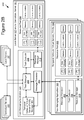
- each instance 120a... 120n and 120p may comprise one or more components the task managing application 120 depicted in Figure 2A , and may be configured to fully or partially perform the functionalities described herein depending on where the instance resides.
- the task managing application 120 may be implemented using software executable by one or more processors of one or more computer devices, using hardware, such as but not limited to a field-programmable gate array (FPGA), an application-specific integrated circuit (ASIC), etc., and/or a combination of hardware and software, etc.
- the task managing application 120 may receive and process the vehicle data and communicate with other elements of the vehicle platform 103 via the bus 154, such as the memory 117, the communication unit 119, the vehicle data store 123, etc.
- the task managing application 120 is described in details below with reference to at least Figures 1B-9 .
- the memory(ies) 117 includes a non-transitory computer-usable (e.g., readable, writeable, etc.) medium, which can be any tangible non-transitory apparatus or device that can contain, store, communicate, propagate or transport instructions, data, computer programs, software, code, routines, etc., for processing by or in connection with the processor(s) 115.
- the memory(ies) 117 may store the task managing application 120.
- the memory(ies) 117 may include one or more of volatile memory and nonvolatile memory.
- the memory(ies) 117 may include, but is not limited, to one or more of a dynamic random access memory (DRAM) device, a static random access memory (SRAM) device, a discrete memory device (e.g., a PROM, FPROM, ROM), a hard disk drive, an optical disk drive (CD, DVD, Blue-rayTM, etc.). It should be understood that the memory(ies) 117 may be a single device or may include multiple types of devices and configurations.
- DRAM dynamic random access memory
- SRAM static random access memory
- a discrete memory device e.g., a PROM, FPROM, ROM
- CD compact disc drive
- DVD Blu-rayTM
- the communication unit 119 transmits data to and receives data from other computing devices to which it is communicatively coupled (e.g., via V2V connections 164, via V2I connections 168, and/or via the network 105 through the network connections 166).
- the communication unit 119 may include one or more wired interfaces and/or wireless transceivers to send and receive data using wired and/or wireless connections.
- the communication unit 119 may exchange data with other computing nodes using standard communication methods, such as those discussed above.
- the sensor(s) 113 includes any type of sensors suitable for the vehicle platform(s) 103.
- the sensor(s) 113 may be configured to collect any type of signal data suitable to determine characteristics of the vehicle platform 103 and/or its internal and external environments.
- Non-limiting examples of the sensor(s) 113 include various optical sensors (CCD, CMOS, 2D, 3D, light detection and ranging (LIDAR), cameras, etc.), audio sensors, motion detection sensors, barometers, altimeters, thermocouples, moisture sensors, infrared (IR) sensors, radar sensors, other photo sensors, gyroscopes, accelerometers, speedometers, steering sensors, braking sensors, switches, vehicle indicator sensors, windshield wiper sensors, geolocation sensors (e.g., GPS sensors), orientation sensor, wireless transceivers (e.g., cellular, WiFiTM, near-field, etc.), sonar sensors, ultrasonic sensors, touch sensors, proximity sensors, distance sensors, etc.
- IR infrared
- IR infrare
- one or more sensors 113 may include externally facing sensors provided at the front side, rear side, right side, and/or left side of the vehicle platform 103 in order to capture the situational context surrounding the vehicle platform 103.
- the TVVS 109 may also have the sensing capabilities provided by the sensors 113 of these multiple vehicle platforms 103.
- the vehicle data store 123 includes a non-transitory storage medium that stores various types of data.
- the vehicle data store 123 may store vehicle data being communicated between different components of a given vehicle platform 103 using a bus, such as a controller area network (CAN) bus.
- the vehicle data may include vehicle operation data collected from multiple sensors 113 coupled to different components of the vehicle platform 103 for monitoring operating states of these components, e.g., acceleration, deceleration, wheel speed (Revolutions Per Minute - RPM), steering angle, braking force, etc.
- the vehicle data may include a vehicle identifier (ID) uniquely identifying the vehicle platform 103 (e.g., Vehicle Identification Number (VIN)) and/or a temporal vehicular virtual server ID uniquely identifying the temporal vehicular virtual server (TVVS) 109 that comprises the vehicle platform 103 as a participant vehicle.
- the vehicle data may also include vehicle movement data describing the vehicle movement of the vehicle platform 103.
- the vehicle movement data may include the vehicle speed, the vehicle geolocation (e.g., GPS coordinates) indicating the geographic location of the vehicle platform 103, the vehicle route currently followed by the vehicle platform 103 to get to a destination, etc. Other types of vehicle movement data are also possible and contemplated.
- the vehicle data store 123 may store resource availability data of the vehicle platform 103.
- the resource availability data of the vehicle platform 103 may include multiple resource availability entries, each resource availability entry may describe the available processing resources of the vehicle platform 103 at a particular timestamp.
- the resource availability entry may indicate the quantities of various resource components available for use in the vehicle platform 103 at the particular timestamp.
- the resource availability entry may include the amount of available computing resource (e.g., number of available Central Processing Unit (CPU) cycles), the amount of available data storage resource (e.g., capacity of free storage space), the amount of available memory resource (e.g., capacity of free memory space), the amount of available communication resource (e.g., unoccupied communication bandwidth), the amount of available sensing resource (e.g., the amount of sensor data captured by the sensors 113), etc. of the vehicle platform 103.
- the amount of available computing resource e.g., number of available Central Processing Unit (CPU) cycles
- the amount of available data storage resource e.g., capacity of free storage space
- the amount of available memory resource e.g., capacity of free memory space
- the amount of available communication resource e.g., unoccupied communication bandwidth
- the amount of available sensing resource e.g., the amount of sensor data captured by the sensors 113
- 1 GHz e.g. 10 9 CPU cycles
- the vehicle data store 123 may be part of a data storage system (e.g., a standard data or database management system) for storing and providing access to data.
- a data storage system e.g., a standard data or database management system
- Other types of data stored in the vehicle data store 123 are also possible and contemplated.
- the temporal vehicular virtual server (TVVS) 109 is a virtual vehicular server being formed by one or more vehicle platforms 103.
- the vehicle platforms 103 proximately located relative to one another on a road segment may connect to one another via V2V connections 172 to create a vehicle cluster.
- the vehicle platforms 103 included in the vehicle cluster may contribute their available processing resources (e.g., processing capacity, data storage space, memory space, communication bandwidth, etc.) into a resource pool to collaboratively perform the functionalities of the temporal vehicular virtual server (TVVS) 109.
- the vehicle platforms 103 included in the vehicle cluster that performs the functionalities of the temporal vehicular virtual server (TVVS) 109 may be referred to as participant vehicles of the temporal vehicular virtual server (TVVS) 109.
- the temporal vehicular virtual server (TVVS) 109 is capable of transporting from one point to another on a road segment as the participant vehicles of the temporal vehicular virtual server (TVVS) 109 travel along the road segment.
- the relative distance of the vehicle platform 103 to other participant vehicles of the temporal vehicular virtual server (TVVS) 109 may need to satisfy a predefined relative distance threshold (e.g., 150m). As the vehicle platform 103 travels along the road segment, such relative distance may vary over time and the vehicle platform 103 may dynamically participate in or depart from the vehicle cluster of the temporal vehicular virtual server (TVVS) 109.
- a predefined relative distance threshold e.g. 150m
- each participant vehicle may dynamically join and leave the vehicle cluster of the temporal vehicular virtual server (TVVS) 109, the available processing resources of the temporal vehicular virtual server (TVVS) 109 contributed by these participant vehicles may significantly change according to their vehicle movements.
- the existence of the temporal vehicular virtual server (TVVS) 109 may also be temporary.
- the TVVS 109 may be communicatively coupled to other vehicle platforms 103 to send and receive data to and from other vehicle platforms 103 via the V2V connections 164.
- the TVVS 109 may also be communicatively coupled to other TVVSs 109 to send and receive data to and from other TVVSs 109 via the V2V connections 170.
- the TVVS 109 may be communicatively coupled to the local servers 107 to send and receive data to and from the local servers 107 via the V2I connections (e.g., the signal line 160).
- the local server 107 may be a computing infrastructure located on the roadside of the road segment on which the participant vehicles of the temporal vehicular virtual server (TVVS) 109 travel. Therefore, the TVVS 109 may establish the V2I connection 160 with the local server 107 to send and receive data to and from the local server 107.
- the TVVS 109 may also be communicatively coupled to the network 105 to send and receive data to and from other components of the system 100 via the network 105.
- the TVVS 109 may send and receive data to and from the centralized servers 101, the local servers 107, other TVVSs 109, etc. via the network 105 through the network connections (e.g., the signal line 156).
- the data transmission via the network 105 through the network connections 156 may incur monetary cost.
- the temporal vehicular virtual server (TVVS) 109 may include a virtual processor, a virtual memory, and a virtual communication unit virtualized from the available processing resources contributed by the participant vehicles of the temporal vehicular virtual server (TVVS) 109.
- the temporal vehicular virtual server 109 may include a virtual instance 120p of the task managing application 120 and a virtual data store 128 (not shown).
- the participant vehicles of the temporal vehicular virtual server (TVVS) 109 may contribute the data storage resource of their vehicle data stores 123 to form the virtual data store 128.
- the virtual data store 128 may include a non-transitory storage medium that stores various types of data for access and/or retrieval by the task managing application 120.
- the virtual data store 128 may store the unique temporal vehicular virtual server ID of the TVVS 109, the geolocation indicating geographic location (e.g., GPS coordinates) of the TVVS 109, and vehicle cluster data describing the vehicle cluster that forms the temporal vehicular virtual server (TVVS) 109.
- the geolocation of the TVVS 109 may be the geographic location of a leading vehicle platform 103 that initiates the vehicle cluster and/or coordinates the establishment of the temporal vehicular virtual server (TVVS) 109.
- the vehicle cluster data may include one or more participant vehicle entries, each participant vehicle entry may describe a participant vehicle in the vehicle cluster of the temporal vehicular virtual server (TVVS) 109.
- the participant vehicle entry may include the vehicle ID of the participant vehicle, the vehicle movement data of the participant vehicle, the participation start time at which the participant vehicle joined the vehicle cluster, the participation end time at which the participant vehicle left or potentially leaves the vehicle cluster, etc.
- the vehicle movement data of the participant vehicle may include the vehicle speed, the vehicle geolocation (e.g., GPS coordinates), the vehicle route, etc. of the participant vehicle.
- the virtual data store 128 may store resource data describing the resource pool of the temporal vehicular virtual server (TVVS) 109.
- the resource data may include resource availability data, resource mapping data, resource allocation data, etc. associated with the TVVS 109.
- the resource availability data of the TVVS 109 may include multiple resource availability entries, each resource availability entry may describe the available processing resources of the TVVS 109 at a particular timestamp.
- the resource availability entry may indicate the quantities of available processing resources contributed by each participant vehicle of the temporal vehicular virtual server (TVVS) 109 at the particular timestamp, and the total quantities of available processing resources in the resource pool of the TVVS 109 at the particular timestamp.
- the available processing resource contributed by the participant vehicles of the temporal vehicular virtual server (TVVS) 109 may include multiple physical resource units. These physical resource units may be organized and/or aggregated into multiple virtual resource units of the TVVS 109 using virtualization techniques. In some embodiments, for each virtual resource unit in the resource pool of the TVVS 109, the resource mapping data of the TVVS 109 may map the virtual resource unit to one or more corresponding physical resource units of one or more participant vehicles. In some embodiments, the virtual resource units in the resource pool of the TVVS 109 may be allocated to various computational tasks to perform the task execution as needed.
- the resource allocation data of the TVVS 109 may specify the computational task to which the virtual resource unit is allocated.
- the resource data of the TVVS 109 may include other types of resource mapping data and resource allocation data.
- the virtual data store 128 may store a task execution list of the TVVS 109.
- the task execution list may include one or more computational task entries, each computational task entry may describe a computational task assigned to the TVVS 109 to perform the task execution.
- the computational task may be a unit of processing workload to be assigned to and/or executed by a computing entity of the system 100 (e.g., the centralized servers 101, the local servers 107, the TVVSs 109, the vehicle platforms 103, etc.).
- the computing entity that executes the computational task may be referred to as the computing entity hosting the computational task.
- the execution of the computational task may include retrieving and/or receiving task input data of the computational task, processing the task input data to generate task output data of the computational task, and transmitting the task output data of the computational task to one or more requesting entities.
- the execution of the computational task may include one or more processing operations.
- Non-limiting examples of the processing operations include, but are not limited to, data sensing operations, data processing operations, data storing operations, data communicating operations, etc.
- each processing operation may itself be considered a computational task and may be performed by different computing entities. Other types of processing operation are also possible and contemplated.
- the execution of a computational task performed by the TVVS 109 may include receiving road scene images captured by first vehicle platforms 103 located on a road segment, processing the road scene images to generate a dynamic map of the road segment, transmitting the dynamic map of the road segment to second vehicle platforms 103 located in a proximate geographic region (e.g., the geographic region within a radius of 2 miles from the road segment), and storing the dynamic map of the road segment in the virtual data store 128 for later retrieval upon request of other entities.
- a proximate geographic region e.g., the geographic region within a radius of 2 miles from the road segment
- the execution of the computational task may include the data sensing operations and the data communicating operations performed by the first vehicle platforms 103, the data processing operations, the data storing operations, and the data communicating operations performed by the TVVS 109, and/or the data communicating operations performed by the second vehicle platforms 103.
- the task execution list of the TVVS 109 stored in the virtual data store 128 may include one or more computational task entries, each computational task entry may include various types of task data describing a computational task.
- the task data of the computational task may include task metadata specifying multiple properties of the computational task.
- Non-limiting examples of the task metadata include, but are not limited to, the unique task ID of the computational task, the task category to which the computational task is classified (e.g., task category of "image processing tasks," task category of "map generation tasks,” etc.), the task priority metric indicating the priority level of the computational task (e.g., task priority metric of 0.2, task priority metric of 0.9, etc.), the requesting timestamp at which the computational task is requested.
- the task metadata may also include the task execution status indicating the current execution status of the computational task (e.g., task execution status of "preprocessing,” task execution status of "execution completed” etc.), the task execution time indicating the amount of time during which the computational task has been executed (e.g., 00:03:30), the remaining execution time indicating the amount of additional time needed to complete the computational task, the task progress metric indicating the task completion percentage (e.g., 87%) and/or the task execution speed (e.g., 11%/s) of the computational task, etc.
- the task execution status indicating the current execution status of the computational task (e.g., task execution status of "preprocessing," task execution status of "execution completed” etc.)
- the task execution time indicating the amount of time during which the computational task has been executed (e.g., 00:03:30)
- the remaining execution time indicating the amount of additional time needed to complete the computational task
- the task progress metric indicating the task completion percentage (e.g.
- the task metadata of the computational task may include a performance requirement of the computational task.
- the performance requirement may describe the requirement of performance that the execution of the computational task needs to satisfy.
- the performance requirement of the computational task may specify the task duration indicating the execution time threshold of the computational task (e.g., 00:05:30), the target delivery timestamp by which the requesting entity needs to receive the task output data of the computational task (e.g., November 05, 2018, 14:00:00), the communication latency threshold associated with the task input data of the computational task (e.g., 2s), the communication latency threshold associated with the task output data of the computational task (e.g., 4s), etc.
- Other types of performance requirement are also possible and contemplated.
- the task metadata of the computational task may include a processing resource requirement describing the requirement of various resource components to perform the execution of the computational task.
- the processing resource requirement may include a computation profile and a communication profile.
- the computation profile of the computational task may specify the amount of computing resource, the amount of data storage resource, the amount of memory resource, the amount of sensing resource, etc. required to perform the execution of the computational task.
- the communication profile of the computational task may specify various factors that can be used to compute such amount of communication resource (e.g., the required communication bandwidth).
- the communication profile of the computational task may specify the input data size of the task input data, the output data size of the task output data, the frequency of request for the task input data, the frequency of request for the task output data, etc. associated with the computational task.
- the communication profile may also specify the geolocation associated with the task input data of the computational task and the geolocation associated with the task output data of the computational task.
- the geolocation associated with the task input data may be the geographic location of the computing entities from which the task input data of the computational task is received, and the geolocation associated with the task output data may be the geographic location of the computing entities to which the task output data of the computational task is transmitted.
- the task metadata of the computational task may include a completion processing resource requirement of the computational task.
- the completion processing resource requirement may describe the requirement of various resource components to complete the execution of the computational task at a checkpoint timestamp during such execution.
- the data components specified in the completion processing resource requirement of the computational task may be similar to the data components specified in the processing resource requirement of the computational task, and thus not repeated again for brevity.
- the task data of the computational task may include task description describing the computational task in an executable manner.
- the task description may include program source code to be executed to perform the computational task, the task input data, the task executing data, etc. of the computational task.
- the task input data may be included in the task description of the computational task (e.g., content items to be stored, etc.), retrieved from or generated by the computing entity hosting the computational task, and/or received from other entities of the system 100 as the computational task is executed, etc.
- the task input data of the computational task may include both the road scene images received from the first vehicle platforms 103 located on the road segment and the road scene images generated by the participant vehicles of the TVVS 109.
- the task executing data may be temporary data generated during the execution of the computational task.
- the task executing data may include the task variables (e.g., Histogram of Oriented Gradients (HOG) feature vectors, etc.), the virtual machine image describing the current execution state of the computational task, etc.
- the task data may include any type of data that is necessary to execute or to continue the execution of the computational task.
- the virtual data store 128 may be part of a data storage system (e.g., a standard data or database management system) for storing and providing access to data.
- a data storage system e.g., a standard data or database management system
- Other types of data stored in the virtual data store 128 are also possible and contemplated.
- the local server 107 includes a hardware and/or virtual server that includes a processor, a memory, and network communication capabilities (e.g., a communication unit). In some embodiments, the local server 107 may manage and/or perform the execution of computational tasks for the computing entities of the system 100. In some embodiments, the local server 107 may have a coverage area 192 including a road segment on which the vehicle platforms 103 and the participant vehicles of multiple TVVSs 109 travel. These vehicle platforms 103 and/or these participant vehicles of the TVVSs 109 may have their computational tasks being managed and/or executed by the local server 107. In some embodiments, the local server 107 may also manage and/or execute the computational tasks for other local servers 107 and the centralized servers 101.
- a hardware and/or virtual server that includes a processor, a memory, and network communication capabilities (e.g., a communication unit). In some embodiments, the local server 107 may manage and/or perform the execution of computational tasks for the computing entities of the system 100. In some embodiments, the local server
- the local server 107 may be implemented as a computing infrastructure located on the roadside of the road segment (e.g., a roadside unit). In some embodiments, the local server 107 may be may be implemented as a stationary computing server located within a predefined distance from the corresponding coverage area 192 (e.g., 30km).
- the local server 107 may be communicatively coupled to the network 105 to send and receive data to and from other components of the system 100 via the network 105.
- the local server 107 may send and receive data to and from the centralized servers 101, other local servers 107, the TVVSs 109, the vehicle platforms 103, etc. via the network 105 through the network connections (e.g., the signal line 162).
- the local server 107 may be implemented as a computing infrastructure located on the roadside of the road segment on which the vehicle platforms 103 and the participant vehicles of the TVVSs 109 travel. Therefore, in some embodiments, the local server 107 may send and receive data to and from these vehicle platforms 103 via the V2I connections 168.
- the local server 107 may also send and receive data to and from these TVVSs 109 via the V2I connections 160.
- the implementation of the V2I connections 168 and the V2V connections 160 for data transmission between the local server 107 and the vehicle platforms 103 and/or the TVVSs 109 is particularly advantageous, because it can significantly reduce the transmission latency and monetary cost for sending and receiving data to and from these entities.
- the local server 107 may include an instance of the task managing application 120b and a data store 126 that store various types of data for access and/or retrieval by this application.
- the data store 126 includes a non-transitory storage medium that stores the unique local server ID of the local server 107, the local server geolocation indicating geographic location (e.g., GPS coordinates) of the local server 107, the coverage data describing the coverage area 192 of the local server 107 (e.g., coverage geolocation, coverage boundary, etc.).
- the data store 126 may also store resource data describing the resource pool of the local server 107.
- the resource data may include multiple resource availability entries describing the available processing resources of the local server 107 at multiple timestamps.
- each resource availability entry may indicate the amount of available computing resource (e.g., number of available CPU cycles), the amount of available data storage resource (e.g., capacity of free storage space), the amount of available memory resource (e.g., capacity of free memory space), the amount of available communication resource (e.g., unoccupied communication bandwidth), etc. of the local server 107 at a particular timestamp.
- the data store 126 may also store a task execution list of the local server 107.
- the task execution list may include one or more computational task entries describing one or more computational tasks assigned to the local server 107 to perform the task execution.
- each computational task entry may include the task metadata specifying various properties of the computational task and the task description describing the computational task in an executable manner.
- the data store 126 may store vehicle information describing one or more vehicle platforms 103 located within the coverage area 192 of the local server 107. These vehicle platforms 103 may be individual vehicle platforms 103 that are not currently participating in temporal vehicular virtual servers (TVVS) 109.
- the vehicle information may include multiple vehicle entries, each vehicle entry may include the vehicle ID, the vehicle movement data, the resource availability data, etc. of an individual vehicle platform 103 located within the coverage area 192.
- the vehicle movement data of the vehicle platform 103 may indicate the vehicle speed, the vehicle geolocation (e.g., GPS coordinates), the vehicle route, etc. of the vehicle platform 103.
- the resource availability data of the vehicle platform 103 may indicate the amount of available computing resource, the amount of available data storage resource, the amount of available memory resource, the amount of available communication resource, etc. of the vehicle platform 103 at multiple timestamps.
- the data store 126 may also store vehicle information describing the vehicle platforms 103 located within the coverage areas 192 of other local servers 107.
- the data store 126 may store centralized server information describing one or more centralized servers 101.
- the centralized server information may include multiple centralized server entry, each centralized server entry may include the unique centralized server ID, the centralized server geolocation, the resource availability data, etc. of a centralized server 101.
- the resource availability data of the centralized server 101 may indicate the amount of available computing resource, the amount of available data storage resource, the amount of available memory resource, the amount of available communication resource, etc. of the centralized server 101 at multiple timestamps.
- the data store 126 may also store local server information describing other local server(s) 107.
- the local server information may include multiple local server entries, each local server entry may include the unique local server ID, the local server geolocation, the coverage data, the resource availability data, etc. of another local server 107.
- the resource availability data of the another local server 107 may indicate the amount of available computing resource, the amount of available data storage resource, the amount of available memory resource, the amount of available communication resource, etc. of the another local server 107 at multiple timestamps.
- the data store 126 may store temporal vehicular virtual server information (TVVS information) describing the TVVS(s) and the candidate TVVS(s) located within the coverage area 192 of the local server 107.
- the local server 107 may manage a set of TVVSs including one or more existing TVVSs 109 and a set of candidate TVVSs including one or more candidate TVVSs located on a road segment within its coverage area 192.
- the TVVS information may include a TVVS entry indicating the unique TVVS ID, the TVVS geolocation, the vehicle cluster data, the resource availability data, etc. of the TVVS 109.
- the TVVS geolocation may indicate the geographic location of the TVVS 109 (e.g., the TVVS geolocation of the TVVS 109 may be determined as the vehicle geolocation of the leading vehicle platform 103 that coordinates the establishment of the TVVS 109).
- the vehicle cluster data may describe the vehicle cluster that forms the TVVS 109.
- the vehicle cluster data of the TVVS 109 may include the vehicle ID, the vehicle movement data, the participation start time, the participation end time, etc. of each participant vehicle.
- the resource availability data of the TVVS 109 may describe the available processing resources of the TVVS 109 at multiple timestamps. For each particular timestamp, the resource availability data may indicate the quantities of available processing resources contributed by each participant vehicle of the TVVS 109, and the total quantities of available processing resources in the resource pool of the TVVS 109 at the particular timestamp.
- the candidate TVVS may comprise the candidate participant vehicles that can potentially connect to one another to form a new temporal vehicular virtual servers (TVVS) 109.
- the candidate participant vehicles may be the individual vehicle platforms 103 and/or the participant vehicles of the existing TVVSs 109 located within the coverage area 192 of the local server 107.
- the TVVS information may include a candidate TVVS entry indicating the candidate TVVS geolocation, the candidate vehicle cluster data, the resource availability data, etc. of the candidate TVVS.
- the candidate TVVS geolocation may indicate the geographic location of the candidate TVVS (e.g., the candidate TVVS geolocation may be determined as the vehicle geolocation of any candidate participant vehicle included in the candidate TVVS).
- the candidate vehicle cluster data may describe the candidate vehicle cluster that potentially forms the new TVVS 109 corresponding to the candidate TVVS.
- the candidate vehicle cluster data of the candidate TVVS may include the vehicle ID, the vehicle movement data, etc. of each candidate participant vehicle.
- the resource availability data of the candidate TVVS may describe the available processing resources of the candidate TVVS.
- the resource availability data may indicate the quantities of available processing resources potentially contributed by each candidate participant vehicle of the candidate TVVS, and the total quantities of available processing resources associated with the candidate TVVS if the candidate TVVS is actually established.
- the data store 126 may also store TVVS information describing the TVVS(s) and the candidate TVVS(s) located within the coverage areas 192 of other local servers 107.
- the data store 126 may store a task assignment list describing multiple computational tasks currently assigned to various computing entities of the system 100 (e.g., the centralized servers 101, the local servers 107, the TVVSs 109, the vehicle platforms 103, etc.).
- the task assignment list may include multiple task assignment entries corresponding to multiple computational tasks, each task assignment entry may include the unique task ID of the computational task, the unique entity ID of the computing entity to which the computational task is assigned (e.g., centralized server ID, local server ID, TVVS ID, vehicle ID, etc.), the task performance metrics of the computational tasks, etc.
- the task assignment entry may also include other types of task metadata associated with the computational task.
- the data store 126 may be part of a data storage system (e.g., a standard data or database management system) for storing and providing access to data.
- a data storage system e.g., a standard data or database management system
- Other types of data stored in the data store 126 are also possible and contemplated.
- the centralized server 101 includes a hardware and/or virtual server that includes a processor, a memory, and network communication capabilities (e.g., a communication unit).
- the centralized server 101 may be a stationary computing server located remotely from the roads on which the vehicle platforms 103 and the participant vehicles of multiple TVVSs 109 travel.
- the centralized server 101 may be a cloud server residing in a data center.
- the centralized server 101 may be communicatively coupled to the network 105, as reflected by signal line 158.
- the centralized server 101 may send and receive data to and from other entities of the system 100, e.g., the local servers 107, the temporal vehicular virtual servers (TVVS) 109, the vehicle platforms 103, etc.
- TVVS temporal vehicular virtual servers
- the centralized server 101 may be provided with larger amount of processing resources as compared to the local servers 107.
- the centralized server 101 may have massive processing capacity, data storage space, memory space, reliable network connections with large communication bandwidth, etc.
- the centralized server 101 may include an instance of the task managing application 120a and a data store 124 that stores various types of data for access and/or retrieval by this application.
- the data store 124 includes a non-transitory storage medium that stores the unique centralized server ID of the centralized server 101 and the centralized server geolocation indicating geographic location (e.g., GPS coordinates) of the centralized server 101.
- the data store 124 may also store the resource data describing the resource pool of the centralized server 101 and the task execution list describing one or more computational tasks assigned to the centralized server 101 to perform the task execution.
- the data store 124 may also store the centralized server information describing other centralized servers 101, the local server information describing multiple local servers 107, and the vehicle information describing multiple vehicle platforms 103 located within the coverage areas 192 of these multiple local servers 107.
- the data store 124 may store the TVVS information describing the TVVS(s) and the candidate TVVS(s) located within the coverage areas 192 of these multiple local servers 107. In some embodiments, the data store 124 may also store the task assignment list describing multiple computational tasks currently executed on various computing entities of the system 100 (e.g., the centralized servers 101, the local servers 107, the TVVSs 109, the vehicle platforms 103, etc.). In some embodiments, the data components of the data stored in the data store 124 of the centralized servers 101 may be similar to the data components of the data stored in the data store 126 of the local server 107, and thus not repeated again for brevity. In some embodiments, the data store 124 may be part of a data storage system (e.g., a standard data or database management system) for storing and providing access to data. Other types of data stored in the data store 124 are also possible and contemplated.
- a data storage system e.g., a standard data or database management system
- system 100 illustrated in Figures 1A and 1B is representative of an example system and that a variety of different system environments and configurations are contemplated and are within the scope of the present disclosure. For instance, various acts and/or functionality may be moved from a server to a client, or vice versa, data may be consolidated into a single data store or further segmented into additional data stores, and some implementations may include additional or fewer computing devices, services, and/or networks, and may implement various functionality client or server-side. Further, various entities of the system may be integrated into a single computing device or system or divided into additional computing devices or systems, etc.
- FIG. 2A is a block diagram of an example task managing application 120.
- the task managing application 120 may include a message processor 202, a temporal vehicular virtual server (TVVS) manager 204, a task manager 206, a task executor 208, and a resource manager 210, although it should be understood that the task managing application 120 may include additional components such as, but not limited to, a configuration engine, a training engine, an encryption/decryption engine, etc., and/or these various components may be combined into a single engine or divided into additional engines.
- TVVS temporal vehicular virtual server
- the message processor 202, the TVVS manager 204, the task manager 206, the task executor 208, and the resource manager 210 may be implemented as software, hardware, or a combination of the foregoing.
- the message processor 202, the TVVS manager 204, the task manager 206, the task executor 208, and the resource manager 210 may be communicatively coupled by bus (e.g., the bus 154) and/or processor (e.g., the processor 115) to one another and/or to the other components of the computing device of the entity (e.g., the computing device 152 of the vehicle platform 103).
- one or more of the components 120, 202, 204, 206, 208 and/or 210 are sets of instructions executable by the processor (e.g., the processor 115) to provide their functionality.
- one or more of the components 120, 202, 204, 206, 208 and/or 210 are storable in the memory (e.g., the memory 117) and are accessible and executable by the processor (e.g., the processor 115) to provide their functionality.
- these components 120, 202, 204, 206, 208 and/or 210 may be adapted for cooperation and communication with the processor (e.g., the processor 115) and other components of the computing device of the entity (e.g., the computing device 152 of the vehicle platform 103).
- the processor e.g., the processor 115
- other components of the computing device of the entity e.g., the computing device 152 of the vehicle platform 103.
- FIG. 2B is a structure diagram 250 of the task managing application 120 implemented in various computing entities of the system 100 (e.g., temporal vehicular virtual server (TVVS) 109, the local servers 107, and/or the centralized servers 101, etc.).
- the task managing application 120 may be optionally configured to enable the message processor 202, the task executor 208, the resource manager 210, and disable other components of the task managing application 120.
- the TVVS 109 may include a resource pool 252 managed by the resource manager 210.
- the processing resources in the resource pool 252 may include various resource components, e.g., computing resource (e.g., number of CPU cycles), data storage resource, memory resource, communication resource, sensing resource (e.g., sensor data captured by the sensors 113 of the participant vehicles included in the TVVS 109), etc. As discussed elsewhere herein, these resource components may be in the form of virtual resource units that can be allocated to various computational tasks to perform the task execution.
- computing resource e.g., number of CPU cycles
- data storage resource e.g., memory resource
- communication resource e.g., communication resource
- sensing resource e.g., sensor data captured by the sensors 113 of the participant vehicles included in the TVVS 109
- the task managing application 120 may be optionally configured to enable the message processor 202, the TVVS manager 204, the task manager 206, the task executor 208, and the resource manager 210.
- the local server 107 and/or the centralized server 101 may include a resource pool 254 managed by the resource manager 210.
- the processing resources in the resource pool 254 may include computing resource (e.g., number of CPU cycles), data storage resource, memory resource, communication resource, etc.
- the resource pool 254 of the local server 107 and/or the centralized server 101 may not include sensing resource, because these computing servers may not have the sensing capabilities provided by sensor devices.
- the task managing application 120, and its components 202, 204, 206, 208, and 210 are described in further detail below with reference to at least Figures 3-9 .
- the task managing application 120 is computer logic executable to manage computational tasks in vehicle context.
- the task managing application 120 may receive a computational task and determine a processing resource requirement of the computational task.
- the task managing application 120 may determine a computing entity to execute the computational task, the computing entity executing the computational task may be a temporal vehicular virtual server (TVVS) 109 comprising participant vehicles proximately located relative to one another on a road segment.
- the task managing application 120 may determine available processing resources of the TVVS 109 at a first timestamp.
- the task managing application 120 may determine vehicle movement data of the participant vehicles included in the TVVS 109, and estimate available processing resources of the TVVS 109 at a second timestamp based on the vehicle movement data of these participant vehicles.
- the task managing application 120 may determine to execute the computational task on the TVVS 109 based on the processing resource requirement of the computational task, the available processing resources of the TVVS 109 at the first timestamp, and the estimated available processing resources of the TVVS 109 at the second timestamp. Responsive to determining to execute the computational task on the TVVS 109, the task managing application 120 may assign the computational task to the TVVS 109 to perform the execution of the computational task.
- FIG. 3 is a flowchart of an example method 300 for assigning computational tasks in vehicle context.
- the temporal vehicular virtual servers (TVVS) 109 may monitor their available processing resources.
- the resource manager 210 may monitor various resource components in the resource pool 252 of the TVVS 109, and frequently determine the quantities of these resource components available for use in the resource pool 252 at multiple timestamps (e.g., every 2s, etc.).
- the resource manager 210 may determine the quantities of available processing resources contributed by each participant vehicle of the TVVS 109 at the particular timestamp, and the total quantities of available processing resources in the resource pool 252 of the TVVS 109 at the particular timestamp.
- the resource manager 210 may generate a resource availability entry indicating these quantities of available processing resources, and store the resource availability entry associated with the particular timestamp in the virtual data store 128.
- these participant vehicles may contribute their available processing resources to the resource pool 252 of the first TVVS 109.
- the computing resource of IGHz e.g. 10 9 CPU cycles
- the data storage resource of 1.5GB e.g. 10 9 CPU cycles
- the memory resource of 500MB the communication resource of 2Mbps
- the computing resource of 1.5GHz e.g., 1.5 ⁇ 10 9 CPU cycles
- the data storage resource of 2GB the memory resource of 750MB
- the resource manager 210 may generate the resource availability entry indicating the available processing resources contributed by the first participant vehicle 103a, the available processing resources contributed by the second participant vehicle 103b, the available processing resources contributed by the third participant vehicle 103c, and the total available processing resources in the resource pool 252 of the first TVVS 109.
- the TVVS 109 may transmit a resource availability status to a local server 107 and/or a centralized server 101 that manages the computational tasks for the computing entities of the system 100.
- a local server 107 such local server 107 may be referred to herein as the local management server 107.
- the management of computational tasks may be performed by other computing entities (e.g., the centralized servers 101, the TVVSs 109, the vehicle platforms 103, etc.).
- the resource manager 210 may generate the resource availability status including the particular timestamp and the resource availability data of the TVVS 109 at the particular timestamp.
- the message processor 202 may then transmit the resource availability status to the local management server 107.
- the local management server 107 may process the resource availability status.
- the message processor 202 may analyze the resource availability status to extract the particular timestamp and the resource availability data of the TVVS 109 at the particular timestamp.
- the message processor 202 may then store the resource availability data of the TVVS 109 together with the particular timestamp in the TVVS entry associated with the TVVS 109 in the data store 126.
- the resource availability data of the TVVS 109 may indicate the quantities of available processing resources contributed by each participant vehicle of the TVVS 109 at the particular timestamp, and the total quantities of available processing resources in the resource pool 252 of the TVVS 109 at the particular timestamp.
- other computing entities of the system 100 may also monitor their available processing resources and transmit the resource availability status to the local management server 107 in a similar manner.
- the local management server 107 can keep track of the quantities of available processing resources on different computing entities of the system 100 at various timestamps.
- the local management server 107 may receive a computational task from a requesting entity.
- any entity of the system 100 may request a computational task to be executed.
- the centralized server 101 may request a first computational task that includes receiving road scene images captured by first vehicle platforms 103 located on a road segment, processing the road scene images to generate a dynamic map of the road segment, and transmitting the dynamic map of the road segment to second vehicle platforms 103 located in a proximate geographic region (e.g., the geographic region within a radius of 2 miles from the road segment).
- the local management server 107 may determine a processing resource requirement of the computational task.
- the task executor 208 may analyze the computational task to determine the task metadata and the task description of the computational task.
- the task metadata may specify various properties of the computational task and the task description may describe the computational task in an executable manner.
- the task metadata may include the processing resource requirement of the computational task.
- the task executor 208 may assign a unique task ID for the first computational task, and classify the first computational task into the task category of "map generation tasks.”
- the task executor 208 may specify the task priority metric of the first computational task to be 0.8, the task execution status of the first computational task to be "preprocessing,” and the task completion percentage of the first computational task to be 0%.
- the task executor 208 may also determine the performance requirement of the first computational task.
- the task executor 208 may estimate the task duration of the first computational task (e.g., ⁇ t_task_duration ) to be 00:02:30, the target delivery timestamp of the first computational task to be "November 05, 2018, 14:02:45," the communication latency threshold associated with the task input data to be 2s, the communication latency threshold associated with the task output data to be 4s, etc.
- the task duration of the first computational task e.g., ⁇ t_task_duration
- the task executor 208 may also determine the processing resource requirement including the computation profile and the communication profile of the first computational task.
- the computation profile of the computational task may specify the amount of computing resource, the amount of data storage resource, the amount of memory resource, the amount of sensing resource, etc. required to perform the execution of the computational task.
- the computation profile of the first computational task may indicate that the execution of the first computational task requires the computing resource of 0.3 GHz, the data storage resource of 450MB, the memory resource of 300MB, and the sensing resource of the computing entity hosting the first computational task (if applicable).
- the task executor 208 may determine that the task input data of the first computational task is associated with the road segment (e.g., road scene images).
- the sensing resource may include the road scene images captured by the participant vehicles of the TVVS 109 using their image sensors 113.
- the communication profile of the computational task may specify various factors that can be used to compute the amount of communication resource required to perform the execution of the computational task.
- the task input data of the first computational task may be the road scene images received from the first vehicle platforms 103 located on the road segment
- the task output data of the first computational task may be the dynamic map of the road segment transmitted to the second vehicle platforms 103 located in the proximate geographic region (e.g., the geographic region within 2 miles from the road segment).
- the communication profile of the first computational task may specify the input data size of the task input data to be the estimated data size of the captured road scene image (e.g., 50kB), and specify the output data size of the task output data to be the estimated data size of the dynamic map of the road segment (e.g., 100MB).
- the communication profile of the first computational task may specify the frequency of request for the task input data to be the frequency at which the road scene images are received from the first vehicle platforms 103 (e.g., 3s), and specify the frequency of request for the task output data to be the frequency at which the dynamic map of the road segment is transmitted to the second vehicle platforms 103 (e.g., 60s).
- the communication profile of the first computational task may also specify the geolocation associated with the task input data to be the geographic location of the road segment on which the first vehicle platforms 103 are located, and specify the geolocation associated with the task output data to be the geographic location of the proximate geographic region in which the second vehicle platforms 103 are located.
- the task executor 208 may retrieve the program source code to be executed to perform the first computational task from the data store 126, and specify the task input data to be the road scene images received from the first vehicle platforms 103 located on the road segment. If the first computational task is assigned to a TVVS 109, the task input data may also include the road scene images captured by the participant vehicles of the TVVS 109 using their image sensors 113 as discussed elsewhere herein.
- a temporal vehicular virtual server (TVVS) 109 may receive a computational task from a requesting entity.
- the TVVS 109 may receive a computational task from a vehicle platform 103 located proximate to the TVVS 109 on a road segment.
- the task executor 208 may analyze the computational task to determine the task metadata and the task description of the computational task.
- the TVVS 109 may transmit a task request notification to the local management server 107.
- the task executor 208 may generate the task request notification indicating that the computational task is requested, and transmit the task request notification to the local management server 107.
- the task request notification may include the task metadata specifying various properties of the computational task, and/or the task description describing the computational task in an executable manner as discussed above.
- other computing entities of the system 100 e.g., the individual vehicle platforms 103, other local servers 107, the centralized servers 101, etc.
- the local management server 107 may process the task request notification.
- the message processor 202 may analyze the task request notification to extract the task metadata and/or the task description of the computational task.
- the local management server 107 may determine the computing entity to execute the computational task.
- the local management server 107 may assign the computational task to an individual vehicle platform 103 or a stationary computing server (e.g., the centralized server 101, the local management server 107 itself, another local server 107, etc.) to perform the task execution.
- the task manager 206 may retrieve the resource availability data of the individual vehicle platforms 103, the centralized servers 101, the local management server 107, and/or other local servers 107 from the data store 126.
- the resource availability data may describe the available processing resources of these computing entities.
- the task manager 206 may determine the computing entity executing the computational task from these computing entities based on their available processing resources. For example, the computing entity executing the computational task may be the computing entity that has the available processing resources satisfying the processing resource requirement of the computational task indicated in the task metadata.
- the local management server 107 may assign the computational task to a temporal vehicular virtual server (TVVS) 109 to perform the task execution.
- TVVS temporal vehicular virtual server
- Performing the execution of the computational task on the TVVS 109 is particularly advantageous because the TVVS 109 may be located within a small distance from the requesting entity (e.g., other vehicle platforms 103 travelling on the same road segment as the TVVS 109), and thus the communication latency for receiving the task input data and transmitting the task output data of the computational task can be significantly reduced.
- the TVVS 109 can send and receive data via V2V connections 164, V2V connections 170, and V2I connections 160, and thus the monetary cost caused by data transmission over the network 105 can be limited.
- FIG. 4 is a flowchart of an example method 400 for determining a TVVS 109 to perform the execution of the computational task.
- the method 400 may be performed by the TVVS manager 204 and the task manager 206 of the task managing application 120 included in the local management server 107.
- the local management server 107 may manage a set of TVVSs including one or more existing TVVSs 109 located on the road segment within its coverage area 192.
- the TVVS manager 204 may determine the vehicle movement data of the first participant vehicles associated with the first TVVS 109.
- the TVVS manager 204 may retrieve the vehicle cluster data of the first TVVS 109 from the data store 126, and thus determine that the first TVVS 109 comprises the first participant vehicles proximately located relative to one another on the road segment at a first timestamp.
- the first timestamp may be the current timestamp t current at which the selection of the TVVS for the computational task is performed.
- the TVVS manager 204 may receive the vehicle movement data of the first participant vehicles from the first participant vehicles of the first TVVS 109.
- the first participant vehicles of the first TVVS 109 may frequently transmit their vehicle movement data to the local management server 107 (e.g., every Is) and thus, the TVVS manager 204 may retrieve the vehicle movement data of the first participant vehicles from the data store 126.
- the vehicle movement data of a first participant vehicle may include the vehicle speed, the vehicle geolocation (e.g., GPS coordinates), the vehicle route, etc. of the first participant vehicle.
- the task manager 206 may determine the available processing resources of the first TVVS at the first timestamp.
- the first TVVS 109 may frequently transmit the resource availability data specifying its available processing resources to the local management server 107 (e.g., every Is) and thus, the task manager 206 may retrieve the resource availability data of the first TVVS 109 at the first timestamp from the data store 126.
- the resource availability data may indicate the quantities of available processing resources contributed by each first participant vehicle of the first TVVS 109 at the first timestamp, and the total quantities of available processing resources in the resource pool 252 of the first TVVS 109 at the first timestamp.
- the task manager 206 may estimate the available processing resources of the first TVVS at a second timestamp subsequent to the first timestamp.
- the second timestamp may be the target completion timestamp by which the computational task needs to be completed, and may be determined based on the first timestamp and the task duration of the computational task (e.g., the time distance between the two timestamps may be the task duration).
- the task manager 206 may estimate the available processing resources of the first TVVS at the second timestamp based on the vehicle movement data of the first participant vehicles included in the first TVVS 109.
- the TVVS manager 204 may evaluate the vehicle movement data of the first participant vehicles included in the first TVVS 109, and determine second participant vehicles proximately located relative to one another on the road segment at the second timestamp from the first participant vehicles.
- the first TVVS 109 may potentially comprise the second participant vehicles at the second timestamp, and thus these second participant vehicles may contribute their available processing resources to the resource pool 252 of the first TVVS 109 at the second timestamp.
- the task manager 206 may aggregate the available processing resources of these second participant vehicles into the estimated available processing resources of the first TVVS at the second timestamp.
- the vehicle movement data of a first participant vehicle may include the vehicle speed, the vehicle geolocation (e.g., GPS coordinates), the vehicle route, etc. of the first participant vehicle.
- the TVVS manager 204 may determine the first participant vehicles with compatible vehicle speed.
- the TVVS manager 204 may compute the speed differences between the vehicle speeds of the first participant vehicles, and determine the first participant vehicles that have the speed differences satisfies a predefined speed difference threshold (e.g., less than 0.5m/s) to be the second participant vehicles.
- a predefined speed difference threshold e.g., less than 0.5m/s
- the TVVS manager 204 may determine the vehicle route portion that each first participant vehicle may travel between the first timestamp and the second timestamp according to its vehicle route.
- the TVVS manager 204 may then determine the first participant vehicles that have overlapping vehicle route portions to be the second participant vehicles. In some embodiments, the TVVS manager 204 may compute the relative distances between the first participant vehicles using their vehicle geolocations and monitor such relative distances over time. The TVVS manager 204 may determine the first participant vehicles that have the relative distances to one another satisfy a predefined relative distance threshold during at least a predefined time period (e.g., less than 20m in the last 3s) to be the second participant vehicles.
- a predefined relative distance threshold e.g., less than 20m in the last 3s
- the second participant vehicles may potentially still be located proximate to one another at the second timestamp.
- Other types of vehicle movement data may also be used to determine the second participant vehicles from the first participant vehicles.
- the TVVS manager 204 may also evaluate the vehicle movement data of the individual vehicle platforms 103 located on the road segment to determine the second participant vehicles.
- these individual vehicle platforms 103 may be proximately located relative to one or more first participant vehicles of the first TVVS 109 at the second timestamp, these individual vehicle platforms 103 may join the first TVVS 109 at the second timestamp and contribute their available processing resources to the resource pool 252 of the first TVVS 109 at the second timestamp.
- the local management server 107 may evaluate the first TVVS 109 in the set of TVVSs located within its coverage area 192 to determine whether the first computational task can be executed by the first TVVS 109.
- the task manager 206 may determine whether the computational task is executable by the first TVVS 109. In some embodiments, the task manager 206 may determine whether to execute the computational task on the first TVVS 109 based on the processing resource requirement of the computational task, the available processing resources of the first TVVS 109 at the first timestamp, and the available processing resources of the first TVVS 109 at the second timestamp. As discussed above, the first timestamp may be the current timestamp at which the first TVVS 109 is evaluated, and the second timestamp may be the future timestamp with the time distance to the first timestamp equal to the task duration of the computational task.
- the task manager 206 may determine that the available processing resources of the first TVVS 109 at the first timestamp satisfy the processing resource requirement of the computational task, and/or determine that the available processing resources of the first TVVS 109 at the second timestamp satisfy the processing resource requirement of the computational task. Therefore, the task manager 206 may determine that the first TVVS 109 potentially has enough processing resources to complete the execution of the computational task, and thus the computational task is executable by the first TVVS 109.
- the processing resource requirement of the computational task may include the computation profile and the communication profile of the computational task.
- the computation profile of the computational task may specify the amount of computing resource, the amount of data storage resource, the amount of memory resource, the amount of sensing resource, etc. required to perform the execution of the computational task.
- the task manager 206 may estimate the amount of communication resource required to perform the execution of the computational task using the communication profile. In some embodiments, such amount of required communication resource may be directly proportional to the distance from the TVVS geolocation of the first TVVS 109 to the geolocation associated with the task input data of the computational task, and/or the distance from the TVVS geolocation of the first TVVS 109 to the geolocation associated with the task output data of the computational task.
- the amount of required communication resource may also be directly proportional to the input data size of the task input data, the output data size of the task output data, the frequency of request for the task input data, the frequency of request for the task output data, etc. associated with the computational task.
- the task manager 206 may update the processing resource requirement of the computational task to include the estimated amount of required communication resource.
- the computation profile of the first computational task may indicate that the execution of the first computational task requires the computing resource of 0.3 GHz, the data storage resource of 450MB, the memory resource of 300MB, and the sensing resource including road scene images captured by the computing entity hosting the first computational task (if applicable).
- the task manager 206 may evaluate the communication profile of the first computational task and estimate the amount of communication resource required to execute the first computational task to be IMbps.
- the task manager 206 may determine that the first computational task is executable by the first TVVS 109.
- the method 400 proceeds to block 410.
- the task manager 206 may select the first TVVS 109 to execute the computational task, the method 400 may end. If in block 408, the task manager 206 determines that the computational task is not executable by the first TVVS 109, the method 400 proceeds to block 412. In block 412, the task manager 206 may determine whether there is another existing TVVS 109 in the set of TVVSs to evaluate.
- the method 400 proceeds to block 402 to evaluate whether the second TVVS 109 can execute the computational task. If in block 412, the task manager 206 determines that the set of TVVSs does not include another existing TVVS 109 to be evaluated, the method 400 proceeds to block 414. In block 414, the TVVS manager 204 and the task manager 206 may form a new TVVS 109 to execute the computational task. This implementation is particularly advantageous, because the new TVVS 109 can be dynamically established as the execution of the computational task requires and may be adapted to the processing resource requirement of the computational task.
- the TVVS manager 204 may select participant vehicles for the new TVVS 109 from the vehicle platforms 103 located on the road segment. In block 432, the TVVS manager 204 may instruct these participant vehicles to form the new TVVS 109.
- Figure 5 is a flowchart of an example method 500 for establishing a new TVVS 109 to perform the execution of the computational task. The method 500 may be performed by the TVVS manager 204 and the task manager 206 of the task managing application 120 included in the local management server 107. As discussed elsewhere herein, the local management server 107 may manage the participant vehicles of the existing TVVSs 109 and the individual vehicle platforms 103 located on the road segment within its coverage area 192.
- the TVVS manager 204 may determine the candidate participant vehicles proximately located relative to one another on the road segment at a first timestamp from these vehicles.
- the first timestamp may be the current timestamp t current at which the establishment of the new TVVS 109 is performed.
- the TVVS manager 204 may determine a set of vehicles that have the relative distance to one another satisfying a predefined relative distance threshold (e.g., 150m) to be the candidate participant vehicles.
- a predefined relative distance threshold e.g. 150m
- the task manager 206 may determine the initial available processing resources of a candidate TVVS at the first timestamp, the candidate TVVS may comprise the candidate participant vehicles.
- the initial available processing resources of the candidate TVVS may include the quantities of available processing resources that the candidate participant vehicles may collectively contribute at the first timestamp.
- the task manager 206 may determine whether the initial available processing resources of the candidate TVVS at the first timestamp satisfy the processing resource requirement of the computational task. If in block 506, the task manager 206 determines that the initial available processing resources of the candidate TVVS at the first timestamp do not satisfy the processing resource requirement of the computational task, the method 500 proceeds to block 502 to determine another set of vehicles as the candidate participant vehicles of the candidate TVVS.
- the method 500 proceeds to block 508.
- the task manager 206 may estimate the future available processing resources of the candidate TVVS at a second timestamp subsequent to the first timestamp.
- the second timestamp may be the target completion timestamp by which the computational task needs to be completed, and may be determined based on the first timestamp and the task duration of the computational task (e.g., the time distance between the two timestamps may be the task duration).
- the TVVS manager 204 may determine the vehicle movement data of the candidate participant vehicles. For example, the TVVS manager 204 may receive the vehicle movement data from the candidate participant vehicles or retrieve their vehicle movement data from the data store 126.
- the task manager 206 may estimate the future available processing resources of the candidate TVVS at the second timestamp based on the vehicle movement data of the candidate participant vehicles.
- the TVVS manager 204 may evaluate the vehicle movement data of the candidate participant vehicles, and determine first candidate participant vehicles proximately located relative to one another on the road segment at the second timestamp from the candidate participant vehicles.
- the candidate TVVS may potentially comprise the first candidate participant vehicles at the second timestamp, and thus these first candidate participant vehicles may contribute their available processing resources to the resource pool 252 of the candidate TVVS at the second timestamp if the candidate TVVS is actually established.
- the first candidate participant vehicles may be determined from the candidate participant vehicles of the candidate TVVS in a manner similar to the second participant vehicles being determined from the first participant vehicles of the first TVVS 109 discussed above with reference to Figure 4 , and thus not repeated again for brevity.
- the task manager 206 may aggregate the available processing resources of the first candidate participant vehicles into the estimated future available processing resources of the candidate TVVS at the second timestamp.
- the task manager 206 may determine whether the estimated future available processing resources of the candidate TVVS at the second timestamp satisfy the processing resource requirement of the computational task. If in block 510, the task manager 206 determines that the estimated future available processing resources of the candidate TVVS at the second timestamp do not satisfy the processing resource requirement of the computational task, the method 500 proceeds to block 502 to determine another set of vehicles as the candidate participant vehicles of the candidate TVVS. If in block 510, the task manager 206 determines that the estimated future available processing resources of the candidate TVVS at the second timestamp satisfy the processing resource requirement of the computational task, the method 500 proceeds to block 512.
- the TVVS manager 204 may instruct the candidate participant vehicles to form a new TVVS 109 corresponding to the candidate TVVS.
- the task manager 206 may determine that the initial available processing resources of the candidate TVVS at the first timestamp satisfy the processing resource requirement of the computational task (e.g., in block 506), and that the estimated future available processing resources of the candidate TVVS at the second timestamp also satisfy the processing resource requirement of the computational task (e.g., in block 510). Therefore, the task manager 206 may determine that the candidate TVVS potentially has enough processing resources to complete the execution of the computational task, and thus the computational task is executable on the candidate TVVS. The TVVS manager 204 may then instruct the candidate participant vehicles to form the new TVVS 109 corresponding to the candidate TVVS. Referring back to Figure 4 , in block 434, the task manager 206 may select the new TVVS 109 to execute the computational task.
- the local management server 107 may assign the computational task to the determined computing entity. For example, the local management server 107 may assign the computational task to the existing first TVVS 109 or to the new TVVS 109 determined as capable of executing the computational task as discussed above to perform the task execution.
- the local management server 107 may generate and transmit a task execution instruction to the determined computing entity (e.g., the first TVVS 109).
- the task execution instruction may include the task metadata and the task description of the computational task. If the computing entity determined to execute the computational task is the same as the computing entity receiving the computational task from the requesting entity, the task execution instruction may not include the task data of the computational task, but only instruct the computing entity to execute the computational task itself.
- the task execution instruction may instruct the determined computing entity to use enhanced input data to execute the computational task if applicable.
- the local management server 107 may determine that the task input data of the computational task is associated with a road segment (e.g., road scene images), the computing entity determined to execute the computational task is also located on the road segment and has sensing capabilities (e.g., the first TVVS 109).
- the local management server 107 may instruct the first TVVS 109 to determine additional input data associated with the road segment, the additional input data may be generated by the sensors 113 of the first participant vehicles included in the first TVVS 109.
- the local management server 107 may instruct the first TVVS 109 to perform the execution of the computational task using the task input data of the computational task and the additional input data.
- the determined computing entity e.g., the first TVVS 109 may execute the computational task.
- FIGS 6A and 6B illustrate a flowchart of an example method 600 for reassigning a computational task.
- the available processing resources of the TVVS 109 may significantly change over time due to the vehicle movement of the participant vehicles. Therefore, a computational task being executed on the TVVS 109 may need to be reassigned to another computing entity as the available processing resources of the TVVS 109 become insufficient to complete the execution of the computational task.
- the local management server 107 may generate and transmit a task execution instruction to a first TVVS 109a.
- the task execution instruction may instruct the first TVVS 109a to execute a computational task.
- the task execution instruction may include the task metadata and the task description of the computational task.
- the first TVVS 109a may execute the computational task.
- the message processor 202 may analyze the task execution instruction to extract the task metadata and the task description of the computational task, the task metadata may include the processing resource requirement of the computational task as discussed elsewhere herein.
- the resource manager 210 may allocate the processing resources in the resource pool 252 to the computational task according to the amount of various resource components specified in the processing resource requirement.
- the task executor 208 may then use the allocated processing resources to perform the execution of the computational task.
- the first TVVS 109a may monitor the execution of the computational task.
- the task executor 208 may frequently determine multiple task performance metrics describing the execution of the computational task at multiple checkpoint timestamps (e.g., every 2s, etc.).
- a checkpoint timestamp may be a timestamp during the execution of the computational task.
- Figure 8 is a flowchart of an example method 800 for monitoring the execution of the computational task.
- the task executor 208 may determine the task execution time of the computational task, the task execution time may indicate the amount of time during which the computational task has been executed until the checkpoint timestamp (e.g., 8s).
- the task executor 208 may determine the task progress metric of the computational task. In particular, the task executor 208 may determine the task completion percentage of the computational task at the checkpoint timestamp (e.g., 88%). The task executor 208 may also compute the task execution speed of the computational task. In some embodiments, the task execution speed may indicate the speed at which the computational task is executed by the task executor 208, and may be computed as the ratio between the task completion percentage and the task execution time of the computational task (e.g., 11%/s). Other types of task progress metric are also possible and contemplated.
- the task executor 208 may estimate the remaining execution time of the computational task, the remaining execution time may indicate the amount of additional time needed to complete the computational task from the checkpoint timestamp (e.g., 7s).
- the task executor 208 may estimate the completion processing resource requirement of the computational task, the completion processing resource requirement may describe the requirement of various resource components to complete the execution of the computational task at the checkpoint timestamp.
- the completion processing resource requirement may include a completion computation profile and a completion communication profile. The completion computation profile may specify the amount of computing resource, the amount of data storage resource, the amount of memory resource, the amount of sensing resource, etc. required to complete the execution of the computational task at the checkpoint timestamp.
- the completion communication profile may specify various factors that can be used to compute the amount of communication resource required to complete the execution of the computational task at the checkpoint timestamp.
- the task executor 208 may update the computational task entry associated with the computational task in the virtual data store 128 to include these updated values of the task performance metrics.
- the resource manager 210 may optionally determine the available processing resources of the first TVVS 109a at the checkpoint timestamp. As discussed elsewhere herein, the resource manager 210 may determine the quantities of available processing resources contributed by each participant vehicle of the first TVVS 109a at the checkpoint timestamp, and the total quantities of available processing resources in the resource pool 252 of the first TVVS 109a at the checkpoint timestamp.
- the first TVVS 109a may transmit a task execution status to the local management server 107.
- the message processor 202 may generate the task execution status including the task ID of the computational task, the task performance metrics of the computational task at a first checkpoint timestamp, and/or the available processing resources of the first TVVS 109a at the first checkpoint timestamp.
- the message processor 202 may then transmit the task execution status to the local management server 107.
- the local management server 107 may process the task execution status.
- the message processor 202 may analyze the task execution status to extract the task ID of the computational task, the task performance metrics of the computational task, and/or the available processing resources of the first TVVS 109a at the first checkpoint timestamp.
- the task performance metrics may include the task execution time, the task progress metric (e.g., the task completion percentage, the task execution speed, etc.), the estimated remaining execution time, the completion processing resource requirement, etc. of the computational task at the first checkpoint timestamp.
- the local management server 107 may determine whether to reassign the computational task at the first checkpoint timestamp.
- the task manager 206 may evaluate the task performance metrics of the computational task and/or the available processing resources of the first TVVS 109a at the first checkpoint timestamp to determine whether the computational task needs to be reassigned.
- Figure 9 is a flowchart of an example method 900 for determining whether to reassign the computational task.
- the task manager 206 may determine whether the available processing resources of the first TVVS 109a at the first checkpoint timestamp satisfy the completion processing resource requirement of the computational task.
- the task manager 206 may determine that the first TVVS 109a is incapable of completing the execution of the computational task because its current available processing resources are insufficient.
- the method 900 then proceeds to block 912.
- the task manager 206 may determine that the computational task is to be reassigned.
- the task manager 206 may estimate the available processing resources of the first TVVS 109a at a second checkpoint timestamp subsequent to the first checkpoint timestamp.
- the second checkpoint timestamp may be the second timestamp by which the computational task needs to be completed.
- the second checkpoint timestamp may be determined based on the first checkpoint timestamp and a predefined checkpoint interval (e.g., the time distance between the two checkpoint timestamps may be a predefined checkpoint interval of 3s).
- the task manager 206 may estimate the available processing resources of the first TVVS 109a at the second checkpoint timestamp based on the vehicle movement data of the participant vehicles included in the first TVVS 109a.
- the TVVS manager 204 may retrieve the vehicle cluster data of the first TVVS 109a from the data store 126 and determine that the first TVVS 109a comprises first participant vehicles travelling on a road segment at the first checkpoint timestamp. In some embodiments, the TVVS manager 204 may determine the vehicle movement data of the first participant vehicles. For example, the TVVS manager 204 may receive the vehicle movement data from the first participant vehicles or retrieve their vehicle movement data from the data store 126. In some embodiments, the TVVS manager 204 may evaluate the vehicle movement data of the first participant vehicles, and determine second participant vehicles proximately located relative to one another on the road segment at the second checkpoint timestamp from the first participant vehicles.
- the first TVVS 109a may potentially comprise the second participant vehicles at the second checkpoint timestamp, and thus these second participant vehicles may contribute their available processing resources to the resource pool 252 of the first TVVS 109a at the second checkpoint timestamp.
- the task manager 206 may aggregate the available processing resources of the second candidate participant vehicles into the estimated available processing resources of the first TVVS 109a at the second checkpoint timestamp.
- the task manager 206 may determine whether the estimated available processing resources of the first TVVS 109a at the second checkpoint timestamp satisfy the completion processing resource requirement of the computational task. If in block 906, the task manager 206 determines that the estimated available processing resources of the first TVVS 109a at the second checkpoint timestamp do not satisfy the completion processing resource requirement of the computational task, the task manager 206 may determine that the first TVVS 109a is incapable of completing the execution of the computational task, because its available processing resources may soon decrease and become insufficient to continue the task execution. The method 900 then proceeds to block 912. In block 912, the task manager 206 may determine that the computational task is to be reassigned.
- the computational task may be reassigned even before the available processing resources of the first TVVS 109a become insufficient to complete the computational task, the risk of task failure associated with the computational task can be reduced, the task output data can be delivered to the requesting entities on time, thereby providing the required quality of service.
- the task manager 206 may determine whether the task progress metric of the computational task satisfies a predefined task progress threshold. As discussed elsewhere herein, the task progress metric of the computational task may include the task completion percentage, the task execution speed, etc. of the computational task. If in block 908, the task manager 206 determines that the task progress metric of the computational task satisfies the predefined task progress threshold, the method 900 proceeds to block 912. In block 912, the task manager 206 may determine that the computational task is to be reassigned, because the computational task has not been efficiently executed. As an example, the task manager 206 may determine that the task execution speed of the computational task satisfies the predefined task execution speed threshold (e.g., less than 5%/s), and therefore determine to reassign the computational task.
- the predefined task execution speed threshold e.g., less than 5%/s
- the task manager 206 may evaluate the task execution speed, the task completion percentage, and/or the remaining execution time of the computational task to determine whether the computation task is to be reassigned. As an example, assuming that the computational task has the task execution speed of 3%, the task completion percentage of 90%, and the estimated remaining execution time of 15s at the first checkpoint timestamp as extracted from the task execution status. In this example, the task manager 206 may determine that the task execution speed of the computational task satisfies the predefined task execution speed threshold (e.g., less than 5%/s) but the task completion percentage of the computational task does not satisfy a predefined task completion percentage threshold (e.g., less than 75%).
- the predefined task execution speed threshold e.g., less than 5%/s
- the task manager 206 may determine not to reassign the computational task to reserve the processing resources required to perform the task reassignment.
- the task manager 206 may determine whether another computational task having high task priority metric is assigned to the first TVVS 109a. In particular, the task manager 206 may retrieve the task assignment entries associated with the first TVVS 109a from the task assignment list in the data store 126, and determine whether the first TVVS 109a is assigned another computational task that has the task priority metric satisfying a predefined task priority metric threshold (e.g., higher than 0.8). If in block 910, the task manager 206 determines that another computational task having high task priority metric is assigned to the first TVVS 109a, the method 900 proceeds to block 912. In block 912, the task manager 206 may determine that the computational task is to be reassigned, so that the processing resources allocated to the computational task in the resource pool 252 can be reallocated for the execution of the another computational task.
- a predefined task priority metric threshold e.g., higher than 0.8
- the local management server 107 determines not to reassign the computational task at the first checkpoint timestamp, the first TVVS 109a may continue the execution of the computational task. If in block 612, the local management server 107 determines to reassign the computational task at the first checkpoint timestamp (e.g., because the first TVVS 109a is incapable of completing the execution of the computational task and/or because the task progress metric of the computational task satisfies a predefined task progress threshold, etc.), the method 600 proceeds to block 614. In block 614, the local management server 107 may determine a computing entity to continue the execution of the computational task.
- the local management server 107 may then reassign the computational task from the first TVVS 109a to the determined computing entity.
- determining the computing entity to continue the execution of the computational task at the first checkpoint timestamp may be performed in a manner similar to determining the computing entity to perform the execution of the computational task as discussed above with reference to Figures 4 and 5 .
- the task manager 206 may determine the completion processing resource requirement of the computational task.
- the completion processing resource requirement of the computational task may describe the requirement of various resource components to complete the execution of the computational task at the first checkpoint timestamp and may be extracted from the task execution status.
- the local management server 107 may manage a set of TVVSs including one or more TVVSs 109 located on the road segment within its coverage area 192, each TVVS 109 in the set of TVVSs may comprise participant vehicles proximately located relative to one another on the road segment at the first checkpoint timestamp.
- the TVVS manager 204 may determine the set of TVVSs, and the task manager 206 may evaluate the TVVSs 109 in the set of TVVSs to determine a second TVVS 109b capable of continuing the execution of the computational task.
- other sets of TVVSs located within the coverage areas 192 of other local servers 107 may also be evaluated to determine the second TVVS 109b.
- the task manager 206 may determine the available processing resources of the TVVS 109 at the first checkpoint timestamp and estimate the available processing resources of the TVVS 109 at a second checkpoint timestamp subsequent to the first checkpoint timestamp.
- the second checkpoint timestamp may be the second timestamp by which the computational task needs to be completed.
- the task manager 206 may retrieve the available processing resources of the TVVS 109 at the first checkpoint timestamp from the data store 126, and estimate the available processing resources of the TVVS 109 at the second timestamp based on the vehicle movement data of the participant vehicles included in the TVVS 109 as discussed elsewhere herein.
- the task manager 206 may select the second TVVS 109b from the set of TVVSs based on the completion processing resource requirement of the computational task, the available processing resources of the second TVVS 109b at the first checkpoint timestamp, and the estimated available processing resources of the second TVVS 109b at the second timestamp. For example, the task manager 206 may determine that the available processing resources of the second TVVS 109b at the first timestamp satisfy the completion processing resource requirement of the computational task, and/or determine that the available processing resources of the second TVVS 109b at the second timestamp satisfy the completion processing resource requirement of the computational task.
- the task manager 206 may determine that the second TVVS 109b potentially has enough processing resources to continue and complete the execution of the computational task, and thus reassign the computational task from the first TVVS 109a to the second TVVS 109b to continue the task execution.
- the TVVS manager 204 and the task manager 206 may form a new TVVS 109 as discussed elsewhere herein, and reassign the computational task to the new TVVS 109.
- the computational task may also be reassigned to other computing entities of the system 100 (e.g., the centralized servers 101, the local management server 107, other local servers 107, etc.) to continue the task execution.
- the task manager 206 may evaluate the communication resource requirement to determine the second TVVS 109b from the set of TVVSs to reassign the computational task. For example, to determine whether to reassign the computational task to a TVVS 109 in the set of TVVSs, the task manager 206 may determine the communication resource requirement of the computational task associated with the TVVS 109. In particular, the task manager 206 may estimate the amount of communication resource required to complete the execution of the computational task on the TVVS 109. Such amount of required communication resource may include the amount of communication resource to transmit the computational task from the first TVVS 109a to the TVVS 109 and the amount of communication resource to continue the execution of the computational task on the TVVS 109.
- the task manager 206 may determine the completion communication profile of the computational task.
- the completion communication profile may specify various factors that can be used to compute the amount of communication resource required to complete the execution of the computational task and may be extracted from the task execution status.
- the completion communication profile may specify the input data size of the task input data, the output data size of the task output data, the executing data size of the task executing data (e.g., the virtual machine image of the computational task), the geolocation associated with the task input data, the geolocation associated with the task output data, etc. of the computational task.
- the task manager 206 may determine the geographic location of the TVVS 109 at the first checkpoint timestamp and the geographic location of the first TVVS 109a at the first checkpoint timestamp. In some embodiments, the TVVSs 109 in the set of TVVSs may frequently transmit their TVVS geolocation to the local management server 107 (e.g., every 1s) and thus, the task manager 206 may retrieve the TVVS geolocation of the TVVS 109 and the TVVS geolocation of the first TVVS 109a at the first checkpoint timestamp from the data store 126.
- the task manager 206 may estimate the amount of communication resource required to complete the execution of the computational task on the TVVS 109 using the completion communication profile of the computational task, the geographic location of the first TVVS 109a at the first checkpoint timestamp, and the geographic location of the TVVS 109 at the first checkpoint timestamp.
- such amount of required communication resource may be directly proportional to the distance from the TVVS geolocation of the first TVVS 109a to the TVVS geolocation of the TVVS 109, the distance from the TVVS geolocation of the TVVS 109 to the geolocation associated with the task input data of the computational task, and/or the distance from the TVVS geolocation of the TVVS 109 to the geolocation associated with the task output data of the computational task.
- such amount of required communication resource may also be directly proportional to the executing data size of the task executing data, the input data size of the task input data, the output data size of the task output data, etc. associated with the computational task.
- the task manager 206 may determine whether to reassign the computational task to the TVVS 109 based on the communication resource requirement of the computational task associated with the TVVS 109. For example, the task manager 206 may determine that the amount of communication resource required to complete the execution of the computational task on the TVVS 109 satisfies a predefined communication resource requirement threshold (e.g., less than 3Mbps), and thus reassign the computational task from the first TVVS 109a to the TVVS 109.
- a predefined communication resource requirement threshold e.g., less than 3Mbps
- the task manager 206 may only reassign the computational task to the TVVS 109 if the TVVS 109 potentially has enough processing resources to continue and complete the execution of the computational task, and the amount of communication resource required to complete the execution of the computational task on the TVVS 109 satisfies the predefined communication resource requirement threshold.
- This implementation is particularly advantageous because it avoids reassigning the computational task to the TVVS 109 that requires a massive amount of communication resource to receive the computational task from the first TVVS 109a and to continue the execution of the computational task on the TVVS 109.
- V2X connections e.g., V2V connections, V2I connections, etc.
- the local management server 107 may generate and transmit a task reassignment instruction to the first TVVS 109a.
- the task reassignment instruction may instruct the first TVVS 109a to transfer the computational task to the computing entity determined to continue the execution of the computational task (e.g., the second TVVS 109b).
- the task reassignment instruction may include the task ID of the computational task and the TVVS ID of the second TVVS 109b. Responsive to receiving the task reassignment instruction, the first TVVS 109a may terminate the execution of the computational task on the first TVVS 109a.
- the first TVVS 109a may update the task reassignment instruction to include the task data of the computational task.
- the message processor 202 may analyze the task reassignment instruction to extract the task ID of the computational task and the TVVS ID of the second TVVS 109b.
- the task executor 208 may then retrieve the computational task entry associated with the computational task from the task execution list in the virtual data store 128 (e.g., using the task ID), and update the task reassignment instruction to include the task data stored in the computational task entry.
- the task data may include the task metadata specifying various properties of the computational task, the task description describing the computational task in an executable manner (e.g., the virtual machine image describing the current state of the computational task, etc.), and/or any other type of data that is necessary to continue the execution of the computational task.
- the first TVVS 109a may transmit the updated task assignment instruction to the second TVVS 109b.
- the second TVVS 109b may process the updated task assignment instruction.
- the message processor 202 may analyze the updated task assignment instruction to extract the task ID and other task data of the computational task.
- the second TVVS 109b may generate and transmit a task reassignment confirmation to the first TVVS 109a.
- the task reassignment confirmation may confirm that the computational task is received at the second TVVS 109b and the second TVVS 109b will take over the execution of the computational task.
- the task reassignment confirmation may include the task ID of the computational task.
- the second TVVS 109b may continue the execution of the computational task.
- the task executor 208 may update the task execution list in the virtual data store 128 to include the computational task, and continue the execution of the computational task using the task data extracted from the updated task assignment instruction.
- the first TVVS 109a may release the processing resources associated with the computational task.
- the resource management 210 may release the processing resources allocated to the computational task in the resource pool 252 of the first TVVS 109a and update the resource allocation data of the first TVVS 109a accordingly.
- the task executor 208 may retrieve the computational task entry associated with the computational task from the task execution list in the virtual data store 128 (e.g., using the task ID) and update the task execution status of the computational task in the computational task entry to be "reassignment completed.”
- the first TVVS 109a may generate and transmit a task termination notification to the local management server 107.
- the task termination notification may indicate that the computational task is transferred from the first TVVS 109a to the second TVVS 109b and the computational task is terminated on the first TVVS 109a.
- the task termination notification may include the task ID of the computational task and the TVVS ID of the second TVVS 109b.
- the local management server 107 may update the task assignment.
- the message processor 202 may analyze the task termination notification to extract the task ID of the computational task and the TVVS ID of the second TVVS 109b.
- the task manager 206 may then retrieve the task assignment entry associated with the computational task from the task assignment list in the data store 126 (e.g., using the task ID) and update the task assignment entry to associate the computational task with the second TVVS 109b. The task reassignment of the computational task from the first TVVS 109a to the second TVVS 109b is thereby completed.
- Figure 7 is a flowchart of another example method 700 for reassigning a computational task.
- the local management server 107 may generate and transmit a task execution instruction to a first TVVS 109a, the task execution instruction may instruct the first TVVS 109a to execute a computational task.
- the first TVVS 109a may execute the computational task.
- the first TVVS 109a may monitor the execution of the computational task. For example, the first TVVS 109a may determine multiple task performance metrics describing the execution of the computational task at a checkpoint timestamp and the available processing resources of the first TVVS 109a at the checkpoint timestamp.
- the first TVVS 109a may determine whether to reassign the computational task at the checkpoint timestamp. In some embodiments, the first TVVS 109a may determine whether to reassign the computational task at the checkpoint timestamp in a manner similar to the local management server 107 determining whether to reassign the computational task at the first checkpoint timestamp as discussed above with reference to Figures 6A and 6B . For example, the first TVVS 109a may determine that the available processing resources in its resource pool 252 may soon decrease and become insufficient to complete the execution of the computational task (e.g., due to the departure of one or more participant vehicles). Therefore, the first TVVS 109a may determine that the computational task needs to be reassigned at the checkpoint timestamp.
- the method 700 proceeds to block 710.
- the first TVVS 109a may generate and transmit a task assignment request to the local management server 107.
- the task assignment request may request the local management server 107 to reassign the computational task to another computing entity to continue the execution of the computational task.
- the task assignment request may include the task ID and other task data of the computational task.
- the local management server 107 may determine a computing entity to continue the execution of the computational task.
- the computing entity to continue the execution of the computational task may be determined in a similar manner as discussed above with references to Figure 6A and 6B .
- the local management server 107 may determine the computing entity to continue the execution of the computational task to be a second TVVS 109b.
- the local management server 107 may generate and transmit a task reassignment instruction to the second TVVS 109b.
- the task reassignment instruction may instruct the second TVVS 109b to continue the execution of the computational task.
- the task reassignment instruction may include the task ID and other task data (e.g., task metadata, task description, etc.) of the computational task.
- the second TVVS 109b may process the task reassignment instruction. In particular, the second TVVS 109b may analyze the task assignment instruction to extract the task ID and other task data of the computational task.
- the second TVVS 109b may generate and transmit a task reassignment confirmation to the local management server 107.
- the task reassignment confirmation may confirm that the computational task is received at the second TVVS 109b and the second TVVS 109b will continue the execution of the computational task.
- the task reassignment confirmation may include the task ID of the computational task.
- the second TVVS 109b may continue the execution of the computational task using the task data extracted from the task assignment instruction.
- the local management server 107 may generate and transmit a task termination instruction to the first TVVS 109a.
- the task termination instruction may instruct the first TVVS 109a to terminate the computational task.
- the task termination instruction may include the task ID of the computational task.
- the first TVVS 109a may terminate the execution of the computational task on the first TVVS 109a.
- the first TVVS 109a may release the processing resources associated with the computational task.
- the first TVVS 109a may retrieve the computational task entry associated with the computational task in the virtual data store 128 (e.g., using the task ID) and update the task execution status of the computational task in the computational task entry to be "reassignment completed.”
- the first TVVS 109a may generate and transmit a task termination notification to the local management server 107.
- the task termination notification may indicate that the execution of the computational task is terminated on the first TVVS 109a.
- the local management server 107 may update the task assignment.
- the task manager 206 may retrieve the task assignment entry associated with the computational task from the task assignment list in the data store 126 (e.g., using the task ID) and update the task assignment entry to associate the computational task with the second TVVS 109b. The task reassignment of the computational task from the first TVVS 109a to the second TVVS 109b is thereby completed
- the method 700 proceeds to block 722.
- the first TVVS 109a may determine whether the computational task is completed. If in block 722, the first TVVS 109a determines that the computational task is not completed, the method 700 proceeds to block 706 to continue monitoring the execution of the computational task as the computational task is executed on the first TVVS 109a. If in block 722, the first TVVS 109a determines that the computational task is completed, the first TVVS 109a may terminate the execution of the computational task. In block 724, the first TVVS 109a may release the processing resources associated with the computational task.
- the first TVVS 109a may retrieve the computational task entry associated with the computational task in the virtual data store 128 (e.g., using the task ID) and update the task execution status of the computational task in the computational task entry to be "execution completed.”
- the first TVVS 109a may generate and transmit a task termination notification to the local management server 107.
- the task termination notification may indicate that the execution of the computational task is completed on the first TVVS 109a.
- the local management server 107 may update the task assignment.
- the local management server 107 may remove the task assignment entry associated with the computational task from the task assignment list in the data store 126.
- the computational task may be assigned to the first TVVS 109a that has the initial available processing resources at the first time stamp (e.g., a current timestamp) satisfying the processing resource requirement of the computational task, and the future available processing resources at the second time stamp (e.g., the target completion timestamp) satisfying the processing resource requirement of the computational task. Therefore, it is likely that the first TVVS 109a can complete the execution of the computational task without the need of task reassignment. If during the execution of the computational task, the first TVVS 109a is incapable of completing the execution of the computational task as expected, the computational task may be timely reassigned to another computing entity (e.g., the second TVVS 109b) to complete the task execution.
- the first time stamp e.g., a current timestamp
- the second time stamp e.g., the target completion timestamp
- the computational task may be reassigned to the second TVVS 109b that has the initial available processing resources at the first checkpoint time stamp (e.g., a current timestamp) satisfying the processing resource requirement of the computational task, and the future available processing resources at the second time checkpoint stamp (e.g., the target completion timestamp) satisfying the completion processing resource requirement of the computational task. Therefore, it is likely that the second TVVS 109b can continue and complete the execution of the computational task without the need of another task reassignment. As a result, the performance requirement of the computational task can be satisfied with very limited risk of task failure. Thus, the quality of service can be improved, especially for time-sensitive and safety-critical computational tasks such as traffic situation detection, lane departure warning, emergency braking, etc.
- the initial available processing resources at the first checkpoint time stamp e.g., a current timestamp
- the future available processing resources at the second time checkpoint stamp e.g., the target completion timestamp
- various implementations may be presented herein in terms of algorithms and symbolic representations of operations on data bits within a computer memory.
- An algorithm is here, and generally, conceived to be a self-consistent set of operations leading to a desired result.
- the operations are those requiring physical manipulations of physical quantities.
- these quantities take the form of electrical or magnetic signals capable of being stored, transferred, combined, compared, and otherwise manipulated. It has proven convenient at times, principally for reasons of common usage, to refer to these signals as bits, values, elements, symbols, characters, terms, numbers, or the like.
- Various implementations described herein may relate to an apparatus for performing the operations herein.
- This apparatus may be specially constructed for the required purposes, or it may comprise a general-purpose computer selectively activated or reconfigured by a computer program stored in the computer.
- a computer program may be stored in a computer readable storage medium, including, but is not limited to, any type of disk including floppy disks, optical disks, CD ROMs, and magnetic disks, read-only memories (ROMs), random access memories (RAMs), EPROMs, EEPROMs, magnetic or optical cards, flash memories including USB keys with non-volatile memory or any type of media suitable for storing electronic instructions, each coupled to a computer system bus.
- the technology described herein can take the form of an entirely hardware implementation, an entirely software implementation, or implementations containing both hardware and software elements.
- the technology may be implemented in software, which includes but is not limited to firmware, resident software, microcode, etc.
- the technology can take the form of a computer program product accessible from a computer-usable or computer-readable medium providing program code for use by or in connection with a computer or any instruction execution system.
- a computer-usable or computer readable medium can be any non-transitory storage apparatus that can contain, store, communicate, propagate, or transport the program for use by or in connection with the instruction execution system, apparatus, or device.
- a data processing system suitable for storing and/or executing program code may include at least one processor coupled directly or indirectly to memory elements through a system bus.
- the memory elements can include local memory employed during actual execution of the program code, bulk storage, and cache memories that provide temporary storage of at least some program code in order to reduce the number of times code must be retrieved from bulk storage during execution.
- I/O devices including but not limited to keyboards, displays, pointing devices, etc.
- I/O controllers can be coupled to the system either directly or through intervening I/O controllers.
- Network adapters may also be coupled to the system to enable the data processing system to become coupled to other data processing systems, storage devices, remote printers, etc., through intervening private and/or public networks.
- Wireless (e.g., Wi-FiTM) transceivers, Ethernet adapters, and modems, are just a few examples of network adapters.
- the private and public networks may have any number of configurations and/or topologies. Data may be transmitted between these devices via the networks using a variety of different communication protocols including, for example, various Internet layer, transport layer, or application layer protocols.
- data may be transmitted via the networks using transmission control protocol / Internet protocol (TCP/IP), user datagram protocol (UDP), transmission control protocol (TCP), hypertext transfer protocol (HTTP), secure hypertext transfer protocol (HTTPS), dynamic adaptive streaming over HTTP (DASH), real-time streaming protocol (RTSP), real-time transport protocol (RTP) and the real-time transport control protocol (RTCP), voice over Internet protocol (VOIP), file transfer protocol (FTP), WebSocket (WS), wireless access protocol (WAP), various messaging protocols (SMS, MMS, XMS, IMAP, SMTP, POP, WebDAV, etc.), or other known protocols.
- TCP/IP transmission control protocol / Internet protocol
- UDP user datagram protocol
- TCP transmission control protocol
- HTTP hypertext transfer protocol
- HTTPS secure hypertext transfer protocol
- DASH dynamic adaptive streaming over HTTP
- RTSP real-time streaming protocol
- RTP real-time transport protocol
- RTCP real-time transport control protocol
- VOIP voice over Internet protocol
- FTP
- modules, routines, features, attributes, methodologies and other aspects of the disclosure can be implemented as software, hardware, firmware, or any combination of the foregoing.
- a component an example of which is a module, of the specification is implemented as software
- the component can be implemented as a standalone program, as part of a larger program, as a plurality of separate programs, as a statically or dynamically linked library, as a kernel loadable module, as a device driver, and/or in every and any other way known now or in the future.
- the disclosure is in no way limited to implementation in any specific programming language, or for any specific operating system or environment.
- a method receives a computational task; determines a processing resource requirement of the computational task; determines available processing resources of a first temporal vehicular virtual server (TVVS) at a first timestamp, the first TVVS comprising first participant vehicles proximally located relative to one another on a road segment at the first timestamp; determines vehicle movement data of the first participant vehicles; estimates available processing resources of the first TVVS at a second timestamp subsequent to the first timestamp based on the vehicle movement data of the first participant vehicles; determines to execute the computational task on the first TVVS based on the processing resource requirement of the computation task, the available processing resources of the first TVVS at the first timestamp, and the estimated available processing resources of the first TVVS at the second timestamp; and assigns the computational task to the first TVVS to execute the computational task.
- TVVS temporal vehicular virtual server
Landscapes
- Engineering & Computer Science (AREA)
- Software Systems (AREA)
- Theoretical Computer Science (AREA)
- Physics & Mathematics (AREA)
- General Engineering & Computer Science (AREA)
- General Physics & Mathematics (AREA)
- Computer Networks & Wireless Communication (AREA)
- Signal Processing (AREA)
- Health & Medical Sciences (AREA)
- Computing Systems (AREA)
- General Health & Medical Sciences (AREA)
- Medical Informatics (AREA)
- Mathematical Physics (AREA)
- Traffic Control Systems (AREA)
- Mobile Radio Communication Systems (AREA)
Abstract
Description
- The present disclosure relates to managing computational tasks. In a more particular example, the disclosure relates to technologies for managing computational tasks in a vehicle context.
- In the vehicle context, computing systems generally receive input data from vehicles to perform various computational tasks and provide output data of the computational tasks to the vehicles to facilitate their operations. Today, modern computing systems often include multiple computing entities and often rely on resource monitoring to manage computational tasks executed by the computing entities. However, these computing systems often require massive amounts of communication resources for transmitting data to and from the computing entities. Therefore, it is generally impractical or impossible for these computing systems to operate with vehicular networks due to their dynamic and limited communication resources. In addition, the existing solutions usually assign one computational task to multiple computing entities for execution to address potential risk of task failure. As a result, these existing solutions are generally inefficient in utilizing computational resources of the computing entities.
- The subject matter described in this disclosure overcomes the deficiencies and limitations of the existing solutions by providing novel technology for managing computational tasks in the vehicle context.
- According to one innovative aspect of the subject matter described in this disclosure, a computer-implemented method comprises: receiving a computational task; determining a processing resource requirement of the computational task; determining available processing resources of a first temporal vehicular virtual server (TVVS) at a first timestamp, the first TVVS comprising first participant vehicles proximally located relative to one another on a road segment at the first timestamp; determining vehicle movement data of the first participant vehicles; estimating available processing resources of the first TVVS at a second timestamp based on the vehicle movement data of the first participant vehicles, the second timestamp being subsequent to the first timestamp; determining to execute the computational task on the first TVVS based on the processing resource requirement of the computation task, the available processing resources of the first TVVS at the first timestamp, and the estimated available processing resources of the first TVVS at the second timestamp; and responsive to determining to execute the computational task on the first TVVS, assigning the computational task to the first TVVS to perform an execution of the computational task.
- In general, another innovative aspect of the subject matter described in this disclosure may be embodied in computer-implemented methods comprising: receiving a computational task; determining a processing resource requirement of the computational task; determining, from vehicles on a road segment, candidate participant vehicles proximally located relative to one another on the road segment at a first timestamp; determining vehicle movement data of the candidate participant vehicles; determining available processing resources of a candidate temporal vehicular virtual server (TVVS) at the first timestamp, the candidate TVVS comprising the candidate participant vehicles at the first timestamp; estimating available processing resources of the candidate TVVS at a second timestamp based on the vehicle movement data of the candidate participant vehicles, the second timestamp being subsequent to the first timestamp; determining that the computational task is executable on the candidate TVVS based on the processing resource requirement of the computation task, the available processing resources of the candidate TVVS at the first timestamp, and the estimated available processing resources of the candidate TVVS at the second timestamp; responsive to determining that the computational task is executable on the candidate TVVS, instructing the candidate participant vehicles to form a TVVS; and assigning the computational task to the TVVS to perform an execution of the computational task.
- In general, another innovative aspect of the subject matter described in this disclosure may be embodied in systems comprising: one or more processors; one or more memories storing instructions that, when executed by the one or more processors, cause the system to: receive a computational task; determine a processing resource requirement of the computational task; determine available processing resources of a first temporal vehicular virtual server (TVVS) at a first timestamp, the first TVVS comprising first participant vehicles proximally located relative to one another on a road segment at the first timestamp; determine vehicle movement data of the first participant vehicles; estimate available processing resources of the first TVVS at a second timestamp based on the vehicle movement data of the first participant vehicles, the second timestamp being subsequent to the first timestamp; determine to execute the computational task on the first TVVS based on the processing resource requirement of the computation task, the available processing resources of the first TVVS at the first timestamp, and the estimated available processing resources of the first TVVS at the second timestamp; and responsive to determining to execute the computational task on the first TVVS, assign the computational task to the first TVVS to perform an execution of the computational task.
- In general, another innovative aspect of the subject matter described in this disclosure may be embodied in systems comprising: one or more processors; one or more memories storing instructions that, when executed by the one or more processors, cause the system to: receive a computational task; determine a processing resource requirement of the computational task; determine, from vehicles on a road segment, candidate participant vehicles proximally located relative to one another on the road segment at a first timestamp; determine vehicle movement data of the candidate participant vehicles; determine available processing resources of a candidate temporal vehicular virtual server (TVVS) at the first timestamp, the candidate TVVS comprising the candidate participant vehicles at the first timestamp; estimate available processing resources of the candidate TVVS at a second timestamp based on the vehicle movement data of the candidate participant vehicles, the second timestamp being subsequent to the first timestamp; determine that the computational task is executable on the candidate TVVS based on the processing resource requirement of the computation task, the available processing resources of the candidate TVVS at the first timestamp, and the estimated available processing resources of the candidate TVVS at the second timestamp; responsive to determining that the computational task is executable on the candidate TVVS, instruct the candidate participant vehicles to form a TVVS; and assign the computational task to the TVVS to perform an execution of the computational task.
- These and other implementations may each optionally include one or more of the following features: that estimating the available processing resources of the first TVVS at the second timestamp includes determining, from the first participant vehicles, second participant vehicles proximally located relative to one another on the road segment at the second timestamp based on the vehicle movement data of the first participant vehicles, the first TVVS comprising the second participant vehicles at the second timestamp, and aggregating available processing resources of the second participant vehicles into the estimated available processing resources of the first TVVS at the second timestamp; that determining the second timestamp based on the first timestamp and a task duration of the computational task; that the vehicle movement data of each participant vehicle included in the first participant vehicles specifies one or more of a vehicle speed, a vehicle geolocation, and a vehicle route of the participant vehicle; that determining, at a first checkpoint timestamp during the execution of the computational task, a completion processing resource requirement of the computational task, determining available processing resources of the first TVVS at the first checkpoint timestamp, determining that the first TVVS is incapable of completing the execution of the computational task based on the completion processing resource requirement of the computational task and the available processing resources of the first TVVS at the first checkpoint timestamp, and responsive to determining that the first TVVS is incapable of completing the execution of the computational task, reassigning the computational task; that determining, at a first checkpoint timestamp during the execution of the computational task, a completion processing resource requirement of the computational task, determining that the first TVVS comprising second participant vehicles at the first checkpoint timestamp, estimating available processing resources of the first TVVS at a second checkpoint timestamp based on vehicle movement data of the second participant vehicles, the second checkpoint timestamp being subsequent to the first checkpoint timestamp, determining that the first TVVS is incapable of completing the execution of the computational task based on the completion processing resource requirement of the computational task and the estimated available processing resources of the first TVVS at the second checkpoint timestamp, and responsive to determining that the first TVVS is incapable of completing the execution of the computational task, reassigning the computational task; that determining a task progress metric of the computational task, determining that the task progress metric of the computational task satisfies a predefined task progress threshold, and responsive to determining that the task progress metric of the computational task satisfies the predefined task progress threshold, reassigning the computational task; that determining that the computational task is to be reassigned at a checkpoint timestamp during the execution of the computational task, determining a completion processing resource requirement of the computational task, determining a set of TVVSs, each TVVS of the set comprising participant vehicles proximally located relative to one another on the road segment at the checkpoint timestamp, each TVVS having available processing resources at the checkpoint timestamp and estimated available processing resources at the second timestamp, selecting, from the set of TVVSs, a second TVVS based on the completion processing resource requirement of the computational task, the available processing resources of the second TVVS at the checkpoint timestamp, and the estimated available processing resources of the second TVVS at the second timestamp, and reassigning the computational task to the second TVVS to continue the execution of the computational task; that determining that the computational task is to be reassigned at a checkpoint timestamp during the execution of the computational task, determining a communication profile of the computational task, determining a geographic location of the first TVVS at the checkpoint timestamp, determining a geographic location of a second TVVS at the checkpoint timestamp, the second TVVS comprising participant vehicles proximally located relative to one another on the road segment at the checkpoint timestamp, determining a communication resource requirement of the computational task associated with the second TVVS using the communication profile of the computational task, the geographic location of the first TVVS at the checkpoint timestamp, and the geographic location of the second TVVS at the checkpoint timestamp, determining to reassign the computational task to the second TVVS based on the communication resource requirement of the computational task associated with the second TVVS, and responsive to determining to reassign the computational task to the second TVVS, reassigning the computational task to the second TVVS to continue the execution of the computational task; that the communication profile of the computational task specifies one or more of an input data size of task input data, an output data size of task output data, a task execution data size, a frequency of request for the task input data, a frequency of request for the task output data associated with the computational task, a geographical location of one or more computing entities from which the task input data of the computational task is received, and a geographical location of one or more computing entities to which the task output data the computational task is transmitted; that determining that task input data of the computational task is associated with the road segmen, and instructing the first TVVS to determine additional input data associated with the road segment, the additional input data being generated by one or more sensors of the first participant vehicles included in the first TVVS, and perform the execution of the computational task using the task input data of the computational task and the additional input data generated by the one or more sensors of the first participant vehicles.
- These and other implementations may each optionally include one or more of the following features: that the candidate participant vehicles have a relative distance to one another on the road segment satisfying a predefined relative distance threshold; that determining that the computational task is executable on the candidate TVVS includes determining that the available processing resources of the candidate TVVS at the first timestamp satisfies the processing resource requirement of the computational task, and determining that the estimated available processing resources of the candidate TVVS at the second timestamp satisfies the processing resource requirement of the computational task; that determining the second timestamp based on the first timestamp and a task duration of the computational task; that estimating the available processing resources of the candidate TVVS at the second timestamp includes determining, from the candidate participant vehicles, first candidate participant vehicles proximally located relative to one another on the road segment at the second timestamp based on the vehicle movement data of the candidate participant vehicles, the candidate TVVS comprising the first candidate participant vehicles at the second timestamp, and aggregating available processing resources of the first candidate participant vehicles into the estimated available processing resources of the candidate TVVS at the second timestamp.
- Other implementations of one or more of these and other aspects include corresponding systems, apparatus, and computer programs, configured to perform the actions of methods, encoded on non-transitory computer storage devices.
- The novel technology for managing computational tasks in the vehicle context presented in this disclosure is particularly advantageous in a number of respects. For example, the technology described herein is capable of monitoring and estimating the available processing resources of the computing entities (e.g., temporal vehicular virtual servers), and reassigning a computational task from a current computing entity executing the computational task to another computing entity if necessary. As the computational task is reassigned before the temporal vehicular virtual server currently executing the computational task dissolves and/or before the available processing resources of the current computing entity become insufficient to complete the computational task, the present technology can avoid redundantly assigning the computational task to multiple computing entities of the computing system. As a result, the utilization of the processing resources provided by the computing system can be optimized without increasing the risk of task failure or degrading the quality of service. As a further example, the present technology is capable of assigning the computational tasks to the computing entities based on communication profile of the communication tasks. Therefore, each computational task can be executed by a computing entity that minimizes the communication resources required for receiving and distributing relevant data of the communication task, and/or minimizes the communication bandwidth over communication networks that incur monetary costs for data transmission.
- It should be understood that the foregoing advantages are provided by way of example and that the technology may have numerous other advantages and benefits.
- The disclosure is illustrated by way of example, and not by way of limitation in the figures of the accompanying drawings in which like reference numerals are used to refer to similar elements.
-
-
Figure 1A is a block diagram of an example system for managing computational tasks in a vehicle context. -
Figure 1B is a structure diagram of an example system for managing computational tasks in a vehicle context. -
Figure 2A is a block diagram of an example task managing application. -
Figure 2B is a structure diagram of an example task managing application implemented in various computing entities. -
Figure 3 is a flowchart of an example method for assigning a computational task. -
Figure 4 is a flowchart of an example method for determining a temporal vehicular virtual server to perform an execution of a computational task. -
Figure 5 is a flowchart of an example method for establishing a temporal vehicular virtual server to perform an execution of a computational task. -
Figures 6A and6B illustrate a flowchart of a first example method for reassigning a computational task. -
Figure 7 illustrates a flowchart of a second example method for reassigning a computational task. -
Figure 8 is a flowchart of an example method for monitoring an execution of a computational task. -
Figure 9 is a flowchart of an example method for determining whether to reassign a computational task. - The technology described herein can effectively manage computational vehicular tasks. As described in further detail below, the technology includes various aspects, such as but not limited to methods and corresponding systems, that can determine available processing resources of a first temporal vehicular virtual server (TVVS) at a first timestamp, receive vehicle movement data of first participant vehicles included in the first TVVS at the first timestamp, and estimate available processing resources of the first TVVS at a second timestamp subsequent to the first timestamp based on the vehicle movement data of first participant vehicles. The available processing resources of the first TVVS at the first timestamp and the estimated available processing resources of the first TVVS at the second timestamp may be used to determine whether to execute a computational task having a processing resource requirement on the first TVVS, and assign the computational task to the first TVVS accordingly. During the execution of the computational task, the computational task may be reassigned to a second TVVS or to a stationary computing server to continue the task execution if necessary.
-
Figure 1A is a block diagram of anexample system 100 for managing computational tasks. As shown, thesystem 100 includes one or morecentralized servers 101a ... 101n, one or morelocal servers 107a ... 107n, one ormore vehicle platforms 103a ... 103n, and one or more temporal vehicular virtual servers (TVVS) 109a ... 109n. As depicted, each TVVS 109 may comprise one or more vehicle platforms 103 connected to each other to form a vehicle cluster, the vehicle platforms 103 in the vehicle cluster may contribute their available processing resources to collaboratively perform the functionalities of the temporal vehicular virtual server (TVVS) 109. Thecentralized servers 101 and thelocal servers 107 may be stationary computing servers and may be coupled for electronic communication via anetwork 105. The TVVS 109 may be communicatively coupled to thenetwork 105 as reflected by signal line 156, communicatively coupled to thelocal servers 107 as reflected by signal line 160, and communicatively coupled toother TVVSs 109 as reflected bysignal line 170. The vehicle platforms 103 may be communicatively coupled to theTVVSs 109 as reflected by signal line 164, communicatively coupled tolocal servers 107 as reflected by signal line 168, and communicatively coupled to other components of thesystem 100 via thenetwork 105 through the signal line 166. - In
Figure 1A and the remaining figures, a letter after a reference number, e.g., "103a," represents a reference to the element having that particular reference number. A reference number in the text without a following letter, e.g., "103," represents a general reference to instances of the element bearing that reference number. It should be understood that thesystem 100 depicted inFigure 1A is provided by way of example and thesystem 100 and/or further systems contemplated by this present disclosure may include additional and/or fewer components, may combine components and/or divide one or more of the components into additional components, etc. For example, thesystem 100 may include any number of vehicle platforms 103, TVVSs 109,networks 105,local servers 107, or centralizedservers 101. - The
network 105 may be a conventional type, wired and/or wireless, and may have numerous different configurations including a star configuration, token ring configuration, or other configurations. For example, thenetwork 105 may include one or more local area networks (LAN), wide area networks (WAN) (e.g., the Internet), personal area networks (PAN), public networks, private networks, virtual networks, virtual private networks, peer-to-peer networks, near field networks (e.g., Bluetooth®, NFC, etc.), and/or other interconnected data paths across which multiple devices may communicate. - The
network 105 may also be coupled to or include portions of a telecommunications network for sending data in a variety of different communication protocols. Example protocols include, but are not limited to, transmission control protocol / Internet protocol (TCP/IP), user datagram protocol (UDP), transmission control protocol (TCP), hypertext transfer protocol (HTTP), secure hypertext transfer protocol (HTTPS), dynamic adaptive streaming over HTTP (DASH), real-time streaming protocol (RTSP), real-time transport protocol (RTP) and the real-time transport control protocol (RTCP), voice over Internet protocol (VOIP), file transfer protocol (FTP), WebSocket (WS), wireless access protocol (WAP), various messaging protocols (SMS, MMS, XMS, IMAP, SMTP, POP, WebDAV, etc.), or other suitable protocols. In some embodiments, thenetwork 105 is a wireless network using a connection such as DSRC (Dedicated Short Range Communication), WAVE, 802.11p, a 3G, 4G, 5G+ network, WiFi™, satellite networks, vehicle-to-infrastructure/infrastructure-to-vehicle (V2I/I2V) networks, vehicle-to-infrastructure/infrastructure-to-cloud (V2I/I2C) networks, vehicle-to-infrastructure/vehicle-to-everything (V2I/V2X) networks, vehicle-to-vehicle (V2V) networks, cellular networks, or any other wireless networks. In some embodiments, thenetwork 105 may incur monetary cost for each data transmission over thenetwork 105. AlthoughFigure 1A illustrates a single block for thenetwork 105 that couples to the centralized server(s) 101, the local server(s) 107, and/or the TVVS(s) 109, it should be understood that thenetwork 105 may in practice comprise any number of combination of networks, as noted above. - The vehicle platform(s) 103 include computing device(s) 152 having sensor(s) 113, processor(s) 115, memory(ies) 117, communication unit(s) 119, a
vehicle data store 123, and atask managing application 120. Examples of computing device(s) 152 may include virtual or physical computer processors, control units, micro-controllers, etc., which are coupled to other components of the vehicle platform(s) 103, such as one ormore sensors 113, actuators, motivators, etc. In some embodiments, the vehicle platform(s) 103 are capable of transporting from one point to another. Non-limiting examples of the vehicle platform(s) 103 include a vehicle, an automobile, a bus, a boat, a plane, a bionic implant, a robot, or any other platforms with non-transitory computer electronics (e.g., a processor, a memory or any combination of non-transitory computer electronics). The vehicle platform(s) 103 may be referred to herein as vehicle(s). - In some embodiments, the vehicle platform(s) 103 may be communicatively coupled to one another via vehicle-to-vehicle (V2V) connections (e.g., DSRC, WiFi™, etc.) to send and receive data to and from one another as the vehicle platform(s) 103 travel along the roads. As an example,
Figure 1B illustrates a structure diagram 190 of thesystem 100 with multiple communication connections between various components of thesystem 100. As depicted inFigure 1B , each vehicle platform 103 can establish V2V connections with nearby vehicle platforms 103 (e.g., the signal line 172, etc.) to form a vehicle cluster that performs the functionalities of a temporal vehicular virtual server (TVVS) 109. In some embodiments, theTVVS 109 may send and receive data to and from other vehicle platforms 103 via the V2V connections (e.g., the signal line 164, etc.). TheTVVS 109 may also send and receive data to and fromother TVVSs 109 via the V2V connections (e.g., thesignal line 170, etc.). The implementation of the V2V connections 164 and theV2V connections 170 for data transmission among the vehicle platforms 103 and theTVVSs 109 is particularly advantageous, because it can significantly reduce the transmission latency and monetary cost for sending and receiving data to and from these entities. - In some embodiments, the vehicle platform(s) 103 may be communicatively coupled to the local server(s) 107 to send and receive data to and from the local server(s) 107 via vehicle-to-infrastructure (V2I) connections (e.g., the signal line 168). In particular, in some embodiments, the
local server 107 may be a computing infrastructure located on the roadside of the road segment on which the vehicle platform 103 travel. Therefore, the vehicle platform 103 may establish the V2I connection 168 with thelocal server 107 to send and receive data to and from thelocal server 107. In some embodiments, the vehicle platform(s) 103 may also be communicatively coupled to thenetwork 105 to send and receive data to and from other components of thesystem 100 via thenetwork 105. For example, the vehicle platform(s) 103 may send and receive data to and from thecentralized servers 101, thelocal servers 107, theTVVSs 109, other vehicle platforms 103, etc. via thenetwork 105 through the network connections (e.g., the signal line 166). As discussed elsewhere herein, in some embodiments, the data transmission via thenetwork 105 through the network connections 166 may incur monetary cost. - The processor(s) 115 may execute software instructions (e.g., tasks) by performing various input/output, logical, and/or mathematical operations. The processor(s) 115 may have various computing architectures to process data signals. The processor(s) 115 may be physical and/or virtual, and may include a single core or plurality of processing units and/or cores. In the context of the vehicle platform 103, the processor may be an electronic control unit (ECU) implemented in the vehicle platform 103 such as a car, although other types of platform are also possible and contemplated. The ECUs may receive and store the sensor data (e.g., the Global Positioning System (GPS) data), the resource data (e.g., the processing capacity data), etc. as vehicle operation data in the
vehicle data store 123 for access and/or retrieval by thetask managing application 120. In some implementations, the processor(s) 115 may be capable of generating and providing electronic display signals to the input/output device(s), supporting the display of images, capturing and transmitting images, performing complex tasks including various types of task execution monitoring and resource estimation, etc. In some implementations, the processor(s) 115 may be coupled to the memory(ies) 117 via thebus 154 to access data and instructions therefrom and store data therein. Thebus 154 may couple the processor(s) 115 to the other components of the vehicle platform(s) 103 including, for example, the sensor(s) 113, the memory(ies) 117, the communication unit(s) 119, and/or thevehicle data store 123. - The
task managing application 120 is computer logic executable to manage computational tasks in vehicle context. As illustrated inFigure 1A , thecentralized servers 101 may include theinstances 120a, thelocal servers 107 may include theinstances 120b, thevehicle platform 103a ... 103n may include theinstances 120c ... 120n, and the temporal vehicular virtual servers (TVVS) 109 may include the virtual instances 120p (not shown) of thetask managing application 120. In some embodiments, the virtual instance 120p included in a temporal vehicular virtual server (TVVS) 109 may be implemented in a centralized manner. For example, the virtual instance 120p may be theinstance 120 of a vehicle platform 103 included in the vehicle cluster that forms the temporal vehicular virtual server (TVVS) 109. In some embodiments, the virtual instance 120p may be implemented in a distributed manner. For example, theinstances 120 included in multiple vehicle platforms 103 of the vehicle cluster may collaboratively perform the functionalities of the virtual instance 120p. In some embodiments, eachinstance 120a... 120n and 120p may comprise one or more components thetask managing application 120 depicted inFigure 2A , and may be configured to fully or partially perform the functionalities described herein depending on where the instance resides. - In some embodiments, the
task managing application 120 may be implemented using software executable by one or more processors of one or more computer devices, using hardware, such as but not limited to a field-programmable gate array (FPGA), an application-specific integrated circuit (ASIC), etc., and/or a combination of hardware and software, etc. Thetask managing application 120 may receive and process the vehicle data and communicate with other elements of the vehicle platform 103 via thebus 154, such as thememory 117, thecommunication unit 119, thevehicle data store 123, etc. Thetask managing application 120 is described in details below with reference to at leastFigures 1B-9 . - The memory(ies) 117 includes a non-transitory computer-usable (e.g., readable, writeable, etc.) medium, which can be any tangible non-transitory apparatus or device that can contain, store, communicate, propagate or transport instructions, data, computer programs, software, code, routines, etc., for processing by or in connection with the processor(s) 115. For example, the memory(ies) 117 may store the
task managing application 120. In some implementations, the memory(ies) 117 may include one or more of volatile memory and nonvolatile memory. For example, the memory(ies) 117 may include, but is not limited, to one or more of a dynamic random access memory (DRAM) device, a static random access memory (SRAM) device, a discrete memory device (e.g., a PROM, FPROM, ROM), a hard disk drive, an optical disk drive (CD, DVD, Blue-ray™, etc.). It should be understood that the memory(ies) 117 may be a single device or may include multiple types of devices and configurations. - The
communication unit 119 transmits data to and receives data from other computing devices to which it is communicatively coupled (e.g., via V2V connections 164, via V2I connections 168, and/or via thenetwork 105 through the network connections 166). Thecommunication unit 119 may include one or more wired interfaces and/or wireless transceivers to send and receive data using wired and/or wireless connections. Thecommunication unit 119 may exchange data with other computing nodes using standard communication methods, such as those discussed above. - The sensor(s) 113 includes any type of sensors suitable for the vehicle platform(s) 103. The sensor(s) 113 may be configured to collect any type of signal data suitable to determine characteristics of the vehicle platform 103 and/or its internal and external environments. Non-limiting examples of the sensor(s) 113 include various optical sensors (CCD, CMOS, 2D, 3D, light detection and ranging (LIDAR), cameras, etc.), audio sensors, motion detection sensors, barometers, altimeters, thermocouples, moisture sensors, infrared (IR) sensors, radar sensors, other photo sensors, gyroscopes, accelerometers, speedometers, steering sensors, braking sensors, switches, vehicle indicator sensors, windshield wiper sensors, geolocation sensors (e.g., GPS sensors), orientation sensor, wireless transceivers (e.g., cellular, WiFi™, near-field, etc.), sonar sensors, ultrasonic sensors, touch sensors, proximity sensors, distance sensors, etc. In some embodiments, one or
more sensors 113 may include externally facing sensors provided at the front side, rear side, right side, and/or left side of the vehicle platform 103 in order to capture the situational context surrounding the vehicle platform 103. In some embodiments, as the vehicle platforms 103 may connect to one another to form the temporal vehicular virtual server (TVVS) 109, theTVVS 109 may also have the sensing capabilities provided by thesensors 113 of these multiple vehicle platforms 103. - The
vehicle data store 123 includes a non-transitory storage medium that stores various types of data. For example, thevehicle data store 123 may store vehicle data being communicated between different components of a given vehicle platform 103 using a bus, such as a controller area network (CAN) bus. In some embodiments, the vehicle data may include vehicle operation data collected frommultiple sensors 113 coupled to different components of the vehicle platform 103 for monitoring operating states of these components, e.g., acceleration, deceleration, wheel speed (Revolutions Per Minute - RPM), steering angle, braking force, etc. In some embodiments, the vehicle data may include a vehicle identifier (ID) uniquely identifying the vehicle platform 103 (e.g., Vehicle Identification Number (VIN)) and/or a temporal vehicular virtual server ID uniquely identifying the temporal vehicular virtual server (TVVS) 109 that comprises the vehicle platform 103 as a participant vehicle. In some embodiments, the vehicle data may also include vehicle movement data describing the vehicle movement of the vehicle platform 103. In some embodiments, the vehicle movement data may include the vehicle speed, the vehicle geolocation (e.g., GPS coordinates) indicating the geographic location of the vehicle platform 103, the vehicle route currently followed by the vehicle platform 103 to get to a destination, etc. Other types of vehicle movement data are also possible and contemplated. - In some embodiments, the
vehicle data store 123 may store resource availability data of the vehicle platform 103. In some embodiments, the resource availability data of the vehicle platform 103 may include multiple resource availability entries, each resource availability entry may describe the available processing resources of the vehicle platform 103 at a particular timestamp. In particular, the resource availability entry may indicate the quantities of various resource components available for use in the vehicle platform 103 at the particular timestamp. In some embodiments, the resource availability entry may include the amount of available computing resource (e.g., number of available Central Processing Unit (CPU) cycles), the amount of available data storage resource (e.g., capacity of free storage space), the amount of available memory resource (e.g., capacity of free memory space), the amount of available communication resource (e.g., unoccupied communication bandwidth), the amount of available sensing resource (e.g., the amount of sensor data captured by the sensors 113), etc. of the vehicle platform 103. As an example, the resource availability entry associated with a first timestamp t = t1 may indicate that at the first timestamp t = t1, the vehicle platform 103 has the available computing resource of 1 GHz (e.g., 109 CPU cycles), the available data storage resource of 1.5GB, the available memory resource of 500MB, the available communication resource of 2Mbps, and the sensing resource including 4 road scene images captured by theimage sensors 113 of the vehicle platform 103 at the first timestamp t = t1. - In some embodiments, the
vehicle data store 123 may be part of a data storage system (e.g., a standard data or database management system) for storing and providing access to data. Other types of data stored in thevehicle data store 123 are also possible and contemplated. - The temporal vehicular virtual server (TVVS) 109 is a virtual vehicular server being formed by one or more vehicle platforms 103. In some embodiments, the vehicle platforms 103 proximately located relative to one another on a road segment may connect to one another via V2V connections 172 to create a vehicle cluster. The vehicle platforms 103 included in the vehicle cluster may contribute their available processing resources (e.g., processing capacity, data storage space, memory space, communication bandwidth, etc.) into a resource pool to collaboratively perform the functionalities of the temporal vehicular virtual server (TVVS) 109. In some embodiments, the vehicle platforms 103 included in the vehicle cluster that performs the functionalities of the temporal vehicular virtual server (TVVS) 109 may be referred to as participant vehicles of the temporal vehicular virtual server (TVVS) 109. In some embodiments, the temporal vehicular virtual server (TVVS) 109 is capable of transporting from one point to another on a road segment as the participant vehicles of the temporal vehicular virtual server (TVVS) 109 travel along the road segment.
- In some embodiments, in order for a vehicle platform 103 to be a participant vehicle of the temporal vehicular virtual server (TVVS) 109, the relative distance of the vehicle platform 103 to other participant vehicles of the temporal vehicular virtual server (TVVS) 109 may need to satisfy a predefined relative distance threshold (e.g., 150m). As the vehicle platform 103 travels along the road segment, such relative distance may vary over time and the vehicle platform 103 may dynamically participate in or depart from the vehicle cluster of the temporal vehicular virtual server (TVVS) 109. Because each participant vehicle may dynamically join and leave the vehicle cluster of the temporal vehicular virtual server (TVVS) 109, the available processing resources of the temporal vehicular virtual server (TVVS) 109 contributed by these participant vehicles may significantly change according to their vehicle movements. The existence of the temporal vehicular virtual server (TVVS) 109 may also be temporary.
- As depicted in
Figure 1B , theTVVS 109 may be communicatively coupled to other vehicle platforms 103 to send and receive data to and from other vehicle platforms 103 via the V2V connections 164. TheTVVS 109 may also be communicatively coupled toother TVVSs 109 to send and receive data to and fromother TVVSs 109 via theV2V connections 170. In some embodiments, theTVVS 109 may be communicatively coupled to thelocal servers 107 to send and receive data to and from thelocal servers 107 via the V2I connections (e.g., the signal line 160). In particular, in some embodiments, thelocal server 107 may be a computing infrastructure located on the roadside of the road segment on which the participant vehicles of the temporal vehicular virtual server (TVVS) 109 travel. Therefore, theTVVS 109 may establish the V2I connection 160 with thelocal server 107 to send and receive data to and from thelocal server 107. In some embodiments, theTVVS 109 may also be communicatively coupled to thenetwork 105 to send and receive data to and from other components of thesystem 100 via thenetwork 105. For example, theTVVS 109 may send and receive data to and from thecentralized servers 101, thelocal servers 107,other TVVSs 109, etc. via thenetwork 105 through the network connections (e.g., the signal line 156). As discussed elsewhere herein, in some embodiments, the data transmission via thenetwork 105 through the network connections 156 may incur monetary cost. - In some embodiments, the temporal vehicular virtual server (TVVS) 109 may include a virtual processor, a virtual memory, and a virtual communication unit virtualized from the available processing resources contributed by the participant vehicles of the temporal vehicular virtual server (TVVS) 109. In some embodiments, the temporal vehicular
virtual server 109 may include a virtual instance 120p of thetask managing application 120 and a virtual data store 128 (not shown). In some embodiments, the participant vehicles of the temporal vehicular virtual server (TVVS) 109 may contribute the data storage resource of theirvehicle data stores 123 to form the virtual data store 128. Thus, the virtual data store 128 may include a non-transitory storage medium that stores various types of data for access and/or retrieval by thetask managing application 120. - In some embodiments, the virtual data store 128 may store the unique temporal vehicular virtual server ID of the
TVVS 109, the geolocation indicating geographic location (e.g., GPS coordinates) of theTVVS 109, and vehicle cluster data describing the vehicle cluster that forms the temporal vehicular virtual server (TVVS) 109. In some embodiments, the geolocation of theTVVS 109 may be the geographic location of a leading vehicle platform 103 that initiates the vehicle cluster and/or coordinates the establishment of the temporal vehicular virtual server (TVVS) 109. In some embodiments, the vehicle cluster data may include one or more participant vehicle entries, each participant vehicle entry may describe a participant vehicle in the vehicle cluster of the temporal vehicular virtual server (TVVS) 109. In some embodiments, the participant vehicle entry may include the vehicle ID of the participant vehicle, the vehicle movement data of the participant vehicle, the participation start time at which the participant vehicle joined the vehicle cluster, the participation end time at which the participant vehicle left or potentially leaves the vehicle cluster, etc. As discussed elsewhere herein, the vehicle movement data of the participant vehicle may include the vehicle speed, the vehicle geolocation (e.g., GPS coordinates), the vehicle route, etc. of the participant vehicle. - In some embodiments, the virtual data store 128 may store resource data describing the resource pool of the temporal vehicular virtual server (TVVS) 109. In some embodiments, the resource data may include resource availability data, resource mapping data, resource allocation data, etc. associated with the
TVVS 109. In some embodiments, the resource availability data of theTVVS 109 may include multiple resource availability entries, each resource availability entry may describe the available processing resources of theTVVS 109 at a particular timestamp. In particular, the resource availability entry may indicate the quantities of available processing resources contributed by each participant vehicle of the temporal vehicular virtual server (TVVS) 109 at the particular timestamp, and the total quantities of available processing resources in the resource pool of theTVVS 109 at the particular timestamp. - In some embodiments, the available processing resource contributed by the participant vehicles of the temporal vehicular virtual server (TVVS) 109 may include multiple physical resource units. These physical resource units may be organized and/or aggregated into multiple virtual resource units of the
TVVS 109 using virtualization techniques. In some embodiments, for each virtual resource unit in the resource pool of theTVVS 109, the resource mapping data of theTVVS 109 may map the virtual resource unit to one or more corresponding physical resource units of one or more participant vehicles. In some embodiments, the virtual resource units in the resource pool of theTVVS 109 may be allocated to various computational tasks to perform the task execution as needed. In some embodiments, if a virtual resource unit is allocated to a computational task, the resource allocation data of theTVVS 109 may specify the computational task to which the virtual resource unit is allocated. In some embodiments, the resource data of theTVVS 109 may include other types of resource mapping data and resource allocation data. - In some embodiments, the virtual data store 128 may store a task execution list of the
TVVS 109. The task execution list may include one or more computational task entries, each computational task entry may describe a computational task assigned to theTVVS 109 to perform the task execution. In some embodiments, the computational task may be a unit of processing workload to be assigned to and/or executed by a computing entity of the system 100 (e.g., thecentralized servers 101, thelocal servers 107, theTVVSs 109, the vehicle platforms 103, etc.). The computing entity that executes the computational task may be referred to as the computing entity hosting the computational task. The execution of the computational task may include retrieving and/or receiving task input data of the computational task, processing the task input data to generate task output data of the computational task, and transmitting the task output data of the computational task to one or more requesting entities. In some embodiments, the execution of the computational task may include one or more processing operations. Non-limiting examples of the processing operations include, but are not limited to, data sensing operations, data processing operations, data storing operations, data communicating operations, etc. In some embodiments, each processing operation may itself be considered a computational task and may be performed by different computing entities. Other types of processing operation are also possible and contemplated. - As an example, the execution of a computational task performed by the
TVVS 109 may include receiving road scene images captured by first vehicle platforms 103 located on a road segment, processing the road scene images to generate a dynamic map of the road segment, transmitting the dynamic map of the road segment to second vehicle platforms 103 located in a proximate geographic region (e.g., the geographic region within a radius of 2 miles from the road segment), and storing the dynamic map of the road segment in the virtual data store 128 for later retrieval upon request of other entities. In this example, the execution of the computational task may include the data sensing operations and the data communicating operations performed by the first vehicle platforms 103, the data processing operations, the data storing operations, and the data communicating operations performed by theTVVS 109, and/or the data communicating operations performed by the second vehicle platforms 103. - As discussed above, the task execution list of the
TVVS 109 stored in the virtual data store 128 may include one or more computational task entries, each computational task entry may include various types of task data describing a computational task. In some embodiments, the task data of the computational task may include task metadata specifying multiple properties of the computational task. Non-limiting examples of the task metadata include, but are not limited to, the unique task ID of the computational task, the task category to which the computational task is classified (e.g., task category of "image processing tasks," task category of "map generation tasks," etc.), the task priority metric indicating the priority level of the computational task (e.g., task priority metric of 0.2, task priority metric of 0.9, etc.), the requesting timestamp at which the computational task is requested. In some embodiments, the task metadata may also include the task execution status indicating the current execution status of the computational task (e.g., task execution status of "preprocessing," task execution status of "execution completed" etc.), the task execution time indicating the amount of time during which the computational task has been executed (e.g., 00:03:30), the remaining execution time indicating the amount of additional time needed to complete the computational task, the task progress metric indicating the task completion percentage (e.g., 87%) and/or the task execution speed (e.g., 11%/s) of the computational task, etc. - In some embodiments, the task metadata of the computational task may include a performance requirement of the computational task. The performance requirement may describe the requirement of performance that the execution of the computational task needs to satisfy. For example, the performance requirement of the computational task may specify the task duration indicating the execution time threshold of the computational task (e.g., 00:05:30), the target delivery timestamp by which the requesting entity needs to receive the task output data of the computational task (e.g., November 05, 2018, 14:00:00), the communication latency threshold associated with the task input data of the computational task (e.g., 2s), the communication latency threshold associated with the task output data of the computational task (e.g., 4s), etc. Other types of performance requirement are also possible and contemplated.
- In some embodiments, the task metadata of the computational task may include a processing resource requirement describing the requirement of various resource components to perform the execution of the computational task. In some embodiments, the processing resource requirement may include a computation profile and a communication profile. In some embodiments, the computation profile of the computational task may specify the amount of computing resource, the amount of data storage resource, the amount of memory resource, the amount of sensing resource, etc. required to perform the execution of the computational task.
- In some embodiments, as the amount of communication resource required to perform the execution of the computational task may depend on the geographic location of the computing entity to which the computational task is assigned, the communication profile of the computational task may specify various factors that can be used to compute such amount of communication resource (e.g., the required communication bandwidth). In some embodiments, the communication profile of the computational task may specify the input data size of the task input data, the output data size of the task output data, the frequency of request for the task input data, the frequency of request for the task output data, etc. associated with the computational task. In some embodiments, the communication profile may also specify the geolocation associated with the task input data of the computational task and the geolocation associated with the task output data of the computational task. In some embodiments, the geolocation associated with the task input data may be the geographic location of the computing entities from which the task input data of the computational task is received, and the geolocation associated with the task output data may be the geographic location of the computing entities to which the task output data of the computational task is transmitted.
- In some embodiments, the task metadata of the computational task may include a completion processing resource requirement of the computational task. The completion processing resource requirement may describe the requirement of various resource components to complete the execution of the computational task at a checkpoint timestamp during such execution. In some embodiments, the data components specified in the completion processing resource requirement of the computational task may be similar to the data components specified in the processing resource requirement of the computational task, and thus not repeated again for brevity.
- In some embodiments, the task data of the computational task may include task description describing the computational task in an executable manner. In some embodiments, the task description may include program source code to be executed to perform the computational task, the task input data, the task executing data, etc. of the computational task. In some embodiments, the task input data may be included in the task description of the computational task (e.g., content items to be stored, etc.), retrieved from or generated by the computing entity hosting the computational task, and/or received from other entities of the
system 100 as the computational task is executed, etc. In the above example, as the computational task of generating dynamic map of the road segment is executed by theTVVS 109, the task input data of the computational task may include both the road scene images received from the first vehicle platforms 103 located on the road segment and the road scene images generated by the participant vehicles of theTVVS 109. In some embodiments, the task executing data may be temporary data generated during the execution of the computational task. For example, the task executing data may include the task variables (e.g., Histogram of Oriented Gradients (HOG) feature vectors, etc.), the virtual machine image describing the current execution state of the computational task, etc. In some embodiments, in addition to the task metadata and the task description, the task data may include any type of data that is necessary to execute or to continue the execution of the computational task. - In some embodiments, the virtual data store 128 may be part of a data storage system (e.g., a standard data or database management system) for storing and providing access to data. Other types of data stored in the virtual data store 128 are also possible and contemplated.
- The
local server 107 includes a hardware and/or virtual server that includes a processor, a memory, and network communication capabilities (e.g., a communication unit). In some embodiments, thelocal server 107 may manage and/or perform the execution of computational tasks for the computing entities of thesystem 100. In some embodiments, thelocal server 107 may have a coverage area 192 including a road segment on which the vehicle platforms 103 and the participant vehicles ofmultiple TVVSs 109 travel. These vehicle platforms 103 and/or these participant vehicles of theTVVSs 109 may have their computational tasks being managed and/or executed by thelocal server 107. In some embodiments, thelocal server 107 may also manage and/or execute the computational tasks for otherlocal servers 107 and thecentralized servers 101. In some embodiments, thelocal server 107 may be implemented as a computing infrastructure located on the roadside of the road segment (e.g., a roadside unit). In some embodiments, thelocal server 107 may be may be implemented as a stationary computing server located within a predefined distance from the corresponding coverage area 192 (e.g., 30km). - As depicted in
Figure 1B , thelocal server 107 may be communicatively coupled to thenetwork 105 to send and receive data to and from other components of thesystem 100 via thenetwork 105. For example, thelocal server 107 may send and receive data to and from thecentralized servers 101, otherlocal servers 107, theTVVSs 109, the vehicle platforms 103, etc. via thenetwork 105 through the network connections (e.g., the signal line 162). As discussed above, thelocal server 107 may be implemented as a computing infrastructure located on the roadside of the road segment on which the vehicle platforms 103 and the participant vehicles of theTVVSs 109 travel. Therefore, in some embodiments, thelocal server 107 may send and receive data to and from these vehicle platforms 103 via the V2I connections 168. Thelocal server 107 may also send and receive data to and from theseTVVSs 109 via the V2I connections 160. The implementation of the V2I connections 168 and the V2V connections 160 for data transmission between thelocal server 107 and the vehicle platforms 103 and/or theTVVSs 109 is particularly advantageous, because it can significantly reduce the transmission latency and monetary cost for sending and receiving data to and from these entities. In some embodiments, as depicted inFigure 1A , thelocal server 107 may include an instance of thetask managing application 120b and adata store 126 that store various types of data for access and/or retrieval by this application. - In some embodiments, the
data store 126 includes a non-transitory storage medium that stores the unique local server ID of thelocal server 107, the local server geolocation indicating geographic location (e.g., GPS coordinates) of thelocal server 107, the coverage data describing the coverage area 192 of the local server 107 (e.g., coverage geolocation, coverage boundary, etc.). In some embodiments, thedata store 126 may also store resource data describing the resource pool of thelocal server 107. In some embodiments, the resource data may include multiple resource availability entries describing the available processing resources of thelocal server 107 at multiple timestamps. In some embodiments, each resource availability entry may indicate the amount of available computing resource (e.g., number of available CPU cycles), the amount of available data storage resource (e.g., capacity of free storage space), the amount of available memory resource (e.g., capacity of free memory space), the amount of available communication resource (e.g., unoccupied communication bandwidth), etc. of thelocal server 107 at a particular timestamp. In some embodiments, thedata store 126 may also store a task execution list of thelocal server 107. The task execution list may include one or more computational task entries describing one or more computational tasks assigned to thelocal server 107 to perform the task execution. As discussed elsewhere herein, each computational task entry may include the task metadata specifying various properties of the computational task and the task description describing the computational task in an executable manner. - In some embodiments, the
data store 126 may store vehicle information describing one or more vehicle platforms 103 located within the coverage area 192 of thelocal server 107. These vehicle platforms 103 may be individual vehicle platforms 103 that are not currently participating in temporal vehicular virtual servers (TVVS) 109. In some embodiments, the vehicle information may include multiple vehicle entries, each vehicle entry may include the vehicle ID, the vehicle movement data, the resource availability data, etc. of an individual vehicle platform 103 located within the coverage area 192. As discussed elsewhere herein, the vehicle movement data of the vehicle platform 103 may indicate the vehicle speed, the vehicle geolocation (e.g., GPS coordinates), the vehicle route, etc. of the vehicle platform 103. The resource availability data of the vehicle platform 103 may indicate the amount of available computing resource, the amount of available data storage resource, the amount of available memory resource, the amount of available communication resource, etc. of the vehicle platform 103 at multiple timestamps. In some embodiments, thedata store 126 may also store vehicle information describing the vehicle platforms 103 located within the coverage areas 192 of otherlocal servers 107. - In some embodiments, the
data store 126 may store centralized server information describing one or morecentralized servers 101. In some embodiments, the centralized server information may include multiple centralized server entry, each centralized server entry may include the unique centralized server ID, the centralized server geolocation, the resource availability data, etc. of acentralized server 101. The resource availability data of thecentralized server 101 may indicate the amount of available computing resource, the amount of available data storage resource, the amount of available memory resource, the amount of available communication resource, etc. of thecentralized server 101 at multiple timestamps. In some embodiments, thedata store 126 may also store local server information describing other local server(s) 107. In some embodiments, the local server information may include multiple local server entries, each local server entry may include the unique local server ID, the local server geolocation, the coverage data, the resource availability data, etc. of anotherlocal server 107. The resource availability data of the anotherlocal server 107 may indicate the amount of available computing resource, the amount of available data storage resource, the amount of available memory resource, the amount of available communication resource, etc. of the anotherlocal server 107 at multiple timestamps. - In some embodiments, the
data store 126 may store temporal vehicular virtual server information (TVVS information) describing the TVVS(s) and the candidate TVVS(s) located within the coverage area 192 of thelocal server 107. In particular, thelocal server 107 may manage a set of TVVSs including one or more existingTVVSs 109 and a set of candidate TVVSs including one or more candidate TVVSs located on a road segment within its coverage area 192. In some embodiments, for eachTVVS 109 in the set of TVVSs, the TVVS information may include a TVVS entry indicating the unique TVVS ID, the TVVS geolocation, the vehicle cluster data, the resource availability data, etc. of theTVVS 109. In some embodiments, the TVVS geolocation may indicate the geographic location of the TVVS 109 (e.g., the TVVS geolocation of theTVVS 109 may be determined as the vehicle geolocation of the leading vehicle platform 103 that coordinates the establishment of the TVVS 109). In some embodiments, the vehicle cluster data may describe the vehicle cluster that forms theTVVS 109. As discussed elsewhere herein, the vehicle cluster data of theTVVS 109 may include the vehicle ID, the vehicle movement data, the participation start time, the participation end time, etc. of each participant vehicle. In some embodiments, the resource availability data of theTVVS 109 may describe the available processing resources of theTVVS 109 at multiple timestamps. For each particular timestamp, the resource availability data may indicate the quantities of available processing resources contributed by each participant vehicle of theTVVS 109, and the total quantities of available processing resources in the resource pool of theTVVS 109 at the particular timestamp. - In some embodiments, the candidate TVVS may comprise the candidate participant vehicles that can potentially connect to one another to form a new temporal vehicular virtual servers (TVVS) 109. The candidate participant vehicles may be the individual vehicle platforms 103 and/or the participant vehicles of the existing
TVVSs 109 located within the coverage area 192 of thelocal server 107. In some embodiments, for each candidate TVVS in the set of candidate TVVSs, the TVVS information may include a candidate TVVS entry indicating the candidate TVVS geolocation, the candidate vehicle cluster data, the resource availability data, etc. of the candidate TVVS. In some embodiments, the candidate TVVS geolocation may indicate the geographic location of the candidate TVVS (e.g., the candidate TVVS geolocation may be determined as the vehicle geolocation of any candidate participant vehicle included in the candidate TVVS). In some embodiments, the candidate vehicle cluster data may describe the candidate vehicle cluster that potentially forms thenew TVVS 109 corresponding to the candidate TVVS. The candidate vehicle cluster data of the candidate TVVS may include the vehicle ID, the vehicle movement data, etc. of each candidate participant vehicle. In some embodiments, the resource availability data of the candidate TVVS may describe the available processing resources of the candidate TVVS. In particular, the resource availability data may indicate the quantities of available processing resources potentially contributed by each candidate participant vehicle of the candidate TVVS, and the total quantities of available processing resources associated with the candidate TVVS if the candidate TVVS is actually established. In some embodiments, thedata store 126 may also store TVVS information describing the TVVS(s) and the candidate TVVS(s) located within the coverage areas 192 of otherlocal servers 107. - In some embodiments, the
data store 126 may store a task assignment list describing multiple computational tasks currently assigned to various computing entities of the system 100 (e.g., thecentralized servers 101, thelocal servers 107, theTVVSs 109, the vehicle platforms 103, etc.). In some embodiments, the task assignment list may include multiple task assignment entries corresponding to multiple computational tasks, each task assignment entry may include the unique task ID of the computational task, the unique entity ID of the computing entity to which the computational task is assigned (e.g., centralized server ID, local server ID, TVVS ID, vehicle ID, etc.), the task performance metrics of the computational tasks, etc. In some embodiments, the task assignment entry may also include other types of task metadata associated with the computational task. - In some embodiments, the
data store 126 may be part of a data storage system (e.g., a standard data or database management system) for storing and providing access to data. Other types of data stored in thedata store 126 are also possible and contemplated. - The
centralized server 101 includes a hardware and/or virtual server that includes a processor, a memory, and network communication capabilities (e.g., a communication unit). In some embodiments, thecentralized server 101 may be a stationary computing server located remotely from the roads on which the vehicle platforms 103 and the participant vehicles ofmultiple TVVSs 109 travel. For example, thecentralized server 101 may be a cloud server residing in a data center. Thecentralized server 101 may be communicatively coupled to thenetwork 105, as reflected bysignal line 158. In some embodiments, thecentralized server 101 may send and receive data to and from other entities of thesystem 100, e.g., thelocal servers 107, the temporal vehicular virtual servers (TVVS) 109, the vehicle platforms 103, etc. via thenetwork 105. In some embodiments, thecentralized server 101 may be provided with larger amount of processing resources as compared to thelocal servers 107. For example, thecentralized server 101 may have massive processing capacity, data storage space, memory space, reliable network connections with large communication bandwidth, etc. As depicted inFigure 1A , thecentralized server 101 may include an instance of thetask managing application 120a and adata store 124 that stores various types of data for access and/or retrieval by this application. - In some embodiments, the
data store 124 includes a non-transitory storage medium that stores the unique centralized server ID of thecentralized server 101 and the centralized server geolocation indicating geographic location (e.g., GPS coordinates) of thecentralized server 101. In some embodiments, thedata store 124 may also store the resource data describing the resource pool of thecentralized server 101 and the task execution list describing one or more computational tasks assigned to thecentralized server 101 to perform the task execution. In some embodiments, thedata store 124 may also store the centralized server information describing othercentralized servers 101, the local server information describing multiplelocal servers 107, and the vehicle information describing multiple vehicle platforms 103 located within the coverage areas 192 of these multiplelocal servers 107. - In some embodiments, the
data store 124 may store the TVVS information describing the TVVS(s) and the candidate TVVS(s) located within the coverage areas 192 of these multiplelocal servers 107. In some embodiments, thedata store 124 may also store the task assignment list describing multiple computational tasks currently executed on various computing entities of the system 100 (e.g., thecentralized servers 101, thelocal servers 107, theTVVSs 109, the vehicle platforms 103, etc.). In some embodiments, the data components of the data stored in thedata store 124 of thecentralized servers 101 may be similar to the data components of the data stored in thedata store 126 of thelocal server 107, and thus not repeated again for brevity. In some embodiments, thedata store 124 may be part of a data storage system (e.g., a standard data or database management system) for storing and providing access to data. Other types of data stored in thedata store 124 are also possible and contemplated. - Other variations and/or combinations are also possible and contemplated. It should be understood that the
system 100 illustrated inFigures 1A and1B is representative of an example system and that a variety of different system environments and configurations are contemplated and are within the scope of the present disclosure. For instance, various acts and/or functionality may be moved from a server to a client, or vice versa, data may be consolidated into a single data store or further segmented into additional data stores, and some implementations may include additional or fewer computing devices, services, and/or networks, and may implement various functionality client or server-side. Further, various entities of the system may be integrated into a single computing device or system or divided into additional computing devices or systems, etc. -
Figure 2A is a block diagram of an exampletask managing application 120. As depicted, thetask managing application 120 may include amessage processor 202, a temporal vehicular virtual server (TVVS)manager 204, atask manager 206, atask executor 208, and aresource manager 210, although it should be understood that thetask managing application 120 may include additional components such as, but not limited to, a configuration engine, a training engine, an encryption/decryption engine, etc., and/or these various components may be combined into a single engine or divided into additional engines. - The
message processor 202, theTVVS manager 204, thetask manager 206, thetask executor 208, and theresource manager 210 may be implemented as software, hardware, or a combination of the foregoing. Themessage processor 202, theTVVS manager 204, thetask manager 206, thetask executor 208, and theresource manager 210 may be communicatively coupled by bus (e.g., the bus 154) and/or processor (e.g., the processor 115) to one another and/or to the other components of the computing device of the entity (e.g., thecomputing device 152 of the vehicle platform 103). In some embodiments, one or more of thecomponents components components computing device 152 of the vehicle platform 103). -
Figure 2B is a structure diagram 250 of thetask managing application 120 implemented in various computing entities of the system 100 (e.g., temporal vehicular virtual server (TVVS) 109, thelocal servers 107, and/or thecentralized servers 101, etc.). As depicted inFigure 2B , if thetask managing application 120 is implemented in theTVVS 109, thetask managing application 120 may be optionally configured to enable themessage processor 202, thetask executor 208, theresource manager 210, and disable other components of thetask managing application 120. As illustrated, theTVVS 109 may include aresource pool 252 managed by theresource manager 210. The processing resources in theresource pool 252 may include various resource components, e.g., computing resource (e.g., number of CPU cycles), data storage resource, memory resource, communication resource, sensing resource (e.g., sensor data captured by thesensors 113 of the participant vehicles included in the TVVS 109), etc. As discussed elsewhere herein, these resource components may be in the form of virtual resource units that can be allocated to various computational tasks to perform the task execution. - As depicted in
Figure 2B , if thetask managing application 120 is implemented in thelocal server 107 and/or in thecentralized server 101, thetask managing application 120 may be optionally configured to enable themessage processor 202, theTVVS manager 204, thetask manager 206, thetask executor 208, and theresource manager 210. As illustrated, thelocal server 107 and/or thecentralized server 101 may include aresource pool 254 managed by theresource manager 210. The processing resources in theresource pool 254 may include computing resource (e.g., number of CPU cycles), data storage resource, memory resource, communication resource, etc. In some embodiments, theresource pool 254 of thelocal server 107 and/or thecentralized server 101 may not include sensing resource, because these computing servers may not have the sensing capabilities provided by sensor devices. Thetask managing application 120, and itscomponents Figures 3-9 . - As discussed elsewhere herein, the
task managing application 120 is computer logic executable to manage computational tasks in vehicle context. In some embodiments, thetask managing application 120 may receive a computational task and determine a processing resource requirement of the computational task. Thetask managing application 120 may determine a computing entity to execute the computational task, the computing entity executing the computational task may be a temporal vehicular virtual server (TVVS) 109 comprising participant vehicles proximately located relative to one another on a road segment. In particular, thetask managing application 120 may determine available processing resources of theTVVS 109 at a first timestamp. Thetask managing application 120 may determine vehicle movement data of the participant vehicles included in theTVVS 109, and estimate available processing resources of theTVVS 109 at a second timestamp based on the vehicle movement data of these participant vehicles. Thetask managing application 120 may determine to execute the computational task on theTVVS 109 based on the processing resource requirement of the computational task, the available processing resources of theTVVS 109 at the first timestamp, and the estimated available processing resources of theTVVS 109 at the second timestamp. Responsive to determining to execute the computational task on theTVVS 109, thetask managing application 120 may assign the computational task to theTVVS 109 to perform the execution of the computational task. -
Figure 3 is a flowchart of anexample method 300 for assigning computational tasks in vehicle context. Inblock 302, the temporal vehicular virtual servers (TVVS) 109 may monitor their available processing resources. In particular, in eachTVVS 109, theresource manager 210 may monitor various resource components in theresource pool 252 of theTVVS 109, and frequently determine the quantities of these resource components available for use in theresource pool 252 at multiple timestamps (e.g., every 2s, etc.). In some embodiments, for a particular timestamp, theresource manager 210 may determine the quantities of available processing resources contributed by each participant vehicle of theTVVS 109 at the particular timestamp, and the total quantities of available processing resources in theresource pool 252 of theTVVS 109 at the particular timestamp. In some embodiments, theresource manager 210 may generate a resource availability entry indicating these quantities of available processing resources, and store the resource availability entry associated with the particular timestamp in the virtual data store 128. - As an example, at a first timestamp t = t1 = 14:00:00, the
resource manager 210 may retrieve the vehicle cluster data of afirst TVVS 109 from its virtual data store 128 and determine that thefirst TVVS 109 includes afirst participant vehicle 103a, asecond participant vehicle 103b, and athird participant vehicle 103c at the first timestamp t = t1. Thus, at the first timestamp t = t1, these participant vehicles may contribute their available processing resources to theresource pool 252 of thefirst TVVS 109. - In this example, the
resource manager 210 may determine that the available processing resources contributed by thefirst participant vehicle 103a includes the computing resource of IGHz (e.g., 109 CPU cycles), the data storage resource of 1.5GB, the memory resource of 500MB, the communication resource of 2Mbps, and the sensing resource including 4 road scene images captured by theimage sensors 113 of thefirst participant vehicle 103a at the first timestamp t = t1. Theresource manager 210 may determine that the available processing resources contributed by thesecond participant vehicle 103b includes the computing resource of 1.5GHz (e.g., 1.5∗109 CPU cycles), the data storage resource of 2GB, the memory resource of 750MB, the communication resource of 1.5Mbps, and the sensing resource including 4 road scene images captured by theimage sensors 113 of thesecond participant vehicle 103b at the first timestamp t = t1. Theresource manager 210 may also determine that the available processing resources contributed by thethird participant vehicle 103c includes the computing resource of IGHz, the data storage resource of 2.5GB, the memory resource of 250MB, the communication resource of 1.5Mbps, and the sensing resource including 2 road scene images captured by theimage sensors 113 of thethird participant vehicle 103c at the first timestamp t = t1. - Accordingly, in this example, the
resource manager 210 may determine that the total available processing resources in theresource pool 252 of thefirst TVVS 109 at the first timestamp t = t1 include the available computing resource of 3.5GHz, the available data storage resource of 6GB, the available memory resource of 1.5GB, the available communication resource of 5Mbps, and the available sensing resource including 10 road scene images captured at the first timestamp t = t1 as collectively contributed by thefirst participant vehicle 103a, thesecond participant vehicle 103b, and thethird participant vehicle 103c. Theresource manager 210 may generate the resource availability entry indicating the available processing resources contributed by thefirst participant vehicle 103a, the available processing resources contributed by thesecond participant vehicle 103b, the available processing resources contributed by thethird participant vehicle 103c, and the total available processing resources in theresource pool 252 of thefirst TVVS 109. Theresource manager 210 may then store the resource availability entry associated with the first timestamp t = t1 = 14:00:00 in the virtual data store 128 as the resource availability data of thefirst TVVS 109 at the first timestamp t = t1. - In block 304, the
TVVS 109 may transmit a resource availability status to alocal server 107 and/or acentralized server 101 that manages the computational tasks for the computing entities of thesystem 100. To simplify the description in this present disclosure, assuming that the management of the computational tasks for the computing entities of thesystem 100 is performed by alocal server 107, suchlocal server 107 may be referred to herein as thelocal management server 107. It should be understood that the management of computational tasks may be performed by other computing entities (e.g., thecentralized servers 101, theTVVSs 109, the vehicle platforms 103, etc.). In some embodiments, in theTVVS 109, theresource manager 210 may generate the resource availability status including the particular timestamp and the resource availability data of theTVVS 109 at the particular timestamp. Themessage processor 202 may then transmit the resource availability status to thelocal management server 107. - In block 306, the
local management server 107 may process the resource availability status. In particular, in thelocal management server 107, themessage processor 202 may analyze the resource availability status to extract the particular timestamp and the resource availability data of theTVVS 109 at the particular timestamp. Themessage processor 202 may then store the resource availability data of theTVVS 109 together with the particular timestamp in the TVVS entry associated with theTVVS 109 in thedata store 126. As discussed above, the resource availability data of theTVVS 109 may indicate the quantities of available processing resources contributed by each participant vehicle of theTVVS 109 at the particular timestamp, and the total quantities of available processing resources in theresource pool 252 of theTVVS 109 at the particular timestamp. In some embodiments, other computing entities of the system 100 (e.g., the individual vehicle platforms 103, otherlocal servers 107, thecentralized servers 101, etc.) may also monitor their available processing resources and transmit the resource availability status to thelocal management server 107 in a similar manner. As a result, thelocal management server 107 can keep track of the quantities of available processing resources on different computing entities of thesystem 100 at various timestamps. - In
block 308, thelocal management server 107 may receive a computational task from a requesting entity. In some embodiments, any entity of thesystem 100 may request a computational task to be executed. As an example, thecentralized server 101 may request a first computational task that includes receiving road scene images captured by first vehicle platforms 103 located on a road segment, processing the road scene images to generate a dynamic map of the road segment, and transmitting the dynamic map of the road segment to second vehicle platforms 103 located in a proximate geographic region (e.g., the geographic region within a radius of 2 miles from the road segment). In some embodiments, thelocal management server 107 may determine a processing resource requirement of the computational task. In particular, in thelocal management server 107, thetask executor 208 may analyze the computational task to determine the task metadata and the task description of the computational task. As discussed elsewhere herein, the task metadata may specify various properties of the computational task and the task description may describe the computational task in an executable manner. The task metadata may include the processing resource requirement of the computational task. - In the above example, for the task metadata of the first computational task, the
task executor 208 may assign a unique task ID for the first computational task, and classify the first computational task into the task category of "map generation tasks." Thetask executor 208 may specify the task priority metric of the first computational task to be 0.8, the task execution status of the first computational task to be "preprocessing," and the task completion percentage of the first computational task to be 0%. Thetask executor 208 may also determine the performance requirement of the first computational task. In this example, thetask executor 208 may estimate the task duration of the first computational task (e.g., Δt_task_duration) to be 00:02:30, the target delivery timestamp of the first computational task to be "November 05, 2018, 14:02:45," the communication latency threshold associated with the task input data to be 2s, the communication latency threshold associated with the task output data to be 4s, etc. - The
task executor 208 may also determine the processing resource requirement including the computation profile and the communication profile of the first computational task. As discussed elsewhere herein, the computation profile of the computational task may specify the amount of computing resource, the amount of data storage resource, the amount of memory resource, the amount of sensing resource, etc. required to perform the execution of the computational task. In this example, the computation profile of the first computational task may indicate that the execution of the first computational task requires the computing resource of 0.3 GHz, the data storage resource of 450MB, the memory resource of 300MB, and the sensing resource of the computing entity hosting the first computational task (if applicable). In this example, thetask executor 208 may determine that the task input data of the first computational task is associated with the road segment (e.g., road scene images). Thus, if the first computational task is executed on aTVVS 109, the sensing resource may include the road scene images captured by the participant vehicles of theTVVS 109 using theirimage sensors 113. - As discussed elsewhere herein, the communication profile of the computational task may specify various factors that can be used to compute the amount of communication resource required to perform the execution of the computational task. In this example, the task input data of the first computational task may be the road scene images received from the first vehicle platforms 103 located on the road segment, and the task output data of the first computational task may be the dynamic map of the road segment transmitted to the second vehicle platforms 103 located in the proximate geographic region (e.g., the geographic region within 2 miles from the road segment). Thus, the communication profile of the first computational task may specify the input data size of the task input data to be the estimated data size of the captured road scene image (e.g., 50kB), and specify the output data size of the task output data to be the estimated data size of the dynamic map of the road segment (e.g., 100MB). In this example, the communication profile of the first computational task may specify the frequency of request for the task input data to be the frequency at which the road scene images are received from the first vehicle platforms 103 (e.g., 3s), and specify the frequency of request for the task output data to be the frequency at which the dynamic map of the road segment is transmitted to the second vehicle platforms 103 (e.g., 60s). The communication profile of the first computational task may also specify the geolocation associated with the task input data to be the geographic location of the road segment on which the first vehicle platforms 103 are located, and specify the geolocation associated with the task output data to be the geographic location of the proximate geographic region in which the second vehicle platforms 103 are located.
- In this example, for the task description of the first computational task, the
task executor 208 may retrieve the program source code to be executed to perform the first computational task from thedata store 126, and specify the task input data to be the road scene images received from the first vehicle platforms 103 located on the road segment. If the first computational task is assigned to aTVVS 109, the task input data may also include the road scene images captured by the participant vehicles of theTVVS 109 using theirimage sensors 113 as discussed elsewhere herein. - In some embodiments, other computing entities of the
system 100 may receive the computational task from the requesting entity and inform thelocal management server 107 of the computational task. For example, inblock 310, a temporal vehicular virtual server (TVVS) 109 may receive a computational task from a requesting entity. As an example, theTVVS 109 may receive a computational task from a vehicle platform 103 located proximate to theTVVS 109 on a road segment. In some embodiments, in theTVVS 109, thetask executor 208 may analyze the computational task to determine the task metadata and the task description of the computational task. Inblock 312, theTVVS 109 may transmit a task request notification to thelocal management server 107. In particular, in theTVVS 109, thetask executor 208 may generate the task request notification indicating that the computational task is requested, and transmit the task request notification to thelocal management server 107. In some embodiments, the task request notification may include the task metadata specifying various properties of the computational task, and/or the task description describing the computational task in an executable manner as discussed above. In some embodiments, other computing entities of the system 100 (e.g., the individual vehicle platforms 103, otherlocal servers 107, thecentralized servers 101, etc.) may also receive computational tasks from the requesting entities and inform thelocal management server 107 of the computational tasks in a similar manner. - In
block 314, thelocal management server 107 may process the task request notification. In particular, in thelocal management server 107, themessage processor 202 may analyze the task request notification to extract the task metadata and/or the task description of the computational task. Inblock 316, thelocal management server 107 may determine the computing entity to execute the computational task. In some embodiments, thelocal management server 107 may assign the computational task to an individual vehicle platform 103 or a stationary computing server (e.g., thecentralized server 101, thelocal management server 107 itself, anotherlocal server 107, etc.) to perform the task execution. In particular, in thelocal management server 107, thetask manager 206 may retrieve the resource availability data of the individual vehicle platforms 103, thecentralized servers 101, thelocal management server 107, and/or otherlocal servers 107 from thedata store 126. As discussed elsewhere herein, the resource availability data may describe the available processing resources of these computing entities. In some embodiments, thetask manager 206 may determine the computing entity executing the computational task from these computing entities based on their available processing resources. For example, the computing entity executing the computational task may be the computing entity that has the available processing resources satisfying the processing resource requirement of the computational task indicated in the task metadata. - In some embodiments, the
local management server 107 may assign the computational task to a temporal vehicular virtual server (TVVS) 109 to perform the task execution. Performing the execution of the computational task on theTVVS 109 is particularly advantageous because theTVVS 109 may be located within a small distance from the requesting entity (e.g., other vehicle platforms 103 travelling on the same road segment as the TVVS 109), and thus the communication latency for receiving the task input data and transmitting the task output data of the computational task can be significantly reduced. In addition, theTVVS 109 can send and receive data via V2V connections 164,V2V connections 170, and V2I connections 160, and thus the monetary cost caused by data transmission over thenetwork 105 can be limited. -
Figure 4 is a flowchart of anexample method 400 for determining aTVVS 109 to perform the execution of the computational task. Themethod 400 may be performed by theTVVS manager 204 and thetask manager 206 of thetask managing application 120 included in thelocal management server 107. As discussed elsewhere herein, thelocal management server 107 may manage a set of TVVSs including one or more existingTVVSs 109 located on the road segment within its coverage area 192. To evaluate whether afirst TVVS 109 included in the set of TVVSs can execute the computational task, inblock 402, theTVVS manager 204 may determine the vehicle movement data of the first participant vehicles associated with thefirst TVVS 109. - In particular, the
TVVS manager 204 may retrieve the vehicle cluster data of thefirst TVVS 109 from thedata store 126, and thus determine that thefirst TVVS 109 comprises the first participant vehicles proximately located relative to one another on the road segment at a first timestamp. In some embodiments, the first timestamp may be the current timestamp tcurrent at which the selection of the TVVS for the computational task is performed. In some embodiments, theTVVS manager 204 may receive the vehicle movement data of the first participant vehicles from the first participant vehicles of thefirst TVVS 109. In some embodiments, the first participant vehicles of thefirst TVVS 109 may frequently transmit their vehicle movement data to the local management server 107 (e.g., every Is) and thus, theTVVS manager 204 may retrieve the vehicle movement data of the first participant vehicles from thedata store 126. As discussed elsewhere herein, the vehicle movement data of a first participant vehicle may include the vehicle speed, the vehicle geolocation (e.g., GPS coordinates), the vehicle route, etc. of the first participant vehicle. - In
block 404, thetask manager 206 may determine the available processing resources of the first TVVS at the first timestamp. As discussed elsewhere herein, thefirst TVVS 109 may frequently transmit the resource availability data specifying its available processing resources to the local management server 107 (e.g., every Is) and thus, thetask manager 206 may retrieve the resource availability data of thefirst TVVS 109 at the first timestamp from thedata store 126. The resource availability data may indicate the quantities of available processing resources contributed by each first participant vehicle of thefirst TVVS 109 at the first timestamp, and the total quantities of available processing resources in theresource pool 252 of thefirst TVVS 109 at the first timestamp. - In
block 406, thetask manager 206 may estimate the available processing resources of the first TVVS at a second timestamp subsequent to the first timestamp. In some embodiments, the second timestamp may be the target completion timestamp by which the computational task needs to be completed, and may be determined based on the first timestamp and the task duration of the computational task (e.g., the time distance between the two timestamps may be the task duration). In some embodiments, thetask manager 206 may estimate the available processing resources of the first TVVS at the second timestamp based on the vehicle movement data of the first participant vehicles included in thefirst TVVS 109. In particular, theTVVS manager 204 may evaluate the vehicle movement data of the first participant vehicles included in thefirst TVVS 109, and determine second participant vehicles proximately located relative to one another on the road segment at the second timestamp from the first participant vehicles. Thefirst TVVS 109 may potentially comprise the second participant vehicles at the second timestamp, and thus these second participant vehicles may contribute their available processing resources to theresource pool 252 of thefirst TVVS 109 at the second timestamp. In some embodiments, thetask manager 206 may aggregate the available processing resources of these second participant vehicles into the estimated available processing resources of the first TVVS at the second timestamp. - As discussed elsewhere herein, the vehicle movement data of a first participant vehicle may include the vehicle speed, the vehicle geolocation (e.g., GPS coordinates), the vehicle route, etc. of the first participant vehicle. In some embodiments, to determine the second participant vehicles from the first participant vehicles, the
TVVS manager 204 may determine the first participant vehicles with compatible vehicle speed. In particular, theTVVS manager 204 may compute the speed differences between the vehicle speeds of the first participant vehicles, and determine the first participant vehicles that have the speed differences satisfies a predefined speed difference threshold (e.g., less than 0.5m/s) to be the second participant vehicles. In some embodiments, theTVVS manager 204 may determine the vehicle route portion that each first participant vehicle may travel between the first timestamp and the second timestamp according to its vehicle route. TheTVVS manager 204 may then determine the first participant vehicles that have overlapping vehicle route portions to be the second participant vehicles. In some embodiments, theTVVS manager 204 may compute the relative distances between the first participant vehicles using their vehicle geolocations and monitor such relative distances over time. TheTVVS manager 204 may determine the first participant vehicles that have the relative distances to one another satisfy a predefined relative distance threshold during at least a predefined time period (e.g., less than 20m in the last 3s) to be the second participant vehicles. - In these embodiments, as the second participant vehicles have compatible vehicle speeds, overlapping vehicle route portions, and/or proximately located relative to one another in the recent past, these second participant vehicles may potentially still be located proximate to one another at the second timestamp. Other types of vehicle movement data may also be used to determine the second participant vehicles from the first participant vehicles. In some embodiments, the
TVVS manager 204 may also evaluate the vehicle movement data of the individual vehicle platforms 103 located on the road segment to determine the second participant vehicles. As one or more individual vehicle platforms 103 may be proximately located relative to one or more first participant vehicles of thefirst TVVS 109 at the second timestamp, these individual vehicle platforms 103 may join thefirst TVVS 109 at the second timestamp and contribute their available processing resources to theresource pool 252 of thefirst TVVS 109 at the second timestamp. - Continuing the above example, the
local management server 107 may evaluate thefirst TVVS 109 in the set of TVVSs located within its coverage area 192 to determine whether the first computational task can be executed by thefirst TVVS 109. In this example, theTVVS manager 204 may retrieve the vehicle cluster data of thefirst TVVS 109 from thedata store 126, and thus determine that thefirst TVVS 109 comprises thefirst participant vehicle 103a, thesecond participant vehicle 103b, and thethird participant vehicle 103c travelling on the freeway 1-15 at the first timestamp t = t1 = tcurrent = 14:00:00. In this example, thetask manager 206 may retrieve the resource availability data of thefirst TVVS 109 at the first timestamp t = t1 from thedata store 126. The resource availability data may indicate that the total available processing resources in theresource pool 252 of thefirst TVVS 109 at the first timestamp t = t1 include the available computing resource of 3.5GHz, the available data storage resource of 6GB, the available memory resource of 1.5GB, the available communication resource of 5Mbps, and the available sensing resource including 10 road scene images captured at the first timestamp t = t1 as collectively contributed by thefirst participant vehicle 103a, thesecond participant vehicle 103b, and thethird participant vehicle 103c. - In this example, the
task manager 206 may determine the second timestamp t = t2 using the task duration of the first computational task. For example, thetask manager 206 may compute the second timestamp t2 = t1 + Δt_task_duration = 14:00:00 + 00:02:30 = 14:02:30. In this example, theTVVS manager 204 may determine that at the second timestamp t = t2 = 14:02:30, thefirst participant vehicle 103a and thesecond participant vehicle 103b may continue traveling on freeway 1-15 at the vehicle speed of 30m/s according to their vehicle movement data, while thethird participant vehicle 103c may take a freeway exit 295 according to its vehicle route. Thus, theTVVS manager 204 may determine that thefirst TVVS 109 may likely include thefirst participant vehicle 103a, thesecond participant vehicle 103b, but not thethird participant vehicle 103c at the second timestamp t = t2. Accordingly, thetask manager 206 may determine that the total available processing resources in theresource pool 252 of thefirst TVVS 109 at the second timestamp t = t2 potentially include the available computing resource of 2.5GHz, the available data storage resource of 3.5GB, the available memory resource of 1.25GB, the available communication resource of 3.5Mbps, and the available sensing resource including 8 road scene images captured at the second timestamp t = t2 as collectively contributed by thefirst participant vehicle 103a and thesecond participant vehicle 103b. - In block 408, the
task manager 206 may determine whether the computational task is executable by thefirst TVVS 109. In some embodiments, thetask manager 206 may determine whether to execute the computational task on thefirst TVVS 109 based on the processing resource requirement of the computational task, the available processing resources of thefirst TVVS 109 at the first timestamp, and the available processing resources of thefirst TVVS 109 at the second timestamp. As discussed above, the first timestamp may be the current timestamp at which thefirst TVVS 109 is evaluated, and the second timestamp may be the future timestamp with the time distance to the first timestamp equal to the task duration of the computational task. In some embodiments, thetask manager 206 may determine that the available processing resources of thefirst TVVS 109 at the first timestamp satisfy the processing resource requirement of the computational task, and/or determine that the available processing resources of thefirst TVVS 109 at the second timestamp satisfy the processing resource requirement of the computational task. Therefore, thetask manager 206 may determine that thefirst TVVS 109 potentially has enough processing resources to complete the execution of the computational task, and thus the computational task is executable by thefirst TVVS 109. - As discussed elsewhere herein, the processing resource requirement of the computational task may include the computation profile and the communication profile of the computational task. The computation profile of the computational task may specify the amount of computing resource, the amount of data storage resource, the amount of memory resource, the amount of sensing resource, etc. required to perform the execution of the computational task. In some embodiments, the
task manager 206 may estimate the amount of communication resource required to perform the execution of the computational task using the communication profile. In some embodiments, such amount of required communication resource may be directly proportional to the distance from the TVVS geolocation of thefirst TVVS 109 to the geolocation associated with the task input data of the computational task, and/or the distance from the TVVS geolocation of thefirst TVVS 109 to the geolocation associated with the task output data of the computational task. In some embodiments, the amount of required communication resource may also be directly proportional to the input data size of the task input data, the output data size of the task output data, the frequency of request for the task input data, the frequency of request for the task output data, etc. associated with the computational task. In some embodiments, thetask manager 206 may update the processing resource requirement of the computational task to include the estimated amount of required communication resource. - Continuing the above example, the computation profile of the first computational task may indicate that the execution of the first computational task requires the computing resource of 0.3 GHz, the data storage resource of 450MB, the memory resource of 300MB, and the sensing resource including road scene images captured by the computing entity hosting the first computational task (if applicable). In this example, the
task manager 206 may evaluate the communication profile of the first computational task and estimate the amount of communication resource required to execute the first computational task to be IMbps. Thetask manager 206 may compare the total available processing resources in theresource pool 252 of thefirst TVVS 109 at the first timestamp t = t1 = 14:00:00 and at the second timestamp t = t2 = 14:02:30 against the processing resource requirement of the first computational task. As the amounts of each resource component included in theresource pool 252 of thefirst TVVS 109 at the first timestamp t = t1 = 14:00:00 and at the second timestamp t = t2 = 14:02:30 are larger than the amount of the corresponding resource component required to perform the execution of the first computational task, thetask manager 206 may determine that the first computational task is executable by thefirst TVVS 109. - If in block 408, the
task manager 206 determines that the computational task is executable by thefirst TVVS 109, themethod 400 proceeds to block 410. Inblock 410, thetask manager 206 may select thefirst TVVS 109 to execute the computational task, themethod 400 may end. If in block 408, thetask manager 206 determines that the computational task is not executable by thefirst TVVS 109, themethod 400 proceeds to block 412. Inblock 412, thetask manager 206 may determine whether there is another existingTVVS 109 in the set of TVVSs to evaluate. If inblock 412, thetask manager 206 determines that the set of TVVSs includes another existing TVVS 109 (e.g., a second TVVS 109) to be evaluated, themethod 400 proceeds to block 402 to evaluate whether thesecond TVVS 109 can execute the computational task. If inblock 412, thetask manager 206 determines that the set of TVVSs does not include another existingTVVS 109 to be evaluated, themethod 400 proceeds to block 414. Inblock 414, theTVVS manager 204 and thetask manager 206 may form anew TVVS 109 to execute the computational task. This implementation is particularly advantageous, because thenew TVVS 109 can be dynamically established as the execution of the computational task requires and may be adapted to the processing resource requirement of the computational task. - In some embodiments, to form the
new TVVS 109 to execute the computational task, inblock 430, theTVVS manager 204 may select participant vehicles for thenew TVVS 109 from the vehicle platforms 103 located on the road segment. Inblock 432, theTVVS manager 204 may instruct these participant vehicles to form thenew TVVS 109.Figure 5 is a flowchart of anexample method 500 for establishing anew TVVS 109 to perform the execution of the computational task. Themethod 500 may be performed by theTVVS manager 204 and thetask manager 206 of thetask managing application 120 included in thelocal management server 107. As discussed elsewhere herein, thelocal management server 107 may manage the participant vehicles of the existingTVVSs 109 and the individual vehicle platforms 103 located on the road segment within its coverage area 192. Inblock 502, theTVVS manager 204 may determine the candidate participant vehicles proximately located relative to one another on the road segment at a first timestamp from these vehicles. In some embodiments, the first timestamp may be the current timestamp tcurrent at which the establishment of thenew TVVS 109 is performed. In some embodiments, theTVVS manager 204 may determine a set of vehicles that have the relative distance to one another satisfying a predefined relative distance threshold (e.g., 150m) to be the candidate participant vehicles. - In
block 504, thetask manager 206 may determine the initial available processing resources of a candidate TVVS at the first timestamp, the candidate TVVS may comprise the candidate participant vehicles. In some embodiments, the initial available processing resources of the candidate TVVS may include the quantities of available processing resources that the candidate participant vehicles may collectively contribute at the first timestamp. Inblock 506, thetask manager 206 may determine whether the initial available processing resources of the candidate TVVS at the first timestamp satisfy the processing resource requirement of the computational task. If inblock 506, thetask manager 206 determines that the initial available processing resources of the candidate TVVS at the first timestamp do not satisfy the processing resource requirement of the computational task, themethod 500 proceeds to block 502 to determine another set of vehicles as the candidate participant vehicles of the candidate TVVS. - If in
block 506, thetask manager 206 determines that the initial available processing resources of the candidate TVVS at the first timestamp satisfy the processing resource requirement of the computational task, themethod 500 proceeds to block 508. Inblock 508, thetask manager 206 may estimate the future available processing resources of the candidate TVVS at a second timestamp subsequent to the first timestamp. In some embodiments, the second timestamp may be the target completion timestamp by which the computational task needs to be completed, and may be determined based on the first timestamp and the task duration of the computational task (e.g., the time distance between the two timestamps may be the task duration). In some embodiments, theTVVS manager 204 may determine the vehicle movement data of the candidate participant vehicles. For example, theTVVS manager 204 may receive the vehicle movement data from the candidate participant vehicles or retrieve their vehicle movement data from thedata store 126. - In some embodiments, the
task manager 206 may estimate the future available processing resources of the candidate TVVS at the second timestamp based on the vehicle movement data of the candidate participant vehicles. In particular, theTVVS manager 204 may evaluate the vehicle movement data of the candidate participant vehicles, and determine first candidate participant vehicles proximately located relative to one another on the road segment at the second timestamp from the candidate participant vehicles. The candidate TVVS may potentially comprise the first candidate participant vehicles at the second timestamp, and thus these first candidate participant vehicles may contribute their available processing resources to theresource pool 252 of the candidate TVVS at the second timestamp if the candidate TVVS is actually established. In some embodiments, the first candidate participant vehicles may be determined from the candidate participant vehicles of the candidate TVVS in a manner similar to the second participant vehicles being determined from the first participant vehicles of thefirst TVVS 109 discussed above with reference toFigure 4 , and thus not repeated again for brevity. In some embodiments, thetask manager 206 may aggregate the available processing resources of the first candidate participant vehicles into the estimated future available processing resources of the candidate TVVS at the second timestamp. - In
block 510, thetask manager 206 may determine whether the estimated future available processing resources of the candidate TVVS at the second timestamp satisfy the processing resource requirement of the computational task. If inblock 510, thetask manager 206 determines that the estimated future available processing resources of the candidate TVVS at the second timestamp do not satisfy the processing resource requirement of the computational task, themethod 500 proceeds to block 502 to determine another set of vehicles as the candidate participant vehicles of the candidate TVVS. If inblock 510, thetask manager 206 determines that the estimated future available processing resources of the candidate TVVS at the second timestamp satisfy the processing resource requirement of the computational task, themethod 500 proceeds to block 512. - In
block 512, theTVVS manager 204 may instruct the candidate participant vehicles to form anew TVVS 109 corresponding to the candidate TVVS. As discussed above, thetask manager 206 may determine that the initial available processing resources of the candidate TVVS at the first timestamp satisfy the processing resource requirement of the computational task (e.g., in block 506), and that the estimated future available processing resources of the candidate TVVS at the second timestamp also satisfy the processing resource requirement of the computational task (e.g., in block 510). Therefore, thetask manager 206 may determine that the candidate TVVS potentially has enough processing resources to complete the execution of the computational task, and thus the computational task is executable on the candidate TVVS. TheTVVS manager 204 may then instruct the candidate participant vehicles to form thenew TVVS 109 corresponding to the candidate TVVS. Referring back toFigure 4 , inblock 434, thetask manager 206 may select thenew TVVS 109 to execute the computational task. - Referring back to
Figure 3 , once thelocal management server 107 determines the computing entity to execute the computational task, thelocal management server 107 may assign the computational task to the determined computing entity. For example, thelocal management server 107 may assign the computational task to the existingfirst TVVS 109 or to thenew TVVS 109 determined as capable of executing the computational task as discussed above to perform the task execution. Inblock 318, thelocal management server 107 may generate and transmit a task execution instruction to the determined computing entity (e.g., the first TVVS 109). In some embodiments, the task execution instruction may include the task metadata and the task description of the computational task. If the computing entity determined to execute the computational task is the same as the computing entity receiving the computational task from the requesting entity, the task execution instruction may not include the task data of the computational task, but only instruct the computing entity to execute the computational task itself. - In some embodiments, the task execution instruction may instruct the determined computing entity to use enhanced input data to execute the computational task if applicable. In particular, the
local management server 107 may determine that the task input data of the computational task is associated with a road segment (e.g., road scene images), the computing entity determined to execute the computational task is also located on the road segment and has sensing capabilities (e.g., the first TVVS 109). Thus, thelocal management server 107 may instruct thefirst TVVS 109 to determine additional input data associated with the road segment, the additional input data may be generated by thesensors 113 of the first participant vehicles included in thefirst TVVS 109. Thelocal management server 107 may instruct thefirst TVVS 109 to perform the execution of the computational task using the task input data of the computational task and the additional input data. As the task input data can be enhanced with additional input data collected from different perspectives of the first participant vehicles, the execution of the computational task can be facilitated. Inblock 320, the determined computing entity (e.g., the first TVVS 109) may execute the computational task. -
Figures 6A and6B illustrate a flowchart of anexample method 600 for reassigning a computational task. As discussed elsewhere herein, the available processing resources of theTVVS 109 may significantly change over time due to the vehicle movement of the participant vehicles. Therefore, a computational task being executed on theTVVS 109 may need to be reassigned to another computing entity as the available processing resources of theTVVS 109 become insufficient to complete the execution of the computational task. Inblock 602, thelocal management server 107 may generate and transmit a task execution instruction to afirst TVVS 109a. The task execution instruction may instruct thefirst TVVS 109a to execute a computational task. As discussed elsewhere herein, the task execution instruction may include the task metadata and the task description of the computational task. - In
block 604, thefirst TVVS 109a may execute the computational task. In particular, in thefirst TVVS 109a, themessage processor 202 may analyze the task execution instruction to extract the task metadata and the task description of the computational task, the task metadata may include the processing resource requirement of the computational task as discussed elsewhere herein. Theresource manager 210 may allocate the processing resources in theresource pool 252 to the computational task according to the amount of various resource components specified in the processing resource requirement. Thetask executor 208 may then use the allocated processing resources to perform the execution of the computational task. - In
block 606, thefirst TVVS 109a may monitor the execution of the computational task. In particular, in thefirst TVVS 109a, thetask executor 208 may frequently determine multiple task performance metrics describing the execution of the computational task at multiple checkpoint timestamps (e.g., every 2s, etc.). In some embodiments, a checkpoint timestamp may be a timestamp during the execution of the computational task.Figure 8 is a flowchart of anexample method 800 for monitoring the execution of the computational task. Inblock 802, thetask executor 208 may determine the task execution time of the computational task, the task execution time may indicate the amount of time during which the computational task has been executed until the checkpoint timestamp (e.g., 8s). Inblock 804, thetask executor 208 may determine the task progress metric of the computational task. In particular, thetask executor 208 may determine the task completion percentage of the computational task at the checkpoint timestamp (e.g., 88%). Thetask executor 208 may also compute the task execution speed of the computational task. In some embodiments, the task execution speed may indicate the speed at which the computational task is executed by thetask executor 208, and may be computed as the ratio between the task completion percentage and the task execution time of the computational task (e.g., 11%/s). Other types of task progress metric are also possible and contemplated. - In
block 806, thetask executor 208 may estimate the remaining execution time of the computational task, the remaining execution time may indicate the amount of additional time needed to complete the computational task from the checkpoint timestamp (e.g., 7s). Inblock 808, thetask executor 208 may estimate the completion processing resource requirement of the computational task, the completion processing resource requirement may describe the requirement of various resource components to complete the execution of the computational task at the checkpoint timestamp. In some embodiments, the completion processing resource requirement may include a completion computation profile and a completion communication profile. The completion computation profile may specify the amount of computing resource, the amount of data storage resource, the amount of memory resource, the amount of sensing resource, etc. required to complete the execution of the computational task at the checkpoint timestamp. The completion communication profile may specify various factors that can be used to compute the amount of communication resource required to complete the execution of the computational task at the checkpoint timestamp. In some embodiments, thetask executor 208 may update the computational task entry associated with the computational task in the virtual data store 128 to include these updated values of the task performance metrics. Inblock 810, theresource manager 210 may optionally determine the available processing resources of thefirst TVVS 109a at the checkpoint timestamp. As discussed elsewhere herein, theresource manager 210 may determine the quantities of available processing resources contributed by each participant vehicle of thefirst TVVS 109a at the checkpoint timestamp, and the total quantities of available processing resources in theresource pool 252 of thefirst TVVS 109a at the checkpoint timestamp. - Referring back to
Figure 6A , in block 608, thefirst TVVS 109a may transmit a task execution status to thelocal management server 107. In particular, in thefirst TVVS 109a, themessage processor 202 may generate the task execution status including the task ID of the computational task, the task performance metrics of the computational task at a first checkpoint timestamp, and/or the available processing resources of thefirst TVVS 109a at the first checkpoint timestamp. Themessage processor 202 may then transmit the task execution status to thelocal management server 107. In block 610, thelocal management server 107 may process the task execution status. In particular, in thelocal management server 107, themessage processor 202 may analyze the task execution status to extract the task ID of the computational task, the task performance metrics of the computational task, and/or the available processing resources of thefirst TVVS 109a at the first checkpoint timestamp. As discussed above, the task performance metrics may include the task execution time, the task progress metric (e.g., the task completion percentage, the task execution speed, etc.), the estimated remaining execution time, the completion processing resource requirement, etc. of the computational task at the first checkpoint timestamp. - In
block 612, thelocal management server 107 may determine whether to reassign the computational task at the first checkpoint timestamp. In particular, in thelocal management server 107, thetask manager 206 may evaluate the task performance metrics of the computational task and/or the available processing resources of thefirst TVVS 109a at the first checkpoint timestamp to determine whether the computational task needs to be reassigned.Figure 9 is a flowchart of anexample method 900 for determining whether to reassign the computational task. Inblock 902, thetask manager 206 may determine whether the available processing resources of thefirst TVVS 109a at the first checkpoint timestamp satisfy the completion processing resource requirement of the computational task. If inblock 902, thetask manager 206 determines that the available processing resources of thefirst TVVS 109a at the first checkpoint timestamp do not satisfy the completion processing resource requirement of the computational task, thetask manager 206 may determine that thefirst TVVS 109a is incapable of completing the execution of the computational task because its current available processing resources are insufficient. Themethod 900 then proceeds to block 912. Inblock 912, thetask manager 206 may determine that the computational task is to be reassigned. - In
block 904, thetask manager 206 may estimate the available processing resources of thefirst TVVS 109a at a second checkpoint timestamp subsequent to the first checkpoint timestamp. In some embodiments, the second checkpoint timestamp may be the second timestamp by which the computational task needs to be completed. In some embodiments, the second checkpoint timestamp may be determined based on the first checkpoint timestamp and a predefined checkpoint interval (e.g., the time distance between the two checkpoint timestamps may be a predefined checkpoint interval of 3s). In some embodiments, thetask manager 206 may estimate the available processing resources of thefirst TVVS 109a at the second checkpoint timestamp based on the vehicle movement data of the participant vehicles included in thefirst TVVS 109a. - In particular, the
TVVS manager 204 may retrieve the vehicle cluster data of thefirst TVVS 109a from thedata store 126 and determine that thefirst TVVS 109a comprises first participant vehicles travelling on a road segment at the first checkpoint timestamp. In some embodiments, theTVVS manager 204 may determine the vehicle movement data of the first participant vehicles. For example, theTVVS manager 204 may receive the vehicle movement data from the first participant vehicles or retrieve their vehicle movement data from thedata store 126. In some embodiments, theTVVS manager 204 may evaluate the vehicle movement data of the first participant vehicles, and determine second participant vehicles proximately located relative to one another on the road segment at the second checkpoint timestamp from the first participant vehicles. Thefirst TVVS 109a may potentially comprise the second participant vehicles at the second checkpoint timestamp, and thus these second participant vehicles may contribute their available processing resources to theresource pool 252 of thefirst TVVS 109a at the second checkpoint timestamp. In some embodiments, thetask manager 206 may aggregate the available processing resources of the second candidate participant vehicles into the estimated available processing resources of thefirst TVVS 109a at the second checkpoint timestamp. - In
block 906, thetask manager 206 may determine whether the estimated available processing resources of thefirst TVVS 109a at the second checkpoint timestamp satisfy the completion processing resource requirement of the computational task. If inblock 906, thetask manager 206 determines that the estimated available processing resources of thefirst TVVS 109a at the second checkpoint timestamp do not satisfy the completion processing resource requirement of the computational task, thetask manager 206 may determine that thefirst TVVS 109a is incapable of completing the execution of the computational task, because its available processing resources may soon decrease and become insufficient to continue the task execution. Themethod 900 then proceeds to block 912. Inblock 912, thetask manager 206 may determine that the computational task is to be reassigned. As the computational task may be reassigned even before the available processing resources of thefirst TVVS 109a become insufficient to complete the computational task, the risk of task failure associated with the computational task can be reduced, the task output data can be delivered to the requesting entities on time, thereby providing the required quality of service. - In
block 908, thetask manager 206 may determine whether the task progress metric of the computational task satisfies a predefined task progress threshold. As discussed elsewhere herein, the task progress metric of the computational task may include the task completion percentage, the task execution speed, etc. of the computational task. If inblock 908, thetask manager 206 determines that the task progress metric of the computational task satisfies the predefined task progress threshold, themethod 900 proceeds to block 912. Inblock 912, thetask manager 206 may determine that the computational task is to be reassigned, because the computational task has not been efficiently executed. As an example, thetask manager 206 may determine that the task execution speed of the computational task satisfies the predefined task execution speed threshold (e.g., less than 5%/s), and therefore determine to reassign the computational task. - In some embodiments, the
task manager 206 may evaluate the task execution speed, the task completion percentage, and/or the remaining execution time of the computational task to determine whether the computation task is to be reassigned. As an example, assuming that the computational task has the task execution speed of 3%, the task completion percentage of 90%, and the estimated remaining execution time of 15s at the first checkpoint timestamp as extracted from the task execution status. In this example, thetask manager 206 may determine that the task execution speed of the computational task satisfies the predefined task execution speed threshold (e.g., less than 5%/s) but the task completion percentage of the computational task does not satisfy a predefined task completion percentage threshold (e.g., less than 75%). In this example, because the execution of the computational task is close to completion (the task completion percentage = 90%), the processing resources required to perform the task reassignment to another computing entity may be higher than the processing resources required to complete the computational task on thefirst TVVS 109a. Therefore, thetask manager 206 may determine not to reassign the computational task to reserve the processing resources required to perform the task reassignment. - In
block 910, thetask manager 206 may determine whether another computational task having high task priority metric is assigned to thefirst TVVS 109a. In particular, thetask manager 206 may retrieve the task assignment entries associated with thefirst TVVS 109a from the task assignment list in thedata store 126, and determine whether thefirst TVVS 109a is assigned another computational task that has the task priority metric satisfying a predefined task priority metric threshold (e.g., higher than 0.8). If inblock 910, thetask manager 206 determines that another computational task having high task priority metric is assigned to thefirst TVVS 109a, themethod 900 proceeds to block 912. Inblock 912, thetask manager 206 may determine that the computational task is to be reassigned, so that the processing resources allocated to the computational task in theresource pool 252 can be reallocated for the execution of the another computational task. - Referring back to
Figure 6A , if inblock 612, thelocal management server 107 determines not to reassign the computational task at the first checkpoint timestamp, thefirst TVVS 109a may continue the execution of the computational task. If inblock 612, thelocal management server 107 determines to reassign the computational task at the first checkpoint timestamp (e.g., because thefirst TVVS 109a is incapable of completing the execution of the computational task and/or because the task progress metric of the computational task satisfies a predefined task progress threshold, etc.), themethod 600 proceeds to block 614. Inblock 614, thelocal management server 107 may determine a computing entity to continue the execution of the computational task. Thelocal management server 107 may then reassign the computational task from thefirst TVVS 109a to the determined computing entity. In some embodiments, determining the computing entity to continue the execution of the computational task at the first checkpoint timestamp may be performed in a manner similar to determining the computing entity to perform the execution of the computational task as discussed above with reference toFigures 4 and5 . - For example, in the
local management server 107, thetask manager 206 may determine the completion processing resource requirement of the computational task. As discussed elsewhere herein, the completion processing resource requirement of the computational task may describe the requirement of various resource components to complete the execution of the computational task at the first checkpoint timestamp and may be extracted from the task execution status. As discussed elsewhere herein, thelocal management server 107 may manage a set of TVVSs including one or more TVVSs 109 located on the road segment within its coverage area 192, eachTVVS 109 in the set of TVVSs may comprise participant vehicles proximately located relative to one another on the road segment at the first checkpoint timestamp. In some embodiments, theTVVS manager 204 may determine the set of TVVSs, and thetask manager 206 may evaluate theTVVSs 109 in the set of TVVSs to determine asecond TVVS 109b capable of continuing the execution of the computational task. In some embodiments, other sets of TVVSs located within the coverage areas 192 of otherlocal servers 107 may also be evaluated to determine thesecond TVVS 109b. - In some embodiments, for each
TVVS 109 in the set of TVVSs, thetask manager 206 may determine the available processing resources of theTVVS 109 at the first checkpoint timestamp and estimate the available processing resources of theTVVS 109 at a second checkpoint timestamp subsequent to the first checkpoint timestamp. In some embodiments, the second checkpoint timestamp may be the second timestamp by which the computational task needs to be completed. In some embodiments, thetask manager 206 may retrieve the available processing resources of theTVVS 109 at the first checkpoint timestamp from thedata store 126, and estimate the available processing resources of theTVVS 109 at the second timestamp based on the vehicle movement data of the participant vehicles included in theTVVS 109 as discussed elsewhere herein. - In some embodiments, the
task manager 206 may select thesecond TVVS 109b from the set of TVVSs based on the completion processing resource requirement of the computational task, the available processing resources of thesecond TVVS 109b at the first checkpoint timestamp, and the estimated available processing resources of thesecond TVVS 109b at the second timestamp. For example, thetask manager 206 may determine that the available processing resources of thesecond TVVS 109b at the first timestamp satisfy the completion processing resource requirement of the computational task, and/or determine that the available processing resources of thesecond TVVS 109b at the second timestamp satisfy the completion processing resource requirement of the computational task. Therefore, thetask manager 206 may determine that thesecond TVVS 109b potentially has enough processing resources to continue and complete the execution of the computational task, and thus reassign the computational task from thefirst TVVS 109a to thesecond TVVS 109b to continue the task execution. In some embodiments, theTVVS manager 204 and thetask manager 206 may form anew TVVS 109 as discussed elsewhere herein, and reassign the computational task to thenew TVVS 109. It should be understood that the computational task may also be reassigned to other computing entities of the system 100 (e.g., thecentralized servers 101, thelocal management server 107, otherlocal servers 107, etc.) to continue the task execution. - In some embodiments, the
task manager 206 may evaluate the communication resource requirement to determine thesecond TVVS 109b from the set of TVVSs to reassign the computational task. For example, to determine whether to reassign the computational task to aTVVS 109 in the set of TVVSs, thetask manager 206 may determine the communication resource requirement of the computational task associated with theTVVS 109. In particular, thetask manager 206 may estimate the amount of communication resource required to complete the execution of the computational task on theTVVS 109. Such amount of required communication resource may include the amount of communication resource to transmit the computational task from thefirst TVVS 109a to theTVVS 109 and the amount of communication resource to continue the execution of the computational task on theTVVS 109. - In some embodiments, the
task manager 206 may determine the completion communication profile of the computational task. The completion communication profile may specify various factors that can be used to compute the amount of communication resource required to complete the execution of the computational task and may be extracted from the task execution status. In some embodiments, the completion communication profile may specify the input data size of the task input data, the output data size of the task output data, the executing data size of the task executing data (e.g., the virtual machine image of the computational task), the geolocation associated with the task input data, the geolocation associated with the task output data, etc. of the computational task. In some embodiments, thetask manager 206 may determine the geographic location of theTVVS 109 at the first checkpoint timestamp and the geographic location of thefirst TVVS 109a at the first checkpoint timestamp. In some embodiments, theTVVSs 109 in the set of TVVSs may frequently transmit their TVVS geolocation to the local management server 107 (e.g., every 1s) and thus, thetask manager 206 may retrieve the TVVS geolocation of theTVVS 109 and the TVVS geolocation of thefirst TVVS 109a at the first checkpoint timestamp from thedata store 126. - In some embodiments, the
task manager 206 may estimate the amount of communication resource required to complete the execution of the computational task on theTVVS 109 using the completion communication profile of the computational task, the geographic location of thefirst TVVS 109a at the first checkpoint timestamp, and the geographic location of theTVVS 109 at the first checkpoint timestamp. In some embodiments, such amount of required communication resource may be directly proportional to the distance from the TVVS geolocation of thefirst TVVS 109a to the TVVS geolocation of theTVVS 109, the distance from the TVVS geolocation of theTVVS 109 to the geolocation associated with the task input data of the computational task, and/or the distance from the TVVS geolocation of theTVVS 109 to the geolocation associated with the task output data of the computational task. In some embodiments, such amount of required communication resource may also be directly proportional to the executing data size of the task executing data, the input data size of the task input data, the output data size of the task output data, etc. associated with the computational task. - In some embodiments, the
task manager 206 may determine whether to reassign the computational task to theTVVS 109 based on the communication resource requirement of the computational task associated with theTVVS 109. For example, thetask manager 206 may determine that the amount of communication resource required to complete the execution of the computational task on theTVVS 109 satisfies a predefined communication resource requirement threshold (e.g., less than 3Mbps), and thus reassign the computational task from thefirst TVVS 109a to theTVVS 109. In some embodiments, thetask manager 206 may only reassign the computational task to theTVVS 109 if theTVVS 109 potentially has enough processing resources to continue and complete the execution of the computational task, and the amount of communication resource required to complete the execution of the computational task on theTVVS 109 satisfies the predefined communication resource requirement threshold. This implementation is particularly advantageous because it avoids reassigning the computational task to theTVVS 109 that requires a massive amount of communication resource to receive the computational task from thefirst TVVS 109a and to continue the execution of the computational task on theTVVS 109. As a result, the utilization of the limited communication resource provided by V2X connections (e.g., V2V connections, V2I connections, etc.) can be optimized. - Referring back to
Figure 6A , inblock 616, thelocal management server 107 may generate and transmit a task reassignment instruction to thefirst TVVS 109a. In some embodiments, the task reassignment instruction may instruct thefirst TVVS 109a to transfer the computational task to the computing entity determined to continue the execution of the computational task (e.g., thesecond TVVS 109b). The task reassignment instruction may include the task ID of the computational task and the TVVS ID of thesecond TVVS 109b. Responsive to receiving the task reassignment instruction, thefirst TVVS 109a may terminate the execution of the computational task on thefirst TVVS 109a. Inblock 618, thefirst TVVS 109a may update the task reassignment instruction to include the task data of the computational task. In particular, in thefirst TVVS 109a, themessage processor 202 may analyze the task reassignment instruction to extract the task ID of the computational task and the TVVS ID of thesecond TVVS 109b. Thetask executor 208 may then retrieve the computational task entry associated with the computational task from the task execution list in the virtual data store 128 (e.g., using the task ID), and update the task reassignment instruction to include the task data stored in the computational task entry. As discussed elsewhere herein, the task data may include the task metadata specifying various properties of the computational task, the task description describing the computational task in an executable manner (e.g., the virtual machine image describing the current state of the computational task, etc.), and/or any other type of data that is necessary to continue the execution of the computational task. - In
block 620, thefirst TVVS 109a may transmit the updated task assignment instruction to thesecond TVVS 109b. Inblock 622, thesecond TVVS 109b may process the updated task assignment instruction. In particular, in thesecond TVVS 109b, themessage processor 202 may analyze the updated task assignment instruction to extract the task ID and other task data of the computational task. Inblock 624, thesecond TVVS 109b may generate and transmit a task reassignment confirmation to thefirst TVVS 109a. In some embodiments, the task reassignment confirmation may confirm that the computational task is received at thesecond TVVS 109b and thesecond TVVS 109b will take over the execution of the computational task. In some embodiments, the task reassignment confirmation may include the task ID of the computational task. Inblock 632, thesecond TVVS 109b may continue the execution of the computational task. In particular, in thesecond TVVS 109b, thetask executor 208 may update the task execution list in the virtual data store 128 to include the computational task, and continue the execution of the computational task using the task data extracted from the updated task assignment instruction. - Responsive to receiving the task reassignment confirmation from the
second TVVS 109b, inblock 626, thefirst TVVS 109a may release the processing resources associated with the computational task. In particular, in thefirst TVVS 109a, theresource management 210 may release the processing resources allocated to the computational task in theresource pool 252 of thefirst TVVS 109a and update the resource allocation data of thefirst TVVS 109a accordingly. In some embodiments, thetask executor 208 may retrieve the computational task entry associated with the computational task from the task execution list in the virtual data store 128 (e.g., using the task ID) and update the task execution status of the computational task in the computational task entry to be "reassignment completed." - In
block 628, thefirst TVVS 109a may generate and transmit a task termination notification to thelocal management server 107. In some embodiments, the task termination notification may indicate that the computational task is transferred from thefirst TVVS 109a to thesecond TVVS 109b and the computational task is terminated on thefirst TVVS 109a. The task termination notification may include the task ID of the computational task and the TVVS ID of thesecond TVVS 109b. Responsive to receiving the task termination notification from thefirst TVVS 109a, inblock 630, thelocal management server 107 may update the task assignment. In particular, in thelocal management server 107, themessage processor 202 may analyze the task termination notification to extract the task ID of the computational task and the TVVS ID of thesecond TVVS 109b. Thetask manager 206 may then retrieve the task assignment entry associated with the computational task from the task assignment list in the data store 126 (e.g., using the task ID) and update the task assignment entry to associate the computational task with thesecond TVVS 109b. The task reassignment of the computational task from thefirst TVVS 109a to thesecond TVVS 109b is thereby completed. -
Figure 7 is a flowchart of anotherexample method 700 for reassigning a computational task. Inblock 702, thelocal management server 107 may generate and transmit a task execution instruction to afirst TVVS 109a, the task execution instruction may instruct thefirst TVVS 109a to execute a computational task. Inblock 704, thefirst TVVS 109a may execute the computational task. Inblock 706, thefirst TVVS 109a may monitor the execution of the computational task. For example, thefirst TVVS 109a may determine multiple task performance metrics describing the execution of the computational task at a checkpoint timestamp and the available processing resources of thefirst TVVS 109a at the checkpoint timestamp. Inblock 708, thefirst TVVS 109a may determine whether to reassign the computational task at the checkpoint timestamp. In some embodiments, thefirst TVVS 109a may determine whether to reassign the computational task at the checkpoint timestamp in a manner similar to thelocal management server 107 determining whether to reassign the computational task at the first checkpoint timestamp as discussed above with reference toFigures 6A and6B . For example, thefirst TVVS 109a may determine that the available processing resources in itsresource pool 252 may soon decrease and become insufficient to complete the execution of the computational task (e.g., due to the departure of one or more participant vehicles). Therefore, thefirst TVVS 109a may determine that the computational task needs to be reassigned at the checkpoint timestamp. - If in
block 708, thefirst TVVS 109a determines that the computational task needs to be reassigned at the checkpoint timestamp, themethod 700 proceeds to block 710. Inblock 710, thefirst TVVS 109a may generate and transmit a task assignment request to thelocal management server 107. In some embodiments, the task assignment request may request thelocal management server 107 to reassign the computational task to another computing entity to continue the execution of the computational task. The task assignment request may include the task ID and other task data of the computational task. Inblock 712, thelocal management server 107 may determine a computing entity to continue the execution of the computational task. In some embodiments, the computing entity to continue the execution of the computational task may be determined in a similar manner as discussed above with references toFigure 6A and6B . For example, thelocal management server 107 may determine the computing entity to continue the execution of the computational task to be asecond TVVS 109b. - In
block 714, thelocal management server 107 may generate and transmit a task reassignment instruction to thesecond TVVS 109b. In some embodiments, the task reassignment instruction may instruct thesecond TVVS 109b to continue the execution of the computational task. The task reassignment instruction may include the task ID and other task data (e.g., task metadata, task description, etc.) of the computational task. Inblock 716, thesecond TVVS 109b may process the task reassignment instruction. In particular, thesecond TVVS 109b may analyze the task assignment instruction to extract the task ID and other task data of the computational task. Inblock 718, thesecond TVVS 109b may generate and transmit a task reassignment confirmation to thelocal management server 107. In some embodiments, the task reassignment confirmation may confirm that the computational task is received at thesecond TVVS 109b and thesecond TVVS 109b will continue the execution of the computational task. In some embodiments, the task reassignment confirmation may include the task ID of the computational task. Inblock 730, thesecond TVVS 109b may continue the execution of the computational task using the task data extracted from the task assignment instruction. - Responsive to receiving the task reassignment confirmation from the
second TVVS 109b, inblock 720, thelocal management server 107 may generate and transmit a task termination instruction to thefirst TVVS 109a. In some embodiments, the task termination instruction may instruct thefirst TVVS 109a to terminate the computational task. In some embodiments, the task termination instruction may include the task ID of the computational task. Responsive to receiving the task termination instruction from thelocal management server 107, thefirst TVVS 109a may terminate the execution of the computational task on thefirst TVVS 109a. Inblock 724, thefirst TVVS 109a may release the processing resources associated with the computational task. In some embodiments, thefirst TVVS 109a may retrieve the computational task entry associated with the computational task in the virtual data store 128 (e.g., using the task ID) and update the task execution status of the computational task in the computational task entry to be "reassignment completed." - In
block 726, thefirst TVVS 109a may generate and transmit a task termination notification to thelocal management server 107. In some embodiments, the task termination notification may indicate that the execution of the computational task is terminated on thefirst TVVS 109a. Responsive to receiving the task termination notification from thefirst TVVS 109a, inblock 728, thelocal management server 107 may update the task assignment. In particular, in thelocal management server 107, thetask manager 206 may retrieve the task assignment entry associated with the computational task from the task assignment list in the data store 126 (e.g., using the task ID) and update the task assignment entry to associate the computational task with thesecond TVVS 109b. The task reassignment of the computational task from thefirst TVVS 109a to thesecond TVVS 109b is thereby completed - If in
block 708, thefirst TVVS 109a determines that the computational task does not need to be reassigned at the checkpoint timestamp, themethod 700 proceeds to block 722. Inblock 722, thefirst TVVS 109a may determine whether the computational task is completed. If inblock 722, thefirst TVVS 109a determines that the computational task is not completed, themethod 700 proceeds to block 706 to continue monitoring the execution of the computational task as the computational task is executed on thefirst TVVS 109a. If inblock 722, thefirst TVVS 109a determines that the computational task is completed, thefirst TVVS 109a may terminate the execution of the computational task. Inblock 724, thefirst TVVS 109a may release the processing resources associated with the computational task. In some embodiments, thefirst TVVS 109a may retrieve the computational task entry associated with the computational task in the virtual data store 128 (e.g., using the task ID) and update the task execution status of the computational task in the computational task entry to be "execution completed." - In
block 726, thefirst TVVS 109a may generate and transmit a task termination notification to thelocal management server 107. In some embodiments, the task termination notification may indicate that the execution of the computational task is completed on thefirst TVVS 109a. Responsive to receiving the task termination notification from thefirst TVVS 109a, inblock 728, thelocal management server 107 may update the task assignment. In some embodiments, as the execution of the computational task is completed, thelocal management server 107 may remove the task assignment entry associated with the computational task from the task assignment list in thedata store 126. - Thus, as discussed above, the computational task may be assigned to the
first TVVS 109a that has the initial available processing resources at the first time stamp (e.g., a current timestamp) satisfying the processing resource requirement of the computational task, and the future available processing resources at the second time stamp (e.g., the target completion timestamp) satisfying the processing resource requirement of the computational task. Therefore, it is likely that thefirst TVVS 109a can complete the execution of the computational task without the need of task reassignment. If during the execution of the computational task, thefirst TVVS 109a is incapable of completing the execution of the computational task as expected, the computational task may be timely reassigned to another computing entity (e.g., thesecond TVVS 109b) to complete the task execution. As discussed above, the computational task may be reassigned to thesecond TVVS 109b that has the initial available processing resources at the first checkpoint time stamp (e.g., a current timestamp) satisfying the processing resource requirement of the computational task, and the future available processing resources at the second time checkpoint stamp (e.g., the target completion timestamp) satisfying the completion processing resource requirement of the computational task. Therefore, it is likely that thesecond TVVS 109b can continue and complete the execution of the computational task without the need of another task reassignment. As a result, the performance requirement of the computational task can be satisfied with very limited risk of task failure. Thus, the quality of service can be improved, especially for time-sensitive and safety-critical computational tasks such as traffic situation detection, lane departure warning, emergency braking, etc. - In the above description, for purposes of explanation, numerous specific details are set forth in order to provide a thorough understanding of the present disclosure. However, it should be understood that the technology described herein could be practiced without these specific details. Further, various systems, devices, and structures are shown in block diagram form in order to avoid obscuring the description. For instance, various implementations are described as having particular hardware, software, and user interfaces. However, the present disclosure applies to any type of computing device that can receive data and commands, and to any peripheral devices providing services.
- In some instances, various implementations may be presented herein in terms of algorithms and symbolic representations of operations on data bits within a computer memory. An algorithm is here, and generally, conceived to be a self-consistent set of operations leading to a desired result. The operations are those requiring physical manipulations of physical quantities. Usually, though not necessarily, these quantities take the form of electrical or magnetic signals capable of being stored, transferred, combined, compared, and otherwise manipulated. It has proven convenient at times, principally for reasons of common usage, to refer to these signals as bits, values, elements, symbols, characters, terms, numbers, or the like.
- It should be borne in mind, however, that all of these and similar terms are to be associated with the appropriate physical quantities and are merely convenient labels applied to these quantities. Unless specifically stated otherwise as apparent from the following discussion, it is appreciated that throughout this disclosure, discussions utilizing terms including "processing," "computing," "calculating," "determining," "displaying," or the like, refer to the action and processes of a computer system, or similar electronic computing device, that manipulates and transforms data represented as physical (electronic) quantities within the computer system's registers and memories into other data similarly represented as physical quantities within the computer system memories or registers or other such information storage, transmission or display devices.
- Various implementations described herein may relate to an apparatus for performing the operations herein. This apparatus may be specially constructed for the required purposes, or it may comprise a general-purpose computer selectively activated or reconfigured by a computer program stored in the computer. Such a computer program may be stored in a computer readable storage medium, including, but is not limited to, any type of disk including floppy disks, optical disks, CD ROMs, and magnetic disks, read-only memories (ROMs), random access memories (RAMs), EPROMs, EEPROMs, magnetic or optical cards, flash memories including USB keys with non-volatile memory or any type of media suitable for storing electronic instructions, each coupled to a computer system bus.
- The technology described herein can take the form of an entirely hardware implementation, an entirely software implementation, or implementations containing both hardware and software elements. For instance, the technology may be implemented in software, which includes but is not limited to firmware, resident software, microcode, etc. Furthermore, the technology can take the form of a computer program product accessible from a computer-usable or computer-readable medium providing program code for use by or in connection with a computer or any instruction execution system. For the purposes of this description, a computer-usable or computer readable medium can be any non-transitory storage apparatus that can contain, store, communicate, propagate, or transport the program for use by or in connection with the instruction execution system, apparatus, or device.
- A data processing system suitable for storing and/or executing program code may include at least one processor coupled directly or indirectly to memory elements through a system bus. The memory elements can include local memory employed during actual execution of the program code, bulk storage, and cache memories that provide temporary storage of at least some program code in order to reduce the number of times code must be retrieved from bulk storage during execution. Input/output or I/O devices (including but not limited to keyboards, displays, pointing devices, etc.) can be coupled to the system either directly or through intervening I/O controllers.
- Network adapters may also be coupled to the system to enable the data processing system to become coupled to other data processing systems, storage devices, remote printers, etc., through intervening private and/or public networks. Wireless (e.g., Wi-FiTM) transceivers, Ethernet adapters, and modems, are just a few examples of network adapters. The private and public networks may have any number of configurations and/or topologies. Data may be transmitted between these devices via the networks using a variety of different communication protocols including, for example, various Internet layer, transport layer, or application layer protocols. For example, data may be transmitted via the networks using transmission control protocol / Internet protocol (TCP/IP), user datagram protocol (UDP), transmission control protocol (TCP), hypertext transfer protocol (HTTP), secure hypertext transfer protocol (HTTPS), dynamic adaptive streaming over HTTP (DASH), real-time streaming protocol (RTSP), real-time transport protocol (RTP) and the real-time transport control protocol (RTCP), voice over Internet protocol (VOIP), file transfer protocol (FTP), WebSocket (WS), wireless access protocol (WAP), various messaging protocols (SMS, MMS, XMS, IMAP, SMTP, POP, WebDAV, etc.), or other known protocols.
- Finally, the structure, algorithms, and/or interfaces presented herein are not inherently related to any particular computer or other apparatus. Various general-purpose systems may be used with programs in accordance with the teachings herein, or it may prove convenient to construct more specialized apparatus to perform the required method blocks. The required structure for a variety of these systems will appear from the description above. In addition, the specification is not described with reference to any particular programming language. It will be appreciated that a variety of programming languages may be used to implement the teachings of the specification as described herein.
- The foregoing description has been presented for the purposes of illustration and description. It is not intended to be exhaustive or to limit the specification to the precise form disclosed. Many modifications and variations are possible in light of the above teaching. It is intended that the scope of the disclosure be limited not by this detailed description, but rather by the claims of this application. As will be understood by those familiar with the art, the specification may be embodied in other specific forms without departing from the spirit or essential characteristics thereof. Likewise, the particular naming and division of the modules, routines, features, attributes, methodologies and other aspects are not mandatory or significant, and the mechanisms that implement the specification or its features may have different names, divisions and/or formats.
- Furthermore, the modules, routines, features, attributes, methodologies and other aspects of the disclosure can be implemented as software, hardware, firmware, or any combination of the foregoing. Also, wherever a component, an example of which is a module, of the specification is implemented as software, the component can be implemented as a standalone program, as part of a larger program, as a plurality of separate programs, as a statically or dynamically linked library, as a kernel loadable module, as a device driver, and/or in every and any other way known now or in the future. Additionally, the disclosure is in no way limited to implementation in any specific programming language, or for any specific operating system or environment.
- A method receives a computational task; determines a processing resource requirement of the computational task; determines available processing resources of a first temporal vehicular virtual server (TVVS) at a first timestamp, the first TVVS comprising first participant vehicles proximally located relative to one another on a road segment at the first timestamp; determines vehicle movement data of the first participant vehicles; estimates available processing resources of the first TVVS at a second timestamp subsequent to the first timestamp based on the vehicle movement data of the first participant vehicles; determines to execute the computational task on the first TVVS based on the processing resource requirement of the computation task, the available processing resources of the first TVVS at the first timestamp, and the estimated available processing resources of the first TVVS at the second timestamp; and assigns the computational task to the first TVVS to execute the computational task.
Claims (16)
- A method comprising:receiving a computational task;determining a processing resource requirement of the computational task;determining available processing resources of a first temporal vehicular virtual server (TVVS) at a first timestamp, the first TVVS comprising first participant vehicles proximally located relative to one another on a road segment at the first timestamp;determining vehicle movement data of the first participant vehicles;estimating available processing resources of the first TVVS at a second timestamp based on the vehicle movement data of the first participant vehicles, the second timestamp being subsequent to the first timestamp;determining to execute the computational task on the first TVVS based on the processing resource requirement of the computation task, the available processing resources of the first TVVS at the first timestamp, and the estimated available processing resources of the first TVVS at the second timestamp; andresponsive to determining to execute the computational task on the first TVVS, assigning the computational task to the first TVVS to perform an execution of the computational task.
- The method of claim 1, wherein estimating the available processing resources of the first TVVS at the second timestamp includes:determining, from the first participant vehicles, second participant vehicles proximally located relative to one another on the road segment at the second timestamp based on the vehicle movement data of the first participant vehicles, the first TVVS comprising the second participant vehicles at the second timestamp; andaggregating available processing resources of the second participant vehicles into the estimated available processing resources of the first TVVS at the second timestamp.
- The method of any of claims 1-2, further comprising:
determining the second timestamp based on the first timestamp and a task duration of the computational task. - The method of any of claims 1-3, wherein the vehicle movement data of each participant vehicle included in the first participant vehicles specifies one or more of a vehicle speed, a vehicle geolocation, and a vehicle route of the participant vehicle.
- The method of any of claims 1-4, further comprising:determining, at a first checkpoint timestamp during the execution of the computational task, a completion processing resource requirement of the computational task;determining available processing resources of the first TVVS at the first checkpoint timestamp;determining that the first TVVS is incapable of completing the execution of the computational task based on the completion processing resource requirement of the computational task and the available processing resources of the first TVVS at the first checkpoint timestamp; andresponsive to determining that the first TVVS is incapable of completing the execution of the computational task, reassigning the computational task.
- The method of any of claims 1-4, further comprising:determining, at a first checkpoint timestamp during the execution of the computational task, a completion processing resource requirement of the computational task;determining that the first TVVS comprising second participant vehicles at the first checkpoint timestamp;estimating available processing resources of the first TVVS at a second checkpoint timestamp based on vehicle movement data of the second participant vehicles, the second checkpoint timestamp being subsequent to the first checkpoint timestamp;determining that the first TVVS is incapable of completing the execution of the computational task based on the completion processing resource requirement of the computational task and the estimated available processing resources of the first TVVS at the second checkpoint timestamp; andresponsive to determining that the first TVVS is incapable of completing the execution of the computational task, reassigning the computational task.
- The method of any of claims 1-6, further comprising:determining a task progress metric of the computational task;determining that the task progress metric of the computational task satisfies a predefined task progress threshold; andresponsive to determining that the task progress metric of the computational task satisfies the predefined task progress threshold, reassigning the computational task.
- The method of any of claims 1-7, further comprising:determining that the computational task is to be reassigned at a checkpoint timestamp during the execution of the computational task;determining a completion processing resource requirement of the computational task;determining a set of TVVSs, each TVVS of the set comprising participant vehicles proximally located relative to one another on the road segment at the checkpoint timestamp, each TVVS having available processing resources at the checkpoint timestamp and estimated available processing resources at the second timestamp;selecting, from the set of TVVSs, a second TVVS based on the completion processing resource requirement of the computational task, the available processing resources of the second TVVS at the checkpoint timestamp, and the estimated available processing resources of the second TVVS at the second timestamp; andreassigning the computational task to the second TVVS to continue the execution of the computational task.
- The method of any of claims 1-8, further comprising:determining that the computational task is to be reassigned at a checkpoint timestamp during the execution of the computational task;determining a communication profile of the computational task;determining a geographic location of the first TVVS at the checkpoint timestamp;determining a geographic location of a second TVVS at the checkpoint timestamp, the second TVVS comprising participant vehicles proximally located relative to one another on the road segment at the checkpoint timestamp;determining a communication resource requirement of the computational task associated with the second TVVS using the communication profile of the computational task, the geographic location of the first TVVS at the checkpoint timestamp, and the geographic location of the second TVVS at the checkpoint timestamp;determining to reassign the computational task to the second TVVS based on the communication resource requirement of the computational task associated with the second TVVS; andresponsive to determining to reassign the computational task to the second TVVS, reassigning the computational task to the second TVVS to continue the execution of the computational task.
- The method of claim 9, wherein the communication profile of the computational task specifies one or more of
an input data size of task input data, an output data size of task output data, a task execution data size, a frequency of request for the task input data, a frequency of request for the task output data associated with the computational task; and
a geographical location of one or more computing entities from which the task input data of the computational task is received, and a geographical location of one or more computing entities to which the task output data the computational task is transmitted. - The method of any of claims 1-10, further comprising:determining that task input data of the computational task is associated with the road segment; andinstructing the first TVVS todetermine additional input data associated with the road segment, the additional input data being generated by one or more sensors of the first participant vehicles included in the first TVVS, andperform the execution of the computational task using the task input data of the computational task and the additional input data generated by the one or more sensors of the first participant vehicles.
- A method comprising:receiving a computational task;determining a processing resource requirement of the computational task;determining, from vehicles on a road segment, candidate participant vehicles proximally located relative to one another on the road segment at a first timestamp;determining vehicle movement data of the candidate participant vehicles;determining available processing resources of a candidate temporal vehicular virtual server (TVVS) at the first timestamp, the candidate TVVS comprising the candidate participant vehicles at the first timestamp;estimating available processing resources of the candidate TVVS at a second timestamp based on the vehicle movement data of the candidate participant vehicles, the second timestamp being subsequent to the first timestamp;determining that the computational task is executable on the candidate TVVS based on the processing resource requirement of the computation task, the available processing resources of the candidate TVVS at the first timestamp, and the estimated available processing resources of the candidate TVVS at the second timestamp;responsive to determining that the computational task is executable on the candidate TVVS, instructing the candidate participant vehicles to form a TVVS; andassigning the computational task to the TVVS to perform an execution of the computational task.
- The method of claim 12, wherein the candidate participant vehicles have a relative distance to one another on the road segment satisfying a predefined relative distance threshold.
- The method of any of claims 12-13, wherein determining that the computational task is executable on the candidate TVVS includes:determining that the available processing resources of the candidate TVVS at the first timestamp satisfies the processing resource requirement of the computational task; anddetermining that the estimated available processing resources of the candidate TVVS at the second timestamp satisfies the processing resource requirement of the computational task.
- A system comprising:one or more processors;one or more memories storing instructions that, when executed by the one or more processors, cause the system to:receive a computational task;determine a processing resource requirement of the computational task;determine available processing resources of a first temporal vehicular virtual server (TVVS) at a first timestamp, the first TVVS comprising first participant vehicles proximally located relative to one another on a road segment at the first timestamp;determine vehicle movement data of the first participant vehicles;estimate available processing resources of the first TVVS at a second timestamp based on the vehicle movement data of the first participant vehicles, the second timestamp being subsequent to the first timestamp;determine to execute the computational task on the first TVVS based on the processing resource requirement of the computation task, the available processing resources of the first TVVS at the first timestamp, and the estimated available processing resources of the first TVVS at the second timestamp; andresponsive to determining to execute the computational task on the first TVVS, assign the computational task to the first TVVS to perform an execution of the computational task.
- A system comprising:one or more processors;one or more memories storing instructions that, when executed by the one or more processors, cause the system to:receive a computational task;determine a processing resource requirement of the computational task;determine, from vehicles on a road segment, candidate participant vehicles proximally located relative to one another on the road segment at a first timestamp;determine vehicle movement data of the candidate participant vehicles;determine available processing resources of a candidate temporal vehicular virtual server (TVVS) at the first timestamp, the candidate TVVS comprising the candidate participant vehicles at the first timestamp;estimate available processing resources of the candidate TVVS at a second timestamp based on the vehicle movement data of the candidate participant vehicles, the second timestamp being subsequent to the first timestamp;determine that the computational task is executable on the candidate TVVS based on the processing resource requirement of the computation task, the available processing resources of the candidate TVVS at the first timestamp, and the estimated available processing resources of the candidate TVVS at the second timestamp;responsive to determining that the computational task is executable on the candidate TVVS, instruct the candidate participant vehicles to form a TVVS; andassign the computational task to the TVVS to perform an execution of the computational task.
Applications Claiming Priority (1)
| Application Number | Priority Date | Filing Date | Title |
|---|---|---|---|
| US16/034,300 US10705884B2 (en) | 2018-07-12 | 2018-07-12 | Managing computational tasks in vehicle context |
Publications (2)
| Publication Number | Publication Date |
|---|---|
| EP3594811A1 true EP3594811A1 (en) | 2020-01-15 |
| EP3594811B1 EP3594811B1 (en) | 2021-04-28 |
Family
ID=67253725
Family Applications (1)
| Application Number | Title | Priority Date | Filing Date |
|---|---|---|---|
| EP19185675.6A Active EP3594811B1 (en) | 2018-07-12 | 2019-07-11 | Managing computational tasks in vehicle context |
Country Status (4)
| Country | Link |
|---|---|
| US (1) | US10705884B2 (en) |
| EP (1) | EP3594811B1 (en) |
| JP (1) | JP7031642B2 (en) |
| CN (1) | CN110719314B (en) |
Cited By (3)
| Publication number | Priority date | Publication date | Assignee | Title |
|---|---|---|---|---|
| CN113204412A (en) * | 2020-01-31 | 2021-08-03 | 伊姆西Ip控股有限责任公司 | Method, electronic device, and computer storage medium for task scheduling |
| EP4099726A1 (en) * | 2021-06-04 | 2022-12-07 | HERE Global B.V. | Method, apparatus, and system for enabling remote use of a vehicle's computational resources via network connection(s) |
| EP4116826A1 (en) * | 2021-07-05 | 2023-01-11 | Deutsche Telekom AG | Method for the secure provision of computing power by a plurality of participating vehicles as part of an intelligent traffic system, system, telecommunications network comprising at least one application server entity and / or an edge-cloud functionality, computer program and computer-readable medium |
Families Citing this family (30)
| Publication number | Priority date | Publication date | Assignee | Title |
|---|---|---|---|---|
| US10764911B2 (en) * | 2017-12-01 | 2020-09-01 | Renovo Motors, Inc. | Systems and methods for prioritizing data for autonomous mobility on demand |
| US11197136B2 (en) * | 2018-09-26 | 2021-12-07 | Micron Technology, Inc. | Accessing a memory resource at one or more physically remote entities |
| US11157437B2 (en) | 2018-09-26 | 2021-10-26 | Micron Technology, Inc. | Memory pooling between selected memory resources via a base station |
| US11138044B2 (en) | 2018-09-26 | 2021-10-05 | Micron Technology, Inc. | Memory pooling between selected memory resources |
| CN111263329B (en) * | 2018-11-30 | 2021-06-22 | 华为技术有限公司 | Vehicle networking communication method, distribution module, central server and regional server |
| US11178219B2 (en) * | 2019-03-08 | 2021-11-16 | Toyota Jidosha Kabushiki Kaisha | Resource assurance for vehicle cloudification |
| US11690128B2 (en) * | 2019-03-11 | 2023-06-27 | Fujitsu Limited | Digital representations of physical intelligent moving objects |
| JP7336732B2 (en) * | 2019-03-27 | 2023-09-01 | パナソニックIpマネジメント株式会社 | Wireless communication device, roadside unit and wireless communication method |
| JP7338384B2 (en) * | 2019-10-03 | 2023-09-05 | トヨタ自動車株式会社 | Arithmetic processing unit of vehicle, server computer and program |
| CN111311091B (en) * | 2020-02-13 | 2023-05-02 | 中国人民解放军国防科技大学 | Method and system for highway task detection and scheduling based on vehicle cloud and UAV |
| CN113453192A (en) * | 2020-03-25 | 2021-09-28 | 北京沃东天骏信息技术有限公司 | Method and device for calculating service between vehicles |
| CN112512018B (en) * | 2020-07-24 | 2022-03-04 | 北京航空航天大学 | Method for dynamically unloading tasks among cooperative vehicles based on mobile edge calculation |
| US11418597B2 (en) | 2020-10-08 | 2022-08-16 | Toyota Motor Engineering & Manufacturing North America, Inc. | System and method for value-anticipating task offloading |
| CN114407900A (en) * | 2020-10-14 | 2022-04-29 | 上海丰豹商务咨询有限公司 | Vehicle-road cooperative automatic driving function distribution system and method |
| US11393184B2 (en) | 2020-11-13 | 2022-07-19 | Denso International America, Inc. | Systems and methods for adaptive bounding box selection |
| US11687370B2 (en) * | 2020-11-23 | 2023-06-27 | International Business Machines Corporation | Activity assignment based on resource and service availability |
| JP7568929B2 (en) * | 2021-02-25 | 2024-10-17 | 富士通株式会社 | DATA PROCESSING PROGRAM, DATA PROCESSING METHOD, AND DATA PROCESSING SYSTEM |
| JP7593220B2 (en) * | 2021-04-30 | 2024-12-03 | マツダ株式会社 | Management system and method |
| JP7593221B2 (en) * | 2021-04-30 | 2024-12-03 | マツダ株式会社 | Management system and method |
| JP7593222B2 (en) * | 2021-04-30 | 2024-12-03 | マツダ株式会社 | Management system and method |
| JP7799992B2 (en) * | 2021-04-30 | 2026-01-16 | マツダ株式会社 | Management system and management method |
| JP7760856B2 (en) * | 2021-08-05 | 2025-10-28 | マツダ株式会社 | Management system and management method, and vehicle computing device |
| JP7722101B2 (en) * | 2021-09-28 | 2025-08-13 | マツダ株式会社 | Grid Computing System |
| CN114038205B (en) * | 2021-10-28 | 2022-12-27 | 浙江大华技术股份有限公司 | Vehicle management method for parking lot, computer device and storage device |
| JP7263580B1 (en) | 2022-02-14 | 2023-04-24 | ソフトバンク株式会社 | Server system and vehicle |
| CN114637582B (en) * | 2022-02-21 | 2024-12-13 | 阿里巴巴(中国)有限公司 | Method and system for processing computing tasks |
| JP7834550B2 (en) * | 2022-04-05 | 2026-03-24 | 株式会社日立製作所 | Method for generating a computer system and deployment plan |
| CN116302476A (en) * | 2022-12-29 | 2023-06-23 | 中国联合网络通信集团有限公司 | Method and device for determining calculation force node |
| EP4693039A2 (en) * | 2023-04-06 | 2026-02-11 | LG Electronics Inc. | Method for data processing in intelligent transportation system, and device for performing same |
| US20250077279A1 (en) * | 2023-09-06 | 2025-03-06 | GM Global Technology Operations LLC | Allocating computing resources for a vehicle application |
Citations (2)
| Publication number | Priority date | Publication date | Assignee | Title |
|---|---|---|---|---|
| US20140229221A1 (en) * | 2013-02-11 | 2014-08-14 | Amazon Technologies, Inc. | Cost-minimizing task scheduler |
| US20150153187A1 (en) * | 2013-11-29 | 2015-06-04 | International Business Machines Corporation | Dispatching map matching tasks by a cluster server |
Family Cites Families (17)
| Publication number | Priority date | Publication date | Assignee | Title |
|---|---|---|---|---|
| US7010596B2 (en) | 2002-06-28 | 2006-03-07 | International Business Machines Corporation | System and method for the allocation of grid computing to network workstations |
| US7644408B2 (en) | 2003-04-25 | 2010-01-05 | Spotware Technologies, Inc. | System for assigning and monitoring grid jobs on a computing grid |
| US7441241B2 (en) | 2004-05-20 | 2008-10-21 | International Business Machines Corporation | Grid non-deterministic job scheduling |
| JP4265503B2 (en) | 2004-08-06 | 2009-05-20 | 株式会社デンソー | Road surface information collection system and server used therefor |
| JP2007087273A (en) | 2005-09-26 | 2007-04-05 | Toyota Infotechnology Center Co Ltd | Distributed processing system and in-vehicle terminal |
| JP2007156577A (en) | 2005-11-30 | 2007-06-21 | Mitsubishi Heavy Ind Ltd | Method of gaining color information using life support robot |
| JP5674307B2 (en) | 2009-12-17 | 2015-02-25 | グローリー株式会社 | Subject detection system and subject detection method |
| JP5516560B2 (en) | 2011-12-08 | 2014-06-11 | 株式会社豊田中央研究所 | Vehicle distributed processing system and vehicle distributed processing method |
| US9412273B2 (en) * | 2012-03-14 | 2016-08-09 | Autoconnect Holdings Llc | Radar sensing and emergency response vehicle detection |
| US9349234B2 (en) * | 2012-03-14 | 2016-05-24 | Autoconnect Holdings Llc | Vehicle to vehicle social and business communications |
| US9231998B2 (en) * | 2014-01-22 | 2016-01-05 | Ford Global Technologies, Llc | Vehicle-specific computation management system for cloud computing |
| CN105704181A (en) * | 2014-11-26 | 2016-06-22 | 国际商业机器公司 | Method and device used for managing task in mobile equipment |
| US9948704B2 (en) * | 2016-04-07 | 2018-04-17 | International Business Machines Corporation | Determining a best fit coordinator node in a database as a service infrastructure |
| US10837790B2 (en) * | 2017-08-01 | 2020-11-17 | Nio Usa, Inc. | Productive and accident-free driving modes for a vehicle |
| US11059421B2 (en) * | 2018-03-29 | 2021-07-13 | Honda Motor Co., Ltd. | Vehicle proximity system using heads-up display augmented reality graphics elements |
| US10647328B2 (en) * | 2018-06-11 | 2020-05-12 | Augmented Radar Imaging, Inc. | Dual-measurement data structure for autonomous vehicles |
| US10796411B2 (en) * | 2018-07-20 | 2020-10-06 | EMC IP Holding Company LLC | Super-resolution imaging for a multi-sensor internet of things environment |
-
2018
- 2018-07-12 US US16/034,300 patent/US10705884B2/en not_active Expired - Fee Related
-
2019
- 2019-07-11 EP EP19185675.6A patent/EP3594811B1/en active Active
- 2019-07-11 JP JP2019129360A patent/JP7031642B2/en active Active
- 2019-07-12 CN CN201910631005.7A patent/CN110719314B/en not_active Expired - Fee Related
Patent Citations (2)
| Publication number | Priority date | Publication date | Assignee | Title |
|---|---|---|---|---|
| US20140229221A1 (en) * | 2013-02-11 | 2014-08-14 | Amazon Technologies, Inc. | Cost-minimizing task scheduler |
| US20150153187A1 (en) * | 2013-11-29 | 2015-06-04 | International Business Machines Corporation | Dispatching map matching tasks by a cluster server |
Non-Patent Citations (3)
| Title |
|---|
| HIGUCHI TAKAMASA ET AL: "How to Keep a Vehicular Micro Cloud Intact", 2018 IEEE 87TH VEHICULAR TECHNOLOGY CONFERENCE (VTC SPRING), IEEE, 3 June 2018 (2018-06-03), pages 1 - 5, XP033377586, DOI: 10.1109/VTCSPRING.2018.8417759 * |
| JANG INSUN ET AL: "The Software-Defined Vehicular Cloud: A New Level of Sharing the Road", IEEE VEHICULAR TECHNOLOGY MAGAZINE, IEEE, US, vol. 12, no. 2, 21 April 2017 (2017-04-21), pages 78 - 88, XP011649768, ISSN: 1556-6072, [retrieved on 20170522], DOI: 10.1109/MVT.2017.2665718 * |
| MIDYA SADIP ET AL: "Multi-objective optimization technique for resource allocation and task scheduling in vehicular cloud architecture: A hybrid adaptive nature inspired approach", JOURNAL OF NETWORK AND COMPUTER APPLICATIONS, ACADEMIC PRESS, NEW YORK, NY, US, vol. 103, 2 December 2017 (2017-12-02), pages 58 - 84, XP085330283, ISSN: 1084-8045, DOI: 10.1016/J.JNCA.2017.11.016 * |
Cited By (3)
| Publication number | Priority date | Publication date | Assignee | Title |
|---|---|---|---|---|
| CN113204412A (en) * | 2020-01-31 | 2021-08-03 | 伊姆西Ip控股有限责任公司 | Method, electronic device, and computer storage medium for task scheduling |
| EP4099726A1 (en) * | 2021-06-04 | 2022-12-07 | HERE Global B.V. | Method, apparatus, and system for enabling remote use of a vehicle's computational resources via network connection(s) |
| EP4116826A1 (en) * | 2021-07-05 | 2023-01-11 | Deutsche Telekom AG | Method for the secure provision of computing power by a plurality of participating vehicles as part of an intelligent traffic system, system, telecommunications network comprising at least one application server entity and / or an edge-cloud functionality, computer program and computer-readable medium |
Also Published As
| Publication number | Publication date |
|---|---|
| JP7031642B2 (en) | 2022-03-08 |
| EP3594811B1 (en) | 2021-04-28 |
| JP2020030813A (en) | 2020-02-27 |
| CN110719314B (en) | 2022-07-05 |
| CN110719314A (en) | 2020-01-21 |
| US20200019445A1 (en) | 2020-01-16 |
| US10705884B2 (en) | 2020-07-07 |
Similar Documents
| Publication | Publication Date | Title |
|---|---|---|
| EP3594811B1 (en) | Managing computational tasks in vehicle context | |
| US11176503B2 (en) | Managing vehicles using mobility agent | |
| CN109696692B (en) | Collaborative data processing | |
| EP3949459B1 (en) | Vehicular cloud slicing | |
| US11455890B2 (en) | Traffic-adaptive deployment of vehicle functions | |
| AU2017285130B2 (en) | Method and system for providing auto space management using virtuous cycle | |
| US11451974B2 (en) | Managing regionalized vehicular communication | |
| US20180090009A1 (en) | Dynamic traffic guide based on v2v sensor sharing method | |
| US11482109B2 (en) | Cooperative vehicle monitoring | |
| JP2019160311A (en) | Edge data transmission for connected vehicle | |
| JP7047829B2 (en) | Improved wireless communication in the vehicle macro cloud | |
| CN109739221A (en) | Automatic driving vehicle monitoring method, device and storage medium | |
| US10855753B2 (en) | Distributed computing of vehicle data by selecting a computation resource of a remote server that satisfies a selection policy for meeting resource requirements according to capability information | |
| US11659372B2 (en) | Adaptive sensor data sharing for a connected vehicle | |
| US11172341B2 (en) | Mobility-aware assignment of computational sub-tasks in a vehicular cloud | |
| US20210312729A1 (en) | Distributed autonomous vehicle data logger | |
| US20220375345A1 (en) | Hierarchical Computing Architecture for Traffic Management | |
| WO2024018748A1 (en) | Data transmission device, driving assistance device, resource control method, and computer program | |
| JP7354979B2 (en) | Communication management device, communication management method, and communication management program |
Legal Events
| Date | Code | Title | Description |
|---|---|---|---|
| PUAI | Public reference made under article 153(3) epc to a published international application that has entered the european phase |
Free format text: ORIGINAL CODE: 0009012 |
|
| STAA | Information on the status of an ep patent application or granted ep patent |
Free format text: STATUS: THE APPLICATION HAS BEEN PUBLISHED |
|
| AK | Designated contracting states |
Kind code of ref document: A1 Designated state(s): AL AT BE BG CH CY CZ DE DK EE ES FI FR GB GR HR HU IE IS IT LI LT LU LV MC MK MT NL NO PL PT RO RS SE SI SK SM TR |
|
| AX | Request for extension of the european patent |
Extension state: BA ME |
|
| STAA | Information on the status of an ep patent application or granted ep patent |
Free format text: STATUS: REQUEST FOR EXAMINATION WAS MADE |
|
| 17P | Request for examination filed |
Effective date: 20200707 |
|
| RBV | Designated contracting states (corrected) |
Designated state(s): AL AT BE BG CH CY CZ DE DK EE ES FI FR GB GR HR HU IE IS IT LI LT LU LV MC MK MT NL NO PL PT RO RS SE SI SK SM TR |
|
| GRAP | Despatch of communication of intention to grant a patent |
Free format text: ORIGINAL CODE: EPIDOSNIGR1 |
|
| STAA | Information on the status of an ep patent application or granted ep patent |
Free format text: STATUS: GRANT OF PATENT IS INTENDED |
|
| RIC1 | Information provided on ipc code assigned before grant |
Ipc: G06F 9/48 20060101AFI20201019BHEP Ipc: H04W 4/46 20180101ALI20201019BHEP Ipc: G06F 9/50 20060101ALI20201019BHEP Ipc: H04W 4/44 20180101ALI20201019BHEP |
|
| INTG | Intention to grant announced |
Effective date: 20201111 |
|
| GRAS | Grant fee paid |
Free format text: ORIGINAL CODE: EPIDOSNIGR3 |
|
| GRAA | (expected) grant |
Free format text: ORIGINAL CODE: 0009210 |
|
| STAA | Information on the status of an ep patent application or granted ep patent |
Free format text: STATUS: THE PATENT HAS BEEN GRANTED |
|
| AK | Designated contracting states |
Kind code of ref document: B1 Designated state(s): AL AT BE BG CH CY CZ DE DK EE ES FI FR GB GR HR HU IE IS IT LI LT LU LV MC MK MT NL NO PL PT RO RS SE SI SK SM TR |
|
| REG | Reference to a national code |
Ref country code: GB Ref legal event code: FG4D |
|
| REG | Reference to a national code |
Ref country code: CH Ref legal event code: EP |
|
| REG | Reference to a national code |
Ref country code: DE Ref legal event code: R096 Ref document number: 602019004200 Country of ref document: DE |
|
| REG | Reference to a national code |
Ref country code: AT Ref legal event code: REF Ref document number: 1387854 Country of ref document: AT Kind code of ref document: T Effective date: 20210515 |
|
| REG | Reference to a national code |
Ref country code: IE Ref legal event code: FG4D |
|
| REG | Reference to a national code |
Ref country code: LT Ref legal event code: MG9D |
|
| REG | Reference to a national code |
Ref country code: AT Ref legal event code: MK05 Ref document number: 1387854 Country of ref document: AT Kind code of ref document: T Effective date: 20210428 |
|
| PG25 | Lapsed in a contracting state [announced via postgrant information from national office to epo] |
Ref country code: FI Free format text: LAPSE BECAUSE OF FAILURE TO SUBMIT A TRANSLATION OF THE DESCRIPTION OR TO PAY THE FEE WITHIN THE PRESCRIBED TIME-LIMIT Effective date: 20210428 Ref country code: LT Free format text: LAPSE BECAUSE OF FAILURE TO SUBMIT A TRANSLATION OF THE DESCRIPTION OR TO PAY THE FEE WITHIN THE PRESCRIBED TIME-LIMIT Effective date: 20210428 Ref country code: HR Free format text: LAPSE BECAUSE OF FAILURE TO SUBMIT A TRANSLATION OF THE DESCRIPTION OR TO PAY THE FEE WITHIN THE PRESCRIBED TIME-LIMIT Effective date: 20210428 Ref country code: BG Free format text: LAPSE BECAUSE OF FAILURE TO SUBMIT A TRANSLATION OF THE DESCRIPTION OR TO PAY THE FEE WITHIN THE PRESCRIBED TIME-LIMIT Effective date: 20210728 Ref country code: AT Free format text: LAPSE BECAUSE OF FAILURE TO SUBMIT A TRANSLATION OF THE DESCRIPTION OR TO PAY THE FEE WITHIN THE PRESCRIBED TIME-LIMIT Effective date: 20210428 Ref country code: NL Free format text: LAPSE BECAUSE OF FAILURE TO SUBMIT A TRANSLATION OF THE DESCRIPTION OR TO PAY THE FEE WITHIN THE PRESCRIBED TIME-LIMIT Effective date: 20210428 |
|
| PG25 | Lapsed in a contracting state [announced via postgrant information from national office to epo] |
Ref country code: PL Free format text: LAPSE BECAUSE OF FAILURE TO SUBMIT A TRANSLATION OF THE DESCRIPTION OR TO PAY THE FEE WITHIN THE PRESCRIBED TIME-LIMIT Effective date: 20210428 Ref country code: LV Free format text: LAPSE BECAUSE OF FAILURE TO SUBMIT A TRANSLATION OF THE DESCRIPTION OR TO PAY THE FEE WITHIN THE PRESCRIBED TIME-LIMIT Effective date: 20210428 Ref country code: NO Free format text: LAPSE BECAUSE OF FAILURE TO SUBMIT A TRANSLATION OF THE DESCRIPTION OR TO PAY THE FEE WITHIN THE PRESCRIBED TIME-LIMIT Effective date: 20210728 Ref country code: PT Free format text: LAPSE BECAUSE OF FAILURE TO SUBMIT A TRANSLATION OF THE DESCRIPTION OR TO PAY THE FEE WITHIN THE PRESCRIBED TIME-LIMIT Effective date: 20210830 Ref country code: RS Free format text: LAPSE BECAUSE OF FAILURE TO SUBMIT A TRANSLATION OF THE DESCRIPTION OR TO PAY THE FEE WITHIN THE PRESCRIBED TIME-LIMIT Effective date: 20210428 Ref country code: SE Free format text: LAPSE BECAUSE OF FAILURE TO SUBMIT A TRANSLATION OF THE DESCRIPTION OR TO PAY THE FEE WITHIN THE PRESCRIBED TIME-LIMIT Effective date: 20210428 Ref country code: IS Free format text: LAPSE BECAUSE OF FAILURE TO SUBMIT A TRANSLATION OF THE DESCRIPTION OR TO PAY THE FEE WITHIN THE PRESCRIBED TIME-LIMIT Effective date: 20210828 Ref country code: GR Free format text: LAPSE BECAUSE OF FAILURE TO SUBMIT A TRANSLATION OF THE DESCRIPTION OR TO PAY THE FEE WITHIN THE PRESCRIBED TIME-LIMIT Effective date: 20210729 |
|
| REG | Reference to a national code |
Ref country code: NL Ref legal event code: MP Effective date: 20210428 |
|
| PG25 | Lapsed in a contracting state [announced via postgrant information from national office to epo] |
Ref country code: SM Free format text: LAPSE BECAUSE OF FAILURE TO SUBMIT A TRANSLATION OF THE DESCRIPTION OR TO PAY THE FEE WITHIN THE PRESCRIBED TIME-LIMIT Effective date: 20210428 Ref country code: RO Free format text: LAPSE BECAUSE OF FAILURE TO SUBMIT A TRANSLATION OF THE DESCRIPTION OR TO PAY THE FEE WITHIN THE PRESCRIBED TIME-LIMIT Effective date: 20210428 Ref country code: DK Free format text: LAPSE BECAUSE OF FAILURE TO SUBMIT A TRANSLATION OF THE DESCRIPTION OR TO PAY THE FEE WITHIN THE PRESCRIBED TIME-LIMIT Effective date: 20210428 Ref country code: CZ Free format text: LAPSE BECAUSE OF FAILURE TO SUBMIT A TRANSLATION OF THE DESCRIPTION OR TO PAY THE FEE WITHIN THE PRESCRIBED TIME-LIMIT Effective date: 20210428 Ref country code: SK Free format text: LAPSE BECAUSE OF FAILURE TO SUBMIT A TRANSLATION OF THE DESCRIPTION OR TO PAY THE FEE WITHIN THE PRESCRIBED TIME-LIMIT Effective date: 20210428 Ref country code: EE Free format text: LAPSE BECAUSE OF FAILURE TO SUBMIT A TRANSLATION OF THE DESCRIPTION OR TO PAY THE FEE WITHIN THE PRESCRIBED TIME-LIMIT Effective date: 20210428 Ref country code: ES Free format text: LAPSE BECAUSE OF FAILURE TO SUBMIT A TRANSLATION OF THE DESCRIPTION OR TO PAY THE FEE WITHIN THE PRESCRIBED TIME-LIMIT Effective date: 20210428 |
|
| REG | Reference to a national code |
Ref country code: DE Ref legal event code: R097 Ref document number: 602019004200 Country of ref document: DE |
|
| PLBE | No opposition filed within time limit |
Free format text: ORIGINAL CODE: 0009261 |
|
| STAA | Information on the status of an ep patent application or granted ep patent |
Free format text: STATUS: NO OPPOSITION FILED WITHIN TIME LIMIT |
|
| PG25 | Lapsed in a contracting state [announced via postgrant information from national office to epo] |
Ref country code: MC Free format text: LAPSE BECAUSE OF FAILURE TO SUBMIT A TRANSLATION OF THE DESCRIPTION OR TO PAY THE FEE WITHIN THE PRESCRIBED TIME-LIMIT Effective date: 20210428 |
|
| REG | Reference to a national code |
Ref country code: BE Ref legal event code: MM Effective date: 20210731 |
|
| 26N | No opposition filed |
Effective date: 20220131 |
|
| PG25 | Lapsed in a contracting state [announced via postgrant information from national office to epo] |
Ref country code: IS Free format text: LAPSE BECAUSE OF FAILURE TO SUBMIT A TRANSLATION OF THE DESCRIPTION OR TO PAY THE FEE WITHIN THE PRESCRIBED TIME-LIMIT Effective date: 20210828 Ref country code: LU Free format text: LAPSE BECAUSE OF NON-PAYMENT OF DUE FEES Effective date: 20210711 Ref country code: AL Free format text: LAPSE BECAUSE OF FAILURE TO SUBMIT A TRANSLATION OF THE DESCRIPTION OR TO PAY THE FEE WITHIN THE PRESCRIBED TIME-LIMIT Effective date: 20210428 |
|
| PG25 | Lapsed in a contracting state [announced via postgrant information from national office to epo] |
Ref country code: IT Free format text: LAPSE BECAUSE OF FAILURE TO SUBMIT A TRANSLATION OF THE DESCRIPTION OR TO PAY THE FEE WITHIN THE PRESCRIBED TIME-LIMIT Effective date: 20210428 Ref country code: IE Free format text: LAPSE BECAUSE OF NON-PAYMENT OF DUE FEES Effective date: 20210711 Ref country code: BE Free format text: LAPSE BECAUSE OF NON-PAYMENT OF DUE FEES Effective date: 20210731 |
|
| PGFP | Annual fee paid to national office [announced via postgrant information from national office to epo] |
Ref country code: FR Payment date: 20220621 Year of fee payment: 4 |
|
| PGFP | Annual fee paid to national office [announced via postgrant information from national office to epo] |
Ref country code: DE Payment date: 20220621 Year of fee payment: 4 |
|
| REG | Reference to a national code |
Ref country code: CH Ref legal event code: PL |
|
| PG25 | Lapsed in a contracting state [announced via postgrant information from national office to epo] |
Ref country code: LI Free format text: LAPSE BECAUSE OF NON-PAYMENT OF DUE FEES Effective date: 20220731 Ref country code: CH Free format text: LAPSE BECAUSE OF NON-PAYMENT OF DUE FEES Effective date: 20220731 |
|
| P01 | Opt-out of the competence of the unified patent court (upc) registered |
Effective date: 20230427 |
|
| PG25 | Lapsed in a contracting state [announced via postgrant information from national office to epo] |
Ref country code: CY Free format text: LAPSE BECAUSE OF FAILURE TO SUBMIT A TRANSLATION OF THE DESCRIPTION OR TO PAY THE FEE WITHIN THE PRESCRIBED TIME-LIMIT Effective date: 20210428 |
|
| PG25 | Lapsed in a contracting state [announced via postgrant information from national office to epo] |
Ref country code: HU Free format text: LAPSE BECAUSE OF FAILURE TO SUBMIT A TRANSLATION OF THE DESCRIPTION OR TO PAY THE FEE WITHIN THE PRESCRIBED TIME-LIMIT; INVALID AB INITIO Effective date: 20190711 |
|
| PGFP | Annual fee paid to national office [announced via postgrant information from national office to epo] |
Ref country code: GB Payment date: 20230724 Year of fee payment: 5 |
|
| REG | Reference to a national code |
Ref country code: DE Ref legal event code: R119 Ref document number: 602019004200 Country of ref document: DE |
|
| PG25 | Lapsed in a contracting state [announced via postgrant information from national office to epo] |
Ref country code: MK Free format text: LAPSE BECAUSE OF FAILURE TO SUBMIT A TRANSLATION OF THE DESCRIPTION OR TO PAY THE FEE WITHIN THE PRESCRIBED TIME-LIMIT Effective date: 20210428 Ref country code: DE Free format text: LAPSE BECAUSE OF NON-PAYMENT OF DUE FEES Effective date: 20240201 |
|
| PG25 | Lapsed in a contracting state [announced via postgrant information from national office to epo] |
Ref country code: FR Free format text: LAPSE BECAUSE OF NON-PAYMENT OF DUE FEES Effective date: 20230731 |
|
| PG25 | Lapsed in a contracting state [announced via postgrant information from national office to epo] |
Ref country code: MT Free format text: LAPSE BECAUSE OF FAILURE TO SUBMIT A TRANSLATION OF THE DESCRIPTION OR TO PAY THE FEE WITHIN THE PRESCRIBED TIME-LIMIT Effective date: 20210428 |
|
| GBPC | Gb: european patent ceased through non-payment of renewal fee |
Effective date: 20240711 |
|
| PG25 | Lapsed in a contracting state [announced via postgrant information from national office to epo] |
Ref country code: GB Free format text: LAPSE BECAUSE OF NON-PAYMENT OF DUE FEES Effective date: 20240711 |
|
| PG25 | Lapsed in a contracting state [announced via postgrant information from national office to epo] |
Ref country code: TR Free format text: LAPSE BECAUSE OF FAILURE TO SUBMIT A TRANSLATION OF THE DESCRIPTION OR TO PAY THE FEE WITHIN THE PRESCRIBED TIME-LIMIT Effective date: 20210428 |