EP3594660A1 - Method for infrared spectroscopy spectrum analysis of polyacrylonitrile-based fibers - Google Patents
Method for infrared spectroscopy spectrum analysis of polyacrylonitrile-based fibers Download PDFInfo
- Publication number
- EP3594660A1 EP3594660A1 EP18893602.5A EP18893602A EP3594660A1 EP 3594660 A1 EP3594660 A1 EP 3594660A1 EP 18893602 A EP18893602 A EP 18893602A EP 3594660 A1 EP3594660 A1 EP 3594660A1
- Authority
- EP
- European Patent Office
- Prior art keywords
- polyacrylonitrile
- peak height
- infrared spectroscopy
- inspection target
- spectroscopy spectrum
- Prior art date
- Legal status (The legal status is an assumption and is not a legal conclusion. Google has not performed a legal analysis and makes no representation as to the accuracy of the status listed.)
- Granted
Links
Images

Classifications
-
- G—PHYSICS
- G01—MEASURING; TESTING
- G01N—INVESTIGATING OR ANALYSING MATERIALS BY DETERMINING THEIR CHEMICAL OR PHYSICAL PROPERTIES
- G01N21/00—Investigating or analysing materials by the use of optical means, i.e. using sub-millimetre waves, infrared, visible or ultraviolet light
- G01N21/17—Systems in which incident light is modified in accordance with the properties of the material investigated
- G01N21/25—Colour; Spectral properties, i.e. comparison of effect of material on the light at two or more different wavelengths or wavelength bands
- G01N21/31—Investigating relative effect of material at wavelengths characteristic of specific elements or molecules, e.g. atomic absorption spectrometry
- G01N21/35—Investigating relative effect of material at wavelengths characteristic of specific elements or molecules, e.g. atomic absorption spectrometry using infrared light
- G01N21/3563—Investigating relative effect of material at wavelengths characteristic of specific elements or molecules, e.g. atomic absorption spectrometry using infrared light for analysing solids; Preparation of samples therefor
-
- G—PHYSICS
- G01—MEASURING; TESTING
- G01N—INVESTIGATING OR ANALYSING MATERIALS BY DETERMINING THEIR CHEMICAL OR PHYSICAL PROPERTIES
- G01N21/00—Investigating or analysing materials by the use of optical means, i.e. using sub-millimetre waves, infrared, visible or ultraviolet light
- G01N21/17—Systems in which incident light is modified in accordance with the properties of the material investigated
- G01N21/25—Colour; Spectral properties, i.e. comparison of effect of material on the light at two or more different wavelengths or wavelength bands
- G01N21/31—Investigating relative effect of material at wavelengths characteristic of specific elements or molecules, e.g. atomic absorption spectrometry
- G01N21/35—Investigating relative effect of material at wavelengths characteristic of specific elements or molecules, e.g. atomic absorption spectrometry using infrared light
-
- G—PHYSICS
- G01—MEASURING; TESTING
- G01N—INVESTIGATING OR ANALYSING MATERIALS BY DETERMINING THEIR CHEMICAL OR PHYSICAL PROPERTIES
- G01N21/00—Investigating or analysing materials by the use of optical means, i.e. using sub-millimetre waves, infrared, visible or ultraviolet light
- G01N21/17—Systems in which incident light is modified in accordance with the properties of the material investigated
- G01N21/55—Specular reflectivity
- G01N21/552—Attenuated total reflection
-
- G—PHYSICS
- G01—MEASURING; TESTING
- G01N—INVESTIGATING OR ANALYSING MATERIALS BY DETERMINING THEIR CHEMICAL OR PHYSICAL PROPERTIES
- G01N21/00—Investigating or analysing materials by the use of optical means, i.e. using sub-millimetre waves, infrared, visible or ultraviolet light
- G01N21/84—Systems specially adapted for particular applications
-
- G—PHYSICS
- G01—MEASURING; TESTING
- G01N—INVESTIGATING OR ANALYSING MATERIALS BY DETERMINING THEIR CHEMICAL OR PHYSICAL PROPERTIES
- G01N21/00—Investigating or analysing materials by the use of optical means, i.e. using sub-millimetre waves, infrared, visible or ultraviolet light
- G01N21/84—Systems specially adapted for particular applications
- G01N2021/8444—Fibrous material
-
- G—PHYSICS
- G01—MEASURING; TESTING
- G01N—INVESTIGATING OR ANALYSING MATERIALS BY DETERMINING THEIR CHEMICAL OR PHYSICAL PROPERTIES
- G01N21/00—Investigating or analysing materials by the use of optical means, i.e. using sub-millimetre waves, infrared, visible or ultraviolet light
- G01N21/17—Systems in which incident light is modified in accordance with the properties of the material investigated
- G01N21/25—Colour; Spectral properties, i.e. comparison of effect of material on the light at two or more different wavelengths or wavelength bands
- G01N21/31—Investigating relative effect of material at wavelengths characteristic of specific elements or molecules, e.g. atomic absorption spectrometry
- G01N21/35—Investigating relative effect of material at wavelengths characteristic of specific elements or molecules, e.g. atomic absorption spectrometry using infrared light
- G01N21/3577—Investigating relative effect of material at wavelengths characteristic of specific elements or molecules, e.g. atomic absorption spectrometry using infrared light for analysing liquids, e.g. polluted water
-
- G—PHYSICS
- G01—MEASURING; TESTING
- G01N—INVESTIGATING OR ANALYSING MATERIALS BY DETERMINING THEIR CHEMICAL OR PHYSICAL PROPERTIES
- G01N2201/00—Features of devices classified in G01N21/00
- G01N2201/06—Illumination; Optics
- G01N2201/063—Illuminating optical parts
- G01N2201/0636—Reflectors
Definitions
- the present invention relates to a method for analyzing an infrared spectroscopy spectrum of a polyacrylonitrile-based fiber, the method having a reduced error.
- carbon fibers are being widely used in various industrial fields from aerospace to construction industries, including civil engineering and construction.
- Such fields include construction materials concrete structures, earth-quake reinforcements, alternative energy and green energy fields such as CNG tanks, wind power generation blades, centrifugal rotors, flywheels, high-speed transportation apparatus fields, such as ships, vehicles, ocean development and deep sea oilfield development, high performance apparatus, medical welfare apparatuses, electricity conduction applications, ultra heat resistance, and the like.
- Carbon fiber is widening its application as a third general-purpose material forming a basis for new era that is capable of replacing iron, aluminum, or the like by virtue the unparalleled characteristics thereof.
- the carbon fiber will be employed as a component material for aircrafts such as the Boeing 787 and Airbus 380, which are ultrasonic aircraft, and thus the amount of carbon fiber used in various advanced material fields will increase.
- PAN fiber Polyacrylonitrile-based precursor fiber (hereinafter, referred to as PAN fiber) known as most suitable precursors in producing carbon fiber is converted into a carbon fiber or graphite fiber via a series of stabilization or oxidation and carburization, and selectively via a graphitizing process stage and a series of surface treatment and sizing process stages.
- the PAN fiber is the largest weight of about 43%, and hence in order to obtain a carbon fiber with excellent physical properties, it is essential to secure the PAN fiber technology.
- As a way of securing PAN fiber technology it is necessary to accurately understand the molecular structure of PAN fiber, and to use this well-understood molecular structure to produce PAN fiber having excellent physical properties.
- Infrared spectroscopy is a technology with which spectra are measured over an infrared wavelength range, and from the measurement results, and an energy level distribution of a material, transitions between energy levels (transition from a low vibration energy level to a higher vibration energy level) can be analyzed.
- intra-molecule functional groups or the like may be analyzed on the basis of energy absorbed when molecular bonds in a compound is in bending vibration or stretching vibration.
- determining the molecular structure of a compound, for example, a polymer is an important issue in science and industry, and infrared spectroscopy is being advantageously used in various industries.
- IR-ATR infrared spectroscopy spectrum analysis method
- IT-ATR is a technique in which the spectrum of an inspection target contacting an ATR crystal while light passes through the crystal is measured by using the crystal, and is advantageously applicable to various inspection samples.
- IT-ATR is useful for accurately obtaining chemical information of the surface of the inspection target, and being capable of measuring without preprocessing.
- IR-ATR performs measurements through contact between the inspection target and the crystal, and the spectrum strength may vary according to the contact degree (or contact pressure).
- the contact degree between the inspection target and the crystal serves as an important factor for analysis accuracy.
- An aspect of the present invention provides a method for analyzing an infrared spectroscopy spectrum of a polyacrylonitrile-based fiber with reduced error by correcting a contact degree between an attenuated total reflection crystal and an inspection target.
- the contact degree between an inspection target and an attenuated total reflection crystal is predicted through Equation 2 and is applied to Equation 1 to correct a spectrum peak height, and thus, the peak height of an infrared spectroscopy spectrum may be measured with repeatability.
- the present invention provides a method for analyzing an infrared spectroscopy spectrum for a polyacrylonitrile-based fiber with a reduced error by correcting a contact degree between an attenuated total reflection crystal and an inspection target.
- the aliphatic ester compound may be vegetable oil such as soybean oil or corn oil, dioctyl adipate, dioctyl sebacate, or dioctyl azelate
- the ether compound may be dioctylether, dihexylether, or dibutylether
- the aliphatic alcoholic compound may be octanol, hexanol, or butanol.
- Step 1 is a step for irradiating an inspection target with light and measuring an infrared spectroscopy spectrum in which an attenuated total reflection method is applied.
- the infrared spectroscopy spectrum is obtained by using infrared spectrometers to the respective total of three inspection targets, and each of the inspection targets may be a first inspection target sampled from a polyacrylonitrile-based fiber, a second inspection target in which the first inspection target is infiltrated by a nonvolatile liquid material, and a third inspection target which is a nonvolatile liquid material.
- the nonvolatile liquid material may specifically be paraffin oil.
- the infrared spectroscopy spectrum may be obtained by bringing the inspection target into contact with an attenuated total reflection crystal, irradiating the inspection target with light through the attenuated total reflection crystal, and detecting the light emitted from the attenuated total reflection crystal, and the attenuated total reflection crystal may be, for example, germanium.
- the infrared spectroscopy spectrum of the third inspection target may be obtained by directly applying (dropping) the third inspection target to the attenuated total reflection crystal to bring the attenuated total reflection crystal and the third inspection target into contact with each other.
- the infrared spectroscopy spectrum according to an embodiment of the present invention may be obtained by an infrared spectrometer through an attenuated total reflection method at a resolution of about 8 cm -1 and the number of scans of about 64 within a wave number range of about 600 cm -1 to about 4, 000 cm -1 .
- the infrared spectroscopy spectrum was measured such that a microscopic infrared spectrometer (made by Lumos, Bruker Co.) is used for the inspection target by selecting a resolution of about 8 cm -1 , the number of scans of about 64, and an ATR tip pressure of medium.
- the C-H peak height was measured at about 2,923 cm -1
- a baseline was selected as a straight line at about 2,600 cm -1 and about 3,155 cm -1
- the baseline was selected as a straight line at about 2,100 cm -1 and about 2,280 cm -1 .
- the attenuated total reflection method is method for measuring a change occurring in the internally reflected light when infrared light contacts an inspection target. Specifically, when the inspection target and a transparent material with a high refractive index are brought into contact with each other, and incident light is applied from the transparent material side, a total reflection occurs. However, since the reflected light is absorbed by very slight portion of inspection target adjacent to a contact surface, the absorption characteristic of the inspection target should be reflected, and a method for spectroscopy measurement using this phenomenon is referred to as an attenuated total reflection method.
- Step 2 is a step for correcting the peak height of the infrared spectroscopy spectrum through Equations 1 and 2 using the infrared spectroscopy spectrum to which the attenuated total reflection method is applied.
- Equations 1 and 2 are equations derived such that five sample pieces are obtained from a single polyacrylonitrile-based fiber.
- first, second, and third inspection targets are sampled from the respective sample pieces, infrared spectroscopy spectrums to which the attenuated total reflection method is applied are obtained for the respective inspection targets, and a calculation equation is derived by using the C-H peak height and the C ⁇ N peak height in the spectrums as variables. Then, the return of a corrected value to a constant value is confirmed.
- the first inspection target is sampled from the polyacrylonitrile-based fiber
- the second inspection target is an inspection target infiltrated by a nonvolatile liquid material
- the third inspection target is a nonvolatile liquid material.
- the polyacrylonitrile-based fiber may be any one among a polyacrylonitrile-based precursor fiber and a polyacrylonitrile-based inflammable fiber, and here, the polyacrylonitrile-based precursor fiber represents a fibrosis polyacrylonitrile-based copolymer, and the polyacrylonitrile-based inflammable fiber may be manufactured by stabilizing and reacting the polyacrylonitrile-based precursor fiber.
- the polyacrylonitrile-based precursor fiber may be a fibrosis polyacrylonitrile-based copolymer which is manufactured such that a polyacrylonitrile-based copolymer is manufactured by polymerizing, for example, an acrylonitrile-based monomer and a carboxylic acid-based comonomer, and the manufactured copolymer is subjected to fibrosis.
- the acrylonitrile-based monomer may be acrylonitrile
- the carboxylic acid-based comonomer may be one or more selected from, or selected from the group consisting of acrylic acid, methacrylic acid, ethacrilic acid, itaconic acid, crotonic acid, citraconic acid, maleic acid, and mesaconic acid.
- the polyacrylonitrile-based copolymer may include: about 95 wt% to about 99 wt% of repeating units derived from the acrylonitrile-based monomer; and about 1 wt% to about 5 wt% of repeating units derived from the carboxylic acid-based comonomer.
- the fibrosis polyacrylonitrile-based copolymer may be manufactured by applying the polyacrylonitrile-based copolymer to a spinning process or the like so as to have a fiber shape.
- a spinning solution is prepared by dissolving the polyacrylonitrile-based copolymer into a solvent, which can dissolve the polyacrylonitrile-based copolymer, and is spun through a dry spinning, wet spinning, or dry and wet spinning to manufacture the fibrosis polyacrylonitrile-based copolymer.
- the solvent which can dissolve the polyacrylonitrile-based copolymer, is not particularly limited, and may be, for example, dimethylsulfoxide, dimethylformamide, or dimethylacetamide.
- the spinning solution may be manufactured by adjusting the concentration of the fibrosis polyacrylonitrile-based copolymer to be about 10 wt% to about 40 wt%.
- wet spinning or the dry and wet spinning may be initiated by adding a spinning raw solution into a solidification tank and solidifying, and the solidification tank may contain the solvent of the spinning raw solution and a solidification promoter.
- a water cleaning process and an elongation process may be performed, and these two processes may be sequentially or continuously performed, or may be performed in the reverse order.
- processes such as drying and heat treatment or steam elongation may further be performed, and through this, the fibrosis polyacrylonitrile-based copolymer may be manufactured.
- the polyacrylonitrile-based inflammable fiber may be manufactured by stabilizing the polyacrylonitrile-based precursor fiber.
- the stabilization is a process for imparting heat resistance to the polyacrylonitrile-based precursor fiber, may be performed through heat treatment performed within a temperature range of about 180°C to about 350°C while applying a constant tension under an oxidative or air atmosphere.
- low molecular materials among the components constituting the polyacrylonitrile-based precursor fiber are removed and a chemically large reaction occurs, and the polyacrylonitrile-based inflammable fiber to which heat resistance is imparted may be manufactured.
- the polyacrylonitrile-based fiber was a product of Jilin Co., and a polyacrylonitrile-based inflammable fiber containing about 96 wt% of acrylonitrile, about 3 wt% of methylmethacrylate, and about 1 wt% of itaconic acid was used.
- an infrared spectroscopy spectrum was obtained to which an attenuated total reflection method was applied by using a microscopic infrared spectrometer (made by Lumos, Bruker Co.) and using three inspection targets, as described below. Specifically, a resolution of about 8 cm -1 , 64 scans, an ATR tip pressure of medium was selected, and spectroscopy performed.
- a C-H peak height was measured at 2,923 cm -1 with a base line selected as a straight line between about 2,600 cm -1 , and about 3,155 cm -1
- a first inspection target a sample sampled from the fiber.
- a second inspection target a sample prepared by infiltrating paraffin oil into the first inspection target.
- a third inspection target a sample to which paraffin oil is applied (dropped) onto an attenuated total reflection crystal.
- each of the inspection targets was brought into contact with the attenuated total reflection crystal (germanium (Ge)), the inspection targets were irradiated by light, and then, the light reflected from the crystal was detected and measured.
- Germanium (Ge) the attenuated total reflection crystal
- the inspection targets were irradiated by light, and then, the light reflected from the crystal was detected and measured.
- [Table 1] Division C ⁇ N Peak height before correction (B 2 ) Contact degree (C) C ⁇ N Peak height after correction
- Example 1 0.0203 0.689 0.0295
- Example 2 0.0152 0.496 0.0306
- Example 3 0.0232 0.783 0.0296
- Example 4 0.0216 0.712 0.0303
- Example 5 0.0231 0.771 0.0300
- a 0 , A 1 , A 2 , B 1 and B 2 are respective measured peak height values of the infrared spectroscopy spectrum
- a 0 is the C-H peak height of a nonvolatile liquid material
- a 1 is the C-H peak height of the first inspection target
- a 2 is the C-H peak height of the second inspection target
- B 1 is the C ⁇ N peak height of the first inspection target
- B 2 is the C ⁇ N peak height of the second inspection target.
Landscapes
- Physics & Mathematics (AREA)
- Spectroscopy & Molecular Physics (AREA)
- Health & Medical Sciences (AREA)
- Life Sciences & Earth Sciences (AREA)
- Chemical & Material Sciences (AREA)
- Analytical Chemistry (AREA)
- Biochemistry (AREA)
- General Health & Medical Sciences (AREA)
- General Physics & Mathematics (AREA)
- Immunology (AREA)
- Pathology (AREA)
- Investigating Or Analysing Materials By Optical Means (AREA)
Abstract
Description
- This application claims the benefit of Korean Patent Application No.
10-2017-0179770, filed on December 26, 2017 - The present invention relates to a method for analyzing an infrared spectroscopy spectrum of a polyacrylonitrile-based fiber, the method having a reduced error.
- By virtue of continuous application development efforts seeking to take advantage of fully employing characteristics, such as light weight, high strength, and high heat resistance, carbon fibers are being widely used in various industrial fields from aerospace to construction industries, including civil engineering and construction. Such fields include construction materials concrete structures, earth-quake reinforcements, alternative energy and green energy fields such as CNG tanks, wind power generation blades, centrifugal rotors, flywheels, high-speed transportation apparatus fields, such as ships, vehicles, ocean development and deep sea oilfield development, high performance apparatus, medical welfare apparatuses, electricity conduction applications, ultra heat resistance, and the like. Carbon fiber is widening its application as a third general-purpose material forming a basis for new era that is capable of replacing iron, aluminum, or the like by virtue the unparalleled characteristics thereof. In particular, it is expected that the carbon fiber will be employed as a component material for aircrafts such as the Boeing 787 and Airbus 380, which are ultrasonic aircraft, and thus the amount of carbon fiber used in various advanced material fields will increase.
- Polyacrylonitrile-based precursor fiber (hereinafter, referred to as PAN fiber) known as most suitable precursors in producing carbon fiber is converted into a carbon fiber or graphite fiber via a series of stabilization or oxidation and carburization, and selectively via a graphitizing process stage and a series of surface treatment and sizing process stages.
- In addition, according to the cost structure of carbon fibers, the PAN fiber is the largest weight of about 43%, and hence in order to obtain a carbon fiber with excellent physical properties, it is essential to secure the PAN fiber technology. As a way of securing PAN fiber technology, it is necessary to accurately understand the molecular structure of PAN fiber, and to use this well-understood molecular structure to produce PAN fiber having excellent physical properties.
- Infrared spectroscopy is a technology with which spectra are measured over an infrared wavelength range, and from the measurement results, and an energy level distribution of a material, transitions between energy levels (transition from a low vibration energy level to a higher vibration energy level) can be analyzed. For example, intra-molecule functional groups or the like may be analyzed on the basis of energy absorbed when molecular bonds in a compound is in bending vibration or stretching vibration.
- That is, determining the molecular structure of a compound, for example, a polymer, is an important issue in science and industry, and infrared spectroscopy is being advantageously used in various industries.
- An example of such infrared spectroscopy is an infrared spectroscopy spectrum analysis method (hereinafter, referred to as IR-ATR) using an attenuated total reflection method. IR-ATR is a technique in which the spectrum of an inspection target contacting an ATR crystal while light passes through the crystal is measured by using the crystal, and is advantageously applicable to various inspection samples. IT-ATR is useful for accurately obtaining chemical information of the surface of the inspection target, and being capable of measuring without preprocessing.
- IR-ATR performs measurements through contact between the inspection target and the crystal, and the spectrum strength may vary according to the contact degree (or contact pressure). Thus, the contact degree between the inspection target and the crystal serves as an important factor for analysis accuracy.
- When there is a change in the structure of the inspection target due to reaction or the like, it is necessary to quantitatively check the degree of change. When analyzing the change using IR-ATR, the spectrum strength may vary according to the contact degree, unless the contact degree is known or maintained the same, and thus a large error is generated. Consequently, accurate analysis results cannot be obtained. Thus, it is necessary to develop an analysis method in which error is reduced by reducing a change in the spectrum strength of an inspection target due to a change in contact degree.
- An aspect of the present invention provides a method for analyzing an infrared spectroscopy spectrum of a polyacrylonitrile-based fiber with reduced error by correcting a contact degree between an attenuated total reflection crystal and an inspection target.
- According to an aspect of the present invention, there is provided a method for analyzing an infrared spectroscopy spectrum of a polyacrylonitrile-based fiber, the method including: measuring an infrared spectroscopy spectrum using an attenuated total reflection method for an inspection target (step 1); and correcting a C=N peak height in the infrared spectroscopy spectrum through
Equations 1 and 2 below using the measured spectrum (step 2):

inEquations 1 and 2, - A0, A1, A2, B1 and B2 are respective measured peak height values of the infrared spectroscopy spectrum,
- A0 is a C-H peak height of a nonvolatile liquid material, A1 is a C-H peak height of a polyacrylonitrile-based fiber, A2 is a C-H peak height of the polyacrylonitrile-based fiber infiltrated by the nonvolatile liquid material, B1 is a C=N peak height of the polyacrylonitrile-based fiber, and B2 is a C=N peak height of the polyacrylonitrile-based fiber infiltrated by the nonvolatile liquid material, wherein the nonvolatile liquid material is one or more selected from among paraffin oil, aliphatic ester compounds, aliphatic ether compounds, and aliphatic alcoholic compounds.
- In a method for analyzing an infrared spectroscopy spectrum of a polyacrylonitrile-based fiber according to the present invention, the contact degree between an inspection target and an attenuated total reflection crystal is predicted through Equation 2 and is applied to
Equation 1 to correct a spectrum peak height, and thus, the peak height of an infrared spectroscopy spectrum may be measured with repeatability. - The following drawings attached to the specification illustrate preferred examples of the present invention by example, and serve to enable technical concepts of the present invention to be further understood together with detailed description of the invention given below, and therefore the present invention should not be interpreted as being limited to only the subject matter in the drawings.
-
FIG. 1 shows a spectrum obtained by an IR-ATR measurement of a first inspection target in example 1 according to an embodiment of the present invention; -
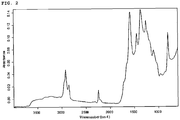
FIG. 2 shows a spectrum obtained by an IR-ATR measurement of a second inspection target in example 1 according to an embodiment of the present invention; and -
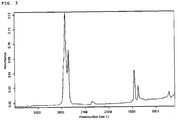
FIG. 3 shows a spectrum obtained by an IR-ATR measurement of a third inspection target in example 1 according to an embodiment of the present invention. - Hereinafter, the present invention will be described in more detail to allow for a clearer understanding of the present invention.
- It will be understood that words or terms used in the specification and claims shall not be interpreted as the meaning defined in commonly used dictionaries. It will be further understood that the words or terms should be interpreted as having a meaning that is consistent with their meaning in the context of the relevant art and the technical idea of the invention, based on the principle that an inventor may properly define the meaning of the words or terms to best explain the invention.
- The present invention provides a method for analyzing an infrared spectroscopy spectrum for a polyacrylonitrile-based fiber with a reduced error by correcting a contact degree between an attenuated total reflection crystal and an inspection target.
- According to an embodiment of the present invention, there is provided a method for analyzing an infrared spectroscopic spectrum for polyacrylonitrile-based fibers, the method including: measuring an infrared spectroscopy spectrum using an attenuated total reflection method for an inspection target (step 1); and correcting a C=N peak height in the infrared spectroscopy spectrum through
Equations 1 and 2 below using the measured spectrum (step 2):

inEquations 1 and 2, - A0, A1, A2, B1 and B2 are respective measured peak height values of the infrared spectroscopy spectrum,
- A0 is the C-H peak height of a nonvolatile liquid material, A1 is the C-H peak height of a polyacrylonitrile-based fiber, A2 is the C-H peak height of the polyacrylonitrile-based fiber infiltrated by the nonvolatile liquid material, B1 is the C=N peak height of the polyacrylonitrile-based fiber, and B2 is the C=N peak height of the polyacrylonitrile-based fiber infiltrated by the nonvolatile liquid material, and here, the nonvolatile liquid material is one or more selected from among paraffin oil, an aliphatic ester compound, an aliphatic ether compounds, and an aliphatic alcoholic compound.
- Here, the aliphatic ester compound may be vegetable oil such as soybean oil or corn oil, dioctyl adipate, dioctyl sebacate, or dioctyl azelate, the ether compound may be dioctylether, dihexylether, or dibutylether, and the aliphatic alcoholic compound may be octanol, hexanol, or butanol.
-
Step 1 is a step for irradiating an inspection target with light and measuring an infrared spectroscopy spectrum in which an attenuated total reflection method is applied. - Specifically, the infrared spectroscopy spectrum is obtained by using infrared spectrometers to the respective total of three inspection targets, and each of the inspection targets may be a first inspection target sampled from a polyacrylonitrile-based fiber, a second inspection target in which the first inspection target is infiltrated by a nonvolatile liquid material, and a third inspection target which is a nonvolatile liquid material. In this case, the nonvolatile liquid material may specifically be paraffin oil.
- In addition, the infrared spectroscopy spectrum may be obtained by bringing the inspection target into contact with an attenuated total reflection crystal, irradiating the inspection target with light through the attenuated total reflection crystal, and detecting the light emitted from the attenuated total reflection crystal, and the attenuated total reflection crystal may be, for example, germanium.
- The infrared spectroscopy spectrum of the third inspection target may be obtained by directly applying (dropping) the third inspection target to the attenuated total reflection crystal to bring the attenuated total reflection crystal and the third inspection target into contact with each other.
- In addition, the infrared spectroscopy spectrum according to an embodiment of the present invention may be obtained by an infrared spectrometer through an attenuated total reflection method at a resolution of about 8 cm-1 and the number of scans of about 64 within a wave number range of about 600 cm-1 to about 4, 000 cm-1.
- According to a specific embodiment of the present invention, the infrared spectroscopy spectrum was measured such that a microscopic infrared spectrometer (made by Lumos, Bruker Co.) is used for the inspection target by selecting a resolution of about 8 cm-1, the number of scans of about 64, and an ATR tip pressure of medium. The C-H peak height was measured at about 2,923 cm-1, a baseline was selected as a straight line at about 2,600 cm-1 and about 3,155 cm-1, the C=N peak height was measured at about 2,243 cm-1, and the baseline was selected as a straight line at about 2,100 cm-1 and about 2,280 cm-1.
- In the present invention, the attenuated total reflection method is method for measuring a change occurring in the internally reflected light when infrared light contacts an inspection target. Specifically, when the inspection target and a transparent material with a high refractive index are brought into contact with each other, and incident light is applied from the transparent material side, a total reflection occurs. However, since the reflected light is absorbed by very slight portion of inspection target adjacent to a contact surface, the absorption characteristic of the inspection target should be reflected, and a method for spectroscopy measurement using this phenomenon is referred to as an attenuated total reflection method.
- Step 2 is a step for correcting the peak height of the infrared spectroscopy spectrum through
Equations 1 and 2 using the infrared spectroscopy spectrum to which the attenuated total reflection method is applied. - In the present invention,
Equations 1 and 2 are equations derived such that five sample pieces are obtained from a single polyacrylonitrile-based fiber. Through a preliminary experiment, first, second, and third inspection targets are sampled from the respective sample pieces, infrared spectroscopy spectrums to which the attenuated total reflection method is applied are obtained for the respective inspection targets, and a calculation equation is derived by using the C-H peak height and the C≡N peak height in the spectrums as variables. Then, the return of a corrected value to a constant value is confirmed. In this case, as described above, among the first, second, and third inspection targets, the first inspection target is sampled from the polyacrylonitrile-based fiber, the second inspection target is an inspection target infiltrated by a nonvolatile liquid material, and the third inspection target is a nonvolatile liquid material. - In an embodiment of the present invention, the polyacrylonitrile-based fiber may be any one among a polyacrylonitrile-based precursor fiber and a polyacrylonitrile-based inflammable fiber, and here, the polyacrylonitrile-based precursor fiber represents a fibrosis polyacrylonitrile-based copolymer, and the polyacrylonitrile-based inflammable fiber may be manufactured by stabilizing and reacting the polyacrylonitrile-based precursor fiber.
- Specifically, the polyacrylonitrile-based precursor fiber may be a fibrosis polyacrylonitrile-based copolymer which is manufactured such that a polyacrylonitrile-based copolymer is manufactured by polymerizing, for example, an acrylonitrile-based monomer and a carboxylic acid-based comonomer, and the manufactured copolymer is subjected to fibrosis.
- Here, the acrylonitrile-based monomer may be acrylonitrile, the carboxylic acid-based comonomer may be one or more selected from, or selected from the group consisting of acrylic acid, methacrylic acid, ethacrilic acid, itaconic acid, crotonic acid, citraconic acid, maleic acid, and mesaconic acid.
- In addition, the polyacrylonitrile-based copolymer may include: about 95 wt% to about 99 wt% of repeating units derived from the acrylonitrile-based monomer; and about 1 wt% to about 5 wt% of repeating units derived from the carboxylic acid-based comonomer.
- In addition, the fibrosis polyacrylonitrile-based copolymer may be manufactured by applying the polyacrylonitrile-based copolymer to a spinning process or the like so as to have a fiber shape. For example, a spinning solution is prepared by dissolving the polyacrylonitrile-based copolymer into a solvent, which can dissolve the polyacrylonitrile-based copolymer, and is spun through a dry spinning, wet spinning, or dry and wet spinning to manufacture the fibrosis polyacrylonitrile-based copolymer.
- The solvent, which can dissolve the polyacrylonitrile-based copolymer, is not particularly limited, and may be, for example, dimethylsulfoxide, dimethylformamide, or dimethylacetamide. In addition, the spinning solution may be manufactured by adjusting the concentration of the fibrosis polyacrylonitrile-based copolymer to be about 10 wt% to about 40 wt%.
- In addition, the wet spinning or the dry and wet spinning may be initiated by adding a spinning raw solution into a solidification tank and solidifying, and the solidification tank may contain the solvent of the spinning raw solution and a solidification promoter.
- After the solidification, a water cleaning process and an elongation process may be performed, and these two processes may be sequentially or continuously performed, or may be performed in the reverse order.
- In addition, processes such as drying and heat treatment or steam elongation may further be performed, and through this, the fibrosis polyacrylonitrile-based copolymer may be manufactured.
- The polyacrylonitrile-based inflammable fiber may be manufactured by stabilizing the polyacrylonitrile-based precursor fiber. Here, the stabilization is a process for imparting heat resistance to the polyacrylonitrile-based precursor fiber, may be performed through heat treatment performed within a temperature range of about 180°C to about 350°C while applying a constant tension under an oxidative or air atmosphere. Thus, low molecular materials among the components constituting the polyacrylonitrile-based precursor fiber are removed and a chemically large reaction occurs, and the polyacrylonitrile-based inflammable fiber to which heat resistance is imparted may be manufactured.
- Hereinafter the present invention will be described in more detail through examples. However, the following examples are merely for illustrating the present invention, and the scope of the present invention is not limited to the samples.
- Hereinafter in the examples, the polyacrylonitrile-based fiber was a product of Jilin Co., and a polyacrylonitrile-based inflammable fiber containing about 96 wt% of acrylonitrile, about 3 wt% of methylmethacrylate, and about 1 wt% of itaconic acid was used.
- An analysis of an infrared spectroscopy spectrum of a polyacrylonitrile-based fiber was performed, spectrum peaks before and after correction were compared, and in this case, five samples were sampled (sampled at different locations) from a single polyacrylonitrile-based fiber and used as inspection targets. Results are shown in Table 1 below.
- Specifically, for each of the inflammable fibers, an infrared spectroscopy spectrum was obtained to which an attenuated total reflection method was applied by using a microscopic infrared spectrometer (made by Lumos, Bruker Co.) and using three inspection targets, as described below. Specifically, a resolution of about 8 cm-1, 64 scans, an ATR tip pressure of medium was selected, and spectroscopy performed. A C-H peak height was measured at 2,923 cm-1 with a base line selected as a straight line between about 2,600 cm-1, and about 3,155 cm-1, a C= H peak height was measured at 2,243 cm-1 with a baseline selected as a straight line between about 2,100 cm-1, and about 2,280 cm-1.
- A first inspection target: a sample sampled from the fiber.
- A second inspection target: a sample prepared by infiltrating paraffin oil into the first inspection target.
- A third inspection target: a sample to which paraffin oil is applied (dropped) onto an attenuated total reflection crystal.
- Specifically, each of the inspection targets was brought into contact with the attenuated total reflection crystal (germanium (Ge)), the inspection targets were irradiated by light, and then, the light reflected from the crystal was detected and measured.
[Table 1] Division C≡N Peak height before correction (B2) Contact degree (C) C≡N Peak height after correction Example 1 0.0203 0.689 0.0295 Example 2 0.0152 0.496 0.0306 Example 3 0.0232 0.783 0.0296 Example 4 0.0216 0.712 0.0303 Example 5 0.0231 0.771 0.0300 - In Table 1 above, the contact degree C was a value calculated through Equation 2 below, and the C≡ H peak height after correction was calculated through
Equation 1.

InEquations 1 and 2,
A0, A1, A2, B1 and B2 are respective measured peak height values of the infrared spectroscopy spectrum, A0 is the C-H peak height of a nonvolatile liquid material, A1 is the C-H peak height of the first inspection target, A2 is the C-H peak height of the second inspection target, B1 is the C≡N peak height of the first inspection target, and B2 is the C≡N peak height of the second inspection target. - As shown in Table 1 above, it was confirmed that the C≡N peak height in the infrared spectroscopy spectrum was corrected through
Equations 1 and 2 to thereby return to a constant value unlike the C≡N peak height before correction.
Claims (6)
- A method for analyzing an infrared spectroscopy spectrum of a polyacrylonitrile-based fiber, the method comprising:1) measuring an infrared spectroscopy spectrum of an inspection target to which an attenuated total reflection method is applied; and2) correcting a C≡N peak height in the infrared spectroscopy spectrum through Equations 1 and 2 below using the measured spectrum:

 A0, A1, A2, B1 and B2 are respective measured peak height values of the infrared spectroscopy spectrum,A0 is a C-H peak height of a nonvolatile liquid material,A1 is a C-H peak height of a polyacrylonitrile-based fiber,A2 is a C-H peak height of the polyacrylonitrile-based fiber infiltrated by the nonvolatile liquid material,B1 is a C≡N peak height of the polyacrylonitrile-based fiber, andB2 is a C≡N peak height of the polyacrylonitrile-based fiber infiltrated by the nonvolatile liquid material,wherein the nonvolatile liquid material is one or more selected from among paraffin oil, aliphatic ester compounds, aliphatic ether compounds, and aliphatic alcoholic compounds.
 - The method of claim 1, wherein the nonvolatile liquid material is paraffin oil.
- The method of claim 1, wherein
in step 1) above, the infrared spectroscopy spectrum is obtained for each of a total of three inspection targets by measuring with an attenuated total reflection method using an infrared spectrometer, and
the inspection targets are a first inspection target sampled from a polyacrylonitrile-based fiber, a second inspection target obtained by infiltrating a nonvolatile liquid material into the first inspection target, and a third inspection target which is a nonvolatile liquid material, respectively. - The method of claim 1, wherein the infrared spectroscopy spectrum is obtained by bringing the inspection targets into contact with an attenuated total reflection crystal, irradiating the inspection targets with light, and then detecting and measuring the light reflected from the attenuated total reflection crystal.
- The method of claim 1, wherein the infrared spectroscopy spectrum is obtained by measuring with the attenuated total reflection method at a wave number range of about 600 cm-1 to about 4, 000 cm-1, a resolution of about 8 cm-1, and a number of scans of about 64 using an infrared spectrometer.
- The method of claim 4, wherein the attenuated total reflection crystal is germanium.
Applications Claiming Priority (2)
| Application Number | Priority Date | Filing Date | Title |
|---|---|---|---|
| KR1020170179770A KR102109834B1 (en) | 2017-12-26 | 2017-12-26 | Method for infrared spectroscopy analysis of polyacrylonitrile based fiber |
| PCT/KR2018/016395 WO2019132429A1 (en) | 2017-12-26 | 2018-12-20 | Method for infrared spectroscopy spectrum analysis of polyacrylonitrile-based fibers |
Publications (3)
| Publication Number | Publication Date |
|---|---|
| EP3594660A1 true EP3594660A1 (en) | 2020-01-15 |
| EP3594660A4 EP3594660A4 (en) | 2020-04-15 |
| EP3594660B1 EP3594660B1 (en) | 2021-11-10 |
Family
ID=67067692
Family Applications (1)
| Application Number | Title | Priority Date | Filing Date |
|---|---|---|---|
| EP18893602.5A Active EP3594660B1 (en) | 2017-12-26 | 2018-12-20 | Method for infrared spectroscopy spectrum analysis of polyacrylonitrile-based fibers |
Country Status (6)
| Country | Link |
|---|---|
| US (1) | US10989655B2 (en) |
| EP (1) | EP3594660B1 (en) |
| JP (1) | JP6808852B2 (en) |
| KR (1) | KR102109834B1 (en) |
| CN (1) | CN110520712B (en) |
| WO (1) | WO2019132429A1 (en) |
Families Citing this family (1)
| Publication number | Priority date | Publication date | Assignee | Title |
|---|---|---|---|---|
| JP7812842B2 (en) * | 2021-03-26 | 2026-02-10 | 浜松ホトニクス株式会社 | Attenuated total reflection spectroscopy device and attenuated total reflection spectroscopy method |
Family Cites Families (10)
| Publication number | Priority date | Publication date | Assignee | Title |
|---|---|---|---|---|
| EP1450152A4 (en) * | 2001-11-28 | 2009-11-25 | Panasonic Eco Technology Ct Co | Plastic identifying method |
| KR20040026868A (en) * | 2002-09-26 | 2004-04-01 | 현대자동차주식회사 | Method for Quantitative Analysis of ABS resin |
| JP2004250837A (en) * | 2003-02-21 | 2004-09-09 | Teijin Ltd | Single fiber break detection method and device, and fiber manufacturing process management method and device using the same |
| JP5176562B2 (en) * | 2008-01-22 | 2013-04-03 | 株式会社リコー | Method for evaluating abundance of solid surface deposit, and method for evaluating protective agent coating apparatus |
| CN101797481B (en) * | 2010-04-28 | 2013-03-20 | 哈尔滨工业大学 | Preparation method of functional shell band-shaped silica nano fibrous membrane |
| CN102478508B (en) * | 2010-11-26 | 2013-09-04 | 中国蓝星(集团)股份有限公司 | Test method for cyano residue fraction in polyacrylonitrile pre-oxidized fibers |
| KR20130020868A (en) * | 2011-08-19 | 2013-03-04 | 현대자동차주식회사 | The quantitative analysis method of polycarbonate in polycarbonate / acrylonitirle-stryrene-acrylrubber blend polymer using attenuated total reflectance |
| JP2015197364A (en) * | 2014-04-01 | 2015-11-09 | 三菱電機株式会社 | Infrared spectroscopic device and infrared spectroscopic measurement method |
| KR102323207B1 (en) | 2014-09-29 | 2021-11-08 | 삼성전자주식회사 | Device for correcting light absorption spectrum and methods of manufacturing the same and correcting light absorption spectrum |
| CN105527253B (en) * | 2015-12-01 | 2018-05-04 | 广东生益科技股份有限公司 | attenuated total reflection infrared test method |
-
2017
- 2017-12-26 KR KR1020170179770A patent/KR102109834B1/en active Active
-
2018
- 2018-12-20 CN CN201880025249.4A patent/CN110520712B/en active Active
- 2018-12-20 JP JP2019555960A patent/JP6808852B2/en active Active
- 2018-12-20 WO PCT/KR2018/016395 patent/WO2019132429A1/en not_active Ceased
- 2018-12-20 EP EP18893602.5A patent/EP3594660B1/en active Active
- 2018-12-20 US US16/604,080 patent/US10989655B2/en active Active
Also Published As
| Publication number | Publication date |
|---|---|
| US20200393370A1 (en) | 2020-12-17 |
| JP6808852B2 (en) | 2021-01-06 |
| KR102109834B1 (en) | 2020-05-12 |
| EP3594660A4 (en) | 2020-04-15 |
| WO2019132429A1 (en) | 2019-07-04 |
| US10989655B2 (en) | 2021-04-27 |
| CN110520712B (en) | 2022-02-08 |
| JP2020516899A (en) | 2020-06-11 |
| EP3594660B1 (en) | 2021-11-10 |
| KR20190078068A (en) | 2019-07-04 |
| CN110520712A (en) | 2019-11-29 |
Similar Documents
| Publication | Publication Date | Title |
|---|---|---|
| CN101793678B (en) | Spectrum measuring device and method of scattering substance of sample cell with isosceles triangle cross section | |
| Xie et al. | Improving carbon fiber adhesion to polyimide with atmospheric pressure plasma treatment | |
| Seo et al. | Surface characteristics of carbon fibers modified by direct oxyfluorination | |
| Sun et al. | Toward practical non-contact optical strain sensing using single-walled carbon nanotubes | |
| US10989655B2 (en) | Method for analyzing infrared spectroscopy spectrum of polyacrylonitrile-based fiber | |
| Choi et al. | Optimization of the carbonization process based on the evolution of microstructural components of polyacrylonitrile (PAN)-based fibers | |
| Goh et al. | Raman spectroscopy | |
| CA2376502A1 (en) | Methods for monitoring sulfonyl halide functional group content of materials | |
| Lv et al. | Effects of individual and sequential irradiation with atomic oxygen and protons on the surface structure and tribological performance of polyetheretherketone in a simulated space environment | |
| Brown et al. | Effect of tension during sulfonation stabilization for UHMWPE-derived carbon fibers | |
| Marium et al. | Molecular level interactions in binary mixtures of 1-ethyl 3-methylimidazolium tetrafluoroborate and water | |
| CN101051024A (en) | Method for measuring full fluorine sulphonyl resin and sulphonyl monomer content | |
| US20030204323A1 (en) | Membrane moisture measurement | |
| CN104020072A (en) | Qualitative fiber identification method | |
| CN112881334B (en) | Method for detecting itaconic acid content in poly (acrylonitrile-itaconic acid) | |
| Mishchenko et al. | Effective diffusion coefficient of active solvents in composite polymeric materials | |
| Akther et al. | Insights into the structural and optical features of plasma polymerized N, N, 3, 5 tetramethylaniline-2, 6-diethylaniline thin films | |
| Mondragón-Ochoa et al. | Microwave-assisted in situ laser dye incorporation into high sensitivity whispering gallery mode microresonators | |
| Wang et al. | Effects of air dielectric barrier discharge plasma treatment time on surface properties of PBO fiber | |
| KR102351984B1 (en) | Polyacrylonitrile based oxidized fiber | |
| CN110954495A (en) | A method for the detection of inherent viscosity of para-aramid resin by near-infrared spectroscopy | |
| Lu et al. | Contactless 3D surface characterization of additive manufactured metallic components using terahertz time-domain spectroscopy | |
| CN109596556A (en) | The method of Pb In Exhausted Water ion concentration is quickly and easily measured using Quercetin | |
| Insiyanda et al. | Detection of Polytetrafluoroethylene Coating Deposition in Carbon Composite Paper Surface PEMFC Using FTIR-ATR | |
| Sadrolhosseini et al. | Surface plasmon resonance characterization of virgin coconut oil biodiesel: Detection of iron corrosion using polypyrrole chitosan sensing layer |
Legal Events
| Date | Code | Title | Description |
|---|---|---|---|
| STAA | Information on the status of an ep patent application or granted ep patent |
Free format text: STATUS: THE INTERNATIONAL PUBLICATION HAS BEEN MADE |
|
| PUAI | Public reference made under article 153(3) epc to a published international application that has entered the european phase |
Free format text: ORIGINAL CODE: 0009012 |
|
| STAA | Information on the status of an ep patent application or granted ep patent |
Free format text: STATUS: REQUEST FOR EXAMINATION WAS MADE |
|
| 17P | Request for examination filed |
Effective date: 20191010 |
|
| AK | Designated contracting states |
Kind code of ref document: A1 Designated state(s): AL AT BE BG CH CY CZ DE DK EE ES FI FR GB GR HR HU IE IS IT LI LT LU LV MC MK MT NL NO PL PT RO RS SE SI SK SM TR |
|
| AX | Request for extension of the european patent |
Extension state: BA ME |
|
| RIN1 | Information on inventor provided before grant (corrected) |
Inventor name: DO, JONG SOO Inventor name: OH, SUNG JOON |
|
| A4 | Supplementary search report drawn up and despatched |
Effective date: 20200317 |
|
| RIC1 | Information provided on ipc code assigned before grant |
Ipc: G01N 21/552 20140101ALI20200311BHEP Ipc: G01N 21/3577 20140101ALN20200311BHEP Ipc: G01N 21/35 20140101AFI20200311BHEP |
|
| DAV | Request for validation of the european patent (deleted) | ||
| DAX | Request for extension of the european patent (deleted) | ||
| GRAP | Despatch of communication of intention to grant a patent |
Free format text: ORIGINAL CODE: EPIDOSNIGR1 |
|
| STAA | Information on the status of an ep patent application or granted ep patent |
Free format text: STATUS: GRANT OF PATENT IS INTENDED |
|
| RIC1 | Information provided on ipc code assigned before grant |
Ipc: G01N 21/35 20140101AFI20210601BHEP Ipc: G01N 21/552 20140101ALI20210601BHEP Ipc: G01N 21/3577 20140101ALN20210601BHEP |
|
| INTG | Intention to grant announced |
Effective date: 20210618 |
|
| GRAS | Grant fee paid |
Free format text: ORIGINAL CODE: EPIDOSNIGR3 |
|
| GRAA | (expected) grant |
Free format text: ORIGINAL CODE: 0009210 |
|
| STAA | Information on the status of an ep patent application or granted ep patent |
Free format text: STATUS: THE PATENT HAS BEEN GRANTED |
|
| AK | Designated contracting states |
Kind code of ref document: B1 Designated state(s): AL AT BE BG CH CY CZ DE DK EE ES FI FR GB GR HR HU IE IS IT LI LT LU LV MC MK MT NL NO PL PT RO RS SE SI SK SM TR |
|
| REG | Reference to a national code |
Ref country code: GB Ref legal event code: FG4D |
|
| REG | Reference to a national code |
Ref country code: AT Ref legal event code: REF Ref document number: 1446526 Country of ref document: AT Kind code of ref document: T Effective date: 20211115 Ref country code: CH Ref legal event code: EP |
|
| REG | Reference to a national code |
Ref country code: DE Ref legal event code: R096 Ref document number: 602018026659 Country of ref document: DE |
|
| REG | Reference to a national code |
Ref country code: IE Ref legal event code: FG4D |
|
| REG | Reference to a national code |
Ref country code: LT Ref legal event code: MG9D |
|
| REG | Reference to a national code |
Ref country code: NL Ref legal event code: MP Effective date: 20211110 |
|
| REG | Reference to a national code |
Ref country code: AT Ref legal event code: MK05 Ref document number: 1446526 Country of ref document: AT Kind code of ref document: T Effective date: 20211110 |
|
| PG25 | Lapsed in a contracting state [announced via postgrant information from national office to epo] |
Ref country code: RS Free format text: LAPSE BECAUSE OF FAILURE TO SUBMIT A TRANSLATION OF THE DESCRIPTION OR TO PAY THE FEE WITHIN THE PRESCRIBED TIME-LIMIT Effective date: 20211110 Ref country code: LT Free format text: LAPSE BECAUSE OF FAILURE TO SUBMIT A TRANSLATION OF THE DESCRIPTION OR TO PAY THE FEE WITHIN THE PRESCRIBED TIME-LIMIT Effective date: 20211110 Ref country code: FI Free format text: LAPSE BECAUSE OF FAILURE TO SUBMIT A TRANSLATION OF THE DESCRIPTION OR TO PAY THE FEE WITHIN THE PRESCRIBED TIME-LIMIT Effective date: 20211110 Ref country code: BG Free format text: LAPSE BECAUSE OF FAILURE TO SUBMIT A TRANSLATION OF THE DESCRIPTION OR TO PAY THE FEE WITHIN THE PRESCRIBED TIME-LIMIT Effective date: 20220210 Ref country code: AT Free format text: LAPSE BECAUSE OF FAILURE TO SUBMIT A TRANSLATION OF THE DESCRIPTION OR TO PAY THE FEE WITHIN THE PRESCRIBED TIME-LIMIT Effective date: 20211110 |
|
| PG25 | Lapsed in a contracting state [announced via postgrant information from national office to epo] |
Ref country code: IS Free format text: LAPSE BECAUSE OF FAILURE TO SUBMIT A TRANSLATION OF THE DESCRIPTION OR TO PAY THE FEE WITHIN THE PRESCRIBED TIME-LIMIT Effective date: 20220310 Ref country code: SE Free format text: LAPSE BECAUSE OF FAILURE TO SUBMIT A TRANSLATION OF THE DESCRIPTION OR TO PAY THE FEE WITHIN THE PRESCRIBED TIME-LIMIT Effective date: 20211110 Ref country code: PT Free format text: LAPSE BECAUSE OF FAILURE TO SUBMIT A TRANSLATION OF THE DESCRIPTION OR TO PAY THE FEE WITHIN THE PRESCRIBED TIME-LIMIT Effective date: 20220310 Ref country code: PL Free format text: LAPSE BECAUSE OF FAILURE TO SUBMIT A TRANSLATION OF THE DESCRIPTION OR TO PAY THE FEE WITHIN THE PRESCRIBED TIME-LIMIT Effective date: 20211110 Ref country code: NO Free format text: LAPSE BECAUSE OF FAILURE TO SUBMIT A TRANSLATION OF THE DESCRIPTION OR TO PAY THE FEE WITHIN THE PRESCRIBED TIME-LIMIT Effective date: 20220210 Ref country code: NL Free format text: LAPSE BECAUSE OF FAILURE TO SUBMIT A TRANSLATION OF THE DESCRIPTION OR TO PAY THE FEE WITHIN THE PRESCRIBED TIME-LIMIT Effective date: 20211110 Ref country code: LV Free format text: LAPSE BECAUSE OF FAILURE TO SUBMIT A TRANSLATION OF THE DESCRIPTION OR TO PAY THE FEE WITHIN THE PRESCRIBED TIME-LIMIT Effective date: 20211110 Ref country code: HR Free format text: LAPSE BECAUSE OF FAILURE TO SUBMIT A TRANSLATION OF THE DESCRIPTION OR TO PAY THE FEE WITHIN THE PRESCRIBED TIME-LIMIT Effective date: 20211110 Ref country code: GR Free format text: LAPSE BECAUSE OF FAILURE TO SUBMIT A TRANSLATION OF THE DESCRIPTION OR TO PAY THE FEE WITHIN THE PRESCRIBED TIME-LIMIT Effective date: 20220211 Ref country code: ES Free format text: LAPSE BECAUSE OF FAILURE TO SUBMIT A TRANSLATION OF THE DESCRIPTION OR TO PAY THE FEE WITHIN THE PRESCRIBED TIME-LIMIT Effective date: 20211110 |
|
| PG25 | Lapsed in a contracting state [announced via postgrant information from national office to epo] |
Ref country code: SM Free format text: LAPSE BECAUSE OF FAILURE TO SUBMIT A TRANSLATION OF THE DESCRIPTION OR TO PAY THE FEE WITHIN THE PRESCRIBED TIME-LIMIT Effective date: 20211110 Ref country code: SK Free format text: LAPSE BECAUSE OF FAILURE TO SUBMIT A TRANSLATION OF THE DESCRIPTION OR TO PAY THE FEE WITHIN THE PRESCRIBED TIME-LIMIT Effective date: 20211110 Ref country code: RO Free format text: LAPSE BECAUSE OF FAILURE TO SUBMIT A TRANSLATION OF THE DESCRIPTION OR TO PAY THE FEE WITHIN THE PRESCRIBED TIME-LIMIT Effective date: 20211110 Ref country code: EE Free format text: LAPSE BECAUSE OF FAILURE TO SUBMIT A TRANSLATION OF THE DESCRIPTION OR TO PAY THE FEE WITHIN THE PRESCRIBED TIME-LIMIT Effective date: 20211110 Ref country code: DK Free format text: LAPSE BECAUSE OF FAILURE TO SUBMIT A TRANSLATION OF THE DESCRIPTION OR TO PAY THE FEE WITHIN THE PRESCRIBED TIME-LIMIT Effective date: 20211110 Ref country code: CZ Free format text: LAPSE BECAUSE OF FAILURE TO SUBMIT A TRANSLATION OF THE DESCRIPTION OR TO PAY THE FEE WITHIN THE PRESCRIBED TIME-LIMIT Effective date: 20211110 |
|
| REG | Reference to a national code |
Ref country code: CH Ref legal event code: PL |
|
| REG | Reference to a national code |
Ref country code: DE Ref legal event code: R097 Ref document number: 602018026659 Country of ref document: DE |
|
| PG25 | Lapsed in a contracting state [announced via postgrant information from national office to epo] |
Ref country code: MC Free format text: LAPSE BECAUSE OF FAILURE TO SUBMIT A TRANSLATION OF THE DESCRIPTION OR TO PAY THE FEE WITHIN THE PRESCRIBED TIME-LIMIT Effective date: 20211110 |
|
| PLBE | No opposition filed within time limit |
Free format text: ORIGINAL CODE: 0009261 |
|
| STAA | Information on the status of an ep patent application or granted ep patent |
Free format text: STATUS: NO OPPOSITION FILED WITHIN TIME LIMIT |
|
| REG | Reference to a national code |
Ref country code: BE Ref legal event code: MM Effective date: 20211231 |
|
| 26N | No opposition filed |
Effective date: 20220811 |
|
| PG25 | Lapsed in a contracting state [announced via postgrant information from national office to epo] |
Ref country code: LU Free format text: LAPSE BECAUSE OF NON-PAYMENT OF DUE FEES Effective date: 20211220 Ref country code: IE Free format text: LAPSE BECAUSE OF NON-PAYMENT OF DUE FEES Effective date: 20211220 Ref country code: AL Free format text: LAPSE BECAUSE OF FAILURE TO SUBMIT A TRANSLATION OF THE DESCRIPTION OR TO PAY THE FEE WITHIN THE PRESCRIBED TIME-LIMIT Effective date: 20211110 |
|
| PG25 | Lapsed in a contracting state [announced via postgrant information from national office to epo] |
Ref country code: SI Free format text: LAPSE BECAUSE OF FAILURE TO SUBMIT A TRANSLATION OF THE DESCRIPTION OR TO PAY THE FEE WITHIN THE PRESCRIBED TIME-LIMIT Effective date: 20211110 Ref country code: BE Free format text: LAPSE BECAUSE OF NON-PAYMENT OF DUE FEES Effective date: 20211231 |
|
| PG25 | Lapsed in a contracting state [announced via postgrant information from national office to epo] |
Ref country code: LI Free format text: LAPSE BECAUSE OF NON-PAYMENT OF DUE FEES Effective date: 20211231 Ref country code: CH Free format text: LAPSE BECAUSE OF NON-PAYMENT OF DUE FEES Effective date: 20211231 |
|
| PG25 | Lapsed in a contracting state [announced via postgrant information from national office to epo] |
Ref country code: IT Free format text: LAPSE BECAUSE OF FAILURE TO SUBMIT A TRANSLATION OF THE DESCRIPTION OR TO PAY THE FEE WITHIN THE PRESCRIBED TIME-LIMIT Effective date: 20211110 |
|
| PG25 | Lapsed in a contracting state [announced via postgrant information from national office to epo] |
Ref country code: CY Free format text: LAPSE BECAUSE OF FAILURE TO SUBMIT A TRANSLATION OF THE DESCRIPTION OR TO PAY THE FEE WITHIN THE PRESCRIBED TIME-LIMIT Effective date: 20211110 |
|
| PG25 | Lapsed in a contracting state [announced via postgrant information from national office to epo] |
Ref country code: HU Free format text: LAPSE BECAUSE OF FAILURE TO SUBMIT A TRANSLATION OF THE DESCRIPTION OR TO PAY THE FEE WITHIN THE PRESCRIBED TIME-LIMIT; INVALID AB INITIO Effective date: 20181220 |
|
| PG25 | Lapsed in a contracting state [announced via postgrant information from national office to epo] |
Ref country code: MK Free format text: LAPSE BECAUSE OF FAILURE TO SUBMIT A TRANSLATION OF THE DESCRIPTION OR TO PAY THE FEE WITHIN THE PRESCRIBED TIME-LIMIT Effective date: 20211110 |
|
| PG25 | Lapsed in a contracting state [announced via postgrant information from national office to epo] |
Ref country code: TR Free format text: LAPSE BECAUSE OF FAILURE TO SUBMIT A TRANSLATION OF THE DESCRIPTION OR TO PAY THE FEE WITHIN THE PRESCRIBED TIME-LIMIT Effective date: 20211110 |
|
| PG25 | Lapsed in a contracting state [announced via postgrant information from national office to epo] |
Ref country code: MT Free format text: LAPSE BECAUSE OF FAILURE TO SUBMIT A TRANSLATION OF THE DESCRIPTION OR TO PAY THE FEE WITHIN THE PRESCRIBED TIME-LIMIT Effective date: 20211110 |
|
| PGFP | Annual fee paid to national office [announced via postgrant information from national office to epo] |
Ref country code: DE Payment date: 20251120 Year of fee payment: 8 |
|
| PGFP | Annual fee paid to national office [announced via postgrant information from national office to epo] |
Ref country code: GB Payment date: 20251120 Year of fee payment: 8 |
|
| PGFP | Annual fee paid to national office [announced via postgrant information from national office to epo] |
Ref country code: FR Payment date: 20251125 Year of fee payment: 8 |