EP3592724B1 - Processes for the preparation of halo substituted benzoic acid compounds - Google Patents
Processes for the preparation of halo substituted benzoic acid compounds Download PDFInfo
- Publication number
- EP3592724B1 EP3592724B1 EP18763302.9A EP18763302A EP3592724B1 EP 3592724 B1 EP3592724 B1 EP 3592724B1 EP 18763302 A EP18763302 A EP 18763302A EP 3592724 B1 EP3592724 B1 EP 3592724B1
- Authority
- EP
- European Patent Office
- Prior art keywords
- compound
- formula
- phosphate
- metal
- contacting
- Prior art date
- Legal status (The legal status is an assumption and is not a legal conclusion. Google has not performed a legal analysis and makes no representation as to the accuracy of the status listed.)
- Active
Links
Classifications
-
- C—CHEMISTRY; METALLURGY
- C07—ORGANIC CHEMISTRY
- C07C—ACYCLIC OR CARBOCYCLIC COMPOUNDS
- C07C17/00—Preparation of halogenated hydrocarbons
- C07C17/361—Preparation of halogenated hydrocarbons by reactions involving a decrease in the number of carbon atoms
- C07C17/363—Preparation of halogenated hydrocarbons by reactions involving a decrease in the number of carbon atoms by elimination of carboxyl groups
-
- C—CHEMISTRY; METALLURGY
- C07—ORGANIC CHEMISTRY
- C07C—ACYCLIC OR CARBOCYCLIC COMPOUNDS
- C07C17/00—Preparation of halogenated hydrocarbons
- C07C17/093—Preparation of halogenated hydrocarbons by replacement by halogens
- C07C17/10—Preparation of halogenated hydrocarbons by replacement by halogens of hydrogen atoms
- C07C17/12—Preparation of halogenated hydrocarbons by replacement by halogens of hydrogen atoms in the ring of aromatic compounds
-
- C—CHEMISTRY; METALLURGY
- C07—ORGANIC CHEMISTRY
- C07C—ACYCLIC OR CARBOCYCLIC COMPOUNDS
- C07C17/00—Preparation of halogenated hydrocarbons
- C07C17/23—Preparation of halogenated hydrocarbons by dehalogenation
-
- C—CHEMISTRY; METALLURGY
- C07—ORGANIC CHEMISTRY
- C07C—ACYCLIC OR CARBOCYCLIC COMPOUNDS
- C07C51/00—Preparation of carboxylic acids or their salts, halides or anhydrides
- C07C51/15—Preparation of carboxylic acids or their salts, halides or anhydrides by reaction of organic compounds with carbon dioxide, e.g. Kolbe-Schmitt synthesis
Definitions
- the present invention provides a process for preparation of halo substituted benzoic acid compound and intermediates thereof.
- the halo substituted benzoic acid compounds are very useful raw material for the synthesis of photo-sensitizers, pharmaceuticals and agro chemicals.
- Japan Patent Publication No. S61-030556 provides a process for preparation of 2,4,6-trifluorobenzoic acid by hydrolyzing 3,5-dichloro- 2,4,6-trifluorobenzonitrile using aqueous solution of sulfuric acid (40 to 90 % by weight) at 140-200°C followed by dechlorination in the presence of zinc.
- 1,3,5-trifluorobenzene can also be used as an intermediate for preparation of 2, 4,6-trifluorobenzoic acid.
- the Japan Patent Publication No. H04-224535 provides a process for preparation of 1,3,5-trifluorobenzene by decarboxylating 3,5-dichloro-2,4,6-trifluorobenzoic acid in the presence of organic amine such as tributylamine, trilaurylamine, dimethylaniline or trioctylamine at 150°C. After completion of the reaction, reaction mixture is treated with aqueous hydrochloric acid solution. The organic layer was separated and distilled to obtain 1, 3-dichloro-2,4,6-trifluorobenzene. 1,3-dichloro-2,4,6-trifluorobenzene is then dechlorinated using hydrogen in the presence of a palladium-carbon catalyst and hydroxide or carbonate of alkali metals.
- organic amine such as tributylamine, trilaurylamine, dimethylaniline or trioctylamine
- hydroxide for dechlorination results in the formation of 1,3-dihydroxy-2,4,6-trifluorobenzene and use of alkali metal carbonates in dechlorination generates carbon dioxide and hydrochloride which results in catalyst deactivation and thus makes the process tedious, unsafe and expensive.
- the present invention provides a process for preparation of a compound of Formula 1, comprising the steps of:
- the main object of the present invention is to provide a novel, economic and simple process for preparation of a compound of Formula 1 and the intermediates thereof.
- the present invention provides a process for preparation of a compound of Formula 1, comprising the steps of:
- the present invention provides a process for preparation of a compound of Formula 5, comprising the step of contacting a compound of Formula 6 with an inorganic base and an inorganic sulfate to obtain a compound of Formula 5, wherein X 1 and X 2 are independently selected from Cl, Br and I.
- the present invention provides a process for preparation of a compound of Formula 5a, comprising the step of contacting a compound of Formula 6a with an inorganic base and an inorganic sulfate to obtain a compound of Formula 5a,
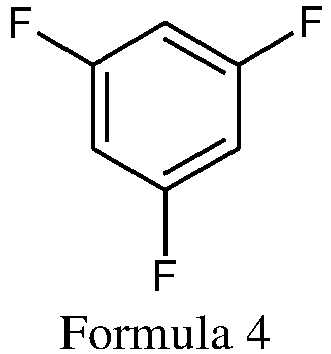
- the present invention provides a process for preparation of a compound of Formula 4, comprising, the step of contacting the compound of Formula 5 with hydrogen in presence of a catalyst and a buffering agent selected from a metal acetate or a metal phosphate salt to obtain a compound of Formula 4.
- a buffering agent selected from a metal acetate or a metal phosphate salt to obtain a compound of Formula 4.
- X 1 and X 2 are independently selected from Cl, Br and I.
- the present invention provides a process for preparation of a compound of Formula 4, comprising the step of contacting the compound of Formula 5a with hydrogen in presence of a catalyst and a buffering agent selected from a metal acetate or a metal phosphate salt to obtain a compound of Formula 4.
- the present invention provides a process for preparation of a compound of Formula 1, comprising the steps of:
- the present invention provides a process for preparation of a compound of Formula 1, comprising the steps of:
- the inorganic base used in the present invention is selected from the group consisting of alkali metal hydroxides, alkali earth hydroxides, metal carbonates and metal oxides.
- the preferred inorganic base is selected from the group consisting of lithium hydroxide, sodium hydroxide, potassium hydroxide, calcium hydroxide, lithium carbonate, potassium carbonate, sodium carbonate and ammonium carbonate or mixture thereof.
- the inorganic sulphates used in the present invention is selected from the group consisting of sodium sulphate, potassium sulphate, ammonium sulphate, calcium sulphate and the like.
- the step of converting a compound of Formula 6 to a compound of Formula 5 may be carried out in presence of polar organic solvents.
- the polar organic solvents may be selected from diethylene glycol, N,N dimethylformamide, N-methyl-2-pyrrolidone, N,N-dimethylacetamide and dimethyl sulfoxide or the mixture thereof.
- the step of converting a compound of Formula 6 to a compound of Formula 5 may be carried out at temperature in the ranging from 100-200°C for 1 to 8 hours.
- the catalyst used in the step of conversion of compound of Formula 5 to a compound of Formula 4 is selected from the group consisting of palladium, platinum, nickel, chromium dioxide and Raney nickel supported on alumina or activated carbon.
- the buffering agent used in the step of conversion of a compound of Formula 5 to a compound of Formula 4 is selected from a metal acetate or a metal phosphate salt.
- the metal phosphate is selected from the group consisting of diammonium phosphate, mono potassium phosphate, dipotassium phosphate, magnesium phosphate, silver phosphate, sodium monofluorophosphate, sodium phosphate, tripotassium phosphate, trisodium phosphate, lead(II) phosphate, lithium iron phosphate, manganese(II) phosphate, potassium titanyl phosphate or mixture thereof.
- the metal acetate is selected from the group consisting of sodium acetate, potassium acetate, lithium acetate, calcium acetate and magnesium acetate or mixture thereof.
- the step of conversion of a compound of Formula 5 to a compound of Formula 4 may be carried out at suitable pressure between 2 to 15 Kg/cm 2 and at a suitable temperature in the range of 90 to 140°C.
- the catalyst used in step of conversion of compound of Formula 5 to a compound of Formula 4 may be recovered and reused.
- the compound of Formula 1 is isolated by using techniques known in the art for example distillation, filtration, acid-base treatment, evaporation, column chromatography and layer separation or combination thereof.
- the isolation of compound of Formula 1 may be carried out by using water or an aqueous acid selected from the group consisting of aqueous hydrochloric acid, aqueous sulphuric acid, aqueous hydrobromic acid, aqueous hydroiodic acid, aqueous perchloric acid, aqueous chloric acid, aqueous phosphoric acid, aqueous acetic acid and aqueous carbonic acid or mixture thereof.
- aqueous acid selected from the group consisting of aqueous hydrochloric acid, aqueous sulphuric acid, aqueous hydrobromic acid, aqueous hydroiodic acid, aqueous perchloric acid, aqueous chloric acid, aqueous phosphoric acid, aqueous acetic acid and aqueous carbonic acid or mixture thereof.
- the steps of converting a compound of Formula 3 to a compound of Formula 2 and subsequently to a compound of Formula 1 may be carried out under anhydrous conditions.
- the step of converting a compound of Formula 3 to a compound of Formula 2 may be carried out at temperature in the range of 25 to 70°C for 0.5 hour to 2 hour.
- the step of converting a compound of Formula 2 to a compound of Formula 1 may be carried out at temperature in the range of -5 to 10°C for 1 to 2 hour.
- the compound of Formula 1, 4 and 5 so obtained by the process of the present invention has a purity greater than 95 %, more preferably greater than 98 %, most preferably greater than 99% by gas chromatography.
- the compounds of Formula 6 may be prepared by any method known in the prior art, or may be obtained commercially.
- Diethylene glycol (390 g), calcium hydroxide (20 g) and calcium sulphate hydrate (34g) were added sequentially in a reaction vessel.
- the reaction mixture was heated to 120-140°C.
- 3,5-Dichloro-2,4,6- trifluorobenzoic acid dissolved in diethylene glycol (1170 g) was added to the reaction mixture at 120-140°C.
- the reaction mass was stirred for additional 1 to 2 hours.
- the 1,3 -dichloro-2,4,6-trifluorobenzene was recovered by distillation at 150- 180°C.
- 1,3-Dichloro-2,4,6-trifluorobenzene 100 g
- water 500 g
- dipotassium hydrogen phosphate 260 g
- Palladium/carbon 10%; 2 g
- Reaction vessel was flushed first with nitrogen and then with hydrogen.
- the reaction mixture was heated to 140°C.
- Hydrogen gas was purged continuously into the reaction vessel at 140°C and 15 kg/centimeter 2 pressure. Progress of the reaction was monitored by gas chromatography. After completion of the reaction, reaction mass was cooled to 10-15°C and excess hydrogen pressure was released. 1,3,5-trifluorobenzene was recovered from the reaction mass.
- the bottom mass containing Pd/ C was filtered, washed with fresh water and recycled in next batch.
- the reaction mixture was heated to 40°C.
- Bromine (80 g) was added drop wise to the reaction mixture at 35-40°C in 2-4 hrs.
- Reaction mass was stirred for additional 1 hr after complete bromine addition. Progress of the reaction was monitored by gas chromatography. After completion of the reaction, reaction mass was cooled to room temperature and quenched with cold water (32 g; 5-25°C). Layers were separated. Organic was washed with aqueous sodium bisulphite solution (33 g). 1-bromo-2,4,6-trifluorobenzene was recovered under reduced pressure.
- Tetrahydrofuran (50ml) and magnesium (5.87 g) were taken into a reaction vessel sequentially.
- the reaction mixture was heated to 40°C and 1-bromo-2,4,6-trifluorobenzene solution (47 g in 185 ml THF) was added drop wise at 30 to 35°C.
- Reaction mass was stirred for 1 hour.
- Grignard reagent thus formed was cooled to 0°C to 10°C and carbon dioxide gas was purged into it. Reaction progress was monitored by HPLC. After completion of the reaction, reaction mass was quenched with 10% aqueous hydrochloric acid (200 g) and extracted with methyl tertiary butyl ether (200 g). The organic layer was concentrated and water was added to it.
Landscapes
- Chemical & Material Sciences (AREA)
- Organic Chemistry (AREA)
- Chemical Kinetics & Catalysis (AREA)
- Engineering & Computer Science (AREA)
- Oil, Petroleum & Natural Gas (AREA)
- Organic Low-Molecular-Weight Compounds And Preparation Thereof (AREA)
Description
- The present invention provides a process for preparation of halo substituted benzoic acid compound and intermediates thereof. The halo substituted benzoic acid compounds are very useful raw material for the synthesis of photo-sensitizers, pharmaceuticals and agro chemicals.
- The
Japan Patent Publication No. S61-030556 - The use of sulphuric acid at high temperature leads to the formation of several undesired side products which are required to be removed by purification processes which makes the process unsafe, tedious and uneconomical.
- 1,3,5-trifluorobenzene can also be used as an intermediate for preparation of 2, 4,6-trifluorobenzoic acid.
- The
Japan Patent Publication No. H04-224535 - The use of hydroxide for dechlorination results in the formation of 1,3-dihydroxy-2,4,6-trifluorobenzene and use of alkali metal carbonates in dechlorination generates carbon dioxide and hydrochloride which results in catalyst deactivation and thus makes the process tedious, unsafe and expensive.
- The use of organic amine in decarboxylation requires additional acid-base purification steps which makes the process tedious, uneconomic and unsafe. Thus there is a need to develop a robust, cost effective and safe process for preparation of 2,4,6-trifluorobenzoic acid and intermediates thereof.
- The present invention provides a process for preparation of a compound of Formula 1,

- a) contacting a compound of Formula 6

- with an inorganic base in the presence of an inorganic sulfate to obtain a compound of Formula 5,

- wherein X1 and X2 are independently selected from Cl, Br and I.
- with an inorganic base in the presence of an inorganic sulfate to obtain a compound of Formula 5,
- b) contacting the compound of Formula 5 with hydrogen in presence of a catalyst and a buffering agent selected from a metal acetate or a metal phosphate salt to obtain a compound of Formula 4;

- c) converting the compound of Formula 4 to a compound of Formula 3;

- d) contacting the compound of Formula 3 with magnesium metal to obtain a compound of Formula 2; and

- e) contacting the compound of Formula 2 with carbon dioxide to obtain the compound of Formula 1.
- The main object of the present invention is to provide a novel, economic and simple process for preparation of a compound of Formula 1 and the intermediates thereof.

- In first aspect, the present invention provides a process for preparation of a compound of Formula 1,

- a) contacting a compound of Formula 6,

- with an inorganic base and an inorganic sulfate to obtain a compound of Formula 5,
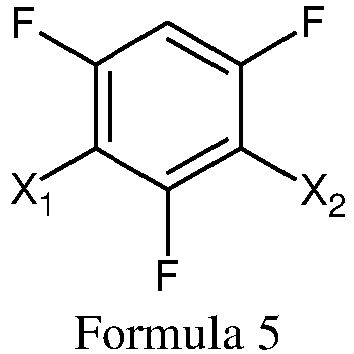
- wherein X1 and X2 are independently selected from Cl, Br and I.
- with an inorganic base and an inorganic sulfate to obtain a compound of Formula 5,
- b) contacting the compound of Formula 5 with hydrogen in presence of a catalyst and a buffering agent selected from a metal acetate or a metal phosphate salt to obtain a compound of Formula 4;

- c) converting the compound of Formula 4 to a compound of Formula 3;

- d) contacting the compound of Formula 3 with magnesium metal to obtain a compound of Formula 2; and

- e) contacting the compound of Formula 2 with carbon dioxide to obtain the compound of Formula 1.
- In a second aspect, the present invention provides a process for preparation of a compound of Formula 5,


- In an embodiment of second aspect, the present invention provides a process for preparation of a compound of Formula 5a,


- In a third aspect, the present invention provides a process for preparation of a compound of Formula 4,


- In an embodiment of third aspect, the present invention provides a process for preparation of a compound of Formula 4,

- In a fourth aspect, the present invention provides a process for preparation of a compound of Formula 1,

- a) contacting the compound of Formula 3
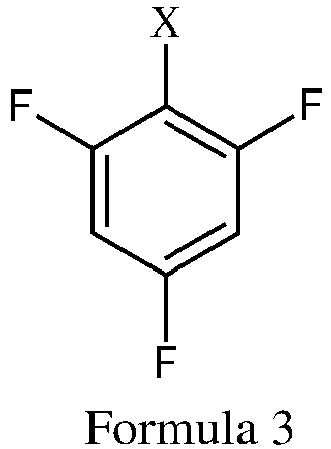
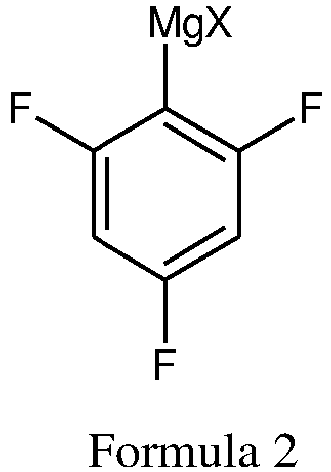
- b) contacting the compound of Formula 2 with carbon dioxide to obtain the compound of Formula 1.
- In an embodiment of fourth aspect, the present invention provides a process for preparation of a compound of Formula 1,
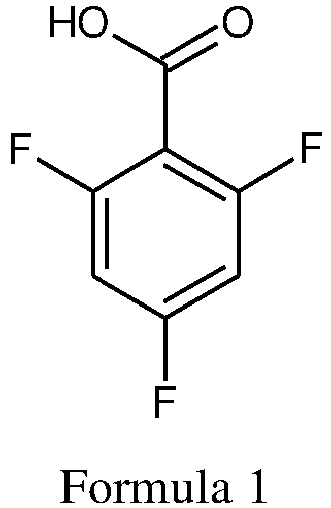
- a) contacting the compound of Formula 3a


- b) contacting the compound of Formula 2a with carbon dioxide to obtain the compound of Formula 1.
- The inorganic base used in the present invention is selected from the group consisting of alkali metal hydroxides, alkali earth hydroxides, metal carbonates and metal oxides.
- The preferred inorganic base is selected from the group consisting of lithium hydroxide, sodium hydroxide, potassium hydroxide, calcium hydroxide, lithium carbonate, potassium carbonate, sodium carbonate and ammonium carbonate or mixture thereof.
- The inorganic sulphates used in the present invention is selected from the group consisting of sodium sulphate, potassium sulphate, ammonium sulphate, calcium sulphate and the like.
- The step of converting a compound of Formula 6 to a compound of Formula 5 may be carried out in presence of polar organic solvents.
- The polar organic solvents may be selected from diethylene glycol, N,N dimethylformamide, N-methyl-2-pyrrolidone, N,N-dimethylacetamide and dimethyl sulfoxide or the mixture thereof.
- The step of converting a compound of Formula 6 to a compound of Formula 5 may be carried out at temperature in the ranging from 100-200°C for 1 to 8 hours. The catalyst used in the step of conversion of compound of Formula 5 to a compound of Formula 4 is selected from the group consisting of palladium, platinum, nickel, chromium dioxide and Raney nickel supported on alumina or activated carbon.
- The buffering agent used in the step of conversion of a compound of Formula 5 to a compound of Formula 4 is selected from a metal acetate or a metal phosphate salt.
- The metal phosphate is selected from the group consisting of diammonium phosphate, mono potassium phosphate, dipotassium phosphate, magnesium phosphate, silver phosphate, sodium monofluorophosphate, sodium phosphate, tripotassium phosphate, trisodium phosphate, lead(II) phosphate, lithium iron phosphate, manganese(II) phosphate, potassium titanyl phosphate or mixture thereof.
- The metal acetate is selected from the group consisting of sodium acetate, potassium acetate, lithium acetate, calcium acetate and magnesium acetate or mixture thereof.
- The step of conversion of a compound of Formula 5 to a compound of Formula 4 may be carried out at suitable pressure between 2 to 15 Kg/cm2 and at a suitable temperature in the range of 90 to 140°C.
- The catalyst used in step of conversion of compound of Formula 5 to a compound of Formula 4 may be recovered and reused.
- The compound of Formula 1 is isolated by using techniques known in the art for example distillation, filtration, acid-base treatment, evaporation, column chromatography and layer separation or combination thereof.
- The isolation of compound of Formula 1 may be carried out by using water or an aqueous acid selected from the group consisting of aqueous hydrochloric acid, aqueous sulphuric acid, aqueous hydrobromic acid, aqueous hydroiodic acid, aqueous perchloric acid, aqueous chloric acid, aqueous phosphoric acid, aqueous acetic acid and aqueous carbonic acid or mixture thereof.
- The steps of converting a compound of Formula 3 to a compound of Formula 2 and subsequently to a compound of Formula 1 may be carried out under anhydrous conditions.
- The step of converting a compound of Formula 3 to a compound of Formula 2 may be carried out at temperature in the range of 25 to 70°C for 0.5 hour to 2 hour.
- The step of converting a compound of Formula 2 to a compound of Formula 1 may be carried out at temperature in the range of -5 to 10°C for 1 to 2 hour.
- The compound of Formula 1, 4 and 5 so obtained by the process of the present invention has a purity greater than 95 %, more preferably greater than 98 %, most preferably greater than 99% by gas chromatography.
- The compounds of Formula 6 may be prepared by any method known in the prior art, or may be obtained commercially.
- The following examples are given by way of illustration and therefore should not be construed to limit the scope of the present invention as defined in the claims.
- Diethylene glycol (390 g), calcium hydroxide (20 g) and calcium sulphate hydrate (34g) were added sequentially in a reaction vessel. The reaction mixture was heated to 120-140°C. 3,5-Dichloro-2,4,6- trifluorobenzoic acid dissolved in diethylene glycol (1170 g) was added to the reaction mixture at 120-140°C. The reaction mass was stirred for additional 1 to 2 hours. The 1,3 -dichloro-2,4,6-trifluorobenzene was recovered by distillation at 150- 180°C.
- Yield: 94%
- Purity: 99.5% (by gas chromatography).
- 1,3-Dichloro-2,4,6-trifluorobenzene (100 g), water (500 g), dipotassium hydrogen phosphate (260 g) and Palladium/carbon (10%; 2 g) were taken in a reaction vessel. Reaction vessel was flushed first with nitrogen and then with hydrogen. The reaction mixture was heated to 140°C. Hydrogen gas was purged continuously into the reaction vessel at 140°C and 15 kg/centimeter2 pressure. Progress of the reaction was monitored by gas chromatography. After completion of the reaction, reaction mass was cooled to 10-15°C and excess hydrogen pressure was released. 1,3,5-trifluorobenzene was recovered from the reaction mass. The bottom mass containing Pd/ C was filtered, washed with fresh water and recycled in next batch.
- Yield: 85%
- Purity: 99.6% (gas chromatography).
- 1,3,5-trifluorobenzene (65 g) and anhydrous iron chloride (3.25 g) was added sequentially in a reaction vessel. The reaction mixture was heated to 40°C. Bromine (80 g) was added drop wise to the reaction mixture at 35-40°C in 2-4 hrs. Reaction mass was stirred for additional 1 hr after complete bromine addition. Progress of the reaction was monitored by gas chromatography. After completion of the reaction, reaction mass was cooled to room temperature and quenched with cold water (32 g; 5-25°C). Layers were separated. Organic was washed with aqueous sodium bisulphite solution (33 g). 1-bromo-2,4,6-trifluorobenzene was recovered under reduced pressure.
- Yield (%): 80%
- Purity: 98.5% (gas chromatography).
- Tetrahydrofuran (50ml) and magnesium (5.87 g) were taken into a reaction vessel sequentially. The reaction mixture was heated to 40°C and 1-bromo-2,4,6-trifluorobenzene solution (47 g in 185 ml THF) was added drop wise at 30 to 35°C. Reaction mass was stirred for 1 hour. Grignard reagent thus formed was cooled to 0°C to 10°C and carbon dioxide gas was purged into it. Reaction progress was monitored by HPLC. After completion of the reaction, reaction mass was quenched with 10% aqueous hydrochloric acid (200 g) and extracted with methyl tertiary butyl ether (200 g). The organic layer was concentrated and water was added to it. pH was adjusted using base to dissolve the crude 2, 4,6-trifluorobenzoic acid alkali salt and washed with dichloromethane. The aqueous layer was acidified with conc. hydrochloric acid till complete precipitation and precipitated product was filtered. The 2,4,6-trifluorobenzoic acid was obtained by recrystallizing crude product with water: methanol mixture (80:20).
- Yield: 60%
- Purity: 99.8 % (by HPLC)
Claims (9)
- A process for preparation of a compound of formula 1,
 a) contacting a compound of formula 6
 with an inorganic base and an inorganic sulfate to obtain a compound of formula 5,
 wherein X1 and X2 are independently selected from Cl, Br and I. contacting the compound of formula 5
 with hydrogen in presence of a catalyst and a buffering agent selected from metal acetate or a metal phosphate salt, to obtain a compound of formula 4;
 b) converting the compound of formula 4 to formula 3;
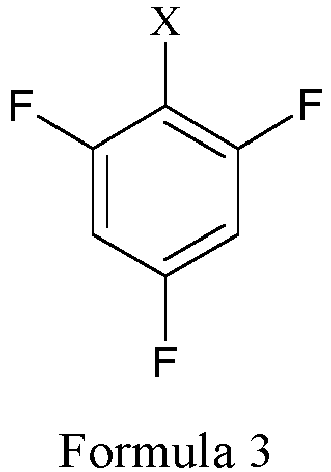 c) contacting the compound of formula 3 with magnesium metal to obtain a compound of formula 2; and
 d) contacting the compound of formula 2 with carbon dioxide to obtain the compound of formula 1.
 - A process for preparation of a compound of formula 5,
 contacting a compound of formula 6 with an inorganic base and an inorganic sulfate compound to obtain a compound of formula 5,
 wherein X1 and X2 are independently selected from Cl, Br and I.
 - A process for preparation of a compound of formula 4,
 contacting the compound of formula 5,
 with hydrogen in presence of catalyst and buffering agent selected from a metal acetate or a metal phosphate salt, to obtain a compound of formula 4.
 - A process for preparation of a compound of formula 1,
 a) contacting the compound of formula 3
 a) contacting the compound of formula 2 with carbon dioxide to obtain the compound of formula 1.
 - The process as claimed in claim 1 and claim 2, wherein the inorganic base is selected from the group consisting of alkali metal hydroxides, alkali earth hydroxides, metal carbonates and metal oxides or a mixture thereof.
- The process as claimed in claim 5, wherein, the inorganic base is selected from the group consisting of lithium hydroxide, sodium hydroxide, potassium hydroxide, calcium hydroxide, lithium carbonate, potassium carbonate, sodium carbonate and ammonium carbonate, calcium oxide, or a mixture thereof.
- The process as claimed in claim 1 and clam 2, wherein, the inorganic sulphate is selected from the group consisting of sodium sulphate, potassium sulphate, ammonium sulphate, calcium sulphate, or a mixture thereof.
- The process as claimed in claim 1 and clam 3, wherein the catalyst is selected from the group consisting of palladium, platinum, nickel, chromium dioxide and Raney nickel supported on alumina or activated carbon.
- The process as claimed in claim 1 and clam 3, wherein the metal phosphate is selected from a group consisting of diammonium phosphate, mono potassium phosphate, dipotassium phosphate, magnesium phosphate, silver phosphate, sodium monofluorophosphate, sodium phosphate, tripotassium phosphate, trisodium phosphate, lead(II) phosphate, lithium iron phosphate, manganese(II) phosphate, potassium titanyl phosphate and the metal acetate is selected from a group consisting of sodium acetate, potassium acetate, lithium acetate, calcium acetate and magnesium acetate or a mixture thereof.
Applications Claiming Priority (4)
| Application Number | Priority Date | Filing Date | Title |
|---|---|---|---|
| IN201711008025 | 2017-03-08 | ||
| IN201711008026 | 2017-03-08 | ||
| IN201711008027 | 2017-03-08 | ||
| PCT/IN2018/050127 WO2018163210A2 (en) | 2017-03-08 | 2018-03-07 | Process for preparation of halo substituted benzoic acid compound and intermediates thereof |
Publications (3)
| Publication Number | Publication Date |
|---|---|
| EP3592724A2 EP3592724A2 (en) | 2020-01-15 |
| EP3592724A4 EP3592724A4 (en) | 2021-01-06 |
| EP3592724B1 true EP3592724B1 (en) | 2023-05-10 |
Family
ID=63447485
Family Applications (1)
| Application Number | Title | Priority Date | Filing Date |
|---|---|---|---|
| EP18763302.9A Active EP3592724B1 (en) | 2017-03-08 | 2018-03-07 | Processes for the preparation of halo substituted benzoic acid compounds |
Country Status (5)
| Country | Link |
|---|---|
| US (1) | US10626074B2 (en) |
| EP (1) | EP3592724B1 (en) |
| JP (1) | JP2020512310A (en) |
| ES (1) | ES2952272T3 (en) |
| WO (1) | WO2018163210A2 (en) |
Families Citing this family (3)
| Publication number | Priority date | Publication date | Assignee | Title |
|---|---|---|---|---|
| WO2021156893A1 (en) * | 2020-02-07 | 2021-08-12 | Srf Limited | Process for preparation of 2,4,6-trifluorobenzoic acid |
| CN112608220B (en) * | 2020-11-26 | 2022-06-07 | 浙江中欣氟材股份有限公司 | Synthetic method of 3, 5-difluorophenol |
| CN117024263B (en) * | 2023-06-27 | 2026-03-03 | 黑龙江立科新材料有限公司 | Preparation method of 2,4, 6-trifluoro-benzoic acid |
Family Cites Families (5)
| Publication number | Priority date | Publication date | Assignee | Title |
|---|---|---|---|---|
| JPS60142950A (en) * | 1983-12-28 | 1985-07-29 | Ishihara Sangyo Kaisha Ltd | Production of 2,4,6-trifluorobenzonitrile |
| JPS6130556A (en) * | 1984-07-20 | 1986-02-12 | Nippon Shokubai Kagaku Kogyo Co Ltd | Production of 2,4,6-trifluorobenzoic acid |
| JPS6136244A (en) * | 1984-07-30 | 1986-02-20 | Nippon Shokubai Kagaku Kogyo Co Ltd | Production of 2,4,6-trifluorobenzoic acid |
| JPH04224535A (en) | 1990-12-26 | 1992-08-13 | Ishihara Sangyo Kaisha Ltd | Production of 1,3,5-trifluorobenzene |
| JP3192975B2 (en) * | 1995-09-26 | 2001-07-30 | 株式会社日本触媒 | Method for producing halogenated benzene |
-
2018
- 2018-03-07 WO PCT/IN2018/050127 patent/WO2018163210A2/en not_active Ceased
- 2018-03-07 US US16/491,026 patent/US10626074B2/en active Active
- 2018-03-07 JP JP2019548600A patent/JP2020512310A/en active Pending
- 2018-03-07 EP EP18763302.9A patent/EP3592724B1/en active Active
- 2018-03-07 ES ES18763302T patent/ES2952272T3/en active Active
Also Published As
| Publication number | Publication date |
|---|---|
| WO2018163210A2 (en) | 2018-09-13 |
| ES2952272T3 (en) | 2023-10-30 |
| US20200010397A1 (en) | 2020-01-09 |
| WO2018163210A3 (en) | 2019-11-21 |
| EP3592724A2 (en) | 2020-01-15 |
| JP2020512310A (en) | 2020-04-23 |
| US10626074B2 (en) | 2020-04-21 |
| EP3592724A4 (en) | 2021-01-06 |
Similar Documents
| Publication | Publication Date | Title |
|---|---|---|
| US9340496B2 (en) | Process for the production of a sulfone monomer | |
| CN106699537B (en) | Method for preparing 2,3,5-trimethylbenzoquinone by oxidation of 2,3,6-trimethylphenol | |
| US10626074B2 (en) | Process for preparation of halo substituted benzoic acid compound and intermediates thereof | |
| TW201309649A (en) | Process for the preparation of 4-Amino-3-chloro-5-fluoro-6-(substituted)picolinates | |
| WO2015151116A2 (en) | Process for producing 2-fluoro-6-(trifluoromethyl)pyridine compounds | |
| CN109970571B (en) | Synthesis process of 2- (4-chlorphenyl) aniline | |
| US7378546B2 (en) | Method for producing 2-amino-5-iodobenzoic acid | |
| JP2003335735A (en) | Method for producing perfluoroisopropylaniline | |
| WO2016125185A2 (en) | Process for the preparation of 4-substituted-1-(trifluoromethoxy)benzene compounds | |
| CN111170846A (en) | A kind of method for preparing 3,3-dimethyl-2-oxo-butyric acid | |
| CN113582918B (en) | Method for preparing 2,3-dichloropyridine by chlorination | |
| US6930214B2 (en) | Process for producing 2,5-bis(trifluoromethyl)nitrobenzene | |
| ZA200210300B (en) | Process for the preparation of trifluoroethoxy-substituted benzoic acids. | |
| JPH04224535A (en) | Production of 1,3,5-trifluorobenzene | |
| WO2021250558A1 (en) | Process for the preparation of fluoxastrobin and intermediates thereof | |
| US4845279A (en) | Method of preparing 4-trifluoromethyl-2-nitrobenzoic acid and novel isomer | |
| JP3193421B2 (en) | Method for producing 2-amino-4-fluorobenzoic acid | |
| US20100267940A1 (en) | Method for Producing 4-Deoxy-4-Fluoro-D-Glucose Derivative | |
| JP4423494B2 (en) | Method for producing 2-hydroxycarboxylic acid | |
| US9102608B2 (en) | Method for producing pentafluorosulfanyl benzoic acid | |
| JP4303685B2 (en) | Method for producing 2-cyclopenten-1-one | |
| JP2005511779A (en) | Process for producing amines | |
| CN111517966A (en) | Method for synthesizing p-isobutoxybenzylamine | |
| WO2012022460A1 (en) | Process for the selective meta-chlorination of alkylanilines | |
| JP2928730B2 (en) | Nitrophenol production method |
Legal Events
| Date | Code | Title | Description |
|---|---|---|---|
| STAA | Information on the status of an ep patent application or granted ep patent |
Free format text: STATUS: THE INTERNATIONAL PUBLICATION HAS BEEN MADE |
|
| PUAI | Public reference made under article 153(3) epc to a published international application that has entered the european phase |
Free format text: ORIGINAL CODE: 0009012 |
|
| STAA | Information on the status of an ep patent application or granted ep patent |
Free format text: STATUS: REQUEST FOR EXAMINATION WAS MADE |
|
| 17P | Request for examination filed |
Effective date: 20190903 |
|
| AK | Designated contracting states |
Kind code of ref document: A2 Designated state(s): AL AT BE BG CH CY CZ DE DK EE ES FI FR GB GR HR HU IE IS IT LI LT LU LV MC MK MT NL NO PL PT RO RS SE SI SK SM TR |
|
| AX | Request for extension of the european patent |
Extension state: BA ME |
|
| DAV | Request for validation of the european patent (deleted) | ||
| DAX | Request for extension of the european patent (deleted) | ||
| REG | Reference to a national code |
Ref country code: DE Ref legal event code: R079 Ref document number: 602018049651 Country of ref document: DE Free format text: PREVIOUS MAIN CLASS: C07C0051000000 Ipc: C07C0051150000 |
|
| A4 | Supplementary search report drawn up and despatched |
Effective date: 20201209 |
|
| RIC1 | Information provided on ipc code assigned before grant |
Ipc: C07C 17/363 20060101ALI20201203BHEP Ipc: C07C 51/15 20060101AFI20201203BHEP Ipc: C07C 17/12 20060101ALI20201203BHEP Ipc: C07C 17/23 20060101ALI20201203BHEP |
|
| GRAP | Despatch of communication of intention to grant a patent |
Free format text: ORIGINAL CODE: EPIDOSNIGR1 |
|
| STAA | Information on the status of an ep patent application or granted ep patent |
Free format text: STATUS: GRANT OF PATENT IS INTENDED |
|
| INTG | Intention to grant announced |
Effective date: 20220926 |
|
| GRAS | Grant fee paid |
Free format text: ORIGINAL CODE: EPIDOSNIGR3 |
|
| GRAA | (expected) grant |
Free format text: ORIGINAL CODE: 0009210 |
|
| STAA | Information on the status of an ep patent application or granted ep patent |
Free format text: STATUS: THE PATENT HAS BEEN GRANTED |
|
| AK | Designated contracting states |
Kind code of ref document: B1 Designated state(s): AL AT BE BG CH CY CZ DE DK EE ES FI FR GB GR HR HU IE IS IT LI LT LU LV MC MK MT NL NO PL PT RO RS SE SI SK SM TR |
|
| REG | Reference to a national code |
Ref country code: GB Ref legal event code: FG4D |
|
| REG | Reference to a national code |
Ref country code: AT Ref legal event code: REF Ref document number: 1566547 Country of ref document: AT Kind code of ref document: T Effective date: 20230515 Ref country code: CH Ref legal event code: EP |
|
| REG | Reference to a national code |
Ref country code: DE Ref legal event code: R096 Ref document number: 602018049651 Country of ref document: DE |
|
| REG | Reference to a national code |
Ref country code: IE Ref legal event code: FG4D |
|
| REG | Reference to a national code |
Ref country code: SE Ref legal event code: TRGR |
|
| REG | Reference to a national code |
Ref country code: LT Ref legal event code: MG9D |
|
| REG | Reference to a national code |
Ref country code: NL Ref legal event code: MP Effective date: 20230510 |
|
| REG | Reference to a national code |
Ref country code: AT Ref legal event code: MK05 Ref document number: 1566547 Country of ref document: AT Kind code of ref document: T Effective date: 20230510 |
|
| REG | Reference to a national code |
Ref country code: ES Ref legal event code: FG2A Ref document number: 2952272 Country of ref document: ES Kind code of ref document: T3 Effective date: 20231030 |
|
| PG25 | Lapsed in a contracting state [announced via postgrant information from national office to epo] |
Ref country code: PT Free format text: LAPSE BECAUSE OF FAILURE TO SUBMIT A TRANSLATION OF THE DESCRIPTION OR TO PAY THE FEE WITHIN THE PRESCRIBED TIME-LIMIT Effective date: 20230911 Ref country code: NO Free format text: LAPSE BECAUSE OF FAILURE TO SUBMIT A TRANSLATION OF THE DESCRIPTION OR TO PAY THE FEE WITHIN THE PRESCRIBED TIME-LIMIT Effective date: 20230810 Ref country code: NL Free format text: LAPSE BECAUSE OF FAILURE TO SUBMIT A TRANSLATION OF THE DESCRIPTION OR TO PAY THE FEE WITHIN THE PRESCRIBED TIME-LIMIT Effective date: 20230510 Ref country code: AT Free format text: LAPSE BECAUSE OF FAILURE TO SUBMIT A TRANSLATION OF THE DESCRIPTION OR TO PAY THE FEE WITHIN THE PRESCRIBED TIME-LIMIT Effective date: 20230510 |
|
| PG25 | Lapsed in a contracting state [announced via postgrant information from national office to epo] |
Ref country code: RS Free format text: LAPSE BECAUSE OF FAILURE TO SUBMIT A TRANSLATION OF THE DESCRIPTION OR TO PAY THE FEE WITHIN THE PRESCRIBED TIME-LIMIT Effective date: 20230510 Ref country code: PL Free format text: LAPSE BECAUSE OF FAILURE TO SUBMIT A TRANSLATION OF THE DESCRIPTION OR TO PAY THE FEE WITHIN THE PRESCRIBED TIME-LIMIT Effective date: 20230510 Ref country code: LV Free format text: LAPSE BECAUSE OF FAILURE TO SUBMIT A TRANSLATION OF THE DESCRIPTION OR TO PAY THE FEE WITHIN THE PRESCRIBED TIME-LIMIT Effective date: 20230510 Ref country code: LT Free format text: LAPSE BECAUSE OF FAILURE TO SUBMIT A TRANSLATION OF THE DESCRIPTION OR TO PAY THE FEE WITHIN THE PRESCRIBED TIME-LIMIT Effective date: 20230510 Ref country code: IS Free format text: LAPSE BECAUSE OF FAILURE TO SUBMIT A TRANSLATION OF THE DESCRIPTION OR TO PAY THE FEE WITHIN THE PRESCRIBED TIME-LIMIT Effective date: 20230910 Ref country code: HR Free format text: LAPSE BECAUSE OF FAILURE TO SUBMIT A TRANSLATION OF THE DESCRIPTION OR TO PAY THE FEE WITHIN THE PRESCRIBED TIME-LIMIT Effective date: 20230510 Ref country code: GR Free format text: LAPSE BECAUSE OF FAILURE TO SUBMIT A TRANSLATION OF THE DESCRIPTION OR TO PAY THE FEE WITHIN THE PRESCRIBED TIME-LIMIT Effective date: 20230811 |
|
| PG25 | Lapsed in a contracting state [announced via postgrant information from national office to epo] |
Ref country code: FI Free format text: LAPSE BECAUSE OF FAILURE TO SUBMIT A TRANSLATION OF THE DESCRIPTION OR TO PAY THE FEE WITHIN THE PRESCRIBED TIME-LIMIT Effective date: 20230510 |
|
| PG25 | Lapsed in a contracting state [announced via postgrant information from national office to epo] |
Ref country code: SK Free format text: LAPSE BECAUSE OF FAILURE TO SUBMIT A TRANSLATION OF THE DESCRIPTION OR TO PAY THE FEE WITHIN THE PRESCRIBED TIME-LIMIT Effective date: 20230510 |
|
| PG25 | Lapsed in a contracting state [announced via postgrant information from national office to epo] |
Ref country code: SM Free format text: LAPSE BECAUSE OF FAILURE TO SUBMIT A TRANSLATION OF THE DESCRIPTION OR TO PAY THE FEE WITHIN THE PRESCRIBED TIME-LIMIT Effective date: 20230510 Ref country code: SK Free format text: LAPSE BECAUSE OF FAILURE TO SUBMIT A TRANSLATION OF THE DESCRIPTION OR TO PAY THE FEE WITHIN THE PRESCRIBED TIME-LIMIT Effective date: 20230510 Ref country code: RO Free format text: LAPSE BECAUSE OF FAILURE TO SUBMIT A TRANSLATION OF THE DESCRIPTION OR TO PAY THE FEE WITHIN THE PRESCRIBED TIME-LIMIT Effective date: 20230510 Ref country code: EE Free format text: LAPSE BECAUSE OF FAILURE TO SUBMIT A TRANSLATION OF THE DESCRIPTION OR TO PAY THE FEE WITHIN THE PRESCRIBED TIME-LIMIT Effective date: 20230510 Ref country code: DK Free format text: LAPSE BECAUSE OF FAILURE TO SUBMIT A TRANSLATION OF THE DESCRIPTION OR TO PAY THE FEE WITHIN THE PRESCRIBED TIME-LIMIT Effective date: 20230510 Ref country code: CZ Free format text: LAPSE BECAUSE OF FAILURE TO SUBMIT A TRANSLATION OF THE DESCRIPTION OR TO PAY THE FEE WITHIN THE PRESCRIBED TIME-LIMIT Effective date: 20230510 |
|
| REG | Reference to a national code |
Ref country code: DE Ref legal event code: R097 Ref document number: 602018049651 Country of ref document: DE |
|
| PLBE | No opposition filed within time limit |
Free format text: ORIGINAL CODE: 0009261 |
|
| STAA | Information on the status of an ep patent application or granted ep patent |
Free format text: STATUS: NO OPPOSITION FILED WITHIN TIME LIMIT |
|
| 26N | No opposition filed |
Effective date: 20240213 |
|
| PG25 | Lapsed in a contracting state [announced via postgrant information from national office to epo] |
Ref country code: SI Free format text: LAPSE BECAUSE OF FAILURE TO SUBMIT A TRANSLATION OF THE DESCRIPTION OR TO PAY THE FEE WITHIN THE PRESCRIBED TIME-LIMIT Effective date: 20230510 |
|
| PG25 | Lapsed in a contracting state [announced via postgrant information from national office to epo] |
Ref country code: SI Free format text: LAPSE BECAUSE OF FAILURE TO SUBMIT A TRANSLATION OF THE DESCRIPTION OR TO PAY THE FEE WITHIN THE PRESCRIBED TIME-LIMIT Effective date: 20230510 Ref country code: IT Free format text: LAPSE BECAUSE OF FAILURE TO SUBMIT A TRANSLATION OF THE DESCRIPTION OR TO PAY THE FEE WITHIN THE PRESCRIBED TIME-LIMIT Effective date: 20230510 |
|
| REG | Reference to a national code |
Ref country code: DE Ref legal event code: R119 Ref document number: 602018049651 Country of ref document: DE |
|
| REG | Reference to a national code |
Ref country code: CH Ref legal event code: PL |
|
| PG25 | Lapsed in a contracting state [announced via postgrant information from national office to epo] |
Ref country code: BG Free format text: LAPSE BECAUSE OF FAILURE TO SUBMIT A TRANSLATION OF THE DESCRIPTION OR TO PAY THE FEE WITHIN THE PRESCRIBED TIME-LIMIT Effective date: 20230510 |
|
| PG25 | Lapsed in a contracting state [announced via postgrant information from national office to epo] |
Ref country code: LU Free format text: LAPSE BECAUSE OF NON-PAYMENT OF DUE FEES Effective date: 20240307 |
|
| PG25 | Lapsed in a contracting state [announced via postgrant information from national office to epo] |
Ref country code: MC Free format text: LAPSE BECAUSE OF FAILURE TO SUBMIT A TRANSLATION OF THE DESCRIPTION OR TO PAY THE FEE WITHIN THE PRESCRIBED TIME-LIMIT Effective date: 20230510 |
|
| PG25 | Lapsed in a contracting state [announced via postgrant information from national office to epo] |
Ref country code: MC Free format text: LAPSE BECAUSE OF FAILURE TO SUBMIT A TRANSLATION OF THE DESCRIPTION OR TO PAY THE FEE WITHIN THE PRESCRIBED TIME-LIMIT Effective date: 20230510 Ref country code: LU Free format text: LAPSE BECAUSE OF NON-PAYMENT OF DUE FEES Effective date: 20240307 Ref country code: BG Free format text: LAPSE BECAUSE OF FAILURE TO SUBMIT A TRANSLATION OF THE DESCRIPTION OR TO PAY THE FEE WITHIN THE PRESCRIBED TIME-LIMIT Effective date: 20230510 |
|
| REG | Reference to a national code |
Ref country code: BE Ref legal event code: MM Effective date: 20240331 |
|
| PG25 | Lapsed in a contracting state [announced via postgrant information from national office to epo] |
Ref country code: DE Free format text: LAPSE BECAUSE OF NON-PAYMENT OF DUE FEES Effective date: 20241001 |
|
| PG25 | Lapsed in a contracting state [announced via postgrant information from national office to epo] |
Ref country code: BE Free format text: LAPSE BECAUSE OF NON-PAYMENT OF DUE FEES Effective date: 20240331 |
|
| PG25 | Lapsed in a contracting state [announced via postgrant information from national office to epo] |
Ref country code: FR Free format text: LAPSE BECAUSE OF NON-PAYMENT OF DUE FEES Effective date: 20240331 |
|
| PG25 | Lapsed in a contracting state [announced via postgrant information from national office to epo] |
Ref country code: IE Free format text: LAPSE BECAUSE OF NON-PAYMENT OF DUE FEES Effective date: 20240307 |
|
| PG25 | Lapsed in a contracting state [announced via postgrant information from national office to epo] |
Ref country code: IE Free format text: LAPSE BECAUSE OF NON-PAYMENT OF DUE FEES Effective date: 20240307 Ref country code: FR Free format text: LAPSE BECAUSE OF NON-PAYMENT OF DUE FEES Effective date: 20240331 Ref country code: DE Free format text: LAPSE BECAUSE OF NON-PAYMENT OF DUE FEES Effective date: 20241001 Ref country code: BE Free format text: LAPSE BECAUSE OF NON-PAYMENT OF DUE FEES Effective date: 20240331 Ref country code: CH Free format text: LAPSE BECAUSE OF NON-PAYMENT OF DUE FEES Effective date: 20240331 |
|
| PGFP | Annual fee paid to national office [announced via postgrant information from national office to epo] |
Ref country code: ES Payment date: 20250402 Year of fee payment: 8 |
|
| PG25 | Lapsed in a contracting state [announced via postgrant information from national office to epo] |
Ref country code: CY Free format text: LAPSE BECAUSE OF FAILURE TO SUBMIT A TRANSLATION OF THE DESCRIPTION OR TO PAY THE FEE WITHIN THE PRESCRIBED TIME-LIMIT; INVALID AB INITIO Effective date: 20180307 |
|
| PG25 | Lapsed in a contracting state [announced via postgrant information from national office to epo] |
Ref country code: HU Free format text: LAPSE BECAUSE OF FAILURE TO SUBMIT A TRANSLATION OF THE DESCRIPTION OR TO PAY THE FEE WITHIN THE PRESCRIBED TIME-LIMIT; INVALID AB INITIO Effective date: 20180307 |
|
| PG25 | Lapsed in a contracting state [announced via postgrant information from national office to epo] |
Ref country code: TR Free format text: LAPSE BECAUSE OF FAILURE TO SUBMIT A TRANSLATION OF THE DESCRIPTION OR TO PAY THE FEE WITHIN THE PRESCRIBED TIME-LIMIT Effective date: 20230510 |
|
| PGFP | Annual fee paid to national office [announced via postgrant information from national office to epo] |
Ref country code: SE Payment date: 20260317 Year of fee payment: 9 |
|
| PGFP | Annual fee paid to national office [announced via postgrant information from national office to epo] |
Ref country code: GB Payment date: 20260317 Year of fee payment: 9 |