EP3592380B1 - Neue universelle für cd22 spezifische chimäre antigenrezeptor-t-zellen - Google Patents
Neue universelle für cd22 spezifische chimäre antigenrezeptor-t-zellen Download PDFInfo
- Publication number
- EP3592380B1 EP3592380B1 EP18715025.5A EP18715025A EP3592380B1 EP 3592380 B1 EP3592380 B1 EP 3592380B1 EP 18715025 A EP18715025 A EP 18715025A EP 3592380 B1 EP3592380 B1 EP 3592380B1
- Authority
- EP
- European Patent Office
- Prior art keywords
- seq
- car
- cells
- cell
- gene
- Prior art date
- Legal status (The legal status is an assumption and is not a legal conclusion. Google has not performed a legal analysis and makes no representation as to the accuracy of the status listed.)
- Active
Links
Images






Classifications
-
- C—CHEMISTRY; METALLURGY
- C07—ORGANIC CHEMISTRY
- C07K—PEPTIDES
- C07K14/00—Peptides having more than 20 amino acids; Gastrins; Somatostatins; Melanotropins; Derivatives thereof
- C07K14/435—Peptides having more than 20 amino acids; Gastrins; Somatostatins; Melanotropins; Derivatives thereof from animals; from humans
- C07K14/705—Receptors; Cell surface antigens; Cell surface determinants
- C07K14/70578—NGF-receptor/TNF-receptor superfamily, e.g. CD27, CD30, CD40, CD95
-
- A—HUMAN NECESSITIES
- A61—MEDICAL OR VETERINARY SCIENCE; HYGIENE
- A61K—PREPARATIONS FOR MEDICAL, DENTAL OR TOILETRY PURPOSES
- A61K31/00—Medicinal preparations containing organic active ingredients
- A61K31/33—Heterocyclic compounds
- A61K31/335—Heterocyclic compounds having oxygen as the only ring hetero atom, e.g. fungichromin
- A61K31/365—Lactones
-
- A—HUMAN NECESSITIES
- A61—MEDICAL OR VETERINARY SCIENCE; HYGIENE
- A61K—PREPARATIONS FOR MEDICAL, DENTAL OR TOILETRY PURPOSES
- A61K35/00—Medicinal preparations containing materials or reaction products thereof with undetermined constitution
- A61K35/12—Materials from mammals; Compositions comprising non-specified tissues or cells; Compositions comprising non-embryonic stem cells; Genetically modified cells
- A61K35/14—Blood; Artificial blood
- A61K35/17—Lymphocytes; B-cells; T-cells; Natural killer cells; Interferon-activated or cytokine-activated lymphocytes
-
- A—HUMAN NECESSITIES
- A61—MEDICAL OR VETERINARY SCIENCE; HYGIENE
- A61K—PREPARATIONS FOR MEDICAL, DENTAL OR TOILETRY PURPOSES
- A61K39/00—Medicinal preparations containing antigens or antibodies
- A61K39/0005—Vertebrate antigens
- A61K39/0011—Cancer antigens
- A61K39/001102—Receptors, cell surface antigens or cell surface determinants
- A61K39/001111—Immunoglobulin superfamily
- A61K39/001113—CD22, BL-CAM, siglec-2 or sialic acid- binding Ig-related lectin 2
-
- A—HUMAN NECESSITIES
- A61—MEDICAL OR VETERINARY SCIENCE; HYGIENE
- A61K—PREPARATIONS FOR MEDICAL, DENTAL OR TOILETRY PURPOSES
- A61K39/00—Medicinal preparations containing antigens or antibodies
- A61K39/395—Antibodies; Immunoglobulins; Immune serum, e.g. antilymphocytic serum
- A61K39/39533—Antibodies; Immunoglobulins; Immune serum, e.g. antilymphocytic serum against materials from animals
- A61K39/39558—Antibodies; Immunoglobulins; Immune serum, e.g. antilymphocytic serum against materials from animals against tumor tissues, cells, antigens
-
- A—HUMAN NECESSITIES
- A61—MEDICAL OR VETERINARY SCIENCE; HYGIENE
- A61K—PREPARATIONS FOR MEDICAL, DENTAL OR TOILETRY PURPOSES
- A61K40/00—Cellular immunotherapy
- A61K40/10—Cellular immunotherapy characterised by the cell type used
- A61K40/11—T-cells, e.g. tumour infiltrating lymphocytes [TIL] or regulatory T [Treg] cells; Lymphokine-activated killer [LAK] cells
-
- A—HUMAN NECESSITIES
- A61—MEDICAL OR VETERINARY SCIENCE; HYGIENE
- A61K—PREPARATIONS FOR MEDICAL, DENTAL OR TOILETRY PURPOSES
- A61K40/00—Cellular immunotherapy
- A61K40/30—Cellular immunotherapy characterised by the recombinant expression of specific molecules in the cells of the immune system
- A61K40/31—Chimeric antigen receptors [CAR]
-
- A—HUMAN NECESSITIES
- A61—MEDICAL OR VETERINARY SCIENCE; HYGIENE
- A61K—PREPARATIONS FOR MEDICAL, DENTAL OR TOILETRY PURPOSES
- A61K40/00—Cellular immunotherapy
- A61K40/40—Cellular immunotherapy characterised by antigens that are targeted or presented by cells of the immune system
- A61K40/41—Vertebrate antigens
- A61K40/42—Cancer antigens
- A61K40/4202—Receptors, cell surface antigens or cell surface determinants
- A61K40/421—Immunoglobulin superfamily
- A61K40/4211—CD19 or B4
-
- A—HUMAN NECESSITIES
- A61—MEDICAL OR VETERINARY SCIENCE; HYGIENE
- A61K—PREPARATIONS FOR MEDICAL, DENTAL OR TOILETRY PURPOSES
- A61K40/00—Cellular immunotherapy
- A61K40/40—Cellular immunotherapy characterised by antigens that are targeted or presented by cells of the immune system
- A61K40/41—Vertebrate antigens
- A61K40/42—Cancer antigens
- A61K40/4202—Receptors, cell surface antigens or cell surface determinants
- A61K40/421—Immunoglobulin superfamily
- A61K40/4212—CD22, BL-CAM, siglec-2 or sialic acid binding Ig-related lectin 2
-
- A—HUMAN NECESSITIES
- A61—MEDICAL OR VETERINARY SCIENCE; HYGIENE
- A61P—SPECIFIC THERAPEUTIC ACTIVITY OF CHEMICAL COMPOUNDS OR MEDICINAL PREPARATIONS
- A61P35/00—Antineoplastic agents
-
- A—HUMAN NECESSITIES
- A61—MEDICAL OR VETERINARY SCIENCE; HYGIENE
- A61P—SPECIFIC THERAPEUTIC ACTIVITY OF CHEMICAL COMPOUNDS OR MEDICINAL PREPARATIONS
- A61P35/00—Antineoplastic agents
- A61P35/02—Antineoplastic agents specific for leukemia
-
- C—CHEMISTRY; METALLURGY
- C07—ORGANIC CHEMISTRY
- C07K—PEPTIDES
- C07K14/00—Peptides having more than 20 amino acids; Gastrins; Somatostatins; Melanotropins; Derivatives thereof
- C07K14/435—Peptides having more than 20 amino acids; Gastrins; Somatostatins; Melanotropins; Derivatives thereof from animals; from humans
- C07K14/46—Peptides having more than 20 amino acids; Gastrins; Somatostatins; Melanotropins; Derivatives thereof from animals; from humans from vertebrates
- C07K14/47—Peptides having more than 20 amino acids; Gastrins; Somatostatins; Melanotropins; Derivatives thereof from animals; from humans from vertebrates from mammals
-
- C—CHEMISTRY; METALLURGY
- C07—ORGANIC CHEMISTRY
- C07K—PEPTIDES
- C07K14/00—Peptides having more than 20 amino acids; Gastrins; Somatostatins; Melanotropins; Derivatives thereof
- C07K14/435—Peptides having more than 20 amino acids; Gastrins; Somatostatins; Melanotropins; Derivatives thereof from animals; from humans
- C07K14/705—Receptors; Cell surface antigens; Cell surface determinants
- C07K14/70503—Immunoglobulin superfamily
- C07K14/7051—T-cell receptor (TcR)-CD3 complex
-
- C—CHEMISTRY; METALLURGY
- C07—ORGANIC CHEMISTRY
- C07K—PEPTIDES
- C07K14/00—Peptides having more than 20 amino acids; Gastrins; Somatostatins; Melanotropins; Derivatives thereof
- C07K14/435—Peptides having more than 20 amino acids; Gastrins; Somatostatins; Melanotropins; Derivatives thereof from animals; from humans
- C07K14/705—Receptors; Cell surface antigens; Cell surface determinants
- C07K14/70503—Immunoglobulin superfamily
- C07K14/70517—CD8
-
- C—CHEMISTRY; METALLURGY
- C07—ORGANIC CHEMISTRY
- C07K—PEPTIDES
- C07K16/00—Immunoglobulins [IGs], e.g. monoclonal or polyclonal antibodies
- C07K16/18—Immunoglobulins [IGs], e.g. monoclonal or polyclonal antibodies against material from animals or humans
- C07K16/28—Immunoglobulins [IGs], e.g. monoclonal or polyclonal antibodies against material from animals or humans against receptors, cell surface antigens or cell surface determinants
- C07K16/2803—Immunoglobulins [IGs], e.g. monoclonal or polyclonal antibodies against material from animals or humans against receptors, cell surface antigens or cell surface determinants against the immunoglobulin superfamily
-
- C—CHEMISTRY; METALLURGY
- C07—ORGANIC CHEMISTRY
- C07K—PEPTIDES
- C07K16/00—Immunoglobulins [IGs], e.g. monoclonal or polyclonal antibodies
- C07K16/18—Immunoglobulins [IGs], e.g. monoclonal or polyclonal antibodies against material from animals or humans
- C07K16/28—Immunoglobulins [IGs], e.g. monoclonal or polyclonal antibodies against material from animals or humans against receptors, cell surface antigens or cell surface determinants
- C07K16/2803—Immunoglobulins [IGs], e.g. monoclonal or polyclonal antibodies against material from animals or humans against receptors, cell surface antigens or cell surface determinants against the immunoglobulin superfamily
- C07K16/283—Immunoglobulins [IGs], e.g. monoclonal or polyclonal antibodies against material from animals or humans against receptors, cell surface antigens or cell surface determinants against the immunoglobulin superfamily against Fc-receptors, e.g. CD16, CD32, CD64
-
- C—CHEMISTRY; METALLURGY
- C07—ORGANIC CHEMISTRY
- C07K—PEPTIDES
- C07K19/00—Hybrid peptides, i.e. peptides covalently bound to nucleic acids, or non-covalently bound protein-protein complexes
-
- C—CHEMISTRY; METALLURGY
- C12—BIOCHEMISTRY; BEER; SPIRITS; WINE; VINEGAR; MICROBIOLOGY; ENZYMOLOGY; MUTATION OR GENETIC ENGINEERING
- C12N—MICROORGANISMS OR ENZYMES; COMPOSITIONS THEREOF; PROPAGATING, PRESERVING, OR MAINTAINING MICROORGANISMS; MUTATION OR GENETIC ENGINEERING; CULTURE MEDIA
- C12N5/00—Undifferentiated human, animal or plant cells, e.g. cell lines; Tissues; Cultivation or maintenance thereof; Culture media therefor
- C12N5/06—Animal cells or tissues; Human cells or tissues
- C12N5/0602—Vertebrate cells
- C12N5/0634—Cells from the blood or the immune system
- C12N5/0636—T lymphocytes
- C12N5/0638—Cytotoxic T lymphocytes [CTL] or lymphokine activated killer cells [LAK]
-
- A—HUMAN NECESSITIES
- A61—MEDICAL OR VETERINARY SCIENCE; HYGIENE
- A61K—PREPARATIONS FOR MEDICAL, DENTAL OR TOILETRY PURPOSES
- A61K39/00—Medicinal preparations containing antigens or antibodies
- A61K2039/80—Vaccine for a specifically defined cancer
- A61K2039/804—Blood cells [leukemia, lymphoma]
-
- A—HUMAN NECESSITIES
- A61—MEDICAL OR VETERINARY SCIENCE; HYGIENE
- A61K—PREPARATIONS FOR MEDICAL, DENTAL OR TOILETRY PURPOSES
- A61K2239/00—Indexing codes associated with cellular immunotherapy of group A61K40/00
- A61K2239/27—Indexing codes associated with cellular immunotherapy of group A61K40/00 characterized by targeting or presenting multiple antigens
- A61K2239/28—Expressing multiple CARs, TCRs or antigens
-
- C—CHEMISTRY; METALLURGY
- C07—ORGANIC CHEMISTRY
- C07K—PEPTIDES
- C07K2317/00—Immunoglobulins specific features
- C07K2317/30—Immunoglobulins specific features characterized by aspects of specificity or valency
- C07K2317/34—Identification of a linear epitope shorter than 20 amino acid residues or of a conformational epitope defined by amino acid residues
-
- C—CHEMISTRY; METALLURGY
- C07—ORGANIC CHEMISTRY
- C07K—PEPTIDES
- C07K2317/00—Immunoglobulins specific features
- C07K2317/50—Immunoglobulins specific features characterized by immunoglobulin fragments
- C07K2317/52—Constant or Fc region; Isotype
- C07K2317/53—Hinge
-
- C—CHEMISTRY; METALLURGY
- C07—ORGANIC CHEMISTRY
- C07K—PEPTIDES
- C07K2317/00—Immunoglobulins specific features
- C07K2317/60—Immunoglobulins specific features characterized by non-natural combinations of immunoglobulin fragments
- C07K2317/62—Immunoglobulins specific features characterized by non-natural combinations of immunoglobulin fragments comprising only variable region components
- C07K2317/622—Single chain antibody (scFv)
-
- C—CHEMISTRY; METALLURGY
- C07—ORGANIC CHEMISTRY
- C07K—PEPTIDES
- C07K2317/00—Immunoglobulins specific features
- C07K2317/70—Immunoglobulins specific features characterized by effect upon binding to a cell or to an antigen
- C07K2317/73—Inducing cell death, e.g. apoptosis, necrosis or inhibition of cell proliferation
-
- C—CHEMISTRY; METALLURGY
- C07—ORGANIC CHEMISTRY
- C07K—PEPTIDES
- C07K2319/00—Fusion polypeptide
- C07K2319/01—Fusion polypeptide containing a localisation/targetting motif
- C07K2319/02—Fusion polypeptide containing a localisation/targetting motif containing a signal sequence
-
- C—CHEMISTRY; METALLURGY
- C07—ORGANIC CHEMISTRY
- C07K—PEPTIDES
- C07K2319/00—Fusion polypeptide
- C07K2319/01—Fusion polypeptide containing a localisation/targetting motif
- C07K2319/03—Fusion polypeptide containing a localisation/targetting motif containing a transmembrane segment
-
- C—CHEMISTRY; METALLURGY
- C07—ORGANIC CHEMISTRY
- C07K—PEPTIDES
- C07K2319/00—Fusion polypeptide
- C07K2319/33—Fusion polypeptide fusions for targeting to specific cell types, e.g. tissue specific targeting, targeting of a bacterial subspecies
-
- C—CHEMISTRY; METALLURGY
- C07—ORGANIC CHEMISTRY
- C07K—PEPTIDES
- C07K2319/00—Fusion polypeptide
- C07K2319/70—Fusion polypeptide containing domain for protein-protein interaction
- C07K2319/74—Fusion polypeptide containing domain for protein-protein interaction containing a fusion for binding to a cell surface receptor
Definitions
- the present invention generally relates to the field of immunotherapy, and more specifically to Universal chimeric antigen receptor T cells specific for CD22 (UCART22) that are engineered human primary immune cells comprising at least one edited gene, preferably a gene coding a TCR subunit and/or a CD52 gene, and a Chimeric Antigen Receptors (CAR) specific for the cluster of differentiation 22 (CD22), (CAR CD22) as defined in the appended claims.
- the invention further relates to UCART 22 for their use in patients who may or may not be the initial donor of cells ("allogenic" or “autologous" CD22 CAR engineered primary human immune cells) as a treatment for relapsed or refractory hematological cancers.
- the cells expressing a CD22-specific CAR according to the invention are particularly efficient and safe for immunotherapy in particular against aggressive or relapsed cancer.
- CARs are synthetic receptors consisting of a targeting moiety that is associated with one or more signaling intracellular domains in a single molecule or in multiple transmembrane domains forming a multimer.
- the binding moiety consists of an antigen-binding domain from a single-chain antibody (scFv), comprising the variable fragments of a monoclonal antibody joined by a linker.
- Binding moieties based on receptor or ligand domains have also been used successfully to prepare a CAR.
- Signaling domains from co-stimulatory molecules of the T cell receptor (TCR), as well as particular transmembrane and hinge domains have been added to form CARs of second and third generations, leading to successful therapeutic trials in humans.
- TCR T cell receptor
- T-cells from a patient suffering a hematological (“liquid") cancer were redirected against malignant cells expressing for example CD19 or CD22 (June et al., 2011, Haso et al., 2013) and reinjected into the same patient.
- the inventors have developed new efficient chimeric antigen receptor (CAR) specific for and targeting CD22 (anti-CD22 CAR or CAR CD22), Universal ANTI-CD22 CAR T cells "UCART22" comprising engineered primary human T cells with at least an inactivated TRAC gene, wherein the CAR targeting CD22 comprises, optionally a safety marker allowing the number (and activity) of said UCART22 cells to be controlled.
- CAR chimeric antigen receptor
- Universal means that said cells are "off the shelve” engineered cells (UCART) wherein at least the TCR was inactivated, preferably by deletion of the TRAC gene using the TALEN ® technology. Inactivated means preferentially that a genomic sequence is deleted, inserted or mutated, more preferentially deleted or inserted. Consequently, cells may be administered to a patient and induce no or very reduced Graft versus host disease (GVHD) (intensity grade 0 to 2) as compared to a GVHD measured in a immunohistoincompatible individual after "allogeneic" transplantation or transfer of immune cells with no alteration of the genomic DNA encoding a sub unit of the TCR.
- GVHD Graft versus host disease
- At least one additional gene modification that is, an inactivation in a CD52, a dCK, and/or a beta2microglobulinare gene, or an insertion of a HIF-1alpha gene conferring resistance to hypoxia, is contemplated.
- These new UCART22 are particularly efficient for adoptive transfer in a patient suffering a CD22-mediated pathology, whether or not said patient is the initial donor of immune cells and whether or not said patient is already under a therapy that affects T immunity.
- UCART 22 cells of the invention can be used in patients treated with at least one chemical or antibody drug usually used to treat CD22-mediated pathology, such as Campath and/or Purine nucleotide analogs (PNAs).
- UCART 22 cells of the invention can survive and be active in the presence of said drug used at least at a dose that kills more than 50% of the cells.
- the CD22 CAR T cell (UCART22), optionally combined to a protein kinase C inhibitor such as bryostatin 1 as a pharmaceutical composition of the invention, is particularly useful for the treatment of CLL, ALL, Multiple myeloma, (MM), Blastic plasmacytoid dendritic cell neoplasm (BPDCN), especially refractory / relapsed ALL, refractory / relapsed CLL and or aggressive forms of these diseases, more preferably refractory or relapsed B-ALL.
- MM Multiple myeloma
- BPDCN Blastic plasmacytoid dendritic cell neoplasm
- the engineered immune cells of the present invention not only display high level of in vivo activity toward malignant cells, less cytokine release but also their number and activity is controlled conferring safety and efficiency for immunotherapy.
- a UCART22 of the invention is used for treating a patient with relapsed or refractory B ALL.
- the present invention provides a Chimeric Antigen Receptor (CAR) specific for CD22 (ANTI-CD22 CAR) comprising:
- the anti-CD22 CAR comprises 3 mAb-specific epitopes having an amino acid sequence of CPYSNPSLC and one mAb-specific epitope having an amino acid sequence of ELPTQGTFSNVSTNVSPAKPTTTA.
- the present invention provides an anti-CD22 CAR according to any one of the above wherein said scfv specific for CD22 comprises one of the following combinations of sequences (SEQ ID N° 77, SEQ ID N° 78) (SEQ ID N° 87, SEQ ID N° 88) and (SEQ ID N° 89, SEQ ID N° 90), more preferably the combination of sequence (SEQ ID N° 87, SEQ ID N° 88).
- the present invention provides the anti-CD22 CAR according to any one of the above wherein said scfv specific for CD22 comprises a VH and a VL linked to each other by a linker L1.
- the present invention provides the anti-CD22 CAR according to any one of the above wherein said scfv specific for CD22 is linked to a transmembrane domain by a hinge selected from a hinge from Fc ⁇ RIII ⁇ , CD8alpha, IgG1, preferably a hinge from CD8 alpha.
- the present invention provides the anti-CD22 CAR according to any one of the above comprising at least one, preferably two, more preferably three, even more preferably four of said monoclonal antibody (mAb)-specific epitopes, inserted into the linker L1 of the scfv specific for CD22 and/or into the hinge.
- mAb monoclonal antibody
- the present invention provides the anti-CD22 CAR according to any one of the above wherein said molecular antibody (mAb)-specific epitope, is a mAb-specific epitope specifically recognized by an monoclonal antibody selected from ibritumomab, tiuxetan, muromonab-CD3, tositumomab, abciximab, basiliximab, brentuximab vedotin, cetuximab, infliximab, rituximab, alemtuzumab, bevacizumab, certolizumab pegol, daclizumab, eculizumab, efalizumab, gemtuzumab, natalizumab, omalizumab, palivizumab, ranibizumab, tocilizumab, trastuzumab, vedolizumab, adalimumab, belimum
- the present invention provides the anti-CD22 CAR according to any one of the above wherein a mAb-specific epitope is an epitope to be bound by an epitope-specific mAb for in vitro cell sorting and/or in vivo cell depletion of T cells expressing a CAR comprising such epitope.
- the present invention provides the anti-CD22 CAR according to any one of the above wherein the extracellular binding domain comprises one of the following sequences :
- the present invention provides the anti-CD22 CAR according to any one of the above embodiments wherein the extracellular binding domain comprises one of the following sequences:
- the present invention provides the anti-CD22 CAR according to any one of the above, wherein L 1 is a linker comprising Glycine and/or Serine.
- L 1 is a linker comprising the amino acid sequence (Gly-Gly-Gly-Ser) n or (Gly-Gly-Gly-Gly-Ser) n , where n is 1, 2, 3, 4 or 5 or a linker comprising the amino acid sequence (Gly 4 Ser) 4 or (Gly 4 Ser) 3 .
- L is a linker having an amino acid sequence selected from SGG, GGS, SGGS, SSGGS, GGGG, SGGGG, GGGGS, SGGGGS, GGGGGS, SGGGGGS, SGGGGG, GSGGGGS, GGGGGGGS, SGGGGGGG, SGGGGGGGS, and SGGGGSGGGGS, preferably L is a SGGGG, GGGGS or SGGGGS.
- Epitope 1, Epitope 2, Epitope 3 and Epitope 4 are independently selected from mAb-specific epitopes specifically recognized by ibritumomab, tiuxetan, muromonab-CD3, tositumomab, abciximab, basiliximab, brentuximab vedotin, cetuximab, infliximab, rituximab, alemtuzumab, bevacizumab, certolizumab pegol, daclizumab, eculizumab, efalizumab, gemtuzumab, natalizumab, omalizumab, palivizumab, ranibizumab, tocilizumab, trastuzumab, vedolizumab, adalimumab, belimumab, canakinumab, denosumab, golimumab, ipilimum
- mAb may be as in the table below : Antibody Indication Drug bank accession n° (or other n° if stated) Target/ Antigen Ibritumomab tiuxetan Non-Hodgkin lymphoma (with yttrium-90 or indium-111) DB00078 CD20 Muromonab-CD3 Transplant rejection DB00075 T cell CD3 Receptor Tositumomab Non-Hodgkin lymphoma DB00081 CD20 Abciximab Cardiovascular disease DB00054 inhibition of glycoprotein IIb/IIIa Basiliximab Transplant rejection DB00074 IL-2R ⁇ receptor (CD25) Brentuximab vedotin Anaplastic large cell lymphoma DB08870 CD30 Cetuximab Colorectal cancer, Head and neck cancer DB00002 epidermal growth factor receptor Infliximab Several autoimmune disorders DB00065 inhibition of TNF- ⁇ signaling Rituximab Non-Ho
- the present invention provides the anti-CD22 CAR according to any one of the above, wherein the mAb-specific epitope has the following amino acid sequence: ELPTQGTFSNVSTNVSPAKPTTTA and/or CPYSNPSLC.
- the anti-CD22 CAR according to the above comprising 3 mAb-specific epitopes having an amino acid sequence of CPYSNPSLC and one having an amino acid sequence of ELPTQGTFSNVSTNVSPAKPTTTA.
- VH chain has the sequence of SEQ ID NO 71
- VL chain has the sequence of SEQ ID NO 72.
- VH chain has the sequence of SEQ ID NO 73
- VL chain has the sequence of SEQ ID NO 74.
- VH chain has the sequence of SEQ ID NO 75
- VL chain has the sequence of SEQ ID NO 76.
- VH chain has the sequence of SEQ ID NO 77
- VL chain has the sequence of SEQ ID NO 78.
- VH chain has the sequence of SEQ ID NO 79
- VL chain has the sequence of SEQ ID NO 80.
- VH chain has the sequence of SEQ ID NO 81
- VL chain has the sequence of SEQ ID NO 82
- SEQ ID NO 83 The anti-CD22 CAR according to the above, wherein said VH chain has the sequence of SEQ ID NO 83
- said VL chain has the sequence of SEQ ID NO 84.
- VH chain has the sequence of SEQ ID NO 85
- VL chain has the sequence of SEQ ID NO 86.
- VH chain has the sequence of SEQ ID NO 87
- VL chain has the sequence of SEQ ID NO 88.
- VH chain has the sequence of SEQ ID NO 89
- VL chain has the sequence of SEQ ID NO 90.
- the transmembrane domain comprises the transmembrane region(s) of the alpha, beta or zeta chain of the T-cell receptor, PD-1, 4-1BB, OX40, ICOS, CTLA-4, LAG3, 2B4, BTLA4, TIM-3, TIGIT, SIRPA, CD28, CD3 epsilon, CD45, CD4, CD5, CD8, CD9, CD16, CD22, CD33, CD37, CD64, CD80, CD86, CD134, CD137 or CD154.
- transmembrane domain comprises a transmembrane region(s) of PD-1 or CD8 alpha.
- transmembrane domain comprises a transmembrane region(s) of CD8 alpha.
- the anti-CD22 CAR according to any one of the above wherein the intracellular domain comprises a CD3zeta signaling domain.
- the anti-CD22 CAR according to any one of the above wherein the intracellular domain comprises a 4-1BB domain.
- the anti-CD22 CAR according to any one of the above wherein the intracellular domain comprises a CD3zeta signaling domain and a 4-1BB domain.
- the CD22 CAR is a single-chain CAR, preferably a single -chain anti-CD22 CAR comprising an additional scfv specific for one of the following tumor-associated surface antigen selected from CD19, CD20, CD30, a major histocompatibility complex (MHC) molecule, an Immunoglobulin (Ig), CD3, CD34, CD79, preferably CD79b, CD138, B7-1 (CD80), BCMA (CD269, TNFRSF 17) or FLT-3, PAX 5.
- MHC major histocompatibility complex
- the anti-CD22 CAR according to any one of the above, wherein the CD22 CAR is a single-chain CAR, preferably a single -chain anti-CD22 CAR comprising an additional scfv specific for CD19.
- the said CD22 CAR is a polypeptide comprising a sequence selected from any one of SEQ ID NO. 56 to SEQ ID NO. 69, preferably a sequence selected from any one of SEQ ID NO. 56 to SEQ ID NO. 65, more preferably the sequence of SEQ ID N°64.
- the anti-CD22 CAR according to any one of the above wherein the CD22 CAR is a multi-chain CAR, preferably a multi chain CAR comprising an additional scfv specific for one of the following tumor-associated surface antigen selected from CD19, CD20, CD30, a major histocompatibility complex (MHC) molecule, an Immunoglobulin (Ig), CD3, CD34, CD79, preferably CD79b, CD138, B7-1 (CD80), BCMA (CD269, TNFRSF 17) or FLT-3, PAX5.
- MHC major histocompatibility complex
- the anti-CD22 CAR according to any one of the above comprising at least one additional antigen binding domain.
- the present invention provides a polynucleotide encoding an anti-CD22 CAR as described in any of the above embodiments.
- the present invention provides a vector encoding an anti-CD22 CAR as described in any of the above embodiments.
- the present invention provides an immune cell endowed with an anti-CD22 CAR as any of the above, preferably a human immune cell, more preferably a human immune T cell.
- the present invention provides a population of cells comprising an immune cell endowed with an anti-CD22 CAR as any of the above, preferably a human immune cell, more preferably a human immune T cell.
- the immune cell comprises an inactivated gene coding for one of the T Cell Receptor domains, preferably a TRAC Knocked out gene.
- the immune cell comprises an inactivated CD52 gene.
- the present invention provides an engineered human cell, preferably an engineered human T cell comprising an anti-CD22 CAR as any of the above and at least one edited gene.
- the at least one edited gene may be a gene which is edited for rendering the cell resistant to a drug, or resistant to hypoxia, preferably this gene may be a dCK gene, a CD56 gene, a glucocorticoid receptor (GR) gene.
- this gene may be a dCK gene, a CD56 gene, a glucocorticoid receptor (GR) gene.
- the TCR of these cells may be intact, of said cells may express a TCR participating to the efficiency of said cell as a treatment.
- Resistant means that the cell will survive and be active (have for example a CTL activity) under condition (at a concentration) that can be measured in the blood of a patient treated with said drug, or in the environment created by a tumor.
- hypoxia means 1 to 5% O2.
- the present invention also provides an engineered human T Cell Receptor Knock Out (TCR KO) cell endowed with a Chimeric Antigen Receptor (CAR) specific for CD22 of the present invention (UCART22).
- TCR KO T Cell Receptor Knock Out
- CAR Chimeric Antigen Receptor
- UCART means a universal CAR-expressing TCR KO (inactivated) T cell.
- Universal means that said cells has been modified, edited to be suitable for immunotherapy in any host, in need thereof, comprises at least a deficient TCR and/or no cell surface expression of TCRalpha/beta.
- UCART 22 means a universal anti-CD22 CAR-expressing TCR KO (inactivated) T cell.
- the UCART 22 comprises any one of the anti-CD22 CAR (or CD22 CAR) described above.
- the present invention provides said UCART22 cell comprising at least one other edited gene, preferably HIF-1alpha, GR, CD56, dCK.
- the present invention provides the UCART 22 according to any one of the above comprising an expression vector encoding a CD22 CAR of the invention.
- the present invention provides the UCART 22 according to any one of the above, wherein said cell is derived or is an inflammatory T-lymphocytes, cytotoxic T-lymphocytes, regulatory T-lymphocytes or helper T-lymphocytes, a Natural Killer T cells.
- the present invention further provides a pharmaceutical composition comprising a pharmaceutically acceptable excipient and an immune cell of the present invention as described above, or the UCART 22 according to any one of the above, preferably an additional compound which is a compound of the bryostatin family and the UCART 22 according to any one of the above, more preferably bryostatine-1 and the UCART 22 according to any one of the above.
- the present invention provides a UCART 22 according to the above or the pharmaceutical composition according to the above for use as a medicament.
- Disclosed herewith is a method for preparing any one of anti-CD22 CAR of SEQ ID N°56 to 69 of the invention, and corresponding UCART22 of the invention.
- Also disclosed herewith is a method for engineering a cell of the invention, comprising:
- a method for engineering a cell comprising:
- Also disclosed herewith is a method for engineering a UCART22 cell, comprising:
- Preferably inactivating the TRAC gene is accomplished by using TALEN ® -and even more preferably by targeted insertion of said at least one polynucleotide encoding the chimeric antigen receptor CAR (or another gene)using TALEN ® into the TRAC gene and AAV vector.
- step (c) followed by step (d) of gene editing is before step (a) of CAR transduction and expression.
- a method for engineering a UCART 22 wherein the step of gene editing comprises introducing a genetic material, preferably an mRNA encoding an enzyme for editing a polynucleotide into said cells.
- a method for engineering a UCART 22 wherein said enzyme is a rare endonuclease such as a TALEN, a Crispr a MegaTAL or an enzyme of DNA post-translational modification such as a methyl transferase, into said cells.
- said enzyme is a rare endonuclease such as a TALEN, a Crispr a MegaTAL or an enzyme of DNA post-translational modification such as a methyl transferase, into said cells.
- an anti-CD22 CAR Construct comprises any one of the SEQ ID N° 21 to 45.
- a method for engineering a UCART 22 comprising a step of editing a second gene, preferably a CD52 gene, more preferably deleting said CD52 gene.
- Said method can comprise one step of gene editing wherein the anti-CD22 CAR construct is introduced with a genetic material, preferably an mRNA encoding an enzyme for editing at least two genes into said cells.
- the CD22 CAR is introduced into the cell using retroviral particules (rLV) in combination with Retronectin ® .
- Described herewith is a method for engineering a UCART 22 according to anyone of the above wherein 2 genes are edited at the same step of gene editing, preferably TRAC and CD52, TRAC and HIF-1alpha.
- Disclosed herewith is a method for cell sorting engineered immune cell expressing at its cell surface an anti-CD22 CAR comprising at least one mAb-specific epitope said method comprising - contacting a population of immune cells comprising said engineered immune cells with a monoclonal antibody specific for the mAb-specific epitope.
- Also disclosed herewith are: The method according to the above wherein the monoclonal antibody specific for the mAb-specific epitope is conjugated to a fluorophore and the step of selecting the cells that bind to the monoclonal antibody is done by Fluorescence Activated Cell Sorting (FACS).
- FACS Fluorescence Activated Cell Sorting
- the anti-CD22 CAR comprises a mAb-specific epitope having an amino acid sequence of SEQ ID NO 91 and the monoclonal antibody used to contact the population of immune cells is rituximab.
- CD22CAR comprises an mAb-specific epitope having an amino acid sequence of SEQ ID NO 92 and the antibody used to contact the population of immune cells is QBEND-10.
- CD22CAR comprises an mAb-specific epitope having an amino acid sequence of SEQ ID NO 91 and SEQ ID NO 92 and the antibodies used to contact the population of immune cells are QBEND-10 and rituximab.
- the CD22 CAR comprises two mAb-specific epitopes and two monoclonal antibodies are used to contact the population of immune cells, preferably said monoclonal antibodies are QBEN10 and rituximab.
- the UCART 22 according to any one the above for use in a method for in vivo depleting said UCART22 cell comprising administering at least one mAb-specific epitope in a patient, at a dose allowing contacting said UCART22 with at least one epitope-specific mAb.
- sais mAb is rituximab.
- Also disclosed herewith is a method for in vivo depleting an engineered immune cell expressing at its cell surface an anti-CD22 CAR comprising at least one mAb-specific epitope in a patient, comprising contacting said engineered immune cell with bi-specific mAb (BsAb) able to bind both the mAb-specific epitope borne on said cells and to an surface antigen borne on an effector (and cytotoxic) cell.
- BsAb bi-specific mAb
- said immune cell is a T-cell, preferably an inflammatory T-lymphocytes, cytotoxic T-lymphocytes, regulatory T-lymphocytes or helper T-lymphocytes, a Natural Killer T cells.
- the invention provides a UCART 22 according to the above or the pharmaceutical composition comprising a UCART 22 according to the above for use as a medicament for the treatment of cancer.
- the invention provides a UCART 22 according to the above or the pharmaceutical composition according to the above, preferably a therapeutically effective amount of UCART 22 according to any one of the above or of the pharmaceutical composition according to the above, for use as a medicament for the treatment of a CD22-mediated pathology, preferably a CD22- expressing cancer, preferably a CD22 expressing hematological cancer.
- the invention provides therapeutically effective amount of UCART 22 or of the pharmaceutical composition according to the above for use as a medication in the treatment of a hematological cancer selected from lymphoma, Hodgkin lymphoma, non Hodgkin lymphoma, leukemia, multiple myeloma, B-chronic lymphocytic leukemia, hairy cell leukemia, acute lymphocytic leukemia (ALL), and Burkitt's lymphoma, acute lymphocytic cancer, acute myeloid leukemia, preferably a CD22 expressing hematological cancer selected from (lymphoma, Hodgkin lymphoma, non Hodgkin lymphoma, leukemia, multiple myeloma, B-chronic lymphocytic leukemia, hairy cell leukemia, acute lymphocytic leukemia (ALL), and Burkitt's lymphoma, acute lymphocytic cancer, acute myeloid leukemia, more preferably a relapse
- the invention provides a therapeutically effective amount of UCART 22 or of the pharmaceutical composition according to the above for use as a medication in the treatment of a refractory hematological cancer selected from refractory (lymphoma, Hodgkin lymphoma, non Hodgkin lymphoma, leukemia, multiple myeloma, B-chronic lymphocytic leukemia, hairy cell leukemia, acute lymphocytic leukemia (ALL), and Burkitt's lymphoma, acute lymphocytic cancer, acute myeloid leukemia, preferably a refractory CD22 expressing hematological cancer selected from refractory CD22 expressing (lymphoma, Hodgkin lymphoma, non Hodgkin lymphoma, leukemia, multiple myeloma, B-chronic lymphocytic leukemia, hairy cell leukemia, acute lymphocytic leukemia (ALL), and Burkitt's lymphoma, acute
- the invention provides a therapeutically effective amount of UCART 22 or of the pharmaceutical composition according to the above for use as a medication in the treatment of a refractory CD22 positive B-ALL.
- the invention provides a therapeutically effective amount of UCART 22 or of the pharmaceutical composition according to the above for use as a medication in the treatment of a relapsed CD22 positive B-ALL.
- the invention provides a therapeutically effective amount of UCART 22 or of the pharmaceutical composition according to the above for use as a medication for treating a patient wherein said patient suffers from a cancer selected from alveolar rhabdomyosarcoma, bladder cancer (e.g., bladder carcinoma), bone cancer, brain cancer (e.g., medulloblastoma), breast cancer, cancer of the anus, anal canal, or anorectum, cancer of the eye, cancer of the intrahepatic bile duct, cancer of the joints, cancer of the neck, cancer of the gallbladder, cancer of the pleura, cancer of the nose, cancer of the nasal cavity, cancer of the middle ear, cancer of the oral cavity, cancer of the vulva, chronic lymphocytic leukemia, chronic myeloid cancer, colon cancer, esophageal cancer, cervical cancer, fibrosarcoma, gastrointestinal carcinoid tumor, head and neck cancer (e.g., head and neck squamous cell carcinoma), hypopharyn
- the present invention relates to new designs of anti-CD22 chimeric antigen receptor (CAR or CD22 CAR or anti-CD22 CAR or CAR CD22) which are chimeric antigen receptor capable of binding to CD22 in particular to the proximal domain of CD22 and to induce degranulation, eventually lysis of a target cells, preferably even under hypoxia or in a patient treated with PNA or/or CAMPATH.
- CAR or CD22 CAR or anti-CD22 CAR or CAR CD22 which are chimeric antigen receptor capable of binding to CD22 in particular to the proximal domain of CD22 and to induce degranulation, eventually lysis of a target cells, preferably even under hypoxia or in a patient treated with PNA or/or CAMPATH.
- the CD22 specific Chimeric Antigen Receptors of the invention comprises
- an anti-CD22 CAR according to the present invention comprises an extracellular domain that comprises an extracellular ligand-binding domain.
- extracellular ligand-binding domain as used herein is defined as an oligo- or polypeptide that is capable of binding at least one epitope of CD22.
- said extracellular ligand-binding domain comprises at least one single chain antibody fragment (scFv) comprising the light ( V L ) and the heavy ( V H ) variable fragment of a target antigen specific monoclonal anti CD22 antibody joined by a linker, in particular a flexible linker.
- scFv single chain antibody fragment
- V L and V H are preferably linked together by a flexible linker comprising for instance the sequence SEQ ID NO.10.
- a preferred embodiment of the invention provides CARs comprising an antigen-binding domain comprising, consisting of, or consisting essentially of, a single chain variable fragment (scFv) of the antigen binding domain of m971 with the following moieties as in table 1 Table 1: Sequence of different domains in CD22 CAR Functional domains SEQ ID # Raw amino acid sequence CD8 ⁇ signal peptide (or sequence leader) SEQ ID NO.1 MALPVTALLLPLALLLHAARP Alternative signal peptide SEQ ID NO.2 METDTLLLWVLLLWVPGSTG Fc ⁇ RIII ⁇ hinge SEQ ID NO.3 GLAVSTISSFFPPGYQ CD8 ⁇ hinge SEQ ID NO.4 IgG1 hinge SEQ ID NO.5 CD8 ⁇ transmembr ane domain SEQ ID NO.6 IYIWAPLAGTCGVLLLSLVITLYC 41BB transmembr ane domain SEQ ID NO.7 41BB intracellular domain SEQ ID NO.8 CD3 ⁇ intracel lular domain SEQ ID NO
- a scfv is a fusion protein of the variable region of the heavy (V H domain ) and light chain (V L domain ) of an immunoglobulin or a part of an immunoglobulin specific for CD22, connected with a short linker peptide of 10 to 25 amino acids, preferably of SEQ ID NO. 10.
- said CARs preferentially comprise an extracellular ligand-binding domain comprising a polypeptide sequence of SEQ ID NO: 71 and a polypeptide sequence of SEQ ID NO: 72.
- said CARs preferentially comprise an extracellular ligand-binding domain comprising a polypeptide sequence of SEQ ID NO: 73 and a polypeptide sequence of SEQ ID NO: 74.
- said CARs preferentially comprise an extracellular ligand-binding domain comprising a polypeptide sequence of SEQ ID NO: 75 and a polypeptide sequence of SEQ ID NO: 76.
- said CARs preferentially comprise an extracellular ligand-binding domain comprising a polypeptide sequence of SEQ ID NO: 77 and a polypeptide sequence of SEQ ID NO: 78.
- said CARs preferentially comprise an extracellular ligand-binding domain comprising a polypeptide sequence of SEQ ID NO: 79 and a polypeptide sequence of SEQ ID NO: 80.
- said CARs preferentially comprise an extracellular ligand-binding domain comprising a polypeptide sequence of SEQ ID NO: 81 and a polypeptide sequence of SEQ ID NO: 82.
- said CARs preferentially comprise an extracellular ligand-binding domain comprising a polypeptide sequence of SEQ ID NO: 83 and a polypeptide sequence of SEQ ID NO: 84.
- said CARs preferentially comprise an extracellular ligand-binding domain comprising a polypeptide sequence of SEQ ID NO: 85 and a polypeptide sequence of SEQ ID NO: 86.
- said CARs preferentially comprise an extracellular ligand-binding domain comprising a polypeptide sequence of SEQ ID NO: 87 and a polypeptide sequence of SEQ ID NO: 88.
- said CARs preferentially comprise an extracellular ligand-binding domain comprising a polypeptide sequence of SEQ ID NO: 89 and a polypeptide sequence of SEQ ID NO: 90.
- the extracellular domain can further comprise a hinge region between said extracellular ligand-binding domain and said transmembrane domain.
- the term "hinge region” used herein generally means any oligo- or polypeptide that functions to link the transmembrane domain to the extracellular ligand-binding domain.
- hinge region is used to provide more flexibility and accessibility for the extracellular ligand-binding domain.
- a hinge region may comprise up to 300 amino acids, preferably 10 to 100 amino acids and most preferably 10 to 50 amino acids.
- said hinge domain comprises a part of a human CD8 alpha chain, Fc ⁇ RIII ⁇ receptor or IgG1, respectively referred to in this specification as SEQ ID NO. 4, SEQ ID NO.
- a hinge polypeptide which display at least 80%, preferably at least 90 %, 95 % 97 % 99 % or 100% sequence identity with SEQ ID N°4, even more preferably 100% sequence identity with SEQ ID N°4.
- a Hinge from IgG4 or from PD1 is part of the present invention and disclosed in WO2016120216 and may be used in the construction of a CD22 CAR according to the invention.
- An anti-CD22 CAR according to the present invention is anchored into the membrane of the cell.
- CD22 CAR further comprises a transmembrane domain.
- the distinguishing features of appropriate transmembrane domains comprise the ability to be expressed at the surface of a cell, preferably in the present invention an immune cell, in particular lymphocyte cells or Natural killer (NK) cells, and to interact together for directing cellular response of immune cell against a predefined target cell.
- the transmembrane domain can be derived either from a natural or from a synthetic source.
- the transmembrane domain can be derived from any membrane-bound or transmembrane protein.
- the transmembrane polypeptide can be a subunit of the T-cell receptor such as ⁇ , ⁇ , or ⁇ , polypeptide constituting CD3 complex, IL2 receptor p55 ( ⁇ chain), p75 ( ⁇ chain) or chain, subunit chain of Fc receptors, in particular Fc receptor III or CD proteins.
- the transmembrane domain can be synthetic and can comprise predominantly hydrophobic residues such as leucine and valine.
- transmembrane domain is derived from the human CD8 alpha chain (e.g. NP_001139345.1).
- An anti-CD22 CAR according to the invention generally further comprises a transmembrane domain (TM) more particularly from CD8 ⁇ , showing identity with the polypeptides of SEQ ID NO. 6 or 7.
- a CAR according to the invention comprises a TM showing at least 70%, preferably at least 80%, more preferably at least 90 %, 91%, 92%, 93%, 94%, 95 %, 96%, 97 %, 98%, 99 % or 100% sequence identity with the polypeptides of SEQ ID NO. 6.
- An anti-CD22 CAR according to the invention generally further comprises a transmembrane domain (TM) from CD8 ⁇ showing identity with the polypeptides of SEQ ID NO. 6.
- a CAR according to the invention comprises a TM showing at least 70%, preferably at least 80%, more preferably at least 90%, 91%, 92%, 93%, 94%, 95 %, 96%, 97 %, 98%, 99 % or 100% sequence identity with the polypeptides of SEQ ID NO. 6.
- An anti-CD22 CAR according to the present invention comprises an intracellular domain that comprises a signal transducing domain or intracellular signaling domain.
- the signal transducing domain or intracellular signaling domain of an anti-CD22 CAR is responsible for intracellular signaling following the binding of extracellular ligand binding domain to the target resulting in the activation of the immune cell and immune response (cytolytic activity against the target cell).
- the signal transducing domain is responsible for the activation of at least one of the normal effector functions of the immune cell in which the CAR is expressed.
- the effector function of a T cell can be a cytolytic activity or helper activity including the secretion of cytokines.
- the term "signal transducing domain” refers to the portion of a protein which transduces the effector signal function signal and directs the cell to perform a specialized function.
- Preferred examples of signal transducing domain in an anti-CD22 CAR of the invention can be the cytoplasmic sequences of the T cell receptor and co-receptors that act in concert to initiate signal transduction following antigen receptor engagement, as well as any derivate or variant of these sequences and any synthetic sequence that has the same functional capability.
- Signal transduction domain comprises two distinct classes of cytoplasmic signaling sequence, those that initiate antigen-dependent primary activation, and those that act in an antigen-independent manner to provide a secondary or co-stimulatory signal.
- Primary cytoplasmic signaling sequence can comprise signaling motifs which are known as immunoreceptor tyrosine-based activation motifs of ITAMs.
- ITAMs are well defined signaling motifs found in the intracytoplasmic tail of a variety of receptors that serve as binding sites for syk/zap70 class tyrosine kinases.
- Examples of ITAM used in the invention can include as non-limiting examples those derived from TCRzeta, FcRgamma, FcRbeta, FcRepsilon, CD3gamma, CD3delta, CD3epsilon, CD5, CD22, CD79a, CD79b and CD66d.
- the signaling transducing domain of the CAR can comprise the CD3zeta signaling domain which has amino acid sequence with at least 70%, preferably at least 80%, more preferably at least 90 %, 95 % 97 % 99 % or 100% sequence identity with amino acid sequence selected from the group consisting of (SEQ ID NO: 9).
- said CD3zeta signaling domain is comprising a polypeptide sequence displaying at least 90 %, 91%, 92% 93% 94%, 95 %, 96%, 97 %, 98%, 99 % or 100% identity with SEQ ID NO: 9.
- the signaling transducing domain of the CD22 CAR consists in a CD3zeta signaling domain of SEQ ID NO: 9 and excludes any sequence from human CD28 signaling domain.
- the signal transduction domain of the CAR of the present invention comprises a co-stimulatory signal molecule.
- a co-stimulatory molecule is a cell surface molecule other than an antigen receptor or their ligands that is required for an efficient immune response.
- Co-stimulatory ligand refers to a molecule on an antigen presenting cell that specifically binds a cognate co-stimulatory molecule on a T-cell, thereby providing a signal which, in addition to the primary signal provided by, for instance, binding of a TCR/CD3 complex with an MHC molecule loaded with peptide, mediates a T cell response, including, but not limited to, proliferation activation, differentiation and the like.
- a co-stimulatory ligand can include but is not limited to CD7, B7-1 (CD80), B7-2 (CD86), PD-L1, PD-L2, 4-1BBL, OX40L, inducible costimulatory ligand (ICOS-L), intercellular adhesion molecule (ICAM, CD30L, CD40, CD70, CD83, HLA-G, MICA, M1CB, HVEM, lymphotoxin beta receptor, 3/TR6, ILT3, ILT4, an agonist or antibody that binds Toll ligand receptor and a ligand that specifically binds with B7-H3.
- a co-stimulatory ligand also encompasses, inter alia, an antibody that specifically binds with a co-stimulatory molecule present on a T cell, such as but not limited to, CD27, , 4-1BB, OX40, CD30, CD40, PD-1, ICOS, lymphocyte function-associated antigen-1 (LFA-1), CD2, CD7, LTGHT, NKG2C, B7-H3, a ligand that specifically binds with CD83.
- an antibody that specifically binds with a co-stimulatory molecule present on a T cell such as but not limited to, CD27, , 4-1BB, OX40, CD30, CD40, PD-1, ICOS, lymphocyte function-associated antigen-1 (LFA-1), CD2, CD7, LTGHT, NKG2C, B7-H3, a ligand that specifically binds with CD83.
- LFA-1 lymphocyte function-associated antigen-1
- a "co-stimulatory molecule” refers to the cognate binding partner on a T-cell that specifically binds with a co-stimulatory ligand, thereby mediating a co-stimulatory response by the cell, such as, but not limited to proliferation.
- Co-stimulatory molecules include, but are not limited to, an MHC class I molecule, BTLA and Toll ligand receptor.
- costimulatory molecules include CD27, , CD8, 4-1BB (CD137), OX40, CD30, CD40, PD-1, ICOS, lymphocyte function-associated antigen-1 (LFA-1), CD2, CD7, LIGHT, NKG2C, B7-H3 and a ligand that specifically binds with CD83 and the like.
- the signal transduction domain of the an anti-CD22 CAR of the present invention comprises a part of co-stimulatory signal molecule consisting of fragment of 4-1BB (GenBank: AAA53133.)
- the signal transduction domain of the CAR of the present invention comprises amino acid sequence which comprises at least 70%, preferably at least 80%, more preferably at least 90 %, 95 % 97 % 99 % or 100% sequence identity with amino acid sequence selected from the group consisting of SEQ ID NO: 8.
- the signal transduction domain of the an anti-CD22 CAR of the present invention comprises no sequence from CD28 (NP_006130.1).
- all the embodiments of the present invention comprise no sequence from CD28 (NP_006130.1).
- the signal transduction domain of an anti-CD22 CAR of the present invention comprises a part of co-stimulatory signal molecule 4-1BB (GenBank: AAA53133) and no sequence from CD28 (NP_006130.1).
- the present invention provides a CD22 specific chimeric antigen receptor (CD22 CAR, or CAR CD22 an anti-CD22 CAR) comprising:
- the present invention provides an anti-CD22 CAR comprising:
- the anti-CD22 CAR of the invention does not contain any sequence from CD28 and comprises a sequence leader, a TM domain and a hinge from CD8 ⁇ , preferably no sequence from CD28 and comprises a sequence leader of SEQ ID NO. 1, a TM domain of SEQ ID NO. 6 of and a hinge of SEQ ID NO. 4 from CD8 ⁇ .
- the anti-CD22 CAR of the invention comprises a leader sequence from human CD8 ⁇ (SEQ ID NO.1.) or a leader sequence having at least 95% identity with SEQ ID NO.1.
- the anti-CD22 CAR of the invention comprises a leader sequence of SEQ ID NO.2 or a leader sequence having at least 95% identity with SEQ ID NO.2.
- an anti-CD22 CAR (or CD22 CAR) comprising:
- CD22 CAR CD22 specific chimeric antigen receptor
- CD22 CAR CD22 specific chimeric antigen receptor
- said CD22 CAR has no sequence from CD28.
- the scfv of the invention is derived from an antibody specific for CD22, it comprises a VH domain separated from a VL domain by a linker, said VH and/or VL domains contributing to the binding to CD22.
- a scfv of the invention comprises one of the following combinations: SEQ ID N° 77 and SEQ ID N° 78, SEQ ID N° 83 and SEQ ID N° 84, SEQ ID N° 87 and SEQ ID N° 88, SEQ ID N° 89 and SEQ ID N° 90, more preferably SEQ ID N° 87 and SEQ ID N° 88.
- a scfv may be a fusion protein of the variable regions of the heavy (V H domain ) of SEQ ID NO.12: and light chains (V L domain ) of SEQ ID NO.13 of an immunoglobulin specific for CD22, m971, connected with a linker peptide of SEQ ID NO.10.
- said scfv of the invention further comprises a leader sequence (or signal peptide), preferably said leader sequence is linked to the VH domain.
- leader sequence is linked to the VL domain.
- a VH domain is linked to a hinge, in another embodiment a VL domain is linked to said hinge.
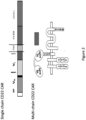
- the present invention provides a scfv linked to a hinge having different length preferably a hinge from CD8 ⁇ , IgG1 or Fc ⁇ RIII ⁇ (See figure 2 ), more preferably from CD8 ⁇ .
- the present invention provides a CD22 CAR comprising:
- One of the CD22 CAR of the invention consists in:
- a linker according to the invention may include sequences with added functionalities, e.g. an epitope tag ( Sblattero & Bradbury, 2000 Nature Biotechnology 18, 75 - 80 ), at least on sequence of SEQ ID NO. 91, preferably 2, separated by a linker, sequences improving scFv properties of the present invention, often in the context of particular antibody sequences.
- linkers suitable within the present invention is the 15-mer peptide linker (RGRGRGRGRSRGGGS) ( Zhihong Shen, Heping Yan, Ying Zhang, Raymond L. Mernaugh, and Xiangqun Zeng (2008), Anal Chem. 80(6): 1910-1917 ).
- a CD22 CAR comprising:
- a CD22 CAR comprising:
- a CD22 CAR comprising:
- the CD22 specific chimeric antigen receptor (CD22 CAR) of the present invention does not comprise any sequence from human CD28, in particular from human CD28 intra signaling domain. In a more preferred embodiment, the CD22 specific chimeric antigen receptor (CD22 CAR) of the present invention does not comprise any sequence from human CD28, in particular from human CD28 intra signaling domain and further contains a signal peptide from CD8 ⁇ , preferably fused to the VH domain of a scfv specific for CD22.
- the present invention provides a CD22 CAR of SEQ ID NO. 64.
- the present invention provides a CD22 CAR having an amino acid sequence with at least 90%, 91%, 92%, 93%, 94%, 95%, 96%, 97%, 98%, 99% or 100% identity with the polypeptide of SEQ ID N°64.
- the present invention provides a CD22 CAR having a sequence with at least 90%, 91%, 92%, 93%, 94%, 95%, 96%, 97%, 98%, 99% or 100% identity with the polynucleotide of SEQ ID N°40.
- the UCART 22 of the invention may comprise one of the following sequences:
- the CD22 CAR of the invention comprises the following sequence.
- the present invention provides the following sequences: QVQLQQSGPGLVKPSQTLSLTCAISGDSVSSNSAAWNWIRQSPSRGLEWLGRTYYRSKWYNDYAVSVKSRITINPD TSKNQFSLQLNSVTPEDTAVYYCAREVTGDLEDAFDIWGQGTMVTVSSGGGGSGGGGSGGSDIQMTQSPSSL SASVG D RVTITCRASQTIWSYLNWYQQR PG KAP N LLIYAASS LQSGVPS RFSG RGSGTD FTLTISS LQAE D FATYYCQ QSYSIPQTFGQGTKLEIKTTTPAPRPPTPAPTIASQPLSLRPEACRPAAGGAVHTRGLDFACDIYIWAPLAGTCGVLLL SLVITLYCKRGRKKLLYIFKQPFMRPVQTTQEEDGCSCRFPEEEEEEGGCELRVKFSRSADAPAYQQGQNQLYNELNLG RREEYDVLDKRRGRDP
- the UCART22 of the present invention comprises a sequence of SEQ ID N° 20
- the UCART22 of the present invention comprises a sequence of SEQ ID N° 40 encoding for a CD22 CAR with a QR3.
- the UCART22 of the present invention comprises a sequence of SEQ ID N° 40 inserted into a human TRAC gene (such as in human TRAC gene Chromosome 14 - NC_000014.9) and expresses at the cell surface an anti-CD22 CAR specific for the proximal part of CD22.
- a UCART22 comprising a sequence of SEQ ID N° 20 inserted into a human TRAC gene (such as in human TRAC gene Chromosome 14 - NC_000014.9) and expresses at the cell surface an anti-CD22 CAR specific for the distal part of CD22.
- ANTI-CD22 CAR from HA22 with QR3 with the following sequence :
- the extracellular binding domain comprises one of the following sequences V 1 -L 1 -V 2 -L-Epitope1; V 1 -L 1 -V 2 -L-Epitope1-L; V 1 -L 1 -V 2 -L-Epitope1-L-Epitope2; V 1 -L 1 -V 2 -L-Epitope1-L-Epitope2-L; V 1 -L 1 -V 2 -L-Epitope1-L-Epitope2-L-Epitope3; V 1 -L 1 -V 2 -L-Epitope1-L-Epitope2-L-Epitope3-L; V 1 -L 1 -V 2 -Epitope1; V 1 -L 1 -V 2 -Epitope1-L; V 1 -L 1 -V 2 -Epitope1-L-Epitope2; V 1 -L 1
- V 1 is V L and V 2 is V H or V 1 is V H and V 2 is V L ; and VH, and VL are optimized VH and VL from m971.
- L 1 is a linker comprising Glycine and/or Serine, preferably, L 1 is a linker comprising the amino acid sequence (Gly-Gly-Gly-Ser) n or (Gly-Gly-Gly-Gly-Ser) n , where n is 1, 2, 3, 4 or 5 or a linker comprising the amino acid sequence (Gly 4 Ser) 4 or (Gly 4 Ser) 3 .
- L is a linker comprising Glycine and/or Serine, preferably L is a linker having an amino acid sequence selected from SGG, GGS, SGGS, SSGGS, GGGG, SGGGG, GGGGS, SGGGGS, GGGGGS, SGGGGGS, SGGGGG, GSGGGGS, GGGGGGGS, SGGGGGGG, SGGGGGGGS, and SGGGGSGGGGS, preferably L is a SGGGG, GGGGS or SGGGGS.
- Epitope 1, Epitope 2, Epitope 3 and Epitope 4 are mAb-specific epitopes specifically recognized by : Antibody Indication Drug bank accession n° (or other n° if stated) Target/ Antigen Ibritumomab tiuxetan Non-Hodgkin lymphoma (with yttrium-90 or indium-111) DB00078 CD20 Muromonab-CD3 Transplant rejection DB00075 T cell CD3 Receptor Tositumomab Non-Hodgkin lymphoma DB00081 CD20 Abciximab Cardiovascular disease DB00054 inhibition of glycoprotein IIb/IIIa Basiliximab Transplant rejection DB00074 IL-2R ⁇ receptor (CD25) Brentuximab vedotin Anaplastic large cell lymphoma DB08870 CD30 Cetuximab Colorectal cancer, Head and neck cancer DB00002 epidermal growth factor receptor Infliximab Several autoimmune disorders
- the mAb-specific epitope is a mAb-specific epitope having an amino acid sequence of ELPTQGTFSNVSTNVSPAKPTTTA (SEQ ID N° 92) and/or CPYSNPSLC (SEQ ID N° 91).
- the CD22 CAR of the invention comprises 3 mAb-specific epitopes having an amino acid sequence of CPYSNPSLC (R) and one having an amino acid sequence of ELPTQGTFSNVSTNVSPAKPTTTA (Q).
- the present invention provides a CAR specific for CD22 comprising one of the following sequence SEQ ID N° 46 to SEQ ID N° 69, SEQ ID N° 46 to SEQ ID N° 55, SEQ ID N° 56 to SEQ ID N° 65, SEQ ID N° 66 to SEQ ID N° 69, preferably, SEQ ID N° 49, SEQ ID N° 52, SEQ ID N° 54, SEQ ID N° 55, preferably SEQ ID N° 54, or SEQ ID N° 59, SEQ ID N° 62, SEQ ID N°64, SEQ ID N° 65, preferably, SEQ ID N° 64, or SEQ ID N° 66, SEQ ID N° 67, SEQ ID N° 68, SEQ ID N° 69.
- the present invention provides a CAR specific for CD22 comprising the sequence of SEQ ID N° 54.
- the present invention provides a CAR specific for CD22 comprising the sequence of SEQ ID N° 64.
- the present invention provides a CAR specific for CD22 comprising the sequence of SEQ ID N° 66.
- the present invention provides a CAR specific for CD22 comprising the sequence of SEQ ID N° 67.
- the present invention provides a CAR specific for CD22 comprising the sequence of SEQ ID N° 68.
- the present invention provides a CAR specific for CD22 comprising the sequence of SEQ ID N° 69.
- At least one sequence to which rituximab binds to (R) and/or a sequence to which QBEN10 binds to (Q) may be inserted into the linker GGGGSGGGGSGGGGS and/or into the Hinge as previously described in ( WO2016120216 ).
- the CD22 CAR of the present invention is a single chain CAR (scCAR).
- the single chain anti-CD22 CAR of the invention comprises a scfv comprising any one of the (VH,VL) selected from (SEQ ID N° 77 and SEQ ID N° 78), from (SEQ ID N° 83 and SEQ ID N° 84), from (SEQ ID N° 87 and SEQ ID N° 88), from (SEQ ID N° 89 and SEQ ID N° 90), preferably from (SEQ ID N° 87 and SEQ ID N° 88) and at least one other binding domain, preferably specific for the distal part of CD22, alternatively for another B cell antigen, especially if expressed by B cells malignancies such as CD34, CD10, CD79a, CD20, IgD, CD5, CD23, CD19, STATS, CD3, CD30, BCMA.
- B cells malignancies such as CD34, CD10, CD79a, CD20, IgD, CD5, CD23, CD19, STATS, CD3, CD30, BCMA.
- the CD22 CAR of the present invention is a multichain CAR (mcCAR).
- Multichain CD22 CARs are part of the present invention and may be produced as described in details in WO2014039523 .
- the V H domain and the V L domain of an immunoglobulin or a part of an immunoglobulin specific for CD22 may be carried by two different and isolated (non covalently bound) chains of a multichain CAR.
- the CD22 CAR of the invention comprises at least two, preferably 3 transmembrane domains (non covalently bound to each other) with at least one of the transmembrane domain comprising a scfv specific for CD22.
- the V H domain and the V L domain of an immunoglobulin specific for CD22, preferably from m971 may be carried by one chain of a multichain CAR.
- FIG. 2 An example of sc CD22CAR and of mc CD22CAR of the invention is provided figure 2 .
- the V H domain and the V L domain of an immunoglobulin specific for CD22 may be carried by one chain of a multichain CAR and the V H domain and the V L domain of another immunoglobulin specific for CD22, may be carried by another chain of the mc CAR.
- the CD22 specific CAR according to the invention can comprise another extracellular ligand-binding domains, to simultaneously bind other elements in target thereby augmenting immune cell activation and function.
- the extracellular ligand-binding domains can be placed in tandem on the same transmembrane polypeptide, and optionally can be separated by a linker.
- said different extracellular ligand-binding domains can be placed on different transmembrane polypeptides composing the multichain CAR.
- the present invention relates to a population of CARs comprising different extracellular ligand binding domains, one of each is specific for CD22.
- the extracellular binding domain specific for CD22 and the second extracellular binding domain are on the same scCAR, In another embodiment, the extracellular binding domain specific for CD22 and the second extracellular binding domain are on the same mc CAR and belong to the same or to two different and non covalently bound transmembrane domains of said mc CAR.
- second extracellular binding domain may be any extracellular binding domain binding specific to an antigen associated (coexpressed - even temporarily) to CD22 on pathological cells, such as CD34, CD10, CD79a, CD20, IgD, CD5, CD23, CD19, STATS, CD3, CD30, BCMA.
- second extracellular binding domain expressed at the cell surface of the present UCART22 may be any extracellular binding domain binding specific to an antigen associated (coexpressed - even temporarily) to CD22 on pathological cells, such as CD19, CD20, CD30, glycosphingolipids, a major histocompatibility complex (MHC) molecule, an Ig, CD3, CD34, CD79, preferably CD79a, CD138, B7-1 (CD80), a major histocompatibility complex (MHC) molecule, BCMA (CD269, TNFRSF 17) or FLT-3.
- MHC major histocompatibility complex
- BCMA CD269, TNFRSF 17
- the invention also provides related CD22 CAR nucleic acids, CD22 CAR recombinant expression vectors, engineered TCR KO cells comprising at least another edited gene endowed with the CD22 CAR, populations of said TCR KO cells endowed with a CD22 CAR, and pharmaceutical compositions relating to the CD22 CARs, protein, expression vector, engineered TCR KO CD52 KO cells expressing said CD22CAR of the invention.
- the invention provides the following objects : a CD22 CAR of the invention -related nucleic acids, -recombinant expression vectors, engineered TCR KO cells comprising at least another edited gene selected from a gene conferring resistance to hypoxia, a gene conferring resistance to alemtuzumab, to protease inhibitor, such as bortezomib, a gene conferring resistance to PNA (dCK) and endowed with a CD22 CAR, and related nucleic acid, populations of engineered TCR KO cells comprising at least another edited gene as below, endowed with said CD22 CAR and pharmaceutical compositions comprising said same objects as a medicament.
- a CD22 CAR of the invention -related nucleic acids, -recombinant expression vectors, engineered TCR KO cells comprising at least another edited gene selected from a gene conferring resistance to hypoxia, a gene conferring resistance to alemtuzumab, to protease inhibitor, such as bortezomib,
- the present invention relates to polynucleotides and vectors encoding the above described CD22 CAR according to the invention.
- a polynucleotide may consist in an expression cassette or expression vector (e.g. a plasmid for introduction into a bacterial host cell, or a viral vector such as a baculovirus vector for transfection of an insect host cell, or a plasmid or viral vector such as a lentivirus or an adeno associated virus for introduction into a mammalian, preferably human host cell.
- an expression cassette or expression vector e.g. a plasmid for introduction into a bacterial host cell, or a viral vector such as a baculovirus vector for transfection of an insect host cell, or a plasmid or viral vector such as a lentivirus or an adeno associated virus for introduction into a mammalian, preferably human host cell.
- the different nucleic acid sequences can be included in one polynucleotide or vector which comprises a nucleic acid sequence encoding ribosomal skip sequence such as a sequence encoding a 2A peptide.
- 2A peptides which were identified in the Aphthovirus subgroup of picornaviruses, causes a ribosomal "skip" from one codon to the next without the formation of a peptide bond between the two amino acids encoded by the codons (see (Donnelly and Elliott 2001; Atkins, Wills et al. 2007; Doronina, Wu et al. 2008)).
- the present invention provides a retroviral lentivirus vector coding CD22CAR of the invention linked by a peptide 2A.
- the present invention provides a retroviral lentivirus vector coding CD22CAR (such as any SEQ ID NO 12 to SEQ ID NO 21 or SEQ ID NO 23 to SEQ ID NO 45) or a sequence having at least 80% identity with said sequence) of the invention linked by a peptide 2A and to a sequence coding a RQR8 motif.
- CD22CAR such as any SEQ ID NO 12 to SEQ ID NO 21 or SEQ ID NO 23 to SEQ ID NO 45
- sequence having at least 80% identity with said sequence linked by a peptide 2A and to a sequence coding a RQR8 motif.
- cognate is meant three nucleotides on an mRNA (or on the sense strand of a DNA molecule) that are translated by a ribosome into one amino acid residue.
- two polypeptides can be synthesized from a single, contiguous open reading frame within an mRNA when the polypeptides are separated by a 2A oligopeptide sequence that is in frame.
- Such ribosomal skip mechanisms are well known in the art and are known to be used by several vectors for the expression of several proteins encoded by a single messenger RNA.
- a vector allowing a CD22 CAR of the invention to be expressed in a cell is another object of the present invention.
- said vector allows a transient expression of the CD22 CAR of the invention.
- said vector allows a constitutive and stable expression of a CD22 CAR of the invention by insertion of the sequence coding said CD22 CAR into the genome of a cell.
- CD22 CAR of the invention may be controlled using a gene under the control of an inducible promoter as described in ( R. Kuhn, F. Schwenk, M. Aguet, K. Rajewsky. Inducible gene targeting in mice. Science 8 September 1995: Vol. 269 no. 5229 pp. 1427-1429 DOI:10.1126/science.7660125 , and cited references.
- a CD22 CAR wherein the extracellular domain comprises at least two CD20 mimotopes of SEQ ID NO 91 (CPYSNPSLC) located between the scfv domains and the hinge from human CD8alpha.
- CPYSNPSLC CD20 mimotopes of SEQ ID NO 91
- the present invention provides a vector comprising a sequence coding a CD22 CAR selected from SEQ ID NO.21 to SEQ ID NO.30, SEQ ID NO.32 to SEQ ID NO.45, preferably SEQ ID NO.29 and SEQ ID NO.40.
- a secretory signal sequence (also known as a leader sequence, prepro sequence or pre sequence) is provided in polynucleotide sequence or vector sequence.
- the secretory signal sequence is operably linked to the transmembrane nucleic acid sequence, i.e., the two sequences are joined in the correct reading frame and positioned to direct the newly synthesized polypeptide into the secretory pathway of the host cell.
- Secretory signal sequences are commonly positioned 5' to the nucleic acid sequence encoding the polypeptide of interest, although certain secretory signal sequences may be positioned elsewhere in the nucleic acid sequence of interest (see, e.g., Welch et al., U.S. Patent No. 5,037,743 ; Holland et al., U.S. Patent No. 5,143,830 ).
- the signal peptide comprises the amino acid sequence SEQ ID NO: 1 and SEQ ID NO.2.
- the signal peptide of the CAR of the invention comprises the amino acid sequence of SEQ ID NO: 1 from human CD8 alpha.
- the nucleic acid sequences of the present invention are codon-optimized for expression in mammalian cells, preferably for expression in human cells. Codon-optimization refers to the exchange in a sequence of interest of codons that are generally rare in highly expressed genes of a given species by codons that are generally frequent in highly expressed genes of such species, such codons encoding the amino acids as the codons that are being exchanged.
- Described is a method for preparing immune cells expressing the CD22 CAR of the invention or UCART22 for immunotherapy comprising introducing ex-vivo into said immune cells a polynucleotide or a vector encoding one of the CD22 CAR of the invention, preferably of SEQ ID NO. 64 as previously described.
- said polynucleotides are included into a vector in view of being stably expressed in the immune cells.
- said method further comprises the step of genetically modifying said cell to make it more suitable for adoptive transfer, and/or for use with a drug affecting said immune cell survival, in particular for transplant (also called allograft, or homograft) alone or in combination with the drug for which the immune cell is made resistant
- a drug affecting said immune cell survival in particular for transplant (also called allograft, or homograft) alone or in combination with the drug for which the immune cell is made resistant
- engineered cells may be initially isolated from a donor and used for a reinjection into the same donor in combination with a drug to which it is made resistant to.
- modifying a gene for example mutating a gene, deleting a gene, inserting a sequence in a gene, modifying the methylation of said gene (this includes the promotor of a gene), etc.
- the method is based on cellular homology-directed repair (HDR) mechanisms to "knock in” a CD22 CAR in the TRAC gene (encoding the TCR alpha subunit of the TCR) resulting in a more efficient product.
- HDR homology-directed repair
- HDR with an exogenous DNA sequence has been described previously in T cells using short oligonucleotides paired with CRISPR/Cas9.
- adeno-associated virus (AAV) vectors can be used as a template in conjunction with a site-specific nuclease Crispr/Cas9 or MegaTAL to achieve gene insertion via HDR.
- AAV adeno-associated virus
- TALEN adeno-associated virus
- the present invention also provides an engineered immune cells comprising a sequence coding a CD22 CAR as described above located in a precise region of the TRAC gene determined by the TALEN used.
- the sequence in the TRAC gene of said engineered immune cell is unique due to the TALEN specificity.
- an engineered immune cell comprising the following sequence;
- the TRAC gene is deleted and the inserted gene is expressed under the control of the TRAC promotor.
- Additional or alternative sequences such as IRES internal ribosome entry site; maybe interposed between the TALEN target and XXX.
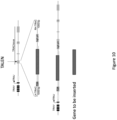
- the TALEN target is SEQ ID N° 21 and an example of gene to be inserted is any one of the anti-CD22 CAR of the invention of SEQ ID N° 21 to SEQ ID N° 30, SEQ ID N° 32 to SEQ ID N° 45, SEQ ID N° 31.
- sequence clived by said TALEN is AGAACCCTGACCCTG.
- the sequence AGAACCCTGACCCTG may be conserved at least in part (see figure 10 ) in the engineered cell of the invention, depending on the insert sequence. In one embodiment the sequence or part of the sequence is conserved and it is used as a signature of the product.
- the present invention provides an engineered immune cell comprising a TRAC gene comprising at least a ATC sequence, an exogenous sequence, any one of the sequences of SEQ ID N° 21 to SEQ ID N° 45, preferably of SEQ ID N° 40,
- Adoptive cell transfer is the transfer of cells into a patient.
- the cells may have originated from the patient him- or herself and then been altered before being transferred back (syngenic transfer) or, they may have come from another individual.
- the cells are most commonly derived from the immune system, with the goal of transferring improved immune functionality and characteristics along with the cells back to the patient. Transferring autologous cells, or cells from the patient, minimizes graft-versus-host disease (GVHD) or tissue or organ rejection.
- GVHD graft-versus-host disease
- the step of genetically modifying (engineering) said immune cell takes place before the step of introducing the polynucleotides or vectors encoding one of the CD22 CAR of the invention into said cells.
- the immune cell can be made less allogeneic, for instance, by inactivating at least one gene expressing one or more component of T-cell receptor (TCR) as described in WO 2013/176915 , which can be combined with the inactivation of a gene encoding or regulating HLA expression such as ⁇ 2m gene as described in WO2008102199 or in WO2015136001 or in WO2016201047 . Accordingly, the risk of graft versus host syndrome and the risk of graft rejection are significantly reduced.
- TCR T-cell receptor
- the immune cells of the invention can be further genetically engineered to improve the resistance of engineered immune cells to an immunosuppressive drug or a chemotherapy treatment, which are used as standard care for treating CD22 positive malignant cells as disclosed in WO201575195 .
- the genes which can be inactivated to confer drug resistance to the T-cell is a glucocorticoid receptor (GR) and CD52. Genes are inactivated to make the cells resistant to these treatments and give them a competitive advantage over patient's own T-cells not endowed with specific CD22 CARs.
- GR glucocorticoid receptor
- CD52 CD52
- the inactivation of the CD52 and TRAC gene in the engineered immune cell according to the invention is performed using a TALE nuclease or a CRISPR CAS9 system.
- the gene which can be inactivated to confer drug resistance to the T-cell is the CD52 in TCR KO immune T cells endowed with a CD22 CAR.
- the gene which can be inactivated to confer drug resistance to the T-cell is a glucocorticoid receptor (GR).
- GR glucocorticoid receptor
- CD3 gene can also be suppressed or reduced to confer resistance to Teplizumab, which is another immune suppressive drug.
- Expression of HPRT can also be suppressed or reduced according to the invention to confer resistance to 6- thioguanine, a cytostatic agent commonly used in chemotherapy especially for the treatment of acute lymphoblasic leukemia.
- dCK deoxycytidine kinase
- the gene which can be inactivated to confer drug resistance to the T-cell is the human deoxycytidine kinase (dCK) gene.
- dCK human deoxycytidine kinase
- This enzyme is required for the phosphorylation of the deoxyribonucleosides deoxycytidine (dC), deoxyguanosine (dG) and deoxyadenosine (dA).
- Purine nucleotide analogs (PNAs) are metabolized by dCK into mono-, di- and tri-phosphate PNA.
- RNR ribonucleotide reductase
- the inactivation of the dCK gene in the engineered immune cell according to the invention is mediated by a TALE nuclease or a CRISPR CAS9 system.
- TALE nuclease or a CRISPR CAS9 system.
- CRISPR CAS9 CRISPR CAS9
- This dCK inactivation in engineered immune cells of the invention confers resistance to purine nucleoside analogs (PNAs) such as clofarabine and fludarabine.
- PNAs purine nucleoside analogs
- the dCK inactivation in engineered immune cells of the invention is combined with an inactivation of TRAC genes rendering these double knock out (KO) (TCR or TRAC KO and dCK KO) cells both resistant to drug such as clofarabine and less allogeneic.
- KO double knock out
- the CD52 inactivation in engineered immune cells of the invention is combined with an inactivation of TRAC gene rendering these double knock out (KO) (TCR or TRAC KO and CD52 KO) cells both resistant to drug such as CAM PATH (alemtuzumab) and less allogeneic.
- KO double knock out
- This double feature is particularly useful for a therapeutic goal, allowing "off-the-shelf” allogeneic cells (UCART22) for immunotherapy in conjunction with chemotherapy to treat patients with cancer in need thereof.
- This double KO inactivation dCK/TRAC or CD52/TRAC can be performed simultaneously or sequentially.
- TALE-nuclease dCK/TRAC pairs which gave success in the invention is described in PCT/EP2014/075317 , in particular, the target sequences in the 2 loci (dCK and TRAC).
- the present invention provides a primary T cells expressing a CD22 CAR of SEQ ID NO.64, wherein, wherein the CD52 and TRAC genes are inactivated by deletion for their use in the treatment of CLL, ALL, preferably their aggressive, relapsing or refractory forms, optionally in lymphodepleted patients, more preferably relapsing refractory forms of B-ALL.
- the immune cells can be further manipulated to make them more active or limit exhaustion, by inactivating genes encoding proteins that act as "immune checkpoints" that act as regulators of T-cells activation, such as PDCD1 or CTLA-4. Examples of genes, which expression could be reduced or suppressed are indicated in Table 9.
- the present invention also provides a primary T cells expressing a CD22 CAR of SEQ ID NO.64, wherein the CD52, TRAC and dCK genes were deleted.
- the present invention also provides a primary T cells expressing a CD22 CAR that were made resistant to hypoxia.
- the present invention also provides a primary T cells expressing a CD22 CAR of SEQ ID NO.64, wherein the CD52, TRAC and dCK genes were deleted and sequences of HIF-1a were inserted to make cells resistant to hypoxia.
- the expression and cytolytic activity of CD22 CAR T cell of the invention is maintained, or the expression of CD22 CAR T cell induced and the activity maintained under low oxygen condition (hypoxia), (as compared to normal oxygen condition 20% O2 vs 1 to 5 % O2) and said cell still target and destroy tumor cells when embedded into tissues.
- low oxygen condition hyperoxia
- hypoxia- inducible CAR in T cell examples include WO2013123061 or in Juillerat, A. et al. An oxygen sensitive self-decision making engineered CAR T-cellSci. Rep. 7, 39833; doi: 10.1038/srep39833 (2017 ): A synthetic promoter specific for the OxiTF driving the expression of the CD22 CAR was constructed.
- the OxiTF is design to activate a synthetic genetic element encoding a CD22 CAR.
- engineered T cells can detect a decrease in oxygen level (as compared to the mean level of O2 in the blood) and trigger the expression of the CD22 CAR.
- CD22 CAR Cell surface exposure of CD22 CAR enables the recognition of tumor antigen under hypoxia that eventually triggers T cells activation and proliferation via the activation and co-stimulatory domains present within said CD22 CAR. Ultimately, tumor antigen expressing cells are lysed by the UCART22 of the invention.
- immune cells may be also engineered to remain efficient under low O2 condition (low oxygen concentration means 1-5%) by overexpressing at least one, preferably all of the following factors : Oct3, Oct4, Sox2, Klf4 and c-Myc, or by editing a HIF-1a factor.
- an oxygen sensitive CD22 single chain CAR -expressing engineered cell and a hypoxia resistant CD22 CAR -expressing engineered cell were constructed and tested successfully.
- CD22 is mainly expressed on CD22-expressing B cell malignancies, which are "liquid” tumors" and therefore are not supposed to create hypoxia in contrast to solid tumor, it was not expected that a CD22 CAR engineered immune cells resistant to hypoxia would be more efficient than CD22 CAR engineered immune cells which are not resistant to hypoxia against B-ALL from patient.
- the UCART22 of the invention reaching the nested cancer cells clustered or homing in tissues may be able to lyse these cells.
- Table 9 List of genes encoding immune checkpoint proteins that may be inactivated according to the present invention in the CD22 CAR engineered T cells of the invention Pathway Genes that can be inactivated In the pathway Co-inhibitory receptors CTLA4 (CD152) CTLA4, PPP2CA, PPP2CB, PTPN6, PTPN22 PDCD1 (PD-1, CD279) PDCD1 CD223 (lag3) LAG3 HAVCR2 (tim3) HAVCR2 BTLA(cd272) BTLA CD160(by55) CD160 IgSF family TIGIT CD96 CRTAM LAIR1(cd305) LAIR1 SIGLECs SIGLEC7 SIGLEC9 CD244(2b4) CD244 Death receptors TRAIL TNFRSF10B, TNFRSF10A, CASP8, CASP10, CASP3, CASP6, CASP7 FAS FADD, FAS Cytokin
- the present invention provides an isolated engineered immune T cells expressing a CD22 CAR of SEQ ID NO.64, wherein, the dCK and/or CD52 and TRAC genes are edited, that is, inactivated by deletion, for their use in the treatment of CLL, ALL, preferably their aggressive, relapsing refractory forms, in lymphodepleted patients.
- the present invention provides an isolated engineered immune T cells expressing a CD22 CAR of SEQ ID NO.64 wherein, wherein the CD52, and TRAC genes are inactivated by deletion for their use in the treatment of relapsing refractory forms of BALL, in lymphodepleted patients.
- said method of further engineering the immune cells involves introducing into said T cells polynucleotides, in particular mRNAs, encoding specific rare-cutting endonuclease to selectively inactivate the genes, as those mentioned above, by DNA cleavage.
- said rare-cutting endonucleases are TALE-nucleases or Cas9 endonuclease.
- TAL-nucleases have so far proven higher specificity and cleavage efficiency over the other types of rare-cutting endonucleases, making them the endonucleases of choice and preferred for producing of the engineered immune cells on a large scale with a constant turn-over.
- CD22 CAR of the invention can be introduced as a transgene encoded by one plasmid vector of the invention.
- Said plasmid vector encoding a CD22 CAR of the invention can also contain a selection marker which provides for identification and/or selection of cells which received said vector.
- Polypeptides corresponding to the CD22 CAR of the invention may be synthesized in situ in the cell as a result of the introduction of polynucleotides encoding said polypeptides into the cell. Alternatively, said polypeptides could be produced outside the cell and then introduced thereto.
- Methods for introducing a polynucleotide construct into cells are known in the art and including as non-limiting examples stable transformation methods wherein the polynucleotide construct is integrated into the genome of the cell, transient transformation methods wherein the polynucleotide construct is not integrated into the genome of the cell and virus mediated methods.
- Said polynucleotides may be introduced into a cell by for example, recombinant viral vectors (e.g.
- retroviruses such as lentiviruses, adenoviruses, adeno associated virus), liposome and the like.
- transient transformation methods include for example microinjection, electroporation or particle bombardment.
- Said polynucleotides may be included in vectors, more particularly plasmids or virus, in view of being expressed in cells.
- An engineered immune cell endowed with a CD22 CAR of the invention (UCART 22) is another object of the present invention.
- said immune cell is an isolated immune cell, more preferably an isolated immune T cell, more preferably an isolated primary immune T cell.
- a primary immune cell means a "cell originating from a tissue such as a blood sample or from peripheral blood mononuclear cells (PBMCs) and that may be in culture for a few passages, eventually frozen before use, said primary immune cell has a limited capacity of division ( Raulf-Heimsoth M. T cell - primary culture from peripheral blood. Methods Mol Med. 2008;138:17-30. doi: 10.1007/978-1-59745-366-0 ) as compared to a transformed or cancerous cell.
- PBMCs peripheral blood mononuclear cells
- an immune cell according to the invention is preferably an immune T or NK cell.
- an engineered immune cell according the invention is isolated from a blood sample, is a primary cell and derived from an immune T cell selected from inflammatory T-lymphocytes, cytotoxic T-lymphocytes, regulatory T-lymphocytes or helper T-lymphocytes, Natural Killer T -cell, preferably from cytotoxic T-lymphocytes and further engineered.
- Engineered means that primary immune cells are modified so that they will be endowed with a CD22 CAR and at least one gene is edited, preferably said cells are modified so that they will be endowed with a CD22 CAR and will neither express a TCR nor die in the presence of purine nucleotide analogs.
- engineered immune cells means a TCR KO isolated immune T cells comprising at least one other edited gene, expressing CD22 CAR.
- engineered means that primary immune cells are modified so that they will be endowed with a CD22 CAR, preferably said cells are modified so that they will be endowed with a CD22 CAR and will not die in the presence of purine nucleotide analogs '1 to 5 micromol/L) or in the presence of alemtuzumab (50 microgram/mL) ( Valton et al., Molecular Therapy vol. 23 no. 9, 1507-1518 sep. 2015 ).
- said T cell is endowed with a CD22 CAR of SEQ ID NO. 64.
- said T cell is endowed with a CD22 CAR of SEQ ID NO. 64 and comprises at least one sequence of SEQ ID NO. 40.
- the present invention provides a primary immune T cell expressing a CD22 CAR of the invention and exhibiting a CTL and/or degranulating activity towards a CD22-expressing cell.
- the present invention also provides a primary T cell expressing a CD22 CAR of the invention for lysing a CD22-expressing cell, in particular a CD22-expressing cancerous cell.
- cells targeted by a T cell endowed with a CD22 CAR of SEQ ID NO. 64 of the invention are efficient in the treatment of relapsed/refractory/aggressive ALL or CLL.
- the present invention also relates to isolated cells or cell lines susceptible to be obtained by said method to engineer cells.
- said isolated cell comprises at least one CD22 CAR of the invention as described above.
- said isolated cell comprises a population of CARs each one comprising different extracellular ligand binding domains.
- said isolated cell comprises exogenous polynucleotide sequence encoding CAR. Genetically modified immune cells of the present invention are activated and can proliferate independently of antigen binding mechanisms.
- an isolated immune cell preferably an isolated immune T cell (T-cell), more preferably an engineered isolated immune T cell obtained according to any one of the methods previously described.
- Said immune cell refers to a cell of hematopoietic origin functionally involved in the initiation and/or execution of innate and/or adaptative immune response.
- Said immune cell according to the present invention can be derived from a stem cell.
- the stem cells can be adult stem cells, non-human embryonic stem cells, more particularly non-human stem cells, cord blood stem cells, progenitor cells, bone marrow stem cells, induced pluripotent stem cells or hematopoietic stem cells.
- Representative human cells are CD34+ cells.
- Said isolated cell can also be a dendritic cell, a killer dendritic cell, a mast cell, a NK-cell, a B-cell or a T-cell selected from the group consisting of inflammatory T-lymphocytes, cytotoxic T-lymphocytes, regulatory T-lymphocytes or helper T-lymphocytes.
- said cell can be derived from the group consisting of CD4+ T-lymphocytes and CD8+ T-lymphocytes.
- a source of cells can be obtained from a subject through a variety of non-limiting methods.
- Cells can be obtained from a number of non-limiting sources, including peripheral blood mononuclear cells, bone marrow, lymph node tissue, cord blood, thymus tissue, tissue, ascites, pleural effusion, spleen tissue, and tumors.
- any number of T cell lines available and known to those skilled in the art may be used.
- said cell can be derived from a healthy donor, from a patient diagnosed with cancer or from a patient diagnosed with an infection.
- said cell is part of a mixed population of cells which present different phenotypic characteristics.
- a cell line obtained from a engineered T- cell according to the method described. Modified cells resistant to an immunosuppressive treatment and susceptible to be obtained by the previous method are encompassed in the scope of the present invention.
- the present invention provides T-cells or a population of T-cells endowed with a CD22 CAR of the invention as described above, that do not express functional TCR and that a reactive towards CD22 positive cells, for their adoptive transfer into patients.
- the present invention provides T-cells or a population of T-cells endowed with a CD22 CAR as described above, that do not express functional TCR and that were made resistant to chemotherapy, in particular to purine nucleotide analogues (PNAs).
- PNAs purine nucleotide analogues
- the immune cells endowed with an CD22 CAR are engineered to be resistant to chemotherapy drugs, in particular to purine nucleotide analogues (PNAs), making them suitable for cancer treatments combining adoptive immunotherapy and chemotherapy.
- PNAs purine nucleotide analogues
- Purine nucleotide analogues enter chemotherapy compositions for many cancer treatments. It is used as a standard of care against leukemia or lymphoma.
- the most widely used PNAs are clofarabine, fludarabine and cytarabine alone or in combination.
- PNAs are metabolized by enzymes having deoxycytidine kinase (dCK) activity [EC 2.7.1.74] into mono, -di and tri-phosphate PNA.
- dCK deoxycytidine kinase
- Their tri-phosphate forms and particularly clorofarabine triphosphate compete with ATP for DNA synthesis, acts as pro-apoptotic agent and are potent inhibitors of ribonucleotide reductase (RNR), which is involved in trinucleotide production.
- RNR ribonucleotide reductase
- the present invention thus includes a method of producing ex-vivo immune cells, preferably primary T-cells expressing no TCR, which are resistant to a purine analogue drug and that can target CD22 positive malignant cells.
- a Method for preparing a UCART22 according to the invention can be also that disclosed in WO 2013176915 or in WO 2014191128 .
- a method for preparing a UCART22 comprises the following steps:
- a method of producing ex-vivo immune cells preferably primary T-cells expressing no TCR, which are resistant to a purine analogue drug and that can target CD22 positive malignant cells, comprises the following steps:
- the method of producing ex-vivo immune cells preferably primary T-cells expressing no TCR, which are resistant to a purine analogue drug and that can target CD22 positive malignant cells optionally comprises another step of introducing into said immune cell (by transfection or transduction) a nucleic acid sequence encoding a rare-cutting endonuclease specifically targeting one of the gene cited in Table 9, preferably PD-1 , CD279 and more preferably PDCD1 (PD-1, CD279) or CTLA4 (CD152).
- a nucleic acid sequence encoding a rare-cutting endonuclease specifically targeting one of the gene cited in Table 9, preferably PD-1 , CD279 and more preferably PDCD1 (PD-1, CD279) or CTLA4 (CD152).
- the present inventors have successfully created CD22 CAR expressing primary T cells resistant to purine nucleotide analogues (dCK-KO), more particularly to clorofarabine and/or fludarabine, by mediating the inactivation (deletion) of dcK gene expression into said cells particularly by using nucleases, in particular TAL- nucleases.
- Transfection of the T-cells using mRNA encoding specific TAL-nuclease directed against dCK genes preferably by using electroporation as described in WO2013176915 , induced a significant resistance to the drugs, while maintaining T-cells cytotoxic activity towards CD22 bearing cells.
- the present application also provides a TCR -KO, CD22 CAR (preferably of SEQ ID NO 64) primary T-cells, which expression of deoxycytidine kinase has been repressed or inactivated (dCK-KO) for the treatment of leukemia or lymphoma, preferably of their aggressive, resistant, relapsing form; more preferably B-ALL.
- dCK-KO deoxycytidine kinase has been repressed or inactivated
- the immune cells endowed with an CD22 CAR are engineered to be resistant to chemotherapy drugs, in particular to alemtuzumab (CAMPATH), making them suitable for cancer treatments combining adoptive immunotherapy and chemotherapy.
- chemotherapy drugs in particular to alemtuzumab (CAMPATH), making them suitable for cancer treatments combining adoptive immunotherapy and chemotherapy.
- Alemtuzumab is used for many cancer treatments. It is used as a standard of care against leukemia or lymphoma, in particular in the treatment of chronic lymphocytic leukemia (CLL), cutaneous T-cell lymphoma (CTCL) and T-cell lymphoma. It is known under the trade names Campath, MabCampath and Campath-1H. It is also used in some conditioning regimens for bone marrow transplantation, kidney transplantation and islet cell transplantation.
- CLL chronic lymphocytic leukemia
- CTCL cutaneous T-cell lymphoma
- Campath MabCampath
- Campath-1H cutaneous T-cell lymphoma
- It is also used in some conditioning regimens for bone marrow transplantation, kidney transplantation and islet cell transplantation.
- CD52 a monoclonal antibody that binds to CD52, a protein present on the surface of mature lymphocytes, but not on the stem cells from which these lymphocytes are derived. After treatment with alemtuzumab, these CD52-bearing lymphocytes are targeted for destruction.
- Alemtuzumab is also used as second-line therapy for CLL. It was approved by the US Food and Drug Administration for CLL patients who have been treated with alkylating agents and who have failed fludarabine therapy.
- the present invention thus includes UCART22, thus expressing no TCR, that are resistant to alemtuzumab.
- a method for preparing a UCART22 CD52 KO comprises the following steps:
- a method of producing ex-vivo immune cells preferably primary T-cells expressing no TCR, which are resistant to alemtuzumab and that can target CD22 positive malignant cells, comprises the following steps:
- a method for preparing a UCART22 comprises the following steps:
- a method of producing ex-vivo immune cells preferably primary T-cells expressing no TCR, which are resistant to a hypoxia and that can target CD22 positive malignant cells, comprises the following steps:
- the method of producing ex-vivo immune cells preferably primary T-cells expressing no TCR, which are resistant to either a purine analogue drug, alemtuzumab or hypoxia and that can target CD22 positive malignant cells
- the present inventors have successfully created CD22 CAR expressing primary T cells resistant to purine nucleotide analogues (dCK-KO), more particularly to clorofarabine and/or fludarabine, by mediating the inactivation (deletion) of dcK gene expression into said cells particularly by using nucleases, in particular TAL- nucleases.
- Transfection of the T-cells using mRNA encoding specific TAL-nuclease directed against dCK genes preferably by using electroporation as described in WO2013176915 , induced a significant resistance to the drugs, while maintaining T-cells cytotoxic activity towards CD22 bearing cells.
- the present application also provides a TCR-KO, CD22 CAR (preferably of SEQ ID NO 64) primary T-cells, which expression of deoxycytidine kinase has been repressed or inactivated (dCK-KO) for the treatment of leukemia or lymphoma, preferably of their aggressive, resistant, relapsing form; more preferably relapsing B-ALL.
- TCR-KO, CD22 CAR preferably of SEQ ID NO 64
- dCK-KO deoxycytidine kinase has been repressed or inactivated
- Such cells are "universal" T cells (or UCART).
- the present application provides a CD22 CAR (preferably of SEQ ID NO 64) primary T-cells, which expression of deoxycytidine kinase has been repressed or inactivated (dCK-KO) for the treatment of leukemia or lymphoma, preferably of their aggressive, resistant, relapsing form; more preferably relapsing B-ALL after autologous transfer.
- CD22 CAR preferably of SEQ ID NO 64
- dCK-KO deoxycytidine kinase has been repressed or inactivated
- the present application provides a CD22 CAR (preferably of SEQ ID NO 64) primary T-cells, which expression of CD52 has been repressed or inactivated (CD52-KO) for the treatment of leukemia or lymphoma, preferably of their aggressive, resistant, relapsing form; more preferably relapsing B-ALL after autologous transfer.
- CD22 CAR preferably of SEQ ID NO 64
- CD52-KO inactivated
- the present application provides a CD22 CAR (preferably of SEQ ID NO 64) primary T-cells, which expression of HIF-1Alpha has been increased by insertion of the coding sequence into the TRAC sequence without knocking out the TCR for the treatment of leukemia or lymphoma, preferably of their aggressive, resistant, relapsing form; more preferably relapsing B-ALL after autologous transfer
- a CD22 CAR preferably of SEQ ID NO 64
- primary T-cells which expression of deoxycytidine kinase and CD52 have been repressed or inactivated (dCK-and CD52KO) for the treatment of leukemia or lymphoma, preferably of their aggressive, resistant, relapsing form; more preferably relapsing B-ALL after autologous transfer.
- the present application provides a CD22 CAR (preferably of SEQ ID NO 64) primary T-cells, which expression of deoxycytidine kinase and CD52 have been repressed or inactivated (dCK-and CD52KO) and the expression of HIF-1alpha increased by insertion of the HIF1alpha coding sequence into the TRAC sequence without knocking out the TCR, for the treatment of leukemia or lymphoma, preferably of their aggressive, resistant, relapsing form; more preferably relapsing B-ALL after autologous transfer.
- dCK-and CD52KO deoxycytidine kinase and CD52 have been repressed or inactivated
- the method of producing ex-vivo immune cells preferably primary T-cells expressing no TCR, which are resistant to a purine analogue drug and/or to alemtuzumab and/or to hypoxia, that can target CD22 positive malignant cells
- the present inventors have successfully created CD22 CAR expressing primary T cells resistant to purine nucleotide analogues (dCK-KO), more particularly to clorofarabine and/or fludarabine, by mediating the inactivation (deletion) of dcK gene expression into said cells particularly by using nucleases, in particular TAL- nucleases.
- the present inventors have successfully created CD22 CAR expressing primary T cells resistant to hypoxia, by a targeted insertion of the HIF-1alpha gene into said cells particularly by using nucleases, in particular TAL- nucleases.
- Transfection of the T-cells using mRNA encoding specific TAL-nuclease directed against dCK genes preferably by using electroporation as described in WO2013176915 , induced a significant resistance to the drugs, while maintaining T-cells cytotoxic activity towards CD22 bearing cells.
- the present application also provides a TCR -KO, CD22 CAR (preferably of SEQ ID NO 64) primary T-cells, resistant to hypoxia for the treatment of leukemia or lymphoma, preferably of their aggressive, resistant, relapsing form; more preferably B-ALL.
- a TCR -KO, CD22 CAR preferably of SEQ ID NO 64
- the UCART 22 is provided as a medicament, thus a therapeutically efficient amount of UCART 22 is provided as a medicament.
- the immune cells, particularly T-cells of the present invention can be further activated and expanded generally using methods as described, for example, in U.S.
- T cells can be expanded in vitro.
- the T cells of the invention are expanded by contact with an agent that stimulates a CD3 TCR complex and a co-stimulatory molecule on the surface of the T cells to create an activation signal for the T-cell.
- an agent that stimulates a CD3 TCR complex and a co-stimulatory molecule on the surface of the T cells to create an activation signal for the T-cell.
- chemicals such as calcium ionophore A23187, phorbol 12-myristate 13-acetate (PMA), or mitogenic lectins like phytohemagglutinin (PHA) can be used to create an activation signal for the T-cell.
- T cell populations may be stimulated in vitro such as by contact with an anti-CD3 antibody, or antigen-binding fragment thereof, or an anti-CD2 antibody immobilized on a surface, or by contact with a protein kinase C activator (e.g., bryostatin) in conjunction with a calcium ionophore.
- a protein kinase C activator e.g., bryostatin
- a ligand that binds the accessory molecule is used for co-stimulation of an accessory molecule on the surface of the T cells.
- a population of T cells can be contacted with an anti-CD3 antibody and an anti-CD28 antibody, under conditions appropriate for stimulating proliferation of the T cells.
- Conditions appropriate for T cell culture include an appropriate media (e.g., Minimal Essential Media or RPMI Media 1640 or, X-vivo 5, (Lonza)) that may contain factors necessary for proliferation and viability, including serum (e.g., fetal bovine or human serum), interleukin-2 (IL-2), insulin, IFN-g , 1L-4, 1L-7, GM-CSF, -10, - 2, 1L-15, TGFp, and TNF- or any other additives for the growth of cells known to the skilled artisan.
- Other additives for the growth of cells include, but are not limited to, surfactant, plasmanate, and reducing agents such as N-acetyl-cysteine and 2-mercaptoethanoi.
- Media can include RPMI 1640, A1M-V, DMEM, MEM, a-MEM, F-12, X-Vivo 1, and X-Vivo 20, Optimizer, with added amino acids, sodium pyruvate, and vitamins, either serum-free or supplemented with an appropriate amount of serum (or plasma) or a defined set of hormones, and/or an amount of cytokine(s) sufficient for the growth and expansion of T cells.
- Antibiotics e.g., penicillin and streptomycin, are included only in experimental cultures, not in cultures of cells that are to be infused into a subject.
- the target cells are maintained under conditions necessary to support growth, for example, an appropriate temperature (e.g., 37° C) and atmosphere (e.g., air plus 5% C02). T cells that have been exposed to varied stimulation times may exhibit different characteristics
- said cells can be expanded by co-culturing with tissue or cells.
- a pharmaceutical composition comprising an engineered (TRAC KO) or (TRAC and CD52 KO) immune T cell expressing a CD22 CAR of the invention (preferably of SEQ ID NO 64) and a pharmaceutically acceptable vehicle is another object of the present invention.
- a pharmaceutical composition comprising an engineered (TRAC KO) or (TRAC and dCK KO) immune T cell expressing a CD22 CAR of the invention (preferably of SEQ ID NO 64) and a pharmaceutically acceptable vehicle is another object of the present invention.
- the present invention provides a composition
- a composition comprising the UCART22 of the present invention (as any one of the above embodiments) with a compound of the family of the bryostatin compounds, preferably bryostatin-1.
- Bryostatins are a group of macrolide lactones from bryozoan, Bugula neritina. The structure of bryostatin 1 was determined in 1980's. To date 20 different bryostatins have been isolated; further, certain analogs of bryostatin have been referred to as "bryologs". Bryostatins are potent modulators of protein kinase C. ( Wender, Paul A., Jeremy L. Baryza,Chad E. Bennett,F. Christopher Bi,Stacey E. Brenner,Michael O. Clarke,Joshua C. Horan,Cindy Kan,Emmanuel Lacôte,Blaise Lippa,Peter G. Nell, and, and Tim M. Turner. The Practical Synthesis of a Novel and Highly Potent Analogue of Bryostatin. Journal of the American Chemical Society 2002 124 (46), 13648-13649 DOI: 10.1021/ja027509+ ).
- bryostatin compounds suitable to be compibed with the UCART22 of the invention and methods for preparing these compounds are described in WO2001040214A1 or in EP2737904A2 , WO1997034598 .
- bryostatin-1 An example of a dose of bryostatin-1 that may be used in combination with the UCART22 of the present invention is as previously described in Varterasian ML1, Mohammad RM, Shurafa MS, Hulburd K, Pemberton PA, Rodriguez DH, Spadoni V, Eilender DS, Murgo A, Wall N, Dan M, Al-Katib AM. Phase II trial of bryostatin 1 in patients with relapsed low-grade non-Hodgkin's lymphoma and chronic lymphocytic leukemia. Clin Cancer Res. 2000 Mar;6(3):825-8 .
- An engineered (TRAC and dCK KO or TRAC and CD52 KO) immune T cell expressing a CD22 CAR of the invention (preferably of SEQ ID NO 64) [an UCART22] or a pharmaceutical composition comprising said UCART22 is provided as a medicament.
- An engineered (TRAC and dCK KO or TRAC and CD52 KO) immune T cell expressing a CD22 CAR of the invention (preferably of SEQ ID NO 64) [an UCART22] for use in the treatment of cancer or to attenuate inflammation is another object of the present invention.
- An engineered (TRAC and dCK KO or TRAC and CD52 KO) immune T cell expressing a CD22 CAR of the invention (preferably of SEQ ID NO 64) [an UCART22] for use in the treatment of ALL, CLL, relapsed or refractory aggressive forms of CLL or ALL is another object of the present invention.
- An engineered (TRAC and dCK KO or TRAC and CD52 KO) immune T cell expressing a CD22 CAR of the invention (preferably of SEQ ID NO 64) [an UCART22] for use in the treatment of a CD19 relapsed cancer, preferably a CD19 relapsed B-ALL is provided.
- hypoxia resistant, engineered (TRAC and dCK KO or TRAC and CD52 KO) immune T cell expressing a CD22 CAR of the invention preferably of SEQ ID NO 64 [an UCART22] or a pharmaceutical composition comprising said UCART22 is provided as a medicament.
- hypoxia resistant, engineered (TRAC and dCK KO or TRAC and CD52 KO) immune T cell expressing a CD22 CAR of the invention preferably of SEQ ID NO 64 [an UCART22] for use in the treatment of cancer or to attenuate inflammation is another object of the present invention.
- hypoxia resistant, engineered (TRAC and dCK KO or TRAC and CD52 KO) immune T cell expressing a CD22 CAR of the invention preferably of SEQ ID NO 64 [an UCART22] for use in the treatment of ALL, CLL, relapsed or refractory aggressive forms of CLL or ALL is another object of the present invention.
- hypoxia resistant, engineered (TRAC and dCK KO or TRAC and CD52 KO) immune T cell expressing a CD22 CAR of the invention (preferably of SEQ ID NO 64) [an UCART22] for use in the treatment of a CD19 relapsed cancer, preferably a CD19 relapsed B-ALL is provided.
- isolated cell obtained by the different methods as described herein or cell line derived from said isolated cell can be used as a medicament.
- said medicament can be used for treating cancer, particularly for the treatment of B-cell lymphomas and leukemia in a patient in need thereof.
- said isolated cell according to the invention or cell line derived from said isolated cell can be used in the manufacture of a medicament for treatment of a cancer in a patient in need thereof.
- the present invention encompasses autologous transfer of engineered cells.
- cells are isolated from one donor, a human donor, engineered and then transferred to the initial donor in need thereof.
- cells may be engineered for example to be resistant to a drug such as alemtuzumab (campath) and/or dCK and optionally to be resistant to hypoxia.
- a drug such as alemtuzumab (campath) and/or dCK and optionally to be resistant to hypoxia.
- cancer refers to a disease characterized by the uncontrolled growth of one or several types of cells.
- cancers include but are not limited to liquid tumors or hematological cancer.
- a hematological cancer according to the present invention may be selected from lymphoma, Hodgkin lymphoma, non Hodgkin lymphoma, leukemia, multiple myeloma, B-chronic lymphocytic leukemia, hairy cell leukemia, acute lymphocytic leukemia (ALL), and Burkitt's lymphoma, acute lymphocytic cancer, acute myeloid leukemia, preferably a CD22-expressing hematological cancer, more preferably a relapsed or refractory CD22-expressing hematological cancer, even more preferably an aggressive form of said CD22-related hematological cancer.
- a relapsed or refractory CD22-expressing hematological cancer is relapsed and/or refractory CD22 expressing or positive B-ALL.
- a therapeutically effective amount of UCART 22 according to any one of the embodiments described above or a therapeutically effective amount of the pharmaceutical composition as described above is provided for use as a medication for treating a patient suffering a relapsed and/or refractory CD22 expressing or positive B-ALL.
- a therapeutically effective amount of UCART 22 according to any one of the embodiments described above or a therapeutically effective amount of the pharmaceutical composition as described above is provided for use as a medication for treating a patient suffering a CD22 positive hematological cancer selected from leukemia and lymphoma, hairy cell leukemia, any of acute lymphocytic cancer, acute lymphocytic leukemia (ALL), acute myeloid leukemia, chronic lymphocytic leukemia, B-chronic lymphocytic leukemia, chronic myeloid cancer, Hodgkin lymphoma, non-Hodgkin lymphoma, and Burkitt's lymphoma, multiple myeloma.
- a CD22 positive hematological cancer selected from leukemia and lymphoma, hairy cell leukemia, any of acute lymphocytic cancer, acute lymphocytic leukemia (ALL), acute myeloid leukemia, chronic lymphocytic leukemia, B-chronic lymphocytic
- a therapeutically effective amount of UCART 22 is provided for use as a medication for treating a patient suffering a CD22 positive cancer selected from alveolar rhabdomyosarcoma, bladder cancer (e.g., bladder carcinoma), bone cancer, brain cancer (e.g., medulloblastoma), breast cancer, cancer of the anus, anal canal, or anorectum, cancer of the eye, cancer of the intrahepatic bile duct, cancer of the joints, cancer of the neck, cancer of the gallbladder, cancer of the pleura, cancer of the nose, cancer of the nasal cavity, cancer of the middle ear, cancer of the oral cavity, cancer of the vulva, chronic lymphocytic leukemia, chronic myeloid cancer, colon cancer, esophageal cancer, cervical cancer, fibrosarcoma, gastrointestinal carcinoid tumor, head and neck cancer (e.g., head and
- CD22-mediated cancers include but are not limited to liver cancer, lung cancer (e.g., non-small cell lung carcinoma), ovarian cancer, pancreatic cancer, thyroid cancer, and urothelial cancer.
- the object of the present invention is provided for the treatment of aggressive forms of these cancers, defined as growing at least 2 times faster than the general mean of growth of such cancers in the population.
- the objects of the present invention are used in the treatment of leukemia during the accelerated phase of the treatment.
- the object of the present invention is provided for the treatment of Refractory/Relapsed Diffuse Large B-Cell Non-Hodgkin's Lymphoma - Breast metastasis in lung-Triple cancer consisting of chronic lymphocytic leukemia with bladder and prostate carcinoma.
- the cancer is a hematological malignancy (e.g., leukemia or lymphoma, including but not limited to Hodgkin lymphoma, non-Hodgkin lymphoma, chronic lymphocytic leukemia, acute lymphocytic cancer, acute myeloid leukemia, B-chronic lymphocytic leukemia, hairy cell leukemia, acute lymphocytic leukemia (ALL), and Burkitt's lymphoma).
- leukemia or lymphoma including but not limited to Hodgkin lymphoma, non-Hodgkin lymphoma, chronic lymphocytic leukemia, acute lymphocytic cancer, acute myeloid leukemia, B-chronic lymphocytic leukemia, hairy cell leukemia, acute lymphocytic leukemia (ALL), and Burkitt's lymphoma).
- the cancer is characterized by the expression of CD22, more preferably, the cancer is characterized by the expression of CD22 by cancerous cells, even more preferably by overexpression of CD22 by cancer cells.
- said cancer cells are a relapsed or refractory CD19 negative cancer cells.
- said cancer cells are a relapsed or refractory CD22 expressing cancer cells.
- said cancer cells are a relapsed or refractory CD19 negative CD22 positive expressing B-ALL.
- B-cell ALL comprises:
- disease associated with expression of CD22 includes, but is not limited to, a disease associated with expression of CD22 or condition linked to the activity of cells which express CD22 including, tumor cells of various cancers such as, e.g., a CD22 expressing B-ALL.
- CD22 CAR T cells of the invention acts against CD22-expressing cells, reducing or eliminating tumors, facilitating infiltration of immune cells of the hosts to the tumor site, and enhancing/extending anti-tumor responses.
- Said treatment can be ameliorating, curative or prophylactic. It may be either part of an autologous immunotherapy or part of an allogenic immunotherapy treatment.
- autologous it is meant that cells, cell line or population of cells used for treating patients are originating from said patient or from a Human Leucocyte Antigen (HLA) compatible donor.
- HLA Human Leucocyte Antigen
- allogeneic is meant that the cells or population of cells used for treating patients are not originating from said patient but from a donor.
- survival of said T cells of the invention in the host is controlled using an anti CD20 (rituximab) and/or QBEN10 treatment.
- compositions may be used to treat a subject who has been characterized as having pathological cells or tissues expressing CD22, or is suspected of having pathological cells or tissues expressing CD22.
- subjects benefiting from treatment according to the invention include subjects with B-ALL or CLL, refractory BALL or relapse B-ALL.
- the patients are children suffering BALL, relapsed BALL or refractory BALL.
- the treatment with the engineered immune cells according to the invention may be in combination with one or more therapies against cancer selected from the group of antibodies therapy, chemotherapy, cytokines therapy, dendritic cell therapy, gene therapy, hormone therapy, laser light therapy and radiation therapy.
- the present invention provides a pharmaceutical composition comprising a therapeutically active amount of UCART22 of the present invention for the treatment of children suffering BALL, relapsed BALL, or refractory BALL.
- the present invention also provides a pharmaceutical composition comprising a UCART22 and a pharmaceutically acceptable excipient for the treatment of children suffering BALL, relapsed BALL, or refractory BALL.
- a pharmaceutical composition comprises the UCART22 of the invention and a compound of the bryostatin family, preferably bryostatin-1 and a pharmaceutically acceptable excipient for the treatment of children suffering BALL, relapsed BALL, or refractory BALL.
- said treatment can be administrated into patients undergoing an immunosuppressive treatment, (conditioning treatment), more preferably a lymphodepletion.
- an immunosuppressive treatment (conditioning treatment), more preferably a lymphodepletion.
- the present invention preferably relies on cells or population of cells, which have been made resistant to at least one immunosuppressive agent due to the inactivation of a gene encoding a receptor for such immunosuppressive agent.
- the immunosuppressive treatment or lymphodepletion should help the selection and expansion of the T-cells according to the invention within the patient and destruction of CD22 cancerous cells.
- the administration of the cells or population of cells according to the present invention may be carried out in any convenient manner, including by aerosol inhalation, injection, ingestion, transfusion, implantation or transplantation.
- the compositions described herein may be administered to a patient subcutaneously, intradermally, intratumorally, intranodally, intramedullary, intramuscularly, by intravenous or intralymphatic injection, or intraperitoneally.
- the cell compositions of the present invention are preferably administered by intravenous injection.
- the administration of the cells or population of cells can consist of the administration of 10 4 -10 9 cells per kg body weight, preferably 10 5 to 10 6 cells/kg body weight including all integer values of cell numbers within those ranges.
- the cells or population of cells can be administrated in one or more doses, preferably several successive doses (redosing) to avoid escaping (relapsed cells).
- said effective amount of cells are administrated as a single dose or in to doses.
- said effective amount of cells are administrated as more than one dose over a period time.
- Timing of administration is within the judgment of managing physician and depends on the clinical condition of the patient.
- the cells or population of cells may be obtained from any source, such as a blood bank or a donor. While individual needs vary, determination of optimal ranges of effective amounts of a given cell type for a particular disease or conditions within the skill of the art.
- An effective amount means an amount which provides a therapeutic or prophylactic benefit.
- the dosage administrated will be dependent upon the age, health and weight of the recipient, kind of concurrent treatment, if any, frequency of treatment and the nature of the effect desired.
- the present UCART22 are design to be efficient but for being not to active and limit cytokine storm.
- the present invention may be combined with adequate medication for preventing of blocking cytokine storm such as anti IL-6 drugs.
- said effective amount of cells or composition comprising those cells are administrated parenterally.
- Said administration can be an intravenous administration.
- Said administration can be directly done by injection within a tumor.
- cells are administered to a patient in conjunction with (e.g., before, simultaneously or following) any number of relevant treatment modalities, including but not limited to treatment with agents such as antiviral therapy, cidofovir and interleukin-2, Cytarabine (also known as ARA-C) or natalizumab treatment for MS patients or efaliztimab treatment for psoriasis patients or other treatments for PML patients.
- agents such as antiviral therapy, cidofovir and interleukin-2, Cytarabine (also known as ARA-C) or natalizumab treatment for MS patients or efaliztimab treatment for psoriasis patients or other treatments for PML patients.
- the T cells of the invention may be used in combination with chemotherapy, radiation, immunosuppressive agents, such as cyclosporin, azathioprine, methotrexate, mycophenolate, and FK506, antibodies, or other immunoablative agents such as CAMPATH, alemtuzumab, anti-CD3 antibodies or other antibody therapies, cytoxin, fludaribine, cyclosporin, FK506, rapamycin, mycoplienolic acid, steroids, FR901228 , cytokines, and irradiation.
- immunosuppressive agents such as cyclosporin, azathioprine, methotrexate, mycophenolate, and FK506, antibodies
- immunoablative agents such as CAMPATH, alemtuzumab, anti-CD3 antibodies or other antibody therapies, cytoxin, fludaribine, cyclosporin, FK506, rapamycin, mycoplienolic acid, steroids, FR901228 , cytokines, and
- the cell compositions of the present invention are for administration to a patient in conjunction with (e.g., before, simultaneously or following) bone marrow transplantation, T cell ablative therapy using either chemotherapy agents such as, fludarabine, external-beam radiation therapy (XRT), cyclophosphamide, or antibodies such as OKT3 or CAMPATH.
- chemotherapy agents such as, fludarabine, external-beam radiation therapy (XRT), cyclophosphamide, or antibodies such as OKT3 or CAMPATH.
- the cell compositions of the present invention are administered following B-cell ablative therapy such as agents that react with CD20, e.g., Rituxan, or QBEN10.
- subjects may undergo standard treatment with high dose chemotherapy followed by peripheral blood cell transplantation.
- subjects receive an infusion of the expanded immune cells of the present invention.
- expanded cells are administered before or following surgery.
- subjects receive an agent that react with CD20, e.g., Rituxan, or Ritiximab, preferably with an agent that reacts with CD22 and CD20.
- an agent that react with CD20 e.g., Rituxan, or Ritiximab, preferably with an agent that reacts with CD22 and CD20.
- the rare-cutting endonuclease according to the present invention can also be a Cas9 endonuclease.
- RNA-guided Cas9 nuclease Gasiunas, Barrangou et al. 2012; Jinek, Chylinski et al. 2012; Cong, Ran et al. 2013; Mali, Yang et al. 2013
- CRISPR Clustered Regularly Interspaced Short palindromic Repeats
- CRISPR Associated (Cas) system was first discovered in bacteria and functions as a defense against foreign DNA, either viral or plasmid.
- CRISPR-mediated genome engineering first proceeds by the selection of target sequence often flanked by a short sequence motif, referred as the proto-spacer adjacent motif (PAM).
- PAM proto-spacer adjacent motif
- a specific crRNA complementary to this target sequence is engineered.
- Trans-activating crRNA (tracrRNA) required in the CRISPR type II systems paired to the crRNA and bound to the provided Cas9 protein.
- Cas9 acts as a molecular anchor facilitating the base pairing of tracRNA with cRNA (Deltcheva, Chylinski et al. 2011).
- the dual tracr RNA:crRNA structure acts as guide RNA that directs the endonuclease Cas9 to the cognate target sequence.
- Target recognition by the Cas9-tracrRNA:crRNA complex is initiated by scanning the target sequence for homology between the target sequence and the crRNA.
- DNA targeting requires the presence of a short motif adjacent to the protospacer (protospacer adjacent motif - PAM).
- Cas9 subsequently introduces a blunt double strand break 3 bases upstream of the PAM motif (Garneau, Dupuis et al. 2010).
- Rare-cutting endonuclease can be a homing endonuclease, also known under the name of meganuclease. Such homing endonucleases are well-known to the art (Stoddard 2005). Homing endonucleases recognize a DNA target sequence and generate a single- or double-strand break. Homing endonucleases are highly specific, recognizing DNA target sites ranging from 12 to 45 base pairs (bp) in length, usually ranging from 14 to 40 bp in length.
- the homing endonuclease according to the invention may for example correspond to a LAGLIDADG endonuclease, to a HNH endonuclease, or to a GIY-YIG endonuclease.
- Preferred homing endonuclease according to the present invention can be an I- Crel variant.
- Viral vectors include retrovirus, adenovirus, parvovirus (e. g. adenoassociated viruses, in particular aav6), coronavirus, negative strand RNA viruses such as orthomyxovirus (e. g., influenza virus), rhabdovirus (e. g., rabies and vesicular stomatitis virus), paramyxovirus (e. g. measles and Sendai), positive strand RNA viruses such as picornavirus and alphavirus, and double-stranded DNA viruses including adenovirus, herpesvirus (e. g., Herpes Simplex virus types 1 and 2, Epstein-Barr virus, cytomegalovirus), and poxvirus (e.
- adenovirus e. g., Herpes Simplex virus types 1 and 2, Epstein-Barr virus, cytomegalovirus
- poxvirus e.
- viruses include Norwalk virus, togavirus, flavivirus, reoviruses, papovavirus, hepadnavirus, and hepatitis virus, for example.
- retroviruses include: avian leukosis-sarcoma, mammalian C-type, B-type viruses, D type viruses, HTLV-BLV group, lentivirus, spumavirus ( Coffin, J. M., Retroviridae: The viruses and their replication, In Fundamental Virology, Third Edition, B. N. Fields, et al., Eds., Lippincott-Raven Publishers, Philadelphia, 1996 ).
- cell lines can be selected from the group consisting of CHO-K1 cells; HEK293 cells; Caco2 cells; U2-OS cells; NIH 3T3 cells; NSO cells; SP2 cells; CHO-S cells; DG44 cells; K-562 cells, U-937 cells; MRCS cells; IMR90 cells; Jurkat cells; HepG2 cells; HeLa cells; HT-1080 cells; HCT-116 cells; Hu-h7 cells; Huvec cells; Molt 4 cells.
- All these cell lines can be modified by the method of the present invention to provide cell line models to produce, express, quantify, detect, study a gene or a protein of interest; these models can also be used to screen biologically active molecules of interest in research and production and various fields such as chemical, biofuels, therapeutics and agronomy as non-limiting examples.
- a "co-stimulatory molecule” refers to the cognate binding partner on a T cell that specifically binds with a co-stimulatory ligand, thereby mediating a co-stimulatory response by the cell, such as, but not limited to proliferation.
- Co-stimulatory molecules include, but are not limited to an MHC class I molecule, BTLA and Toll ligand receptor.
- a "co-stimulatory signal” as used herein refers to a signal, which in combination with primary signal, such as TCR/CD3 ligation, leads to T cell proliferation and/or upregulation or downregulation of key molecules.
- extracellular ligand-binding domain is defined as an oligo- or polypeptide that is capable of binding a ligand.
- the domain will be capable of interacting with a cell surface molecule.
- the extracellular ligand-binding domain may be chosen to recognize a ligand that acts as a cell surface marker on target cells associated with a particular disease state.
- cell surface markers that may act as ligands include those associated with viral, bacterial and parasitic infections, autoimmune disease and cancer cells.
- patients or “patient” as used herein includes all members of the animal kingdom including non-human primates and humans, preferably human.
- patients are Patients with aggressive, or refractory or relapsing ALL, or, aggressive, refractory, relapsing CLL.
- a mammal is any warm-blooded vertebrate of the class Mammalia, preferably a human.
- “Suicide domain or switches,” or safety on-and-off switches” means a domain usually a cell surface domain recognized by a molecule, protein, chemical, antibody for immunoselecting expressing cells and eventually controlling their functioning and survival.
- T cells were purified from Buffy coat samples provided by EFS (Etableau für du Sang, Paris, France) using Ficoll gradient density medium. The PBMC layer was recovered. T cells were activated in X-Vivo TM -15 medium (Lonza) supplemented with 20ng/mL Human IL-2, 5% Human, and Dynabeads Human T activator CD3/CD28 at a bead:cell ratio 1:1 (Life Technologies).
- Vectors coding a CD22 CAR are introduced into T cells as previously described.
- CAR detection at the surface of T-cells is performed using a recombinant protein consisting on the extracellular domain of the human CD22 protein (whole protein, distal portion of CD22 or proximal portion of CD22) fused together with a murine IgG1 Fc fragment. Binding of this protein to the CAR molecule is detected with a PE-conjugated secondary antibody (Jackson Immunoresearch) targeting the mouse Fc portion of the protein, and analyzed by flow cytometry.
- a PE-conjugated secondary antibody Jackson Immunoresearch
- Inactivation of specific gene(s) in primary T cells may be performed before preferably after CD22 CAR introduction into cells using endonucleases such as TAL endonuclease, optionally Crispr Cas 9 endonucleases, designed accordingly. At least one gene is inactivated, one, two or three genes may be inactivated in one step or in several successive step.
- two genes are inactivated, preferably TCRalpha gene and a gene which deletion confers resistance to a drug selected from purine nucleotide analogues, alemtuzumab, platines (cisplatine or carboplatine), anti-topoisomerase I (Irinotecan), anti-topoisomerase II (Etoposide), Methotrexate (folic acid analogs), preferably purine nucleotide analogues, alemtuzumab.
- a drug selected from purine nucleotide analogues, alemtuzumab, platines (cisplatine or carboplatine), anti-topoisomerase I (Irinotecan), anti-topoisomerase II (Etoposide), Methotrexate (folic acid analogs), preferably purine nucleotide analogues, alemtuzumab.
- heterodimeric nuclease in particular TALE-Nuclease targeting two long sequences (called half targets) separated by a spacer within a target gene is designed and produced.
- Each TALE-nuclease construct may be cloned in an appropriate mammalian expression vector.
- mRNA encoding TALE-nuclease cleaving a targeted genomic sequence may be synthesized from plasmid carrying the coding sequence downstream a promoter.
- Purified T cells preactivated with anti-CD3/CD28 coated beads are used and transfected with each of the 2 mRNAs encoding both half TALE-nucleases. Cells may be reactivated with soluble anti-CD28 to measure cell proliferation for various times and the activation marker CD25 detected to assess the activation state of the cells.
- Cells were incubated in 96-well plates, together with an equal amount of cells expressing various levels of the targeted protein (CD22). Co-cultures were maintained for 6 hours at 37°C with 5% CO 2 . CD107a staining was done during cell stimulation, by the addition of a fluorescent anti-CD107a antibody at the beginning of the co-culture, together with an anti-CD49d, anti-CD28, and 1x Monensin solution, as a control. After the 6h incubation period, cells were stained with a fixable viability dye and fluorochrome-conjugated anti-CD8 and analyzed by flow cytometry.
- the degranulation activity was determined as the % of CD8+/CD107a+ cells, and by determining the mean fluorescence intensity signal (MFI) for CD107a staining among CD8+ cells. Degranulation assays were carried out 24h after mRNA transfection.
- CD22 CAR expressing T-cells were incubated together with cell lines expressing various levels of the targeted protein for 24 hours at 37°C. The supernatants were recovered and IFN gamma detection in the cell culture supernatants was done by ELISA assay.
- Target and control cells were incubated together with target cells (expressing different levels of CD22) or (negative control) cells.
- Target and control cells were labelled with fluorescent intracellular dyes (CFSE or Cell Trace Violet) before co-culturing them with CAR+ T-cells.
- the co-cultures were incubated for 4 hours at 37°C. After this incubation period, cells were labelled with a fixable viability dye and analyzed by flow cytometry. Viability of each cellular population (target cells or negative control cells) was determined and the % of specific cell lysis was calculated. Cytotoxicity assays were carried out 48h after mRNA transfection.
- mice are implanted with tumor cells (CD22 BALL from patients) or with targeted protein expressing -Luciferase cells into the flank. Subsequently, cells were implanted into mouse brains. Serial transplantation into further generations of mice continues the maintenance of in vivo xenograft cell lines.
- mice received an anti-cancer treatment before/or together with injection with CAR+ T-cells (alemtuzumab and/or flu).
- Mice are then iv injected (either 2 or 7 days after injection of the tumor cell line) with different doses of CAR+ T-cells to be tested, or with T-cells that were not expressing CD22CAR. Bioluminescent signals are determined at the day of T-cell injection (D0), at D7, 14, 21, 28 and 40 after T-cell injection in order to follow tumoral progression in the different animals.
- the anti-CD22 CAR of the invention completely cleared the CD22+ cancer cells (1 ⁇ 10 6 cells and 5 ⁇ 10 6 cells).
- Relapsed/refractory ALL remains a challenging disease.
- Post-relapse therapies will lead to a second CR (CR2) in 30-40% of patients with a 5-year OS of only around 10%.
- CR2 Post-relapse therapies
- Fielding and colleagues analyzed the outcomes of relapsed adult ALL patients who were treated on the MRC UKALLXII/ECOG E2993 trial. (5)Of the 1508 evaluable patients, 1372 (91%) achieved CR1 of whom 609 (44% of the CR1 patients) relapsed at a median of 11 months.
- the 5-year OS was only 7% for the relapsed patients.
- the median OS for the relapsed patients was 5.5 months.
- CD22 expression occurs in >90% of patients with ALL, and is a valid therapeutic target.
- Cellular therapies such as chimeric antigen receptor (CAR) T cell therapies are increasingly being used to treat patients with hematologic malignancies.
- CAR chimeric antigen receptor
- ALL relapsed acute lymphoblastic leukemia
- a very high complete response rate 80-90%) have been reported with autologous CD19-CART cells.
- CLL chronic lymphocytic leukemia
- the present study evaluates allogeneic CART cells directed to CD22 in patients with relapsed and/or refractory CD22 B-ALL.
- Dose-escalation Four dose levels are studied in a standard 3x3 design. A total of 9-18 patients are be enrolled. Dose Level UCART22 cells/kg -1 1 ⁇ 10 4 1 (Starting dose) 1 ⁇ 10 5 2 1 ⁇ 10 6 3 5 ⁇ 10 6
- a total of 20 patients are then enrolled (10 R/R ALL; 10 MRD+ post-SCT).
- Example 1 Proliferation of TCR alpha inactivated cells expressing a CD22-CAR.
- TALE-nuclease targeting two 17-bp long sequences were designed and produced. Each half target is recognized by repeats of the half TALE-nucleases listed in Table 6.
- Table 6 TAL-nucleases targeting TCRalpha gene Target Target sequence Repeat sequence Half TALE-nuclease TRAC_T01 Repeat TRAC_T01-L TRAC_T01-L TALEN (SEQ ID NO: 19) Repeat TRAC_T01-R TRAC_T01-R TALEN (SEQ ID NO: 20)
- TALE-nuclease construct was subcloned using restriction enzyme digestion in a mammalian expression vector under the control of the T7 promoter.
- mRNA encoding TALE-nuclease cleaving TRAC genomic sequence were synthesized from plasmid carrying the coding sequence downstream from the T7 promoter.
- T cells preactivated during 72 hours with anti-CD3/CD28 coated beads were transfected with each of the 2 mRNAs encoding both half TRAC_T01 TALE-nucleases.
- 48 hours post-transfection different groups of T cells from the same donor were respectively transduced with a lentiviral vector encoding one of the CD22 CAR previously described.
- CD3 NEG cells were purified using anti-CD3 magnetic beads and 5 days post-transduction cells were reactivated with soluble anti-CD28 (5 ⁇ g/ml).
- the expression of the activation marker CD25 are analyzed by FACS 7 days post transduction.
- the purified cells transduced with the lentiviral vector encoding CD22 CAR assayed for CD25 expression at their surface in order to assess their activation in comparison with the non-transduced cells.
- Increased CD25 expression is expected both in CD28 reactivation or no reactivation conditions.
- CD22 CARs were designed and prepared using different VH and VL for preparing new scfv.
- the m971 scfv is derived from 971 antibody ( Haso W1, Lee DW, Shah NN, Stetler-Stevenson M, Yuan CM, Pastan IH, Dimitrov DS, Morgan RA, FitzGerald DJ, Barrett DM, Wayne AS, Mackall CL, Orentas RJ.
- V3 The general CARs architecture (V3) was constructed with the 41BB costimulatory domain, the CD3 ⁇ activation domain, the CD8 ⁇ transmembrane domain and a hinge, CD8 ⁇ hinge. Constructions comprising a Fc ⁇ RIII ⁇ - hinge (V1) correspond to (SEQ-ID N°3) were also made. Constructs were inserted into a vector(retrovirus lentiviral vector) for stable expression and screening of designed CARs Wt CD22 CARs was m971-V3 CAR (SEQ ID NO.18) also CAR number 16.
- CAR 17 recognizes the distal part of CD22 and is from HA22.
- Sequences were also optimized for CD22 binding and the treatment of ALL and CLL, preferably their refractory relapsing and aggressive forms.
- CD22 CARs were introduced into primary T cells 5 days after activation by anti-CD3CD28 coated beads and IL-2. CAR expression was assessed by flow cytometry. All CARs were expressed at the cell surface.
- B Cell expressing CD22 ALL lines REH, SEM, NALM6-GL, KOPN8, Daudi, Raji, and on K562 were used (see Haso et al., 2013, 2013; Blood: 121 (7) : 1165 - 1174 for experimental details). Refractory and relapsed CD22+ B ALL were obtained from patients.
- CD22 CAR of the invention As expected, all cells expressing CD22 were positively stained and targeted by the CD22 CAR of the invention, with an increased activity or equivalent (degranulation and CTL) when using variants or m971 derived CD22 CAR expressing cells of the invention as compared to wt CD22 m971 CAR. Surprisingly particular variants were slightly less active in lysing target cells and inducing IFNgamma as compared to wt CD22 CAR (HA22, scfv against the distal part of CD22) and CD22 CAR derived from m971.
- CD22 CARs showed a strong specific lysis of CD22 cells ( figure 6 ).
- variants induced less amount of IFNgamma as compared to m971 derived CAR.
- Engineered cells of the invention were not significantly affected (survival and CTL activity) in the presence of alemtuzumab (50 microgramme/mL), or PNA (flu) as compared to non engineered cells which died 48 hours following addition of the drug in the cell culture, or following culture condition under hypoxia (less than 5%, preferably less than 1% O2).
- CD22 CAR polypeptide sequences are examples of CD22 CAR polypeptide sequences:
- Framed sequences correspond to preferred VH and VL sequences.
- VH and VL may be swapped (modification in hot spot) to improve CAR efficiency as described above
- the 10 corresponding CARs (SEQ ID N° 46 to SEQ ID N° 55), optionally comprising a RQR3 (SEQ ID N° 56 to SEQ ID N° 65) or a R2 (SEQ ID N° 66 SEQ ID N° 67 SEQ ID N° 68 and SEQ ID N° 69) were constructed using the following single chain CAR structure.
- a signal peptide (of SEQ ID N°1), a scfv comprising a VH, a spacer (SEQ ID N°10), a VL - a CD8alpha hinge (SEQ ID N°4)- and a CD8alpha Trans Membrane domain (TM) (SEQ ID N°6) -an intracellular domain from 4-1BB and an intracellular domain from CD3 zeta (SEQ ID N° 7 and SEQ ID N° 8), as previously described for example in ( WO2013059593 ).
- TM CD8alpha Trans Membrane domain
- the constructions were amplified using transformed Stbl3 E Coli for maxiprep DNA production.
- the plasmids were sequenced using the Sanger method for sequences verification. 293T cells were then transfected with the different plasmids encoding the different CARs along with reagents allowing replicative deficient viral particles to be prepared. Supernatants were harvested 48h later and concentrated by ultracentrifugation. Titration was performed using Jurkat T cells inoculated with different quantities ( ⁇ l) of viral supernatant Viral titers obtained are reported in Table 1.
- Table 7 represents the viral titer obtained for each of polynucleotide vector preparations.
- Table 7 Titer (TU/mL) CAR1 3.69E+08 CAR2 2.32E+08 CAR3 2.90E+08 CAR4 3.13E+08 CAR7 3.29E+08 CAR8 2.48E+08 CAR9 3.29E+08 CAR12 2.83E+08 CAR13 2.70E+08 CAR15 2.31E+08
- the numbers in this table 7 left column and in figures are original numbers of the clones; they correspond that of CAR 1 to 10 in the legend of the sequence listing (with not safety switch).
- the preferred CARs of the invention are CAR 4, 9, 13 and 15, preferably CAR 13, that is to say CAR 4, 7, 9 and 10, preferably CAR 9.
- CAR prepared with m971 is the number 16 in figure 7 and 8 .
- CAR prepared with HA22 (against the distal part of the CD22 protein is the number 17 ( figure 5 ).
- PBMCs were thawed and activated using Transact human T activator CD3/CD28 beads.
- T cells were transduced or not using the tool CAR (m971 scfv) (CAR 16 in the figure) or the 10 CARS at a MOI of 5 the CAR binding to the distal part of CD22 was also used (CAR 17 in the figure).
- Cells were then immediately diluted in X-Vivo-15 media supplemented by 20 ng/ml IL-2 and 5% CTS TM Immune Cell SR and diluted at 1 ⁇ 10 6 cells/ml and kept in culture at 37°C in the presence of 5% CO2.
- cell viability, CD4 and CD8 phenotypes, CAR positive cells frequency were assessed by flow cytometry ( Figure 4 ).
- CAR positive cells frequency (% of CAR-expressing cells over the total number of cells) was assessed by flow cytometry using a recombinant CD22 protein corresponding to the membrane proximal domain of CD22 or a recombinant CD22 protein corresponding to the whole extracellular domain of CD22 ( Figure 5 ).
- cytolytic ( Figure 6 ) activity of anti-CD22 CAR + T cells was assessed in a flow-based cytotoxicity assay after an overnight coculture with antigen presenting cells at 37°C in the presence of 5% CO2.
- CART and target cells were cocultured in X-Vivo-15 medium at effector (CAR + ) : target ratios of 0.1:1, 0.2:1, 0.5:1 and 1:1.
- Culture medium was supplemented with 5% CTS TM Immune Cell SR.
- NALM-16 target cells were stained with CFSE while SUP-T1 were stained with the CellTrace violet proliferation marker.
- cell viability was measured and the percentage of specific lysis was calculated after normalization to non-specific target cell lysis.
- CART and target cells were cocultured in X-Vivo-15 medium at effector (CAR + ):target ratios of 2:1.
- CAR + effector
- target ratios 2:1.
- cell viability was measured and the degranulation activity as represented by CD107a expression was determined by flow cytometry on CD8 CART cells.
- CART + T cells IFN- ⁇ secretion capacity towards antigen presenting cells was assessed in an ELISA immunoassay. 50000 CART cells were cocultured for 24 hours with 50000 antigen presenting cells (NALM-16). IFN- ⁇ secretion was measured using the Quantikine ® ELISA Human IFN- ⁇ Immunoassay KIT, R&D Systems ( Figure 8 ).
- the number of anti-CD22 CART cells was assessed at every cell passage ( Figure 9 ). Following up on this first screen, the 4 more potent anti-CD22 CARs were designed with a suicide switch, either R2 or QR3 as previously described in WO2016120216 .
- CAR comprising mAb-specific epitopes
- Constructs comprising a CAR with QR3 were prepared (SEQ ID N° 56 to SEQ ID N° 65) corresponding to peptide sequences SEQ ID N° 32 to SEQ ID N° 41.
- Constructs comprising a CAR with R2 were prepared SEQ ID N° 42, SEQ ID N° 43, SEQ ID N° 44 to SEQ ID N° 45 corresponding to sequences SEQ ID N° 66, SEQ ID N° 67, SEQ ID N° 68 and SEQ ID N° 69, respectively.
- Anti-CD22 CARs were then selected based on their binding to recombinant CD22 protein as compared to the binding of the tool CAR m971.
- the cytolytic capacity of CAR + T cells was evaluated using antigen presenting cells (NALM-16) as a target in a flow-based cytotoxicity assay. For this purpose, cell viability was measured after an overnight coculture of target cells with CAR T cells at an effector/target ratio set at 1:1, 0.5:1, 0.2:1 or 0.1:1. ( Figure 6 ).
- CAR + T cells degranulation capacity towards antigen presenting cells was assessed in a flow-based degranulation assay ( Figure 7 ).
- the upper histograms represent the frequencies of CD107a + CD8 + viable cells while the lower histograms represent the MFI of CD107 + cells on CD8 + viable cells ( Figure 7 ).
- CD8 positive CART cells When considering CD8 positive CART cells, a degranulation activity (20 to 40% of CD107a expression) for CART cells numbered 3, 4, 9, 13 and 15 was detectable. Importantly, the MFI of CD107a on CD8 + CART cells is attenuated for anti-CD22 CAR numbered 3, and 15.
- the results show that the anti-CD22 CARs tested express a detectable amount of IFN- ⁇ upon coculture with irradiated antigen presenting cells for 24h as compared to cell without anti-CD22 CAR (NT), especially CARs 4, 9 and 13, and the level is lower than that detected for the tool CAR 16 ( Figure 8 ).
- Activated T cells transduced with the different CAR lentiviral particles were passed every other day. 1 day post-transduction the cells were harvested and the CAR expression was assessed by flow cytometry on viable T cells using a recombinant biotinylated CD22 protein in combination with a marker of cell viability.
- the top panel represents the TRAC locus.
- the middle panel represents the rAAV6 containing the CAR cassette flanked by 1000 bp homology arms and the bottom panel the edited TRAC locus.
- TRAC-CAR transcriptional control
- PBMCs were thawed and activated using Transact human T activator CD3/CD28 beads. 3 days after their activation, T cells were passed to be transfected 4 hours later at the earliest. T cells were then transfected by electrotransfer of 1 ⁇ g of mRNA encoding TRAC TALEN per million cells using an AgilePulse system (Harvard Apparatus) into a 0.4 cm cuvette. Following electroporation, cells were immediately diluted in X-Vivo-15 media supplemented by 20 ng/ml IL-2 and 5% CTS TM Immune Cell SR at the concentration of 4x10⁶ cells/mL and incubated in 12 well-plates (500 ⁇ l per well) at 37°C in the presence of 5% CO2.
- Recombinant AAV6 donor vector manufactured by Sirion was added to the culture 1.5h after electroporation at the multiplicity of infection of 3 x10⁴ vg/cell. Subsequently, cells were cultured overnight at 30°C in X-Vivo-15 media supplemented by 20 ng/ml IL-2 and 5% CTS TM Immune Cell SR and cultured back in the standard conditions starting from the day after (37°C, 1x10⁶ cells/mL, X-Vivo-15 media supplemented by 20 ng/ml IL-2 and 5% CTS TM Immune Cell SR). Cells were then expanded in the standard conditions and passed every 2 to 3 days. 4 days after transfection/transduction TRAC knock-out and CAR expression were assessed by flow cytometry ( Figure 11 ).
- TCR and CAR expressions were assessed by flow cytometry on viable T cells using CD4, CD8, TCR ⁇ mAb, CD22 recombinant protein (full length) in combination with a marker of cell viability.
- the frequency of positive cells is indicated in each panel.
- D4, D7 and d11 correspond to the day post-transduction.
- the present invention encompassed a cell comprising a gene with any one of sequences selected from of SEQ ID N° 21 to 30, 32, 33, 34, 35, 36, 37, 38, 39, 40 to 41 and 42, 43, 44 to 45 inserted into the TRAC gene.
- the present invention encompassed a cell comprising a gene with any one of sequences selected from of SEQ ID N° 17 , SEQ ID N° 18, SEQ ID N° 32, SEQ ID N° 33, SEQ ID N° 34, SEQ ID N° 35, SEQ ID N° 36, SEQ ID N° 37, SEQ ID N° 38, SEQ ID N° 39, SEQ ID N° 40, to SEQ ID N° 41 and SEQ ID N° 42, SEQ ID N° 43, SEQ ID N° 44, to SEQ ID N° 45 inserted into the TRAC gene and a deletion in the CD52 gene, dCK gene, GR gene.
- AD4 Amino acid sequence of the preferred anti-CD22 CAR
- the top panel represents the TRAC locus.
- the middle panel represents the rAAV6 containing the CAR cassette flanked by 1000 bp homology arms and the bottom panel the edited TRAC locus.
- T cells were transfected or not by electrotransfer of 1 ⁇ g of mRNA encoding TRAC TALEN per million cells. 1.5h later, rAAV6 donor vector was added or not to the culture at the multiplicity of infection of 3 ⁇ 10 4 vg/cell.
- TCR and CAR expressions were assessed by flow cytometry on viable T cells using CD4, CD8, TCR ⁇ mAb, CD22 recombinant protein (full length) in combination with a live/dead cell marker. The frequency of positive cells is indicated in each panel.
- CAR + T cells cytolytic capacities towards antigen presenting cells were assessed in a flow-based cytotoxicity assay.
- the cell viability was measured after 4h or after an overnight coculture with CAR T cells at effector/target ratios set at 10:1, 5:1, 2:1 and 1:1 or 1:1, 0.5:1, 0.2:1 and 0.1:1 respectively.
- T cells were transfected or not by electrotransfer of 1 ⁇ g of each mRNA encoding TRAC and CD52 TALEN per million cells. 1.5h later, rAAV6 donor vector was added or not to the culture at the multiplicity of infection of 3 ⁇ 10 4 vg/cell.
- TCR, CD52 and CAR expressions were assessed by flow cytometry on viable T cells using CD4, CD8, TCRa ⁇ mAb, CD22 recombinant protein (full length) in combination with a live/dead cell marker. The frequency of positive cells is indicated in each panel.
- UCAR T cells significantly reduce relapse and refractory ALL in vivo and in vitro, with no or very mild (grade 1) GVHD and mild to no uncontrolled cytokine storm .
- Such treatment is to be less "toxic" than autologous CD22 CAR T and can be controlled in patients using rituximab and/or QBEN10. This correlates with their capacity to induce IFNgamma.
- the first data from clinical study confirmed the efficiency of UCART22 (allogeneic cells directed against CD22 cancer cells) of the invention for the treatment of relapsing /refractory forms of ALL using the object of the present invention as claimed.
- UCART 22 andUCART19 were injected successively to "sieve” or tamed relapse cells and then to clear the rest of cancer cells in two or three windows of immunodepletion.
Landscapes
- Health & Medical Sciences (AREA)
- Life Sciences & Earth Sciences (AREA)
- Chemical & Material Sciences (AREA)
- Organic Chemistry (AREA)
- Immunology (AREA)
- General Health & Medical Sciences (AREA)
- Medicinal Chemistry (AREA)
- Genetics & Genomics (AREA)
- Biochemistry (AREA)
- Zoology (AREA)
- Biophysics (AREA)
- Molecular Biology (AREA)
- Proteomics, Peptides & Aminoacids (AREA)
- Animal Behavior & Ethology (AREA)
- Public Health (AREA)
- Veterinary Medicine (AREA)
- Cell Biology (AREA)
- Engineering & Computer Science (AREA)
- Epidemiology (AREA)
- Gastroenterology & Hepatology (AREA)
- Toxicology (AREA)
- Biomedical Technology (AREA)
- Pharmacology & Pharmacy (AREA)
- Biotechnology (AREA)
- Bioinformatics & Cheminformatics (AREA)
- Hematology (AREA)
- Wood Science & Technology (AREA)
- Microbiology (AREA)
- Oncology (AREA)
- General Chemical & Material Sciences (AREA)
- Nuclear Medicine, Radiotherapy & Molecular Imaging (AREA)
- Chemical Kinetics & Catalysis (AREA)
- General Engineering & Computer Science (AREA)
- Mycology (AREA)
- Developmental Biology & Embryology (AREA)
- Virology (AREA)
- Peptides Or Proteins (AREA)
- Micro-Organisms Or Cultivation Processes Thereof (AREA)
- Medicines Containing Material From Animals Or Micro-Organisms (AREA)
- Pharmaceuticals Containing Other Organic And Inorganic Compounds (AREA)
Claims (15)
- Für CD22 (ANTI-CD22 CAR) spezifischer chimärer Antigenrezeptor (CAR) , umfassend:i) mindestens eine extrazelluläre Domäne, umfassend:- eine für CD22 spezifische Antigenbindungsdomäne, optional eine Leitsequenz,- eine Hinge-Domäne, ausgewählt aus FcγRIIIα, CD8 alpha, IgG1, IgG4 und PD1, vorzugsweise aus CD8 alpha,ii) eine Transmembrandomäne undiii) eine intrazelluläre Signaldomäne,wobei die für CD22 spezifische Antigenbindungsdomäne ein für CD22 spezifisches einkettiges variables Fragment (scfv) umfasst, das scfv eine Variable der schweren Kette (VH) und eine Variable der leichten Kette (VL) umfasst, die eine der folgenden Sequenzkombinationen umfassen:
(SEQ ID Nr. 71 und SEQ ID Nr. 72), (SEQ ID Nr. 73 und SEQ ID Nr. 74), (SEQ ID Nr. 75 und SEQ ID Nr. 76), (SEQ ID Nr. 77 und SEQ ID Nr. 78), (SEQ ID Nr. 79 und SEQ ID Nr. 80), (SEQ ID Nr. 81 und SEQ ID Nr. 82) (SEQ ID Nr. 83 und SEQ ID Nr. 84), (SEQ ID Nr. 85 und SEQ ID Nr. 86), (SEQ ID Nr. 87 und SEQ ID Nr. 88) oder (SEQ ID Nr. 89 und SEQ ID Nr. 90), stärker bevorzugt eine Sequenzkombination ausgewählt aus (SEQ ID Nr. 77 und SEQ ID Nr. 78) , (SEQ ID Nr. 83 und SEQ ID Nr. 84), (SEQ ID Nr. 87 und SEQ ID Nr. 88) und (SEQ ID Nr. 89 und SEQ ID Nr. 90), noch stärker bevorzugt die Sequenzkombination (SEQ ID Nr. 87 und SEQ ID Nr. 88),wobei der ANTI-CD22 CAR mindestens ein für einen monoklonalen Antikörper (mAb) spezifisches Epitop umfasst, ausgewählt aus: CPYSNPSLC, NSELLSLINDMPITNDQKKLMSNN, CQFDLSTRRLKC, CQYNLSSRALKC, CVWQRWQKSYVC, CVWQRWQKSYVC, SFVLNWYRMSPSNQTDKLAAFPEDR, SGTYLCGAISLAPKAQIKE, ELPTQGTFSNVSTNVSPAKPTTTA, ELPTQGTFSNVSTNVSPAKPTTTA, GQNDTSQTSSPS, vorzugsweise ELPTQGTFSNVSTNVSPAKPTTTA und/oder CPYSNPSLC (SEQ ID Nr.91 und SEQ ID Nr.92). - ANTI-CD22 CAR nach Anspruch 1, wobei:- das für CD22 spezifische scfv eine VH und eine VL umfasst, die durch einen Linker L1 miteinander verbunden sind, wobei L1 vorzugsweise GGGGS ist und/oder- die intrazelluläre Domäne eine CD3zeta-Signaldomäne und eine 4-1BB-Signaldomäne umfasst.
- ANTI-CD22 CAR nach einem der Ansprüche 1 bis 2, umfassend 2 mAb-spezifische Epitope, die eine Aminosäuresequenz von CPYSNPSLC aufweisen, oder 3 mAb-spezifische Epitope, die eine Aminosäuresequenz von CPYSNPSLC aufweisen, und ein mAbspezifisches Epitop, das eine Aminosäuresequenz von ELPTQGTFSNVSTNVSPAKPTTTA aufweist.
- ANTI-CD22 CAR nach einem der Ansprüche 1 bis 3, wobei der ANTI-CD22 CAR ein einkettiger CAR oder ein mehrkettiger CAR ist, umfassend ein zusätzliches scfv, das für eines der folgenden tumorassoziierten Oberflächenantigene spezifisch ist, ausgewählt aus CD19, CD20, CD30, einem Haupthistokompatibilitätskomplex-(MHC-)Molekül, einem Immunoglobulin (Ig), CD3, CD5, CD34, CD79, vorzugsweise CD79b, CD138, B7-1 (CD80), BCMA (CD269, TNFRSF 17), FLT-3 oder PAX5.
- Polynukleotid, das einen ANTI-CD22 CAR nach einem der Ansprüche 1 bis 4 codiert.
- Vektor, umfassend ein Polynukleotid nach Anspruch 5.
- Immunzelle, die mit dem ANTI-CD22 CAR nach einem der Ansprüche 1 bis 4 ausgestattet ist.
- Immunzelle nach Anspruch 7, umfassend ein inaktiviertes Gen, das für eine der T-Zell-Rezeptor-Domänen codiert, vorzugsweise ein ausgeschaltetes TRAC-Gen.
- Immunzelle nach Anspruch 7 oder Anspruch 8, umfassend ein inaktiviertes CD52-Gen.
- Immunzelle nach einem der Ansprüche 7 bis 9, wobei die Immunzelle eine menschliche Immunzelle ist, vorzugsweise eine menschliche Immun-T-Zelle, stärker bevorzugt eine veränderte menschliche Immun-T-Zelle, die ein inaktiviertes TRAC-Gen und ein durch Durchflusszytometrie nicht detektierbares Niveau von TCR auf der Zelloberfläche umfasst, die mit einem ANTI-CD22 CAR nach einem der Ansprüche 1 bis 4 ausgestattet ist, der vorzugsweise auf der Zelloberfläche exprimiert wird, wobei mindestens ein zusätzliches Gen bearbeitet oder verändert ist, wobei das Gen ausgewählt ist aus einem Gen, das ein beta2Microglobulin (B2M) codiert, einem Aryl-Hydrocarbon-Rezeptor (AHR), einem transformierender Wachstumsfaktor-beta-Rezeptor (TGF-beta-Rezeptor), einem Interleukin-10-Rezeptor (IL-10 R), einem programmierten Zelltod-Protein 1, einer Kombination davon.
- Population von Zellen, umfassend die Immunzelle nach einem der Ansprüche 7 bis 10.
- Pharmazeutische Zusammensetzung, umfassend die Immunzelle nach einem der Ansprüche 7 bis 10 oder eine Population von Zellen nach Anspruch 11 und einen pharmazeutisch verträglichen Hilfsstoff.
- Pharmazeutische Zusammensetzung nach Anspruch 12 zur Verwendung bei der Behandlung einer CD22-vermittelten hämatologischen Krebserkrankung, ausgewählt aus Lymphom, Hodgkin-Lymphom, Non-Hodgkin-Lymphom, Leukämie, multiplem Myelom, chronischer lymphatischer B-Zell-Leukämie, Haarzell-Leukämie, akuter lymphatischer Leukämie (ALL), Burkitt-Lymphom, akutem lymphatischen Krebs und akuter myeloischer Leukämie.
- Pharmazeutische Zusammensetzung nach Anspruch 12 zur Verwendung bei der Behandlung einer rezidivierten oder refraktären CD22-expimierenden hämatologischen Krebserkrankung.
- Pharmazeutische Zusammensetzung nach Anspruch 12 zur Verwendung bei der Behandlung einer rezidivierten oder refraktären CD22-expimierenden B-ALL, vorzugsweise als pädiatrische Indikation.
Applications Claiming Priority (5)
| Application Number | Priority Date | Filing Date | Title |
|---|---|---|---|
| DKPA201770240 | 2017-03-31 | ||
| DKPA201770239 | 2017-03-31 | ||
| DKPA201770542 | 2017-06-30 | ||
| PCT/EP2017/076800 WO2018073393A2 (en) | 2016-10-19 | 2017-10-19 | Tal-effector nuclease (talen) -modified allogenic cells suitable for therapy |
| PCT/EP2018/058368 WO2018178378A1 (en) | 2017-03-31 | 2018-03-30 | New universal chimeric antigen receptor t cells specific for cd22 |
Publications (2)
| Publication Number | Publication Date |
|---|---|
| EP3592380A1 EP3592380A1 (de) | 2020-01-15 |
| EP3592380B1 true EP3592380B1 (de) | 2024-10-09 |
Family
ID=63674321
Family Applications (3)
| Application Number | Title | Priority Date | Filing Date |
|---|---|---|---|
| EP18715024.8A Active EP3592379B1 (de) | 2017-03-31 | 2018-03-30 | Universelle anti-cd22-chimärer-antigen-rezeptor-modifizierte immunzellen |
| EP18715025.5A Active EP3592380B1 (de) | 2017-03-31 | 2018-03-30 | Neue universelle für cd22 spezifische chimäre antigenrezeptor-t-zellen |
| EP24166930.8A Pending EP4414380A3 (de) | 2017-03-31 | 2018-03-30 | Durch den universellen chimären anti-cd22-antigenrezeptor manipulierte immunzellen |
Family Applications Before (1)
| Application Number | Title | Priority Date | Filing Date |
|---|---|---|---|
| EP18715024.8A Active EP3592379B1 (de) | 2017-03-31 | 2018-03-30 | Universelle anti-cd22-chimärer-antigen-rezeptor-modifizierte immunzellen |
Family Applications After (1)
| Application Number | Title | Priority Date | Filing Date |
|---|---|---|---|
| EP24166930.8A Pending EP4414380A3 (de) | 2017-03-31 | 2018-03-30 | Durch den universellen chimären anti-cd22-antigenrezeptor manipulierte immunzellen |
Country Status (14)
| Country | Link |
|---|---|
| US (4) | US11944643B2 (de) |
| EP (3) | EP3592379B1 (de) |
| JP (2) | JP7314115B2 (de) |
| KR (1) | KR102726269B1 (de) |
| CN (1) | CN110869046B (de) |
| AU (2) | AU2018246377B2 (de) |
| BR (1) | BR112019020203A2 (de) |
| CA (1) | CA3058268A1 (de) |
| DK (1) | DK3592379T3 (de) |
| ES (1) | ES2979232T3 (de) |
| IL (1) | IL269538B2 (de) |
| MX (1) | MX2019011475A (de) |
| PT (1) | PT3592379T (de) |
| WO (2) | WO2018178377A1 (de) |
Families Citing this family (24)
| Publication number | Priority date | Publication date | Assignee | Title |
|---|---|---|---|---|
| EP3440191A4 (de) * | 2016-04-07 | 2019-12-11 | Bluebird Bio, Inc. | Chimäre antigenrezeptor-t-zell-zusammensetzungen |
| MX2019003888A (es) | 2016-10-05 | 2019-11-28 | Univ Leland Stanford Junior | Compuestos de briostatina y metodos para prepararlos. |
| DK3592379T3 (da) * | 2017-03-31 | 2024-06-03 | Cellectis Sa | Universelle anti-cd22-kimære antigenreceptor-modificerede immunceller |
| US11952408B2 (en) | 2017-10-03 | 2024-04-09 | Juno Therapeutics, Inc. | HPV-specific binding molecules |
| CN112888709B (zh) * | 2018-03-30 | 2024-10-29 | 优瑞科生物技术公司 | 标靶cd22的构建体和其用途 |
| MA52656A (fr) * | 2018-04-05 | 2021-02-17 | Editas Medicine Inc | Procédés de production de cellules exprimant un récepteur recombinant et compositions associées |
| US11673964B2 (en) * | 2018-12-19 | 2023-06-13 | The Trustees Of The University Of Pennsylvania | Use of CD2/5/7 knock-out anti-CD2/5/7 chimeric antigen receptor T cells against T cell lymphomas and leukemias |
| BR112021021178A2 (pt) | 2019-04-26 | 2022-03-15 | Allogene Therapeutics Inc | Receptores de antígeno quimérico resistentes ao rituximabe e usos destes |
| SG11202112873RA (en) * | 2019-05-21 | 2021-12-30 | Univ Leland Stanford Junior | Bryostatin compounds for enhancement of immunotherapy |
| EP4127188A4 (de) | 2020-03-31 | 2024-08-21 | Walking Fish Therapeutics | Modifizierte b-zellen und verfahren zur verwendung davon |
| CN113527507A (zh) * | 2020-04-16 | 2021-10-22 | 上海赛比曼生物科技有限公司 | 靶向cd22的嵌合抗原受体及其制法和应用 |
| GB202007842D0 (en) * | 2020-05-26 | 2020-07-08 | Quell Therapeutics Ltd | Polypeptide useful in adoptive cell therapy |
| BR112023001292A2 (pt) * | 2020-07-31 | 2023-02-14 | Cellectis Sa | Células t duplo-car |
| CN111944850B (zh) * | 2020-08-28 | 2023-03-31 | 澳门大学 | 表达抗cd22嵌合抗原受体和pd-l1阻断蛋白的细胞的制备方法、表达载体及应用 |
| US11661459B2 (en) | 2020-12-03 | 2023-05-30 | Century Therapeutics, Inc. | Artificial cell death polypeptide for chimeric antigen receptor and uses thereof |
| CA3201621A1 (en) | 2020-12-03 | 2022-06-09 | Century Therapeutics, Inc. | Genetically engineered cells and uses thereof |
| US11883432B2 (en) | 2020-12-18 | 2024-01-30 | Century Therapeutics, Inc. | Chimeric antigen receptor system with adaptable receptor specificity |
| US20240239864A1 (en) * | 2021-02-16 | 2024-07-18 | The United States Of America,As Represented By The Secretary,Department Of Health And Human Services | Hla class i-restricted t cell receptors against cd22 |
| KR102829757B1 (ko) * | 2021-11-17 | 2025-07-09 | (주)이노베이션바이오 | 인간화된 cd22에 특이적인 항체 및 이를 이용한 키메라 항원 수용체 |
| EP4452319A1 (de) * | 2021-12-22 | 2024-10-30 | Flagship Pioneering Innovations VI, LLC | Zusammensetzungen und verfahren zur abgabe von therapeutischen mitteln an akzeptorzellen |
| EP4653467A1 (de) * | 2023-01-19 | 2025-11-26 | Wuhan Zhaozhi Biotechnology Co., Ltd. | Car-molekül, zelle oder exosom damit und verwendung davon |
| WO2025049961A1 (en) * | 2023-09-01 | 2025-03-06 | Cargo Therapeutics, Inc. | Anti-cd22 chimeric antigen receptor (car) therapies |
| WO2025212803A2 (en) * | 2024-04-03 | 2025-10-09 | Umoja Biopharma, Inc. | Lentiviral delivery of anti-cd22 chimeric antigen receptors |
| CN119775433B (zh) * | 2024-12-09 | 2025-11-28 | 吉林大学第一医院 | 一种细胞膜表达的il-15融合蛋白及其在细胞治疗中的应用 |
Citations (4)
| Publication number | Priority date | Publication date | Assignee | Title |
|---|---|---|---|---|
| WO2013176916A1 (en) * | 2012-05-25 | 2013-11-28 | Roman Galetto | Use of pre t alpha or functional variant thereof for expanding tcr alpha deficient t cells |
| WO2018073391A1 (en) * | 2016-10-19 | 2018-04-26 | Cellectis | Targeted gene insertion for improved immune cells therapy |
| WO2018073394A1 (en) * | 2016-10-19 | 2018-04-26 | Cellectis | Cell death inducing chimeric antigen receptors |
| WO2018073393A2 (en) * | 2016-10-19 | 2018-04-26 | Cellectis | Tal-effector nuclease (talen) -modified allogenic cells suitable for therapy |
Family Cites Families (48)
| Publication number | Priority date | Publication date | Assignee | Title |
|---|---|---|---|---|
| FR901228A (fr) | 1943-01-16 | 1945-07-20 | Deutsche Edelstahlwerke Ag | Système d'aimant à entrefer annulaire |
| US4683195A (en) | 1986-01-30 | 1987-07-28 | Cetus Corporation | Process for amplifying, detecting, and/or-cloning nucleic acid sequences |
| GB8611832D0 (en) | 1986-05-15 | 1986-06-25 | Holland I B | Polypeptide |
| US5037743A (en) | 1988-08-05 | 1991-08-06 | Zymogenetics, Inc. | BAR1 secretion signal |
| US6534055B1 (en) | 1988-11-23 | 2003-03-18 | Genetics Institute, Inc. | Methods for selectively stimulating proliferation of T cells |
| US5858358A (en) | 1992-04-07 | 1999-01-12 | The United States Of America As Represented By The Secretary Of The Navy | Methods for selectively stimulating proliferation of T cells |
| US6352694B1 (en) | 1994-06-03 | 2002-03-05 | Genetics Institute, Inc. | Methods for inducing a population of T cells to proliferate using agents which recognize TCR/CD3 and ligands which stimulate an accessory molecule on the surface of the T cells |
| US6905680B2 (en) | 1988-11-23 | 2005-06-14 | Genetics Institute, Inc. | Methods of treating HIV infected subjects |
| US7175843B2 (en) | 1994-06-03 | 2007-02-13 | Genetics Institute, Llc | Methods for selectively stimulating proliferation of T cells |
| US7067318B2 (en) | 1995-06-07 | 2006-06-27 | The Regents Of The University Of Michigan | Methods for transfecting T cells |
| US6692964B1 (en) | 1995-05-04 | 2004-02-17 | The United States Of America As Represented By The Secretary Of The Navy | Methods for transfecting T cells |
| AU2337997A (en) | 1996-03-20 | 1997-10-10 | Arizona Board Of Regents, The | Method of treating cancer using c-26 modified bryostatin |
| EP0981604B1 (de) | 1997-04-24 | 2009-01-07 | University of Washington | Zielgerichtete genveraenderung mit parvoviralen vektoren |
| AU784589B2 (en) | 1999-11-30 | 2006-05-04 | Board Of Trustees Of The Leland Stanford Junior University | Bryostatin analogues, synthetic methods and uses |
| AU4328801A (en) | 2000-02-24 | 2001-09-03 | Xcyte Therapies Inc | Simultaneous stimulation and concentration of cells |
| US7572631B2 (en) | 2000-02-24 | 2009-08-11 | Invitrogen Corporation | Activation and expansion of T cells |
| US6867041B2 (en) | 2000-02-24 | 2005-03-15 | Xcyte Therapies, Inc. | Simultaneous stimulation and concentration of cells |
| US6797514B2 (en) | 2000-02-24 | 2004-09-28 | Xcyte Therapies, Inc. | Simultaneous stimulation and concentration of cells |
| CA3006091A1 (en) | 2007-02-09 | 2008-08-21 | Blanchette Rockefeller Neurosciences Institute | Therapeutic effects of bryostatins, bryologs, and other related substances on ischemia/stroke-induced memory impairment and brain injury |
| WO2008102199A1 (en) | 2007-02-20 | 2008-08-28 | Cellectis | Meganuclease variants cleaving a dna target sequence from the beta-2-microglobulin gene and uses thereof |
| RU2620071C2 (ru) * | 2010-11-17 | 2017-05-22 | Чугаи Сеияку Кабушики Каиша | Мультиспецифическая связывающая антиген молекула, которая обладает альтернативной функцией к функции фактора свертывания крови viii |
| KR101982360B1 (ko) | 2011-04-05 | 2019-05-24 | 셀렉티스 | 콤팩트 tale-뉴클레아제의 발생 방법 및 이의 용도 |
| US8790651B2 (en) * | 2011-07-21 | 2014-07-29 | Zoetis Llc | Interleukin-31 monoclonal antibody |
| US9868774B2 (en) | 2011-10-20 | 2018-01-16 | The United States Of America, As Represented By The Secretary, Department Of Health And Human Services | Anti-CD22 chimeric antigen receptors |
| EP3594245A1 (de) | 2012-02-13 | 2020-01-15 | Seattle Children's Hospital d/b/a Seattle Children's Research Institute | Bispezifische chimäre antigenrezeptoren und therapeutische verwendungen davon |
| WO2013126720A2 (en) | 2012-02-22 | 2013-08-29 | The Trustees Of The University Of Pennsylvania | Compositions and methods for the assessment of target cancer cell resistance to car engineered t cell killing |
| GB201206559D0 (en) | 2012-04-13 | 2012-05-30 | Ucl Business Plc | Polypeptide |
| WO2014039523A1 (en) | 2012-09-04 | 2014-03-13 | Cellectis | Multi-chain chimeric antigen receptor and uses thereof |
| ES2718903T3 (es) | 2012-10-24 | 2019-07-05 | Us Health | Receptores de antígenos quiméricos M971 |
| ES2645393T3 (es) | 2013-05-29 | 2017-12-05 | Cellectis | Métodos de manipulación de linfocitos T para inmunoterapia usando el sistema de nucleasa Cas guiada por ARN |
| MX378635B (es) | 2013-11-22 | 2025-03-10 | Cellectis | Método para diseñar células t resistentes a fármacos de quimioterapia para inmunoterapia. |
| AU2014368383B2 (en) | 2013-12-20 | 2020-01-16 | Cellectis | Method of engineering multi-input signal sensitive T cell for immunotherapy |
| EP3105317B1 (de) | 2014-02-14 | 2018-09-19 | Cellectis | Manipulierte zellen für die immuntherapie zur abzielung auf antigen in immunzellen wie auch erregerzellen |
| ES2782125T3 (es) | 2014-03-11 | 2020-09-10 | Cellectis | Método para generar linfocitos T compatibles para trasplante alogénico |
| MX370272B (es) * | 2014-03-19 | 2019-12-09 | Cellectis | Receptores de antigeno quimerico especifico de cd123 para inmunoterapia de cancer. |
| CA2945620C (en) * | 2014-04-14 | 2022-12-06 | Cellectis | Bcma (cd269) specific chimeric antigen receptors for cancer immunotherapy |
| AU2016212158B2 (en) | 2015-01-26 | 2021-06-03 | Allogene Therapeutics, Inc. | mAb-driven chimeric antigen receptor systems for sorting/depleting engineered immune cells |
| AU2016214301B2 (en) * | 2015-02-06 | 2022-05-19 | Cellectis | Primary hematopoietic cells genetically engineered by slow release of nucleic acids using nanoparticles |
| WO2016149578A1 (en) | 2015-03-19 | 2016-09-22 | The United States Of America, As Represented By The Secretary, Department Of Health And Human Services | Dual specific anti-cd22-anti-cd19 chimeric antigen receptors |
| BR112017020750A2 (pt) * | 2015-03-27 | 2018-06-26 | Harvard College | células t modificadas e métodos de produção e utilização das mesmas |
| CN108026526B (zh) | 2015-06-09 | 2023-05-12 | 爱迪塔斯医药公司 | 用于改善移植的crispr/cas相关方法和组合物 |
| WO2017069958A2 (en) | 2015-10-09 | 2017-04-27 | The Brigham And Women's Hospital, Inc. | Modulation of novel immune checkpoint targets |
| CN105958210B (zh) | 2016-05-06 | 2018-10-30 | 中国科学院国家天文台 | Fast望远镜开孔式反射面单元及其开孔方法 |
| CN105968210B (zh) | 2016-05-13 | 2019-05-31 | 深圳生创精准医疗科技有限公司 | 靶向cd22的强杀伤性嵌合抗原受体t细胞及其在制备治疗肿瘤的药物中的用途 |
| WO2018007263A1 (en) | 2016-07-06 | 2018-01-11 | Cellectis | Sequential gene editing in primary immune cells |
| DK3592379T3 (da) | 2017-03-31 | 2024-06-03 | Cellectis Sa | Universelle anti-cd22-kimære antigenreceptor-modificerede immunceller |
| AU2018292181B2 (en) * | 2017-06-30 | 2025-04-10 | Cellectis | Cellular immunotherapy for repetitive administration |
| WO2022018262A1 (en) * | 2020-07-24 | 2022-01-27 | Cellectis S.A. | T-cells expressing immune cell engagers in allogenic settings |
-
2018
- 2018-03-30 DK DK18715024.8T patent/DK3592379T3/da active
- 2018-03-30 PT PT187150248T patent/PT3592379T/pt unknown
- 2018-03-30 CN CN201880036267.2A patent/CN110869046B/zh active Active
- 2018-03-30 WO PCT/EP2018/058367 patent/WO2018178377A1/en not_active Ceased
- 2018-03-30 ES ES18715024T patent/ES2979232T3/es active Active
- 2018-03-30 US US16/498,899 patent/US11944643B2/en active Active
- 2018-03-30 WO PCT/EP2018/058368 patent/WO2018178378A1/en not_active Ceased
- 2018-03-30 US US16/498,276 patent/US11690873B2/en active Active
- 2018-03-30 CA CA3058268A patent/CA3058268A1/en active Pending
- 2018-03-30 EP EP18715024.8A patent/EP3592379B1/de active Active
- 2018-03-30 EP EP18715025.5A patent/EP3592380B1/de active Active
- 2018-03-30 KR KR1020197032371A patent/KR102726269B1/ko active Active
- 2018-03-30 AU AU2018246377A patent/AU2018246377B2/en active Active
- 2018-03-30 MX MX2019011475A patent/MX2019011475A/es unknown
- 2018-03-30 JP JP2020503358A patent/JP7314115B2/ja active Active
- 2018-03-30 EP EP24166930.8A patent/EP4414380A3/de active Pending
- 2018-03-30 BR BR112019020203-0A patent/BR112019020203A2/pt unknown
- 2018-03-30 AU AU2018246378A patent/AU2018246378A1/en not_active Abandoned
-
2019
- 2019-09-23 IL IL269538A patent/IL269538B2/en unknown
-
2023
- 2023-07-12 JP JP2023114120A patent/JP7634045B2/ja active Active
- 2023-12-21 US US18/393,322 patent/US12133867B2/en active Active
-
2024
- 2024-09-26 US US18/898,069 patent/US20250026808A1/en active Pending
Patent Citations (5)
| Publication number | Priority date | Publication date | Assignee | Title |
|---|---|---|---|---|
| WO2013176916A1 (en) * | 2012-05-25 | 2013-11-28 | Roman Galetto | Use of pre t alpha or functional variant thereof for expanding tcr alpha deficient t cells |
| US20130315884A1 (en) * | 2012-05-25 | 2013-11-28 | Roman Galetto | Methods for engineering allogeneic and immunosuppressive resistant t cell for immunotherapy |
| WO2018073391A1 (en) * | 2016-10-19 | 2018-04-26 | Cellectis | Targeted gene insertion for improved immune cells therapy |
| WO2018073394A1 (en) * | 2016-10-19 | 2018-04-26 | Cellectis | Cell death inducing chimeric antigen receptors |
| WO2018073393A2 (en) * | 2016-10-19 | 2018-04-26 | Cellectis | Tal-effector nuclease (talen) -modified allogenic cells suitable for therapy |
Also Published As
Similar Documents
| Publication | Publication Date | Title |
|---|---|---|
| EP3592380B1 (de) | Neue universelle für cd22 spezifische chimäre antigenrezeptor-t-zellen | |
| US11987639B2 (en) | Trophoblast glycoprotein (5T4, TPBG) specific chimeric antigen receptors for cancer immunotherapy | |
| EP3298046B1 (de) | Anti-gd3-spezifische chimäre antigenrezeptoren für krebsimmuntherapie | |
| EP3131927B1 (de) | Bcma (cd269) -spezifische chimäre antigenrezeptoren für krebsimmuntherapie | |
| WO2019072824A1 (en) | IMPROVED ANTI-CD123 CAR IN UNIVERSAL MODIFIED IMMUNE T LYMPHOCYTES | |
| RU2775453C2 (ru) | Сконструированные универсальные иммунные клетки с анти-cd22 химерным антигенным рецептором | |
| HK40021192B (en) | Universal anti-cd22 chimeric antigen receptor engineered immune cells | |
| HK40021192A (en) | Universal anti-cd22 chimeric antigen receptor engineered immune cells |
Legal Events
| Date | Code | Title | Description |
|---|---|---|---|
| STAA | Information on the status of an ep patent application or granted ep patent |
Free format text: STATUS: UNKNOWN |
|
| STAA | Information on the status of an ep patent application or granted ep patent |
Free format text: STATUS: THE INTERNATIONAL PUBLICATION HAS BEEN MADE |
|
| PUAI | Public reference made under article 153(3) epc to a published international application that has entered the european phase |
Free format text: ORIGINAL CODE: 0009012 |
|
| STAA | Information on the status of an ep patent application or granted ep patent |
Free format text: STATUS: REQUEST FOR EXAMINATION WAS MADE |
|
| 17P | Request for examination filed |
Effective date: 20191009 |
|
| AK | Designated contracting states |
Kind code of ref document: A1 Designated state(s): AL AT BE BG CH CY CZ DE DK EE ES FI FR GB GR HR HU IE IS IT LI LT LU LV MC MK MT NL NO PL PT RO RS SE SI SK SM TR |
|
| AX | Request for extension of the european patent |
Extension state: BA ME |
|
| DAV | Request for validation of the european patent (deleted) | ||
| DAX | Request for extension of the european patent (deleted) | ||
| RIN1 | Information on inventor provided before grant (corrected) |
Inventor name: SCHIFFER-MANNIOUI, CECILE Inventor name: DUCHATEAU, PHILIPPE Inventor name: GAUTRON, ANNE-SOPHIE |
|
| STAA | Information on the status of an ep patent application or granted ep patent |
Free format text: STATUS: EXAMINATION IS IN PROGRESS |
|
| 17Q | First examination report despatched |
Effective date: 20210602 |
|
| GRAP | Despatch of communication of intention to grant a patent |
Free format text: ORIGINAL CODE: EPIDOSNIGR1 |
|
| STAA | Information on the status of an ep patent application or granted ep patent |
Free format text: STATUS: GRANT OF PATENT IS INTENDED |
|
| INTG | Intention to grant announced |
Effective date: 20231214 |
|
| RAP3 | Party data changed (applicant data changed or rights of an application transferred) |
Owner name: CELLECTIS SA |
|
| GRAJ | Information related to disapproval of communication of intention to grant by the applicant or resumption of examination proceedings by the epo deleted |
Free format text: ORIGINAL CODE: EPIDOSDIGR1 |
|
| STAA | Information on the status of an ep patent application or granted ep patent |
Free format text: STATUS: EXAMINATION IS IN PROGRESS |
|
| GRAP | Despatch of communication of intention to grant a patent |
Free format text: ORIGINAL CODE: EPIDOSNIGR1 |
|
| STAA | Information on the status of an ep patent application or granted ep patent |
Free format text: STATUS: GRANT OF PATENT IS INTENDED |
|
| INTC | Intention to grant announced (deleted) | ||
| INTG | Intention to grant announced |
Effective date: 20240503 |
|
| P01 | Opt-out of the competence of the unified patent court (upc) registered |
Free format text: CASE NUMBER: APP_35823/2024 Effective date: 20240614 |
|
| GRAS | Grant fee paid |
Free format text: ORIGINAL CODE: EPIDOSNIGR3 |
|
| GRAA | (expected) grant |
Free format text: ORIGINAL CODE: 0009210 |
|
| STAA | Information on the status of an ep patent application or granted ep patent |
Free format text: STATUS: THE PATENT HAS BEEN GRANTED |
|
| AK | Designated contracting states |
Kind code of ref document: B1 Designated state(s): AL AT BE BG CH CY CZ DE DK EE ES FI FR GB GR HR HU IE IS IT LI LT LU LV MC MK MT NL NO PL PT RO RS SE SI SK SM TR |
|
| REG | Reference to a national code |
Ref country code: CH Ref legal event code: EP |
|
| REG | Reference to a national code |
Ref country code: DE Ref legal event code: R096 Ref document number: 602018075158 Country of ref document: DE |
|
| REG | Reference to a national code |
Ref country code: IE Ref legal event code: FG4D |
|
| REG | Reference to a national code |
Ref country code: LT Ref legal event code: MG9D |
|
| REG | Reference to a national code |
Ref country code: NL Ref legal event code: MP Effective date: 20241009 |
|
| REG | Reference to a national code |
Ref country code: AT Ref legal event code: MK05 Ref document number: 1729857 Country of ref document: AT Kind code of ref document: T Effective date: 20241009 |
|
| PG25 | Lapsed in a contracting state [announced via postgrant information from national office to epo] |
Ref country code: NL Free format text: LAPSE BECAUSE OF FAILURE TO SUBMIT A TRANSLATION OF THE DESCRIPTION OR TO PAY THE FEE WITHIN THE PRESCRIBED TIME-LIMIT Effective date: 20241009 |
|
| PG25 | Lapsed in a contracting state [announced via postgrant information from national office to epo] |
Ref country code: NL Free format text: LAPSE BECAUSE OF FAILURE TO SUBMIT A TRANSLATION OF THE DESCRIPTION OR TO PAY THE FEE WITHIN THE PRESCRIBED TIME-LIMIT Effective date: 20241009 |
|
| PG25 | Lapsed in a contracting state [announced via postgrant information from national office to epo] |
Ref country code: HR Free format text: LAPSE BECAUSE OF FAILURE TO SUBMIT A TRANSLATION OF THE DESCRIPTION OR TO PAY THE FEE WITHIN THE PRESCRIBED TIME-LIMIT Effective date: 20241009 Ref country code: PT Free format text: LAPSE BECAUSE OF FAILURE TO SUBMIT A TRANSLATION OF THE DESCRIPTION OR TO PAY THE FEE WITHIN THE PRESCRIBED TIME-LIMIT Effective date: 20250210 Ref country code: IS Free format text: LAPSE BECAUSE OF FAILURE TO SUBMIT A TRANSLATION OF THE DESCRIPTION OR TO PAY THE FEE WITHIN THE PRESCRIBED TIME-LIMIT Effective date: 20250209 |
|
| PG25 | Lapsed in a contracting state [announced via postgrant information from national office to epo] |
Ref country code: FI Free format text: LAPSE BECAUSE OF FAILURE TO SUBMIT A TRANSLATION OF THE DESCRIPTION OR TO PAY THE FEE WITHIN THE PRESCRIBED TIME-LIMIT Effective date: 20241009 |
|
| PG25 | Lapsed in a contracting state [announced via postgrant information from national office to epo] |
Ref country code: BG Free format text: LAPSE BECAUSE OF FAILURE TO SUBMIT A TRANSLATION OF THE DESCRIPTION OR TO PAY THE FEE WITHIN THE PRESCRIBED TIME-LIMIT Effective date: 20241009 |
|
| PG25 | Lapsed in a contracting state [announced via postgrant information from national office to epo] |
Ref country code: ES Free format text: LAPSE BECAUSE OF FAILURE TO SUBMIT A TRANSLATION OF THE DESCRIPTION OR TO PAY THE FEE WITHIN THE PRESCRIBED TIME-LIMIT Effective date: 20241009 |
|
| PG25 | Lapsed in a contracting state [announced via postgrant information from national office to epo] |
Ref country code: NO Free format text: LAPSE BECAUSE OF FAILURE TO SUBMIT A TRANSLATION OF THE DESCRIPTION OR TO PAY THE FEE WITHIN THE PRESCRIBED TIME-LIMIT Effective date: 20250109 |
|
| PG25 | Lapsed in a contracting state [announced via postgrant information from national office to epo] |
Ref country code: LV Free format text: LAPSE BECAUSE OF FAILURE TO SUBMIT A TRANSLATION OF THE DESCRIPTION OR TO PAY THE FEE WITHIN THE PRESCRIBED TIME-LIMIT Effective date: 20241009 Ref country code: GR Free format text: LAPSE BECAUSE OF FAILURE TO SUBMIT A TRANSLATION OF THE DESCRIPTION OR TO PAY THE FEE WITHIN THE PRESCRIBED TIME-LIMIT Effective date: 20250110 Ref country code: AT Free format text: LAPSE BECAUSE OF FAILURE TO SUBMIT A TRANSLATION OF THE DESCRIPTION OR TO PAY THE FEE WITHIN THE PRESCRIBED TIME-LIMIT Effective date: 20241009 |
|
| PG25 | Lapsed in a contracting state [announced via postgrant information from national office to epo] |
Ref country code: PL Free format text: LAPSE BECAUSE OF FAILURE TO SUBMIT A TRANSLATION OF THE DESCRIPTION OR TO PAY THE FEE WITHIN THE PRESCRIBED TIME-LIMIT Effective date: 20241009 |
|
| PG25 | Lapsed in a contracting state [announced via postgrant information from national office to epo] |
Ref country code: RS Free format text: LAPSE BECAUSE OF FAILURE TO SUBMIT A TRANSLATION OF THE DESCRIPTION OR TO PAY THE FEE WITHIN THE PRESCRIBED TIME-LIMIT Effective date: 20250109 |
|
| PG25 | Lapsed in a contracting state [announced via postgrant information from national office to epo] |
Ref country code: SM Free format text: LAPSE BECAUSE OF FAILURE TO SUBMIT A TRANSLATION OF THE DESCRIPTION OR TO PAY THE FEE WITHIN THE PRESCRIBED TIME-LIMIT Effective date: 20241009 |
|
| PGFP | Annual fee paid to national office [announced via postgrant information from national office to epo] |
Ref country code: DE Payment date: 20250513 Year of fee payment: 8 |
|
| PG25 | Lapsed in a contracting state [announced via postgrant information from national office to epo] |
Ref country code: DK Free format text: LAPSE BECAUSE OF FAILURE TO SUBMIT A TRANSLATION OF THE DESCRIPTION OR TO PAY THE FEE WITHIN THE PRESCRIBED TIME-LIMIT Effective date: 20241009 |
|
| PGFP | Annual fee paid to national office [announced via postgrant information from national office to epo] |
Ref country code: GB Payment date: 20250513 Year of fee payment: 8 |
|
| REG | Reference to a national code |
Ref country code: DE Ref legal event code: R097 Ref document number: 602018075158 Country of ref document: DE |
|
| PG25 | Lapsed in a contracting state [announced via postgrant information from national office to epo] |
Ref country code: EE Free format text: LAPSE BECAUSE OF FAILURE TO SUBMIT A TRANSLATION OF THE DESCRIPTION OR TO PAY THE FEE WITHIN THE PRESCRIBED TIME-LIMIT Effective date: 20241009 |
|
| PGFP | Annual fee paid to national office [announced via postgrant information from national office to epo] |
Ref country code: FR Payment date: 20250530 Year of fee payment: 8 |
|
| PG25 | Lapsed in a contracting state [announced via postgrant information from national office to epo] |
Ref country code: RO Free format text: LAPSE BECAUSE OF FAILURE TO SUBMIT A TRANSLATION OF THE DESCRIPTION OR TO PAY THE FEE WITHIN THE PRESCRIBED TIME-LIMIT Effective date: 20241009 |
|
| PG25 | Lapsed in a contracting state [announced via postgrant information from national office to epo] |
Ref country code: SK Free format text: LAPSE BECAUSE OF FAILURE TO SUBMIT A TRANSLATION OF THE DESCRIPTION OR TO PAY THE FEE WITHIN THE PRESCRIBED TIME-LIMIT Effective date: 20241009 |
|
| PG25 | Lapsed in a contracting state [announced via postgrant information from national office to epo] |
Ref country code: CZ Free format text: LAPSE BECAUSE OF FAILURE TO SUBMIT A TRANSLATION OF THE DESCRIPTION OR TO PAY THE FEE WITHIN THE PRESCRIBED TIME-LIMIT Effective date: 20241009 |
|
| PG25 | Lapsed in a contracting state [announced via postgrant information from national office to epo] |
Ref country code: IT Free format text: LAPSE BECAUSE OF FAILURE TO SUBMIT A TRANSLATION OF THE DESCRIPTION OR TO PAY THE FEE WITHIN THE PRESCRIBED TIME-LIMIT Effective date: 20241009 |
|
| PLBE | No opposition filed within time limit |
Free format text: ORIGINAL CODE: 0009261 |
|
| STAA | Information on the status of an ep patent application or granted ep patent |
Free format text: STATUS: NO OPPOSITION FILED WITHIN TIME LIMIT |
|
| PG25 | Lapsed in a contracting state [announced via postgrant information from national office to epo] |
Ref country code: SE Free format text: LAPSE BECAUSE OF FAILURE TO SUBMIT A TRANSLATION OF THE DESCRIPTION OR TO PAY THE FEE WITHIN THE PRESCRIBED TIME-LIMIT Effective date: 20241009 |
|
| 26N | No opposition filed |
Effective date: 20250710 |
|
| PG25 | Lapsed in a contracting state [announced via postgrant information from national office to epo] |
Ref country code: MC Free format text: LAPSE BECAUSE OF FAILURE TO SUBMIT A TRANSLATION OF THE DESCRIPTION OR TO PAY THE FEE WITHIN THE PRESCRIBED TIME-LIMIT Effective date: 20241009 |
|
| REG | Reference to a national code |
Ref country code: CH Ref legal event code: H13 Free format text: ST27 STATUS EVENT CODE: U-0-0-H10-H13 (AS PROVIDED BY THE NATIONAL OFFICE) Effective date: 20251023 |
|
| PG25 | Lapsed in a contracting state [announced via postgrant information from national office to epo] |
Ref country code: LU Free format text: LAPSE BECAUSE OF NON-PAYMENT OF DUE FEES Effective date: 20250330 |