EP3591925B1 - Verschlüsselungssystem für vertrauensunwürdige umgebungen - Google Patents
Verschlüsselungssystem für vertrauensunwürdige umgebungen Download PDFInfo
- Publication number
- EP3591925B1 EP3591925B1 EP18181091.2A EP18181091A EP3591925B1 EP 3591925 B1 EP3591925 B1 EP 3591925B1 EP 18181091 A EP18181091 A EP 18181091A EP 3591925 B1 EP3591925 B1 EP 3591925B1
- Authority
- EP
- European Patent Office
- Prior art keywords
- document
- party
- intermediate nodes
- sequences
- sequence
- Prior art date
- Legal status (The legal status is an assumption and is not a legal conclusion. Google has not performed a legal analysis and makes no representation as to the accuracy of the status listed.)
- Not-in-force
Links
Images

Classifications
-
- H—ELECTRICITY
- H04—ELECTRIC COMMUNICATION TECHNIQUE
- H04L—TRANSMISSION OF DIGITAL INFORMATION, e.g. TELEGRAPHIC COMMUNICATION
- H04L63/00—Network architectures or network communication protocols for network security
- H04L63/04—Network architectures or network communication protocols for network security for providing a confidential data exchange among entities communicating through data packet networks
- H04L63/0428—Network architectures or network communication protocols for network security for providing a confidential data exchange among entities communicating through data packet networks wherein the data content is protected, e.g. by encrypting or encapsulating the payload
- H04L63/0478—Network architectures or network communication protocols for network security for providing a confidential data exchange among entities communicating through data packet networks wherein the data content is protected, e.g. by encrypting or encapsulating the payload applying multiple layers of encryption, e.g. nested tunnels or encrypting the content with a first key and then with at least a second key
-
- H—ELECTRICITY
- H04—ELECTRIC COMMUNICATION TECHNIQUE
- H04L—TRANSMISSION OF DIGITAL INFORMATION, e.g. TELEGRAPHIC COMMUNICATION
- H04L63/00—Network architectures or network communication protocols for network security
- H04L63/04—Network architectures or network communication protocols for network security for providing a confidential data exchange among entities communicating through data packet networks
- H04L63/0428—Network architectures or network communication protocols for network security for providing a confidential data exchange among entities communicating through data packet networks wherein the data content is protected, e.g. by encrypting or encapsulating the payload
- H04L63/0442—Network architectures or network communication protocols for network security for providing a confidential data exchange among entities communicating through data packet networks wherein the data content is protected, e.g. by encrypting or encapsulating the payload wherein the sending and receiving network entities apply asymmetric encryption, i.e. different keys for encryption and decryption
-
- H—ELECTRICITY
- H04—ELECTRIC COMMUNICATION TECHNIQUE
- H04L—TRANSMISSION OF DIGITAL INFORMATION, e.g. TELEGRAPHIC COMMUNICATION
- H04L9/00—Cryptographic mechanisms or cryptographic arrangements for secret or secure communications; Network security protocols
- H04L9/14—Cryptographic mechanisms or cryptographic arrangements for secret or secure communications; Network security protocols using a plurality of keys or algorithms
Definitions
- the invention relates to the secure transmission of a document.
- the invention relates to the transmission of a document in an untrustworthy environment.
- a first and a second party exchange a service and a related consideration.
- the service can consist of or be represented by an electronic document, and the consideration can relate to a payment that can be processed electronically. If the parties do not trust each other, each party bears the risk that no consideration could be given for a service provided. For this problem, a notary that is trustworthy for both parties can be appointed who receives the service and the consideration, evaluates both and only forwards them if the service and consideration are in a predetermined relationship to one another.
- a method for transmitting a document from a first party to a second party includes steps of determining a sequence of m intermediate nodes, each intermediate node having a private cryptographic key for which a corresponding public cryptographic key is known; encrypting the document sequentially with the public keys of the intermediate nodes of the sequence; the transmission of the document to the owner of the public key with which this document was last encrypted and the decryption of the document with the private key of this owner; repeating the previous step until all intermediate nodes of the sequence have decrypted the document; and delivering the document to the second party.
- the steps mentioned are carried out for several different sequences, which are formed from a basic set of intermediate nodes.
- An intermediate node only knows where it received the document from and where it has to pass it on, but it does not know the number of decryptions that have already taken place or are still required on the way of the document from the first to the second party.
- the document only arrives at the second party or can only be used by the second party if all intermediate nodes of the sequence have been passed through. It is preferred that the sequence does not contain two identical intermediate nodes.
- An intermediate node can be formed as a person or as a device.
- An intermediate node is preferably formed as a communicatively networked device and can more preferably work automatically.
- the service can consist in the document itself, for example in that the document comprises an electronically transferable item such as a construction drawing, a text document, an image or a piece of music.
- the document can also enable access to a service, for example by the docu ment contains a cryptographic key or authentication that can be used to access the service is.
- the document can be linked to a service, an intermediate node only transmitting the document if it evaluates the service positively with regard to a predetermined criterion.
- each intermediate node can take on the role of a notary and evaluate the document.
- the intermediate nodes can be selected so that the assessment can be carried out competently.
- the second party may have rendered a consideration corresponding to the service; wherein the evaluation of the intermediate node comprises a check as to whether the consideration has been provided.
- the consideration consists in the transfer of money, an electronic currency or a monetary digital object.
- the transfer can be carried out using a blockchain.
- the blockchain can be stored on several servers in the form of a "distributed ledger". At least one of the intermediate nodes can be such a server and have a copy of the ledger, which represents a directory of transactions carried out using the blockchain.
- the integrity of the ledger can be ensured by constantly synchronizing its copies on different servers. A probability that the intermediate node can make an accurate and competent statement about the consideration made can be high.
- sequences of m intermediate nodes are determined and steps c) to f) are carried out for each of the determined sequences.
- the sequences are preferably determined from a basic set of n intermediate nodes.
- the document can then be transmitted concurrently over several paths via m intermediate nodes and each intermediate node can assess the document. This way, it is not necessary for both parties to find intermediate nodes that they all trust. It can be sufficient for each party to assume that at least half of the intermediate nodes contained in the basic set carry out the assessment either neutrally or in favor of the respective party.
- the first and second parties can agree on a specification for m before step a.
- the more intermediate nodes are included in a sequence the more intermediate nodes must give a positive assessment in order to enable complete decryption of the document.
- the more sequences that are used the greater the likelihood that the message will be fully decrypted at least once.
- all possible subsets of m intermediate nodes are formed from the basic set and a sequence is determined for each subset. In this way, by negotiating m between the parties, it is easier to weigh up between increased effort and increased security.
- a number of sequences of length m from the population of n intermediate nodes is determined by a binomial coefficient (n over m). This can become very large, especially with large m or small n, so that a large number of documents can be sent to intermediate nodes.
- intermediate nodes can be informed whose services are no longer required for the decryption, assessment and forwarding of a document.
- the m intermediate nodes of several or all sequences can be notified. Then at least one of the notified intermediate nodes can receive an already arrived or then discard incoming documents from the first to the second party.
- the sequences are usually determined by the first party.
- the second party does not know the number of intermediate nodes of all sequences and can therefore not decide which intermediate nodes are to be notified. In one embodiment, all n intermediate nodes are therefore notified, in particular by the second party.
- the second party notifies the first party and the first party notifies the intermediate nodes of the sequences used.
- the document comprises a preferably unencrypted identification and each intermediate node can check before decryption or forwarding whether an active document transfer is associated with the identification. If this is not the case, the intermediate node can discard the document.
- the document transfer can be set as active by the first party, preferably before it sends an encrypted document to one of the intermediate nodes
- Whether a document transfer is active can be stored at a central point.
- a dedicated server can be provided to manage active document transfers.
- the first party takes on this task for a document transfer assigned to it. If the second party receives the document at least once, it can set the corresponding document transfer from the first party to the second party to inactive on the server.
- An order of the intermediate nodes in a sequence can be determined randomly or pseudo-randomly. The selection of m intermediate nodes out of the n available intermediate nodes can thereby be more impartial.
- the multiple encryption of the document can also be carried out by the intermediate nodes.
- the first party can select an intermediate node, encrypt the document with its public key and transmit the result to the selected intermediate node together with an indication of encryptions still to be carried out.
- the receiving intermediate node can first decrement the specification. If the result is zero, he can deliver the document to the second party. He optionally encrypts the document with the second party's public key before it is delivered. Otherwise, if the decremented information is greater than zero, the intermediate node can select a further intermediate node, encrypt the document with its public key and send it the result. This intermediate node can do the same with the received document.
- the first party can also send an indication of the minimum number of keys with which the document should be encrypted and, as soon as this number of encryptions has been reached, an intermediate node can decide for itself whether to carry out a further encryption step or to deliver the document to the second party . This decision can be made at random with a predetermined probability.
- the document can be sent to a different intermediate node than the one with whose public key the document was last encrypted. The other intermediate node can in particular be determined randomly.
- the first party can legibly attach the sequence of the intermediate nodes that are to encrypt the document one after the other to the document. The intermediate nodes can encrypt and forward or deliver the document in the reverse order of the predetermined sequence.
- the first party can encrypt the document before step c and the second party can decrypt the document accordingly after step f. This can prevent an intermediate node, which forwards the document to the second party, from being in possession of the completely decrypted document that is present in plain text.
- the additional encryption can be carried out using a symmetrical or asymmetrical encryption method. In a preferred variant, the same asymmetrical encryption method is used as for the other encryptions for the intermediate nodes.
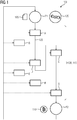
- Figure 1 shows an exemplary system 100. Using the system 100, a procedure is also explained below that can be understood as a method 100.
- a first party P1 and a second party P2 agree to exchange second services.
- a service in the form of a document 105 is to be transmitted from the first party P1 to the second party P2.
- An associated consideration is the transfer of an amount of money 110 from the second party P2 to the first party P1.
- the consideration is first provided in a chronological sequence in that the amount of money 110 is transferred.
- the amount of money 110 can in particular be represented by a digital currency such as Bitcoin, which is preferably based on a blockchain.
- a transaction can be cryptographically linked to a previous transaction, so that a transaction cannot be subsequently changed unnoticed.
- the blockchain is preferably kept in a distributed ledger 115 (for example: distributed register), i.e. a public directory that is replicated on a large number of different computers.
- a distributed ledger 115 for example: distributed register
- computers A to G are indicated as examples, which together implement the distributed ledger.
- the transfer of the amount of money 110 initially comprises a transaction that is entered in the local directory on one of the computers A to G.
- the transaction is later replicated to the other computers A to G so that they receive the same information about the transaction.
- the transfer of the consideration is shown as a solid line from the second party P2 to the first party P1.
- the replication of information about this transfer to all computers A to G is shown by broken lines.
- a computer A to G that has no information about a particular transaction may not yet have the most up-to-date information - or the transaction has not taken place.
- a computer A to G that has knowledge of the transaction could process information that is later recognized as untrue in the course of replication - or the information is correct and the transaction is valid.
- intermediate nodes are at the same time part or carriers of the distributed ledger 115.
- all computers A to G, which can serve as intermediate nodes, at the same time carry the distributed ledger 115 or a part thereof.
- those computers A to G, which represent intermediate nodes, and computers A to G, which carry the distributed ledger can also fall apart.
- Each intermediate node A to G is assigned a cryptographic key pair which comprises a public key and a private key. Encryption with a public key can only be reversed with the corresponding private key and vice versa.
- the public keys of one or more intermediate nodes A to G can, for example, be made accessible on a key server 120 or in some other way.
- a sequence 125 of intermediate nodes A to G is determined, via which the document 105 is to be transmitted from P1 to P2.
- the parties P1 and P2 can agree what length m the sequence 125 should have.
- the order of the intermediate nodes A to G in the sequence 125 is generally of secondary importance and can be chosen at random.
- a sequence 125 was chosen which runs from P1 via the intermediate node ADCG to P2.
- the first party P1 now encrypts the document 105 one after the other with the public keys of the sequence 125 in the reverse order of the planned transport.
- the plain text document 105 would be encrypted with G's public key
- the result of the encryption would then be encrypted with the public key of C
- the result in a corresponding manner with that of D and the result finally with the by A.
- the document 105 encrypted several times in this way can only be completely decrypted and made accessible to the second party P2 if all intermediate nodes A to G, whose public keys were used, decrypt the document 105 in the correct order with their respective private key and send the result to the forward the next intermediate node A to G or the second party P2.
- the document 105 is repeatedly encrypted in the manner described.
- One, several or all of the multiply encrypted documents 105 can also be made available to the second party P2, even before the latter has rendered the consideration in the form of the transfer of the amount of money 110.
- the document 105 can comprise an unencrypted part on the basis of which the second party can check the performance.
- the document 105 may include information at different levels of detail, and a less detailed view may be unencrypted, while a more detailed view may be encrypted.
- An unencrypted and an encrypted document 105 can also be used for the same purpose.
- Examples of such files 105 include CAD data, for example for the manufacture of a machine or for the construction of a building, or cadastral data for a property.
- the sequences 125 can be formed by selecting from a total of n intermediate nodes A to G m, specifically preferably randomly or pseudo-randomly. The selection is usually made by the sending first party P1. It is preferred that all different intermediate nodes A through G are used in each sequence 125. An order of the intermediate nodes A to G in a sequence 125 is initially not relevant. From the set of n intermediate nodes A to G, different sequences 125 can be formed “n over m” (binomial coefficient).
- all possible sequences 125 are formed for given n and m and the file 105 is correspondingly multiple encrypted as described above.
- the selection of m from n intermediate nodes A to G does not have to be systematic or exhaustive. However, it is preferred that any two of the sequences 125 formed are different in that one of the sequences 125 comprises at least one intermediate node A to G which the other sequence 125 does not comprise.
- the first party P1 or the second party P2 can transmit each of the multiply encrypted files 105 to the intermediate nodes A to G, whose public key was last used to encrypt the file 105.
- An identification of the intermediate nodes A to G can be contained in the document 105 in unencrypted form.
- An intermediate node A to G that receives the document 105 can decrypt it by one level using its private key. In most cases, however, the resulting document 105 will be encrypted again, specifically for a different intermediate node A to G.
- the information about which intermediate node A to G is involved can become readable through the decryption.
- the decrypting intermediate node A to G can then forward the document 105 to the next intermediate node A to G. If the document 105 is in plain text after decryption or if the next addressee is the second party P2, the document 105 can be delivered to them.
- the second Party P2 can optionally carry out an additional decryption if such was carried out by the first party before the chain encryption.
- the second party P2 counts as an intermediate node with regard to the forwarding and decryption and can carry out the last decryption in a corresponding manner.
- each intermediate node A to G which receives an encrypted document 105, carries out an assessment of the document 105 with respect to a predetermined criterion.
- the evaluation preferably includes the fact whether a consideration corresponding to the document 105 has been provided or not.
- the document 105 can include a corresponding reference to the consideration, here in the form of the transfer of the amount of money 110, preferably in unencrypted form.
- an intermediate node A to G is the carrier of the distributed ledger 115, it can carry out the assessment on the basis of locally available data. Otherwise, he can select one of the computers A to G that has or should have the information sought and make a corresponding request to it.
- the intermediate nodes A to G can discard the document 105 received. The subsequent intermediate nodes A to G then no longer carry out an assessment in this sequence 125. Otherwise, when the consideration has been provided, the intermediate nodes A to G can forward the document 105.
- the totality of the n intermediate nodes A to G can in a given case be subdivided into a first set of positively evaluating computers and a second set of negatively evaluating computers.
- the second party P2 can then receive a completely decrypted document 105 precisely when among the sequences 125 formed is at least one which exclusively contains intermediate nodes A to G of the first set. If each of the sequences 125 formed contains at least one intermediate node A to G of the second set, the document 105 is not delivered to P2.
- the second party sends a success message to the first party P1. This knows all intermediate nodes A to G of all sequences 125 it has formed and can notify the intermediate nodes A to G concerned directly.
- each intermediate node A to G can ask the first party P1 or the second party P2 before decryption or forwarding whether the upcoming step is still required or the transfer of the file 105 has already been successfully completed.
- a dedicated point that differs from P1 and P2 can also be formed for this information.
- the key server 120 can provide the information. The information can also be combined with the active notification from intermediate nodes A to G.
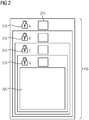
- Figure 2 shows an exemplary, multiply encrypted document 105 as it can be transmitted in a system 100 from the first party P1 to the second party P2.
- the document 105 shown is compatible with the in Figure 1 illustrated example by the actual useful data 205, in which the second party P2 is interested, one after the other the public keys of intermediate nodes G, C, D and A have been encrypted.
- the encryption is preferably carried out in such a way that it can be seen from the encrypted document 105, with the public key which of the intermediate nodes A to G the outermost - and only recognizable - encryption was carried out.
- an identification 210 (signature) of the encryption can be specified.
- a deliverable address for intermediate nodes A to G can also be specified or, for example, can be requested from key server 120 on the basis of identification 210.
- the document 105 can thus be transmitted to intermediate nodes A to G, which should be able to resolve the encryption.
- a unique identification 215 of the document 105 or an associated transfer from the sender P1 to the recipient P2 can be provided repeatedly on each encryption level, as shown, in order to avoid accidental or unauthorized changes.
- the transfer can include all documents 105 in any encryption that can be transmitted from the first party P1 to the second party P2 for the same reason. If the user data 205 has arrived at the second party P2, all other documents 105 of the same transfer lose their meaning.
- Figure 3 shows an exemplary representation of possible sequences 125 for the in the Figures 1 and 2 given example.
Landscapes
- Engineering & Computer Science (AREA)
- Computer Security & Cryptography (AREA)
- Computer Networks & Wireless Communication (AREA)
- Signal Processing (AREA)
- Computer Hardware Design (AREA)
- Computing Systems (AREA)
- General Engineering & Computer Science (AREA)
- Storage Device Security (AREA)
Description
- Die Erfindung betrifft die sichere Übermittlung eines Dokuments. Insbesondere betrifft die Erfindung die Übermittlung eines Dokuments in einer nicht vertrauenswürdigen Umgebung.
- Eine erste und eine zweite Partei tauschen eine Leistung und eine dazu gehörende Gegenleistung aus. Beispielsweise kann die Leistung in einem elektronischen Dokument bestehen oder dadurch repräsentiert sein, und die Gegenleistung kann eine Bezahlung betreffen, die elektronisch abgewickelt werden kann. Vertrauen sich die Parteien nicht gegenseitig, so trägt jede Partei das Risiko, dass einer erbrachten Leistung keine Gegenleistung gegenüber stehen könnte. Für dieses Problem kann ein für beide Parteien vertrauenswürdiger Notar bestellt werden, die Leistung und die Gegenleistung in Empfang nimmt, beide bewertet und nur dann weiterleitet, falls Leistung und Gegenleistung in einem vorbestimmten Verhältnis zueinander stehen.
- Diese Vorgehensweise kann, insbesondere wenn der Notar eine Person ist, sehr aufwändig und kostspielig sein. Außerdem sind nicht alle Leistungen bzw. Gegenleistungen leicht zu bewerten oder zu vergleichen. Dadurch kann es zu Verzögerungen bei der Abwicklung kommen.
- David L. Chaum: "Untraceable electronic mail, return addresses, and digital pseudonyms", Communications Of The ACM, Association for Computing Machinery, INC, United STates, Bd. 24, Nr. 2, 1. Februar 1981 (18'981-02.01), Seiten 84-90, betrifft ein Verfahren zur gesicherten Übermittlung von E-Mail.
- Roger Dingledine, Nick Mathewson und Paul Syverson, The Free Haven Project: "TOR: The Second-Generation Onion Router". USENIX, 27. Juli 2004 (2004-06-27), Seiten 1-18, schlägt ein Übermittlungssystem mit Verschleierung eines für eine Nachricht benutzten Kommunikationswegs vor.
- David Goldschlag et al.: "Onion Routing for Anonymous and Private Internet Connections" ist ebenfalls Stand der Technik.
- Zum Austausch digitaler Güter, beispielsweise beim Handel eines Dokuments gegen eine Gebühr, wird eine automatisierte Vorgehensweise benötigt, die es erlaubt, auch ohne einen bestellten Notar eine Bewertung von Transaktionen durchzuführen. Die Erfindung löst diese Aufgabe mittels der Gegenstände der unabhängigen Ansprüche. Unteransprüche geben bevorzugte Ausführungsformen wieder.
- Ein Verfahren zur Übermittlung eines Dokuments von einer ersten Partei an eine zweite Partei umfasst Schritte des Bestimmens einer Sequenz von m Zwischenknoten, wobei jeder Zwischenknoten Inhaber eines privaten kryptographischen Schlüssels ist, zu dem ein korrespondierender öffentlicher kryptographischer Schlüssel bekannt ist; des Verschlüsselns des Dokuments nacheinander mit den öffentlichen Schlüsseln der Zwischenknoten der Sequenz; des Übermittelns des Dokuments an den Inhaber desjenigen öffentlichen Schlüssels, mit dem das vorliegende Dokument zuletzt verschlüsselt wurde sowie des Entschlüsselns des Dokuments mit dem privaten Schlüssel dieses Inhabers; des Wiederholens des vorangehenden Schritts, bis alle Zwischenknoten der Sequenz das Dokument entschlüsselt haben; und des Zustellens des Dokuments an die zweite Partei. Dabei werden die genannten Schritte für mehrere unterschiedliche Sequenzen durchgeführt, die aus einer Grundmenge von Zwischenknoten gebildet werden.
- Dadurch kann sichergestellt werden, dass das Dokument alle m Zwischenknoten auf dem Weg von der ersten zur zweiten Partei durchläuft. Ein Zwischenknoten weiß nur, woher er das Dokument erhalten hat und wohin er es weiterzugeben hat, er kennt aber nicht die Anzahl bereits erfolgter oder noch erforderlicher Entschlüsselungen auf dem Weg des Dokuments von der ersten zur zweiten Partei. Das Dokument kommt nur dann bei der zweiten Partei an bzw. ist nur dann für die zweite Partei brauchbar, wenn alle Zwischenknoten der Sequenz durchlaufen wurden. Es ist bevorzugt, dass die Sequenz keine zwei gleichen Zwischenknoten enthält.
- Ein Zwischenknoten kann als Person oder als Vorrichtung gebildet sein. Bevorzugt ist ein Zwischenknoten als kommunikativ vernetzte Einrichtung gebildet und kann weiter bevorzugt automatisch arbeiten.
- Die Leistung kann im Dokument selbst bestehen, beispielsweise indem das Dokument ein elektronisch übertragbares Gut wie eine Konstruktionszeichnung, ein Textdokument, ein Bild oder ein Musikstück umfasst. Das Dokument kann auch einen Zugang zu einer Leistung ermöglichen, beispielsweise indem das Doku ment einen kryptographischen Schlüssel oder eine Authentifizierung enthält, mit dem ein Zugriff auf die Leistung möglich ist.
- Das Dokument kann mit einer Leistung verbunden sein, wobei ein Zwischenknoten das Dokument nur dann übermittelt, wenn er die Leistung bezüglich eines vorbestimmten Kriteriums positiv bewertet. Anders ausgedrückt kann jeder Zwischenknoten die Rolle eines Notars einnehmen das Dokument bewerten. Die Zwischenknoten können ausgewählt sein, die Bewertung kompetent durchführen zu können.
- Die zweite Partei kann eine zur Leistung korrespondierende Gegenleistung erbracht haben; wobei die Bewertung des Zwischenknoten eine Prüfung umfasst, ob die Gegenleistung erbracht wurde. Einer oder mehrere der Zwischenknoten können insbesondere an der Erbringung der Gegenleistung beteiligt gewesen sein. In einer besonders bevorzugten Ausführungsform besteht die Gegenleistung im Transfer von Geld, einer elektronischen Währung oder eines geldwerten digitalen Objekts. Der Transfer kann mit Mitteln einer Blockchain durchgeführt werden. Dabei kann die Blockchain auf mehreren Servern in Form eines "Distributed Ledger" gespeichert sein. Zumindest einer der Zwischenknoten kann ein solcher Server sein und über eine Kopie des Ledgers verfügen, der ein Verzeichnis mittels der Blockchain durchgeführter Transaktionen darstellt. Die Integrität des Ledgers kann über eine ständige Synchronisierung seiner Kopien auf verschiedenen Servern sicher gestellt sein. Eine Wahrscheinlichkeit, dass der Zwischenknoten eine zutreffende und kompetente Aussage über die erfolgte Gegenleistung machen kann, kann hoch sein.
- In einer besonders bevorzugten Ausführungsform werden mehrere Sequenzen von jeweils m Zwischenknoten bestimmt und die Schritte c) bis f) werden für jede der bestimmten Sequenzen durchgeführt. Dabei werden die Sequenzen bevorzugt aus einer Grundmenge von n Zwischenknoten bestimmt.
- Das Dokument kann dann nebenläufig über mehrere Wege über jeweils m Zwischenknoten übermittelt werden und jeder Zwischenknoten kann das Dokument beurteilen. Auf diese Weise ist es nicht erforderlich, dass beide Parteien Zwischenknoten finden, denen sie sämtlich vertrauen. Es kann ausreichen, dass jede Partei davon ausgeht, dass wenigstens die Hälfte der in der Grundmenge enthaltenen Zwischenknoten die Beurteilung entweder neutral oder zugunsten der jeweiligen Partei durchführt.
- Die erste und die zweite Partei können sich vor Schritt a auf eine Festlegung für m einigen. Je mehr Zwischenknoten von einer Sequenz umfasst sind, desto mehr Zwischenknoten müssen eine positive Beurteilung abgeben, um ein vollständiges Entschlüsseln des Dokuments zu ermöglichen. Je mehr Sequenzen verwendet werden, desto größer ist die Wahrscheinlichkeit, dass die Nachricht zumindest einmal vollständig entschlüsselt wird.
- In einer Ausführungsform werden aus der Grundmenge alle möglichen Teilmengen von m Zwischenknoten gebildet und für jede Teilmenge wird eine Sequenz bestimmt. Auf diese Weise kann durch Aushandeln von m zwischen den Parteien leichter zwischen einem erhöhten Aufwand und einer erhöhten Sicherheit abgewogen werden.
- Eine Anzahl von Sequenzen der Länge m aus der Grundgesamtheit von n Zwischenknoten ist bestimmt durch einen Binomialkoeffizienten (n über m). Dieser kann insbesondere bei großen m oder kleinen n sehr groß werden, sodass sehr viele Dokumente an Zwischenknoten geschickt werden können. Um zu verhindern, dass ein Netzwerk von Zwischenknoten durch Dokumente geflutet und gegebenenfalls überlastet wird, können Zwischenknoten informiert werden, deren Dienste bei der Entschlüsselung, Beurteilung und Weiterleitung eines Dokuments nicht mehr benötigt werden.
- Nach dem Zustellen eines der Dokumente bei der zweiten Partei können die jeweils m Zwischenknoten mehrerer oder aller Sequenzen benachrichtigt werden. Daraufhin kann wenigstens einer der benachrichtigten Zwischenknoten ein bereits eingetroffenes oder danach eintreffendes Dokument von der ersten an die zweite Partei verwerfen.
- Die Sequenzen werden üblicherweise durch die erste Partei bestimmt. Die zweite Partei kennt dabei nicht die Menge der Zwischenknoten aller Sequenzen und kann daher nicht entscheiden, welche Zwischenknoten zu benachrichtigen sind. In einer Ausführungsform werden daher alle n Zwischenknoten benachrichtigt, insbesondere durch die zweite Partei.
- In einer anderen Ausführungsform, in der die Sequenz der Zwischenknoten durch die erste Partei bestimmt wurde, benachrichtigt die zweite Partei die erste Partei, und die erste Partei benachrichtigt die Zwischenknoten der verwendeten Sequenzen.
- In einer weiteren Ausführungsform umfasst das Dokument eine bevorzugt unverschlüsselte Identifikation und jeder Zwischenknoten kann vor dem Entschlüsseln oder Weiterleiten prüfen, ob mit der Identifikation ein aktiver Dokumententransfer verbunden ist. Ist dies nicht der Fall, so kann der Zwischenknoten das Dokument verwerfen. Der Dokumententransfer kann von der ersten Partei als aktiv gesetzt werden, bevorzugt bevor sie ein verschlüsseltes Dokument an einen der Zwischenknoten versendet
- Ob ein Dokumententransfer aktiv ist, kann an einer zentralen Stelle hinterlegt sein. Beispielsweise kann ein dedizierter Server zur Führung aktiver Dokumententransfers vorgesehen sein. In einer Ausführungsform übernimmt die erste Partei diese Aufgabe für einen ihr zugeordneten Dokumententransfer. Empfängt die zweite Partei wenigstens einmal das Dokument, so kann sie den korrespondierenden Dokumententransfer von der ersten Partei zur zweiten Partei am Server auf inaktiv setzen.
- Eine Reihenfolge der Zwischenknoten in einer Sequenz kann zufällig oder pseudo-zufällig bestimmt werden. Die Auswahl von m Zwischenknoten aus den n verfügbaren Zwischenknoten kann dadurch unparteiischer sein.
- In einer weiteren Ausführungsform kann das mehrfache Verschlüsseln des Dokuments auch durch die Zwischenknoten erfolgen. Dazu kann die erste Partei Dazu einen Zwischenknoten auswählen, das Dokument mit dessen öffentlichem Schlüssel verschlüsseln und das Resultat zusammen mit einer Angabe noch durchzuführender Verschlüsselungen an den ausgewählten Zwischenknoten übermitteln. Der empfangende Zwischenknoten kann zunächst die Angabe dekrementieren. Ist das Resultat null, so kann er das Dokument der zweiten Partei zustellen. Optional verschlüsselt er das Dokument vor dem Zustellen noch mit dem öffentlichen Schlüssel der zweiten Partei. Andernfalls, wenn die dekrementierte Angabe größer als null ist, kann der Zwischenknoten einen weiteren Zwischenknoten auswählen, das Dokument mit dessen öffentlichem Schlüssel verschlüsseln und ihm das Resultat zustellen. Dieser Zwischenknoten kann mit dem empfangenen Dokument genauso verfahren.
- In einer Variante kann die erste Partei auch eine Angabe mitsenden, mit wie vielen Schlüsseln das Dokument mindestens verschlüsselt werden soll und ein Zwischenknoten kann, sobald diese Anzahl Verschlüsselungen erreicht ist, selbst entscheiden, ob er einen weiteren Verschlüsselungsschritt durchführen oder das Dokument der zweiten Partei zustellt. Diese Entscheidung kann zufällig mit einer vorbestimmten Wahrscheinlichkeit erfolgen. In einer anderen Variante kann das Dokument jeweils an einen anderen Zwischenknoten versandt werden als den, mit dessen öffentlichem Schlüssel das Dokument zuletzt verschlüsselt wurde. Der andere Zwischenknotenkann insbesondere zufällig bestimmt sein. In noch einer Variante kann die erste Partei die Sequenz der Zwischenknoten, die das Dokument nacheinander verschlüsseln sollen, dem Dokument lesbar beifügen. Die Zwischenknoten können das Dokument in der umgekehrten Reihenfolge der vorbestimmten Sequenz verschlüsseln und weiterleiten bzw. zustellen.
- Die erste Partei kann das Dokument vor Schritt c verschlüsseln und die zweite Partei kann das Dokument nach Schritt f entsprechend entschlüsseln. Dadurch kann verhindert werden, dass ein Zwischenknoten, der das Dokument an die zweite Partei weiterleitet, in Besitz des vollständig entschlüsselten, im Klartext vorliegenden Dokuments ist. Die zusätzliche Verschlüsselung kann mittels eines symmetrischen oder asymmetrischen Verschlüsselungsverfahrens erfolgen. In einer bevorzugten Variante wird das gleiche asymmetrische Verschlüsselungsverfahren wie für die übrigen Verschlüsselungen für die Zwischenknoten verwendet.
- Die oben beschriebenen Eigenschaften, Merkmale und Vorteile dieser Erfindung sowie die Art und Weise, wie diese erreicht werden, werden klarer und deutlicher verständlich im Zusammenhang mit der folgenden Beschreibung der Ausführungsbeispiele, die im Zusammenhang mit den Zeichnungen näher erläutert werden, wobei
- Figur 1
- ein exemplarisches System zur gesicherten Übertragung eines Dokuments;
- Figur 2
- ein beispielhaftes, mehrfach verschlüsseltes Dokument;
- Figur 3
- beispielhafte Sequenzen aus einer ebenfalls beispielhaften Grundgesamtheit von Zwischenknoten
-
Figur 1 zeigt ein beispielhaftes System 100. Anhand des Systems 100 wird im Folgenden auch eine Vorgehensweise erläutert, die als Verfahren 100 aufgefasst werden kann. - Eine erste Partei P1 und eine zweite Partei P2 einigen sich auf einen Austausch zweiter Leistungen. Eine Leistung in Form eines Dokuments 105 soll von der ersten Partei P1 an die zweite Partei P2 übermittelt werden. Eine zugeordnete Gegenleistung besteht in der Übertragung eines Geldbetrags 110 von der zweiten Partei P2 an die erste Partei P1.
- Im vorliegenden Beispiel wird in einer zeitlichen Abfolge zuerst die Gegenleistung erbracht, indem der Geldbetrag 110 übertragen wird. Der Geldbetrag 110 kann insbesondere durch eine digitale Währung wie Bitcoin repräsentiert sein, die bevorzugt auf einer Blockchain basiert. Dabei kann eine Transaktion jeweils kryptographisch mit einer vorherigen Transaktion verknüpft werden, sodass eine Transaktion nicht unbemerkt nachträglich verändert werden kann. Die Blockchain wird bevorzugt in einem Distributed Ledger 115 (etwa: verteiltes Register) gehalten, also einem öffentlichen Verzeichnis, das auf einer Vielzahl unterschiedlicher Rechner repliziert wird. In der Darstellung von
Figur 1 sind exemplarisch Rechner A bis G angedeutet, die zusammen den Distributed Ledger realisieren. - Die Übertragung des Geldbetrags 110 umfasst zunächst eine Transaktion, die auf einem der Rechner A bis G in das lokale Verzeichnis eingetragen wird. Später wird die Transaktion an die anderen Rechner A bis G repliziert, sodass diese die gleichen Informationen über die Transaktion erhalten. In der Darstellung von
Figur 1 ist der Transfer der Gegenleistung als durchgezogene Linie von der zweiten Partei P2 zur ersten Partei P1 dargestellt. Die Replikation von Informationen über diesen Transfer an alle Rechner A bis G ist durch unterbrochene Linien dargestellt. - Für eine bestimmte Zeit nach dem Transfer kann also die Information, ob der Transfer stattgefunden hat oder nicht, nicht an allen Rechnern des Distributed Ledgers 115 gleich sein. Ein Rechner A bis G, der keine Information über eine bestimmte Transaktion hat, könnte noch nicht die aktuellsten Informationen haben - oder die Transaktion hat nicht stattgefunden. Ein Rechner A bis G, der Kenntnis von der Transaktion hat, könnte eine Information verarbeiten, die später im Rahmen der Replikation als unwahr erkannt wird - oder die Information ist korrekt und die Transaktion gültig.
- Damit die erste Partei P1 der zweiten Partei P2 trotzdem möglichst verzögerungsfrei das Dokument 105 zusenden kann, wird vorgeschlagen, dass eine vorbestimmte Auswahl der Rechner A bis G prüft, ob die Gegenleistung erbracht wurde und nur wenn alle prüfenden Rechner A bis G zum gleichen, positiven Ergebnis kommen, eine Zustellung des Dokuments 105 zur zweiten Partei P2 ermöglicht wird.
- Dazu ist vorteilhaft, wenn zumindest einige der im Folgenden als Zwischenknoten bezeichneten Rechner A bis G gleichzeitig Teil oder Träger des Distributed Ledgers 115 sind. Vorliegend wird vereinfachend davon ausgegangen, dass alle Rechner A bis G, die als Zwischenknoten dienen können, gleichzeitig den Distributed Ledger 115 oder einen Teil davon tragen. In anderen Ausführungsformen können diejenigen Rechner A bis G, die Zwischenknoten darstellen, und die Rechner A bis G, die den Distributed Ledger tragen, auch auseinander fallen.
- Jedem Zwischenknoten A bis G ist ein kryptographisches Schlüsselpaar zugeordnet, das einen öffentlichen Schlüssel und einen privaten Schlüssel umfasst. Eine Verschlüsselung mit einem öffentlichen Schlüssel kann nur mit dem korrespondierenden privaten Schlüssel rückgängig gemacht werden und umgekehrt. Die öffentlichen Schlüssel eines oder mehrerer Zwischenknoten A bis G können beispielsweise an einem Schlüsselserver 120 oder auf andere Weise zugänglich gemacht sein.
- Zunächst wird eine Sequenz 125 von Zwischenknoten A bis G bestimmt, über die das Dokument 105 von P1 zu P2 übertragen werden soll. Zur Bildung der Sequenz 125 können sich die Parteien P1 und P2 einigen, welche Länge m die Sequenz 125 haben soll. Die Reihenfolge der Zwischenknoten A bis G in der Sequenz 125 ist allgemein von untergeordneter Bedeutung und kann zufällig gewählt werden. In der Darstellung von
Figur 1 wurde beispielhaft eine Sequenz 125 gewählt, die von P1 über die Zwischenknoten A-D-C-G zu P2 verläuft. - Die erste Partei P1 verschlüsselt nun das Dokument 105 nacheinander mit den öffentlichen Schlüsseln der Sequenz 125 in umgekehrter Reihenfolge der geplanten Beförderung. Vorliegend würde also zuerst eine Verschlüsselung des im Klartext vorliegenden Dokuments 105 mit dem öffentlichen Schlüssel von G erfolgen, das Resultat der Verschlüsselung würde dann mit dem öffentlichen Schlüssel von C verschlüsselt, dann das Resultat in entsprechender Weise mit dem von D und das Ergebnis schließlich mit dem von A.
- Das solchermaßen mehrfach verschlüsselte Dokument 105 kann nur vollständig entschlüsselt und der zweiten Partei P2 zugänglich gemacht werden, wenn alle Zwischenknoten A bis G, deren öffentliche Schlüssel verwendet wurden, in der richtigen Reihenfolge das Dokument 105 mit ihrem jeweiligen privaten Schlüssel entschlüsseln und das Resultat an den nächsten Zwischenknoten A bis G bzw. die zweite Partei P2 weiterleiten.
- Bevorzugt wird aber nicht nur eine Sequenz 125 erzeugt, sondern mehrere, und für jede Sequenz 125 wird das Dokument 105 auf die beschriebene Weise mehrfach verschlüsselt. Eines, mehrere oder alle der mehrfach verschlüsselten Dokumente 105 können auch der zweiten Partei P2 zur Verfügung gestellt werden, sogar bevor diese die Gegenleistung in Form des Transfers des Geldbetrags 110 erbracht hat. Das Dokument 105 kann einen unverschlüsselten Teil umfassen, anhand dessen die zweite Partei die Leistung prüfen kann. Beispielsweise kann das Dokument 105 Informationen in unterschiedlichen Detaillierungsgraden umfassen und eine weniger detaillierte Ansicht kann unverschlüsselt sein, während eine detailliertere Ansicht verschlüsselt sein kann. Für den gleichen Zweck können auch ein unverschlüsseltes und ein verschlüsseltes Dokument 105 verwendet werden. Beispiele für solche Dateien 105 umfassen CAD-Daten, etwa zur Herstellung einer Maschine oder zum Bau eines Gebäudes, oder Katasterdaten zu einer Immobilie. Die Sequenzen 125 können gebildet werden, indem aus einer Gesamtheit von n Zwischenknoten A bis G m ausgewählt werden, und zwar bevorzugt zufällig oder pseudo-zufällig. Die Auswahl trifft üblicherweise die sendende erste Partei P1. Es ist bevorzugt, dass in jeder Sequenz 125 lauter verschiedene Zwischenknoten A bis G verwendet werden. Eine Reihenfolge der Zwischenknoten A bis G in einer Sequenz 125 ist dabei zunächst nicht relevant. Aus der Menge von n Zwischenknoten A bis G können "n über m" (Binomialkoeffizient) verschiedene Sequenzen 125 gebildet werden. In einer Ausführungsform werden alle möglichen Sequenzen 125 für gegebene n und m gebildet und die Datei 105 wird wie oben beschrieben ist entsprechend mehrfach verschlüsselt. Die Auswahl von m aus n Zwischenknoten A bis G muss aber weder systematisch noch erschöpfend sein. Es wird allerdings bevorzugt, dass beliebige zwei der gebildeten Sequenzen 125 dahingehend verschieden sind, dass eine der Sequenzen 125 wenigstens einen Zwischenknoten A bis G umfasst, den die andere Sequenz 125 nicht umfasst.
- Die erste Partei P1 oder die zweite Partei P2 können jede der mehrfach verschlüsselten Dateien 105 jeweils an den Zwischenknoten A bis G übermitteln, dessen öffentlicher Schlüssel zuletzt zur Verschlüsselung der Datei 105 verwendet wurde. Eine Identifikation des Zwischenknotens A bis G kann unverschlüsselt im Dokument 105 enthalten sein. Ein Zwischenknoten A bis G, der das Dokument 105 erhält, kann es mittels seines privaten Schlüssels um eine Stufe entschlüsseln. Meistens wird das resultierende Dokument 105 jedoch erneut verschlüsselt sein, und zwar für einen anderen Zwischenknoten A bis G. Die Information, um welchen der Zwischenknoten A bis G es sich handelt, kann durch das Entschlüsseln lesbar werden.
- Der entschlüsselnde Zwischenknoten A bis G kann das Dokument 105 daraufhin an den nächsten Zwischenknoten A bis G weiterleiten. Liegt das Dokument 105 nach dem Entschlüsseln im Klartext vor oder ist der nächste Adressat die zweite Partei P2, so kann das Dokument 105 ihr zugestellt werden. Die zweite Partei P2 kann gegebenenfalls eine zusätzliche Entschlüsselung durchführen, falls eine solche durch die erste Partei vor der Kettenverschlüsselung durchgeführt wurde. In einer anderen Ausführungsform zählt die zweite Partei P2 bezüglich der Weiterleitung und Entschlüsselung als Zwischenknoten und kann die letzte Entschlüsselung in entsprechender Weise durchführen.
- Es wird nun vorgeschlagen, dass jeder Zwischenknoten A bis G, der ein verschlüsseltes Dokument 105 erhält, eine Bewertung des Dokuments 105 bezüglich eines vorbestimmten Kriteriums durchführt. Die Bewertung umfasst bevorzugt den Umstand, ob eine zum Dokument 105 korrespondierende Gegenleistung erbracht wurde oder nicht. Dazu kann das Dokument 105 einen entsprechenden Hinweis auf die Gegenleistung, hier in Form des Transfers des Geldbetrags 110, in bevorzugt unverschlüsselter Form umfassen.
- Ist ein Zwischenknoten A bis G Träger des Distributed Ledgers 115, kann er die Beurteilung auf der Basis lokal verfügbarer Daten durchführen. Anderenfalls kann er einen der Rechner A bis G auswählen, der die nachgesuchte Information hat bzw. haben sollte und bei diesem eine entsprechende Anfrage stellen.
- Stellt sich heraus, dass die Gegenleistung nicht oder nicht vollständig erbracht wurde, so kann der Zwischenknoten A bis G das erhaltene Dokument 105 verwerfen. Die nachfolgenden Zwischenknoten A bis G führen dann in dieser Sequenz 125 keine Beurteilung mehr durch. Andernfalls, wenn die Gegenleistung erbracht wurde, kann der Zwischenknoten A bis G das Dokument 105 weiterleiten.
- Angenommen, die Gesamtheit der n Zwischenknoten A bis G ist in einem gegebenen Fall unterteilbar in einer erste Menge von positiv bewertenden und eine zweite Menge von negativ bewertenden Rechnern. Dann kann die zweite Partei P2 genau dann ein vollständig entschlüsseltes Dokument 105 erhalten, wenn unter den gebildeten Sequenzen 125 wenigstens eine ist, die ausschließlich Zwischenknoten A bis G der ersten Menge enthält. Enthält jede der gebildeten Sequenzen 125 wenigstens einen Zwischenknoten A bis G der zweiten Menge, so wird das Dokument 105 nicht an P2 zugestellt.
- Wird eine große Anzahl Sequenzen 125 gebildet, so kann diese zu einer großen Last im Netz der Zwischenknoten A bis G bilden. Nachdem die zweite Partei P2 eine vollständig entschlüsselte Version der Datei 105 vorliegen hat, können alle zur gleichen Transaktion zwischen P1 und P2 gehörenden, verschlüsselten Dateien 105 an den Zwischenknoten A bis G verworfen werden, sodass unnötige Verschlüsselungen oder Kommunikationen verringert werden können.
- In einer Ausführungsform schickt die zweite Partei bei Vorliegen der Datei 105 im Klartext eine Erfolgsmeldung an die erste Partei P1. Diese kennt alle Zwischenknoten A bis G aller von ihr gebildeten Sequenzen 125 und kann die betroffenen Zwischenknoten A bis G direkt benachrichtigen.
- In einer anderen Ausführungsform kann jeder Zwischenknoten A bis G vor einer Entschlüsselung oder Weiterleitung bei der ersten Partei P1 oder bei der zweiten Partei P2 nachfragen, ob der bevorstehende Schritt noch erforderlich ist oder der Transfer der Datei 105 bereits erfolgreich abgeschlossen ist. Für diese Auskunft kann auch eine dedizierte Stelle gebildet sein, die sich von P1 und P2 unterscheidet. In einer Ausführungsform kann der Schlüsselserver 120 die Auskunft erteilen. Die Auskunft kann mit der aktiven Benachrichtigung von Zwischenknoten A bis G auch kombiniert werden.
-
Figur 2 zeigt ein beispielhaftes, mehrfach verschlüsseltes Dokument 105 wie es in einem System 100 von der ersten Partei P1 zur zweiten Partei P2 übermittelt werden kann. Das dargestellte Dokument 105 ist kompatibel mit dem inFigur 1 dargestellten Beispiel indem die eigentlichen Nutzdaten 205, an denen die zweite Partei P2 interessiert ist, nacheinander mit den öffentlichen Schlüsseln der Zwischenknoten G, C, D und A verschlüsselt wurden. Die Verschlüsselung wird bevorzugt derart durchgeführt, dass am verschlüsselten Dokument 105 erkennbar ist, mit dem öffentlichen Schlüssel welches der Zwischenknoten A bis G die äußerste - und einzig erkennbare - Verschlüsselung durchgeführt wurde. Dazu kann insbesondere eine Identifikation 210 (Signatur) der Verschlüsselung angegeben sein. - Eine zustellfähige Adresse für den Zwischenknoten A bis G kann ebenfalls angegeben sein oder beispielsweise auf der Basis der Identifikation 210 vom Schlüsselserver 120 erfragt werden. Das Dokument 105 kann so dem Zwischenknoten A bis G übermittelt werden, der in der Lage sein sollte, die Verschlüsselung zu lösen.
- Eine eindeutige Identifikation 215 des Dokuments 105 bzw. eines zugehörigen Transfers vom Sender P1 zum Empfänger P2 kann wie dargestellt auf jeder Verschlüsselungsebene wiederholt vorgesehen sein, um eine versehentliche oder unbefugte Änderung zu vermeiden. Der Transfer kann alle Dokumente 105 in beliebigen Verschlüsselungen umfassen, die aus dem gleichen Grund von der ersten Partei P1 zur zweiten Partei P2 übermittelt werden können. Sind die Nutzdaten 205 bei der zweiten Partei P2 eingetroffen, verlieren alle anderen Dokumente 105 des gleichen Transfers ihre Bedeutung.
-
Figur 3 zeigt eine beispielhafte Darstellung möglicher Sequenzen 125 für das in denFiguren 1 und2 angeführte Beispiel. Die Grundgesamtheit besteht aus n=7 Zwischenknoten A bis G und aus dieser sollen Sequenzen 125 mit jeweils m=4 verschiedenen Zwischenkonten A bis G gebildet werden. Die Anzahl der aus dieser Konstellation ableitbaren, paarweise voneinander verschiedenen Sequenzen 125 beträgt:
- In
Figur 3 sind nur einige beispielhafte Kombinationen der Zwischenknoten A bis G tabellenartig dargestellt, wobei jeweils eine Zeile einer Sequenz 125 entspricht. - Obwohl die Erfindung im Detail durch das bevorzugte Ausführungsbeispiel näher illustriert und beschrieben wurde, so ist die Erfindung nicht durch die offenbarten Beispiele eingeschränkt und andere Variationen können vom Fachmann hieraus abgeleitet werden, ohne den Schutzumfang der Erfindung zu verlassen.
Claims (10)
- Verfahren (100) zur Übermittlung eines Dokuments (105) von einer ersten Partei (P1) zu einer zweiten Partei (P2), wobei das Verfahren (100) folgende Schritte umfasst:a) Bestimmen von verschiedenen Sequenzen (125) von jeweils m Zwischenknoten (A-G) aus einer Grundmenge von n Zwischenknoten (A-G);b) wobei Rechner als Zwischenknoten dienen und jeder Zwischenknoten (A-G) Inhaber eines privaten kryptographischen Schlüssels ist, zu dem ein korrespondierender öffentlicher kryptographischer Schlüssel bekannt ist;c) Verschlüsseln des Dokuments (105) nacheinander mit den öffentlichen Schlüsseln der Zwischenknoten (A-G) einer der Sequenzen (125);d) Übermitteln des Dokuments (105) an den Inhaber desjenigen öffentlichen Schlüssels, mit dem das vorliegende Dokument (105) zuletzt verschlüsselt wurde, und Entschlüsseln des Dokuments (105) mit dem privaten Schlüssel dieses Inhabers;e) Wiederholen von Schritt d, bis alle Zwischenknoten (A-G) der Sequenz (125) das Dokument (105) entschlüsselt haben; undf) Zustellen des Dokuments (105) an die zweite Partei (P2),g) wobei die Schritte c) bis f) auch für alle anderen der Sequenzen (125) durchgeführt werden.
- Verfahren (200) nach Anspruch 1, wobei beliebige zwei der gebildeten Sequenzen (125) dahingehend verschieden sind, dass eine der Sequenzen (125) wenigstens einen Zwischenknoten (A-G) umfasst, den die andere Sequenz (125) nicht umfasst.
- Verfahren (100) nach Anspruch 1 oder 2, wobei das Dokument (105) eine Leistung repräsentiert, der eine Gegenleistung zugeordnet ist; wobei der Zwischenknoten (A-G) prüft, ob die Gegenleistung erbracht wurde; und das Dokument (105) nur dann übermittelt, wenn dies der Fall ist.
- Verfahren (100) nach Anspruch 3, wobei der Zwischenknoten (A-G) an der Erbringung der Gegenleistung beteiligt war.
- Verfahren (100) nach einem der vorangehenden Ansprüche, wobei sich die erste und die zweite Partei (P2) vor Schritt a auf eine Festlegung für m einigen.
- Verfahren (100) nach einem der vorangehenden Ansprüche, wobei aus der Grundmenge alle möglichen Teilmengen von m Zwischenknoten (A-G) gebildet werden und für jede Teilmenge eine Sequenz (125) bestimmt wird.
- Verfahren (100) nach einem der vorangehenden Ansprüche, wobei die jeweils m Zwischenknoten (A-G) aller Sequenzen (125) nach dem Zustellen eines der Dokumente (105) bei der zweiten Partei (P2) benachrichtigt werden; und daraufhin wenigstens einer der Zwischenknoten (A-G) ein bereits eingetroffenes oder danach eintreffendes Dokument (105) von der ersten an die zweite Partei (P2) verwirft.
- Verfahren (100) nach Anspruch 7, wobei die Sequenz (125) der Zwischenknoten (A-G) durch die erste Partei (P1) bestimmt wurde; und wobei die zweite Partei (P2) die erste Partei (P1) und die erste Partei (P1) die Zwischenknoten (A-G) benachrichtigt.
- Verfahren (100) nach einem der vorangehenden Ansprüche, wobei eine Reihenfolge der Zwischenknoten (A-G) in einer Sequenz (125) zufällig bestimmt wird.
- Verfahren (100) nach einem der vorangehenden Ansprüche, wobei die erste Partei (P1) das Dokument (105) vor Schritt c) verschlüsselt und die zweite (P2) das Dokument (105) nach Schritt f entsprechend entschlüsselt.
Priority Applications (2)
| Application Number | Priority Date | Filing Date | Title |
|---|---|---|---|
| EP18181091.2A EP3591925B1 (de) | 2018-07-02 | 2018-07-02 | Verschlüsselungssystem für vertrauensunwürdige umgebungen |
| PCT/EP2019/066221 WO2020007613A1 (de) | 2018-07-02 | 2019-06-19 | Verschlüsselungssystem für vertrauensunwürdige umgebungen |
Applications Claiming Priority (1)
| Application Number | Priority Date | Filing Date | Title |
|---|---|---|---|
| EP18181091.2A EP3591925B1 (de) | 2018-07-02 | 2018-07-02 | Verschlüsselungssystem für vertrauensunwürdige umgebungen |
Publications (2)
| Publication Number | Publication Date |
|---|---|
| EP3591925A1 EP3591925A1 (de) | 2020-01-08 |
| EP3591925B1 true EP3591925B1 (de) | 2020-08-26 |
Family
ID=62975838
Family Applications (1)
| Application Number | Title | Priority Date | Filing Date |
|---|---|---|---|
| EP18181091.2A Not-in-force EP3591925B1 (de) | 2018-07-02 | 2018-07-02 | Verschlüsselungssystem für vertrauensunwürdige umgebungen |
Country Status (2)
| Country | Link |
|---|---|
| EP (1) | EP3591925B1 (de) |
| WO (1) | WO2020007613A1 (de) |
Families Citing this family (1)
| Publication number | Priority date | Publication date | Assignee | Title |
|---|---|---|---|---|
| CN114389825B (zh) * | 2022-03-24 | 2022-07-08 | 腾讯科技(深圳)有限公司 | 一种基于区块链的数据通信方法和相关装置 |
-
2018
- 2018-07-02 EP EP18181091.2A patent/EP3591925B1/de not_active Not-in-force
-
2019
- 2019-06-19 WO PCT/EP2019/066221 patent/WO2020007613A1/de not_active Ceased
Non-Patent Citations (1)
| Title |
|---|
| None * |
Also Published As
| Publication number | Publication date |
|---|---|
| WO2020007613A1 (de) | 2020-01-09 |
| EP3591925A1 (de) | 2020-01-08 |
Similar Documents
| Publication | Publication Date | Title |
|---|---|---|
| DE3303846C2 (de) | ||
| DE60304744T2 (de) | Verfahren,vorrichtung und computerprogramme zur erzeugung und/oder verwendungkonditionaler elektronischer signaturen zur meldung von statusänderungen | |
| EP3033855B1 (de) | Unterstützung einer entschlüsselung von verschlüsselten daten | |
| DE69827410T2 (de) | Datenkommunikation | |
| DE19781841C2 (de) | Verfahren zum automatischen Entscheiden der Gültigkeit eines digitalen Dokuments von einer entfernten Stelle aus | |
| DE3888558T2 (de) | Gesicherte Nachrichtensysteme. | |
| DE19823666B4 (de) | Verschlüsselungs-Kommunikationssystem | |
| DE602004007254T2 (de) | System und verfahren zum authentifizieren von dokumenten | |
| DE3889561T2 (de) | Sichere Informationsspeicherung. | |
| DE102021004548A1 (de) | Verfahren und transaktionssystem zum übertragen von token in einem elektronischen transaktionssystems | |
| DE102013221159B3 (de) | Verfahren und System zum manipulationssicheren Bereitstellen mehrerer digitaler Zertifikate für mehrere öffentliche Schlüssel eines Geräts | |
| DE112012000358B4 (de) | Unternehmensübergreifender Datenaustausch | |
| EP1108308A1 (de) | System und verfahren zur ablaufkontrolle bei netzwerk-anwendungen | |
| DE10248004A1 (de) | Verfahren und Vorrichtung zum Verschlüsseln von Daten | |
| DE102018009943A1 (de) | Verfahren zum Erzeugen einer blinden Signatur | |
| DE69737806T2 (de) | Datenverschlüsselungsverfahren | |
| EP2932677B1 (de) | Verfahren für die sichere übertragung einer digitalen nachricht | |
| EP3734486B1 (de) | Computerimplementiertes verfahren zum ersetzen eines datenstrings | |
| WO2020007613A1 (de) | Verschlüsselungssystem für vertrauensunwürdige umgebungen | |
| DE102018009950A1 (de) | Verfahren zum Erhalten einer blinden Signatur | |
| EP0884869A1 (de) | Verfahren zur sicheren Anzeige bei der Übertragung von Daten oder Dateien zwischen Teilnehmern | |
| DE10248007A1 (de) | Verfahren und Vorrichtung zum Verschlüsseln von Daten | |
| DE102012106177A1 (de) | Sicheres Übertragungsverfahren | |
| WO2020144123A1 (de) | Verfahren und system zur informationsübermittlung | |
| DE102013106121A1 (de) | Verfahren zur Verschlüsselung von Daten |
Legal Events
| Date | Code | Title | Description |
|---|---|---|---|
| PUAI | Public reference made under article 153(3) epc to a published international application that has entered the european phase |
Free format text: ORIGINAL CODE: 0009012 |
|
| STAA | Information on the status of an ep patent application or granted ep patent |
Free format text: STATUS: THE APPLICATION HAS BEEN PUBLISHED |
|
| AK | Designated contracting states |
Kind code of ref document: A1 Designated state(s): AL AT BE BG CH CY CZ DE DK EE ES FI FR GB GR HR HU IE IS IT LI LT LU LV MC MK MT NL NO PL PT RO RS SE SI SK SM TR |
|
| AX | Request for extension of the european patent |
Extension state: BA ME |
|
| STAA | Information on the status of an ep patent application or granted ep patent |
Free format text: STATUS: REQUEST FOR EXAMINATION WAS MADE |
|
| 17P | Request for examination filed |
Effective date: 20200120 |
|
| RBV | Designated contracting states (corrected) |
Designated state(s): AL AT BE BG CH CY CZ DE DK EE ES FI FR GB GR HR HU IE IS IT LI LT LU LV MC MK MT NL NO PL PT RO RS SE SI SK SM TR |
|
| GRAP | Despatch of communication of intention to grant a patent |
Free format text: ORIGINAL CODE: EPIDOSNIGR1 |
|
| STAA | Information on the status of an ep patent application or granted ep patent |
Free format text: STATUS: GRANT OF PATENT IS INTENDED |
|
| INTG | Intention to grant announced |
Effective date: 20200330 |
|
| GRAS | Grant fee paid |
Free format text: ORIGINAL CODE: EPIDOSNIGR3 |
|
| GRAA | (expected) grant |
Free format text: ORIGINAL CODE: 0009210 |
|
| STAA | Information on the status of an ep patent application or granted ep patent |
Free format text: STATUS: THE PATENT HAS BEEN GRANTED |
|
| AK | Designated contracting states |
Kind code of ref document: B1 Designated state(s): AL AT BE BG CH CY CZ DE DK EE ES FI FR GB GR HR HU IE IS IT LI LT LU LV MC MK MT NL NO PL PT RO RS SE SI SK SM TR |
|
| REG | Reference to a national code |
Ref country code: GB Ref legal event code: FG4D Free format text: NOT ENGLISH |
|
| REG | Reference to a national code |
Ref country code: CH Ref legal event code: EP |
|
| REG | Reference to a national code |
Ref country code: AT Ref legal event code: REF Ref document number: 1307508 Country of ref document: AT Kind code of ref document: T Effective date: 20200915 |
|
| REG | Reference to a national code |
Ref country code: IE Ref legal event code: FG4D Free format text: LANGUAGE OF EP DOCUMENT: GERMAN |
|
| REG | Reference to a national code |
Ref country code: DE Ref legal event code: R096 Ref document number: 502018002271 Country of ref document: DE |
|
| REG | Reference to a national code |
Ref country code: CH Ref legal event code: NV Representative=s name: SIEMENS SCHWEIZ AG, CH |
|
| REG | Reference to a national code |
Ref country code: LT Ref legal event code: MG4D |
|
| PG25 | Lapsed in a contracting state [announced via postgrant information from national office to epo] |
Ref country code: BG Free format text: LAPSE BECAUSE OF FAILURE TO SUBMIT A TRANSLATION OF THE DESCRIPTION OR TO PAY THE FEE WITHIN THE PRESCRIBED TIME-LIMIT Effective date: 20201126 Ref country code: SE Free format text: LAPSE BECAUSE OF FAILURE TO SUBMIT A TRANSLATION OF THE DESCRIPTION OR TO PAY THE FEE WITHIN THE PRESCRIBED TIME-LIMIT Effective date: 20200826 Ref country code: NO Free format text: LAPSE BECAUSE OF FAILURE TO SUBMIT A TRANSLATION OF THE DESCRIPTION OR TO PAY THE FEE WITHIN THE PRESCRIBED TIME-LIMIT Effective date: 20201126 Ref country code: GR Free format text: LAPSE BECAUSE OF FAILURE TO SUBMIT A TRANSLATION OF THE DESCRIPTION OR TO PAY THE FEE WITHIN THE PRESCRIBED TIME-LIMIT Effective date: 20201127 Ref country code: LT Free format text: LAPSE BECAUSE OF FAILURE TO SUBMIT A TRANSLATION OF THE DESCRIPTION OR TO PAY THE FEE WITHIN THE PRESCRIBED TIME-LIMIT Effective date: 20200826 Ref country code: FI Free format text: LAPSE BECAUSE OF FAILURE TO SUBMIT A TRANSLATION OF THE DESCRIPTION OR TO PAY THE FEE WITHIN THE PRESCRIBED TIME-LIMIT Effective date: 20200826 Ref country code: PT Free format text: LAPSE BECAUSE OF FAILURE TO SUBMIT A TRANSLATION OF THE DESCRIPTION OR TO PAY THE FEE WITHIN THE PRESCRIBED TIME-LIMIT Effective date: 20201228 Ref country code: HR Free format text: LAPSE BECAUSE OF FAILURE TO SUBMIT A TRANSLATION OF THE DESCRIPTION OR TO PAY THE FEE WITHIN THE PRESCRIBED TIME-LIMIT Effective date: 20200826 |
|
| REG | Reference to a national code |
Ref country code: NL Ref legal event code: MP Effective date: 20200826 |
|
| PG25 | Lapsed in a contracting state [announced via postgrant information from national office to epo] |
Ref country code: PL Free format text: LAPSE BECAUSE OF FAILURE TO SUBMIT A TRANSLATION OF THE DESCRIPTION OR TO PAY THE FEE WITHIN THE PRESCRIBED TIME-LIMIT Effective date: 20200826 Ref country code: RS Free format text: LAPSE BECAUSE OF FAILURE TO SUBMIT A TRANSLATION OF THE DESCRIPTION OR TO PAY THE FEE WITHIN THE PRESCRIBED TIME-LIMIT Effective date: 20200826 Ref country code: LV Free format text: LAPSE BECAUSE OF FAILURE TO SUBMIT A TRANSLATION OF THE DESCRIPTION OR TO PAY THE FEE WITHIN THE PRESCRIBED TIME-LIMIT Effective date: 20200826 Ref country code: NL Free format text: LAPSE BECAUSE OF FAILURE TO SUBMIT A TRANSLATION OF THE DESCRIPTION OR TO PAY THE FEE WITHIN THE PRESCRIBED TIME-LIMIT Effective date: 20200826 Ref country code: IS Free format text: LAPSE BECAUSE OF FAILURE TO SUBMIT A TRANSLATION OF THE DESCRIPTION OR TO PAY THE FEE WITHIN THE PRESCRIBED TIME-LIMIT Effective date: 20201226 |
|
| PG25 | Lapsed in a contracting state [announced via postgrant information from national office to epo] |
Ref country code: EE Free format text: LAPSE BECAUSE OF FAILURE TO SUBMIT A TRANSLATION OF THE DESCRIPTION OR TO PAY THE FEE WITHIN THE PRESCRIBED TIME-LIMIT Effective date: 20200826 Ref country code: RO Free format text: LAPSE BECAUSE OF FAILURE TO SUBMIT A TRANSLATION OF THE DESCRIPTION OR TO PAY THE FEE WITHIN THE PRESCRIBED TIME-LIMIT Effective date: 20200826 Ref country code: DK Free format text: LAPSE BECAUSE OF FAILURE TO SUBMIT A TRANSLATION OF THE DESCRIPTION OR TO PAY THE FEE WITHIN THE PRESCRIBED TIME-LIMIT Effective date: 20200826 Ref country code: CZ Free format text: LAPSE BECAUSE OF FAILURE TO SUBMIT A TRANSLATION OF THE DESCRIPTION OR TO PAY THE FEE WITHIN THE PRESCRIBED TIME-LIMIT Effective date: 20200826 Ref country code: SM Free format text: LAPSE BECAUSE OF FAILURE TO SUBMIT A TRANSLATION OF THE DESCRIPTION OR TO PAY THE FEE WITHIN THE PRESCRIBED TIME-LIMIT Effective date: 20200826 |
|
| REG | Reference to a national code |
Ref country code: DE Ref legal event code: R097 Ref document number: 502018002271 Country of ref document: DE |
|
| PG25 | Lapsed in a contracting state [announced via postgrant information from national office to epo] |
Ref country code: AL Free format text: LAPSE BECAUSE OF FAILURE TO SUBMIT A TRANSLATION OF THE DESCRIPTION OR TO PAY THE FEE WITHIN THE PRESCRIBED TIME-LIMIT Effective date: 20200826 Ref country code: ES Free format text: LAPSE BECAUSE OF FAILURE TO SUBMIT A TRANSLATION OF THE DESCRIPTION OR TO PAY THE FEE WITHIN THE PRESCRIBED TIME-LIMIT Effective date: 20200826 |
|
| PG25 | Lapsed in a contracting state [announced via postgrant information from national office to epo] |
Ref country code: SK Free format text: LAPSE BECAUSE OF FAILURE TO SUBMIT A TRANSLATION OF THE DESCRIPTION OR TO PAY THE FEE WITHIN THE PRESCRIBED TIME-LIMIT Effective date: 20200826 |
|
| PLBE | No opposition filed within time limit |
Free format text: ORIGINAL CODE: 0009261 |
|
| STAA | Information on the status of an ep patent application or granted ep patent |
Free format text: STATUS: NO OPPOSITION FILED WITHIN TIME LIMIT |
|
| 26N | No opposition filed |
Effective date: 20210527 |
|
| PGFP | Annual fee paid to national office [announced via postgrant information from national office to epo] |
Ref country code: IT Payment date: 20210731 Year of fee payment: 4 Ref country code: FR Payment date: 20210721 Year of fee payment: 4 |
|
| REG | Reference to a national code |
Ref country code: DE Ref legal event code: R079 Ref document number: 502018002271 Country of ref document: DE Free format text: PREVIOUS MAIN CLASS: H04L0029060000 Ipc: H04L0065000000 |
|
| PGFP | Annual fee paid to national office [announced via postgrant information from national office to epo] |
Ref country code: DE Payment date: 20210917 Year of fee payment: 4 |
|
| PGFP | Annual fee paid to national office [announced via postgrant information from national office to epo] |
Ref country code: CH Payment date: 20211004 Year of fee payment: 4 |
|
| PG25 | Lapsed in a contracting state [announced via postgrant information from national office to epo] |
Ref country code: MC Free format text: LAPSE BECAUSE OF FAILURE TO SUBMIT A TRANSLATION OF THE DESCRIPTION OR TO PAY THE FEE WITHIN THE PRESCRIBED TIME-LIMIT Effective date: 20200826 |
|
| REG | Reference to a national code |
Ref country code: BE Ref legal event code: MM Effective date: 20210731 |
|
| PG25 | Lapsed in a contracting state [announced via postgrant information from national office to epo] |
Ref country code: LU Free format text: LAPSE BECAUSE OF NON-PAYMENT OF DUE FEES Effective date: 20210702 |
|
| PG25 | Lapsed in a contracting state [announced via postgrant information from national office to epo] |
Ref country code: IE Free format text: LAPSE BECAUSE OF NON-PAYMENT OF DUE FEES Effective date: 20210702 Ref country code: BE Free format text: LAPSE BECAUSE OF NON-PAYMENT OF DUE FEES Effective date: 20210731 |
|
| REG | Reference to a national code |
Ref country code: DE Ref legal event code: R119 Ref document number: 502018002271 Country of ref document: DE |
|
| REG | Reference to a national code |
Ref country code: CH Ref legal event code: PL |
|
| GBPC | Gb: european patent ceased through non-payment of renewal fee |
Effective date: 20220702 |
|
| PG25 | Lapsed in a contracting state [announced via postgrant information from national office to epo] |
Ref country code: LI Free format text: LAPSE BECAUSE OF NON-PAYMENT OF DUE FEES Effective date: 20220731 Ref country code: FR Free format text: LAPSE BECAUSE OF NON-PAYMENT OF DUE FEES Effective date: 20220731 Ref country code: CH Free format text: LAPSE BECAUSE OF NON-PAYMENT OF DUE FEES Effective date: 20220731 |
|
| PG25 | Lapsed in a contracting state [announced via postgrant information from national office to epo] |
Ref country code: GB Free format text: LAPSE BECAUSE OF NON-PAYMENT OF DUE FEES Effective date: 20220702 Ref country code: DE Free format text: LAPSE BECAUSE OF NON-PAYMENT OF DUE FEES Effective date: 20230201 |
|
| PG25 | Lapsed in a contracting state [announced via postgrant information from national office to epo] |
Ref country code: CY Free format text: LAPSE BECAUSE OF FAILURE TO SUBMIT A TRANSLATION OF THE DESCRIPTION OR TO PAY THE FEE WITHIN THE PRESCRIBED TIME-LIMIT Effective date: 20200826 |
|
| PG25 | Lapsed in a contracting state [announced via postgrant information from national office to epo] |
Ref country code: IT Free format text: LAPSE BECAUSE OF NON-PAYMENT OF DUE FEES Effective date: 20220702 Ref country code: HU Free format text: LAPSE BECAUSE OF FAILURE TO SUBMIT A TRANSLATION OF THE DESCRIPTION OR TO PAY THE FEE WITHIN THE PRESCRIBED TIME-LIMIT; INVALID AB INITIO Effective date: 20180702 |
|
| PG25 | Lapsed in a contracting state [announced via postgrant information from national office to epo] |
Ref country code: SI Free format text: LAPSE BECAUSE OF FAILURE TO SUBMIT A TRANSLATION OF THE DESCRIPTION OR TO PAY THE FEE WITHIN THE PRESCRIBED TIME-LIMIT Effective date: 20200826 |
|
| PG25 | Lapsed in a contracting state [announced via postgrant information from national office to epo] |
Ref country code: MK Free format text: LAPSE BECAUSE OF FAILURE TO SUBMIT A TRANSLATION OF THE DESCRIPTION OR TO PAY THE FEE WITHIN THE PRESCRIBED TIME-LIMIT Effective date: 20200826 |
|
| REG | Reference to a national code |
Ref country code: AT Ref legal event code: MM01 Ref document number: 1307508 Country of ref document: AT Kind code of ref document: T Effective date: 20230702 |
|
| PG25 | Lapsed in a contracting state [announced via postgrant information from national office to epo] |
Ref country code: MT Free format text: LAPSE BECAUSE OF FAILURE TO SUBMIT A TRANSLATION OF THE DESCRIPTION OR TO PAY THE FEE WITHIN THE PRESCRIBED TIME-LIMIT Effective date: 20200826 |
|
| PG25 | Lapsed in a contracting state [announced via postgrant information from national office to epo] |
Ref country code: AT Free format text: LAPSE BECAUSE OF NON-PAYMENT OF DUE FEES Effective date: 20230702 |
|
| PG25 | Lapsed in a contracting state [announced via postgrant information from national office to epo] |
Ref country code: AT Free format text: LAPSE BECAUSE OF NON-PAYMENT OF DUE FEES Effective date: 20230702 |
|
| PG25 | Lapsed in a contracting state [announced via postgrant information from national office to epo] |
Ref country code: TR Free format text: LAPSE BECAUSE OF FAILURE TO SUBMIT A TRANSLATION OF THE DESCRIPTION OR TO PAY THE FEE WITHIN THE PRESCRIBED TIME-LIMIT Effective date: 20200826 |
|
| PGFP | Annual fee paid to national office [announced via postgrant information from national office to epo] |
Ref country code: AT Payment date: 20260410 Year of fee payment: 5 |