EP3591573A1 - Method and apparatus for use in previewing during iris recognition process - Google Patents
Method and apparatus for use in previewing during iris recognition process Download PDFInfo
- Publication number
- EP3591573A1 EP3591573A1 EP18788594.2A EP18788594A EP3591573A1 EP 3591573 A1 EP3591573 A1 EP 3591573A1 EP 18788594 A EP18788594 A EP 18788594A EP 3591573 A1 EP3591573 A1 EP 3591573A1
- Authority
- EP
- European Patent Office
- Prior art keywords
- image
- camera
- preview
- iris
- facial
- Prior art date
- Legal status (The legal status is an assumption and is not a legal conclusion. Google has not performed a legal analysis and makes no representation as to the accuracy of the status listed.)
- Ceased
Links
Images

Classifications
-
- G—PHYSICS
- G06—COMPUTING OR CALCULATING; COUNTING
- G06V—IMAGE OR VIDEO RECOGNITION OR UNDERSTANDING
- G06V40/00—Recognition of biometric, human-related or animal-related patterns in image or video data
- G06V40/10—Human or animal bodies, e.g. vehicle occupants or pedestrians; Body parts, e.g. hands
- G06V40/18—Eye characteristics, e.g. of the iris
-
- G—PHYSICS
- G06—COMPUTING OR CALCULATING; COUNTING
- G06V—IMAGE OR VIDEO RECOGNITION OR UNDERSTANDING
- G06V40/00—Recognition of biometric, human-related or animal-related patterns in image or video data
- G06V40/10—Human or animal bodies, e.g. vehicle occupants or pedestrians; Body parts, e.g. hands
- G06V40/16—Human faces, e.g. facial parts, sketches or expressions
- G06V40/161—Detection; Localisation; Normalisation
- G06V40/166—Detection; Localisation; Normalisation using acquisition arrangements
-
- G—PHYSICS
- G06—COMPUTING OR CALCULATING; COUNTING
- G06F—ELECTRIC DIGITAL DATA PROCESSING
- G06F3/00—Input arrangements for transferring data to be processed into a form capable of being handled by the computer; Output arrangements for transferring data from processing unit to output unit, e.g. interface arrangements
- G06F3/14—Digital output to display device ; Cooperation and interconnection of the display device with other functional units
-
- G—PHYSICS
- G06—COMPUTING OR CALCULATING; COUNTING
- G06V—IMAGE OR VIDEO RECOGNITION OR UNDERSTANDING
- G06V10/00—Arrangements for image or video recognition or understanding
- G06V10/20—Image preprocessing
- G06V10/22—Image preprocessing by selection of a specific region containing or referencing a pattern; Locating or processing of specific regions to guide the detection or recognition
-
- G—PHYSICS
- G06—COMPUTING OR CALCULATING; COUNTING
- G06V—IMAGE OR VIDEO RECOGNITION OR UNDERSTANDING
- G06V40/00—Recognition of biometric, human-related or animal-related patterns in image or video data
- G06V40/10—Human or animal bodies, e.g. vehicle occupants or pedestrians; Body parts, e.g. hands
- G06V40/16—Human faces, e.g. facial parts, sketches or expressions
- G06V40/161—Detection; Localisation; Normalisation
-
- G—PHYSICS
- G06—COMPUTING OR CALCULATING; COUNTING
- G06V—IMAGE OR VIDEO RECOGNITION OR UNDERSTANDING
- G06V40/00—Recognition of biometric, human-related or animal-related patterns in image or video data
- G06V40/10—Human or animal bodies, e.g. vehicle occupants or pedestrians; Body parts, e.g. hands
- G06V40/18—Eye characteristics, e.g. of the iris
- G06V40/19—Sensors therefor
-
- G—PHYSICS
- G06—COMPUTING OR CALCULATING; COUNTING
- G06V—IMAGE OR VIDEO RECOGNITION OR UNDERSTANDING
- G06V40/00—Recognition of biometric, human-related or animal-related patterns in image or video data
- G06V40/10—Human or animal bodies, e.g. vehicle occupants or pedestrians; Body parts, e.g. hands
- G06V40/18—Eye characteristics, e.g. of the iris
- G06V40/193—Preprocessing; Feature extraction
-
- G—PHYSICS
- G06—COMPUTING OR CALCULATING; COUNTING
- G06V—IMAGE OR VIDEO RECOGNITION OR UNDERSTANDING
- G06V40/00—Recognition of biometric, human-related or animal-related patterns in image or video data
- G06V40/60—Static or dynamic means for assisting the user to position a body part for biometric acquisition
- G06V40/67—Static or dynamic means for assisting the user to position a body part for biometric acquisition by interactive indications to the user
-
- G—PHYSICS
- G06—COMPUTING OR CALCULATING; COUNTING
- G06V—IMAGE OR VIDEO RECOGNITION OR UNDERSTANDING
- G06V10/00—Arrangements for image or video recognition or understanding
- G06V10/10—Image acquisition
- G06V10/16—Image acquisition using multiple overlapping images; Image stitching
-
- G—PHYSICS
- G06—COMPUTING OR CALCULATING; COUNTING
- G06V—IMAGE OR VIDEO RECOGNITION OR UNDERSTANDING
- G06V40/00—Recognition of biometric, human-related or animal-related patterns in image or video data
- G06V40/10—Human or animal bodies, e.g. vehicle occupants or pedestrians; Body parts, e.g. hands
- G06V40/18—Eye characteristics, e.g. of the iris
- G06V40/197—Matching; Classification
Definitions
- the present application relates to the field of computer software technology, and in particular, to a preview method and apparatus in an iris recognition process.
- the current iris recognition technology has been applied in many industries, including finance, securities and other fields. It starts to be used on school devices on mobile phones. Ordinary consumers are also beginning to familiarize with the iris recognition technology. As the application is becoming more widespread and popular, and more iris technology-related applications will emerge.
- an iris image of a current user is usually collected by an Infrared Radiation (IR) camera, and the collected iris image can be directly displayed in real time to the current user as a preview image, so that the user can verify the collected iris image, or adjust his/her posture to recapture an iris image.
- IR Infrared Radiation
- an IR camera has a small field of view (FOV), and the collected preview image usually only includes an eye image of the user, and is a monochromatic image in black and white.
- FOV field of view
- the above-described preview image has a poor visual effect for the user, which may affect the user's convenience of use, and adversely affect the efficiency of iris recognition.
- a preview method and apparatus in an iris recognition process are provided in the embodiments of the present application, for solving the following technical problems in the current technologies: the preview image displayed in the iris recognition process in the current technologies has a poor visual effect for the user, which may affect the user's convenience of use, and adversely affect the efficiency of iris recognition.
- a preview method in an iris recognition process comprising:
- a preview apparatus in an iris recognition process comprising:
- the collected iris image does not need to be directly used as the preview image
- the preview image determined based on the collected facial image may be a non-monochromatic image and may include more facial content of the current user, which includes an iris. Therefore, compared with the preview image in the current technologies, the preview method in the present application can provide a better visual effect, be more convenient for the user, prevent adverse effects on the efficiency of iris recognition, and can partially or completely solve the problems in the current technologies.
- a preview method and apparatus in an iris recognition process are provided in the embodiments of the present application.
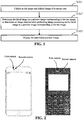
- FIG. 1 is a schematic flowchart of a preview method in an iris recognition process according to some embodiments of the present application.
- the method may be executed by a program on a merchant terminal or a user terminal, such as a payment application and other programs that can be called on a Point Of Sale (POS) machine or a mobile device.
- the method may be executed by, but not limited to, at least one of the following devices that may serve as the above-described terminals: a POS machine, a mobile phone, a tablet computer, a smart wearable device, a car computer, a personal computer, and the like.
- the method in FIG. 1 may comprise the following steps.
- an iris image and a facial image of a current user are collected.
- the iris image and the facial image may be collected by different cameras, respectively.
- the iris image is collected by an IR camera
- the facial image is collected by a non-monochromatic image camera (such as a color image camera on a mobile phone).
- a monochromatic iris image collection function and a non-monochromatic image collection function are integrated in a specific camera, and the iris image and the facial image may also be collected by the same specific camera.
- the iris image and facial image of the current user may be collected simultaneously, thus facilitating the improvement of the posture consistency of the current user in the iris image and the facial image.
- “Simultaneously” does not require that the iris image and the facial image are collected exactly at the same moment. In general, the iris image and the facial image collected in parallel or almost in parallel (the time difference is generally not greater than the order of seconds).
- an image collection instruction may be respectively sent to the IR camera and the non-monochromatic image camera simultaneously. Assuming that the cameras immediately start to collect the corresponding images after receiving the image collection instruction, it may be considered that the iris image and facial image of the current user are collected simultaneously if a difference of the instruction transmission delay is not taken into account.
- the iris image and facial image of the current user may also be collected sequentially (the time difference is generally not greater than the order of seconds).
- an image collection instruction may be sent to the specific camera.
- the specific camera may first collect the iris image of the current user, and immediately collect the facial image of the current user soon after completing the collection of the iris image (the order of collecting the two images may also be reversed).
- the facial image may include the entire facial content of the current user, while the iris image includes a partial facial content of the current user.
- the collected facial image may also include a partial facial content of the current user.
- the facial image is determined as a preview image corresponding to the iris image, or an image obtained after performing image processing on the facial image is determined as the preview image corresponding to the iris image.
- the preview image is not the collected iris image, but is obtained based on the collected facial image.
- the preview image can reflect facial conditions of the current user when the iris image is collected, such as whether the eyes focus on the lens, and whether the face is too close or too far away from the lens. These conditions can directly or indirectly reflect the effectiveness and usability of the collected iris image.
- the image processing may include at least one of the following two types: basic image parameter adjustment processing such as cropping, rotating, translating, zooming, scaling, color adjustment, grayscale value adjustment, and contrast adjustment; and image content retouching processing such as portrait enhancement (such as skin buffing, skin whitening, and eyeliner painting), image stylization (such as oil painting style, cartoon style, crayon drawing style, and stick figure style), and visual effects (such as light and shadow effect, particle effect, and flame effect).
- basic image parameter adjustment processing such as cropping, rotating, translating, zooming, scaling, color adjustment, grayscale value adjustment, and contrast adjustment
- image content retouching processing such as portrait enhancement (such as skin buffing, skin whitening, and eyeliner painting), image stylization (such as oil painting style, cartoon style, crayon drawing style, and stick figure style), and visual effects (such as light and shadow effect, particle effect, and flame effect).
- the objective of the image processing is to improve the visual effect of the preview image compared to the collected iris image, and/or to improve the ease of use of the preview image for the current user compared to the collected iris image.
- the preview image may be displayed as is or with adaptive adjustment according to a preview interface when necessary.
- the method in FIG. 1 may be repeated continuously until the iris image for iris recognition is finally determined.
- various preview images determined corresponding to the repeatedly and continuously collected facial images may be displayed in the form of a video sequence.
- the collected iris image does not need to be directly used as the preview image
- the preview image determined based on the collected facial image may be a non-monochromatic image and may include more facial content of the current user, including an iris. Therefore, compared with the preview image in the current technologies, the present application can provide a better visual effect, be more convenient for the user to, prevent adverse effects on the efficiency of iris recognition, and can partially or completely solve the problems in the current technologies.
- the collecting an iris image and facial image of a current user may include: collecting the iris image of the current user by a first camera, and collecting the facial image of the current user by a second camera.
- the first camera may be a camera suitable for collecting the iris image, such as an IR camera.
- the second camera may be a non-monochromatic camera, such as a color image camera.
- the first camera and the second camera may be on the same device.
- the first camera and the second camera are on the same mobile phone or POS machine, etc.
- first camera and the second camera may be on the same device based on a relative positional relationship, and the relative positional relationship may facilitate the first camera and the second camera performing image collection actions on the current user from the same or similar directions.
- the first camera and the second camera may both be positioned on the front of the mobile phone or on the back of the mobile phone, and the positions of the first camera and the second camera may be relatively close (such as longitudinally closely stacked or laterally closely stacked, etc.).
- FIG. 2 a schematic diagram of positions of a first camera and a second camera on a device is provided in the embodiments of the present application, as shown in FIG. 2 .
- FIG. 2 includes two schematic diagrams of positions.
- the device is a mobile phone.
- the first camera and the second camera are both positioned on the front of the mobile phone, and are adjacent to each other in a horizontal direction.
- the lenses of the first camera and the second camera have the same direction and are positioned closely to each other.
- the device is a POS machine.
- the first camera and the second camera are both positioned on the front of the POS machine, and are adjacent to each other in a vertical direction.
- the lenses of the first camera and the second camera have the same direction and are positioned closely to each other.
- the positions of the cameras in FIG. 2 enable the first camera and the second camera to conveniently perform image collection actions on the user from the same or similar directions, thus improving of the posture consistency of the current user in the iris image and the facial image.
- the performing image processing on the facial image may include: performing the image processing on the facial image according to at least one of the following information: the iris image, information of the first camera, information of the second camera, and information of a relative positional relationship between the first camera and the second camera.
- the objective of the image processing is to improve the ease of use of the preview image, or to improve the visual effect of the preview image.
- a common requirement is as follows: the actual content (i.e., an image of at least part of the facial content of the current user) respectively included in the preview image and the iris image are substantially consistent (but having different visual effects).
- the actual contents included respectively are not consistent, inconsistent parts can be as useful as possible.
- the image of the facial content excluding the iris part of the current user may be considered as useful information (because it is more advantageous to enhance the visual effect or the ease of use for the user), while the image of the content other than the current user's facial content may be considered as useless information. This makes it easier for the current user to preview better.
- the requirement in the previous paragraph may be implemented based on the image processing described above.
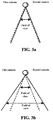
- the image processing can be illustrated by processing an image size. Assuming that the iris image and facial image of the current user are collected simultaneously and that the lenses of the first camera and the second camera have the same direction and are positionally close to each other, then a field-of-view difference between the cameras can be a main factor causing the inconsistency between the actual content included in the iris image and the facial image, and a description will be made with reference to FIG. 3a and FIG. 3b .
- FIG. 3a is a schematic diagram of a first camera and a second camera with substantially consistent fields of view according to some embodiments of the present application.
- the dotted line represents the field of view of the first camera
- the solid line represents the field of view of the second camera.
- the actual contents respectively included in the facial image and the iris image may also be substantially consistent correspondingly. Therefore, the facial image may be directly determined as a preview image corresponding to the iris image without additionally adjusting the image size. It should be noted that such a manner is mainly suitable for a situation where the iris image is a monochromatic image and the facial image is a non-monochromatic image. In this way, the visual effect of the preview image can be improved.
- FIG. 3b is a schematic diagram of a first camera and a second camera with different fields of view according to some embodiments of the present application.
- a difference may also exist correspondingly between the actual contents included in the facial image and the iris image, and such difference may increase with the increase of the distance between the current user and the camera.
- an image obtained after a size adjustment of the facial image may be determined as the preview image corresponding to the iris image.
- the obtained actual contents respectively included in the preview image and the iris image are substantially consistent (the preview image has a relatively better visual effect).
- the actual contents included respectively are not consistent, inconsistent parts belonging to the facial content image of the current user rather than the background image are kept as much as possible. The reason is that in a scenario of iris recognition, the facial content image is more helpful to the improvement of the visual effect of the preview image than the background image, which can be retained preferentially.
- both the preview image and the iris image only include an eye image of the current user.
- the iris image contains the eye image of the current user
- the preview image basically only contains an image of the entire facial content of the current user.
- the facial image may additionally include an image of a background. With the image size adjustment processing, the preview image may be obtained by cropping off the background image as much as possible from the facial image.
- the field of view of the first camera is relatively small, as is the case in FIG. 3b .
- the information of the first camera and the information of the second camera described above may include a field of view.
- the performing the image processing on the facial image according to information of the first camera and information of the second camera may include: determining distances from the first camera and the second camera to the current user (the distances may be preferably determined synchronously at the time of image collection), respectively; and performing the image processing on the facial image according to the field of view of the first camera, the field of view of the second camera, and the determined distances.
- the distances may be determined by, for example, a ranging module such as an infrared ranging module or an acoustic ranging module on the device.
- information of the camera may be other information reflecting the function or performance of the camera, such as a focal length, a shutter time, and the like.
- the other information may also be used as a basis for processing the facial image.
- the exemplary embodiment in the scenario of FIG. 3a is simpler and less expensive than FIG. 3b .
- the scenario of FIG. 3b also has its own advantages.
- the first camera is not necessarily only used to collect a facial image in the process of iris recognition.
- the first camera on a user terminal such as a mobile phone, may be a camera used when the user takes pictures or videos in daily life.
- the first camera usually has a large field of view and is thus difficult to be applied in the scenario in FIG. 3a , but may be applicable to the scenario in FIG. 3b .
- On a merchant terminal such as a POS machine there may be no requirement of a large field of view for the first camera.
- the field of view of the first camera may be substantially consistent with that of the second camera, and thus can be applicable to the scenario in FIG. 3a .
- the preview image may also be obtained by cropping the facial image by image matching according to the iris image.
- the preview image may be obtained by position corrections such as rotating or translating the facial image correspondingly.
- the position corrections can be performed according to one or more of the information that may reflect these differences such as the field of view of the first camera, the field of view of the second camera, information of the relative positional relationship, and the distances.
- the preview image includes an eye image of the current user
- the displaying the determined preview image may include: determining a preview interface of the iris recognition; and displaying the determined preview image in the preview interface, or displaying the preview image in the preview interface after adaptively adjusting the preview image according to the preview interface.
- a display position of the eye image in the preview interface reflects eye alignment conditions of the current user when the iris image of the current user is collected.
- the adaptive adjustment may be, for example, zooming or format conversion.
- FIG. 4 a schematic diagram of a preview interface is provided in the embodiments of the present application as an example, as shown in FIG. 4 .
- a grey interval represents a range of the user's eyes where the iris may be normally collected
- two holes in the middle represent the best position of the eyes (the current user can align the eyes with reference to the holes, so as to accurately collect the iris image)
- an outer frame is a range where the entire face can be previewed.
- the iris image can be collected by an IR camera when the face is previewed based on a non-monochromatic camera, which may improve the poor preview experience in the current technologies, where only a black-and-white monochromatic image of eyes is available for preview.
- FIG. 5 is a schematic diagram of an iris image according to the current technologies.
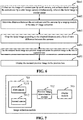
- FIG. 6 a schematic flowchart of an exemplary implementation of the foregoing preview method in an exemplary application scenario is further provided in the embodiments of the present application, as shown in FIG. 6 .
- the above-described first camera is an IR camera
- the second camera is a color image camera
- the preview interface is a preview box
- the field of view of the IR camera is smaller than that of the color image camera.
- the process in FIG. 6 may include the following steps.
- an iris image of a current user is collected by an IR camera, and a facial image of the current user is collected by a color image camera simultaneously, wherein the facial image is a color image.
- the facial image is cropped according to the obtained distances and a field-of-view difference between the cameras.
- the cropped facial image is used as a preview image and the preview image is zoomed to the size of a preview box.
- the zoomed preview image is displayed in the preview box.
- the facial image is not necessarily required to be a non-monochromatic image.
- a non-monochromatic preview image may be obtained by image processing such as coloring the facial image.
- the visual effect can also be improved compared with the current technologies.
- converting a monochromatic image to a non-monochromatic image is one but not the only one method to improve the visual effect.
- the facial image and the preview image are both monochromatic images, the visual effect may still be improved compared with the current technologies.
- the preview image may be obtained after portrait enhancement is performed on the facial image
- the preview image may be obtained after cartoon style processing is performed on the facial image, and so on.
- a method for use in previewing during an iris recognition process is provided above. Based on the same inventive idea, a corresponding apparatus is further provided in the embodiments of the present application, as shown in FIG. 7 .
- FIG. 7 is a schematic structural diagram of an apparatus for use in previewing during an iris recognition process corresponding to FIG. 1 according to some embodiments of the present application.
- the apparatus may be located on an executive entity performing the process in FIG. 1 , comprising:
- the image collection module 701 comprises a first camera 7011 and a second camera 7012.
- the image collection module 701 collecting an iris image and facial image of a current user comprises: the first camera 7011 acquiring the iris image of the current user, and the second camera 7012 acquiring the facial image of the current user.
- the first camera 7011 and the second camera 7012 are positioned on the same device based on a relative positional relationship, and the relative positional relationship may facilitate the first camera 7011 and the second camera 7012 collecting images on the current user from the same or similar direction.
- the preview image determination module 702 performing image processing on the facial image comprises: the preview image determination module 702 performing image processing on the facial image according to at least one of the following:
- the field of view of the first camera 7011 is smaller than that of the second camera 7012; and the preview image determination module 702 performing image processing on the facial image according to the field of view of the first camera 7011, the field of view of the second camera 7012, and the determined distances comprises:
- the preview image includes an eye image of the current user
- the display module 703 displaying the determined preview image comprises:
- the image processing comprises at least one of basic image parameter adjustment processing and image content retouching processing;
- the basic image parameter processing comprises at least one of cropping, rotation, translation, zooming, scaling, color adjustment, grayscale value adjustment, and contrast adjustment;
- the image content retouching processing comprises at least one of portrait enhancement, image stylization, and special visual effect.
- the iris image is a monochromatic image
- the facial image is a non-monochromatic image.
- the first camera 7011 is a monochromatic image camera
- the second camera 7012 is a non-monochromatic image camera.
- the apparatus provided in the embodiments of the present application corresponds to the preview methods. Therefore, the apparatus also has beneficial technical effects similar to those of the corresponding methods. As the beneficial technical effects of the methods have been described above in detail, the beneficial technical effects of the corresponding apparatus are not elaborated here.
- an improvement on a technology may be obviously distinguished as an improvement on hardware (for example, an improvement on a circuit structure such as a diode, a transistor, and a switch) or an improvement on software (an improvement on a method procedure).
- improvements of many method procedures at present may be considered as direct improvements on hardware circuit structures. Almost all designers program the improved method procedures into hardware circuits to obtain corresponding hardware circuit structures. Therefore, it cannot be said that the improvement of a method procedure cannot be implemented using a hardware entity module.
- a Programmable Logic Device for example, a Field Programmable Gate Array (FPGA)
- FPGA Field Programmable Gate Array
- the "logic compiler” software is similar to a software complier used for developing and writing a program, and original code before compiling also needs to be written in a specific programming language, which is referred to as a Hardware Description Language (HDL).
- HDL Hardware Description Language
- HDLs there are many types of HDLs, such as ABEL (Advanced Boolean Expression Language), AHDL (Altera Hardware Description Language), Confluence, CUPL (Cornell University Programming Language), HDCal, JHDL (Java Hardware Description Language), Lava, Lola, MyHDL, PALASM, and RHDL (Ruby Hardware Description Language), among which VHDL (Very-High-Speed Integrated Circuit Hardware Description Language) and Verilog are most commonly used now.
- ABEL Advanced Boolean Expression Language
- AHDL Altera Hardware Description Language
- Confluence CUPL (Cornell University Programming Language)
- HDCal Joint Deformation Language
- JHDL Joint Hardware Description Language
- Lava Lava
- Lola MyHDL
- PALASM Phase Change Language
- RHDL Raby Hardware Description Language
- VHDL Very-High-Speed Integrated Circuit Hardware Description Language
- Verilog Verilog
- a controller may be implemented in any suitable manner.
- the controller may be in the form of a microprocessor or a processor, and a computer readable medium storing computer readable program codes (for example, software or firmware) executable by the (micro)processor, a logic gate, a switch, an Application Specific Integrated Circuit (ASIC), a programmable logic controller, and an embedded micro-controller.
- Examples of the controller include, but are not limited to, the following micro-controllers: ARC 625D, Atmel AT91SAM, Microchip PIC18F26K20, and Silicone Labs C8051F320.
- a memory controller may also be implemented as a part of a control logic of a memory.
- the method steps may be logically programmed to enable the controller to implement the same function in the form of a logic gate, a switch, an application specific integrated circuit, a programmable logic controller and an embedded microcontroller. Therefore, such a controller may be considered as a hardware component, and apparatuses included therein for implementing various functions may also be considered as structures inside the hardware component. Alternatively, the apparatuses for implementing various functions may even be considered as both software modules for implementing the method and structures inside the hardware components.
- the system, apparatus, modules or units illustrated in the above-described embodiments can be implemented by a computer chip or an entity, or implemented by a product having a specific function.
- a typical implementation device is a computer.
- the computer may be a personal computer, a laptop computer, a cellular phone, a camera phone, a smart phone, a personal digital assistant, a media player, a navigation device, an email device, a game console, a tablet computer, a wearable device, or a combination of any of these devices.
- the embodiments of the present invention may be provided as a method, a system, or a computer program product. Therefore, the present invention may be implemented in a form of complete hardware embodiments, complete software embodiments, or embodiments combining software and hardware. Moreover, the present invention may be in the form of a computer program product implemented on one or more computer usable storage mediums (including, but not limited to, a magnetic disk memory, a CD-ROM, an optical memory and the like) including computer usable program codes therein.
- a computer usable storage mediums including, but not limited to, a magnetic disk memory, a CD-ROM, an optical memory and the like
- These computer program instructions may also be stored in a computer readable memory that can guide a computer or other programmable data processing devices to operate in a particular manner, such that the instructions stored in the computer readable memory produces a manufactured product, including an instruction apparatus.
- the instruction apparatus implements a function specified in one or more processes in the flowcharts and/or in one or more blocks in the block diagrams.
- These computer program instructions may also be loaded onto a computer or other programmable data processing devices, such that a series of operation steps are performed on the computer or other programmable devices, thus producing computer-implemented processing. Therefore, the instructions executed on the computer or other programmable devices provide steps for implementing a function specified in one or more processes in the flowcharts and/or in one or more blocks in the block diagrams.
- the computing device comprises one or more central processing units (CPUs), an input/output interface, a network interface, and a memory.
- CPUs central processing units
- input/output interface input/output interface
- network interface network interface
- memory a memory
- the memory may include a computer-readable medium such as a non-persistent memory, a Random Access Memory (RAM), and/or a non-volatile memory, e.g., a Read-Only Memory (ROM) or a flash RAM.
- a computer-readable medium such as a non-persistent memory, a Random Access Memory (RAM), and/or a non-volatile memory, e.g., a Read-Only Memory (ROM) or a flash RAM.
- RAM Random Access Memory
- ROM Read-Only Memory
- flash RAM flash RAM
- the computer readable medium includes a persistent and non-persistent medium as well as a removable and non-removable medium, and may store information by any method or technology.
- the information may be a computer-readable instruction, a data structure, a module of a program, or other data.
- An example of the storage medium of a computer includes, but is not limited to, a phase change memory (PRAM), a static random access memory (SRAM), a dynamic random access memory (DRAM), other types of random access memories (RAMs), a read-only memory (ROM), an electrically erasable programmable read-only memory (EEPROM), a flash memory or other memory technologies, a compact disk read-only memory (CD-ROM), a digital versatile disc (DVD) or other optical storages, a cassette tape, a magnetic tape/magnetic disk storage or other magnetic storage devices, or any other non-transmission medium, and can be used to store information accessible to the computing device.
- the computer-readable medium does not include a computer-readable transitory medium, such as modulated data signals and carriers.
- the present application may be described in a general context of computer executable instructions executed by a computer, for example, a program module.
- the program module includes a routine, a program, an object, a component, a data structure, and the like for executing a specific task or implementing a specific abstract data type.
- the present application may also be practiced in distributed computing environments.
- a task is executed by a remote processing device connected through a communications network.
- the program module may be located in a local and remote computer storage medium, including a storage device.
Landscapes
- Engineering & Computer Science (AREA)
- Theoretical Computer Science (AREA)
- Physics & Mathematics (AREA)
- General Physics & Mathematics (AREA)
- Human Computer Interaction (AREA)
- Multimedia (AREA)
- Health & Medical Sciences (AREA)
- General Health & Medical Sciences (AREA)
- Ophthalmology & Optometry (AREA)
- General Engineering & Computer Science (AREA)
- Oral & Maxillofacial Surgery (AREA)
- Computer Vision & Pattern Recognition (AREA)
- Studio Devices (AREA)
- Measurement Of The Respiration, Hearing Ability, Form, And Blood Characteristics Of Living Organisms (AREA)
- Collating Specific Patterns (AREA)
- Image Input (AREA)
- Image Processing (AREA)
Abstract
Description
- The present application relates to the field of computer software technology, and in particular, to a preview method and apparatus in an iris recognition process.
- The current iris recognition technology has been applied in many industries, including finance, securities and other fields. It starts to be used on flagship devices on mobile phones. Ordinary consumers are also beginning to familiarize with the iris recognition technology. As the application is becoming more widespread and popular, and more iris technology-related applications will emerge.
- In the iris recognition process, an iris image of a current user is usually collected by an Infrared Radiation (IR) camera, and the collected iris image can be directly displayed in real time to the current user as a preview image, so that the user can verify the collected iris image, or adjust his/her posture to recapture an iris image.
- In the current technologies, an IR camera has a small field of view (FOV), and the collected preview image usually only includes an eye image of the user, and is a monochromatic image in black and white.
- The above-described preview image has a poor visual effect for the user, which may affect the user's convenience of use, and adversely affect the efficiency of iris recognition.
- A preview method and apparatus in an iris recognition process are provided in the embodiments of the present application, for solving the following technical problems in the current technologies: the preview image displayed in the iris recognition process in the current technologies has a poor visual effect for the user, which may affect the user's convenience of use, and adversely affect the efficiency of iris recognition.
- In order to solve the above-described technical problems, the embodiments of the present specification are implemented as follows.
- A preview method in an iris recognition process is provided in the embodiments of the present application, comprising:
- collecting an iris image and a facial image of a current user;
- determining the facial image as a preview image corresponding to the iris image, or determining an image obtained after performing image processing on the facial image as a preview image corresponding to the iris image; and
- displaying the determined preview image.
- A preview apparatus in an iris recognition process is provided in the embodiments of the present application, comprising:
- an image collection module configured to collect an iris image and a facial image of a current user;
- a preview image determination module configured to determine the facial image as a preview image corresponding to the iris image, or determine an image obtained after performing image processing on the facial image as a preview image corresponding to the iris image; and
- a display module configured to display the determined preview image.
- At least one of the above-described technical solutions adopted in the embodiments of the present application can achieve the following beneficial effects: the collected iris image does not need to be directly used as the preview image, and the preview image determined based on the collected facial image may be a non-monochromatic image and may include more facial content of the current user, which includes an iris. Therefore, compared with the preview image in the current technologies, the preview method in the present application can provide a better visual effect, be more convenient for the user, prevent adverse effects on the efficiency of iris recognition, and can partially or completely solve the problems in the current technologies.
- In order to describe the technical solutions in the embodiments of the present application or in the current technologies more clearly, the accompanying drawings to be used in the description about the embodiment or the current technologies will be briefly introduced in the following. It is apparent that the accompanying drawings described in the following are merely some embodiments described in the present application. One of ordinary skill in the art may further obtain other accompanying drawings according to these accompanying drawings without inventive efforts.
-
FIG. 1 is a schematic flowchart of a preview method in an iris recognition process according to some embodiments of the present application; -
FIG. 2 is a schematic diagram showing positions of a first camera and a second camera on a device according to some embodiments of the present application; -
FIG. 3a is a schematic diagram showing a first camera and a second camera with substantially consistent fields of view according to some embodiments of the present application; -
FIG. 3b is a schematic diagram of a first camera and a second camera with different fields of view according to some embodiments of the present application; -
FIG. 4 is a schematic diagram of a preview interface according to some embodiments of the present application; -
FIG. 5 is a schematic diagram of an iris image according to the current technologies. -
FIG. 6 is a schematic flowchart of an exemplary implementation of the above-described preview method in an exemplary application scenario according to some embodiments of the present application; and -
FIG. 7 is a schematic structural diagram of a preview apparatus in an iris recognition process corresponding toFIG. 1 according to some embodiments of the present application. - A preview method and apparatus in an iris recognition process are provided in the embodiments of the present application.
- To enable those skilled in the art to better understand the technical solutions in the present application, the technical solutions in the embodiments of the present application will be clearly described in the following with reference to the accompanying drawings in the embodiments of the present application. It is apparent that the embodiments described are merely some of rather than all the embodiments of the present application. All the other embodiments obtained by one of ordinary skill in the art based on the embodiments in the present application without creative efforts should fall within the protection scope of the present application.
- The solutions of the present application are described in detail in the following.
-
FIG. 1 is a schematic flowchart of a preview method in an iris recognition process according to some embodiments of the present application. From the perspective of programs, the method may be executed by a program on a merchant terminal or a user terminal, such as a payment application and other programs that can be called on a Point Of Sale (POS) machine or a mobile device. The method may be executed by, but not limited to, at least one of the following devices that may serve as the above-described terminals: a POS machine, a mobile phone, a tablet computer, a smart wearable device, a car computer, a personal computer, and the like. - The method in
FIG. 1 may comprise the following steps. - In S101, an iris image and a facial image of a current user are collected.
- In the embodiments of the present application, the iris image and the facial image may be collected by different cameras, respectively. For example, the iris image is collected by an IR camera, and the facial image is collected by a non-monochromatic image camera (such as a color image camera on a mobile phone). Of course, if a monochromatic iris image collection function and a non-monochromatic image collection function are integrated in a specific camera, and the iris image and the facial image may also be collected by the same specific camera.
- In the embodiments of the present application, the iris image and facial image of the current user may be collected simultaneously, thus facilitating the improvement of the posture consistency of the current user in the iris image and the facial image. "Simultaneously" does not require that the iris image and the facial image are collected exactly at the same moment. In general, the iris image and the facial image collected in parallel or almost in parallel (the time difference is generally not greater than the order of seconds).
- For example, an image collection instruction may be respectively sent to the IR camera and the non-monochromatic image camera simultaneously. Assuming that the cameras immediately start to collect the corresponding images after receiving the image collection instruction, it may be considered that the iris image and facial image of the current user are collected simultaneously if a difference of the instruction transmission delay is not taken into account.
- In the embodiments of the present application, the iris image and facial image of the current user may also be collected sequentially (the time difference is generally not greater than the order of seconds).
- For example, an image collection instruction may be sent to the specific camera. After receiving the image collection instruction, the specific camera may first collect the iris image of the current user, and immediately collect the facial image of the current user soon after completing the collection of the iris image (the order of collecting the two images may also be reversed).
- In the embodiments of the present application, the facial image may include the entire facial content of the current user, while the iris image includes a partial facial content of the current user. Of course, when the camera for collecting the facial image has a small field of view, the collected facial image may also include a partial facial content of the current user.
- In S102, the facial image is determined as a preview image corresponding to the iris image, or an image obtained after performing image processing on the facial image is determined as the preview image corresponding to the iris image.
- In the embodiments of the present application, the preview image is not the collected iris image, but is obtained based on the collected facial image. The preview image can reflect facial conditions of the current user when the iris image is collected, such as whether the eyes focus on the lens, and whether the face is too close or too far away from the lens. These conditions can directly or indirectly reflect the effectiveness and usability of the collected iris image.
- In the embodiments of the present application, the image processing may include at least one of the following two types:
basic image parameter adjustment processing such as cropping, rotating, translating, zooming, scaling, color adjustment, grayscale value adjustment, and contrast adjustment; and image content retouching processing such as portrait enhancement (such as skin buffing, skin whitening, and eyeliner painting), image stylization (such as oil painting style, cartoon style, crayon drawing style, and stick figure style), and visual effects (such as light and shadow effect, particle effect, and flame effect). - The objective of the image processing is to improve the visual effect of the preview image compared to the collected iris image, and/or to improve the ease of use of the preview image for the current user compared to the collected iris image.
- In S103, the determined preview image is displayed.
- In the embodiments of the present application, after the preview image is determined, the preview image may be displayed as is or with adaptive adjustment according to a preview interface when necessary.
- In the embodiments of the present application, the method in
FIG. 1 may be repeated continuously until the iris image for iris recognition is finally determined. In this case, various preview images determined corresponding to the repeatedly and continuously collected facial images may be displayed in the form of a video sequence. - With the method of
FIG. 1 , the collected iris image does not need to be directly used as the preview image, and the preview image determined based on the collected facial image may be a non-monochromatic image and may include more facial content of the current user, including an iris. Therefore, compared with the preview image in the current technologies, the present application can provide a better visual effect, be more convenient for the user to, prevent adverse effects on the efficiency of iris recognition, and can partially or completely solve the problems in the current technologies. - Based on the method of
FIG. 1 , some exemplary implementations and extended solutions of the method are further provided in the embodiments of the present application, which are described in the following. - In view of the fact that at present, the above-described specific camera may not have been implemented, or is high in cost even if it is implemented, the following embodiments are mainly illustrated by taking a scenario of image acquisition based on two cameras as an example.
- In the embodiments of the present application, for step S101, the collecting an iris image and facial image of a current user may include: collecting the iris image of the current user by a first camera, and collecting the facial image of the current user by a second camera. The first camera may be a camera suitable for collecting the iris image, such as an IR camera. The second camera may be a non-monochromatic camera, such as a color image camera. The collection method has been described in the foregoing with examples, and will not be described again.
- In the embodiments of the present application, the first camera and the second camera may be on the same device. For example, the first camera and the second camera are on the same mobile phone or POS machine, etc.
- Further, the first camera and the second camera may be on the same device based on a relative positional relationship, and the relative positional relationship may facilitate the first camera and the second camera performing image collection actions on the current user from the same or similar directions. Taking the device as a mobile phone as an example, the first camera and the second camera may both be positioned on the front of the mobile phone or on the back of the mobile phone, and the positions of the first camera and the second camera may be relatively close (such as longitudinally closely stacked or laterally closely stacked, etc.).
- For ease of understanding, a schematic diagram of positions of a first camera and a second camera on a device is provided in the embodiments of the present application, as shown in
FIG. 2 . -
FIG. 2 includes two schematic diagrams of positions. In the left schematic diagram of positions, the device is a mobile phone. The first camera and the second camera are both positioned on the front of the mobile phone, and are adjacent to each other in a horizontal direction. The lenses of the first camera and the second camera have the same direction and are positioned closely to each other. In the right schematic diagram of positions, the device is a POS machine. The first camera and the second camera are both positioned on the front of the POS machine, and are adjacent to each other in a vertical direction. The lenses of the first camera and the second camera have the same direction and are positioned closely to each other. The positions of the cameras inFIG. 2 enable the first camera and the second camera to conveniently perform image collection actions on the user from the same or similar directions, thus improving of the posture consistency of the current user in the iris image and the facial image. - In the embodiments of the present application, for step S102, the performing image processing on the facial image may include:
performing the image processing on the facial image according to at least one of the following information: the iris image, information of the first camera, information of the second camera, and information of a relative positional relationship between the first camera and the second camera. - As mentioned above, the objective of the image processing is to improve the ease of use of the preview image, or to improve the visual effect of the preview image. For example, a common requirement is as follows: the actual content (i.e., an image of at least part of the facial content of the current user) respectively included in the preview image and the iris image are substantially consistent (but having different visual effects). In some embodiments, even though the actual contents included respectively are not consistent, inconsistent parts can be as useful as possible. The image of the facial content excluding the iris part of the current user may be considered as useful information (because it is more advantageous to enhance the visual effect or the ease of use for the user), while the image of the content other than the current user's facial content may be considered as useless information. This makes it easier for the current user to preview better.
- The requirement in the previous paragraph may be implemented based on the image processing described above. For example, the image processing can be illustrated by processing an image size. Assuming that the iris image and facial image of the current user are collected simultaneously and that the lenses of the first camera and the second camera have the same direction and are positionally close to each other, then a field-of-view difference between the cameras can be a main factor causing the inconsistency between the actual content included in the iris image and the facial image, and a description will be made with reference to
FIG. 3a and FIG. 3b . -
FIG. 3a is a schematic diagram of a first camera and a second camera with substantially consistent fields of view according to some embodiments of the present application. The dotted line represents the field of view of the first camera, and the solid line represents the field of view of the second camera. In the scenario ofFIG. 3a , the actual contents respectively included in the facial image and the iris image may also be substantially consistent correspondingly. Therefore, the facial image may be directly determined as a preview image corresponding to the iris image without additionally adjusting the image size. It should be noted that such a manner is mainly suitable for a situation where the iris image is a monochromatic image and the facial image is a non-monochromatic image. In this way, the visual effect of the preview image can be improved. -
FIG. 3b is a schematic diagram of a first camera and a second camera with different fields of view according to some embodiments of the present application. In the scenario ofFIG. 3b , a difference may also exist correspondingly between the actual contents included in the facial image and the iris image, and such difference may increase with the increase of the distance between the current user and the camera. In this case, an image obtained after a size adjustment of the facial image may be determined as the preview image corresponding to the iris image. After the image processing, the obtained actual contents respectively included in the preview image and the iris image are substantially consistent (the preview image has a relatively better visual effect). Alternatively, although the actual contents included respectively are not consistent, inconsistent parts belonging to the facial content image of the current user rather than the background image are kept as much as possible. The reason is that in a scenario of iris recognition, the facial content image is more helpful to the improvement of the visual effect of the preview image than the background image, which can be retained preferentially. - In one example, both the preview image and the iris image only include an eye image of the current user. In another example, the iris image contains the eye image of the current user, and the preview image basically only contains an image of the entire facial content of the current user. Compared with the preview image, the facial image may additionally include an image of a background. With the image size adjustment processing, the preview image may be obtained by cropping off the background image as much as possible from the facial image.
- A specific processing manner is provided in the following as an example.
- In an exemplary application, in general, the field of view of the first camera, such as the IR camera, is relatively small, as is the case in
FIG. 3b . In such cases, the information of the first camera and the information of the second camera described above may include a field of view. - The performing the image processing on the facial image according to information of the first camera and information of the second camera may include: determining distances from the first camera and the second camera to the current user (the distances may be preferably determined synchronously at the time of image collection), respectively; and performing the image processing on the facial image according to the field of view of the first camera, the field of view of the second camera, and the determined distances. The distances may be determined by, for example, a ranging module such as an infrared ranging module or an acoustic ranging module on the device.
- Further, the field of view of the first camera is smaller than that of the second camera; and the performing the image processing on the facial image according to the field of view of the first camera, the field of view of the second camera, and the determined distances may include: determining a field-of-view difference between the first camera and the second camera according to the field of view of the first camera and the field of view of the second camera; and performing the image cropping processing on the facial image according to the field-of-view difference and the determined distances.
- In addition, in addition of the field of view, information of the camera may be other information reflecting the function or performance of the camera, such as a focal length, a shutter time, and the like. The other information may also be used as a basis for processing the facial image.
- As can be seen from the descriptions of
FIG. 3a and FIG. 3b , the exemplary embodiment in the scenario ofFIG. 3a is simpler and less expensive thanFIG. 3b . However, it should be noted that the scenario ofFIG. 3b also has its own advantages. - For example, in exemplary application, the first camera is not necessarily only used to collect a facial image in the process of iris recognition. The first camera, on a user terminal such as a mobile phone, may be a camera used when the user takes pictures or videos in daily life. As such, the first camera usually has a large field of view and is thus difficult to be applied in the scenario in
FIG. 3a , but may be applicable to the scenario inFIG. 3b . On a merchant terminal such as a POS machine, there may be no requirement of a large field of view for the first camera. The field of view of the first camera may be substantially consistent with that of the second camera, and thus can be applicable to the scenario inFIG. 3a . - In the embodiments of the present application, for the scenario in
FIG. 3b , the preview image may also be obtained by cropping the facial image by image matching according to the iris image. - In the embodiments of the present application, if the direction of the first camera is different from that of the second camera, or the position of the first camera is different from that of the second camera, i.e., the first camera and the second camera are not positionally close to each other, the preview image may be obtained by position corrections such as rotating or translating the facial image correspondingly. The position corrections can be performed according to one or more of the information that may reflect these differences such as the field of view of the first camera, the field of view of the second camera, information of the relative positional relationship, and the distances.
- In the embodiments of the present application, for step S103, the preview image includes an eye image of the current user, and the displaying the determined preview image may include: determining a preview interface of the iris recognition; and displaying the determined preview image in the preview interface, or displaying the preview image in the preview interface after adaptively adjusting the preview image according to the preview interface. A display position of the eye image in the preview interface reflects eye alignment conditions of the current user when the iris image of the current user is collected. The adaptive adjustment may be, for example, zooming or format conversion.
- For the ease of understanding, a schematic diagram of a preview interface is provided in the embodiments of the present application as an example, as shown in
FIG. 4 . - In the preview interface of
FIG. 4 , a grey interval represents a range of the user's eyes where the iris may be normally collected, two holes in the middle represent the best position of the eyes (the current user can align the eyes with reference to the holes, so as to accurately collect the iris image), and an outer frame is a range where the entire face can be previewed. In this way, the iris image can be collected by an IR camera when the face is previewed based on a non-monochromatic camera, which may improve the poor preview experience in the current technologies, where only a black-and-white monochromatic image of eyes is available for preview.FIG. 5 is a schematic diagram of an iris image according to the current technologies. When the preview image is displayed in the preview interface ofFIG. 4 by using the solutions of the present application, the part of the preview image corresponding to the iris image inFIG. 5 should be displayed in the grey range provided that the posture of the current user is correct. - According to the above description, a schematic flowchart of an exemplary implementation of the foregoing preview method in an exemplary application scenario is further provided in the embodiments of the present application, as shown in
FIG. 6 . - In the scenario of
FIG. 6 , the above-described first camera is an IR camera, the second camera is a color image camera, the preview interface is a preview box, and the field of view of the IR camera is smaller than that of the color image camera. The process inFIG. 6 may include the following steps. - In S601, an iris image of a current user is collected by an IR camera, and a facial image of the current user is collected by a color image camera simultaneously, wherein the facial image is a color image.
- In S602, distances between the current user and the cameras are measured respectively by a ranging module at the time of image collection.
- In S603, the facial image is cropped according to the obtained distances and a field-of-view difference between the cameras.
- In S604, the cropped facial image is used as a preview image and the preview image is zoomed to the size of a preview box.
- In S605, the zoomed preview image is displayed in the preview box.
- In the embodiments of the present application, the facial image is not necessarily required to be a non-monochromatic image. The reason is that a non-monochromatic preview image may be obtained by image processing such as coloring the facial image. In this way, the visual effect can also be improved compared with the current technologies. Moreover, converting a monochromatic image to a non-monochromatic image is one but not the only one method to improve the visual effect. Even if the facial image and the preview image are both monochromatic images, the visual effect may still be improved compared with the current technologies. For example, the preview image may be obtained after portrait enhancement is performed on the facial image, the preview image may be obtained after cartoon style processing is performed on the facial image, and so on.
- A method for use in previewing during an iris recognition process according to some embodiments of the present application is provided above. Based on the same inventive idea, a corresponding apparatus is further provided in the embodiments of the present application, as shown in
FIG. 7 . -
FIG. 7 is a schematic structural diagram of an apparatus for use in previewing during an iris recognition process corresponding toFIG. 1 according to some embodiments of the present application. The apparatus may be located on an executive entity performing the process inFIG. 1 , comprising: - an
image collection module 701 configured to collect an iris image and a facial image of a current user; - a preview
image determination module 702 configured to determine the facial image as a preview image corresponding to the iris image, or determine an image obtained after performing image processing on the facial image as a preview image corresponding to the iris image; and - a
display module 703 configured to display the determined preview image. - Optionally, the
image collection module 701 comprises afirst camera 7011 and asecond camera 7012. - The
image collection module 701 collecting an iris image and facial image of a current user comprises:
thefirst camera 7011 acquiring the iris image of the current user, and thesecond camera 7012 acquiring the facial image of the current user. - Optionally, the
first camera 7011 and thesecond camera 7012 are positioned on the same device based on a relative positional relationship, and the relative positional relationship may facilitate thefirst camera 7011 and thesecond camera 7012 collecting images on the current user from the same or similar direction. - Optionally, the preview
image determination module 702 performing image processing on the facial image comprises:
the previewimage determination module 702 performing image processing on the facial image according to at least one of the following: - the iris image, information of the
first camera 7011, information of thesecond camera 7012, and information of the relative positional relationship between thefirst camera 7011 and thesecond camera 7012. - Optionally, the information of the
first camera 7011 and the information of thesecond camera 7012 comprises a field of view; and - the preview
image determination module 702 performing image processing on the facial image according to information of thefirst camera 7011 and information of thesecond camera 7012 comprises:- the preview
image determination module 702 determining distances from thefirst camera 7011 and thesecond camera 7012 to the current user; and - performing image processing on the facial image according to the field of view of the
first camera 7011, the field of view of thesecond camera 7012, and the determined distances.
- the preview
- Optionally, the field of view of the
first camera 7011 is smaller than that of thesecond camera 7012; and
the previewimage determination module 702 performing image processing on the facial image according to the field of view of thefirst camera 7011, the field of view of thesecond camera 7012, and the determined distances comprises: - the preview
image determination module 702 determining a field-of-view difference between thefirst camera 7011 and thesecond camera 7012 according to the field of view of thefirst camera 7011 and the field of view of thesecond camera 7012; and - performing image cropping processing on the facial image according to the field-of-view difference and the determined distances.
- Optionally, the preview image includes an eye image of the current user, and the
display module 703 displaying the determined preview image comprises: - the
display module 703 determining a preview interface of the iris recognition; and - displaying the determined preview image in the preview interface, or displaying the preview image in the preview interface after adaptively adjusting the preview image according to the preview interface,
- wherein a display position of the eye image in the preview interface reflects eye alignment conditions of the current user when the iris image of the current user is collected.
- Optionally, the image processing comprises at least one of basic image parameter adjustment processing and image content retouching processing;
the basic image parameter processing comprises at least one of cropping, rotation, translation, zooming, scaling, color adjustment, grayscale value adjustment, and contrast adjustment; and
the image content retouching processing comprises at least one of portrait enhancement, image stylization, and special visual effect. - Optionally, the iris image is a monochromatic image, and the facial image is a non-monochromatic image.
- Optionally, the
first camera 7011 is a monochromatic image camera, and thesecond camera 7012 is a non-monochromatic image camera. - The apparatus provided in the embodiments of the present application corresponds to the preview methods. Therefore, the apparatus also has beneficial technical effects similar to those of the corresponding methods. As the beneficial technical effects of the methods have been described above in detail, the beneficial technical effects of the corresponding apparatus are not elaborated here.
- In the 1990s, an improvement on a technology may be obviously distinguished as an improvement on hardware (for example, an improvement on a circuit structure such as a diode, a transistor, and a switch) or an improvement on software (an improvement on a method procedure). However, with the development of various technologies, improvements of many method procedures at present may be considered as direct improvements on hardware circuit structures. Almost all designers program the improved method procedures into hardware circuits to obtain corresponding hardware circuit structures. Therefore, it cannot be said that the improvement of a method procedure cannot be implemented using a hardware entity module. For example, a Programmable Logic Device (PLD) (for example, a Field Programmable Gate Array (FPGA)) is such an integrated circuit, and logic functions thereof are determined by a user programming devices. Designers program by themselves to "integrate" a digital system into a piece of PLD, without inviting a chip manufacturer to design and manufacture a dedicated integrated circuit chip. Moreover, at present, the programming is mostly implemented by using "logic compiler" software, instead of manually manufacturing an integrated circuit chip. The "logic compiler" software is similar to a software complier used for developing and writing a program, and original code before compiling also needs to be written in a specific programming language, which is referred to as a Hardware Description Language (HDL). There are many types of HDLs, such as ABEL (Advanced Boolean Expression Language), AHDL (Altera Hardware Description Language), Confluence, CUPL (Cornell University Programming Language), HDCal, JHDL (Java Hardware Description Language), Lava, Lola, MyHDL, PALASM, and RHDL (Ruby Hardware Description Language), among which VHDL (Very-High-Speed Integrated Circuit Hardware Description Language) and Verilog are most commonly used now. Those skilled in the art also should know that a hardware circuit for implementing the logic method procedure may be easily obtained only by slightly logically programming the method procedure using the above-described several hardware description languages and programming same into an integrated circuit.
- A controller may be implemented in any suitable manner. For example, the controller may be in the form of a microprocessor or a processor, and a computer readable medium storing computer readable program codes (for example, software or firmware) executable by the (micro)processor, a logic gate, a switch, an Application Specific Integrated Circuit (ASIC), a programmable logic controller, and an embedded micro-controller. Examples of the controller include, but are not limited to, the following micro-controllers: ARC 625D, Atmel AT91SAM, Microchip PIC18F26K20, and Silicone Labs C8051F320. A memory controller may also be implemented as a part of a control logic of a memory. Those skilled in the art also know that, in addition to implementing the controller by pure computer readable program codes, the method steps may be logically programmed to enable the controller to implement the same function in the form of a logic gate, a switch, an application specific integrated circuit, a programmable logic controller and an embedded microcontroller. Therefore, such a controller may be considered as a hardware component, and apparatuses included therein for implementing various functions may also be considered as structures inside the hardware component. Alternatively, the apparatuses for implementing various functions may even be considered as both software modules for implementing the method and structures inside the hardware components.
- The system, apparatus, modules or units illustrated in the above-described embodiments can be implemented by a computer chip or an entity, or implemented by a product having a specific function. A typical implementation device is a computer. For example, the computer may be a personal computer, a laptop computer, a cellular phone, a camera phone, a smart phone, a personal digital assistant, a media player, a navigation device, an email device, a game console, a tablet computer, a wearable device, or a combination of any of these devices.
- For ease of description, the above-described apparatus is divided into various modules based on functions, and the modules are described separately. Of course, when the present application is implemented, functions of various units can be implemented in one or more pieces of software and/or hardware.
- Those skilled in the art should understand that the embodiments of the present invention may be provided as a method, a system, or a computer program product. Therefore, the present invention may be implemented in a form of complete hardware embodiments, complete software embodiments, or embodiments combining software and hardware. Moreover, the present invention may be in the form of a computer program product implemented on one or more computer usable storage mediums (including, but not limited to, a magnetic disk memory, a CD-ROM, an optical memory and the like) including computer usable program codes therein.
- The present invention is described with reference to flowcharts and/or block diagrams of the method, device (system) and computer program product according to the embodiments of the present invention. It should be understood that computer program instructions may implement each process and/or block in the flowcharts and/or block diagrams and combinations of processes and/or blocks in the flowcharts and/or block diagrams. These computer program instructions may be provided to a general-purpose computer, a special-purpose computer, an embedded processor, or a processor of other programmable data processing devices to produce a machine, so that an apparatus for implementing a specified function in one or more processes in the flowcharts and/or in one or more blocks in the block diagrams is produced by the instructions executed by the processor of the computer or other programmable data processing devices.
- These computer program instructions may also be stored in a computer readable memory that can guide a computer or other programmable data processing devices to operate in a particular manner, such that the instructions stored in the computer readable memory produces a manufactured product, including an instruction apparatus. The instruction apparatus implements a function specified in one or more processes in the flowcharts and/or in one or more blocks in the block diagrams.
- These computer program instructions may also be loaded onto a computer or other programmable data processing devices, such that a series of operation steps are performed on the computer or other programmable devices, thus producing computer-implemented processing. Therefore, the instructions executed on the computer or other programmable devices provide steps for implementing a function specified in one or more processes in the flowcharts and/or in one or more blocks in the block diagrams.
- In a typical configuration, the computing device comprises one or more central processing units (CPUs), an input/output interface, a network interface, and a memory.
- The memory may include a computer-readable medium such as a non-persistent memory, a Random Access Memory (RAM), and/or a non-volatile memory, e.g., a Read-Only Memory (ROM) or a flash RAM. The memory is an example of a computer-readable medium.
- The computer readable medium includes a persistent and non-persistent medium as well as a removable and non-removable medium, and may store information by any method or technology. The information may be a computer-readable instruction, a data structure, a module of a program, or other data. An example of the storage medium of a computer includes, but is not limited to, a phase change memory (PRAM), a static random access memory (SRAM), a dynamic random access memory (DRAM), other types of random access memories (RAMs), a read-only memory (ROM), an electrically erasable programmable read-only memory (EEPROM), a flash memory or other memory technologies, a compact disk read-only memory (CD-ROM), a digital versatile disc (DVD) or other optical storages, a cassette tape, a magnetic tape/magnetic disk storage or other magnetic storage devices, or any other non-transmission medium, and can be used to store information accessible to the computing device. According to the definition herein, the computer-readable medium does not include a computer-readable transitory medium, such as modulated data signals and carriers.
- It should be further noted that terms "include", "comprise", or any other variations thereof are intended to cover non-exclusive inclusion, so that a process, method, commodity or device including a series of elements not only includes the elements, but also includes other elements not clearly listed, or further includes elements inherent to the process, method, commodity or device. In the absence of more limitations, an element defined by "including a/an..." does not exclude that the process, method, commodity or device including the element further has other identical elements.
- The present application may be described in a general context of computer executable instructions executed by a computer, for example, a program module. Generally, the program module includes a routine, a program, an object, a component, a data structure, and the like for executing a specific task or implementing a specific abstract data type. The present application may also be practiced in distributed computing environments. In the distributed computing environments, a task is executed by a remote processing device connected through a communications network. In the distributed computing environments, the program module may be located in a local and remote computer storage medium, including a storage device.
- Various embodiments in the description are all described in a progressive manner. For the same or similar parts among the embodiments, reference can be made to one another. For each embodiment, the part thereof different from the other embodiments is mainly described. Particularly, the system embodiments are described in a relatively simple manner because they are substantially similar to the method embodiments, and for related parts, reference can be made to the parts of the description in the method embodiments.
- Described above are merely embodiments of the present application, and is not used to limit the present application. For those skilled in the art, the present application may have various changes and variations. Any modification, equivalent replacement, improvement and the like made within the spirit and principle of the present application should be included in the scope of the claims of the present application.
Claims (20)
- A preview method in an iris recognition process, comprising:collecting an iris image and a facial image of a user;determining the facial image as a preview image corresponding to the iris image, or determining an image obtained after performing image processing on the facial image as a preview image corresponding to the iris image; anddisplaying the determined preview image.
- The method of claim 1, wherein the collecting an iris image and a facial image of a user comprises:
collecting the iris image of the user by a first camera, and collecting the facial image of the user by a second camera. - The method of claim 2, wherein the first camera and the second camera are positioned on a same device based on a relative positional relationship, and the relative positional relationship causes the first camera and the second camera to perform an image collection on the user from a same or similar angle.
- The method of claim 2, wherein the performing image processing on the facial image comprises:
performing the image processing on the facial image according to at least one of:
the iris image, information of the first camera, information of the second camera, and information of the relative positional relationship between the first camera and the second camera. - The method of claim 4, wherein the information of the first camera and the information of the second camera comprise a field of view; and
the performing the image processing on the facial image according to the information of the first camera and the information of the second camera comprises:determining a first distance from the first camera to the user and a second distance from the second camera to the user; andperforming the image processing on the facial image according to the field of view of the first camera, the field of view of the second camera, and the determined distances. - The method of claim 5, wherein the field of view of the first camera is smaller than the field of view of the second camera; and
the performing the image processing on the facial image according to the field of view of the first camera, the field of view of the second camera, and the determined distances comprises:determining a field-of-view difference between the first camera and the second camera according to the field of view of the first camera and the field of view of the second camera; andperforming image cropping on the facial image according to the field-of-view difference and the determined distances. - The method of claim 1, wherein the preview image includes an eye image of the user, and the displaying the determined preview image comprises:determining a preview interface of the iris recognition; anddisplaying the determined preview image in the preview interface, or displaying the preview image in the preview interface after adjusting the preview image according to the preview interface,wherein a display position of the eye image in the preview interface reflects an eye alignment condition of the user when the iris image of the user is collected.
- The method of claim 1, wherein:the image processing comprises at least one of image parameter adjustment processing and image content retouching processing;the image parameter adjustment processing comprises at least one of cropping, rotation, translation, zooming, scaling, color adjustment, grayscale value adjustment, and contrast adjustment; andthe image content retouching processing comprises at least one of portrait enhancement, image stylization, and special visual effect.
- The method of any of claims 1 to 8, wherein the iris image is a monochromatic image, and the facial image is a non-monochromatic image.
- The method of any of claims 2 to 6, wherein the first camera is a monochromatic image camera, and the second camera is a non-monochromatic image camera.
- A preview apparatus in an iris recognition process, comprising:an image collection module configured to collect an iris image and a facial image of a user;a preview image determination module configured to determine the facial image as a preview image corresponding to the iris image, or determine an image obtained after performing image processing on the facial image as a preview image corresponding to the iris image; anda display module configured to display the determined preview image.
- The apparatus of claim 11, wherein the image collection module comprises a first camera configured to collect the iris image of the user; and
a second camera configured to collect the facial image of the user. - The apparatus of claim 12, wherein the first camera and the second camera are positioned on a same device based on a relative positional relationship, and the relative positional relationship causes the first camera and the second camera to perform an image collection on the user from a same or similar direction.
- The apparatus of claim 12, wherein the preview image determination module is configured to perform the image processing on the facial image according to at least one of:
the iris image, information of the first camera, information of the second camera, and information of the relative positional relationship between the first camera and the second camera. - The apparatus of claim 14, wherein the information of the first camera and the information of the second camera comprise a field of view, and
the preview image determination module is configured to determine a first distance from the first camera to the user and a second distance from the second camera to the user; and perform the image processing on the facial image according to the field of view of the first camera, the field of view of the second camera, and the determined distances. - The apparatus of claim 15, wherein the field of view of the first camera is smaller than the field of view of the second camera, and
the preview image determination module is configured to determine a field-of-view difference between the first camera and the second camera according to the field of view of the first camera and the field of view of the second camera; and perform image cropping on the facial image according to the field-of-view difference and the determined distances. - The apparatus of claim 11, wherein the preview image includes an eye image of the user, and
the display module is configured to determine a preview interface of the iris recognition; and display the determined preview image in the preview interface, or displaying the preview image in the preview interface after adaptive adjustment is performed on the preview image according to the preview interface, wherein a display position of the eye image in the preview interface reflects an eye alignment condition of the user when the iris image of the user is collected. - The apparatus of claim 11, wherein the image processing comprises at least one of image parameter adjustment processing and image content retouching processing;
the basic image parameter adjustment processing comprises at least one of cropping, rotation, translation, zooming, scaling, color adjustment, grayscale value adjustment, and contrast adjustment; and
the image content retouching processing comprises at least one of portrait enhancement, image stylization, and special visual effect. - The apparatus of any of claims 11 to 18, wherein the iris image is a monochromatic image, and the facial image is a non-monochromatic image.
- The apparatus of any of claims 12 to 16, wherein the first camera is a monochromatic image camera, and the second camera is a non-monochromatic image camera.
Applications Claiming Priority (2)
| Application Number | Priority Date | Filing Date | Title |
|---|---|---|---|
| CN201710266805.4A CN107368775A (en) | 2017-04-21 | 2017-04-21 | Method for previewing and device during a kind of iris recognition |
| PCT/CN2018/083590 WO2018192531A1 (en) | 2017-04-21 | 2018-04-18 | Method and apparatus for use in previewing during iris recognition process |
Publications (2)
| Publication Number | Publication Date |
|---|---|
| EP3591573A1 true EP3591573A1 (en) | 2020-01-08 |
| EP3591573A4 EP3591573A4 (en) | 2020-04-08 |
Family
ID=60304307
Family Applications (1)
| Application Number | Title | Priority Date | Filing Date |
|---|---|---|---|
| EP18788594.2A Ceased EP3591573A4 (en) | 2017-04-21 | 2018-04-18 | METHOD AND APPARATUS FOR USE IN PREVIEW DURING AN IRIS RECOGNITION PROCESS |
Country Status (6)
| Country | Link |
|---|---|
| US (1) | US11074444B2 (en) |
| EP (1) | EP3591573A4 (en) |
| JP (1) | JP6955028B2 (en) |
| CN (1) | CN107368775A (en) |
| TW (1) | TWI676113B (en) |
| WO (1) | WO2018192531A1 (en) |
Families Citing this family (4)
| Publication number | Priority date | Publication date | Assignee | Title |
|---|---|---|---|---|
| CN107368775A (en) | 2017-04-21 | 2017-11-21 | 阿里巴巴集团控股有限公司 | Method for previewing and device during a kind of iris recognition |
| CN109002796B (en) * | 2018-07-16 | 2020-08-04 | 阿里巴巴集团控股有限公司 | An image acquisition method, device and system, and electronic equipment |
| CN109376729B (en) * | 2018-12-28 | 2022-02-22 | 武汉虹识技术有限公司 | Iris image acquisition method and device |
| WO2023287070A1 (en) * | 2021-07-14 | 2023-01-19 | Samsung Electronics Co., Ltd. | Method and system for extracting sentiments or mood from art images |
Family Cites Families (25)
| Publication number | Priority date | Publication date | Assignee | Title |
|---|---|---|---|---|
| KR20020028406A (en) | 2000-10-09 | 2002-04-17 | 정인수 | Iris image acquisition device and iris recognition method with high recognition rates |
| JP4497740B2 (en) * | 2001-03-26 | 2010-07-07 | セコム株式会社 | Personal authentication device |
| US20030093805A1 (en) | 2001-11-15 | 2003-05-15 | Gin J.M. Jack | Dual camera surveillance and control system |
| AU2003235641A1 (en) | 2002-01-16 | 2003-07-30 | Iritech, Inc. | System and method for iris identification using stereoscopic face recognition |
| US8705808B2 (en) | 2003-09-05 | 2014-04-22 | Honeywell International Inc. | Combined face and iris recognition system |
| JP2005334402A (en) | 2004-05-28 | 2005-12-08 | Sanyo Electric Co Ltd | Authentication method and authentication apparatus |
| US7660482B2 (en) | 2004-06-23 | 2010-02-09 | Seiko Epson Corporation | Method and apparatus for converting a photo to a caricature image |
| KR100729280B1 (en) | 2005-01-08 | 2007-06-15 | 아이리텍 잉크 | Iris Identification System and Method using Mobile Device with Stereo Camera |
| EP1949670B1 (en) | 2005-11-02 | 2012-09-12 | Olympus Corporation | Electronic camera |
| EP1962497B1 (en) * | 2005-11-25 | 2013-01-16 | Nikon Corporation | Electronic camera and image processing device |
| WO2008033784A2 (en) * | 2006-09-15 | 2008-03-20 | Retica Systems, Inc. | Long distance multimodal biometric system and method |
| KR20100057983A (en) * | 2008-11-24 | 2010-06-03 | 한국전자통신연구원 | Method for providing multi image scan in biometrics system |
| US20130089240A1 (en) * | 2011-10-07 | 2013-04-11 | Aoptix Technologies, Inc. | Handheld iris imager |
| US8995785B2 (en) | 2012-02-28 | 2015-03-31 | Lytro, Inc. | Light-field processing and analysis, camera control, and user interfaces and interaction on light-field capture devices |
| US8842888B2 (en) | 2012-06-15 | 2014-09-23 | Aoptix Technologies, Inc. | User interface for combined biometric mobile device |
| CN105473057B (en) | 2013-06-18 | 2018-05-08 | 达美生物识别科技有限公司 | Optimal imaging device for iris imaging |
| WO2015137645A1 (en) | 2014-03-13 | 2015-09-17 | 엘지전자 주식회사 | Mobile terminal and method for controlling same |
| KR102287751B1 (en) | 2014-09-25 | 2021-08-09 | 삼성전자 주식회사 | Method and apparatus for iris recognition of electronic device |
| JP6471475B2 (en) | 2014-11-26 | 2019-02-20 | アイシン精機株式会社 | Control device and control method for vehicle opening / closing member |
| CN104574321B (en) * | 2015-01-29 | 2018-10-23 | 京东方科技集团股份有限公司 | Image correcting method, image correcting apparatus and video system |
| CN105611153B (en) * | 2015-12-21 | 2019-09-24 | 联想(北京)有限公司 | Image processing method and electronic equipment |
| CN105956538A (en) * | 2016-04-26 | 2016-09-21 | 乐视控股(北京)有限公司 | Image rendering apparatus and method based on an RGB camera and iris camera |
| JP6450709B2 (en) * | 2016-05-17 | 2019-01-09 | レノボ・シンガポール・プライベート・リミテッド | Iris authentication device, iris authentication method, and program |
| KR102314241B1 (en) * | 2017-03-28 | 2021-10-20 | 삼성전자주식회사 | Method for adaptive authentication and electronic device supporting the same |
| CN107368775A (en) * | 2017-04-21 | 2017-11-21 | 阿里巴巴集团控股有限公司 | Method for previewing and device during a kind of iris recognition |
-
2017
- 2017-04-21 CN CN201710266805.4A patent/CN107368775A/en active Pending
-
2018
- 2018-03-13 TW TW107108415A patent/TWI676113B/en not_active IP Right Cessation
- 2018-04-18 EP EP18788594.2A patent/EP3591573A4/en not_active Ceased
- 2018-04-18 JP JP2019556834A patent/JP6955028B2/en active Active
- 2018-04-18 WO PCT/CN2018/083590 patent/WO2018192531A1/en not_active Ceased
-
2019
- 2019-09-23 US US16/579,331 patent/US11074444B2/en active Active
Also Published As
| Publication number | Publication date |
|---|---|
| JP6955028B2 (en) | 2021-10-27 |
| US20200019774A1 (en) | 2020-01-16 |
| TWI676113B (en) | 2019-11-01 |
| TW201839648A (en) | 2018-11-01 |
| US11074444B2 (en) | 2021-07-27 |
| WO2018192531A1 (en) | 2018-10-25 |
| EP3591573A4 (en) | 2020-04-08 |
| JP2020518900A (en) | 2020-06-25 |
| CN107368775A (en) | 2017-11-21 |
Similar Documents
| Publication | Publication Date | Title |
|---|---|---|
| US12184965B2 (en) | Under-display camera and sensor control | |
| US11496696B2 (en) | Digital photographing apparatus including a plurality of optical systems for acquiring images under different conditions and method of operating the same | |
| US10511758B2 (en) | Image capturing apparatus with autofocus and method of operating the same | |
| US11516391B2 (en) | Multiple camera system for wide angle imaging | |
| US10291842B2 (en) | Digital photographing apparatus and method of operating the same | |
| US11074444B2 (en) | Method and apparatus for use in previewing during iris recognition process | |
| US10284817B2 (en) | Device for and method of corneal imaging | |
| KR102209066B1 (en) | Method and apparatus for image composition using multiple focal length | |
| CN102158648B (en) | Image capturing device and image processing method | |
| KR102059598B1 (en) | Digital photographing apparatus and control method thereof | |
| US20190253593A1 (en) | Photographing Method for Terminal and Terminal | |
| US12250465B2 (en) | Systems, methods, and devices for processing image data from multiple image sensors | |
| WO2018214502A1 (en) | Background blurring method and device, terminal, and storage medium | |
| US11762175B2 (en) | Methods and apparatus for seamless transitions between lens projections | |
| CN107071273A (en) | A kind of photographing instruction sending method and device | |
| JP2021125873A (en) | Display control device and its control method | |
| US12489962B2 (en) | Camera module with reflective components independently electronically controllable to switch between a transmissive state and a reflective state | |
| US20230025380A1 (en) | Multiple camera system | |
| KR20120085556A (en) | Digital photographing apparatus and method for providing a image thereof | |
| HK1246913A1 (en) | Preview method and device in iris recognition process | |
| CN117082344A (en) | Image shooting method and device |
Legal Events
| Date | Code | Title | Description |
|---|---|---|---|
| STAA | Information on the status of an ep patent application or granted ep patent |
Free format text: STATUS: THE INTERNATIONAL PUBLICATION HAS BEEN MADE |
|
| PUAI | Public reference made under article 153(3) epc to a published international application that has entered the european phase |
Free format text: ORIGINAL CODE: 0009012 |
|
| STAA | Information on the status of an ep patent application or granted ep patent |
Free format text: STATUS: REQUEST FOR EXAMINATION WAS MADE |
|
| 17P | Request for examination filed |
Effective date: 20190930 |
|
| AK | Designated contracting states |
Kind code of ref document: A1 Designated state(s): AL AT BE BG CH CY CZ DE DK EE ES FI FR GB GR HR HU IE IS IT LI LT LU LV MC MK MT NL NO PL PT RO RS SE SI SK SM TR |
|
| AX | Request for extension of the european patent |
Extension state: BA ME |
|
| A4 | Supplementary search report drawn up and despatched |
Effective date: 20200309 |
|
| RIC1 | Information provided on ipc code assigned before grant |
Ipc: G06K 9/00 20060101AFI20200303BHEP Ipc: G06F 3/14 20060101ALI20200303BHEP Ipc: G06K 9/20 20060101ALI20200303BHEP |
|
| STAA | Information on the status of an ep patent application or granted ep patent |
Free format text: STATUS: EXAMINATION IS IN PROGRESS |
|
| 17Q | First examination report despatched |
Effective date: 20200608 |
|
| DAV | Request for validation of the european patent (deleted) | ||
| DAX | Request for extension of the european patent (deleted) | ||
| RAP1 | Party data changed (applicant data changed or rights of an application transferred) |
Owner name: ADVANCED NEW TECHNOLOGIES CO., LTD. |
|
| REG | Reference to a national code |
Ref country code: DE Ref legal event code: R003 |
|
| STAA | Information on the status of an ep patent application or granted ep patent |
Free format text: STATUS: THE APPLICATION HAS BEEN REFUSED |
|
| 18R | Application refused |
Effective date: 20220722 |