EP3590937A1 - Novel compound, fluorescence derivatization reagent including said novel compound, method for optically resolving optical isomer of amino acid in which said novel compound is used, and fluorescence derivatized amino acid - Google Patents
Novel compound, fluorescence derivatization reagent including said novel compound, method for optically resolving optical isomer of amino acid in which said novel compound is used, and fluorescence derivatized amino acid Download PDFInfo
- Publication number
- EP3590937A1 EP3590937A1 EP18760371.7A EP18760371A EP3590937A1 EP 3590937 A1 EP3590937 A1 EP 3590937A1 EP 18760371 A EP18760371 A EP 18760371A EP 3590937 A1 EP3590937 A1 EP 3590937A1
- Authority
- EP
- European Patent Office
- Prior art keywords
- amino acid
- novel compound
- fluorescence
- compound
- amino acids
- Prior art date
- Legal status (The legal status is an assumption and is not a legal conclusion. Google has not performed a legal analysis and makes no representation as to the accuracy of the status listed.)
- Withdrawn
Links
- 150000001875 compounds Chemical class 0.000 title claims abstract description 62
- 150000001413 amino acids Chemical class 0.000 title claims abstract description 54
- 230000003287 optical effect Effects 0.000 title claims abstract description 28
- 238000000034 method Methods 0.000 title claims abstract description 20
- 239000003153 chemical reaction reagent Substances 0.000 title claims abstract description 17
- 238000013418 fluorescence derivatisation Methods 0.000 title claims description 14
- 238000004458 analytical method Methods 0.000 claims abstract description 17
- 125000003277 amino group Chemical group 0.000 claims description 15
- 150000003862 amino acid derivatives Chemical class 0.000 claims description 14
- 238000004587 chromatography analysis Methods 0.000 claims description 13
- 150000003839 salts Chemical class 0.000 claims description 6
- 238000003821 enantio-separation Methods 0.000 claims description 5
- 238000004519 manufacturing process Methods 0.000 claims description 5
- 239000007795 chemical reaction product Substances 0.000 claims description 3
- 125000003275 alpha amino acid group Chemical group 0.000 claims 1
- 238000010791 quenching Methods 0.000 abstract description 13
- 230000000171 quenching effect Effects 0.000 abstract description 13
- 229940024606 amino acid Drugs 0.000 description 42
- 235000001014 amino acid Nutrition 0.000 description 42
- QIVBCDIJIAJPQS-VIFPVBQESA-N L-tryptophane Chemical compound C1=CC=C2C(C[C@H](N)C(O)=O)=CNC2=C1 QIVBCDIJIAJPQS-VIFPVBQESA-N 0.000 description 25
- 239000000243 solution Substances 0.000 description 23
- 229960004799 tryptophan Drugs 0.000 description 17
- WEVYAHXRMPXWCK-UHFFFAOYSA-N Acetonitrile Chemical compound CC#N WEVYAHXRMPXWCK-UHFFFAOYSA-N 0.000 description 16
- 238000004128 high performance liquid chromatography Methods 0.000 description 14
- PGZIDERTDJHJFY-UHFFFAOYSA-N 4-fluoro-7-nitro-2,1,3-benzoxadiazole Chemical compound [O-][N+](=O)C1=CC=C(F)C2=NON=C12 PGZIDERTDJHJFY-UHFFFAOYSA-N 0.000 description 13
- 150000008574 D-amino acids Chemical class 0.000 description 13
- 239000000523 sample Substances 0.000 description 13
- YMWUJEATGCHHMB-UHFFFAOYSA-N Dichloromethane Chemical compound ClCCl YMWUJEATGCHHMB-UHFFFAOYSA-N 0.000 description 12
- OKKJLVBELUTLKV-UHFFFAOYSA-N Methanol Chemical compound OC OKKJLVBELUTLKV-UHFFFAOYSA-N 0.000 description 12
- BJWWIBZMJIZGSK-UHFFFAOYSA-N (2,5-dioxopyrrolidin-1-yl) 2-[methyl-(4-nitro-2,1,3-benzoxadiazol-7-yl)amino]acetate Chemical compound CN(CC(=O)ON1C(=O)CCC1=O)c1ccc([N+]([O-])=O)c2nonc12 BJWWIBZMJIZGSK-UHFFFAOYSA-N 0.000 description 11
- QNAYBMKLOCPYGJ-REOHCLBHSA-N L-alanine Chemical compound C[C@H](N)C(O)=O QNAYBMKLOCPYGJ-REOHCLBHSA-N 0.000 description 11
- QIVBCDIJIAJPQS-UHFFFAOYSA-N Tryptophan Natural products C1=CC=C2C(CC(N)C(O)=O)=CNC2=C1 QIVBCDIJIAJPQS-UHFFFAOYSA-N 0.000 description 11
- 229960003767 alanine Drugs 0.000 description 11
- 150000008575 L-amino acids Chemical class 0.000 description 10
- 238000006243 chemical reaction Methods 0.000 description 9
- QNAYBMKLOCPYGJ-UWTATZPHSA-N D-alanine Chemical compound C[C@@H](N)C(O)=O QNAYBMKLOCPYGJ-UWTATZPHSA-N 0.000 description 8
- QNAYBMKLOCPYGJ-UHFFFAOYSA-N D-alpha-Ala Natural products CC([NH3+])C([O-])=O QNAYBMKLOCPYGJ-UHFFFAOYSA-N 0.000 description 8
- 238000001514 detection method Methods 0.000 description 8
- -1 2,5-dioxopyrrolidin-1-yl Chemical group 0.000 description 7
- DTQVDTLACAAQTR-UHFFFAOYSA-N Trifluoroacetic acid Chemical compound OC(=O)C(F)(F)F DTQVDTLACAAQTR-UHFFFAOYSA-N 0.000 description 7
- 235000004279 alanine Nutrition 0.000 description 7
- 238000004296 chiral HPLC Methods 0.000 description 7
- UWAUSMGZOHPBJJ-UHFFFAOYSA-N 4-nitro-1,2,3-benzoxadiazole Chemical compound [O-][N+](=O)C1=CC=CC2=C1N=NO2 UWAUSMGZOHPBJJ-UHFFFAOYSA-N 0.000 description 6
- DHMQDGOQFOQNFH-UHFFFAOYSA-N Glycine Chemical compound NCC(O)=O DHMQDGOQFOQNFH-UHFFFAOYSA-N 0.000 description 6
- QTBSBXVTEAMEQO-UHFFFAOYSA-M Acetate Chemical compound CC([O-])=O QTBSBXVTEAMEQO-UHFFFAOYSA-M 0.000 description 4
- 229930182827 D-tryptophan Natural products 0.000 description 4
- QIVBCDIJIAJPQS-SECBINFHSA-N D-tryptophane Chemical compound C1=CC=C2C(C[C@@H](N)C(O)=O)=CNC2=C1 QIVBCDIJIAJPQS-SECBINFHSA-N 0.000 description 4
- UIIMBOGNXHQVGW-UHFFFAOYSA-M Sodium bicarbonate Chemical compound [Na+].OC([O-])=O UIIMBOGNXHQVGW-UHFFFAOYSA-M 0.000 description 4
- 230000015572 biosynthetic process Effects 0.000 description 4
- 238000001917 fluorescence detection Methods 0.000 description 4
- 238000003786 synthesis reaction Methods 0.000 description 4
- BTBUEUYNUDRHOZ-UHFFFAOYSA-N Borate Chemical compound [O-]B([O-])[O-] BTBUEUYNUDRHOZ-UHFFFAOYSA-N 0.000 description 3
- LFQSCWFLJHTTHZ-UHFFFAOYSA-N Ethanol Chemical compound CCO LFQSCWFLJHTTHZ-UHFFFAOYSA-N 0.000 description 3
- 239000004471 Glycine Substances 0.000 description 3
- ZMXDDKWLCZADIW-UHFFFAOYSA-N N,N-Dimethylformamide Chemical compound CN(C)C=O ZMXDDKWLCZADIW-UHFFFAOYSA-N 0.000 description 3
- SJRJJKPEHAURKC-UHFFFAOYSA-N N-Methylmorpholine Chemical compound CN1CCOCC1 SJRJJKPEHAURKC-UHFFFAOYSA-N 0.000 description 3
- 239000012472 biological sample Substances 0.000 description 3
- 230000000052 comparative effect Effects 0.000 description 3
- 238000001727 in vivo Methods 0.000 description 3
- 238000005259 measurement Methods 0.000 description 3
- 239000012071 phase Substances 0.000 description 3
- 239000002904 solvent Substances 0.000 description 3
- XLYOFNOQVPJJNP-UHFFFAOYSA-N water Substances O XLYOFNOQVPJJNP-UHFFFAOYSA-N 0.000 description 3
- 238000005160 1H NMR spectroscopy Methods 0.000 description 2
- IAZDPXIOMUYVGZ-WFGJKAKNSA-N Dimethyl sulfoxide Chemical compound [2H]C([2H])([2H])S(=O)C([2H])([2H])[2H] IAZDPXIOMUYVGZ-WFGJKAKNSA-N 0.000 description 2
- VEXZGXHMUGYJMC-UHFFFAOYSA-N Hydrochloric acid Chemical compound Cl VEXZGXHMUGYJMC-UHFFFAOYSA-N 0.000 description 2
- 125000003338 L-glutaminyl group Chemical group O=C([*])[C@](N([H])[H])([H])C([H])([H])C([H])([H])C(=O)N([H])[H] 0.000 description 2
- AGPKZVBTJJNPAG-WHFBIAKZSA-N L-isoleucine Chemical compound CC[C@H](C)[C@H](N)C(O)=O AGPKZVBTJJNPAG-WHFBIAKZSA-N 0.000 description 2
- AYFVYJQAPQTCCC-GBXIJSLDSA-N L-threonine Chemical compound C[C@@H](O)[C@H](N)C(O)=O AYFVYJQAPQTCCC-GBXIJSLDSA-N 0.000 description 2
- 241001465754 Metazoa Species 0.000 description 2
- PMZURENOXWZQFD-UHFFFAOYSA-L Sodium Sulfate Chemical compound [Na+].[Na+].[O-]S([O-])(=O)=O PMZURENOXWZQFD-UHFFFAOYSA-L 0.000 description 2
- AYFVYJQAPQTCCC-UHFFFAOYSA-N Threonine Natural products CC(O)C(N)C(O)=O AYFVYJQAPQTCCC-UHFFFAOYSA-N 0.000 description 2
- 239000004473 Threonine Substances 0.000 description 2
- 239000007853 buffer solution Substances 0.000 description 2
- 125000003178 carboxy group Chemical group [H]OC(*)=O 0.000 description 2
- 238000001212 derivatisation Methods 0.000 description 2
- 208000037265 diseases, disorders, signs and symptoms Diseases 0.000 description 2
- 230000005284 excitation Effects 0.000 description 2
- 210000003608 fece Anatomy 0.000 description 2
- 125000003630 glycyl group Chemical group [H]N([H])C([H])([H])C(*)=O 0.000 description 2
- AGPKZVBTJJNPAG-UHFFFAOYSA-N isoleucine Natural products CCC(C)C(N)C(O)=O AGPKZVBTJJNPAG-UHFFFAOYSA-N 0.000 description 2
- 229960000310 isoleucine Drugs 0.000 description 2
- 238000002372 labelling Methods 0.000 description 2
- CTSLXHKWHWQRSH-UHFFFAOYSA-N oxalyl chloride Chemical compound ClC(=O)C(Cl)=O CTSLXHKWHWQRSH-UHFFFAOYSA-N 0.000 description 2
- 239000000047 product Substances 0.000 description 2
- 229930182852 proteinogenic amino acid Natural products 0.000 description 2
- 235000018102 proteins Nutrition 0.000 description 2
- 102000004169 proteins and genes Human genes 0.000 description 2
- 108090000623 proteins and genes Proteins 0.000 description 2
- FSYKKLYZXJSNPZ-UHFFFAOYSA-N sarcosine Chemical compound C[NH2+]CC([O-])=O FSYKKLYZXJSNPZ-UHFFFAOYSA-N 0.000 description 2
- 230000035945 sensitivity Effects 0.000 description 2
- 238000000926 separation method Methods 0.000 description 2
- 229910000030 sodium bicarbonate Inorganic materials 0.000 description 2
- 235000017557 sodium bicarbonate Nutrition 0.000 description 2
- 229910052938 sodium sulfate Inorganic materials 0.000 description 2
- 235000011152 sodium sulphate Nutrition 0.000 description 2
- 239000007787 solid Substances 0.000 description 2
- 239000007790 solid phase Substances 0.000 description 2
- 210000001519 tissue Anatomy 0.000 description 2
- 125000000980 1H-indol-3-ylmethyl group Chemical group [H]C1=C([H])C([H])=C2N([H])C([H])=C(C([H])([H])[*])C2=C1[H] 0.000 description 1
- IGHBXJSNZCFXNK-UHFFFAOYSA-N 4-chloro-7-nitrobenzofurazan Chemical compound [O-][N+](=O)C1=CC=C(Cl)C2=NON=C12 IGHBXJSNZCFXNK-UHFFFAOYSA-N 0.000 description 1
- 239000004475 Arginine Substances 0.000 description 1
- DCXYFEDJOCDNAF-UHFFFAOYSA-N Asparagine Natural products OC(=O)C(N)CC(N)=O DCXYFEDJOCDNAF-UHFFFAOYSA-N 0.000 description 1
- WHUUTDBJXJRKMK-UHFFFAOYSA-N Glutamic acid Natural products OC(=O)C(N)CCC(O)=O WHUUTDBJXJRKMK-UHFFFAOYSA-N 0.000 description 1
- CPELXLSAUQHCOX-UHFFFAOYSA-N Hydrogen bromide Chemical class Br CPELXLSAUQHCOX-UHFFFAOYSA-N 0.000 description 1
- AHLPHDHHMVZTML-BYPYZUCNSA-N L-Ornithine Chemical compound NCCC[C@H](N)C(O)=O AHLPHDHHMVZTML-BYPYZUCNSA-N 0.000 description 1
- 125000003412 L-alanyl group Chemical group [H]N([H])[C@@](C([H])([H])[H])(C(=O)[*])[H] 0.000 description 1
- 125000000570 L-alpha-aspartyl group Chemical group [H]OC(=O)C([H])([H])[C@]([H])(N([H])[H])C(*)=O 0.000 description 1
- 125000002059 L-arginyl group Chemical group O=C([*])[C@](N([H])[H])([H])C([H])([H])C([H])([H])C([H])([H])N([H])C(=N[H])N([H])[H] 0.000 description 1
- DCXYFEDJOCDNAF-REOHCLBHSA-N L-asparagine Chemical compound OC(=O)[C@@H](N)CC(N)=O DCXYFEDJOCDNAF-REOHCLBHSA-N 0.000 description 1
- 125000000010 L-asparaginyl group Chemical group O=C([*])[C@](N([H])[H])([H])C([H])([H])C(=O)N([H])[H] 0.000 description 1
- CKLJMWTZIZZHCS-REOHCLBHSA-N L-aspartic acid Chemical compound OC(=O)[C@@H](N)CC(O)=O CKLJMWTZIZZHCS-REOHCLBHSA-N 0.000 description 1
- RHGKLRLOHDJJDR-BYPYZUCNSA-N L-citrulline Chemical compound NC(=O)NCCC[C@H]([NH3+])C([O-])=O RHGKLRLOHDJJDR-BYPYZUCNSA-N 0.000 description 1
- 125000000415 L-cysteinyl group Chemical group O=C([*])[C@@](N([H])[H])([H])C([H])([H])S[H] 0.000 description 1
- 125000002061 L-isoleucyl group Chemical group [H]N([H])[C@]([H])(C(=O)[*])[C@](C([H])([H])[H])([H])C(C([H])([H])[H])([H])[H] 0.000 description 1
- ROHFNLRQFUQHCH-YFKPBYRVSA-N L-leucine Chemical compound CC(C)C[C@H](N)C(O)=O ROHFNLRQFUQHCH-YFKPBYRVSA-N 0.000 description 1
- 125000003440 L-leucyl group Chemical group O=C([*])[C@](N([H])[H])([H])C([H])([H])C(C([H])([H])[H])([H])C([H])([H])[H] 0.000 description 1
- 125000001176 L-lysyl group Chemical group [H]N([H])[C@]([H])(C(=O)[*])C([H])([H])C([H])([H])C([H])([H])C(N([H])[H])([H])[H] 0.000 description 1
- FFEARJCKVFRZRR-BYPYZUCNSA-N L-methionine Chemical compound CSCC[C@H](N)C(O)=O FFEARJCKVFRZRR-BYPYZUCNSA-N 0.000 description 1
- COLNVLDHVKWLRT-QMMMGPOBSA-N L-phenylalanine Chemical compound OC(=O)[C@@H](N)CC1=CC=CC=C1 COLNVLDHVKWLRT-QMMMGPOBSA-N 0.000 description 1
- 125000002435 L-phenylalanyl group Chemical group O=C([*])[C@](N([H])[H])([H])C([H])([H])C1=C([H])C([H])=C([H])C([H])=C1[H] 0.000 description 1
- 125000000174 L-prolyl group Chemical group [H]N1C([H])([H])C([H])([H])C([H])([H])[C@@]1([H])C(*)=O 0.000 description 1
- 125000002842 L-seryl group Chemical group O=C([*])[C@](N([H])[H])([H])C([H])([H])O[H] 0.000 description 1
- 125000000769 L-threonyl group Chemical group [H]N([H])[C@]([H])(C(=O)[*])[C@](O[H])(C([H])([H])[H])[H] 0.000 description 1
- 125000002707 L-tryptophyl group Chemical group [H]C1=C([H])C([H])=C2C(C([C@](N([H])[H])(C(=O)[*])[H])([H])[H])=C([H])N([H])C2=C1[H] 0.000 description 1
- OUYCCCASQSFEME-QMMMGPOBSA-N L-tyrosine Chemical compound OC(=O)[C@@H](N)CC1=CC=C(O)C=C1 OUYCCCASQSFEME-QMMMGPOBSA-N 0.000 description 1
- 125000003798 L-tyrosyl group Chemical group [H]N([H])[C@]([H])(C(=O)[*])C([H])([H])C1=C([H])C([H])=C(O[H])C([H])=C1[H] 0.000 description 1
- KZSNJWFQEVHDMF-BYPYZUCNSA-N L-valine Chemical compound CC(C)[C@H](N)C(O)=O KZSNJWFQEVHDMF-BYPYZUCNSA-N 0.000 description 1
- 125000003580 L-valyl group Chemical group [H]N([H])[C@]([H])(C(=O)[*])C(C([H])([H])[H])(C([H])([H])[H])[H] 0.000 description 1
- ROHFNLRQFUQHCH-UHFFFAOYSA-N Leucine Natural products CC(C)CC(N)C(O)=O ROHFNLRQFUQHCH-UHFFFAOYSA-N 0.000 description 1
- KDXKERNSBIXSRK-UHFFFAOYSA-N Lysine Natural products NCCCCC(N)C(O)=O KDXKERNSBIXSRK-UHFFFAOYSA-N 0.000 description 1
- 239000004472 Lysine Substances 0.000 description 1
- 241000124008 Mammalia Species 0.000 description 1
- NQTADLQHYWFPDB-UHFFFAOYSA-N N-Hydroxysuccinimide Chemical compound ON1C(=O)CCC1=O NQTADLQHYWFPDB-UHFFFAOYSA-N 0.000 description 1
- RHGKLRLOHDJJDR-UHFFFAOYSA-N Ndelta-carbamoyl-DL-ornithine Natural products OC(=O)C(N)CCCNC(N)=O RHGKLRLOHDJJDR-UHFFFAOYSA-N 0.000 description 1
- AHLPHDHHMVZTML-UHFFFAOYSA-N Orn-delta-NH2 Natural products NCCCC(N)C(O)=O AHLPHDHHMVZTML-UHFFFAOYSA-N 0.000 description 1
- UTJLXEIPEHZYQJ-UHFFFAOYSA-N Ornithine Natural products OC(=O)C(C)CCCN UTJLXEIPEHZYQJ-UHFFFAOYSA-N 0.000 description 1
- 229910019142 PO4 Inorganic materials 0.000 description 1
- ONIBWKKTOPOVIA-UHFFFAOYSA-N Proline Natural products OC(=O)C1CCCN1 ONIBWKKTOPOVIA-UHFFFAOYSA-N 0.000 description 1
- LOUPRKONTZGTKE-WZBLMQSHSA-N Quinine Chemical class C([C@H]([C@H](C1)C=C)C2)C[N@@]1[C@@H]2[C@H](O)C1=CC=NC2=CC=C(OC)C=C21 LOUPRKONTZGTKE-WZBLMQSHSA-N 0.000 description 1
- 208000001647 Renal Insufficiency Diseases 0.000 description 1
- 108010077895 Sarcosine Proteins 0.000 description 1
- MTCFGRXMJLQNBG-UHFFFAOYSA-N Serine Natural products OCC(N)C(O)=O MTCFGRXMJLQNBG-UHFFFAOYSA-N 0.000 description 1
- KZSNJWFQEVHDMF-UHFFFAOYSA-N Valine Natural products CC(C)C(N)C(O)=O KZSNJWFQEVHDMF-UHFFFAOYSA-N 0.000 description 1
- 150000001242 acetic acid derivatives Chemical class 0.000 description 1
- 239000002253 acid Substances 0.000 description 1
- 230000002378 acidificating effect Effects 0.000 description 1
- 150000001294 alanine derivatives Chemical class 0.000 description 1
- 125000003295 alanine group Chemical group N[C@@H](C)C(=O)* 0.000 description 1
- VZTDIZULWFCMLS-UHFFFAOYSA-N ammonium formate Chemical compound [NH4+].[O-]C=O VZTDIZULWFCMLS-UHFFFAOYSA-N 0.000 description 1
- 230000003466 anti-cipated effect Effects 0.000 description 1
- 239000007864 aqueous solution Substances 0.000 description 1
- ODKSFYDXXFIFQN-UHFFFAOYSA-N arginine Natural products OC(=O)C(N)CCCNC(N)=N ODKSFYDXXFIFQN-UHFFFAOYSA-N 0.000 description 1
- 235000009582 asparagine Nutrition 0.000 description 1
- 229960001230 asparagine Drugs 0.000 description 1
- 235000003704 aspartic acid Nutrition 0.000 description 1
- 150000001558 benzoic acid derivatives Chemical class 0.000 description 1
- OQFSQFPPLPISGP-UHFFFAOYSA-N beta-carboxyaspartic acid Natural products OC(=O)C(N)C(C(O)=O)C(O)=O OQFSQFPPLPISGP-UHFFFAOYSA-N 0.000 description 1
- 239000008280 blood Substances 0.000 description 1
- 210000004369 blood Anatomy 0.000 description 1
- 210000001124 body fluid Anatomy 0.000 description 1
- 239000010839 body fluid Substances 0.000 description 1
- 239000000872 buffer Substances 0.000 description 1
- 210000004027 cell Anatomy 0.000 description 1
- 238000010568 chiral column chromatography Methods 0.000 description 1
- 150000001860 citric acid derivatives Chemical class 0.000 description 1
- 235000013477 citrulline Nutrition 0.000 description 1
- 229960002173 citrulline Drugs 0.000 description 1
- 239000002537 cosmetic Substances 0.000 description 1
- 235000018417 cysteine Nutrition 0.000 description 1
- XUJNEKJLAYXESH-UHFFFAOYSA-N cysteine Natural products SCC(N)C(O)=O XUJNEKJLAYXESH-UHFFFAOYSA-N 0.000 description 1
- 230000003247 decreasing effect Effects 0.000 description 1
- 230000003544 deproteinization Effects 0.000 description 1
- 201000010099 disease Diseases 0.000 description 1
- 230000000694 effects Effects 0.000 description 1
- 238000010828 elution Methods 0.000 description 1
- 230000007613 environmental effect Effects 0.000 description 1
- 238000005562 fading Methods 0.000 description 1
- 238000001914 filtration Methods 0.000 description 1
- 238000012921 fluorescence analysis Methods 0.000 description 1
- 235000013305 food Nutrition 0.000 description 1
- 235000013922 glutamic acid Nutrition 0.000 description 1
- 239000004220 glutamic acid Substances 0.000 description 1
- ZDXPYRJPNDTMRX-UHFFFAOYSA-N glutamine Natural products OC(=O)C(N)CCC(N)=O ZDXPYRJPNDTMRX-UHFFFAOYSA-N 0.000 description 1
- 150000002332 glycine derivatives Chemical class 0.000 description 1
- 238000010438 heat treatment Methods 0.000 description 1
- HNDVDQJCIGZPNO-UHFFFAOYSA-N histidine Natural products OC(=O)C(N)CC1=CN=CN1 HNDVDQJCIGZPNO-UHFFFAOYSA-N 0.000 description 1
- 239000005556 hormone Substances 0.000 description 1
- 229940088597 hormone Drugs 0.000 description 1
- 150000003840 hydrochlorides Chemical class 0.000 description 1
- 125000001041 indolyl group Chemical group 0.000 description 1
- 238000005342 ion exchange Methods 0.000 description 1
- 201000006370 kidney failure Diseases 0.000 description 1
- 150000002613 leucine derivatives Chemical class 0.000 description 1
- 210000002751 lymph Anatomy 0.000 description 1
- 150000002688 maleic acid derivatives Chemical class 0.000 description 1
- 150000002690 malonic acid derivatives Chemical class 0.000 description 1
- 239000002207 metabolite Substances 0.000 description 1
- 238000002705 metabolomic analysis Methods 0.000 description 1
- 230000001431 metabolomic effect Effects 0.000 description 1
- 229930182817 methionine Natural products 0.000 description 1
- 239000000203 mixture Substances 0.000 description 1
- 238000002414 normal-phase solid-phase extraction Methods 0.000 description 1
- 210000000056 organ Anatomy 0.000 description 1
- 229960003104 ornithine Drugs 0.000 description 1
- 150000003891 oxalate salts Chemical class 0.000 description 1
- NRNCYVBFPDDJNE-UHFFFAOYSA-N pemoline Chemical compound O1C(N)=NC(=O)C1C1=CC=CC=C1 NRNCYVBFPDDJNE-UHFFFAOYSA-N 0.000 description 1
- VLTRZXGMWDSKGL-UHFFFAOYSA-N perchloric acid Chemical class OCl(=O)(=O)=O VLTRZXGMWDSKGL-UHFFFAOYSA-N 0.000 description 1
- COLNVLDHVKWLRT-UHFFFAOYSA-N phenylalanine Natural products OC(=O)C(N)CC1=CC=CC=C1 COLNVLDHVKWLRT-UHFFFAOYSA-N 0.000 description 1
- 235000021317 phosphate Nutrition 0.000 description 1
- 150000003013 phosphoric acid derivatives Chemical class 0.000 description 1
- 230000035790 physiological processes and functions Effects 0.000 description 1
- 239000000843 powder Substances 0.000 description 1
- 238000000746 purification Methods 0.000 description 1
- 238000011002 quantification Methods 0.000 description 1
- 230000009257 reactivity Effects 0.000 description 1
- 238000011160 research Methods 0.000 description 1
- 230000027756 respiratory electron transport chain Effects 0.000 description 1
- 210000003296 saliva Anatomy 0.000 description 1
- 229920006395 saturated elastomer Polymers 0.000 description 1
- 230000028327 secretion Effects 0.000 description 1
- 238000000638 solvent extraction Methods 0.000 description 1
- 230000006641 stabilisation Effects 0.000 description 1
- 238000011105 stabilization Methods 0.000 description 1
- 238000003756 stirring Methods 0.000 description 1
- 150000003890 succinate salts Chemical class 0.000 description 1
- 150000003467 sulfuric acid derivatives Chemical class 0.000 description 1
- 150000003892 tartrate salts Chemical class 0.000 description 1
- 210000001138 tear Anatomy 0.000 description 1
- OUYCCCASQSFEME-UHFFFAOYSA-N tyrosine Natural products OC(=O)C(N)CC1=CC=C(O)C=C1 OUYCCCASQSFEME-UHFFFAOYSA-N 0.000 description 1
- 210000002700 urine Anatomy 0.000 description 1
- 238000001291 vacuum drying Methods 0.000 description 1
- 239000004474 valine Substances 0.000 description 1
Images
Classifications
-
- C—CHEMISTRY; METALLURGY
- C07—ORGANIC CHEMISTRY
- C07D—HETEROCYCLIC COMPOUNDS
- C07D413/00—Heterocyclic compounds containing two or more hetero rings, at least one ring having nitrogen and oxygen atoms as the only ring hetero atoms
- C07D413/02—Heterocyclic compounds containing two or more hetero rings, at least one ring having nitrogen and oxygen atoms as the only ring hetero atoms containing two hetero rings
- C07D413/12—Heterocyclic compounds containing two or more hetero rings, at least one ring having nitrogen and oxygen atoms as the only ring hetero atoms containing two hetero rings linked by a chain containing hetero atoms as chain links
-
- C—CHEMISTRY; METALLURGY
- C07—ORGANIC CHEMISTRY
- C07D—HETEROCYCLIC COMPOUNDS
- C07D271/00—Heterocyclic compounds containing five-membered rings having two nitrogen atoms and one oxygen atom as the only ring hetero atoms
- C07D271/12—Heterocyclic compounds containing five-membered rings having two nitrogen atoms and one oxygen atom as the only ring hetero atoms condensed with carbocyclic rings or ring systems
-
- C—CHEMISTRY; METALLURGY
- C07—ORGANIC CHEMISTRY
- C07K—PEPTIDES
- C07K5/00—Peptides containing up to four amino acids in a fully defined sequence; Derivatives thereof
- C07K5/04—Peptides containing up to four amino acids in a fully defined sequence; Derivatives thereof containing only normal peptide links
- C07K5/06—Dipeptides
- C07K5/06008—Dipeptides with the first amino acid being neutral
- C07K5/06017—Dipeptides with the first amino acid being neutral and aliphatic
- C07K5/06026—Dipeptides with the first amino acid being neutral and aliphatic the side chain containing 0 or 1 carbon atom, i.e. Gly or Ala
-
- C—CHEMISTRY; METALLURGY
- C09—DYES; PAINTS; POLISHES; NATURAL RESINS; ADHESIVES; COMPOSITIONS NOT OTHERWISE PROVIDED FOR; APPLICATIONS OF MATERIALS NOT OTHERWISE PROVIDED FOR
- C09B—ORGANIC DYES OR CLOSELY-RELATED COMPOUNDS FOR PRODUCING DYES, e.g. PIGMENTS; MORDANTS; LAKES
- C09B51/00—Nitro or nitroso dyes
-
- C—CHEMISTRY; METALLURGY
- C09—DYES; PAINTS; POLISHES; NATURAL RESINS; ADHESIVES; COMPOSITIONS NOT OTHERWISE PROVIDED FOR; APPLICATIONS OF MATERIALS NOT OTHERWISE PROVIDED FOR
- C09B—ORGANIC DYES OR CLOSELY-RELATED COMPOUNDS FOR PRODUCING DYES, e.g. PIGMENTS; MORDANTS; LAKES
- C09B67/00—Influencing the physical, e.g. the dyeing or printing properties of dyestuffs without chemical reactions, e.g. by treating with solvents grinding or grinding assistants, coating of pigments or dyes; Process features in the making of dyestuff preparations; Dyestuff preparations of a special physical nature, e.g. tablets, films
- C09B67/0071—Process features in the making of dyestuff preparations; Dehydrating agents; Dispersing agents; Dustfree compositions
- C09B67/0083—Solutions of dyes
-
- G—PHYSICS
- G01—MEASURING; TESTING
- G01N—INVESTIGATING OR ANALYSING MATERIALS BY DETERMINING THEIR CHEMICAL OR PHYSICAL PROPERTIES
- G01N30/00—Investigating or analysing materials by separation into components using adsorption, absorption or similar phenomena or using ion-exchange, e.g. chromatography or field flow fractionation
- G01N30/02—Column chromatography
- G01N30/04—Preparation or injection of sample to be analysed
- G01N30/06—Preparation
-
- G—PHYSICS
- G01—MEASURING; TESTING
- G01N—INVESTIGATING OR ANALYSING MATERIALS BY DETERMINING THEIR CHEMICAL OR PHYSICAL PROPERTIES
- G01N30/00—Investigating or analysing materials by separation into components using adsorption, absorption or similar phenomena or using ion-exchange, e.g. chromatography or field flow fractionation
- G01N30/02—Column chromatography
- G01N30/62—Detectors specially adapted therefor
- G01N30/74—Optical detectors
-
- G—PHYSICS
- G01—MEASURING; TESTING
- G01N—INVESTIGATING OR ANALYSING MATERIALS BY DETERMINING THEIR CHEMICAL OR PHYSICAL PROPERTIES
- G01N30/00—Investigating or analysing materials by separation into components using adsorption, absorption or similar phenomena or using ion-exchange, e.g. chromatography or field flow fractionation
- G01N30/02—Column chromatography
- G01N2030/022—Column chromatography characterised by the kind of separation mechanism
- G01N2030/027—Liquid chromatography
-
- G—PHYSICS
- G01—MEASURING; TESTING
- G01N—INVESTIGATING OR ANALYSING MATERIALS BY DETERMINING THEIR CHEMICAL OR PHYSICAL PROPERTIES
- G01N30/00—Investigating or analysing materials by separation into components using adsorption, absorption or similar phenomena or using ion-exchange, e.g. chromatography or field flow fractionation
- G01N30/02—Column chromatography
- G01N30/04—Preparation or injection of sample to be analysed
- G01N30/06—Preparation
- G01N2030/067—Preparation by reaction, e.g. derivatising the sample
-
- G—PHYSICS
- G01—MEASURING; TESTING
- G01N—INVESTIGATING OR ANALYSING MATERIALS BY DETERMINING THEIR CHEMICAL OR PHYSICAL PROPERTIES
- G01N30/00—Investigating or analysing materials by separation into components using adsorption, absorption or similar phenomena or using ion-exchange, e.g. chromatography or field flow fractionation
- G01N30/02—Column chromatography
- G01N30/88—Integrated analysis systems specially adapted therefor, not covered by a single one of the groups G01N30/04 - G01N30/86
- G01N2030/8809—Integrated analysis systems specially adapted therefor, not covered by a single one of the groups G01N30/04 - G01N30/86 analysis specially adapted for the sample
- G01N2030/8813—Integrated analysis systems specially adapted therefor, not covered by a single one of the groups G01N30/04 - G01N30/86 analysis specially adapted for the sample biological materials
- G01N2030/8818—Integrated analysis systems specially adapted therefor, not covered by a single one of the groups G01N30/04 - G01N30/86 analysis specially adapted for the sample biological materials involving amino acids
Definitions
- the present invention relates to a novel compound, a regent for fluorescence derivatization comprising the novel compound, a method for optically resolving fluorescently derivatized amino acids obtained by reacting the novel compound with amino acids, and the fluorescently derivatized amino acids obtained by reacting the novel compound with amino acids.
- Non-Patent Literature 1 to 3 For the purpose of elucidating the physiological roles of amino acids in vivo, advances are being made in developmental research into analytical techniques that accurately separate and quantify amino acids (e.g. Non-Patent Literature 1 to 3) or D-amino acids and L-amino acids (e.g. refer to non-patent document 4) using high-performance liquid chromatography (HPLC).
- HPLC high-performance liquid chromatography
- NBD-F 4-fluoro-7-nitro-2,1,3-benzoxadiazole
- NBD-F 4-fluoro-7-nitro-2,1,3-benzoxadiazole
- reagents for optical resolution that can optically resolve mixtures of optical isomers of amino acids more simply and sensitively have been developed (Patent Literature 2).
- NBD-F 4-fluoro-7-nitro-2,1,3-benzoxadiazole
- the present invention relates to the following:
- a compound for fluorescence derivatization used in optical resolution that can suppress a decrease in detection sensitivity due to quenching.
- the inventors of the present invention newly produced the compound (2,5-dioxopyrrolidin-1-yl 2-[N-(4-nitrobenzo [c] [1,2,5] oxadiazol-7-yl)-N-methylamino] acetate (NBD-COOSu)) as represented by the following formula. Accordingly, one embodiment of the present invention relates to the compound according to the following formula: or a salt thereof.
- the salt may include those formed with any acid, for example, inorganic acid salts such as hydrochlorides, hydrobromides, phosphates, sulfates and perchlorates, and organic acid salts such as acetates, oxalates, maleates, tartrates, citrates, succinates, benzoates and malonates.
- inorganic acid salts such as hydrochlorides, hydrobromides, phosphates, sulfates and perchlorates
- organic acid salts such as acetates, oxalates, maleates, tartrates, citrates, succinates, benzoates and malonates.
- This compound can be produced by any method and may, for example, be produced based on the following scheme 1 and scheme 2.
- the compound of the present invention emits fluorescence based on nitrobenzoxadiazole (NBD) and reacts with a compound having an amino group based on the reactivity of a succinimidyl group to form a fluorescent derivative.
- NBD nitrobenzoxadiazole
- the compound of the present invention can react with any compound having an amino group, for example, an amino acid.
- amino acid fluorescent derivatives are produced based on, for example, the following scheme.
- another embodiment of the present invention relates to a reagent for fluorescence derivatization comprising 2,5-dioxopyrrolidin-1-yl 2-[N-(4-nitrobenzo [c] [1,2,5] oxadiazol-7-yl) -N-methylamino] acetate (NBD-COOSu).
- NBD-COOSu 2,5-dioxopyrrolidin-1-yl 2-[N-(4-nitrobenzo [c] [1,2,5] oxadiazol-7-yl) -N-methylamino] acetate
- the D-amino acid can be separated from the L-amino acid by subjecting amino acids which are fluorescently derivatized with a fluorescence derivatization reagent to chiral chromatography.
- the fluorescence derivatization reagent of the present invention can be referred to as an optical resolution reagent. wherein R represents any amino acid side chain.
- the present invention relates to a method for producing an amino acid fluorescence derivative comprising a step of reacting the compound of the present invention with an amino acid. Further, the present invention also relates to a fluorescent derivative of an amino acid produced by the production method, namely, a fluorescent amino acid derivative having the following formula: wherein R represents any amino acid side chain.
- R represents any amino acid side chain and may be a side chain of a proteinogenic amino acid.
- any proteinogenic amino acid side chains excluding the glycine side chain (-H) are suitable. Typical examples thereof include the alanine side chain (-CH 3 ) and a tryptophan side chain according to the following formula.
- These fluorescent amino acid derivatives can emit fluorescence which arises from the NBD part and are characterized in that fluorescence quenching that can arise due to the structure of some amino acid side chains does not occur. Furthermore, these fluorescent amino acid derivatives retain the chirality of the original amino acid and are thus also characterized in that the D-amino acids and L-amino acids can be separated based on the chirality of the original amino acids by subjecting the fluorescent amino acid derivatives to chiral chromatography.
- tryptophan derivatives that do not exhibit quenching are particularly useful for the comprehensive analysis of D-amino acids. It is clear from the examples of the present invention that the tryptophan derivative from the aforementioned amino acid derivatives does not exhibit quenching ( FIG. 2B ). Although it is not intended to be bound by theory, quenching herein refers to the loss of fluorescence due to a structure in a compound, which is in adjacent to the structure having fluorescence.
- yet another embodiment of the present invention relates to a reagent for optical resolution comprising the compound of the present invention, and may relate to a kit or system for optical resolution and/or fluorescence derivatization comprising a reagent for optical resolution and/or fluorescence derivatization, and an optical resolution column.
- the present invention relates to a method for analyzing an amino group-containing compound in a sample.
- the method specifically comprises:
- the sample comprising an amino group-containing compound is mixed in a solution containing the compound of the present invention and the reaction can be performed while heating if necessary.
- This reaction is preferably performed in the dark in order to avoid fluorescence fading.
- An appropriate solvent can be optionally used, for example, water, methanol, ethanol, acetonitrile, etc. may be used.
- the sample comprising an amino group-containing compound may be any of, for example, biological samples, environmental samples, experimental samples, and industrial samples (food samples, pharmaceutical samples, cosmetic samples).
- Biological samples may include: body fluid, such as blood, saliva, tears, or lymph; tissue samples such as cells or organs; and excreta samples such as urine and feces. These samples may be directly reacted with the compound of the present invention but are preferably purified appropriately according to the type of sample. Further, purification can be performed after the reaction step.
- the method of purifying the sample can be performed by selecting filtering, deproteinization, solvent extraction, ion exchange, solid phase extraction, and the like or by combining thereof, according to the type of sample.
- the amino group-containing compound derivatized by reacting with the compound of the present invention is subjected to a chromatography equipped with an optical resolution column.
- the type of chromatography is preferably HPLC.
- pre-chromatography using a different column system may be carried out.
- any column can be selected that separates D-amino acids and L-amino acids derivatized by the compound of the present invention.
- the optical resolution column comprises a solid phase consisting of a compound comprising just one of the optical isomers.
- glycine derivatives, leucine derivatives, and quinine derivatives may be used.
- the amino acid derivatives separated into D-amino acids and L-amino acids by chromatography can be analyzed by detecting the fluorescence thereof.
- the detection of fluorescence can be carried out by a detector included in the chromatography system.
- the detector irradiates the compound with light at the excitation wavelength (470 nm) which excites NBD and detects fluorescence derived from excited NBD (fluorescence wavelength of 530 nm) whereby derivatized amino acids can be analyzed.
- Proteinogenic amino acids refer to the 20 amino acids that constitute protein.
- the proteinogenic amino acids are alanine (Ala/A), arginine (Arg/R), asparagine (Asn/N), aspartic acid (Asp/D), cysteine (Cys/C), glutamic acid (Glu/E), glutamine (Gln/Q), glycine (Gly/G), histidine (His/H), isoleucine (Ile/I), leucine (Leu/L), lysine (Lys/K), methionine (Met/M), phenylalanine (Phe/F), proline (Pro/P), serine (Ser/S), threonine (Thr/T), tryptophan (Trp/W), tyrosine (Tyr/Y), and valine (Val/V).
- the optically isomeric D-amino acid and L-amino acid forms exist for these amino acids excluding glycine. Furthermore, threonine and isoleucine have allo forms.
- the amino acids to be analyzed are preferably proteinogenic amino acids other than glycine, but other amino acids such as ornithine or citrulline may be analyzed.
- N-methyl glycine (1.85 g, 20.8 mmol) was dissolved in a 0.52 M sodium bicarbonate aqueous solution (100 ml), and an acetonitrile solution (50 ml) of NBD-Cl (1.04 g, 5.23 mmol) was added thereto by dripping.
- the solution was stirred for 2 hours at room temperature then the acetonitrile was evaporated off under reduced pressure.
- the solution was made acidic by the addition of a 6 M aqueous hydrochloric acid solution (14 ml) then stirred for 30 minutes at room temperature.
- the precipitated solid was suction filtered, and dried under reduced pressure to obtain orange solid (1.35 g, quant).
- the NBD-COOH (236 mg, 0.935 mmol) prepared in Example 1 was dissolved in methylene chloride (2 ml) and oxalyl chloride (1.1 ml) was added to the solution by dripping. N,N-dimethylformamide (5 ⁇ l) was added to the solution then stirred for 1 hour at room temperature. Thereafter, the solvent was evaporated off under reduced pressure and vacuum drying was carried out. The obtained residue was dissolved in methylene chloride (1 ml) and was dripped into a solution of methylene chloride (1 ml) in which N-hydroxysuccinimide (115.2 mg, 1.00 mmol) and N-methyl morpholine (0.1 ml) were dissolved.
- a 400 mM borate buffer (pH 8.0) was added to an aqueous tryptophan solution (10 ⁇ l) comprising both 20 pM of D-tryptophan and 80 pM L-tryptophan and an aqueous alanine solution (10 ⁇ l) comprising both 0.5 pM of D-alanine and 2 pM of L-alanine and a 40 mM NBD-COOSu acetonitrile solution (5 ⁇ l) was further added thereto and reacted at 60 °C for two minutes. Next, a 0.2% aqueous trifluoroacetic acid solution (75 ⁇ l) was added, the reaction was haltedto obtain amino acid derivatives (NBD-CO-Trp and NBD-CO-Ala).
- HPLC analysis was performed on the amino acid derivatives obtained in Example 2.
- the column used for the HPLC analysis was an original Pirkle type column ( JP Pat. No. 5977765 ) wherein KSAACSP-001R (1.5 mm i.d. ⁇ 250 mm) was used as the chiral solid phase, and acetonitrile : methanol (30:70) was used as the mobile phase.
- Detection was carried out using a fluorescence (excitation wavelength 470 nm, fluorescence wavelength 530 nm) and UV/VIS (measurement wavelength 470 nm) detector.
- HPLC analysis was performed on the aqueous alanine derivative solution.
- the column was washed (with methanol for 10 minutes, with ammonium formate for 10 minutes, then again with methanol for 20 minutes), stabilization was carried out for 40 minutes with the eluate, then HPLC analysis was performed on the aqueous tryptophan derivative solution.
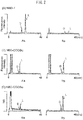
- the chromatogram obtained by fluorescence detection is shown in FIG. 2B . Further, instead of fluorescence detection, detection was performed based on mass analysis. The chromatogram obtained by detection based on mass analysis is shown in FIG. 2C .
- HPLC analysis was performed on the obtained amino acid derivatives in the same way as in Example 3.
- the chromatogram obtained by fluorescence detection is shown in FIG. 2A .
- Comparative Example 2 shows the results of derivatizing alanine and tryptophan using conventional NBD-F then performing chiral HPLC on each of the derivatives.
- alanine separate peaks can be observed for D-alanine and L-alanine.
- tryptophan the peaks for D-tryptophan and L-tryptophan were extremely small and could not be quantified ( FIG. 2 ).
- quenching occurs as a result of photoinduced electron transfer occurring between the NBD ring and the indole ring of tryptophan.
- Example 3 shows the results of derivatizing alanine and tryptophan using NBD-COOSu then performing chiral HPLC on each derivative.
- NBD-COOSu alanine and tryptophan
- Example 3 shows the results of derivatizing alanine and tryptophan using NBD-COOSu then performing chiral HPLC on each derivative.
- both alanine and tryptophan separate peaks could be observed for the D form and L form (2B).
- the peaks matched the detection results of mass analysis.
Landscapes
- Chemical & Material Sciences (AREA)
- Organic Chemistry (AREA)
- Physics & Mathematics (AREA)
- Health & Medical Sciences (AREA)
- Life Sciences & Earth Sciences (AREA)
- Biochemistry (AREA)
- General Health & Medical Sciences (AREA)
- Analytical Chemistry (AREA)
- General Physics & Mathematics (AREA)
- Immunology (AREA)
- Pathology (AREA)
- Spectroscopy & Molecular Physics (AREA)
- Chemical Kinetics & Catalysis (AREA)
- Biophysics (AREA)
- Genetics & Genomics (AREA)
- Medicinal Chemistry (AREA)
- Molecular Biology (AREA)
- Proteomics, Peptides & Aminoacids (AREA)
- Investigating Or Analysing Materials By The Use Of Chemical Reactions (AREA)
- Investigating Or Analysing Biological Materials (AREA)
- Investigating, Analyzing Materials By Fluorescence Or Luminescence (AREA)
- Organic Low-Molecular-Weight Compounds And Preparation Thereof (AREA)
- Heterocyclic Carbon Compounds Containing A Hetero Ring Having Nitrogen And Oxygen As The Only Ring Hetero Atoms (AREA)
- Plural Heterocyclic Compounds (AREA)
Abstract
Description
- The present invention relates to a novel compound, a regent for fluorescence derivatization comprising the novel compound, a method for optically resolving fluorescently derivatized amino acids obtained by reacting the novel compound with amino acids, and the fluorescently derivatized amino acids obtained by reacting the novel compound with amino acids.
- Conventionally, amino acids present in vivo in higher animals were thought to be only L-amino acids. However, recently, due to advances in analytical techniques, it has become clear that D-amino acids are also present in vivo in higher animals, particularly in mammals including humans, and are involved in physiological functions such as memory and learning as well as hormone production and secretion. Furthermore, some of the D-amino acids present in various tissues and biological samples have been shown to fluctuate depending on the condition of the body, for example, due to disorders such as kidney failure. Thus, the use thereof as health and disease markers are anticipated (Patent Literature 1).
- For the purpose of elucidating the physiological roles of amino acids in vivo, advances are being made in developmental research into analytical techniques that accurately separate and quantify amino acids (e.g. Non-Patent Literature 1 to 3) or D-amino acids and L-amino acids (e.g. refer to non-patent document 4) using high-performance liquid chromatography (HPLC). Furthermore, a method for selectively analyzing all the amino acids constituting a protein comprising fluorescence derivatization using 4-fluoro-7-nitro-2,1,3-benzoxadiazole (NBD-F), which is a conventional labelling reagent for HPLC, combined with a two-dimensional chiral HPLC has been developed (Non-Patent Literature 5). Furthermore, reagents for optical resolution that can optically resolve mixtures of optical isomers of amino acids more simply and sensitively have been developed (Patent Literature 2).
-
- [PTL 1]
WO2013/140785 - [PTL 2] Japanese Unexamined Patent Publication (Kokai) No.
2015-48332 -
- [NPL 1] K. Shimbo et al., Anal. Chem, 2009, 81, 5172-5179
- [NPL 2] K. Shimbo et al., Rapid Commun Mass Spectrom., 2009, 23, 1483-1492
- [NPL 3] S. A. Cohen et al., Anal. Biochem., 1993, 211,279-287
- [NPL 4] R. J. Reischl et al., J. Chromatogra. A., 2012, 1269, 262-269
- [NPL 5] T. Kimura et al., Scientific Reports, (2016), 6, 26137
- In a D-amino acid analysis technique using the conventional HPLC labelling reagent 4-fluoro-7-nitro-2,1,3-benzoxadiazole (NBD-F), a problem was discovered wherein quenching occurred in NBD-tryptophan produced by a reaction of tryptophan with the NBD-F reagent whereby the detection sensitivity decreased. Typical amino acid analysis systems have a measurement range of 3 to 4 orders of magnitude. However, the measurement values of NBD-tryptophan is not within such a range due to quenching, making simultaneous analysis with at least 40 other chiral amino acids difficult and as such the reagent could not be used in a metabolomic technique to comprehensively analyze metabolites.
- In order to solve the aforementioned problem, a compound which does not cause quenching at the time of derivatizing amino acids was screened. Then, it was discovered that by derivatizing tryptophan using the compound according to the following formula, the obtained tryptophan derivative did not exhibit quenching and the D-amino acid and the L-amino acid of the tryptophan derivative could be separated by chiral column chromatography, and thus the present invention was achieved.

- Specifically, the present invention relates to the following:
- [1] A compound according to the following formula:

- [2] A fluorescence derivatization reagent comprising a compound according to the following formula:

- [3] A method of analyzing an amino group-containing compound in a sample comprising:
- reacting the sample comprising the amino group-containing compound with a compound according to the following formula:

- subjecting a reaction product to chromatography.
- reacting the sample comprising the amino group-containing compound with a compound according to the following formula:
- [4] The method according to [3] wherein the method of analysis is a method of optically resolving optical isomers and the chromatography is chiral chromatography.
- [5] The method according to [3] and [4] wherein the amino group-containing compound is an amino acid.
- [6] A method for producing a fluorescent amino acid derivative comprising reacting an amino acid with a compound according to the following formula:

- [7] A compound according to the following formula:

- According to the present invention, a compound for fluorescence derivatization used in optical resolution is provided that can suppress a decrease in detection sensitivity due to quenching.
-
- [
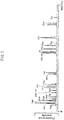
FIG. 1 ] is a chromatogram obtained by subjecting a sample comprising proteinogenic amino acids to fluorescence derivatization with NBD-F and then to HPLC analysis. - [
FIG. 2 ] shows chromatograms obtained by derivatizing a sample containing D-alanine and L-alanine, and D-tryptophan and L-tryptophan with (A) NBD-F or (B) and (C) NBD-COOSu, and then subjecting them to chiral HPLC analysis. Chiral HPLC separated products are measured by fluorescence analysis in (A) and (B), while the separated products of chiral HPLC are measured by mass analysis in in (C). - The inventors of the present invention newly produced the compound (2,5-dioxopyrrolidin-1-yl 2-[N-(4-nitrobenzo [c] [1,2,5] oxadiazol-7-yl)-N-methylamino] acetate (NBD-COOSu)) as represented by the following formula. Accordingly, one embodiment of the present invention relates to the compound according to the following formula:

- This compound can be produced by any method and may, for example, be produced based on the following scheme 1 and scheme 2.

- The compound of the present invention emits fluorescence based on nitrobenzoxadiazole (NBD) and reacts with a compound having an amino group based on the reactivity of a succinimidyl group to form a fluorescent derivative. The compound of the present invention can react with any compound having an amino group, for example, an amino acid. Specifically, amino acid fluorescent derivatives are produced based on, for example, the following scheme. Accordingly, another embodiment of the present invention relates to a reagent for fluorescence derivatization comprising 2,5-dioxopyrrolidin-1-yl 2-[N-(4-nitrobenzo [c] [1,2,5] oxadiazol-7-yl) -N-methylamino] acetate (NBD-COOSu). As will be described later, the D-amino acid can be separated from the L-amino acid by subjecting amino acids which are fluorescently derivatized with a fluorescence derivatization reagent to chiral chromatography. Thus, the fluorescence derivatization reagent of the present invention can be referred to as an optical resolution reagent.

- In another embodiment, the present invention relates to a method for producing an amino acid fluorescence derivative comprising a step of reacting the compound of the present invention with an amino acid. Further, the present invention also relates to a fluorescent derivative of an amino acid produced by the production method, namely, a fluorescent amino acid derivative having the following formula:

- In the present invention, R represents any amino acid side chain and may be a side chain of a proteinogenic amino acid. Furthermore, from the standpoint of optical resolution, any proteinogenic amino acid side chains excluding the glycine side chain (-H) are suitable. Typical examples thereof include the alanine side chain (-CH3) and a tryptophan side chain according to the following formula.

- These fluorescent amino acid derivatives can emit fluorescence which arises from the NBD part and are characterized in that fluorescence quenching that can arise due to the structure of some amino acid side chains does not occur. Furthermore, these fluorescent amino acid derivatives retain the chirality of the original amino acid and are thus also characterized in that the D-amino acids and L-amino acids can be separated based on the chirality of the original amino acids by subjecting the fluorescent amino acid derivatives to chiral chromatography.
- When derivatization was carried out using conventional NBD-F, the tryptophan derivative exhibited quenching (
FIG. 1 andFIG. 2A ). Thus, tryptophan derivatives that do not exhibit quenching are particularly useful for the comprehensive analysis of D-amino acids. It is clear from the examples of the present invention that the tryptophan derivative from the aforementioned amino acid derivatives does not exhibit quenching (FIG. 2B ). Although it is not intended to be bound by theory, quenching herein refers to the loss of fluorescence due to a structure in a compound, which is in adjacent to the structure having fluorescence. - By performing optical resolution chromatography on fluorescent derivatives of amino acids which is obtained by reacting the compound according to the present invention with compounds that have optical isomers, for example, amino acids (D-amino acid + L-amino acids), it make it possible to separate and analyze the fluorescent derivatives based on the original optical isomer. Thus, yet another embodiment of the present invention relates to a reagent for optical resolution comprising the compound of the present invention, and may relate to a kit or system for optical resolution and/or fluorescence derivatization comprising a reagent for optical resolution and/or fluorescence derivatization, and an optical resolution column.
- In another embodiment of the present invention, the present invention relates to a method for analyzing an amino group-containing compound in a sample. The method specifically comprises:
- reacting a sample comprising an amino group-containing compound with a compound according to the following formula:
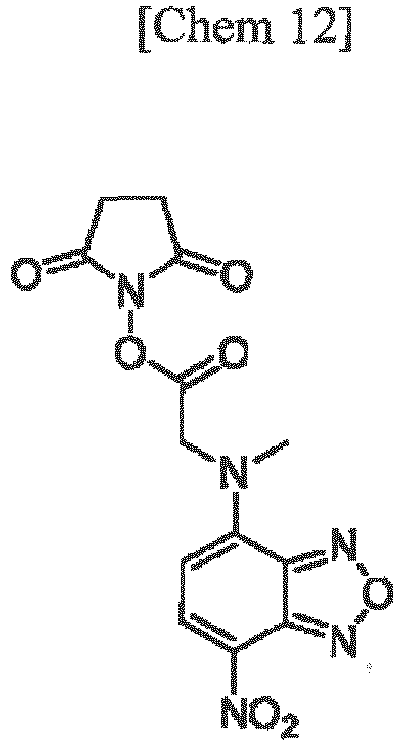
- subjecting the reaction product to chromatography. The analysis method according to the present invention is preferably an optical resolution method for separating especially optical isomers. In such cases, chiral chromatography is performed as the chromatography. Any compounds having an amino group, for example amino acids, can be used. Amino acids, particularly optical isomers of proteinogenic amino acids, namely D-amino acids and L-amino acids can be separated and analyzed.
- In the step of reacting a sample comprising an amino group-containing compound with the compound of the present invention, the sample comprising an amino group-containing compound is mixed in a solution containing the compound of the present invention and the reaction can be performed while heating if necessary. This reaction is preferably performed in the dark in order to avoid fluorescence fading. An appropriate solvent can be optionally used, for example, water, methanol, ethanol, acetonitrile, etc. may be used.
- The sample comprising an amino group-containing compound may be any of, for example, biological samples, environmental samples, experimental samples, and industrial samples (food samples, pharmaceutical samples, cosmetic samples). Biological samples may include: body fluid, such as blood, saliva, tears, or lymph; tissue samples such as cells or organs; and excreta samples such as urine and feces. These samples may be directly reacted with the compound of the present invention but are preferably purified appropriately according to the type of sample. Further, purification can be performed after the reaction step. The method of purifying the sample can be performed by selecting filtering, deproteinization, solvent extraction, ion exchange, solid phase extraction, and the like or by combining thereof, according to the type of sample.
- In the aforementioned reaction step, the amino group-containing compound derivatized by reacting with the compound of the present invention is subjected to a chromatography equipped with an optical resolution column. The type of chromatography is preferably HPLC. Before subjecting a compound to the chromatography equipped with the optical resolution column, pre-chromatography using a different column system may be carried out. For the optical resolution column, any column can be selected that separates D-amino acids and L-amino acids derivatized by the compound of the present invention. The optical resolution column comprises a solid phase consisting of a compound comprising just one of the optical isomers. For example, glycine derivatives, leucine derivatives, and quinine derivatives may be used. The amino acid derivatives separated into D-amino acids and L-amino acids by chromatography can be analyzed by detecting the fluorescence thereof. The detection of fluorescence can be carried out by a detector included in the chromatography system. The detector irradiates the compound with light at the excitation wavelength (470 nm) which excites NBD and detects fluorescence derived from excited NBD (fluorescence wavelength of 530 nm) whereby derivatized amino acids can be analyzed.
- Proteinogenic amino acids refer to the 20 amino acids that constitute protein. The proteinogenic amino acids are alanine (Ala/A), arginine (Arg/R), asparagine (Asn/N), aspartic acid (Asp/D), cysteine (Cys/C), glutamic acid (Glu/E), glutamine (Gln/Q), glycine (Gly/G), histidine (His/H), isoleucine (Ile/I), leucine (Leu/L), lysine (Lys/K), methionine (Met/M), phenylalanine (Phe/F), proline (Pro/P), serine (Ser/S), threonine (Thr/T), tryptophan (Trp/W), tyrosine (Tyr/Y), and valine (Val/V). The optically isomeric D-amino acid and L-amino acid forms exist for these amino acids excluding glycine. Furthermore, threonine and isoleucine have allo forms. In the method of analyzing amino acids in a sample by optical resolution according to the present invention, the amino acids to be analyzed are preferably proteinogenic amino acids other than glycine, but other amino acids such as ornithine or citrulline may be analyzed.
-

- In a darkened room, N-methyl glycine (1.85 g, 20.8 mmol) was dissolved in a 0.52 M sodium bicarbonate aqueous solution (100 ml), and an acetonitrile solution (50 ml) of NBD-Cl (1.04 g, 5.23 mmol) was added thereto by dripping. The solution was stirred for 2 hours at room temperature then the acetonitrile was evaporated off under reduced pressure. The solution was made acidic by the addition of a 6 M aqueous hydrochloric acid solution (14 ml) then stirred for 30 minutes at room temperature. The precipitated solid was suction filtered, and dried under reduced pressure to obtain orange solid (1.35 g, quant).
1H NMR (400 MHz, DMSO-d6) δ 8.54 (d, J = 9.0 Hz, 1H), 6.47 (d, J = 9.2 Hz, 1H), 4.91 (s, 2H), 3.47 (s, 3H). -

- In a darkened room, the NBD-COOH (236 mg, 0.935 mmol) prepared in Example 1 was dissolved in methylene chloride (2 ml) and oxalyl chloride (1.1 ml) was added to the solution by dripping. N,N-dimethylformamide (5 µl) was added to the solution then stirred for 1 hour at room temperature. Thereafter, the solvent was evaporated off under reduced pressure and vacuum drying was carried out. The obtained residue was dissolved in methylene chloride (1 ml) and was dripped into a solution of methylene chloride (1 ml) in which N-hydroxysuccinimide (115.2 mg, 1.00 mmol) and N-methyl morpholine (0.1 ml) were dissolved. After stirring for one day, methylene chloride (50 ml) was added, and the solution was washed with water (20 ml) twice, with a saturated aqueous sodium bicarbonate solution (20 ml) twice, and with water (20 ml) once again and dried on sodium sulfate. After the sodium sulfate was filtered off, the solvent was evaporated off under reduced pressure to obtain an orange powder (206 mg, yield 63.2%).
1H NMR (500 MHz, CD 2 Cl 2) δ 8.50 (d, J = 8.7 Hz, 1 H), 6.32 (d, J = 8.8 Hz, 1H), 5.26 (s, 2H), 3.52 (s, 3H), 2. 84 (s, 4H). -


- A 400 mM borate buffer (pH 8.0) was added to an aqueous tryptophan solution (10 µl) comprising both 20 pM of D-tryptophan and 80 pM L-tryptophan and an aqueous alanine solution (10 µl) comprising both 0.5 pM of D-alanine and 2 pM of L-alanine and a 40 mM NBD-COOSu acetonitrile solution (5 µl) was further added thereto and reacted at 60 °C for two minutes. Next, a 0.2% aqueous trifluoroacetic acid solution (75 µl) was added, the reaction was haltedto obtain amino acid derivatives (NBD-CO-Trp and NBD-CO-Ala).
- HPLC analysis was performed on the amino acid derivatives obtained in Example 2. The column used for the HPLC analysis was an original Pirkle type column (
JP Pat. No. 5977765 FIG. 2B . Further, instead of fluorescence detection, detection was performed based on mass analysis. The chromatogram obtained by detection based on mass analysis is shown inFIG. 2C . - 10 µl of a 400 mM borate buffer solution (pH 8.0) was added to standard amino acid samples comprising proteinogenic amino acids including allo forms thereof and a 40 mM NBD-F solution (5 µl) was further added thereto and reacted at 60 °C for two minutes. Next 0.2% aqueous trifluoroacetic acid solution (75 µl) was added, the reaction was halted, and amino acid derivatives were obtained. HPLC was performed on the obtained amino acid derivatives with HPLC apparatus comprising a reverse phase column (monolithic ODS column, 0.53 mm i.d. × 1000 mm manufactured by Shiseido) set to 45 °C. Gradient elution was performed using an aqueous mobile phase comprising 5 to 35% MeCN, 0 to 20% THF, and 0.05% TFA at a flow rate of 25 µl/min. A chromatogram obtained by fluorescence detection is shown in
FIG. 1 . The intensity of tryptophan was extremely low showing that quantification was difficult. - 10 µl of a 400 mM borate buffer solution (pH 8.0) was added to an aqueous tryptophan solution (10 µl) comprising both 20 pM of D-tryptophan and 80 pM L-tryptophan and an aqueous alanine solution (10 µl) comprising both 0.5 pM of D-alanine and 2 pM of L-alanine and a 40 mM NBD-F solution (5 µl) was further added thereto and reacted at 60 °C for two minutes. Next, a 0.2% aqueous trifluoroacetic acid solution (75 µl) was added, the reaction was halted, and amino acid derivatives (NBD-Trp and NBD-Ala) were obtained.
- HPLC analysis was performed on the obtained amino acid derivatives in the same way as in Example 3. The chromatogram obtained by fluorescence detection is shown in
FIG. 2A . - Comparative Example 2 shows the results of derivatizing alanine and tryptophan using conventional NBD-F then performing chiral HPLC on each of the derivatives. In the case of alanine, separate peaks can be observed for D-alanine and L-alanine. However, in the case of tryptophan, the peaks for D-tryptophan and L-tryptophan were extremely small and could not be quantified (
FIG. 2 ). Although not intended to be limited by theory, it is believed that quenching occurs as a result of photoinduced electron transfer occurring between the NBD ring and the indole ring of tryptophan. Meanwhile, Example 3 shows the results of derivatizing alanine and tryptophan using NBD-COOSu then performing chiral HPLC on each derivative. In the case of both alanine and tryptophan, separate peaks could be observed for the D form and L form (2B). Moreover, the peaks matched the detection results of mass analysis. These results show that amino acid derivatization using NBD-COOSu is effective for separation and detection of D and L forms of amino acids.
Claims (7)
- A compound according to the following formula:

- A fluorescence derivatization reagent comprising a compound according to the following formula:

- A method for analyzing an amino group-containing compound in a sample comprising:reacting the sample comprising the amino group-containing compound with a compound according to the following compound:
 subjecting a reaction product to chromatography.
 - The method according to claim 3, wherein the method of analysis is a method of optically resolving optical isomers and the chromatography is chiral chromatography.
- The method according to claims 3 or 4 wherein the amino group-containing compound is an amino acid.
- A method for producing an amino acid derivative comprising:
reacting an amino acid with a compound according to the following formula:
- A compound according to the following formula:

Applications Claiming Priority (2)
| Application Number | Priority Date | Filing Date | Title |
|---|---|---|---|
| JP2017041128 | 2017-03-03 | ||
| PCT/JP2018/008154 WO2018159841A1 (en) | 2017-03-03 | 2018-03-02 | Novel compound, fluorescence derivatization reagent including said novel compound, method for optically resolving optical isomer of amino acid in which said novel compound is used, and fluorescence derivatized amino acid |
Publications (2)
| Publication Number | Publication Date |
|---|---|
| EP3590937A1 true EP3590937A1 (en) | 2020-01-08 |
| EP3590937A4 EP3590937A4 (en) | 2021-03-10 |
Family
ID=63370170
Family Applications (1)
| Application Number | Title | Priority Date | Filing Date |
|---|---|---|---|
| EP18760371.7A Withdrawn EP3590937A4 (en) | 2017-03-03 | 2018-03-02 | Novel compound, fluorescence derivatization reagent including said novel compound, method for optically resolving optical isomer of amino acid in which said novel compound is used, and fluorescence derivatized amino acid |
Country Status (7)
| Country | Link |
|---|---|
| US (1) | US20200002322A1 (en) |
| EP (1) | EP3590937A4 (en) |
| JP (1) | JPWO2018159841A1 (en) |
| CN (1) | CN110366552A (en) |
| AU (1) | AU2018228242A1 (en) |
| SG (1) | SG11201908102TA (en) |
| WO (1) | WO2018159841A1 (en) |
Families Citing this family (3)
| Publication number | Priority date | Publication date | Assignee | Title |
|---|---|---|---|---|
| CN111848544B (en) * | 2020-08-03 | 2022-03-04 | 首都医科大学 | Amino acid derivative capable of being traced by fluorescence and preparation method and application thereof |
| JP7266626B2 (en) * | 2021-03-16 | 2023-04-28 | 花王株式会社 | Method for separating and analyzing chiral amino acids |
| CN114656420B (en) * | 2022-03-05 | 2023-03-21 | 北京理工大学 | Application of benzopyrene derivative fluorescent probe in detection of biological thiol |
Family Cites Families (5)
| Publication number | Priority date | Publication date | Assignee | Title |
|---|---|---|---|---|
| JPH04164075A (en) * | 1990-10-25 | 1992-06-09 | Seiko Instr Inc | Fluorescent benzofurazane derivative and production thereof |
| CA2086267A1 (en) * | 1992-12-24 | 1994-06-25 | Argyrios Margaritis | Cyclosporin derivatives and derivative conjugates |
| EP2811295B1 (en) | 2012-01-31 | 2019-03-13 | Shiseido Company, Ltd. | Separating agent and method for manufacturing same |
| CN110133300B (en) | 2012-03-18 | 2022-02-25 | 镜株式会社 | Disease sample analysis device, disease sample analysis system, and disease sample analysis method |
| JP6226318B2 (en) | 2013-09-02 | 2017-11-08 | 株式会社 資生堂 | Optical resolution compound, optical resolution reagent, optical resolution method and optical isomer |
-
2018
- 2018-03-02 US US16/490,713 patent/US20200002322A1/en not_active Abandoned
- 2018-03-02 WO PCT/JP2018/008154 patent/WO2018159841A1/en not_active Ceased
- 2018-03-02 JP JP2019503161A patent/JPWO2018159841A1/en active Pending
- 2018-03-02 AU AU2018228242A patent/AU2018228242A1/en not_active Abandoned
- 2018-03-02 EP EP18760371.7A patent/EP3590937A4/en not_active Withdrawn
- 2018-03-02 SG SG11201908102T patent/SG11201908102TA/en unknown
- 2018-03-02 CN CN201880012088.5A patent/CN110366552A/en active Pending
Also Published As
| Publication number | Publication date |
|---|---|
| AU2018228242A1 (en) | 2019-10-10 |
| EP3590937A4 (en) | 2021-03-10 |
| CN110366552A (en) | 2019-10-22 |
| SG11201908102TA (en) | 2019-10-30 |
| US20200002322A1 (en) | 2020-01-02 |
| WO2018159841A1 (en) | 2018-09-07 |
| JPWO2018159841A1 (en) | 2019-12-26 |
Similar Documents
| Publication | Publication Date | Title |
|---|---|---|
| Zhang et al. | A low dose, highly selective and sensitive colorimetric and fluorescent probe for biothiols and its application in bioimaging | |
| Shi et al. | A colorimetric and fluorescent probe for thiols based on 1, 8-naphthalimide and its application for bioimaging | |
| US20070281361A1 (en) | Human plasma free amino acids profile using pre-column derivatizing reagent- 1-naphthylisocyanate and high performance liquid chromatographic method | |
| Cao et al. | 6-Oxy-(N-succinimidyl acetate)-9-(2′-methoxycarbonyl) fluorescein as a new fluorescent labeling reagent for aliphatic amines in environmental and food samples using high-performance liquid chromatography | |
| Sherwood et al. | Measurement of plasma and urine amino acids by high-performance liquid chromatography with electrochemical detection using phenylisothiocyanate derivatization | |
| CN103351335A (en) | Synthesis of fluorescence enhanced fluorescent molecular probe for detecting mercapto-containing amino acids, and application of probe | |
| CN110092773B (en) | A kind of xanthene derivative and its preparation method and application | |
| US20200002322A1 (en) | Novel compound, fluorescence derivatization reagent including said novel compound, method for optically resolving optical isomer of amino acid in which said novel compound is used, and fluorescence derivatized amino acid | |
| Spurlin et al. | A ChemiluminesClent precolumn labelling reagent for high-performance liquid chromatography of amino acids | |
| Smolkova et al. | Synthesis and application of BODIPY-based fluorescent labeling tag for oligosaccharide and N-linked glycan analysis by high-performance liquid chromatography with fluorescence detection | |
| JPWO2005056146A1 (en) | Detection / separation / identification method of expressed trace protein / peptide | |
| JP4085443B2 (en) | Amino acid analysis reagent and amino acid analysis method | |
| CN108456515B (en) | Novel fluorescent probe with asymmetric hemicyanine structure and preparation method and application thereof | |
| You et al. | Study of a new derivatizing reagent that improves the analysis of amino acids by HPLC with fluorescence detection: application to hydrolyzed rape bee pollen | |
| Toyo'oka | Development of Benzofurazan− bearing Fluorescence Labeling Reagents for separation and detection in high− performance liquid chromatography | |
| Gatti et al. | Phanquinone: a useful fluorescent pre-chromatographic derivatization reagent for liquid chromatographic analyses of amino acid dosage forms | |
| CN110885312B (en) | A kind of cysteine fluorescent probe targeting Golgi apparatus, preparation method and application | |
| JP3015468B2 (en) | N-terminal protein sequencing reagent and method for producing amino acid derivative | |
| Hess | A universal HPLC-MS method to determine the stereochemistry of common and unusual amino acids | |
| Wang et al. | Development and evaluation of a novel fluorescent chiral derivatization reagent DBD-SM-Pro: first observation of four chiral amino acids in human hair | |
| US20230126856A1 (en) | Reagents for rapid chiral labeling and analysis of amine containing enantiomers | |
| US9656948B2 (en) | Compound, optical resolution method, and derivative of an optical isomer of an amino acid | |
| JP5298390B2 (en) | Fluorosylated sialic acid derivative and analysis method thereof | |
| Varghese et al. | 3-Naphthyl-1-phenyl-5-(4-carboxyphenyl)-2-pyrazoline–a pyrazoline based heterocyclic dye as a fluorescent label for biomolecules containing an amino group and its evaluation using HPLC | |
| Prokai et al. | Selective chemoprecipitation to enrich nitropeptides from complex proteomes for mass-spectrometric analysis |
Legal Events
| Date | Code | Title | Description |
|---|---|---|---|
| STAA | Information on the status of an ep patent application or granted ep patent |
Free format text: STATUS: THE INTERNATIONAL PUBLICATION HAS BEEN MADE |
|
| PUAI | Public reference made under article 153(3) epc to a published international application that has entered the european phase |
Free format text: ORIGINAL CODE: 0009012 |
|
| STAA | Information on the status of an ep patent application or granted ep patent |
Free format text: STATUS: REQUEST FOR EXAMINATION WAS MADE |
|
| 17P | Request for examination filed |
Effective date: 20190912 |
|
| AK | Designated contracting states |
Kind code of ref document: A1 Designated state(s): AL AT BE BG CH CY CZ DE DK EE ES FI FR GB GR HR HU IE IS IT LI LT LU LV MC MK MT NL NO PL PT RO RS SE SI SK SM TR |
|
| AX | Request for extension of the european patent |
Extension state: BA ME |
|
| DAV | Request for validation of the european patent (deleted) | ||
| DAX | Request for extension of the european patent (deleted) | ||
| A4 | Supplementary search report drawn up and despatched |
Effective date: 20210208 |
|
| RIC1 | Information provided on ipc code assigned before grant |
Ipc: G01N 30/88 20060101ALI20210202BHEP Ipc: G01N 30/06 20060101ALI20210202BHEP Ipc: C09B 51/00 20060101ALI20210202BHEP Ipc: C07D 413/12 20060101AFI20210202BHEP Ipc: C07D 271/08 20060101ALI20210202BHEP |
|
| STAA | Information on the status of an ep patent application or granted ep patent |
Free format text: STATUS: THE APPLICATION IS DEEMED TO BE WITHDRAWN |
|
| 18D | Application deemed to be withdrawn |
Effective date: 20210908 |