EP3587597B1 - Method for diagnosing parkinson's disease through bacterial metagenome analysis - Google Patents
Method for diagnosing parkinson's disease through bacterial metagenome analysis Download PDFInfo
- Publication number
- EP3587597B1 EP3587597B1 EP18758093.1A EP18758093A EP3587597B1 EP 3587597 B1 EP3587597 B1 EP 3587597B1 EP 18758093 A EP18758093 A EP 18758093A EP 3587597 B1 EP3587597 B1 EP 3587597B1
- Authority
- EP
- European Patent Office
- Prior art keywords
- genus
- family
- order
- class
- phylum
- Prior art date
- Legal status (The legal status is an assumption and is not a legal conclusion. Google has not performed a legal analysis and makes no representation as to the accuracy of the status listed.)
- Active
Links
Images





Classifications
-
- C—CHEMISTRY; METALLURGY
- C12—BIOCHEMISTRY; BEER; SPIRITS; WINE; VINEGAR; MICROBIOLOGY; ENZYMOLOGY; MUTATION OR GENETIC ENGINEERING
- C12Q—MEASURING OR TESTING PROCESSES INVOLVING ENZYMES, NUCLEIC ACIDS OR MICROORGANISMS; COMPOSITIONS OR TEST PAPERS THEREFOR; PROCESSES OF PREPARING SUCH COMPOSITIONS; CONDITION-RESPONSIVE CONTROL IN MICROBIOLOGICAL OR ENZYMOLOGICAL PROCESSES
- C12Q1/00—Measuring or testing processes involving enzymes, nucleic acids or microorganisms; Compositions therefor; Processes of preparing such compositions
- C12Q1/68—Measuring or testing processes involving enzymes, nucleic acids or microorganisms; Compositions therefor; Processes of preparing such compositions involving nucleic acids
- C12Q1/6876—Nucleic acid products used in the analysis of nucleic acids, e.g. primers or probes
- C12Q1/6888—Nucleic acid products used in the analysis of nucleic acids, e.g. primers or probes for detection or identification of organisms
- C12Q1/6895—Nucleic acid products used in the analysis of nucleic acids, e.g. primers or probes for detection or identification of organisms for plants, fungi or algae
-
- C—CHEMISTRY; METALLURGY
- C12—BIOCHEMISTRY; BEER; SPIRITS; WINE; VINEGAR; MICROBIOLOGY; ENZYMOLOGY; MUTATION OR GENETIC ENGINEERING
- C12Q—MEASURING OR TESTING PROCESSES INVOLVING ENZYMES, NUCLEIC ACIDS OR MICROORGANISMS; COMPOSITIONS OR TEST PAPERS THEREFOR; PROCESSES OF PREPARING SUCH COMPOSITIONS; CONDITION-RESPONSIVE CONTROL IN MICROBIOLOGICAL OR ENZYMOLOGICAL PROCESSES
- C12Q1/00—Measuring or testing processes involving enzymes, nucleic acids or microorganisms; Compositions therefor; Processes of preparing such compositions
- C12Q1/68—Measuring or testing processes involving enzymes, nucleic acids or microorganisms; Compositions therefor; Processes of preparing such compositions involving nucleic acids
- C12Q1/6876—Nucleic acid products used in the analysis of nucleic acids, e.g. primers or probes
- C12Q1/6888—Nucleic acid products used in the analysis of nucleic acids, e.g. primers or probes for detection or identification of organisms
- C12Q1/689—Nucleic acid products used in the analysis of nucleic acids, e.g. primers or probes for detection or identification of organisms for bacteria
-
- C—CHEMISTRY; METALLURGY
- C12—BIOCHEMISTRY; BEER; SPIRITS; WINE; VINEGAR; MICROBIOLOGY; ENZYMOLOGY; MUTATION OR GENETIC ENGINEERING
- C12Q—MEASURING OR TESTING PROCESSES INVOLVING ENZYMES, NUCLEIC ACIDS OR MICROORGANISMS; COMPOSITIONS OR TEST PAPERS THEREFOR; PROCESSES OF PREPARING SUCH COMPOSITIONS; CONDITION-RESPONSIVE CONTROL IN MICROBIOLOGICAL OR ENZYMOLOGICAL PROCESSES
- C12Q1/00—Measuring or testing processes involving enzymes, nucleic acids or microorganisms; Compositions therefor; Processes of preparing such compositions
- C12Q1/68—Measuring or testing processes involving enzymes, nucleic acids or microorganisms; Compositions therefor; Processes of preparing such compositions involving nucleic acids
- C12Q1/6876—Nucleic acid products used in the analysis of nucleic acids, e.g. primers or probes
- C12Q1/6883—Nucleic acid products used in the analysis of nucleic acids, e.g. primers or probes for diseases caused by alterations of genetic material
-
- C—CHEMISTRY; METALLURGY
- C12—BIOCHEMISTRY; BEER; SPIRITS; WINE; VINEGAR; MICROBIOLOGY; ENZYMOLOGY; MUTATION OR GENETIC ENGINEERING
- C12Q—MEASURING OR TESTING PROCESSES INVOLVING ENZYMES, NUCLEIC ACIDS OR MICROORGANISMS; COMPOSITIONS OR TEST PAPERS THEREFOR; PROCESSES OF PREPARING SUCH COMPOSITIONS; CONDITION-RESPONSIVE CONTROL IN MICROBIOLOGICAL OR ENZYMOLOGICAL PROCESSES
- C12Q2531/00—Reactions of nucleic acids characterised by
- C12Q2531/10—Reactions of nucleic acids characterised by the purpose being amplify/increase the copy number of target nucleic acid
- C12Q2531/113—PCR
-
- C—CHEMISTRY; METALLURGY
- C12—BIOCHEMISTRY; BEER; SPIRITS; WINE; VINEGAR; MICROBIOLOGY; ENZYMOLOGY; MUTATION OR GENETIC ENGINEERING
- C12Q—MEASURING OR TESTING PROCESSES INVOLVING ENZYMES, NUCLEIC ACIDS OR MICROORGANISMS; COMPOSITIONS OR TEST PAPERS THEREFOR; PROCESSES OF PREPARING SUCH COMPOSITIONS; CONDITION-RESPONSIVE CONTROL IN MICROBIOLOGICAL OR ENZYMOLOGICAL PROCESSES
- C12Q2600/00—Oligonucleotides characterized by their use
- C12Q2600/158—Expression markers
Definitions
- the present invention relates to a method of diagnosing Parkinson's disease by analyzing an increase or decrease in content of extracellular vesicles derived from specific bacteria by bacterial metagenomic analysis using a subject-derived urine sample.
- Parkinson's disease is a progressive neurodegenerative disease characterized by Parkinsonian symptoms such as slow motion, tremors at rest, muscle stiffness, abnormal gait characteristics, and a bending posture.
- the disease occurs due to a decrease in stimulation of the motor cortex which results from imperfect dopamine production and action, mainly in the substantia nigra.
- Serious cognitive impairment and mild language impairment also occur and they are chronic and progressive. Parkinson's disease may also occur even when contracting Japanese encephalitis, brain syphilis, carbon dioxide poisoning, manganese poisoning, or Wilson's disease.
- the probability of developing the disease is one in 1,000, but incidence increases with age. In addition, movement disorders occur, making it uncomfortable to move.
- Parkinson's disease Unlike most other serious neurological or psychological disorders, Parkinson's disease has a relatively low hereditary nature. Most patients do not have relatives with Parkinson's disease. In a case in which one of the identical twins contracts the disease, the probability for the other person to contract the disease is not even 10%. This is, of course, clearly higher than a 0.1% probability that other people contract the disease, but is not so high. Incidence-related environmental factors include blockage of blood flowing to specific areas of the brain, long-term exposure to certain drugs and poisons, and history of being infected by encephalitis or other viruses.
- a microbiota is a microbial community that includes bacteria, archaea, and eukaryotes present in a given habitat.
- the intestinal microbiota is known to play a vital role in human's physiological phenomena and significantly affect human health and diseases through interactions with human cells.
- Bacteria coexisting in human bodies secrete nanometer-sized vesicles to exchange information about genes, proteins, and the like with other cells.
- the mucous membranes form a physical barrier membrane that does not allow particles with the size of 200 nm or more to pass therethrough, and thus bacteria symbiotically living in the mucous membranes are unable to pass therethrough, but bacteria-derived extracellular vesicles have a size of approximately 100 nm or less and thus relatively freely pass through the mucous membranes and are absorbed into the human body.
- Metagenomics also called environmental genomics, may be analytics for metagenomic data obtained from samples collected from the environment ( Korean Patent Publication No. 2011-0073049 ).
- the bacterial composition of human microbiota has been listed using a method based on 16s ribosomal RNA (16s rRNA) base sequences, and 16s rDNA base sequences, which are genes of 16s ribosomal RNA, are analyzed using a next generation sequencing (NGS) platform.
- NGS next generation sequencing
- NPJ Parkinson's Disease 3(1) DOI:10.1038/s41531-016-0002-0 discloses a model for PD pathogenesis in which the disorder originates in the intestine and progresses with inflammation as its underlying mechanism, and that fecal microbiota from PD patients appears deficient in anti-inflammatory microbes.
- Keshavarzia et al., (2015) Movement Disorders 30(10): 1351-1360 discloses altered gut microbiota present in PD patients.
- the inventors of the present invention extracted DNA from bacteria-derived extracellular vesicles present in urine, which is a subject-derived sample, and performed metagenomic analysis on the extracted DNA, and, as a result, identified bacteria-derived extracellular vesicles capable of acting as a causative factor of Parkinson's disease, and thus completed the present invention based on these findings.
- the present invention provides a method of diagnosing Parkinson's disease as defined in the appended set of claims
- the subject sample is urine.
- process (c) comprises comparing an increase or decrease in content of bacteria-derived extracellular vesicles of the subject sample with that of a normal individual-derived sample through sequencing of a product of the PCR, wherein said extracellular vesicles are derived from:
- Parkinson's disease may be diagnosed through metagenomic analysis of bacteria-derived extracellular vesicles using a human body-derived urine sample, and thus the onset of Parkinson's disease can be delayed or prevented through appropriate management by early diagnosis, and, even after Parkinson's disease occurs, early diagnosis for Parkinson's disease can be implemented, thereby lowering the incidence rate of Parkinson's disease and increasing therapeutic effects.
- patients diagnosed with Parkinson's disease are able to avoid exposure to causative factors predicted through metagenomic analysis, whereby the progression of Parkinson's disease is ameliorated, or recurrence thereof can be prevented.
- the present invention relates to a method of diagnosing Parkinson's disease through bacterial metagenomic analysis as defined in the appended set of claims.
- the inventors of the present invention extracted genes from bacteria-derived extracellular vesicles using a subject-derived urine sample, performed metagenomic analysis thereon, and identified bacteria-derived extracellular vesicles capable of acting as a causative factor of Parkinson's disease.
- Parkinson's disease diagnosis refers to determining whether a patient has a risk for Parkinson's disease, whether the risk for Parkinson's disease is relatively high, or whether Parkinson's disease has already occurred.
- the method of the present invention may be used to delay the onset of Parkinson's disease through special and appropriate care for a specific patient, which is a patient having a high risk for Parkinson's disease or prevent the onset of Parkinson's disease.
- the method may be clinically used to determine treatment by selecting the most appropriate treatment method through early diagnosis of Parkinson's disease.
- metagenome refers to the total of genomes including all viruses, bacteria, fungi, and the like in isolated regions such as soil, the intestines of animals, and the like, and is mainly used as a concept of genomes that explains identification of many microorganisms at once using a sequencer to analyze non-cultured microorganisms.
- a metagenome does not refer to a genome of one species, but refers to a mixture of genomes, including genomes of all species of an environmental unit. This term originates from the view that, when defining one species in a process in which biology is advanced into omics, various species as well as existing one species functionally interact with each other to form a complete species.
- bacterial metagenomic analysis is performed using bacteria-derived extracellular vesicles isolated from, for example, serum.
- bacteria-derived vesicles is a concept comprising extracellular vesicles derived from bacteria.
- the subject sample is urine.
- metagenomic analysis is performed on the bacteria-derived extracellular vesicles, and bacteria-derived extracellular vesicles capable of acting as a cause of the onset of Parkinson's disease were actually identified by analysis at phylum, class, order, family, and genus levels.
- Example 1 Analysis of In Vivo Absorption, Distribution, and Excretion Patterns of Intestinal Bacteria and Bacteria-Derived Extracellular Vesicles
- the bacteria were not systematically absorbed when administered, while the bacteria-derived EVs were systematically absorbed at 5 min after administration, and, at 3 h after administration, fluorescence was strongly observed in the bladder, from which it was confirmed that the EVs were excreted via the urinary system, and were present in the bodies up to 12 h after administration.
- urine was added to a 10 ml tube and centrifuged at 3,500 x g and 4 °C for 10 min to precipitate a suspension, and only a supernatant was collected, which was then placed in a new 10 ml tube.
- the collected supernatant was filtered using a 0.22 ⁇ m filter to remove bacteria and impurities, and then placed in centripreigugal filters (50 kD) and centrifuged at 1500 x g and 4 °C for 15 min to discard materials with a smaller size than 50 kD, and then concentrated to 10 ml.
- bacteria and impurities were removed therefrom using a 0.22 ⁇ m filter, and then the resulting concentrate was subjected to ultra-high speed centrifugation at 150,000 x g and 4 °C for 3 hours by using a Type 90ti rotor to remove a supernatant, and the agglomerated pellet was dissolved with phosphate-buffered saline (PBS), thereby obtaining vesicles.
- PBS phosphate-buffered saline
- DNA was extracted using the same method as that used in Example 2, and then PCR was performed thereon using 16S rDNA primers shown in Table 1 to amplify DNA, followed by sequencing (Illumina MiSeq sequencer).
- the results were output as standard flowgram format (SFF) files, and the SFF files were converted into sequence files (.fasta) and nucleotide quality score files using GS FLX software (v2.9), and then credit rating for reads was identified, and portions with a window (20 bps) average base call accuracy of less than 99% (Phred score ⁇ 20) were removed.
- SFF standard flowgram format
- EVs were isolated from urine samples of 39 Parkinson's disease patients and 76 normal individuals, the two groups matched in age and gender, and then metagenomic sequencing was performed thereon using the method of Example 3.
- metagenomic sequencing was performed thereon using the method of Example 3.
- a strain exhibiting a p value of less than 0.05 between two groups in a t-test and a difference of two-fold or more between two groups was selected, and then an area under curve (AUC), sensitivity, and specificity, which are diagnostic performance indexes, were calculated by logistic regression analysis.
- AUC area under curve
- a diagnostic model developed using bacteria belonging to the class Coriobacteriia , the class Gammaproteobacteria , the class Verrucomicrobiae , the class Actinobacteria , the class Alphaproteobacteria , the class Chloroplast , the class Saprospirae , the class Deltaproteobacteria , the class Epsilonproteobacteria , the class Ellin6529, the class Chloracidobacteria , the class Opitutae , the class Thermoleophilia , the class Synergistia , the class Gemmatimonadetes, the class Planctomycetia , the class Acidobacteriia , the class Solibacteres , the class Anaerolineae , the class Chloroflexi, the class Phycisphaerae , the class Synechococcophycidea
- a diagnostic model developed using bacteria belonging to the order RF39, the order Turicibacterales , the order Pseudomonadales , the order Coriobacteriales , the order Pasteurellales , the order Enterobacteriales , the order Verrucomicrobiales , the order Gemellales , the order Neisseriales , the order Saprospirales , the order Actinomycetales , the order Streptophyta , the order Rhizobiales , the order Rhodospirillales , the order Xanthomonadales , the order Myxococcales , the order Campylobacterales , the order Desulfovibrionales , the order Solirubrobacterales , the order Opitutales , the order RB41, the order Rickettsiales , the order Pirellulales , the order Synergistales , the order
- a diagnostic model developed using bacteria belonging to the genus Collinsella, the genus Adlercreutzia, the genus SMB53, the genus Proteus, the genus Exiguobacterium, the genus Enterococcus, the genus Acinetobacter, the genus Turicibacter, the genus Klebsiella, the genus Lautropia, the genus Akkermansia, the genus Parabacteroides, the genus Rhizobium, the genus Actinomyces, the genus Lactococcus, the genus Blautia, the genus Veillonella, the genus Pseudomonas, the genus Rothia, the genus Dorea, the genus Streptococcus, the genus Haemophilus, the genus Enhydrobacter, the genus Rhodococc
- a method of diagnosing Parkinson's disease diagnosis through bacterial metagenomic analysis can be used to diagnose Parkinson's disease by analyzing an increase or decrease in content of extracellular vesicles derived from specific bacteria through bacterial metagenomic analysis using a subject-derived urine sample.
- Extracellular vesicles secreted from microorganisms such as bacteria, archaea, and the like present in the environment are absorbed into the human body and distributed in the brain, and thus can directly affect inflammatory responses and brain functions, and since it is difficult to implement early diagnosis for Parkinson's disease, which is characterized by inflammation, before symptoms appear, efficient treatment is difficult.
- Parkinson's disease may be diagnosed through metagenomic analysis of bacteria-derived extracellular vesicles using a human body-derived urine sample, and thus the onset of Parkinson's disease can be delayed or prevented through appropriate management by early diagnosis, and, even after Parkinson's disease occurs, early diagnosis for Parkinson's disease can be implemented, thereby lowering the incidence rate of Parkinson's disease and increasing therapeutic effects.
- patients diagnosed with Parkinson's disease are able to avoid exposure to causative factors predicted through bacterial metagenomic analysis according to the present invention, whereby the progression of Parkinson's disease is ameliorated, or recurrence thereof can be prevented.
Landscapes
- Chemical & Material Sciences (AREA)
- Life Sciences & Earth Sciences (AREA)
- Proteomics, Peptides & Aminoacids (AREA)
- Organic Chemistry (AREA)
- Analytical Chemistry (AREA)
- Engineering & Computer Science (AREA)
- Health & Medical Sciences (AREA)
- Zoology (AREA)
- Wood Science & Technology (AREA)
- Biotechnology (AREA)
- Genetics & Genomics (AREA)
- Microbiology (AREA)
- Immunology (AREA)
- Molecular Biology (AREA)
- Biophysics (AREA)
- Physics & Mathematics (AREA)
- Biochemistry (AREA)
- Bioinformatics & Cheminformatics (AREA)
- General Engineering & Computer Science (AREA)
- General Health & Medical Sciences (AREA)
- Mycology (AREA)
- Botany (AREA)
- Pathology (AREA)
- Measuring Or Testing Involving Enzymes Or Micro-Organisms (AREA)
Description
- The present invention relates to a method of diagnosing Parkinson's disease by analyzing an increase or decrease in content of extracellular vesicles derived from specific bacteria by bacterial metagenomic analysis using a subject-derived urine sample.
- Parkinson's disease is a progressive neurodegenerative disease characterized by Parkinsonian symptoms such as slow motion, tremors at rest, muscle stiffness, abnormal gait characteristics, and a bending posture. The disease occurs due to a decrease in stimulation of the motor cortex which results from imperfect dopamine production and action, mainly in the substantia nigra. Serious cognitive impairment and mild language impairment also occur and they are chronic and progressive. Parkinson's disease may also occur even when contracting Japanese encephalitis, brain syphilis, carbon dioxide poisoning, manganese poisoning, or Wilson's disease. The probability of developing the disease is one in 1,000, but incidence increases with age. In addition, movement disorders occur, making it uncomfortable to move.
- Unlike most other serious neurological or psychological disorders, Parkinson's disease has a relatively low hereditary nature. Most patients do not have relatives with Parkinson's disease. In a case in which one of the identical twins contracts the disease, the probability for the other person to contract the disease is not even 10%. This is, of course, clearly higher than a 0.1% probability that other people contract the disease, but is not so high. Incidence-related environmental factors include blockage of blood flowing to specific areas of the brain, long-term exposure to certain drugs and poisons, and history of being infected by encephalitis or other viruses.
- Meanwhile, it is known that the number of microorganisms symbiotically living in the human body is 100 trillion which is 10 times the number of human cells, and the number of genes of microorganisms exceeds 100 times the number of human genes. A microbiota is a microbial community that includes bacteria, archaea, and eukaryotes present in a given habitat. The intestinal microbiota is known to play a vital role in human's physiological phenomena and significantly affect human health and diseases through interactions with human cells. Bacteria coexisting in human bodies secrete nanometer-sized vesicles to exchange information about genes, proteins, and the like with other cells. The mucous membranes form a physical barrier membrane that does not allow particles with the size of 200 nm or more to pass therethrough, and thus bacteria symbiotically living in the mucous membranes are unable to pass therethrough, but bacteria-derived extracellular vesicles have a size of approximately 100 nm or less and thus relatively freely pass through the mucous membranes and are absorbed into the human body.
- Metagenomics, also called environmental genomics, may be analytics for metagenomic data obtained from samples collected from the environment (
Korean Patent Publication No. 2011-0073049 - Houser et al., (2017) NPJ Parkinson's Disease 3(1) DOI:10.1038/s41531-016-0002-0 discloses a model for PD pathogenesis in which the disorder originates in the intestine and progresses with inflammation as its underlying mechanism, and that fecal microbiota from PD patients appears deficient in anti-inflammatory microbes.
- Muraca et al., (2015) "Gut Microbiota-derived Outer Membrane Vesicles: Under-recognized Major Players in Health and Disease?" discloses that gut microbiota-derived outer membrane vesicles contain DNA and can enter systemic circulation.
- Keshavarzia et al., (2015) Movement Disorders 30(10): 1351-1360 discloses altered gut microbiota present in PD patients.
- Hill-Burns et al, (2017) Movement Disorders 32(5): 739-749 discloses altered gut microbiota present in PD patients.
- To pre-diagnose causative factors of Parkinson's disease and a risk of developing the disease, the inventors of the present invention extracted DNA from bacteria-derived extracellular vesicles present in urine, which is a subject-derived sample, and performed metagenomic analysis on the extracted DNA, and, as a result, identified bacteria-derived extracellular vesicles capable of acting as a causative factor of Parkinson's disease, and thus completed the present invention based on these findings.
- The present invention provides a method of diagnosing Parkinson's disease as defined in the appended set of claims
- In the present invention, the subject sample is urine.
- In the present invention, process (c) comprises comparing an increase or decrease in content of bacteria-derived extracellular vesicles of the subject sample with that of a normal individual-derived sample through sequencing of a product of the PCR, wherein said extracellular vesicles are derived from:
- one or more bacteria selected from the group consisting of the phylum Proteobacteria, the phylum Cyanobacteria, the phylum Gemmatimonadetes, the phylum Chloroflexi, the phylum Synergistetes, the phylum Acidobacteria, the phylum Planctomycetes, the phylum Parvarchaeota, the phylum Chlorobi, and the phylum Thermotogae;
- one or more bacteria selected from the group consisting of the class Coriobacteriia, the class Gammaproteobacteria, the class Verrucomicrobiae, the class Actinobacteria, the class Alphaproteobacteria, the class Chloroplast, the class Saprospirae, the class Deltaproteobacteria, the class Epsilonproteobacteria, the class Ellin6529, the class Chloracidobacteria, the class Opitutae, the class Thermoleophilia, the class Synergistia, the class Gemmatimonadetes, the class Planctomycetia, the class Acidobacteriia, the class Solibacteres, the class Anaerolineae, the class Chloroflexi, the class Phycisphaerae, the class Synechococcophycideae, the class Acidimicrobiia, the class Acidobacteria-6, the class Spartobacteria, the class Pedosphaerae, the class Ktedonobacteria, and the class Dehalococcoidetes;
- one or more bacteria selected from the group consisting of the order Turicibacterales, the order Pseudomonadales, the order Coriobacteriales, the order Pasteurellales, the order Enterobacteriales, the order Verrucomicrobiales, the order Gemellales, the order Neisseriales, the order Saprospirales, the order Actinomycetales, the order Streptophyta, the order Rhizobiales, the order Rhodospirillales, the order Xanthomonadales, the order Myxococcales, the order Campylobacterales, the order Desulfovibrionales, the order Solirubrobacterales, the order Opitutales, the order Rickettsiales, the order Pirellulales, the order Synergistales, the order Planctomycetales, the order Acidobacteriales, the order Solibacterales, the order Gaiellales, the order Gemmatales, the order Acidimicrobiales, the order Chthoniobacterales, the order Thermoanaerobacterales, the order Pedosphaerales, the order Phycisphaerales, the order Sediment-1, the order Chlorophyta, the order Synechococcales, the order Roseiflexales, the order Ellin329, the order Anaerolineales, the order Ellin5290, the order Cryptophyta, and the order Thermotogales;
- one or more bacteria selected from the group consisting of the family Exiguobacteraceae, the family Enterococcaceae, the family Turicibacteraceae, the family Mogibacteriaceae, the family Moraxellaceae, the family Porphyromonadaceae, the family Burkholderiaceae, the family Actinomycetaceae, the family Coriobacteriaceae, the family Methylobacteriaceae, the family Streptococcaceae, the family Pseudomonadaceae, the family Pasteurellaceae, the family Veillonellaceae, the family Peptostreptococcaceae, the family Enterobacteriaceae, the family Verrucomicrobiaceae, the family Lachnospiraceae, the family Bradyrhizobiaceae, the family Rikenellaceae, the family Tissierellaceae, the family Bacteroidaceae, the family Chitinophagaceae, the family Corynebacteriaceae, the family Xanthomonadaceae, the family Rhizobiaceae, the family Propionibacteriaceae, the family Desulfobacteraceae, the family Barnesiellaceae, the family Comamonadaceae, the family mitochondria, the family Hyphomicrobiaceae, the family Alteromonadaceae, the family Sinobacteraceae, the family Pirellulaceae, the family Dethiosulfovibrionaceae, the family Acidobacteriaceae, the family Planctomycetaceae, the family Isosphaeraceae, the family Gaiellaceae, the family Koribacteraceae, the family Helicobacteraceae, the family Chthoniobacteraceae, the family Gemmataceae, the family Solibacteraceae, the family Pelagibacteraceae, the family Ellin515, the family Thermoanaerobacteraceae, the family Methanoregulaceae, the family Synechococcaceae, the family Desulfomicrobiaceae, the family Kouleothrixaceae, the family Alicyclobacillaceae, the family Myxococcaceae, the family Anaerolinaceae, and the family Desulfohalobiaceae;
- one or more bacteria selected from the group consisting of the genus Collinsella, the genus Adlercreutzia, the genus Exiguobacterium, the genus Enterococcus, the genus Acinetobacter, the genus Turicibacter, the genus Klebsiella, the genus Lautropia, the genus Akkermansia, the genus Parabacteroides, the genus Rhizobium, the genus Actinomyces, the genus Veillonella, the genus Pseudomonas, the genus Rothia, the genus Dorea, the genus Streptococcus, the genus Haemophilus, the genus Enhydrobacter, the genus Rhodococcus, the genus Coprococcus, the genus Oscillospira, the genus Ruminococcus, the genus Bacteroides, the genus Corynebacterium, the genus Weissella, the genus Propionibacterium, the genus Lysinibacillus, the genus Stenotrophomonas, the genus Arthrobacter, the genus Comamonas, the genus Marinobacter, the genus Clostridium, the genus Planctomyces, the genus Luteolibacter, the genus Delftia, the genus Agrobacterium, the genus Rhodoplanes, the genus Gemmata, the genus Coprobacillus, the genus Arcobacter, the genus Helicobacter, the genus Candidatus Solibacter, the genus Methanosarcina, the genus Thermacetogenium, the genus Synechococcus, the genus Desulfomicrobium, the genus Chthoniobacter, the genus Aminobacterium, the genus Gallicola, the genus Anaeromyxobacter, the genus Muricauda, and the genus Candidatus Koribacter,
- wherein the subject sample is urine.
- Extracellular vesicles secreted from microorganisms such as bacteria, archaea, and the like present in the environment are absorbed into the human body, and thus can directly affect the occurrence of inflammation, and since it is difficult to implement early diagnosis for Parkinson's disease, which is characterized by inflammatory responses, before symptoms appear, efficient treatment therefor is difficult. Thus, according to the present invention, Parkinson's disease may be diagnosed through metagenomic analysis of bacteria-derived extracellular vesicles using a human body-derived urine sample, and thus the onset of Parkinson's disease can be delayed or prevented through appropriate management by early diagnosis, and, even after Parkinson's disease occurs, early diagnosis for Parkinson's disease can be implemented, thereby lowering the incidence rate of Parkinson's disease and increasing therapeutic effects. In addition, patients diagnosed with Parkinson's disease are able to avoid exposure to causative factors predicted through metagenomic analysis, whereby the progression of Parkinson's disease is ameliorated, or recurrence thereof can be prevented.
-
-
FIG. 1A illustrates images showing the distribution pattern of bacteria and extracellular vesicles over time after intestinal bacteria and bacteria-derived extracellular vesicles (EVs) were orally administered to mice, andFIG. 1B illustrates images showing the distribution pattern of bacteria and EVs after being orally administered to mice and, at 12 hours, blood and various organs were extracted. -
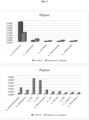
FIG. 2 illustrates distribution results of bacteria-derived EVs exhibiting significant diagnostic performance at a phylum level, after metagenomic analysis of bacteria-derived EVs isolated from Parkinson's disease patient-derived urine and normal individual-derived urine. -
FIG. 3 illustrates distribution results of bacteria-derived EVs exhibiting significant diagnostic performance at a class level, after metagenomic analysis of bacteria-derived EVs isolated from Parkinson's disease patient-derived urine and normal individual-derived urine. -
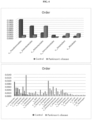
FIG. 4 illustrates distribution results of bacteria-derived EVs exhibiting significant diagnostic performance at an order level, after metagenomic analysis of bacteria-derived EVs isolated from Parkinson's disease patient-derived urine and normal individual-derived urine. -
FIG. 5 illustrates distribution results of bacteria-derived EVs exhibiting significant diagnostic performance at a family level, after metagenomic analysis of bacteria-derived EVs isolated from Parkinson's disease patient-derived urine and normal individual-derived urine. -
FIG. 6 illustrates distribution results of bacteria-derived EVs exhibiting significant diagnostic performance at a genus level, after metagenomic analysis of bacteria-derived EVs isolated from Parkinson's disease patient-derived urine and normal individual-derived urine. - The present invention relates to a method of diagnosing Parkinson's disease through bacterial metagenomic analysis as defined in the appended set of claims. The inventors of the present invention extracted genes from bacteria-derived extracellular vesicles using a subject-derived urine sample, performed metagenomic analysis thereon, and identified bacteria-derived extracellular vesicles capable of acting as a causative factor of Parkinson's disease.
- The term "Parkinson's disease diagnosis" as used herein refers to determining whether a patient has a risk for Parkinson's disease, whether the risk for Parkinson's disease is relatively high, or whether Parkinson's disease has already occurred. The method of the present invention may be used to delay the onset of Parkinson's disease through special and appropriate care for a specific patient, which is a patient having a high risk for Parkinson's disease or prevent the onset of Parkinson's disease. In addition, the method may be clinically used to determine treatment by selecting the most appropriate treatment method through early diagnosis of Parkinson's disease.
- The term "metagenome" as used herein refers to the total of genomes including all viruses, bacteria, fungi, and the like in isolated regions such as soil, the intestines of animals, and the like, and is mainly used as a concept of genomes that explains identification of many microorganisms at once using a sequencer to analyze non-cultured microorganisms. In particular, a metagenome does not refer to a genome of one species, but refers to a mixture of genomes, including genomes of all species of an environmental unit. This term originates from the view that, when defining one species in a process in which biology is advanced into omics, various species as well as existing one species functionally interact with each other to form a complete species. Technically, it is the subject of techniques that analyzes all DNAs and RNAs regardless of species using rapid sequencing to identify all species in one environment and verify interactions and metabolism. In the present invention, bacterial metagenomic analysis is performed using bacteria-derived extracellular vesicles isolated from, for example, serum.
- The term "bacteria-derived vesicles" as used herein is a concept comprising extracellular vesicles derived from bacteria.
- In the present invention, the subject sample is urine.
- In the present invention, metagenomic analysis is performed on the bacteria-derived extracellular vesicles, and bacteria-derived extracellular vesicles capable of acting as a cause of the onset of Parkinson's disease were actually identified by analysis at phylum, class, order, family, and genus levels.
- More particularly, in one embodiment of the present invention, as a result of performing bacterial metagenomic analysis on extracellular vesicles present in subject-derived urine samples at a phylum level, the content of extracellular vesicles derived from bacteria belonging to the phylum Proteobacteria, the phylum Cyanobacteria, the phylum Gemmatimonadetes, the phylum Chloroflexi, the phylum Synergistetes, the phylum Acidobacteria, the phylum Planctomycetes, the phylum Parvarchaeota, the phylum Chlorobi, and the phylum Thermotogae was significantly different between Parkinson's disease patients and normal individuals (see Example 4).
- More particularly, in one embodiment of the present invention, as a result of performing bacterial metagenomic analysis on extracellular vesicles present in subject-derived urine samples at a class level, the content of extracellular vesicles derived from bacteria belonging to the class Coriobacteriia, the class Gammaproteobacteria, the class Verrucomicrobiae, the class Actinobacteria, the class Alphaproteobacteria, the class Chloroplast, the class Saprospirae, the class Deltaproteobacteria, the class Epsilonproteobacteria, the class Ellin6529, the class Chloracidobacteria, the class Opitutae, the class Thermoleophilia, the class Synergistia, the class Gemmatimonadetes, the class Planctomycetia, the class Acidobacteriia, the class Solibacteres, the class Anaerolineae, the class Chloroflexi, the class Phycisphaerae, the class Synechococcophycideae, the class Acidimicrobiia, the class Acidobacteria-6, the class Spartobacteria, the class Pedosphaerae, the class Ktedonobacteria, and the class Dehalococcoidetes, was significantly different between Parkinson's disease patients and normal individuals (see Example 4).
- More particularly, in one embodiment of the present invention, as a result of performing bacterial metagenomic analysis on extracellular vesicles present in subject-derived urine samples at an order level, the content of extracellular vesicles derived from bacteria belonging to the order Turicibacterales, the order Pseudomonadales, the order Coriobacteriales, the order Pasteurellales, the order Enterobacteriales, the order Verrucomicrobiales, the order Gemellales, the order Neisseriales, the order Saprospirales, the order Actinomycetales, the order Streptophyta, the order Rhizobiales, the order Rhodospirillales, the order Xanthomonadales, the order Myxococcales, the order Campylobacterales, the order Desulfovibrionales, the order Solirubrobacterales, the order Opitutales, the order Rickettsiales, the order Pirellulales, the order Synergistales, the order Planctomycetales, the order Acidobacteriales, the order Solibacterales, the order Gaiellales, the order Gemmatales, the order Acidimicrobiales, the order Chthoniobacterales, the order Thermoanaerobacterales, the order Pedosphaerales, the order Phycisphaerales, the order Sediment-1, the order Chlorophyta, the order Synechococcales, the order Roseiflexales, the order Ellin329, the order Anaerolineales, the order Ellin5290, the order Cryptophyta, and the order Thermotogales was significantly different between Parkinson's disease patients and normal individuals (see Example 4).
- More particularly, in one embodiment of the present invention, as a result of performing bacterial metagenomic analysis on extracellular vesicles present in subject-derived urine samples at a family level, the content of extracellular vesicles derived from bacteria belonging to the family Exiguobacteraceae, the family Enterococcaceae, the family Turicibacteraceae, the family Mogibacteriaceae, the family Moraxellaceae, the family Porphyromonadaceae, the family Burkholderiaceae, the family Actinomycetaceae, the family Coriobacteriaceae, the family Methylobacteriaceae, the family Streptococcaceae, the family Pseudomonadaceae, the family Pasteurellaceae, the family Veillonellaceae, the family Peptostreptococcaceae, the family Enterobacteriaceae, the family Verrucomicrobiaceae, the family Lachnospiraceae, the family Bradyrhizobiaceae, the family Rikenellaceae, the family Tissierellaceae, the family Bacteroidaceae, the family Chitinophagaceae, the family Corynebacteriaceae, the family Xanthomonadaceae, the family Rhizobiaceae, the family Propionibacteriaceae, the family Desulfobacteraceae, the family Barnesiellaceae, the family Comamonadaceae, the family mitochondria, the family Hyphomicrobiaceae, the family Alteromonadaceae, the family Sinobacteraceae, the family Pirellulaceae, the family Dethiosulfovibrionaceae, the family Acidobacteriaceae, the family Planctomycetaceae, the family Isosphaeraceae, the family Gaiellaceae, the family Koribacteraceae, the family Helicobacteraceae, the family Chthoniobacteraceae, the family Gemmataceae, the family Solibacteraceae, the family Pelagibacteraceae, the family Ellin515, the family Thermoanaerobacteraceae, the family Methanoregulaceae, the family Synechococcaceae, the family Desulfomicrobiaceae, the family Kouleothrixaceae, the family Alicyclobacillaceae, the family Myxococcaceae, the family Anaerolinaceae, and the family Desulfohalobiaceae was significantly different between Parkinson's disease patients and normal individuals (see Example 4).
- More particularly, in one embodiment of the present invention, as a result of performing bacterial metagenomic analysis on extracellular vesicles present in subject-derived urine samples at a genus level, the content of extracellular vesicles derived from bacteria belonging to the genus Collinsella, the genus Adlercreutzia, the genus Exiguobacterium, the genus Enterococcus, the genus Acinetobacter, the genus Turicibacter, the genus Klebsiella, the genus Lautropia, the genus Akkermansia, the genus Parabacteroides, the genus Rhizobium, the genus Actinomyces, the genus Veillonella, the genus Pseudomonas, the genus Rothia, the genus Dorea, the genus Streptococcus, the genus Haemophilus, the genus Enhydrobacter, the genus Rhodococcus, the genus Coprococcus, the genus Oscillospira, the genus Ruminococcus, the genus Bacteroides, the genus Corynebacterium, the genus Weissella, the genus Propionibacterium, the genus Lysinibacillus, the genus Stenotrophomonas, the genus Arthrobacter, the genus Comamonas, the genus Marinobacter, the genus Clostridium, the genus Planctomyces, the genus Luteolibacter, the genus Delftia, the genus Agrobacterium, the genus Rhodoplanes, the genus Gemmata, the genus Coprobacillus, the genus Arcobacter, the genus Helicobacter, the genus Candidatus Solibacter, the genus Methanosarcina, the genus Thermacetogenium, the genus Synechococcus, the genus Desulfomicrobium, the genus Chthoniobacter, the genus Aminobacterium, the genus Gallicola, the genus Anaeromyxobacter, the genus Muricauda, and the genus Candidatus Koribacter was significantly different between Parkinson's disease patients and normal individuals (see Example 4).
- From the above-described example results, it was confirmed that the identified distribution variables of the bacterial-derived extracellular vesicles were able to be effectively used to predict the occurrence of Parkinson's disease.
- Hereinafter, the present invention will be described with reference to exemplary examples to aid in understanding of the present invention. However, these examples are provided only for illustrative purposes and are not intended to limit the scope of the present invention.
- To evaluate whether intestinal bacteria and bacteria-derived extracellular vesicles are systematically absorbed through the gastrointestinal tract, an experiment was conducted using the following method. More particularly, 50 µg of each of intestinal bacteria and the bacteria-derived extracellular vesicles (EVs), labeled with fluorescence, were orally administered to the gastrointestinal tracts of mice, and fluorescence was measured at 0 h, and after 5 min, 3 h, 6 h, and 12 h. As a result of observing the entire images of mice, as illustrated in
FIG. 1A , the bacteria were not systematically absorbed when administered, while the bacteria-derived EVs were systematically absorbed at 5 min after administration, and, at 3 h after administration, fluorescence was strongly observed in the bladder, from which it was confirmed that the EVs were excreted via the urinary system, and were present in the bodies up to 12 h after administration. - After intestinal bacteria and intestinal bacteria-derived extracellular vesicles were systematically absorbed, to evaluate a pattern of invasion of intestinal bacteria and the bacteria-derived EVs into various organs in the human body after being systematically absorbed, 50 µg of each of the bacteria and bacteria-derived EVs, labeled with fluorescence, were administered using the same method as that used above, and then, at 12 h after administration, blood, the heart, the lungs, the liver, the kidneys, the spleen, adipose tissue, and muscle were extracted from each mouse. As a result of observing fluorescence in the extracted tissues, as illustrated in
FIG. 1B , it was confirmed that the intestinal bacteria were not absorbed into each organ, while the bacteria-derived EVs were distributed in the blood, heart, lungs, liver, kidneys, spleen, adipose tissue, and muscle. - To isolate extracellular vesicles and extract DNA, from urine, first, urine was added to a 10 ml tube and centrifuged at 3,500 x g and 4 °C for 10 min to precipitate a suspension, and only a supernatant was collected, which was then placed in a new 10 ml tube. The collected supernatant was filtered using a 0.22 µm filter to remove bacteria and impurities, and then placed in centripreigugal filters (50 kD) and centrifuged at 1500 x g and 4 °C for 15 min to discard materials with a smaller size than 50 kD, and then concentrated to 10 ml. Once again, bacteria and impurities were removed therefrom using a 0.22 µm filter, and then the resulting concentrate was subjected to ultra-high speed centrifugation at 150,000 x g and 4 °C for 3 hours by using a Type 90ti rotor to remove a supernatant, and the agglomerated pellet was dissolved with phosphate-buffered saline (PBS), thereby obtaining vesicles.
- 100 µl of the extracellular vesicles isolated from the urine according to the above-described method was boiled at 100 °C to allow the internal DNA to come out of the lipid and then cooled on ice. Next, the resulting vesicles were centrifuged at 10,000 x g and 4 °C for 30 minutes to remove the remaining suspension, only the supernatant was collected, and then the amount of DNA extracted was quantified using a NanoDrop sprectrophotometer. In addition, to verify whether bacteria-derived DNA was present in the extracted DNA, PCR was performed using 16s rDNA primers shown in Table 1 below.
[Table 1] Primer Sequence SEQ ID NO. 16S rDNA 16S_V3_F 
1 16S_V4_R 
2 - DNA was extracted using the same method as that used in Example 2, and then PCR was performed thereon using 16S rDNA primers shown in Table 1 to amplify DNA, followed by sequencing (Illumina MiSeq sequencer). The results were output as standard flowgram format (SFF) files, and the SFF files were converted into sequence files (.fasta) and nucleotide quality score files using GS FLX software (v2.9), and then credit rating for reads was identified, and portions with a window (20 bps) average base call accuracy of less than 99% (Phred score <20) were removed. After removing the low-quality portions, only reads having a length of 300 bps or more were used (Sickle version 1.33), and, for operational taxonomy unit (OTU) analysis, clustering was performed using UCLUST and USEARCH according to sequence similarity. In particular, clustering was performed based on sequence similarity values of 94% for genus, 90% for family, 85% for order, 80% for class, and 75% for phylum, and phylum, class, order, family, and genus levels of each OTU were classified, and bacteria with a sequence similarity of 97% or more were analyzed (QIIME) using 16S DNA sequence databases (108,453 sequences) of BLASTN and GreenGenes.
- EVs were isolated from urine samples of 39 Parkinson's disease patients and 76 normal individuals, the two groups matched in age and gender, and then metagenomic sequencing was performed thereon using the method of Example 3. For the development of a diagnostic model, first, a strain exhibiting a p value of less than 0.05 between two groups in a t-test and a difference of two-fold or more between two groups was selected, and then an area under curve (AUC), sensitivity, and specificity, which are diagnostic performance indexes, were calculated by logistic regression analysis.
- As a result of analyzing bacteria-derived EVs in urine at a phylum level, a diagnostic model developed using bacteria belonging to the phylum Proteobacteria, the phylum Cyanobacteria, the phylum Gemmatimonadetes, the phylum Chloroflexi, the phylum Synergistetes, the phylum Acidobacteria, the phylum Planctomycetes, the phylum OD1, the phylum WS3, the phylum Parvarchaeota, the phylum OP1, the phylum Chlorobi, the phylum OP9, the phylum Hyd24-12, and the phylum Thermotogae as a biomarker exhibited significant diagnostic performance for Parkinson's disease (see Table 2 and
FIG. 2 ).[Table 2] Control Parkinson's disease t-test Taxon Mean SD Mean SD p-value Ratio AUC Sensiti vity Specifi city p_Proteobacteria 0.3993 0.1837 0.1836 0.0974 0.0000 0.46 0.95 0.86 0.92 p_Cyanobacteria 0.0191 0.0207 0.0486 0.0184 0.0000 2.55 0.87 0.86 0.54 p_Gemmatimona detes 0.0003 0.0010 0.0022 0.0021 0.0000 8.03 0.81 0.93 0.64 p_Chloroflexi 0.0010 0.0030 0.0116 0.0052 0.0000 11.79 0.95 0.95 0.87 p_Synergistetes 0.0001 0.0003 0.0014 0.0018 0.0001 15.89 0.81 0.96 0.49 p_Acidobacteria 0.0005 0.0012 0.0119 0.0049 0.0000 25.85 1.00 0.97 0.95 p_Planctomycete s 0.0006 0.0019 0.0222 0.0094 0.0000 37.99 1.00 0.97 0.92 p_OD1 0.0000 0.0000 0.0053 0.0043 0.0000 1219.9 0 0.97 0.99 0.85 p_WS3 0.0000 0.0000 0.0046 0.0027 0.0000 1.00 1.00 1.00 p_[Parvarchaeota ] 0.0000 0.0000 0.0014 0.0025 0.0000 0.95 1.00 0.85 p_OP1 0.0000 0.0000 0.0008 0.0014 0.0000 0.80 1.00 0.51 p_Chlorobi 0.0000 0.0000 0.0009 0.0012 0.0000 0.79 1.00 0.54 p_OP9 0.0000 0.0000 0.0005 0.0009 0.0000 0.76 1.00 0.49 p_Hyd24-12 0.0000 0.0000 0.0006 0.0012 0.0000 0.75 1.00 0.44 p_Thermotogae 0.0000 0.0000 0.0005 0.0013 0.0005 0.62 1.00 0.21 - As a result of analyzing bacteria-derived EVs in urine at a class level, a diagnostic model developed using bacteria belonging to the class Coriobacteriia, the class Gammaproteobacteria, the class Verrucomicrobiae, the class Actinobacteria, the class Alphaproteobacteria, the class Chloroplast, the class Saprospirae, the class Deltaproteobacteria, the class Epsilonproteobacteria, the class Ellin6529, the class Chloracidobacteria, the class Opitutae, the class Thermoleophilia, the class Synergistia, the class Gemmatimonadetes, the class Planctomycetia, the class Acidobacteriia, the class Solibacteres, the class Anaerolineae, the class Chloroflexi, the class Phycisphaerae, the class Synechococcophycideae, the class TM7-1, the class Acidimicrobiia, the class Acidobacteria-6, the class Spartobacteria, the class ABY1, the class Pedosphaerae, the class ZB2, the class PRR-12, the class Ktedonobacteria, the class JS1, the class WM88, the class Dehalococcoidetes, the class SAR202, and the class MSBL6 as a biomarker exhibited significant diagnostic performance for Parkinson's disease (see Table 3 and
FIG. 3 ).[Table 3] Control Parkinson's disease t-test Taxon Mean SD Mean SD p-value Ratio AUC Sensiti vity Specificity c_Coriobacteriia 0.009 2 0.008 0 0.001 3 0.001 5 0.000 0 0.14 0.85 0.78 0.72 c_Gammaproteobact eria 0.299 9 0.171 6 0.059 3 0.110 3 0.000 0 0.20 0.96 0.96 0.97 c_Verrucomicrobiae 0.021 8 0.027 2 0.005 2 0.004 4 0.000 0 0.24 0.73 0.79 0.36 c_Actinobacteria 0.057 9 0.032 0 0.120 2 0.055 3 0.000 0 2.08 0.91 0.88 0.74 c_Alphaproteobacter ia 0.037 2 0.043 4 0.089 7 0.024 4 0.000 0 2.41 0.94 0.96 0.79 c_Chloroplast 0.018 5 0.020 2 0.045 4 0.018 1 0.000 0 2.46 0.86 0.86 0.51 c_[Saprospirae] 0.001 3 0.003 0 0.003 3 0.003 0 0.001 5 2.46 0.75 0.92 0.23 c_Deltaproteobacteri a 0.002 0 0.003 6 0.007 2 0.004 0 0.000 0 3.61 0.85 0.89 0.51 c_Epsilonproteobact eria 0.000 3 0.001 0 0.001 6 0.002 1 0.000 7 5.52 0.74 0.95 0.44 c_Ellin6529 0.000 2 0.001 6 0.001 5 0.001 6 0.000 1 7.88 0.89 0.99 0.49 c_[Chloracidobacteri a] 0.000 1 0.000 8 0.001 5 0.001 5 0.000 0 10.81 0.87 0.97 0.54 c_Opitutae 0.000 1 0.000 6 0.001 4 0.002 0 0.000 2 12.65 0.75 0.95 0.44 c_Thermoleophilia 0.000 1 0.000 6 0.001 9 0.001 8 0.000 0 13.97 0.86 0.96 0.64 c_Synergistia 0.000 1 0.000 3 0.001 4 0.001 8 0.000 1 15.89 0.81 0.96 0.49 c_Gemmatimonadet es 0.000 1 0.000 4 0.001 6 0.001 5 0.000 0 21.15 0.82 0.96 0.64 c_Planctomycetia 0.000 4 0.001 5 0.009 6 0.004 9 0.000 0 25.27 0.98 0.97 0.92 c_Acidobacteriia 0.000 1 0.000 5 0.002 9 0.002 4 0.000 0 30.81 0.92 0.96 0.77 c_Solibacteres 0.000 1 0.000 6 0.003 9 0.003 6 0.000 0 33.37 0.92 0.96 0.74 c_Anaerolineae 0.000 1 0.000 4 0.003 2 0.002 9 0.000 0 40.61 0.89 0.97 0.69 c_Chloroflexi 0.000 0 0.000 2 0.001 9 0.001 8 0.000 0 55.61 0.84 0.97 0.59 c_Phycisphaerae 0.000 2 0.001 3 0.012 1 0.007 7 0.000 0 59.10 0.96 0.99 0.85 c_Synechococcophy cideae 0.000 0 0.000 3 0.002 2 0.003 0 0.000 0 61.69 0.86 0.99 0.49 c_TM7-1 0.000 1 0.000 3 0.004 7 0.004 0 0.000 0 89.44 0.94 0.99 0.77 c_Acidimicrobiia 0.000 0 0.000 3 0.003 6 0.002 5 0.000 0 100.35 0.97 0.99 0.85 c_Acidobacteria-6 0.000 0 0.000 1 0.002 2 0.002 1 0.000 0 140.15 0.88 0.99 0.69 c_[Spartobacteria] 0.000 0 0.000 2 0.006 1 0.003 8 0.000 0 201.78 0.99 0.99 0.92 c_ABY1 0.000 0 0.000 0 0.001 3 0.002 2 0.000 8 324.38 0.78 0.99 0.44 c_[Pedosphaerae] 0.000 0 0.000 0 0.003 0 0.001 9 0.000 0 2033.1 9 1.00 1.00 1.00 c_ZB2 0.000 0 0.000 0 0.002 6 0.003 4 0.000 0 10532. 52 0.90 0.99 0.72 c_PRR-12 0.000 0 0.000 0 0.004 6 0.002 7 0.000 0 1.00 1.00 1.00 c_Ktedonobacteria 0.000 0 0.000 0 0.001 5 0.001 9 0.000 0 0.88 1.00 0.74 c_JS1 0.000 0 0.000 0 0.000 5 0.000 9 0.000 0 0.76 1.00 0.49 c_WM88 0.000 0 0.000 0 0.000 6 0.001 2 0.000 0 0.75 1.00 0.44 c_Dehalococcoidetes 0.000 0 0.000 0 0.000 5 0.001 2 0.000 1 0.73 1.00 0.41 c_SAR202 0.000 0 0.000 0 0.000 7 0.001 5 0.000 1 0.72 1.00 0.36 c_MSBL6 0.000 0 0.000 0 0.000 5 0.001 1 0.000 0 0.70 1.00 0.38 - As a result of analyzing bacteria-derived EVs in urine at an order level, a diagnostic model developed using bacteria belonging to the order RF39, the order Turicibacterales, the order Pseudomonadales, the order Coriobacteriales, the order Pasteurellales, the order Enterobacteriales, the order Verrucomicrobiales, the order Gemellales, the order Neisseriales, the order Saprospirales, the order Actinomycetales, the order Streptophyta, the order Rhizobiales, the order Rhodospirillales, the order Xanthomonadales, the order Myxococcales, the order Campylobacterales, the order Desulfovibrionales, the order Solirubrobacterales, the order Opitutales, the order RB41, the order Rickettsiales, the order Pirellulales, the order Synergistales, the order Planctomycetales, the order Acidobacteriales, the order Solibacterales, the order Gaiellales, the order Gemmatales, the order Acidimicrobiales, the order WD2101, the order Chthoniobacterales, the order Thermoanaerobacterales, the order Pedosphaerales, the order Phycisphaerales, the order Sediment-1, the order Chlorophyta, the order iii1-15, the order Synechococcales, the order Roseiflexales, the order JG30-KF-AS9, the order Ellin329, the order Anaerolineales, the order Ellin5290, the order SC-I-84, the order Cryptophyta, the order MBNT15, the order envOPS12, the order B07_WMSP1, the order UA01, and the order Thermotogales as a biomarker exhibited significant diagnostic performance for Parkinson's disease (see Table 4 and
FIG. 4 ).[Table 4] Control Parkinson's disease t-test Taxon Mean SD Mean SD p-value Ratio AUC Sensiti vity Specificity o_RF39 0.0043 0.0078 0.0000 0.0000 0.0000 0.00 0.93 0.86 0.97 o_Turicibacterale s 0.0017 0.0025 0.0001 0.0004 0.0000 0.04 0.90 0.74 0.97 o_Pseudomonadal es 0.1765 0.1640 0.0206 0.0091 0.0000 0.12 1.00 0.97 1.00 o_Coriobacteriale s 0.0092 0.0080 0.0013 0.0015 0.0000 0.14 0.93 0.87 0.92 o_Pasteurellales 0.0053 0.0061 0.0010 0.0013 0.0000 0.19 0.91 0.82 0.79 o_Enterobacterial es 0.1129 0.0780 0.0260 0.1144 0.0001 0.23 0.98 0.93 0.97 o_Verrucomicrob iales 0.0218 0.0272 0.0052 0.0044 0.0000 0.24 0.90 0.82 0.90 o_Gemellales 0.0010 0.0017 0.0003 0.0008 0.0036 0.31 0.83 0.74 0.74 o_Neisseriales 0.0054 0.0077 0.0026 0.0026 0.0050 0.48 0.82 0.75 0.62 o_[Saprospirales] 0.0013 0.0030 0.0033 0.0030 0.0015 2.46 0.88 0.89 0.62 o_Actinomycetale s 0.0452 0.0290 0.1116 0.0549 0.0000 2.47 0.95 0.89 0.90 o_Streptophyta 0.0142 0.0184 0.0375 0.0152 0.0000 2.63 0.93 0.91 0.82 o_Rhizobiales 0.0128 0.0111 0.0368 0.0148 0.0000 2.88 0.95 0.96 0.79 o_Rhodospirillale s 0.0005 0.0017 0.0022 0.0022 0.0001 4.04 0.90 0.93 0.59 o_Xanthomonada les 0.0015 0.0022 0.0061 0.0036 0.0000 4.12 0.94 0.89 0.69 o_Myxococcales 0.0003 0.0013 0.0018 0.0022 0.0004 5.24 0.89 0.87 0.64 o_Campylobacter ales 0.0003 0.0010 0.0016 0.0021 0.0007 5.52 0.88 0.91 0.56 o_Desulfovibrion ales 0.0003 0.0007 0.0018 0.0022 0.0001 6.33 0.89 0.84 0.67 o_Solirubrobacter ales 0.0001 0.0006 0.0009 0.0014 0.0027 7.42 0.85 0.87 0.62 ο_Opitutales 0.0001 0.0005 0.0008 0.0015 0.0070 7.54 0.83 0.91 0.38 o_RB41 0.0001 0.0008 0.0012 0.0014 0.0000 9.27 0.98 0.99 0.79 o_Rickettsiales 0.0011 0.0019 0.0136 0.0086 0.0000 12.59 0.98 0.97 0.90 o_Pirellulales 0.0002 0.0014 0.0029 0.0023 0.0000 13.12 0.93 0.99 0.72 o_Synergistales 0.0001 0.0003 0.0014 0.0018 0.0001 15.89 0.91 0.97 0.59 ο_Planctomycetal es 0.0001 0.0006 0.0018 0.0021 0.0000 18.78 0.91 0.95 0.59 o_Acidobacteriale s 0.0001 0.0005 0.0029 0.0024 0.0000 30.81 0.96 0.97 0.82 o_Solibacterales 0.0001 0.0006 0.0039 0.0036 0.0000 33.37 0.96 0.99 0.74 o_Gaiellales 0.0000 0.0001 0.0010 0.0013 0.0000 61.75 0.91 0.99 0.54 o_Gemmatales 0.0001 0.0003 0.0049 0.0036 0.0000 76.01 0.97 0.99 0.79 o_Acidimicrobial es 0.0000 0.0003 0.0036 0.0025 0.0000 100.35 1.00 0.99 0.90 o_WD2101 0.0001 0.0004 0.0098 0.0067 0.0000 153.20 0.99 0.99 0.92 o_[Chthoniobacte rales] 0.0000 0.0002 0.0061 0.0038 0.0000 201.78 1.00 1.00 1.00 o_Thermoanaerob 0.0000 0.0001 0.0050 0.0028 0.0000 337.41 0.99 0.99 0.92 acterales o_[Pedosphaerale s] 0.0000 0.0000 0.0029 0.0019 0.0000 1980.86 1.00 1.00 1.00 o_Phycisphaerale s 0.0000 0.0000 0.0010 0.0022 0.0060 3096.39 0.89 0.99 0.49 o_Sediment-1 0.0000 0.0000 0.0035 0.0023 0.0000 1.00 1.00 0.97 o_Chlorophyta 0.0000 0.0000 0.0041 0.0047 0.0000 0.98 1.00 0.92 o_iii1-15 0.0000 0.0000 0.0019 0.0021 0.0000 0.97 1.00 0.82 o_Synechococcal es 0.0000 0.0000 0.0022 0.0029 0.0000 0.95 1.00 0.79 o_[Roseiflexales] 0.0000 0.0000 0.0016 0.0016 0.0000 0.95 1.00 0.69 o_JG30-KF-AS9 0.0000 0.0000 0.0010 0.0013 0.0000 0.93 1.00 0.67 o_Ellin329 0.0000 0.0000 0.0013 0.0026 0.0000 0.93 1.00 0.59 o_Anaerolineales 0.0000 0.0000 0.0009 0.0017 0.0000 0.89 0.97 0.49 o_Ellin5290 0.0000 0.0000 0.0005 0.0011 0.0000 0.89 0.92 0.56 o_SC-I-84 0.0000 0.0000 0.0005 0.0010 0.0000 0.89 1.00 0.46 ο_Cryptophyta 0.0000 0.0000 0.0007 0.0013 0.0000 0.88 0.97 0.46 o_MBNT15 0.0000 0.0000 0.0005 0.0011 0.0001 0.88 0.92 0.59 o_envOPS12 0.0000 0.0000 0.0006 0.0011 0.0000 0.87 1.00 0.41 o_B07_WMSP1 0.0000 0.0000 0.0006 0.0013 0.0003 0.87 0.92 0.46 o_UA01 0.0000 0.0000 0.0007 0.0020 0.0036 0.86 0.97 0.38 o_Thermotogales 0.0000 0.0000 0.0005 0.0013 0.0005 0.83 0.89 0.44 - As a result of analyzing bacteria-derived EVs in urine at a family level, a diagnostic model developed using bacteria belonging to the family Exiguobacteraceae, the family Enterococcaceae, the family Turicibacteraceae, the family Mogibacteriaceae, the family Moraxellaceae, the family Porphyromonadaceae, the family Burkholderiaceae, the family Actinomycetaceae, the family Coriobacteriaceae, the family Methylobacteriaceae, the family Streptococcaceae, the family Pseudomonadaceae, the family Pasteurellaceae, the family Veillonellaceae, the family Peptostreptococcaceae, the family Enterobacteriaceae, the family Verrucomicrobiaceae, the family Lachnospiraceae, the family Leuconostocaceae, the family Bradyrhizobiaceae, the family Rikenellaceae, the family Tissierellaceae, the family Bacteroidaceae, the family Chitinophagaceae, the family Corynebacteriaceae, the family Xanthomonadaceae, the family Rhizobiaceae, the family Propionibacteriaceae, the family Desulfobacteraceae, the family Barnesiellaceae, the family Comamonadaceae, the family mitochondria, the family Hyphomicrobiaceae, the family Alteromonadaceae, the family Sinobacteraceae, the family Pirellulaceae, the family Dethiosulfovibrionaceae, the family Acidobacteriaceae, the family Planctomycetaceae, the family Isosphaeraceae, the family Gaiellaceae, the family Koribacteraceae, the family Helicobacteraceae, the family Chthoniobacteraceae, the family Gemmataceae, the family C111, the family Solibacteraceae, the family Pelagibacteraceae, the family PRR-10, the family Ellin515, the family Thermoanaerobacteraceae, the family Methanoregulaceae, the family Synechococcaceae, the family Desulfomicrobiaceae, the family Kouleothrixaceae, the family OCS155, the family Alicyclobacillaceae, the family Myxococcaceae, the family EB1017, the family Anaerolinaceae, and the family Desulfohalobiaceae as a biomarker exhibited significant diagnostic performance for Parkinson's disease (see Table 5 and
FIG. 5 ).[Table 5] Control Parkinson's disease t-test Taxon Mean SD Mean SD p-value Ratio AUC Sensiti vity Specif icity f_[Exiguobacterac eae] 0.0029 0.0064 0.0000 0.0000 0.0002 0.00 0.73 0.87 0.21 f_Enterococcaceae 0.0100 0.0106 0.0003 0.0005 0.0000 0.03 0.92 0.87 0.90 f_Turicibacteracea e 0.0017 0.0025 0.0001 0.0004 0.0000 0.04 0.75 0.99 0.08 f_[Mogibacteriace ae] 0.0009 0.0014 0.0000 0.0003 0.0000 0.05 0.75 0.84 0.26 f_Moraxellaceae 0.0810 0.1062 0.0058 0.0041 0.0000 0.07 0.97 0.93 0.92 f_Porphyromonada ceae 0.0151 0.0169 0.0012 0.0017 0.0000 0.08 0.85 0.82 0.74 f_Burkholderiacea e 0.0017 0.0028 0.0001 0.0004 0.0000 0.09 0.79 0.91 0.44 f_Actinomycetac e 0.0061 0.0095 0.0007 0.0010 0.0000 0.12 0.80 0.78 0.67 f_Coriobacteriacea e 0.0092 0.0080 0.0013 0.0015 0.0000 0.14 0.85 0.78 0.72 f_Methylobacteria ceae 0.0032 0.0056 0.0005 0.0009 0.0001 0.15 0.71 0.95 0.05 f_Streptococcaceae 0.0322 0.0227 0.0050 0.0035 0.0000 0.15 0.90 0.82 0.87 f_Pseudomonadace ae 0.0954 0.0850 0.0148 0.0074 0.0000 0.15 0.98 0.95 0.90 f_Pasteurellaceae 0.0053 0.0061 0.0010 0.0013 0.0000 0.19 0.75 0.72 0.59 f_Veillonellaceae 0.0169 0.0227 0.0032 0.0026 0.0000 0.19 0.79 0.78 0.69 f_Peptostreptococc aceae 0.0010 0.0015 0.0002 0.0006 0.0001 0.20 0.73 0.97 0.05 f_Enterobacteriace ae 0.1129 0.0780 0.0260 0.1144 0.0001 0.23 0.94 0.95 0.95 f_Verrucomicrobia ceae 0.0218 0.0272 0.0052 0.0044 0.0000 0.24 0.73 0.79 0.36 f_Lachnospiraceae 0.0343 0.0180 0.0140 0.0071 0.0000 0.41 0.89 0.88 0.74 f_Leuconostocacea e 0.0034 0.0039 0.0057 0.0035 0.0030 1.67 0.72 0.93 0.13 f_Bradyrhizobiace ae 0.0020 0.0050 0.0039 0.0034 0.0170 1.97 0.74 0.96 0.10 f_Rikenellaceae 0.0011 0.0021 0.0022 0.0023 0.0069 2.11 0.74 0.93 0.13 f_[Tissierellaceae] 0.0015 0.0025 0.0039 0.0028 0.0000 2.63 0.78 0.89 0.38 f_Bacteroidaceae 0.0405 0.0357 0.1142 0.0288 0.0000 2.82 0.94 0.95 0.87 f_Chitinophagacea e 0.0011 0.0021 0.0032 0.0031 0.0004 2.89 0.76 0.93 0.31 f_Corynebacteriac eae 0.0103 0.0104 0.0348 0.0154 0.0000 3.37 0.92 0.89 0.72 f_Xanthomonadac eae 0.0014 0.0022 0.0052 0.0034 0.0000 3.70 0.85 0.86 0.54 f_Rhizobiaceae 0.0063 0.0064 0.0240 0.0107 0.0000 3.80 0.93 0.95 0.72 f_Propionibacteria ceae 0.0101 0.0087 0.0550 0.0434 0.0000 5.45 0.98 0.96 0.92 f_Desulfobacterace ae 0.0001 0.0007 0.0008 0.0013 0.0025 6.30 0.71 0.96 0.26 f_[Bamesiellaceae] 0.0003 0.0009 0.0023 0.0023 0.0000 6.56 0.81 0.93 0.51 f_Comamonadacea e 0.0019 0.0026 0.0137 0.0076 0.0000 7.40 0.98 0.96 0.79 f _mitochondria 0.0010 0.0018 0.0108 0.0073 0.0000 11.19 0.95 0.97 0.79 f_Hyphomicrobiac eae 0.0004 0.0016 0.0047 0.0046 0.0000 11.33 0.86 0.96 0.51 f_Alteromonadace ae 0.0001 0.0005 0.0010 0.0014 0.0008 12.22 0.77 0.97 0.36 f_Sinobacteraceae 0.0001 0.0003 0.0009 0.0014 0.0008 12.62 0.73 0.96 0.38 f_Pirellulaceae 0.0002 0.0014 0.0029 0.0023 0.0000 13.12 0.90 0.97 0.69 f_Dethiosulfovibri onaceae 0.0001 0.0003 0.0009 0.0014 0.0004 15.62 0.76 0.96 0.36 f_Acidobactenacea e 0.0001 0.0005 0.0015 0.0020 0.0001 17.35 0.79 0.97 0.46 f_Planctomycetace ae 0.0001 0.0006 0.0018 0.0021 0.0000 18.78 0.82 0.97 0.49 f_Isosphaeraceae 0.0001 0.0003 0.0015 0.0019 0.0000 28.59 0.82 0.97 0.44 f_Gaiellaceae 0.0000 0.0001 0.0008 0.0010 0.0000 48.28 0.76 0.97 0.46 f_Koribacteraceae 0.0000 0.0001 0.0009 0.0015 0.0006 91.19 0.71 0.99 0.33 f_Helicobacteracea e 0.0000 0.0001 0.0008 0.0013 0.0015 114.37 0.84 0.99 0.41 f_[Chthoni obactera ceae] 0.0000 0.0002 0.0061 0.0038 0.0000 201.78 0.99 0.99 0.92 f_Gemmataceae 0.0000 0.0001 0.0034 0.0034 0.0000 273.92 0.91 0.99 0.69 f_C111 0.0000 0.0000 0.0008 0.0013 0.0005 964.09 0.73 0.99 0.33 f_Solibacteraceae 0.0000 0.0000 0.0025 0.0024 0.0000 13883. 24 0.95 0.99 0.90 f_Pelagibacteracea e 0.0000 0.0000 0.0027 0.0033 0.0000 0.97 1.00 0.92 f_PRR-10 0.0000 0.0000 0.0018 0.0017 0.0000 0.96 1.00 0.90 f_Ellin515 0.0000 0.0000 0.0009 0.0008 0.0000 0.95 1.00 0.85 f_Thermoanaeroba cteraceae 0.0000 0.0000 0.0050 0.0028 0.0000 0.93 0.91 0.95 f_Methanoregulace ae 0. 0000 0.0000 0. 0012 0.0019 0. 0000 0.92 1.00 0.82 f_Synechococcace ae 0.0000 0.0000 0.0022 0.0029 0.0000 0.91 1.00 0.79 f_Desulfomicrobia ceae 0.0000 0.0000 0.0011 0.0014 0.0000 0.88 1.00 0.69 f_[Kouleothrixacea e] 0.0000 0.0000 0.0015 0.0015 0.0000 0.86 1.00 0.67 f_OCS155 0.0000 0.0000 0.0009 0.0015 0.0000 0.84 1.00 0.62 f_Alicyclobacillac 0.0000 0.0000 0.0005 0.0009 0.0000 0.79 1.00 0.49 eae f_Myxococcaceae 0.0000 0.0000 0.0007 0.0012 0.0000 0.76 1.00 0.46 f_EB1017 0.0000 0.0000 0.0009 0.0015 0.0000 0.76 1.00 0.51 f_Anaerolinaceae 0.0000 0.0000 0.0009 0.0017 0.0000 0.74 1.00 0.44 f_Desulfohalobiac eae 0.0000 0.0000 0.0006 0.0014 0.0002 0.73 1.00 0.41 - As a result of analyzing bacteria-derived EVs in urine at a genus level, a diagnostic model developed using bacteria belonging to the genus Collinsella, the genus Adlercreutzia, the genus SMB53, the genus Proteus, the genus Exiguobacterium, the genus Enterococcus, the genus Acinetobacter, the genus Turicibacter, the genus Klebsiella, the genus Lautropia, the genus Akkermansia, the genus Parabacteroides, the genus Rhizobium, the genus Actinomyces, the genus Lactococcus, the genus Blautia, the genus Veillonella, the genus Pseudomonas, the genus Rothia, the genus Dorea, the genus Streptococcus, the genus Haemophilus, the genus Enhydrobacter, the genus Rhodococcus, the genus Coprococcus, the genus Oscillospira, the genus Ruminococcus, the genus Bacteroides, the genus Corynebacterium, the genus Weissella, the genus Propionibacterium, the genus Lysinibacillus, the genus Stenotrophomonas, the genus Arthrobacter, the genus Comamonas, the genus Marinobacter, the genus Clostridium, the genus Planctomyces, the genus Luteolibacter, the genus Delftia, the genus Agrobacterium, the genus Rhodoplanes, the genus DA101, the genus Gemmata, the genus Coprobacillus, the genus Arcobacter, the genus Helicobacter, the genus Candidatus Solibacter, the genus Methanosarcina, the genus Thermacetogenium, the genus Synechococcus, the genus Desulfomicrobium, the genus Chthoniobacter, the genus Aminobacterium, the genus Gallicola, the genus Anaeromyxobacter, the genus Muricauda, and the genus Candidatus Koribacter as a biomarker exhibited significant diagnostic performance for Parkinson's disease (see Table 6 and
FIG. 6 ).[Table 6] Control Parkinson's disease t-test Taxon Mean SD Mean SD p-value Ratio AUC Sensiti vity Specifi city g_Collinsella 0.0050 0.0066 0.0000 0.0000 0.0000 0.00 0.88 0.74 1.00 g_Adlercreutzia 0.0013 0.0021 0.0000 0.0000 0.0001 0.00 0.80 0.59 1.00 g_SMB53 0.0026 0.0037 0.0000 0.0000 0.0000 0.00 0.83 0.68 0.87 g_Proteus 0.0192 0.0298 0.0000 0.0000 0.0000 0.00 0.97 0.91 1.00 g_Exiguobacteriu m 0.0029 0.0064 0.0000 0.0000 0.0002 0.00 0.74 0.87 0.23 g_Enterococcus 0.0086 0.0099 0.0001 0.0003 0.0000 0.02 0.93 0.84 0.92 g_Acinetobacter 0.0690 0.1047 0.0020 0.0022 0.0000 0.03 0.97 0.93 0.97 g_Turicibacter 0.0017 0.0025 0.0001 0.0004 0.0000 0.04 0.75 0.99 0.08 g_Klebsiella 0.0009 0.0016 0.0000 0.0002 0.0000 0.04 0.70 0.97 0.10 g_Lautropia 0.0015 0.0028 0.0001 0.0003 0.0000 0.05 0.75 0.92 0.26 g_Akkermansia 0.0216 0.0271 0.0012 0.0025 0.0000 0.06 0.88 0.82 0.82 g_Parabacteroide s 0.0115 0.0156 0.0007 0.0015 0.0000 0.06 0.84 0.75 0.82 g_Rhizobium 0.0054 0.0061 0.0004 0.0014 0.0000 0.07 0.93 0.84 0.92 g _Actinomyces 0.0059 0.0095 0.0005 0.0008 0.0000 0.09 0.83 0.78 0.69 g_Lactococcus 0.0048 0.0064 0.0005 0.0009 0.0000 0.10 0.76 0.75 0.56 g_Blautia 0.0049 0.0067 0.0005 0.0009 0.0000 0.10 0.80 0.70 0.72 g_Veillonella 0.0096 0.0188 0.0010 0.0014 0.0002 0.11 0.78 0.75 0.62 g_Pseudomonas 0.0916 0.0826 0.0129 0.0070 0.0000 0.14 0.98 0.95 0.92 g_Rothia 0.0043 0.0058 0.0007 0.0014 0.0000 0.15 0.73 0.76 0.46 g_Dorea 0.0023 0.0037 0.0004 0.0011 0.0000 0.15 0.75 0.93 0.21 g_Streptococcus 0.0272 0.0210 0.0044 0.0033 0.0000 0.16 0.89 0.83 0.85 g_Haemophilus 0.0049 0.0059 0.0009 0.0011 0.0000 0.18 0.75 0.71 0.56 g_Enhydrobacter 0.0108 0.0104 0.0031 0.0036 0.0000 0.28 0.78 0.84 0.56 g_Rhodococcus 0.0018 0.0028 0.0006 0.0012 0.0018 0.32 0.72 0.99 0.10 g_Coprococcus 0.0025 0.0026 0.0009 0.0017 0.0002 0.37 0.75 0.97 0.15 g_Oscillospira 0.0045 0.0048 0.0101 0.0055 0.0000 2.24 0.81 0.89 0.44 g_Ruminococcus 0.0041 0.0042 0.0108 0.0058 0.0000 2.62 0.83 0.89 0.51 g_Bacteroides 0.0405 0.0357 0.1142 0.0288 0.0000 2.82 0.94 0.95 0.87 g_Corynebacteri um 0.0103 0.0104 0.0348 0.0154 0.0000 3.37 0.92 0.89 0.72 g_Weissella 0.0014 0.0020 0.0046 0.0034 0.0000 3.37 0.85 0.91 0.62 g_Propionibacter ium 0.0101 0.0087 0.0548 0.0434 0.0000 5.43 0.98 0.96 0.92 g_Lysinibacillus 0.0002 0.0011 0.0011 0.0014 0.0008 5.46 0.78 0.95 0.46 g_Stenotrophom onas 0.0005 0.0012 0.0029 0.0029 0.0000 6.05 0.87 0.93 0.46 g_Arthrobacter 0.0002 0.0011 0.0012 0.0019 0.0028 6.37 0.73 0.97 0.28 g_Comamonas 0.0002 0.0007 0.0017 0.0016 0.0000 7.76 0.83 0.95 0.51 g_Marinobacter 0.0001 0.0005 0.0005 0.0008 0.0030 8.31 0.71 0.99 0.31 g_Clostridium 0.0006 0.0012 0.0079 0.0055 0.0000 13.95 0.95 0.93 0.77 g_Planctomyces 0.0001 0.0006 0.0018 0.0021 0.0000 18.78 0.82 0.97 0.49 g_Luteolibacter 0.0001 0.0003 0.0025 0.0025 0.0000 32.91 0.96 0.96 0.74 g_Delftia 0.0002 0.0011 0.0091 0.0063 0.0000 39.85 0.99 0.97 0.90 g_Agrobacterium 0.0005 0.0011 0.0226 0.0108 0.0000 45.62 1.00 0.99 0.95 g_Rhodoplanes 0.0000 0.0001 0.0036 0.0040 0.0000 120.50 0.86 0.99 0.62 g_DA101 0.0000 0.0002 0.0039 0.0028 0.0000 153.39 0.97 0.99 0.79 g_Gemmata 0.0000 0.0001 0.0019 0.0028 0.0002 157.09 0.80 0.99 0.46 g_Coprobacillus 0.0000 0.0000 0.0014 0.0015 0.0000 246.64 0.88 0.99 0.62 g_Arcobacter 0.0000 0.0000 0.0008 0.0015 0.0031 335.36 0.75 0.99 0.33 g_Helicobacter 0.0000 0.0000 0.0006 0.0013 0.0072 770.90 0.70 0.99 0.28 g_Candidatus Solibacter 0.0000 0.0000 0.0022 0.0024 0.0000 12365.5 8 0.89 0.99 0.77 g_Methanosarcin a 0.0000 0.0000 0.0014 0.0022 0.0000 0.98 1.00 0.90 g_Thermacetoge nium 0.0000 0.0000 0.0050 0.0028 0.0000 0.93 0.91 0.95 g_Synechococcu s 0.0000 0.0000 0.0021 0.0027 0.0000 0.91 1.00 0.79 g_Desulfomicrob ium 0.0000 0.0000 0.0011 0.0014 0.0000 0.88 1.00 0.69 g_Chthoniobacte 0.0000 0.0000 0.0008 0.0012 0.0000 0.88 1.00 0.69 r g_Aminobacteriu m 0.0000 0.0000 0.0008 0.0012 0.0000 0.87 1.00 0.69 g_Gallicola 0.0000 0.0000 0.0007 0.0012 0.0000 0.76 1.00 0.44 g_Anaeromyxob acter 0.0000 0.0000 0.0006 0. 0011 0.0000 0.75 1.00 0.44 g_Muricauda 0.0000 0.0000 0.0007 0.0014 0.0000 0.74 1.00 0.46 g_Candidatus Koribacter 0.0000 0.0000 0.0005 0.0011 0.0001 0.72 1.00 0.41 - A method of diagnosing Parkinson's disease diagnosis through bacterial metagenomic analysis, according to the present invention, can be used to diagnose Parkinson's disease by analyzing an increase or decrease in content of extracellular vesicles derived from specific bacteria through bacterial metagenomic analysis using a subject-derived urine sample. Extracellular vesicles secreted from microorganisms such as bacteria, archaea, and the like present in the environment are absorbed into the human body and distributed in the brain, and thus can directly affect inflammatory responses and brain functions, and since it is difficult to implement early diagnosis for Parkinson's disease, which is characterized by inflammation, before symptoms appear, efficient treatment is difficult. Thus, according to the present invention Parkinson's disease may be diagnosed through metagenomic analysis of bacteria-derived extracellular vesicles using a human body-derived urine sample, and thus the onset of Parkinson's disease can be delayed or prevented through appropriate management by early diagnosis, and, even after Parkinson's disease occurs, early diagnosis for Parkinson's disease can be implemented, thereby lowering the incidence rate of Parkinson's disease and increasing therapeutic effects. In addition, patients diagnosed with Parkinson's disease are able to avoid exposure to causative factors predicted through bacterial metagenomic analysis according to the present invention, whereby the progression of Parkinson's disease is ameliorated, or recurrence thereof can be prevented.
Claims (2)
- A method of diagnosing Parkinson's disease, the method comprising:(a) extracting DNA from extracellular vesicles isolated from a subject sample;(b) performing polymerase chain reaction (PCR) on the extracted DNA using a pair of primers having SEQ ID NO:1 and SEQ ID NO: 2; and(c) comparing an increase or decrease in content of bacteria-derived extracellular vesicles of the subject sample with that of a normal individual-derived sample through sequencing of a product of the PCR, wherein said extracellular vesicles are derived from:one or more bacteria selected from the group consisting of the phylum Proteobacteria, the phylum Cyanobacteria, the phylum Gemmatimonadetes, the phylum Chloroflexi, the phylum Synergistetes, the phylum Acidobacteria, the phylum Planctomycetes, the phylum Parvarchaeota, the phylum Chlorobi, and the phylum Thermotogae;one or more bacteria selected from the group consisting of the class Coriobacteriia, the class Gammaproteobacteria, the class Verrucomicrobiae, the class Actinobacteria, the class Alphaproteobacteria, the class Chloroplast, the class Saprospirae, the class Deltaproteobacteria, the class Epsilonproteobacteria, the class Ellin6529, the class Chloracidobacteria, the class Opitutae, the class Thermoleophilia, the class Synergistia, the class Gemmatimonadetes, the class Planctomycetia, the class Acidobacteriia, the class Solibacteres, the class Anaerolineae, the class Chloroflexi, the class Phycisphaerae, the class Synechococcophycideae, the class Acidimicrobiia, the class Acidobacteria-6, the class Spartobacteria, the class Pedosphaerae, the class Ktedonobacteria, and the class Dehalococcoidetes;one or more bacteria selected from the group consisting of the order Turicibacterales, the order Pseudomonadales, the order Coriobacteriales, the order Pasteurellales, the order Enterobacteriales, the order Verrucomicrobiales, the order Gemellales, the order Neisseriales, the order Saprospirales, the order Actinomycetales, the order Streptophyta, the order Rhizobiales, the order Rhodospirillales, the order Xanthomonadales, the order Myxococcales, the order Campylobacterales, the order Desulfovibrionales, the order Solirubrobacterales, the order Opitutales, the order Rickettsiales, the order Pirellulales, the order Synergistales, the order Planctomycetales, the order Acidobacteriales, the order Solibacterales, the order Gaiellales, the order Gemmatales, the order Acidimicrobiales, the order Chthoniobacterales, the order Thermoanaerobacterales, the order Pedosphaerales, the order Phycisphaerales, the order Sediment-1, the order Chlorophyta, the order Synechococcales, the order Roseiflexales, the order Ellin329, the order Anaerolineales, the order Ellin5290, the order Cryptophyta, and the order Thermotogales;one or more bacteria selected from the group consisting of the family Exiguobacteraceae, the family Enterococcaceae, the family Turicibacteraceae, the family Mogibacteriaceae, the family Moraxellaceae, the family Porphyromonadaceae, the family Burkholderiaceae, the family Actinomycetaceae, the family Coriobacteriaceae, the family Methylobacteriaceae, the family Streptococcaceae, the family Pseudomonadaceae, the family Pasteurellaceae, the family Veillonellaceae, the family Peptostreptococcaceae, the family Enterobacteriaceae, the family Verrucomicrobiaceae, the family Lachnospiraceae, the family Bradyrhizobiaceae, the family Rikenellaceae, the family Tissierellaceae, the family Bacteroidaceae, the family Chitinophagaceae, the family Corynebacteriaceae, the family Xanthomonadaceae, the family Rhizobiaceae, the family Propionibacteriaceae, the family Desulfobacteraceae, the family Barnesiellaceae, the family Comamonadaceae, the family mitochondria, the family Hyphomicrobiaceae, the family Alteromonadaceae, the family Sinobacteraceae, the family Pirellulaceae, the family Dethiosulfovibrionaceae, the family Acidobacteriaceae, the family Planctomycetaceae, the family Isosphaeraceae, the family Gaiellaceae, the family Koribacteraceae, the family Helicobacteraceae, the family Chthoniobacteraceae, the family Gemmataceae, the family Solibacteraceae, the family Pelagibacteraceae, the family Ellin515, the family Thermoanaerobacteraceae, the family Methanoregulaceae, the family Synechococcaceae, the family Desulfomicrobiaceae, the family Kouleothrixaceae, the family Alicyclobacillaceae, the family Myxococcaceae, the family Anaerolinaceae, and the family Desulfohalobiaceae; orone or more bacteria selected from the group consisting of the genus Collinsella, the genus Adlercreutzia, the genus Exiguobacterium, the genus Enterococcus, the genus Acinetobacter, the genus Turicibacter, the genus Klebsiella, the genus Lautropia, the genus Akkermansia, the genus Parabacteroides, the genus Rhizobium, the genus Actinomyces, the genus Veillonella, the genus Pseudomonas, the genus Rothia, the genus Dorea, the genus Streptococcus, the genus Haemophilus, the genus Enhydrobacter, the genus Rhodococcus, the genus Coprococcus, the genus Oscillospira, the genus Ruminococcus, the genus Bacteroides, the genus Corynebacterium, the genus Weissella, the genus Propionibacterium, the genus Lysinibacillus, the genus Stenotrophomonas, the genus Arthrobacter, the genus Comamonas, the genus Marinobacter, the genus Clostridium, the genus Planctomyces, the genus Luteolibacter, the genus Delftia, the genus Agrobacterium, the genus Rhodoplanes, the genus Gemmata, the genus Coprobacillus, the genus Arcobacter, the genus Helicobacter, the genus Candidatus Solibacter, the genus Methanosarcina, the genus Thermacetogenium, the genus Synechococcus, the genus Desulfomicrobium, the genus Chthoniobacter, the genus Aminobacterium, the genus Gallicola, the genus Anaeromyxobacter, the genus Muricauda, and the genus Candidatus Koribacter,wherein the subject sample is urine.
- The method of claim 1, wherein said extracellular vesicles are derived from one or more bacteria selected from the group consisting of the genus Collinsella, the genus Adlercreutzia, the genus Exiguobacterium, the genus Enterococcus, the genus Acinetobacter, the genus Turicibacter, the genus Lautropia, the genus Akkermansia, the genus Parabacteroides, the genus Rhizobium, the genus Actinomyces, the genus Veillonella, the genus Pseudomonas, the genus Rothia, the genus Dorea, the genus Streptococcus, the genus Haemophilus, the genus Enhydrobacter, the genus Rhodococcus, the genus Coprococcus, the genus Oscillospira, the genus Ruminococcus, the genus Bacteroides, the genus Corynebacterium, the genus Weissella, the genus Propionibacterium, the genus Lysinibacillus, the genus Stenotrophomonas, the genus Arthrobacter, the genus Comamonas, the genus Clostridium, the genus Planctomyces, the genus Luteolibacter, the genus Delftia, the genus Agrobacterium, the genus Rhodoplanes, the genus Gemmata, the genus Coprobacillus, the genus Candidatus Solibacter, the genus Methanosarcina, the genus Thermacetogenium, the genus Synechococcus, and the genus Desulfomicrobium.
Applications Claiming Priority (3)
| Application Number | Priority Date | Filing Date | Title |
|---|---|---|---|
| KR20170025001 | 2017-02-24 | ||
| KR1020180021196A KR101944664B1 (en) | 2017-02-24 | 2018-02-22 | Method for diagnosis of Parkinson's disease using analysis of bacteria metagenome |
| PCT/KR2018/002281 WO2018155961A1 (en) | 2017-02-24 | 2018-02-23 | Method for diagnosing parkinson's disease through bacterial metagenome analysis |
Publications (4)
| Publication Number | Publication Date |
|---|---|
| EP3587597A1 EP3587597A1 (en) | 2020-01-01 |
| EP3587597A4 EP3587597A4 (en) | 2020-12-16 |
| EP3587597B1 true EP3587597B1 (en) | 2023-10-11 |
| EP3587597C0 EP3587597C0 (en) | 2023-10-11 |
Family
ID=63253991
Family Applications (1)
| Application Number | Title | Priority Date | Filing Date |
|---|---|---|---|
| EP18758093.1A Active EP3587597B1 (en) | 2017-02-24 | 2018-02-23 | Method for diagnosing parkinson's disease through bacterial metagenome analysis |
Country Status (6)
| Country | Link |
|---|---|
| US (1) | US20200056226A1 (en) |
| EP (1) | EP3587597B1 (en) |
| JP (1) | JP6914554B2 (en) |
| KR (1) | KR101944664B1 (en) |
| CN (1) | CN110546280A (en) |
| WO (1) | WO2018155961A1 (en) |
Families Citing this family (16)
| Publication number | Priority date | Publication date | Assignee | Title |
|---|---|---|---|---|
| KR102118198B1 (en) * | 2018-02-28 | 2020-06-02 | 주식회사 엠디헬스케어 | Nanovesicles derived from Rhizobium bacteria and Use thereof |
| US20230287517A1 (en) * | 2018-03-06 | 2023-09-14 | Md Healthcare Inc. | Nanovesicles derived from collinsella sp. bacteria, and use thereof |
| EP3850108A4 (en) * | 2018-10-18 | 2022-08-03 | Quadrant Biosciences Inc. | MOLECULAR AND FUNCTIONAL CHARACTERIZATION OF PARKINSON'S DISEASE AT AN EARLY STAGE AND ASSOCIATED TREATMENTS |
| KR102410443B1 (en) * | 2018-12-01 | 2022-06-17 | 주식회사 메타젠바이오 | Deep learning based dementia prediction method |
| KR102284589B1 (en) * | 2019-01-09 | 2021-08-03 | 주식회사 엠디헬스케어 | Nanovesicles derived from Rhodococcus bacteria and Use thereof |
| KR102285335B1 (en) * | 2019-02-14 | 2021-08-04 | 주식회사 엠디헬스케어 | Nanovesicles derived from Rothia bacteria and Use thereof |
| JP7286195B2 (en) * | 2019-02-14 | 2023-06-05 | エムディー ヘルスケア インコーポレイテッド | Nanovesicles derived from Russian bacteria and their uses |
| CN111621577B (en) * | 2020-03-09 | 2023-09-05 | 中国科学院亚热带农业生态研究所 | A method based on the relative abundance of prokaryotic microorganisms in the nasal cavity to evaluate the temperature and humidity state of the growth environment of nursery pigs |
| WO2021260276A1 (en) * | 2020-06-26 | 2021-12-30 | Helsingin Yliopisto | Methods and materials for determining parkinson's disease or a risk thereof |
| CN112442533A (en) * | 2020-10-26 | 2021-03-05 | 中国人民解放军联勤保障部队第九00医院 | Flora marker for predicting risk of anaphylactoid purpura and kit thereof |
| CN112852916A (en) * | 2021-02-19 | 2021-05-28 | 王普清 | Marker combination for intestinal microecology, auxiliary diagnosis model and application of marker combination |
| KR102828609B1 (en) | 2022-10-11 | 2025-07-02 | 주식회사 알트메디칼 | Composition for preventing or treating Parkinson's disease, comprising isoquinoline derivatives as an active ingredient |
| CN115537461A (en) * | 2022-10-12 | 2022-12-30 | 广东省中医院(广州中医药大学第二附属医院、广州中医药大学第二临床医学院、广东省中医药科学院) | Application of microbial strain marker in preparation of product for diagnosing or predicting Parkinson's disease |
| KR20250068452A (en) | 2023-11-09 | 2025-05-16 | 가톨릭대학교 산학협력단 | Submandibular gland tissue biomarker for diagnosis, prognosis prediction, or treatment of Parkinson's disease, method for diagnosing Parkinson's disease, or predicting prognosis using the same, and method for screening substances for treating Parkinson's disease |
| KR20250068451A (en) | 2023-11-09 | 2025-05-16 | 가톨릭대학교 산학협력단 | Blood biomarker for diagnosis, prognosis prediction, or treatment of Parkinson's disease, method for diagnosing Parkinson's disease, or predicting prognosis using the same, and method for screening substances for treating Parkinson's disease |
| CN119614730B (en) * | 2025-02-17 | 2025-05-13 | 美益添生物医药(武汉)有限公司 | A Parkinson's syndrome-related intestinal flora marker and its application |
Family Cites Families (13)
| Publication number | Priority date | Publication date | Assignee | Title |
|---|---|---|---|---|
| KR101128080B1 (en) | 2009-12-23 | 2012-03-29 | 한국생명공학연구원 | Method for Screening Target Enzyme Activity derived from Metagenome Library |
| WO2011027956A2 (en) * | 2009-09-04 | 2011-03-10 | 주식회사이언메딕스 | Extracellular vesicles derived from gram-positive bacteria, and disease model using same |
| KR20130043104A (en) * | 2010-04-06 | 2013-04-29 | 카리스 라이프 사이언스 룩셈부르크 홀딩스 | Circulating biomarkers for disease |
| KR101183620B1 (en) * | 2010-06-18 | 2012-09-18 | 서울대학교산학협력단 | Composition for Diagnosing Parkinson's Disease Containing Adipose Tissue-Derived Mesenchymal Stromal Cell |
| FI127671B (en) * | 2014-05-28 | 2018-11-30 | Filip Scheperjans | A method for the diagnosis of Parkinson's disease |
| KR101798176B1 (en) * | 2014-12-16 | 2017-11-15 | 주식회사 엠디헬스케어 | Method for identification of causative bacteria of bacterial infectious diseases using bacteria-derived nanovesicles |
| WO2016144139A2 (en) * | 2015-03-11 | 2016-09-15 | 주식회사 엠디헬스케어 | Composition for preventing or treating inflammatory diseases, comprising lactic acid bacteria-derived extracellular vesicles as active ingredients |
| PL235777B1 (en) * | 2015-07-10 | 2020-10-19 | Univ Jagiellonski | Starters, method for microbiological analysis of biomaterial, application of the NGS sequencing method in microbiological diagnostics and the diagnostic set |
| CN105543369B (en) * | 2016-01-13 | 2020-07-14 | 金锋 | Biomarkers of mental disorders and uses thereof |
| WO2019004668A1 (en) * | 2017-06-30 | 2019-01-03 | 주식회사 엠디헬스케어 | Nanovesicle derived from proteus genus bacteria, and use thereof |
| WO2019156449A1 (en) * | 2018-02-08 | 2019-08-15 | 주식회사 엠디헬스케어 | Nanovesicles derived from bacteria of lactococcus genus and use thereof |
| WO2019164197A1 (en) * | 2018-02-20 | 2019-08-29 | 주식회사 엠디헬스케어 | Nano-vesicle derived from catenibacterium bacteria and use thereof |
| WO2019164230A1 (en) * | 2018-02-21 | 2019-08-29 | 주식회사 엠디헬스케어 | Cupriavidus sp. bacterium-derived nanovesicles and use thereof |
-
2018
- 2018-02-22 KR KR1020180021196A patent/KR101944664B1/en active Active
- 2018-02-23 EP EP18758093.1A patent/EP3587597B1/en active Active
- 2018-02-23 JP JP2019546206A patent/JP6914554B2/en not_active Expired - Fee Related
- 2018-02-23 US US16/488,263 patent/US20200056226A1/en not_active Abandoned
- 2018-02-23 WO PCT/KR2018/002281 patent/WO2018155961A1/en not_active Ceased
- 2018-02-23 CN CN201880026915.6A patent/CN110546280A/en active Pending
Also Published As
| Publication number | Publication date |
|---|---|
| US20200056226A1 (en) | 2020-02-20 |
| EP3587597A1 (en) | 2020-01-01 |
| KR101944664B1 (en) | 2019-02-01 |
| JP2020508070A (en) | 2020-03-19 |
| JP6914554B2 (en) | 2021-08-04 |
| EP3587597A4 (en) | 2020-12-16 |
| WO2018155961A1 (en) | 2018-08-30 |
| CN110546280A (en) | 2019-12-06 |
| KR20180098153A (en) | 2018-09-03 |
| EP3587597C0 (en) | 2023-10-11 |
Similar Documents
| Publication | Publication Date | Title |
|---|---|---|
| EP3587597A1 (en) | Method for diagnosing parkinson's disease through bacterial metagenome analysis | |
| EP3561070B1 (en) | Method for diagnosing breast cancer via microbial metagenomic analysis | |
| EP3561069B1 (en) | Method for diagnosing lung cancer via bacterial metagenomic analysis | |
| KR101940445B1 (en) | Method for diagnosis of diabetes using analysis of bacteria metagenome | |
| US20200157632A1 (en) | Method of diagnosing gastric cancer through bacterial metagenome analysis | |
| EP3587596A1 (en) | Method for diagnosing chronic obstructive airway disease through bacterial metagenome analysis | |
| KR102130485B1 (en) | Method for diagnosis of Alzheimer's dementia using analysis of bacteria metagenome | |
| EP3754032A1 (en) | Method for diagnosis of stroke through bacterial metagenome analysis | |
| US20200199654A1 (en) | Method for diagnosing atopic dermatitis through microbial metagenomic analysis | |
| EP3748018A1 (en) | Method for diagnosing depression via bacterial metagenomic analysis | |
| US12084721B2 (en) | Inflammatory bowel disease diagnostic method by means of bacterial metagenomic analysis | |
| EP3564388B1 (en) | Method for diagnosing prostatic disease via bacterial metagenomic analysis | |
| EP3636780B1 (en) | Method for diagnosing autism by analyzing bacterial metagenome | |
| US11827939B2 (en) | Method for diagnosing cholangiocarcinoma via bacterial metagenomic analysis | |
| US12365949B2 (en) | Method for diagnosing ovarian cancer through microbial metagenome analysis | |
| KR102063196B1 (en) | Method for diagnosis of irritable bowel syndrome using analysis of bacteria metagenome | |
| KR101940424B1 (en) | Method for diagnosis of renal failure using analysis of bacteria metagenome | |
| KR102007786B1 (en) | Method for diagnosis of head and neck cancer using analysis of bacteria metagenome | |
| KR102008440B1 (en) | Method for diagnosis of metabolic syndrome using analysis of bacteria metagenome | |
| US20200354795A1 (en) | Method for diagnosing pancreatic cancer via bacterial metagenomic analysis | |
| US20220259640A1 (en) | Method for diagnosing brain tumor through bacterial metagenomic analysis | |
| US11708615B2 (en) | Method for diagnosing lymphoma via bacterial metagenomic analysis |
Legal Events
| Date | Code | Title | Description |
|---|---|---|---|
| STAA | Information on the status of an ep patent application or granted ep patent |
Free format text: STATUS: THE INTERNATIONAL PUBLICATION HAS BEEN MADE |
|
| PUAI | Public reference made under article 153(3) epc to a published international application that has entered the european phase |
Free format text: ORIGINAL CODE: 0009012 |
|
| STAA | Information on the status of an ep patent application or granted ep patent |
Free format text: STATUS: REQUEST FOR EXAMINATION WAS MADE |
|
| 17P | Request for examination filed |
Effective date: 20190910 |
|
| AK | Designated contracting states |
Kind code of ref document: A1 Designated state(s): AL AT BE BG CH CY CZ DE DK EE ES FI FR GB GR HR HU IE IS IT LI LT LU LV MC MK MT NL NO PL PT RO RS SE SI SK SM TR |
|
| AX | Request for extension of the european patent |
Extension state: BA ME |
|
| DAV | Request for validation of the european patent (deleted) | ||
| DAX | Request for extension of the european patent (deleted) | ||
| REG | Reference to a national code |
Ref country code: DE Ref legal event code: R079 Free format text: PREVIOUS MAIN CLASS: C12Q0001689500 Ipc: C12Q0001688300 Ref country code: DE Ref legal event code: R079 Ref document number: 602018059182 Country of ref document: DE Free format text: PREVIOUS MAIN CLASS: C12Q0001689500 Ipc: C12Q0001688300 |
|
| A4 | Supplementary search report drawn up and despatched |
Effective date: 20201111 |
|
| RIC1 | Information provided on ipc code assigned before grant |
Ipc: C12Q 1/689 20180101ALI20201106BHEP Ipc: C12Q 1/6883 20180101AFI20201106BHEP |
|
| STAA | Information on the status of an ep patent application or granted ep patent |
Free format text: STATUS: EXAMINATION IS IN PROGRESS |
|
| 17Q | First examination report despatched |
Effective date: 20211126 |
|
| GRAP | Despatch of communication of intention to grant a patent |
Free format text: ORIGINAL CODE: EPIDOSNIGR1 |
|
| STAA | Information on the status of an ep patent application or granted ep patent |
Free format text: STATUS: GRANT OF PATENT IS INTENDED |
|
| INTG | Intention to grant announced |
Effective date: 20230515 |
|
| GRAS | Grant fee paid |
Free format text: ORIGINAL CODE: EPIDOSNIGR3 |
|
| GRAA | (expected) grant |
Free format text: ORIGINAL CODE: 0009210 |
|
| STAA | Information on the status of an ep patent application or granted ep patent |
Free format text: STATUS: THE PATENT HAS BEEN GRANTED |
|
| AK | Designated contracting states |
Kind code of ref document: B1 Designated state(s): AL AT BE BG CH CY CZ DE DK EE ES FI FR GB GR HR HU IE IS IT LI LT LU LV MC MK MT NL NO PL PT RO RS SE SI SK SM TR |
|
| REG | Reference to a national code |
Ref country code: GB Ref legal event code: FG4D |
|
| REG | Reference to a national code |
Ref country code: CH Ref legal event code: EP |
|
| REG | Reference to a national code |
Ref country code: DE Ref legal event code: R096 Ref document number: 602018059182 Country of ref document: DE |
|
| REG | Reference to a national code |
Ref country code: IE Ref legal event code: FG4D |
|
| U01 | Request for unitary effect filed |
Effective date: 20231019 |
|
| U07 | Unitary effect registered |
Designated state(s): AT BE BG DE DK EE FI FR IT LT LU LV MT NL PT SE SI Effective date: 20231027 |
|
| U20 | Renewal fee for the european patent with unitary effect paid |
Year of fee payment: 7 Effective date: 20240219 |
|
| PG25 | Lapsed in a contracting state [announced via postgrant information from national office to epo] |
Ref country code: GR Free format text: LAPSE BECAUSE OF FAILURE TO SUBMIT A TRANSLATION OF THE DESCRIPTION OR TO PAY THE FEE WITHIN THE PRESCRIBED TIME-LIMIT Effective date: 20240112 |
|
| PG25 | Lapsed in a contracting state [announced via postgrant information from national office to epo] |
Ref country code: IS Free format text: LAPSE BECAUSE OF FAILURE TO SUBMIT A TRANSLATION OF THE DESCRIPTION OR TO PAY THE FEE WITHIN THE PRESCRIBED TIME-LIMIT Effective date: 20240211 |
|
| PG25 | Lapsed in a contracting state [announced via postgrant information from national office to epo] |
Ref country code: ES Free format text: LAPSE BECAUSE OF FAILURE TO SUBMIT A TRANSLATION OF THE DESCRIPTION OR TO PAY THE FEE WITHIN THE PRESCRIBED TIME-LIMIT Effective date: 20231011 |
|
| PG25 | Lapsed in a contracting state [announced via postgrant information from national office to epo] |
Ref country code: IS Free format text: LAPSE BECAUSE OF FAILURE TO SUBMIT A TRANSLATION OF THE DESCRIPTION OR TO PAY THE FEE WITHIN THE PRESCRIBED TIME-LIMIT Effective date: 20240211 Ref country code: GR Free format text: LAPSE BECAUSE OF FAILURE TO SUBMIT A TRANSLATION OF THE DESCRIPTION OR TO PAY THE FEE WITHIN THE PRESCRIBED TIME-LIMIT Effective date: 20240112 Ref country code: ES Free format text: LAPSE BECAUSE OF FAILURE TO SUBMIT A TRANSLATION OF THE DESCRIPTION OR TO PAY THE FEE WITHIN THE PRESCRIBED TIME-LIMIT Effective date: 20231011 |
|
| PGFP | Annual fee paid to national office [announced via postgrant information from national office to epo] |
Ref country code: GB Payment date: 20240219 Year of fee payment: 7 |
|
| PG25 | Lapsed in a contracting state [announced via postgrant information from national office to epo] |
Ref country code: RS Free format text: LAPSE BECAUSE OF FAILURE TO SUBMIT A TRANSLATION OF THE DESCRIPTION OR TO PAY THE FEE WITHIN THE PRESCRIBED TIME-LIMIT Effective date: 20231011 Ref country code: PL Free format text: LAPSE BECAUSE OF FAILURE TO SUBMIT A TRANSLATION OF THE DESCRIPTION OR TO PAY THE FEE WITHIN THE PRESCRIBED TIME-LIMIT Effective date: 20231011 Ref country code: NO Free format text: LAPSE BECAUSE OF FAILURE TO SUBMIT A TRANSLATION OF THE DESCRIPTION OR TO PAY THE FEE WITHIN THE PRESCRIBED TIME-LIMIT Effective date: 20240111 Ref country code: HR Free format text: LAPSE BECAUSE OF FAILURE TO SUBMIT A TRANSLATION OF THE DESCRIPTION OR TO PAY THE FEE WITHIN THE PRESCRIBED TIME-LIMIT Effective date: 20231011 |
|
| REG | Reference to a national code |
Ref country code: DE Ref legal event code: R097 Ref document number: 602018059182 Country of ref document: DE |
|
| PG25 | Lapsed in a contracting state [announced via postgrant information from national office to epo] |
Ref country code: CZ Free format text: LAPSE BECAUSE OF FAILURE TO SUBMIT A TRANSLATION OF THE DESCRIPTION OR TO PAY THE FEE WITHIN THE PRESCRIBED TIME-LIMIT Effective date: 20231011 |
|
| PG25 | Lapsed in a contracting state [announced via postgrant information from national office to epo] |
Ref country code: SK Free format text: LAPSE BECAUSE OF FAILURE TO SUBMIT A TRANSLATION OF THE DESCRIPTION OR TO PAY THE FEE WITHIN THE PRESCRIBED TIME-LIMIT Effective date: 20231011 |
|
| PG25 | Lapsed in a contracting state [announced via postgrant information from national office to epo] |
Ref country code: SM Free format text: LAPSE BECAUSE OF FAILURE TO SUBMIT A TRANSLATION OF THE DESCRIPTION OR TO PAY THE FEE WITHIN THE PRESCRIBED TIME-LIMIT Effective date: 20231011 Ref country code: SK Free format text: LAPSE BECAUSE OF FAILURE TO SUBMIT A TRANSLATION OF THE DESCRIPTION OR TO PAY THE FEE WITHIN THE PRESCRIBED TIME-LIMIT Effective date: 20231011 Ref country code: RO Free format text: LAPSE BECAUSE OF FAILURE TO SUBMIT A TRANSLATION OF THE DESCRIPTION OR TO PAY THE FEE WITHIN THE PRESCRIBED TIME-LIMIT Effective date: 20231011 Ref country code: CZ Free format text: LAPSE BECAUSE OF FAILURE TO SUBMIT A TRANSLATION OF THE DESCRIPTION OR TO PAY THE FEE WITHIN THE PRESCRIBED TIME-LIMIT Effective date: 20231011 |
|
| PLBE | No opposition filed within time limit |
Free format text: ORIGINAL CODE: 0009261 |
|
| STAA | Information on the status of an ep patent application or granted ep patent |
Free format text: STATUS: NO OPPOSITION FILED WITHIN TIME LIMIT |
|
| 26N | No opposition filed |
Effective date: 20240712 |
|
| PG25 | Lapsed in a contracting state [announced via postgrant information from national office to epo] |
Ref country code: MC Free format text: LAPSE BECAUSE OF FAILURE TO SUBMIT A TRANSLATION OF THE DESCRIPTION OR TO PAY THE FEE WITHIN THE PRESCRIBED TIME-LIMIT Effective date: 20231011 |
|
| REG | Reference to a national code |
Ref country code: CH Ref legal event code: PL |
|
| PG25 | Lapsed in a contracting state [announced via postgrant information from national office to epo] |
Ref country code: CH Free format text: LAPSE BECAUSE OF NON-PAYMENT OF DUE FEES Effective date: 20240229 |
|
| PG25 | Lapsed in a contracting state [announced via postgrant information from national office to epo] |
Ref country code: CH Free format text: LAPSE BECAUSE OF NON-PAYMENT OF DUE FEES Effective date: 20240229 |
|
| PG25 | Lapsed in a contracting state [announced via postgrant information from national office to epo] |
Ref country code: IE Free format text: LAPSE BECAUSE OF NON-PAYMENT OF DUE FEES Effective date: 20240223 |
|
| PG25 | Lapsed in a contracting state [announced via postgrant information from national office to epo] |
Ref country code: IE Free format text: LAPSE BECAUSE OF NON-PAYMENT OF DUE FEES Effective date: 20240223 |
|
| PG25 | Lapsed in a contracting state [announced via postgrant information from national office to epo] |
Ref country code: CY Free format text: LAPSE BECAUSE OF FAILURE TO SUBMIT A TRANSLATION OF THE DESCRIPTION OR TO PAY THE FEE WITHIN THE PRESCRIBED TIME-LIMIT; INVALID AB INITIO Effective date: 20180223 |
|
| PG25 | Lapsed in a contracting state [announced via postgrant information from national office to epo] |
Ref country code: HU Free format text: LAPSE BECAUSE OF FAILURE TO SUBMIT A TRANSLATION OF THE DESCRIPTION OR TO PAY THE FEE WITHIN THE PRESCRIBED TIME-LIMIT; INVALID AB INITIO Effective date: 20180223 |
|
| U90 | Renewal fees not paid: noting of loss of rights |
Free format text: RENEWAL FEE NOT PAID FOR YEAR 08 Effective date: 20250922 |
|
| GBPC | Gb: european patent ceased through non-payment of renewal fee |
Effective date: 20250223 |
|
| PG25 | Lapsed in a contracting state [announced via postgrant information from national office to epo] |
Ref country code: TR Free format text: LAPSE BECAUSE OF FAILURE TO SUBMIT A TRANSLATION OF THE DESCRIPTION OR TO PAY THE FEE WITHIN THE PRESCRIBED TIME-LIMIT Effective date: 20231011 |
|
| U93 | Unitary patent lapsed |
Free format text: RENEWAL FEE NOT PAID Effective date: 20250228 |
|
| PG25 | Lapsed in a contracting state [announced via postgrant information from national office to epo] |
Ref country code: GB Free format text: LAPSE BECAUSE OF NON-PAYMENT OF DUE FEES Effective date: 20250223 |