EP3587540A1 - Phosphono paraffins - Google Patents
Phosphono paraffins Download PDFInfo
- Publication number
- EP3587540A1 EP3587540A1 EP19191916.6A EP19191916A EP3587540A1 EP 3587540 A1 EP3587540 A1 EP 3587540A1 EP 19191916 A EP19191916 A EP 19191916A EP 3587540 A1 EP3587540 A1 EP 3587540A1
- Authority
- EP
- European Patent Office
- Prior art keywords
- butyl
- pentyl
- hexyl
- phosphite
- phosphono
- Prior art date
- Legal status (The legal status is an assumption and is not a legal conclusion. Google has not performed a legal analysis and makes no representation as to the accuracy of the status listed.)
- Granted
Links
- 0 CCCC(C)C(CC1)CC1C(CCC1*CC1)C1CCC1 Chemical compound CCCC(C)C(CC1)CC1C(CCC1*CC1)C1CCC1 0.000 description 20
- VHDGNEUMZXJTSE-UHFFFAOYSA-N CC(CC1)(C2C=CCC2)C1=C1CCC1 Chemical compound CC(CC1)(C2C=CCC2)C1=C1CCC1 VHDGNEUMZXJTSE-UHFFFAOYSA-N 0.000 description 1
- CCWKQPXFMZCOTR-UHFFFAOYSA-N CC(CC1)C1(C)N Chemical compound CC(CC1)C1(C)N CCWKQPXFMZCOTR-UHFFFAOYSA-N 0.000 description 1
- YWHWNSLLYZTKDA-UHFFFAOYSA-N CCC(C)(C1CCC1)N Chemical compound CCC(C)(C1CCC1)N YWHWNSLLYZTKDA-UHFFFAOYSA-N 0.000 description 1
- YYUWOEMGATZTQE-UHFFFAOYSA-N CCCC1C(C)C(C)CC1 Chemical compound CCCC1C(C)C(C)CC1 YYUWOEMGATZTQE-UHFFFAOYSA-N 0.000 description 1
Images


Classifications
-
- C—CHEMISTRY; METALLURGY
- C10—PETROLEUM, GAS OR COKE INDUSTRIES; TECHNICAL GASES CONTAINING CARBON MONOXIDE; FUELS; LUBRICANTS; PEAT
- C10M—LUBRICATING COMPOSITIONS; USE OF CHEMICAL SUBSTANCES EITHER ALONE OR AS LUBRICATING INGREDIENTS IN A LUBRICATING COMPOSITION
- C10M107/00—Lubricating compositions characterised by the base-material being a macromolecular compound
- C10M107/48—Lubricating compositions characterised by the base-material being a macromolecular compound containing phosphorus
-
- C—CHEMISTRY; METALLURGY
- C07—ORGANIC CHEMISTRY
- C07F—ACYCLIC, CARBOCYCLIC OR HETEROCYCLIC COMPOUNDS CONTAINING ELEMENTS OTHER THAN CARBON, HYDROGEN, HALOGEN, OXYGEN, NITROGEN, SULFUR, SELENIUM OR TELLURIUM
- C07F9/00—Compounds containing elements of Groups 5 or 15 of the Periodic Table
- C07F9/02—Phosphorus compounds
- C07F9/28—Phosphorus compounds with one or more P—C bonds
- C07F9/38—Phosphonic acids [RP(=O)(OH)2]; Thiophosphonic acids ; [RP(=X1)(X2H)2(X1, X2 are each independently O, S or Se)]
- C07F9/40—Esters thereof
- C07F9/4003—Esters thereof the acid moiety containing a substituent or a structure which is considered as characteristic
- C07F9/4025—Esters of poly(thio)phosphonic acids
- C07F9/4028—Esters of poly(thio)phosphonic acids containing no further substituents than -PO3H2 groups in free or esterified form
- C07F9/4031—Acyclic unsaturated derivatives
-
- C—CHEMISTRY; METALLURGY
- C07—ORGANIC CHEMISTRY
- C07F—ACYCLIC, CARBOCYCLIC OR HETEROCYCLIC COMPOUNDS CONTAINING ELEMENTS OTHER THAN CARBON, HYDROGEN, HALOGEN, OXYGEN, NITROGEN, SULFUR, SELENIUM OR TELLURIUM
- C07F9/00—Compounds containing elements of Groups 5 or 15 of the Periodic Table
- C07F9/02—Phosphorus compounds
- C07F9/28—Phosphorus compounds with one or more P—C bonds
- C07F9/38—Phosphonic acids [RP(=O)(OH)2]; Thiophosphonic acids ; [RP(=X1)(X2H)2(X1, X2 are each independently O, S or Se)]
- C07F9/40—Esters thereof
- C07F9/4003—Esters thereof the acid moiety containing a substituent or a structure which is considered as characteristic
- C07F9/4006—Esters of acyclic acids which can have further substituents on alkyl
- C07F9/4012—Esters of acyclic acids which can have further substituents on alkyl substituted by B, Si, P or a metal
-
- C—CHEMISTRY; METALLURGY
- C10—PETROLEUM, GAS OR COKE INDUSTRIES; TECHNICAL GASES CONTAINING CARBON MONOXIDE; FUELS; LUBRICANTS; PEAT
- C10M—LUBRICATING COMPOSITIONS; USE OF CHEMICAL SUBSTANCES EITHER ALONE OR AS LUBRICATING INGREDIENTS IN A LUBRICATING COMPOSITION
- C10M105/00—Lubricating compositions characterised by the base-material being a non-macromolecular organic compound
- C10M105/74—Lubricating compositions characterised by the base-material being a non-macromolecular organic compound containing phosphorus
-
- C—CHEMISTRY; METALLURGY
- C10—PETROLEUM, GAS OR COKE INDUSTRIES; TECHNICAL GASES CONTAINING CARBON MONOXIDE; FUELS; LUBRICANTS; PEAT
- C10M—LUBRICATING COMPOSITIONS; USE OF CHEMICAL SUBSTANCES EITHER ALONE OR AS LUBRICATING INGREDIENTS IN A LUBRICATING COMPOSITION
- C10M107/00—Lubricating compositions characterised by the base-material being a macromolecular compound
- C10M107/50—Lubricating compositions characterised by the base-material being a macromolecular compound containing silicon
-
- C—CHEMISTRY; METALLURGY
- C10—PETROLEUM, GAS OR COKE INDUSTRIES; TECHNICAL GASES CONTAINING CARBON MONOXIDE; FUELS; LUBRICANTS; PEAT
- C10M—LUBRICATING COMPOSITIONS; USE OF CHEMICAL SUBSTANCES EITHER ALONE OR AS LUBRICATING INGREDIENTS IN A LUBRICATING COMPOSITION
- C10M137/00—Lubricating compositions characterised by the additive being an organic non-macromolecular compound containing phosphorus
- C10M137/12—Lubricating compositions characterised by the additive being an organic non-macromolecular compound containing phosphorus having a phosphorus-to-carbon bond
-
- C—CHEMISTRY; METALLURGY
- C10—PETROLEUM, GAS OR COKE INDUSTRIES; TECHNICAL GASES CONTAINING CARBON MONOXIDE; FUELS; LUBRICANTS; PEAT
- C10M—LUBRICATING COMPOSITIONS; USE OF CHEMICAL SUBSTANCES EITHER ALONE OR AS LUBRICATING INGREDIENTS IN A LUBRICATING COMPOSITION
- C10M2207/00—Organic non-macromolecular hydrocarbon compounds containing hydrogen, carbon and oxygen as ingredients in lubricant compositions
- C10M2207/04—Ethers; Acetals; Ortho-esters; Ortho-carbonates
- C10M2207/042—Epoxides
-
- C—CHEMISTRY; METALLURGY
- C10—PETROLEUM, GAS OR COKE INDUSTRIES; TECHNICAL GASES CONTAINING CARBON MONOXIDE; FUELS; LUBRICANTS; PEAT
- C10M—LUBRICATING COMPOSITIONS; USE OF CHEMICAL SUBSTANCES EITHER ALONE OR AS LUBRICATING INGREDIENTS IN A LUBRICATING COMPOSITION
- C10M2223/00—Organic non-macromolecular compounds containing phosphorus as ingredients in lubricant compositions
- C10M2223/06—Organic non-macromolecular compounds containing phosphorus as ingredients in lubricant compositions having phosphorus-to-carbon bonds
-
- C—CHEMISTRY; METALLURGY
- C10—PETROLEUM, GAS OR COKE INDUSTRIES; TECHNICAL GASES CONTAINING CARBON MONOXIDE; FUELS; LUBRICANTS; PEAT
- C10M—LUBRICATING COMPOSITIONS; USE OF CHEMICAL SUBSTANCES EITHER ALONE OR AS LUBRICATING INGREDIENTS IN A LUBRICATING COMPOSITION
- C10M2223/00—Organic non-macromolecular compounds containing phosphorus as ingredients in lubricant compositions
- C10M2223/06—Organic non-macromolecular compounds containing phosphorus as ingredients in lubricant compositions having phosphorus-to-carbon bonds
- C10M2223/0603—Organic non-macromolecular compounds containing phosphorus as ingredients in lubricant compositions having phosphorus-to-carbon bonds used as base material
-
- C—CHEMISTRY; METALLURGY
- C10—PETROLEUM, GAS OR COKE INDUSTRIES; TECHNICAL GASES CONTAINING CARBON MONOXIDE; FUELS; LUBRICANTS; PEAT
- C10M—LUBRICATING COMPOSITIONS; USE OF CHEMICAL SUBSTANCES EITHER ALONE OR AS LUBRICATING INGREDIENTS IN A LUBRICATING COMPOSITION
- C10M2229/00—Organic macromolecular compounds containing atoms of elements not provided for in groups C10M2205/00, C10M2209/00, C10M2213/00, C10M2217/00, C10M2221/00 or C10M2225/00 as ingredients in lubricant compositions
- C10M2229/02—Unspecified siloxanes; Silicones
-
- C—CHEMISTRY; METALLURGY
- C10—PETROLEUM, GAS OR COKE INDUSTRIES; TECHNICAL GASES CONTAINING CARBON MONOXIDE; FUELS; LUBRICANTS; PEAT
- C10N—INDEXING SCHEME ASSOCIATED WITH SUBCLASS C10M RELATING TO LUBRICATING COMPOSITIONS
- C10N2030/00—Specified physical or chemical properties which is improved by the additive characterising the lubricating composition, e.g. multifunctional additives
- C10N2030/08—Resistance to extreme temperature
-
- C—CHEMISTRY; METALLURGY
- C10—PETROLEUM, GAS OR COKE INDUSTRIES; TECHNICAL GASES CONTAINING CARBON MONOXIDE; FUELS; LUBRICANTS; PEAT
- C10N—INDEXING SCHEME ASSOCIATED WITH SUBCLASS C10M RELATING TO LUBRICATING COMPOSITIONS
- C10N2030/00—Specified physical or chemical properties which is improved by the additive characterising the lubricating composition, e.g. multifunctional additives
- C10N2030/10—Inhibition of oxidation, e.g. anti-oxidants
-
- C—CHEMISTRY; METALLURGY
- C10—PETROLEUM, GAS OR COKE INDUSTRIES; TECHNICAL GASES CONTAINING CARBON MONOXIDE; FUELS; LUBRICANTS; PEAT
- C10N—INDEXING SCHEME ASSOCIATED WITH SUBCLASS C10M RELATING TO LUBRICATING COMPOSITIONS
- C10N2030/00—Specified physical or chemical properties which is improved by the additive characterising the lubricating composition, e.g. multifunctional additives
- C10N2030/12—Inhibition of corrosion, e.g. anti-rust agents or anti-corrosives
-
- C—CHEMISTRY; METALLURGY
- C10—PETROLEUM, GAS OR COKE INDUSTRIES; TECHNICAL GASES CONTAINING CARBON MONOXIDE; FUELS; LUBRICANTS; PEAT
- C10N—INDEXING SCHEME ASSOCIATED WITH SUBCLASS C10M RELATING TO LUBRICATING COMPOSITIONS
- C10N2030/00—Specified physical or chemical properties which is improved by the additive characterising the lubricating composition, e.g. multifunctional additives
- C10N2030/64—Environmental friendly compositions
-
- C—CHEMISTRY; METALLURGY
- C10—PETROLEUM, GAS OR COKE INDUSTRIES; TECHNICAL GASES CONTAINING CARBON MONOXIDE; FUELS; LUBRICANTS; PEAT
- C10N—INDEXING SCHEME ASSOCIATED WITH SUBCLASS C10M RELATING TO LUBRICATING COMPOSITIONS
- C10N2040/00—Specified use or application for which the lubricating composition is intended
- C10N2040/08—Hydraulic fluids, e.g. brake-fluids
Definitions
- aspects of the present disclosure generally relate to phosphono paraffins, hydraulic fluids having phosphono paraffins, and methods of making phosphono paraffins.
- Hydraulic systems in, for example, an aircraft provide for the operation of vehicle components, such as landing gear, flaps, flight control surfaces, and brakes.
- a hydraulic system has a power generating device (pump) reservoir, accumulator, heat exchanger, and filtering system.
- System operating pressure may vary from a couple hundred pounds per square inch (psi) in small vehicles and rotorcraft to 5,000 psi in large vehicles.
- Hydraulic system fluids (“hydraulic fluids”) flow through components of the hydraulic system during use to transmit and distribute forces to various components of the hydraulic system. If a number of passages exist in a system, pressure can be distributed through the various components of the system. Hydraulic operations have only negligible loss due to fluid friction.
- viscosity is a resistance of the fluid to flow.
- a liquid such as gasoline that has a low viscosity flows easily, while a liquid such as tar that has a high viscosity flows slowly. Viscosity increases as temperature decreases.
- a liquid for a given hydraulic system should have enough viscosity to give a good seal at pumps, valves, and pistons, but should not be so thick that it offers resistance to flow, leading to power loss and higher operating temperatures which may promote wear of hydraulic system components.
- a fluid that is not viscous enough can wear moving parts or parts that have heavy loads.
- Another property pertinent to hydraulic fluids is the fire point of the fluid, which is the temperature at which a substance gives off vapor in sufficient quantity to ignite and continue to burn when exposed to a spark or flame. Like a flash point, a high fire point is desirable of hydraulic liquids.
- Known hydraulic fluids do not possess ideal properties as discussed above.
- Polyalphaolefin-based hydraulic fluids are fire-resistant but have a high viscosity and are limited to use down to -40°F.
- Phosphate ester-based (Skydrol®) hydraulic fluids are not entirely fire-resistant and under certain conditions, they burn.
- polyalphaolefin-based hydraulic fluids and phosphate ester-based hydraulic fluids do not mix with each other.
- fluorocarbon-based hydraulic fluids tend to degrade paint and titanium couplings on the hydraulic lines of a hydraulic system.
- chloroparaffins are stable in soil and persist in soil for years, having a half-life (T 1/2 ) of at least months to years.
- An Arbuzov reaction proceeds by reacting a primary alkyl halide with a phosphite to form a primary phosphono-substituted product.
- the Arbuzov reaction does not proceed readily using primary, secondary, or tertiary fluoro alkane starting material or using secondary or tertiary chloro-, bromo-, iodo-alkane starting materials.
- a method of making a phosphono paraffin comprises forming a reaction mixture by mixing a haloparaffin, a phosphite and sodium iodide. Methods to make the composition comprise heating the reaction mixture to form the phosphono paraffin.
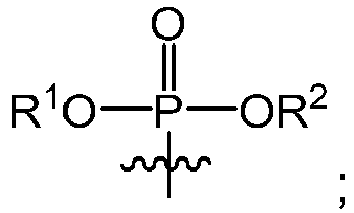
- a phosphono paraffin is represented by formula (I): wherein each instance of R 3 is independently -H or wherein each instance of R 1 and R 2 is independently linear or branched C 1-20 alkyl, C 3-20 cycloalkyl, or aryl; wherein the number of instances where R 3 is of formula (I) is between about 2 and about 8; and n is an integer between 4 and 22.
- a method of making phosphono paraffins includes mixing a haloparaffin with a phosphite and sodium iodide.
- aspects of the present disclosure further comprise phosphono paraffins having between about 6 and about 24 carbons and between about 2 and about 8 phosphono substituents. These compounds can be used as fire-resistant, biodegradable hydraulic fluids. Without being bound by theory, it is believed that phosphono paraffins are viable candidates for use as fire-resistant hydraulic fluids because of their long alkyl chains for ideal viscosity and phosphonate moieties that meet the desirable parameters for fire-resistance and biodegradability.
- Phosphono paraffins of the present disclosure have between about 6 and about 24 carbons and between about 2 and about 8 phosphono substituents.
- a phosphono paraffin has a fire point greater than about 200°C, such as greater than about 220°C, such as greater than about 240°C.
- a phosphono paraffin has a flash point of greater than about 150°C, such as greater than about 170°C, such as greater than about 190°C.
- a phosphono paraffin has a melting point of less than about -40°C, such as less than about -55°C, such as less than about -70°C.
- the flash point and the fire point of a phosphono paraffin can be determined by ASTM D92-12 using a SetaFlash Series 3 Open Cup Flash Point tester supplied by John Morris Scientific Pty Ltd.
- the melting point of a phosphono paraffin can be determined as follows: approximately 1 ml of fluid is placed in a 3 mm diameter glass NMR tube, and a stainless steel thermocouple probe inserted into the fluid. The tube is then placed in liquid nitrogen to freeze the fluid, which prevents movement of the thermocouple probe in the frozen fluid. The tube is then slowly warmed and the fluid eventually melts. Upon melting of the fluid, the thermocouple probe can be pulled free. The temperature at which the thermocouple can be pulled from the fluid is taken as the melting point. This process is repeated two more times to obtain an average melting point value.
- a phosphono paraffin of the present disclosure is represented by formula (I): wherein each instance of R 3 is independently -H or wherein each instance of R 1 and R 2 is independently linear or branched C 1-20 alkyl, C 3-20 cycloalkyl, or aryl; the number of instances where R 3 is of formula (I) is between about 2 and about 8; and n is an integer between 4 and 22.
- C 1-20 alkyl includes C 1-10 alkyl and C 1-5 alkyl.
- C 3-20 cycloalkyl includes C 3-10 cycloalkyl and C 3-6 cycloalkyl.
- each instance of R 1 and R 2 is independently linear C 1-20 alkyl.
- C 1-20 alkyl includes methyl, ethyl, propyl, butyl, pentyl, hexyl, heptyl, octyl, nonyl, and decyl.
- n is an integer between 4 and 22, such as between about 6 and about 18, such as between about 10 and about 16.
- R 1 and R 2 are the same.
- each of R 1 and R 2 is isopropyl, butyl, or phenyl.
- a phosphono paraffin comprises: 1 2 3 4 5 6 7 8 9 10 11 12 13 14 15 16 17 18 19 20 21 22 23 24 25 26 27 28 29 and combinations thereof; wherein each instance of R 1 and R 2 is independently linear or branched C 1-20 alkyl, C 3-20 cycloalkyl, or aryl.
- C 1-20 alkyl includes C 1-10 alkyl and C 1-5 alkyl.
- C 3-20 cycloalkyl includes C 3-10 cycloalkyl and C 3-6 cycloalkyl.
- each instance of R 1 and R 2 is independently linear C 1-20 alkyl.
- C 1-20 alkyl includes methyl, ethyl, propyl, butyl, pentyl, hexyl, heptyl, octyl, nonyl, decyl, undecyl, dodecyl, tridecyl, tetradecyl, pentadecyl, hexadecyl, heptadecyl, octadecyl, nonadecyl, and icosanyl.
- R 1 and R 2 are the same.
- each of R 1 and R 2 is is isopropyl, butyl, or phenyl.
- a phosphono paraffin comprises: 30 31 32 33 34 35 36 37 38 39 40 41 42 43 44 45 46 47 48 49 50 51 52 53 54 55 56 57 58 and mixtures thereof.
- a phosphono paraffin includes: 59 R 1 and R 2 are butyl 60 R 1 and R 2 are butyl 61 R 1 and R 2 are butyl 62 R 1 and R 2 are butyl 63 R 1 and R 2 are butyl 64 R 1 and R 2 are butyl 65 R 1 and R 2 are butyl 66 R 1 and R 2 are butyl 67 R 1 and R 2 are butyl 68 R 1 and R 2 are butyl 69 R 1 and R 2 are butyl 70 R 1 and R 2 are butyl 71 R 1 and R 2 are butyl 72 R 1 and R 2 are butyl 73 R 1 and R 2 are butyl 74 R 1 and R 2 are butyl 75 R 1 and R 2 are butyl 76 R 1 and R 2 are butyl 77 R 1 and R 2 are butyl 78 R 1 and R 2 are butyl 79 R 1 and R 2 are butyl 80 R 1 and R 2 are butyl 81 R 1
- a phosphono paraffin includes: 88 R 1 and R 2 are pentyl 89 R 1 and R 2 are pentyl 90 R 1 and R 2 are pentyl 91 R 1 and R 2 are pentyl 92 R 1 and R 2 are pentyl 93 R 1 and R 2 are pentyl 94 R 1 and R 2 are pentyl 95 R 1 and R 2 are pentyl 96 R 1 and R 2 are pentyl 97 R 1 and R 2 are pentyl 98 R 1 and R 2 are pentyl 99 R 1 and R 2 are pentyl 100 R 1 and R 2 are pentyl 101 R 1 and R 2 are pentyl 102 R 1 and R 2 are pentyl 103 R 1 and R 2 are pentyl 104 R 1 and R 2 are pentyl 105 R 1 and R 2 are pentyl 106 R 1 and R 2 are pentyl 107 R 1 and R 2 are pentyl 108 R 1
- a phosphono paraffin includes: 117 R 1 and R 2 are hexyl 118 R 1 and R 2 are hexyl 119 R 1 and R 2 are hexyl 120 R 1 and R 2 are hexyl 121 R 1 and R 2 are hexyl 122 R 1 and R 2 are hexyl 123 R 1 and R 2 are hexyl 124 R 1 and R 2 are hexyl 125 R 1 and R 2 are hexyl 126 R 1 and R 2 are hexyl 127 R 1 and R 2 are hexyl 128 R 1 and R 2 are hexyl 129 R 1 and R 2 are hexyl 130 R 1 and R 2 are hexyl 131 R 1 and R 2 are hexyl 132 R 1 and R 2 are hexyl 133 R 1 and R 2 are hexyl 134 R 1 and R 2 are hexyl 135 R 1 and R 2
- a method of making a phosphono paraffin comprises forming a reaction mixture by mixing a haloparaffin with a phosphite and sodium iodide.
- Haloparaffin includes a chloroparaffin, a bromoparaffin, or an iodoparaffin.
- a haloparaffin can include one or more secondary halogen moieties.
- the reaction mixture is heated to form a reaction product having a phosphono paraffin.
- the phosphono paraffin may be isolated from the reaction product at an overall yield of between about 20% and about 80%, such as between about 40% and about 60%.
- a method of making a phosphono paraffin includes forming a reaction mixture by mixing a haloparaffin (e.g. , chloroparaffin) with a phosphite represented by formula (II): followed by addition of sodium iodide.
- R 1 and R 2 are as described above.
- R 4 is any suitable substituent having an electrophilic atom, such as C 1-20 alkyl, C 3-20 cycloalkyl, or aryl.
- C 1-20 alkyl includes C 1-10 alkyl and C 1-5 alkyl.
- C 3-20 cycloalkyl includes C 3-10 cycloalkyl and C 3-6 cycloalkyl.
- the phosphite includes triethyl phosphite, tributyl phosphite, tripentyl phosphite, trihexyl phosphite, triheptyl phosphite, trioctyl phosphite, trinonyl phosphite, tridecyl phosphite, or mixtures thereof.
- the presence of sodium iodide in the reaction mixture promotes formation of the phosphono paraffin.
- a method of making a phosphono paraffin comprises forming a reaction mixture by mixing sodium iodide with a haloparaffin followed by addition of a phosphite.
- a method of making a phosphono paraffin comprises forming a reaction mixture by mixing sodium iodide with a phosphite followed by addition of a haloparaffin.
- a reaction mixture can be heated to promote reaction of at least one of the starting materials to form a reaction product having a phosphono paraffin.
- a reaction mixture can be heated to a temperature of between about 120°C and about 200°C, such as between about 130°C and about 190°C, such as between about 140°C and about 180°C.
- phosphono paraffin formation is typically exothermic, so the exotherm may be controlled to prevent a runaway reaction at these temperatures.
- Two non-limiting methods to control the exotherm include: (1) Arbuzov reactions produce alkyl halides as a byproduct, and distilling this byproduct from the reaction mixture removes some heat, and/or (2) phosphite can be cooled and/or added slowly to the reaction mixture to reduce the temperature.
- a method of making a phosphono paraffin comprises forming a reaction mixture by mixing sodium iodide and a haloparaffin and heating the reaction mixture and/or stirring the reaction mixture.
- the reaction mixture is heated to a temperature of between about 120°C and about 200°C, such as between about 130°C and about 180°C, such as between about 140°C and about 160°C.
- the reaction mixture can be allowed to cool to, for example, room temperature.
- a phosphite can be added to the cooled reaction mixture to form a second reaction mixture.
- the second reaction mixture can be heated (and/or stirred) to form a reaction product.
- the second reaction mixture can be heated at a temperature of between about 120°C and about 200°C, such as between about 130°C and about 180°C, such as between about 140°C and about 160°C.
- the first and/or second reaction mixtures can be cooled using any suitable cooling bath to maintain the reaction mixture(s) at a desirable temperature, such as the temperatures described above.
- the reaction product can be allowed to cool to, for example, room temperature.
- a reaction mixture of the present disclosure can be solvent-free (neat) or can further comprise one or more suitable solvents.
- Solvents can include dimethylsulfoxide, dimethylformamide, chlorobenzene, N -methyl-2-pyrrolidinone, xylenes, and mixtures thereof.
- a reaction mixture can be stirred.
- At least one molar equivalent of phosphite is present in a reaction mixture for every halogen moiety of a haloparaffin starting material.
- a molar ratio of phosphite:haloparaffin is at least 3:1.
- a molar ratio of phosphite:haloparaffin is between about 1:1 and about 10:1, such as between about 2:1 and about 6:1, such as between about 3:1 and about 5:1.
- At least one molar equivalent of sodium iodide is present in a reaction mixture for every halogen moiety of a haloparaffin starting material.
- a molar ratio of sodium iodide:haloparaffin is at least 3:1.
- a molar ratio of sodium iodide:haloparaffin is between about 1:1 and about 10:1, such as between about 2:1 and about 6:1, such as between about 3:1 and about 5:1.
- the progress of phosphono paraffin formation during or after methods of the present disclosure may be monitored by thin layer chromatography and/or nuclear magnetic resonance (NMR) spectroscopy.
- NMR nuclear magnetic resonance
- reaction product After heating a reaction mixture of the present disclosure for a desired period of time to form a reaction product, the reaction product is allowed to cool to, for example, room temperature.
- the phosphono paraffin of the reaction product can then be isolated from any unreacted haloparaffin, phosphite and sodium iodide starting materials and a sodium halide byproduct, such as sodium chloride.
- water is added to a reaction product to form a biphasic mixture having an aqueous phase and an organic phase.
- the biphasic mixture may be stirred vigorously or shaken to promote mixing of the two phases. After stirring/shaking, the mixture reforms a biphasic mixture.
- the aqueous phase comprises sodium iodide and the sodium halide byproduct.
- the organic phase comprises phosphono paraffin and unreacted haloparaffin (if any) and/or phosphite (if any).
- the organic phase can be drained from the aqueous phase. If the organic phase contains haloparaffin and/or phosphite, the haloparaffin and/or phosphite can be distilled from the phosphono paraffin to yield isolated phosphono paraffin. Furthermore, some phosphono paraffin may be present in the aqueous phase after stirring/shaking.
- the aqueous phase may be stirred/shaken with an organic solvent (such as hexane) to form a biphasic mixture after settling, the biphasic mixture having an aqueous phase and an organic (hexane) phase.
- the organic phase can be drained from the aqueous phase followed by distillation of hexane (and haloparaffin/phosphite if present) to yield isolated phosphono paraffin.
- potassium iodide or potassium bromide is included in a reaction mixture of the present disclosure, instead of or in addition to, sodium iodide.
- Scheme 2 illustrates reaction of 2,5,6,11,14-pentachloropentadecane (Cereclor AS45) with tributyl phosphite and sodium iodide.
- the starting material and product had the following physical characteristics: Cereclor AS45 Product Physical appearance Viscous yellow-brown oil Yellow oil Melting Point (°C) -55 -73 Flash Point (°C) 185 195 Fire Point (°C) >250 245 Density (g cm -3 ) 1.16 1.023 1 H NMR 3 broad complex multiplets 4 sharp multiplets
- Figure 1 is an 1 H NMR spectrum (CDCl 3 solvent) of Cereclor AS45 starting material. As shown in Figure 1 , the NMR spectrum contains multiplets between about 0.7 ppm and about 2.5 ppm and between about 3.5 ppm and about 4.5 ppm.
- Figure 2 is an 1 H NMR spectrum (CDCl 3 solvent) of the reaction product of Example 1. The reaction product has the structure (75):
- the NMR spectrum contains a multiplet between about 0.75 ppm and about 0.9 ppm, a multiplet between about 1.3 ppm and about 1.4 ppm, a multiplet between about 1.5 ppm and about 1.8 ppm, and a multiplet between about 3.9 ppm and about 4 ppm.
- iodine (I 2 ) with Cereclor AS45 and tributyl phosphite and heating the reaction mixture does not form a phosphono paraffin at least for the reason that the boiling point of iodine is lower than a reaction temperature of 160°C.
- Haloparaffins can be formed by mixing C 1-20 alkanes with elemental halogen (e.g., F 2 , Cl 2 , I 2 , Br 2 ) to form a reaction mixture. The reaction mixture is then exposed to ultraviolet (UV) light and/or a radical initiator to form a haloparaffin.
- UV light ultraviolet
- Radical initiators include peroxides, such as hydrogen peroxide.
- dodecane was mixed with 5 molar equivalents of Br 2 to form a reaction mixture.
- the reaction mixture exposed to UV light to yield a reaction product having bromoparaffins.
- the reaction product was exposed to ambient atmosphere, quenched with water and an organic solvent (hexane) was added to form a biphasic mixture having an aqueous phase and an organic (hexane) phase.
- the biphasic mixture was shaken and then allowed to settle.
- the organic phase of the biphasic mixture was drained. Hexane, residual water, and dodecane starting material were distilled from the organic phase to provide bromoparaffin product (12% yield).
- Phosphono paraffins of the present disclosure can be used as hydraulic fluids.
- Phosphono paraffins of the present disclosure have viscosities, fire points, flash points, melting points, and biodegradability favorable for use as hydraulic fluids.
- fluoroparaffins are resistant to biological degradation, unlike phosphono paraffins of the present disclosure.
- Phosphono paraffins may be used alone as a hydraulic fluid or mixed with other components to form a hydraulic fluid composition.
- Other components include water, a lower molecular weight phosphonates (such as tetrabutyl propyl bisphosphonate or tributyl phosphate), an antioxidant, a mineral oil, a vegetable oil (such as soybean, rapeseed, Canola, or sunflower), a glycol (such as propylene glycol), an ester, a silicone oil, an alkanol (such as butanol), an alkylated aromatic hydrocarbon, a polyalphaolefin (such as polyisobutene), a corrosion inhibitor, and mixtures thereof.
- a lower molecular weight phosphonates such as tetrabutyl propyl bisphosphonate or tributyl phosphate
- an antioxidant such as tetrabutyl propyl bisphosphonate or tributyl phosphate
- a mineral oil such as soybean,
- Ester includes organophosphate esters, phthalates, adipates, phosphoric acid esters, and fatty acid esters.
- Antioxidant includes di-tertiary butyl phenyl phosphite, octylated phenyl-alpha-naphthylamine, octylated/butylated diphenylamine, phenolics, and thioethers.
- wt% means weight percent and is based on the total weight of the composition.
- a hydraulic fluid composition includes from about 1 to about 99 wt% phosphono paraffin, such as from about 10 to about 80 wt%, such as from about 20 to about 70 wt%, such as from about 40 wt% to about 60 wt%.
- a hydraulic fluid composition includes from about 1 to about 99 wt% of other component(s), such as from about 10 to about 80 wt%, such as from about 20 to about 70 wt%, such as from about 40 wt% to about 60 wt%.
- Hydraulic Fluid Composition Example 1 Phosphono paraffin (50-60 w/v%, such as 58 w/v%), dibutyl phenyl phosphate (20-30 w/v%), butyl diphenyl phosphate (5-10 w/v%), an epoxide modifier (such as 2-ethylhexyl 7-oxabicyclo[4.1.0] heptane-3-Carboxylate ⁇ 10 w/v%), and tri-cresyl phosphate (1-5 w/v%).
- Phosphono paraffin 50-60 w/v%, such as 58 w/v%)
- dibutyl phenyl phosphate (20-30 w/v%) butyl diphenyl phosphate (5-10 w/v%)
- an epoxide modifier such as 2-ethylhexyl 7-oxabicyclo[4.1.0] heptane-3-Carboxylate ⁇ 10 w/v%)
- Alkyl phosphonates include a monophosphonate compound represented by Formula 117: wherein each of R 17 , R 18 , and R 19 are independently C 1-20 alkyl, aryl or C 1-20 alkylaryl.
- Aryl includes monocyclic or bicyclic aryl.
- Aryl may be phenyl.
- C 1-10 alkylaryl includes C 1-10 alkylphenyl, such as benzyl.
- Monophosphonates include diethylbenzylphosphonate, dibutylhexanephosponate or dibutyloctanephosphonate
- Siloxanes include polysiloxanes compound can be described according to the following chemical structure Formula 118: wherein y is an integer selected from 1 to 40; each of R 1' , R 2' , R 3' , and R 4' is independently C 1-10 alkyl, aryl or C 1-10 alkylaryl; and R 5 and R 6 are independently C 1-10 alkyl, aryl or C 1-10 alkylaryl.
- Polysiloxanes include:
- R 1' and R 2' are phenethyl R 3' , R 4' , R 5 and R 6 are methyl y is 7 R 1' and R 2' are phenethyl R 3' and R 4' are methyl Each R 5 and R 6 is methyl or phenethyl y is 11 R 1' and R 2' are phenethyl R 3' and R 4' are methyl Each R 5 and R 6 is methyl or phenyl y is 11 R 1' and R 2' are phenethyl R 3' and R 4' are methyl Each R 5 and R 6 is methyl or phenyl y is 11 R 1' and R 2' are phenethyl R 3' and R 4' are methyl Each R 5 and R 6 is methyl or phenethyl y is 11 R 1' and R 2' are phenethyl R 3' and R 4' are methyl Each R 5 and R 6 is methyl or phenyl y is 11 R 1' and
- phosphono paraffins of the present disclosure include use as lubricants or as a solvent for extraction/purification of rare earth and actinide metals from ore.
- methods of the present disclosure include synthesizing phosphono paraffins using sodium iodide to provide novel phosphono paraffins having fire-resistance and biodegradability for use as a hydraulic fluid.
- alkyl includes a substituted or unsubstituted, linear or branched acyclic alkyl radical containing from 1 to about 20 carbon atoms.
- alkyl is a C 1-10 alkyl, C 1-7 alkyl or C 1-5 alkyl.
- alkyl include, but are not limited to, methyl, ethyl, propyl, butyl, pentyl, hexyl, heptyl, octyl, nonyl, decyl, and structural isomers thereof.
- cycloalkyl includes a substituted or unsubstituted, cyclic alkyl radical containing from 3 to about 20 carbon atoms. In at least one aspect, cycloalkyl is a C 3-10 cycloalkyl or a C 3-6 cycloalkyl.
- an “alkyl” or “cycloalkyl” as referenced herein may be substituted or unsubstituted.
- an “alkyl” or “cycloalkyl” may, for example, be substituted by one or more substituents independently selected from alkyl, cycloalkyl and aryl.
- aryl refers to any monocyclic, bicyclic or tricyclic carbon ring of up to 6 atoms in each ring, wherein at least one ring is aromatic, or an aromatic ring system of 5 to 14 carbons atoms which includes a carbocyclic aromatic group fused with a 5- or 6-membered cycloalkyl group.
- aryl groups include, but are not limited to, phenyl, naphthyl, anthracenyl, or pyrenyl.
- alkoxy is RO-- wherein R is alkyl as defined herein.
- alkoxy groups include methoxy, ethoxy and propoxy.
- alkyloxy, alkoxyl, and alkoxy may be used interchangeably.
- alkoxy include, but are not limited to, methoxyl, ethoxyl, propoxyl, butoxyl, pentoxyl, hexyloxyl, heptyloxyl, octyloxyl, nonyloxyl, decyloxyl, and structural isomers thereof.
- phosphono paraffin includes a linear or branched alkane having one or more phosphono substituents.
- haloparaffin includes a linear or branched alkane having one or more halogen substituents.
- Halogen includes fluorine, chlorine, bromine, and iodine.
- Haloparaffin includes chloroparaffins, bromoparaffins, and iodoparaffins.
- phosphite includes a trivalent phosphorous atom having three alkoxy substituents.
- primary halogen includes a halogen atom bonded to a carbon atom that is bonded to two hydrogen atoms and one carbon atom, as shown here:
- second halogen includes a halogen atom bonded to a carbon that is bonded to one hydrogen atom and two carbon atoms, as shown here:
- tertiary halogen includes a halogen atom bonded to a carbon that is bonded to zero hydrogen atoms and three carbon atoms, as shown here:
- Compounds of the present disclosure include tautomeric, geometric or stereoisomeric forms of the compounds. Ester, oxime, onium, hydrate, solvate and N-oxide forms of a compound are also embraced by the present disclosure.
- the present disclosure considers all such compounds, including cis- and trans-geometric isomers (Z- and E- geometric isomers), R- and S-enantiomers, diastereomers, d-isomers, l-isomers, atropisomers, epimers, conformers, rotamers, mixtures of isomers and racemates thereof are embraced by the present disclosure.
- Clause 1 A method of making a phosphono paraffin, comprising:
Landscapes
- Chemical & Material Sciences (AREA)
- Organic Chemistry (AREA)
- Chemical Kinetics & Catalysis (AREA)
- General Chemical & Material Sciences (AREA)
- Oil, Petroleum & Natural Gas (AREA)
- Health & Medical Sciences (AREA)
- Life Sciences & Earth Sciences (AREA)
- Biochemistry (AREA)
- General Health & Medical Sciences (AREA)
- Molecular Biology (AREA)
- Lubricants (AREA)
Abstract


Description
- Aspects of the present disclosure generally relate to phosphono paraffins, hydraulic fluids having phosphono paraffins, and methods of making phosphono paraffins.
- Many vehicles, such as aircraft, cars, trucks, etc., have one or more hydraulic systems which are drives or transmission systems that use pressurized hydraulic fluid to power hydraulic machinery. For example, early vehicles had hydraulic brake systems. As vehicles became more sophisticated, newer systems with hydraulic power were developed. Hydraulic systems in, for example, an aircraft provide for the operation of vehicle components, such as landing gear, flaps, flight control surfaces, and brakes.
- A hydraulic system has a power generating device (pump) reservoir, accumulator, heat exchanger, and filtering system. System operating pressure may vary from a couple hundred pounds per square inch (psi) in small vehicles and rotorcraft to 5,000 psi in large vehicles.
- Hydraulic system fluids ("hydraulic fluids") flow through components of the hydraulic system during use to transmit and distribute forces to various components of the hydraulic system. If a number of passages exist in a system, pressure can be distributed through the various components of the system. Hydraulic operations have only negligible loss due to fluid friction.
- If incompressibility and fluidity were the only qualities required, most liquids that are not too thick could be used in a hydraulic system. However, other properties should be considered when selecting a desired hydraulic fluid for a particular hydraulic system.
- One of those properties is viscosity, which is a resistance of the fluid to flow. A liquid such as gasoline that has a low viscosity flows easily, while a liquid such as tar that has a high viscosity flows slowly. Viscosity increases as temperature decreases. A liquid for a given hydraulic system should have enough viscosity to give a good seal at pumps, valves, and pistons, but should not be so thick that it offers resistance to flow, leading to power loss and higher operating temperatures which may promote wear of hydraulic system components. A fluid that is not viscous enough can wear moving parts or parts that have heavy loads.
- Another property pertinent to hydraulic fluids is the fire point of the fluid, which is the temperature at which a substance gives off vapor in sufficient quantity to ignite and continue to burn when exposed to a spark or flame. Like a flash point, a high fire point is desirable of hydraulic liquids.
- Known hydraulic fluids do not possess ideal properties as discussed above. Polyalphaolefin-based hydraulic fluids are fire-resistant but have a high viscosity and are limited to use down to -40°F. Phosphate ester-based (Skydrol®) hydraulic fluids are not entirely fire-resistant and under certain conditions, they burn. Furthermore, polyalphaolefin-based hydraulic fluids and phosphate ester-based hydraulic fluids do not mix with each other. Furthermore, fluorocarbon-based hydraulic fluids tend to degrade paint and titanium couplings on the hydraulic lines of a hydraulic system. There is also a movement to ban production of chlorocarbon-based and fluorocarbon-based hydraulic fluids because of their toxicity and poor biodegradability. For example, chloroparaffins are stable in soil and persist in soil for years, having a half-life (T1/2) of at least months to years.
- Furthermore, synthesis of hydraulic fluids tends to be laborious and cost intensive. Conventional reactions, such as the Arbuzov reaction, do not yield hydraulic fluids having ideal properties as described above. An Arbuzov reaction proceeds by reacting a primary alkyl halide with a phosphite to form a primary phosphono-substituted product. The Arbuzov reaction does not proceed readily using primary, secondary, or tertiary fluoro alkane starting material or using secondary or tertiary chloro-, bromo-, iodo-alkane starting materials.
- Therefore, there is a need in the art for new and improved hydraulic fluids and methods of making hydraulic fluids.
- In one aspect, a method of making a phosphono paraffin comprises forming a reaction mixture by mixing a haloparaffin, a phosphite and sodium iodide. Methods to make the composition comprise heating the reaction mixture to form the phosphono paraffin.
- In another aspect, a phosphono paraffin is represented by formula (I):


- So that the manner in which the above recited features of the present disclosure can be understood in detail, a more particular description of the disclosure, briefly summarized above, may be had by reference to aspects, some of which are illustrated in the appended drawings. It is to be noted, however, that the appended drawings illustrate only typical aspects of this present disclosure and are therefore not to be considered limiting of its scope, for the present disclosure may admit to other equally effective aspects.
-
Figure 1 is an 1H NMR spectrum of Cereclor AS45. -
Figure 2 is an 1H NMR spectrum of the reaction product of Example 1. - To facilitate understanding, identical reference numerals have been used, where possible, to designate identical elements that are common to the figures. The figures are not drawn to scale and may be simplified for clarity. It is contemplated that elements and features of one aspect may be beneficially incorporated in other aspects without further recitation.
- Aspects of the present disclosure include methods of making phosphono paraffins. It was discovered that sodium iodide in the presence of haloparaffin and phosphite readily promotes phosphono paraffin formation. In at least one aspect, a method of making phosphono paraffins includes mixing a haloparaffin with a phosphite and sodium iodide.
- Methods of the present disclosure provide access to a new class of phosphono paraffin compounds. Accordingly, aspects of the present disclosure further comprise phosphono paraffins having between about 6 and about 24 carbons and between about 2 and about 8 phosphono substituents. These compounds can be used as fire-resistant, biodegradable hydraulic fluids. Without being bound by theory, it is believed that phosphono paraffins are viable candidates for use as fire-resistant hydraulic fluids because of their long alkyl chains for ideal viscosity and phosphonate moieties that meet the desirable parameters for fire-resistance and biodegradability.
- Phosphono paraffins of the present disclosure have between about 6 and about 24 carbons and between about 2 and about 8 phosphono substituents. In at least one aspect, a phosphono paraffin has a fire point greater than about 200°C, such as greater than about 220°C, such as greater than about 240°C. In at least one aspect, a phosphono paraffin has a flash point of greater than about 150°C, such as greater than about 170°C, such as greater than about 190°C. In at least one aspect, a phosphono paraffin has a melting point of less than about -40°C, such as less than about -55°C, such as less than about -70°C.
- The flash point and the fire point of a phosphono paraffin can be determined by ASTM D92-12 using a SetaFlash Series 3 Open Cup Flash Point tester supplied by John Morris Scientific Pty Ltd. The melting point of a phosphono paraffin can be determined as follows: approximately 1 ml of fluid is placed in a 3 mm diameter glass NMR tube, and a stainless steel thermocouple probe inserted into the fluid. The tube is then placed in liquid nitrogen to freeze the fluid, which prevents movement of the thermocouple probe in the frozen fluid. The tube is then slowly warmed and the fluid eventually melts. Upon melting of the fluid, the thermocouple probe can be pulled free. The temperature at which the thermocouple can be pulled from the fluid is taken as the melting point. This process is repeated two more times to obtain an average melting point value.
- In at least one aspect, a phosphono paraffin of the present disclosure is represented by formula (I):


- In at least one aspect, a phosphono paraffin comprises:
1 
2 
3 
4 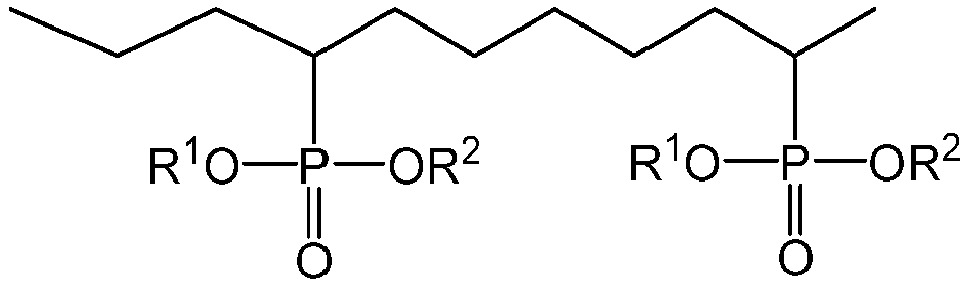
5 
6 
7 
8 
9 
10 
11 
12 
13 
14 
15 
16 
17 
18 
19 
20 
21 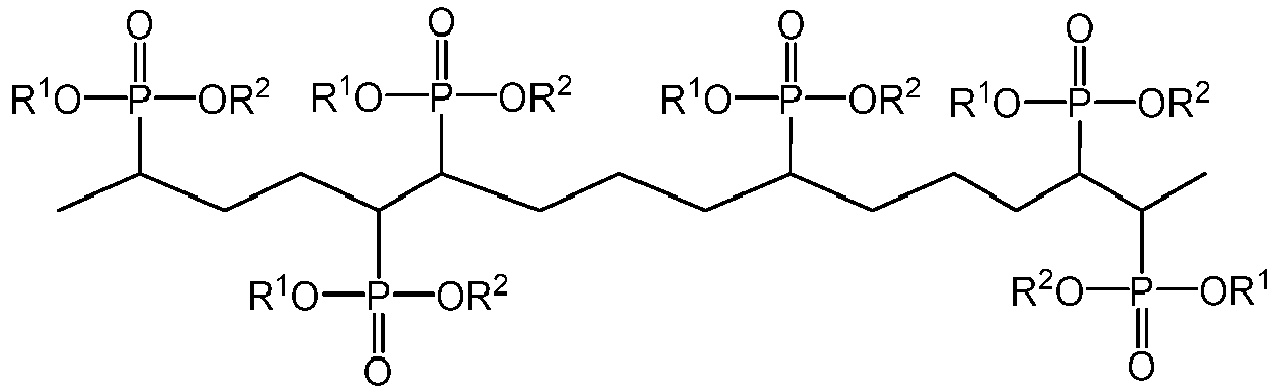
22 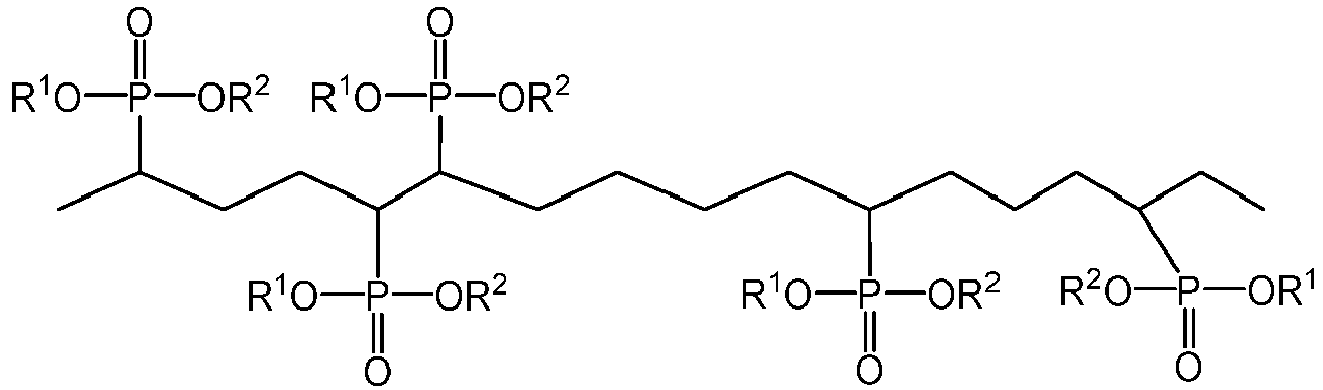
23 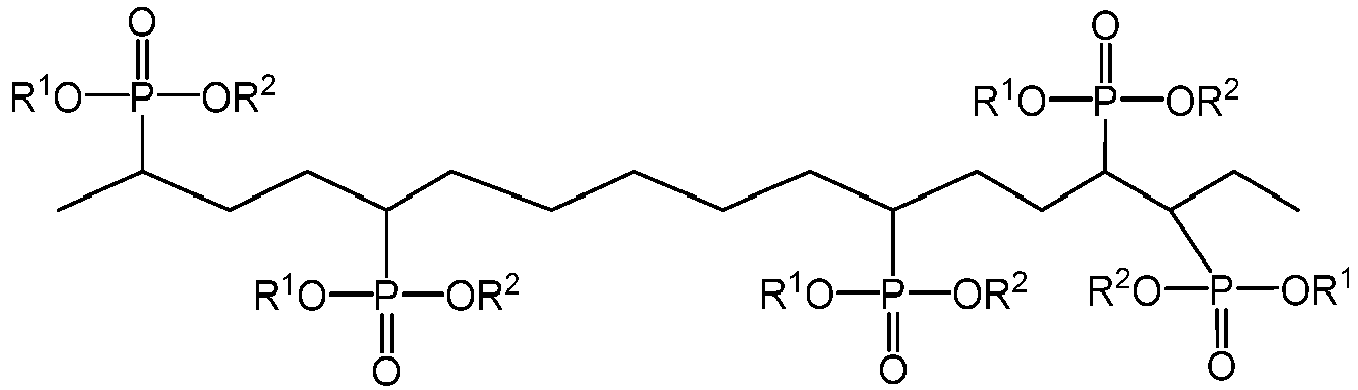
24 
25 
26 
27 
28 
29 
- In at least one aspect, a phosphono paraffin comprises:
30 
31 
32 
33 
34 
35 
36 
37 
38 
39 
40 
41 
42 
43 
44 
45 
46 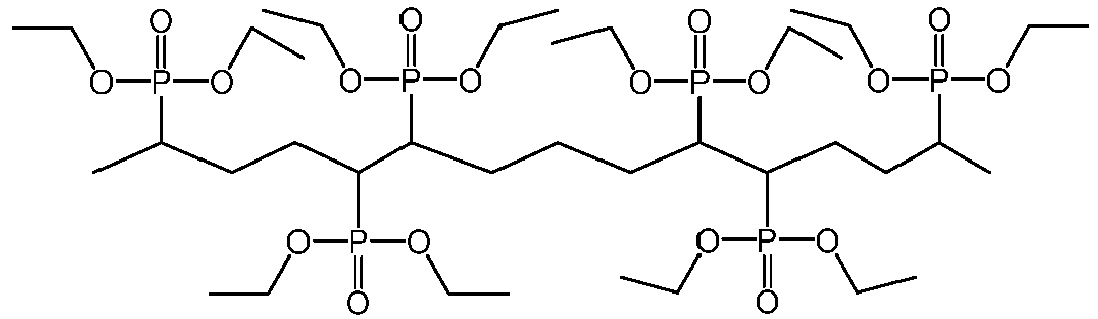
47 
48 
49 
50 
51 
52 
53 
54 
55 
56 
57 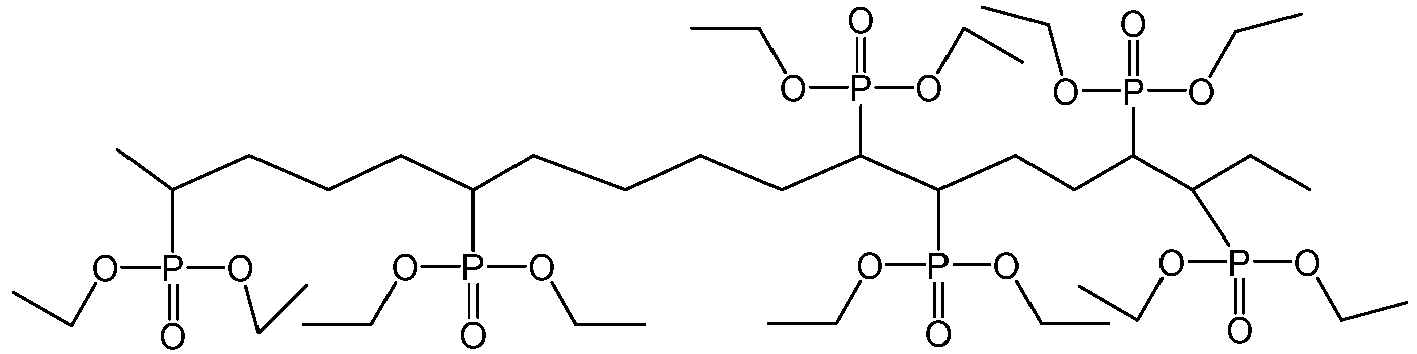
58 
- In at least one aspect, a phosphono paraffin includes:
59 
R1 and R2 are butyl 60 
R1 and R2 are butyl 61 
R1 and R2 are butyl 62 
R1 and R2 are butyl 63 
R1 and R2 are butyl 64 
R1 and R2 are butyl 65 
R1 and R2 are butyl 66 
R1 and R2 are butyl 67 
R1 and R2 are butyl 68 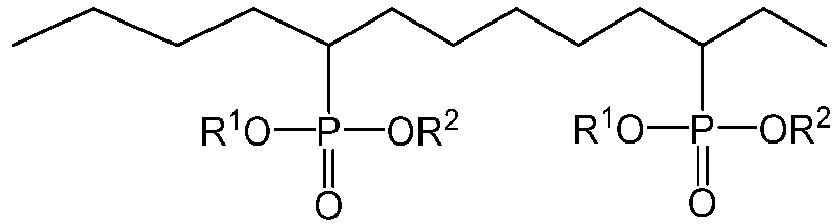
R1 and R2 are butyl 69 
R1 and R2 are butyl 70 
R1 and R2 are butyl 71 
R1 and R2 are butyl 72 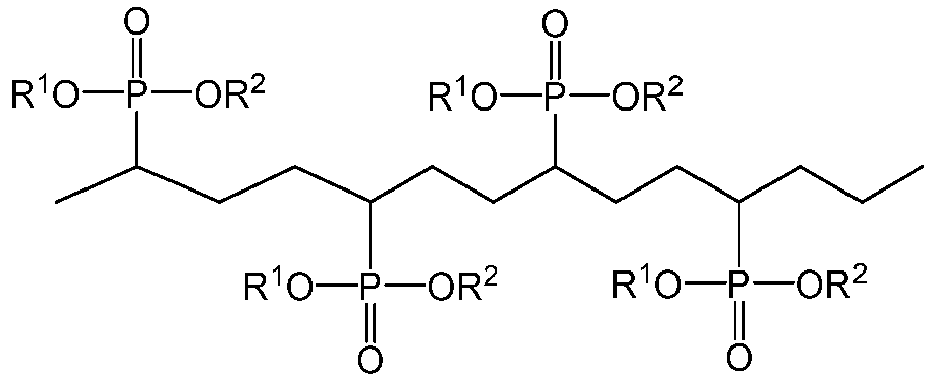
R1 and R2 are butyl 73 
R1 and R2 are butyl 74 
R1 and R2 are butyl 75 
R1 and R2 are butyl 76 
R1 and R2 are butyl 77 
R1 and R2 are butyl 78 
R1 and R2 are butyl 79 
R1 and R2 are butyl 80 
R1 and R2 are butyl 81 
R1 and R2 are butyl 82 
R1 and R2 are butyl 83 
R1 and R2 are butyl 84 
R1 and R2 are butyl 85 
R1 and R2 are butyl 86 
R1 and R2 are butyl 87 
R1 and R2 are butyl - In at least one aspect, a phosphono paraffin includes:
88 
R1 and R 2 are pentyl 89 
R1 and R2 are pentyl 90 
R1 and R2 are pentyl 91 
R1 and R2 are pentyl 92 
R1 and R2 are pentyl 93 
R1 and R 2 are pentyl 94 
R1 and R2 are pentyl 95 
R1 and R2 are pentyl 96 
R1 and R 2 are pentyl 97 
R1 and R2 are pentyl 98 
R1 and R 2 are pentyl 99 
R1 and R2 are pentyl 100 
R1 and R 2 are pentyl 101 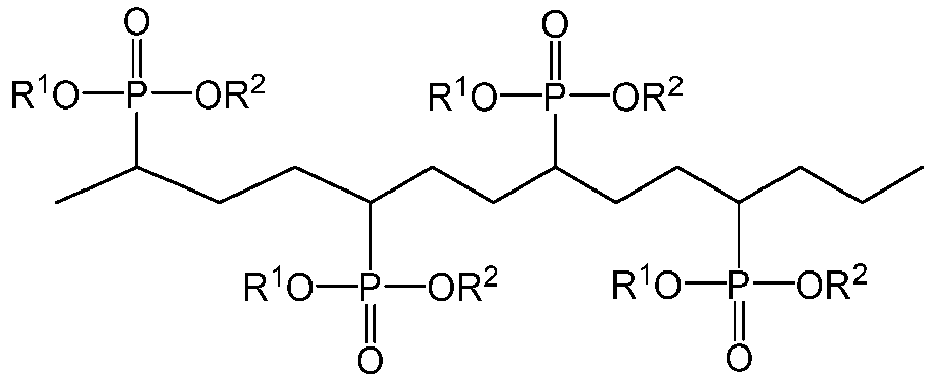
R1 and R 2 are pentyl 102 
R1 and R2 are pentyl 103 
R1 and R2 are pentyl 104 
R1 and R2 are pentyl 105 
R1 and R2 are pentyl 106 
R1 and R 2 are pentyl 107 
R1 and R 2 are pentyl 108 
R1 and R2 are pentyl 109 
R1 and R 2 are pentyl 110 
R1 and R2 are pentyl 111 
R1 and R 2 are pentyl 112 
R1 and R2 are pentyl 113 
R1 and R 2 are pentyl 114 
R1 and R 2 are pentyl 115 
R1 and R 2 are pentyl 116 
R1 and R2 are pentyl - In at least one aspect, a phosphono paraffin includes:
117 
R1 and R2 are hexyl 118 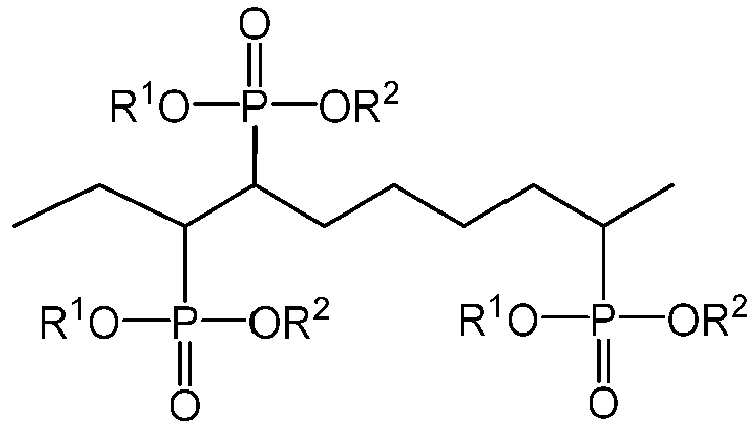
R1 and R2 are hexyl 119 
R1 and R2 are hexyl 120 
R1 and R2 are hexyl 121 
R1 and R2 are hexyl 122 
R1 and R2 are hexyl 123 
R1 and R2 are hexyl 124 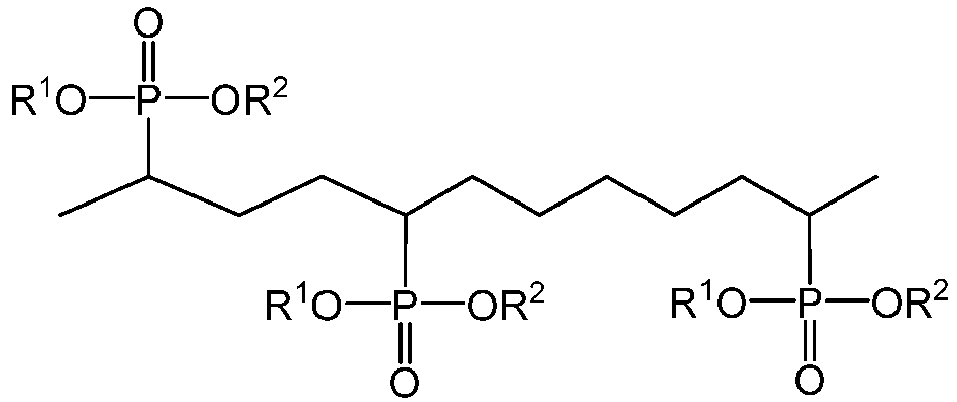
R1 and R2 are hexyl 125 
R1 and R2 are hexyl 126 
R1 and R2 are hexyl 127 
R1 and R2 are hexyl 128 
R1 and R2 are hexyl 129 
R1 and R2 are hexyl 130 
R1 and R2 are hexyl 131 
R1 and R2 are hexyl 132 
R1 and R2 are hexyl 133 
R1 and R2 are hexyl 134 
R1 and R2 are hexyl 135 
R1 and R2 are hexyl 136 
R1 and R2 are hexyl 137 
R1 and R2 are hexyl 138 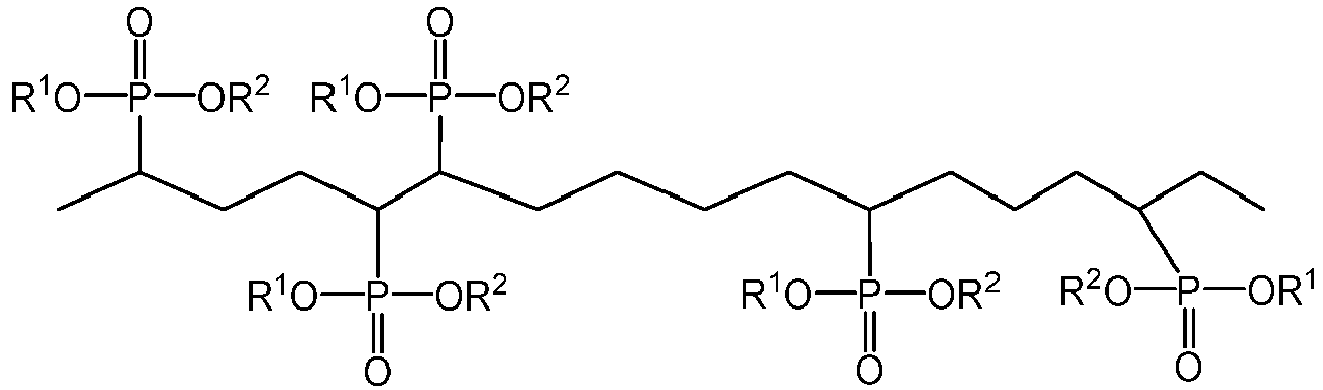
R1 and R2 are hexyl 139 
R1 and R2 are hexyl 140 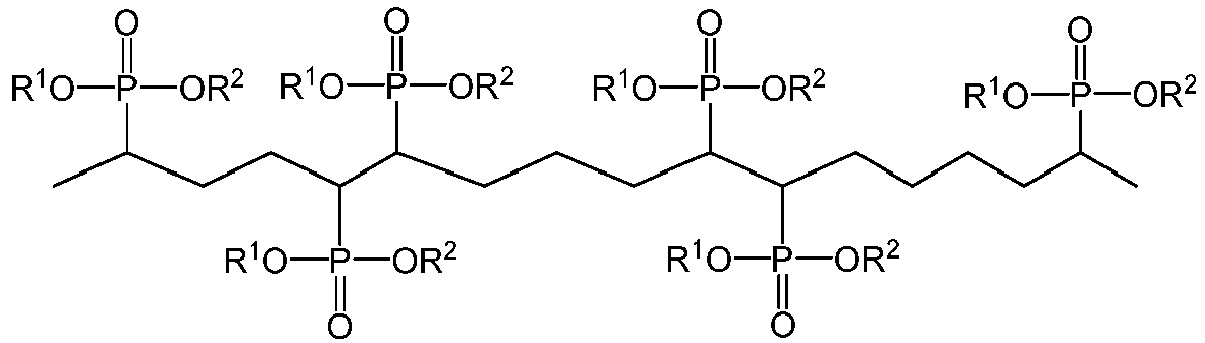
R1 and R2 are hexyl 141 
R1 and R2 are hexyl 142 
R1 and R2 are hexyl 143 
R1 and R2 are hexyl 144 
R1 and R2 are hexyl 145 
R1 and R2 are hexyl - It was discovered that synthesizing phosphono paraffins under conventional Arbuzov reaction conditions does not form phosphono paraffins. It was also discovered that mixing a haloparaffin and a phosphite with sodium idodide promotes phosphono paraffin formation. In at least one aspect, a method of making a phosphono paraffin comprises forming a reaction mixture by mixing a haloparaffin with a phosphite and sodium iodide. Haloparaffin includes a chloroparaffin, a bromoparaffin, or an iodoparaffin. A haloparaffin can include one or more secondary halogen moieties. The reaction mixture is heated to form a reaction product having a phosphono paraffin. The phosphono paraffin may be isolated from the reaction product at an overall yield of between about 20% and about 80%, such as between about 40% and about 60%.
- As shown in Schemes 1, 2, and 3, a method of making a phosphono paraffin includes forming a reaction mixture by mixing a haloparaffin (e.g., chloroparaffin) with a phosphite represented by formula (II):


- In at least one aspect, a method of making a phosphono paraffin comprises forming a reaction mixture by mixing sodium iodide and a haloparaffin and heating the reaction mixture and/or stirring the reaction mixture. The reaction mixture is heated to a temperature of between about 120°C and about 200°C, such as between about 130°C and about 180°C, such as between about 140°C and about 160°C. After a desired period of time, the reaction mixture can be allowed to cool to, for example, room temperature. A phosphite can be added to the cooled reaction mixture to form a second reaction mixture. The second reaction mixture can be heated (and/or stirred) to form a reaction product. The second reaction mixture can be heated at a temperature of between about 120°C and about 200°C, such as between about 130°C and about 180°C, such as between about 140°C and about 160°C. The first and/or second reaction mixtures can be cooled using any suitable cooling bath to maintain the reaction mixture(s) at a desirable temperature, such as the temperatures described above. After a desired period of time, the reaction product can be allowed to cool to, for example, room temperature.
- A reaction mixture of the present disclosure can be solvent-free (neat) or can further comprise one or more suitable solvents. Solvents can include dimethylsulfoxide, dimethylformamide, chlorobenzene, N-methyl-2-pyrrolidinone, xylenes, and mixtures thereof. A reaction mixture can be stirred.
- In one aspect, at least one molar equivalent of phosphite is present in a reaction mixture for every halogen moiety of a haloparaffin starting material. For example, if a haloparaffin has three chlorine moieties, then a molar ratio of phosphite:haloparaffin is at least 3:1. A molar ratio of phosphite:haloparaffin is between about 1:1 and about 10:1, such as between about 2:1 and about 6:1, such as between about 3:1 and about 5:1.
- In one aspect, at least one molar equivalent of sodium iodide is present in a reaction mixture for every halogen moiety of a haloparaffin starting material. For example, if a haloparaffin has three chlorine moieties, then a molar ratio of sodium iodide:haloparaffin is at least 3:1. A molar ratio of sodium iodide:haloparaffin is between about 1:1 and about 10:1, such as between about 2:1 and about 6:1, such as between about 3:1 and about 5:1.
- The progress of phosphono paraffin formation during or after methods of the present disclosure may be monitored by thin layer chromatography and/or nuclear magnetic resonance (NMR) spectroscopy.
- After heating a reaction mixture of the present disclosure for a desired period of time to form a reaction product, the reaction product is allowed to cool to, for example, room temperature. The phosphono paraffin of the reaction product can then be isolated from any unreacted haloparaffin, phosphite and sodium iodide starting materials and a sodium halide byproduct, such as sodium chloride. For example, in at least one aspect, water is added to a reaction product to form a biphasic mixture having an aqueous phase and an organic phase. The biphasic mixture may be stirred vigorously or shaken to promote mixing of the two phases. After stirring/shaking, the mixture reforms a biphasic mixture. The aqueous phase comprises sodium iodide and the sodium halide byproduct. The organic phase comprises phosphono paraffin and unreacted haloparaffin (if any) and/or phosphite (if any). The organic phase can be drained from the aqueous phase. If the organic phase contains haloparaffin and/or phosphite, the haloparaffin and/or phosphite can be distilled from the phosphono paraffin to yield isolated phosphono paraffin. Furthermore, some phosphono paraffin may be present in the aqueous phase after stirring/shaking. Therefore, the aqueous phase may be stirred/shaken with an organic solvent (such as hexane) to form a biphasic mixture after settling, the biphasic mixture having an aqueous phase and an organic (hexane) phase. The organic phase can be drained from the aqueous phase followed by distillation of hexane (and haloparaffin/phosphite if present) to yield isolated phosphono paraffin.
- In at least one aspect, potassium iodide or potassium bromide is included in a reaction mixture of the present disclosure, instead of or in addition to, sodium iodide.
- Scheme 2 illustrates reaction of 2,5,6,11,14-pentachloropentadecane (Cereclor AS45) with tributyl phosphite and sodium iodide.

- Cereclor AS45 (Orica, now known as IXOM; 15.39g) was dissolved in tributyl phosphite (Acros, 150.19 g). Sodium iodide (Riedel-de Haen, 29.98 g) was then added to form a reaction mixture. The reaction mixture was stirred, brought under a nitrogen atmosphere, and heated to approximately 160°C. At this point an exothermic reaction began and the temperature increased to approximately 245°C over a timespan of about 30 minutes. The mixture was then slowly cooled over a time span of an additional 30 minutes. Once at room temperature deionized water (100 ml) was added to the reaction product to form a biphasic mixture. The mixture was vigorously stirred, and then the water and organic phases were allowed to separate. The organic phase was drained from the aqueous phase and then distilled under vacuum to remove residual water and unreacted tributyl phosphite and Cereclor AS45. Distillation was achieved at 153°C at 0.618 mbar. The final mass of reaction product was 26.98 g (58% yield).
- The starting material and product had the following physical characteristics:
Cereclor AS45 Product Physical appearance Viscous yellow-brown oil Yellow oil Melting Point (°C) -55 -73 Flash Point (°C) 185 195 Fire Point (°C) >250 245 Density (g cm-3) 1.16 1.023 1H NMR 3 broad complex multiplets 4 sharp multiplets -
Figure 1 is an 1H NMR spectrum (CDCl3 solvent) of Cereclor AS45 starting material. As shown inFigure 1 , the NMR spectrum contains multiplets between about 0.7 ppm and about 2.5 ppm and between about 3.5 ppm and about 4.5 ppm.Figure 2 is an 1H NMR spectrum (CDCl3 solvent) of the reaction product of Example 1. The reaction product has the structure (75):
- As shown in
Figure 2 , the NMR spectrum contains a multiplet between about 0.75 ppm and about 0.9 ppm, a multiplet between about 1.3 ppm and about 1.4 ppm, a multiplet between about 1.5 ppm and about 1.8 ppm, and a multiplet between about 3.9 ppm and about 4 ppm. - Comparative reactions were performed using other salts instead of sodium iodide, as shown in Scheme 4.

- When sodium bromide is mixed with Cereclor AS45 and tributyl phosphite and heated, a phosphono paraffin is not formed.
- Furthermore, mixing iodine (I2) with Cereclor AS45 and tributyl phosphite and heating the reaction mixture does not form a phosphono paraffin at least for the reason that the boiling point of iodine is lower than a reaction temperature of 160°C.
- Lastly, when 20 mol% ZnBr2 is mixed with Cereclor AS45 and triethyl phosphite and heated, the mass of material remaining after removal of triethyl phosphite by distillation indicates about 30% conversion of Cereclor AS45 into a reaction product having a phosphono paraffin, and the 1H NMR spectrum of the product is consistent with the mass of material determination. Furthermore, the expected zinc salts do not precipitate from the reaction product, which should be removed for the phosphono paraffin to be used as a hydraulic fluid. In comparison, sodium salts, such as NaCl, formed during methods of the present disclosure do precipitate from the phosphono paraffin reaction product. Furthermore, ZnBr2 is significantly more expensive than Nal, hindering the industrial applicability of ZnBr2 as a reagent for large scale chemical reactions.
- Formation of haloparaffins for subsequent phosphono paraffin formation: Haloparaffins can be formed by mixing C1-20 alkanes with elemental halogen (e.g., F2, Cl2, I2, Br2) to form a reaction mixture. The reaction mixture is then exposed to ultraviolet (UV) light and/or a radical initiator to form a haloparaffin. Radical initiators include peroxides, such as hydrogen peroxide.
- As an example, in a nitrogen atmosphere, dodecane was mixed with 5 molar equivalents of Br2 to form a reaction mixture. The reaction mixture exposed to UV light to yield a reaction product having bromoparaffins. The reaction product was exposed to ambient atmosphere, quenched with water and an organic solvent (hexane) was added to form a biphasic mixture having an aqueous phase and an organic (hexane) phase. The biphasic mixture was shaken and then allowed to settle. The organic phase of the biphasic mixture was drained. Hexane, residual water, and dodecane starting material were distilled from the organic phase to provide bromoparaffin product (12% yield).
- Phosphono paraffins of the present disclosure can be used as hydraulic fluids. Phosphono paraffins of the present disclosure have viscosities, fire points, flash points, melting points, and biodegradability favorable for use as hydraulic fluids. For example, fluoroparaffins are resistant to biological degradation, unlike phosphono paraffins of the present disclosure.
- Phosphono paraffins may be used alone as a hydraulic fluid or mixed with other components to form a hydraulic fluid composition. Other components include water, a lower molecular weight phosphonates (such as tetrabutyl propyl bisphosphonate or tributyl phosphate), an antioxidant, a mineral oil, a vegetable oil (such as soybean, rapeseed, Canola, or sunflower), a glycol (such as propylene glycol), an ester, a silicone oil, an alkanol (such as butanol), an alkylated aromatic hydrocarbon, a polyalphaolefin (such as polyisobutene), a corrosion inhibitor, and mixtures thereof.
- Ester includes organophosphate esters, phthalates, adipates, phosphoric acid esters, and fatty acid esters. Antioxidant includes di-tertiary butyl phenyl phosphite, octylated phenyl-alpha-naphthylamine, octylated/butylated diphenylamine, phenolics, and thioethers.
- As used herein, wt% means weight percent and is based on the total weight of the composition. In at least one aspect, a hydraulic fluid composition includes from about 1 to about 99 wt% phosphono paraffin, such as from about 10 to about 80 wt%, such as from about 20 to about 70 wt%, such as from about 40 wt% to about 60 wt%. In at least one aspect, a hydraulic fluid composition includes from about 1 to about 99 wt% of other component(s), such as from about 10 to about 80 wt%, such as from about 20 to about 70 wt%, such as from about 40 wt% to about 60 wt%.
- Hydraulic Fluid Composition Example 1: Phosphono paraffin (50-60 w/v%, such as 58 w/v%), dibutyl phenyl phosphate (20-30 w/v%), butyl diphenyl phosphate (5-10 w/v%), an epoxide modifier (such as 2-ethylhexyl 7-oxabicyclo[4.1.0] heptane-3-Carboxylate <10 w/v%), and tri-cresyl phosphate (1-5 w/v%).
-
- (1) phosphono paraffin from about 10 to about 80 wt%. In at least one aspect, phosphono paraffin is present from about 20 to about 70 wt%, such as from about 30 to 60 wt%.
- (2) alkyl phosphonate from about 10 to about 20 wt%. In at least one aspect, alkyl phosphonate is present from about 5 to about 15 wt%.
- (3) Skydrol additives < 10 wt%.
- Alkyl phosphonates include a monophosphonate compound represented by Formula 117:

-
- (4) siloxanes from about 20 to about 70 wt%. In at least one aspect, siloxanes are present from about 20 to about 60 wt%, such as from about 30 to about 50 wt%.
- (5) phosphono paraffin from about 20 to about 60 wt%. In at least one aspect, phosphono paraffin is present from about 30 to about 50 wt%.
- Siloxanes include polysiloxanes compound can be described according to the following chemical structure Formula 118:

-
Chemical Structure Substituents 
R1' and R2' are phenethyl R3', R4', R5 and R6 are methyl y is 7 
R1' and R2' are phenethyl R3' and R4' are methyl Each R5 and R6 is methyl or phenethyl y is 11 
R1' and R2' are phenethyl R3' and R4' are methyl Each R5 and R6 is methyl or phenyl y is 11 
R1' and R2' are phenethyl R 3' and R4' are methyl Each R5 and R6 is methyl or phenethyl y is 11 
R1' and R2' are phenethyl R3' and R4' are methyl Each R5 and R6 is methyl or phenyl y is 11 - Other uses of phosphono paraffins of the present disclosure include use as lubricants or as a solvent for extraction/purification of rare earth and actinide metals from ore.
- Overall, methods of the present disclosure include synthesizing phosphono paraffins using sodium iodide to provide novel phosphono paraffins having fire-resistance and biodegradability for use as a hydraulic fluid.
- The term "alkyl" includes a substituted or unsubstituted, linear or branched acyclic alkyl radical containing from 1 to about 20 carbon atoms. In at least one aspect, alkyl is a C1-10alkyl, C1-7alkyl or C1-5alkyl. Examples of alkyl include, but are not limited to, methyl, ethyl, propyl, butyl, pentyl, hexyl, heptyl, octyl, nonyl, decyl, and structural isomers thereof.
- The term "cycloalkyl" includes a substituted or unsubstituted, cyclic alkyl radical containing from 3 to about 20 carbon atoms. In at least one aspect, cycloalkyl is a C3-10 cycloalkyl or a C3-6 cycloalkyl.
- As indicated above, an "alkyl" or "cycloalkyl" as referenced herein may be substituted or unsubstituted. When substituted, an "alkyl" or "cycloalkyl" may, for example, be substituted by one or more substituents independently selected from alkyl, cycloalkyl and aryl.
- The term "aryl" refers to any monocyclic, bicyclic or tricyclic carbon ring of up to 6 atoms in each ring, wherein at least one ring is aromatic, or an aromatic ring system of 5 to 14 carbons atoms which includes a carbocyclic aromatic group fused with a 5- or 6-membered cycloalkyl group. Examples of aryl groups include, but are not limited to, phenyl, naphthyl, anthracenyl, or pyrenyl.
- The term "alkoxy" is RO-- wherein R is alkyl as defined herein. Non-limiting examples of alkoxy groups include methoxy, ethoxy and propoxy. The terms alkyloxy, alkoxyl, and alkoxy may be used interchangeably. Examples of alkoxy include, but are not limited to, methoxyl, ethoxyl, propoxyl, butoxyl, pentoxyl, hexyloxyl, heptyloxyl, octyloxyl, nonyloxyl, decyloxyl, and structural isomers thereof.
- The term "phosphono paraffin" includes a linear or branched alkane having one or more phosphono substituents.
- The term "haloparaffin" includes a linear or branched alkane having one or more halogen substituents. Halogen includes fluorine, chlorine, bromine, and iodine. Haloparaffin includes chloroparaffins, bromoparaffins, and iodoparaffins.
- The term "phosphite" includes a trivalent phosphorous atom having three alkoxy substituents.
- The term "primary halogen" includes a halogen atom bonded to a carbon atom that is bonded to two hydrogen atoms and one carbon atom, as shown here:

- The term "secondary halogen" includes a halogen atom bonded to a carbon that is bonded to one hydrogen atom and two carbon atoms, as shown here:

- The term "tertiary halogen" includes a halogen atom bonded to a carbon that is bonded to zero hydrogen atoms and three carbon atoms, as shown here:

- Compounds of the present disclosure include tautomeric, geometric or stereoisomeric forms of the compounds. Ester, oxime, onium, hydrate, solvate and N-oxide forms of a compound are also embraced by the present disclosure. The present disclosure considers all such compounds, including cis- and trans-geometric isomers (Z- and E- geometric isomers), R- and S-enantiomers, diastereomers, d-isomers, l-isomers, atropisomers, epimers, conformers, rotamers, mixtures of isomers and racemates thereof are embraced by the present disclosure.
- Further aspects are described according to the following clauses:
Clause 1. A method of making a phosphono paraffin, comprising: - mixing a haloparaffin, a phosphite, and sodium iodide to form a reaction mixture; and
- heating the reaction mixture to form a phosphono paraffin.
- each instance of R3 is independently -H or

- each instance of R1 and R2 is independently C1-20 alkyl, C3-20 cycloalkyl, or aryl;
- n is an integer between 4 and 22;
- and the number of instances where R3 is

- the phosphono paraffin of any one of Clauses 13 - 31; and
- one or more components comprising water, a lower molecular weight phosphonate, an antioxidant, a mineral oil, a vegetable oil, an ester, a polyalphaolefin, a silicone oil, an alkanol, an alkylated aromatic hydrocarbon, a corrosion inhibitor, or mixtures thereof.
- The descriptions of the various aspects of the present disclosure have been presented for purposes of illustration, but are not intended to be exhaustive or limited to the aspects disclosed. Many modifications and variations will be apparent to those of ordinary skill in the art without departing from the scope and spirit of the described aspects. The terminology used herein was chosen to best explain the principles of the aspects, the practical application or technical improvement over technologies found in the marketplace, or to enable others of ordinary skill in the art to understand the aspects disclosed herein. While the foregoing is directed to aspects of the present disclosure, other and further aspects of the present disclosure may be devised without departing from the basic scope thereof.
Clause 3. The method of Clauses 1 or 2, wherein the haloparaffin has one or more secondary halogen moieties.
Clause 4. The method of any one of Clauses 1 - 3, further comprising isolating the phosphono paraffin at an overall yield of between about 40% and about 60%.
Clause 5. The method of any one of Clauses 1 - 4, wherein the phosphite is represented by the formula

Clause 6. The method of Clause 5, wherein each of R1, R2, and R4 is independently C1-5 alkyl or C3-6 cycloalkyl.
Clause 7. The method of Clauses 5 or 6, wherein the phosphite comprises triethyl phosphite, tributyl phosphite, tripentyl phosphite, trihexyl phosphite, triheptyl phosphite, trioctyl phosphite, trinonyl phosphite, tridecyl phosphite, or mixtures thereof.
Clause 8. The method of any one of Clauses 1 - 7, wherein heating is performed at a temperature between about 120°C and about 200°C.
Clause 9. The method of any one of Clauses 1 - 8, further comprising mixing a solvent with the haloparaffin, the phosphite, and sodium iodide, wherein the solvent comprises dimethylsulfoxide, dimethylformamide, chlorobenzene, N-methyl-2-pyrrolidinone, xylenes, or mixtures thereof.
Clause 11. The method of any one of Clauses 1 - 10, wherein a molar ratio of sodium iodide:haloparaffin is between about 2:1 and about 6:1.
Clause 12. The method of any one of Clauses 1 - 11, further comprising cooling the reaction product and isolating the phosphono paraffin from a sodium halide byproduct.
Clause 13. A phosphono paraffin represented by formula (I):

Clause 15. The phosphono paraffin of Clauses 13 or 14, wherein the number of instances where R3 is

Clause 16. The phosphono paraffin of any one of Clauses 13 - 15, wherein n is an integer between about 10 and about 16.
Clause 17. The phosphono paraffin of any one of Clauses 13 - 16, wherein each of R1 and R2 is independently linear C1-20 alkyl or C3-20 cycloalkyl.
Clause 18. The method of Clause 17, wherein each of R1 and R2 is independently C1-5 alkyl or C3-6 cycloalkyl.
Clause 19. The phosphono paraffin of any one of Clauses 13 -18, wherein each of R1 and R2 are the same.
Clause 20. The phosphono paraffin of any one of Clauses 13 - 19, wherein the phosphono paraffin has a fire point greater than about 200°C.
Clause 21. The phosphono paraffin of Clause 20, wherein the phosphono paraffin has a flash point of greater than about 150°C.
Clause 22. The phosphono paraffin of Clause 21, wherein the phosphono paraffin has a melting point of less than about -40°C.
Clause 23. The phosphono paraffin of any one of Clauses 13 - 22, wherein the phosphono paraffin comprises:
| 1 |  |
| 2 |  |
| 3 |  |
| 4 |  |
| 5 |  |
| 6 |  |
| 7 |  |
| 8 |  |
| 9 |  |
| 10 |  |
| 11 |  |
| 12 | 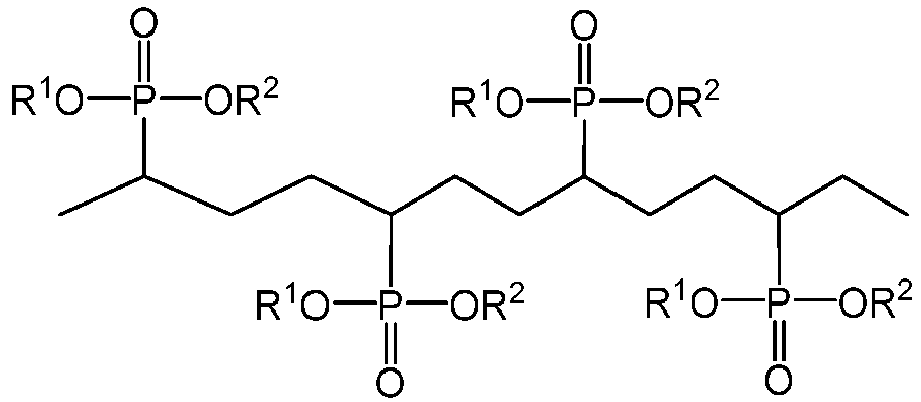 |
| 13 |  |
| 14 |  |
| 15 |  |
| 16 |  |
| 17 |  |
| 18 |  |
| 19 |  |
| 20 |  |
| 21 |  |
| 22 |  |
| 23 |  |
| 24 |  |
| 25 |  |
| 26 |  |
| 27 | 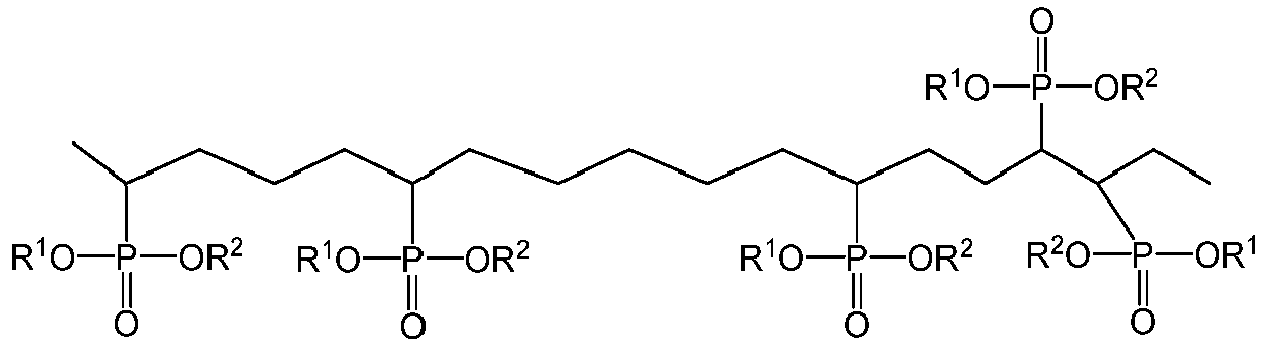 |
| 28 |  |
| 29 | 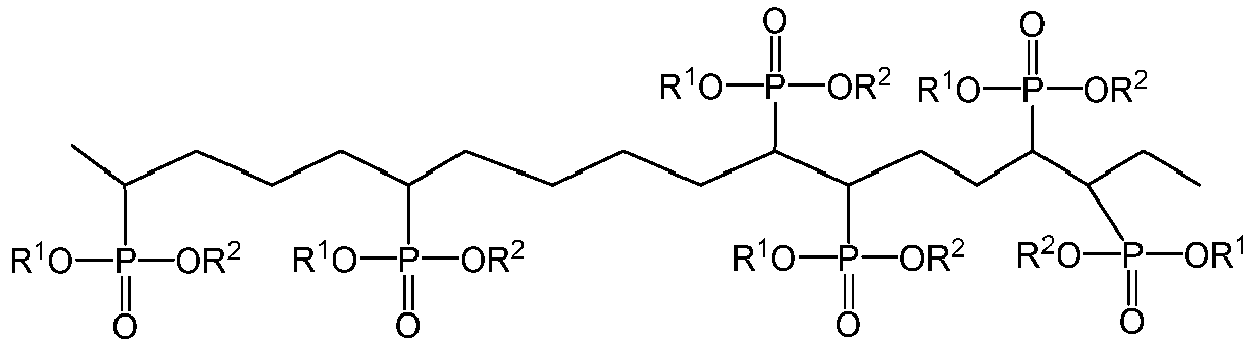 |
Clause 25. The method of Clause 24, wherein each of R1 and R2 is independently C1-5 alkyl or C3-6 cycloalkyl.
Clause 26. The phosphono paraffin of Clause 23, wherein each of R1 and R2 are the same.
Clause 27. The phosphono paraffin of Clause 23, wherein each of R1 and R2 are independently isopropyl, butyl, or phenyl.
Clause 28. The phosphono paraffin of any one of Clauses 13 - 22, wherein the phosphono paraffin comprises:
| 30 |  |
| 31 |  |
| 32 |  |
| 33 |  |
| 34 |  |
| 35 |  |
| 36 |  |
| 37 |  |
| 38 |  |
| 39 |  |
| 40 |  |
| 41 |  |
| 42 |  |
| 43 |  |
| 44 |  |
| 45 |  |
| 46 |  |
| 47 |  |
| 48 |  |
| 49 | 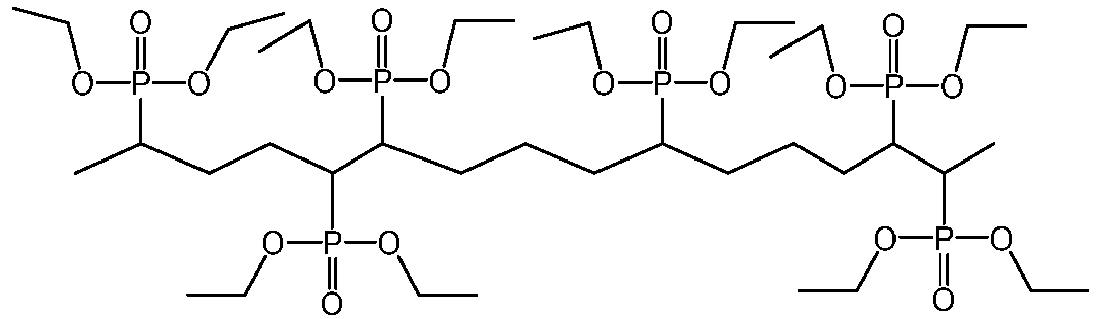 |
| 50 |  |
| 51 | 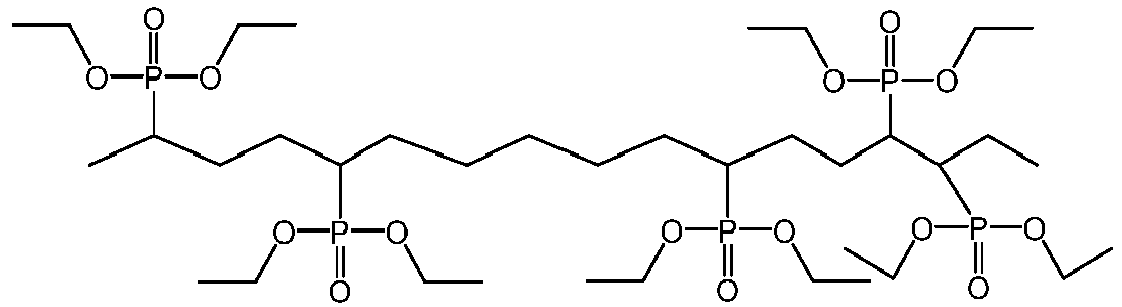 |
| 52 |  |
| 53 |  |
| 54 |  |
| 55 |  |
| 56 |  |
| 57 |  |
| 58 | 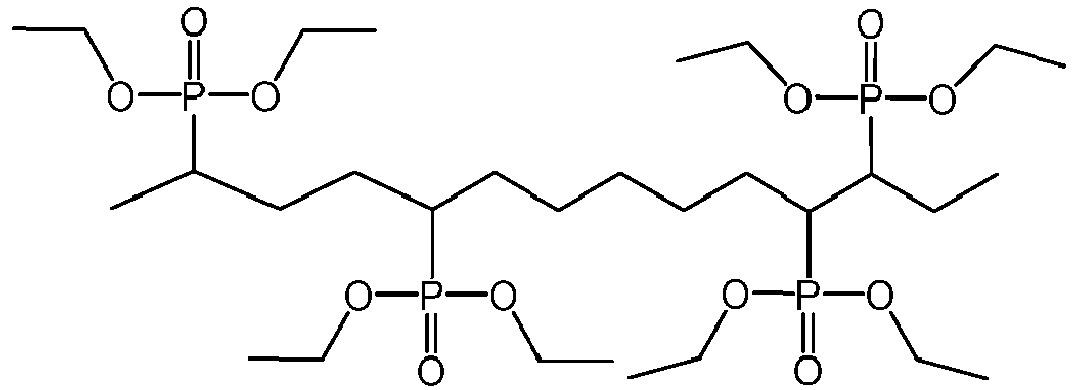 |
| 59 |  |
| R1 and R2 are butyl | |
| 60 |  |
| R1 and R2 are butyl | |
| 61 |  |
| R1 and R2 are butyl | |
| 62 |  |
| R1 and R2 are butyl | |
| 63 |  |
| R1 and R2 are butyl | |
| 64 |  |
| R1 and R2 are butyl | |
| 65 |  |
| R1 and R2 are butyl | |
| 66 |  |
| R1 and R2 are butyl | |
| 67 | 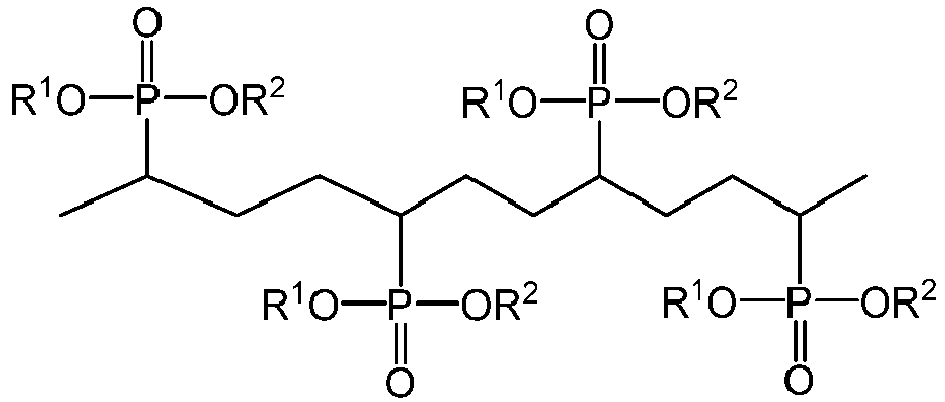 |
| R1 and R2 are butyl | |
| 68 |  |
| R1 and R2 are butyl | |
| 69 | 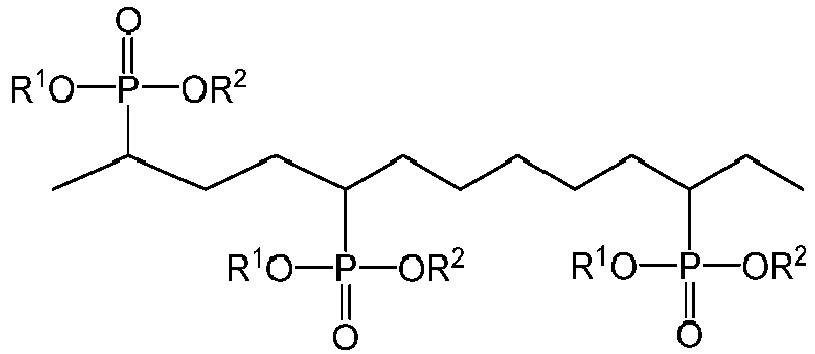 |
| R1 and R2 are butyl | |
| 70 |  |
| R1 and R2 are butyl | |
| 71 |  |
| R1 and R2 are butyl | |
| 72 |  |
| R1 and R2 are butyl | |
| 73 |  |
| R1 and R2 are butyl | |
| 74 |  |
| R1 and R2 are butyl | |
| 75 |  |
| R1 and R2 are butyl | |
| 76 |  |
| R1 and R2 are butyl | |
| 77 |  |
| R1 and R2 are butyl | |
| 78 |  |
| R1 and R2 are butyl | |
| 79 |  |
| R1 and R2 are butyl | |
| 80 |  |
| R1 and R2 are butyl | |
| 81 | 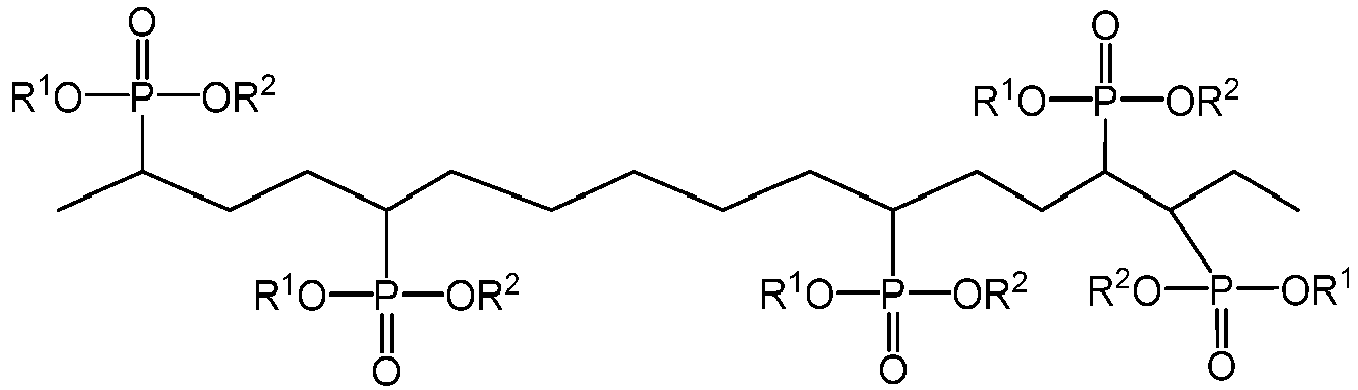 |
| R1 and R2 are butyl | |
| 82 |  |
| R1 and R2 are butyl | |
| 83 |  |
| R1 and R2 are butyl | |
| 84 |  |
| R1 and R2 are butyl | |
| 85 | 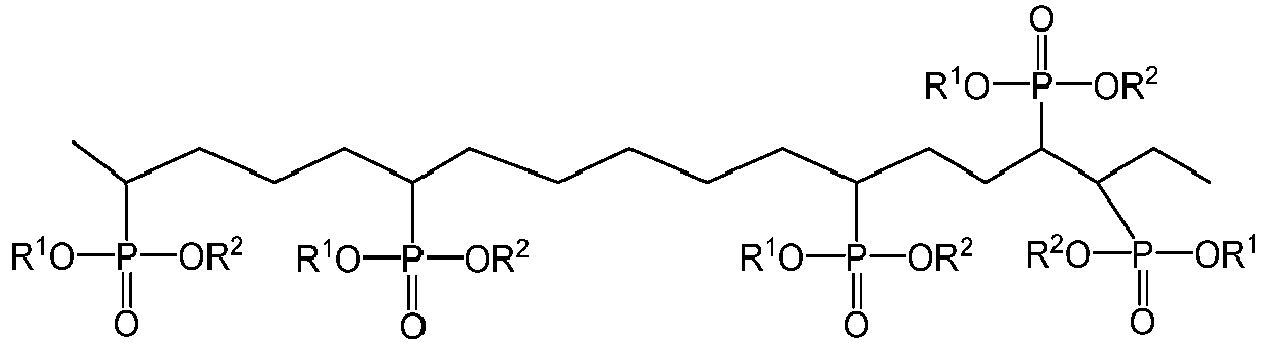 |
| R1 and R2 are butyl | |
| 86 |  |
| R1 and R2 are butyl | |
| 87 |  |
| R1 and R2 are butyl |
Clause 30. The phosphono paraffin of any one of Clauses 13 - 22, wherein the phosphono paraffin comprises:
| 88 |  |
| R1 and R2 are pentyl | |
| 89 | 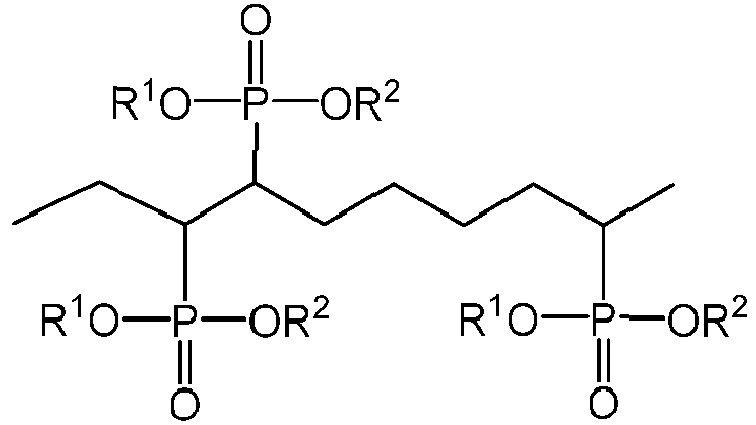 |
| R1 and R2 are pentyl | |
| 90 | 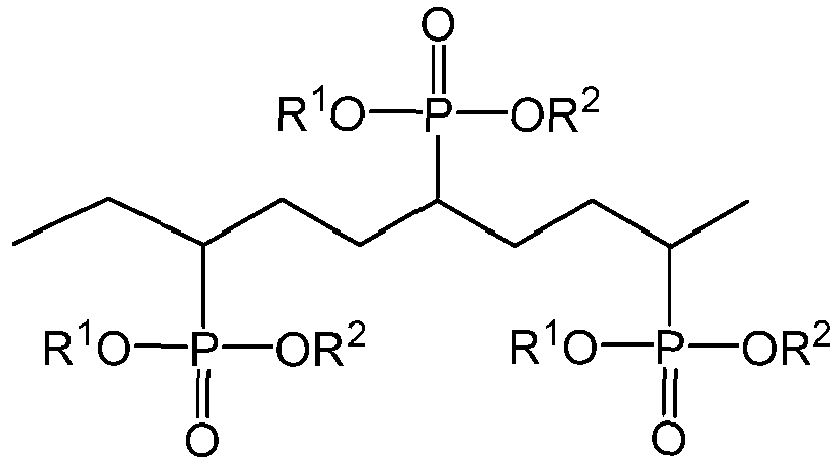 |
| R1 and R2 are pentyl | |
| 91 |  |
| R1 and R2 are pentyl | |
| 92 | 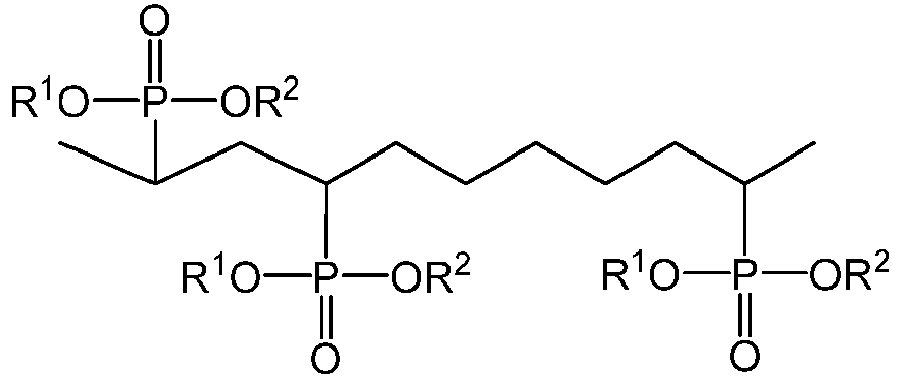 |
| R1 and R2 are pentyl | |
| 93 |  |
| R1 and R2 are pentyl | |
| 94 |  |
| R1 and R2 are pentyl | |
| 95 |  |
| R1 and R2 are pentyl | |
| 96 |  |
| R1 and R2 are pentyl | |
| 97 |  |
| R1 and R2 are pentyl | |
| 98 |  |
| R1 and R2 are pentyl | |
| 99 |  |
| R1 and R2 are pentyl | |
| 100 |  |
| R1 and R2 are pentyl | |
| 101 |  |
| R1 and R2 are pentyl | |
| 102 |  |
| R1 and R2 are pentyl | |
| 103 |  |
| R1 and R2 are pentyl | |
| 104 |  |
| R1 and R2 are pentyl | |
| 105 |  |
| R1 and R2 are pentyl | |
| 106 |  |
| R1 and R2 are pentyl | |
| 107 |  |
| R1 and R2 are pentyl | |
| 108 |  |
| R1 and R2 are pentyl | |
| 109 |  |
| R1 and R2 are pentyl | |
| 110 |  |
| R1 and R2 are pentyl | |
| 111 |  |
| R1 and R2 are pentyl | |
| 112 |  |
| R1 and R2 are pentyl | |
| 113 | 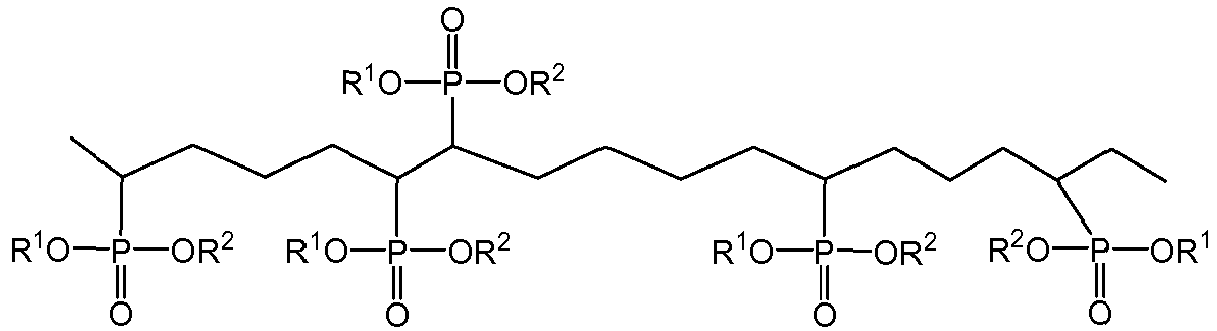 |
| R1 and R2 are pentyl | |
| 114 |  |
| R1 and R2 are pentyl | |
| 115 |  |
| R1 and R2 are pentyl | |
| 116 |  |
| R1 and R2 are pentyl |
Clause 31. The phosphono paraffin of any one of Clauses 13 - 22, wherein the phosphono paraffin comprises:
| 117 |  |
| R1 and R2 are hexyl | |
| 118 |  |
| R1 and R2 are hexyl | |
| 119 |  |
| R1 and R2 are hexyl | |
| 120 |  |
| R1 and R2 are hexyl | |
| 121 |  |
| R1 and R2 are hexyl | |
| 122 |  |
| R1 and R2 are hexyl | |
| 123 |  |
| R1 and R2 are hexyl | |
| 124 |  |
| R1 and R2 are hexyl | |
| 125 |  |
| R1 and R2 are hexyl | |
| 126 |  |
| R1 and R2 are hexyl | |
| 127 | 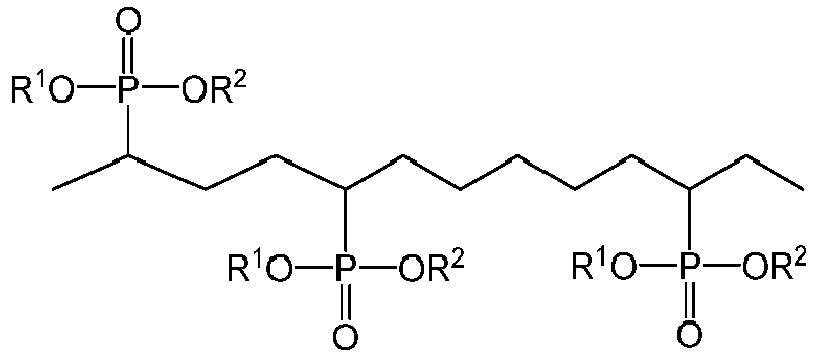 |
| R1 and R2 are hexyl | |
| 128 |  |
| R1 and R2 are hexyl | |
| 129 |  |
| R1 and R2 are hexyl | |
| 130 |  |
| R1 and R2 are hexyl | |
| 131 |  |
| R1 and R2 are hexyl | |
| 132 |  |
| R1 and R2 are hexyl | |
| 133 |  |
| R1 and R2 are hexyl | |
| 134 |  |
| R1 and R2 are hexyl | |
| 135 | 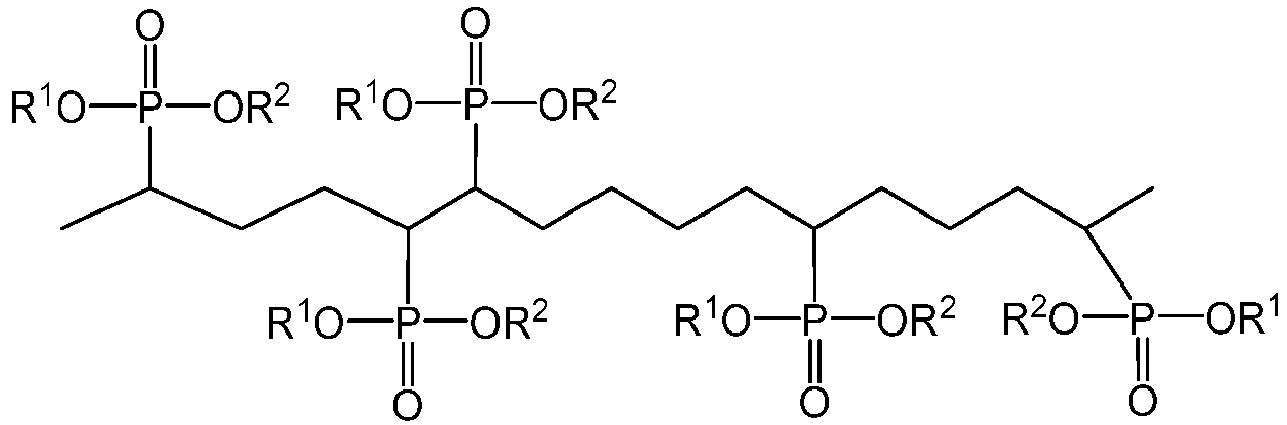 |
| R1 and R2 are hexyl | |
| 136 |  |
| R1 and R2 are hexyl | |
| 137 |  |
| R1 and R2 are hexyl | |
| 138 |  |
| R1 and R2 are hexyl | |
| 139 |  |
| R1 and R2 are hexyl | |
| 140 |  |
| R1 and R2 are hexyl | |
| 141 |  |
| R1 and R2 are hexyl | |
| 142 |  |
| R1 and R2 are hexyl | |
| 143 |  |
| R1 and R2 are hexyl | |
| 144 |  |
| R1 and R2 are hexyl | |
| 145 |  |
| R1 and R2 are hexyl |
Clause 32. A hydraulic fluid comprising:
Claims (15)
- A method of making a phosphono paraffin, comprising:mixing a (i) haloparaffin, (ii) a phosphite, and (iii) one or more of sodium iodide, potassium iodide or potassium bromide to form a reaction mixture; andheating the reaction mixture to form a phosphono paraffin.
- The method of claim 1, wherein the haloparaffin is a chloroparaffin.
- The method of claim 1 or 2, wherein the haloparaffin has one or more secondary halogen moieties.
- The method of any one of claims 1-3, further comprising isolating the phosphono paraffin at an overall yield of between about 40% and about 60%.
- The method of any one of claims 1-4, wherein the phosphite is represented by the formula

- The method of any one of claims 1-5, wherein the phosphite comprises triethyl phosphite, tributyl phosphite, tripentyl phosphite, trihexyl phosphite, triheptyl phosphite, trioctyl phosphite, trinonyl phosphite, tridecyl phosphite, or mixtures thereof.
- The method of any one of claims 1-6, wherein the reaction mixture is heated to a temperature of between about 120°C and about 200°C.
- The method of any one of claim 1-7, further comprising mixing a solvent with the haloparaffin, the phosphite, and sodium iodide, wherein the solvent comprises dimethylsulfoxide, dimethylformamide, chlorobenzene, N-methyl-2-pyrrolidinone, xylenes, or mixtures thereof.
- The method of any one of claims 1-8, wherein a molar ratio of phosphite:haloparaffin is between about 2:1 and about 6:1.
- The method of any one of claims 1-9, wherein the mixing comprises mixing a (i) haloparaffin, (ii) a phosphite, and (iii) sodium iodide
- The method of any one of claims 1-10, wherein a molar ratio of sodium iodide:haloparaffin is between about 2:1 and about 6:1.
- The method of any one of claims 1-11, further comprising cooling the reaction product and isolating the phosphono paraffin from a sodium halide byproduct.
- The method of any one of claims 1-12, wherein a phosphono paraffin represented by formula (I): wherein:
 each instance of R3 is independently -H or
 each instance of R1 and R2 is independently C1-20 alkyl, C3-20 cycloalkyl, or aryl; n is an integer between 4 and 22;and the number of instances where R3 is
- The method of any one of claims 1-13, wherein the number of instances where R3 is

- The method of any one of claims 1-14, wherein the phosphono paraffin comprises:
1 
2 
3 
4 
5 
6 
7 
8 
9 
10 
11 
12 
13 
14 
15 
16 
17 
18 
19 
20 
21 
22 
23 
24 
25 
26 
27 
28 
29 
30 
31 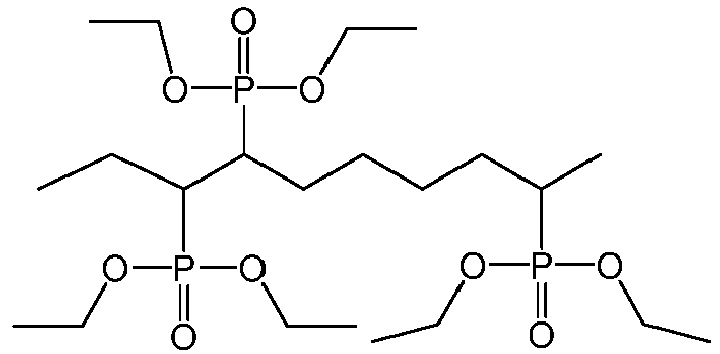
32 
33 
34 
35 
36 
37 
38 
39 
40 
41 
42 
43 
44 
45 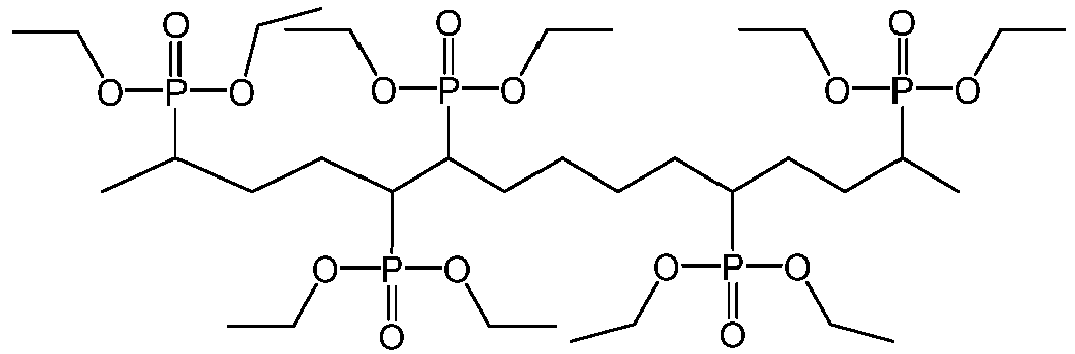
46 
47 
48 
49 
50 
51 
52 
53 
54 
55 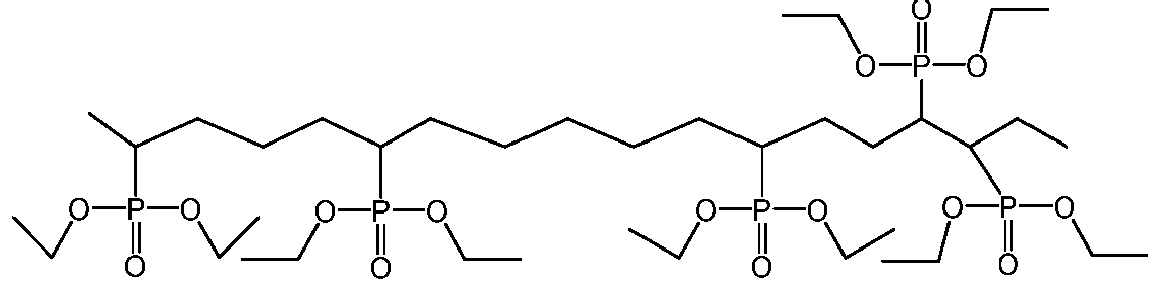
56 
57 
58 
59 
R1 and R2 are butyl 60 
R1 and R2 are butyl 61 
R1 and R2 are butyl 62 
R1 and R2 are butyl 63 
R1 and R2 are butyl 64 
R1 and R2 are butyl 65 
R1 and R2 are butyl 66 
R1 and R2 are butyl 67 
R1 and R2 are butyl 68 
R1 and R2 are butyl 69 
R1 and R2 are butyl 70 
R1 and R2 are butyl 71 
R1 and R2 are butyl 72 
R1 and R2 are butyl 73 
3R1 and R2 are butyl 74 
R1 and R2 are butyl 75 
R1 and R2 are butyl 76 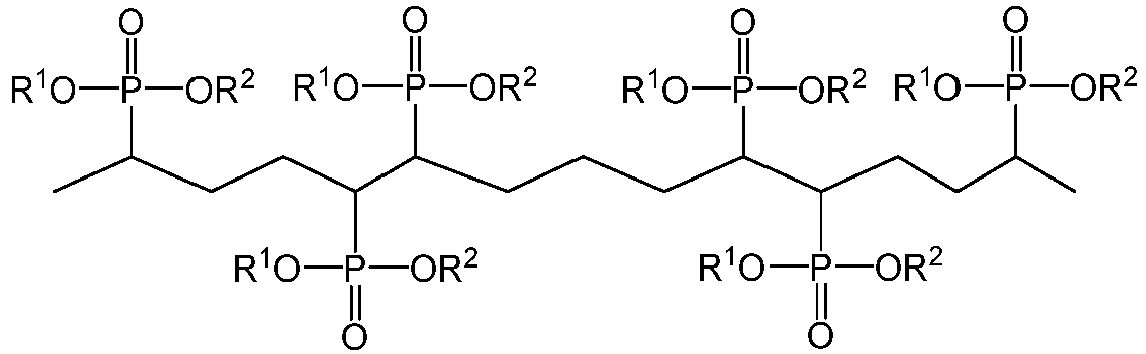
R1 and R2 are butyl 77 
R1 and R2 are butyl 78 
R1 and R2 are butyl 79 
R1 and R2 are butyl 80 
R1 and R2 are butyl 81 
R1 and R2 are butyl 82 
R1 and R2 are butyl 83 
R1 and R2 are butyl 84 
R1 and R2 are butyl 85 
R1 and R2 are butyl 86 
R1 and R2 are butyl 87 
R1 and R2 are butyl 88 
R1 and R2 are pentyl 89 
R1 and R2 are pentyl 90 
R1 and R2 are pentyl 91 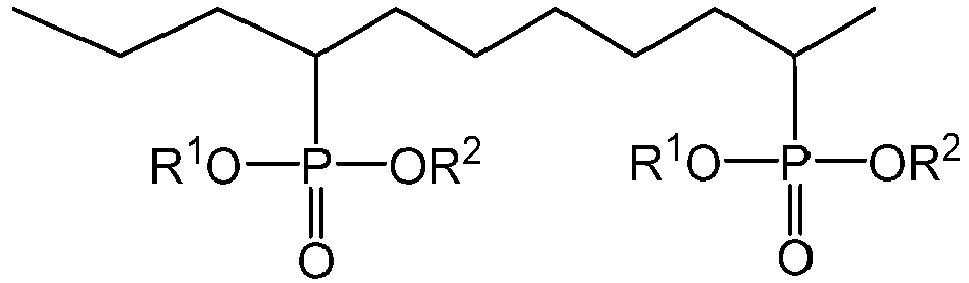
R1 and R2 are pentyl 92 
R1 and R2 are pentyl 93 
R1 and R2 are pentyl 94 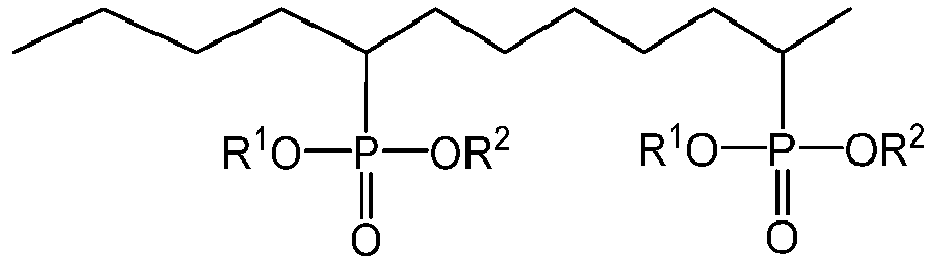
R1 and R2 are pentyl 95 
R1 and R2 are pentyl 96 
R1 and R2 are pentyl 97 
R1 and R2 are pentyl 98 
R1 and R2 are pentyl 99 
R1 and R2 are pentyl 100 
R1 and R2 are pentyl 101 
R1 and R2 are pentyl 102 
R1 and R2 are pentyl 103 
R1 and R2 are pentyl 104 
R1 and R2 are pentyl 105 
R1 and R2 are pentyl 106 
R1 and R2 are pentyl 107 
R1 and R2 are pentyl 108 
R1 and R2 are pentyl 109 
R1 and R2 are pentyl 110 
R1 and R2 are pentyl 111 
R1 and R2 are pentyl 112 
R1 and R2 are pentyl 113 
R1 and R2 are pentyl 114 
R1 and R2 are pentyl 115 
R1 and R2 are pentyl 116 
R1 and R2 are pentyl 117 
R1 and R2 are hexyl 118 
R1 and R2 are hexyl 119 
R1 and R2 are hexyl 120 
R1 and R2 are hexyl 121 
R1 and R2 are hexyl 122 
R1 and R2 are hexyl 123 
R1 and R2 are hexyl 124 
R1 and R2 are hexyl 125 
R1 and R2 are hexyl 126 
R1 and R2 are hexyl 127 
R1 and R2 are hexyl 128 
R1 and R2 are hexyl 129 
R1 and R2 are hexyl 130 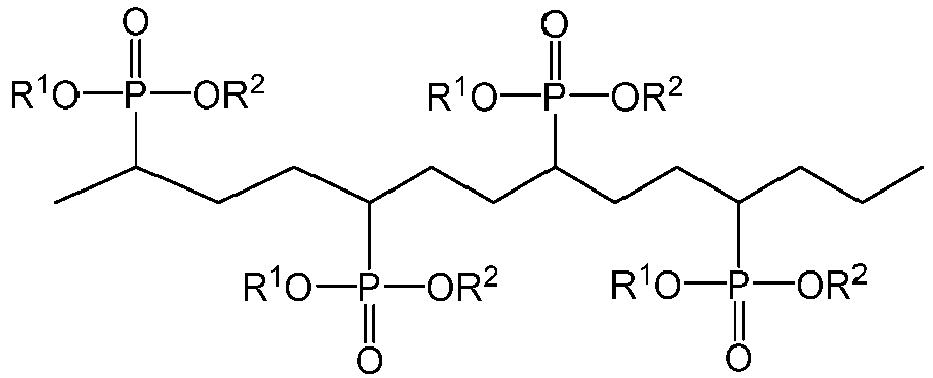
R1 and R2 are hexyl 131 
R1 and R2 are hexyl 132 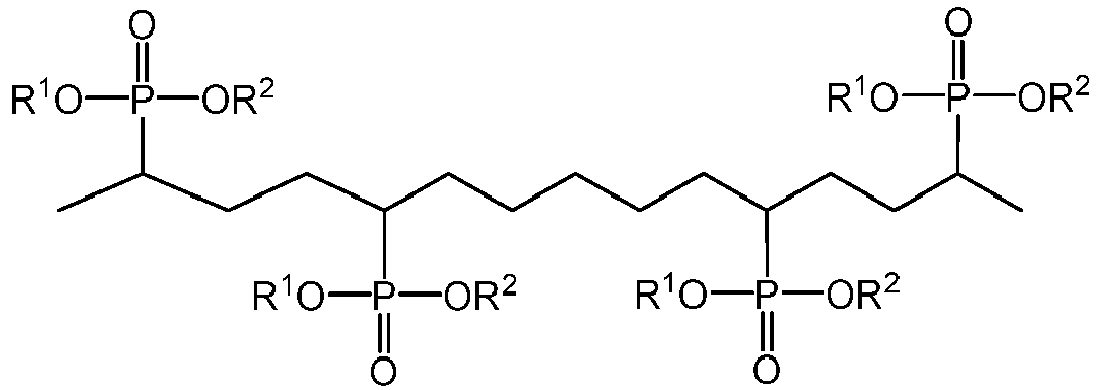
R1 and R2 are hexyl 133 
R1 and R2 are hexyl 134 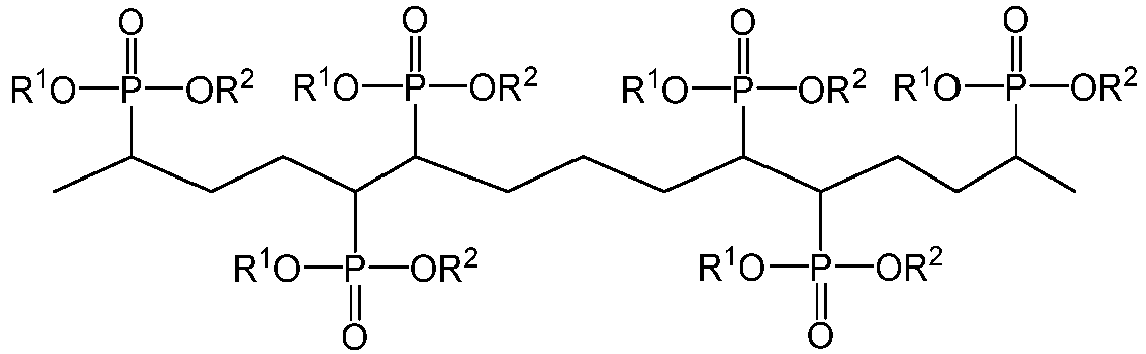
R1 and R2 are hexyl 135 
R1 and R2 are hexyl 136 
R1 and R2 are hexyl 137 
R1 and R2 are hexyl 138 
R1 and R2 are hexyl 139 
R1 and R2 are hexyl 140 
R1 and R2 are hexyl 141 
R1 and R2 are hexyl 142 
R1 and R2 are hexyl 143 
R1 and R2 are hexyl 144 
R1 and R2 are hexyl 145 
R1 and R2 are hexyl
Applications Claiming Priority (2)
| Application Number | Priority Date | Filing Date | Title |
|---|---|---|---|
| US15/404,106 US10113131B2 (en) | 2017-01-11 | 2017-01-11 | Phosphono paraffins |
| EP17208998.9A EP3348628B1 (en) | 2017-01-11 | 2017-12-20 | Phosphono paraffins |
Related Parent Applications (2)
| Application Number | Title | Priority Date | Filing Date |
|---|---|---|---|
| EP17208998.9A Division-Into EP3348628B1 (en) | 2017-01-11 | 2017-12-20 | Phosphono paraffins |
| EP17208998.9A Division EP3348628B1 (en) | 2017-01-11 | 2017-12-20 | Phosphono paraffins |
Publications (2)
| Publication Number | Publication Date |
|---|---|
| EP3587540A1 true EP3587540A1 (en) | 2020-01-01 |
| EP3587540B1 EP3587540B1 (en) | 2023-09-27 |
Family
ID=60953564
Family Applications (2)
| Application Number | Title | Priority Date | Filing Date |
|---|---|---|---|
| EP19191916.6A Active EP3587540B1 (en) | 2017-01-11 | 2017-12-20 | Phosphono paraffins |
| EP17208998.9A Active EP3348628B1 (en) | 2017-01-11 | 2017-12-20 | Phosphono paraffins |
Family Applications After (1)
| Application Number | Title | Priority Date | Filing Date |
|---|---|---|---|
| EP17208998.9A Active EP3348628B1 (en) | 2017-01-11 | 2017-12-20 | Phosphono paraffins |
Country Status (6)
| Country | Link |
|---|---|
| US (5) | US10113131B2 (en) |
| EP (2) | EP3587540B1 (en) |
| JP (2) | JP7114251B2 (en) |
| CN (2) | CN116041390A (en) |
| AU (1) | AU2017272170B2 (en) |
| CA (1) | CA2984521C (en) |
Cited By (1)
| Publication number | Priority date | Publication date | Assignee | Title |
|---|---|---|---|---|
| US11186797B2 (en) | 2017-01-11 | 2021-11-30 | The Boeing Company | Phosphono paraffins |
Citations (2)
| Publication number | Priority date | Publication date | Assignee | Title |
|---|---|---|---|---|
| GB705224A (en) * | 1950-12-18 | 1954-03-10 | Namlooze Vennootschap De Bataa | Hydraulic and lubricating fluids |
| US5328623A (en) * | 1991-08-16 | 1994-07-12 | Ciba-Geigy Corporation | Compositions containing n-heterocyclic phosphonates which contain 6 ring members |
Family Cites Families (26)
| Publication number | Priority date | Publication date | Assignee | Title |
|---|---|---|---|---|
| US2686760A (en) | 1951-10-27 | 1954-08-17 | Shell Dev | Hydraulic fluids and lubricating compositions |
| US3158640A (en) | 1961-02-08 | 1964-11-24 | Lubrizol Corp | Method for preparing phosphonoalcohols |
| FR1566028A (en) * | 1967-05-24 | 1969-05-02 | ||
| US4098707A (en) * | 1977-04-20 | 1978-07-04 | Mobil Oil Corporation | Lubricant composition |
| ATE166102T1 (en) * | 1992-06-11 | 1998-05-15 | Monsanto Co | FUNCTIONAL LIQUID |
| US6030543A (en) * | 1993-03-04 | 2000-02-29 | Great Lakes Chemical Corporation | Aircraft hydraulic fluid basestocks |
| ATE371714T1 (en) * | 1998-10-23 | 2007-09-15 | Exxonmobil Res & Eng Co | USE OF BASE OILS CONTAINING PHOSPHATE ESTERS AS AIRCRAFT HYDRAULIC FLUID |
| JP2002529577A (en) * | 1998-11-10 | 2002-09-10 | エクソンモービル リサーチ アンド エンジニアリング カンパニー | Phosphate ester base oil comprising n-butyl / isobutyl phosphate ester mixture and aircraft hydraulic fluid comprising said base oil |
| US6391225B1 (en) * | 2000-02-25 | 2002-05-21 | Exxonmobil Research And Engineering Company | Phosphate ester hydraulic fluids with improved properties (law935) |
| WO2002012777A2 (en) * | 2000-08-04 | 2002-02-14 | Exxonmobil Research And Engineering Company | Method for lubricating high pressure hydraulic system using phosphate ester hydraulic fluid |
| JP2006505654A (en) * | 2002-11-04 | 2006-02-16 | ソリユテイア・インコーポレイテツド | Functional fluid composition containing an erosion inhibitor |
| WO2004067540A1 (en) | 2003-01-31 | 2004-08-12 | Nippon Soda Co., Ltd. | Novel compounds capable of forming photoconvertible organic thin films and articles having organic thin films |
| CA2496100A1 (en) | 2004-03-10 | 2005-09-10 | Afton Chemical Corporation | Power transmission fluids with enhanced extreme pressure characteristics |
| US7582225B2 (en) * | 2005-06-14 | 2009-09-01 | Solutia, Inc. | High performance phosphate ester hydraulic fluid |
| US7410935B2 (en) | 2006-03-22 | 2008-08-12 | Afton Chemical Corporation | Gear fluids |
| JP2009537636A (en) | 2006-05-19 | 2009-10-29 | ザ ボード オブ トラスティーズ オブ ザ ユニヴァーシティー オブ イリノイ | Phosphorus-containing compounds including triphenylmethylphosphonate for the treatment of melanoma and other cancers |
| CN101818069B (en) | 2010-04-02 | 2014-01-01 | 南京师范大学 | A kind of preparation method of single and double mixed phosphonate flame retardant |
| KR102102501B1 (en) * | 2013-06-03 | 2020-04-20 | 가부시키가이샤 아데카 | Polyfunctional lubricant composition |
| US9650586B2 (en) * | 2013-07-23 | 2017-05-16 | The Boeing Company | Redox couple-based mitigation of fluid-flow-driven electrochemical surface degradation |
| EP2848640A1 (en) * | 2013-09-13 | 2015-03-18 | LANXESS Deutschland GmbH | Phosphoric acid ester compositions with reduced hygroscopicity |
| JP6706247B2 (en) | 2015-03-25 | 2020-06-03 | 大八化学工業株式会社 | Method for producing alkylphosphonic acid |
| US20170158981A1 (en) * | 2015-12-07 | 2017-06-08 | Exxonmobil Research And Engineering Company | Functional fluid compositions containing erosion inhibitors |
| WO2017193174A1 (en) * | 2016-05-11 | 2017-11-16 | Commonwealth Scientific And Industrial Research Organisation | Polysiloxane hydraulic fluids |
| WO2018108869A1 (en) * | 2016-12-14 | 2018-06-21 | Evonik Oil Additives Gmbh | Use of polyesters as viscosity index improvers for aircraft hydraulic fluids |
| US10113131B2 (en) * | 2017-01-11 | 2018-10-30 | The Boeing Company | Phosphono paraffins |
| CN107056596B (en) * | 2017-06-02 | 2020-08-25 | 广州立达尔生物科技股份有限公司 | Preparation method of 2,6,11, 15-tetramethyl-2, 4,6,8,10,12, 14-hexadecaheptadien dialdehyde |
-
2017
- 2017-01-11 US US15/404,106 patent/US10113131B2/en active Active
- 2017-10-31 CA CA2984521A patent/CA2984521C/en active Active
- 2017-12-05 AU AU2017272170A patent/AU2017272170B2/en active Active
- 2017-12-20 EP EP19191916.6A patent/EP3587540B1/en active Active
- 2017-12-20 EP EP17208998.9A patent/EP3348628B1/en active Active
- 2017-12-25 CN CN202310099544.7A patent/CN116041390A/en active Pending
- 2017-12-25 CN CN201711426557.1A patent/CN108299497A/en active Pending
- 2017-12-25 JP JP2017247185A patent/JP7114251B2/en active Active
-
2018
- 2018-10-25 US US16/171,165 patent/US10557101B2/en active Active
-
2020
- 2020-02-10 US US16/786,367 patent/US11186797B2/en active Active
-
2021
- 2021-11-16 JP JP2021186081A patent/JP7357662B2/en active Active
- 2021-11-29 US US17/536,955 patent/US11618863B2/en active Active
-
2023
- 2023-04-03 US US18/130,255 patent/US12084625B2/en active Active
Patent Citations (2)
| Publication number | Priority date | Publication date | Assignee | Title |
|---|---|---|---|---|
| GB705224A (en) * | 1950-12-18 | 1954-03-10 | Namlooze Vennootschap De Bataa | Hydraulic and lubricating fluids |
| US5328623A (en) * | 1991-08-16 | 1994-07-12 | Ciba-Geigy Corporation | Compositions containing n-heterocyclic phosphonates which contain 6 ring members |
Non-Patent Citations (1)
| Title |
|---|
| KUBIK, STAFAN: "Michaelis-Arbusov-Reaktion", ROEMPP ONLINE, 31 March 2004 (2004-03-31), XP002780793 * |
Cited By (3)
| Publication number | Priority date | Publication date | Assignee | Title |
|---|---|---|---|---|
| US11186797B2 (en) | 2017-01-11 | 2021-11-30 | The Boeing Company | Phosphono paraffins |
| US11618863B2 (en) | 2017-01-11 | 2023-04-04 | The Boeing Company | Phosphono paraffins |
| US12084625B2 (en) | 2017-01-11 | 2024-09-10 | The Boeing Company | Phosphono paraffins |
Also Published As
| Publication number | Publication date |
|---|---|
| CA2984521A1 (en) | 2018-07-11 |
| US11186797B2 (en) | 2021-11-30 |
| JP2022043037A (en) | 2022-03-15 |
| JP7357662B2 (en) | 2023-10-06 |
| US11618863B2 (en) | 2023-04-04 |
| US10557101B2 (en) | 2020-02-11 |
| EP3348628B1 (en) | 2019-09-18 |
| AU2017272170A1 (en) | 2018-07-26 |
| US20180195019A1 (en) | 2018-07-12 |
| JP7114251B2 (en) | 2022-08-08 |
| US20200181520A1 (en) | 2020-06-11 |
| US12084625B2 (en) | 2024-09-10 |
| US20190062661A1 (en) | 2019-02-28 |
| US10113131B2 (en) | 2018-10-30 |
| EP3587540B1 (en) | 2023-09-27 |
| CN108299497A (en) | 2018-07-20 |
| JP2018135317A (en) | 2018-08-30 |
| US20230250352A1 (en) | 2023-08-10 |
| US20220081637A1 (en) | 2022-03-17 |
| AU2017272170B2 (en) | 2021-07-15 |
| CN116041390A (en) | 2023-05-02 |
| CA2984521C (en) | 2023-08-22 |
| EP3348628A1 (en) | 2018-07-18 |
Similar Documents
| Publication | Publication Date | Title |
|---|---|---|
| EP2349956B1 (en) | Farnesene dimers and/or farnesane dimers and compositions thereof | |
| US3931023A (en) | Triaryl phosphate ester functional fluids | |
| KR102123217B1 (en) | The use of carboxylic acid esters as lubricants | |
| EP3242920B1 (en) | New additives for oilfield and industrial applications | |
| JP4456708B2 (en) | Lubricating oil composition containing cyclic organophosphorus compound | |
| US12084625B2 (en) | Phosphono paraffins | |
| CN111057102B (en) | Organophosphorus compounds and preparation methods and uses thereof | |
| CN113348233B (en) | Refrigerator oil and method for producing refrigerator oil | |
| EP3196277B1 (en) | Refrigerator oil, refrigerator oil composition, and refrigerator | |
| WO2020175005A1 (en) | Refrigerator composition | |
| CN113166669A (en) | Refrigerator oil and working fluid composition for refrigerator | |
| CN113166674A (en) | Refrigerator oil and working fluid composition for refrigerator | |
| JP5344833B2 (en) | Lubricating oil additive composition | |
| TWI853881B (en) | Refrigeration oil and method for producing refrigeration oil | |
| US2999120A (en) | Viscosity index improving agents | |
| KR100201759B1 (en) | Hydraulic Fluid Composition | |
| CA1073440A (en) | Triaryl phosphate ester functional fluids | |
| RU2441058C2 (en) | Engine-reduction gear oil | |
| CN102796597A (en) | Preparation method of synthetic industrial heavy load gear oil |
Legal Events
| Date | Code | Title | Description |
|---|---|---|---|
| PUAI | Public reference made under article 153(3) epc to a published international application that has entered the european phase |
Free format text: ORIGINAL CODE: 0009012 |
|
| STAA | Information on the status of an ep patent application or granted ep patent |
Free format text: STATUS: THE APPLICATION HAS BEEN PUBLISHED |
|
| AC | Divisional application: reference to earlier application |
Ref document number: 3348628 Country of ref document: EP Kind code of ref document: P |
|
| AK | Designated contracting states |
Kind code of ref document: A1 Designated state(s): AL AT BE BG CH CY CZ DE DK EE ES FI FR GB GR HR HU IE IS IT LI LT LU LV MC MK MT NL NO PL PT RO RS SE SI SK SM TR |
|
| AX | Request for extension of the european patent |
Extension state: BA ME |
|
| STAA | Information on the status of an ep patent application or granted ep patent |
Free format text: STATUS: REQUEST FOR EXAMINATION WAS MADE |
|
| 17P | Request for examination filed |
Effective date: 20200623 |
|
| RBV | Designated contracting states (corrected) |
Designated state(s): AL AT BE BG CH CY CZ DE DK EE ES FI FR GB GR HR HU IE IS IT LI LT LU LV MC MK MT NL NO PL PT RO RS SE SI SK SM TR |
|
| GRAP | Despatch of communication of intention to grant a patent |
Free format text: ORIGINAL CODE: EPIDOSNIGR1 |
|
| STAA | Information on the status of an ep patent application or granted ep patent |
Free format text: STATUS: GRANT OF PATENT IS INTENDED |
|
| RIC1 | Information provided on ipc code assigned before grant |
Ipc: C10M 105/74 20060101AFI20220810BHEP |
|
| INTG | Intention to grant announced |
Effective date: 20220826 |
|
| GRAJ | Information related to disapproval of communication of intention to grant by the applicant or resumption of examination proceedings by the epo deleted |
Free format text: ORIGINAL CODE: EPIDOSDIGR1 |
|
| STAA | Information on the status of an ep patent application or granted ep patent |
Free format text: STATUS: REQUEST FOR EXAMINATION WAS MADE |
|
| GRAP | Despatch of communication of intention to grant a patent |
Free format text: ORIGINAL CODE: EPIDOSNIGR1 |
|
| STAA | Information on the status of an ep patent application or granted ep patent |
Free format text: STATUS: GRANT OF PATENT IS INTENDED |
|
| INTC | Intention to grant announced (deleted) | ||
| INTG | Intention to grant announced |
Effective date: 20230110 |
|
| RAP3 | Party data changed (applicant data changed or rights of an application transferred) |
Owner name: THE BOEING COMPANY |
|
| GRAS | Grant fee paid |
Free format text: ORIGINAL CODE: EPIDOSNIGR3 |
|
| P01 | Opt-out of the competence of the unified patent court (upc) registered |
Effective date: 20230713 |
|
| GRAA | (expected) grant |
Free format text: ORIGINAL CODE: 0009210 |
|
| STAA | Information on the status of an ep patent application or granted ep patent |
Free format text: STATUS: THE PATENT HAS BEEN GRANTED |
|
| AC | Divisional application: reference to earlier application |
Ref document number: 3348628 Country of ref document: EP Kind code of ref document: P |
|
| AK | Designated contracting states |
Kind code of ref document: B1 Designated state(s): AL AT BE BG CH CY CZ DE DK EE ES FI FR GB GR HR HU IE IS IT LI LT LU LV MC MK MT NL NO PL PT RO RS SE SI SK SM TR |
|
| REG | Reference to a national code |
Ref country code: GB Ref legal event code: FG4D |
|
| REG | Reference to a national code |
Ref country code: CH Ref legal event code: EP |
|
| REG | Reference to a national code |
Ref country code: DE Ref legal event code: R096 Ref document number: 602017074799 Country of ref document: DE |
|
| REG | Reference to a national code |
Ref country code: IE Ref legal event code: FG4D |
|
| REG | Reference to a national code |
Ref country code: LT Ref legal event code: MG9D |
|
| PG25 | Lapsed in a contracting state [announced via postgrant information from national office to epo] |
Ref country code: GR Free format text: LAPSE BECAUSE OF FAILURE TO SUBMIT A TRANSLATION OF THE DESCRIPTION OR TO PAY THE FEE WITHIN THE PRESCRIBED TIME-LIMIT Effective date: 20231228 |
|
| PG25 | Lapsed in a contracting state [announced via postgrant information from national office to epo] |
Ref country code: SE Free format text: LAPSE BECAUSE OF FAILURE TO SUBMIT A TRANSLATION OF THE DESCRIPTION OR TO PAY THE FEE WITHIN THE PRESCRIBED TIME-LIMIT Effective date: 20230927 Ref country code: RS Free format text: LAPSE BECAUSE OF FAILURE TO SUBMIT A TRANSLATION OF THE DESCRIPTION OR TO PAY THE FEE WITHIN THE PRESCRIBED TIME-LIMIT Effective date: 20230927 Ref country code: NO Free format text: LAPSE BECAUSE OF FAILURE TO SUBMIT A TRANSLATION OF THE DESCRIPTION OR TO PAY THE FEE WITHIN THE PRESCRIBED TIME-LIMIT Effective date: 20231227 Ref country code: LV Free format text: LAPSE BECAUSE OF FAILURE TO SUBMIT A TRANSLATION OF THE DESCRIPTION OR TO PAY THE FEE WITHIN THE PRESCRIBED TIME-LIMIT Effective date: 20230927 Ref country code: LT Free format text: LAPSE BECAUSE OF FAILURE TO SUBMIT A TRANSLATION OF THE DESCRIPTION OR TO PAY THE FEE WITHIN THE PRESCRIBED TIME-LIMIT Effective date: 20230927 Ref country code: HR Free format text: LAPSE BECAUSE OF FAILURE TO SUBMIT A TRANSLATION OF THE DESCRIPTION OR TO PAY THE FEE WITHIN THE PRESCRIBED TIME-LIMIT Effective date: 20230927 Ref country code: GR Free format text: LAPSE BECAUSE OF FAILURE TO SUBMIT A TRANSLATION OF THE DESCRIPTION OR TO PAY THE FEE WITHIN THE PRESCRIBED TIME-LIMIT Effective date: 20231228 Ref country code: FI Free format text: LAPSE BECAUSE OF FAILURE TO SUBMIT A TRANSLATION OF THE DESCRIPTION OR TO PAY THE FEE WITHIN THE PRESCRIBED TIME-LIMIT Effective date: 20230927 |
|
| REG | Reference to a national code |
Ref country code: NL Ref legal event code: MP Effective date: 20230927 |
|
| REG | Reference to a national code |
Ref country code: AT Ref legal event code: MK05 Ref document number: 1615453 Country of ref document: AT Kind code of ref document: T Effective date: 20230927 |
|
| PG25 | Lapsed in a contracting state [announced via postgrant information from national office to epo] |
Ref country code: NL Free format text: LAPSE BECAUSE OF FAILURE TO SUBMIT A TRANSLATION OF THE DESCRIPTION OR TO PAY THE FEE WITHIN THE PRESCRIBED TIME-LIMIT Effective date: 20230927 |
|
| PG25 | Lapsed in a contracting state [announced via postgrant information from national office to epo] |
Ref country code: IS Free format text: LAPSE BECAUSE OF FAILURE TO SUBMIT A TRANSLATION OF THE DESCRIPTION OR TO PAY THE FEE WITHIN THE PRESCRIBED TIME-LIMIT Effective date: 20240127 |
|
| PG25 | Lapsed in a contracting state [announced via postgrant information from national office to epo] |
Ref country code: AT Free format text: LAPSE BECAUSE OF FAILURE TO SUBMIT A TRANSLATION OF THE DESCRIPTION OR TO PAY THE FEE WITHIN THE PRESCRIBED TIME-LIMIT Effective date: 20230927 |
|
| PG25 | Lapsed in a contracting state [announced via postgrant information from national office to epo] |
Ref country code: ES Free format text: LAPSE BECAUSE OF FAILURE TO SUBMIT A TRANSLATION OF THE DESCRIPTION OR TO PAY THE FEE WITHIN THE PRESCRIBED TIME-LIMIT Effective date: 20230927 |
|
| PG25 | Lapsed in a contracting state [announced via postgrant information from national office to epo] |
Ref country code: SM Free format text: LAPSE BECAUSE OF FAILURE TO SUBMIT A TRANSLATION OF THE DESCRIPTION OR TO PAY THE FEE WITHIN THE PRESCRIBED TIME-LIMIT Effective date: 20230927 Ref country code: RO Free format text: LAPSE BECAUSE OF FAILURE TO SUBMIT A TRANSLATION OF THE DESCRIPTION OR TO PAY THE FEE WITHIN THE PRESCRIBED TIME-LIMIT Effective date: 20230927 Ref country code: IS Free format text: LAPSE BECAUSE OF FAILURE TO SUBMIT A TRANSLATION OF THE DESCRIPTION OR TO PAY THE FEE WITHIN THE PRESCRIBED TIME-LIMIT Effective date: 20240127 Ref country code: ES Free format text: LAPSE BECAUSE OF FAILURE TO SUBMIT A TRANSLATION OF THE DESCRIPTION OR TO PAY THE FEE WITHIN THE PRESCRIBED TIME-LIMIT Effective date: 20230927 Ref country code: EE Free format text: LAPSE BECAUSE OF FAILURE TO SUBMIT A TRANSLATION OF THE DESCRIPTION OR TO PAY THE FEE WITHIN THE PRESCRIBED TIME-LIMIT Effective date: 20230927 Ref country code: CZ Free format text: LAPSE BECAUSE OF FAILURE TO SUBMIT A TRANSLATION OF THE DESCRIPTION OR TO PAY THE FEE WITHIN THE PRESCRIBED TIME-LIMIT Effective date: 20230927 Ref country code: AT Free format text: LAPSE BECAUSE OF FAILURE TO SUBMIT A TRANSLATION OF THE DESCRIPTION OR TO PAY THE FEE WITHIN THE PRESCRIBED TIME-LIMIT Effective date: 20230927 Ref country code: PT Free format text: LAPSE BECAUSE OF FAILURE TO SUBMIT A TRANSLATION OF THE DESCRIPTION OR TO PAY THE FEE WITHIN THE PRESCRIBED TIME-LIMIT Effective date: 20240129 Ref country code: SK Free format text: LAPSE BECAUSE OF FAILURE TO SUBMIT A TRANSLATION OF THE DESCRIPTION OR TO PAY THE FEE WITHIN THE PRESCRIBED TIME-LIMIT Effective date: 20230927 |
|
| PG25 | Lapsed in a contracting state [announced via postgrant information from national office to epo] |
Ref country code: PL Free format text: LAPSE BECAUSE OF FAILURE TO SUBMIT A TRANSLATION OF THE DESCRIPTION OR TO PAY THE FEE WITHIN THE PRESCRIBED TIME-LIMIT Effective date: 20230927 Ref country code: IT Free format text: LAPSE BECAUSE OF FAILURE TO SUBMIT A TRANSLATION OF THE DESCRIPTION OR TO PAY THE FEE WITHIN THE PRESCRIBED TIME-LIMIT Effective date: 20230927 |
|
| REG | Reference to a national code |
Ref country code: DE Ref legal event code: R097 Ref document number: 602017074799 Country of ref document: DE |
|
| PG25 | Lapsed in a contracting state [announced via postgrant information from national office to epo] |
Ref country code: DK Free format text: LAPSE BECAUSE OF FAILURE TO SUBMIT A TRANSLATION OF THE DESCRIPTION OR TO PAY THE FEE WITHIN THE PRESCRIBED TIME-LIMIT Effective date: 20230927 |
|
| PG25 | Lapsed in a contracting state [announced via postgrant information from national office to epo] |
Ref country code: DK Free format text: LAPSE BECAUSE OF FAILURE TO SUBMIT A TRANSLATION OF THE DESCRIPTION OR TO PAY THE FEE WITHIN THE PRESCRIBED TIME-LIMIT Effective date: 20230927 |
|
| REG | Reference to a national code |
Ref country code: CH Ref legal event code: PL |
|
| PLBE | No opposition filed within time limit |
Free format text: ORIGINAL CODE: 0009261 |
|
| STAA | Information on the status of an ep patent application or granted ep patent |
Free format text: STATUS: NO OPPOSITION FILED WITHIN TIME LIMIT |
|
| PG25 | Lapsed in a contracting state [announced via postgrant information from national office to epo] |
Ref country code: LU Free format text: LAPSE BECAUSE OF NON-PAYMENT OF DUE FEES Effective date: 20231220 |
|
| PG25 | Lapsed in a contracting state [announced via postgrant information from national office to epo] |
Ref country code: MC Free format text: LAPSE BECAUSE OF FAILURE TO SUBMIT A TRANSLATION OF THE DESCRIPTION OR TO PAY THE FEE WITHIN THE PRESCRIBED TIME-LIMIT Effective date: 20230927 |
|
| REG | Reference to a national code |
Ref country code: BE Ref legal event code: MM Effective date: 20231231 |
|
| PG25 | Lapsed in a contracting state [announced via postgrant information from national office to epo] |
Ref country code: MC Free format text: LAPSE BECAUSE OF FAILURE TO SUBMIT A TRANSLATION OF THE DESCRIPTION OR TO PAY THE FEE WITHIN THE PRESCRIBED TIME-LIMIT Effective date: 20230927 Ref country code: LU Free format text: LAPSE BECAUSE OF NON-PAYMENT OF DUE FEES Effective date: 20231220 |
|
| 26N | No opposition filed |
Effective date: 20240628 |
|
| REG | Reference to a national code |
Ref country code: IE Ref legal event code: MM4A |
|
| PG25 | Lapsed in a contracting state [announced via postgrant information from national office to epo] |
Ref country code: IE Free format text: LAPSE BECAUSE OF NON-PAYMENT OF DUE FEES Effective date: 20231220 |
|
| PG25 | Lapsed in a contracting state [announced via postgrant information from national office to epo] |
Ref country code: BE Free format text: LAPSE BECAUSE OF NON-PAYMENT OF DUE FEES Effective date: 20231231 |
|
| PG25 | Lapsed in a contracting state [announced via postgrant information from national office to epo] |
Ref country code: CH Free format text: LAPSE BECAUSE OF NON-PAYMENT OF DUE FEES Effective date: 20231231 |
|
| PG25 | Lapsed in a contracting state [announced via postgrant information from national office to epo] |
Ref country code: SI Free format text: LAPSE BECAUSE OF FAILURE TO SUBMIT A TRANSLATION OF THE DESCRIPTION OR TO PAY THE FEE WITHIN THE PRESCRIBED TIME-LIMIT Effective date: 20230927 |
|
| PG25 | Lapsed in a contracting state [announced via postgrant information from national office to epo] |
Ref country code: SI Free format text: LAPSE BECAUSE OF FAILURE TO SUBMIT A TRANSLATION OF THE DESCRIPTION OR TO PAY THE FEE WITHIN THE PRESCRIBED TIME-LIMIT Effective date: 20230927 Ref country code: IE Free format text: LAPSE BECAUSE OF NON-PAYMENT OF DUE FEES Effective date: 20231220 Ref country code: CH Free format text: LAPSE BECAUSE OF NON-PAYMENT OF DUE FEES Effective date: 20231231 Ref country code: BE Free format text: LAPSE BECAUSE OF NON-PAYMENT OF DUE FEES Effective date: 20231231 |
|
| PG25 | Lapsed in a contracting state [announced via postgrant information from national office to epo] |
Ref country code: BG Free format text: LAPSE BECAUSE OF FAILURE TO SUBMIT A TRANSLATION OF THE DESCRIPTION OR TO PAY THE FEE WITHIN THE PRESCRIBED TIME-LIMIT Effective date: 20230927 |
|
| PG25 | Lapsed in a contracting state [announced via postgrant information from national office to epo] |
Ref country code: BG Free format text: LAPSE BECAUSE OF FAILURE TO SUBMIT A TRANSLATION OF THE DESCRIPTION OR TO PAY THE FEE WITHIN THE PRESCRIBED TIME-LIMIT Effective date: 20230927 |
|
| PG25 | Lapsed in a contracting state [announced via postgrant information from national office to epo] |
Ref country code: CY Free format text: LAPSE BECAUSE OF FAILURE TO SUBMIT A TRANSLATION OF THE DESCRIPTION OR TO PAY THE FEE WITHIN THE PRESCRIBED TIME-LIMIT; INVALID AB INITIO Effective date: 20171220 |
|
| PG25 | Lapsed in a contracting state [announced via postgrant information from national office to epo] |
Ref country code: HU Free format text: LAPSE BECAUSE OF FAILURE TO SUBMIT A TRANSLATION OF THE DESCRIPTION OR TO PAY THE FEE WITHIN THE PRESCRIBED TIME-LIMIT; INVALID AB INITIO Effective date: 20171220 |
|
| PG25 | Lapsed in a contracting state [announced via postgrant information from national office to epo] |
Ref country code: TR Free format text: LAPSE BECAUSE OF FAILURE TO SUBMIT A TRANSLATION OF THE DESCRIPTION OR TO PAY THE FEE WITHIN THE PRESCRIBED TIME-LIMIT Effective date: 20230927 |
|
| PGFP | Annual fee paid to national office [announced via postgrant information from national office to epo] |
Ref country code: GB Payment date: 20251229 Year of fee payment: 9 |
|
| PGFP | Annual fee paid to national office [announced via postgrant information from national office to epo] |
Ref country code: FR Payment date: 20251226 Year of fee payment: 9 |
|
| PGFP | Annual fee paid to national office [announced via postgrant information from national office to epo] |
Ref country code: DE Payment date: 20251229 Year of fee payment: 9 |