EP3587353A1 - Ternary positive electrode material, method for preparing the same and lithium ion battery - Google Patents
Ternary positive electrode material, method for preparing the same and lithium ion battery Download PDFInfo
- Publication number
- EP3587353A1 EP3587353A1 EP19170004.6A EP19170004A EP3587353A1 EP 3587353 A1 EP3587353 A1 EP 3587353A1 EP 19170004 A EP19170004 A EP 19170004A EP 3587353 A1 EP3587353 A1 EP 3587353A1
- Authority
- EP
- European Patent Office
- Prior art keywords
- positive electrode
- electrode material
- ternary
- particles
- range
- Prior art date
- Legal status (The legal status is an assumption and is not a legal conclusion. Google has not performed a legal analysis and makes no representation as to the accuracy of the status listed.)
- Pending
Links
- 239000007774 positive electrode material Substances 0.000 title claims abstract description 90
- 238000000034 method Methods 0.000 title claims description 27
- HBBGRARXTFLTSG-UHFFFAOYSA-N Lithium ion Chemical compound [Li+] HBBGRARXTFLTSG-UHFFFAOYSA-N 0.000 title claims description 7
- 229910001416 lithium ion Inorganic materials 0.000 title claims description 7
- 239000011164 primary particle Substances 0.000 claims abstract description 60
- 239000011163 secondary particle Substances 0.000 claims abstract description 60
- 239000002245 particle Substances 0.000 claims abstract description 32
- 229910052782 aluminium Inorganic materials 0.000 claims abstract description 9
- 229910052684 Cerium Inorganic materials 0.000 claims abstract description 5
- 229910052796 boron Inorganic materials 0.000 claims abstract description 5
- 229910052791 calcium Inorganic materials 0.000 claims abstract description 5
- 229910052742 iron Inorganic materials 0.000 claims abstract description 5
- 229910052749 magnesium Inorganic materials 0.000 claims abstract description 5
- 229910052714 tellurium Inorganic materials 0.000 claims abstract description 5
- 229910052719 titanium Inorganic materials 0.000 claims abstract description 5
- 229910052725 zinc Inorganic materials 0.000 claims abstract description 5
- 229910052726 zirconium Inorganic materials 0.000 claims abstract description 5
- 229910052717 sulfur Inorganic materials 0.000 claims abstract description 3
- 238000005245 sintering Methods 0.000 claims description 70
- WMFOQBRAJBCJND-UHFFFAOYSA-M Lithium hydroxide Chemical group [Li+].[OH-] WMFOQBRAJBCJND-UHFFFAOYSA-M 0.000 claims description 36
- 239000002243 precursor Substances 0.000 claims description 36
- 238000001878 scanning electron micrograph Methods 0.000 claims description 25
- 238000005259 measurement Methods 0.000 claims description 21
- 239000011159 matrix material Substances 0.000 claims description 18
- 239000000463 material Substances 0.000 claims description 16
- XGZVUEUWXADBQD-UHFFFAOYSA-L lithium carbonate Chemical compound [Li+].[Li+].[O-]C([O-])=O XGZVUEUWXADBQD-UHFFFAOYSA-L 0.000 claims description 12
- 229910052808 lithium carbonate Inorganic materials 0.000 claims description 12
- QVGXLLKOCUKJST-UHFFFAOYSA-N atomic oxygen Chemical compound [O] QVGXLLKOCUKJST-UHFFFAOYSA-N 0.000 claims description 6
- 150000001875 compounds Chemical class 0.000 claims description 6
- 239000003792 electrolyte Substances 0.000 claims description 6
- 229910052760 oxygen Inorganic materials 0.000 claims description 6
- 239000001301 oxygen Substances 0.000 claims description 6
- 229910003684 NixCoyMnz Inorganic materials 0.000 claims description 5
- 229910003002 lithium salt Inorganic materials 0.000 claims description 4
- 159000000002 lithium salts Chemical class 0.000 claims description 4
- 238000002156 mixing Methods 0.000 claims description 4
- 238000000635 electron micrograph Methods 0.000 claims 1
- 230000001351 cycling effect Effects 0.000 abstract description 36
- 239000000203 mixture Substances 0.000 description 34
- 230000000052 comparative effect Effects 0.000 description 22
- 238000003860 storage Methods 0.000 description 16
- GWEVSGVZZGPLCZ-UHFFFAOYSA-N Titan oxide Chemical compound O=[Ti]=O GWEVSGVZZGPLCZ-UHFFFAOYSA-N 0.000 description 10
- TWNQGVIAIRXVLR-UHFFFAOYSA-N oxo(oxoalumanyloxy)alumane Chemical compound O=[Al]O[Al]=O TWNQGVIAIRXVLR-UHFFFAOYSA-N 0.000 description 10
- OGIDPMRJRNCKJF-UHFFFAOYSA-N titanium oxide Inorganic materials [Ti]=O OGIDPMRJRNCKJF-UHFFFAOYSA-N 0.000 description 10
- 239000010936 titanium Substances 0.000 description 7
- 239000011575 calcium Substances 0.000 description 5
- RVTZCBVAJQQJTK-UHFFFAOYSA-N oxygen(2-);zirconium(4+) Chemical compound [O-2].[O-2].[Zr+4] RVTZCBVAJQQJTK-UHFFFAOYSA-N 0.000 description 5
- 229910001928 zirconium oxide Inorganic materials 0.000 description 5
- 229910016365 Ni0.33Co0.33Mn0.33 Inorganic materials 0.000 description 4
- 239000011248 coating agent Substances 0.000 description 4
- 238000009826 distribution Methods 0.000 description 4
- 239000011777 magnesium Substances 0.000 description 4
- BRPQOXSCLDDYGP-UHFFFAOYSA-N calcium oxide Chemical compound [O-2].[Ca+2] BRPQOXSCLDDYGP-UHFFFAOYSA-N 0.000 description 3
- 239000000292 calcium oxide Substances 0.000 description 3
- ODINCKMPIJJUCX-UHFFFAOYSA-N calcium oxide Inorganic materials [Ca]=O ODINCKMPIJJUCX-UHFFFAOYSA-N 0.000 description 3
- 238000007086 side reaction Methods 0.000 description 3
- XLYOFNOQVPJJNP-UHFFFAOYSA-N water Chemical compound O XLYOFNOQVPJJNP-UHFFFAOYSA-N 0.000 description 3
- OKTJSMMVPCPJKN-UHFFFAOYSA-N Carbon Chemical compound [C] OKTJSMMVPCPJKN-UHFFFAOYSA-N 0.000 description 2
- WHXSMMKQMYFTQS-UHFFFAOYSA-N Lithium Chemical compound [Li] WHXSMMKQMYFTQS-UHFFFAOYSA-N 0.000 description 2
- 229910016722 Ni0.5Co0.2Mn0.3 Inorganic materials 0.000 description 2
- 229910017246 Ni0.8Co0.1Mn0.1 Inorganic materials 0.000 description 2
- 239000002033 PVDF binder Substances 0.000 description 2
- 239000006230 acetylene black Substances 0.000 description 2
- 239000011230 binding agent Substances 0.000 description 2
- 229910052810 boron oxide Inorganic materials 0.000 description 2
- 238000004364 calculation method Methods 0.000 description 2
- 239000001768 carboxy methyl cellulose Substances 0.000 description 2
- 238000000576 coating method Methods 0.000 description 2
- 239000006258 conductive agent Substances 0.000 description 2
- JKWMSGQKBLHBQQ-UHFFFAOYSA-N diboron trioxide Chemical compound O=BOB=O JKWMSGQKBLHBQQ-UHFFFAOYSA-N 0.000 description 2
- 238000011549 displacement method Methods 0.000 description 2
- 238000001035 drying Methods 0.000 description 2
- 239000007789 gas Substances 0.000 description 2
- XEEYBQQBJWHFJM-UHFFFAOYSA-N iron Substances [Fe] XEEYBQQBJWHFJM-UHFFFAOYSA-N 0.000 description 2
- 229910052744 lithium Inorganic materials 0.000 description 2
- 238000004519 manufacturing process Methods 0.000 description 2
- 238000002715 modification method Methods 0.000 description 2
- 229920002981 polyvinylidene fluoride Polymers 0.000 description 2
- 238000003825 pressing Methods 0.000 description 2
- 239000002904 solvent Substances 0.000 description 2
- 238000010561 standard procedure Methods 0.000 description 2
- 229920002134 Carboxymethyl cellulose Polymers 0.000 description 1
- RYGMFSIKBFXOCR-UHFFFAOYSA-N Copper Chemical compound [Cu] RYGMFSIKBFXOCR-UHFFFAOYSA-N 0.000 description 1
- SECXISVLQFMRJM-UHFFFAOYSA-N N-Methylpyrrolidone Chemical compound CN1CCCC1=O SECXISVLQFMRJM-UHFFFAOYSA-N 0.000 description 1
- DPXJVFZANSGRMM-UHFFFAOYSA-N acetic acid;2,3,4,5,6-pentahydroxyhexanal;sodium Chemical compound [Na].CC(O)=O.OCC(O)C(O)C(O)C(O)C=O DPXJVFZANSGRMM-UHFFFAOYSA-N 0.000 description 1
- XAGFODPZIPBFFR-UHFFFAOYSA-N aluminium Chemical compound [Al] XAGFODPZIPBFFR-UHFFFAOYSA-N 0.000 description 1
- -1 aluminum compound Chemical class 0.000 description 1
- 229910021383 artificial graphite Inorganic materials 0.000 description 1
- 229910052799 carbon Inorganic materials 0.000 description 1
- 235000010948 carboxy methyl cellulose Nutrition 0.000 description 1
- 239000008112 carboxymethyl-cellulose Substances 0.000 description 1
- 238000012512 characterization method Methods 0.000 description 1
- 239000011889 copper foil Substances 0.000 description 1
- 230000002596 correlated effect Effects 0.000 description 1
- 230000007812 deficiency Effects 0.000 description 1
- 239000008367 deionised water Substances 0.000 description 1
- 229910021641 deionized water Inorganic materials 0.000 description 1
- 238000002474 experimental method Methods 0.000 description 1
- 238000005562 fading Methods 0.000 description 1
- 239000011888 foil Substances 0.000 description 1
- 229910021385 hard carbon Inorganic materials 0.000 description 1
- 238000002955 isolation Methods 0.000 description 1
- GELKBWJHTRAYNV-UHFFFAOYSA-K lithium iron phosphate Chemical compound [Li+].[Fe+2].[O-]P([O-])([O-])=O GELKBWJHTRAYNV-UHFFFAOYSA-K 0.000 description 1
- 239000000395 magnesium oxide Substances 0.000 description 1
- CPLXHLVBOLITMK-UHFFFAOYSA-N magnesium oxide Inorganic materials [Mg]=O CPLXHLVBOLITMK-UHFFFAOYSA-N 0.000 description 1
- AXZKOIWUVFPNLO-UHFFFAOYSA-N magnesium;oxygen(2-) Chemical compound [O-2].[Mg+2] AXZKOIWUVFPNLO-UHFFFAOYSA-N 0.000 description 1
- 238000000691 measurement method Methods 0.000 description 1
- 238000012986 modification Methods 0.000 description 1
- 230000004048 modification Effects 0.000 description 1
- 239000007773 negative electrode material Substances 0.000 description 1
- 239000000843 powder Substances 0.000 description 1
- 238000002360 preparation method Methods 0.000 description 1
- 238000011160 research Methods 0.000 description 1
- 230000002441 reversible effect Effects 0.000 description 1
- 235000019812 sodium carboxymethyl cellulose Nutrition 0.000 description 1
- 229920001027 sodium carboxymethylcellulose Polymers 0.000 description 1
- 239000007787 solid Substances 0.000 description 1
- 229920003048 styrene butadiene rubber Polymers 0.000 description 1
- 239000002562 thickening agent Substances 0.000 description 1
- 239000011701 zinc Substances 0.000 description 1
Images

Classifications
-
- C—CHEMISTRY; METALLURGY
- C01—INORGANIC CHEMISTRY
- C01G—COMPOUNDS CONTAINING METALS NOT COVERED BY SUBCLASSES C01D OR C01F
- C01G53/00—Compounds of nickel
- C01G53/40—Complex oxides containing nickel and at least one other metal element
- C01G53/42—Complex oxides containing nickel and at least one other metal element containing alkali metals, e.g. LiNiO2
- C01G53/44—Complex oxides containing nickel and at least one other metal element containing alkali metals, e.g. LiNiO2 containing manganese
- C01G53/50—Complex oxides containing nickel and at least one other metal element containing alkali metals, e.g. LiNiO2 containing manganese of the type (MnO2)n-, e.g. Li(NixMn1-x)O2 or Li(MyNixMn1-x-y)O2
-
- H—ELECTRICITY
- H01—ELECTRIC ELEMENTS
- H01M—PROCESSES OR MEANS, e.g. BATTERIES, FOR THE DIRECT CONVERSION OF CHEMICAL ENERGY INTO ELECTRICAL ENERGY
- H01M10/00—Secondary cells; Manufacture thereof
- H01M10/05—Accumulators with non-aqueous electrolyte
- H01M10/052—Li-accumulators
- H01M10/0525—Rocking-chair batteries, i.e. batteries with lithium insertion or intercalation in both electrodes; Lithium-ion batteries
-
- H—ELECTRICITY
- H01—ELECTRIC ELEMENTS
- H01M—PROCESSES OR MEANS, e.g. BATTERIES, FOR THE DIRECT CONVERSION OF CHEMICAL ENERGY INTO ELECTRICAL ENERGY
- H01M4/00—Electrodes
- H01M4/02—Electrodes composed of, or comprising, active material
- H01M4/36—Selection of substances as active materials, active masses, active liquids
- H01M4/362—Composites
- H01M4/366—Composites as layered products
-
- H—ELECTRICITY
- H01—ELECTRIC ELEMENTS
- H01M—PROCESSES OR MEANS, e.g. BATTERIES, FOR THE DIRECT CONVERSION OF CHEMICAL ENERGY INTO ELECTRICAL ENERGY
- H01M4/00—Electrodes
- H01M4/02—Electrodes composed of, or comprising, active material
- H01M4/36—Selection of substances as active materials, active masses, active liquids
- H01M4/48—Selection of substances as active materials, active masses, active liquids of inorganic oxides or hydroxides
- H01M4/485—Selection of substances as active materials, active masses, active liquids of inorganic oxides or hydroxides of mixed oxides or hydroxides for inserting or intercalating light metals, e.g. LiTi2O4 or LiTi2OxFy
-
- H—ELECTRICITY
- H01—ELECTRIC ELEMENTS
- H01M—PROCESSES OR MEANS, e.g. BATTERIES, FOR THE DIRECT CONVERSION OF CHEMICAL ENERGY INTO ELECTRICAL ENERGY
- H01M4/00—Electrodes
- H01M4/02—Electrodes composed of, or comprising, active material
- H01M4/36—Selection of substances as active materials, active masses, active liquids
- H01M4/48—Selection of substances as active materials, active masses, active liquids of inorganic oxides or hydroxides
- H01M4/50—Selection of substances as active materials, active masses, active liquids of inorganic oxides or hydroxides of manganese
- H01M4/505—Selection of substances as active materials, active masses, active liquids of inorganic oxides or hydroxides of manganese of mixed oxides or hydroxides containing manganese for inserting or intercalating light metals, e.g. LiMn2O4 or LiMn2OxFy
-
- H—ELECTRICITY
- H01—ELECTRIC ELEMENTS
- H01M—PROCESSES OR MEANS, e.g. BATTERIES, FOR THE DIRECT CONVERSION OF CHEMICAL ENERGY INTO ELECTRICAL ENERGY
- H01M4/00—Electrodes
- H01M4/02—Electrodes composed of, or comprising, active material
- H01M4/36—Selection of substances as active materials, active masses, active liquids
- H01M4/48—Selection of substances as active materials, active masses, active liquids of inorganic oxides or hydroxides
- H01M4/52—Selection of substances as active materials, active masses, active liquids of inorganic oxides or hydroxides of nickel, cobalt or iron
- H01M4/525—Selection of substances as active materials, active masses, active liquids of inorganic oxides or hydroxides of nickel, cobalt or iron of mixed oxides or hydroxides containing iron, cobalt or nickel for inserting or intercalating light metals, e.g. LiNiO2, LiCoO2 or LiCoOxFy
-
- H—ELECTRICITY
- H01—ELECTRIC ELEMENTS
- H01M—PROCESSES OR MEANS, e.g. BATTERIES, FOR THE DIRECT CONVERSION OF CHEMICAL ENERGY INTO ELECTRICAL ENERGY
- H01M4/00—Electrodes
- H01M4/02—Electrodes composed of, or comprising, active material
- H01M4/62—Selection of inactive substances as ingredients for active masses, e.g. binders, fillers
- H01M4/628—Inhibitors, e.g. gassing inhibitors, corrosion inhibitors
-
- C—CHEMISTRY; METALLURGY
- C01—INORGANIC CHEMISTRY
- C01P—INDEXING SCHEME RELATING TO STRUCTURAL AND PHYSICAL ASPECTS OF SOLID INORGANIC COMPOUNDS
- C01P2002/00—Crystal-structural characteristics
- C01P2002/50—Solid solutions
- C01P2002/52—Solid solutions containing elements as dopants
-
- C—CHEMISTRY; METALLURGY
- C01—INORGANIC CHEMISTRY
- C01P—INDEXING SCHEME RELATING TO STRUCTURAL AND PHYSICAL ASPECTS OF SOLID INORGANIC COMPOUNDS
- C01P2004/00—Particle morphology
- C01P2004/01—Particle morphology depicted by an image
- C01P2004/03—Particle morphology depicted by an image obtained by SEM
-
- C—CHEMISTRY; METALLURGY
- C01—INORGANIC CHEMISTRY
- C01P—INDEXING SCHEME RELATING TO STRUCTURAL AND PHYSICAL ASPECTS OF SOLID INORGANIC COMPOUNDS
- C01P2004/00—Particle morphology
- C01P2004/60—Particles characterised by their size
- C01P2004/61—Micrometer sized, i.e. from 1-100 micrometer
-
- C—CHEMISTRY; METALLURGY
- C01—INORGANIC CHEMISTRY
- C01P—INDEXING SCHEME RELATING TO STRUCTURAL AND PHYSICAL ASPECTS OF SOLID INORGANIC COMPOUNDS
- C01P2004/00—Particle morphology
- C01P2004/60—Particles characterised by their size
- C01P2004/62—Submicrometer sized, i.e. from 0.1-1 micrometer
-
- C—CHEMISTRY; METALLURGY
- C01—INORGANIC CHEMISTRY
- C01P—INDEXING SCHEME RELATING TO STRUCTURAL AND PHYSICAL ASPECTS OF SOLID INORGANIC COMPOUNDS
- C01P2006/00—Physical properties of inorganic compounds
- C01P2006/10—Solid density
-
- C—CHEMISTRY; METALLURGY
- C01—INORGANIC CHEMISTRY
- C01P—INDEXING SCHEME RELATING TO STRUCTURAL AND PHYSICAL ASPECTS OF SOLID INORGANIC COMPOUNDS
- C01P2006/00—Physical properties of inorganic compounds
- C01P2006/11—Powder tap density
-
- C—CHEMISTRY; METALLURGY
- C01—INORGANIC CHEMISTRY
- C01P—INDEXING SCHEME RELATING TO STRUCTURAL AND PHYSICAL ASPECTS OF SOLID INORGANIC COMPOUNDS
- C01P2006/00—Physical properties of inorganic compounds
- C01P2006/12—Surface area
-
- C—CHEMISTRY; METALLURGY
- C01—INORGANIC CHEMISTRY
- C01P—INDEXING SCHEME RELATING TO STRUCTURAL AND PHYSICAL ASPECTS OF SOLID INORGANIC COMPOUNDS
- C01P2006/00—Physical properties of inorganic compounds
- C01P2006/40—Electric properties
-
- H—ELECTRICITY
- H01—ELECTRIC ELEMENTS
- H01M—PROCESSES OR MEANS, e.g. BATTERIES, FOR THE DIRECT CONVERSION OF CHEMICAL ENERGY INTO ELECTRICAL ENERGY
- H01M4/00—Electrodes
- H01M4/02—Electrodes composed of, or comprising, active material
- H01M2004/021—Physical characteristics, e.g. porosity, surface area
-
- H—ELECTRICITY
- H01—ELECTRIC ELEMENTS
- H01M—PROCESSES OR MEANS, e.g. BATTERIES, FOR THE DIRECT CONVERSION OF CHEMICAL ENERGY INTO ELECTRICAL ENERGY
- H01M4/00—Electrodes
- H01M4/02—Electrodes composed of, or comprising, active material
- H01M2004/026—Electrodes composed of, or comprising, active material characterised by the polarity
- H01M2004/028—Positive electrodes
-
- Y—GENERAL TAGGING OF NEW TECHNOLOGICAL DEVELOPMENTS; GENERAL TAGGING OF CROSS-SECTIONAL TECHNOLOGIES SPANNING OVER SEVERAL SECTIONS OF THE IPC; TECHNICAL SUBJECTS COVERED BY FORMER USPC CROSS-REFERENCE ART COLLECTIONS [XRACs] AND DIGESTS
- Y02—TECHNOLOGIES OR APPLICATIONS FOR MITIGATION OR ADAPTATION AGAINST CLIMATE CHANGE
- Y02E—REDUCTION OF GREENHOUSE GAS [GHG] EMISSIONS, RELATED TO ENERGY GENERATION, TRANSMISSION OR DISTRIBUTION
- Y02E60/00—Enabling technologies; Technologies with a potential or indirect contribution to GHG emissions mitigation
- Y02E60/10—Energy storage using batteries
Definitions
- the present application relates to the technical field of lithium ion battery, and particularly, to a ternary positive electrode material for a lithium ion battery, a method for preparing the ternary positive electrode material, and a lithium ion battery comprising the ternary positive electrode material.
- lithium-ion batteries with high energy density have been rapidly developed.
- the currently available lithium iron phosphate batteries cannot meet the demand for long cruising range.
- the ternary materials, due to their relatively high capacity meeting the requirements of long cruising range, have become a major research field of positive electrode materials of power batteries.
- ternary materials tend to be broken during cycling and easy to have side reactions with electrolyte.
- major modification methods involve doping and coating, but these modification methods cannot improve the substantial problems of poor mechanical strength of the secondary particles, side reactions with the electrolyte after broken during the cycling.
- the strength of the secondary particles is closely correlated with the distribution and size of primary particles. Therefore, the uniformity of distribution and the density of the primary particle are critical to the performance of ternary materials.
- the present disclosure aims to provide a ternary material with uniformly distributed and suitably sized primary particles and excellent performance.
- the present disclosure provides a ternary positive electrode material composed of secondary particles, which have uniformly distributed and suitably sized primary particles.
- the ternary positive electrode material according to the present disclosure has an improved cycling performance at high or low temperature and an effectively improved performance of resisting expansion, while the high energy density can be ensured.
- the ternary positive electrode material provided in the present disclosure includes secondary particles composed of primary particles.
- the secondary particles have an average particle diameter D50 in a range of 6 ⁇ m to 20 ⁇ m and a BET in a range of 0.2 m 2 /g to 1 m 2 /g.
- a number ⁇ of the primary particles per unit area of the secondary particles is in a range of 5 particles/ ⁇ m 2 to 100 particles/ ⁇ m 2 .
- the ternary positive electrode material has a formula of Li 1+a [Ni x Co y Mn z M1 b M2 c ]O 2-d N d
- element M1 and element M2 are each independently selected from at least one of Al, Zr, Ti, Mg, Zn, B, Ca, Ce, Te and Fe
- the ternary positive electrode material has a compact density greater than or equal to 3.3g/cc.
- the primary particles have a length a range of 100nm to 1000nm, and a width a range of 50nm to 400nm. More preferably, the primary particles have a ratio of length to width in a range of 2 to 20.
- the number ⁇ of the primary particles per unit area of the secondary particles in the ternary positive electrode material is a range of 5 particles/ ⁇ m 2 to 50 particles/ ⁇ m 2 .
- the BET is in a range of 0.3m 2 /g to 0.8m 2 /g.
- a total doping amount of the element M1 and element M2 in the ternary positive electrode material is a range of 200ppm to 9000ppm.
- the present disclosure further provides a method for preparing the above ternary positive electrode material.
- the method includes steps of:
- the present disclosure further provides a method for determining a number ⁇ of the primary particles per unit area of the secondary particles in the above ternary positive electrode material according to claim 1.
- the method includes steps of:
- the number ⁇ of the primary particles per unit area of the secondary particles is a parameter reveals the size and distribution of the primary particles in the secondary particles.
- the present disclosure further provides a lithium ion battery, comprising a positive electrode, a negative electrode, a separator arranged between the positive electrode and the negative electrode, and electrolyte.
- the positive electrode is made of a positive electrode material, which is the ternary positive electrode material described above.
- the present disclosure provides a means for calculating and characterizing the particle size and distribution of the primary particles in the secondary particles, and a ternary positive electrode material prepared by using a sintering process.
- the ternary positive electrode material has a D50 of 6 ⁇ m-20 ⁇ m, a BET of 0.3 m 2 /g and 0.8 m 2 /g, a compact density greater than 3.3g/cc, and a number ⁇ of the primary particles per unit area in the SEM image of the ternary positive electrode material is 5 particles/ ⁇ m 2 -50 particles/ ⁇ m 2 .
- the above ternary positive electrode material has following advantages: the primary particles have suitable particle size and uniformly distributed; the formed secondary particle structure are highly compacted, so as to effectively improve the structural stability of the ternary positive electrode material, avoid a large surfaces being exposed and side reactions with electrolyte caused by a crush of particles during cycling; the cycling performance of the material battery at high or low temperature is dramatically improved; the expansion of lithium batteries caused by the gas production of positive electrode material can be reduced; and battery performance using the ternary positive electrode material can be effectively improved.
- a ternary precursor, lithium hydroxide and titanium oxide were added into a high-speed mixer and mixed for 1h, where a molar ratio of the ternary precursor to lithium hydroxide was 1.05 and an a mass ratio of Ti of the added titanium oxide in the weight of the mixture was 3000 ppm, so as to obtain an initial mixture for sintering, in which the ternary precursor was [Ni 0.8 Co 0.1 Mn 0.1 ](OH) 2 .
- the mixture was placed in an atmosphere sintering furnace and sintered for 15h at a sintering temperature of 850°C under a sintering atmosphere of oxygen, and then a ternary positive electrode material matrix was obtained.
- the ternary positive electrode material matrix obtained in the first step was mixed with magnesium oxide having Mg content of 1000 ppm, and then subjected to a coat sintering in the atmosphere sintering furnace for 10h at a sintering temperature of 400°C. Then, a Mg-coated ternary positive electrode material was obtained.
- the ternary positive electrode material prepared by the above process was taken to measure the number ⁇ of primary particles per unit area of the secondary particles, the compact density and the BET, and then used to fabricate a battery.
- the capacity of the battery was measured at a rate of 1/3C
- the cycling performance of the battery at 25°C was measured at a rate of 1C/1C
- the cycling performance of the battery at 45°C was measured at a rate of 1C/1C
- the expansion trend within 10-day storage at 80°C was measured. The results of measurement are shown in Table 2.
- a ternary precursor, lithium hydroxide and zirconium oxide were added into a high-speed mixer and mixed for 3h, where a molar ratio of the ternary precursor to lithium hydroxide was 1.2 and a mass ratio of Zr of the added zirconium oxide to the weight of the mixture was 100 ppm, so as to obtain an initial mixture for sintering, in which the ternary precursor was [Ni 0.7 Co 0.15 Mn 0.15 ](OH) 2 .
- the mixture was placed in an atmosphere sintering furnace and sintered for 10h at a sintering temperature of 700°C under a sintering atmosphere of oxygen, and then a ternary positive electrode material matrix was obtained.
- the ternary positive electrode material matrix obtained in the first step was mixed with calcium oxide having Ca content of 500 ppm, and then subjected to a coat sintering in the atmosphere sintering furnace for 5h at a sintering temperature of 400°C. Then, a Ca-coated ternary positive electrode material was obtained.
- the ternary positive electrode material prepared by the above process was taken to measure the number ⁇ of primary particles per unit area of the secondary particles, the compact density and the BET, and then used to fabricate a battery.
- the capacity of the battery was measured at a rate of 1/3C
- the cycling performance of the battery at 25°C was measured at a rate of 1C/1C
- the cycling performance of the battery at 45°C was measured at a rate of 1C/1C
- the expansion trend within 10-day storage at 80°C was measured. The results of measurement are shown in Table 2.
- a ternary precursor, lithium carbonate and aluminum oxide were added into a high-speed mixer and mixed for 0.5h, where a molar ratio of the ternary precursor to lithium carbonate was 1.0 and a mass ratio of Al of the added aluminum oxide to the weight of the mixture was 6000 ppm, so as to obtain an initial mixture for sintering, in which the ternary precursor was [Ni 0.5 Co 0.2 Mn 0.3 ](OH) 2 .
- the mixture was placed in an atmosphere sintering furnace and sintered for 18h at a sintering temperature of 950°C under a sintering atmosphere of air, and then a ternary positive electrode material matrix was obtained.
- the ternary positive electrode material matrix obtained in the first step was mixed with aluminum oxide having Al content of 1500 ppm, and then subjected to a coat sintering in the atmosphere sintering furnace for 8h at a sintering temperature of 700°C. Then, an Al-coated ternary positive electrode material was obtained.
- the ternary positive electrode material prepared by the above process was taken to measure the number ⁇ of primary particles per unit area of the secondary particles, the compact density and the BET, and then used to fabricate a battery.
- the capacity of the battery was measured at a rate of 1/3C
- the cycling performance of the battery at 25°C was measured at a rate of 1C/1C
- the cycling performance of the battery at 45°C was measured at a rate of 1C/1C
- the expansion trend within 10-day storage at 80°C was measured. The results of measurement are shown in Table 2.
- a ternary precursor, lithium carbonate, titanium oxide and aluminum oxide were added into a high-speed mixer and mixed for 1h, where a molar ratio of the ternary precursor to lithium carbonate was 1.02, a mass ratio of Ti of the added titanium oxide to the weight of the mixture was 1500 ppm and a mass ratio of Al of the added aluminum oxide to the weight of the mixture was 1000 ppm, so as to obtain an initial mixture for sintering, in which the ternary precursor was [Ni 0.33 Co 0.33 Mn 0.33 ](OH) 2 .
- the mixture was placed in an atmosphere sintering furnace and sintered for 20h at a sintering temperature of 1000°C under a sintering atmosphere of air, and then a ternary positive electrode material matrix was obtained.
- the ternary positive electrode material matrix obtained in the first step was mixed with boron oxide having B content of 3000 ppm, and then subjected to a coat sintering in the atmosphere sintering furnace for 5h at a sintering temperature of 250°C. Then, a B-coated ternary positive electrode material was obtained.
- the ternary positive electrode material prepared by the above process was taken to measure the number ⁇ of primary particles per unit area of the secondary particles, the compact density and the BET, and then used to fabricate a battery.
- the capacity of the battery was measured at a rate of 1/3C
- the cycling performance of the battery at 25°C was measured at a rate of 1C/1C
- the cycling performance of the battery at 45°C was measured at a rate of 1C/1C
- the expansion trend within 10-day storage at 80°C was measured. The results of measurement are shown in Table 2.
- a ternary precursor, lithium carbonate, titanium oxide were added into a high-speed mixer and mixed for 1h, where a molar ratio of the ternary precursor to lithium carbonate was 1.03 and a mass ratio of Ti of the added titanium oxide to the weight of the mixture was 1500 ppm, so as to obtain an initial mixture for sintering, in which the ternary precursor was [Ni 0.33 Co 0.33 Mn 0.33 ](OH) 2 .
- the mixture was placed in an atmosphere sintering furnace and sintered for 20h at a sintering temperature of 900°C under a sintering atmosphere of air, and then a ternary positive electrode material matrix was obtained.
- the ternary positive electrode material matrix obtained in the first step was mixed with aluminum oxide having Al content of 3000 ppm, and then subjected to a coat sintering in the atmosphere sintering furnace for 5h at a sintering temperature of 270°C. Then, an Al-coated ternary positive electrode material was obtained.
- the ternary positive electrode material prepared by the above process was taken to measure the number ⁇ of primary particles per unit area of the secondary particles, the compact density and the BET, and then used to fabricate a battery.
- the capacity of the battery was measured at a rate of 1/3C
- the cycling performance of the battery at 25°C was measured at a rate of 1C/1C
- the cycling performance of the battery at 45°C was measured at a rate of 1C/1C
- the expansion trend within 10-day storage at 80°C was measured. The results of measurement are shown in Table 2.
- a ternary precursor, lithium carbonate, zirconium oxide and aluminum oxide were added into a high-speed mixer and mixed for 1h, where a molar ratio of the ternary precursor to lithium carbonate was 1.02, a mass ratio of Zr of the added zirconium oxide to the weight of the mixture was 1500 ppm and a mass ratio of Al of the added aluminum oxide to the weight of the mixture was 1000 ppm, so as to obtain an initial mixture for sintering, in which the ternary precursor was [Ni 0.33 Co 0.33 Mn 0.33 ](OH) 2 .
- the mixture was placed in an atmosphere sintering furnace and sintered for 20h at a sintering temperature of 800°C under a sintering atmosphere of air, and then a ternary positive electrode material matrix was obtained.
- the ternary positive electrode material matrix obtained in the first step was mixed with boron oxide having B content of 2000 ppm, and then subjected to a coat sintering in the atmosphere sintering furnace for 5h at a sintering temperature of 280°C. Then, a B-coated ternary positive electrode material was obtained.
- the ternary positive electrode material prepared by the above process was taken to measure the number ⁇ of primary particles per unit area of the secondary particles, the compact density and the BET, and then used to fabricate a battery.
- the capacity of the battery was measured at a rate of 1/3C
- the cycling performance of the battery at 25°C was measured at a rate of 1C/1C
- the cycling performance of the battery at 45°C was measured at a rate of 1C/1C
- the expansion trend within 10-day storage at 80°C was measured. The results of measurement are shown in Table 2.
- BET was measured by adopting a national standard method GB/T 19587-2004 for determining a specific surface area of a solid matter.
- the compact density was measured by using a national standard method GB/T 24533-2009, where a measurement pressure is 5 tons.
- a ternary precursor, lithium hydroxide and titanium oxide were added into a high-speed mixer and mixed for 1h, where a molar ratio of the ternary precursor to lithium hydroxide was 1.05 and a mass ratio of Ti of the added titanium oxide to the weight of the mixture was 1000 ppm, so as to obtain an initial mixture for sintering, in which the ternary precursor was [Ni 0.8 Co 0.1 Mn 0.1 ](OH) 2 .
- the mixture was placed in an atmosphere sintering furnace and sintered for 15h at a sintering temperature of 1100°C under a sintering atmosphere of oxygen, and then a ternary positive electrode material matrix was obtained.
- the ternary positive electrode material prepared by the above process was taken to measure the number ⁇ of primary particles per unit area of the secondary particles, the compact density and the BET, and then used to fabricate a battery.
- the capacity of the battery was measured at a rate of 1/3C
- the cycling performance of the battery at 25°C was measured at a rate of 1C/1C
- the cycling performance of the battery at 45°C was measured at a rate of 1C/1C
- the expansion trend within 10-day storage at 80°C was measured. The results of measurement are shown in Table 2.
- the parameters of the preparing process are the same as that of Comparative Example 1, except the sintering temperature for initial sintering was 600°C.
- the ternary positive electrode material prepared by the above process was taken to measure the number ⁇ of primary particles per unit area of the secondary particles, the compact density and the BET, and then used to fabricate a battery.
- the capacity of the battery was measured at a rate of 1/3C
- the cycling performance of the battery at 25°C was measured at a rate of 1C/1C
- the cycling performance of the battery at 45°C was measured at a rate of 1C/1C
- the expansion trend within 10-day storage at 80°C was measured. The results of measurement are shown in Table 2.
- the parameters of the preparing process are the same as that of Comparative Example 1, except the sintering temperature for initial sintering was 850°C.
- the ternary positive electrode material prepared by the above process was taken to measure the number ⁇ of primary particles per unit area of the secondary particles, the compact density and the BET, and then used to fabricate a battery.
- the capacity of the battery was measured at a rate of 1/3C
- the cycling performance of the battery at 25°C was measured at a rate of 1C/1C
- the cycling performance of the battery at 45°C was measured at a rate of 1C/1C
- the expansion trend within 10-day storage at 80°C was measured. The results of measurement are shown in Table 2.
- a ternary precursor, lithium hydroxide and zirconnium oxide were added into a high-speed mixer and mixed for 3h, where a molar ratio of the ternary precursor to lithium hydroxide was 1.2 and a mass ratio of Zr of the added zirconium oxide to the weight of the mixturewas 100 ppm, so as to obtain an initial mixture for sintering, in which the ternary precursor was [Ni 0.7 Co 0.15 Mn 0.15 ](OH) 2 .
- the mixture was placed in an atmosphere sintering furnace and sintered for 10h at a sintering temperature of 500°C under a sintering atmosphere of oxygen, and then a ternary positive electrode material matrix was obtained.
- the ternary positive electrode material prepared by the above process was taken to measure the number ⁇ of primary particles per unit area of the secondary particles, the compact density and the BET, and then used to fabricate a battery.
- the capacity of the battery was measured at a rate of 1/3C
- the cycling performance of the battery at 25°C was measured at a rate of 1C/1C
- the cycling performance of the battery at 45°C was measured at a rate of 1C/1C
- the expansion trend within 10-day storage at 80°C was measured. The results of measurement are shown in Table 2.
- a ternary precursor, lithium carbonate and calcium oxide were added into a high-speed mixer and mixed for 0.5h, where a molar ratio of the ternary precursor to lithium hydroxide was 1.0 and a mass ratio of Ca of the added calcium oxide to the weight of the mixture was 2000 ppm, so as to obtain an initial mixture for sintering, in which the ternary precursor was [Ni 0.5 Co 0.2 Mn 0.3 ](OH) 2 .
- the mixture was placed in an atmosphere sintering furnace and sintered for 18h at a sintering temperature of 1250°C under a sintering atmosphere of air, and then a ternary positive electrode material matrix was obtained.
- the ternary positive electrode material prepared by the above process was taken to measure the number ⁇ of primary particles per unit area of the secondary particles, the compact density and the BET, and then used to fabricate a battery.
- the capacity of the battery was measured at a rate of 1/3C
- the cycling performance of the battery at 25°C was measured at a rate of 1C/1C
- the cycling performance of the battery at 45°C was measured at a rate of 1C/1C
- the expansion trend within 10-day storage at 80°C was measured. The results of measurement are shown in Table 2.
- a ternary precursor, lithium carbonate, titanium oxide and aluminum oxide were added into a high-speed mixer and mixed for 1h, where a molar ratio of the ternary precursor to lithium hydroxide was 1.02, a mass ratio of Ti of the added titanium oxide to the weight of the mixture was 1500 ppm and a mass ratio of Al of the added aluminum oxide to the weight of the mixture was 1000 ppm, so as to obtain an initial mixture for sintering, in which the ternary precursor was [Ni 0.33 Co 0.33 Mn 0.33 ](OH) 2 .
- the mixture was placed in an atmosphere sintering furnace and sintered for 20h at a sintering temperature of 600°C under a sintering atmosphere of air, and then a ternary positive electrode material matrix was obtained.
- the ternary positive electrode material prepared by the above process was taken to measure the number ⁇ of primary particles per unit area of the secondary particles, the compact density and the BET, and then used to fabricate a battery.
- the capacity of the battery was measured at a rate of 1/3C
- the cycling performance of the battery at 25°C was measured at a rate of 1C/1C
- the cycling performance of the battery at 45°C was measured at a rate of 1C/1C
- the expansion trend within 10-day storage at 80°C was measured. The results of measurement are shown in Table 2.
- the positive electrode material modified by gradiently coated with aluminum compound, as a positive electrode active material was mixed with a conductive agent of acetylene black and a binder of polyvinylidene fluoride (PVDF) in N-methylpyrrolidone solvent system in a weight ratio of 94:3:3, and thoroughly stirred and homogeneously mixed. Then, the mixture was coated on an aluminum foil, followed by drying and cold pressing to produce a positive electrode plate.
- PVDF polyvinylidene fluoride
- a negative electrode active material artificial graphite, hard carbon, a conductive agent of acetylene black, a binder of styrene-butadiene rubber (SBR), a thickener of sodium carboxymethyl cellulose (CMC) were added in a deionized water solvent system in a weight ratio of 90:5:2:2:1, and thoroughly stirred and homogeneously mixed. Then, the mixture was coated on a copper foil, followed by drying and cold pressing to produce a negative electrode plate. A PE porous polymeric film was used as a separator.
- the positive electrode plate, the separator and the negative electrode plate were stacked in a sequence, so that the separator can be arranged between the positive and negative electrode plates and exert isolation function, and then they were wound to a bare cell.
- the bare cell was placed in an outer package, the package was sealed after injecting pre-prepared base electrolyte, so as to obtain a battery.
- the battery was allowed to stand for 5 minutes, discharged to 2.8V at 1/3C; the battery was allowed to stand for 5 minutes again, charged to 4.25V at 1/3C, and then charged at a constant voltage of 4.25V until the current ⁇ 0.05mA; the battery was allowed to stand for 5 minutes again, the charging capacity at this time was recorded as C0. Then, the battery was discharged to 2.8V at 1/3C, the discharge capacity at this time was recorded as the initial capacity per gram D0, and the initial efficiency was D0/C0*100%.
- the battery was stored at 80°C, with 100% SOC. Before, during and after the storage of battery, OCV, IMP, and volume of battery were measured (with respect to volume, a water displacement method was used). At the end of storage, the remaining capacity and reversible capacity of cell were measured. The battery was taken out from oven every 48 hours, and OCV and IMP of battery were measure after standing still for 1h. After being cooled to the room temperature, the volume of the cell was measured by a water displacement method. The measurement was terminated after 20-day storage or the storage was stopped when the volume expansion was over 50%. The range of the protection voltage was 2.7-4.3V, and the nominal capacity was 2.25Ah. Table 2: Measurement Results of Powder Characterization and Electrochemical Performance of Examples and Comparative Examples Experiment No.
- Comparative Examples 1, 2 and 3 By comparing Comparative Examples 1, 2 and 3 , it can be found that, when the initial sintering temperature is too high or too low, the number of the primary particles per unit area of the secondary particles is too small or too big, and the sintered products in Comparative Examples 1 and 2 a poorer comprehensive electrochemical performance than that in Comparative Example 3 .
- Comparative Example 3 By comparing Comparative Example 3 with Example 1, it can be seen that, after coating a coating agent on the surface, both the cycling performance and the expansion resistance were improved, indicating that the coating agent can effectively improve the cycling performance and the expansion resistance of the positive electrode material.
- Example 4 By comparing Examples 4, 5 and 6, it can be seen that, the electrochemical performance in a case of the number ⁇ of primary particles ranging from 5 to 50 particles/ ⁇ m 2 is better than that in a case where the primary particle number ⁇ ranges from 50 to 100 particles/ ⁇ m 2 .
- Example 6 By comparing Example 6 with Comparative Example 6, it can be seen that when the number ⁇ ranges from 50 to 100 particles/ ⁇ m 2 , BET is relatively great, compact density is relatively low, electrochemical properties are poorer.
Landscapes
- Chemical & Material Sciences (AREA)
- Chemical Kinetics & Catalysis (AREA)
- Electrochemistry (AREA)
- General Chemical & Material Sciences (AREA)
- Inorganic Chemistry (AREA)
- Engineering & Computer Science (AREA)
- Organic Chemistry (AREA)
- Materials Engineering (AREA)
- Manufacturing & Machinery (AREA)
- Composite Materials (AREA)
- Battery Electrode And Active Subsutance (AREA)
Abstract
Description
- The present application relates to the technical field of lithium ion battery, and particularly, to a ternary positive electrode material for a lithium ion battery, a method for preparing the ternary positive electrode material, and a lithium ion battery comprising the ternary positive electrode material.
- With a rapid rise of power automobile industry, lithium-ion batteries with high energy density have been rapidly developed. However, due to the low capacity, the currently available lithium iron phosphate batteries cannot meet the demand for long cruising range. The ternary materials, due to their relatively high capacity meeting the requirements of long cruising range, have become a major research field of positive electrode materials of power batteries.
- At present, there are some problems to be solved urgently in ternary materials, such as high content of miscellaneous lithium on the surface, serious gas production, poor structural stability, insufficient mechanical strength of secondary particles, thus the ternary materials tend to be broken during cycling and easy to have side reactions with electrolyte. At present, the major modification methods involve doping and coating, but these modification methods cannot improve the substantial problems of poor mechanical strength of the secondary particles, side reactions with the electrolyte after broken during the cycling. The strength of the secondary particles is closely correlated with the distribution and size of primary particles. Therefore, the uniformity of distribution and the density of the primary particle are critical to the performance of ternary materials.
- The present disclosure aims to provide a ternary material with uniformly distributed and suitably sized primary particles and excellent performance.
- In view of the deficiencies the existing ternary positive electrode materials in performances of cycling and high temperature safety, the present disclosure provides a ternary positive electrode material composed of secondary particles, which have uniformly distributed and suitably sized primary particles. The ternary positive electrode material according to the present disclosure has an improved cycling performance at high or low temperature and an effectively improved performance of resisting expansion, while the high energy density can be ensured.
- The ternary positive electrode material provided in the present disclosure includes secondary particles composed of primary particles. The secondary particles have an average particle diameter D50 in a range of 6µm to 20µm and a BET in a range of 0.2 m2/g to 1 m2/g. A number σ of the primary particles per unit area of the secondary particles is in a range of 5 particles/µm2 to 100 particles/µm2. The ternary positive electrode material has a formula of Li1+a[NixCoyMnzM1bM2c]O2-dNd where element M1 and element M2 are each independently selected from at least one of Al, Zr, Ti, Mg, Zn, B, Ca, Ce, Te and Fe, element N is selected from at least one of F, Cl and S, 0<x<1, 0<y≤0.3, 0≤z≤0.3, -0.1<a<0.2, 0≤b<0.3, 0≤c<0.3, 0≤d<0.2, 0≤b+c<0.3, and x+y+z+b=1.
- Preferably, the ternary positive electrode material has a compact density greater than or equal to 3.3g/cc.
- Preferably, the primary particles have a length a range of 100nm to 1000nm, and a width a range of 50nm to 400nm. More preferably, the primary particles have a ratio of length to width in a range of 2 to 20.
- Preferably, the number σ of the primary particles per unit area of the secondary particles in the ternary positive electrode material is a range of 5 particles/µm2 to 50 particles/µm2.
- Preferably, the BET is in a range of 0.3m2/g to 0.8m2/g.
- Preferably, in the formula of Li1+a[NixCoyMnzM1bM2c]O2-dNd, 0.6<x<1.
- Preferably, a total doping amount of the element M1 and element M2 in the ternary positive electrode material is a range of 200ppm to 9000ppm.
- The present disclosure further provides a method for preparing the above ternary positive electrode material. The method includes steps of:
- (1) adding a ternary precursor, a lithium salt, and optionally a compound containing element M1 into a high-speed mixer, and mixing for 0.5 h to 3 h; placing mixed materials in a sintering furnace under air or oxygen atmosphere, and carrying out sintering for 5 h to 25 h at a temperature of 700 °C to 1000 °C, so as to obtain a positive electrode material matrix, wherein the ternary precursor has a formula of [NixCoyMnz](OH)2, where 0<x<1, 0<y<0.3, 0≤z≤0.3, the ternary precursor has an average particle diameter D50 in a range of 6µm to 20µm and a BET in a range of 3m2/g to 30m2/g; the lithium salt is lithium hydroxide or lithium carbonate; element M1 is selected from at least one of Ca, Al, Zr, Ti and Te, and a mass ratio of element M1 to the mixed material is in a range of 0ppm to 6000ppm, preferably in a range of 100ppm to 6000ppm; and
- (2) mixing a ternary material prepared in step (1) with a compound containing element M2, and carrying out sintering for 2 h to 10 h at a temperature of 200°C to 700°C, so as to obtain a ternary material product coated with the compound containing element M2, wherein element M2 is selected from at least one of Mg, Zn, Al, B, Ce and Fe, and a mass ratio of element M2 to the ternary material product is in a range of 0ppm to 3000ppm, preferably in a range of 500ppm to 3000ppm.
- The present disclosure further provides a method for determining a number σ of the primary particles per unit area of the secondary particles in the above ternary positive electrode material according to claim 1. The method includes steps of:
- (1) performing a SEM measurement on a sample of the ternary positive electrode material comprising the secondary particles having the average particle diameter D50 in a range of 6µm to 20µm, so as to obtain a SEM image at a magnification of 10000x;
- (2) calculating the number σ of the primary particles per unit area of the secondary particles in the ternary positive electrode material based on the SEM image obtained in step (1) by using following equations:

- x1 represents a number of the primary particles along a lower edge of the SEM image of the secondary particles;
- x2 represents a number of the primary particles along an upper edge of the SEM image of the secondary particles;
- y1 represents a number of the primary particles along a left edge of the SEM image of the secondary particles;
- y2 represents a number of the primary particles along a right edge of the SEM image of the secondary particles;
- A represents an actual length in millimeter of the upper or lower edge of the SEM image of the secondary particles;
- B represents an actual length in millimeter in millimeter of the left or right edge of the SEM image of the secondary particles; and
- C represents an actual length in a unit of mm/µm of a scale of 1 µm in the SEM image of the secondary particles;
- The number σ of the primary particles per unit area of the secondary particles is a parameter reveals the size and distribution of the primary particles in the secondary particles.
- The present disclosure further provides a lithium ion battery, comprising a positive electrode, a negative electrode, a separator arranged between the positive electrode and the negative electrode, and electrolyte. The positive electrode is made of a positive electrode material, which is the ternary positive electrode material described above.
- The present disclosure provides a means for calculating and characterizing the particle size and distribution of the primary particles in the secondary particles, and a ternary positive electrode material prepared by using a sintering process. The ternary positive electrode material has a D50 of 6 µm-20 µm, a BET of 0.3 m2/g and 0.8 m2/g, a compact density greater than 3.3g/cc, and a number σ of the primary particles per unit area in the SEM image of the ternary positive electrode material is 5 particles/µm2-50 particles/µm2. The above ternary positive electrode material has following advantages: the primary particles have suitable particle size and uniformly distributed; the formed secondary particle structure are highly compacted, so as to effectively improve the structural stability of the ternary positive electrode material, avoid a large surfaces being exposed and side reactions with electrolyte caused by a crush of particles during cycling; the cycling performance of the material battery at high or low temperature is dramatically improved; the expansion of lithium batteries caused by the gas production of positive electrode material can be reduced; and battery performance using the ternary positive electrode material can be effectively improved.
-
-
FIG. 1 is a SEM image of a ternary positive electrode material prepared in Example 1 of the present disclosure; -
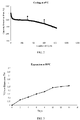
FIG. 2 is a cycling curve at 45°C of a battery prepared by using the positive electrode material in Example 1 of the present disclosure; -
FIG. 3 is an expansion trend curve at 80 °C of a battery prepared by using the positive electrode material in Example 1 of the present disclosure. - In order to facilitate the understanding of the present disclosure, the present disclosure provides following embodiments. It should be understood by those skilled in the related arts that these embodiments are merely intended to explain the present disclosure, rather than limiting the present disclosure.
- A ternary precursor, lithium hydroxide and titanium oxide were added into a high-speed mixer and mixed for 1h, where a molar ratio of the ternary precursor to lithium hydroxide was 1.05 and an a mass ratio of Ti of the added titanium oxide in the weight of the mixture was 3000 ppm, so as to obtain an initial mixture for sintering, in which the ternary precursor was [Ni0.8Co0.1Mn0.1](OH)2. The mixture was placed in an atmosphere sintering furnace and sintered for 15h at a sintering temperature of 850°C under a sintering atmosphere of oxygen, and then a ternary positive electrode material matrix was obtained.
- The ternary positive electrode material matrix obtained in the first step was mixed with magnesium oxide having Mg content of 1000 ppm, and then subjected to a coat sintering in the atmosphere sintering furnace for 10h at a sintering temperature of 400°C. Then, a Mg-coated ternary positive electrode material was obtained.
- The ternary positive electrode material prepared by the above process was taken to measure the number σ of primary particles per unit area of the secondary particles, the compact density and the BET, and then used to fabricate a battery. The capacity of the battery was measured at a rate of 1/3C, the cycling performance of the battery at 25°C was measured at a rate of 1C/1C, the cycling performance of the battery at 45°C was measured at a rate of 1C/1C, and the expansion trend within 10-day storage at 80°C was measured. The results of measurement are shown in Table 2.
- A ternary precursor, lithium hydroxide and zirconium oxide were added into a high-speed mixer and mixed for 3h, where a molar ratio of the ternary precursor to lithium hydroxide was 1.2 and a mass ratio of Zr of the added zirconium oxide to the weight of the mixture was 100 ppm, so as to obtain an initial mixture for sintering, in which the ternary precursor was [Ni0.7Co0.15Mn0.15](OH)2. The mixture was placed in an atmosphere sintering furnace and sintered for 10h at a sintering temperature of 700°C under a sintering atmosphere of oxygen, and then a ternary positive electrode material matrix was obtained.
- The ternary positive electrode material matrix obtained in the first step was mixed with calcium oxide having Ca content of 500 ppm, and then subjected to a coat sintering in the atmosphere sintering furnace for 5h at a sintering temperature of 400°C. Then, a Ca-coated ternary positive electrode material was obtained.
- The ternary positive electrode material prepared by the above process was taken to measure the number σ of primary particles per unit area of the secondary particles, the compact density and the BET, and then used to fabricate a battery. The capacity of the battery was measured at a rate of 1/3C, the cycling performance of the battery at 25°C was measured at a rate of 1C/1C, the cycling performance of the battery at 45°C was measured at a rate of 1C/1C, and the expansion trend within 10-day storage at 80°C was measured. The results of measurement are shown in Table 2.
- A ternary precursor, lithium carbonate and aluminum oxide were added into a high-speed mixer and mixed for 0.5h, where a molar ratio of the ternary precursor to lithium carbonate was 1.0 and a mass ratio of Al of the added aluminum oxide to the weight of the mixture was 6000 ppm, so as to obtain an initial mixture for sintering, in which the ternary precursor was [Ni0.5Co0.2Mn0.3](OH)2. The mixture was placed in an atmosphere sintering furnace and sintered for 18h at a sintering temperature of 950°C under a sintering atmosphere of air, and then a ternary positive electrode material matrix was obtained.
- The ternary positive electrode material matrix obtained in the first step was mixed with aluminum oxide having Al content of 1500 ppm, and then subjected to a coat sintering in the atmosphere sintering furnace for 8h at a sintering temperature of 700°C. Then, an Al-coated ternary positive electrode material was obtained.
- The ternary positive electrode material prepared by the above process was taken to measure the number σ of primary particles per unit area of the secondary particles, the compact density and the BET, and then used to fabricate a battery. The capacity of the battery was measured at a rate of 1/3C, the cycling performance of the battery at 25°C was measured at a rate of 1C/1C, the cycling performance of the battery at 45°C was measured at a rate of 1C/1C, and the expansion trend within 10-day storage at 80°C was measured. The results of measurement are shown in Table 2.
- A ternary precursor, lithium carbonate, titanium oxide and aluminum oxide were added into a high-speed mixer and mixed for 1h, where a molar ratio of the ternary precursor to lithium carbonate was 1.02, a mass ratio of Ti of the added titanium oxide to the weight of the mixture was 1500 ppm and a mass ratio of Al of the added aluminum oxide to the weight of the mixture was 1000 ppm, so as to obtain an initial mixture for sintering, in which the ternary precursor was [Ni0.33Co0.33Mn0.33](OH)2. The mixture was placed in an atmosphere sintering furnace and sintered for 20h at a sintering temperature of 1000°C under a sintering atmosphere of air, and then a ternary positive electrode material matrix was obtained.
- The ternary positive electrode material matrix obtained in the first step was mixed with boron oxide having B content of 3000 ppm, and then subjected to a coat sintering in the atmosphere sintering furnace for 5h at a sintering temperature of 250°C. Then, a B-coated ternary positive electrode material was obtained.
- The ternary positive electrode material prepared by the above process was taken to measure the number σ of primary particles per unit area of the secondary particles, the compact density and the BET, and then used to fabricate a battery. The capacity of the battery was measured at a rate of 1/3C, the cycling performance of the battery at 25°C was measured at a rate of 1C/1C, the cycling performance of the battery at 45°C was measured at a rate of 1C/1C, and the expansion trend within 10-day storage at 80°C was measured. The results of measurement are shown in Table 2.
- A ternary precursor, lithium carbonate, titanium oxide were added into a high-speed mixer and mixed for 1h, where a molar ratio of the ternary precursor to lithium carbonate was 1.03 and a mass ratio of Ti of the added titanium oxide to the weight of the mixture was 1500 ppm, so as to obtain an initial mixture for sintering, in which the ternary precursor was [Ni0.33Co0.33Mn0.33](OH)2. The mixture was placed in an atmosphere sintering furnace and sintered for 20h at a sintering temperature of 900°C under a sintering atmosphere of air, and then a ternary positive electrode material matrix was obtained.
- The ternary positive electrode material matrix obtained in the first step was mixed with aluminum oxide having Al content of 3000 ppm, and then subjected to a coat sintering in the atmosphere sintering furnace for 5h at a sintering temperature of 270°C. Then, an Al-coated ternary positive electrode material was obtained.
- The ternary positive electrode material prepared by the above process was taken to measure the number σ of primary particles per unit area of the secondary particles, the compact density and the BET, and then used to fabricate a battery. The capacity of the battery was measured at a rate of 1/3C, the cycling performance of the battery at 25°C was measured at a rate of 1C/1C, the cycling performance of the battery at 45°C was measured at a rate of 1C/1C, and the expansion trend within 10-day storage at 80°C was measured. The results of measurement are shown in Table 2.
- A ternary precursor, lithium carbonate, zirconium oxide and aluminum oxide were added into a high-speed mixer and mixed for 1h, where a molar ratio of the ternary precursor to lithium carbonate was 1.02, a mass ratio of Zr of the added zirconium oxide to the weight of the mixture was 1500 ppm and a mass ratio of Al of the added aluminum oxide to the weight of the mixture was 1000 ppm, so as to obtain an initial mixture for sintering, in which the ternary precursor was [Ni0.33Co0.33Mn0.33](OH)2. The mixture was placed in an atmosphere sintering furnace and sintered for 20h at a sintering temperature of 800°C under a sintering atmosphere of air, and then a ternary positive electrode material matrix was obtained.
- The ternary positive electrode material matrix obtained in the first step was mixed with boron oxide having B content of 2000 ppm, and then subjected to a coat sintering in the atmosphere sintering furnace for 5h at a sintering temperature of 280°C. Then, a B-coated ternary positive electrode material was obtained.
- The ternary positive electrode material prepared by the above process was taken to measure the number σ of primary particles per unit area of the secondary particles, the compact density and the BET, and then used to fabricate a battery. The capacity of the battery was measured at a rate of 1/3C, the cycling performance of the battery at 25°C was measured at a rate of 1C/1C, the cycling performance of the battery at 45°C was measured at a rate of 1C/1C, and the expansion trend within 10-day storage at 80°C was measured. The results of measurement are shown in Table 2.
- BET was measured by adopting a national standard method GB/T 19587-2004 for determining a specific surface area of a solid matter.
- The compact density was measured by using a national standard method GB/T 24533-2009, where a measurement pressure is 5 tons.
- For determining the number of primary particles per unit area in the secondary particles, a 10K-fold SEM image of the sample prepared in Example 1 is shown in
FIG. 1 , the number of primary particles per unit area in the secondary particles is calculated as follows.Table 1 Product Size of SEM Image Number of Particles No. A B C Lower Edge x1 Upper Edge x2 Left Edge y1 Right Edge y2 1 1500.3 1011.0 142.3 38 36 25 24 - The number of primary particles per unit area of 1µm×1µm was calculated according to equation σ={(x1+x2)/2∗(y1+y2)/2}/(A/C∗B/C).

- The calculation methods for other examples and comparative examples are the same, and the calculation results are shown in Table 1.
- A ternary precursor, lithium hydroxide and titanium oxide were added into a high-speed mixer and mixed for 1h, where a molar ratio of the ternary precursor to lithium hydroxide was 1.05 and a mass ratio of Ti of the added titanium oxide to the weight of the mixture was 1000 ppm, so as to obtain an initial mixture for sintering, in which the ternary precursor was [Ni0.8Co0.1Mn0.1](OH)2. The mixture was placed in an atmosphere sintering furnace and sintered for 15h at a sintering temperature of 1100°C under a sintering atmosphere of oxygen, and then a ternary positive electrode material matrix was obtained.
- The ternary positive electrode material prepared by the above process was taken to measure the number σ of primary particles per unit area of the secondary particles, the compact density and the BET, and then used to fabricate a battery. The capacity of the battery was measured at a rate of 1/3C, the cycling performance of the battery at 25°C was measured at a rate of 1C/1C, the cycling performance of the battery at 45°C was measured at a rate of 1C/1C, and the expansion trend within 10-day storage at 80°C was measured. The results of measurement are shown in Table 2.
- The parameters of the preparing process are the same as that of Comparative Example 1, except the sintering temperature for initial sintering was 600°C.
- The ternary positive electrode material prepared by the above process was taken to measure the number σ of primary particles per unit area of the secondary particles, the compact density and the BET, and then used to fabricate a battery. The capacity of the battery was measured at a rate of 1/3C, the cycling performance of the battery at 25°C was measured at a rate of 1C/1C, the cycling performance of the battery at 45°C was measured at a rate of 1C/1C, and the expansion trend within 10-day storage at 80°C was measured. The results of measurement are shown in Table 2.
- The parameters of the preparing process are the same as that of Comparative Example 1, except the sintering temperature for initial sintering was 850°C.
- The ternary positive electrode material prepared by the above process was taken to measure the number σ of primary particles per unit area of the secondary particles, the compact density and the BET, and then used to fabricate a battery. The capacity of the battery was measured at a rate of 1/3C, the cycling performance of the battery at 25°C was measured at a rate of 1C/1C, the cycling performance of the battery at 45°C was measured at a rate of 1C/1C, and the expansion trend within 10-day storage at 80°C was measured. The results of measurement are shown in Table 2.
- A ternary precursor, lithium hydroxide and zirconnium oxide were added into a high-speed mixer and mixed for 3h, where a molar ratio of the ternary precursor to lithium hydroxide was 1.2 and a mass ratio of Zr of the added zirconium oxide to the weight of the mixturewas 100 ppm, so as to obtain an initial mixture for sintering, in which the ternary precursor was [Ni0.7Co0.15Mn0.15](OH)2. The mixture was placed in an atmosphere sintering furnace and sintered for 10h at a sintering temperature of 500°C under a sintering atmosphere of oxygen, and then a ternary positive electrode material matrix was obtained.
- The ternary positive electrode material prepared by the above process was taken to measure the number σ of primary particles per unit area of the secondary particles, the compact density and the BET, and then used to fabricate a battery. The capacity of the battery was measured at a rate of 1/3C, the cycling performance of the battery at 25°C was measured at a rate of 1C/1C, the cycling performance of the battery at 45°C was measured at a rate of 1C/1C, and the expansion trend within 10-day storage at 80°C was measured. The results of measurement are shown in Table 2.
- A ternary precursor, lithium carbonate and calcium oxide were added into a high-speed mixer and mixed for 0.5h, where a molar ratio of the ternary precursor to lithium hydroxide was 1.0 and a mass ratio of Ca of the added calcium oxide to the weight of the mixture was 2000 ppm, so as to obtain an initial mixture for sintering, in which the ternary precursor was [Ni0.5Co0.2Mn0.3](OH)2. The mixture was placed in an atmosphere sintering furnace and sintered for 18h at a sintering temperature of 1250°C under a sintering atmosphere of air, and then a ternary positive electrode material matrix was obtained.
- The ternary positive electrode material prepared by the above process was taken to measure the number σ of primary particles per unit area of the secondary particles, the compact density and the BET, and then used to fabricate a battery. The capacity of the battery was measured at a rate of 1/3C, the cycling performance of the battery at 25°C was measured at a rate of 1C/1C, the cycling performance of the battery at 45°C was measured at a rate of 1C/1C, and the expansion trend within 10-day storage at 80°C was measured. The results of measurement are shown in Table 2.
- A ternary precursor, lithium carbonate, titanium oxide and aluminum oxide were added into a high-speed mixer and mixed for 1h, where a molar ratio of the ternary precursor to lithium hydroxide was 1.02, a mass ratio of Ti of the added titanium oxide to the weight of the mixture was 1500 ppm and a mass ratio of Al of the added aluminum oxide to the weight of the mixture was 1000 ppm, so as to obtain an initial mixture for sintering, in which the ternary precursor was [Ni0.33Co0.33Mn0.33](OH)2. The mixture was placed in an atmosphere sintering furnace and sintered for 20h at a sintering temperature of 600°C under a sintering atmosphere of air, and then a ternary positive electrode material matrix was obtained.
- The ternary positive electrode material prepared by the above process was taken to measure the number σ of primary particles per unit area of the secondary particles, the compact density and the BET, and then used to fabricate a battery. The capacity of the battery was measured at a rate of 1/3C, the cycling performance of the battery at 25°C was measured at a rate of 1C/1C, the cycling performance of the battery at 45°C was measured at a rate of 1C/1C, and the expansion trend within 10-day storage at 80°C was measured. The results of measurement are shown in Table 2.
- The positive electrode material modified by gradiently coated with aluminum compound, as a positive electrode active material, was mixed with a conductive agent of acetylene black and a binder of polyvinylidene fluoride (PVDF) in N-methylpyrrolidone solvent system in a weight ratio of 94:3:3, and thoroughly stirred and homogeneously mixed. Then, the mixture was coated on an aluminum foil, followed by drying and cold pressing to produce a positive electrode plate. A negative electrode active material, artificial graphite, hard carbon, a conductive agent of acetylene black, a binder of styrene-butadiene rubber (SBR), a thickener of sodium carboxymethyl cellulose (CMC) were added in a deionized water solvent system in a weight ratio of 90:5:2:2:1, and thoroughly stirred and homogeneously mixed. Then, the mixture was coated on a copper foil, followed by drying and cold pressing to produce a negative electrode plate. A PE porous polymeric film was used as a separator. The positive electrode plate, the separator and the negative electrode plate were stacked in a sequence, so that the separator can be arranged between the positive and negative electrode plates and exert isolation function, and then they were wound to a bare cell. The bare cell was placed in an outer package, the package was sealed after injecting pre-prepared base electrolyte, so as to obtain a battery.
- At a constant temperature of 25°C, the battery was allowed to stand for 5 minutes, discharged to 2.8V at 1/3C; the battery was allowed to stand for 5 minutes again, charged to 4.25V at 1/3C, and then charged at a constant voltage of 4.25V until the current ≤0.05mA; the battery was allowed to stand for 5 minutes again, the charging capacity at this time was recorded as C0. Then, the battery was discharged to 2.8V at 1/3C, the discharge capacity at this time was recorded as the initial capacity per gram D0, and the initial efficiency was D0/C0*100%.
- At a constant temperature of 25° C or 45°C, at a voltage of 2.8V - 4.25V, the battery was charge to 4.25V at 1C, and then charged to a current ≤ 0.05mA at a constant voltage of 4.25V. The battery was allowed to stand for 5 minutes, then discharged to 2.8V at 1C, the capacity was recorded as Dn (n=0, 1, 2...). The previous process was repeated until the capacity fading to 80%.
- The battery was stored at 80°C, with 100% SOC. Before, during and after the storage of battery, OCV, IMP, and volume of battery were measured (with respect to volume, a water displacement method was used). At the end of storage, the remaining capacity and reversible capacity of cell were measured. The battery was taken out from oven every 48 hours, and OCV and IMP of battery were measure after standing still for 1h. After being cooled to the room temperature, the volume of the cell was measured by a water displacement method. The measurement was terminated after 20-day storage or the storage was stopped when the volume expansion was over 50%. The range of the protection voltage was 2.7-4.3V, and the nominal capacity was 2.25Ah.
Table 2: Measurement Results of Powder Characterization and Electrochemical Performance of Examples and Comparative Examples Experiment No. D50 (µm) σ (particles/µm) BET (m2/g) Compact Density (g/cc) 1/3C Battery Capacity (mAh/g) 1200 Cycles at 25°C/% 800 Cycles at 45°C /% 10-day Expansion at 80°C /% Example 1 10.8 12.10 0.524 3.59 201.9 91.1 89.3 25.7 Example 2 8.6 10.12 0.637 3.56 198.2 92.1 88.9 26.3 Example 3 12.8 8.91 0.348 3.62 159.7 92.8 89.9 8.9 Example 4 15.7 6.32 0.219 3.71 143.2 93.2 89.4 4.7 Example 5 17.8 49.5 0.398 3.57 147.5 93.7 89.9 3.7 Example 6 6.2 89.5 0.709 3.52 141.2 92.9 88.5 7.2 Comparative Example 1 13.2 2.31 0.171 3.78 188.4 81.1 69.4 49.1 Comparative Example 2 11.5 115.1 1.23 3.31 182.5 79.6 61.9 54.3 Comparative Example 3 5.3 12.79 0.543 3.56 192.1 85.1 72.4 41.8 Comparative Example 4 22.6 121.2 1.12 3.23 180.3 83.4 68.7 51.3 Comparative Example 5 5.3 3.72 0.156 3.69 148.1 81.8 65.4 20.3 Comparative Example 6 11.9 89.2 1.43 3.25 134.5 85.2 73.6 18.4 - By comparing Comparative Examples 1, 2 and 3, it can be found that, when the initial sintering temperature is too high or too low, the number of the primary particles per unit area of the secondary particles is too small or too big, and the sintered products in Comparative Examples 1 and 2 a poorer comprehensive electrochemical performance than that in Comparative Example 3. By comparing Comparative Example 3 with Example 1, it can be seen that, after coating a coating agent on the surface, both the cycling performance and the expansion resistance were improved, indicating that the coating agent can effectively improve the cycling performance and the expansion resistance of the positive electrode material. By comparing Examples 4, 5 and 6, it can be seen that, the electrochemical performance in a case of the number σ of primary particles ranging from 5 to 50 particles/µm2 is better than that in a case where the primary particle number σ ranges from 50 to 100 particles/µm2. By comparing Example 6 with Comparative Example 6, it can be seen that when the number σ ranges from 50 to 100 particles/µm2, BET is relatively great, compact density is relatively low, electrochemical properties are poorer. Through comparing Examples 1, 2, 3, 4 with Comparative Example 1, 2, 4, 5, 6, it can be seen that, by using the positive electrode material prepared by the method according to the present disclosure and comprising secondary particles in which the primary particles have suitable particle size and are homogenously distributed, the number σ of primary particles per unit area of secondary particles ranges between 5 to 50 particles/µm2, BET is maintained in a range of 0.3 - 0.8m2/g, and the compact density is greater than 3.3g/cc, the capacity is substantially increased enhanced, and both cycling performance and expansion resistance are significantly improved.
- The above preferred embodiments are merely intended to describe the present disclosure, but not intended to limit the scope of the claims. Any changes and modifications can be made by those skilled in the art, without departing from the scope of the present disclosure. The protection scope is defined by the claims of the present disclosure.
Claims (10)
- A ternary positive electrode material, comprising secondary particles composed of primary particles, wherein the secondary particles have an average particle diameter D50 in a range of 6µm to 20µm and a BET in a range of 0.2 m2/g to 1 m2/g, and a number σ of the primary particles per unit area of the secondary particles is in a range of 5 particles/µm2 to 100 particles/µm2; and
wherein the ternary positive electrode material has a formula of Li1+a[NixCoyMnzM1bM2c]O2-dNd, where element M1 and element M2 are each independently selected from at least one of Al, Zr, Ti, Mg, Zn, B, Ca, Ce, Te and Fe, element N is selected from at least one of F, Cl and S, 0<x<1, 0<y≤0.3, 0≤z≤0.3, -0.1<a<0.2, 0≤b<0.3, 0≤c<0.3, 0≤d<0.2, 0≤b+c<0.3, and x+y+z+b=1. - The ternary positive electrode material according to claim 1, wherein the ternary positive electrode material has a compact density greater than or equal to 3.3g/cc.
- The ternary positive electrode material according to claim 1 or 2, wherein the number σ of the primary particles per unit area of the secondary particles in the ternary positive electrode material is a range of 5 particles/µm2 to 50 particles/µm2.
- The ternary positive electrode material according to any one of claims 1 to 3, wherein the primary particles have a length in a range of 100nm to 1000nm, and a width in a range of 50nm to 400nm; and preferably, the primary particles have a ratio of length to width in a range of 2 to 20.
- The ternary positive electrode material according to any one of claims 1 to 4, wherein the BET of the secondary particles is in a range of 0.3m2/g to 0.8m2/g.
- The ternary positive electrode material according to any one of claims 1 to 5, wherein 0.6<x<1.
- The ternary positive electrode material according to any one of claims 1 to 6, wherein a total doping amount of the element M1 and element M2 in the ternary positive electrode material is a range of 200ppm to 9000ppm.
- A method for preparing the ternary positive electrode material according to any one of claims 1 to 7, comprising steps of:(1) adding a ternary precursor, a lithium salt, and optionally a compound containing element M1 into a high-speed mixer, and mixing for 0.5 h to 3 h; placing mixed materials in a sintering furnace under air or oxygen atmosphere, and carrying out sintering for 5 h to 25 h at a temperature of 700°Cto 1000°C, so as to obtain a positive electrode material matrix, wherein the ternary precursor has a formula of [NixCoyMnz](OH)2, where 0<x<1, 0<y≤0.3, 0≤z≤0.3, the ternary precursor has an average particle diameter D50 in a range of 6µm to 20µm and a BET in a range of 3m2/g to 30m2/g; the lithium salt is lithium hydroxide or lithium carbonate; element M1 is selected from at least one of Ca, Al, Zr, Ti and Te, and a mass ratio of element M1 to the mixed material is in a range of 0ppm to 6000ppm, preferably in a range of 100ppm to 6000ppm; and(2) mixing a ternary material prepared in step (1) with a compound containing element M2, and carrying out sintering for 2 h to 10 h at a temperature of 200°C to 700°C, so as to obtain a ternary material product coated with the compound containing element M2, wherein M2 is selected from at least one of Mg, Zn, Al, B, Ce and Fe, and a mass ratio of element M2 to the ternary material product is in a range of 0ppm to 3000ppm, preferably in a range of 500ppm to 3000ppm.
- A method for determining the number σ of the primary particles per unit area of the secondary particles in the ternary positive electrode material according to any one of claims 1 to 7, comprising steps of:(1) performing a SEM measurement on a sample of the ternary positive electrode material comprising the secondary particles having the average particle diameter D50 in a range of 6µm to 20µm, so as to obtain a SEM image at a magnification of 10000x;(2) calculating the number σ of the primary particles per unit area of the secondary particles in the ternary positive electrode material based on the SEM image obtained in step (1) by using following equations:
 x1 represents a number of the primary particles along a lower edge of the SEM image of the secondary particles;x2 represents a number of the primary particles along an upper edge of the SEM image of the secondary particles;y1 represents a number of the primary particles along a left edge of the SEM image of the secondary particles;y2 represents a number of the primary particles along a right edge of the SEM image of the secondary particles;A represents an actual length in millimeter of the upper or lower edge of the SEM image of the secondary particles;B represents an actual length in millimeter of the left or right edge of the SEM image of the secondary particles; andC represents an actual length in a unit of mm/µm of a scale of 1 µm in the SEM image of the secondary particles;wherein when counting the number of the primary particles in the EM image of the secondary particles, a primary particle, which is partially included in the SEM image, is counted as one primary particle.
 - A lithium ion battery, comprising a positive electrode, a negative electrode, a separator arranged between the positive electrode and the negative electrode, and electrolyte, wherein the positive electrode is made of a positive electrode material, which is the ternary positive electrode material according to any one of claims 1 to 7.
Applications Claiming Priority (1)
| Application Number | Priority Date | Filing Date | Title |
|---|---|---|---|
| CN201810678176.0A CN110265631B (en) | 2018-06-27 | 2018-06-27 | Ternary cathode material, preparation method thereof and lithium ion battery |
Publications (1)
| Publication Number | Publication Date |
|---|---|
| EP3587353A1 true EP3587353A1 (en) | 2020-01-01 |
Family
ID=66218023
Family Applications (1)
| Application Number | Title | Priority Date | Filing Date |
|---|---|---|---|
| EP19170004.6A Pending EP3587353A1 (en) | 2018-06-27 | 2019-04-18 | Ternary positive electrode material, method for preparing the same and lithium ion battery |
Country Status (3)
| Country | Link |
|---|---|
| US (1) | US11177475B2 (en) |
| EP (1) | EP3587353A1 (en) |
| CN (1) | CN110265631B (en) |
Cited By (1)
| Publication number | Priority date | Publication date | Assignee | Title |
|---|---|---|---|---|
| CN112881589A (en) * | 2021-03-12 | 2021-06-01 | 江西云威新材料有限公司 | Method for detecting carbonate ion content in lithium hydroxide monohydrate |
Families Citing this family (19)
| Publication number | Priority date | Publication date | Assignee | Title |
|---|---|---|---|---|
| CN112447967B (en) | 2019-09-02 | 2022-03-08 | 宁德时代新能源科技股份有限公司 | Positive electrode active material, positive electrode sheet and lithium ion secondary battery |
| CN111377487A (en) * | 2020-03-26 | 2020-07-07 | 江苏海基新能源股份有限公司 | Preparation method of Al and F co-doped high-nickel ternary cathode material |
| CN111682196B (en) * | 2020-05-20 | 2023-03-10 | 欣旺达电动汽车电池有限公司 | Cathode material, preparation method thereof and lithium ion battery |
| CN111668476A (en) * | 2020-06-09 | 2020-09-15 | 惠州亿纬锂能股份有限公司 | Polycrystalline ternary positive electrode material and preparation method and application thereof |
| CN113948694B (en) * | 2020-07-15 | 2023-05-05 | 比亚迪股份有限公司 | Positive electrode material, preparation method thereof, positive electrode composite material and battery |
| CN115989598B (en) * | 2020-09-10 | 2024-09-17 | 宁德时代新能源科技股份有限公司 | Electrode active composition and preparation method thereof, electrode, battery and device |
| CN112054184B (en) * | 2020-09-15 | 2023-08-18 | 天津市捷威动力工业有限公司 | High-power type multielement material and preparation method thereof |
| CN112397703A (en) * | 2020-12-04 | 2021-02-23 | 山东丰元化学股份有限公司 | Ternary cathode material and preparation method thereof |
| CN115249807A (en) * | 2021-04-28 | 2022-10-28 | 恒大新能源技术(深圳)有限公司 | Doped ternary positive electrode material and preparation method thereof, positive electrode sheet, and secondary battery |
| CN114388781B (en) * | 2022-01-17 | 2023-09-15 | 中国科学院化学研究所 | Particle densification positive electrode material for lithium battery and preparation method thereof |
| CN114590847A (en) * | 2022-02-17 | 2022-06-07 | 湖南力合厚浦科技有限公司 | Ternary positive electrode precursor material and preparation method and ternary positive electrode material |
| CN114612445B (en) * | 2022-03-15 | 2025-01-24 | 中南大学 | A method and device for obtaining primary particle size of ternary positive electrode material |
| CN114665072B (en) * | 2022-03-15 | 2024-04-26 | 远景动力技术(江苏)有限公司 | Ternary materials and their applications |
| CN117003295B (en) * | 2022-04-29 | 2025-12-12 | 中伟新材料股份有限公司 | A ternary cathode material and its precursor, and a lithium-ion battery |
| CN117916912A (en) * | 2022-05-27 | 2024-04-19 | 宁德时代新能源科技股份有限公司 | Positive electrode active material and preparation method thereof, secondary battery, battery module, battery pack and electric device |
| CN115000383B (en) * | 2022-06-30 | 2024-03-22 | 巴斯夫杉杉电池材料有限公司 | Hollow ternary positive electrode material and preparation method thereof |
| CN115440981B (en) * | 2022-08-26 | 2025-03-25 | 天津巴莫科技有限责任公司 | Positive electrode active material and preparation method thereof, positive electrode sheet, secondary battery and electronic device |
| CN115458736B (en) * | 2022-09-22 | 2025-06-13 | 宁波容百新能源科技股份有限公司 | A method for determining the thermal safety of high-nickel ternary cathode materials |
| EP4611099A4 (en) * | 2023-01-12 | 2026-01-07 | Contemporary Amperex Technology Hong Kong Ltd | LITHIUM-ION BATTERY WITH DOTED POSITIVE ELECTRODEACTIVATED MATERIAL |
Citations (3)
| Publication number | Priority date | Publication date | Assignee | Title |
|---|---|---|---|---|
| GB2533720A (en) * | 2013-09-13 | 2016-06-29 | Mitsui Mining & Smelting Co | Positive electrode material for lithium-ion cell |
| US20160254539A1 (en) * | 2013-10-10 | 2016-09-01 | Mitsui Mining & Smelting Co., Ltd. | Method for Manufacturing Over-Lithiated Layered Lithium Metal Composite Oxide |
| WO2017029166A1 (en) * | 2015-08-17 | 2017-02-23 | Basf Se | Process for making a cathode active material and a precursor therefore, cathode active material and its use |
Family Cites Families (9)
| Publication number | Priority date | Publication date | Assignee | Title |
|---|---|---|---|---|
| KR101373094B1 (en) * | 2011-04-08 | 2014-03-12 | 로베르트 보쉬 게엠베하 | Positive active material for rechargeable lithium battery, method of preparing same and rechargeable lithium battery including same |
| WO2012160707A1 (en) * | 2011-05-23 | 2012-11-29 | トヨタ自動車株式会社 | Positive electrode active material particles, and positive electrode and all-solid-state battery using same |
| JP5204913B1 (en) * | 2012-04-27 | 2013-06-05 | 三井金属鉱業株式会社 | Lithium metal composite oxide with layer structure |
| US10290869B2 (en) * | 2014-03-20 | 2019-05-14 | Washington University | Doped lithium-rich layered composite cathode materials |
| EP3435472B1 (en) * | 2014-07-07 | 2021-04-28 | Daikin Industries, Ltd. | Liquid electrolyte comprising an alkali metal salt of a phosphate compound |
| CN105118985A (en) * | 2015-08-27 | 2015-12-02 | 北大先行科技产业有限公司 | Lithium ion battery positive electrode material with adjustable crystalline grain size and preparation method thereof |
| KR102307908B1 (en) * | 2016-07-20 | 2021-10-05 | 삼성에스디아이 주식회사 | Nickel-based active material for lithium secondary battery, preparing method thereof, and lithium secondary battery comprising positive electrode including nickel-based active material |
| KR102295366B1 (en) * | 2016-07-20 | 2021-08-31 | 삼성에스디아이 주식회사 | Nickel-based active material for lithium secondary battery, preparing method thereof, and lithium secondary battery comprising positive electrode including nickel-based active material |
| CN106229489B (en) * | 2016-08-29 | 2019-09-06 | 青海泰丰先行锂能科技有限公司 | A high voltage ternary lithium ion positive electrode material with single crystal morphology and preparation method thereof |
-
2018
- 2018-06-27 CN CN201810678176.0A patent/CN110265631B/en active Active
-
2019
- 2019-04-18 EP EP19170004.6A patent/EP3587353A1/en active Pending
- 2019-04-23 US US16/392,113 patent/US11177475B2/en active Active
Patent Citations (3)
| Publication number | Priority date | Publication date | Assignee | Title |
|---|---|---|---|---|
| GB2533720A (en) * | 2013-09-13 | 2016-06-29 | Mitsui Mining & Smelting Co | Positive electrode material for lithium-ion cell |
| US20160254539A1 (en) * | 2013-10-10 | 2016-09-01 | Mitsui Mining & Smelting Co., Ltd. | Method for Manufacturing Over-Lithiated Layered Lithium Metal Composite Oxide |
| WO2017029166A1 (en) * | 2015-08-17 | 2017-02-23 | Basf Se | Process for making a cathode active material and a precursor therefore, cathode active material and its use |
Cited By (2)
| Publication number | Priority date | Publication date | Assignee | Title |
|---|---|---|---|---|
| CN112881589A (en) * | 2021-03-12 | 2021-06-01 | 江西云威新材料有限公司 | Method for detecting carbonate ion content in lithium hydroxide monohydrate |
| CN112881589B (en) * | 2021-03-12 | 2023-04-07 | 江西云威新材料有限公司 | Method for detecting carbonate ion content in lithium hydroxide monohydrate |
Also Published As
| Publication number | Publication date |
|---|---|
| CN110265631B (en) | 2021-12-07 |
| CN110265631A (en) | 2019-09-20 |
| US11177475B2 (en) | 2021-11-16 |
| US20200006766A1 (en) | 2020-01-02 |
Similar Documents
| Publication | Publication Date | Title |
|---|---|---|
| EP3587353A1 (en) | Ternary positive electrode material, method for preparing the same and lithium ion battery | |
| EP2937917B1 (en) | Positive electrode material for lithium secondary batteries | |
| EP4145566B1 (en) | Positive electrode material and preparation method and use therefor, lithium-ion battery positive electrode pole piece, and lithium-ion battery | |
| EP3907795A1 (en) | Positive electrode active material and preparation method therefor, sodium ion battery, and device comprising sodium ion battery | |
| EP3522268B1 (en) | Positive electrode active material for lithium ion battery, method for producing positive electrode active material for lithium ion battery, positive electrode for lithium ion battery and lithium ion battery | |
| EP2368851B1 (en) | Powder of lithium complex compound particles, method for producing the same, and nonaqueous electrolyte secondary cell | |
| EP3597604B1 (en) | Positive active material, preparation method thereof and positive electrode plate and lithium-ion secondary battery | |
| EP2544278A1 (en) | Positive electrode active material for lithium-ion battery, positive electrode for lithium-ion battery, and lithium-ion battery | |
| EP2544279A1 (en) | Positive electrode active material for lithium ion battery, positive electrode for lithium ion battery, and lithium ion battery. | |
| EP2544276A1 (en) | Positive electrode active material for lithium-ion batteries, positive electrode for lithium-ion batteries, and lithium-ion battery | |
| EP4512770A1 (en) | Positive active material, positive electrode plate, lithiumion battery, and electrical device | |
| EP2544275A1 (en) | Positive electrode active material for lithium-ion batteries, positive electrode for lithion-ion batteries, lithium-ion battery | |
| EP4531135A1 (en) | Agglomeration-like multi-element positive electrode material, preparation method therefor, use thereof, and lithium-ion battery | |
| US20260031347A1 (en) | Pressure-resistant positive active material and electrochemical energy storage apparatus | |
| EP4550439A1 (en) | Secondary battery electrode plate and preparation method therefor, and secondary battery | |
| JP2023109153A (en) | Ternary positive electrode material and its manufacturing method, positive electrode plate and lithium ion battery | |
| CN100539265C (en) | Positive electrode material for lithium secondary battery and manufacturing method thereof | |
| EP4696656A1 (en) | Positive electrode active material, secondary battery, and electric device | |
| US20210320298A1 (en) | Lithium Fluoride-Containing Coatings for Cathode Active Materials in Li-Ion Batteries | |
| CN114122346A (en) | High-voltage layered structure positive electrode material containing alkaline earth/rare earth metal and preparation method thereof | |
| EP4579807A1 (en) | Lithium-manganese-nickel composite oxide and preparation method therefor, electrode sheet, battery, and electrical apparatus | |
| CN113972369B (en) | Ternary positive electrode material with high compaction density | |
| EP4293743A1 (en) | Positive electrode and nonaqueous electrolyte secondary battery including the same | |
| KR20200034147A (en) | Surface treating composition for cathod active material and manufacturing method of the same | |
| CN115498156A (en) | Magnesium-doped sodium-ion battery ternary layered positive electrode material and preparation method thereof |
Legal Events
| Date | Code | Title | Description |
|---|---|---|---|
| PUAI | Public reference made under article 153(3) epc to a published international application that has entered the european phase |
Free format text: ORIGINAL CODE: 0009012 |
|
| STAA | Information on the status of an ep patent application or granted ep patent |
Free format text: STATUS: REQUEST FOR EXAMINATION WAS MADE |
|
| 17P | Request for examination filed |
Effective date: 20190418 |
|
| AK | Designated contracting states |
Kind code of ref document: A1 Designated state(s): AL AT BE BG CH CY CZ DE DK EE ES FI FR GB GR HR HU IE IS IT LI LT LU LV MC MK MT NL NO PL PT RO RS SE SI SK SM TR |
|
| AX | Request for extension of the european patent |
Extension state: BA ME |
|
| STAA | Information on the status of an ep patent application or granted ep patent |
Free format text: STATUS: EXAMINATION IS IN PROGRESS |
|
| 17Q | First examination report despatched |
Effective date: 20230209 |
|
| RAP1 | Party data changed (applicant data changed or rights of an application transferred) |
Owner name: CONTEMPORARY AMPEREX TECHNOLOGY(HONG KONG) LIMITED |