EP3586885A1 - Decellularized tissue producing method and decellularized tissue producing apparatus - Google Patents
Decellularized tissue producing method and decellularized tissue producing apparatus Download PDFInfo
- Publication number
- EP3586885A1 EP3586885A1 EP19182121.4A EP19182121A EP3586885A1 EP 3586885 A1 EP3586885 A1 EP 3586885A1 EP 19182121 A EP19182121 A EP 19182121A EP 3586885 A1 EP3586885 A1 EP 3586885A1
- Authority
- EP
- European Patent Office
- Prior art keywords
- tissue
- biological tissue
- liquid
- dna
- decellularized
- Prior art date
- Legal status (The legal status is an assumption and is not a legal conclusion. Google has not performed a legal analysis and makes no representation as to the accuracy of the status listed.)
- Withdrawn
Links
- 238000000034 method Methods 0.000 title claims abstract description 127
- 239000007788 liquid Substances 0.000 claims abstract description 222
- 238000005406 washing Methods 0.000 claims abstract description 41
- 238000005238 degreasing Methods 0.000 claims abstract description 37
- 230000000593 degrading effect Effects 0.000 claims abstract description 28
- LCGLNKUTAGEVQW-UHFFFAOYSA-N Dimethyl ether Chemical compound COC LCGLNKUTAGEVQW-UHFFFAOYSA-N 0.000 claims description 82
- LFQSCWFLJHTTHZ-UHFFFAOYSA-N Ethanol Chemical group CCO LFQSCWFLJHTTHZ-UHFFFAOYSA-N 0.000 claims description 26
- 239000003960 organic solvent Substances 0.000 claims description 16
- 239000002904 solvent Substances 0.000 claims description 10
- XLYOFNOQVPJJNP-UHFFFAOYSA-N water Substances O XLYOFNOQVPJJNP-UHFFFAOYSA-N 0.000 claims description 9
- 239000004094 surface-active agent Substances 0.000 claims description 8
- 102000004190 Enzymes Human genes 0.000 claims description 5
- 108090000790 Enzymes Proteins 0.000 claims description 5
- 238000011144 upstream manufacturing Methods 0.000 claims description 2
- RTZKZFJDLAIYFH-UHFFFAOYSA-N Diethyl ether Chemical compound CCOCC RTZKZFJDLAIYFH-UHFFFAOYSA-N 0.000 claims 4
- 239000001064 degrader Substances 0.000 claims 2
- 239000013527 degreasing agent Substances 0.000 claims 2
- 210000001519 tissue Anatomy 0.000 description 317
- 108020004414 DNA Proteins 0.000 description 97
- 210000004027 cell Anatomy 0.000 description 92
- 239000007789 gas Substances 0.000 description 78
- 241000282898 Sus scrofa Species 0.000 description 67
- 239000002504 physiological saline solution Substances 0.000 description 31
- LOKCTEFSRHRXRJ-UHFFFAOYSA-I dipotassium trisodium dihydrogen phosphate hydrogen phosphate dichloride Chemical compound P(=O)(O)(O)[O-].[K+].P(=O)(O)([O-])[O-].[Na+].[Na+].[Cl-].[K+].[Cl-].[Na+] LOKCTEFSRHRXRJ-UHFFFAOYSA-I 0.000 description 19
- 239000002953 phosphate buffered saline Substances 0.000 description 19
- 210000005013 brain tissue Anatomy 0.000 description 16
- 230000000052 comparative effect Effects 0.000 description 16
- 102000016911 Deoxyribonucleases Human genes 0.000 description 15
- 108010053770 Deoxyribonucleases Proteins 0.000 description 15
- 230000006378 damage Effects 0.000 description 15
- 238000000605 extraction Methods 0.000 description 14
- TWRXJAOTZQYOKJ-UHFFFAOYSA-L Magnesium chloride Chemical compound [Mg+2].[Cl-].[Cl-] TWRXJAOTZQYOKJ-UHFFFAOYSA-L 0.000 description 12
- 230000015556 catabolic process Effects 0.000 description 12
- 238000006731 degradation reaction Methods 0.000 description 12
- 239000000126 substance Substances 0.000 description 9
- 239000012535 impurity Substances 0.000 description 8
- 150000002632 lipids Chemical class 0.000 description 8
- 150000001875 compounds Chemical class 0.000 description 7
- 239000012530 fluid Substances 0.000 description 7
- 102000010834 Extracellular Matrix Proteins Human genes 0.000 description 6
- 108010037362 Extracellular Matrix Proteins Proteins 0.000 description 6
- XOBKSJJDNFUZPF-UHFFFAOYSA-N Methoxyethane Chemical compound CCOC XOBKSJJDNFUZPF-UHFFFAOYSA-N 0.000 description 6
- ATUOYWHBWRKTHZ-UHFFFAOYSA-N Propane Chemical compound CCC ATUOYWHBWRKTHZ-UHFFFAOYSA-N 0.000 description 6
- 210000000988 bone and bone Anatomy 0.000 description 6
- 210000000170 cell membrane Anatomy 0.000 description 6
- 210000002744 extracellular matrix Anatomy 0.000 description 6
- 229910001629 magnesium chloride Inorganic materials 0.000 description 6
- 238000000926 separation method Methods 0.000 description 6
- 239000013078 crystal Substances 0.000 description 5
- 238000004925 denaturation Methods 0.000 description 5
- 230000036425 denaturation Effects 0.000 description 5
- 238000002156 mixing Methods 0.000 description 5
- 102000004169 proteins and genes Human genes 0.000 description 5
- 108090000623 proteins and genes Proteins 0.000 description 5
- 238000003756 stirring Methods 0.000 description 5
- CURLTUGMZLYLDI-UHFFFAOYSA-N Carbon dioxide Chemical compound O=C=O CURLTUGMZLYLDI-UHFFFAOYSA-N 0.000 description 4
- DBMJMQXJHONAFJ-UHFFFAOYSA-M Sodium laurylsulphate Chemical compound [Na+].CCCCCCCCCCCCOS([O-])(=O)=O DBMJMQXJHONAFJ-UHFFFAOYSA-M 0.000 description 4
- 210000000845 cartilage Anatomy 0.000 description 4
- 210000002421 cell wall Anatomy 0.000 description 4
- 239000007857 degradation product Substances 0.000 description 4
- 229920006395 saturated elastomer Polymers 0.000 description 4
- -1 DNaseI) Proteins 0.000 description 3
- 241000124008 Mammalia Species 0.000 description 3
- IKHGUXGNUITLKF-XPULMUKRSA-N acetaldehyde Chemical compound [14CH]([14CH3])=O IKHGUXGNUITLKF-XPULMUKRSA-N 0.000 description 3
- 239000000654 additive Substances 0.000 description 3
- 230000000996 additive effect Effects 0.000 description 3
- 239000001273 butane Substances 0.000 description 3
- 238000010586 diagram Methods 0.000 description 3
- 238000001035 drying Methods 0.000 description 3
- CCGKOQOJPYTBIH-UHFFFAOYSA-N ethenone Chemical compound C=C=O CCGKOQOJPYTBIH-UHFFFAOYSA-N 0.000 description 3
- 239000003915 liquefied petroleum gas Substances 0.000 description 3
- WSFSSNUMVMOOMR-NJFSPNSNSA-N methanone Chemical compound O=[14CH2] WSFSSNUMVMOOMR-NJFSPNSNSA-N 0.000 description 3
- IJDNQMDRQITEOD-UHFFFAOYSA-N n-butane Chemical compound CCCC IJDNQMDRQITEOD-UHFFFAOYSA-N 0.000 description 3
- OFBQJSOFQDEBGM-UHFFFAOYSA-N n-pentane Natural products CCCCC OFBQJSOFQDEBGM-UHFFFAOYSA-N 0.000 description 3
- 210000000056 organ Anatomy 0.000 description 3
- 239000001294 propane Substances 0.000 description 3
- 230000008016 vaporization Effects 0.000 description 3
- 241000203069 Archaea Species 0.000 description 2
- 241000894006 Bacteria Species 0.000 description 2
- 102000053602 DNA Human genes 0.000 description 2
- 241001269524 Dura Species 0.000 description 2
- 241000196324 Embryophyta Species 0.000 description 2
- 241000233866 Fungi Species 0.000 description 2
- 241001465754 Metazoa Species 0.000 description 2
- 239000013504 Triton X-100 Substances 0.000 description 2
- 229920004890 Triton X-100 Polymers 0.000 description 2
- 102000004142 Trypsin Human genes 0.000 description 2
- 108090000631 Trypsin Proteins 0.000 description 2
- 210000001691 amnion Anatomy 0.000 description 2
- 210000004204 blood vessel Anatomy 0.000 description 2
- 210000004556 brain Anatomy 0.000 description 2
- 239000001569 carbon dioxide Substances 0.000 description 2
- 229910002092 carbon dioxide Inorganic materials 0.000 description 2
- 210000004087 cornea Anatomy 0.000 description 2
- 238000011156 evaluation Methods 0.000 description 2
- 210000002216 heart Anatomy 0.000 description 2
- 210000003709 heart valve Anatomy 0.000 description 2
- 239000002563 ionic surfactant Substances 0.000 description 2
- 210000003734 kidney Anatomy 0.000 description 2
- 210000004185 liver Anatomy 0.000 description 2
- 238000010297 mechanical methods and process Methods 0.000 description 2
- 210000002569 neuron Anatomy 0.000 description 2
- 239000002736 nonionic surfactant Substances 0.000 description 2
- 210000000496 pancreas Anatomy 0.000 description 2
- 150000003904 phospholipids Chemical class 0.000 description 2
- 210000003491 skin Anatomy 0.000 description 2
- 210000004872 soft tissue Anatomy 0.000 description 2
- 210000002435 tendon Anatomy 0.000 description 2
- 239000012588 trypsin Substances 0.000 description 2
- 238000009834 vaporization Methods 0.000 description 2
- 102000008186 Collagen Human genes 0.000 description 1
- 108010035532 Collagen Proteins 0.000 description 1
- 102000016942 Elastin Human genes 0.000 description 1
- 108010014258 Elastin Proteins 0.000 description 1
- ZYFVNVRFVHJEIU-UHFFFAOYSA-N PicoGreen Chemical compound CN(C)CCCN(CCCN(C)C)C1=CC(=CC2=[N+](C3=CC=CC=C3S2)C)C2=CC=CC=C2N1C1=CC=CC=C1 ZYFVNVRFVHJEIU-UHFFFAOYSA-N 0.000 description 1
- 239000002202 Polyethylene glycol Substances 0.000 description 1
- 239000002253 acid Substances 0.000 description 1
- 150000007513 acids Chemical class 0.000 description 1
- 239000007864 aqueous solution Substances 0.000 description 1
- 238000003149 assay kit Methods 0.000 description 1
- 230000021164 cell adhesion Effects 0.000 description 1
- 230000001413 cellular effect Effects 0.000 description 1
- 229920001436 collagen Polymers 0.000 description 1
- 210000004292 cytoskeleton Anatomy 0.000 description 1
- 210000000172 cytosol Anatomy 0.000 description 1
- 230000001086 cytosolic effect Effects 0.000 description 1
- 230000002950 deficient Effects 0.000 description 1
- 239000003814 drug Substances 0.000 description 1
- 230000000694 effects Effects 0.000 description 1
- 229920002549 elastin Polymers 0.000 description 1
- 239000007850 fluorescent dye Substances 0.000 description 1
- 230000008014 freezing Effects 0.000 description 1
- 238000007710 freezing Methods 0.000 description 1
- 239000011325 microbead Substances 0.000 description 1
- 238000012986 modification Methods 0.000 description 1
- 230000004048 modification Effects 0.000 description 1
- 238000002205 phenol-chloroform extraction Methods 0.000 description 1
- 229920001223 polyethylene glycol Polymers 0.000 description 1
- 239000011148 porous material Substances 0.000 description 1
- 230000001172 regenerating effect Effects 0.000 description 1
Images



Classifications
-
- A—HUMAN NECESSITIES
- A61—MEDICAL OR VETERINARY SCIENCE; HYGIENE
- A61L—METHODS OR APPARATUS FOR STERILISING MATERIALS OR OBJECTS IN GENERAL; DISINFECTION, STERILISATION OR DEODORISATION OF AIR; CHEMICAL ASPECTS OF BANDAGES, DRESSINGS, ABSORBENT PADS OR SURGICAL ARTICLES; MATERIALS FOR BANDAGES, DRESSINGS, ABSORBENT PADS OR SURGICAL ARTICLES
- A61L27/00—Materials for grafts or prostheses or for coating grafts or prostheses
- A61L27/36—Materials for grafts or prostheses or for coating grafts or prostheses containing ingredients of undetermined constitution or reaction products thereof, e.g. transplant tissue, natural bone, extracellular matrix
- A61L27/3683—Materials for grafts or prostheses or for coating grafts or prostheses containing ingredients of undetermined constitution or reaction products thereof, e.g. transplant tissue, natural bone, extracellular matrix subjected to a specific treatment prior to implantation, e.g. decellularising, demineralising, grinding, cellular disruption/non-collagenous protein removal, anti-calcification, crosslinking, supercritical fluid extraction, enzyme treatment
- A61L27/3687—Materials for grafts or prostheses or for coating grafts or prostheses containing ingredients of undetermined constitution or reaction products thereof, e.g. transplant tissue, natural bone, extracellular matrix subjected to a specific treatment prior to implantation, e.g. decellularising, demineralising, grinding, cellular disruption/non-collagenous protein removal, anti-calcification, crosslinking, supercritical fluid extraction, enzyme treatment characterised by the use of chemical agents in the treatment, e.g. specific enzymes, detergents, capping agents, crosslinkers, anticalcification agents
-
- C—CHEMISTRY; METALLURGY
- C12—BIOCHEMISTRY; BEER; SPIRITS; WINE; VINEGAR; MICROBIOLOGY; ENZYMOLOGY; MUTATION OR GENETIC ENGINEERING
- C12N—MICROORGANISMS OR ENZYMES; COMPOSITIONS THEREOF; PROPAGATING, PRESERVING, OR MAINTAINING MICROORGANISMS; MUTATION OR GENETIC ENGINEERING; CULTURE MEDIA
- C12N5/00—Undifferentiated human, animal or plant cells, e.g. cell lines; Tissues; Cultivation or maintenance thereof; Culture media therefor
- C12N5/06—Animal cells or tissues; Human cells or tissues
-
- A—HUMAN NECESSITIES
- A01—AGRICULTURE; FORESTRY; ANIMAL HUSBANDRY; HUNTING; TRAPPING; FISHING
- A01N—PRESERVATION OF BODIES OF HUMANS OR ANIMALS OR PLANTS OR PARTS THEREOF; BIOCIDES, e.g. AS DISINFECTANTS, AS PESTICIDES OR AS HERBICIDES; PEST REPELLANTS OR ATTRACTANTS; PLANT GROWTH REGULATORS
- A01N1/00—Preservation of bodies of humans or animals, or parts thereof
- A01N1/10—Preservation of living parts
- A01N1/12—Chemical aspects of preservation
- A01N1/122—Preservation or perfusion media
-
- A—HUMAN NECESSITIES
- A01—AGRICULTURE; FORESTRY; ANIMAL HUSBANDRY; HUNTING; TRAPPING; FISHING
- A01N—PRESERVATION OF BODIES OF HUMANS OR ANIMALS OR PLANTS OR PARTS THEREOF; BIOCIDES, e.g. AS DISINFECTANTS, AS PESTICIDES OR AS HERBICIDES; PEST REPELLANTS OR ATTRACTANTS; PLANT GROWTH REGULATORS
- A01N1/00—Preservation of bodies of humans or animals, or parts thereof
- A01N1/10—Preservation of living parts
- A01N1/14—Mechanical aspects of preservation; Apparatus or containers therefor
- A01N1/142—Apparatus
-
- A—HUMAN NECESSITIES
- A61—MEDICAL OR VETERINARY SCIENCE; HYGIENE
- A61L—METHODS OR APPARATUS FOR STERILISING MATERIALS OR OBJECTS IN GENERAL; DISINFECTION, STERILISATION OR DEODORISATION OF AIR; CHEMICAL ASPECTS OF BANDAGES, DRESSINGS, ABSORBENT PADS OR SURGICAL ARTICLES; MATERIALS FOR BANDAGES, DRESSINGS, ABSORBENT PADS OR SURGICAL ARTICLES
- A61L2430/00—Materials or treatment for tissue regeneration
- A61L2430/40—Preparation and treatment of biological tissue for implantation, e.g. decellularisation, cross-linking
Definitions
- the present invention relates to a decellularized tissue producing method and a decellularized tissue producing apparatus.
- decellularized tissue In regenerative medicine, as a support tissue to regenerate a patient's organ that has become deficient, decellularized tissue has been re-transplanted.
- This decellularized tissue is obtained by removing, from biological tissue of a human or a heterologous mammal, cellular components such as cytoplasmic components, cytosol components, cytoskeletons, and cell membrane components.
- the decellularized tissue is mainly formed of extracellular matrix components such as elastin, collagen (type I, type IV, etc.), and laminin.
- Patent Document 1 discloses a method of producing a decellularized tissue including the steps of: destroying cells in a biological tissue by using an aqueous solution of polyethylene glycol; degrading the DNA included in the biological tissue, in which the cells have been destroyed, by using DNase; and washing the biological tissue, in which the DNA has been degraded, by using phosphate buffered saline (PBS) (see, for example, Patent Document 1).
- PBS phosphate buffered saline
- Patent Document 1 Japanese Translation of PCT International Application Publication No. JP-T-2005-531355
- the present disclosure has an object to provide a decellularized tissue producing method and a decellularized tissue producing apparatus, by which a decellularized tissue can be efficiently produced.
- An aspect of the present invention provides a decellularized tissue producing method and a decellularized tissue producing apparatus, in which one or more of the disadvantages of the related art are reduced.
- a decellularized tissue producing method including degrading DNA included in a biological tissue in which cells are destroyed, by using a first treatment liquid; degreasing the biological tissue in which the DNA is degraded, by using a second treatment liquid; and washing the degreased biological tissue, by using a third treatment liquid, wherein at least one of the degrading, the degreasing, and the washing is performed by a circulation method.
- a decellularized tissue producing method and a decellularized tissue producing apparatus by which a decellularized tissue can be efficiently produced can be provided.
- the related art described in the BACKGROUND OF THE INVENTION has a problem in that it is not possible to efficiently produce decellularized tissue, because it takes a long time to degrade the DNA included in the biological tissue in which the cells have been destroyed, and to wash the biological tissue, in which the DNA has been degraded, by using PBS.
- the related art described in the BACKGROUND OF THE INVENTION has another problem in that the resulting decellularized tissue (support tissue) includes residual lipophilic components, and, therefore, even when cells are to be adhered to the decellularized tissue (support tissue), it is difficult for the cells to adhere to the decellularized tissue (support tissue).
- FIG. 1 illustrates an example of a decellularized tissue producing method according to the present embodiment.
- a decellularized tissue producing method includes the steps of: degrading the DNA included in the biological tissue, in which the cells have been destroyed, by using a first treatment liquid (step S1); degreasing the biological tissue, in which the DNA has been degraded, by using a second treatment liquid (step S2); and washing the degreased biological tissue by using a third treatment liquid (step S3), and at least one of steps S1, S2, and S3 is performed by a circulation method. Accordingly, a decellularized tissue can be efficiently produced.
- the circulation method is a method in which a treatment liquid flows into a contact tank and the biological tissue is treated by the treatment liquid, when the treatment liquid flows out of the contact tank, that is, the circulation method is a method in which the biological tissue is treated by the treatment liquid, when the treatment liquid circulates through the contact tank.
- step S1 for example, a liquid including an enzyme or a surfactant is brought into contact with the biological tissue in which the cells have been destroyed, to degrade the DNA included in the biological tissue in which the cells have been destroyed.
- the enzyme may be, but is not limited to, DNase (e.g., DNaseI), trypsin, and the like.
- the surfactant may be, but is not limited to, an ionic surfactant (e.g., sodium dodecyl sulfate (SDS)), a non-ionic surfactant (e.g., Triton X-100), and the like.
- an ionic surfactant e.g., sodium dodecyl sulfate (SDS)
- SDS sodium dodecyl sulfate
- non-ionic surfactant e.g., Triton X-100
- the DNase may be, for example, DNaseI.
- the liquid is not particularly limited as long as the liquid is physiologically compatible, may be a liquid in which water is the main solvent such as physiological saline, phosphate buffered saline (PBS), etc., and two or more kinds of liquids may be used in combination. Among these, physiological saline is preferable.
- the method of bringing a liquid including DNase into contact with a biological tissue in which the cells have been destroyed may be, but is not limited to, a method of mixing and stirring a biological tissue in which the cells have been destroyed with a liquid including DNase, and a method of causing a liquid including DNase to circulate through a biological tissue in which the cells have been destroyed, etc.
- the liquid including DNase may be appropriately replaced.
- the temperature of the environment in which the liquid including DNase is brought into contact with the biological tissue in which the cells have been destroyed is preferably 4 °C to 40 °C.
- the temperature of the environment in which the liquid including DNase is brought into contact with the biological tissue in which the cells have been destroyed is 4 °C or higher, it is possible to inhibit damage due to ice crystals of an extracellular matrix included in the biological tissue, and when the temperature is 40 °C or lower, it is possible to inhibit denaturation of the protein included in the biological tissue.
- the temperature of the environment in which the liquid including DNase is brought into contact with the biological tissue in which the cells have been destroyed is 25 °C to 37 °C.
- DNase exhibits high activity in the range of 25 °C to 37 °C, and can efficiently degrade the DNA.
- step S2 for example, the biological tissue in which the DNA has been degraded in step S1 is brought into contact with a liquid including an organic solvent, to degrease the biological tissue in which the DNA has been degraded.
- degreasing is defined as removing lipid-soluble components from the biological tissue.
- the organic solvent is not particularly limited as long as the organic solvent is a physiologically acceptable organic solvent capable of degreasing the biological tissue in which the DNA has been degraded, and the organic solvent may be ethanol and the like, and two or more types of organic solvents may be used in combination. Among these, ethanol is preferable in that ethanol is harmless to the biological tissue.
- the liquid is not particularly limited as long as the liquid is physiologically compatible, may be a liquid in which water is the main solvent such as physiological saline, phosphate buffered saline (PBS), etc., and two or more kinds of liquids may be used in combination. Among these, physiological saline is preferable.
- the method of bringing the biological tissue in which the DNA has been degraded into contact with a liquid including an organic solvent may be, but is not limited to, mixing and stirring the biological tissue in which the DNA has been degraded with a liquid including an organic solvent, and a method of circulating a liquid including an organic solvent through the biological tissue in which the DNA has been degraded.
- the method of circulating a liquid including an organic solvent through the biological tissue in which the DNA has been degraded is preferable, in that the biological tissue can be efficiently degreased.
- the liquid including the organic solvent may be appropriately replaced.
- the temperature of the environment in which the biological tissue in which the DNA has been degraded is brought into contact with a liquid including an organic solvent is preferably 4 °C to 40 °C.
- the temperature of the environment in which the biological tissue in which the DNA has been degraded is brought into contact with a liquid including an organic solvent is 4 °C or higher, it is possible to inhibit damage due to ice crystals of an extracellular matrix included in the biological tissue, and when the temperature is 40 °C or lower, it is possible to inhibit denaturation of the protein included in the biological tissue.
- Steps S1 and S2 may be performed simultaneously, or the order of steps S1 and S2 may be reversed.
- step S3 for example, the biological tissue degreased in step S2 is brought into contact with liquid, to wash the degreased biological tissue.
- washing is defined as removing water-soluble components from biological tissue.
- the liquid is not particularly limited as long as the liquid is physiologically compatible, and may be a liquid in which water is the main solvent such as physiological saline, phosphate buffered saline (PBS), etc., and two or more kinds of liquids may be used in combination. Among these, physiological saline is preferable.
- the method of bringing the degreased biological tissue into contact with a liquid may be, but is not limited to, mixing and stirring the degreased biological tissue with a liquid, and a method of causing the liquid to circulate through the degreased biological tissue.
- the method of causing the liquid to circulate through the degreased biological tissue is preferable in that the degreased biological tissue can be efficiently cleaned.
- the liquid may be appropriately replaced.
- the temperature of the environment in which the degreased biological tissue is brought into contact with the liquid is preferably 4 °C to 40 °C.
- the temperature of the environment in which the degreased biological tissue is brought into contact with the liquid is 4 °C or higher, it is possible to inhibit damage due to ice crystals of an extracellular matrix included in the biological tissue, and when the temperature is 40 °C or lower, it is possible to inhibit denaturation of the protein included in the biological tissue.
- the method of producing the decellularized tissue of the present embodiment may further include the step of dissolving the cell membrane component of the biological tissue and destroying the cells of the biological tissue, as a pre-step of the step of degrading the DNA included in the biological tissue in which the cells have been destroyed.
- the method of destroying cells in the biological tissue may be, but is not limited to, a method of bringing the biological tissue and a liquid including liquefied gas into contact with each other, a mechanical method (an ultrasonic method, a microbeads method, a freezing method, etc.) (e.g., Japanese Translation of PCT International Application Publication No. JP-T-2016-523541 ), a chemical method (using acids, alkalis, surfactants, etc.), a method of combining a mechanical method and a chemical method, a method of permeating the biological tissue with a supercritical carbon dioxide (e.g., Japanese Unexamined Patent Application Publication No. H6-218036), and the like.
- the method of bringing the biological tissue and a liquid including liquefied gas into contact with each other is preferable, in that the decellularized tissue is substantially not damaged and residual liquefied gas is reduced.
- a liquid including liquefied gas dissolves the cell membrane components, and can therefore destroy cells of the biological tissue.
- liquefied gas is a substance that is a gas in a standard state (0 °C, 1 atm (0.101325 MPa) .
- the liquefied gas is not limited as long as the cells in the decellularized tissue can be destroyed, and the liquefied gas may be dimethyl ether, ethylmethyl ether, formaldehyde, ketene, acetaldehyde, propane, butane, liquefied petroleum gas, and the like, and two or more of these types may be used in combination.
- ethylmethyl ether and dimethyl ether are preferable in being liquefied at relatively low temperature and low pressure, and dimethyl ether is particularly preferable.
- Dimethyl ether is liquefied at approximately 1 °C to 40 °C and 0.2 MPa to 5 MPa, and, therefore, the cost of the device will be low. Liquefied dimethyl ether vaporizes readily in the standard state, and is therefore unlikely to remain in the decellularized tissue.
- the method of bringing the biological tissue and a liquid including liquefied gas into contact with each other may be, but is not limited to, a method of immersing the biological tissue in a liquid including liquefied gas, and a method of circulating a liquid including liquefied gas through the biological tissue.
- the method of circulating a liquid including liquefied gas through the biological tissue is preferable in that the cells can be efficiently destroyed.
- the liquid including liquefied gas may further include a solvent.
- the solvent may be, but is not limited to, ethanol, water, physiological saline, phosphate buffered saline (PBS), and the like, and two or more types of solvents may be used in combination.
- PBS phosphate buffered saline
- the additive amount of solvent is preferably less than or equal to the solubility in the liquefied gas. Accordingly, the liquid including liquefied gas can be made uniform.
- the temperature of the liquefied gas is preferably 1 °C to 40 °C, and more preferably 10 °C to 30 °C.
- the pressure of the liquefied gas is preferably 0.2 MPa to 5 MPa, and more preferably in the range of 0.3 MPa to 0.7 MPa.
- the temperature and pressure are returned to the standard state, and then the liquefied gas evaporates, so the liquefied gas can be easily removed.
- the step of bringing the biological tissue into contact with a liquid including liquefied gas may be repeated a plurality of times.
- a biological tissue is defined as a tissue obtained from any one of a plant, fungi, archaea, and eubacteria having cell walls, or an animal without cell walls.
- the biological tissue are, but are not limited to, leaves, branches, trees, petals, stems, roots, pulp, pericarp, and seeds; soft tissue including skin, blood vessels, heart valves, cornea, amnion, dura, and the like or portions thereof, organs including heart, kidney, liver, pancreas, brain, and the like or portions thereof, and bones, cartilage, tendon, and the like or portions thereof, derived from humans or heterogeneous mammals.
- the decellularized tissue producing apparatus of the present embodiment includes: a first unit for degrading DNA included in the biological tissue, in which the cells have been destroyed, by using a first treatment liquid; a second unit for degreasing the biological tissue, in which the DNA is degraded, by using a second treatment liquid; and a third unit for washing the degreased biological tissue by using a third treatment liquid.
- the circulation method is implemented by at least one of the first unit, the second unit, and the third unit, the unit implementing the circulation method is not particularly limited.
- the decellularized tissue producing apparatus of the present embodiment preferably further includes: a first storage unit for storing the first treatment liquid; a second storage unit for storing the second treatment liquid; and a third storage unit for storing the third treatment liquid. Furthermore, it is preferable that the decellularized tissue producing apparatus of the present embodiment further includes: a first liquid feeding unit for feeding the first treatment liquid from the first storage unit to the contact tank; a second liquid feeding unit for feeding the second treatment liquid from the second storage unit to the contact tank; and a third liquid feeding unit for feeding the third treatment liquid from the third storage unit to the contact tank.
- the decellularized tissue producing apparatus of the present embodiment preferably further includes: a cell destroying unit for destroying cells of the biological tissue by using a liquid including liquefied gas; a fourth storage unit for storing liquid including liquefied gas; and a fourth liquid feeding unit for feeding liquid including liquefied gas from the fourth storage unit to the contact tank.
- the cell destroying unit preferably implements the circulation method.
- the decellularized tissue producing apparatus of the present embodiment preferably further includes: a contact unit for bringing each treatment liquid that has been fed and a biological tissue in which the cells have been destroyed in contact with each other; a collecting unit for collecting the treatment liquid in contact with the biological tissue in which the cells have been destroyed; a separating unit for removing impurities mixed into the collected treatment liquid; and a fifth liquid feeding unit for feeding the treatment liquid to the separating unit from the collecting unit.
- the decellularized tissue producing apparatus of the present embodiment preferably further includes a temperature detecting and adjusting unit for detecting and adjusting the internal temperature.
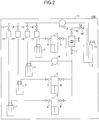
- FIG. 2 illustrates an example of a decellularized tissue producing apparatus of the present embodiment.
- a decellularized tissue producing apparatus 100 includes a tank 1 for storing a first treatment liquid, a tank 5 for storing a second treatment liquid, a tank 1' for storing a third treatment liquid, and a tank 1" for storing a liquid including liquefied gas.
- the decellularized tissue producing apparatus 100 also includes a pressurizing pump 3 (e.g., a syringe pump) for feeding the first treatment liquid, a pump 6 (e.g., a plunger pump) for feeding the second treatment liquid, a pressurizing pump 3' (e.g., a syringe pump) for feeding the third treatment liquid, and a pressurizing pump 3" (e.g., a syringe pump) for feeding the liquid including liquefied gas (e.g., a syringe pump).
- a pressurizing pump 3 e.g., a syringe pump
- a pump 6 e.g., a plunger pump
- a pressurizing pump 3' e.g., a syringe pump
- a pressurizing pump 3" e.g., a syringe pump
- the decellularized tissue producing apparatus 100 also includes a contact tank 8 for bringing each liquid treatment liquid that has been fed, into contact with a biological tissue 9 in which the cells have been destroyed, and a collection tank 11 for collecting each treatment liquid that has contacted the biological tissue 9 in which the cells have been destroyed.
- an end surface on an upstream side of the contact tank 8 may include a member that promotes equalizing the velocity distribution that occurs from near the wall surface of the contact tank 8 to the center of the contact tank 8.
- the member that promotes equalizing the velocity distribution that occurs from near the wall surface of the contact tank 8 to the center portion of the contact tank 8, is not particularly limited, but a porous member having micro pores is preferable from the viewpoint of the efficiency of achieving uniformity of the velocity distribution.
- the decellularized tissue producing apparatus 100 includes separating units 15, 15', and 16 for removing impurities mixed into each treatment liquid that has been collected.
- the decellularized tissue producing apparatus 100 includes a pump 12 (e.g., a plunger pump) for feeding the first treatment liquid from which impurities have been removed to the tank 1, feeding the second treatment liquid from which impurities have been removed to the tank 5, feeding the third treatment liquid from which impurities have been removed to the tank 1', or transporting the vaporized liquefied gas to a condenser 15".
- a pump 12 e.g., a plunger pump
- the decellularized tissue producing apparatus 100 includes a temperature detecting and adjusting unit 17 for detecting and adjusting the internal temperature.
- the decellularized tissue producing apparatus 100 also includes valves 2, 2', 2", 4, 4', 4", 7, 10, 13, 14, 14', 14", and a backpressure valve 18.
- step S1 the biological tissue 9, in which the cells have been destroyed, is introduced into the contact tank 8, and the first treatment liquid is filled into the tank 1.
- the valves 2, 4, 7, and 10 are opened and the other valves are closed.
- the first treatment liquid filled in the tank 1 is circulated through the contact tank 8 using the pressurizing pump 3.
- the DNA in the biological tissue 9 in which the cells have been destroyed, is degraded, for example, by the function of DNase.
- the first treatment liquid including the DNA degradation product is collected in the collection tank 11. At this time, by using a pressurizing pump, it is possible to prevent the occurrence of cavitation in the first treatment liquid, in which the main solvent is water such that bubbles easily enter.
- the valve 14 is opened and the other valves are closed.
- the collected first treatment liquid including the DNA degradation product is fed to the tank 1 using the pump 12.
- the DNA degradation product is removed by the separating unit 15, so that the first treatment liquid from which the impurities have been removed, can be collected in the tank 1.
- the first treatment liquid collected in the tank 1 can be circulated directly to the contact tank 8 again to be used for DNA degradation of the biological tissue 9 in which the cells have been destroyed. Accordingly, the DNA can be degraded with a small amount of the first treatment liquid, without having to replace or add the first treatment liquid.
- step S2 the second treatment liquid is filled in the tank 5.
- the second treatment liquid filled in the tank 5 is circulated through the contact tank 8 using the pump 6, the biological tissue 9 in which the DNA has been degraded is degreased, and the second treatment liquid including the removed lipid is collected in the collection tank 11.
- the collected second treatment liquid including the lipid is fed to the tank 5 using the pump 12. At this time, the lipid is removed by the separating unit 16, and, therefore, the second treatment liquid from which impurities have been removed can be collected in the tank 5.
- the second treatment liquid collected in the tank 5 can be circulated directly back to the contact tank 8 again, to be used for degreasing the biological tissue 9 in which the DNA has been degraded. Therefore, it is possible to perform the degreasing with a small amount of the second treatment liquid, without having to replace or add the second treatment liquid.
- step S3 the third treatment liquid is filled in the tank 1'.
- the third treatment liquid filled in the tank 1' is circulated through the contact tank 8 using the pressurizing pump 3', the degreased biological tissue 9 is washed, and the third treatment liquid including the removed water-soluble compound is collected in the collection tank 11.
- a pressurizing pump can be used to prevent the occurrence of cavitation in the third treatment liquid, in which the main solvent is water such that bubbles easily enter.
- the collected third treatment liquid including the water-soluble compound is fed to the tank 1' using the pump 12.
- the water-soluble compound is removed by the separating unit 15', and, therefore, the third treatment liquid from which the impurities have been removed can be collected in the tank 1'.
- the third treatment liquid collected in the tank 1' can be circulated directly back to the contact tank 8 again to be used for washing the degreased biological tissue 9. Therefore, washing can be performed with a small amount of the third treatment liquid, without having to replace or add the third treatment liquid.
- the decellularized tissue producing apparatus 100 can use a liquid including liquefied gas to destroy cells of biological tissue, as will be described below.
- a liquid including liquefied gas When cells are destroyed using a liquid including liquefied gas, the liquid including liquefied gas may become vaporized, which may damage the biological tissue due to drying.
- the pressurizing pump 3" When liquid including liquefied gas is fed, the pressurizing pump 3" is used, and the pressure can be adjusted by the backpressure valve 18, and, therefore, it is possible to adjust or inhibit the vaporization of liquid including liquefied gas, thereby reducing damage to the biological tissue due to drying.
- the biological tissue 9 is introduced into the contact tank 8.
- a liquid including liquefied gas is filled in the tank 1
- the first treatment liquid is filled in the tank 1
- the second treatment liquid is filled in the tank 5
- the third treatment liquid is filled in the tank 1'.
- the valves 2", 4", 7, and 10 are opened, the backpressure valve 18 is adjusted to a predetermined pressure, the other valves are closed, and then, the liquid including liquefied gas filled in the tank 1" is fed by the pressurizing pump 3".
- the pressurizing pump 3" is stopped, and the valves 2" and 4" are closed, and the liquid feeding is terminated.
- a valve 19 is opened to reduce the pressure of the liquefied gas to less than a saturated vapor pressure, thereby vaporizing the liquefied gas present between the valve 4" and the valve 14".
- the vaporized dimethyl ether may be discharged by using a pump.
- the valve 14" may be opened and the vaporized liquefied gas may be transported to the condenser 15" using the pump 12, to be liquefied and reused.
- the valves 2, 4, 7, and 10 are opened and the other valves are closed. Then, the first treatment liquid filled in the tank 1 is fed by the pressurizing pump 3.
- the pressurizing pump 3 is stopped, the valves 2 and 4 are closed, and liquid feeding is terminated.
- the second treatment liquid filled in the tank 5 is fed by the pump 6.
- the pump 6 is then stopped and the liquid feeding is terminated.
- the valves 2' and 4' are opened, and the third treatment liquid filled in the tank 1' is fed by the pressurizing pump 3'.
- the pressurizing pump 3' is stopped, the valves 2', 4', 7, and 10 are closed, and the liquid feeding is terminated.
- cell destruction, DNA degradation, degreasing, and washing can be performed continuously by a circulation method to shorten the treatment time.
- the aortic tissue 55 derived from a swine was charged into an extraction tank 54.
- the contents in a separation tank 60 were substituted in advance with dimethyl ether, and valves 52, 53, 56, 58, and 59 were closed.
- the set pressure of a backpressure valve 57 was set to 0.7 MPa, the valves 52, 53, 56, and 58 were opened, the liquefied dimethyl ether was circulated by using a pump 51, and when the extraction tank 54 was filled with the liquefied dimethyl ether, the valves 53 and 56 were closed, the aortic tissue 55 derived from a swine was immersed in the liquefied dimethyl ether, and cell membrane components such as phospholipids were extracted.
- valves 53 and 56 were opened, and the flow rate of the liquefied dimethyl ether was adjusted to 1 mL/min, and the extraction liquid was collected in the separation tank 60.
- valve 58 was closed, the separation tank 60 was removed from the apparatus, and the liquefied dimethyl ether was volatilized in the draft chamber at atmospheric pressure.
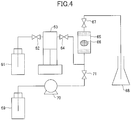
- a contact tank 65 was charged with the aortic tissue 66 derived from a swine in which cells have been destroyed.
- a tank 61 was filled with physiological saline including 0.2 mg/mL of DNaseI (manufactured by Roche Diagnostics K.K.) and 0.05 M of MgCl 2 (manufactured by Wako Pure Chemical Industries, Ltd.), and valves 62, 64, and 67 were opened and a valve 71 was closed.
- DNaseI manufactured by Roche Diagnostics K.K.
- MgCl 2 manufactured by Wako Pure Chemical Industries, Ltd.
- the physiological saline including DNaseI and MgCl 2 filled in the tank 61 was then circulated to the contact tank 65 at 1 mL/min using a syringe pump 63 to degrade the DNA included in the aortic tissue 66 derived from a swine in which cells have been destroyed, and the DNA degradation product was collected in a collection tank 68.
- physiological saline including 80 volume% of ethanol was filled, and the valves 62 and 64 were closed and the valves 67 and 71 were opened.
- the physiological saline including ethanol filled into the tank 69 was circulated to the contact tank 65 at 1 mL/min using a plunger pump 70, to degrease the aortic tissue 66 derived from a swine in which the DNA has been degraded, and the removed lipid was collected in the collection tank 68.
- the physiological saline including ethanol was discharged from the tank 69, and the tank 69 was filled with physiological saline.
- the physiological saline filled into the tank 69 was then circulated to the contact tank 65 at 1 mL/min using the plunger pump 70, and the degreased aortic tissue 66 derived from a swine was washed, and the removed extract was collected in the collection tank 68.
- a decellularized tissue of an aortic tissue derived from a swine was obtained.
- the DNA degradation, degreasing, and washing of the aortic tissue 66 derived from a swine in which cells have been destroyed, were performed by a batch method, i.e., except that the aortic tissue 66 was mixed and shaken with each treatment liquid, a decellularized tissue of an aortic tissue derived from a swine was obtained in the same manner as in practical example 1.
- Table 1 indicates the amount of DNA per dry mass of decellularized tissue of an aortic tissue derived from a swine and an untreated aortic tissue derived from a swine.
- DNA DEGRADATION DEGREASING WASHING DNA AMOUNT PER DRY MASS [ng/mg]
- PRACTICAL EXAMPLE 1 CIRCULATION METHOD CIRCULATION METHOD CIRCULATION METHOD 360 COMPARATIVE EXAMPLE 1 BATCH METHOD BATCH METHOD BATCH METHOD 730 UNTREATED - - - 3370
- the DNA was extracted from the decellularized tissue of the aortic tissue derived from a swine and the untreated aortic tissue derived from a swine, by phenol-chloroform extraction.
- the DNA amount the double-stranded DNA content was quantified using a Quant-iT PicoGreen dsDNA Assay Kit.
- Table 1 indicates that the decellularized tissue of the aortic tissue derived from a swine of practical example 1 had a small amount of DNA per dry mass, and it was possible to efficiently produce the decellularized tissue.
- the decellularized tissue of the aortic tissue derived from a swine of comparative example 1 had a large amount of DNA per dry mass and was thus not efficiently produced, as a result of not subjecting the aortic tissue 66 derived from a swine in which cells have been destroyed to DNA degradation, degreasing, or washing by a circulation method.
- the aortic tissue 66 derived from a swine in which the DNA has been degraded was placed in physiological saline including 80 volume% of ethanol, and was then shaken and degreased.
- the degreased aortic tissue 66 derived from a swine was placed in physiological saline, and was then shaken and washed.
- the aortic tissue 66 derived from a swine in which cells have been destroyed was placed in physiological saline including 0.2 mg/mL of DNaseI (manufactured by Roche Diagnostics K.K.) and 0.05 M of MgCl 2 (manufactured by Wako Pure Chemical Industries, Ltd.), and was shaken to degrade the DNA included in the aortic tissue 66 derived from a swine in which cells have been destroyed.
- the aortic tissue 66 derived from a swine in which the DNA has been destroyed was placed in physiological saline, shaken, and washed.
- the aortic tissue 66 derived from a swine in which cells have been destroyed was placed in physiological saline including 0.2 mg/mL of DNaseI (manufactured by Roche Diagnostics K.K.) and 0.05 M of MgCl 2 (manufactured by Wako Pure Chemical Industries, Ltd.), and was shaken to degrade the DNA included in the aortic tissue 66 derived from a swine in which cells have been destroyed.
- the aortic tissue 66 derived from a swine in which the DNA has been destroyed was placed in physiological saline including 80 volume% of ethanol, and was shaken and degreased.
- Table 2 indicates the residual amount of DNA, the residual amount of lipid, and the residual amount of water-soluble compounds in the decellularized tissue of the aortic tissue derived from a swine.
- Table 2 STEP DNA DEGRADATION DEGREASING WASHING METHOD/INDEX METHOD INDEX METHOD INDEX METHOD INDEX DNA RESIDUAL AMOUNT LIPID RESIDUAL AMOUNT WATER-SOLUBLE COMPOUND RESIDUAL AMOUNT PRACTICAL EXAMPLE 1 CIRCULATION METHOD SMALL CIRCULATION METHOD SMALL CIRCULATION METHOD SMALL PRACTICAL EXAMPLE 2 CIRCULATION METHOD SMALL SHAKING METHOD LARGE SHAKING METHOD LARGE PRACTICAL EXAMPLE 3 SHAKING METHOD LARGE CIRCULATION METHOD LARGE PRACTICAL EXAMPLE 4 SHAKING METHOD LARGE CIRCUL
- the residual amount of lipid and the residual amount of water-soluble compounds were also lower than those of the decellularized tissue of the aortic tissue derived from a swine of comparative example 1.
- the DNA degrading was performed by a circulation method and the degreasing and the washing were performed by a batch method, and, therefore, the residual amount of DNA was lower than that of the decellularized tissue of the aortic tissue derived from a swine of comparative example 1.
- the degreasing was performed by a circulation method and the DNA degrading and the washing were performed by a batch method, and, therefore, the residual amount of lipid was lower than that of the decellularized tissue of the aortic tissue derived from a swine of comparative example 1.
- the washing was performed by a circulation method and the DNA degrading and the degreasing were performed by a batch method, and, therefore, the residual amount of water-soluble compounds was lower than that of the decellularized tissue of the aortic tissue derived from a swine of comparative example 1.
- the decellularized tissue can be efficiently produced.
- FIG. 5 illustrates an example of a decellularized tissue producing method of the second embodiment.
- a decellularized tissue producing method includes the steps of: destroying cells in a biological tissue (step S0); degrading the DNA in the biological tissue in which the cells have been destroyed (step S1); and degreasing the biological tissue in which the DNA has been degraded using a fluid including liquefied gas (step S2). Accordingly, lipid-soluble components can be sufficiently removed from the biological tissue in which the DNA has been degraded, to improve the adhesion of cells to the decellularized tissue.
- degreasing is defined as removing lipid-soluble components from the biological tissue.
- step S0 for example, a liquid capable of destroying cells is brought into contact with biological tissue.
- the liquid capable of destroying cells is preferably, but is not limited to, a liquid including a surfactant, high pressure water, liquefied dimethyl ether, or supercritical carbon dioxide.
- step S1 for example, a liquid capable of degrading DNA is brought into contact with the biological tissue in which the cells have been destroyed.
- the liquid capable of degrading DNA is preferably, but is not limited to, a liquid including an enzyme or a surfactant.
- the enzyme may be, but is not limited to, DNase (e.g., DNaseI), trypsin, and the like.
- the surfactant may be, but is not limited to, an ionic surfactant (e.g., sodium dodecyl sulfate (SDS)), a non-ionic surfactant (e.g., Triton X-100), and the like.
- an ionic surfactant e.g., sodium dodecyl sulfate (SDS)
- SDS sodium dodecyl sulfate
- non-ionic surfactant e.g., Triton X-100
- the liquid is not particularly limited as long as the liquid is physiologically compatible, and the liquid may be physiological saline, phosphate buffered saline (PBS), and the like, and two or more kinds of liquids may be used in combination. Among these, physiological saline is preferable.
- the method of bringing a liquid capable of degrading DNA into contact with a biological tissue in which the cells have been destroyed may be, but is not limited to, a method of mixing and stirring a biological tissue in which the cells have been destroyed with a liquid capable of degrading DNA, and a method of causing a liquid capable of degrading DNA to circulate through a biological tissue in which the cells have been destroyed, etc.
- the liquid capable of degrading DNA may be appropriately replaced.
- the temperature of the environment in which the liquid capable of degrading DNA is brought into contact with the biological tissue in which the cells have been destroyed is preferably 4 °C to 40 °C.
- the temperature of the environment in which the liquid capable of degrading DNA is brought into contact with the biological tissue in which the cells have been destroyed is 4 °C or higher, it is possible to inhibit damage due to ice crystals of an extracellular matrix included in the biological tissue, and when the temperature is 40 °C or lower, it is possible to inhibit denaturation of the protein included in the biological tissue.
- step S2 for example, the fluid including liquefied gas is brought into contact with the biological tissue in which the DNA has been degraded in step S1.
- liquefied gas is a substance that is a gas in the standard state (0 °C, 1 atm (0.101325 MPa) .
- the liquefied gas is not limited as long as the decellularized tissue can be degreased, and the liquefied gas may be dimethyl ether, ethylmethyl ether, formaldehyde, ketene, acetaldehyde, propane, butane, liquefied petroleum gas, and the like, and two or more of these types may be used in combination.
- ethylmethyl ether and dimethyl ether are preferable in being liquefied at relatively low temperature and low pressure, and dimethyl ether is particularly preferable.
- Dimethyl ether is liquefied at approximately 1 °C to 40 °C and 0.2 MPa to 5 MPa, and, therefore, the cost of the device will be low. Liquefied dimethyl ether vaporizes readily in the standard state, and is therefore unlikely to remain in the decellularized tissue.
- Step S2 is performed in an environment in which the pressure is greater than or equal to the saturated vapor pressure, such as in a gas-tight extraction tank, in order to maintain the liquid state of the liquefied gas.
- the method of bringing a fluid including liquefied gas into contact with the biological tissue in which the DNA has been degraded may be, but is not limited to, a method of immersing the biological tissue in which the DNA has been degraded in a fluid including a liquefied gas.
- the fluid including liquefied gas may further include a liquid different from the liquefied gas.
- the liquid different from liquefied gas is not particularly limited as long as the liquid is physiologically compatible, and the liquid may be physiological saline, phosphate buffered saline (PBS), and the like, and two or more kinds of liquids may be used in combination. Among these, physiological saline is preferable.
- the additive amount of the liquid different from liquefied gas is preferably less than or equal to the solubility in the liquefied gas. Accordingly, the fluid including the liquefied gas can be made uniform.
- the temperature and pressure are returned to the standard state, and then the liquefied gas evaporates, so the liquefied gas can be easily removed from the biological tissue in which the DNA has been destroyed.
- the method of producing the decellularized tissue may further include a step of washing the degreased biological tissue (step S3).
- washing is defined as removing water-soluble components from biological tissue.
- step S3 for example, a liquid capable of washing the biological tissue is brought into contact with the biological tissue degreased in step S2.
- the liquid capable of washing the biological tissue is not particularly limited as long as the liquid is physiologically compatible, and the liquid may be physiological saline, phosphate buffered saline (PBS), etc., and two or more kinds of liquids may be used in combination. Among these, physiological saline is preferable.
- the method of bringing a liquid capable of washing the biological tissue into contact with the degreased biological tissue may be, but is not limited to, a method of mixing and stirring the degreased biological tissue with a liquid capable of washing the biological tissue, and a method of causing a liquid capable of washing the biological tissue to circulate through the degreased biological tissue, etc.
- the liquid capable of washing the biological tissue may be appropriately replaced.
- the temperature of the environment in which the liquid capable of washing the biological tissue is brought into contact with the degreased biological tissue is preferably 4 °C to 40 °C.
- the temperature of the environment in which the liquid capable of washing the biological tissue is brought into contact with the degreased biological tissue is 4 °C or higher, it is possible to inhibit damage due to ice crystals of an extracellular matrix included in the biological tissue, and when the temperature is 40 °C or lower, it is possible to inhibit denaturation of the protein included in the biological tissue.
- a liquid capable of destroying the cells is brought into contact with the biological tissue.
- the liquid capable of destroying cells is preferably, but is not limited to, a liquid including liquefied gas, a liquid including a surfactant, and the like.
- a liquid including liquefied gas is preferable in that the decellularized tissue is substantially not damaged and residual liquefied gas is reduced.
- a liquid including liquefied gas dissolves the cell membrane components, and can therefore destroy cells of the biological tissue.
- the liquefied gas is not limited as long as the cells in the decellularized tissue can be destroyed, and the liquefied gas may be dimethyl ether, ethylmethyl ether, formaldehyde, ketene, acetaldehyde, propane, butane, liquefied petroleum gas, and the like, and two or more of these types may be used in combination.
- ethylmethyl ether and dimethyl ether are preferable in being liquefied at relatively low temperature and low pressure, and dimethyl ether is particularly preferable.
- Dimethyl ether is liquefied at approximately 1 °C to 40 °C and 0.2 MPa to 5 MPa, and, therefore, the cost of the device will be low. Liquefied dimethyl ether vaporizes readily in the standard state, and is therefore unlikely to remain in the decellularized tissue.
- the method of bringing a liquid capable of destroying cells into contact with the biological tissue may be, but is not limited to, a method of immersing the biological tissue in a liquid capable of destroying cells, etc.
- the liquid including liquefied gas may further include a liquid different from the liquefied gas.
- the liquid different from liquefied gas may be, but is not limited to, ethanol, water, physiological saline, phosphate buffered saline (PBS), and the like, and two or more kinds of liquids may be used in combination.
- PBS phosphate buffered saline
- the additive amount of the liquid different from liquefied gas is preferably less than or equal to the solubility in the liquefied gas. Accordingly, the liquid including liquefied gas can be made uniform.
- the temperature of the liquefied gas is preferably 1 °C to 40 °C, and more preferably 10 °C to 30 °C.
- the pressure of the liquefied gas is preferably 0.2 MPa to 5 MPa, and more preferably in the range of 0.3 MPa to 0.7 MPa.
- the temperature and pressure are returned to the standard state, and then the liquefied gas evaporates, so the liquefied gas can be easily removed.
- the step of bringing a liquid including liquefied gas into contact with the biological tissue may be repeated a plurality of times.
- a biological tissue is defined as a tissue obtained from any one of a plant, fungi, archaea, and eubacteria having cell walls, or an animal without cell walls.
- the biological tissue are, but are not limited to, leaves, branches, trees, petals, stems, roots, pulp, pericarp, and seeds; soft tissue including skin, blood vessels, heart valves, cornea, amnion, dura, and the like or portions thereof, organs including heart, kidney, liver, pancreas, brain, and the like or portions thereof, and bones, cartilage, tendon, and the like or portions thereof, derived from humans or heterogeneous mammals.
- Brain tissue derived from a rat in which cells have been destroyed was placed in physiological saline including DNaseI (manufactured by Roche Diagnostics K.K.) and MgCl 2 (manufactured by Wako Pure Chemical Industries, Ltd.) and was shaken, and the DNA, included in the brain tissue derived from a rat in which cells have been destroyed, was degraded.
- the brain tissue derived from a rat in which the DNA has been degraded was brought into contact with liquefied dimethyl ether and was degreased.
- the degreased brain tissue derived from a rat was placed in physiological saline, shaken, and washed. As a result, a decellularized tissue of the brain tissue derived from a rat was obtained.
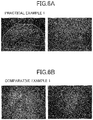
- FIGS. 6A and 6B indicate the results of the evaluation of the adhesion of cells to the decellularized tissue.
- the left side indicates the decellularized tissue of the brain tissue derived from a rat
- the right side is the brain tissue derived from a rat.
- FIGS. 6A and 6B indicate that the decellularized tissue of the brain tissue derived from a rat of practical example 1 has a larger area of fluorescence (dotted line in FIG. 6A ) than the decellularized tissue of the brain tissue derived from the rat of comparative example 1. Therefore, it can be seen that by degreasing the brain tissue derived from a rat in which the DNA has been degraded, by using liquefied dimethyl ether, the adhesion of cells to the decellularized tissue can be improved.
- the aortic tissue 55 derived from a swine was charged into an extraction tank 54.
- the contents in a separation tank 60 were substituted in advance with dimethyl ether, and valves 52, 53, 56, 58, and 59 were closed.
- the set pressure of a backpressure valve 57 was set to 0.7 MPa, the valves 52, 53, 56, and 58 were opened, the liquefied dimethyl ether was circulated by using a pump 51, and when the extraction tank 54 was filled with the liquefied dimethyl ether, the valves 53 and 56 were closed, the aortic tissue 55 derived from a swine was immersed in the liquefied dimethyl ether, and cell membrane components such as phospholipids were extracted.
- valves 53 and 56 were opened, and the flow rate of the liquefied dimethyl ether was adjusted to 1 mL/min, and the extraction liquid was collected in the separation tank 60.
- valve 58 was closed, the separation tank 60 was removed from the apparatus, and the liquefied dimethyl ether was volatilized in the draft chamber at atmospheric pressure.
- the aortic tissue derived from a swine in which cells have been destroyed was placed in physiological saline containing 0.2 mg/mL of DNaseI (manufactured by Roche Diagnostics K.K.) and 0.05 M of MgCl 2 (manufactured by Wako Pure Chemical Industries, Ltd.), and was shaken to degrade the DNA included in the aortic tissue derived from a swine in which cells have been destroyed.
- the aortic tissue derived from a swine in which the DNA has been degraded was then brought into contact with liquefied dimethyl ether to be degreased.
- the degreased aortic tissue derived from a swine was then placed in physiological saline, shaken, and washed. As a result, decellularized tissue of the aortic tissue derived from a swine was obtained.
- swine-derived cavernous bone tissue swine-derived skin tissue, swine-derived bone tissue, and swine-derived cartilage tissue were used as the biological tissue, instead of using an aortic tissue derived from a swine, a decellularized tissue was obtained in the same manner as practical example 2 .
- swine-derived cavernous bone tissue swine-derived skin tissue, swine-derived bone tissue, and swine-derived cartilage tissue were used as the biological tissue, instead of using an aortic tissue derived from a swine, a decellularized tissue was obtained in the same manner as comparative example 2.
- decellularized tissue producing method and the decellularized tissue producing apparatus are not limited to the specific embodiments described in the detailed description, and variations and modifications may be made without departing from the spirit and scope of the present invention.
Landscapes
- Health & Medical Sciences (AREA)
- Life Sciences & Earth Sciences (AREA)
- Engineering & Computer Science (AREA)
- Chemical & Material Sciences (AREA)
- Biomedical Technology (AREA)
- Wood Science & Technology (AREA)
- Zoology (AREA)
- General Health & Medical Sciences (AREA)
- Bioinformatics & Cheminformatics (AREA)
- Genetics & Genomics (AREA)
- Organic Chemistry (AREA)
- Biotechnology (AREA)
- Environmental Sciences (AREA)
- Dentistry (AREA)
- Chemical Kinetics & Catalysis (AREA)
- Microbiology (AREA)
- General Engineering & Computer Science (AREA)
- Cell Biology (AREA)
- Biochemistry (AREA)
- Epidemiology (AREA)
- Public Health (AREA)
- Medicinal Chemistry (AREA)
- Oral & Maxillofacial Surgery (AREA)
- Transplantation (AREA)
- Botany (AREA)
- Animal Behavior & Ethology (AREA)
- Dermatology (AREA)
- Veterinary Medicine (AREA)
- Apparatus Associated With Microorganisms And Enzymes (AREA)
- Micro-Organisms Or Cultivation Processes Thereof (AREA)
- Molecular Biology (AREA)
- General Chemical & Material Sciences (AREA)
- Thermal Sciences (AREA)
- Physics & Mathematics (AREA)
Abstract
Description
- The present invention relates to a decellularized tissue producing method and a decellularized tissue producing apparatus.
- In regenerative medicine, as a support tissue to regenerate a patient's organ that has become deficient, decellularized tissue has been re-transplanted. This decellularized tissue is obtained by removing, from biological tissue of a human or a heterologous mammal, cellular components such as cytoplasmic components, cytosol components, cytoskeletons, and cell membrane components. The decellularized tissue is mainly formed of extracellular matrix components such as elastin, collagen (type I, type IV, etc.), and laminin.
-
Patent Document 1 discloses a method of producing a decellularized tissue including the steps of: destroying cells in a biological tissue by using an aqueous solution of polyethylene glycol; degrading the DNA included in the biological tissue, in which the cells have been destroyed, by using DNase; and washing the biological tissue, in which the DNA has been degraded, by using phosphate buffered saline (PBS) (see, for example, Patent Document 1). - Patent Document 1: Japanese Translation of
PCT International Application Publication No. JP-T-2005-531355 - The present disclosure has an object to provide a decellularized tissue producing method and a decellularized tissue producing apparatus, by which a decellularized tissue can be efficiently produced.
- An aspect of the present invention provides a decellularized tissue producing method and a decellularized tissue producing apparatus, in which one or more of the disadvantages of the related art are reduced.
- According to one aspect of the present invention, there is provided a decellularized tissue producing method including degrading DNA included in a biological tissue in which cells are destroyed, by using a first treatment liquid; degreasing the biological tissue in which the DNA is degraded, by using a second treatment liquid; and washing the degreased biological tissue, by using a third treatment liquid, wherein at least one of the degrading, the degreasing, and the washing is performed by a circulation method.
- According to one embodiment of the present invention, a decellularized tissue producing method and a decellularized tissue producing apparatus by which a decellularized tissue can be efficiently produced, can be provided.
-
-
FIG. 1 is a flow chart illustrating an example of a decellularized tissue producing method according to a first embodiment of the present invention; -
FIG. 2 is a schematic diagram illustrating an example of a decellularized tissue producing apparatus according to the first embodiment of the present invention; -
FIG. 3 is a schematic diagram illustrating a cell destruction apparatus used in an example in the first embodiment of the present invention; -
FIG. 4 is a schematic diagram illustrating a decellularized tissue producing apparatus used in an example in the first embodiment of the present invention; -
FIG. 5 is a flow chart illustrating an example of a decellularized tissue producing method according to a second embodiment of the present invention; and -
FIGS. 6A and 6B illustrate the result of the evaluation of the adhesion of cells to the decellularized tissue of practical example 1 and comparative example 1. - The related art described in the BACKGROUND OF THE INVENTION has a problem in that it is not possible to efficiently produce decellularized tissue, because it takes a long time to degrade the DNA included in the biological tissue in which the cells have been destroyed, and to wash the biological tissue, in which the DNA has been degraded, by using PBS.
- The related art described in the BACKGROUND OF THE INVENTION has another problem in that the resulting decellularized tissue (support tissue) includes residual lipophilic components, and, therefore, even when cells are to be adhered to the decellularized tissue (support tissue), it is difficult for the cells to adhere to the decellularized tissue (support tissue).
- Hereinafter, embodiments of the present invention will be described with reference to the drawings.
-
FIG. 1 illustrates an example of a decellularized tissue producing method according to the present embodiment. - A decellularized tissue producing method includes the steps of: degrading the DNA included in the biological tissue, in which the cells have been destroyed, by using a first treatment liquid (step S1); degreasing the biological tissue, in which the DNA has been degraded, by using a second treatment liquid (step S2); and washing the degreased biological tissue by using a third treatment liquid (step S3), and at least one of steps S1, S2, and S3 is performed by a circulation method. Accordingly, a decellularized tissue can be efficiently produced.
- In the present specification and claims, the circulation method is a method in which a treatment liquid flows into a contact tank and the biological tissue is treated by the treatment liquid, when the treatment liquid flows out of the contact tank, that is, the circulation method is a method in which the biological tissue is treated by the treatment liquid, when the treatment liquid circulates through the contact tank.
- In step S1, for example, a liquid including an enzyme or a surfactant is brought into contact with the biological tissue in which the cells have been destroyed, to degrade the DNA included in the biological tissue in which the cells have been destroyed.
- The enzyme may be, but is not limited to, DNase (e.g., DNaseI), trypsin, and the like.
- The surfactant may be, but is not limited to, an ionic surfactant (e.g., sodium dodecyl sulfate (SDS)), a non-ionic surfactant (e.g., Triton X-100), and the like.
- The DNase may be, for example, DNaseI.
- The liquid is not particularly limited as long as the liquid is physiologically compatible, may be a liquid in which water is the main solvent such as physiological saline, phosphate buffered saline (PBS), etc., and two or more kinds of liquids may be used in combination. Among these, physiological saline is preferable.
- The method of bringing a liquid including DNase into contact with a biological tissue in which the cells have been destroyed may be, but is not limited to, a method of mixing and stirring a biological tissue in which the cells have been destroyed with a liquid including DNase, and a method of causing a liquid including DNase to circulate through a biological tissue in which the cells have been destroyed, etc. Among these, it is preferable to perform the method of causing a liquid including DNase to circulate through a biological tissue in which the cells have been destroyed, in that the DNA can be efficiently degraded.
- When the biological tissue, in which the cells have been destroyed, is mixed and stirred with a liquid including DNase, the liquid including DNase may be appropriately replaced.
- Preferably, the temperature of the environment in which the liquid including DNase is brought into contact with the biological tissue in which the cells have been destroyed, is preferably 4 °C to 40 °C. When the temperature of the environment in which the liquid including DNase is brought into contact with the biological tissue in which the cells have been destroyed, is 4 °C or higher, it is possible to inhibit damage due to ice crystals of an extracellular matrix included in the biological tissue, and when the temperature is 40 °C or lower, it is possible to inhibit denaturation of the protein included in the biological tissue.
- Further, it is more preferable that the temperature of the environment in which the liquid including DNase is brought into contact with the biological tissue in which the cells have been destroyed, is 25 °C to 37 °C. In general, DNase exhibits high activity in the range of 25 °C to 37 °C, and can efficiently degrade the DNA.
- In step S2, for example, the biological tissue in which the DNA has been degraded in step S1 is brought into contact with a liquid including an organic solvent, to degrease the biological tissue in which the DNA has been degraded.
- In the present specification and claims, degreasing is defined as removing lipid-soluble components from the biological tissue.
- The organic solvent is not particularly limited as long as the organic solvent is a physiologically acceptable organic solvent capable of degreasing the biological tissue in which the DNA has been degraded, and the organic solvent may be ethanol and the like, and two or more types of organic solvents may be used in combination. Among these, ethanol is preferable in that ethanol is harmless to the biological tissue.
- The liquid is not particularly limited as long as the liquid is physiologically compatible, may be a liquid in which water is the main solvent such as physiological saline, phosphate buffered saline (PBS), etc., and two or more kinds of liquids may be used in combination. Among these, physiological saline is preferable.
- The method of bringing the biological tissue in which the DNA has been degraded into contact with a liquid including an organic solvent may be, but is not limited to, mixing and stirring the biological tissue in which the DNA has been degraded with a liquid including an organic solvent, and a method of circulating a liquid including an organic solvent through the biological tissue in which the DNA has been degraded. Among these, the method of circulating a liquid including an organic solvent through the biological tissue in which the DNA has been degraded is preferable, in that the biological tissue can be efficiently degreased.
- When the biological tissue in which the DNA has been degraded is mixed and stirred with a liquid including an organic solvent, the liquid including the organic solvent may be appropriately replaced.
- The temperature of the environment in which the biological tissue in which the DNA has been degraded is brought into contact with a liquid including an organic solvent, is preferably 4 °C to 40 °C. When the temperature of the environment in which the biological tissue in which the DNA has been degraded is brought into contact with a liquid including an organic solvent, is 4 °C or higher, it is possible to inhibit damage due to ice crystals of an extracellular matrix included in the biological tissue, and when the temperature is 40 °C or lower, it is possible to inhibit denaturation of the protein included in the biological tissue.
- Steps S1 and S2 may be performed simultaneously, or the order of steps S1 and S2 may be reversed.
- In step S3, for example, the biological tissue degreased in step S2 is brought into contact with liquid, to wash the degreased biological tissue.
- In the present specification and claims, washing is defined as removing water-soluble components from biological tissue.
- The liquid is not particularly limited as long as the liquid is physiologically compatible, and may be a liquid in which water is the main solvent such as physiological saline, phosphate buffered saline (PBS), etc., and two or more kinds of liquids may be used in combination. Among these, physiological saline is preferable.
- The method of bringing the degreased biological tissue into contact with a liquid may be, but is not limited to, mixing and stirring the degreased biological tissue with a liquid, and a method of causing the liquid to circulate through the degreased biological tissue. Among these, the method of causing the liquid to circulate through the degreased biological tissue is preferable in that the degreased biological tissue can be efficiently cleaned.
- When the biological tissue in which the DNA has been degraded is mixed and stirred with a liquid, the liquid may be appropriately replaced.
- The temperature of the environment in which the degreased biological tissue is brought into contact with the liquid, is preferably 4 °C to 40 °C. When the temperature of the environment in which the degreased biological tissue is brought into contact with the liquid, is 4 °C or higher, it is possible to inhibit damage due to ice crystals of an extracellular matrix included in the biological tissue, and when the temperature is 40 °C or lower, it is possible to inhibit denaturation of the protein included in the biological tissue.
- The method of producing the decellularized tissue of the present embodiment may further include the step of dissolving the cell membrane component of the biological tissue and destroying the cells of the biological tissue, as a pre-step of the step of degrading the DNA included in the biological tissue in which the cells have been destroyed.
- The method of destroying cells in the biological tissue may be, but is not limited to, a method of bringing the biological tissue and a liquid including liquefied gas into contact with each other, a mechanical method (an ultrasonic method, a microbeads method, a freezing method, etc.) (e.g., Japanese Translation of
PCT International Application Publication No. JP-T-2016-523541 - Here, a liquid including liquefied gas dissolves the cell membrane components, and can therefore destroy cells of the biological tissue.
- In the present specification and claims, liquefied gas is a substance that is a gas in a standard state (0 °C, 1 atm (0.101325 MPa) .
- The liquefied gas is not limited as long as the cells in the decellularized tissue can be destroyed, and the liquefied gas may be dimethyl ether, ethylmethyl ether, formaldehyde, ketene, acetaldehyde, propane, butane, liquefied petroleum gas, and the like, and two or more of these types may be used in combination. Among these, ethylmethyl ether and dimethyl ether are preferable in being liquefied at relatively low temperature and low pressure, and dimethyl ether is particularly preferable.
- Dimethyl ether is liquefied at approximately 1 °C to 40 °C and 0.2 MPa to 5 MPa, and, therefore, the cost of the device will be low. Liquefied dimethyl ether vaporizes readily in the standard state, and is therefore unlikely to remain in the decellularized tissue.
- When bringing the biological tissue and a liquid including liquefied gas into contact with each other, this is performed in an environment in which the pressure is greater than or equal to the saturated vapor pressure, such as in a gas-tight extraction tank, in order to maintain the liquid state of the liquefied gas.
- The method of bringing the biological tissue and a liquid including liquefied gas into contact with each other may be, but is not limited to, a method of immersing the biological tissue in a liquid including liquefied gas, and a method of circulating a liquid including liquefied gas through the biological tissue. Among these, the method of circulating a liquid including liquefied gas through the biological tissue is preferable in that the cells can be efficiently destroyed.
- The liquid including liquefied gas may further include a solvent.
- The solvent may be, but is not limited to, ethanol, water, physiological saline, phosphate buffered saline (PBS), and the like, and two or more types of solvents may be used in combination.
- The additive amount of solvent is preferably less than or equal to the solubility in the liquefied gas. Accordingly, the liquid including liquefied gas can be made uniform.
- The temperature of the liquefied gas is preferably 1 °C to 40 °C, and more preferably 10 °C to 30 °C.
- The pressure of the liquefied gas is preferably 0.2 MPa to 5 MPa, and more preferably in the range of 0.3 MPa to 0.7 MPa.
- After the biological tissue is brought into contact with a liquid including liquefied gas, the temperature and pressure are returned to the standard state, and then the liquefied gas evaporates, so the liquefied gas can be easily removed.
- The step of bringing the biological tissue into contact with a liquid including liquefied gas, may be repeated a plurality of times.
- A biological tissue is defined as a tissue obtained from any one of a plant, fungi, archaea, and eubacteria having cell walls, or an animal without cell walls. Examples of the biological tissue are, but are not limited to, leaves, branches, trees, petals, stems, roots, pulp, pericarp, and seeds; soft tissue including skin, blood vessels, heart valves, cornea, amnion, dura, and the like or portions thereof, organs including heart, kidney, liver, pancreas, brain, and the like or portions thereof, and bones, cartilage, tendon, and the like or portions thereof, derived from humans or heterogeneous mammals.
- The decellularized tissue producing apparatus of the present embodiment includes: a first unit for degrading DNA included in the biological tissue, in which the cells have been destroyed, by using a first treatment liquid; a second unit for degreasing the biological tissue, in which the DNA is degraded, by using a second treatment liquid; and a third unit for washing the degreased biological tissue by using a third treatment liquid. As long as the circulation method is implemented by at least one of the first unit, the second unit, and the third unit, the unit implementing the circulation method is not particularly limited.
- The decellularized tissue producing apparatus of the present embodiment preferably further includes: a first storage unit for storing the first treatment liquid; a second storage unit for storing the second treatment liquid; and a third storage unit for storing the third treatment liquid. Furthermore, it is preferable that the decellularized tissue producing apparatus of the present embodiment further includes: a first liquid feeding unit for feeding the first treatment liquid from the first storage unit to the contact tank; a second liquid feeding unit for feeding the second treatment liquid from the second storage unit to the contact tank; and a third liquid feeding unit for feeding the third treatment liquid from the third storage unit to the contact tank.
- The decellularized tissue producing apparatus of the present embodiment preferably further includes: a cell destroying unit for destroying cells of the biological tissue by using a liquid including liquefied gas; a fourth storage unit for storing liquid including liquefied gas; and a fourth liquid feeding unit for feeding liquid including liquefied gas from the fourth storage unit to the contact tank. In this case, the cell destroying unit preferably implements the circulation method.
- Furthermore, the decellularized tissue producing apparatus of the present embodiment preferably further includes: a contact unit for bringing each treatment liquid that has been fed and a biological tissue in which the cells have been destroyed in contact with each other; a collecting unit for collecting the treatment liquid in contact with the biological tissue in which the cells have been destroyed; a separating unit for removing impurities mixed into the collected treatment liquid; and a fifth liquid feeding unit for feeding the treatment liquid to the separating unit from the collecting unit.
- Furthermore, the decellularized tissue producing apparatus of the present embodiment preferably further includes a temperature detecting and adjusting unit for detecting and adjusting the internal temperature.
-
FIG. 2 illustrates an example of a decellularized tissue producing apparatus of the present embodiment. - A decellularized
tissue producing apparatus 100 includes atank 1 for storing a first treatment liquid, atank 5 for storing a second treatment liquid, a tank 1' for storing a third treatment liquid, and atank 1" for storing a liquid including liquefied gas. The decellularizedtissue producing apparatus 100 also includes a pressurizing pump 3 (e.g., a syringe pump) for feeding the first treatment liquid, a pump 6 (e.g., a plunger pump) for feeding the second treatment liquid, a pressurizing pump 3' (e.g., a syringe pump) for feeding the third treatment liquid, and a pressurizingpump 3" (e.g., a syringe pump) for feeding the liquid including liquefied gas (e.g., a syringe pump). - The decellularized
tissue producing apparatus 100 also includes acontact tank 8 for bringing each liquid treatment liquid that has been fed, into contact with abiological tissue 9 in which the cells have been destroyed, and acollection tank 11 for collecting each treatment liquid that has contacted thebiological tissue 9 in which the cells have been destroyed. - With respect to the circulation velocity of the treatment liquid circulating through the
contact tank 8, the velocity near the wall surface of thecontact tank 8 and the velocity at the center part of thecontact tank 8 may not be uniform, and the extraction efficiency may be inhibited. Accordingly, an end surface on an upstream side of thecontact tank 8 may include a member that promotes equalizing the velocity distribution that occurs from near the wall surface of thecontact tank 8 to the center of thecontact tank 8. - The member that promotes equalizing the velocity distribution that occurs from near the wall surface of the
contact tank 8 to the center portion of thecontact tank 8, is not particularly limited, but a porous member having micro pores is preferable from the viewpoint of the efficiency of achieving uniformity of the velocity distribution. - Further, the decellularized
tissue producing apparatus 100 includes separatingunits - Furthermore, the decellularized
tissue producing apparatus 100 includes a pump 12 (e.g., a plunger pump) for feeding the first treatment liquid from which impurities have been removed to thetank 1, feeding the second treatment liquid from which impurities have been removed to thetank 5, feeding the third treatment liquid from which impurities have been removed to the tank 1', or transporting the vaporized liquefied gas to acondenser 15". - Further, the decellularized
tissue producing apparatus 100 includes a temperature detecting and adjustingunit 17 for detecting and adjusting the internal temperature. - Furthermore, the decellularized
tissue producing apparatus 100 also includesvalves backpressure valve 18. - Next, a method of producing a decellularized tissue using the decellularized
tissue producing apparatus 100 will be described. - First, in step S1, the
biological tissue 9, in which the cells have been destroyed, is introduced into thecontact tank 8, and the first treatment liquid is filled into thetank 1. Next, thevalves tank 1 is circulated through thecontact tank 8 using the pressurizingpump 3. The DNA in thebiological tissue 9 in which the cells have been destroyed, is degraded, for example, by the function of DNase. Next, the first treatment liquid including the DNA degradation product is collected in thecollection tank 11. At this time, by using a pressurizing pump, it is possible to prevent the occurrence of cavitation in the first treatment liquid, in which the main solvent is water such that bubbles easily enter. - Next, the
valve 14 is opened and the other valves are closed. Then, the collected first treatment liquid including the DNA degradation product, is fed to thetank 1 using thepump 12. At this time, the DNA degradation product is removed by the separatingunit 15, so that the first treatment liquid from which the impurities have been removed, can be collected in thetank 1. The first treatment liquid collected in thetank 1 can be circulated directly to thecontact tank 8 again to be used for DNA degradation of thebiological tissue 9 in which the cells have been destroyed. Accordingly, the DNA can be degraded with a small amount of the first treatment liquid, without having to replace or add the first treatment liquid. - In step S2, the second treatment liquid is filled in the
tank 5. Next, after thevalves tank 5 is circulated through thecontact tank 8 using thepump 6, thebiological tissue 9 in which the DNA has been degraded is degreased, and the second treatment liquid including the removed lipid is collected in thecollection tank 11. Next, after thevalve 13 is opened and the other valves are closed, the collected second treatment liquid including the lipid is fed to thetank 5 using thepump 12. At this time, the lipid is removed by the separatingunit 16, and, therefore, the second treatment liquid from which impurities have been removed can be collected in thetank 5. The second treatment liquid collected in thetank 5 can be circulated directly back to thecontact tank 8 again, to be used for degreasing thebiological tissue 9 in which the DNA has been degraded. Therefore, it is possible to perform the degreasing with a small amount of the second treatment liquid, without having to replace or add the second treatment liquid. - In step S3, the third treatment liquid is filled in the tank 1'. Next, after the
valves contact tank 8 using the pressurizing pump 3', the degreasedbiological tissue 9 is washed, and the third treatment liquid including the removed water-soluble compound is collected in thecollection tank 11. In this case, a pressurizing pump can be used to prevent the occurrence of cavitation in the third treatment liquid, in which the main solvent is water such that bubbles easily enter. Next, after the valve 14' is opened and the other valves are closed, the collected third treatment liquid including the water-soluble compound is fed to the tank 1' using thepump 12. In this case, the water-soluble compound is removed by the separating unit 15', and, therefore, the third treatment liquid from which the impurities have been removed can be collected in the tank 1'. The third treatment liquid collected in the tank 1' can be circulated directly back to thecontact tank 8 again to be used for washing the degreasedbiological tissue 9. Therefore, washing can be performed with a small amount of the third treatment liquid, without having to replace or add the third treatment liquid. - Furthermore, the decellularized
tissue producing apparatus 100 can use a liquid including liquefied gas to destroy cells of biological tissue, as will be described below. When cells are destroyed using a liquid including liquefied gas, the liquid including liquefied gas may become vaporized, which may damage the biological tissue due to drying. When liquid including liquefied gas is fed, the pressurizingpump 3" is used, and the pressure can be adjusted by thebackpressure valve 18, and, therefore, it is possible to adjust or inhibit the vaporization of liquid including liquefied gas, thereby reducing damage to the biological tissue due to drying. - Note that cell destruction, DNA degradation, degreasing, and washing can be performed continuously by a circulation method by the following procedure.
- First, the
biological tissue 9 is introduced into thecontact tank 8. Next, a liquid including liquefied gas is filled in thetank 1, the first treatment liquid is filled in thetank 1, the second treatment liquid is filled in thetank 5, and the third treatment liquid is filled in the tank 1'. Next, thevalves 2", 4", 7, and 10 are opened, thebackpressure valve 18 is adjusted to a predetermined pressure, the other valves are closed, and then, the liquid including liquefied gas filled in thetank 1" is fed by the pressurizingpump 3". Next, the pressurizingpump 3" is stopped, and thevalves 2" and 4" are closed, and the liquid feeding is terminated. Next, avalve 19 is opened to reduce the pressure of the liquefied gas to less than a saturated vapor pressure, thereby vaporizing the liquefied gas present between thevalve 4" and thevalve 14". At this time, according to need, the vaporized dimethyl ether may be discharged by using a pump. Alternatively, instead of opening thevalve 19, thevalve 14" may be opened and the vaporized liquefied gas may be transported to thecondenser 15" using thepump 12, to be liquefied and reused. Next, thevalves tank 1 is fed by the pressurizingpump 3. At this time, by gradually reducing the set pressure of thebackpressure valve 18 from the predetermined pressure described above to the atmospheric pressure, it is possible to inhibit the vaporization of the liquefied gas remaining in thecontact tank 8, and it is possible to reduce the damage to thebiological tissue 9 due to drying. Next, the pressurizingpump 3 is stopped, thevalves tank 5 is fed by thepump 6. Thepump 6 is then stopped and the liquid feeding is terminated. Next, the valves 2' and 4' are opened, and the third treatment liquid filled in the tank 1' is fed by the pressurizing pump 3'. Next, the pressurizing pump 3' is stopped, thevalves - As described above, cell destruction, DNA degradation, degreasing, and washing can be performed continuously by a circulation method to shorten the treatment time.
- While practical examples of the present invention are described below, the present invention is not limited to the practical examples.
- Cells of
aortic tissue 55 derived from a swine were destroyed using a cell destruction apparatus illustrated inFIG. 3 . - Specifically, the
aortic tissue 55 derived from a swine was charged into anextraction tank 54. Next, the contents in aseparation tank 60 were substituted in advance with dimethyl ether, andvalves backpressure valve 57 was set to 0.7 MPa, thevalves pump 51, and when theextraction tank 54 was filled with the liquefied dimethyl ether, thevalves aortic tissue 55 derived from a swine was immersed in the liquefied dimethyl ether, and cell membrane components such as phospholipids were extracted. Next, thevalves separation tank 60. Next, thevalve 58 was closed, theseparation tank 60 was removed from the apparatus, and the liquefied dimethyl ether was volatilized in the draft chamber at atmospheric pressure. - By the above procedure, 60 mL of liquefied dimethyl ether and the
aortic tissue 55 derived from a swine were brought into contact with each other, and then thevalve 53 was closed, thevalves extraction tank 54 was set to atmospheric pressure, and the liquefied dimethyl ether in theextraction tank 54 was volatilized and exhausted. As a result, the aortic tissue derived from a swine in which cells have been destroyed, was obtained. - Aortic tissue 66 derived from a swine in which cells have been destroyed, was subjected to DNA degrading, degreasing, and washing by a circulation method using a decellularized tissue producing apparatus illustrated in
FIG. 4 . - Specifically, a
contact tank 65 was charged with the aortic tissue 66 derived from a swine in which cells have been destroyed. Next, atank 61 was filled with physiological saline including 0.2 mg/mL of DNaseI (manufactured by Roche Diagnostics K.K.) and 0.05 M of MgCl2 (manufactured by Wako Pure Chemical Industries, Ltd.), andvalves valve 71 was closed. The physiological saline including DNaseI and MgCl2 filled in thetank 61 was then circulated to thecontact tank 65 at 1 mL/min using asyringe pump 63 to degrade the DNA included in the aortic tissue 66 derived from a swine in which cells have been destroyed, and the DNA degradation product was collected in acollection tank 68. - Next, in a
tank 69, physiological saline including 80 volume% of ethanol was filled, and thevalves valves tank 69 was circulated to thecontact tank 65 at 1 mL/min using aplunger pump 70, to degrease the aortic tissue 66 derived from a swine in which the DNA has been degraded, and the removed lipid was collected in thecollection tank 68. - Next, the physiological saline including ethanol was discharged from the
tank 69, and thetank 69 was filled with physiological saline. The physiological saline filled into thetank 69 was then circulated to thecontact tank 65 at 1 mL/min using theplunger pump 70, and the degreased aortic tissue 66 derived from a swine was washed, and the removed extract was collected in thecollection tank 68. As a result, a decellularized tissue of an aortic tissue derived from a swine was obtained. - The DNA degradation, degreasing, and washing of the aortic tissue 66 derived from a swine in which cells have been destroyed, were performed by a batch method, i.e., except that the aortic tissue 66 was mixed and shaken with each treatment liquid, a decellularized tissue of an aortic tissue derived from a swine was obtained in the same manner as in practical example 1.
- Table 1 indicates the amount of DNA per dry mass of decellularized tissue of an aortic tissue derived from a swine and an untreated aortic tissue derived from a swine.
[Table 1] DNA DEGRADATION DEGREASING WASHING DNA AMOUNT PER DRY MASS [ng/mg] PRACTICAL EXAMPLE 1 CIRCULATION METHOD CIRCULATION METHOD CIRCULATION METHOD 360 COMPARATIVE EXAMPLE 1 BATCH METHOD BATCH METHOD BATCH METHOD 730 UNTREATED - - - 3370 - Here, the DNA was extracted from the decellularized tissue of the aortic tissue derived from a swine and the untreated aortic tissue derived from a swine, by phenol-chloroform extraction. As for the DNA amount, the double-stranded DNA content was quantified using a Quant-iT PicoGreen dsDNA Assay Kit.
- Table 1 indicates that the decellularized tissue of the aortic tissue derived from a swine of practical example 1 had a small amount of DNA per dry mass, and it was possible to efficiently produce the decellularized tissue.
- In contrast, the decellularized tissue of the aortic tissue derived from a swine of comparative example 1 had a large amount of DNA per dry mass and was thus not efficiently produced, as a result of not subjecting the aortic tissue 66 derived from a swine in which cells have been destroyed to DNA degradation, degreasing, or washing by a circulation method.
- Except that the degreasing and the washing were performed by a batch method, a decellularized tissue of an aortic tissue derived from a swine was obtained in the same manner as in practical example 1.
- Specifically, the aortic tissue 66 derived from a swine in which the DNA has been degraded, was placed in physiological saline including 80 volume% of ethanol, and was then shaken and degreased. The degreased aortic tissue 66 derived from a swine was placed in physiological saline, and was then shaken and washed.
- Except that the DNA degradation and the washing were performed by a batch method, a decellularized tissue of an aortic tissue derived from a swine was obtained in the same manner as in practical example 1.
- Specifically, the aortic tissue 66 derived from a swine in which cells have been destroyed was placed in physiological saline including 0.2 mg/mL of DNaseI (manufactured by Roche Diagnostics K.K.) and 0.05 M of MgCl2 (manufactured by Wako Pure Chemical Industries, Ltd.), and was shaken to degrade the DNA included in the aortic tissue 66 derived from a swine in which cells have been destroyed. The aortic tissue 66 derived from a swine in which the DNA has been destroyed, was placed in physiological saline, shaken, and washed.
- Except that the DNA degradation and the degreasing were performed by a batch method, a decellularized tissue of an aortic tissue derived from a swine was obtained in the same manner as in practical example 1.
- Specifically, the aortic tissue 66 derived from a swine in which cells have been destroyed was placed in physiological saline including 0.2 mg/mL of DNaseI (manufactured by Roche Diagnostics K.K.) and 0.05 M of MgCl2 (manufactured by Wako Pure Chemical Industries, Ltd.), and was shaken to degrade the DNA included in the aortic tissue 66 derived from a swine in which cells have been destroyed. The aortic tissue 66 derived from a swine in which the DNA has been destroyed, was placed in physiological saline including 80 volume% of ethanol, and was shaken and degreased.
- Table 2 indicates the residual amount of DNA, the residual amount of lipid, and the residual amount of water-soluble compounds in the decellularized tissue of the aortic tissue derived from a swine.
[Table 2] STEP DNA DEGRADATION DEGREASING WASHING METHOD/INDEX METHOD INDEX METHOD INDEX METHOD INDEX DNA RESIDUAL AMOUNT LIPID RESIDUAL AMOUNT WATER-SOLUBLE COMPOUND RESIDUAL AMOUNT PRACTICAL EXAMPLE 1 CIRCULATION METHOD SMALL CIRCULATION METHOD SMALL CIRCULATION METHOD SMALL PRACTICAL EXAMPLE 2 CIRCULATION METHOD SMALL SHAKING METHOD LARGE SHAKING METHOD LARGE PRACTICAL EXAMPLE 3 SHAKING METHOD LARGE CIRCULATION METHOD SMALL SHAKING METHOD LARGE PRACTICAL EXAMPLE 4 SHAKING METHOD LARGE SHAKING METHOD LARGE CIRCULATION METHOD SMALL COMPARATIVE EXAMPLE 1 SHAKING METHOD LARGE SHAKING METHOD LARGE SHAKING METHOD LARGE - In the decellularized tissue of the aortic tissue derived from a swine of practical example 1, similar to the residual amount of DNA, the residual amount of lipid and the residual amount of water-soluble compounds were also lower than those of the decellularized tissue of the aortic tissue derived from a swine of comparative example 1.
- In the decellularized tissue of the aortic tissue derived from a swine of practical example 2, the DNA degrading was performed by a circulation method and the degreasing and the washing were performed by a batch method, and, therefore, the residual amount of DNA was lower than that of the decellularized tissue of the aortic tissue derived from a swine of comparative example 1.
- In the decellularized tissue of the aortic tissue derived from a swine of practical example 3, the degreasing was performed by a circulation method and the DNA degrading and the washing were performed by a batch method, and, therefore, the residual amount of lipid was lower than that of the decellularized tissue of the aortic tissue derived from a swine of comparative example 1.
- In the decellularized tissue of the aortic tissue derived from a swine of practical example 4, the washing was performed by a circulation method and the DNA degrading and the degreasing were performed by a batch method, and, therefore, the residual amount of water-soluble compounds was lower than that of the decellularized tissue of the aortic tissue derived from a swine of comparative example 1.
- Thus, it can be seen that when at least one of the steps of DNA degrading, degreasing, and washing is performed by a circulation method, the decellularized tissue can be efficiently produced.
-
FIG. 5 illustrates an example of a decellularized tissue producing method of the second embodiment. - A decellularized tissue producing method includes the steps of: destroying cells in a biological tissue (step S0); degrading the DNA in the biological tissue in which the cells have been destroyed (step S1); and degreasing the biological tissue in which the DNA has been degraded using a fluid including liquefied gas (step S2). Accordingly, lipid-soluble components can be sufficiently removed from the biological tissue in which the DNA has been degraded, to improve the adhesion of cells to the decellularized tissue.
- In the present specification and claims, degreasing is defined as removing lipid-soluble components from the biological tissue.
- In step S0, for example, a liquid capable of destroying cells is brought into contact with biological tissue.
- The liquid capable of destroying cells is preferably, but is not limited to, a liquid including a surfactant, high pressure water, liquefied dimethyl ether, or supercritical carbon dioxide.
- In step S1, for example, a liquid capable of degrading DNA is brought into contact with the biological tissue in which the cells have been destroyed.
- The liquid capable of degrading DNA is preferably, but is not limited to, a liquid including an enzyme or a surfactant.
- The enzyme may be, but is not limited to, DNase (e.g., DNaseI), trypsin, and the like.
- The surfactant may be, but is not limited to, an ionic surfactant (e.g., sodium dodecyl sulfate (SDS)), a non-ionic surfactant (e.g., Triton X-100), and the like.
- The liquid is not particularly limited as long as the liquid is physiologically compatible, and the liquid may be physiological saline, phosphate buffered saline (PBS), and the like, and two or more kinds of liquids may be used in combination. Among these, physiological saline is preferable.
- The method of bringing a liquid capable of degrading DNA into contact with a biological tissue in which the cells have been destroyed may be, but is not limited to, a method of mixing and stirring a biological tissue in which the cells have been destroyed with a liquid capable of degrading DNA, and a method of causing a liquid capable of degrading DNA to circulate through a biological tissue in which the cells have been destroyed, etc. Among these, it is preferable to perform the method of causing a liquid capable of degrading DNA to circulate through a biological tissue in which the cells have been destroyed, in terms of high efficiency of contact between the liquid capable of degrading DNA and the biological tissue in which the cells have been destroyed, and the DNA can be efficiently degraded.
- When the biological tissue in which the cells have been destroyed is mixed and stirred with a liquid capable of degrading DNA, the liquid capable of degrading DNA may be appropriately replaced.
- The temperature of the environment in which the liquid capable of degrading DNA is brought into contact with the biological tissue in which the cells have been destroyed, is preferably 4 °C to 40 °C. When the temperature of the environment in which the liquid capable of degrading DNA is brought into contact with the biological tissue in which the cells have been destroyed, is 4 °C or higher, it is possible to inhibit damage due to ice crystals of an extracellular matrix included in the biological tissue, and when the temperature is 40 °C or lower, it is possible to inhibit denaturation of the protein included in the biological tissue.
- In step S2, for example, the fluid including liquefied gas is brought into contact with the biological tissue in which the DNA has been degraded in step S1.
- In the present specification and claims, liquefied gas is a substance that is a gas in the standard state (0 °C, 1 atm (0.101325 MPa) .
- The liquefied gas is not limited as long as the decellularized tissue can be degreased, and the liquefied gas may be dimethyl ether, ethylmethyl ether, formaldehyde, ketene, acetaldehyde, propane, butane, liquefied petroleum gas, and the like, and two or more of these types may be used in combination. Among these, ethylmethyl ether and dimethyl ether are preferable in being liquefied at relatively low temperature and low pressure, and dimethyl ether is particularly preferable.
- Dimethyl ether is liquefied at approximately 1 °C to 40 °C and 0.2 MPa to 5 MPa, and, therefore, the cost of the device will be low. Liquefied dimethyl ether vaporizes readily in the standard state, and is therefore unlikely to remain in the decellularized tissue.
- Step S2 is performed in an environment in which the pressure is greater than or equal to the saturated vapor pressure, such as in a gas-tight extraction tank, in order to maintain the liquid state of the liquefied gas.
- The method of bringing a fluid including liquefied gas into contact with the biological tissue in which the DNA has been degraded may be, but is not limited to, a method of immersing the biological tissue in which the DNA has been degraded in a fluid including a liquefied gas.
- The fluid including liquefied gas may further include a liquid different from the liquefied gas.
- The liquid different from liquefied gas is not particularly limited as long as the liquid is physiologically compatible, and the liquid may be physiological saline, phosphate buffered saline (PBS), and the like, and two or more kinds of liquids may be used in combination. Among these, physiological saline is preferable.
- The additive amount of the liquid different from liquefied gas is preferably less than or equal to the solubility in the liquefied gas. Accordingly, the fluid including the liquefied gas can be made uniform.
- After the fluid including the liquefied gas is brought into contact with the biological tissue in which the DNA has been destroyed, the temperature and pressure are returned to the standard state, and then the liquefied gas evaporates, so the liquefied gas can be easily removed from the biological tissue in which the DNA has been destroyed.
- The method of producing the decellularized tissue may further include a step of washing the degreased biological tissue (step S3).
- In the present specification and claims, washing is defined as removing water-soluble components from biological tissue.
- In step S3, for example, a liquid capable of washing the biological tissue is brought into contact with the biological tissue degreased in step S2.
- The liquid capable of washing the biological tissue is not particularly limited as long as the liquid is physiologically compatible, and the liquid may be physiological saline, phosphate buffered saline (PBS), etc., and two or more kinds of liquids may be used in combination. Among these, physiological saline is preferable.
- The method of bringing a liquid capable of washing the biological tissue into contact with the degreased biological tissue may be, but is not limited to, a method of mixing and stirring the degreased biological tissue with a liquid capable of washing the biological tissue, and a method of causing a liquid capable of washing the biological tissue to circulate through the degreased biological tissue, etc. Among these, it is preferable to perform the method of causing a liquid capable of washing the biological tissue to circulate through the degreased biological tissue, because the biological tissue can be efficiently washed.
- When the degreased biological tissue is mixed and stirred with a liquid capable of washing the biological tissue, the liquid capable of washing the biological tissue may be appropriately replaced.
- The temperature of the environment in which the liquid capable of washing the biological tissue is brought into contact with the degreased biological tissue, is preferably 4 °C to 40 °C. When the temperature of the environment in which the liquid capable of washing the biological tissue is brought into contact with the degreased biological tissue, is 4 °C or higher, it is possible to inhibit damage due to ice crystals of an extracellular matrix included in the biological tissue, and when the temperature is 40 °C or lower, it is possible to inhibit denaturation of the protein included in the biological tissue.
- When destroying cells in the biological tissue, for example, a liquid capable of destroying the cells is brought into contact with the biological tissue.
- The liquid capable of destroying cells is preferably, but is not limited to, a liquid including liquefied gas, a liquid including a surfactant, and the like. Among these, a liquid including liquefied gas is preferable in that the decellularized tissue is substantially not damaged and residual liquefied gas is reduced.
- Here, a liquid including liquefied gas dissolves the cell membrane components, and can therefore destroy cells of the biological tissue.
- The liquefied gas is not limited as long as the cells in the decellularized tissue can be destroyed, and the liquefied gas may be dimethyl ether, ethylmethyl ether, formaldehyde, ketene, acetaldehyde, propane, butane, liquefied petroleum gas, and the like, and two or more of these types may be used in combination. Among these, ethylmethyl ether and dimethyl ether are preferable in being liquefied at relatively low temperature and low pressure, and dimethyl ether is particularly preferable.
- Dimethyl ether is liquefied at approximately 1 °C to 40 °C and 0.2 MPa to 5 MPa, and, therefore, the cost of the device will be low. Liquefied dimethyl ether vaporizes readily in the standard state, and is therefore unlikely to remain in the decellularized tissue.
- When bringing a liquid including liquefied gas into contact with the biological tissue, this is performed in an environment in which the pressure exceeds the saturated vapor pressure, such as in a gas-tight extraction tank, in order to maintain the liquid state of the liquefied gas.
- The method of bringing a liquid capable of destroying cells into contact with the biological tissue may be, but is not limited to, a method of immersing the biological tissue in a liquid capable of destroying cells, etc.
- The liquid including liquefied gas may further include a liquid different from the liquefied gas.
- The liquid different from liquefied gas may be, but is not limited to, ethanol, water, physiological saline, phosphate buffered saline (PBS), and the like, and two or more kinds of liquids may be used in combination.
- The additive amount of the liquid different from liquefied gas is preferably less than or equal to the solubility in the liquefied gas. Accordingly, the liquid including liquefied gas can be made uniform.
- The temperature of the liquefied gas is preferably 1 °C to 40 °C, and more preferably 10 °C to 30 °C.
- The pressure of the liquefied gas is preferably 0.2 MPa to 5 MPa, and more preferably in the range of 0.3 MPa to 0.7 MPa.
- After bringing a liquid including liquefied gas into contact with the biological tissue, the temperature and pressure are returned to the standard state, and then the liquefied gas evaporates, so the liquefied gas can be easily removed.
- The step of bringing a liquid including liquefied gas into contact with the biological tissue, may be repeated a plurality of times.
- A biological tissue is defined as a tissue obtained from any one of a plant, fungi, archaea, and eubacteria having cell walls, or an animal without cell walls. Examples of the biological tissue are, but are not limited to, leaves, branches, trees, petals, stems, roots, pulp, pericarp, and seeds; soft tissue including skin, blood vessels, heart valves, cornea, amnion, dura, and the like or portions thereof, organs including heart, kidney, liver, pancreas, brain, and the like or portions thereof, and bones, cartilage, tendon, and the like or portions thereof, derived from humans or heterogeneous mammals.
- While practical examples of the present invention are described below, the present invention is not limited to the practical examples.
- Brain tissue derived from a rat in which cells have been destroyed was placed in physiological saline including DNaseI (manufactured by Roche Diagnostics K.K.) and MgCl2 (manufactured by Wako Pure Chemical Industries, Ltd.) and was shaken, and the DNA, included in the brain tissue derived from a rat in which cells have been destroyed, was degraded. Next, the brain tissue derived from a rat in which the DNA has been degraded, was brought into contact with liquefied dimethyl ether and was degreased. Next, the degreased brain tissue derived from a rat was placed in physiological saline, shaken, and washed. As a result, a decellularized tissue of the brain tissue derived from a rat was obtained.
- Except that ethanol was used instead of liquefied dimethyl ether when degreasing brain tissue derived from a rat in which the DNA has been degraded, a decellularized tissue of the brain tissue derived from a rat was obtained in the same manner as practical example 1.
- Next, the adhesion of cells to the decellularized tissue was evaluated.
- The decellularized tissue from the brain tissue derived from a rat of practical example 1 and comparative example 1, and a brain tissue derived from a rat, were seeded with nerve cells, and after seven days had elapsed, each of these tissues were dyed with fluorescent dye that fluoresces at positions where nerve cells are present, and a cross-section of each sample of these tissues was observed by using a light microscope.
-
FIGS. 6A and 6B indicate the results of the evaluation of the adhesion of cells to the decellularized tissue. In each ofFIGS. 6A and 6B , the left side indicates the decellularized tissue of the brain tissue derived from a rat, and the right side is the brain tissue derived from a rat. -
FIGS. 6A and 6B indicate that the decellularized tissue of the brain tissue derived from a rat of practical example 1 has a larger area of fluorescence (dotted line inFIG. 6A ) than the decellularized tissue of the brain tissue derived from the rat of comparative example 1. Therefore, it can be seen that by degreasing the brain tissue derived from a rat in which the DNA has been degraded, by using liquefied dimethyl ether, the adhesion of cells to the decellularized tissue can be improved. - Cells of
aortic tissue 55 derived from a swine were destroyed using the cell destruction apparatus illustrated inFIG. 3 . - Specifically, the
aortic tissue 55 derived from a swine was charged into anextraction tank 54. Next, the contents in aseparation tank 60 were substituted in advance with dimethyl ether, andvalves backpressure valve 57 was set to 0.7 MPa, thevalves pump 51, and when theextraction tank 54 was filled with the liquefied dimethyl ether, thevalves aortic tissue 55 derived from a swine was immersed in the liquefied dimethyl ether, and cell membrane components such as phospholipids were extracted. Next, thevalves separation tank 60. Next, thevalve 58 was closed, theseparation tank 60 was removed from the apparatus, and the liquefied dimethyl ether was volatilized in the draft chamber at atmospheric pressure. - By the above procedure, 60 mL of liquefied dimethyl ether and the
aortic tissue 55 derived from a swine were brought into contact with each other, and then thevalve 53 was closed, thevalves extraction tank 54 was set to atmospheric pressure, and the liquefied dimethyl ether in theextraction tank 54 was volatilized and exhausted. As a result, the aortic tissue derived from a swine in which cells have been destroyed, was obtained. - The aortic tissue derived from a swine in which cells have been destroyed, was placed in physiological saline containing 0.2 mg/mL of DNaseI (manufactured by Roche Diagnostics K.K.) and 0.05 M of MgCl2 (manufactured by Wako Pure Chemical Industries, Ltd.), and was shaken to degrade the DNA included in the aortic tissue derived from a swine in which cells have been destroyed. The aortic tissue derived from a swine in which the DNA has been degraded was then brought into contact with liquefied dimethyl ether to be degreased. The degreased aortic tissue derived from a swine was then placed in physiological saline, shaken, and washed. As a result, decellularized tissue of the aortic tissue derived from a swine was obtained.
- Except that ethanol was used instead of the liquefied dimethyl ether when degreasing the brain tissue derived from a swine in which the DNA has been degraded, a decellularized tissue of the aortic tissue derived from a swine was obtained in the same manner as in practical example 2.
- Except that swine-derived cavernous bone tissue, swine-derived skin tissue, swine-derived bone tissue, and swine-derived cartilage tissue were used as the biological tissue, instead of using an aortic tissue derived from a swine, a decellularized tissue was obtained in the same manner as practical example 2 .
- Except that swine-derived cavernous bone tissue, swine-derived skin tissue, swine-derived bone tissue, and swine-derived cartilage tissue were used as the biological tissue, instead of using an aortic tissue derived from a swine, a decellularized tissue was obtained in the same manner as comparative example 2.
- The adhesion of cells to the decellularized tissue of practical examples 2 to 6 and comparative examples 2 to 6 was evaluated. In all tissues, it was found that by degreasing the biological tissue derived from a swine in which the DNA has been degraded, by using liquefied dimethyl ether, the adhesion of cells to the decellularized tissue was improved.
- The decellularized tissue producing method and the decellularized tissue producing apparatus are not limited to the specific embodiments described in the detailed description, and variations and modifications may be made without departing from the spirit and scope of the present invention.
Claims (15)
- A decellularized tissue producing method comprising:degrading DNA included in a biological tissue in which cells are destroyed, by using a first treatment liquid;degreasing the biological tissue in which the DNA is degraded, by using a second treatment liquid; andwashing the degreased biological tissue, by using a third treatment liquid, whereinat least one of the degrading, the degreasing, and the washing is performed by a circulation method.
- The decellularized tissue producing method according to claim 1, wherein the first treatment liquid is a liquid including an enzyme or a surfactant.
- The decellularized tissue producing method according to claim 1 or 2, wherein the second treatment liquid is a liquid including an organic solvent.
- The decellularized tissue producing method according to claim 3, wherein the organic solvent is ethanol.
- The decellularized tissue producing method according to any one of claims 1 to 4, wherein the third treatment liquid includes water as a main solvent.
- The decellularized tissue producing method according to any one of claims 1 to 5, further comprising:destroying the cells in the biological tissue by using a liquid including liquefied gas, whereinthe destroying is performed under a predetermined condition in which the liquefied gas is maintained in a liquid state.
- The decellularized tissue producing method according to claim 6, wherein the liquefied gas is liquefied dimethyl ether.
- The decellularized tissue producing method according to claim 7, wherein the predetermined condition is a condition of a temperature of 1 °C to 40 °C and a pressure of 0.2 MPa to 5 MPa.
- The decellularized tissue producing method according to any one of claims 6 to 8, wherein
at least one of the degrading, the degreasing, the washing, and the destroying is performed in a contact tank, and
the contact tank includes a porous member on an end surface on an upstream side of the contact tank. - A decellularized tissue producing apparatus comprising:a degrader configured to degrade DNA included in a biological tissue in which cells are destroyed, by using a first treatment liquid;a degreaser configured to degrease the biological tissue in which the DNA is degraded, by using a second treatment liquid; anda washer configured to wash the degreased biological tissue, by using a third treatment liquid, whereinat least one of the degrader, the degreaser, and the washer performs a circulation method.
- A decellularized tissue producing method comprising:
degreasing a biological tissue in which DNA is degraded, by using a liquid including liquefied gas. - The decellularized tissue producing method according to claim 11, wherein the degreasing is performed under a predetermined condition in which the liquefied gas is maintained in a liquid state.
- The decellularized tissue producing method according to claim 12, wherein the predetermined condition is a condition of a temperature of 1 °C to 40 °C and a pressure of 0.2 MPa to 5 MPa.
- The decellularized tissue producing method according to any one of claims 11 to 13, wherein the liquefied gas is ether.
- The decellularized tissue producing method according to claim 14, wherein the ether is dimethyl ether.
Applications Claiming Priority (4)
| Application Number | Priority Date | Filing Date | Title |
|---|---|---|---|
| JP2018125169 | 2018-06-29 | ||
| JP2018125168 | 2018-06-29 | ||
| JP2018165407A JP2020005622A (en) | 2018-06-29 | 2018-09-04 | Method for producing decellularized tissue and apparatus for producing decellularized tissue |
| JP2018165409A JP2020006130A (en) | 2018-06-29 | 2018-09-04 | Method for producing decellularized tissue |
Publications (1)
| Publication Number | Publication Date |
|---|---|
| EP3586885A1 true EP3586885A1 (en) | 2020-01-01 |
Family
ID=67060288
Family Applications (1)
| Application Number | Title | Priority Date | Filing Date |
|---|---|---|---|
| EP19182121.4A Withdrawn EP3586885A1 (en) | 2018-06-29 | 2019-06-25 | Decellularized tissue producing method and decellularized tissue producing apparatus |
Country Status (2)
| Country | Link |
|---|---|
| US (1) | US20200002669A1 (en) |
| EP (1) | EP3586885A1 (en) |
Families Citing this family (1)
| Publication number | Priority date | Publication date | Assignee | Title |
|---|---|---|---|---|
| CN113144291B (en) * | 2021-03-08 | 2024-01-16 | 浙江狄赛生物科技有限公司 | Preparation method and device of tissue engineering biological material |
Citations (6)
| Publication number | Priority date | Publication date | Assignee | Title |
|---|---|---|---|---|
| JPH06218036A (en) | 1992-12-21 | 1994-08-09 | Bioland Sarl | Treatment method for bone tissue and related transplantable bio-material |
| JP2005531355A (en) | 2002-06-28 | 2005-10-20 | 株式会社カルディオ | Decellularized tissue |
| US20140065238A1 (en) * | 1999-06-07 | 2014-03-06 | Lifenet Health | Process for Devitalizing Soft-Tissue Engineered Medical Implants and Devitalized Soft-Tissue Medical Implants Produced |
| JP2016523541A (en) | 2013-07-04 | 2016-08-12 | ロケット フレールRoquette Freres | Optimized method for breaking chlorella cell walls by mechanical grinding |
| US20170112967A1 (en) * | 2014-06-03 | 2017-04-27 | Ucl Business Plc | Human liver scaffolds |
| WO2018207493A1 (en) * | 2017-05-11 | 2018-11-15 | Ricoh Company, Ltd. | Method for producing decellularized tissue, decellularized tissue, and apparatus for producing decellularized tissue |
-
2019
- 2019-06-24 US US16/449,935 patent/US20200002669A1/en not_active Abandoned
- 2019-06-25 EP EP19182121.4A patent/EP3586885A1/en not_active Withdrawn
Patent Citations (6)
| Publication number | Priority date | Publication date | Assignee | Title |
|---|---|---|---|---|
| JPH06218036A (en) | 1992-12-21 | 1994-08-09 | Bioland Sarl | Treatment method for bone tissue and related transplantable bio-material |
| US20140065238A1 (en) * | 1999-06-07 | 2014-03-06 | Lifenet Health | Process for Devitalizing Soft-Tissue Engineered Medical Implants and Devitalized Soft-Tissue Medical Implants Produced |
| JP2005531355A (en) | 2002-06-28 | 2005-10-20 | 株式会社カルディオ | Decellularized tissue |
| JP2016523541A (en) | 2013-07-04 | 2016-08-12 | ロケット フレールRoquette Freres | Optimized method for breaking chlorella cell walls by mechanical grinding |
| US20170112967A1 (en) * | 2014-06-03 | 2017-04-27 | Ucl Business Plc | Human liver scaffolds |
| WO2018207493A1 (en) * | 2017-05-11 | 2018-11-15 | Ricoh Company, Ltd. | Method for producing decellularized tissue, decellularized tissue, and apparatus for producing decellularized tissue |
Also Published As
| Publication number | Publication date |
|---|---|
| US20200002669A1 (en) | 2020-01-02 |
Similar Documents
| Publication | Publication Date | Title |
|---|---|---|
| Rabbani et al. | Contribution of physical methods in decellularization of animal tissues | |
| KR101982760B1 (en) | Preparation method of hydrogel based on decellularized tissue using supercritical fluid-organic solvent system | |
| Sawada et al. | Cell removal with supercritical carbon dioxide for acellular artificial tissue | |
| Mattei et al. | Mechanostructure and composition of highly reproducible decellularized liver matrices | |
| Duarte et al. | Contributions of supercritical fluid technology for advancing decellularization and postprocessing of viable biological materials | |
| WO2018207493A1 (en) | Method for producing decellularized tissue, decellularized tissue, and apparatus for producing decellularized tissue | |
| EP3331984B1 (en) | Rapid allograft treatment systems and methods | |
| US20240263141A1 (en) | Tissue Extracts and Related Methods | |
| EP3365035B1 (en) | Decellularising tissue | |
| Roehm et al. | In vitro characterization of acelluar porcine adipose tissue matrix for use as a tissue regenerative scaffold | |
| KR102515032B1 (en) | Acellular organs and methods for producing them | |
| US20200002669A1 (en) | Decellularized tissue producing method and decellularized tissue producing apparatus | |
| JP2007105081A (en) | Decellularization of living tissue for transplantation with supercritical carbon dioxide | |
| CN115461095A (en) | Method for producing acellular tissue scaffold | |
| JP2020005622A (en) | Method for producing decellularized tissue and apparatus for producing decellularized tissue | |
| JP2020006130A (en) | Method for producing decellularized tissue | |
| JP2021122244A (en) | Decellularized tissue, recellularized tissue, method for producing decellularized tissue, and apparatus for producing decellularized tissue | |
| EP2459244B1 (en) | Method for preparing porous collagen matrices | |
| CN102480935B (en) | Method Of Processing Allograft Skin For Transplantation, And Cryopreserved Allograft Skin Produced Thereby | |
| Say et al. | Sonication-assisted perfusion decellularization of whole porcine kidney | |
| Huang et al. | A Novel Low Air Pressure-Assisted Approach for the Construction of Cells-Decellularized Tendon Scaffold Complex | |
| CN112915259B (en) | Two-section type pressurized composite fluid multi-layer degreasing structural protein organ repairing membrane, preparation method, degreasing method and treating agent | |
| Durco et al. | Supercritical cartilage decellularization: cosolvent effect on mechanical properties | |
| Ahearne | Production of Decellularized Tissue-Derived Materials | |
| RU2231997C2 (en) | Method for treating transplants' tissues for cardiovascular surgery |
Legal Events
| Date | Code | Title | Description |
|---|---|---|---|
| PUAI | Public reference made under article 153(3) epc to a published international application that has entered the european phase |
Free format text: ORIGINAL CODE: 0009012 |
|
| STAA | Information on the status of an ep patent application or granted ep patent |
Free format text: STATUS: REQUEST FOR EXAMINATION WAS MADE |
|
| 17P | Request for examination filed |
Effective date: 20190625 |
|
| AK | Designated contracting states |
Kind code of ref document: A1 Designated state(s): AL AT BE BG CH CY CZ DE DK EE ES FI FR GB GR HR HU IE IS IT LI LT LU LV MC MK MT NL NO PL PT RO RS SE SI SK SM TR |
|
| AX | Request for extension of the european patent |
Extension state: BA ME |
|
| STAA | Information on the status of an ep patent application or granted ep patent |
Free format text: STATUS: EXAMINATION IS IN PROGRESS |
|
| 17Q | First examination report despatched |
Effective date: 20210519 |
|
| STAA | Information on the status of an ep patent application or granted ep patent |
Free format text: STATUS: THE APPLICATION IS DEEMED TO BE WITHDRAWN |
|
| 18D | Application deemed to be withdrawn |
Effective date: 20210930 |