EP3586552B1 - Évaluation de l'exactitude de l'emplacement ip sur un dispositif mobile - Google Patents
Évaluation de l'exactitude de l'emplacement ip sur un dispositif mobile Download PDFInfo
- Publication number
- EP3586552B1 EP3586552B1 EP17805340.1A EP17805340A EP3586552B1 EP 3586552 B1 EP3586552 B1 EP 3586552B1 EP 17805340 A EP17805340 A EP 17805340A EP 3586552 B1 EP3586552 B1 EP 3586552B1
- Authority
- EP
- European Patent Office
- Prior art keywords
- mobile device
- identifier
- wireless stations
- location
- estimated current
- Prior art date
- Legal status (The legal status is an assumption and is not a legal conclusion. Google has not performed a legal analysis and makes no representation as to the accuracy of the status listed.)
- Active
Links
Images



Classifications
-
- H—ELECTRICITY
- H04—ELECTRIC COMMUNICATION TECHNIQUE
- H04W—WIRELESS COMMUNICATION NETWORKS
- H04W64/00—Locating users or terminals or network equipment for network management purposes, e.g. mobility management
-
- H—ELECTRICITY
- H04—ELECTRIC COMMUNICATION TECHNIQUE
- H04W—WIRELESS COMMUNICATION NETWORKS
- H04W64/00—Locating users or terminals or network equipment for network management purposes, e.g. mobility management
- H04W64/003—Locating users or terminals or network equipment for network management purposes, e.g. mobility management locating network equipment
-
- G—PHYSICS
- G01—MEASURING; TESTING
- G01S—RADIO DIRECTION-FINDING; RADIO NAVIGATION; DETERMINING DISTANCE OR VELOCITY BY USE OF RADIO WAVES; LOCATING OR PRESENCE-DETECTING BY USE OF THE REFLECTION OR RERADIATION OF RADIO WAVES; ANALOGOUS ARRANGEMENTS USING OTHER WAVES
- G01S5/00—Position-fixing by co-ordinating two or more direction or position line determinations; Position-fixing by co-ordinating two or more distance determinations
- G01S5/02—Position-fixing by co-ordinating two or more direction or position line determinations; Position-fixing by co-ordinating two or more distance determinations using radio waves
- G01S5/0205—Details
- G01S5/0244—Accuracy or reliability of position solution or of measurements contributing thereto
-
- G—PHYSICS
- G01—MEASURING; TESTING
- G01S—RADIO DIRECTION-FINDING; RADIO NAVIGATION; DETERMINING DISTANCE OR VELOCITY BY USE OF RADIO WAVES; LOCATING OR PRESENCE-DETECTING BY USE OF THE REFLECTION OR RERADIATION OF RADIO WAVES; ANALOGOUS ARRANGEMENTS USING OTHER WAVES
- G01S5/00—Position-fixing by co-ordinating two or more direction or position line determinations; Position-fixing by co-ordinating two or more distance determinations
- G01S5/02—Position-fixing by co-ordinating two or more direction or position line determinations; Position-fixing by co-ordinating two or more distance determinations using radio waves
- G01S5/0295—Proximity-based methods, e.g. position inferred from reception of particular signals
-
- G—PHYSICS
- G06—COMPUTING OR CALCULATING; COUNTING
- G06F—ELECTRIC DIGITAL DATA PROCESSING
- G06F16/00—Information retrieval; Database structures therefor; File system structures therefor
- G06F16/90—Details of database functions independent of the retrieved data types
- G06F16/95—Retrieval from the web
- G06F16/953—Querying, e.g. by the use of web search engines
- G06F16/9537—Spatial or temporal dependent retrieval, e.g. spatiotemporal queries
-
- H—ELECTRICITY
- H04—ELECTRIC COMMUNICATION TECHNIQUE
- H04L—TRANSMISSION OF DIGITAL INFORMATION, e.g. TELEGRAPHIC COMMUNICATION
- H04L67/00—Network arrangements or protocols for supporting network services or applications
- H04L67/50—Network services
- H04L67/52—Network services specially adapted for the location of the user terminal
-
- H—ELECTRICITY
- H04—ELECTRIC COMMUNICATION TECHNIQUE
- H04W—WIRELESS COMMUNICATION NETWORKS
- H04W4/00—Services specially adapted for wireless communication networks; Facilities therefor
- H04W4/02—Services making use of location information
- H04W4/023—Services making use of location information using mutual or relative location information between multiple location based services [LBS] targets or of distance thresholds
-
- H—ELECTRICITY
- H04—ELECTRIC COMMUNICATION TECHNIQUE
- H04W—WIRELESS COMMUNICATION NETWORKS
- H04W4/00—Services specially adapted for wireless communication networks; Facilities therefor
- H04W4/02—Services making use of location information
- H04W4/029—Location-based management or tracking services
-
- H—ELECTRICITY
- H04—ELECTRIC COMMUNICATION TECHNIQUE
- H04W—WIRELESS COMMUNICATION NETWORKS
- H04W8/00—Network data management
- H04W8/26—Network addressing or numbering for mobility support
-
- H—ELECTRICITY
- H04—ELECTRIC COMMUNICATION TECHNIQUE
- H04W—WIRELESS COMMUNICATION NETWORKS
- H04W80/00—Wireless network protocols or protocol adaptations to wireless operation
- H04W80/04—Network layer protocols, e.g. mobile IP [Internet Protocol]
-
- G—PHYSICS
- G01—MEASURING; TESTING
- G01S—RADIO DIRECTION-FINDING; RADIO NAVIGATION; DETERMINING DISTANCE OR VELOCITY BY USE OF RADIO WAVES; LOCATING OR PRESENCE-DETECTING BY USE OF THE REFLECTION OR RERADIATION OF RADIO WAVES; ANALOGOUS ARRANGEMENTS USING OTHER WAVES
- G01S5/00—Position-fixing by co-ordinating two or more direction or position line determinations; Position-fixing by co-ordinating two or more distance determinations
- G01S5/0009—Transmission of position information to remote stations
- G01S5/0018—Transmission from mobile station to base station
- G01S5/0036—Transmission from mobile station to base station of measured values, i.e. measurement on mobile and position calculation on base station
Definitions
- IP-based location information may be inaccurate. It may also be challenging to evaluate the accuracy of such information. While it is possible to analyze records that capture both device-based (e.g., GPS) and IP-based geolocation, device location information may not available much of the time. An existing approach evaluates whether the IP-based location is correct. However, this approach evaluates the IP-based location information which is not used because device-based location information is available. This type of approach may only provide a general approximation that may not be very reliable. And such an approach is not feasible when the device-based location information is not available.
- IP Internet Protocol
- US2014/235266 A1 discloses the use of assistance data for WiFi access points and femtocells for reducing a long list of access points to a short list of access points.
- a mobile device only needs to search for and measure access points on the short list to determine a position fix.
- aspects of the technology address such issues with a system that evaluates the IP-based location even when the mobile device location is not available.
- This approach includes verifying the location against the cellular tower, WiFi access point or other wireless station that the mobile device is connected to. Alternatively, other wireless stations that the mobile device "sees" but is not actively connected to may also be evaluated. The verification is performed by the mobile device based on candidate wireless stations identified by the network based on an IP address of the mobile device. Anonymized results of the verification are provided to a server or other network element. Aggregation of the anonymized results may be performed, which allows the network to validate location estimates in order to better serve location-relevant information to users.
- a computer-implemented location evaluation method is provided as defined by independent claim 1.
- the selected log data is determined based on a randomly generated Boolean biased with a particular true probability that the identifier for the connected wireless station corresponds to the identifier of at least one of said candidate wireless stations.
- the selected log data may be determined as true with a first probability if the identifier for the connected wireless station corresponds to an identifier of at least one of said candidate wireless stations, and the log data may be determined as true with a second probability which is less than the first probability, if the identifier for the connected wireless station does not correspond to an identifier of at least one of said candidate wireless stations.
- the first probability and the second probability sum to 100%.
- the mobile device may create the selected log data in accordance with a statistical randomization factor.
- the request may comprise a search request.
- a computer-implemented location evaluation method is provided, as defined by independent claim 7.
- the one or more estimated locations of the mobile device are determined based on an IP address location process which estimates the location of the mobile device with a certain probability. In another example, the one or more estimated locations of the mobile device are determined based on historical data associated with a user of the mobile device.
- a client device is provided, as defined by independent claim 10.
- a server system is provided as defined by independent claim 11.
- each wireless station comprises a cell tower or wireless access point.
- Identification and location information about the one or more respective candidate wireless stations may be stored in a database operatively coupled to the processing module.
- the processing module is further operative to store the received selected log data in a database operatively coupled to the processing module.
- the selected log data may include some form of anonymization according to a statistical randomization factor.
- the methodology includes maintaining a reverse map of location information to candidate wireless stations.
- the candidate wireless stations may be cell towers, WiFi access points or other types of base stations (collectively, wireless stations).
- the reverse map may store cell tower IDs with their corresponding physical locations. This information is stored on the network side, for instance in databases of one or more servers.
- the network side Upon receipt of a client-side query or other request from a mobile client device, such as a web search, the network side estimates the current location of the mobile device with a certain probability. In the case where the mobile device provides a device-based location, this may be unnecessary. However, in many situations such as when the mobile device is in an indoor location or location-based services are not enabled, the network-side estimate is performed. The estimate is based on the IP address of the mobile device, which is identified from the query or other request. Should a different communication protocol be used, then the estimate would be similarly based on the address information of the mobile device in accordance with the other protocol.
- a set of candidate wireless stations is selected using the estimated mobile device location. For instance, information about some or all cell towers or access points associated with the estimated mobile device location will be sent to the mobile device as part of the response to the query.
- the cell towers within a 1 km radius of the estimated location are selected.
- the radius may be between 0.1 km and 5 km.
- the radius may be more than 2 km.
- the radius may be no more than 10 km.
- the radius may be varied based on predetermined factors including the number of towers in the database, whether the estimated location is in an urban, suburban or rural location, the number of active client devices on the network, any combination of these, etc.
- the response to the query will typically include location-relevant content selected based on the estimated mobile device location.
- the response also includes the set of candidate wireless stations.
- the query response and set of candidate wireless stations are provided together, such as in one or more data packets. In another example, the query response and set of candidate wireless stations may be provided separately.
- the mobile device On the client side, once the mobile device receives the response it is able to act on the response and the received set of candidate wireless stations. For instance, the application or other service that issued the query or other request may provide relevant search results to a user of the mobile device.
- the app or other process running on the mobile device also evaluates the received candidate information. In particular, there is a comparison of the currently connected cell tower or other wireless station against the received information to determine if there is a match. If so, the IP-based location estimated by the network is correct. If not, the IP-based location is wrong.
- the mobile device creates log information indicating whether there are matches.
- the log data may be Boolean, where a 1 equals true (correct) and a 0 equals false (wrong).
- the log information may be accumulated over a given period of time, e.g., an hour, day, etc., before being transmitted to the network.
- the log information is transmitted immediately upon determination of a match or no match. This information, once received at the network, may be aggregated and used to evaluate the accuracy of location estimates.
- Fig. 1 illustrates an example query and response process in accordance with the above discussion.
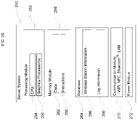
- Fig. 2A illustrates an example mobile client device 200 that may be employed with the techniques disclosed herein.
- the device 200 includes a processing module 202 having one or more computer processors such as a central processing unit 204 and/or graphics processors 206, as well as memory module 208 configured to store instructions 210 and data 212.
- the processors may or may not operate in parallel, and may include ASICs, controllers and other types of hardware circuitry.
- the processors are configured to receive information from a user through user interface module 214, and to present information to the user on a display device of the display module 216 having a display interface.
- User interface module 214 may receive commands from a user via user inputs and convert them for submission to a given processor.
- the user inputs may include one or more of a touch screen, keypad, mouse, stylus, microphone, or other types of input devices.
- the display module 216 may comprise appropriate circuitry for driving the display device to present graphical and other information to the user.
- the graphical information may be generated by the graphics processor(s) 206, while CPU 204 manages overall operation of the client device 200.
- the graphical information may display responses to user queries on the display module 216.
- the processing module may run a browser application or other service using instructions and data stored in memory module 208, and present information associated with the browser application or other service to the user via the display module 216.
- Memory module 208 can be implemented as one or more of a computer-readable medium or media, a volatile memory unit or units, or a non-volatile memory unit or units.
- the memory module 208 may include, for example, flash memory and/or NVRAM, and may be embodied as a hard-drive or memory card. Alternatively the memory module 208 may also include DVDs, CD-ROMs, high-density tape drives, and other types of write-capable or read-only memories.
- a computer program product is tangibly embodied in an information carrier.
- the computer program product contains instructions, such as instructions 210 that, when executed by one or more processors, perform one or more methods such as those described herein.
- the information carrier is a computer- or machine-readable medium, such as memory module 208.
- Fig. 2A functionally illustrates the processor(s), memory module, and other elements of device 200 as being within the same overall block, such components may or may not be stored within the same physical housing.
- some or all of the instructions and data may be stored on an information carrier that is a removable storage medium (e.g., optical drive, high-density tape drive or USB drive) and others stored within a read-only computer chip.
- the data 212 may be retrieved, stored or modified by the processors in accordance with the instructions 210.
- the data may be stored in computing device registers, in a relational database as a table having a plurality of different fields and records, XML documents or flat files.
- the data may also be formatted in any computing device-readable format.
- the instructions 210 may be any set of instructions to be executed directly (such as machine code) or indirectly (such as scripts) by the processor(s).
- the instructions may be stored as computing device code on the computing device-readable medium.
- the terms "instructions” and “programs” may be used interchangeably herein.
- the instructions may be stored in object code format for direct processing by the processor(s), or in any other computing device language including scripts or collections of independent source code modules that are interpreted on demand or compiled in advance. Functions, methods and routines of the instructions are explained in more detail below.
- the mobile client device 200 includes a communication module 218 for communicating with other devices and systems.
- the communication module 218 includes a wireless transceiver; alternatively, the module may include a wired transceiver in addition to or in place of the wireless transceiver.
- the client device 200 may communicate with other remote devices via the communication module 218 using various configurations and protocols, including short range communication protocols such as near-field communication, Bluetooth TM , Bluetooth TM Low Energy (LE), or other ad-hoc networks, the Internet, intranets, virtual private networks, wide area networks, local networks, private networks using communication protocols proprietary to one or more companies, Ethernet, WiFi and HTTP, and combinations of the foregoing.
- short range communication protocols such as near-field communication, Bluetooth TM , Bluetooth TM Low Energy (LE), or other ad-hoc networks
- the Internet intranets, virtual private networks, wide area networks, local networks, private networks using communication protocols proprietary to one or more companies, Ethernet, WiFi and HTTP, and combinations of the foregoing.
- the client device 200 as shown includes one or more position and orientation sensors 220.
- the position and orientation sensors 220 are configured to determine the position and orientation of client device 200.
- these components may include a GPS receiver to determine the device's latitude, longitude and/or altitude as well as an accelerometer, gyroscope or another direction/speed detection device.
- the client device 200 may also include one or more camera(s) 222 for capturing still images and recording video streams, speaker(s) 224 and a power module 226, as well as actuators (not shown) to provide tactile feedback or other information to the user.
- Fig. 2B illustrates an example server system 250 that may be employed with the techniques disclosed herein.
- the server system 250 includes various components similar to those described above for the mobile client device 200.
- server device includes a processing module 252 having one or more computer processors such as a central processing unit 254 and/or graphics processors 256, as well as memory module 258 configured to store instructions 260 and data 262.
- the processors may or may not operate in parallel, and may include ASICs, controllers and other types of hardware circuitry.
- memory module 258 can be implemented as one or more of a computer-readable medium or media, a volatile memory unit or units, or a non-volatile memory unit or units.
- the memory module 208 may include, for example, flash memory and/or NVRAM, and may be embodied as a hard-drive or memory card. Alternatively the memory module 258 may also include DVDs, CD-ROMs, high-density tape drives, and other types of write-capable or read-only memories.
- a computer program product is tangibly embodied in an information carrier.
- the computer program product contains instructions, such as instructions 260 that, when executed by one or more processors, perform one or more methods such as those described herein.
- the information carrier is a computer- or machine-readable medium, such as memory module 208.
- Fig. 2B functionally illustrates the processor(s), memory module, and other elements of server system 250 as being within the same overall block, such components may or may not be stored within the same physical housing.
- some or all of the instructions and data may be stored on an information carrier that is a removable storage medium (e.g., optical drive, high-density tape drive or USB drive) and others stored within a read-only computer chip.
- the data 262 of memory module 258 may be retrieved, stored or modified by the processors in accordance with the instructions 260.
- the data may be stored in computing device registers, in a relational database as a table having a plurality of different fields and records, XML documents or flat files.
- the data may also be formatted in any computing device-readable format.
- the instructions 260 may be any set of instructions to be executed directly (such as machine code) or indirectly (such as scripts) by the processor(s), and the above discussion of instructions 210 applies to instructions 260 as well.
- the processors of the processing module 252 may be arranged in a distributed architecture.
- the server system 250 may comprise multiple server units, for instance in a cloud computing arrangement.
- the processors are operatively coupled to database 264.
- the database 264 includes information 266 about wireless stations in the network associated with the server system 250.
- this information may include cell tower information, wireless access point information, and/or information about other types of base stations used by the network to communicate with client devices including mobile client device 200.
- the wireless station information 266 includes geolocation data about the specific physical locations of the wireless stations. This may be in the form of a reverse map of location information to candidate wireless stations.
- the map may be a cell tower map with cell tower identifiers, latitude and longitude coordinates and other data corresponding to the wireless stations, such as country or region information.
- the cell tower map may include a spatial index of the wireless stations in the network or a region within the network.
- the database 264 may also include log information 268 received from various client devices.
- the log information 268 is received in response to the wireless station comparison performed at the client device.
- the log information from a given client device may be aggregated with log information from other client devices.
- the log information is provided by the client devices in an anonymized manner.
- database 264 is shown as including both the wireless station information 266 and the log information 268, such information may be stored in multiple discrete databases.
- the databases may be distributed, for instance across multiple memory modules or other storage devices of a cloud computing architecture.
- the server system 250 includes a communication module 270 for communicating with other devices and systems, including with client devices and other elements in the network.
- the communication module 270 includes a wireless transceiver.
- the communication module 270 may also include a wired transceiver in addition to or in place of the wireless transceiver.
- the server system 250 may communicate with other remote devices via the communication module 270 using various configurations and protocols, including short range communication protocols such as near-field communication, Bluetooth TM , Bluetooth TM Low Energy (LE), or other ad-hoc networks, the Internet, intranets, virtual private networks, wide area networks, local networks, private networks using communication protocols proprietary to one or more companies, Ethernet, WiFi and HTTP, and combinations of the foregoing.
- short range communication protocols such as near-field communication, Bluetooth TM , Bluetooth TM Low Energy (LE), or other ad-hoc networks
- the Internet intranets, virtual private networks, wide area networks, local networks, private networks using communication protocols proprietary to one or more companies, Ethernet, WiFi and HTTP, and combinations
- server system 250 as shown includes a power module 272.
- Other system elements including computer components shown in Fig. 2A , may also be included within the server system 250.
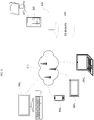
- Fig. 3 illustrates an example arrangement in which different client devices 300, e.g., 300 1 , 300 2 , 300 3 and 300 4 may request content or other information from server 320 via communication system 310.
- the client devices 300 may include some or all of the components discussed above with regard to client device 200.
- the client devices may include mobile/portable devices such as laptops (300 1 ), tablets (300 2 ), cellular phones or PDAs (300 3 ), or quasi-stationary devices such as desktop PCs (300 4 ).
- client devices including wearable electronics such as smart watches, may also be employed. Any such client device may send requests as shown in Fig. 1 and receive query results and wireless station information from the server system as discussed herein.
- the client device queries may be parsed and routed to a service on the network.
- the service may include a query response service and an IP location estimation service associated with server 320. While one server is shown, the functionality of the location estimation and query response services may be performed by one or more server devices or other computer systems, such as a cloud computing network.
- the queries, IP location estimates and corresponding responses may be passed via bus 330.
- One or more databases 340 (corresponding to database 264 of Fig. 2B ) may be used by the services to resolve the client device location based on its IP address, and/or to provide relevant query results in accordance with the estimated IP address-based location information.
- Example use cases are discussed below.
- the user may request information via a mobile app or service on the client device.
- the information could be about a point of interest such as a restaurant, coffee shop, car dealership, museum, etc.
- Other use cases may involve on-line shopping or other order placement. Further examples may include map or direction queries. Nonetheless, the technology is query-agnostic.
- the query is sent to the network via the communication module of the client device.
- the query is analyzed and the IP address information from the corresponding data packet(s) is evaluated.
- the evaluation identifies a likely location of the mobile client device.
- the server system selects a set of candidate wireless stations from the database for the likely location.
- one or more candidate wireless stations are selected that are within communication range of the likely location.
- the candidate wireless stations may include cell towers, access points and other types of base stations. In one instance, different types and combinations of such stations may be evaluated as possible candidate wireless stations.
- the candidates are chosen such that they are within a desired radius or other range.
- cell towers or wireless access points within a 1 km radius may be selected.
- the radius may be different, for instance between 0.1 km and 5 km, more than 2 km, or no more than 10 km.
- the server system may select the radius or other range in accordance with one or more predetermined factors. This may include the number of wireless stations in the database, the location type (e.g., urban, suburban or rural location), and/or the number of active client devices on the network.
- the server system returns both the query response and the selected set of candidate wireless stations.
- the query is processed by the app or service that made the request so that relevant information may be presented to the user. This may include providing a list of search results, a map and/or other data.
- the mobile device also analyzes the received information about the set of candidate wireless stations.
- the received information may include a base station identifier, a wireless access point identifier or some other unique indication about the wireless stations.
- the received information also includes location data, such as latitude and longitude information or other physical coordinates, about the respective candidate wireless stations.
- Fig. 4 illustrates a scenario 400 including mobile device 402 and several wireless stations 404. As shown, a pair of the wireless stations 404 may be within a selected area 406, while a third may be on the border of the area and a fourth is outside the area entirely.
- the wireless stations are directly or indirectly coupled to the server system, for instance via communication system 310 of Fig. 3 .
- the mobile device 402 is currently actively communicating with one wireless station as shown by line 408.
- the other wireless stations within or adjacent to the selected area 406 may be part of a set of wireless stations that is visible to the mobile device even though it is not actively communicating with them. That may change as the mobile device moves, as atmospheric conditions or received signal strength change, as more devices communicate on the network or due to other factors.
- the active wireless station may change and the mobile device may be handed off or otherwise connect to a different wireless station. Regardless, the mobile device maintains a list of active and/or visible wireless stations in memory.
- the mobile device compares the information about the wireless station it is currently actively connected to against the set of received information provided by the server system. In another example, the mobile device compares the information about some or all of the visible wireless stations against the set of received information. In some situations, the other visible but not actively connected wireless stations may be considered to be passively connected. If the active wireless station or any of the visible wireless stations match to a wireless station included in the set of received information, the mobile device makes note of this and stores it in memory. According to one scenario, the data is stored as log information in memory. As noted above, the log information may be represented as simple Boolean data, where a 1 equals true (correct) and a 0 equals false (wrong). The log information may be accumulated over a given period of time, e.g., an hour, day, etc. before transmission to the server system. Alternatively, the log information may be transmitted. Once transmitted, the log information may be deleted from memory of the mobile device.
- r is a return Boolean
- N is the total number of events in the log.
- the probabilities/bias factors b1 and b2 can be adjusted to balance between the user privacy and the desired variance.
- a selected amount of "noise” is added to the Boolean information. For instance, 10% of the results may be reported as true when they were false, with the same percentage reported as false when they were true. This improves privacy for each mobile device. And when aggregated over many mobile devices on the network side, the overall log results will provide a reliable measure of how accurate the IP-based location information is.
- This anonymized log data is sent to the server system.
- the system may aggregate the log information for multiple client devices.
- the aggregation takes into account the statistical randomization while allowing the system to verify the accuracy of its IP-based location estimates. This is because in the aggregate, the number of false positives and false negatives introduced into the log data tend to cancel out.
- the server system evaluates past IP-based location estimates across a large data set, it will be able to determine whether those past estimates are accurate enough to provide meaning responses to client device queries.
- the "time to live" (TTL) for the log information stored by the server system may be selected for only a few days or hours.
- the TTL may be 3 days. In another example, it is less than one week.
- the TTL is selectively set by the system in accordance with factors including the quantity of log results received over a selected time period and the desired accuracy of the IP-based location estimates.
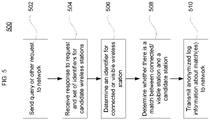
- the mobile device transmits a query or other request to one or more wireless stations of a communication network.
- the mobile device receives a response to the request form the network, for instance from a server system associated with the network.
- the response includes one or more identifiers for a set of candidate wireless stations.
- the candidates are chosen in accordance with one or more estimated locations of the mobile device.
- the mobile device determines an identifier for a wireless station to which the mobile device is connected or otherwise has visibility to. As noted above, this may be a wireless station that the mobile device is actively communicating with. Or it may be a wireless station in a set of visible wireless stations maintained by the mobile device. This determination may occur before, during or after the response is received.
- one or more processors of the mobile device determine at block 508 whether the identifier for the connected (or visible) wireless station matches or otherwise corresponds to an identifier of at least one of the candidate wireless stations. At this point, if there is a match the mobile device indicates that in its log information. Then at block 510 the mobile device transmits the log information based on the determination of whether there is a match or other correspondence between the connected (or visible) wireless station and one of the candidate wireless stations. And as noted above, the log information is anonymized prior to transmission via a statistical randomization approach so that no user ID or other client-identifiable information is included in the transmitted log.
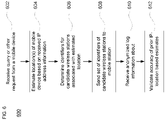
- FIG. 6 Another example scenario is shown in relation to flow diagram 600 of Fig. 6 .
- the query or other request from the mobile device is received by the network, for instance at the server system described above.
- one or more estimated locations for the mobile device are made by the server system. This is done based on the IP address information associated with the request.
- a response to the request may be generated based on the estimated location(s).
- the system determines one or more identifiers for one or more respective candidate wireless stations associated with the estimated location(s).
- the set of identifiers for the one or more candidate wireless stations are transmitted to the mobile device for processing in the manner described above. This is preferably done in conjunction with transmitting the response to the query or other request.
- the anonymized log information is received. The log information generated by the mobile device is based on a determination of whether an identifier for a wireless station to which the mobile device is connected or is visible corresponds to an identifier of one of the candidate wireless stations.
- the server system uses the anonymized log information to validate whether prior IP-based location estimates were accurate at block 612.
- the system may adjust the process used to generate future location estimates based on received IP address information.
- the system is able to increase location accuracy using anonymized data. This is done with minimal additional processing by the mobile devices, and with limited temporary data storage in the server's database.
Landscapes
- Engineering & Computer Science (AREA)
- Computer Networks & Wireless Communication (AREA)
- Signal Processing (AREA)
- Databases & Information Systems (AREA)
- General Physics & Mathematics (AREA)
- Physics & Mathematics (AREA)
- Theoretical Computer Science (AREA)
- Radar, Positioning & Navigation (AREA)
- Remote Sensing (AREA)
- Data Mining & Analysis (AREA)
- General Engineering & Computer Science (AREA)
- Mobile Radio Communication Systems (AREA)
- Telephonic Communication Services (AREA)
Claims (15)
- Procédé mis en œuvre par ordinateur permettant de valider des estimations d'emplacement, comprenant :la transmission, par un dispositif mobile, d'une demande conformément à une interrogation client, ledit dispositif mobile étant configuré pour se connecter à chacune d'une pluralité de stations sans fil conformément aux informations d'adresse IP du dispositif mobile ;la réception, au niveau du dispositif mobile, d'une réponse à la demande, ladite réponse comprenant une ou plusieurs réponses à l'interrogation client et un ou plusieurs identifiants pour une ou plusieurs stations sans fil candidates respectives associées à un ou plusieurs emplacements actuels estimés du dispositif mobile, le ou les emplacements actuels estimés étant basés sur les informations d'adresse IP du dispositif mobile ;la détermination, par le dispositif mobile, d'un identifiant pour une station sans fil connectée à laquelle le dispositif mobile est connecté ;la détermination, au niveau du dispositif mobile, pour savoir si un emplacement actuel estimé du dispositif mobile qui est basé sur les informations d'adresse IP du dispositif mobile est correct, comprenant la détermination pour savoir si un identifiant pour la station sans fil connectée correspond à un identifiant de l'une quelconque de la ou des stations sans fil candidates respectives ; etla transmission, par le dispositif mobile, de données de journal sélectionnées sur la base de la détermination pour savoir si l'identifiant pour la station sans fil connectée correspond à un identifiant d'au moins l'une desdites stations sans fil candidates, les données de journal sélectionnées indiquant une précision du ou des emplacements actuels estimés sur la base des informations d'adresse IP.
- Procédé d'évaluation d'emplacement mis en œuvre par ordinateur selon la revendication 1, lesdites données de journal sélectionnées étant déterminées sur la base d'un booléen généré aléatoirement biaisé avec une probabilité vraie particulière que l'identifiant pour la station sans fil connectée correspond à l'identifiant d'au moins l'une desdites stations sans fil candidates.
- Procédé d'évaluation d'emplacement mis en œuvre par ordinateur selon la revendication 1, lesdites données de journal sélectionnées étant déterminées comme vraies avec une première probabilité si l'identifiant de la station sans fil connectée correspond à un identifiant d'au moins l'une desdites stations sans fil candidates, et lesdites données de journal étant déterminées comme vraies avec une seconde probabilité qui est inférieure à la première probabilité, si l'identifiant de la station sans fil connectée ne correspond pas à un identifiant d'au moins l'une desdites stations sans fil candidates.
- Procédé d'évaluation d'emplacement mis en œuvre par ordinateur selon la revendication 3, ladite première probabilité et ladite seconde probabilité totalisant 100 %.
- Procédé mis en œuvre par ordinateur selon une quelconque revendication précédente, ledit dispositif mobile créant les données de journal sélectionnées conformément à un facteur de randomisation statistique.
- Procédé mis en œuvre par ordinateur selon l'une quelconque des revendications précédentes, ladite demande comprenant une demande de recherche.
- Procédé mis en œuvre par ordinateur permettant de valider des estimations d'emplacement, comprenant :la réception d'une interrogation client en provenance d'un dispositif mobile ;la détermination d'un ou plusieurs emplacements actuels estimés pour le dispositif mobile sur la base des informations d'adresse IP du dispositif mobile ;l'évaluation d'une ou plusieurs réponses à l'interrogation client sur la base du ou des emplacements actuels estimés déterminés pour le dispositif mobile ;la détermination d'un ou plusieurs identifiants pour une ou plusieurs stations sans fil candidates respectives associées à le ou aux emplacements actuels estimés du dispositif mobile ;la transmission d'une réponse donnée parmi la ou les réponses à l'interrogation client et un ou plusieurs identifiants pour une ou plusieurs stations sans fil candidates respectives, en vue du traitement au niveau du dispositif mobile ;en réponse à la transmission, la réception de données de journal sélectionnées en provenance du dispositif mobile, les données de journal sélectionnées ayant été générées au niveau du dispositif mobile sur la base au moins en partie d'une détermination pour savoir si un emplacement actuel estimé du dispositif mobile qui est basé sur les informations d'adresse IP du dispositif client est correct, ladite détermination pour savoir si l'emplacement actuel estimé du dispositif mobile est correct comprenant la détermination pour savoir si un identifiant pour une station sans fil à laquelle le dispositif mobile est connecté correspond à un identifiant d'au moins l'une des stations sans fil candidates ; etla détermination, à partir des données de journal sélectionnées reçues, d'une précision du ou des emplacements actuels estimés.
- Procédé mis en œuvre par ordinateur selon la revendication 7, ledit ou lesdits emplacements estimés du dispositif mobile étant déterminés sur la base d'un processus d'emplacement d'adresse IP qui estime l'emplacement du dispositif mobile avec une certaine probabilité, ou sur la base de données historiques associées à un utilisateur du dispositif mobile.
- Instructions lisibles par ordinateur qui, lorsqu'elles sont exécutées par un appareil informatique, amènent le procédé selon l'une quelconque des revendications 1 à 8 à être réalisé.
- Dispositif client comprenant :un module d'interface utilisateur comprenant un ou plusieurs dispositifs d'entrée utilisateur configurés pour recevoir une entrée utilisateur ;un module de traitement comprenant un ou plusieurs processeurs ;un module de mémoire possédant une ou plusieurs mémoires configurées pour stocker des données et des instructions destinées à être exécutées par le module de traitement ; etun module de communication comprenant un émetteur-récepteur sans fil configuré pour une communication bidirectionnelle avec un ou plusieurs dispositifs distants comprenant une ou plusieurs stations sans fil conformément aux informations d'adresse IP du dispositif client ;ledit module de traitement étant couplé fonctionnellement au module d'interface utilisateur, au module de mémoire et au module de communication, et ledit module de traitement étant configuré pour réaliser le procédé selon l'une quelconque des revendications 1 à 6.
- Système de serveur, comprenant :un module de traitement comprenant un ou plusieurs processeurs ;un module de mémoire possédant une ou plusieurs mémoires configurées pour stocker des données et des instructions destinées à être exécutées par le module de traitement ; etun module de communication comprenant un émetteur-récepteur sans fil configuré pour une communication bidirectionnelle avec un ou plusieurs dispositifs distants comprenant une ou plusieurs stations sans fil et un ou plusieurs dispositifs clients ;ledit module de traitement étant couplé fonctionnellement au module de mémoire et au module de communication, et ledit module de traitement étant configuré pourrecevoir une demande en provenance d'un dispositif client ;déterminer un ou plusieurs emplacements actuels estimés pour le dispositif client sur la base des informations d'adresse IP du dispositif client identifiées à partir de la demande reçue ;évaluer une ou plusieurs réponses à la demande sur la base du ou des emplacements actuels estimés déterminés pour le dispositif client ;déterminer un ou plusieurs identifiants pour une ou plusieurs stations sans fil candidates respectives associées à le ou aux emplacements actuels estimés du dispositif client ;transmettre une réponse donnée parmi la ou les réponses à la demande et un ou plusieurs identifiants pour une ou plusieurs stations sans fil candidates respectives, en vue du traitement au niveau du dispositif client ;en réponse à la transmission, recevoir des données de journal sélectionnées en provenance du dispositif client, lesdites données de journal sélectionnées ayant été générées au niveau du dispositif client sur la base au moins en partie sur la condition qu'un emplacement actuel estimé du dispositif mobile qui est basé sur les informations d'adresse IP du dispositif client est correct, ladite détermination pour savoir si l'emplacement actuel estimé est correct comprenant la détermination pour savoir si un identifiant pour une station sans fil à laquelle le dispositif client est activement ou passivement connecté correspond à un identifiant d'au moins l'une des stations sans fil candidates ; etdéterminer, à partir des données de journal sélectionnées reçues, une précision du ou des emplacements actuels estimés.
- Système de serveur selon la revendication 11, chaque station sans fil comprenant une antenne-relais de téléphonie mobile ou un point d'accès sans fil.
- Système de serveur selon la revendication 11 ou la revendication 12, lesdites informations d'identification et d'emplacement concernant la ou les stations sans fil candidates respectives étant stockées dans une base de données couplée fonctionnellement au module de traitement.
- Système de serveur selon l'une quelconque des revendications 11 à 13, ledit module de traitement servant à stocker les données de journal sélectionnées reçues dans une base de données couplée fonctionnellement au module de traitement.
- Système de serveur selon l'une quelconque des revendications 11 à 14, lesdites données de journal sélectionnées comprenant une anonymisation selon un facteur de randomisation statistique.
Priority Applications (1)
| Application Number | Priority Date | Filing Date | Title |
|---|---|---|---|
| EP22157627.5A EP4020939B1 (fr) | 2017-11-06 | 2017-11-06 | Évaluation de localisation ip sur un dispositif client |
Applications Claiming Priority (1)
| Application Number | Priority Date | Filing Date | Title |
|---|---|---|---|
| PCT/US2017/060172 WO2019089056A1 (fr) | 2017-11-06 | 2017-11-06 | Évaluation d'emplacement ip sur un dispositif client |
Related Child Applications (2)
| Application Number | Title | Priority Date | Filing Date |
|---|---|---|---|
| EP22157627.5A Division EP4020939B1 (fr) | 2017-11-06 | 2017-11-06 | Évaluation de localisation ip sur un dispositif client |
| EP22157627.5A Division-Into EP4020939B1 (fr) | 2017-11-06 | 2017-11-06 | Évaluation de localisation ip sur un dispositif client |
Publications (2)
| Publication Number | Publication Date |
|---|---|
| EP3586552A1 EP3586552A1 (fr) | 2020-01-01 |
| EP3586552B1 true EP3586552B1 (fr) | 2022-03-30 |
Family
ID=60484472
Family Applications (2)
| Application Number | Title | Priority Date | Filing Date |
|---|---|---|---|
| EP22157627.5A Active EP4020939B1 (fr) | 2017-11-06 | 2017-11-06 | Évaluation de localisation ip sur un dispositif client |
| EP17805340.1A Active EP3586552B1 (fr) | 2017-11-06 | 2017-11-06 | Évaluation de l'exactitude de l'emplacement ip sur un dispositif mobile |
Family Applications Before (1)
| Application Number | Title | Priority Date | Filing Date |
|---|---|---|---|
| EP22157627.5A Active EP4020939B1 (fr) | 2017-11-06 | 2017-11-06 | Évaluation de localisation ip sur un dispositif client |
Country Status (3)
| Country | Link |
|---|---|
| US (3) | US11963128B2 (fr) |
| EP (2) | EP4020939B1 (fr) |
| WO (1) | WO2019089056A1 (fr) |
Families Citing this family (3)
| Publication number | Priority date | Publication date | Assignee | Title |
|---|---|---|---|---|
| EP4020939B1 (fr) * | 2017-11-06 | 2024-09-04 | Google LLC | Évaluation de localisation ip sur un dispositif client |
| CN111698765A (zh) * | 2020-06-12 | 2020-09-22 | 北京奇艺世纪科技有限公司 | 一种ip地址的校验方法、装置、电子设备及存储介质 |
| US12323870B2 (en) * | 2021-11-29 | 2025-06-03 | Cisco Technology, Inc. | Seamless handoff between wireless access points (APs) with use of pre-convergence packet replication |
Family Cites Families (17)
| Publication number | Priority date | Publication date | Assignee | Title |
|---|---|---|---|---|
| US6684250B2 (en) * | 2000-04-03 | 2004-01-27 | Quova, Inc. | Method and apparatus for estimating a geographic location of a networked entity |
| US20070298821A1 (en) * | 2006-06-21 | 2007-12-27 | Lockheed Martin Corporation | System for boolean network configuration of a wireless network |
| US20080225780A1 (en) | 2007-03-13 | 2008-09-18 | Nortel Networks Limited | Use of distributed hashtables for wireless access mobility management |
| US8467768B2 (en) | 2009-02-17 | 2013-06-18 | Lookout, Inc. | System and method for remotely securing or recovering a mobile device |
| US8255393B1 (en) | 2009-08-07 | 2012-08-28 | Google Inc. | User location reputation system |
| US8938653B2 (en) * | 2011-12-14 | 2015-01-20 | Microsoft Corporation | Increasing the accuracy of information returned for context signals |
| US9720555B2 (en) * | 2011-12-23 | 2017-08-01 | Gary SORDEN | Location-based services |
| US9223003B2 (en) * | 2012-12-18 | 2015-12-29 | Intel Corporation | Differentiated station location |
| GB2510169A (en) * | 2013-01-28 | 2014-07-30 | Microsoft Corp | Determining a location of a mobile user terminal |
| US20140235266A1 (en) * | 2013-02-16 | 2014-08-21 | Qualcomm Incorporated | Focused assistance data for WiFi access points and femtocells |
| US10706132B2 (en) * | 2013-03-22 | 2020-07-07 | Nok Nok Labs, Inc. | System and method for adaptive user authentication |
| US10038968B2 (en) * | 2013-07-17 | 2018-07-31 | PlaceIQ, Inc. | Branching mobile-device to system-namespace identifier mappings |
| US9420426B2 (en) * | 2013-07-30 | 2016-08-16 | Google Inc. | Inferring a current location based on a user location history |
| US9578617B2 (en) * | 2014-08-19 | 2017-02-21 | Walkbase Oy | Anonymous device position measuring system and method |
| US10091646B2 (en) * | 2014-08-29 | 2018-10-02 | Apple Inc. | Reduced resolution location determination for improved anonymity of user location |
| LT3761613T (lt) * | 2017-08-28 | 2023-03-10 | Bright Data Ltd. | Būdas pagerinti turinio parsisiuntimą, pasirenkant tunelinius įrenginius |
| EP4020939B1 (fr) * | 2017-11-06 | 2024-09-04 | Google LLC | Évaluation de localisation ip sur un dispositif client |
-
2017
- 2017-11-06 EP EP22157627.5A patent/EP4020939B1/fr active Active
- 2017-11-06 WO PCT/US2017/060172 patent/WO2019089056A1/fr not_active Ceased
- 2017-11-06 US US16/617,301 patent/US11963128B2/en active Active
- 2017-11-06 EP EP17805340.1A patent/EP3586552B1/fr active Active
-
2024
- 2024-03-14 US US18/604,595 patent/US12284628B2/en active Active
-
2025
- 2025-03-19 US US19/083,647 patent/US20250280388A1/en active Pending
Also Published As
| Publication number | Publication date |
|---|---|
| US20250280388A1 (en) | 2025-09-04 |
| US11963128B2 (en) | 2024-04-16 |
| US20240224223A1 (en) | 2024-07-04 |
| EP4020939B1 (fr) | 2024-09-04 |
| EP3586552A1 (fr) | 2020-01-01 |
| US20200169979A1 (en) | 2020-05-28 |
| EP4020939A1 (fr) | 2022-06-29 |
| WO2019089056A1 (fr) | 2019-05-09 |
| US12284628B2 (en) | 2025-04-22 |
Similar Documents
| Publication | Publication Date | Title |
|---|---|---|
| US12284628B2 (en) | Evaluating IP location on a client device | |
| US7580995B2 (en) | Systems and methods for locating mobile computer users in a wireless network | |
| US9485747B1 (en) | Systems and methods for acquiring location data | |
| US20030130987A1 (en) | Relevance assessment for location information received from multiple sources | |
| EP3028105B1 (fr) | Déduction d'un emplacement courant sur la base d'un historique d'emplacements d'utilisateur | |
| CN107851243B (zh) | 推断物理会议位置 | |
| US8301594B2 (en) | Context providing method, system, and apparatus | |
| US11818622B1 (en) | System and method of using spatial and temporal signals to identify and prevent attacks | |
| US8914235B1 (en) | System and method for detecting a user location using a latest available location | |
| JP7412505B2 (ja) | 同期ローカル検索結果のための可視ネットワークの添付 | |
| US11782996B2 (en) | On-demand location visit conversion metrics | |
| US9826496B2 (en) | Navigation system with location mechanism and method of operation thereof | |
| US11275807B2 (en) | React to location changes on web pages | |
| AU2017366668B2 (en) | On-demand location visit conversion metrics | |
| RU2767958C2 (ru) | Способ и система для определения факта посещения пользователем точки интереса | |
| CN116962214A (zh) | 用户感知分析方法、装置、存储介质和服务器 |
Legal Events
| Date | Code | Title | Description |
|---|---|---|---|
| STAA | Information on the status of an ep patent application or granted ep patent |
Free format text: STATUS: UNKNOWN |
|
| STAA | Information on the status of an ep patent application or granted ep patent |
Free format text: STATUS: THE INTERNATIONAL PUBLICATION HAS BEEN MADE |
|
| PUAI | Public reference made under article 153(3) epc to a published international application that has entered the european phase |
Free format text: ORIGINAL CODE: 0009012 |
|
| STAA | Information on the status of an ep patent application or granted ep patent |
Free format text: STATUS: REQUEST FOR EXAMINATION WAS MADE |
|
| 17P | Request for examination filed |
Effective date: 20190926 |
|
| AK | Designated contracting states |
Kind code of ref document: A1 Designated state(s): AL AT BE BG CH CY CZ DE DK EE ES FI FR GB GR HR HU IE IS IT LI LT LU LV MC MK MT NL NO PL PT RO RS SE SI SK SM TR |
|
| AX | Request for extension of the european patent |
Extension state: BA ME |
|
| DAV | Request for validation of the european patent (deleted) | ||
| DAX | Request for extension of the european patent (deleted) | ||
| GRAP | Despatch of communication of intention to grant a patent |
Free format text: ORIGINAL CODE: EPIDOSNIGR1 |
|
| RIC1 | Information provided on ipc code assigned before grant |
Ipc: H04W 64/00 20090101AFI20210322BHEP Ipc: H04L 29/08 20060101ALI20210322BHEP Ipc: G01S 5/00 20060101ALN20210322BHEP Ipc: G01S 5/02 20100101ALN20210322BHEP |
|
| STAA | Information on the status of an ep patent application or granted ep patent |
Free format text: STATUS: GRANT OF PATENT IS INTENDED |
|
| INTG | Intention to grant announced |
Effective date: 20210429 |
|
| GRAJ | Information related to disapproval of communication of intention to grant by the applicant or resumption of examination proceedings by the epo deleted |
Free format text: ORIGINAL CODE: EPIDOSDIGR1 |
|
| STAA | Information on the status of an ep patent application or granted ep patent |
Free format text: STATUS: REQUEST FOR EXAMINATION WAS MADE |
|
| GRAP | Despatch of communication of intention to grant a patent |
Free format text: ORIGINAL CODE: EPIDOSNIGR1 |
|
| STAA | Information on the status of an ep patent application or granted ep patent |
Free format text: STATUS: GRANT OF PATENT IS INTENDED |
|
| INTC | Intention to grant announced (deleted) | ||
| RIC1 | Information provided on ipc code assigned before grant |
Ipc: G01S 5/02 20100101ALN20210914BHEP Ipc: G01S 5/00 20060101ALN20210914BHEP Ipc: H04L 29/08 20060101ALI20210914BHEP Ipc: H04W 64/00 20090101AFI20210914BHEP |
|
| INTG | Intention to grant announced |
Effective date: 20211006 |
|
| GRAS | Grant fee paid |
Free format text: ORIGINAL CODE: EPIDOSNIGR3 |
|
| GRAA | (expected) grant |
Free format text: ORIGINAL CODE: 0009210 |
|
| STAA | Information on the status of an ep patent application or granted ep patent |
Free format text: STATUS: THE PATENT HAS BEEN GRANTED |
|
| AK | Designated contracting states |
Kind code of ref document: B1 Designated state(s): AL AT BE BG CH CY CZ DE DK EE ES FI FR GB GR HR HU IE IS IT LI LT LU LV MC MK MT NL NO PL PT RO RS SE SI SK SM TR |
|
| REG | Reference to a national code |
Ref country code: GB Ref legal event code: FG4D |
|
| REG | Reference to a national code |
Ref country code: CH Ref legal event code: EP |
|
| REG | Reference to a national code |
Ref country code: AT Ref legal event code: REF Ref document number: 1480351 Country of ref document: AT Kind code of ref document: T Effective date: 20220415 |
|
| REG | Reference to a national code |
Ref country code: DE Ref legal event code: R096 Ref document number: 602017055290 Country of ref document: DE |
|
| REG | Reference to a national code |
Ref country code: IE Ref legal event code: FG4D |
|
| REG | Reference to a national code |
Ref country code: SE Ref legal event code: TRGR |
|
| REG | Reference to a national code |
Ref country code: LT Ref legal event code: MG9D |
|
| PG25 | Lapsed in a contracting state [announced via postgrant information from national office to epo] |
Ref country code: RS Free format text: LAPSE BECAUSE OF FAILURE TO SUBMIT A TRANSLATION OF THE DESCRIPTION OR TO PAY THE FEE WITHIN THE PRESCRIBED TIME-LIMIT Effective date: 20220330 Ref country code: NO Free format text: LAPSE BECAUSE OF FAILURE TO SUBMIT A TRANSLATION OF THE DESCRIPTION OR TO PAY THE FEE WITHIN THE PRESCRIBED TIME-LIMIT Effective date: 20220630 Ref country code: LT Free format text: LAPSE BECAUSE OF FAILURE TO SUBMIT A TRANSLATION OF THE DESCRIPTION OR TO PAY THE FEE WITHIN THE PRESCRIBED TIME-LIMIT Effective date: 20220330 Ref country code: HR Free format text: LAPSE BECAUSE OF FAILURE TO SUBMIT A TRANSLATION OF THE DESCRIPTION OR TO PAY THE FEE WITHIN THE PRESCRIBED TIME-LIMIT Effective date: 20220330 Ref country code: BG Free format text: LAPSE BECAUSE OF FAILURE TO SUBMIT A TRANSLATION OF THE DESCRIPTION OR TO PAY THE FEE WITHIN THE PRESCRIBED TIME-LIMIT Effective date: 20220630 |
|
| REG | Reference to a national code |
Ref country code: NL Ref legal event code: MP Effective date: 20220330 |
|
| REG | Reference to a national code |
Ref country code: AT Ref legal event code: MK05 Ref document number: 1480351 Country of ref document: AT Kind code of ref document: T Effective date: 20220330 |
|
| PG25 | Lapsed in a contracting state [announced via postgrant information from national office to epo] |
Ref country code: LV Free format text: LAPSE BECAUSE OF FAILURE TO SUBMIT A TRANSLATION OF THE DESCRIPTION OR TO PAY THE FEE WITHIN THE PRESCRIBED TIME-LIMIT Effective date: 20220330 Ref country code: GR Free format text: LAPSE BECAUSE OF FAILURE TO SUBMIT A TRANSLATION OF THE DESCRIPTION OR TO PAY THE FEE WITHIN THE PRESCRIBED TIME-LIMIT Effective date: 20220701 Ref country code: FI Free format text: LAPSE BECAUSE OF FAILURE TO SUBMIT A TRANSLATION OF THE DESCRIPTION OR TO PAY THE FEE WITHIN THE PRESCRIBED TIME-LIMIT Effective date: 20220330 |
|
| PG25 | Lapsed in a contracting state [announced via postgrant information from national office to epo] |
Ref country code: NL Free format text: LAPSE BECAUSE OF FAILURE TO SUBMIT A TRANSLATION OF THE DESCRIPTION OR TO PAY THE FEE WITHIN THE PRESCRIBED TIME-LIMIT Effective date: 20220330 |
|
| PG25 | Lapsed in a contracting state [announced via postgrant information from national office to epo] |
Ref country code: SM Free format text: LAPSE BECAUSE OF FAILURE TO SUBMIT A TRANSLATION OF THE DESCRIPTION OR TO PAY THE FEE WITHIN THE PRESCRIBED TIME-LIMIT Effective date: 20220330 Ref country code: SK Free format text: LAPSE BECAUSE OF FAILURE TO SUBMIT A TRANSLATION OF THE DESCRIPTION OR TO PAY THE FEE WITHIN THE PRESCRIBED TIME-LIMIT Effective date: 20220330 Ref country code: RO Free format text: LAPSE BECAUSE OF FAILURE TO SUBMIT A TRANSLATION OF THE DESCRIPTION OR TO PAY THE FEE WITHIN THE PRESCRIBED TIME-LIMIT Effective date: 20220330 Ref country code: PT Free format text: LAPSE BECAUSE OF FAILURE TO SUBMIT A TRANSLATION OF THE DESCRIPTION OR TO PAY THE FEE WITHIN THE PRESCRIBED TIME-LIMIT Effective date: 20220801 Ref country code: ES Free format text: LAPSE BECAUSE OF FAILURE TO SUBMIT A TRANSLATION OF THE DESCRIPTION OR TO PAY THE FEE WITHIN THE PRESCRIBED TIME-LIMIT Effective date: 20220330 Ref country code: EE Free format text: LAPSE BECAUSE OF FAILURE TO SUBMIT A TRANSLATION OF THE DESCRIPTION OR TO PAY THE FEE WITHIN THE PRESCRIBED TIME-LIMIT Effective date: 20220330 Ref country code: CZ Free format text: LAPSE BECAUSE OF FAILURE TO SUBMIT A TRANSLATION OF THE DESCRIPTION OR TO PAY THE FEE WITHIN THE PRESCRIBED TIME-LIMIT Effective date: 20220330 Ref country code: AT Free format text: LAPSE BECAUSE OF FAILURE TO SUBMIT A TRANSLATION OF THE DESCRIPTION OR TO PAY THE FEE WITHIN THE PRESCRIBED TIME-LIMIT Effective date: 20220330 |
|
| PG25 | Lapsed in a contracting state [announced via postgrant information from national office to epo] |
Ref country code: PL Free format text: LAPSE BECAUSE OF FAILURE TO SUBMIT A TRANSLATION OF THE DESCRIPTION OR TO PAY THE FEE WITHIN THE PRESCRIBED TIME-LIMIT Effective date: 20220330 Ref country code: IS Free format text: LAPSE BECAUSE OF FAILURE TO SUBMIT A TRANSLATION OF THE DESCRIPTION OR TO PAY THE FEE WITHIN THE PRESCRIBED TIME-LIMIT Effective date: 20220730 Ref country code: AL Free format text: LAPSE BECAUSE OF FAILURE TO SUBMIT A TRANSLATION OF THE DESCRIPTION OR TO PAY THE FEE WITHIN THE PRESCRIBED TIME-LIMIT Effective date: 20220330 |
|
| REG | Reference to a national code |
Ref country code: DE Ref legal event code: R097 Ref document number: 602017055290 Country of ref document: DE |
|
| PG25 | Lapsed in a contracting state [announced via postgrant information from national office to epo] |
Ref country code: DK Free format text: LAPSE BECAUSE OF FAILURE TO SUBMIT A TRANSLATION OF THE DESCRIPTION OR TO PAY THE FEE WITHIN THE PRESCRIBED TIME-LIMIT Effective date: 20220330 |
|
| PLBE | No opposition filed within time limit |
Free format text: ORIGINAL CODE: 0009261 |
|
| STAA | Information on the status of an ep patent application or granted ep patent |
Free format text: STATUS: NO OPPOSITION FILED WITHIN TIME LIMIT |
|
| 26N | No opposition filed |
Effective date: 20230103 |
|
| PG25 | Lapsed in a contracting state [announced via postgrant information from national office to epo] |
Ref country code: SI Free format text: LAPSE BECAUSE OF FAILURE TO SUBMIT A TRANSLATION OF THE DESCRIPTION OR TO PAY THE FEE WITHIN THE PRESCRIBED TIME-LIMIT Effective date: 20220330 |
|
| P01 | Opt-out of the competence of the unified patent court (upc) registered |
Effective date: 20230505 |
|
| PG25 | Lapsed in a contracting state [announced via postgrant information from national office to epo] |
Ref country code: MC Free format text: LAPSE BECAUSE OF FAILURE TO SUBMIT A TRANSLATION OF THE DESCRIPTION OR TO PAY THE FEE WITHIN THE PRESCRIBED TIME-LIMIT Effective date: 20220330 |
|
| REG | Reference to a national code |
Ref country code: CH Ref legal event code: PL |
|
| REG | Reference to a national code |
Ref country code: BE Ref legal event code: MM Effective date: 20221130 |
|
| PG25 | Lapsed in a contracting state [announced via postgrant information from national office to epo] |
Ref country code: LI Free format text: LAPSE BECAUSE OF NON-PAYMENT OF DUE FEES Effective date: 20221130 Ref country code: IT Free format text: LAPSE BECAUSE OF FAILURE TO SUBMIT A TRANSLATION OF THE DESCRIPTION OR TO PAY THE FEE WITHIN THE PRESCRIBED TIME-LIMIT Effective date: 20220330 Ref country code: CH Free format text: LAPSE BECAUSE OF NON-PAYMENT OF DUE FEES Effective date: 20221130 |
|
| PG25 | Lapsed in a contracting state [announced via postgrant information from national office to epo] |
Ref country code: LU Free format text: LAPSE BECAUSE OF NON-PAYMENT OF DUE FEES Effective date: 20221106 |
|
| PG25 | Lapsed in a contracting state [announced via postgrant information from national office to epo] |
Ref country code: FR Free format text: LAPSE BECAUSE OF NON-PAYMENT OF DUE FEES Effective date: 20221130 Ref country code: BE Free format text: LAPSE BECAUSE OF NON-PAYMENT OF DUE FEES Effective date: 20221130 |
|
| PG25 | Lapsed in a contracting state [announced via postgrant information from national office to epo] |
Ref country code: HU Free format text: LAPSE BECAUSE OF FAILURE TO SUBMIT A TRANSLATION OF THE DESCRIPTION OR TO PAY THE FEE WITHIN THE PRESCRIBED TIME-LIMIT; INVALID AB INITIO Effective date: 20171106 |
|
| PG25 | Lapsed in a contracting state [announced via postgrant information from national office to epo] |
Ref country code: CY Free format text: LAPSE BECAUSE OF FAILURE TO SUBMIT A TRANSLATION OF THE DESCRIPTION OR TO PAY THE FEE WITHIN THE PRESCRIBED TIME-LIMIT Effective date: 20220330 |
|
| PG25 | Lapsed in a contracting state [announced via postgrant information from national office to epo] |
Ref country code: MK Free format text: LAPSE BECAUSE OF FAILURE TO SUBMIT A TRANSLATION OF THE DESCRIPTION OR TO PAY THE FEE WITHIN THE PRESCRIBED TIME-LIMIT Effective date: 20220330 |
|
| PG25 | Lapsed in a contracting state [announced via postgrant information from national office to epo] |
Ref country code: MT Free format text: LAPSE BECAUSE OF FAILURE TO SUBMIT A TRANSLATION OF THE DESCRIPTION OR TO PAY THE FEE WITHIN THE PRESCRIBED TIME-LIMIT Effective date: 20220330 |
|
| PG25 | Lapsed in a contracting state [announced via postgrant information from national office to epo] |
Ref country code: TR Free format text: LAPSE BECAUSE OF FAILURE TO SUBMIT A TRANSLATION OF THE DESCRIPTION OR TO PAY THE FEE WITHIN THE PRESCRIBED TIME-LIMIT Effective date: 20220330 |
|
| PGFP | Annual fee paid to national office [announced via postgrant information from national office to epo] |
Ref country code: DE Payment date: 20251128 Year of fee payment: 9 |
|
| PGFP | Annual fee paid to national office [announced via postgrant information from national office to epo] |
Ref country code: GB Payment date: 20251127 Year of fee payment: 9 |
|
| PGFP | Annual fee paid to national office [announced via postgrant information from national office to epo] |
Ref country code: SE Payment date: 20251127 Year of fee payment: 9 |
|
| PGFP | Annual fee paid to national office [announced via postgrant information from national office to epo] |
Ref country code: IE Payment date: 20251127 Year of fee payment: 9 |