EP3584992B1 - Internet-der-dinge-vorrichtung - Google Patents
Internet-der-dinge-vorrichtung Download PDFInfo
- Publication number
- EP3584992B1 EP3584992B1 EP17896683.4A EP17896683A EP3584992B1 EP 3584992 B1 EP3584992 B1 EP 3584992B1 EP 17896683 A EP17896683 A EP 17896683A EP 3584992 B1 EP3584992 B1 EP 3584992B1
- Authority
- EP
- European Patent Office
- Prior art keywords
- iot device
- key
- iot
- master
- sub
- Prior art date
- Legal status (The legal status is an assumption and is not a legal conclusion. Google has not performed a legal analysis and makes no representation as to the accuracy of the status listed.)
- Active
Links
Images




Classifications
-
- H—ELECTRICITY
- H04—ELECTRIC COMMUNICATION TECHNIQUE
- H04L—TRANSMISSION OF DIGITAL INFORMATION, e.g. TELEGRAPHIC COMMUNICATION
- H04L9/00—Cryptographic mechanisms or cryptographic arrangements for secret or secure communications; Network security protocols
- H04L9/08—Key distribution or management, e.g. generation, sharing or updating, of cryptographic keys or passwords
- H04L9/0816—Key establishment, i.e. cryptographic processes or cryptographic protocols whereby a shared secret becomes available to two or more parties, for subsequent use
- H04L9/0819—Key transport or distribution, i.e. key establishment techniques where one party creates or otherwise obtains a secret value, and securely transfers it to the other(s)
-
- H—ELECTRICITY
- H04—ELECTRIC COMMUNICATION TECHNIQUE
- H04L—TRANSMISSION OF DIGITAL INFORMATION, e.g. TELEGRAPHIC COMMUNICATION
- H04L9/00—Cryptographic mechanisms or cryptographic arrangements for secret or secure communications; Network security protocols
- H04L9/08—Key distribution or management, e.g. generation, sharing or updating, of cryptographic keys or passwords
- H04L9/0816—Key establishment, i.e. cryptographic processes or cryptographic protocols whereby a shared secret becomes available to two or more parties, for subsequent use
- H04L9/0819—Key transport or distribution, i.e. key establishment techniques where one party creates or otherwise obtains a secret value, and securely transfers it to the other(s)
- H04L9/083—Key transport or distribution, i.e. key establishment techniques where one party creates or otherwise obtains a secret value, and securely transfers it to the other(s) involving central third party, e.g. key distribution center [KDC] or trusted third party [TTP]
-
- H—ELECTRICITY
- H04—ELECTRIC COMMUNICATION TECHNIQUE
- H04L—TRANSMISSION OF DIGITAL INFORMATION, e.g. TELEGRAPHIC COMMUNICATION
- H04L63/00—Network architectures or network communication protocols for network security
- H04L63/06—Network architectures or network communication protocols for network security for supporting key management in a packet data network
- H04L63/062—Network architectures or network communication protocols for network security for supporting key management in a packet data network for key distribution, e.g. centrally by trusted party
-
- H—ELECTRICITY
- H04—ELECTRIC COMMUNICATION TECHNIQUE
- H04L—TRANSMISSION OF DIGITAL INFORMATION, e.g. TELEGRAPHIC COMMUNICATION
- H04L67/00—Network arrangements or protocols for supporting network services or applications
- H04L67/01—Protocols
- H04L67/12—Protocols specially adapted for proprietary or special-purpose networking environments, e.g. medical networks, sensor networks, networks in vehicles or remote metering networks
-
- H—ELECTRICITY
- H04—ELECTRIC COMMUNICATION TECHNIQUE
- H04L—TRANSMISSION OF DIGITAL INFORMATION, e.g. TELEGRAPHIC COMMUNICATION
- H04L9/00—Cryptographic mechanisms or cryptographic arrangements for secret or secure communications; Network security protocols
- H04L9/08—Key distribution or management, e.g. generation, sharing or updating, of cryptographic keys or passwords
- H04L9/0861—Generation of secret information including derivation or calculation of cryptographic keys or passwords
-
- H—ELECTRICITY
- H04—ELECTRIC COMMUNICATION TECHNIQUE
- H04L—TRANSMISSION OF DIGITAL INFORMATION, e.g. TELEGRAPHIC COMMUNICATION
- H04L9/00—Cryptographic mechanisms or cryptographic arrangements for secret or secure communications; Network security protocols
- H04L9/08—Key distribution or management, e.g. generation, sharing or updating, of cryptographic keys or passwords
- H04L9/088—Usage controlling of secret information, e.g. techniques for restricting cryptographic keys to pre-authorized uses, different access levels, validity of crypto-period, different key- or password length, or different strong and weak cryptographic algorithms
-
- H—ELECTRICITY
- H04—ELECTRIC COMMUNICATION TECHNIQUE
- H04L—TRANSMISSION OF DIGITAL INFORMATION, e.g. TELEGRAPHIC COMMUNICATION
- H04L9/00—Cryptographic mechanisms or cryptographic arrangements for secret or secure communications; Network security protocols
- H04L9/08—Key distribution or management, e.g. generation, sharing or updating, of cryptographic keys or passwords
- H04L9/0894—Escrow, recovery or storing of secret information, e.g. secret key escrow or cryptographic key storage
- H04L9/0897—Escrow, recovery or storing of secret information, e.g. secret key escrow or cryptographic key storage involving additional devices, e.g. trusted platform module [TPM], smartcard or USB
-
- H—ELECTRICITY
- H04—ELECTRIC COMMUNICATION TECHNIQUE
- H04L—TRANSMISSION OF DIGITAL INFORMATION, e.g. TELEGRAPHIC COMMUNICATION
- H04L9/00—Cryptographic mechanisms or cryptographic arrangements for secret or secure communications; Network security protocols
- H04L9/14—Cryptographic mechanisms or cryptographic arrangements for secret or secure communications; Network security protocols using a plurality of keys or algorithms
-
- H—ELECTRICITY
- H04—ELECTRIC COMMUNICATION TECHNIQUE
- H04L—TRANSMISSION OF DIGITAL INFORMATION, e.g. TELEGRAPHIC COMMUNICATION
- H04L9/00—Cryptographic mechanisms or cryptographic arrangements for secret or secure communications; Network security protocols
- H04L9/32—Cryptographic mechanisms or cryptographic arrangements for secret or secure communications; Network security protocols including means for verifying the identity or authority of a user of the system or for message authentication, e.g. authorization, entity authentication, data integrity or data verification, non-repudiation, key authentication or verification of credentials
- H04L9/321—Cryptographic mechanisms or cryptographic arrangements for secret or secure communications; Network security protocols including means for verifying the identity or authority of a user of the system or for message authentication, e.g. authorization, entity authentication, data integrity or data verification, non-repudiation, key authentication or verification of credentials involving a third party or a trusted authority
-
- H—ELECTRICITY
- H04—ELECTRIC COMMUNICATION TECHNIQUE
- H04W—WIRELESS COMMUNICATION NETWORKS
- H04W12/00—Security arrangements; Authentication; Protecting privacy or anonymity
- H04W12/03—Protecting confidentiality, e.g. by encryption
-
- H—ELECTRICITY
- H04—ELECTRIC COMMUNICATION TECHNIQUE
- H04W—WIRELESS COMMUNICATION NETWORKS
- H04W12/00—Security arrangements; Authentication; Protecting privacy or anonymity
- H04W12/04—Key management, e.g. using generic bootstrapping architecture [GBA]
- H04W12/041—Key generation or derivation
-
- H—ELECTRICITY
- H04—ELECTRIC COMMUNICATION TECHNIQUE
- H04W—WIRELESS COMMUNICATION NETWORKS
- H04W12/00—Security arrangements; Authentication; Protecting privacy or anonymity
- H04W12/04—Key management, e.g. using generic bootstrapping architecture [GBA]
- H04W12/043—Key management, e.g. using generic bootstrapping architecture [GBA] using a trusted network node as an anchor
-
- H—ELECTRICITY
- H04—ELECTRIC COMMUNICATION TECHNIQUE
- H04W—WIRELESS COMMUNICATION NETWORKS
- H04W12/00—Security arrangements; Authentication; Protecting privacy or anonymity
- H04W12/04—Key management, e.g. using generic bootstrapping architecture [GBA]
- H04W12/043—Key management, e.g. using generic bootstrapping architecture [GBA] using a trusted network node as an anchor
- H04W12/0431—Key distribution or pre-distribution; Key agreement
-
- H—ELECTRICITY
- H04—ELECTRIC COMMUNICATION TECHNIQUE
- H04W—WIRELESS COMMUNICATION NETWORKS
- H04W12/00—Security arrangements; Authentication; Protecting privacy or anonymity
- H04W12/50—Secure pairing of devices
- H04W12/55—Secure pairing of devices involving three or more devices, e.g. group pairing
-
- H—ELECTRICITY
- H04—ELECTRIC COMMUNICATION TECHNIQUE
- H04W—WIRELESS COMMUNICATION NETWORKS
- H04W4/00—Services specially adapted for wireless communication networks; Facilities therefor
- H04W4/70—Services for machine-to-machine communication [M2M] or machine type communication [MTC]
-
- H—ELECTRICITY
- H04—ELECTRIC COMMUNICATION TECHNIQUE
- H04L—TRANSMISSION OF DIGITAL INFORMATION, e.g. TELEGRAPHIC COMMUNICATION
- H04L2209/00—Additional information or applications relating to cryptographic mechanisms or cryptographic arrangements for secret or secure communication H04L9/00
- H04L2209/80—Wireless
- H04L2209/805—Lightweight hardware, e.g. radio-frequency identification [RFID] or sensor
-
- H—ELECTRICITY
- H04—ELECTRIC COMMUNICATION TECHNIQUE
- H04L—TRANSMISSION OF DIGITAL INFORMATION, e.g. TELEGRAPHIC COMMUNICATION
- H04L2463/00—Additional details relating to network architectures or network communication protocols for network security covered by H04L63/00
- H04L2463/062—Additional details relating to network architectures or network communication protocols for network security covered by H04L63/00 applying encryption of the keys
-
- H—ELECTRICITY
- H04—ELECTRIC COMMUNICATION TECHNIQUE
- H04W—WIRELESS COMMUNICATION NETWORKS
- H04W84/00—Network topologies
- H04W84/18—Self-organising networks, e.g. ad-hoc networks or sensor networks
- H04W84/20—Leader-follower arrangements
Definitions
- the present invention relates to an Internet of Things (IoT) device which dynamically generates and distributes a private key in an IoT network.
- IoT Internet of Things
- the present invention was developed with the support of the research project of the Ministry of Science and ICT (MSIT), which is managed by the Institute for Information & communications Technology Planning & Evaluation (IITP) (Project Title: "Composite Secure-OS based Open-CPS Next Generation Convergence Security Technology Development for Large-Scale (Five Million) IIoT Security," Project Number: 2019-0-001600).
- IoT Internet of Things
- IoT technology refers to a technology of embedding sensors and communication functions in various things and connecting the various things to the Internet. According to IoT technology, not only devices such as computers and mobile communication terminals but also various types of devices such as home appliances and wearable devices can be connected to the Internet. In this disclosure, a device to which IoT technology is applied is referred to as an "IoT device.”
- IoT devices when IoT devices perform communication with each other, IoT devices mainly transmit and receive data using wireless communication technology. Thus, a malicious user can illegally collect data or falsify data. To prevent such illegal data collection or falsification, it is necessity to strengthen security of IoT.
- Patent Document 1 Korean Patent Registration No. 10-1701052
- Patent Document 1 discloses a method using a certification center which generates a public key (encryption key) and a private key (decryption key) and transmits the public key and the private key to an upload terminal (or a client terminal).
- an upload terminal receives a public key through a certification center and then only performs a function of transmitting data to a client storage center, and a client terminal receives a decryption key through the certification center and then only performs a function of receiving the data from the client storage center.
- the certification center is indispensable for encrypting or decrypting data. Therefore, when the certification center receives an attack such as hacking, the upload terminal (or the client terminal) cannot transmit and receive data normally.
- the method disclosed in Korean Patent Registration No. 10-1701052 can be applied to only a case in which the upload terminal transmits data to the client storage center or the client terminal receives data from the client storage center and cannot be applied to a case in which data is transmitted and received between general IoT devices.
- Patent Document 2 Korean Patent Registration No. 10-1572805 (Patent Document 2), which is filed on June 24, 2014 by Industry-Academy Collaboration Corporation, Kyungpook National University and issued on November 24, 2015, entitled “Method for Providing Security in IoT,” discloses a method of using predetermined image information as a security key.
- Korean Patent Registration No. 10-1572805 can only be applied to a case in which IoT devices share predetermined image information and cannot be applied to a case in which data is transmitted and received between general IoT devices.
- US 2013/243196A1 describes that a master generates a session key, receives public keys from a plurality of slaves, encrypts the session key using the individual public keys, transmits the encrypted session key to the plurality of slaves, encrypts data using the encrypted session key, and sends it to the plurality of slaves.
- a plurality of slaves transmit public keys to a master device, receive and decrypt a session key encrypted using individual public keys, receive data encrypted using the session key from the master, and decrypt it using the decrypted session key.
- the present invention is directed to providing an Internet of things (IoT) device which is capable of defending against an attack such as hacking while strengthening security of IoT by dynamically determining whether a device operates as a master device in an IoT network, and, when the master device is determined, generating, distributing, and managing private keys of other IoT devices in the IoT network.
- IoT Internet of things
- the present invention provides a first IoT (Internet of Things) device in an IoT network of the first IoT device through an n th IoT device (where n is a natural number equal to or greater than 2), the first IoT device including: a key generator configured to store a master key and including a key generation logic for generating a private key based on the master key; a communication unit configured to communicate with the second IoT device through the n th IoT device in the IoT network; and an arithmetic unit configured to perform processes of: (a) determining whether the first IoT device is a master device in the IoT network; (b) when the first IoT device is determined to be the master device in the IoT network, generating a second private key through an n th private key respectively corresponding to the second IoT device through the n th IoT device by using the key generator and transmitting the second private key through the n th private key to the second Io
- a key generator
- an Internet of things (IoT) device which is capable of defending against an attack such as hacking while strengthening security of IoT by dynamically determining whether to operate as a master device in an IoT network, and, when the master device is determined, generating, distributing, and managing private keys of other IoT devices in the IoT network.
- IoT Internet of things
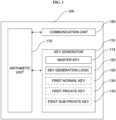
- FIG. 1 is a block diagram illustrating an exemplary configuration of an Internet of things (IoT) device 100 according to the present invention.
- IoT Internet of things
- the IoT device 100 includes a key generator 110, a communication unit 150, and an arithmetic unit 170.
- the key generator 110 stores a master key 115.
- the key generator 110 may further store a first normal key 125.
- the key generator 110 may further store at least one among a first private key 130 and a first sub-private key 135.
- the key generator 110 includes a key generation logic 120 which generates a private key based on the master key 115.
- the key generation logic 120 has a function of deriving a key using a master key. For example, a derived key is generated by encrypting a master Key and derivation data.
- Encrypt (A, B) is an encryption function using A and B.
- the key generation logic 120 generates a private key based on the master key 115. That is, the private key may be derived using the master key 115 and derivation data which are pre-stored.
- the derivation data may be at least one among a first normal key 125 to an n th normal key corresponding to a first IoT device 100-1 to an n th IoT device 100-n, respectively.
- the first normal key 125 to the n th normal key which will be described below, are pieces of data which are formed to generate the private key by being used in the key generation logic 120 together with the master key 115.
- the first normal key 125 to the n th normal key may be used as public keys.
- the first normal key 125 may be used as a public key of the first IoT device 100-1
- the n th normal key may be used as a public key of the n th IoT device 100-n.
- the first normal key 125 may not be the public key of the first IoT device 100-1, and the first IoT device 100-1 may use another public key instead of the first normal key 125.
- the n th normal key may not be the public key of the n th IoT device 100-n, and the n th IoT device 100-n may use another public key instead of the n th normal key.
- the key generation logic 120 may derive a private key from either a first encryption level or a second encryption level.
- the first encryption level may be a level for generating a 128-bit key
- the second encryption level may be a level for generating an 8-bit key.
- the master key 115 and the key generation logic 120 are maintained in the key generator 110 according to a very high security level.
- the first normal key 125, the first private key 130, and the first sub-private key 135, which will be described below, may also be maintained in the key generator 110 according to a very high security level.
- the communication unit 150 performs communication with other IoT devices of an IoT network including the IoT device 100 according to the present invention.
- FIG. 2 is a diagram illustrating an exemplary configuration of an IoT network including the IoT device according to the present invention.
- the IoT device 100 according to the present invention may be at least one among the first IoT device 100-1 to the n th IoT device 100-n.
- the IoT device 100 according to the present invention may be the first IoT device 100-1.
- all of the first IoT device 100-1 and the second IoT device 100-2 to the n th IoT device 100-n, which are included in the IoT network 200, may operate as the IoT device 100 according to the present invention.
- the second IoT device 100-2 includes a key generator (not shown), a communication unit (not shown), and an arithmetic unit (not shown), and similarly, the n th IoT device 100-n includes a key generator (not shown), a communication unit (not shown), and an arithmetic unit (not shown).
- the key generator of the second IoT device 100-2 stores a master key identical to or different from a master key of the first IoT device 100-1 and has a key generation logic (not shown). Further, the key generator of the second IoT device 100-2 may store a second normal key in advance and may further store a second private key and a second sub-private key. Similarly, the key generator of the n th IoT device 100-n stores a master key identical to or different from the master key of the first IoT device 100-1 and has a key generation logic (not shown). Further, the key generator of the n th IoT device 100-n may store an n th normal key in advance and may further store an n th private key and an n th sub-private key.
- the normal keys i.e., the first normal key to the n th normal key
- the normal keys may be stored in advance in corresponding ones among the first IoT device 100-1 to the n th IoT device 100-n.
- the normal keys are determined according to a policy of a manufacturer or user of the first IoT device 100-1 to the n th IoT device 100-n.
- the normal keys may also be used as values which are capable of determining whether the first IoT device 100-1 to the n th IoT device 100-n may be included in the IoT network 200. That is, only an IoT device which includes a normal key determined according to a specific policy may be added to the IoT network 200. For example, only an IoT device which includes a normal key determined according to a policy of a specific automaker may be added to an IoT network in a specific vehicle.
- the communication unit 150 performs communication with other IoT devices of the IoT network 200 including the IoT device 100 according to the present invention.
- the IoT device 100 according to the present invention is the first IoT device 100-1
- the communication unit 150 performs communication with the second IoT device 100-2 to the n th IoT device 100-n which are included in the IoT network 200.
- the arithmetic unit 170 performs the following process.
- a master device is any one among the first IoT device 100-1 to the n th IoT device 100-n which are included in the IoT network 200.
- the master device is a device which generates private keys of the first IoT device 100-1 to the n th IoT device 100-n, i.e., first to n th private keys, and transmits the generated first to n th private keys to other devices which are not the master device among the first IoT device 100-1 to the n th IoT device 100-n.
- the second IoT device 100-2 to the n th IoT device 100-n may also be referred to as slave devices.
- FIGS. 3A to 3C are exemplary diagrams illustrating a process in the arithmetic unit 170 in the IoT device according to the present invention.
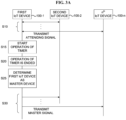
- FIG. 3A illustrates a process in which the arithmetic unit 170 determines whether the first IoT device 100-1 is a master device in the IoT network 200.
- the arithmetic unit 170 performs a process of determining whether the first IoT device 100-1 is the master device in the IoT network 200.
- the arithmetic unit 170 transmits a network participation signal (an "attending signal" of FIG. 3A ) to each of the second IoT device 100-2 to the n th IoT device 100-n through the communication unit 150 (S10).
- the arithmetic unit 170 may receive a response signal (not shown) with respect to the network participation signal (the "attending signal" of FIG. 3A ) from each of the second IoT device 100-2 to the n th IoT device 100-n through the communication unit 150.
- the response signal has a format similar to that of the network participation signal.
- the arithmetic unit 170 operates a timer (not shown) based on unique identification information of the first IoT device 100-1 or an arbitrarily determined value (S15).
- the timer is one of functions embedded in the arithmetic unit 170.
- the unique identification information of the first IoT device 100-1 is identification information which does not overlap identification information of the second IoT device 100-2 to the n th IoT device 100-n.
- the unique identification information is formed to correspond to only the first IoT device 100-1.
- the unique identification information of the first IoT device 100-1 may be a unique value determined based on a radioactive isotope of a semiconductor corresponding to the first IoT device 100-1.
- the arithmetic unit 170 determines the first IoT device 100-1 as a master device (S25).
- the arithmetic unit 170 may transmit a signal indicating that the first IoT device 100-1 has been determined as the master device (a "master signal" of FIG. 3A ) to each of the second IoT device 100-2 to the n th IoT device 100-n (S30).
- the arithmetic unit 170 may determine that the first IoT device 100-1 is not the master device.
- FIG. 3B illustrates a process of determining, after the arithmetic unit 170 determines the first IoT device 100-1 as the master device in the IoT network 200, the first IoT device 100-1 as not being the master device again.
- the arithmetic unit 170 determines the first IoT device 100-1 as the master device in operation S25, when a predetermined condition is satisfied, the arithmetic unit 170 determines that the first IoT device 100-1 is not the master device (S35).
- the predetermined condition is as follows.
- the predetermined condition is a case in which at least one IoT device is added to the IoT network 200. That is, in the IoT network 200 shown in FIG. 2 , the predetermined condition is a case in which an (n+1) th IoT device 100-(n+1) is added.
- the predetermined condition is a case in which at least one IoT device is excluded. That is, in the IoT network 200 shown in FIG. 2 , the predetermined condition is a case in which any one among the second IoT device 100-2 to the n th IoT device 100-n is excluded.
- the second IoT device 100-2 malfunctions or the second IoT device 100-2 fails and thus an operation thereof is no longer possible, the second IoT device 100-2 is excluded from the IoT network 200.
- the first IoT device 100-1 may directly operate as a master device.
- the first IoT device 100-1 may directly operate as the master device.
- the first IoT device 100-1 may directly operate as the master device.
- the (n+1) th IoT device 100-1(n+1) is added, the (n+1) th IoT device 100-(n+1) transmits an (n+1) th normal key to the first IoT device 100-1.
- the arithmetic unit 170 generates an (n+1) th private key using the master key 115 and the (n+1) th normal key through the key generation logic 120 and transmits the (n+1) th private key to the (n+1) th IoT device 100-(n+1) using the communication unit 150.
- a new master device may be determined again.
- the above-described process of determining a master device may be performed by including the newly added IoT device.
- the arithmetic unit 170 may determine the first IoT device 100-1 as the master device again through operations S10 to S30 shown in FIG. 3A .
- the arithmetic unit 170 may determine that the first IoT device 100-1 is not the master device.
- the arithmetic unit 170 may directly determine that the first IoT device 100-1 is not the master device without performing operations S10 to S30 shown in FIG. 3A . That is, when the first IoT device 100-1 is determined as the master device and then it is determined that the first IoT device 100-1 is not the master device, the arithmetic unit 170 may automatically determine that the first IoT device 100-1 is not the master device without transmitting the network participation signal (the "attending signal" of FIG. 3A ).
- the predetermined condition is a case in which the first IoT device 100-1 receives an external attack such as hacking.
- the first IoT device 100-1 When the first IoT device 100-1 receives an attack such as hacking and continues to operate as the master device, a security problem may occur.
- the arithmetic unit 170 determines that the first IoT device 100-1 is not the master device (S35). Even in this case, the arithmetic unit 170 may directly determine that the first IoT device 100-1 is not the master device without performing operations S10 to S30 shown in FIG. 3A . That is, when the first IoT device 100-1 receives an attack such as hacking, the arithmetic unit 170 may automatically determine that the first IoT device 100-1 is not the master device without transmitting the network participation signal (the "attending signal" of FIG. 3A ).
- the arithmetic unit 170 may transmit a signal indicating that the first IoT device 100-1 is not the master device (a "cancel signal" of FIG. 3B ) to each of the second IoT device 100-2 to the n th IoT device 100-n (S40) through the communication unit 150.
- a signal indicating that the first IoT device 100-1 is not the master device a "cancel signal" of FIG. 3B
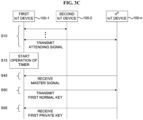
- FIG. 3C illustrates a process in which the arithmetic unit 170 determines that the first IoT device 100-1 is not the master device in the IoT network 200 and then the arithmetic unit 170 receives a first private key from a master device.
- the arithmetic unit 170 operates the timer in operation S15, and then, before the operation of the timer is terminated, the arithmetic unit 170 receives a signal indicating that any one among the second IoT device 100-2 to the n th IoT device 100-n has been determined as the master device (a "master signal" of FIG. 3C ) from one among the second IoT device 100-2 to the n th IoT device 100-n through the communication unit 150 (S45).
- the arithmetic unit 170 determines that the first IoT device 100-1 is not the master device.
- the arithmetic unit 170 When the first IoT device 100-1 is the master device, the arithmetic unit 170 performs the following process. That is, in the description which is made with reference to FIG. 3A , when the arithmetic unit 170 determines the first IoT device 100-1 as the master device, the arithmetic unit 170 performs the following process.
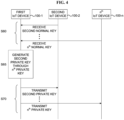
- FIG. 4 illustrates a process in which the arithmetic unit 170 generates and transmits private keys of the second IoT device 100-2 to the n th IoT device 100-n, i.e., second to n th private keys in the IoT network 200.
- the arithmetic unit 170 receives normal keys of the second IoT device 100-2 to the n th IoT device 100-n, i.e., a second normal key to an n th normal key, through the communication unit 150 (S60).
- the arithmetic unit 170 generates private keys corresponding to the second IoT device 100-2 to the n th IoT device 100-n, i.e., the second private key to the n th private key through the key generator 110 (S65). For example, the arithmetic unit 170 generates the second private key to the n th private key by inputting the second normal key to the n th normal key into the above-described key generation logic 120 (S65).
- the key generation logic 120 may generate the second private key to the n th private key using the above-described Encrypt function.
- the second private key is generated using Encrypt (master key, second normal key)
- the n th private key is generated using Encrypt (master key, n th normal key).
- the arithmetic unit 170 transmits the second private key to the n th private key, which are generated in operation S65, to the second IoT device 100-2 to the n th IoT device 100-n (S70).
- the arithmetic unit 170 transmits the second private key to the second IoT device 100-2 through the communication unit 150. Similarly, the arithmetic unit 170 transmits the n th private key to the n th IoT device 100-n through the communication unit 150.
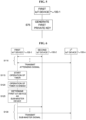
- the arithmetic unit 170 may generate the private key of the first IoT device 100-1, i.e., the first private key.
- FIG. 5 illustrates a process in which the arithmetic unit 170 generates the private key of the first IoT device 100-1, i.e., the first private key.
- the key generator 110 may further store a normal key of the first IoT device 100-1, i.e., the first normal key 125 of FIG. 1 .
- the first private key 130 of FIG. 1 may be generated using Encrypt (master key, first normal key).
- the key generator 110 may further store the first private key 130 of FIG. 1 generated in operation S75.
- the arithmetic unit 170 performs the following process.
- the arithmetic unit 170 transmits the first normal key 125 of FIG. 1 to the master device which is one among the second IoT device 100-2 to the n th IoT device 100-n through the communication unit 150 (S50).
- the arithmetic unit 170 receives a first private key from the master device (S55).
- the key generator 110 may further store the first private key 130 of FIG. 1 .
- the first private key 130 of FIG. 1 which will be used when the first IoT device 100-1 performs encrypted communication, is obtained from the master device.
- the arithmetic unit 170 may further perform the following process.
- the arithmetic unit 170 transmits a network participation signal (an "attending signal" of FIG. 6 ) to each of the second IoT device 100-2 to the n th IoT device 100-n through the communication unit 150 (S110).
- Operation S110 of FIG. 6 is similar to operation S10 of FIG. 3A , but there is a difference that the network participation signal (the "attending signal” of FIG. 6 ) is transmitted in operation S110 of FIG. 6 so as to determine a sub-master device, whereas the network participation signal (the "attending signal” of FIG. 3A ) is transmitted in operation S10 of FIG. 3A so as to determine a master device.
- the arithmetic unit 170 operates the timer (S115). Until the operation of the timer is terminated (S120), when a signal, which indicates that one among the second IoT device 100-2 to the n th IoT device 100-n has been determined as a master device, is not received from any one among the second IoT device 100-2 to the n th IoT device 100-n, the arithmetic unit 170 determines the first IoT device 100-1 as a sub-master device (S125).
- the arithmetic unit 170 may transmit a signal indicating that the first IoT device 100-1 has been determined as the sub-master device (a "sub-master signal" of FIG. 6 ) to each of the second IoT device 100-2 to the n th IoT device 100-n (S130).
- operations S110 to S130 of FIG. 6 are performed so as to determine the sub-master device whereas operations S10 to S30 of FIG. 3A are performed so as to determine the master device, operations S110 to S130 of FIG. 6 are substantially identical to operations S10 to S30 of FIG. 3A , and thus detailed descriptions thereof will be omitted.
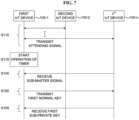
- FIG. 7 illustrates a process in which the arithmetic unit 170 determines the first IoT device 100-1 as not being the sub-master device in the IoT network 200 and then the arithmetic unit 170 receives a first sub-private key from a master device.
- the arithmetic unit 170 operates the timer in operation S115, and then, before the operation of the timer is terminated, the arithmetic unit 170 receives a signal indicating that any one among the second IoT device 100-2 to the n th IoT device 100-n has been determined as the sub-master device (a "sub-master signal" of FIG. 7 ) from one among the second IoT device 100-2 to the n th IoT device 100-n through the communication unit 150 (S145).
- a signal indicating that any one among the second IoT device 100-2 to the n th IoT device 100-n has been determined as the sub-master device (a "sub-master signal" of FIG. 7 ) from one among the second IoT device 100-2 to the n th IoT device 100-n through the communication unit 150 (S145).
- the arithmetic unit 170 determines the first IoT device 100-1 as not being the sub-master device.
- the arithmetic unit 170 performs the following process.
- the arithmetic unit 170 transmits the first normal key 125 of FIG. 1 to the sub-master device, i.e., one among the second IoT device 100-2 to the n th IoT device 100-n, which has been determined as the sub-master device, through the communication unit 150 (S150).
- the arithmetic unit 170 receives the first sub-private key 135 of FIG. 1 from the sub-master device (S155).
- the key generator 110 may further store the first sub-private key 135 of FIG. 1 .
- the first sub-private key 135 of FIG. 1 which will be used when the first IoT device 100-1 performs encrypted communication, is obtained from the sub-master device.
- the arithmetic unit 170 When the first IoT device 100-1 is the sub-master device, the arithmetic unit 170 performs the following process. That is, in the description which is made with reference to FIG. 6 , when the arithmetic unit 170 determines the first IoT device 100-1 as the sub-master device, the arithmetic unit 170 performs the following process.
- FIG. 8 illustrates a process in which the arithmetic unit 170 generates and transmits sub-private keys of the second IoT device 100-2 to the n th IoT device 100-n, i.e., second to n th sub-private keys in the IoT network 200.
- the arithmetic unit 170 receives normal keys of the second IoT device 100-2 to the n th IoT device 100-n, i.e., the second normal key to the n th normal key, through the communication unit 150 (S160).
- the arithmetic unit 170 generates sub-private keys corresponding to the second IoT device 100-2 to the n th IoT device 100-n, i.e., the second sub-private key to the n th sub-private key, through the key generator 110 (S165). For example, the arithmetic unit 170 generates the second sub-private key to the n th sub-private key by inputting the second normal key to the n th normal key into the above-described key generation logic 120 (S165).
- the key generation logic 120 may generate the second sub-private key to the n th sub-private key using the above-described Encrypt function.
- the second sub-private key is generated using Encrypt (master key, second normal key)
- the n th sub-private key is generated using Encrypt (master key, n th normal key).
- the key generation logic 120 may derive the private key from either a first encryption level or a second encryption level.
- the first encryption level may be a level for generating a 128-bit key
- the second encryption level may be a level for generating an 8-bit key.
- the private key may be used when the first IoT device 100-1 to the n th IoT device 100-n transmit and receive security-sensitive data
- the sub-private key may be used when the first IoT device 100-1 to the n th IoT device 100-n transmit and receive less security-sensitive data.
- the data may be transmitted and received using the sub-private key between the first IoT device 100-1 to the n th IoT device 100-n.
- data including detection data or a control signal is security-sensitive data
- the data be transmitted and received using the private key between the first IoT device 100-1 to the n th IoT device 100-n.
- the arithmetic unit 170 transmits the second sub-private key to the n th sub-private key, which are generated in operation S165, to the second IoT device 100-2 to the n th IoT device 100-n (S170).
- the arithmetic unit 170 transmits the second sub-private key to the second IoT device 100-2 through the communication unit 150. Similarly, the arithmetic unit 170 transmits the n th sub-private key to the n th IoT device 100-n through the communication unit 150.
- the arithmetic unit 170 may generate the sub-private key of the first IoT device 100-1, i.e., the first sub-private key.
- FIG. 9 illustrates a process in which the arithmetic unit 170 generates the sub-private key of the first IoT device 100-1, i.e., the first sub-private key.
- the arithmetic unit 170 may generate the first sub-private key using the master key 115 of FIG. 1 and the first normal key 125 of FIG. 1 through the key generator 110 (S175).
- the key generation logic 120 may generate the private key at a first encryption level and a sub-private key at a second encryption level. That is, it is preferable that the first private key 130 of FIG. 1 and the first sub-private key 135 of FIG. 1 have different encryption levels.
- the key generator 110 may further store the first sub-private key 135 of FIG. 1 .
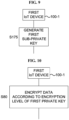
- the arithmetic unit 170 may further perform a process of encrypting data according to the encryption level of the first private key 130 of FIG. 1 of the first IoT device 100-1.
- FIG. 10 illustrates a process in which the arithmetic unit 170 encrypts data according to an encryption level of the first private key 130 of FIG. 1 .
- the arithmetic unit 170 encrypts data according to the encryption level of the first private key 130 of FIG. 1 (S80).
- the arithmetic unit 170 encrypts the data to correspond to the 128-bit level.
- the arithmetic unit 170 may further perform a process of encrypting data according to the encryption level of the first private key 130 of FIG. 1 or the first sub-private key 135 of FIG. 1 of the first IoT device 100-1.
- FIG. 11 illustrates a process in which the arithmetic unit 170 encrypts according to the encryption level of the first private key 130 of FIG. 1 or the first sub-private key 135 of FIG. 1 .
- the arithmetic unit 170 encrypts the data to correspond to the 128-bit level.
- the arithmetic unit 170 encrypts the data to correspond to the 8-bit level.
- the arithmetic unit 170 may minimize a load of an arithmetic process according to encryption and reduce a processing time required for the encryption by differentiating an encryption level so as to be suitable for the purpose.
- the arithmetic unit 170 may be implemented using an EMV chip manufactured according to the EMV standard or a TEE chip manufactured according to the TEE standard.
- the arithmetic unit 170 may be implemented by another type of chip, e.g., a processor having a computing function.
- an IoT device which is capable of defending against an attack such as hacking while strengthening security of IoT by dynamically determining whether to operate as a master device in an IoT network, and, when the master device is determined, generating, distributing, and managing private keys of other IoT devices in the IoT network.
- a private key and a sub-private key are used such that an encryption level can be made to be different according to the use. Therefore, it is possible to minimize a load of an arithmetic process according to encryption and reduce a processing time required for the encryption.
- an Internet of things (IoT) device which is capable of defending against an attack such as hacking while strengthening security of IoT by dynamically determining whether to operate as a master device in an IoT network, and, when the master device is determined, generating, distributing, and managing private keys of other IoT devices in the IoT network. Further, a private key and a sub-private key are used such that an encryption level can be made to be different according to the use. Therefore, it is possible to minimize a load of an arithmetic process according to encryption and reduce a processing time required for the encryption.
- IoT Internet of things
Landscapes
- Engineering & Computer Science (AREA)
- Computer Security & Cryptography (AREA)
- Computer Networks & Wireless Communication (AREA)
- Signal Processing (AREA)
- Computing Systems (AREA)
- Health & Medical Sciences (AREA)
- General Health & Medical Sciences (AREA)
- Medical Informatics (AREA)
- Computer Hardware Design (AREA)
- General Engineering & Computer Science (AREA)
- Computer And Data Communications (AREA)
Claims (19)
- Erste IoT-Vorrichtung, Internet der Dinge-Vorrichtung, (100-1) zum Betreiben in einem IoT-Netzwerk (200) der ersten IoT-Vorrichtung (100-1) bis zu einer n-ten IoT-Vorrichtung (100-n), wobei n eine natürliche Zahl gleich oder größer als 2 ist, wobei die erste IoT-Vorrichtung (100-1) Folgendes umfasst:einen Schlüsselgenerator (110), der dazu ausgelegt ist, einen Master-Schlüssel (115) zu speichern, und eine Schlüsselerzeugungslogik (120) zum Erzeugen eines privaten Schlüssels basierend auf dem Master-Schlüssel (115) beinhaltet;eine Kommunikationseinheit (150), die dazu ausgelegt ist, mit der zweiten IoT-Vorrichtung (100-2) bis zur n-ten IoT-Vorrichtung (100-n) in dem IoT-Netzwerk (200) zu kommunizieren; undeine Recheneinheit (170), die dazu ausgelegt ist, folgende Prozesse durchzuführen:(a) Bestimmen, ob die erste IoT-Vorrichtung (100-1) eine Master-Vorrichtung in dem IoT-Netzwerk (200) ist;(b) wenn bestimmt wird, dass die erste IoT-Vorrichtung (100-1) die Master-Vorrichtung in dem IoT-Netzwerk (200) ist, Erzeugen jeweils eines zweiten privaten Schlüssels bis zu einem n-ten privaten Schlüssel, der der zweiten IoT-Vorrichtung (100-2) bis zur n-ten IoT-Vorrichtung (100-n) entspricht, unter Verwendung des Schlüsselgenerators (110) und Übertragen des zweiten privaten Schlüssels bis zum n-ten privaten Schlüssel bis zur jeweils zweiten IoT-Vorrichtung (100-2) bis zur n-ten IoT-Vorrichtung (100-n) über die Kommunikationseinheit (150); und(c) wenn bestimmt wird, dass die erste IoT-Vorrichtung (100-1) nicht die Master-Vorrichtung in dem IoT-Netzwerk (200) ist, Empfangen eines ersten privaten Schlüssels (130), der der ersten IoT-Vorrichtung (100-1) entspricht, von einer der zweiten IoT-Vorrichtung (100-2) bis zur n-ten IoT-Vorrichtung (100-n), die als die Master-Vorrichtung bestimmt wird, wobei der Prozess (b) folgende Prozesse umfasst:(b-1) Empfangen eines zweiten normalen Schlüssels bis zu einem n-ten normalen Schlüssel von jeweils der zweiten IoT-Vorrichtung (100-2) bis zur n-ten IoT-Vorrichtung (100-n) über die Kommunikationseinheit (150);(b-2) Erzeugen des zweiten privaten Schlüssels bis zum n-ten privaten Schlüssel (S65) basierend auf dem Master-Schlüssel (115) und des zweiten normalen Schlüssels bis zum n-ten normalen Schlüssel unter Verwendung des Schlüsselgenerators (110); und(b-3) Übertragen des zweiten privaten Schlüssels bis zum n-ten privaten Schlüssel (S70) jeweils an die zweite IoT-Vorrichtung (100-2) bis zur n-ten IoT-Vorrichtung (100-n) .
- Erste IoT-Vorrichtung (100-1) nach Anspruch 1, wobei der Prozess (a) folgende Prozesse umfasst:(a-1) Übertragen eines Netzwerkteilnahmesignals an die zweite IoT-Vorrichtung (100-2) bis zur n-ten IoT-Vorrichtung (100-n) über die Kommunikationseinheit (150);(a-2) Starten einer Operation eines Timers basierend auf eindeutigen Identifikationsinformationen der ersten IoT-Vorrichtung (100-1) oder einem Zufallswert; und(a-3) Bestimmen der ersten IoT-Vorrichtung (100-1) als die Master-Vorrichtung, wenn ein Signal, das angibt, dass eine der zweiten IoT-Vorrichtung (100-2) bis zur n-ten IoT-Vorrichtung (100-n) die Master-Vorrichtung ist, nicht von der einen der zweiten IoT-Vorrichtung (100-2) bis zur n-ten IoT-Vorrichtung (100-n) über die Kommunikationseinheit (150) empfangen wird, bis der Betrieb des Timers beendet ist.
- Erste IoT-Vorrichtung (100-1) nach Anspruch 1, wobei der Prozess (a) einen folgenden Prozess umfasst:
(a-4) Übertragen eines Signals, das angibt, dass die erste IoT-Vorrichtung (100-1) die Master-Vorrichtung ist, an die zweite IoT-Vorrichtung (100-2) bis zur n-ten IoT-Vorrichtung (100-n) über die Kommunikationseinheit (150), wenn die erste IoT-Vorrichtung (100-1) als die Master-Vorrichtung bestimmt wird. - Erste IoT-Vorrichtung (100-1) nach Anspruch 1, wobei der Prozess (a) einen folgenden Prozess umfasst:
(a-5) Freigeben der ersten IoT-Vorrichtung (100-1) davon, die Master-Vorrichtung zu sein, wenn eine vorbestimmte Bedingung erfüllt ist, nachdem die erste IoT-Vorrichtung (100-1) als die Master-Vorrichtung bestimmt wurde. - Erste IoT-Vorrichtung (100-1) nach Anspruch 4, wobei der Prozess (a) ferner einen folgenden Prozess umfasst:
(a-6) Übertragen eines Signals, das angibt, dass die erste IoT-Vorrichtung (100-1) nicht die Master-Vorrichtung ist, an die zweite IoT-Vorrichtung (100-2) bis zur n-ten IoT-Vorrichtung (100-n) über die Kommunikationseinheit (150) nach dem Durchführen des Prozesses (a-5). - Erste IoT-Vorrichtung (100-1) nach Anspruch 4, wobei die vorbestimmte Bedingung beinhaltet: eine oder mehrere IoT-Vorrichtungen (100), die zu dem IoT-Netzwerk (200) hinzugefügt werden; mindestens eine der zweiten IoT-Vorrichtung (100-2) bis zur n-ten IoT-Vorrichtung (100-n), die entfernt wird; oder die erste IoT-Vorrichtung (100-1), die angegriffen wird.
- Erste IoT-Vorrichtung (100-1) nach Anspruch 1, wobei der Schlüsselgenerator (110) ferner einen ersten normalen Schlüssel (125) speichert und der Prozess (c) einen folgenden Prozess umfasst:
(c-1) Übertragen des ersten normalen Schlüssels (125) an die Master-Vorrichtung über die Kommunikationseinheit (150), wenn die eine der zweiten IoT-Vorrichtung (100-2) bis zur n-ten IoT-Vorrichtung (100-n) als die Master-Vorrichtung bestimmt wird. - Erste IoT-Vorrichtung (100-1) nach Anspruch 1, wobei der Schlüsselgenerator (110) ferner einen ersten normalen Schlüssel (125) speichert und die Recheneinheit (170) ferner dazu ausgelegt ist, einen folgenden Prozess durchzuführen:
(d) Erzeugen des ersten privaten Schlüssels (130) basierend auf dem Master-Schlüssel (115) und dem ersten normalen Schlüssel (125) unter Verwendung des Schlüsselgenerators (110), wenn die erste IoT-Vorrichtung (100-1) als die Master-Vorrichtung bestimmt wird. - Erste IoT-Vorrichtung (100-1) nach Anspruch 1, wobei der Schlüsselgenerator (110) ferner den ersten privaten Schlüssel (130) speichert.
- Erste IoT-Vorrichtung (100-1) nach Anspruch 1, wobei die Recheneinheit (170) ferner dazu ausgelegt ist, Prozesse unter den Folgenden durchzuführen:(e) Bestimmen, ob die erste IoT-Vorrichtung (100-1) eine Sub-Master-Vorrichtung in dem IoT-Netzwerk (200) ist (S125);(f) wenn bestimmt wird, dass die erste IoT-Vorrichtung (100-1) die Sub-Master-Vorrichtung in dem IoT-Netzwerk (200) ist, Erzeugen eines zweiten Sub-Privat-Schlüssels bis zu einem n-ten Sub-Privat-Schlüssel, der jeweils der zweiten IoT-Vorrichtung (100-2) bis zur n-ten IoT-Vorrichtung (100-n) entspricht, unter Verwendung des Schlüsselgenerators (110) und Übertragen des zweiten Sub-Privat-Schlüssels bis zum n-ten Sub-Privat-Schlüssel jeweils an die zweite IoT-Vorrichtung (100-2) bis zur n-ten IoT-Vorrichtung (100-n), über die Kommunikationseinheit (150); und(g) wenn bestimmt wird, dass die erste IoT-Vorrichtung (100-1) nicht die Sub-Master-Vorrichtung in dem IoT-Netzwerk (200) ist, Empfangen eines ersten Sub-Privat-Schlüssels (135), der der ersten IoT-Vorrichtung (100-1) entspricht, von einer der zweiten IoT-Vorrichtung (100-2) bis zur n-ten IoT-Vorrichtung (100-n), die als die Sub-Master-Vorrichtung bestimmt wird.
- Erste IoT-Vorrichtung (100-1) nach Anspruch 10, wobei der Prozess (e) Prozesse unter den Folgenden umfasst:(e-1) Übertragen des Netzwerkteilnahmesignals an die zweite IoT-Vorrichtung (100-2) bis zur n-ten IoT-Vorrichtung (100-n) über die Kommunikationseinheit (150);(e-2) Starten einer Operation eines Timers basierend auf eindeutigen Identifikationsinformationen der ersten IoT-Vorrichtung (100-1) oder einem Zufallswert; und(e-3) Bestimmen der ersten IoT-Vorrichtung (100-1) als die Sub-Master-Vorrichtung, wenn ein Signal, das angibt, dass eine der zweiten IoT-Vorrichtung (100-2) bis zur n-ten IoT-Vorrichtung (100-n) die Sub-Master-Vorrichtung ist, nicht von der einen der zweiten IoT-Vorrichtung (100-2) bis zur n-ten IoT-Vorrichtung (100-n) über die Kommunikationseinheit (150) empfangen wird, bis der Betrieb des Timers beendet ist.
- Erste IoT-Vorrichtung (100-1) nach Anspruch 10, wobei der Prozess (e) einen folgenden Prozess umfasst:
(e-4) Übertragen eines Signals, das angibt, dass die erste IoT-Vorrichtung (100-1) die Sub-Master-Vorrichtung ist, an die zweite IoT-Vorrichtung (100-2) bis zur n-ten IoT-Vorrichtung (100-n) über die Kommunikationseinheit (150), wenn die erste IoT-Vorrichtung (100-1) als die Sub-Master-Vorrichtung bestimmt wird. - Erste IoT-Vorrichtung (100-1) nach Anspruch 10, wobei der Prozess (f) folgende Prozesse umfasst:(f-1) Empfangen eines zweiten normalen Schlüssels bis zu einem n-ten normalen Schlüssel jeweils von der zweiten IoT-Vorrichtung (100-2) bis zur n-ten IoT-Vorrichtung (100-n) über die Kommunikationseinheit (150);(f-2) Erzeugen des zweiten Sub-Privat-Schlüssels bis zum n-ten Sub-Privat-Schlüssel basierend auf dem Master-Schlüssel (115) und des zweiten normalen Schlüssels bis zum n-ten normalen Schlüssel unter Verwendung des Schlüsselgenerators (110); und(f-3) Übertragen des zweiten Sub-Privat-Schlüssels bis zum n-ten Sub-Privat-Schlüssel jeweils an die zweite IoT-Vorrichtung (100-2) bis zur n-ten IoT-Vorrichtung (100-n) .
- Erste IoT-Vorrichtung (100-1) nach Anspruch 10, wobei der Schlüsselgenerator (110) ferner einen ersten normalen Schlüssel (125) speichert und der Prozess (g) folgende Prozesse umfasst:(g-1) Übertragen des ersten normalen Schlüssels (125) an die Sub-Master-Vorrichtung über die Kommunikationseinheit (150); und(g-2) Empfangen des ersten Sub-Privat-Schlüssels (135) von der einen der zweiten IoT-Vorrichtung (100-2) bis zur n-ten IoT-Vorrichtung (100-n), die als die Sub-Master-Vorrichtung bestimmt wird.
- Erste IoT-Vorrichtung (100-1) nach Anspruch 10, wobei der Schlüsselgenerator (110) ferner einen ersten normalen Schlüssel (125) speichert und die Recheneinheit (170) ferner dazu ausgelegt ist, einen folgenden Prozess durchzuführen:
(h) Erzeugen des ersten Sub-Privat-Schlüssels (135) basierend auf dem Master-Schlüssel (115) und dem ersten normalen Schlüssel (125) unter Verwendung des Schlüsselgenerators (110), wenn bestimmt wird, dass die erste IoT-Vorrichtung (100-1) die Sub-Master-Vorrichtung in dem IoT-Netzwerk (200) ist. - Erste IoT-Vorrichtung (100-1) nach Anspruch 1, wobei die Recheneinheit (170) ferner dazu ausgelegt ist, einen folgenden Prozess durchzuführen:(i) Verschlüsseln von Daten gemäß einer Verschlüsselungsebene des ersten privaten Schlüssels (130).
- Erste IoT-Vorrichtung (100-1) nach Anspruch 10, wobei die Recheneinheit (170) ferner dazu ausgelegt ist, einen folgenden Prozess durchzuführen:
(j) Verschlüsseln von Daten gemäß einer Verschlüsselungsebene des ersten Privat-Schlüssels (130) oder einer Verschlüsselungsebene des ersten Sub-Privat-Schlüssels (135). - Erste IoT-Vorrichtung (100-1) nach Anspruch 10, wobei die Schlüsselerzeugungslogik (120) den Privat-Schlüssel entweder einer ersten Verschlüsselungsebene oder einer zweiten Verschlüsselungsebene erzeugt und eine Verschlüsselungsebene des ersten Privat-Schlüssels (130) sich von der des ersten Sub-Privat-Schlüssels (135) unterscheidet.
- Erste IoT-Vorrichtung (100-1) nach Anspruch 1, wobei der Schlüsselgenerator (110) und/oder die Recheneinheit (170) einen EMV-Chip, Europay MasterCard Visa-Chip, oder einen TEE-Chip, Trusted Execution Environment-Chip, umfasst, der in Übereinstimmung mit TEE hergestellt ist.
Applications Claiming Priority (2)
| Application Number | Priority Date | Filing Date | Title |
|---|---|---|---|
| KR1020170019900A KR101776172B1 (ko) | 2017-02-14 | 2017-02-14 | 사물 인터넷 장치 |
| PCT/KR2017/012656 WO2018151390A1 (ko) | 2017-02-14 | 2017-11-09 | 사물 인터넷 장치 |
Publications (4)
| Publication Number | Publication Date |
|---|---|
| EP3584992A1 EP3584992A1 (de) | 2019-12-25 |
| EP3584992A4 EP3584992A4 (de) | 2020-12-09 |
| EP3584992C0 EP3584992C0 (de) | 2025-04-09 |
| EP3584992B1 true EP3584992B1 (de) | 2025-04-09 |
Family
ID=59925663
Family Applications (1)
| Application Number | Title | Priority Date | Filing Date |
|---|---|---|---|
| EP17896683.4A Active EP3584992B1 (de) | 2017-02-14 | 2017-11-09 | Internet-der-dinge-vorrichtung |
Country Status (5)
| Country | Link |
|---|---|
| US (1) | US10757571B2 (de) |
| EP (1) | EP3584992B1 (de) |
| JP (2) | JP6449970B2 (de) |
| KR (1) | KR101776172B1 (de) |
| WO (1) | WO2018151390A1 (de) |
Families Citing this family (16)
| Publication number | Priority date | Publication date | Assignee | Title |
|---|---|---|---|---|
| WO2019015739A1 (en) * | 2017-07-17 | 2019-01-24 | Sonova Ag | AUDIO DIFFUSION IN CONTINUOUS ENCRYPTION |
| KR102046424B1 (ko) * | 2019-02-13 | 2019-11-19 | 주식회사 티이이웨어 | 신뢰실행환경(Trusted Execution Environment)에서 관리되는 클러스터의 내부키로부터 BIP-32 프로토콜에 기초하여 트랜잭션을 서명하는 키 보관 관리 시스템 및 방법 |
| KR102046425B1 (ko) * | 2019-02-13 | 2019-11-19 | 주식회사 티이이웨어 | 신뢰실행환경(Trusted Execution Environment)에서 관리되는 클러스터의 키를 이용하여 threshold signature 방식에 기반한 트랜잭션을 서명하는 키 보관 관리 시스템 및 방법 |
| KR102083792B1 (ko) * | 2019-10-10 | 2020-03-03 | 김흥중 | 폐쇄형 홈 IoT 서비스 시스템 |
| KR102083794B1 (ko) * | 2019-10-10 | 2020-03-03 | 김흥중 | 블록체인을 이용한 폐쇄형 홈 IoT 서비스 시스템 |
| WO2021151495A1 (en) * | 2020-01-30 | 2021-08-05 | Huawei Technologies Co., Ltd. | Devices, methods and computer programs for bootstrapping a group of node devices for wireless local area networking |
| US11271911B2 (en) * | 2020-02-26 | 2022-03-08 | Amera Lot Inc. | Method and apparatus for imprinting private key on IoT |
| US11256783B2 (en) | 2020-02-26 | 2022-02-22 | Amera IoT Inc. | Method and apparatus for simultaneous key generation on device and server for secure communication |
| US11258602B2 (en) | 2020-02-26 | 2022-02-22 | Amera IoT Inc. | Method and apparatus for secure private key storage on IoT device |
| US10817590B1 (en) | 2020-02-26 | 2020-10-27 | Amera IoT Inc. | Method and apparatus for creating and using quantum resistant keys |
| US12225125B2 (en) | 2020-02-26 | 2025-02-11 | Amera IoT Inc. | Method and apparatus for using a picture and shared secret to create replicable high quality pools of entropy for keys for encryption, authentication and one time pads for images, data and message encoding |
| US12041055B2 (en) * | 2020-03-27 | 2024-07-16 | Motorola Solutions, Inc. | Method and apparatus for preventing access to an IoT device |
| CN111478902B (zh) * | 2020-04-07 | 2021-03-23 | 江苏润和智融科技有限公司 | 电力边缘网关设备及基于该设备的传感数据上链存储方法 |
| US11664977B2 (en) * | 2020-07-31 | 2023-05-30 | T-Mobile Usa, Inc. | Encryption key management for NB-IoT devices |
| TWI796885B (zh) * | 2021-12-21 | 2023-03-21 | 龍華科技大學 | 工業物聯網及其安全通訊方法 |
| EP4462734A4 (de) | 2022-05-09 | 2025-04-23 | Samsung Electronics Co., Ltd | Elektronische vorrichtung zur steuerung einer internet-der-dinge-vorrichtung und betriebsverfahren dafür |
Citations (1)
| Publication number | Priority date | Publication date | Assignee | Title |
|---|---|---|---|---|
| US20040179511A1 (en) * | 1999-11-19 | 2004-09-16 | Sachio Kizu | Communication method for data synchronization processing and electronic device therefor |
Family Cites Families (22)
| Publication number | Priority date | Publication date | Assignee | Title |
|---|---|---|---|---|
| US6351536B1 (en) * | 1997-10-01 | 2002-02-26 | Minoru Sasaki | Encryption network system and method |
| KR19990053538A (ko) * | 1997-12-24 | 1999-07-15 | 전주범 | 화상회의 단말에 있어서 마스터/슬레이브 결정방법 |
| JP3641124B2 (ja) * | 1998-01-29 | 2005-04-20 | 松下電器産業株式会社 | 通信方法および通信装置 |
| JP4366845B2 (ja) * | 2000-07-24 | 2009-11-18 | ソニー株式会社 | データ処理装置およびデータ処理方法、並びにプログラム提供媒体 |
| KR100620289B1 (ko) * | 2000-07-25 | 2006-09-07 | 삼성전자주식회사 | 마스터 이탈시 사설 간이 네트워크 운영 방법 |
| JP3851781B2 (ja) * | 2001-01-31 | 2006-11-29 | Tdk株式会社 | 無線通信装置及び無線通信システム、並びに、接続認証方法 |
| KR20050014631A (ko) * | 2003-05-30 | 2005-02-07 | 엘지전자 주식회사 | 홈 네트워크 시스템 |
| KR101044937B1 (ko) * | 2003-12-01 | 2011-06-28 | 삼성전자주식회사 | 홈 네트워크 시스템 및 그 관리 방법 |
| JP4143036B2 (ja) * | 2004-01-26 | 2008-09-03 | 株式会社エヌ・ティ・ティ・ドコモ | 鍵生成システム、鍵生成サーバ及び鍵生成方法 |
| JP4900891B2 (ja) * | 2005-04-27 | 2012-03-21 | キヤノン株式会社 | 通信装置及び通信方法 |
| JP5013728B2 (ja) * | 2006-03-20 | 2012-08-29 | キヤノン株式会社 | システム及びその処理方法、並びに通信装置及び処理方法 |
| JP2008104040A (ja) * | 2006-10-20 | 2008-05-01 | Fujitsu Ltd | 共通鍵生成装置および共通鍵生成方法 |
| JP5328141B2 (ja) * | 2007-12-05 | 2013-10-30 | キヤノン株式会社 | 通信装置、通信装置の制御方法、コンピュータプログラム |
| CN101222325B (zh) * | 2008-01-23 | 2010-05-12 | 西安西电捷通无线网络通信有限公司 | 一种基于id的无线多跳网络密钥管理方法 |
| JP5222081B2 (ja) * | 2008-09-24 | 2013-06-26 | キヤノン株式会社 | 通信装置、通信装置の制御方法、コンピュータプログラム、記憶媒体 |
| JP5709497B2 (ja) * | 2010-12-07 | 2015-04-30 | キヤノン株式会社 | 通信装置、通信装置の制御方法およびプログラム |
| JP5652363B2 (ja) * | 2011-03-28 | 2015-01-14 | ソニー株式会社 | 暗号処理装置、および暗号処理方法、並びにプログラム |
| KR101572805B1 (ko) | 2014-06-24 | 2015-12-01 | 경북대학교 산학협력단 | 사물 인터넷에서의 보안 제공 방법 |
| US9397833B2 (en) * | 2014-08-27 | 2016-07-19 | International Business Machines Corporation | Receipt, data reduction, and storage of encrypted data |
| EP3021249A1 (de) * | 2014-11-13 | 2016-05-18 | Gemalto Sa | System zur sicheren Eingabe eines privaten Codes |
| TWI672056B (zh) * | 2015-01-05 | 2019-09-11 | 展星聯網科技股份有限公司 | 用於控制電子裝置的物聯系統與方法 |
| KR101701052B1 (ko) | 2015-08-26 | 2017-01-31 | 동국대학교 경주캠퍼스 산학협력단 | 사물인터넷에서의 정보 보안 방법 및 이를 이용한 정보 보안 시스템 |
-
2017
- 2017-02-14 KR KR1020170019900A patent/KR101776172B1/ko active Active
- 2017-11-09 EP EP17896683.4A patent/EP3584992B1/de active Active
- 2017-11-09 WO PCT/KR2017/012656 patent/WO2018151390A1/ko not_active Ceased
- 2017-11-30 JP JP2017230022A patent/JP6449970B2/ja active Active
-
2018
- 2018-09-28 JP JP2018184211A patent/JP2019017102A/ja active Pending
-
2019
- 2019-07-23 US US16/520,136 patent/US10757571B2/en active Active
Patent Citations (1)
| Publication number | Priority date | Publication date | Assignee | Title |
|---|---|---|---|---|
| US20040179511A1 (en) * | 1999-11-19 | 2004-09-16 | Sachio Kizu | Communication method for data synchronization processing and electronic device therefor |
Non-Patent Citations (2)
| Title |
|---|
| ANDREAS DANIEL SINNHOFER ET AL: "Patterns to establish a secure communication channel", PATTERN LANGUAGES OF PROGRAMS, ACM, 2 PENN PLAZA, SUITE 701 NEW YORK NY 10121-0701 USA, 6 July 2016 (2016-07-06), pages 1 - 21, XP058316349, ISBN: 978-1-4503-4074-8, DOI: 10.1145/3011784.3011797 * |
| ANONYMOUS: "Key derivation function - Wikipedia", 9 December 2016 (2016-12-09), XP055850470, Retrieved from the Internet <URL:https://en.wikipedia.org/w/index.php?title=Key_derivation_function&oldid=753893949> [retrieved on 20211012] * |
Also Published As
| Publication number | Publication date |
|---|---|
| JP2018133797A (ja) | 2018-08-23 |
| KR101776172B1 (ko) | 2017-09-07 |
| EP3584992C0 (de) | 2025-04-09 |
| EP3584992A1 (de) | 2019-12-25 |
| EP3584992A4 (de) | 2020-12-09 |
| US20190349762A1 (en) | 2019-11-14 |
| US10757571B2 (en) | 2020-08-25 |
| JP2019017102A (ja) | 2019-01-31 |
| WO2018151390A1 (ko) | 2018-08-23 |
| JP6449970B2 (ja) | 2019-01-09 |
Similar Documents
| Publication | Publication Date | Title |
|---|---|---|
| EP3584992B1 (de) | Internet-der-dinge-vorrichtung | |
| US11615411B2 (en) | POS system with white box encryption key sharing | |
| CN113014539B (zh) | 一种物联网设备安全保护系统及方法 | |
| US9473932B2 (en) | Local trusted service manager | |
| US20160277933A1 (en) | Secure Data Communication system between IoT smart devices and a Network gateway under Internet of Thing environment | |
| JP7160605B2 (ja) | 安全にデータを転送する方法およびシステム | |
| KR101834504B1 (ko) | 암복호화 장치 및 방법 | |
| KR20180119201A (ko) | 인증 시스템을 위한 전자 장치 | |
| Zhang et al. | BLESS: A BLE application security scanning framework | |
| US20190109829A1 (en) | Apparatus and method for storing device data in internet-of-things environment | |
| JP6408536B2 (ja) | 通信システム、通信装置、サーバ装置、通信方法、及びコンピュータプログラム | |
| US20170180392A1 (en) | Method and device for transmitting software | |
| JP6720558B2 (ja) | 情報処理システムおよび暗号通信方法 | |
| KR101834522B1 (ko) | 데이터 확인 장치 및 이를 이용하여 데이터를 확인하는 방법 | |
| EP3665859A1 (de) | Vorrichtung und verfahren zur verkapselung von privaten profilzertifikatschlüsseln oder anderen daten | |
| WO2018172776A1 (en) | Secure transfer of data between internet of things devices | |
| KR101829423B1 (ko) | 암복호화 장치 및 이를 이용한 암복호화 방법 | |
| EP3663957A1 (de) | Ferndurchsetzung eines vorrichtungsspeichers | |
| KR101834515B1 (ko) | 입력부를 포함하는 암복호화 장치 | |
| KR101834514B1 (ko) | 고객측 단말과 서비스 제공 단말 간의 통신에 보안을 제공하는 보안 관리 장치 | |
| KR20170085926A (ko) | 전자 화폐 단말 및 이를 이용하여 전자 화폐를 제공하는 방법 | |
| GB2560894A (en) | Secure transfer of data between internet of things devices |
Legal Events
| Date | Code | Title | Description |
|---|---|---|---|
| STAA | Information on the status of an ep patent application or granted ep patent |
Free format text: STATUS: THE INTERNATIONAL PUBLICATION HAS BEEN MADE |
|
| PUAI | Public reference made under article 153(3) epc to a published international application that has entered the european phase |
Free format text: ORIGINAL CODE: 0009012 |
|
| STAA | Information on the status of an ep patent application or granted ep patent |
Free format text: STATUS: REQUEST FOR EXAMINATION WAS MADE |
|
| 17P | Request for examination filed |
Effective date: 20190731 |
|
| AK | Designated contracting states |
Kind code of ref document: A1 Designated state(s): AL AT BE BG CH CY CZ DE DK EE ES FI FR GB GR HR HU IE IS IT LI LT LU LV MC MK MT NL NO PL PT RO RS SE SI SK SM TR |
|
| AX | Request for extension of the european patent |
Extension state: BA ME |
|
| DAV | Request for validation of the european patent (deleted) | ||
| DAX | Request for extension of the european patent (deleted) | ||
| A4 | Supplementary search report drawn up and despatched |
Effective date: 20201109 |
|
| RIC1 | Information provided on ipc code assigned before grant |
Ipc: H04W 12/00 20090101ALI20201103BHEP Ipc: H04L 29/08 20060101ALI20201103BHEP Ipc: H04W 84/20 20090101ALI20201103BHEP Ipc: H04W 12/04 20090101ALI20201103BHEP Ipc: H04L 9/32 20060101ALI20201103BHEP Ipc: H04L 29/06 20060101ALI20201103BHEP Ipc: H04L 9/08 20060101AFI20201103BHEP |
|
| STAA | Information on the status of an ep patent application or granted ep patent |
Free format text: STATUS: EXAMINATION IS IN PROGRESS |
|
| 17Q | First examination report despatched |
Effective date: 20211018 |
|
| GRAP | Despatch of communication of intention to grant a patent |
Free format text: ORIGINAL CODE: EPIDOSNIGR1 |
|
| STAA | Information on the status of an ep patent application or granted ep patent |
Free format text: STATUS: GRANT OF PATENT IS INTENDED |
|
| RIC1 | Information provided on ipc code assigned before grant |
Ipc: H04W 12/55 20210101ALI20241113BHEP Ipc: H04W 4/70 20180101ALI20241113BHEP Ipc: H04W 84/20 20090101ALI20241113BHEP Ipc: H04W 12/0431 20210101ALI20241113BHEP Ipc: H04W 12/041 20210101ALI20241113BHEP Ipc: H04L 9/40 20220101ALI20241113BHEP Ipc: H04L 67/12 20220101ALI20241113BHEP Ipc: H04L 9/14 20060101ALI20241113BHEP Ipc: H04L 9/08 20060101AFI20241113BHEP |
|
| INTG | Intention to grant announced |
Effective date: 20241121 |
|
| RAP3 | Party data changed (applicant data changed or rights of an application transferred) |
Owner name: UBIVELOX INC. Owner name: UNIONPLACE CO., LTD. |
|
| RIN1 | Information on inventor provided before grant (corrected) |
Inventor name: BANG, SEONGCHEOL |
|
| GRAS | Grant fee paid |
Free format text: ORIGINAL CODE: EPIDOSNIGR3 |
|
| GRAA | (expected) grant |
Free format text: ORIGINAL CODE: 0009210 |
|
| STAA | Information on the status of an ep patent application or granted ep patent |
Free format text: STATUS: THE PATENT HAS BEEN GRANTED |
|
| AK | Designated contracting states |
Kind code of ref document: B1 Designated state(s): AL AT BE BG CH CY CZ DE DK EE ES FI FR GB GR HR HU IE IS IT LI LT LU LV MC MK MT NL NO PL PT RO RS SE SI SK SM TR |
|
| REG | Reference to a national code |
Ref country code: GB Ref legal event code: FG4D |
|
| REG | Reference to a national code |
Ref country code: CH Ref legal event code: EP |
|
| REG | Reference to a national code |
Ref country code: DE Ref legal event code: R096 Ref document number: 602017088873 Country of ref document: DE |
|
| REG | Reference to a national code |
Ref country code: IE Ref legal event code: FG4D |
|
| U01 | Request for unitary effect filed |
Effective date: 20250424 |
|
| U07 | Unitary effect registered |
Designated state(s): AT BE BG DE DK EE FI FR IT LT LU LV MT NL PT RO SE SI Effective date: 20250502 |
|
| PG25 | Lapsed in a contracting state [announced via postgrant information from national office to epo] |
Ref country code: ES Free format text: LAPSE BECAUSE OF FAILURE TO SUBMIT A TRANSLATION OF THE DESCRIPTION OR TO PAY THE FEE WITHIN THE PRESCRIBED TIME-LIMIT Effective date: 20250409 |
|
| PG25 | Lapsed in a contracting state [announced via postgrant information from national office to epo] |
Ref country code: GR Free format text: LAPSE BECAUSE OF FAILURE TO SUBMIT A TRANSLATION OF THE DESCRIPTION OR TO PAY THE FEE WITHIN THE PRESCRIBED TIME-LIMIT Effective date: 20250710 Ref country code: NO Free format text: LAPSE BECAUSE OF FAILURE TO SUBMIT A TRANSLATION OF THE DESCRIPTION OR TO PAY THE FEE WITHIN THE PRESCRIBED TIME-LIMIT Effective date: 20250709 |
|
| PG25 | Lapsed in a contracting state [announced via postgrant information from national office to epo] |
Ref country code: PL Free format text: LAPSE BECAUSE OF FAILURE TO SUBMIT A TRANSLATION OF THE DESCRIPTION OR TO PAY THE FEE WITHIN THE PRESCRIBED TIME-LIMIT Effective date: 20250409 |
|
| PG25 | Lapsed in a contracting state [announced via postgrant information from national office to epo] |
Ref country code: HR Free format text: LAPSE BECAUSE OF FAILURE TO SUBMIT A TRANSLATION OF THE DESCRIPTION OR TO PAY THE FEE WITHIN THE PRESCRIBED TIME-LIMIT Effective date: 20250409 |
|
| PG25 | Lapsed in a contracting state [announced via postgrant information from national office to epo] |
Ref country code: RS Free format text: LAPSE BECAUSE OF FAILURE TO SUBMIT A TRANSLATION OF THE DESCRIPTION OR TO PAY THE FEE WITHIN THE PRESCRIBED TIME-LIMIT Effective date: 20250709 |
|
| PG25 | Lapsed in a contracting state [announced via postgrant information from national office to epo] |
Ref country code: IS Free format text: LAPSE BECAUSE OF FAILURE TO SUBMIT A TRANSLATION OF THE DESCRIPTION OR TO PAY THE FEE WITHIN THE PRESCRIBED TIME-LIMIT Effective date: 20250809 |
|
| U20 | Renewal fee for the european patent with unitary effect paid |
Year of fee payment: 9 Effective date: 20251120 |
|
| PGFP | Annual fee paid to national office [announced via postgrant information from national office to epo] |
Ref country code: GB Payment date: 20251119 Year of fee payment: 9 |
|
| PG25 | Lapsed in a contracting state [announced via postgrant information from national office to epo] |
Ref country code: SM Free format text: LAPSE BECAUSE OF FAILURE TO SUBMIT A TRANSLATION OF THE DESCRIPTION OR TO PAY THE FEE WITHIN THE PRESCRIBED TIME-LIMIT Effective date: 20250409 |
|
| PG25 | Lapsed in a contracting state [announced via postgrant information from national office to epo] |
Ref country code: CZ Free format text: LAPSE BECAUSE OF FAILURE TO SUBMIT A TRANSLATION OF THE DESCRIPTION OR TO PAY THE FEE WITHIN THE PRESCRIBED TIME-LIMIT Effective date: 20250409 |
|
| PG25 | Lapsed in a contracting state [announced via postgrant information from national office to epo] |
Ref country code: SK Free format text: LAPSE BECAUSE OF FAILURE TO SUBMIT A TRANSLATION OF THE DESCRIPTION OR TO PAY THE FEE WITHIN THE PRESCRIBED TIME-LIMIT Effective date: 20250409 |
|
| PLBE | No opposition filed within time limit |
Free format text: ORIGINAL CODE: 0009261 |
|
| STAA | Information on the status of an ep patent application or granted ep patent |
Free format text: STATUS: NO OPPOSITION FILED WITHIN TIME LIMIT |
|
| REG | Reference to a national code |
Ref country code: CH Ref legal event code: L10 Free format text: ST27 STATUS EVENT CODE: U-0-0-L10-L00 (AS PROVIDED BY THE NATIONAL OFFICE) Effective date: 20260218 |
|
| 26N | No opposition filed |
Effective date: 20260112 |