EP3584701A1 - Verfahren und system zur verarbeitung von daten in einer serverlosen datenverarbeitungsumgebung - Google Patents
Verfahren und system zur verarbeitung von daten in einer serverlosen datenverarbeitungsumgebung Download PDFInfo
- Publication number
- EP3584701A1 EP3584701A1 EP18197597.0A EP18197597A EP3584701A1 EP 3584701 A1 EP3584701 A1 EP 3584701A1 EP 18197597 A EP18197597 A EP 18197597A EP 3584701 A1 EP3584701 A1 EP 3584701A1
- Authority
- EP
- European Patent Office
- Prior art keywords
- data
- serverless
- functions
- orchestrator
- processing
- Prior art date
- Legal status (The legal status is an assumption and is not a legal conclusion. Google has not performed a legal analysis and makes no representation as to the accuracy of the status listed.)
- Granted
Links
Images


Classifications
-
- G—PHYSICS
- G06—COMPUTING OR CALCULATING; COUNTING
- G06F—ELECTRIC DIGITAL DATA PROCESSING
- G06F9/00—Arrangements for program control, e.g. control units
- G06F9/06—Arrangements for program control, e.g. control units using stored programs, i.e. using an internal store of processing equipment to receive or retain programs
- G06F9/46—Multiprogramming arrangements
- G06F9/50—Allocation of resources, e.g. of the central processing unit [CPU]
- G06F9/5005—Allocation of resources, e.g. of the central processing unit [CPU] to service a request
- G06F9/5027—Allocation of resources, e.g. of the central processing unit [CPU] to service a request the resource being a machine, e.g. CPUs, Servers, Terminals
-
- G—PHYSICS
- G06—COMPUTING OR CALCULATING; COUNTING
- G06F—ELECTRIC DIGITAL DATA PROCESSING
- G06F9/00—Arrangements for program control, e.g. control units
- G06F9/06—Arrangements for program control, e.g. control units using stored programs, i.e. using an internal store of processing equipment to receive or retain programs
- G06F9/46—Multiprogramming arrangements
- G06F9/54—Interprogram communication
- G06F9/542—Event management; Broadcasting; Multicasting; Notifications
-
- G—PHYSICS
- G06—COMPUTING OR CALCULATING; COUNTING
- G06F—ELECTRIC DIGITAL DATA PROCESSING
- G06F16/00—Information retrieval; Database structures therefor; File system structures therefor
- G06F16/20—Information retrieval; Database structures therefor; File system structures therefor of structured data, e.g. relational data
- G06F16/24—Querying
- G06F16/245—Query processing
- G06F16/2457—Query processing with adaptation to user needs
- G06F16/24578—Query processing with adaptation to user needs using ranking
-
- G—PHYSICS
- G06—COMPUTING OR CALCULATING; COUNTING
- G06F—ELECTRIC DIGITAL DATA PROCESSING
- G06F16/00—Information retrieval; Database structures therefor; File system structures therefor
- G06F16/20—Information retrieval; Database structures therefor; File system structures therefor of structured data, e.g. relational data
- G06F16/28—Databases characterised by their database models, e.g. relational or object models
- G06F16/284—Relational databases
- G06F16/285—Clustering or classification
-
- G—PHYSICS
- G06—COMPUTING OR CALCULATING; COUNTING
- G06F—ELECTRIC DIGITAL DATA PROCESSING
- G06F8/00—Arrangements for software engineering
- G06F8/60—Software deployment
-
- G—PHYSICS
- G06—COMPUTING OR CALCULATING; COUNTING
- G06F—ELECTRIC DIGITAL DATA PROCESSING
- G06F9/00—Arrangements for program control, e.g. control units
- G06F9/06—Arrangements for program control, e.g. control units using stored programs, i.e. using an internal store of processing equipment to receive or retain programs
- G06F9/46—Multiprogramming arrangements
- G06F9/50—Allocation of resources, e.g. of the central processing unit [CPU]
- G06F9/5005—Allocation of resources, e.g. of the central processing unit [CPU] to service a request
-
- G—PHYSICS
- G06—COMPUTING OR CALCULATING; COUNTING
- G06N—COMPUTING ARRANGEMENTS BASED ON SPECIFIC COMPUTATIONAL MODELS
- G06N20/00—Machine learning
Definitions
- the present subject matter is, in general, related to serverless computing and more particularly, but not exclusively, to a method and system for processing data in a serverless computing environment comprising a plurality of serverless computing platforms.
- the next step would be to deploy the application on the servers.
- Deploying the application on the server includes various steps such as capacity planning, resource procurement, installation of hardware and software and the like, which is a time-consuming process. Also, deploying the applications on the server involves lot of initial set-up expenses and running expenses.
- cloud computing has enabled developers to deploy and run the applications on cloud-based servers available on cloud computing environment, rather than the physical servers running at company's site. Further, since the cloud-based servers usually work on principles of sharing of virtual and/or physical resources, they also help in minimizing the expenses involved in setting-up and running applications on the servers.
- the method comprises receiving, by a serverless orchestrator, information related to each of one or more functions associated with each of the plurality of serverless computing platforms.
- the information comprises capability of the one or more functions to perform a set of operations when an event is triggered.
- the method comprises receiving data, to be processed, from one or more data sources associated with the serverless orchestrator.
- the method comprises determining one or more processing operations to be performed on the data based on one or more characteristics of the data and a domain related to the data.
- the method Upon determining the one or more processing operations, the method comprises determining confidence scores corresponding to each of the one or more functions based on correlation between the one or more processing operations and the information related to each of the one or more functions. Thereafter, the method comprises identifying a target function from the one or more functions, which is best suited for performing the one or more processing operations, based on an evaluation of the confidence scores. Further, the method comprises deploying the target function for performing the one or more operations by forwarding the data to a serverless computing platform associated with the target function. Finally, the method comprises triggering an event for processing the forwarded data by the target function.
- the present disclosure relates to a serverless orchestrator for processing data in a serverless computing environment comprising a plurality of serverless computing platforms.
- the serverless orchestrator comprises a processor and a memory.
- the memory is communicatively coupled to the processor and stores processor-executable instructions, which on execution, cause the processor to receive information related to each of one or more functions associated with each of the plurality of serverless computing platforms.
- the information comprises capability of the one or more functions to perform a set of operations when an event is triggered.
- the instructions cause the processor to receive data, to be processed, from one or more data sources associated with the serverless orchestrator.
- the instructions cause the processor to determine one or more processing operations, to be performed on the data, based on one or more characteristics of the data and a domain related to the data. Further, the instructions cause the processor to determine confidence scores corresponding to each of the one or more functions based on correlation between the one or more processing operations and the information related to each of the one or more functions. Upon determining the confidence scores, the instructions cause the processor to identify a target function from the one or more functions, which is best suited to perform the one or more processing operations based on an evaluation of the confidence scores. Further, the instructions cause the processor to deploy the target function to perform the one or more operations by forwarding the data to a serverless computing platform associated with the target function. Finally, the instructions cause the processor to trigger an event to process the forwarded data by the target function.
- the present disclosure relates to a non-transitory computer readable medium including instructions stored thereon that when processed by at least one processor cause a serverless orchestrator to perform operations comprising receiving information related to each of one or more functions associated with each of the plurality of serverless computing platforms.
- the information related to each of one or more functions comprises capability of the one or more functions to perform a set of operations when an event is triggered.
- the instructions cause the serverless orchestrator to receive data to be processed from one or more data sources associated with the serverless orchestrator. Thereafter, the instructions cause the serverless orchestrator to determine one or more processing operations to be performed on the data based on one or more characteristics of the data and a domain related to the data.
- the instructions cause the serverless orchestrator to determine confidence scores corresponding to each of the one or more functions based on correlation between the one or more processing operations and the information related to each of the one or more functions. Further, the instructions cause the serverless orchestrator to identify a target function from the one or more functions, which is best suited to perform the one or more processing operations. Identification of the target function is based on an evaluation of the confidence scores. Finally, the instructions cause the serverless orchestrator to deploy the target function to perform the one or more processing operations by forwarding the data to a serverless computing platform associated with the target function and trigger an event to process the forwarded data by the target function.
- the present disclosure relates to a method and a serverless orchestrator for processing data in a serverless computing environment comprising a plurality of serverless computing platforms.
- the serverless orchestrator leverages machine learning techniques to dynamically identify an optimal serverless computing platform, among the plurality of serverless computing platforms, for processing the data.
- Serverless computing may be perceived as the next step of Platform-as-a-Service (PaaS).
- the serverless computing may also be referred as Function-as-a-Service (FaaS).
- Serverless computing works based on stateless compute containers using an event-driven model. It is an approach to software development that attempts to completely eliminate the need for creating and maintaining servers in the form of physical machines, virtual machines or cloud instances.
- the serverless computing allows the developers to build and run applications and services without the need to manage a server infrastructure, such that developers and testers can quickly run and test applications in the cloud, without going through traditional workflow of cloud-based computing.
- the pricing may be done based on actual amount of time and quantity of resources consumed by an application, rather than on pre-purchased units of capacity. This, in turn, minimizes expenditure associated with testing and/or running applications or services on the serverless computing platforms.
- FIG. 1 illustrates an exemplary environment 100 for processing data in a serverless computing environment 101 comprising a plurality of serverless computing platforms 102 in accordance with some embodiments of the present disclosure.
- the environment 100 may include a serverless computing environment 101 , a serverless orchestrator 105 and one or more data sources 106.
- the serverless computing environment 101 may comprise a plurality of serverless computing platforms 102, namely, serverless computing platform 102 1 to serverless computing platform 102 N (hereinafter collectively referred to as plurality of serverless computing platforms 102 ) .
- each of the plurality of serverless computing platforms 102 may provide one or more functions, namely, function 103 1 to function 103 N (hereinafter collectively referred to as functions 103 ) .
- the plurality of serverless computing platforms 102 may be cloud computing platforms hosted by third-party cloud service providers such as Amazon® Web Service (AWS®), Microsoft® Azure®, Google® cloud platform and IBM® cloud, which provide serverless computing services through the one or more functions 103.
- AWS® Amazon® Web Service
- Azure® Microsoft® Azure®
- Google® cloud platform and IBM® cloud
- the one or more data sources 106 may include, without limiting to, one or more sensors or data capturing devices deployed in a site for real-time monitoring and transmission of data, or data storage units that store the data to be processed 107 (alternatively referred to as the data 107 ) .
- the serverless orchestrator 105 may receive information related to each of the one or more functions 104 from the plurality of serverless computing platforms 102 for analyzing capability of the one or more functions 103 to perform a set of processing operations when an event is triggered.
- the information related to the one or more functions 104 may include, without limiting to, at least one of runtime support and Service Level Agreement (SLA) support provided by the plurality of serverless computing platforms 102 , geographic location of the plurality of serverless computing platforms 102 , cost of computation and network latency associated with the plurality of serverless computing platforms 102 , and computing resources available on the plurality of serverless computing platforms 102 .
- SLA Service Level Agreement
- the serverless orchestrator 105 may receive the data to be processed 107 from the one or more data sources 106. Further, the serverless orchestrator 105 may determine one or more processing operations that are required to be performed on the data 107 , for processing the data to be processed 107 , based on one or more characteristics of the data 107 and a domain related to the data 107 . In an embodiment, the domain of the data 107 may be determined based on an application or a task to which the data 107 belongs. As an example, the data 107 received from one or more sensors deployed in a mining site may be considered as relating to a mining domain. Similarly, the data 107 analyzed for estimating weather forecast may be considered as relating to a weather domain.
- the serverless orchestrator 105 may correlate the one or more processing operations and the information related to each of the one or more functions 104 for determining confidence scores corresponding to each of the one or more functions 103.
- the confidence score of a function may be indicative of the capability of the function to perform the one or more processing operations on the data 107 for processing the data 107.
- the serverless orchestrator 105 may identify a target function from the one or more functions 103 by evaluating the confidence scores of each of the one or more functions 103.
- the target function may be a function which is best suited for performing the one or more processing operations on the data to be processed 107.
- one of the one or more functions 103 having highest confidence score may be identified as the target function for processing the data 107.
- the target function may be a combination of one or more functions 103 , which are sourced from two or more distinct serverless computing platforms 102.
- the serverless orchestrator 105 may deploy the target function for performing the one or more processing operations by forwarding the data 107 to a serverless computing platform associated with the target function. Finally, the data 107 forwarded to the target function may be processed by the target function when the event is triggered for processing the data 107.
- the serverless orchestrator 105 identifies one or more functions 103 which may be optimal for performing the one or more processing operations on the data 107 , and deploys each of the one or more functions 103 on the respective serverless computing platform from the plurality of serverless computing platforms 102 for efficient processing of the data 107.
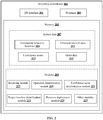
- FIG. 2 shows a detailed block diagram illustrating a serverless orchestrator 105 in accordance with some embodiments of the present disclosure.
- the serverless orchestrator 105 may include an I/O interface 201 , a processor 203, and a memory 205.
- the I/O interface 201 may be configured to communicate with plurality of serverless computing platforms 102 for receiving information related to each of one or more functions 104 associated with the plurality of serverless computing platforms 102. Further, the I/O interface 201 may be configured to receive data to be processed 107 , from one or more data sources 106 associated with the serverless orchestrator 105 .
- the memory 205 may be communicatively coupled to the processor 203 and may store system data 207 and one or more modules 209.
- the processor 203 may be configured to perform one or more functions 103 of the serverless orchestrator 105 during processing of the data 107 , using the system data 207 and the one or more modules 209 .
- the system data 207 may include, without limitation, information related to functions 104 , characteristics of data 211 , confidence scores 213 , and other data 215 .
- the system data 207 may be stored within the memory 205 in the form of various data structures. Additionally, the system data 207 may be organized using data models, such as relational or hierarchical data models.
- the other data 215 may store data 107 received from the one or more data sources 106 and other temporary data and files generated by one or more modules 209 while performing various functions of the serverless orchestrator 105.
- the information related to the one or more functions 104 may include, without limiting to, at least one of runtime support and Service Level Agreement (SLA) support provided by the plurality of serverless computing platforms 102 , geographic location of the plurality of serverless computing platforms 102 , cost of computation and network latency associated with the plurality of serverless computing platforms 102 , and computing resources available on the plurality of serverless computing platforms 102 .
- SLA Service Level Agreement
- the information related to the one or more functions 104 may be used to estimate the capability and/or suitability of the one or more functions 103 to perform a set of operations on the data 107.
- the information related to the one or more functions 104 such as the SLA offered by a selected function may be compared against the SLA requirements of the processing operations to determine whether the selected function is suitable for processing the data 107 .
- the information related to the one or more functions 104 such as geographic location and/or distance, and cost of computation for the selected one or more functions 103 may be analyzed to determine feasibility of using the selected one or more functions 103 for processing the data 107 .
- the information related to the one or more functions 104 helps in selecting optimal serverless computing platform from the plurality of serverless computing platforms 102 for processing the data 107 .
- the information related to the one or more functions 104 may be also used for performing a comparison among the one or more functions 103 and/or the plurality of serverless computing platforms 102 .
- the runtime support provided by the Microsoft® Azure® may include C# and NodeJS as runtime for programming languages.
- the AWS® platform may support Java and Python as the runtime for programming languages.
- comparing the runtime support of both the serverless platforms, i.e. Azure® and AWS® would be helpful to determine the serverless computing platform 102 that best suits the required runtime support.
- the one or more characteristics of the data 211 may be used to determine a domain of the data 107 . Also, the one or more characteristics of the data 211 may be used to determine the one or more operations that are required to be performed on the data 107 . For example, if the one or more characteristics of the data 211 indicate that the data 107 is complex and time-critical, then the one or more processing operations, which are capable of processing complex, time-critical data may be selected for processing the data 107 .
- the one or more characteristics of the data 211 may be determined using a data classification technique, such as logistic regression analysis. For example, consider a use case of an exploratory well, which is drilled to find if there is oil in the well. In such instances, drill tools having a number of sensors may be used to learn about properties of rock while the well is being drilled, to help make on-site drilling decisions like where to steer the tool or when to set casing to seal off formation pressure or when to give up further drilling and the like.
- the one or more characteristics of the data 211 collected during this task may include size of the drill hole, shape of the drill hole, geothermal temperature profile, rock density, rock porosity, formation fluid resistivity, and the like.
- Another use case may be in retail domain, wherein various customer data is collected to understand the consumer behavior.
- PoS Point-of-Sale
- the retailers may analyze the characteristics of the data 211 to derive insights into customer behavior to improve overall shopping experience and to respond to trends and demands in real-time.
- the confidence scores 213 are computed for each of the one or more functions 103 based on correlation between the one or more processing operations selected for processing the data 107 , and the information related to each of the one or more functions 104 .
- the confidence scores 213 may be determined based on historical data related to successful processing of the data 107 by the one or more functions 103 . i.e., the confidence score for a function may be a higher value, if the function has been successful in processing the data 107 in a predetermined number of previous instances.
- each of the system data 207 may be processed by one or more modules 209 of the serverless orchestrator 105.
- the one or more modules 209 may be communicatively coupled to the processor 203 for performing one or more functions 103 of the serverless orchestrator 105.
- the one or more modules 209 may include, without limiting to, a receiving module 217 , an operation determination module 219 , a confidence score determination module 221 , a target function identification module 223 , a function deployment module 225 , and other modules 227.
- module refers to an Application Specific Integrated Circuit (ASIC), an electronic circuit, a processor (shared, dedicated, or group) and memory that execute one or more software or firmware programs, a combinational logic circuit, and/or other suitable components that provide the described functionality.
- ASIC Application Specific Integrated Circuit
- the other modules 227 may be used to perform various miscellaneous functionalities of the serverless orchestrator 105. It will be appreciated that such one or more modules 209 may be represented as a single module or a combination of different modules.
- the receiving module 217 may be configured for receiving the information related to each of the one or more functions 104 associated with each of the plurality of serverless computing platforms 102 in the serverless computing environment 101 . Also, the receiving module 217 may be used for receiving the data to be processed 107 from the one or more data sources 106 associated with the serverless orchestrator 105.
- the operation determination module 219 may be configured for determining the one or more processing operations required for processing the data 107 .
- the operation determination module 219 may determine the one or more processing operations based on the one or more characteristics of the data 211 and a domain related to the data.
- the one or more processing operations, which need to be selected for computing reservoir quality may be determined based on capability of the one or more functions 103 , providing the one or more processing operations, in computing the reservoir quality.
- the operation determination module 219 may determine right set of processing operations for processing the data 107 by mapping the one or more characteristics of the data 211 , and the insights and/or results that are required to be derived from the data 107 .
- the confidence score determination module 221 may be configured for determining the confidence scores 213 corresponding to each of the one or more functions 103 based on correlation between the one or more processing operations and the information related to each of the one or more functions 104 .
- the confidence score determination module 221 may classify the data 107 , and the information related to each of one or more functions 104 into respective bins associated with the data 107 and the one or more functions 103. Thereafter, the confidence score determination module 221 may establish relationships between the bins corresponding to the data 107 and the bins corresponding to the information, based on one or more inputs received from a user. Subsequently, the confidence score determination module 221 may perform a machine learning on the established relationships to create an ontology of the data 107 and the corresponding function required for processing the data 107.
- the confidence score determination module 221 may use the machine learning model to learn the relationship existing between the data 107 , and the information related to each of the one or more functions 104 . Subsequently, the confidence score determination module 221 may map the data 107 , and the relevant set of functions based on knowledge of relationships, to tag and categorize the data 107. Further, information related to categorization of the data 107 may be fed into a data classification model for determining whether an acceptable level of confidence score may be assigned to the identified set of functions. In an embodiment, machine learning techniques used for establishing the relationships may be reinforced with feedback provided by the user upon completion of the processing of the data 107.
- the target function identification module 223 may be configured for identifying the target function from the one or more functions 103. In an embodiment, the target function identification module 223 may identify the target function based on an evaluation of the confidence scores 213 of each of the one or more functions 103. Initially, the target function identification module 223 may compare the confidence scores 213 of each of the one or more functions 103 with a pre-defined threshold value and rank each of the one or more functions 103 based on the confidence scores 213. Subsequently, the target function identification module 223 may identify the target function from the set of functions based on the ranking.
- the pre-defined threshold value of the confidence score may be use case specific. For example, in some use cases, which involve less-critical data processing operations, a confidence level of 0.7 may be acceptable. Here, the value 0.7 means that the function being selected for processing the data 107 has successfully processed the data in 70% of the times among total number of times it has been selected for processing the data 107. Similarly, for use cases which involve critical data processing operations, a confidence level of 0.9 may be required.
- the pre-defined threshold may be adapted based on the inputs provided by the user during processing of the data 107 or based on the feedback provided by the user upon completion of the processing of the data 107.
- the confidence score for such a target function may be determined based on a weighted confidence score determined for each of the one or more functions 103 constituting the target function.
- the function deployment module 225 may be configured for deploying the target function for performing the one or more processing operations by forwarding the data 107 to the serverless computing platform associated with the target function.
- the function deployment module 225 may deploy the target function when an event is triggered for processing the forwarded data 107 by the target function.
- the event may be a request/command from the user for processing the data 107 .
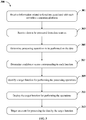
- FIG. 3 shows a flowchart illustrating a method of processing data 107 in a serverless computing environment 101 in accordance with some embodiments of the present disclosure.
- the method 300 may include one or more blocks illustrating a method of processing the data 107 using the serverless orchestrator 105 shown in FIG. 1 .
- the method 300 may be described in the general context of computer executable instructions.
- computer executable instructions can include routines, programs, objects, components, data structures, procedures, modules, and functions, which perform specific functions or implement specific abstract data types.
- the order in which the method 300 is described is not intended to be construed as a limitation, and any number of the described method blocks can be combined in any order to implement the method. Additionally, individual blocks may be deleted from the methods without departing from the scope of the subject matter described herein. Furthermore, the method can be implemented in any suitable hardware, software, firmware, or combination thereof.
- the method 300 includes receiving, by the serverless orchestrator 105 , information related to each of one or more functions 104 associated with each of the plurality of serverless computing platforms 102 .
- the information may be related to capability of the one or more functions 103 to perform a set of operations when an event is triggered.
- the information related to the one or more functions 104 may include, without limiting to, at least one of runtime support and Service Level Agreement (SLA) support provided by the plurality of serverless computing platforms 102 , geographic location of the plurality of serverless computing platforms 102 , cost of computation and network latency associated with the plurality of serverless computing platforms 102 , and computing resources available on the plurality of serverless computing platforms 102.
- SLA Service Level Agreement
- the method 300 includes receiving, by the serverless orchestrator 105 , the data to be processed 107 , from one or more data sources 106 associated with the serverless orchestrator 105.
- the method 300 includes determining, by the serverless orchestrator 105 , one or more processing operations to be performed on the data 107 based on one or more characteristics of the data 211 and a domain related to the data 107 .
- the one or more characteristics of the data 211 may include, without limiting to, at least one of size of the data 107 , location of the one or more data sources 106 , complexity of the data 107 , and service-level requirements associated with the data 107.
- the method 300 includes determining, by the serverless orchestrator 105 , confidence scores 213 corresponding to each of the one or more functions 103 based on correlation between the one or more processing operations and the information related to each of the one or more functions 104.
- correlating includes classifying the data 107 and the information related to each of one or more functions 104 into respective bins associated with the data 107 and the one or more functions 103. Further, correlating includes establishing relationships between the bins corresponding to the data 107 and the bins corresponding to the information, based on one or more inputs received from user. Furthermore, correlating includes performing a machine learning on the relationships to create an ontology of the data 107 and corresponding function required for processing the data 107 .
- the method 300 includes identifying, by the serverless orchestrator 105 , a target function from the one or more functions 103 , which is best suited for performing the one or more processing operations.
- the target function may be a combination of one or more functions 103 sourced from two or more distinct serverless computing platforms from the plurality of serverless computing platforms 102.
- identification of the target function may be based on an evaluation of the confidence scores 213.
- evaluation of the confidence scores 213 comprises comparing the confidence scores 213 with a pre-defined threshold, identifying a set of functions from the one or more functions 103 based on the comparison, and ranking each function from the set of functions based on the confidence scores 213. Thereafter, the target function may be identified from the set of functions based on the ranking.
- the method 300 includes deploying, by the serverless orchestrator 105, the target function for performing the one or more operations by forwarding the data 107 to a serverless computing platform associated with the target function.
- the method 300 includes triggering, by the serverless orchestrator 105, an event for processing the forwarded data 107 by the target function.
- the machine learning techniques used for correlating may be reinforced based on feedback provided by the user upon completion of the processing of the data 107. Constant reinforcement of the machine learning techniques based on the feedback provided by the user or human experts would help in minimizing negative outcomes while identifying the right target function.
- FIG. 4 illustrates a block diagram of an exemplary computer system 400 for implementing embodiments consistent with the present disclosure.
- the computer system 400 may be serverless orchestrator 105 shown in FIG. 1 , which may be used for processing data 107 in a serverless computing environment 101.
- the computer system 400 may include a central processing unit (“CPU” or "processor") 402.
- the processor 402 may comprise at least one data processor for executing program components for executing user- or system-generated business processes.
- a user may include a person, a user in the computing environment 100 , or any system/sub-system being operated parallelly to the computer system 400.
- the processor 402 may include specialized processing units such as integrated system (bus) controllers, memory management control units, floating point units, graphics processing units, digital signal processing units, etc.
- the processor 402 may be disposed in communication with one or more input/output (I/O) devices ( 411 and 412 ) via I/O interface 401.
- the I/O interface 401 may employ communication protocols/methods such as, without limitation, audio, analog, digital, stereo, IEEE®-1394, serial bus, Universal Serial Bus (USB), infrared, PS/2, BNC, coaxial, component, composite, Digital Visual Interface (DVI), high-definition multimedia interface (HDMI), Radio Frequency (RF) antennas, S-Video, Video Graphics Array (VGA), IEEE® 802.n /b/g/n/x, Bluetooth, cellular (e.g., Code-Division Multiple Access (CDMA), High-Speed Packet Access (HSPA+), Global System For Mobile Communications (GSM), Long-Term Evolution (LTE) or the like), etc.
- CDMA Code-Division Multiple Access
- HSPA+ High-Speed Packet Access
- GSM Global System For Mobile Communications
- LTE Long-Term
- the processor 402 may be disposed in communication with a communication network 409 via a network interface 403.
- the network interface 403 may communicate with the communication network 409.
- the network interface 403 may employ connection protocols including, without limitation, direct connect, Ethernet (e.g., twisted pair 10/100/1000 Base T), Transmission Control Protocol/Internet Protocol (TCP/IP), token ring, IEEE® 802.1 la/b/g/n/x, etc.
- TCP/IP Transmission Control Protocol/Internet Protocol
- the computer system 400 may receive information related to one or more functions 104 associated with a plurality of serverless computing platforms 102.
- the communication network 409 may be used for receiving the data to be processed 107 on the serverless computing environment 101 , from the one or more data sources 106.
- the communication network 409 can be implemented as one of the several types of networks, such as intranet or Local Area Network (LAN) and such within the organization.
- the communication network 409 may either be a dedicated network or a shared network, which represents an association of several types of networks that use a variety of protocols, for example, Hypertext Transfer Protocol (HTTP), Transmission Control Protocol/Internet Protocol (TCP/IP), Wireless Application Protocol (WAP), etc., to communicate with each other.
- HTTP Hypertext Transfer Protocol
- TCP/IP Transmission Control Protocol/Internet Protocol
- WAP Wireless Application Protocol
- the communication network 409 may include a variety of network devices, including routers, bridges, servers, computing devices, storage devices, etc.
- the processor 402 may be disposed in communication with a memory 405 (e.g., RAM 413 , ROM 414 , etc. as shown in FIG. 4 ) via a storage interface 404.
- the storage interface 404 may connect to memory 405 including, without limitation, memory drives, removable disc drives, etc., employing connection protocols such as Serial Advanced Technology Attachment (SATA), Integrated Drive Electronics (IDE), IEEE-1394, Universal Serial Bus (USB), fiber channel, Small Computer Systems Interface (SCSI), etc.
- the memory drives may further include a drum, magnetic disc drive, magneto-optical drive, optical drive, Redundant Array of Independent Discs (RAID), solid-state memory devices, solid-state drives, etc.
- the memory 405 may store a collection of program or database components, including, without limitation, user/application interface 406, an operating system 407, a web browser 408, and the like.
- computer system 400 may store user/application data (not shown), such as the data, variables, records, etc. as described in this invention.
- databases may be implemented as fault-tolerant, relational, scalable, secure databases such as Oracle® or Sybase®.
- the operating system 407 may facilitate resource management and operation of the computer system 400.
- Examples of operating systems include, without limitation, APPLE® MACINTOSH® OS X®, UNIX®, UNIX-like system distributions (E.G., BERKELEY SOFTWARE DISTRIBUTION® (BSD), FREEBSD®, NETBSD®, OPENBSD, etc.), LINUX® DISTRIBUTIONS (E.G., RED HAT®, UBUNTU®, KUBUNTU®, etc.), IBM® OS/2®, MICROSOFT® WINDOWS® (XP®, VISTA®/7/8, 10 etc.), APPLE® IOS®, GOOGLETM ANDROIDTM, BLACKBERRY® OS , or the like.
- the user interface 406 may facilitate display, execution, interaction, manipulation, or operation of program components through textual or graphical facilities.
- the user interface 406 may provide computer interaction interface elements on a display system operatively connected to the computer system 400 , such as cursors, icons, check boxes, menus, scrollers, windows, widgets, and the like.
- GUIs may be employed, including, without limitation, APPLE® MACINTOSH® operating systems' Aqua®, IBM® OS/2®, MICROSOFT® WINDOWS® (e.g., Aero, Metro, etc.), web interface libraries (e.g., ActiveX®, JAVA®, JAVASCRIPT®, AJAX, HTML, ADOBE® FLASH®, etc.), or the like.
- APPLE® MACINTOSH® operating systems' Aqua® IBM® OS/2®
- MICROSOFT® WINDOWS® e.g., Aero, Metro, etc.
- web interface libraries e.g., ActiveX®, JAVA®, JAVASCRIPT®, AJAX, HTML, ADOBE® FLASH®, etc.
- the web browser 408 may be a hypertext viewing application. Secure web browsing may be provided using Secure Hypertext Transport Protocol (HTTPS), Secure Sockets Layer (SSL), Transport Layer Security (TLS), and the like.
- HTTPS Secure Hypertext Transport Protocol
- SSL Secure Sockets Layer
- TLS Transport Layer Security
- the web browsers 408 may utilize facilities such as AJAX, DHTML, ADOBE® FLASH®, JAVASCRIPT®, JAVA®, Application Programming Interfaces (APIs), and the like.
- the computer system 400 may implement a mail server stored program component.
- the mail server may utilize facilities such as ASP, ACTIVEX®, ANSI® C++/C#, MICROSOFT®, .NET, CGI SCRIPTS, JAVA®, JAVASCRIPT®, PERL®, PHP, PYTHON®, WEBOBJECTS®, etc.
- the mail server may utilize communication protocols such as Internet Message Access Protocol (IMAP), Messaging Application Programming Interface (MAPI), MICROSOFT® exchange, Post Office Protocol (POP), Simple Mail Transfer Protocol (SMTP), or the like.
- the computer system 400 may implement a mail client stored program component.
- the mail client may be a mail viewing application, such as APPLE® MAIL, MICROSOFT® ENTOURAGE®, MICROSOFT® OUTLOOK®, MOZILLA® THUNDERBIRD®, and the like.
- a computer-readable storage medium refers to any type of physical memory on which information or data readable by a processor may be stored.
- a computer-readable storage medium may store instructions for execution by one or more processors, including instructions for causing the processor(s) to perform steps or stages consistent with the embodiments described herein.
- the term "computer-readable medium” should be understood to include tangible items and exclude carrier waves and transient signals, i.e., non-transitory. Examples include Random Access Memory (RAM), Read-Only Memory (ROM), volatile memory, nonvolatile memory, hard drives, Compact Disc (CD) ROMs, Digital Video Disc (DVDs), flash drives, disks, and any other known physical storage media.
- the method of present disclosure uses machine learning techniques to dynamically identify an optimal serverless computing platform, among the plurality of serverless computing platforms, for processing data.
- the method of present disclosure dynamically identifies an optimal function, which is a combination of one or more optimal functions sourced from distinct serverless computing platforms, for efficient processing of the data.
- the method of present disclosure minimizes function warm-up time by automatically selecting the set of functions required for processing the data, thereby reducing expenditure involved in setting-up and running a serverless computing platform.
- the method of present disclosure minimizes network latency involved in transferring the data to be processed to the serverless computing platforms, since one or more serverless computing platforms, which are closer to the sources of data, are selected for processing the data.
Landscapes
- Engineering & Computer Science (AREA)
- Theoretical Computer Science (AREA)
- Software Systems (AREA)
- General Engineering & Computer Science (AREA)
- Physics & Mathematics (AREA)
- General Physics & Mathematics (AREA)
- Databases & Information Systems (AREA)
- Data Mining & Analysis (AREA)
- Multimedia (AREA)
- Computational Linguistics (AREA)
- Artificial Intelligence (AREA)
- Computer Vision & Pattern Recognition (AREA)
- Evolutionary Computation (AREA)
- Medical Informatics (AREA)
- Computing Systems (AREA)
- Mathematical Physics (AREA)
- Debugging And Monitoring (AREA)
Applications Claiming Priority (1)
| Application Number | Priority Date | Filing Date | Title |
|---|---|---|---|
| IN201841022643 | 2018-06-18 |
Publications (2)
| Publication Number | Publication Date |
|---|---|
| EP3584701A1 true EP3584701A1 (de) | 2019-12-25 |
| EP3584701B1 EP3584701B1 (de) | 2023-12-13 |
Family
ID=63713660
Family Applications (1)
| Application Number | Title | Priority Date | Filing Date |
|---|---|---|---|
| EP18197597.0A Active EP3584701B1 (de) | 2018-06-18 | 2018-09-28 | Verfahren und system zur verarbeitung von daten in einer serverlosen datenverarbeitungsumgebung |
Country Status (2)
| Country | Link |
|---|---|
| US (1) | US10656980B2 (de) |
| EP (1) | EP3584701B1 (de) |
Cited By (1)
| Publication number | Priority date | Publication date | Assignee | Title |
|---|---|---|---|---|
| EP4600822A1 (de) * | 2024-02-07 | 2025-08-13 | Meyer zu Bexten, Elmar | System und verfahren zur optimierten datenverarbeitung in einem verteilten netzwerk |
Families Citing this family (17)
| Publication number | Priority date | Publication date | Assignee | Title |
|---|---|---|---|---|
| US11055256B2 (en) | 2019-04-02 | 2021-07-06 | Intel Corporation | Edge component computing system having integrated FaaS call handling capability |
| US11928514B2 (en) * | 2019-07-22 | 2024-03-12 | Cisco Technology, Inc. | Systems and methods providing serverless DNS integration |
| US11082333B1 (en) * | 2019-09-05 | 2021-08-03 | Turbonomic, Inc. | Systems and methods for managing resources in a serverless workload |
| US11533317B2 (en) * | 2019-09-30 | 2022-12-20 | EMC IP Holding Company LLC | Serverless application center for multi-cloud deployment of serverless applications |
| US11240045B2 (en) * | 2019-10-30 | 2022-02-01 | Red Hat, Inc. | Detection and prevention of unauthorized execution of severless functions |
| US11513860B2 (en) * | 2020-01-31 | 2022-11-29 | Red Hat, Inc. | Serverless function colocation with storage pools |
| US11163603B1 (en) | 2020-07-06 | 2021-11-02 | International Business Machines Corporation | Managing asynchronous operations in cloud computing environments |
| US11991054B2 (en) * | 2020-10-06 | 2024-05-21 | Intel Corporation | Jitter-less distributed function-as-a-service using flavor clustering |
| US11948010B2 (en) * | 2020-10-12 | 2024-04-02 | International Business Machines Corporation | Tag-driven scheduling of computing resources for function execution |
| US11809548B2 (en) * | 2020-10-22 | 2023-11-07 | Cisco Technology, Inc. | Runtime security analytics for serverless workloads |
| US11645098B2 (en) * | 2020-11-17 | 2023-05-09 | Sap Se | Systems and methods to pre-provision sockets for serverless functions |
| JP7564449B2 (ja) * | 2021-03-29 | 2024-10-09 | 富士通株式会社 | データ処理プログラム、情報処理システム及びデータ処理方法 |
| CN113296750B (zh) * | 2021-05-12 | 2023-12-08 | 阿里巴巴新加坡控股有限公司 | 函数创建方法及系统、函数调用方法及系统 |
| US11880850B2 (en) * | 2021-05-28 | 2024-01-23 | Ncr Voyix Corporation | Cross-entity channel integration services |
| US12056396B2 (en) | 2021-09-13 | 2024-08-06 | Pure Storage, Inc. | Storage-aware management for serverless functions |
| US11681445B2 (en) | 2021-09-30 | 2023-06-20 | Pure Storage, Inc. | Storage-aware optimization for serverless functions |
| US20240362071A1 (en) * | 2023-04-30 | 2024-10-31 | Intergraph Corporation | Cloud-based systems and methods for execution of python scripts |
Citations (1)
| Publication number | Priority date | Publication date | Assignee | Title |
|---|---|---|---|---|
| US20180113746A1 (en) * | 2016-10-21 | 2018-04-26 | Fujitsu Limited | Software service execution apparatus, system, & method |
Family Cites Families (4)
| Publication number | Priority date | Publication date | Assignee | Title |
|---|---|---|---|---|
| CA2571273A1 (en) | 2004-06-28 | 2006-01-12 | Eplus Capital, Inc. | Method for a server-less office architecture |
| US9898342B2 (en) * | 2010-05-14 | 2018-02-20 | Micro Focus Software Inc. | Techniques for dynamic cloud-based edge service computing |
| WO2013149371A1 (en) | 2012-04-01 | 2013-10-10 | Empire Technology Development Llc | Machine learning for database migration source |
| US10521280B2 (en) * | 2017-12-29 | 2019-12-31 | Futurewei Technologies, Inc. | Event-driven serverless function orchestration |
-
2018
- 2018-07-31 US US16/049,847 patent/US10656980B2/en active Active
- 2018-09-28 EP EP18197597.0A patent/EP3584701B1/de active Active
Patent Citations (1)
| Publication number | Priority date | Publication date | Assignee | Title |
|---|---|---|---|---|
| US20180113746A1 (en) * | 2016-10-21 | 2018-04-26 | Fujitsu Limited | Software service execution apparatus, system, & method |
Non-Patent Citations (1)
| Title |
|---|
| IOANA BALDINI ET AL: "Serverless Computing: Current Trends and Open Problems", ARXIV.ORG, CORNELL UNIVERSITY LIBRARY, 201 OLIN LIBRARY CORNELL UNIVERSITY ITHACA, NY 14853, 10 June 2017 (2017-06-10), XP080768870, DOI: 10.1007/978-981-10-5026-8_1 * |
Cited By (1)
| Publication number | Priority date | Publication date | Assignee | Title |
|---|---|---|---|---|
| EP4600822A1 (de) * | 2024-02-07 | 2025-08-13 | Meyer zu Bexten, Elmar | System und verfahren zur optimierten datenverarbeitung in einem verteilten netzwerk |
Also Published As
| Publication number | Publication date |
|---|---|
| US20190384655A1 (en) | 2019-12-19 |
| US10656980B2 (en) | 2020-05-19 |
| EP3584701B1 (de) | 2023-12-13 |
Similar Documents
| Publication | Publication Date | Title |
|---|---|---|
| EP3584701B1 (de) | Verfahren und system zur verarbeitung von daten in einer serverlosen datenverarbeitungsumgebung | |
| US10372508B2 (en) | Method and system for dynamically integrating bots | |
| US12165064B2 (en) | Method and system with deep learning model generation | |
| US20250068978A1 (en) | GUI for Interacting with Analytics Provided by Machine-Learning Services | |
| EP3147791A1 (de) | System und verfahren zur verbesserung der integrationsprüfung in einer cloud-rechnerumgebung | |
| US11204299B2 (en) | Method and system for predicting water leakage events in district-metered-area of water distribution network | |
| US20200302359A1 (en) | Method and system for determining a potential supplier for a project | |
| WO2017167104A1 (zh) | 一种问题预测方法及预测系统 | |
| US20160147646A1 (en) | Method and system for executing automated tests in an integrated test environment | |
| US10135680B2 (en) | Assessing computing environment changes using specification documents | |
| US12462192B2 (en) | Adaptive retraining of an artificial intelligence model by detecting a data drift, a concept drift, and a model drift | |
| US20180285248A1 (en) | System and method for generating test scripts for operational process testing | |
| US20190004890A1 (en) | Method and system for handling one or more issues in a computing environment | |
| US10636039B2 (en) | Method of generating ontology based on plurality of tickets and an enterprise system thereof | |
| Bhat | Automating Higher Education Administrative Processes with AI-Powered Workflows | |
| US20240005177A1 (en) | Monitoring performance of time series prediction models | |
| US11138508B2 (en) | Device and method for identifying causal factors in classification decision making models using subjective judgement | |
| WO2020055659A1 (en) | Generation and utilization of self-improving data-driven models with selective simulation of 3d object design | |
| US10860530B2 (en) | Method and system for migrating automation assets in an enterprise system | |
| US11182142B2 (en) | Method and system for dynamic deployment and vertical scaling of applications in a cloud environment | |
| US20190251453A1 (en) | Method and system for determining occurrence of sewer flooding in a geographical area | |
| CN107979487A (zh) | 用于促进被管理网络的优化和分析的系统和方法 | |
| US20170131972A1 (en) | Method and system for improving testing services in a project testing environment | |
| US20250139557A1 (en) | Method and system for predicting order delay | |
| US20170330090A1 (en) | Method and a system for optimzing stability of a project |
Legal Events
| Date | Code | Title | Description |
|---|---|---|---|
| PUAI | Public reference made under article 153(3) epc to a published international application that has entered the european phase |
Free format text: ORIGINAL CODE: 0009012 |
|
| STAA | Information on the status of an ep patent application or granted ep patent |
Free format text: STATUS: THE APPLICATION HAS BEEN PUBLISHED |
|
| AK | Designated contracting states |
Kind code of ref document: A1 Designated state(s): AL AT BE BG CH CY CZ DE DK EE ES FI FR GB GR HR HU IE IS IT LI LT LU LV MC MK MT NL NO PL PT RO RS SE SI SK SM TR |
|
| AX | Request for extension of the european patent |
Extension state: BA ME |
|
| STAA | Information on the status of an ep patent application or granted ep patent |
Free format text: STATUS: REQUEST FOR EXAMINATION WAS MADE |
|
| 17P | Request for examination filed |
Effective date: 20200608 |
|
| RBV | Designated contracting states (corrected) |
Designated state(s): AL AT BE BG CH CY CZ DE DK EE ES FI FR GB GR HR HU IE IS IT LI LT LU LV MC MK MT NL NO PL PT RO RS SE SI SK SM TR |
|
| STAA | Information on the status of an ep patent application or granted ep patent |
Free format text: STATUS: EXAMINATION IS IN PROGRESS |
|
| 17Q | First examination report despatched |
Effective date: 20211119 |
|
| GRAP | Despatch of communication of intention to grant a patent |
Free format text: ORIGINAL CODE: EPIDOSNIGR1 |
|
| STAA | Information on the status of an ep patent application or granted ep patent |
Free format text: STATUS: GRANT OF PATENT IS INTENDED |
|
| INTG | Intention to grant announced |
Effective date: 20230630 |
|
| GRAS | Grant fee paid |
Free format text: ORIGINAL CODE: EPIDOSNIGR3 |
|
| GRAA | (expected) grant |
Free format text: ORIGINAL CODE: 0009210 |
|
| STAA | Information on the status of an ep patent application or granted ep patent |
Free format text: STATUS: THE PATENT HAS BEEN GRANTED |
|
| P01 | Opt-out of the competence of the unified patent court (upc) registered |
Effective date: 20231011 |
|
| AK | Designated contracting states |
Kind code of ref document: B1 Designated state(s): AL AT BE BG CH CY CZ DE DK EE ES FI FR GB GR HR HU IE IS IT LI LT LU LV MC MK MT NL NO PL PT RO RS SE SI SK SM TR |
|
| REG | Reference to a national code |
Ref country code: GB Ref legal event code: FG4D |
|
| REG | Reference to a national code |
Ref country code: CH Ref legal event code: EP |
|
| REG | Reference to a national code |
Ref country code: DE Ref legal event code: R096 Ref document number: 602018062507 Country of ref document: DE |
|
| REG | Reference to a national code |
Ref country code: IE Ref legal event code: FG4D |
|
| PG25 | Lapsed in a contracting state [announced via postgrant information from national office to epo] |
Ref country code: GR Free format text: LAPSE BECAUSE OF FAILURE TO SUBMIT A TRANSLATION OF THE DESCRIPTION OR TO PAY THE FEE WITHIN THE PRESCRIBED TIME-LIMIT Effective date: 20240314 |
|
| REG | Reference to a national code |
Ref country code: LT Ref legal event code: MG9D |
|
| PG25 | Lapsed in a contracting state [announced via postgrant information from national office to epo] |
Ref country code: LT Free format text: LAPSE BECAUSE OF FAILURE TO SUBMIT A TRANSLATION OF THE DESCRIPTION OR TO PAY THE FEE WITHIN THE PRESCRIBED TIME-LIMIT Effective date: 20231213 |
|
| REG | Reference to a national code |
Ref country code: NL Ref legal event code: MP Effective date: 20231213 |
|
| PG25 | Lapsed in a contracting state [announced via postgrant information from national office to epo] |
Ref country code: ES Free format text: LAPSE BECAUSE OF FAILURE TO SUBMIT A TRANSLATION OF THE DESCRIPTION OR TO PAY THE FEE WITHIN THE PRESCRIBED TIME-LIMIT Effective date: 20231213 |
|
| PG25 | Lapsed in a contracting state [announced via postgrant information from national office to epo] |
Ref country code: LT Free format text: LAPSE BECAUSE OF FAILURE TO SUBMIT A TRANSLATION OF THE DESCRIPTION OR TO PAY THE FEE WITHIN THE PRESCRIBED TIME-LIMIT Effective date: 20231213 Ref country code: GR Free format text: LAPSE BECAUSE OF FAILURE TO SUBMIT A TRANSLATION OF THE DESCRIPTION OR TO PAY THE FEE WITHIN THE PRESCRIBED TIME-LIMIT Effective date: 20240314 Ref country code: ES Free format text: LAPSE BECAUSE OF FAILURE TO SUBMIT A TRANSLATION OF THE DESCRIPTION OR TO PAY THE FEE WITHIN THE PRESCRIBED TIME-LIMIT Effective date: 20231213 Ref country code: BG Free format text: LAPSE BECAUSE OF FAILURE TO SUBMIT A TRANSLATION OF THE DESCRIPTION OR TO PAY THE FEE WITHIN THE PRESCRIBED TIME-LIMIT Effective date: 20240313 |
|
| REG | Reference to a national code |
Ref country code: AT Ref legal event code: MK05 Ref document number: 1641032 Country of ref document: AT Kind code of ref document: T Effective date: 20231213 |
|
| PG25 | Lapsed in a contracting state [announced via postgrant information from national office to epo] |
Ref country code: NL Free format text: LAPSE BECAUSE OF FAILURE TO SUBMIT A TRANSLATION OF THE DESCRIPTION OR TO PAY THE FEE WITHIN THE PRESCRIBED TIME-LIMIT Effective date: 20231213 |
|
| PG25 | Lapsed in a contracting state [announced via postgrant information from national office to epo] |
Ref country code: SE Free format text: LAPSE BECAUSE OF FAILURE TO SUBMIT A TRANSLATION OF THE DESCRIPTION OR TO PAY THE FEE WITHIN THE PRESCRIBED TIME-LIMIT Effective date: 20231213 Ref country code: RS Free format text: LAPSE BECAUSE OF FAILURE TO SUBMIT A TRANSLATION OF THE DESCRIPTION OR TO PAY THE FEE WITHIN THE PRESCRIBED TIME-LIMIT Effective date: 20231213 Ref country code: NO Free format text: LAPSE BECAUSE OF FAILURE TO SUBMIT A TRANSLATION OF THE DESCRIPTION OR TO PAY THE FEE WITHIN THE PRESCRIBED TIME-LIMIT Effective date: 20240313 Ref country code: NL Free format text: LAPSE BECAUSE OF FAILURE TO SUBMIT A TRANSLATION OF THE DESCRIPTION OR TO PAY THE FEE WITHIN THE PRESCRIBED TIME-LIMIT Effective date: 20231213 Ref country code: LV Free format text: LAPSE BECAUSE OF FAILURE TO SUBMIT A TRANSLATION OF THE DESCRIPTION OR TO PAY THE FEE WITHIN THE PRESCRIBED TIME-LIMIT Effective date: 20231213 Ref country code: HR Free format text: LAPSE BECAUSE OF FAILURE TO SUBMIT A TRANSLATION OF THE DESCRIPTION OR TO PAY THE FEE WITHIN THE PRESCRIBED TIME-LIMIT Effective date: 20231213 |
|
| PG25 | Lapsed in a contracting state [announced via postgrant information from national office to epo] |
Ref country code: IS Free format text: LAPSE BECAUSE OF FAILURE TO SUBMIT A TRANSLATION OF THE DESCRIPTION OR TO PAY THE FEE WITHIN THE PRESCRIBED TIME-LIMIT Effective date: 20240413 |
|
| PG25 | Lapsed in a contracting state [announced via postgrant information from national office to epo] |
Ref country code: CZ Free format text: LAPSE BECAUSE OF FAILURE TO SUBMIT A TRANSLATION OF THE DESCRIPTION OR TO PAY THE FEE WITHIN THE PRESCRIBED TIME-LIMIT Effective date: 20231213 Ref country code: AT Free format text: LAPSE BECAUSE OF FAILURE TO SUBMIT A TRANSLATION OF THE DESCRIPTION OR TO PAY THE FEE WITHIN THE PRESCRIBED TIME-LIMIT Effective date: 20231213 |
|
| PG25 | Lapsed in a contracting state [announced via postgrant information from national office to epo] |
Ref country code: SK Free format text: LAPSE BECAUSE OF FAILURE TO SUBMIT A TRANSLATION OF THE DESCRIPTION OR TO PAY THE FEE WITHIN THE PRESCRIBED TIME-LIMIT Effective date: 20231213 |
|
| PG25 | Lapsed in a contracting state [announced via postgrant information from national office to epo] |
Ref country code: SM Free format text: LAPSE BECAUSE OF FAILURE TO SUBMIT A TRANSLATION OF THE DESCRIPTION OR TO PAY THE FEE WITHIN THE PRESCRIBED TIME-LIMIT Effective date: 20231213 Ref country code: SK Free format text: LAPSE BECAUSE OF FAILURE TO SUBMIT A TRANSLATION OF THE DESCRIPTION OR TO PAY THE FEE WITHIN THE PRESCRIBED TIME-LIMIT Effective date: 20231213 Ref country code: RO Free format text: LAPSE BECAUSE OF FAILURE TO SUBMIT A TRANSLATION OF THE DESCRIPTION OR TO PAY THE FEE WITHIN THE PRESCRIBED TIME-LIMIT Effective date: 20231213 Ref country code: IT Free format text: LAPSE BECAUSE OF FAILURE TO SUBMIT A TRANSLATION OF THE DESCRIPTION OR TO PAY THE FEE WITHIN THE PRESCRIBED TIME-LIMIT Effective date: 20231213 Ref country code: IS Free format text: LAPSE BECAUSE OF FAILURE TO SUBMIT A TRANSLATION OF THE DESCRIPTION OR TO PAY THE FEE WITHIN THE PRESCRIBED TIME-LIMIT Effective date: 20240413 Ref country code: EE Free format text: LAPSE BECAUSE OF FAILURE TO SUBMIT A TRANSLATION OF THE DESCRIPTION OR TO PAY THE FEE WITHIN THE PRESCRIBED TIME-LIMIT Effective date: 20231213 Ref country code: CZ Free format text: LAPSE BECAUSE OF FAILURE TO SUBMIT A TRANSLATION OF THE DESCRIPTION OR TO PAY THE FEE WITHIN THE PRESCRIBED TIME-LIMIT Effective date: 20231213 Ref country code: AT Free format text: LAPSE BECAUSE OF FAILURE TO SUBMIT A TRANSLATION OF THE DESCRIPTION OR TO PAY THE FEE WITHIN THE PRESCRIBED TIME-LIMIT Effective date: 20231213 |
|
| PG25 | Lapsed in a contracting state [announced via postgrant information from national office to epo] |
Ref country code: PL Free format text: LAPSE BECAUSE OF FAILURE TO SUBMIT A TRANSLATION OF THE DESCRIPTION OR TO PAY THE FEE WITHIN THE PRESCRIBED TIME-LIMIT Effective date: 20231213 Ref country code: PT Free format text: LAPSE BECAUSE OF FAILURE TO SUBMIT A TRANSLATION OF THE DESCRIPTION OR TO PAY THE FEE WITHIN THE PRESCRIBED TIME-LIMIT Effective date: 20240415 |
|
| PG25 | Lapsed in a contracting state [announced via postgrant information from national office to epo] |
Ref country code: PT Free format text: LAPSE BECAUSE OF FAILURE TO SUBMIT A TRANSLATION OF THE DESCRIPTION OR TO PAY THE FEE WITHIN THE PRESCRIBED TIME-LIMIT Effective date: 20240415 Ref country code: PL Free format text: LAPSE BECAUSE OF FAILURE TO SUBMIT A TRANSLATION OF THE DESCRIPTION OR TO PAY THE FEE WITHIN THE PRESCRIBED TIME-LIMIT Effective date: 20231213 |
|
| REG | Reference to a national code |
Ref country code: DE Ref legal event code: R097 Ref document number: 602018062507 Country of ref document: DE |
|
| PG25 | Lapsed in a contracting state [announced via postgrant information from national office to epo] |
Ref country code: DK Free format text: LAPSE BECAUSE OF FAILURE TO SUBMIT A TRANSLATION OF THE DESCRIPTION OR TO PAY THE FEE WITHIN THE PRESCRIBED TIME-LIMIT Effective date: 20231213 |
|
| PLBE | No opposition filed within time limit |
Free format text: ORIGINAL CODE: 0009261 |
|
| STAA | Information on the status of an ep patent application or granted ep patent |
Free format text: STATUS: NO OPPOSITION FILED WITHIN TIME LIMIT |
|
| PG25 | Lapsed in a contracting state [announced via postgrant information from national office to epo] |
Ref country code: SI Free format text: LAPSE BECAUSE OF FAILURE TO SUBMIT A TRANSLATION OF THE DESCRIPTION OR TO PAY THE FEE WITHIN THE PRESCRIBED TIME-LIMIT Effective date: 20231213 |
|
| PG25 | Lapsed in a contracting state [announced via postgrant information from national office to epo] |
Ref country code: SI Free format text: LAPSE BECAUSE OF FAILURE TO SUBMIT A TRANSLATION OF THE DESCRIPTION OR TO PAY THE FEE WITHIN THE PRESCRIBED TIME-LIMIT Effective date: 20231213 Ref country code: DK Free format text: LAPSE BECAUSE OF FAILURE TO SUBMIT A TRANSLATION OF THE DESCRIPTION OR TO PAY THE FEE WITHIN THE PRESCRIBED TIME-LIMIT Effective date: 20231213 |
|
| 26N | No opposition filed |
Effective date: 20240916 |
|
| PG25 | Lapsed in a contracting state [announced via postgrant information from national office to epo] |
Ref country code: MC Free format text: LAPSE BECAUSE OF FAILURE TO SUBMIT A TRANSLATION OF THE DESCRIPTION OR TO PAY THE FEE WITHIN THE PRESCRIBED TIME-LIMIT Effective date: 20231213 |
|
| REG | Reference to a national code |
Ref country code: CH Ref legal event code: PL |
|
| PG25 | Lapsed in a contracting state [announced via postgrant information from national office to epo] |
Ref country code: LU Free format text: LAPSE BECAUSE OF NON-PAYMENT OF DUE FEES Effective date: 20240928 |
|
| REG | Reference to a national code |
Ref country code: BE Ref legal event code: MM Effective date: 20240930 |
|
| PG25 | Lapsed in a contracting state [announced via postgrant information from national office to epo] |
Ref country code: BE Free format text: LAPSE BECAUSE OF NON-PAYMENT OF DUE FEES Effective date: 20240930 |
|
| PG25 | Lapsed in a contracting state [announced via postgrant information from national office to epo] |
Ref country code: CH Free format text: LAPSE BECAUSE OF NON-PAYMENT OF DUE FEES Effective date: 20240930 |
|
| PG25 | Lapsed in a contracting state [announced via postgrant information from national office to epo] |
Ref country code: IE Free format text: LAPSE BECAUSE OF NON-PAYMENT OF DUE FEES Effective date: 20240928 |
|
| PG25 | Lapsed in a contracting state [announced via postgrant information from national office to epo] |
Ref country code: FI Free format text: LAPSE BECAUSE OF FAILURE TO SUBMIT A TRANSLATION OF THE DESCRIPTION OR TO PAY THE FEE WITHIN THE PRESCRIBED TIME-LIMIT Effective date: 20231213 |
|
| PGFP | Annual fee paid to national office [announced via postgrant information from national office to epo] |
Ref country code: DE Payment date: 20250805 Year of fee payment: 8 |
|
| PGFP | Annual fee paid to national office [announced via postgrant information from national office to epo] |
Ref country code: GB Payment date: 20250807 Year of fee payment: 8 |
|
| PGFP | Annual fee paid to national office [announced via postgrant information from national office to epo] |
Ref country code: FR Payment date: 20250808 Year of fee payment: 8 |
|
| PG25 | Lapsed in a contracting state [announced via postgrant information from national office to epo] |
Ref country code: CY Free format text: LAPSE BECAUSE OF FAILURE TO SUBMIT A TRANSLATION OF THE DESCRIPTION OR TO PAY THE FEE WITHIN THE PRESCRIBED TIME-LIMIT; INVALID AB INITIO Effective date: 20180928 |
|
| PG25 | Lapsed in a contracting state [announced via postgrant information from national office to epo] |
Ref country code: HU Free format text: LAPSE BECAUSE OF FAILURE TO SUBMIT A TRANSLATION OF THE DESCRIPTION OR TO PAY THE FEE WITHIN THE PRESCRIBED TIME-LIMIT; INVALID AB INITIO Effective date: 20180928 |