EP3583530B1 - Verteilter ledger mit abstimmungskonsens - Google Patents
Verteilter ledger mit abstimmungskonsens Download PDFInfo
- Publication number
- EP3583530B1 EP3583530B1 EP17706218.9A EP17706218A EP3583530B1 EP 3583530 B1 EP3583530 B1 EP 3583530B1 EP 17706218 A EP17706218 A EP 17706218A EP 3583530 B1 EP3583530 B1 EP 3583530B1
- Authority
- EP
- European Patent Office
- Prior art keywords
- node
- nodes
- network
- voting
- invitations
- Prior art date
- Legal status (The legal status is an assumption and is not a legal conclusion. Google has not performed a legal analysis and makes no representation as to the accuracy of the status listed.)
- Active
Links
Images



Classifications
-
- G—PHYSICS
- G06—COMPUTING OR CALCULATING; COUNTING
- G06F—ELECTRIC DIGITAL DATA PROCESSING
- G06F16/00—Information retrieval; Database structures therefor; File system structures therefor
- G06F16/10—File systems; File servers
- G06F16/18—File system types
- G06F16/182—Distributed file systems
- G06F16/1834—Distributed file systems implemented based on peer-to-peer networks, e.g. gnutella
- G06F16/1837—Management specially adapted to peer-to-peer storage networks
-
- G—PHYSICS
- G06—COMPUTING OR CALCULATING; COUNTING
- G06F—ELECTRIC DIGITAL DATA PROCESSING
- G06F21/00—Security arrangements for protecting computers, components thereof, programs or data against unauthorised activity
- G06F21/30—Authentication, i.e. establishing the identity or authorisation of security principals
-
- G—PHYSICS
- G06—COMPUTING OR CALCULATING; COUNTING
- G06F—ELECTRIC DIGITAL DATA PROCESSING
- G06F21/00—Security arrangements for protecting computers, components thereof, programs or data against unauthorised activity
- G06F21/60—Protecting data
- G06F21/62—Protecting access to data via a platform, e.g. using keys or access control rules
- G06F21/6218—Protecting access to data via a platform, e.g. using keys or access control rules to a system of files or objects, e.g. local or distributed file system or database
- G06F21/6227—Protecting access to data via a platform, e.g. using keys or access control rules to a system of files or objects, e.g. local or distributed file system or database where protection concerns the structure of data, e.g. records, types, queries
-
- G—PHYSICS
- G06—COMPUTING OR CALCULATING; COUNTING
- G06F—ELECTRIC DIGITAL DATA PROCESSING
- G06F21/00—Security arrangements for protecting computers, components thereof, programs or data against unauthorised activity
- G06F21/60—Protecting data
- G06F21/64—Protecting data integrity, e.g. using checksums, certificates or signatures
-
- H—ELECTRICITY
- H04—ELECTRIC COMMUNICATION TECHNIQUE
- H04L—TRANSMISSION OF DIGITAL INFORMATION, e.g. TELEGRAPHIC COMMUNICATION
- H04L9/00—Cryptographic mechanisms or cryptographic arrangements for secret or secure communications; Network security protocols
- H04L9/06—Cryptographic mechanisms or cryptographic arrangements for secret or secure communications; Network security protocols the encryption apparatus using shift registers or memories for block-wise or stream coding, e.g. DES systems or RC4; Hash functions; Pseudorandom sequence generators
- H04L9/0618—Block ciphers, i.e. encrypting groups of characters of a plain text message using fixed encryption transformation
- H04L9/0637—Modes of operation, e.g. cipher block chaining [CBC], electronic codebook [ECB] or Galois/counter mode [GCM]
-
- H—ELECTRICITY
- H04—ELECTRIC COMMUNICATION TECHNIQUE
- H04L—TRANSMISSION OF DIGITAL INFORMATION, e.g. TELEGRAPHIC COMMUNICATION
- H04L9/00—Cryptographic mechanisms or cryptographic arrangements for secret or secure communications; Network security protocols
- H04L9/32—Cryptographic mechanisms or cryptographic arrangements for secret or secure communications; Network security protocols including means for verifying the identity or authority of a user of the system or for message authentication, e.g. authorization, entity authentication, data integrity or data verification, non-repudiation, key authentication or verification of credentials
- H04L9/3236—Cryptographic mechanisms or cryptographic arrangements for secret or secure communications; Network security protocols including means for verifying the identity or authority of a user of the system or for message authentication, e.g. authorization, entity authentication, data integrity or data verification, non-repudiation, key authentication or verification of credentials using cryptographic hash functions
- H04L9/3239—Cryptographic mechanisms or cryptographic arrangements for secret or secure communications; Network security protocols including means for verifying the identity or authority of a user of the system or for message authentication, e.g. authorization, entity authentication, data integrity or data verification, non-repudiation, key authentication or verification of credentials using cryptographic hash functions involving non-keyed hash functions, e.g. modification detection codes [MDCs], MD5, SHA or RIPEMD
-
- H—ELECTRICITY
- H04—ELECTRIC COMMUNICATION TECHNIQUE
- H04L—TRANSMISSION OF DIGITAL INFORMATION, e.g. TELEGRAPHIC COMMUNICATION
- H04L2209/00—Additional information or applications relating to cryptographic mechanisms or cryptographic arrangements for secret or secure communication H04L9/00
- H04L2209/46—Secure multiparty computation, e.g. millionaire problem
- H04L2209/463—Electronic voting
-
- H—ELECTRICITY
- H04—ELECTRIC COMMUNICATION TECHNIQUE
- H04L—TRANSMISSION OF DIGITAL INFORMATION, e.g. TELEGRAPHIC COMMUNICATION
- H04L9/00—Cryptographic mechanisms or cryptographic arrangements for secret or secure communications; Network security protocols
- H04L9/50—Cryptographic mechanisms or cryptographic arrangements for secret or secure communications; Network security protocols using hash chains, e.g. blockchains or hash trees
Definitions
- a replicated distributed ledger is a ledger that is maintained at multiple sites (nodes), with all nodes operating according to a common consensus algorithm about what changes to make to their respective local record of the ledger.
- each node makes a change to its local record of the ledger when a request to make a change is accompanied by a solution to a mathematical puzzle connected with the requested change.
- each change to the ledger is controlled by a randomly selected one of the group of nodes operating the mutual distributed ledger. Both these consensus algorithms have their drawbacks.
- the proof-of-work algorithm involves wasting a significant amount of computing power at one or more nodes, as they compete to control a change to the distributed ledger.
- the proof-of-stake algorithm is susceptible to being dominated by an entity with the resources to control a large portion of the nodes operating the distributed ledger.
- Another consensus algorithm involves each node making a change to the ledger when it identifies the change as being supported by a majority of the nodes operating the distributed ledger.
- a distributed ledger operating according to this kind of consensus algorithm is also susceptible to being dominated by an entity with the resources to generate and control a large number of nodes operating the distributed ledger.
- the inventors for the present invention have identified the challenge of providing a new distributed ledger technique, which eliminates or reduces these weaknesses.
- said checking comprises: checking whether a number of invitations already made by the new node equals a maximum number of invitations available to the new node.
- operation of the distributed ledger involves each node of the network locally recording a change to the ledger at least partly in response to a determination that a predetermined threshold number of voting nodes have voted to accept said change to the ledger.
- said voting nodes are nodes for which there is a substantially immutable record of registration as a voting node based directly or indirectly on an invitation by a trusted node.
- said voting nodes are nodes for which one or more blocks of a blockchain record registration as a voting node based on an invitation by a trusted node.
- said voting nodes are nodes for which one or more blocks of said blockchain record passing of a test to join said group of nodes after an invitation by a trusted node.
- said test for a candidate node comprises: recordal in one or more blocks of the blockchain of a network identifier for the candidate node; recordal in one or more later blocks of the blockchain of private questions by existing nodes of the distributed ledger network, wherein each private question can only be successfully answered with knowledge of a private number communicated to the candidate node; recordal in one or more later blocks of the blockchain of private answers to the private questions by the candidate node; and recordal in one or more later blocks of the block chain of said private number, and information by which any existing node of the distributed ledger network can decrypt the private questions by other existing nodes and the private answers thereto, and thereby verify that the private answers to the private questions were correct.
- a trusted node comprises a genesis node or a node for which said blockchain records a chain of one or more invitations extending back to a genesis node.
- said voting nodes are nodes for which one or more blocks of a blockchain record registration as a voting node based on an invitation by a trusted node and in accordance with one or more invitation rules.
- said one or more invitation rules comprise restrictions on the number of invitations that a newly registered node is permitted, and/or the timing of one or more invitations by a newly registered node.
- the apparatus comprises: a processor and memory including computer program code, wherein the memory and computer program code are configured to, with the processor, cause the apparatus to perform the recited operations.
- the apparatus comprises means for checking whether a number of invitations already made by the new node equals a maximum number of invitations available to the new node.
- operation of the distributed ledger involves each node of the network locally recording a change to the ledger at least partly in response to a determination that a predetermined threshold number of voting nodes have voted to accept said change to the ledger.
- said voting nodes are nodes for which there is a substantially immutable record of registration as a voting node based directly or indirectly on an invitation by a trusted node.
- said voting nodes are nodes for which one or more blocks of a blockchain record registration as a voting node based on an invitation by a trusted node.
- said voting nodes are nodes for which one or more blocks of said blockchain record passing of a test to join said group of nodes after an invitation by a trusted node.
- said test for a candidate node comprises: recordal in one or more blocks of the blockchain of a network identifier for the candidate node; recordal in one or more later blocks of the blockchain of private questions by existing nodes of the distributed ledger network, wherein each private question can only be successfully answered with knowledge of a private, number communicated to the candidate node; recordal in one or more later blocks of the blockchain of private answers to the private questions by the candidate node; and recordal in one or more later blocks of the block chain of said private number, and information by which any existing node of the distributed ledger network can decrypt the private questions by other existing nodes and the private answers thereto, and thereby verify that the private answers to the private questions were correct.
- a trusted node comprises a genesis node or a node for which said blockchain records a chain of one or more invitations extending back to a genesis node.
- said voting nodes are nodes for which one or more blocks of a blockchain record registration as a voting node based on an invitation by a trusted node and in accordance with one or more invitation rules.
- said one or more invitation rules comprise restrictions on the number of invitations that a newly registered node is permitted, and/or the timing of one or more invitations by a newly registered node.
- Figure 1 illustrates a group of interconnected nodes 2 operating a mutual distributed ledger. As described below, all the nodes 2 have joined the group based on a direct invitation by a genesis node (or one of a plurality of genesis nodes) or by a node which has joined the group based on a chain of invitations extending back to a genesis node (or one of a plurality of genesis nodes).
- Figure 2 shows an example of apparatus for use at each node 2 of Figure 1 .
- a processor 4 operates in accordance with program code stored at memory 6. Both the processor 4 and the memory 6 may be implemented as one or more chips.
- the memory 6 may include read-only memory, volatile memory, non-volatile memory and random-access memory. The above elements may be provided on one or more circuit boards.
- the apparatus also comprises an interface 8 for transferring data to and from one or more other nodes 2 of the distributed ledger network.
- the building of the group/network of nodes begins with a processor 4 at one or more genesis nodes inviting other nodes (1 st generation nodes) to join the group, and continues with processors 4 at those 1 st generation nodes inviting other nodes (2 nd generation nodes) in addition to the genesis nodes inviting further 1 st generation nodes, and so on.
- the building of the network is recorded in a blockchain (which is referred to below as a "membership blockchain", but which may be used to also record data other than information about the history of the building of the group), wherein each change (addition of nodes etc.) in the composition of the group is recorded in a block that is linked to the preceding block in the chain, such that an attempt to later tamper with the record in one block of the chain would necessitate a change to the next block in the chain, and so on. Accordingly, any attempt to change one block of the chain would necessitate changes to all subsequent blocks in the chain.
- one way functions e.g. hash functions
- the invitation process involves a processor 4 at the inviting node (genesis node or e.g. other node already part of the group based on an invitation by the genesis node) identifying a new candidate node for the network by means of an existing unique ID such as e.g. an existing email address (STEP 300 of Figure 3 ), and generating for the new candidate node a ledger network ID with an effectively non-reversible unique link to the existing ID, such as the result of applying a one-way function (such as a hash function) to a concatenation of the existing unique ID and a random number (e.g.
- a one-way function such as a hash function
- the processor 4 at the inviting node generates and sends an invitation email to the email address including the random number used to generate the network ID (STEP 302).
- the new network ID derived from the email address to which the random number was sent may also be recorded in a new block of the block chain.
- the new network ID is generated from the existing unique ID in such a way that the existing unique ID cannot be computed back from the new network ID, even with knowledge of the random number, which as mentioned below ends up being openly recorded on the blockchain.
- a processor 4 at the invited node may then respond to the email invitation by publishing (e.g. by recordal in a new block of the block chain, or otherwise) an intention to join the ledger network identifying the network id mentioned above (STEP 304).
- Processors 4 at all other nodes already forming part of the network then exchange a respective set of cryptographic keys with the invited node (STEP 306).
- This can be done in private over any open communication network using a shared secret technique such as e.g. using the Diffie-Helman algorithm.
- This exchange may begin with the invited node identifying a public key of a private key-public key pair when publishing its intent to join the ledger network.
- the shared secret shared between the invited node and an existing, "challenging" node of the network is used both (i) for the private communication of questions and answers between the nodes as part of the process of bringing the new node into the network, and (ii) for the voting process used to establish a consensus about making changes to the distributed ledger operated by the ledger network.
- a processor 4 at each existing, challenging node also computes a random encryption key (separate to the shared secret for private communication between the respective challenging node and the invited node), and generates a question which can only be successfully answered with knowledge of the random number mentioned above, such as: what is the nth digit of the random number? what is the sum of the random number and another, specified number? what is the random number modulo 132? or any other question for which the right answer can be trivially computed with knowledge of the random number.
- the processor 4 at the challenging node encrypts the question using the random encryption key, and generates an encrypted version of the random encryption key using the shared secret.
- the processor 4 at the challenging node generates a message for the invited node including the encrypted question, and the encrypted version of the random encryption key (STEP 308).
- the message may also be recorded in a new block of the blockchain. All existing "challenging" nodes of the network operate as set out above, so that the invited node receives as many questions (each encrypted with a respective random encryption key) as there are existing nodes.
- the processor 4 at the invited node For each message from each existing, challenging node, the processor 4 at the invited node decrypts the encrypted version of the respective random encryption key using the respective shared secret, and then decrypts the respective question using the respective decrypted random encryption key. For each question, the processor 4 at the invited node computes the answer to the question using its knowledge of the random number, and encrypts the answer using the respective random encryption key provided by the respective challenging node. The encrypted answers are recorded in their encrypted form in one or more new blocks of the blockchain (STEP 310).
- the small random number is recorded openly in a new block of the blockchain, and all the random encryption keys (used by the challenging nodes to encrypt the respective question for the invited node and the answer thereto) are also openly recorded in one or more new blocks of the blockchain (STEP 312), by which any node can decrypt all questions posed to the invited node and all answers made by the invited node to those questions, and thereby verify that the invited node provided the correct answers to all questions posed by the existing challenging nodes.
- the blockchain thus provides an effectively immutable record of the invited node having been invited by a trusted node and having passed the test to join the ledger network.
- the effectively immutable property of the blockchain prevents any dishonest tampering with the record in any individual block, and thus effectively prevents any node joining the ledger network and being able to vote on changes to the distributed ledger, without a proper invitation and without passing the test.
- a smart contract recorded in one or more blocks of the blockchain permits all nodes forming part of the ledger network to invite new nodes; and in another embodiment, a smart contract recorded in one or more blocks of the blockchain permits the one or more genesis nodes to decide for each non-genesis node whether to give that non-genesis node permission to invite new nodes.
- the nodes that have joined the ledger network operate a distributed ledger, which may be the same ledger as the membership blockchain mentioned above for keeping an effectively immutable record of the process by which each node joined the ledger network, or may be a separate, additional ledger.
- Establishing consensus about making changes to the distributed ledger is achieved by the nodes voting on changes to the network.
- Authentication at one node of a vote made by another node is done using the respective shared secret shared between the nodes during the joining process, as described above.
- Figure 4 illustrates an example of a set of operations at a processor 4 at a node A forming part of the ledger network, in relation to maintaining a distributed ledger.
- the processor 4 at node A receives a request to change the ledger (STEP 400).
- the processor checks whether at least a predetermined threshold number of network nodes are voting for the change (STEP 402).
- the processor uses the shared secrets shared between node A and all other nodes of the network (either when node A joined the network or the other node joined the ledger network, depending on which happened first) to authenticate the votes made by other nodes.
- the predetermined threshold number may be a majority of the total number of existing nodes of the network.
- the processor updates its local copy of the ledger according to the request (STEP 404). On the other hand, if the result of this check is negative, the processor does not change its local copy of the ledger (STEP 406). All other nodes forming part of the ledger network operate in the same way, whereby identical copies of the ledger are maintained at each node forming part of the ledger network.
- a node of the ledger network identifies another node of the network as a suspected corrupted node
- the node follows a instruction in a smart contract recorded in one or more blocks of the blockchain to call a vote among remaining nodes about excluding from the ledger network both the suspected corrupted node and any other node already forming part of the network based on an invitation from the corrupted node (either a direct invitation by the corrupted node or an invitation forming part of a chain of invitations extending back to an invitation by the corrupted node).
- Each remaining node i.e.
- all existing nodes of the ledger network except the corrupted node and any other node already forming part of the network based on an invitation from the corrupted node) vote on whether to exclude the corrupt node and related nodes from the network.
- Authentication of the votes uses the respective shared secrets shared between respective pairs of nodes during the network joining process. If at least a predetermined threshold number-of the remaining nodes (e.g. a majority of the total number of remaining nodes) vote for the exclusion, the processor 4 at the node that called for the exclusion begins refreshing the ledger network by initiating a new joining process for all remaining nodes.
- the new joining process involves the sharing of respective new shared secrets between each pair of the remaining nodes, which effectively excludes any future influence on changes to the distributed ledger by excluded nodes.
- a smart contact recorded in one or more blocks of the blockchain may permit any existing node of the network to call a vote for excision of a suspected corrupted node and related nodes from the ledger network.
- a smart contract may permit only those nodes that have permission to invite new nodes to join the network to call a vote for excision of a suspected corrupted node and related nodes from the ledger network.
- a smart contract may permit a genesis node to excise a suspected corrupted node and related nodes from the ledger network and initiate the above-mentioned new joining process for remaining nodes, without requiring at least a predetermined majority threshold number (e.g. majority) of remaining nodes to support the excision.
- a predetermined majority threshold number e.g. majority
- building/growing the network involves nodes other than genesis nodes having permission to invite new nodes to join the ledger network.
- One or more blocks of the blockchain record one or more smart contracts specifying rules about when new nodes can invite other nodes to join the network.
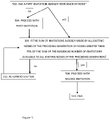
- One example of a set of rules is: (i) nodes of one generation only have permission to use their invitations after at least a predetermined percentage (e.g. 75%) of all invitations available to the immediately preceding generation of nodes have been used. This example of a set of rules is illustrated in Figure 6 for a very simple network build.
- a genesis node (also referred to as a 0 th generation/level node) invites two new nodes (1 st generation/level nodes), User 1 and User 2, to join the ledger network. After joining the ledger network, these two 1 st generation nodes each use one of their two available invitations to bring 2 nd generation nodes User 3 and User 5 into the ledger network. At this point, only 50% (2 out of 4) of the invitations available to the 1 st generation nodes (Users 1 and 2) have been used, and new nodes User 3 and User 5 do not yet have permission to invite new nodes into the ledger network.
- This method guarantees that a new node to the ledger network cannot flood the ledger network with new nodes selected directly or indirectly by it, thereby better preventing any single entity from controlling a majority of nodes by which it can control changes to the distributed ledger.
- the number of invitations available to any new node and the trigger condition for next generation nodes to start making 2 nd invitations e.g. threshold percentage of e.g. 75%) is the same for each generation, but according to one variation, either or both of these are set differently for different generations.
- Figure 5 illustrates an example of a set of operations at a processor of a node, operating in accordance with the example rules described above.
- the processor 4 determines whether the node has already made a first invitation (STEP 500). If NO, the processor 4 proceeds with a first invitation (STEP 504). If YES, the processor 4, checks whether the sum of all invitations made by all existing nodes in the preceding generation of nodes is greater than e.g. 75% of the sum of the maximum number of invitations available to all existing nodes in the preceding generation (STEP 506).
- the processor proceeds with a second invitation (STEP 508), bringing an end (STEP 510) to the invitation process for the node, for this specific example of the node only being allowed a maximum of two invitations. If NO, the processor returns to STEP 506 (STEP 512).
- An embodiment of the present invention has been described for the example of using email addresses as existing unique IDs on which to base ledger network IDs.
- other existing unique IDs can be used, such as postal addresses, and mobile and other telephone numbers, for which ordinary letters, text messages (short message service (SMS) messages) or telephone calls) can be used to communicate the above-mentioned random number to a candidate new node of the ledger network.
- SMS short message service
- MAC or IP addresses may also be utilised as unique IDS; and similarly existing unique ids not associated with communication systems could be used, such as national insurance numbers.
- the use of such existing unique public ids may involve a central party managing and scrambling the public ids.
- Appropriately adapted computer program code product may be used for implementing the embodiments, when loaded to a computer.
- the program code product for providing the operation may be stored on and provided by means of a carrier medium such as a carrier disc, card or tape.
- a possibility is to download the program code product via a data network.
- Implementation may be provided with appropriate software in a server.
- Embodiments of the invention may be practiced in various components such as integrated circuit modules.
- the design of integrated circuits is by and large a highly automated process.
- Complex and powerful software tools are available for converting a logic level design into a semiconductor circuit design ready to be etched and formed on a semiconductor substrate.
- Programs such as those provided by Synopsys, Inc. of Mountain View, California and Cadence Design, of San Jose, California automatically route conductors and locate components on a semiconductor chip using well established rules of design as well as libraries of pre stored design modules.
- the resultant design in a standardized electronic format (e.g., Opus, GDSII, or the like) may be transmitted to a semiconductor fabrication facility or "fab" for fabrication.
Landscapes
- Engineering & Computer Science (AREA)
- Computer Security & Cryptography (AREA)
- Theoretical Computer Science (AREA)
- Physics & Mathematics (AREA)
- General Physics & Mathematics (AREA)
- General Engineering & Computer Science (AREA)
- Signal Processing (AREA)
- Computer Networks & Wireless Communication (AREA)
- Software Systems (AREA)
- Computer Hardware Design (AREA)
- Databases & Information Systems (AREA)
- General Health & Medical Sciences (AREA)
- Bioethics (AREA)
- Health & Medical Sciences (AREA)
- Data Mining & Analysis (AREA)
- Management, Administration, Business Operations System, And Electronic Commerce (AREA)
- Information Retrieval, Db Structures And Fs Structures Therefor (AREA)
Claims (13)
- Verfahren, das Folgendes umfasst: Prüfen an einem neuen Knoten, der einem verteilten Ledger-Netzwerk beigetreten ist, das gemäß einem abstimmungsbasierten Konsensalgorithmus betrieben wird, auf Basis einer Einladung durch einen bestehenden Knoten des verteilten Ledger-Netzwerks, ob eine oder mehrere vorbestimmte Bedingungen erfüllt sind, damit der neue Knoten einen anderen Knoten in das verteilte Ledger-Netzwerk einladen kann;
dadurch gekennzeichnet, dass: das Prüfen Folgendes umfasst: Prüfen, ob die Anzahl von Einladungen, die von einer vorhergehenden Generation von Knoten vorgenommen wurden, die den bestehenden Knoten beinhalten, der den neuen Knoten zum Beitreten zum Netzwerk eingeladen hat, einen vorbestimmten Prozentsatz der maximalen Anzahl von Einladungen, die für alle Knoten in der vorhergehenden Generation verfügbar sind, überschreitet. - Verfahren nach Anspruch 1, wobei das Prüfen Folgendes umfasst: Prüfen, ob eine Anzahl von Einladungen, die bereits vom neuen Knoten vorgenommen wurden, mit einer maximalen Anzahl von Einladungen, die für den neuen Knoten verfügbar sind, übereinstimmt.
- Verfahren nach Anspruch 1 oder Anspruch 2, wobei der Betrieb des verteilten Ledgers vorsieht, dass mindestens teilweise in Reaktion auf eine Bestimmung, dass eine vorbestimmte Schwellwertanzahl von abstimmenden Knoten die Änderung am Ledger akzeptiert haben, jeder Knoten des Netzwerks eine Änderung am Ledger lokal aufzeichnet.
- Verfahren nach Anspruch 3, wobei die abstimmenden Knoten Knoten sind, für die ein im Wesentlichen unveränderbarer Datensatz der Registrierung als abstimmender Knoten direkt oder indirekt auf Basis einer Einladung durch einen vertrauenswürdigen Knoten existiert.
- Verfahren nach Anspruch 4, wobei die abstimmenden Knoten Knoten sind, für die ein oder mehrere Blöcke einer Blockkette eine Registrierung als abstimmender Knoten auf Basis einer Einladung durch einen vertrauenswürdigen Knoten aufzeichnen.
- Vorrichtung, die Folgendes umfasst: Mittel zum Prüfen an einem neuen Knoten, der einem verteilten Ledger-Netzwerk beigetreten ist, das gemäß einem abstimmungsbasierten Konsensalgorithmus betrieben wird, auf Basis einer Einladung durch einen bestehenden Knoten des verteilten Ledger-Netzwerks, ob eine oder mehrere vorbestimmte Bedingungen erfüllt sind, damit der neue Knoten einen anderen Knoten in das verteilte Ledger-Netzwerk einladen kann;
und gekennzeichnet durch: Mittel für Folgendes: Prüfen, ob die Anzahl von Einladungen, die von einer vorhergehenden Generation von Knoten vorgenommen wurde, die den bestehenden Knoten beinhalten, der den neuen Knoten zum Beitreten zum Netzwerk eingeladen hat, einen vorbestimmten Prozentsatz der maximalen Anzahl von Einladungen, die für alle Knoten in der vorhergehenden Generation verfügbar sind, überschreitet. - Vorrichtung nach Anspruch 6, wobei die Vorrichtung ferner Mittel für Folgendes umfasst: Prüfen, ob eine Anzahl von Einladungen, die bereits vom neuen Knoten vorgenommen wurden, mit einer maximalen Anzahl von Einladungen, die für den neuen Knoten verfügbar sind, übereinstimmt.
- Vorrichtung nach Anspruch 6 oder Anspruch 7, wobei der Betrieb des verteilten Ledgers vorsieht, dass mindestens teilweise in Reaktion auf eine Bestimmung, dass eine vorbestimmte Schwellwertanzahl von abstimmenden Knoten die Änderung am Ledger akzeptiert haben, jeder Knoten des Netzwerks eine Änderung am Ledger lokal aufzeichnet.
- Vorrichtung nach Anspruch 8, wobei die abstimmenden Knoten Knoten sind, für die ein im Wesentlichen unveränderbarer Datensatz der Registrierung als abstimmender Knoten direkt oder indirekt auf Basis einer Einladung durch einen vertrauenswürdigen Knoten existiert.
- Vorrichtung nach Anspruch 9, wobei die abstimmenden Knoten Knoten sind, für die eine oder mehrere Blöcke einer Blockkette eine Registrierung als abstimmender Knoten auf Basis einer Einladung durch einen vertrauenswürdigen Knoten aufzeichnen.
- Vorrichtung nach Anspruch 10, wobei die abstimmenden Knoten Knoten sind, für die ein oder mehrere Blöcke der Blockkette das Bestehen eines Tests zum Beitreten zu der Gruppe von Knoten nach einer Einladung durch einen vertrauenswürdigen Knoten aufzeichnen.
- Vorrichtung nach Anspruch 10 oder Anspruch 11, wobei ein vertrauenswürdiger Knoten einen Genesis-Knoten umfasst oder einen Knoten, für den die Blockkette eine Kette von einer oder mehreren Einladungen aufzeichnet, die sich bis zu einem Genesis-Knoten zurück erstreckt.
- Computerprogrammprodukt, das Programmcodemittel umfasst, die, wenn sie in einen Computer geladen werden, den Computer zum Durchführen von Folgendem steuern: Prüfen an einem neuen Knoten, der einem verteilten Ledger-Netzwerk beigetreten ist, das gemäß einem abstimmungsbasierten Konsensalgorithmus betrieben wird, auf Basis einer Einladung durch einen bestehenden Knoten des verteilten Ledger-Netzwerks, ob eine oder mehrere vorbestimmte Bedingungen erfüllt sind, damit der neue Knoten einen anderen Knoten in das verteilte Ledger-Netzwerk einladen kann;
dadurch gekennzeichnet, dass das Prüfen Folgendes umfasst: Prüfen, ob die Anzahl von Einladungen, die von einer vorhergehenden Generation von Knoten vorgenommen wurden, die den bestehenden Knoten beinhalten, der den neuen Knoten zum Beitreten zum Netzwerk eingeladen hat, einen vorbestimmten Prozentsatz der maximalen Anzahl von Einladungen, die für alle Knoten in der vorhergehenden Generation verfügbar sind, überschreitet.
Applications Claiming Priority (1)
| Application Number | Priority Date | Filing Date | Title |
|---|---|---|---|
| PCT/EP2017/053686 WO2018149505A1 (en) | 2017-02-17 | 2017-02-17 | Voting-consensus distributed ledger |
Publications (2)
| Publication Number | Publication Date |
|---|---|
| EP3583530A1 EP3583530A1 (de) | 2019-12-25 |
| EP3583530B1 true EP3583530B1 (de) | 2022-10-19 |
Family
ID=58094427
Family Applications (1)
| Application Number | Title | Priority Date | Filing Date |
|---|---|---|---|
| EP17706218.9A Active EP3583530B1 (de) | 2017-02-17 | 2017-02-17 | Verteilter ledger mit abstimmungskonsens |
Country Status (4)
| Country | Link |
|---|---|
| US (1) | US11397708B2 (de) |
| EP (1) | EP3583530B1 (de) |
| CN (1) | CN110300969B (de) |
| WO (1) | WO2018149505A1 (de) |
Families Citing this family (30)
| Publication number | Priority date | Publication date | Assignee | Title |
|---|---|---|---|---|
| US11611445B2 (en) | 2017-02-17 | 2023-03-21 | Nokia Technologies Oy | Changing smart contracts recorded in block chains |
| EP3404639B1 (de) | 2017-05-18 | 2025-02-12 | Nokia Technologies Oy | Fahrzeugbetrieb |
| EP3632037B1 (de) * | 2017-05-22 | 2024-10-16 | Visa International Service Association | Netzwerk zur verbesserten überprüfungsgeschwindigkeit mit manipulationssicheren daten |
| CN112865982A (zh) * | 2017-07-26 | 2021-05-28 | 创新先进技术有限公司 | 数字证书管理方法、装置及电子设备 |
| WO2019032891A1 (en) * | 2017-08-09 | 2019-02-14 | Visa International Service Association | SYSTEM AND METHOD FOR VERIFYING INTERACTIONS |
| US11010736B2 (en) * | 2017-09-12 | 2021-05-18 | Northwestern University | System and method for reducing information volume in a blockchain distribution network |
| JP7287279B2 (ja) * | 2017-12-04 | 2023-06-06 | ソニーグループ株式会社 | 情報処理装置、情報処理方法およびプログラム |
| US11488433B2 (en) * | 2018-01-11 | 2022-11-01 | Mastercard International Incorporated | Method and system for public elections on a moderated blockchain |
| US12346309B2 (en) * | 2018-01-26 | 2025-07-01 | Tranquil Data, Inc. | System and method for using policy to achieve data segmentation |
| US11176101B2 (en) | 2018-02-05 | 2021-11-16 | Bank Of America Corporation | System and method for decentralized regulation and hierarchical control of blockchain architecture |
| WO2019202393A1 (en) * | 2018-04-16 | 2019-10-24 | Slock.It Gmbh | Trustless statelessincentivized remote node network using minimal verification clients |
| CN112236987A (zh) * | 2018-06-01 | 2021-01-15 | 诺基亚技术有限公司 | 用于分布式网络中的分散式信任评估的方法和装置 |
| GB201811263D0 (en) * | 2018-07-10 | 2018-08-29 | Netmaster Solutions Ltd | A method and system for managing digital using a blockchain |
| WO2020042927A1 (zh) * | 2018-08-28 | 2020-03-05 | 白杰 | 区块链公链 |
| WO2020042933A1 (zh) * | 2018-08-28 | 2020-03-05 | 白杰 | 一种区块链网络接入方法及系统 |
| CN109165945B (zh) | 2018-09-07 | 2021-04-16 | 腾讯科技(深圳)有限公司 | 代表节点设备选举方法、装置、计算机设备及存储介质 |
| CN109544772B (zh) * | 2018-10-18 | 2021-01-05 | 杭州电子科技大学 | 一种安全高效的电子投票方法 |
| US11677572B2 (en) * | 2018-10-24 | 2023-06-13 | Hangzhou Qulian Technology Co., Ltd. | Permission-controlled smart contract upgrade method and system based on smart contract, blockchain node, and storage medium |
| CN109358881B (zh) * | 2018-10-24 | 2020-06-16 | 杭州趣链科技有限公司 | 一种基于智能合约的权限可控的智能合约升级方法 |
| CN112492006B (zh) * | 2018-10-31 | 2023-12-05 | 创新先进技术有限公司 | 一种基于区块链的节点管理方法和装置 |
| CN109936486B (zh) * | 2019-01-02 | 2021-11-26 | 平安科技(深圳)有限公司 | 基于区块链的自动拨测方法、装置、设备和存储介质 |
| EP3942787B1 (de) | 2019-03-18 | 2025-10-29 | Numeracle, Inc. | Validierung von telefonanrufen durch verifizierung von einheitsidentitäten unter verwendung von blockchains |
| WO2020199179A1 (zh) * | 2019-04-04 | 2020-10-08 | 云图有限公司 | 共识节点确定方法、装置、计算机设备和存储介质 |
| US11095705B2 (en) * | 2019-04-05 | 2021-08-17 | International Business Machines Corporation | Content distributed over secure channels |
| US11263569B2 (en) * | 2019-06-18 | 2022-03-01 | Advanced New Technologies Co., Ltd. | Blockchain-based information processing method and apparatus, and device |
| US12099997B1 (en) | 2020-01-31 | 2024-09-24 | Steven Mark Hoffberg | Tokenized fungible liabilities |
| WO2022195860A1 (ja) * | 2021-03-19 | 2022-09-22 | 日本電気株式会社 | 投票システム及び投票方法 |
| KR102947664B1 (ko) | 2021-04-02 | 2026-04-02 | 삼성전자주식회사 | 블록 체인에 기반하여 블록 합의를 수행하는 전자 장치 및 그 운용 방법 |
| US12455962B2 (en) * | 2023-02-28 | 2025-10-28 | Capital One Services, Llc | Systems and methods for preventing communications with malicious cryptography-based storage application addresses using consensus |
| WO2025072937A1 (en) * | 2023-09-29 | 2025-04-03 | Ava Labs, Inc. | Consensus protocol modifications |
Family Cites Families (13)
| Publication number | Priority date | Publication date | Assignee | Title |
|---|---|---|---|---|
| US7269590B2 (en) | 2004-01-29 | 2007-09-11 | Yahoo! Inc. | Method and system for customizing views of information associated with a social network user |
| JP2007534247A (ja) | 2004-04-23 | 2007-11-22 | ノキア コーポレイション | グループ招待 |
| WO2006047879A1 (en) | 2004-11-04 | 2006-05-11 | Topeer Corporation | System and method for creating a secure trusted social network |
| WO2008065349A1 (en) | 2006-12-01 | 2008-06-05 | David Irvine | Worldwide voting system |
| GB2441399B (en) | 2007-04-03 | 2009-02-18 | Cvon Innovations Ltd | Network invitation arrangement and method |
| US9608829B2 (en) | 2014-07-25 | 2017-03-28 | Blockchain Technologies Corporation | System and method for creating a multi-branched blockchain with configurable protocol rules |
| US20160164884A1 (en) | 2014-12-05 | 2016-06-09 | Skuchain, Inc. | Cryptographic verification of provenance in a supply chain |
| US9529923B1 (en) * | 2015-08-28 | 2016-12-27 | Swirlds, Inc. | Methods and apparatus for a distributed database within a network |
| US9390154B1 (en) * | 2015-08-28 | 2016-07-12 | Swirlds, Inc. | Methods and apparatus for a distributed database within a network |
| US9646029B1 (en) * | 2016-06-02 | 2017-05-09 | Swirlds, Inc. | Methods and apparatus for a distributed database within a network |
| AU2016101976A4 (en) | 2016-11-11 | 2016-12-08 | Klianev, Ivan MR | Open Network of Permissioned Ledgers |
| US10484346B2 (en) * | 2017-02-07 | 2019-11-19 | Microsoft Technology Licensing, Llc | Establishment of consortium blockchain network |
| US11611445B2 (en) | 2017-02-17 | 2023-03-21 | Nokia Technologies Oy | Changing smart contracts recorded in block chains |
-
2017
- 2017-02-17 EP EP17706218.9A patent/EP3583530B1/de active Active
- 2017-02-17 WO PCT/EP2017/053686 patent/WO2018149505A1/en not_active Ceased
- 2017-02-17 CN CN201780086712.1A patent/CN110300969B/zh active Active
- 2017-02-17 US US16/486,277 patent/US11397708B2/en active Active
Also Published As
| Publication number | Publication date |
|---|---|
| WO2018149505A1 (en) | 2018-08-23 |
| US11397708B2 (en) | 2022-07-26 |
| CN110300969A (zh) | 2019-10-01 |
| EP3583530A1 (de) | 2019-12-25 |
| CN110300969B (zh) | 2023-08-18 |
| US20190384748A1 (en) | 2019-12-19 |
Similar Documents
| Publication | Publication Date | Title |
|---|---|---|
| US11397708B2 (en) | Voting-consensus distributed ledger | |
| US12513004B2 (en) | Secure dynamic threshold signature scheme employing trusted hardware | |
| EP3654578B1 (de) | Verfahren und systeme zur verwaltung kryptographischer privater schlüssel für sichere mehrparteispeicherung und transfer von informationen | |
| Judmayer et al. | Blocks and chains: introduction to bitcoin, cryptocurrencies, and their consensus mechanisms | |
| US10673626B2 (en) | Threshold secret share authentication proof and secure blockchain voting with hardware security modules | |
| CN110915183B (zh) | 经由硬/软令牌验证的区块链认证 | |
| CN111133733B (zh) | 用于基于云平台的自动区块链部署的方法和系统 | |
| KR102472231B1 (ko) | 블록체인 구현 방법 및 시스템 | |
| JP6907679B2 (ja) | 暗号通貨ベースのイベント参加検証 | |
| US20050187966A1 (en) | Data communicating apparatus, data communicating method, and program | |
| WO2021197105A1 (zh) | 基于区块链的信息发布 | |
| CN107171794A (zh) | 一种基于区块链和智能合约的电子文书签署方法 | |
| CN106548345A (zh) | 基于密钥分割实现区块链私钥保护的方法及系统 | |
| CN112686668A (zh) | 联盟链跨链系统及方法 | |
| CN110992178A (zh) | 区块链节点的验证方法、装置、计算机设备及存储介质 | |
| CN103152178B (zh) | 云计算验证方法和系统 | |
| EP3395004A1 (de) | Verfahren zum verschlüsseln von daten und verfahren zur entschlüsselung von daten | |
| CN109388923B (zh) | 一种程序执行方法及装置 | |
| Hanzlik et al. | Mutual chip authentication | |
| CN110912688B (zh) | 基于联盟链的抗量子计算私钥备份、挂失及恢复方法及系统 | |
| KR102950246B1 (ko) | 개인키 관리 방법 및 이를 수행하기 위한 개인키 관리 시스템 | |
| CN101470643B (zh) | 固定硬件安全单元备份、恢复方法及系统 | |
| CN115766025B (zh) | 基于隐私保护的数据处理方法、装置、设备及存储介质 | |
| CN122046398A (zh) | 分布式账本的区块生成方法、存储介质、电子装置及计算机程序产品 | |
| WO2026103268A1 (zh) | 分布式账本的区块生成方法、存储介质、电子装置及计算机程序产品 |
Legal Events
| Date | Code | Title | Description |
|---|---|---|---|
| STAA | Information on the status of an ep patent application or granted ep patent |
Free format text: STATUS: UNKNOWN |
|
| STAA | Information on the status of an ep patent application or granted ep patent |
Free format text: STATUS: THE INTERNATIONAL PUBLICATION HAS BEEN MADE |
|
| PUAI | Public reference made under article 153(3) epc to a published international application that has entered the european phase |
Free format text: ORIGINAL CODE: 0009012 |
|
| STAA | Information on the status of an ep patent application or granted ep patent |
Free format text: STATUS: REQUEST FOR EXAMINATION WAS MADE |
|
| 17P | Request for examination filed |
Effective date: 20190917 |
|
| AK | Designated contracting states |
Kind code of ref document: A1 Designated state(s): AL AT BE BG CH CY CZ DE DK EE ES FI FR GB GR HR HU IE IS IT LI LT LU LV MC MK MT NL NO PL PT RO RS SE SI SK SM TR |
|
| AX | Request for extension of the european patent |
Extension state: BA ME |
|
| DAV | Request for validation of the european patent (deleted) | ||
| DAX | Request for extension of the european patent (deleted) | ||
| STAA | Information on the status of an ep patent application or granted ep patent |
Free format text: STATUS: EXAMINATION IS IN PROGRESS |
|
| 17Q | First examination report despatched |
Effective date: 20201223 |
|
| GRAP | Despatch of communication of intention to grant a patent |
Free format text: ORIGINAL CODE: EPIDOSNIGR1 |
|
| STAA | Information on the status of an ep patent application or granted ep patent |
Free format text: STATUS: GRANT OF PATENT IS INTENDED |
|
| INTG | Intention to grant announced |
Effective date: 20220512 |
|
| GRAS | Grant fee paid |
Free format text: ORIGINAL CODE: EPIDOSNIGR3 |
|
| GRAA | (expected) grant |
Free format text: ORIGINAL CODE: 0009210 |
|
| STAA | Information on the status of an ep patent application or granted ep patent |
Free format text: STATUS: THE PATENT HAS BEEN GRANTED |
|
| AK | Designated contracting states |
Kind code of ref document: B1 Designated state(s): AL AT BE BG CH CY CZ DE DK EE ES FI FR GB GR HR HU IE IS IT LI LT LU LV MC MK MT NL NO PL PT RO RS SE SI SK SM TR |
|
| REG | Reference to a national code |
Ref country code: GB Ref legal event code: FG4D |
|
| REG | Reference to a national code |
Ref country code: CH Ref legal event code: EP |
|
| REG | Reference to a national code |
Ref country code: DE Ref legal event code: R096 Ref document number: 602017062746 Country of ref document: DE |
|
| REG | Reference to a national code |
Ref country code: IE Ref legal event code: FG4D |
|
| REG | Reference to a national code |
Ref country code: AT Ref legal event code: REF Ref document number: 1526012 Country of ref document: AT Kind code of ref document: T Effective date: 20221115 |
|
| REG | Reference to a national code |
Ref country code: LT Ref legal event code: MG9D |
|
| REG | Reference to a national code |
Ref country code: NL Ref legal event code: MP Effective date: 20221019 |
|
| REG | Reference to a national code |
Ref country code: AT Ref legal event code: MK05 Ref document number: 1526012 Country of ref document: AT Kind code of ref document: T Effective date: 20221019 |
|
| PG25 | Lapsed in a contracting state [announced via postgrant information from national office to epo] |
Ref country code: NL Free format text: LAPSE BECAUSE OF FAILURE TO SUBMIT A TRANSLATION OF THE DESCRIPTION OR TO PAY THE FEE WITHIN THE PRESCRIBED TIME-LIMIT Effective date: 20221019 |
|
| PG25 | Lapsed in a contracting state [announced via postgrant information from national office to epo] |
Ref country code: SE Free format text: LAPSE BECAUSE OF FAILURE TO SUBMIT A TRANSLATION OF THE DESCRIPTION OR TO PAY THE FEE WITHIN THE PRESCRIBED TIME-LIMIT Effective date: 20221019 Ref country code: PT Free format text: LAPSE BECAUSE OF FAILURE TO SUBMIT A TRANSLATION OF THE DESCRIPTION OR TO PAY THE FEE WITHIN THE PRESCRIBED TIME-LIMIT Effective date: 20230220 Ref country code: NO Free format text: LAPSE BECAUSE OF FAILURE TO SUBMIT A TRANSLATION OF THE DESCRIPTION OR TO PAY THE FEE WITHIN THE PRESCRIBED TIME-LIMIT Effective date: 20230119 Ref country code: LT Free format text: LAPSE BECAUSE OF FAILURE TO SUBMIT A TRANSLATION OF THE DESCRIPTION OR TO PAY THE FEE WITHIN THE PRESCRIBED TIME-LIMIT Effective date: 20221019 Ref country code: FI Free format text: LAPSE BECAUSE OF FAILURE TO SUBMIT A TRANSLATION OF THE DESCRIPTION OR TO PAY THE FEE WITHIN THE PRESCRIBED TIME-LIMIT Effective date: 20221019 Ref country code: ES Free format text: LAPSE BECAUSE OF FAILURE TO SUBMIT A TRANSLATION OF THE DESCRIPTION OR TO PAY THE FEE WITHIN THE PRESCRIBED TIME-LIMIT Effective date: 20221019 Ref country code: AT Free format text: LAPSE BECAUSE OF FAILURE TO SUBMIT A TRANSLATION OF THE DESCRIPTION OR TO PAY THE FEE WITHIN THE PRESCRIBED TIME-LIMIT Effective date: 20221019 |
|
| PG25 | Lapsed in a contracting state [announced via postgrant information from national office to epo] |
Ref country code: RS Free format text: LAPSE BECAUSE OF FAILURE TO SUBMIT A TRANSLATION OF THE DESCRIPTION OR TO PAY THE FEE WITHIN THE PRESCRIBED TIME-LIMIT Effective date: 20221019 Ref country code: PL Free format text: LAPSE BECAUSE OF FAILURE TO SUBMIT A TRANSLATION OF THE DESCRIPTION OR TO PAY THE FEE WITHIN THE PRESCRIBED TIME-LIMIT Effective date: 20221019 Ref country code: LV Free format text: LAPSE BECAUSE OF FAILURE TO SUBMIT A TRANSLATION OF THE DESCRIPTION OR TO PAY THE FEE WITHIN THE PRESCRIBED TIME-LIMIT Effective date: 20221019 Ref country code: IS Free format text: LAPSE BECAUSE OF FAILURE TO SUBMIT A TRANSLATION OF THE DESCRIPTION OR TO PAY THE FEE WITHIN THE PRESCRIBED TIME-LIMIT Effective date: 20230219 Ref country code: HR Free format text: LAPSE BECAUSE OF FAILURE TO SUBMIT A TRANSLATION OF THE DESCRIPTION OR TO PAY THE FEE WITHIN THE PRESCRIBED TIME-LIMIT Effective date: 20221019 Ref country code: GR Free format text: LAPSE BECAUSE OF FAILURE TO SUBMIT A TRANSLATION OF THE DESCRIPTION OR TO PAY THE FEE WITHIN THE PRESCRIBED TIME-LIMIT Effective date: 20230120 |
|
| P01 | Opt-out of the competence of the unified patent court (upc) registered |
Effective date: 20230527 |
|
| REG | Reference to a national code |
Ref country code: DE Ref legal event code: R097 Ref document number: 602017062746 Country of ref document: DE |
|
| PG25 | Lapsed in a contracting state [announced via postgrant information from national office to epo] |
Ref country code: SM Free format text: LAPSE BECAUSE OF FAILURE TO SUBMIT A TRANSLATION OF THE DESCRIPTION OR TO PAY THE FEE WITHIN THE PRESCRIBED TIME-LIMIT Effective date: 20221019 Ref country code: RO Free format text: LAPSE BECAUSE OF FAILURE TO SUBMIT A TRANSLATION OF THE DESCRIPTION OR TO PAY THE FEE WITHIN THE PRESCRIBED TIME-LIMIT Effective date: 20221019 Ref country code: EE Free format text: LAPSE BECAUSE OF FAILURE TO SUBMIT A TRANSLATION OF THE DESCRIPTION OR TO PAY THE FEE WITHIN THE PRESCRIBED TIME-LIMIT Effective date: 20221019 Ref country code: DK Free format text: LAPSE BECAUSE OF FAILURE TO SUBMIT A TRANSLATION OF THE DESCRIPTION OR TO PAY THE FEE WITHIN THE PRESCRIBED TIME-LIMIT Effective date: 20221019 Ref country code: CZ Free format text: LAPSE BECAUSE OF FAILURE TO SUBMIT A TRANSLATION OF THE DESCRIPTION OR TO PAY THE FEE WITHIN THE PRESCRIBED TIME-LIMIT Effective date: 20221019 |
|
| PLBE | No opposition filed within time limit |
Free format text: ORIGINAL CODE: 0009261 |
|
| STAA | Information on the status of an ep patent application or granted ep patent |
Free format text: STATUS: NO OPPOSITION FILED WITHIN TIME LIMIT |
|
| PG25 | Lapsed in a contracting state [announced via postgrant information from national office to epo] |
Ref country code: SK Free format text: LAPSE BECAUSE OF FAILURE TO SUBMIT A TRANSLATION OF THE DESCRIPTION OR TO PAY THE FEE WITHIN THE PRESCRIBED TIME-LIMIT Effective date: 20221019 Ref country code: AL Free format text: LAPSE BECAUSE OF FAILURE TO SUBMIT A TRANSLATION OF THE DESCRIPTION OR TO PAY THE FEE WITHIN THE PRESCRIBED TIME-LIMIT Effective date: 20221019 |
|
| 26N | No opposition filed |
Effective date: 20230720 |
|
| PG25 | Lapsed in a contracting state [announced via postgrant information from national office to epo] |
Ref country code: MC Free format text: LAPSE BECAUSE OF FAILURE TO SUBMIT A TRANSLATION OF THE DESCRIPTION OR TO PAY THE FEE WITHIN THE PRESCRIBED TIME-LIMIT Effective date: 20221019 |
|
| REG | Reference to a national code |
Ref country code: CH Ref legal event code: PL |
|
| REG | Reference to a national code |
Ref country code: BE Ref legal event code: MM Effective date: 20230228 |
|
| GBPC | Gb: european patent ceased through non-payment of renewal fee |
Effective date: 20230217 |
|
| PG25 | Lapsed in a contracting state [announced via postgrant information from national office to epo] |
Ref country code: LU Free format text: LAPSE BECAUSE OF NON-PAYMENT OF DUE FEES Effective date: 20230217 Ref country code: LI Free format text: LAPSE BECAUSE OF NON-PAYMENT OF DUE FEES Effective date: 20230228 Ref country code: CH Free format text: LAPSE BECAUSE OF NON-PAYMENT OF DUE FEES Effective date: 20230228 |
|
| PG25 | Lapsed in a contracting state [announced via postgrant information from national office to epo] |
Ref country code: SI Free format text: LAPSE BECAUSE OF FAILURE TO SUBMIT A TRANSLATION OF THE DESCRIPTION OR TO PAY THE FEE WITHIN THE PRESCRIBED TIME-LIMIT Effective date: 20221019 |
|
| REG | Reference to a national code |
Ref country code: IE Ref legal event code: MM4A |
|
| PG25 | Lapsed in a contracting state [announced via postgrant information from national office to epo] |
Ref country code: GB Free format text: LAPSE BECAUSE OF NON-PAYMENT OF DUE FEES Effective date: 20230217 |
|
| PG25 | Lapsed in a contracting state [announced via postgrant information from national office to epo] |
Ref country code: IE Free format text: LAPSE BECAUSE OF NON-PAYMENT OF DUE FEES Effective date: 20230217 Ref country code: GB Free format text: LAPSE BECAUSE OF NON-PAYMENT OF DUE FEES Effective date: 20230217 Ref country code: FR Free format text: LAPSE BECAUSE OF NON-PAYMENT OF DUE FEES Effective date: 20230228 |
|
| PG25 | Lapsed in a contracting state [announced via postgrant information from national office to epo] |
Ref country code: BE Free format text: LAPSE BECAUSE OF NON-PAYMENT OF DUE FEES Effective date: 20230228 |
|
| PG25 | Lapsed in a contracting state [announced via postgrant information from national office to epo] |
Ref country code: IT Free format text: LAPSE BECAUSE OF FAILURE TO SUBMIT A TRANSLATION OF THE DESCRIPTION OR TO PAY THE FEE WITHIN THE PRESCRIBED TIME-LIMIT Effective date: 20221019 |
|
| PG25 | Lapsed in a contracting state [announced via postgrant information from national office to epo] |
Ref country code: BG Free format text: LAPSE BECAUSE OF FAILURE TO SUBMIT A TRANSLATION OF THE DESCRIPTION OR TO PAY THE FEE WITHIN THE PRESCRIBED TIME-LIMIT Effective date: 20221019 |
|
| PG25 | Lapsed in a contracting state [announced via postgrant information from national office to epo] |
Ref country code: BG Free format text: LAPSE BECAUSE OF FAILURE TO SUBMIT A TRANSLATION OF THE DESCRIPTION OR TO PAY THE FEE WITHIN THE PRESCRIBED TIME-LIMIT Effective date: 20221019 |
|
| PG25 | Lapsed in a contracting state [announced via postgrant information from national office to epo] |
Ref country code: CY Free format text: LAPSE BECAUSE OF FAILURE TO SUBMIT A TRANSLATION OF THE DESCRIPTION OR TO PAY THE FEE WITHIN THE PRESCRIBED TIME-LIMIT; INVALID AB INITIO Effective date: 20170217 |
|
| PG25 | Lapsed in a contracting state [announced via postgrant information from national office to epo] |
Ref country code: HU Free format text: LAPSE BECAUSE OF FAILURE TO SUBMIT A TRANSLATION OF THE DESCRIPTION OR TO PAY THE FEE WITHIN THE PRESCRIBED TIME-LIMIT; INVALID AB INITIO Effective date: 20170217 |
|
| PG25 | Lapsed in a contracting state [announced via postgrant information from national office to epo] |
Ref country code: TR Free format text: LAPSE BECAUSE OF FAILURE TO SUBMIT A TRANSLATION OF THE DESCRIPTION OR TO PAY THE FEE WITHIN THE PRESCRIBED TIME-LIMIT Effective date: 20221019 |
|
| PGFP | Annual fee paid to national office [announced via postgrant information from national office to epo] |
Ref country code: DE Payment date: 20251230 Year of fee payment: 10 |