EP3582124B1 - Verfahren zur codierung und berechnung eines objekts in einem datenbanksystem und datenbankserver - Google Patents
Verfahren zur codierung und berechnung eines objekts in einem datenbanksystem und datenbankserver Download PDFInfo
- Publication number
- EP3582124B1 EP3582124B1 EP18760336.0A EP18760336A EP3582124B1 EP 3582124 B1 EP3582124 B1 EP 3582124B1 EP 18760336 A EP18760336 A EP 18760336A EP 3582124 B1 EP3582124 B1 EP 3582124B1
- Authority
- EP
- European Patent Office
- Prior art keywords
- database
- global
- engine
- query
- dictionary table
- Prior art date
- Legal status (The legal status is an assumption and is not a legal conclusion. Google has not performed a legal analysis and makes no representation as to the accuracy of the status listed.)
- Active
Links
Images











Classifications
-
- G—PHYSICS
- G06—COMPUTING OR CALCULATING; COUNTING
- G06F—ELECTRIC DIGITAL DATA PROCESSING
- G06F16/00—Information retrieval; Database structures therefor; File system structures therefor
- G06F16/20—Information retrieval; Database structures therefor; File system structures therefor of structured data, e.g. relational data
- G06F16/24—Querying
- G06F16/245—Query processing
- G06F16/2453—Query optimisation
- G06F16/24534—Query rewriting; Transformation
- G06F16/24542—Plan optimisation
-
- G—PHYSICS
- G06—COMPUTING OR CALCULATING; COUNTING
- G06F—ELECTRIC DIGITAL DATA PROCESSING
- G06F16/00—Information retrieval; Database structures therefor; File system structures therefor
- G06F16/20—Information retrieval; Database structures therefor; File system structures therefor of structured data, e.g. relational data
- G06F16/22—Indexing; Data structures therefor; Storage structures
- G06F16/221—Column-oriented storage; Management thereof
-
- G—PHYSICS
- G06—COMPUTING OR CALCULATING; COUNTING
- G06F—ELECTRIC DIGITAL DATA PROCESSING
- G06F16/00—Information retrieval; Database structures therefor; File system structures therefor
- G06F16/20—Information retrieval; Database structures therefor; File system structures therefor of structured data, e.g. relational data
- G06F16/22—Indexing; Data structures therefor; Storage structures
- G06F16/2282—Tablespace storage structures; Management thereof
Definitions
- the present invention relates to the field of database technologies, and more specifically, to an object encoding and computation method in a database system, a database management system, and a database server.
- Modern information processing is on a basis of an object identifier (ID)-based recognition model.
- ID object identifier
- a database processes data based on the foregoing recognition model.
- a commercial database usually uses a dictionary table to encode/decode various strings/texts, and then participates in various types of query computation.
- data in the column constitutes an object sample space.
- the database selects a corresponding encoding algorithm to encode each object in the column, to generate a unique identifier ID and store the identifier ID into a physical file of a data table.
- the table has a private dictionary table for decoding, and the private dictionary table stores mapping information of the object in the column.
- Object ID Branch name (description) 0001 XX Bank (Branch A) 0002 XX Bank (Branch B) 0003 XX Bank (Branch C) ... ...
- the database when participating in various types of query computation, the database first loads the encoded value of the column, reversely queries the private dictionary table of the column to obtain description information of each object in the column, and then performs subsequent query computation based on the description information.
- each column in the database table uses a private dictionary table in an encoding process, and consequently encoding consumption is increased and disk storage space is wasted.
- each column uses its own private dictionary table, encoding information cannot be shared among a plurality of correlated tables, and an obtained encoded value (an object ID) cannot be universally used for different tables.
- description information of all objects needs to be obtained based on a private dictionary table before various types of complex computation are performed on the description information. This seriously degrades query computation performance of the database.
- the US 2014 / 0046928 A1 refers to query plans with parameter markers in place of object identifiers.
- the EP 2 833 277 A1 refers to a global dictionary for database management systems.
- the present invention provides a method for encoding an object in a database, a method for performing query computation on an object in a database, a database management system, and a database server, so that the object in the database can be encoded by using a global dictionary table, and further an object identifier is directly used to participate in various types of information processing computation, to improve database performance.
- the present application is defined in the appended independent claims. Further implementations are disclosed in the pending dependent claims. In the following, implementations not falling within the scope of the claims are to be understood as examples useful for understanding the application.
- a method, a database management system, and a database server provided in the embodiments of the present invention may be applied to a standalone database system or a cluster database system.
- a database system is a relatively ideal data processing system that is developed as required by data processing.
- the database system usually includes the following three parts: (1) a database (DB), which is a set of organized and sharable data stored in a computer for a long term, where data in the database is organized, described, and stored based on a mathematical model, has relatively small redundancy, has relatively high data independence and easy scalability, and can be shared by various users.
- software including a database management system (DBMS), where DBMS is core software of the database system, and is system software used to scientifically organize and store data, and efficiently obtain and maintain data, and a database engine is a core of the DBMS.
- DBMS database management system
- FIG. 1A is a schematic diagram of a standalone database system, including a database management system and a data store.
- the database management system is used to provide services such as database querying and modification.
- the database management system stores data in the data store.
- the database management system and the data store are usually located on a single server, such as a Symmetric Multi-Processor (SMP) server.
- SMP server includes a plurality of processors, and all the processors share resources, such as a bus, a memory, and an I/O system.
- a function of the database management system may be implemented by executing a program in the memory by one or more processors.
- FIG. 1B is a schematic diagram of a cluster database system of a shared-storage architecture, including a plurality of nodes (such as nodes 1-N in FIG. 1B ).
- a database management system is deployed on each node, to provide services such as database querying and modification for a user.
- a plurality of database management systems store shared data in a shared data store, and perform read and write operations on data in the data store by using a switch.
- the shared data store may be a shared disk array.
- a node in the cluster database system may be a physical machine such as a database server, or may be a virtual machine running on an abstract hardware resource. If the node is a physical machine, the switch is a storage area network (SAN) switch, an Ethernet switch, an optical channel switch, or another physical switch device. If the node is a virtual machine, the switch is a virtual switch.
- SAN storage area network
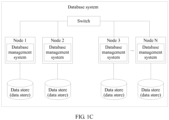
- FIG. 1C is a schematic diagram of a cluster database system of a shared-nothing architecture.
- Each node has an exclusive hardware resource (such as a data store), an operating system, and a database, and nodes communicate with each other by using a network.
- data is distributed to the nodes based on a database model and an application characteristic.
- a query task is divided into several portions, to be executed concurrently on all the nodes. All the nodes perform calculation coordinately and are used as a whole to provide a database service. All communications functions are implemented in a high-bandwidth network interconnection system.
- the node herein may be a physical machine or a virtual machine.
- the data store of the database system includes but is not limited to a solid-state disk (SSD), a disk array, or another type of non-temporary computer-readable medium.
- SSD solid-state disk
- a database is not shown in FIG. 1A to FIG. 1C , it should be understood that the database is stored in the data store.
- the database system may include fewer or more components than those shown in FIG. 1A to FIG. 1C , or include components different from those shown in FIG. 1A to FIG. 1C.
- FIG. 1A to FIG. 1C merely show components more related to implementations disclosed in the embodiments of the present invention.
- four nodes are described in FIG. 1B and FIG. 1C
- one cluster database system may include any quantity of nodes.
- a database management system function of each node may be implemented by using an appropriate combination of software, hardware, and/or firmware on the node.
- an embodiment of the present invention provides a database server 100, including at least one processor 104, a non-transitory computer-readable medium 106 storing executable code, and a database management system 108.
- the executable code is configured to implement a component and a function of the database management system 108 when executed by the at least one processor 104.
- the non-transitory computer-readable medium 106 may include one or more nonvolatile memories.
- the nonvolatile memory includes a semiconductor storage device such as an erasable programmable read only memory (EPROM), an electrically erasable programmable read-only memory (EEPROM), or a flash memory, and a disk such as an internal hard disk, a removable disk, a magneto-optical disk, a CD ROM, or a DVD-ROM.
- the non-transitory computer-readable medium 106 may further include any device configured as a main memory.
- the at least one processor 104 may include any type of general-purpose calculation circuit or dedicated logic circuit, such as an field programmable gate array (FPGA) or an application-specific integrated circuit(ASIC).
- the at least one processor 104 may alternatively be one or more processors coupled to one or more semiconductor substrates, such as a CPU.
- the database management system 108 may be a relational database management system (RDBMS).
- the database management system 108 supports a structured query language (SQL).
- SQL is a dedicated programming language dedicated for managing data stored in a relational database.
- the SQL may be any type of data-related language, including a data definition language and a data manipulation language. Functions of the SQL may include data insertion, querying, updating, and deletion, mode creation and modification, and data access control.
- the SQL may include description related to various language elements, including a clause, an expression, a predicate, a query, and a statement.
- the clause may be various constituents of the statement and the query, and in some cases, the clause may be considered as optional.
- the expression may be configured to generate a scalar value and/or a table including a data column and/or row.
- a specified condition may be configured for the predicate, to adjust an effect of the statement and the query.
- the query is used to request to view, access and/or manipulate data stored in the database.
- the database management system 108 may receive a query in an SQL format (referred to as an SQL query) from a database client 102.
- the database management system 108 usually generates, by accessing related data in the database and manipulating the related data, a query result corresponding to the query, and returns the query result to the database client 102.
- a database is a set of data organized, described, and stored based on a mathematical model.
- the database may include one or more database structures or formats, such as row storage and column storage.
- the database is usually stored in a data store, such as an external data store 120 or the non-transitory computer-readable medium 106 in FIG. 2 .
- the database management system 108 is a memory database management system.
- the database client 102 may include any type of device or application program configured to interact with the database management system 108.
- the database client 102 includes one or more application servers.
- the database management system 108 includes an SQL engine 110, an execute engine 122, and a storage engine 134.
- the SQL engine 110 generates a corresponding execute plan based on an SQL statement submitted by the client 102, such as a query.
- the execute engine 122 performs an operation based on the execute plan of the statement, to generate a query result.
- the storage engine 134 is responsible for managing actual content of data and an index of a table in a file system, and also manages a cache, a buffer, a transaction, and data such as a log during running of the storage engine 134. For example, the storage engine 134 may write an execution result of the execute engine 122 into the data store 120 through physical I/O.
- the SQL engine 110 includes a parser 112 and an optimizer 114.
- the parser 112 is configured to perform syntax and semantic analysis on the SQL statement, expand a query view, and obtain smaller query blocks through division.
- the optimizer 114 generates, for the statement, a group of execute plans that are possibly used, estimates costs of each execute plan, compares the costs of the plans, and finally selects an execute plan with least costs.
- an embodiment of the present invention provides a method for encoding an object in a database by using a global dictionary table, and the method includes the following steps.
- S310 Constitute a global object sample space based on correlation between a plurality of object sample spaces.
- an object sample space may be a set of some data in the database, such as a column of data in a table.
- correlated columns or rows are determined from the database to constitute the global object sample space.
- a basic computation unit in the database is an object, and the basic unit herein includes a tuple, a column/row, and a table.
- a tuple in each column or row is an object, or a column is an object.
- Correlated columns are associated columns that are operated simultaneously when query computation is performed in the database. These columns may be in a same table or may be in different tables.
- Most common join computation in the database is used as an example. Two columns selected when join computation is performed in the database are obviously correlated.
- correlated rows are rows that are operated simultaneously during query computation.
- S320 Create a global dictionary table in the global object sample space, to: (1) provide a globally unique encoding value for each object, and use the encoding value as an object identifier (ID) of the object; and (2) ensure that the object ID and object description information are in a one-to-one mapping relationship, where the object description information is used to describe or depict a meaning of the object, to facilitate user understanding.
- the object description information is usually in a human language.
- the global dictionary table provides a globally unique encoding value to identify an object, and is used by a plurality of information objects through share encoding.
- Data inside the global dictionary table mainly includes two sets: ⁇ object encoding value ⁇ and ⁇ object description information ⁇ . The two parts need to meet a one-to-one mapping constraint shown in FIG. 4 . Specific implementation of the global dictionary table is described in detail in the following embodiments.
- S330 Call an encoding interface in the global dictionary table to encode a specified object, to obtain an encoding value (object ID) of the specified object, where the specified object herein may be one or several columns of data in a database.
- the method further includes the following step:
- S340 Call a decoding interface in the global dictionary table to decode the specified object, to obtain description information of the specified object.
- the global dictionary table provides the following two external interfaces:
- the database management system calls the encoding/decoding interface to encode/decode one or more specified objects.
- the global dictionary table further provides an operation interface.
- the method further includes the following step:
- S350 Call an operation interface in the global dictionary table to perform an operation on the global dictionary table, including but not limited to one or more of operations such as query, updating, deletion, partition, and import.
- the global dictionary table is shared by the plurality of tables through share encoding (share encoding). Therefore, the global dictionary table can provide a globally unique encoding value for column data in these tables, and a column data ID and column description information are in a one-to-one mapping relationship, so that creation of a plurality of local dictionary tables is avoided, encoding consumption is reduced, and disk space is saved.
- S global_col is encoded/decoded by using the global dictionary table.
- Each piece of column data in S global_col is encoded/decoded by using global_dic_table, where global_dic_table (encoding_num, desc_num) is defined as the global dictionary table.
- global_dic_table encoding_num, desc_num
- the global dictionary table provides the encoding value that is used as an ID to uniquely identify each column object, so that creation of a plurality of local dictionary tables is avoided, encoding consumption is reduced, and disk space is saved.
- An implementation of the global dictionary table includes but is not limited to the following manners:
- the memory table may be represented by using a dictionary ⁇ key, value> data structure. Therefore, a key value in a global dictionary table implemented by using the memory table is an encoding value of each object, and a value is description information of each object, as listed in the following: Key Value 1 '00000000000' 2 '00000000001' ... ... 100000 '13512345678' ... ... 100000000000 '99999999999'
- a string/text that needs to be processed is an 11-digit mobile phone number
- a global dictionary table GLOBAL_DIC may be created by using the following function:
- Mobile phone numbers are grouped based on a number segment. Therefore, the mobile phone number may be further designed as the following partition table to improve query performance:
- an operation interface in the global dictionary table implemented by using the memory table is defined as follows:
- the memory table may be stored in the data store 120, and is loaded into the non-transitory computer-readable medium 106 when the memory table is used.
- an operation interface in a global dictionary table implemented by using the database table is defined as follows:
- an SQL interface complying with the following criteria may be provided to provide an encoding/decoding function externally:
- the global dictionary table may be specified by using a table create statement:
- an essential difference between the global dictionary table and an existing local dictionary table lies in that the global dictionary table ensures a full mapping relationship, without depending on existing data, while the local dictionary table creates a mapping relationship merely for existing data.
- an encoding interface in the created global dictionary table may be called for encoding.
- a global dictionary table implemented as a memory table if the global dictionary table is to be used to encode, compress, and store a column of 11-digit mobile phone numbers in the table, the following operations need to be performed:
- the 11-digit mobile phone number is originally stored in a string type, is replaced with a numeric-type encoding value by querying the memory table, and is inserted into a target table after being compressed.
- the 11-digit mobile phone number is originally stored in a string type, is converted into a numeric-type encoding value by embedding a subquery, and is inserted into a target table after being compressed.
- a specific process in which the database management system 108 encodes, compresses, and stores a specified column based on the global dictionary table includes: When a batch import or insertion operation or the like is performed on the table, for specified columns of the table, for example, character-type columns COL1 and COL2 storing 11-digit phone numbers, object identifiers are obtained by querying the global dictionary table, and then all object identifiers IDs (numeric type) that are corresponding to all data in the column and that are obtained through query are compressed and stored. In this way, actually stored data is a numeric-type object identifier (ID).
- ID numeric-type object identifier
- the database management system 108 may call a decoding interface in the global dictionary table for decoding.
- a decoding operation may be implemented by using the following operations:
- an encoding value is used as a subquery condition, and a string-type value of the 11-digit mobile phone number is obtained through decoding in a manner of embedding a query, and finally the 11-digit mobile phone number is output as a projection column.
- Projection is unary computation, and during the computation, a specified attribute value is selected from the table to constitute a new table.
- the global dictionary table can provide a globally unique encoding value for column data in these tables.
- a column data object ID of the column may be directly used for computation.
- An identifier ID of column data may be directly used to replace description information of the column data, to perform various types of query computation, without a need to perform decoding with high costs, so that query execution efficiency is improved. Therefore, as shown in FIG. 6 , on a basis of encoding and compressing a database object based on the globally shared dictionary table, an embodiment of the present invention further provides a method for performing query computation in a database by using an object ID, and the method includes the following steps:
- the object ID is directly used to replace column object description information, to perform various types of query computation.
- a computation granularity changes from various variable-length types to an integer type, and therefore query execution efficiency is greatly improved.
- the SQL engine 110 performs processing such as syntax analysis, semantic analysis, and optimization and rewrite on the SQL statement intput by the user, to finally generate an execute plan, and transfers the execute plan to the execute engine 122 for computation.
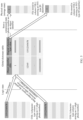
- a processing procedure of the execute engine 122 based on the global dictionary table is shown in FIG. 8 .
- a scan operator of the execute engine 122 When scanning a single table, a scan operator of the execute engine 122 directly extracts, by using the storage engine 134, a physically stored compressed-state object identifier as a scanning result of the specified columns COL1 and COL2, and transfers the scanning result to a join operator.
- the join operator directly uses the object identifier to perform equijoin computation.
- a materialization operator queries the global dictionary table to perform decompression, so as to obtain an original character-type value corresponding to the object identifier.
- the storage engine 134 first needs to perform a decompression operation on the columns COL1 and COL2: loading data from the specified columns COL1 and COL2, and reversely querying a local dictionary table to obtain an original character-type value of the 11-digit mobile phone number. Then, a scan operator obtains decompressed original character-type values of the COL1 and the COL2 through scanning, and transfers the decompressed original character-type values to a join operator. The join operator uses the original character-type values of the COL1 and the COL2 to participate in equijoin computation.
- a character value of the 11-digit mobile phone number is stored in the COL1
- the SQL engine 110 performs processing such as syntax analysis, semantic analysis, and optimization and rewrite on the equivalent expression, to finally generate an execute plan, and transfers the execute plan to the execute engine 122 for computation.
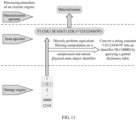
- FIG. 11 a processing procedure of the execute engine 122 based on the global dictionary table is shown in FIG. 11 .
- a scan operator converts a string constant '13512345678' in an equivalence condition in the equivalent expression into an object ID (10000) by querying the global dictionary table, then directly performs numeric equivalence comparison between an encoding value in the column COL1 and the object ID (10000) obtained through conversion.
- the COL1 is encoded/decoded by using a local dictionary table instead of the global dictionary table, during equivalent expression computation, as shown in FIG.
- the storage engine 134 first needs to perform a decompression operation on the column COLI: loading data from the column COL1, and querying the local dictionary table corresponding to the COL1 to obtain an original character-type value of the 11-digit mobile phone number. Then a scan operator of the execute engine 122 performs a string equivalence comparison between original character-type values of all 11-digit mobile phone numbers in the column COL1 and the string constant in the equivalence condition, to obtain a computation result.
- a user enters an SQL statement by using the client 102: SELECT COUNT(COL1) FROM T1 GROUP BY COL1.
- the SQL engine 110 performs processing such as syntax analysis, semantic analysis, and optimization and rewrite on the equivalent expression, to finally generate an execute plan, and transfers the execute plan to the execute engine 122 for computation.
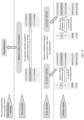
- a processing procedure of the execute engine 122 based on the global dictionary table is shown in FIG. 14 .
- a scan operator When scanning a single table, a scan operator directly extracts, by using the storage engine 134, a physically stored compressed-state object identifier as a scanning result of the column COL1, and transfers the scanning result to an AGG operator.
- the AGG operator directly uses the object identifier to perform group and aggregate computation.
- a materialization operator queries the global dictionary table to perform decompression, so as to obtain an original character-type value corresponding to the object identifier.
- the storage engine 134 first needs to perform a decompression operation on the column COLI: loading data from the column COL1, and querying the local dictionary table corresponding to the COL1 to obtain an original character-type value of the 11-digit mobile phone number. Then, the AGG operator performs group and aggregate computation by using the decompressed original character-type value of the 11-digit mobile phone number in the column COL1, to obtain a computation result.
- a user enters a non-equijoin SQL statement by using the client 102: SELECT T1.COL1, T2.COL2 FROM T1, T2 WHERE T1.COL1 > T2.COL2.
- Processing procedures of the SQL engine 110 and the execute engine 122 are basically the same as the procedures in the equijoin scenario described in FIG. 7 and FIG. 8 .
- a main difference lies in that, in the non-equijoin scenario, in addition to one-to-one computation mapping, consistency of computation results further needs to be ensured. Therefore, during creation of the global dictionary table, the following processing is required additionally:
- the object in the database is encoded by using the global dictionary table.
- the global dictionary table may be used by a plurality of tables through share encoding, and the encoded object identifier is unique, and is in a one-to-one mapping relationship with the object description information. Therefore, the database object does not need to be decompressed after being loaded, an encoding value (to be specific, the object identifier) of each object may be directly used to participate in query computation such as join, sort, or aggregate, so that string-type computation is optimized as integer-type computation, and computation efficiency is improved.
- performance gain comparison is as follows: Prior-art technical solution Technical solution in the present invention Performance improvement Cold data test 28081 ms 9813 ms 186.2% Hot data test 24300 ms 7093 ms 242.59%
- the cold data test mainly includes two processes: loading data from a data store, and performing join computation. After the data is loaded into and cached in a memory, the hot data test process performed repeatedly mainly includes a query computation process. It can be learnt from the data in the foregoing tables that beneficial effects of the technical solutions of this application are mainly as follows:
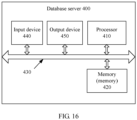
- FIG. 16 is a schematic block diagram of another database server 400 according to an embodiment of the present invention.
- the database server 400 includes a processor 410, a memory 420, a bus system 430, an input device 440, and an output device 450.
- bus system 430 All components of the database server 400 are coupled together by using the bus system 430.
- the bus system 430 may include a power supply bus, a control bus, a status signal bus, and the like. However, for clear description, various buses are represented by using the bus system 430 in the figure.
- the processor 410 may include any type of general-purpose calculation circuit or dedicated logic circuit, such as a central processing unit (CPU), a field programmable gate array (FPGA ), or an application-specific integrated circuit (ASIC).
- the memory 420 may include only a read-only memory (ROM) and a random access memory (RAM), configured to store data and an executable program. A part of the memory 420 may further include a nonvolatile random access memory (NVRAM).
- the processor 410 is configured to execute the executable program stored in the memory 420, to implement or perform the method steps described in the method embodiments of the present invention, for example, implement some or all functions of the SQL engine and the execute engine in the related embodiments in FIG. 2 to FIG. 14 .
- the database server 400 in this embodiment of the present invention may correspondingly perform the method for encoding and compressing a database object and the method for performing query computation in a database by using an object ID in the embodiments of the present invention.
- the foregoing and other operations and/or functions of the components of the database server 400 are to implement corresponding procedures in the methods in FIG. 2 to FIG. 14 . For brevity, details are not described herein again.
- an embodiment of the present invention further provides a cluster database system 500, including a hardware layer 1007, a virtual machine monitor (VMM) 1001 running at the hardware layer 1007, and a plurality of virtual machines 1002.
- VMM virtual machine monitor
- One virtual machine may be used as a data node of the cluster database system 500.
- one virtual machine may be further specified as a coordinator node.
- the virtual machine 1002 is a virtual computer simulated on a common hardware resource by using virtual machine software.
- An operating system and an application program may be installed on the virtual machine, and the virtual machine may further access a network resource.
- the virtual machine works like in a real computer.
- the hardware layer 1007 is a hardware platform for virtual environment running, and may be obtained by abstracting hardware resources of one or more physical machines.
- the hardware layer may include a plurality of types of hardware, for example, a processor 1004 (such as a CPU) and a storage 1005, and may further include a network adapter 1003 (such as an RDMA network adapter), a high-speed/low-speed input/output (I/O) device, and another device with a specific processing function.
- the virtual machine 1002 runs an executable program based on the VMM and a hardware resource provided by the hardware layer 1007, to implement some or all functions of the SQL engine and the execute engine in the related embodiments in FIG. 2 to FIG. 14 .
- the virtual machine 1002 runs an executable program based on the VMM and a hardware resource provided by the hardware layer 1007, to implement some or all functions of the SQL engine and the execute engine in the related embodiments in FIG. 2 to FIG. 14 .
- the virtual machine 1002 runs an executable program based on the VMM and a hardware resource provided by the hardware layer 1007, to implement some or all functions of the SQL engine and the execute engine in the related embodiments in FIG. 2 to FIG. 14 .
- the cluster database system 500 may further include a host.
- the host serving as a management layer, is configured to manage and allocate hardware resources, present a virtual hardware platform for the virtual machine, and implement scheduling and isolation for the virtual machine.
- the host may be a virtual machine monitor (VMM) or a combination of a VMM and one privileged virtual machine.
- the virtual hardware platform provides various hardware resources for each virtual machine running on the virtual hardware platform, for example, provides a virtual processor (such as a VCPU), a virtual memory, a virtual disk, and a virtual network adapter.
- the virtual disk may be corresponding to a file or a logical block device of the host.
- the virtual machine runs on the virtual hardware platform prepared by the host for the virtual machine. One or more virtual machines run on the host.
- the VCPU of the virtual machine 1002 executes the executable program stored in the virtual memory corresponding to the VCPU to implement or perform the method steps described in the method embodiments of the present invention, for example, to implement some or all functions of the SQL engine and the execute engine in the related embodiments in FIG. 2 to FIG. 14 .
- an embodiment of the present invention further provides a database system, including a database server 800 and a client device 900 connected to the database server 800 by using a communications network.
- a client operating system 904 runs at a hardware layer 906 of the client device 900, and an application program 902 runs in the operating system 904.
- An operating system 814 runs at a hardware layer 816 of the database server 800, and a database management system 812 runs in the operating system 814.
- the application program 902 is connected, by using the communications network, to the database management system 812 running on the database server 800, and accesses or operates a database stored in a data store 818, for example, queries, updates, or deletes data in the database by using an SQL statement, or imports new data into the database.
- the hardware layers 906 and 816 include basic hardware units required for running the operating system and the application program, for example, include a processor such as a CPU, a memory, an input/output device, and a network interface.
- a processor such as a CPU, a memory, an input/output device, and a network interface.
- the data store 818 may be an external storage of the database server 800, such as a hard disk, a magnetic disk, a storage array, or a storage server, and is communicatively connected to the database server 800.
- the data store 818 may be internally integrated into the database server 800, and exchange data with a processor and an I/O device by using a bus or in another internal communication manner.
- a memory of the database server 800 stores executable code, and when executed by the processor, the executable code is configured to implement a component and a function of the database management system 812.
- the database management system 812 may be specifically the database management system 108 shown in FIG. 2 .
- FIG. 2 For a related function and implementation details, refer to the embodiments in FIG. 2 to FIG. 15 . Details are not described herein again.
- executable program should be widely interpreted as including but being not limited to an instruction, an instruction set, code, a code segment, a subprogram, a software module, an application, a software package, a thread, a process, a function, firmware, middleware, and the like. Sequence numbers of the foregoing method steps described in the foregoing embodiments do not mean execution sequences. The execution sequences of the processes should be determined based on functions and internal logic of the processes, and should not be construed as any limitation on the implementation processes of the embodiments of the present invention.
- the disclosed system, apparatus, and method can be implemented in other manners.
- the described apparatus embodiment is merely an example.
- the unit division is merely logical function division and may be other division in actual implementation.
- a plurality of units or components may be combined or integrated into another system, or some features may be ignored or may not be performed.
- the displayed or discussed mutual couplings or direct couplings or communication connections may be implemented through some interfaces, indirect couplings or communication connections between the apparatuses or units, or electrical connections, mechanical connections, or connections in other forms.
- the units described as separated parts may or may not be physically separated, and parts displayed as units may or may not be physical units, may be located in one location, or may be distributed on a plurality of network units. Some or all of the units may be selected depending on actual requirements to achieve the objectives of the solutions of the embodiments.
- functional units in the embodiments of the present invention may be integrated into one processing unit, or each of the units may exist alone physically, or two or more units are integrated into one unit.
- the functions When the functions are implemented in a form of a software functional unit and sold or used as an independent product, the functions may be stored in a computer-readable storage medium. Based on such an understanding, the technical solutions of the present invention essentially, or the part contributing to the prior art, or some of the technical solutions may be implemented in a form of a software product.
- the computer software product is stored in a storage medium, and includes several instructions for instructing a computer device (which may be a personal computer, a server, a network device, or the like) to perform all or some of the steps of the methods described in the embodiments of the present invention.
- the foregoing storage medium includes any medium that can store program code, such as a USB flash drive, a removable hard disk, a ROM, a RAM, a magnetic disk, or an optical disc.
Landscapes
- Engineering & Computer Science (AREA)
- Theoretical Computer Science (AREA)
- Data Mining & Analysis (AREA)
- Databases & Information Systems (AREA)
- Physics & Mathematics (AREA)
- General Engineering & Computer Science (AREA)
- General Physics & Mathematics (AREA)
- Software Systems (AREA)
- Operations Research (AREA)
- Computational Linguistics (AREA)
- Information Retrieval, Db Structures And Fs Structures Therefor (AREA)
Claims (11)
- Durch ein Datenbankverwaltungssystem durchgeführtes Verfahren, das eine strukturierte Abfragesprache(Structured Query Language -SQL)-"Engine", eine Ausführungs-"Engine" und eine Speicher-"Engine" zum Durchführen von Abfrageberechnungen in einer Datenbank enthält, umfassend:Empfangen (S610) einer strukturierten Abfragesprache( SQL)-Anweisung aus einem "Client" (102) durch die SQL-"Engine" zum Durchführen von Abfrageberechnungen für ein Objekt in der Datenbank, wobei das Objekt in der SQL-Anweisung durch entsprechende Objektbeschreibungsinformationen referenziert wird;Verarbeiten der SQL-Anweisung durch die SQL-"Engine", um einen Ausführungsplan zu erstellen;Extrahieren (S620) einer gespeicherten Objektkennung, ID, des Objekts aus einem Datenspeicher durch die Ausführungs-"Engine", wobei die Objektkennung des Objekts durch Codieren des Objekts durch Aufrufen einer Codierschnittstelle mit den Objektbeschreibungsinformationen als Eingabe in einer globalen Zuordnungstabelle erhalten wird, die durch die Speicher-"Engine" gespeichert ist, wobei die globale Zuordnungstabelle eine Objekt-ID und Objektbeschreibungsinformationen jedes Objekts in einem globalen Objektprobenraum umfasst, wobei die Objekt-ID jedes Objekts in dem globalen Objektprobenraum eindeutig ist, wobei die Objekt-ID und die Objektbeschreibungsinformationen des Objekts in der globalen Zuordnungstabelle in einer Eins-zu-Eins-Abbildungsbeziehung stehen und der globale Objektprobenraum aus einer Vielzahl von korrelierten Objektprobenräumen in der Datenbank gebildet wird, wobei ein gleicher Typ von Objekten in der Datenbank einen Objektprobenraum bildet und die ein Tupel umfassenden Objekte und die Vielzahl von korrelierten Objektprobenräumen mindestens zwei korrelierte Spalten in der Datenbank umfassen, und die mindestens zwei Spalten den globalen Objektprobenraum bilden; undDurchführen (S630) einer Abfrageberechnung durch die Ausführungs-"Engine" basierend auf dem Ausführungsplan unter direkter Verwendung der Objekt-ID des Objekts, um ein Abfrageergebnis zu erzeugen, wobei die direkte Verwendung der Objekt-ID des Objekts durch Ersetzen der Objektbeschreibungsinformationen mit der Objekt-ID durchgeführt wird, und Zurückgeben des Abfrageergebnisses an den "Client" (102).
- Verfahren gemäß Anspruch 1, wobei die mindestens zwei korrelierten Spalten mindestens zwei Spalten umfassen, die während der Abfrageberechnung synchron betrieben werden.
- Verfahren gemäß einem der Ansprüche 1 bis 2, wobei die Abfrageberechnung mindestens eine einer "Join"-, "Sort"- und Aggregat-Funktion umfasst.
- Verfahren gemäß einem der Ansprüche 1 bis 3, wobei die globale Zuordnungstabelle eine Datendatei, eine Speichertabelle, eine Datenbanktabelle oder eine Indextabelle ist.
- Datenbankverwaltungssystem (108), umfassend eine strukturierte Abfragesprache( SQL)-"Engine" (110), eine Ausführungs-"Engine" (122) und eine Speicher-"Engine" (134), wobeidie SQL-"Engine" (110) dazu konfiguriert ist, eine durch einen "Client" (102) übermittelte SQL-Anweisung zu empfangen und zu verarbeiten, um einen entsprechenden Ausführungsplan basierend auf einer SQL-Anweisung zu erzeugen, wobeidie SQL-Anweisung die Durchführung von Abfrageberechnungen an einem Objekt in einer Datenbank anfordert, wobei das Objekt in der SQL-Anweisung durch entsprechende Objektbeschreibungsinformationen referenziert wird;die Speicher-"Engine" (134) dazu konfiguriert ist, eine globale Zuordnungstabelle zu speichern, wobei die globale Zuordnungstabelle eine Objektkennung, ID, und Objektbeschreibungsinformationen jedes Objekts in einem globalen Objektprobenraum umfasst, die Objekt-ID jedes Objekts in dem globalen Objektprobenraum eindeutig ist, die Objekt-ID und die Objektbeschreibungsinformationen in der globalen Zuordnungstabelle in einer Eins-zu-Eins-Abbildungsbeziehung stehen, und der globale Objektprobenraum aus einer Vielzahl von korrelierten Objektprobenräumen in der Datenbank gebildet wird, wobei ein gleicher Typ von Objekten in der Datenbank einen Objektprobenraum bildet und die Objekte ein Tupel umfassen und wobei die Vielzahl von korrelierten Objektprobenräumen mindestens zwei korrelierte Spalten in der Datenbank umfassen und die mindestens zwei Spalten den globalen Objektprobenraum bilden; unddie Ausführungs-"Engine" (122) dazu konfiguriert ist: die Objekt-ID des in der Speicher-"Engine" gespeicherten Objekts zu extrahieren, wobei die Objekt-Kennung des Objekts durch Codieren des Objekts durch Aufrufen einer Codierschnittstelle mit den Objektbeschreibungsinformationen als Eingabe in der globalen Zuordnungstabelle, die durch die Speicher-"Engine" gespeichert ist, erhalten wird; eine Abfrageberechnung basierend auf dem Ausführungsplan unter direkter Verwendung der Objekt-ID des Objekts durchzuführen, um ein Abfrageergebnis zu erzeugen, wobei die direkte Verwendung der Objekt-ID des Objekts durch Ersetzen der Objektbeschreibungsinformationen durch die Objekt-ID durchgeführt wird;und das Abfrageergebnis an den "Client" (102) zurückzugeben.
- Datenbankverwaltungssystem (108) gemäß Anspruch 5, wobei die mindestens zwei korrelierten Spalten mindestens zwei Spalten umfassen, die während der Abfrageberechnung synchron betrieben werden.
- Datenbankverwaltungssystem (108) gemäß einem der Ansprüche 5 bis 6, wobei die Speicher-"Engine" (134) ferner dazu konfiguriert ist, die globale Zuordnungstabelle zu erstellen.
- Datenbankverwaltungssystem (108) gemäß einem der Ansprüche 5 bis 7, wobei die globale Zuordnungstabelle eine Datendatei, eine Speichertabelle, eine Datenbanktabelle oder eine Indextabelle ist.
- Datenbankverwaltungssystem (108) gemäß einem der Ansprüche 5 bis 8, wobei die Abfrageberechnung mindestens eine einer "Join"-, "Sort"- und Aggregat-Funktion umfasst.
- Datenbankserver (400), umfassend einen Prozessor (410) und ein nichtflüchtiges computerlesbares Medium (420), das ausführbaren Code speichert, wobei der Prozessor (410) dazu konfiguriert ist, den ausführbaren Code auszuführen, um das Verfahren gemäß einem der Ansprüche 1 bis 4 durchzuführen.
- Datenbanksystem (500), umfassend einen "Client" (102) und das Datenbankverwaltungssystem (108) gemäß einem der Ansprüche 5 bis 9.
Applications Claiming Priority (2)
| Application Number | Priority Date | Filing Date | Title |
|---|---|---|---|
| CN201710121672.1A CN108536705B (zh) | 2017-03-02 | 2017-03-02 | 数据库系统中对象的编码及运算方法与数据库服务器 |
| PCT/CN2018/077164 WO2018157765A1 (zh) | 2017-03-02 | 2018-02-24 | 数据库系统中对象的编码及运算方法与数据库服务器 |
Publications (3)
| Publication Number | Publication Date |
|---|---|
| EP3582124A1 EP3582124A1 (de) | 2019-12-18 |
| EP3582124A4 EP3582124A4 (de) | 2020-01-22 |
| EP3582124B1 true EP3582124B1 (de) | 2023-06-14 |
Family
ID=63369793
Family Applications (1)
| Application Number | Title | Priority Date | Filing Date |
|---|---|---|---|
| EP18760336.0A Active EP3582124B1 (de) | 2017-03-02 | 2018-02-24 | Verfahren zur codierung und berechnung eines objekts in einem datenbanksystem und datenbankserver |
Country Status (4)
| Country | Link |
|---|---|
| US (1) | US11194806B2 (de) |
| EP (1) | EP3582124B1 (de) |
| CN (1) | CN108536705B (de) |
| WO (1) | WO2018157765A1 (de) |
Families Citing this family (22)
| Publication number | Priority date | Publication date | Assignee | Title |
|---|---|---|---|---|
| US11086828B2 (en) * | 2018-10-12 | 2021-08-10 | Sap Se | Compression of column store tables |
| CN109582786B (zh) * | 2018-10-31 | 2020-11-24 | 中国科学院深圳先进技术研究院 | 一种基于自动编码的文本表示学习方法、系统及电子设备 |
| US11048816B2 (en) * | 2019-04-02 | 2021-06-29 | Sap Se | Secure database utilizing dictionary encoding |
| CN110597857B (zh) * | 2019-08-30 | 2023-03-24 | 南开大学 | 一种基于共享样本的在线聚集方法 |
| CN110704407B (zh) * | 2019-09-04 | 2022-07-05 | 苏宁云计算有限公司 | 一种数据去重的方法和系统 |
| US12118041B2 (en) * | 2019-10-13 | 2024-10-15 | Thoughtspot, Inc. | Query execution on compressed in-memory data |
| CN111259205B (zh) * | 2020-01-15 | 2023-10-20 | 北京百度网讯科技有限公司 | 一种图数据库遍历方法、装置、设备及存储介质 |
| CN111723313A (zh) * | 2020-06-23 | 2020-09-29 | 中国平安财产保险股份有限公司 | 页面跳转的处理方法、装置、设备及存储介质 |
| CN112035257B (zh) * | 2020-08-31 | 2022-05-31 | 浪潮云信息技术股份公司 | 基于KV存储的mergejoin异步块运算方法 |
| US11520790B2 (en) | 2020-09-17 | 2022-12-06 | International Business Machines Corporation | Providing character encoding |
| CN112395304B (zh) * | 2020-10-30 | 2024-01-02 | 迅鳐成都科技有限公司 | 基于数据行为模拟的数据安全计算方法、系统及存储介质 |
| CN112182021B (zh) * | 2020-11-03 | 2022-10-18 | 浙江大搜车软件技术有限公司 | 一种用户数据查询方法、装置和系统 |
| US11416469B2 (en) * | 2020-11-24 | 2022-08-16 | International Business Machines Corporation | Unsupervised feature learning for relational data |
| CN113326261B (zh) * | 2021-04-29 | 2024-03-08 | 奇富数科(上海)科技有限公司 | 数据血缘关系提取方法、装置及电子设备 |
| CN113626004A (zh) * | 2021-08-19 | 2021-11-09 | 新疆大学 | 一种基于配置模式的快速开发系统 |
| CN115729889A (zh) * | 2021-08-31 | 2023-03-03 | 华为技术有限公司 | 数据访问方法、数据库系统、及存储装置 |
| KR102788936B1 (ko) * | 2022-03-16 | 2025-04-01 | 주식회사 티맥스티베로 | 상이한 파티션 정보를 갖는 테이블들을 쿼리하기 위한 방법 |
| CN114706877A (zh) * | 2022-03-25 | 2022-07-05 | 中国建设银行股份有限公司 | 一种反向查询处理方法和装置 |
| CN115757408A (zh) * | 2022-11-21 | 2023-03-07 | 北京锐安科技有限公司 | 字典的内存数据库存储方法、装置和电子设备 |
| CN115905308B (zh) * | 2022-12-30 | 2026-02-03 | 北京奥星贝斯科技有限公司 | 一种查询语句的执行方法、装置、存储介质及电子设备 |
| CN117056397A (zh) * | 2023-07-26 | 2023-11-14 | 杭州安恒信息技术股份有限公司 | 压缩数据统计方法、装置、计算机设备及可读存储介质 |
| CN117424765B (zh) * | 2023-12-19 | 2024-03-22 | 天津医康互联科技有限公司 | 分布式独热编码方法、装置、电子设备及计算机存储介质 |
Citations (1)
| Publication number | Priority date | Publication date | Assignee | Title |
|---|---|---|---|---|
| EP2833277A1 (de) * | 2013-07-31 | 2015-02-04 | Sap Se | Globales Wörterbuch für Datenbankverwaltungssysteme |
Family Cites Families (20)
| Publication number | Priority date | Publication date | Assignee | Title |
|---|---|---|---|---|
| US5317742A (en) * | 1991-06-21 | 1994-05-31 | Racal-Datacom, Inc. | Dynamic translation of network management primitives to queries to a database |
| EP1313038A3 (de) * | 1994-09-01 | 2005-09-07 | Computer Associates Think, Inc. | X.500-System und -Methoden unter Benutzung von Metadata |
| US20020035432A1 (en) * | 2000-06-08 | 2002-03-21 | Boguslaw Kubica | Method and system for spatially indexing land |
| US8692695B2 (en) | 2000-10-03 | 2014-04-08 | Realtime Data, Llc | Methods for encoding and decoding data |
| US7028033B2 (en) * | 2001-01-02 | 2006-04-11 | Hall Aluminum Llc | Method and apparatus for simplified access to online services |
| JP4381012B2 (ja) * | 2003-03-14 | 2009-12-09 | ヒューレット・パッカード・カンパニー | 万物識別子を用いたデータ検索システムおよびデータ検索方法 |
| US7647329B1 (en) * | 2005-12-29 | 2010-01-12 | Amazon Technologies, Inc. | Keymap service architecture for a distributed storage system |
| CN101419600A (zh) * | 2007-10-22 | 2009-04-29 | 深圳市亚贝电气技术有限公司 | 基于面向对象文件系统的数据副本映射方法及装置 |
| CN101626563B (zh) | 2008-07-08 | 2012-07-04 | 中国移动通信集团公司 | 一种通信网络中的数据存储系统及信息处理方法 |
| CN102436479B (zh) * | 2011-10-12 | 2014-01-08 | 远光软件股份有限公司 | 全局唯一数据标志符的生成方法和系统 |
| CN102685221B (zh) * | 2012-04-29 | 2014-12-03 | 华北电力大学(保定) | 一种状态监测数据的分布式存储与并行挖掘方法 |
| US8924373B2 (en) * | 2012-08-09 | 2014-12-30 | International Business Machines Corporation | Query plans with parameter markers in place of object identifiers |
| JP5238915B1 (ja) | 2012-08-23 | 2013-07-17 | ディジタル・ワークス株式会社 | 分散型データベースシステム |
| CN103942234A (zh) * | 2013-01-21 | 2014-07-23 | 中国电信股份有限公司 | 对多个异构数据库操作的方法、中间件装置及系统 |
| CN103326732B (zh) * | 2013-05-10 | 2016-12-28 | 华为技术有限公司 | 压缩数据的方法、解压数据的方法、编码器和解码器 |
| CN103324733A (zh) * | 2013-06-30 | 2013-09-25 | 四川效率源信息安全技术有限责任公司 | 一种基于数据库的文件可重构存储及管理方法 |
| CN104346377B (zh) * | 2013-07-31 | 2017-08-08 | 克拉玛依红有软件有限责任公司 | 一种基于唯一标识的数据集成和交换方法 |
| US9818010B2 (en) * | 2014-10-09 | 2017-11-14 | The Code Corporation | Barcode-reading system |
| CN105045577B (zh) * | 2015-06-29 | 2018-12-18 | 用友优普信息技术有限公司 | 接口变更的提示方法和接口变更的提示系统 |
| US20170249393A1 (en) * | 2016-02-26 | 2017-08-31 | Salesforce.Com, Inc. | Method and browser plugin for creation of objects in a cloud-based object management system |
-
2017
- 2017-03-02 CN CN201710121672.1A patent/CN108536705B/zh active Active
-
2018
- 2018-02-24 WO PCT/CN2018/077164 patent/WO2018157765A1/zh not_active Ceased
- 2018-02-24 EP EP18760336.0A patent/EP3582124B1/de active Active
-
2019
- 2019-09-03 US US16/559,245 patent/US11194806B2/en active Active
Patent Citations (1)
| Publication number | Priority date | Publication date | Assignee | Title |
|---|---|---|---|---|
| EP2833277A1 (de) * | 2013-07-31 | 2015-02-04 | Sap Se | Globales Wörterbuch für Datenbankverwaltungssysteme |
Also Published As
| Publication number | Publication date |
|---|---|
| WO2018157765A1 (zh) | 2018-09-07 |
| US11194806B2 (en) | 2021-12-07 |
| EP3582124A1 (de) | 2019-12-18 |
| CN108536705B (zh) | 2021-10-01 |
| EP3582124A4 (de) | 2020-01-22 |
| CN108536705A (zh) | 2018-09-14 |
| US20190391978A1 (en) | 2019-12-26 |
Similar Documents
| Publication | Publication Date | Title |
|---|---|---|
| US11194806B2 (en) | Object encoding and computation method in database system and database server | |
| US10866971B2 (en) | Hash collision tables for relational operations | |
| CN106874437B (zh) | 面向数据库一体机的内存数据仓库行列存储转换实现方法 | |
| US9542442B2 (en) | Accessing data in a column store database based on hardware compatible indexing and replicated reordered columns | |
| US11797509B2 (en) | Hash multi-table join implementation method based on grouping vector | |
| US9965513B2 (en) | Set-orientated visibility state retrieval scheme | |
| US7966343B2 (en) | Accessing data in a column store database based on hardware compatible data structures | |
| US11169995B2 (en) | Relational dictionaries | |
| CN108563923B (zh) | 一种基因变异数据分布式存储方法及系统 | |
| US9298774B2 (en) | Changing the compression level of query plans | |
| US20180039671A1 (en) | Method and apparatus for querying data in cross-shard databases | |
| WO2013033030A1 (en) | Column domain dictionary compression | |
| CN103810219B (zh) | 一种基于行存储数据库的数据处理方法及装置 | |
| CN108475276A (zh) | 用于多模型数据库的存储器内键-值存储 | |
| US11016973B2 (en) | Query plan execution engine | |
| US20180150517A1 (en) | Query plan generation based on table adapter | |
| CN102253990A (zh) | 一种交互应用多媒体数据的查询方法及其装置 | |
| CN110413642B (zh) | 一种应用无感知的分片数据库解析及优化方法 | |
| US9129001B2 (en) | Character data compression for reducing storage requirements in a database system | |
| US20230222125A1 (en) | Dynamic data batching for graph-based structures | |
| US8832157B1 (en) | System, method, and computer-readable medium that facilitates efficient processing of distinct counts on several columns in a parallel processing system | |
| CN113268483B (zh) | 请求处理方法和装置、电子设备和存储介质 | |
| CN116431716A (zh) | 数据处理方法、装置、网络设备及可存储介质 | |
| CN117529714A (zh) | 用于为迁移rdbms推荐存储格式的方法和系统 | |
| US12072903B2 (en) | Data management system for managing inferences |
Legal Events
| Date | Code | Title | Description |
|---|---|---|---|
| STAA | Information on the status of an ep patent application or granted ep patent |
Free format text: STATUS: THE INTERNATIONAL PUBLICATION HAS BEEN MADE |
|
| PUAI | Public reference made under article 153(3) epc to a published international application that has entered the european phase |
Free format text: ORIGINAL CODE: 0009012 |
|
| STAA | Information on the status of an ep patent application or granted ep patent |
Free format text: STATUS: REQUEST FOR EXAMINATION WAS MADE |
|
| 17P | Request for examination filed |
Effective date: 20190913 |
|
| AK | Designated contracting states |
Kind code of ref document: A1 Designated state(s): AL AT BE BG CH CY CZ DE DK EE ES FI FR GB GR HR HU IE IS IT LI LT LU LV MC MK MT NL NO PL PT RO RS SE SI SK SM TR |
|
| AX | Request for extension of the european patent |
Extension state: BA ME |
|
| REG | Reference to a national code |
Ref country code: DE Ref legal event code: R079 Free format text: PREVIOUS MAIN CLASS: G06F0017300000 Ipc: G06F0016245300 Ref country code: DE Ref legal event code: R079 Ref document number: 602018051858 Country of ref document: DE Free format text: PREVIOUS MAIN CLASS: G06F0017300000 Ipc: G06F0016245300 |
|
| A4 | Supplementary search report drawn up and despatched |
Effective date: 20200107 |
|
| RIC1 | Information provided on ipc code assigned before grant |
Ipc: G06F 16/2453 20190101AFI20191219BHEP |
|
| DAV | Request for validation of the european patent (deleted) | ||
| DAX | Request for extension of the european patent (deleted) | ||
| STAA | Information on the status of an ep patent application or granted ep patent |
Free format text: STATUS: EXAMINATION IS IN PROGRESS |
|
| 17Q | First examination report despatched |
Effective date: 20210716 |
|
| GRAP | Despatch of communication of intention to grant a patent |
Free format text: ORIGINAL CODE: EPIDOSNIGR1 |
|
| STAA | Information on the status of an ep patent application or granted ep patent |
Free format text: STATUS: GRANT OF PATENT IS INTENDED |
|
| INTG | Intention to grant announced |
Effective date: 20230206 |
|
| GRAS | Grant fee paid |
Free format text: ORIGINAL CODE: EPIDOSNIGR3 |
|
| GRAA | (expected) grant |
Free format text: ORIGINAL CODE: 0009210 |
|
| STAA | Information on the status of an ep patent application or granted ep patent |
Free format text: STATUS: THE PATENT HAS BEEN GRANTED |
|
| AK | Designated contracting states |
Kind code of ref document: B1 Designated state(s): AL AT BE BG CH CY CZ DE DK EE ES FI FR GB GR HR HU IE IS IT LI LT LU LV MC MK MT NL NO PL PT RO RS SE SI SK SM TR |
|
| REG | Reference to a national code |
Ref country code: CH Ref legal event code: EP |
|
| P01 | Opt-out of the competence of the unified patent court (upc) registered |
Effective date: 20230524 |
|
| REG | Reference to a national code |
Ref country code: DE Ref legal event code: R096 Ref document number: 602018051858 Country of ref document: DE |
|
| REG | Reference to a national code |
Ref country code: AT Ref legal event code: REF Ref document number: 1579737 Country of ref document: AT Kind code of ref document: T Effective date: 20230715 |
|
| REG | Reference to a national code |
Ref country code: LT Ref legal event code: MG9D |
|
| REG | Reference to a national code |
Ref country code: NL Ref legal event code: MP Effective date: 20230614 |
|
| PG25 | Lapsed in a contracting state [announced via postgrant information from national office to epo] |
Ref country code: SE Free format text: LAPSE BECAUSE OF FAILURE TO SUBMIT A TRANSLATION OF THE DESCRIPTION OR TO PAY THE FEE WITHIN THE PRESCRIBED TIME-LIMIT Effective date: 20230614 Ref country code: NO Free format text: LAPSE BECAUSE OF FAILURE TO SUBMIT A TRANSLATION OF THE DESCRIPTION OR TO PAY THE FEE WITHIN THE PRESCRIBED TIME-LIMIT Effective date: 20230914 Ref country code: ES Free format text: LAPSE BECAUSE OF FAILURE TO SUBMIT A TRANSLATION OF THE DESCRIPTION OR TO PAY THE FEE WITHIN THE PRESCRIBED TIME-LIMIT Effective date: 20230614 |
|
| REG | Reference to a national code |
Ref country code: AT Ref legal event code: MK05 Ref document number: 1579737 Country of ref document: AT Kind code of ref document: T Effective date: 20230614 |
|
| PG25 | Lapsed in a contracting state [announced via postgrant information from national office to epo] |
Ref country code: RS Free format text: LAPSE BECAUSE OF FAILURE TO SUBMIT A TRANSLATION OF THE DESCRIPTION OR TO PAY THE FEE WITHIN THE PRESCRIBED TIME-LIMIT Effective date: 20230614 Ref country code: NL Free format text: LAPSE BECAUSE OF FAILURE TO SUBMIT A TRANSLATION OF THE DESCRIPTION OR TO PAY THE FEE WITHIN THE PRESCRIBED TIME-LIMIT Effective date: 20230614 Ref country code: LV Free format text: LAPSE BECAUSE OF FAILURE TO SUBMIT A TRANSLATION OF THE DESCRIPTION OR TO PAY THE FEE WITHIN THE PRESCRIBED TIME-LIMIT Effective date: 20230614 Ref country code: LT Free format text: LAPSE BECAUSE OF FAILURE TO SUBMIT A TRANSLATION OF THE DESCRIPTION OR TO PAY THE FEE WITHIN THE PRESCRIBED TIME-LIMIT Effective date: 20230614 Ref country code: HR Free format text: LAPSE BECAUSE OF FAILURE TO SUBMIT A TRANSLATION OF THE DESCRIPTION OR TO PAY THE FEE WITHIN THE PRESCRIBED TIME-LIMIT Effective date: 20230614 Ref country code: GR Free format text: LAPSE BECAUSE OF FAILURE TO SUBMIT A TRANSLATION OF THE DESCRIPTION OR TO PAY THE FEE WITHIN THE PRESCRIBED TIME-LIMIT Effective date: 20230915 |
|
| PG25 | Lapsed in a contracting state [announced via postgrant information from national office to epo] |
Ref country code: FI Free format text: LAPSE BECAUSE OF FAILURE TO SUBMIT A TRANSLATION OF THE DESCRIPTION OR TO PAY THE FEE WITHIN THE PRESCRIBED TIME-LIMIT Effective date: 20230614 |
|
| PG25 | Lapsed in a contracting state [announced via postgrant information from national office to epo] |
Ref country code: SK Free format text: LAPSE BECAUSE OF FAILURE TO SUBMIT A TRANSLATION OF THE DESCRIPTION OR TO PAY THE FEE WITHIN THE PRESCRIBED TIME-LIMIT Effective date: 20230614 |
|
| PG25 | Lapsed in a contracting state [announced via postgrant information from national office to epo] |
Ref country code: IS Free format text: LAPSE BECAUSE OF FAILURE TO SUBMIT A TRANSLATION OF THE DESCRIPTION OR TO PAY THE FEE WITHIN THE PRESCRIBED TIME-LIMIT Effective date: 20231014 |
|
| PG25 | Lapsed in a contracting state [announced via postgrant information from national office to epo] |
Ref country code: SM Free format text: LAPSE BECAUSE OF FAILURE TO SUBMIT A TRANSLATION OF THE DESCRIPTION OR TO PAY THE FEE WITHIN THE PRESCRIBED TIME-LIMIT Effective date: 20230614 Ref country code: SK Free format text: LAPSE BECAUSE OF FAILURE TO SUBMIT A TRANSLATION OF THE DESCRIPTION OR TO PAY THE FEE WITHIN THE PRESCRIBED TIME-LIMIT Effective date: 20230614 Ref country code: RO Free format text: LAPSE BECAUSE OF FAILURE TO SUBMIT A TRANSLATION OF THE DESCRIPTION OR TO PAY THE FEE WITHIN THE PRESCRIBED TIME-LIMIT Effective date: 20230614 Ref country code: PT Free format text: LAPSE BECAUSE OF FAILURE TO SUBMIT A TRANSLATION OF THE DESCRIPTION OR TO PAY THE FEE WITHIN THE PRESCRIBED TIME-LIMIT Effective date: 20231016 Ref country code: IS Free format text: LAPSE BECAUSE OF FAILURE TO SUBMIT A TRANSLATION OF THE DESCRIPTION OR TO PAY THE FEE WITHIN THE PRESCRIBED TIME-LIMIT Effective date: 20231014 Ref country code: EE Free format text: LAPSE BECAUSE OF FAILURE TO SUBMIT A TRANSLATION OF THE DESCRIPTION OR TO PAY THE FEE WITHIN THE PRESCRIBED TIME-LIMIT Effective date: 20230614 Ref country code: CZ Free format text: LAPSE BECAUSE OF FAILURE TO SUBMIT A TRANSLATION OF THE DESCRIPTION OR TO PAY THE FEE WITHIN THE PRESCRIBED TIME-LIMIT Effective date: 20230614 Ref country code: AT Free format text: LAPSE BECAUSE OF FAILURE TO SUBMIT A TRANSLATION OF THE DESCRIPTION OR TO PAY THE FEE WITHIN THE PRESCRIBED TIME-LIMIT Effective date: 20230614 |
|
| PG25 | Lapsed in a contracting state [announced via postgrant information from national office to epo] |
Ref country code: PL Free format text: LAPSE BECAUSE OF FAILURE TO SUBMIT A TRANSLATION OF THE DESCRIPTION OR TO PAY THE FEE WITHIN THE PRESCRIBED TIME-LIMIT Effective date: 20230614 |
|
| REG | Reference to a national code |
Ref country code: DE Ref legal event code: R097 Ref document number: 602018051858 Country of ref document: DE |
|
| PLBE | No opposition filed within time limit |
Free format text: ORIGINAL CODE: 0009261 |
|
| STAA | Information on the status of an ep patent application or granted ep patent |
Free format text: STATUS: NO OPPOSITION FILED WITHIN TIME LIMIT |
|
| PG25 | Lapsed in a contracting state [announced via postgrant information from national office to epo] |
Ref country code: DK Free format text: LAPSE BECAUSE OF FAILURE TO SUBMIT A TRANSLATION OF THE DESCRIPTION OR TO PAY THE FEE WITHIN THE PRESCRIBED TIME-LIMIT Effective date: 20230614 |
|
| PG25 | Lapsed in a contracting state [announced via postgrant information from national office to epo] |
Ref country code: SI Free format text: LAPSE BECAUSE OF FAILURE TO SUBMIT A TRANSLATION OF THE DESCRIPTION OR TO PAY THE FEE WITHIN THE PRESCRIBED TIME-LIMIT Effective date: 20230614 |
|
| 26N | No opposition filed |
Effective date: 20240315 |
|
| PG25 | Lapsed in a contracting state [announced via postgrant information from national office to epo] |
Ref country code: SI Free format text: LAPSE BECAUSE OF FAILURE TO SUBMIT A TRANSLATION OF THE DESCRIPTION OR TO PAY THE FEE WITHIN THE PRESCRIBED TIME-LIMIT Effective date: 20230614 Ref country code: IT Free format text: LAPSE BECAUSE OF FAILURE TO SUBMIT A TRANSLATION OF THE DESCRIPTION OR TO PAY THE FEE WITHIN THE PRESCRIBED TIME-LIMIT Effective date: 20230614 |
|
| PG25 | Lapsed in a contracting state [announced via postgrant information from national office to epo] |
Ref country code: MC Free format text: LAPSE BECAUSE OF FAILURE TO SUBMIT A TRANSLATION OF THE DESCRIPTION OR TO PAY THE FEE WITHIN THE PRESCRIBED TIME-LIMIT Effective date: 20230614 |
|
| REG | Reference to a national code |
Ref country code: CH Ref legal event code: PL |
|
| PG25 | Lapsed in a contracting state [announced via postgrant information from national office to epo] |
Ref country code: LU Free format text: LAPSE BECAUSE OF NON-PAYMENT OF DUE FEES Effective date: 20240224 |
|
| PG25 | Lapsed in a contracting state [announced via postgrant information from national office to epo] |
Ref country code: CH Free format text: LAPSE BECAUSE OF NON-PAYMENT OF DUE FEES Effective date: 20240229 |
|
| GBPC | Gb: european patent ceased through non-payment of renewal fee |
Effective date: 20240224 |
|
| PG25 | Lapsed in a contracting state [announced via postgrant information from national office to epo] |
Ref country code: LU Free format text: LAPSE BECAUSE OF NON-PAYMENT OF DUE FEES Effective date: 20240224 Ref country code: CH Free format text: LAPSE BECAUSE OF NON-PAYMENT OF DUE FEES Effective date: 20240229 |
|
| PG25 | Lapsed in a contracting state [announced via postgrant information from national office to epo] |
Ref country code: BG Free format text: LAPSE BECAUSE OF FAILURE TO SUBMIT A TRANSLATION OF THE DESCRIPTION OR TO PAY THE FEE WITHIN THE PRESCRIBED TIME-LIMIT Effective date: 20230614 |
|
| PG25 | Lapsed in a contracting state [announced via postgrant information from national office to epo] |
Ref country code: BG Free format text: LAPSE BECAUSE OF FAILURE TO SUBMIT A TRANSLATION OF THE DESCRIPTION OR TO PAY THE FEE WITHIN THE PRESCRIBED TIME-LIMIT Effective date: 20230614 |
|
| REG | Reference to a national code |
Ref country code: BE Ref legal event code: MM Effective date: 20240229 |
|
| PG25 | Lapsed in a contracting state [announced via postgrant information from national office to epo] |
Ref country code: BE Free format text: LAPSE BECAUSE OF NON-PAYMENT OF DUE FEES Effective date: 20240229 |
|
| PG25 | Lapsed in a contracting state [announced via postgrant information from national office to epo] |
Ref country code: GB Free format text: LAPSE BECAUSE OF NON-PAYMENT OF DUE FEES Effective date: 20240224 |
|
| PG25 | Lapsed in a contracting state [announced via postgrant information from national office to epo] |
Ref country code: FR Free format text: LAPSE BECAUSE OF NON-PAYMENT OF DUE FEES Effective date: 20240229 |
|
| PG25 | Lapsed in a contracting state [announced via postgrant information from national office to epo] |
Ref country code: IE Free format text: LAPSE BECAUSE OF NON-PAYMENT OF DUE FEES Effective date: 20240224 |
|
| PG25 | Lapsed in a contracting state [announced via postgrant information from national office to epo] |
Ref country code: IE Free format text: LAPSE BECAUSE OF NON-PAYMENT OF DUE FEES Effective date: 20240224 Ref country code: GB Free format text: LAPSE BECAUSE OF NON-PAYMENT OF DUE FEES Effective date: 20240224 Ref country code: FR Free format text: LAPSE BECAUSE OF NON-PAYMENT OF DUE FEES Effective date: 20240229 Ref country code: BE Free format text: LAPSE BECAUSE OF NON-PAYMENT OF DUE FEES Effective date: 20240229 |
|
| PG25 | Lapsed in a contracting state [announced via postgrant information from national office to epo] |
Ref country code: CY Free format text: LAPSE BECAUSE OF FAILURE TO SUBMIT A TRANSLATION OF THE DESCRIPTION OR TO PAY THE FEE WITHIN THE PRESCRIBED TIME-LIMIT; INVALID AB INITIO Effective date: 20180224 |
|
| PG25 | Lapsed in a contracting state [announced via postgrant information from national office to epo] |
Ref country code: HU Free format text: LAPSE BECAUSE OF FAILURE TO SUBMIT A TRANSLATION OF THE DESCRIPTION OR TO PAY THE FEE WITHIN THE PRESCRIBED TIME-LIMIT; INVALID AB INITIO Effective date: 20180224 |
|
| PG25 | Lapsed in a contracting state [announced via postgrant information from national office to epo] |
Ref country code: TR Free format text: LAPSE BECAUSE OF FAILURE TO SUBMIT A TRANSLATION OF THE DESCRIPTION OR TO PAY THE FEE WITHIN THE PRESCRIBED TIME-LIMIT Effective date: 20230614 |
|
| PGFP | Annual fee paid to national office [announced via postgrant information from national office to epo] |
Ref country code: DE Payment date: 20260102 Year of fee payment: 9 |