EP3581706B1 - Use of co-polymers for providing an anti-microbial and an anti-pilling effect and for improving dye uptake to textiles - Google Patents
Use of co-polymers for providing an anti-microbial and an anti-pilling effect and for improving dye uptake to textiles Download PDFInfo
- Publication number
- EP3581706B1 EP3581706B1 EP18176916.7A EP18176916A EP3581706B1 EP 3581706 B1 EP3581706 B1 EP 3581706B1 EP 18176916 A EP18176916 A EP 18176916A EP 3581706 B1 EP3581706 B1 EP 3581706B1
- Authority
- EP
- European Patent Office
- Prior art keywords
- textile
- polymer
- formula
- monomer
- quaternized
- Prior art date
- Legal status (The legal status is an assumption and is not a legal conclusion. Google has not performed a legal analysis and makes no representation as to the accuracy of the status listed.)
- Active
Links
- 0 C1C2C1CC(*1)C1*2 Chemical compound C1C2C1CC(*1)C1*2 0.000 description 5
- JKNCOURZONDCGV-UHFFFAOYSA-N CC(C(OCCN(C)C)=O)=C Chemical compound CC(C(OCCN(C)C)=O)=C JKNCOURZONDCGV-UHFFFAOYSA-N 0.000 description 1
Images

Classifications
-
- D—TEXTILES; PAPER
- D06—TREATMENT OF TEXTILES OR THE LIKE; LAUNDERING; FLEXIBLE MATERIALS NOT OTHERWISE PROVIDED FOR
- D06M—TREATMENT, NOT PROVIDED FOR ELSEWHERE IN CLASS D06, OF FIBRES, THREADS, YARNS, FABRICS, FEATHERS OR FIBROUS GOODS MADE FROM SUCH MATERIALS
- D06M15/00—Treating fibres, threads, yarns, fabrics, or fibrous goods made from such materials, with macromolecular compounds; Such treatment combined with mechanical treatment
- D06M15/19—Treating fibres, threads, yarns, fabrics, or fibrous goods made from such materials, with macromolecular compounds; Such treatment combined with mechanical treatment with synthetic macromolecular compounds
- D06M15/37—Macromolecular compounds obtained otherwise than by reactions only involving carbon-to-carbon unsaturated bonds
- D06M15/564—Polyureas, polyurethanes or other polymers having ureide or urethane links; Precondensation products forming them
- D06M15/568—Reaction products of isocyanates with polyethers
-
- D—TEXTILES; PAPER
- D06—TREATMENT OF TEXTILES OR THE LIKE; LAUNDERING; FLEXIBLE MATERIALS NOT OTHERWISE PROVIDED FOR
- D06M—TREATMENT, NOT PROVIDED FOR ELSEWHERE IN CLASS D06, OF FIBRES, THREADS, YARNS, FABRICS, FEATHERS OR FIBROUS GOODS MADE FROM SUCH MATERIALS
- D06M16/00—Biochemical treatment of fibres, threads, yarns, fabrics, or fibrous goods made from such materials, e.g. enzymatic
-
- C—CHEMISTRY; METALLURGY
- C08—ORGANIC MACROMOLECULAR COMPOUNDS; THEIR PREPARATION OR CHEMICAL WORKING-UP; COMPOSITIONS BASED THEREON
- C08F—MACROMOLECULAR COMPOUNDS OBTAINED BY REACTIONS ONLY INVOLVING CARBON-TO-CARBON UNSATURATED BONDS
- C08F8/00—Chemical modification by after-treatment
- C08F8/44—Preparation of metal salts or ammonium salts
-
- A—HUMAN NECESSITIES
- A01—AGRICULTURE; FORESTRY; ANIMAL HUSBANDRY; HUNTING; TRAPPING; FISHING
- A01N—PRESERVATION OF BODIES OF HUMANS OR ANIMALS OR PLANTS OR PARTS THEREOF; BIOCIDES, e.g. AS DISINFECTANTS, AS PESTICIDES OR AS HERBICIDES; PEST REPELLANTS OR ATTRACTANTS; PLANT GROWTH REGULATORS
- A01N37/00—Biocides, pest repellants or attractants, or plant growth regulators containing organic compounds containing a carbon atom having three bonds to hetero atoms with at the most two bonds to halogen, e.g. carboxylic acids
- A01N37/02—Saturated carboxylic acids or thio analogues thereof; Derivatives thereof
-
- C—CHEMISTRY; METALLURGY
- C08—ORGANIC MACROMOLECULAR COMPOUNDS; THEIR PREPARATION OR CHEMICAL WORKING-UP; COMPOSITIONS BASED THEREON
- C08F—MACROMOLECULAR COMPOUNDS OBTAINED BY REACTIONS ONLY INVOLVING CARBON-TO-CARBON UNSATURATED BONDS
- C08F220/00—Copolymers of compounds having one or more unsaturated aliphatic radicals, each having only one carbon-to-carbon double bond, and only one being terminated by only one carboxyl radical or a salt, anhydride ester, amide, imide or nitrile thereof
- C08F220/02—Monocarboxylic acids having less than ten carbon atoms; Derivatives thereof
- C08F220/10—Esters
- C08F220/34—Esters containing nitrogen, e.g. N,N-dimethylaminoethyl (meth)acrylate
-
- C—CHEMISTRY; METALLURGY
- C08—ORGANIC MACROMOLECULAR COMPOUNDS; THEIR PREPARATION OR CHEMICAL WORKING-UP; COMPOSITIONS BASED THEREON
- C08G—MACROMOLECULAR COMPOUNDS OBTAINED OTHERWISE THAN BY REACTIONS ONLY INVOLVING UNSATURATED CARBON-TO-CARBON BONDS
- C08G18/00—Polymeric products of isocyanates or isothiocyanates
- C08G18/06—Polymeric products of isocyanates or isothiocyanates with compounds having active hydrogen
- C08G18/28—Polymeric products of isocyanates or isothiocyanates with compounds having active hydrogen characterised by the compounds used containing active hydrogen
- C08G18/40—High-molecular-weight compounds
- C08G18/62—Polymers of compounds having carbon-to-carbon double bonds
- C08G18/6283—Polymers of nitrogen containing compounds having carbon-to-carbon double bonds
-
- C—CHEMISTRY; METALLURGY
- C09—DYES; PAINTS; POLISHES; NATURAL RESINS; ADHESIVES; COMPOSITIONS NOT OTHERWISE PROVIDED FOR; APPLICATIONS OF MATERIALS NOT OTHERWISE PROVIDED FOR
- C09D—COATING COMPOSITIONS, e.g. PAINTS, VARNISHES OR LACQUERS; FILLING PASTES; CHEMICAL PAINT OR INK REMOVERS; INKS; CORRECTING FLUIDS; WOODSTAINS; PASTES OR SOLIDS FOR COLOURING OR PRINTING; USE OF MATERIALS THEREFOR
- C09D133/00—Coating compositions based on homopolymers or copolymers of compounds having one or more unsaturated aliphatic radicals, each having only one carbon-to-carbon double bond, and at least one being terminated by only one carboxyl radical, or of salts, anhydrides, esters, amides, imides, or nitriles thereof; Coating compositions based on derivatives of such polymers
- C09D133/04—Homopolymers or copolymers of esters
- C09D133/14—Homopolymers or copolymers of esters of esters containing halogen, nitrogen, sulfur or oxygen atoms in addition to the carboxy oxygen
-
- C—CHEMISTRY; METALLURGY
- C09—DYES; PAINTS; POLISHES; NATURAL RESINS; ADHESIVES; COMPOSITIONS NOT OTHERWISE PROVIDED FOR; APPLICATIONS OF MATERIALS NOT OTHERWISE PROVIDED FOR
- C09D—COATING COMPOSITIONS, e.g. PAINTS, VARNISHES OR LACQUERS; FILLING PASTES; CHEMICAL PAINT OR INK REMOVERS; INKS; CORRECTING FLUIDS; WOODSTAINS; PASTES OR SOLIDS FOR COLOURING OR PRINTING; USE OF MATERIALS THEREFOR
- C09D5/00—Coating compositions, e.g. paints, varnishes or lacquers, characterised by their physical nature or the effects produced; Filling pastes
- C09D5/14—Paints containing biocides, e.g. fungicides, insecticides or pesticides
-
- D—TEXTILES; PAPER
- D06—TREATMENT OF TEXTILES OR THE LIKE; LAUNDERING; FLEXIBLE MATERIALS NOT OTHERWISE PROVIDED FOR
- D06M—TREATMENT, NOT PROVIDED FOR ELSEWHERE IN CLASS D06, OF FIBRES, THREADS, YARNS, FABRICS, FEATHERS OR FIBROUS GOODS MADE FROM SUCH MATERIALS
- D06M13/00—Treating fibres, threads, yarns, fabrics or fibrous goods made from such materials, with non-macromolecular organic compounds; Such treatment combined with mechanical treatment
- D06M13/322—Treating fibres, threads, yarns, fabrics or fibrous goods made from such materials, with non-macromolecular organic compounds; Such treatment combined with mechanical treatment with compounds containing nitrogen
- D06M13/395—Isocyanates
-
- D—TEXTILES; PAPER
- D06—TREATMENT OF TEXTILES OR THE LIKE; LAUNDERING; FLEXIBLE MATERIALS NOT OTHERWISE PROVIDED FOR
- D06M—TREATMENT, NOT PROVIDED FOR ELSEWHERE IN CLASS D06, OF FIBRES, THREADS, YARNS, FABRICS, FEATHERS OR FIBROUS GOODS MADE FROM SUCH MATERIALS
- D06M15/00—Treating fibres, threads, yarns, fabrics, or fibrous goods made from such materials, with macromolecular compounds; Such treatment combined with mechanical treatment
- D06M15/19—Treating fibres, threads, yarns, fabrics, or fibrous goods made from such materials, with macromolecular compounds; Such treatment combined with mechanical treatment with synthetic macromolecular compounds
- D06M15/21—Macromolecular compounds obtained by reactions only involving carbon-to-carbon unsaturated bonds
- D06M15/263—Macromolecular compounds obtained by reactions only involving carbon-to-carbon unsaturated bonds of unsaturated carboxylic acids; Salts or esters thereof
-
- D—TEXTILES; PAPER
- D06—TREATMENT OF TEXTILES OR THE LIKE; LAUNDERING; FLEXIBLE MATERIALS NOT OTHERWISE PROVIDED FOR
- D06M—TREATMENT, NOT PROVIDED FOR ELSEWHERE IN CLASS D06, OF FIBRES, THREADS, YARNS, FABRICS, FEATHERS OR FIBROUS GOODS MADE FROM SUCH MATERIALS
- D06M15/00—Treating fibres, threads, yarns, fabrics, or fibrous goods made from such materials, with macromolecular compounds; Such treatment combined with mechanical treatment
- D06M15/19—Treating fibres, threads, yarns, fabrics, or fibrous goods made from such materials, with macromolecular compounds; Such treatment combined with mechanical treatment with synthetic macromolecular compounds
- D06M15/21—Macromolecular compounds obtained by reactions only involving carbon-to-carbon unsaturated bonds
- D06M15/263—Macromolecular compounds obtained by reactions only involving carbon-to-carbon unsaturated bonds of unsaturated carboxylic acids; Salts or esters thereof
- D06M15/267—Macromolecular compounds obtained by reactions only involving carbon-to-carbon unsaturated bonds of unsaturated carboxylic acids; Salts or esters thereof of unsaturated carboxylic esters having amino or quaternary ammonium groups
-
- D—TEXTILES; PAPER
- D06—TREATMENT OF TEXTILES OR THE LIKE; LAUNDERING; FLEXIBLE MATERIALS NOT OTHERWISE PROVIDED FOR
- D06M—TREATMENT, NOT PROVIDED FOR ELSEWHERE IN CLASS D06, OF FIBRES, THREADS, YARNS, FABRICS, FEATHERS OR FIBROUS GOODS MADE FROM SUCH MATERIALS
- D06M15/00—Treating fibres, threads, yarns, fabrics, or fibrous goods made from such materials, with macromolecular compounds; Such treatment combined with mechanical treatment
- D06M15/19—Treating fibres, threads, yarns, fabrics, or fibrous goods made from such materials, with macromolecular compounds; Such treatment combined with mechanical treatment with synthetic macromolecular compounds
- D06M15/37—Macromolecular compounds obtained otherwise than by reactions only involving carbon-to-carbon unsaturated bonds
- D06M15/564—Polyureas, polyurethanes or other polymers having ureide or urethane links; Precondensation products forming them
-
- D—TEXTILES; PAPER
- D06—TREATMENT OF TEXTILES OR THE LIKE; LAUNDERING; FLEXIBLE MATERIALS NOT OTHERWISE PROVIDED FOR
- D06M—TREATMENT, NOT PROVIDED FOR ELSEWHERE IN CLASS D06, OF FIBRES, THREADS, YARNS, FABRICS, FEATHERS OR FIBROUS GOODS MADE FROM SUCH MATERIALS
- D06M15/00—Treating fibres, threads, yarns, fabrics, or fibrous goods made from such materials, with macromolecular compounds; Such treatment combined with mechanical treatment
- D06M15/19—Treating fibres, threads, yarns, fabrics, or fibrous goods made from such materials, with macromolecular compounds; Such treatment combined with mechanical treatment with synthetic macromolecular compounds
- D06M15/37—Macromolecular compounds obtained otherwise than by reactions only involving carbon-to-carbon unsaturated bonds
- D06M15/564—Polyureas, polyurethanes or other polymers having ureide or urethane links; Precondensation products forming them
- D06M15/572—Reaction products of isocyanates with polyesters or polyesteramides
-
- D—TEXTILES; PAPER
- D06—TREATMENT OF TEXTILES OR THE LIKE; LAUNDERING; FLEXIBLE MATERIALS NOT OTHERWISE PROVIDED FOR
- D06N—WALL, FLOOR, OR LIKE COVERING MATERIALS, e.g. LINOLEUM, OILCLOTH, ARTIFICIAL LEATHER, ROOFING FELT, CONSISTING OF A FIBROUS WEB COATED WITH A LAYER OF MACROMOLECULAR MATERIAL; FLEXIBLE SHEET MATERIAL NOT OTHERWISE PROVIDED FOR
- D06N3/00—Artificial leather, oilcloth or other material obtained by covering fibrous webs with macromolecular material, e.g. resins, rubber or derivatives thereof
- D06N3/04—Artificial leather, oilcloth or other material obtained by covering fibrous webs with macromolecular material, e.g. resins, rubber or derivatives thereof with macromolecular compounds obtained by reactions only involving carbon-to-carbon unsaturated bonds
-
- D—TEXTILES; PAPER
- D06—TREATMENT OF TEXTILES OR THE LIKE; LAUNDERING; FLEXIBLE MATERIALS NOT OTHERWISE PROVIDED FOR
- D06P—DYEING OR PRINTING TEXTILES; DYEING LEATHER, FURS OR SOLID MACROMOLECULAR SUBSTANCES IN ANY FORM
- D06P1/00—General processes of dyeing or printing textiles, or general processes of dyeing leather, furs, or solid macromolecular substances in any form, classified according to the dyes, pigments, or auxiliary substances employed
- D06P1/44—General processes of dyeing or printing textiles, or general processes of dyeing leather, furs, or solid macromolecular substances in any form, classified according to the dyes, pigments, or auxiliary substances employed using insoluble pigments or auxiliary substances, e.g. binders
- D06P1/52—General processes of dyeing or printing textiles, or general processes of dyeing leather, furs, or solid macromolecular substances in any form, classified according to the dyes, pigments, or auxiliary substances employed using insoluble pigments or auxiliary substances, e.g. binders using compositions containing synthetic macromolecular substances
- D06P1/5207—Macromolecular compounds obtained by reactions involving only carbon-to-carbon unsaturated bonds
- D06P1/525—Polymers of unsaturated carboxylic acids or functional derivatives thereof
-
- D—TEXTILES; PAPER
- D06—TREATMENT OF TEXTILES OR THE LIKE; LAUNDERING; FLEXIBLE MATERIALS NOT OTHERWISE PROVIDED FOR
- D06P—DYEING OR PRINTING TEXTILES; DYEING LEATHER, FURS OR SOLID MACROMOLECULAR SUBSTANCES IN ANY FORM
- D06P1/00—General processes of dyeing or printing textiles, or general processes of dyeing leather, furs, or solid macromolecular substances in any form, classified according to the dyes, pigments, or auxiliary substances employed
- D06P1/44—General processes of dyeing or printing textiles, or general processes of dyeing leather, furs, or solid macromolecular substances in any form, classified according to the dyes, pigments, or auxiliary substances employed using insoluble pigments or auxiliary substances, e.g. binders
- D06P1/52—General processes of dyeing or printing textiles, or general processes of dyeing leather, furs, or solid macromolecular substances in any form, classified according to the dyes, pigments, or auxiliary substances employed using insoluble pigments or auxiliary substances, e.g. binders using compositions containing synthetic macromolecular substances
- D06P1/5264—Macromolecular compounds obtained otherwise than by reactions involving only unsaturated carbon-to-carbon bonds
- D06P1/5285—Polyurethanes; Polyurea; Polyguanides
-
- D—TEXTILES; PAPER
- D06—TREATMENT OF TEXTILES OR THE LIKE; LAUNDERING; FLEXIBLE MATERIALS NOT OTHERWISE PROVIDED FOR
- D06P—DYEING OR PRINTING TEXTILES; DYEING LEATHER, FURS OR SOLID MACROMOLECULAR SUBSTANCES IN ANY FORM
- D06P1/00—General processes of dyeing or printing textiles, or general processes of dyeing leather, furs, or solid macromolecular substances in any form, classified according to the dyes, pigments, or auxiliary substances employed
- D06P1/44—General processes of dyeing or printing textiles, or general processes of dyeing leather, furs, or solid macromolecular substances in any form, classified according to the dyes, pigments, or auxiliary substances employed using insoluble pigments or auxiliary substances, e.g. binders
- D06P1/64—General processes of dyeing or printing textiles, or general processes of dyeing leather, furs, or solid macromolecular substances in any form, classified according to the dyes, pigments, or auxiliary substances employed using insoluble pigments or auxiliary substances, e.g. binders using compositions containing low-molecular-weight organic compounds without sulfate or sulfonate groups
- D06P1/642—Compounds containing nitrogen
- D06P1/6424—Compounds containing isocyanate or isothiocyanate groups
-
- D—TEXTILES; PAPER
- D06—TREATMENT OF TEXTILES OR THE LIKE; LAUNDERING; FLEXIBLE MATERIALS NOT OTHERWISE PROVIDED FOR
- D06P—DYEING OR PRINTING TEXTILES; DYEING LEATHER, FURS OR SOLID MACROMOLECULAR SUBSTANCES IN ANY FORM
- D06P3/00—Special processes of dyeing or printing textiles, or dyeing leather, furs, or solid macromolecular substances in any form, classified according to the material treated
- D06P3/58—Material containing hydroxyl groups
- D06P3/60—Natural or regenerated cellulose
-
- D—TEXTILES; PAPER
- D06—TREATMENT OF TEXTILES OR THE LIKE; LAUNDERING; FLEXIBLE MATERIALS NOT OTHERWISE PROVIDED FOR
- D06P—DYEING OR PRINTING TEXTILES; DYEING LEATHER, FURS OR SOLID MACROMOLECULAR SUBSTANCES IN ANY FORM
- D06P5/00—Other features in dyeing or printing textiles, or dyeing leather, furs, or solid macromolecular substances in any form
- D06P5/002—Locally enhancing dye affinity of a textile material by chemical means
-
- D—TEXTILES; PAPER
- D06—TREATMENT OF TEXTILES OR THE LIKE; LAUNDERING; FLEXIBLE MATERIALS NOT OTHERWISE PROVIDED FOR
- D06P—DYEING OR PRINTING TEXTILES; DYEING LEATHER, FURS OR SOLID MACROMOLECULAR SUBSTANCES IN ANY FORM
- D06P5/00—Other features in dyeing or printing textiles, or dyeing leather, furs, or solid macromolecular substances in any form
- D06P5/22—Effecting variation of dye affinity on textile material by chemical means that react with the fibre
- D06P5/225—Aminalization of cellulose; introducing aminogroups into cellulose
-
- D—TEXTILES; PAPER
- D04—BRAIDING; LACE-MAKING; KNITTING; TRIMMINGS; NON-WOVEN FABRICS
- D04H—MAKING TEXTILE FABRICS, e.g. FROM FIBRES OR FILAMENTARY MATERIAL; FABRICS MADE BY SUCH PROCESSES OR APPARATUS, e.g. FELTS, NON-WOVEN FABRICS; COTTON-WOOL; WADDING ; NON-WOVEN FABRICS FROM STAPLE FIBRES, FILAMENTS OR YARNS, BONDED WITH AT LEAST ONE WEB-LIKE MATERIAL DURING THEIR CONSOLIDATION
- D04H1/00—Non-woven fabrics formed wholly or mainly of staple fibres or like relatively short fibres
- D04H1/40—Non-woven fabrics formed wholly or mainly of staple fibres or like relatively short fibres from fleeces or layers composed of fibres without existing or potential cohesive properties
- D04H1/42—Non-woven fabrics formed wholly or mainly of staple fibres or like relatively short fibres from fleeces or layers composed of fibres without existing or potential cohesive properties characterised by the use of certain kinds of fibres insofar as this use has no preponderant influence on the consolidation of the fleece
- D04H1/4326—Condensation or reaction polymers
-
- D—TEXTILES; PAPER
- D06—TREATMENT OF TEXTILES OR THE LIKE; LAUNDERING; FLEXIBLE MATERIALS NOT OTHERWISE PROVIDED FOR
- D06M—TREATMENT, NOT PROVIDED FOR ELSEWHERE IN CLASS D06, OF FIBRES, THREADS, YARNS, FABRICS, FEATHERS OR FIBROUS GOODS MADE FROM SUCH MATERIALS
- D06M11/00—Treating fibres, threads, yarns, fabrics or fibrous goods made from such materials, with inorganic substances or complexes thereof; Such treatment combined with mechanical treatment, e.g. mercerising
-
- D—TEXTILES; PAPER
- D06—TREATMENT OF TEXTILES OR THE LIKE; LAUNDERING; FLEXIBLE MATERIALS NOT OTHERWISE PROVIDED FOR
- D06M—TREATMENT, NOT PROVIDED FOR ELSEWHERE IN CLASS D06, OF FIBRES, THREADS, YARNS, FABRICS, FEATHERS OR FIBROUS GOODS MADE FROM SUCH MATERIALS
- D06M2200/00—Functionality of the treatment composition and/or properties imparted to the textile material
- D06M2200/35—Abrasion, pilling or fibrillation resistance
-
- D—TEXTILES; PAPER
- D06—TREATMENT OF TEXTILES OR THE LIKE; LAUNDERING; FLEXIBLE MATERIALS NOT OTHERWISE PROVIDED FOR
- D06N—WALL, FLOOR, OR LIKE COVERING MATERIALS, e.g. LINOLEUM, OILCLOTH, ARTIFICIAL LEATHER, ROOFING FELT, CONSISTING OF A FIBROUS WEB COATED WITH A LAYER OF MACROMOLECULAR MATERIAL; FLEXIBLE SHEET MATERIAL NOT OTHERWISE PROVIDED FOR
- D06N2209/00—Properties of the materials
- D06N2209/16—Properties of the materials having other properties
- D06N2209/1671—Resistance to bacteria, mildew, mould, fungi
-
- D—TEXTILES; PAPER
- D06—TREATMENT OF TEXTILES OR THE LIKE; LAUNDERING; FLEXIBLE MATERIALS NOT OTHERWISE PROVIDED FOR
- D06P—DYEING OR PRINTING TEXTILES; DYEING LEATHER, FURS OR SOLID MACROMOLECULAR SUBSTANCES IN ANY FORM
- D06P5/00—Other features in dyeing or printing textiles, or dyeing leather, furs, or solid macromolecular substances in any form
- D06P5/22—Effecting variation of dye affinity on textile material by chemical means that react with the fibre
Definitions
- the present invention relates to an aqueous composition for providing an anti-microbial and an anti-pilling effect to textiles and for improving dye uptake to textiles.
- the invention also relates to novel co-polymers to be used according to the invention and to novel textiles.
- Antimicrobial, especially antibacterial textiles are known in the art, which are usually prepared by applying antimicrobial substances to said textiles or to yarns. Said antimicrobial substances must of course be non-toxic and non-allergenic to human skin.
- antimicrobial substances are generally selected from quaternary ammonium compounds (QACs), triclosan, metal ions, oxides, some inorganic compounds and salts (such as Ag, TiO2, Cu, Ni, Pd, Ag(I), Pd(II) complexes) and natural polymers (such as chitosan, chitin).
- QACs quaternary ammonium compounds
- triclosan metal ions, oxides, some inorganic compounds and salts (such as Ag, TiO2, Cu, Ni, Pd, Ag(I), Pd(II) complexes) and natural polymers (such as chitosan, chitin).
- QACs are widely used, for instance on cotton, polyester, nylon and wool.
- the antimicrobial effect of QAC's highly depends on length of alkyl chain and the number of cationic ammonium groups.
- the applied antimicrobial substance must show a strong attachment to textiles especially because for some industrial textiles manufacturing process, such as denim, washing is an inevitable stage of garment production.
- the available antimicrobial substances do not meet the essential stability requirement and easily leach from textile surfaces and/or show hydrolytic instability and/or decrease their antimicrobial activity over time and/or make the tensile strength of the textiles decrease.
- Kazanc et al. disclose polyurethanes obtained by co-polymerization of monomers bearing hydroxy functions and monomers bearing quaternized tertiary amine moieties, and the subsequent cross-linking of the hydroxy functions present in the co-polymer with isocyanates to form polyurethane films.
- Said films are applied onto non-dyed indigo fabrics to the surface of which they adhere by positive-negative charge interaction between the quaternized ammonium functions and the negatively charged indigo molecules. Said interaction however is weak and the applied coating leaches away upon use and washing.
- Pilling is a common flaw of textiles caused for instance by wear and washing, which provoke the loosing of the fibers over time. Pilling represents an important problem to be solved in the textile field.
- EP1354935 describes a detergent composition having at least one surfactant and a copolymer having amine functionality.
- the copolymers are at least partially neutralized to present a balance between hydrophobicity and cationic character.
- the described detergent composition is aimed to provide color protection and anti-pill properties in laundry applications.
- the present invention relates to the use of an aqueous composition for providing an anti-microbial and an anti-pilling effect and for improving dye uptake to a textile, said use comprising:
- the treatment of a textile with the components (a) and (b) above forms an urethane bridge between the free hydroxy groups in the monomer of general formula (II) and the free hydroxy groups present in said textile, as shown in Figure 1 .
- Alk herein indicates a linear or branched, saturated C 1 -C 4 alkyl group, preferably a linear alkyl group, more preferably a methyl or an ethyl group, methyl being particularly preferred.
- n is an integer from 1 to 8, for instance 1, 2, 3 or 4, more preferably n is 1 or 2, advantageously n is 1.
- tertiary amino groups in formula (I) are optionally partially quaternized with halo-long chain alkyl groups
- quaternized ammonium groups may be present in the co-polymer which is achieved by reaction of the co-polymer with halo-long chain alkyl groups, so that the resulting monomer of formula (I) is a monomer of formula (I') wherein X and Alk are as above defined, Alk - is a C 6 to C 22 alkyl group, preferably a C 8 to C 20 alkyl group, such as for instance C 10 , C 12 , C 14 , C 16 or C 18 , and Hal - indicates a halogen counter ion, such as a Br - or a Cl - , preferably a Br - .
- aliphatic or cycloaliphatic diisocyanate is self evident for the skilled in the art, and herein preferably includes hexamethylene diisocyanate, isophorone diisocyanate and methylene-bis(4-cyclohexylisocyanate), hexamethylene diisocyanate being particularly preferred.
- Other diisocyanates may however be used according to the invention, provided that they are able to create an urethane bridge reacting with the hydroxy groups of the co-polymer and the hydroxy groups of the textile.
- the diisocyanate may be a blocked diisocyanate, such as a diisocyanate blocked with dimethyl pyrazole, caprolactame, butanone oxime, 1,2-pyrazole, 1,2,4-triazole, diisopropylamine, 3,5-dimethylpyrazole and diethyl malonate.
- Blocked diisocyanate are known in the art and the skilled man is perfectly able to select the appropriate one to carry out the invention.
- the term "textile” herein indicates any material suitable to prepare fabrics and garments, and includes fibers, filaments, yarns, fabrics, ready for dyeing fabrics and any textile articles, such as for instance garments, clothes and fabric based articles.
- ready for dyeing fabrics means a fabric which has undergone the desizing, mercerization (or bleaching) and washing steps.
- the textile of the invention are indigo textiles, such as denim.
- the monomer of formula (I)/monomer of formula (II) molar ratio is about 95-85/5-15, preferably about 90/10.
- 20-40% of the tertiary amino groups are quaternized in the co-polymer, most preferably about 30%.
- Preferably only one type of diisocyanate is used according to the invention.
- the invention relates to the use of an aqueous composition for providing an anti-microbial and an anti-pilling effect to a textile, such as above defined, said use comprising coating said textile with an aqueous solution comprising
- DMAEMA has the following chemical formula (I')
- HEMA has the following chemical formula (II')
- the DMAEMA/HEMA molar ratio is about 95-85/5-15, preferably about 90/10.
- 20-40% of the tertiary amino groups are quaternized as disclosed above, most preferably about 30%.
- the aqueous solution used according to the invention may further comprise other components, such as for instance, wetting agents and thickeners, such as for instance commercial wetting agents, i.a. those presently marketed under the commercial names Leonil KS, Mersitol 2334 AQ, Mercerol QWLF which are preferably used about 1%(vol) with respect to the total volume of the solution and/or commercial thickeners such as those presently marketed under the commercial names Pirusulan DCA 24 ST, Pirusulan DCA 130 which are used to adjust the viscosity preferably between 20-24 d.cP.
- wetting agents and thickeners such as for instance commercial wetting agents, i.a. those presently marketed under the commercial names Leonil KS, Mersitol 2334 AQ, Mercerol QWLF which are preferably used about 1%(vol) with respect to the total volume of the solution and/or commercial thickeners such as those presently marketed under the commercial names Pirusulan DCA 24 ST, Pirusul
- coating indicates any possible application of a solution on a textile and includes, but is not limited to, padding, dipping, printing and the like.
- the coated fabric is dried, for instance by heating, the temperature depending on the type of textile. For instance, for denim, the drying step may be made at 100-160°C, such as 150°C, for some minutes.
- the coated textile may also be fixed, for instance at higher temperatures, such as 170-190°C for one or more minutes.
- the co-polymer concentration in the aqueous solution is from about 2 to about 15 g/L.
- the co-polymer coating of the invention allows to obtain darker shades which can be obtained thanks to an increased dye uptake activated by the co-polymer coating.
- the reaction for the preparation of the co-polymer of the invention may be carried out according to Kazanc et al., Marmara Journal of Pure and Applied Sciences, 2015, Special issue-I:49-52 .
- the invention relates to novel co-polymers made of DMAEMA and HEMA, characterized in that the molar DMAEMA/HEMA ratio is 95-85/5-15, preferably about 90/10, and 20-40% of the tertiary amino groups are quaternized with a substituent (C) as above defined, most preferably about 30%.
- the invention relates to the use of an aqueous solution comprising at least one co-polymer as herein defined, including novel co-polymers of the invention and at least one aliphatic or cycloaliphatic diisocyanate as herein defined in the coating of textiles according to the invention.
- the invention relates to the use of an aqueous solution comprising at least one co-polymer as herein defined, including novel co-polymers of the invention and at least one aliphatic or cycloaliphatic diisocyanate as herein defined, (herein also "coating composition") for providing an anti-microbial and anti-pilling effect to textiles, as herein defined.
- the invention relates to the use of an aqueous solution comprising at least one co-polymer as herein defined, including novel co-polymers of the invention and at least one aliphatic or cycloaliphatic diisocyanate as herein defined, for improving dye uptake of a textile as herein defined, so that darker shades can be obtained.
- the textile is a denim.
- the invention relates to textiles, preferably denim, fabrics and garments, yarns treated according to the invention.
- the anti-pilling effect has been evaluated by experts with a method for anti-pilling effect detection and measurement.
- the coating composition showed very interesting results.
- a monomer solution containing 100 mmol HEMA and 900 mmol DMAEMA is prepared and 10% of (v/v) said solution is added the reactor that is set 70 °C. Then, 50 ml of distilled water is added in the reactor and stirred while monomer mixture, ammonium persulfate (22 g of ammonium persulfate is dissolved in 100 ml of water), and sodium metabisulfate (19 g sodium metabilsulfate is dissolved in 100 ml of water) solutions are being fed with the 2 ml/min rate. The co-polymer is collected from the reactor and washed with hot water (70-80 °C) to remove unreacted monomer, ammonium persulfate and sodium metabisulfite.
- DMAEMA residues present in the co-polymer of Example 1 were quaternized with alkyl halides by following procedure: 50 g of the co-polymer is dissolved in 300 ml dry ethanol, and 75 mmol of an alkyl halide, preferably 1-bromodecane, is added, then the solution is stirred for 24 hour at room temperature. Ethanol is evaporated to collect the quaternized co-polymer by a conventional work-up step.
- a coating solution is prepared with water, the quaternized co-polymer of Example 2, hexamethylene diisocyanate, a wetting agent and a thickener according to the following: 2.5 g of quaternized co-polymer (10% of HEMA in co-polymer) is dissolved in 1 L of water with 50-75 mg of the diisocyanate, 6-8 g of wetting agent, and an amount of thickener which allows a 20-24 d.cP viscosity. The solution is then applied onto the fabric. This can be made for instance by coating or impregnation.
- a sanforizing machine can also be used for applying the solution to the fabric.
- the coated fabric is dried at 150 °C for about 3 minutes and subsequently fixed at 170°C for about 1 minute.
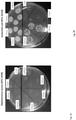
- Example 2 shows an antimicrobial effect against Staphylococcus aureus and Escherichia coli, as reported in Figures 2A and 2B .
- Figures 2A and 2B show two petri dishes, each one divided into eight portions. In both Figures 2A and 2B , each one of the eight portions of the petri dishes corresponds to a different concentration of co-polymer tested. As can be observed from Figures 2A and 2B , the tested concentrations of the quaternized co-polymer of Example 2 were: 0.0195 g/L, 0.039 g/L, 0.078 g/L, 0.156 g/L, 0.3125 g/L, 0.625 g/L, 1.25 g/L and 2.5 g/L.
- the antimicrobial effect on Staphylococcus aureus is achieved even with very low concentrations of the co-polymer (starting from 0.0195 g/L) and the effect on Escherichia coli starts from 1.25 g/L and is very satisfying at 2.5 g/L.
Landscapes
- Chemical & Material Sciences (AREA)
- Chemical Kinetics & Catalysis (AREA)
- Engineering & Computer Science (AREA)
- Textile Engineering (AREA)
- Life Sciences & Earth Sciences (AREA)
- Organic Chemistry (AREA)
- Health & Medical Sciences (AREA)
- General Chemical & Material Sciences (AREA)
- Medicinal Chemistry (AREA)
- Polymers & Plastics (AREA)
- Wood Science & Technology (AREA)
- Biochemistry (AREA)
- Microbiology (AREA)
- Materials Engineering (AREA)
- Plant Pathology (AREA)
- Agronomy & Crop Science (AREA)
- Pest Control & Pesticides (AREA)
- Dentistry (AREA)
- General Health & Medical Sciences (AREA)
- Zoology (AREA)
- Environmental Sciences (AREA)
- Polyurethanes Or Polyureas (AREA)
- Treatments For Attaching Organic Compounds To Fibrous Goods (AREA)
- Agricultural Chemicals And Associated Chemicals (AREA)
Description
- The present invention relates to an aqueous composition for providing an anti-microbial and an anti-pilling effect to textiles and for improving dye uptake to textiles. The invention also relates to novel co-polymers to be used according to the invention and to novel textiles.
- Antimicrobial, especially antibacterial textiles are known in the art, which are usually prepared by applying antimicrobial substances to said textiles or to yarns. Said antimicrobial substances must of course be non-toxic and non-allergenic to human skin.
- Currently antimicrobial substances are generally selected from quaternary ammonium compounds (QACs), triclosan, metal ions, oxides, some inorganic compounds and salts (such as Ag, TiO2, Cu, Ni, Pd, Ag(I), Pd(II) complexes) and natural polymers (such as chitosan, chitin).
- Among above mentioned compounds QACs are widely used, for instance on cotton, polyester, nylon and wool. The antimicrobial effect of QAC's highly depends on length of alkyl chain and the number of cationic ammonium groups.
- It is easy to understand that the applied antimicrobial substance must show a strong attachment to textiles especially because for some industrial textiles manufacturing process, such as denim, washing is an inevitable stage of garment production.
- At present, the available antimicrobial substances do not meet the essential stability requirement and easily leach from textile surfaces and/or show hydrolytic instability and/or decrease their antimicrobial activity over time and/or make the tensile strength of the textiles decrease.
- Kazanc et al. (Marmara Journal of Pure and Applied Sciences, 2015, Special issue-I:49-52) disclose polyurethanes obtained by co-polymerization of monomers bearing hydroxy functions and monomers bearing quaternized tertiary amine moieties, and the subsequent cross-linking of the hydroxy functions present in the co-polymer with isocyanates to form polyurethane films. Said films are applied onto non-dyed indigo fabrics to the surface of which they adhere by positive-negative charge interaction between the quaternized ammonium functions and the negatively charged indigo molecules. Said interaction however is weak and the applied coating leaches away upon use and washing.
- Pilling is a common flaw of textiles caused for instance by wear and washing, which provoke the loosing of the fibers over time. Pilling represents an important problem to be solved in the textile field.
-
EP1354935 describes a detergent composition having at least one surfactant and a copolymer having amine functionality. The copolymers are at least partially neutralized to present a balance between hydrophobicity and cationic character. The described detergent composition is aimed to provide color protection and anti-pill properties in laundry applications. - There is therefore a need for novel antimicrobial substances which overcome the shortcomings of the prior art, such as those disclosed above and, hopefully, provide the textiles with further interesting and useful properties, such as anti-pilling effect and others.
- It is a first object of the invention to provide the use of an aqueous composition for providing an anti-microbial and an anti-pilling effect and for improving dye uptake to textiles, by means of a treatment with known and novel co-polymers and diisocyanates.
- According to one of its aspects, the present invention relates to the use of an aqueous composition for providing an anti-microbial and an anti-pilling effect and for improving dye uptake to a textile, said use comprising:
- (i) treating said textile with an aqueous solution comprising
- a) at least one co-polymer made of a monomer of general formula (I)

and a monomer of general formula (II)
wherein- X is, each independently selected from the following (A) or (B) chains


- the stars indicate the bonds linked to the oxygen and nitrogen atoms in the monomers of formula (I) and formula (II);
- n is, each independently, an integer from 1 to 10; and
- Alk is a C1-C4 alkyl group;
and - X is, each independently selected from the following (A) or (B) chains
- b) at least one aliphatic or cycloaliphatic diisocyanate;
and
- a) at least one co-polymer made of a monomer of general formula (I)
- (ii) optionally drying and/or fixing said textile.
- According to the use of the invention, the treatment of a textile with the components (a) and (b) above forms an urethane bridge between the free hydroxy groups in the monomer of general formula (II) and the free hydroxy groups present in said textile, as shown in
Figure 1 . - The term "Alk" herein indicates a linear or branched, saturated C1-C4 alkyl group, preferably a linear alkyl group, more preferably a methyl or an ethyl group, methyl being particularly preferred.
- According to a preferred embodiment, n is an integer from 1 to 8, for instance 1, 2, 3 or 4, more preferably n is 1 or 2, advantageously n is 1.
- The expression "wherein tertiary amino groups in formula (I) are optionally partially quaternized with halo-long chain alkyl groups" means that quaternized ammonium groups may be present in the co-polymer which is achieved by reaction of the co-polymer with halo-long chain alkyl groups, so that the resulting monomer of formula (I) is a monomer of formula (I')

- The expression "aliphatic or cycloaliphatic diisocyanate" is self evident for the skilled in the art, and herein preferably includes hexamethylene diisocyanate, isophorone diisocyanate and methylene-bis(4-cyclohexylisocyanate), hexamethylene diisocyanate being particularly preferred. Other diisocyanates may however be used according to the invention, provided that they are able to create an urethane bridge reacting with the hydroxy groups of the co-polymer and the hydroxy groups of the textile.
- According to the invention, the diisocyanate may be a blocked diisocyanate, such as a diisocyanate blocked with dimethyl pyrazole, caprolactame, butanone oxime, 1,2-pyrazole, 1,2,4-triazole, diisopropylamine, 3,5-dimethylpyrazole and diethyl malonate. Blocked diisocyanate are known in the art and the skilled man is perfectly able to select the appropriate one to carry out the invention.
- The above mentioned monomers and compounds are known to the art, or they can be prepared according to known and conventional processes.
- The term "textile" herein indicates any material suitable to prepare fabrics and garments, and includes fibers, filaments, yarns, fabrics, ready for dyeing fabrics and any textile articles, such as for instance garments, clothes and fabric based articles. The expression "ready for dyeing fabrics" means a fabric which has undergone the desizing, mercerization (or bleaching) and washing steps.
- According to a preferred embodiment, the textile of the invention are indigo textiles, such as denim.
- According to a preferred embodiment, the monomer of formula (I)/monomer of formula (II) molar ratio is about 95-85/5-15, preferably about 90/10.
- According to a preferred embodiment, 20-40% of the tertiary amino groups are quaternized in the co-polymer, most preferably about 30%.
- Preferably only one type of monomer of formula (I) and only one type of monomer of formula (II) are present in the co-polymer.
- Preferably only one type of diisocyanate is used according to the invention.
- According to a preferred embodiment, the invention relates to the use of an aqueous composition for providing an anti-microbial and an anti-pilling effect to a textile, such as above defined, said use comprising coating said textile with an aqueous solution comprising
- a') at least a co-polymer of 2-(dimethylamino)ethyl methacrylate (DMAEMA) and 2-hydroxyethyl methacrylate (HEMA) said co-polymer, optionally being quaternized with halo-long chain alkyl groups; and
- b') at least one aliphatic or cycloaliphatic diisocyanate;
- to form a urethane bridge between the free hydroxy groups in HEMA and the free hydroxy groups present in said textile.
- DMAEMA has the following chemical formula (I')

- HEMA has the following chemical formula (II')

- According to a preferred embodiment, the DMAEMA/HEMA molar ratio is about 95-85/5-15, preferably about 90/10.
- According to a preferred embodiment, 20-40% of the tertiary amino groups are quaternized as disclosed above, most preferably about 30%.
- The above preferred embodiments above disclosed also apply to DMAEMA and HEMA above.
- Besides the co-polymers (a) and the diisocyanates (b) as above defined, the aqueous solution used according to the invention (herein also "coating composition") may further comprise other components, such as for instance, wetting agents and thickeners, such as for instance commercial wetting agents, i.a. those presently marketed under the commercial names Leonil KS, Mersitol 2334 AQ, Mercerol QWLF which are preferably used about 1%(vol) with respect to the total volume of the solution and/or commercial thickeners such as those presently marketed under the commercial names Pirusulan DCA 24 ST, Pirusulan DCA 130 which are used to adjust the viscosity preferably between 20-24 d.cP.
- The term "coating" herein indicates any possible application of a solution on a textile and includes, but is not limited to, padding, dipping, printing and the like.
- After the application of an aqueous solution above to the textile, the coated fabric is dried, for instance by heating, the temperature depending on the type of textile. For instance, for denim, the drying step may be made at 100-160°C, such as 150°C, for some minutes. The coated textile may also be fixed, for instance at higher temperatures, such as 170-190°C for one or more minutes.
- According to a preferred embodiment, the co-polymer concentration in the aqueous solution is from about 2 to about 15 g/L.
- With the use of the invention, it was surprisingly found that when the aqueous solution comprising the co-polymer (a) and the diisocyanate (b) (or (a') and (b')), as above defined, is applied to a textile, the diisocyanate molecule reacts either with the hydroxy groups present in the co-polymer and the hydroxy groups present on the textile surface, thus creating urethane bridges which covalently bind the co-polymer to the textile.
- It results a stable co-polymer coating on the textile, which does not leach even after multiple washings (both industrial, such as stone wash and home laundry washings). This co-polymer coating provides for very interesting effects, such as an anti-microbial effect, thanks to the presence of quaternized ammonium groups, and also anti-pilling effect.
- It has also been observed that the co-polymer coating of the invention allows to obtain darker shades which can be obtained thanks to an increased dye uptake activated by the co-polymer coating.
- The reaction for the preparation of the co-polymer of the invention may be carried out according to Kazanc et al., Marmara Journal of Pure and Applied Sciences, 2015, Special issue-I:49-52.
- A possible alternative process is disclosed in the Experimental Section which follows. According to another of its aspects, the invention relates to novel co-polymers made of DMAEMA and HEMA, characterized in that the molar DMAEMA/HEMA ratio is 95-85/5-15, preferably about 90/10, and 20-40% of the tertiary amino groups are quaternized with a substituent (C) as above defined, most preferably about 30%. According to another of its aspects, the invention relates to the use of an aqueous solution comprising at least one co-polymer as herein defined, including novel co-polymers of the invention and at least one aliphatic or cycloaliphatic diisocyanate as herein defined in the coating of textiles according to the invention.
- According to another of its aspects, the invention relates to the use of an aqueous solution comprising at least one co-polymer as herein defined, including novel co-polymers of the invention and at least one aliphatic or cycloaliphatic diisocyanate as herein defined, (herein also "coating composition") for providing an anti-microbial and anti-pilling effect to textiles, as herein defined.
- According to another of its aspects, the invention relates to the use of an aqueous solution comprising at least one co-polymer as herein defined, including novel co-polymers of the invention and at least one aliphatic or cycloaliphatic diisocyanate as herein defined, for improving dye uptake of a textile as herein defined, so that darker shades can be obtained. Preferably, the textile is a denim.
- According to another of its aspects, the invention relates to textiles, preferably denim, fabrics and garments, yarns treated according to the invention.
- Details are given in the Experimental Section which follows.
- The anti-pilling effect has been evaluated by experts with a method for anti-pilling effect detection and measurement. In this method, the coating composition showed very interesting results.
- The following Experimental Section illustrates representative embodiments of the invention, without limiting it.
-
-
Figure 1 shows a schematic representation of the reaction which occurs according to the invention, wherein n and m represent the number of monomers present in the co-polymer. -
Figures 2A and 2B show the anti-microbial effect of a representative quaternized co-polymer of the invention. - A monomer solution containing 100 mmol HEMA and 900 mmol DMAEMA is prepared and 10% of (v/v) said solution is added the reactor that is set 70 °C. Then, 50 ml of distilled water is added in the reactor and stirred while monomer mixture, ammonium persulfate (22 g of ammonium persulfate is dissolved in 100 ml of water), and sodium metabisulfate (19 g sodium metabilsulfate is dissolved in 100 ml of water) solutions are being fed with the 2 ml/min rate. The co-polymer is collected from the reactor and washed with hot water (70-80 °C) to remove unreacted monomer, ammonium persulfate and sodium metabisulfite.
- 25-30% of DMAEMA residues present in the co-polymer of Example 1 were quaternized with alkyl halides by following procedure: 50 g of the co-polymer is dissolved in 300 ml dry ethanol, and 75 mmol of an alkyl halide, preferably 1-bromodecane, is added, then the solution is stirred for 24 hour at room temperature. Ethanol is evaporated to collect the quaternized co-polymer by a conventional work-up step.
- A coating solution is prepared with water, the quaternized co-polymer of Example 2, hexamethylene diisocyanate, a wetting agent and a thickener according to the following: 2.5 g of quaternized co-polymer (10% of HEMA in co-polymer) is dissolved in 1 L of water with 50-75 mg of the diisocyanate, 6-8 g of wetting agent, and an amount of thickener which allows a 20-24 d.cP viscosity. The solution is then applied onto the fabric. This can be made for instance by coating or impregnation. In coating method, it is useful to add a thickener to the solution in order to have desired viscosity, whereas in impregnation process a thickener is not necessary. A sanforizing machine can also be used for applying the solution to the fabric. The coated fabric is dried at 150 °C for about 3 minutes and subsequently fixed at 170°C for about 1 minute.
- The anti-bacterial effects of the co-polymer of Example 2 and the fabrics coated therewith were tested according to ASTM E2149-01 on:
- ATCC 35218 (Escherichia coli)
- ATCC 6538 (Staphylococcus aureus)
- The results showed that, the quaternized co-polymer of Example 2 shows an antimicrobial effect against Staphylococcus aureus and Escherichia coli, as reported in
Figures 2A and 2B . -
Figures 2A and 2B show two petri dishes, each one divided into eight portions. In bothFigures 2A and 2B , each one of the eight portions of the petri dishes corresponds to a different concentration of co-polymer tested. As can be observed fromFigures 2A and 2B , the tested concentrations of the quaternized co-polymer of Example 2 were: 0.0195 g/L, 0.039 g/L, 0.078 g/L, 0.156 g/L, 0.3125 g/L, 0.625 g/L, 1.25 g/L and 2.5 g/L. - As it can be seen from the Figures, the antimicrobial effect on Staphylococcus aureus is achieved even with very low concentrations of the co-polymer (starting from 0.0195 g/L) and the effect on Escherichia coli starts from 1.25 g/L and is very satisfying at 2.5 g/L.
Claims (13)
- Use of an aqueous solution
comprisinga) at least one co-polymer made of a monomer of general formula (I)
and a monomer of general formula (II)
wherein- X is, each independently selected from the following (A) or (B) chains
 - the stars indicate the bonds linked to the oxygen and nitrogen atoms in the monomers of formula (I) and formula (II);- n is, each independently, an integer from 1 to 10; and- Alk is a C1-C4 alkyl group;and wherein the tertiary amino groups in formula (I) are partially quaternized with halo-long chain alkyl groups;
andb) at least one aliphatic or cycloaliphatic diisocyanate; to provide an anti-microbial, anti-pilling effect to a textile and for improving dye uptake of a textile. - The use of claim 1, characterized in that Alk is a linear or branched, saturated C1-C4 alkyl group, preferably a methyl group.
- The use of claim 1 or 2, characterized in that n is an integer from 1 to 8, preferably 1.
- The use of any one of claims 1 to 3, characterized in that the nitrogen atom in formula (I) is quaternized to provide a monomer of formula (I')

- The use of any one of claims 1 to 4, characterized in that said aliphatic or cycloaliphatic diisocyanate is selected from hexamethylene diisocyanate, isophorone diisocyanate, methylene-bis(4-cyclohexylisocyanate) and blocked aliphatic or cycloaliphatic diisocyanates.
- The use of any one of claims 1 to 5, characterized in that said co-polymer is made of 2-(dimethylamino)ethyl methacrylate (DMAEMA) and 2-hydroxyethyl methacrylate (HEMA).
- The use of any one of claims 1 to 6, characterized in that said monomer of formula (I)/monomer of formula (II) molar ratio is about 95-85/5-15, preferably about 90/10.
- The use of any one of claims 1 to 7, characterized in that 20-40% of the tertiary amino groups are quaternized in the co-polymer, most preferably about 30%.
- The use of any one of claims 1 to 8, characterized in that said textile is selected from any material suitable to prepare fabrics and garments, yarns, ready for dyeing fabrics, any textile articles, and garment articles.
- The use of claim 9, characterized in that said textiles are denim.
- Use of a co-polymer of DMAEMA and HEMA, characterized in that the molar DMAEMA/HEMA ratio is 95-85/5-15, preferably about 90/10, and 20-40% of the tertiary amino groups are quaternized as defined in claim 4, most preferably about 30%, to provide an anti-microbial, anti-pilling effect to a textile and for improving dye uptake of a textile.
- Use of at least one co-polymer as defined in claims 1 to 8, to provide anti-microbial, anti-pilling effect to a textile and for improving dye uptake of a textile.
- The use according to claim 12, characterized in that said textile is denim.
Priority Applications (11)
| Application Number | Priority Date | Filing Date | Title |
|---|---|---|---|
| PT181769167T PT3581706T (en) | 2018-06-11 | 2018-06-11 | USE OF COPOLYMERS TO PROVIDE AN ANTIMICROBIAL AND ANTI-BOLLS EFFECT AND TO IMPROVE DYE ABSORPTION IN TEXTILES |
| PL18176916.7T PL3581706T3 (en) | 2018-06-11 | 2018-06-11 | The use of a copolymer to give textiles an antimicrobial and anti-pilling effect and to improve the absorption of dye by textiles |
| DK18176916.7T DK3581706T3 (en) | 2018-06-11 | 2018-06-11 | USE OF COPOLYMERS TO PROVIDE ANTIMICROBIAL AND ANTIPILLING EFFECTS AND TO IMPROVE THE COLOR RECOVERY OF TEXTILES |
| ES18176916T ES2914317T3 (en) | 2018-06-11 | 2018-06-11 | Use of copolymers to provide an antimicrobial and antipilling effect and to improve dye absorption in textiles |
| EP18176916.7A EP3581706B1 (en) | 2018-06-11 | 2018-06-11 | Use of co-polymers for providing an anti-microbial and an anti-pilling effect and for improving dye uptake to textiles |
| BR102019011405-3A BR102019011405B1 (en) | 2018-06-11 | 2019-06-03 | METHOD FOR PROVIDING AN ANTIMICROBIAL AND ANTI-PILLING EFFECT AND FOR IMPROVING DYE ABSORPTION OF A TEXTILE PRODUCT |
| US16/434,907 US11549212B2 (en) | 2018-06-11 | 2019-06-07 | Method for providing an anti-microbial and an anti-pilling effect and for improving dye uptake to textiles, novel co-polymers and textiles |
| CN201910497553.5A CN110578255B (en) | 2018-06-11 | 2019-06-10 | Methods, novel copolymers and textiles to provide antimicrobial and anti-pilling effects and improved dye absorption to textiles |
| JP2019107606A JP7826591B2 (en) | 2018-06-11 | 2019-06-10 | Textiles, new copolymers/method for imparting antibacterial properties to textiles |
| PCT/EP2019/065056 WO2019238590A1 (en) | 2018-06-11 | 2019-06-10 | Method for providing an anti-microbial and an anti-pilling effect and for improving dye uptake to textiles, novel co-polymers and textiles |
| JP2025280311A JP2026048979A (en) | 2018-06-11 | 2025-12-24 | Methods for imparting antibacterial and anti-pilling effects to textiles and novel copolymers/textiles, and methods for improving the incorporation of dyes into textiles and novel copolymers/textiles. |
Applications Claiming Priority (1)
| Application Number | Priority Date | Filing Date | Title |
|---|---|---|---|
| EP18176916.7A EP3581706B1 (en) | 2018-06-11 | 2018-06-11 | Use of co-polymers for providing an anti-microbial and an anti-pilling effect and for improving dye uptake to textiles |
Publications (2)
| Publication Number | Publication Date |
|---|---|
| EP3581706A1 EP3581706A1 (en) | 2019-12-18 |
| EP3581706B1 true EP3581706B1 (en) | 2022-03-16 |
Family
ID=62748699
Family Applications (1)
| Application Number | Title | Priority Date | Filing Date |
|---|---|---|---|
| EP18176916.7A Active EP3581706B1 (en) | 2018-06-11 | 2018-06-11 | Use of co-polymers for providing an anti-microbial and an anti-pilling effect and for improving dye uptake to textiles |
Country Status (9)
| Country | Link |
|---|---|
| US (1) | US11549212B2 (en) |
| EP (1) | EP3581706B1 (en) |
| JP (2) | JP7826591B2 (en) |
| CN (1) | CN110578255B (en) |
| DK (1) | DK3581706T3 (en) |
| ES (1) | ES2914317T3 (en) |
| PL (1) | PL3581706T3 (en) |
| PT (1) | PT3581706T (en) |
| WO (1) | WO2019238590A1 (en) |
Families Citing this family (2)
| Publication number | Priority date | Publication date | Assignee | Title |
|---|---|---|---|---|
| JP2022076349A (en) * | 2020-11-09 | 2022-05-19 | 日華化学株式会社 | Antibacterial and antiviral agent composition, article, and method for producing article |
| CN116987223B (en) * | 2022-04-26 | 2026-06-05 | 华南理工大学 | A citronellol-based antibacterial polymer, its preparation method and application |
Family Cites Families (10)
| Publication number | Priority date | Publication date | Assignee | Title |
|---|---|---|---|---|
| JPS5761050A (en) * | 1980-10-01 | 1982-04-13 | Seiko Kagaku Kogyo Co Ltd | Aqueous dispersion of urethane-modified vinyl polymer and preparation of same |
| JP2000178475A (en) * | 1998-12-15 | 2000-06-27 | Nisseki Kk | Antibacterial deodorant coating agent |
| JP3587803B2 (en) * | 2001-07-05 | 2004-11-10 | 日華化学株式会社 | Water repellent processing method for cellulosic fiber material |
| US6746711B2 (en) * | 2002-01-29 | 2004-06-08 | Clariant Gmbh | Polymers with biocidal action, process for their preparation and their use |
| US6924259B2 (en) * | 2002-04-17 | 2005-08-02 | National Starch And Chemical Investment Holding Corporation | Amine copolymers for textile and fabric protection |
| WO2008000429A2 (en) * | 2006-06-26 | 2008-01-03 | Novartis Ag | Polymers with antimicrobial activity containing quaternary ammonium groups |
| JP2008115474A (en) * | 2006-10-31 | 2008-05-22 | Servicetec Japan Corp | Improver for color fastness and method for producing fiber dyed material |
| JP5798979B2 (en) | 2012-05-29 | 2015-10-21 | 株式会社J−ケミカル | Functional network polymer composition |
| US20170065013A1 (en) * | 2015-08-17 | 2017-03-09 | Salman Choudhry | Denim fabric, jeans, and shirts involving self-cleaning, odorless, and/or eco-friendly features, as well as methods for manufacturing same |
| CN106480741A (en) * | 2016-09-22 | 2017-03-08 | 广州大学 | A kind of method for sorting of multifunctional textile product |
-
2018
- 2018-06-11 EP EP18176916.7A patent/EP3581706B1/en active Active
- 2018-06-11 ES ES18176916T patent/ES2914317T3/en active Active
- 2018-06-11 DK DK18176916.7T patent/DK3581706T3/en active
- 2018-06-11 PL PL18176916.7T patent/PL3581706T3/en unknown
- 2018-06-11 PT PT181769167T patent/PT3581706T/en unknown
-
2019
- 2019-06-07 US US16/434,907 patent/US11549212B2/en active Active
- 2019-06-10 WO PCT/EP2019/065056 patent/WO2019238590A1/en not_active Ceased
- 2019-06-10 CN CN201910497553.5A patent/CN110578255B/en active Active
- 2019-06-10 JP JP2019107606A patent/JP7826591B2/en active Active
-
2025
- 2025-12-24 JP JP2025280311A patent/JP2026048979A/en active Pending
Non-Patent Citations (1)
| Title |
|---|
| None * |
Also Published As
| Publication number | Publication date |
|---|---|
| JP2026048979A (en) | 2026-03-17 |
| PT3581706T (en) | 2022-05-16 |
| US11549212B2 (en) | 2023-01-10 |
| JP7826591B2 (en) | 2026-03-10 |
| PL3581706T3 (en) | 2022-08-01 |
| WO2019238590A1 (en) | 2019-12-19 |
| JP2020023772A (en) | 2020-02-13 |
| DK3581706T3 (en) | 2022-05-30 |
| US20190375869A1 (en) | 2019-12-12 |
| BR102019011405A2 (en) | 2019-12-24 |
| ES2914317T3 (en) | 2022-06-09 |
| CN110578255A (en) | 2019-12-17 |
| CN110578255B (en) | 2024-01-02 |
| EP3581706A1 (en) | 2019-12-18 |
Similar Documents
| Publication | Publication Date | Title |
|---|---|---|
| JP2026048979A (en) | Methods for imparting antibacterial and anti-pilling effects to textiles and novel copolymers/textiles, and methods for improving the incorporation of dyes into textiles and novel copolymers/textiles. | |
| JP4768604B2 (en) | Fabrics topically applied with a silver-containing finish containing a crosslinker system for improved high temperature wash durability | |
| US20030056297A1 (en) | Multifunctional textiles | |
| CN101568261B (en) | Antimicrobial composition for finishing textiles | |
| EP3543396B1 (en) | Organic antimicrobial textile | |
| JP2006508277A (en) | Fabrics with partially applied silver finishes exhibiting reduced discoloration tendency | |
| CN1054413C (en) | Processing method for antisectic and deodorant textile material and its products | |
| US9493475B2 (en) | Textile treatment compounds and compositions | |
| JP2006508276A (en) | Fabrics with topically applied silver-based finishes containing a crosslinker system for improved laundry durability | |
| JP2020023772A6 (en) | Method for imparting antibacterial effect and anti-pilling effect to textiles, novel copolymers / textiles, and method for improving dye incorporation into textiles, novel copolymers / textiles | |
| HK40020055B (en) | Use of co-polymers for providing an anti-microbial and an anti-pilling effect and for improving dye uptake to textiles | |
| HK40020055A (en) | Use of co-polymers for providing an anti-microbial and an anti-pilling effect and for improving dye uptake to textiles | |
| US20030226212A1 (en) | Textile mill applications of cellulosic based polymers to provide appearance and integrity benefits to fabrics during laundering and in-wear | |
| BR102019011405B1 (en) | METHOD FOR PROVIDING AN ANTIMICROBIAL AND ANTI-PILLING EFFECT AND FOR IMPROVING DYE ABSORPTION OF A TEXTILE PRODUCT | |
| US20030226213A1 (en) | Textile mill applications of cellulosic based polymers to provide appearance and integrity benefits to fabrics during laundering and in-wear | |
| Soares et al. | Optimization of application procedure for fixation of monocationic salt onto cotton with antibacterial activity | |
| TW200521287A (en) | Pretreatment of cellulosic textile | |
| CA3216049A1 (en) | Method for conferring durable water repellence to woven or non-woven fabric and water repellent composition | |
| CN119677909A (en) | Antimicrobial polymer coatings on textiles | |
| BE1021509B1 (en) | TEXTILE TREATMENT COMPOUNDS AND COMPOSITIONS | |
| CN115819717A (en) | Washable daily softener, and preparation method and application thereof | |
| HK40007460A (en) | Organic antimicrobial textile | |
| NZ234114A (en) | A crosslinkable composition for antifelting wool and a process using it | |
| HK1135284A (en) | Antimicrobial composition for finishing textiles | |
| HK1135741B (en) | Method for providing textiles with desensitised silver components |
Legal Events
| Date | Code | Title | Description |
|---|---|---|---|
| PUAI | Public reference made under article 153(3) epc to a published international application that has entered the european phase |
Free format text: ORIGINAL CODE: 0009012 |
|
| STAA | Information on the status of an ep patent application or granted ep patent |
Free format text: STATUS: THE APPLICATION HAS BEEN PUBLISHED |
|
| AK | Designated contracting states |
Kind code of ref document: A1 Designated state(s): AL AT BE BG CH CY CZ DE DK EE ES FI FR GB GR HR HU IE IS IT LI LT LU LV MC MK MT NL NO PL PT RO RS SE SI SK SM TR |
|
| AX | Request for extension of the european patent |
Extension state: BA ME |
|
| STAA | Information on the status of an ep patent application or granted ep patent |
Free format text: STATUS: REQUEST FOR EXAMINATION WAS MADE |
|
| RBV | Designated contracting states (corrected) |
Designated state(s): AL AT BE BG CH CY CZ DE DK EE ES FI FR GB GR HR HU IE IS IT LI LT LU LV MC MK MT NL NO PL PT RO RS SE SI SK SM TR |
|
| 17P | Request for examination filed |
Effective date: 20200611 |
|
| REG | Reference to a national code |
Ref country code: HK Ref legal event code: DE Ref document number: 40020055 Country of ref document: HK |
|
| GRAP | Despatch of communication of intention to grant a patent |
Free format text: ORIGINAL CODE: EPIDOSNIGR1 |
|
| STAA | Information on the status of an ep patent application or granted ep patent |
Free format text: STATUS: GRANT OF PATENT IS INTENDED |
|
| INTG | Intention to grant announced |
Effective date: 20201214 |
|
| GRAJ | Information related to disapproval of communication of intention to grant by the applicant or resumption of examination proceedings by the epo deleted |
Free format text: ORIGINAL CODE: EPIDOSDIGR1 |
|
| STAA | Information on the status of an ep patent application or granted ep patent |
Free format text: STATUS: REQUEST FOR EXAMINATION WAS MADE |
|
| INTC | Intention to grant announced (deleted) | ||
| STAA | Information on the status of an ep patent application or granted ep patent |
Free format text: STATUS: EXAMINATION IS IN PROGRESS |
|
| 17Q | First examination report despatched |
Effective date: 20210528 |
|
| GRAS | Grant fee paid |
Free format text: ORIGINAL CODE: EPIDOSNIGR3 |
|
| STAA | Information on the status of an ep patent application or granted ep patent |
Free format text: STATUS: GRANT OF PATENT IS INTENDED |
|
| GRAP | Despatch of communication of intention to grant a patent |
Free format text: ORIGINAL CODE: EPIDOSNIGR1 |
|
| INTG | Intention to grant announced |
Effective date: 20220104 |
|
| GRAA | (expected) grant |
Free format text: ORIGINAL CODE: 0009210 |
|
| STAA | Information on the status of an ep patent application or granted ep patent |
Free format text: STATUS: THE PATENT HAS BEEN GRANTED |
|
| AK | Designated contracting states |
Kind code of ref document: B1 Designated state(s): AL AT BE BG CH CY CZ DE DK EE ES FI FR GB GR HR HU IE IS IT LI LT LU LV MC MK MT NL NO PL PT RO RS SE SI SK SM TR |
|
| REG | Reference to a national code |
Ref country code: GB Ref legal event code: FG4D |
|
| RIN1 | Information on inventor provided before grant (corrected) |
Inventor name: ZEYREK, MUSTAFA Inventor name: KAZANC, SEMIH Inventor name: ZENGI, LEYLA Inventor name: KAPLAN, GOEKHAN |
|
| REG | Reference to a national code |
Ref country code: CH Ref legal event code: EP |
|
| REG | Reference to a national code |
Ref country code: DE Ref legal event code: R096 Ref document number: 602018032216 Country of ref document: DE |
|
| REG | Reference to a national code |
Ref country code: IE Ref legal event code: FG4D |
|
| REG | Reference to a national code |
Ref country code: AT Ref legal event code: REF Ref document number: 1475957 Country of ref document: AT Kind code of ref document: T Effective date: 20220415 |
|
| REG | Reference to a national code |
Ref country code: PT Ref legal event code: SC4A Ref document number: 3581706 Country of ref document: PT Date of ref document: 20220516 Kind code of ref document: T Free format text: AVAILABILITY OF NATIONAL TRANSLATION Effective date: 20220506 |
|
| REG | Reference to a national code |
Ref country code: DK Ref legal event code: T3 Effective date: 20220523 |
|
| REG | Reference to a national code |
Ref country code: NL Ref legal event code: FP |
|
| REG | Reference to a national code |
Ref country code: ES Ref legal event code: FG2A Ref document number: 2914317 Country of ref document: ES Kind code of ref document: T3 Effective date: 20220609 |
|
| REG | Reference to a national code |
Ref country code: SE Ref legal event code: TRGR |
|
| REG | Reference to a national code |
Ref country code: NO Ref legal event code: T2 Effective date: 20220316 |
|
| REG | Reference to a national code |
Ref country code: LT Ref legal event code: MG9D |
|
| PG25 | Lapsed in a contracting state [announced via postgrant information from national office to epo] |
Ref country code: RS Free format text: LAPSE BECAUSE OF FAILURE TO SUBMIT A TRANSLATION OF THE DESCRIPTION OR TO PAY THE FEE WITHIN THE PRESCRIBED TIME-LIMIT Effective date: 20220316 Ref country code: LT Free format text: LAPSE BECAUSE OF FAILURE TO SUBMIT A TRANSLATION OF THE DESCRIPTION OR TO PAY THE FEE WITHIN THE PRESCRIBED TIME-LIMIT Effective date: 20220316 Ref country code: HR Free format text: LAPSE BECAUSE OF FAILURE TO SUBMIT A TRANSLATION OF THE DESCRIPTION OR TO PAY THE FEE WITHIN THE PRESCRIBED TIME-LIMIT Effective date: 20220316 Ref country code: BG Free format text: LAPSE BECAUSE OF FAILURE TO SUBMIT A TRANSLATION OF THE DESCRIPTION OR TO PAY THE FEE WITHIN THE PRESCRIBED TIME-LIMIT Effective date: 20220616 |
|
| REG | Reference to a national code |
Ref country code: AT Ref legal event code: MK05 Ref document number: 1475957 Country of ref document: AT Kind code of ref document: T Effective date: 20220316 |
|
| PG25 | Lapsed in a contracting state [announced via postgrant information from national office to epo] |
Ref country code: LV Free format text: LAPSE BECAUSE OF FAILURE TO SUBMIT A TRANSLATION OF THE DESCRIPTION OR TO PAY THE FEE WITHIN THE PRESCRIBED TIME-LIMIT Effective date: 20220316 Ref country code: GR Free format text: LAPSE BECAUSE OF FAILURE TO SUBMIT A TRANSLATION OF THE DESCRIPTION OR TO PAY THE FEE WITHIN THE PRESCRIBED TIME-LIMIT Effective date: 20220617 Ref country code: FI Free format text: LAPSE BECAUSE OF FAILURE TO SUBMIT A TRANSLATION OF THE DESCRIPTION OR TO PAY THE FEE WITHIN THE PRESCRIBED TIME-LIMIT Effective date: 20220316 |
|
| PG25 | Lapsed in a contracting state [announced via postgrant information from national office to epo] |
Ref country code: SM Free format text: LAPSE BECAUSE OF FAILURE TO SUBMIT A TRANSLATION OF THE DESCRIPTION OR TO PAY THE FEE WITHIN THE PRESCRIBED TIME-LIMIT Effective date: 20220316 Ref country code: SK Free format text: LAPSE BECAUSE OF FAILURE TO SUBMIT A TRANSLATION OF THE DESCRIPTION OR TO PAY THE FEE WITHIN THE PRESCRIBED TIME-LIMIT Effective date: 20220316 Ref country code: RO Free format text: LAPSE BECAUSE OF FAILURE TO SUBMIT A TRANSLATION OF THE DESCRIPTION OR TO PAY THE FEE WITHIN THE PRESCRIBED TIME-LIMIT Effective date: 20220316 Ref country code: EE Free format text: LAPSE BECAUSE OF FAILURE TO SUBMIT A TRANSLATION OF THE DESCRIPTION OR TO PAY THE FEE WITHIN THE PRESCRIBED TIME-LIMIT Effective date: 20220316 Ref country code: CZ Free format text: LAPSE BECAUSE OF FAILURE TO SUBMIT A TRANSLATION OF THE DESCRIPTION OR TO PAY THE FEE WITHIN THE PRESCRIBED TIME-LIMIT Effective date: 20220316 Ref country code: AT Free format text: LAPSE BECAUSE OF FAILURE TO SUBMIT A TRANSLATION OF THE DESCRIPTION OR TO PAY THE FEE WITHIN THE PRESCRIBED TIME-LIMIT Effective date: 20220316 |
|
| PG25 | Lapsed in a contracting state [announced via postgrant information from national office to epo] |
Ref country code: IS Free format text: LAPSE BECAUSE OF FAILURE TO SUBMIT A TRANSLATION OF THE DESCRIPTION OR TO PAY THE FEE WITHIN THE PRESCRIBED TIME-LIMIT Effective date: 20220716 Ref country code: AL Free format text: LAPSE BECAUSE OF FAILURE TO SUBMIT A TRANSLATION OF THE DESCRIPTION OR TO PAY THE FEE WITHIN THE PRESCRIBED TIME-LIMIT Effective date: 20220316 |
|
| REG | Reference to a national code |
Ref country code: DE Ref legal event code: R097 Ref document number: 602018032216 Country of ref document: DE |
|
| PLBE | No opposition filed within time limit |
Free format text: ORIGINAL CODE: 0009261 |
|
| STAA | Information on the status of an ep patent application or granted ep patent |
Free format text: STATUS: NO OPPOSITION FILED WITHIN TIME LIMIT |
|
| PG25 | Lapsed in a contracting state [announced via postgrant information from national office to epo] |
Ref country code: MC Free format text: LAPSE BECAUSE OF FAILURE TO SUBMIT A TRANSLATION OF THE DESCRIPTION OR TO PAY THE FEE WITHIN THE PRESCRIBED TIME-LIMIT Effective date: 20220316 |
|
| REG | Reference to a national code |
Ref country code: CH Ref legal event code: PL |
|
| REG | Reference to a national code |
Ref country code: BE Ref legal event code: MM Effective date: 20220630 |
|
| 26N | No opposition filed |
Effective date: 20221219 |
|
| PG25 | Lapsed in a contracting state [announced via postgrant information from national office to epo] |
Ref country code: SI Free format text: LAPSE BECAUSE OF FAILURE TO SUBMIT A TRANSLATION OF THE DESCRIPTION OR TO PAY THE FEE WITHIN THE PRESCRIBED TIME-LIMIT Effective date: 20220316 |
|
| PG25 | Lapsed in a contracting state [announced via postgrant information from national office to epo] |
Ref country code: LU Free format text: LAPSE BECAUSE OF NON-PAYMENT OF DUE FEES Effective date: 20220611 Ref country code: LI Free format text: LAPSE BECAUSE OF NON-PAYMENT OF DUE FEES Effective date: 20220630 Ref country code: IE Free format text: LAPSE BECAUSE OF NON-PAYMENT OF DUE FEES Effective date: 20220611 Ref country code: CH Free format text: LAPSE BECAUSE OF NON-PAYMENT OF DUE FEES Effective date: 20220630 |
|
| PG25 | Lapsed in a contracting state [announced via postgrant information from national office to epo] |
Ref country code: BE Free format text: LAPSE BECAUSE OF NON-PAYMENT OF DUE FEES Effective date: 20220630 |
|
| P01 | Opt-out of the competence of the unified patent court (upc) registered |
Effective date: 20230419 |
|
| PG25 | Lapsed in a contracting state [announced via postgrant information from national office to epo] |
Ref country code: MK Free format text: LAPSE BECAUSE OF FAILURE TO SUBMIT A TRANSLATION OF THE DESCRIPTION OR TO PAY THE FEE WITHIN THE PRESCRIBED TIME-LIMIT Effective date: 20220316 Ref country code: CY Free format text: LAPSE BECAUSE OF FAILURE TO SUBMIT A TRANSLATION OF THE DESCRIPTION OR TO PAY THE FEE WITHIN THE PRESCRIBED TIME-LIMIT Effective date: 20220316 |
|
| PG25 | Lapsed in a contracting state [announced via postgrant information from national office to epo] |
Ref country code: HU Free format text: LAPSE BECAUSE OF FAILURE TO SUBMIT A TRANSLATION OF THE DESCRIPTION OR TO PAY THE FEE WITHIN THE PRESCRIBED TIME-LIMIT; INVALID AB INITIO Effective date: 20180611 |
|
| PG25 | Lapsed in a contracting state [announced via postgrant information from national office to epo] |
Ref country code: MT Free format text: LAPSE BECAUSE OF FAILURE TO SUBMIT A TRANSLATION OF THE DESCRIPTION OR TO PAY THE FEE WITHIN THE PRESCRIBED TIME-LIMIT Effective date: 20220316 |
|
| PGFP | Annual fee paid to national office [announced via postgrant information from national office to epo] |
Ref country code: PL Payment date: 20250523 Year of fee payment: 8 Ref country code: DE Payment date: 20250519 Year of fee payment: 8 |
|
| PGFP | Annual fee paid to national office [announced via postgrant information from national office to epo] |
Ref country code: DK Payment date: 20250625 Year of fee payment: 8 |
|
| PGFP | Annual fee paid to national office [announced via postgrant information from national office to epo] |
Ref country code: NO Payment date: 20250627 Year of fee payment: 8 |
|
| PGFP | Annual fee paid to national office [announced via postgrant information from national office to epo] |
Ref country code: PT Payment date: 20250521 Year of fee payment: 8 |
|
| PGFP | Annual fee paid to national office [announced via postgrant information from national office to epo] |
Ref country code: SE Payment date: 20250627 Year of fee payment: 8 |
|
| PGFP | Annual fee paid to national office [announced via postgrant information from national office to epo] |
Ref country code: ES Payment date: 20250701 Year of fee payment: 8 |
|
| PGFP | Annual fee paid to national office [announced via postgrant information from national office to epo] |
Ref country code: GB Payment date: 20260615 Year of fee payment: 9 |
|
| PGFP | Annual fee paid to national office [announced via postgrant information from national office to epo] |
Ref country code: IT Payment date: 20260609 Year of fee payment: 9 |
|
| PGFP | Annual fee paid to national office [announced via postgrant information from national office to epo] |
Ref country code: NL Payment date: 20260627 Year of fee payment: 9 Ref country code: TR Payment date: 20260525 Year of fee payment: 9 |
|
| PGFP | Annual fee paid to national office [announced via postgrant information from national office to epo] |
Ref country code: FR Payment date: 20260625 Year of fee payment: 9 |