EP3580976B1 - Nichtorthogonaler uplink-mehrfachzugang für schmalbandige maschinenartige kommunikation - Google Patents
Nichtorthogonaler uplink-mehrfachzugang für schmalbandige maschinenartige kommunikation Download PDFInfo
- Publication number
- EP3580976B1 EP3580976B1 EP18751717.2A EP18751717A EP3580976B1 EP 3580976 B1 EP3580976 B1 EP 3580976B1 EP 18751717 A EP18751717 A EP 18751717A EP 3580976 B1 EP3580976 B1 EP 3580976B1
- Authority
- EP
- European Patent Office
- Prior art keywords
- reference signal
- uplink
- regions
- user equipment
- assignment
- Prior art date
- Legal status (The legal status is an assumption and is not a legal conclusion. Google has not performed a legal analysis and makes no representation as to the accuracy of the status listed.)
- Active
Links
Images


Classifications
-
- H—ELECTRICITY
- H04—ELECTRIC COMMUNICATION TECHNIQUE
- H04W—WIRELESS COMMUNICATION NETWORKS
- H04W72/00—Local resource management
- H04W72/12—Wireless traffic scheduling
- H04W72/1263—Mapping of traffic onto schedule, e.g. scheduled allocation or multiplexing of flows
- H04W72/1268—Mapping of traffic onto schedule, e.g. scheduled allocation or multiplexing of flows of uplink data flows
-
- H—ELECTRICITY
- H04—ELECTRIC COMMUNICATION TECHNIQUE
- H04W—WIRELESS COMMUNICATION NETWORKS
- H04W4/00—Services specially adapted for wireless communication networks; Facilities therefor
- H04W4/70—Services for machine-to-machine communication [M2M] or machine type communication [MTC]
-
- H—ELECTRICITY
- H04—ELECTRIC COMMUNICATION TECHNIQUE
- H04L—TRANSMISSION OF DIGITAL INFORMATION, e.g. TELEGRAPHIC COMMUNICATION
- H04L5/00—Arrangements affording multiple use of the transmission path
- H04L5/003—Arrangements for allocating sub-channels of the transmission path
- H04L5/0037—Inter-user or inter-terminal allocation
-
- H—ELECTRICITY
- H04—ELECTRIC COMMUNICATION TECHNIQUE
- H04L—TRANSMISSION OF DIGITAL INFORMATION, e.g. TELEGRAPHIC COMMUNICATION
- H04L5/00—Arrangements affording multiple use of the transmission path
- H04L5/0091—Signalling for the administration of the divided path, e.g. signalling of configuration information
- H04L5/0094—Indication of how sub-channels of the path are allocated
-
- H—ELECTRICITY
- H04—ELECTRIC COMMUNICATION TECHNIQUE
- H04W—WIRELESS COMMUNICATION NETWORKS
- H04W4/00—Services specially adapted for wireless communication networks; Facilities therefor
- H04W4/06—Selective distribution of broadcast services, e.g. multimedia broadcast multicast service [MBMS]; Services to user groups; One-way selective calling services
-
- H—ELECTRICITY
- H04—ELECTRIC COMMUNICATION TECHNIQUE
- H04W—WIRELESS COMMUNICATION NETWORKS
- H04W72/00—Local resource management
- H04W72/20—Control channels or signalling for resource management
- H04W72/23—Control channels or signalling for resource management in the downlink direction of a wireless link, i.e. towards a terminal
-
- H—ELECTRICITY
- H04—ELECTRIC COMMUNICATION TECHNIQUE
- H04L—TRANSMISSION OF DIGITAL INFORMATION, e.g. TELEGRAPHIC COMMUNICATION
- H04L5/00—Arrangements affording multiple use of the transmission path
- H04L5/0001—Arrangements for dividing the transmission path
- H04L5/0003—Two-dimensional division
- H04L5/0005—Time-frequency
- H04L5/0007—Time-frequency the frequencies being orthogonal, e.g. OFDM(A) or DMT
-
- H—ELECTRICITY
- H04—ELECTRIC COMMUNICATION TECHNIQUE
- H04W—WIRELESS COMMUNICATION NETWORKS
- H04W72/00—Local resource management
- H04W72/04—Wireless resource allocation
- H04W72/044—Wireless resource allocation based on the type of the allocated resource
- H04W72/0446—Resources in time domain, e.g. slots or frames
-
- H—ELECTRICITY
- H04—ELECTRIC COMMUNICATION TECHNIQUE
- H04W—WIRELESS COMMUNICATION NETWORKS
- H04W72/00—Local resource management
- H04W72/04—Wireless resource allocation
- H04W72/044—Wireless resource allocation based on the type of the allocated resource
- H04W72/0453—Resources in frequency domain, e.g. a carrier in FDMA
-
- H—ELECTRICITY
- H04—ELECTRIC COMMUNICATION TECHNIQUE
- H04W—WIRELESS COMMUNICATION NETWORKS
- H04W72/00—Local resource management
- H04W72/50—Allocation or scheduling criteria for wireless resources
- H04W72/54—Allocation or scheduling criteria for wireless resources based on quality criteria
- H04W72/542—Allocation or scheduling criteria for wireless resources based on quality criteria using measured or perceived quality
Definitions
- This invention relates generally to narrowband machine type communication and, more specifically, relates to uplink non-orthogonal multiple access for narrowband machine type communication used for the deployment of Internet of Things (IoT) interconnected devices.
- IoT Internet of Things
- IoT Internet of Things
- 3GPP introduced a new feature to support narrowband machine type communications (MTC) called enhanced machine type communication (eMTC).
- MTC narrowband machine type communications
- eMTC enhanced machine type communication
- eMTC provides for low-complexity devices, and supports massive number of devices, with a battery life of 10 years or more, and coverage enhancement of 15 dB.
- eMTC enhancements are being standardized including support for positioning, multicast and voice over LTE (VoLTE). Devices with higher data rates will also be introduced.
- NOMA non-orthogonal multiple access
- PD-NOMA power domain non-orthogonal access
- IDMA interleave division multiple access
- SCMA sparse coded multiple access
- eMTC should support an autonomous or contention-based mode where the UE is able to transmit uplink data packets without any scheduling by the eNB.
- demodulation reference signal (DM-RS) selection may be done at the UE without any coordination from the eNB.
- the UEs will still have a significant chance of choosing either the same cyclic shift or Orthogonal Cover Code (OCC) especially in the high overloading case.
- OCC Orthogonal Cover Code
- SPS semi-persistent scheduling
- MTC machine-type communication
- CE coverage enhancement
- SPS communication may be used in both uplink and downlink transmissions.
- An SPS configuration may include a predefined number of scheduled transmission periods and a CE level, which may be established in either an SPS configuration message or as part of the SPS activation message from a base station.
- a device may identify the CE level of the transmissions and, in some cases, may determine the periodicity of the SPS based on the CE level. Bundled transmissions assigned with SPS may be prioritized with respect to one another or dynamically assigned resources.
- the exemplary embodiments herein describe techniques for uplink non-orthogonal multiple access for narrowband machine type communication used, for example, for the deployment of Internet of Things (IoT) interconnected devices. Additional description of these techniques is presented after a system into which the exemplary embodiments may be used is described.
- IoT Internet of Things
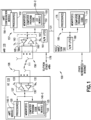
- a user equipment (UE) 110 is in wireless communication with a wireless network 100.
- a UE is a wireless, typically mobile device that can access a wireless network.
- the UE 110 includes one or more processors 120, one or more memories 125, and one or more transceivers 130 interconnected through one or more buses 127.
- Each of the one or more transceivers 130 includes a receiver, Rx, 132 and a transmitter, Tx, 133.
- the one or more buses 127 may be address, data, or control buses, and may include any interconnection mechanism, such as a series of lines on a motherboard or integrated circuit, fiber optics or other optical communication equipment, and the like.
- the one or more transceivers 130 are connected to one or more antennas 128.
- the one or more memories 125 include computer program code 123.
- the UE 110 includes an eMTC module 140, comprising one of or both parts 140-1 and/or 140-2, which may be implemented in a number of ways.
- the eMTC module 140 may be implemented in hardware as eMTC module 140-1, such as being implemented as part of the one or more processors 120.
- the eMTC module 140-1 may be implemented also as an integrated circuit or through other hardware such as a programmable gate array.
- the eMTC module 140 may be implemented as eMTC module 140-2, which is implemented as computer program code 123 and is executed by the one or more processors 120.
- the one or more memories 125 and the computer program code 123 may be configured to, with the one or more processors 120, cause the user equipment 110 to perform one or more of the operations as described herein.
- the UE 110 communicates with eNB 170 via a wireless link 111.
- the eNB (evolved NodeB) 170 is a base station (e.g., for LTE, long term evolution) that provides access by wireless devices such as the UE 110 to the wireless network 100.
- the eNB 170 includes one or more processors 152, one or more memories 155, one or more network interfaces (N/W I/F(s)) 161, and one or more transceivers 160 interconnected through one or more buses 157.
- Each of the one or more transceivers 160 includes a receiver, Rx, 162 and a transmitter, Tx, 163.
- the one or more transceivers 160 are connected to one or more antennas 158.
- the one or more memories 155 include computer program code 153.
- the eNB 170 includes an eMTC Configuration module 150-1, comprising one of or both parts 150-1 and/or ZZZ module 150-2, which may be implemented in a number of ways.
- the eMTC Configuration module 150-1 may be implemented in hardware as eMTC Configuration module 150-1, such as being implemented as part of the one or more processors 152.
- the eMTC Configuration module 150-1 may be implemented also as an integrated circuit or through other hardware such as a programmable gate array.
- the eMTC Configuration module 150-1 may be implemented as ZZZ module 150-2, which is implemented as computer program code 153 and is executed by the one or more processors 152.
- the one or more memories 155 and the computer program code 153 are configured to, with the one or more processors 152, cause the eNB 170 to perform one or more of the operations as described herein.
- the one or more network interfaces 161 communicate over a network such as via the links 176 and 131.
- Two or more eNBs 170 communicate using, e.g., link 176.
- the link 176 may be wired or wireless or both and may implement, e.g., an X2 interface.
- the one or more buses 157 may be address, data, or control buses, and may include any interconnection mechanism, such as a series of lines on a motherboard or integrated circuit, fiber optics or other optical communication equipment, wireless channels, and the like.
- the one or more transceivers 160 may be implemented as a remote radio head (RRH) 195, with the other elements of the eNB 170 being physically in a different location from the RRH, and the one or more buses 157 could be implemented in part as fiber optic cable to connect the other elements of the eNB 170 to the RRH 195.
- RRH remote radio head
- the wireless network 100 may include a network control element (NCE) 190 that may include MME (Mobility Management Entity)/SGW (Serving Gateway) functionality, and which provides connectivity with a further network, such as a telephone network and/or a data communications network (e.g., the Internet).
- the eNB 170 is coupled via a link 131 to the NCE 190.
- the link 131 may be implemented as, e.g., an S1 interface.
- the NCE 190 includes one or more processors 175, one or more memories 171, and one or more network interfaces (N/W I/F(s)) 180, interconnected through one or more buses 185.
- the one or more memories 171 include computer program code 173.
- the one or more memories 171 and the computer program code 173 are configured to, with the one or more processors 175, cause the NCE 190 to perform one or more operations.
- Wireless network 100 may implement network virtualization, which is the process of combining hardware and software network resources and network functionality into a single, software-based administrative entity, a virtual network.
- Network virtualization involves platform virtualization, often combined with resource virtualization.
- Network virtualization is categorized as either external, combining many networks, or parts of networks, into a virtual unit, or internal, providing network-like functionality to software containers on a single system. Note that the virtualized entities that result from the network virtualization are still implemented, at some level, using hardware such as processors 152 or 175 and memories 155 and 171, and also such virtualized entities create technical effects.
- the computer readable memories 125, 155, and 171 may be of any type suitable to the local technical environment and may be implemented using any suitable data storage technology, such as semiconductor based memory devices, flash memory, magnetic memory devices and systems, optical memory devices and systems, fixed memory and removable memory.
- the computer readable memories 125, 155, and 171 may be means for performing storage functions.
- the processors 120, 152, and 175 may be of any type suitable to the local technical environment, and may include one or more of general purpose computers, special purpose computers, microprocessors, digital signal processors (DSPs) and processors based on a multi-core processor architecture, as non-limiting examples.
- the processors 120, 152, and 175 may be means for performing functions, such as controlling the UE 110, eNB 170, and other functions as described herein.
- the various embodiments of the user equipment 110 can include, but are not limited to, cellular telephones such as smart phones, tablets, personal digital assistants (PDAs) having wireless communication capabilities, portable computers having wireless communication capabilities, image capture devices such as digital cameras having wireless communication capabilities, gaming devices having wireless communication capabilities, music storage and playback appliances having wireless communication capabilities, Internet appliances permitting wireless Internet access and browsing, tablets with wireless communication capabilities, as well as portable units or terminals that incorporate combinations of such functions.
- cellular telephones such as smart phones, tablets, personal digital assistants (PDAs) having wireless communication capabilities, portable computers having wireless communication capabilities, image capture devices such as digital cameras having wireless communication capabilities, gaming devices having wireless communication capabilities, music storage and playback appliances having wireless communication capabilities, Internet appliances permitting wireless Internet access and browsing, tablets with wireless communication capabilities, as well as portable units or terminals that incorporate combinations of such functions.
- PDAs personal digital assistants
- portable computers having wireless communication capabilities
- image capture devices such as digital cameras having wireless communication capabilities
- gaming devices having wireless communication capabilities
- music storage and playback appliances having wireless communication capabilities
- FIG. 2 is a logic flow diagram for uplink non-orthogonal multiple access for narrowband machine type communication used for the deployment of Internet of Things (IoT) interconnected devices.
- a base station first defines and signals (e.g., broadcasts) signal thresholds, corresponding time/frequency resources, and various other parameters.
- a UE receives this information and, further based on signal measurements, is configured for UL transmission in one of the time/frequency resources.
- One or more user equipment are configured for uplink transmission with one or more uplink time-frequency regions for enhanced Machine Type Communication Non-Orthogonal Multiple Access (Step one).
- the configuring is based on defining and signaling one or more signal thresholds and one or more of a resource assignment, a starting subframe periodicity, a starting subframe offset, a time duration in each period, a demodulation reference signal cyclic shift assignment, orthogonal cover code assignment, and interleaver assignment (Step two).
- the configuring can be through system information broadcast, higher-layer such as Radio Resource Control (RRC) signaling, or physical-layer signaling (e.g. using Downlink Control Information).
- RRC Radio Resource Control
- the result is a configuration for the one or more user equipment to perform eMTC NOMA (Step three). That is, the signaling may be through a higher layer system information broadcast, such as radio resource control (RRC) signaling, or physical-layer signaling (e.g. using downlink control Information).
- RRC Radio Resource Control
- RRC physical-layer signaling
- Figure 1 further illustrates the operation of an exemplary method, a result of execution of computer program instructions embodied on a computer readable memory, functions performed by logic implemented in hardware, and/or interconnected means for performing functions in accordance with exemplary embodiments.
- the eMTC module 140-1 and/or 140-2 may include multiple ones of the blocks in Figure 2 , where each included block is an interconnected means for performing the function in the block.
- the blocks in Figure 2 are assumed to be performed by the UE 110, e.g., under control of the eMTC module 140-1 and/or 140-2 at least in part and/or uplink non-orthogonal multiple access for narrowband machine type communication used for the deployment of Internet of Things (IoT) interconnected devices performed by a base station such as eNB 170, e.g., under control of the eMTC Configuration module 150-1 at least in part.
- IoT Internet of Things
- one or more user equipment are configured for uplink transmission with one or more uplink time-frequency regions for enhanced Machine Type Communication Non-Orthogonal Multiple Access.
- the configuring is based on defining and signaling one or more signal thresholds and one or more of a resource assignment, a starting subframe periodicity, a starting subframe offset, a time duration in each period, a demodulation reference signal cyclic shift assignment, orthogonal cover code assignment, and interleaver assignment.
- PD-NOMA takes advantage of users having different received power levels, either through power control or through naturally occurring circumstances in the network.
- PD-NOMA is used with a successive interference cancellation (SIC) receiver in order to cancel higher power signals, which are decoded first, before decoding the other users.
- SIC allows signals which share time-frequency resources to be cancel out from one another if there is a sufficient power difference.
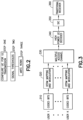
- Figure 3 shows a block diagram of PD-NOMA as an example of an uplink (UL) NOMA system.
- a key idea of NOMA is to encourage spectrum sharing, similar to cognitive radio networks. As shown in Figure 3 there is signaling including coded bits 310 communicated with User 1 thru User k.
- the signaling including the coded bits 320 from all the users are processed simultaneously using Orthogonal Frequency Division Multiplexing and Modulation 320.
- the signaling is multiplexed into resource blocks over the Multiple Access Channel 330.
- the high powered UEs are decoded, such as for having a higher received power.
- the successive interference cancellation (SIC) module 350 as shown in Figure 3 can cancel the high power UE decoded signals which were decoded first.
- the remaining signals are sent to the Traditional Receiver 360.
- SIC successive interference cancellation
- Figure 4 simulation results show that if there is a sufficient power difference between the received signals then the performance of the lower power UEs is almost unaffected by the presence of the higher power UE.
- three UEs were multiplexed onto the same resource blocks with one UE allowed to have a 12 dB higher received power level at the eNB while the other two UEs use MU-MIMO techniques to decode.
- Figure 4 shows the results for this scenario showing the Bit Error Rate (BER) 420 of the higher power UE (which is canceled via SIC after decoding) and showing the average BER 410 of the other two UEs which use interference rejection combining.
- BER Bit Error Rate
- non-orthogonal multiple access is introduced in the uplink as a way to improve capacity so that LTE-based eMTC technology can also achieve the neighborhood relationship (NR) requirements of 1 million devices per km 2 .
- NR neighborhood relationship
- An important component of many proposed UL NOMA techniques is the multi-user receiver (MUR) technologies that are employed at the base station (eNB).
- CSI channel state information
- UEs users
- pilot signals are used during the UL signaling in order for the eNB to perform channel estimation.
- DM-RS Demodulation Reference Signal
- DM-RS Demodulation Reference Signal
- a problem arises when multiple UEs are overloaded onto the same resource blocks and therefore their DM-RS are also overlapping.
- One method is to apply a different cyclic shift to each UE's DM-RS while another is to use a different OCC.
- the eMTC should support an autonomous or contention-based uplink transmission mode where the DM-RS selection is done at the UE without any coordination from the eNB. In this case, the UEs will still have significant chance of choosing either the same cyclic shift or OCC especially in the high overloading case.
- the existing solutions are not sufficient for allowing that many orthogonal (or quasi orthogonal) DM-RS selections. This is true even when the eNB is allowed to explicitly assign the DM-RS selection to the UEs.
- NOMA NOMA to be supported in eMTC there needs to be a method for assigning a DM-RS to each UE which addresses these limitations.
- eMTC coverage enhancement of up to 15 dB is supported as a UE can have very high coupling loss (e.g., due to being indoors or in a basement).
- the eNB there is then a large difference in uplink received power levels from eMTC UEs experiencing vastly different coupling losses even when power control is used as many UEs are transmitting at maximum power level.
- the idea is to exploit this difference in received power levels to group UEs into the same or partially shared time-frequency resources for power domain NOMA. Stated otherwise, the time-frequency resources may be the same or partially overlapping. For instance, UEs in different coverage enhancement levels can be assigned the same or partially shared time-frequency resources in order to exploit the large difference in uplink received power levels at the eNB.
- DM-RS selection is also done according to the difference in uplink received power levels.
- an eNB semi-statically configures one or more uplink time-frequency resources (region) for autonomous or contention-based eMTC NOMA.
- the configuration consists of, for example, resource assignment (narrowband index and resource block assignment), starting subframe interval period, starting subframe offset, time duration (number of subframes) in each interval period, and one or more signal thresholds, DM-RS cyclic shift assignment, orthogonal cover code assignment, and interleaver assignment.
- the signal thresholds can be one or more pairs of RSRP values (or RSRP ranges). That is, one or more pairs of RSRP values can be provided in the configuration e.g. ⁇ P1,P2 ⁇ , ⁇ P3,P4 ⁇ .
- beam specific CSI-RS can be used in combination with RSRP thresholds for UEs to determine their resources.
- UEs with RSRP measurements within the values e.g. P1 ⁇ P ⁇ P2 or P3 ⁇ P ⁇ P4 will select this time frequency resource for eMTC NOMA transmission.
- signal thresholds can be based on the UE coverage enhancement levels or coverage enhancement modes.
- signal thresholds can be based on the UE Physical Random Access Channel (PRACH) configurations or levels.
- PRACH Physical Random Access Channel
- Time-frequency resources in different eMTC NOMA regions can have different pair(s) of RSRP thresholds.
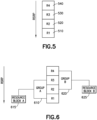
- UEs with RSRP measurements within range R1 510 or range R3 530 are configured to use the first eMTC NOMA region and UEs with RSRP measurements within range R2 520 or range R4 540 are configured to use the second eMTC NOMA region.
- the UEs operate in autonomous mode and select their DM-RS from the available pool independently based on their RSRP measurement and/or channel state information reference signals (CSI-RS) measurement.
- CSI-RS channel state information reference signals
- the DM-RS set is partitioned into groups and different DM-RS groups are associated with different pairs of RSRP thresholds (i.e., different RSRP ranges), and the UE selects the DM-RS based on which RSRP range it belongs in.
- RSRP thresholds i.e., different RSRP ranges
- a SIC receiver is used at the eNB to recover both signals. If the eNB determines that there are many more UEs associated with one group relative to the other, it can reconfigure the RSRP thresholds to create new ranges and roughly balance the UE distribution between the DM-RS groups. Alternatively, the UEs that operate in autonomous mode may select their DM-RS from the full set. This may be beneficial, for example, if the UE power distribution is significantly unequal or the number of UEs desiring access is small.
- coverage regions or levels are used to characterize the UEs based on relative received power levels.
- Reference signal received power (RSRP) can be used by the UEs to do this autonomously using thresholds, an example is shown in Figure 5 .
- UE coverage regions can be grouped together which are not adjacent and assign different time-frequency resources to each group of coverage regions for NOMA. Groups may be assigned in a way such that a pair of UEs which are in the same group but different coverage region (e.g., a UE in R1 and another in R3 from Figure 5 ) are sufficiently separated in received power.
- Coverage regions or levels can be designed such that the size of a region in terms of dB of received power is large enough that the spacing between non-adjacent groups allows for a SIC receiver to perform well.
- the coverage regions that are not adjacent may be grouped together and assigned different resources to each group of coverage regions.
- Figure 6 shows an example grouping and resource selection for DN-RS.
- groups consist of two coverage regions where the minimum distance (in terms of RSRP) between the coverage regions within any group is maximized.
- Group A 610 and Group B 620 which consist of alternating coverage regions.
- Group A is assigned resource block A 615 and Group B is assigned Resource Block B 625.
- the DM-RS for each UE can be then selected based on the group they are placed in.
- the UEs operate in autonomous uplink transmission mode and select their DM-RS independently based on their group only.
- an eNB assigns the choice of DM-RS directly and allows for reuses of same DM-RS if the UEs are within the same group but in different coverage regions.
- the eNB can utilize SIC to perform channel estimation (and potentially decode) UEs which are in higher power UE coverage regions first before cancelling them and then moving on to perform channel estimation on the UEs in the lower power coverage regions within the same grouping.
- one or more user equipment are configured for uplink transmission with one or more uplink time-frequency regions for enhanced Machine Type Communication Non-Orthogonal Multiple Access.
- the configuring is based on defining and signaling one or more signal thresholds and one or more of a resource assignment, a starting subframe periodicity, a starting subframe offset, a time duration in each period, a demodulation reference signal cyclic shift assignment, orthogonal cover code assignment, and interleaver assignment.
- the configuring may comprise semi-statically configuring the one or more user equipment configured for uplink transmission.
- the resource assignment may include narrowband indexing and resource block assignment.
- the time duration may comprise a number of subframes in each interval period.
- the one or more signal thresholds may be dependent on at least one reference signal received power values and may be used in combination with one or more channel state information reference signals for resource assignment. At least one first user equipment in a first range of reference signal received power values may be configured to use a first enhanced Machine Type Communication Non-Orthogonal Multiple Access time-frequency region and at least one second user equipment in a second range of reference signal received power values is configured to use a second enhanced Machine Type Communication Non-Orthogonal Multiple Access time-frequency region.
- the one or more user equipment may operate in autonomous mode.
- a demodulation reference signal can be selected for each said one or more user equipment dependent on at least one of a reference signal received power measurement and a channel state information reference signal measurement.
- the one or more uplink time-frequency regions can be grouped into one or more non-adjacent coverage regions dependent on relative received power levels. Each said one or more coverage regions may be grouped dependent on reference signal received power measurements from the one or more user equipment. Each group of said one or more coverage regions can be assigned different time frequency resources for Non-Orthogonal Multiple Access.
- Each user equipment can operate in autonomous mode and select the assigned demodulation reference signal.
- a base station can assign the demodulation reference signal to said each user equipment. The base station can assign a same demodulation reference signal for two user equipment in different coverage regions.
- means for configuring one or more user equipment for uplink transmission with one or more uplink time-frequency regions for enhanced machine type communication are provided.
- the configuring is based on defining and signaling one or more signal thresholds and one or more of a resource assignment, a starting subframe periodicity, a starting subframe offset, a time duration in each period, a demodulation reference signal cyclic shift assignment, orthogonal cover code assignment, and interleaver assignment.
- a technical effect of one or more of the example embodiments disclosed herein allows for channel estimates to be performed using DM-RS's from different UEs which are multiplexed in a non-orthogonal way on the same resources.
- Another technical effect of one or more of the example embodiments disclosed herein enables grouping together UEs corresponding to different received power levels, which can be exploited in power-domain NOMA.
- Embodiments herein may be implemented in software (executed by one or more processors), hardware (e.g., an application specific integrated circuit), or a combination of software and hardware.
- the software e.g., application logic, an instruction set
- a "computer-readable medium” may be any media or means that can contain, store, communicate, propagate or transport the instructions for use by or in connection with an instruction execution system, apparatus, or device, such as a computer, with one example of a computer described and depicted, e.g., in Figure 1 .
- a computer-readable medium may comprise a computer-readable storage medium (e.g., memories 125, 155, 171 or other device) that may be any media or means that can contain, store, and/or transport the instructions for use by or in connection with an instruction execution system, apparatus, or device, such as a computer.
- a computer-readable storage medium does not comprise propagating signals.
- Figure 7A illustrates operations which may be performed by a network device such as, but not limited to, the eNB 170 and/or an NCE/MME/SGW 190 as in Figure 1 .
- a network device such as, but not limited to, the eNB 170 and/or an NCE/MME/SGW 190 as in Figure 1 .
- the configuring is based on defining and signaling one or more signal thresholds and one or more of a resource assignment, a starting subframe periodicity, a starting subframe offset, a time duration in each period, a demodulation reference signal cyclic shift assignment, orthogonal cover code assignment, and interleaver assignment.
- the configuring comprises semi-statically configuring the one or more user equipment configured for uplink transmission.
- the signaling is through a higher layer system information broadcast.
- the user equipment uses the one or more signal threshold values to identify resources for uplink transmission.
- the resource assignment includes narrowband indexing and resource block assignment.
- the time duration comprises a number of subframes in each interval period.
- the one or more signal thresholds are dependent on at least one reference signal received power values.
- the user equipment uses the one or more reference signal received power values in combination with one or more channel state information reference signals.
- At least one first user equipment in a first range of reference signal received power values is configured to use a first enhanced machine type communication time-frequency region and at least one second user equipment in a second range of reference signal received power values is configured to use a second enhanced machine type communication time-frequency region.
- the one or more user equipment operate in autonomous mode; and further comprising selecting a demodulation reference signal for each said one or more user equipment dependent on at least one of a reference signal received power measurement and a channel state information reference signal measurement.
- the one or more uplink time-frequency regions are assigned to one or more non-adjacent coverage regions dependent on relative received power levels.
- each said one or more coverage regions are grouped dependent on reference signal received power measurements from the one or more user equipment.
- each group of said one or more coverage regions is assigned different time frequency resources for non-orthogonal multiple access.
- said each user equipment operates in autonomous mode and selects the assigned demodulation reference signal.
- a base station assigns the demodulation reference signal to said each user equipment.
- the base station assigns a same demodulation reference signal for two user equipment in different coverage regions.
- a non-transitory computer-readable medium (Memory(ies) 155 and/or Memory(ies) 171 as in Figure 1 ) storing program code (Computer Program Code 153 and/or Computer Program Code 173 as in Figure 1 ), the program code executed by at least one processor (processor(s) 152 and/or Processor(s) 175 and/or eMTC Configuration Module 150-1 as in Figure 1 ) to perform the operations as at least described in the paragraphs above.
- At least the means for configuring comprises one or more antennas 158, a remote radio head (RRH) 195 and/or N/W I/F(s) 180, Memory(ies) 155 and/or Memory(ies) 171, Computer Program Code 153 and/or Computer Program Code 173, and processor(s) 152 and/or Processor(s) 175 and/or eMTC Configuration Module 150-1 as in Figure 1 .
- RRH remote radio head
- circuit or circuitry refers to any or all of the following:
- circuitry also covers an implementation of merely a processor (or multiple processors) or portion of a processor and its (or their) accompanying software and/or firmware.
- circuitry also covers, for example and if applicable to the particular claim element, a baseband integrated circuit or applications processor integrated circuit for a mobile phone or a similar integrated circuit in server, a cellular network device, or other network device.
- the different functions discussed herein may be performed in a different order and/or concurrently with each other. Furthermore, if desired, one or more of the above-described functions may be optional or may be combined.
- the various embodiments may be implemented in hardware or special purpose circuits, software, logic or any combination thereof.
- some aspects may be implemented in hardware, while other aspects may be implemented in firmware or software which may be executed by a controller, microprocessor or other computing device, although the invention is not limited thereto.
- firmware or software which may be executed by a controller, microprocessor or other computing device, although the invention is not limited thereto.
- While various aspects of the invention may be illustrated and described as block diagrams, flow charts, or using some other pictorial representation, it is well understood that these blocks, apparatus, systems, techniques or methods described herein may be implemented in, as non-limiting examples, hardware, software, firmware, special purpose circuits or logic, general purpose hardware or controller or other computing devices, or some combination thereof.
- Embodiments of the inventions may be practiced in various components such as integrated circuit modules.
- the design of integrated circuits is by large a highly automated process.
- Complex and powerful software tools are available for converting a logic level design into a semiconductor circuit design ready to be etched and formed on a semiconductor substrate.
- connection means any connection or coupling, either direct or indirect, between two or more elements, and may encompass the presence of one or more intermediate elements between two elements that are “connected” or “coupled” together.
- the coupling or connection between the elements can be physical, logical, or a combination thereof.
- two elements may be considered to be “connected” or “coupled” together by the use of one or more wires, cables and/or printed electrical connections, as well as by the use of electromagnetic energy, such as electromagnetic energy having wavelengths in the radio frequency region, the microwave region and the optical (both visible and invisible) region, as several non-limiting and non-exhaustive examples.
Landscapes
- Engineering & Computer Science (AREA)
- Signal Processing (AREA)
- Computer Networks & Wireless Communication (AREA)
- Quality & Reliability (AREA)
- Multimedia (AREA)
- Mobile Radio Communication Systems (AREA)
Claims (12)
- Verfahren, das von einer Einrichtung an einer Basisstation durchgeführt wird, wobei das Verfahren umfasst:Konfigurieren (710) von zwei oder mehr Endgeräten (110) für die Uplink-Übertragung mit einem oder mehreren Uplink-Zeit-Frequenz- bereichen für eine verbesserte maschinenartige Kommunikation, wobei der eine oder die mehreren Uplink-Zeit-Frequenz- bereiche in Abhängigkeit von empfangenen Leistungspegeln an den zwei oder mehr Endgeräten zwei oder mehr nicht benachbarten Versorgungsgebieten zugewiesen werden,wobei das Konfigurieren auf dem Definieren und Signalisieren eines oder mehrerer Schwellenwerte und Parameter für den einen oder die mehreren Uplink-Zeit-Frequenz-Ressourcenbereiche basiert, die jeweils dem einen oder den mehreren Schwellenwerten zugehörig sind, wobei die Parameter für den einen oder die mehreren Uplink-Zeit-Frequenz-Ressourcenbereiche eines oder mehreres umfassen von: einer Ressourcenzuweisung, einer Start-Subframe-Periodizität, einem Start-Subframe-Versatz, einer Zeitdauer in jeder Periode, einer zyklischen Verschiebung des Demodulationsreferenzsignals, einer orthogonalen Cover-Code-Zuweisung und einer Interleaver-Zuweisung, wobei der eine oder die mehreren Schwellenwerte Kriterien für die Verwendung des zugehörigen einen oder der zugehörigen mehreren Uplink-Zeit-Frequenz-Ressourcenbereiche für Uplink-Kommunikationen durch ein Endgerät (110) umfassen, wobei die Kriterien es den zwei oder mehreren Endgeräten (110) mit unterschiedlichen Versorgungsgebieten ermöglichen, den oder die gleichen oder teilweise überlappenden Uplink-Zeit-Frequenz-Ressourcenbereich(e) für die Uplink-Übertragung auszuwählen; undEmpfangen von Uplink-Übertragungen von den zwei oder mehr Endgeräten in Übereinstimmung mit der Konfigurierung.
- Verfahren nach Anspruch 1, wobei das Konfigurieren ein halbstatisches Konfigurieren der zwei oder mehr Endgeräte (110) umfasst, die für die Uplink-Übertragung konfiguriert sind, und wobei jedes Endgerät (110) den einen oder die mehreren Schwellenwerte verwendet, um Ressourcen für die Uplink-Übertragung zu identifizieren.
- Verfahren nach Anspruch 1, wobei die Signalisierung durch eine Rundsendung von Systeminformationen auf höherer Ebene erfolgt, und/oder wobei das Konfigurieren ein halbstatisches Konfigurieren der zwei oder mehr Endgeräte (110) umfasst, die für die Uplink-Übertragung konfiguriert sind, und/oder wobei die Ressourcenzuweisung eine Schmalbandindexierung und eine Ressourcenblockzuweisung umfasst, und/oder wobei die Zeitdauer eine Anzahl von Subframes in jeder Intervallperiode umfasst, und/oder wobei der eine oder die mehreren Schwellenwerte von mindestens einem Referenzsignal-Empfangsleistungswert abhängig sind.
- Verfahren nach Anspruch 1, wobei der eine oder die mehreren Schwellenwerte von mindestens einem Referenzsignal-Empfangsleistungswert abhängig sind und wobei jedes Endgerät (110) den einen oder die mehreren Referenzsignal-Empfangsleistungswerte in Kombination mit einem oder mehreren Kanalzustandsinformations-Referenzsignalen verwendet.
- Verfahren nach Anspruch 1, wobei mindestens ein erstes Endgerät (110) in einem ersten Bereich von Referenzsignal-Empfangsleistungswerten so konfiguriert ist, dass es einen ersten Zeit-Frequenz-Bereich für eine verbesserte maschinenartige Kommunikation verwendet, und mindestens ein zweites Endgerät (110) in einem zweiten Bereich von Referenzsignal-Empfangsleistungswerten so konfiguriert ist, dass es einen zweiten Zeit-Frequenz-Bereich für eine verbesserte maschinenartige Kommunikation verwendet.
- Verfahren nach Anspruch 1, wobei die zwei oder mehr Endgeräte (110) im autonomen Modus arbeiten; und ferner umfassend das Auswählen eines Demodulationsreferenzsignals für jedes der zwei oder mehr Endgeräte (110) in Abhängigkeit von mindestens einer von einer Referenzsignal-Empfangsleistungsmessung und einer Kanalzustandsinformations-Referenzsignalmessung, wobei jedes Endgerät (110) sein jeweiliges ausgewähltes Demodulationsreferenzsignal verwendet.
- Verfahren nach Anspruch 1, wobei jedes des einen oder der mehreren Versorgungsgebiete in Abhängigkeit von Referenzsignal-Empfangsleistungsmessungen von den zwei oder mehr Endgeräten (110) gruppiert wird.
- Verfahren nach Anspruch 1, wobei jeder Gruppe des einen oder der mehreren Versorgungsgebiete unterschiedliche Zeit-Frequenz-Ressourcen für nicht-orthogonalen Mehrfachzugriff zugewiesen werden.
- Verfahren nach Anspruch 8, wobei jedes Endgerät (110) im autonomen Modus arbeitet und das Demodulationsreferenzsignal auswählt, oder wobei eine Basisstation das Demodulationsreferenzsignal jedem Endgerät (110) zuweist, oder wobei die Basisstation ein gleiches Demodulationsreferenzsignal für zwei Endgeräte (110) in unterschiedlichen Versorgungsgebieten zuweist, wobei jedes Endgerät sein jeweiliges ausgewähltes oder zugewiesenes Demodulationsreferenzsignal verwendet.
- Einrichtung (170) an einer Basisstation, wobei die Einrichtung Folgendes umfasst:mindestens einen Prozessor; undmindestens einen Speicher mit Computerprogrammcode,wobei der mindestens eine Speicher und der Computerprogrammcode so konfiguriert sind, dass sie zusammen mit dem mindestens einen Prozessor die Einrichtung veranlassen, mindestens Folgendes durchzuführen:Konfigurieren (710) von zwei oder mehr Endgeräten (110) für die Uplink-Übertragung mit einem oder mehreren Uplink-Zeit-Frequenz- bereichen für eine verbesserte maschinenartige Kommunikation, wobei der eine oder die mehreren Uplink-Zeit-Frequenz- bereiche in Abhängigkeit von empfangenen Leistungspegeln an den zwei oder mehr Endgeräten zwei oder mehr nicht benachbarten Versorgungsgebieten zugewiesen werden,wobei das Konfigurieren auf dem Definieren und Signalisieren eines oder mehrerer Schwellenwerte und Parameter für den einen oder die mehreren Uplink-Zeit-Frequenz-Ressourcenbereiche basiert, die dem einen oder den mehreren Schwellenwerten zugehörig sind, wobei die Parameter für den einen oder die mehreren Uplink-Zeit-Frequenz-Ressourcenbereiche eines oder mehreres umfassen von: einer Ressourcenzuweisung, einer Start-Subframe-Periodizität, einem Start-Subframe-Versatz, einer Zeitdauer in jeder Periode, einer zyklischen Verschiebung des Demodulationsreferenzsignals, einer orthogonalen Cover-Code-Zuweisung und einer Interleaver-Zuweisung, wobei der eine oder die mehreren Schwellenwerte Kriterien für die Verwendung des einen oder der mehreren Uplink-Zeit-Frequenz-Ressourcenbereiche für Uplink-Kommunikationen durch ein Endgerät (110) umfassen, wobei die Kriterien es den zwei oder mehreren Endgeräten (110) mit unterschiedlichen Versorgungsgebieten ermöglichen, den oder die gleichen oder teilweise überlappenden Uplink-Zeit-Frequenz-Ressourcenbereich(e) für die Uplink-Übertragung auszuwählen; undEmpfangen von Uplink-Übertragungen von den zwei oder mehr Endgeräten in Übereinstimmung mit der Konfigurierung.
- Einrichtung (170) nach Anspruch 10, wobei die zwei oder mehr Endgeräte (110) im autonomen Modus arbeiten; und ferner umfassend das Auswählen eines Demodulationsreferenzsignals für jedes der zwei oder mehr Endgeräte (110) in Abhängigkeit von mindestens einer von einer Referenzsignal-Empfangsleistungsmessung und einer Kanalzustandsinformations-Referenzsignalmessung.
- Computerprogramm mit Anweisungen, die, wenn das Programm von einem Computer ausgeführt wird, den Computer veranlassen, das Verfahren nach einem der Ansprüche 1 bis 9 durchzuführen.
Applications Claiming Priority (2)
| Application Number | Priority Date | Filing Date | Title |
|---|---|---|---|
| US201762456226P | 2017-02-08 | 2017-02-08 | |
| PCT/FI2018/050074 WO2018146377A1 (en) | 2017-02-08 | 2018-02-01 | Uplink non-orthogonal multiple access for narrowband machine type communication |
Publications (3)
| Publication Number | Publication Date |
|---|---|
| EP3580976A1 EP3580976A1 (de) | 2019-12-18 |
| EP3580976A4 EP3580976A4 (de) | 2021-01-13 |
| EP3580976B1 true EP3580976B1 (de) | 2023-07-19 |
Family
ID=63107963
Family Applications (1)
| Application Number | Title | Priority Date | Filing Date |
|---|---|---|---|
| EP18751717.2A Active EP3580976B1 (de) | 2017-02-08 | 2018-02-01 | Nichtorthogonaler uplink-mehrfachzugang für schmalbandige maschinenartige kommunikation |
Country Status (4)
| Country | Link |
|---|---|
| US (1) | US11191095B2 (de) |
| EP (1) | EP3580976B1 (de) |
| CN (1) | CN110476471B (de) |
| WO (1) | WO2018146377A1 (de) |
Families Citing this family (9)
| Publication number | Priority date | Publication date | Assignee | Title |
|---|---|---|---|---|
| WO2018146377A1 (en) * | 2017-02-08 | 2018-08-16 | Nokia Technologies Oy | Uplink non-orthogonal multiple access for narrowband machine type communication |
| US11398890B2 (en) * | 2018-01-10 | 2022-07-26 | Idac Holdings, Inc. | Unified non-orthogonal multiple access |
| US10862722B2 (en) * | 2018-02-01 | 2020-12-08 | Qualcomm Incorporated | Reference signal transmission techniques for non-orthogonal multiple access wireless communications |
| US11039420B2 (en) | 2018-06-01 | 2021-06-15 | Qualcomm Incorporated | Techniques for selecting RSMA spreading code for periodic traffic in internet-of-everything devices |
| US11089598B2 (en) * | 2018-08-30 | 2021-08-10 | Qualcomm Incorporated | Multiple access signatures for non-orthogonal multiple access (NOMA) wireless communications |
| CN110337148B (zh) * | 2019-04-26 | 2022-04-05 | 重庆邮电大学 | 基于非正交多址接入的认知无线电能效资源分配方法 |
| CN111314705B (zh) * | 2020-02-22 | 2023-04-11 | 太原科技大学 | 一种基于多描述编码的非正交多址图像传输系统及其应用 |
| WO2022069129A1 (en) | 2020-09-30 | 2022-04-07 | Nokia Technologies Oy | Asset tracking joint sounding reference signal (srs) transmission |
| KR20230009221A (ko) * | 2021-07-08 | 2023-01-17 | 삼성전자주식회사 | 시간 비동기식 비직교 다중 접속 시스템에서 시간 오프셋을 이용하여 신호를 송수신하는 방법 및 장치 |
Family Cites Families (30)
| Publication number | Priority date | Publication date | Assignee | Title |
|---|---|---|---|---|
| EP3432504B1 (de) * | 2007-10-30 | 2021-06-23 | Nokia Technologies Oy | Verfahren, vorrichtungen, system und entsprechendes computerprogrammprodukt zur ressourcenzuweisung |
| CN103518340B (zh) * | 2011-05-11 | 2017-04-12 | 诺基亚通信公司 | Voip协作多点解决方案 |
| US10433159B2 (en) * | 2012-08-03 | 2019-10-01 | Texas Instruments Incorporated | Uplink signaling for cooperative multipoint communication |
| US9497733B2 (en) * | 2013-02-13 | 2016-11-15 | Qualcomm Incorporated | Single-frequency network (SFN) operation for machine-type communications (MTC) coverage enhancements |
| US9571953B2 (en) * | 2013-10-31 | 2017-02-14 | Alcatel Lucent | Methods and systems for implementing a repetition level for a channel |
| WO2015115794A1 (ko) * | 2014-01-28 | 2015-08-06 | 엘지전자 주식회사 | 무선 통신 시스템에서 장치 대 장치 단말의 제어 채널 전송 방법 및 장치 |
| US9167544B2 (en) * | 2014-01-28 | 2015-10-20 | Industrial Technology Research Institute | Device to device synchronization method applicable to user equipment and user equipment using the same |
| US10271224B2 (en) * | 2014-01-30 | 2019-04-23 | Intel IP Corporation | MTC UE and method for coverage enhancement using radio link control configuration |
| US9661585B2 (en) * | 2014-02-10 | 2017-05-23 | Telefonaktiebolaget Lm Ericsson (Publ) | Inter-network assisted power control for interference mitigation of D2D communications |
| EP3110034B1 (de) * | 2014-02-18 | 2019-06-26 | LG Electronics Inc. | Verfahren zum senden und empfangen von signalen mittels benutzerspezifischer flexibler tdd-technologie in einem drahtloskommunikationssystem und vorrichtung dafür |
| CN104869655B (zh) * | 2014-02-21 | 2019-07-23 | 株式会社Ntt都科摩 | 上行链路资源调度方法、无线基站和移动台 |
| US10624076B2 (en) * | 2014-03-30 | 2020-04-14 | Lg Electronics Inc. | Method for transmitting and receiving downlink control information in wireless communication system supporting device-to-device communication and device for the same |
| US9961657B2 (en) * | 2014-09-25 | 2018-05-01 | Intel IP Corporation | System and method of MTC device operations |
| US9955356B2 (en) * | 2014-09-25 | 2018-04-24 | Intel IP Corporation | System and method of handling uplink transmission collision for enhanced coverage mode UEs |
| US10516517B2 (en) * | 2015-01-29 | 2019-12-24 | Intel IP Corporation | System and methods for support of frequency hopping for UEs with reduced bandwidth support |
| US20160309507A1 (en) * | 2015-04-14 | 2016-10-20 | Electronics And Telecommunications Research Institute | Method and apparatus for random access in machine type communication network |
| KR102179107B1 (ko) * | 2015-04-24 | 2020-11-16 | 삼성전자 주식회사 | 기계형 통신 기술에서 전자 장치의 전력 소모를 절약하는 방법 및 장치 |
| US10506591B2 (en) | 2015-05-15 | 2019-12-10 | Qualcomm Incorporated | Narrowband definition for enhanced machine type communication |
| US11637593B2 (en) * | 2015-07-09 | 2023-04-25 | Qualcomm Incorporated | Machine type communication (MTC) configuration, interference management, and retuning time for uplink transmissions |
| US9999039B2 (en) * | 2015-07-23 | 2018-06-12 | Qualcomm Incorporated | Semi-persistent scheduling for enhanced machine type communications |
| GB2541213A (en) * | 2015-08-12 | 2017-02-15 | Nec Corp | Communication system |
| WO2017038510A1 (ja) * | 2015-09-01 | 2017-03-09 | 株式会社Nttドコモ | ユーザ装置、基地局、通信方法及び通信指示方法 |
| US10575303B2 (en) | 2015-09-03 | 2020-02-25 | Qualcomm Incorporated | Uplink design for narrowband LTE (NB-LTE) |
| HUE046548T2 (hu) * | 2015-09-25 | 2020-03-30 | Ericsson Telefon Ab L M | UL támogatásokat nyújtó eljárások, ideértve idõtartomány-kialakítást és kapcsolódó vezeték nélküli végberendezési és hálózati csomópontot |
| CA2999692A1 (en) * | 2015-09-25 | 2017-03-30 | Telefonaktiebolaget Lm Ericsson (Publ) | User equipment, network node and methods performed therein |
| WO2017062028A1 (en) * | 2015-10-09 | 2017-04-13 | Intel IP Corporation | Architecture for wireless network access |
| US10609624B2 (en) * | 2015-10-16 | 2020-03-31 | Telefonaktiebolaget Lm Ericsson (Publ) | Apparatus and method for discovery reference signal aligned scheduling |
| CN106993332B (zh) * | 2016-01-20 | 2019-07-02 | 中兴通讯股份有限公司 | 上行调度的方法及装置 |
| WO2017166141A1 (zh) * | 2016-03-30 | 2017-10-05 | 广东欧珀移动通信有限公司 | 数据传输的方法、终端及基站 |
| WO2018146377A1 (en) * | 2017-02-08 | 2018-08-16 | Nokia Technologies Oy | Uplink non-orthogonal multiple access for narrowband machine type communication |
-
2018
- 2018-02-01 WO PCT/FI2018/050074 patent/WO2018146377A1/en not_active Ceased
- 2018-02-01 CN CN201880023547.XA patent/CN110476471B/zh active Active
- 2018-02-01 EP EP18751717.2A patent/EP3580976B1/de active Active
- 2018-02-01 US US16/483,087 patent/US11191095B2/en active Active
Also Published As
| Publication number | Publication date |
|---|---|
| WO2018146377A1 (en) | 2018-08-16 |
| CN110476471A (zh) | 2019-11-19 |
| US20200008221A1 (en) | 2020-01-02 |
| CN110476471B (zh) | 2023-07-14 |
| US11191095B2 (en) | 2021-11-30 |
| EP3580976A1 (de) | 2019-12-18 |
| EP3580976A4 (de) | 2021-01-13 |
Similar Documents
| Publication | Publication Date | Title |
|---|---|---|
| US11191095B2 (en) | Uplink non-orthogonal multiple access for narrowband machine type communication | |
| US20230208606A1 (en) | Methods and apparatuses for demodulation reference signal configuratio | |
| EP3918857B1 (de) | Systeme und verfahren zur multicast-ressourcenzuweisung | |
| EP2810387B1 (de) | Abwärtsrichtungsinterzellulare interferenzunterdrückung mit koordinierter mehrpunktzellaggregation | |
| EP2827665B1 (de) | Basisstationsvorrichtung, endgerätevorrichtung und kommunikationsverfahren zum übertragen und empfangen eines enhanced physical downlink control channel | |
| JP2020529792A (ja) | アップリンク非コードブックベース送信における送信ランクおよびプリコーダのシグナリング | |
| EP3526907A1 (de) | Verfahren zur anpassung der dichte von demodulationsreferenzsignalen | |
| US20240348411A1 (en) | Methods, devices and computer storage media for communication | |
| JP2016106498A (ja) | 制御チャネルを受信および送信する方法、ユーザ機器ならびに基地局 | |
| US10763985B2 (en) | Control channel design and use for narrow band communication | |
| US11196522B2 (en) | Enhanced sounding reference signal scheme | |
| US20230327843A1 (en) | Methods and apparatuses for reference signal allocation | |
| KR20190133032A (ko) | 복조 참조 신호 오버헤드 감소를 위한 시스템 및 방법 | |
| EP3590294A1 (de) | Verfahren zur planung von überlappenden ressourcen für schmalbandiges internet der dinge | |
| WO2022226885A1 (en) | Methods, devices and computer storage media for communication | |
| JP6847241B2 (ja) | 情報送信方法および装置、ならびに情報受信方法および装置 | |
| US20210195619A1 (en) | Over-the-edge user-specific reference symbols | |
| WO2018000430A1 (en) | Resource multiplexing and allocation schemes for uplink beam reference signal in massive mimo system | |
| WO2018202476A1 (en) | SCHEDULING REQUEST METHOD FOR NARROW BAND IoT | |
| US12489558B2 (en) | Efficient signaling for MU-MIMO enhanced receivers | |
| CN120321676A (zh) | 信息传输方法、通信设备及存储介质 | |
| CN120512207A (zh) | 通信方法和通信装置 |
Legal Events
| Date | Code | Title | Description |
|---|---|---|---|
| STAA | Information on the status of an ep patent application or granted ep patent |
Free format text: STATUS: THE INTERNATIONAL PUBLICATION HAS BEEN MADE |
|
| PUAI | Public reference made under article 153(3) epc to a published international application that has entered the european phase |
Free format text: ORIGINAL CODE: 0009012 |
|
| STAA | Information on the status of an ep patent application or granted ep patent |
Free format text: STATUS: REQUEST FOR EXAMINATION WAS MADE |
|
| 17P | Request for examination filed |
Effective date: 20190909 |
|
| AK | Designated contracting states |
Kind code of ref document: A1 Designated state(s): AL AT BE BG CH CY CZ DE DK EE ES FI FR GB GR HR HU IE IS IT LI LT LU LV MC MK MT NL NO PL PT RO RS SE SI SK SM TR |
|
| AX | Request for extension of the european patent |
Extension state: BA ME |
|
| DAV | Request for validation of the european patent (deleted) | ||
| DAX | Request for extension of the european patent (deleted) | ||
| A4 | Supplementary search report drawn up and despatched |
Effective date: 20201214 |
|
| RIC1 | Information provided on ipc code assigned before grant |
Ipc: H04L 5/00 20060101AFI20201208BHEP Ipc: H04W 4/06 20090101ALI20201208BHEP Ipc: H04W 4/70 20180101ALI20201208BHEP Ipc: H04W 72/04 20090101ALI20201208BHEP Ipc: H04W 72/08 20090101ALN20201208BHEP |
|
| STAA | Information on the status of an ep patent application or granted ep patent |
Free format text: STATUS: EXAMINATION IS IN PROGRESS |
|
| 17Q | First examination report despatched |
Effective date: 20220331 |
|
| REG | Reference to a national code |
Ref country code: DE Ref legal event code: R079 Free format text: PREVIOUS MAIN CLASS: H04W0072040000 Ipc: H04L0005000000 Ref country code: DE Ref legal event code: R079 Ref document number: 602018053625 Country of ref document: DE Free format text: PREVIOUS MAIN CLASS: H04W0072040000 Ipc: H04L0005000000 |
|
| RIC1 | Information provided on ipc code assigned before grant |
Ipc: H04W 72/23 20230101ALI20230119BHEP Ipc: H04W 4/06 20090101ALI20230119BHEP Ipc: H04W 4/70 20180101ALI20230119BHEP Ipc: H04L 5/00 20060101AFI20230119BHEP |
|
| GRAP | Despatch of communication of intention to grant a patent |
Free format text: ORIGINAL CODE: EPIDOSNIGR1 |
|
| STAA | Information on the status of an ep patent application or granted ep patent |
Free format text: STATUS: GRANT OF PATENT IS INTENDED |
|
| INTG | Intention to grant announced |
Effective date: 20230306 |
|
| GRAS | Grant fee paid |
Free format text: ORIGINAL CODE: EPIDOSNIGR3 |
|
| GRAA | (expected) grant |
Free format text: ORIGINAL CODE: 0009210 |
|
| STAA | Information on the status of an ep patent application or granted ep patent |
Free format text: STATUS: THE PATENT HAS BEEN GRANTED |
|
| AK | Designated contracting states |
Kind code of ref document: B1 Designated state(s): AL AT BE BG CH CY CZ DE DK EE ES FI FR GB GR HR HU IE IS IT LI LT LU LV MC MK MT NL NO PL PT RO RS SE SI SK SM TR |
|
| REG | Reference to a national code |
Ref country code: GB Ref legal event code: FG4D |
|
| REG | Reference to a national code |
Ref country code: CH Ref legal event code: EP |
|
| REG | Reference to a national code |
Ref country code: DE Ref legal event code: R096 Ref document number: 602018053625 Country of ref document: DE |
|
| REG | Reference to a national code |
Ref country code: IE Ref legal event code: FG4D |
|
| REG | Reference to a national code |
Ref country code: LT Ref legal event code: MG9D |
|
| REG | Reference to a national code |
Ref country code: NL Ref legal event code: MP Effective date: 20230719 |
|
| REG | Reference to a national code |
Ref country code: AT Ref legal event code: MK05 Ref document number: 1590554 Country of ref document: AT Kind code of ref document: T Effective date: 20230719 |
|
| PG25 | Lapsed in a contracting state [announced via postgrant information from national office to epo] |
Ref country code: NL Free format text: LAPSE BECAUSE OF FAILURE TO SUBMIT A TRANSLATION OF THE DESCRIPTION OR TO PAY THE FEE WITHIN THE PRESCRIBED TIME-LIMIT Effective date: 20230719 |
|
| PG25 | Lapsed in a contracting state [announced via postgrant information from national office to epo] |
Ref country code: GR Free format text: LAPSE BECAUSE OF FAILURE TO SUBMIT A TRANSLATION OF THE DESCRIPTION OR TO PAY THE FEE WITHIN THE PRESCRIBED TIME-LIMIT Effective date: 20231020 |
|
| PG25 | Lapsed in a contracting state [announced via postgrant information from national office to epo] |
Ref country code: IS Free format text: LAPSE BECAUSE OF FAILURE TO SUBMIT A TRANSLATION OF THE DESCRIPTION OR TO PAY THE FEE WITHIN THE PRESCRIBED TIME-LIMIT Effective date: 20231119 |
|
| PG25 | Lapsed in a contracting state [announced via postgrant information from national office to epo] |
Ref country code: SE Free format text: LAPSE BECAUSE OF FAILURE TO SUBMIT A TRANSLATION OF THE DESCRIPTION OR TO PAY THE FEE WITHIN THE PRESCRIBED TIME-LIMIT Effective date: 20230719 Ref country code: RS Free format text: LAPSE BECAUSE OF FAILURE TO SUBMIT A TRANSLATION OF THE DESCRIPTION OR TO PAY THE FEE WITHIN THE PRESCRIBED TIME-LIMIT Effective date: 20230719 Ref country code: PT Free format text: LAPSE BECAUSE OF FAILURE TO SUBMIT A TRANSLATION OF THE DESCRIPTION OR TO PAY THE FEE WITHIN THE PRESCRIBED TIME-LIMIT Effective date: 20231120 Ref country code: NO Free format text: LAPSE BECAUSE OF FAILURE TO SUBMIT A TRANSLATION OF THE DESCRIPTION OR TO PAY THE FEE WITHIN THE PRESCRIBED TIME-LIMIT Effective date: 20231019 Ref country code: LV Free format text: LAPSE BECAUSE OF FAILURE TO SUBMIT A TRANSLATION OF THE DESCRIPTION OR TO PAY THE FEE WITHIN THE PRESCRIBED TIME-LIMIT Effective date: 20230719 Ref country code: LT Free format text: LAPSE BECAUSE OF FAILURE TO SUBMIT A TRANSLATION OF THE DESCRIPTION OR TO PAY THE FEE WITHIN THE PRESCRIBED TIME-LIMIT Effective date: 20230719 Ref country code: IS Free format text: LAPSE BECAUSE OF FAILURE TO SUBMIT A TRANSLATION OF THE DESCRIPTION OR TO PAY THE FEE WITHIN THE PRESCRIBED TIME-LIMIT Effective date: 20231119 Ref country code: HR Free format text: LAPSE BECAUSE OF FAILURE TO SUBMIT A TRANSLATION OF THE DESCRIPTION OR TO PAY THE FEE WITHIN THE PRESCRIBED TIME-LIMIT Effective date: 20230719 Ref country code: GR Free format text: LAPSE BECAUSE OF FAILURE TO SUBMIT A TRANSLATION OF THE DESCRIPTION OR TO PAY THE FEE WITHIN THE PRESCRIBED TIME-LIMIT Effective date: 20231020 Ref country code: FI Free format text: LAPSE BECAUSE OF FAILURE TO SUBMIT A TRANSLATION OF THE DESCRIPTION OR TO PAY THE FEE WITHIN THE PRESCRIBED TIME-LIMIT Effective date: 20230719 Ref country code: AT Free format text: LAPSE BECAUSE OF FAILURE TO SUBMIT A TRANSLATION OF THE DESCRIPTION OR TO PAY THE FEE WITHIN THE PRESCRIBED TIME-LIMIT Effective date: 20230719 |
|
| PG25 | Lapsed in a contracting state [announced via postgrant information from national office to epo] |
Ref country code: PL Free format text: LAPSE BECAUSE OF FAILURE TO SUBMIT A TRANSLATION OF THE DESCRIPTION OR TO PAY THE FEE WITHIN THE PRESCRIBED TIME-LIMIT Effective date: 20230719 |
|
| REG | Reference to a national code |
Ref country code: DE Ref legal event code: R097 Ref document number: 602018053625 Country of ref document: DE |
|
| PG25 | Lapsed in a contracting state [announced via postgrant information from national office to epo] |
Ref country code: ES Free format text: LAPSE BECAUSE OF FAILURE TO SUBMIT A TRANSLATION OF THE DESCRIPTION OR TO PAY THE FEE WITHIN THE PRESCRIBED TIME-LIMIT Effective date: 20230719 |
|
| PG25 | Lapsed in a contracting state [announced via postgrant information from national office to epo] |
Ref country code: SM Free format text: LAPSE BECAUSE OF FAILURE TO SUBMIT A TRANSLATION OF THE DESCRIPTION OR TO PAY THE FEE WITHIN THE PRESCRIBED TIME-LIMIT Effective date: 20230719 Ref country code: RO Free format text: LAPSE BECAUSE OF FAILURE TO SUBMIT A TRANSLATION OF THE DESCRIPTION OR TO PAY THE FEE WITHIN THE PRESCRIBED TIME-LIMIT Effective date: 20230719 Ref country code: ES Free format text: LAPSE BECAUSE OF FAILURE TO SUBMIT A TRANSLATION OF THE DESCRIPTION OR TO PAY THE FEE WITHIN THE PRESCRIBED TIME-LIMIT Effective date: 20230719 Ref country code: EE Free format text: LAPSE BECAUSE OF FAILURE TO SUBMIT A TRANSLATION OF THE DESCRIPTION OR TO PAY THE FEE WITHIN THE PRESCRIBED TIME-LIMIT Effective date: 20230719 Ref country code: DK Free format text: LAPSE BECAUSE OF FAILURE TO SUBMIT A TRANSLATION OF THE DESCRIPTION OR TO PAY THE FEE WITHIN THE PRESCRIBED TIME-LIMIT Effective date: 20230719 Ref country code: CZ Free format text: LAPSE BECAUSE OF FAILURE TO SUBMIT A TRANSLATION OF THE DESCRIPTION OR TO PAY THE FEE WITHIN THE PRESCRIBED TIME-LIMIT Effective date: 20230719 Ref country code: SK Free format text: LAPSE BECAUSE OF FAILURE TO SUBMIT A TRANSLATION OF THE DESCRIPTION OR TO PAY THE FEE WITHIN THE PRESCRIBED TIME-LIMIT Effective date: 20230719 |
|
| PLBE | No opposition filed within time limit |
Free format text: ORIGINAL CODE: 0009261 |
|
| STAA | Information on the status of an ep patent application or granted ep patent |
Free format text: STATUS: NO OPPOSITION FILED WITHIN TIME LIMIT |
|
| PG25 | Lapsed in a contracting state [announced via postgrant information from national office to epo] |
Ref country code: IT Free format text: LAPSE BECAUSE OF FAILURE TO SUBMIT A TRANSLATION OF THE DESCRIPTION OR TO PAY THE FEE WITHIN THE PRESCRIBED TIME-LIMIT Effective date: 20230719 |
|
| 26N | No opposition filed |
Effective date: 20240422 |
|
| PG25 | Lapsed in a contracting state [announced via postgrant information from national office to epo] |
Ref country code: SI Free format text: LAPSE BECAUSE OF FAILURE TO SUBMIT A TRANSLATION OF THE DESCRIPTION OR TO PAY THE FEE WITHIN THE PRESCRIBED TIME-LIMIT Effective date: 20230719 |
|
| PG25 | Lapsed in a contracting state [announced via postgrant information from national office to epo] |
Ref country code: MC Free format text: LAPSE BECAUSE OF FAILURE TO SUBMIT A TRANSLATION OF THE DESCRIPTION OR TO PAY THE FEE WITHIN THE PRESCRIBED TIME-LIMIT Effective date: 20230719 |
|
| REG | Reference to a national code |
Ref country code: CH Ref legal event code: PL |
|
| PG25 | Lapsed in a contracting state [announced via postgrant information from national office to epo] |
Ref country code: LU Free format text: LAPSE BECAUSE OF NON-PAYMENT OF DUE FEES Effective date: 20240201 |
|
| PG25 | Lapsed in a contracting state [announced via postgrant information from national office to epo] |
Ref country code: CH Free format text: LAPSE BECAUSE OF NON-PAYMENT OF DUE FEES Effective date: 20240229 |
|
| PG25 | Lapsed in a contracting state [announced via postgrant information from national office to epo] |
Ref country code: LU Free format text: LAPSE BECAUSE OF NON-PAYMENT OF DUE FEES Effective date: 20240201 Ref country code: CH Free format text: LAPSE BECAUSE OF NON-PAYMENT OF DUE FEES Effective date: 20240229 |
|
| PG25 | Lapsed in a contracting state [announced via postgrant information from national office to epo] |
Ref country code: BG Free format text: LAPSE BECAUSE OF FAILURE TO SUBMIT A TRANSLATION OF THE DESCRIPTION OR TO PAY THE FEE WITHIN THE PRESCRIBED TIME-LIMIT Effective date: 20230719 |
|
| PG25 | Lapsed in a contracting state [announced via postgrant information from national office to epo] |
Ref country code: BG Free format text: LAPSE BECAUSE OF FAILURE TO SUBMIT A TRANSLATION OF THE DESCRIPTION OR TO PAY THE FEE WITHIN THE PRESCRIBED TIME-LIMIT Effective date: 20230719 |
|
| REG | Reference to a national code |
Ref country code: BE Ref legal event code: MM Effective date: 20240229 |
|
| PG25 | Lapsed in a contracting state [announced via postgrant information from national office to epo] |
Ref country code: BE Free format text: LAPSE BECAUSE OF NON-PAYMENT OF DUE FEES Effective date: 20240229 |
|
| PG25 | Lapsed in a contracting state [announced via postgrant information from national office to epo] |
Ref country code: IE Free format text: LAPSE BECAUSE OF NON-PAYMENT OF DUE FEES Effective date: 20240201 |
|
| PG25 | Lapsed in a contracting state [announced via postgrant information from national office to epo] |
Ref country code: IE Free format text: LAPSE BECAUSE OF NON-PAYMENT OF DUE FEES Effective date: 20240201 Ref country code: BE Free format text: LAPSE BECAUSE OF NON-PAYMENT OF DUE FEES Effective date: 20240229 |
|
| PG25 | Lapsed in a contracting state [announced via postgrant information from national office to epo] |
Ref country code: CY Free format text: LAPSE BECAUSE OF FAILURE TO SUBMIT A TRANSLATION OF THE DESCRIPTION OR TO PAY THE FEE WITHIN THE PRESCRIBED TIME-LIMIT; INVALID AB INITIO Effective date: 20180201 |
|
| PG25 | Lapsed in a contracting state [announced via postgrant information from national office to epo] |
Ref country code: HU Free format text: LAPSE BECAUSE OF FAILURE TO SUBMIT A TRANSLATION OF THE DESCRIPTION OR TO PAY THE FEE WITHIN THE PRESCRIBED TIME-LIMIT; INVALID AB INITIO Effective date: 20180201 |
|
| PG25 | Lapsed in a contracting state [announced via postgrant information from national office to epo] |
Ref country code: TR Free format text: LAPSE BECAUSE OF FAILURE TO SUBMIT A TRANSLATION OF THE DESCRIPTION OR TO PAY THE FEE WITHIN THE PRESCRIBED TIME-LIMIT Effective date: 20230719 |
|
| PGFP | Annual fee paid to national office [announced via postgrant information from national office to epo] |
Ref country code: FR Payment date: 20251231 Year of fee payment: 9 |
|
| PGFP | Annual fee paid to national office [announced via postgrant information from national office to epo] |
Ref country code: GB Payment date: 20260106 Year of fee payment: 9 |
|
| PGFP | Annual fee paid to national office [announced via postgrant information from national office to epo] |
Ref country code: DE Payment date: 20251230 Year of fee payment: 9 |