EP3579620B1 - Selection d'un réseau d'acces conditionnée par la technologie d'acces cellulaire - Google Patents
Selection d'un réseau d'acces conditionnée par la technologie d'acces cellulaire Download PDFInfo
- Publication number
- EP3579620B1 EP3579620B1 EP19162207.5A EP19162207A EP3579620B1 EP 3579620 B1 EP3579620 B1 EP 3579620B1 EP 19162207 A EP19162207 A EP 19162207A EP 3579620 B1 EP3579620 B1 EP 3579620B1
- Authority
- EP
- European Patent Office
- Prior art keywords
- cellular
- access
- access network
- selection
- network
- Prior art date
- Legal status (The legal status is an assumption and is not a legal conclusion. Google has not performed a legal analysis and makes no representation as to the accuracy of the status listed.)
- Active
Links
Images
Classifications
-
- H—ELECTRICITY
- H04—ELECTRIC COMMUNICATION TECHNIQUE
- H04W—WIRELESS COMMUNICATION NETWORKS
- H04W48/00—Access restriction; Network selection; Access point selection
- H04W48/18—Selecting a network or a communication service
-
- H—ELECTRICITY
- H04—ELECTRIC COMMUNICATION TECHNIQUE
- H04L—TRANSMISSION OF DIGITAL INFORMATION, e.g. TELEGRAPHIC COMMUNICATION
- H04L67/00—Network arrangements or protocols for supporting network services or applications
- H04L67/50—Network services
- H04L67/60—Scheduling or organising the servicing of application requests, e.g. requests for application data transmissions using the analysis and optimisation of the required network resources
- H04L67/63—Routing a service request depending on the request content or context
-
- H—ELECTRICITY
- H04—ELECTRIC COMMUNICATION TECHNIQUE
- H04W—WIRELESS COMMUNICATION NETWORKS
- H04W48/00—Access restriction; Network selection; Access point selection
- H04W48/16—Discovering, processing access restriction or access information
Definitions
- the invention relates to the field of radiocommunications and relates more particularly to selection mechanisms between cellular access networks and wireless non-cellular access networks (for example Wi-Fi) as specified by the 3GPP standardization group in the specifications technical TS 24.302 and TS 24.312.
- this telecommunications operator allows the user to connect to a communication network via his mobile terminal, subject to the subscription a subscription in order to access several types of services from an IP network (“Internet Protocol ”), such as the Internet network.
- IP network such as the Internet network.
- This communication network typically comprises a cellular access network comprising a set of cellular access points to which the terminal connects.
- the cellular access network can be of several types (2G, 3G, 4G), each type of network being accessible according to several cellular access technologies (2G: EDGE, GPRS, 3G: UMTS, HSDPA, HSUPA, HSPA, HSPA+ , 4G: LTE, LTE-Advanced).
- an operator can make available to its subscribers an access network comprising non-cellular wireless access points of the Wi-Fi or WiMAX type (in English, “ hot spots ”).
- an operator's communication network may include access points offering different standards, technologies and speeds and is therefore heterogeneous, current mobile terminals being compatible with all of these access points. This compatibility allows the mobile terminal to access the operator's communication network in areas where only certain types of access points are available, but also to offer the terminal an access point offering the best quality of service depending of the service accessed, even within the same cell.
- an access point discovery and selection server (ANDSF )
- This ANDSF server supplies, on request from a mobile terminal or else automatically, information on the non-cellular wireless access networks.
- This ANDSF server additionally provides a selection policy that may include a list of non-cellular wireless access networks prioritized over the 3GPP cellular access network, regardless of technology or type. An example is in WO 2009/095336 .
- the policies provided by the ANDSF server make it possible to discriminate between non-3GPP access points according to their respective throughput, but do not make it possible to discriminate between different cellular access technologies of a 3GPP network.
- the selection of a 3GPP cellular access type or technology is made at the level of the radio access network (" Radio Access Network " or " RAN “, in English) and the ANDSF server does not is not meant to interfere with this selection.
- the invention allows a terminal to have one or more differentiated selection policy(ies) according to a cellular access technology of a cellular access network, in order to be able to select an access network by function of a cellular access technology.
- the selection policies are no longer based solely on the location of the terminal in the network as is currently the case and can be adapted according to the cellular access technology that the terminal can use in its current position. .
- selection policies that classify non-cellular access points differently compared to the 3GPP cellular network, depending on the type of cellular network or the cellular technology available, make it possible to discriminate between 3GPP access networks in the process of selection between non-cellular access networks and cellular access network.
- the mobile terminal obtains a plurality of selection rules comprising at least one selection rule classifying a cellular access network using the first cellular access technology with respect to at least one of said access networks not cellular access network and a selection rule ranking a cellular access network using the second cellular access technology against at least one of said non-cellular access networks, the method further comprising selecting, among said selection rules, a selection rule to be applied when selecting the access network based on the cellular access technology of the detected cellular access network.
- This first embodiment is advantageous in that it allows a differentiation of the selection rules, depending on the cellular access technology detected, which is based on some of the mechanisms already existing in the standards and therefore can be applied to networks operating according to such standards with a minimum of modifications.
- each of the selection rules may include a validity indicator designating the cellular access technology used by the cellular access network classified in said selection rule, the selection of the network of access being made by applying the selection rule whose validity indicator corresponds to the access technology used by the detected cellular access network.
- each of said selection rules may comprise a validity indicator designating a bit rate interval for which said rule is applicable, and the method then further comprises the determination by the mobile terminal of an available transmission bit rate by means of the technology cellular access used by the cellular access network detected, the selection of the access network being made by applying the selection rule whose bit rate interval comprises the determined transmission bit rate.
- the mobile terminal can differentiate the selection rules to be applied according to the transmission rate available on the detected cellular network, therefore indirectly according to the cellular access technology of this network, but without having to directly determine the cellular access technology used by this cellular network, which may not be possible or may lead to errors when the cellular access technology information broadcast over a cellular network is not correct.
- This also makes it possible to take into account the transmission rate actually offered by the access technology of the cellular network detected.
- said selection rules are classified according to an order of priority determined by the selection device, the highest priority selection rule being used by the mobile terminal when it selects an access network among a plurality of detected cellular access networks.
- said at least one selection rule consists of a single selection rule classifying, in order of priority, all of said access networks.
- the order of priority of the access networks classified in said at least one selection rule is a function of the bit rates respectively associated with the access technologies used by said access networks. This notably makes it possible to assign to a user the access network offering him the best bit rate, among all the access networks to which he can have access in his current position.
- the order of priority of the access networks classified in said at least one selection rule is a function of congestion information transmitted to the access network selection device by access points of said access networks. This makes it possible to dynamically update a set of selection rules, in order to modify in real or quasi-real time the order of priority of the access networks according to the availability or possible congestion of the various networks of access.
- the selection step is implemented after determining a change in cellular access technology used by one of the detected cellular networks. It is thus possible to choose another access network in the event of degradation, or on the contrary improvement, of the cellular network coverage at the place where the mobile terminal is located. This is particularly advantageous when the mobile terminal moves within the same cell, and the cellular access technology varies due to this movement, so that it may be appropriate to change the access network to maintain or obtain the best possible connection quality.
- Cellular access technologies can belong to the following group: 2G, 3G, 4G.
- cellular access technologies may belong to the following group: IS95A, IS95B, EDGE, GPRS, HSDPA, HSPA, HSPA+, HSUPA, LTE, UMTS.
- the invention proposes a mobile terminal capable of receiving, from an access network selection device, at least one access network selection rule classifying, according to an order of priority, a plurality of access networks comprising a cellular access network using a first cellular access technology, a cellular access network using a second cellular access technology and at least one non-cellular access network using a non-cellular wireless access network, characterized in that it comprises a processing module configured to select, from among at least one non-cellular wireless access network and at least one cellular access network detected by said terminal, the network priority access according to said at least one selection rule applied according to the cellular access technology of the wireless access network detected.
- the invention proposes an access network selection device, arranged to send at least one selection rule to a mobile terminal, said at least one selection rule being intended to assist the mobile terminal in its selection of an access network to which to attach in order to access a communication network, characterized in that it comprises a processing module configured to generate the said at least one access network selection rule by classifying, according to an order priority, a plurality of access networks including a cellular access network using a first access technology cellular, a cellular access network using a second cellular access technology and at least one non-cellular access network using a wireless non-cellular access technology.
- the invention proposes a computer program comprising code instructions for the execution of the steps of a method according to the first aspect of the invention, when said computer program is executed by a processor.
- the invention proposes a recording medium, readable by a device, in which the computer program according to the fifth aspect of the invention is recorded.
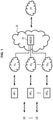
- This system comprises several access points AP i allowing access to access networks 10i of the cellular mobile access network type (eg 2G, 3G or 4G networks) or of the non-cellular wireless access network type (eg WLAN network, for example WiFi or WiMAX), as well as at least one mobile terminal UE.
- Each access network 10i is illustrated as comprising only one access point Ap i on the figure 1 , in a purely illustrative and non-restrictive manner.
- the mobile terminal UE can connect to a communication network 30 enabling it to access, for example, an IP ( Internet Protocol ) network of the Internet type, in order to access various services.
- IP Internet Protocol
- attachment to an access point is understood here to mean that the mobile terminal UE is located in the coverage area of this access point, or is authorized to access the access network of this point of access. access point and has selected this access point to access this access network. The mobile terminal UE can then either be connected to this access point (that is to say have a radio channel established with this access point), or be on standby (without active radio communication). The mobile terminal UE is considered to be “attached to an access network” when it is attached to an access point of this access network.
- the different access points AP 1 ,..., AP N are either access points of a cellular access network, in which case they can typically be designated as “3GPP access points” when the network of access in question is a 3GPP network, i.e. access points to a non-cellular wireless network, in which case they may typically be referred to as "non-3GPP access points" when the access network in question is not not a 3GPP network.
- the access points of a 4G access network are equipment called "eNodeB”
- the access points of a 3G access network are equipment called “NodeB”
- the access points of a 2G or GPRS access network are “BTS” base stations (for “ Base Transceiver Station ”).
- the access points of a WiFi network can be “ hotspots ” and the access points of a WiMAX network are WiMAX stations.
- the communication network 30 also comprises an access network selection device 20, typically located in the heart of this communication network 30, which makes it possible, on the one hand, to help a mobile terminal UE to discover the points of access of non-cellular wireless access networks to which it can attach and, on the other hand, to help this mobile terminal UE to choose between attachment to a non-cellular wireless access point and attachment to a cellular access network, according to a selection policy transmitted by this selection device.
- an access network selection device is typically a device implementing the ANDSF function as defined in the 3GPP standards, i.e. an ANDSF server according to documents TS 23.402 and 23.412.
- the invention is not limited to this single entity and can be applied to any network having physical or logical entities having the same functionalities as this ANDSF entity.
- the communication network 30 is accessible via three distinct access networks 10 1 to 10 3 represented respectively by the access points AP 1 to AP 3 .
- These zones Z i possibly overlapping as illustrated, when the mobile terminal UE is in such an overlapping zone, it is led to choose the network access point (non-cellular, wireless or cellular) to which to attach, and therefore the access network allowing him to access the communication network 30, according to a selection process described below.
- wireless non-cellular access network is meant a Wi-Fi or WiMAX network.
- the access network selection process can typically be triggered when the mobile terminal UE is already attached to an access point AP 1 of a first access network 10 1 (the mobile terminal UE can then be in the process or about to access a certain type of service), and that another access network is also detected by the mobile terminal UE, thus offering an alternative connection to this terminal.
- the mobile terminal UE may wish to select a new access network by applying the selection process below, for example to benefit from a higher bit rate than the bit rate accessible via the access point AP 1 or, when a degradation of the connection already established with the access point AP 1 is detected, in order to possibly be able to attach to an access point AP 2 of the other access network detected, in order to maintain good quality connection.
- the access network selection process can be triggered when the mobile terminal UE is not yet attached to an access network, but detects that at least two distinct access networks are within reach, which may be the case when switching on of the mobile terminal by its user.
- the mobile terminal UE can apply the selection process below in order to directly select the access network to which to attach.
- the mobile terminal UE obtains from the access network selection device 20 one or more selection rules ⁇ Ri ⁇ (alternatively called “selection policies") which will allow it to then proceed with the selection of an access network, when it will have the opportunity to do so.
- selection rules alternatively called “selection policies”
- This set of selection rules comprising one or more selection rule(s) classifies, according to an order of priority defined by the selection device 20, one or more cellular access networks using distinct cellular technologies, as well as one or more non-cellular wireless access networks.
- this set of selection rules proposes a prioritized classification relating, on the cellular network side, to at least two different access technologies and, on the non-cellular wireless network side, to one or more non-cellular wireless networks.
- the order of priority used by the selection device 20 to classify the access networks in the set of selection rules can be a function of the bit rates respectively associated with the access technologies used by these access networks.
- the selection device 20 can use throughput values fixed in the 3GPP standards, which generates a relatively static set of selection rules. According to another more dynamic alternative, the bit rates of the various usable access technologies are measured and the selection device 20 uses these measurements to prioritize the access networks in the set of selection rules.
- the selection device 20 can define the order of priority according to congestion information that can be fed back by different access points. access networks, and thus dynamically update this set of selection rules in order to modify in real or near real time the order of priority of the access networks according to the availability or possible congestion of the different access networks.
- the various selection rules are transmitted to the mobile terminal UE after such an update, so that this terminal UE has selection rules corresponding to the state of the access networks.
- This set of selection rules can take the form of a file, for example in xml format, generated by the selection device 20 before being transmitted to the terminal mobile UE and using a syntax similar to the syntax defined in the 3GPP TS 24.312 specification.
- the mobile terminal UE has one or more differentiated selection policy(ies) according to a cellular access technology of a cellular access network, these policies not being based no longer solely on the location of the UE terminal in the network, as can currently be done with the ANDSF.
- the mobile terminal UE is thus able to prioritize cellular networks differently compared to wireless non-cellular networks, depending on the cellular access technology used by the network(s). (x) cell(s) and which he can access in his current position.
- the mobile terminal UE then monitors the access networks to which it can attach in its current position, ie the access networks under whose coverage it is located, in order to detect whether it has a choice of access network at his disposal.
- the detection of the access networks to which the terminal can attach is implemented by the terminal itself according to known techniques which will not be described here.
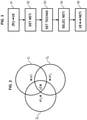
- the mobile terminal UE detects (step S2) both one (or more) wireless non-cellular access network and one (or more) cellular access network to which it can attach (ie in whose coverage it is in its current position), it determines (step S3), for each cellular access network detected, the cellular access technology that it can use to attach itself to an access point of this cellular network.
- This determination step S3 can in particular be implemented after the detection of a new cellular access network to which the mobile terminal UE is not already attached or after the detection of a cellular access network with which the mobile terminal has no active connection established (eg the mobile terminal being on standby). With regard to a detected cellular access network with which the mobile terminal already has an active connection, this determination step S3 may be optional.
- the mobile terminal UE can base itself on the cellular access technology information inserted into the SIB field of signaling messages broadcast by this network.
- this type of information may however not be completely reliable, an advantageous alternative consists in having the mobile terminal UE determine this cellular access technology by triggering the establishment of a connection with the detected cellular network, for example at the through an RRC connection.
- the detected cellular network then returns to the mobile terminal UE an information message containing an indicator of the cellular access technology that can be used to connect to it.
- the mobile terminal UE can then store this indication in a cache memory, to use it in the rest of the selection process, without necessarily continuing the process of connecting to the detected cellular network.
- the mobile terminal UE can also make this determination autonomously. For example, when the mobile terminal UE is initially near the center of a 3G cell with which it is attached, which it can determine by means of a measurement of the power of the radio signal received exceeding a certain threshold, it can determine that it can use HSPA+ access technology in this cell. Conversely, it can determine that it is at the edge of this cell when it measures a received radio signal power below a certain threshold. In this case, it may determine that it can only use UMTS access technology in this cell.
- the mobile terminal UE selects (step S4), from among the various access networks detected, the access network to which s attaching, by means of the set of selection rules received, by choosing among the detected networks the network with the highest priority according to this set of rules, taking into account the cellular access technology of the cellular network(s) (s) detected.
- this set of selection rules makes it possible to apply a different selection order depending on this cellular access technology.
- This selection step S4 can be implemented as soon as the access network detection step S2 reveals a new access network available, whether cellular or non-cellular wireless, for the attachment of the mobile terminal. EU.
- This selection step S4 can also be implemented as soon as the mobile terminal UE determines a change in cellular access technology for a detected cellular access network.
- the mobile terminal UE when the mobile terminal UE is connected to a 3G access point by means of HSPA+ access technology and it detects a replacement of this technology by UMTS access technology (eg during a degradation of the existing connection or a movement of the terminal towards the edge of the cell), or vice versa when the mobile terminal UE is connected to a 3G access point by means of UMTS access technology and it detects a replacement of this access technology by HSPA+ technology (eg when improving the existing connection or moving the terminal to the center of the cell), it can trigger the selection procedure, in order to possibly select another access network.
- the selected access network happens to be the access network to which the mobile terminal UE is already attached, then this attachment is simply retained, without modification.
- the mobile terminal UE then attaches (step S5) to this new network d access, by selecting an access point of this network selected to which it can attach. It can also interrupt its attachment with the old access network.
- the application of this selection rule according to the method defined in the 3GPP TS 24.312 specification leads the mobile terminal UE to choose, in its environment, an access point of the access network selected in terms of quality of service.
- this global rule can classify access networks according to the following order of priority, decreasing according to the speed offered by the access technologies used by these access networks:
- This first embodiment is particularly advantageously applicable when the mobile terminal UE has the ability to select between several cellular access technologies, and therefore when the cellular access technology is not imposed on it by the radio access networks ( RAN).
- the selection device 20 can be located in an entity of the access network(s) to which this terminal can attach.
- this first embodiment also applies to the usual scenario where a single cellular access technology is imposed by the radio access networks (RAN) on the terminal UE. In this case, at each detected change in cellular access technology, the mobile terminal UE can reapply the selection rule in order to possibly select a new access network which would become a priority due to the change in cellular access technology.
- the set of selection rules sent by the selection device 20 comprises several selection rules, each applicable depending on the cellular access technology with which the mobile terminal UE can attach to a cellular network it detects.
- Each of these rules classifies a single set of cellular access network(s), using one or more cellular access technology(ies), against one or more access network(s) wireless non-cellular(s), according to an order of priority defined by the selection device 20.
- one (or even more) validity indicator can be inserted in each selection rule, each validity indicator designating a distinct cellular access technology for which the selection rule applies, when it contains this indicator.
- Such a validity indicator can be inserted into an existing field of a selection rule transmitted by an ANDSF entity, this field conditioning the application of the rule according to a location criterion, typically in the "ValidityArea" field as defined in the normative document TS 24.312.
- the mobile terminal UE determines, for each of the selection rules received, whether it is applicable with regard to the cellular access technology determined in step S3, a selection rule being considered to be applicable if it relates to the cellular access technology used by a detected cellular network, which is determined by checking whether the validity flag designating such cellular access technology is inserted in this rule.
- the selection rule 2 becomes the rule to be applied by the mobile terminal UE, which can lead to the attachment of the terminal UE to an operator Wifi network (if the terminal UE detects that it is under the cover of such a network) which was not privileged with the selection rule 1 previously applied.
- the set of selection rules transmitted by the selection device 20 can be written in the form of an xml file as follows:
- the first rule applies to 2G access technologies and gives priority to a first wifi network (operator 1) over a second wifi network (operator 2), itself having priority over 2G networks.
- the second rule applies to 3G technologies and gives priority to a first wifi network (operator 1) over 3G technologies, which themselves have priority over a second wifi network (operator 2).
- the third rule applies to 4G technologies and gives them priority on any wifi network, regardless of their operator.
- the condition of applicability of each rule is determined by means of the validity indicators ⁇ GERAN_CI >01 ⁇ / GERAN_CI> , ⁇ UTRAN_CI >02 ⁇ / UTRAN_CI > and ⁇ EUTRAN_CI >02 ⁇ / EUTRAN_CI >.
- the method then further comprises the determination by the mobile terminal of an available transmission rate by means of the cellular access technology used by the detected cellular access network. Once this bit rate has been determined, the selection of the access network is made by applying the selection rule whose bit rate interval comprises the determined transmission bit rate, in other words the selection rule applicable for this transmission bit rate.
- This also makes it possible to condition the selection rules even when the information on the cellular access technology available, in the current position of the mobile terminal, is not or accessible, for example because the selection logic is implemented in an application that does not have access to information relating to the radio layer of the terminal.
- the mobile terminal UE detects, in its current position, several cellular access networks offering it several distinct cellular access technologies that it can select. In such a case, several selection rules may be applicable.
- the selection rules can advantageously be classified in order of priority.
- the mobile terminal UE selects, among these applicable rules, the selection rule to be applied, which typically happens to be the selection rule with the highest priority among the applicable rules sent by the selection device 20.
- the priority level of a selection rule can be indicated by a “RulePriority” field, inserted in each selection rule, as defined in the 3GPP TS 24.312 specification and illustrated by the aforementioned xml file.
- the mobile terminal UE uses this rule to choose the access network to which to attach, by selecting the access network with the highest priority according to this selection rule from among the access networks detected.
- selection rule 1 has priority over selection rule 2, which itself has priority over selection rule 3
- selection rules 1 and 3 are applicable, and it is selection rule 1 which applies as a priority among these rules, leading to the selection of the 4G network for the attachment of the UE terminal.
- selection rule 3 becomes applicable, leading to the selection of the network Community wifi for EU terminal attachment.
- the invention is not limited to the selection method described above, but also relates to a mobile terminal UE and a selection device 20 arranged to send at least one selection rule to a mobile terminal UE, said at least one selection rule being intended to assist the mobile terminal in its selection of an access network to which to attach to access a communication network 30.
- the selection device 20 notably comprises, in addition to a network interface, a processing module configured to generate said at least one access network selection rule by classifying, according to an order of priority, a plurality of access networks comprising a a cellular access network using a first cellular access technology, a cellular access network using a second cellular access technology and at least one non-cellular access network using a non-cellular wireless access technology.
- the mobile terminal UE is capable of receiving, from an access network selection device 20, at least one access network selection rule classifying, according to an order of priority, a plurality of access networks comprising a cellular access network using a first cellular access technology, a cellular access network using a second cellular access technology and at least one non-cellular access network using a wireless non-cellular access technology .
- the mobile terminal UE comprises in particular, in addition to a first radio interface and a second radio interface, a processing module configured to select, from among at least one wireless non-cellular access network and at least one cellular access network detected by said terminal, the access network with the highest priority according to said at least one selection rule applied according to the cellular access technology of the detected wireless access network.
- modules can correspond, in this document, both to a software component and to a hardware component, able to implement a function or a set of functions according to what is described previously for the module concerned.
- a software component corresponds to one or more computer programs, one or more sub-programs of a program, or more generally to any element of a program or software.
- Such a software component is stored in memory, then loaded and executed by a data processor of a physical entity, and is capable of accessing the hardware resources of this physical entity (memories, recording media, communication bus, interfaces ).
- a hardware component corresponds to any element of a hardware assembly (or hardware). It can be a programmable or non-programmable hardware component, with or without an integrated processor for running software. It is for example an integrated circuit, a smart card, an electronic card for the execution of a firmware (firmware, etc.).
- a data medium can be a material storage medium (for example a CD-ROM, a USB key, a memory card or a hard disk), or else a transmission medium such as an electrical, optical or radio signal, or even a telecommunications network.
- a material storage medium for example a CD-ROM, a USB key, a memory card or a hard disk
- a transmission medium such as an electrical, optical or radio signal, or even a telecommunications network.
Landscapes
- Engineering & Computer Science (AREA)
- Computer Networks & Wireless Communication (AREA)
- Signal Processing (AREA)
- Computer Security & Cryptography (AREA)
- Mobile Radio Communication Systems (AREA)
- Telephonic Communication Services (AREA)
Priority Applications (1)
| Application Number | Priority Date | Filing Date | Title |
|---|---|---|---|
| EP21217375.1A EP4007375B1 (fr) | 2013-07-16 | 2014-07-15 | Sélection d'un réseau d'accès conditionnée par la technologie d'accès cellulaire |
Applications Claiming Priority (3)
| Application Number | Priority Date | Filing Date | Title |
|---|---|---|---|
| FR1357002A FR3008843A1 (fr) | 2013-07-16 | 2013-07-16 | Selection d'un reseau d'acces conditionnee par la technologie d'acces cellulaire |
| PCT/FR2014/051822 WO2015007989A1 (fr) | 2013-07-16 | 2014-07-15 | Selection d'un reseau d'acces conditionnee par la technologie d'acces cellulaire |
| EP14750568.9A EP3022970B1 (fr) | 2013-07-16 | 2014-07-15 | Sélection d'un réseau d'accès conditionnée par la technologie d'accès cellulaire |
Related Parent Applications (2)
| Application Number | Title | Priority Date | Filing Date |
|---|---|---|---|
| PCT/FR2014/051822 Previously-Filed-Application WO2015007989A1 (fr) | 2013-07-16 | 2014-07-15 | Selection d'un reseau d'acces conditionnee par la technologie d'acces cellulaire |
| EP14750568.9A Division EP3022970B1 (fr) | 2013-07-16 | 2014-07-15 | Sélection d'un réseau d'accès conditionnée par la technologie d'accès cellulaire |
Related Child Applications (2)
| Application Number | Title | Priority Date | Filing Date |
|---|---|---|---|
| EP21217375.1A Division EP4007375B1 (fr) | 2013-07-16 | 2014-07-15 | Sélection d'un réseau d'accès conditionnée par la technologie d'accès cellulaire |
| EP21217375.1A Division-Into EP4007375B1 (fr) | 2013-07-16 | 2014-07-15 | Sélection d'un réseau d'accès conditionnée par la technologie d'accès cellulaire |
Publications (2)
| Publication Number | Publication Date |
|---|---|
| EP3579620A1 EP3579620A1 (fr) | 2019-12-11 |
| EP3579620B1 true EP3579620B1 (fr) | 2022-02-09 |
Family
ID=49474603
Family Applications (3)
| Application Number | Title | Priority Date | Filing Date |
|---|---|---|---|
| EP19162207.5A Active EP3579620B1 (fr) | 2013-07-16 | 2014-07-15 | Selection d'un réseau d'acces conditionnée par la technologie d'acces cellulaire |
| EP21217375.1A Active EP4007375B1 (fr) | 2013-07-16 | 2014-07-15 | Sélection d'un réseau d'accès conditionnée par la technologie d'accès cellulaire |
| EP14750568.9A Active EP3022970B1 (fr) | 2013-07-16 | 2014-07-15 | Sélection d'un réseau d'accès conditionnée par la technologie d'accès cellulaire |
Family Applications After (2)
| Application Number | Title | Priority Date | Filing Date |
|---|---|---|---|
| EP21217375.1A Active EP4007375B1 (fr) | 2013-07-16 | 2014-07-15 | Sélection d'un réseau d'accès conditionnée par la technologie d'accès cellulaire |
| EP14750568.9A Active EP3022970B1 (fr) | 2013-07-16 | 2014-07-15 | Sélection d'un réseau d'accès conditionnée par la technologie d'accès cellulaire |
Country Status (10)
| Country | Link |
|---|---|
| US (1) | US10616828B2 (pl) |
| EP (3) | EP3579620B1 (pl) |
| JP (1) | JP6248193B2 (pl) |
| KR (1) | KR101830333B1 (pl) |
| CN (1) | CN105532042A (pl) |
| ES (3) | ES2912260T3 (pl) |
| FR (1) | FR3008843A1 (pl) |
| PL (1) | PL4007375T3 (pl) |
| PT (1) | PT4007375T (pl) |
| WO (1) | WO2015007989A1 (pl) |
Families Citing this family (16)
| Publication number | Priority date | Publication date | Assignee | Title |
|---|---|---|---|---|
| EP2911428B1 (en) * | 2014-02-24 | 2019-04-10 | Giesecke+Devrient Mobile Security GmbH | Management of virtual subscriptions |
| FR3048574A1 (fr) * | 2016-03-07 | 2017-09-08 | Orange | Selection d'une instanciation de tranche de reseau pour la transmission de paquets montants |
| US11064065B2 (en) | 2016-04-14 | 2021-07-13 | Ford Global Technologies, Llc | Method and apparatus for cellular network backup connectivity |
| WO2018072824A1 (en) * | 2016-10-19 | 2018-04-26 | Huawei Technologies Co., Ltd. | Network entity and method for a communication network having core network slices and access network slices |
| EP3731569B1 (en) * | 2018-01-11 | 2025-02-19 | Ntt Docomo, Inc. | User device |
| CN108462984A (zh) * | 2018-01-25 | 2018-08-28 | 青岛海信移动通信技术股份有限公司 | 一种进行接入网络管理的方法及终端 |
| US11039369B2 (en) | 2018-08-10 | 2021-06-15 | Mediatek Inc. | Handling 5G QoS rules on QoS operation errors |
| WO2020150978A1 (en) * | 2019-01-24 | 2020-07-30 | Citrix Systems, Inc. | Optimized network selection |
| CN111565440B (zh) * | 2019-01-29 | 2022-04-22 | 华为技术有限公司 | 无线通信的方法和通信设备 |
| US10512037B1 (en) * | 2019-03-07 | 2019-12-17 | Sprint Spectrum L.P. | Controlling cell selection based on relative device-type prioritization |
| EP3935814B1 (en) * | 2019-03-08 | 2024-02-14 | Telefonaktiebolaget Lm Ericsson (Publ) | Dynamic access network selection based on application orchestration information in an edge cloud system |
| WO2021038863A1 (ja) * | 2019-08-30 | 2021-03-04 | ソニー株式会社 | 判定装置、判定方法および判定プログラム |
| US10932302B1 (en) | 2019-11-22 | 2021-02-23 | Sprint Spectrum L.P. | Control of wireless connectivity based on inability to interpret system message data flagged as critical to operation |
| KR102351935B1 (ko) * | 2020-05-14 | 2022-01-14 | 주식회사 엘지유플러스 | 무선 통신 네트워크 연결을 제어하는 방법 및 장치 |
| US11595962B1 (en) | 2020-09-03 | 2023-02-28 | Sprint Spectrum Llc | Use of network signaling (NS) values to cooperatively control spectral emission and additional functionality such as uplink/downlink subcarrier shifting |
| CN116261207B (zh) * | 2023-02-03 | 2024-06-18 | 深圳感臻智能股份有限公司 | 一种实现多网络共存与切换的方法、装置及介质 |
Family Cites Families (14)
| Publication number | Priority date | Publication date | Assignee | Title |
|---|---|---|---|---|
| US7505433B2 (en) * | 2005-04-01 | 2009-03-17 | Toshiba America Research, Inc. | Autonomous and heterogeneous network discovery and reuse |
| US7620065B2 (en) * | 2005-07-22 | 2009-11-17 | Trellia Networks, Inc. | Mobile connectivity solution |
| JP5116398B2 (ja) * | 2007-08-06 | 2013-01-09 | 京セラ株式会社 | 通信装置、無線通信装置および通信制御方法 |
| WO2009095336A1 (en) * | 2008-01-28 | 2009-08-06 | Telefonaktiebolaget Lm Ericsson (Publ) | Method and apparatus for use in a communications network |
| CN101505524B (zh) * | 2008-02-05 | 2011-11-16 | 华为技术有限公司 | 用户设备选择网络的方法及装置 |
| WO2009127238A1 (en) * | 2008-04-18 | 2009-10-22 | Telefonaktiebolaget Lm Ericsson (Publ) | Access network selection in a multi-access network environment |
| CN101594663B (zh) * | 2008-05-31 | 2012-05-23 | 华为技术有限公司 | 一种网络选择的方法、系统和装置 |
| FR2941585B1 (fr) | 2009-01-28 | 2013-04-12 | Plugnsurf | Dispositif portatif de communication multi-reseaux |
| CN102668642B (zh) * | 2009-10-02 | 2015-12-02 | 诺基亚通信公司 | 网络选择机制 |
| EP2564639A1 (en) * | 2010-04-27 | 2013-03-06 | Nokia Siemens Networks OY | Updating of network selection information |
| WO2012092935A1 (en) * | 2011-01-04 | 2012-07-12 | Nokia Siemens Networks Oy | Access network selection in communications system |
| KR20140018089A (ko) * | 2012-07-25 | 2014-02-12 | 삼성전자주식회사 | 무선 통신 시스템에서 혼잡을 고려한 트래픽 오프로딩 방법 및 장치 |
| US9544841B2 (en) * | 2012-12-06 | 2017-01-10 | At&T Intellectual Property I, L.P. | Hybrid network-based and device-based intelligent radio access control |
| DE102013002505A1 (de) * | 2013-02-14 | 2014-03-13 | Daimler Ag | Verfahren zum Toleranzausgleich |
-
2013
- 2013-07-16 FR FR1357002A patent/FR3008843A1/fr active Pending
-
2014
- 2014-07-15 WO PCT/FR2014/051822 patent/WO2015007989A1/fr not_active Ceased
- 2014-07-15 ES ES19162207T patent/ES2912260T3/es active Active
- 2014-07-15 PT PT212173751T patent/PT4007375T/pt unknown
- 2014-07-15 KR KR1020167003676A patent/KR101830333B1/ko active Active
- 2014-07-15 EP EP19162207.5A patent/EP3579620B1/fr active Active
- 2014-07-15 EP EP21217375.1A patent/EP4007375B1/fr active Active
- 2014-07-15 US US14/905,264 patent/US10616828B2/en active Active
- 2014-07-15 EP EP14750568.9A patent/EP3022970B1/fr active Active
- 2014-07-15 ES ES14750568T patent/ES2727073T3/es active Active
- 2014-07-15 ES ES21217375T patent/ES2965822T3/es active Active
- 2014-07-15 CN CN201480040326.5A patent/CN105532042A/zh active Pending
- 2014-07-15 JP JP2016526676A patent/JP6248193B2/ja active Active
- 2014-07-15 PL PL21217375.1T patent/PL4007375T3/pl unknown
Also Published As
| Publication number | Publication date |
|---|---|
| CN105532042A (zh) | 2016-04-27 |
| EP4007375B1 (fr) | 2023-08-30 |
| KR101830333B1 (ko) | 2018-02-20 |
| EP3022970A1 (fr) | 2016-05-25 |
| ES2965822T3 (es) | 2024-04-17 |
| ES2912260T3 (es) | 2022-05-25 |
| WO2015007989A1 (fr) | 2015-01-22 |
| US20160157170A1 (en) | 2016-06-02 |
| JP2016527798A (ja) | 2016-09-08 |
| EP4007375A1 (fr) | 2022-06-01 |
| US10616828B2 (en) | 2020-04-07 |
| KR20160031530A (ko) | 2016-03-22 |
| JP6248193B2 (ja) | 2017-12-13 |
| PT4007375T (pt) | 2023-11-20 |
| FR3008843A1 (fr) | 2015-01-23 |
| PL4007375T3 (pl) | 2024-02-26 |
| EP3579620A1 (fr) | 2019-12-11 |
| EP3022970B1 (fr) | 2019-03-13 |
| ES2727073T3 (es) | 2019-10-14 |
Similar Documents
| Publication | Publication Date | Title |
|---|---|---|
| EP4007375B1 (fr) | Sélection d'un réseau d'accès conditionnée par la technologie d'accès cellulaire | |
| BE1021379B1 (fr) | Jonction selective d'un equipement utilisateur de communication de type machine a une cellule sans fil | |
| EP4475599B1 (fr) | Procédé de connexion d'un terminal utilisateur a une tranche de réseau | |
| BE1021362B1 (fr) | Identification de trous de couverture en utilisant des mesures de transfert inter-rat. | |
| BE1021196B1 (fr) | Determination de couverture inter-rat pour la gestion d'economie d'energie | |
| EP2415294B1 (fr) | Procédé et dispositif de gestion d'une authentification d'un utilisateur | |
| RU2606962C2 (ru) | Избирательное соединение оборудования пользователя, использующего межмашинную передачу данных, с беспроводной сотой | |
| EP2727414B1 (fr) | D'obtention par un terminal d'une information relative à un acces à un service | |
| EP2084927B1 (fr) | Procede et systeme de mobilite personnalisee par l'utilisateur dans un systeme de communication mobile | |
| EP2875670B1 (fr) | Gestion de la mobilite dans un reseau de communication en fonction de la qualite de service d'un service accede | |
| US9713074B2 (en) | Network association in an environment with hidden networks | |
| EP2875678B1 (fr) | Gestion de la mobilite dans un reseau de communication en fonction de la velocite d'un terminal mobile | |
| WO2016061788A1 (en) | Telecommunications system and method | |
| EP1972176B1 (fr) | Procedes et terminaux de communication pour ameliorer le transfert de connexion entre des cellules appartenant a des reseaux differents | |
| EP2875679B1 (fr) | Gestion de la mobilité dans un réseau de communication en fonction d'un profil d'utilisation de crédits | |
| FR2968155A1 (fr) | Technique de communication entre un equipement utilisateur et un reseau de donnees dans un reseau de communication | |
| FR2969445A1 (fr) | Procede de selection d'un reseau d'acces sans fil | |
| FR2925810A1 (fr) | Procede de communicatin entre un terminal et un reseau de communication | |
| FR3007930A1 (fr) | Procede de traitement d'une politique d'acces reseaux dans un reseau de telecommunications | |
| FR3157775A1 (fr) | Procédés visant à optimiser l’efficacité énergétique d’un équipement utilisateur, entité d’un réseau de télécommunications et équipement utilisateur | |
| FR2953083A1 (fr) | Module de telephonie mobile et procede de determination d'une cellule comme appropriee. |
Legal Events
| Date | Code | Title | Description |
|---|---|---|---|
| PUAI | Public reference made under article 153(3) epc to a published international application that has entered the european phase |
Free format text: ORIGINAL CODE: 0009012 |
|
| STAA | Information on the status of an ep patent application or granted ep patent |
Free format text: STATUS: THE APPLICATION HAS BEEN PUBLISHED |
|
| AC | Divisional application: reference to earlier application |
Ref document number: 3022970 Country of ref document: EP Kind code of ref document: P |
|
| AK | Designated contracting states |
Kind code of ref document: A1 Designated state(s): AL AT BE BG CH CY CZ DE DK EE ES FI FR GB GR HR HU IE IS IT LI LT LU LV MC MK MT NL NO PL PT RO RS SE SI SK SM TR |
|
| STAA | Information on the status of an ep patent application or granted ep patent |
Free format text: STATUS: REQUEST FOR EXAMINATION WAS MADE |
|
| RAP1 | Party data changed (applicant data changed or rights of an application transferred) |
Owner name: ORANGE |
|
| 17P | Request for examination filed |
Effective date: 20200604 |
|
| RBV | Designated contracting states (corrected) |
Designated state(s): AL AT BE BG CH CY CZ DE DK EE ES FI FR GB GR HR HU IE IS IT LI LT LU LV MC MK MT NL NO PL PT RO RS SE SI SK SM TR |
|
| STAA | Information on the status of an ep patent application or granted ep patent |
Free format text: STATUS: EXAMINATION IS IN PROGRESS |
|
| 17Q | First examination report despatched |
Effective date: 20210301 |
|
| RAP3 | Party data changed (applicant data changed or rights of an application transferred) |
Owner name: ORANGE |
|
| GRAP | Despatch of communication of intention to grant a patent |
Free format text: ORIGINAL CODE: EPIDOSNIGR1 |
|
| STAA | Information on the status of an ep patent application or granted ep patent |
Free format text: STATUS: GRANT OF PATENT IS INTENDED |
|
| INTG | Intention to grant announced |
Effective date: 20210826 |
|
| GRAS | Grant fee paid |
Free format text: ORIGINAL CODE: EPIDOSNIGR3 |
|
| GRAA | (expected) grant |
Free format text: ORIGINAL CODE: 0009210 |
|
| STAA | Information on the status of an ep patent application or granted ep patent |
Free format text: STATUS: THE PATENT HAS BEEN GRANTED |
|
| AC | Divisional application: reference to earlier application |
Ref document number: 3022970 Country of ref document: EP Kind code of ref document: P |
|
| AK | Designated contracting states |
Kind code of ref document: B1 Designated state(s): AL AT BE BG CH CY CZ DE DK EE ES FI FR GB GR HR HU IE IS IT LI LT LU LV MC MK MT NL NO PL PT RO RS SE SI SK SM TR |
|
| REG | Reference to a national code |
Ref country code: GB Ref legal event code: FG4D Free format text: NOT ENGLISH |
|
| REG | Reference to a national code |
Ref country code: CH Ref legal event code: EP Ref country code: AT Ref legal event code: REF Ref document number: 1468271 Country of ref document: AT Kind code of ref document: T Effective date: 20220215 |
|
| REG | Reference to a national code |
Ref country code: IE Ref legal event code: FG4D Free format text: LANGUAGE OF EP DOCUMENT: FRENCH |
|
| REG | Reference to a national code |
Ref country code: DE Ref legal event code: R096 Ref document number: 602014082483 Country of ref document: DE |
|
| REG | Reference to a national code |
Ref country code: ES Ref legal event code: FG2A Ref document number: 2912260 Country of ref document: ES Kind code of ref document: T3 Effective date: 20220525 |
|
| REG | Reference to a national code |
Ref country code: LT Ref legal event code: MG9D |
|
| REG | Reference to a national code |
Ref country code: NL Ref legal event code: MP Effective date: 20220209 |
|
| REG | Reference to a national code |
Ref country code: AT Ref legal event code: MK05 Ref document number: 1468271 Country of ref document: AT Kind code of ref document: T Effective date: 20220209 |
|
| PG25 | Lapsed in a contracting state [announced via postgrant information from national office to epo] |
Ref country code: SE Free format text: LAPSE BECAUSE OF FAILURE TO SUBMIT A TRANSLATION OF THE DESCRIPTION OR TO PAY THE FEE WITHIN THE PRESCRIBED TIME-LIMIT Effective date: 20220209 Ref country code: RS Free format text: LAPSE BECAUSE OF FAILURE TO SUBMIT A TRANSLATION OF THE DESCRIPTION OR TO PAY THE FEE WITHIN THE PRESCRIBED TIME-LIMIT Effective date: 20220209 Ref country code: PT Free format text: LAPSE BECAUSE OF FAILURE TO SUBMIT A TRANSLATION OF THE DESCRIPTION OR TO PAY THE FEE WITHIN THE PRESCRIBED TIME-LIMIT Effective date: 20220609 Ref country code: NO Free format text: LAPSE BECAUSE OF FAILURE TO SUBMIT A TRANSLATION OF THE DESCRIPTION OR TO PAY THE FEE WITHIN THE PRESCRIBED TIME-LIMIT Effective date: 20220509 Ref country code: NL Free format text: LAPSE BECAUSE OF FAILURE TO SUBMIT A TRANSLATION OF THE DESCRIPTION OR TO PAY THE FEE WITHIN THE PRESCRIBED TIME-LIMIT Effective date: 20220209 Ref country code: LT Free format text: LAPSE BECAUSE OF FAILURE TO SUBMIT A TRANSLATION OF THE DESCRIPTION OR TO PAY THE FEE WITHIN THE PRESCRIBED TIME-LIMIT Effective date: 20220209 Ref country code: HR Free format text: LAPSE BECAUSE OF FAILURE TO SUBMIT A TRANSLATION OF THE DESCRIPTION OR TO PAY THE FEE WITHIN THE PRESCRIBED TIME-LIMIT Effective date: 20220209 Ref country code: BG Free format text: LAPSE BECAUSE OF FAILURE TO SUBMIT A TRANSLATION OF THE DESCRIPTION OR TO PAY THE FEE WITHIN THE PRESCRIBED TIME-LIMIT Effective date: 20220509 |
|
| PG25 | Lapsed in a contracting state [announced via postgrant information from national office to epo] |
Ref country code: PL Free format text: LAPSE BECAUSE OF FAILURE TO SUBMIT A TRANSLATION OF THE DESCRIPTION OR TO PAY THE FEE WITHIN THE PRESCRIBED TIME-LIMIT Effective date: 20220209 Ref country code: LV Free format text: LAPSE BECAUSE OF FAILURE TO SUBMIT A TRANSLATION OF THE DESCRIPTION OR TO PAY THE FEE WITHIN THE PRESCRIBED TIME-LIMIT Effective date: 20220209 Ref country code: GR Free format text: LAPSE BECAUSE OF FAILURE TO SUBMIT A TRANSLATION OF THE DESCRIPTION OR TO PAY THE FEE WITHIN THE PRESCRIBED TIME-LIMIT Effective date: 20220510 Ref country code: FI Free format text: LAPSE BECAUSE OF FAILURE TO SUBMIT A TRANSLATION OF THE DESCRIPTION OR TO PAY THE FEE WITHIN THE PRESCRIBED TIME-LIMIT Effective date: 20220209 Ref country code: AT Free format text: LAPSE BECAUSE OF FAILURE TO SUBMIT A TRANSLATION OF THE DESCRIPTION OR TO PAY THE FEE WITHIN THE PRESCRIBED TIME-LIMIT Effective date: 20220209 |
|
| PG25 | Lapsed in a contracting state [announced via postgrant information from national office to epo] |
Ref country code: IS Free format text: LAPSE BECAUSE OF FAILURE TO SUBMIT A TRANSLATION OF THE DESCRIPTION OR TO PAY THE FEE WITHIN THE PRESCRIBED TIME-LIMIT Effective date: 20220609 |
|
| PG25 | Lapsed in a contracting state [announced via postgrant information from national office to epo] |
Ref country code: SM Free format text: LAPSE BECAUSE OF FAILURE TO SUBMIT A TRANSLATION OF THE DESCRIPTION OR TO PAY THE FEE WITHIN THE PRESCRIBED TIME-LIMIT Effective date: 20220209 Ref country code: SK Free format text: LAPSE BECAUSE OF FAILURE TO SUBMIT A TRANSLATION OF THE DESCRIPTION OR TO PAY THE FEE WITHIN THE PRESCRIBED TIME-LIMIT Effective date: 20220209 Ref country code: RO Free format text: LAPSE BECAUSE OF FAILURE TO SUBMIT A TRANSLATION OF THE DESCRIPTION OR TO PAY THE FEE WITHIN THE PRESCRIBED TIME-LIMIT Effective date: 20220209 Ref country code: EE Free format text: LAPSE BECAUSE OF FAILURE TO SUBMIT A TRANSLATION OF THE DESCRIPTION OR TO PAY THE FEE WITHIN THE PRESCRIBED TIME-LIMIT Effective date: 20220209 Ref country code: DK Free format text: LAPSE BECAUSE OF FAILURE TO SUBMIT A TRANSLATION OF THE DESCRIPTION OR TO PAY THE FEE WITHIN THE PRESCRIBED TIME-LIMIT Effective date: 20220209 Ref country code: CZ Free format text: LAPSE BECAUSE OF FAILURE TO SUBMIT A TRANSLATION OF THE DESCRIPTION OR TO PAY THE FEE WITHIN THE PRESCRIBED TIME-LIMIT Effective date: 20220209 |
|
| REG | Reference to a national code |
Ref country code: DE Ref legal event code: R097 Ref document number: 602014082483 Country of ref document: DE |
|
| PG25 | Lapsed in a contracting state [announced via postgrant information from national office to epo] |
Ref country code: AL Free format text: LAPSE BECAUSE OF FAILURE TO SUBMIT A TRANSLATION OF THE DESCRIPTION OR TO PAY THE FEE WITHIN THE PRESCRIBED TIME-LIMIT Effective date: 20220209 |
|
| PLBE | No opposition filed within time limit |
Free format text: ORIGINAL CODE: 0009261 |
|
| STAA | Information on the status of an ep patent application or granted ep patent |
Free format text: STATUS: NO OPPOSITION FILED WITHIN TIME LIMIT |
|
| 26N | No opposition filed |
Effective date: 20221110 |
|
| PG25 | Lapsed in a contracting state [announced via postgrant information from national office to epo] |
Ref country code: SI Free format text: LAPSE BECAUSE OF FAILURE TO SUBMIT A TRANSLATION OF THE DESCRIPTION OR TO PAY THE FEE WITHIN THE PRESCRIBED TIME-LIMIT Effective date: 20220209 Ref country code: MC Free format text: LAPSE BECAUSE OF FAILURE TO SUBMIT A TRANSLATION OF THE DESCRIPTION OR TO PAY THE FEE WITHIN THE PRESCRIBED TIME-LIMIT Effective date: 20220209 |
|
| REG | Reference to a national code |
Ref country code: CH Ref legal event code: PL |
|
| REG | Reference to a national code |
Ref country code: BE Ref legal event code: MM Effective date: 20220731 |
|
| PG25 | Lapsed in a contracting state [announced via postgrant information from national office to epo] |
Ref country code: LU Free format text: LAPSE BECAUSE OF NON-PAYMENT OF DUE FEES Effective date: 20220715 Ref country code: LI Free format text: LAPSE BECAUSE OF NON-PAYMENT OF DUE FEES Effective date: 20220731 Ref country code: CH Free format text: LAPSE BECAUSE OF NON-PAYMENT OF DUE FEES Effective date: 20220731 |
|
| PG25 | Lapsed in a contracting state [announced via postgrant information from national office to epo] |
Ref country code: BE Free format text: LAPSE BECAUSE OF NON-PAYMENT OF DUE FEES Effective date: 20220731 |
|
| PG25 | Lapsed in a contracting state [announced via postgrant information from national office to epo] |
Ref country code: IE Free format text: LAPSE BECAUSE OF NON-PAYMENT OF DUE FEES Effective date: 20220715 |
|
| PG25 | Lapsed in a contracting state [announced via postgrant information from national office to epo] |
Ref country code: HU Free format text: LAPSE BECAUSE OF FAILURE TO SUBMIT A TRANSLATION OF THE DESCRIPTION OR TO PAY THE FEE WITHIN THE PRESCRIBED TIME-LIMIT; INVALID AB INITIO Effective date: 20140715 |
|
| PG25 | Lapsed in a contracting state [announced via postgrant information from national office to epo] |
Ref country code: MK Free format text: LAPSE BECAUSE OF FAILURE TO SUBMIT A TRANSLATION OF THE DESCRIPTION OR TO PAY THE FEE WITHIN THE PRESCRIBED TIME-LIMIT Effective date: 20220209 Ref country code: CY Free format text: LAPSE BECAUSE OF FAILURE TO SUBMIT A TRANSLATION OF THE DESCRIPTION OR TO PAY THE FEE WITHIN THE PRESCRIBED TIME-LIMIT Effective date: 20220209 |
|
| PG25 | Lapsed in a contracting state [announced via postgrant information from national office to epo] |
Ref country code: MT Free format text: LAPSE BECAUSE OF FAILURE TO SUBMIT A TRANSLATION OF THE DESCRIPTION OR TO PAY THE FEE WITHIN THE PRESCRIBED TIME-LIMIT Effective date: 20220209 |
|
| PGFP | Annual fee paid to national office [announced via postgrant information from national office to epo] |
Ref country code: GB Payment date: 20250619 Year of fee payment: 12 |
|
| PGFP | Annual fee paid to national office [announced via postgrant information from national office to epo] |
Ref country code: FR Payment date: 20250620 Year of fee payment: 12 |
|
| PGFP | Annual fee paid to national office [announced via postgrant information from national office to epo] |
Ref country code: ES Payment date: 20250801 Year of fee payment: 12 |
|
| PGFP | Annual fee paid to national office [announced via postgrant information from national office to epo] |
Ref country code: DE Payment date: 20250620 Year of fee payment: 12 |
|
| PGFP | Annual fee paid to national office [announced via postgrant information from national office to epo] |
Ref country code: IT Payment date: 20250619 Year of fee payment: 12 |
|
| PG25 | Lapsed in a contracting state [announced via postgrant information from national office to epo] |
Ref country code: TR Free format text: LAPSE BECAUSE OF FAILURE TO SUBMIT A TRANSLATION OF THE DESCRIPTION OR TO PAY THE FEE WITHIN THE PRESCRIBED TIME-LIMIT Effective date: 20220209 |