EP3579227B1 - Voice wake-up method and device and electronic device - Google Patents
Voice wake-up method and device and electronic device Download PDFInfo
- Publication number
- EP3579227B1 EP3579227B1 EP18823086.6A EP18823086A EP3579227B1 EP 3579227 B1 EP3579227 B1 EP 3579227B1 EP 18823086 A EP18823086 A EP 18823086A EP 3579227 B1 EP3579227 B1 EP 3579227B1
- Authority
- EP
- European Patent Office
- Prior art keywords
- speech
- speech data
- wakeup
- training
- model
- Prior art date
- Legal status (The legal status is an assumption and is not a legal conclusion. Google has not performed a legal analysis and makes no representation as to the accuracy of the status listed.)
- Active
Links
Images


Classifications
-
- G—PHYSICS
- G10—MUSICAL INSTRUMENTS; ACOUSTICS
- G10L—SPEECH ANALYSIS TECHNIQUES OR SPEECH SYNTHESIS; SPEECH RECOGNITION; SPEECH OR VOICE PROCESSING TECHNIQUES; SPEECH OR AUDIO CODING OR DECODING
- G10L15/00—Speech recognition
- G10L15/22—Procedures used during a speech recognition process, e.g. man-machine dialogue
-
- G—PHYSICS
- G10—MUSICAL INSTRUMENTS; ACOUSTICS
- G10L—SPEECH ANALYSIS TECHNIQUES OR SPEECH SYNTHESIS; SPEECH RECOGNITION; SPEECH OR VOICE PROCESSING TECHNIQUES; SPEECH OR AUDIO CODING OR DECODING
- G10L15/00—Speech recognition
- G10L15/06—Creation of reference templates; Training of speech recognition systems, e.g. adaptation to the characteristics of the speaker's voice
- G10L15/063—Training
-
- G—PHYSICS
- G06—COMPUTING OR CALCULATING; COUNTING
- G06N—COMPUTING ARRANGEMENTS BASED ON SPECIFIC COMPUTATIONAL MODELS
- G06N3/00—Computing arrangements based on biological models
- G06N3/02—Neural networks
- G06N3/04—Architecture, e.g. interconnection topology
-
- G—PHYSICS
- G06—COMPUTING OR CALCULATING; COUNTING
- G06N—COMPUTING ARRANGEMENTS BASED ON SPECIFIC COMPUTATIONAL MODELS
- G06N3/00—Computing arrangements based on biological models
- G06N3/02—Neural networks
- G06N3/04—Architecture, e.g. interconnection topology
- G06N3/0499—Feedforward networks
-
- G—PHYSICS
- G06—COMPUTING OR CALCULATING; COUNTING
- G06N—COMPUTING ARRANGEMENTS BASED ON SPECIFIC COMPUTATIONAL MODELS
- G06N3/00—Computing arrangements based on biological models
- G06N3/02—Neural networks
- G06N3/08—Learning methods
-
- G—PHYSICS
- G06—COMPUTING OR CALCULATING; COUNTING
- G06N—COMPUTING ARRANGEMENTS BASED ON SPECIFIC COMPUTATIONAL MODELS
- G06N3/00—Computing arrangements based on biological models
- G06N3/02—Neural networks
- G06N3/08—Learning methods
- G06N3/09—Supervised learning
-
- G—PHYSICS
- G06—COMPUTING OR CALCULATING; COUNTING
- G06N—COMPUTING ARRANGEMENTS BASED ON SPECIFIC COMPUTATIONAL MODELS
- G06N3/00—Computing arrangements based on biological models
- G06N3/02—Neural networks
- G06N3/08—Learning methods
- G06N3/096—Transfer learning
-
- G—PHYSICS
- G10—MUSICAL INSTRUMENTS; ACOUSTICS
- G10L—SPEECH ANALYSIS TECHNIQUES OR SPEECH SYNTHESIS; SPEECH RECOGNITION; SPEECH OR VOICE PROCESSING TECHNIQUES; SPEECH OR AUDIO CODING OR DECODING
- G10L15/00—Speech recognition
- G10L15/02—Feature extraction for speech recognition; Selection of recognition unit
-
- G—PHYSICS
- G10—MUSICAL INSTRUMENTS; ACOUSTICS
- G10L—SPEECH ANALYSIS TECHNIQUES OR SPEECH SYNTHESIS; SPEECH RECOGNITION; SPEECH OR VOICE PROCESSING TECHNIQUES; SPEECH OR AUDIO CODING OR DECODING
- G10L15/00—Speech recognition
- G10L15/08—Speech classification or search
- G10L15/16—Speech classification or search using artificial neural networks
-
- G—PHYSICS
- G10—MUSICAL INSTRUMENTS; ACOUSTICS
- G10L—SPEECH ANALYSIS TECHNIQUES OR SPEECH SYNTHESIS; SPEECH RECOGNITION; SPEECH OR VOICE PROCESSING TECHNIQUES; SPEECH OR AUDIO CODING OR DECODING
- G10L15/00—Speech recognition
- G10L15/26—Speech to text systems
-
- G—PHYSICS
- G10—MUSICAL INSTRUMENTS; ACOUSTICS
- G10L—SPEECH ANALYSIS TECHNIQUES OR SPEECH SYNTHESIS; SPEECH RECOGNITION; SPEECH OR VOICE PROCESSING TECHNIQUES; SPEECH OR AUDIO CODING OR DECODING
- G10L15/00—Speech recognition
- G10L15/02—Feature extraction for speech recognition; Selection of recognition unit
- G10L2015/025—Phonemes, fenemes or fenones being the recognition units
-
- G—PHYSICS
- G10—MUSICAL INSTRUMENTS; ACOUSTICS
- G10L—SPEECH ANALYSIS TECHNIQUES OR SPEECH SYNTHESIS; SPEECH RECOGNITION; SPEECH OR VOICE PROCESSING TECHNIQUES; SPEECH OR AUDIO CODING OR DECODING
- G10L15/00—Speech recognition
- G10L15/06—Creation of reference templates; Training of speech recognition systems, e.g. adaptation to the characteristics of the speaker's voice
- G10L15/063—Training
- G10L2015/0631—Creating reference templates; Clustering
-
- G—PHYSICS
- G10—MUSICAL INSTRUMENTS; ACOUSTICS
- G10L—SPEECH ANALYSIS TECHNIQUES OR SPEECH SYNTHESIS; SPEECH RECOGNITION; SPEECH OR VOICE PROCESSING TECHNIQUES; SPEECH OR AUDIO CODING OR DECODING
- G10L15/00—Speech recognition
- G10L15/08—Speech classification or search
- G10L2015/088—Word spotting
-
- G—PHYSICS
- G10—MUSICAL INSTRUMENTS; ACOUSTICS
- G10L—SPEECH ANALYSIS TECHNIQUES OR SPEECH SYNTHESIS; SPEECH RECOGNITION; SPEECH OR VOICE PROCESSING TECHNIQUES; SPEECH OR AUDIO CODING OR DECODING
- G10L15/00—Speech recognition
- G10L15/22—Procedures used during a speech recognition process, e.g. man-machine dialogue
- G10L2015/223—Execution procedure of a spoken command
Definitions
- This specification relates to the field of computer software technologies, and in particular, to a speech wakeup method, apparatus, and electronic device.
- speech recognition is used in increasingly popular conversational assistants like Apple's Siri, Microsoft's Cortana, and Amazon's Alexa to enhance user experience and natural human-computer interaction level.
- Keyword Spotting An important speech interaction technology is Keyword Spotting (KWS), which may also be generally referred to as speech wakeup. Based on the prior art, there is a need for a speech wakeup solution that does not rely solely on keyword-specific speech data.
- WANG et al Small-Footprint Keyword Spotting Using Deep Neural Network and Connectionist Temporal Classifier, AI Department, Ant Financial Group, Hangzhou, China, 11 September 2017 [retrieved on 25 March 2019], retrieved from https://arxiv.org/pdf/1709.03665.pdf , relates to one Keyword Spotting (KWS) system using Deep Neural Network (DNN) and Connectionist Temporal Classifier (CTC) on power-constrained small-footprint mobile devices.
- DNN Deep Neural Network
- CTC Connectionist Temporal Classifier
- the speech wakeup model may be trained with accessible general speech data and keyword-specific speech data, and then the trained speech wakeup model can be used for speech wakeup, which is conducive to improving the accuracy of speech wakeup.
- a speech wakeup method, apparatus, and electronic device are provided in the embodiments of this specification.
- a speech wakeup model including a Deep Neural Network (DNN) and a Connectionist Temporal Classifier (CTC) is trained with general speech data.
- the trained speech wakeup model can be used for speech wakeup and support user-defined keywords triggered by speech wakeup.
- the speech wakeup model can be used in low-power devices such as mobile phones and home appliances, because the DNN included in the speech wakeup model can be relatively not too complicated, and for example, can only have three or four layers with two or three hundred nodes in each layer.
- the speech wakeup model can be referred to as CTC-KWS, and the KWS here is the keyword spotting mentioned in the Background.
- the DNN is a multi-layer perceptron, which has a hidden layer between an input layer and an output layer and can simulate complex nonlinear relationships.
- the CTC is a classifier configured to perform a label tagging task, and does not require forced alignment between input and output.
- FIG. 1 is a schematic diagram of an overall architecture involved in a solution of this specification in an actual application scenario. Two parts are mainly involved in the overall architecture: speech data and a speech wakeup model.
- the speech wakeup model includes a DNN and a CTC. Speech wakeup can be implemented by inputting the speech data to the speech wakeup model for processing.
- FIG. 2 is a schematic flowchart of a speech wakeup method according to an example of this specification.
- the executive body of the flow may be a program on a server or a terminal, for example, a model training program, a speech recognition program, a speech wakeup application, and so on.
- the possible executive body of the flow is, but not limited to, at least one of the following devices that can serve as servers or terminals: a mobile phone, a tablet computer, a smart wearable device, an automobile machine, a personal computer, a medium-sized computer, a computer cluster, and so on.
- the flow in FIG. 2 may include the following steps.
- speech data is input to a speech wakeup model trained with general speech data.
- speech can be monitored by the executive body or another body to obtain the speech data.
- a user can speak out a predetermined keyword to trigger the speech wakeup model to execute speech wakeup.
- the speech wakeup model outputs a result for determining whether to execute speech wakeup, wherein the speech wakeup model includes a DNN and a CTC.
- the general speech data described in step S202 is less restricted and, thus, easily accessible.
- it may be a Large Vocabulary Continuous Speech Recognition (LVCSR) corpus or the like.
- LVCSR Large Vocabulary Continuous Speech Recognition
- the DNN included in the speech recognition model may predict a posterior probability distribution of a pronunciation phoneme sequence corresponding to input speech features.
- the DNN can be followed by the CTC to give a confidence score corresponding to the predicted pronunciation phoneme sequence.
- a result for determining whether to execute speech wakeup can be output based on the confidence score.
- the speech wakeup model may be trained with the accessible general speech data, and further the trained speech wakeup model can be used for speech wakeup, which is conducive to improving the accuracy of speech wakeup.
- the speech wakeup model also breaks through the restrictions of the keyword-specific speech data and supports user-defined triggered keywords. Therefore, it is more convenient and flexible in actual applications and conducive to improving user experience.
- FIG. 3 a schematic diagram of a framework of the speech wakeup model in FIG. 2 is provided in an embodiment of this specification, as shown in FIG. 3 .
- the framework in FIG. 3 includes a feature extracting module, a DNN, and a CTC in sequence.
- the outputting, by the speech wakeup model, a result for determining whether to execute speech wakeup may specifically include:
- FIG. 3 Various parts of the framework in FIG. 3 are described in detail in further combination with FIG. 4, FIG. 5 , and FIG. 6 according to the foregoing flow of speech wakeup.
- FIG. 4 is a schematic diagram of feature extraction of the feature extracting module in FIG. 3 in an actual application scenario according to an embodiment of this specification.
- a target label sequence corresponding thereto is a pronunciation phoneme sequence, which can be expressed as: "zhilma2kailmen2", wherein the numbers represent tones.
- tone phonemes are also taken into account as a modeling unit.
- context-independent or context-dependent phonemes can all be taken into account, among which the latter is more numerous.
- Acoustic features can be extracted by the feature extracting module from the input speech data, which may specifically include extracting acoustic feature frames of the input speech data from a window according to a specified time interval, wherein each of the acoustic feature frames is multi-dimension log filter bank energies; stacking a plurality of adjacent acoustic feature frames respectively; taking the stacked acoustic feature frames respectively as acoustic features extracted from the general speech data; and further, the stacked acoustic feature frames can be used as inputs of the DNN respectively.
- the log filter bank energies refer to energy signals extracted by a log filter bank, which can be expressed as a vector in the solution of this specification to facilitate model processing.
- the multi-dimension in the foregoing represents multiple dimensions of the vector.
- a specified length of a time window may be 25 milliseconds, each time window may move for 10 milliseconds, and the multi-dimension may be, for example, 40 dimensions.
- milliseconds from 0 to 25 may be used as a window, and 40-dimension log filter bank energies are correspondingly extracted from the speech data to serve as a first acoustic feature frame; milliseconds from 10 to 35 can be used as a window, and 40-dimension log filter bank energies are correspondingly extracted from the speech data to serve as a second acoustic feature frame; and multiple acoustic feature frames can be extracted in the same way.
- the objective of stacking a plurality of adjacent acoustic feature frames is to allow more information from a context of a current frame, which is conducive to improving the accuracy of subsequent prediction results.
- the current frame, the adjacent consecutive ten frames before the current frame, and the adjacent consecutive five frames after the current frame can be for example stacked to obtain a 640-dimension stacking feature for being inputted to the subsequent DNN.
- cepstral mean and variance normalization can be carried out on the dimensions of the stacking feature, and then backward input can be carried out.
- FIG. 5 is a schematic structural diagram of the DNN in FIG. 3 in an actual application scenario according to an embodiment of this specification.
- a Recurrent Neural Network can also be used in conjunction with the CTC.
- RNN Recurrent Neural Network
- the minimum computing and power consumption requirements of mobile devices can be more easily met by using the DNN in conjunction with the CTC.
- the DNN with about hundreds of nodes in a hidden layer is more suitable.
- FIG. 6 is a schematic structural diagram of the CTC in FIG. 3 in an actual application scenario according to an embodiment of this specification.
- the CTC is specifically designed for sequential label tasks. Unlike the cross-entropy criterion for the frame-level alignment between input features and target labels, the CTC is aimed to automatically learn the alignment between speech data and label sequences (e.g., phonemes or characters, etc.), thereby eliminating the need for forced alignment of data, and the input is not necessarily the same as the label length.
- speech data and label sequences e.g., phonemes or characters, etc.
- a specified modeling unit is extracted from L , and the CTC is located on a softmax layer of the DNN.
- the DNN is composed of an
- y j t j ⁇ 0 L , t ⁇ 0 T is defined as a probability that the DNN outputs j in a time step t.
- An input sequence x T of a frame length T and a target label l ⁇ T are given, and l i ⁇ L.
- a CTC path ⁇ ( ⁇ 0 ,..., ⁇ T -1 ) is a frame-level label sequence, which is different from / in that the CTC path allows the appearance of repeated non-blank labels and blank units.
- a many-to-one mapping function is defined as ⁇ , and "-" represents blank. If x T is given, and an output probability condition of each time step is assumed to be independent, the probability of the path ⁇ is: p ⁇
- a detection engine can make a positive decision accordingly, and it can be considered that corresponding keywords have been detected.
- the set threshold can be fine-tuned based on a verification data set.
- the model can be trained by a gradient descent method, preferably by an asynchronous random gradient descent method, to iteratively optimize parameters in the speech wakeup model until the training converges.
- the DNN and the CTC can be trained on a server having a Graphics Processing Unit (GPU).
- Network parameters are randomly initialized to be uniformly distributed within a range of (-0.02, 0.02), an initial learning rate is 0.008, and a momentum is 0.9.
- the learning rate is a parameter used in the gradient descent method.
- a solution may be initialized first, and on the basis of this solution, a moving direction and a moving step size are determined, so that after the initial solution moves according to the direction and the step size, the output of a target function can be reduced. Then it is updated to a new solution, a next moving direction and a next step size are searched continuously, and after this process is performed iteratively, the target function is constantly decreased, to finally find a solution, such that the target function is relatively small.
- the learning rate is used for the adjustment of the original step size. In the gradient descent method, the step size in each adjustment is equal to the learning rate multiplied by a gradient.
- a verification data set may also be used to cross-verify the speech wakeup model to determine whether the training converges.
- One measure is adaptive training. Specifically, according to the invention a general model is fine-tuned with speech data of some specific keywords and at a relatively low learning rate. Based on this consideration, when the speech wakeup model is trained, keyword-specific speech data is also acquired, and the speech wakeup model is trained with the keyword-specific speech data. A learning rate used in the training is less than that used in the training of the speech wakeup model with the general speech data.
- the network parameters may not be randomly initialized, but refer to an existing corresponding network which has the same topology structure as the target network except for fine-grained units in the output layer, and may use a cross entropy criterion.
- the transfer learning can be considered especially when the training data has a large scale.
- architecture-related vector instructions e.g., ARM's NEON
- NEON architecture-related vector instructions
- a target label sequence corresponding to such user-defined keywords can be determined through a dictionary.
- a speech wakeup method provided in the embodiment of this specification is as described in the foregoing. Based on the same specification idea, a corresponding apparatus is further provided in an embodiment of this specification, as shown in FIG. 7 .
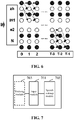
- FIG. 7 is a schematic structural diagram of a speech wakeup apparatus corresponding to FIG. 2 according to an embodiment of this specification.
- the apparatus may be located on the executive body of the flow in FIG. 2 , including an input module 701 and a speech wakeup model 702.
- Speech data is input by the input module 701 to the speech wakeup model 702 trained with general speech data, and the speech wakeup model 702 outputs a result for determining whether to execute speech wakeup, wherein the speech wakeup model includes a DNN and a CTC.
- the general speech data includes a LVCSR corpus.
- the apparatus further includes a training module 703; and training, by the training module 703, the speech wakeup model with the general speech data includes: iteratively optimizing, by the training module 703, parameters in the speech wakeup model with the general speech data by an asynchronous stochastic gradient descent method until the training converges.
- the training module 703 further acquires keyword-specific speech data; and trains the speech wakeup model with the keyword-specific speech data, wherein a learning rate used in the training is less than that used in the training of the speech wakeup model with the general speech data.
- the training module 703 cross-verifies the speech wakeup model with a verification data set in the training to determine whether the training converges.
- the outputting, by the speech wakeup model 702, a result for determining whether to execute speech wakeup specifically includes:
- the extracting, by the speech wakeup model 702, acoustic features from the input speech data specifically includes:
- a corresponding non-volatile computer storage medium with a computer executable instruction stored thereon is further provided in an example of this specification, wherein the computer executable instruction is configured to: input speech data to a speech wakeup model trained with general speech data, and output, by the speech wakeup model, a result for determining whether to execute speech wakeup, wherein the speech wakeup model includes a DNN and a CTC.
- the apparatus, the electronic device, and the non-volatile computer storage medium provided in the embodiments of this specification are corresponding to the method. Therefore, the apparatus, the electronic device, and the non-volatile computer storage medium also have beneficial technical effects similar to those of the corresponding method. As the beneficial technical effects of the method have been described in detail in the foregoing, the beneficial technical effects of the apparatus, the electronic device, and the non-volatile computer storage medium will not be elaborated here.
- an improvement on a technology can be obviously distinguished as an improvement on hardware (e.g., an improvement on a circuit structure such as a diode, a transistor, and a switch) or an improvement on software (an improvement on a method procedure).
- improvements of many method procedures at present can be considered as direct improvements on hardware circuit structures. Almost all designers program the improved method procedures into hardware circuits to obtain corresponding hardware circuit structures. Therefore, it is improper to assume that the improvement of a method procedure cannot be implemented by using a hardware entity module.
- a Programmable Logic Device e.g., a Field Programmable Gate Array (FPGA)
- FPGA Field Programmable Gate Array
- the logic compiler software is similar to a software complier used for developing and writing a program, and original codes before compiling also need to be written by using a specific programming language, which is referred to as a Hardware Description Language (HDL).
- HDL Hardware Description Language
- HDLs such as Advanced Boolean Expression Language (ABEL), Altera Hardware Description Language (AHDL), Confluence, Georgia University Programming Language (CUPL), HDCal, Java Hardware Description Language (JHDL), Lava, Lola, MyHDL, PALASM, and Ruby Hardware Description Language (RHDL), among which Very-High-Speed Integrated Circuit Hardware Description Language (VHDL) and Verilog are most commonly used now.
- ABEL Advanced Boolean Expression Language
- AHDL Altera Hardware Description Language
- CUPL Cornell University Programming Language
- HDCal Java Hardware Description Language
- JHDL Java Hardware Description Language
- Lava Lava
- Lola MyHDL
- PALASM Phase Change Language
- RHDL Ruby Hardware Description Language
- VHDL Very-High-Speed Integrated Circuit Hardware Description Language
- Verilog Verilog
- a controller can be implemented in any suitable manner.
- the controller can employ a form of a microprocessor or a processor and a computer readable medium that stores computer readable program codes (such as software or firmware) executable by the microprocessor or processor, a logic gate, a switch, an Application Specific Integrated Circuit (ASIC), a programmable logic controller, and an embedded microcontroller.
- Examples of the controller include, but are not limited to, the following microcontrollers: ARC 625D, Atmel AT91SAM, Microchip PIC18F26K20, and Silicone Labs C8051F320.
- the controller of the memory can further be implemented as a part of control logic of the memory.
- controller may be considered as a hardware component, and apparatuses included in the controller and configured to implement various functions may also be considered as structures inside the hardware component. Or, the apparatuses configured to implement various functions may even be considered as both software modules configured to implement the method and structures inside the hardware component.
- the system, apparatus, modules or units illustrated in the foregoing embodiments specifically can be implemented by a computer chip or an entity, or implemented by a product having a specific function.
- Atypical implementation device is a computer.
- the computer can be a personal computer, a laptop computer, a cellular phone, a camera phone, a smart phone, a personal digital assistant, a media player, a navigation device, an email device, a game console, a tablet computer, a wearable device, or a combination of any of these devices.
- the apparatus is divided into various units based on functions, and the units are described separately.
- the functions of various units can also be implemented in one or more pieces of software and/or hardware.
- the embodiments of this specification can be provided as a method, a system, or a computer program product. Therefore, the embodiments of this specification may be implemented in a form of a complete hardware embodiment, a complete software embodiment, or an embodiment combining software and hardware. Moreover, the embodiments of this specification can be in the form of a computer program product implemented on one or more computer usable storage media (including, but not limited to, a magnetic disk memory, a CD-ROM, an optical memory and the like) including computer usable program codes.
- a computer usable storage media including, but not limited to, a magnetic disk memory, a CD-ROM, an optical memory and the like
- the computer program instructions may also be stored in a computer readable memory that can guide the computer or another programmable data processing device to work in a specific manner, such that the instruction stored in the computer readable memory generates an article of manufacture including an instruction apparatus, and the instruction apparatus implements functions designated by one or more processes in a flowchart and/or one or more blocks in a block diagram.
- the computer program instructions may also be loaded to the computer or another programmable data processing device, such that a series of operation steps are executed on the computer or another programmable device to generate a computer implemented processing, and therefore, the instruction executed in the computer or another programmable device provides steps for implementing functions designated in one or more processes in a flowchart and/or one or more blocks in a block diagram.
- the computing device includes one or more central processing units (CPUs), an input/output interface, a network interface, and a memory.
- CPUs central processing units
- input/output interface input/output interface
- network interface network interface
- memory a memory
- the memory can include computer readable media such as a volatile memory, a Random Access Memory (RAM), and/or non-volatile memory, e.g., a Read-Only Memory (ROM) or a flash RAM
- RAM Random Access Memory
- ROM Read-Only Memory
- flash RAM flash RAM
- the memory is an example of a computer readable medium.
- the computer readable medium includes non-volatile and volatile media as well as movable and non-movable media, and can implement information storage by means of any method or technology.
- the information can be a computer readable instruction, a data structure, and a module of a program or other data.
- An example of the storage medium of a computer includes, but is not limited to, a phase change memory (PRAM), a static random access memory (SRAM), a dynamic random access memory (DRAM), other types of RAM, a ROM, an electrically erasable programmable read-only memory (EEPROM), a flash memory or other memory technologies, a compact disk read-only memory (CD-ROM), a digital versatile disc (DVD) or other optical storages, a cassette tape, a magnetic tape/magnetic disk storage or other magnetic storage devices, or any other non-transmission medium, and can be used to store information accessible to the computing device.
- the computer readable medium does not include transitory media, such as a modulated data signal and a carrier.
- This specification can be described in a general context of a computer executable instruction executed by a computer, for example, a program module.
- the program module includes a routine, a program, an object, an assembly, a data structure, and the like used for executing a specific task or implementing a specific abstract data type.
- This specification can also be implemented in distributed computing environments. In these distributed computing environments, a task is executed by using remote processing devices connected via a communications network. In the distributed computing environments, the program module may be located in local and remote computer storage media including a storage device.
Landscapes
- Engineering & Computer Science (AREA)
- Physics & Mathematics (AREA)
- Computational Linguistics (AREA)
- Health & Medical Sciences (AREA)
- Audiology, Speech & Language Pathology (AREA)
- Human Computer Interaction (AREA)
- Acoustics & Sound (AREA)
- Multimedia (AREA)
- Artificial Intelligence (AREA)
- Theoretical Computer Science (AREA)
- Evolutionary Computation (AREA)
- Biomedical Technology (AREA)
- General Engineering & Computer Science (AREA)
- Biophysics (AREA)
- Data Mining & Analysis (AREA)
- General Health & Medical Sciences (AREA)
- Molecular Biology (AREA)
- Computing Systems (AREA)
- Life Sciences & Earth Sciences (AREA)
- General Physics & Mathematics (AREA)
- Mathematical Physics (AREA)
- Software Systems (AREA)
- Computer Vision & Pattern Recognition (AREA)
- Machine Translation (AREA)
- User Interface Of Digital Computer (AREA)
- Telephonic Communication Services (AREA)
- Electric Clocks (AREA)
Priority Applications (1)
| Application Number | Priority Date | Filing Date | Title |
|---|---|---|---|
| PL18823086T PL3579227T3 (pl) | 2017-06-29 | 2018-06-26 | Sposób i urządzenie do aktywacji mową oraz urządzenie elektroniczne |
Applications Claiming Priority (2)
| Application Number | Priority Date | Filing Date | Title |
|---|---|---|---|
| CN201710514348.6A CN107358951A (zh) | 2017-06-29 | 2017-06-29 | 一种语音唤醒方法、装置以及电子设备 |
| PCT/CN2018/092899 WO2019001428A1 (zh) | 2017-06-29 | 2018-06-26 | 一种语音唤醒方法、装置以及电子设备 |
Publications (3)
| Publication Number | Publication Date |
|---|---|
| EP3579227A1 EP3579227A1 (en) | 2019-12-11 |
| EP3579227A4 EP3579227A4 (en) | 2020-02-26 |
| EP3579227B1 true EP3579227B1 (en) | 2021-06-09 |
Family
ID=60274110
Family Applications (1)
| Application Number | Title | Priority Date | Filing Date |
|---|---|---|---|
| EP18823086.6A Active EP3579227B1 (en) | 2017-06-29 | 2018-06-26 | Voice wake-up method and device and electronic device |
Country Status (11)
| Country | Link |
|---|---|
| US (2) | US20200013390A1 (pl) |
| EP (1) | EP3579227B1 (pl) |
| JP (1) | JP6877558B2 (pl) |
| KR (1) | KR102181836B1 (pl) |
| CN (1) | CN107358951A (pl) |
| ES (1) | ES2878137T3 (pl) |
| PH (1) | PH12019501674A1 (pl) |
| PL (1) | PL3579227T3 (pl) |
| SG (1) | SG11201906576WA (pl) |
| TW (1) | TWI692751B (pl) |
| WO (1) | WO2019001428A1 (pl) |
Families Citing this family (44)
| Publication number | Priority date | Publication date | Assignee | Title |
|---|---|---|---|---|
| CN107358951A (zh) * | 2017-06-29 | 2017-11-17 | 阿里巴巴集团控股有限公司 | 一种语音唤醒方法、装置以及电子设备 |
| CN108320733B (zh) * | 2017-12-18 | 2022-01-04 | 上海科大讯飞信息科技有限公司 | 语音数据处理方法及装置、存储介质、电子设备 |
| CN108182937B (zh) * | 2018-01-17 | 2021-04-13 | 出门问问创新科技有限公司 | 关键词识别方法、装置、设备及存储介质 |
| US11488002B2 (en) * | 2018-02-15 | 2022-11-01 | Atlazo, Inc. | Binary neural network accelerator engine methods and systems |
| CN108597523B (zh) * | 2018-03-23 | 2019-05-17 | 平安科技(深圳)有限公司 | 说话人认证方法、服务器及计算机可读存储介质 |
| CN111066082B (zh) * | 2018-05-25 | 2020-08-28 | 北京嘀嘀无限科技发展有限公司 | 一种语音识别系统和方法 |
| CN110619871B (zh) * | 2018-06-20 | 2023-06-30 | 阿里巴巴集团控股有限公司 | 语音唤醒检测方法、装置、设备以及存储介质 |
| US11257481B2 (en) | 2018-10-24 | 2022-02-22 | Tencent America LLC | Multi-task training architecture and strategy for attention-based speech recognition system |
| CN111276138B (zh) * | 2018-12-05 | 2023-07-18 | 北京嘀嘀无限科技发展有限公司 | 一种语音唤醒系统中处理语音信号的方法及装置 |
| CN109886386B (zh) * | 2019-01-30 | 2020-10-27 | 北京声智科技有限公司 | 唤醒模型的确定方法及装置 |
| CN109872713A (zh) * | 2019-03-05 | 2019-06-11 | 深圳市友杰智新科技有限公司 | 一种语音唤醒方法及装置 |
| CN110310628B (zh) * | 2019-06-27 | 2022-05-20 | 百度在线网络技术(北京)有限公司 | 唤醒模型的优化方法、装置、设备及存储介质 |
| US11081102B2 (en) * | 2019-08-16 | 2021-08-03 | Ponddy Education Inc. | Systems and methods for comprehensive Chinese speech scoring and diagnosis |
| JP7098587B2 (ja) * | 2019-08-29 | 2022-07-11 | 株式会社東芝 | 情報処理装置、キーワード検出装置、情報処理方法およびプログラム |
| CN110634468B (zh) * | 2019-09-11 | 2022-04-15 | 中国联合网络通信集团有限公司 | 语音唤醒方法、装置、设备及计算机可读存储介质 |
| CN110648659B (zh) * | 2019-09-24 | 2022-07-01 | 上海依图信息技术有限公司 | 基于多任务模型的语音识别与关键词检测装置和方法 |
| CN110648668A (zh) * | 2019-09-24 | 2020-01-03 | 上海依图信息技术有限公司 | 关键词检测装置和方法 |
| CN110970016B (zh) * | 2019-10-28 | 2022-08-19 | 苏宁云计算有限公司 | 一种唤醒模型生成方法、智能终端唤醒方法及装置 |
| CN110853629A (zh) * | 2019-11-21 | 2020-02-28 | 中科智云科技有限公司 | 一种基于深度学习的语音识别数字的方法 |
| CN110992929A (zh) * | 2019-11-26 | 2020-04-10 | 苏宁云计算有限公司 | 一种基于神经网络的语音关键词检测方法、装置及系统 |
| US11341954B2 (en) * | 2019-12-17 | 2022-05-24 | Google Llc | Training keyword spotters |
| JP7438744B2 (ja) * | 2019-12-18 | 2024-02-27 | 株式会社東芝 | 情報処理装置、情報処理方法、およびプログラム |
| CN111640426A (zh) * | 2020-06-10 | 2020-09-08 | 北京百度网讯科技有限公司 | 用于输出信息的方法和装置 |
| CN111883121A (zh) * | 2020-07-20 | 2020-11-03 | 北京声智科技有限公司 | 唤醒方法、装置及电子设备 |
| CN112233655B (zh) * | 2020-09-28 | 2024-07-16 | 上海声瀚信息科技有限公司 | 一种提高语音命令词识别性能的神经网络训练方法 |
| CN112669818B (zh) * | 2020-12-08 | 2022-12-02 | 北京地平线机器人技术研发有限公司 | 语音唤醒方法及装置、可读存储介质、电子设备 |
| CN112733272A (zh) * | 2021-01-13 | 2021-04-30 | 南昌航空大学 | 一种解决带软时间窗的车辆路径问题的方法 |
| CN112882760A (zh) * | 2021-02-22 | 2021-06-01 | 北京声智科技有限公司 | 一种智能设备的唤醒方法、装置及设备 |
| US12236939B2 (en) * | 2021-03-12 | 2025-02-25 | Samsung Electronics Co., Ltd. | Method of generating a trigger word detection model, and an apparatus for the same |
| CN113113007A (zh) * | 2021-03-30 | 2021-07-13 | 北京金山云网络技术有限公司 | 语音数据的处理方法和装置、电子设备和存储介质 |
| US11967322B2 (en) | 2021-05-06 | 2024-04-23 | Samsung Electronics Co., Ltd. | Server for identifying false wakeup and method for controlling the same |
| KR102599480B1 (ko) * | 2021-05-18 | 2023-11-08 | 부산대학교 산학협력단 | 키워드 음성인식을 위한 자동 학습 시스템 및 방법 |
| CN113160823B (zh) * | 2021-05-26 | 2024-05-17 | 中国工商银行股份有限公司 | 基于脉冲神经网络的语音唤醒方法、装置及电子设备 |
| CN113744734A (zh) * | 2021-08-30 | 2021-12-03 | 青岛海尔科技有限公司 | 一种语音唤醒方法、装置、电子设备及存储介质 |
| KR20230068087A (ko) * | 2021-11-10 | 2023-05-17 | 삼성전자주식회사 | 전자 장치 및 그 제어 방법 |
| CN113990296B (zh) * | 2021-12-24 | 2022-05-27 | 深圳市友杰智新科技有限公司 | 语音声学模型的训练方法、后处理方法和相关设备 |
| CN114333798A (zh) * | 2022-01-04 | 2022-04-12 | 厦门快商通科技股份有限公司 | 语音识别唤醒的方法、装置、终端设备及计算机可读介质 |
| CN114373461A (zh) * | 2022-01-21 | 2022-04-19 | 贝壳找房网(北京)信息技术有限公司 | 门的控制方法和装置、电子设备和存储介质 |
| CN115223555B (zh) * | 2022-06-09 | 2025-11-25 | 中国科学技术大学 | 语音唤醒方法、声学模型的训练方法及相关装置 |
| CN115171736B (zh) * | 2022-07-13 | 2025-04-04 | 成都市联洲国际技术有限公司 | 语音活性检测模型的生成方法、处理器与电子设备 |
| CN117524263A (zh) | 2022-07-26 | 2024-02-06 | 北京三星通信技术研究有限公司 | 数据处理方法、设备唤醒方法、电子设备及存储介质 |
| US12536993B2 (en) * | 2022-10-10 | 2026-01-27 | Samsung Electronics Co., Ltd. | System and method for post-ASR false wake-up suppression |
| CN115862604B (zh) * | 2022-11-24 | 2024-02-20 | 镁佳(北京)科技有限公司 | 语音唤醒模型训练及语音唤醒方法、装置及计算机设备 |
| WO2025047998A1 (ko) * | 2023-08-29 | 2025-03-06 | 주식회사 엔씨소프트 | 지정된 텍스트에 대응하는 음성 신호를 식별하기 위한 전자 장치, 방법, 및 컴퓨터 판독 가능 저장 매체 |
Family Cites Families (23)
| Publication number | Priority date | Publication date | Assignee | Title |
|---|---|---|---|---|
| JPH05128286A (ja) * | 1991-11-05 | 1993-05-25 | Ricoh Co Ltd | ニユーラルネツトワークによるキーワードスポツテイング方式 |
| JP2007179239A (ja) * | 2005-12-27 | 2007-07-12 | Kenwood Corp | スケジュール管理装置及びプログラム |
| US9117449B2 (en) * | 2012-04-26 | 2015-08-25 | Nuance Communications, Inc. | Embedded system for construction of small footprint speech recognition with user-definable constraints |
| US9177547B2 (en) * | 2013-06-25 | 2015-11-03 | The Johns Hopkins University | System and method for processing speech to identify keywords or other information |
| CN104378723A (zh) * | 2013-08-16 | 2015-02-25 | 上海耐普微电子有限公司 | 具有语音唤醒功能的麦克风 |
| US9715660B2 (en) * | 2013-11-04 | 2017-07-25 | Google Inc. | Transfer learning for deep neural network based hotword detection |
| US9443522B2 (en) * | 2013-11-18 | 2016-09-13 | Beijing Lenovo Software Ltd. | Voice recognition method, voice controlling method, information processing method, and electronic apparatus |
| CN105096935B (zh) * | 2014-05-06 | 2019-08-09 | 阿里巴巴集团控股有限公司 | 一种语音输入方法、装置和系统 |
| US10783900B2 (en) * | 2014-10-03 | 2020-09-22 | Google Llc | Convolutional, long short-term memory, fully connected deep neural networks |
| EP3282445A4 (en) * | 2015-04-10 | 2018-05-02 | Huawei Technologies Co. Ltd. | Voice recognition method, voice wake-up device, voice recognition device and terminal |
| CN106297774B (zh) * | 2015-05-29 | 2019-07-09 | 中国科学院声学研究所 | 一种神经网络声学模型的分布式并行训练方法及系统 |
| TWI639153B (zh) * | 2015-11-03 | 2018-10-21 | 絡達科技股份有限公司 | 電子裝置及其透過語音辨識喚醒的方法 |
| JP6679898B2 (ja) * | 2015-11-24 | 2020-04-15 | 富士通株式会社 | キーワード検出装置、キーワード検出方法及びキーワード検出用コンピュータプログラム |
| WO2017100298A1 (en) * | 2015-12-07 | 2017-06-15 | The University Of Florida Research Foundation, Inc. | Pulse-based automatic speech recognition |
| CN106887227A (zh) * | 2015-12-16 | 2017-06-23 | 芋头科技(杭州)有限公司 | 一种语音唤醒方法及系统 |
| CN105632486B (zh) * | 2015-12-23 | 2019-12-17 | 北京奇虎科技有限公司 | 一种智能硬件的语音唤醒方法和装置 |
| US10229672B1 (en) * | 2015-12-31 | 2019-03-12 | Google Llc | Training acoustic models using connectionist temporal classification |
| CN105931633A (zh) * | 2016-05-30 | 2016-09-07 | 深圳市鼎盛智能科技有限公司 | 语音识别的方法及系统 |
| CN106098059B (zh) * | 2016-06-23 | 2019-06-18 | 上海交通大学 | 可定制语音唤醒方法及系统 |
| CN106611597B (zh) * | 2016-12-02 | 2019-11-08 | 百度在线网络技术(北京)有限公司 | 基于人工智能的语音唤醒方法和装置 |
| CN106782536B (zh) * | 2016-12-26 | 2020-02-28 | 北京云知声信息技术有限公司 | 一种语音唤醒方法及装置 |
| CN107221326B (zh) * | 2017-05-16 | 2021-05-28 | 百度在线网络技术(北京)有限公司 | 基于人工智能的语音唤醒方法、装置和计算机设备 |
| CN107358951A (zh) * | 2017-06-29 | 2017-11-17 | 阿里巴巴集团控股有限公司 | 一种语音唤醒方法、装置以及电子设备 |
-
2017
- 2017-06-29 CN CN201710514348.6A patent/CN107358951A/zh active Pending
-
2018
- 2018-03-14 TW TW107108572A patent/TWI692751B/zh not_active IP Right Cessation
- 2018-06-26 PL PL18823086T patent/PL3579227T3/pl unknown
- 2018-06-26 JP JP2019539235A patent/JP6877558B2/ja active Active
- 2018-06-26 SG SG11201906576WA patent/SG11201906576WA/en unknown
- 2018-06-26 EP EP18823086.6A patent/EP3579227B1/en active Active
- 2018-06-26 ES ES18823086T patent/ES2878137T3/es active Active
- 2018-06-26 KR KR1020197022130A patent/KR102181836B1/ko active Active
- 2018-06-26 WO PCT/CN2018/092899 patent/WO2019001428A1/zh not_active Ceased
-
2019
- 2019-07-19 PH PH12019501674A patent/PH12019501674A1/en unknown
- 2019-09-16 US US16/571,468 patent/US20200013390A1/en not_active Abandoned
-
2020
- 2020-01-28 US US16/774,422 patent/US10748524B2/en active Active
Non-Patent Citations (1)
| Title |
|---|
| None * |
Also Published As
| Publication number | Publication date |
|---|---|
| EP3579227A4 (en) | 2020-02-26 |
| WO2019001428A1 (zh) | 2019-01-03 |
| JP2020517977A (ja) | 2020-06-18 |
| SG11201906576WA (en) | 2019-08-27 |
| US20200013390A1 (en) | 2020-01-09 |
| US10748524B2 (en) | 2020-08-18 |
| KR102181836B1 (ko) | 2020-11-25 |
| ES2878137T3 (es) | 2021-11-18 |
| EP3579227A1 (en) | 2019-12-11 |
| PH12019501674A1 (en) | 2020-06-01 |
| KR20190134594A (ko) | 2019-12-04 |
| US20200168207A1 (en) | 2020-05-28 |
| PL3579227T3 (pl) | 2021-10-18 |
| TWI692751B (zh) | 2020-05-01 |
| JP6877558B2 (ja) | 2021-05-26 |
| TW201905897A (zh) | 2019-02-01 |
| CN107358951A (zh) | 2017-11-17 |
Similar Documents
| Publication | Publication Date | Title |
|---|---|---|
| EP3579227B1 (en) | Voice wake-up method and device and electronic device | |
| Ravanelli et al. | Light gated recurrent units for speech recognition | |
| EP3966813B1 (en) | Online verification of custom wake word | |
| EP3770905B1 (en) | Speech recognition method, apparatus and device, and storage medium | |
| EP3966807B1 (en) | On-device custom wake word detection | |
| Lee et al. | High-level feature representation using recurrent neural network for speech emotion recognition | |
| KR102167719B1 (ko) | 언어 모델 학습 방법 및 장치, 음성 인식 방법 및 장치 | |
| CN108346436B (zh) | 语音情感检测方法、装置、计算机设备及存储介质 | |
| US9235799B2 (en) | Discriminative pretraining of deep neural networks | |
| KR102410820B1 (ko) | 뉴럴 네트워크를 이용한 인식 방법 및 장치 및 상기 뉴럴 네트워크를 트레이닝하는 방법 및 장치 | |
| KR102940875B1 (ko) | 음성 인식 방법 및 장치 | |
| JP7109302B2 (ja) | 文章生成モデルのアップデート方法及び文章生成装置 | |
| Bourlard et al. | Links between Markov models and multilayer perceptrons | |
| KR102870187B1 (ko) | 복수 의도어 획득을 위한 합성곱 신경망을 가진 장치 및 그 방법 | |
| Li et al. | Recurrent neural network language model adaptation for conversational speech recognition. | |
| KR20220130565A (ko) | 키워드 검출 방법 및 장치 | |
| CN114333768B (zh) | 语音检测方法、装置、设备和存储介质 | |
| Bai et al. | End-to-end keywords spotting based on connectionist temporal classification for mandarin | |
| KR20210078143A (ko) | 신규 도메인의 간투어 검출 모델 생성 방법 및 장치 | |
| Gumelar et al. | Bilstm-cnn hyperparameter optimization for speech emotion and stress recognition | |
| KR102292921B1 (ko) | 언어 모델 학습 방법 및 장치, 음성 인식 방법 및 장치 | |
| HK1246496A1 (zh) | 一种语音唤醒方法、装置以及电子设备 | |
| US12567402B1 (en) | Predicting entity salience | |
| Bovbjerg | Self-supervised Keyword Spotting | |
| HK1183141A (en) | Discriminative pretraining of deep neural networks |
Legal Events
| Date | Code | Title | Description |
|---|---|---|---|
| STAA | Information on the status of an ep patent application or granted ep patent |
Free format text: STATUS: THE INTERNATIONAL PUBLICATION HAS BEEN MADE |
|
| PUAI | Public reference made under article 153(3) epc to a published international application that has entered the european phase |
Free format text: ORIGINAL CODE: 0009012 |
|
| STAA | Information on the status of an ep patent application or granted ep patent |
Free format text: STATUS: REQUEST FOR EXAMINATION WAS MADE |
|
| 17P | Request for examination filed |
Effective date: 20190906 |
|
| AK | Designated contracting states |
Kind code of ref document: A1 Designated state(s): AL AT BE BG CH CY CZ DE DK EE ES FI FR GB GR HR HU IE IS IT LI LT LU LV MC MK MT NL NO PL PT RO RS SE SI SK SM TR |
|
| AX | Request for extension of the european patent |
Extension state: BA ME |
|
| REG | Reference to a national code |
Ref country code: DE Ref legal event code: R079 Ref document number: 602018018495 Country of ref document: DE Free format text: PREVIOUS MAIN CLASS: G10L0015220000 Ipc: G10L0015060000 |
|
| A4 | Supplementary search report drawn up and despatched |
Effective date: 20200128 |
|
| RIC1 | Information provided on ipc code assigned before grant |
Ipc: G10L 15/08 20060101ALI20200123BHEP Ipc: G10L 15/16 20060101ALI20200123BHEP Ipc: G10L 15/06 20130101AFI20200123BHEP |
|
| DAV | Request for validation of the european patent (deleted) | ||
| DAX | Request for extension of the european patent (deleted) | ||
| RAP1 | Party data changed (applicant data changed or rights of an application transferred) |
Owner name: ADVANCED NEW TECHNOLOGIES CO., LTD. |
|
| GRAP | Despatch of communication of intention to grant a patent |
Free format text: ORIGINAL CODE: EPIDOSNIGR1 |
|
| STAA | Information on the status of an ep patent application or granted ep patent |
Free format text: STATUS: GRANT OF PATENT IS INTENDED |
|
| INTG | Intention to grant announced |
Effective date: 20210322 |
|
| GRAS | Grant fee paid |
Free format text: ORIGINAL CODE: EPIDOSNIGR3 |
|
| GRAA | (expected) grant |
Free format text: ORIGINAL CODE: 0009210 |
|
| STAA | Information on the status of an ep patent application or granted ep patent |
Free format text: STATUS: THE PATENT HAS BEEN GRANTED |
|
| AK | Designated contracting states |
Kind code of ref document: B1 Designated state(s): AL AT BE BG CH CY CZ DE DK EE ES FI FR GB GR HR HU IE IS IT LI LT LU LV MC MK MT NL NO PL PT RO RS SE SI SK SM TR |
|
| REG | Reference to a national code |
Ref country code: GB Ref legal event code: FG4D |
|
| REG | Reference to a national code |
Ref country code: CH Ref legal event code: EP Ref country code: AT Ref legal event code: REF Ref document number: 1401153 Country of ref document: AT Kind code of ref document: T Effective date: 20210615 |
|
| REG | Reference to a national code |
Ref country code: FI Ref legal event code: FGE |
|
| REG | Reference to a national code |
Ref country code: DE Ref legal event code: R096 Ref document number: 602018018495 Country of ref document: DE |
|
| REG | Reference to a national code |
Ref country code: NO Ref legal event code: T2 Effective date: 20210609 |
|
| REG | Reference to a national code |
Ref country code: IE Ref legal event code: FG4D Ref country code: NL Ref legal event code: FP |
|
| REG | Reference to a national code |
Ref country code: LT Ref legal event code: MG9D |
|
| PG25 | Lapsed in a contracting state [announced via postgrant information from national office to epo] |
Ref country code: BG Free format text: LAPSE BECAUSE OF FAILURE TO SUBMIT A TRANSLATION OF THE DESCRIPTION OR TO PAY THE FEE WITHIN THE PRESCRIBED TIME-LIMIT Effective date: 20210909 Ref country code: HR Free format text: LAPSE BECAUSE OF FAILURE TO SUBMIT A TRANSLATION OF THE DESCRIPTION OR TO PAY THE FEE WITHIN THE PRESCRIBED TIME-LIMIT Effective date: 20210609 Ref country code: LT Free format text: LAPSE BECAUSE OF FAILURE TO SUBMIT A TRANSLATION OF THE DESCRIPTION OR TO PAY THE FEE WITHIN THE PRESCRIBED TIME-LIMIT Effective date: 20210609 |
|
| REG | Reference to a national code |
Ref country code: AT Ref legal event code: MK05 Ref document number: 1401153 Country of ref document: AT Kind code of ref document: T Effective date: 20210609 |
|
| REG | Reference to a national code |
Ref country code: ES Ref legal event code: FG2A Ref document number: 2878137 Country of ref document: ES Kind code of ref document: T3 Effective date: 20211118 |
|
| PG25 | Lapsed in a contracting state [announced via postgrant information from national office to epo] |
Ref country code: GR Free format text: LAPSE BECAUSE OF FAILURE TO SUBMIT A TRANSLATION OF THE DESCRIPTION OR TO PAY THE FEE WITHIN THE PRESCRIBED TIME-LIMIT Effective date: 20210910 Ref country code: SE Free format text: LAPSE BECAUSE OF FAILURE TO SUBMIT A TRANSLATION OF THE DESCRIPTION OR TO PAY THE FEE WITHIN THE PRESCRIBED TIME-LIMIT Effective date: 20210609 Ref country code: RS Free format text: LAPSE BECAUSE OF FAILURE TO SUBMIT A TRANSLATION OF THE DESCRIPTION OR TO PAY THE FEE WITHIN THE PRESCRIBED TIME-LIMIT Effective date: 20210609 Ref country code: LV Free format text: LAPSE BECAUSE OF FAILURE TO SUBMIT A TRANSLATION OF THE DESCRIPTION OR TO PAY THE FEE WITHIN THE PRESCRIBED TIME-LIMIT Effective date: 20210609 |
|
| PG25 | Lapsed in a contracting state [announced via postgrant information from national office to epo] |
Ref country code: CZ Free format text: LAPSE BECAUSE OF FAILURE TO SUBMIT A TRANSLATION OF THE DESCRIPTION OR TO PAY THE FEE WITHIN THE PRESCRIBED TIME-LIMIT Effective date: 20210609 Ref country code: AT Free format text: LAPSE BECAUSE OF FAILURE TO SUBMIT A TRANSLATION OF THE DESCRIPTION OR TO PAY THE FEE WITHIN THE PRESCRIBED TIME-LIMIT Effective date: 20210609 Ref country code: SM Free format text: LAPSE BECAUSE OF FAILURE TO SUBMIT A TRANSLATION OF THE DESCRIPTION OR TO PAY THE FEE WITHIN THE PRESCRIBED TIME-LIMIT Effective date: 20210609 Ref country code: RO Free format text: LAPSE BECAUSE OF FAILURE TO SUBMIT A TRANSLATION OF THE DESCRIPTION OR TO PAY THE FEE WITHIN THE PRESCRIBED TIME-LIMIT Effective date: 20210609 Ref country code: PT Free format text: LAPSE BECAUSE OF FAILURE TO SUBMIT A TRANSLATION OF THE DESCRIPTION OR TO PAY THE FEE WITHIN THE PRESCRIBED TIME-LIMIT Effective date: 20211011 Ref country code: EE Free format text: LAPSE BECAUSE OF FAILURE TO SUBMIT A TRANSLATION OF THE DESCRIPTION OR TO PAY THE FEE WITHIN THE PRESCRIBED TIME-LIMIT Effective date: 20210609 Ref country code: SK Free format text: LAPSE BECAUSE OF FAILURE TO SUBMIT A TRANSLATION OF THE DESCRIPTION OR TO PAY THE FEE WITHIN THE PRESCRIBED TIME-LIMIT Effective date: 20210609 |
|
| REG | Reference to a national code |
Ref country code: BE Ref legal event code: MM Effective date: 20210630 |
|
| REG | Reference to a national code |
Ref country code: DE Ref legal event code: R097 Ref document number: 602018018495 Country of ref document: DE |
|
| PG25 | Lapsed in a contracting state [announced via postgrant information from national office to epo] |
Ref country code: MC Free format text: LAPSE BECAUSE OF FAILURE TO SUBMIT A TRANSLATION OF THE DESCRIPTION OR TO PAY THE FEE WITHIN THE PRESCRIBED TIME-LIMIT Effective date: 20210609 Ref country code: LU Free format text: LAPSE BECAUSE OF NON-PAYMENT OF DUE FEES Effective date: 20210626 |
|
| PLBE | No opposition filed within time limit |
Free format text: ORIGINAL CODE: 0009261 |
|
| STAA | Information on the status of an ep patent application or granted ep patent |
Free format text: STATUS: NO OPPOSITION FILED WITHIN TIME LIMIT |
|
| PG25 | Lapsed in a contracting state [announced via postgrant information from national office to epo] |
Ref country code: IE Free format text: LAPSE BECAUSE OF NON-PAYMENT OF DUE FEES Effective date: 20210626 Ref country code: DK Free format text: LAPSE BECAUSE OF FAILURE TO SUBMIT A TRANSLATION OF THE DESCRIPTION OR TO PAY THE FEE WITHIN THE PRESCRIBED TIME-LIMIT Effective date: 20210609 |
|
| 26N | No opposition filed |
Effective date: 20220310 |
|
| PG25 | Lapsed in a contracting state [announced via postgrant information from national office to epo] |
Ref country code: AL Free format text: LAPSE BECAUSE OF FAILURE TO SUBMIT A TRANSLATION OF THE DESCRIPTION OR TO PAY THE FEE WITHIN THE PRESCRIBED TIME-LIMIT Effective date: 20210609 |
|
| PG25 | Lapsed in a contracting state [announced via postgrant information from national office to epo] |
Ref country code: BE Free format text: LAPSE BECAUSE OF NON-PAYMENT OF DUE FEES Effective date: 20210630 |
|
| PGFP | Annual fee paid to national office [announced via postgrant information from national office to epo] |
Ref country code: TR Payment date: 20220614 Year of fee payment: 5 |
|
| PG25 | Lapsed in a contracting state [announced via postgrant information from national office to epo] |
Ref country code: CY Free format text: LAPSE BECAUSE OF FAILURE TO SUBMIT A TRANSLATION OF THE DESCRIPTION OR TO PAY THE FEE WITHIN THE PRESCRIBED TIME-LIMIT Effective date: 20210609 |
|
| P01 | Opt-out of the competence of the unified patent court (upc) registered |
Effective date: 20230530 |
|
| PG25 | Lapsed in a contracting state [announced via postgrant information from national office to epo] |
Ref country code: HU Free format text: LAPSE BECAUSE OF FAILURE TO SUBMIT A TRANSLATION OF THE DESCRIPTION OR TO PAY THE FEE WITHIN THE PRESCRIBED TIME-LIMIT; INVALID AB INITIO Effective date: 20180626 |
|
| PG25 | Lapsed in a contracting state [announced via postgrant information from national office to epo] |
Ref country code: MK Free format text: LAPSE BECAUSE OF FAILURE TO SUBMIT A TRANSLATION OF THE DESCRIPTION OR TO PAY THE FEE WITHIN THE PRESCRIBED TIME-LIMIT Effective date: 20210609 |
|
| PGFP | Annual fee paid to national office [announced via postgrant information from national office to epo] |
Ref country code: NO Payment date: 20240222 Year of fee payment: 7 |
|
| PGFP | Annual fee paid to national office [announced via postgrant information from national office to epo] |
Ref country code: IT Payment date: 20240513 Year of fee payment: 7 Ref country code: FI Payment date: 20240612 Year of fee payment: 7 |
|
| PG25 | Lapsed in a contracting state [announced via postgrant information from national office to epo] |
Ref country code: MT Free format text: LAPSE BECAUSE OF FAILURE TO SUBMIT A TRANSLATION OF THE DESCRIPTION OR TO PAY THE FEE WITHIN THE PRESCRIBED TIME-LIMIT Effective date: 20210609 |
|
| PGFP | Annual fee paid to national office [announced via postgrant information from national office to epo] |
Ref country code: ES Payment date: 20240701 Year of fee payment: 7 Ref country code: CH Payment date: 20240704 Year of fee payment: 7 |
|
| PGFP | Annual fee paid to national office [announced via postgrant information from national office to epo] |
Ref country code: PL Payment date: 20240625 Year of fee payment: 7 |
|
| PGFP | Annual fee paid to national office [announced via postgrant information from national office to epo] |
Ref country code: NL Payment date: 20250409 Year of fee payment: 8 |
|
| PGFP | Annual fee paid to national office [announced via postgrant information from national office to epo] |
Ref country code: DE Payment date: 20250402 Year of fee payment: 8 |
|
| PGFP | Annual fee paid to national office [announced via postgrant information from national office to epo] |
Ref country code: GB Payment date: 20250401 Year of fee payment: 8 |
|
| PGFP | Annual fee paid to national office [announced via postgrant information from national office to epo] |
Ref country code: FR Payment date: 20250508 Year of fee payment: 8 |
|
| PG25 | Lapsed in a contracting state [announced via postgrant information from national office to epo] |
Ref country code: FI Free format text: LAPSE BECAUSE OF NON-PAYMENT OF DUE FEES Effective date: 20250626 |
|
| REG | Reference to a national code |
Ref country code: CH Ref legal event code: H13 Free format text: ST27 STATUS EVENT CODE: U-0-0-H10-H13 (AS PROVIDED BY THE NATIONAL OFFICE) Effective date: 20260127 |
|
| PG25 | Lapsed in a contracting state [announced via postgrant information from national office to epo] |
Ref country code: NO Free format text: LAPSE BECAUSE OF NON-PAYMENT OF DUE FEES Effective date: 20250630 |
|
| PG25 | Lapsed in a contracting state [announced via postgrant information from national office to epo] |
Ref country code: IT Free format text: LAPSE BECAUSE OF NON-PAYMENT OF DUE FEES Effective date: 20250626 |