EP3579152B1 - Rechenvorrichtung und zugehöriges produkt - Google Patents
Rechenvorrichtung und zugehöriges produkt Download PDFInfo
- Publication number
- EP3579152B1 EP3579152B1 EP18787049.8A EP18787049A EP3579152B1 EP 3579152 B1 EP3579152 B1 EP 3579152B1 EP 18787049 A EP18787049 A EP 18787049A EP 3579152 B1 EP3579152 B1 EP 3579152B1
- Authority
- EP
- European Patent Office
- Prior art keywords
- vector
- instruction
- data
- unit
- sparse
- Prior art date
- Legal status (The legal status is an assumption and is not a legal conclusion. Google has not performed a legal analysis and makes no representation as to the accuracy of the status listed.)
- Active
Links
Images



Classifications
-
- G—PHYSICS
- G06—COMPUTING OR CALCULATING; COUNTING
- G06N—COMPUTING ARRANGEMENTS BASED ON SPECIFIC COMPUTATIONAL MODELS
- G06N3/00—Computing arrangements based on biological models
- G06N3/02—Neural networks
- G06N3/06—Physical realisation, i.e. hardware implementation of neural networks, neurons or parts of neurons
- G06N3/063—Physical realisation, i.e. hardware implementation of neural networks, neurons or parts of neurons using electronic means
-
- G—PHYSICS
- G06—COMPUTING OR CALCULATING; COUNTING
- G06F—ELECTRIC DIGITAL DATA PROCESSING
- G06F9/00—Arrangements for program control, e.g. control units
- G06F9/06—Arrangements for program control, e.g. control units using stored programs, i.e. using an internal store of processing equipment to receive or retain programs
- G06F9/30—Arrangements for executing machine instructions, e.g. instruction decode
- G06F9/30003—Arrangements for executing specific machine instructions
- G06F9/30007—Arrangements for executing specific machine instructions to perform operations on data operands
- G06F9/3001—Arithmetic instructions
-
- G—PHYSICS
- G06—COMPUTING OR CALCULATING; COUNTING
- G06F—ELECTRIC DIGITAL DATA PROCESSING
- G06F9/00—Arrangements for program control, e.g. control units
- G06F9/06—Arrangements for program control, e.g. control units using stored programs, i.e. using an internal store of processing equipment to receive or retain programs
- G06F9/30—Arrangements for executing machine instructions, e.g. instruction decode
- G06F9/30003—Arrangements for executing specific machine instructions
- G06F9/30007—Arrangements for executing specific machine instructions to perform operations on data operands
- G06F9/30036—Instructions to perform operations on packed data, e.g. vector, tile or matrix operations
-
- G—PHYSICS
- G06—COMPUTING OR CALCULATING; COUNTING
- G06N—COMPUTING ARRANGEMENTS BASED ON SPECIFIC COMPUTATIONAL MODELS
- G06N3/00—Computing arrangements based on biological models
- G06N3/02—Neural networks
- G06N3/04—Architecture, e.g. interconnection topology
- G06N3/045—Combinations of networks
-
- G—PHYSICS
- G06—COMPUTING OR CALCULATING; COUNTING
- G06N—COMPUTING ARRANGEMENTS BASED ON SPECIFIC COMPUTATIONAL MODELS
- G06N3/00—Computing arrangements based on biological models
- G06N3/02—Neural networks
- G06N3/04—Architecture, e.g. interconnection topology
- G06N3/0464—Convolutional networks [CNN, ConvNet]
-
- G—PHYSICS
- G06—COMPUTING OR CALCULATING; COUNTING
- G06N—COMPUTING ARRANGEMENTS BASED ON SPECIFIC COMPUTATIONAL MODELS
- G06N3/00—Computing arrangements based on biological models
- G06N3/02—Neural networks
- G06N3/04—Architecture, e.g. interconnection topology
- G06N3/048—Activation functions
-
- G—PHYSICS
- G06—COMPUTING OR CALCULATING; COUNTING
- G06N—COMPUTING ARRANGEMENTS BASED ON SPECIFIC COMPUTATIONAL MODELS
- G06N3/00—Computing arrangements based on biological models
- G06N3/02—Neural networks
- G06N3/04—Architecture, e.g. interconnection topology
- G06N3/0495—Quantised networks; Sparse networks; Compressed networks
-
- G—PHYSICS
- G06—COMPUTING OR CALCULATING; COUNTING
- G06N—COMPUTING ARRANGEMENTS BASED ON SPECIFIC COMPUTATIONAL MODELS
- G06N3/00—Computing arrangements based on biological models
- G06N3/02—Neural networks
- G06N3/08—Learning methods
-
- G—PHYSICS
- G06—COMPUTING OR CALCULATING; COUNTING
- G06N—COMPUTING ARRANGEMENTS BASED ON SPECIFIC COMPUTATIONAL MODELS
- G06N3/00—Computing arrangements based on biological models
- G06N3/02—Neural networks
- G06N3/08—Learning methods
- G06N3/082—Learning methods modifying the architecture, e.g. adding, deleting or silencing nodes or connections
Definitions
- the present application relates to an artificial intelligence technical field, and particularly relates to an operation device and related products.
- the concept of deep learning stems from studies of artificial neural networks.
- a multilayer perceptron with multiple hidden layers is a deep-learning structure.
- the deep learning forms a more abstract high level representing attribute categories or features, to discover a distributed feature representation of data.
- US20180260710A1 relates to a calculating device and method for a sparsely connected artificial neural network.
- US20170061328A1 relates to an enforced sparsity for classification.
- WO2016154440A1 relates to a sparse inference module for deep learning.
- the embodiments of the present application provide an operation device and related products capable of reducing storage resource and operation resource consumption in the deep learning.
- the invention is defined by the appended claims.
- the electronic device includes a data processing device, a robot, a computer, a printer, a scanner, a tablet PC, an intelligent terminal, a mobile phone, an automobile data recorder, a navigator, a sensor, a camera, a server, a cloud server, a video camera, a projector, a watch, an earphone, a movable storage, a wearable device, a vehicle, a household appliance and/or a medical device.
- a data processing device a robot, a computer, a printer, a scanner, a tablet PC, an intelligent terminal, a mobile phone, an automobile data recorder, a navigator, a sensor, a camera, a server, a cloud server, a video camera, a projector, a watch, an earphone, a movable storage, a wearable device, a vehicle, a household appliance and/or a medical device.
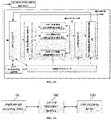
- FIG. 1A there is an operation device comprising: a storage unit 10, a controller unit 11 and an operation unit 12, wherein the storage unit 10 may include a data input/output unit (data I/O unit) 203,
- the controller unit includes an instruction buffer unit 110 configured to buffer the instructions, an instruction processing unit 111 configured to implement decoding function and a storage queue unit 113;
- the operation instructions may include one or more operational domains and an operation code.
- the operation instructions may include neural network operational instructions. Taking the neural network operation instruction as an example, as shown in Table 1, the register number 0, the register number 1, the register number 2, the register number 3, and the register number 4 therein may be taken as an operation domain and each register number 0, register number 1, register number 2, register number 3, and register number 4 therein may be taken as the number of one or more registers.
- OPERATION CODE register number 0 register number 1 register number 2 register number 3 register number 4 COMPUTE input data initial address input data length weight value initial address weight value length interpolation table address of activation function IO address of external data memory data length address of inner data memory NOP JUMP target address MOVE input address data size output address
- the storage unit may further include a register 201, a buffer 202 and a data I/O unit.
- the storage medium 201 may be an off-chip memory, and of course in an actual application, may also be an on-chip memory for storing data blocks.
- the above first instruction may be a vector instruction which may be at least one of a vector addition instruction (VA), a vector plus scalar instruction (VAS), a vector subtraction instruction (VS), and a vector multiplication instruction (VMV), a vector multiplying scalar instruction (VMS), vector division instruction (VD), a vector dividing scalar instruction (SDV), an inter-vector AND instruction (VAV), an inter-vector AND instruction (VAND), an inter-vector OR instruction (VOV), an intra-vector OR instruction (VOR), a vector index instruction (VE), a vector logarithmic instruction (VL), a vector greater-than decision instruction (VGT), a vector equal-to decision instruction (VEQ), a vector NOT instruction (VINV), a vector selection and merge instruction (VMER), a vector maximum instruction (VMAX), a scalar extended instruction (STV), a scalar-vector replacement instruction (STVPN), a vector-scalar replacement instruction (VPNTS
- FIG. 1B is a modified structure of the operation device described in FIG. 1A , and the operation device further includes a configuration parsing unit 13, a mapping unit 14 and a sparse unit 15 as compared with FIG. 1A , specifically:
- the data may include at least one of the following data types: integer data, discrete data, continuous data, power type data, floating point data, or fixed point data, and the length represented by data may be a 32-bit length floating point number, a16-bit length fixed point data and the like; the data may include at least one of the following data: the input neuron data, the weight data, and the offset data.
- the first instruction is the sparse processing instruction and the first data further includes preset configuration data
- the sparse unit 15 is configured to perform a sparse processing on the operation result according to the sparse parameters to obtain an operation result after the sparse processing.
- the sparse parameters include a sparse mode
- the mapping unit 13 performs a mapping processing on the input neuron and the weight according to the mapping mode, specifically:
- the sparse parameters may include at least one of the following: a sparse flag, a sparse rate, a sparse mode, and the like, wherein the sparse flag is used to determine whether it is possible to perform a sparse processing, for example, 0 represents not performing a sparse processing, 1 represents performing a sparse processing; or 1 represents not performing a sparse processing, 0 represents performing a sparse processing instead. It can be understood that it is also possible to flexibly select the representation of the sparse flag according to the demand.
- the sparse rate indicates the ratio of the neuron data and/or the weight data each time the sparse processing is performed, for example, 5%, 10%, 25% and the like.
- the sparse mode represents a specific mode of sparse processing.
- the sparse mode mainly includes at least three types: a sparse mode 1 where only taking sparse processing to the weight, a sparse mode 2 where only taking sparse processing to the neuron data and a sparse mode 3 where taking sparse processing to the weight and the neuron data.
- the sparse mode can also be combined by at least two of the above modes, for example, sparse mode 1 + sparse mode 2.
- the sparse rate of the neuron data and the sparse rate of the weight data may be different, for example, the embodiments of the present application provides a representation of the sparse rate (A, B), where A is the sparse rate of the neuron data, B is the sparse rate of the weight data, for example, (5%, 6%), that is, the sparse rate of the neuron data is 5% and the sparse rate of the weight data is 6%.
- At least the following four sparse modes are included: a sparse mode 0 where no sparse is performed; a sparse mode 1 where only taking sparse processing to the weight data; a sparse mode 2 where only taking sparse processing to the neuron data; a sparse mode 3 where taking sparse processing to the weight and neuron data.
- the sparse mode obtained by parsing the configuration data of the neural network by the configuration parsing unit 13 further sets the processing mode of the mapping unit, that is, corresponding to different mapping modes according to different sparse modes.
- mapping relationship between the sparse mode and the mapping mode is pre-stored in the storage unit, and then the mapping mode corresponding to the sparse mode is determined according to the mapping relationship, and the sparse is carried out according to the neuron sparse sequence and the weight sparse sequence in different mapping modes.
- the mapping relationship is not necessarily stored in the storage unit but may be stored on the off-chip memory, or may be stored on other devices (electronic devices having storage functions).
- the weight sparse sequence and/or the neuron sparse sequence may be pre-stored in the storage unit.
- the sparse unit 15 performs sparse processing on the operation result according to the sparse parameters, specifically:
- the sparse unit 15 performs a sparse processing on the operation result according to the sparse parameters, specifically:
- FIG. 1C is an exemplary diagram of sparse mode 1, wherein the sparse weight data only includes non-zero data in the weight and only the weight data of w1, w5, w8, and w9 are stored, and the weight sparse sequence is used to index the sparse weights, for example, the weight sparse sequence is 100010011, indicating the weights of w1, w5, w8 and w9 are non-zero values, and those of w2, w3, w4, w6 and w7 are 0.
- FIG. ID is an exemplary diagram of the sparse mode 2 provided by the embodiments of the present application, in which the sparse neuron data includes only non-zero data in the neuron, and only neuron data of d1, d3, d5, d8 are stored, as in FIG. 1D , the neuron sparse sequence is used to index sparse neuron data, such as neuron sparse sequence 101010010 indicates that neurons of d1, d3, d5, d8 are non-zero, and those of d2, d4, d6, d7, d9 are 0.
- the representation of the sparse sequence is not unique, and 0 can be used to indicate non-sparse, that is, the value is non-zero, and 1 represents sparse, that is, the value is zero, and other feasible methods can also be used.
- the corresponding weight data is selected according to the neuron sparse sequence, for example, the weight data of w1, w3, w5, w8 are selected as shown in FIG. 1D , and the input neuron data and the weight data are mapped to obtain corresponding input neuron-weight pairs.
- FIG. IE is an exemplary diagram of a sparse mode 3 according to the embodiments of the present application, that is, input neuron data and weight data are selected to be non-zero values according to a neuron sparse sequence and a weight sparse sequence.
- the neuron data d1, d5, d8 and the weight data w1, w5, w8 are selected to obtain the corresponding input neuron-weight pair by mapping the input neuron data and the weight data.
- controller unit 11 includes an instruction buffer unit 110 and an instruction processing unit 111.
- the first instruction is the sparse processing instruction and the first data further includes preset configuration data
- the first data further includes sparse parameters; and the method further includes the following steps: the sparse unit 15 performs sparse processing on the operation result according to the sparse parameters to obtain an operation result after the sparse processing.
- the sparse parameters include a sparse mode; the mapping unit 14 performs mapping processing on the input neuron and the weight according to the mapping mode, specifically:
- the operation device and method described in the above application support the mapping processing of the neural network, and can adopt different mapping modes according to different practical situations, thereby achieving the purpose of saving storage resources and operation resources; in addition, the sparse processing that supports the neural network and the neural network represented by multiple data can use different data representations and sparse processing according to different practical applications, thereby further saving operation on the neural network performance and improving the performance on storing resources, and then achieving optimal results, performing a sparse processing on data to reduce the operation load of the operation unit and speed up the operation.
- the operation device described in FIG. 1A can also be used to implement the following vector sorting function, specifically as follows: if the input neuron data is a vector; in the embodiments of the present application, the first instruction includes a vector sorting instruction and the first data includes an data vector to be sorted and an intermediate result of the data vector to be sorted, the first instruction may specifically refer to an instruction to be launched or an instruction at the forefront of the instruction queue.
- the instruction processing unit 111 is configured to decode the vector sorting instruction into a microinstruction performed by the operation unit 12; the operation unit 12 is further configured to sort the data vector to be sorted or the intermediate result according to the microinstruction to obtain a sorted vector having the same length as the data vector to be sorted.
- the operation unit 12 may dynamically select a sorting method to complete the vector sorting operation by means of instruction configuration.
- the sorting method may include at least one of the following: bubble sort, selection sort, quick sort, merge sort, or binary sort.
- the controller unit 11 acquires the first instruction to be performed from the storage unit 10, and if the first instruction is a vector sorting instruction, microinstructions are generated according to the vector sorting type, the length of the data vector to be sorted, and the source operand address, the destination operand address, the vector length, and the sort type of the vector sorting instruction , and the operation unit 12 performs a sorting operation in response to the microinstructions.
- the operation code OP has a length of k bits, for example, the specific content is b 1 b 2 ...b k
- the operation code OP is used to indicate that the operation performed by the instruction is a vector sorting operation, if the first k bits of a certain instruction are inconsistent with b 1 b 2 ...b k , it indicates the instruction is used to implement other calculating operations, and if the first k bits of a certain instruction is consistent with b 1 b 2 ...b k , it indicates that the instruction is a vector sorting instruction.
- the vector source address SRC has a length of q bits, and when the operation code is b 1 b 2 ...b k , it indicates the address of the data vector to be sorted in the storage unit, and q is greater than 0;
- the operation unit 12 sorts the data vectors to be sorted or the intermediate result according to the microinstruction as follows: Step A: if what obtained after the sorting is the intermediate result of the data vector to be sorted, writing the intermediate result of the data vector to be sorted back to the source address of the storage unit, and repeatedly executing step A until obtaining the final result of the data vector to be sorted, then go to step B; step B: if what obtained after the sorting is the final result of the data vector to be sorted, writing the final result of the data vector to be sorted back to the data I/O unit of the storage unit according to the destination operand address provided by the vector sorting instruction, and the operation ends.
- the operation unit 12 includes n vector merging units, where n is an integer greater than or equal to 2; n vector merging units read no more than 2n sub-vectors having been merged or ordered sub-vectors from the storage unit 10 each time, merge them and store the result to the storage unit until the length of the sub-vectors having been merged is equal to the length of the data vector to be sorted to form a sorted vector.
- the operation type may include 0 and 1, and the operation type 0 may be used to indicate that the vector merging unit performs the merging according to the order of the vectors from small to large, and the operation type 1 may be used to indicate that the vector merging unit performs the merging according to the order of the vectors from large to small.
- the operation type 1 may be used to indicate that the vector merging unit performs the merging according to the order of the vectors from small to large
- the operation type 0 may be used to indicate that the vector merging unit performs the merging according to the order of the vectors from large to small. It is understandable that the operation type can be set according to the specific demand. Taking two input vectors as an example, if the length of one of the input vectors is 0, another vector can be directly output.
- the operation unit 12 performs step A specifically as follows:
- the operation unit 12 merges the vectors in pairs, specifically: numbering the portions 1, 2, ..., ⁇ m /2 i -1 ⁇ in order according to the source operand address provided based on the vector sorting instruction and distributing the vector numbered 2 ⁇ j-1, 2 ⁇ j to the ((j -1) mod n )+ 1 vector merging unit for processing, where j>0.
- the data vector to be sorted is a characteristic value vector and a probability vector of the classification result corresponding to the matrix for testing data characteristics at the preprocessing stage.
- step 1-7 the merging process of it is shown in step 1-7 as follows: step 1: D_1: 2 4 6 7 len_1: 4 D_2: 3 3 8 9 len_2:4 Output vector: 2 Step 2: D_1: 4 6 7 len_1:3 D_2: 3 3 8 9 len_2:4 Output vector: 2 3 Step 3: D_1: 4 6 7 len_1:3 D_2: 3 8 9 len_2:3 Output vector: 2 3 3 Step 4: D_1: 4 6 7 len_1:3 D_2: 8 9 len_2:2 Output vector: 2 3 3 4 Step 5: D_1: 67 len_1:2 D_2: 8 9 len_2:2 Output vector: 2 3 3 4 6 Step 6: D_1: 7 len_1:1 D_2: 8 9 len_2:2 Output vector: 2 3 3 4 6 Step 6: D_1: 7 len_1:1 D_2: 8 9 le
- the input vector, address, and output address corresponding to each vector merging unit each time are as follows:
- vector merging unit 1 vector 1 1 9 7 address of vector 1 src src +8 vector 2 3 5 address of vector 2 src+2 src + 10 output vector 1359 7 address of output vector src src + 8 vector merging unit 2
- Vector 1 24 address of vector 1 src + 4 vector 2 68 address of vector 2 src + 6 output vector 2468 address of output vector src + 4 the merged vectors are 13 5 9 2 4 6 8 7;
- the third merging vector merging unit 1 vector 1 1359 address of vector 1 src vector 2 2468 address of vector 2 src+4 output vector 12345689 address of output vector src vector merging unit 2 vector 1 7 address of vector 1 src + 8 vector 2 address of vector 2 src + 12 output vector 7 address of output vector src + 8 the merged vectors are 12 3 4 5 6 7 8 7;
- vector merging unit 1 vector 1 1 2 3 4 5 6 7 8 7 address of vector 1 src vector 2 7 address of vector 2 src+8 output vector 123456778 address of output vector dst
- the operation unit 12 sorts the data vector to be sorted or the intermediate result according to the microinstruction as follows: Step A: if what obtained after the sorting is the intermediate result of the data vector to be sorted, writing the intermediate result of the data vector to be sorted back to the source address of the storage unit, and repeatedly executing step A until obtaining the final result of the data vector to be sorted, then go to step B; step B: if what obtained after the sorting is the final result of the data vector to be sorted, writing the final result of the data vector to be sorted back to the data I/O unit of the storage unit according to the destination operand address provided by the vector sorting instruction, and the operation ends.
- the operation unit 12 includes n vector merging units, wherein n is an integer greater than or equal to 2; n vector merging units read no more than 2n sub-vectors having been merged or ordered sub-vectors from the storage unit, merge them and store the result to the storage unit until the length of the sub-vectors having been merged is equal to the length of the data vector to be sorted to form a sorted vector.
- step A specifically as follows:
- the data vector to be sorted is a characteristic value vector and a probability vector of the classification result corresponding to the matrix for testing data characteristics at the preprocessing stage.
- the first instruction comprises one or any combination of the following instructions: inter-vector AND instruction VAV, intra-vector AND instruction VAND, inter-vector OR instruction VOV, intra-vector OR instruction VOR, vector index instruction VE, vector logarithmic instruction VL, vector greater than decision instruction VGT, vector equal to decision instruction VEQ, vector NOT instruction VINV, vector selection and merge instruction VMER, vector maximum instruction VMAX, scalar extension instruction STV, scalar-vector replacement instruction STVPN, vector-scalar replacement instruction VPNTS, vector retrieval instruction VR, vector dot product instruction VP, random vector instruction RV, cyclic shift instruction VCS, vector load instruction VLOAD, vector storage instruction VS, vector moving instruction VMOVE, matrix retrieval instruction MR, matrix load instruction ML, matrix storage instruction MS and matrix moving instruction MMOVE.
- the vector sorting instruction is decoded into a micro-instruction performed by the operation unit, the data vector to be sorted or the intermediate result is sorted according to the micro-instruction, and a sorted vector having the same length as the data vector to be sorted is obtained.
- the operation speed is slow, and the vector sorting algorithm is divided into and decoded into a series of instruction sequences, and the decoding overhead is also large.
- the present application can perform sorting in parallel and reduce decoding overhead, thereby improving the sorting efficiency.
- Fig. 1H is a variant structure of the operation device as shown in Fig. 1A , and the operation unit 12 as shown in Fig. 1H may include a branch processing circuit 1003; the specific connection structure is shown in Fig. 1I , wherein,
- K slave processing circuits are configured to forward data and instructions between the master processing circuit and the plurality of slave processing circuits.
- the master processing circuit may also include one or any combination of a conversion processing circuit 1010, an activation processing circuit 1011 and an addition processing circuit 1012;
- the master processing circuit is configured to assign an input data to a plurality of data blocks and send at least one of the plurality of data blocks and at least one of the operation instructions to the slave processing circuit;
- the slave processing circuit comprises a multiplication processing circuit
- the multiplication processing circuit is configured to perform a multiplication operation on the received data block to obtain a multiplication result
- the operation instruction is a calculation instruction such as a matrix-multiplying-matrix instruction, an accumulation instruction, an activation instruction.
- the operation device provided by the present application sets up an interconnection unit which connects the calculator combinations in the operation unit according to the need of the operation instruction to obtain a operation topology structure corresponding to the operation instruction, and then it is unnecessary to perform storage or extraction operations on the operated intermediate data in the subsequent operation of the operation unit.
- This structure realizes an advantage that a single instruction can realize one-time input, that is, can perform a plurality of operations of an calculator and obtain calculation results, thereby improving the commutating efficiency.
- the data conversion unit 16 obtains a part of nodes in the structure graph from the external of the device, determines whether the node is processed by the operation unit 12 through the controller unit 11, and if it has been processed, the node is discarded without performing any operation and if it has been processed, the node is performed with a conversion of the node format, and after the conversion is completed, the converted node is written into the storage unit 10.
- the controller unit 11 reads the instruction from the external of the operation device and writes it to the storage unit 10 without a conversion.
- the node of the structure graph (as shown in Fig.
- 1K which provides a schematic diagram of the structure graph
- the node obtained for the i th time is an adjacent node of the candidate node after the (i-1) th (i>1) calculation and the adjacent node is not processed by the operation unit.
- a storage unit 10 is configured to acquire the instruction and the converted data from the data conversion unit i.e., data conversion unit 14, provide data to the operation unit 12, store the data processed by the operation unit 12, obtain an approximate optimal path result, and store, and finally write the approximate optimal path result back to the external of the device.
- data conversion unit i.e., data conversion unit 14
- the price-values F(n 1 ), F(n 2 ),...F(n m ) corresponding to m paths can be operated.
- the corresponding m nodes are sorted in order of the price-value F(n 1 ), F(n 2 ),...F(n m ) from small to large to obtain n 1 ', n 2 ', ...n m '. It is determined whether the path from the source node s to n 1 ' constitutes a complete approximate optimal path, and if so, an operation termination instruction is transmitted to the controller unit 11, and the node information (Addr(before(n)), F(n), n, 1) corresponding to n 1 ' is transmitted to the storage unit 10.
- the preset cost function in the embodiments of the present application may be at least one of the following functions: a mean square error cost function, a cross entropy cost function, or a cost function in a neural network.
- the operation device allows the maximum number of candidate nodes to be k.
- the corresponding m nodes can be used as candidate nodes, and the updated (Addr(before(n)), F(n), n, 1) are written into the storage unit 10; when m> k, the node information (Addr(before(n)), F(n), n, 1) corresponding to n 1 ', n 2 ', ...nk' can be written back to the storage unit 10.
- the operation unit 12 can maintain an empty stack inside the unit, and after receiving the integration instruction transmitted by the controller unit 11, integrate the node information (Addr(before(n)), F(n), n, 1), specifically, push the node n into the stack, and then, acquire the precursor node of the top node of the stack from the storage unit 10 and push it into the stack until before(n) in the information of the top node of the stack is n, that is, the top node of the stack is the source node of the graph. Then, the nodes in the stack continuously pop out of the stack and are transmitted to the storage unit 10 in order, and the sequence of nodes acquired in the storage unit 10 is the approximate optimal path finally obtained.
- the node information (Addr(before(n)), F(n), n, 1), specifically, push the node n into the stack, and then, acquire the precursor node of the top node of the stack from the storage unit 10 and push it into the stack until before(n) in the information of the top node of the stack is n
- the controller unit 11 acquires an instruction required for the operation through the storage unit 10, and the storage unit 10 reads the node that was stored from the external of the operation device last time and has not been operated by the operation unit 12, controls the operation unit 12 to perform the data operation, receives the operation termination instruction transmitted by the operation unit 12, and controls the data transmission between the operation unit 12 and the storage unit 10.
- the operation unit 12 in FIG. 1L includes a node distribution unit 41, a cost function calculation unit 42, a sorting unit 43 and a termination determination unit 44.
- the node distribution unit 41 assigns the nodes n 1 , n 2 , ...n m acquired by the storage unit 10 to the L cost function calculation units 42 respectively which calculates corresponding path costs, where the first L-1 cost function calculation units assign [m/L] nodes respectively, the Lth cost function calculation units assign m-[m/L] nodes, where "[ ]" indicates rounding up.
- each cost function calculation unit 42 can realize the price-value from the source node to the corresponding path independently.
- Each cost function calculation unit 42 calculates the node assigned by the node distribution unit 41 to obtain the corresponding node number-path price-value pairs (n 1 , F (n 1 )), (n 2 , F (n 2 )), ...(n m , F (n m )), calculate the cost of the path function according to actual needs, set up by the controller unit 11, then, transmit the operated node number-path price-value pairs (n 1 , F (n 1 )), (n 2 , F (n 2 )), ...(n m , F (n m )) to the sorting unit 43.
- the cost function calculation unit may include a multiplier and an adder.
- the termination determination unit 44 obtains the sorted node number-path cost value pairs from the sorting unit 43 and determines whether the approximate optimal path has been obtained according to (n 1 ', F(n 1 ))', where the method to determine whether the approximate optimal path has been obtained is set by the controller unit 11 according to the actual problem. If the approximate optimal path has been obtained, the termination determination unit 34 sends the operation termination instruction to the controller unit 11 and sends the node information (Addr(before(n)), F(n), n, 1) corresponding to n 1 ' n 1 ' to the result storage unit 10.
- the maximum number of candidate nodes allowed by the device is k
- the corresponding m nodes, which are all taken as candidate nodes write the updated (Addr(before(n)), F(n), n, 1) back to the storage unit 10; if m>k, write the node information (Addr(before(n)), F(n), n, 1) corresponding to n 1 ', n 2 ', ...n k ' back to the storage unit 10.
- step 4 after receiving the operation termination instruction from the operation unit 12, the controller unit 11 determines whether the result storage unit 10 has obtained node information from the operation unit 12, and if the node information is not obtained, the determination is circularly made until the node information is obtained; the result storage unit 11 maintains an empty stack within the unit, and after the operation result is obtained, pushes the node information (Addr(before(n)), F(n), n, 1) received from the operation unit 12 into the stack; the precursor node of the top node of the stack is obtained from the storage unit 10 and is pressed into the stack, which is repeated until before(n) in the information of the top node of the stack is n, that is, the top node of the stack is the source node of the graph. Then the storage unit 10 continuously pushing the nodes out of the stack and sending them into the storage unit 10 in order, and then the sequence of nodes obtained in the storage unit 10 is the approximate optimal path finally obtained.
- step 5 the storage unit 10, under control of the controller unit 11, obtains an approximate optimal path from the storage unit 10 and transmits it to the external of the device.
- Find an approximate optimal path that can satisfy the conditions by using the embodiments of the present application to search the structure graphs can reduce the waste of space effectively and improves the efficiency of time, and in the process of calculating the cost of path, performing calculation by using a plurality of cost function calculation units at the same time can improve the parallelism of computation.
- the above operation device can not only perform sparse neural network operations but also perform dense neural network operations.
- the above device is especially suitable for sparse neural network operations because there are many data with zero value or small absolute value in the sparse neural network. These data can be presented by the mapping unit, and the efficiency of operation can be improved if the accuracy of operation is guaranteed.
- the input neurons and operation results (or output neurons) mentioned in the embodiments of the present application do not refer to neurons in the input layer and neurons in the output layer of the whole neural network, but for any adjacent two layers of neurons in the neural network, the neurons in the lower layer of the network feedforward operation is the input neurons, the neurons in the upper layer of the network feedforward operation is the operation result.
- the layer K is called the input layer
- the neurons in this layer are the above input neurons
- the layer K+1 is called the input layer.
- the neurons in this layer are the above operation results, that is, except the top layer, each layer can be the input layer, and the next layer is the corresponding output layer.
- Each of the above units may be a hardware circuit including a digital circuit, an analog circuit, or the like. Physical implementations of the hardware circuit include, but are not limited to, physical devices including, but not limited to, transistors, memristors and the like.
- the calculation unit in the above neural network calculating module may be any suitable hardware processor such as a CPU, GPU, FPGA, DSP, ASIC and the like.
- the above storage unit, the instruction buffering unit, the first input buffer unit, the second input buffer unit and the output buffer unit may be any suitable magnetic storage medium or magneto-optical storage medium, such as RRAM, DRAM, SRAM, EDRAM, HBM, HMC and the like.
- the embodiment of the present application provides a neural network calculating device, where the neural network calculating device includes one or more neural network operation modules according to the embodiments for acquiring data to be operated and control information from other processing devices, performing the specified neural network operation, and transmitting the execution result to other processing devices through an I/O interface;
- the embodiments of the present application provide a combined processing device including the above-described neural network calculating device, a universal interconnection interface and other processing devices.
- FIG. 2A shows a schematic structural diagram of a combined processing apparatus according to embodiments of the present application.
- the combined processing device includes the above-described neural network calculating device 1601, universal interconnect interface 1602, and other processing devices 1603.
- the above other processing device 1603 includes a processor type of one or more of a general-purpose/dedicated processor such as a central processing unit, a graphics processing unit (GPU) and a neural network processor.
- a general-purpose/dedicated processor such as a central processing unit, a graphics processing unit (GPU) and a neural network processor.
- the number of processors included in the other processing device 1603 is not limited.
- the other processing device 1603 serving as an interface between the neural network calculating device 1601 and the external data and the control includes data moving, completing basic control such as starting and stopping of the neural network calculating device; the other processing device 1603 can also cooperate with the neural network calculating device 1601 to complete the operation task.
- the above universal interconnect interface 1602 is configured to transmit data and control instructions between the neural network calculating device 1601 and other processing devices 1603.
- the neural network calculating device 1601 obtains the required input data from other processing devices 1603 to write the storage device on the chip of the neural network calculating device 1601, acquire the control instruction from other processing device 1603 to write in the control buffer on the chip of the neural network calculating device 1601 and data in the storage device of the neural network calculating device 1601 can also be read to transmit to other processing devices 1603.
- the above combined processing device further includes a storage device 1604 configured to store data required by the present operation unit/operation device or other operation units and is particularly suitable for the data required to be calculated but cannot be completely stored in the internal memory of the present network operation device 1601 or other processing device 1603.
- a storage device 1604 configured to store data required by the present operation unit/operation device or other operation units and is particularly suitable for the data required to be calculated but cannot be completely stored in the internal memory of the present network operation device 1601 or other processing device 1603.
- the above combination device can be used as an on-chip system for smart devices such as mobile phones, robots, and drones, effectively reducing the core area of the control portion, increasing the processing speed and reducing the overall power consumption.
- the embodiments of the present application provide a neural network chip which includes the operation device described in any of the illustrated embodiments or the above-described neural network calculating device or the combined processing device.
- the embodiments of the present application provide a neural network chip package structure which includes the above neural network chip.
- the embodiments of the present application provide a board card which includes the above neural network chip package structure.
- the embodiments of the present application provide an electronic device including the above-mentioned board card.
- the electronic device includes a data processing device, a robot, a computer, a printer, a scanner, a tablet, a smart terminal, a mobile phone, a driving recorder, a navigator, a sensor, a camera, a cloud server, a camera, a camera, a projector, and a watch, headsets, a removable storage, a wearable device vehicle, a household appliance, and/or a medical device.
- the above-mentioned transportation includes airplanes, ships and/or vehicles;
- the above-mentioned household appliances include televisions, air conditioners, microwave ovens, refrigerators, rice cookers, humidifiers, washing machines, electric lights, gas stoves, range hoods;
- the medical equipment includes nuclear magnetic resonance instruments, B-mode ultrasound instrument and/or electrocardiograph.
- the embodiments of the present application further provide a computer storage medium, wherein the computer storage medium may store a program, and the program includes some or all of the steps of any one of the neural network operation methods according to the method embodiments.
- the computer storage medium may store a program
- the program includes some or all of the steps of any one of the neural network operation methods according to the method embodiments.
- the disclosed apparatus may be implemented in other ways.
- the device embodiments described above are merely illustrative, for example, the division of the unit is only a logical function division and there may be another division manner in the actual implementation, for example, multiple units or components may be combined or may be integrated into another system, or some features can be ignored or not performed.
- the mutual coupling or direct coupling or communication connection shown or discussed may be an indirect coupling or communication connection through some interfaces, devices or units, and may be electrical or other forms.
- the units described as separate components may or may not be physically separated, and the components displayed as units may or may not be physical units, that is, may be located in one place, or may be assigned to multiple network units. Some or all of the units may be selected according to actual needs to achieve the purpose of the solution of the embodiment.
- each functional unit in each embodiment of the present application may be integrated into one processing unit, or each unit may exist physically separately, or two or more units may be integrated into one unit.
- the above integrated unit can be implemented in the form of hardware or in the form of a software program module.
- the integrated unit if implemented in the form of a software program module and sold or used as a standalone product, may be stored in a computer readable memory.
- a computer readable memory A number of instructions are included to cause a computer device (which may be a personal computer, server or network device, etc.) to perform all or part of the steps of the methods described in various embodiments of the present application.
- the foregoing memory includes: a U disk, a Read-Only Memory (ROM), a Random Access Memory (RAM), a removable hard disk, a magnetic disk, or an optical disk, and the like which can store program codes.
Landscapes
- Engineering & Computer Science (AREA)
- Physics & Mathematics (AREA)
- Theoretical Computer Science (AREA)
- Software Systems (AREA)
- General Physics & Mathematics (AREA)
- General Engineering & Computer Science (AREA)
- Health & Medical Sciences (AREA)
- Life Sciences & Earth Sciences (AREA)
- Biomedical Technology (AREA)
- Biophysics (AREA)
- Mathematical Physics (AREA)
- Molecular Biology (AREA)
- General Health & Medical Sciences (AREA)
- Computing Systems (AREA)
- Evolutionary Computation (AREA)
- Data Mining & Analysis (AREA)
- Computational Linguistics (AREA)
- Artificial Intelligence (AREA)
- Neurology (AREA)
- Computational Mathematics (AREA)
- Mathematical Analysis (AREA)
- Mathematical Optimization (AREA)
- Pure & Applied Mathematics (AREA)
- Advance Control (AREA)
- Complex Calculations (AREA)
- Management, Administration, Business Operations System, And Electronic Commerce (AREA)
Claims (13)
- Operationsvorrichtung, umfassend:eine Speichereinheit (10), die dafür ausgelegt ist, Daten undAnweisungen zu speichern;eine Steuereinheit (11), die dafür ausgelegt ist, aus der Speichereinheit eine erste Anweisung zu extrahieren, die eine Sortieranweisung odereine Sparsing-Verarbeitungsanweisung enthält, und erste Daten, die der ersten Anweisung entsprechen, wobei die ersten Daten Eingangsneuronendaten und Gewichtsdaten umfassen; undeine Operationseinheit (12), die dafür ausgelegt ist, in Reaktion auf die erste Anweisung eine Operation, die der ersten Anweisung entspricht,an den Eingangsneuronendaten und den Gewichtsdaten durchzuführen, um ein Operationsergebnis zu erhalten;wobei die Steuereinheit (11) ferner dafür ausgelegt ist, die erste Anweisung zu parsen, um einen Operationscode einer Operationsanweisung und eine Operationsdomäne zu erhalten, unddie Operation, die der ersten Anweisung entspricht, die Operation ist,die dem erhaltenen Operationscode entspricht;dadurch gekennzeichnet, dass die Vorrichtung ferner eine Konfigurations-Parsing-Einheit (13) und eine Mapping-Einheit (14) enthält,wenn die erste Anweisung die Sparsing-Verarbeitungsanweisung ist und die ersten Daten ferner voreingestellte Konfigurationsdaten enthalten,die Konfigurations-Parsing-Einheit (13) dafür ausgelegt ist, einen Mapping-Modus in Übereinstimmung mit den voreingestellten Konfigurationsdaten festzulegen; unddie Mapping-Einheit (14) dafür ausgelegt ist, eine Mapping-Verarbeitung an den Eingangsneuronen- und Gewichtdaten in Übereinstimmung mit dem Mapping-Modus durchzuführen, um ein Eingangs-Neuronen-Gewicht-Paar zu erhalten, das eine Beziehung zwischen den Eingangsneuronendaten und den Gewichtdaten nach der Mapping-Verarbeitung ist;wobei die Steuereinheit (11) ferner umfasst:eine Anweisungspuffereinheit (110), die dafür ausgelegt ist, die Anweisungen zu puffern, undeine Anweisungsverarbeitungseinheit (111), die dafür ausgelegt ist,eine Dekodierungsfunktion zu implementieren;wobei die Anweisungspuffereinheit (110) dafür ausgelegt ist, eine Zielanweisung zu empfangen, die von der Steuereinheit übertragen wird;die Anweisungsverarbeitungseinheit (111) dafür ausgelegt ist, die Zielanweisung in eine Betriebsanweisung zu dekodieren; unddie Operation, die der ersten Anweisung entspricht, an dem Eingangs-Neuronen-Gewicht-Paar durchgeführt wird;wobei die ersten Daten ferner einen Sparsing-Parameter umfassen;wobei die Vorrichtung ferner umfasst:eine Sparsing-Einheit (15), die dafür ausgelegt ist, eine Sparsing-Verarbeitung an dem Operationsergebnis in Übereinstimmung mit den Sparsing-Parametern durchzuführen, um ein Betriebsergebnis nach der Sparsing-Verarbeitung zu erhalten;wobei, wenn die Eingangsneuronendaten ein Vektor sind, die erste Anweisung eine Vektorsortieranweisung ist und die ersten Daten ein zu sortierender Datenvektor und ein Zwischenergebnis des zu sortierenden Datenvektors sind;wobei die Dekodierfunktion Dekodieren der Vektorsortieranweisung in eine Mikroanweisung, die von der Betriebseinheit durchgeführt wird,umfasst;die Betriebseinheit (12) ferner dafür ausgelegt ist, den zu sortierenden Datenvektor oder das Zwischenergebnis in Übereinstimmung mit der Mikroanweisung zu sortieren, um einen sortierten Vektor mit einer gleichen Länge zu erhalten, wie der zu sortierende Datenvektor;wobei Sortieren des zu sortierenden Datenvektors oder des Zwischenergebnisses in Übereinstimmung mit der Mikroanweisung umfasst:Ausführen von Schritt A, wenn das, was nach dem Sortieren erhalten wird, das Zwischenergebnis des zu sortierenden Datenvektors ist, um das Zwischenergebnis des zu sortierenden Datenvektors zurück zu einer Quelladresse der Speichereinheit zu schreiben, und wiederholtes Ausführen des Schrittes A bis ein Endergebnis des zu sortierenden Datenvektors erhalten wird; undAusführen von Schritt B, wenn das, was nach dem Sortieren erhalten wird, das Endergebnis des zu sortierenden Datenvektors ist, um das Endergebnis des zu sortierenden Datenvektors zurück zu einer Daten-I/O-Einheit der Speichereinheit in Übereinstimmung mit einer Zieloperandenadresse, die von der Vektorsortieranweisung bereitgestellt wird, zu schreiben, und die Operation zu beenden;wobei die Operationseinheit (12) n Vektorzusammenführungseinheiten (121) enthält, wobei n eine ganze Zahl größer oder gleich 2 ist;die n Vektorzusammenführungseinheiten (121) dafür ausgelegt sind,nicht mehr als 2n Untervektoren, die zusammengeführt wurden, odergeordnete Untervektoren aus der Speichereinheit zu lesen, sie zusammenzuführen und das zusammengeführte Ergebnis in der Speichereinheit zu speichern, bis eine Länge der zusammengeführten Untervektoren einer Länge des zu sortierenden Datenvektors zum Bilden eines sortierten Vektors gleich ist; undwobei Ausführen von Schritt A umfasst:Ausführen von Schritt A1 zum Initialisieren einer Anzahl von Zusammenführungen i zu 1;Ausführen von Schritt A2 zum Durchführen einer Berechnung um die n Vektor-Zusammenführungs-Einheiten und wenn der zu sortierende Datenvektor oder das Zwischenergebnis zum i-ten Mal zusammengeführt wird, um den zu sortierenden Datenvektor oder das Zwischenergebnis aus der Speichereinheit zu erhalten, Dividieren des zu sortierenden Datenvektors oder des Zwischenergebnisses in [m/2 i-1] Abschnitte in Reihenfolge und Zusammenführen der Vektoren in Paaren, wobei jeder Vektor mit Ausnahme des letzten eine Länge von 2 i-1 aufweist, wobei m die Länge des zu sortierenden Datenvektors ist;undAusführen von Schritt A3 zum Erhöhen der Anzahl der Zusammenführungen um eins, wenn die Anzahl der Zusammenführungen i < [log 2m] ist, und Schreiben des verarbeiteten Zwischenergebnisses zurück zur einer Quelladresse der Speichereinheit, wiederholtes Ausführen der Schritte A2 bis A3 bis i=[log 2m];wobei Ausführen von Schritt B umfasst:wenn die Anzahl der Zusammenführungen i=[log 2m] und wenn es nach Zuweisung nur zwei zu sortierende Datenvektoren gibt, Festlegen des erhaltenen Vektors als einen sortierten Vektor, nachdem er durch die erste Vektorzusammenführungseinheit der n Vektorzusammenführungseinheiten zusammengeführt wurde,Schreiben des sortierten Ergebnisses in die Datenausgabeeinheit in Übereinstimmung mit der Zieloperandenadresse, die von der Vektorsortieranweisung bereitgestellt wurde, und Beenden der Operation; undwobei das paarweise Zusammenführen der Vektoren umfasst:
Nummerieren der Abschnitte 1, 2, ..., [m/2 i-1] in Reihenfolge in Übereinstimmung mit der Quelloperandenadresse, die von der Vektorsortieranweisung bereitgestellt wurde, und Zuweisen der nummerierten Vektoren 2∗j-1, 2∗j bis ((j - 1) mod n) + 1 )-nte an die Vektorzusammenführungseinheit zur Verarbeitung, wobei j > 0. - Vorrichtung nach Anspruch 1, wobeider Sparsing-Parameter einen Sparsing-Modus enthält;die Mapping-Verarbeitung an dem Eingangsneuron und dem Gewicht in Übereinstimmung mit dem Mapping-Modus umfasst:Erhalten, wenn der Sparsing-Modus ein Sparsing-Modus 1 ist, einer Gewicht-Sparsing-Sequenz, und Durchführen der Mapping-Verarbeitung an dem Gewicht in Übereinstimmung mit der Gewicht-Sparsing-Sequenz;Erhalten, wenn der Sparsing-Modus ein Sparsing-Modus 2 ist, einer Neuronen-Sparsing-Sequenz, und Durchführen des Mapping-Verarbeitens an dem Eingangs-Neuron in Übereinstimmung mit der Neuronen-Sparsing-Sequenz; undErhalten, wenn der Sparsing-Modus ein Sparsing-Modus 3 ist, einer Gewicht-Sparsing-Sequenz und einer Neuron-Sparsing-Sequenz, undDurchführen des Mapping-Verarbeitens an den Eingangsneuronen- und Gewichtsdaten in Übereinstimmung mit der Gewicht-Sparsing-Sequenz und der Neuron-Sparsing-Sequenz.
- Vorrichtung nach Anspruch 1 oder 2, wobei der Sparsing-Parameter ferner eine Sparsing-Rate umfasst, und das Sparsing-Verarbeiten umfasst:Sortieren absoluter Werte von Elementen der Neuronendaten,Berechnen einer Anzahl von Elementen, die dem Sparsing-Verarbeiten in Übereinstimmung mit der Sparsing-Rate unterzogen werden müssen,Durchführen des Sparsing-Verarbeitens an Elementen der sortierten Neuronendaten in Übereinstimmung mit der Anzahl von Elementen,die dem Sparsing-Verarbeiten unterzogen werden müssen, undÜbermitteln der Sparsing-Neuronendaten nachdem sie dem Sparsing-Verarbeiten unterzogen wurden und der Neuronen-Sparsing-Sequenz an die Steuereinheit.
- Vorrichtung nach Anspruch 1 oder 2, wobei
das Sparsing-Verarbeiten umfasstein Element, dessen Neuronendaten 0 sind, bleibt unverändert, undein anderes Element, dessen Neuronendaten innerhalb eines voreingestellten Wertintervalls liegen, wird auf 0 gesetzt. - Vorrichtung nach einem der Ansprüche 1 bis 4, wobei der zu sortierende Datenvektor ein Merkmalswertvektor und ein Wahrscheinlichkeitsvektor des Klassifizierungsergebnisses ist, das der Matrix für Testdatenmerkmale in der Vorverarbeitungsstufe entspricht.
- Vorrichtung nach einem der Ansprüche 1 bis 5, wobei die erste Anweisung eine oder eine beliebige Kombination der folgenden Anweisungen umfasst: Intra-Vektor AND-Anweisung VAV, Intra-Vektor AND-Anweisung VAND, Intra-Vektor OR-Anweisung VOV, Intra-Vektor OR-Anweisung VOR, Vektorindexanweisung VE, Vektorlogarithmische Anweisung VL, Vektor-größer-als-Entscheidungsanweisung VGT, Vektor-gleich-zu-Entscheidungsanweisung VEQ, Vektor NOT-Anweisung VINV, Vektor-Auswahl- und Zusammenführungsanweisung VMER, Vektor-Maximum-Anweisung VMAX, Skalar-Erweiterungsanweisung STV, Skalar-Vektor-Ersetzungsanweisung STVPN, Vektor-Skalar-Ersetzungsanweisung VPNTS, Vektorabrufanweisung VR, Vektorpunktproduktanweisung VP, Zufallsvektoranweisung RV, zyklische Verschiebungsanweisung VCS, Vektorladeanweisung VLOAD, Vektorspeicheranweisungs VS, Vektorverschiebungsanweisung VMOVE, Matrixabrufanweisungs MR, Matrixladeanweisung ML, Matrixspeicheranweisung MS und Matrixverschiebungsanweisung MMOVE.
- Vorrichtung nach einem der Ansprüche 1 bis 6, wobei die Vorrichtung dafür ausgelegt ist, für eine Sparsing-Neuronalnetzwerkoperation oder eine Dense-Neuronalnetzwerkoperation verwendet zu werden.
- Neuronalnetzwerkberechnungsvorrichtung, umfassend:eine oder mehrere Operationsvorrichtungen nach einem der Ansprüche 1 bis 7, die dafür ausgelegt sind, zu verarbeitende Daten und Steuerinformationen von anderen Verarbeitungsvorrichtungen zu erfassen, eine spezifizierte Neuronalnetzwerkoperation auszuführen und ein Ausführungsergebnis an die anderen Verarbeitungsvorrichtungen über eine I/O-Schnittstelle zu übermitteln;wobei, wenn die Neuronalnetzwerkberechnungsvorrichtung eine Mehrzahl der Operationsvorrichtungen enthält, die Mehrzahl der Operationsvorrichtungen dazu in der Lage ist, durch eine spezifische Struktur verbunden zu werden und Daten zu übertragen;die Mehrzahl der Operationsvorrichtungen dafür ausgelegt ist, sich über einen Peripheral Component Interconnect-Express Bus (PCIE-Bus) miteinander zu verbinden und Daten zu übertragen, um Operation in einem neuronalen Netzwerk größeren Umfangs zu unterstützen;die Mehrzahl der Operationsvorrichtungen dafür ausgelegt ist, das gleiche Steuersystem gemeinsam zu nutzen oder über eigene Steuersysteme zu verfügen; die Mehrzahl der Operationsvorrichtungen dafür ausgelegt ist, einen Speicher gemeinsam zu nutzen oder über eigene Speicher zu verfügen; die Art und Weise der Verbindung der Mehrzahl der Operationsvorrichtungen eine beliebige Verbindungstopologie ist.
- Kombinierte Verarbeitungsvorrichtung, umfassend:die Neuronalnetzwerkberechnungsvorrichtung nach Anspruch 8, eine universelle Verbindungsschnittstelle und andere Verarbeitungsvorrichtungen;wobei die Neuronalnetzwerkberechnungsvorrichtung dafür ausgelegt ist, mit den anderen Verarbeitungsvorrichtungen zu interagieren, um benutzerspezifizierte Operationen durchzuführen.
- Neuronalnetzwerkchip, umfassend:die Neuronalnetzwerkberechnungsvorrichtung nach Anspruch 8 oderdie kombinierte Verarbeitungsvorrichtung nach Anspruch 9.
- Plattenkarte, umfassend:
den Neuronalnetzwerkchip nach Anspruch 10. - Elektronikvorrichtung, umfassend:
den Neuronalnetzwerkchip nach Anspruch 10 oder die Plattenkarte nach Anspruch 11. - Operationsverfahren, das auf eine Operationsvorrichtung anwendbar ist, wobei die Operationsvorrichtung eine Speichereinheit (10), eine Steuereinheit (11) und eine Operationseinheit (12) umfasst,
wobei das Operationsverfahren umfasst:Speichern, durch die Speichereinheit (10), von Daten undAnweisungen;Extrahieren, durch die Steuereinheit (11), aus der Speichereinheit,einer ersten Anweisung, die eine Sortieranweisung oder eine Sparsing-Verarbeitungsanweisung enthält, und erster Daten, die der ersten Anweisung entsprechen, wobei die ersten Daten Eingangsneuronendaten und Gewichtsdaten umfassen; undin Reaktion auf die erste Anweisung, Durchführen, durch die Operationseinheit (12), einer Operation, die der ersten Anweisung entspricht, an den Eingangsneuronaldaten und den Gewichtsdaten, um ein Operationsergebnis zu erhalten;wobei das Operationsverfahren ferner umfasst:Parsen, durch die Steuereinheit (11), der ersten Anweisung, um einen Operationscode einer Operationsanweisung und eine Operationsdomäne zu erhalten, undwobei die Operation, die der ersten Anweisung entspricht, die Operation ist, die dem erhaltenen Operationscode entspricht; dadurch gekennzeichnet, dass die Operationsvorrichtung ferner eine Konfiguration-Sparsing-Einheit (13) und eine Mapping-Einheit (14) enthält;wobei das Operationsverfahren ferner umfasst:wenn die erste Anweisung die Sparsing-Verarbeitungsanweisung ist und die ersten Daten ferner voreingestellte Konfigurationsdaten enthalten,legt die Konfigurations-Parsing-Einheit (13) einen Mapping-Modus in Übereinstimmung mit den voreingestellten Konfigurationsdaten fest; unddie Mapping-Einheit (14) führt eine Mapping-Verarbeitung an dem Eingangsneuronen- und Gewichtdaten in Übereinstimmung mit dem Mapping-Modus durch, um ein Eingangs-Neuronen-Gewicht-Paar zu erhalten, das eine Mapping-Beziehung zwischen den Eingangsneuronendaten und den Gewichtdaten nach der Mapping-Verarbeitung ist;wobei die Steuereinheit (11) ferner eine Anweisungspuffereinheit (110) umfasst und eine Anweisungsverarbeitungseinheit (111);wobei das Operationsverfahren ferner umfasst:die Anweisungspuffereinheit (110), die die Anweisungen puffert, und die Anweisungsverarbeitungseinheit (111), die eine Dekodierungsfunktion implementiert;wobei die Anweisungspuffereinheit (110) eine Zielanweisung empfängt, die von der Steuereinheit übertragen wird;die Anweisungsverarbeitungseinheit (111) die Zielanweisung in eine Betriebsanweisung dekodiert; unddie Operation, die der ersten Anweisung entspricht, an dem Eingangs-Neuronen-Gewicht-Paar durchgeführt wird;wobei die ersten Daten ferner einen Sparsing-Parameter umfassen;wobei die Vorrichtung ferner eine Sparsing-Einheit (15) umfasst;wobei das Operationsverfahren ferner umfasst:die Sparsing-Einheit (15) führt eine Sparsing-Verarbeitung an dem Operationsergebnis in Übereinstimmung mit den Sparsing-Parametern durch, um ein Betriebsergebnis nach der Sparsing-Verarbeitung zu erhalten;wobei, wenn die Eingangsneuronendaten ein Vektor sind, die erste Anweisung eine Vektorsortieranweisung ist und die ersten Daten ein zu sortierender Datenvektor und ein Zwischenergebnis des zu sortierenden Datenvektors sind;wobei die Dekodierfunktion Dekodieren der Vektorsortieranweisung in eine Mikroanweisung, die von der Betriebseinheit durchgeführt wird,umfasst;wobei das Operationsverfahren ferner umfasst:die Betriebseinheit (12) sortiert den zu sortierenden Datenvektor oder das Zwischenergebnis in Übereinstimmung mit der Mikroanweisung, um einen sortierten Vektor mit einer gleichen Länge zu erhalten, wie der zu sortierende Datenvektor;wobei Sortieren des zu sortierenden Datenvektors oder des Zwischenergebnisses in Übereinstimmung mit der Mikroanweisung umfasst:Ausführen von Schritt A, wenn das, was nach dem Sortieren erhalten wird, das Zwischenergebnis des zu sortierenden Datenvektors ist, um das Zwischenergebnis des zu sortierenden Datenvektors zurück zu einer Quelladresse der Speichereinheit zu schreiben, und wiederholtes Ausführen des Schrittes A bis ein Endergebnis des zu sortierenden Datenvektors erhalten wird; undAusführen von Schritt B, wenn das, was nach dem Sortieren erhalten wird, das Endergebnis des zu sortierenden Datenvektors ist, um das Endergebnis des zu sortierenden Datenvektors zurück zu einer Daten-I/O-Einheit der Speichereinheit in Übereinstimmung mit einer Zieloperandenadresse, die von der Vektorsortieranweisung bereitgestellt wird, zu schreiben, und die Operation zu beenden;wobei die Operationseinheit (12) n Vektorzusammenführungseinheiten (121) enthält, wobei n eine ganze Zahl größer oder gleich 2 ist;die n Vektorzusammenführungseinheiten (121) nicht mehr als 2n Untervektoren, die zusammengeführt wurden, oder geordnete Untervektoren aus der Speichereinheit lesen, sie zusammenführen unddas zusammengeführte Ergebnis in der Speichereinheit speichern, bis eine Länge der zusammengeführten Untervektoren einer Länge des zu sortierenden Datenvektors zum Bilden eines sortierten Vektors entspricht; undwobei Ausführen von Schritt A umfasst:Ausführen von Schritt A1 zum Initialisieren einer Anzahl von Zusammenführungen i zu 1;Ausführen von Schritt A2 zum Durchführen einer Berechnung um die n Vektor-Zusammenführungs-Einheiten und wenn der zu sortierende Datenvektor oder das Zwischenergebnis zum i-ten Mal zusammengeführt wird, um den zu sortierenden Datenvektor oder das Zwischenergebnis aus der Speichereinheit zu erhalten, Dividieren des zu sortierenden Datenvektors oder des Zwischenergebnisses in [m/2 i-1] Abschnitte in Reihenfolge und Zusammenführen der Vektoren in Paaren, wobei jeder Vektor mit Ausnahme des letzten eine Länge von 2 i-1 aufweist, wobei m die Länge des zu sortierenden Datenvektors ist; undAusführen von Schritt A3 zum Erhöhen der Anzahl der Zusammenführungen um eins, wenn die Anzahl der Zusammenführungen i < [log 2m] ist, und Schreiben des verarbeiteten Zwischenergebnisses zurück zur einer Quelladresse der Speichereinheit, wiederholtes Ausführen der Schritte A2 bis A3 bis i=[log 2m];wobei Ausführen von Schritt B umfasst:wenn die Anzahl der Zusammenführungen i=[log 2m] und wenn es nach Zuweisung nur zwei zu sortierende Datenvektoren gibt, Festlegen des erhaltenen Vektors als einen sortierten Vektor, nachdem er durch die erste Vektorzusammenführungseinheit der nVektorzusammenführungseinheiten zusammengeführt wurde,Schreiben des sortierten Ergebnisses in die Datenausgabeeinheit in Übereinstimmung mit der Zieloperandenadresse, die von der Vektorsortieranweisung bereitgestellt wurde, und Beenden der Operation; undpaarweises Zusammenführen der Vektoren, Nummerieren der Abschnitte 1, 2, ..., [m/2 i-1] in Reihenfolge in Übereinstimmung mit der Quelloperandenadresse, die von der Vektorsortieranweisung bereitgestellt wurde, und Zuweisen der nummerierten Vektoren 2∗j-1, 2∗j bis ((j - 1) mod n) + 1)-nte an die Vektorzusammenführungseinheit zur Verarbeitung, wobei j > 0.
Priority Applications (1)
| Application Number | Priority Date | Filing Date | Title |
|---|---|---|---|
| EP19199531.5A EP3699826A1 (de) | 2017-04-20 | 2018-04-17 | Betriebsvorrichtung und zugehörige produkte |
Applications Claiming Priority (4)
| Application Number | Priority Date | Filing Date | Title |
|---|---|---|---|
| CN201710261742.3A CN108734279B (zh) | 2017-04-20 | 2017-04-20 | 一种运算装置和方法 |
| CN201710279834.4A CN108733352B (zh) | 2017-04-25 | 2017-04-25 | 支持向量排序的装置、方法及应用 |
| CN201710279655.0A CN108733739B (zh) | 2017-04-25 | 2017-04-25 | 支持集束搜索的运算装置和方法 |
| PCT/CN2018/083379 WO2018192492A1 (zh) | 2017-04-20 | 2018-04-17 | 一种运算装置及相关产品 |
Related Child Applications (2)
| Application Number | Title | Priority Date | Filing Date |
|---|---|---|---|
| EP19199531.5A Division-Into EP3699826A1 (de) | 2017-04-20 | 2018-04-17 | Betriebsvorrichtung und zugehörige produkte |
| EP19199531.5A Division EP3699826A1 (de) | 2017-04-20 | 2018-04-17 | Betriebsvorrichtung und zugehörige produkte |
Publications (3)
| Publication Number | Publication Date |
|---|---|
| EP3579152A1 EP3579152A1 (de) | 2019-12-11 |
| EP3579152A4 EP3579152A4 (de) | 2020-04-22 |
| EP3579152B1 true EP3579152B1 (de) | 2022-09-14 |
Family
ID=63856484
Family Applications (2)
| Application Number | Title | Priority Date | Filing Date |
|---|---|---|---|
| EP18787049.8A Active EP3579152B1 (de) | 2017-04-20 | 2018-04-17 | Rechenvorrichtung und zugehöriges produkt |
| EP19199531.5A Withdrawn EP3699826A1 (de) | 2017-04-20 | 2018-04-17 | Betriebsvorrichtung und zugehörige produkte |
Family Applications After (1)
| Application Number | Title | Priority Date | Filing Date |
|---|---|---|---|
| EP19199531.5A Withdrawn EP3699826A1 (de) | 2017-04-20 | 2018-04-17 | Betriebsvorrichtung und zugehörige produkte |
Country Status (4)
| Country | Link |
|---|---|
| US (1) | US11977968B2 (de) |
| EP (2) | EP3579152B1 (de) |
| CN (2) | CN109104876B (de) |
| WO (1) | WO2018192492A1 (de) |
Families Citing this family (34)
| Publication number | Priority date | Publication date | Assignee | Title |
|---|---|---|---|---|
| IL279363B2 (en) | 2018-06-21 | 2025-12-01 | Merck Sharp & Dohme | Pcsk9 antagonist compounds |
| CN111399905B (zh) * | 2019-01-02 | 2022-08-16 | 上海寒武纪信息科技有限公司 | 运算方法、装置及相关产品 |
| CN109754072B (zh) * | 2018-12-29 | 2020-06-23 | 中科寒武纪科技股份有限公司 | 网络离线模型的处理方法、人工智能处理装置及相关产品 |
| CN111488976B (zh) * | 2019-01-28 | 2023-06-30 | 中科寒武纪科技股份有限公司 | 神经网络计算装置、神经网络计算方法及相关产品 |
| CN111523656B (zh) * | 2019-02-03 | 2024-03-26 | 上海寒武纪信息科技有限公司 | 处理装置及方法 |
| CN111723921B (zh) * | 2019-03-22 | 2024-05-14 | 中科寒武纪科技股份有限公司 | 人工智能计算装置及相关产品 |
| CN111738429B (zh) * | 2019-03-25 | 2023-10-13 | 中科寒武纪科技股份有限公司 | 一种计算装置及相关产品 |
| CN109978160B (zh) * | 2019-03-25 | 2021-03-02 | 中科寒武纪科技股份有限公司 | 人工智能处理器的配置装置、方法及相关产品 |
| CN111831207B (zh) * | 2019-04-16 | 2024-06-11 | 阿里巴巴集团控股有限公司 | 一种数据处理方法、装置及其设备 |
| CN111915002B (zh) * | 2019-05-09 | 2023-12-19 | 中科寒武纪科技股份有限公司 | 运算方法、装置及相关产品 |
| CN111966325A (zh) * | 2019-05-20 | 2020-11-20 | 上海寒武纪信息科技有限公司 | 指令处理方法、装置及相关产品 |
| CN111966399B (zh) * | 2019-05-20 | 2024-06-07 | 上海寒武纪信息科技有限公司 | 指令处理方法、装置及相关产品 |
| CN111966400B (zh) * | 2019-05-20 | 2024-07-19 | 上海寒武纪信息科技有限公司 | 指令处理方法、装置及相关产品 |
| CN111966403A (zh) * | 2019-05-20 | 2020-11-20 | 上海寒武纪信息科技有限公司 | 指令处理方法、装置及相关产品 |
| CN110490315B (zh) * | 2019-08-14 | 2023-05-23 | 中科寒武纪科技股份有限公司 | 神经网络的反向运算稀疏方法及相关产品 |
| EP4076492A4 (de) | 2019-12-20 | 2024-01-17 | Merck Sharp & Dohme LLC | Pcsk9-antagonist-verbindungen |
| CN111126600A (zh) * | 2019-12-20 | 2020-05-08 | 上海寒武纪信息科技有限公司 | 神经网络模型的训练方法、数据处理方法和相关产品 |
| CN113032299B (zh) * | 2019-12-24 | 2023-09-26 | 中科寒武纪科技股份有限公司 | 用于处理请求的总线系统、集成电路装置、板卡及保序方法 |
| CN113032298B (zh) * | 2019-12-24 | 2023-09-29 | 中科寒武纪科技股份有限公司 | 用于保序的计算装置、集成电路装置、板卡及保序方法 |
| CN111260051B (zh) * | 2020-02-01 | 2024-05-14 | 上海寒武纪信息科技有限公司 | 神经网络运算方法及相关装置 |
| WO2021168644A1 (zh) * | 2020-02-25 | 2021-09-02 | 深圳市大疆创新科技有限公司 | 数据处理装置、电子设备和数据处理方法 |
| CN113626080B (zh) * | 2020-05-08 | 2023-10-03 | 安徽寒武纪信息科技有限公司 | 数据处理装置以及相关产品 |
| CN112152947B (zh) * | 2020-08-21 | 2021-07-20 | 北京百度网讯科技有限公司 | 处理器及实现方法、电子设备和存储介质 |
| CN114519167B (zh) * | 2020-11-19 | 2026-02-10 | 华为技术有限公司 | 一种算子计算方法、装置、设备及系统 |
| WO2022134873A1 (zh) * | 2020-12-25 | 2022-06-30 | 中科寒武纪科技股份有限公司 | 数据处理装置、数据处理方法及相关产品 |
| US12106206B2 (en) * | 2021-01-13 | 2024-10-01 | Apple Inc. | Multi-operational modes of neural engine circuit |
| CN112966182B (zh) * | 2021-03-09 | 2024-02-09 | 中国民航信息网络股份有限公司 | 一种项目推荐方法及相关设备 |
| CN112732433A (zh) * | 2021-03-30 | 2021-04-30 | 骊阳(广东)节能科技股份有限公司 | 一种可进行优先级调配的数据处理系统 |
| CN115185524B (zh) * | 2021-04-01 | 2026-04-28 | 广州希姆半导体科技有限公司 | 向量指令的识别方法、装置、电子设备及计算机可读存储介质 |
| CN112988238A (zh) * | 2021-05-06 | 2021-06-18 | 成都启英泰伦科技有限公司 | 一种基于可扩展指令集cpu内核的扩展运算装置及方法 |
| US20230110285A1 (en) * | 2021-10-13 | 2023-04-13 | Mellanox Technologies, Ltd. | Vector activation function to support machine learning inference and other processes |
| CN113920315B (zh) * | 2021-10-14 | 2024-04-30 | 江南大学 | 一种基于卷积神经网络的服装属性识别方法 |
| CN116402102A (zh) * | 2023-03-31 | 2023-07-07 | 北京奕斯伟计算技术股份有限公司 | 神经网络处理器和电子设备 |
| CN117807082B (zh) * | 2023-12-20 | 2024-09-27 | 中科驭数(北京)科技有限公司 | 哈希处理方法、装置、设备及计算机可读存储介质 |
Family Cites Families (16)
| Publication number | Priority date | Publication date | Assignee | Title |
|---|---|---|---|---|
| US5210870A (en) * | 1990-03-27 | 1993-05-11 | International Business Machines | Database sort and merge apparatus with multiple memory arrays having alternating access |
| DE19623033C1 (de) * | 1996-06-08 | 1997-10-16 | Aeg Electrocom Gmbh | Verfahren und Anordnung zur Mustererkennung auf statistischer Basis |
| GB2456775B (en) * | 2008-01-22 | 2012-10-31 | Advanced Risc Mach Ltd | Apparatus and method for performing permutation operations on data |
| US20120246533A1 (en) * | 2011-03-24 | 2012-09-27 | Sparsense, Inc. | Scalable hierarchical sparse representations supporting prediction, feedforward bottom-up estimation, and top-down influence for parallel and adaptive signal processing |
| EP2831691A4 (de) * | 2012-03-30 | 2015-11-25 | Intel Corp | Verfahren und vorrichtung für anweisungen zur zusammenführung und sortierung kleinerer sortierter vektoren zu einem grösseren sortierten vektor |
| CN102750131B (zh) * | 2012-06-07 | 2015-10-07 | 中国科学院计算机网络信息中心 | 一种面向gpu的双调归并排序方法 |
| US9977676B2 (en) * | 2013-11-15 | 2018-05-22 | Qualcomm Incorporated | Vector processing engines (VPEs) employing reordering circuitry in data flow paths between execution units and vector data memory to provide in-flight reordering of output vector data stored to vector data memory, and related vector processor systems and methods |
| US20150206050A1 (en) | 2014-01-23 | 2015-07-23 | Qualcomm Incorporated | Configuring neural network for low spiking rate |
| EP3274930A4 (de) | 2015-03-24 | 2018-11-21 | Hrl Laboratories, Llc | Module mit spärlicher inferenz zum tiefenlernen |
| US20160283864A1 (en) * | 2015-03-27 | 2016-09-29 | Qualcomm Incorporated | Sequential image sampling and storage of fine-tuned features |
| US10140572B2 (en) * | 2015-06-25 | 2018-11-27 | Microsoft Technology Licensing, Llc | Memory bandwidth management for deep learning applications |
| US11423323B2 (en) * | 2015-09-02 | 2022-08-23 | Qualcomm Incorporated | Generating a sparse feature vector for classification |
| CN105260776B (zh) * | 2015-09-10 | 2018-03-27 | 华为技术有限公司 | 神经网络处理器和卷积神经网络处理器 |
| CN106485315B (zh) * | 2015-10-08 | 2019-06-04 | 上海兆芯集成电路有限公司 | 具有输出缓冲器反馈与遮蔽功能的神经网络单元 |
| CN107545303B (zh) * | 2016-01-20 | 2021-09-07 | 中科寒武纪科技股份有限公司 | 用于稀疏人工神经网络的计算装置和运算方法 |
| CN106447034B (zh) | 2016-10-27 | 2019-07-30 | 中国科学院计算技术研究所 | 一种基于数据压缩的神经网络处理器、设计方法、芯片 |
-
2018
- 2018-04-17 WO PCT/CN2018/083379 patent/WO2018192492A1/zh not_active Ceased
- 2018-04-17 EP EP18787049.8A patent/EP3579152B1/de active Active
- 2018-04-17 US US16/476,261 patent/US11977968B2/en active Active
- 2018-04-17 CN CN201880000808.6A patent/CN109104876B/zh active Active
- 2018-04-17 CN CN201811011596.XA patent/CN109284823B/zh active Active
- 2018-04-17 EP EP19199531.5A patent/EP3699826A1/de not_active Withdrawn
Also Published As
| Publication number | Publication date |
|---|---|
| US20200034698A1 (en) | 2020-01-30 |
| CN109284823A (zh) | 2019-01-29 |
| WO2018192492A1 (zh) | 2018-10-25 |
| EP3579152A4 (de) | 2020-04-22 |
| CN109104876A (zh) | 2018-12-28 |
| EP3699826A1 (de) | 2020-08-26 |
| CN109104876B (zh) | 2021-06-25 |
| US11977968B2 (en) | 2024-05-07 |
| EP3579152A1 (de) | 2019-12-11 |
| CN109284823B (zh) | 2020-08-04 |
Similar Documents
| Publication | Publication Date | Title |
|---|---|---|
| EP3579152B1 (de) | Rechenvorrichtung und zugehöriges produkt | |
| US11983534B2 (en) | Calculation method and related product | |
| US10896369B2 (en) | Power conversion in neural networks | |
| US11049002B2 (en) | Neural network computation device and method | |
| CN110163354B (zh) | 一种计算装置及方法 | |
| CN110163334B (zh) | 集成电路芯片装置及相关产品 | |
| CN109740754B (zh) | 神经网络计算装置、神经网络计算方法及相关产品 | |
| CN107992486A (zh) | 一种信息处理方法及相关产品 | |
| TW202321999A (zh) | 一種計算裝置及方法 | |
| CN110909870B (zh) | 训练装置及方法 | |
| CN111353591A (zh) | 一种计算装置及相关产品 | |
| CN111488963B (zh) | 神经网络计算装置和方法 | |
| CN113469365B (zh) | 基于神经网络模型的推理和编译方法及其相关产品 | |
| CN111047024B (zh) | 一种计算装置及相关产品 | |
| CN111198714A (zh) | 重训练方法及相关产品 | |
| US10789531B2 (en) | Operation device and related products | |
| CN118278472A (zh) | 量化处理方法及相关装置 |
Legal Events
| Date | Code | Title | Description |
|---|---|---|---|
| STAA | Information on the status of an ep patent application or granted ep patent |
Free format text: STATUS: THE INTERNATIONAL PUBLICATION HAS BEEN MADE |
|
| PUAI | Public reference made under article 153(3) epc to a published international application that has entered the european phase |
Free format text: ORIGINAL CODE: 0009012 |
|
| STAA | Information on the status of an ep patent application or granted ep patent |
Free format text: STATUS: REQUEST FOR EXAMINATION WAS MADE |
|
| 17P | Request for examination filed |
Effective date: 20181121 |
|
| AK | Designated contracting states |
Kind code of ref document: A1 Designated state(s): AL AT BE BG CH CY CZ DE DK EE ES FI FR GB GR HR HU IE IS IT LI LT LU LV MC MK MT NL NO PL PT RO RS SE SI SK SM TR |
|
| AX | Request for extension of the european patent |
Extension state: BA ME |
|
| A4 | Supplementary search report drawn up and despatched |
Effective date: 20200324 |
|
| RIC1 | Information provided on ipc code assigned before grant |
Ipc: G06F 9/30 20180101ALI20200318BHEP Ipc: G06N 3/08 20060101AFI20200318BHEP |
|
| STAA | Information on the status of an ep patent application or granted ep patent |
Free format text: STATUS: EXAMINATION IS IN PROGRESS |
|
| 17Q | First examination report despatched |
Effective date: 20200609 |
|
| DAV | Request for validation of the european patent (deleted) | ||
| DAX | Request for extension of the european patent (deleted) | ||
| GRAP | Despatch of communication of intention to grant a patent |
Free format text: ORIGINAL CODE: EPIDOSNIGR1 |
|
| STAA | Information on the status of an ep patent application or granted ep patent |
Free format text: STATUS: GRANT OF PATENT IS INTENDED |
|
| INTG | Intention to grant announced |
Effective date: 20220407 |
|
| GRAS | Grant fee paid |
Free format text: ORIGINAL CODE: EPIDOSNIGR3 |
|
| GRAA | (expected) grant |
Free format text: ORIGINAL CODE: 0009210 |
|
| STAA | Information on the status of an ep patent application or granted ep patent |
Free format text: STATUS: THE PATENT HAS BEEN GRANTED |
|
| AK | Designated contracting states |
Kind code of ref document: B1 Designated state(s): AL AT BE BG CH CY CZ DE DK EE ES FI FR GB GR HR HU IE IS IT LI LT LU LV MC MK MT NL NO PL PT RO RS SE SI SK SM TR |
|
| REG | Reference to a national code |
Ref country code: GB Ref legal event code: FG4D |
|
| REG | Reference to a national code |
Ref country code: CH Ref legal event code: EP |
|
| REG | Reference to a national code |
Ref country code: DE Ref legal event code: R096 Ref document number: 602018040698 Country of ref document: DE |
|
| REG | Reference to a national code |
Ref country code: IE Ref legal event code: FG4D |
|
| REG | Reference to a national code |
Ref country code: AT Ref legal event code: REF Ref document number: 1519180 Country of ref document: AT Kind code of ref document: T Effective date: 20221015 |
|
| REG | Reference to a national code |
Ref country code: LT Ref legal event code: MG9D |
|
| REG | Reference to a national code |
Ref country code: NL Ref legal event code: MP Effective date: 20220914 |
|
| PG25 | Lapsed in a contracting state [announced via postgrant information from national office to epo] |
Ref country code: SE Free format text: LAPSE BECAUSE OF FAILURE TO SUBMIT A TRANSLATION OF THE DESCRIPTION OR TO PAY THE FEE WITHIN THE PRESCRIBED TIME-LIMIT Effective date: 20220914 Ref country code: RS Free format text: LAPSE BECAUSE OF FAILURE TO SUBMIT A TRANSLATION OF THE DESCRIPTION OR TO PAY THE FEE WITHIN THE PRESCRIBED TIME-LIMIT Effective date: 20220914 Ref country code: NO Free format text: LAPSE BECAUSE OF FAILURE TO SUBMIT A TRANSLATION OF THE DESCRIPTION OR TO PAY THE FEE WITHIN THE PRESCRIBED TIME-LIMIT Effective date: 20221214 Ref country code: LV Free format text: LAPSE BECAUSE OF FAILURE TO SUBMIT A TRANSLATION OF THE DESCRIPTION OR TO PAY THE FEE WITHIN THE PRESCRIBED TIME-LIMIT Effective date: 20220914 Ref country code: LT Free format text: LAPSE BECAUSE OF FAILURE TO SUBMIT A TRANSLATION OF THE DESCRIPTION OR TO PAY THE FEE WITHIN THE PRESCRIBED TIME-LIMIT Effective date: 20220914 Ref country code: FI Free format text: LAPSE BECAUSE OF FAILURE TO SUBMIT A TRANSLATION OF THE DESCRIPTION OR TO PAY THE FEE WITHIN THE PRESCRIBED TIME-LIMIT Effective date: 20220914 |
|
| REG | Reference to a national code |
Ref country code: AT Ref legal event code: MK05 Ref document number: 1519180 Country of ref document: AT Kind code of ref document: T Effective date: 20220914 |
|
| PG25 | Lapsed in a contracting state [announced via postgrant information from national office to epo] |
Ref country code: HR Free format text: LAPSE BECAUSE OF FAILURE TO SUBMIT A TRANSLATION OF THE DESCRIPTION OR TO PAY THE FEE WITHIN THE PRESCRIBED TIME-LIMIT Effective date: 20220914 Ref country code: GR Free format text: LAPSE BECAUSE OF FAILURE TO SUBMIT A TRANSLATION OF THE DESCRIPTION OR TO PAY THE FEE WITHIN THE PRESCRIBED TIME-LIMIT Effective date: 20221215 |
|
| PG25 | Lapsed in a contracting state [announced via postgrant information from national office to epo] |
Ref country code: SM Free format text: LAPSE BECAUSE OF FAILURE TO SUBMIT A TRANSLATION OF THE DESCRIPTION OR TO PAY THE FEE WITHIN THE PRESCRIBED TIME-LIMIT Effective date: 20220914 Ref country code: RO Free format text: LAPSE BECAUSE OF FAILURE TO SUBMIT A TRANSLATION OF THE DESCRIPTION OR TO PAY THE FEE WITHIN THE PRESCRIBED TIME-LIMIT Effective date: 20220914 Ref country code: PT Free format text: LAPSE BECAUSE OF FAILURE TO SUBMIT A TRANSLATION OF THE DESCRIPTION OR TO PAY THE FEE WITHIN THE PRESCRIBED TIME-LIMIT Effective date: 20230116 Ref country code: ES Free format text: LAPSE BECAUSE OF FAILURE TO SUBMIT A TRANSLATION OF THE DESCRIPTION OR TO PAY THE FEE WITHIN THE PRESCRIBED TIME-LIMIT Effective date: 20220914 Ref country code: CZ Free format text: LAPSE BECAUSE OF FAILURE TO SUBMIT A TRANSLATION OF THE DESCRIPTION OR TO PAY THE FEE WITHIN THE PRESCRIBED TIME-LIMIT Effective date: 20220914 Ref country code: AT Free format text: LAPSE BECAUSE OF FAILURE TO SUBMIT A TRANSLATION OF THE DESCRIPTION OR TO PAY THE FEE WITHIN THE PRESCRIBED TIME-LIMIT Effective date: 20220914 |
|
| PG25 | Lapsed in a contracting state [announced via postgrant information from national office to epo] |
Ref country code: SK Free format text: LAPSE BECAUSE OF FAILURE TO SUBMIT A TRANSLATION OF THE DESCRIPTION OR TO PAY THE FEE WITHIN THE PRESCRIBED TIME-LIMIT Effective date: 20220914 Ref country code: PL Free format text: LAPSE BECAUSE OF FAILURE TO SUBMIT A TRANSLATION OF THE DESCRIPTION OR TO PAY THE FEE WITHIN THE PRESCRIBED TIME-LIMIT Effective date: 20220914 Ref country code: IS Free format text: LAPSE BECAUSE OF FAILURE TO SUBMIT A TRANSLATION OF THE DESCRIPTION OR TO PAY THE FEE WITHIN THE PRESCRIBED TIME-LIMIT Effective date: 20230114 Ref country code: EE Free format text: LAPSE BECAUSE OF FAILURE TO SUBMIT A TRANSLATION OF THE DESCRIPTION OR TO PAY THE FEE WITHIN THE PRESCRIBED TIME-LIMIT Effective date: 20220914 |
|
| REG | Reference to a national code |
Ref country code: DE Ref legal event code: R097 Ref document number: 602018040698 Country of ref document: DE |
|
| PG25 | Lapsed in a contracting state [announced via postgrant information from national office to epo] |
Ref country code: NL Free format text: LAPSE BECAUSE OF FAILURE TO SUBMIT A TRANSLATION OF THE DESCRIPTION OR TO PAY THE FEE WITHIN THE PRESCRIBED TIME-LIMIT Effective date: 20220914 Ref country code: AL Free format text: LAPSE BECAUSE OF FAILURE TO SUBMIT A TRANSLATION OF THE DESCRIPTION OR TO PAY THE FEE WITHIN THE PRESCRIBED TIME-LIMIT Effective date: 20220914 |
|
| PLBE | No opposition filed within time limit |
Free format text: ORIGINAL CODE: 0009261 |
|
| STAA | Information on the status of an ep patent application or granted ep patent |
Free format text: STATUS: NO OPPOSITION FILED WITHIN TIME LIMIT |
|
| PG25 | Lapsed in a contracting state [announced via postgrant information from national office to epo] |
Ref country code: DK Free format text: LAPSE BECAUSE OF FAILURE TO SUBMIT A TRANSLATION OF THE DESCRIPTION OR TO PAY THE FEE WITHIN THE PRESCRIBED TIME-LIMIT Effective date: 20220914 |
|
| 26N | No opposition filed |
Effective date: 20230615 |
|
| PG25 | Lapsed in a contracting state [announced via postgrant information from national office to epo] |
Ref country code: SI Free format text: LAPSE BECAUSE OF FAILURE TO SUBMIT A TRANSLATION OF THE DESCRIPTION OR TO PAY THE FEE WITHIN THE PRESCRIBED TIME-LIMIT Effective date: 20220914 |
|
| REG | Reference to a national code |
Ref country code: CH Ref legal event code: PL |
|
| PG25 | Lapsed in a contracting state [announced via postgrant information from national office to epo] |
Ref country code: LU Free format text: LAPSE BECAUSE OF NON-PAYMENT OF DUE FEES Effective date: 20230417 |
|
| REG | Reference to a national code |
Ref country code: BE Ref legal event code: MM Effective date: 20230430 |
|
| PG25 | Lapsed in a contracting state [announced via postgrant information from national office to epo] |
Ref country code: MC Free format text: LAPSE BECAUSE OF FAILURE TO SUBMIT A TRANSLATION OF THE DESCRIPTION OR TO PAY THE FEE WITHIN THE PRESCRIBED TIME-LIMIT Effective date: 20220914 |
|
| PG25 | Lapsed in a contracting state [announced via postgrant information from national office to epo] |
Ref country code: MC Free format text: LAPSE BECAUSE OF FAILURE TO SUBMIT A TRANSLATION OF THE DESCRIPTION OR TO PAY THE FEE WITHIN THE PRESCRIBED TIME-LIMIT Effective date: 20220914 Ref country code: LI Free format text: LAPSE BECAUSE OF NON-PAYMENT OF DUE FEES Effective date: 20230430 Ref country code: CH Free format text: LAPSE BECAUSE OF NON-PAYMENT OF DUE FEES Effective date: 20230430 |
|
| REG | Reference to a national code |
Ref country code: IE Ref legal event code: MM4A |
|
| PG25 | Lapsed in a contracting state [announced via postgrant information from national office to epo] |
Ref country code: BE Free format text: LAPSE BECAUSE OF NON-PAYMENT OF DUE FEES Effective date: 20230430 |
|
| PG25 | Lapsed in a contracting state [announced via postgrant information from national office to epo] |
Ref country code: IE Free format text: LAPSE BECAUSE OF NON-PAYMENT OF DUE FEES Effective date: 20230417 |
|
| PG25 | Lapsed in a contracting state [announced via postgrant information from national office to epo] |
Ref country code: IE Free format text: LAPSE BECAUSE OF NON-PAYMENT OF DUE FEES Effective date: 20230417 |
|
| PG25 | Lapsed in a contracting state [announced via postgrant information from national office to epo] |
Ref country code: IT Free format text: LAPSE BECAUSE OF FAILURE TO SUBMIT A TRANSLATION OF THE DESCRIPTION OR TO PAY THE FEE WITHIN THE PRESCRIBED TIME-LIMIT Effective date: 20220914 |
|
| PG25 | Lapsed in a contracting state [announced via postgrant information from national office to epo] |
Ref country code: BG Free format text: LAPSE BECAUSE OF FAILURE TO SUBMIT A TRANSLATION OF THE DESCRIPTION OR TO PAY THE FEE WITHIN THE PRESCRIBED TIME-LIMIT Effective date: 20220914 |
|
| PG25 | Lapsed in a contracting state [announced via postgrant information from national office to epo] |
Ref country code: BG Free format text: LAPSE BECAUSE OF FAILURE TO SUBMIT A TRANSLATION OF THE DESCRIPTION OR TO PAY THE FEE WITHIN THE PRESCRIBED TIME-LIMIT Effective date: 20220914 |
|
| PGFP | Annual fee paid to national office [announced via postgrant information from national office to epo] |
Ref country code: DE Payment date: 20250422 Year of fee payment: 8 |
|
| PGFP | Annual fee paid to national office [announced via postgrant information from national office to epo] |
Ref country code: FR Payment date: 20250425 Year of fee payment: 8 |
|
| PG25 | Lapsed in a contracting state [announced via postgrant information from national office to epo] |
Ref country code: CY Free format text: LAPSE BECAUSE OF FAILURE TO SUBMIT A TRANSLATION OF THE DESCRIPTION OR TO PAY THE FEE WITHIN THE PRESCRIBED TIME-LIMIT; INVALID AB INITIO Effective date: 20180417 |
|
| PG25 | Lapsed in a contracting state [announced via postgrant information from national office to epo] |
Ref country code: HU Free format text: LAPSE BECAUSE OF FAILURE TO SUBMIT A TRANSLATION OF THE DESCRIPTION OR TO PAY THE FEE WITHIN THE PRESCRIBED TIME-LIMIT; INVALID AB INITIO Effective date: 20180417 |
|
| PG25 | Lapsed in a contracting state [announced via postgrant information from national office to epo] |
Ref country code: TR Free format text: LAPSE BECAUSE OF FAILURE TO SUBMIT A TRANSLATION OF THE DESCRIPTION OR TO PAY THE FEE WITHIN THE PRESCRIBED TIME-LIMIT Effective date: 20220914 |
|
| PGFP | Annual fee paid to national office [announced via postgrant information from national office to epo] |
Ref country code: GB Payment date: 20260313 Year of fee payment: 9 |