EP3578734A1 - Method for recycling of tile material - Google Patents
Method for recycling of tile material Download PDFInfo
- Publication number
- EP3578734A1 EP3578734A1 EP18175672.7A EP18175672A EP3578734A1 EP 3578734 A1 EP3578734 A1 EP 3578734A1 EP 18175672 A EP18175672 A EP 18175672A EP 3578734 A1 EP3578734 A1 EP 3578734A1
- Authority
- EP
- European Patent Office
- Prior art keywords
- body members
- baseboard
- tiles
- tile
- tile material
- Prior art date
- Legal status (The legal status is an assumption and is not a legal conclusion. Google has not performed a legal analysis and makes no representation as to the accuracy of the status listed.)
- Granted
Links
Images




Classifications
-
- E—FIXED CONSTRUCTIONS
- E04—BUILDING
- E04F—FINISHING WORK ON BUILDINGS, e.g. STAIRS, FLOORS
- E04F15/00—Flooring
- E04F15/02—Flooring or floor layers composed of a number of similar elements
- E04F15/10—Flooring or floor layers composed of a number of similar elements of other materials, e.g. fibrous or chipped materials, organic plastics, magnesite tiles, hardboard, or with a top layer of other materials
- E04F15/105—Flooring or floor layers composed of a number of similar elements of other materials, e.g. fibrous or chipped materials, organic plastics, magnesite tiles, hardboard, or with a top layer of other materials of organic plastics with or without reinforcements or filling materials
-
- B—PERFORMING OPERATIONS; TRANSPORTING
- B32—LAYERED PRODUCTS
- B32B—LAYERED PRODUCTS, i.e. PRODUCTS BUILT-UP OF STRATA OF FLAT OR NON-FLAT, e.g. CELLULAR OR HONEYCOMB, FORM
- B32B19/00—Layered products comprising a layer of natural mineral fibres or particles, e.g. asbestos, mica
- B32B19/06—Layered products comprising a layer of natural mineral fibres or particles, e.g. asbestos, mica next to a fibrous or filamentary layer
-
- B—PERFORMING OPERATIONS; TRANSPORTING
- B32—LAYERED PRODUCTS
- B32B—LAYERED PRODUCTS, i.e. PRODUCTS BUILT-UP OF STRATA OF FLAT OR NON-FLAT, e.g. CELLULAR OR HONEYCOMB, FORM
- B32B3/00—Layered products comprising a layer with external or internal discontinuities or unevennesses, or a layer of non-planar shape; Layered products comprising a layer having particular features of form
- B32B3/02—Layered products comprising a layer with external or internal discontinuities or unevennesses, or a layer of non-planar shape; Layered products comprising a layer having particular features of form characterised by features of form at particular places, e.g. in edge regions
- B32B3/06—Layered products comprising a layer with external or internal discontinuities or unevennesses, or a layer of non-planar shape; Layered products comprising a layer having particular features of form characterised by features of form at particular places, e.g. in edge regions for securing layers together; for attaching the product to another member, e.g. to a support, or to another product, e.g. groove/tongue, interlocking
-
- B—PERFORMING OPERATIONS; TRANSPORTING
- B32—LAYERED PRODUCTS
- B32B—LAYERED PRODUCTS, i.e. PRODUCTS BUILT-UP OF STRATA OF FLAT OR NON-FLAT, e.g. CELLULAR OR HONEYCOMB, FORM
- B32B3/00—Layered products comprising a layer with external or internal discontinuities or unevennesses, or a layer of non-planar shape; Layered products comprising a layer having particular features of form
- B32B3/10—Layered products comprising a layer with external or internal discontinuities or unevennesses, or a layer of non-planar shape; Layered products comprising a layer having particular features of form characterised by a discontinuous layer, i.e. formed of separate pieces of material
- B32B3/18—Layered products comprising a layer with external or internal discontinuities or unevennesses, or a layer of non-planar shape; Layered products comprising a layer having particular features of form characterised by a discontinuous layer, i.e. formed of separate pieces of material characterised by an internal layer formed of separate pieces of material which are juxtaposed side-by-side
-
- B—PERFORMING OPERATIONS; TRANSPORTING
- B32—LAYERED PRODUCTS
- B32B—LAYERED PRODUCTS, i.e. PRODUCTS BUILT-UP OF STRATA OF FLAT OR NON-FLAT, e.g. CELLULAR OR HONEYCOMB, FORM
- B32B38/00—Ancillary operations in connection with laminating processes
- B32B38/0004—Cutting, tearing or severing, e.g. bursting; Cutter details
-
- B—PERFORMING OPERATIONS; TRANSPORTING
- B32—LAYERED PRODUCTS
- B32B—LAYERED PRODUCTS, i.e. PRODUCTS BUILT-UP OF STRATA OF FLAT OR NON-FLAT, e.g. CELLULAR OR HONEYCOMB, FORM
- B32B5/00—Layered products characterised by the non- homogeneity or physical structure, i.e. comprising a fibrous, filamentary, particulate or foam layer; Layered products characterised by having a layer differing constitutionally or physically in different parts
- B32B5/02—Layered products characterised by the non- homogeneity or physical structure, i.e. comprising a fibrous, filamentary, particulate or foam layer; Layered products characterised by having a layer differing constitutionally or physically in different parts characterised by structural features of a fibrous or filamentary layer
- B32B5/022—Non-woven fabric
-
- B—PERFORMING OPERATIONS; TRANSPORTING
- B32—LAYERED PRODUCTS
- B32B—LAYERED PRODUCTS, i.e. PRODUCTS BUILT-UP OF STRATA OF FLAT OR NON-FLAT, e.g. CELLULAR OR HONEYCOMB, FORM
- B32B7/00—Layered products characterised by the relation between layers; Layered products characterised by the relative orientation of features between layers, or by the relative values of a measurable parameter between layers, i.e. products comprising layers having different physical, chemical or physicochemical properties; Layered products characterised by the interconnection of layers
- B32B7/04—Interconnection of layers
- B32B7/08—Interconnection of layers by mechanical means
- B32B7/09—Interconnection of layers by mechanical means by stitching, needling or sewing
-
- B—PERFORMING OPERATIONS; TRANSPORTING
- B32—LAYERED PRODUCTS
- B32B—LAYERED PRODUCTS, i.e. PRODUCTS BUILT-UP OF STRATA OF FLAT OR NON-FLAT, e.g. CELLULAR OR HONEYCOMB, FORM
- B32B7/00—Layered products characterised by the relation between layers; Layered products characterised by the relative orientation of features between layers, or by the relative values of a measurable parameter between layers, i.e. products comprising layers having different physical, chemical or physicochemical properties; Layered products characterised by the interconnection of layers
- B32B7/04—Interconnection of layers
- B32B7/12—Interconnection of layers using interposed adhesives or interposed materials with bonding properties
-
- E—FIXED CONSTRUCTIONS
- E04—BUILDING
- E04B—GENERAL BUILDING CONSTRUCTIONS; WALLS, e.g. PARTITIONS; ROOFS; FLOORS; CEILINGS; INSULATION OR OTHER PROTECTION OF BUILDINGS
- E04B9/00—Ceilings; Construction of ceilings, e.g. false ceilings; Ceiling construction with regard to insulation
- E04B9/04—Ceilings; Construction of ceilings, e.g. false ceilings; Ceiling construction with regard to insulation comprising slabs, panels, sheets or the like
- E04B9/045—Ceilings; Construction of ceilings, e.g. false ceilings; Ceiling construction with regard to insulation comprising slabs, panels, sheets or the like being laminated
-
- E—FIXED CONSTRUCTIONS
- E04—BUILDING
- E04F—FINISHING WORK ON BUILDINGS, e.g. STAIRS, FLOORS
- E04F13/00—Coverings or linings, e.g. for walls or ceilings
- E04F13/07—Coverings or linings, e.g. for walls or ceilings composed of covering or lining elements; Sub-structures therefor; Fastening means therefor
- E04F13/08—Coverings or linings, e.g. for walls or ceilings composed of covering or lining elements; Sub-structures therefor; Fastening means therefor composed of a plurality of similar covering or lining elements
- E04F13/0862—Coverings or linings, e.g. for walls or ceilings composed of covering or lining elements; Sub-structures therefor; Fastening means therefor composed of a plurality of similar covering or lining elements composed of a number of elements which are identical or not, e.g. carried by a common web, support plate or grid
-
- E—FIXED CONSTRUCTIONS
- E04—BUILDING
- E04F—FINISHING WORK ON BUILDINGS, e.g. STAIRS, FLOORS
- E04F13/00—Coverings or linings, e.g. for walls or ceilings
- E04F13/07—Coverings or linings, e.g. for walls or ceilings composed of covering or lining elements; Sub-structures therefor; Fastening means therefor
- E04F13/08—Coverings or linings, e.g. for walls or ceilings composed of covering or lining elements; Sub-structures therefor; Fastening means therefor composed of a plurality of similar covering or lining elements
- E04F13/16—Coverings or linings, e.g. for walls or ceilings composed of covering or lining elements; Sub-structures therefor; Fastening means therefor composed of a plurality of similar covering or lining elements of fibres or chips, e.g. bonded with synthetic resins, or with an outer layer of fibres or chips
-
- E—FIXED CONSTRUCTIONS
- E04—BUILDING
- E04F—FINISHING WORK ON BUILDINGS, e.g. STAIRS, FLOORS
- E04F13/00—Coverings or linings, e.g. for walls or ceilings
- E04F13/07—Coverings or linings, e.g. for walls or ceilings composed of covering or lining elements; Sub-structures therefor; Fastening means therefor
- E04F13/08—Coverings or linings, e.g. for walls or ceilings composed of covering or lining elements; Sub-structures therefor; Fastening means therefor composed of a plurality of similar covering or lining elements
- E04F13/18—Coverings or linings, e.g. for walls or ceilings composed of covering or lining elements; Sub-structures therefor; Fastening means therefor composed of a plurality of similar covering or lining elements of organic plastics with or without reinforcements or filling materials or with an outer layer of organic plastics with or without reinforcements or filling materials; plastic tiles
-
- E—FIXED CONSTRUCTIONS
- E04—BUILDING
- E04F—FINISHING WORK ON BUILDINGS, e.g. STAIRS, FLOORS
- E04F15/00—Flooring
- E04F15/02—Flooring or floor layers composed of a number of similar elements
- E04F15/022—Flooring consisting of parquetry tiles on a non-rollable sub-layer of other material, e.g. board, concrete, cork
-
- E—FIXED CONSTRUCTIONS
- E04—BUILDING
- E04F—FINISHING WORK ON BUILDINGS, e.g. STAIRS, FLOORS
- E04F15/00—Flooring
- E04F15/02—Flooring or floor layers composed of a number of similar elements
- E04F15/10—Flooring or floor layers composed of a number of similar elements of other materials, e.g. fibrous or chipped materials, organic plastics, magnesite tiles, hardboard, or with a top layer of other materials
- E04F15/107—Flooring or floor layers composed of a number of similar elements of other materials, e.g. fibrous or chipped materials, organic plastics, magnesite tiles, hardboard, or with a top layer of other materials composed of several layers, e.g. sandwich panels
-
- B—PERFORMING OPERATIONS; TRANSPORTING
- B32—LAYERED PRODUCTS
- B32B—LAYERED PRODUCTS, i.e. PRODUCTS BUILT-UP OF STRATA OF FLAT OR NON-FLAT, e.g. CELLULAR OR HONEYCOMB, FORM
- B32B2250/00—Layers arrangement
- B32B2250/03—3 layers
-
- B—PERFORMING OPERATIONS; TRANSPORTING
- B32—LAYERED PRODUCTS
- B32B—LAYERED PRODUCTS, i.e. PRODUCTS BUILT-UP OF STRATA OF FLAT OR NON-FLAT, e.g. CELLULAR OR HONEYCOMB, FORM
- B32B2250/00—Layers arrangement
- B32B2250/40—Symmetrical or sandwich layers, e.g. ABA, ABCBA, ABCCBA
-
- B—PERFORMING OPERATIONS; TRANSPORTING
- B32—LAYERED PRODUCTS
- B32B—LAYERED PRODUCTS, i.e. PRODUCTS BUILT-UP OF STRATA OF FLAT OR NON-FLAT, e.g. CELLULAR OR HONEYCOMB, FORM
- B32B2307/00—Properties of the layers or laminate
- B32B2307/50—Properties of the layers or laminate having particular mechanical properties
- B32B2307/58—Cuttability
-
- B—PERFORMING OPERATIONS; TRANSPORTING
- B32—LAYERED PRODUCTS
- B32B—LAYERED PRODUCTS, i.e. PRODUCTS BUILT-UP OF STRATA OF FLAT OR NON-FLAT, e.g. CELLULAR OR HONEYCOMB, FORM
- B32B2419/00—Buildings or parts thereof
- B32B2419/04—Tiles for floors or walls
-
- B—PERFORMING OPERATIONS; TRANSPORTING
- B32—LAYERED PRODUCTS
- B32B—LAYERED PRODUCTS, i.e. PRODUCTS BUILT-UP OF STRATA OF FLAT OR NON-FLAT, e.g. CELLULAR OR HONEYCOMB, FORM
- B32B37/00—Methods or apparatus for laminating, e.g. by curing or by ultrasonic bonding
- B32B37/12—Methods or apparatus for laminating, e.g. by curing or by ultrasonic bonding characterised by using adhesives
Definitions
- the present invention relates to a method for recycling of tile material and more specifically to such a method for recycling a tile material comprising compressed mineral fibre material.
- Tiles comprising compressed mineral fibre material, such as glass or stone wool, may be arranged in a room or in another accommodation and may serve a variety of purposes.
- the tiles may for instance be used for improving the acoustical characteristics of the room or for concealing wiring, piping, as well as devices related to heating, ventilation and air condition.
- the tiles may be formed as horizontally arranged ceiling tiles, vertically arranged baffle elements, wall mounted elements or free standing screens.
- tile material in the form of waste material may be generated.
- the waste material may comprise rejected tiles and removed tile sections during shaping of the tiles.
- tile material in the form of residual material may be generated.
- the residual material may comprise tile sections removed from a tile during trimming or tiles remaining after completed installation.
- tile material is formed by the tiles included in demounted the system.
- tile material generated during manufacturing, installation or demounting after end of life has been difficult to recycle in an efficient manner.
- Known solutions include grinding the tile material which subsequently may be used as land fill material or as raw material for producing new fibre material.
- the object of the present invention is to provide an improved method for recycling of tile material comprising mineral fibre material.
- a method for recycling of tile material comprising compressed mineral fibre material, comprising collecting the tile material, the tile material being in the form of at least one of waste material generated during manufacturing of tiles, residual material generated during installation of tiles, and tiles obtained from installed tile systems after end of life, conversion of the tile material into a plurality of body members, assembling a baseboard by arranging the plurality of body members on a carrier layer and fixing them thereto, and conversion of the baseboard into at least two tiles.
- the method comprises colleting tile material from different points in the life cycle of tiles comprising compressed mineral fibre material, i.e. during manufacturing of the tiles, during installation of the tiles and after end of life.
- the collected tile material is converted into a plurality of body members which are used for assembling a baseboard by fixing the plurality of body members to a carrier layer, which baseboard subsequently is converted into at least two tiles.
- properties associated with the tile material such as a sound absorbing property, may be preserved and re-used in the new tiles which is beneficial in view of cost and use of energy.
- the fact that the plurality of body members is used for assembling a baseboard which subsequently is converted to at least two tiles have the effect of an improved degree of freedom when designing new tiles.
- tiles are made from baseboards of predetermined sizes which sets limitations on the tiles made of those baseboards.
- the inventive method on the other hand enables assembling of a baseboard of any desired size.
- the invention thus provides an improved flexibility regarding baseboard size which may be used for instance in order to manufacture large tiles or to manufacture tiles with an eliminated or low generation of waste material.
- the tiles formed from the baseboard may be used as ceiling tiles, baffles, wall mounted elements or free standing screens.
- an adhesive may be used for fixing the plurality of body members to the carrier layer.
- the body members may be fixed to the carrier layer may means of a heat treatment, such as a welding operation, in which mineral fibres are melted and joined to the carrier layer in the interface between the plurality of rods and the carrier layer. It is also conceivable to fix the body members to the carrier layer in other ways, such as by stitching or by velcro fixing.
- the step of producing a baseboard may also comprise fixing adjacent body members to each other.
- the adjacent body members may be fixed to each other by means of an adhesive or by a heat treatment, such as a welding operation, in which the mineral fibres are melted and joined together in the joint between the adjacent body members.
- a heat treatment such as a welding operation
- Other solutions such as stitching or velcro fixing may also be employed.
- the method may further comprise the step of removing any surface layer associated with the collected tile material before conversion of the tile material to a plurality of body members.
- the step of assembling a baseboard may comprise arranging the plurality of body members on the carrier layer in a predetermined pattern.
- the plurality of body members may be arranged with a uniform orientation or with a non-uniform orientation in the predetermined pattern. For instance, by using body members having a rod shape with a rectangular cross section, the body members may be arranged in a brick pattern, in which all body members have a uniform orientation, or in a herringbone pattern, in which the body members are arranged in two different orientations.
- the plurality of body members may be arranged in a single tier or in at least two tiers in the predetermined pattern.
- a first tire may comprise body members arranged in a first orientation
- a second tire may comprise body members arranged in a second orientation different from the first orientation.
- the carrier layer may be chosen from the group consisting of a fabric, a veil, a non-woven mat, a non-woven tissue, a virgin baseboard or a combination thereof.
- the carrier layer may be a woven fibre glass fabric or a virgin baseboard provided with a woven glass fibre fabric on one major surface.
- virgin baseboard is meant a premade baseboard comprising compressed mineral fibre material.
- the step of assembling a baseboard may comprise fixing a top layer to the plurality of body members on a side opposite to the carrier layer.
- the top layer may be fixed to the plurality of body members by means of an adhesive or by a heat treatment in which mineral fibres are melted and joined to the top layer in the joint between the plurality of body members and the top layer.
- the top layer may be fixed by means of stitching or velcro fixing.
- the step of conversion of the tile material into a plurality of body members may comprise producing body members of a uniform size and shape.
- body members of a non-uniform size and shape may be produced.
- the body member may be given a elongated rod shape with a rectangular cross section.
- other shapes of the body member are conceivable, such as an hour glass shape or a V-shape.
- the body members may also be given a shape enabling interlocking between adjacent body members.
- the step of conversion of the tile material into a plurality of body members may comprise producing body members having a width in the range of 10 - 100 mm, a height in the range of 10 - 100 mm and a length in the range of 400 - 3 000 mm.
- the step of conversion of the tile material into a plurality of body members and/or conversion of the baseboard into at least two tiles may comprise a cutting or sawing operation.
- a method for recycling of tile material comprising compressed mineral fibre material may comprise collecting the tile material, the tile material being in the form of at least one of waste material generated during manufacturing of tiles, residual material generated during installation of tiles, and tiles obtained from installed tile systems after end of life, conversion of the tile material into a plurality of body members, and assembling a baseboard by arranging the plurality of body members on a carrier layer and fixing them thereto.
- the baseboard may be used as a tile in a tile system.
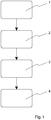
- Fig. 1 a flow chart is shown illustrating a method in accordance with the present invention for recycling of tile material comprising compressed mineral fibre material.
- the method comprises the steps of
- the tile material collected in step (1) may thus origin from waste material generated during manufacturing of tiles comprising compressed mineral fibre material. For instance, such tiles may be cut out from baseboards, and depending on the size of the baseboards and of the desired size of the tiles, waste material in the form of cut-away perimeter sections may be generated. The waste material may also origin from tiles rejected during manufacturing. Thus, this waste material generated during manufacturing may be used as tile material in the present invention.
- tile material when tiles comprising compressed mineral fibre material are installed in a room, for instance as tiles in a tile system such as a suspended ceiling system, perimeter tiles may have to be trimmed in order to fit.
- the sections trimmed or removed from the tiles form residual material which may be used as tile material in the method according to the present invention.
- the residual material may also be formed by remaining tiles after completed installation.
- the tiles included in the tile system may be used as tile material in the inventive method.
- Some of the collected tile material may be provided with a surface layer.
- the surface layer may be removed in accordance with the present invention.
- the tile material is converted into a plurality of body members.
- the collected tile material comprises a plurality of tile elements, and during the conversion of the tile material, each tile element is divided or split into body members of desired shape and size.
- the tile material may be converted into the plurality of body members by a sawing, milling or cutting operation.
- the cutting operation may involve cutting with a cutting blade, water jet cutting or laser beam cutting.
- tile material 10 obtained during step 1 of the inventive method is fed in the direction indicated by arrow P1 by a not shown conveyor means to a cutting station 20 where four knife discs 21 rotating in the direction indicated by arrow P2 engage with the tile material 10 for cutting up each tile element 11 making up the tile material 10 into five body members 12, each having an elongated rod shape with a rectangular cross section.
- the tile material 10 comprises equal sized tile elements 11. It is understood that the tile elements making up the tile material may be of different sizes. Thus, the tile elements may have different widths and/ or lengths. Also, some tile elements may have sections broken away. However, the thickness of the tile elements is preferably the same for all tiles.
- the tile material 10 is converted into a plurality of body members 12 of a uniform size.
- body members of different sizes may be also be produced, for instance by arranging the cutting station 20 in a different manner, e.g. varying the distance between the knife discs 21.
- the body members 12 may have a width in the range of 10 - 100 mm, a height in the range of 10 - 100 mm and a length in the range of 400 - 3 000 mm.
- the shape of the body members may be different.
- the body members may have a V-shape or an hour glass shape.
- a baseboard 30 is assembled by arranging the plurality of body members 12 on a carrier layer 31 and fixing them thereto, as illustrated in Fig. 3 .
- the carrier layer 31 may be chosen from the group consisting of a fabric, a veil, a non-woven mat, a non-woven tissue, a virgin baseboard or a combination thereof.
- virgin baseboard is meant a premade baseboard.
- the body members 12 may be fixed to the carrier layer 31 for instance by means of an adhesive, by heat treatment, by stitching or by velcro fixing.
- the adhesive may be an organic glue, such as latex or PVOH, or an inorganic adhesive, such as silicate or a combination thereof.
- the adhesive may be coated on the carrier layer, or alternatively, the adhesive may be impregnated with the adhesive.
- the adhesive may be arranged to be activated, for instance by heating.
- Fixing by means of heat treatment may comprise melting the mineral fibres and joining them to the carrier layer in the interface between the plurality of body members and the carrier layer.
- the heat treament may comprise a welding operation, such as laser welding.
- adjacent body members 12 may also be fixed to each other, for instance by means of an adhesive, by heat treatment, by stitching or by velcro fixing.
- the plurality of body members 12 may be arranged on the carrier layer 31 in a predetermined pattern.
- the plurality of body members 12 may be arranged with a uniform orientation in the predetermined pattern.
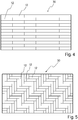
- Fig. 3 illustrates arrangement of body members 12 on the carrier layer 31 with a uniform orientation in a brick pattern. Some body members have been omitted for sake of clarity.
- Fig. 4 an assembled baseboard 30 with body members 12 arranged in brick a pattern is shown from above.
- the body members 12 alternatively may be arranged with a non-uniform orientation in the predetermined pattern.
- the body members 12 may be arranged in a herringbone pattern, as illustrated in Fig. 5 .
- the plurality of body members 12 may be arranged in a single tier on the carrier layer 31 as shown in Fig. 3 .
- the body members 12 may be arranged in at least two tiers.
- Fig. 6 illustrates arrangement of body members 12 on the carrier layer 31 in two tiers. Some body members have been omitted for sake of clarity. The orientation of the body members 12 in the first tier is different from the orientation of the body members 12 in the second tier. The body members 12 of each tier is arranged in a brick pattern. It is understood that in embodiments comprising at least two tiers, body members included in a superimposed tier are indirectly fixed to the carrier layer via body members included in a subjacent tier.
- the assembled baseboard 30 is converted into at least two tiles.
- Fig. 7 illustrates a baseboard 30 which has been divided into four new tiles 33.
- the conversion of the baseboard 30 into tiles 33 may comprise a sawing or cutting operation.
- the cutting operation may comprise cutting with cutting blade, water jet or laser beam.
- the baseboard is assembled by arranging a plurality of body members on a carrier layer and fixing them thereto, a high degree of freedom is provided when dimensioning the baseboard. It may thus be enabled to provide a baseboard which can be converted to a desired number of tiles of desired size. It may also be ensured that this conversion can be made without generation of any waste material.
- the present invention thus relates to method for recycling of tile material collected from various points in the life cycle of tiles made of compressed mineral fibre material.
- properties of the tile material may be preserved and re-used in new tiles formed form the baseboard.
- the tiles of a tile system such as a suspended ceiling, may after end of life have a non-aesthetic appearance but may still be fully functional with regard to sound absorption, and this sound absorption property of the tile material may be preserved by means of the invention.
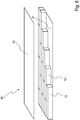
- the step of assembling a baseboard 30 may further comprise fixing a top layer 32 to the plurality of body members 12 on a side opposite to the carrier layer 31, as shown in Fig. 8 .
- the top layer 32 may be chosen from the group consisting of a fabric, a veil, a non-woven mat, a non-woven tissue, a virgin baseboard or a combination thereof.
- a carrier layer 31 and a top layer 32 in the form of virgin baseboards may be used with the body members 12 arranged therebetween in a sandwiched configuration.
- tile material into body members of other shapes than those described above, such as body members having a parallelepiped shape or having a triangular cross section.
- the body members may be given a shape enabling interlocking of adjacent body members. For instance, adjoining side edges of the body members may be provided with a tongue and groove configuration. Alternatively, the body members may also have a geometrical shape fitting for a jigsaw pattern.
- the body members may be arranged in other patterns than those described above.
- the body members may be arranged in a spiral pattern or a framed pattern, i.e. such that perimeter body members form a frame enclosing the remaining body members.
Landscapes
- Engineering & Computer Science (AREA)
- Architecture (AREA)
- Civil Engineering (AREA)
- Structural Engineering (AREA)
- Textile Engineering (AREA)
- Mechanical Engineering (AREA)
- Physics & Mathematics (AREA)
- Electromagnetism (AREA)
- Finishing Walls (AREA)
- Processing Of Solid Wastes (AREA)
Abstract
Description
- The present invention relates to a method for recycling of tile material and more specifically to such a method for recycling a tile material comprising compressed mineral fibre material.
- Tiles comprising compressed mineral fibre material, such as glass or stone wool, may be arranged in a room or in another accommodation and may serve a variety of purposes. The tiles may for instance be used for improving the acoustical characteristics of the room or for concealing wiring, piping, as well as devices related to heating, ventilation and air condition.
- The tiles may be formed as horizontally arranged ceiling tiles, vertically arranged baffle elements, wall mounted elements or free standing screens.
- When manufacturing such tiles, tile material in the form of waste material may be generated. The waste material may comprise rejected tiles and removed tile sections during shaping of the tiles.
- During installation of the tiles, tile material in the form of residual material may be generated. The residual material may comprise tile sections removed from a tile during trimming or tiles remaining after completed installation.
- When a tile system is demounted after end of life, tile material is formed by the tiles included in demounted the system.
- Conventionally, the tile material generated during manufacturing, installation or demounting after end of life has been difficult to recycle in an efficient manner. Known solutions include grinding the tile material which subsequently may be used as land fill material or as raw material for producing new fibre material.
- In view of that stated above, the object of the present invention is to provide an improved method for recycling of tile material comprising mineral fibre material.
- It is also an object to provide such a method for recycling tile material in a cost efficient manner with a low environmental impact.
- To achieve at least one of the above objects and also other objects that will be evident from the following description, a method having the features defined in claim 1 is provided according to the present invention. Preferred embodiments of the method will be evident from the dependent claims.
- More specifically, there is provided according to the present invention a method for recycling of tile material comprising compressed mineral fibre material, comprising collecting the tile material, the tile material being in the form of at least one of waste material generated during manufacturing of tiles, residual material generated during installation of tiles, and tiles obtained from installed tile systems after end of life, conversion of the tile material into a plurality of body members, assembling a baseboard by arranging the plurality of body members on a carrier layer and fixing them thereto, and conversion of the baseboard into at least two tiles.
- Hereby, an improved method for recycling of tile material is provided.
- The method comprises colleting tile material from different points in the life cycle of tiles comprising compressed mineral fibre material, i.e. during manufacturing of the tiles, during installation of the tiles and after end of life.
- The collected tile material is converted into a plurality of body members which are used for assembling a baseboard by fixing the plurality of body members to a carrier layer, which baseboard subsequently is converted into at least two tiles. Hereby properties associated with the tile material, such as a sound absorbing property, may be preserved and re-used in the new tiles which is beneficial in view of cost and use of energy.
- The fact that the plurality of body members is used for assembling a baseboard which subsequently is converted to at least two tiles have the effect of an improved degree of freedom when designing new tiles. Conventionally, tiles are made from baseboards of predetermined sizes which sets limitations on the tiles made of those baseboards. The inventive method on the other hand enables assembling of a baseboard of any desired size. The invention thus provides an improved flexibility regarding baseboard size which may be used for instance in order to manufacture large tiles or to manufacture tiles with an eliminated or low generation of waste material.
- The tiles formed from the baseboard may be used as ceiling tiles, baffles, wall mounted elements or free standing screens.
- According to an embodiment of the present invention, an adhesive may be used for fixing the plurality of body members to the carrier layer. Alternatively, the body members may be fixed to the carrier layer may means of a heat treatment, such as a welding operation, in which mineral fibres are melted and joined to the carrier layer in the interface between the plurality of rods and the carrier layer. It is also conceivable to fix the body members to the carrier layer in other ways, such as by stitching or by velcro fixing.
- According to another embodiment, the step of producing a baseboard may also comprise fixing adjacent body members to each other. The adjacent body members may be fixed to each other by means of an adhesive or by a heat treatment, such as a welding operation, in which the mineral fibres are melted and joined together in the joint between the adjacent body members. Other solutions such as stitching or velcro fixing may also be employed.
- According to yet another embodiment, the method may further comprise the step of removing any surface layer associated with the collected tile material before conversion of the tile material to a plurality of body members.
- According to yet another embodiment, the step of assembling a baseboard may comprise arranging the plurality of body members on the carrier layer in a predetermined pattern. The plurality of body members may be arranged with a uniform orientation or with a non-uniform orientation in the predetermined pattern. For instance, by using body members having a rod shape with a rectangular cross section, the body members may be arranged in a brick pattern, in which all body members have a uniform orientation, or in a herringbone pattern, in which the body members are arranged in two different orientations.
- Further, the plurality of body members may be arranged in a single tier or in at least two tiers in the predetermined pattern. When the plurality of body members is arranged in at least two tires, a first tire may comprise body members arranged in a first orientation, and a second tire may comprise body members arranged in a second orientation different from the first orientation.
- By choosing suitable orientation, predetermined pattern and/or number of tiers, as desired property such as rigidity or sound absorption may be obtained in the tiles obtained from the assembled baseboard after conversion thereof.
- According to yet another embodiment, the carrier layer may be chosen from the group consisting of a fabric, a veil, a non-woven mat, a non-woven tissue, a virgin baseboard or a combination thereof. For instance, the carrier layer may be a woven fibre glass fabric or a virgin baseboard provided with a woven glass fibre fabric on one major surface. By virgin baseboard is meant a premade baseboard comprising compressed mineral fibre material.
- According to yet another embodiment, the step of assembling a baseboard may comprise fixing a top layer to the plurality of body members on a side opposite to the carrier layer. The top layer may be fixed to the plurality of body members by means of an adhesive or by a heat treatment in which mineral fibres are melted and joined to the top layer in the joint between the plurality of body members and the top layer. Alternatively, the top layer may be fixed by means of stitching or velcro fixing.
- According to yet another embodiment, the step of conversion of the tile material into a plurality of body members may comprise producing body members of a uniform size and shape. Alternatively, body members of a non-uniform size and shape may be produced. The body member may be given a elongated rod shape with a rectangular cross section. Also other shapes of the body member are conceivable, such as an hour glass shape or a V-shape. The body members may also be given a shape enabling interlocking between adjacent body members.
- The step of conversion of the tile material into a plurality of body members may comprise producing body members having a width in the range of 10 - 100 mm, a height in the range of 10 - 100 mm and a length in the range of 400 - 3 000 mm.
- According to yet another embodiment, the step of conversion of the tile material into a plurality of body members and/or conversion of the baseboard into at least two tiles may comprise a cutting or sawing operation.
- According to a further aspect of the present invention, a method for recycling of tile material comprising compressed mineral fibre material may comprise collecting the tile material, the tile material being in the form of at least one of waste material generated during manufacturing of tiles, residual material generated during installation of tiles, and tiles obtained from installed tile systems after end of life, conversion of the tile material into a plurality of body members, and assembling a baseboard by arranging the plurality of body members on a carrier layer and fixing them thereto. The baseboard may be used as a tile in a tile system.
- Generally, all terms used in the claims are to be interpreted according to their ordinary meaning in the technical field, unless explicitly defined otherwise herein. All references to "a/an/the [element, device, component, means, step, etc]" are to be interpreted openly as referring to at least one instance of said element, device, component, means, step, etc., unless explicitly stated otherwise. The steps of any method disclosed herein do not have to be performed in the exact order disclosed, unless explicitly stated.
- The above, as well as additional objects, features and advantages of the present invention, will be better understood through the following illustrative and non-limiting detailed description of preferred embodiments of the present invention, with reference to the appended drawings, where the same reference numerals will be used for similar elements, wherein:
-
Fig. 1 is a flow chart illustrating the method for recycling tile material in accordance with the present invention. -
Fig. 2 is a schematic perspective view illustrating an embodiment of step (2) of the inventive method. -
Fig. 3 is a schematic perspective view illustrating an embodiment of step (3) of the inventive method. -
Fig. 4 is a plan view illustrating a baseboard assembled in accordance with the present invention with body members arranged in a predetermined pattern. -
Fig. 5 is a plan view illustrating a baseboard assembled in accordance with the present invention with body members arranged in an alternative predetermined pattern. -
Fig. 6 is a schematic perspective view illustrating an alternative embodiment of step (3) of the inventive method. -
Fig. 7 is schematic plan view illustrating an embodiment of step (4) of the inventive method. -
Fig. 8 is a schematic perspective view illustrating yet another embodiment of step (3) of the inventive method. - The present invention will now be described more fully hereinafter with reference to the accompanying drawings, in which currently preferred embodiments of the invention are shown. This invention may, however, be embodied in many different forms and should not be construed as limited to the embodiments set forth herein; rather, these embodiments are provided for thoroughness and completeness, and fully convey the scope of the invention to the skilled person.
- In
Fig. 1 , to which reference now is made, a flow chart is shown illustrating a method in accordance with the present invention for recycling of tile material comprising compressed mineral fibre material. - The method comprises the steps of
- (1) collecting the tile material, the tile material being in the form of at least one of waste material generated during manufacturing of tiles, residual material generated during installation of tiles, and tiles obtained from installed tile systems after end of life,
- (2) conversion of the tile material into a plurality of body members,
- (3) assembling a baseboard by arranging the plurality of body members on a carrier layer and fixing them thereto, and
- (4) conversion of the baseboard into at least two tiles.
- The tile material collected in step (1) may thus origin from waste material generated during manufacturing of tiles comprising compressed mineral fibre material. For instance, such tiles may be cut out from baseboards, and depending on the size of the baseboards and of the desired size of the tiles, waste material in the form of cut-away perimeter sections may be generated. The waste material may also origin from tiles rejected during manufacturing. Thus, this waste material generated during manufacturing may be used as tile material in the present invention.
- Further, when tiles comprising compressed mineral fibre material are installed in a room, for instance as tiles in a tile system such as a suspended ceiling system, perimeter tiles may have to be trimmed in order to fit. Thus, the sections trimmed or removed from the tiles form residual material which may be used as tile material in the method according to the present invention. The residual material may also be formed by remaining tiles after completed installation.
- Finally, after the end of life of tile system, the tiles included in the tile system may be used as tile material in the inventive method.
- Some of the collected tile material may be provided with a surface layer. In some cases, the surface layer may be removed in accordance with the present invention.
- In the second step (2), the tile material is converted into a plurality of body members. The collected tile material comprises a plurality of tile elements, and during the conversion of the tile material, each tile element is divided or split into body members of desired shape and size.
- The tile material may be converted into the plurality of body members by a sawing, milling or cutting operation. The cutting operation may involve cutting with a cutting blade, water jet cutting or laser beam cutting.
- In
Fig. 2 , an embodiment of the second step is illustrated. In the shown embodiment,tile material 10 obtained during step 1 of the inventive method, for instance from a demounted tile system after end of life, is fed in the direction indicated by arrow P1 by a not shown conveyor means to a cuttingstation 20 where fourknife discs 21 rotating in the direction indicated by arrow P2 engage with thetile material 10 for cutting up eachtile element 11 making up thetile material 10 into fivebody members 12, each having an elongated rod shape with a rectangular cross section. - In the shown embodiment, the
tile material 10 comprises equalsized tile elements 11. It is understood that the tile elements making up the tile material may be of different sizes. Thus, the tile elements may have different widths and/ or lengths. Also, some tile elements may have sections broken away. However, the thickness of the tile elements is preferably the same for all tiles. - In the shown embodiment, the
tile material 10 is converted into a plurality ofbody members 12 of a uniform size. However, it is understood that body members of different sizes may be also be produced, for instance by arranging the cuttingstation 20 in a different manner, e.g. varying the distance between theknife discs 21. - The
body members 12 may have a width in the range of 10 - 100 mm, a height in the range of 10 - 100 mm and a length in the range of 400 - 3 000 mm. - It is also understood that the shape of the body members may be different. For instance, the body members may have a V-shape or an hour glass shape.
- In the third step (3), a
baseboard 30 is assembled by arranging the plurality ofbody members 12 on acarrier layer 31 and fixing them thereto, as illustrated inFig. 3 . - The
carrier layer 31 may be chosen from the group consisting of a fabric, a veil, a non-woven mat, a non-woven tissue, a virgin baseboard or a combination thereof. By virgin baseboard is meant a premade baseboard. - The
body members 12 may be fixed to thecarrier layer 31 for instance by means of an adhesive, by heat treatment, by stitching or by velcro fixing. - The adhesive may be an organic glue, such as latex or PVOH, or an inorganic adhesive, such as silicate or a combination thereof.
- The adhesive may be coated on the carrier layer, or alternatively, the adhesive may be impregnated with the adhesive. The adhesive may be arranged to be activated, for instance by heating.
- Fixing by means of heat treatment may comprise melting the mineral fibres and joining them to the carrier layer in the interface between the plurality of body members and the carrier layer. The heat treament may comprise a welding operation, such as laser welding.
- In addition to fixing the
body members 12 to thecarrier layer 31,adjacent body members 12 may also be fixed to each other, for instance by means of an adhesive, by heat treatment, by stitching or by velcro fixing. - The plurality of
body members 12 may be arranged on thecarrier layer 31 in a predetermined pattern. - The plurality of
body members 12 may be arranged with a uniform orientation in the predetermined pattern.Fig. 3 , to which reference now is made, illustrates arrangement ofbody members 12 on thecarrier layer 31 with a uniform orientation in a brick pattern. Some body members have been omitted for sake of clarity. InFig. 4 , an assembledbaseboard 30 withbody members 12 arranged in brick a pattern is shown from above. - It is understood that the
body members 12 alternatively may be arranged with a non-uniform orientation in the predetermined pattern. For instance, thebody members 12 may be arranged in a herringbone pattern, as illustrated inFig. 5 . - The plurality of
body members 12 may be arranged in a single tier on thecarrier layer 31 as shown inFig. 3 . Alternatively, thebody members 12 may be arranged in at least two tiers. -
Fig. 6 , to which reference now is made, illustrates arrangement ofbody members 12 on thecarrier layer 31 in two tiers. Some body members have been omitted for sake of clarity. The orientation of thebody members 12 in the first tier is different from the orientation of thebody members 12 in the second tier. Thebody members 12 of each tier is arranged in a brick pattern. It is understood that in embodiments comprising at least two tiers, body members included in a superimposed tier are indirectly fixed to the carrier layer via body members included in a subjacent tier. - In the fourth step (4), the assembled
baseboard 30 is converted into at least two tiles.Fig. 7 illustrates abaseboard 30 which has been divided into fournew tiles 33. The conversion of thebaseboard 30 intotiles 33 may comprise a sawing or cutting operation. The cutting operation may comprise cutting with cutting blade, water jet or laser beam. - Due to the fact that the baseboard is assembled by arranging a plurality of body members on a carrier layer and fixing them thereto, a high degree of freedom is provided when dimensioning the baseboard. It may thus be enabled to provide a baseboard which can be converted to a desired number of tiles of desired size. It may also be ensured that this conversion can be made without generation of any waste material.
- The present invention thus relates to method for recycling of tile material collected from various points in the life cycle of tiles made of compressed mineral fibre material. By converting the tile material into body members and subsequently assembling a baseboard by arranging the body members on a carrier layer and fixing them thereto, properties of the tile material may be preserved and re-used in new tiles formed form the baseboard. For instance, the tiles of a tile system, such as a suspended ceiling, may after end of life have a non-aesthetic appearance but may still be fully functional with regard to sound absorption, and this sound absorption property of the tile material may be preserved by means of the invention.
- It will be appreciated that the present invention is not limited to the embodiments shown.
- The step of assembling a
baseboard 30 may further comprise fixing atop layer 32 to the plurality ofbody members 12 on a side opposite to thecarrier layer 31, as shown inFig. 8 . Thetop layer 32 may be chosen from the group consisting of a fabric, a veil, a non-woven mat, a non-woven tissue, a virgin baseboard or a combination thereof. For instance, acarrier layer 31 and atop layer 32 in the form of virgin baseboards may be used with thebody members 12 arranged therebetween in a sandwiched configuration. - It is also conceivable to convert the tile material into body members of other shapes than those described above, such as body members having a parallelepiped shape or having a triangular cross section.
- The body members may be given a shape enabling interlocking of adjacent body members. For instance, adjoining side edges of the body members may be provided with a tongue and groove configuration. Alternatively, the body members may also have a geometrical shape fitting for a jigsaw pattern.
- It is further conceivable to arrange the body members in other patterns than those described above. For instance, the body members may be arranged in a spiral pattern or a framed pattern, i.e. such that perimeter body members form a frame enclosing the remaining body members.
- Several modifications and variations are thus conceivable within the scope of the invention which thus is exclusively defined by the appended claims.
Claims (15)
- A method for recycling of tile material (10) comprising compressed mineral fibre material, comprising
collecting the tile material (10), the tile material (10) being in the form of at least one of
waste material generated during manufacturing of tiles, residual material generated during installation of tiles, and tiles obtained from installed tile systems after end of life,
conversion of the tile material (10) into a plurality of body members (12),
assembling a baseboard (30) by arranging the plurality of body members (12) on a carrier layer (31) and fixing them thereto, and
conversion of the baseboard (30) into at least two tiles (33). - The method according to claim 1, wherein assembling a baseboard (30) comprises fixing the plurality of body members (12) to the carrier layer (31) by means of an adhesive.
- The method according to claim 1 or 2, wherein assembling a baseboard (30) comprises fixing adjacent body members (12) to each other.
- The method according to any one of claims 1-3, further comprising the step of removing any surface layer associated with the collected tile material (10) before conversion of the tile material (10) to a plurality of body members (12).
- The method according to any one of claims 1-4, wherein assembling a baseboard (30) comprises arranging the plurality of body members (12) on the carrier layer (31) in a predetermined pattern.
- The method according to claim 5, wherein the plurality of body members (12) is arranged with a uniform orientation in the predetermined pattern.
- The method according to claim 5, wherein the plurality of body members (12) is arranged in a non-uniform orientation in the predetermined pattern.
- The method according to any one of claims 5-7, wherein the plurality of body members (12) is arranged in a single tier in the predetermined pattern.
- The method according to any one of claims 5-7, wherein the plurality of body members (12) is arranged in at least two tiers in the predetermined pattern.
- The method according to any one of claims 1-9, wherein the carrier layer (31) is chosen from the group consisting of a fabric, a veil, a non-woven mat, a non-woven tissue, a virgin baseboard or a combination thereof.
- The method according to any one of claims 1-10, wherein assembling a baseboard (30) comprises fixing a top layer (32) to the plurality of body members (12) on a side opposite to the carrier layer (31).
- The method according to any one of claims 1-11, wherein conversion of the tile material (10) into a plurality of body members (12) comprises producing body members of a uniform size and/or shape.
- The method according to any one of claims 1-12, wherein conversion of the tile material (10) into a plurality of body members (12) comprises producing body members (12) of a non-uniform size and/or shape.
- The method according to any one of claims 1-13, wherein conversion of the tile material (10) into a plurality of body members (12) comprises producing body members (12) having a width in the range of 10 - 100 mm, a height in the range of 10 - 100 mm and a length in the range of 400 - 3 000 mm.
- The method according to any one of claims 1-14, wherein conversion of the tile material (10) into a plurality of body members (12) and/or conversion of the baseboard (30) into at least two ceiling tiles (33) comprises a cutting or sawing operation.
Priority Applications (7)
| Application Number | Priority Date | Filing Date | Title |
|---|---|---|---|
| DK18175672.7T DK3578734T3 (en) | 2018-06-04 | 2018-06-04 | Procedure for recycling tile material |
| EP18175672.7A EP3578734B1 (en) | 2018-06-04 | 2018-06-04 | Method for recycling of tile material |
| PL18175672.7T PL3578734T3 (en) | 2018-06-04 | 2018-06-04 | Method for recycling of tile material |
| FIEP18175672.7T FI3578734T3 (en) | 2018-06-04 | 2018-06-04 | Method for recycling of tile material |
| US17/058,965 US20210213724A1 (en) | 2018-06-04 | 2019-05-28 | Method for recycling of tile material |
| PCT/EP2019/063737 WO2019233811A1 (en) | 2018-06-04 | 2019-05-28 | Method for recycling of tile material |
| CA3101399A CA3101399C (en) | 2018-06-04 | 2019-05-28 | Method for recycling of tile material |
Applications Claiming Priority (1)
| Application Number | Priority Date | Filing Date | Title |
|---|---|---|---|
| EP18175672.7A EP3578734B1 (en) | 2018-06-04 | 2018-06-04 | Method for recycling of tile material |
Publications (2)
| Publication Number | Publication Date |
|---|---|
| EP3578734A1 true EP3578734A1 (en) | 2019-12-11 |
| EP3578734B1 EP3578734B1 (en) | 2022-12-28 |
Family
ID=62528293
Family Applications (1)
| Application Number | Title | Priority Date | Filing Date |
|---|---|---|---|
| EP18175672.7A Active EP3578734B1 (en) | 2018-06-04 | 2018-06-04 | Method for recycling of tile material |
Country Status (7)
| Country | Link |
|---|---|
| US (1) | US20210213724A1 (en) |
| EP (1) | EP3578734B1 (en) |
| CA (1) | CA3101399C (en) |
| DK (1) | DK3578734T3 (en) |
| FI (1) | FI3578734T3 (en) |
| PL (1) | PL3578734T3 (en) |
| WO (1) | WO2019233811A1 (en) |
Citations (5)
| Publication number | Priority date | Publication date | Assignee | Title |
|---|---|---|---|---|
| EP0449414A2 (en) * | 1990-02-22 | 1991-10-02 | Siderise (Holdings) Limited | Manufacture of mineral fibre products in layer form |
| GB2279293A (en) * | 1993-06-23 | 1995-01-04 | Siderise Ltd | Construction boards containing mineral fibre lamellae |
| EP1152094A1 (en) * | 1997-07-31 | 2001-11-07 | Thüringer Dämmstoffwerke GmbH & Co. KG | Method for production of insulating elements |
| ES2224849A1 (en) * | 2003-05-09 | 2005-03-01 | Saint-Gobain Cristaleria, S.A. | Mineral wool coated with organic polymer sheet complexes includes polyester wrapping over polyethylene to form vapor barrier, with coiling |
| US20180134016A1 (en) * | 2016-11-15 | 2018-05-17 | Columbia Insurance Company | Layered composite articles and methods of making same |
Family Cites Families (3)
| Publication number | Priority date | Publication date | Assignee | Title |
|---|---|---|---|---|
| US20060151100A1 (en) * | 2000-04-28 | 2006-07-13 | Young Iii William D | Method and apparatus for manufacturing composite sheet-like materials |
| KR20100081033A (en) * | 2009-01-05 | 2010-07-14 | 주식회사 석주건설 | Manufacture method of terrazzo tile contained seven preciousstone |
| EP2568091B1 (en) * | 2011-09-06 | 2017-07-05 | Saint-Gobain Ecophon AB | Method for mounting a suspended ceiling and such a suspended ceiling |
-
2018
- 2018-06-04 EP EP18175672.7A patent/EP3578734B1/en active Active
- 2018-06-04 DK DK18175672.7T patent/DK3578734T3/en active
- 2018-06-04 PL PL18175672.7T patent/PL3578734T3/en unknown
- 2018-06-04 FI FIEP18175672.7T patent/FI3578734T3/en active
-
2019
- 2019-05-28 US US17/058,965 patent/US20210213724A1/en not_active Abandoned
- 2019-05-28 WO PCT/EP2019/063737 patent/WO2019233811A1/en not_active Ceased
- 2019-05-28 CA CA3101399A patent/CA3101399C/en active Active
Patent Citations (5)
| Publication number | Priority date | Publication date | Assignee | Title |
|---|---|---|---|---|
| EP0449414A2 (en) * | 1990-02-22 | 1991-10-02 | Siderise (Holdings) Limited | Manufacture of mineral fibre products in layer form |
| GB2279293A (en) * | 1993-06-23 | 1995-01-04 | Siderise Ltd | Construction boards containing mineral fibre lamellae |
| EP1152094A1 (en) * | 1997-07-31 | 2001-11-07 | Thüringer Dämmstoffwerke GmbH & Co. KG | Method for production of insulating elements |
| ES2224849A1 (en) * | 2003-05-09 | 2005-03-01 | Saint-Gobain Cristaleria, S.A. | Mineral wool coated with organic polymer sheet complexes includes polyester wrapping over polyethylene to form vapor barrier, with coiling |
| US20180134016A1 (en) * | 2016-11-15 | 2018-05-17 | Columbia Insurance Company | Layered composite articles and methods of making same |
Also Published As
| Publication number | Publication date |
|---|---|
| CA3101399A1 (en) | 2019-12-12 |
| DK3578734T3 (en) | 2023-02-20 |
| CA3101399C (en) | 2023-09-26 |
| US20210213724A1 (en) | 2021-07-15 |
| WO2019233811A1 (en) | 2019-12-12 |
| PL3578734T3 (en) | 2023-07-03 |
| EP3578734B1 (en) | 2022-12-28 |
| FI3578734T3 (en) | 2023-03-29 |
Similar Documents
| Publication | Publication Date | Title |
|---|---|---|
| RU2765421C2 (en) | Composite layered materials containing system of holes obtained by adjustable fiber layout | |
| US5472467A (en) | Self-supporting filter composite | |
| EP0703325A1 (en) | Conformable insulation assembly | |
| CN1209852A (en) | Sound-absorbing element and its manufacture and application | |
| CN114290761B (en) | Multifunctional automobile roof fiber covering piece and preparation method thereof | |
| CN211975529U (en) | Intermediate assembly for manufacturing acoustic-lined perforated panels | |
| KR20200074227A (en) | Method for manufacturing vibration damping and/or sound dampening material | |
| EP3578734B1 (en) | Method for recycling of tile material | |
| EP0931886A2 (en) | A mineral fiber-insulated plate | |
| CN109318506A (en) | A kind of composite material grid lattice structure and preparation method | |
| US5985411A (en) | Self-supporting pleated filter composite | |
| CA2183704C (en) | Self-supporting filter composite | |
| RU2000123726A (en) | METHOD FOR PRODUCING FORMING EQUIPMENT FROM POLYMERIC COMPOSITE MATERIAL | |
| GB2556065A (en) | Method for forming stiffened composite parts | |
| RU2003109443A (en) | METHOD FOR PRODUCING A PANEL FROM MINERAL FIBER CONTAINING ONE OR SEVERAL CAVITIES OF A DEFINED FORM | |
| JP2839234B2 (en) | Insulating inorganic fiber sound-absorbing material for injection | |
| JP4980629B2 (en) | Insulating mat made of inorganic fiber and manufacturing method thereof | |
| US20140283479A1 (en) | Fibrous plastic ceiling tile | |
| KR200290793Y1 (en) | Mat materials provided with supporting spaces | |
| JPH03279454A (en) | Heat-insulating sound-absorbing material | |
| KR102743255B1 (en) | Method for manufacturing sound-absorbing board | |
| US20050221061A1 (en) | Method and apparatus for forming shiplap edge in air duct board using molding and machining | |
| EP3744918B1 (en) | Sound absorbing panel assembly | |
| JP3052105U (en) | Sound insulation for floors | |
| RU2009117498A (en) | LAMINATED MAT AND METHOD FOR PRODUCING LAMINATED MAT FROM MINERAL WOOL |
Legal Events
| Date | Code | Title | Description |
|---|---|---|---|
| PUAI | Public reference made under article 153(3) epc to a published international application that has entered the european phase |
Free format text: ORIGINAL CODE: 0009012 |
|
| STAA | Information on the status of an ep patent application or granted ep patent |
Free format text: STATUS: THE APPLICATION HAS BEEN PUBLISHED |
|
| AK | Designated contracting states |
Kind code of ref document: A1 Designated state(s): AL AT BE BG CH CY CZ DE DK EE ES FI FR GB GR HR HU IE IS IT LI LT LU LV MC MK MT NL NO PL PT RO RS SE SI SK SM TR |
|
| AX | Request for extension of the european patent |
Extension state: BA ME |
|
| STAA | Information on the status of an ep patent application or granted ep patent |
Free format text: STATUS: REQUEST FOR EXAMINATION WAS MADE |
|
| 17P | Request for examination filed |
Effective date: 20200609 |
|
| RBV | Designated contracting states (corrected) |
Designated state(s): AL AT BE BG CH CY CZ DE DK EE ES FI FR GB GR HR HU IE IS IT LI LT LU LV MC MK MT NL NO PL PT RO RS SE SI SK SM TR |
|
| STAA | Information on the status of an ep patent application or granted ep patent |
Free format text: STATUS: EXAMINATION IS IN PROGRESS |
|
| 17Q | First examination report despatched |
Effective date: 20210419 |
|
| REG | Reference to a national code |
Ref country code: DE Ref legal event code: R079 Ref document number: 602018044642 Country of ref document: DE Free format text: PREVIOUS MAIN CLASS: E04F0015100000 Ipc: B32B0003060000 |
|
| RIC1 | Information provided on ipc code assigned before grant |
Ipc: B32B 37/12 20060101ALI20220628BHEP Ipc: E04F 13/08 20060101ALI20220628BHEP Ipc: E04F 13/18 20060101ALI20220628BHEP Ipc: E04F 13/16 20060101ALI20220628BHEP Ipc: E04F 15/10 20060101ALI20220628BHEP Ipc: E04F 15/022 20060101ALI20220628BHEP Ipc: B32B 19/06 20060101ALI20220628BHEP Ipc: B32B 7/12 20060101ALI20220628BHEP Ipc: B32B 7/09 20190101ALI20220628BHEP Ipc: B32B 5/02 20060101ALI20220628BHEP Ipc: B32B 3/18 20060101ALI20220628BHEP Ipc: B32B 3/06 20060101AFI20220628BHEP |
|
| GRAP | Despatch of communication of intention to grant a patent |
Free format text: ORIGINAL CODE: EPIDOSNIGR1 |
|
| STAA | Information on the status of an ep patent application or granted ep patent |
Free format text: STATUS: GRANT OF PATENT IS INTENDED |
|
| INTG | Intention to grant announced |
Effective date: 20220809 |
|
| GRAS | Grant fee paid |
Free format text: ORIGINAL CODE: EPIDOSNIGR3 |
|
| GRAA | (expected) grant |
Free format text: ORIGINAL CODE: 0009210 |
|
| STAA | Information on the status of an ep patent application or granted ep patent |
Free format text: STATUS: THE PATENT HAS BEEN GRANTED |
|
| AK | Designated contracting states |
Kind code of ref document: B1 Designated state(s): AL AT BE BG CH CY CZ DE DK EE ES FI FR GB GR HR HU IE IS IT LI LT LU LV MC MK MT NL NO PL PT RO RS SE SI SK SM TR |
|
| REG | Reference to a national code |
Ref country code: GB Ref legal event code: FG4D |
|
| REG | Reference to a national code |
Ref country code: CH Ref legal event code: EP |
|
| REG | Reference to a national code |
Ref country code: DE Ref legal event code: R096 Ref document number: 602018044642 Country of ref document: DE |
|
| REG | Reference to a national code |
Ref country code: AT Ref legal event code: REF Ref document number: 1540205 Country of ref document: AT Kind code of ref document: T Effective date: 20230115 |
|
| REG | Reference to a national code |
Ref country code: IE Ref legal event code: FG4D |
|
| REG | Reference to a national code |
Ref country code: DK Ref legal event code: T3 Effective date: 20230213 |
|
| REG | Reference to a national code |
Ref country code: SE Ref legal event code: TRGR |
|
| REG | Reference to a national code |
Ref country code: NL Ref legal event code: FP |
|
| REG | Reference to a national code |
Ref country code: LT Ref legal event code: MG9D |
|
| PG25 | Lapsed in a contracting state [announced via postgrant information from national office to epo] |
Ref country code: NO Free format text: LAPSE BECAUSE OF FAILURE TO SUBMIT A TRANSLATION OF THE DESCRIPTION OR TO PAY THE FEE WITHIN THE PRESCRIBED TIME-LIMIT Effective date: 20230328 Ref country code: LT Free format text: LAPSE BECAUSE OF FAILURE TO SUBMIT A TRANSLATION OF THE DESCRIPTION OR TO PAY THE FEE WITHIN THE PRESCRIBED TIME-LIMIT Effective date: 20221228 |
|
| REG | Reference to a national code |
Ref country code: AT Ref legal event code: MK05 Ref document number: 1540205 Country of ref document: AT Kind code of ref document: T Effective date: 20221228 |
|
| PG25 | Lapsed in a contracting state [announced via postgrant information from national office to epo] |
Ref country code: RS Free format text: LAPSE BECAUSE OF FAILURE TO SUBMIT A TRANSLATION OF THE DESCRIPTION OR TO PAY THE FEE WITHIN THE PRESCRIBED TIME-LIMIT Effective date: 20221228 Ref country code: LV Free format text: LAPSE BECAUSE OF FAILURE TO SUBMIT A TRANSLATION OF THE DESCRIPTION OR TO PAY THE FEE WITHIN THE PRESCRIBED TIME-LIMIT Effective date: 20221228 Ref country code: HR Free format text: LAPSE BECAUSE OF FAILURE TO SUBMIT A TRANSLATION OF THE DESCRIPTION OR TO PAY THE FEE WITHIN THE PRESCRIBED TIME-LIMIT Effective date: 20221228 Ref country code: GR Free format text: LAPSE BECAUSE OF FAILURE TO SUBMIT A TRANSLATION OF THE DESCRIPTION OR TO PAY THE FEE WITHIN THE PRESCRIBED TIME-LIMIT Effective date: 20230329 |
|
| PG25 | Lapsed in a contracting state [announced via postgrant information from national office to epo] |
Ref country code: SM Free format text: LAPSE BECAUSE OF FAILURE TO SUBMIT A TRANSLATION OF THE DESCRIPTION OR TO PAY THE FEE WITHIN THE PRESCRIBED TIME-LIMIT Effective date: 20221228 Ref country code: RO Free format text: LAPSE BECAUSE OF FAILURE TO SUBMIT A TRANSLATION OF THE DESCRIPTION OR TO PAY THE FEE WITHIN THE PRESCRIBED TIME-LIMIT Effective date: 20221228 Ref country code: PT Free format text: LAPSE BECAUSE OF FAILURE TO SUBMIT A TRANSLATION OF THE DESCRIPTION OR TO PAY THE FEE WITHIN THE PRESCRIBED TIME-LIMIT Effective date: 20230428 Ref country code: ES Free format text: LAPSE BECAUSE OF FAILURE TO SUBMIT A TRANSLATION OF THE DESCRIPTION OR TO PAY THE FEE WITHIN THE PRESCRIBED TIME-LIMIT Effective date: 20221228 Ref country code: EE Free format text: LAPSE BECAUSE OF FAILURE TO SUBMIT A TRANSLATION OF THE DESCRIPTION OR TO PAY THE FEE WITHIN THE PRESCRIBED TIME-LIMIT Effective date: 20221228 Ref country code: CZ Free format text: LAPSE BECAUSE OF FAILURE TO SUBMIT A TRANSLATION OF THE DESCRIPTION OR TO PAY THE FEE WITHIN THE PRESCRIBED TIME-LIMIT Effective date: 20221228 Ref country code: AT Free format text: LAPSE BECAUSE OF FAILURE TO SUBMIT A TRANSLATION OF THE DESCRIPTION OR TO PAY THE FEE WITHIN THE PRESCRIBED TIME-LIMIT Effective date: 20221228 |
|
| PG25 | Lapsed in a contracting state [announced via postgrant information from national office to epo] |
Ref country code: SK Free format text: LAPSE BECAUSE OF FAILURE TO SUBMIT A TRANSLATION OF THE DESCRIPTION OR TO PAY THE FEE WITHIN THE PRESCRIBED TIME-LIMIT Effective date: 20221228 Ref country code: IS Free format text: LAPSE BECAUSE OF FAILURE TO SUBMIT A TRANSLATION OF THE DESCRIPTION OR TO PAY THE FEE WITHIN THE PRESCRIBED TIME-LIMIT Effective date: 20230428 Ref country code: AL Free format text: LAPSE BECAUSE OF FAILURE TO SUBMIT A TRANSLATION OF THE DESCRIPTION OR TO PAY THE FEE WITHIN THE PRESCRIBED TIME-LIMIT Effective date: 20221228 |
|
| REG | Reference to a national code |
Ref country code: DE Ref legal event code: R097 Ref document number: 602018044642 Country of ref document: DE |
|
| PLBE | No opposition filed within time limit |
Free format text: ORIGINAL CODE: 0009261 |
|
| STAA | Information on the status of an ep patent application or granted ep patent |
Free format text: STATUS: NO OPPOSITION FILED WITHIN TIME LIMIT |
|
| 26N | No opposition filed |
Effective date: 20230929 |
|
| PG25 | Lapsed in a contracting state [announced via postgrant information from national office to epo] |
Ref country code: MC Free format text: LAPSE BECAUSE OF FAILURE TO SUBMIT A TRANSLATION OF THE DESCRIPTION OR TO PAY THE FEE WITHIN THE PRESCRIBED TIME-LIMIT Effective date: 20221228 |
|
| PG25 | Lapsed in a contracting state [announced via postgrant information from national office to epo] |
Ref country code: SI Free format text: LAPSE BECAUSE OF FAILURE TO SUBMIT A TRANSLATION OF THE DESCRIPTION OR TO PAY THE FEE WITHIN THE PRESCRIBED TIME-LIMIT Effective date: 20221228 Ref country code: MC Free format text: LAPSE BECAUSE OF FAILURE TO SUBMIT A TRANSLATION OF THE DESCRIPTION OR TO PAY THE FEE WITHIN THE PRESCRIBED TIME-LIMIT Effective date: 20221228 |
|
| REG | Reference to a national code |
Ref country code: CH Ref legal event code: PL |
|
| REG | Reference to a national code |
Ref country code: BE Ref legal event code: MM Effective date: 20230630 |
|
| PG25 | Lapsed in a contracting state [announced via postgrant information from national office to epo] |
Ref country code: LU Free format text: LAPSE BECAUSE OF NON-PAYMENT OF DUE FEES Effective date: 20230604 |
|
| REG | Reference to a national code |
Ref country code: IE Ref legal event code: MM4A |
|
| PG25 | Lapsed in a contracting state [announced via postgrant information from national office to epo] |
Ref country code: LU Free format text: LAPSE BECAUSE OF NON-PAYMENT OF DUE FEES Effective date: 20230604 |
|
| PG25 | Lapsed in a contracting state [announced via postgrant information from national office to epo] |
Ref country code: IE Free format text: LAPSE BECAUSE OF NON-PAYMENT OF DUE FEES Effective date: 20230604 |
|
| PG25 | Lapsed in a contracting state [announced via postgrant information from national office to epo] |
Ref country code: IE Free format text: LAPSE BECAUSE OF NON-PAYMENT OF DUE FEES Effective date: 20230604 Ref country code: CH Free format text: LAPSE BECAUSE OF NON-PAYMENT OF DUE FEES Effective date: 20230630 |
|
| PG25 | Lapsed in a contracting state [announced via postgrant information from national office to epo] |
Ref country code: IT Free format text: LAPSE BECAUSE OF FAILURE TO SUBMIT A TRANSLATION OF THE DESCRIPTION OR TO PAY THE FEE WITHIN THE PRESCRIBED TIME-LIMIT Effective date: 20221228 Ref country code: BE Free format text: LAPSE BECAUSE OF NON-PAYMENT OF DUE FEES Effective date: 20230630 |
|
| PG25 | Lapsed in a contracting state [announced via postgrant information from national office to epo] |
Ref country code: BG Free format text: LAPSE BECAUSE OF FAILURE TO SUBMIT A TRANSLATION OF THE DESCRIPTION OR TO PAY THE FEE WITHIN THE PRESCRIBED TIME-LIMIT Effective date: 20221228 |
|
| PG25 | Lapsed in a contracting state [announced via postgrant information from national office to epo] |
Ref country code: BG Free format text: LAPSE BECAUSE OF FAILURE TO SUBMIT A TRANSLATION OF THE DESCRIPTION OR TO PAY THE FEE WITHIN THE PRESCRIBED TIME-LIMIT Effective date: 20221228 |
|
| PG25 | Lapsed in a contracting state [announced via postgrant information from national office to epo] |
Ref country code: CY Free format text: LAPSE BECAUSE OF FAILURE TO SUBMIT A TRANSLATION OF THE DESCRIPTION OR TO PAY THE FEE WITHIN THE PRESCRIBED TIME-LIMIT; INVALID AB INITIO Effective date: 20180604 |
|
| PGFP | Annual fee paid to national office [announced via postgrant information from national office to epo] |
Ref country code: SE Payment date: 20250515 Year of fee payment: 8 |
|
| PG25 | Lapsed in a contracting state [announced via postgrant information from national office to epo] |
Ref country code: HU Free format text: LAPSE BECAUSE OF FAILURE TO SUBMIT A TRANSLATION OF THE DESCRIPTION OR TO PAY THE FEE WITHIN THE PRESCRIBED TIME-LIMIT; INVALID AB INITIO Effective date: 20180604 |
|
| PG25 | Lapsed in a contracting state [announced via postgrant information from national office to epo] |
Ref country code: TR Free format text: LAPSE BECAUSE OF FAILURE TO SUBMIT A TRANSLATION OF THE DESCRIPTION OR TO PAY THE FEE WITHIN THE PRESCRIBED TIME-LIMIT Effective date: 20221228 |
|
| PGFP | Annual fee paid to national office [announced via postgrant information from national office to epo] |
Ref country code: GB Payment date: 20260626 Year of fee payment: 9 Ref country code: DK Payment date: 20260617 Year of fee payment: 9 Ref country code: PL Payment date: 20260513 Year of fee payment: 9 |
|
| PGFP | Annual fee paid to national office [announced via postgrant information from national office to epo] |
Ref country code: DE Payment date: 20260618 Year of fee payment: 9 |
|
| PGFP | Annual fee paid to national office [announced via postgrant information from national office to epo] |
Ref country code: FI Payment date: 20260615 Year of fee payment: 9 |
|
| PGFP | Annual fee paid to national office [announced via postgrant information from national office to epo] |
Ref country code: NL Payment date: 20260617 Year of fee payment: 9 |
|
| PGFP | Annual fee paid to national office [announced via postgrant information from national office to epo] |
Ref country code: FR Payment date: 20260617 Year of fee payment: 9 |