EP3578674B1 - Powdered titanium alloy composition and article formed therefrom - Google Patents
Powdered titanium alloy composition and article formed therefrom Download PDFInfo
- Publication number
- EP3578674B1 EP3578674B1 EP19184138.6A EP19184138A EP3578674B1 EP 3578674 B1 EP3578674 B1 EP 3578674B1 EP 19184138 A EP19184138 A EP 19184138A EP 3578674 B1 EP3578674 B1 EP 3578674B1
- Authority
- EP
- European Patent Office
- Prior art keywords
- percent
- weight
- titanium alloy
- present
- oxygen
- Prior art date
- Legal status (The legal status is an assumption and is not a legal conclusion. Google has not performed a legal analysis and makes no representation as to the accuracy of the status listed.)
- Active
Links
Images

Classifications
-
- C—CHEMISTRY; METALLURGY
- C22—METALLURGY; FERROUS OR NON-FERROUS ALLOYS; TREATMENT OF ALLOYS OR NON-FERROUS METALS
- C22C—ALLOYS
- C22C14/00—Alloys based on titanium
-
- B—PERFORMING OPERATIONS; TRANSPORTING
- B22—CASTING; POWDER METALLURGY
- B22F—WORKING METALLIC POWDER; MANUFACTURE OF ARTICLES FROM METALLIC POWDER; MAKING METALLIC POWDER; APPARATUS OR DEVICES SPECIALLY ADAPTED FOR METALLIC POWDER
- B22F9/00—Making metallic powder or suspensions thereof
- B22F9/02—Making metallic powder or suspensions thereof using physical processes
- B22F9/06—Making metallic powder or suspensions thereof using physical processes starting from liquid material
- B22F9/08—Making metallic powder or suspensions thereof using physical processes starting from liquid material by casting, e.g. through sieves or in water, by atomising or spraying
- B22F9/082—Making metallic powder or suspensions thereof using physical processes starting from liquid material by casting, e.g. through sieves or in water, by atomising or spraying atomising using a fluid
-
- C—CHEMISTRY; METALLURGY
- C22—METALLURGY; FERROUS OR NON-FERROUS ALLOYS; TREATMENT OF ALLOYS OR NON-FERROUS METALS
- C22F—CHANGING THE PHYSICAL STRUCTURE OF NON-FERROUS METALS AND NON-FERROUS ALLOYS
- C22F1/00—Changing the physical structure of non-ferrous metals or alloys by heat treatment or by hot or cold working
- C22F1/16—Changing the physical structure of non-ferrous metals or alloys by heat treatment or by hot or cold working of other metals or alloys based thereon
- C22F1/18—High-melting or refractory metals or alloys based thereon
- C22F1/183—High-melting or refractory metals or alloys based thereon of titanium or alloys based thereon
-
- B—PERFORMING OPERATIONS; TRANSPORTING
- B22—CASTING; POWDER METALLURGY
- B22F—WORKING METALLIC POWDER; MANUFACTURE OF ARTICLES FROM METALLIC POWDER; MAKING METALLIC POWDER; APPARATUS OR DEVICES SPECIALLY ADAPTED FOR METALLIC POWDER
- B22F2301/00—Metallic composition of the powder or its coating
- B22F2301/20—Refractory metals
- B22F2301/205—Titanium, zirconium or hafnium
-
- B—PERFORMING OPERATIONS; TRANSPORTING
- B22—CASTING; POWDER METALLURGY
- B22F—WORKING METALLIC POWDER; MANUFACTURE OF ARTICLES FROM METALLIC POWDER; MAKING METALLIC POWDER; APPARATUS OR DEVICES SPECIALLY ADAPTED FOR METALLIC POWDER
- B22F3/00—Manufacture of workpieces or articles from metallic powder characterised by the manner of compacting or sintering; Apparatus specially adapted therefor ; Presses and furnaces
- B22F3/12—Both compacting and sintering
-
- B—PERFORMING OPERATIONS; TRANSPORTING
- B22—CASTING; POWDER METALLURGY
- B22F—WORKING METALLIC POWDER; MANUFACTURE OF ARTICLES FROM METALLIC POWDER; MAKING METALLIC POWDER; APPARATUS OR DEVICES SPECIALLY ADAPTED FOR METALLIC POWDER
- B22F3/00—Manufacture of workpieces or articles from metallic powder characterised by the manner of compacting or sintering; Apparatus specially adapted therefor ; Presses and furnaces
- B22F3/12—Both compacting and sintering
- B22F3/14—Both compacting and sintering simultaneously
- B22F3/15—Hot isostatic pressing
-
- B—PERFORMING OPERATIONS; TRANSPORTING
- B22—CASTING; POWDER METALLURGY
- B22F—WORKING METALLIC POWDER; MANUFACTURE OF ARTICLES FROM METALLIC POWDER; MAKING METALLIC POWDER; APPARATUS OR DEVICES SPECIALLY ADAPTED FOR METALLIC POWDER
- B22F3/00—Manufacture of workpieces or articles from metallic powder characterised by the manner of compacting or sintering; Apparatus specially adapted therefor ; Presses and furnaces
- B22F3/24—After-treatment of workpieces or articles
- B22F3/26—Impregnating
-
- Y—GENERAL TAGGING OF NEW TECHNOLOGICAL DEVELOPMENTS; GENERAL TAGGING OF CROSS-SECTIONAL TECHNOLOGIES SPANNING OVER SEVERAL SECTIONS OF THE IPC; TECHNICAL SUBJECTS COVERED BY FORMER USPC CROSS-REFERENCE ART COLLECTIONS [XRACs] AND DIGESTS
- Y02—TECHNOLOGIES OR APPLICATIONS FOR MITIGATION OR ADAPTATION AGAINST CLIMATE CHANGE
- Y02P—CLIMATE CHANGE MITIGATION TECHNOLOGIES IN THE PRODUCTION OR PROCESSING OF GOODS
- Y02P10/00—Technologies related to metal processing
- Y02P10/25—Process efficiency
Definitions
- This application generally relates to titanium alloys and, more particularly, to titanium alloys for powder metallurgy.
- Titanium alloys offer high tensile strength over a broad temperature range, yet are relatively light weight.
- Ti-6Al-4V is perhaps the most common and widely used titanium alloy. In wrought form, Ti-6Al-4V has a relatively low density (about 4.47 g/cm 3 ), yet exhibits exceptional mechanical properties, such as a yield strength in excess of 120 ksi (thousand pounds per square inch), an ultimate tensile strength in excess of 130 ksi, an elongation of at least 10 percent, and a fatigue limit (10 million plus cycles) in excess of 90 ksi.
- titanium alloys are resistant to corrosion. Therefore, titanium alloys, Ti-6Al-4V specifically, are used in various demanding applications, such as aircraft components, medical devices and the like.
- Powder metallurgy manufacturing techniques such as die pressing, metal injection molding, direct hot isostatic pressing and the like, result in the formation of net (or near net) articles. Therefore, powder metallurgy manufacturing techniques offer the opportunity for significant cost savings by significantly reducing (if not completely eliminating) the need for machining operations, which are time intensive and wasteful of materials.
- Ti-6Al-4V powders are available, and have been formed into various articles using powder metallurgy manufacturing techniques. However, articles formed from Ti-6Al-4V powders do not have the same mechanical properties as articles formed from wrought Ti-6Al-4V.
- the fatigue limit of articles formed from Ti-6A1-4V powders can be 20 to 30 percent less that the fatigue limit of articles formed from wrought Ti-6Al-4V (e.g., 70 ksi for powdered versus 95 ksi for wrought). In many applications, such a significant reduction in the fatigue limit may not be acceptable.
- US5332545 in accordance with its abstract, relates to a process for providing equivalent or superior ballistic resistance performance compared to standard Ti-6Al-4V alloys involves increasing the oxygen content of Ti-6Al-4V beyond the conventional limit of 0.20% maximum reported for prior art compounds and subsequently thereafter heating the oxygen rich titanium alloy at temperatures within the beta phase field for further processing. Additionally, provided is a Ti-6Al-4V alloy composition. The Ti-6Al-4V composition is obtained by modifying the alloy composition limits to 5.5 to 6.75% Al, 3.5 to 4.5% V, 0.20 to 0.30% O2, ⁇ 0.50% Fe and 0.50% other unavoidable impurities; and then heating the alloy composition to temperatures within the beta-phase field for further processing.
- an alpha-beta titanium alloy that may be used in wrought form, powdered form, or compacted and sintered form.
- articles formed from the disclosed titanium alloy using powder metallurgy manufacturing techniques may have mechanical and durability performance properties, such as yield strength and fatigue limit, that are at least as good as (if not better than) the mechanical and durability properties of articles formed from wrought Ti-6Al-4V. Therefore, the disclosed titanium alloy is an alternative to Ti-6Al-4V that is particularly suitable for use in powder metallurgy.
- the disclosed alpha-beta titanium alloy includes titanium and at least one stabilizer (e.g., one or more stabilizing elements).
- the stabilizer may range from about 10 percent by weight to about 18 percent by weight, such as from about 10.94 percent by weight to about 17.62 percent by weight, such as from about 15.76 percent by weight to about 17.01 percent by weight.
- the stabilizer (e.g., one or more stabilizers) includes one or more optional components of the alpha-beta titanium alloy of the first embodiment.
- the stabilizer may include a combination of alpha stabilizers and beta stabilizers.
- alpha stabilizer examples include aluminum (Al) and oxygen (O).
- beta stabilizer examples include vanadium (V), iron (Fe), cobalt (Co), and chromium (Cr),.
- an alpha-beta titanium alloy having the composition shown in Table 1.
- the example composition of the alpha-beta titanium alloy of the first embodiment is an example of a final article made using (e.g., formed from) a powdered titanium alloy composition subjected to a powder metallurgy process such as the disclosed method 10 ( Fig. 1 ).
- TABLE 1 Element Range (wt%) Vanadium 7.0 - 9.0 Aluminum 3.0 - 4.5 Iron 0.8 - 1.5 Oxygen 0.14 - 0.22 Chromium 0 or 0.8 - 2.4 Cobalt 0 or 1.2 - 2.0 Titanium Balance
- the alpha-beta titanium alloy of the first embodiment consists essentially of titanium (Ti), vanadium (V), aluminum (Al), iron (Fe), oxygen (O) and, optionally, at least one of chromium (Cr) and cobalt (Co) (one or both of chromium and/or cobalt).
- the concentration of vanadium (V) of the titanium alloy of the first embodiment may be range from about 7.0 percent by weight to about 9.0 percent by weight, such as from about 7.0 percent by weight to about 8.0 percent by weight or from about 7.5 percent by weight to about 8.5 percent by weigh.
- the concentration of aluminum (Al) of the titanium alloy of the first embodiment may be range from about 3.0 percent by weight to about 4.5 percent by weight, such as from about 3.5 percent by weight to about 4.5 percent by weight or from about 3.0 percent by weight to about 4.0 percent by weight.
- the concentration of iron (Fe) of the titanium alloy of the first embodiment may be range from about 0.8 percent by weight to about 1.5 percent by weight, such as from about 0.9 percent by weight to about 1.5 percent by weight or from about 0.8 percent by weight to about 1.3 percent by weight.
- Chromium (Cr) is an optional component (e.g., beta stabilizer) of the alpha-beta titanium alloy of the first embodiment.
- concentration of chromium may range from about 0.8 percent by weight to about 2.4 percent by weight, such as from about 1.8 percent by weight to about 2.4 percent by weight.
- Co is an optional component (e.g., beta stabilizer) of the alpha-beta titanium alloy of the first embodiment.
- concentration of cobalt may range from about 1.2 percent by weight to about 2.0 percent by weight, such as from about 1.6 percent by weight to about 2.0 percent by weight.
- the impurities content of the alpha-beta titanium alloy of the first embodiment may be controlled as shown in Table 2. TABLE 2 Impurity Maximum (wt%) Carbon 0.10 Nitrogen 0.05 Chlorine 0.05 Hydrogen 0.015 Silicon 0.05 Yttrium 0.005 Sodium 0.01 Magnesium 0.10 Other Elements, Each 0.10 Other Elements, Total 0.30
- an alpha-beta titanium alloy having the composition shown in Table 3.
- the example composition of the alpha-beta titanium alloy of the second embodiment is an example of a final article made using (e.g., formed from) a powdered titanium alloy composition subjected to a powder metallurgy process such as the disclosed method 10 ( Fig. 1 ).
- the alpha-beta titanium alloy of the second embodiment consists essentially of titanium (Ti), vanadium (V), aluminum (Al), iron (Fe) and oxygen (O).
- the impurities content of the alpha-beta titanium alloy of the second embodiment may be controlled as shown in Table 2.
- titanium alloy of the second embodiment has the composition shown in Table 4.
- Table 4 Element Target (wt%) Vanadium 7.5 Aluminum 4.0 Iron 1.2 Oxygen 0.20 Titanium Balance
- an alpha-beta titanium alloy having the composition shown in Table 5.
- the example composition of the alpha-beta titanium alloy of the third embodiment is an example of a final article made using (e.g., formed from) a powdered titanium alloy composition subjected to a powder metallurgy process such as the disclosed method 10 ( Fig. 1 ).
- the alpha-beta titanium alloy of the third embodiment consists essentially of titanium (Ti), vanadium (V), aluminum (Al), chromium (Cr), iron (Fe) and oxygen (O).
- the impurities content of the alpha-beta titanium alloy of the third embodiment may be controlled as shown in Table 2.
- titanium alloy of the third embodiment has the composition shown in Table 6.
- Table 6 Element Target (wt%) Vanadium 8.0 Aluminum 3.5 Chromium 2.0 Iron 1.0 Oxygen 0.18 Titanium Balance
- the disclosed alpha-beta titanium alloy may have the composition shown in Table 7.
- Table 7 Element Range (wt%) Vanadium 7.5 - 9.0 Aluminum 3.0 - 4.0 Chromium 1.8 - 2.4 Iron 0.8 - 1.3 Oxygen 0.14 - 0.20 Titanium Balance
- an alpha-beta titanium alloy having the composition shown in Table 8.
- the example composition of the alpha-beta titanium alloy of the fourth embodiment is an example of a final article made using (e.g., formed from) a powdered titanium alloy composition subjected to a powder metallurgy process such as the disclosed method 10 ( Fig. 1 ).
- the alpha-beta titanium alloy of the fourth embodiment consists essentially of titanium (Ti), vanadium (V), aluminum (Al), cobalt (Co), iron (Fe) and oxygen (O).
- the impurities content of the alpha-beta titanium alloy of the third embodiment may be controlled as shown in Table 2.
- titanium alloy of the fourth embodiment has the composition shown in Table 9.
- Table 9 Element Target (wt%) Vanadium 8.0 Aluminum 3.5 Cobalt 1.8 Iron 1.0 Oxygen 0.18 Titanium Balance
- the disclosed alpha-beta titanium alloy may have the composition shown in Table 10.
- Table 10 Element Range (wt%) Vanadium 7.5-9.0 Aluminum 3.0 - 4.0 Cobalt 1.6 - 2.0 Iron 0.8 - 1.3 Oxygen 0.14 - 0.20 Titanium Balance
- the disclosed titanium alloy may be used to manufacture various articles, such as aircraft parts and components, using traditional casting or forging processes, or hybrid processes such as powder metallurgy combined with forging, or rolling, or extrusion, or welding (solid state (linear or rotational friction or inertia) or traditional melting fusion or with filler). Additionally the disclosed titanium alloys may be used for various net shape and near net shape fabrication processes such as additive manufacturing laser, electron beam, plasma arc melting techniques and powder metallurgy additive laser or electron beam sintering techniques. The disclosed titanium alloy may also be used in powdered form to manufacture various articles using powder metallurgy manufacturing techniques.
- the powdered form of the disclosed titanium alloy (the disclosed powdered titanium alloy composition) is significantly attractive, particularly vis-a-vis Ti-6Al-4V in powdered form, due to an anticipated improvement in the mechanical properties, particularly fatigue limit, of the resulting articles.
- the powder particles of the disclosed powdered titanium alloy composition may be spherical, flakey, spongy, cylindrical, blocky, acicular or the like. Powder particle shape may be substantially uniform throughout the powdered titanium alloy composition (e.g., all spherical particles) or multiple different shapes may be included in a particular powdered titanium alloy composition.
- the powder particles of the disclosed powdered titanium alloy composition may have a broad particle size distribution (e.g., a mixture of relatively large and relative small particles) or a narrow particle size distribution (e.g., substantially uniform particle size).
- the disclosed powdered titanium alloy composition may be prepared as a physical mixture of at least two distinct powder compositions.
- the disclosed powdered titanium alloy composition may be prepared by mixing a first powder composition (a substantially pure titanium powder) with a second powder composition (a master alloy powder) in sufficient proportions to achieve the compositional limits recited in Table 1.
- the disclosed powdered titanium alloy composition includes a single powder component, and each powder particle of the single powder component has substantially the same composition. Specifically, each powder particle of the single powder component has a composition within the compositional limits recited in Table 1.
- a powdered titanium alloy composition may be prepared, for example, by atomization, wherein a molten mass having a composition within the compositional limits recited in Table 1 is forced through an orifice.
- a method for manufacturing articles using the disclosed powdered titanium alloy composition may begin at Block 12 with the step of preparing a powdered titanium alloy composition.
- the powdered titanium alloy composition prepared at Block 12 may have a composition falling within the compositional limits recited in Table 1.
- the powdered titanium alloy composition may be compacted to form a shaped mass.
- the compaction step (Block 14) may include die pressing.
- the compaction step (Block 14) may include cold isostatic pressing.
- the compaction step (Block 14) may include metal injection molding.
- the compaction step (Block 14) may include direct hot isostatic pressing.
- the shaped mass may optionally be sintered. Sintering may be required when the compaction step (Block 14) does not simultaneously sinter/consolidate.
- the sintering step (Block 16) may include heating the shaped mass to an elevated temperature (e.g., about 2,000 °F to about 2,500 °F) and maintaining the shaped mass at the elevated temperature for at least a minimum amount of time (e.g., at least 60 minutes, such as about 90 minutes to about 150 minutes).
- the shaped mass (e.g., the sintered shaped mass) may optionally be subjected to hot isostatic pressing ("HIP") to reduce (if not eliminate) voids in the sintered shaped mass.
- HIP hot isostatic pressing
- the hot isostatic pressing step may be performed at a pressure ranging from about 13 ksi to about 16 ksi and a temperature ranging from about 1,475 °F to about 1,800 °F, and the elevated pressure and temperature may be applied for at least about 60 minutes, such as for about 120 minutes to about 300 minutes.
- the shaped mass (e.g., the HIPed and sintered shaped mass) may optionally be solution treated.
- solution treatment may include reheating the shaped mass from room temperature to a temperature ranging from about 1400 °F to about 1725 °F, and maintaining at temperature for approximately 1 hour before rapidly cooling/quench using various quench media, such as, but not limited to, water, ethylene glycol, liquid polymer additives and gas atmospheres/partial pressures that could include argon, nitrogen and helium, individually or combined, along with forced atmosphere fan cooling.
- the shaped mass (e.g., the solution treated, HIPed and sintered shaped mass) may optionally be aged.
- aging may include reheating the shaped mass from room temperature to a temperature ranging from about 900 °F to about 1400 °F, and maintaining the shaped mass at temperature for about 2 to about 8 hours before cooling back to room temperature.
- the disclosed method 10 may be used to efficiently manufacture articles of various shapes and sized, including articles (e.g., aircraft parts) having complex geometries. Because the articles are produced to net (or near net) shapes, little or no machining is required to finalize the article, thereby significantly reducing both material and labor costs.
- a method for fabricating a titanium alloy powder e.g., powdered titanium alloy composition
- a method for fabricating the titanium alloy powder may be an example of the step of preparing a powdered titanium alloy composition (Block 12) of the method 10 ( Fig. 1 ).
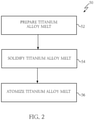
- the method 50 may begin at Block 52 with the step of preparing a titanium alloy melt.
- the alloy melt may be prepared by mixing metals and other constituent components and melting the metals and other constituent components into a molten state.
- the molten titanium alloy melt may be solidified to form a solid mass (e.g., solid titanium alloy composition), for example, the titanium alloy in wrought form.
- the alloy melt may be solidified into the form of an ingot (e.g., an oblong block), a bar, a wire or another solid form having various shapes.
- the titanium alloy melt may be in molten form (e.g., molten titanium alloy composition) or solid form (e.g., solid titanium alloy composition).
- the titanium alloy melt may be atomized to form a titanium alloy powder.
- Various atomization processes may be utilized depending, for example, on the form (e.g., molten or solid) of the titanium alloy melt.
- the alloy melt may be subjected to liquid atomization, gas atomization, centrifugal atomization, plasma atomization, centrifugal disintegration and the like.
- the oxygen content of the titanium alloy composition may increase during the titanium alloy powder fabrication process (e.g., method 50) and/or the titanium alloy article fabrication process (e.g., method 10). Without being limited to any particular theory, it is believed that this increase in oxygen content is due to titanium's inherent propensity to acquire oxygen at its surface during processing and handling. Therefore, it may be particularly beneficial to control (e.g., limit) the oxygen content of the titanium alloy melt and/or the titanium alloy powder during fabrication in order to achieve the desired oxygen content of the titanium alloy disclosed herein and having the compositions shown in Tables 1 and 3-10, for example, having an oxygen content from about 0.14 percent by weight to 0.22 percent by weight.
- a titanium alloy melt that may be utilized to fabricate a titanium alloy powder, which may in turn be utilized to fabricate titanium alloy articles formed using powder metallurgy manufacturing techniques.
- an alpha-beta titanium alloy melt having the composition shown in Table 11.
- the example composition of the alpha-beta titanium alloy melt of the first example is an example of a titanium alloy melt composition subjected to an atomization process, such as in the disclosed method 50 ( Fig. 2 ), to form a powdered titanium alloy composition that may be subjected to a powder metallurgy process, such as the disclosed method 10 ( Fig. 1 ), to form a final article of a titanium alloy of the first embodiment having the composition shown in Table 1.
- the alpha-beta titanium alloy melt of the first example consists essentially of titanium (Ti), vanadium (V), aluminum (Al), iron (Fe), oxygen (O) and, optionally, at least one of chromium (Cr) and cobalt (Co) (one or both of chromium and/or cobalt).
- the concentration of vanadium (V) of the titanium alloy melt of the first example may be range from about 7.0 percent by weight to about 9.0 percent by weight, such as from about 7.0 percent by weight to about 8.0 percent by weight or from about 7.5 percent by weight to about 8.5 percent by weigh.
- the concentration of aluminum (Al) of the titanium alloy melt of the first example may be range from about 3.0 percent by weight to about 4.5 percent by weight, such as from about 3.5 percent by weight to about 4.5 percent by weight or from about 3.0 percent by weight to about 4.0 percent by weight.
- the concentration of iron (Fe) of the titanium alloy melt of the first example may be range from about 0.8 percent by weight to about 1.5 percent by weight, such as from about 0.9 percent by weight to about 1.5 percent by weight or from about 0.8 percent by weight to about 1.3 percent by weight.
- the concentration of oxygen (O) of the titanium alloy melt of the first example may be at most 0.15 percent by weight, such as at most 0.12 percent by weight.
- concentration of oxygen may range from about 0 percent by weight to about 0.15 percent by weight, such as from about 0 percent by weight to about 0.12 percent by weight, such as from about 0.04 percent by weight to about 0.12 percent by weight.
- Chromium (Cr) is an optional component (e.g., beta stabilizer) of the alpha-beta titanium alloy melt of the first example.
- concentration of chromium may range from about 0.8 percent by weight to about 2.4 percent by weight, such as from about 1.8 percent by weight to about 2.4 percent by weight.
- Co is an optional component (e.g., beta stabilizer) of the alpha-beta titanium alloy melt of the first example.
- concentration of cobalt may range from about 1.2 percent by weight to about 2.0 percent by weight, such as from about 1.6 percent by weight to about 2.0 percent by weight.
- the impurities content of the alpha-beta titanium alloy melt of the first example may be controlled as shown in Table 2.
- an alpha-beta titanium alloy melt having the composition shown in Table 12.
- the example composition of the alpha-beta titanium alloy melt of the second example is an example of a titanium alloy melt composition subjected to an atomization process, such as in the disclosed method 50 ( Fig. 2 ), to form a powdered titanium alloy composition that may be subjected to a powder metallurgy process, such as the disclosed method 10 ( Fig. 1 ), to form a final article of a titanium alloy of the second embodiment having the composition shown in Table 3.
- the alpha-beta titanium alloy melt of the second example consists essentially of titanium (Ti), vanadium (V), aluminum (Al), iron (Fe) and oxygen (O).
- the impurities content of the alpha-beta titanium alloy melt of the second example may be controlled as shown in Table 2.
- the concentration of oxygen (O) of the titanium alloy melt of the second example may be at most 0.12 percent by weight.
- concentration of oxygen may range from about 0 percent by weight to about 0.12 percent by weight, such as from about 0.04 percent by weight to about 0.12 percent by weight.
- titanium alloy melt of the second example has the composition shown in Table 13.
- Table 13 Element Target (wt%) Vanadium 7.5 Aluminum 4.0 Iron 1.2 Oxygen 0.08 Titanium Balance
- an alpha-beta titanium alloy melt having the composition shown in Table 14.
- the example composition of the alpha-beta titanium alloy melt of the third example is an example of a titanium alloy melt composition subjected to an atomization process, such as in the disclosed method 50 ( Fig. 2 ), to form a powdered titanium alloy composition that may be subjected to a powder metallurgy process, such as the disclosed method 10 ( Fig. 1 ), to form a final article of a titanium alloy of the third embodiment having the composition shown in Table 5.
- the alpha-beta titanium alloy melt of the third example consists essentially of titanium (Ti), vanadium (V), aluminum (Al), chromium (Cr), iron (Fe) and oxygen (O).
- the impurities content of the alpha-beta titanium alloy of the third example may be controlled as shown in Table 2.
- the concentration of oxygen of the titanium alloy melt of the third example may be at most 0.12 percent by weight.
- the concentration of oxygen may range from about 0 percent by weight to about 0.12 percent by weight, such as from about 0.04 percent by weight to about 0.12 percent by weight.
- titanium alloy melt of the third example has the composition shown in Table 15.
- Table 15 Element Target (wt%) Vanadium 8.0 Aluminum 3.5 Chromium 2.0 Iron 1.0 Oxygen 0.08 Titanium Balance
- the disclosed alpha-beta titanium alloy melt may have the composition shown in Table 16.
- Table 16 Element Range (wt%) Vanadium 7.5 - 8.5 Aluminum 3.0 - 4.0 Chromium 0.8 - 2.4 Iron 0.8 - 1.3 Oxygen 0.4 - 0.12 Titanium Balance
- the disclosed alpha-beta titanium alloy melt may have the composition shown in Table 17.
- Table 17 Element Range (wt%) Vanadium 7.5 - 8.5 Aluminum 3.0 - 4.0 Chromium 1.8 - 2.4 Iron 0.8 - 1.3 Oxygen 0.4 - 0.12 Titanium Balance
- an alpha-beta titanium alloy melt having the composition shown in Table 18.
- the example composition of the alpha-beta titanium alloy melt of the fourth example is an example of a titanium alloy melt composition subjected to an atomization process, such as in the disclosed method 50 ( Fig. 2 ), to form a powdered titanium alloy composition that may be subjected to a powder metallurgy process, such as the disclosed method 10 ( Fig. 1 ), to form a final article of a titanium alloy of the fourth embodiment having the composition shown in Table 8.
- the alpha-beta titanium alloy melt of the fourth example consists essentially of titanium (Ti), vanadium (V), aluminum (Al), cobalt (Co), iron (Fe) and oxygen (O).
- the impurities content of the alpha-beta titanium alloy melt of the third example may be controlled as shown in Table 2.
- the concentration of oxygen (O) of the titanium alloy melt of the fourth example may be at most 0.12 percent by weight.
- concentration of oxygen may range from about 0 percent by weight to about 0.12 percent by weight, such as from about 0.04 percent by weight to about 0.12 percent by weight.
- titanium alloy melt of the fourth example has the composition shown in Table 19.
- Table 19 Element Target (wt%) Vanadium 8.0 Aluminum 3.5 Cobalt 1.8 Iron 1.0 Oxygen 0.08 Titanium Balance
- the disclosed alpha-beta titanium alloy melt may have the composition shown in Table 20.
- Table 20 Element Range (wt%) Vanadium 7.5 - 8.5 Aluminum 3.0 - 4.0 Cobalt 1.2 - 2.0 Iron 0.8 - 1.3 Oxygen 0.04 - 0.12 Titanium Balance
- the disclosed alpha-beta titanium alloy melt may have the composition shown in Table 21.
- Table 21 Element Range (wt%) Vanadium 7.5 - 8.5 Aluminum 3.0 - 4.0 Cobalt 1.6 - 2.0 Iron 0.8 - 1.3 Oxygen 0.04 - 0.12 Titanium Balance
- titanium alloy powder that may be utilized to fabricate titanium alloy articles formed using powder metallurgy manufacturing techniques.
- an alpha-beta titanium alloy powder having the composition shown in Table 22.
- the example composition of the alpha-beta titanium alloy powder of the first example is an example of a powdered titanium alloy composition that may be subjected to a powder metallurgy process, such as the disclosed method 10 ( Fig. 1 ), to form a final article of a titanium alloy of the first embodiment having the composition shown in Table 1.
- TABLE 22 Element Range (wt%) Vanadium 7.0 - 9.0 Aluminum 3.0 - 4.5 Iron 0.8 - 1.5 Oxygen 0 - 0.18 Chromium 0 or 0.8 - 2.4 Cobalt 0 or 1.2 - 2.0 Titanium Balance
- the alpha-beta titanium alloy powder of the first example consists essentially of titanium (Ti), vanadium (V), aluminum (Al), iron (Fe), oxygen (O) and, optionally, at least one of chromium (Cr) and cobalt (Co) (one or both of chromium and/or cobalt).
- the concentration of vanadium (V) of the titanium alloy powder of the first example may be range from about 7.0 percent by weight to about 9.0 percent by weight, such as from about 7.0 percent by weight to about 8.0 percent by weight or from about 7.5 percent by weight to about 8.5 percent by weigh.
- the concentration of aluminum (Al) of the titanium alloy powder of the first example may be range from about 3.0 percent by weight to about 4.5 percent by weight, such as from about 3.5 percent by weight to about 4.5 percent by weight or from about 3.0 percent by weight to about 4.0 percent by weight.
- the concentration of iron (Fe) of the titanium alloy powder of the first example may be range from about 0.8 percent by weight to about 1.5 percent by weight, such as from about 0.9 percent by weight to about 1.5 percent by weight or from about 0.8 percent by weight to about 1.3 percent by weight.
- the concentration of oxygen (O) of the titanium alloy powder of the first example may be at most 0.18 percent by weight, such as at most 0.14 percent by weight.
- the concentration of oxygen may range from about 0 percent by weight to about 0.18 percent by weight, such as from about 0 percent by weight to about 0.14 percent by weight, such as from about 0.06 percent by weight to about 0.14 percent by weight, such as from about 0.1 percent by weight to about 0.13 percent by weight.
- Chromium (Cr) is an optional component (e.g., beta stabilizer) of the alpha-beta titanium alloy powder of the first example.
- concentration of chromium may range from about 0.8 percent by weight to about 2.4 percent by weight, such as from about 1.8 percent by weight to about 2.4 percent by weight.
- Co is an optional component (e.g., beta stabilizer) of the alpha-beta titanium alloy powder of the first example.
- concentration of cobalt may range from about 1.2 percent by weight to about 2.0 percent by weight, such as from about 1.6 percent by weight to about 2.0 percent by weight.
- the impurities content of the alpha-beta titanium alloy powder of the first example may be controlled as shown in Table 2.
- an alpha-beta titanium alloy powder having the composition shown in Table 23.
- the example composition of the alpha-beta titanium alloy powder of the second example is an example of a powdered titanium alloy composition that may be subjected to a powder metallurgy process, such as the disclosed method 10 ( Fig. 1 ), to form a final article of a titanium alloy of the second embodiment having the composition shown in Table 3.
- a powder metallurgy process such as the disclosed method 10 ( Fig. 1 )
- the alpha-beta titanium alloy powder of the second example consists essentially of titanium (Ti), vanadium (V), aluminum (Al), iron (Fe) and oxygen (O).
- the impurities content of the alpha-beta titanium alloy powder of the second example may be controlled as shown in Table 2.
- the concentration of oxygen (O) of the titanium alloy powder of the second example may be at most 0.14 percent by weight.
- the concentration of oxygen may range from about 0 percent by weight to about 0.14 percent by weight, such as from about 0.06 percent by weight to about 0.14 percent by weight, such as from about 0.1 percent by weight to about 0.13 percent by weight.
- titanium alloy powder of the second example has the composition shown in Table 24.
- Table 24 Element Target (wt%) Vanadium 7.5 Aluminum 4.0 Iron 1.2 Oxygen 0.12 Titanium Balance
- an alpha-beta titanium alloy powder having the composition shown in Table 25.
- the example composition of the alpha-beta titanium alloy powder of the third example is an example of a powdered titanium alloy composition that may be subjected to a powder metallurgy process, such as the disclosed method 10 ( Fig. 1 ), to form a final article of a titanium alloy of the second embodiment having the composition shown in Table 5.
- a powder metallurgy process such as the disclosed method 10 ( Fig. 1 )
- Table 5 TABLE 25 Element Range (wt%) Vanadium 7.5 - 9.0 Aluminum 3.0 - 4.0 Chromium 0.8 - 2.4 Iron 0.8 - 1.3 Oxygen 0 - 0.14 Titanium Balance
- the alpha-beta titanium alloy powder of the third example consists essentially of titanium (Ti), vanadium (V), aluminum (Al), chromium (Cr), iron (Fe) and oxygen (O).
- the impurities content of the alpha-beta titanium alloy powder of the third example may be controlled as shown in Table 2.
- the concentration of oxygen (O) of the titanium alloy powder of the third example may be at most 0.14 percent by weight.
- the concentration of oxygen may range from about 0 percent by weight to about 0.14 percent by weight, such as from about 0.06 percent by weight to about 0.14 percent by weight, such as from about 0.1 percent by weight to about 0.13 percent by weight.
- titanium alloy powder of the third example has the composition shown in Table 26.
- Table 26 Element Target (wt%) Vanadium 8.0 Aluminum 3.5 Chromium 2.0 Iron 1.0 Oxygen 0.12 Titanium Balance
- the disclosed alpha-beta titanium alloy powder may have the composition shown in Table 27.
- Table 27 Element Range (wt%) Vanadium 7.5 - 8.5 Aluminum 3.0 - 4.0 Chromium 0.8 - 2.4 Iron 0.8 - 1.3 Oxygen 0.6 - 0.14 Titanium Balance
- the disclosed alpha-beta titanium alloy powder may have the composition shown in Table 28.
- Table 28 Element Range (wt%) Vanadium 7.5 - 8.5 Aluminum 3.0 - 4.0 Chromium 1.8 - 2.4 Iron 0.8 - 1.3 Oxygen 0.6 - 0.14 Titanium Balance
- an alpha-beta titanium alloy powder having the composition shown in Table 29.
- the example composition of the alpha-beta titanium alloy powder of the fourth example is an example of a powdered titanium alloy composition that may be subjected to a powder metallurgy process, such as the disclosed method 10 ( Fig. 1 ), to form a final article of a titanium alloy of the fourth embodiment having the composition shown in Table 8.
- the alpha-beta titanium alloy powder of the fourth example consists essentially of titanium (Ti), vanadium (V), aluminum (Al), cobalt (Co), iron (Fe) and oxygen (O).
- the impurities content of the alpha-beta titanium alloy powder of the third embodiment may be controlled as shown in Table 2.
- the concentration of oxygen (O) of the titanium alloy powder of the fourth example may be at most 0.14 percent by weight.
- the concentration of oxygen may range from about 0 percent by weight to about 0.14 percent by weight, such as from about 0.06 percent by weight to about 0.14 percent by weight, such as from about 0.1 percent by weight to about 0.13 percent by weight.
- titanium alloy powder of the fourth example has the composition shown in Table 30.
- Table 30 Element Target (wt%) Vanadium 8.0 Aluminum 3.5 Cobalt 1.8 Iron 1.0 Oxygen 0.12 Titanium Balance
- the disclosed alpha-beta titanium alloy powder may have the composition shown in Table 31.
- Table 31 Element Range (wt%) Vanadium 7.5 - 8.5 Aluminum 3.0 - 4.0 Cobalt 1.2 - 2.0 Iron 0.8 - 1.3 Oxygen 0.6 - 0.14 Titanium Balance
- the disclosed alpha-beta titanium alloy powder may have the composition shown in Table 32.
- Table 32 Element Range (wt%) Vanadium 7.5 - 8.5 Aluminum 3.0 - 4.0 Cobalt 1.6 - 2.0 Iron 0.8 - 1.3 Oxygen 0.6 - 0.14 Titanium Balance
- the present disclosure further recognizes and takes into account that there may be minimal control over the naturally occurring powder particle size distribution during a pre-alloyed powder fabrication process (e.g., method 50).
- the yield for powder particle size distribution of less than about 22 microns is typically less than from about 10 percent to about 15 percent of the total size distribution. Therefore, it may be particularly beneficial to include one or more grain refiners in the disclosed titanium alloy melt, which is used to form the disclosed titanium alloy powder, which in turn is used to form the final article of the disclosed titanium alloy.
- the grain refiner is utilized to refine the grain size in a titanium alloy powder (e.g., a powdered titanium alloy composition), which may be used to form the titanium alloy disclosed herein.
- a titanium alloy powder e.g., a powdered titanium alloy composition
- examples of the grain refiner include, but are not limited to, boron and carbon.
- Articles formed from the disclosed powdered titanium alloy composition may exhibit excellent mechanical properties. Indeed, it is believed that articles formed from powdered forms of the titanium alloy compositions presented in Tables 4, 6 and 9 will exhibit an ultimate tensile strength (ASTM-E8) of at least 130 ksi, a yield strength (ASTM-E8) of at least 120 ksi and an elongation (ASTM-E8) of at least 10 percent, which is comparable to that achieved using wrought or powdered Ti-6Al-4V.
- Standard fatigue test methods can include, but are not limited to, alternating and mean stress imposed on various fatigue test specimen designs, such as, but not limited to, rotational bending, cantilever flat, axial dog bone, torsion, tension, three (3) or four (4) point bending.
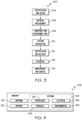
- the aircraft manufacturing and service method 100 may include specification and design 104 of the aircraft 102 and material procurement 106.
- component/subassembly manufacturing 108 and system integration 110 of the aircraft 102 takes place.
- the aircraft 102 may go through certification and delivery 112 in order to be placed in service 114.
- routine maintenance and service 116 which may also include modification, reconfiguration, refurbishment and the like.
- a system integrator may include without limitation any number of aircraft manufacturers and major-system subcontractors; a third party may include without limitation any number of venders, subcontractors, and suppliers; and an operator may be an airline, leasing company, military entity, service organization, and so on.
- the aircraft 102 produced by example method 100 may include an airframe 118 with a plurality of systems 120 and an interior 122.
- the plurality of systems 120 may include one or more of a propulsion system 124, an electrical system 126, a hydraulic system 128, and an environmental system 130. Any number of other systems may be included.
- the disclosed titanium alloy composition may be employed during any one or more of the stages of the aircraft manufacturing and service method 100.
- components or subassemblies corresponding to component/subassembly manufacturing 108, system integration 110, and or maintenance and service 116 may be fabricated or manufactured using the disclosed titanium alloy composition.
- the airframe 118 may be constructed using the disclosed titanium alloy composition.
- one or more apparatus examples, method examples, or a combination thereof may be utilized during component/subassembly manufacturing 108 and/or system integration 110, for example, by substantially expediting assembly of or reducing the cost of an aircraft 102, such as the airframe 118 and/or the interior 122.
- one or more of system examples, method examples, or a combination thereof may be utilized while the aircraft 102 is in service, for example and without limitation, to maintenance and service 116.
- the disclosed titanium alloy composition is described in the context of an aircraft; however, one of ordinary skill in the art will readily recognize that the disclosed titanium alloy composition may be utilized for a variety of applications.
- the disclosed titanium alloy composition may be implemented in various types of vehicle including, for example, helicopters, passenger ships, automobiles, marine products (boat, motors, etc.) and the like.
- first the terms “first,” “second,” etc. are used herein merely as labels, and are not intended to impose ordinal, positional, or hierarchical requirements on the items to which these terms refer. Moreover, reference to a “second” item does not require or preclude the existence of lower-numbered item (e.g., a "first” item) and/or a higher-numbered item (e.g., a "third” item).
- the phrase "at least one of', when used with a list of items, means different combinations of one or more of the listed items may be used and only one of the items in the list may be needed.
- the item may be a particular object, thing, or category.
- "at least one of' means any combination of items or number of items may be used from the list, but not all of the items in the list may be required.
- "at least one of item A, item B, and item C” may mean item A; item A and item B; item B; item A, item B, and item C; item C; item A and item C; or item B and item C.
- "at least one of item A, item B, and item C” may mean, for example and without limitation, two of item A, one of item B, and ten of item C; four of item B and seven of item C; or some other suitable combination.
- the terms “approximately” and “about” represent an amount close to the stated amount that still performs the desired function or achieves the desired result.
- the terms “approximately” and “about” may refer to an amount that is within less than 10% of, within less than 5% of, within less than 1% of, within less than 0.1% of, and within less than 0.01% of the stated amount.
Landscapes
- Chemical & Material Sciences (AREA)
- Engineering & Computer Science (AREA)
- Materials Engineering (AREA)
- Mechanical Engineering (AREA)
- Metallurgy (AREA)
- Organic Chemistry (AREA)
- Physics & Mathematics (AREA)
- Thermal Sciences (AREA)
- Crystallography & Structural Chemistry (AREA)
- Powder Metallurgy (AREA)
- Manufacture Of Metal Powder And Suspensions Thereof (AREA)
- Battery Electrode And Active Subsutance (AREA)
- Catalysts (AREA)
Description
- The present application is a continuation-in-part of, and claims priority from,
U.S. Ser. No. 15/219,812 filed on July 26, 2016 - This application generally relates to titanium alloys and, more particularly, to titanium alloys for powder metallurgy.
- Titanium alloys offer high tensile strength over a broad temperature range, yet are relatively light weight. Ti-6Al-4V is perhaps the most common and widely used titanium alloy. In wrought form, Ti-6Al-4V has a relatively low density (about 4.47 g/cm3), yet exhibits exceptional mechanical properties, such as a yield strength in excess of 120 ksi (thousand pounds per square inch), an ultimate tensile strength in excess of 130 ksi, an elongation of at least 10 percent, and a fatigue limit (10 million plus cycles) in excess of 90 ksi. Furthermore, titanium alloys are resistant to corrosion. Therefore, titanium alloys, Ti-6Al-4V specifically, are used in various demanding applications, such as aircraft components, medical devices and the like.
- Powder metallurgy manufacturing techniques, such as die pressing, metal injection molding, direct hot isostatic pressing and the like, result in the formation of net (or near net) articles. Therefore, powder metallurgy manufacturing techniques offer the opportunity for significant cost savings by significantly reducing (if not completely eliminating) the need for machining operations, which are time intensive and wasteful of materials.
- Ti-6Al-4V powders are available, and have been formed into various articles using powder metallurgy manufacturing techniques. However, articles formed from Ti-6Al-4V powders do not have the same mechanical properties as articles formed from wrought Ti-6Al-4V. For example, the fatigue limit of articles formed from Ti-6A1-4V powders can be 20 to 30 percent less that the fatigue limit of articles formed from wrought Ti-6Al-4V (e.g., 70 ksi for powdered versus 95 ksi for wrought). In many applications, such a significant reduction in the fatigue limit may not be acceptable.
- Accordingly, those skilled in the art continue with research and development efforts in the field of titanium alloys.
-
US5332545 , in accordance with its abstract, relates to a process for providing equivalent or superior ballistic resistance performance compared to standard Ti-6Al-4V alloys involves increasing the oxygen content of Ti-6Al-4V beyond the conventional limit of 0.20% maximum reported for prior art compounds and subsequently thereafter heating the oxygen rich titanium alloy at temperatures within the beta phase field for further processing. Additionally, provided is a Ti-6Al-4V alloy composition. The Ti-6Al-4V composition is obtained by modifying the alloy composition limits to 5.5 to 6.75% Al, 3.5 to 4.5% V, 0.20 to 0.30% O2, <0.50% Fe and 0.50% other unavoidable impurities; and then heating the alloy composition to temperatures within the beta-phase field for further processing. - Provided herein are titanium alloys, methods and articles as follow in paragraphs [1] to [15].
- [1]. A titanium alloy consisting of: 7.0 to 9.0 percent by weight vanadium; 3.0 to 4.5 percent by weight aluminum; 0.8 to 1.5 percent by weight iron; 0.14 to 0.22 percent by weight oxygen; optionally 0.8 to 2.4 percent by weight chromium; optionally 1.2 to 2.0 percent by weight cobalt; and balance titanium; and optionally one or more of the impurities as shown in Table 2.
- [2]. The titanium alloy of [1] consisting of: 7.0 to 9.0 percent by weight vanadium; 3.0 to 4.5 percent by weight aluminum; 0.8 to 1.5 percent by weight iron; 0.14 to 0.22 percent by weight oxygen; optionally 0.8 to 2.4 percent by weight chromium; and balance titanium; and optionally one or more impurities as defined in [1].
- [3]. The titanium alloy of [1] or [2] wherein:
- (a) said vanadium is present at 7.0 to 8.5 percent by weight or said vanadium is present at 7.5 to 9.0 percent by weight; and/or
- (b) said aluminum is present at 3.5 to 4.5 percent by weight or said aluminum is present at 3.0 to 4.0 percent by weight; and/or
- (c) said iron is present at 0.9 to 1.5 percent by weight or said iron is present at 0.8 to 1.3 percent by weight; and/or
- (d) said oxygen is present at 0.15 to 0.22 percent by weight or said oxygen is present at 0.14 to 0.20 percent by weight; and/or
- (e) said chromium is optionally present at 1.8 to 2.4 percent by weight.
- [4]. The titanium alloy of [1] or [2] wherein: said vanadium is present at 7.0 to 8.5 percent by weight; said aluminum is present at 3.5 to 4.5 percent by weight; said iron is present at 0.9 to 1.5 percent by weight; and said oxygen is present at 0.15 to 0.22 percent by weight; optionally wherein said optional chromium is not present.
- [5]. The titanium alloy of [1] or [2] wherein: said vanadium is present at 7.5 to 9.0 percent by weight; said aluminum is present at 3.0 to 4.0 percent by weight; said iron is present at 0.8 to 1.3 percent by weight; said oxygen is present at 0.14 to 0.20 percent by weight; and said chromium is present at 0.8 to 2.4 percent by weight.
- [6]. The titanium alloy of any of [1] - [5] in powdered form.
- [7]. The titanium alloy of [6] wherein: (a) said powdered form consists of a mixture of at least two different powder compositions, optionally wherein said mixture comprises a titanium powder and a master alloy powder; or (b) said powdered form consists of a plurality of powder particles, and wherein each powder particle of said plurality of powder particles has a composition within the compositional limits recited in [1] or [2].
- [8]. The titanium alloy of [6] or [7] wherein said powdered form consists of a plurality of spherical powder particles, optionally said plurality of spherical powder particles have a uniform particle size.
- [9]. An article formed from the titanium alloy of any of [1] - [8], optionally formed from the titanium alloy of [6].
- [10]. A method for manufacturing an article comprising: compacting said powdered form titanium alloy of [6] to form a shaped mass; and sintering said shaped mass.
- [11]. The method of [10] wherein: (a) said compacting comprises metal injection molding; and/or (b) the method further comprises subjecting said sintered shaped mass to hot isostatic pressing; and/or (c) the method further comprising solution treating and aging said sintered shaped mass.
- [12]. The titanium alloy of [1] or [2] in powdered form and consisting of:
- (a) 7.0 to 8.5 percent by weight vanadium; 3.5 to 4.5 percent by weight aluminum; 0.9 to 1.5 percent by weight iron; 0.15 to 0.22 percent by weight oxygen; and balance titanium; and optionally one or more impurities as defined in [1]; or
- (b) 7.5 to 9.0 percent by weight vanadium; 3.0 to 4.0 percent by weight aluminum; 0.8 to 2.4 percent by weight chromium, optionally wherein said chromium is present at 1.8 to 2.4 percent by weight 0.8 to 1.3 percent by weight iron; 0.14 to 0.20 percent by weight oxygen; and balance titanium; and optionally one or more impurities as defined in [1].
- [13]. The titanium alloy composition of [12] consisting of a plurality of powder particles, and wherein each powder particle of said plurality of powder particles has a composition within the compositional limits recited in [1] or [2].
- [14]. The titanium alloy composition of [12] or [13] consisting of a mixture of at least two different powder compositions, optionally wherein said mixture comprises a titanium powder and a master alloy powder.
- [15]. An article formed from the titanium alloy composition of any of [12] - [14].
- Embodiments of the disclosed titanium alloy composition will become apparent from the following detailed description, the accompanying drawings and the appended claims.
-
-
Fig. 1 is a flow diagram depicting one embodiment of the disclosed method for manufacturing an article; -
Fig. 2 is a flow diagram depicting one example of disclosed method for fabricating a titanium alloy powder; -
Fig. 3 is a flow diagram of an aircraft manufacturing and service methodology; and -
Fig. 4 is a block diagram of an aircraft. - Disclosed is an alpha-beta titanium alloy that may be used in wrought form, powdered form, or compacted and sintered form. Significantly, articles formed from the disclosed titanium alloy using powder metallurgy manufacturing techniques may have mechanical and durability performance properties, such as yield strength and fatigue limit, that are at least as good as (if not better than) the mechanical and durability properties of articles formed from wrought Ti-6Al-4V. Therefore, the disclosed titanium alloy is an alternative to Ti-6Al-4V that is particularly suitable for use in powder metallurgy.
- The disclosed alpha-beta titanium alloy includes titanium and at least one stabilizer (e.g., one or more stabilizing elements). The stabilizer may range from about 10 percent by weight to about 18 percent by weight, such as from about 10.94 percent by weight to about 17.62 percent by weight, such as from about 15.76 percent by weight to about 17.01 percent by weight.
- The stabilizer (e.g., one or more stabilizers) includes one or more optional components of the alpha-beta titanium alloy of the first embodiment. The stabilizer may include a combination of alpha stabilizers and beta stabilizers.
- Examples of the alpha stabilizer include aluminum (Al) and oxygen (O).
- Examples of the beta stabilizer include vanadium (V), iron (Fe), cobalt (Co), and chromium (Cr),.
- In a first embodiment, disclosed is an alpha-beta titanium alloy having the composition shown in Table 1. The example composition of the alpha-beta titanium alloy of the first embodiment is an example of a final article made using (e.g., formed from) a powdered titanium alloy composition subjected to a powder metallurgy process such as the disclosed method 10 (
Fig. 1 ).TABLE 1 Element Range (wt%) Vanadium 7.0 - 9.0 Aluminum 3.0 - 4.5 Iron 0.8 - 1.5 Oxygen 0.14 - 0.22 Chromium 0 or 0.8 - 2.4 Cobalt 0 or 1.2 - 2.0 Titanium Balance - Thus, the alpha-beta titanium alloy of the first embodiment consists essentially of titanium (Ti), vanadium (V), aluminum (Al), iron (Fe), oxygen (O) and, optionally, at least one of chromium (Cr) and cobalt (Co) (one or both of chromium and/or cobalt).
- The concentration of vanadium (V) of the titanium alloy of the first embodiment may be range from about 7.0 percent by weight to about 9.0 percent by weight, such as from about 7.0 percent by weight to about 8.0 percent by weight or from about 7.5 percent by weight to about 8.5 percent by weigh.
- The concentration of aluminum (Al) of the titanium alloy of the first embodiment may be range from about 3.0 percent by weight to about 4.5 percent by weight, such as from about 3.5 percent by weight to about 4.5 percent by weight or from about 3.0 percent by weight to about 4.0 percent by weight.
- The concentration of iron (Fe) of the titanium alloy of the first embodiment may be range from about 0.8 percent by weight to about 1.5 percent by weight, such as from about 0.9 percent by weight to about 1.5 percent by weight or from about 0.8 percent by weight to about 1.3 percent by weight.
- Chromium (Cr) is an optional component (e.g., beta stabilizer) of the alpha-beta titanium alloy of the first embodiment. When present, the concentration of chromium may range from about 0.8 percent by weight to about 2.4 percent by weight, such as from about 1.8 percent by weight to about 2.4 percent by weight.
- Cobalt (Co) is an optional component (e.g., beta stabilizer) of the alpha-beta titanium alloy of the first embodiment. When present, the concentration of cobalt may range from about 1.2 percent by weight to about 2.0 percent by weight, such as from about 1.6 percent by weight to about 2.0 percent by weight.
- Those skilled in the art will appreciate that various impurities, which do not substantially affect the physical properties of the alpha-beta titanium alloy of the first embodiment, may also be present, and the presence of such impurities will not result in a departure from the scope of the present disclosure. For example, the impurities content of the alpha-beta titanium alloy of the first embodiment may be controlled as shown in Table 2.
TABLE 2 Impurity Maximum (wt%) Carbon 0.10 Nitrogen 0.05 Chlorine 0.05 Hydrogen 0.015 Silicon 0.05 Yttrium 0.005 Sodium 0.01 Magnesium 0.10 Other Elements, Each 0.10 Other Elements, Total 0.30 - In a second embodiment, disclosed is an alpha-beta titanium alloy having the composition shown in Table 3. The example composition of the alpha-beta titanium alloy of the second embodiment is an example of a final article made using (e.g., formed from) a powdered titanium alloy composition subjected to a powder metallurgy process such as the disclosed method 10 (
Fig. 1 ).TABLE 3 Element Range (wt%) Vanadium 7.0 - 8.0 Aluminum 3.5 - 4.5 Iron 0.9 - 1.5 Oxygen 0.15 - 0.22 Titanium Balance - Thus, the alpha-beta titanium alloy of the second embodiment consists essentially of titanium (Ti), vanadium (V), aluminum (Al), iron (Fe) and oxygen (O). The impurities content of the alpha-beta titanium alloy of the second embodiment may be controlled as shown in Table 2.
- One specific, non-limiting example of a titanium alloy of the second embodiment has the composition shown in Table 4.
TABLE 4 Element Target (wt%) Vanadium 7.5 Aluminum 4.0 Iron 1.2 Oxygen 0.20 Titanium Balance - In a third embodiment, disclosed is an alpha-beta titanium alloy having the composition shown in Table 5. The example composition of the alpha-beta titanium alloy of the third embodiment is an example of a final article made using (e.g., formed from) a powdered titanium alloy composition subjected to a powder metallurgy process such as the disclosed method 10 (
Fig. 1 ).TABLE 5 Element Range (wt%) Vanadium 7.5 - 9.0 Aluminum 3.0 - 4.0 Chromium 0.8 - 2.4 Iron 0.8 - 1.3 Oxygen 0.14 - 0.20 Titanium Balance - Thus, the alpha-beta titanium alloy of the third embodiment consists essentially of titanium (Ti), vanadium (V), aluminum (Al), chromium (Cr), iron (Fe) and oxygen (O). The impurities content of the alpha-beta titanium alloy of the third embodiment may be controlled as shown in Table 2.
- One specific, non-limiting example of a titanium alloy of the third embodiment has the composition shown in Table 6.
TABLE 6 Element Target (wt%) Vanadium 8.0 Aluminum 3.5 Chromium 2.0 Iron 1.0 Oxygen 0.18 Titanium Balance - In one variation of the third embodiment, the disclosed alpha-beta titanium alloy may have the composition shown in Table 7.
TABLE 7 Element Range (wt%) Vanadium 7.5 - 9.0 Aluminum 3.0 - 4.0 Chromium 1.8 - 2.4 Iron 0.8 - 1.3 Oxygen 0.14 - 0.20 Titanium Balance - In a fourth embodiment, disclosed is an alpha-beta titanium alloy having the composition shown in Table 8. The example composition of the alpha-beta titanium alloy of the fourth embodiment is an example of a final article made using (e.g., formed from) a powdered titanium alloy composition subjected to a powder metallurgy process such as the disclosed method 10 (
Fig. 1 ).TABLE 8 Element Range (wt%) Vanadium 7.5 - 9.0 Aluminum 3.0 - 4.0 Cobalt 1.2 - 2.0 Iron 0.8 - 1.3 Oxygen 0.14 - 0.20 Titanium Balance - Thus, the alpha-beta titanium alloy of the fourth embodiment consists essentially of titanium (Ti), vanadium (V), aluminum (Al), cobalt (Co), iron (Fe) and oxygen (O). The impurities content of the alpha-beta titanium alloy of the third embodiment may be controlled as shown in Table 2.
- One specific, non-limiting example of a titanium alloy of the fourth embodiment has the composition shown in Table 9.
TABLE 9 Element Target (wt%) Vanadium 8.0 Aluminum 3.5 Cobalt 1.8 Iron 1.0 Oxygen 0.18 Titanium Balance - In one variation of the fourth embodiment, the disclosed alpha-beta titanium alloy may have the composition shown in Table 10.
TABLE 10 Element Range (wt%) Vanadium 7.5-9.0 Aluminum 3.0 - 4.0 Cobalt 1.6 - 2.0 Iron 0.8 - 1.3 Oxygen 0.14 - 0.20 Titanium Balance - The disclosed titanium alloy may be used to manufacture various articles, such as aircraft parts and components, using traditional casting or forging processes, or hybrid processes such as powder metallurgy combined with forging, or rolling, or extrusion, or welding (solid state (linear or rotational friction or inertia) or traditional melting fusion or with filler). Additionally the disclosed titanium alloys may be used for various net shape and near net shape fabrication processes such as additive manufacturing laser, electron beam, plasma arc melting techniques and powder metallurgy additive laser or electron beam sintering techniques. The disclosed titanium alloy may also be used in powdered form to manufacture various articles using powder metallurgy manufacturing techniques. As noted herein, the powdered form of the disclosed titanium alloy (the disclosed powdered titanium alloy composition) is significantly attractive, particularly vis-a-vis Ti-6Al-4V in powdered form, due to an anticipated improvement in the mechanical properties, particularly fatigue limit, of the resulting articles.
- Various powdered forms of the disclosed titanium alloy may be used without departing from the scope of the present disclosure. Regarding shape, the powder particles of the disclosed powdered titanium alloy composition may be spherical, flakey, spongy, cylindrical, blocky, acicular or the like. Powder particle shape may be substantially uniform throughout the powdered titanium alloy composition (e.g., all spherical particles) or multiple different shapes may be included in a particular powdered titanium alloy composition. Regarding size, the powder particles of the disclosed powdered titanium alloy composition may have a broad particle size distribution (e.g., a mixture of relatively large and relative small particles) or a narrow particle size distribution (e.g., substantially uniform particle size).
- In one expression, the disclosed powdered titanium alloy composition may be prepared as a physical mixture of at least two distinct powder compositions. As one specific, non-limiting example, the disclosed powdered titanium alloy composition may be prepared by mixing a first powder composition (a substantially pure titanium powder) with a second powder composition (a master alloy powder) in sufficient proportions to achieve the compositional limits recited in Table 1.
- In another expression, the disclosed powdered titanium alloy composition includes a single powder component, and each powder particle of the single powder component has substantially the same composition. Specifically, each powder particle of the single powder component has a composition within the compositional limits recited in Table 1. Such a powdered titanium alloy composition may be prepared, for example, by atomization, wherein a molten mass having a composition within the compositional limits recited in Table 1 is forced through an orifice.
- Also disclosed is a method for manufacturing articles using the disclosed powdered titanium alloy composition. Referring to
Fig. 1 , one embodiment of the disclosed method for manufacturing an article, generally designated 10, may begin atBlock 12 with the step of preparing a powdered titanium alloy composition. The powdered titanium alloy composition prepared atBlock 12 may have a composition falling within the compositional limits recited in Table 1. - At Block 14, the powdered titanium alloy composition may be compacted to form a shaped mass. Various compaction techniques may be used without departing from the scope of the present disclosure. As one example, the compaction step (Block 14) may include die pressing. As another example, the compaction step (Block 14) may include cold isostatic pressing. As another example, the compaction step (Block 14) may include metal injection molding. As yet another example, the compaction step (Block 14) may include direct hot isostatic pressing.
- At
Block 16, the shaped mass may optionally be sintered. Sintering may be required when the compaction step (Block 14) does not simultaneously sinter/consolidate. For example, the sintering step (Block 16) may include heating the shaped mass to an elevated temperature (e.g., about 2,000 °F to about 2,500 °F) and maintaining the shaped mass at the elevated temperature for at least a minimum amount of time (e.g., at least 60 minutes, such as about 90 minutes to about 150 minutes). - At
Block 18, the shaped mass (e.g., the sintered shaped mass) may optionally be subjected to hot isostatic pressing ("HIP") to reduce (if not eliminate) voids in the sintered shaped mass. For example, the hot isostatic pressing step (Block 18) may be performed at a pressure ranging from about 13 ksi to about 16 ksi and a temperature ranging from about 1,475 °F to about 1,800 °F, and the elevated pressure and temperature may be applied for at least about 60 minutes, such as for about 120 minutes to about 300 minutes. - At
Block 20, the shaped mass (e.g., the HIPed and sintered shaped mass) may optionally be solution treated. For example, solution treatment may include reheating the shaped mass from room temperature to a temperature ranging from about 1400 °F to about 1725 °F, and maintaining at temperature for approximately 1 hour before rapidly cooling/quench using various quench media, such as, but not limited to, water, ethylene glycol, liquid polymer additives and gas atmospheres/partial pressures that could include argon, nitrogen and helium, individually or combined, along with forced atmosphere fan cooling. - At
Block 22, the shaped mass (e.g., the solution treated, HIPed and sintered shaped mass) may optionally be aged. For example, aging may include reheating the shaped mass from room temperature to a temperature ranging from about 900 °F to about 1400 °F, and maintaining the shaped mass at temperature for about 2 to about 8 hours before cooling back to room temperature. - Accordingly, the disclosed
method 10 may be used to efficiently manufacture articles of various shapes and sized, including articles (e.g., aircraft parts) having complex geometries. Because the articles are produced to net (or near net) shapes, little or no machining is required to finalize the article, thereby significantly reducing both material and labor costs. - Also disclosed is a method for fabricating a titanium alloy powder (e.g., powdered titanium alloy composition). Referring to
Fig. 2 , one embodiment of the disclosed method for fabricating the titanium alloy powder (e.g., a pre-alloyed powder), generally designated 50, may be an example of the step of preparing a powdered titanium alloy composition (Block 12) of the method 10 (Fig. 1 ). - The
method 50 may begin atBlock 52 with the step of preparing a titanium alloy melt. The alloy melt may be prepared by mixing metals and other constituent components and melting the metals and other constituent components into a molten state. - At
Block 54, optionally, the molten titanium alloy melt may be solidified to form a solid mass (e.g., solid titanium alloy composition), for example, the titanium alloy in wrought form. As examples, the alloy melt may be solidified into the form of an ingot (e.g., an oblong block), a bar, a wire or another solid form having various shapes. - Thus, the titanium alloy melt may be in molten form (e.g., molten titanium alloy composition) or solid form (e.g., solid titanium alloy composition).
- At
Block 56, the titanium alloy melt may be atomized to form a titanium alloy powder. Various atomization processes may be utilized depending, for example, on the form (e.g., molten or solid) of the titanium alloy melt. As examples, the alloy melt may be subjected to liquid atomization, gas atomization, centrifugal atomization, plasma atomization, centrifugal disintegration and the like. - The present disclosure recognizes and takes into account that the oxygen content of the titanium alloy composition may increase during the titanium alloy powder fabrication process (e.g., method 50) and/or the titanium alloy article fabrication process (e.g., method 10). Without being limited to any particular theory, it is believed that this increase in oxygen content is due to titanium's inherent propensity to acquire oxygen at its surface during processing and handling. Therefore, it may be particularly beneficial to control (e.g., limit) the oxygen content of the titanium alloy melt and/or the titanium alloy powder during fabrication in order to achieve the desired oxygen content of the titanium alloy disclosed herein and having the compositions shown in Tables 1 and 3-10, for example, having an oxygen content from about 0.14 percent by weight to 0.22 percent by weight.
- Accordingly, disclosed herein is a titanium alloy melt that may be utilized to fabricate a titanium alloy powder, which may in turn be utilized to fabricate titanium alloy articles formed using powder metallurgy manufacturing techniques.
- In a first example of such a titanium alloy melt, which is not presently claimed, disclosed is an alpha-beta titanium alloy melt having the composition shown in Table 11. The example composition of the alpha-beta titanium alloy melt of the first example is an example of a titanium alloy melt composition subjected to an atomization process, such as in the disclosed method 50 (
Fig. 2 ), to form a powdered titanium alloy composition that may be subjected to a powder metallurgy process, such as the disclosed method 10 (Fig. 1 ), to form a final article of a titanium alloy of the first embodiment having the composition shown in Table 1.TABLE 11 Element Range (wt%) Vanadium 7.0 - 9.0 Aluminum 3.0 - 4.5 Iron 0.8 - 1.5 Oxygen 0 - 0.15 Chromium 0 or 0.8 - 2.4 Cobalt 0 or 1.2 - 2.0 Titanium Balance - Thus, the alpha-beta titanium alloy melt of the first example consists essentially of titanium (Ti), vanadium (V), aluminum (Al), iron (Fe), oxygen (O) and, optionally, at least one of chromium (Cr) and cobalt (Co) (one or both of chromium and/or cobalt).
- The concentration of vanadium (V) of the titanium alloy melt of the first example may be range from about 7.0 percent by weight to about 9.0 percent by weight, such as from about 7.0 percent by weight to about 8.0 percent by weight or from about 7.5 percent by weight to about 8.5 percent by weigh.
- The concentration of aluminum (Al) of the titanium alloy melt of the first example may be range from about 3.0 percent by weight to about 4.5 percent by weight, such as from about 3.5 percent by weight to about 4.5 percent by weight or from about 3.0 percent by weight to about 4.0 percent by weight.
- The concentration of iron (Fe) of the titanium alloy melt of the first example may be range from about 0.8 percent by weight to about 1.5 percent by weight, such as from about 0.9 percent by weight to about 1.5 percent by weight or from about 0.8 percent by weight to about 1.3 percent by weight.
- The concentration of oxygen (O) of the titanium alloy melt of the first example may be at most 0.15 percent by weight, such as at most 0.12 percent by weight. For example, the concentration of oxygen may range from about 0 percent by weight to about 0.15 percent by weight, such as from about 0 percent by weight to about 0.12 percent by weight, such as from about 0.04 percent by weight to about 0.12 percent by weight.
- Chromium (Cr) is an optional component (e.g., beta stabilizer) of the alpha-beta titanium alloy melt of the first example. When present, the concentration of chromium may range from about 0.8 percent by weight to about 2.4 percent by weight, such as from about 1.8 percent by weight to about 2.4 percent by weight.
- Cobalt (Co) is an optional component (e.g., beta stabilizer) of the alpha-beta titanium alloy melt of the first example. When present, the concentration of cobalt may range from about 1.2 percent by weight to about 2.0 percent by weight, such as from about 1.6 percent by weight to about 2.0 percent by weight.
- Those skilled in the art will appreciate that various impurities, which do not substantially affect the physical properties of the alpha-beta titanium alloy melt of the first example, may also be present, and the presence of such impurities will not result in a departure from the scope of the present disclosure. For example, the impurities content of the alpha-beta titanium alloy melt of the first example may be controlled as shown in Table 2.
- In a second example of such a titanium alloy melt, which is not presently claimed, disclosed is an alpha-beta titanium alloy melt having the composition shown in Table 12. The example composition of the alpha-beta titanium alloy melt of the second example is an example of a titanium alloy melt composition subjected to an atomization process, such as in the disclosed method 50 (
Fig. 2 ), to form a powdered titanium alloy composition that may be subjected to a powder metallurgy process, such as the disclosed method 10 (Fig. 1 ), to form a final article of a titanium alloy of the second embodiment having the composition shown in Table 3.TABLE 12 Element Range (wt%) Vanadium 7.0 - 8.0 Aluminum 3.5 - 4.5 Iron 0.9 - 1.5 Oxygen 0-0.12 Titanium Balance - Thus, the alpha-beta titanium alloy melt of the second example consists essentially of titanium (Ti), vanadium (V), aluminum (Al), iron (Fe) and oxygen (O). The impurities content of the alpha-beta titanium alloy melt of the second example may be controlled as shown in Table 2.
- The concentration of oxygen (O) of the titanium alloy melt of the second example may be at most 0.12 percent by weight. For example, the concentration of oxygen may range from about 0 percent by weight to about 0.12 percent by weight, such as from about 0.04 percent by weight to about 0.12 percent by weight.
- One specific, non-limiting example of a titanium alloy melt of the second example has the composition shown in Table 13.
TABLE 13 Element Target (wt%) Vanadium 7.5 Aluminum 4.0 Iron 1.2 Oxygen 0.08 Titanium Balance - In a third example of such a titanium alloy melt, which is not presently claimed, disclosed is an alpha-beta titanium alloy melt having the composition shown in Table 14. The example composition of the alpha-beta titanium alloy melt of the third example is an example of a titanium alloy melt composition subjected to an atomization process, such as in the disclosed method 50 (
Fig. 2 ), to form a powdered titanium alloy composition that may be subjected to a powder metallurgy process, such as the disclosed method 10 (Fig. 1 ), to form a final article of a titanium alloy of the third embodiment having the composition shown in Table 5.TABLE 14 Element Range (wt%) Vanadium 7.5 - 9.0 Aluminum 3.0 - 4.0 Chromium 0.8 - 2.4 Iron 0.8 - 1.3 Oxygen 0 - 0.12 Titanium Balance - Thus, the alpha-beta titanium alloy melt of the third example consists essentially of titanium (Ti), vanadium (V), aluminum (Al), chromium (Cr), iron (Fe) and oxygen (O). The impurities content of the alpha-beta titanium alloy of the third example may be controlled as shown in Table 2.
- The concentration of oxygen of the titanium alloy melt of the third example may be at most 0.12 percent by weight. For example, the concentration of oxygen may range from about 0 percent by weight to about 0.12 percent by weight, such as from about 0.04 percent by weight to about 0.12 percent by weight.
- One specific, non-limiting example of a titanium alloy melt of the third example has the composition shown in Table 15.
TABLE 15 Element Target (wt%) Vanadium 8.0 Aluminum 3.5 Chromium 2.0 Iron 1.0 Oxygen 0.08 Titanium Balance - In one variation of the third example, the disclosed alpha-beta titanium alloy melt may have the composition shown in Table 16.
TABLE 16 Element Range (wt%) Vanadium 7.5 - 8.5 Aluminum 3.0 - 4.0 Chromium 0.8 - 2.4 Iron 0.8 - 1.3 Oxygen 0.4 - 0.12 Titanium Balance - In another variation of the third example, the disclosed alpha-beta titanium alloy melt may have the composition shown in Table 17.
TABLE 17 Element Range (wt%) Vanadium 7.5 - 8.5 Aluminum 3.0 - 4.0 Chromium 1.8 - 2.4 Iron 0.8 - 1.3 Oxygen 0.4 - 0.12 Titanium Balance - In a fourth example of such a titanium alloy melt, which is not presently claimed, disclosed is an alpha-beta titanium alloy melt having the composition shown in Table 18. The example composition of the alpha-beta titanium alloy melt of the fourth example is an example of a titanium alloy melt composition subjected to an atomization process, such as in the disclosed method 50 (
Fig. 2 ), to form a powdered titanium alloy composition that may be subjected to a powder metallurgy process, such as the disclosed method 10 (Fig. 1 ), to form a final article of a titanium alloy of the fourth embodiment having the composition shown in Table 8.TABLE 18 Element Range (wt%) Vanadium 7.5-9.0 Aluminum 3.0 - 4.0 Cobalt 1.2 - 2.0 Iron 0.8 - 1.3 Oxygen 0-0.12 Titanium Balance - Thus, the alpha-beta titanium alloy melt of the fourth example consists essentially of titanium (Ti), vanadium (V), aluminum (Al), cobalt (Co), iron (Fe) and oxygen (O). The impurities content of the alpha-beta titanium alloy melt of the third example may be controlled as shown in Table 2.
- The concentration of oxygen (O) of the titanium alloy melt of the fourth example may be at most 0.12 percent by weight. For example, the concentration of oxygen may range from about 0 percent by weight to about 0.12 percent by weight, such as from about 0.04 percent by weight to about 0.12 percent by weight.
- One specific, non-limiting example of a titanium alloy melt of the fourth example has the composition shown in Table 19.
TABLE 19 Element Target (wt%) Vanadium 8.0 Aluminum 3.5 Cobalt 1.8 Iron 1.0 Oxygen 0.08 Titanium Balance - In one variation of the fourth example, the disclosed alpha-beta titanium alloy melt may have the composition shown in Table 20.
TABLE 20 Element Range (wt%) Vanadium 7.5 - 8.5 Aluminum 3.0 - 4.0 Cobalt 1.2 - 2.0 Iron 0.8 - 1.3 Oxygen 0.04 - 0.12 Titanium Balance - In another variation of the fourth example, the disclosed alpha-beta titanium alloy melt may have the composition shown in Table 21.
TABLE 21 Element Range (wt%) Vanadium 7.5 - 8.5 Aluminum 3.0 - 4.0 Cobalt 1.6 - 2.0 Iron 0.8 - 1.3 Oxygen 0.04 - 0.12 Titanium Balance - Also disclosed herein is a titanium alloy powder that may be utilized to fabricate titanium alloy articles formed using powder metallurgy manufacturing techniques.
- In a first example of such a titanium alloy powder, which is not presently claimed, disclosed is an alpha-beta titanium alloy powder having the composition shown in Table 22. The example composition of the alpha-beta titanium alloy powder of the first example is an example of a powdered titanium alloy composition that may be subjected to a powder metallurgy process, such as the disclosed method 10 (
Fig. 1 ), to form a final article of a titanium alloy of the first embodiment having the composition shown in Table 1.TABLE 22 Element Range (wt%) Vanadium 7.0 - 9.0 Aluminum 3.0 - 4.5 Iron 0.8 - 1.5 Oxygen 0 - 0.18 Chromium 0 or 0.8 - 2.4 Cobalt 0 or 1.2 - 2.0 Titanium Balance - Thus, the alpha-beta titanium alloy powder of the first example consists essentially of titanium (Ti), vanadium (V), aluminum (Al), iron (Fe), oxygen (O) and, optionally, at least one of chromium (Cr) and cobalt (Co) (one or both of chromium and/or cobalt).
- The concentration of vanadium (V) of the titanium alloy powder of the first example may be range from about 7.0 percent by weight to about 9.0 percent by weight, such as from about 7.0 percent by weight to about 8.0 percent by weight or from about 7.5 percent by weight to about 8.5 percent by weigh.
- The concentration of aluminum (Al) of the titanium alloy powder of the first example may be range from about 3.0 percent by weight to about 4.5 percent by weight, such as from about 3.5 percent by weight to about 4.5 percent by weight or from about 3.0 percent by weight to about 4.0 percent by weight.
- The concentration of iron (Fe) of the titanium alloy powder of the first example may be range from about 0.8 percent by weight to about 1.5 percent by weight, such as from about 0.9 percent by weight to about 1.5 percent by weight or from about 0.8 percent by weight to about 1.3 percent by weight.
- The concentration of oxygen (O) of the titanium alloy powder of the first example may be at most 0.18 percent by weight, such as at most 0.14 percent by weight. For example, the concentration of oxygen may range from about 0 percent by weight to about 0.18 percent by weight, such as from about 0 percent by weight to about 0.14 percent by weight, such as from about 0.06 percent by weight to about 0.14 percent by weight, such as from about 0.1 percent by weight to about 0.13 percent by weight.
- Chromium (Cr) is an optional component (e.g., beta stabilizer) of the alpha-beta titanium alloy powder of the first example. When present, the concentration of chromium may range from about 0.8 percent by weight to about 2.4 percent by weight, such as from about 1.8 percent by weight to about 2.4 percent by weight.
- Cobalt (Co) is an optional component (e.g., beta stabilizer) of the alpha-beta titanium alloy powder of the first example. When present, the concentration of cobalt may range from about 1.2 percent by weight to about 2.0 percent by weight, such as from about 1.6 percent by weight to about 2.0 percent by weight.
- Those skilled in the art will appreciate that various impurities, which do not substantially affect the physical properties of the alpha-beta titanium alloy powder of the first example, may also be present, and the presence of such impurities will not result in a departure from the scope of the present disclosure. For example, the impurities content of the alpha-beta titanium alloy powder of the first example may be controlled as shown in Table 2.
- In a second example of such a titanium alloy powder, which is not presently claimed, disclosed is an alpha-beta titanium alloy powder having the composition shown in Table 23. The example composition of the alpha-beta titanium alloy powder of the second example is an example of a powdered titanium alloy composition that may be subjected to a powder metallurgy process, such as the disclosed method 10 (
Fig. 1 ), to form a final article of a titanium alloy of the second embodiment having the composition shown in Table 3.TABLE 23 Element Range (wt%) Vanadium 7.0 - 8.0 Aluminum 3.5 - 4.5 Iron 0.9 - 1.5 Oxygen 0-0.14 Titanium Balance - Thus, the alpha-beta titanium alloy powder of the second example consists essentially of titanium (Ti), vanadium (V), aluminum (Al), iron (Fe) and oxygen (O). The impurities content of the alpha-beta titanium alloy powder of the second example may be controlled as shown in Table 2.
- The concentration of oxygen (O) of the titanium alloy powder of the second example may be at most 0.14 percent by weight. For example, the concentration of oxygen may range from about 0 percent by weight to about 0.14 percent by weight, such as from about 0.06 percent by weight to about 0.14 percent by weight, such as from about 0.1 percent by weight to about 0.13 percent by weight.
- One specific, non-limiting example of a titanium alloy powder of the second example has the composition shown in Table 24.
TABLE 24 Element Target (wt%) Vanadium 7.5 Aluminum 4.0 Iron 1.2 Oxygen 0.12 Titanium Balance - In a third example of such a titanium alloy powder, which is not presently claimed, disclosed is an alpha-beta titanium alloy powder having the composition shown in Table 25. The example composition of the alpha-beta titanium alloy powder of the third example is an example of a powdered titanium alloy composition that may be subjected to a powder metallurgy process, such as the disclosed method 10 (
Fig. 1 ), to form a final article of a titanium alloy of the second embodiment having the composition shown in Table 5.TABLE 25 Element Range (wt%) Vanadium 7.5 - 9.0 Aluminum 3.0 - 4.0 Chromium 0.8 - 2.4 Iron 0.8 - 1.3 Oxygen 0 - 0.14 Titanium Balance - Thus, the alpha-beta titanium alloy powder of the third example consists essentially of titanium (Ti), vanadium (V), aluminum (Al), chromium (Cr), iron (Fe) and oxygen (O). The impurities content of the alpha-beta titanium alloy powder of the third example may be controlled as shown in Table 2.
- The concentration of oxygen (O) of the titanium alloy powder of the third example may be at most 0.14 percent by weight. For example, the concentration of oxygen may range from about 0 percent by weight to about 0.14 percent by weight, such as from about 0.06 percent by weight to about 0.14 percent by weight, such as from about 0.1 percent by weight to about 0.13 percent by weight.
- One specific, non-limiting example of a titanium alloy powder of the third example has the composition shown in Table 26.
TABLE 26 Element Target (wt%) Vanadium 8.0 Aluminum 3.5 Chromium 2.0 Iron 1.0 Oxygen 0.12 Titanium Balance - In one variation of the third example, the disclosed alpha-beta titanium alloy powder may have the composition shown in Table 27.
TABLE 27 Element Range (wt%) Vanadium 7.5 - 8.5 Aluminum 3.0 - 4.0 Chromium 0.8 - 2.4 Iron 0.8 - 1.3 Oxygen 0.6 - 0.14 Titanium Balance - In another variation of the third example, the disclosed alpha-beta titanium alloy powder may have the composition shown in Table 28.
TABLE 28 Element Range (wt%) Vanadium 7.5 - 8.5 Aluminum 3.0 - 4.0 Chromium 1.8 - 2.4 Iron 0.8 - 1.3 Oxygen 0.6 - 0.14 Titanium Balance - In a fourth example of such a titanium alloy powder, which is not presently claimed, disclosed is an alpha-beta titanium alloy powder having the composition shown in Table 29. The example composition of the alpha-beta titanium alloy powder of the fourth example is an example of a powdered titanium alloy composition that may be subjected to a powder metallurgy process, such as the disclosed method 10 (
Fig. 1 ), to form a final article of a titanium alloy of the fourth embodiment having the composition shown in Table 8.TABLE 29 Element Range (wt%) Vanadium 7.5-9.0 Aluminum 3.0 - 4.0 Cobalt 1.2 - 2.0 Iron 0.8 - 1.3 Oxygen 0 - 0.14 Titanium Balance - Thus, the alpha-beta titanium alloy powder of the fourth example consists essentially of titanium (Ti), vanadium (V), aluminum (Al), cobalt (Co), iron (Fe) and oxygen (O). The impurities content of the alpha-beta titanium alloy powder of the third embodiment may be controlled as shown in Table 2.
- The concentration of oxygen (O) of the titanium alloy powder of the fourth example may be at most 0.14 percent by weight. For example, the concentration of oxygen may range from about 0 percent by weight to about 0.14 percent by weight, such as from about 0.06 percent by weight to about 0.14 percent by weight, such as from about 0.1 percent by weight to about 0.13 percent by weight.
- One specific, non-limiting example of a titanium alloy powder of the fourth example has the composition shown in Table 30.
TABLE 30 Element Target (wt%) Vanadium 8.0 Aluminum 3.5 Cobalt 1.8 Iron 1.0 Oxygen 0.12 Titanium Balance - In one variation of the fourth example, the disclosed alpha-beta titanium alloy powder may have the composition shown in Table 31.
TABLE 31 Element Range (wt%) Vanadium 7.5 - 8.5 Aluminum 3.0 - 4.0 Cobalt 1.2 - 2.0 Iron 0.8 - 1.3 Oxygen 0.6 - 0.14 Titanium Balance - In another variation of the fourth example, the disclosed alpha-beta titanium alloy powder may have the composition shown in Table 32.
TABLE 32 Element Range (wt%) Vanadium 7.5 - 8.5 Aluminum 3.0 - 4.0 Cobalt 1.6 - 2.0 Iron 0.8 - 1.3 Oxygen 0.6 - 0.14 Titanium Balance - The present disclosure further recognizes and takes into account that there may be minimal control over the naturally occurring powder particle size distribution during a pre-alloyed powder fabrication process (e.g., method 50). For example, the yield for powder particle size distribution of less than about 22 microns is typically less than from about 10 percent to about 15 percent of the total size distribution. Therefore, it may be particularly beneficial to include one or more grain refiners in the disclosed titanium alloy melt, which is used to form the disclosed titanium alloy powder, which in turn is used to form the final article of the disclosed titanium alloy.
- The grain refiner is utilized to refine the grain size in a titanium alloy powder (e.g., a powdered titanium alloy composition), which may be used to form the titanium alloy disclosed herein. Examples of the grain refiner include, but are not limited to, boron and carbon.
- Articles formed from the disclosed powdered titanium alloy composition may exhibit excellent mechanical properties. Indeed, it is believed that articles formed from powdered forms of the titanium alloy compositions presented in Tables 4, 6 and 9 will exhibit an ultimate tensile strength (ASTM-E8) of at least 130 ksi, a yield strength (ASTM-E8) of at least 120 ksi and an elongation (ASTM-E8) of at least 10 percent, which is comparable to that achieved using wrought or powdered Ti-6Al-4V. Furthermore, it is believed that articles formed from powdered forms of the titanium alloy compositions presented in Tables 4, 6 and 9 will exhibit a fatigue limit of at least 95 ksi, which is comparable to that achieved using wrought Ti-6Al-4V, but significantly better than that achieved using powdered Ti-6Al-4V. Standard fatigue test methods can include, but are not limited to, alternating and mean stress imposed on various fatigue test specimen designs, such as, but not limited to, rotational bending, cantilever flat, axial dog bone, torsion, tension, three (3) or four (4) point bending.
- Examples of the disclosure may be described in the context of an aircraft manufacturing and
service method 100, as shown inFig. 3 , and anaircraft 102, as shown inFig. 4 . During pre-production, the aircraft manufacturing andservice method 100 may include specification and design 104 of theaircraft 102 andmaterial procurement 106. During production, component/subassembly manufacturing 108 andsystem integration 110 of theaircraft 102 takes place. Thereafter, theaircraft 102 may go through certification anddelivery 112 in order to be placed inservice 114. While in service by a customer, theaircraft 102 is scheduled for routine maintenance andservice 116, which may also include modification, reconfiguration, refurbishment and the like. - Each of the processes of
method 100 may be performed or carried out by a system integrator, a third party, and/or an operator (e.g., a customer). For the purposes of this description, a system integrator may include without limitation any number of aircraft manufacturers and major-system subcontractors; a third party may include without limitation any number of venders, subcontractors, and suppliers; and an operator may be an airline, leasing company, military entity, service organization, and so on. - As shown in
Fig. 4 , theaircraft 102 produced byexample method 100 may include anairframe 118 with a plurality ofsystems 120 and an interior 122. Examples of the plurality ofsystems 120 may include one or more of apropulsion system 124, anelectrical system 126, ahydraulic system 128, and anenvironmental system 130. Any number of other systems may be included. - The disclosed titanium alloy composition may be employed during any one or more of the stages of the aircraft manufacturing and
service method 100. As one example, components or subassemblies corresponding to component/subassembly manufacturing 108,system integration 110, and or maintenance andservice 116 may be fabricated or manufactured using the disclosed titanium alloy composition. As another example, theairframe 118 may be constructed using the disclosed titanium alloy composition. Also, one or more apparatus examples, method examples, or a combination thereof may be utilized during component/subassembly manufacturing 108 and/orsystem integration 110, for example, by substantially expediting assembly of or reducing the cost of anaircraft 102, such as theairframe 118 and/or the interior 122. Similarly, one or more of system examples, method examples, or a combination thereof may be utilized while theaircraft 102 is in service, for example and without limitation, to maintenance andservice 116. - The disclosed titanium alloy composition is described in the context of an aircraft; however, one of ordinary skill in the art will readily recognize that the disclosed titanium alloy composition may be utilized for a variety of applications. For example, the disclosed titanium alloy composition may be implemented in various types of vehicle including, for example, helicopters, passenger ships, automobiles, marine products (boat, motors, etc.) and the like.
- Unless otherwise indicated, the terms "first," "second," etc. are used herein merely as labels, and are not intended to impose ordinal, positional, or hierarchical requirements on the items to which these terms refer. Moreover, reference to a "second" item does not require or preclude the existence of lower-numbered item (e.g., a "first" item) and/or a higher-numbered item (e.g., a "third" item).
- As used herein, the phrase "at least one of', when used with a list of items, means different combinations of one or more of the listed items may be used and only one of the items in the list may be needed. The item may be a particular object, thing, or category. In other words, "at least one of' means any combination of items or number of items may be used from the list, but not all of the items in the list may be required. For example, "at least one of item A, item B, and item C" may mean item A; item A and item B; item B; item A, item B, and item C; item C; item A and item C; or item B and item C. In some cases, "at least one of item A, item B, and item C" may mean, for example and without limitation, two of item A, one of item B, and ten of item C; four of item B and seven of item C; or some other suitable combination.
- As used herein, the terms "approximately" and "about" represent an amount close to the stated amount that still performs the desired function or achieves the desired result. For example, the terms "approximately" and "about" may refer to an amount that is within less than 10% of, within less than 5% of, within less than 1% of, within less than 0.1% of, and within less than 0.01% of the stated amount.
- Although various embodiments of the disclosed titanium alloy composition and article formed therefrom have been shown and described, modifications may occur to those skilled in the art upon reading the specification. The present application includes such modifications and is limited only by the scope of the claims.
Claims (15)
- A titanium alloy consisting of:7.0 to 9.0 percent by weight vanadium;3.0 to 4.5 percent by weight aluminum;0.8 to 1.5 percent by weight iron;0.14 to 0.22 percent by weight oxygen;optionally 0.8 to 2.4 percent by weight chromium;optionally 1.2 to 2.0 percent by weight cobalt; andbalance titanium; andoptionally one or more of the following impurities:
Impurity Maximum (wt%) Carbon 0.10 Nitrogen 0.05 Chlorine 0.05 Hydrogen 0.015 Silicon 0.05 Yttrium 0.005 Sodium 0.01 Magnesium 0.10 Other Elements, Each 0.10 Other Elements, Total 0.30 - The titanium alloy of Claim 1 consisting of:7.0 to 9.0 percent by weight vanadium;3.0 to 4.5 percent by weight aluminum;0.8 to 1.5 percent by weight iron;0.14 to 0.22 percent by weight oxygen;optionally 0.8 to 2.4 percent by weight chromium; andbalance titanium; andoptionally one or more impurities as defined in claim 1.
- The titanium alloy of Claim 1 or 2 wherein:(a) said vanadium is present at 7.0 to 8.5 percent by weight or said vanadium is present at 7.5 to 9.0 percent by weight; and/or(b) said aluminum is present at 3.5 to 4.5 percent by weight or said aluminum is present at 3.0 to 4.0 percent by weight; and/or(c) said iron is present at 0.9 to 1.5 percent by weight or said iron is present at 0.8 to 1.3 percent by weight; and/or(d) said oxygen is present at 0.15 to 0.22 percent by weight or said oxygen is present at 0.14 to 0.20 percent by weight; and/or(e) said chromium is optionally present at 1.8 to 2.4 percent by weight.
- The titanium alloy of Claim 1 or 2 wherein:said vanadium is present at 7.0 to 8.5 percent by weight;said aluminum is present at 3.5 to 4.5 percent by weight;said iron is present at 0.9 to 1.5 percent by weight; andsaid oxygen is present at 0.15 to 0.22 percent by weight;optionally wherein said optional chromium is not present.
- The titanium alloy of Claim 1 or 2 wherein:said vanadium is present at 7.5 to 9.0 percent by weight;said aluminum is present at 3.0 to 4.0 percent by weight;said iron is present at 0.8 to 1.3 percent by weight;said oxygen is present at 0.14 to 0.20 percent by weight; andsaid chromium is present at 0.8 to 2.4 percent by weight.
- The titanium alloy of any of Claims 1 - 5 in powdered form.
- The titanium alloy of Claim 6 wherein:(a) said powdered form consists of a mixture of at least two different powder compositions, optionally wherein said mixture comprises a titanium powder and a master alloy powder; or(b) said powdered form consists of a plurality of powder particles, and wherein each powder particle of said plurality of powder particles has a composition within the compositional limits recited in Claim 1 or 2.
- The titanium alloy of Claim 6 or 7 wherein said powdered form consists of a plurality of spherical powder particles, optionally said plurality of spherical powder particles have a uniform particle size.
- An article formed from the titanium alloy of any of Claims 1 - 8, optionally formed from the titanium alloy of Claim 6.
- A method for manufacturing an article comprising:compacting said powdered form titanium alloy of Claim 6 to form a shaped mass; andsintering said shaped mass.
- The method of Claim 10 wherein:(a) said compacting comprises metal injection molding; and/or(b) the method further comprises subjecting said sintered shaped mass to hot isostatic pressing; and/or(c) the method further comprising solution treating and aging said sintered shaped mass.
- The titanium alloy of Claim 1 or 2 in powdered form and consisting of:(a) 7.0 to 8.5 percent by weight vanadium;3.5 to 4.5 percent by weight aluminum;0.9 to 1.5 percent by weight iron;0.15 to 0.22 percent by weight oxygen; andbalance titanium; andoptionally one or more impurities as defined in claim 1; or(b) 7.5 to 9.0 percent by weight vanadium;3.0 to 4.0 percent by weight aluminum;0.8 to 2.4 percent by weight chromium, optionally wherein said chromium is present at 1.8 to 2.4 percent by weight0.8 to 1.3 percent by weight iron;0.14 to 0.20 percent by weight oxygen; andbalance titanium; andoptionally one or more impurities as defined in claim 1.
- The titanium alloy composition of Claim 12 consisting of a plurality of powder particles, and wherein each powder particle of said plurality of powder particles has a composition within the compositional limits recited in Claim 1 or 2.
- The titanium alloy composition of Claim 12 or 13 consisting of a mixture of at least two different powder compositions, optionally wherein said mixture comprises a titanium powder and a master alloy powder.
- An article formed from the titanium alloy composition of any of Claims 12 - 14.
Applications Claiming Priority (3)
| Application Number | Priority Date | Filing Date | Title |
|---|---|---|---|
| US15/219,812 US20180029131A1 (en) | 2016-07-26 | 2016-07-26 | Powdered Titanium Alloy Composition and Article Formed Therefrom |
| US15/458,231 US11136650B2 (en) | 2016-07-26 | 2017-03-14 | Powdered titanium alloy composition and article formed therefrom |
| EP17182655.5A EP3276018B1 (en) | 2016-07-26 | 2017-07-21 | Powdered titanium alloy composition and article formed therefrom |
Related Parent Applications (2)
| Application Number | Title | Priority Date | Filing Date |
|---|---|---|---|
| EP17182655.5A Division EP3276018B1 (en) | 2016-07-26 | 2017-07-21 | Powdered titanium alloy composition and article formed therefrom |
| EP17182655.5A Division-Into EP3276018B1 (en) | 2016-07-26 | 2017-07-21 | Powdered titanium alloy composition and article formed therefrom |
Publications (2)
| Publication Number | Publication Date |
|---|---|
| EP3578674A1 EP3578674A1 (en) | 2019-12-11 |
| EP3578674B1 true EP3578674B1 (en) | 2022-03-02 |
Family
ID=59581705
Family Applications (2)
| Application Number | Title | Priority Date | Filing Date |
|---|---|---|---|
| EP17182655.5A Active EP3276018B1 (en) | 2016-07-26 | 2017-07-21 | Powdered titanium alloy composition and article formed therefrom |
| EP19184138.6A Active EP3578674B1 (en) | 2016-07-26 | 2017-07-21 | Powdered titanium alloy composition and article formed therefrom |
Family Applications Before (1)
| Application Number | Title | Priority Date | Filing Date |
|---|---|---|---|
| EP17182655.5A Active EP3276018B1 (en) | 2016-07-26 | 2017-07-21 | Powdered titanium alloy composition and article formed therefrom |
Country Status (6)
| Country | Link |
|---|---|
| US (2) | US11136650B2 (en) |
| EP (2) | EP3276018B1 (en) |
| JP (1) | JP7278704B2 (en) |
| CN (1) | CN107893174A (en) |
| BR (1) | BR102017013706B1 (en) |
| CA (1) | CA2967151C (en) |
Families Citing this family (7)
| Publication number | Priority date | Publication date | Assignee | Title |
|---|---|---|---|---|
| CA3077718A1 (en) * | 2017-10-06 | 2019-04-11 | Monash University | Improved heat treatable titanium alloy |
| CA3113804A1 (en) * | 2018-09-25 | 2020-05-07 | Titanium Metals Corporation | Titanium alloy with moderate strength and high ductility |
| CA3135311A1 (en) | 2019-03-28 | 2020-10-01 | Oerlikon Am Gmbh | Titanium alloys for rapid solidification processing |
| CN110129801A (en) * | 2019-05-29 | 2019-08-16 | 东北大学 | A kind for the treatment of process improving increasing material manufacturing titanium alloy corrosion resistance |
| CN111411260B (en) * | 2020-03-10 | 2021-05-28 | 新乡学院 | A kind of 3D printing marine titanium alloy and preparation method |
| CN112410612A (en) * | 2020-10-29 | 2021-02-26 | 上海大学 | High-performance alpha + beta type titanium alloy containing Fe, V and Al alloy elements and preparation method thereof |
| EP4243038B1 (en) * | 2022-03-10 | 2026-02-18 | Nexans | Water barrier materials for a dynamic power cable for submarine applications |
Family Cites Families (22)
| Publication number | Priority date | Publication date | Assignee | Title |
|---|---|---|---|---|
| US2858209A (en) * | 1956-09-05 | 1958-10-28 | Union Carbide Corp | Low boron ferrotitanium alloy |
| US3622406A (en) * | 1968-03-05 | 1971-11-23 | Titanium Metals Corp | Dispersoid titanium and titanium-base alloys |
| US3802877A (en) * | 1972-04-18 | 1974-04-09 | Titanium Metals Corp | High strength titanium alloys |
| JPH03134124A (en) | 1989-10-19 | 1991-06-07 | Agency Of Ind Science & Technol | Titanium alloy excellent in erosion resistance and production thereof |
| DE69128692T2 (en) * | 1990-11-09 | 1998-06-18 | Toyoda Chuo Kenkyusho Kk | Titanium alloy made of sintered powder and process for its production |
| US5332545A (en) | 1993-03-30 | 1994-07-26 | Rmi Titanium Company | Method of making low cost Ti-6A1-4V ballistic alloy |
| GB9306867D0 (en) * | 1993-04-01 | 1993-05-26 | Sec Dep For Devence The | Improved near beta-phase titanium alloy |
| RU2172359C1 (en) * | 1999-11-25 | 2001-08-20 | Государственное предприятие Всероссийский научно-исследовательский институт авиационных материалов | Titanium-base alloy and product made thereof |
| ATE369223T1 (en) * | 2001-02-16 | 2007-08-15 | Sumitomo Titanium Corp | SINTERED PRESSURE MADE OF TITANIUM POWDER |
| SG119249A1 (en) * | 2004-08-05 | 2006-02-28 | Agency Science Tech & Res | An alloying system |
| JP4939740B2 (en) | 2004-10-15 | 2012-05-30 | 住友金属工業株式会社 | β-type titanium alloy |
| US9777347B2 (en) * | 2007-06-11 | 2017-10-03 | Advance Material Products, Inc. | Manufacture of near-net shape titanium alloy articles from metal powders by sintering with presence of atomic hydrogen |
| US20110229918A1 (en) * | 2008-12-11 | 2011-09-22 | Covalys Biosciences Ag | Method of Quantifying Transient Interactions Between Proteins |
| WO2012021186A2 (en) * | 2010-04-30 | 2012-02-16 | Questek Innovations Llc | Titanium alloys |
| US10081057B2 (en) * | 2010-11-10 | 2018-09-25 | True Velocity, Inc. | Method of making a projectile by metal injection molding |
| US10119178B2 (en) * | 2012-01-12 | 2018-11-06 | Titanium Metals Corporation | Titanium alloy with improved properties |
| CN104711452B (en) * | 2013-12-17 | 2016-08-17 | 北京有色金属研究总院 | A kind of high-strength and high ductility nearly Beta Type Titanium Alloy material and preparation thereof and bar processing method |
| CN104148658B (en) | 2014-09-09 | 2016-09-28 | 四川省有色冶金研究院有限公司 | One is prepared increasing material and is manufactured special Ti6Al4V alloy powder process |
| CN105779817A (en) | 2014-12-24 | 2016-07-20 | 北京有色金属研究总院 | Low-cost high-strength high-toughness Ti alloy and preparation method thereof |
| US10094003B2 (en) * | 2015-01-12 | 2018-10-09 | Ati Properties Llc | Titanium alloy |
| CN105525141A (en) | 2015-12-22 | 2016-04-27 | 北京有色金属研究总院 | High-speed impact resistance, high-strength and high-toughness titanium alloy |
| BR112018071290A2 (en) * | 2016-04-25 | 2019-02-05 | Arconic Inc. | bcc materials from titanium, aluminum, vanadium and iron, and products made from these |
-
2017
- 2017-03-14 US US15/458,231 patent/US11136650B2/en active Active
- 2017-05-11 CA CA2967151A patent/CA2967151C/en active Active
- 2017-06-23 BR BR102017013706-6A patent/BR102017013706B1/en active IP Right Grant
- 2017-07-11 JP JP2017135228A patent/JP7278704B2/en active Active
- 2017-07-21 EP EP17182655.5A patent/EP3276018B1/en active Active
- 2017-07-21 EP EP19184138.6A patent/EP3578674B1/en active Active
- 2017-07-25 CN CN201710611737.0A patent/CN107893174A/en active Pending
-
2021
- 2021-08-25 US US17/411,183 patent/US20220112578A1/en active Pending
Also Published As
| Publication number | Publication date |
|---|---|
| EP3578674A1 (en) | 2019-12-11 |
| JP2018115386A (en) | 2018-07-26 |
| EP3276018B1 (en) | 2019-09-04 |
| CA2967151C (en) | 2022-09-13 |
| CA2967151A1 (en) | 2018-01-26 |
| US11136650B2 (en) | 2021-10-05 |
| CN107893174A (en) | 2018-04-10 |
| US20180230577A1 (en) | 2018-08-16 |
| US20220112578A1 (en) | 2022-04-14 |
| BR102017013706B1 (en) | 2022-11-29 |
| JP7278704B2 (en) | 2023-05-22 |
| EP3276018A1 (en) | 2018-01-31 |
| BR102017013706A2 (en) | 2018-02-14 |
Similar Documents
| Publication | Publication Date | Title |
|---|---|---|
| EP3276018B1 (en) | Powdered titanium alloy composition and article formed therefrom | |
| EP3844313B1 (en) | High-strength titanium alloy for additive manufacturing | |
| EP3717150B1 (en) | Multicomponent aluminum alloys for applications such as additive manufacturing | |
| KR20180117203A (en) | BCC materials made of titanium, aluminum, vanadium, and iron, and products made therefrom | |
| US11421303B2 (en) | Titanium alloy products and methods of making the same | |
| EP4327964A1 (en) | Titanium alloy and methods of manufacture | |
| KR101616499B1 (en) | Heat treatment method for precipitation hardening of metal product manufactured by 3D printing | |
| US20180029131A1 (en) | Powdered Titanium Alloy Composition and Article Formed Therefrom | |
| US4808250A (en) | Method for refining microstructures of blended elemental titanium powder compacts | |
| US4534808A (en) | Method for refining microstructures of prealloyed powder metallurgy titanium articles | |
| US4655855A (en) | Method for refining microstructures of prealloyed titanium powder compacted articles | |
| US4832760A (en) | Method for refining microstructures of prealloyed titanium powder compacts | |
| KR101830697B1 (en) | A method for producing a component of powder injection molding | |
| US20250296147A1 (en) | Method for manufacturing an article from a consolidated metallic powder composition | |
| EP2453029A1 (en) | Method of modifying thermal and electrical properties of multi-component titanium alloys | |
| WO2019099719A1 (en) | Cobalt-chromium-aluminum alloys, and methods for producing the same | |
| CN120776169B (en) | Laser-fired powder bed fusion of nano-amorphous particles to reinforce aluminum matrix composites, methods and applications |
Legal Events
| Date | Code | Title | Description |
|---|---|---|---|
| PUAI | Public reference made under article 153(3) epc to a published international application that has entered the european phase |
Free format text: ORIGINAL CODE: 0009012 |
|
| STAA | Information on the status of an ep patent application or granted ep patent |
Free format text: STATUS: THE APPLICATION HAS BEEN PUBLISHED |
|
| AC | Divisional application: reference to earlier application |
Ref document number: 3276018 Country of ref document: EP Kind code of ref document: P |
|
| AK | Designated contracting states |
Kind code of ref document: A1 Designated state(s): AL AT BE BG CH CY CZ DE DK EE ES FI FR GB GR HR HU IE IS IT LI LT LU LV MC MK MT NL NO PL PT RO RS SE SI SK SM TR |
|
| AX | Request for extension of the european patent |
Extension state: BA ME |
|
| STAA | Information on the status of an ep patent application or granted ep patent |
Free format text: STATUS: REQUEST FOR EXAMINATION WAS MADE |
|
| 17P | Request for examination filed |
Effective date: 20200604 |
|
| RBV | Designated contracting states (corrected) |
Designated state(s): AL AT BE BG CH CY CZ DE DK EE ES FI FR GB GR HR HU IE IS IT LI LT LU LV MC MK MT NL NO PL PT RO RS SE SI SK SM TR |
|
| STAA | Information on the status of an ep patent application or granted ep patent |
Free format text: STATUS: EXAMINATION IS IN PROGRESS |
|
| 17Q | First examination report despatched |
Effective date: 20201007 |
|
| GRAP | Despatch of communication of intention to grant a patent |
Free format text: ORIGINAL CODE: EPIDOSNIGR1 |
|
| STAA | Information on the status of an ep patent application or granted ep patent |
Free format text: STATUS: GRANT OF PATENT IS INTENDED |
|
| INTG | Intention to grant announced |
Effective date: 20210428 |
|
| GRAJ | Information related to disapproval of communication of intention to grant by the applicant or resumption of examination proceedings by the epo deleted |
Free format text: ORIGINAL CODE: EPIDOSDIGR1 |
|
| STAA | Information on the status of an ep patent application or granted ep patent |
Free format text: STATUS: EXAMINATION IS IN PROGRESS |
|
| GRAP | Despatch of communication of intention to grant a patent |
Free format text: ORIGINAL CODE: EPIDOSNIGR1 |
|
| STAA | Information on the status of an ep patent application or granted ep patent |
Free format text: STATUS: GRANT OF PATENT IS INTENDED |
|
| INTC | Intention to grant announced (deleted) | ||
| INTG | Intention to grant announced |
Effective date: 20210928 |
|
| GRAS | Grant fee paid |
Free format text: ORIGINAL CODE: EPIDOSNIGR3 |
|
| GRAA | (expected) grant |
Free format text: ORIGINAL CODE: 0009210 |
|
| STAA | Information on the status of an ep patent application or granted ep patent |
Free format text: STATUS: THE PATENT HAS BEEN GRANTED |
|
| AC | Divisional application: reference to earlier application |
Ref document number: 3276018 Country of ref document: EP Kind code of ref document: P |
|
| AK | Designated contracting states |
Kind code of ref document: B1 Designated state(s): AL AT BE BG CH CY CZ DE DK EE ES FI FR GB GR HR HU IE IS IT LI LT LU LV MC MK MT NL NO PL PT RO RS SE SI SK SM TR |
|
| REG | Reference to a national code |
Ref country code: GB Ref legal event code: FG4D |
|
| REG | Reference to a national code |
Ref country code: CH Ref legal event code: EP Ref country code: AT Ref legal event code: REF Ref document number: 1472277 Country of ref document: AT Kind code of ref document: T Effective date: 20220315 |
|
| REG | Reference to a national code |
Ref country code: DE Ref legal event code: R096 Ref document number: 602017054242 Country of ref document: DE |
|
| REG | Reference to a national code |
Ref country code: IE Ref legal event code: FG4D |
|
| REG | Reference to a national code |
Ref country code: LT Ref legal event code: MG9D |
|
| REG | Reference to a national code |
Ref country code: NL Ref legal event code: MP Effective date: 20220302 |
|
| PG25 | Lapsed in a contracting state [announced via postgrant information from national office to epo] |
Ref country code: SE Free format text: LAPSE BECAUSE OF FAILURE TO SUBMIT A TRANSLATION OF THE DESCRIPTION OR TO PAY THE FEE WITHIN THE PRESCRIBED TIME-LIMIT Effective date: 20220302 Ref country code: RS Free format text: LAPSE BECAUSE OF FAILURE TO SUBMIT A TRANSLATION OF THE DESCRIPTION OR TO PAY THE FEE WITHIN THE PRESCRIBED TIME-LIMIT Effective date: 20220302 Ref country code: NO Free format text: LAPSE BECAUSE OF FAILURE TO SUBMIT A TRANSLATION OF THE DESCRIPTION OR TO PAY THE FEE WITHIN THE PRESCRIBED TIME-LIMIT Effective date: 20220602 Ref country code: LT Free format text: LAPSE BECAUSE OF FAILURE TO SUBMIT A TRANSLATION OF THE DESCRIPTION OR TO PAY THE FEE WITHIN THE PRESCRIBED TIME-LIMIT Effective date: 20220302 Ref country code: HR Free format text: LAPSE BECAUSE OF FAILURE TO SUBMIT A TRANSLATION OF THE DESCRIPTION OR TO PAY THE FEE WITHIN THE PRESCRIBED TIME-LIMIT Effective date: 20220302 Ref country code: ES Free format text: LAPSE BECAUSE OF FAILURE TO SUBMIT A TRANSLATION OF THE DESCRIPTION OR TO PAY THE FEE WITHIN THE PRESCRIBED TIME-LIMIT Effective date: 20220302 Ref country code: BG Free format text: LAPSE BECAUSE OF FAILURE TO SUBMIT A TRANSLATION OF THE DESCRIPTION OR TO PAY THE FEE WITHIN THE PRESCRIBED TIME-LIMIT Effective date: 20220602 |
|
| REG | Reference to a national code |
Ref country code: AT Ref legal event code: MK05 Ref document number: 1472277 Country of ref document: AT Kind code of ref document: T Effective date: 20220302 |
|
| PG25 | Lapsed in a contracting state [announced via postgrant information from national office to epo] |
Ref country code: PL Free format text: LAPSE BECAUSE OF FAILURE TO SUBMIT A TRANSLATION OF THE DESCRIPTION OR TO PAY THE FEE WITHIN THE PRESCRIBED TIME-LIMIT Effective date: 20220302 Ref country code: LV Free format text: LAPSE BECAUSE OF FAILURE TO SUBMIT A TRANSLATION OF THE DESCRIPTION OR TO PAY THE FEE WITHIN THE PRESCRIBED TIME-LIMIT Effective date: 20220302 Ref country code: GR Free format text: LAPSE BECAUSE OF FAILURE TO SUBMIT A TRANSLATION OF THE DESCRIPTION OR TO PAY THE FEE WITHIN THE PRESCRIBED TIME-LIMIT Effective date: 20220603 Ref country code: FI Free format text: LAPSE BECAUSE OF FAILURE TO SUBMIT A TRANSLATION OF THE DESCRIPTION OR TO PAY THE FEE WITHIN THE PRESCRIBED TIME-LIMIT Effective date: 20220302 |
|
| PG25 | Lapsed in a contracting state [announced via postgrant information from national office to epo] |
Ref country code: NL Free format text: LAPSE BECAUSE OF FAILURE TO SUBMIT A TRANSLATION OF THE DESCRIPTION OR TO PAY THE FEE WITHIN THE PRESCRIBED TIME-LIMIT Effective date: 20220302 |
|
| PG25 | Lapsed in a contracting state [announced via postgrant information from national office to epo] |
Ref country code: SM Free format text: LAPSE BECAUSE OF FAILURE TO SUBMIT A TRANSLATION OF THE DESCRIPTION OR TO PAY THE FEE WITHIN THE PRESCRIBED TIME-LIMIT Effective date: 20220302 Ref country code: SK Free format text: LAPSE BECAUSE OF FAILURE TO SUBMIT A TRANSLATION OF THE DESCRIPTION OR TO PAY THE FEE WITHIN THE PRESCRIBED TIME-LIMIT Effective date: 20220302 Ref country code: RO Free format text: LAPSE BECAUSE OF FAILURE TO SUBMIT A TRANSLATION OF THE DESCRIPTION OR TO PAY THE FEE WITHIN THE PRESCRIBED TIME-LIMIT Effective date: 20220302 Ref country code: PT Free format text: LAPSE BECAUSE OF FAILURE TO SUBMIT A TRANSLATION OF THE DESCRIPTION OR TO PAY THE FEE WITHIN THE PRESCRIBED TIME-LIMIT Effective date: 20220704 Ref country code: EE Free format text: LAPSE BECAUSE OF FAILURE TO SUBMIT A TRANSLATION OF THE DESCRIPTION OR TO PAY THE FEE WITHIN THE PRESCRIBED TIME-LIMIT Effective date: 20220302 Ref country code: CZ Free format text: LAPSE BECAUSE OF FAILURE TO SUBMIT A TRANSLATION OF THE DESCRIPTION OR TO PAY THE FEE WITHIN THE PRESCRIBED TIME-LIMIT Effective date: 20220302 Ref country code: AT Free format text: LAPSE BECAUSE OF FAILURE TO SUBMIT A TRANSLATION OF THE DESCRIPTION OR TO PAY THE FEE WITHIN THE PRESCRIBED TIME-LIMIT Effective date: 20220302 |
|
| PG25 | Lapsed in a contracting state [announced via postgrant information from national office to epo] |
Ref country code: IS Free format text: LAPSE BECAUSE OF FAILURE TO SUBMIT A TRANSLATION OF THE DESCRIPTION OR TO PAY THE FEE WITHIN THE PRESCRIBED TIME-LIMIT Effective date: 20220702 Ref country code: AL Free format text: LAPSE BECAUSE OF FAILURE TO SUBMIT A TRANSLATION OF THE DESCRIPTION OR TO PAY THE FEE WITHIN THE PRESCRIBED TIME-LIMIT Effective date: 20220302 |
|
| REG | Reference to a national code |
Ref country code: DE Ref legal event code: R097 Ref document number: 602017054242 Country of ref document: DE |
|
| PLBE | No opposition filed within time limit |
Free format text: ORIGINAL CODE: 0009261 |
|
| STAA | Information on the status of an ep patent application or granted ep patent |
Free format text: STATUS: NO OPPOSITION FILED WITHIN TIME LIMIT |
|
| PG25 | Lapsed in a contracting state [announced via postgrant information from national office to epo] |
Ref country code: DK Free format text: LAPSE BECAUSE OF FAILURE TO SUBMIT A TRANSLATION OF THE DESCRIPTION OR TO PAY THE FEE WITHIN THE PRESCRIBED TIME-LIMIT Effective date: 20220302 |
|
| 26N | No opposition filed |
Effective date: 20221205 |
|
| PG25 | Lapsed in a contracting state [announced via postgrant information from national office to epo] |
Ref country code: SI Free format text: LAPSE BECAUSE OF FAILURE TO SUBMIT A TRANSLATION OF THE DESCRIPTION OR TO PAY THE FEE WITHIN THE PRESCRIBED TIME-LIMIT Effective date: 20220302 Ref country code: MC Free format text: LAPSE BECAUSE OF FAILURE TO SUBMIT A TRANSLATION OF THE DESCRIPTION OR TO PAY THE FEE WITHIN THE PRESCRIBED TIME-LIMIT Effective date: 20220302 |
|
| REG | Reference to a national code |
Ref country code: CH Ref legal event code: PL |
|
| REG | Reference to a national code |
Ref country code: BE Ref legal event code: MM Effective date: 20220731 |
|
| PG25 | Lapsed in a contracting state [announced via postgrant information from national office to epo] |
Ref country code: LU Free format text: LAPSE BECAUSE OF NON-PAYMENT OF DUE FEES Effective date: 20220721 Ref country code: LI Free format text: LAPSE BECAUSE OF NON-PAYMENT OF DUE FEES Effective date: 20220731 Ref country code: CH Free format text: LAPSE BECAUSE OF NON-PAYMENT OF DUE FEES Effective date: 20220731 |
|
| PG25 | Lapsed in a contracting state [announced via postgrant information from national office to epo] |
Ref country code: BE Free format text: LAPSE BECAUSE OF NON-PAYMENT OF DUE FEES Effective date: 20220731 |
|
| P01 | Opt-out of the competence of the unified patent court (upc) registered |
Effective date: 20230516 |
|
| PG25 | Lapsed in a contracting state [announced via postgrant information from national office to epo] |
Ref country code: IT Free format text: LAPSE BECAUSE OF FAILURE TO SUBMIT A TRANSLATION OF THE DESCRIPTION OR TO PAY THE FEE WITHIN THE PRESCRIBED TIME-LIMIT Effective date: 20220302 Ref country code: IE Free format text: LAPSE BECAUSE OF NON-PAYMENT OF DUE FEES Effective date: 20220721 |
|
| PG25 | Lapsed in a contracting state [announced via postgrant information from national office to epo] |
Ref country code: HU Free format text: LAPSE BECAUSE OF FAILURE TO SUBMIT A TRANSLATION OF THE DESCRIPTION OR TO PAY THE FEE WITHIN THE PRESCRIBED TIME-LIMIT; INVALID AB INITIO Effective date: 20170721 |
|
| PG25 | Lapsed in a contracting state [announced via postgrant information from national office to epo] |
Ref country code: MK Free format text: LAPSE BECAUSE OF FAILURE TO SUBMIT A TRANSLATION OF THE DESCRIPTION OR TO PAY THE FEE WITHIN THE PRESCRIBED TIME-LIMIT Effective date: 20220302 Ref country code: CY Free format text: LAPSE BECAUSE OF FAILURE TO SUBMIT A TRANSLATION OF THE DESCRIPTION OR TO PAY THE FEE WITHIN THE PRESCRIBED TIME-LIMIT Effective date: 20220302 |
|
| PG25 | Lapsed in a contracting state [announced via postgrant information from national office to epo] |
Ref country code: MT Free format text: LAPSE BECAUSE OF FAILURE TO SUBMIT A TRANSLATION OF THE DESCRIPTION OR TO PAY THE FEE WITHIN THE PRESCRIBED TIME-LIMIT Effective date: 20220302 |
|
| PGFP | Annual fee paid to national office [announced via postgrant information from national office to epo] |
Ref country code: DE Payment date: 20250729 Year of fee payment: 9 |
|
| PGFP | Annual fee paid to national office [announced via postgrant information from national office to epo] |
Ref country code: GB Payment date: 20250728 Year of fee payment: 9 |
|
| PGFP | Annual fee paid to national office [announced via postgrant information from national office to epo] |
Ref country code: FR Payment date: 20250725 Year of fee payment: 9 |
|
| PG25 | Lapsed in a contracting state [announced via postgrant information from national office to epo] |
Ref country code: TR Free format text: LAPSE BECAUSE OF FAILURE TO SUBMIT A TRANSLATION OF THE DESCRIPTION OR TO PAY THE FEE WITHIN THE PRESCRIBED TIME-LIMIT Effective date: 20220302 |