EP3575398A1 - Mutant of adeno-associated virus (aav) capsid protein - Google Patents
Mutant of adeno-associated virus (aav) capsid protein Download PDFInfo
- Publication number
- EP3575398A1 EP3575398A1 EP18744464.1A EP18744464A EP3575398A1 EP 3575398 A1 EP3575398 A1 EP 3575398A1 EP 18744464 A EP18744464 A EP 18744464A EP 3575398 A1 EP3575398 A1 EP 3575398A1
- Authority
- EP
- European Patent Office
- Prior art keywords
- aav
- amino acid
- capsid protein
- aav2
- mutant
- Prior art date
- Legal status (The legal status is an assumption and is not a legal conclusion. Google has not performed a legal analysis and makes no representation as to the accuracy of the status listed.)
- Withdrawn
Links
- 108090000565 Capsid Proteins Proteins 0.000 title claims abstract description 100
- 102100023321 Ceruloplasmin Human genes 0.000 title claims abstract description 100
- 241000702421 Dependoparvovirus Species 0.000 title claims abstract description 10
- 239000002245 particle Substances 0.000 claims abstract description 104
- 108090000623 proteins and genes Proteins 0.000 claims abstract description 83
- 235000001014 amino acid Nutrition 0.000 claims abstract description 58
- 102000039446 nucleic acids Human genes 0.000 claims abstract description 56
- 108020004707 nucleic acids Proteins 0.000 claims abstract description 56
- 150000007523 nucleic acids Chemical class 0.000 claims abstract description 56
- 238000000034 method Methods 0.000 claims abstract description 50
- 125000003295 alanine group Chemical group N[C@@H](C)C(=O)* 0.000 claims abstract description 22
- 102100026918 Phospholipase A2 Human genes 0.000 claims abstract description 16
- 101710096328 Phospholipase A2 Proteins 0.000 claims abstract description 14
- 125000003607 serino group Chemical group [H]N([H])[C@]([H])(C(=O)[*])C(O[H])([H])[H] 0.000 claims abstract description 14
- 125000001493 tyrosinyl group Chemical group [H]OC1=C([H])C([H])=C(C([H])=C1[H])C([H])([H])C([H])(N([H])[H])C(*)=O 0.000 claims abstract description 14
- CKLJMWTZIZZHCS-REOHCLBHSA-N aspartic acid group Chemical group N[C@@H](CC(=O)O)C(=O)O CKLJMWTZIZZHCS-REOHCLBHSA-N 0.000 claims abstract description 8
- 239000000203 mixture Substances 0.000 claims abstract description 8
- 125000001500 prolyl group Chemical group [H]N1C([H])(C(=O)[*])C([H])([H])C([H])([H])C1([H])[H] 0.000 claims abstract description 8
- 125000001909 leucine group Chemical group [H]N(*)C(C(*)=O)C([H])([H])C(C([H])([H])[H])C([H])([H])[H] 0.000 claims abstract description 7
- 238000012258 culturing Methods 0.000 claims abstract description 6
- 241000702423 Adeno-associated virus - 2 Species 0.000 claims abstract 9
- 150000001413 amino acids Chemical class 0.000 claims description 59
- 229940024606 amino acid Drugs 0.000 claims description 52
- 239000002773 nucleotide Substances 0.000 claims description 34
- 125000003729 nucleotide group Chemical group 0.000 claims description 34
- 235000018102 proteins Nutrition 0.000 claims description 29
- 102000004169 proteins and genes Human genes 0.000 claims description 29
- 235000004279 alanine Nutrition 0.000 claims description 21
- OUYCCCASQSFEME-UHFFFAOYSA-N tyrosine Natural products OC(=O)C(N)CC1=CC=C(O)C=C1 OUYCCCASQSFEME-UHFFFAOYSA-N 0.000 claims description 20
- MTCFGRXMJLQNBG-UHFFFAOYSA-N Serine Natural products OCC(N)C(O)=O MTCFGRXMJLQNBG-UHFFFAOYSA-N 0.000 claims description 13
- HNDVDQJCIGZPNO-UHFFFAOYSA-N histidine Natural products OC(=O)C(N)CC1=CN=CN1 HNDVDQJCIGZPNO-UHFFFAOYSA-N 0.000 claims description 13
- ONIBWKKTOPOVIA-UHFFFAOYSA-N Proline Natural products OC(=O)C1CCCN1 ONIBWKKTOPOVIA-UHFFFAOYSA-N 0.000 claims description 11
- 241000701161 unidentified adenovirus Species 0.000 claims description 11
- 230000015572 biosynthetic process Effects 0.000 claims description 10
- AYFVYJQAPQTCCC-UHFFFAOYSA-N Threonine Natural products CC(O)C(N)C(O)=O AYFVYJQAPQTCCC-UHFFFAOYSA-N 0.000 claims description 9
- 239000004473 Threonine Substances 0.000 claims description 9
- KZSNJWFQEVHDMF-UHFFFAOYSA-N Valine Natural products CC(C)C(N)C(O)=O KZSNJWFQEVHDMF-UHFFFAOYSA-N 0.000 claims description 9
- 239000004474 valine Substances 0.000 claims description 9
- OUYCCCASQSFEME-QMMMGPOBSA-N L-tyrosine Chemical compound OC(=O)[C@@H](N)CC1=CC=C(O)C=C1 OUYCCCASQSFEME-QMMMGPOBSA-N 0.000 claims description 8
- KZSNJWFQEVHDMF-BYPYZUCNSA-N L-valine Chemical compound CC(C)[C@H](N)C(O)=O KZSNJWFQEVHDMF-BYPYZUCNSA-N 0.000 claims description 8
- ROHFNLRQFUQHCH-UHFFFAOYSA-N Leucine Natural products CC(C)CC(N)C(O)=O ROHFNLRQFUQHCH-UHFFFAOYSA-N 0.000 claims description 7
- 235000003704 aspartic acid Nutrition 0.000 claims description 7
- OQFSQFPPLPISGP-UHFFFAOYSA-N beta-carboxyaspartic acid Natural products OC(=O)C(N)C(C(O)=O)C(O)=O OQFSQFPPLPISGP-UHFFFAOYSA-N 0.000 claims description 7
- DCXYFEDJOCDNAF-UHFFFAOYSA-N Asparagine Natural products OC(=O)C(N)CC(N)=O DCXYFEDJOCDNAF-UHFFFAOYSA-N 0.000 claims description 5
- 235000009582 asparagine Nutrition 0.000 claims description 5
- 229960001230 asparagine Drugs 0.000 claims description 5
- 102200060693 rs142232675 Human genes 0.000 claims description 4
- DCXYFEDJOCDNAF-REOHCLBHSA-N L-asparagine Chemical compound OC(=O)[C@@H](N)CC(N)=O DCXYFEDJOCDNAF-REOHCLBHSA-N 0.000 claims description 3
- 125000003275 alpha amino acid group Chemical group 0.000 abstract description 43
- 238000004519 manufacturing process Methods 0.000 abstract description 17
- 238000006467 substitution reaction Methods 0.000 abstract description 3
- 210000004027 cell Anatomy 0.000 description 181
- 101710197658 Capsid protein VP1 Proteins 0.000 description 60
- 101710118046 RNA-directed RNA polymerase Proteins 0.000 description 57
- 241000700605 Viruses Species 0.000 description 45
- 239000013612 plasmid Substances 0.000 description 42
- 108010048367 enhanced green fluorescent protein Proteins 0.000 description 26
- 101150044789 Cap gene Proteins 0.000 description 23
- 108020004414 DNA Proteins 0.000 description 21
- 238000012546 transfer Methods 0.000 description 21
- 238000004806 packaging method and process Methods 0.000 description 20
- 230000014509 gene expression Effects 0.000 description 19
- 108020004511 Recombinant DNA Proteins 0.000 description 12
- 230000035897 transcription Effects 0.000 description 12
- 238000013518 transcription Methods 0.000 description 12
- 239000013598 vector Substances 0.000 description 10
- 238000000746 purification Methods 0.000 description 9
- 101150066583 rep gene Proteins 0.000 description 9
- 239000003153 chemical reaction reagent Substances 0.000 description 8
- 239000012228 culture supernatant Substances 0.000 description 8
- 241000288906 Primates Species 0.000 description 7
- 208000015181 infectious disease Diseases 0.000 description 7
- 108091033319 polynucleotide Proteins 0.000 description 7
- 102000040430 polynucleotide Human genes 0.000 description 7
- 239000002157 polynucleotide Substances 0.000 description 7
- 108091032973 (ribonucleotides)n+m Proteins 0.000 description 6
- 108700019146 Transgenes Proteins 0.000 description 5
- 125000000539 amino acid group Chemical group 0.000 description 5
- 238000001415 gene therapy Methods 0.000 description 5
- 241001515942 marmosets Species 0.000 description 5
- 230000035772 mutation Effects 0.000 description 5
- 238000003753 real-time PCR Methods 0.000 description 5
- 230000001105 regulatory effect Effects 0.000 description 5
- 210000000349 chromosome Anatomy 0.000 description 4
- 230000000694 effects Effects 0.000 description 4
- 238000000338 in vitro Methods 0.000 description 4
- 230000001965 increasing effect Effects 0.000 description 4
- 239000008194 pharmaceutical composition Substances 0.000 description 4
- 239000000047 product Substances 0.000 description 4
- 230000010076 replication Effects 0.000 description 4
- 230000001052 transient effect Effects 0.000 description 4
- 230000003612 virological effect Effects 0.000 description 4
- FWMNVWWHGCHHJJ-SKKKGAJSSA-N 4-amino-1-[(2r)-6-amino-2-[[(2r)-2-[[(2r)-2-[[(2r)-2-amino-3-phenylpropanoyl]amino]-3-phenylpropanoyl]amino]-4-methylpentanoyl]amino]hexanoyl]piperidine-4-carboxylic acid Chemical compound C([C@H](C(=O)N[C@H](CC(C)C)C(=O)N[C@H](CCCCN)C(=O)N1CCC(N)(CC1)C(O)=O)NC(=O)[C@H](N)CC=1C=CC=CC=1)C1=CC=CC=C1 FWMNVWWHGCHHJJ-SKKKGAJSSA-N 0.000 description 3
- 241000271566 Aves Species 0.000 description 3
- 241000283690 Bos taurus Species 0.000 description 3
- 241000282465 Canis Species 0.000 description 3
- 241000283707 Capra Species 0.000 description 3
- 239000006144 Dulbecco’s modified Eagle's medium Substances 0.000 description 3
- 241000283073 Equus caballus Species 0.000 description 3
- 241000238631 Hexapoda Species 0.000 description 3
- COLNVLDHVKWLRT-QMMMGPOBSA-N L-phenylalanine Chemical compound OC(=O)[C@@H](N)CC1=CC=CC=C1 COLNVLDHVKWLRT-QMMMGPOBSA-N 0.000 description 3
- 108700026244 Open Reading Frames Proteins 0.000 description 3
- 210000000234 capsid Anatomy 0.000 description 3
- 230000008859 change Effects 0.000 description 3
- LOKCTEFSRHRXRJ-UHFFFAOYSA-I dipotassium trisodium dihydrogen phosphate hydrogen phosphate dichloride Chemical compound P(=O)(O)(O)[O-].[K+].P(=O)(O)([O-])[O-].[Na+].[Na+].[Cl-].[K+].[Cl-].[Na+] LOKCTEFSRHRXRJ-UHFFFAOYSA-I 0.000 description 3
- 210000003527 eukaryotic cell Anatomy 0.000 description 3
- 210000005260 human cell Anatomy 0.000 description 3
- 238000001727 in vivo Methods 0.000 description 3
- 230000007774 longterm Effects 0.000 description 3
- 210000004962 mammalian cell Anatomy 0.000 description 3
- 239000003550 marker Substances 0.000 description 3
- 239000002609 medium Substances 0.000 description 3
- COLNVLDHVKWLRT-UHFFFAOYSA-N phenylalanine Natural products OC(=O)C(N)CC1=CC=CC=C1 COLNVLDHVKWLRT-UHFFFAOYSA-N 0.000 description 3
- 239000002953 phosphate buffered saline Substances 0.000 description 3
- 238000002360 preparation method Methods 0.000 description 3
- 102000004196 processed proteins & peptides Human genes 0.000 description 3
- 108090000765 processed proteins & peptides Proteins 0.000 description 3
- 230000006798 recombination Effects 0.000 description 3
- 238000005215 recombination Methods 0.000 description 3
- 239000000243 solution Substances 0.000 description 3
- 108091026890 Coding region Proteins 0.000 description 2
- 102000053602 DNA Human genes 0.000 description 2
- DHMQDGOQFOQNFH-UHFFFAOYSA-N Glycine Chemical compound NCC(O)=O DHMQDGOQFOQNFH-UHFFFAOYSA-N 0.000 description 2
- 241000282412 Homo Species 0.000 description 2
- 241001135569 Human adenovirus 5 Species 0.000 description 2
- 108020004684 Internal Ribosome Entry Sites Proteins 0.000 description 2
- 108010025815 Kanamycin Kinase Proteins 0.000 description 2
- TWRXJAOTZQYOKJ-UHFFFAOYSA-L Magnesium chloride Chemical compound [Mg+2].[Cl-].[Cl-] TWRXJAOTZQYOKJ-UHFFFAOYSA-L 0.000 description 2
- 241000124008 Mammalia Species 0.000 description 2
- 241000701945 Parvoviridae Species 0.000 description 2
- 108010058864 Phospholipases A2 Proteins 0.000 description 2
- 229920002873 Polyethylenimine Polymers 0.000 description 2
- 241000283984 Rodentia Species 0.000 description 2
- 108020004682 Single-Stranded DNA Proteins 0.000 description 2
- 230000000890 antigenic effect Effects 0.000 description 2
- 125000000613 asparagine group Chemical group N[C@@H](CC(N)=O)C(=O)* 0.000 description 2
- 210000004556 brain Anatomy 0.000 description 2
- AIYUHDOJVYHVIT-UHFFFAOYSA-M caesium chloride Chemical compound [Cl-].[Cs+] AIYUHDOJVYHVIT-UHFFFAOYSA-M 0.000 description 2
- 239000013592 cell lysate Substances 0.000 description 2
- 230000005101 cell tropism Effects 0.000 description 2
- 210000004978 chinese hamster ovary cell Anatomy 0.000 description 2
- 210000004748 cultured cell Anatomy 0.000 description 2
- 238000012217 deletion Methods 0.000 description 2
- 230000037430 deletion Effects 0.000 description 2
- 238000001514 detection method Methods 0.000 description 2
- 238000002474 experimental method Methods 0.000 description 2
- 210000002950 fibroblast Anatomy 0.000 description 2
- 239000012634 fragment Substances 0.000 description 2
- 125000000487 histidyl group Chemical group [H]N([H])C(C(=O)O*)C([H])([H])C1=C([H])N([H])C([H])=N1 0.000 description 2
- 230000006698 induction Effects 0.000 description 2
- 238000003780 insertion Methods 0.000 description 2
- 230000037431 insertion Effects 0.000 description 2
- 239000006166 lysate Substances 0.000 description 2
- 238000002703 mutagenesis Methods 0.000 description 2
- 231100000350 mutagenesis Toxicity 0.000 description 2
- 210000004897 n-terminal region Anatomy 0.000 description 2
- 210000002569 neuron Anatomy 0.000 description 2
- 229920001184 polypeptide Polymers 0.000 description 2
- 238000003757 reverse transcription PCR Methods 0.000 description 2
- 241000894007 species Species 0.000 description 2
- 230000004083 survival effect Effects 0.000 description 2
- 241001430294 unidentified retrovirus Species 0.000 description 2
- MTCFGRXMJLQNBG-REOHCLBHSA-N (2S)-2-Amino-3-hydroxypropansäure Chemical compound OC[C@H](N)C(O)=O MTCFGRXMJLQNBG-REOHCLBHSA-N 0.000 description 1
- BFSVOASYOCHEOV-UHFFFAOYSA-N 2-diethylaminoethanol Chemical compound CCN(CC)CCO BFSVOASYOCHEOV-UHFFFAOYSA-N 0.000 description 1
- UZOVYGYOLBIAJR-UHFFFAOYSA-N 4-isocyanato-4'-methyldiphenylmethane Chemical compound C1=CC(C)=CC=C1CC1=CC=C(N=C=O)C=C1 UZOVYGYOLBIAJR-UHFFFAOYSA-N 0.000 description 1
- 239000013607 AAV vector Substances 0.000 description 1
- 101100524317 Adeno-associated virus 2 (isolate Srivastava/1982) Rep40 gene Proteins 0.000 description 1
- 101100524319 Adeno-associated virus 2 (isolate Srivastava/1982) Rep52 gene Proteins 0.000 description 1
- 101100524321 Adeno-associated virus 2 (isolate Srivastava/1982) Rep68 gene Proteins 0.000 description 1
- 101100524324 Adeno-associated virus 2 (isolate Srivastava/1982) Rep78 gene Proteins 0.000 description 1
- 108010057360 Adenovirus E1 Proteins Proteins 0.000 description 1
- HJCMDXDYPOUFDY-WHFBIAKZSA-N Ala-Gln Chemical compound C[C@H](N)C(=O)N[C@H](C(O)=O)CCC(N)=O HJCMDXDYPOUFDY-WHFBIAKZSA-N 0.000 description 1
- 239000004475 Arginine Substances 0.000 description 1
- 108091003079 Bovine Serum Albumin Proteins 0.000 description 1
- 241000288950 Callithrix jacchus Species 0.000 description 1
- 102000008186 Collagen Human genes 0.000 description 1
- 108010035532 Collagen Proteins 0.000 description 1
- 206010010356 Congenital anomaly Diseases 0.000 description 1
- 235000005956 Cosmos caudatus Nutrition 0.000 description 1
- 102000003844 DNA helicases Human genes 0.000 description 1
- 108090000133 DNA helicases Proteins 0.000 description 1
- 230000004543 DNA replication Effects 0.000 description 1
- 102000016928 DNA-directed DNA polymerase Human genes 0.000 description 1
- 108010014303 DNA-directed DNA polymerase Proteins 0.000 description 1
- 229920002307 Dextran Polymers 0.000 description 1
- WHUUTDBJXJRKMK-UHFFFAOYSA-N Glutamic acid Natural products OC(=O)C(N)CCC(O)=O WHUUTDBJXJRKMK-UHFFFAOYSA-N 0.000 description 1
- 239000004471 Glycine Substances 0.000 description 1
- HTTJABKRGRZYRN-UHFFFAOYSA-N Heparin Chemical compound OC1C(NC(=O)C)C(O)OC(COS(O)(=O)=O)C1OC1C(OS(O)(=O)=O)C(O)C(OC2C(C(OS(O)(=O)=O)C(OC3C(C(O)C(O)C(O3)C(O)=O)OS(O)(=O)=O)C(CO)O2)NS(O)(=O)=O)C(C(O)=O)O1 HTTJABKRGRZYRN-UHFFFAOYSA-N 0.000 description 1
- 241000700588 Human alphaherpesvirus 1 Species 0.000 description 1
- 241000701074 Human alphaherpesvirus 2 Species 0.000 description 1
- GRRNUXAQVGOGFE-UHFFFAOYSA-N Hygromycin-B Natural products OC1C(NC)CC(N)C(O)C1OC1C2OC3(C(C(O)C(O)C(C(N)CO)O3)O)OC2C(O)C(CO)O1 GRRNUXAQVGOGFE-UHFFFAOYSA-N 0.000 description 1
- 208000026350 Inborn Genetic disease Diseases 0.000 description 1
- 102100034343 Integrase Human genes 0.000 description 1
- 101710203526 Integrase Proteins 0.000 description 1
- XUJNEKJLAYXESH-REOHCLBHSA-N L-Cysteine Chemical compound SC[C@H](N)C(O)=O XUJNEKJLAYXESH-REOHCLBHSA-N 0.000 description 1
- QNAYBMKLOCPYGJ-REOHCLBHSA-N L-alanine Chemical compound C[C@H](N)C(O)=O QNAYBMKLOCPYGJ-REOHCLBHSA-N 0.000 description 1
- ODKSFYDXXFIFQN-BYPYZUCNSA-P L-argininium(2+) Chemical compound NC(=[NH2+])NCCC[C@H]([NH3+])C(O)=O ODKSFYDXXFIFQN-BYPYZUCNSA-P 0.000 description 1
- WHUUTDBJXJRKMK-VKHMYHEASA-N L-glutamic acid Chemical compound OC(=O)[C@@H](N)CCC(O)=O WHUUTDBJXJRKMK-VKHMYHEASA-N 0.000 description 1
- ZDXPYRJPNDTMRX-VKHMYHEASA-N L-glutamine Chemical compound OC(=O)[C@@H](N)CCC(N)=O ZDXPYRJPNDTMRX-VKHMYHEASA-N 0.000 description 1
- HNDVDQJCIGZPNO-YFKPBYRVSA-N L-histidine Chemical compound OC(=O)[C@@H](N)CC1=CN=CN1 HNDVDQJCIGZPNO-YFKPBYRVSA-N 0.000 description 1
- AGPKZVBTJJNPAG-WHFBIAKZSA-N L-isoleucine Chemical compound CC[C@H](C)[C@H](N)C(O)=O AGPKZVBTJJNPAG-WHFBIAKZSA-N 0.000 description 1
- ROHFNLRQFUQHCH-YFKPBYRVSA-N L-leucine Chemical compound CC(C)C[C@H](N)C(O)=O ROHFNLRQFUQHCH-YFKPBYRVSA-N 0.000 description 1
- KDXKERNSBIXSRK-YFKPBYRVSA-N L-lysine Chemical compound NCCCC[C@H](N)C(O)=O KDXKERNSBIXSRK-YFKPBYRVSA-N 0.000 description 1
- FFEARJCKVFRZRR-BYPYZUCNSA-N L-methionine Chemical compound CSCC[C@H](N)C(O)=O FFEARJCKVFRZRR-BYPYZUCNSA-N 0.000 description 1
- AYFVYJQAPQTCCC-GBXIJSLDSA-N L-threonine Chemical compound C[C@@H](O)[C@H](N)C(O)=O AYFVYJQAPQTCCC-GBXIJSLDSA-N 0.000 description 1
- QIVBCDIJIAJPQS-VIFPVBQESA-N L-tryptophane Chemical compound C1=CC=C2C(C[C@H](N)C(O)=O)=CNC2=C1 QIVBCDIJIAJPQS-VIFPVBQESA-N 0.000 description 1
- 108060001084 Luciferase Proteins 0.000 description 1
- 239000005089 Luciferase Substances 0.000 description 1
- KDXKERNSBIXSRK-UHFFFAOYSA-N Lysine Natural products NCCCCC(N)C(O)=O KDXKERNSBIXSRK-UHFFFAOYSA-N 0.000 description 1
- 239000004472 Lysine Substances 0.000 description 1
- 241001465754 Metazoa Species 0.000 description 1
- 108060004795 Methyltransferase Proteins 0.000 description 1
- 229930193140 Neomycin Natural products 0.000 description 1
- 206010028980 Neoplasm Diseases 0.000 description 1
- 108091028043 Nucleic acid sequence Proteins 0.000 description 1
- 108020005091 Replication Origin Proteins 0.000 description 1
- 108010034546 Serratia marcescens nuclease Proteins 0.000 description 1
- QIVBCDIJIAJPQS-UHFFFAOYSA-N Tryptophan Natural products C1=CC=C2C(CC(N)C(O)=O)=CNC2=C1 QIVBCDIJIAJPQS-UHFFFAOYSA-N 0.000 description 1
- 241000700618 Vaccinia virus Species 0.000 description 1
- 239000003929 acidic solution Substances 0.000 description 1
- 230000002378 acidificating effect Effects 0.000 description 1
- 238000007792 addition Methods 0.000 description 1
- 239000002671 adjuvant Substances 0.000 description 1
- 230000002411 adverse Effects 0.000 description 1
- 239000011543 agarose gel Substances 0.000 description 1
- 230000004075 alteration Effects 0.000 description 1
- 102000006646 aminoglycoside phosphotransferase Human genes 0.000 description 1
- 238000004458 analytical method Methods 0.000 description 1
- 210000004102 animal cell Anatomy 0.000 description 1
- 230000000844 anti-bacterial effect Effects 0.000 description 1
- 230000000259 anti-tumor effect Effects 0.000 description 1
- 230000000840 anti-viral effect Effects 0.000 description 1
- ODKSFYDXXFIFQN-UHFFFAOYSA-N arginine Natural products OC(=O)C(N)CCCNC(N)=N ODKSFYDXXFIFQN-UHFFFAOYSA-N 0.000 description 1
- 230000004071 biological effect Effects 0.000 description 1
- 230000033228 biological regulation Effects 0.000 description 1
- 210000004369 blood Anatomy 0.000 description 1
- 239000008280 blood Substances 0.000 description 1
- 210000000601 blood cell Anatomy 0.000 description 1
- 239000000872 buffer Substances 0.000 description 1
- 210000004899 c-terminal region Anatomy 0.000 description 1
- 239000001506 calcium phosphate Substances 0.000 description 1
- 229910000389 calcium phosphate Inorganic materials 0.000 description 1
- 235000011010 calcium phosphates Nutrition 0.000 description 1
- 201000011510 cancer Diseases 0.000 description 1
- 210000004413 cardiac myocyte Anatomy 0.000 description 1
- 238000004113 cell culture Methods 0.000 description 1
- 239000003795 chemical substances by application Substances 0.000 description 1
- 238000004587 chromatography analysis Methods 0.000 description 1
- 229920001436 collagen Polymers 0.000 description 1
- 230000000295 complement effect Effects 0.000 description 1
- 239000002299 complementary DNA Substances 0.000 description 1
- 235000018417 cysteine Nutrition 0.000 description 1
- XUJNEKJLAYXESH-UHFFFAOYSA-N cysteine Natural products SCC(N)C(O)=O XUJNEKJLAYXESH-UHFFFAOYSA-N 0.000 description 1
- 230000002950 deficient Effects 0.000 description 1
- 230000004069 differentiation Effects 0.000 description 1
- 230000029087 digestion Effects 0.000 description 1
- 239000003085 diluting agent Substances 0.000 description 1
- 239000003937 drug carrier Substances 0.000 description 1
- 238000001962 electrophoresis Methods 0.000 description 1
- 238000004520 electroporation Methods 0.000 description 1
- 210000001163 endosome Anatomy 0.000 description 1
- 238000005516 engineering process Methods 0.000 description 1
- 239000003623 enhancer Substances 0.000 description 1
- 239000012091 fetal bovine serum Substances 0.000 description 1
- 108020001507 fusion proteins Proteins 0.000 description 1
- 102000037865 fusion proteins Human genes 0.000 description 1
- 208000016361 genetic disease Diseases 0.000 description 1
- 210000004907 gland Anatomy 0.000 description 1
- 235000013922 glutamic acid Nutrition 0.000 description 1
- 239000004220 glutamic acid Substances 0.000 description 1
- ZDXPYRJPNDTMRX-UHFFFAOYSA-N glutamine Natural products OC(=O)C(N)CCC(N)=O ZDXPYRJPNDTMRX-UHFFFAOYSA-N 0.000 description 1
- 230000012010 growth Effects 0.000 description 1
- 239000003102 growth factor Substances 0.000 description 1
- 238000010438 heat treatment Methods 0.000 description 1
- 229960002897 heparin Drugs 0.000 description 1
- 229920000669 heparin Polymers 0.000 description 1
- 238000010842 high-capacity cDNA reverse transcription kit Methods 0.000 description 1
- 230000007062 hydrolysis Effects 0.000 description 1
- 238000006460 hydrolysis reaction Methods 0.000 description 1
- GRRNUXAQVGOGFE-NZSRVPFOSA-N hygromycin B Chemical compound O[C@@H]1[C@@H](NC)C[C@@H](N)[C@H](O)[C@H]1O[C@H]1[C@H]2O[C@@]3([C@@H]([C@@H](O)[C@@H](O)[C@@H](C(N)CO)O3)O)O[C@H]2[C@@H](O)[C@@H](CO)O1 GRRNUXAQVGOGFE-NZSRVPFOSA-N 0.000 description 1
- 229940097277 hygromycin b Drugs 0.000 description 1
- 230000001900 immune effect Effects 0.000 description 1
- 230000006872 improvement Effects 0.000 description 1
- 230000001939 inductive effect Effects 0.000 description 1
- 230000002458 infectious effect Effects 0.000 description 1
- 230000010354 integration Effects 0.000 description 1
- 238000007918 intramuscular administration Methods 0.000 description 1
- 238000007912 intraperitoneal administration Methods 0.000 description 1
- 238000001990 intravenous administration Methods 0.000 description 1
- 210000004153 islets of langerhan Anatomy 0.000 description 1
- 238000002955 isolation Methods 0.000 description 1
- AGPKZVBTJJNPAG-UHFFFAOYSA-N isoleucine Natural products CCC(C)C(N)C(O)=O AGPKZVBTJJNPAG-UHFFFAOYSA-N 0.000 description 1
- 229960000310 isoleucine Drugs 0.000 description 1
- 238000001638 lipofection Methods 0.000 description 1
- 210000004185 liver Anatomy 0.000 description 1
- 210000005229 liver cell Anatomy 0.000 description 1
- 239000012139 lysis buffer Substances 0.000 description 1
- 229910001629 magnesium chloride Inorganic materials 0.000 description 1
- 108020004999 messenger RNA Proteins 0.000 description 1
- 229930182817 methionine Natural products 0.000 description 1
- 210000000663 muscle cell Anatomy 0.000 description 1
- 210000004165 myocardium Anatomy 0.000 description 1
- 229960004927 neomycin Drugs 0.000 description 1
- 230000003472 neutralizing effect Effects 0.000 description 1
- 244000309711 non-enveloped viruses Species 0.000 description 1
- 210000004940 nucleus Anatomy 0.000 description 1
- 210000000056 organ Anatomy 0.000 description 1
- 230000001717 pathogenic effect Effects 0.000 description 1
- 230000008488 polyadenylation Effects 0.000 description 1
- 108091008146 restriction endonucleases Proteins 0.000 description 1
- 230000000717 retained effect Effects 0.000 description 1
- 238000002864 sequence alignment Methods 0.000 description 1
- 210000002027 skeletal muscle Anatomy 0.000 description 1
- 210000002363 skeletal muscle cell Anatomy 0.000 description 1
- 238000002415 sodium dodecyl sulfate polyacrylamide gel electrophoresis Methods 0.000 description 1
- 239000003381 stabilizer Substances 0.000 description 1
- 238000007920 subcutaneous administration Methods 0.000 description 1
- 230000001225 therapeutic effect Effects 0.000 description 1
- 125000000341 threoninyl group Chemical group [H]OC([H])(C([H])([H])[H])C([H])(N([H])[H])C(*)=O 0.000 description 1
- 210000001519 tissue Anatomy 0.000 description 1
- 238000004448 titration Methods 0.000 description 1
- 230000005030 transcription termination Effects 0.000 description 1
- 238000003151 transfection method Methods 0.000 description 1
- 239000012096 transfection reagent Substances 0.000 description 1
- 230000009466 transformation Effects 0.000 description 1
- 238000002054 transplantation Methods 0.000 description 1
- QORWJWZARLRLPR-UHFFFAOYSA-H tricalcium bis(phosphate) Chemical compound [Ca+2].[Ca+2].[Ca+2].[O-]P([O-])([O-])=O.[O-]P([O-])([O-])=O QORWJWZARLRLPR-UHFFFAOYSA-H 0.000 description 1
- 230000034512 ubiquitination Effects 0.000 description 1
- 238000010798 ubiquitination Methods 0.000 description 1
- 238000000108 ultra-filtration Methods 0.000 description 1
- 238000005199 ultracentrifugation Methods 0.000 description 1
- 241000701447 unidentified baculovirus Species 0.000 description 1
- 241001529453 unidentified herpesvirus Species 0.000 description 1
- 238000011144 upstream manufacturing Methods 0.000 description 1
- 125000002987 valine group Chemical group [H]N([H])C([H])(C(*)=O)C([H])(C([H])([H])[H])C([H])([H])[H] 0.000 description 1
- 210000003501 vero cell Anatomy 0.000 description 1
Images

Classifications
-
- C—CHEMISTRY; METALLURGY
- C07—ORGANIC CHEMISTRY
- C07K—PEPTIDES
- C07K14/00—Peptides having more than 20 amino acids; Gastrins; Somatostatins; Melanotropins; Derivatives thereof
- C07K14/005—Peptides having more than 20 amino acids; Gastrins; Somatostatins; Melanotropins; Derivatives thereof from viruses
-
- C—CHEMISTRY; METALLURGY
- C12—BIOCHEMISTRY; BEER; SPIRITS; WINE; VINEGAR; MICROBIOLOGY; ENZYMOLOGY; MUTATION OR GENETIC ENGINEERING
- C12N—MICROORGANISMS OR ENZYMES; COMPOSITIONS THEREOF; PROPAGATING, PRESERVING, OR MAINTAINING MICROORGANISMS; MUTATION OR GENETIC ENGINEERING; CULTURE MEDIA
- C12N15/00—Mutation or genetic engineering; DNA or RNA concerning genetic engineering, vectors, e.g. plasmids, or their isolation, preparation or purification; Use of hosts therefor
- C12N15/09—Recombinant DNA-technology
- C12N15/63—Introduction of foreign genetic material using vectors; Vectors; Use of hosts therefor; Regulation of expression
- C12N15/79—Vectors or expression systems specially adapted for eukaryotic hosts
- C12N15/85—Vectors or expression systems specially adapted for eukaryotic hosts for animal cells
-
- C—CHEMISTRY; METALLURGY
- C12—BIOCHEMISTRY; BEER; SPIRITS; WINE; VINEGAR; MICROBIOLOGY; ENZYMOLOGY; MUTATION OR GENETIC ENGINEERING
- C12N—MICROORGANISMS OR ENZYMES; COMPOSITIONS THEREOF; PROPAGATING, PRESERVING, OR MAINTAINING MICROORGANISMS; MUTATION OR GENETIC ENGINEERING; CULTURE MEDIA
- C12N15/00—Mutation or genetic engineering; DNA or RNA concerning genetic engineering, vectors, e.g. plasmids, or their isolation, preparation or purification; Use of hosts therefor
- C12N15/09—Recombinant DNA-technology
- C12N15/63—Introduction of foreign genetic material using vectors; Vectors; Use of hosts therefor; Regulation of expression
- C12N15/79—Vectors or expression systems specially adapted for eukaryotic hosts
- C12N15/85—Vectors or expression systems specially adapted for eukaryotic hosts for animal cells
- C12N15/86—Viral vectors
-
- C—CHEMISTRY; METALLURGY
- C12—BIOCHEMISTRY; BEER; SPIRITS; WINE; VINEGAR; MICROBIOLOGY; ENZYMOLOGY; MUTATION OR GENETIC ENGINEERING
- C12N—MICROORGANISMS OR ENZYMES; COMPOSITIONS THEREOF; PROPAGATING, PRESERVING, OR MAINTAINING MICROORGANISMS; MUTATION OR GENETIC ENGINEERING; CULTURE MEDIA
- C12N7/00—Viruses; Bacteriophages; Compositions thereof; Preparation or purification thereof
-
- C—CHEMISTRY; METALLURGY
- C12—BIOCHEMISTRY; BEER; SPIRITS; WINE; VINEGAR; MICROBIOLOGY; ENZYMOLOGY; MUTATION OR GENETIC ENGINEERING
- C12N—MICROORGANISMS OR ENZYMES; COMPOSITIONS THEREOF; PROPAGATING, PRESERVING, OR MAINTAINING MICROORGANISMS; MUTATION OR GENETIC ENGINEERING; CULTURE MEDIA
- C12N2750/00—MICROORGANISMS OR ENZYMES; COMPOSITIONS THEREOF; PROPAGATING, PRESERVING, OR MAINTAINING MICROORGANISMS; MUTATION OR GENETIC ENGINEERING; CULTURE MEDIA ssDNA viruses
- C12N2750/00011—Details
- C12N2750/14011—Parvoviridae
- C12N2750/14111—Dependovirus, e.g. adenoassociated viruses
- C12N2750/14121—Viruses as such, e.g. new isolates, mutants or their genomic sequences
-
- C—CHEMISTRY; METALLURGY
- C12—BIOCHEMISTRY; BEER; SPIRITS; WINE; VINEGAR; MICROBIOLOGY; ENZYMOLOGY; MUTATION OR GENETIC ENGINEERING
- C12N—MICROORGANISMS OR ENZYMES; COMPOSITIONS THEREOF; PROPAGATING, PRESERVING, OR MAINTAINING MICROORGANISMS; MUTATION OR GENETIC ENGINEERING; CULTURE MEDIA
- C12N2750/00—MICROORGANISMS OR ENZYMES; COMPOSITIONS THEREOF; PROPAGATING, PRESERVING, OR MAINTAINING MICROORGANISMS; MUTATION OR GENETIC ENGINEERING; CULTURE MEDIA ssDNA viruses
- C12N2750/00011—Details
- C12N2750/14011—Parvoviridae
- C12N2750/14111—Dependovirus, e.g. adenoassociated viruses
- C12N2750/14122—New viral proteins or individual genes, new structural or functional aspects of known viral proteins or genes
-
- C—CHEMISTRY; METALLURGY
- C12—BIOCHEMISTRY; BEER; SPIRITS; WINE; VINEGAR; MICROBIOLOGY; ENZYMOLOGY; MUTATION OR GENETIC ENGINEERING
- C12N—MICROORGANISMS OR ENZYMES; COMPOSITIONS THEREOF; PROPAGATING, PRESERVING, OR MAINTAINING MICROORGANISMS; MUTATION OR GENETIC ENGINEERING; CULTURE MEDIA
- C12N2750/00—MICROORGANISMS OR ENZYMES; COMPOSITIONS THEREOF; PROPAGATING, PRESERVING, OR MAINTAINING MICROORGANISMS; MUTATION OR GENETIC ENGINEERING; CULTURE MEDIA ssDNA viruses
- C12N2750/00011—Details
- C12N2750/14011—Parvoviridae
- C12N2750/14111—Dependovirus, e.g. adenoassociated viruses
- C12N2750/14123—Virus like particles [VLP]
-
- C—CHEMISTRY; METALLURGY
- C12—BIOCHEMISTRY; BEER; SPIRITS; WINE; VINEGAR; MICROBIOLOGY; ENZYMOLOGY; MUTATION OR GENETIC ENGINEERING
- C12N—MICROORGANISMS OR ENZYMES; COMPOSITIONS THEREOF; PROPAGATING, PRESERVING, OR MAINTAINING MICROORGANISMS; MUTATION OR GENETIC ENGINEERING; CULTURE MEDIA
- C12N2750/00—MICROORGANISMS OR ENZYMES; COMPOSITIONS THEREOF; PROPAGATING, PRESERVING, OR MAINTAINING MICROORGANISMS; MUTATION OR GENETIC ENGINEERING; CULTURE MEDIA ssDNA viruses
- C12N2750/00011—Details
- C12N2750/14011—Parvoviridae
- C12N2750/14111—Dependovirus, e.g. adenoassociated viruses
- C12N2750/14141—Use of virus, viral particle or viral elements as a vector
-
- C—CHEMISTRY; METALLURGY
- C12—BIOCHEMISTRY; BEER; SPIRITS; WINE; VINEGAR; MICROBIOLOGY; ENZYMOLOGY; MUTATION OR GENETIC ENGINEERING
- C12N—MICROORGANISMS OR ENZYMES; COMPOSITIONS THEREOF; PROPAGATING, PRESERVING, OR MAINTAINING MICROORGANISMS; MUTATION OR GENETIC ENGINEERING; CULTURE MEDIA
- C12N2750/00—MICROORGANISMS OR ENZYMES; COMPOSITIONS THEREOF; PROPAGATING, PRESERVING, OR MAINTAINING MICROORGANISMS; MUTATION OR GENETIC ENGINEERING; CULTURE MEDIA ssDNA viruses
- C12N2750/00011—Details
- C12N2750/14011—Parvoviridae
- C12N2750/14111—Dependovirus, e.g. adenoassociated viruses
- C12N2750/14141—Use of virus, viral particle or viral elements as a vector
- C12N2750/14143—Use of virus, viral particle or viral elements as a vector viral genome or elements thereof as genetic vector
-
- C—CHEMISTRY; METALLURGY
- C12—BIOCHEMISTRY; BEER; SPIRITS; WINE; VINEGAR; MICROBIOLOGY; ENZYMOLOGY; MUTATION OR GENETIC ENGINEERING
- C12N—MICROORGANISMS OR ENZYMES; COMPOSITIONS THEREOF; PROPAGATING, PRESERVING, OR MAINTAINING MICROORGANISMS; MUTATION OR GENETIC ENGINEERING; CULTURE MEDIA
- C12N2750/00—MICROORGANISMS OR ENZYMES; COMPOSITIONS THEREOF; PROPAGATING, PRESERVING, OR MAINTAINING MICROORGANISMS; MUTATION OR GENETIC ENGINEERING; CULTURE MEDIA ssDNA viruses
- C12N2750/00011—Details
- C12N2750/14011—Parvoviridae
- C12N2750/14111—Dependovirus, e.g. adenoassociated viruses
- C12N2750/14151—Methods of production or purification of viral material
-
- C—CHEMISTRY; METALLURGY
- C12—BIOCHEMISTRY; BEER; SPIRITS; WINE; VINEGAR; MICROBIOLOGY; ENZYMOLOGY; MUTATION OR GENETIC ENGINEERING
- C12N—MICROORGANISMS OR ENZYMES; COMPOSITIONS THEREOF; PROPAGATING, PRESERVING, OR MAINTAINING MICROORGANISMS; MUTATION OR GENETIC ENGINEERING; CULTURE MEDIA
- C12N2750/00—MICROORGANISMS OR ENZYMES; COMPOSITIONS THEREOF; PROPAGATING, PRESERVING, OR MAINTAINING MICROORGANISMS; MUTATION OR GENETIC ENGINEERING; CULTURE MEDIA ssDNA viruses
- C12N2750/00011—Details
- C12N2750/14011—Parvoviridae
- C12N2750/14111—Dependovirus, e.g. adenoassociated viruses
- C12N2750/14151—Methods of production or purification of viral material
- C12N2750/14152—Methods of production or purification of viral material relating to complementing cells and packaging systems for producing virus or viral particles
Definitions
- the present invention relates to mutants of adeno-associated virus (AAV) capsid protein.
- AAV capsid protein mutants of the present invention are particularly useful for gene transfer into a target cell and/or expression of the transgene in the target cell.
- the AAV genome is a single stranded DNA (ssDNA) of approximately 4.7 kb, and comprises inverted terminal repeat (ITR) sequences of about 145 bases at both ends.
- the ITR sequence forms Watson-Crick base pairs by itself to form a T-type hairpin structure comprising cis elements necessary for replication and packaging of the AAV genome.
- the AAV genome comprises two open reading frames (ORFs) in a region flanked by the ITR sequences.
- One ORF also called “rep gene” encodes four Rep proteins (Rep78, Rep68, Rep52 and Rep40).
- the other ORF also called "cap gene” encodes three capsid proteins (VP1, VP2 and VP3) and an assembly-activating protein (AAP).
- wild-type means the type most commonly found in a wild population among species. In contrast to a mutant-type, the wild-type refers to a phenotype that is considered basic or an individual having the phenotype. The wild-type is also called "normal-type”.
- mutant means a protein, virus, cell, individual or the like expressing a change in trait caused by a mutated gene. Furthermore, as used herein, the term “mutant” may also refer to the mutated gene itself.
- an amino acid residue after the amino acid replacement is not particularly limited as long as the desired function is obtained.
- the amino acid residue after the amino acid replacement may be a natural amino acid or an artificial amino acid as long as the desired function is obtained.
- the natural amino acids are classified into several groups based on their structures.
- a DNA used as a vector is loaded with the nucleic acid of the present invention to produce a recombinant DNA.
- a plasmid, a phage, a transposon, a cosmid, an episomal DNA, a viral genome or the like can be used.
- Examples of a constitutive introduction method include, but not limited to, any known constitutive introduction methods, such as a method comprising use of a retrovirus vector, and a method comprising introducing a plasmid by a transient introduction method as described above and selecting cells in which a recombinant DNA is integrated into the chromosomes of the cells.
- a commercially available reagent such as Retorovirus Constructive System (manufactured by TAKARA BIO INC.) may be used.
- the desired heterologous polynucleotide with which the recombinant AAV genome can be loaded generally has a size of less than about 5 kilobases (kb).
- the recombinant AAV genome can be loaded with a heterologous nucleotide depending on the purpose, for example a gene encoding a desired protein which has been deleted or lost in a recipient, a gene encoding a protein having a desired biological or therapeutic activity (for example, antibacterial, antiviral or antitumor activity), a desired nucleotide sequence encoding an RNA that inhibits or reduces the production of a harmful or undesired protein, a nucleotide sequence encoding an antigenic protein, or a gene encoding a marker protein (for example, EGFP, luciferase, LacZ).
- a marker protein for example, EGFP, luciferase, LacZ
- Examples of the medium include basal synthetic media such as DMEM, IMDM, and DMEM:F-12, the basal synthetic media additionally containing, if necessary, fetal bovine serum, growth factors and peptides, and the basal synthetic media containing an increasing amounts of amino acids.
- the amount of the recombinant AAV particles is shown as the titer of the recombinant AAV particles or the like.
- the titer of the recombinant AAV particles is shown as, but not limited to, in a certain amount of a sample, (a) the number of AAV genomes (genomic titer), (b) the infection ability (infectious titer) of AAV to cells as determined experimentally, or (c) the amount (or purity) of protein constituting AAV.
- PCR was performed for 50 cycles of 10 seconds at 98°C and 15 seconds at 61°C.
- Tks Gflex trademark DNA polymerase
- amino acid residues at 8 positions on the N-terminal side have never been found in other AAV serotypes and are all located in a VP1 unique region (VP1u).
- the viral genomes of these AAV2 mutants are loaded with an EGFP gene.
- Cells infected with the AAV2 mutants can express EGFP.
- a method for producing the AAV2 mutants is shown below.
- Packaging plasmid pAAV-Ad-ACG2 contains the rep gene of AAV2 and the cap gene of AAV2.
- a packaging plasmid mutant, pAAV-Ad-ACG2(A68V) was produced by performing PCR using pAAV-Ad-ACG2 as a template, a mutant-1F primer (SEQ ID NO: 8), a mutant-1R primer (SEQ ID NO: 9), and PrimeSTAR (registered trademark) Mutagenesis Basal Kit (manufactured by TAKARA BIO INC.) following instructions attached to the kit.
- the cap gene present on this mutant plasmid contains the nucleotide sequence shown by SEQ ID NO: 3 in the VP1 coding region.
- RNA in the mixture was a template, High-Capacity cDNA Reverse Transcription Kit (manufactured by Thermo Fisher Scientific Inc.), an EGFP-F primer (SEQ ID NO: 17) and an EGFP-R primer (SEQ ID NO: 18).
- the RT-PCR was performed following instructions attached to the kit. From an experimental result, the transcription amount of the EGFP gene in each well (EGFP) was determined. Based on the transcription amount of EGFP (EGFP) and the number of cells (cell), the EGFP transcription amount per cell (EGFP/cell) was calculated.
Landscapes
- Health & Medical Sciences (AREA)
- Life Sciences & Earth Sciences (AREA)
- Chemical & Material Sciences (AREA)
- Genetics & Genomics (AREA)
- Organic Chemistry (AREA)
- Engineering & Computer Science (AREA)
- Zoology (AREA)
- Bioinformatics & Cheminformatics (AREA)
- Wood Science & Technology (AREA)
- General Health & Medical Sciences (AREA)
- Biochemistry (AREA)
- Biomedical Technology (AREA)
- Biotechnology (AREA)
- General Engineering & Computer Science (AREA)
- Biophysics (AREA)
- Molecular Biology (AREA)
- Virology (AREA)
- Medicinal Chemistry (AREA)
- Microbiology (AREA)
- Gastroenterology & Hepatology (AREA)
- Proteomics, Peptides & Aminoacids (AREA)
- Plant Pathology (AREA)
- Physics & Mathematics (AREA)
- Immunology (AREA)
- Micro-Organisms Or Cultivation Processes Thereof (AREA)
- Peptides Or Proteins (AREA)
Abstract
Description
- The present invention relates to mutants of adeno-associated virus (AAV) capsid protein. The AAV capsid protein mutants of the present invention are particularly useful for gene transfer into a target cell and/or expression of the transgene in the target cell.
- Adeno-associated virus (AAV) is a non-enveloped virus with a diameter of about 20 nm which infects mammals such as humans and primates, and is classified into family Parvoviridae, genus Dependovirus. To date, a large number of AAV serotypes have been identified (for example, Non-Patent Literature 1), and it is known that different serotypes of AAV infect different types of animals or cells.
- The AAV genome is a single stranded DNA (ssDNA) of approximately 4.7 kb, and comprises inverted terminal repeat (ITR) sequences of about 145 bases at both ends. The ITR sequence forms Watson-Crick base pairs by itself to form a T-type hairpin structure comprising cis elements necessary for replication and packaging of the AAV genome. The AAV genome comprises two open reading frames (ORFs) in a region flanked by the ITR sequences. One ORF (also called "rep gene") encodes four Rep proteins (Rep78, Rep68, Rep52 and Rep40). The other ORF (also called "cap gene") encodes three capsid proteins (VP1, VP2 and VP3) and an assembly-activating protein (AAP). The Rep proteins have helicase activity, and are required not only for induction of outer shell formation but also for integration of the AAV genome into a host cell chromosome. On the other hand, a total of 60 molecules of VP1, VP2 and VP3 assemble at a ratio of 1 : 1 : 10 to form an icosahedral AAV outer shell. VP1, VP2 and VP3 are mainly different in the N-terminal region. For example, a phospholipase A2 (phospholipase A2: PLA2) domain is present at the N-terminus of VP1. Since the PLA2 domain is present only in VP1, the N-terminal region of VP1 is also called a VP1 unique region (VP1u). The PLA2 domain is known to be exposed to outside of the AAV particle under acidic conditions, though it is usually present inside the AAV particle. Thus it is believed that the PLA2 domain is necessary for AAV to escape from endosome and transfer into a nucleus after the AAV enters a cell (Non-patent Literature 2). AAP is a protein necessary for formation of AAV capsid.
- Replication of AAV in nature depends on the presence of a helper virus such as adenovirus and herpes virus. In the presence of a helper virus, the AAV genome is replicated in a host cell and a complete AAV particle containing the AAV genome is formed. Then, the AAV particle is released from the host cell. In the absence of a helper virus, the AAV genome is episomally maintained, or is integrated into a host chromosome and becomes latent.
- AAV can infect a wide variety of cells including human cells, and AAV infects even non-dividing cells in which differentiation terminates, including blood cells, muscle cells, and nerve cells. In addition, since AAV is not pathogenic to human, it has a low risk of adverse effect. The virus particle of AAV is physicochemically stable. For these reasons, AAV has recently attracted attention to utility value as a vector for gene transfer used in gene therapy for the treatment of congenital genetic disease as well as the treatment of cancer or infection.
- Production of genetically modified AAV (hereinafter, referred to as recombinant AAV) is usually performed by introducing elements essential for formation of an AAV particle in the form of a nucleic acid construct(s) into a cell to produce a cell having the ability to produce the virus (hereinafter, referred to as a virus-producing cell), and culturing the cell to express the elements essential for AAV particle formation. In general, of the elements essential for AAV particle formation, the elements that need to be provided in cis and the elements that can be provided in trans are separately introduced into a cell as separate constructs, thereby production of a wild-type AAV and self-replication of a recombinant AAV in a host are prevented.
- Generally, the virus-producing cell is produced by introducing three types of plasmids as described below into a cell. 1) A plasmid for supplying a recombinant AAV genome which retains ITR sequences at both ends, from which rep and cap genes are removed, and which carries a desired heterologous polynucleotide (sometimes referred to as a transgene) in place of the removed rep and cap genes (hereinafter, referred to as a vector plasmid); 2) a plasmid for supplying Rep proteins and capsid proteins (hereinafter, referred to as a packaging plasmid); and 3) a plasmid for supplying only elements essential for AAV particle formation among adenovirus-derived elements (hereinafter, referred to as a helper plasmid).
- Using a recombinant AAV particle loaded with a desired heterologous polynucleotide enables long-term stable gene transfer into various target cells or target organs. To date, it has been shown that gene transfer into skeletal muscle cells, liver cells (liver), cardiomyocytes (heart), nerve cells, pancreatic gland cells, and pancreatic islet cells is possible. Furthermore, a recombinant AAV has been used in human clinical trials.
- On the other hand, attempts to change the cell tropism of AAV (Patent Literature 1) or to increase gene transfer efficiency (for example,
Patent Literature 2 and Patent Literature 3) were made by altering capsid proteins. For example,Patent Literature 2 discloses that long-term survival of AAV in a living body becomes possible by replacing an antigenic residue present on the outer shell surface of AAV with another amino acid to avoid removal of AAV particles by a neutralizing antibody, and as a result, the gene transfer efficiency is increased.Patent Literature 3 discloses that long-term survival of AAV in a living body becomes possible by replacing a tyrosine residue present on the outer shell surface of AAV with another amino acid (for example, phenylalanine) to inhibit ubiquitination of tyrosine in a cell and avoid ubiquitin-proteasome hydrolysis, and as a result, the gene transfer efficiency is increased. -
- Patent Literature 1:
WO 2014/103957 - Patent Literature 2:
WO 2014/194132 - Patent Literature 3:
WO 2008/124724 -
- Non-Patent Literature 1: Vandenberghe et al., Human Gene Therapy, Vol. 21, pp. 1251-1257, 2010
- Non-Patent Literature 2: Kronenberg et al., Journal of Virology, Vol. 79, pp. 5296-5303, 2005
- As described above, attempts to increase gene transfer efficiency by altering AAV capsid proteins have ever been made. However, such attempts to increase gene transfer efficiency and/or gene expression efficiency by using a recombinant AAV still have room for improvement. Specifically, infection of a target cell with AAV and expression of a transgene are accomplished by passing through plural steps. Thus it is expected that the gene transfer efficiency and/or the gene expression efficiency can be synergistically increased by improving each step.
- An object of the present invention is to provide mutants of AAV capsid proteins in order to increase the efficiency of gene transfer into a target cell and/or to increase the efficiency of gene expression by using a recombinant AAV.
- As a result of intensive efforts to solve the above-described problems, the present inventors found that a desired gene can be introduced into a target cell with high efficiency and the gene can be strongly expressed in the cell by utilizing a novel mutant of an AAV capsid protein. Thus the present invention was completed.
- Specifically, the present invention relates to:
- [1] a mutant of an adeno-associated virus (AAV) capsid protein, comprising one or more amino acid replacements in a PLA2 domain as compared with the amino acid sequence of a wild-type AAV capsid protein,
wherein the one or more amino acid replacements are located at one or more positions selected from the group consisting of:- (1) alanine at
position 3, - (2) tyrosine at position 6,
- (3) alanine at position 68,
- (4) aspartic acid at position 87,
- (5) leucine at position 91,
- (6) serine at position 149,
- (7) proline at position 150, and
- (8) serine at position 156
in the amino acid sequence of AAV2 VP1 capsid protein, or at one or more positions corresponding to the above (1) to (8) in the amino acid sequence of VP1 capsid protein of an AAV other than AAV2;
- (1) alanine at
- [2] the mutant of an AAV capsid protein according to [1], wherein the one or more amino acid replacements are one or more amino acid replacements selected from the group consisting of:
- (1) a replacement of alanine at
position 3 by threonine (A3T), - (2) a replacement of tyrosine at position 6 by histidine (Y6H),
- (3) a replacement of alanine at position 68 by valine (A68V),
- (4) a replacement of aspartic acid at position 87 by asparagine (D87N),
- (5) a replacement of leucine at position 91 by proline (L91P),
- (6) a replacement of serine at position 149 by tyrosine (S149Y),
- (7) a replacement of proline at position 150 by histidine (P150H), and
- (8) a replacement of serine at position 156 by tyrosine (S156Y)
- (1) a replacement of alanine at
- [3] the mutant of an AAV capsid protein according to [1], wherein the one or more amino acid replacements are one or more amino acid replacements selected from the group consisting of:
- (1) a replacement of alanine at
position 3 by threonine (A3T), - (2) a replacement of tyrosine at position 6 by histidine (Y6H), and
- (3) a replacement of alanine at position 68 by valine (A68V) in the amino acid sequence of AAV2 VP1 capsid protein, or one or more amino acid replacements corresponding to the above (1) to (3) in the amino acid sequence of VP1 capsid protein of an AAV other than AAV2;
- (1) a replacement of alanine at
- [4] the mutant according to any one of [1] to [3], which is a mutant of AAV2 capsid protein;
- [5] a nucleic acid encoding the mutant of an AAV capsid protein according to any one of [1]-[4];
- [6] a cell containing the nucleic acid according to [5] ;
- [7] a method of producing a recombinant AAV particle, the method comprising a step of culturing the cell according to [6] to produce a recombinant AAV particle;
- [8] the method of producing a recombinant AAV particle according to [7], wherein the cell according to [6] further contains a nucleic acid encoding an AAV Rep protein, a nucleic acid encoding an adenovirus-derived element necessary for formation of an AAV particle, and a nucleic acid having a nucleotide sequence of an AAV genomic DNA;
- [9] a recombinant AAV particle containing the mutant of an AAV capsid protein according to any one of [1]-[4];
- [10] a composition containing the recombinant AAV particle according to [9]; and
- [11] a method of introducing a gene into a target cell, the method comprising a step of bringing the recombinant AAV particle according to [9] into contact with a target cell.
- According to the present invention, a gene transfer system useful for gene transfer into a target cell is provided. The recombinant AAV particle of the present invention can introduce a gene into a target cell with high efficiency, allow the gene introduced into the target cell to be transcribed with high efficiency, and then allow the gene to be strongly expressed.
-
-
FIG. 1 shows results of electrophoresis in Example 1. -
FIG. 2 shows results of fluorescence microscope observation in Example 3. - As used herein, the term "adeno-associated virus (AAV)" refers to small virus that infects primates and other mammals including humans and is classified into family Parvoviridae, genus Dependovirus. AAV has a non-enveloped icosahedral outer shell and a single-stranded genomic DNA within the shell. As used herein, if not otherwise specified, AAV includes wild-type virus and its derivatives, and also includes all serotypes and clades. As used herein, the serotype of an AAV particle is based on the serotype from which capsid is derived. In other words, the serotype of a recombinant AAV particle is determined based on the source of cap gene used for preparation of the recombinant AAV particle, and does not depend on the serotype of an AAV genome encapsulated in the recombinant AAV particle. For example, when capsid protein is derived from AAV6 and ITR sequences in an AAV genome encapsulated in a recombinant AAV particle are derived from AAV2, the recombinant AAV particle is defined as serotype 6.
- As used herein, the term "capsid protein" means a protein which is encoded by cap gene present in a viral genome and constitutes the outer shell of virus. The wild-type AAV genome or cap gene encodes three capsid proteins (VP1, VP2 and VP3). As used herein, all of VP1, VP2 and VP3 are included in the capsid protein.
- As used herein, the term "AAV particle" means a particle having a complete outer shell structure. An AAV genome may or may not be contained within the outer shell. In other words, as used herein, the AAV particle also includes an AAV particle containing a recombinant AAV genome (sometimes referred to as an AAV vector) and an AAV-like particle that does not contain an AAV genome (for example, an AAV hollow particle:
WO 2012/144446 ). - As used herein, the term "recombinant" means production using genetic recombination technology. For example, a recombinant AAV particle means an AAV particle produced using genetic recombination technology, and a recombinant DNA means a DNA produced using genetic recombination technology.
- As used herein, the term "wild-type" means the type most commonly found in a wild population among species. In contrast to a mutant-type, the wild-type refers to a phenotype that is considered basic or an individual having the phenotype. The wild-type is also called "normal-type". On the other hand, as used herein, the term "mutant" means a protein, virus, cell, individual or the like expressing a change in trait caused by a mutated gene. Furthermore, as used herein, the term "mutant" may also refer to the mutated gene itself.
- As used herein, the term "amino acid replacement" means a replacement of an amino acid in a protein molecule by another amino acid due to non-synonymous mutation. The amino acid replacement may be naturally occurring due to differences between species or individuals, or may be artificially induced. The artificial induction may be performed by a known method. For example, a polypeptide comprising an amino acid sequence having one or several amino acid replacements can be produced by introducing a base replacement, deletion, addition or insertion into a nucleic acid encoding the polypeptide by a known method.
- The present invention is explained in detail below.
- The mutant of an AAV capsid protein of the present invention is produced by replacing at least one amino acid with another amino acid in the amino acid sequence of an AAV capsid protein. Use of the AAV capsid protein mutant enables introduction of a gene into a target cell with high efficiency and strong expression of the gene in the cell.
- The serotype or origin of the AAV capsid protein that can be used in the present invention is not particularly limited, and may be any known serotype or origin. Examples of the AAV capsid proteins that can be used in the present invention include, but not limited to, capsid proteins of any AAV including AAV from primates such as AAV type 1 (AAV1), AAV type 2 (AAV2), AAV type 3 (AAV3a and AAV3b), AAV type 4 (AAV4), AAV type 5 (AAV5), AAV type 6 (AAV6), AAV type 7 (AAV7), AAV type 8 (AAV8), AAV type 9 (AAV9), AAV type 10 (AAV10), AAV type 11 (AAV11), AAV type 12 (AAV12), and AAV type 13 (AAV13), and AAV from non-primate animals such as avian AAV, bovine AAV, canine AAV, equine AAV, ovine AAV, and goat AAV. In addition, AAV capsid proteins derived from any known serotype AAV or capsid proteins of any known recombinant AAV can be also used in the present invention. For example, the amino acid replacement as identified by the present invention can be introduced simultaneously with a mutation known to increase gene transfer efficiency and/or gene expression efficiency into an AAV capsid protein to synergistically increase the gene transfer efficiency and/or gene expression efficiency of AAV having the capsid protein. Furthermore, the present invention may be combined with a known mutation that changes stability or cell tropism. In the present invention, AAV2 capsid protein can be preferably used. The amino acid sequence of wild-type AAV2 VP1 is shown in SEQ ID NO: 2.
- A person skilled in the art can easily identify a position in the amino acid sequence of an capsid protein of an AAV serotype or clade other than AAV2 corresponding to each amino acid position in the amino acid sequence of AAV2 capsid protein. See, for example, amino acid sequence alignments of VP1 described in Gao et al., Proc. Natl. Acad. Sci. USA, Vol. 99, No. 18, pp. 11854-11859, 2002.
- The amino acid replacement in the AAV capsid protein mutant of the present invention occurs in a position selected from (1) alanine at
position 3, (2) tyrosine at position 6, (3) alanine at position 68, (4) aspartic acid at position 87, (5) leucine at position 91, (6) serine at position 149, (7) proline at position 150, and (8) serine at position 156 in the amino acid sequence of wild-type AAV2 VP1 capsid protein, or in a position selected from positions corresponding to the above (1) to (8) in the amino acid sequence of VP1 capsid protein of AAV other than AAV2. As used herein, the term "AAV other than AAV2" means AAV of a serotype or clade other than AAV2, and examples thereof include, but not limited to, AAV1, AAV3 (AAV3a and AAV3b), AAV4, AAV5, AAV6, AAV7, AAV8, AAV9, AAV10, AAV11, AAV12, and AAV13, and AAV from non-primate animals such as avian AAV, bovine AAV, canine AAV, equine AAV, ovine AAV, and goat AAV. As used herein, the phrase "a position(s) corresponding to" or "one or more positions corresponding to" means, in the case where the AAV capsid protein mutant of the present invention is an AAV2 capsid protein mutant, the amino acid position(s) represented by the above (1) to (8), and in the case where the AAV capsid protein mutant of the present invention is a mutant of capsid protein of AAV of a serotype or clade other than AAV2, a position(s) corresponding to the above (1) to (8) in the amino acid sequence of VP1 capsid protein of AAV of the serotype or clade. Such corresponding positions in the amino acid sequence of VP1 capsid protein of an AAV serotype or clade other than AAV2 are easily determined by a person skilled in the art as described above. - The positions of the amino acid replacements all are present in the PLA2 domain. The PLA2 domain is present in VP1 but not in VP2 and VP3. In other words, the capsid protein that can be used in the present invention is preferably a protein containing a PLA2 domain, such as VP1. Examples of the protein containing a PLA2 domain include, but not limited to, a full-length VP1, a VP1 fragment, a PLA2 domain, and a fusion protein of a PLA2 domain and another protein.
- In the AAV capsid protein mutant of the present invention, an amino acid residue after the amino acid replacement is not particularly limited as long as the desired function is obtained. The amino acid residue after the amino acid replacement may be a natural amino acid or an artificial amino acid as long as the desired function is obtained. There are 20 amino acids in nature except for some special amino acids. The natural amino acids are classified into several groups based on their structures. Examples of the groups include, but not limited to, group A: glycine, alanine; group B: valine, leucine, isoleucine; group C: aspartic acid, glutamic acid; group D: asparagine, glutamine; group E: serine, threonine; group F: lysine, arginine, histidine; group G: phenylalanine, tyrosine, tryptophan; group H: cysteine, methionine; and group I: proline. Since amino acid residues contained in the same group have similar property, it is expected that they are mutually exchangeable.
- Examples of the amino acid replacement include, but not limited to, (1) a replacement of alanine at
position 3 by threonine (A3T), (2) a replacement of tyrosine at position 6 by histidine (Y6H), (3) a replacement of alanine at position 68 by valine (A68V), (4) a replacement of aspartic acid at position 87 by asparagine substitution (D87N), (5) a replacement of leucine at position 91 by proline (L91P), (6) a replacement of serine at position 149 by tyrosine (S149Y), (7) a replacement of proline at position 150 by histidine (P150H), and (8) a replacement of serine at position 156 by tyrosine (S156Y) in the amino acid sequence of AAV2 VP1 capsid protein, and amino acid replacements corresponding to the above (1) to (8) in the amino acid sequence of VP1 capsid protein of AAV other than AAV2. As used herein, the phrase "an amino acid replacement(s) corresponding to" or "one or more amino acid replacements corresponding to" means, in the case where the AAV capsid protein mutant of the present invention is an AAV2 capsid protein mutant, the amino acid replacement(s) represented by the above (1) to (8), and in the case where the AAV capsid protein mutant of the present invention is a mutant of a capsid protein of an AAV serotype or clade other than AAV2, the corresponding amino acid replacements that occur in positions corresponding to the amino acid positions represented by the above (1) to (8) in the amino acid sequence of VP1 capsid protein of the AAV serotype or clade. As described above, the corresponding amino acid positions in the amino acid sequence of VP1 capsid protein of an AAV serotype or clade other than AAV2 are easily determined by a person skilled in the art. - Preferable examples of the amino acid replacements include one or more amino acid replacements selected from the group consisting of (1) a replacement of alanine at
position 3 by threonine (A3T), (2) a replacement of tyrosine at position 6 by histidine (Y6H), and (3) a replacement of alanine at position 68 by valine (A68V) in the amino acid sequence of AAV2 VP1 capsid protein, and one or more amino acid replacements selected from the group consisting of amino acid replacements corresponding to the above (1) to (3) in the amino acid sequence of VP1 capsid protein of an AAV other than AAV2. - More preferable examples of the amino acid replacements are three amino acid replacements consisting of (1) a replacement of alanine at
position 3 by threonine (A3T), (2) a replacement of tyrosine at position 6 by histidine (Y6H), and (3) a replacement of alanine at position 68 by valine (A68V) in the amino acid sequence of AAV2 VP1 capsid protein, or three amino acid replacements consisting of amino acid replacements corresponding to the above (1) to (3) in the amino acid sequence of VP1 capsid protein of an AAV other than AAV2. For example, a protein represented by SEQ ID NO: 6, which is obtained by introducing the three amino acid replacements (A3T/Y6H/A68V) into the VP1 of wild-type AAV2, is an example of the present invention. - The present invention provides a nucleic acid encoding a mutant of an AAV capsid protein. The nucleic acid of the present invention encodes the mutant of an AAV capsid protein as described in above (I). The nucleic acid of the present invention is produced by replacing at least one base in the nucleotide sequence of a nucleic acid (cap gene) encoding an AAV capsid protein with another base.
- The nucleic acid of the present invention may be present in the form of DNA, or may be in the form of RNA or a chimera of DNA and RNA. The nucleic acid of the present invention also includes a complementary nucleic acid (for example, cDNA). The nucleic acid of the present invention may be single-stranded or double-stranded. The nucleic acid of the present invention is preferably double-stranded.
- The serotype or origin of the cap gene of AAV that can be used in the present invention is not particularly limited, and may be any known serotype or origin. Examples of the AAV serotype that can be used in the present invention include, but not limited to, any AAV such as AAV type 1 (AAV1), AAV type 2 (AAV2), AAV type 3 (AAV3a and AAV3b), AAV type 4 (AAV4), AAV type 5 (AAV5), AAV type 6 (AAV6), AAV type 7 (AAV7), AAV type 8 (AAV8), AAV type 9 (AAV9), AAV type 10 (AAV10), AAV type 11 (AAV11), AAV type 12 (AAV12), and AAV type 13 (AAV13), avian AAV, bovine AAV, canine AAV, equine AAV, ovine AAV, and goat AAV. In addition, a cap gene derived from any known serotype AAV or a cap gene of any known recombinant AAV can be also used in the present invention. In the present invention, AAV2 cap gene can be preferably used. The nucleotide sequence of wild-type AAV2 cap gene (nucleotide sequence encoding VP1) is shown in SEQ ID NO: 1.
- Examples of the nucleic acid encoding a mutant of an AAV capsid protein include, but not limited to, a nucleic acid encoding AAV2 VP1 (A68V) (SEQ ID NO: 3), and a nucleic acid encoding AAV2 VP1 (A3T/Y6H/A68V) (SEQ ID NO: 5).
- The nucleic acid of the present invention may be operably linked to an appropriate regulatory sequence. Examples of the regulatory sequence include a promoter sequence, a polyadenylation signal, a transcription termination sequence, an upstream regulatory domain, an internal ribosome entry site (IRES), and an enhancer. Examples of the promoter sequence include an inducible promoter sequence, and a constitutive promoter sequence. The regulatory sequence may be inherent in or foreign to the AAV from which the capsid protein is derived, and may be a natural sequence or a synthetic sequence. A recombinant DNA comprising the nucleic acid of the present invention which is capable of expressing an AAV capsid protein mutant is also included in the present invention.
- The recombinant DNA is useful for delivering the nucleic acid of the present invention to cells in vitro, ex vivo or in vivo to impart ability to express the AAV capsid protein mutant to the cells. The cell to which the nucleic acid of the present invention has been delivered is useful for production of a recombinant AAV particle. The recombinant DNA can be used particularly for delivery or introduction of the nucleic acid of the present invention to eukaryotic cells, preferably animal cells, more preferably mammalian cells.
- In the present invention, a DNA used as a vector is loaded with the nucleic acid of the present invention to produce a recombinant DNA. For example, a plasmid, a phage, a transposon, a cosmid, an episomal DNA, a viral genome or the like can be used.
- For example, a plasmid can be loaded with the nucleic acid (cap gene) encoding the AAV capsid protein mutant of the present invention to produce a packaging plasmid. The packaging plasmid may further contain any nucleotide sequence such as a nucleic acid encoding a Rep protein (a rep gene).
- A recombinant DNA comprising the nucleic acid of the present invention can be also produced by replacing at least one base in the PLA2 domain-encoding region in the nucleotide sequence of a cap gene loaded into a known packaging plasmid with another base. Examples of the packaging plasmid include, but not limited to, a packaging plasmid loaded with a cap gene, preferably a packaging plasmid loaded with a cap gene and a rep gene. An example of the packaging plasmid loaded with a cap gene and a rep gene is pAAV-Ad-ACG2 (SEQ ID NO: 7) .
- Introduction of a base replacement into a nucleic acid may be performed by a known method, and for example, it is achieved by performing PCR using a commercially available reagent such as Mutagenesis Basal Kit (manufactured by TAKARA BIO INC.) following instructions attached to the kit.
- The present invention also provides a cell, for example an isolated cell, containing the nucleic acid of the present invention, specifically the recombinant DNA as described in above (II). The isolated cell is, for example, a cell line maintained in vitro. The cell of the present invention is useful for production of the recombinant AAV particle of the present invention as explained below. When the cell of the present invention is used to produce a viral particle, the cell is referred to as "a virus-producing cell" (also referred to as a packaging cell or a producer cell). The recombinant DNA of the present invention as described in above (II) may be integrated into the genome of the cell of the present invention, or may be retained within the cell so as to transiently express the AAV capsid protein mutant.
- Examples of a method for introducing a recombinant DNA (nucleic acid construct) containing the nucleic acid of the present invention into a cell include transient or constitutive introduction methods. Examples of a transient introduction method include, but not limited to, any known transient introduction methods, such as a calcium phosphate method, a lipofection method, a DEAE dextran method, a polyethyleneimine method, and an electroporation method. A commercially available reagent, for example, TransIT (registered trademark)-293 Reagent (manufacture by Mirus Bio LLC), TransIT (registered trademark)-2020 (manufacture by Mirus Bio LLC), Lipofectamine (registered trademark) 2000 Reagent (manufactured by Thermo Fisher Scientific Inc.), Lipofectamine (registered trademark) 2000CD Reagent (manufactured by Thermo Fisher Scientific Inc.), or FuGene (registered trademark) Transfection Reagent (manufactured by Promega Corporation) may be used. Baculovirus can also be used to introduce a nucleic acid construct into an insect cell.
- Examples of a constitutive introduction method include, but not limited to, any known constitutive introduction methods, such as a method comprising use of a retrovirus vector, and a method comprising introducing a plasmid by a transient introduction method as described above and selecting cells in which a recombinant DNA is integrated into the chromosomes of the cells. In the method comprising use of a retrovirus vector, a commercially available reagent such as Retorovirus Constructive System (manufactured by TAKARA BIO INC.) may be used.
- The recombinant DNA of the present invention is stably or transiently introduced into cells by using such established techniques. For stable transformation, a selection marker, for example, a well-known selection marker such as a neomycin resistance gene (encoding neomycin phosphotransferase) or a hygromycin B resistance gene (encoding aminoglycoside phosphotransferase) can be linked with the recombinant DNA of the present invention.
- As a cell into which the nucleic acid of the present invention is introduced, various eukaryotic cells such as mammalian cells including rodent cells and primate cells (for example, human cells), and insect cells can be used. The cell into which the nucleic acid of the present invention is introduced may be a primary cultured cell or a cell line. Examples of a suitable cell line include a 293 cell (ATCC CRL-1573), a 293T cell, a 293F cell, a 293FT cell, a 293EB cell, a COS cell, a HeLa cell, a Vero cell, a 3T3 mouse fibroblast, a C3H10T1/2 fibroblast, a CHO cell, a Sf9 cell (ATCC CRL-1711), a AAV 293 cell (manufactured by Stratagene), and cells derived from these cells. In the present invention, for example, preferably used is a cell modified so as to transiently or constitutively express one or some of proteins necessary for production of a recombinant AAV, such as the 293 cell or the like which constitutively expresses adenovirus E1 protein.
- The recombinant AAV particle of the present invention is a recombinant AAV particle comprising a mutant of an AAV capsid protein. The recombinant AAV particle can be produced from the cell as described in above (III). The recombinant AAV particle of the present invention is useful for introduction of a gene into a target cell. The gene introduced by the recombinant AAV particle of the present invention is strongly expressed in the target cell.
- The recombinant AAV particle can be produced using a cell containing several elements necessary for production of AAV particles as a virus-producing cell. The first element is a "recombinant AAV genome" to be replicated in cells and packaged in AAV particles. The recombinant AAV genome comprises a desired heterologous polynucleotide and two inverted terminal repeat (ITR) sequences located on either side, i.e. 5'-side and 3'-side of the desired heterologous polynucleotide. The desired heterologous polynucleotide may have a gene that is desired to be expressed in a cell infected with the recombinant AAV particle, and a regulatory sequence for the expression. The nucleotide sequence of the ITR sequence is known. For example, for ITR sequences derived from AAV2, see Kotin R. M. et al., Human Gene Therapy, . ITR sequences derived from any of various AAV serotypes, such as AAV1, AAV2, AAV3, AAV4, AAV5, and AAV7, can be used. The ITR sequences used in the present invention may be sequences derived from a wild-type AAV or may be sequences altered by insertion, deletion or replacement of a nucleotide(s). The ITR sequences allow replication of the recombinant AAV genome in the presence of Rep protein and allow packaging of the recombinant AAV genome into a capsid particle during AAV particle formation.
- The desired heterologous polynucleotide with which the recombinant AAV genome can be loaded generally has a size of less than about 5 kilobases (kb). The recombinant AAV genome can be loaded with a heterologous nucleotide depending on the purpose, for example a gene encoding a desired protein which has been deleted or lost in a recipient, a gene encoding a protein having a desired biological or therapeutic activity (for example, antibacterial, antiviral or antitumor activity), a desired nucleotide sequence encoding an RNA that inhibits or reduces the production of a harmful or undesired protein, a nucleotide sequence encoding an antigenic protein, or a gene encoding a marker protein (for example, EGFP, luciferase, LacZ).
- In an aspect of the present invention, the recombinant AAV genome lacks the cap gene region and/or the rep gene region. In this aspect, when AAV particles in which the recombinant AAV genome has been packaged infect cells, the AAV particles do not replicate alone in the infected cells.
- For example, a plasmid may be used to introduce the first element (recombinant AAV genome) into cells. When the first element is introduced into cells by a plasmid, the plasmid is referred to as a vector plasmid.
- The second element necessary for necessary for production of AAV particles is a "nucleic acid construct that provides packaging function". The nucleic acid construct encodes a gene derived from AAV that provides a protein necessary for formation of AAV particles. In other words, the nucleic acid construct contains the rep gene region or the cap gene region or both, which are major ORFs of AAV. In order to produce the recombinant AAV particle of the present invention, the nucleic acid encoding the AAV capsid protein mutant of the present invention is used as the cap gene. The virus-producing cell as described in above (III) which has the ability to express the above-described mutant can be used for production of AAV particles. The outer shell of AAV particles is formed by assembling many molecules of capsid proteins VP1, VP2 and VP3. In the recombinant AAV particle of the present invention, all molecules of capsid protein VP1 may be the mutants, or a part of molecules of capsid protein VP1 constituting the outer shell of the AAV particle may be the mutants and the rest may be the wild-type capsid protein VP1. Furthermore, capsid proteins VP2 and VP3 constituting the outer shell of the recombinant AAV particle of the present invention may also have mutations. The capsid protein mutants contained in the recombinant AAV particle of the present invention may be a single type of mutants or plural types of mutants.
- The AAV rep gene encodes four Rep proteins (Rep 78, Rep 68, Rep 52 and Rep 40). These Rep proteins are shown to have many functions, for example recognition, binding and nicking of DNA replication origin of an AAV genome, DNA helicase activity, and alteration of transcription by an AAV-derived promoter.
- For example, a plasmid may be used to introduce the second element (a nucleic acid construct that provides packaging function) into cells. When the second element is introduced into cells by a plasmid, the plasmid is referred to as a packaging plasmid.
- The third element necessary for production of AAV particles is a "helper virus function (also called accessory function)" for AAV replication. For introduction of the helper virus function, a virus or a nucleic acid construct can be used. When a virus is used, though adenovirus is generally used, a virus such as herpes
simplex virus type - For example, a plasmid may be used to introduce the third element (helper virus function) into cells. When the third element is introduced into cells by a plasmid, the plasmid is referred to as a helper plasmid. A commercially available helper plasmid, for example, pHelper Vector (manufactured by TAKARA BIO INC.) may be used.
- For production of AAV particles, 1) a step of introducing the first element, i.e. the recombinant AAV genome, into cells, 2) a step of introducing the second element, i.e. the nucleic acid construct that provides packaging function, into cells, and 3) a step of introducing the third element, i.e. the helper virus function, into cells are performed. These steps may be performed simultaneously or sequentially. The steps 1) to 3) may be performed in any order. Virus-producing cells thus produced are cultured. In the virus-producing cells, the recombinant AAV genome is excised by the expression product of the rep gene and then replicated. The expressed capsid proteins form an outer shell, and the recombinant AAV genome is packaged in the outer shell to produce AAV particles. When the virus-producing cell expresses a mutant of an AAV capsid protein, the outer shell of the produced AAV particle contains the mutant of the AAV capsid protein. The cells into which the first to third elements are introduced are the same as the "cells into which the nucleic acid of the present invention is introduced" described in above (III).
- Culturing of the virus-producing cells can be performed under known culture conditions. Examples of the culture conditions include, but not limited to, a temperature of 30 to 40°C, preferably 37°C, a humidity of 90 to 99%, preferably 95%, and CO2 concentration of 2 to 10%, preferably CO2 concentration of 5%. Temperature, humidity and CO2 concentration lying out of the above-mentioned ranges may be used as long as growth of the virus-producing cells and production of the recombinant AAV are achieved. Culture time is not particularly limited, and examples thereof include 12 to 150 hours, preferably 48 to 120 hours. A medium used for culturing the virus-producing cells may contain components necessary for cell culture. Examples of the medium include basal synthetic media such as DMEM, IMDM, and DMEM:F-12, the basal synthetic media additionally containing, if necessary, fetal bovine serum, growth factors and peptides, and the basal synthetic media containing an increasing amounts of amino acids.
- The recombinant AAV particles formed in the virus-producing cells remain in the cells or are released into a culture supernatant. It is known that the abundance ratio of recombinant AAV particles in virus-producing cells to those in the culture supernatant differs depending on AAV serotypes (Adachi et al., Gene Therapy and Regulation, Vol. 5, pp. 31-55, 2010). For purifying the recombinant AAV particles from the virus-producing cells, a sample containing the recombinant AAV particles is prepared by disrupting the cells using a known method or by bringing the cells into contact with an acidic solution (
WO 2015/005430 ) . The sample thus prepared is subjected to a purification step. On the other hand, for purifying the recombinant AAV particles from the culture supernatant, the culture supernatant may be directly subjected to a purification step, or may be concentrated and then subjected to a purification step. The culture supernatant may be concentrated by a known method, or by using a commercially available reagent such as AAVpro (registered trademark) Concentrator (manufactured by TAKARA BIO INC.). - Examples of a purification method of AAV particles include, but not limited to, various purification methods such as CsCl gradient ultracentrifugation, chromatography, and ultrafiltration. The AAV particles can be isolated and purified from a sample containing the recombinant AAV particles by appropriately using the above-described purification methods. The AAV particles can also be purified by using commercially available reagents, such as AAVpro (registered trademark) Purification Kit (All Serotypes) (manufactured by TAKARA BIO INC.).
- When a helper virus is used in above step 3) (a step of introducing the third element, i.e. the helper virus function, into cells), for example, a step of separating the AAV particles and the helper virus based on size may be added. The AAV particles can also be separated from the helper virus based on differences in affinity for heparin. Furthermore, the remaining helper virus can be inactivated using a known method. For example, adenovirus can be inactivated by heating at about 60°C, for example for 20 minutes or more. This treatment is effective for selective removal of adenovirus used as a helper virus because AAV particles are extremely stable to heat.
- The amount of the recombinant AAV particles is shown as the titer of the recombinant AAV particles or the like. The titer of the recombinant AAV particles is shown as, but not limited to, in a certain amount of a sample, (a) the number of AAV genomes (genomic titer), (b) the infection ability (infectious titer) of AAV to cells as determined experimentally, or (c) the amount (or purity) of protein constituting AAV.
- Examples of a method for determining above (a) include a method comprising determination of the copy number (genome copy: g.c.) of the AAV genome in a sample containing the AAV particles by PCR. For the determination of genomic titer, for example, AAVpro (registered trademark) Titration Kit (for Real Time PCR) Ver. 2 (manufactured by TAKARA BIO INC.) is used, and the genomic titer can be calculated by a method as described in the attached instruction manual. Examples of a method for determination of above (b) include a method comprising infection of a suitable target cell with serially diluted solutions of a sample containing the AAV particles and detection of change in the form of the cell (cytopathy), a method comprising detection of the expression of a transgene, and a method comprising determination of the copy number of the AAV genome introduced into the cell. Examples of a method for determination of above (c) include a method comprising SDS-PAGE analysis of the protein and a method comprising quantitative determination of the protein by an immunological technique.
- The purified recombinant AAV particles of the present invention are used for delivery of a desired heterologous polynucleotide to a target cell, for the purpose of gene therapy and other purposes. In general, the AAV particles introduce a desired gene into a target cell in vivo or in vitro. For in vitro gene introduction, the AAV particles are brought into contact with cells obtained from a living organism. The cells can also be transplanted into a living body. For transplantation of the cells into a living body, the cells are formulated as a pharmaceutical composition, and various techniques such as intramuscular, intravenous, subcutaneous and intraperitoneal administration can be used. For in vivo gene introduction, the AAV particles are formulated as a pharmaceutical composition, and the pharmaceutical composition is generally administered parenterally (for example, administered via an administration route such as intramuscularly, subcutaneously, intratumorally, transdermally, intrathecally, etc.). The pharmaceutical composition comprising the AAV particles contains a pharmaceutically acceptable carrier and optionally other agents, such as a pharmaceutical, a stabilizer, a buffer, a carrier, an adjuvant, and a diluent.
- As the target cell, for example, various eukaryotic cells such as mammalian cells including rodent cells and primate cells (for example, human cells) and insect cells can be used. The target cell may be a primary cultured cell or a cell line. Examples thereof include, but not limited to, a CHO cell, and preferably a CHO-K1 cell.
- As used herein, the term "gene transfer efficiency" means a proportion of the number of cells that have acquired the AAV genome in the number of cells subjected to gene introduction. Moreover, it is possible to estimate the gene transfer efficiency on the basis of the degree of introduction of the desired heterologous nucleotide per target cell, that is, the copy number of the AAV genome per cell. The introduced AAV genome may be integrated into the chromosomes of the target cells or maintained episomally. When the recombinant AAV particle of the present invention is used, it is possible to achieve gene transfer efficiency equal to or higher than that achieved by using a conventional recombinant AAV particle.
- As used herein, the term "gene expression efficiency" means the degree of expression of the desired heterologous nucleotide per target cell. Even when the amount of a transcript (mRNA) is measured instead of the amount of an expression product (protein), the term "gene expression efficiency" is used herein. When the recombinant AAV particle of the present invention is used, it is possible to achieve gene transfer efficiency at least 2 times, at least 3 times, at least 4 times, at least 5 times or at least 10 times that achieved by using a conventional recombinant AAV particle.
- The present invention will be more specifically explained by Examples described below, to which the scope of the present invention should not be limited.
- A genomic DNA was collected from the brain, heart and skeletal muscle of an aged common marmoset (10 years-old or older, died of debilitation). Then, 293EB cells were transfected with the genomic DNA, pAd5 (manufactured by Agilent Technologies Inc.), pSV3neo-LargeT and pE1Δ55 (
WO2012/144446 ), and then cultured. The cells were collected, and a cell lysate was prepared. Then, 293 cells were transfected with the lysate and adenovirus type 5 (Ad5), and then cultured. The cells were collected, and a cell lysate was prepared. Using the lysate as a template, a primer set designed for a highly conserved region of AAV, and Tks Gflex (trademark) DNA polymerase (manufactured by TAKARA BIO INC.), PCR was performed for 50 cycles of 10 seconds at 98°C and 15 seconds at 61°C. When PCR amplified products were loaded on an agarose gel and electrophoresed, a band of an amplified product corresponding to AAV was found in a sample derived from the 293EB cells transfected with the brain-derived genomic DNA (FIG. 1 ). A DNA fragment extracted from the band was cloned, and its nucleotide sequence was determined. As a result, several marmoset AAV clones were obtained. - When the amino acid sequence of VP1 of marmoset AAV that was determined in Example 1 was compared with the amino acid sequence of VP1 of AAV2 (SEQ ID NO: 2), different amino acids were found at 11 positions (A3T, Y6H, A68V, D87N, L91P, S149Y, P150H, S156Y, Y444F, Y500F, Y730F).
- Among them, the amino acid residues at 8 positions on the N-terminal side (threonine at
position 3, histidine at position 6, valine at position 68, asparagine at position 87, proline at position 91, tyrosine at position 149, histidine at position 150, tyrosine at position 156) have never been found in other AAV serotypes and are all located in a VP1 unique region (VP1u). - On the other hand, the amino acid residues at 3 positions on the C-terminal side (phenylalanine at position 444, position 500 and position 730) have been known in other AAV serotypes, and are located in a common region of VP1, VP2 and VP3.
- Mutations were introduced into the cap gene of AAV2 to prepare two AAV2 mutants in which a portion of the amino acid sequence of VP1 was replaced with an amino acid sequence derived from VP1 of marmoset AAV, i.e. AAV2(A68V) and AAV2(A3T/Y6H/A68V). For VP1 of each AAV2 mutant, the nucleotide sequences of cap gene encoding the VP1 and the amino acid sequences of the full length VP1 are shown in Table 1.
[Table 1] Nucleotide sequence Amino acid sequence AAV2 VP1(A68V) SEQ ID NO: 3 SEQ ID NO: 4 AAV2 VP1(A3T/Y6H/A68V) SEQ ID NO: 5 SEQ ID NO: 6 - The viral genomes of these AAV2 mutants are loaded with an EGFP gene. Cells infected with the AAV2 mutants can express EGFP. A method for producing the AAV2 mutants is shown below.
- Packaging plasmid pAAV-Ad-ACG2 (SEQ ID NO: 7) contains the rep gene of AAV2 and the cap gene of AAV2. A packaging plasmid mutant, pAAV-Ad-ACG2(A68V), was produced by performing PCR using pAAV-Ad-ACG2 as a template, a mutant-1F primer (SEQ ID NO: 8), a mutant-1R primer (SEQ ID NO: 9), and PrimeSTAR (registered trademark) Mutagenesis Basal Kit (manufactured by TAKARA BIO INC.) following instructions attached to the kit. The cap gene present on this mutant plasmid contains the nucleotide sequence shown by SEQ ID NO: 3 in the VP1 coding region. Similarly, pAAV-Ad-ACG2(A3T/Y6H/A68V) was produced by performing PCR using the above-described pAAV-Ad-ACG2(A68V) as a template, a mutant-2F primer (SEQ ID NO: 10) and mutant-2R primer (SEQ ID NO: 11). The cap gene present on this mutant plasmid contains the nucleotide sequence shown by SEQ ID NO: 5 in the VP1 coding region.
- Each packaging plasmid mutant prepared in Example 3-(1), a helper plasmid (pHelper Vector, manufactured by TAKARA BIO INC.) and a vector plasmid (pAAV-CB-EGFP, SEQ ID NO: 12) were introduced into 293EB cells by a transfection method using polyethylenimine (manufactured by Cosmo Bio Inc.). The 293EB cells were cultured in a DMEM medium containing 1/100 volume of GlutaMax (manufactured by Gibco) at 37°C and 5% CO2 for 3 days.
- The AAV2 mutants were purified from the 293EB cells cultured as described in Example 3-(2) and a culture supernatant. From the 293EB cells, the AAV2 mutants were purified by using AAVpro (registered trademark) Purification Kit (All Serotypes) (manufactured by TAKARA BIO INC.) following instructions attached to the kit. From the culture supernatant, the AAV2 mutants were purified by using AAVpro (registered trademark) Concentrator (manufactured by TAKARA BIO INC.) following instructions attached to the kit. The AAV2 mutant purified from the 293EB cells and the AAV2 mutant purified from the culture supernatant were mixed and used for the next experiments. These two AAV2 mutants are designated AAV2(A68V) and AAV2(A3T/Y6H/A68V).
- The AAV2 mutant solution obtained in Example 3-(3) (5 µL), phosphate buffered saline (PBS) (84.5 µL), 20 mM MgCl2 (10 µL), and 250 U/µL Benzonase (0.5 µL) were mixed, and incubated at room temperature for 1 hour to degrade free genomic DNAs and plasmid DNAs. After 100 µL of PBS was added, the genomic DNA of AAV was purified by using DNeasy Blood & Tissue Kit (manufactured by Qiagen) following instructions attached to the kit. Using this AAV genomic DNA as a template, an ITR-F primer (SEQ ID NO: 13), an ITR-R primer (SEQ ID NO: 14), and SYBR (registered trademark) Premix DimerEraser (trademark) (Perfect Real Time) (manufactured by TAKARA BIO INC.), quantitative PCR was performed following instructions attached to the kit. On the other hand, as a standard, quantitative PCR was performed under the same conditions as described above except that the vector plasmid linearized by digestion with restriction enzyme SacI was used, and then a standard curve was prepared. Thus, genomic titer of the AAV2 mutants obtained in Example 3-(3) was determined.
- With 5 × 10⁵ g.c./cells of each AAV2 mutant obtained in Example 3-(3), CHO-K1 cells (2 × 10⁴ cells) were infected (n=3). As a control, CHO-K1 cells were infected with the wild-type AAV2 under the same conditions. These CHO-K1 cells were cultured on a collagen-coated 96-well plate at 37°C and 5% CO2 for 48 hours, and then the expression of EGFP was observed with a fluorescence microscope (
FIG. 2 ). - Lysis Buffer (manufactured by Thermo Fisher Scientific Inc.) was added to the CHO-K1 cells at 100 µl/well and then incubated at 75°C for 10 minutes to extract a mixture of DNA and RNA. The mixture of DNA and RNA was stored at -80°C until use. Then, three experiments as below were performed.
- First, quantitative PCR was performed using the DNA in the mixture as a template, a hamster-actin-F primer (SEQ ID NO: 15), a hamster-actin-R primer (SEQ ID NO: 16), and SYBR (registered trademark) Premix Ex Taq (trademark) (Tli RNase H Plus) (manufactured by TAKARA BIO INC.). The PCR was performed following instructions attached to the kit. From an experimental result, the number of cells in each well (cell) was determined. Next, quantitative PCR was performed using the DNA in the mixture as a template, an ITR-F primer (SEQ ID NO: 13), an ITR-R primer (SEQ ID NO: 14), and SYBR (registered trademark) Premix DimerEraser (trademark) (Perfect Real Time) (manufactured by TAKARA BIO INC.). The PCR was performed following instructions attached to the kit. From an experimental result, the number of genome copies of AAV present in each well (genome copy: g.c.) was determined. Based on these values, the number of AAV genome copies per cell (g.c./cell) was calculated.
- Furthermore, quantitative RT-PCR was performed using the RNA in the mixture as a template, High-Capacity cDNA Reverse Transcription Kit (manufactured by Thermo Fisher Scientific Inc.), an EGFP-F primer (SEQ ID NO: 17) and an EGFP-R primer (SEQ ID NO: 18). The RT-PCR was performed following instructions attached to the kit. From an experimental result, the transcription amount of the EGFP gene in each well (EGFP) was determined. Based on the transcription amount of EGFP (EGFP) and the number of cells (cell), the EGFP transcription amount per cell (EGFP/cell) was calculated.
- Based on the number of AAV genome copies per cell (g.c./cell) and the EGFP transcription amount per cell (EGFP/cell), the EGFP transcription amount per genome copy (EGFP/g.c.) was calculated. Results are shown relatively to results of the wild-type AAV2 in Table 2.
[Table 2] g.c./cell EGFP/cell EGFP/g.c. AAV2 1 1 1 AAV2(A68V) 1.7 4.3 2.5 AAV2(A3T/Y6H/A68V) 1.1 18.0 16.8 g.c. = genome copy - As for the number of AAV genome copies per cell (g.c./cell), each AAV2 mutant showed a value not more than 2 times that of the wild-type AAV2, and there was not a large difference. This result suggests that the infection efficiency and gene transfer efficiency of AAV do not differ much between the wild-type AAV2 and the AAV2 mutants.
- As for the EGFP transcription amount per cell (EGFP/cell) and the EGFP transcription amount per genome copy (EGFP/g.c.), however, both of AAV2(A68V) and AAV2(A3T/Y6H/A68V) showed high values as compared with the wild-type AAV2. Particularly, AAV2(A3T/Y6H/A68V) showed very high values, wherein the EGFP transcription amount per cell (EGFP/cell) and the EGFP transcription amount per genome copy (EGFP/g.c.) were 18.0 times and 16.8 times higher than the EGFP/cell and EGFP/g.c. of the wild-type AAV2, respectively. These results show that the efficiency of transcription from the gene introduced into the target cell is high, and thus the transcription amount of the foreign gene per cell is also high. In other words, it is suggested that a foreign gene can be efficiently transcribed and expressed in a target cell by using, for example, AAV2(A3T/Y6H/A68V).
- According to the present invention, mutants of adeno-associated virus (AAV) capsid proteins are provided. The AAV capsid protein mutants of the present invention are particularly useful for introduction of a gene into a target cell and/or expression of the transgene in the target cell.
-
- SEQ ID NO: 1: a nucleotide sequence encoding AAV2 VP1
- SEQ ID NO: 2: an amino acid sequence of AAV2 VP1
- SEQ ID NO: 3: a nucleotide sequence encoding AAV2 VP1 (A68V)
- SEQ ID NO: 4: an amino acid sequence of AAV2 VP1 (A68V)
- SEQ ID NO: 5: a nucleotide sequence encoding AAV2 VP1 (A3T/Y6H/A68V)
- SEQ ID NO: 6: an amino acid sequence of AAV2 VP1 (A3T/Y6H/A68V)
- SEQ IS NO: 7: a nucleotide sequence of pAAV-Ad-ACG2
- SEQ ID NO: 8: a nucleotide sequence of mutant-1F primer
- SEQ ID NO: 9: a nucleotide sequence of mutant-1R primer
- SEQ ID NO: 10: a nucleotide sequence of mutant-2F primer
- SEQ ID NO: 11: a nucleotide sequence of mutant-2R primer
- SEQ ID NO: 12: a nucleotide sequence of pAAV-CB-EGFP
- SEQ ID NO: 13: a nucleotide sequence of ITR-F primer
- SEQ ID NO: 14: a nucleotide sequence of ITR-R primer
- SEQ ID NO: 15: a nucleotide sequence of hamster-actin-F primer
- SEQ ID NO: 16: a nucleotide sequence of hamster-actin-R primer
- SEQ ID NO: 17: a nucleotide sequence of EGFP-F primer
- SEQ ID NO: 18: a nucleotide sequence of EGFP-R primer


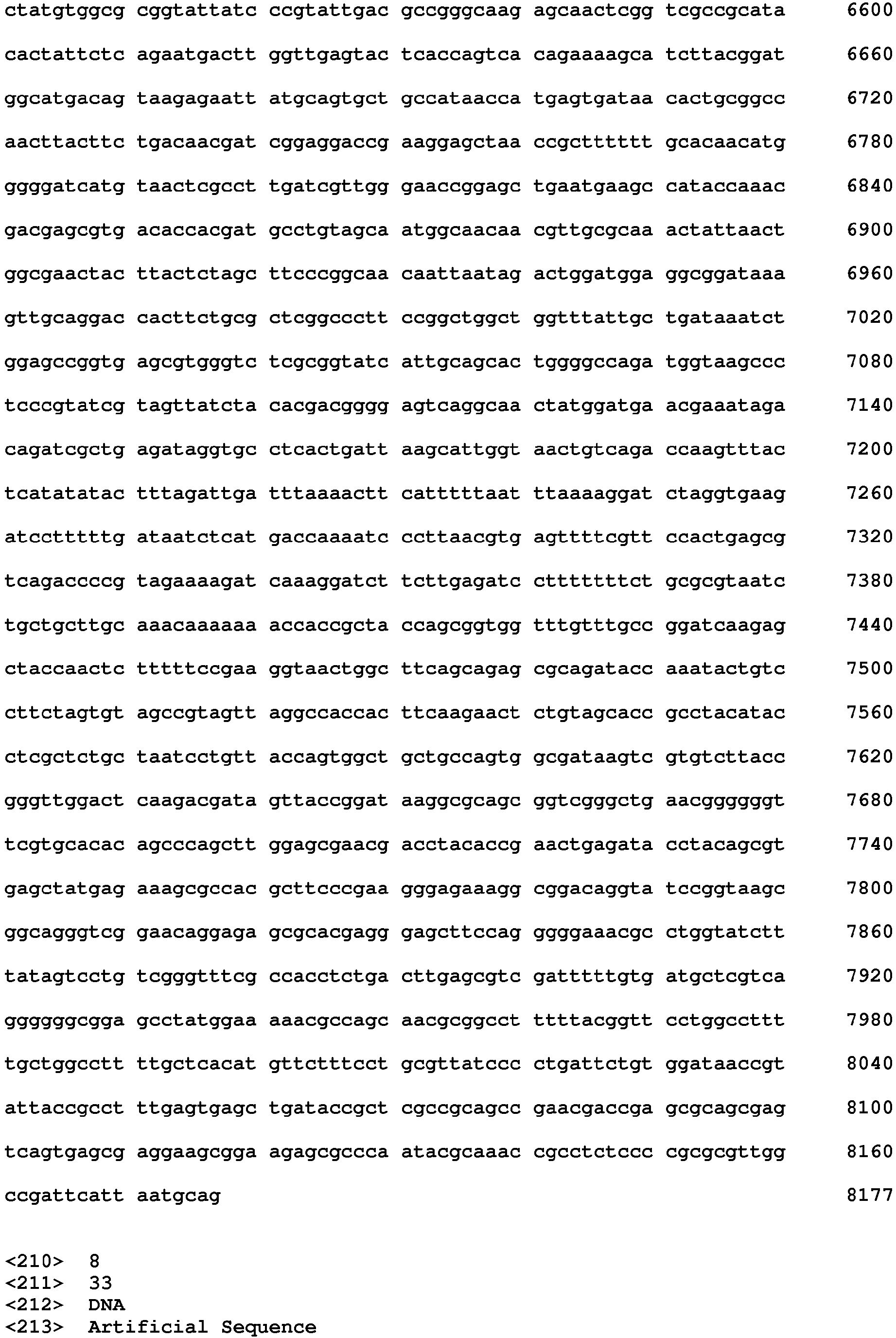
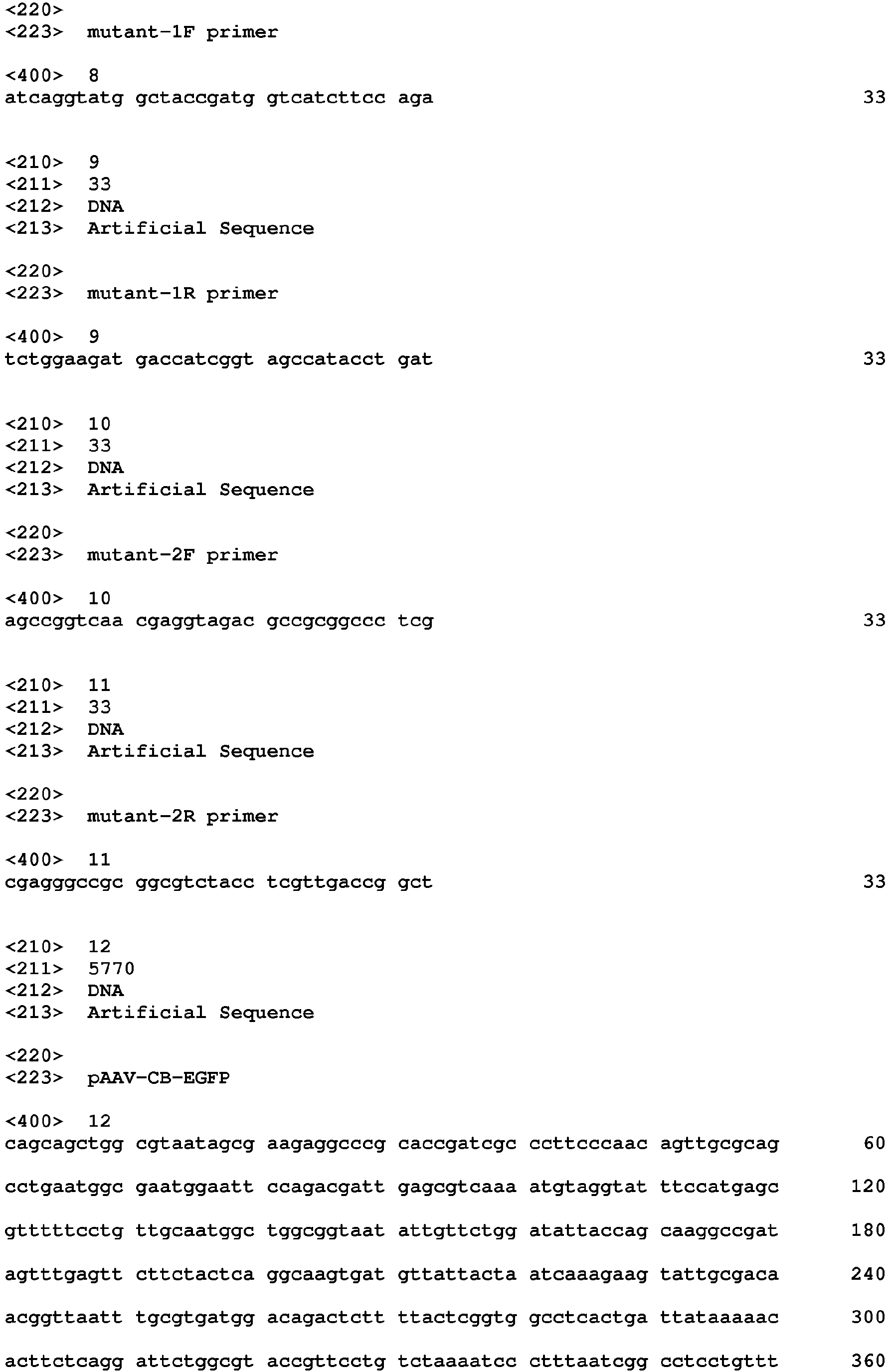
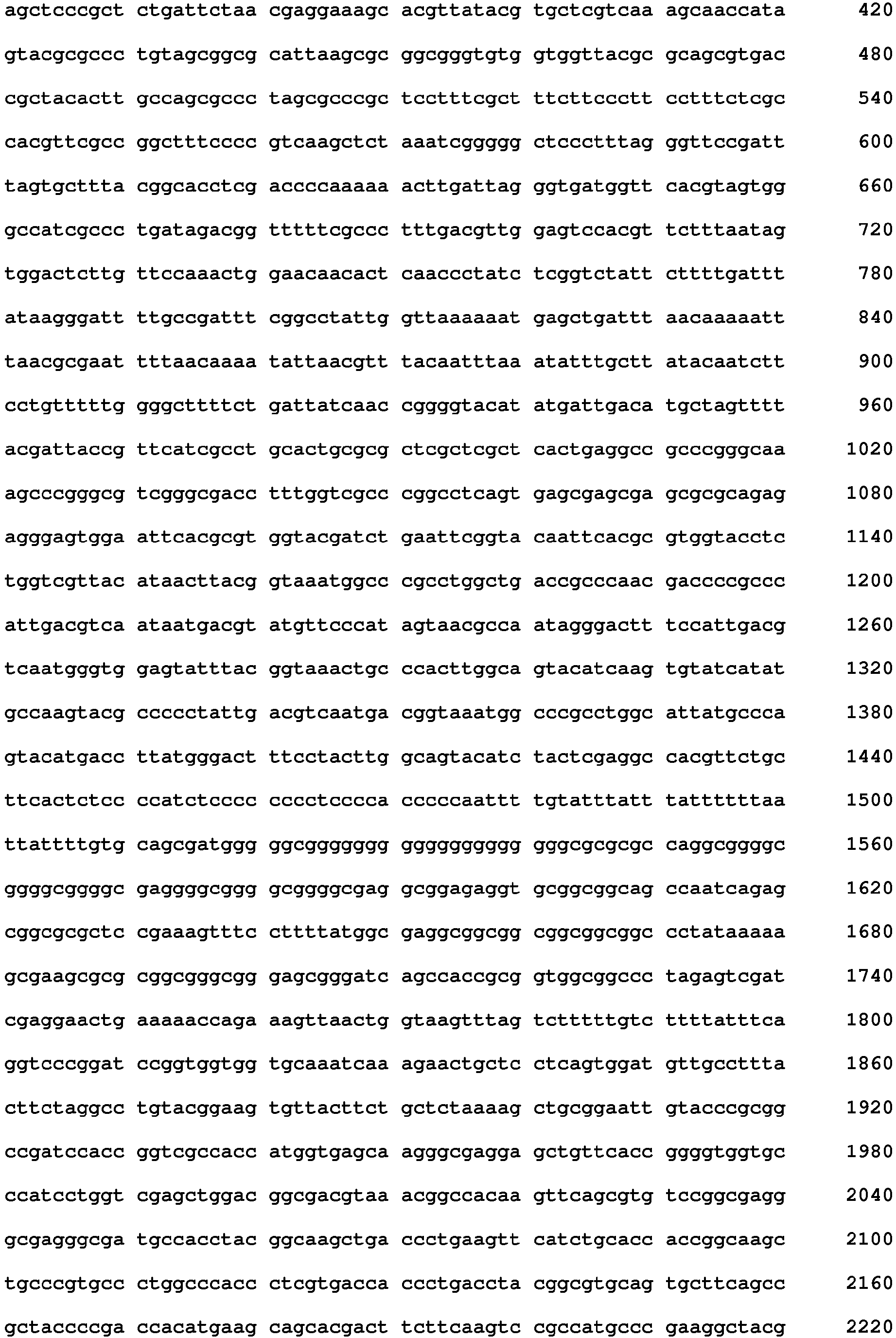


Claims (11)
- A mutant of an adeno-associated virus (AAV) capsid protein, comprising one or more amino acid replacements in a PLA2 domain as compared with the amino acid sequence of a wild-type AAV capsid protein,
wherein the one or more amino acid replacements are located at one or more positions selected from the group consisting of:(1) alanine at position 3,(2) tyrosine at position 6,(3) alanine at position 68,(4) aspartic acid at position 87,(5) leucine at position 91,(6) serine at position 149,(7) proline at position 150, and(8) serine at position 156in the amino acid sequence of AAV2 VP1 capsid protein, or at one or more positions corresponding to the above (1) to (8) in the amino acid sequence of VP1 capsid protein of an AAV other than AAV2. - The mutant of an AAV capsid protein according to claim 1, wherein the one or more amino acid replacements are one or more amino acid replacements selected from the group consisting of:(1) a replacement of alanine at position 3 by threonine (A3T),(2) a replacement of tyrosine at position 6 by histidine (Y6H),(3) a replacement of alanine at position 68 by valine (A68V),(4) a replacement of aspartic acid at position 87 by asparagine (D87N),(5) a replacement of leucine at position 91 by proline (L91P),(6) a replacement of serine at position 149 by tyrosine (S149Y),(7) a replacement of proline at position 150 by histidine (P150H), and(8) a replacement of serine at position 156 by tyrosine (S156Y)in the amino acid sequence of AAV2 VP1 capsid protein, or one or more amino acid replacements corresponding to the above (1) to (8) in the amino acid sequence of VP1 capsid protein of an AAV other than AAV2.
- The mutant of an AAV capsid protein according to claim 1, wherein the one or more amino acid replacements are one or more amino acid replacements selected from the group consisting of:(1) a replacement of alanine at position 3 by threonine (A3T),(2) a replacement of tyrosine at position 6 by histidine (Y6H), and(3) a replacement of alanine at position 68 by valine (A68V) in the amino acid sequence of AAV2 VP1 capsid protein, or one or more amino acid replacements corresponding to the above (1) to (3) in the amino acid sequence of VP1 capsid protein of an AAV other than AAV2.
- The mutant according to any one of claims 1 to 3, which is a mutant of AAV2 capsid protein.
- A nucleic acid encoding the mutant of an AAV capsid protein according to any one of claims 1-4.
- A cell containing the nucleic acid according to claim 5.
- A method of producing a recombinant AAV particle, the method comprising a step of culturing the cell according to claim 6 to produce a recombinant AAV particle.
- The method of producing a recombinant AAV particle according to claim 7, wherein the cell according to claim 6 further contains a nucleic acid encoding an AAV Rep protein, a nucleic acid encoding an adenovirus-derived element necessary for formation of an AAV particle, and a nucleic acid having a nucleotide sequence of an AAV genomic DNA.
- A recombinant AAV particle containing the mutant of an AAV capsid protein according to any one of claims 1-4.
- A composition containing the recombinant AAV particle according to claim 9.
- A method of introducing a gene into a target cell, the method comprising a step of bringing the recombinant AAV particle according to claim 9 into contact with a target cell.
Applications Claiming Priority (2)
| Application Number | Priority Date | Filing Date | Title |
|---|---|---|---|
| JP2017014377 | 2017-01-30 | ||
| PCT/JP2018/002680 WO2018139634A1 (en) | 2017-01-30 | 2018-01-29 | Mutant of adeno-associated virus (aav) capsid protein |
Publications (2)
| Publication Number | Publication Date |
|---|---|
| EP3575398A1 true EP3575398A1 (en) | 2019-12-04 |
| EP3575398A4 EP3575398A4 (en) | 2020-11-11 |
Family
ID=62978534
Family Applications (1)
| Application Number | Title | Priority Date | Filing Date |
|---|---|---|---|
| EP18744464.1A Withdrawn EP3575398A4 (en) | 2017-01-30 | 2018-01-29 | ADENO-ASSOCIATED VIRUS (AAV) MUTANT OF CAPSID PROTEIN |
Country Status (6)
| Country | Link |
|---|---|
| US (2) | US11028131B2 (en) |
| EP (1) | EP3575398A4 (en) |
| JP (2) | JP7081767B2 (en) |
| KR (1) | KR20190111966A (en) |
| CN (1) | CN110462037A (en) |
| WO (1) | WO2018139634A1 (en) |
Cited By (1)
| Publication number | Priority date | Publication date | Assignee | Title |
|---|---|---|---|---|
| CN110462037A (en) * | 2017-01-30 | 2019-11-15 | 学校法人日本医科大学 | Mutants of adeno-associated virus (AAV) capsid proteins |
Families Citing this family (19)
| Publication number | Priority date | Publication date | Assignee | Title |
|---|---|---|---|---|
| TW202045529A (en) | 2019-02-15 | 2020-12-16 | 美商聖加莫治療股份有限公司 | Compositions and methods for producing recombinant aav |
| US20220098614A1 (en) * | 2019-02-28 | 2022-03-31 | Benitec IP Holdings Inc. | Compositions and Methods for Treating Oculopharyngeal Muscular Dystrophy (OPMD) |
| EP4006160A4 (en) * | 2019-07-12 | 2023-06-28 | Gene Therapy Research Institution Co., Ltd. | Adeno-associated virus virion for gene transfer to human liver |
| WO2023072181A1 (en) * | 2021-10-28 | 2023-05-04 | Shanghai Vitalgen Biopharma Co., Ltd. | Adeno-associated virus capsid |
| KR102830431B1 (en) * | 2021-11-30 | 2025-07-08 | 주식회사 글루진테라퓨틱스 | Mutant of adeno-associated virus capsid protein |
| JP7750581B2 (en) * | 2021-11-30 | 2025-10-07 | グルジーン・セラピューティクス・インコーポレイテッド | Adeno-associated virus capsid protein mutants |
| CN116970648A (en) * | 2022-04-24 | 2023-10-31 | 上海朗昇生物科技有限公司 | Novel AAV capsid modified strain and its uses |
| CN116063405B (en) * | 2022-09-27 | 2025-08-29 | 广州译码基因科技有限公司 | Capsid protein mutant MutC capable of improving AAV virus packaging capacity and its application |
| CN116063404B (en) * | 2022-09-27 | 2025-08-29 | 广州译码基因科技有限公司 | Capsid protein MutD capable of improving AAV packaging capacity and its application |
| CN115960177B (en) * | 2022-10-09 | 2023-07-07 | 广州派真生物技术有限公司 | Adeno-associated virus mutant and its application |
| CN115925819B (en) * | 2022-12-30 | 2023-10-13 | 广州派真生物技术有限公司 | Adeno-associated virus mutant and application thereof |
| CN120712363A (en) * | 2023-03-03 | 2025-09-26 | 赛多利斯生物分析仪器公司 | Methods for quantification of viral capsids |
| CN116813719B (en) * | 2023-06-09 | 2024-01-23 | 广州派真生物技术有限公司 | Adeno-associated virus mutant and application thereof |
| CN118480094B (en) * | 2023-09-20 | 2024-12-10 | 广州派真生物技术有限公司 | Adeno-associated virus mutant and application thereof |
| WO2025087345A1 (en) * | 2023-10-25 | 2025-05-01 | Suzhou Cure Genetics Biosciences Co., Limited | Targeted viral particles |
| WO2025212884A1 (en) * | 2024-04-05 | 2025-10-09 | University Of Massachusetts | Discovery of novel aav capsid proteins through directed evolution of the vp1u region |
| WO2025216732A1 (en) * | 2024-04-10 | 2025-10-16 | Duke University | Methods and compositions relating to ecdna biogenesis |
| WO2026084101A1 (en) | 2024-10-18 | 2026-04-23 | 주식회사 아바타테라퓨틱스 | Adeno-associated virus variants |
| KR102874560B1 (en) * | 2024-10-18 | 2025-10-23 | 주식회사 아바타테라퓨틱스 | Adeno-associated virus variant |
Family Cites Families (25)
| Publication number | Priority date | Publication date | Assignee | Title |
|---|---|---|---|---|
| AU762220B2 (en) * | 1998-05-28 | 2003-06-19 | Government Of The United States Of America, As Represented By The Secretary Of The Department Of Health And Human Services, The | AAV5 vector and uses thereof |
| PL2357189T3 (en) | 2003-06-19 | 2017-08-31 | Genzyme Corporation | AAV virions with decreased immunoreactivity and uses therefor |
| US9441244B2 (en) | 2003-06-30 | 2016-09-13 | The Regents Of The University Of California | Mutant adeno-associated virus virions and methods of use thereof |
| US9233131B2 (en) * | 2003-06-30 | 2016-01-12 | The Regents Of The University Of California | Mutant adeno-associated virus virions and methods of use thereof |
| WO2005048942A2 (en) * | 2003-11-13 | 2005-06-02 | Pharmacia Corporation | Combination therapy comprising a cox-2 inhibitor and an antineoplastic agent |
| EP3085389A1 (en) * | 2005-04-07 | 2016-10-26 | The Trustees Of The University Of Pennsylvania | Method of increasing the function of an aav vector |
| AU2006304997B2 (en) * | 2005-10-20 | 2012-03-01 | Uniqure Ip B.V. | Improved AAV vectors produced in insect cells |
| US8273348B2 (en) * | 2006-12-21 | 2012-09-25 | Novozymes A/S | Lipase variants for pharmaceutical use |
| HUE030719T2 (en) | 2007-04-09 | 2017-05-29 | Univ Florida | RAAV vector formulations and methods comprising tyrosine-modified capsid proteins for their use |
| US8927514B2 (en) * | 2010-04-30 | 2015-01-06 | City Of Hope | Recombinant adeno-associated vectors for targeted treatment |
| EP3219313B1 (en) | 2011-04-18 | 2020-10-28 | National Center of Neurology and Psychiatry | Drug delivery particle and method for producing the same |
| JP6342886B2 (en) * | 2012-04-18 | 2018-06-13 | ザ・チルドレンズ・ホスピタル・オブ・フィラデルフィアThe Children’S Hospital Of Philadelphia | Composition and method for highly efficient gene transfer using AAV capsid variants |
| EP2940131B1 (en) | 2012-12-25 | 2019-02-20 | Takara Bio Inc. | Aav variant |
| CN105247044B (en) * | 2013-05-31 | 2021-05-07 | 加利福尼亚大学董事会 | Adeno-associated virus variants and methods of use thereof |
| CN105339495A (en) | 2013-07-11 | 2016-02-17 | 宝生物工程株式会社 | Method for preparing non-enveloped virus |
| US10293059B2 (en) | 2015-04-09 | 2019-05-21 | Cornell University | Gene therapy to prevent reactions to allergens |
| WO2017066764A2 (en) | 2015-10-16 | 2017-04-20 | William Marsh Rice University | Modification of n-terminal region of capsid proteins for enhanced properties of adeno-associated viruses |
| US10900063B2 (en) * | 2016-06-22 | 2021-01-26 | Asahi Kasei Pharma Corporation | Measurement of Lp-PLA2 activity |
| CA3040483A1 (en) * | 2016-10-13 | 2018-04-19 | University Of Massachusetts | Aav capsid designs |
| EP3575398A4 (en) * | 2017-01-30 | 2020-11-11 | Nippon Medical School Foundation | ADENO-ASSOCIATED VIRUS (AAV) MUTANT OF CAPSID PROTEIN |
| KR102612563B1 (en) * | 2017-08-31 | 2023-12-11 | 베니텍 아이피 홀딩스 아이엔씨. | Adeno-Associated Virus (AAV) with Modified Phospholipase Domain |
| AU2020263757B2 (en) * | 2019-04-24 | 2025-08-28 | Takara Bio Inc. | AAV mutant having brain-targeting property |
| EP4006160A4 (en) * | 2019-07-12 | 2023-06-28 | Gene Therapy Research Institution Co., Ltd. | Adeno-associated virus virion for gene transfer to human liver |
| US20210032370A1 (en) * | 2019-08-02 | 2021-02-04 | Immatics Biotechnologies Gmbh | Recruiting agent further binding an mhc molecule |
| CN112961219B (en) * | 2021-02-24 | 2022-08-12 | 中国农业科学院生物技术研究所 | Recombinant adeno-associated virus, its mutant and its construction method and application |
-
2018
- 2018-01-29 EP EP18744464.1A patent/EP3575398A4/en not_active Withdrawn
- 2018-01-29 KR KR1020197022604A patent/KR20190111966A/en not_active Abandoned
- 2018-01-29 JP JP2018564682A patent/JP7081767B2/en not_active Expired - Fee Related
- 2018-01-29 US US16/481,159 patent/US11028131B2/en not_active Expired - Fee Related
- 2018-01-29 WO PCT/JP2018/002680 patent/WO2018139634A1/en not_active Ceased
- 2018-01-29 CN CN201880021632.2A patent/CN110462037A/en active Pending
-
2021
- 2021-04-29 US US17/244,106 patent/US20210246173A1/en not_active Abandoned
-
2022
- 2022-05-17 JP JP2022080954A patent/JP2022107646A/en active Pending
Cited By (1)
| Publication number | Priority date | Publication date | Assignee | Title |
|---|---|---|---|---|
| CN110462037A (en) * | 2017-01-30 | 2019-11-15 | 学校法人日本医科大学 | Mutants of adeno-associated virus (AAV) capsid proteins |
Also Published As
| Publication number | Publication date |
|---|---|
| JPWO2018139634A1 (en) | 2019-11-14 |
| JP2022107646A (en) | 2022-07-22 |
| US20200002384A1 (en) | 2020-01-02 |
| US11028131B2 (en) | 2021-06-08 |
| WO2018139634A1 (en) | 2018-08-02 |
| KR20190111966A (en) | 2019-10-02 |
| CN110462037A (en) | 2019-11-15 |
| JP7081767B2 (en) | 2022-06-07 |
| US20210246173A1 (en) | 2021-08-12 |
| EP3575398A4 (en) | 2020-11-11 |
Similar Documents
| Publication | Publication Date | Title |
|---|---|---|
| US11028131B2 (en) | Mutant of adeno-associated virus (AAV) capsid protein | |
| JP5881626B2 (en) | Method for generating a high titer helperless preparation of recombinant AAV vectors | |
| JP7598333B2 (en) | Methods for producing recombinant viral vectors | |
| KR20200116550A (en) | Capsid-free aav vectors, compositions, and methods for vector production and gene delivery | |
| CN115925999A (en) | Adeno-associated virus variant capsids and methods of use | |
| US12421526B2 (en) | AAV mutant having brain-targeting property | |
| CN104937100A (en) | Aav variant | |
| CA2907799A1 (en) | Adeno-associated virus variants and methods of use thereof | |
| TWI893130B (en) | Codon-optimized nucleic acid that encodes smn1 protein, and use thereof | |
| CA2304801C (en) | Transcriptionally-activated aav inverted terminal repeats (itrs) for use with recombinant aav vectors | |
| CN115552021A (en) | Gland-associated variants, formulations and methods for pulmonary delivery | |
| CN111718418A (en) | A fusion protein that enhances gene editing and its application | |
| CN117377500A (en) | Adeno-associated virus vector capsids with improved tissue tropism | |
| JP2026511015A (en) | Method for producing recombinant AAV particle preparations | |
| JP2025508059A (en) | Adeno-associated virus mutant capsids with improved lung tropism and uses thereof - Patents.com | |
| US20220064668A1 (en) | Modified adeno-associated viral vectors for use in genetic engineering | |
| HK40014535A (en) | Mutant of adeno-associated virus (aav) capsid protein | |
| KR20240023638A (en) | Production of Adeno-Associated Viral Vectors in Insect Cells | |
| WO2025051189A2 (en) | Human embryonic kidney cell lines and use thereof in producing raav | |
| HK40062349B (en) | Aav mutant having brain-targeting property | |
| CN121532412A (en) | Improved adeno-associated viral vectors | |
| CN119569833A (en) | AAV capsid protein variants targeting skeletal muscle and uses thereof | |
| CN119331061A (en) | AAV capsid protein variants targeting the central nervous system and uses thereof | |
| CN120209091A (en) | Recombinant AAV capsid protein targeting hepatocytes and its application | |
| HK40106196A (en) | Production of adeno-associated virus vector in insect cells |
Legal Events
| Date | Code | Title | Description |
|---|---|---|---|
| STAA | Information on the status of an ep patent application or granted ep patent |
Free format text: STATUS: THE INTERNATIONAL PUBLICATION HAS BEEN MADE |
|
| PUAI | Public reference made under article 153(3) epc to a published international application that has entered the european phase |
Free format text: ORIGINAL CODE: 0009012 |
|
| STAA | Information on the status of an ep patent application or granted ep patent |
Free format text: STATUS: REQUEST FOR EXAMINATION WAS MADE |
|
| 17P | Request for examination filed |
Effective date: 20190827 |
|
| AK | Designated contracting states |
Kind code of ref document: A1 Designated state(s): AL AT BE BG CH CY CZ DE DK EE ES FI FR GB GR HR HU IE IS IT LI LT LU LV MC MK MT NL NO PL PT RO RS SE SI SK SM TR |
|
| AX | Request for extension of the european patent |
Extension state: BA ME |
|
| DAV | Request for validation of the european patent (deleted) | ||
| DAX | Request for extension of the european patent (deleted) | ||
| REG | Reference to a national code |
Ref country code: HK Ref legal event code: DE Ref document number: 40014535 Country of ref document: HK |
|
| A4 | Supplementary search report drawn up and despatched |
Effective date: 20201014 |
|
| RIC1 | Information provided on ipc code assigned before grant |
Ipc: C12N 1/21 20060101ALI20201008BHEP Ipc: C12N 1/19 20060101ALI20201008BHEP Ipc: C12N 15/09 20060101AFI20201008BHEP Ipc: C12N 1/15 20060101ALI20201008BHEP Ipc: C07K 14/015 20060101ALI20201008BHEP Ipc: C12N 5/10 20060101ALI20201008BHEP |
|
| STAA | Information on the status of an ep patent application or granted ep patent |
Free format text: STATUS: EXAMINATION IS IN PROGRESS |
|
| 17Q | First examination report despatched |
Effective date: 20230221 |
|
| STAA | Information on the status of an ep patent application or granted ep patent |
Free format text: STATUS: THE APPLICATION HAS BEEN WITHDRAWN |
|
| 18W | Application withdrawn |
Effective date: 20230626 |