EP3574609B1 - System und verfahren zur berechnung von privaten schlüsseln für auf selbstzertifizierter identität basierenden signaturschemen - Google Patents
System und verfahren zur berechnung von privaten schlüsseln für auf selbstzertifizierter identität basierenden signaturschemen Download PDFInfo
- Publication number
- EP3574609B1 EP3574609B1 EP18709096.4A EP18709096A EP3574609B1 EP 3574609 B1 EP3574609 B1 EP 3574609B1 EP 18709096 A EP18709096 A EP 18709096A EP 3574609 B1 EP3574609 B1 EP 3574609B1
- Authority
- EP
- European Patent Office
- Prior art keywords
- random number
- parameters
- secure server
- generated
- key
- Prior art date
- Legal status (The legal status is an assumption and is not a legal conclusion. Google has not performed a legal analysis and makes no representation as to the accuracy of the status listed.)
- Active
Links
Images


Classifications
-
- H—ELECTRICITY
- H04—ELECTRIC COMMUNICATION TECHNIQUE
- H04L—TRANSMISSION OF DIGITAL INFORMATION, e.g. TELEGRAPHIC COMMUNICATION
- H04L9/00—Cryptographic mechanisms or cryptographic arrangements for secret or secure communications; Network security protocols
- H04L9/08—Key distribution or management, e.g. generation, sharing or updating, of cryptographic keys or passwords
- H04L9/0816—Key establishment, i.e. cryptographic processes or cryptographic protocols whereby a shared secret becomes available to two or more parties, for subsequent use
- H04L9/0838—Key agreement, i.e. key establishment technique in which a shared key is derived by parties as a function of information contributed by, or associated with, each of these
- H04L9/0847—Key agreement, i.e. key establishment technique in which a shared key is derived by parties as a function of information contributed by, or associated with, each of these involving identity based encryption [IBE] schemes
-
- H—ELECTRICITY
- H04—ELECTRIC COMMUNICATION TECHNIQUE
- H04L—TRANSMISSION OF DIGITAL INFORMATION, e.g. TELEGRAPHIC COMMUNICATION
- H04L9/00—Cryptographic mechanisms or cryptographic arrangements for secret or secure communications; Network security protocols
- H04L9/008—Cryptographic mechanisms or cryptographic arrangements for secret or secure communications; Network security protocols involving homomorphic encryption
-
- H—ELECTRICITY
- H04—ELECTRIC COMMUNICATION TECHNIQUE
- H04L—TRANSMISSION OF DIGITAL INFORMATION, e.g. TELEGRAPHIC COMMUNICATION
- H04L9/00—Cryptographic mechanisms or cryptographic arrangements for secret or secure communications; Network security protocols
- H04L9/08—Key distribution or management, e.g. generation, sharing or updating, of cryptographic keys or passwords
- H04L9/0861—Generation of secret information including derivation or calculation of cryptographic keys or passwords
- H04L9/0869—Generation of secret information including derivation or calculation of cryptographic keys or passwords involving random numbers or seeds
-
- H—ELECTRICITY
- H04—ELECTRIC COMMUNICATION TECHNIQUE
- H04L—TRANSMISSION OF DIGITAL INFORMATION, e.g. TELEGRAPHIC COMMUNICATION
- H04L9/00—Cryptographic mechanisms or cryptographic arrangements for secret or secure communications; Network security protocols
- H04L9/32—Cryptographic mechanisms or cryptographic arrangements for secret or secure communications; Network security protocols including means for verifying the identity or authority of a user of the system or for message authentication, e.g. authorization, entity authentication, data integrity or data verification, non-repudiation, key authentication or verification of credentials
- H04L9/3247—Cryptographic mechanisms or cryptographic arrangements for secret or secure communications; Network security protocols including means for verifying the identity or authority of a user of the system or for message authentication, e.g. authorization, entity authentication, data integrity or data verification, non-repudiation, key authentication or verification of credentials involving digital signatures
-
- H—ELECTRICITY
- H04—ELECTRIC COMMUNICATION TECHNIQUE
- H04L—TRANSMISSION OF DIGITAL INFORMATION, e.g. TELEGRAPHIC COMMUNICATION
- H04L9/00—Cryptographic mechanisms or cryptographic arrangements for secret or secure communications; Network security protocols
- H04L9/32—Cryptographic mechanisms or cryptographic arrangements for secret or secure communications; Network security protocols including means for verifying the identity or authority of a user of the system or for message authentication, e.g. authorization, entity authentication, data integrity or data verification, non-repudiation, key authentication or verification of credentials
- H04L9/3263—Cryptographic mechanisms or cryptographic arrangements for secret or secure communications; Network security protocols including means for verifying the identity or authority of a user of the system or for message authentication, e.g. authorization, entity authentication, data integrity or data verification, non-repudiation, key authentication or verification of credentials involving certificates, e.g. public key certificate [PKC] or attribute certificate [AC]; Public key infrastructure [PKI] arrangements
Definitions
- This invention relates to a system and method for generating private keys for devices participating in self-certified identity based signature schemes whereby the private keys are used by the devices to establish a common session key for encoding digital communications between devices.
- the private keys generated in accordance with the system and methods of the invention are only made known to the devices themselves and not by any other third parties.
- a common method of establishing a secret key for signing data communications between entities involves the pre-sharing of a common symmetric secret key between the relevant parties. For such a method, data messages that are to be transmitted between the entities will be signed using this pre-shared or pre-agreed-upon secret key. If the receiving entity is able to decrypt the received message using this pre-shared secret key, this implies that the authenticity of the sender has been verified and the receiver may then proceed to process the decrypted message accordingly.
- this method is not scalable and is quite inflexible as it requires the common secret to be pre-shared or communicated to all trusted entities or devices before the entities or devices may communicate with one another. In the loT setting, the high mobility of devices is a norm and devices that are required to exchange data with one another may not have had the opportunity to establish a secret key beforehand.
- PKI public key infrastructure
- identity based cryptography methodologies to authenticate entities and to sign data messages.
- identity based cryptosystems are special public key cryptosystems, which are based on bilinear pairing and utilize an entity's identity, such as user name, email address, telephone number, IP address, etc. as the public key and a corresponding private key is then derived from the entity's identity by a Key Generation Centre which contains a master secret key, which is utilized in the generation of private keys for entities.
- entity's identity such as user name, email address, telephone number, IP address, etc.
- a corresponding private key is then derived from the entity's identity by a Key Generation Centre which contains a master secret key, which is utilized in the generation of private keys for entities.
- the downside of this approach is that bilinear pairing is an expensive and time consuming computation process.
- a first advantage of embodiments of systems and methods in accordance with the invention is that the private keys of devices or entities belonging to the self-certified identity based signature scheme are made known only to the devices themselves and are not escrowed out to any external third parties such as a Key Generating Centre.
- a second advantage of embodiments of systems and methods in accordance with the invention is that the private keys generated in accordance with embodiments of the invention are of the same form as in existing self-certified identity based signature schemes and thus may be used in existing self-certified identity based signature schemes without changing the operation of existing self-certified identity based signature schemes.
- a third advantage of embodiments of systems and methods in accordance with the invention is that the invention allows cross-domain authenticated key exchange to take place whereby users' or entities' respective private keys may be issued by different key generation centres whereby each centre has its own unique system parameters.
- a fourth advantage of embodiments of systems and methods in accordance with the invention is that the invention may be utilized in Transport Layer Security (TLS) or Datagram Transport Layer Security (DTLS) protocols whereby a self-certified identity based signature scheme in accordance with embodiments of the invention may be used to sign messages for TLS protocol or DTLS protocol.
- TLS Transport Layer Security
- DTLS Datagram Transport Layer Security
- a system for computing a private key sk for a device participating in a self-certified identity based signature system comprises a secure server configured to: compute parameters for the device based on a second random number r i2 generated by the secure server, a first set of components received from the device, a master secret key x and parameters associated with a master public key mpk, wherein the first set of components comprises a first random number r i1 , generated by the device, transmit the computed parameters to the device; and the device configured to compute the private key sk based on the received computed parameters and the random number r i1 .
- the step of computing the parameters for the device comprises: retrieving an arbitrary first value R i1 and an identity of the device id i from the first set of components, wherein the arbitrary first value R i1 is generated based on the first random number r i1 ; computing an arbitrary value of the device R i and a first integer S i1 ; and setting the computed arbitrary value of the device R i and the first integer S i1 as the parameters for the device, whereby the arbitrary value of the device R i is computed based on the arbitrary first value R i1 and the second random number r i2 , and whereby the first integer S i1 is computed based on the second random number r i2 , the master secret key x, the arbitrary value of the device R i , the identity of the device id i and a prime number q obtained from the parameters associated with the master public key mpk.
- the step of computing the private key sk comprises: computing an integer s i based on the first integer s i1 as retrieved from the computed parameters transmitted from the secure server, the first random number r i1 , and a prime number q as obtained from the parameters associated with the master public key mpk; and forming the private key sk based on the arbitrary value of the device R i and the integer s i .
- H ( ) is a collision-resistant hash function.
- the step of computing the parameters for the device comprises: retrieving an arbitrary first value R i1 , an identity of the device id i and a homomorphic encryption value c from the first set of components, wherein the arbitrary first value R i1 is generated based on the first random number r i1 , and the homomorphic encryption value c is generated by providing the first random number r i1 , and a prime number q obtained from the parameters associated with the master public key mpk to an additive homomorphic encryption function HEnc(); setting an arbitrary value of the device R i and a first integer s i1 as the parameters for the device, whereby the arbitrary value of the device R i is computed based on the arbitrary first value R i1 and the second random number r i2 ; and whereby the first integer s i1 is computed by providing the second random number r i2 , the homomorphic encryption value c
- the step of computing the private key sk comprises: computing an integer s i by applying a complementary homomorphic decryption function to the first integer s i1 as retrieved from the computed parameters transmitted from the secure server; and forming the private key sk based on the arbitrary value of the device R i and the integer s i .
- HEnc() is the additive homomorphic encryption function.
- a system for generating a common session key SK for encoding digital communications between a first device i and a second device j that are participating in a self-certified identity based signature scheme comprising: a secure server configured to instruct: the first device to compute a private key sk i based on a first set of parameters received from the secure server, and a random number r i1 generated by the first device, wherein the first set of parameters is generated by the secure server based on a second random number r i2 generated by the secure server, a first set of components comprising the first random number r i1 , a master secret key x and parameters associated with a master public key mpk, wherein the first set of components is generated by the first device and transmitted to the secure server, and the second device to compute a private key sk j based on a second set of parameters received from the secure server, and a random number r j1 generated by the second device,
- the step of generating the first set of parameters for the first device comprises: the secure server being configured to: retrieve an arbitrary first value R i1 and an identity of the first device id i from the first set of components, wherein the arbitrary first value R i1 is generated based on the first random number r i1 ; compute an arbitrary value of the first device R i and a first integer S i1 ; and set the computed arbitrary value of the first device R i and the first integer s i1 as the parameters for the first device, whereby the arbitrary value of the first device R i is computed based on the arbitrary first value R i1 and the second random number r i2 ; and whereby the first integer S i1 is computed based on the second random number r i2 , the master secret key x, the arbitrary value of the first device R i , the identity of the first device id i and a prime number
- the computing the private key sk i comprises: the first device being configured to: compute an integer s i based on the first integer S i1 as retrieved from the first set of parameters, the first random number r i1 , and a prime number q as obtained from the parameters associated with the master public key mpk.; and form the private key sk i based on the arbitrary value of the first device R i and the integer s i .
- the generating the second set of parameters for the second device comprises: the secure server being configured to: retrieve an arbitrary first value R j1 and an identity of the second device id j from the second set of components, wherein the arbitrary first value R j1 is generated based on the first random number r j1 ; compute an arbitrary value of the second device R j and a first integer s j1 ; and set the computed arbitrary value of the second device R j and the first integer s j1 as the parameters for the second device, whereby the arbitrary value of the second device R j is computed based on the arbitrary first value R j1 and the second random number r j2 ; and whereby the first integer s j1 is computed based on the second random number r j2 , the master secret key x, the arbitrary value of the second device R j , the identity of the second device id j and a prime number
- the computing the private key sk j comprises: the second device being configured to: compute an integer s j based on the first integer s j1 as retrieved from the second set of parameters, the first random number r j1 , and a prime number q as obtained from the parameters associated with the master public key mpk; and form the private key sk j based on the arbitrary value of the second device R j and the integer s j .
- a system for generating a common session key SK for encoding digital communications between a first device i and a second device j participating in a self-certified identity based signature scheme comprising: a secure server configured to instruct: the first device to compute a private key sk i based on a first set of parameters received from the secure server, and a random number r i1 , generated by the first device, wherein the first set of parameters is generated by the secure server based on a second random number r i2 generated by the secure server, a first set of components comprising the first random number r i1 , a master secret key x and parameters associated with a master public key mpk, wherein the first set of components is generated by the first device and transmitted to the secure server, and the second device to compute a private key sk j based on a second set of parameters received from the secure server, and a random number r j1 generated by the second device,
- the generating the first set of parameters for the first device comprises: the secure server being configured to: retrieve an arbitrary first value R i1 and an identity of the first device id i from the first set of components, wherein the arbitrary first value R i1 is generated based on the first random number r i1 ; compute an arbitrary value of the first device R i and a first integer s i1 ; and set the computed arbitrary value of the first device R i and the first integer S i1 as the parameters for the first device, whereby the arbitrary value of the first device R i is computed based on the arbitrary first value R i1 and the second random number r i2 ; and whereby the first integer s i1 is computed based on the second random number r i2 , the master secret key x , the arbitrary value of the first device R i , the identity of the first device id i and a prime number
- the computing the private key sk i comprises: the first device being configured to: compute an integer s i based on the first integer s i1 as retrieved from the first set of parameters, the first random number r i1 , and a prime number q as obtained from the parameters associated with the master public key mpk; and form the private key sk i based on the arbitrary value of the first device R i and the integer s i .
- the generating the second set of parameters for the second device comprises: the secure server being configured to: retrieve an arbitrary first value R j1 and an identity of the second device id j from the second set of components, wherein the arbitrary first value R j1 is generated based on the first random number r j1 ; compute an arbitrary value of the second device R j and a first integer s j1 ; and set the computed arbitrary value of the second device R j and the first integer s j1 as the parameters for the second device, whereby the arbitrary value of the second device R j is computed based on the arbitrary first value R j1 and the second random number r j2 ; and whereby the first integer s j1 is computed based on the second random number r j2 , the master secret key x, the arbitrary value of the second device R j , the identity of the second device id j and a prime number
- the computing the private key sk j comprises: the second device being configured to: compute an integer s j based on the first integer s j1 as retrieved from the second set of parameters, the first random number r j1 , and a prime number q as obtained from the parameters associated with the master public key mpk; and form the private key sk j based on the arbitrary value of the second device R j and the integer s j .
- a system for generating a common session key SK for encoding digital communications between a first device i and a second device j that are participating in a self-certified identity based signature scheme comprising: a first secure server configured to instruct: the first device to compute a private key sk i based on a first set of parameters received from the first secure server, and a random number r i1 , generated by the first device, wherein the first set of parameters is generated by the first secure server based on a second random number r i2 generated by the first secure server, a first set of components comprising the first random number r i1 , a master secret key x i , and parameters associated with a master public key mpk i , wherein the first set of components is generated by the first device and transmitted to the first secure server; a second secure server configured to instruct: the second device to compute a private key sk j based on a second set of parameters received
- the generating the first set of parameters for the first device comprises: the first secure server being configured to: retrieve an arbitrary first value R i1 and an identity of the first device id i from the first set of components, wherein the arbitrary first value R i1 is generated based on the first random number r i1 ; compute an arbitrary value of the first device R i and a first integer s i1 ; and set the computed arbitrary value of the first device R i and the first integer s i1 as the parameters for the first device, whereby the arbitrary value of the first device R i is computed based on the arbitrary first value R i1 and the second random number r i2 ; and whereby the first integer s i1 is computed based on the second random number r i2 , the master secret key x i , the arbitrary value of the first device R i , the identity of the first device id i and
- the computing the private key sk i comprises: the first device being configured to: compute an integer s i based on the first integer S i1 as retrieved from the first set of parameters, the first random number r i1 , and a prime number q as obtained from the parameters associated with the master public key mpk i ; and form the private key sk i based on the arbitrary value of the first device R i and the integer s i .
- the generating the second set of parameters for the second device comprises: the second secure server being configured to: retrieve an arbitrary first value R j1 and an identity of the second device id j from the second set of components, wherein the arbitrary first value R j1 is generated based on the first random number r j1 ; compute an arbitrary value of the second device R j and a first integer s j1 ; and set the computed arbitrary value of the second device R j and the first integer s j1 as the parameters for the second device, whereby the arbitrary value of the second device R j is computed based on the arbitrary first value R j1 and the second random number r j2 ; and whereby the first integer s j1 is computed based on the second random number r j2 , the master secret key x j , the arbitrary value of the second device R j , the identity of the second device id j and
- the computing the private key sk j comprises: the second device being configured to: compute an integer s j based on the first integer s j1 as retrieved from the second set of parameters, the first random number r j1 , and a prime number q as obtained from the parameters associated with the master public key mpk j ; and form the private key sk j based on the arbitrary value of the second device R j and the integer s j .
- a system for generating a common session key SK for encoding digital communications between a first device i and a second device j that are participating in an extended Transport Layer Security (TLS) protocol or an extended Datagram Transport Layer Security protocol (DTLS) comprising: a secure server configured to instruct: the first device to compute a private key sk i based on a first set of parameters received from the secure server, and a random number r i1 , generated by the first device, wherein the first set of parameters is generated by the secure server based on a second random number r i2 generated by the secure server, a first set of components comprising the first random number r i1 , a master secret key x and parameters associated with a master public key mpk, wherein the first set of components is generated by the first device and transmitted to the secure server, and the second device to compute a private key sk j based on a second set of parameters received from the secure server, and
- TLS Transport Layer Security
- DTLS extended Data
- the generating the first set of parameters for the first device comprises: the secure server being configured to: retrieve an arbitrary first value R i1 and the identity of the first device id i from the first set of components, wherein the arbitrary first value R i1 is generated based on the first random number r i1 ; compute an arbitrary value of the first device R i and a first integer S i1 ; and set the computed arbitrary value of the first device R i and the first integer S i1 as the parameters for the first device, whereby the arbitrary value of the first device R i is computed based on the arbitrary first value R i1 and the second random number r i2 ; and whereby the first integer S i1 is computed based on the second random number r i2 , the master secret key x , the arbitrary value of the first device R i , the identity of the first device id i and a prime number q obtained
- the computing the private key sk i comprises: the first device being configured to: compute an integer s i based on the first integer s i1 as retrieved from the first set of parameters, the first random number r i1 , and a prime number q as obtained from the parameters associated with the master public key mpk; and form the private key sk i based on the arbitrary value of the first device R i and the integer s i .
- the generating the second set of parameters for the second device comprises: the secure server being configured to: retrieve an arbitrary first value R j1 and the identity of the second device id j from the second set of components, wherein the arbitrary first value R j1 is generated based on the first random number r j1 ; compute an arbitrary value of the second device R j and a first integer s j1 ; and set the computed arbitrary value of the second device R j and the first integer s j1 as the parameters for the second device, whereby the arbitrary value of the second device R j is computed based on the arbitrary first value R j1 and the second random number r j2 ; and whereby the first integer s j1 is computed based on the second random number r j2 , the master secret key x, the arbitrary value of the second device R j , the identity of the second device id j and a prime number
- the computing the private key sk j comprises: the second device being configured to: compute an integer s j based on the first integer s j1 as retrieved from the second set of parameters, the first random number r j1 , and a prime number q as obtained from the parameters associated with the master public key mpk .; and form the private key sk j based on the arbitrary value of the second device R j and the integer s j .
- a system for generating a common session key SK for encoding digital communications between a first device i and a second device j that are participating in an extended Transport Layer Security (TLS) protocol or an extended Datagram Transport Layer Security protocol (DTLS) comprising: a first secure server configured to instruct: the first device to compute a private key sk i based on a first set of parameters received from the first secure server, and a random number r i1 , generated by the first device, wherein the first set of parameters is generated by the first secure server based on a second random number r i2 generated by the first secure server, a first set of components comprising the first random number r i1 , a master secret key x i , and parameters associated with a master public key mpk i , wherein the first set of components is generated by the first device and transmitted to the first secure server, a second secure server configured to instruct: the second device to compute a private key
- the generating the first set of parameters for the first device comprises: the first secure server being configured to: retrieve an arbitrary first value R i1 and the identity of the first device id i from the first set of components, wherein the arbitrary first value R i1 is generated based on the first random number r i1 ; compute an arbitrary value of the first device R i and a first integer S i1 ; and set the computed arbitrary value of the first device R i and the first integer S i1 as the parameters for the first device, whereby the arbitrary value of the first device R i is computed based on the arbitrary first value R i1 and the second random number r i2 ; and whereby the first integer S i1 is computed based on the second random number r i2 , the master secret key x i , the arbitrary value of the first device R i , the identity of the first device id i and a prime number
- the computing the private key sk i comprises: the first device being configured to: compute an integer s i based on the first integer s i1 as retrieved from the first set of parameters, the first random number r i1 , and a prime number q as obtained from the parameters associated with the master public key mpk i .; and form the private key sk i based on the arbitrary value of the first device R i and the integer s i .
- the generating the second set of parameters for the second device comprises: the second secure server being configured to: retrieve an arbitrary first value R j1 and the identity of the second device id j from the second set of components, wherein the arbitrary first value R j1 is generated based on the first random number r j1 ; compute an arbitrary value of the second device R j and a first integer s j1 ; and set the computed arbitrary value of the second device R j and the first integer s j1 as the parameters for the second device, whereby the arbitrary value of the second device R j is computed based on the arbitrary first value R j1 and the second random number r j2 ; and whereby the first integer s j1 is computed based on the second random number r j2 , the master secret key x j , the arbitrary value of the second device R j , the identity of the second device id j and
- the computing the private key sk j comprises: the second device being configured to: compute an integer s j based on the first integer s j1 as retrieved from the second set of parameters, the first random number r j1 , and a prime number q as obtained from the parameters associated with the master public key mpk j ; and form the private key sk j based on the arbitrary value of the second device R j and the integer s j .
- the secure server before the secure server is configured to compute parameters for the device based on the second random number r i2 generated by the secure server, the secure server is configured to: receive a zero-knowledge proof result from the device, whereby the zero-knowledge proof result is generated by the device using the first random number r i1 and a system parameter ⁇ ; determine from the zero-knowledge proof result if the first random number r i1 is equal or less than the system parameter ⁇ ; and compute parameters for the device based on the second random number r i2 generated by the secure server, when the first random number r i1 is equal or less than the system parameter ⁇ .
- a system for generating a common session key SK for encoding digital communications between a first device i and a second device j that are participating in an extended Transport Layer Security (TLS) protocol or an extended Datagram Transport Layer Security protocol (DTLS) comprising: a secure server configured to: generate a private key sk i for the first device based on an identity of the first device id i and generate a private key sk j for the second device based on an identity of the second device id j , using a self-certified Identity Based Signature Scheme; and transmit the private key sk i to the first device and transmit the private key sk j to the second device; the first and second devices configured to use the same self-certified Identity Based Signature Scheme to generate the common session key SK for the TLS protocol or the DTLS protocol between the first device and the second device, wherein the identity of the first device id i is included in the Certificate message of the first device and the identity
- a system for generating a common session key SK for encoding digital communications between a first device i and a second device j that are participating in an extended Transport Layer Security (TLS) protocol or an extended Datagram Transport Layer Security protocol (DTLS) comprising: a first secure server configured to: generate a private key sk i for the first device based on an identity of the first device id i using a self-certified Identity Based Signature Scheme, and transmit the private key sk i to the first device; a second secure server configured to: generate a private key sk j for the second device based on an identity of the second device id j , using a self-certified Identity Based Signature Scheme, and transmit the private key sk j to the second device; wherein the first secure server is located in a different domain from the second secure server, the first and second devices configured to use the same self-certified Identity Based Signature Scheme with different parameters or different self-certified Identity Based Signature Schemes to generate the
- a secure server configured to compute a private key sk for a device participating in a self-certified identity based signature system
- a processor configured to compute parameters for the device based on a second random number r i2 generated by the secure server, a first set of components received from the device, a master secret key x and parameters associated with a master public key mpk, wherein the first set of components comprises a first random number r i1 generated by the device, transmit the computed parameters to the device such that the device is configured to compute the private key sk based on the received computed parameters and the random number r i1 .
- the instructions to compute the parameters for the device comprises: instructions for directing the processor to: retrieve an arbitrary first value R i1 and an identity of the device id i from the first set of components, wherein the arbitrary first value R i1 is generated based on the first random number r i1 ; compute an arbitrary value of the device R i and a first integer S i1 ; and set the computed arbitrary value of the device R i and the first integer S i1 as the parameters for the device, whereby the arbitrary value of the device R i is computed based on the arbitrary first value R i1 and the second random number r i2 , and whereby the first integer S i1 is computed based on the second random number r i2 , the master secret key x , the arbitrary value of the first device R i , the identity of the device id i and a prime number q obtained from the parameters associated with the master public
- the instructions to compute the parameters for the device comprises: instructions for directing the processor to: retrieve an arbitrary first value R i1 ,an identity of the device id i and a homomorphic encryption value c from the first set of components, wherein the arbitrary first value R i1 is generated based on the first random number r i1 , and the homomorphic encryption value c is generated by providing the first random number r i1 , and a prime number q obtained from the parameters associated with the master public key mpk to an additive homomorphic encryption function HEnc(); set an arbitrary value of the device R i and a first integer s i1 as the parameters for the device, whereby the arbitrary value of the device R i is computed based on the arbitrary first value R i1 and the second random number r i2 ; and whereby the first integer s i1 is computed by providing the second random number r i2 , the
- the secure server before the instructions to compute parameters for the device based on the second random number r i2 generated by the secure server, the secure server comprises: instructions for directing the processor to: receive a zero-knowledge proof result from the device, whereby the zero-knowledge proof result is generated by the device using the first random number r i1 , and a system parameter ⁇ ; determine from the zero-knowledge proof result if the first random number r i1 is equal or less than the system parameter ⁇ ; and compute parameters for the device based on the second random number r i2 generated by the secure server, when the first random number r i1 is equal or less than the system parameter ⁇ .
- a method for computing a private key sk for a device participating in a self-certified identity based signature system comprises: computing, by a secure server, parameters for the device based on a second random number r i2 generated by the secure server, a first set of components received from the device, a master secret key x and parameters associated with a master public key mpk, wherein the first set of components comprises a first random number r i1 , generated by the device, transmitting the computed parameters to the device such that the device computes the private key sk based on the received computed parameters and the random number r i1 .
- the computing the parameters for the device comprises: retrieving, by the secure server, an arbitrary first value R i1 and an identity of the device id i from the first set of components, wherein the arbitrary first value R i1 is generated based on the first random number r i1 ; computing an arbitrary value of the device R i and a first integer S i1 ; and setting the computed arbitrary value of the device R i and the first integer s i1 as the parameters for the device, whereby the arbitrary value of the device R i is computed based on the arbitrary first value R i1 and the second random number r i2 ; and whereby the first integer S i1 is computed based on the second random number r i2 , the master secret key x, the arbitrary value of the first device R i , the identity of the device id i and a prime number q obtained from the parameters associated with the master public key
- the computing the parameters for the device comprises: retrieving, by the secure server, an arbitrary first value R i1 ,an identity of the device id i and a homomorphic encryption value c from the first set of components, wherein the arbitrary first value R i1 is generated based on the first random number r i1 , and the homomorphic encryption value c is generated by providing the first random number r i1 , and a prime number q obtained from the parameters associated with the master public key mpk to an additive homomorphic encryption function HEnc(); setting an arbitrary value of the device R i and a first integer s i1 as the parameters for the device, whereby the arbitrary value of the device R i is computed based on the arbitrary first value R i1 and the second random number r i2 ; and whereby the first integer S i1 is computed by providing the second random number r i2 , the homomorph
- a method for generating a common session key SK for encoding digital communications between a first device i and a second device j that are participating in a self-certified identity based signature scheme comprises: receiving, by the first device, instructions from a secure server to compute a private key sk i based on a first set of parameters received from the secure server, and a random number r i1 , generated by the first device, wherein the first set of parameters is generated by the secure server based on a second random number r i2 generated by the secure server, a first set of components comprising the first random number r i1 , a master secret key x and parameters associated with a master public key mpk, wherein the first set of components is generated by the first device and transmitted to the secure server, and signing, by the first device, a group element g a using a self-certified Identity Based Signature Scheme and the private key sk i , where a is a random number generated by the
- the method further comprises: receiving a signed group elements (ga ⁇ gb) and a group element gb from the second device; verifying the signed group elements ( g a ⁇ g b ) using the verification function associated with the self-certified Identity Based Signature Scheme and the identity of the second device id j ; computing a first shared secret k ij based on the group element a and the group element g b , compute a first key vk i by providing the first shared secret k ij to a Key Deriving Function, and compute a first authentication data Ad i by providing the first key vk i to an Authentication Data Deriving Function, when the signed group elements ( g a ⁇ g b ) are verified; generating the common session key SK by providing the first shared secret k ij to the Key Deriving Function; transmitting the first authentication data Ad i to the second device.
- a signed group elements ga ⁇ gb
- a first device for generating a common session key SK for encoding digital communications between the first device and a second device that are participating in a self-certified identity based signature scheme comprises: a processor; and a non-transitory media readable by the processor, the media storing instructions that when executed by the processor, cause the processor to: receive instructions from a secure server to compute a private key sk i based on a first set of parameters received from the secure server, and a random number r i1 generated by the first device, wherein the first set of parameters is generated by the secure server based on a second random number r i2 generated by the secure server, a first set of components comprising the first random number r i1 , a master secret key x and parameters associated with a master public key mpk, wherein the first set of components is generated by the first device and transmitted to the secure server, and sign a group element g a using a self-certified Identity Based Signature Scheme
- the instructions comprise instructions for directing the processor to: receive a signed group elements (ga ⁇ gb) and a group element gb from the second device; verify the signed group elements ( g a ⁇ g b ) using the verification function associated with the self-certified Identity Based Signature Scheme and the identity of the second device id j ; compute a first shared secret k ij based on the group element a and the group element g b , compute a first key vk i by providing the first shared secret k ij to a Key Deriving Function, and compute a first authentication data Ad i by providing the first key vk i to an Authentication Data Deriving Function, when the signed group elements ( g a ⁇ g b ) are verified; generate the common session key SK by providing the first shared secret k ij to the Key Deriving Function; transmit the first authentication data Ad i to the second device
- a method for generating a common session key SK for encoding digital communications between a first device i and a second device j that are participating in a self-certified identity based signature scheme comprises: receiving, by the second device, instructions from the secure server to compute a private key sk j based on a second set of parameters received from the secure server, and a random number r j1 generated by the second device, wherein the second set of parameters is generated by the secure server based on a second random number r j2 generated by the secure server, a second set of components comprising the first random number r j1 , the master secret key x and the parameters associated with a master public key mpk, wherein the second set of components is generated by the second device and transmitted to the secure server; receiving an identity of the first device id i , the group element g a and the signed group element g a from the first; verifying the signed group element g a using a verification function associated
- the method further comprises: receiving a first authentication data Ad i from the first device; computing a second shared secret k ji based on the group element g a and the group element g b ; computing a second key vk j by providing the second shared secret k ji to the Key Deriving Function; computing a second authentication data Ad j by providing the key vk j to the Authentication Data Deriving Function; determining if the second authentication data Ad j matches with the first authentication data Ad i; and generating the common session key SK by providing the second shared secret k ji to the Key Deriving Function, when the second authentication data Ad j matches with the first authentication data Ad i .
- a second device for generating a common session key SK for encoding digital communications between a first device and the second device that are participating in a self-certified identity based signature scheme comprises: a processor; and a non-transitory media readable by the processor, the media storing instructions that when executed by the processor, cause the processor to: receive instructions from the secure server to compute a private key sk j based on a second set of parameters received from the secure server, and a random number r j1 generated by the second device, wherein the second set of parameters is generated by the secure server based on a second random number r j2 generated by the secure server, a second set of components comprising the first random number r j1 , the master secret key x and the parameters associated with a master public key mpk, wherein the second set of components is generated by the second device and transmitted to the secure server; receive an identity of the first device id i , the group element g a and the signed
- the instructions comprise instructions for directing the processor to: receive a first authentication data Ad i from the first device; compute a second shared secret k ji based on the group element g a and the group element g b ; compute a second key vk j by providing the second shared secret k ji to the Key Deriving Function; compute a second authentication data Ad j by providing the key vk j to the Authentication Data Deriving Function; determine if the second authentication data Ad j matches with the first authentication data Ad i; and generate the common session key SK by providing the second shared secret k ji to the Key Deriving Function, when the second authentication data Ad j matches with the first authentication data Ad i .
- a method for generating a common session key SK for encoding digital communications between a first device i and a second device j participating in a self-certified identity based signature scheme comprises: receiving, by the first device, instructions from a secure server, to compute a private key sk i based on a first set of parameters received from the secure server, and a random number r i1 , generated by the first device, wherein the first set of parameters is generated by the secure server based on a second random number r i2 generated by the secure server, a first set of components comprising the first random number r i1 , a master secret key x and parameters associated with a master public key mpk, wherein the first set of components is generated by the first device and transmitted to the secure server, and signing, by the first device, a cryptographic nonce N i using a self-certified Identity Based Signature Scheme and the private key sk i ; transmitting an identity of the first device i
- the second device is configured to: verifying the signed cryptographic nonce N i using a verification function associated with the self-certified Identity Based Signature Scheme and the identity of the first device id i ; signing cryptographic nonces (N i
- the method further comprises: receiving a cryptographic nonces (Ni
- Nj) and the cryptographic nonce Nj from the second device; verifying the signed cryptographic nonces (N i ⁇ N j ) using the verification function associated with the self-certified Identity Based Signature Scheme and the identity of the second device id j , compute a first shared secret k ij g sj ⁇ si , compute a first key vk i by providing the first shared secret k ij to a Key Deriving Function, and compute a first authentication data Ad i by providing the cryptographic nonces N i and N j and the first key vk i to an Authentication Data Deriving Function, when the signed cryptographic nonces (N i ⁇ N j ) are verified; generating the common session key SK by providing the first shared secret k ij and the cryptographic nonces N i and N j to the Key Deriving Function;
- a first device for generating a common session key SK for encoding digital communications between a first device i and a second device j participating in a self-certified identity based signature scheme comprises: a processor; and a non-transitory media readable by the processor, the media storing instructions that when executed by the processor, cause the processor to: receive instructions from a secure server, to compute a private key sk i based on a first set of parameters received from the secure server, and a random number r i1 generated by the first device, wherein the first set of parameters is generated by the secure server based on a second random number r i2 generated by the secure server, a first set of components comprising the first random number r i1 , a master secret key x and parameters associated with a master public key mpk, wherein the first set of components is generated by the first device and transmitted to the secure server; and sign a cryptographic nonce N i using a self-certified Identity Based
- a second device for generating a common session key SK for encoding digital communications between a first device and the second device participating in a self-certified identity based signature scheme comprises: a processor; and a non-transitory media readable by the processor, the media storing instructions that when executed by the processor, cause the processor to: receive instructions from the secure server to compute a private key sk j based on a second set of parameters received from the secure server, and a random number r j1 generated by the second device, wherein the second set of parameters is generated by the secure server based on a second random number r j2 generated by the secure server, a second set of components comprising the first random number r j1 , the master secret key x and the parameters associated with a master public key mpk, wherein the second set of components is generated by the second device and transmitted to the secure server; receive an identity of the first device id i , the cryptographic nonce N i and the signed crypto
- a method for generating a common session key SK for encoding digital communications between a first device i and a second device j that are participating in a self-certified identity based signature scheme comprises: receiving, by the first device instructions from a first secure server to compute a private key sk i based on a first set of parameters received from the first secure server, and a random number r i1 , generated by the first device, wherein the first set of parameters is generated by the first secure server based on a second random number r i2 generated by the first secure server, a first set of components comprising the first random number r i1 , a master secret key x i , and parameters associated with a master public key mpk i , wherein the first set of components is generated by the first device and transmitted to the first secure server; wherein the first secure server is located in a different domain from the second secure server; signing, by the first device, a group element g
- the method further comprises: receiving a signed group elements ( g a ⁇ g b ) and a group element g b from the second device; verifying the signed group elements ( g a ⁇ g b ) using the verification function associated with the self-certified Identity Based Signature Scheme and the identity of the second device id j ; computing a first shared secret k ij based on the group element a and the group element g b , compute a first key vk i by providing the first shared secret k ij to a Key Deriving Function, and compute a first authentication data Ad i by providing the first key vk i to an Authentication Data Deriving Function, when the signed group elements ( g a ⁇ g b ) are verified; generating the common session key SK by providing the first shared secret k ij to the Key Deriving Function; and transmitting the first authentication data Ad i to the
- a first device for generating a common session key SK for encoding digital communications between the first device and a second device that are participating in a self-certified identity based signature scheme comprises: a processor; and a non-transitory media readable by the processor, the media storing instructions that when executed by the processor, cause the processor to: receive instructions from a first secure server to compute a private key sk i based on a first set of parameters received from the first secure server, and a random number r i1 , generated by the first device, wherein the first set of parameters is generated by the first secure server based on a second random number r i2 generated by the first secure server, a first set of components comprising the first random number r i1 , a master secret key x i , and parameters associated with a master public key mpk i , wherein the first set of components is generated by the first device and transmitted to the first secure server; wherein the first secure server
- the instructions comprise instructions for directing the processor to: receive a signed group elements (g a ⁇ g b ) and a group element gb from the second device; verify the signed group elements ( g a ⁇ g b ) using the verification function associated with the self-certified Identity Based Signature Scheme and the identity of the second device id j ; compute a first shared secret k ij based on the group element a and the group element g b , compute a first key vk i by providing the first shared secret k ij to a Key Deriving Function, and compute a first authentication data Ad i by providing the first key vk i to an Authentication Data Deriving Function, when the signed group elements ( g a ⁇ g b ) are verified; generate the common session key SK by providing the first shared secret k ij to the Key Deriving Function; and transmit the first authentication data Ad i to the second device
- a method for generating a common session key SK for encoding digital communications between a first device i and a second device j that are participating in a self-certified identity based signature scheme comprises: receiving, by the second device instructions from a second secure server to compute a private key sk j based on a second set of parameters received from the second secure server, and a random number r j1 generated by the second device, wherein the second set of parameters is generated by the second secure server based on a second random number r 2 generated by the second secure server, a second set of components comprising the first random number r j1 , a master secret key x j and the parameters associated with a master public key mpk j , wherein the second set of components is generated by the second device and transmitted to the second secure server; receiving an identity of the first device id i , the group element g a and the signed group element g a to the second device; verifying the signed
- the method further comprises: receiving a first authentication data Ad i to from the first device; computing a second shared secret k ji based on the group element g a and the group element b, computing a second key vk j by providing the second shared secret k ji to the Key Deriving Function, computing a second authentication data Ad j by providing the key vk j to the Authentication Data Deriving Function, determining if the second authentication data Ad j matches with the first authentication data Ad i; and generating the common session key SK by providing the second shared secret k ji to the Key Deriving Function, when the second authentication data Ad j matches with the first authentication data Ad i .
- a second device for generating a common session key SK for encoding digital communications between a first device and the second device that are participating in a self-certified identity based signature scheme
- the second device comprises: a processor; and a non-transitory media readable by the processor, the media storing instructions that when executed by the processor, cause the processor to: receive instructions from a second secure server to compute a private key sk j based on a second set of parameters received from the second secure server, and a random number r j1 generated by the second device, wherein the second set of parameters is generated by the second secure server based on a second random number r j2 generated by the second secure server, a second set of components comprising the first random number r j1 , a master secret key x j ; and the parameters associated with a master public key mpk j , wherein the second set of components is generated by the second device and transmitted to the second secure server; receive an identity of the
- the instructions comprise instructions for directing the processor to: receive a first authentication data Ad i from the first device; compute a second shared secret k ji based on the group element g a and the group element g b , compute a second key vk j by providing the second shared secret k ji to the Key Deriving Function, compute a second authentication data Ad j by providing the key vk j to the Authentication Data Deriving Function, determine if the second authentication data Ad j matches with the first authentication data Ad i; and generate the common session key SK by providing the second shared secret k ji to the Key Deriving Function, when the second authentication data Ad j matches with the first authentication data Ad i .
- a first device for generating a common session key SK for encoding digital communications between the first device i and a second device j that are participating in an extended Transport Layer Security (TLS) protocol or an extended Datagram Transport Layer Security protocol (DTLS), the first device comprises: a processor; and a non-transitory media readable by the processor, the media storing instructions that when executed by the processor, cause the processor to: receive instructions from a secure server to compute a private key sk i based on a first set of parameters received from the secure server, and a random number r i1 generated by the first device, wherein the first set of parameters is generated by the secure server based on a second random number r i2 generated by the secure server, a first set of components comprising the first random number r i1 , a master secret key x and parameters associated with a master public key mpk, wherein the first set of components is generated by the first device and transmitted to the secure server; and communicate
- a secure server for generating a common session key SK for encoding digital communications between a first device i and a second device j that are participating in an extended Transport Layer Security (TLS) protocol or an extended Datagram Transport Layer Security protocol (DTLS),
- the secure server comprises: a processor; and a non-transitory media readable by the processor, the media storing instructions that when executed by the processor, cause the processor to: generate a private key sk i for the first device based on an identity of the first device id i and generate a private key sk j for the second device based on an identity of the second device id j , using a self-certified Identity Based Signature Scheme; and transmit the private key sk i to the first device and transmit the private key sk j to the second device such that the first and second devices are configured to use the same self-certified Identity Based Signature Scheme to generate the common session key SK for the TLS protocol or the DTLS protocol between the
- This invention relates to a system and method for generating private keys for devices participating in a self-certified identity based signature scheme whereby the private key is used by the devices to establish a common session key for encoding digital communications between devices.
- the private keys generated in accordance with the system and methods of the invention are only known to the devices themselves and not by any other third parties.
- an entity-pair or device-pair will first verify the veracity of each entity or device. Once each of these entities has been authenticated, the entity-pair will then proceed to generate a common session key that is then utilized to encode digital communications between these entities.
- Figure 1 illustrates a block diagram of an entity-pair authentication and a common session key generation system in accordance with embodiments of the invention.
- entity and device may be used interchangeably throughout the description without departing from the invention.
- Entities 105 and 110 each may comprise, but is not limited to, any device that is able to carry out wireless communicative functions such as a smart phone, a tablet computer, a mobile computer, a netbook, a wearable electronic device such as smart watch, smart plugs, or transceivers that may be found in smart devices or Internet of Things (loT) enabled devices, and etc.
- a smart phone a tablet computer
- a mobile computer a netbook
- a wearable electronic device such as smart watch, smart plugs, or transceivers that may be found in smart devices or Internet of Things (loT) enabled devices, and etc.
- LoT Internet of Things
- this server may comprise a secure cloud server or a remotely located secure server which is able to communicate wirelessly with entities 105 and 110 either through Internet 115 or directly with entities 105 and 110.
- server 120 may do so via wired networks or wireless networks 125 such as, but are not limited to, cellular networks, satellite networks, telecommunication networks, or Wide Area Networks (WAN).
- wireless networks 130 such as, but not limited to, Wireless-Fidelity (Wi-Fi), Bluetooth, or Near Field Communication (NFC).
- Wi-Fi Wireless-Fidelity
- NFC Near Field Communication
- entities 105 and 110 may utilize either one of wireless network 125 (via the Internet) or wireless network 130 (direct communication) to exchange data messages with one another.
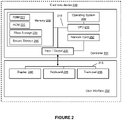
- Figure 2 illustrates a block diagram representative of components of an electronic device 200 that is provided within entities 105, 110 and server 120 for implementing embodiments in accordance with embodiments of the invention.
- entities 105, 110 and server 120 for implementing embodiments in accordance with embodiments of the invention.
- Figure 2 illustrates a block diagram representative of components of an electronic device 200 that is provided within entities 105, 110 and server 120 for implementing embodiments in accordance with embodiments of the invention.
- the exact configuration of each electronic device provided within the entities or the server may be different and the exact configuration of electronic device 200 may vary and Figure 2 is provided by way of example only.
- device 200 comprises controller 201 and user interface 202.
- User interface 202 is arranged to enable manual interactions between a user and electronic device 200 and for this purpose includes the input/output components required for the user to enter instructions to control electronic device 200.
- components of user interface 202 may vary from embodiment to embodiment but will typically include one or more of display 240, keyboard 235 and track-pad 236.
- Controller 201 is in data communication with user interface 202 via bus 215 and includes memory 220, Central Processing Unit (CPU) 205 mounted on a circuit board that processes instructions and data for performing the method of this embodiment, an operating system 206, an input/output (I/O) interface 230 for communicating with user interface 202 and a communications interface, in this embodiment in the form of a network card 250.
- Network card 250 may, for example, be utilized to send data from electronic device 200 via a wired or wireless network to other processing devices or to receive data via the wired or wireless network.
- Wireless networks that may be utilized by network card 250 include, but are not limited to, Wireless-Fidelity (Wi-Fi), Bluetooth, Near Field Communication (NFC), cellular networks, satellite networks, telecommunication networks, Wide Area Networks (WAN) and etc.
- Memory 220 and operating system 206 are in data communication with CPU 205 via bus 210.
- the memory components include both volatile and non-volatile memory and more than one of each type of memory, including Random Access Memory (RAM) 220, Read Only Memory (ROM) 225 and a mass storage device 245, the last comprising one or more solid-state drives (SSDs).
- RAM Random Access Memory
- ROM Read Only Memory
- Mass storage device 245 the last comprising one or more solid-state drives (SSDs).
- Memory 220 also includes secure storage 246 for securely storing secret keys, or private keys. It should be noted that the contents within secure storage 246 are only accessible by a super-user or administrator of device 200 and may not be accessed by any user of device 200.
- the memory components described above comprise non-transitory computer-readable media and shall be taken to comprise all computer-readable media except for a transitory, propagating signal.
- the instructions are stored as program code in the memory components but can also be hardwired.
- Memory 220 may include
- CPU is used to refer generically to any device or component that can process such instructions and may include: a microprocessor, microcontroller, programmable logic device or other computational device. That is, CPU 205 may be provided by any suitable logic circuitry for receiving inputs, processing them in accordance with instructions stored in memory and generating outputs (for example to the memory components or on display 240). In this embodiment, CPU 205 may be a single core or multi-core processor with memory addressable space. In one example, CPU 205 may be multi-core, comprising-for example-an 8 core CPU.
- server 120 prior to adding entities 105 and 110 to the entity-pair authentication and the common session key generation system in accordance with embodiments of the invention, server 120, which is configured as a Key Generation Centre, will first initiate a setup procedure based on a discrete-logarithm type signature scheme to generate a master secret key "x" and a master public key "y".
- server 120 will first determine an appropriate cyclic group, G, with a prime order q, and a generator g of G.
- the cyclic group, G will be based on finite fields or elliptic curves defined over a finite field.
- Server 120 will then select a cryptographic collision-resistant hash function H: ⁇ 0,1 ⁇ * ⁇ , whereby is an appropriate integer known to a person skilled in the art. Server 120 will also select an Authentication Data Deriving Function and a Key Deriving Function that is to be adopted for use in the system.
- the Authentication Data Deriving Function may include any algorithm or scheme for verifying the authenticity of a message such as a message authentication code (MAC), a message integrity code or a keyed hash function while the Key Deriving Function (KDF) may include any scheme for deriving a secret key from a secret value such as a collision-resistant hash function.
- MAC message authentication code
- KDF Key Deriving Function
- the setup procedure described above is similar to the initiation procedures for setting up a discrete-logarithmic type of self-certified identity based signature scheme such as, but not limited to, the lightweight identity based signature scheme as defined in ISO/IEC 29192-4 or elliptic curve-based certificate-less signature scheme as defined in IETF RFC 6507.
- self-certified Identity Based Signature Schemes signatures generated by a particular user always contains a fixed component that is specific to that user's private signing key or private key.
- the fixed component is termed key-specific data (KSD) in this invention whereby the KSD may be utilized to verify the generated signatures.
- the identity based signature scheme defined in ISO/IEC 29192-4 is adopted in all embodiments below, but for one skilled in the art, the system and method is easily applied to other self-certified identity based signature schemes such as the scheme specified in IETF RFC 6507, with due changes in a straightforward way.
- a private key unique to each of these entities will be issued by secure server 120, i.e. the Key Generation Centre. These unique private keys once generated will then be communicated to each of these entities whereby the respective private keys will then be stored in the secure memory within each of entities 105 and 110.
- the identity, id i , of entity 105 may comprise its user name, email address, telephone number, IP address, MAC address, or any alphanumeric combination that may be utilized to uniquely identify entity 105.
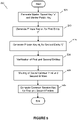
- server 120 will receive the arbitrary value R i1 and the identity of entity 105, id i .
- Server 120 selects a random number random number r i2 ⁇ where are non-zero residuals of modular q.
- Server 120 then transmits the arbitrary value R i and the integer s i1 to entity 105 at step 320.
- Server 120 then transmits the arbitrary value R i and the integer s i1 to entity 105 at step 320.
- entity 105 then communicates the arbitrary value Ri 1 , its identity, id i , and the generated homomorphic encryption value c and the additive homomorphic encryption function to server 120.
- the identity, id i of entity 105 may comprise its user name, email address, telephone number, IP address, MAC address, or any alphanumeric combination that may be utilized to uniquely identify entity 105.
- server 120 will receive the homomorphic encryption value c, the arbitrary value R i1 and the identity of entity 105, id i .
- Server 120 selects a random number random number r i2 ⁇ Z q * where Z q * are non-zero residuals of modular q.
- s i1 HEnc ( r i2 + r i1 - 1 xH ( R i , id i ) mod q).
- Server 120 then transmits the arbitrary value R i and the integer s i1 to entity 105 at step 320.
- entity 105 then communicates the arbitrary value R i1 , its identity, id i , and the generated homomorphic encryption value c to server 120.
- server 120 will receive the homomorphic encryption value c, the arbitrary value R i1 and the identity of entity 105, id i .
- Server 120 selects a random number random number r i2 ⁇ Z q * where Z q * are non-zero residuals of modular q.
- Server 120 then transmits the arbitrary value R i and the integer s i1 to entity 105 at step 320.
- entity 105 then communicates the arbitrary value R i1 , its identity, id i , and the generated homomorphic encryption value c to server 120.
- server 120 will receive the homomorphic encryption value c, the arbitrary value R i1 and the identity of entity 105, id i .
- Server 120 selects a random number random number r i2 ⁇ Z q * where Z q * are non-zero residuals of modular q.
- s i1 HEnc ( r i2 -1 + r i 1 -1 . xH ( R i , id i ) mod q).
- Server 120 then transmits the arbitrary value R i and the integer s i1 to entity 105 at step 320.
- private key sk i generated in accordance with the embodiments set out above may only be computed by entity 105 alone.
- server 120 is not empowered to compute private keys for entities in this self-certified identity based signature scheme.
- a more general embodiment may require the Key Generation Centre to be provided with adjustable difficulty levels of key escrow generation whereby the difficulty level is governed by a system parameter ⁇ .
- a system parameter ⁇ is introduced to set the length of random number r i1 that may be generated and utilized by entity 105.
- a zero-knowledge proof function ZKP( ) is applied to random number r i1 and the system parameter ⁇ resulting in ZKP
- the detailed workings of the function ZKP( ) are omitted for brevity as this function is known to those skilled in the art.
- the function ZKP( ) will generate a zero-knowledge proof result using the random number r i1 and the system parameter ⁇ .
- the zero-knowledge proof result is then transmitted together with id i and arbitrary R i1 from entity 105 to server 120.
- server 120 When server 120 receives the arbitrary value Ri 1 , server 120 will then check the validity of the zero-knowledge proof result before proceeding further. If server 120 determines from the zero-knowledge proof result that the length of r i1 is less or equal to the system parameter A, system 120 will proceed as normal. Conversely, system 120 will abort the private key generation process.
- steps 305-325 along with the various embodiments as described above may take place in the other secure server with entity 110 instead of with server 120.
- the private signing key for entity 105 is generated using secure server 120 while the private signing key for entity 110 is generated using another separate secure server (not shown).
- each secure server would have its own set of master secret key "x" and a master public key "y”.
- the entity-pair i.e. entity 105 and 110, may then commence authentication procedures. Upon successfully authenticating each other, the entity-pair may then proceed to generate a common session key for encoding or signing digital communications sent between each other.
- a static Diffie Hellman-based authenticated key exchange protocol is adopted to generate a common session key between participants 105 and 110.
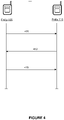
- entity 105 initiates the authentication process with entity 110 by first selecting a cryptographic nonce, N i .
- the selected cryptographic nonce may comprise any random or pseudo-random number.
- cryptographic nonce N i is signed using the function SC-IBS.Sign( ) and private key sk i .
- Entity 105 then proceeds, at step 405, to transmit the identity of entity 105, id i , the value of signed cryptographic nonce c i , and the pseudo-random nonce, N i , to entity 110.
- entity 110 Upon receiving the transmitted information, entity 110 will then proceed to verify c i using a corresponding Verification function / algorithm associated with the Self-Certified Identity Based Signature Scheme, SC-IBS.Verify( ) and the identity of entity 105, id i . This is done by entity 110 applying the verification function to c i and the identity id i thereby producing SC-IBS.Verify(id i , c i ) and if the verification fails, entity 110 will abort the process.
- SC-IBS.Verify( ) and the identity of entity 105, id i This is done by entity 110 applying the verification function to c i and the identity id i thereby producing SC-IBS.Verify(id i , c i ) and if the verification fails, entity 110 will abort the process.
- Entity 110 then proceeds, at step 410, to transmit the value of signed cryptographic nonce c j , and the pseudo-random nonce, N j , to entity 105
- entity 105 Upon receiving the transmitted information, entity 105 will then proceed to verify c j using a corresponding Verification function associated with the Self-Certified Identity Based Signature Scheme, SC-IBS.Verify( ) and the identity of entity 110, id j . This is done by entity 105 applying the verification function to c j together with the identity id j thereby producing SC-IBS.Verify(id j , c j ) and if the verification fails, entity 110 will abort the process.
- SC-IBS.Verify( ) and the identity of entity 110 id j .
- Entity 105 then proceeds, at step 415, to transmit the first authentication data Ad i to entity 105.
- option fields op_f1, op_f2, op_f3, op_f4, op_f5, op_f6 and op_f7 are used and may comprise identities of entities of the system where applicable or any application specific data as determined by the entities themselves.
- entity 105 initiates the authentication process with entity 110 by first selecting a cryptographic nonce, N i .
- cryptographic nonce N i is signed using the function SC-IBS.Sign( ) and private key sk i .
- Entity 105 then proceeds, at step 405, to transmit an option field op_f2, the identity of entity 105, id i , the value of signed cryptographic nonce c i , and the pseudo-random nonce, N i , to entity 110.
- entity 110 Upon receiving the transmitted information, entity 110 will then proceed to verify c i using a corresponding Verification function associates with the Self-Certified Identity Based Signature Scheme, SC-IBS.Verify( ) and the identity of entity 105, id i . This is done by entity 110 applying the verification function to c i and the identity id i thereby producing SC-IBS.Verify(id i , c i ) and if the verification fails, entity 110 will abort the process.
- SC-IBS.Verify( ) and the identity of entity 105, id i This is done by entity 110 applying the verification function to c i and the identity id i thereby producing SC-IBS.Verify(id i , c i ) and if the verification fails, entity 110 will abort the process.
- Entity 110 then proceeds, at step 410, to transmit an option field op_f4, the value of signed cryptographic nonce c j , and the pseudo-random nonce, N j , to entity 105
- entity 105 Upon receiving the transmitted information, entity 105 will then proceed to verify c j using a corresponding Verification function associated with the Self-Certified Identity Based Signature Scheme, SC-IBS.Verify( ) and the identity of entity 110, id j . This is done by entity 105 applying the verification function to c j together with the identity id j thereby producing SC-IBS.Verify(id j , c j ) and if the verification fails, entity 110 will abort the process.
- SC-IBS.Verify( ) and the identity of entity 110 id j .
- Entity 105 then proceeds, at step 415, to transmit the first authentication data Ad i to entity 110.
- the cryptographic nonces N i and N j may be replaced with ephemeral Diffie Hellman (DH) public values g a and g b , and k ij , k ji are derived from both g si ⁇ sj and g ab .
- DH ephemeral Diffie Hellman
- the above idea of static Diffie-Hellman key exchange may be extended to Transport Layer Security (TLS) or Datagram Transport Layer Security (DTLS).
- TLS Transport Layer Security
- DTLS Datagram Transport Layer Security
- the steps above in generating the shared secret k ij (as well as k ji ) between entity 105 and entity 110 are actually in the same spirit as the static DH-based cipher-suites contained in TLS v1.2. It is thus easy for those skilled in the art to extend conventional TLS such as TLS v1.2 to include a set of static DH-based cipher-suites based on self-certified IBS as above.
- the Server Certificate message in the TLS protocol is set to be entity 110's id j and its key specific data R j ; and the Client Message in the TLS protocols is set to be the entity 105's id i and its key specific data R i ; other steps and operations of the TLS protocol follow the specification of TLS with the accommodation of the corresponding changes due to the use of self-certified Identity Based Signature in a straightforward way.
- an ephemeral Diffie Hellman (DH) -based authenticated key exchange protocol is adopted to generate a common session key between participants 105 and 110. Entities 105 and 110 will each have private keys that correspond to a self-certified IBS scheme of either ISO/IEC 29192-4 or IETF RFC 6507.
- Entity 105 then proceeds, at step 405, to transmit the identity of entity 105, id i , the value of signed c i , and the group element g a , to entity 110.
- entity 110 Upon receiving the transmitted information, entity 110 will then proceed to verify c i using a corresponding Verification function associated with the Self-Certified Identity Based Signature Scheme, SC-IBS.Verify( ) and the identity of entity 105, id i . This is done by entity 110 applying the verification function to c i and the identity id i thereby producing SC-IBS.Verify(id i , c i ) and if the verification fails, entity 110 will abort the process.
- SC-IBS.Verify( ) and the identity of entity 105, id i This is done by entity 110 applying the verification function to c i and the identity id i thereby producing SC-IBS.Verify(id i , c i ) and if the verification fails, entity 110 will abort the process.
- Entity 110 then proceeds, at step 410, to transmit the value of signed group element c j , and the group element g b to entity 105.
- entity 105 Upon receiving the transmitted information, entity 105 will then proceed to verify c j using a corresponding Verification function associated with the Self-Certified Identity Based Signature Scheme, SC-IBS.Verify( ) and the identity of entity 110, id j . This is done by entity 105 applying the verification function to c j together with the identity id j thereby producing SC-IBS.Verify(id j , c j ) and if the verification fails, entity 105 will abort the process.
- SC-IBS.Verify( ) and the identity of entity 110, id j This is done by entity 105 applying the verification function to c j together with the identity id j thereby producing SC-IBS.Verify(id j , c j ) and if the verification fails, entity 105 will abort the process.
- Entity 105 then proceeds, at step 415, to transmit the first authentication data Ad i to entity 110.
- the key generation centres of entities 105 and 110 are from different domains (i.e. the two key generation centres have their own respective master secret keys and master public keys).
- entity 105 prior to transmitting the identity of entity 105, id i , the value of signed c i , and the group element g a , to entity 110 at step 405, entity 105 will share the master public key of its key generation centre with entity 110 and similarly, entity 110 will share the master public key of its key generation centre with entity 105.
- entity 105 may negotiate with entity 110 to determine a generator g of an appropriate finite field group that is to be used.
- Steps 410-415 then proceeds as described above.
- the idea above may be used to extend Transport Layer Security (TLS) or Datagram Transport Layer Security (DTLS).
- TLS Transport Layer Security
- DTLS Datagram Transport Layer Security
- the steps above may be fitted to the TLS protocol between entity 105 and entity 110, based on the use of a self-certified Identity Based Signature scheme.
- a self-certified IBS scheme is used in place of the DSS/ECDSA or RSA digital signature schemes in the conventional TLS handshake protocol; besides, set the Server Certificate message and the Client Message in the TLS protocol to be the entity 110's id j and the entity 105's id i , respectively, while the key specific data (KSDs) of entity 110 and the entity 105 are part of the respective entity's signature; other steps and operations in the TLS protocol follow the TLS specification with the accommodation of the straightforward due changes because of the use of self-certified Identity Based Signature.
- KSDs key specific data
- entity 105' private key sk i and entity 110's private key sk j may be generated as per any above embodiment of generation of a private key, or as per the key generation process of existing self-certified IBS schemes such as ISO/IEC 29192-4 and IETF RFC, or as per the above embodiment of generation of private key with cross-domain KGCs.
- ephemeral Diffie Hellman-based authenticated key exchange protocol option fields op_f1, op_f2, op_f3, op_f4, op_f5, op_f6 and op_f7 are used and may comprise identities of entities of the system where applicable or any application specific data as determined by the entities themselves.
- Entity 105 then proceeds, at step 405, to transmit an option field op_f2, the identity of entity 105, id i , the value of signed c i , and the group element g a , to entity 110.
- entity 110 Upon receiving the transmitted information, entity 110 will then proceed to verify c i using a corresponding Verification function associated with the Self-Certified Identity Based Signature scheme, SC-IBS.Verify( ) and the identity of entity 105, id i . This is done by entity 110 applying the verification function to c i and the identity id i thereby producing SC-IBS.Verify(id i , c i ) and if the verification fails, entity 110 will abort the process.
- SC-IBS.Verify( ) and the identity of entity 105, id i This is done by entity 110 applying the verification function to c i and the identity id i thereby producing SC-IBS.Verify(id i , c i ) and if the verification fails, entity 110 will abort the process.
- Entity 110 then proceeds, at step 410, to transmit an option field op_f4, the value of signed c j , and the group element g b to entity 105.
- entity 105 Upon receiving the transmitted information, entity 105 will then proceed to verify c j using a corresponding Verification function associated with the Self-Certified Identity Based Signature Scheme, SC-IBS.Verify( ) and the identity of entity 110, id j . This is done by entity 105 applying the verification function to c j together with the identity id j thereby producing SC-IBS.Verify(id j , c j ) and if the verification fails, entity 110 will abort the process.
- SC-IBS.Verify( ) and the identity of entity 110 id j .
- Entity 105 then proceeds, at step 415, to transmit the first authentication data Ad i to entity 110.
- a method for generating a private key sk for a device participating in a self-certified identity based signature system comprises the following three steps:
- a process is needed for generating secret private keys for entities of the system, and for authenticating an entity of an entity-pair before a common session key is generated for encoding or signing digital messages between the entity-pair.
- FIG. 5 illustrates process 500 that is performed by a secure server configured as a Key Generation Centre, a first entity “i” and a second entity “j" for generating secret private keys for entities of the system, and for authenticating an entity of an entity-pair before a common session key is generated for encoding or signing digital messages between the entity-pair.
- Process 500 begins at step 505 with the secure server generating a master secret key "x" and a master public key "y”.
- first entity, i registers itself with the secure server
- the secure server will carry out the steps as illustrated in Figure 3 and as described in the description above to generate a private key, sk i , for the first entity using the first entity's identity, id i . All this takes place at step 510.
- the secure server will carry out the steps as illustrated in Figure 3 and as described in the description above to generate a private key, sk j , for the second entity using the second entity's identity, id j .
- the first and second entities then verifies information sent between entities using signing functions and corresponding verification functions associated with self-certified identity based signature schemes at step 520.
- a secret is then shared between entities at step 523.
- the shared secret is then utilized to generate a common session key for the entities.
- the generated common session key may then be used to sign or encode any digital messages that are exchanged between the first and second entities.
- Process 500 then ends.
Landscapes
- Engineering & Computer Science (AREA)
- Computer Security & Cryptography (AREA)
- Computer Networks & Wireless Communication (AREA)
- Signal Processing (AREA)
- Telephonic Communication Services (AREA)
- Mobile Radio Communication Systems (AREA)
- Storage Device Security (AREA)
- Management, Administration, Business Operations System, And Electronic Commerce (AREA)
- Lock And Its Accessories (AREA)
- Financial Or Insurance-Related Operations Such As Payment And Settlement (AREA)
Claims (13)
- System zum Berechnen eines privaten Schlüssels ski für eine erste Vorrichtung i (105), die an einem System einer auf einer selbstzertifizierten Identität basierenden Signatur teilnimmt, das Folgendes umfasst:einen sicheren Server (120), der für Folgendes konfiguriert ist:Berechnen von Parametern für die erste Vorrichtung (105) basierend auf einer zweiten Zufallszahl ri2, die durch den sicheren Server (120) erzeugt wird, einem ersten Satz von Komponenten, die von der ersten Vorrichtung (105) empfangen werden, einem geheimen Hauptschlüssel xi und Parametern, die einem öffentlichen Hauptschlüssel mpki zugehörig sind, wobei der erste Satz von Komponenten eine durch die erste Vorrichtung (105) erzeugte erste Zufallszahl ri1 umfasst,Übertragen der berechneten Parameter an die erste Vorrichtung (105);wobei die erste Vorrichtung (105) konfiguriert ist, um den privaten Schlüssel ski basierend auf den empfangenen berechneten Parametern und der Zufallszahl ri1 zu berechnen; unddadurch gekennzeichnet, dassder Schritt des Berechnens der Parameter für die erste Vorrichtung (105) Folgendes umfasst:Abrufen eines beliebigen ersten Wertes Ri1, einer Identität der Vorrichtung idi und eines homomorphen Verschlüsselungswerts c aus dem ersten Satz von Komponenten, wobei der beliebige erste Wert Ri1 basierend auf der ersten Zufallszahl ri1 erzeugt wird und der homomorphe Verschlüsselungswert c durch Bereitstellen der ersten Zufallszahl ri1 und einer Primzahl q, die aus den Parametern erhalten wird, die dem öffentlichen Hauptschlüssel mpki zugehörig sind, an eine additive homomorphe Verschlüsselungsfunktion HEnc() erzeugt wird,Einstellen eines beliebigen Werts Ri der ersten Vorrichtung (105) und einer ersten ganzen Zahl si1 als die Parameter für die erste Vorrichtung (105),wodurch der beliebige Wert Ri der ersten Vorrichtung (105) basierend auf dem beliebigen ersten Wert Ri1 und der zweiten Zufallszahl ri2 berechnet wird undwodurch die erste ganze Zahl si1 durch Bereitstellen der zweiten Zufallszahl ri2, des homomorphen Verschlüsselungswerts c, des geheimen Hauptschlüssels xi, des beliebigen Werts Ri der ersten Vorrichtung (105). der Identität idi der ersten Vorrichtung (105) und der Primzahl q an die additive homomorphe Verschlüsselungsfunktion HEnc() berechnet wird.
- System nach Anspruch 1, wobei der Schritt des Berechnens des privaten Schlüssels ski Folgendes umfasst:Berechnen einer ganzen Zahl si durch Anwenden einer komplementären homomorphen Entschlüsselungsfunktion auf die erste ganze Zahl si1, wie von den berechneten Parametern abgerufen, die von dem sicheren Server (120) übertragen werden; undAusbilden des privaten Schlüssels ski basierend auf dem beliebigen Wert Ri der ersten Vorrichtung (105) und der ganzen Zahl si.
- System nach Anspruch 1 oder 2, wobei der beliebige Wert Ri der ersten Vorrichtung (105) durch Ri = (Ri1 ) r
i2 definiert ist, der beliebige erste Wert Ri1 durch R i1 = r i1 definiert ist, der homomorphe Verschlüsselungswert c durch c = HEnc(r i1 -1 mod q) definiert ist und die erste ganze Zahl si1 durch si1 = HEnc(ri2 ) ▪ c xH(Ri,idi ) mod q definiert ist, wobei HEnC( ) die additive homomorphe Verschlüsselungsfunktion ist. - System nach Anspruch 1 oder 2, wobei der beliebige Wert Ri der ersten Vorrichtung (105) durch

i )mod q definiert ist, wobei HEnc( ) die additive homomorphe Verschlüsselungsfunktion ist. - System nach Anspruch 3 oder 4, wobei die ganze Zahl si durch si = ri1HDec(s i1) definiert ist; wobei HDec( ) die komplementäre homomorphe Entschlüsselungsfunktion ist.
- System nach Anspruch 1 oder 2, wobei der beliebige Wert Ri der ersten Vorrichtung (105) durch Ri = (Ri1)r i2 definiert ist, der beliebige erste Wert Ri1 durch

- System nach Anspruch 6, wobei die ganze Zahl si durch si = r i1 -1 HDec(s i1) definiert ist, wobei HDec() die komplementäre homomorphe Entschlüsselungsfunktion ist.
- System nach Anspruch 1 zum Erzeugen eines gemeinsamen Sitzungsschlüssels SK zum Codieren digitaler Kommunikationen zwischen der ersten Vorrichtung i (105) und einer zweiten Vorrichtung j (110), die an einem erweiterten Transport-Layer-Security(TLS)-Protokoll oder einem erweiterten Datagram-Transport-Layer-Security-Protokoll (DTLS) teilnehmen, wobei das System Folgendes umfasst:
den sicheren Server (120), der konfiguriert ist, um Folgendes anzuweisen:die erste Vorrichtung (105), um den privaten Schlüssel ski basierend auf einem ersten Satz von Parametern, die von dem sicheren Server (120) empfangen werden, und der Zufallszahl ri1 zu berechnen, die durch die erste Vorrichtung (105) erzeugt wird, wobei der erste Satz von Parametern die Parameter umfasst, die durch den sicheren Server (120) berechnet werden, unddie zweite Vorrichtung (110), um einen privaten Schlüssel skj basierend auf einem zweiten Satz von Parametern, die von dem sicheren Server (120) empfangen werden, und einer Zufallszahl rj1 zu berechnen, die durch die zweite Vorrichtung (110) erzeugt wird, wobei der zweite Satz von Parametern durch den sicheren Server (120) basierend auf einer zweiten Zufallszahl ri2, die durch den sicheren Server (120) erzeugt wird, einem zweiten Satz von Komponenten erzeugt wird, der die erste Zufallszahl rj1, den geheimen Hauptschlüssel xi und die Parameter umfasst, die einem öffentlichen Hauptschlüssel mpki zugehörig sind, wobei der zweite Satz von Komponenten durch die zweite Vorrichtung (110) erzeugt und an den sicheren Server (120) übertragen wird;die erste und die zweite Vorrichtung (110), die konfiguriert sind, um ein Schema der auf der selbstzertifizierten Identität basierenden Signatur zu verwenden, um den gemeinsamen Sitzungsschlüssel SK für das TLS-Protokoll oder das DTLS-Protokoll zwischen der ersten Vorrichtung (105) und der zweiten Vorrichtung (110) zu erzeugen, wobei eine Identität idi der ersten Vorrichtung (105) in der Zertifikatnachricht der ersten Vorrichtung (105) beinhaltet ist und die Identität idj der zweiten Vorrichtung (110) in der Zertifikatnachricht der zweiten Vorrichtung beinhaltet ist; wobei das Schema der auf der selbstzertifizierten Identität basierenden Signatur durch den ski und den skj diktiert wird. - System nach Anspruch 1 zum Erzeugen eines gemeinsamen Sitzungsschlüssels SK zum Codieren digitaler Kommunikationen zwischen der ersten Vorrichtung i (105) und einer zweiten Vorrichtung j (110), die an einem erweiterten Transport-Layer-Security(TLS)-Protokoll oder einem erweiterten Datagram-Transport-Layer-Security(DTLS)-Protokoll teilnehmen, wobei das System Folgendes umfasst:den sicheren Server (120), der ein erster sicherer Server (120) ist, der konfiguriert ist, um Folgendes anzuweisen:die erste Vorrichtung (105), um den privaten Schlüssel ski basierend auf einem ersten Satz von Parametern, die von dem ersten sicheren Server (120) empfangen werden, und der Zufallszahl ri1 zu berechnen, die durch die erste Vorrichtung (105) erzeugt wird, wobei der erste Satz von Parametern die Parameter umfasst, die durch den ersten sicheren Server (120) berechnet werden,einen zweiten sicheren Server (120), der konfiguriert ist, um Folgendes anzuweisen:die zweite Vorrichtung (110), um einen privaten Schlüssel skj basierend auf einem zweiten Satz von Parametern, die von dem zweiten sicheren Server (120) empfangen werden, und einer Zufallszahl rj1 zu berechnen, die durch die zweite Vorrichtung (110) erzeugt wird, wobei der zweite Satz von Parametern durch den zweiten sicheren Server (120) basierend auf einer zweiten Zufallszahl ri2, die durch den zweiten sicheren Server (120) erzeugt wird, einem zweiten Satz von Komponenten erzeugt wird, der die erste Zufallszahl rj1, den geheimen Hauptschlüssel xj und die Parameter umfasst, die einem öffentlichen Hauptschlüssel mpkj zugehörig sind, wobei der zweite Satz von Komponenten durch die zweite Vorrichtung (110) erzeugt und an den zweiten sicheren Server (120) übertragen wird,wobei sich der erste sichere Server (120) in einer anderen Domäne als der zweite sichere Server (120) befindet;wobei die erste und die zweite Vorrichtung (105, 110) konfiguriert sind, um ein Schema der auf der selbstzertifizierten Identität basierenden Signatur zu verwenden, um den gemeinsamen Sitzungsschlüssel SKij für das TLS-Protokoll zwischen der ersten Vorrichtung (105) und der zweiten Vorrichtung (110) zu erzeugen, wobei eine Identität der ersten Vorrichtung (105) idi in der Zertifikatnachricht der ersten Vorrichtung beinhaltet ist und die Identität idj der zweiten Vorrichtung (110) in der Zertifikatnachricht der zweiten Vorrichtung beinhaltet ist; wobei das Schema der auf der selbstzertifizierten Identität basierenden Signatur durch den ski und den skj diktiert wird.
- Sicherer Server (120), der konfiguriert ist, um einen privaten Schlüssel ski für eine erste Vorrichtung (105) zu berechnen, die an einem System der auf der selbstzertifizierten Identität basierenden Signatur teilnimmt, der Folgendes umfasst:einen Prozessor (205); undein nicht flüchtiges Medium (220), das durch den Prozessor (205) lesbar ist, wobei das Medium (220) Anweisungen speichert, die, wenn sie durch den Prozessor (205) ausgeführt werden, den Prozessor (205) zu Folgendem veranlassen:Berechnen von Parametern für die erste Vorrichtung (105) basierend auf einer zweiten Zufallszahl ri2, die durch den sicheren Server (120) erzeugt wird, einem ersten Satz von Komponenten, die von der ersten Vorrichtung (105) empfangen werden, einem geheimen Hauptschlüssel xi und Parametern, die einem öffentlichen Hauptschlüssel mpki zugehörig sind, wobei der erste Satz von Komponenten eine erste Zufallszahl ri1 umfasst, die durch die erste Vorrichtung (105) erzeugt wird,Übertragen der berechneten Parameter an die erste Vorrichtung (105) derart, dass die erste Vorrichtung (105) konfiguriert ist, um den privaten Schlüssel ski basierend auf den empfangenen berechneten Parametern und der Zufallszahl ri1 zu berechnen; unddadurch gekennzeichnet, dassdie Anweisungen, um die Parameter für die erste Vorrichtung (105) zu berechnen, Folgendes umfassen:Anweisungen zum Anleiten des Prozessors (205) zu Folgendem:Abrufen eines beliebigen ersten Werts Ri1, einer Identität idi der ersten Vorrichtung (105) und eines homomorphen Verschlüsselungswerts c aus dem ersten Satz von Komponenten, wobei der beliebige erste Wert Ri1 basierend auf der ersten Zufallszahl ri1 erzeugt wird und der homomorphe Verschlüsselungswert c durch Bereitstellen der ersten Zufallszahl ri1 und einer Primzahl q, die aus den Parametern erhalten wird, die dem öffentlichen Hauptschlüssel mpki zugehörig sind, an eine additive homomorphe Verschlüsselungsfunktion HEnc() erzeugt wird;Einstellen eines beliebigen Werts Ri der ersten Vorrichtung (105) und einer ersten ganzen Zahl si1 als die Parameter für die erste Vorrichtung (105),wodurch der beliebige Wert Ri der ersten Vorrichtung (105) basierend auf dem beliebigen ersten Wert Ri1 und der zweiten Zufallszahl ri2 berechnet wird; undwobei die erste ganze Zahl si1 durch Bereitstellen der zweiten Zufallszahl ri2, des homomorphen Verschlüsselungswerts c, des geheimen Hauptschlüssels x i, des beliebigen Werts Ri der ersten Vorrichtung (105), der Identität idi der ersten Vorrichtung (105) und der Primzahl q an die additive homomorphe Verschlüsselungsfunktion HEnc() berechnet wird.
- Sicherer Server (120) nach Anspruch 10, wobei vor den Anweisungen, um Parameter für die erste Vorrichtung (105) basierend auf der zweiten Zufallszahl ri2 zu berechnen, die durch den sicheren Server (120) erzeugt wird, der sichere Server (120) Anweisungen zum Anleiten des Prozessors (205) zu Folgendem umfasst:Empfangen eines Zero-Knowledge-Beweisergebnisses von der ersten Vorrichtung (105), wodurch das Zero-Knowledge-Beweisergebnis durch die erste Vorrichtung (105) unter Verwendung der ersten Zufallszahl ri1 und eines Systemparameters λ erzeugt wird;Bestimmen aus dem Zero-Proof-Beweisergebnis, ob die erste Zufallszahl ri1 gleich oder kleiner als der Systemparameter λ ist; undBerechnen von Parametern für die erste Vorrichtung (105) basierend auf der zweiten Zufallszahl ri2, die durch den sicheren Server (120) erzeugt wird, wenn die erste Zufallszahl ri1 gleich oder kleiner als der Systemparameter λ ist.
- Verfahren zum Berechnen eines privaten Schlüssels ski für eine erste Vorrichtung i (105), die an einem System der auf der selbstzertifizierten Identität basierenden Signatur teilnimmt, das Folgendes umfasst:Berechnen, durch einen sicheren Server (120), von Parametern für die erste Vorrichtung (105) basierend auf einer zweiten Zufallszahl ri2, die durch den sicheren Server (120) erzeugt wird, eines ersten Satzes von Komponenten, die von der ersten Vorrichtung (105) empfangen werden, einem geheimen Hauptschlüssel xi und Parametern, die einem öffentlichen Hauptschlüssel mpki zugehörig sind, wobei der erste Satz von Komponenten eine erste Zufallszahl ri1 umfasst, die durch die erste Vorrichtung (105) erzeugt wird,Übertragen der berechneten Parameter an die erste Vorrichtung (105) derart, dass die erste Vorrichtung (105) den privaten Schlüssel ski basierend auf den empfangenen berechneten Parametern und der Zufallszahl ri1 berechnet, unddadurch gekennzeichnet, dassdas Berechnen der Parameter für die erste Vorrichtung (105) Folgendes umfasst:Abrufen, durch den sicheren Server (120), eines beliebigen ersten Wertes Ri1, einer Identität idi der ersten Vorrichtung (105) und eines homomorphen Verschlüsselungswerts c aus dem ersten Satz von Komponenten, wobei der beliebige erste Wert Ri1 basierend auf der ersten Zufallszahl ri1 erzeugt wird und der homomorphe Verschlüsselungswert c durch Bereitstellen der ersten Zufallszahl ri1 und einer Primzahl q, die aus den Parametern erhalten wird, die dem öffentlichen Hauptschlüssel mpk zugehörig sind, an eine additive homomorphe Verschlüsselungsfunktion HEnc() erzeugt wird;Einstellen eines beliebigen Werts Ri der ersten Vorrichtung (105) und einer ersten ganzen Zahl si1 als die Parameter für die erste Vorrichtung (105),wodurch der beliebige Wert Ri der ersten Vorrichtung (105) basierend auf dem beliebigen ersten Wert Ri1 und der zweiten Zufallszahl ri2 berechnet wird; undwobei die erste ganze Zahl si1 durch Bereitstellen der zweiten Zufallszahl ri2, des homomorphen Verschlüsselungswerts c, des geheimen Hauptschlüssels xi , des beliebigen Werts Ri der ersten Vorrichtung (105), der Identität idi der ersten Vorrichtung (105) und der Primzahl q an die additive homomorphe Verschlüsselungsfunktion HEnc() berechnet wird.
- Verfahren nach Anspruch 12 zum Erzeugen eines gemeinsamen Sitzungsschlüssels SK zum Codieren digitaler Kommunikationen zwischen der ersten Vorrichtung i (105) und einer zweiten Vorrichtung j (110), die an einem erweiterten Transport-Layer-Security(TLS)-Protokoll oder einem erweiterten Datagram-Transport-Layer-Security(DTLS)-Protokoll teilnehmen, wobei das Verfahren Folgendes umfasst:Empfangen, durch die erste Vorrichtung (105), von Anweisungen von dem sicheren Server (120), um den privaten Schlüssel ski basierend auf dem ersten Satz von Parametern, die von dem sicheren Server (120) empfangen werden, und der Zufallszahl ri1 zu berechnen, die durch die erste Vorrichtung (105) erzeugt wird, wobei der erste Satz von Parametern durch den sicheren Server (120) basierend auf der zweiten Zufallszahl ri2 erzeugt wird, die durch den sicheren Server (120) erzeugt wird, wobei der erste Satz von Komponenten die erste Zufallszahl ri1, den geheimen Hauptschlüssel xi und die Parameter umfasst, die dem öffentlichen Hauptschlüssel mpki zugehörig sind, wobei der erste Satz von Komponenten durch die erste Vorrichtung (105) erzeugt und an den sicheren Server (120) übertragen wird; undKommunizieren, durch die zweite Vorrichtung (110), um den gemeinsamen Sitzungsschlüssel SK für das TLS-Protokoll oder das DTLS-Protokoll durch Verwenden eines Schemas des auf der selbstzertifizierten Identität basierenden Signatur zu erzeugen, wobei eine Identität idi der ersten Vorrichtung (105) in der Zertifikatnachricht der ersten Vorrichtung beinhaltet ist und die Identität idj der zweiten Vorrichtung (110) in der Zertifikatnachricht der zweiten Vorrichtung beinhaltet ist; wobei das Schema der auf der selbstzertifizierten Identität basierenden Signatur durch einen skj und den ski diktiert wird; wobei der skj ein privater Schlüssel ist, der durch die zweite Vorrichtung (110) berechnet wird.
Applications Claiming Priority (2)
| Application Number | Priority Date | Filing Date | Title |
|---|---|---|---|
| SG10201701044SA SG10201701044SA (en) | 2017-02-09 | 2017-02-09 | System and method for computing private keys for self certified identity based signature schemes |
| PCT/SG2018/050050 WO2018147800A1 (en) | 2017-02-09 | 2018-02-07 | System and method for computing private keys for self certified identity based signature schemes |
Publications (2)
| Publication Number | Publication Date |
|---|---|
| EP3574609A1 EP3574609A1 (de) | 2019-12-04 |
| EP3574609B1 true EP3574609B1 (de) | 2022-05-25 |
Family
ID=61569320
Family Applications (1)
| Application Number | Title | Priority Date | Filing Date |
|---|---|---|---|
| EP18709096.4A Active EP3574609B1 (de) | 2017-02-09 | 2018-02-07 | System und verfahren zur berechnung von privaten schlüsseln für auf selbstzertifizierter identität basierenden signaturschemen |
Country Status (5)
| Country | Link |
|---|---|
| US (1) | US11563565B2 (de) |
| EP (1) | EP3574609B1 (de) |
| CN (1) | CN110268676B (de) |
| SG (1) | SG10201701044SA (de) |
| WO (1) | WO2018147800A1 (de) |
Families Citing this family (45)
| Publication number | Priority date | Publication date | Assignee | Title |
|---|---|---|---|---|
| US10812974B2 (en) * | 2017-05-06 | 2020-10-20 | Vmware, Inc. | Virtual desktop client connection continuity |
| EP3656145B1 (de) * | 2017-07-17 | 2023-09-06 | Sonova AG | Verschlüsseltes audiostreaming |
| US20190318118A1 (en) * | 2018-04-16 | 2019-10-17 | International Business Machines Corporation | Secure encrypted document retrieval |
| US11005656B2 (en) * | 2018-12-07 | 2021-05-11 | Arris Enterprises Llc | Embedding information in elliptic curve base point |
| CN110011781B (zh) * | 2019-03-04 | 2020-05-19 | 华中科技大学 | 用于交易金额加密且支持零知识证明的同态加密方法和介质 |
| US11601284B2 (en) * | 2019-06-14 | 2023-03-07 | Planetway Corporation | Digital signature system based on a cloud of dedicated local devices |
| CN110336664B (zh) * | 2019-07-10 | 2021-07-20 | 西安电子科技大学 | 基于sm2密码算法的信息服务实体跨域认证方法 |
| KR102315632B1 (ko) * | 2019-08-08 | 2021-10-21 | 한국과학기술원 | 신뢰 서버의 준동형 암호 기반 확장 가능한 그룹 키 생성 방법 및 시스템 |
| CN110798475B (zh) * | 2019-11-05 | 2021-08-03 | 北谷电子有限公司上海分公司 | 一种安全认证方法、装置、设备和存储介质 |
| US12099997B1 (en) | 2020-01-31 | 2024-09-24 | Steven Mark Hoffberg | Tokenized fungible liabilities |
| US11722312B2 (en) * | 2020-03-09 | 2023-08-08 | Sony Group Corporation | Privacy-preserving signature |
| CN111431723A (zh) * | 2020-03-26 | 2020-07-17 | 沈阳理工大学 | 一种基于零知识证明的工业环境移动充电设备的认证策略 |
| CN111416715B (zh) * | 2020-04-09 | 2022-11-01 | 南京如般量子科技有限公司 | 基于秘密共享的量子保密通信身份认证系统及方法 |
| CN111866547B (zh) * | 2020-07-30 | 2022-07-15 | 北京万协通信息技术有限公司 | 一种新型视频防篡改的方法 |
| CN112713992B (zh) * | 2020-12-22 | 2022-07-01 | 湖北工业大学 | 一种基于无证书的抗泄露认证与密钥协商方法及系统 |
| US20220209949A1 (en) * | 2020-12-30 | 2022-06-30 | Psdl | Secure communication device and secure communication program |
| KR102336068B1 (ko) * | 2020-12-30 | 2021-12-07 | 주식회사 피에스디엘 | 도어락, 도어락 컨트롤 장치, 도어락 컨트롤 프로그램 및 도어락 관리 서버 |
| CN112988237B (zh) * | 2021-04-21 | 2021-07-23 | 深圳致星科技有限公司 | 一种Paillier解密系统、芯片和方法 |
| CN113162751B (zh) * | 2021-04-25 | 2023-06-20 | 重庆都会信息科技有限公司 | 具备加同态性的加密方法、系统及可读存储介质 |
| US12432195B2 (en) * | 2021-05-17 | 2025-09-30 | Matrics2, Inc. | Using globally-unique numbers for all secure unique transactions, authentications, verifications, and messaging identities |
| CN113468614B (zh) * | 2021-07-23 | 2024-10-18 | 成都卓拙科技有限公司 | 一种基于Bulletproofs的Kerberos跨域认证方法 |
| CN114124465A (zh) * | 2021-10-28 | 2022-03-01 | 济南浪潮数据技术有限公司 | 一种数据传输方法、系统、设备及计算机可读存储介质 |
| WO2023126491A1 (en) * | 2021-12-30 | 2023-07-06 | Poola Oskar | Method and system for generating digital signatures using universal composition |
| EP4459925A1 (de) * | 2023-05-02 | 2024-11-06 | Nagravision Sarl | Verfahren zur kopplung eines content provider systems und einer empfangsvorrichtung, entsprechendes computerprogrammprodukt und vorrichtungen |
| CN116915409B (zh) * | 2023-06-02 | 2025-08-05 | 中国科学院软件研究所 | 基于标识的可链接双环签名方法及系统 |
| CN117478329B (zh) * | 2023-10-16 | 2024-04-26 | 武汉大学 | 基于身份密钥封装的多用户抗合谋密文检索方法及设备 |
| US12461823B2 (en) | 2023-10-31 | 2025-11-04 | Dell Products L.P. | Data recovery using out-of-band communications |
| US12468553B2 (en) | 2023-10-31 | 2025-11-11 | Dell Products L.P. | Managing user personas using a management controller |
| US12143265B1 (en) | 2023-10-31 | 2024-11-12 | Dell Products L.P. | Managing entitlements for data processing systems using out of band communication channels |
| US12450400B2 (en) | 2023-10-31 | 2025-10-21 | Dell Products L.P. | Out of band component validation |
| US12341764B2 (en) | 2023-10-31 | 2025-06-24 | Dell Products L.P. | Registration of a management controller with a message broker |
| US12326964B2 (en) | 2023-10-31 | 2025-06-10 | Dell Products L.P. | Management of configuration of data processing systems |
| US12598213B2 (en) | 2023-10-31 | 2026-04-07 | Dell Products L.P. | Location-based policy enforcement for data processing systems using out-of-band methods |
| US12507147B2 (en) | 2023-10-31 | 2025-12-23 | Dell Products L.P. | Managing update events for data processing systems using out of band communication channels |
| US12432219B2 (en) | 2023-10-31 | 2025-09-30 | Dell Products L.P. | Managing data processing systems based on location using out-of-band communications |
| US12348569B2 (en) | 2023-10-31 | 2025-07-01 | Dell Products L.P. | Managing policies for data processing systems using out of band communication channels |
| US12348650B2 (en) | 2023-10-31 | 2025-07-01 | Dell Products L.P. | Managing entitlements using ownership vouchers |
| US12438713B2 (en) | 2023-10-31 | 2025-10-07 | Dell Products L.P. | Management controller registration using a trusted platform module |
| US12306708B2 (en) | 2023-10-31 | 2025-05-20 | Dell Products L.P. | Managing unrecoverable errors for data processing systems using out of band communication channels |
| US12483568B2 (en) | 2023-10-31 | 2025-11-25 | Dell Products L.P. | Policy management for data processing systems using a management controller |
| US12470499B2 (en) | 2023-10-31 | 2025-11-11 | Dell Products L.P. | Managing operation of a data processing system using a management controller and a network module |
| US12425452B2 (en) | 2023-10-31 | 2025-09-23 | Dell Products L.P. | Device authentication using out-of-band communications |
| US12476794B2 (en) | 2023-10-31 | 2025-11-18 | Dell Products L.P. | Managing data processing systems in a distributed environment using a management controller |
| US12531913B2 (en) | 2023-10-31 | 2026-01-20 | Dell Products L.P. | Managing an endpoint detection and response framework using out of band communication channels |
| US12360851B2 (en) | 2023-10-31 | 2025-07-15 | Dell Products L.P. | Managing data backup for data processing systems using out-of-band methods |
Family Cites Families (24)
| Publication number | Priority date | Publication date | Assignee | Title |
|---|---|---|---|---|
| NL9301348A (nl) * | 1993-08-02 | 1995-03-01 | Stefanus Alfonsus Brands | Elektronisch betalingssysteem. |
| FR2714780B1 (fr) * | 1993-12-30 | 1996-01-26 | Stern Jacques | Procédé d'authentification d'au moins un dispositif d'identification par un dispositif de vérification. |
| US7370351B1 (en) * | 2001-03-22 | 2008-05-06 | Novell, Inc. | Cross domain authentication and security services using proxies for HTTP access |
| US7353395B2 (en) * | 2002-03-21 | 2008-04-01 | Ntt Docomo Inc. | Authenticated ID-based cryptosystem with no key escrow |
| WO2005093671A2 (en) * | 2004-03-25 | 2005-10-06 | Cryptomathic A/S | Electronic voting systems |
| US20060215837A1 (en) * | 2004-12-18 | 2006-09-28 | Hewlett-Packard Development Company, L.P. | Method and apparatus for generating an identifier-based public/private key pair |
| CN102017510B (zh) * | 2007-10-23 | 2013-06-12 | 赵运磊 | 自封闭联合知识证明和Diffie-Hellman密钥交换方法与结构 |
| EP2245832B1 (de) * | 2008-01-07 | 2016-01-06 | Unify GmbH & Co. KG | Verfahren zum authentisieren einer schlüsselinformation zwischen endpunkten einer kommunikationsbeziehung |
| US7930542B2 (en) * | 2008-04-07 | 2011-04-19 | Safemashups Inc. | MashSSL: a novel multi party authentication and key exchange mechanism based on SSL |
| US8464058B1 (en) * | 2008-04-08 | 2013-06-11 | Hewlett-Packard Development Company, L.P. | Password-based cryptographic method and apparatus |
| US8510558B2 (en) * | 2009-02-17 | 2013-08-13 | Alcatel Lucent | Identity based authenticated key agreement protocol |
| CN101547099B (zh) * | 2009-05-07 | 2011-08-03 | 张键红 | 基于椭圆曲线的自认证签名方法与装置 |
| CN101702804B (zh) * | 2009-11-23 | 2012-03-28 | 西安电子科技大学 | 基于自认证公钥的两方密钥协商方法 |
| JP5424974B2 (ja) * | 2010-04-27 | 2014-02-26 | 三菱電機株式会社 | 暗号処理システム、鍵生成装置、暗号化装置、復号装置、署名処理システム、署名装置及び検証装置 |
| US8875240B2 (en) * | 2011-04-18 | 2014-10-28 | Bank Of America Corporation | Tenant data center for establishing a virtual machine in a cloud environment |
| CN105721153B (zh) * | 2014-09-05 | 2020-03-27 | 三星Sds株式会社 | 基于认证信息的密钥交换系统及方法 |
| CN104486307B (zh) * | 2014-12-03 | 2017-08-15 | 中国电子科技集团公司第三十研究所 | 一种基于同态加密的分权密钥管理方法 |
| CN104539423B (zh) | 2014-12-16 | 2018-01-05 | 北京百旺信安科技有限公司 | 一种无双线性对运算的无证书公钥密码体制的实现方法 |
| CN106161405B (zh) * | 2015-04-21 | 2019-01-18 | 上海交通大学 | 基于同态加密机制的隐私可保护信息安全计算实现方法 |
| FR3035986B1 (fr) * | 2015-05-06 | 2018-07-27 | Morpho | Procede de generation d'une signature de message a partir d'un jeton de signature chiffre a l'aide d'une fonction de chiffrement homomorphique |
| KR102423885B1 (ko) * | 2015-05-08 | 2022-07-21 | 한국전자통신연구원 | 연산 에러 검출이 가능한 준동형 암호 방법 및 그 시스템 |
| CN105162585B (zh) * | 2015-08-25 | 2018-06-15 | 清华大学 | 一种隐私保护的会话密钥协商方法 |
| CN105959269B (zh) * | 2016-04-25 | 2019-01-25 | 北京理工大学 | 一种基于身份的可认证动态群组密钥协商方法 |
| CN106341232B (zh) * | 2016-09-18 | 2019-04-09 | 中国科学院软件研究所 | 一种基于口令的匿名实体鉴别方法 |
-
2017
- 2017-02-09 SG SG10201701044SA patent/SG10201701044SA/en unknown
-
2018
- 2018-02-07 CN CN201880011027.7A patent/CN110268676B/zh not_active Expired - Fee Related
- 2018-02-07 WO PCT/SG2018/050050 patent/WO2018147800A1/en not_active Ceased
- 2018-02-07 EP EP18709096.4A patent/EP3574609B1/de active Active
-
2019
- 2019-08-08 US US16/535,437 patent/US11563565B2/en active Active
Also Published As
| Publication number | Publication date |
|---|---|
| SG10201701044SA (en) | 2018-09-27 |
| US20190372763A1 (en) | 2019-12-05 |
| CN110268676A (zh) | 2019-09-20 |
| US11563565B2 (en) | 2023-01-24 |
| EP3574609A1 (de) | 2019-12-04 |
| CN110268676B (zh) | 2022-12-27 |
| WO2018147800A1 (en) | 2018-08-16 |
Similar Documents
| Publication | Publication Date | Title |
|---|---|---|
| US11563565B2 (en) | System and method for computing private keys for self certified identity based signature schemes | |
| CN107948189B (zh) | 非对称密码身份鉴别方法、装置、计算机设备及存储介质 | |
| CN112104453B (zh) | 一种基于数字证书的抗量子计算数字签名系统及签名方法 | |
| US10985910B2 (en) | Method for exchanging keys authenticated by blockchain | |
| US11044081B2 (en) | System and method for obtaining a common session key between devices | |
| US10951423B2 (en) | System and method for distribution of identity based key material and certificate | |
| CN110402560B (zh) | 具有前向安全性的基于身份的认证密钥交换方案中用于计算公有会话密钥的系统和方法 | |
| CN105245326B (zh) | 一种基于组合密码的智能电网安全通信方法 | |
| US9705683B2 (en) | Verifiable implicit certificates | |
| KR20110117169A (ko) | Id 기반 인증 키 동의 프로토콜을 수행하기 위한 방법 및 장치 | |
| WO2017167771A1 (en) | Handshake protocols for identity-based key material and certificates | |
| CN108011856B (zh) | 一种传输数据的方法和装置 | |
| CN111342973A (zh) | 一种安全的pki与ibc之间的双向异构数字签名方法 | |
| US12206767B2 (en) | Methods and devices for secured identity-based encryption systems with two trusted centers | |
| KR20090020869A (ko) | 통신 시스템에서 암호화된 데이터 송수신 시스템 및 방법 | |
| CN108075896B (zh) | 使用基于标识的密码学构建自认证消息的系统和方法 | |
| GB2543359A (en) | Methods and apparatus for secure communication | |
| SG10202108688QA (en) | System and method for computing private keys for self certified identity based signature schemes | |
| Shim | Security analysis of various authentication schemes based on three types of digital signature schemes | |
| Dugardin et al. | A new fair identity based encryption scheme | |
| EP4311161A1 (de) | Verfahren und entität zur erzeugung eines privaten schlüssels in einem identitätsbasierten kryptosystem ohne schlüsselhinterlegung | |
| KR101506564B1 (ko) | 공개키 기반 파라미터 자동생성기법 | |
| Ganjewar | Diffie hellman key exchange | |
| Yang et al. | A fresh two-party authentication key exchange protocol for mobile environment | |
| Sumanth et al. | Confidence Analysis of a Solo Sign-On Device for Distributed Computer Networks |
Legal Events
| Date | Code | Title | Description |
|---|---|---|---|
| STAA | Information on the status of an ep patent application or granted ep patent |
Free format text: STATUS: UNKNOWN |
|
| STAA | Information on the status of an ep patent application or granted ep patent |
Free format text: STATUS: THE INTERNATIONAL PUBLICATION HAS BEEN MADE |
|
| PUAI | Public reference made under article 153(3) epc to a published international application that has entered the european phase |
Free format text: ORIGINAL CODE: 0009012 |
|
| STAA | Information on the status of an ep patent application or granted ep patent |
Free format text: STATUS: REQUEST FOR EXAMINATION WAS MADE |
|
| 17P | Request for examination filed |
Effective date: 20190826 |
|
| AK | Designated contracting states |
Kind code of ref document: A1 Designated state(s): AL AT BE BG CH CY CZ DE DK EE ES FI FR GB GR HR HU IE IS IT LI LT LU LV MC MK MT NL NO PL PT RO RS SE SI SK SM TR |
|
| AX | Request for extension of the european patent |
Extension state: BA ME |
|
| RIN1 | Information on inventor provided before grant (corrected) |
Inventor name: WANG, GUILIN Inventor name: LI, TIEYAN Inventor name: YANG, YANJIANG |
|
| DAV | Request for validation of the european patent (deleted) | ||
| DAX | Request for extension of the european patent (deleted) | ||
| STAA | Information on the status of an ep patent application or granted ep patent |
Free format text: STATUS: EXAMINATION IS IN PROGRESS |
|
| 17Q | First examination report despatched |
Effective date: 20200723 |
|
| GRAP | Despatch of communication of intention to grant a patent |
Free format text: ORIGINAL CODE: EPIDOSNIGR1 |
|
| STAA | Information on the status of an ep patent application or granted ep patent |
Free format text: STATUS: GRANT OF PATENT IS INTENDED |
|
| INTG | Intention to grant announced |
Effective date: 20220103 |
|
| GRAS | Grant fee paid |
Free format text: ORIGINAL CODE: EPIDOSNIGR3 |
|
| GRAA | (expected) grant |
Free format text: ORIGINAL CODE: 0009210 |
|
| STAA | Information on the status of an ep patent application or granted ep patent |
Free format text: STATUS: THE PATENT HAS BEEN GRANTED |
|
| AK | Designated contracting states |
Kind code of ref document: B1 Designated state(s): AL AT BE BG CH CY CZ DE DK EE ES FI FR GB GR HR HU IE IS IT LI LT LU LV MC MK MT NL NO PL PT RO RS SE SI SK SM TR |
|
| REG | Reference to a national code |
Ref country code: GB Ref legal event code: FG4D |
|
| REG | Reference to a national code |
Ref country code: CH Ref legal event code: EP |
|
| REG | Reference to a national code |
Ref country code: DE Ref legal event code: R096 Ref document number: 602018035958 Country of ref document: DE |
|
| REG | Reference to a national code |
Ref country code: AT Ref legal event code: REF Ref document number: 1494685 Country of ref document: AT Kind code of ref document: T Effective date: 20220615 |
|
| REG | Reference to a national code |
Ref country code: IE Ref legal event code: FG4D |
|
| REG | Reference to a national code |
Ref country code: LT Ref legal event code: MG9D |
|
| REG | Reference to a national code |
Ref country code: NL Ref legal event code: MP Effective date: 20220525 |
|
| REG | Reference to a national code |
Ref country code: AT Ref legal event code: MK05 Ref document number: 1494685 Country of ref document: AT Kind code of ref document: T Effective date: 20220525 |
|
| PG25 | Lapsed in a contracting state [announced via postgrant information from national office to epo] |
Ref country code: SE Free format text: LAPSE BECAUSE OF FAILURE TO SUBMIT A TRANSLATION OF THE DESCRIPTION OR TO PAY THE FEE WITHIN THE PRESCRIBED TIME-LIMIT Effective date: 20220525 Ref country code: PT Free format text: LAPSE BECAUSE OF FAILURE TO SUBMIT A TRANSLATION OF THE DESCRIPTION OR TO PAY THE FEE WITHIN THE PRESCRIBED TIME-LIMIT Effective date: 20220926 Ref country code: NO Free format text: LAPSE BECAUSE OF FAILURE TO SUBMIT A TRANSLATION OF THE DESCRIPTION OR TO PAY THE FEE WITHIN THE PRESCRIBED TIME-LIMIT Effective date: 20220825 Ref country code: NL Free format text: LAPSE BECAUSE OF FAILURE TO SUBMIT A TRANSLATION OF THE DESCRIPTION OR TO PAY THE FEE WITHIN THE PRESCRIBED TIME-LIMIT Effective date: 20220525 Ref country code: LT Free format text: LAPSE BECAUSE OF FAILURE TO SUBMIT A TRANSLATION OF THE DESCRIPTION OR TO PAY THE FEE WITHIN THE PRESCRIBED TIME-LIMIT Effective date: 20220525 Ref country code: HR Free format text: LAPSE BECAUSE OF FAILURE TO SUBMIT A TRANSLATION OF THE DESCRIPTION OR TO PAY THE FEE WITHIN THE PRESCRIBED TIME-LIMIT Effective date: 20220525 Ref country code: GR Free format text: LAPSE BECAUSE OF FAILURE TO SUBMIT A TRANSLATION OF THE DESCRIPTION OR TO PAY THE FEE WITHIN THE PRESCRIBED TIME-LIMIT Effective date: 20220826 Ref country code: FI Free format text: LAPSE BECAUSE OF FAILURE TO SUBMIT A TRANSLATION OF THE DESCRIPTION OR TO PAY THE FEE WITHIN THE PRESCRIBED TIME-LIMIT Effective date: 20220525 Ref country code: ES Free format text: LAPSE BECAUSE OF FAILURE TO SUBMIT A TRANSLATION OF THE DESCRIPTION OR TO PAY THE FEE WITHIN THE PRESCRIBED TIME-LIMIT Effective date: 20220525 Ref country code: BG Free format text: LAPSE BECAUSE OF FAILURE TO SUBMIT A TRANSLATION OF THE DESCRIPTION OR TO PAY THE FEE WITHIN THE PRESCRIBED TIME-LIMIT Effective date: 20220825 Ref country code: AT Free format text: LAPSE BECAUSE OF FAILURE TO SUBMIT A TRANSLATION OF THE DESCRIPTION OR TO PAY THE FEE WITHIN THE PRESCRIBED TIME-LIMIT Effective date: 20220525 |
|
| PG25 | Lapsed in a contracting state [announced via postgrant information from national office to epo] |
Ref country code: RS Free format text: LAPSE BECAUSE OF FAILURE TO SUBMIT A TRANSLATION OF THE DESCRIPTION OR TO PAY THE FEE WITHIN THE PRESCRIBED TIME-LIMIT Effective date: 20220525 Ref country code: PL Free format text: LAPSE BECAUSE OF FAILURE TO SUBMIT A TRANSLATION OF THE DESCRIPTION OR TO PAY THE FEE WITHIN THE PRESCRIBED TIME-LIMIT Effective date: 20220525 Ref country code: LV Free format text: LAPSE BECAUSE OF FAILURE TO SUBMIT A TRANSLATION OF THE DESCRIPTION OR TO PAY THE FEE WITHIN THE PRESCRIBED TIME-LIMIT Effective date: 20220525 Ref country code: IS Free format text: LAPSE BECAUSE OF FAILURE TO SUBMIT A TRANSLATION OF THE DESCRIPTION OR TO PAY THE FEE WITHIN THE PRESCRIBED TIME-LIMIT Effective date: 20220925 |
|
| PG25 | Lapsed in a contracting state [announced via postgrant information from national office to epo] |
Ref country code: SM Free format text: LAPSE BECAUSE OF FAILURE TO SUBMIT A TRANSLATION OF THE DESCRIPTION OR TO PAY THE FEE WITHIN THE PRESCRIBED TIME-LIMIT Effective date: 20220525 Ref country code: SK Free format text: LAPSE BECAUSE OF FAILURE TO SUBMIT A TRANSLATION OF THE DESCRIPTION OR TO PAY THE FEE WITHIN THE PRESCRIBED TIME-LIMIT Effective date: 20220525 Ref country code: RO Free format text: LAPSE BECAUSE OF FAILURE TO SUBMIT A TRANSLATION OF THE DESCRIPTION OR TO PAY THE FEE WITHIN THE PRESCRIBED TIME-LIMIT Effective date: 20220525 Ref country code: EE Free format text: LAPSE BECAUSE OF FAILURE TO SUBMIT A TRANSLATION OF THE DESCRIPTION OR TO PAY THE FEE WITHIN THE PRESCRIBED TIME-LIMIT Effective date: 20220525 Ref country code: DK Free format text: LAPSE BECAUSE OF FAILURE TO SUBMIT A TRANSLATION OF THE DESCRIPTION OR TO PAY THE FEE WITHIN THE PRESCRIBED TIME-LIMIT Effective date: 20220525 Ref country code: CZ Free format text: LAPSE BECAUSE OF FAILURE TO SUBMIT A TRANSLATION OF THE DESCRIPTION OR TO PAY THE FEE WITHIN THE PRESCRIBED TIME-LIMIT Effective date: 20220525 |
|
| REG | Reference to a national code |
Ref country code: DE Ref legal event code: R097 Ref document number: 602018035958 Country of ref document: DE |
|
| PG25 | Lapsed in a contracting state [announced via postgrant information from national office to epo] |
Ref country code: AL Free format text: LAPSE BECAUSE OF FAILURE TO SUBMIT A TRANSLATION OF THE DESCRIPTION OR TO PAY THE FEE WITHIN THE PRESCRIBED TIME-LIMIT Effective date: 20220525 |
|
| PLBE | No opposition filed within time limit |
Free format text: ORIGINAL CODE: 0009261 |
|
| STAA | Information on the status of an ep patent application or granted ep patent |
Free format text: STATUS: NO OPPOSITION FILED WITHIN TIME LIMIT |
|
| 26N | No opposition filed |
Effective date: 20230228 |
|
| PG25 | Lapsed in a contracting state [announced via postgrant information from national office to epo] |
Ref country code: SI Free format text: LAPSE BECAUSE OF FAILURE TO SUBMIT A TRANSLATION OF THE DESCRIPTION OR TO PAY THE FEE WITHIN THE PRESCRIBED TIME-LIMIT Effective date: 20220525 |
|
| PG25 | Lapsed in a contracting state [announced via postgrant information from national office to epo] |
Ref country code: MC Free format text: LAPSE BECAUSE OF FAILURE TO SUBMIT A TRANSLATION OF THE DESCRIPTION OR TO PAY THE FEE WITHIN THE PRESCRIBED TIME-LIMIT Effective date: 20220525 |
|
| REG | Reference to a national code |
Ref country code: CH Ref legal event code: PL |
|
| REG | Reference to a national code |
Ref country code: BE Ref legal event code: MM Effective date: 20230228 |
|
| PG25 | Lapsed in a contracting state [announced via postgrant information from national office to epo] |
Ref country code: LU Free format text: LAPSE BECAUSE OF NON-PAYMENT OF DUE FEES Effective date: 20230207 Ref country code: LI Free format text: LAPSE BECAUSE OF NON-PAYMENT OF DUE FEES Effective date: 20230228 Ref country code: CH Free format text: LAPSE BECAUSE OF NON-PAYMENT OF DUE FEES Effective date: 20230228 |
|
| REG | Reference to a national code |
Ref country code: IE Ref legal event code: MM4A |
|
| PG25 | Lapsed in a contracting state [announced via postgrant information from national office to epo] |
Ref country code: IT Free format text: LAPSE BECAUSE OF FAILURE TO SUBMIT A TRANSLATION OF THE DESCRIPTION OR TO PAY THE FEE WITHIN THE PRESCRIBED TIME-LIMIT Effective date: 20220525 Ref country code: IE Free format text: LAPSE BECAUSE OF NON-PAYMENT OF DUE FEES Effective date: 20230207 |
|
| PG25 | Lapsed in a contracting state [announced via postgrant information from national office to epo] |
Ref country code: BE Free format text: LAPSE BECAUSE OF NON-PAYMENT OF DUE FEES Effective date: 20230228 |
|
| PG25 | Lapsed in a contracting state [announced via postgrant information from national office to epo] |
Ref country code: BG Free format text: LAPSE BECAUSE OF FAILURE TO SUBMIT A TRANSLATION OF THE DESCRIPTION OR TO PAY THE FEE WITHIN THE PRESCRIBED TIME-LIMIT Effective date: 20220525 |
|
| PG25 | Lapsed in a contracting state [announced via postgrant information from national office to epo] |
Ref country code: BG Free format text: LAPSE BECAUSE OF FAILURE TO SUBMIT A TRANSLATION OF THE DESCRIPTION OR TO PAY THE FEE WITHIN THE PRESCRIBED TIME-LIMIT Effective date: 20220525 |
|
| PG25 | Lapsed in a contracting state [announced via postgrant information from national office to epo] |
Ref country code: CY Free format text: LAPSE BECAUSE OF FAILURE TO SUBMIT A TRANSLATION OF THE DESCRIPTION OR TO PAY THE FEE WITHIN THE PRESCRIBED TIME-LIMIT; INVALID AB INITIO Effective date: 20180207 |
|
| PG25 | Lapsed in a contracting state [announced via postgrant information from national office to epo] |
Ref country code: HU Free format text: LAPSE BECAUSE OF FAILURE TO SUBMIT A TRANSLATION OF THE DESCRIPTION OR TO PAY THE FEE WITHIN THE PRESCRIBED TIME-LIMIT; INVALID AB INITIO Effective date: 20180207 |
|
| PG25 | Lapsed in a contracting state [announced via postgrant information from national office to epo] |
Ref country code: TR Free format text: LAPSE BECAUSE OF FAILURE TO SUBMIT A TRANSLATION OF THE DESCRIPTION OR TO PAY THE FEE WITHIN THE PRESCRIBED TIME-LIMIT Effective date: 20220525 |
|
| PGFP | Annual fee paid to national office [announced via postgrant information from national office to epo] |
Ref country code: FR Payment date: 20251231 Year of fee payment: 9 |
|
| PGFP | Annual fee paid to national office [announced via postgrant information from national office to epo] |
Ref country code: GB Payment date: 20260106 Year of fee payment: 9 |
|
| PGFP | Annual fee paid to national office [announced via postgrant information from national office to epo] |
Ref country code: DE Payment date: 20251230 Year of fee payment: 9 |