EP3574064B1 - Method of making fuel compositions with enhanced cold properties - Google Patents
Method of making fuel compositions with enhanced cold properties Download PDFInfo
- Publication number
- EP3574064B1 EP3574064B1 EP18703614.0A EP18703614A EP3574064B1 EP 3574064 B1 EP3574064 B1 EP 3574064B1 EP 18703614 A EP18703614 A EP 18703614A EP 3574064 B1 EP3574064 B1 EP 3574064B1
- Authority
- EP
- European Patent Office
- Prior art keywords
- middle distillate
- fuel
- cloud point
- paraffins
- component
- Prior art date
- Legal status (The legal status is an assumption and is not a legal conclusion. Google has not performed a legal analysis and makes no representation as to the accuracy of the status listed.)
- Active
Links
Images

Classifications
-
- C—CHEMISTRY; METALLURGY
- C10—PETROLEUM, GAS OR COKE INDUSTRIES; TECHNICAL GASES CONTAINING CARBON MONOXIDE; FUELS; LUBRICANTS; PEAT
- C10L—FUELS NOT OTHERWISE PROVIDED FOR; NATURAL GAS; SYNTHETIC NATURAL GAS OBTAINED BY PROCESSES NOT COVERED BY SUBCLASSES C10G OR C10K; LIQUIFIED PETROLEUM GAS; USE OF ADDITIVES TO FUELS OR FIRES; FIRE-LIGHTERS
- C10L1/00—Liquid carbonaceous fuels
- C10L1/02—Liquid carbonaceous fuels essentially based on components consisting of carbon, hydrogen, and oxygen only
- C10L1/023—Liquid carbonaceous fuels essentially based on components consisting of carbon, hydrogen, and oxygen only for spark ignition
-
- C—CHEMISTRY; METALLURGY
- C10—PETROLEUM, GAS OR COKE INDUSTRIES; TECHNICAL GASES CONTAINING CARBON MONOXIDE; FUELS; LUBRICANTS; PEAT
- C10L—FUELS NOT OTHERWISE PROVIDED FOR; NATURAL GAS; SYNTHETIC NATURAL GAS OBTAINED BY PROCESSES NOT COVERED BY SUBCLASSES C10G OR C10K; LIQUIFIED PETROLEUM GAS; USE OF ADDITIVES TO FUELS OR FIRES; FIRE-LIGHTERS
- C10L1/00—Liquid carbonaceous fuels
- C10L1/02—Liquid carbonaceous fuels essentially based on components consisting of carbon, hydrogen, and oxygen only
- C10L1/026—Liquid carbonaceous fuels essentially based on components consisting of carbon, hydrogen, and oxygen only for compression ignition
-
- C—CHEMISTRY; METALLURGY
- C10—PETROLEUM, GAS OR COKE INDUSTRIES; TECHNICAL GASES CONTAINING CARBON MONOXIDE; FUELS; LUBRICANTS; PEAT
- C10L—FUELS NOT OTHERWISE PROVIDED FOR; NATURAL GAS; SYNTHETIC NATURAL GAS OBTAINED BY PROCESSES NOT COVERED BY SUBCLASSES C10G OR C10K; LIQUIFIED PETROLEUM GAS; USE OF ADDITIVES TO FUELS OR FIRES; FIRE-LIGHTERS
- C10L1/00—Liquid carbonaceous fuels
- C10L1/04—Liquid carbonaceous fuels essentially based on blends of hydrocarbons
- C10L1/06—Liquid carbonaceous fuels essentially based on blends of hydrocarbons for spark ignition
-
- C—CHEMISTRY; METALLURGY
- C10—PETROLEUM, GAS OR COKE INDUSTRIES; TECHNICAL GASES CONTAINING CARBON MONOXIDE; FUELS; LUBRICANTS; PEAT
- C10L—FUELS NOT OTHERWISE PROVIDED FOR; NATURAL GAS; SYNTHETIC NATURAL GAS OBTAINED BY PROCESSES NOT COVERED BY SUBCLASSES C10G OR C10K; LIQUIFIED PETROLEUM GAS; USE OF ADDITIVES TO FUELS OR FIRES; FIRE-LIGHTERS
- C10L1/00—Liquid carbonaceous fuels
- C10L1/04—Liquid carbonaceous fuels essentially based on blends of hydrocarbons
- C10L1/08—Liquid carbonaceous fuels essentially based on blends of hydrocarbons for compression ignition
-
- C—CHEMISTRY; METALLURGY
- C10—PETROLEUM, GAS OR COKE INDUSTRIES; TECHNICAL GASES CONTAINING CARBON MONOXIDE; FUELS; LUBRICANTS; PEAT
- C10L—FUELS NOT OTHERWISE PROVIDED FOR; NATURAL GAS; SYNTHETIC NATURAL GAS OBTAINED BY PROCESSES NOT COVERED BY SUBCLASSES C10G OR C10K; LIQUIFIED PETROLEUM GAS; USE OF ADDITIVES TO FUELS OR FIRES; FIRE-LIGHTERS
- C10L2200/00—Components of fuel compositions
- C10L2200/04—Organic compounds
- C10L2200/0407—Specifically defined hydrocarbon fractions as obtained from, e.g. a distillation column
- C10L2200/0438—Middle or heavy distillates, heating oil, gasoil, marine fuels, residua
- C10L2200/0446—Diesel
-
- C—CHEMISTRY; METALLURGY
- C10—PETROLEUM, GAS OR COKE INDUSTRIES; TECHNICAL GASES CONTAINING CARBON MONOXIDE; FUELS; LUBRICANTS; PEAT
- C10L—FUELS NOT OTHERWISE PROVIDED FOR; NATURAL GAS; SYNTHETIC NATURAL GAS OBTAINED BY PROCESSES NOT COVERED BY SUBCLASSES C10G OR C10K; LIQUIFIED PETROLEUM GAS; USE OF ADDITIVES TO FUELS OR FIRES; FIRE-LIGHTERS
- C10L2200/00—Components of fuel compositions
- C10L2200/04—Organic compounds
- C10L2200/0461—Fractions defined by their origin
- C10L2200/0469—Renewables or materials of biological origin
-
- C—CHEMISTRY; METALLURGY
- C10—PETROLEUM, GAS OR COKE INDUSTRIES; TECHNICAL GASES CONTAINING CARBON MONOXIDE; FUELS; LUBRICANTS; PEAT
- C10L—FUELS NOT OTHERWISE PROVIDED FOR; NATURAL GAS; SYNTHETIC NATURAL GAS OBTAINED BY PROCESSES NOT COVERED BY SUBCLASSES C10G OR C10K; LIQUIFIED PETROLEUM GAS; USE OF ADDITIVES TO FUELS OR FIRES; FIRE-LIGHTERS
- C10L2200/00—Components of fuel compositions
- C10L2200/04—Organic compounds
- C10L2200/0461—Fractions defined by their origin
- C10L2200/0469—Renewables or materials of biological origin
- C10L2200/0484—Vegetable or animal oils
-
- C—CHEMISTRY; METALLURGY
- C10—PETROLEUM, GAS OR COKE INDUSTRIES; TECHNICAL GASES CONTAINING CARBON MONOXIDE; FUELS; LUBRICANTS; PEAT
- C10L—FUELS NOT OTHERWISE PROVIDED FOR; NATURAL GAS; SYNTHETIC NATURAL GAS OBTAINED BY PROCESSES NOT COVERED BY SUBCLASSES C10G OR C10K; LIQUIFIED PETROLEUM GAS; USE OF ADDITIVES TO FUELS OR FIRES; FIRE-LIGHTERS
- C10L2270/00—Specifically adapted fuels
- C10L2270/02—Specifically adapted fuels for internal combustion engines
- C10L2270/026—Specifically adapted fuels for internal combustion engines for diesel engines, e.g. automobiles, stationary, marine
-
- Y—GENERAL TAGGING OF NEW TECHNOLOGICAL DEVELOPMENTS; GENERAL TAGGING OF CROSS-SECTIONAL TECHNOLOGIES SPANNING OVER SEVERAL SECTIONS OF THE IPC; TECHNICAL SUBJECTS COVERED BY FORMER USPC CROSS-REFERENCE ART COLLECTIONS [XRACs] AND DIGESTS
- Y02—TECHNOLOGIES OR APPLICATIONS FOR MITIGATION OR ADAPTATION AGAINST CLIMATE CHANGE
- Y02E—REDUCTION OF GREENHOUSE GAS [GHG] EMISSIONS, RELATED TO ENERGY GENERATION, TRANSMISSION OR DISTRIBUTION
- Y02E50/00—Technologies for the production of fuel of non-fossil origin
- Y02E50/10—Biofuels, e.g. bio-diesel
-
- Y—GENERAL TAGGING OF NEW TECHNOLOGICAL DEVELOPMENTS; GENERAL TAGGING OF CROSS-SECTIONAL TECHNOLOGIES SPANNING OVER SEVERAL SECTIONS OF THE IPC; TECHNICAL SUBJECTS COVERED BY FORMER USPC CROSS-REFERENCE ART COLLECTIONS [XRACs] AND DIGESTS
- Y02—TECHNOLOGIES OR APPLICATIONS FOR MITIGATION OR ADAPTATION AGAINST CLIMATE CHANGE
- Y02P—CLIMATE CHANGE MITIGATION TECHNOLOGIES IN THE PRODUCTION OR PROCESSING OF GOODS
- Y02P30/00—Technologies relating to oil refining and petrochemical industry
- Y02P30/20—Technologies relating to oil refining and petrochemical industry using bio-feedstock
Definitions
- the present invention relates to methods of making fuel compositions having enhanced cold properties that are blends of mineral middle distillate fuels and renewable fuels.
- the most important properties of fuels related to their cold temperature operability are cloud point, pour point, and cold filter plugging point.
- cloud point This is the temperature at which paraffin wax falls out of solution and starts to form wax crystals in the fuel.
- the storage temperature of a fuel is recommended to be higher than its cloud point.
- pour point This is the temperature at which the fuel will no longer flow or the point at which the fuel gels or turns into a solid.
- the third important property of a middle distillate fuel is its cold filter plugging point, which is the lowest temperature the fuel is filterable and can be used in vehicles without problems.
- U.S. Patent No. 9,006,501 B2 discloses a process for producing a renewable fuel blend, wherein a biologically derived feedstock is hydrotreated, and C14, C16, and C18 normal paraffins (n-paraffins) are recovered from the hydrotreated effluent and blended with a renewable middle distillate.
- n-paraffins are provided to the blend in quantities such that the blend does not require a pour point reducing treatment to achieve a low pour point. This process is complicated by requiring a step of recovering C14, C16, and C18 n-paraffins.
- U.S. Patent Application Publication No. 2008/0163542 A1 discloses a synergistic fuel oil composition that enhances the cold temperature operability of the fuel.
- the composition comprises a petroleum-based component and a renewable fuel component.
- Biodiesel, ethanol, and biomass are mentioned as examples of renewable fuel sources.
- ASTM D7467 only 6% to 20% biodiesel can be used in diesel equipment with no, or only minor, modifications.
- biodiesels e.g., fatty acid methyl esters (FAME)
- FAME fatty acid methyl esters
- fatty acid methyl esters can cause higher particle emissions and smoke development in a cold-driven engine.
- the volume of fatty acid methyl esters allowed in diesel fuels may also be limited.
- European standards EN 16734 and EN 16709 specify the requirements and test methods for diesel fuels that contain fatty acid methyl esters.
- B10 diesel fuel is diesel fuel that contains only up to 10 vol. % fatty acid methyl esters.
- high fatty acid methyl ester diesel fuels B20 and B30
- EP1664249B1 discloses fuel compositions prepared by blending petroleum-derived kerosene-based fuels and Fischer-Tropsch-derived kerosene-based fuels. It discloses a finding that the freeze point of such a blend is lower than the freeze points of both the blend's components.
- the components used in these fuel compositions are not bio-based, however.
- WO2008/113492 A1 concerns a process for preparing a hydrocarbon composition, containing a petroleum component (A) and a component of a biological origin (B), wherein said component (B) is present in a quantity of up to 75% by volume with respect the total composition, and wherein said component (B) is prepared starting from a mixture of a biological origin (C) containing esters of fatty acids, with possible aliquots of free fatty acids, by means of a process comprising the following steps: 1) hydrodeoxygenation of the mixture of a biological origin (C), and 2) hydroisomerization of the mixture resulting from step (1). Contents of hydrocarbons of certain carbon number and paraffinic distribution thereof are not defined for the blend hydrocarbon compositions.
- the cloud point of a fuel blend is a highly nonlinear combination of the cloud points of the original fuels. According to the state of the art, a blend will normally have a poorer cloud point than the weighted mean of the cloud points of its components. Therefore, while the cloud point of a fuel may be improved by adding a component that has a remarkably better cold property, the use of this component will cause an increase in the cost of production.
- An object of the present invention is to provide a method and means to alleviate the disadvantages discussed above.
- the present invention relates to a method of making a diesel fuel blend having enhanced cold properties according to claim 1.
- the invention relates to the use of a hydrotreated renewable middle distillate for lowering the cloud point of a mineral middle distillate fuel according to claim 8.
- the invention also relates to the use of a mineral middle distillate fuel for lowering the cloud point of a hydrotreated renewable middle distillate according to claim 9.
- the invention is based on studies that evaluated the cold properties of mineral middle distillates, renewable fuels, and their blends. It was discovered that a combination of a mineral middle distillate fuel with a renewable fuel resulted in an enhancement of the cloud point and cold filter plugging point of the final blended fuel. It was also discovered that the cloud point and cold filter plugging point of certain blends were lower than the linear blending assumptions estimated based on the cloud points of the fuels and lower than the cloud point or cold filter plugging point of both the blend's components.
- the present diesel fuel blend may be described as comprising a blend of a renewable fuel, being a hydrotreated renewable middle distillate, and a mineral middle distillate fuel in which the renewable fuel and mineral middle distillate fuel are present in a ratio of amounts by volume of from 10:90 to 90:10 and the diesel fuel blend contains 10-25 wt% n-paraffins in the C14-C20 range and an amount of isoparaffins in the C14-C20 range such that the ratio of the sum of wt% amounts of isoparaffins in the C14-C20 range to the sum of wt% amounts of n-paraffins in the C14-C20 range is less than 2.2.
- Experimentally it has now been shown that the diesel fuel blend has a cloud point that is lower than the weighted mean of the cloud points of the mineral middle distillate and the renewable fuel.
- the amount of renewable or biocomponent in a fuel composition need not be limited to a maximum 7 vol % by the EN 590:2013 standard as required for ester-type biodiesel fuels, e.g., fatty acid methyl esters. Although higher amounts of fatty acid methyl esters may be considered, they require extra precautions because they can affect fuel stability, cold properties, engine oil dilution, and deposit formation in fuel injection systems.
- the present invention shows that blending biocomponents into mineral middle distillate fuels is possible with renewable fuels such as hydrotreated renewable middle distillates to improve the cold temperature operability of the blended fuel. This is shown in the experimental part, where the measured cold properties of the blended fuel were better than the weighted mean of the cold properties of its components.
- the present invention relates to a method of making a diesel fuel blend having enhanced cold properties and methods of lowering the cloud point of a mineral middle distillate fuel.
- the term "cold properties" is used herein to refer to the cloud point and cold filter plugging point of a fuel.
- the cloud point of a mineral middle distillate fuel is the temperature at which the heaviest n-paraffins are no longer soluble but precipitate out from the fuel, giving it a cloudy appearance.
- Cloud point conveys the lowest storage temperature for the fuel to be usable and is one important parameter in a product's specification. Cloud point can be evaluated using, e.g., a method defined in ASTM D2500, D5771, D5772, D5773, D7689, or EN 23015.
- the cold filter plugging point of a fuel is the temperature at and below which wax in the fuel will cause severe restrictions when flowing through a filter.
- the cold filter plugging point is believed to correlate well with vehicle operability at lower temperatures.
- the cold filter plugging point of petroleum fuels is typically evaluated using ASTM D6371 or EN 116. Both cloud point and cold filter plugging point are measured and given as temperature (T, here °C).
- mineral is used herein to denote components or compositions that are naturally occurring and derived from nonrenewable sources. Examples of such nonrenewable resources include petroleum oil or shale oil and combinations thereof. The term “mineral” also refers to the wastes of nonrenewable sources.
- Middle distillate is typically diesel fuel or kerosene.
- mineral middle distillate is preferably mineral diesel.
- Diesel fuel in general is any liquid fuel used in diesel engines, whose fuel ignition takes place, without spark, as a result of compression of the inlet air mixture and then the injection of fuel.
- the most common type of diesel fuel is a specific fractional distillate of petroleum fuel oil. Distillation characteristics define how the fuel is evaporated when it is sprayed into the combustion chamber of a diesel engine.
- Standards e.g., EN590
- mineral diesel can comprise atmospheric or vacuum distillates.
- the distillate can comprise cracked gas oil or a blend of any proportion of straight run or thermally or catalytically cracked distillates.
- the distillate fuel can be subjected to further processing such as hydrogen treatment or other processes to improve fuel properties.
- mineral diesel comprises n- and isoparaffins at 10-70 weight %, naphtenics at 10-50 weight %, monoaromatics at 5-30 weight %, diaromatics at 0-10 weight %, and other aromatics at 0-5 weight %.
- a hydrotreated renewable middle distillate component preferably comprises or consists of hydrotreated vegetable oil, hydrotreated animal fat, hydrotreated fish fat, hydrotreated fish oil, hydrotreated algae oil, hydrotreated microbial oil, hydrotreated wood and/or other plant based oil, hydrotreated recyclable waste and/or residue or a combination thereof.
- the fresh feed of renewable fuel is selected from plant oils/fats, animal fats/oils, fish fats/oils, fats contained in plants bred by means of gene manipulation, recycled fats of food industry and combinations thereof. Hydrotreating vegetable oils or animal fats is an alternative process to esterification for producing bio-based middle distillate fuels.
- Hydrotreated renewable middle distillate fuels are also referred to as "hydrotreated vegetable oil fuels", “hydrotreated renewable diesels”, “renewable fuels”, “renewable diesels” or “renewable diesel components” instead of “biodiesel,” which is reserved for fatty acid methyl esters (FAME).
- Chemically hydrotreated renewable middle distillates are mixtures of paraffinic hydrocarbons and have very low quantities of sulfur and aromatics. The cold properties of a hydrotreated renewable middle distillates can be adjusted to meet the local requirements by adjusting the amount of iso-paraffins by the severity of the process or by additional catalytic processing.
- the isomerization ratio of the renewable fuel is preferably at least 50%, more preferably at least 60 %. Isomerization ratios of more than 80 % may be achieved, but has drawbacks, such as increase in resources needed during the production.
- the isomerization ratio of renewable fuel, such as hydrotreated renewable middle distillate is less than 69 %, giving advantageous ranges from 50 to 69 and from 60 to 69 % respectively. Higher isomerization ratio typically improves cold properties but such a hydrotreated renewable middle distillate consumes more resources during its production.
- the isomerization ratio means the total sum of iso-paraffins (weight %) divided by the total sum of paraffins (weight %).
- hydrotreated renewable middle distillates are hydrocarbons, they may be used as conventional middle distillate fuels.
- the fatty acid methyl ester specifications (EN 14214, ASTM D6751) do not apply for hydrotreated renewable middle distillates and therefore there is no volume percent limitation on how much hydrotreated renewable middle distillates may be blended with diesel fuel.
- the present invention relates to a method of making a composition which comprises a renewable fuel component that is blended with a mineral middle distillate component, which are the main components of the present diesel fuel blend.
- a renewable fuel component that is blended with a mineral middle distillate component, which are the main components of the present diesel fuel blend.
- Certain amounts of iso-paraffins and n-paraffins in the range of C15 to C18 create blends having good cold properties taking into account the resources used during the production.
- the invention relates to a method of making a diesel fuel blend comprising a blend of a renewable fuel and a mineral middle distillate fuel in which the renewable fuel and mineral middle distillate fuel are present in a ratio of amounts by volume of from 10:90 to 90:10 and the diesel fuel blend contains 10-25 wt% n-paraffins in the C14-C20 range and an amount of isoparaffins in the C14-C20 range such that the ratio of the sum of wt% amounts of isoparaffins in the C14-C20 range to the sum of wt% amounts of n-paraffins in the C14-C20 range is less than 2.2.
- the ratio of the sum of wt% amounts of isoparaffins in the C14-C20 range to the sum of wt% amounts of n-paraffins in the C14-C20 range is from 1.1 to 2.2.
- This composition creates good cold properties with low resource consumption during the production.
- the weight percentages given here for paraffins refer to wt% of the total blend fuel weight.
- the amount of each C15-C18 iso-paraffin is equal to or more than 2.2 weight % of the total mass of the fuel composition, and the amount of each C15-C18 n-paraffin is equal to or more than 1.9 weight % of the total mass of the fuel composition.
- the amount of each C15-C18 n-paraffin is less than 10 weight % of the total mass of the fuel composition, more preferably less than 9.6 weight %, and most preferably equal to or less than 7.9 weight %.
- the C15-C18 paraffins are paraffins (straight chain or branched alkanes) having a carbon number of 15, 16, 17, or 18. The carbon number denotes the number of carbon atoms in each paraffin molecule. This composition creates good cold properties with low resource consumption during the production.
- the amount of at least one C15-C18 iso-paraffin is equal to or more than 3.0 weight % of the total mass of the fuel composition, and the amount of at least one C15-C18 n-paraffin is equal to or more than 2.2 weight % of the total mass of the fuel composition.
- a preferred fuel composition is obtained when the following equation is satisfied for n-paraffins: the weight percentage of the n-paraffin in the range of C16 to C18 with the smallest weight percent subtracted from the weight percentage of the n-paraffin in the range of C16 to C18 with the largest weight percent divided by the weight percentage of the n-paraffin in the range of C16 to C18 with the largest weight percent, is equal to or more than 0.26 and preferably equal to or less than 0.45.
- the amounts of n-paraffins C16 and C17 fulfill the equation 0.26 ⁇ (C16-C17)/C16 ⁇ 0.45. This composition creates good cold properties with low resource consumption during the production.
- a preferred fuel composition is obtained when the following equation is satisfied for iso-paraffins: the weight percentage of the iso-paraffin in the range of C15 to C18 with the smallest weight percent subtracted from the weight percentage of the iso-paraffin amount in the range of C15 to C18 with the largest weight percent divided by the weight percentage of the iso-paraffin in the range of C15 to C18, with the largest weight percent is equal to or more than 0.49 and preferably equal to or less than 0.63.
- the amounts of iso-paraffin carbon numbers C15 and C18 fulfill the equation 0.49 ⁇ (C18-C15)/C18 ⁇ 0.63. This composition creates good cold properties with low resource consumption during the production.
- the difference between the cloud point and cold filter plugging point of the renewable fuel component and the mineral middle distillate component is equal to or less than 17 °C, and more preferably, the difference is between 0 and 13.1 °C. This difference creates good cold properties with low resource consumption during the production. Generally, the cloud point and cold filter plugging point in the blend is lower than the calculated (weighted mean) cloud points. The cold properties in the renewable fuel component may be better than the cold properties in the mineral middle distillate component.
- the mineral middle distillate component may have better cold properties than the renewable fuel component in the blend.
- the fuel composition may be a hydrocarbon fuel composition that may also contain generally used additives.
- the sum volume of the renewable fuel and the mineral middle distillate components is typically at least 98 %, preferably at least 99 % and most preferably at least 99,9 % of the total blend fuel volume, the rest being generally used additives.
- the mineral middle distillate component may comprise more than one mineral component, and the renewable fuel component may comprise more than one renewable component.
- the renewable fuel component is hydrotreated renewable middle distillate, and the mineral middle distillate component is mineral diesel.
- the sum volume of the renewable fuel and the mineral middle distillate components is at least 90 vol %, preferably at least 93 vol %.
- This kind of blend may contain other components compatible with diesel engines, such as fatty acid methyl esters (FAME) up to 10 vol %, preferably up to 7 vol %.
- FAME fatty acid methyl esters
- the renewable fuel and mineral middle distillate components are blended in a volume percent ratio of 10:90 to 90:10 (renewable fuel: mineral middle distillate). In one embodiment, the renewable fuel and mineral middle distillate components are blended in a volume percent ratio of 20:80 to 80:20 (renewable fuel: mineral middle distillate). This composition creates good cold properties with low resource consumption during the production. In another embodiment, the renewable fuel and mineral middle distillate components are blended in a volume percent ratio of 20:80 to 60:40. This composition creates even better cold properties with low resource consumption during the production.
- the diesel fuel blend has isoparaffins in the C14-C20 range from 22 wt% to 55 wt% of the total blend fuel weight. This creates good cold properties with low resource consumption during the production.
- the invention further relates to the use of hydrotreated renewable fuels for enhancing the cold properties of a fuel composition containing mineral middle distillate.
- the hydrotreated renewable fuel content in a mineral middle distillate blend can be determined by 14C isotope methods, which enable one skilled in the art to distinguish between fossil and renewable carbon. The principles of this method can be found in the standard ASTM D6866.
- a method is disclosed of making a diesel fuel blend having enhanced cold properties comprising selecting a a hydrotreated renewable middle distillate, which is a mixture of paraffinic hydrocarbons having very low quantities of sulfur and aromatics, and a mineral middle distillate fuel having cloud points that differ by no more than 17 °C, preferably by no more than 13 °C from one another; and blending the hydrotreated renewable middle distillate and mineral middle distillate fuel in a ratio of amounts by volume of from 10:90 to 90:10 to form a diesel fuel blend, wherein the diesel fuel blend contains 10-25 wt% n-paraffins in the C14-C20 range and an amount of isoparaffins in the C14-C20 range such that the ratio of the sum of wt% amounts of isoparaffins in the C14-C20 range to the sum of wt% amounts of n-paraffins in the C14-C20 range is less than 2.2,
- a method of use for lowering the cloud point of a mineral middle distillate fuel comprising: determining the cloud point of a mineral middle distillate fuel; selecting a hydrotreated renewable middle distillate, which is a mixture of paraffinic hydrocarbons having very low quantities of sulfur and aromatics, having a cloud point that differs by no more than 17 °C, preferably by no more than 13 °C from the cloud point of the mineral middle distillate fuel; and blending the hydrotreated renewable middle distillate and mineral middle distillate fuel in a ratio of amounts by volume of from 10:90 to 90:10 to form a diesel fuel blend having a cloud point that is lower than the cloud point of the mineral middle distillate fuel, wherein the diesel fuel blend contains 10-25 wt% n-paraffins in the C14-C20 range and an amount of isoparaffins in the C14-C20 range such that the ratio of the sum of wt% amounts of isoparaffins in the C14-C20 range to the sum of wt% amounts of
- the invention relates to a method of use for lowering the cloud point of a mineral middle distillate fuel comprising: determining the cloud point of a mineral middle distillate fuel; selecting a hydrotreated renewable middle distillate, which is a mixture of paraffinic hydrocarbons having very low quantities of sulfur and aromatics, having the following properties: (i) a cloud point that differs by no more than 17 °C, preferably by no more than 13 °C from the cloud point of the mineral middle distillate fuel; (ii) an amount of n-paraffins sufficient to provide a diesel fuel blend containing 10-25 wt% n-paraffins in the C14-C20 range when the hydrotreated renewable middle distillate is blended with the mineral middle distillate fuel; and (iii) an amount of isoparaffins in the C14-C20 range sufficient to provide a diesel fuel blend having a ratio of the sum of wt% amounts of isoparaffins in the C14-C20 range to the sum of wt% amounts of n-par
- the invention relates to a method of use for lowering the cloud point of a hydrotreated renewable middle distillate, which is a mixture of paraffinic hydrocarbons having very low quantities of sulfur and aromatics, comprising: determining the cloud point of a hydrotreated renewable middle distillate; selecting a mineral middle distillate fuel having a cloud point that differs by no more than 17 °C, preferably by no more than 13 °C, from the cloud point of the hydrotreated renewable middle distillate and blending the hydrotreated renewable middle distillate and mineral middle distillate fuel in a ratio of amounts by volume of from 10: 90 to 90:10 to form a diesel fuel blend having a cloud point that is lower than the cloud point of a hydrotreated renewable middle distillate, wherein the diesel fuel blend contains 10-25 wt% n-paraffins in the C14-C20 range and an amount of isoparaffins in the C14-C20 range such that the ratio of the sum of wt% amounts of isoparaffins in the C14-C20 range to the sum of
- a diesel fuel blend obtainable by a method or use as described above, has been experimentally shown to have enhanced cold properties in relation to components thereto.
- the weight percentages given in relation to paraffins refer to wt% of the total blend fuel weight.
- the volume percentages given in relation to fuel components refer to vol % of the total blend fuel volume.
- the total wt-% of n-paraffins C14, C15, C16, C17, C18, C19, and C20 was 9.18%
- the total wt-% of iso-paraffins C14, C15, C16, C17, C18, C19, and C20 was 26.09%
- the ratio of n-paraffins / iso-paraffins in blend was 2.84.
- the cloud point of the blend could be lowered even further when the amount of renewable fuel with the -28 °C cloud point was increased to 40 vol-%, 60 vol-% and 80 vol-% in the blend.
- the cloud points of the resulting blends at various volume percentages are shown in Figure 2 .
- Figures 3 shows the relationship between cloud point and paraffin ratio for the blends. For all ratios of renewable fuel to fossil fuel, however, the cloud points of the blends were higher than calculated by the weighted mean value of cloud points of the components ( Figure 2 ). This was as predicted according to current practice.
- the weight percentages of n-paraffins in the fuel components before blending were measured by gas chromatography and are shown in Table 1.
- the weight percentages of n-paraffins in the blended fuel compositions were measured by gas chromatography (Table 2).
- the weight percentages of iso-paraffins in the fuels to be blended were measured by gas chromatography (Table 3).
- the weight percentages of iso-paraffins in the blended fuel compositions were measured (Table 4).
- the cumulative sums of n-paraffins C14, C15, C16 , C17, C18, C19, and C20 were 9.18-7.78 wt-%
- the cumulative sums of iso-paraffins C14, C15, C16 , C17, C18, C19, and C20 were 26.09-72.46 wt-%
- the ratios of the cumulative sum of iso-paraffins C14, C15, C16, C17, C18, C19, and C20 and the cumulative sum of n-paraffins C14, C15, C16, C17, C18, C19, and C20 were 2.84-9.31 wt-%.
- n-paraffins C14, C15, C16, C17, C18, C19, and C20 in the blend was 13.6 wt-%.
- the cumulative sum of iso-paraffins C14, C15, C16, C17, C18, C19, and C20 in the blend was 21.87 wt-%.
- n-paraffins C14, C15, C16, C17, C18, C19, and C20 in the blend was 17.6 wt-%.
- the cumulative sum of iso-paraffins C14, C15, C16, C17, C18, C19, and C20 in the blend was 33.11 wt-%.
- n-paraffins C14, C15, C16, C17, C18, C19, and C20 in the blend was 21.55 wt-%.
- the cumulative sum of iso-paraffins C14, C15, C16, C17, C18, C19, and C20 in the blend was 44.4 wt-%.
- the weight percentages of n-paraffins in the fuels to be blended were measured by gas chromatography and are shown in Table 1.
- the weight percentages of n-paraffins in the blended fuel compositions were measured by gas chromatography (Table 2).
- the weight percentages of iso-paraffins in the fuels to be blended were measured by gas chromatography (Table 3).
- the weight percentages of iso-paraffins in the blended fuel compositions were measured (Table 4).
- the weight % of iso-paraffins in the blended fuel compositions Carbon number i-paraffin 20% Renew. F 20% Renew. G 40% Renew. F 40 % Renew. G 60% Renew. F 60% Renew. G 80% Renew. F 80% Renew. G 14 1.55 1.72 1.37 1.71 1.19 1.70 1.00 1.69 15 2.95 4.24 4.37 6.95 5.80 9.65 7.22 12.36 16 4.89 6.10 8.37 10.81 11.86 15.51 15.34 20.22 17 4.08 5.38 6.61 9.21 9.14 13.04 11.68 16.87 18 5.75 5.99 10.27 10.73 14.78 15.48 19.29 20.23 19 1.52 1.53 1.21 1.23 0.90 0.93 0.59 0.63 20 1.13 1.13 0.91 0.90 0.70 0.68 0.48 0.46
- composition of the fossil component was such that the cumulative sum of iso-paraffins C14,C15, C16, C17, C18, C19, and C20 was 10.63 wt-%, the cumulative sum of iso-paraffins C8,C9, C10, C11, C12, and C13 was 6.45 wt-%, the cumulative sum of isoparaffins C21, C22, C23, C24, C25, and C26 was 3.13 wt-%, the cumulative sum of n-paraffins C14,C15, C16 , C17, C18, C19, and C20 was 9.63 wt-%, the cumulative sum of 4-paraffins C8,C9, C10, C11, C12, and C13 was 3.84 wt-%, the cumulative sum of n-paraffins C21, C22, C23, C24, C25, and C26 was 2.58 wt-%,.
- the ratios of the cumulative sum of iso-paraffins C14, C15, C16, C17, C18, C19, and C20 and the cumulative sum of n-paraffins C14, C15, C16, C17, C18, C19, and C20 were 3.1-17.0.
- the weight percentages of iso- and n-paraffins in the blended fuel compositions were measured by gas chromatography.
- the cumulative sums of n-paraffins C14, C15, C16, C17, C18, C19, and C20 were 9.16-7.70 wt-%
- the cumulative sums of iso-paraffins C14, C15, C16, C17, C18, C19, and C20 were 26.00-75.22 wt-%
- the ratios of the cumulative sum of iso-paraffins C14, C15, C16, C17, C18, C19, and C20 and the cumulative sum of n-paraffins C14, C15, C16, C17, C18, C19, and C20 were 2.6-6.8.
- the weight percentages of iso- and n-paraffins in the blended fuel compositions were measured by gas chromatography.
- the cumulative sums of n-paraffins C14, C15, C16, C17, C18, C19, and C20 were 9.61-9.53 wt-%
- the cumulative sums of iso-paraffins C14, C15, C16, C17, C18, C19, and C20 were 25.66-73.76 wt-%
- the ratios of the cumulative sum of iso-paraffins C14, C15, C16, C17, C18, C19, and C20 and the cumulative sum of n-paraffins C14, C15, C16, C17, C18, C19, and C20 were 2.7-7.7.
- the weight percentages of iso- and n-paraffins in the blended fuel compositions were measured by gas chromatography.
- Figure 1 shows that components with poorer cloud point values dominated in the mineral diesel blends.
- the term “poorer” means a higher temperature value of a cloud point or cold filter plugging point, and the term “better” means a lower temperature value of a cloud point or cold filter plugging point.
- the cold filter plugging point value can be improved by cold flow improver additives, which are typically polyethylenevinylacetates, i.e., poly-EVAs. Other typical additives are lubricity improvers and electricity conductive improvers. Diesel 6 and Diesel 8 include cold flow improvers.
- Example 7 the cloud point difference between Diesel 6 and Renewable E is 5 °C.
- Results show that fatty acid methyl ester as a blending component causes poorer cloud point, but blending according to present invention can alleviate this effect.
- blending up to 7vol-% fatty acid methyl ester, with blend fuel of renewable fuel and mineral middle distillate according to claim 1, the cloud point, which is lower than the weighted mean of its components, can be achieved. Said cloud point may even be lower than that of any individual component.
Landscapes
- Chemical & Material Sciences (AREA)
- Oil, Petroleum & Natural Gas (AREA)
- Engineering & Computer Science (AREA)
- Chemical Kinetics & Catalysis (AREA)
- General Chemical & Material Sciences (AREA)
- Organic Chemistry (AREA)
- Liquid Carbonaceous Fuels (AREA)
- Production Of Liquid Hydrocarbon Mixture For Refining Petroleum (AREA)
- Output Control And Ontrol Of Special Type Engine (AREA)
- Solid Fuels And Fuel-Associated Substances (AREA)
- Professional, Industrial, Or Sporting Protective Garments (AREA)
Description
- The present invention relates to methods of making fuel compositions having enhanced cold properties that are blends of mineral middle distillate fuels and renewable fuels.
- Sufficient cold temperature performance all year round is an essential requirement for diesel fuel. Due to large seasonal and geographic temperature variability, middle distillate fuels are blended and adjusted to minimize problems during cold weather such as crystallization and solidification of the fuel which affects the viscosity of the fuel, its volatility, and its ability to pass through fuel filters.
- The most important properties of fuels related to their cold temperature operability are cloud point, pour point, and cold filter plugging point. As a middle distillate fuel is cooled, it will reach its cloud point. This is the temperature at which paraffin wax falls out of solution and starts to form wax crystals in the fuel. The storage temperature of a fuel is recommended to be higher than its cloud point. As the fuel is further cooled, it will eventually reach its pour point. This is the temperature at which the fuel will no longer flow or the point at which the fuel gels or turns into a solid. The third important property of a middle distillate fuel is its cold filter plugging point, which is the lowest temperature the fuel is filterable and can be used in vehicles without problems.
- Because a component with poor cold properties will dominate in a blend, a fuel will be improved by adding components that have better cold properties. The term "poor" or "poorer" refers to a higher temperature value of cloud point or cold filter plugging point, and the term "better" refers to a lower temperature value of a cloud point or cold filter plugging point. Several approaches have been described to achieve transportation fuels that have good cold temperature operability.
U.S. Patent No. 9,006,501 B2 -
U.S. Patent Application Publication No. 2008/0163542 A1 discloses a synergistic fuel oil composition that enhances the cold temperature operability of the fuel. The composition comprises a petroleum-based component and a renewable fuel component. Biodiesel, ethanol, and biomass are mentioned as examples of renewable fuel sources. Under ASTM D7467, however, only 6% to 20% biodiesel can be used in diesel equipment with no, or only minor, modifications. - It is also generally known that biodiesels, e.g., fatty acid methyl esters (FAME), made by the trans-esterification process are inherently more sensitive to cold temperature operability compared to typical petroleum-derived fuels. In some cases fatty acid methyl esters can cause higher particle emissions and smoke development in a cold-driven engine. The volume of fatty acid methyl esters allowed in diesel fuels may also be limited. European standards EN 16734 and EN 16709 specify the requirements and test methods for diesel fuels that contain fatty acid methyl esters. According to EN 16734, B10 diesel fuel is diesel fuel that contains only up to 10 vol. % fatty acid methyl esters. According to EN 16709, high fatty acid methyl ester diesel fuels (B20 and B30) contain only up to 20 vol.% or 30 vol.% fatty acid methyl esters.
-
EP1664249B1 discloses fuel compositions prepared by blending petroleum-derived kerosene-based fuels and Fischer-Tropsch-derived kerosene-based fuels. It discloses a finding that the freeze point of such a blend is lower than the freeze points of both the blend's components. The components used in these fuel compositions are not bio-based, however. -
WO2008/113492 A1 concerns a process for preparing a hydrocarbon composition, containing a petroleum component (A) and a component of a biological origin (B), wherein said component (B) is present in a quantity of up to 75% by volume with respect the total composition, and wherein said component (B) is prepared starting from a mixture of a biological origin (C) containing esters of fatty acids, with possible aliquots of free fatty acids, by means of a process comprising the following steps: 1) hydrodeoxygenation of the mixture of a biological origin (C), and 2) hydroisomerization of the mixture resulting from step (1). Contents of hydrocarbons of certain carbon number and paraffinic distribution thereof are not defined for the blend hydrocarbon compositions. - For the production of cold operable bio-based fuels, alternative fuel compositions and blending methods are needed that are economical and have no volume restrictions on the amount of bio-based fuel.
- The cloud point of a fuel blend is a highly nonlinear combination of the cloud points of the original fuels. According to the state of the art, a blend will normally have a poorer cloud point than the weighted mean of the cloud points of its components. Therefore, while the cloud point of a fuel may be improved by adding a component that has a remarkably better cold property, the use of this component will cause an increase in the cost of production.
- There is therefore a need for a method of producing fuels by blending components in an economical way. In addition, there is a need for a fuel blend that has good cold properties and is less expensive to production.
- An object of the present invention is to provide a method and means to alleviate the disadvantages discussed above. The present invention relates to a method of making a diesel fuel blend having enhanced cold properties according to
claim 1. In addition, the invention relates to the use of a hydrotreated renewable middle distillate for lowering the cloud point of a mineral middle distillate fuel according toclaim 8. The invention also relates to the use of a mineral middle distillate fuel for lowering the cloud point of a hydrotreated renewable middle distillate according to claim 9. - The invention is based on studies that evaluated the cold properties of mineral middle distillates, renewable fuels, and their blends. It was discovered that a combination of a mineral middle distillate fuel with a renewable fuel resulted in an enhancement of the cloud point and cold filter plugging point of the final blended fuel. It was also discovered that the cloud point and cold filter plugging point of certain blends were lower than the linear blending assumptions estimated based on the cloud points of the fuels and lower than the cloud point or cold filter plugging point of both the blend's components.
- More specifically the present diesel fuel blend may be described as comprising a blend of a renewable fuel, being a hydrotreated renewable middle distillate, and a mineral middle distillate fuel in which the renewable fuel and mineral middle distillate fuel are present in a ratio of amounts by volume of from 10:90 to 90:10 and the diesel fuel blend contains 10-25 wt% n-paraffins in the C14-C20 range and an amount of isoparaffins in the C14-C20 range such that the ratio of the sum of wt% amounts of isoparaffins in the C14-C20 range to the sum of wt% amounts of n-paraffins in the C14-C20 range is less than 2.2. Experimentally it has now been shown that the diesel fuel blend has a cloud point that is lower than the weighted mean of the cloud points of the mineral middle distillate and the renewable fuel.
- The synergistic effect described herein was surprising. Normally, blending results in a cloud point or cold filter plugging point that is higher (i.e. poorer) than the value of each individual component. This increases the costs of production because it is more expensive to produce fuels that have better cold properties. But in the present invention, middle distillate production can utilize the blending behavior disclosed by using less expensive components with poorer cloud points to achieve the cloud point target.
- Furthermore, in the present invention, the amount of renewable or biocomponent in a fuel composition need not be limited to a maximum 7 vol % by the EN 590:2013 standard as required for ester-type biodiesel fuels, e.g., fatty acid methyl esters. Although higher amounts of fatty acid methyl esters may be considered, they require extra precautions because they can affect fuel stability, cold properties, engine oil dilution, and deposit formation in fuel injection systems.
- The present invention shows that blending biocomponents into mineral middle distillate fuels is possible with renewable fuels such as hydrotreated renewable middle distillates to improve the cold temperature operability of the blended fuel. This is shown in the experimental part, where the measured cold properties of the blended fuel were better than the weighted mean of the cold properties of its components.
- The invention will be described in greater detail by means of preferred embodiments with reference to the attached accompanying drawings, in which
-
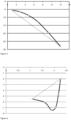
Figure 1 shows the cloud point behavior in mineral diesel blends showing calculated cloud points of blends as a line and measured values as diamonds. The Y-axis is the cloud point (T; °C), and the X-axis is the increasing percentage (vol-% of the total blend volume) of the mineral diesel with poorer cloud point; -
Figure 2 shows the cloud points of the blend ofDiesel 7 with Renewable F and Renewable G showing calculated cloud points of blends as a line and measured values as diamonds for renewable F (cloud point -2 °C) and as squares for renewable G (cloud point -28 °C). The Y-axis is the cloud point (T; °C), and the X-axis is the increasing percentage (vol-% of the total blend volume) of the renewables; -
Figure 3 shows the cloud point behavior of a blend of a renewable fuel with a cloud point of -28 °C and a mineral diesel with a cloud point of -5.5 °C. The Y-axis is the cloud point (T; °C), and the X-axis is the ratio (wt-% of the total paraffin content) of iso-paraffins to n-paraffins. -
Figure 4 shows the cloud point behavior of a blend of renewable fuel with a cloud point of -2 °C and a mineral diesel with a cloud point of -5.5 °C. The Y-axis is the cloud point (T; °C), and the X-axis is the ratio (wt-% of the total paraffin content) of iso-paraffins to n-paraffins in the C14-C20 range in said diesel fuel blend. - The present invention relates to a method of making a diesel fuel blend having enhanced cold properties and methods of lowering the cloud point of a mineral middle distillate fuel.
- The term "cold properties" is used herein to refer to the cloud point and cold filter plugging point of a fuel. The cloud point of a mineral middle distillate fuel is the temperature at which the heaviest n-paraffins are no longer soluble but precipitate out from the fuel, giving it a cloudy appearance. Cloud point conveys the lowest storage temperature for the fuel to be usable and is one important parameter in a product's specification. Cloud point can be evaluated using, e.g., a method defined in ASTM D2500, D5771, D5772, D5773, D7689, or EN 23015. The cold filter plugging point of a fuel is the temperature at and below which wax in the fuel will cause severe restrictions when flowing through a filter. The cold filter plugging point is believed to correlate well with vehicle operability at lower temperatures. The cold filter plugging point of petroleum fuels is typically evaluated using ASTM D6371 or EN 116. Both cloud point and cold filter plugging point are measured and given as temperature (T, here °C).
- The term "mineral" is used herein to denote components or compositions that are naturally occurring and derived from nonrenewable sources. Examples of such nonrenewable resources include petroleum oil or shale oil and combinations thereof. The term "mineral" also refers to the wastes of nonrenewable sources.
- Middle distillate is typically diesel fuel or kerosene. In the present invention, mineral middle distillate is preferably mineral diesel. Diesel fuel in general is any liquid fuel used in diesel engines, whose fuel ignition takes place, without spark, as a result of compression of the inlet air mixture and then the injection of fuel. The most common type of diesel fuel is a specific fractional distillate of petroleum fuel oil. Distillation characteristics define how the fuel is evaporated when it is sprayed into the combustion chamber of a diesel engine. Standards (e.g., EN590) include information about typical distillation curves.
- To distinguish from renewable diesel fuels not derived from petroleum, petroleum-derived diesel is referred to herein as "mineral diesel" or "mineral middle distillate". It may also be called, e.g., petrodiesel, fossil diesel, or petroleum distillate. Mineral diesel can comprise atmospheric or vacuum distillates. The distillate can comprise cracked gas oil or a blend of any proportion of straight run or thermally or catalytically cracked distillates. The distillate fuel can be subjected to further processing such as hydrogen treatment or other processes to improve fuel properties. Typically, mineral diesel comprises n- and isoparaffins at 10-70 weight %, naphtenics at 10-50 weight %, monoaromatics at 5-30 weight %, diaromatics at 0-10 weight %, and other aromatics at 0-5 weight %.
- In the present invention, a hydrotreated renewable middle distillate component preferably comprises or consists of hydrotreated vegetable oil, hydrotreated animal fat, hydrotreated fish fat, hydrotreated fish oil, hydrotreated algae oil, hydrotreated microbial oil, hydrotreated wood and/or other plant based oil, hydrotreated recyclable waste and/or residue or a combination thereof. Preferably, the fresh feed of renewable fuel is selected from plant oils/fats, animal fats/oils, fish fats/oils, fats contained in plants bred by means of gene manipulation, recycled fats of food industry and combinations thereof. Hydrotreating vegetable oils or animal fats is an alternative process to esterification for producing bio-based middle distillate fuels. Hydrotreated renewable middle distillate fuels are also referred to as "hydrotreated vegetable oil fuels", "hydrotreated renewable diesels", "renewable fuels", "renewable diesels" or "renewable diesel components" instead of "biodiesel," which is reserved for fatty acid methyl esters (FAME). Chemically hydrotreated renewable middle distillates are mixtures of paraffinic hydrocarbons and have very low quantities of sulfur and aromatics. The cold properties of a hydrotreated renewable middle distillates can be adjusted to meet the local requirements by adjusting the amount of iso-paraffins by the severity of the process or by additional catalytic processing.
- In the present invention, the isomerization ratio of the renewable fuel, such as hydrotreated renewable middle distillate is preferably at least 50%, more preferably at least 60 %. Isomerization ratios of more than 80 % may be achieved, but has drawbacks, such as increase in resources needed during the production. Preferably, the isomerization ratio of renewable fuel, such as hydrotreated renewable middle distillate is less than 69 %, giving advantageous ranges from 50 to 69 and from 60 to 69 % respectively. Higher isomerization ratio typically improves cold properties but such a hydrotreated renewable middle distillate consumes more resources during its production. The isomerization ratio means the total sum of iso-paraffins (weight %) divided by the total sum of paraffins (weight %). Since hydrotreated renewable middle distillates are hydrocarbons, they may be used as conventional middle distillate fuels. The fatty acid methyl ester specifications (EN 14214, ASTM D6751) do not apply for hydrotreated renewable middle distillates and therefore there is no volume percent limitation on how much hydrotreated renewable middle distillates may be blended with diesel fuel.
- Specifically, the present invention relates to a method of making a composition which comprises a renewable fuel component that is blended with a mineral middle distillate component, which are the main components of the present diesel fuel blend. Certain amounts of iso-paraffins and n-paraffins in the range of C15 to C18 create blends having good cold properties taking into account the resources used during the production. The invention relates to a method of making a diesel fuel blend comprising a blend of a renewable fuel and a mineral middle distillate fuel in which the renewable fuel and mineral middle distillate fuel are present in a ratio of amounts by volume of from 10:90 to 90:10 and the diesel fuel blend contains 10-25 wt% n-paraffins in the C14-C20 range and an amount of isoparaffins in the C14-C20 range such that the ratio of the sum of wt% amounts of isoparaffins in the C14-C20 range to the sum of wt% amounts of n-paraffins in the C14-C20 range is less than 2.2.
- In one embodiment, the ratio of the sum of wt% amounts of isoparaffins in the C14-C20 range to the sum of wt% amounts of n-paraffins in the C14-C20 range is from 1.1 to 2.2. This composition creates good cold properties with low resource consumption during the production. The weight percentages given here for paraffins refer to wt% of the total blend fuel weight.
- In one embodiment, in the composition, the amount of each C15-C18 iso-paraffin is equal to or more than 2.2 weight % of the total mass of the fuel composition, and the amount of each C15-C18 n-paraffin is equal to or more than 1.9 weight % of the total mass of the fuel composition. This composition creates good cold properties with low resource consumption during the production.
- Preferably, the amount of each C15-C18 n-paraffin is less than 10 weight % of the total mass of the fuel composition, more preferably less than 9.6 weight %, and most preferably equal to or less than 7.9 weight %. As referred here, the C15-C18 paraffins are paraffins (straight chain or branched alkanes) having a carbon number of 15, 16, 17, or 18. The carbon number denotes the number of carbon atoms in each paraffin molecule. This composition creates good cold properties with low resource consumption during the production.
- In one embodiment, the amount of at least one C15-C18 iso-paraffin is equal to or more than 3.0 weight % of the total mass of the fuel composition, and the amount of at least one C15-C18 n-paraffin is equal to or more than 2.2 weight % of the total mass of the fuel composition. This composition creates good cold properties with low resource consumption during the production.
- In one embodiment, a preferred fuel composition is obtained when the following equation is satisfied for n-paraffins: the weight percentage of the n-paraffin in the range of C16 to C18 with the smallest weight percent subtracted from the weight percentage of the n-paraffin in the range of C16 to C18 with the largest weight percent divided by the weight percentage of the n-paraffin in the range of C16 to C18 with the largest weight percent, is equal to or more than 0.26 and preferably equal to or less than 0.45. In another embodiment, the amounts of n-paraffins C16 and C17 fulfill the equation 0.26 < (C16-C17)/C16< 0.45. This composition creates good cold properties with low resource consumption during the production.
- In one embodiment, a preferred fuel composition is obtained when the following equation is satisfied for iso-paraffins: the weight percentage of the iso-paraffin in the range of C15 to C18 with the smallest weight percent subtracted from the weight percentage of the iso-paraffin amount in the range of C15 to C18 with the largest weight percent divided by the weight percentage of the iso-paraffin in the range of C15 to C18, with the largest weight percent is equal to or more than 0.49 and preferably equal to or less than 0.63. In another embodiment, the amounts of iso-paraffin carbon numbers C15 and C18 fulfill the equation 0.49 < (C18-C15)/C18 < 0.63. This composition creates good cold properties with low resource consumption during the production.
- In one embodiment, the difference between the cloud point and cold filter plugging point of the renewable fuel component and the mineral middle distillate component is equal to or less than 17 °C, and more preferably, the difference is between 0 and 13.1 °C. This difference creates good cold properties with low resource consumption during the production. Generally, the cloud point and cold filter plugging point in the blend is lower than the calculated (weighted mean) cloud points. The cold properties in the renewable fuel component may be better than the cold properties in the mineral middle distillate component.
- In the same way, the mineral middle distillate component may have better cold properties than the renewable fuel component in the blend.
- The fuel composition may be a hydrocarbon fuel composition that may also contain generally used additives. The sum volume of the renewable fuel and the mineral middle distillate components is typically at least 98 %, preferably at least 99 % and most preferably at least 99,9 % of the total blend fuel volume, the rest being generally used additives. The mineral middle distillate component may comprise more than one mineral component, and the renewable fuel component may comprise more than one renewable component. Preferably, the renewable fuel component is hydrotreated renewable middle distillate, and the mineral middle distillate component is mineral diesel.
- According to a specific embodiment, the sum volume of the renewable fuel and the mineral middle distillate components is at least 90 vol %, preferably at least 93 vol %, This kind of blend may contain other components compatible with diesel engines, such as fatty acid methyl esters (FAME) up to 10 vol %, preferably up to 7 vol %. This composition creates good cold properties with low resource consumption during the production and allows the use of broader variety of components in blend.
- In the present invention, the renewable fuel and mineral middle distillate components are blended in a volume percent ratio of 10:90 to 90:10 (renewable fuel: mineral middle distillate). In one embodiment, the renewable fuel and mineral middle distillate components are blended in a volume percent ratio of 20:80 to 80:20 (renewable fuel: mineral middle distillate). This composition creates good cold properties with low resource consumption during the production. In another embodiment, the renewable fuel and mineral middle distillate components are blended in a volume percent ratio of 20:80 to 60:40. This composition creates even better cold properties with low resource consumption during the production.
- In another embodiment, the diesel fuel blend has isoparaffins in the C14-C20 range from 22 wt% to 55 wt% of the total blend fuel weight. This creates good cold properties with low resource consumption during the production.
- The invention further relates to the use of hydrotreated renewable fuels for enhancing the cold properties of a fuel composition containing mineral middle distillate. The hydrotreated renewable fuel content in a mineral middle distillate blend can be determined by 14C isotope methods, which enable one skilled in the art to distinguish between fossil and renewable carbon. The principles of this method can be found in the standard ASTM D6866.
- Any blend fuel as described above, may be produced by a method, which is next described. According to the invention, a method is disclosed of making a diesel fuel blend having enhanced cold properties comprising selecting a a hydrotreated renewable middle distillate, which is a mixture of paraffinic hydrocarbons having very low quantities of sulfur and aromatics, and a mineral middle distillate fuel having cloud points that differ by no more than 17 °C, preferably by no more than 13 °C from one another; and blending the hydrotreated renewable middle distillate and mineral middle distillate fuel in a ratio of amounts by volume of from 10:90 to 90:10 to form a diesel fuel blend, wherein the diesel fuel blend contains 10-25 wt% n-paraffins in the C14-C20 range and an amount of isoparaffins in the C14-C20 range such that the ratio of the sum of wt% amounts of isoparaffins in the C14-C20 range to the sum of wt% amounts of n-paraffins in the C14-C20 range is less than 2.2, preferably from 1.1 to 2.2; and the diesel fuel blend has a cloud point that is lower than the weighted mean of the cloud points of the mineral middle distillate and the hydrotreated renewable middle distillate.
- In one embodiment, is provided a method of use for lowering the cloud point of a mineral middle distillate fuel comprising: determining the cloud point of a mineral middle distillate fuel; selecting a hydrotreated renewable middle distillate, which is a mixture of paraffinic hydrocarbons having very low quantities of sulfur and aromatics, having a cloud point that differs by no more than 17 °C, preferably by no more than 13 °C from the cloud point of the mineral middle distillate fuel; and blending the hydrotreated renewable middle distillate and mineral middle distillate fuel in a ratio of amounts by volume of from 10:90 to 90:10 to form a diesel fuel blend having a cloud point that is lower than the cloud point of the mineral middle distillate fuel, wherein the diesel fuel blend contains 10-25 wt% n-paraffins in the C14-C20 range and an amount of isoparaffins in the C14-C20 range such that the ratio of the sum of wt% amounts of isoparaffins in the C14-C20 range to the sum of wt% amounts of n-paraffins in the C14-C20 range is less than 2.2 to form a diesel fuel blend having a cloud point that is lower than the cloud point of the mineral middle distillate.
- In one embodiment, the invention relates to a method of use for lowering the cloud point of a mineral middle distillate fuel comprising: determining the cloud point of a mineral middle distillate fuel; selecting a hydrotreated renewable middle distillate, which is a mixture of paraffinic hydrocarbons having very low quantities of sulfur and aromatics, having the following properties: (i) a cloud point that differs by no more than 17 °C, preferably by no more than 13 °C from the cloud point of the mineral middle distillate fuel; (ii) an amount of n-paraffins sufficient to provide a diesel fuel blend containing 10-25 wt% n-paraffins in the C14-C20 range when the hydrotreated renewable middle distillate is blended with the mineral middle distillate fuel; and (iii) an amount of isoparaffins in the C14-C20 range sufficient to provide a diesel fuel blend having a ratio of the sum of wt% amounts of isoparaffins in the C14-C20 range to the sum of wt% amounts of n-paraffins in the C14-C20 range of from 1.1 to 2.2 when the hydrotreated renewable middle distillate is blended with the mineral middle distillate fuel; and blending the hydrotreated renewable middle distillate with the mineral middle distillate fuel in a ratio of amounts by volume of from 20:80 to 80:20 to form a diesel fuel blend having a cloud point that is lower than the cloud point of the mineral middle distillate.
- In one embodiment, the invention relates to a method of use for lowering the cloud point of a hydrotreated renewable middle distillate, which is a mixture of paraffinic hydrocarbons having very low quantities of sulfur and aromatics, comprising: determining the cloud point of a hydrotreated renewable middle distillate; selecting a mineral middle distillate fuel having a cloud point that differs by no more than 17 °C, preferably by no more than 13 °C, from the cloud point of the hydrotreated renewable middle distillate and blending the hydrotreated renewable middle distillate and mineral middle distillate fuel in a ratio of amounts by volume of from 10: 90 to 90:10 to form a diesel fuel blend having a cloud point that is lower than the cloud point of a hydrotreated renewable middle distillate, wherein the diesel fuel blend contains 10-25 wt% n-paraffins in the C14-C20 range and an amount of isoparaffins in the C14-C20 range such that the ratio of the sum of wt% amounts of isoparaffins in the C14-C20 range to the sum of wt% amounts of n-paraffins in the C14-C20 range is less than 2.2, preferably from 1.1 to 2.2, to form a diesel fuel blend having a cloud point that is lower than the cloud point of the hydrotreated renewable middle distillate.
- A diesel fuel blend obtainable by a method or use as described above, has been experimentally shown to have enhanced cold properties in relation to components thereto.
- The weight percentages given in relation to paraffins refer to wt% of the total blend fuel weight. The volume percentages given in relation to fuel components refer to vol % of the total blend fuel volume.
- To lower the cloud point of a mineral middle distillate (fossil fuel component) having a cloud point of -5.5 °C by -0.5 to -6 °C it is necessary to add to the fossil fuel component a second fuel component with a lower cloud point. Typically, when two or more fuel components with different cloud points are blended together the final blend has a higher cloud point than what would be expected based on the weighted mean value of the cloud points of the components. When 20 vol% of a renewable fuel component (Renewable G) with a cloud point of -28 °C was blended with the fossil component which has a cloud point of -5.5 °C, a cloud point of 6.6 °C was achieved. The difference in cloud point between this renewable fuel component and the fossil fuel component was greater than 17 °C, making it a comparative example. The weight percentages of n-paraffins of the blended fuels were measured by gas chromatography and are shown in Table 1 below.
- In the blend, the total wt-% of n-paraffins C14, C15, C16, C17, C18, C19, and C20 was 9.18%, the total wt-% of iso-paraffins C14, C15, C16, C17, C18, C19, and C20 was 26.09% and the ratio of n-paraffins / iso-paraffins in blend was 2.84. The cloud point of the blend could be lowered even further when the amount of renewable fuel with the -28 °C cloud point was increased to 40 vol-%, 60 vol-% and 80 vol-% in the blend. The cloud points of the resulting blends at various volume percentages are shown in
Figure 2 .Figures 3 shows the relationship between cloud point and paraffin ratio for the blends. For all ratios of renewable fuel to fossil fuel, however, the cloud points of the blends were higher than calculated by the weighted mean value of cloud points of the components (Figure 2 ). This was as predicted according to current practice. - The weight percentages of n-paraffins in the fuel components before blending were measured by gas chromatography and are shown in Table 1. The weight percentages of n-paraffins in the blended fuel compositions were measured by gas chromatography (Table 2). The weight percentages of iso-paraffins in the fuels to be blended were measured by gas chromatography (Table 3). The weight percentages of iso-paraffins in the blended fuel compositions were measured (Table 4). In the above-mentioned blends, the cumulative sums of n-paraffins C14, C15, C16 , C17, C18, C19, and C20 were 9.18-7.78 wt-%, the cumulative sums of iso-paraffins C14, C15, C16 , C17, C18, C19, and C20 were 26.09-72.46 wt-% and the ratios of the cumulative sum of iso-paraffins C14, C15, C16, C17, C18, C19, and C20 and the cumulative sum of n-paraffins C14, C15, C16, C17, C18, C19, and C20 were 2.84-9.31 wt-%.
- When 20 vol % of a renewable fuel (Renewable F) which has a cloud point of -2 °C was blended with 80 vol % of a fossil component which has a cloud point of -5.5 °C, a lower cloud point than the cloud point of either component was achieved. This synergist effect is achieved when the ratio of the cumulative sum of iso-paraffins C14, C15, C16, C17, C18, C19, and C20 and the cumulative sum of n-paraffins C14, C15, C16, C17, C18, C19, and C20 in the blend was 1.6. The cumulative sum of n-paraffins C14, C15, C16, C17, C18, C19, and C20 in the blend was 13.6 wt-%. The cumulative sum of iso-paraffins C14, C15, C16, C17, C18, C19, and C20 in the blend was 21.87 wt-%.
- When 40 vol % of a renewable fuel (Renewable F) which has a cloud point of -2 °C was blended with 60 vol % of a fossil component which has a cloud point of -5.5 °C, a lower cloud point than the cloud point of either component was achieved. This synergist effect is achieved when the ratio of the cumulative sum of iso-paraffins C14, C15, C16, C17, C18, C19, and C20 and the cumulative sum of n-paraffins C14, C15, C16, C17, C18, C19, and C20 in the blend was 1.9. The cumulative sum of n-paraffins C14, C15, C16, C17, C18, C19, and C20 in the blend was 17.6 wt-%. The cumulative sum of iso-paraffins C14, C15, C16, C17, C18, C19, and C20 in the blend was 33.11 wt-%.
- When 60 vol % of a renewable fuel (Renewable F) which has a cloud point of -2 °C was blended with 40 vol % of a fossil component which has a cloud point of -5.5 °C, a lower cloud point than the cloud point of either component was achieved. This synergist effect is achieved when the ratio of the cumulative sum of iso-paraffins C14, C15, C16, C17, C18, C19, and C20 and the cumulative sum of n-paraffins C14, C15, C16, C17, C18, C19, and C20 in the blend was 2.05. The cumulative sum of n-paraffins C14, C15, C16, C17, C18, C19, and C20 in the blend was 21.55 wt-%. The cumulative sum of iso-paraffins C14, C15, C16, C17, C18, C19, and C20 in the blend was 44.4 wt-%.
- When 80 vol-% of a renewable fuel (Renewable F) which has a cloud point of -2 °C was blended with 20 vol %a fossil component which has a cloud point of -5.5 °C, a lower cloud point than the cloud point of either component was achieved. This synergist effect is achieved when the ratio of the cumulative sum of iso-paraffins C14, C15, C16, C17, C18, C19, and C20 and the cumulative sum of n-paraffins C14, C15, C16, C17, C18, C19, and C20 in the blend was 2.18. The cumulative sum of n-paraffins C14, C15, C16, C17, C18, C19, and C20 in the blend was 25.5 wt-%. The cumulative sum of iso-paraffins C14, C15, C16, C17, C18, C19, and C20 in the blend was 55.6 wt-%.
- The following tables report the data from Comparative Example 1 and Examples 1-4. The weight percentages of n-paraffins in the fuels to be blended were measured by gas chromatography and are shown in Table 1. The weight percentages of n-paraffins in the blended fuel compositions were measured by gas chromatography (Table 2). The weight percentages of iso-paraffins in the fuels to be blended were measured by gas chromatography (Table 3). The weight percentages of iso-paraffins in the blended fuel compositions were measured (Table 4).
Table 1. The weight % of n-paraffins of the fuel components. Carbon number n-paraffin Renewable F Renewable G 14 0.41 0.26 15 5.49 1.75 16 9.57 2.21 17 5.09 1.65 18 8.83 1.44 19 0.05 0.02 20 0.06 0.01 Table 2. The weight % of n-paraffins in the blended fuel compositions. Carbon number n-paraffin 20% Renew. F 20% Renew. G 40% Renew. F 40 % Renew. G 60% Renew. F 60% Renew. G 80% Renew. F 80% Renew. G 14 1.15 1.12 0.97 0.91 0.78 0.69 0.59 0.47 15 2.31 1.57 3.11 1.61 3.90 1.66 4.69 1.70 16 3.01 1.54 4.65 1.70 6.29 1.87 7.93 2.04 17 2.23 1.54 2.94 1.57 3.66 1.60 4.38 1.62 18 2.79 1.31 4.30 1.34 5.81 1.37 7.32 1.41 19 1.12 1.12 0.86 0.84 0.59 0.57 0.32 0.29 20 0.99 0.98 0.76 0.74 0.52 0.49 0.29 0.25 Table 3. The weight % of iso-paraffins of the fuel components. Carbon number iso-paraffin Renewable F Renewable G 14 0.82 1.69 15 8.64 15.07 16 18.83 24.92 17 14.21 20.70 18 23.80 24.97 19 0.28 0.32 20 0.26 0.24 Table 4. The weight % of iso-paraffins in the blended fuel compositions. Carbon number i-paraffin 20% Renew. F 20% Renew. G 40% Renew. F 40 % Renew. G 60% Renew. F 60% Renew. G 80% Renew. F 80% Renew. G 14 1.55 1.72 1.37 1.71 1.19 1.70 1.00 1.69 15 2.95 4.24 4.37 6.95 5.80 9.65 7.22 12.36 16 4.89 6.10 8.37 10.81 11.86 15.51 15.34 20.22 17 4.08 5.38 6.61 9.21 9.14 13.04 11.68 16.87 18 5.75 5.99 10.27 10.73 14.78 15.48 19.29 20.23 19 1.52 1.53 1.21 1.23 0.90 0.93 0.59 0.63 20 1.13 1.13 0.91 0.90 0.70 0.68 0.48 0.46 - In these examples the composition of the fossil component was such that the cumulative sum of iso-paraffins C14,C15, C16, C17, C18, C19, and C20 was 10.63 wt-%, the cumulative sum of iso-paraffins C8,C9, C10, C11, C12, and C13 was 6.45 wt-%, the cumulative sum of isoparaffins C21, C22, C23, C24, C25, and C26 was 3.13 wt-%, the cumulative sum of n-paraffins C14,C15, C16 , C17, C18, C19, and C20 was 9.63 wt-%, the cumulative sum of 4-paraffins C8,C9, C10, C11, C12, and C13 was 3.84 wt-%, the cumulative sum of n-paraffins C21, C22, C23, C24, C25, and C26 was 2.58 wt-%,.
- When 20 vol-%, 40 vol-%, 60 vol-% and 80 vol-% of a renewable fuel component with a cloud point -35°C was blended with a fossil fuel component with a cloud point of 5.5 °C, all cloud points of the blends were higher than calculated by weighted mean value of cloud points of components. This was as predicted according to current practice. In the above-mentioned blends, the cumulative sums of n-paraffins C14, C15, C16, C17, C18, C19, and C20 were 8.41-4.50 wt-%. The cumulative sums of iso-paraffins C14, C15, C16, C17, C18, C19, and C20 were 26.25-76.25 wt-%. The ratios of the cumulative sum of iso-paraffins C14, C15, C16, C17, C18, C19, and C20 and the cumulative sum of n-paraffins C14, C15, C16, C17, C18, C19, and C20 were 3.1-17.0. The weight percentages of iso- and n-paraffins in the blended fuel compositions were measured by gas chromatography.
- When 20 vol-%, 40 vol-%, 60 vol-% and 80 vol-% of a renewable diesel fuel component with a cloud point -27 °C was blended with a fossil fuel component with a cloud point of -5.5 °C, all cloud points of the blends were higher than calculated by weighted mean value of cloud points of components. This was as predicted according to current practice. In the above-mentioned blends, the cumulative sums of n-paraffins C14, C15, C16, C17, C18, C19, and C20 were 9.16-7.70 wt-%, the cumulative sums of iso-paraffins C14, C15, C16, C17, C18, C19, and C20 were 26.00-75.22 wt-% and the ratios of the cumulative sum of iso-paraffins C14, C15, C16, C17, C18, C19, and C20 and the cumulative sum of n-paraffins C14, C15, C16, C17, C18, C19, and C20 were 2.6-6.8. The weight percentages of iso- and n-paraffins in the blended fuel compositions were measured by gas chromatography.
- When 20 vol-%, 40 vol-%, 60 vol-% and 80 vol-% of a renewable diesel fuel component with a cloud point -23°C was blended to with a fossil fuel component with a cloud point of -5.5 °C, all cloud points of the blends were higher than calculated by weighted mean value of cloud points of components. This was as predicted according to current practice. In the above-mentioned blends, the cumulative sums of n-paraffins C14, C15, C16, C17, C18, C19, and C20 were 9.61-9.53 wt-%, the cumulative sums of iso-paraffins C14, C15, C16, C17, C18, C19, and C20 were 25.66-73.76 wt-% and the ratios of the cumulative sum of iso-paraffins C14, C15, C16, C17, C18, C19, and C20 and the cumulative sum of n-paraffins C14, C15, C16, C17, C18, C19, and C20 were 2.7-7.7. The weight percentages of iso- and n-paraffins in the blended fuel compositions were measured by gas chromatography.
- Two mineral diesel blends having different cloud points were blended. The cloud points of the blends were measured by a method defined in EN 23015 and EN 116. Measured cloud point values for mineral diesel blends are presented in Table 5 and
Figure 1 , respectively. The calculated linear values in Table 5 are based on linear behavior, which means a weighted mean of cloud points of the components. The linear behavior is average of the cloud points and it is in other words accomplished by weighting the cloud points of components by the volume percent of components in the blend. Analysis shows that the poorer cloud point component dominates.Table 5. Cloud points of mineral diesel blends. Volume percent (%) of Diesel with cloud point -27.8 °C Volume percent (%) of Diesel with cloud point -4.3 °C% Cloud point of blend °C (measured) Cloud point of blend °C (calculated linear) 80% 20% -18.8 -23.1 60% 40% -13.3 -18.4 40% 60% -9.5 -13.7 20% 80% -6.4 -9.0 -
Figure 1 shows that components with poorer cloud point values dominated in the mineral diesel blends. The term "poorer" means a higher temperature value of a cloud point or cold filter plugging point, and the term "better" means a lower temperature value of a cloud point or cold filter plugging point. - Renewable hydrotreated vegetable oil compositions with different cold properties were blended with mineral diesel in different volumes. The cloud points and/or cold filter plugging points of the blends were measured by methods defined in EN 23015 and EN 116 and are shown in Table 6. It can be seen that the blending produced lower, i.e., better, measured cloud points and cold filter plugging points than expected by calculating a weighted mean of cloud points of the components. In some cases, the blend had even better cold properties than the cold properties of its individual components. Measured cloud points were even more than 3 °C better compared to the calculated weighted mean of cold properties. Also, the cold filter plugging points were better in blends than in neat mineral fuel.
Table 6. Cloud points and cold filter plugging points of mineral diesel and renewable hydrotreated vegetable oil diesel blends. Cloud point, °C (measured) Cold filter plugging point, °C (measured) Cloud point weighted mean Cold filter plugging point weighted mean, °C Cloud point difference of components, °C Renewable A 6.5 4 Diesel 1 -4.3 -6 20% Renewable A + 80% Diesel 1 -5.5 -8 -2.1 -4 10.8 Diesel 2 -5.1 -6 20% Renewable A + 80% Diesel 2 -6.1 -9 -2.8 -4 11.6 Diesel 3 -3.8 -5 20% Renewable A + 80% Diesel 3 -4.8 -7 -1.7 -3.2 10.3 Renewable B -2.0 -5 Diesel 1 -4.3 -6 20% Renewable B + 80% Diesel 1 -5.6 -9 -3.8 -5.8 2.3 Diesel 2 -5.1 -6 20% Renewable B + 80% Diesel 2 -6.3 -8 -4.5 -5.8 3.1 Diesel 3 -3.8 -5 20% Renewable B + 80% Diesel 3 -5.0 -7 -3.4 -5 1.8 Renewable C -1.1 -4 Diesel 2 -5.1 -6 20% Renewable C + 80% Diesel 2 -6.4 -8 -4.3 -5.6 4 Renewable D -15.3 -15 Diesel 4 -28.0 -29 20% Renewable D + 80% Diesel 4 -28.5 -36 -25.5 -26.2 12.7 40% Renewable D + 60% Diesel 4 -26.3 -27 -22.9 -23.4 12.7 50% Renewable D + 50% Diesel 4 -24.8 -24 -21.7 -22 12.7 60% Renewable D + 40% Diesel 4 -22.5 -23 -20.4 -20.6 12.7 80% Renewable D + 20% Diesel 4 -19.1 -19 -17.8 -17.8 12.7 Diesel 5 -28.4 -28 20% Renewable D + 80% Diesel 5 -26.8 -29 -25.8 -25.4 13.1 Diesel 5 -28.4 -28 50% Renewable D + 50% Diesel 5 -23.4 -23 -21.9 -21.5 13.1 Renewable H -9.8 -12 Diesel 8 -3.9 -15 80% Renewable H + 20% Diesel 8 -11.8 -8.6 5.9 60% Renewable H + 40% Diesel 8 -10.9 -7.4 5.9 40% Renewable H + 60% Diesel 8 -8.1 -7.0 5.9 20% Renewable H + 80% Diesel 8 -5.7 -5.1 5.9 - In contrast to the cloud point value, the cold filter plugging point value can be improved by cold flow improver additives, which are typically polyethylenevinylacetates, i.e., poly-EVAs. Other typical additives are lubricity improvers and electricity conductive improvers.
Diesel 6 andDiesel 8 include cold flow improvers. - Seven percent fatty acid methyl ester was added to the 100% renewable hydrotreated vegetable oil diesel (Renewable E) or its blend with mineral diesel (Diesel 6). The cloud points and the calculated cloud point weighted mean of the
Diesel 6 and Renewable E blend with the addition of fatty acid methyl ester were measured.Table 7. The cloud points and the calculated cloud point weighted mean of the mineral diesel (Diesel 6) and renewable hydrotreated vegetable oil diesel (Renewable E) blend with the addition of fatty acid methyl ester. Cloud point, °C (measured) Weighted mean of cloud point of Diesel 6 and Renewable ECloud point difference of fossil and renewable diesel components,°C Renewable E -10 Diesel 6 -5 80% Renewable E + 20% Diesel 6 -11.8 -9 5 60% Renewable E + 40% Diesel 6 -10.9 -8 5 7% fatty acid methyl ester and 93% Renewable E + 0% Diesel 6 -9 -10 5 7% fatty acid methyl ester and 93% blend of 80% Renewable E + 20% Diesel 6 -10.8 -9 5 7% fatty acid methyl ester and 93% blend of 60% Renewable E + 40% Diesel 6 -10.5 -8 5 - In Example 7, the cloud point difference between
Diesel 6 and Renewable E is 5 °C. Results show that fatty acid methyl ester as a blending component causes poorer cloud point, but blending according to present invention can alleviate this effect. Hence, according to one embodiment of the present invention, blending up to 7vol-% fatty acid methyl ester, with blend fuel of renewable fuel and mineral middle distillate according toclaim 1, the cloud point, which is lower than the weighted mean of its components, can be achieved. Said cloud point may even be lower than that of any individual component.
Claims (9)
- A method of making a diesel fuel blend having enhanced cold properties comprising:(a) selecting a hydrotreated renewable middle distillate component, which is a mixture of paraffinic hydrocarbons having very low quantities of sulfur and aromatics, and a mineral middle distillate fuel component having cloud points that differ by no more than 17 °C, preferably by no more than 13 °C; and(b) blending the hydrotreated renewable middle distillate component and mineral middle distillate fuel component in a ratio of amounts by volume of from 10:90 to 90:10 to form a diesel fuel blend,wherein the diesel fuel blend contains 10-25 wt% n-paraffins in the C14-C20 range and an amount of isoparaffins in the C14-C20 range such that the ratio of the sum of wt% amounts of isoparaffins in the C14-C20 range to the sum of wt% amounts of n-paraffins in the C14-C20 range is less than 2.2; and the diesel fuel blend has a cloud point that is lower than the weighted mean of the cloud points of the mineral middle distillate component and the hydrotreated renewable middle distillate component.
- A method according to claim 1, wherein the diesel fuel blend has a ratio of the sum of wt% amounts of isoparaffins in the C14-C20 range to the sum of wt% amounts of n-paraffins in the C14-C20 range that is from 1.1 to 2.2.
- A method according to any of claim 1 or 2, wherein the diesel fuel blend has from 22 wt% to 55 wt% isoparaffins in the C14-C20 range.
- A method according to any of claims 1-3, wherein the fresh feed of hydrotreated renewable middle distillate component is selected from plant oils/fats, animal fats/oils, fish fats/oils, fats contained in plants bred by means of gene manipulation, recycled fats of food industry and combinations thereof.
- A method according to any of claims 1-4, wherein the isomerization ratio of the hydrotreated renewable middle distillate component is at least 50%, preferably from 50 to 69%, more preferably at least 60 % and most preferably from 60 to 69 %.
- A method according to any of claims 1-5, wherein the diesel fuel blend has a cloud point that is lower than the cloud point of the mineral middle distillate fuel component.
- A method according to any of claims 1-6, wherein the diesel fuel blend has a cloud point that is lower than the cloud point of the hydrotreated renewable middle distillate component.
- A use of a hydrotreated renewable middle distillate component for lowering the cloud point of a mineral middle distillate fuel comprising:(a) determining the cloud point of a mineral middle distillate fuel;(b) selecting a hydrotreated renewable middle distillate component, which is a mixture of paraffinic hydrocarbons having very low quantities of sulfur and aromatics, having the following properties:(i) a cloud point that differs by no more than 17 °C from the cloud point of the mineral middle distillate fuel;(ii) an amount of n-paraffins sufficient to provide a diesel fuel blend containing 10-25 wt% n-paraffins in the C14-C20 range when the hydrotreated renewable middle distillate component is blended with the mineral middle distillate fuel; and(iii) an amount of isoparaffins in the C14-C20 range sufficient to provide a diesel fuel blend having a ratio of the sum of wt% amounts of isoparaffins in the C14-C20 range to the sum of wt% amounts of n-paraffins in the C14-C20 range of from 1.1 to 2.2 when the hydrotreated renewable middle distillate component is blended with the mineral middle distillate fuel; and(c) blending the hydrotreated renewable middle distillate component with the mineral middle distillate fuel in a ratio of amounts by volume of from 10:90 to 90:10 to form a diesel fuel blend having a cloud point that is lower than the cloud point of the mineral middle distillate fuel.
- A use of a mineral middle distillate fuel for lowering the cloud point of a hydrotreated renewable middle distillate component comprising:(a) determining the cloud point of a hydrotreated renewable middle distillate component, which is a mixture of paraffinic hydrocarbons having very low quantities of sulfur and aromatics;(b) selecting a mineral middle distillate having the following properties:(i) a cloud point that differs by no more than 17 °C from the cloud point of the hydrotreated renewable middle distillate component;(ii) an amount of n-paraffins sufficient to provide a diesel fuel blend containing 10-25 wt% n-paraffins in the C14-C20 range when the hydrotreated renewable middle distillate component is blended with the mineral middle distillate fuel; and(iii) an amount of isoparaffins in the C14-C20 range sufficient to provide a diesel fuel blend having a ratio of the sum of wt% amounts of isoparaffins in the C14-C20 range to the sum of wt% amounts of n-paraffins in the C14-C20 range of from 1.1 to 2.2 when the hydrotreated renewable middle distillate component is blended with the mineral middle distillate fuel; and(c) blending the hydrotreated renewable middle distillate component with the mineral middle distillate fuel in a ratio of amounts by volume of from 10:90 to 90:10 to form a diesel fuel blend having a cloud point that is lower than the cloud point of the hydrotreated renewable middle distillate component.
Priority Applications (1)
| Application Number | Priority Date | Filing Date | Title |
|---|---|---|---|
| EP23217823.6A EP4317368A3 (en) | 2017-01-27 | 2018-01-25 | Method of making fuel compositions with enhanced cold properties |
Applications Claiming Priority (2)
| Application Number | Priority Date | Filing Date | Title |
|---|---|---|---|
| FI20175074A FI127307B2 (en) | 2017-01-27 | 2017-01-27 | Fuel compositions with enhanced cold properties and methods of making the same |
| PCT/FI2018/050060 WO2018138412A1 (en) | 2017-01-27 | 2018-01-25 | Fuel compositions with enhanced cold properties and methods of making the same |
Related Child Applications (2)
| Application Number | Title | Priority Date | Filing Date |
|---|---|---|---|
| EP23217823.6A Division-Into EP4317368A3 (en) | 2017-01-27 | 2018-01-25 | Method of making fuel compositions with enhanced cold properties |
| EP23217823.6A Division EP4317368A3 (en) | 2017-01-27 | 2018-01-25 | Method of making fuel compositions with enhanced cold properties |
Publications (2)
| Publication Number | Publication Date |
|---|---|
| EP3574064A1 EP3574064A1 (en) | 2019-12-04 |
| EP3574064B1 true EP3574064B1 (en) | 2024-01-24 |
Family
ID=61168119
Family Applications (2)
| Application Number | Title | Priority Date | Filing Date |
|---|---|---|---|
| EP18703614.0A Active EP3574064B1 (en) | 2017-01-27 | 2018-01-25 | Method of making fuel compositions with enhanced cold properties |
| EP23217823.6A Pending EP4317368A3 (en) | 2017-01-27 | 2018-01-25 | Method of making fuel compositions with enhanced cold properties |
Family Applications After (1)
| Application Number | Title | Priority Date | Filing Date |
|---|---|---|---|
| EP23217823.6A Pending EP4317368A3 (en) | 2017-01-27 | 2018-01-25 | Method of making fuel compositions with enhanced cold properties |
Country Status (19)
| Country | Link |
|---|---|
| US (4) | US10954459B2 (en) |
| EP (2) | EP3574064B1 (en) |
| JP (1) | JP6997789B2 (en) |
| KR (2) | KR102595530B1 (en) |
| CN (2) | CN110249036A (en) |
| AU (2) | AU2018213062B2 (en) |
| BR (1) | BR122022013995B1 (en) |
| CA (1) | CA2993207C (en) |
| DK (1) | DK3574064T3 (en) |
| ES (2) | ES2677609B2 (en) |
| FI (2) | FI127307B2 (en) |
| FR (3) | FR3062391B1 (en) |
| LT (1) | LT3574064T (en) |
| NO (2) | NO343028B1 (en) |
| PL (1) | PL3574064T3 (en) |
| RU (1) | RU2725661C1 (en) |
| SE (2) | SE541991C2 (en) |
| SG (1) | SG11201906100UA (en) |
| WO (1) | WO2018138412A1 (en) |
Families Citing this family (10)
| Publication number | Priority date | Publication date | Assignee | Title |
|---|---|---|---|---|
| FI127307B2 (en) | 2017-01-27 | 2024-12-10 | Neste Oyj | Fuel compositions with enhanced cold properties and methods of making the same |
| EP4530333A3 (en) | 2018-01-17 | 2025-06-04 | REG Synthetic Fuels, LLC | Method for blended fuel compositions with improved emissions profiles |
| FI131290B1 (en) * | 2019-04-10 | 2025-01-28 | Neste Oyj | Use of a diesel component in a fuel composition |
| WO2021094645A1 (en) * | 2019-11-15 | 2021-05-20 | Neste Oyj | Production of paraffinic products |
| US11377607B2 (en) | 2020-03-23 | 2022-07-05 | Exxonmobil Chemical Patents Inc. | Branched paraffinic compositions derived from isomerized and hydrogenated linear alpha olefins |
| US11999918B2 (en) * | 2020-03-31 | 2024-06-04 | King Abdullah University Of Science And Technology | Hydrocarbon functionalized carbon-based nanomaterial and method |
| EP4530334A3 (en) | 2020-07-08 | 2025-06-11 | TotalEnergies OneTech | Jet fuel composition and method for producing a jet fuel composition |
| FI20206282A1 (en) | 2020-12-11 | 2022-06-12 | Neste Oyj | Renewable hydrocarbon composition having good cetane number and good cold properties |
| FR3143125A1 (en) * | 2022-12-07 | 2024-06-14 | IFP Energies Nouvelles | Method for analyzing the cold properties of hydrocarbon cuts |
| FI131538B1 (en) | 2022-12-13 | 2025-06-16 | Neste Oyj | A method for producing a hydrocarbon composition |
Citations (13)
| Publication number | Priority date | Publication date | Assignee | Title |
|---|---|---|---|---|
| WO2000020534A1 (en) | 1998-10-05 | 2000-04-13 | Sasol Technology (Pty.) Ltd. | Biodegradable middle distillates and production thereof |
| EP1664249A1 (en) | 2003-09-17 | 2006-06-07 | Shell Internationale Researchmaatschappij B.V. | Petroleum- and fischer-tropsch- derived kerosene blend |
| US20060207166A1 (en) | 2005-03-21 | 2006-09-21 | Ben-Gurion University Of The Negev Research & Development Authority | Production of diesel fuel from vegetable and animal oils |
| US20080163542A1 (en) | 2007-01-08 | 2008-07-10 | Innospec, Inc. | Synergistic fuel composition for enhancing fuel cold flow properties |
| EP1956070A1 (en) | 2005-11-30 | 2008-08-13 | Nippon Oil Corporation | Gas oil composition |
| WO2008113492A1 (en) * | 2007-03-16 | 2008-09-25 | Eni S.P.A | Hydrocarbon composition useful as a fuel and fuel oil containing a petroleum component and a component of a biological origin |
| GB2449009A (en) | 2003-06-19 | 2008-11-05 | Chevron Usa Inc | Distillate fuel made from Fischer-Tropsch products |
| EP2019132A1 (en) | 2006-05-17 | 2009-01-28 | Nippon Oil Corporation | Gas-oil composition |
| EP2022839A1 (en) | 2006-05-17 | 2009-02-11 | Nippon Mitsubishi Oil Corporation | Gas-oil composition |
| US20090229172A1 (en) | 2008-03-17 | 2009-09-17 | Brady John P | Production of Transportation Fuel from Renewable Feedstocks |
| US20110047862A1 (en) | 2006-12-18 | 2011-03-03 | Total Raffinage Marketing | Process for hydrotreating a diesel fuel feedstock, hydrotreating unit for the implementation of the said process, and corresponding hydrorefining unit |
| AU2015205854A1 (en) | 2002-09-06 | 2015-08-13 | Neste Oyj | Diesel fuel composition, comprising components based on biological raw material, obtained by hydrogenating and decomposition fatty acids |
| US20160289568A1 (en) | 2015-04-02 | 2016-10-06 | Uop Llc | Processes for producing a transportation fuel from a renewable feedstock |
Family Cites Families (30)
| Publication number | Priority date | Publication date | Assignee | Title |
|---|---|---|---|---|
| US20070187292A1 (en) | 2001-10-19 | 2007-08-16 | Miller Stephen J | Stable, moderately unsaturated distillate fuel blend stocks prepared by low pressure hydroprocessing of Fischer-Tropsch products |
| US7279018B2 (en) | 2002-09-06 | 2007-10-09 | Fortum Oyj | Fuel composition for a diesel engine |
| FI20021596L (en) | 2002-09-06 | 2004-03-07 | Fortum Oyj | Diesel engine fuel composition |
| US7354507B2 (en) * | 2004-03-17 | 2008-04-08 | Conocophillips Company | Hydroprocessing methods and apparatus for use in the preparation of liquid hydrocarbons |
| US20060264684A1 (en) * | 2005-05-19 | 2006-11-23 | Petri John A | Production of diesel fuel from biorenewable feedstocks |
| JP5072010B2 (en) | 2006-05-17 | 2012-11-14 | Jx日鉱日石エネルギー株式会社 | Light oil composition |
| US7511181B2 (en) * | 2006-05-02 | 2009-03-31 | Uop Llc | Production of diesel fuel from biorenewable feedstocks |
| JP5072008B2 (en) | 2006-05-17 | 2012-11-14 | Jx日鉱日石エネルギー株式会社 | Method for producing light oil composition |
| ITMI20062193A1 (en) | 2006-11-15 | 2008-05-16 | Eni Spa | PROCESS FOR PRODUCING HYDROCARBURAL FRACTIONS FROM MIXTURES OF BIOLOGICAL ORIGIN |
| FR2912836B1 (en) | 2007-02-21 | 2012-11-30 | Snecma | TRANSMITTER FOR ION PROPELLER. |
| US7999143B2 (en) * | 2007-09-20 | 2011-08-16 | Uop Llc | Production of diesel fuel from renewable feedstocks with reduced hydrogen consumption |
| US8742183B2 (en) * | 2007-12-21 | 2014-06-03 | Uop Llc | Production of aviation fuel from biorenewable feedstocks |
| US20100083563A1 (en) | 2008-10-02 | 2010-04-08 | Chevron U.S.A. Inc. | Co-processing diesel fuel with vegetable oil to generate a low cloud point hybrid diesel biofuel |
| US8314274B2 (en) * | 2008-12-17 | 2012-11-20 | Uop Llc | Controlling cold flow properties of transportation fuels from renewable feedstocks |
| FR2940314B1 (en) | 2008-12-23 | 2011-11-18 | Total Raffinage Marketing | GASOLINE FUEL FOR DIESEL ENGINE HAVING HIGH CARBON CONTENT OF RENEWABLE ORIGIN AND OXYGEN |
| BRPI0900789B1 (en) | 2009-04-27 | 2018-02-06 | Petroleo Brasileiro S.a. - Petrobrás | DILUTED BIOMASS OIL HYDROCESSING PROCESS IN OIL REFINING CURRENT |
| CA2775148A1 (en) * | 2009-11-30 | 2011-06-03 | Conocophillips Company | A blended fuel composition having improved cold flow properties |
| WO2011112660A2 (en) | 2010-03-09 | 2011-09-15 | Exxonmobil Research And Engineering Company | Dewaxing of renewable diesel fuel |
| US20120090223A1 (en) | 2010-10-13 | 2012-04-19 | Uop Llc | Methods for producing diesel range materials having improved cold flow properties |
| US9353319B2 (en) | 2010-10-13 | 2016-05-31 | Uop Llc | Methods for producing diesel range materials having improved cold flow properties |
| US8431756B2 (en) * | 2010-12-13 | 2013-04-30 | Exxonmobil Research And Engineering Company | Conversion catalysts and processes having oxygenate and water stability |
| US9006501B2 (en) | 2011-05-04 | 2015-04-14 | Chevron U.S.A. Inc. | Low pour point renewable fuel blend |
| US20130261360A1 (en) * | 2012-03-30 | 2013-10-03 | Uop Llc | Methods and apparatuses for processing renewable feedstocks |
| US9534181B2 (en) * | 2012-06-19 | 2017-01-03 | Inaeris Technologies, Llc | Method of using renewable fuel composition |
| CA2889005A1 (en) | 2012-12-28 | 2014-09-25 | Exxonmobil Research And Engineering Company | Blending of dewaxed biofuels with mineral-based kero(jet) distillate cuts to provide on-spec jet fuels |
| CN105555556A (en) | 2013-07-23 | 2016-05-04 | 亨尼西工业公司 | Tire changing machine with bead loosener arm |
| US20150368576A1 (en) | 2014-06-18 | 2015-12-24 | Shell Oil Company | Fischer tropsch derived diesel fuel formulation |
| EP3095842A1 (en) * | 2015-05-20 | 2016-11-23 | Total Marketing Services | Biodegradable hydrocarbon fluids based on syngas |
| WO2018037163A1 (en) | 2016-08-26 | 2018-03-01 | Neste Oyj | A method for manufacturing a fuel component |
| FI127307B2 (en) | 2017-01-27 | 2024-12-10 | Neste Oyj | Fuel compositions with enhanced cold properties and methods of making the same |
-
2017
- 2017-01-27 FI FI20175074A patent/FI127307B2/en active IP Right Review Request
-
2018
- 2018-01-22 US US15/876,426 patent/US10954459B2/en active Active
- 2018-01-24 ES ES201830061A patent/ES2677609B2/en not_active Expired - Fee Related
- 2018-01-25 LT LTEPPCT/FI2018/050060T patent/LT3574064T/en unknown
- 2018-01-25 FR FR1850599A patent/FR3062391B1/en active Active
- 2018-01-25 KR KR1020217023996A patent/KR102595530B1/en active Active
- 2018-01-25 SE SE1850085A patent/SE541991C2/en unknown
- 2018-01-25 WO PCT/FI2018/050060 patent/WO2018138412A1/en not_active Ceased
- 2018-01-25 FI FIEP18703614.0T patent/FI3574064T3/en active
- 2018-01-25 JP JP2019540078A patent/JP6997789B2/en active Active
- 2018-01-25 AU AU2018213062A patent/AU2018213062B2/en active Active
- 2018-01-25 KR KR1020197019115A patent/KR20190091495A/en not_active Ceased
- 2018-01-25 RU RU2019123277A patent/RU2725661C1/en active
- 2018-01-25 SG SG11201906100UA patent/SG11201906100UA/en unknown
- 2018-01-25 PL PL18703614.0T patent/PL3574064T3/en unknown
- 2018-01-25 CN CN201880008373.XA patent/CN110249036A/en active Pending
- 2018-01-25 ES ES18703614T patent/ES2974456T3/en active Active
- 2018-01-25 CN CN202510156268.2A patent/CN119979236A/en active Pending
- 2018-01-25 NO NO20180116A patent/NO343028B1/en active IP Right Review Request
- 2018-01-25 SE SE1950540A patent/SE547305C2/en unknown
- 2018-01-25 EP EP18703614.0A patent/EP3574064B1/en active Active
- 2018-01-25 BR BR122022013995-7A patent/BR122022013995B1/en active IP Right Grant
- 2018-01-25 EP EP23217823.6A patent/EP4317368A3/en active Pending
- 2018-01-25 DK DK18703614.0T patent/DK3574064T3/en active
- 2018-01-26 CA CA2993207A patent/CA2993207C/en active Active
- 2018-09-28 NO NO20181265A patent/NO20181265A1/en unknown
-
2021
- 2021-01-22 AU AU2021200426A patent/AU2021200426B2/en active Active
- 2021-02-04 US US17/167,219 patent/US11306265B2/en active Active
- 2021-03-23 FR FR2102881A patent/FR3108334B1/en active Active
-
2022
- 2022-02-23 US US17/678,508 patent/US11795408B2/en active Active
-
2023
- 2023-05-11 US US18/315,639 patent/US12110462B2/en active Active
-
2024
- 2024-04-19 FR FR2404075A patent/FR3148034A1/en active Pending
Patent Citations (13)
| Publication number | Priority date | Publication date | Assignee | Title |
|---|---|---|---|---|
| WO2000020534A1 (en) | 1998-10-05 | 2000-04-13 | Sasol Technology (Pty.) Ltd. | Biodegradable middle distillates and production thereof |
| AU2015205854A1 (en) | 2002-09-06 | 2015-08-13 | Neste Oyj | Diesel fuel composition, comprising components based on biological raw material, obtained by hydrogenating and decomposition fatty acids |
| GB2449009A (en) | 2003-06-19 | 2008-11-05 | Chevron Usa Inc | Distillate fuel made from Fischer-Tropsch products |
| EP1664249A1 (en) | 2003-09-17 | 2006-06-07 | Shell Internationale Researchmaatschappij B.V. | Petroleum- and fischer-tropsch- derived kerosene blend |
| US20060207166A1 (en) | 2005-03-21 | 2006-09-21 | Ben-Gurion University Of The Negev Research & Development Authority | Production of diesel fuel from vegetable and animal oils |
| EP1956070A1 (en) | 2005-11-30 | 2008-08-13 | Nippon Oil Corporation | Gas oil composition |
| EP2019132A1 (en) | 2006-05-17 | 2009-01-28 | Nippon Oil Corporation | Gas-oil composition |
| EP2022839A1 (en) | 2006-05-17 | 2009-02-11 | Nippon Mitsubishi Oil Corporation | Gas-oil composition |
| US20110047862A1 (en) | 2006-12-18 | 2011-03-03 | Total Raffinage Marketing | Process for hydrotreating a diesel fuel feedstock, hydrotreating unit for the implementation of the said process, and corresponding hydrorefining unit |
| US20080163542A1 (en) | 2007-01-08 | 2008-07-10 | Innospec, Inc. | Synergistic fuel composition for enhancing fuel cold flow properties |
| WO2008113492A1 (en) * | 2007-03-16 | 2008-09-25 | Eni S.P.A | Hydrocarbon composition useful as a fuel and fuel oil containing a petroleum component and a component of a biological origin |
| US20090229172A1 (en) | 2008-03-17 | 2009-09-17 | Brady John P | Production of Transportation Fuel from Renewable Feedstocks |
| US20160289568A1 (en) | 2015-04-02 | 2016-10-06 | Uop Llc | Processes for producing a transportation fuel from a renewable feedstock |
Non-Patent Citations (12)
| Title |
|---|
| ANONYMOUS: "Fossils into Fuels", BROCHURE FOSSILS INTO FUELS, THE INSTITUTE OF PETROLEUM, 1 January 1998 (1998-01-01), pages 1 - 24, XP093267257 |
| D20 - Annex to the communication pursuant to Article 94(3) EPC 23 July 2020 |
| D21 - Patent holder’s response to the communication pursuant to Article94(3) EPC, dated 23 July 2020, 23 November 2020 |
| D25 - Experimental Evidence |
| D6 - Rapport d’expert M. Matrat 19 octobre 2024 |
| J.P. WAUQUIER: "Le Raffinage du Pétrole ", 1 January 1998, EDITIONS TECHNIP, FR, ISBN: 2-7108-0729-7, article THIERRY HOMBOURGER: "9 Cristallisation dans l’industrie pétrolière : déparaffinage au solvant", pages: 485 - 534, XP009558767 |
| JOHN M. HUNT: "Petroleum Geochemistry and Geology", 1 January 1979, W.H. FREEMAN AND COMPANY, USA, ISBN: 0-7167-1005-6, article JOHN M. HUNT: "Composition and Uses of Petroleum", pages: 42 - 66, XP009558768 |
| NESTE: "Neste Renewable Diesel Handbook", 1 May 2016 (2016-05-01), XP055744961, Retrieved from the Internet <URL:https://www.neste.com/sites/default/files/attachments/neste_renewable_diesel_handbook.pdf> [retrieved on 20201028] |
| NYLUND NILS-OLOF, ERKKILä KIMMO, AHTIAINEN MATTI, MURTONEN TIMO, SAIKKONEN PIRJO, AMBERLA ARNO, AATOLA HANNU: "Optimized usage of NExBTL renewable diesel fuel OPTIBIO", VTT RESEARCH NOTES 2604, 1 January 2011 (2011-01-01), XP055823085, Retrieved from the Internet <URL:http://www.vtt.fi/inf/pdf/tiedotteet/2011/T2604.pdf> [retrieved on 20210712] |
| ŠIMÁČEK PAVEL, KUBIČKA DAVID, KUBIČKOVÁ IVA, HOMOLA FRANTIŠEK, POSPÍŠIL MILAN, CHUDOBA JOSEF: "Premium quality renewable diesel fuel by hydroprocessing of sunflower oil", FUEL, IPC SIENCE AND TECHNOLOGY PRESS , GUILDFORD, GB, vol. 90, no. 7, 1 July 2011 (2011-07-01), GB , pages 2473 - 2479, XP093233266, ISSN: 0016-2361, DOI: 10.1016/j.fuel.2011.03.013 |
| SMAGALA THOMAS G., EARL CHRISTENSEN, KREGE M. CHRISTISON, RACHEL E. MOHLER, ERICA GJERSING, AND ROBERT L. MCCORMICK: "Hydrocarbon Renewable and Synthetic Diesel Fuel Blendstocks: Composition and Properties", ENERGY FUELS, vol. 27, 12 November 2012 (2012-11-12), pages 237 - 246, XP055983024 |
| VENDEUVRE COLOMBE: "ANALYSE DÉTAILLÉE DE COUPES PÉTROLIÈRES PAR CHROMATOGRAPHIE EN PHASE GAZEUSE MULTIDIMENSIONNELLE", DOCTORAL THESIS, UNIVERSITÉ PARIS VI, 20 January 2006 (2006-01-20), XP093233272 |
Also Published As
Similar Documents
| Publication | Publication Date | Title |
|---|---|---|
| US12110462B2 (en) | Fuel compositions with enhanced cold properties and methods of making the same | |
| US11613718B2 (en) | Fuel composition and method for producing a fuel composition | |
| RU2567241C2 (en) | Biogenic turbine and diesel fuel | |
| EP3504295B1 (en) | A method for manufacturing a fuel component | |
| US20210292669A1 (en) | A multicomponent diesel composition | |
| BR112019014621B1 (en) | FUEL COMPOSITIONS WITH IMPROVED COLD PROPERTIES AND METHODS OF PREPARING THEM | |
| WO2019121125A1 (en) | Fuel compositions |
Legal Events
| Date | Code | Title | Description |
|---|---|---|---|
| STAA | Information on the status of an ep patent application or granted ep patent |
Free format text: STATUS: UNKNOWN |
|
| STAA | Information on the status of an ep patent application or granted ep patent |
Free format text: STATUS: THE INTERNATIONAL PUBLICATION HAS BEEN MADE |
|
| TPAC | Observations filed by third parties |
Free format text: ORIGINAL CODE: EPIDOSNTIPA |
|
| TPAC | Observations filed by third parties |
Free format text: ORIGINAL CODE: EPIDOSNTIPA |
|
| PUAI | Public reference made under article 153(3) epc to a published international application that has entered the european phase |
Free format text: ORIGINAL CODE: 0009012 |
|
| STAA | Information on the status of an ep patent application or granted ep patent |
Free format text: STATUS: REQUEST FOR EXAMINATION WAS MADE |
|
| 17P | Request for examination filed |
Effective date: 20190826 |
|
| AK | Designated contracting states |
Kind code of ref document: A1 Designated state(s): AL AT BE BG CH CY CZ DE DK EE ES FI FR GB GR HR HU IE IS IT LI LT LU LV MC MK MT NL NO PL PT RO RS SE SI SK SM TR |
|
| AX | Request for extension of the european patent |
Extension state: BA ME |
|
| DAV | Request for validation of the european patent (deleted) | ||
| DAX | Request for extension of the european patent (deleted) | ||
| STAA | Information on the status of an ep patent application or granted ep patent |
Free format text: STATUS: EXAMINATION IS IN PROGRESS |
|
| 17Q | First examination report despatched |
Effective date: 20200723 |
|
| GRAP | Despatch of communication of intention to grant a patent |
Free format text: ORIGINAL CODE: EPIDOSNIGR1 |
|
| STAA | Information on the status of an ep patent application or granted ep patent |
Free format text: STATUS: GRANT OF PATENT IS INTENDED |
|
| INTG | Intention to grant announced |
Effective date: 20230905 |
|
| GRAS | Grant fee paid |
Free format text: ORIGINAL CODE: EPIDOSNIGR3 |
|
| GRAA | (expected) grant |
Free format text: ORIGINAL CODE: 0009210 |
|
| STAA | Information on the status of an ep patent application or granted ep patent |
Free format text: STATUS: THE PATENT HAS BEEN GRANTED |
|
| AK | Designated contracting states |
Kind code of ref document: B1 Designated state(s): AL AT BE BG CH CY CZ DE DK EE ES FI FR GB GR HR HU IE IS IT LI LT LU LV MC MK MT NL NO PL PT RO RS SE SI SK SM TR |
|
| P01 | Opt-out of the competence of the unified patent court (upc) registered |
Effective date: 20231219 |
|
| REG | Reference to a national code |
Ref country code: GB Ref legal event code: FG4D |
|
| REG | Reference to a national code |
Ref country code: CH Ref legal event code: EP |
|
| REG | Reference to a national code |
Ref country code: DE Ref legal event code: R096 Ref document number: 602018064447 Country of ref document: DE |
|
| REG | Reference to a national code |
Ref country code: IE Ref legal event code: FG4D |
|
| REG | Reference to a national code |
Ref country code: DK Ref legal event code: T3 Effective date: 20240326 |
|
| REG | Reference to a national code |
Ref country code: NL Ref legal event code: FP |
|
| REG | Reference to a national code |
Ref country code: FI Ref legal event code: FGE Ref country code: SE Ref legal event code: TRGR |
|
| REG | Reference to a national code |
Ref country code: EE Ref legal event code: FG4A Ref document number: E024127 Country of ref document: EE Effective date: 20240321 |
|
| REG | Reference to a national code |
Ref country code: ES Ref legal event code: FG2A Ref document number: 2974456 Country of ref document: ES Kind code of ref document: T3 Effective date: 20240627 |
|
| PG25 | Lapsed in a contracting state [announced via postgrant information from national office to epo] |
Ref country code: GR Free format text: LAPSE BECAUSE OF FAILURE TO SUBMIT A TRANSLATION OF THE DESCRIPTION OR TO PAY THE FEE WITHIN THE PRESCRIBED TIME-LIMIT Effective date: 20240425 |
|
| PG25 | Lapsed in a contracting state [announced via postgrant information from national office to epo] |
Ref country code: RS Free format text: LAPSE BECAUSE OF FAILURE TO SUBMIT A TRANSLATION OF THE DESCRIPTION OR TO PAY THE FEE WITHIN THE PRESCRIBED TIME-LIMIT Effective date: 20240424 Ref country code: HR Free format text: LAPSE BECAUSE OF FAILURE TO SUBMIT A TRANSLATION OF THE DESCRIPTION OR TO PAY THE FEE WITHIN THE PRESCRIBED TIME-LIMIT Effective date: 20240124 |
|
| PG25 | Lapsed in a contracting state [announced via postgrant information from national office to epo] |
Ref country code: RS Free format text: LAPSE BECAUSE OF FAILURE TO SUBMIT A TRANSLATION OF THE DESCRIPTION OR TO PAY THE FEE WITHIN THE PRESCRIBED TIME-LIMIT Effective date: 20240424 Ref country code: HR Free format text: LAPSE BECAUSE OF FAILURE TO SUBMIT A TRANSLATION OF THE DESCRIPTION OR TO PAY THE FEE WITHIN THE PRESCRIBED TIME-LIMIT Effective date: 20240124 Ref country code: GR Free format text: LAPSE BECAUSE OF FAILURE TO SUBMIT A TRANSLATION OF THE DESCRIPTION OR TO PAY THE FEE WITHIN THE PRESCRIBED TIME-LIMIT Effective date: 20240425 Ref country code: BG Free format text: LAPSE BECAUSE OF FAILURE TO SUBMIT A TRANSLATION OF THE DESCRIPTION OR TO PAY THE FEE WITHIN THE PRESCRIBED TIME-LIMIT Effective date: 20240124 |
|
| PG25 | Lapsed in a contracting state [announced via postgrant information from national office to epo] |
Ref country code: PT Free format text: LAPSE BECAUSE OF FAILURE TO SUBMIT A TRANSLATION OF THE DESCRIPTION OR TO PAY THE FEE WITHIN THE PRESCRIBED TIME-LIMIT Effective date: 20240524 |
|
| REG | Reference to a national code |
Ref country code: AT Ref legal event code: UEP Ref document number: 1652222 Country of ref document: AT Kind code of ref document: T Effective date: 20240124 |
|
| PG25 | Lapsed in a contracting state [announced via postgrant information from national office to epo] |
Ref country code: PT Free format text: LAPSE BECAUSE OF FAILURE TO SUBMIT A TRANSLATION OF THE DESCRIPTION OR TO PAY THE FEE WITHIN THE PRESCRIBED TIME-LIMIT Effective date: 20240524 |
|
| PG25 | Lapsed in a contracting state [announced via postgrant information from national office to epo] |
Ref country code: LU Free format text: LAPSE BECAUSE OF NON-PAYMENT OF DUE FEES Effective date: 20240125 |
|
| PG25 | Lapsed in a contracting state [announced via postgrant information from national office to epo] |
Ref country code: LU Free format text: LAPSE BECAUSE OF NON-PAYMENT OF DUE FEES Effective date: 20240125 |
|
| PG25 | Lapsed in a contracting state [announced via postgrant information from national office to epo] |
Ref country code: SM Free format text: LAPSE BECAUSE OF FAILURE TO SUBMIT A TRANSLATION OF THE DESCRIPTION OR TO PAY THE FEE WITHIN THE PRESCRIBED TIME-LIMIT Effective date: 20240124 |
|
| REG | Reference to a national code |
Ref country code: DE Ref legal event code: R026 Ref document number: 602018064447 Country of ref document: DE |
|
| PLBI | Opposition filed |
Free format text: ORIGINAL CODE: 0009260 |
|
| PG25 | Lapsed in a contracting state [announced via postgrant information from national office to epo] |
Ref country code: SK Free format text: LAPSE BECAUSE OF FAILURE TO SUBMIT A TRANSLATION OF THE DESCRIPTION OR TO PAY THE FEE WITHIN THE PRESCRIBED TIME-LIMIT Effective date: 20240124 |
|
| PG25 | Lapsed in a contracting state [announced via postgrant information from national office to epo] |
Ref country code: SM Free format text: LAPSE BECAUSE OF FAILURE TO SUBMIT A TRANSLATION OF THE DESCRIPTION OR TO PAY THE FEE WITHIN THE PRESCRIBED TIME-LIMIT Effective date: 20240124 Ref country code: SK Free format text: LAPSE BECAUSE OF FAILURE TO SUBMIT A TRANSLATION OF THE DESCRIPTION OR TO PAY THE FEE WITHIN THE PRESCRIBED TIME-LIMIT Effective date: 20240124 Ref country code: RO Free format text: LAPSE BECAUSE OF FAILURE TO SUBMIT A TRANSLATION OF THE DESCRIPTION OR TO PAY THE FEE WITHIN THE PRESCRIBED TIME-LIMIT Effective date: 20240124 |
|
| PLBI | Opposition filed |
Free format text: ORIGINAL CODE: 0009260 |
|
| PLAX | Notice of opposition and request to file observation + time limit sent |
Free format text: ORIGINAL CODE: EPIDOSNOBS2 |
|
| PG25 | Lapsed in a contracting state [announced via postgrant information from national office to epo] |
Ref country code: MC Free format text: LAPSE BECAUSE OF FAILURE TO SUBMIT A TRANSLATION OF THE DESCRIPTION OR TO PAY THE FEE WITHIN THE PRESCRIBED TIME-LIMIT Effective date: 20240124 |
|
| 26 | Opposition filed |
Opponent name: TOTALENERGIES ONETECH Effective date: 20241023 Opponent name: UPM-KYMMENE CORPORATION Effective date: 20241022 |
|
| PG25 | Lapsed in a contracting state [announced via postgrant information from national office to epo] |
Ref country code: MC Free format text: LAPSE BECAUSE OF FAILURE TO SUBMIT A TRANSLATION OF THE DESCRIPTION OR TO PAY THE FEE WITHIN THE PRESCRIBED TIME-LIMIT Effective date: 20240124 |
|
| 26 | Opposition filed |
Opponent name: SHELL INTERNATIONALE RESEARCH MAATSCHAPPIJ B.V. Effective date: 20241024 Opponent name: PREEM AB Effective date: 20241024 |
|
| PG25 | Lapsed in a contracting state [announced via postgrant information from national office to epo] |
Ref country code: IT Free format text: LAPSE BECAUSE OF FAILURE TO SUBMIT A TRANSLATION OF THE DESCRIPTION OR TO PAY THE FEE WITHIN THE PRESCRIBED TIME-LIMIT Effective date: 20240124 |
|
| PLAF | Information modified related to communication of a notice of opposition and request to file observations + time limit |
Free format text: ORIGINAL CODE: EPIDOSCOBS2 |
|
| PG25 | Lapsed in a contracting state [announced via postgrant information from national office to epo] |
Ref country code: IT Free format text: LAPSE BECAUSE OF FAILURE TO SUBMIT A TRANSLATION OF THE DESCRIPTION OR TO PAY THE FEE WITHIN THE PRESCRIBED TIME-LIMIT Effective date: 20240124 |
|
| PG25 | Lapsed in a contracting state [announced via postgrant information from national office to epo] |
Ref country code: IE Free format text: LAPSE BECAUSE OF NON-PAYMENT OF DUE FEES Effective date: 20240125 |
|
| PG25 | Lapsed in a contracting state [announced via postgrant information from national office to epo] |
Ref country code: IE Free format text: LAPSE BECAUSE OF NON-PAYMENT OF DUE FEES Effective date: 20240125 |
|
| PG25 | Lapsed in a contracting state [announced via postgrant information from national office to epo] |
Ref country code: SI Free format text: LAPSE BECAUSE OF FAILURE TO SUBMIT A TRANSLATION OF THE DESCRIPTION OR TO PAY THE FEE WITHIN THE PRESCRIBED TIME-LIMIT Effective date: 20240124 |
|
| PLBB | Reply of patent proprietor to notice(s) of opposition received |
Free format text: ORIGINAL CODE: EPIDOSNOBS3 |
|
| PG25 | Lapsed in a contracting state [announced via postgrant information from national office to epo] |
Ref country code: CY Free format text: LAPSE BECAUSE OF FAILURE TO SUBMIT A TRANSLATION OF THE DESCRIPTION OR TO PAY THE FEE WITHIN THE PRESCRIBED TIME-LIMIT; INVALID AB INITIO Effective date: 20180125 |
|
| PG25 | Lapsed in a contracting state [announced via postgrant information from national office to epo] |
Ref country code: HU Free format text: LAPSE BECAUSE OF FAILURE TO SUBMIT A TRANSLATION OF THE DESCRIPTION OR TO PAY THE FEE WITHIN THE PRESCRIBED TIME-LIMIT; INVALID AB INITIO Effective date: 20180125 |
|
| PLAB | Opposition data, opponent's data or that of the opponent's representative modified |
Free format text: ORIGINAL CODE: 0009299OPPO |
|
| REG | Reference to a national code |
Ref country code: CH Ref legal event code: L10 Free format text: ST27 STATUS EVENT CODE: U-0-0-L10-L00 (AS PROVIDED BY THE NATIONAL OFFICE) Effective date: 20251015 |
|
| R26 | Opposition filed (corrected) |
Opponent name: SHELL INTERNATIONALE RESEARCH MAATSCHAPPIJ B.V. Effective date: 20241024 |
|
| PG25 | Lapsed in a contracting state [announced via postgrant information from national office to epo] |
Ref country code: TR Free format text: LAPSE BECAUSE OF FAILURE TO SUBMIT A TRANSLATION OF THE DESCRIPTION OR TO PAY THE FEE WITHIN THE PRESCRIBED TIME-LIMIT Effective date: 20240124 |
|
| PGFP | Annual fee paid to national office [announced via postgrant information from national office to epo] |
Ref country code: LT Payment date: 20251218 Year of fee payment: 9 Ref country code: GB Payment date: 20251204 Year of fee payment: 9 |
|
| PGFP | Annual fee paid to national office [announced via postgrant information from national office to epo] |
Ref country code: FI Payment date: 20251230 Year of fee payment: 9 |
|
| PGFP | Annual fee paid to national office [announced via postgrant information from national office to epo] |
Ref country code: FR Payment date: 20251208 Year of fee payment: 9 Ref country code: NL Payment date: 20251215 Year of fee payment: 9 |
|
| PGFP | Annual fee paid to national office [announced via postgrant information from national office to epo] |
Ref country code: SE Payment date: 20251210 Year of fee payment: 9 |
|
| PGFP | Annual fee paid to national office [announced via postgrant information from national office to epo] |
Ref country code: CZ Payment date: 20251229 Year of fee payment: 9 |
|
| PGFP | Annual fee paid to national office [announced via postgrant information from national office to epo] |
Ref country code: LV Payment date: 20251203 Year of fee payment: 9 |
|
| PGFP | Annual fee paid to national office [announced via postgrant information from national office to epo] |
Ref country code: PL Payment date: 20251205 Year of fee payment: 9 |
|
| PGFP | Annual fee paid to national office [announced via postgrant information from national office to epo] |
Ref country code: EE Payment date: 20251229 Year of fee payment: 9 |
|
| REG | Reference to a national code |
Ref country code: CH Ref legal event code: U11 Free format text: ST27 STATUS EVENT CODE: U-0-0-U10-U11 (AS PROVIDED BY THE NATIONAL OFFICE) Effective date: 20260201 |
|
| PLAB | Opposition data, opponent's data or that of the opponent's representative modified |
Free format text: ORIGINAL CODE: 0009299OPPO |
|
| REG | Reference to a national code |
Ref country code: CH Ref legal event code: L10 Free format text: ST27 STATUS EVENT CODE: U-0-0-L10-L00 (AS PROVIDED BY THE NATIONAL OFFICE) Effective date: 20260325 |
|
| PGFP | Annual fee paid to national office [announced via postgrant information from national office to epo] |
Ref country code: ES Payment date: 20260212 Year of fee payment: 9 |
|
| PGFP | Annual fee paid to national office [announced via postgrant information from national office to epo] |
Ref country code: NO Payment date: 20260109 Year of fee payment: 9 Ref country code: DE Payment date: 20251203 Year of fee payment: 9 Ref country code: DK Payment date: 20260113 Year of fee payment: 9 |
|
| PGFP | Annual fee paid to national office [announced via postgrant information from national office to epo] |
Ref country code: AT Payment date: 20251230 Year of fee payment: 9 |
|
| PGFP | Annual fee paid to national office [announced via postgrant information from national office to epo] |
Ref country code: BE Payment date: 20260106 Year of fee payment: 9 |
|
| PGFP | Annual fee paid to national office [announced via postgrant information from national office to epo] |
Ref country code: IS Payment date: 20260120 Year of fee payment: 9 |
|
| R26 | Opposition filed (corrected) |
Opponent name: VAROPREEM SVERIGE AB Effective date: 20241024 |
|
| PGFP | Annual fee paid to national office [announced via postgrant information from national office to epo] |
Ref country code: CH Payment date: 20260201 Year of fee payment: 9 |
|
| APAH | Appeal reference modified |
Free format text: ORIGINAL CODE: EPIDOSCREFNO |
|
| APBP | Date of receipt of notice of appeal recorded |
Free format text: ORIGINAL CODE: EPIDOSNNOA2O |
|
| RDAF | Communication despatched that patent is revoked |
Free format text: ORIGINAL CODE: EPIDOSNREV1 |