EP3572822B1 - Umwandlung medizinischer bilder - Google Patents
Umwandlung medizinischer bilder Download PDFInfo
- Publication number
- EP3572822B1 EP3572822B1 EP18173760.2A EP18173760A EP3572822B1 EP 3572822 B1 EP3572822 B1 EP 3572822B1 EP 18173760 A EP18173760 A EP 18173760A EP 3572822 B1 EP3572822 B1 EP 3572822B1
- Authority
- EP
- European Patent Office
- Prior art keywords
- parametrized
- image
- conversion function
- image type
- medical image
- Prior art date
- Legal status (The legal status is an assumption and is not a legal conclusion. Google has not performed a legal analysis and makes no representation as to the accuracy of the status listed.)
- Active
Links
Images


Classifications
-
- G—PHYSICS
- G06—COMPUTING OR CALCULATING; COUNTING
- G06T—IMAGE DATA PROCESSING OR GENERATION, IN GENERAL
- G06T12/00—Tomographic reconstruction from projections
- G06T12/30—Image post-processing, e.g. metal artefact correction
-
- G—PHYSICS
- G06—COMPUTING OR CALCULATING; COUNTING
- G06T—IMAGE DATA PROCESSING OR GENERATION, IN GENERAL
- G06T11/00—Two-dimensional [2D] image generation
- G06T11/60—Creating or editing images; Combining images with text
-
- G—PHYSICS
- G06—COMPUTING OR CALCULATING; COUNTING
- G06T—IMAGE DATA PROCESSING OR GENERATION, IN GENERAL
- G06T7/00—Image analysis
- G06T7/0002—Inspection of images, e.g. flaw detection
- G06T7/0012—Biomedical image inspection
- G06T7/0014—Biomedical image inspection using an image reference approach
-
- G—PHYSICS
- G06—COMPUTING OR CALCULATING; COUNTING
- G06T—IMAGE DATA PROCESSING OR GENERATION, IN GENERAL
- G06T7/00—Image analysis
- G06T7/10—Segmentation; Edge detection
- G06T7/11—Region-based segmentation
-
- G—PHYSICS
- G06—COMPUTING OR CALCULATING; COUNTING
- G06T—IMAGE DATA PROCESSING OR GENERATION, IN GENERAL
- G06T7/00—Image analysis
- G06T7/10—Segmentation; Edge detection
- G06T7/143—Segmentation; Edge detection involving probabilistic approaches, e.g. Markov random field [MRF] modelling
-
- G—PHYSICS
- G06—COMPUTING OR CALCULATING; COUNTING
- G06T—IMAGE DATA PROCESSING OR GENERATION, IN GENERAL
- G06T7/00—Image analysis
- G06T7/10—Segmentation; Edge detection
- G06T7/174—Segmentation; Edge detection involving the use of two or more images
-
- G—PHYSICS
- G16—INFORMATION AND COMMUNICATION TECHNOLOGY [ICT] SPECIALLY ADAPTED FOR SPECIFIC APPLICATION FIELDS
- G16H—HEALTHCARE INFORMATICS, i.e. INFORMATION AND COMMUNICATION TECHNOLOGY [ICT] SPECIALLY ADAPTED FOR THE HANDLING OR PROCESSING OF MEDICAL OR HEALTHCARE DATA
- G16H30/00—ICT specially adapted for the handling or processing of medical images
- G16H30/40—ICT specially adapted for the handling or processing of medical images for processing medical images, e.g. editing
-
- G—PHYSICS
- G16—INFORMATION AND COMMUNICATION TECHNOLOGY [ICT] SPECIALLY ADAPTED FOR SPECIFIC APPLICATION FIELDS
- G16H—HEALTHCARE INFORMATICS, i.e. INFORMATION AND COMMUNICATION TECHNOLOGY [ICT] SPECIALLY ADAPTED FOR THE HANDLING OR PROCESSING OF MEDICAL OR HEALTHCARE DATA
- G16H50/00—ICT specially adapted for medical diagnosis, medical simulation or medical data mining; ICT specially adapted for detecting, monitoring or modelling epidemics or pandemics
- G16H50/70—ICT specially adapted for medical diagnosis, medical simulation or medical data mining; ICT specially adapted for detecting, monitoring or modelling epidemics or pandemics for mining of medical data, e.g. analysing previous cases of other patients
-
- A—HUMAN NECESSITIES
- A61—MEDICAL OR VETERINARY SCIENCE; HYGIENE
- A61N—ELECTROTHERAPY; MAGNETOTHERAPY; RADIATION THERAPY; ULTRASOUND THERAPY
- A61N5/00—Radiation therapy
- A61N5/10—X-ray therapy; Gamma-ray therapy; Particle-irradiation therapy
- A61N5/103—Treatment planning systems
-
- G—PHYSICS
- G01—MEASURING; TESTING
- G01R—MEASURING ELECTRIC VARIABLES; MEASURING MAGNETIC VARIABLES
- G01R33/00—Arrangements or instruments for measuring magnetic variables
- G01R33/20—Arrangements or instruments for measuring magnetic variables involving magnetic resonance
- G01R33/44—Arrangements or instruments for measuring magnetic variables involving magnetic resonance using nuclear magnetic resonance [NMR]
- G01R33/48—NMR imaging systems
- G01R33/54—Signal processing systems, e.g. using pulse sequences ; Generation or control of pulse sequences; Operator console
- G01R33/56—Image enhancement or correction, e.g. subtraction or averaging techniques, e.g. improvement of signal-to-noise ratio and resolution
- G01R33/5608—Data processing and visualization specially adapted for MR, e.g. for feature analysis and pattern recognition on the basis of measured MR data, segmentation of measured MR data, edge contour detection on the basis of measured MR data, for enhancing measured MR data in terms of signal-to-noise ratio by means of noise filtering or apodization, for enhancing measured MR data in terms of resolution by means for deblurring, windowing, zero filling, or generation of gray-scaled images, colour-coded images or images displaying vectors instead of pixels
-
- G—PHYSICS
- G06—COMPUTING OR CALCULATING; COUNTING
- G06T—IMAGE DATA PROCESSING OR GENERATION, IN GENERAL
- G06T2207/00—Indexing scheme for image analysis or image enhancement
- G06T2207/10—Image acquisition modality
- G06T2207/10072—Tomographic images
- G06T2207/10081—Computed x-ray tomography [CT]
-
- G—PHYSICS
- G06—COMPUTING OR CALCULATING; COUNTING
- G06T—IMAGE DATA PROCESSING OR GENERATION, IN GENERAL
- G06T2207/00—Indexing scheme for image analysis or image enhancement
- G06T2207/10—Image acquisition modality
- G06T2207/10072—Tomographic images
- G06T2207/10088—Magnetic resonance imaging [MRI]
-
- G—PHYSICS
- G06—COMPUTING OR CALCULATING; COUNTING
- G06T—IMAGE DATA PROCESSING OR GENERATION, IN GENERAL
- G06T2207/00—Indexing scheme for image analysis or image enhancement
- G06T2207/20—Special algorithmic details
- G06T2207/20081—Training; Learning
-
- G—PHYSICS
- G06—COMPUTING OR CALCULATING; COUNTING
- G06T—IMAGE DATA PROCESSING OR GENERATION, IN GENERAL
- G06T2207/00—Indexing scheme for image analysis or image enhancement
- G06T2207/20—Special algorithmic details
- G06T2207/20084—Artificial neural networks [ANN]
-
- G—PHYSICS
- G06—COMPUTING OR CALCULATING; COUNTING
- G06T—IMAGE DATA PROCESSING OR GENERATION, IN GENERAL
- G06T2211/00—Image generation
- G06T2211/40—Computed tomography
- G06T2211/464—Dual or multimodal imaging, i.e. combining two or more imaging modalities
Definitions
- the present disclosure relates generally to systems and methods for generating an optimized parametrized conversion function T for converting an original medical image of a first image type into a converted medical image of a second image type.
- Computed tomography (CT) imaging is useful for many purposes.
- CT images may e.g. be used for dose calculation in radiation treatment planning.
- CT examination takes time, and patients are exposed to radiation.
- CBCT cone beam computed tomography
- the article Deep MR to CT Synthesis using Unpaired Data (Wolterink et al. 2017 ) describes the training of a general adversarial network (GAN) to convert MR images into CT images using a CycleGAN model and unpaired MR and CT images.
- GAN general adversarial network
- the article Medical Image Synthesis with Context-Aware Generative Adversarial Networks (Nie et al. 2016 ) describes the training of a fully convolutional network to convert MR images into CT images using the adversarial training strategy and an image gradient difference loss function.
- the system may comprise at least one processing unit configured to: obtain original medical images of the first and second image types; obtain an initial parametrized conversion function G to convert original medical images of the first image type into converted medical images of the second image type; calculate a first penalty P 1 based on at least one comparison of a first original medical image of the second image type with a first converted medical image of the second image type, that has been generated by applying a first parametrized conversion function G 1 , which is based on the initial parametrized conversion function G, to a first original medical image of the first image type that forms an image pair with the first original medical image of the second image type and has thereby been determined to show the same part of the same patient; calculate a second penalty P 2 based on at least one comparison of an original medical image of the first image type and a converted medical image of the second image type that has been generated by
- the at least one processing unit is further configured to: obtain a first parametrized discriminator function D 1 to discriminate between original medical images of the second image type and converted medical images of the second image type; and calculate a third penalty P 3 based on a classification error of the first parametrized discriminator function D 1 when trying to discriminate between at least one original medical image of the second image type and at least one converted medical image of the second image type that has been generated by applying a third parametrized conversion function G 3 , which is based on the initial parametrized conversion function G, to at least one original medical image of the first image type.
- the at least one processing unit may in this case generate the parametrized conversion function T based on the parameters of the initial parametrized conversion function G and at least said first, second and third penalties P 1 , P 2 and P 3 , e.g. by using estimates of the gradients of said first, second and third penalties P 1 , P 2 and P 3 , e.g. to adapt the parameters to minimize said first, second and third penalties P 1 , P 2 and P 3 .
- the at least one processing unit may e.g. obtain the first parametrized discriminator function D 1 based on the parameters of the parametrized discriminator function D 1 used for generating said optimized parametrized conversion function T and at least said third penalty P 3 , e.g.
- the at least one processing unit is further configured to: obtain a second parametrized discriminator function D 2 to discriminate between a) image pairs with corresponding original medical images, an original medical image of the first image type and an original medical image of the second image type, which have been paired and thereby determined to show the same part of the same patient; and b) image pairs of an original medical image of the first image type and a corresponding converted medical image of the second image type; and calculate a fourth penalty P 4 based on a classification error of the second parametrized discriminator function D 2 .
- the at least one processing unit may in this case generate the parametrized conversion function T based on the parameters of the initial parametrized conversion function G and at least said first, second and fourth penalties P 1 , P 2 and P 4 , e.g. by using estimates of the gradients of said first, second and fourth penalties P 1 , P 2 and P 4 , e.g. to adapt the parameters to minimize said first, second and fourth penalties P 1 , P 2 and P 4 .
- the at least one processing unit may e.g. obtain the second parametrized discriminator function D 2 based on the parameters of the parametrized discriminator function D 2 used for generating said optimized parametrized conversion function T and at least said fourth penalty P 4 , e.g.
- the third and fourth penalties may of course also be combined, so that the at least one processing unit generates the parametrized conversion function T based on the parameters of the initial parametrized conversion function G and at least said first, second, third and fourth penalties P 1 , P 2 , P 3 and P 4 , e.g. by using estimates of the gradient of said first, second, third and fourth penalties P 1 , P 2 , P 3 and P 4 , e.g. to adapt the parameters to minimize said first, second, third and fourth penalties P 1 , P 2 , P 3 and P 4 . This further improves the accuracy of the optimized parametrized conversion function T.
- the at least one processing unit may e.g. obtain the initial parametrized conversion function G by generating it using a machine learning algorithm such as a neural network, a random forest, or a support vector machine.
- the machine learning algorithm may e.g. be a Generative Adversarial Network (GAN).
- GAN Generative Adversarial Network
- the at least one processing unit may in further iterations obtain the initial parametrized conversion function G by using a previously generated optimized parametrized conversion function T as the initial parametrized conversion function G, so that the parametrized conversion function T is iteratively optimized.
- the at least one processing unit may e.g. compare the first original medical image with the corresponding first converted medical image by voxel wise comparing the images, after first converting both images into a third image type such as e.g. a gradient image, a segmented image, or the output from a pre-trained machine learning algorithm such as a convolutional neural network, wherein the third image type amplifies certain features such as contours, regions-of-interest (ROI) and/or structures in the images so that they may more easily be compared.
- the at least one processing unit may convert the original medical image of the first image type into the second image type, or the converted medical image of the second image type into the first image type, before the comparison of the images.
- the at least one processing unit may be one processing unit, or comprise several different processing units which together perform the claimed functions.
- the above described problem is further addressed by the claimed processor-implemented method of generating an optimized parametrized conversion function T for converting an original medical image of a first image type into a converted medical image of a second image type.
- the method may comprise: obtaining original medical images of the first and second image types; obtaining an initial parametrized conversion function G to convert original medical images of the first image type into converted medical images of the second image type; calculating a first penalty P 1 based on at least one comparison of a first original medical image of the second image type with a first converted medical image of the second image type, that has been generated by applying a first parametrized conversion function G 1 , which is based on the initial parametrized conversion function G, to a first original medical image of the first image type that forms an image pair with the first original medical image of the second image type and has thereby been determined to show the same part of the same patient; calculating a second penalty P 2 based on at least one comparison of an original medical image of the first image type and a converted medical image of the second image
- the method further comprises: obtaining a first parametrized discriminator function D 1 to discriminate between original medical images of the second image type and converted medical images of the second image type; and calculating a third penalty P 3 based on a classification error of the first parametrized discriminator function D 1 when trying to discriminate between at least one original medical image of the second image type and at least one converted medical image of the second image type that has been generated by applying a third parametrized conversion function G 3 , which is based on the initial parametrized conversion function G, to at least one original medical image of the first image type.
- the parametrized conversion function T may in this case be generated based on the parameters of the initial parametrized conversion function G and at least said first, second and third penalties P 1 , P 2 and P 3 , e.g. by using estimates of the gradients of said first, second and third penalties P 1 , P 2 and P 3 , e.g. to adapt the parameters to minimize said first, second and third penalties P 1 , P 2 and P 3 .
- the first parametrized discriminator function D 1 may e.g. be obtained based on the parameters of the parametrized discriminator function D 1 used for generating said optimized parametrized conversion function T and at least said third penalty P 3 , e.g. by using estimates of the gradient of said third penalty P 3 , e.g. to adapt the parameters to minimize said third penalty P 3 , so that the first parametrized discriminator function D 1 is iteratively optimized. This further improves the accuracy of the optimized parametrized conversion function T.
- the method further comprises: obtaining a second parametrized discriminator function D 2 to discriminate between a) image pairs with corresponding original medical images, an original medical image of the first image type and an original medical image of the second image type, which have been paired and thereby determined to show the same part of the same patient; and b) image pairs of an original medical image of the first image type and a corresponding converted medical image of the second image type; and calculating a fourth penalty P 4 based on a classification error of the second parametrized discriminator function D 2 .
- the parametrized conversion function T may in this case be generated based on the parameters of the initial parametrized conversion function G and at least said first, second and fourth penalties P 1 , P 2 and P 4 , e.g.
- the second parametrized discriminator function D 2 may e.g. be obtained based on the parameters of the parametrized discriminator function D 2 used for generating said optimized parametrized conversion function T and at least said fourth penalty P 4 , e.g. by using estimates of the gradient of said fourth penalty P 4 , e.g. to adapt the parameters to minimize said fourth penalty P 4 , so that the second parametrized discriminator function D 2 is iteratively optimized. This further improves the accuracy of the optimized parametrized conversion function T.
- the third and fourth penalties may of course also be combined, so that the parametrized conversion function T is generated based on the parameters of the initial parametrized conversion function G and at least said first, second, third and fourth penalties P 1 , P 2 , P 3 and P 4 , e.g. by using estimates of the gradients of said first, second, third and fourth penalties P 1 , P 2 , P 3 and P 4 , e.g. to adapt the parameters to minimize said first, second, third and fourth penalties P 1 , P 2 , P 3 and P 4 . This further improves the accuracy of the optimized parametrized conversion function T.
- the initial parametrized conversion function G may e.g. be obtained by being generated using a machine learning algorithm such as a neural network, a random forest, or a support vector machine.
- the machine learning algorithm may e.g. be a Generative Adversarial Network (GAN).
- GAN Generative Adversarial Network
- the initial parametrized conversion function G may be obtained by a previously generated optimized parametrized conversion function T being used as the initial parametrized conversion function G, so that the parametrized conversion function T is iteratively optimized.
- the penalties are combined in the form of a weighted sum of the penalties, so that the parameters may e.g. be adapted based on the gradient of the weighted sum of the penalties.
- the penalties are instead applied one after the other, so that the parameters are adapted based on one penalty at a time.
- the comparing of the first original medical image with the corresponding first converted medical image may e.g. voxel wise compare the images, after first converting both images into a third image type such as e.g. a gradient image, a segmented image, or the output from a pre-trained machine learning algorithm such as a convolutional neural network, wherein the third image type amplifies certain features such as contours, regions-of-interest (ROI) and/or structures in the images so that they may more easily be compared.
- the original medical image of the first image type may be converted into the second image type, or the converted medical image of the second image type may be converted into the first image type, before the comparison of the images.
- the first parametrized conversion function G 1 and/or the second parametrized conversion function G 2 may e.g. be the same as the initial parametrized conversion function G. They may however also be different, e.g. by the first parametrized conversion function G 1 being based on the parameters of the initial parametrized conversion function G and the first penalty P 1 , and the second parametrized conversion function G 2 being based on the parameters of either the initial parametrized conversion function G or the first parametrized conversion function G 1 and the second penalty P 2 . The same may apply to the third and the fourth parametrized conversion functions G 3 and G 4 . If the penalties are applied one after the other, the parametrized conversion function adapted based on one penalty may thus e.g. be used when calculating the subsequent penalty.
- the image type may e.g. be a medical image modality, such as e.g. MR, CT or CBCT.
- the image type is the output from a pre-trained machine learning algorithm such as a convolutional neural network.
- the medical images are converted into a third image type by being segmented, by being transferred into another domain by e.g. the gradient or the frequency content in the images being calculated, or by the resolution the images being changed.
- the first image type is a medical image of a certain medical image modality
- the second image type is an image showing the density, the stopping power, the material composition, and/or any other feature that may be used for dose calculation.
- the first image type is a segmented image and the second image type is a medical image of a certain medical image modality. This may be useful e.g. for creating hypothetical patient images in order to simulate radiation treatment based on such hypothetical patient images.
- the optimized parametrized conversion function T generated by any one of the methods described above, and by the use of the optimized parametrized conversion function T generated by any one of the methods described above for converting an original medical image of a first image type into a converted medical image of a second image type, which may e.g. be used for dose calculation in radiation treatment planning, where machine instructions e.g. in the form of a control signal may be sent to radiation treatment equipment based on an analysis of the converted medical image of the second image type.
- the present inventors have however discovered that training of the machine learning algorithm based on a combination of paired medical images and comparisons of the converted medical image with the original medical image is even more powerful, and leads to an improved machine learning algorithm.
- the use of paired data greatly reduces the risk of introducing false information.
- the machine learning algorithm may be even further improved by also being trained based on the use of discriminator functions.
- Paired medical images are original medical images of different image types which have been determined to show the same part of the same patient, such as e.g. the head or any other body part of the patient.
- the image type may e.g. be a medical image modality, such as e.g. magnetic resonance imaging (MR) images, computed tomography (CT) images, cone beam computed tomography (CBCT) images or positron emission tomography (PET) images.
- MR magnetic resonance imaging
- CT computed tomography
- CBCT cone beam computed tomography
- PET positron emission tomography
- the image type is the output from a pre-trained machine learning algorithm such as a convolutional neural network.
- the medical images are converted into a third image type by being segmented, by being transferred into another domain by e.g.
- the first image type is a medical image of a certain medical image modality
- the second image type is an image showing the density, the stopping power, the material composition, and/or any other feature that may be used for dose calculation.
- the first image type is a segmented image and the second image type is a medical image of a certain medical image modality.
- the system and method may e.g. be used to convert images of a first image type into images of a second image type, e.g. MR images into CT images, or CBCT images into CT images, or any first image type into a second image type showing the density, the stopping power, the material composition, and/or any other feature that may be used for dose calculation.
- the converted images may e.g. be used for dose calculation in radiation treatment planning, and machine instructions e.g. in the form of a control signal may e.g. be sent to radiation treatment equipment based on an analysis of the converted images.
- the system and method may also, or alternatively, be used for removing artefacts in images.
- the present disclosure relates generally to systems and methods for generating a parametrized conversion function for converting an original medical image of a first image type into a converted medical image of a second image type.
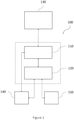
- Figure 1 schematically illustrates a system 100 for generating an optimized parametrized conversion function T for converting an original medical image of a first image type into a converted medical image of a second image type.
- the system comprises a storage media 110, configured to receive and store images and parameters.
- the system 100 is communicatively coupled, as indicated by the dashed arrow in figure 1 , to at least one imaging system 130.
- the imaging system 130 may be configured to capture or generate original medical images, such as for example X-ray images, ultrasound images, computed tomography (CT) images, cone beam computed tomography (CBCT) images, nuclear medicine including positron emission tomography (PET) images, and/or magnetic resonance imaging (MR) images.
- the storage media 110 may be configured to receive original medical images from the at least one imaging system 130 and store the received original medical images.
- the system 100 further comprises at least one processing unit 120 configured to generate an optimized parametrized conversion function T for converting an original medical image of a first image type into a converted medical image of a second image type.
- the at least one processing unit 120 may for example be a general data processor, or other circuit or integrated circuit capable of executing instructions to perform various processing operations.
- the at least one processing unit 120 may be one processing unit, or comprise several different processing units which together perform the claimed functions.
- the at least one processing unit 120 is configured to: obtain original medical images of the first and second image types, e.g. from the storage media 110; obtain an initial parametrized conversion function G to convert original medical images of the first image type into converted medical images of the second image type, e.g.
- the optimized parametrized conversion function T may e.g. be stored in the storage media 110.
- the first penalty P 1 is thus based on paired images, by comparing the converted medical image of the second image type with the paired original medical image of the second image type. What may be compared, e.g. voxel wise, may e.g. be features such as contours, regions-of-interest (ROI) and/or structures in the images, e.g. using a pre-trained machine learning algorithm such as a convolutional neural network. If the converted medical image is very similar to the paired original medical image, the first parametrized conversion function G 1 has very accurately converted the original medical image of the first image type into a converted medical image of the second image type, and the penalty P 1 will thus be low.
- ROI regions-of-interest
- the at least one processing unit 120 may adapt the parameters of the optimized parametrized conversion function T, e.g. to minimize the penalty P 1 . This may be done for any number of paired images.
- the second penalty P 2 is based on comparisons, e.g. voxel wise, between converted medical images and original medical images, after converting them into images of the same image type. This may be done by either converting one of the images into an image of the other image type, or converting both images into images of a third image type. In order to voxel wise compare the images, they must however be of the same image type.
- the image type does not have to be a medical image modality.
- the image type is the output from a pre-trained machine learning algorithm such as a convolutional neural network.
- the medical images are converted into a third image type by being segmented, by being transferred into another domain by e.g. the gradient or the frequency content in the images being calculated, or by the resolution the images being changed.
- the first image type is a medical image of a certain medical image modality
- the second image type is an image showing the density, the stopping power, the material composition, and/or any other feature that may be used for dose calculation.
- the first image type is a segmented image and the second image type is a medical image of a certain medical image modality. This may be useful e.g. for creating hypothetical patient images in order to simulate radiation treatment based on such hypothetical patient images.
- What may be compared may e.g. be features such as contours, regions-of-interest (ROI) and/or structures in the images, e.g. using a pre-trained machine learning algorithm such as a convolutional neural network. If these properties of the two images are very similar, the second parametrized conversion function G 2 has very accurately converted the original medical image of the first image type into a converted medical image of the second image type, and the penalty P 2 will thus be low. If these properties of the two images are very different, the second parametrized conversion function G 2 has not accurately converted the original medical image of the first image type into a converted medical image of the second image type, and the penalty P 2 will thus be high. In this case, the at least one processing unit 120 may adapt the parameters of the optimized parametrized conversion function T, e.g. to minimize the penalty P 2 . This may be done for any number of converted medical images.
- ROI regions-of-interest
- Figure 2 schematically illustrates a calculation of the first and second penalties P 1 and P 2 in a situation where a CT image is converted into an MR image (to the left in the figure) and an MR image is converted into a CT image (to the right in the figure) - each half of figure 2 is an independent process.
- CTp and MRp are paired original medical images
- CTr and MRr are unpaired original medical images.
- MRr* and MRp* are medical images which have been converted from CT images into MR images using a conversion function G MR
- CTp* and CTr * are medical images which have been converted from MR images into CT images using a conversion function G CT .
- CTcyc is a medical image which has been converted from a CT image into an MR image using a conversion function G MR and then converted back into a CT image using another conversion function H CT
- MRcyc is a medical image which has been converted from an MR image into a CT image using a conversion function G CT and then converted back into an MR image using another conversion function H MR .
- G MR and H MR are typically the same function
- G CT and H CT are typically the same function.
- P 1 is in this illustration labelled "paired loss", since P 1 is determined based on a comparison with a paired image.
- P 1 may according to figure 2 be determined either by comparing MRp* with MRp, or by comparing CTp* with CTp.
- What may be compared, e.g. voxel wise, may e.g. be features such as contours, regions-of-interest (ROI) and/or structures in the images, e.g. using a pre-trained machine learning algorithm such as a convolutional neural network.
- ROI regions-of-interest
- P 2 is in this illustration labelled cyclic loss, since P 2 may be determined based on a comparison between the original image and the converted image, after converting the converted image back into its original image type, in a cyclic manner.
- P 2 may in this case determine the penalty to be used for optimizing the parameters of both G and H.
- P 2 may according to figure 2 be determined by comparing CTr with CTcyc, which is CTr converted using a conversion function G MR and converted back using another conversion function H CT .
- P 2 may according to figure 2 also or alternatively be determined by comparing MRrwith MRcyc, which is MRr converted using a conversion function G CT and converted back using another conversion function H MR . The comparison may e.g. be voxel wise.
- the at least one processing unit 120 is further configured to: obtain a first parametrized discriminator function D 1 to discriminate between original medical images of the second image type and converted medical images of the second image type; and calculate a third penalty P 3 based on a classification error of the first parametrized discriminator function D 1 when trying to discriminate between at least one original medical image of the second image type and at least one converted medical image of the second image type that has been generated by applying a third parametrized conversion function G 3 , which is based on the initial parametrized conversion function G, to at least one original medical image of the first image type.
- the at least one processing unit 120 may in this case generate the parametrized conversion function T based on the parameters of the initial parametrized conversion function G and at least said first, second and third penalties P 1 , P 2 and P 3 , e.g. by using estimates of the gradients of said first, second and third penalties P 1 , P 2 and P 3 , e.g. to adapt the parameters to minimize said first, second and third penalties P 1 , P 2 and P 3 .
- the at least one processing unit may e.g. obtain the first parametrized discriminator function D 1 based on the parameters of the parametrized discriminator function D 1 used for generating said optimized parametrized conversion function T and at least said third penalty P 3 , e.g. by using estimates of the gradient of said third penalty P 3 , e.g. to adapt the parameters to minimize said third penalty P 3 , so that the first parametrized discriminator function D 1 is iteratively optimized.
- the third penalty P 3 is thus based on a classification error of a discriminator function when trying to discriminate between original and converted medical images of the same image type.
- the original medical image used may be any original medical image, it does not have to be paired with the original medical image on which the converted medical image is based.
- Such discriminator functions are often used for the training of adversarial networks.
- the conversion function tries to produce converted images that are realistic enough to fool the discriminator function, and the discriminator function tries to distinguish original and converted images.
- One way of doing this in a GAN framework is described in the article Medical Image Synthesis with Context-Aware Generative Adversarial Networks .
- the discriminator function is preferably iteratively trained based on at least the classification error P 3 , e.g. by using estimates of the gradient of the classification error P 3 , e.g. to adapt the parameters to minimize said third penalty P 3 .
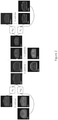
- Figure 3 schematically illustrates a calculation of the third penalty P 3 .
- P 3 may according to figure 3 be determined based on a classification error of a first discriminator function D 1CT when trying to distinguish between CTr and CTr*, and/or a classification error of a first discriminator function D 1MR when trying to distinguish between MRr and MRr*.
- the classification error may e.g. be determined as a number between 0 and 1, representing the percentage or likelihood of a classification error.
- the at least one processing unit 120 is further configured to: obtain a second parametrized discriminator function D 2 to discriminate between a) image pairs with corresponding original medical images, an original medical image of the first image type and an original medical image of the second image type, which have been paired and thereby determined to show the same part of the same patient; and b) image pairs of an original medical image of the first image type and a corresponding converted medical image of the second image type; and calculate a fourth penalty P 4 based on a classification error of the second parametrized discriminator function D 2 .
- the at least one processing unit 120 may in this case generate the parametrized conversion function T based on the parameters of the initial parametrized conversion function G and of at least said first, second and fourth penalties P 1 , P 2 and P 4 , e.g. by using estimates of the gradients of said first, second and fourth penalties P 1 , P 2 and P 4 , e.g. to adapt the parameters to minimize said first, second and fourth penalties P 1 , P 2 and P 4 .
- the at least one processing unit may e.g. obtain the second parametrized discriminator function D 2 based on the parameters of the parametrized discriminator function D 2 used for generating said optimized parametrized conversion function T and at least said fourth penalty P 4 , e.g. by using estimates of the gradient of said fourth penalty P 4 , e.g. to adapt the parameters to minimize said fourth penalty P 4 , so that the second parametrized discriminator function D 2 is iteratively optimized.
- the fourth penalty P 4 is thus based on a classification error of a discriminator function when trying to discriminate between pairs of original paired medical images and pairs of original and corresponding converted medical images.
- Figure 4 schematically illustrates a calculation of the fourth penalty P 4 .
- P 4 may according to figure 4 be determined based on a classification error of the second discriminator function D 2 when trying to distinguish between the image pair CTp and MRp and the image pair CTr * and MRr.
- a corresponding penalty P 4 may of course also be calculated in the process to the left in figure 4 .
- the classification error may e.g. be determined as a number between 0 and 1, representing the percentage or likelihood of a classification error.
- the third and fourth penalties may of course also be combined, so that the at least one processing unit generates the parametrized conversion function T based on the parameters of the initial parametrized conversion function G and at least said first, second, third and fourth penalties P 1 , P 2 , P 3 and P 4 , e.g. by using estimates of the gradients of said first, second, third and fourth penalties P 1 , P 2 , P 3 and P 4 , e.g. to adapt the parameters to minimize said first, second, third and fourth penalties P 1 , P 2 P 3 and P 4 . This further improves the accuracy of the optimized parametrized conversion function T.
- the penalties are combined in the form of a weighted sum of the penalties, so that the parameters are adapted e.g. based on the gradient of the weighted sum of the penalties.
- the penalties are instead applied one after the other, so that the parameters are adapted based on one penalty at a time.
- Figure 5 schematically illustrates a calculation of a second penalty P 2 in an embodiment where both the images used for calculating P 2 are converted into a third image type before they are compared.
- CTgrad in figure 5 corresponds to an original medical image MRr of a first image type (MR image) which has been converted into a converted medical image CTr* of a second image type (CT image) using a conversion function G CT , and then converted again, into an image CTgrad of a third image type, in this example a gradient image, using another conversion function F CT .
- MRgrad in figure 5 corresponds to the same original medical image MRr of the first image type (MR image) which has been converted into an image MRgrad of the same third image type, in this example a gradient image, using a conversion function F MR .
- the conversion functions F CT and F MR is the same function, but the conversion functions F CT and F MR may also be different functions.
- the at least one processing unit 120 may e.g. obtain the initial parametrized conversion function G by generating it using a machine learning algorithm such as a neural network, a random forest, or a support vector machine.
- the machine learning algorithm may e.g. be a Generative Adversarial Network (GAN). This is a useful way of obtaining an initial parametrized conversion function G that may then be optimized by the system.
- GAN Generative Adversarial Network
- the at least one processing unit 120 may in further iterations obtain the initial parametrized conversion function G by using a previously generated optimized parametrized conversion function T as the initial parametrized conversion function G. This allows for iterative optimization of the parametrized conversion function T.
- the first parametrized conversion function G 1 and/or the second parametrized conversion function G 2 may e.g. be the same as the initial parametrized conversion function G. They may however also be different, e.g. by the first parametrized conversion function G 1 being based on the parameters of the initial parametrized conversion function G and the first penalty P 1 , and the second parametrized conversion function G 2 being based on the parameters of either the initial parametrized conversion function G or the first parametrized conversion function G 1 and the second penalty P 2 . The same may apply to the third and the fourth parametrized conversion functions G 3 and G 4 . If the penalties are applied one after the other, the parametrized conversion function adapted based on one penalty may thus e.g. be used when calculating the subsequent penalty.
- the image type may e.g. be a medical image modality, such as e.g. MR, CT or CBCT.
- the image type is the output from a pre-trained machine learning algorithm such as a convolutional neural network.
- the medical images are converted into a third image type by being segmented, by being transferred into another domain by e.g. the gradient or the frequency content in the images being calculated, or by the resolution the images being changed.
- the first image type is a medical image of a certain medical image modality
- the second image type is an image showing the density, the stopping power, the material composition, and/or any other feature that may be used for dose calculation.
- the first image type is a segmented image and the second image type is a medical image of a certain medical image modality. This may be useful e.g. for creating hypothetical patient images in order to simulate radiation treatment based on such hypothetical patient images.
- the system 100 may optionally comprise a display 140 configured to display images.
- the display 140 may be configured to receive images for display via the at least one processing unit 120, and/or to retrieve images for display directly from the storage media 110, possibly in response to a control signal received from the at least one processing unit 120 or an inputter 150, which is further presented below.
- the system 100 may further optionally comprise one or more inputters 150 configured to receive user input.
- the inputter 150 is typically configured to interpret received user input and to generate control signals in response to said received user input.
- the display 140 and the inputter 150 may be integrated in, connected to or communicatively coupled to the system 100.
- the inputter 150 may for instance be configured to interpret received user input that is being input in connection with a displayed image, and generate control signals in response to said received user input, to trigger display of an image or manipulation of images being displayed, wherein the manipulations may be temporary or permanent.
- Such manipulations may for example include providing annotations, moving or changing an image or part of an image, changing the viewing perspective, zooming in or out, and/or any other suitable form of manipulation that enables the user to view and analyze the displayed image data in an improved manner.
- An inputter 150 may for example comprise a selection of a keyboard, a computer mouse, one or more buttons, touch functionality, a joystick, and/or any other suitable input device.
- the processor 120 may be configured to receive a control signal from the inputter 150 and to process an image that is being displayed, or in other words manipulate a displayed image, in response to the received control signal.
- the at least one processing unit 120 may further be configured to perform the method steps of any or all of the embodiments presented herein.
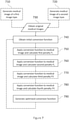
- Figure 6 schematically illustrates a processor-implemented method of generating an optimized parametrized conversion function T for converting an original medical image of a first image type into a converted medical image of a second image type, in accordance with one or more embodiments described herein.
- the method 600 may comprise:
- the initial parametrized conversion function G may e.g. be obtained 620 by being generated using a machine learning algorithm such as a neural network, a random forest, or a support vector machine.
- the machine learning algorithm may e.g. be a Generative Adversarial Network (GAN). This is a useful way of obtaining 620 an initial parametrized conversion function G that may then be optimized.
- GAN Generative Adversarial Network
- the initial parametrized conversion function G may be obtained 620 by a previously generated optimized parametrized conversion function T being used as the initial parametrized conversion function G. This allows for iterative optimization of the parametrized conversion function T.
- the comparing of the first original medical image with the corresponding first converted medical image may e.g. voxel wise compare the images.
- the original medical image of the first image type may be converted into the second image type
- the converted medical image of the second image type may be converted into the first image type
- both images may be converted into a third image type.
- the third image type may e.g. amplify certain features such as contours, regions-of-interest (ROI) and/or structures in the images so that they may more easily be compared.
- the third image type may e.g. be a gradient image, a segmented image or the output from a pre-trained machine learning algorithm such as a convolutional neural network.
- the first parametrized conversion function G 1 and/or the second parametrized conversion function G 2 may e.g. be the same as the initial parametrized conversion function G. They may however also be different, e.g. by the first parametrized conversion function G 1 being based on the parameters of the initial parametrized conversion function G and the first penalty P 1 , and the second parametrized conversion function G 2 being based on the parameters of either the initial parametrized conversion function G or the first parametrized conversion function G 1 and the second penalty P 2 . The same may apply to the third and the fourth parametrized conversion functions G 3 and G 4 . If the penalties are applied one after the other, the parametrized conversion function adapted based on one penalty may thus e.g. be used when calculating the subsequent penalty.
- the image type may e.g. be a medical image modality, such as e.g. MR, CT or CBCT.
- the image type is the output from a pre-trained machine learning algorithm such as a convolutional neural network.
- the medical images are converted into a third image type by being segmented, by being transferred into another domain by e.g. the gradient or the frequency content in the images being calculated, or by the resolution the images being changed.
- the first image type is a medical image of a certain medical image modality
- the second image type is an image showing the density, the stopping power, the material composition, and/or any other feature that may be used for dose calculation.
- the first image type is a segmented image and the second image type is a medical image of a certain medical image modality. This may be useful e.g. for creating hypothetical patient images in order to simulate radiation treatment based on such hypothetical patient images.
- the method 600 further comprises:
- the optimized parametrized conversion function T may in this case be generated 650 based on the parameters of the initial parametrized conversion function G and at least said first, second and third penalties P 1 , P 2 and P 3 .
- the first parametrized discriminator function D 1 may e.g. be obtained 660 based on the parameters of the parametrized discriminator function D 1 used for generating said optimized parametrized conversion function T and at least said third penalty P 3 , so that the first parametrized discriminator function D 1 is iteratively optimized. This further improves the accuracy of the optimized parametrized conversion function T.
- the method 600 further comprises:
- the parametrized conversion function T may in this case be generated 650 based on the parameters of the initial parametrized conversion function G and at least said first, second and fourth penalties P 1 , P 2 and P 4 .
- the third and fourth penalties may of course also be combined, so that the parametrized conversion function T is generated based on the parameters of the initial parametrized conversion function G and at least said first, second, third and fourth penalties P 1 , P 2 , P 3 and P 4 .
- the penalties are combined in the form of a weighted sum of the penalties, so that the parameters are adapted e.g. based on the gradient of the weighted sum of the penalties.
- the penalties are instead applied one after the other, so that the parameters are adapted based on one penalty at a time.
- the generating of an optimized parametrized conversion function T may in use case embodiments be preceded by the generating of original medical images.
- Figure 7 is a flow diagram exemplifying such a larger context, including the steps of: obtaining original medical images; obtaining an initial parametrized conversion function; calculating a first penalty P 1 based on paired images, by comparing the converted medical image of the second image type with the paired original medical image of the second image type; calculating a second penalty P 2 based on comparisons between converted medical images and original medical images, after converting them into images of the same image type; and generating an optimized parametrized conversion function based on the parameters of the initial parametrized conversion function and at least said first and second penalties P 1 and P 2 .
- Figure 7 further includes steps of: generating the original medical images, e.g.
- an original medical image of a first image type may be generated in a step 710, e.g. by being captured by an image capturing system 130 using magnetic resonance imaging (MR), cone beam computed tomography (CBCT) and/or positron emission tomography (PET).
- An original medical image of a second image type may be generated in a step 720, e.g. by being captured using computed tomography (CT).
- CT computed tomography
- the original medical images may in step 730 be obtained either directly from the image capturing system 130 or from storage media 110.
- the initial parametrized conversion function G may in step 740 be obtained either by being determined by the at least one processing unit 120, e.g. using a machine learning algorithm, by being retrieved from storage media 110, or by feedback through using a previously generated parametrized conversion function T as the initial parametrized conversion function G, thereby iteratively optimizing the parametrized conversion function T.
- the initial parametrized conversion function G or an adapted parametrized conversion function G 1 , is applied to an original medical image of the first image type so that a converted medical image of the second image type is generated.
- This converted medical image is then compared to an original medical image of the second image type that forms an image pair with the original medical image of the first image type, so that it can be determined how closely the converted medical image of the second image type matches the original medical image of the second image type that shows the same the same part of the same patient.
- a first penalty P 1 is then calculated based on this comparison, which may e.g. be done voxel wise, and may e.g. compare features such as contours, regions-of-interest (ROI) and/or structures in the images, e.g. using a pre-trained machine learning algorithm such as a convolutional neural network.
- ROI regions-of-interest
- the initial parametrized conversion function G or an adapted parametrized conversion function G 2 , is applied to an original medical image of the first image type so that a converted medical image of the second image type is generated.
- the images are then converted into the same image type. This may be done by either converting one of the images into an image of the other image type, or converting both images into images of a third image type. In order to compare the images, they must however be of the same image type.
- the image type does not have to be a medical image modality.
- the image type is the output from a pre-trained machine learning algorithm such as a convolutional neural network.
- the medical images are converted into a third image type by being segmented, by being transferred into another domain by e.g. the gradient or the frequency content in the images being calculated, or by the resolution the images being changed.
- the first image type is a medical image of a certain medical image modality
- the second image type is an image showing the density, the stopping power, the material composition, and/or any other feature that may be used for dose calculation.
- the first image type is a segmented image and the second image type is a medical image of a certain medical image modality. What may be compared, e.g. voxel wise, may e.g. be features such as contours, regions-of-interest (ROI) and/or structures in the images, e.g. using a pre-trained machine learning algorithm such as a convolutional neural network. A second penalty P 2 is then calculated based on this comparison.
- ROI regions-of-interest
- step 770 which is an optional step, the initial parametrized conversion function G, or an adapted parametrized conversion function G 3 , is applied to an original medical image of the first image type so that a converted medical image of the second image type is generated.
- a first discriminator function D 1 then tries to discriminate between the converted medical image of the second image type and an original medical image of the second image type.
- the original medical image used may be any original medical image, it does not have to be paired with the original medical image on which the converted medical image is based.
- a third penalty P 3 is then calculated based on a classification error of the first discriminator function D 1 .
- step 780 which is also an optional step, the initial parametrized conversion function G, or an adapted parametrized conversion function G 4 , is applied to an original medical image of the first image type so that a converted medical image of the second image type is generated.
- a second discriminator function D 2 then tries to discriminate between pairs of original paired medical images and pairs of original and corresponding converted medical images.
- a fourth penalty P 4 is then calculated based on a classification error of the discriminator function D 2 .
- an optimized parametrized conversion function T is generated based on the parameters of the initial parametrized conversion function G and at least the first and second penalties P 1 and P 2 , and optionally also the third penalty P 3 and/or the fourth penalty P 4 .
- the penalties may be combined in the form of a weighted sum of the penalties, so that the parameters of the parametrized conversion function T are adapted based on the weighted sum of the penalties, or applied one after the other, so that the parameters of the parametrized conversion function T are adapted based on one penalty at a time.
- the optimized parametrized conversion function T may then be used for converting an original medical image of a first image type into a converted medical image of a second image type, which may e.g. be used for dose calculation in radiation treatment planning, where machine instructions e.g. in the form of a control signal may be sent to radiation treatment equipment based on an analysis of the converted medical image of the second image type.
- various embodiments provided by the present disclosure can be implemented using hardware, software, or combinations of hardware and software. Also where applicable, the various hardware components and/or software components set forth herein can be combined into composite components comprising software, hardware, and/or both without departing from the claimed scope of the present disclosure. Where applicable, the various hardware components and/or software components set forth herein can be separated into sub-components comprising software, hardware, or both without departing from the claimed scope of the present disclosure. In addition, where applicable, it is contemplated that software components can be implemented as hardware components, and vice-versa. The method steps of one or more embodiments described herein may be performed automatically, by any suitable processing unit, or one or more steps may be performed manually. Where applicable, the ordering of various steps described herein can be changed, combined into composite steps, and/or separated into sub-steps to provide features described herein.
- Software in accordance with the present disclosure can be stored in non-transitory form on one or more machine-readable mediums. It is also contemplated that software identified herein can be implemented using one or more general purpose or specific purpose computers and/or computer systems, networked and/or otherwise.
- a computer program product comprising computer readable code configured to, when executed in a processor, perform any or all of the method steps described herein.
- a non-transitory computer readable memory on which is stored computer readable and computer executable code configured to, when executed in a processor, perform any or all of the method steps described herein.
- a non-transitory machine-readable medium on which is stored machine-readable code which, when executed by a processor, controls the processor to perform the method of any or all of the method embodiments presented herein.
Landscapes
- Engineering & Computer Science (AREA)
- Physics & Mathematics (AREA)
- Theoretical Computer Science (AREA)
- General Physics & Mathematics (AREA)
- Health & Medical Sciences (AREA)
- Computer Vision & Pattern Recognition (AREA)
- Medical Informatics (AREA)
- General Health & Medical Sciences (AREA)
- Public Health (AREA)
- Nuclear Medicine, Radiotherapy & Molecular Imaging (AREA)
- Radiology & Medical Imaging (AREA)
- Data Mining & Analysis (AREA)
- Primary Health Care (AREA)
- Epidemiology (AREA)
- Probability & Statistics with Applications (AREA)
- Quality & Reliability (AREA)
- Software Systems (AREA)
- Pathology (AREA)
- Databases & Information Systems (AREA)
- Biomedical Technology (AREA)
- Apparatus For Radiation Diagnosis (AREA)
- Magnetic Resonance Imaging Apparatus (AREA)
- Image Processing (AREA)
- Image Analysis (AREA)
- Measuring And Recording Apparatus For Diagnosis (AREA)
Claims (18)
- System (100) zum Erzeugen einer optimierten parametrisierten Umwandlungsfunktion T zum Umwandeln eines ursprünglichen medizinischen Bildes eines ersten Bildtyps in ein umgewandeltes medizinisches Bild eines zweiten Bildtyps, wobei das System mindestens eine Verarbeitungseinheit umfasst, die konfiguriert ist zum:Erhalten von ursprünglichen medizinischen Bildern des ersten und des zweiten Bildtyps;Erhalten einer anfänglichen parametrisierten Umwandlungsfunktion G zum Umwandeln ursprünglicher medizinischer Bilder des ersten Bildtyps in umgewandelte medizinische Bilder des zweiten Bildtyps;Berechnen eines ersten Strafwerts P1 basierend auf mindestens einem Vergleich eines ersten ursprünglichen medizinischen Bildes des zweiten Bildtyps mit einem ersten umgewandelten medizinischen Bild des zweiten Bildtyps, welches durch Anwenden einer ersten parametrisierten Umwandlungsfunktion G1, die auf der anfänglichen parametrisierten Umwandlungsfunktion G basiert, auf ein erstes ursprüngliches medizinisches Bild des ersten Bildtyps erzeugt worden ist, welches ein Bildpaar mit dem ersten ursprünglichen medizinischen Bild des zweiten Bildtyps bildet und für welches dadurch bestimmt wurde, dass es denselben Teil desselben Patienten zeigt;Berechnen eines zweiten Strafwerts P2 basierend auf mindestens einem Vergleich eines ursprünglichen medizinischen Bildes des ersten Bildtyps und eines umgewandelten medizinischen Bildes des zweiten Bildtyps, welches durch Anwenden einer zweiten parametrisierten Umwandlungsfunktion G2, die auf der anfänglichen parametrisierten Umwandlungsfunktion G basiert, auf das ursprüngliche medizinische Bild des ersten Bildtyps erzeugt worden ist, nach dem Umwandeln des ursprünglichen medizinischen Bildes des ersten Bildtyps und/oder des umgewandelten medizinischen Bildes des zweiten Bildtyps in Bilder desselben Bildtyps; undErzeugen der optimierten parametrisierten Umwandlungsfunktion T basierend auf den Parametern der anfänglichen parametrisierten Umwandlungsfunktion G und zumindest dem ersten und dem zweiten Strafwert P1 und P2.
- System nach Anspruch 1, wobei die mindestens eine Verarbeitungseinheit ferner konfiguriert ist zum:Erhalten einer ersten parametrisierten Diskriminatorfunktion D1 zum Unterscheiden zwischen ursprünglichen medizinischen Bildern des zweiten Bildtyps und umgewandelten medizinischen Bildern des zweiten Bildtyps; undBerechnen eines dritten Strafwerts P3 basierend auf einem Klassifizierungsfehler der ersten parametrisierten Diskriminatorfunktion D1, wenn versucht wird, zwischen mindestens einem ursprünglichen medizinischen Bild des zweiten Bildtyps und mindestens einem umgewandelten medizinischen Bild des zweiten Bildtyps zu unterscheiden, welches durch Anwenden einer dritten parametrisierten Umwandlungsfunktion G3, die auf der anfänglichen parametrisierten Umwandlungsfunktion G basiert, auf mindestens ein ursprüngliches medizinisches Bild des ersten Bildtyps erzeugt worden ist;wobei die mindestens eine Verarbeitungseinheit die parametrisierte Umwandlungsfunktion T basierend auf den Parametern der anfänglichen parametrisierten Umwandlungsfunktion G und zumindest auf dem ersten, dem zweiten und dem dritten Strafwert P1, P2 und P3 erzeugt.
- System nach Anspruch 1 oder 2, wobei die mindestens eine Verarbeitungseinheit ferner konfiguriert ist zum:Erhalten einer zweiten parametrisierten Diskriminatorfunktion D2 zum Unterscheiden zwischena) Bildpaaren mit entsprechenden ursprünglichen medizinischen Bildern, einem ursprünglichen medizinischen Bild des ersten Bildtyps und einem ursprünglichen medizinischen Bild des zweiten Bildtyps, die paarweise zusammengestellt und für welche dadurch bestimmt worden sind, dass sie denselben Teil desselben Patienten zeigen; undb) Bildpaaren eines ursprünglichen medizinischen Bildes des ersten Bildtyps und eines entsprechenden umgewandelten medizinischen Bildes des zweiten Bildtyps; undBerechnen eines vierten Strafwerts P4 basierend auf einem Klassifizierungsfehler der zweiten parametrisierten Diskriminatorfunktion D2;wobei die mindestens eine Verarbeitungseinheit die parametrisierte Umwandlungsfunktion T basierend auf den Parametern der anfänglichen parametrisierten Umwandlungsfunktion G und zumindest auf dem ersten, dem zweiten und dem vierten Strafwert P1, P2 und P4 erzeugt.
- System nach einem der Ansprüche 1 bis 3, wobei die mindestens eine Verarbeitungseinheit die anfängliche parametrisierte Umwandlungsfunktion G unter Verwendung einer zuvor erzeugten optimierten parametrisierten Umwandlungsfunktion T als die anfängliche parametrisierte Umwandlungsfunktion G erhält, sodass die parametrisierte Umwandlungsfunktion T iterativ optimiert wird.
- Prozessorimplementiertes Verfahren (600) zum Erzeugen einer optimierten parametrisierten Umwandlungsfunktion T zum Umwandeln eines ursprünglichen medizinischen Bildes eines ersten Bildtyps in ein umgewandeltes medizinisches Bild eines zweiten Bildtyps, wobei das Verfahren umfasst:Erhalten (610) von ursprünglichen medizinischen Bildern des ersten und des zweiten Bildtyps;Erhalten (620) einer anfänglichen parametrisierten Umwandlungsfunktion G zum Umwandeln ursprünglicher medizinischer Bilder des ersten Bildtyps in umgewandelte medizinische Bilder des zweiten Bildtyps;Berechnen (630) eines ersten Strafwerts P1 basierend auf mindestens einem Vergleich eines ersten ursprünglichen medizinischen Bildes des zweiten Bildtyps mit einem ersten umgewandelten medizinischen Bild des zweiten Bildtyps, welches durch Anwenden einer ersten parametrisierten Umwandlungsfunktion G1, die auf der anfänglichen parametrisierten Umwandlungsfunktion G basiert, auf ein erstes ursprüngliches medizinisches Bild des ersten Bildtyps erzeugt worden ist, welches ein Bildpaar mit dem ersten ursprünglichen medizinischen Bild des zweiten Bildtyps bildet und für welches dadurch bestimmt wurde, dass es denselben Teil desselben Patienten zeigt;Berechnen (640) eines zweiten Strafwerts P2 basierend auf mindestens einem Vergleich eines ursprünglichen medizinischen Bildes des ersten Bildtyps und eines umgewandelten medizinischen Bildes des zweiten Bildtyps, welches durch Anwenden einer zweiten parametrisierten Umwandlungsfunktion G2, die auf der anfänglichen parametrisierten Umwandlungsfunktion G basiert, auf das ursprüngliche medizinische Bild des ersten Bildtyps erzeugt worden ist, nach dem Umwandeln des ursprünglichen medizinischen Bildes des ersten Bildtyps und/oder des umgewandelten medizinischen Bildes des zweiten Bildtyps in Bilder desselben Bildtyps; undErzeugen (650) der optimierten parametrisierten Umwandlungsfunktion T basierend auf den Parametern der anfänglichen parametrisierten Umwandlungsfunktion G und zumindest dem ersten und dem zweiten Strafwert P1 und P2.
- Verfahren nach Anspruch 5, ferner umfassend:Erhalten (660) einer ersten parametrisierten Diskriminatorfunktion D1 zum Unterscheiden zwischen ursprünglichen medizinischen Bildern des zweiten Bildtyps und umgewandelten medizinischen Bildern des zweiten Bildtyps; undBerechnen (670) eines dritten Strafwerts P3 basierend auf einem Klassifizierungsfehler der ersten parametrisierten Diskriminatorfunktion D1, wenn versucht wird, zwischen mindestens einem ursprünglichen medizinischen Bild des zweiten Bildtyps und mindestens einem umgewandelten medizinischen Bild des zweiten Bildtyps zu unterscheiden, welches durch Anwenden einer dritten parametrisierten Umwandlungsfunktion G3, die auf der anfänglichen parametrisierten Umwandlungsfunktion G basiert, auf mindestens ein ursprüngliches medizinisches Bild des ersten Bildtyps erzeugt worden ist;wobei die parametrisierte Umwandlungsfunktion T basierend auf den Parametern der anfänglichen parametrisierten Umwandlungsfunktion G und zumindest auf dem ersten, dem zweiten und dem dritten Strafwert P1, P2 und P3 erzeugt wird (640).
- Verfahren nach Anspruch 6, ferner umfassend Erhalten (660) der ersten parametrisierten Diskriminatorfunktion D1 basierend auf den Parametern der parametrisierten Diskriminatorfunktion D1, die zum Erzeugen der optimierten parametrisierten Umwandlungsfunktion T verwendet wird, und zumindest dem dritten Strafwert P3, sodass die erste parametrisierte Diskriminatorfunktion D1 iterativ optimiert wird.
- Verfahren nach einem der Ansprüche 5 bis 7, ferner umfassend:Erhalten (680) einer zweiten parametrisierten Diskriminatorfunktion D2 zum Unterscheiden zwischena) Bildpaaren mit entsprechenden ursprünglichen medizinischen Bildern, einem ursprünglichen medizinischen Bild des ersten Bildtyps und einem ursprünglichen medizinischen Bild des zweiten Bildtyps, die paarweise zusammengestellt und für welche dadurch bestimmt worden sind, dass sie denselben Teil desselben Patienten zeigen; undb) Bildpaaren eines ursprünglichen medizinischen Bildes des ersten Bildtyps und eines entsprechenden umgewandelten medizinischen Bildes des zweiten Bildtyps; undBerechnen (690) eines vierten Strafwerts P4 basierend auf einem Klassifizierungsfehler der zweiten parametrisierten Diskriminatorfunktion D2;wobei die parametrisierte Umwandlungsfunktion T basierend auf den Parametern der anfänglichen parametrisierten Umwandlungsfunktion G und zumindest auf dem ersten, dem zweiten und dem vierten Strafwert P1, P2 und P4 erzeugt wird (650).
- Verfahren nach einem der Ansprüche 5 bis 8, ferner umfassend Erhalten (620) der anfänglichen parametrisierten Umwandlungsfunktion G durch Erzeugen derselben unter Verwendung eines Maschinenlernalgorithmus, wie eines neuronalen Netzes, eines Zufallswalds oder einer Support-Vektor-Maschine.
- Verfahren nach einem der Ansprüche 5 bis 8, wobei die anfängliche parametrisierte Umwandlungsfunktion G erhalten wird (620), indem eine zuvor erzeugte optimierte parametrisierte Umwandlungsfunktion T als die anfängliche parametrisierte Umwandlungsfunktion G verwendet wird, sodass die parametrisierte Umwandlungsfunktion T iterativ optimiert wird.
- Verfahren nach einem der Ansprüche 5 bis 10, wobei beim Vergleichen des ersten ursprünglichen medizinischen Bildes mit dem entsprechenden ersten umgewandelten medizinischen Bild die Bilder voxelweise verglichen werden, nachdem zuerst beide Bilder in einen dritten Bildtyp umgewandelt wurden, wie ein Gradientenbild, ein segmentiertes Bild oder der Ausgabe von einem vorab trainierten Maschinenlernalgorithmus, wie einem neuronalen Faltungsnetz, wobei der dritte Bildtyp bestimmte Merkmale, wie Konturen, Regionen von Interesse (Regions of Interest, ROI) und/oder Strukturen in den Bildern verstärkt, sodass sie einfacher verglichen werden können.
- Verfahren nach einem der Ansprüche 5 bis 11, wobei die erste parametrisierte Umwandlungsfunktion G1 und/oder die zweite parametrisierte Umwandlungsfunktion G2 die gleichen wie die anfängliche parametrisierte Umwandlungsfunktion G sind.
- Verfahren nach einem der Ansprüche 5 bis 12, wobei der Bildtyp eine medizinische Bildmodalität ist, wie MR, CT oder CBCT.
- System nach Anspruch 2, wobei die mindestens eine Verarbeitungseinheit die erste parametrisierte Diskriminatorfunktion D1 basierend auf den Parametern der parametrisierten Diskriminatorfunktion D1, die zum Erzeugen der optimierten parametrisierten Umwandlungsfunktion T verwendet wird, und zumindest auf dem dritten Strafwert P3 erhält, sodass die erste parametrisierte Diskriminatorfunktion D1 iterativ optimiert wird.
- System nach einem der Ansprüche 1 bis 3 oder 14, wobei die mindestens eine Verarbeitungseinheit die anfängliche parametrisierte Umwandlungsfunktion G erhält, indem sie sie unter Verwendung eines Maschinenlernalgorithmus erzeugt, wie eines neuronalen Netzes, eines Zufallswalds oder einer Support-Vektor-Maschine.
- System nach einem der Ansprüche 1 bis 4, 14 oder 15, wobei die mindestens eine Verarbeitungseinheit das erste ursprüngliche medizinische Bild mit dem entsprechenden ersten umgewandelten medizinischen Bild durch voxelweises Vergleichen der Bilder vergleicht, nachdem beide Bilder zuerst in einen dritten Bildtyp umgewandelt wurden, wie ein Gradientenbild, ein segmentiertes Bild oder die Ausgabe aus einem vorab trainierten Maschinenlernalgorithmus, beispielsweise einem neuronalen Faltungsnetz, wobei der dritte Bildtyp bestimmte Merkmale wie Konturen, Regionen von Interesse (ROI) und/oder Strukturen in den Bildern verstärkt, sodass sie einfacher verglichen werden können.
- System nach einem der Ansprüche 1 bis 4 oder 14 bis 16, wobei die erste parametrisierte Umwandlungsfunktion G1 und/oder die zweite parametrisierte Umwandlungsfunktion G2 die gleichen wie die anfängliche parametrisierte Umwandlungsfunktion G sind.
- System nach einem der Ansprüche 1 bis 4 oder 14 bis 17, wobei der Bildtyp eine medizinische Bildmodalität ist, wie MR, CT oder CBCT.
Priority Applications (5)
| Application Number | Priority Date | Filing Date | Title |
|---|---|---|---|
| EP18173760.2A EP3572822B1 (de) | 2018-05-23 | 2018-05-23 | Umwandlung medizinischer bilder |
| JP2020565311A JP7038857B2 (ja) | 2018-05-23 | 2019-05-20 | 医用画像変換 |
| CN201980033643.7A CN112154342A (zh) | 2018-05-23 | 2019-05-20 | 医学图像转换 |
| US17/056,499 US20210201546A1 (en) | 2018-05-23 | 2019-05-20 | Medical image conversion |
| PCT/EP2019/062929 WO2019224140A1 (en) | 2018-05-23 | 2019-05-20 | Medical image conversion |
Applications Claiming Priority (1)
| Application Number | Priority Date | Filing Date | Title |
|---|---|---|---|
| EP18173760.2A EP3572822B1 (de) | 2018-05-23 | 2018-05-23 | Umwandlung medizinischer bilder |
Publications (2)
| Publication Number | Publication Date |
|---|---|
| EP3572822A1 EP3572822A1 (de) | 2019-11-27 |
| EP3572822B1 true EP3572822B1 (de) | 2022-03-09 |
Family
ID=62235866
Family Applications (1)
| Application Number | Title | Priority Date | Filing Date |
|---|---|---|---|
| EP18173760.2A Active EP3572822B1 (de) | 2018-05-23 | 2018-05-23 | Umwandlung medizinischer bilder |
Country Status (5)
| Country | Link |
|---|---|
| US (1) | US20210201546A1 (de) |
| EP (1) | EP3572822B1 (de) |
| JP (1) | JP7038857B2 (de) |
| CN (1) | CN112154342A (de) |
| WO (1) | WO2019224140A1 (de) |
Families Citing this family (9)
| Publication number | Priority date | Publication date | Assignee | Title |
|---|---|---|---|---|
| US12039699B2 (en) * | 2018-05-25 | 2024-07-16 | Vidur MAHAJAN | Method and system for simulating and constructing original medical images from one modality to other modality |
| EP3751579A1 (de) | 2019-06-13 | 2020-12-16 | RaySearch Laboratories AB | System und verfahren zum trainieren eines maschinenlernmodells und zur bereitstellung eines geschätzten innenbildes eines patienten |
| WO2021097409A1 (en) * | 2019-11-15 | 2021-05-20 | Waymo Llc | Generating environmental data |
| CN111553907B (zh) * | 2020-04-30 | 2021-07-02 | 赤峰学院附属医院 | 颅颌面状态的分析方法及装置、电子设备 |
| CN111528889B (zh) * | 2020-04-30 | 2021-05-18 | 赤峰学院附属医院 | 颅颌面状态的分析方法及装置、电子设备 |
| JP7565886B2 (ja) * | 2021-07-27 | 2024-10-11 | 本田技研工業株式会社 | 情報処理方法及びプログラム |
| CN114049333B (zh) * | 2021-11-17 | 2024-07-23 | 重庆邮电大学 | 一种非平衡数据集下图像模态转换方法 |
| CN114049334B (zh) * | 2021-11-17 | 2024-07-23 | 重庆邮电大学 | 一种以ct图像为输入的超分辨率mr成像方法 |
| CN115082299B (zh) * | 2022-07-21 | 2022-11-25 | 中国科学院自动化研究所 | 非严格对齐的小样本不同源图像转换方法、系统及设备 |
Family Cites Families (6)
| Publication number | Priority date | Publication date | Assignee | Title |
|---|---|---|---|---|
| US6611615B1 (en) * | 1999-06-25 | 2003-08-26 | University Of Iowa Research Foundation | Method and apparatus for generating consistent image registration |
| WO2013118017A1 (en) * | 2012-02-10 | 2013-08-15 | Koninklijke Philips N.V. | Clinically driven image fusion |
| CN107209945A (zh) * | 2014-12-10 | 2017-09-26 | 皇家飞利浦有限公司 | 使用机器学习的用于医学成像的转化的系统和方法 |
| CN106023124A (zh) * | 2016-05-09 | 2016-10-12 | 上海交通大学 | 一种基于先验图像约束的磁共振稀疏重建图像方法 |
| WO2018048507A1 (en) * | 2016-09-06 | 2018-03-15 | Han Xiao | Neural network for generating synthetic medical images |
| CN106683144B (zh) * | 2016-12-30 | 2020-07-14 | 上海联影医疗科技有限公司 | 一种图像迭代重建方法及装置 |
-
2018
- 2018-05-23 EP EP18173760.2A patent/EP3572822B1/de active Active
-
2019
- 2019-05-20 CN CN201980033643.7A patent/CN112154342A/zh not_active Withdrawn
- 2019-05-20 WO PCT/EP2019/062929 patent/WO2019224140A1/en not_active Ceased
- 2019-05-20 JP JP2020565311A patent/JP7038857B2/ja active Active
- 2019-05-20 US US17/056,499 patent/US20210201546A1/en not_active Abandoned
Also Published As
| Publication number | Publication date |
|---|---|
| CN112154342A (zh) | 2020-12-29 |
| JP2021524631A (ja) | 2021-09-13 |
| WO2019224140A1 (en) | 2019-11-28 |
| EP3572822A1 (de) | 2019-11-27 |
| JP7038857B2 (ja) | 2022-03-18 |
| US20210201546A1 (en) | 2021-07-01 |
Similar Documents
| Publication | Publication Date | Title |
|---|---|---|
| EP3572822B1 (de) | Umwandlung medizinischer bilder | |
| US10709394B2 (en) | Method and system for 3D reconstruction of X-ray CT volume and segmentation mask from a few X-ray radiographs | |
| EP3444776B1 (de) | Topogrammvorhersage aus oberflächendaten in der medizinischen bildgebung | |
| US9892361B2 (en) | Method and system for cross-domain synthesis of medical images using contextual deep network | |
| KR102210474B1 (ko) | 양전자방출 단층촬영 시스템 및 그것을 이용한 영상 재구성 방법 | |
| US10849585B1 (en) | Anomaly detection using parametrized X-ray images | |
| EP3121789B1 (de) | Verfahren und system zur 2d/3d-bildregistrierung durch regression mittels neuronaler faltungs-netzwerke | |
| CN107545309B (zh) | 使用深度生成机器学习模型的图像质量评分 | |
| US9684961B2 (en) | Scan region determining apparatus | |
| US20180042566A1 (en) | Classifying views of an angiographic medical imaging system | |
| EP3451344A1 (de) | Automatisierte übereinstimmungsprüfung für medizinische bildgebung | |
| CN112641457A (zh) | 医学成像中的根据表面数据的合成参数化计算机断层扫描 | |
| US8472691B2 (en) | Method for ascertaining the position of a structure in a body | |
| CN109215014B (zh) | Ct图像预测模型的训练方法、装置、设备及存储介质 | |
| US9533172B2 (en) | Image processing based on positional difference among plural perspective images | |
| JP7337675B2 (ja) | 医用データ処理装置 | |
| US20130191099A1 (en) | Process for generating a computer-accessible medium including information on the functioning of a joint | |
| EP4221580B1 (de) | Verfahren und system zur schätzung der arteriellen eingangsfunktion | |
| US20240249395A1 (en) | Systems and methods for contrast dose reduction | |
| US12053320B2 (en) | Computer-implemented method, computer program, systems and x-ray facility for correction of x-ray image data with regard to noise effects | |
| KR101885562B1 (ko) | 제1 의료 영상의 관심 영역을 제2 의료 영상 위에 맵핑하는 방법 및 이를 이용한 장치 | |
| CN109791686A (zh) | 用于产生图像的系统,尤其磁共振系统 | |
| WO2023276750A1 (ja) | 学習方法、画像処理方法、学習装置、画像処理装置、学習プログラム、及び画像処理プログラム | |
| JP2024509039A (ja) | 分類の視覚的説明、方法、システム | |
| KR20140061380A (ko) | 이미지 처리 방법 |
Legal Events
| Date | Code | Title | Description |
|---|---|---|---|
| PUAI | Public reference made under article 153(3) epc to a published international application that has entered the european phase |
Free format text: ORIGINAL CODE: 0009012 |
|
| STAA | Information on the status of an ep patent application or granted ep patent |
Free format text: STATUS: THE APPLICATION HAS BEEN PUBLISHED |
|
| AK | Designated contracting states |
Kind code of ref document: A1 Designated state(s): AL AT BE BG CH CY CZ DE DK EE ES FI FR GB GR HR HU IE IS IT LI LT LU LV MC MK MT NL NO PL PT RO RS SE SI SK SM TR |
|
| AX | Request for extension of the european patent |
Extension state: BA ME |
|
| STAA | Information on the status of an ep patent application or granted ep patent |
Free format text: STATUS: REQUEST FOR EXAMINATION WAS MADE |
|
| 17P | Request for examination filed |
Effective date: 20200512 |
|
| RBV | Designated contracting states (corrected) |
Designated state(s): AL AT BE BG CH CY CZ DE DK EE ES FI FR GB GR HR HU IE IS IT LI LT LU LV MC MK MT NL NO PL PT RO RS SE SI SK SM TR |
|
| GRAP | Despatch of communication of intention to grant a patent |
Free format text: ORIGINAL CODE: EPIDOSNIGR1 |
|
| RIC1 | Information provided on ipc code assigned before grant |
Ipc: G01R 33/48 20060101AFI20210604BHEP Ipc: G06T 11/00 20060101ALI20210604BHEP Ipc: G16H 30/40 20180101ALI20210604BHEP Ipc: G16H 50/70 20180101ALI20210604BHEP Ipc: G01R 33/56 20060101ALN20210604BHEP Ipc: A61N 5/10 20060101ALN20210604BHEP |
|
| STAA | Information on the status of an ep patent application or granted ep patent |
Free format text: STATUS: GRANT OF PATENT IS INTENDED |
|
| INTG | Intention to grant announced |
Effective date: 20210715 |
|
| GRAS | Grant fee paid |
Free format text: ORIGINAL CODE: EPIDOSNIGR3 |
|
| GRAA | (expected) grant |
Free format text: ORIGINAL CODE: 0009210 |
|
| STAA | Information on the status of an ep patent application or granted ep patent |
Free format text: STATUS: THE PATENT HAS BEEN GRANTED |
|
| AK | Designated contracting states |
Kind code of ref document: B1 Designated state(s): AL AT BE BG CH CY CZ DE DK EE ES FI FR GB GR HR HU IE IS IT LI LT LU LV MC MK MT NL NO PL PT RO RS SE SI SK SM TR |
|
| REG | Reference to a national code |
Ref country code: CH Ref legal event code: EP Ref country code: AT Ref legal event code: REF Ref document number: 1474611 Country of ref document: AT Kind code of ref document: T Effective date: 20220315 |
|
| REG | Reference to a national code |
Ref country code: IE Ref legal event code: FG4D |
|
| REG | Reference to a national code |
Ref country code: DE Ref legal event code: R096 Ref document number: 602018031855 Country of ref document: DE |
|
| REG | Reference to a national code |
Ref country code: LT Ref legal event code: MG9D |
|
| REG | Reference to a national code |
Ref country code: NL Ref legal event code: MP Effective date: 20220309 |
|
| PG25 | Lapsed in a contracting state [announced via postgrant information from national office to epo] |
Ref country code: SE Free format text: LAPSE BECAUSE OF FAILURE TO SUBMIT A TRANSLATION OF THE DESCRIPTION OR TO PAY THE FEE WITHIN THE PRESCRIBED TIME-LIMIT Effective date: 20220309 Ref country code: RS Free format text: LAPSE BECAUSE OF FAILURE TO SUBMIT A TRANSLATION OF THE DESCRIPTION OR TO PAY THE FEE WITHIN THE PRESCRIBED TIME-LIMIT Effective date: 20220309 Ref country code: NO Free format text: LAPSE BECAUSE OF FAILURE TO SUBMIT A TRANSLATION OF THE DESCRIPTION OR TO PAY THE FEE WITHIN THE PRESCRIBED TIME-LIMIT Effective date: 20220609 Ref country code: LT Free format text: LAPSE BECAUSE OF FAILURE TO SUBMIT A TRANSLATION OF THE DESCRIPTION OR TO PAY THE FEE WITHIN THE PRESCRIBED TIME-LIMIT Effective date: 20220309 Ref country code: HR Free format text: LAPSE BECAUSE OF FAILURE TO SUBMIT A TRANSLATION OF THE DESCRIPTION OR TO PAY THE FEE WITHIN THE PRESCRIBED TIME-LIMIT Effective date: 20220309 Ref country code: BG Free format text: LAPSE BECAUSE OF FAILURE TO SUBMIT A TRANSLATION OF THE DESCRIPTION OR TO PAY THE FEE WITHIN THE PRESCRIBED TIME-LIMIT Effective date: 20220609 |
|
| RAP4 | Party data changed (patent owner data changed or rights of a patent transferred) |
Owner name: RAYSEARCH LABORATORIES AB |
|
| REG | Reference to a national code |
Ref country code: AT Ref legal event code: MK05 Ref document number: 1474611 Country of ref document: AT Kind code of ref document: T Effective date: 20220309 |
|
| PG25 | Lapsed in a contracting state [announced via postgrant information from national office to epo] |
Ref country code: LV Free format text: LAPSE BECAUSE OF FAILURE TO SUBMIT A TRANSLATION OF THE DESCRIPTION OR TO PAY THE FEE WITHIN THE PRESCRIBED TIME-LIMIT Effective date: 20220309 Ref country code: GR Free format text: LAPSE BECAUSE OF FAILURE TO SUBMIT A TRANSLATION OF THE DESCRIPTION OR TO PAY THE FEE WITHIN THE PRESCRIBED TIME-LIMIT Effective date: 20220610 Ref country code: FI Free format text: LAPSE BECAUSE OF FAILURE TO SUBMIT A TRANSLATION OF THE DESCRIPTION OR TO PAY THE FEE WITHIN THE PRESCRIBED TIME-LIMIT Effective date: 20220309 |
|
| PG25 | Lapsed in a contracting state [announced via postgrant information from national office to epo] |
Ref country code: NL Free format text: LAPSE BECAUSE OF FAILURE TO SUBMIT A TRANSLATION OF THE DESCRIPTION OR TO PAY THE FEE WITHIN THE PRESCRIBED TIME-LIMIT Effective date: 20220309 |
|
| PG25 | Lapsed in a contracting state [announced via postgrant information from national office to epo] |
Ref country code: SM Free format text: LAPSE BECAUSE OF FAILURE TO SUBMIT A TRANSLATION OF THE DESCRIPTION OR TO PAY THE FEE WITHIN THE PRESCRIBED TIME-LIMIT Effective date: 20220309 Ref country code: SK Free format text: LAPSE BECAUSE OF FAILURE TO SUBMIT A TRANSLATION OF THE DESCRIPTION OR TO PAY THE FEE WITHIN THE PRESCRIBED TIME-LIMIT Effective date: 20220309 Ref country code: RO Free format text: LAPSE BECAUSE OF FAILURE TO SUBMIT A TRANSLATION OF THE DESCRIPTION OR TO PAY THE FEE WITHIN THE PRESCRIBED TIME-LIMIT Effective date: 20220309 Ref country code: PT Free format text: LAPSE BECAUSE OF FAILURE TO SUBMIT A TRANSLATION OF THE DESCRIPTION OR TO PAY THE FEE WITHIN THE PRESCRIBED TIME-LIMIT Effective date: 20220711 Ref country code: ES Free format text: LAPSE BECAUSE OF FAILURE TO SUBMIT A TRANSLATION OF THE DESCRIPTION OR TO PAY THE FEE WITHIN THE PRESCRIBED TIME-LIMIT Effective date: 20220309 Ref country code: EE Free format text: LAPSE BECAUSE OF FAILURE TO SUBMIT A TRANSLATION OF THE DESCRIPTION OR TO PAY THE FEE WITHIN THE PRESCRIBED TIME-LIMIT Effective date: 20220309 Ref country code: CZ Free format text: LAPSE BECAUSE OF FAILURE TO SUBMIT A TRANSLATION OF THE DESCRIPTION OR TO PAY THE FEE WITHIN THE PRESCRIBED TIME-LIMIT Effective date: 20220309 Ref country code: AT Free format text: LAPSE BECAUSE OF FAILURE TO SUBMIT A TRANSLATION OF THE DESCRIPTION OR TO PAY THE FEE WITHIN THE PRESCRIBED TIME-LIMIT Effective date: 20220309 |
|
| PG25 | Lapsed in a contracting state [announced via postgrant information from national office to epo] |
Ref country code: PL Free format text: LAPSE BECAUSE OF FAILURE TO SUBMIT A TRANSLATION OF THE DESCRIPTION OR TO PAY THE FEE WITHIN THE PRESCRIBED TIME-LIMIT Effective date: 20220309 Ref country code: IS Free format text: LAPSE BECAUSE OF FAILURE TO SUBMIT A TRANSLATION OF THE DESCRIPTION OR TO PAY THE FEE WITHIN THE PRESCRIBED TIME-LIMIT Effective date: 20220709 Ref country code: AL Free format text: LAPSE BECAUSE OF FAILURE TO SUBMIT A TRANSLATION OF THE DESCRIPTION OR TO PAY THE FEE WITHIN THE PRESCRIBED TIME-LIMIT Effective date: 20220309 |
|
| REG | Reference to a national code |
Ref country code: DE Ref legal event code: R097 Ref document number: 602018031855 Country of ref document: DE |
|
| REG | Reference to a national code |
Ref country code: CH Ref legal event code: PL |
|
| PLBE | No opposition filed within time limit |
Free format text: ORIGINAL CODE: 0009261 |
|
| STAA | Information on the status of an ep patent application or granted ep patent |
Free format text: STATUS: NO OPPOSITION FILED WITHIN TIME LIMIT |
|
| REG | Reference to a national code |
Ref country code: BE Ref legal event code: MM Effective date: 20220531 |
|
| PG25 | Lapsed in a contracting state [announced via postgrant information from national office to epo] |
Ref country code: MC Free format text: LAPSE BECAUSE OF FAILURE TO SUBMIT A TRANSLATION OF THE DESCRIPTION OR TO PAY THE FEE WITHIN THE PRESCRIBED TIME-LIMIT Effective date: 20220309 Ref country code: LU Free format text: LAPSE BECAUSE OF NON-PAYMENT OF DUE FEES Effective date: 20220523 Ref country code: LI Free format text: LAPSE BECAUSE OF NON-PAYMENT OF DUE FEES Effective date: 20220531 Ref country code: DK Free format text: LAPSE BECAUSE OF FAILURE TO SUBMIT A TRANSLATION OF THE DESCRIPTION OR TO PAY THE FEE WITHIN THE PRESCRIBED TIME-LIMIT Effective date: 20220309 Ref country code: CH Free format text: LAPSE BECAUSE OF NON-PAYMENT OF DUE FEES Effective date: 20220531 |
|
| 26N | No opposition filed |
Effective date: 20221212 |
|
| PG25 | Lapsed in a contracting state [announced via postgrant information from national office to epo] |
Ref country code: SI Free format text: LAPSE BECAUSE OF FAILURE TO SUBMIT A TRANSLATION OF THE DESCRIPTION OR TO PAY THE FEE WITHIN THE PRESCRIBED TIME-LIMIT Effective date: 20220309 |
|
| PG25 | Lapsed in a contracting state [announced via postgrant information from national office to epo] |
Ref country code: IE Free format text: LAPSE BECAUSE OF NON-PAYMENT OF DUE FEES Effective date: 20220523 |
|
| PG25 | Lapsed in a contracting state [announced via postgrant information from national office to epo] |
Ref country code: BE Free format text: LAPSE BECAUSE OF NON-PAYMENT OF DUE FEES Effective date: 20220531 |
|
| PG25 | Lapsed in a contracting state [announced via postgrant information from national office to epo] |
Ref country code: IT Free format text: LAPSE BECAUSE OF FAILURE TO SUBMIT A TRANSLATION OF THE DESCRIPTION OR TO PAY THE FEE WITHIN THE PRESCRIBED TIME-LIMIT Effective date: 20220309 |
|
| P01 | Opt-out of the competence of the unified patent court (upc) registered |
Effective date: 20230731 |
|
| PG25 | Lapsed in a contracting state [announced via postgrant information from national office to epo] |
Ref country code: HU Free format text: LAPSE BECAUSE OF FAILURE TO SUBMIT A TRANSLATION OF THE DESCRIPTION OR TO PAY THE FEE WITHIN THE PRESCRIBED TIME-LIMIT; INVALID AB INITIO Effective date: 20180523 |
|
| PG25 | Lapsed in a contracting state [announced via postgrant information from national office to epo] |
Ref country code: MK Free format text: LAPSE BECAUSE OF FAILURE TO SUBMIT A TRANSLATION OF THE DESCRIPTION OR TO PAY THE FEE WITHIN THE PRESCRIBED TIME-LIMIT Effective date: 20220309 Ref country code: CY Free format text: LAPSE BECAUSE OF FAILURE TO SUBMIT A TRANSLATION OF THE DESCRIPTION OR TO PAY THE FEE WITHIN THE PRESCRIBED TIME-LIMIT Effective date: 20220309 |
|
| PG25 | Lapsed in a contracting state [announced via postgrant information from national office to epo] |
Ref country code: MT Free format text: LAPSE BECAUSE OF FAILURE TO SUBMIT A TRANSLATION OF THE DESCRIPTION OR TO PAY THE FEE WITHIN THE PRESCRIBED TIME-LIMIT Effective date: 20220309 |
|
| PGFP | Annual fee paid to national office [announced via postgrant information from national office to epo] |
Ref country code: DE Payment date: 20250512 Year of fee payment: 8 |
|
| PGFP | Annual fee paid to national office [announced via postgrant information from national office to epo] |
Ref country code: GB Payment date: 20250514 Year of fee payment: 8 |
|
| PGFP | Annual fee paid to national office [announced via postgrant information from national office to epo] |
Ref country code: FR Payment date: 20250514 Year of fee payment: 8 |
|
| PG25 | Lapsed in a contracting state [announced via postgrant information from national office to epo] |
Ref country code: TR Free format text: LAPSE BECAUSE OF FAILURE TO SUBMIT A TRANSLATION OF THE DESCRIPTION OR TO PAY THE FEE WITHIN THE PRESCRIBED TIME-LIMIT Effective date: 20220309 |