EP3571994B1 - Verfahren zur entwicklung und extraktion der evidenz biologischer spuren - Google Patents
Verfahren zur entwicklung und extraktion der evidenz biologischer spuren Download PDFInfo
- Publication number
- EP3571994B1 EP3571994B1 EP17893392.5A EP17893392A EP3571994B1 EP 3571994 B1 EP3571994 B1 EP 3571994B1 EP 17893392 A EP17893392 A EP 17893392A EP 3571994 B1 EP3571994 B1 EP 3571994B1
- Authority
- EP
- European Patent Office
- Prior art keywords
- biological
- porous carrier
- trace evidence
- development reagent
- developing
- Prior art date
- Legal status (The legal status is an assumption and is not a legal conclusion. Google has not performed a legal analysis and makes no representation as to the accuracy of the status listed.)
- Active
Links
Images



Classifications
-
- G—PHYSICS
- G01—MEASURING; TESTING
- G01N—INVESTIGATING OR ANALYSING MATERIALS BY DETERMINING THEIR CHEMICAL OR PHYSICAL PROPERTIES
- G01N21/00—Investigating or analysing materials by the use of optical means, i.e. using sub-millimetre waves, infrared, visible or ultraviolet light
- G01N21/62—Systems in which the material investigated is excited whereby it emits light or causes a change in wavelength of the incident light
- G01N21/63—Systems in which the material investigated is excited whereby it emits light or causes a change in wavelength of the incident light optically excited
- G01N21/64—Fluorescence; Phosphorescence
- G01N21/6486—Measuring fluorescence of biological material, e.g. DNA, RNA, cells
-
- C—CHEMISTRY; METALLURGY
- C12—BIOCHEMISTRY; BEER; SPIRITS; WINE; VINEGAR; MICROBIOLOGY; ENZYMOLOGY; MUTATION OR GENETIC ENGINEERING
- C12N—MICROORGANISMS OR ENZYMES; COMPOSITIONS THEREOF; PROPAGATING, PRESERVING, OR MAINTAINING MICROORGANISMS; MUTATION OR GENETIC ENGINEERING; CULTURE MEDIA
- C12N15/00—Mutation or genetic engineering; DNA or RNA concerning genetic engineering, vectors, e.g. plasmids, or their isolation, preparation or purification; Use of hosts therefor
- C12N15/09—Recombinant DNA-technology
- C12N15/10—Processes for the isolation, preparation or purification of DNA or RNA
- C12N15/1003—Extracting or separating nucleic acids from biological samples, e.g. pure separation or isolation methods; Conditions, buffers or apparatuses therefor
-
- A—HUMAN NECESSITIES
- A61—MEDICAL OR VETERINARY SCIENCE; HYGIENE
- A61B—DIAGNOSIS; SURGERY; IDENTIFICATION
- A61B5/00—Measuring for diagnostic purposes; Identification of persons
- A61B5/117—Identification of persons
- A61B5/1171—Identification of persons based on the shapes or appearances of their bodies or parts thereof
- A61B5/1172—Identification of persons based on the shapes or appearances of their bodies or parts thereof using fingerprinting
-
- G—PHYSICS
- G01—MEASURING; TESTING
- G01N—INVESTIGATING OR ANALYSING MATERIALS BY DETERMINING THEIR CHEMICAL OR PHYSICAL PROPERTIES
- G01N33/00—Investigating or analysing materials by specific methods not covered by groups G01N1/00 - G01N31/00
- G01N33/48—Biological material, e.g. blood, urine; Haemocytometers
- G01N33/50—Chemical analysis of biological material, e.g. blood, urine; Testing involving biospecific ligand binding methods; Immunological testing
- G01N33/52—Use of compounds or compositions for colorimetric, spectrophotometric or fluorometric investigation, e.g. use of reagent paper and including single- and multilayer analytical elements
-
- G—PHYSICS
- G01—MEASURING; TESTING
- G01N—INVESTIGATING OR ANALYSING MATERIALS BY DETERMINING THEIR CHEMICAL OR PHYSICAL PROPERTIES
- G01N21/00—Investigating or analysing materials by the use of optical means, i.e. using sub-millimetre waves, infrared, visible or ultraviolet light
- G01N21/62—Systems in which the material investigated is excited whereby it emits light or causes a change in wavelength of the incident light
- G01N21/63—Systems in which the material investigated is excited whereby it emits light or causes a change in wavelength of the incident light optically excited
- G01N21/64—Fluorescence; Phosphorescence
- G01N2021/6491—Measuring fluorescence and transmission; Correcting inner filter effect
-
- G—PHYSICS
- G01—MEASURING; TESTING
- G01N—INVESTIGATING OR ANALYSING MATERIALS BY DETERMINING THEIR CHEMICAL OR PHYSICAL PROPERTIES
- G01N21/00—Investigating or analysing materials by the use of optical means, i.e. using sub-millimetre waves, infrared, visible or ultraviolet light
- G01N21/62—Systems in which the material investigated is excited whereby it emits light or causes a change in wavelength of the incident light
- G01N21/63—Systems in which the material investigated is excited whereby it emits light or causes a change in wavelength of the incident light optically excited
- G01N21/64—Fluorescence; Phosphorescence
- G01N2021/6497—Miscellaneous applications
-
- G—PHYSICS
- G01—MEASURING; TESTING
- G01N—INVESTIGATING OR ANALYSING MATERIALS BY DETERMINING THEIR CHEMICAL OR PHYSICAL PROPERTIES
- G01N31/00—Investigating or analysing non-biological materials by the use of the chemical methods specified in the subgroup; Apparatus specially adapted for such methods
- G01N31/22—Investigating or analysing non-biological materials by the use of the chemical methods specified in the subgroup; Apparatus specially adapted for such methods using chemical indicators
Definitions
- the present invention relates to a method for developing and extracting biological trace evidence.
- the existing criminal investigation means for the evidence collection of the physical evidence mainly includes checking fingerprints and checking DNA.
- the existing method of checking DNA is using blue light at the crime scene, and cutting off the portion with blood or other obvious traces of the clothes with blood or other traces (such as semen), taking it back to the laboratory for DNA extraction, and then comparing with the database and screening, however the workload is huge, and it is difficult to find traces that are not obvious or trace, which makes it difficult to obtain evidence.
- CN104605860A discloses a fingerprint showing method for a permeable object with a crude surface.
- the method comprises the following steps: soaking or spraying the permeable object with the crude surface with a fluorescent appearing agent, controlling the reacting time to 5 sec-15 sec, and then, drying the permeable object with the crude surface for 5-30 min in the environment that the relative humidity is smaller than 40% and the temperature is 50-120 DEG C, illuminating the dried permeable object with the crude surface with lasers of which the wave lengths are 532 nanometers and the half height width of spectrums is smaller than 1 nanometer, and controlling the illumination to form illuminance exceeding 500 thousand lux on the surface of the permeable object with the crude surface.
- the technical problem to be solved by the present invention is to provide a method for developing and extracting biological trace evidence.
- a method for developing and extracting biological trace evidence comprises following steps:
- the step (1) is specifically implemented as follows: immersing the porous carrier in the biological fluorescent development reagent or spraying the biological fluorescent development reagent on the porous carrier, drying the porous carrier in an environment having a relative humidity of less than 40% at a temperature of 50 °C - 120 °C, irradiating the dried porous carrier with a laser having a wavelength of 532 nm and a full width at half-maximum of less than 1 nm, controlling a surface of the porous carrier with an illuminance of over 300,000 lux, and using a cut-off filter under 540 nm to develop the biological trace evidence on the porous carrier.
- a moisture content of the porous carrier is controlled to be less than 8%.
- a moisture content of the porous carrier is controlled to be 6 - 7%.
- the porous carrier is dried in an environment having a relative humidity of less than 30% at a temperature of 50 °C - 90 °C.
- immersing time is controlled to be 5 -10 sec.
- a cut-off filter under 540 nm refers to a cut-off filter that allows only light waves of or above 540 nm to pass through, and other light waves cannot pass.
- the porous carrier comprises fabric.
- the fabric includes, but not limited to, cloth, specifically cotton cloth.
- the raw material formulation of the biological fluorescent development reagent is, 0.05% - 0.25% of indanedione, 4% - 10% of ethyl acetate, 0.5% - 1.5% of glycerol, 5% - 15.5% of pure alcohol, and 74% - 90% of petroleum ether.
- the raw material formulation of the biological fluorescent development reagent is, 0.1% - 0.2% of indanedione, 4% - 10% of ethyl acetate, 0.5% - 1.5% of glycerol, 8% - 15% of pure alcohol, and 75% - 85% of petroleum ether.
- the biological trace evidence comprises a handprint.
- the handprint refers to a fingerprint or a palmprint.
- pure alcohol means > 99.7% absolute ethanol, C 2 H 5 OH.
- a method for preparing the biological fluorescent development reagent comprises following steps:
- the developing and extracting method further comprises cutting off a portion of the porous carrier where the biological trace evidence is developed, and then performing the step (2).
- the present invention provides an alternative technical solution, which specifically is a method for developing and extracting biological trace evidence comprising following steps:
- indanedione is dissolved in ethyl acetate at a mass concentration of 0.00625 - 0.05 g/mL.
- the raw material formulation of the biological fluorescent development reagent is, 0.05 - 0.15 g of indanedione, 3 - 8 mL of ethyl acetate, 0.3 - 0.8 mL of glycerol, 5 - 15 mL of pure alcohol, and 60 - 80 mL of petroleum ether.
- the present invention has the following advantages over the prior art:
- a biological fluorescent development reagent is used to develop biological trace evidence, and then DNA information of the biological trace evidence is extracted, and the extracted DNA is compared and screened to finally find a suspect.
- the method enables targeted extraction of physical evidence, thereby greatly reducing workload, and furthermore, the method can also be used to develop and extract obscure or trace evidence, such as a fingerprint on a garment, thereby greatly improving investigation efficiency.
- the biological fluorescent development reagent used in the method of the present invention produces no obvious acid odor, and thus does not cause an unpleasant experience to an operator.
- This embodiment provides a method for developing and extracting biological trace evidence
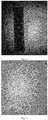
- the sample was a sweat fingerprint trace (the lines are intermittent) on a white cotton cloth
- a formulation of a biological fluorescent development reagent used in this method was: indanedione 0.10 g; ethyl acetate 5 mL; glycerol 0.5 mL; pure alcohol 10 mL; petroleum ether 75 mL.
- the method for developing and extracting comprises the following steps:
- Fig. 8 The state of the biological fluorescent development reagent used in the method of this embodiment after 30 days of storage is shown in Fig. 8 , and it was found that there was no crystallization or other variation appeared in the reagent.
- This embodiment provides a method for developing and extracting biological trace evidence
- the sample was a sweat fingerprint trace (the lines are intermittent) on a red cotton cloth
- a formulation of a biological fluorescent development reagent used in this method was: indanedione 0.11 g; ethyl acetate 5 mL; glycerol 0.5 mL; pure alcohol 10 mL; petroleum ether 75 mL.
- the method for developing and extracting comprises the following steps:
- This embodiment provides a method for developing and extracting biological trace evidence
- the sample was a sweat fingerprint trace (the lines are intermittent) on a blue cotton cloth
- a formulation of a biological fluorescent development reagent used in this method was: indanedione 0.11 g; ethyl acetate 5 mL; glycerol 0.5 mL; pure alcohol 10 mL; petroleum ether 75 mL.
- the method for developing and extracting comprises the following steps:
- This embodiment provides a method for developing and extracting biological trace evidence, the sample was a sweat handprint scratch (the lines are incomplete) on a cotton cloth, and a formulation of a biological fluorescent development reagent used in this method was: indanedione 0.12 g; ethyl acetate 6 mL; glycerol 0.6 mL; pure alcohol 12 mL; petroleum ether 75 mL.
- the method for developing and extracting comprises the following steps:
- the method of the present invention can also spray the biological fluorescent development reagent onto a carrier with fingerprints or scratches by a manner of spraying to develop fingerprints or scratches on the carrier.
- the method of the present invention has the following advantages:
- a biological fluorescent development reagent is used to develop biological trace evidence, and then DNA information of the biological trace evidence is extracted, and the extracted DNA is compared and screened to finally find a suspect.
- the method enables targeted extraction of physical evidence, thereby greatly reducing workload, and furthermore, the method can also be used to develop and extract some obscure evidences, such as a fingerprint on a garment, thereby not only greatly reducing the workload, but also greatly reducing the difficulty of obtaining evidence.
- the biological fluorescent development reagent used in the method of the present invention produces no obvious acid odor, and thus does not cause an unpleasant experience to an operator.
- Glycerol is used in the biological fluorescent development reagent used in the method of the present invention, and glycerol has a function of slow volatility, and therefore, when the spraying method is employed, the phenomenon that the precipitated crystals block the nozzle will not occur after spraying a plurality of times (four times or more).
- the storage condition of the biological fluorescent development reagent of the present invention is widened, (more convenient for use), and the appearance of crystallization will not occur after storage at normal temperature (25 °C) for 30 days.
- the biological fluorescent development reagent used in the present invention is very suitable for spraying, so after it is sprayed over the sample, the solvent can be volatilized very quickly, and the handprint can be quickly developed, which is very suitable for the requirement of rapid development.
Landscapes
- Health & Medical Sciences (AREA)
- Life Sciences & Earth Sciences (AREA)
- Engineering & Computer Science (AREA)
- Biomedical Technology (AREA)
- Chemical & Material Sciences (AREA)
- Molecular Biology (AREA)
- General Health & Medical Sciences (AREA)
- Physics & Mathematics (AREA)
- Immunology (AREA)
- Pathology (AREA)
- Biochemistry (AREA)
- Analytical Chemistry (AREA)
- General Physics & Mathematics (AREA)
- Biotechnology (AREA)
- Hematology (AREA)
- Genetics & Genomics (AREA)
- Nuclear Medicine, Radiotherapy & Molecular Imaging (AREA)
- Biophysics (AREA)
- Organic Chemistry (AREA)
- Urology & Nephrology (AREA)
- Microbiology (AREA)
- Bioinformatics & Cheminformatics (AREA)
- Zoology (AREA)
- General Engineering & Computer Science (AREA)
- Wood Science & Technology (AREA)
- Heart & Thoracic Surgery (AREA)
- Veterinary Medicine (AREA)
- Public Health (AREA)
- Animal Behavior & Ethology (AREA)
- Surgery (AREA)
- Medical Informatics (AREA)
- Cell Biology (AREA)
- Food Science & Technology (AREA)
- Medicinal Chemistry (AREA)
- Crystallography & Structural Chemistry (AREA)
- Plant Pathology (AREA)
- Measuring Or Testing Involving Enzymes Or Micro-Organisms (AREA)
- Investigating Or Analysing Materials By The Use Of Chemical Reactions (AREA)
- Investigating Or Analysing Biological Materials (AREA)
- Orthopedics, Nursing, And Contraception (AREA)
Claims (15)
- Verfahren zum Entwickeln und Extrahieren von biologischem Spurennachweis, dadurch gekennzeichnet, dass das Verfahren die folgenden Schritte umfasst:(1) Verwenden eines biologischen fluoreszierenden Entwicklungsreagenzes, um einen porösen Träger so zu behandeln, dass ein biologischer Spurennachweis auf dem porösen Träger entwickelt wird, wobei eine Formulierung des Ausgangsmaterials des biologischen fluoreszierenden Entwicklungsreagenzes in Gewichtsprozent beträgt: 0,01% bis 0,5% Indandion, 4% bis 10% Ethylacetat, 0,5% bis 1,5% Glycerin, 5% bis 15,5% reiner Alkohol und 73,5% bis 90% Petrolether;(2) Extrahieren des biologischen Spurennachweises, um DNA-Information des biologischen Spurennachweises zu erhalten.
- Verfahren zum Entwickeln und Extrahieren von biologischem Spurennachweis nach Anspruch 1, dadurch gekennzeichnet, dass der Schritt (1) speziell wie folgt implementiert wird: Eintauchen des porösen Trägers in das biologische fluoreszierende Entwicklungsreagenz oder Aufsprühen des biologischen fluoreszierenden Entwicklungsreagenzes auf den porösen Träger, Trocknen des porösen Trägers in einer Umgebung, die eine relative Feuchtigkeit von weniger als 40 % bei einer Temperatur von 50 °C bis 120 °C aufweist, Bestrahlen des getrockneten porösen Trägers mit einem Laser, der eine Wellenlänge von 532 nm und eine Halbwertbreite von weniger als 1 nm aufweist, Steuern einer Oberfläche des porösen Trägers mit einer Beleuchtungsstärke von mehr als 300.000 Lux und Verwenden eines Cut-Off-Filters von unter 540 nm, um den biologischen Spurennachweis auf dem porösen Träger zu entwickeln.
- Verfahren zum Entwickeln und Extrahieren von biologischem Spurennachweis nach Anspruch 2, dadurch gekennzeichnet, dass vor Eintauchen in das biologische fluoreszierende Entwicklungsreagenz oder Aufsprühen des biologischen fluoreszierenden Entwicklungsreagenzes ein Feuchtigkeitsgehalt des porösen Trägers so geregelt wird, dass er weniger als 8% beträgt; oderder poröse Träger in einer Umgebung getrocknet wird, die bei einer Temperatur von 50 °C bis 90 °C eine relative Feuchtigkeit von weniger als 30% aufweist; oderbeim Eintauchen des porösen Trägers in die biologische fluoreszierende Entwicklungsreagenz die Eintauchdauer so gesteuert wird, dass sie 5 bis 10 Sekunden beträgt.
- Verfahren zum Entwickeln und Extrahieren von biologischem Spurennachweis nach Anspruch 1 oder 2 oder 3, dadurch gekennzeichnet, dass der poröse Träger ein Gewebe umfasst.
- Verfahren zum Entwickeln und Extrahieren von biologischem Spurennachweis nach Anspruch 4, dadurch gekennzeichnet, dass die Formulierung eines Ausgangsmaterials des biologischen fluoreszierenden Entwicklungsreagenzes beträgt: 0,05% bis 0,25% Indandion, 4% bis 10% Ethylacetat, 0,5% bis 1,5% Glycerin, 5% bis 15,5% reiner Alkohol und 74% bis 90% Petrolether.
- Verfahren zum Entwickeln und Extrahieren von biologischem Spurennachweis nach einem der Ansprüche 1 bis 5, dadurch gekennzeichnet, dass der biologische Spurennachweis einen Handabdruck umfasst.
- Verfahren zum Entwickeln und Extrahieren von biologischem Spurennachweis nach einem der Ansprüche 1 bis 6, dadurch gekennzeichnet, dass das Verfahren zum Ansetzen des biologischen fluoreszierenden Entwicklungsreagenzes folgende Schritte umfasst:(a) Auflösen von Glycerin in reinem Alkohol, um eine Lösung 1 zu erhalten;(b) Auflösen von Indandion in Ethylacetat, um eine Lösung 2 zu erhalten;(c) Mischen der in Schritt (a) erhaltenen Lösung 1 und der in Schritt (b) erhaltenen Lösung 2, Zugeben von Petrolether und gleichmäßiges Rühren der Mischung, um das biologische fluoreszierende Entwicklungsreagenz zu ergeben.
- Verfahren zum Entwickeln und Extrahieren von biologischem Spurennachweis nach einem der Ansprüche 1 bis 7, dadurch gekennzeichnet, dass das Verfahren zum Entwickeln und Extrahieren ferner das Abtrennen eines Abschnitts des porösen Trägers umfasst, wo der biologische Spurennachweis entwickelt ist, und anschließendes Ausführen des Schrittes (2).
- Verfahren zum Entwickeln und Extrahieren von biologischem Spurennachweis, dadurch gekennzeichnet, dass das Verfahren folgende Schritte umfasst:(1) Verwenden eines biologischen fluoreszierenden Entwicklungsreagenzes, um einen porösen Träger so zu behandeln, dass ein biologischer Spurennachweis auf dem porösen Träger entwickelt wird, wobei die Formulierung eines Ausgangsmaterials des biologischen fluoreszierenden Entwicklungsreagenzes aus Indandion, Ethylacetat, Glycerin, reinem Alkohol und Petrolether besteht, wobei im Volumenverhältnis, Ethylacetat: Glycerin : reiner Alkohol : Petrolether = (3 - 8): (0,3 - 0,8): (5 - 15): (60 - 80); beim Ansetzen Indandion in Ethylacetat in einer Massekonzentration von 0,0025 bis 0,1 g/ml aufgelöst wird;(2) Extrahieren des biologischen Spurennachweises, um DNA-Information des biologischen Spurennachweises zu erhalten.
- Verfahren zum Entwickeln und Extrahieren von biologischem Spurennachweis nach Anspruch 9, dadurch gekennzeichnet, dass der Schritt (1) speziell wie folgt implementiert wird: Eintauchen des porösen Trägers in das biologische fluoreszierende Entwicklungsreagenz oder Aufsprühen des biologischen fluoreszierenden Entwicklungsreagenzes auf den porösen Träger, Trocknen des porösen Trägers in einer Umgebung, die eine relative Feuchtigkeit von weniger als 40 % bei einer Temperatur von 50 °C bis 120 °C aufweist, Bestrahlen des getrockneten porösen Trägers mit einem Laser, der eine Wellenlänge von 532 nm und eine Halbwertbreite von weniger als 1 nm aufweist, Steuern einer Oberfläche des porösen Trägers mit einer Beleuchtungsstärke von mehr als 300.000 Lux und Verwenden eines Cut-Off-Filters von unter 540 nm, um den biologischen Spurennachweis auf dem porösen Träger zu entwickeln.
- Verfahren zum Entwickeln und Extrahieren von biologischem Spurennachweis nach Anspruch 10, dadurch gekennzeichnet, dass vor Eintauchen in das biologische fluoreszierende Entwicklungsreagenz oder Aufsprühen des biologischen fluoreszierenden Entwicklungsreagenzes ein Feuchtigkeitsgehalt des porösen Trägers so gesteuert wird, dass er weniger als 8% beträgt; oderder poröse Träger in einer Umgebung getrocknet wird, die bei einer Temperatur von 50 °C bis 90 °C eine relative Feuchtigkeit von weniger als 30% aufweist; oderbeim Eintauchen des porösen Trägers in das biologische fluoreszierende Entwicklungsreagenz die Eintauchdauer so gesteuert wird, dass sie 5 bis 10 Sekunden beträgt.
- Verfahren zum Entwickeln und Extrahieren von biologischem Spurennachweis nach Anspruch 9 oder 10 oder 11, dadurch gekennzeichnet, dass der poröse Träger ein Gewebe umfasst.
- Verfahren zum Entwickeln und Extrahieren von biologischem Spurennachweis nach einem der Ansprüche 9 bis 12, dadurch gekennzeichnet, dass Indandion beim Ansetzen in Ethylacetat in einer Massekonzentration von 0,00625 bis 0,05 g/ml aufgelöst wird.
- Verfahren zum Entwickeln und Extrahieren von biologischem Spurennachweis nach einem der Ansprüche 9 bis 13, dadurch gekennzeichnet, dass die Formulierung des Ausgangsmaterials des biologischen fluoreszierenden Entwicklungsreagenzes beträgt: 0,05 bis 0,15 g Indandion, 3 bis 8 ml Ethylacetat, 0,3 bis 0,8 ml Glycerin, 5 bis 15 ml reiner Alkohol und 60 bis 80 ml Petrolether.
- Verfahren zum Entwickeln und Extrahieren von biologischem Spurennachweis nach einem der Ansprüche 9 bis 14, dadurch gekennzeichnet, dass ein Verfahren zum Ansetzen des biologischen fluoreszierenden Entwicklungsreagenzes folgende Schritte umfasst:(a) Auflösen von Glycerin in reinem Alkohol, um eine Lösung 1 zu erhalten;(b) Auflösen von Indandion in Ethylacetat, um eine Lösung 2 zu erhalten;(c) Mischen der in Schritt (a) erhaltenen Lösung 1 und der in Schritt (b) erhaltenen Lösung 2, Zugeben von Petrolether und gleichmäßiges Rühren der Mischung, um das biologisch fluoreszierende Entwicklungsreagenz zu ergeben.
Applications Claiming Priority (2)
| Application Number | Priority Date | Filing Date | Title |
|---|---|---|---|
| CN201710045378.7A CN106841140B (zh) | 2017-01-22 | 2017-01-22 | 一种生物物证痕迹的显现提取方法 |
| PCT/CN2017/096565 WO2018133390A1 (zh) | 2017-01-22 | 2017-08-09 | 一种生物物证痕迹的显现提取方法 |
Publications (3)
| Publication Number | Publication Date |
|---|---|
| EP3571994A1 EP3571994A1 (de) | 2019-11-27 |
| EP3571994A4 EP3571994A4 (de) | 2020-11-25 |
| EP3571994B1 true EP3571994B1 (de) | 2021-09-22 |
Family
ID=59120000
Family Applications (1)
| Application Number | Title | Priority Date | Filing Date |
|---|---|---|---|
| EP17893392.5A Active EP3571994B1 (de) | 2017-01-22 | 2017-08-09 | Verfahren zur entwicklung und extraktion der evidenz biologischer spuren |
Country Status (4)
| Country | Link |
|---|---|
| US (1) | US10996171B2 (de) |
| EP (1) | EP3571994B1 (de) |
| CN (1) | CN106841140B (de) |
| WO (1) | WO2018133390A1 (de) |
Families Citing this family (5)
| Publication number | Priority date | Publication date | Assignee | Title |
|---|---|---|---|---|
| CN106841140B (zh) | 2017-01-22 | 2018-07-24 | 苏州晓松科技开发有限公司 | 一种生物物证痕迹的显现提取方法 |
| CN107582067B (zh) * | 2017-09-04 | 2021-09-24 | 苏州晓松科技开发有限公司 | 一种用于显现人体皮肤表面生物物证痕迹的生物荧光显现剂及显现方法 |
| CN107607504B (zh) * | 2017-09-04 | 2020-10-13 | 苏州晓松科技开发有限公司 | 一种用于显现金属客体上生物物证痕迹的生物荧光显现剂及显现方法 |
| CN109306337B (zh) * | 2018-09-30 | 2021-03-19 | 苏州晓松科技开发有限公司 | 物证客体上生物细胞的提取方法 |
| CN116067933B (zh) * | 2023-03-23 | 2023-07-07 | 苏州晓松科技开发有限公司 | 一种生物荧光显现试剂及生物物证痕迹的显现方法和应用 |
Family Cites Families (6)
| Publication number | Priority date | Publication date | Assignee | Title |
|---|---|---|---|---|
| WO1998020344A1 (en) * | 1996-11-08 | 1998-05-14 | The Trustees Of The University Of Pennsylvania | Compositions and methods for detection of an amine compound |
| TW201307490A (zh) * | 2011-08-05 | 2013-02-16 | shi-yu Wu | 指紋顯現噴劑及利用該噴劑顯現指紋的方法 |
| CN103937033A (zh) * | 2014-04-13 | 2014-07-23 | 中南民族大学 | 一种凝胶型指纹显现剂及其应用 |
| CN104605860B (zh) * | 2015-03-03 | 2017-03-01 | 苏州晓松科技开发有限公司 | 一种粗糙面渗透性客体上的手印显现方法 |
| CN106841140B (zh) * | 2017-01-22 | 2018-07-24 | 苏州晓松科技开发有限公司 | 一种生物物证痕迹的显现提取方法 |
| CN106802292B (zh) * | 2017-01-22 | 2019-07-02 | 苏州晓松科技开发有限公司 | 一种显现渗透性客体生物物证痕迹的方法 |
-
2017
- 2017-01-22 CN CN201710045378.7A patent/CN106841140B/zh active Active
- 2017-08-09 EP EP17893392.5A patent/EP3571994B1/de active Active
- 2017-08-09 US US16/479,705 patent/US10996171B2/en active Active
- 2017-08-09 WO PCT/CN2017/096565 patent/WO2018133390A1/zh not_active Ceased
Also Published As
| Publication number | Publication date |
|---|---|
| CN106841140A (zh) | 2017-06-13 |
| US20210080395A1 (en) | 2021-03-18 |
| WO2018133390A1 (zh) | 2018-07-26 |
| EP3571994A1 (de) | 2019-11-27 |
| EP3571994A4 (de) | 2020-11-25 |
| US10996171B2 (en) | 2021-05-04 |
| CN106841140B (zh) | 2018-07-24 |
Similar Documents
| Publication | Publication Date | Title |
|---|---|---|
| EP3571994B1 (de) | Verfahren zur entwicklung und extraktion der evidenz biologischer spuren | |
| US11073476B2 (en) | Method for developing biological trace evidence on porous object | |
| CN108106909A (zh) | 一种生物组织光透明剂、光透明化方法及其应用 | |
| Zetina et al. | Material study of the codex Colombino | |
| Técher | Using superpixel-or pixel-based segmentation for efficient green roof digital image classification and rapid estimation of plant species cover | |
| CN111209435A (zh) | 生成视频数据的方法、装置、电子设备及计算机存储介质 | |
| CN1786965A (zh) | 一种新闻网页正文信息的提取方法 | |
| Krishnan | On the cuticle of the scorpion Palamneus swammerdami | |
| Cain | An easily controlled method for staining mitochondria | |
| CN107607504B (zh) | 一种用于显现金属客体上生物物证痕迹的生物荧光显现剂及显现方法 | |
| CN104605860A (zh) | 一种粗糙面渗透性客体上的手印显现方法 | |
| CN107271241B (zh) | 一种高尔基银染神经组织的冰冻切片方法 | |
| Hong et al. | Preparation of artificial blood from the extract of legume root nodules, and the creation of artificial latent fingermarks in blood using artificial blood | |
| CN107582067B (zh) | 一种用于显现人体皮肤表面生物物证痕迹的生物荧光显现剂及显现方法 | |
| CN109080819A (zh) | 一种用于新闻追踪的无人机及存储介质 | |
| Heinrichs et al. | Stone monuments of the Nemrud Dag sanctuary/Turkey petrographical investigation and diagnosis of weathering damage | |
| Karydis et al. | Clothed wax effigies: construction materials, challenges and suggestions for preventive conservation | |
| Vroh et al. | Spatial Distribution of Cedrela Odorata Smaller Trees Affects Forest Regeneration in Exotic Tree Plantations in Central Côte d'Ivoire. | |
| CN114993974B (zh) | 一种基于ftir和蛹壳的种类鉴定方法 | |
| CN111626260A (zh) | 一种基于无人机遥感技术的航拍相片地物特征点提取方法 | |
| James | Technical study of Ethiopian icons, national museum of african art, smithsonian institution | |
| Eldridge et al. | Decapod crustacean-induced skeletal modification in Acropora | |
| CN116067933B (zh) | 一种生物荧光显现试剂及生物物证痕迹的显现方法和应用 | |
| Mansfield et al. | Non-segmented unsupervised learning of multispectral whole slide images for robust analysis of tissue repair and regeneration | |
| Bakun et al. | The climate and eastern ocean systems project |
Legal Events
| Date | Code | Title | Description |
|---|---|---|---|
| STAA | Information on the status of an ep patent application or granted ep patent |
Free format text: STATUS: THE INTERNATIONAL PUBLICATION HAS BEEN MADE |
|
| PUAI | Public reference made under article 153(3) epc to a published international application that has entered the european phase |
Free format text: ORIGINAL CODE: 0009012 |
|
| STAA | Information on the status of an ep patent application or granted ep patent |
Free format text: STATUS: REQUEST FOR EXAMINATION WAS MADE |
|
| 17P | Request for examination filed |
Effective date: 20190814 |
|
| AK | Designated contracting states |
Kind code of ref document: A1 Designated state(s): AL AT BE BG CH CY CZ DE DK EE ES FI FR GB GR HR HU IE IS IT LI LT LU LV MC MK MT NL NO PL PT RO RS SE SI SK SM TR |
|
| AX | Request for extension of the european patent |
Extension state: BA ME |
|
| DAV | Request for validation of the european patent (deleted) | ||
| DAX | Request for extension of the european patent (deleted) | ||
| A4 | Supplementary search report drawn up and despatched |
Effective date: 20201022 |
|
| RIC1 | Information provided on ipc code assigned before grant |
Ipc: G01N 21/64 20060101ALI20201016BHEP Ipc: A61B 5/1172 20160101ALI20201016BHEP Ipc: A61B 5/117 20160101AFI20201016BHEP |
|
| GRAP | Despatch of communication of intention to grant a patent |
Free format text: ORIGINAL CODE: EPIDOSNIGR1 |
|
| STAA | Information on the status of an ep patent application or granted ep patent |
Free format text: STATUS: GRANT OF PATENT IS INTENDED |
|
| RIC1 | Information provided on ipc code assigned before grant |
Ipc: A61B 5/117 20160101AFI20210210BHEP Ipc: A61B 5/1172 20160101ALI20210210BHEP Ipc: G01N 21/64 20060101ALI20210210BHEP |
|
| INTG | Intention to grant announced |
Effective date: 20210309 |
|
| GRAS | Grant fee paid |
Free format text: ORIGINAL CODE: EPIDOSNIGR3 |
|
| GRAA | (expected) grant |
Free format text: ORIGINAL CODE: 0009210 |
|
| STAA | Information on the status of an ep patent application or granted ep patent |
Free format text: STATUS: THE PATENT HAS BEEN GRANTED |
|
| AK | Designated contracting states |
Kind code of ref document: B1 Designated state(s): AL AT BE BG CH CY CZ DE DK EE ES FI FR GB GR HR HU IE IS IT LI LT LU LV MC MK MT NL NO PL PT RO RS SE SI SK SM TR |
|
| REG | Reference to a national code |
Ref country code: GB Ref legal event code: FG4D |
|
| REG | Reference to a national code |
Ref country code: IE Ref legal event code: FG4D |
|
| REG | Reference to a national code |
Ref country code: DE Ref legal event code: R096 Ref document number: 602017046587 Country of ref document: DE |
|
| REG | Reference to a national code |
Ref country code: CH Ref legal event code: EP Ref country code: AT Ref legal event code: REF Ref document number: 1431675 Country of ref document: AT Kind code of ref document: T Effective date: 20211015 |
|
| REG | Reference to a national code |
Ref country code: LT Ref legal event code: MG9D |
|
| REG | Reference to a national code |
Ref country code: NL Ref legal event code: MP Effective date: 20210922 |
|
| PG25 | Lapsed in a contracting state [announced via postgrant information from national office to epo] |
Ref country code: LT Free format text: LAPSE BECAUSE OF FAILURE TO SUBMIT A TRANSLATION OF THE DESCRIPTION OR TO PAY THE FEE WITHIN THE PRESCRIBED TIME-LIMIT Effective date: 20210922 Ref country code: BG Free format text: LAPSE BECAUSE OF FAILURE TO SUBMIT A TRANSLATION OF THE DESCRIPTION OR TO PAY THE FEE WITHIN THE PRESCRIBED TIME-LIMIT Effective date: 20211222 Ref country code: NO Free format text: LAPSE BECAUSE OF FAILURE TO SUBMIT A TRANSLATION OF THE DESCRIPTION OR TO PAY THE FEE WITHIN THE PRESCRIBED TIME-LIMIT Effective date: 20211222 Ref country code: SE Free format text: LAPSE BECAUSE OF FAILURE TO SUBMIT A TRANSLATION OF THE DESCRIPTION OR TO PAY THE FEE WITHIN THE PRESCRIBED TIME-LIMIT Effective date: 20210922 Ref country code: RS Free format text: LAPSE BECAUSE OF FAILURE TO SUBMIT A TRANSLATION OF THE DESCRIPTION OR TO PAY THE FEE WITHIN THE PRESCRIBED TIME-LIMIT Effective date: 20210922 Ref country code: HR Free format text: LAPSE BECAUSE OF FAILURE TO SUBMIT A TRANSLATION OF THE DESCRIPTION OR TO PAY THE FEE WITHIN THE PRESCRIBED TIME-LIMIT Effective date: 20210922 Ref country code: FI Free format text: LAPSE BECAUSE OF FAILURE TO SUBMIT A TRANSLATION OF THE DESCRIPTION OR TO PAY THE FEE WITHIN THE PRESCRIBED TIME-LIMIT Effective date: 20210922 |
|
| REG | Reference to a national code |
Ref country code: AT Ref legal event code: MK05 Ref document number: 1431675 Country of ref document: AT Kind code of ref document: T Effective date: 20210922 |
|
| PG25 | Lapsed in a contracting state [announced via postgrant information from national office to epo] |
Ref country code: LV Free format text: LAPSE BECAUSE OF FAILURE TO SUBMIT A TRANSLATION OF THE DESCRIPTION OR TO PAY THE FEE WITHIN THE PRESCRIBED TIME-LIMIT Effective date: 20210922 Ref country code: GR Free format text: LAPSE BECAUSE OF FAILURE TO SUBMIT A TRANSLATION OF THE DESCRIPTION OR TO PAY THE FEE WITHIN THE PRESCRIBED TIME-LIMIT Effective date: 20211223 |
|
| PG25 | Lapsed in a contracting state [announced via postgrant information from national office to epo] |
Ref country code: AT Free format text: LAPSE BECAUSE OF FAILURE TO SUBMIT A TRANSLATION OF THE DESCRIPTION OR TO PAY THE FEE WITHIN THE PRESCRIBED TIME-LIMIT Effective date: 20210922 |
|
| PG25 | Lapsed in a contracting state [announced via postgrant information from national office to epo] |
Ref country code: IS Free format text: LAPSE BECAUSE OF FAILURE TO SUBMIT A TRANSLATION OF THE DESCRIPTION OR TO PAY THE FEE WITHIN THE PRESCRIBED TIME-LIMIT Effective date: 20220122 Ref country code: SK Free format text: LAPSE BECAUSE OF FAILURE TO SUBMIT A TRANSLATION OF THE DESCRIPTION OR TO PAY THE FEE WITHIN THE PRESCRIBED TIME-LIMIT Effective date: 20210922 Ref country code: RO Free format text: LAPSE BECAUSE OF FAILURE TO SUBMIT A TRANSLATION OF THE DESCRIPTION OR TO PAY THE FEE WITHIN THE PRESCRIBED TIME-LIMIT Effective date: 20210922 Ref country code: PT Free format text: LAPSE BECAUSE OF FAILURE TO SUBMIT A TRANSLATION OF THE DESCRIPTION OR TO PAY THE FEE WITHIN THE PRESCRIBED TIME-LIMIT Effective date: 20220124 Ref country code: PL Free format text: LAPSE BECAUSE OF FAILURE TO SUBMIT A TRANSLATION OF THE DESCRIPTION OR TO PAY THE FEE WITHIN THE PRESCRIBED TIME-LIMIT Effective date: 20210922 Ref country code: NL Free format text: LAPSE BECAUSE OF FAILURE TO SUBMIT A TRANSLATION OF THE DESCRIPTION OR TO PAY THE FEE WITHIN THE PRESCRIBED TIME-LIMIT Effective date: 20210922 Ref country code: ES Free format text: LAPSE BECAUSE OF FAILURE TO SUBMIT A TRANSLATION OF THE DESCRIPTION OR TO PAY THE FEE WITHIN THE PRESCRIBED TIME-LIMIT Effective date: 20210922 Ref country code: EE Free format text: LAPSE BECAUSE OF FAILURE TO SUBMIT A TRANSLATION OF THE DESCRIPTION OR TO PAY THE FEE WITHIN THE PRESCRIBED TIME-LIMIT Effective date: 20210922 Ref country code: CZ Free format text: LAPSE BECAUSE OF FAILURE TO SUBMIT A TRANSLATION OF THE DESCRIPTION OR TO PAY THE FEE WITHIN THE PRESCRIBED TIME-LIMIT Effective date: 20210922 Ref country code: AL Free format text: LAPSE BECAUSE OF FAILURE TO SUBMIT A TRANSLATION OF THE DESCRIPTION OR TO PAY THE FEE WITHIN THE PRESCRIBED TIME-LIMIT Effective date: 20210922 |
|
| REG | Reference to a national code |
Ref country code: DE Ref legal event code: R097 Ref document number: 602017046587 Country of ref document: DE |
|
| PG25 | Lapsed in a contracting state [announced via postgrant information from national office to epo] |
Ref country code: DK Free format text: LAPSE BECAUSE OF FAILURE TO SUBMIT A TRANSLATION OF THE DESCRIPTION OR TO PAY THE FEE WITHIN THE PRESCRIBED TIME-LIMIT Effective date: 20210922 |
|
| PLBE | No opposition filed within time limit |
Free format text: ORIGINAL CODE: 0009261 |
|
| STAA | Information on the status of an ep patent application or granted ep patent |
Free format text: STATUS: NO OPPOSITION FILED WITHIN TIME LIMIT |
|
| 26N | No opposition filed |
Effective date: 20220623 |
|
| PG25 | Lapsed in a contracting state [announced via postgrant information from national office to epo] |
Ref country code: SI Free format text: LAPSE BECAUSE OF FAILURE TO SUBMIT A TRANSLATION OF THE DESCRIPTION OR TO PAY THE FEE WITHIN THE PRESCRIBED TIME-LIMIT Effective date: 20210922 |
|
| PG25 | Lapsed in a contracting state [announced via postgrant information from national office to epo] |
Ref country code: IT Free format text: LAPSE BECAUSE OF FAILURE TO SUBMIT A TRANSLATION OF THE DESCRIPTION OR TO PAY THE FEE WITHIN THE PRESCRIBED TIME-LIMIT Effective date: 20210922 |
|
| PG25 | Lapsed in a contracting state [announced via postgrant information from national office to epo] |
Ref country code: MC Free format text: LAPSE BECAUSE OF FAILURE TO SUBMIT A TRANSLATION OF THE DESCRIPTION OR TO PAY THE FEE WITHIN THE PRESCRIBED TIME-LIMIT Effective date: 20210922 |
|
| REG | Reference to a national code |
Ref country code: CH Ref legal event code: PL |
|
| PG25 | Lapsed in a contracting state [announced via postgrant information from national office to epo] |
Ref country code: LU Free format text: LAPSE BECAUSE OF NON-PAYMENT OF DUE FEES Effective date: 20220809 Ref country code: LI Free format text: LAPSE BECAUSE OF NON-PAYMENT OF DUE FEES Effective date: 20220831 Ref country code: CH Free format text: LAPSE BECAUSE OF NON-PAYMENT OF DUE FEES Effective date: 20220831 |
|
| REG | Reference to a national code |
Ref country code: BE Ref legal event code: MM Effective date: 20220831 |
|
| PG25 | Lapsed in a contracting state [announced via postgrant information from national office to epo] |
Ref country code: IE Free format text: LAPSE BECAUSE OF NON-PAYMENT OF DUE FEES Effective date: 20220809 |
|
| PG25 | Lapsed in a contracting state [announced via postgrant information from national office to epo] |
Ref country code: BE Free format text: LAPSE BECAUSE OF NON-PAYMENT OF DUE FEES Effective date: 20220831 |
|
| PG25 | Lapsed in a contracting state [announced via postgrant information from national office to epo] |
Ref country code: HU Free format text: LAPSE BECAUSE OF FAILURE TO SUBMIT A TRANSLATION OF THE DESCRIPTION OR TO PAY THE FEE WITHIN THE PRESCRIBED TIME-LIMIT; INVALID AB INITIO Effective date: 20170809 |
|
| PG25 | Lapsed in a contracting state [announced via postgrant information from national office to epo] |
Ref country code: SM Free format text: LAPSE BECAUSE OF FAILURE TO SUBMIT A TRANSLATION OF THE DESCRIPTION OR TO PAY THE FEE WITHIN THE PRESCRIBED TIME-LIMIT Effective date: 20210922 Ref country code: CY Free format text: LAPSE BECAUSE OF FAILURE TO SUBMIT A TRANSLATION OF THE DESCRIPTION OR TO PAY THE FEE WITHIN THE PRESCRIBED TIME-LIMIT Effective date: 20210922 |
|
| PG25 | Lapsed in a contracting state [announced via postgrant information from national office to epo] |
Ref country code: MK Free format text: LAPSE BECAUSE OF FAILURE TO SUBMIT A TRANSLATION OF THE DESCRIPTION OR TO PAY THE FEE WITHIN THE PRESCRIBED TIME-LIMIT Effective date: 20210922 |
|
| PG25 | Lapsed in a contracting state [announced via postgrant information from national office to epo] |
Ref country code: MT Free format text: LAPSE BECAUSE OF FAILURE TO SUBMIT A TRANSLATION OF THE DESCRIPTION OR TO PAY THE FEE WITHIN THE PRESCRIBED TIME-LIMIT Effective date: 20210922 |
|
| PGFP | Annual fee paid to national office [announced via postgrant information from national office to epo] |
Ref country code: DE Payment date: 20250812 Year of fee payment: 9 |
|
| PGFP | Annual fee paid to national office [announced via postgrant information from national office to epo] |
Ref country code: GB Payment date: 20250826 Year of fee payment: 9 |
|
| PGFP | Annual fee paid to national office [announced via postgrant information from national office to epo] |
Ref country code: FR Payment date: 20250814 Year of fee payment: 9 |
|
| PG25 | Lapsed in a contracting state [announced via postgrant information from national office to epo] |
Ref country code: TR Free format text: LAPSE BECAUSE OF FAILURE TO SUBMIT A TRANSLATION OF THE DESCRIPTION OR TO PAY THE FEE WITHIN THE PRESCRIBED TIME-LIMIT Effective date: 20210922 |