EP3570528A1 - Plattform zur live-netzwerkverwendungsineffizienz- und -missbrauchsdetektion für ein telefonienetzwerk - Google Patents
Plattform zur live-netzwerkverwendungsineffizienz- und -missbrauchsdetektion für ein telefonienetzwerk Download PDFInfo
- Publication number
- EP3570528A1 EP3570528A1 EP18176108.1A EP18176108A EP3570528A1 EP 3570528 A1 EP3570528 A1 EP 3570528A1 EP 18176108 A EP18176108 A EP 18176108A EP 3570528 A1 EP3570528 A1 EP 3570528A1
- Authority
- EP
- European Patent Office
- Prior art keywords
- call
- telephony network
- processor
- calls
- inefficiency
- Prior art date
- Legal status (The legal status is an assumption and is not a legal conclusion. Google has not performed a legal analysis and makes no representation as to the accuracy of the status listed.)
- Withdrawn
Links
- 238000001514 detection method Methods 0.000 title claims abstract description 92
- 230000004044 response Effects 0.000 claims abstract description 19
- 238000000034 method Methods 0.000 claims description 50
- 238000004458 analytical method Methods 0.000 claims description 34
- 230000000903 blocking effect Effects 0.000 claims description 5
- 230000008569 process Effects 0.000 description 27
- 230000011664 signaling Effects 0.000 description 22
- 238000012360 testing method Methods 0.000 description 20
- 239000000969 carrier Substances 0.000 description 8
- 238000004891 communication Methods 0.000 description 8
- 230000015654 memory Effects 0.000 description 8
- 238000004590 computer program Methods 0.000 description 5
- 230000003111 delayed effect Effects 0.000 description 5
- 238000012545 processing Methods 0.000 description 5
- 238000010586 diagram Methods 0.000 description 4
- 238000005516 engineering process Methods 0.000 description 4
- 230000000977 initiatory effect Effects 0.000 description 4
- 239000013598 vector Substances 0.000 description 4
- 230000000694 effects Effects 0.000 description 3
- 230000006870 function Effects 0.000 description 3
- 230000001788 irregular Effects 0.000 description 3
- 238000010200 validation analysis Methods 0.000 description 3
- 238000003677 abuse test Methods 0.000 description 2
- 230000006399 behavior Effects 0.000 description 2
- 230000008901 benefit Effects 0.000 description 2
- 239000004973 liquid crystal related substance Substances 0.000 description 2
- 230000003287 optical effect Effects 0.000 description 2
- 230000002159 abnormal effect Effects 0.000 description 1
- 230000009471 action Effects 0.000 description 1
- 238000013500 data storage Methods 0.000 description 1
- 230000001934 delay Effects 0.000 description 1
- 238000011982 device technology Methods 0.000 description 1
- 238000000802 evaporation-induced self-assembly Methods 0.000 description 1
- 230000003203 everyday effect Effects 0.000 description 1
- 239000003999 initiator Substances 0.000 description 1
- 230000003993 interaction Effects 0.000 description 1
- 230000002093 peripheral effect Effects 0.000 description 1
- 230000002265 prevention Effects 0.000 description 1
- 230000002250 progressing effect Effects 0.000 description 1
- 238000011897 real-time detection Methods 0.000 description 1
- 239000004065 semiconductor Substances 0.000 description 1
- 230000007704 transition Effects 0.000 description 1
Images


Classifications
-
- H—ELECTRICITY
- H04—ELECTRIC COMMUNICATION TECHNIQUE
- H04M—TELEPHONIC COMMUNICATION
- H04M3/00—Automatic or semi-automatic exchanges
- H04M3/42—Systems providing special services or facilities to subscribers
- H04M3/436—Arrangements for screening incoming calls, i.e. evaluating the characteristics of a call before deciding whether to answer it
-
- H—ELECTRICITY
- H04—ELECTRIC COMMUNICATION TECHNIQUE
- H04L—TRANSMISSION OF DIGITAL INFORMATION, e.g. TELEGRAPHIC COMMUNICATION
- H04L63/00—Network architectures or network communication protocols for network security
- H04L63/30—Network architectures or network communication protocols for network security for supporting lawful interception, monitoring or retaining of communications or communication related information
-
- H—ELECTRICITY
- H04—ELECTRIC COMMUNICATION TECHNIQUE
- H04L—TRANSMISSION OF DIGITAL INFORMATION, e.g. TELEGRAPHIC COMMUNICATION
- H04L65/00—Network arrangements, protocols or services for supporting real-time applications in data packet communication
- H04L65/1066—Session management
- H04L65/1076—Screening of IP real time communications, e.g. spam over Internet telephony [SPIT]
-
- H—ELECTRICITY
- H04—ELECTRIC COMMUNICATION TECHNIQUE
- H04M—TELEPHONIC COMMUNICATION
- H04M15/00—Arrangements for metering, time-control or time indication ; Metering, charging or billing arrangements for voice wireline or wireless communications, e.g. VoIP
- H04M15/47—Fraud detection or prevention means
-
- H—ELECTRICITY
- H04—ELECTRIC COMMUNICATION TECHNIQUE
- H04M—TELEPHONIC COMMUNICATION
- H04M3/00—Automatic or semi-automatic exchanges
- H04M3/22—Arrangements for supervision, monitoring or testing
- H04M3/2227—Quality of service monitoring
-
- H—ELECTRICITY
- H04—ELECTRIC COMMUNICATION TECHNIQUE
- H04M—TELEPHONIC COMMUNICATION
- H04M3/00—Automatic or semi-automatic exchanges
- H04M3/22—Arrangements for supervision, monitoring or testing
- H04M3/2254—Arrangements for supervision, monitoring or testing in networks
- H04M3/2263—Network management
-
- H—ELECTRICITY
- H04—ELECTRIC COMMUNICATION TECHNIQUE
- H04M—TELEPHONIC COMMUNICATION
- H04M3/00—Automatic or semi-automatic exchanges
- H04M3/22—Arrangements for supervision, monitoring or testing
- H04M3/2281—Call monitoring, e.g. for law enforcement purposes; Call tracing; Detection or prevention of malicious calls
-
- H—ELECTRICITY
- H04—ELECTRIC COMMUNICATION TECHNIQUE
- H04M—TELEPHONIC COMMUNICATION
- H04M7/00—Arrangements for interconnection between switching centres
- H04M7/006—Networks other than PSTN/ISDN providing telephone service, e.g. Voice over Internet Protocol (VoIP), including next generation networks with a packet-switched transport layer
- H04M7/0078—Security; Fraud detection; Fraud prevention
-
- H—ELECTRICITY
- H04—ELECTRIC COMMUNICATION TECHNIQUE
- H04M—TELEPHONIC COMMUNICATION
- H04M2203/00—Aspects of automatic or semi-automatic exchanges
- H04M2203/55—Aspects of automatic or semi-automatic exchanges related to network data storage and management
- H04M2203/555—Statistics, e.g. about subscribers but not being call statistics
-
- H—ELECTRICITY
- H04—ELECTRIC COMMUNICATION TECHNIQUE
- H04M—TELEPHONIC COMMUNICATION
- H04M2203/00—Aspects of automatic or semi-automatic exchanges
- H04M2203/60—Aspects of automatic or semi-automatic exchanges related to security aspects in telephonic communication systems
- H04M2203/6027—Fraud preventions
Definitions
- Systems and methods described herein may facilitate real time detection and prevention of network utilization inefficiencies and abuse within a telephony network.
- a platform disclosed herein may be able to alert sellers of telephony service providers that call traffic that may cause network utilization inefficiencies and abuse (e.g., an abusive and/or network-inefficient transaction) is being attempted or performed on their network and/or block the call traffic from progressing through the network.
- network utilization inefficiencies and abuse e.g., an abusive and/or network-inefficient transaction
- the platform may be able to classify calls being performed as inefficient and/or abusive by utilizing a set of configurable rules, heuristics and/or machine-learned data from actual traffic.
- Voice traffic may be declared inefficient and/or abusive by the system if it produces a pattern significantly different than regular VoIP traffic and/or carries similar characteristics to inefficient and/or abusive characteristics as defined by system or the machine learned data, for example.
- the system may be able to detect inefficient and/or abusive traffic as it happens live and prevent inefficient and/or abusive activity from affecting network traffic and/or performance. Examples of possible inefficient and/or abusive activity may include, but are not limited to, the following:
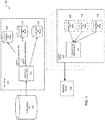
- Platform 100 may include at least one main server 110 and/or at least one regional server 120.
- platform 100 may include a single main server 110 or a plurality of main servers 110 configured to function collectively or individually as central components of platform 100.
- Platform 100 may include at least one regional server 120 in each region of a telephony network. Regions may be divided in any way. For example, there may be a regional server 120 in each geographic area, such as each country, each city, or some other regional division.
- Main server 110 may receive call data 102 from a traffic analyzer.
- Main server 110 may include a detection module 112 configured to analyze data 102 and raise alerts when data 102 indicates a call may be network abusive.
- Module 112 may use data from time zone database 114 and/or demographics database 116 to analyze data 102.
- Alerts may be sent to regional servers 120 for enforcement and/or may be stored (e.g., in alerts database 118).
- main server 110 may record calls with their geo locations and time zones and timings for start of call, time of end request, and end of call. Alert generation is described in detail below.
- Example situations wherein alerts may be raised may include, but are not limited to, the following:
- Each regional server 120 may include regional detection module 112, which may enforce rules based on alerts generated by main server 110.
- Regional server 120 may include a slave instance of time zone database 124, a slave instance of demographics database 126, and/or a slave instance of alerts database 118. In some embodiments, regional server 120 may only include a slave instance of alerts database 118 and may omit the time zone database 124 and demographics database 126.
- Regional detection module 112 may access alerts in slave instance of alerts database 118 and/or by receiving alerts from main server 110.
- Regional detection module 112 may enforce detection rules based on information gathered by main server 110 and/or validate numbers used for source and destination of calls entering the telephony system. Enforcement and validation are described in detail below.
- Regional server 120 may be in communication with signaling server 130, which may be configured to allow or refuse call connections based on the enforcement and validation processing described herein.
- signaling server 130 is depicted as a separate element from regional server 120 (e.g., a separate server in communication with regional server 120), but in some embodiments, signaling server 130 may be a component of regional server 120 or regional server 120 may be a component of signaling server 130.
- regional server 120 may report call alerts to signaling server 130, and signaling server 130 may determine whether to allow or refuse calls based on the alerts.
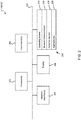
- FIG. 2 is a block diagram of an example computing device that may implement various features and processes as described herein.
- main server 110 and/or regional server 120 may have the configuration of the computing device of FIG. 2 .
- Main server 110 and/or regional server 120 may be implemented on any electronic device that runs software applications derived from compiled instructions, including without limitation personal computers, servers, smart phones, media players, electronic tablets, game consoles, email devices, etc.
- main server 110 and/or regional server 120 may include one or more processors 202, one or more input devices 204, one or more display devices 206, one or more network interfaces 208, and one or more computer-readable mediums 210. Each of these components may be coupled by bus 212.
- Display device 206 may be any known display technology, including but not limited to display devices using Liquid Crystal Display (LCD) or Light Emitting Diode (LED) technology.
- Processor(s) 202 may use any known processor technology, including but not limited to graphics processors and multi-core processors.
- Input device 204 may be any known input device technology, including but not limited to a keyboard (including a virtual keyboard), mouse, track ball, and touch-sensitive pad or display.
- Bus 212 may be any known internal or external bus technology, including but not limited to ISA, EISA, PCI, PCI Express, NuBus, USB, Serial ATA or FireWire.
- Computer-readable medium 210 may be any medium that participates in providing instructions to processor(s) 202 for execution, including without limitation, non-volatile storage media (e.g., optical disks, magnetic disks, flash drives, etc.), or volatile media (e.g., SDRAM, ROM, etc.).
- non-volatile storage media e.g., optical disks, magnetic disks, flash drives, etc.
- volatile media e.g., SDRAM, ROM, etc.
- Computer-readable medium 210 may include various instructions 214 for implementing an operating system (e.g., Mac OS®, Windows®, Linux).
- the operating system may be multi-user, multiprocessing, multitasking, multithreading, real-time, and the like.
- the operating system may perform basic tasks, including but not limited to: recognizing input from input device 204; sending output to display device 206; keeping track of files and directories on computer-readable medium 210; controlling peripheral devices (e.g., disk drives, printers, etc.) which can be controlled directly or through an I/O controller; and managing traffic on bus 212.
- Network communications instructions 216 may establish and maintain network connections (e.g., software for implementing communication protocols, such as TCP/IP, HTTP, Ethernet, telephony, etc.).
- Detection service instructions 218 can include instructions for detection module 112 and/or regional detection module 122 as described herein. For example, detection service instructions 218 may monitor data for evidence of abusive traffic and/or restrict traffic that may be abusive.
- Application(s) 220 may be an application that uses or implements the processes described herein and/or other processes. The processes may also be implemented in operating system 214.
- the described features may be implemented in one or more computer programs that may be executable on a programmable system including at least one programmable processor coupled to receive data and instructions from, and to transmit data and instructions to, a data storage system, at least one input device, and at least one output device.
- a computer program is a set of instructions that can be used, directly or indirectly, in a computer to perform a certain activity or bring about a certain result.
- a computer program may be written in any form of programming language (e.g., Objective-C, Java), including compiled or interpreted languages, and it may be deployed in any form, including as a stand-alone program or as a module, component, subroutine, or other unit suitable for use in a computing environment.
- Suitable processors for the execution of a program of instructions may include, by way of example, both general and special purpose microprocessors, and the sole processor or one of multiple processors or cores, of any kind of computer.
- a processor may receive instructions and data from a read-only memory or a random access memory or both.
- the essential elements of a computer may include a processor for executing instructions and one or more memories for storing instructions and data.
- a computer may also include, or be operatively coupled to communicate with, one or more mass storage devices for storing data files; such devices include magnetic disks, such as internal hard disks and removable disks; magneto-optical disks; and optical disks.
- Storage devices suitable for tangibly embodying computer program instructions and data may include all forms of non-volatile memory, including by way of example semiconductor memory devices, such as EPROM, EEPROM, and flash memory devices; magnetic disks such as internal hard disks and removable disks; magneto-optical disks; and CD-ROM and DVD-ROM disks.
- semiconductor memory devices such as EPROM, EEPROM, and flash memory devices
- magnetic disks such as internal hard disks and removable disks
- magneto-optical disks and CD-ROM and DVD-ROM disks.
- the processor and the memory may be supplemented by, or incorporated in, ASICs (application-specific integrated circuits).
- ASICs application-specific integrated circuits
- the features may be implemented on a computer having a display device such as a CRT (cathode ray tube) or LCD (liquid crystal display) monitor for displaying information to the user and a keyboard and a pointing device such as a mouse or a trackball by which the user can provide input to the computer.
- a display device such as a CRT (cathode ray tube) or LCD (liquid crystal display) monitor for displaying information to the user and a keyboard and a pointing device such as a mouse or a trackball by which the user can provide input to the computer.
- the features may be implemented in a computer system that includes a back-end component, such as a data server, or that includes a middleware component, such as an application server or an Internet server, or that includes a front-end component, such as a client computer having a graphical user interface or an Internet browser, or any combination thereof.
- the components of the system may be connected by any form or medium of digital data communication such as a communication network. Examples of communication networks include, e.g., a telephone network, a LAN, a WAN, and the computers and networks forming the Internet.
- the computer system may include clients and servers.
- a client and server may generally be remote from each other and may typically interact through a network.
- the relationship of client and server may arise by virtue of computer programs running on the respective computers and having a client-server relationship to each other.
- An API may define one or more parameters that are passed between a calling application and other software code (e.g., an operating system, library routine, function) that provides a service, that provides data, or that performs an operation or a computation.
- software code e.g., an operating system, library routine, function
- the API may be implemented as one or more calls in program code that send or receive one or more parameters through a parameter list or other structure based on a call convention defined in an API specification document.
- a parameter may be a constant, a key, a data structure, an object, an object class, a variable, a data type, a pointer, an array, a list, or another call.
- API calls and parameters may be implemented in any programming language.
- the programming language may define the vocabulary and calling convention that a programmer will employ to access functions supporting the API.
- an API call may report to an application the capabilities of a device running the application, such as input capability, output capability, processing capability, power capability, communications capability, etc.
- Figure 3 shows an example call analysis and classification process 300 according to an embodiment of the disclosure.
- detection module 112 may perform process 300 as it receives call data 102, as described above.
- detection module 112 may trigger a call analysis based on event data in call data 102.
- event data triggering the analysis may include data indicating a call is starting or ending (e.g., a request to connect a call or a request to terminate a call).
- type of event e.g., start or end
- different types of analyses may be performed.
- detection module 112 may analyze call data 102 to determine whether the requested call action is abusive or causing network inefficiency. For example, depending on whether the triggering event is a start or an end of a call, detection module 112 may apply one or more heuristics and/or tests to call data 102 to evaluate likelihood of the call being abusive or inefficient.
- Example heuristics may include, but are not limited to, the following:
- detection module 112 may classify the call associated with the event on the basis of the analysis. For example, detection module 112 may classify the call as OK or suspicious. In some embodiments, detection module 112 may classify suspicious calls at various levels indicating a level of severity. When calls are flagged as suspicious, detection module 112 may indicate this by saving the alerts to abusive or network inefficiency database 118. As noted above, abusive or network inefficiency alert database 118 may be replicated across the zones to regional servers 120 for enforcement.
- Example call classifications may include, but are not limited to, the following:
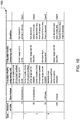
- detection module 112 may use one or more heuristics which may define alerted call patterns.
- a non-limiting set of sample heuristics is defined in table 1000 of FIG. 10 .
- Heuristic Case #1 may involve sets with 1 degree of freedom, simultaneous calls, being greater than 2 minutes in duration.
- String.trim(X) may be defined as the string (e.g., the phone number) without the right X digits.
- Heuristic Case #2 may involve sets with 2 degrees of freedom being greater than 2 minutes in duration.
- Heuristic Case #3 may involve an originating set with 2 degrees of freedom, a call window with duration of 1 minute, calls belonging to the window with a duration shorter than 15 seconds or calls that are hung up within 5 seconds following initiation of call.
- Finished calls may be grouped based on sequences ⁇ Source.trim(2)> .
- Heuristic Case #4 may invlolve a destination set with 2 degrees of freedom, 1 minute window, short calls.
- Detection module 112 may use network abuse detection components like heuristics, but detection module 112 is not limited to using heuristics for detection. Detection module 112 may use other techniques such as time zone rules testing, geo location testing, and/or delayed hang-up testing as described below, in addition to or instead of heuristics such as those described above.
- Figure 4 shows an example time zone rules testing process 400 according to an embodiment of the disclosure.
- detection module 112 may perform process 400 upon detecting a call start in call data 102.
- detection module 112 may identify a source phone number (e.g., the phone number of the entity attempting to place the call). Detection module 112 may determine a time zone of the call source based on the source phone number. For example, using country codes, area codes, and/or other location-based phone number coding, detection module 112 may determine the time zone from which the call is placed.
- a source phone number e.g., the phone number of the entity attempting to place the call.
- Detection module 112 may determine a time zone of the call source based on the source phone number. For example, using country codes, area codes, and/or other location-based phone number coding, detection module 112 may determine the time zone from which the call is placed.
- detection module 112 may identify a destination phone number (e.g., the phone number of the entity to which the call is to connect). Detection module 112 may determine a time zone of the call destination based on the destination phone number. For example, using country codes, area codes, and/or other location-based phone number coding, detection module 112 may determine the time zone to which the call is placed.
- a destination phone number e.g., the phone number of the entity to which the call is to connect.
- Detection module 112 may determine a time zone of the call destination based on the destination phone number. For example, using country codes, area codes, and/or other location-based phone number coding, detection module 112 may determine the time zone to which the call is placed.
- detection module 112 may determine a number of calls between the source phone number and destination phone number for a period of time. For example, by analyzing call record data, detection module 112 may determine the following: ⁇ Number of calls> - number of calls in the last hour for pair (source t, destination tz).
- detection module 112 may determine a maximal number of calls allowed between the source phone number's time zone and destination phone number's time zone for a period of time. For example, one or more rules stored in main server 110 memory may establish limits on the number of calls allowed. Detection module 112 may determine the following: ⁇ maximal number of calls> - Maximal calls allowed for pair (source tz, destination tx) at this day and hour.
- detection module 112 may generate an alert. For example, detection module 112 may store the alert in alert database 118, which may be mirrored as alert database slave 128 at regional server 120, and/or otherwise communicate the alert to regional server 120.
- detection module 112 may determine that the call is not in violation of the time zone rules. Assuming the call is not in violation of any of the other tests (e.g., see FIG. 3 ), detection module 112 may allow the call to proceed into the network for processing (e.g., including routing and connection).
- Figure 5 shows an example geolocation rules testing process 500 according to an embodiment of the disclosure.
- detection module 112 may perform process 500 upon detecting a call start in call data 102.
- detection module 112 may identify a source phone number (e.g., the phone number of the entity attempting to place the call). Detection module 112 may determine a geolocation of the call source based on the source phone number. For example, using country codes, area codes, and/or other location-based phone number coding, detection module 112 may determine the geolocation from which the call is placed.
- a source phone number e.g., the phone number of the entity attempting to place the call.
- Detection module 112 may determine a geolocation of the call source based on the source phone number. For example, using country codes, area codes, and/or other location-based phone number coding, detection module 112 may determine the geolocation from which the call is placed.
- detection module 112 may identify a destination phone number (e.g., the phone number of the entity to which the call is to connect). Detection module 112 may determine a geolocation of the call destination based on the destination phone number. For example, using country codes, area codes, and/or other location-based phone number coding, detection module 112 may determine the geolocation to which the call is placed.
- a destination phone number e.g., the phone number of the entity to which the call is to connect.
- Detection module 112 may determine a geolocation of the call destination based on the destination phone number. For example, using country codes, area codes, and/or other location-based phone number coding, detection module 112 may determine the geolocation to which the call is placed.
- detection module 112 may determine a number of calls between the source phone number and destination phone number for a period of time. For example, by analyzing call record data, detection module 112 may determine the following: ⁇ Number of calls> - number of calls in the last hour for pair (source t, destination tz).
- detection module 112 may determine a maximal number of calls allowed between the source phone number's geolocation and destination phone number's geolocation for a period of time. For example, one or more rules stored in main server 110 memory may establish limits on the number of calls allowed. Detection module 112 may determine the following: ⁇ maximal number of calls> - Maximal calls allowed for pair (source tz, destination tx) at this day and hour.
- detection module 112 may generate an alert. For example, detection module 112 may store the alert in alert database 118, which may be mirrored as alert database slave 128 at regional server 120, and/or otherwise communicate the alert to regional server 120.
- detection module 112 may determine that the call is not in violation of the geolocation rules. Assuming the call is not in violation of any of the other tests (e.g., see FIG. 3 ), detection module 112 may allow the call to proceed into the network for processing (e.g., including routing and connection).
- Figure 6 shows an example delayed hangup testing process 600 according to an embodiment of the disclosure.
- detection module 112 may perform process 600 upon detecting a call end in call data 102.
- detection module 112 may determine a call finish time for the call.
- detection module 112 may generate an alert. For example, detection module 112 may store the alert in alert database 118, which may be mirrored as alert database slave 128 at regional server 120, and/or otherwise communicate the alert to regional server 120.
- detection module 112 may determine that the call is not in violation of the call finish time rules. Assuming the call is not in violation of any of the other tests (e.g., see FIG. 3 ), detection module 112 may raise an alert if more than 10 calls to a set of numbers with one degree of freedom exhibit this behavior over a period of 1 hour. In such a case further calls to this set of numbers may be blocked.
- Figure 7 shows an example voice testing process 700 according to an embodiment of the disclosure.
- detection module 112 may perform process 700 frequently or continuously as call data 102 comes in.
- detection module 112 may select a called phone number for voice analysis. For example, detection module 112 may analyze call data 102 to identify requested call connections and select one or more requested calls for voice analysis. In some embodiments, detection module 112 may select a call for voice analysis if that call is to or from a previously-flagged number (e.g., classified as suspicious at 306 in process 300). In some embodiments, detection module 112 may select a call for voice analysis if some number is being called more than a certain number of times over the course of an hour.
- detection module 112 may analyze the selected call.
- a number which is picked for voice analysis may be analyzed an AI powered voice analysis software.
- Voice vectors in call audio may be analyzed and determine whether they are the same as (or substantially similar to) voice vectors in other calls to the number being called (e.g., the same as or similar to more than 10 calls to that number or some other threshold).
- detection module 112 may trigger a network abuse flag.
- the system may dial the number and record the call created by the system.
- detection module 112 may determine that the call is not in violation of the voice analysis rules. Assuming the call is not in violation of any of the other tests (e.g., see FIG. 3 ), detection module 112 may declare the called number as suspicious and block further calls to that number.
- detection module 112 may perform to determine whether a call is suspicious or not. In some embodiments, detection module 112 may perform multiple tests on a single call or call attempt. Based on these determinations, detection module 112 may adjust a call state, which may ultimately result in rejection or blockage of the call on network 100 if the call is sufficiently suspicious.
- Figure 8 shows an example call escalation state diagram 800 according to an embodiment of the disclosure.
- State diagram 800 shows an example of how calls may be escalated from a state of OK (non-network abusive) to blocked according to the testing performed by detection module 112 as described above.
- calls may be escalated as follows:
- escalation between states and de-escalation when calls are classified as legitimate may be based on a set of 6 timers.
- a pair of number sets can be in one of 6 states, and may transition between the states based on testing as described above, in the following manner:
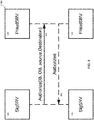
- Figure 9 shows an enforcement process 900 according to an embodiment of the disclosure.
- regional server 120 may have access to abusive or causing network inefficiency analysis data generated by detection module 112.
- Signaling server 130 may be configured to receive incoming calls and either connect them through network 100 to their destinations or reject them. For example, when a call enters the telephony system it may go through signaling server 130. Signaling server 130 may resolve the inbound carrier for the call and the outbound carrier for the call.
- signaling server 130 may ask regional server 120, through an API, whether this call is network abusive.
- regional server 120 may respond with an indication about the call status (e.g., abusive or not abusive).
- Signaling server 130 may consult one or more rules (e.g., which may be stored in signaling server 130 memory or may be otherwise accessible to signaling server 130) to determine whether to allow or block the call based on its status. In the former case, signaling server 130 may cause the connection between call endpoints to be formed through network 100. In the latter case, signaling server 130 may reject the call, which may not enter network 100.
- rules e.g., which may be stored in signaling server 130 memory or may be otherwise accessible to signaling server 130
- regional server 120 may perform the following processes to generate the response sent at 904:
Landscapes
- Engineering & Computer Science (AREA)
- Signal Processing (AREA)
- Computer Security & Cryptography (AREA)
- Computer Networks & Wireless Communication (AREA)
- Technology Law (AREA)
- General Engineering & Computer Science (AREA)
- Computing Systems (AREA)
- Computer Hardware Design (AREA)
- Quality & Reliability (AREA)
- Business, Economics & Management (AREA)
- General Business, Economics & Management (AREA)
- Multimedia (AREA)
- Telephonic Communication Services (AREA)
Applications Claiming Priority (1)
| Application Number | Priority Date | Filing Date | Title |
|---|---|---|---|
| US201815979859A | 2018-05-15 | 2018-05-15 |
Publications (1)
| Publication Number | Publication Date |
|---|---|
| EP3570528A1 true EP3570528A1 (de) | 2019-11-20 |
Family
ID=62712736
Family Applications (1)
| Application Number | Title | Priority Date | Filing Date |
|---|---|---|---|
| EP18176108.1A Withdrawn EP3570528A1 (de) | 2018-05-15 | 2018-06-05 | Plattform zur live-netzwerkverwendungsineffizienz- und -missbrauchsdetektion für ein telefonienetzwerk |
Country Status (6)
| Country | Link |
|---|---|
| EP (1) | EP3570528A1 (de) |
| CN (1) | CN110493475A (de) |
| BR (1) | BR102018014645A2 (de) |
| EA (1) | EA201891320A1 (de) |
| MX (1) | MX2018007439A (de) |
| WO (1) | WO2019220187A1 (de) |
Families Citing this family (2)
| Publication number | Priority date | Publication date | Assignee | Title |
|---|---|---|---|---|
| CN113810547B (zh) * | 2020-06-16 | 2023-12-15 | 中国移动通信集团重庆有限公司 | 语音呼叫安全防护的方法、装置及计算设备 |
| CN114172674B (zh) * | 2020-08-21 | 2023-11-10 | 中国移动通信集团重庆有限公司 | 一种异常数据检测方法、装置、设备及计算机介质 |
Citations (5)
| Publication number | Priority date | Publication date | Assignee | Title |
|---|---|---|---|---|
| US20090041205A1 (en) * | 2007-08-10 | 2009-02-12 | Tekelec | Methods, systems, and computer program products for detecting and mitigating ping call events in a communications network |
| US20150038125A1 (en) * | 2013-08-01 | 2015-02-05 | Gable Baldridge | Dialer Detection and Conversational Traffic Differentiation for the Purpose of Optimal Call Termination |
| US9774726B1 (en) * | 2016-12-22 | 2017-09-26 | Microsoft Technology Licensing, Llc | Detecting and preventing fraud and abuse in real time |
| US20170302794A1 (en) * | 2014-02-28 | 2017-10-19 | Invoca, Inc. | Processing unwanted calls |
| US20180041631A1 (en) * | 2016-08-02 | 2018-02-08 | Pindrop Security, Inc. | Method and apparatus for threat identification through analysis of communications signaling, events, and participants |
-
2018
- 2018-06-05 EP EP18176108.1A patent/EP3570528A1/de not_active Withdrawn
- 2018-06-15 MX MX2018007439A patent/MX2018007439A/es unknown
- 2018-06-20 WO PCT/IB2018/054560 patent/WO2019220187A1/en not_active Ceased
- 2018-06-29 EA EA201891320A patent/EA201891320A1/ru unknown
- 2018-07-18 BR BR102018014645A patent/BR102018014645A2/pt not_active IP Right Cessation
- 2018-08-30 CN CN201811001476.1A patent/CN110493475A/zh active Pending
Patent Citations (5)
| Publication number | Priority date | Publication date | Assignee | Title |
|---|---|---|---|---|
| US20090041205A1 (en) * | 2007-08-10 | 2009-02-12 | Tekelec | Methods, systems, and computer program products for detecting and mitigating ping call events in a communications network |
| US20150038125A1 (en) * | 2013-08-01 | 2015-02-05 | Gable Baldridge | Dialer Detection and Conversational Traffic Differentiation for the Purpose of Optimal Call Termination |
| US20170302794A1 (en) * | 2014-02-28 | 2017-10-19 | Invoca, Inc. | Processing unwanted calls |
| US20180041631A1 (en) * | 2016-08-02 | 2018-02-08 | Pindrop Security, Inc. | Method and apparatus for threat identification through analysis of communications signaling, events, and participants |
| US9774726B1 (en) * | 2016-12-22 | 2017-09-26 | Microsoft Technology Licensing, Llc | Detecting and preventing fraud and abuse in real time |
Also Published As
| Publication number | Publication date |
|---|---|
| CN110493475A (zh) | 2019-11-22 |
| BR102018014645A2 (pt) | 2019-12-10 |
| MX2018007439A (es) | 2019-11-18 |
| WO2019220187A1 (en) | 2019-11-21 |
| EA201891320A1 (ru) | 2019-11-29 |
Similar Documents
| Publication | Publication Date | Title |
|---|---|---|
| US20240121256A1 (en) | Method and system for preventing illicit use of a telephony platform | |
| CN110417778B (zh) | 访问请求的处理方法和装置 | |
| US9674210B1 (en) | Determining risk of malware infection in enterprise hosts | |
| US10284584B2 (en) | Methods and systems for improving beaconing detection algorithms | |
| US10558810B2 (en) | Device monitoring policy | |
| US20120307647A1 (en) | Adaptive signaling for network performance measurement, access, and control | |
| CN113132297B (zh) | 数据泄露的检测方法及装置 | |
| CN108243049A (zh) | 电信欺诈识别方法及装置 | |
| US20230344933A1 (en) | Systems and methods for use in blocking of robocall and scam call phone numbers | |
| US11870932B2 (en) | Systems and methods of gateway detection in a telephone network | |
| US11770475B2 (en) | Computerized system and method for robocall steering | |
| EP3570528A1 (de) | Plattform zur live-netzwerkverwendungsineffizienz- und -missbrauchsdetektion für ein telefonienetzwerk | |
| CN110378120A (zh) | 应用程序接口攻击检测方法、装置以及可读存储介质 | |
| CN114625638A (zh) | 一种基于等级保护的安全测评方法及系统 | |
| CN119182613A (zh) | 一种用于云平台实时入侵检测的方法、装置、设备和介质 | |
| CN118337403A (zh) | 基于ioc的攻击路径还原方法、装置、电子设备及介质 | |
| CN102833738B (zh) | 通信监控方法及装置 | |
| CN120803757B (zh) | 一种数据中心资源调控方法、系统、程序产品和存储介质 | |
| US12107990B1 (en) | Managing an organization's brand identity, brand security, and brand reputation delivered by a communication network | |
| US20250106266A1 (en) | Methods, Systems and Computer Program Products for Optimizing Identification of Communication Device Based Spamming | |
| US12464073B1 (en) | Managing brand identity, brand security, and brand reputation across communication networks | |
| KR102886402B1 (ko) | 보이스 피싱 탐지 방법 및 시스템 | |
| US12244761B1 (en) | Originating calling party identifier lifecycle management | |
| CN121125189A (zh) | 基于模型的流控方法、装置、介质、设备以及产品 | |
| CN118690358B (zh) | 一种业务安全基线构建方法、电子设备及存储介质 |
Legal Events
| Date | Code | Title | Description |
|---|---|---|---|
| PUAI | Public reference made under article 153(3) epc to a published international application that has entered the european phase |
Free format text: ORIGINAL CODE: 0009012 |
|
| AK | Designated contracting states |
Kind code of ref document: A1 Designated state(s): AL AT BE BG CH CY CZ DE DK EE ES FI FR GB GR HR HU IE IS IT LI LT LU LV MC MK MT NL NO PL PT RO RS SE SI SK SM TR |
|
| AX | Request for extension of the european patent |
Extension state: BA ME |
|
| STAA | Information on the status of an ep patent application or granted ep patent |
Free format text: STATUS: THE APPLICATION IS DEEMED TO BE WITHDRAWN |
|
| 18D | Application deemed to be withdrawn |
Effective date: 20200603 |