EP3569735A1 - Laserauftragsverfahren zur beschichtung von gegenständen - Google Patents
Laserauftragsverfahren zur beschichtung von gegenständen Download PDFInfo
- Publication number
- EP3569735A1 EP3569735A1 EP18461556.5A EP18461556A EP3569735A1 EP 3569735 A1 EP3569735 A1 EP 3569735A1 EP 18461556 A EP18461556 A EP 18461556A EP 3569735 A1 EP3569735 A1 EP 3569735A1
- Authority
- EP
- European Patent Office
- Prior art keywords
- metallic
- coating
- powder
- coating powder
- article
- Prior art date
- Legal status (The legal status is an assumption and is not a legal conclusion. Google has not performed a legal analysis and makes no representation as to the accuracy of the status listed.)
- Withdrawn
Links
- 238000000576 coating method Methods 0.000 title claims abstract description 130
- 239000011248 coating agent Substances 0.000 title claims abstract description 114
- 238000005137 deposition process Methods 0.000 title description 25
- 239000000843 powder Substances 0.000 claims abstract description 73
- 238000000034 method Methods 0.000 claims abstract description 58
- 239000011247 coating layer Substances 0.000 claims abstract description 30
- 238000000151 deposition Methods 0.000 claims abstract description 16
- 238000001816 cooling Methods 0.000 claims abstract description 11
- XEEYBQQBJWHFJM-UHFFFAOYSA-N Iron Chemical compound [Fe] XEEYBQQBJWHFJM-UHFFFAOYSA-N 0.000 claims description 22
- VYZAMTAEIAYCRO-UHFFFAOYSA-N Chromium Chemical compound [Cr] VYZAMTAEIAYCRO-UHFFFAOYSA-N 0.000 claims description 19
- 229910052804 chromium Inorganic materials 0.000 claims description 15
- 239000011651 chromium Substances 0.000 claims description 15
- 239000000758 substrate Substances 0.000 claims description 14
- 229910045601 alloy Inorganic materials 0.000 claims description 12
- 239000000956 alloy Substances 0.000 claims description 12
- 229910052742 iron Inorganic materials 0.000 claims description 11
- 239000010941 cobalt Substances 0.000 claims description 9
- 229910017052 cobalt Inorganic materials 0.000 claims description 9
- GUTLYIVDDKVIGB-UHFFFAOYSA-N cobalt atom Chemical compound [Co] GUTLYIVDDKVIGB-UHFFFAOYSA-N 0.000 claims description 9
- 229910052710 silicon Inorganic materials 0.000 claims description 4
- 239000010703 silicon Substances 0.000 claims description 4
- 229910000531 Co alloy Inorganic materials 0.000 claims description 3
- 239000013528 metallic particle Substances 0.000 claims description 3
- WFKWXMTUELFFGS-UHFFFAOYSA-N tungsten Chemical compound [W] WFKWXMTUELFFGS-UHFFFAOYSA-N 0.000 claims description 3
- 229910052721 tungsten Inorganic materials 0.000 claims description 3
- 239000010937 tungsten Substances 0.000 claims description 3
- 238000012360 testing method Methods 0.000 description 30
- 239000010410 layer Substances 0.000 description 15
- 239000000463 material Substances 0.000 description 13
- 229910001347 Stellite Inorganic materials 0.000 description 10
- AHICWQREWHDHHF-UHFFFAOYSA-N chromium;cobalt;iron;manganese;methane;molybdenum;nickel;silicon;tungsten Chemical compound C.[Si].[Cr].[Mn].[Fe].[Co].[Ni].[Mo].[W] AHICWQREWHDHHF-UHFFFAOYSA-N 0.000 description 10
- 230000008021 deposition Effects 0.000 description 9
- 238000002474 experimental method Methods 0.000 description 7
- 230000007547 defect Effects 0.000 description 6
- 230000008901 benefit Effects 0.000 description 4
- 238000005253 cladding Methods 0.000 description 4
- 238000005260 corrosion Methods 0.000 description 4
- 230000007797 corrosion Effects 0.000 description 4
- 229910052751 metal Inorganic materials 0.000 description 4
- 239000002184 metal Substances 0.000 description 4
- 238000005457 optimization Methods 0.000 description 4
- 238000003466 welding Methods 0.000 description 4
- 238000010438 heat treatment Methods 0.000 description 3
- 230000035515 penetration Effects 0.000 description 3
- 239000000126 substance Substances 0.000 description 3
- 101000837626 Homo sapiens Thyroid hormone receptor alpha Proteins 0.000 description 2
- PXHVJJICTQNCMI-UHFFFAOYSA-N Nickel Chemical compound [Ni] PXHVJJICTQNCMI-UHFFFAOYSA-N 0.000 description 2
- XUIMIQQOPSSXEZ-UHFFFAOYSA-N Silicon Chemical compound [Si] XUIMIQQOPSSXEZ-UHFFFAOYSA-N 0.000 description 2
- 102100028702 Thyroid hormone receptor alpha Human genes 0.000 description 2
- 238000005299 abrasion Methods 0.000 description 2
- 230000000052 comparative effect Effects 0.000 description 2
- 238000009826 distribution Methods 0.000 description 2
- 238000005516 engineering process Methods 0.000 description 2
- 238000004372 laser cladding Methods 0.000 description 2
- 230000007774 longterm Effects 0.000 description 2
- 238000004519 manufacturing process Methods 0.000 description 2
- 239000000155 melt Substances 0.000 description 2
- 239000000203 mixture Substances 0.000 description 2
- 230000003287 optical effect Effects 0.000 description 2
- 239000002245 particle Substances 0.000 description 2
- 238000012545 processing Methods 0.000 description 2
- 150000003839 salts Chemical class 0.000 description 2
- 229910000760 Hardened steel Inorganic materials 0.000 description 1
- UFHFLCQGNIYNRP-UHFFFAOYSA-N Hydrogen Chemical compound [H][H] UFHFLCQGNIYNRP-UHFFFAOYSA-N 0.000 description 1
- 239000002310 Isopropyl citrate Substances 0.000 description 1
- ZOKXTWBITQBERF-UHFFFAOYSA-N Molybdenum Chemical compound [Mo] ZOKXTWBITQBERF-UHFFFAOYSA-N 0.000 description 1
- 240000007594 Oryza sativa Species 0.000 description 1
- 229910000831 Steel Inorganic materials 0.000 description 1
- 239000000654 additive Substances 0.000 description 1
- 230000000996 additive effect Effects 0.000 description 1
- 238000004458 analytical method Methods 0.000 description 1
- 238000005452 bending Methods 0.000 description 1
- 230000015572 biosynthetic process Effects 0.000 description 1
- 239000001768 carboxy methyl cellulose Substances 0.000 description 1
- 230000015271 coagulation Effects 0.000 description 1
- 238000005345 coagulation Methods 0.000 description 1
- 230000002860 competitive effect Effects 0.000 description 1
- 150000001875 compounds Chemical class 0.000 description 1
- 239000000356 contaminant Substances 0.000 description 1
- 238000000354 decomposition reaction Methods 0.000 description 1
- 230000003247 decreasing effect Effects 0.000 description 1
- 230000032798 delamination Effects 0.000 description 1
- 238000010790 dilution Methods 0.000 description 1
- 239000012895 dilution Substances 0.000 description 1
- 230000009977 dual effect Effects 0.000 description 1
- 230000000694 effects Effects 0.000 description 1
- 239000012634 fragment Substances 0.000 description 1
- 238000009689 gas atomisation Methods 0.000 description 1
- 239000001257 hydrogen Substances 0.000 description 1
- 229910052739 hydrogen Inorganic materials 0.000 description 1
- 230000001788 irregular Effects 0.000 description 1
- 238000009533 lab test Methods 0.000 description 1
- 229910052748 manganese Inorganic materials 0.000 description 1
- 239000011572 manganese Substances 0.000 description 1
- 238000013507 mapping Methods 0.000 description 1
- 239000011159 matrix material Substances 0.000 description 1
- 238000005259 measurement Methods 0.000 description 1
- 229910001092 metal group alloy Inorganic materials 0.000 description 1
- 238000002156 mixing Methods 0.000 description 1
- 238000012986 modification Methods 0.000 description 1
- 230000004048 modification Effects 0.000 description 1
- 229910052750 molybdenum Inorganic materials 0.000 description 1
- 239000011733 molybdenum Substances 0.000 description 1
- 229910052759 nickel Inorganic materials 0.000 description 1
- 238000007747 plating Methods 0.000 description 1
- 239000011148 porous material Substances 0.000 description 1
- 239000000276 potassium ferrocyanide Substances 0.000 description 1
- 238000005488 sandblasting Methods 0.000 description 1
- 238000007493 shaping process Methods 0.000 description 1
- 239000010959 steel Substances 0.000 description 1
- 238000005728 strengthening Methods 0.000 description 1
- 230000000153 supplemental effect Effects 0.000 description 1
- XOGGUFAVLNCTRS-UHFFFAOYSA-N tetrapotassium;iron(2+);hexacyanide Chemical compound [K+].[K+].[K+].[K+].[Fe+2].N#[C-].N#[C-].N#[C-].N#[C-].N#[C-].N#[C-] XOGGUFAVLNCTRS-UHFFFAOYSA-N 0.000 description 1
- 238000012795 verification Methods 0.000 description 1
Images



Classifications
-
- C—CHEMISTRY; METALLURGY
- C23—COATING METALLIC MATERIAL; COATING MATERIAL WITH METALLIC MATERIAL; CHEMICAL SURFACE TREATMENT; DIFFUSION TREATMENT OF METALLIC MATERIAL; COATING BY VACUUM EVAPORATION, BY SPUTTERING, BY ION IMPLANTATION OR BY CHEMICAL VAPOUR DEPOSITION, IN GENERAL; INHIBITING CORROSION OF METALLIC MATERIAL OR INCRUSTATION IN GENERAL
- C23C—COATING METALLIC MATERIAL; COATING MATERIAL WITH METALLIC MATERIAL; SURFACE TREATMENT OF METALLIC MATERIAL BY DIFFUSION INTO THE SURFACE, BY CHEMICAL CONVERSION OR SUBSTITUTION; COATING BY VACUUM EVAPORATION, BY SPUTTERING, BY ION IMPLANTATION OR BY CHEMICAL VAPOUR DEPOSITION, IN GENERAL
- C23C24/00—Coating starting from inorganic powder
- C23C24/08—Coating starting from inorganic powder by application of heat or pressure and heat
-
- C—CHEMISTRY; METALLURGY
- C23—COATING METALLIC MATERIAL; COATING MATERIAL WITH METALLIC MATERIAL; CHEMICAL SURFACE TREATMENT; DIFFUSION TREATMENT OF METALLIC MATERIAL; COATING BY VACUUM EVAPORATION, BY SPUTTERING, BY ION IMPLANTATION OR BY CHEMICAL VAPOUR DEPOSITION, IN GENERAL; INHIBITING CORROSION OF METALLIC MATERIAL OR INCRUSTATION IN GENERAL
- C23C—COATING METALLIC MATERIAL; COATING MATERIAL WITH METALLIC MATERIAL; SURFACE TREATMENT OF METALLIC MATERIAL BY DIFFUSION INTO THE SURFACE, BY CHEMICAL CONVERSION OR SUBSTITUTION; COATING BY VACUUM EVAPORATION, BY SPUTTERING, BY ION IMPLANTATION OR BY CHEMICAL VAPOUR DEPOSITION, IN GENERAL
- C23C24/00—Coating starting from inorganic powder
- C23C24/08—Coating starting from inorganic powder by application of heat or pressure and heat
- C23C24/10—Coating starting from inorganic powder by application of heat or pressure and heat with intermediate formation of a liquid phase in the layer
-
- C—CHEMISTRY; METALLURGY
- C23—COATING METALLIC MATERIAL; COATING MATERIAL WITH METALLIC MATERIAL; CHEMICAL SURFACE TREATMENT; DIFFUSION TREATMENT OF METALLIC MATERIAL; COATING BY VACUUM EVAPORATION, BY SPUTTERING, BY ION IMPLANTATION OR BY CHEMICAL VAPOUR DEPOSITION, IN GENERAL; INHIBITING CORROSION OF METALLIC MATERIAL OR INCRUSTATION IN GENERAL
- C23C—COATING METALLIC MATERIAL; COATING MATERIAL WITH METALLIC MATERIAL; SURFACE TREATMENT OF METALLIC MATERIAL BY DIFFUSION INTO THE SURFACE, BY CHEMICAL CONVERSION OR SUBSTITUTION; COATING BY VACUUM EVAPORATION, BY SPUTTERING, BY ION IMPLANTATION OR BY CHEMICAL VAPOUR DEPOSITION, IN GENERAL
- C23C24/00—Coating starting from inorganic powder
- C23C24/08—Coating starting from inorganic powder by application of heat or pressure and heat
- C23C24/10—Coating starting from inorganic powder by application of heat or pressure and heat with intermediate formation of a liquid phase in the layer
- C23C24/103—Coating with metallic material, i.e. metals or metal alloys, optionally comprising hard particles, e.g. oxides, carbides or nitrides
- C23C24/106—Coating with metal alloys or metal elements only
Definitions
- the present disclosure relates to processes of coating metallic articles and more particularly, laser deposition processes of coating metallic articles to protect the articles against corrosion and abrasion.
- the present disclosure also relates to coated articles having improved corrosion and wear resistance.
- parts are often used under load in harsh environments. To extend their service life, these parts can be covered with various coatings.
- the most commonly used coating is a hard chromium coating formed by galvanic methods.
- chromium coatings deposited by galvanic methods can be porous, which may lead to the corrosion of the parts over time.
- chromium coatings do not form strong chemical bonds with metal substrates. Thus under challenging conditions, delamination can occur reducing the lifetime of the hard chromium coating.
- galvanic processes, including hard chrome plating can cause hydrogen embrittlement within the coating, which may reduce the fatigue strength of the coating by up to 50% and limits the possibility of using the process to recoat used parts that have previously been coated with chromium coatings. Therefore materials and processes that are effective to improve the reliability and long-term performance of the coatings on metallic articles would be well-received in the art. It would be a further advantage if such processes can be used to refurbish used parts.
- a process of coating a metallic article comprises depositing a metallic coating powder to a surface of a metallic article; applying an energy beam to the deposited metallic coating powder to at least partially melt the metallic coating powder while moving the energy beam and/or the metallic article to have a relative velocity of at or between about 15 meters/minute to about 60 meters/minute; and cooling the melted metallic coating powder to form a coating layer on the surface of the metallic article.
- the energy beam is a laser.
- the metallic coating powder is fed coaxially with the energy beam.
- the coating layer has a thickness of about 10 microns to about 100 microns.
- the metallic coating powder is at least partially melted before contacting the surface of the metallic particle.
- the process further comprises forming additional coating layers by: depositing additional metallic coating powder to the coating layer formed on the surface of the metallic article; applying a second process energy beam to the additional metallic coating powder to at least partially melt the additional metallic coating powder while moving the energy beam and/or the metallic article to have a relative velocity of at or between about 15 meters/minute to about 60 meters/minute; and cooling the melted additional metallic coating powder to form additional coating layers on the metallic article.
- the process comprises forming no more than three coating layers on the surface of the metallic article.
- the metallic coating powder comprises, based on the total weight of the metallic coating powder, about 50 to about 70 wt.% of cobalt; and about 20 to 40 wt.% of chromium.
- the metallic coating powder comprises, based on the total weight of the coating powder, about 55 to 64 wt.% of cobalt; about 26 to 30 wt.% of chromium; about 1.2 to 3 wt.% of silicon, about 1 to about 1.3 wt.% of a carbide, and about less than 3 wt.% of iron.
- the metallic coating powder comprises particles having a size within the range of about 10 to about 100 microns.
- the metallic article is formed from one or more of the following: an iron-based alloy; a cobalt-based alloy; or a tungsten-based alloy.
- the metallic article comprises about 90 to about 99.5 wt.% of iron based on the total weight of the metallic article.
- the energy beam has a linear energy of about 2 x 10 -3 kJ/mm to about 10 x 10 -3 kJ/mm.
- the process further comprises heat treating the coated metallic article.
- a coated article is manufactured by the above-described process.
- an aircraft component comprises a substrate containing an iron-based alloy; a coating disposed on a surface of the substrate, the coating being formed from a metallic powder comprising, based on the total weight of the metallic powder, about 50 to about 70wt% of cobalt; and about 20 to 40 wt.% of chromium.
- the coating has no more than three coating layers, each coating layer having a thickness of about 10 to about 100 microns.
- the aircraft component is an aircraft landing gear component.
- an aircraft comprises the above described aircraft component.
- a high speed laser deposition process means that an energy beam such as a laser beam, a metallic article to be coated, or a combination thereof are moved such that the energy beam and the metallic article to be coated have a relative velocity of greater than about 15 meters/minute to about 60 meters/minute or greater than about 18 meters/minute to about 35 meters/minute.
- a low speed laser deposition process means that an energy beam such as a laser beam, a metallic article to be coated, or a combination thereof are moved such that the energy beam and the metallic article to be coated have a relative velocity of less than about 13 meters/minute.
- the high speed laser deposition processes provide coated articles having improved metallurgical bonding between the coating and the substrate, thus allowing for the manufacture of coated articles having improved reliability and long-term performance.
- the high speed laser deposition processes have high cooling rates, and allow for minimal mixing of the coating material with the substrate.
- the coatings obtained with the processes have high purity.
- the obtained coatings have a low zone of heat influence, which has a direct impact on internal stresses and thermal deformations.
- the high speed laser deposition processes are automated and have shortened process time as compared to galvanic coating processes or low speed laser deposition processes.
- the processes disclosed herein are environmentally friendly since there is no Cr 6+ involved.
- the processes disclosed herein have many applications, in particular, for the aviation industry. However, it is understood that other industries may benefit from aspects of the invention, such as the maritime, automotive and manufacturing industries.
- a process of coating a metallic article comprises depositing a metallic coating powder to a surface of a metallic article; applying an energy beam to the metallic coating powder to at least partially melt the metallic coating powder; and cooling the melted metallic coating powder to form a coating layer on the surface of the metallic article, wherein the energy beam, the metallic article, or a combination thereof are moved such that the energy beam and the metallic article have a relative velocity of greater than about 15 meters/minute to about 60 meters/minute, or greater than about 18 meters/minute to about 35 meters/minute, or greater than about 18 meters/minute to about 25 meters/minute.
- An exemplary process is illustrated in FIG. 3 .
- the metallic articles to be coated can be used without surface processing or can be processed, including chemically, physically, or mechanically treating the articles.
- the articles can be treated to roughen or increase a surface area of the articles, e.g., by sanding, lapping, or sand blasting.
- a surface of the articles can also be cleaned to remove contaminants through chemical and/or mechanical means.
- the metallic articles can be formed from an iron-based, a cobalt-based alloy, a tungsten-based alloy, etc.
- the term "metal-based alloy” means a metal alloy wherein the weight percentage of the specified metal in the alloy is greater than the weight percentage of any other component of the alloy, based on the total weight of the alloy.
- the metallic article comprises about 90 to about 99.5 wt.% of iron based on the total weight of the metallic article.
- the metallic article is formed from steel AISI 4330 AMS6411.
- the metallic coating powder comprises, based on the total weight of the metallic coating powder, about 50 to about 70 wt.% of cobalt; and about 20 to 40 wt.% of chromium.
- the metallic coating powder can include, based on the total weight of the coating powder, about 55 to 64 wt.% of cobalt; about 26 to 30 wt.% of chromium; about 1.2 to 3 wt.% of silicon, about 1 to about 1.3 wt.% of a carbide, and about less than 3 wt.% of iron.
- Commercially available metallic coating powders include STELLITE 6, MetcoClad 6F, and the like.
- the metallic coating powders can comprise particles having a size within the range of about 10 to about 100 microns.
- the metallic coating powder can be supplied to a surface of the metallic article to be coated as the laser or other beam source is applied and moved over the surface of the metallic articles.
- the metallic coating powder is coaxially fed with a laser beam, and the laser beam is moved along with the powder supply as a coating layer is formed.
- an energy beam such as an electromagnetic beam from an energy source such as a laser is applied to the metallic powder to fuse the powder.
- the metallic coating powder is at least partially melted before contacting the surface of the metallic particle. In an embodiment, greater than about 50 wt.%, greater than about 80 wt.%, or greater than 80 wt.% but less than 95 wt.% of the metallic coating powder is melted by the energy beam.
- the energy beam can have a linear energy of about 2 x 10 -3 kJ/mm to about 10 x 10 -3 kJ/mm, or about 3 x 10 -3 kJ/mm to about 8 x 10 -3 kJ/mm.
- the melted coating powder can be cooled forming a coating layer.
- layer is a term of convenience that includes any shape, regular or irregular, having at least a predetermined thickness.
- the thickness of a coating layer can vary widely depending on the process parameters. In some embodiments the thickness of a coating layer as formed is about 10 microns to about 100 microns, about 10 microns to about 80 microns, or about 12 microns to about 70 microns.
- More than one coating layer can be formed.
- the processes can further comprise forming additional coating layers by: depositing additional metallic coating powder to the coating layer formed on the surface of the metallic article; applying a second process energy beam to the additional metallic coating powder to at least partially melt the additional metallic coating powder; and cooling the melted additional metallic coating powder to form additional coating layers on the metallic article.
- the coating can include 1 to 20 coating layers. In an embodiment, the coating has no more than three coating layers.
- the coated articles can be further treated to obtain the desired surface properties.
- the processes can be used to refurbish used parts.
- FIG. 10A and FIG. 10B are pictures of a piston rod coated with STELLITE 6 by a high speed laser deposition process.
- FIG. 11A and FIG. 11B are pictures of landing gears having coated piston rods thereon.
- the first stage of the work was to develop the parameters of the process on a cylindrical element with an outside diameter of 84 mm and a length of 160 mm, which is a representation of a fragment of the piston rod of a chassis.
- the sleeve was made of heat treated and surface hardened steel AISI 4330 AMS6411.
- the chemical composition used is shown in Table 1.
- the MetcoClad 6F was a spheroidal powder obtained by gas atomization.
- the grain size was within the range of 20/53 microns. Table 1.
- the optimization process was carried out in the form of strips of a 10 mm wide cladded coating.
- the coating thus obtained was cladded along the entire length of the sleeve in order to evaluate the thermal processes occurring on the surface of the heated substrate material and the effect of heating the element with a laser beam on the geometrical properties of the coating.
- the coating was obtained in one pass.
- the height of the cladding layer decreased slightly to 224 microns.
- a greater amount of energy delivered to the substrate material has increased the depth of the heat affected zone to less than 700 microns.
- the sleeve with a laser deposited coating was subjected to a series of nondestructive tests, including MT, PT, and a porosity test with potassium ferrocyanide.
- the sleeve was subjected to a sanding process to obtain Ra 0.32 and a coat thickness of 50-100 microns.
- the thickness of the coating after sanding was determined by the requirements for the reference coating of hard chrome and the structural requirements of the target chassis component.
- One of the ways of influencing these properties of the coating is to control the size of the microstructure using the cooling speed, which can be implemented by changing the cladding speed.
- the cooling speed which can be implemented by changing the cladding speed.
- an increase in the welding speed results in a significant grain refinement.
- the experiments show that it is possible to use high speed laser deposition to produce a coating that is an alternative to plated hard chrome coating.
- UHSCL ultra-high speed laser cladding
- the main characteristic of the process is the application of a much higher relative velocity of beam motion and the object to be welded. After an increase in the efficiency of surfacing, this treatment also offers higher cooling rates of the applied coating material, which results in the formation of a shredded microstructure and an increase in hardness.
- the narrowing of the powder stream should be above the cladded element to allow the powder to partially melt before contacting the substrate.
- the difference between a low speed laser deposition and a high speed laser deposition include the following.
- the energy is focused on the substrate, i.e., the metallic article to be coated, and the powder temperature can be relatively low such that the powder does not melt or less than 20 wt.% of the powder melts.
- the energy is focused on the powder, and the powder temperature can be relative high such that greater than 80 wt.% of the powder melts during the coating process.
- FIG. 1 A schematic view of an exemplary system for high speed cladding is shown in FIG. 1 .
- the system (200) includes a laser source (101), a powder feeder (201), a speed controller (301), a lathe (601), a robot controller (401), and a six-axis robot (501).
- a laser source 101
- a powder feeder 201
- a speed controller 301
- a lathe (601
- a robot controller 401
- a six-axis robot 501
- the ERBA Compact 300 universal lathe as shown in FIG. 2 was used.
- the spindle speed of the lathe and the linear speed of the laser head have been coupled using a microprocessor system and the Lab View application.
- the same component as for a low speed laser deposition, sleeve 84x160 mm from material AISI 4330 AMS6411 was selected for the tests.
- the basic parameters for verifying the process correctness were the coating without cracks, porosities and surface defects.
- test coatings with a width of 12 mm were made at a speed of 50 m/min.
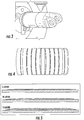
- FIGS. 4 and 5 The optical path of shaping the laser beam has been configured in such a way as to obtain a spot in the focus of 1.5 mm.
- the coatings differed in the number of layers of additive material applied, the powder feed rate being 36.8 g/min. However, the powder density and linear energy were constant and were 1.7 x 10⁵ W/cm 2 and 3.6 x 10 -3 kJ/min respectively.
- the thickness of the coating increases, with the thickness of one layer remaining constant at 13 microns.
- the number of layers to be cladded also does not affect the enlargement of the heat affected zone, which is within 110-130 microns.
- the increase in the welding speed also increases the micohardness of the coating.
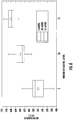
- the measured average microhardness of HV0.1 increases when the number of the layers increases ( FIG. 6 ).
- the welding speed was reduced to 20 m/min, therefore, the linear energy increased to 7.5 x 10⁻³ kJ/mm.
- the number of layers up to 3 was also limited.
- Metallographic decomposition ( FIG. 8 ) of the obtained coating and penetration tests showed no cracks or surface defects.
- the thickness of a single coating layer increased to 70 microns.
- the obtained coating was cladded along the entire length of 160 mm sleeve to assess the influence of thermal processes occurring on the surface of heated substrate material and the impact of heating the element with a laser beam on the geometrical properties of the coating.
- a coating was obtained with a constant layer height, without visible surface defects and cracks, which was confirmed in the penetration test.
- the CRK, CRICK 120 penetrant and the CRK CRICK 130 pen-maker were used for the test.
- the STELLITE 6 coating obtained as a result of high speed laser cladding is characterized not only by the similar layer height, but also by a half of the lower heat affected zone and much higher microhardness at the level of 800HV0.1.
- the deposition time with respect to a low speed laser deposition process was reduced by almost 17 times.
- FIGS. 9A and 9B show the test element immediately after the laser deposition process. The component has previously been subjected to a strengthening heat treatment.
- Parts coated by a high speed laser deposition process are heat treated, sanded and polished to obtain a roughness of Ra 0.16. During a magnetic test, no flaws or cracks were detected.
- FIG. 12 schematically illustrates a rotary-wing aircraft 10, such as a helicopter for example, having parts cladded using the high speed laser deposition process according an aspect of the invention.
- the aircraft 10 includes an airframe 12 having an extending tail 14 which mounts a tail rotor system 16, such as an anti-torque system for example.
- Landing gear (not labelled) are attached to the airframe and are cladded using the high speed laser deposition process according an aspect of the invention.
- a main rotor assembly 18 is driven about an axis of rotation 20.
- a drive shaft 22 operably couples the main rotor assembly to a power source, such as an engine (illustrated schematically at 24) for example, through a main gearbox (illustrated schematically at 26).
- the main rotor system 18 includes a plurality of rotor blades 30 mounted to a rotor hub 28.
- a particular helicopter configuration is illustrated and described in the disclosed non-limiting embodiment, other configurations and/or machines, such as high speed compound rotary wing aircraft with supplemental translational thrust systems, dual contra-rotating coaxial rotor system aircraft, multirotor, turboprops, tilt-rotors, tilt-wing aircraft, and fixed wing aircraft such as the M28 will also benefit from the present invention.
Landscapes
- Chemical & Material Sciences (AREA)
- Chemical Kinetics & Catalysis (AREA)
- Engineering & Computer Science (AREA)
- Materials Engineering (AREA)
- Mechanical Engineering (AREA)
- Metallurgy (AREA)
- Organic Chemistry (AREA)
- Other Surface Treatments For Metallic Materials (AREA)
Priority Applications (1)
| Application Number | Priority Date | Filing Date | Title |
|---|---|---|---|
| EP18461556.5A EP3569735A1 (de) | 2018-05-14 | 2018-05-14 | Laserauftragsverfahren zur beschichtung von gegenständen |
Applications Claiming Priority (1)
| Application Number | Priority Date | Filing Date | Title |
|---|---|---|---|
| EP18461556.5A EP3569735A1 (de) | 2018-05-14 | 2018-05-14 | Laserauftragsverfahren zur beschichtung von gegenständen |
Publications (1)
| Publication Number | Publication Date |
|---|---|
| EP3569735A1 true EP3569735A1 (de) | 2019-11-20 |
Family
ID=62167269
Family Applications (1)
| Application Number | Title | Priority Date | Filing Date |
|---|---|---|---|
| EP18461556.5A Withdrawn EP3569735A1 (de) | 2018-05-14 | 2018-05-14 | Laserauftragsverfahren zur beschichtung von gegenständen |
Country Status (1)
| Country | Link |
|---|---|
| EP (1) | EP3569735A1 (de) |
Cited By (1)
| Publication number | Priority date | Publication date | Assignee | Title |
|---|---|---|---|---|
| CN114875397A (zh) * | 2022-02-24 | 2022-08-09 | 国营芜湖机械厂 | 一种飞机液压油箱活塞杆表面涂层的制备方法 |
-
2018
- 2018-05-14 EP EP18461556.5A patent/EP3569735A1/de not_active Withdrawn
Non-Patent Citations (2)
| Title |
|---|
| PIOTR KORUBA ET AL: "Ultra-High Speed Laser Cladding (UHSLC) technology for Stellite 6 functional coatings deposition in aviation industry", PRZEGLAD SPAWALNICTWA, vol. 89, no. 6, 1 July 2017 (2017-07-01), pages 15 - 19, XP055507995, DOI: http://dx.doi.org/10.26628/ps.v89i6.781 * |
| SCHOPPHOVEN THOMAS ET AL: "Investigations on ultra-high-speed laser material deposition as alternative for hard chrome plating and thermal spraying", JOURNAL OF LASER APPLICATIONS, AMERICAN INSTITUTE OF PHYSICS, 2 HUNTINGTON QUADRANGLE, MELVILLE, NY 11747, vol. 28, no. 2, 31 March 2016 (2016-03-31), XP012206487, DOI: 10.2351/1.4943910 * |
Cited By (1)
| Publication number | Priority date | Publication date | Assignee | Title |
|---|---|---|---|---|
| CN114875397A (zh) * | 2022-02-24 | 2022-08-09 | 国营芜湖机械厂 | 一种飞机液压油箱活塞杆表面涂层的制备方法 |
Similar Documents
| Publication | Publication Date | Title |
|---|---|---|
| US20190345615A1 (en) | Laser deposition processes for coating articles | |
| Piscopo et al. | Current research and industrial application of laser powder directed energy deposition | |
| EP3084026B1 (de) | Pulver zur oberflächenbeschichtung | |
| US7009137B2 (en) | Laser powder fusion repair of Z-notches with nickel based superalloy powder | |
| EP3666927B1 (de) | Zahnradprodukt mit verstärkter abscheidungsoberfläche und abscheidungssystem zur herstellung davon | |
| US8828312B2 (en) | Dilution control in hardfacing severe service components | |
| CN1190517C (zh) | 表面耐磨损烧结机件及其制造方法 | |
| EP3034902A1 (de) | Bremsscheibe und verfahren zur herstellung davon | |
| US20250027206A1 (en) | Base body having a coating | |
| Graf et al. | Additive process chain using selective laser melting and laser metal deposition | |
| Verwimp et al. | Applications of laser cladded WC-based wear resistant coatings | |
| CN111945149A (zh) | 一种用于阀门中阀板、阀座的激光熔覆方法 | |
| Schubert et al. | Laser beam cladding: a flexible tool for local surface treatment and repair | |
| Bagade et al. | Effect of laser surface texturing on coating adherence and tribological properties of CuNiIn and MoS2 coating | |
| CN112442691A (zh) | 一种汽车冲压模具镶块及其激光强化制造方法 | |
| CN115354319B (zh) | 一种大型筒类零件表面高硬耐蚀涂层结构及其制备方法 | |
| Vazquez-Martinez et al. | Laser surface texturing as a finishing process for aerospace alloys | |
| CN116900493B (zh) | 一种滑动轴承及其制备方法 | |
| CN110684975B (zh) | 一种铝合金牵引轮耐磨层的制备工艺 | |
| Smolentsev et al. | Modern Technological Processes of Shaping in the Treatment of the Flowing Part of GTE Blades | |
| Barragan et al. | The Remanufacture of a Complex Part Using Hybrid Manufacturing (HM) | |
| Carou | An approach to the machining of hard coatings prepared by laser cladding and thermal spraying | |
| Belitz et al. | Alternative solutions to crack issues considering laser metal deposition in hybrid-additive manufacturing of press tools | |
| Mazzucato et al. | Study on the influence of substrate preheating and deposition environment on the structural integrity of high carbon steel LMD parts of increased geometrical complexity | |
| Lisiecki | STUDY OF LASER CLADDING OF COMPOSITE COATINGS. |
Legal Events
| Date | Code | Title | Description |
|---|---|---|---|
| PUAI | Public reference made under article 153(3) epc to a published international application that has entered the european phase |
Free format text: ORIGINAL CODE: 0009012 |
|
| AK | Designated contracting states |
Kind code of ref document: A1 Designated state(s): AL AT BE BG CH CY CZ DE DK EE ES FI FR GB GR HR HU IE IS IT LI LT LU LV MC MK MT NL NO PL PT RO RS SE SI SK SM TR |
|
| AX | Request for extension of the european patent |
Extension state: BA ME |
|
| STAA | Information on the status of an ep patent application or granted ep patent |
Free format text: STATUS: THE APPLICATION IS DEEMED TO BE WITHDRAWN |
|
| 18D | Application deemed to be withdrawn |
Effective date: 20200603 |