EP3566746B1 - System zur detektion von r-wellen in herzrhythmusmustern - Google Patents
System zur detektion von r-wellen in herzrhythmusmustern Download PDFInfo
- Publication number
- EP3566746B1 EP3566746B1 EP19172674.4A EP19172674A EP3566746B1 EP 3566746 B1 EP3566746 B1 EP 3566746B1 EP 19172674 A EP19172674 A EP 19172674A EP 3566746 B1 EP3566746 B1 EP 3566746B1
- Authority
- EP
- European Patent Office
- Prior art keywords
- wave
- processors
- signal
- segment
- beat
- Prior art date
- Legal status (The legal status is an assumption and is not a legal conclusion. Google has not performed a legal analysis and makes no representation as to the accuracy of the status listed.)
- Active
Links
Images











Classifications
-
- A—HUMAN NECESSITIES
- A61—MEDICAL OR VETERINARY SCIENCE; HYGIENE
- A61N—ELECTROTHERAPY; MAGNETOTHERAPY; RADIATION THERAPY; ULTRASOUND THERAPY
- A61N1/00—Electrotherapy; Circuits therefor
- A61N1/18—Applying electric currents by contact electrodes
- A61N1/32—Applying electric currents by contact electrodes alternating or intermittent currents
- A61N1/36—Applying electric currents by contact electrodes alternating or intermittent currents for stimulation
- A61N1/372—Arrangements in connection with the implantation of stimulators
- A61N1/375—Constructional arrangements, e.g. casings
- A61N1/3756—Casings with electrodes thereon, e.g. leadless stimulators
-
- A—HUMAN NECESSITIES
- A61—MEDICAL OR VETERINARY SCIENCE; HYGIENE
- A61B—DIAGNOSIS; SURGERY; IDENTIFICATION
- A61B5/00—Measuring for diagnostic purposes; Identification of persons
- A61B5/24—Detecting, measuring or recording bioelectric or biomagnetic signals of the body or parts thereof
- A61B5/316—Modalities, i.e. specific diagnostic methods
- A61B5/318—Heart-related electrical modalities, e.g. electrocardiography [ECG]
- A61B5/346—Analysis of electrocardiograms
- A61B5/349—Detecting specific parameters of the electrocardiograph cycle
- A61B5/352—Detecting R peaks, e.g. for synchronising diagnostic apparatus; Estimating R-R interval
-
- A—HUMAN NECESSITIES
- A61—MEDICAL OR VETERINARY SCIENCE; HYGIENE
- A61B—DIAGNOSIS; SURGERY; IDENTIFICATION
- A61B5/00—Measuring for diagnostic purposes; Identification of persons
- A61B5/24—Detecting, measuring or recording bioelectric or biomagnetic signals of the body or parts thereof
- A61B5/25—Bioelectric electrodes therefor
- A61B5/279—Bioelectric electrodes therefor specially adapted for particular uses
- A61B5/28—Bioelectric electrodes therefor specially adapted for particular uses for electrocardiography [ECG]
- A61B5/283—Invasive
- A61B5/29—Invasive for permanent or long-term implantation
-
- A—HUMAN NECESSITIES
- A61—MEDICAL OR VETERINARY SCIENCE; HYGIENE
- A61B—DIAGNOSIS; SURGERY; IDENTIFICATION
- A61B5/00—Measuring for diagnostic purposes; Identification of persons
- A61B5/24—Detecting, measuring or recording bioelectric or biomagnetic signals of the body or parts thereof
- A61B5/316—Modalities, i.e. specific diagnostic methods
- A61B5/318—Heart-related electrical modalities, e.g. electrocardiography [ECG]
- A61B5/346—Analysis of electrocardiograms
- A61B5/349—Detecting specific parameters of the electrocardiograph cycle
- A61B5/35—Detecting specific parameters of the electrocardiograph cycle by template matching
-
- A—HUMAN NECESSITIES
- A61—MEDICAL OR VETERINARY SCIENCE; HYGIENE
- A61B—DIAGNOSIS; SURGERY; IDENTIFICATION
- A61B5/00—Measuring for diagnostic purposes; Identification of persons
- A61B5/24—Detecting, measuring or recording bioelectric or biomagnetic signals of the body or parts thereof
- A61B5/316—Modalities, i.e. specific diagnostic methods
- A61B5/318—Heart-related electrical modalities, e.g. electrocardiography [ECG]
- A61B5/346—Analysis of electrocardiograms
- A61B5/349—Detecting specific parameters of the electrocardiograph cycle
- A61B5/361—Detecting fibrillation
-
- A—HUMAN NECESSITIES
- A61—MEDICAL OR VETERINARY SCIENCE; HYGIENE
- A61B—DIAGNOSIS; SURGERY; IDENTIFICATION
- A61B5/00—Measuring for diagnostic purposes; Identification of persons
- A61B5/24—Detecting, measuring or recording bioelectric or biomagnetic signals of the body or parts thereof
- A61B5/316—Modalities, i.e. specific diagnostic methods
- A61B5/318—Heart-related electrical modalities, e.g. electrocardiography [ECG]
- A61B5/346—Analysis of electrocardiograms
- A61B5/349—Detecting specific parameters of the electrocardiograph cycle
- A61B5/363—Detecting tachycardia or bradycardia
-
- A—HUMAN NECESSITIES
- A61—MEDICAL OR VETERINARY SCIENCE; HYGIENE
- A61B—DIAGNOSIS; SURGERY; IDENTIFICATION
- A61B5/00—Measuring for diagnostic purposes; Identification of persons
- A61B5/24—Detecting, measuring or recording bioelectric or biomagnetic signals of the body or parts thereof
- A61B5/316—Modalities, i.e. specific diagnostic methods
- A61B5/318—Heart-related electrical modalities, e.g. electrocardiography [ECG]
- A61B5/346—Analysis of electrocardiograms
- A61B5/349—Detecting specific parameters of the electrocardiograph cycle
- A61B5/366—Detecting abnormal QRS complex, e.g. widening
-
- A—HUMAN NECESSITIES
- A61—MEDICAL OR VETERINARY SCIENCE; HYGIENE
- A61B—DIAGNOSIS; SURGERY; IDENTIFICATION
- A61B5/00—Measuring for diagnostic purposes; Identification of persons
- A61B5/72—Signal processing specially adapted for physiological signals or for diagnostic purposes
- A61B5/7203—Signal processing specially adapted for physiological signals or for diagnostic purposes for noise prevention, reduction or removal
-
- A—HUMAN NECESSITIES
- A61—MEDICAL OR VETERINARY SCIENCE; HYGIENE
- A61B—DIAGNOSIS; SURGERY; IDENTIFICATION
- A61B5/00—Measuring for diagnostic purposes; Identification of persons
- A61B5/72—Signal processing specially adapted for physiological signals or for diagnostic purposes
- A61B5/7225—Details of analogue processing, e.g. isolation amplifier, gain or sensitivity adjustment, filtering, baseline or drift compensation
-
- A—HUMAN NECESSITIES
- A61—MEDICAL OR VETERINARY SCIENCE; HYGIENE
- A61N—ELECTROTHERAPY; MAGNETOTHERAPY; RADIATION THERAPY; ULTRASOUND THERAPY
- A61N1/00—Electrotherapy; Circuits therefor
- A61N1/18—Applying electric currents by contact electrodes
- A61N1/32—Applying electric currents by contact electrodes alternating or intermittent currents
- A61N1/36—Applying electric currents by contact electrodes alternating or intermittent currents for stimulation
- A61N1/362—Heart stimulators
- A61N1/37—Monitoring; Protecting
- A61N1/3702—Physiological parameters
-
- A—HUMAN NECESSITIES
- A61—MEDICAL OR VETERINARY SCIENCE; HYGIENE
- A61N—ELECTROTHERAPY; MAGNETOTHERAPY; RADIATION THERAPY; ULTRASOUND THERAPY
- A61N1/00—Electrotherapy; Circuits therefor
- A61N1/18—Applying electric currents by contact electrodes
- A61N1/32—Applying electric currents by contact electrodes alternating or intermittent currents
- A61N1/36—Applying electric currents by contact electrodes alternating or intermittent currents for stimulation
- A61N1/362—Heart stimulators
- A61N1/37—Monitoring; Protecting
- A61N1/3702—Physiological parameters
- A61N1/3704—Circuits specially adapted therefor, e.g. for sensitivity control
Definitions
- the applying, calculating and automatically iteratively analyzing operations may be performed as a second pass confirmation for an arrhythmia episode declared by a first pass arrhythmia detection algorithm implemented by an implantable device.
- the CA data set may include device documented markers in combination with the CA signals.
- the CA data set may be generated by the implantable device in connection with the first pass arrhythmia detection algorithm.
- the first pass arrhythmia detection algorithm may declare the arrhythmia episode to be one of a bradycardia, tachycardia, asystole or atrial fibrillation episode.
- the analyzing operation may comprise analyzing the beat segment of interest iteratively while adjusting the adaptive sensitivity level to increase resolution during each iterative analysis until reaching the sensitivity limit or specific exiting criteria.
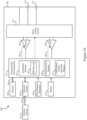
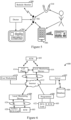
- FIG. 1 illustrates an implantable cardiac monitoring device (ICM) 100 intended for subcutaneous implantation at a site near the heart.
- the ICM 100 includes a pair of spaced-apart sense electrodes 114, 126 positioned with respect to a housing 102.
- the sense electrodes 114, 126 provide for detection of far field electrogram signals.
- Numerous configurations of electrode arrangements are possible.
- the electrode 114 may be located on a distal end of the ICM 100, while the electrode 126 is located on a proximal side of the ICM 100.
- electrodes 126 may be located on opposite sides of the ICM 100, opposite ends or elsewhere.
- the ORI process 136 treats the point 155 as a sensed R-wave and begins a refractory interval 159. No new R-wave (or T-wave) will be sensed during the refractory interval 159.
- the sensitivity is adjusted to a threshold start sensitivity 161.
- the threshold start sensitivity 161 is defined as a percentage of the peak amplitude 163 of the QRS complex of the CA signal 151 detected during the refractory interval 159.
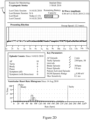
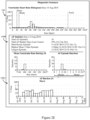
- the CA data set 141 may also include a confirmation log 147A that may be calculated in real-time or off-line in accordance with embodiments herein.
- the original CA data set 141 may be generated by the ICM based on the ORI process described herein.
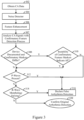
- the CA data set 141 is analyzed utilizing a second pass confirmation arrhythmia detection process (e.g., Figures 3 and 4 ).
- the second pass confirmation detection process generates a confirmation log that includes, among other things, confirmatory markers, confirmatory episode statistics and confirmatory arrhythmia diagnostics that may differ from or be similar to the original episode statistics 147 and arrhythmia diagnostics 149.
- an enhanced confirmatory AF detection process is implemented to analyze the results of the baseline analysis performed by the ORI process in the ICM.
- the enhanced confirmatory AF detection process determines whether AF episodes declared by the ICM are true or false, and updates the AF diagnostics in connection there with.
- the server 602 controls the communication of information such as cardiac activity data sets, bradycardia episode information, asystole episode information, AF episode information, markers, cardiac signal waveforms, heart rates, and device settings.
- the server 602 interfaces with the network 612 to transfer information between the programmer 606, local monitoring devices 608, 616, user workstation 610, cell phone 614 and database 604.
- the database 604 stores information such as cardiac activity data, AF episode information, AF statistics, diagnostics, markers, cardiac signal waveforms, heart rates, device settings, and the like, for a patient population.
- the information is downloaded into the database 604 via the server 602 or, alternatively, the information is uploaded to the server 602 from the database 604.
- the processor is further configured to identify, in connection with the T-wave COI and R-wave COI, at least one of a rapid rise characteristic, a rapid heart rate characteristic, T/R-wave ratio characteristic or a T-wave-to-refractory proximity characteristic.
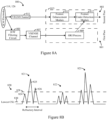
- the bandpass filter may be configured to maintain peaks of the R-wave, while suppressing lower-frequency components (e.g., T-waves, P-waves and baseline isoelectric) and suppressing high-frequency components (e.g., myopotential noise).
- the one or more processors also apply a hardware or software rectifier to the bandpass filtered signal in order to change signal components of negative polarity to positive polarity to form a modified CA signal that represents a rectified bandpass filtered CA signal.
- the rectified band-pass filtered CA signal splits the energy of the signal into multiple side peaks with smaller amplitudes relative to the original CA signal.
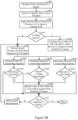
- the decisions at 955C, 955B and 955A may be independently used to determine whether the beats within the current beat segment exhibit non-physiologic characteristics, thereby representing analyzable beat segments that should be retained or warrant removal from the modified CA signals.
- a combination of the decisions from the operations at 955C, 955B and 955A may be utilized as a physiologic-noise discriminator to indicate the presence of noise sufficient to deem the signal quality of the current beat segment unsuitable for further signal analysis.
- the one or more processors determine whether the analysis has reached the end of the modified CA signals. If so, the process ends at 958. If additional modified CA signals remain to be analyzed, flow moves to 958.
- the search window is shifted to a "next" beat segment within the CA signals. The next beat segment may partially overlap the prior beat segment, or be entirely separate from the prior beat segment.
- the shift at 958 may be a programmed duration (e.g., X ms), a programmed number of beats (e.g., 1-9 beats), a full length of the search window or another amount.
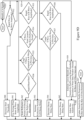
- the one or more processors identify the integral and/or derivative of the CA signals within the suspect beat segment.
- the one or more processors also identify the integral and/or derivative of the CA signals within the sinus segment.
- the integral and/or derivative of the suspect beat segment is compared to the integral and/or derivative of the sinus segment. For example, the comparison at 966 may determine whether the segments of the suspect and sinus signals are similar or within a predetermined range of one another. Additionally, or alternatively, the comparison at 966 may determine whether the derivatives of the suspect and sinus signals are similar or within a predetermined range of one another. When the integrals and/or derivatives are sufficiently similar, flow moves to 968. Alternatively, with the integrals and/or derivatives differ by a predetermined amount, flow moves to 970.
- the sinus segment 1068 may correspond to a beat segment that precedes the suspect beat segment 1066 by a predetermined number of beats or amount of time.
- the process of Figure 9C identifies whether the integral and/or derivative of the suspect beat segment 1066 is similar to the integral and/or derivative of the sinus segment 1068.
- the false asystole detection at 1065 is "ruled out” or rejected when the integral and/or derivative of the suspect and sinus segments 1066 and 1068 are within predetermined ranges of one another.
- the one or more processors obtain a CA signal for a beat and/or ensemble of beats.
- the one or more processors identify a rise rate of the current beat/ensemble and determine whether the current R-wave rise rate exceeds an R-wave rise rate of a preceding beat/ensemble by more than a R-wave rise rate threshold. If so, the current R-wave has a "rapid rise rate characteristic".
- the R-wave rise rate threshold may be calculated based on an R-wave rise rate of an individual prior beat and/or an ensemble of prior beats. Alternatively, the R-wave rise rate threshold may be predetermined (e.g., clinician programmed).
- the one or more processors adjust the lower bound of sensitivity, such as adjusting the maximum sensitivity to be utilized in the sensitivity profile.
- the processes of Figures 3 , 4 , 9A-9D may be implemented on a local external device, such as a smart phone, tablet device or other device in the possession of the patient.
- Mobile devices such as smart phones are configured with a ICM application configured to communicate with the ICM.
- the mobile devices are capable of processing CA data sets as described herein.
- the mobile device may make a determination, based on the enhanced R-wave detection processes described herein, whether an episode represents a true arrhythmia or instead a false positive driven by inappropriate R-waves.
- the mobile device may screen out the false positive episodes and prevent the false positive episodes from being uploaded to the remote server. Additionally, or alternatively, the mobile device may also provide feedback communication to the ICM (e.g., informing the ICM of the false positives) to allow the ICM to update diagnostic counts that are maintained therein.
- the method may further comprise analyzing the relation between the instantaneous and average RR intervals, wherein the instantaneous and average RR intervals are identified by stepping through successive beat segments along the CA signal to search for potential under detected beats, the instantaneous RR interval representing an interval between a current R-wave marker and one of a preceding and succeeding R-wave marker, the average RR interval representing an average interval for a predetermined number of RR intervals related to a current RR interval. Additionally, or alternatively, the relation utilized to identify the suspect beat segment represents a difference between the instantaneous and average RR intervals that exceeds an RR interval range threshold.
- Figure 9E illustrates a process for R-wave detection in accordance with embodiments herein.
- the one or more processors may bandpass filter and rectify the CA signals as explained elsewhere herein.
- the one or more processors search for R-waves within the CA signal.
- the processors apply a sensitivity threshold (e.g., 0.8 times the signal floor) to search local maxima greater than the sensitivity limit in the rectified CA signal and identify them as the R-waves.
- a local maxima 1087 is designated as the peak of an R-wave
- the processors set a refractory period (e.g., 250 ms), during which the processors do not search for additional R-waves. When the refractory period terminates, the processors identify the next local maxima therein.
- CA signals may be processed with various front end filters and along different sensing channels by an ICM.
- the signal filtered and processed along one sensing channel may be temporarily buffered, while the conventional ORI process operates upon CA signals being received over a separate sensing channel.
- the ICM may apply the process of Figure 9E to the buffered CA signals.
- one or more processors herein may identify that the set of device declared R-waves (as designated by the ORI process in the ICM) significantly differs from the confirmation R-waves identified in connection with the process of Figure 9E .
- the one or more processors may send an alert to a clinician to check and/or reprogram sensitivity parameters.
- a "simulated ORI" process may be implemented to analyze a CA data set offline (e.g., in the cloud) upon detection of such different sets of R-waves. The simulated process may test one or more potential ORI configurations and identifies an improved set of device-programmable ORI parameters to decrease the "false-positive burden" at the ICM.
- the arrhythmia detection process is performed as a first pass detection process by an on-board R-R interval irregularity (ORI) process that analyzes the CA signals after being modified based on the declaring the noisy segments.
- ORI on-board R-R interval irregularity
- the overlaying, identifying, determining, declaring, shifting, modifying operations are performed by firmware and hardware within an ICM or IMD.
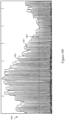
- Figure 11 illustrates a process for identifying noise in accordance with embodiments herein.
- the one or more processors define and overlay a noise search window onto the CA signal for which noise detection is to be carried out.
- the noise search window may vary depending on a nature of the feature for which the CA signal is being analyzed.
- the ICM may implement an ORI process for AF detection, where the detection process is strongly dependent on the QRS morphology as the AF detection process is based on RR interval variability. Therefore, in an AF detection process that is dependent on RR interval variability, the noise detection process of Figure 11 defines the noise search window to overlap a portion of CA signal that does not overlap with QRS complex to T-wave.
- the processors may utilize QRS complex and/or T-wave markers that were identified prior to the process of Figure 11 .
- R-wave and T-wave markers may be identified in real-time serially with the process of Figure 11 .
- R-wave and T-wave markers may be identified previously before the process of Figure 11 (which may be performed off-line or non-real-time).
- Figure 12A shows 4 'turns' (indicated by black vertical lines 1210-1213) marked by change in signal direction. Turns in the remaining portion of CA signal segment 1202 were not used as they fall within the QRS complex 1204 or thereafter in the T-wave portion of the CA signal segment 1202.
- the one or more processors register the current CA signal segment as a noisy CA signal segment.
- the processors register the current CA signal segment of Y beats as noisy. For example, for a given CA signal segment, when a percentage (%) of noisy beats is greater than a threshold (e.g., 25%), then an overall entire CA signal segment (e.g., 30 second strip or 1 minute strip of EGM signals for a CA data set) may be declared as 'noisy' and may be rejected from further analysis.
- a threshold e.g. 25%
Landscapes
- Health & Medical Sciences (AREA)
- Life Sciences & Earth Sciences (AREA)
- Cardiology (AREA)
- Engineering & Computer Science (AREA)
- Animal Behavior & Ethology (AREA)
- General Health & Medical Sciences (AREA)
- Biomedical Technology (AREA)
- Veterinary Medicine (AREA)
- Public Health (AREA)
- Biophysics (AREA)
- Heart & Thoracic Surgery (AREA)
- Molecular Biology (AREA)
- Surgery (AREA)
- Pathology (AREA)
- Medical Informatics (AREA)
- Physics & Mathematics (AREA)
- Signal Processing (AREA)
- Physiology (AREA)
- Computer Vision & Pattern Recognition (AREA)
- Artificial Intelligence (AREA)
- Psychiatry (AREA)
- Radiology & Medical Imaging (AREA)
- Nuclear Medicine, Radiotherapy & Molecular Imaging (AREA)
- Power Engineering (AREA)
- Measurement And Recording Of Electrical Phenomena And Electrical Characteristics Of The Living Body (AREA)
- Electrotherapy Devices (AREA)
Claims (11)
- System zur Detektion von Herzrhythmusstörungen in der Herzaktivität, umfassend:einen Speicher (160), der dazu konfiguriert ist, spezifische ausführbare Anweisungen zu speichern;einen oder mehrere Prozessoren (121), die beim Ausführen der spezifischen ausführbaren Anweisungen zu Folgendem konfiguriert sind:Erhalten eines Fernfeld-CA-Datensatzes über die Herzaktivität, der Fernfeld-CA-Signale für Herzschläge beinhaltet;Anwenden einer Merkmalsverbesserungsfunktion an den CA-Signalen, um ein verbessertes R-Wellen-Merkmal in dem CA-Datensatz zu bilden;Berechnen eines adaptiven Empfindlichkeitsniveaus auf Grundlage des verbesserten R-Wellen-Merkmals von einem oder mehreren Herzschlägen innerhalb des CA-Datensatzes;automatischem iterativen Analysieren eines interessierenden Herzschlagsegments durch Folgendes:Vergleichen des interessierenden Herzschlagsegments mit dem aktuellen adaptiven Empfindlichkeitsniveau, um zu bestimmen, ob eine oder mehrere R-Wellen innerhalb des interessierenden Herzschlagsegments vorhanden sind;Wiederholen des iterativen Analysevorgangs während eines progressiven Einstellens des adaptiven aktuellen Empfindlichkeitsniveaus, bis i) die eine oder mehreren R-Wellen in dem interessierenden Herzschlagsegment detektiert werden und/oder ii) das aktuelle Empfindlichkeitsniveau die Empfindlichkeitsgrenze erreicht; undDetektieren einer Herzrhythmusstörung innerhalb des interessierenden Herzschlagsegments auf Grundlage einer Anwesenheit oder Abwesenheit der einen oder mehreren R-Wellen; undAufzeichnen von Ergebnissen des Detektierens der Herzrhythmusstörung.
- System nach Anspruch 1, wobei der eine oder die mehreren Prozessoren (121) dazu konfiguriert sind, die Merkmalsverbesserungsfunktion anzuwenden, das adaptive Empfindlichkeitsniveau zu berechnen und das interessierende Herzschlagsegment automatisch iterativ zu analysieren, wenn eine Second-Pass-Bestätigung für eine Herzrhythmusstörungsepisode durch einen First-Pass-Herzryhtmusstörungsdetektionsalgorythmus erklärt wird, der durch eine implantierbare Vorrichtung angewendet wird.
- System nach Anspruch 2, wobei der CA-Datensatz von Vorrichtungen dokumentierte Marker in Kombination mit den CA-Signalen beinhaltet; der CA-Datensatz durch die implantierbare Vorrichtung in Verbindung mit dem First-Pass-Herzryhtmusstörungsdetektionsalgorythmus generiert wird; der First-Pass-Herzryhtmusstörungsdetektionsalgorythmus dazu konfiguriert ist, die Herzrhythmusstörungsepisode als eine von einer Bradykardie-, Tachykardie-, Asystolie- oder Vorhofflimmerepisode zu erklären.
- System nach einem der Ansprüche 1 bis 3, wobei der eine oder die mehreren Prozessoren (121) zu Folgendem konfiguriert sind:Berechnen des adaptiven Empfindlichkeitsniveaus durch Bestimmen von Amplituden for eines oder mehrere Merkmale des interessierenden Herzschlagsegments, wobei die Empfindlichkeitsgrenze auf den Amplituden basiert; undBestimmen, ob mindestens ein Abschnitt des interessierenden Herzschlagsegments das aktuelle adaptive Empfindlichkeitsniveau überschreitet.
- System nach einem der Ansprüche 1 bis 4, wobei der eine oder die mehreren Prozessoren (121) dazu konfiguriert sind, das adaptive Empfindlichkeitsniveau auf Grundlage eines Vergleichs einer Ensemble-R-Wellen-Spitze, einer Ensemble-T-Wellen-Spitze und Ensemble-P-Wellen-Amplituden und/oder einer Variabilität zu bestimmen, die Amplituden und/oder eine Variabilität für das eine oder die mehreren Merkmale darstellt.
- System nach einem der Ansprüche 1 bis 5, wobei der eine oder die mehreren Prozessoren (121) dazu konfiguriert sind, das interessierende Herzschlagsegment iterativ zu analysieren, während das Empfindlichkeitsniveau eingestellt wird, um eine Auflösung während jeder iterativen Analyse zu erhöhen, bis die Empfindlichkeitsgrenze oder spezifische Anregungskriterien erreicht sind.
- System nach einem der Ansprüche 1 bis 6, wobei der eine oder die mehreren Prozessoren (121) ferner dazu konfiguriert sind, mindestens eine von einer Bradykardieepisode auf Grundlage einer Anzahl von X Herzschlägen innerhalb einer Bradykardiezone aus einer Gesamtzahl von Y Herzschlägen innerhalb des CA-Datensatzes zu bestätigen oder nicht zu bestätigen.
- System nach einem der Ansprüche 1 bis 7, wobei der eine oder die mehreren Prozessoren (121) ferner dazu konfiguriert sind, eine Asystolieepisode zu bestätigen oder nicht zu bestätigen, wenn das interessierende Herzschlagsegment für einen Zeitraum, der eine Asystolieschwelle überschreitet, keine detektierte elektrische Aktivität aufweist.
- System nach einem der Ansprüche 1 bis 8, wobei der eine oder die mehreren Prozessoren (121) dazu konfiguriert sind, eine Normalisierungsfunktion und eine nicht lineare Skalierungsfunktion an den CA-Signalen als die Merkmalsverbesserungsfunktion anzuwenden.
- System nach einem der Ansprüche 1 bis 9, umfassend eine implantierbare Herzüberwachungsvorrichtung (100), die Folgendes umfasst:den Speicher (160);den einen oder die mehreren Prozessoren (121); undAnschlüsse (113, 115), die dazu konfiguriert sind, an Erfassungselektroden (114, 126) gekoppelt zu werden, die dazu konfiguriert sind, die Fernfeld-CA-Signale zu detektieren.
- System nach einem der Ansprüche 1 bis 9, umfassend eine externe Vorrichtung (154), die Folgendes umfasst:den Speicher (160); undden einen oder die mehreren Prozessoren (121), wobei die externe Vorrichtung (154) dazu konfiguriert ist, den Fernfeld-CA-Datensatz von einer implantierbaren Herzüberwachungsvorrichtung (100) zu empfangen.
Applications Claiming Priority (1)
| Application Number | Priority Date | Filing Date | Title |
|---|---|---|---|
| US15/973,351 US11020036B2 (en) | 2018-05-07 | 2018-05-07 | Method and system to detect R-waves in cardiac arrhythmic patterns |
Publications (2)
| Publication Number | Publication Date |
|---|---|
| EP3566746A1 EP3566746A1 (de) | 2019-11-13 |
| EP3566746B1 true EP3566746B1 (de) | 2023-07-05 |
Family
ID=66483808
Family Applications (1)
| Application Number | Title | Priority Date | Filing Date |
|---|---|---|---|
| EP19172674.4A Active EP3566746B1 (de) | 2018-05-07 | 2019-05-06 | System zur detektion von r-wellen in herzrhythmusmustern |
Country Status (2)
| Country | Link |
|---|---|
| US (2) | US11020036B2 (de) |
| EP (1) | EP3566746B1 (de) |
Families Citing this family (38)
| Publication number | Priority date | Publication date | Assignee | Title |
|---|---|---|---|---|
| CN108720832B (zh) * | 2018-05-30 | 2021-11-12 | 京东方科技集团股份有限公司 | 一种心电信号处理方法及装置 |
| JP7487225B2 (ja) * | 2019-05-08 | 2024-05-20 | バイオトロニック エスエー アンド カンパニー カーゲー | 心臓活動を検出するためのプロセッサデバイスを有する植込み型医療デバイス |
| US11771360B2 (en) * | 2019-08-22 | 2023-10-03 | West Affum Holdings Dac | Cardiac monitoring system with normally conducted QRS complex identification |
| US11730418B2 (en) | 2019-08-22 | 2023-08-22 | West Affum Holdings Dac | Cardiac monitoring system with supraventricular tachycardia (SVT) classifications |
| US11298083B2 (en) * | 2019-09-16 | 2022-04-12 | Pacesetter, Inc. | Methods and systems for detecting loss of electrode-tissue contact |
| US11559241B2 (en) * | 2019-10-01 | 2023-01-24 | Pacesetter, Inc. | Methods and systems for reducing false declarations of arrhythmias |
| KR102327151B1 (ko) * | 2019-11-25 | 2021-11-17 | 한국전자통신연구원 | 심전도의 심실 탈분극 검출 장치 및 그 방법 |
| US11559242B2 (en) | 2020-01-30 | 2023-01-24 | Pacesetter, Inc. | Methods and systems for distinguishing over-sensed R-R intervals from true R-R intervals |
| US11464984B2 (en) | 2020-02-04 | 2022-10-11 | Pacesetter, Inc. | Leadless pacemaker systems, devices and methods that monitor for atrial capture |
| US11589794B2 (en) * | 2020-04-02 | 2023-02-28 | Medtronic, Inc. | Cardiac signal QT interval detection |
| US11806156B2 (en) * | 2020-04-22 | 2023-11-07 | Pacesetter, Inc. | Method and system for adaptive-sensing of electrical cardiac signals |
| US20210345891A1 (en) | 2020-05-08 | 2021-11-11 | Pacesetter, Inc. | Method and device for detecting respiration anomaly from low frequency component of electrical cardiac activity signals |
| US11766207B2 (en) | 2020-06-01 | 2023-09-26 | Pacesetter, Inc. | Methods, devices and systems for improving R-wave detection and arrhtymia detection accuracy |
| US11284828B2 (en) * | 2020-08-12 | 2022-03-29 | Pacesetter, Inc. | Method and system to detect P-waves in cardiac arrhythmic patterns |
| US11291399B2 (en) * | 2020-08-20 | 2022-04-05 | Atsens Co., Ltd. | Apparatus for measuring electrocardiogram, and method of operation the apparatus |
| US20220117538A1 (en) * | 2020-10-21 | 2022-04-21 | Pacesetter, Inc. | Methods and systems to confirm device classified arrhythmias utilizing machine learning models |
| WO2022094425A1 (en) * | 2020-10-30 | 2022-05-05 | Vektor Medical, Inc. | Heart graphic display system |
| EP4039191A1 (de) | 2021-02-04 | 2022-08-10 | Pacesetter, Inc. | System zur erkennung von vorzeitigen ventrikulären kontraktionen |
| CN112971798B (zh) * | 2021-02-10 | 2023-05-30 | 武汉心络科技有限公司 | 心电信号处理方法、装置、终端及存储介质 |
| JP2024506138A (ja) * | 2021-02-11 | 2024-02-09 | バイオトロニック エスエー アンド カンパニー カーゲー | 心臓内機能を提供するように構成された植込み型医療装置 |
| US12128240B2 (en) | 2021-03-11 | 2024-10-29 | Pacesetter, Inc. | Method and system for biventricular or left ventricular pacing |
| CN117545416A (zh) | 2021-05-03 | 2024-02-09 | 波士顿科学神经调制公司 | 用于对神经调制的感测块进行排序的系统 |
| US12564348B2 (en) | 2021-05-05 | 2026-03-03 | Pacesetter, Inc. | Device and method for detecting ventricular arrhythmias based on duty cycle characteristics |
| CN113499080B (zh) * | 2021-06-08 | 2023-09-19 | 深圳邦健生物医疗设备股份有限公司 | R波检测方法、装置、设备和介质 |
| US12390167B2 (en) | 2021-06-22 | 2025-08-19 | Pacesetter, Inc. | Methods and systems for determining whether R-wave detections should be classified as false due to T-wave oversensing (TWO) or P-wave oversensing (PWO) |
| US12350059B2 (en) | 2021-09-07 | 2025-07-08 | Pacesetter, Inc. | Robust ventricular sensing of far-field EGM or ECG signals that avoids oversensing of ventricular sensed events |
| CN115770048B (zh) * | 2021-09-08 | 2024-09-24 | 上海联影医疗科技股份有限公司 | 心电信号处理方法、装置、计算机设备及存储介质 |
| US12543993B2 (en) * | 2021-09-30 | 2026-02-10 | Medtronic, Inc. | Medical device and method for detecting tachy arrhythmia |
| WO2023110681A1 (en) * | 2021-12-13 | 2023-06-22 | Biotronik Se & Co. Kg | Smart icm ecg filtering |
| US11782877B1 (en) | 2022-05-17 | 2023-10-10 | Bank Of America Corporation | Search technique for noisy logs and resulting user interfaces displaying log entries in ranked order of importance |
| WO2023229903A1 (en) * | 2022-05-24 | 2023-11-30 | Academia Sinica | Photoplethysmography based atrial fibrillation detection system and method |
| US12569205B2 (en) | 2022-08-26 | 2026-03-10 | Pacesetter, Inc. | Implantable medical device data and diagnostics management system method using machine-learning architecture |
| WO2024089518A1 (en) * | 2022-10-28 | 2024-05-02 | Medtronic, Inc. | Ecg signal visualization |
| WO2024089519A1 (en) * | 2022-10-28 | 2024-05-02 | Medtronic, Inc. | Scaling features for improved ecg signal visualization |
| CN120583981A (zh) * | 2023-01-27 | 2025-09-02 | 美敦力公司 | 用于启动心律失常预测算法的阈值 |
| US20250032801A1 (en) | 2023-07-25 | 2025-01-30 | Pacesetter, Inc. | Convolutional neural network for automatic discrimination of pause episodes detected by an implantable medical device |
| WO2025226409A1 (en) | 2024-04-25 | 2025-10-30 | Pacesetter, Inc. | Electrolytic capacitor and method for forming the same |
| CN119739999B (zh) * | 2025-03-05 | 2025-06-24 | 中国人民解放军总医院第二医学中心 | 一种多种心脏监测数据的患者健康预警处理方法及系统 |
Family Cites Families (26)
| Publication number | Priority date | Publication date | Assignee | Title |
|---|---|---|---|---|
| US3946744A (en) | 1972-05-30 | 1976-03-30 | Medalert Corporation | Electrocardiography signal transmission-reception method including method of measuring pacemaker signal frequency |
| US5713367A (en) | 1994-01-26 | 1998-02-03 | Cambridge Heart, Inc. | Measuring and assessing cardiac electrical stability |
| US7248921B2 (en) | 2003-06-02 | 2007-07-24 | Cameron Health, Inc. | Method and devices for performing cardiac waveform appraisal |
| US8332022B2 (en) | 2003-08-29 | 2012-12-11 | Medtronic, Inc. | Methods and apparatus for discriminating polymorphic tachyarrhythmias from monomorphic tachyarrhythmias facilitating detection of fibrillation |
| US7294108B1 (en) | 2005-01-27 | 2007-11-13 | Pacesetter, Inc. | Cardiac event microrecorder and method for implanting same |
| US7567835B2 (en) | 2005-04-18 | 2009-07-28 | Medtronic, Inc. | Method and apparatus for identifying oversensing using far-field intracardiac electrograms and marker channels |
| US7761142B2 (en) * | 2006-03-29 | 2010-07-20 | Medtronic, Inc. | Method and apparatus for detecting arrhythmias in a medical device |
| US7894894B2 (en) | 2006-03-29 | 2011-02-22 | Medtronic, Inc. | Method and apparatus for detecting arrhythmias in a subcutaneous medical device |
| US7831304B2 (en) | 2006-09-29 | 2010-11-09 | Medtronic, Inc. | Method for determining oversensing in an implantable device |
| US8260404B1 (en) | 2007-07-11 | 2012-09-04 | Pacesetter, Inc. | Systems and methods for employing multiple filters to detect T-wave oversensing and to improve tachyarrhythmia detection within an implantable medical device |
| US8121675B2 (en) | 2008-04-25 | 2012-02-21 | Pacesetter, Inc. | Device and method for detecting atrial fibrillation |
| US8233980B2 (en) | 2008-05-07 | 2012-07-31 | Pacesetter, Inc. | System and method for detecting hidden atrial events for use with automatic mode switching within an implantable medical device |
| US8391980B2 (en) | 2009-07-07 | 2013-03-05 | Pacesetter, Inc. | Method and system for identifying a potential lead failure in an implantable medical device |
| US8831713B2 (en) | 2010-07-29 | 2014-09-09 | Medtronic, Inc. | Prevention of false asystole or bradycardia detection |
| EP2526861A1 (de) | 2011-05-23 | 2012-11-28 | Maastricht University | Nichtinvasive Klassifizierung von Vorhofflimmern durch probabilistische Intervallanalyse von einem transösophagealen Elektrokardiogramm |
| US9008760B2 (en) | 2011-05-31 | 2015-04-14 | Cardiac Pacemakers, Inc. | System and method for off-line analysis of cardiac data |
| US9044610B2 (en) | 2013-03-15 | 2015-06-02 | Pacesetter, Inc. | Systems and methods for providing a distributed virtual stimulation cathode for use with an implantable neurostimulation system |
| US9232485B2 (en) | 2013-08-23 | 2016-01-05 | Pacesetter, Inc. | System and method for selectively communicating with an implantable medical device |
| US8831747B1 (en) | 2013-11-19 | 2014-09-09 | Pacesetter, Inc. | Leadless neurostimulation device and method including the same |
| US9333351B2 (en) | 2013-12-16 | 2016-05-10 | Pacesetter, Inc. | Neurostimulation method and system to treat apnea |
| US9216285B1 (en) | 2014-12-18 | 2015-12-22 | Pacesetter, Inc. | Leadless implantable medical device having removable and fixed components |
| EP3247453B1 (de) | 2015-01-23 | 2020-11-25 | Medtronic Inc. | Detektion einer episode einer atrialen arhythmie in einer kardialen medizinischen vorrichtung |
| US9962102B2 (en) | 2015-02-18 | 2018-05-08 | Medtronic, Inc. | Method and apparatus for atrial arrhythmia episode detection |
| WO2017152152A1 (en) | 2016-03-04 | 2017-09-08 | Cardiac Pacemakers, Inc. | Reducing false positives in detection of potential cardiac pauses |
| US10413207B2 (en) | 2016-03-25 | 2019-09-17 | Medtronic, Inc. | Method and apparatus for verifying bradycardia/asystole episodes via detection of under-sensed events |
| AU2017325013B2 (en) | 2016-09-07 | 2020-02-27 | Cardiac Pacemakers, Inc. | Brady pause detection for implantable cardiac monitors |
-
2018
- 2018-05-07 US US15/973,351 patent/US11020036B2/en active Active
-
2019
- 2019-05-06 EP EP19172674.4A patent/EP3566746B1/de active Active
-
2021
- 2021-04-28 US US17/242,561 patent/US11633141B2/en active Active
Also Published As
| Publication number | Publication date |
|---|---|
| EP3566746A1 (de) | 2019-11-13 |
| US11633141B2 (en) | 2023-04-25 |
| US11020036B2 (en) | 2021-06-01 |
| US20210259611A1 (en) | 2021-08-26 |
| US20190336026A1 (en) | 2019-11-07 |
Similar Documents
| Publication | Publication Date | Title |
|---|---|---|
| US11633141B2 (en) | Method and system to detect r-waves in cardiac arrhythmic patterns | |
| US12245877B2 (en) | Method and system for second pass confirmation of an arrhythmic episode | |
| US11534101B2 (en) | Method and system to detect premature ventricular contractions in cardiac activity signals | |
| US11426112B2 (en) | Method and system for second pass confirmation of detected cardiac arrhythmic patterns | |
| US11547339B2 (en) | Method and system to detect R-waves in cardiac activity signals | |
| US11793445B2 (en) | Method and system to detect P-waves in cardiac arrhythmic patterns | |
| US20200046245A1 (en) | Method and system to detect atrial flutter waves in cardiac activity signals | |
| US11291400B2 (en) | Method and system for detecting low level P-waves | |
| US20240099641A1 (en) | Method and system to detect p-waves in cardiac arrhythmic patterns | |
| US11701051B2 (en) | Method and system for detecting arrhythmias in cardiac activity | |
| US11058344B2 (en) | Method and system to accelerate confirmation of cardiac arrhythmias | |
| US20220167903A1 (en) | Methods and systems to manage presentation of representative cardiac activity segments for clusters of such segments |
Legal Events
| Date | Code | Title | Description |
|---|---|---|---|
| PUAI | Public reference made under article 153(3) epc to a published international application that has entered the european phase |
Free format text: ORIGINAL CODE: 0009012 |
|
| STAA | Information on the status of an ep patent application or granted ep patent |
Free format text: STATUS: THE APPLICATION HAS BEEN PUBLISHED |
|
| AK | Designated contracting states |
Kind code of ref document: A1 Designated state(s): AL AT BE BG CH CY CZ DE DK EE ES FI FR GB GR HR HU IE IS IT LI LT LU LV MC MK MT NL NO PL PT RO RS SE SI SK SM TR |
|
| AX | Request for extension of the european patent |
Extension state: BA ME |
|
| STAA | Information on the status of an ep patent application or granted ep patent |
Free format text: STATUS: REQUEST FOR EXAMINATION WAS MADE |
|
| 17P | Request for examination filed |
Effective date: 20200317 |
|
| RBV | Designated contracting states (corrected) |
Designated state(s): AL AT BE BG CH CY CZ DE DK EE ES FI FR GB GR HR HU IE IS IT LI LT LU LV MC MK MT NL NO PL PT RO RS SE SI SK SM TR |
|
| GRAP | Despatch of communication of intention to grant a patent |
Free format text: ORIGINAL CODE: EPIDOSNIGR1 |
|
| STAA | Information on the status of an ep patent application or granted ep patent |
Free format text: STATUS: GRANT OF PATENT IS INTENDED |
|
| RIC1 | Information provided on ipc code assigned before grant |
Ipc: A61N 1/375 20060101ALI20230327BHEP Ipc: A61N 1/37 20060101AFI20230327BHEP |
|
| RIC1 | Information provided on ipc code assigned before grant |
Ipc: A61N 1/375 20060101ALI20230403BHEP Ipc: A61N 1/37 20060101AFI20230403BHEP |
|
| INTG | Intention to grant announced |
Effective date: 20230420 |
|
| GRAS | Grant fee paid |
Free format text: ORIGINAL CODE: EPIDOSNIGR3 |
|
| GRAA | (expected) grant |
Free format text: ORIGINAL CODE: 0009210 |
|
| STAA | Information on the status of an ep patent application or granted ep patent |
Free format text: STATUS: THE PATENT HAS BEEN GRANTED |
|
| AK | Designated contracting states |
Kind code of ref document: B1 Designated state(s): AL AT BE BG CH CY CZ DE DK EE ES FI FR GB GR HR HU IE IS IT LI LT LU LV MC MK MT NL NO PL PT RO RS SE SI SK SM TR |
|
| REG | Reference to a national code |
Ref country code: CH Ref legal event code: EP |
|
| REG | Reference to a national code |
Ref country code: AT Ref legal event code: REF Ref document number: 1584268 Country of ref document: AT Kind code of ref document: T Effective date: 20230715 |
|
| P01 | Opt-out of the competence of the unified patent court (upc) registered |
Effective date: 20230616 |
|
| REG | Reference to a national code |
Ref country code: DE Ref legal event code: R096 Ref document number: 602019031981 Country of ref document: DE |
|
| REG | Reference to a national code |
Ref country code: IE Ref legal event code: FG4D |
|
| REG | Reference to a national code |
Ref country code: LT Ref legal event code: MG9D |
|
| REG | Reference to a national code |
Ref country code: NL Ref legal event code: MP Effective date: 20230705 |
|
| REG | Reference to a national code |
Ref country code: AT Ref legal event code: MK05 Ref document number: 1584268 Country of ref document: AT Kind code of ref document: T Effective date: 20230705 |
|
| PG25 | Lapsed in a contracting state [announced via postgrant information from national office to epo] |
Ref country code: NL Free format text: LAPSE BECAUSE OF FAILURE TO SUBMIT A TRANSLATION OF THE DESCRIPTION OR TO PAY THE FEE WITHIN THE PRESCRIBED TIME-LIMIT Effective date: 20230705 |
|
| PG25 | Lapsed in a contracting state [announced via postgrant information from national office to epo] |
Ref country code: GR Free format text: LAPSE BECAUSE OF FAILURE TO SUBMIT A TRANSLATION OF THE DESCRIPTION OR TO PAY THE FEE WITHIN THE PRESCRIBED TIME-LIMIT Effective date: 20231006 |
|
| PG25 | Lapsed in a contracting state [announced via postgrant information from national office to epo] |
Ref country code: ES Free format text: LAPSE BECAUSE OF FAILURE TO SUBMIT A TRANSLATION OF THE DESCRIPTION OR TO PAY THE FEE WITHIN THE PRESCRIBED TIME-LIMIT Effective date: 20230705 |
|
| PG25 | Lapsed in a contracting state [announced via postgrant information from national office to epo] |
Ref country code: IS Free format text: LAPSE BECAUSE OF FAILURE TO SUBMIT A TRANSLATION OF THE DESCRIPTION OR TO PAY THE FEE WITHIN THE PRESCRIBED TIME-LIMIT Effective date: 20231105 |
|
| PG25 | Lapsed in a contracting state [announced via postgrant information from national office to epo] |
Ref country code: SE Free format text: LAPSE BECAUSE OF FAILURE TO SUBMIT A TRANSLATION OF THE DESCRIPTION OR TO PAY THE FEE WITHIN THE PRESCRIBED TIME-LIMIT Effective date: 20230705 Ref country code: RS Free format text: LAPSE BECAUSE OF FAILURE TO SUBMIT A TRANSLATION OF THE DESCRIPTION OR TO PAY THE FEE WITHIN THE PRESCRIBED TIME-LIMIT Effective date: 20230705 Ref country code: PT Free format text: LAPSE BECAUSE OF FAILURE TO SUBMIT A TRANSLATION OF THE DESCRIPTION OR TO PAY THE FEE WITHIN THE PRESCRIBED TIME-LIMIT Effective date: 20231106 Ref country code: NO Free format text: LAPSE BECAUSE OF FAILURE TO SUBMIT A TRANSLATION OF THE DESCRIPTION OR TO PAY THE FEE WITHIN THE PRESCRIBED TIME-LIMIT Effective date: 20231005 Ref country code: LV Free format text: LAPSE BECAUSE OF FAILURE TO SUBMIT A TRANSLATION OF THE DESCRIPTION OR TO PAY THE FEE WITHIN THE PRESCRIBED TIME-LIMIT Effective date: 20230705 Ref country code: LT Free format text: LAPSE BECAUSE OF FAILURE TO SUBMIT A TRANSLATION OF THE DESCRIPTION OR TO PAY THE FEE WITHIN THE PRESCRIBED TIME-LIMIT Effective date: 20230705 Ref country code: IS Free format text: LAPSE BECAUSE OF FAILURE TO SUBMIT A TRANSLATION OF THE DESCRIPTION OR TO PAY THE FEE WITHIN THE PRESCRIBED TIME-LIMIT Effective date: 20231105 Ref country code: HR Free format text: LAPSE BECAUSE OF FAILURE TO SUBMIT A TRANSLATION OF THE DESCRIPTION OR TO PAY THE FEE WITHIN THE PRESCRIBED TIME-LIMIT Effective date: 20230705 Ref country code: GR Free format text: LAPSE BECAUSE OF FAILURE TO SUBMIT A TRANSLATION OF THE DESCRIPTION OR TO PAY THE FEE WITHIN THE PRESCRIBED TIME-LIMIT Effective date: 20231006 Ref country code: FI Free format text: LAPSE BECAUSE OF FAILURE TO SUBMIT A TRANSLATION OF THE DESCRIPTION OR TO PAY THE FEE WITHIN THE PRESCRIBED TIME-LIMIT Effective date: 20230705 Ref country code: ES Free format text: LAPSE BECAUSE OF FAILURE TO SUBMIT A TRANSLATION OF THE DESCRIPTION OR TO PAY THE FEE WITHIN THE PRESCRIBED TIME-LIMIT Effective date: 20230705 Ref country code: AT Free format text: LAPSE BECAUSE OF FAILURE TO SUBMIT A TRANSLATION OF THE DESCRIPTION OR TO PAY THE FEE WITHIN THE PRESCRIBED TIME-LIMIT Effective date: 20230705 |
|
| PG25 | Lapsed in a contracting state [announced via postgrant information from national office to epo] |
Ref country code: PL Free format text: LAPSE BECAUSE OF FAILURE TO SUBMIT A TRANSLATION OF THE DESCRIPTION OR TO PAY THE FEE WITHIN THE PRESCRIBED TIME-LIMIT Effective date: 20230705 |
|
| REG | Reference to a national code |
Ref country code: DE Ref legal event code: R097 Ref document number: 602019031981 Country of ref document: DE |
|
| PG25 | Lapsed in a contracting state [announced via postgrant information from national office to epo] |
Ref country code: SM Free format text: LAPSE BECAUSE OF FAILURE TO SUBMIT A TRANSLATION OF THE DESCRIPTION OR TO PAY THE FEE WITHIN THE PRESCRIBED TIME-LIMIT Effective date: 20230705 Ref country code: RO Free format text: LAPSE BECAUSE OF FAILURE TO SUBMIT A TRANSLATION OF THE DESCRIPTION OR TO PAY THE FEE WITHIN THE PRESCRIBED TIME-LIMIT Effective date: 20230705 Ref country code: EE Free format text: LAPSE BECAUSE OF FAILURE TO SUBMIT A TRANSLATION OF THE DESCRIPTION OR TO PAY THE FEE WITHIN THE PRESCRIBED TIME-LIMIT Effective date: 20230705 Ref country code: DK Free format text: LAPSE BECAUSE OF FAILURE TO SUBMIT A TRANSLATION OF THE DESCRIPTION OR TO PAY THE FEE WITHIN THE PRESCRIBED TIME-LIMIT Effective date: 20230705 Ref country code: CZ Free format text: LAPSE BECAUSE OF FAILURE TO SUBMIT A TRANSLATION OF THE DESCRIPTION OR TO PAY THE FEE WITHIN THE PRESCRIBED TIME-LIMIT Effective date: 20230705 Ref country code: SK Free format text: LAPSE BECAUSE OF FAILURE TO SUBMIT A TRANSLATION OF THE DESCRIPTION OR TO PAY THE FEE WITHIN THE PRESCRIBED TIME-LIMIT Effective date: 20230705 |
|
| PLBE | No opposition filed within time limit |
Free format text: ORIGINAL CODE: 0009261 |
|
| STAA | Information on the status of an ep patent application or granted ep patent |
Free format text: STATUS: NO OPPOSITION FILED WITHIN TIME LIMIT |
|
| 26N | No opposition filed |
Effective date: 20240408 |
|
| PG25 | Lapsed in a contracting state [announced via postgrant information from national office to epo] |
Ref country code: SI Free format text: LAPSE BECAUSE OF FAILURE TO SUBMIT A TRANSLATION OF THE DESCRIPTION OR TO PAY THE FEE WITHIN THE PRESCRIBED TIME-LIMIT Effective date: 20230705 |
|
| PG25 | Lapsed in a contracting state [announced via postgrant information from national office to epo] |
Ref country code: BG Free format text: LAPSE BECAUSE OF FAILURE TO SUBMIT A TRANSLATION OF THE DESCRIPTION OR TO PAY THE FEE WITHIN THE PRESCRIBED TIME-LIMIT Effective date: 20230705 |
|
| PG25 | Lapsed in a contracting state [announced via postgrant information from national office to epo] |
Ref country code: BG Free format text: LAPSE BECAUSE OF FAILURE TO SUBMIT A TRANSLATION OF THE DESCRIPTION OR TO PAY THE FEE WITHIN THE PRESCRIBED TIME-LIMIT Effective date: 20230705 |
|
| PG25 | Lapsed in a contracting state [announced via postgrant information from national office to epo] |
Ref country code: MC Free format text: LAPSE BECAUSE OF FAILURE TO SUBMIT A TRANSLATION OF THE DESCRIPTION OR TO PAY THE FEE WITHIN THE PRESCRIBED TIME-LIMIT Effective date: 20230705 |
|
| PG25 | Lapsed in a contracting state [announced via postgrant information from national office to epo] |
Ref country code: LU Free format text: LAPSE BECAUSE OF NON-PAYMENT OF DUE FEES Effective date: 20240506 |
|
| GBPC | Gb: european patent ceased through non-payment of renewal fee |
Effective date: 20240506 |
|
| PG25 | Lapsed in a contracting state [announced via postgrant information from national office to epo] |
Ref country code: MC Free format text: LAPSE BECAUSE OF FAILURE TO SUBMIT A TRANSLATION OF THE DESCRIPTION OR TO PAY THE FEE WITHIN THE PRESCRIBED TIME-LIMIT Effective date: 20230705 Ref country code: LU Free format text: LAPSE BECAUSE OF NON-PAYMENT OF DUE FEES Effective date: 20240506 |
|
| REG | Reference to a national code |
Ref country code: BE Ref legal event code: MM Effective date: 20240531 |
|
| PG25 | Lapsed in a contracting state [announced via postgrant information from national office to epo] |
Ref country code: BE Free format text: LAPSE BECAUSE OF NON-PAYMENT OF DUE FEES Effective date: 20240531 |
|
| PG25 | Lapsed in a contracting state [announced via postgrant information from national office to epo] |
Ref country code: GB Free format text: LAPSE BECAUSE OF NON-PAYMENT OF DUE FEES Effective date: 20240506 |
|
| PGFP | Annual fee paid to national office [announced via postgrant information from national office to epo] |
Ref country code: DE Payment date: 20250409 Year of fee payment: 7 |
|
| PGFP | Annual fee paid to national office [announced via postgrant information from national office to epo] |
Ref country code: IT Payment date: 20250512 Year of fee payment: 7 |
|
| PGFP | Annual fee paid to national office [announced via postgrant information from national office to epo] |
Ref country code: FR Payment date: 20250409 Year of fee payment: 7 |
|
| PGFP | Annual fee paid to national office [announced via postgrant information from national office to epo] |
Ref country code: CH Payment date: 20250601 Year of fee payment: 7 |
|
| PGFP | Annual fee paid to national office [announced via postgrant information from national office to epo] |
Ref country code: IE Payment date: 20250408 Year of fee payment: 7 |
|
| PG25 | Lapsed in a contracting state [announced via postgrant information from national office to epo] |
Ref country code: CY Free format text: LAPSE BECAUSE OF FAILURE TO SUBMIT A TRANSLATION OF THE DESCRIPTION OR TO PAY THE FEE WITHIN THE PRESCRIBED TIME-LIMIT; INVALID AB INITIO Effective date: 20190506 |
|
| PG25 | Lapsed in a contracting state [announced via postgrant information from national office to epo] |
Ref country code: HU Free format text: LAPSE BECAUSE OF FAILURE TO SUBMIT A TRANSLATION OF THE DESCRIPTION OR TO PAY THE FEE WITHIN THE PRESCRIBED TIME-LIMIT; INVALID AB INITIO Effective date: 20190506 |